
Knee Arthritis. Same Patient. Dr Keith Holt. What is Arthritis?
|
|
|
- Adele Moody
- 9 years ago
- Views:
Transcription

1 Knee Arthritis Dr Keith Holt Osteo-arthritis is a condition in which there is wear and tear of the smooth bearing surfaces of a joint. Initially this wear may not give rise to symptoms. Ultimately however, pain, stiffness, and even deformity may result. A range of treatments, from anti-inflammatory tablets through to replacement, are available to help in the various stages of this condition. What is Arthritis? The term 'Arthritis' literally means 'inflammation of a joint'. There are many causes of this but, the end result of all of these processes, is a joint where the smooth, low friction bearing surfaces on the ends of the bone become worn out. This special surface (made of hyaline cartilage) is the same shiny white surface that can be seen on the end of a lamb (or other animal) bone, and is responsible for the extremely low friction bearing surfaces of our major joints (about ten times less friction than the best man made bearing surface). Wear or damage to this is generally known as 'osteo-arthritis' and may be primary (where the surface just wears out prematurely - i.e. degenerative), or secondary (where the damage is caused by direct injury, inflammatory conditions such as rheumatoid arthritis, infections and so on). Arthritis secondary to injury A major joint injury, where the surface is directly damaged (as happens in at least 10% of anterior cruciate ligament injuries), is essentially a seed for the onset of osteo-arthritis proper. The damaged hyaline cartilage not only doesn't make any attempt to heal itself, but rather, the area of damage slowly deteriorates with time, gradually enlarging. In that initial injury, a piece of the lining tissue (hyaline cartilage) may be exploded out of the weight bearing surface creating a pot hole. That pot hole then, like all pot holes, gets gradually bigger because of the inevitable breakdown of the edges. Eventually, the weight bearing part of the joint becomes a large area of bare bone with no bearing surface at all and, this in turn, wears out its counterpart, the surface which it articulates with on the other side of the joint. This goes on to become advanced osteo-arthritis and, as might be expected, it is hastened by impact loading type activities such as running and jumping. Primary or Degenerative arthritis Degenerative osteo-arthritis, rather than anything else, has to do with inheriting a joint with a short 'use by' date. No one knows why some people's joints wear out early and why some do not, albeit that the pathologic changes that occur are somewhat understood. The thing about degenerative arthritis is that it is not caused by sport, exercise or physical jobs. Indeed, there is no evidence that marathon runners' knees wear out any quicker than couch potatoes'. In fact, The gap between the bone ends is not a gap, but rather, it is the thickness of the articular surface (hyaline cartilage) which cannot be seen on an x-ray This knee shows normal gaps Same Patient No gap at all indicates bone on bone arthritis. That is, there is no remaining lining (bearing surface) A normal right knee Arthritis following knee injury

2 the only evidence for these factors is just the opposite, with obesity being a proven cause of premature arthritis of the weight bearing joints. Having said the above however, it is clear that once a joint is damaged, or is starting to wear, then the more it is used, the more rapidly it will wear. Diagnosing arthritis? Despite all the available tests, the diagnosis of osteoarthritis can be difficult to make in its early phases, and it can be missed. Plain x-ray, despite its simplicity, is still one of the best methods of diagnosing this: especially when special views are obtained. Plain x-ray imaging remains the mainstay of initial diagnosis. It is the cheapest of the investigations and, once the wear starts to progress, it is the easiest to assess. It is not because the lining tissue becomes visible on X-rays, but rather, as the lining tissues start to wear, the gap between the bones becomes visibly narrower. As the area of most wear usually involves those areas which are in contact whilst weight bearing with the knee 20º bent (20º of flexion), the most sensitive x-ray is one taken from behind the knee when weight bearing in that position. This view is very important, not only for primary diagnosis, but also when trying to assess severity. Another feature which may be seen is small bone spurs (osteophytes) which protrude from the side of the joint. It is thought that these develop as a consequence of increased stresses on the underlying bone, and they do get bigger as the osteo-arthritis progresses. Whilst easily visible on an x-ray however, they do not in themselves cause too many problems, and removing them is rarely worthwhile. Eventually, other changes also start to appear: such as cysts in the bone and bone build up (sclerosis), all of which indicate progressive osteo-arthritis. Cysts are particularly characteristic of advanced wear, representing joint fluid that is being pushed into the unprotected underlying bone. They represent a failure of that underlying bone to cope with the increased stresses being imposed upon it and, usually, imply that treatments such as an arthroscopic clean up (chondroplasty) will probably not help. Indeed, such treatment often aggravates the situation and can make the symptoms worse. MRI is good in that it can not only see the joint lining, it can also see if there is swelling in the underlying bone. Thus, it can detect stress reactions and stress fractures, additional problems that sometimes occur under an area of wear. CT arthrogram, where a radio-opaque dye is put into the knee and the area is CT scanned, is perhaps the best method of determining the thickness of the articular surface, and it is very sensitive to defects in that lining. Unfortunately however, it does not see the underling bone and cannot detect swelling or stress injury to the bone; factors that maybe very important in trying to determine the best treatment option. Bone on bone wear (no remaining lining) Normal gap (lining thickness) Right Knee X-ray - moderate arthritis End stage wear Spurs Bone translocation Cysts X-ray - very advanced arthritis Thin lining (light grey on bone end) Stress fracture (dark area) Normal lining (light grey) Underlying swelling in the bone (white area) MRI - arthritis with stress fracture

3 Arthroscopy, where the joint surfaces can be inspected, can be normal early on. When the arthritis presents as pot holes in the joint surface, arthroscopy provides a very good assessment. Sometimes however, the lining can by intact and look smooth, but it is actually thin. In this instance, arthroscopy is not so helpful. Clearly, no one test is optimal and sometimes more than one test is necessary to work out the exact pathology. Right medial femoral condyle Right medial meniscus What is the cause? The cause in the degenerative joint remains unknown. We know that the chondrocytes, the hyaline cartilage cells which lie on the deep surface of the cartilage layer, start to produce less of the osmotic molecules (proteoglycans) which hold fluid in the lining layer. It is this fluid that is responsible for the sponginess of the lining, and therefore, is responsible for the forgiving nature of that layer during impact loading. In addition to this however, the majority of this layer is made up of collagen arcades which look like arches under a microscope. These are responsible for the strength that the hyaline lining has, hence, when the chondrocytes fail to maintain this structure (the extra-cellular matrix - the tissue outside the cell), the surface is susceptible to wear and degradation. That is - osteo-arthritis. When looking at the microscopic structure of the hyaline cartilage, it is important to note that the cartilage cells (chondrocytes) are few and far between, and they are deep in the tissue, near the bone. These cells, in themselves, are not the structural element of the lining tissue but rather, they manufacture and maintain the matrix of that tissue (the collagen arcades, proteoglycans etc.), which is the structural element. They only divide, at most, once in a persons' lifetime, and hence, they have little or no capacity to heal any damage. Once they start to fail or die, they are not replaced: the matrix fails and osteo-arthritis (wear) ensues. The evidence would suggest that, with age, the chondrocytes become less able to maintain the extra-cellular matrix. Hence, the hyaline cartilage layer becomes more brittle and becomes more susceptible to stress related injury and wear as one gets older. In some however, that wear develops prematurely and, whilst the cause of that is unknown, genetic factors are known to play a role. The cause in the injured joint is clearer. When a traumatic injury to the joint has caused significant injury to the articular layer, it will not recover. If this injury involves a defect, where a piece of lining tissue has been exploded out of the joint surface, then this is a permanent injury. This sort of injury usually occurs with a twisting injury when the joint under load. It is a shearing compression injury, which is not all that uncommon in twisting turning sports, but particularly rugby. Right medial tibial plateau A near normal knee Mild wear Mild osteo-arthritis Moderately advanced wear Some meniscal loss Mild wear More advanced osteo-arthritis

4 Other causes of wear stem from overload of the hyaline cartilage lining, rather than from direct injury. Such abnormal forces are commonly seen after menisectomy, where a meniscal cartilage is removed for a tear. Particularly important with this, is the effect of any mal-alignment of the leg, which can also change the forces within the joint. Meniscal cartilage loss The menisci (meniscal cartilages - sometimes known as 'the cartilages') function as fillers to spread the load between the surfaces of the femur and tibia. The ends of these bones are not the same shape, and thus, the menisci are needed to make up for that incongruity. They primarily function somewhat like shock absorbers but they also have a secondary role to enhance lubrication and nutrition of the articular or lining cartilage. Loss of a meniscus (particularly the lateral one) leads to a poor spread of weight across the joint surface. This means that loads are taken over smaller areas of the joint, and hence, pressures are higher, causing increased rates of wear of the lining surface (the hyaline cartilage). It also follows, that the more meniscus that is lost, the faster that wear occurs. Mal-alignment of the leg Another cause of increased wear is a mal-aligned (crooked) leg, such as a knock knee deformity (valgus) or a bow leg (varus) deformity. These are not uncommon in the community and they do cause increased pressure to be applied to part of the joint, leading to premature wear. A straight legged person places 60% of their weight on the inside (medial compartment) of their leg, and 40% on the lateral. That is what the joint is designed to take. A bow legged (varus) person places more than 60% of his weight on the inside half of the joint, whereas a knock kneed (valgus) person places more on the outside half of the joint. In each instance, one side of the joint becomes overloaded and the other side becomes unloaded or even unused. This means that the stresses on the overloaded side of the joint are higher than normal, and hence, premature wear may occur in that half of the joint. This, in association with loss of meniscal function, can be devastating for the joint in the longer term. A common scenario is that there is degenerative breakdown of the meniscal cartilage, presenting as a painful knee, often of sudden onset. Degenerative tears of the menisci can be very painful, they do not heal by themselves and, for the most part, cannot be successfully repaired. Treatment, by removal of the torn parts of that cartilage (partial or total menisectomy), usually relieves the pain but, it also leads to increased pressure on the articular or lining cartilage because the stress is now focused on a smaller area, hence, wear of the lining surface or osteo-arthritis may occur. Without any deformity this increased pressure on the ends of the bone may not be all that significant but, if there is also In the normal knee, the meniscus is a mobile structure that makes the joint spaces congruous and spreads the load over a wide area of the joint lining (articular surface). By increasing the area of distribution of the contact force, the local pressures are reduced and wear is prevented. Meniscus filling in the gaps between the bone ends Loss of meniscus causes high pressures to be experienced at the point of contact of the femur and tibia. This pressure, especially at the time when impact loading is occurring, can exceed the breakdown strength of the lining of the joint (hyaline cartilage). This causes breakdown (wear) of that lining which, in essence, is osteoarthritis, and which, once begun, will become progressive with time. After loss of a meniscus, it can be seen that the lateral (outside) part of the knee has higher contact pressures because of the convex on convex structure of that part of the joint. Hence, wear in the lateral (outside) compartment of the knee develops more rapidly than it does in the medial (inside) compartment of the knee, where the joint is convex on concave. This wear (osteo-arthrits) ultimately leads to the end of impact loading type sports, including all running. Ultimately, it may also lead to knee replacement. Meniscus removed leading to point loading within the joint

5 an underlying deformity, then this extra increase in pressure may become very significant. The combination of a varus leg (bowed) and a resected or non-functioning (torn) medial meniscus will always lead to arthritis on the inside part of the knee (medial compartment arthritis). The time scale for this depends on the amount of remaining meniscal function, the degree of bowing of the leg, and the activity of the person. Loss of the outside meniscus, associated with a valgus (knock kneed) leg, leads to progressive osteo-arthritis of the outside of the knee (lateral compartment arthritis) and, in general, this progresses more rapidly than its medial counterpart because of the relatively more important role of the lateral meniscus compared to the medial. It is to be noted in passing that, the commonest cause of retirement from elite sport in the world today, is a lateral meniscal tear that requires resection, leading to premature osteo-arthritis. In the above cases, the arthritis that develops in a malaligned leg following meniscectomy (or meniscal failure), is likely to progress to the extent that, it will be visible on plain X-rays within 10 years from the time of the original surgery. Depending on the above factors however, this can be as quick as a few months. to become restricted. Initially there may be just a slight inability to straighten the knee. With time however motion is lost at both ends of the range, with both an inability to fully straighten (extend) the knee, and an inability to fully bend (flex) the knee, becoming apparent. In addition to this, uneven wear may occur as described above, causing the knee to become progressively valgus (knock kneed) or progressively varus (bow legged). Frequent symptoms of arthritis, are pain and stiffness after rest. First thing in the morning therefore, the knee may not want to work too well, but it warms up with use. It is also helped by local heat, such as when in the shower. In contradistinction, it is worse in cold wet weather. As the arthritis progresses, the periods of flare up get worse, and closer together, until it starts to hurt all the time, frequently disrupting sleep. In addition, function starts to deteriorate such that walking distance gradually reduces, ultimately to 100m or less. Why does arthritis hurt? Nobody really understands exactly why arthritis hurts. There are some nerves in the ends of the bone and, potentially, these may hurt. If this is the main cause of the pain however, then Progression of disease occurs as the wear increases, because the deformity increases. As the wear causes the lining on the ends of the bone to become thinner, so the bones on that side of the knee become closer together. This then causes an increase in the deformity which, in turn, causes increased force to be exerted on that side of the knee, and hence, an increased rate of wear. Essentially therefore, the problem spirals. The worse it gets, the more rapid the progression. When this progression becomes apparent, if the other side of the knee is normal, and the patient is young, the treatment of choice may be to re-align the leg: to put the weight through the other side of the knee, thus sparing the worn side (rotating tyres if you will). This is called osteotomy (cutting the bone). What are the symptoms of arthritis? To centre of hip To centre of ankle This line from the centre of the hip to the centre of the ankle should pass through the centre of the knee. This is the centre of weight bearing Centre of knee Initially there may be no symptoms at all. Eventually however, pain and swelling do become a feature. Sometimes this just occurs gradually with no particular starting event. Other times however, an injury may activate the arthritis, such that a damaged or worn out joint which previously gave little or no trouble, may suddenly start to be painful and give considerable trouble. Frequently, the accident or injury that initiates this is relatively minor and causes very little new damage to the joint itself. For some reason however, an arthritic joint becomes intolerant of injury and can be rendered symptomatic through even a small event. As the arthritis becomes more and more progressive, the joint tightens up and the range of motion frequently starts Valgus (knock kneed) knees, which have gone on to lateral compartment osteoarthritis. As the lateral side wears out, the bones on that side get closer togerther and hence the valgus deformity gets worse. This increases the load on that side of the knee even further and increases the rate of wear. The 2 lines crossing the centre of the knee are the line from the centre of the hip and the line to the centre of the ankle. These should be in line. The angle between them is the angle of deformity.

6 it does not explain why so many arthritic joints do not hurt. Another theory says that it is the lining of the joint, the capsule (the synovium) that hurts. Every joint has a capsule, which is a glad bag type of wrapping around it, and which keeps in the joint fluid. This capsule is lined by a special layer called the synovium which is very sensitive. In the normal joint this layer is not irritated. If the articular lining cartilage starts to fragment however, some of those fragments can float free in the joint, and these can become extremely irritating to the synovium. This irritation then causes pain and it also causes those synovial cells to increase their fluid production and hence to make the joint swell. Unfortunately however, simple lavage of those particles does not often help the pain or the swelling. Hence, this is not the sole explanation for the cause of pain in these joints. What is the treatment? A good reference for this, is a summary of the world literature that was made for the American Academy of Orthopaedic Surgeons. It is listed below. Within this, there is also a further link to more detailed information, if required. Practice.pdf Initially the treatment may be very simple and may include, modification of activities to avoid impact loading type sports, anti-inflammatory tablets or regular paracetamol, and weight loss. In addition, physiotherapy and guided exercise regimes may help. Being fitter makes the arthritis hurt less, so an appropriate exercise regime, avoiding aggravating activities, will help. The object of conservative care is to decrease the rate of wear and to make the arthritic joint hurt less, covering it up with medication if needs be. Nothing known can stop or reverse the progression of the wear. Along those lines, there is no evidence for glucosamine, chondroitin, fish oil, Krill oil, etc., although some people claim some pain relief with these. Weight loss is paramount among the treatments that are available. Premature arthritis has been strongly associated with obesity, and reduction to more normal weight (BMI) is associated with a decrease in the rate of wear, a slowing down of the wear process and a reduction in symptoms. It should be strongly considered if BMI is high and, if unable to be controlled by correction of diet and introduction of exercise, then consideration of bariatric surgery should be contemplated. Anti-inflammatory agents are very useful. They are designed to cover up the problem somewhat but, given that the problem is in effect incurable, this may effectively delay definitive treatment (such as replacement surgery) and considerably improve lifestyle for some years. They decrease the amount of reactive swelling in the joint and, if taken with breakfast, they may give more mileage on the joint during the day. They decrease stiffness both after sitting, and first thing in the morning. By the time of replacement therefore, the joint may be a bit more worn out compared to someone not taking medication, but the time to replacement is usually longer. The fact that the joint may be a bit more worn out at the time of replacement, is usually of little consequence in terms of the eventual success of that procedure. Standard anti-inflammatory agents seem to work best for most people. These do have some potential for causing ulcers or erosions in the stomach if used for extended periods, however, if taken with food, and in soluble form (spreading the area of absorption), this risk can be greatly reduced. Similarly suppositories can be used at night when not eating and these are very helpful in decreasing morning stiffness. Drugs such as ibuprofen and diclofenac, which are freely available over the counter, are just half strength anti-inflammatory tablets. These drugs work well, particularly noting that diclofenac will last twice as long as ibuprofen. If necessary, a drug that reduces acid production in the stomach, will also decrease the risk of ulcer formation. Some of the older style ones such as ranitidine, are available over the counter. More modern ones like nexium require a script. On balance however, the newer ones are not much better than the old ones, and they may actually have fewer side effects. Cox-2 inhibitors are newer anti-inflammatory drugs which were introduced with the hope that they would have less of the gastric side effects than the conventional ones (NSAIDs - Non-Steroidal Anti-Inflammatory Drugs). These do work but they are not as reliably effective as the older style antiinflammatories mentioned above. In addition, they are not as free from gastric side effects as was initially thought. In this group are Celebrex (which contains a sulphur moiety and to which some people will therefore react), and Mobic. Some others in this group (e.g. Vioxx) have been withdrawn from the market because of an increased risk of cardiac events. It now turns out that this group all interfere with a cardiac protective enzyme, and hence, are probably not suitable for long term use. Cortisone injection is a mainstay of treatment. Cortisone is a strong anti-inflammatory agent and, by injection, it can be delivered directly into the site of the problem. Although the actual drug may only last 6 or 7 days, the anti-inflammatory effect may be such that prolonged relief is provided for months. Side effects are uncommon and generally transient. Long term reviews also suggest that detrimental effects to the joint are minimal, albeit that some types of cortisone are perhaps better for the joint than others. When an arthritic joint has been stirred up or aggravated,

7 an injection may return it to its previous quiescent state. If it does not, then other treatments may be indicated but, all of these other treatments may have consequences greater than any perceived problems caused by cortisone. Synvisc and related products were introduced in Canada more than a decade ago. This group of compounds contain normal joint fluids with their proteoglycan molecules. The idea is to replace the damaged proteoglycans in an arthritic joint with more normal ones. These substances only lasts a few weeks before being fully degraded, but long term relief is occasionally noted. The problems with this range of products are many. They are very expensive ($500 per injection per joint, for which there is no rebate available), they are animal products and hence, very occasionally, the joint may react to them, and they do not actually change the amount of wear in the joint. On the plus side however, they do not burn any bridges and, if they fail, the joint can still be treated successfully. In addition, if they help, they can be repeated. Therapy etc. There is no doubt that exercise and being generally fit makes the arthritis feel better. Note however that it does not make the actual arthritis (wear) better, and indeed, using the joint a lot will actually increase the wear rate, particularly if the exercise is impact loading (such as jogging). The rate of wear depends on use, and can best be slowed down by modifying that use. Often people describe building the muscles up around the joint as a treatment. Unfortunately, whilst it sounds good, it is myth. It helps to be fit, but it does not have to be the knee that does all the exercise. Think of it as putting a bigger engine into a car with worn out tyres. It sounds better, it may even go better, but the tyres are still worn: and, if you drive the car harder, the tyres will wear quicker. Arthroscopy may be considered if there are mechanical problems or if there are symptomatic meniscal tears present. Simply cleaning up an arthritic joint, like cleaning up a pot hole on the road, does not fix the problem. There is now quite good literature evidence to suggest this, and therefore, unless there is something in the joint that can be fixed, arthroscopy is not recommended. Where there is a meniscal tear, the chance of improvement by arthroscopy is better but, of course, it is not a cure for the arthritis. For most people however, when the joint first gets bad, it is usually the degenerating meniscus that hurts rather than the arthritis. Unfortunately, the only way to find this out, is to deal with the meniscal tear and see if it helps. If this is done, figures would suggest that about 70% will show some improvement, 20% will be unchanged or minimally improved, and 10% somewhat worse. As the arthritis becomes more advanced of course, these figures will deteriorate, ultimately reaching the stage where arthroscopy is more likely to aggravate than to help. Although the results are not always as good as one would hope for, the fact that the procedure is relatively minor makes it attractive. Despite being minor to undergo however, recovery can be prolonged, and it has to be remembered that a good number of these joints will ultimately require replacement to get the best long term result. One last reason to consider arthroscopy is that it is a useful procedure for determining what the rest of the joint is like. As such, it may help when trying to determine if a re-alignment procedure (osteotomy) would be worthwhile considering. Not only can the good side of the joint be inspected, but the patella and its tracking can also be visualised. This then helps determine how the patella might be treated at the time of osteotomy. Chondroplasty is essentially an arthroscopic clean up of the damaged areas, smoothing them out and removing loose pieces of articular lining. In an acute injury, this can induce a healing response but, this is limited and the joint does not produce hyaline cartilage again. What is produced is fibro-cartilage or scar tissue, the same as would be seen if a piece of skin were to be lost or irreparably damaged (e.g. burned). The resulting fibro-cartilage is not a low friction bearing surface, and hence, does not tolerate motion over a long period of time. Nevertheless, it is better than having a pot hole or defect in the lining on the end of the bone, and it may seal up the edges of the pot hole so as to decrease the rate of expansion of that hole. In addition, if reasonable filling of the pot hole can be achieved, then reasonable pain relief may be obtained. Micro fracture and burring are essentially techniques which cause increased bleeding from a defect that is down to bone. They are designed to encourage scar formation and, by exposing the marrow of the bone itself, the theory is that bone marrow cells (which are stem cells), will exude into the defect and help in the healing process. Unfortunately, whilst the theory is good, the reality is that you still just get scar tissue in the defect and it does not heal. Micro fracture, where a small spike is pushed across the end plate of the bone repeatedly therefore, has turned out to be no better than burring or roughening the end of the bone. If a defect is large, recent in origin, and on just one surface, the option of choice initially, is to make the bony base of the defect bleed by one of the above techniques - to encourage this scar formation. To maximise scar fill of the defect, it is then best to have 6-8 weeks, non-weight bearing, on crutches. The scar which forms, hopefully, will be thicker, and will fill the defect better, thereby improving the overall result, leading to prolonged improvement in joint function.

8 These techniques work best when used in acute injuries to the articular surface, and in the young. They do not work well for established arthritis, where the area of wear is large, or where both sides of the joint are involved. They also do not work well where there is a significant mal-alignment. In these settings, other treatments are better. Osteotomy is a time honoured, well proven, procedure, in which the limb alignment is changed to unload the bad side of the joint, and to load up the good side. In order for it to work, the good side has to be fairly much normal. If it is not, then transferring weight to that side will merely transfer the problem to that side. In the young, where replacement is not a viable option, and where there is an alignment problem, osteotomy remains the procedure of choice. A varus (bow legged) knee with arthritis on the medial side (inside) is made valgus (knock kneed), and vice versa. In order to do this, one of the leg bones will need to be cut and the angle changed. It turns out that, in varus knees, the deformity is usually in the tibia, so this is the bone in which the correction will take place. In a valgus knee, the deformity is usually in the femur and not the tibia. The usual reason given for this, is that, in a valgus knee, the lateral femoral condyle is small (underdeveloped - hypoplastic). In this deformity therefore, the correction must be in the femur. In either instance, it is important to correct the deformity in the appropriate bone, so that the joint line stays horizontal. If the joint becomes sloped, then it can be subject to shearing forces, which may, in turn, contribute to further wear. It is to be noted that, in order to change the forces at the joint level, the correction has to be in the bone. It cannot be achieved by the use of orthotics or similar devices: these merely rotate the bone and do not actually adjust the varus/ valgus angle. Unloading braces do similar, but these are bulky, uncomfortable and not suitable for long term use. Hence, these are regarded as devices designed to test, whether or not, an unloading procedure will help. They are not a therapy in their own right. The results of osteotomy are good. Indeed, the likelihood of delaying replacement 5 years is 85%, and the likelihood of delaying replacement 10 years is 75% (though even better in some series). Having got to 10 years, many will indeed get years out of this procedure. The reason this happens is that, by unloading the bad side of the knee, the pain either completely, or mostly, disappears. For those in whom this does not happen, early replacement remains an option but, as judged by the above figures, this is a small number overall. In order to achieve this level of result, the leg needs to be some 3-5 degrees over corrected, placing the majority of the weight on the good side of the joint, and significantly unloading the worn side. Nowadays, this correction can be done with the aid of 'in theatre' computer navigation, which helps get the alignment corrected more accurately than was previously possible. The advantage of an osteotomy is that it remains your knee. This means that, it still bends as far as it used to, and it does not have the restrictions of a replaced knee. In addition, whilst running is not advocated (even if there is no residual pain), activity can certainly be moderately vigorous. Again therefore, this is the procedure of choice in the younger patient; always remembering that a good osteotomy is like Arthritic side Arrows indicate the size of the inserted wedge. High Tibial Osteotomy For medial compartment osteo-arthritis in a varus left knee. Osteotomy is not a last resort procedure, even though it is a moderate sized procedure to do. Essentially, if there is wear and an associated deformity, it should be done sooner rather than later. For most people this means within the next 6-12 months, but it does depend on the extend of the wear, the symptoms and so on. It also depends on age. If you are approaching 60 and the knee is not too symptomatic, the best option may be to do nothing and wait until the pain is bad enough to go straight to knee replacement. If you are in your twenties, then this maybe the only way of delaying replacement for a significant length of time. Lower Femoral Osteotomy For lateral compartment osteo-arthritis in a valgus left knee Arthritic side

9 having a normal knee, whereas a good knee replacement never is. It is always to be remembered therefore, that, a poor result from an osteotomy can be dealt with by knee replacement but, a poor result from a replacement, may be un-fixable. The concept of osteotomy is reasonably simple in that, the bone in question, has to be cut across, then opened as a wedge until the desired correction is achieved. The bone is then fixed with a strong plate, and the wedge shaped defect, thus created, is filled to encourage healing. Various fillings are possible, including bone graft from one's own hip. Whilst the latter encourages more rapid healing, and is the graft of choice in those over 55, where union may be slow, there are now many bone substitutes, some of which have growth factors in them to help healing. Accordingly, because of the problems associated with bone harvest from the hip, this method is only used when clearly indicated. For the majority, the newer bone substitutes, with growth factors in them, seem to work very well: hence, these are considered the standard for this procedure at present. Recovery from osteotomy is similar to recovery from a broken leg (which is essentially the same thing). The bone will take about 6 weeks to begin healing, and it will hopefully go on to full union over the next several months. As the plate is strong however, immediate weight bearing is possible. This does not mean that one should walk directly on this, but standing is certainly possible. Mostly, crutches are used for a few weeks so as not to overload the leg. By about six weeks however, they can generally be totally discarded. As the bone becomes better united, it will feel better, and more normal activity will be possible. Most people know when it definitively joins. patient is over 60 years of age, where union of the bone can be an issue. Similarly, when osteotomy eventually fails, or if it does not give the desired pain relief early on, knee replacement can be performed. Stem Cell therapy The hope of the modern world is that we will be able to reverse and cure osteo-arthritis by using either stem cell therapy or genetic engineering. If we could just re-grow a knee like the lizard re-grows it's tail, we would not have to do replacement surgery any more. This is certainly the dream but, as yet, that is still what it is. Whilst an enormous amount of research is being done in this area, to date, there has been little, if any, documented long term success for these therapies. This may be because, just being able to grow these cells, is not enough. Targeting them to the right areas and getting them to form normal looking hyaline cartilage (with its very special matrix of collagen arcades), still eludes us: and, after all, it is the extracellular matrix that is the mainstay of this tissue. The cells are few in number, deep in the tissue, and non-structural. They are merely the maintainers of that matrix. Overall, it may take 9-12 months to gain maximum benefit from this procedure, bearing in mind that the worn area of the knee remains worn. This part however is unloaded so, given time, it gradually loses pain and feels more normal. If the recovery of the joint is thought to be slower than expected however, and particularly if it is still swollen, it can be injected with cortisone. This can be done at any time in the recovery period because the cortisone goes into the joint and not into the bone: hence it does not interfere with healing. In the first 3 months, anti-inflammatories (including nurofen etc.) should not to be taken. This is because they slow down or prevent bone healing, which subsequently may be difficult to treat. Similarly, smoking should be ceased, as this is a major cause of bone non-union. Knee replacement is the treatment of choice if the arthritis is advanced, if it involves all of the knee (so that there are no good bits left to transfer the load to), if there is a marked tightening of the joint with loss of full extension, or if the Knee Replacement for end stage osteo-arthritis

10 Chondral grafting has been our biggest foray into stem cell type therapies. It involved sending some normal articular (hyaline) cartilage to the laboratory, growing this by forcing the cells to divide, and then re-implanting those cells some 5-6 weeks later. The cells are taken from normal parts of the joint that are not used too much (so that minimal harm is done). The harvest is done via the arthroscope as a day case procedure, and the cells are sent away to the laboratory for culture. The cells are grown with the aid of tissue growth factors and other advanced tissue engineering techniques. When ready, they are placed onto a membrane and implanted directly into the defect. The membrane is glued in with an absorbable glue, and the cells transfer across from the membrane to the bone end, where they grow. The joint then needs to be protected for some weeks until the area is stable enough to allow weight bearing. The cells continue to grow over 1-2 years, usually filling, or partly filling, the defect. also know that the cells have to be targeted. They cannot just be injected into a joint, be expected to find the defect and then start to fill it. Similarly, they cannot be expected to convert damaged hyaline cartilage cells into cells which will then start dividing, make new matrix and heal a defect. All this needs to happen in a controlled fashion and, even if that is occurring, we may still have to deal with alignment issues, meniscal deficiency and so forth. It is very complex and we are not there yet. The next coupe of decades could be interesting however. For some years we did this procedure and, in the short term, some people did seem to do well. Unfortunately, over 5 years, the results were less good, and many of these cases ended up coming to knee replacement. Given the time it took to go through this and to fully recover, these results did not really justify continuing use of this technology. Similarly, the figures were such that,the government has now withdrawn all medicare rebates for such procedures. Whilst there may still be a place for this type of procedure therefore, it is likely that it will need better technology. Unfortunately, with current technology, the cells often degenerate to fibro-cartilage (scar) rather than staying as hyaline cartilage, a result that could have been obtained by making the bony defect bleed and then not weight bearing on it for 6-8 weeks. Also, these cells do not form the normal matrix which constitutes the majority of the lining tissue, and hence, the new tissue does not survive the stresses of everyday use. To achieve the latter will need better tissue engineering techniques or better technologies altogether. Injectable stem cells are the big thing on the internet at the moment. They come with hope and hype, and some miracles are touted. Unfortunately, there is no evidence for any of this at the present time. Because it is simple to do, comes without major surgery, and the procedure contains the buzz words 'stem cell', it seems very enticing. It would be fabulous if it worked but, currently, it is looking like 21st century snake oil. Because of all of the above factors however, it has enormous placebo effect, so sorting out the real results from placebo ones will take time. The evidence so far is that, for a stem cell to work, it has to be an appropriate cell: and we know for instance, that bone marrow is a better source than fat or muscle tissue. We Questions and concerns Please contact Dr Holt s office Phone: Fax: [email protected] Further information can also be obtained on this and other related topics, such as: Osteotomy Knee replacement Rehab after knee replacement at: Links of Interest: to the AAOS (American Academy of Orthopaedic Surgeons) guidelines on arthritis treatment

.org. Posterior Tibial Tendon Dysfunction. Anatomy. Cause. Symptoms
 Posterior Tibial Tendon Dysfunction Page ( 1 ) Posterior tibial tendon dysfunction is one of the most common problems of the foot and ankle. It occurs when the posterior tibial tendon becomes inflamed
.org. Arthritis of the Hand. Description
 Arthritis of the Hand Page ( 1 ) The hand and wrist have multiple small joints that work together to produce motion, including the fine motion needed to thread a needle or tie a shoelace. When the joints
Your knee: Rheumatoid arthritis or osteoarthritis?
 Your knee: Rheumatoid arthritis or osteoarthritis? Age Rheumatoid arthritis can come on at any age while osteoarthritis usually starts later in life. How does it start? Rheumatoid arthritis comes on rapidly
Treatment Guide Knee Pain
 Treatment Guide Knee Pain Choosing Your Care Approximately 18 million patients visit a doctor or a hospital because of knee pain each year. Fortunately, there are many ways to successfully treat knee pain
.org. Plantar Fasciitis and Bone Spurs. Anatomy. Cause
 Plantar Fasciitis and Bone Spurs Page ( 1 ) Plantar fasciitis (fashee-eye-tiss) is the most common cause of pain on the bottom of the heel. Approximately 2 million patients are treated for this condition
.org. Achilles Tendinitis. Description. Cause. Achilles tendinitis is a common condition that causes pain along the back of the leg near the heel.
 Achilles Tendinitis Page ( 1 ) Achilles tendinitis is a common condition that causes pain along the back of the leg near the heel. The Achilles tendon is the largest tendon in the body. It connects your
Shoulder Joint Replacement
 Shoulder Joint Replacement Many people know someone with an artificial knee or hip joint. Shoulder replacement is less common, but it is just as successful in relieving joint pain. Shoulder replacement
ARTHRITIS INTRODUCTION
 ARTHRITIS INTRODUCTION Arthritis is the most common disease affecting the joints. There are various forms of arthritis but the two that are the most common are osteoarthritis (OA), and rheumatoid arthritis
What is Osteoarthritis? Who gets Osteoarthritis? What can I do when I am diagnosed with Osteoarthritis? What can my doctor do to help me?
 Knee Osteoarthritis What is Osteoarthritis? Osteoarthritis is a disease process that affects the cartilage within a joint. Cartilage exists at the surface of the ends of the bones and provides joints with
Osteoarthritis progresses slowly and the pain and stiffness it causes worsens over time.
 Arthritis of the Foot and Ankle Arthritis is the leading cause of disability in the United States. It can occur at any age, and literally means "pain within a joint." As a result, arthritis is a term used
Your Practice Online
 P R E S E N T S Your Practice Online Disclaimer This information is an educational resource only and should not be used to make a decision on Knee replacement or arthritis management. All decisions about
Arthritis of the Shoulder
 Arthritis of the Shoulder In 2011, more than 50 million people in the United States reported that they had been diagnosed with some form of arthritis, according to the National Health Interview Survey.
.org. Shoulder Pain and Common Shoulder Problems. Anatomy. Cause
 Shoulder Pain and Common Shoulder Problems Page ( 1 ) What most people call the shoulder is really several joints that combine with tendons and muscles to allow a wide range of motion in the arm from scratching
OPERATION:... Proximal tibial osteotomy Distal femoral osteotomy
 AFFIX PATIENT DETAIL STICKER HERE Forename.. Surname NHS Organisation. Responsible surgeon. Job Title Hospital Number... D.O.B.././ No special requirements OPERATION:..... Proximal tibial osteotomy Distal
Arthroscopic Ankle Fusion (Arthrodesis)
 Arthroscopic Ankle Fusion (Arthrodesis) Exceptional healthcare, personally delivered Following your consultation with a member of the Foot and Ankle team you have been diagnosed with ankle arthritis and
YOUR GUIDE TO TOTAL HIP REPLACEMENT
 A Partnership for Better Healthcare A Partnership for Better Healthcare YOUR GUIDE TO TOTAL HIP REPLACEMENT PEI Limited M50 Business Park Ballymount Road Upper Ballymount Dublin 12 Tel: 01-419 6900 Fax:
Calcaneus (Heel Bone) Fractures
 Copyright 2010 American Academy of Orthopaedic Surgeons Calcaneus (Heel Bone) Fractures Fractures of the heel bone, or calcaneus, can be disabling injuries. They most often occur during high-energy collisions
Rheumatoid Arthritis of the Foot and Ankle
 Copyright 2011 American Academy of Orthopaedic Surgeons Rheumatoid Arthritis of the Foot and Ankle Rheumatoid arthritis is a chronic disease that attacks multiple joints throughout the body. It most often
Total Knee Replacement Surgery
 Total Knee Replacement Surgery On this page: Overview Reasons for Surgery Evaluation Preparing for Surgery Your Surgery Risks Expectations after Surgery Convalescence Also: Partial Knee Replacement Overview
Rheumatoid Arthritis: Symptoms, Causes, and Treatments of Rheumatoid Foot and Ankle
 Rheumatoid arthritis is the most common form of inflammatory arthritis, affecting about two to three million Americans. Rheumatoid arthritis is a symmetric disease, meaning that it will usually involve
Frequently Asked Questions following Anterior Cruciate Ligament Reconstruction Surgery 1
 Frequently Asked Questions following Anterior Cruciate Ligament Reconstruction Surgery 1 Will my knee be normal after surgery and recovery? Unfortunately, even with an ACL reconstructive procedure, it
KNEE ARTHROSCOPY. Dr C.S. Waller. Orthopaedic Surgeon
 KNEE ARTHROSCOPY Dr C.S. Waller Orthopaedic Surgeon Specializing in surgery of the hip and knee 83826199 What is Arthroscopy? Arthroscopy involves the inspection of the inside of the knee joint with a
Shared Decision Making
 Deciding what to do about osteoarthritis of the knee This short decision aid is to help you decide what to do about your knee osteoarthritis. You can use it on your own, or with your doctor, to help you
ILIOTIBIAL BAND SYNDROME
 ILIOTIBIAL BAND SYNDROME Description The iliotibial band is the tendon attachment of hip muscles into the upper leg (tibia) just below the knee to the outer side of the front of the leg. Where the tendon
.org. Ankle Fractures (Broken Ankle) Anatomy
 Ankle Fractures (Broken Ankle) Page ( 1 ) A broken ankle is also known as an ankle fracture. This means that one or more of the bones that make up the ankle joint are broken. A fractured ankle can range
Elbow Injuries and Disorders
 Elbow Injuries and Disorders Introduction Your elbow joint is made up of bone, cartilage, ligaments and fluid. Muscles and tendons help the elbow joint move. There are many injuries and disorders that
Ankle Fractures - OrthoInfo - AAOS. Copyright 2007 American Academy of Orthopaedic Surgeons. Ankle Fractures
 Copyright 2007 American Academy of Orthopaedic Surgeons Ankle Fractures "I broke my ankle." A broken ankle is also known as an ankle "fracture." This means that one or more of the bones that make up the
www.ghadialisurgery.com
 P R E S E N T S Dr. Mufa T. Ghadiali is skilled in all aspects of General Surgery. His General Surgery Services include: General Surgery Advanced Laparoscopic Surgery Surgical Oncology Gastrointestinal
PHYSIOTHERAPY REHAB AFTER HIP ARTHROSCOPY
 PHYSIOTHERAPY REHAB AFTER HIP ARTHROSCOPY Information Leaflet Your Health. Our Priority. Page 2 of 6 Introduction This leaflet has been compiled by the Physiotherapy Team to help you understand the hip
world-class orthopedic care right in your own backyard.
 world-class orthopedic care right in your own backyard. Patient Promise: At Adventist Hinsdale Hospital, our Patient Promise means we strive for continued excellence in everything we do. This means you
.org. Rotator Cuff Tears. Anatomy. Description
 Rotator Cuff Tears Page ( 1 ) A rotator cuff tear is a common cause of pain and disability among adults. In 2008, close to 2 million people in the United States went to their doctors because of a rotator
Spine University s Guide to Transient Osteoporosis
 Spine University s Guide to Transient Osteoporosis 2 Introduction The word osteoporosis scares many people because they ve heard about brittle bone disease. They may know someone who has had it or seen
.org. Cervical Spondylosis (Arthritis of the Neck) Anatomy. Cause
 Cervical Spondylosis (Arthritis of the Neck) Page ( 1 ) Neck pain can be caused by many things but is most often related to getting older. Like the rest of the body, the disks and joints in the neck (cervical
Goals. Our Real Goals. Michael H. Boothby, MD Southwest Orthopedic Associates Fort Worth, Texas. Perform a basic, logical, history and physical exam
 Michael H. Boothby, MD Southwest Orthopedic Associates Fort Worth, Texas Goals Our Real Goals Perform a basic, logical, history and physical exam on a patient with knee pain Learn through cases, some common
The Total Ankle Replacement
 The Total Ankle Replacement Patient Information Patient Information This patient education brochure is presented by Small Bone Innovations, Inc. Patient results may vary. Please consult your physician
ARTHROSCOPIC HIP SURGERY
 ARTHROSCOPIC HIP SURGERY Hip Arthroscopy is a relatively simple procedure whereby common disorders of the hip can be diagnosed and treated using keyhole surgery. Some conditions, which previously were
Arthritis www.patientedu.org
 written by Harvard Medical School Arthritis www.patientedu.org Arthritis is the most common chronic disease in the world, and it s the leading cause of disability in the United States. There are more than
J F de Beer, K van Rooyen, D Bhatia. Rotator Cuff Tears
 1 J F de Beer, K van Rooyen, D Bhatia Rotator Cuff Tears Anatomy The shoulder consists of a ball (humeral head) and a socket (glenoid). The muscles around the shoulder act to elevate the arm. The large
PLANTAR FASCITIS (Heel Spur Syndrome)
 PLANTAR FASCITIS (Heel Spur Syndrome) R. Amadeus Mason MD Description Plantar fascitis is characterized by stiffness and inflammation of the main fascia (fibrous connective [ligament-like] tissue) on the
Heel pain and Plantar fasciitis
 A patient s guide Heel pain and Plantar fasciitis Fred Robinson BSc FRCS FRCS(orth) Consultant Trauma & Orthopaedic Surgeon Alex Wee BSc FRCS(orth) Consultant Trauma & Orthopaedic Surgeon. What causes
Page 2 of 6 plantar fascia. This is called the windlass mechanism. Later, we'll discuss how this mechanism is used to treat plantar fasciitis with str
 Page 1 of 6 Plantar Fasciitis (Heel Pain) Plantar fasciitis is a painful condition affecting the bottom of the foot. It is a common cause of heel pain and is sometimes called a heel spur. Plantar fasciitis
Rheumatoid Arthritis www.arthritis.org.nz
 Rheumatoid Arthritis www.arthritis.org.nz Did you know? RA is the second most common form of arthritis Approximately 40,000 New Zealanders have RA RA can occur at any age, but most often appears between
Surgery for Disc Prolapse
 Contact Details Spinal Team Nuffield Orthopaedic Centre Windmill Road Headington Oxford OX3 7LD Surgery for Disc Prolapse Phone: 01865 738051 Fax: 01865 738027 Web Site www.noc.nhs.uk Surgery for disc
.org. Lisfranc (Midfoot) Injury. Anatomy. Description
 Lisfranc (Midfoot) Injury Page ( 1 ) Lisfranc (midfoot) injuries result if bones in the midfoot are broken or ligaments that support the midfoot are torn. The severity of the injury can vary from simple
Hip arthroscopy Frequently Asked Questions
 Hip arthroscopy Frequently Asked Questions What is a hip arthroscopy? Hip arthroscopy is key hole surgery. Usually 2-3 small incisions (about 1 cm long) are made on the side of your hip. Through these
The Knee: Problems and Solutions
 The Knee: Problems and Solutions Animals, like people, may suffer a variety of disorders of the knee that weaken the joint and cause significant pain if left untreated. Two common knee problems in companion
Plantar Fasciitis. Plantar Fascia
 Plantar Fasciitis Introduction Plantar fasciitis is an inflammation of the thick band of tissue that connects your heel bone to your toes. This thick band of tissue is called the plantar fascia. Plantar
A Patient's Guide to Arthritis of the Finger Joints
 Introduction A Patient's Guide to Arthritis of the Finger Joints When you stop to think about how much you use your hands, it's easy to see why the joints of the fingers are so important. Arthritis of
.org. Knee Arthroscopy. Description. Preparing for Surgery. Surgery
 Knee Arthroscopy Page ( 1 ) Arthroscopy is a common surgical procedure in which a joint (arthro-) is viewed (-scopy) using a small camera. Arthroscopy gives doctors a clear view of the inside of the knee.
Pre - Operative Rehabilitation Program for Anterior Cruciate Ligament Reconstruction
 Pre - Operative Rehabilitation Program for Anterior Cruciate Ligament Reconstruction This protocol is designed to assist you with your preparation for surgery and should be followed under the direction
.org. Cervical Radiculopathy (Pinched Nerve) Anatomy. Cause
 Cervical Radiculopathy (Pinched Nerve) Page ( 1 ) Cervical radiculopathy, commonly called a pinched nerve occurs when a nerve in the neck is compressed or irritated where it branches away from the spinal
Tibial Intramedullary Nailing
 Tibial Intramedullary Nailing Turnberg Building Orthopaedics 0161 206 4898 All Rights Reserved 2015. Document for issue as handout. Procedure The tibia is the long shin bone in the lower leg. It is a weight
UK HealthCare Sports Medicine Patient Education December 09
 Meniscus tear Description The meniscus is a C-shaped cartilage structure in the knee that sits on top of the lower leg bone (tibia). Each knee has two menisci, an inner and outer meniscus. The meniscus
Elbow arthroscopy. Key points
 Patient information Elbow arthroscopy This information has been produced to help you gain the maximum benefit and understanding of your operation. It includes the following information: Key points About
Knee Microfracture Surgery Patient Information Leaflet
 ORTHOPAEDIC UNIT: 01-293 8687 /01-293 6602 BEACON CENTRE FOR ORTHOPAEDICS: 01-2937575 PHYSIOTHERAPY DEPARTMENT: 01-2936692 Knee Microfracture Surgery Patient Information Leaflet Table of Contents 1. Introduction
This is my information booklet: Introduction
 Hip arthroscopy is a relatively new procedure which allows the surgeon to diagnose and treat hip disorders by providing a clear view of the inside of the hip with very small incisions. This is a more complicated
Y O U R S U R G E O N S. choice of. implants F O R Y O U R S U R G E R Y
 Y O U R S U R G E O N S choice of implants F O R Y O U R S U R G E R Y Y O U R S U R G E O N S choice of implants F O R Y O U R S U R G E R Y Your Surgeon Has Chosen the C 2 a-taper Acetabular System The
Rehabilitation Guidelines for Knee Arthroscopy
 Rehabilitation Guidelines for Knee Arthroscopy Arthroscopy is a common surgical procedure in which a joint is viewed using a small camera. This technique allows the surgeon to have a clear view of the
Back & Neck Pain Survival Guide
 Back & Neck Pain Survival Guide www.kleinpeterpt.com Zachary - 225-658-7751 Baton Rouge - 225-768-7676 Kleinpeter Physical Therapy - Spine Care Program Finally! A Proven Assessment & Treatment Program
A Patient s Guide to Post-Operative Physiotherapy. Following Anterior Cruciate Ligament Reconstruction of the Knee
 A Patient s Guide to Post-Operative Physiotherapy Following Anterior Cruciate Ligament Reconstruction of the Knee Introduction The anterior cruciate ligament (ACL) is one of the main supporting ligaments
Other Noninfectious Diseases. Chapter 31 Lesson 3
 Other Noninfectious Diseases Chapter 31 Lesson 3 Diabetes Diabetes- a chronic disease that affects the way body cells convert food into energy. Diabetes is the seventh leading cause of death by disease
Patellofemoral Chondrosis
 Patellofemoral Chondrosis What is PF chondrosis? PF chondrosis (cartilage deterioration) is the softening or loss of smooth cartilage, most frequently that which covers the back of the kneecap, but the
Shoulder Impingement/Rotator Cuff Tendinitis
 Copyright 2011 American Academy of Orthopaedic Surgeons Shoulder Impingement/Rotator Cuff Tendinitis One of the most common physical complaints is shoulder pain. Your shoulder is made up of several joints
Knee arthroscopy advice sheet
 Knee arthroscopy advice sheet During an arthroscopy, a camera is inserted into the knee through two or three small puncture wounds. It allows the surgeon to look at the joint surfaces, cartilage and the
it s time for rubber to meet the road
 your total knee replacement surgery Steps to returning to a Lifestyle You Deserve it s time for rubber to meet the road AGAIN The knee is the largest joint in the body. The knee is made up of the lower
How To Know If You Can Recover From A Knee Injury
 David R. Cooper, M.D. www.thekneecenter.com Wilkes-Barre, Pa. Knee Joint- Anatomy Is not a pure hinge Ligaments are balanced Mechanism of injury determines what structures get damaged Medial meniscus tears
Patient Guide. Sacroiliac Joint Pain
 Patient Guide Sacroiliac Joint Pain Anatomy Where is the Sacroiliac Joint? The sacroiliac joint (SIJ) is located at the bottom end of your spine, where the "tailbone" (sacrum) joins the pelvis (ilium).
QUESTION I HAVE BEEN ASKED TO REHAB GRADE II AND III MCL INJURIES DIFFERENTLY BY DIFFERENT SURGEONS IN THE FIRST 6WEEKS FOLLOWING INJURY.
 QUESTION I HAVE BEEN ASKED TO REHAB GRADE II AND III MCL INJURIES DIFFERENTLY BY DIFFERENT SURGEONS IN THE FIRST 6WEEKS FOLLOWING INJURY. SOME ARE HINGE BRACED 0-90 DEGREES AND ASKED TO REHAB INCLUDING
Cervical Spondylosis (Arthritis of the Neck)
 Copyright 2009 American Academy of Orthopaedic Surgeons Cervical Spondylosis (Arthritis of the Neck) Neck pain is extremely common. It can be caused by many things, and is most often related to getting
Total Hip Joint Replacement. A Patient s Guide
 Total Hip Joint Replacement A Patient s Guide Don t Let Hip Pain Slow You Down What is a Hip Joint? Your joints are involved in almost every activity you do. Simple movements such as walking, bending,
Ankle Stabilisation Procedure
 Ankle Stabilisation Procedure Exceptional healthcare, personally delivered Following your consultation with a member of the Foot and Ankle team you have been diagnosed with an unstable ankle. This leaflet
How To Treat Heel Pain
 Plantar Fasciitis, Heel Spurs, Heel Pain The Plantar Fasciitis Organization is dedicated to the understanding of Plantar Fasciitis, Heel Spurs, and all other forms of Heel Pain. Welcome to the Plantar
Wrist and Hand. Patient Information Guide to Bone Fracture, Bone Reconstruction and Bone Fusion: Fractures of the Wrist and Hand: Carpal bones
 Patient Information Guide to Bone Fracture, Bone Reconstruction and Bone Fusion: Wrist and Hand Fractures of the Wrist and Hand: Fractures of the wrist The wrist joint is made up of the two bones in your
LOW BACK PAIN. common of these conditions include: muscle strain ( pulled muscle ), weak core muscles
 LOW BACK PAIN Most episodes of low back pain are caused by relatively harmless conditions. The most common of these conditions include: muscle strain ( pulled muscle ), weak core muscles (abdominal and
.org. Herniated Disk in the Lower Back. Anatomy. Description
 Herniated Disk in the Lower Back Page ( 1 ) Sometimes called a slipped or ruptured disk, a herniated disk most often occurs in your lower back. It is one of the most common causes of low back pain, as
ORTHOPAEDIC KNEE CONDITIONS AND INJURIES
 11. August 2014 ORTHOPAEDIC KNEE CONDITIONS AND INJURIES Presented by: Dr Vera Kinzel Knee, Shoulder and Trauma Specialist Macquarie University Norwest Private Hospital + Norwest Clinic Drummoyne Specialist
Shoulder Tendonitis. Brett Sanders, MD Center For Sports Medicine and Orthopaedic 2415 McCallie Ave. Chattanooga, TN (423) 624-2696
 Shoulder Tendonitis Brett Sanders, MD Center For Sports Medicine and Orthopaedic 2415 McCallie Ave. Chattanooga, TN (423) 624-2696 Shoulder tendinitis is a common overuse injury in sports (such as swimming,
HEADER TOTAL HIP REPLACEMENT SURGERY FROM PREPARATION TO RECOVERY
 HEADER TOTAL HIP REPLACEMENT SURGERY FROM PREPARATION TO RECOVERY ABOUT THE HIP JOINT The hip joint is a ball and socket joint that connects the body to the legs. The leg bone is called the femur. The
Rehabilitation Guidelines for Meniscal Repair
 UW Health Sports Rehabilitation Rehabilitation Guidelines for Meniscal Repair There are two types of cartilage in the knee, articular cartilage and cartilage. Articular cartilage is made up of collagen,
Hand Injuries and Disorders
 Hand Injuries and Disorders Introduction Each of your hands has 27 bones, 15 joints and approximately 20 muscles. There are many common problems that can affect your hands. Hand problems can be caused
X-Plain Rheumatoid Arthritis Reference Summary
 X-Plain Rheumatoid Arthritis Reference Summary Introduction Rheumatoid arthritis is a fairly common joint disease that affects up to 2 million Americans. Rheumatoid arthritis is one of the most debilitating
Basal Joint Arthritis
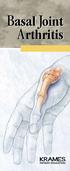 Basal Joint Arthritis What Is Basal Joint Arthritis? Arthritis is a disease that causes inflammation and stiffness in the joints. It often affects the joint at the base of the thumb, called the basal joint.
Arthritis of the hip. Normal hip In an x-ray of a normal hip, the articular cartilage (the area labeled normal joint space ) is clearly visible.
 Arthritis of the hip Arthritis of the hip is a condition in which the smooth gliding surfaces of your hip joint (articular cartilage) have become damaged. This usually results in pain, stiffness, and reduced
GET A HANDLE ON YOUR HEEL PAIN GUIDE
 GET A HANDLE ON YOUR HEEL PAIN GUIDE American Podiatric Medical Association www.apma.org/heelpain Take a Moment to Focus in on Your Feet. Does one (or even both) of your heels hurt? If so, you aren t alone.
.org. Rotator Cuff Tears: Surgical Treatment Options. When Rotator Cuff Surgery is Recommended. Surgical Repair Options
 Rotator Cuff Tears: Surgical Treatment Options Page ( 1 ) The following article provides in-depth information about surgical treatment for rotator cuff injuries, and is a continuation of the article Rotator
What to Expect from your Hip Arthroscopy Surgery A Guide for Patients
 What to Expect from your Hip Arthroscopy Surgery A Guide for Patients Sources of Information: http://orthoinfo.aaos.org http://dev.aana.org/portals/0/popups/animatedsurgery.htm http://www.isha.net/ http://
Adult Forearm Fractures
 Adult Forearm Fractures Your forearm is made up of two bones, the radius and ulna. In most cases of adult forearm fractures, both bones are broken. Fractures of the forearm can occur near the wrist at
Temple Physical Therapy
 Temple Physical Therapy A General Overview of Common Neck Injuries For current information on Temple Physical Therapy related news and for a healthy and safe return to work, sport and recreation Like Us
KNEE ARTHROSCOPY HANDBOOK
 KNEE ARTHROSCOPY HANDBOOK 1450 Ellis Street Suite 201 Bozeman, Montana 59715 (406) 587-0122 FAX (406) 587-5548 www.bridgerorthopedic.com Your Arthroscopy Handbook Contemplating surgery of any kind leads
Shoulder Arthroscopy
 Copyright 2011 American Academy of Orthopaedic Surgeons Shoulder Arthroscopy Arthroscopy is a procedure that orthopaedic surgeons use to inspect, diagnose, and repair problems inside a joint. The word
Brian P. McKeon MD Jason D. Rand, PA-C, PT Patient Information Sheet: Anterior Cruciate Ligament
 Brian P. McKeon MD Jason D. Rand, PA-C, PT Patient Information Sheet: Anterior Cruciate Ligament The anterior cruciate ligament or ACL is one of the major ligaments located in the knee joint. This ligament
Osteoarthritis of the ankle
 1 What is osteoarthritis of the ankle? The ankle joint is formed by the upper bone at the front of the foot (the talus) and the leg bones (the tibia and fibula). The ankle is made up of a hinge joint which
Level 1, 131-135 Summer Street ORANGE NSW 2800 Ph: 02 63631688 Fax: 02 63631865
 Write questions or notes here: Level 1, 131-135 Summer Street ORANGE NSW 2800 Ph: 02 63631688 Fax: 02 63631865 Document Title: Total Knee Replacement Further Information and Feedback: Tell us how useful
Total Hip Replacement
 Please contactmethroughthegoldcoasthospitaswityouhaveanyproblemsafteryoursurgery. Dr. Benjamin Hewitt Orthopaedic Surgeon Total Hip Replacement The hip joint is a ball and socket joint that connects the
Adult Advisor: Plantar Fasciitis. Plantar Fasciitis
 Adult Advisor: Plantar Fasciitis Page 1 of 3 Plantar Fasciitis What is plantar fasciitis? Plantar fasciitis is a painful inflammation of the bottom of the foot between the ball of the foot and the heel.
Platelet-Rich Plasma (PRP) Injections for Osteoarthritis and Chronic Tendinitis. How will you benefit from a PRP injection?
 Platelet-Rich Plasma (PRP) Injections for Osteoarthritis and Chronic Tendinitis How will you benefit from a PRP injection? Emory Healthcare patients can now benefit from a treatment called platelet-rich