
British Literature Heroes, Monsters, Fairies, and Kings
|
|
|
- Eleanor Houston
- 9 years ago
- Views:
Transcription
1 INDEPENDENT LEAR NING S INC E 1975 British Literature Heroes, Monsters, Fairies, and Kings This course is recommended for eleventh and twelfth grade students only. This course presents a selection of works from British Literature, spanning from its origins through the 20th century. Beginning with the earliest written work of British Literature, Beowulf, students will read an illustrated translation of this epic poem whose hero becomes a king by defeating a family of dreadful monsters. King Arthur and the Arthurian legends will be explored in The Once and Future King by T.H. White. The second semester brings a comic confusion of magical creatures faeries, monsters, kings and heroes cavorting in Shakespeare s play, A Midsummer Night s Dream. Students then move forward in time to the 19th century to explore the Hero as a child in David Copperfield, by Charles Dickens. A study of Victorian poems will be followed by a selection of English short stories, where students will need to look more carefully to discover the magical creatures, heroes and monsters within. Written assignments include interpretive essays, creative stories and projects. Materials needed for this course include: Beowulf The Once and Future King A Midsummer Night s Dream David Copperfield The Oxford Book of English Short Stories

2 British Literature Heroes, Monsters, Fairies, and Kings Sample Lessons, Inc. Post Office Box 1346 Brattleboro, Vermont oakmeadow.com

3 Contents Introduction... vii Lesson Thoughts on Literature and Reading Unit 1 Beowulf Lesson A Hero Is Born Lesson The Monster s Revenge Lesson The Hero s Return Lesson The Translator s Task Lesson The Heart of Beowulf Lesson Comparative Essay Lesson Researching the Elements of Beowulf Lesson The Images of Beowulf iii

4 British Literature Contents Unit II The Once and Future King Lesson Wart s Coming of Age Lesson The Fairy Queen Lesson The Education of the Future King Lesson The Duplicity of Queen Morgause Lesson The Heart of Sir Lancelot Lesson The Knight s Destiny Lesson The Demise of King Arthur s Court Lesson Analysis and Synthesis Lesson The Once and Future King Interpretive Essay Unit III A Midsummer Night s Dream Lesson The Stage Is Set and the Plot Thickens iv

5 Introduction Lesson Mistaken Identities and Enchanted Love Lesson The Folly of Fairies and Fools Lesson Creative Project Unit IV David Copperfield Lesson The Hero as a Child Lesson Trials and Tribulations Lesson David s Fight with the World Lesson The Hero Is Championed at Last Unit V Poetry and Short Stories Lesson Victorian Poetry Lesson Anthony Trollope: Relics of General Chasse: A Tale of Antwerp Lesson Thomas Hardy: A Mere Interlude v

6 British Literature Contents Lesson Malachi Whitaker: Landlord of the Crystal Fountain Penelope Fitzgerald: At Hiruharama Alan Sillitoe: Enoch s Two Letters Lesson D.H. Lawrence: The Man Who Loved Islands Lesson Virginia Woolf: Solid Objects Lesson P.G. Wodehouse: The Reverent Wooing of Archibald Lesson T.H. White: The Troll Lesson G.K. Chesterton: The Tremendous Adventures of Major Brown Final Project Lesson Final Essay Works Cited vi

7 Lesson 10 THE This novel spans the literary genres of fantasy, historical fiction, and legend. It is fairly long, so plenty of time will be taken reading it in order to absorb it fully and allow the opportunity to live in the enchanting world of King Arthur. The story begins with Arthur as a child, one who has not yet even grown into his given name and, rather, is called Wart. As with all children, the events of his childhood help shape the man he is to become. Lesson Goals Study use and effectiveness of various literary techniques Write dialogue to showcase character consistency Interpret significance of specific story elements Digging Deeper ONCE AND FUTURE KING: Wart s Coming of Age The novel, The Once and Future King by T.H. White, is based on Sir Thomas Malory s Le Morte d Arthur (The Death of Arthur). Malory originally wrote the story in Middle English in 1485, translating French stories and drawing on English tales about the legend of King Arthur. Along with Tennyson s version, The Idylls of the King, (also based on Malory), Malory s retelling of the Arthurian legends had been the best known version of the Camelot story. American author John Steinbeck relied on Malory for his own retelling of the story, and he had this to say about Malory s work: I think my sense of right and wrong, my feeling of noblesse oblige, and any thought I may have against the oppressor and for the oppressed came from [Le Morte d Arthur]...It did not seem strange to me that Uther Pendragon wanted the wife of his vassal and took her by trickery. I was not frightened to find that there were evil knights, as well as noble ones. In my own town there were men who wore the clothes of virtue whom I knew to be bad...if I could not choose my way at the crossroads of love and loyalty, neither could Lancelot. I could understand the darkness ASSIGNMENT SUMMARY Read chapters one to ten. Use vocabulary words to describe one or more characters. Write a dialogue between Wart and Kay. Answer two questions (one paragraph each). 37

8 British Literature Lesson 10 noblesse oblige (fr.) n: the obligation of those of noble birth to act honorably mort n: the note sounded on a hunting horn to announce the death of the deer sward n: a grassy field greaves n: a piece of armor that protected the shin quintain n: a training tool in jousting consisting of a post with a sandbag attached that swung around to hit the unsuccessful rider tuition n: tutoring or instruction, especially of individuals of Mordred because he was in me too; and there was some Galahad in me, but perhaps not enough. The Grail feeling was there, however, deep-planted, and perhaps always will be (Benson ). T.H. White became a scholar of Malory s work while he studied at Queen s College, Cambridge, and he later adapted Malory s Le Morte d Arthur into The Once and Future King. White s work was published in 1939, on the eve of WWII, a war that changed Britain forever. The Once and Future King remains a beloved book. Along the Way As you read, notice and think about these specific passages: In the beginning of the story, the author speaks directly to the reader in an effort to ease the way as the new language is absorbed. You ll find the author doing this occasionally. See if you can notice when it happens and what the author s intent is when using this technique. By the beginning of chapter 2, Wart and Kay s different personalities are already well established. Pay attention to how each character unfolds and the differences between them. When Wart first meets Merlyn, take note of the way Merlyn s room is described. The author uses many literary techniques: sensory language, anthropomorphism a seemingly endless list. The narrative style is very effective in conveying the details as well as the atmosphere of the room and the feelings it evokes in young Art. When Merlyn meets Kay, he makes a dire prediction: Thy sorrow will come from thine own mouth. Keep this in mind as the story unfolds and see if it turns out to be true. Note the use of foreshadowing: for this part of the story is one which deals in troubled times. Humor often surfaces with Merlyn s character, adding an unexpected flavor to the story, and there is a great deal of humor in the match between Grummore and Pellinore. However, Merlyn is making a point by showing this match to Wart. Think about why he wanted Wart to see these two knights. 38

9 The Once and Future King: Wart s Coming of Age Lesson 10 Reading Assignments Read chapters one to ten of The Sword and the Stone. Remember to keep notes in your Reader s Journal. Lesson 10 Writing 1. Look up the following vocabulary words and use them to describe one or more of the characters we have met so far. You don t have to describe any character in full your main goal is to use these words in context. (You don t have to include definitions of the words, but you ll need to look them up so you can use them correctly.) Try to use all the words in as few sentences as possible while making sure the character descriptions are accurate. benevolent despot probity panoply recreant inexorable 2. Using dialogue format, write a scene where Wart tries to explain to Kay why Merlyn doesn t give Kay adventures. When Merlyn is introduced, we very quickly learn of his magical abilities. In fact, within the first ten chapters, we learn a great deal about who Merlyn is what his temperament is like, how and why he uses his magic, and how he views education. Let Wart and Kay be true to their own personalities and feelings as they discuss what they know of Merlyn and as Wart tries to get Kay to understand why the magician can t give Kay the same adventures that he gives Wart. 3. Write one paragraph each to answer the following questions: a. In chapter 9, in the scene involving Merlyn s hat, the word anachronism appears. How does this word relate to Merlyn s magic? 39

10 British Literature Lesson 10 b. In chapter 10, Robin Wood describes Morgan Le Fay as a fairy. What does he say about fairies? What is their chief characteristic? What are other names that fairies have been called? Writing Tips A wide and varied vocabulary is a hallmark of good writing, and this novel provides an excellent opportunity to learn new words. When you notice a word you don t know, try to figure it out based on the context before looking it up. You can write down new words and look them up later, or stop reading and look them up before going forward. Try both and see what works best for you. In this way, you can use your Reader s Journal to keep track of unfamiliar words. FOR ENROLLED STUDENTS Begin keeping notes in your Reader s Journal. Remember to include page numbers, quotations, and ideas for later reference. You will be submitting this portion of the Reader s Journal to your teacher at the end of Lesson 12. Remember to send Lessons 9 and 10 to your teacher as soon as they are completed. 40

11 Lesson 29 THOMAS HARDY: A Mere Interlude This story, described by editor A.S. Byatt as one of the masterpieces of the English short story (xix), describes a tragedy that has an unexpectedly satisfying ending. Lesson Goals Connect story theme with relevant historical details Read to determine explicit information Examine role of narrator Digging Deeper In her review of The Oxford Book of English Short Stories ( The nouvelle cuisine of the turnover ), Elizabeth Lowry notes in Hardy s story a ballad-like detachment, its finely sustained balance between comedy and tragedy. She draws attention to Hardy s sense of irony, his appreciation of the resistance offered by real life to the symmetry that art wants to impose. Byatt writes that, here the distant narrator neutrally unfolds a tale in which the emotions are unexpected and yet steadily consequent from line to line, as are the events. It proceeds evenly, and contains a mystery (xix). ASSIGNMENT SUMMARY Read Thomas Hardy s A Mere Interlude. Write a short story using vocabulary words. Give a short answer to each question. Describe your impression of the story. Complete one of the projects. St. Michael s Mount This brought her [Baptista] to the present, and she turned from the outline of St. Michael s Mount to look about for her husband s form. (73) 111

12 British Literature Lesson 29 Along the Way Hardy wrote A Mere Interlude at a time when methods of transportation and communication were limited, as well as slow; in a way, this slowness allowed the events in the story to transpire as they did. Indeed, in the fast-moving, connected world we now live in, the events could hardly have taken place. The story is set in the southwest of England, Cornwall, and the Scilly Isles, although Hardy has changed the place names. For instance, Pen-zephyr is Penzance; find it on a map! Penzance Promenade (photo by Charles Winpenny) In her anxiety they had travelled so early that when they reached Pen-zephyr they found there were nearly two hours on their hands before the streamer s time of sailing. Baptista was extremely reluctant to be seen promenading the streets of the watering-place with her husband (71 72). 112

13 Thomas Hardy: A Mere Interlude Lesson 29 Reading Assignments Read Thomas Hardy s A Mere Interlude. Lesson 29 Writing 1. Using at least half of these vocabulary words, write a one-page short story with an unexpected tragedy and a surprising and satisfying ending. pith provisional temerity flexuous vermiculated ephemeral adumbrated maladroit didactic contiguity When trying to fit certain words into a story, you can often use adjectives to describe characters and create settings and plot developments around specific nouns. 2. Answer the following questions with complete sentences: a. What does the first paragraph of the story tell you about the story itself and about the main character? b. What is the perplexity that Baptista Trewthen describes to her landlady? c. Why does she marry Charles on the spur of the moment? 113

14 British Literature Lesson 29 d. How does Baptista view her sudden marriage and Charles, himself, once he is gone? e. How would you describe the tone of the scene in which Baptista notices her dead husband s hat? How does she feel when the maidservant tells her the truth? f. What compels her to reveal the secret of her first marriage to her husband? g. What is surprising about how her revelation is received by him? What is ironic about David s overall plan to wed Baptista, given the profession she quit? h. What is the story s final twist? 3. Write one paragraph on each of the following topics: a. Write a character profile of Baptista. Would you say that Baptista is a rebellious type of person or one who is more conventional? Is she impulsive? What would you say is the thing of value, hidden in Baptista like metal in a mine that Hardy alludes to in the first paragraph? b. After being married and on her way home to break the news to her parents (and her fiancé), Baptista is anxious. While Charles inexplicably goes for a swim, her thoughts and anxieties swim through her head. Explain how the author uses her anxiety to parallel the tragedy that is occurring as she sits alone with her thoughts. c. Both Lowry and Byatt comment on the detached, distant narrator (Lowry n. pag.; Byatt xix). What effect does this detachment have on you as a reader? Does it help you to understand the events better? Does it make you feel closer to the characters? How effective is Hardy s writing style for you? Why do you think he wrote the story? d. In the introduction, Byatt says that Hardy understood the way in which human lives, taken individually, do not follow probable patterns (xix). Describe the ways in which your life, or the life of someone you know, has taken unexpected turns. 114

15 Thomas Hardy: A Mere Interlude 4. Choose one of the following projects to complete: a. Do you think Baptista would have been happier with Charles, had he lived, or with David? Describe how her life would have been in either case and compare the differences. b. Write a scene of the aftermath of Baptista immediately telling her parents and fiancé of Charles and his death. How would each character (her mother, father, and fiancé) have reacted to the news? How would each have counseled Baptista? Remember to add setting details and action to the dialogue. c. There are a number of unexpected events and many twists and turns in this short story. How many narrative surprises did you find? List the many surprising events of the story. What was the most surprising part of all for you? Writing Tips When writing single-sentence answers, make sure your sentence is well constructed and detailed so that it references the question and gives a comprehensive answer at the same time. Lesson

16 British Literature Your Thoughts 116

The Once and Future King
 Individual Learning Packet Teaching Unit The Once and Future King by T.H. White Copyright 2000 by Prestwick House Inc., P.O. Box 658, Clayton, DE 19938. 1-800-932-4593. www.prestwickhouse.com Permission
Lesson 3. The Novel ASSIGNMENT 8. Introduction to the Novel. Plot. Character
 The Novel ASSIGNMENT 8 Read the following Introduction to the Novel and the background to The Call of the Wild by Jack London. Then read pages 1 24 in the novel. When you finish your reading, study the
Active Reading Hamlet Act 1
 Active Reading Hamlet Act 1 All the major characters of Hamlet emerge in the first act. As you read act 1, focus on Hamlet s developing relationships with the characters listed below. In each box state
A Tale of Two Cities
 Reflections: A Student Response Journal for A Tale of Two Cities by Charles Dickens written by Jack Turner Copyright 2007 by Prestwick House, Inc., P.O. Box 658, Clayton, DE 19938. 1-800-932-4593. www.prestwickhouse.com
WRITING ABOUT FICTION. by Anne Garrett
 WRITING ABOUT FICTION by Anne Garrett THINK CRITICALLY AND ANALYZE Your job in writing about literature is to uncover the author s message (theme(s) of the work) and analyze how that message was produced
D24. Core Analysis Frame: Fiction. Examine Setting. Analyze Characters. Examine Plot. (continued on page D25)
 Core Analysis Frame: Fiction D24 These questions will help you understand any story you read. For more advanced, in-depth analysis of each element, use the following frames: Setting Plot Author s Craft
EXAMS Leaving Certificate English
 EXAMS Leaving Certificate English Theme Language focus Learning focus Learning Support Language Support Exams: English Key vocabulary for exam questions, type and structure of questions. Understanding
PUSD High Frequency Word List
 PUSD High Frequency Word List For Reading and Spelling Grades K-5 High Frequency or instant words are important because: 1. You can t read a sentence or a paragraph without knowing at least the most common.
Coraline Study Notes
 Coraline Study Notes Directed by: Heny Selick Certificate: PG Running time: 100 mins Suitable for: KS2/3 English/Literacy This resource is designed to work across upper KS2 and lower KS3. It could form
King Midas & the Golden Touch
 TM Celebration Press Reading DRA2 Level 30 Guided Reading Level N Genre: Fiction Traditional Tale Reading Skill: Analyze Theme King Midas & the Golden Touch Retold by Alan Trussell-Cullen Illustrated by
The following questions are a combination of comprehension/knowledge level questions and interpretive level questions.
 THE GREAT GATSBY GUIDED QUESTIONS The following questions are a combination of comprehension/knowledge level questions and interpretive level questions. CHAPTER ONE 1. How does Nick describe himself at
Name: English 11 Kingsbury/Tietz
 Name: English 11 Kingsbury/Tietz Chapter 1 1. How does Nick describe himself at the beginning of the novel? 2. How do East and West Egg compare? 3. During what period is the novel set? 4. How does Nick
Write the key elements of the plot in a story you have read.
 F OR USE WITH F OCUS L ESSON 1: PLOT, SETTING, AND T HEME 1a Plot is the series of events in a story. Exposition is the author s introduction to the characters and setting. The conflict, or problem, sets
Grade 4 Writing Curriculum Map
 Curriculum Map BOE Approval November 2013 CURRICULUM MAP WRITING GRADE 4 SEPTEMBER OCTOBER NOVEMBER DECEMBER JANUARY Creating a Buzz About : It s All About Me! Tell Me A Story Realistic Fiction Tell Me
Genre Definitions. Albemarle County Public Schools, August 1996 Appendix F
 Genre Definitions I. Fiction A. Realistic Fiction Imaginative writing that accurately reflects life as it could be lived today. Everything is a realistic fiction story could conceivably happen to real
Tristan and Isolde Sharing the Potion, J.W. Waterhouse, 1916
 Tristan and Isolde Sharing the Potion, J.W. Waterhouse, 1916 1 10th Grade Honors English II Summer Reading Assignment TRISTAN AND ISEULT Please read the translation by Hilaire Belloc. You can find an online
Advanced Placement English Literature and Composition Syllabus
 Advanced Placement English Literature and Composition Syllabus Course Overview The Advanced Placement Literature and Composition course is designed to involve students in the close reading of selected
King Arthur and the Knights of the Round Table
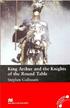 MACMILLAN READERS INTERMEDIATE LEVEL STEPHEN COLBOURN King Arthur and the Knights of the Round Table MACMILLAN Contents A Note About These Stories A Picture Dictionary The People in These Stories The Coming
Grade 8 English Language Arts 90 Reading and Responding, Lesson 9
 GRADE 8 English Language Arts Reading and Responding: Lesson 9 Read aloud to the students the material that is printed in boldface type inside the boxes. Information in regular type inside the boxes and
ROMEO AND JULIET STUDY QUESTIONS
 PROLOGUE ROMEO AND JULIET STUDY QUESTIONS 1. A prologue gives the reader information. Explain what it says about the plot and length of the play. ACT I, SCENE 1 1. Why do Tybalt and Benvolio fight? 2.
Sophia s War: a Tale of the Revolution Teaching Guide
 Sophia s War: a Tale of the Revolution Teaching Guide ABOUT THE BOOK In 1776, the War of Independence comes to New York City, and to twelve-year-old Sophia Calderwood s family. William, her older soldier
Character Character Character
 Character Character Character Think of two questions you have about the protagonist. Do you think the questions will be answered as you continue with the story? Why or why not? Describe the protagonist
What is your name? Do you think it reveals something about your identity and where you come from? If so, what does it reveal?
 Red Dog Identity Regardless of who we are, or where we come from, we all have our own identity. Your name, the school you go to, the suburb you live in, the country in which you were raised in are just
A Student Response Journal for. The Invisible Man. by H. G. Wells
 Reflections: A Student Response Journal for The Invisible Man by H. G. Wells Copyright 2001 by Prestwick House, Inc., P.O. Box 658, Clayton, DE 19938. 1-800-932-4593. www.prestwickhouse.com Permission
WSESU English Language & Literature Curriculum Framework
 WSESU English Language & Literature Curriculum Framework WSESU ENGLISH LANGUAGE AND LITERATURE STANDARDS 5.8 TYPES OF LITERATURE Students read a variety of types of literature, fiction and nonfiction (e.g.,
Act 5: scene 1:32-34 (34-36) scene 4: 25-29 (25-29) scene 5: 26-30 (26-30) scene 7: 15-18 (15-17) scene 8: 17-20 (17-20)
 Macbeth Unit Test Study Guide January 17 Exam will be between thirty and forty scan-tron multiple choice (40 points) Characters Be able to identify characters by either quotes or descriptions. To review
Percy Jackson and the Olympians: The Lightning Thief by Rick Riordan
 Name: Reading: English: Percy Jackson and the Olympians: The Lightning Thief by Rick Riordan Literary Analysis Unit Thesis Claim: The way Percy changes in the book is emphasized by theme and figurative
THE HISTORY OF FRANKENSTEIN
 THE HISTORY OF FRANKENSTEIN Mary Shelley s novel, FRANKENSTEIN, first appeared in 1818. Since then the story has been retold and adapted for the stage, on film, on radio, on television and in comics. There
Published on www.standards.dcsf.gov.uk/nationalstrategies
 Published on www.standards.dcsf.gov.uk/nationalstrategies 16-Dec-2010 Year 3 Narrative Unit 3 Adventure and mystery Adventure and mystery (4 weeks) This is the third in a block of four narrative units
Language Arts Core, First Grade, Standard 8 Writing-Students write daily to communicate effectively for a variety of purposes and audiences.
 Genre Unit Reading and Writing Fables by Amy Kinney Language Arts Core, First Grade, Standard 7 Comprehension-Students understand, interpret, and analyze narrative and informational grade level text. Objective
The War of the Worlds
 Reflections: A Student Response Journal for The War of the Worlds by H. G. Wells Copyright 2002 by Prestwick House, Inc., P.O. Box 658, Clayton, DE 19938. 1-800-932-4593. www.prestwickhouse.com Permission
Name: Date: Class: Read all directions carefully. When finished, review your test and check all answers.
 II. General Student Test with Answer Key Name: Date: Class: Read all directions carefully. When finished, review your test and check all answers. PART ONE: Multiple choice (2 points each) Choose the BEST
Of Mice and Men. John Steinbeck. Study Guide. Name:
 Of Mice and Men John Steinbeck Study Guide Name: Directions: When appropriate, please answer the questions in complete sentences. Chapter 1 Where did the bus drop the two men off? What does Lennie do with
Virginia English Standards of Learning Grade 8
 A Correlation of Prentice Hall Writing Coach 2012 To the Virginia English Standards of Learning A Correlation of, 2012, Introduction This document demonstrates how, 2012, meets the objectives of the. Correlation
FILMS AND BOOKS ADAPTATIONS
 FILMS AND BOOKS Reading a book is very different to watching a film. The way that we understand both is also different. We firstly need to think of the ways in which films and books tell their stories.
7. What do you think Zaroff means when he says to himself, the American hadn t played the game?
 Name: Period: Sullivan Eng I Advanced Short Story Unit THIS WILL COUNT AS A MAJOR GRADE WHEN COMPLETE. Reading questions: 50 points Map: 15 points Charts and diagrams: 35 points The Most Dangerous Game
English 10 Of Mice and Men Chapter 1 Questions (16pts) 2. List words that describe Lennie. What animal is he compared to?
 Chapter 1 Questions (16pts) 1. Describe the setting of chapter one. 2. List words that describe Lennie. What animal is he compared to? 3. List words that describe George. What animal could he be compared
Romeo and Juliet Act 3 Scene 5
 What do we learn about Juliet s relationship with her father from? Why does Lord Capulet arrange his daughter s wedding to Paris? He wants to see his daughter settled and married to a man he approves of
Pre-AP English I, Period Of Mice and Men Study Guide. Literary Terms
 Name Pre-AP English I, Period Of Mice and Men Study Guide Date Literary Terms CHARACTERIZATION: Find an example of Steinbeck's use of characterization to describe three of the following characters. Then
Formal, Analytical Essay Writing. Review: Literary Analysis Format; Plagiarism (page # s refer to Writers Inc.)
 Formal, Analytical Essay Writing Review: Literary Analysis Format; Plagiarism (page # s refer to Writers Inc.) What is an Literary Analysis Essay? (pg 245-252) An essay is essentially an argument, based
Purposes and Processes of Reading Comprehension
 2 PIRLS Reading Purposes and Processes of Reading Comprehension PIRLS examines the processes of comprehension and the purposes for reading, however, they do not function in isolation from each other or
THE GREAT GATSBY CHAPTER QUESTIONS
 THE GREAT GATSBY CHAPTER QUESTIONS Chapter I 1. How does Nick describe himself at the beginning of the book? 2. Why has Nick come to the East? 3. How does Nick describe Tom Buchanan? 4. Who is Jordan Baker?
Conventions of the Formal Essay
 Name 1. Write in the third person. Conventions of the Formal Essay Avoid using the first person (I, me, we, us). In analytical writing, you are not expressing opinion; instead, you are making objective
Montgomery County Public Schools English 9B Exam Review
 Montgomery County Public Schools English 9B Exam Review June 2013 FORMAT Five Readings an excerpt from a Shakespeare play (not Romeo and Juliet) two poems a narrative a nonfiction article related to the
3 days Lifting the Qualities of Effective Fiction Writing. 3 4 days Stretching Out the Problem and Imagining Creative Solutions to Stories
 Grade 1, Unit 3 Realistic Fiction Adapted from Realistic Fiction (Unit 3) in A Curricular Plan for the Writing Workshop, Grade 1 by Calkins Section of the Unit of Study Minilesson Focus Points Time (approximate)
Romeo & Juliet. Student Worksheet 1 Reading task 1. shakespeare for life. www.macmillanreaders.com/shakespeare. ROMEO & JULIET: Student worksheet
 Student Worksheet 1 Reading task 1 Before reading the synopsis, read the quiz questions and try to predict the correct answers. Once you ve completed your answers read the play synopsis to check your answers
Units of Study 9th Grade
 Units of Study 9th Grade First Semester Theme: The Journey Second Semester Theme: Choices The Big Ideas in English Language Arts that drive instruction: Independent thinkers construct meaning through language.
A Guide to Text Types:
 SAMPLE A Guide to Text Types: Narrative, Non-fiction and poetry Overview of structure, language features and key knowledge Text Types Information on a range of text types for literacy is contained here.
Language Arts Literacy Areas of Focus: Grade 6
 Language Arts Literacy : Grade 6 Mission: Learning to read, write, speak, listen, and view critically, strategically and creatively enables students to discover personal and shared meaning throughout their
Classroom Drama From Classic Literature
 Classroom Drama From Classic Literature TABLE OF CONTENTS For the Teacher: Introduction ---------------------------------------------------------------------------------- 3 Skills and Knowledge Acquired
WELCOME TO GOD S FAMILY
 WELCOME TO GOD S FAMILY To all who received him, to those who believed in his name, he gave the right to become children of God children born not of natural descent, nor of human decision or a husband
POINT OF VIEW PRESENTATION NOTES compiled by Denise Holbrook for presentation to GCWA June, 2015
 POINT OF VIEW PRESENTATION NOTES compiled by Denise Holbrook for presentation to GCWA June, 2015 POV is also called Narrative Perspective. The two terms are used interchangeably. POV is whose head we re
Author Study: Edgar Allan Poe 8 th Grade Language Arts Summative Assessments
 Author Study: Edgar Allan Poe 8 th Grade Language Arts Summative Assessments The author study essay and project will be due December 10th and will include the following: 1 literary analysis essay Mandatory
Note: These activities are suitable for students who don t know a lot (possibly nothing at all) about Shakespeare s writing.
 Shakespeare Teacher s notes Level: Topic: Subject(s): Time (approx): Preparation: Lower Intermediate (and above) Shakespeare Literature and History Activity 1: 15-20 minutes Activity 2: 10 minutes Activity
Unit 4: Chapter 8 Chapter Literary Focus
 Chapter Literary Focus SKILL BUILDER ELEMENTS OF DRAMA Write T or F on the line to tell whether it is true or false. 1. A story is prose narrative, while a play consists entirely of the characters words
ROMEO AND JULIET: Act I Reading and Study Guide
 Name Period ROMEO AND JULIET: Act I Reading and Study Guide I. VOCABULARY: Be able to define the following words and understand them when they appear in the play. adversary boisterous nuptial II. LITERARY
General Certificate of Secondary Education June 2010
 General Certificate of Secondary Education June 2010 English Literature 3712/H (Specification A) Higher Tier Tuesday 25 May 2010 9.00 am to 10.45 am H For this paper you must have:! a 12-page answer book!
Story and Novel Terms 9
 Story and Novel Terms 9 This list of terms is a building block that will be further developed in future grades. It contains the terms you are responsible for learning in your grade nine year. Short Stories:
Personal Narrative Writing
 CHAPTER 6 Teaching Genres Using BEW A personal narrative tells the audience my story. This type of story must include a well-planned story line, with details that occur in chronological order, character
Year 5 Poetry based on Unit 2 Classic/narrative poems
 Narrative Poems (based on the Primary framework for literacy, Poetry Unit 2 Classic/narrative poems) Key aspects of learning Enquiry Children will investigate an older narrative poem, seeking the answers
Heroes and Villains. Date Time Concept Activity. Establish rules and administrative details. Build a cohesive community and safe academic environment
 Sample Syllabus - Day version Journal: What makes a hero? Week One: Monday Day 1 Establish rules and administrative details Review and sign the Honor Code and Acceptable Computer Use Policy Build a cohesive
With critical approaches, Bible scholars learn more about the work and make judgments about its meaning.
 Reading Glasses: Literary Criticism By Brennan Breed Bible scholars have several different ways of studying and appreciating biblical texts. These methods are like reading glasses that allow readers to
Unless otherwise indicated all Scripture quotations are taken from the King James Version of the Bible.
 Unless otherwise indicated all Scripture quotations are taken from the King James Version of the Bible. 17 16 15 14 13 12 11 52 51 50 49 48 47 46 In Him ISBN-13: 978-0-89276-052-7 ISBN-10: 0-89276-052-4
Year 1 reading expectations (New Curriculum) Year 1 writing expectations (New Curriculum)
 Year 1 reading expectations Year 1 writing expectations Responds speedily with the correct sound to graphemes (letters or groups of letters) for all 40+ phonemes, including, where applicable, alternative
Reading Strategies by Level. Early Emergent Readers
 The charts below were created as a common language for teachers and students in the Wallingford Public Schools in kindergarten through eighth grade. The level of the chart selected for use in the classroom
Compiled By: Pat Elliott, Resource Teacher & Dale Mays, Grade 4 Teacher Simcoe County District School Board Ontario Canada
 Compiled By: Pat Elliott, Resource Teacher & Dale Mays, Grade 4 Teacher Simcoe County District School Board Ontario Canada Literacy Circles There is no one right way to conduct literacy circles. The manner
ROMEO AND JULIET: Act I Reading and Study Guide
 Name Date Period ROMEO AND JULIET: Act I Reading and Study Guide I. VOCABULARY: Define the following words. adversary boisterous nuptial aside blank verse characterization conflict External: 1. vs. 2.
Name: Class: Date: ID: A. Multiple Choice Identify the choice that best completes the statement or answers the question.
 Name: Class: _ Date: _ NeSA Reading Practice Test 1 Multiple Choice Identify the choice that best completes the statement or answers the question. Directions Looking through old photographs can be fun
Green Eggs and Ham. by Dr. Seuss. overview THE WHEATLEY PORTFOLIO. overview TeXT-DepenDenT questions assessment fluency. Rationale
 TEXT STUDY Green Eggs and Ham by Dr. Seuss map Grade 1 Unit 3 Unit Life Lessons Type Literary Text (Lexile 30L) overview Rationale overview TeXT-DepenDenT questions assessment fluency This text is one
The Essential Elements of Writing a Romance Novel
 The Essential Elements of Writing a Romance Novel by Leigh Michaels Even if you re a seat-of-the-pants, explore-as-you-go sort of writer, there are a few things you need to know about your story before
ANALYZING SHORT STORIES/NOVELS
 ANALYZING SHORT STORIES/NOVELS When analyzing fiction, you should consider the plot, setting, characters, point of view, imagery, symbolism, tone, irony, and the theme. PLOT Plot refers to what happens
INTEGRATED SKILLS TEACHER S NOTES
 TEACHER S NOTES INTEGRATED SKILLS TEACHER S NOTES LEVEL: Pre-intermediate AGE: Teenagers / Adults TIME NEEDED: 90 minutes + project LANGUAGE FOCUS: Linking words, understand vocabulary in context, topic
The Story of an Hour by Kate Chopin
 1 The Story of an Hour by Kate Chopin Student Charts: Lesson 2 This is the second lesson about The Story of an Hour by Kate Chopin. In this section of the lesson, you will learn more about the life of
READING. Common Core Standards-Based. Graphic Organizers for GRADES 9-10. In-Depth Analysis. Created by Tracee Orman
 Graphic Organizers for Common Core Standards-Based READING In-Depth Analysis GRADES 9-10 Created by Tracee Orman www.traceeorman.com www.teacherspayteachers.com/store/tracee-orman CCS RL Graphic Organizers
Winnie-The-Pooh. A.A. Milne. A Novel Study by Nat Reed
 Winnie-The-Pooh By A.A. Milne A Novel Study by Nat Reed Table of Contents Suggestions and Expectations.. 3 List of Skills. 4 Synopsis / Author Biography..... 5 Student Checklist. 6 Reproducible Student
Traditional Academic Writing Developing Your Own Writing Style: Comments on Essay Extract
 Traditional Academic Writing Developing Your Own Writing Style: Comments on Essay Extract The following extract is taken from the introduction to an essay: The Benefits of Good Writing: Or Why Does It
A Tale of Two Cities by Charles Dickens
 A Tale of Two Cities by Charles Dickens Charles Dickens Born in 1812 in Portsmouth, England He had very encouraging parents who supported his writing and acting His father was sent to debtor s prison At
D36. Core Analysis Frame: Poetry. Examine Content. Examine Form and Structure. (continued on page D37)
 Core Analysis Frame: Poetry D36 The questions on this analysis frame will help you achieve a basic understanding of any poem you read. For more advanced, in-depth analysis of each element, use the following
The Great Gatsby: STUDY GUIDE AND ACTIVITIES
 INTRODUCTION TO GATSBY The Great Gatsby: STUDY GUIDE AND ACTIVITIES In order to become better acquainted with the time period and setting of the novel, you will complete a Gatsby Treasure Hunt. Open up
WILL WE BE MARRIED IN THE LIFE AFTER DEATH?
 Explanatory Notes: WILL WE BE MARRIED IN THE LIFE AFTER DEATH? Series title: Topic: Marriage in heaven / heaven as a marriage Table of Contents: Message 1: What is the Life after Death Like? p. 1 Message
Great Books: Tales of Edgar Allan Poe Teacher s Guide
 Teacher s Guide Grade Level: 9-12 Curriculum Focus: Literature Lesson Duration: 1 2 class periods Program Description Explore the psychology of terror in some of Poe s most-haunting tales. Interwoven through
Grade Level: 2 nd Grade
 1. Read closely to determine what the text says explicitly and to make logical inferences from it; cite specific textual evidence when writing or speaking to support conclusions drawn from the text. RL.2.1.
Gifted Middle School Summer Reading Animal Farm
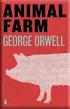 Name Gifted Middle School Summer Reading Animal Farm This summer you will read the novel, Animal Farm, which is about farm animals that rebel against the farmer in order to create a better life. But what
HarperOne Reading and Discussion Guide for The Weight of Glory. Reading and Discussion Guide for. The Weight of Glory. C. S. Lewis.
 Reading and Discussion Guide for The Weight of Glory by C. S. Lewis The Weight of Glory is a series of essays and talks that Lewis wrote over a long period (roughly between 1939 and 1956). We have organized
The new portfolio will not be assessed by examiners but will be used as a tool for students to develop their writing skills at each level.
 A Teachers guide to the Trinity portfolio toolkit What is a portfolio? It s a file or folder that contains a collection of your students work. Each portfolio should include at least one example of each
King Arthur and the Knights of the Round Table
 King Arthur and the Knights of the Round Table Dagmar Hlaváčková, 2010 Introduction 1. Who was King Arthur? 2. Where did he live? 3. Do you know anything about the Knights of the Round Table? 1. Explain,
5. Develop two test questions based on the first chapter:
 Reading Notes: Chapter One (pgs. 1 16) Introduction While reading, we will pause to make some observations. These observations are intended to improve your ability to see and interpret key ideas and events
Jesus at the Temple (at age 12)
 Jesus at the Temple (at age 12) Teacher Pep Talk: Twelve sounds so grown up, especially when you are a Little Guy! But to us adults, 12 seems really young to be doing some of the things Jesus was doing
KIRKUS REVIEWS, starred review PUBLISHERS WEEKLY
 Discussion Guide By Newbery Honor winner MARION DANE BAUER Illustrated by JENNIFER A. BELL ISBN 9781442434233 $14.99 Atheneum Books for Young Readers Bark! Bark! Bark! A-woooooooo! To Mark, it sounded
More Than Just Words: Concerning Shakespeare. Jester Touchstone in William Shakespeare s comedy As You Like It declares, The fool
 Buckley 1 Erica Buckley Professor Fellinger EN 150 3 October 2014 More Than Just Words: Concerning Shakespeare Jester Touchstone in William Shakespeare s comedy As You Like It declares, The fool doth think
ANALYSING THE SHORT STORY CONTENTS
 English: The Short story. 1.x/ fall 2002/lm 1/5 ANALYSING THE SHORT STORY CONTENTS THE SHORT STORY GENRE CONVENTIONS: 2 In medias res beginning: 2 A limited number of characters. 2 Limited character description:
Teacher Guide for FAST-R Passage: FAST-R: Formative Assessments of Student Thinking in Reading. I Ask My Mother to Sing Poetry
 Teacher Guide for FAST-R Passage: FAST-R: Formative Assessments of Student Thinking in Reading At a Glance Approximate Grade Range: 2 3 4 5 6 7 8 9 10 11 Genre: Poetry Topic: Longing and Memory Author:
Fifth Grade English Language Arts Learning Goals for 3 rd 9- Weeks
 Skills students should demonstrate by the end of the 2 nd 9- weeks of school: Unit 4A- Making Connections Across Literary Genres Learning Goal: Student will understand that authors use point of view to
Following the Wise Men What s Your Star? Matthew 2:1-12
 1 Natalie W. Bell January 4, 2015 Epiphany Sunday Following the Wise Men What s Your Star? Matthew 2:1-12 Has anything grabbed your attention lately? What was it? And could it be God could God be using
Devotion NT267 CHILDREN S DEVOTIONS FOR THE WEEK OF: LESSON TITLE: The Second Coming. THEME: Jesus is coming again. SCRIPTURE: Matthew 24:27-31
 Devotion NT267 CHILDREN S DEVOTIONS FOR THE WEEK OF: LESSON TITLE: The Second Coming THEME: Jesus is coming again. SCRIPTURE: Matthew 24:27-31 Dear Parents Welcome to Bible Time for Kids. Bible Time for
To Kill a Mockingbird Journal Prompts
 Chapters 1-3: Recall a first day of school when you were younger. How did you view school: with excitement, dread, or boredom? How did you react to teachers? How did you interact with classmates? What
SECRETS OF EDEN Chris Bohjalian. Reading Group Guide by Kira Walton
 SECRETS OF EDEN Chris Bohjalian Reading Group Guide by Kira Walton A NOTE TO THE READER In order to provide reading groups with the most informed and thought-provoking questions possible, it is necessary
Fountas-Pinnell Level Z Myth
 LESSON 18 TEACHER S GUIDE by Johanna Knowles Fountas-Pinnell Level Z Myth Selection Summary The adventures of Odysseus have entertained people since the days of the Ancient Greeks. The adventures that
Shadows over Camelot FAQ 1.0 Oct 12, 2005
 Shadows over Camelot FAQ 1.0 Oct 12, 2005 The following FAQ lists some of the most frequently asked questions surrounding the Shadows over Camelot boardgame. This list will be revised and expanded by the