
Inadequately corrected refractive error is the leading cause of
|
|
|
- Alvin Branden Miles
- 9 years ago
- Views:
Transcription
1 Visual Morbidity Due to Inaccurate Spectacles among School Children in Rural China: The See Well to Learn Well Project, Report 1 Mingzhi Zhang, 1 Huan Lv, 1 Yang Gao, 2 Sian Griffiths, 2 Abhishek Sharma, 3 Dennis Lam, 1,4 Liping Li, 5 Yee Kit Tse, 2 Xiaojian Liu, 5 Daocheng Xu, 1 Bei Lu, 1 and Nathan Congdon 1,4 PURPOSE. Inadequately corrected refractive error is the leading cause of visual disability among children in China; inaccurate spectacles are a potential cause. The prevalence and visual impact of spectacle inaccuracy were studied among rural, secondary-school children, to determine the optimal timing for updating of refraction. METHODS. A random sample of children from years 1 and 2 in all junior and senior high schools in Fuyang Township, Guangdong Province, underwent ocular examination. All children who reported wearing glasses received cycloplegic refraction, vision assessment, and measurement of current spectacles. RESULTS. Among 3226 examined children, 733 (22.7%) reported owning spectacles. Refractive error and spectacle power were assessed for 588 (80.2%) children. They had a mean age of years; 70.2% were girls, 83.3% had more than 1.5 D of myopia, and 17.9% had presenting vision 6/12 in the better eye. The glasses of 48.8% of children were inaccurate by 1 D; inaccuracy was 2 D in 17.7%. Children with inaccurate glasses ( 1 D) had presenting vision in the better eye significantly (P 0.001) worse than that of children with accurate glasses, and 30.3% had presenting acuity 6/12. In multivariate models, younger age (P 0.004), more myopic refractive error (P 0.001), and having glasses 1 year old (P 0.04) were associated with inaccurate spectacles. DISCUSSION. Inaccurate spectacles are common and are associated with significant visual impairment among children in rural China. Reducing outdated glasses could lessen the visual burden, although refractive services may have to be offered on an annual basis for optimal benefit. (Invest Ophthalmol Vis Sci. 2009;50: ) DOI: /iovs From the 1 Joint Shantou International Eye Center, Shantou, People s Republic of China; the 2 School of Public Health and the 4 Department of Ophthalmology, Chinese University of Hong Kong, Hong Kong SAR; the 3 Department of Public Health, Oxford University, Oxford, United Kingdom; and the 5 Shantou University Faculty of Medicine, Shantou, People s Republic of China. Supported by grants to the See Well to Learn Well Project from Oxford University and from the Li Ka Shing Foundation, Hong Kong SAR. Submitted for publication September 10, 2008; revised October 24 and November 20, 2008; accepted March 11, Disclosure: M. Zhang, None; H. Lv, None; Y. Gao, None; S. Griffiths, None; A. Sharma, None; D. Lam, None; L. Li, None; Y.K. Tse, None; X. Liu, None; D. Xu, None; B. Lu, None; N. Congdon, None The publication costs of this article were defrayed in part by page charge payment. This article must therefore be marked advertisement in accordance with 18 U.S.C solely to indicate this fact. Corresponding author: Liping Li, Shantou University Faculty of Medicine, Center for Injury Prevention, 22 Xinling Road, Shantou, Guangdong, PRC ; [email protected]. Inadequately corrected refractive error is the leading cause of visual impairment among preschool, 1 primary-school, 2 and secondary-school 3,4 children in China. While failure to own and wear spectacles is clearly an important factor, 5 our previous work suggests that the wear of inaccurate spectacles also contributes to the visual burden. 5 The scope of the problem is substantial: while some 60% of secondary school children in rural China are myopic, 3,4 nearly two-thirds of those who could benefit from spectacles do not have adequate correction. 3,5 More than 90% of visual impairment among Chinese school children is due to refractive error. 3,4 Few studies have been attempted to systematically document the accuracy of children s currently worn spectacles. Robaei et al. 6 found that 38.3% of Australian children examined on a population basis who were wearing glasses had no measurable refractive error in either eye. Among children given spectacles in a school-based program in Oaxaca, Mexico, 23% were subsequently found to have 6/6 uncorrected vision bilaterally. 7 Among secondary school children wearing their own glasses at the time of examination in rural China and whose vision could be improved to 6/12 with refraction, 25.1% were wearing spectacles that did not improve their vision to at least 6/12. 5 On the basis of these limited data, it appears likely that many children are wearing glasses that do not improve their vision optimally. This fact is of particular concern, given recent reports that correction of even modest refractive errors can significantly improve self-reported visual function. 7,8 Important questions remain, however, for program planners seeking to reduce the burden of visual disability due to inaccurate glasses. What is the role of incorrect refractive practice, as opposed to initially correct, but now outdated glasses, in the problem of inaccurate spectacles? The former demands training programs to improve the accuracy of refraction, but the latter can only be addressed through more regular provision and uptake of services. In this study, we performed cycloplegic refraction and measured current spectacle power among children who reported owning glasses in an ongoing school-based program in the rural Chaoshan region of Guangdong Province, China. Selfreported age of currently worn spectacles was also recorded. The purposes of the study were to: 1. Document the prevalence and visual impact of inaccurate spectacles among rural Chinese secondary-school children. 2. Assess the role of several potential determinants of inaccurate glasses, including spectacle age. 3. Provide an evidential basis for the optimal timing of provision of refractive services to reduce the visual burden of inadequately corrected refractive error in this region. Investigative Ophthalmology & Visual Science, May 2009, Vol. 50, No. 5 Copyright Association for Research in Vision and Ophthalmology 2011

2 2012 Zhang et al. IOVS, May 2009, Vol. 50, No. 5 FIGURE 1. Flowchart showing enrollment of subjects in the present study. METHODS The See Well to Learn Well Project is an on-going randomized trial of interventions to promote spectacle wear among 10,000 secondary school children in three towns in the rural Chaoshan region of southern China. Participants are selected at random from year 1 and year 2 classes at all junior and senior high schools in the area. Written informed consent is obtained from at least one parent of all participants, and the protocol has been approved in full by Ethics Committees at the Chinese University of Hong Kong and the Joint Shantou International Eye Center (Guangdong Province, China) and the Declaration of Helsinki has been adhered to throughout. Subjects All year 1 and year 2 classes (average size, 60 children) in the five Junior High Schools and one Senior High School of Fuyang Township, Guangdong Province, were enumerated and classes were selected at random from a list of all eligible classes at each school until a total of 600 children (usually 8 to 10 classes) had been identified in the sampling frame. Our pilot testing in the area had demonstrated that participation rates were on the order of 80% to 85%, meaning that 600 children in the sampling frame would be sufficient to guarantee our target figure of 500 children examined at each school. Letters describing the study and offering the choice to participate or not were distributed to parents of all children in selected classes. Study personnel informed each participating class on the day before examination that all children owning spectacles were requested to bring them to school the next day. At the time of examination, the children reporting that they wore glasses either regularly or occasionally underwent cycloplegic refraction and measurement of glasses power. The children who reported wearing glasses but failed to bring them to school were asked to bring the glasses later that same day or the next for measurement. Data Collection Among 3226 children in the sample frame, 2905 (90.0%) completed the questionnaires and examination (Fig. 1). Written questionnaires were administered to the children detailing age, sex, parental education, and frequency of spectacle wear. Subjects reporting wearing glasses (n 733, 25.2%, Fig. 1) were also asked to state when the currently worn spectacles were purchased and what they estimated that their families were willing to pay for spectacles. The questionnaire also included a Chinese translation of an instrument developed originally by Fletcher et al., 9 to assess self-reported visual function in rural Asia. This instrument has been validated for use in Chinese 10,11 and is described elsewhere in detail. 9 The questionnaire could be administered in 5 to 10 minutes. The overall scale score ranged from 0 (worst) to 100 (best). 9 Visual acuity with and without habitual refraction if available was measured by trained study personnel in well-lighted areas of the school during daylight hours, at a distance of 5 m, separately in each eye of each child. The children who did not have their spectacles at school were asked to bring them for vision assessment on a separate day, and vision was recorded both with and without glasses. Identical illuminated Snellen tumbling E vision charts (Shantou City Medical Equipment Ltd., Shantou, China) was used for all testing. The nontested eye was covered by the subject using a hand-held occluder, with proper occlusion and neutral head position monitored by the examiner. The right eye was tested first. A single optotype of each size was presented first, starting at 6/30. If a letter was not correctly identified, testing began two lines above, with the child being asked to read all optotypes on the line sequentially. A subject had to identify correctly more than half of the letters on a given line (e.g., three of five, four of six) to be considered to have achieved that level of acuity. Subjects who reported wearing spectacles underwent cycloplegic autorefraction (Potec PRK-5000; Potec, Co. Ltd., Seoul, Korea) with subjective refinement by an ophthalmologist in each eye, at least 30 minutes after receiving cyclopentolate 1% one drop to both eyes every 5 minutes for a total of two drops in each eye. The power of subjects current spectacles was measured bilaterally (Topcon CL-100; Topcon Corp., Tokyo, Japan). Statistical Methods The 2 test was used to compare group differences for categorical variables. For continuous variables, group differences were compared by two-tailed Student s t-test, with data summarized as the mean (SD),

3 IOVS, May 2009, Vol. 50, No. 5 Inaccurate Spectacles in Chinese Children 2013 TABLE 1. Demographic Characteristics, Vision, and Visual Function for Children Reporting Glasses Wear for Whom There Were or Were Not Complete Data for Refractive Error and Spectacle Power Total Reporting Glasses Wear (n 733) Data Complete (n 588, 80.2%) Data Incomplete (n 145, 19.8%) P Age (y)* 14.9 (1.5) 15.0 (1.6) 14.3 (1.2) Sex Male 241 (32.9) 174 (29.6) 67 (46.2) Female 491 (67.0) 413 (70.2) 78 (53.8) Missing 1 (0.1) 1 (0.2) Parents highest education Primary or below 139 (19.0) 117 (19.9) 22 (15.2) Junior school 364 (49.7) 300 (51.0) 64 (44.1) High school 170 (23.2) 125 (21.3) 45 (31.0) College or above 26 (3.5) 19 (3.2) 7 (4.8) Missing 34 (4.6) 27 (4.6) 7 (4.8) Uncorrected vision in the better eye 6/ (79.0) 520 (88.4) 59 (40.7) / (20.7) 67 (11.4) 85 (58.6) Missing 2 (0.3) 1 (0.2) 1 (0.7) Presenting vision in the better eye 6/ (21.0) 105 (17.9) 49 (33.8) / (79.0) 483 (82.1) 96 (66.2) Visual function score* 68.4 (15.6) 67.4 (14.9) 72.4 (17.5) Data are count (%), except as noted. * Mean (SD). P for the comparison between children with complete data and those without. or the Mann-Whitney U test, with data expressed as the median (interquartile range) for skewed variables. Uncorrected, presenting and best corrected vision in the better eyes (the Snellen decimal fraction) were minus log-transformed (i.e., log of the minimum angle of resolution, logmar) to correct skewness before statistical analyses, but the untransformed numbers are presented in tables for the sake of clarity. In addition, multivariate logistic regression was performed to examine factors potentially associated with wearing inaccurate spectacles. Relevant odds ratio (OR) and respective 95% confidence interval (CI) were presented. The following formula 12,13 was used to calculate the vector difference in diopters between the cycloplegic refraction in the betterseeing eye and the power of current spectacles in the same eye: Vector dioptric distance 2 SE refraction SE glasses 2 where J0 1 J0 2 2 J45 1 J45 2 2, SE spherical equivalent refractive error sphere cylinder/2 J0 sphere power/2 cos 2 axis J45 cylinder power/2 sin 2 axis. Significance was defined by a two-sided All statistical analyses were performed with the use of commercial software (SPSS, ver. 14.0; SPSS, Inc., Chicago, IL). RESULTS Among the 733 children who reported wearing spectacles regularly or occasionally (25.2% of the examined subjects, Fig. 1), 588 (80.2%, Fig. 1) had complete data for refractive error and spectacle power and form the basis for the remaining analyses. Among the children with missing data, 12 had incomplete data on refractive error, 90 were lacking information on spectacle power, and 43 were missing both. The children with complete data had a mean age of years, 413 (70.2%) were girls, and 105 (17.9%) had vision 6/12 in the better-seeing eye (Table 1). Participating children were older by approximately 8 months (P 0.001), were more likely to be girls (P 0.001), and had worse uncorrected vision and visual function (P for both) than eligible children without complete data (Table 1). Spherical equivalent refractive error in the better-seeing eye was more myopic than 1.5 D in 83.3% of the subjects (Fig. 2). Among the children wearing spectacles, 3.7% (27/733) had uncorrected 6/6 vision in both eyes. The children s refractive error was significantly more myopic than was the spectacle power (mean difference, D, P 0.001; Fig. 3). A difference (absolute value) of 1 D was present in 48.8% of spectacles, 17.7% of glasses were inaccurate by 2 D, and 6.1% of children had glasses that were inaccurate by 3 D or more. The children wearing spectacles that were inaccurate by 1 D had significantly worse (P 0.001) presenting vision in the better-seeing eye than did those with accurate spectacles (Table 2), and 30.3% had presenting vision 6/12. Those with inaccurate glasses were also younger (P 0.04), had more myopic refractive error by 1 D(P 0.001) and were significantly more likely to have had glasses for 1 year (P 0.005, Table 2). Sex, parental education, frequency of spectacle wear, and the child s estimate of family willingness to pay for glasses were not associated with spectacle accuracy. In multiple logistic regression models, younger age, more myopic spherical equivalent, and having older glasses were all associated with wearing inaccurate spectacles; the children wearing glasses 1 year old had nearly 50% increased odds of owning inaccurate glasses (Table 3). The accuracy level generally declined monotonically with time (Fig. 4). DISCUSSION The importance of presenting visual acuity as an index of visual disability has been receiving growing attention. 14,15 Using presenting visual acuity allows program planners to better assess

4 2014 Zhang et al. IOVS, May 2009, Vol. 50, No. 5 FIGURE 2. Distribution of cycloplegic refractive error (spherical equivalent in the better-seeing eye) and measured spectacle power in the better-seeing eyes of 588 children wearing glasses and with complete refraction and glasses power data. the full scope of vision impairment existing in a community, in that persons with uncorrected refractive error are included. Recent estimates suggest that between and million people are visually impaired due to refractive error, representing 38% to 49% 14,16 of all global visual impairment. The annual direct cost of correcting refractive error in the United States alone has been estimated at US$ 3.8 billion. 17 Although traditional practice has generally not considered persons with uncorrected or undercorrected refractive error to be visually impaired, several experts now agree 14,15,18 that this approach leads to a significant underestimate of visual impairment. Dandona and Dandona, 18 for example, have argued strongly for a revision of the International Statistical Classifications of Disease (ICD) definitions to establish presenting visual acuity, rather than best corrected vision, as the standard for determining blindness and moderate visual impairment. As they state, the use of presenting vision in this setting seems more appropriate for estimating and tracking visual impairment in the countries and regions of the world. McCarty and Taylor 15 have expressed agreement with this suggested approach. Our results suggest that inaccurate spectacles contribute to the burden of inadequately corrected refractive error and impaired presenting vision. The wear of inaccurate spectacles was common in this rural Chinese secondary school population and was associated with a significant decrement in visual acuity when compared with the vision achieved with accurate glasses. Our result showing 17.9% of spectacle-wearing secondary-school children with presenting vision in the better eye 6/12 may be compared to 26.9% with vision at the same level in either eye among a similar-aged cohort reported from the NHANES (National Health and Nutrition Examination Survey). 19 The burden is financial as well as visual. It has been estimated that the annual cost of inaccurate glasses would be as high as US$200 million for preschool children alone if widespread vision screening were implemented in this age group. 20 The proportion of children wearing spectacles without apparent visual need is less in our Chinese cohort than was reported in Australia 6 or rural Mexico, 7 as might be expected. Because of the higher prevalence of refractive error in China, the positive predictive value of a given refraction test is higher for any given level of test accuracy. Younger age and more myopic refractive error were associated with wearing inaccurate spectacles in multiple regression models. A likely explanation for this is that refractive error changes more rapidly in younger children and those with greater baseline myopia, causing spectacles to become outdated more quickly. However, our finding with perhaps the greatest potential for corrective program intervention is the association between older spectacles and inaccuracy. A cutoff of 1 year appeared to discriminate reasonably well: The majority of spectacles purchased within the last year were accurate to within 1 D, whereas most that were purchased more than a year ago were not accurate (Fig. 4). The bulk of inaccurate glasses had insufficient myopic correction when compared to cycloplegic refraction in the better eye (Fig. 3), a finding that is consistent with the hypothesis that these adolescent Chinese children are continuing to grow more myopic after provision of their most recent pair of spectacles. Both the prevalence 21 and rate of progression 22 of myopia among ethnically Chinese children are among the highest in the world. The challenge of providing sufficiently regular refractive services to reduce the burden of vision disability from outdated spectacles in China is somewhat daunting. A high proportion of Chinese children who could benefit from refractive correction are without any glasses at all, 3,4 and even in the United States, with annual expenditures in

5 IOVS, May 2009, Vol. 50, No. 5 Inaccurate Spectacles in Chinese Children 2015 FIGURE 3. Difference between current spectacle power and cycloplegic refraction in the better-seeing eye for 588 children wearing glasses and with complete refraction and glasses power data. A negative value indicates that the child s refraction in the eye was more myopic or less hyperopic than the spectacle power in the eye, whereas a positive value means that the child s refraction was more hyperopic or less myopic than the spectacle power. excess of US$3 billion, 17 a significant problem remains with inaccurate spectacles. 19 Suggestions to improve the penetration or reduce the cost of refractive services have included shifting from a clinical to a public health approach, 23 training paraprofessionals as refractionists, 24 wider utilization of self-refracting devices, 25 and cost recovery from the sale of spectacles. 26,27 More research in the setting of controlled trials is needed to demonstrate which of these ap- TABLE 2. Characteristics of Children with Accurate (Power of Glasses within 1 D of True Refractive Error in the Better-Seeing Eye) and Inaccurate Spectacles Accurate (n 301) Inaccurate (n 287) P Age (y)* 15.2 (1.6) 14.9 (1.5) 0.04 Sex Male 98 (32.6) 76 (26.5) 0.10 Female 202 (67.1) 211 (73.5) Missing 1 (0.3) Parents highest education Primary or below 59 (19.6) 58 (20.2) 0.84 Junior school 156 (51.8) 144 (50.2) High school 59 (19.6) 66 (23.0) College or above 10 (3.3) 9 (3.1) Missing 17 (5.6) 10 (3.5) Presenting vision in the better eye* 0.93 (0.23) 0.69 (0.25) Child s spherical equivalent in the better eye* 2.67 (1.55) 3.74 (1.82) Age of current glasses 1 year 138 (45.8) 98 (34.1) year 133 (44.2) 156 (54.4) Missing 30 (10.0) 33 (11.5) Self-reported frequency of glasses wear Regular 157 (52.2) 168 (58.5) Occasional 144 (47.8) 119 (41.5) Amount willing to pay for glasses (US$) ( ) ( ) 0.91 Data are count (%), except as noted. * Mean (SD) Vision is reported as the decimal equivalent of the Snellen fraction. The log of the inverse of this value (logmar) is used for all statistical analyses, but the untransformed value is presented here for clarity. Median (interquartile range).

6 2016 Zhang et al. IOVS, May 2009, Vol. 50, No. 5 TABLE 3. Logistic Regression Model of Potential Predictors for Wearing Inaccurate Spectacles among 588 Secondary School Children in Rural China Independent Variables Odds Ratio (95% CI) for Multivariate Analysis P for Multivariate Analysis Age (per year) 0.83 ( ) Sex Male* Female 1.32 ( ) Child s spherical equivalent in the better eye (per diopter) 0.70 ( ) Age of current glasses 1 year* 1 year 1.49 ( ) * Reference group for analyses involving categorical variables. proaches can most effectively broaden the reach of timely refractive correction in rural Asia. The fact that 30% to 40% of spectacles were found to be inaccurate by 1 D even at 6 months after purchase suggests that training programs to improve the quality of refraction may also be needed. It should also be noted, however, that some clinical circumstances, such as anisometropia, may dictate giving less than the full myopic power indicated by refraction. This report from the See Well to Learn Well Project must be taken within the context of its limitations. In the first place, there are fundamental limits to the accuracy of refractive error measurement. It has been reported that the reproducibility of subjective refraction is approximately 0.5 D for myopia, hyperopia, and astigmatism, 28,29 with a 95% CI of 0.6 D. 30 These values are less than the cutoff of 1 D of inaccuracy, which we chose for most of our analyses. Although our protocol called for cycloplegia in both eyes of all refracted subjects, the possibility cannot be excluded that cycloplegia was incomplete in some children. Errors with noncycloplegic autorefraction in school-aged children have been reported to be in the range of 0.84 to 1.23 D, 31,32 with more myopic refractive error in noncyclopleged eyes. 31,32 The error generally appears to decrease with age 31 and is also less in myopes than in hyperopes. 32 Zhao et al. 32 have reported inaccuracy due to noncycloplegia of only 0.41 D in children aged 7 to 18 years with 2 D or more of myopia. Some three quarters of our subjects had myopia in this range in the study eye. Our study was not truly population based. We included all schools in the area and compulsory education through the end of junior high school with reported attendance rates of 90% 33 exists in this region. However, senior high school students (roughly a sixth of our sample) represent a more educated minority, and as such are likely to have a higher prevalence of myopia than the population at large. We found that children with greater degrees of myopia had less accurate spectacles, indicating that our findings for high school students may have overestimated the burden of inaccurate spectacles in the community at large. We also found that the one fifth of children with incomplete data, when compared with participants, were significantly younger (which would tend to yield an underestimate of spectacle inaccuracy) and less myopic FIGURE 4. Spectacle accuracy (proportion of children with absolute power of vector difference between cycloplegic refraction and power of current spectacles in the better-seeing eye 1 D) as a function of selfreported spectacle age (duration of glasses wear) in 525 children with complete data (refraction, spectacle power, and spectacle age).

7 IOVS, May 2009, Vol. 50, No. 5 Inaccurate Spectacles in Chinese Children 2017 (yielding an overestimate). For all these reasons, our results may be applied to the population of similarly aged children only with caution. This issue is further exacerbated by very significant regional differences in socioeconomic status and access to refractive services throughout China, which tend to result in different levels of glasses wear and probable different rates of spectacle accuracy. Finally, information obtained from children on topics such as familial willingness to pay for spectacles may be of less than complete reliability. Nonetheless, this report from the See Well to Learn Well Project provides some of the first detailed data on the prevalence, predictors, and visual impact of inaccurate spectacles in a population with a very large burden 1 5 of inadequately corrected refractive error. These results outline the role of outdated spectacles in this problem, and provide program planners with data that may be used to plan optimal timing for delivery of refractive services. References 1. Lu Q, Zheng YY, Sun BC, et al. A population-based study of visual impairment among pre-school children in Beijing: the Beijing Study of Visual Impairment in Children. Am J Ophthalmol. 2009; Feb 9 [Epub ahead of print]. 2. He M, Zeng J, Liu Y, Xu J, Pokharel GP, Ellwein LB. Refractive error and visual impairment in urban children in southern China. Invest Ophthalmol Vis Sci. 2004;45: He M, Huang W, Zheng Y, Huang L, Ellwein LB. Refractive error and visual impairment in school children in rural southern China. Ophthalmology. 2007;114: Congdon NG, Wang Y, Song Y, et al. Visual disability, visual function and myopia among rural Chinese secondary school children: the Xichang Pediatric Refractive Error Study (X-PRES), Report 1. Invest Ophthalmol Vis Sci. 2008;49: Congdon N, Zheng MW, Sharma A, et al. Prevalence and determinants of spectacle non-wear among rural Chinese secondary school children: the Xichang Pediatric Refractive Error Study (X- PRES), Report 3. Arch Ophthalmol. In press. 6. Robaei D, Kifley A, Rose KA, Mitchell P. Refractive error and patterns of spectacle use in 12-year-old Australian children. Ophthalmology. 2006;113: Esteso P, Castanon A, Toledo S, et al. Correction of moderate myopia is associated with improvement in self-reported visual functioning among Mexican school-aged children. Invest Ophthalmol Vis Sci. 2007;48: Coleman AL, Yu F, Keeler E, Mangione CM. Treatment of uncorrected refractive error improves vision-specific quality of life. JAm Geriatr Soc. 2006;54: Fletcher AE, Ellwein LB, Selvaraj S, Vijaykumar V, Rahmathullah R, Thulasiraj RD. Measurements of vision function and quality of life in patients with cataracts in southern India. Arch Ophthalmol. 1997;115: He M, Xu J, Li S, Wu K, Munoz SR, Ellwein LB. Visual acuity and quality of life in patients with cataract in Doumen County. China Ophthalmol. 1999;106: Zhao J, Sui R, Jia L, Fletcher AE, Ellwein LB. Visual acuity and quality of life outcomes in patients with cataract in Shun-yi County, China Am J Ophthalmol. 1998;126: Thibos LN, Wheeler W, Horner D. Power vectors: an application of Fourier analysis to the description and statistical analysis of refractive error. Optom Vis Sci. 1997;74: Harvey EM, Miller JM, Dobson V, Tyszko R, Davis AL. Measurement of refractive error in native American preschoolers: validity and reproducibility of autorefraction. Optom Vis Sci. 2000;77: Dandona L, Dandona R. What is the global burden of visual impairment? BMC Med. 2006;4: McCarty CA, Taylor HR. Myopia and vision Am J Ophthalmol. 2000;129: Resnikoff S, Pascolini D, Mariotti SP, Pokharel GP. Global magnitude of visual impairment caused by uncorrected refractive errors in Bull World Health Organ. 2008;86: Vitale S, Cotch MF, Sperduto R, Ellwein L. Costs of refractive correction of distance vision impairment in the United States Ophthalmology. 2006;113: Dandona L, Dandona R. Revision of visual impairment definitions in the International Statistical Classification of Diseases. BMC Med. 2006;4: Kemper AR, Gurney JG, Eibschitz-Tsimhoni M, DelMonte M. Use of corrective lenses among adolescents: Findings from the National Health and Nutrition Examination Survey. J Pediatr Ophthalmol Strabismus. 2007;44: Donahue SP. How often are spectacles prescribed to normal preschool children? J AAPOS. 2004;8: Ip JM, Huynh SC, Robaei D, et al. Ethnic differences in refraction and ocular biometry in a population-based sample of yearold Australian children. Eye. 2008;22: Park D, Congdon N. Evidence for an epidemic of myopia. Ann Acad Med Sing. 2004;33: Vincent JE, Pearce MG, Leasher J, Mladenovich D, Patel N. The rationale for shifting from a voluntary clinical approach to a public health approach in addressing refractive errors. Clin Exp Optom. 2007;90: Vincent JE. Simple spectacles for adult refugees on the Thailand- Burma border. Optom Vis Sci. 2006;83: Douali MG, Silver JD. Self-optimised vision correction with adaptive spectacle lenses in developing countries. Ophthalmic Physiol Opt. 2004;24: Ramke J, Palagyi A, du Toit R, Brian G. Using assessment of willingness to pay to improve a Cambodian spectacle service. Br J Ophthalmol. 2008;92: Ramke J, du Toit R, Palagyi A, Brian G, Naduvilath T. Correction of refractive error and presbyopia in Timor-Leste. Br J Ophthalmol. 2007;91: Zadnik K, Mutti DO, Adams AJ. The repeatability of measurement of the ocular components. Invest Ophthalmol Vis Sci. 1992;33: Goss DA, Grosvenor T. Reliability of refraction: a literature review. J Am Optom Assoc. 1996;67: Smith G. Refraction and visual acuity measurements: what are their measurement uncertainties? Clin Exp Optom. 1006;89: Fotedar R, Rochtchina E, Morgan I, Wang JJ, Mitchell P, Rose KA. Necessity of cycloplegia for assessing refractive error in 12-year-old children: a population-based study. Am J Ophthalmol. 2007;144: Zhao J, Mao J, Luo R, Li F, Pokharel GP, Ellwein LB. Accuracy of noncycloplegic autorefraction in school-age children in China. Optom Vis Sci. 2004;81: Statistical Yearbook of Yangjiang [in Chinese]. Beijing: China Statistics Press; 2004:335.

The Evolution of Uncorrected Refractive Error as a Major Public Health Issue
 Journal and Proceedings of the Royal Society of New South Wales, vol. 147, nos. 453 & 454, pp. 101-106. ISSN 0035-9173/14/020101-6 The Evolution of Uncorrected Refractive Error as a Major Public Health
Vision Screening by Teachers in Southern Indian Schools : Testing a New "All Class Teacher" Model
 Management Vision Screening by Teachers in Southern Indian Schools : Testing a New "All Class Teacher" Model Priya Adhiseshan, Dr. K. Veena, R.D.Thulasiraj, Dr. Moutappa Frederick, Dr. Rengaraj Venkatesh,
Presbyopia and Near-Vision Impairment in Rural Northern China MATERIAL AND METHODS
 Clinical and Epidemiologic Research Presbyopia and Near-Vision Impairment in Rural Northern China Qing Lu, 1 Wei He, 1 Gudlavalleti V. S. Murthy, 2 Xiangdong He, 1 Nathan Congdon, 3 Lirong Zhang, 1 Ling
PREVALENCE OF VISUAL IMPAIRMENT AMONG DIABETIC PATIENTS IN THE KUMBA URBAN AREA, CAMEROON
 International Journal of Innovation and Applied Studies ISSN 2028-9324 Vol. 15 No. 4 May 2016, pp. 872-876 2016 Innovative Space of Scientific Research Journals http://www.ijias.issr-journals.org/ PREVALENCE
Impact of Free Glasses and a Teacher Incentive on Children s Use of Eyeglasses: A Cluster-Randomized Controlled Trial
 Accepted Manuscript Impact of Free Glasses and a Teacher Incentive on Children s Use of Eyeglasses: A Cluster-Randomized Controlled Trial Hongmei Yi, Haiqing Zhang, Xiaochen Ma, Linxiu Zhang, Xiuqin Wang,
Patient outcomes of refractive surgery
 articles Patient outcomes of refractive surgery The Refractive Status and Vision Profile Oliver D. Schein, MD, MPH, Susan Vitale, PhD, MHS, Sandra D. Cassard, ScD, Earl P. Steinberg, MD, MPP ABSTRACT Purpose:
Eye on the Border From the Files of a Pediatric Ophthalmologist
 Eye on the Border From the Files of a Pediatric Ophthalmologist Violeta Radenovich, M.D., M.P.H. (corresponding author) Children s Eye Center of El Paso Albert M. Balesh, M.D. Children s Eye Center of
Patient-Reported Outcomes with LASIK (PROWL-1) Results
 Patient-Reported Outcomes with LASIK (PROWL-1) Results Elizabeth M. Hofmeister, MD CAPT, MC, USN Naval Medical Center San Diego Refractive Surgery Advisor for Navy Ophthalmology Assistant Professor of
Instructions on Completing VIP Gold Standard Examination Form For Children Wearing Glasses (12/15/03)
 Instructions on Completing VIP Gold Standard Examination Form For Children Wearing Glasses (12/15/03) Two GSE Forms There are two different forms for recording the results of the Gold Standard Examination
Preferential and Non-Preferential Reasons for Opting Contact Lens
 Preferential and Non-Preferential Reasons for Opting Contact Lens Ravipati Sarath 1, *Jannitha PA 1 and Pavan KV 2 1 School of Medical Sciences, University of Hyderabad, Hyderabad, Andhra Pradesh, India
Attention deficit hyperactivity disorder (ADHD) is
 Measuring ADHD behaviors in children with symptomatic accommodative dysfunction or convergence insufficiency: a preliminary study Eric Borsting, O.D., M.S., Michael Rouse, O.D., M.S., and Ray Chu, O.D.
VISX Wavefront-Guided LASIK for Correction of Myopic Astigmatism, Hyperopic Astigmatism and Mixed Astigmatism (CustomVue LASIK Laser Treatment)
 CustomVue Advantage Patient Information Sheet VISX Wavefront-Guided LASIK for Correction of Myopic Astigmatism, Hyperopic Astigmatism and Mixed Astigmatism (CustomVue LASIK Laser Treatment) Statements
GLASSES VERSUS OBSERVATION FOR MODERATE HYPEROPIA IN YOUNG CHILDREN (HTS1)
 1 2 3 4 5 6 7 GLASSES VERSUS OBSERVATION FOR MODERATE HYPEROPIA IN YOUNG CHILDREN (HTS1) 8 9 10 11 12 13 14 15 16 17 18 19 20 PROTOCOL Version 2.0 19 August 2013 HTS1v2 0 8-19-13 21 22 23 24 25 26 27 28
Because of the association of myopia with educational performance
 Role of Near Work in Myopia: Findings in a Sample of Australian School Children Jenny M. Ip, 1 Seang-Mei Saw, 2,3 Kathryn A. Rose, 4 Ian G. Morgan, 5,6 Annette Kifley, 1 Jie Jin Wang, 1,7 and Paul Mitchell
Assessing the Accuracy of the Technology-based Eye Care Services (TECS) Protocol to a Standard Clinical Ophthalmic Exam
 Assessing the Accuracy of the Technology-based Eye Care Services (TECS) Protocol to a Standard Clinical Ophthalmic Exam Introduction: As patients age, they are more at risk to lose vision. Routine eye
Myopia is a major public health concern in Asia, especially. The Economic Cost of Myopia in Adults Aged Over 40 Years in Singapore
 Clinical and Epidemiologic Research The Economic Cost of Myopia in Adults Aged Over 40 Years in Singapore Ying-Feng Zheng, 1,2 Chen-Wei Pan, 1,3 Junxing Chay, 4 Tien Y. Wong, 1,3,5 Eric Finkelstein, 4
The Royal College of Ophthalmologists. Refraction Certificate Examination. Instructions to Candidates
 The Royal College of Ophthalmologists Refraction Certificate Examination Instructions to Candidates Last updated: February 2015 The Examination The College provides an assessment of competence in refraction,
Caregiving Impact on Depressive Symptoms for Family Caregivers of Terminally Ill Cancer Patients in Taiwan
 Caregiving Impact on Depressive Symptoms for Family Caregivers of Terminally Ill Cancer Patients in Taiwan Siew Tzuh Tang, RN, DNSc Associate Professor, School of Nursing Chang Gung University, Taiwan
Does Cryotherapy Affect Refractive Error?
 Does Cryotherapy Affect Refractive Error? Results from Treated versus Control in The Cryotherapy for Retinopathy of Prematurity Trial Graham E. Quinn, MD, 1 Velma Dobson, PhD, 2 R. Michael Siatkowski,
1.0 Abstract. Title: Real Life Evaluation of Rheumatoid Arthritis in Canadians taking HUMIRA. Keywords. Rationale and Background:
 1.0 Abstract Title: Real Life Evaluation of Rheumatoid Arthritis in Canadians taking HUMIRA Keywords Rationale and Background: This abbreviated clinical study report is based on a clinical surveillance
Astigmatism and vision: Should all astigmatism always be corrected? 1 Ophthalmic Research Group, Aston University, Birmingham, UK
 Astigmatism and vision: Should all astigmatism always be corrected? James S Wolffsohn 1, Gurpreet Bhogal 1 and Sunil Shah 1,2 1 Ophthalmic Research Group, Aston University, Birmingham, UK 2 Midland Eye,
Information for parents and guardians
 Oxford University Hospitals NHS Trust Orthoptic and Optometry Services Oxford Eye Hospital Children s glasses Information for parents and guardians page 2 The aim of this leaflet is to explain the types
Astigmatic Changes after Horizontal Rectus Muscle Surgery in Intermittent Exotropia
 pissn: 1011-8942 eissn: 2092-9382 Korean J Ophthalmol 2012;26(6):438-445 http://dx.doi.org/10.3341/kjo.2012.26.6.438 Original Article Astigmatic Changes after Horizontal Rectus Muscle Surgery in Intermittent
LASIK To Improve Visual Acuity in Adult Neglected Refractive Amblyopic Eyes: Is It Worth?
 JKAU: Med. Sci., Vol. 18 No. 4, pp: 29-36 (2011 A.D. / 1432 A.H.) DOI: 10.4197/Med. 18-4.3 LASIK To Improve Visual Acuity in Adult Neglected Refractive Amblyopic Eyes: Is It Worth? Ali M. El-Ghatit, MD,
Non-response bias in a lifestyle survey
 Journal of Public Health Medicine Vol. 19, No. 2, pp. 203-207 Printed in Great Britain Non-response bias in a lifestyle survey Anthony Hill, Julian Roberts, Paul Ewings and David Gunnell Summary Background
POLICY STATEMENT. Guidelines for Refractive Surgery Advertising. Statement of Purpose:
 POLICY STATEMENT Guidelines for Refractive Surgery Advertising Statement of Purpose: These guidelines are designed to assist ophthalmologists in providing truthful, informative advertising of refractive
What do kids think about kids in eyeglasses?
 Ophthal. Physiol. Opt. 2008 28: 218 224 What do kids think about kids in eyeglasses? Jeffrey J. Walline 1, Loraine Sinnott 1, Erica D. Johnson 2, Anita Ticak 1, Sylvia L. Jones 1 and Lisa A. Jones 1 1
2. Incidence, prevalence and duration of breastfeeding
 2. Incidence, prevalence and duration of breastfeeding Key Findings Mothers in the UK are breastfeeding their babies for longer with one in three mothers still breastfeeding at six months in 2010 compared
Wavefront Refractions
 Optimizing Visual Performance with Wavefront Refractions A study of the use of modern technology to improve patient satisfaction. By Kevin Reeder, OD, Earl Sandler, OD, Joel Cook, OD, and Lynette Potgieter,
KNOWLEDGE, ATTITUDES AND PRACTICE (KAP) SURVEY - 2010
 KNOWLEDGE, ATTITUDES AND PRACTICE (KAP) SURVEY - 2010 TAKEO PROVINCE, CAMBODIA June 2011 Final Report ACKNOWLEDGEMENTS The Knowledge Attitude and Practice (KAP) was a CBM Cambodia/Australia project, conducted
Wavefront technology has been used in our
 Wavefront Customized Ablations With the WASCA Asclepion Workstation Sophia I. Panagopoulou, BSc; Ioannis G. Pallikaris, MD ABSTRACT PURPOSE: WASCA (Wavefront Aberration Supported Cornea Ablation) is a
The impact factor: a useful indicator of journal quality or fatally flawed?
 Ophthalmic & Physiological Optics ISSN 0275-5408 EDITORIAL The impact factor: a useful indicator of journal quality or fatally flawed? The Institute of Scientific Information (ISI) s 2-year impact factor
Comparison of Preschool Vision Screening Tests as Administered by Licensed Eye Care Professionals in the Vision in Preschoolers Study
 Comparison of Preschool Vision Screening Tests as Administered by Licensed Eye Care Professionals in the Vision in Preschoolers Study The Vision in Preschoolers Study Group* Purpose: To compare 11 preschool
Can You See Clearly, Kid?
 Non-Communicable Diseases Watch June 2016 Can You See Clearly, Kid? Key Messages Refractive errors are a group of conditions in which light rays fail to focus on the retina and result in blurred vision.
IBADAN STUDY OF AGEING (ISA): RATIONALE AND METHODS. Oye Gureje Professor of Psychiatry University of Ibadan Nigeria
 IBADAN STUDY OF AGEING (ISA): RATIONALE AND METHODS Oye Gureje Professor of Psychiatry University of Ibadan Nigeria Introduction The Ibadan Study of Ageing consists of two components: Baseline cross sectional
The Cost of Eye Screening in Different Tax Plans
 Preschool children s vision screening in New Zealand: a retrospective evaluation of referral accuracy and the potential for cost savings Journal: BMJ Open Manuscript ID: bmjopen-0-000 Article Type: Research
EFFECT OF DAILY VERSUS WEEKLY IRON FOLIC ACID SUPPLEMENTATION ON THE HAEMOGLOBIN LEVELS OF CHILDREN 6 TO 36 MONTHS OF URBAN SLUMS OF VADODARA
 ORIGINAL ARTICLE. EFFECT OF DAILY VERSUS WEEKLY IRON FOLIC ACID SUPPLEMENTATION ON THE HAEMOGLOBIN LEVELS OF CHILDREN 6 TO 36 MONTHS OF URBAN SLUMS OF VADODARA K Sharma 1, P Parikh 2, F Desai 3 1 PhD Advisor,
KERATOCONUS IS A BILATERAL, ASYMMETRIC, CHRONIC,
 Comparison of and Intacs for Keratoconus and Post-LASIK Ectasia MUNISH SHARMA, MD, AND BRIAN S. BOXER WACHLER, MD PURPOSE: To evaluate the efficacy of single-segment Intacs and compare with double-segment
Ministry of Community and Social Services Vision Care Fee Schedule
 Intent Ministry of Community and Social Services Vision Care Fee Schedule The Ontario Disability Support Program (ODSP) Vision Care Benefit provides assistance to eligible individuals with the purchase
The light. Light (normally spreads out straight... ... and into all directions. Refraction of light
 The light Light (normally spreads out straight...... and into all directions. Refraction of light But when a light ray passes from air into glas or water (or another transparent medium), it gets refracted
Mode and Patient-mix Adjustment of the CAHPS Hospital Survey (HCAHPS)
 Mode and Patient-mix Adjustment of the CAHPS Hospital Survey (HCAHPS) April 30, 2008 Abstract A randomized Mode Experiment of 27,229 discharges from 45 hospitals was used to develop adjustments for the
Association Between Variables
 Contents 11 Association Between Variables 767 11.1 Introduction............................ 767 11.1.1 Measure of Association................. 768 11.1.2 Chapter Summary.................... 769 11.2 Chi
An Example of SAS Application in Public Health Research --- Predicting Smoking Behavior in Changqiao District, Shanghai, China
 An Example of SAS Application in Public Health Research --- Predicting Smoking Behavior in Changqiao District, Shanghai, China Ding Ding, San Diego State University, San Diego, CA ABSTRACT Finding predictors
Cross-Linking with Refractive Surgery: Pros and Cons
 Cross-Linking with Refractive Surgery: Pros and Cons Raj K. Rajpal, M.D. Medical Director and Founder See Clearly Vision Group Mclean, Virginia Clinical Associate Professor Georgetown University Washington,
Trends in Australian children traveling to school 1971-2003: burning petrol or carbohydrates?
 1 Trends in Australian children traveling to school 1971-2003: burning petrol or carbohydrates? Hidde P. van der Ploeg 1, Dafna Merom 1, Grace Corpuz 2, Adrian E. Bauman 1 1 Centre for Physical Activity
Pseudo-accommodative Cornea (PAC) for the Correction of Presbyopia
 Pseudo-accommodative Cornea (PAC) for the Correction of Presbyopia Alaa El Danasoury, FRCS Magrabi Hospitals & Centers Surgical options for the Correction of Presbyopia Monovision Reversal of Presbyopia:
How Health Services Research Can Translate to a Better Future: Singapore s Tele-Rehabilitation Experience
 How Health Services Research Can Translate to a Better Future: Singapore s Tele-Rehabilitation Experience A/Prof (Dr) Gerald Koh Leader of Health Services and Behavioural Sciences (HSBS) Domain and Tele-Health
Statistics 2014 Scoring Guidelines
 AP Statistics 2014 Scoring Guidelines College Board, Advanced Placement Program, AP, AP Central, and the acorn logo are registered trademarks of the College Board. AP Central is the official online home
5/24/2013 ESOIRS 2013. Moderator: Alaa Ghaith, MD. Faculty: Ahmed El Masri, MD Mohamed Shafik, MD Mohamed El Kateb, MD
 ESOIRS 2013 Moderator: Alaa Ghaith, MD Faculty: Ahmed El Masri, MD Mohamed Shafik, MD Mohamed El Kateb, MD 1 A systematic approach to the management of Keratoconus through the presentation of different
Cerebral palsy (CP) is a collective term for a group of
 Clinical and Epidemiologic Research Profile of Refractive Errors in Cerebral Palsy: Impact of Severity of Motor Impairment (GMFCS) and CP Subtype on Refractive Outcome Kathryn J. Saunders, 1 Julie-Anne
Health and Rural Cooperative Medical Insurance in China: An empirical analysis
 Health and Rural Cooperative Medical Insurance in China: An empirical analysis Song Gao and Xiangyi Meng Abstract China abandoned its free universal health care system and privatized it since 1980s. The
Administration of Emergency Medicine
 doi:10.1016/j.jemermed.2005.07.008 The Journal of Emergency Medicine, Vol. 30, No. 4, pp. 455 460, 2006 Copyright 2006 Elsevier Inc. Printed in the USA. All rights reserved 0736-4679/06 $ see front matter
Guidelines for School Eye Health for the Eastern Mediterranean Region (EMR)
 Guidelines for School Eye Health for the Eastern Mediterranean Region (EMR) Guidelines for School Eye Health for the Eastern Mediterranean Region (EMR) March 2009 Developed by the Eastern Mediterranean
UNINSURED ADULTS IN MAINE, 2013 AND 2014: RATE STAYS STEADY AND BARRIERS TO HEALTH CARE CONTINUE
 UNINSURED ADULTS IN MAINE, 2013 AND 2014: RATE STAYS STEADY AND BARRIERS TO HEALTH CARE CONTINUE December 2015 Beginning in January 2014, the federal Patient Protection and Affordable Care Act (ACA) has
Healthy eyes for peak performance
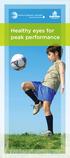 Healthy eyes for peak performance In just about every aspect of life, what we see determines what we do. Good eye health and optimal vision are critical factors for better performance at school, at work,
2016 ICF Global Coaching Study
 2016 ICF Global Coaching Study EXECUTIVE SUMMARY 2016 ICF Global Coaching Study EXECUTIVE SUMMARY Disclaimer and Copyright NOTE: The figures presented in this report are based on survey responses and therefore
FIRST EXPERIENCE WITH THE ZEISS FEMTOSECOND SYSTEM IN CONJUNC- TION WITH THE MEL 80 IN THE US
 FIRST EXPERIENCE WITH THE ZEISS FEMTOSECOND SYSTEM IN CONJUNC- TION WITH THE MEL 80 IN THE US JON DISHLER, MD DENVER, COLORADO, USA INTRODUCTION AND STUDY OBJECTIVES This article summarizes the first US
Recommended Vision Standards for Police Officers (Revised 1985)
 Recommended Vision Standards for Police Officers (Revised 1985) James E. Sheedy, O.D., Ph.D. Jeffrey T. Keller, O.D., M.P.H. Donald Pitts, O.D., Ph.D. Gerald Lowther, O.D., Ph.D. Stephen C. Miller, O.D.
THE GUIDE TO REFRACTIVE LENS EXCHANGE SEE CLEARLY.
 THE GUIDE TO REFRACTIVE LENS EXCHANGE SEE CLEARLY. EVERYBODY WANTS TO SEE CLEARLY Many of us take our sight for granted, whether it s forgetting how often we rely on it to guide us through our day-to-day
The Functional but not Nonfunctional LILRA3 Contributes to Sex Bias in Susceptibility and Severity of ACPA-Positive Rheumatoid Arthritis
 The Functional but not Nonfunctional LILRA3 Contributes to Sex Bias in Susceptibility and Severity of ACPA-Positive Rheumatoid Arthritis Yan Du Peking University People s Hospital 100044 Beijing CHINA
PROFILE OF THE SINGAPORE CHINESE DIALECT GROUPS
 PROFILE OF THE SINGAPORE CHINESE DIALECT GROUPS by Edmond Lee Eu Fah Social Statistics Section Singapore Department of Statistics INTRODUCTION The Singapore society is made up of different ethnic groups
ESCMID Online Lecture Library. by author
 Do statins improve outcomes of patients with sepsis and pneumonia? Jordi Carratalà Department of Infectious Diseases Statins for sepsis & community-acquired pneumonia Sepsis and CAP are major healthcare
A Clinical Study of a Hydrogel Multifocal Contact Lens
 A Clinical Study of a Hydrogel Multifocal Contact Lens By Peter Walker, BOptom TPA Background Despite the increasing number of presbyopic patients within the population, this group remain one of the greatest
Esotropia (Crossed Eye(s))
 Esotropia (Crossed Eye(s)) Esotropia is a type of strabismus or eye misalignment in which the eyes are "crossed," that is, while one eye looks straight ahead, the other eye is turned in toward the nose.
HMRC Tax Credits Error and Fraud Additional Capacity Trial. Customer Experience Survey Report on Findings. HM Revenue and Customs Research Report 306
 HMRC Tax Credits Error and Fraud Additional Capacity Trial Customer Experience Survey Report on Findings HM Revenue and Customs Research Report 306 TNS BMRB February2014 Crown Copyright 2014 JN119315 Disclaimer
Standardized Analyses of Correction of Astigmatism With the Visian Toric Phakic Implantable Collamer Lens
 Standardized Analyses of Correction of Astigmatism With the Visian Toric Phakic Implantable Collamer Lens Donald R. Sanders, MD, PhD; Edwin J. Sarver, PhD ABSTRACT PURPOSE: To demonstrate the methodology
Outcome of Drug Counseling of Outpatients in Chronic Obstructive Pulmonary Disease Clinic at Thawangpha Hospital
 Mahidol University Journal of Pharmaceutical Sciences 008; 35(14): 81. Original Article Outcome of Drug Counseling of Outpatients in Chronic Obstructive Pulmonary Disease Clinic at Thawangpha Hospital
LASIK in the Presbyopic Age Group
 LASIK in the Presbyopic Age Group Safety, Efficacy, and Predictability in 40- to 69-Year-Old Patients Ramon C. Ghanem, MD, 1,2 Jose de la Cruz, MD, 1,2 Faisal M. Tobaigy, MD, 1 Leonard P. K. Ang, FRCS(Ed),
Complementary and alternative medicine use in Chinese women with breast cancer: A Taiwanese survey
 Complementary and alternative medicine use in Chinese women with breast cancer: A Taiwanese survey Dr Fang-Ying (Sylvia) Chu Department of Nursing, Tzu Chi College of Technology, Hua Lien, Taiwan 1 BACKGROUND
Childhood Lead Poisoning
 7 Childhood Lead Poisoning in Wisconsin The Scope of the Problem The WCLPPP began systematically collecting information on all blood lead tests conducted in Wisconsin since 994. Under the requirements
MEDICARE BENEFITS SCHEDULE ITEM USE GUIDE
 MEDICARE BENEFITS SCHEDULE ITEM USE GUIDE An Optometry Australia guide for members This document has been developed by Optometry Australia. It is not a legal document and, in case of discrepancy, the legislation
EUROPEAN CITIZENS DIGITAL HEALTH LITERACY
 Flash Eurobarometer EUROPEAN CITIZENS DIGITAL HEALTH LITERACY REPORT Fieldwork: September 2014 Publication: November 2014 This survey has been requested by the European Commission, Directorate-General
DEFINITION : VISUAL IMPAIRMENT (Expert comments: Ms. Karin van Dijk) New Vision Consultant
 CHAPTER I DEFINITION : VISUAL IMPAIRMENT (Expert comments: Ms. Karin van Dijk) New Vision Consultant 1. Definition In India, the broad definition of visual impairment as adopted in the Persons with Disabilities
Eye health data summary
 Eye health data summary A review of published data in England February 2014 Author: John Slade, Researcher, RNIB Foreword by: Dr Aeesha Malik, Specialist Registrar, Moorfields Eye Hospital Foreword Healthcare
Vision Correction in Camera Viewfinders
 Vision Correction in Camera Viewfinders Douglas A. Kerr Issue 2 March 23, 2015 ABSTRACT AND INTRODUCTION Many camera viewfinders are equipped with a lever or knob that controls adjustable vision correction,
Written Example for Research Question: How is caffeine consumption associated with memory?
 Guide to Writing Your Primary Research Paper Your Research Report should be divided into sections with these headings: Abstract, Introduction, Methods, Results, Discussion, and References. Introduction: