
HORTICULTURE PRODUCTION GUIDE
|
|
|
- Ashlynn Greer
- 9 years ago
- Views:
Transcription
1 Appropriate Technology Transfer for RuralAreas MUSHROOM CULTIVATION AND MARKETING HORTICULTURE PRODUCTION GUIDE ATTRA is the national sustainable agriculture information center funded by the USDA s Rural Business -- Cooperative Service. Abstract: The market for mushrooms continues to grow due to interest in their nutritional and health benefits. Their potential to serve in waste management has yet to be fully explored. As fungi, mushrooms have life cycles very different from those of green plants. The choice of species to raise depends on what growth media are available and on market considerations. Oyster mushrooms grow on many substrates and are easiest for a beginner. Shiitake already has earned considerable consumer demand. Mycorrhizal types of mushrooms, such as chanterelles and matsutake have not been successfully cultivated. Commercial cultivation of morels is limited to a single facility which uses a patented process. Truffle production requires a significant investment of time before production begins. The evaluation of a commercial mushroom enterprise should include a careful analysis of potential markets. Many information resources are referenced for further research. By Alice Beetz & Lane Greer NCAT Agriculture Specialists September 1999 Introduction The market for mushrooms has been expanding in recent years. The trend is away from the canned product toward fresh and dried mushroom sales. Recently The Packer, a produce industry weekly, reported that, according to a recent marketing survey, of the families that purchased mushrooms in the previous year, 86% purchased button mushrooms and 70% purchased specialty species (1). The American Mushroom Institute, however, reported that the season saw a decline in the specialty mushroom segment of the market after a decade of steadily increasing sales. Table of Contents Mushroom Growth...2 How to Begin...3 Choosing a Mushroom Species...3 Species for Beginners...3 Mushrooms Not Commonly Cultivated...7 Pest Management...8 Markets for Mushrooms...9 Market Research...9 References...11 Resources...11 Suppliers...13 Many people are interested in the nutritional and medicinal aspects of mushrooms. Mushrooms contain many essential amino acids and can be a valuable food source. White button mushrooms contain more protein than kidney beans but less than milk. Shiitake mushrooms are less nutritious, but still are important as a potential protein source (2). Low in fat, mushrooms also provide vitamins (B 1, B 2, C) and minerals. Asian traditions maintain that some of the specialty mushrooms provide health benefits. Chinese doctors use at least 50 species. ATTRA // MUSHROOM CULTIVATION AND MARKETING Page 1

2 Recent scientific evidence suggests that many mushroom species do indeed contain substances which may prevent or alleviate cancer, heart disease or viral infections. Two recent titles detail existing research on the benefits of mushrooms. See the Resources section at the end of this guide for more information. The production of mushrooms can play an important role in managing organic wastes which have become problematic as landfills reach capacity. Many by-products from agricultural production and food processing can be used as growing media in mushroom production. The materials remaining after harvest can be composted and applied directly to the soil as an organic amendment. As a result of all of these factors, interest in cultivating the edible fungi has grown. Mushroom production may offer opportunity to those willing to develop a commercial operation as an additional enterprise for the farm or rural community, or for farmers without large acreages. The following material is offered to those considering this option as a new enterprise. An attempt has also been made to include resources for entrepreneurs who wish to do further research. It should be made clear at the outset that mushroom production is labor- and management-intensive. Specialty mushrooms have very frequently been promoted as being a "get rich quick" kind of enterprise. On the contrary, it takes a considerable amount of knowledge, research time, planning, and capital investment to set up a commercial production system. Once in production, sporadic fruiting, invasion of "weed" fungi, and unreliable market prices are problems which producers must be prepared to handle. Mushroom Growth Production of mushrooms is completely different from growing green plants. A person considering mushroom production should become thoroughly familiar with the life cycles of fungi. A plant pathology text is a good resource for this initial research task. Mushrooms do not contain chlorophyll and therefore depend on other plant material (the substrate ) for their food. Commonly cultured mushrooms are saprophytes plants that feed on dead plant material. The part of the organism that we see and call a mushroom is really just the fruiting body. Unseen is the mycelium tiny threads that grow throughout the substrate collecting nutrients by breaking down the organic material. For different species of mushrooms, the preferred growing medium varies. Some species can grow on a wide range of materials and others can t. After the mycelium has grown throughout the substrate, and when its specific requirements are met, the mushroom will fruit. Humidity, light, temperature, and carbon dioxide-to-oxygen ratio are conditions which typically determine when a mushroom will fruit. Nearly all of the common button mushrooms (Agaricus spp.) produced commercially in the United States are grown in expensive, high-tech structures designed to minimize pest pressures and to control the growing environment. Managers control not only temperature, humidity, and light, but also ratios of gases in the atmosphere. The production systems are highly developed and very efficient. The goal is always to decrease the time it takes to proceed from prepared substrate to fruiting and harvest. When cycles are shortened, production per year increases and potential profits rise. Typically, the mushroom farmer manipulates the atmospheric conditions first to favor mycelium growth until it fully occupies the substrate. Later the atmospheric conditions are changed to those necessary to initiate and complete fruiting (usually different from those ideal for mycelial growth). There are alternative methods of producing mushrooms. Paul Stamets of Fungi Perfecti (3) has spent most of his life studying their growth and cultivation. His book Growing Gourmet & Medicinal Mushrooms (see Resources section for ATTRA // MUSHROOM CULTIVATION AND MARKETING Page 2

3 more information) is an invaluable resource for anyone considering the cultivation of any mushroom. He suggests methods of growing outside on logs, on stumps, and in the garden, as well as indoor cultivation in bags and on columns. Whether these methods can be developed into competitive commercial schemes depends upon the abilities of the entrepreneur adapting them. Peter Oei, in Manual on Mushroom Cultivation, describes in some detail alternative mushroom production systems successfully used in developing countries. Many ideas for low-input systems are included. In practice, however, it is unlikely that the beginner can successfully compete with existing highly capitalized and efficient mushroom companies in the wholesale market. Only by developing a market niche for a high-quality fresh product or by producing a mushroombased food item can a small-scale beginner hope to compete. How to Begin The choice of which species to grow should be thoroughly researched. The beginner should be completely familiar with the various fungi life cycles and should know the parameters of growth required by each. Two basic references are: The Mushroom Cultivator by Stamets and Chilton and the aforementioned Growing Gourmet and Medicinal Mushrooms by Stamets. See the Resources section for more information. A mushroom cultivation kit (check with suppliers listed below) is often a good way to learn how to grow a particular species before beginning commercial production. Accurate technical and financial records can be used to realistically gauge whether or not commercial production will be profitable. At the same time, a system for creating conditions favorable to the various stages of growth can be designed and tested. For a commercial operation, the producer must first collect the substrate material into which the chosen species will grow. Mushroom species are often very particular about their substrates. The substrate is fermented, pasteurized, or sterilized in order to prevent or reduce competition from fungi other than the chosen species. The growing medium is then inoculated with spawn. See the Suppliers section for spawn sources. Choosing a Mushroom Species Having access to an economical growing medium suitable to the species chosen is an important factor in deciding which species to grow. The amount of processing necessary to prepare the substrate for the spawn is another consideration. The chart below lists common species and the materials upon which they are commercially cultivated (4, 5). Species for Beginners The final choice of a species to grow depends upon the waste materials available for use as substrate, an appropriate facility, cost of necessary equipment, the level of skill required to manage the life cycle of the fungus, and the market already established for that species. Considering these criteria, oyster (Pleurotus spp.) and shiitake (Lentinus edodes) mushrooms are probably best for most novices. They are relatively easy to grow and there is a growing market, thanks mostly to efforts of large commercial producers of white button (Agaricus) mushrooms who have been diversifying into other specialty mushrooms. Although these experienced and highly capitalized operators create stiff competition, there may still be a place in the market for the small but efficient producer. Excellent service, top quality, and consistent supply might substitute for the lowest wholesale price with some local customers, particularly gourmet chefs. In addition, shiitakes grown on logs may develop into a separate niche market, because they are considered to be of higher quality and may have a longer shelf life than shiitakes grown on sawdust substrates (the most common mass-produced method). Oyster mushrooms, with limited shelf life, may also have an advantage in nearby markets. ATTRA // MUSHROOM CULTIVATION AND MARKETING Page 3

4 Mushroom Cultivation Media Growing Medium Mushroom Species Ricestraw Straw (Volvariella) Common (Agaricus) Wheatstraw Common (Agaricus) Stropharia Straw (Volvariella) Coffee pulp Shiitake (Lentinus) Sawdust Shiitake (Lentinus) Hericium Ear (Auricularis) Ganoderma (Reishi) Winter (Flammulina) Sawdust-straw Stropharia Cotton waste from textile industry Straw (Volvariella) Cotton seed hulls Shiitake (Lentinus) Logs Nameko (Pholiota) Shiitake (Lentinus) White jelly (Tremella) Sawdust-rice bran Nameko (Pholiota) Ear (Auricularis) Coprinus Winter (Flammulina) Shiitake (Lentinus) Corncobs Hericium Shiitake (Lentinus) Paper Stropharia Horse manure (fresh or composted) Common (Agaricus) Crushed bagasse and molasses wastes from sugar industry Water hyacinth/water lily Straw (Volvariella) Oil palm pericarp waste Straw (Volvariella) Bean straw Cotton straw Cocoa shell waste Coir Banana leaves Straw (Volvariella) Distillers grain waste Hericium ATTRA // MUSHROOM CULTIVATION AND MARKETING Page 4

5 Oyster mushrooms Oyster mushrooms (Pleurotus spp.) are often recommended as a good choice for beginning mushroom cultivators because they are easier to grow than many of the other species, and they can be grown on a small scale with moderate initial investment. Although commonly grown on sterile straw from wheat or rice, they can be produced from a wide variety of high-cellulose waste materials. Some of these materials do not require sterilization, only pasteurization, which is less expensive. Another advantage of growing oyster mushrooms is that a high percentage of the substrate is converted to fruiting bodies, increasing potential profitability. Oyster mushrooms have great potential as an integral part of a sustainable agriculture system. Many types of organic wastes generated in production or by the food processing industry are added to the waste stream annually. These materials could support oyster mushroom production, if systematically collected and processed. Although there are no books devoted entirely to oyster mushroom production, Stamets books provide basic information. There has been research into using various agricultural and forest wastes as substrates, some of which is reported in the recently published Mushroom Biology and Mushroom Products, edited by D.J. Royce (6). Peter Oei (5) documents a number of commercial production systems for some strains grown in developing countries. Lawrence Weingarten describes his production process on his website, complete with photos: 2.htm Oyster mushroom cultivation has one significant drawback: some people are allergic to the spores. In these cases, air-cleaning equipment or respirators are necessary in order to work in the production facility. The consumer market for oyster mushrooms is being developed by the larger mushroom companies as they diversify their operations. However, because of the short shelf life of many oyster mushroom varieties, this species may offer a special advantage to the local grower who markets directly and can consistently deliver a fresh, high-quality product. Shiitake mushrooms Shiitakes (Lentinus edodes) are well suited as a low-input alternative enterprise because they, like oyster mushrooms, can be grown on a small-scale with a moderate initial investment. Shiitake mushroom production is the most developed specialty mushroom option. Its cultivation has been well investigated and a commercial market already exists. Shiitake mushrooms are grown on logs outside or are produced inside on synthesized sawdust logs or on sawdust in bags. See the brief description of these production systems below. Several excellent books are also listed below. Log Production Hardwood logs approximately 4 6" in diameter of a length easily handled (commonly 4 ) are cut during their dormant season. Oaks, sweetgum, cottonwood, beech, birch, willow and other non-aromatic hardwoods are appropriate species. The denser woods produce up to twice as long as the softer ones. Smaller diameter logs produce sooner than bigger ones, but for a shorter time. Logs are handled so that there is as little loss of bark and contact with soil as is possible. They are inoculated with spawn, using a strain selected for the temperature and fruiting regime appropriate to the production system. There is a wide variety of spawn from which to choose. After inoculation, the mycelium grows throughout the log. During this time, the producer may need to move the logs, protect them from sun and wind, and spray or mist them to maintain the necessary humidity for eventual fruiting. When the substrate (log) is fully occupied and conditions are right, the log is soaked and/or shocked to begin fruiting. ATTRA // MUSHROOM CULTIVATION AND MARKETING Page 5

6 Harvesting at the proper stage of development also requires close attention from the mushroom farmer. Shiitakes must be picked at the correct time to ensure premium prices. Post-harvest storage, packaging, and shipping can be costly. Many shiitakes are raised organically, but there are "weed" fungi as well as other pests such as slugs and flies which can reduce production or quality. The producer must be prepared to control these pests or lose some of the crop. It is, however, easier to organically produce shiitake mushrooms than some of the other mushrooms. In order to label a product organic, the production process must undergo a process called certification. Several organizations and some states currently certify organic production. Federal regulations will soon be the law. For further information, call and request the ATTRA publication Organic Certification. Studies have shown that log production of shiitakes is only marginally profitable if labor and management costs are taken into consideration. It is possible that as a part of an integrated farming system, such an enterprise could become a profit center to utilize off-season labor or to enhance overall profitability. If the farm includes agroforestry practices such as riparian buffers or windbreaks, a shiitake area might be incorporated there. Growing on sawdust Now, most shiitakes are raised on a sterilized sawdust substrate. This method, although it allows for a much faster fruiting cycle and a high level of return (110% or more of initial dry weight), demands a greater capital investment and more skillful management than log production. In order to achieve fruiting as quickly as possible, the producer must provide a building in which temperature and moisture can be manipulated. The building must be kept clean to avoid contamination. Equipment to pasteurize or sterilize and mix the medium may be needed and can represent a significant initial investment. At current prices, these costs may be difficult for a beginning producer to recover. Growing mushrooms on sawdust requires attention to detail especially careful monitoring and timely processing of the blocks or bags. Several books listed below, including Stamets (1993) and Przybylowicz and Donoghue (1990) offer more details of this production method. Marketing shiitakes It is possible to find U.S.-produced fresh or dried shiitake mushrooms in specialty food stores and many large supermarkets throughout the country. Some analysts suggest that the market may have less potential for expansion now than was predicted in the 1980s. Other specialty mushrooms may capture some of this market if the overall demand for mushrooms does not increase. It is therefore very important to plan a marketing strategy carefully before committing to a shiitake mushroom venture. Possibilities include: Direct marketing of the fresh or dried product (farmers markets, gourmet chefs, internet or mail order offerings) value-added products (mushroom sauces, dried entrée mixes, teas) wholesale system set up for fresh produce (contract or to wholesaler). Local grocery stores may be interested in buying this specialty product directly. A grower in eastern Arkansas stated that local grocery chains were only interested in her shiitake mushrooms after she could assure them of a year-round supply. She decided that she had to add either indoor log or substrate in order to meet this requirement. Natural foods stores are another potential market which may be more tolerant of a seasonal supply situation. The price for shiitake mushrooms fluctuates throughout the season. Prices are highest in the winter when supply is low, and lowest in summer when production peaks. Except in very ATTRA // MUSHROOM CULTIVATION AND MARKETING Page 6

7 mild climate areas, the only logs which fruit in winter are those maintained indoors. Using strains selected to fruit at cooler temperatures can lengthen the harvest season to capture more favorable prices. There are several methods shiitake growers can use to preserve their crop during times when prices are low. Persimmon Hill Berry Farm (7) tackled the challenges of marketing their own value-added product by building a commercial kitchen and developing a special shiitake mushroom sauce. Operations that make value-added products may be able to provide a market for small shiitake producers in their areas. The Persimmon Hill Berry Farm in Missouri is a good example. Area growers can freeze their surplus mushrooms until enough have accumulated to make sale and delivery to the facility worthwhile. Likewise, during heavy production in warm weather, mushrooms can be held frozen until there is time to process them. Growers get a better price and Persimmon Hill can increase its product sales. Another way to avoid the depressed prices of high supply periods is to dry the product. Hardscrabble Enterprises (8) buys several grades of dried shiitakes. Growers supplying this company ship the dried product directly to West Virginia. Contact Paul Goland for further details for specifications on drying the mushrooms, shipping requirements, and prices for various grades. Sources of further information on shiitakes Several states, including Pennsylvania, California, and Oregon, support university research and may have Extension specialists to provide information to growers in their state. Others have Extension publications with information specific to the area. Some of these resources are available electronically on the Worldwide Web. In states without these resources, one of the best ways to trouble-shoot and learn about production is to share information with other growers. There are a number of local grower organizations, many of which publish newsletters. State Extension horticultural specialists should be aware of local organizations or you can contact the North American Mycological Association (see Resources below). There are also several books that have been published on shiitake production. See Resources: (shiitakes) for more information. Mushroom Species Not Commonly Cultivated Some species of mushrooms are not commercially cultivated. Many of these are mycorrhizzal types, that is, they grow only in conjunction with the roots of higher plant species. Morels, matsutakes, and chanterelles are familiar examples of such mushrooms. This type of mushroom is the hardest kind to grow commercially since the needs of both the fungus and the host plant must be met in order to produce a commercial crop. Also, the host plant typically must reach a certain physiological maturity before the fungus will fruit. For trees, this maturity may be measured in decades. Nevertheless, both truffles and morels are now being grown commercially in this country. Morels Commercial small-scale production of morels is not currently a practical option. At this time, morels are being grown at a production facility in Alabama using a patented process. The patent is owned by Terry Farms and is the only known successful commercial process for fruiting these highly valued mushrooms out of season. Spawn is available to establish a morel patch from several suppliers. If successful, these mushrooms fruit in the Spring at the same time that wild morels do. Market prices are, understandably, the lowest of the year during ATTRA // MUSHROOM CULTIVATION AND MARKETING Page 7

8 this natural fruiting season. Drying the product for year around sales might have potential, if commercial quantities are produced from the patch. Truffles In the future, truffles (Tuber spp.) may hold potential for beginning cultivators. Because these fungi grow underground on tree roots, the producer can concentrate on caring for the trees and may not need extensive knowledge of the fungus itself. The requirements of the Tuber spp. are met by choosing an appropriate host plant (oak or hazelnut), inoculating its roots with the spawn, and planting it. Correct soil and environmental conditions must be maintained until the tree reaches maturity and fruiting begins. Production of truffles is still experimental. Frank Garland, who raised the first truffles in the U.S., has written a growers guide based on his experience (9). Other Mycorrhizal Species Mushroom researchers continue to investigate the growth of other species so that they can be cultivated for the commercial market. Until such production systems are developed, chanterelles, boletes, and matsutake (pine) mushrooms will continue to be collected from the wild for sale to the specialty mushroom market. In some parts of the country, foraging for wild mushrooms is a viable commercial venture. ATTRA s mandate excludes us from providing information on species that are not cultivated commercially; therefore we cannot offer information on commonly collected species. However, Mushroom, The Journal of Wild Mushrooming (see Resources below) is an excellent source on foraging for wild mushrooms. There are numerous local mycological societies as well. Often these groups schedule forays trips to known mushroom habitats where the inexperienced can learn about and identify various species from more knowledgeable mushroomers. It is critical that anyone foraging for wild mushrooms be absolutely certain about identifying characteristics. There are many books available on the subject, but if at all possible, it is a good idea to learn from someone who has field experience as well. There have been some well-publicized instances of mistaken identity recently. Even very knowledgeable people have made fatal mistakes. If the mushroom is to be sold, issues of liability must be addressed. Since foraging is regulated in some areas, a call to the state Department of Agriculture is another prerequisite before heading to the woods. With proper management, foraging can be sustainable and environmentally unobtrusive. It is important to disturb as little of the natural environment as possible when foraging. Wild mushrooms require a very specific set of environmental conditions to grow and spread. If the area in which they are growing becomes too disturbed, the entire mushroom stand may die. It is also good to leave some mushrooms to mature spores so that they will repopulate and produce more mushrooms in the future. Pest Management The best strategy for managing any pest is provided by integrated pest management (IPM). IPM views pests as a natural part of the farm environment and considers various options to alter the agroecosystem to decrease its carrying capacity for the pest. The producer must first be able to identify pests and must then determine at what level they become an economic threat to the crop. Because specialty mushroom production is so new in the United States, pest complexes are just beginning to be identified. Local agents or state Extension specialists can assist with identification of pests and determining economic thresholds. The second step in IPM is monitoring. Traps or baits are used to determine whether pests are present and to estimate how many. If numbers increase, control measures can be implemented quickly, before populations explode. The ATTRA // MUSHROOM CULTIVATION AND MARKETING Page 8

9 numbers and types identified by monitoring are used to determine whether or not to take action, and what type of action to take. Knowing the life history of each pest makes it possible to design a strategy to attack it at a "weak link" in its life cycle. Extensive knowledge about the pest's predator complex and its function in the local ecology are also necessary ingredients for a successful IPM program. Check local or land grant university libraries for references on specific insects. As an example, mushroom flies, a common pest of various cultivated mushrooms, are attracted to the smell of decaying vegetation such as mushroom media. Screening the mushroom house ventilation system keeps adult flies out. Good screening, double doors and, ideally, a positive atmospheric pressure within the mushroom structure will help prevent the entry of flies or airborne contaminants. Adult fungus flies are also drawn to standing pools of water on solid benches, on walks, or under benches. Therefore, further prevention of pest problems is accomplished by eliminating places where water can accumulate. Biocontrol options exist for certain mushroom pests, among them the sciarid fly. A predatory nematode attacks this pest in its larval form in the composting substrate. Many toxic pesticides have been replaced by this beneficial nematode. Sanitation is essential to least-toxic mushroom production systems. This means the production structures and equipment must be kept free from contamination. Preparing a growing medium with no pest nematode larvae, or eggs should also be a basic part of the sanitation program. If the substrate is composted, it should be done in an area distant from the growing facility. Spent media should be marketed to landscapers and nurseries, if there is no on-farm use for it. Disposal should take place away from the mushroom production facility. Otherwise, it will attract pests and the problem will become worse. If natural logs or stumps are used, inoculation with spawn soon after cutting and minimal contact with soil will reduce contamination by pathogens. Markets for Mushrooms Since the 1950s, per capita demand in the U.S. for the white button mushroom as well as specialty varieties has increased dramatically (10). The mushroom industry in the United States is currently dominated by large, wellestablished companies. Most are located in Pennsylvania and California. The production houses are constantly full of mushrooms in every stage of production. Mushrooms raised in these systems can be sold on the wholesale market and still earn a profit. It is very difficult, however, for a beginning grower to compete with these companies in wholesale markets. The small-scale commercial production of white button mushrooms and other Agaricus mushrooms such as portobellas and creminis may not be economically viable and is not recommended for the beginner. A significant capital outlay and a high level of management skills are required to begin production and, at current prices, recovery of the initial investment may not be possible. Marketing is extremely competitive. More information about the button mushroom business is available from The American Mushroom Institute (see Resources). Although many mushrooms have been investigated and can be cultivated, the market for specialty mushrooms is still limited. The potential mushroom producer would be wise to thoroughly investigate demand for each species before committing large amounts of time and capital to the production stage of the enterprise development. Direct marketing at local farmers markets, restaurants, or supermarkets may be an opportunity in some locations. Most wholesale customers will require assurances of consistent supply and quality before they will commit to purchasing from unknown or less convenient sources. Market Research Perhaps the most challenging problem in developing new enterprises is assessing the ATTRA // MUSHROOM CULTIVATION AND MARKETING Page 9

10 market. Nevertheless, growers are strongly encouraged to assess market opportunities before beginning. The following section is adapted from a resouce sheet entitled Doing Your Own Market Research by Cornell Extension Specialist Judy Green (11). When considering growing mushrooms as a diversification strategy, farmers must first ask themselves the following questions: Is there a market for this? Will I be able to sell enough mushrooms at a price above my cost of production? Will growing and selling mushrooms be consistent with my family s goals and my farm business goals? Do I have the resources needed to be successful? (A complete inventory should include skills, labor and management time, sources of information, assistance and credit, input suppliers, processors and distributors.) Will it be profitable? (Use projected income and expenses for an average future year to determine whether revenues will be higher than estimated costs of production.) Can I afford to produce mushrooms? (A new enterprise may take several years to become profitable.) The goals in market assessment are: 1) to project the volume of sales and the price to reasonably expect to achieve with a new enterprise, (needed to analyze profitability and cash flow potential); and 2) to gather information about potential buyers and competitors (helps in developing a market strategy). This next set questions of can be answered through market research: What is the total market size at present for this product within a given area? How many competitors are there for this market? What are their strengths and weaknesses? What type of buyers are they targeting? What prices can buyers expect to receive for a given level of quality? What trends are there in consumption, competition, and pricing? What are the characteristics of buyers of this product or service? Age? Income level? Lifestyle? What are they looking for? Where are they looking for it? How can I do a better job than my competitors in meeting their needs? What proportion or share of the market might I expect to capture? Research is especially important when you are considering an innovative enterprise or a new market. Some common methods for conducting primary research include: observation, written surveys, personal interviews, and test marketing (offering your product on a limited basis in order to evaluate potential sales). Another aspect of market research includes evaluating the competition. This will help you determine the market as it already is, and will assist you in determining niches your product could fill. To find out more about your competitors, use their products. Talk to them. You may be surprised how much information they will share. Further business assistance is available through local Small Business Administration offices. In addition, the ATTRA publication Evaluating a Rural Enterprise is available upon request. Further Resources Two mushroom publications that include production information are The Mushroom Growers Newsletter, and Mushroom, The Journal of Wild Mushrooming. Subscription information is included with citations for several key books under Publications in the Resources section ATTRA // MUSHROOM CULTIVATION AND MARKETING Page 10

11 below. A list of mushroom websites is also included. Conclusion The commercial cultivation of mushrooms is not for everyone. It requires someone who is familiar with fungus life cycles and is willing to commit resources to research, to designing a system, and to business development. The mushroom cultivator must be able to carry out operations on time, be attentive to details, and be vigilant about pest invasions. In many cases, marketing requires excellent public relations skills. Nevertheless, there is potential for an innovator who can use an existing facility, obtain a lowcost substrate, and produce a reliable supply of a high quality product. Producing a nutritious food at a profit, while using materials that would otherwise be considered waste, constitutes a valuable service in the selfsustaining community we might envision for the future. It is a challenge some will find worth taking. References: 1) Anon Market trends. Mushroom Grower s Newsletter. February. p. 3. 2) Royce, Daniel J. and Lee C. Schisler Interdisciplinary Science Reviews. Vol. 5, No. 4. p ) Fungi Perfecti P.O. Box 7634 Olympia, WA (206) ) Anon Food, Fuel, and Fertilizer from Organic Wastes. National Academy Press, Washington, DC. p ) Oei, Peter Manual on Mushroom Cultivation. TOOL Foundation, Amsterdam. p This publication is available for $50 from Mushroompeople (address below in Suppliers). 6) Royce, D.J. (ed.) Mushroom Biology and Mushroom Products: Proceedings of the Second International Conference, University Park, PA, June 9 12, Penn State, State Park, PA. 581 p. 7) Earnie Bohner Persimmon Hill Berry Farm RR 1 Box 220 Lampe, MO (417) ) Hardscrabble Enterprises HC 71, Box 42 Circleville, WV (304) Contact: Paul Goland 9) Garland, Franklin Truffle Cultivation in North America. Garland Gourmet Mushrooms and Truffles, Inc., Hillsborough, NC. 41 p. Available for $15 from: Garland Gourmet Mushrooms and Truffles, Inc Ode Turner Rd. Hillsborough, NC (919) (919) FAX [email protected] 10) Anon Bits and pieces. Mushroom Growers. Newsletter. October. p ) Green, Judy Doing your own market research. Farming Alternatives. Cornell University Resource Sheet #6. November. 6 p. Resources: Publications: Breene, William M Nutritional and medicinal value of exotic mushrooms. p In: Anon. Shiitake Mushrooms: The Proceedings of a National Symposium and Trade Show, May 3-5, St. Paul, MN. Sponsored by University of Minnesota, et al. 217 p. ATTRA // MUSHROOM CULTIVATION AND MARKETING Page 11

12 To order this publication, send $20 to: Center for Alternative Crops & Animal Products 305 Alderman Hall 1970 Folwell Ave. University of Minnesota St. Paul, MN (612) Hobbs, Christopher and Michael Miovic (ed.) Medicinal Mushrooms : An Exploration of Tradition Healing & Culture, Third Edition, Botanical Press. ISBN: Lee, William H.R., and Joan A. Friedrich Medicinal Benefits of Mushrooms: Healing for More Than 20 Centuries Their Effects on Cancer, Diabetes, Heart Disease and More. Keats Publishing. 48 p. ISBN: Widely available for $3.50. National Agricultural Library (NAL) periodically publishes Quick Bibliographies (QB), results of a database search on a given topic. QB s have been published for both shiitake and oyster mushrooms. They can be downloaded from the NAL website or obtained from: National Agricultural Library Baltimore Blvd. Beltsville, MD (301) Oei, Peter Manual on Mushroom Cultivation: Techniques, Species and Opportunities for Commercial Application in Developing Countries. TOOL Publications, Amsterdam, The Netherlands. 274 p. This publication is available for $50 from Mushroompeople (address below in Suppliers). Stamets, Paul and J.S. Chilton The Mushroom Cultivator. Agarikon Press, Olympia, WA. 415 p. Includes general growing parameters for sixteen species and covers every aspect of mushroom cultivation. Available for $24.95 from: Fungi Perfecti P.O. Box 7634 Olympia, WA (800) or (260) Stamets, Paul Growing Gourmet and Medicinal Mushrooms. Ten Speed Press. Berkeley, CA. 552 p. Companion volume to The Mushroom Cultivator. Updates culture and growing techniques, adds growing information on new varieties, discusses strain selection for cultivation. Available for $50 from Fungi Perfecti (see address above). Mushroom, the Journal of Wild Mushrooming is a quarterly periodical that primarily contains information on foraging with some information on cultivation. Available for $16/year from: Mushroom, the Journal of Wild Mushrooming 861 Harold St. Moscow, ID The Mushroom Grower's Newsletter is a monthly newsletter containing commercial information and reporting current prices of mushrooms at San Francisco and New York markets. Available for $24/year from: The Mushroom Company 5140 Lombardy Lane Klamath Falls, OR Associations: The North American Mycological Association (NAMA) provides a bi-monthly newsletter, The Mycophile, and publishes an annual directory which provides names and address of all NAMA members and every mycology association in North America. Annual memberships are $15. Contact: NAMA 3556 Oakwood Ann Arbor, MI (313) A source of information on the mushroom industry is the American Mushroom Institute. Contact them at: American Mushroom Institute 907 E. Baltimore Pike Kennett Square, PA (215) Websites: Websites often make address changes. If not found at this address, a search of the Web should access current locations. ATTRA // MUSHROOM CULTIVATION AND MARKETING Page 12

13 American Mushroom Institute: htm The American Type Culture Collection Home Mushroom People Books National Agricultural Statistics Services for Mushrooms r/zmu-bb/ Mycologue Publications Mycological Resources on the Internet Mycological Resources on the Internet: Directories Penn State s Mushroom Site: Resources: (shiitake) Rafats, Jerry Shiitake: Cultivated Mushroom. Quick Bibliography Series B:90-4. National Agricultural Library, Beltsville, MD. A bibliography of articles on shiitake mushrooms. Though somewhat dated (published in 1996), this collection still contains valuable information for shiitake producers. This publication is available free from: National Agricultural Library Baltimore Blvd. Beltsville, MD (301) Harris, Bob Growing Shiitake Commercially. 2nd ed. Science Tech Publishers, Madison, WI. 72 p. Large scale cultivation of shiitake mushrooms using traditional oak logs. Information from many years' work, including material from recent visits to commercial farms and research facilities in Japan. Some of the most modern and cost effective methods are presented with photographs and drawings. Available from Mushroompeople (see address in Suppliers) Jones, Kenneth Shiitake: The Healing Mushroom. Healing Arts Press, Rochester, VT. 120 p. Widely available for $8.95. Kozak, M.E. and J. Krawcyzk Growing Shiitake Mushrooms in a Continental Climate. 2nd ed. Field & Forest Products, Peshtigo, WI. 114 p. To order this publication, send $12 postage paid to: Field & Forest Products, Inc. N 3296 Kozuzek Rd. Peshtigo, WI (800) Przybylowicz, Paul and John Donoghue Shiitake Growers Handbook. Kendall/Hunt Publishing Co. Dubuque, IA. 217 p. An authoritative book about shiitake. It covers a wide range of topics from log cultivation to the newer capital intensive sawdust cultivation. Information varies between scientific material and practical. Emphasis is on presenting as much information as possible rather than selectively choosing the best or most advanced methods. A definite must for your shiitake cultivation library. Widely available for $25. Suppliers: Allied Mushroom Products Co. P.O. Box 4909 Tontitown, AR Amycel Spawn P.O. Box 560 Avondale, PA Field & Forest Products N3296 Kozuzek Rd. Peshtigo, WI Fungi Perfecti P.O. Box 7634 Olympia, WA ATTRA // MUSHROOM CULTIVATION AND MARKETING Page 13

14 L.F. Lambert Spawn Co Valley Rd. Coatesville, PA Long Ridge Farms 406 Tom Cook Rd. Sugar Grove, NC Mushroompeople P.O. Box Farm Rd. Summertown, TN Northwest Mycological Consultants 702 NW 4th St. Corvallis, OR Sylvan Spawn Laboratory West Hills Industrial Park Kittanning, PA J.B. Swayne Spawn Co. P.O. Box 618 Kennett Square, PA Western Biologicals, LTD. P.O. Box 283 Aldergrove, BC VOX 1AO CANADA The electronic version of Mushroom Cultivation and Marketing is located at: By Alice E. Beetz and Lane Greer NCAT Agriculture Specialists September 1999 The ATTRA Project is operated by the National Center for Appropriate Technology under a grant from the Rural Business-Cooperative Service, U.S. Department of Agriculture. These organizations do not recommend or endorse products, companies, or individuals. ATTRA is located in the Ozark Mountains at the University of Arkansas in Fayetteville at P.O. Box 3657, Fayetteville, AR ATTRA staff members prefer to receive requests for information about sustainable agriculture via the toll-free number ATTRA // MUSHROOM CULTIVATION AND MARKETING Page 14

People have harvested mushrooms from the
 Growing Mushrooms Commercially Risks and Opportunities Danny L. Barney People have harvested mushrooms from the wild for thousands of years for food and medicines. Of the estimated 1.5 million species
Specialty Mushroom Production for Small Farms Jeremy Sisson
 Specialty Mushroom Production for Small Farms Jeremy Sisson West Virginia State University Gus R. Douglas Land Grant Institute Agricultural and Environmental Research Station What is A Specialty Mushroom?
CHAPTER 4: TECHNOLOGY OF MUSHROOM CULTIVATION
 CHAPTER 4: TECHNOLOGY OF MUSHROOM CULTIVATION Synopsis This Chapter deals with the principles and practices of gourmet and medicinal mushroom cultivations. It stresses that successful cultivation involves
Integrated Pest Management
 Chapter 2 Integrated Pest Management In This Chapter Keywords After learning the information in this chapter, you will be able to: 1. Define Integrated Pest Management (IPM). 2. List and describe the 5
Lesson 3: Direct Marketing of Agriculture Produce
 Agricultural Marketing Resource Center Value-added Agriculture Profile Iowa State University November 2007 Lesson 3: Direct Marketing of Agriculture Produce Funding was provided by the Agricultural Marketing
Here Come the Sunflowers!
 Here Come the Sunflowers! Overview Students will have an opportunity to learn about sunflowers and plant sunflower seeds, a native plant of the North American prairie. Suggested Grade Level PreK - 1 Estimated
Nitrogen Fixing Bacteria in Agriculture Now a Real Option Guy Webb B.Sc. REM Agricultural Consultant
 Nitrogen Fixing Bacteria in Agriculture Now a Real Option Guy Webb B.Sc. REM Agricultural Consultant The Pursuit of Protein and Profit All agricultural enterprises, in essence, are based on the pursuit
Risk Management for Greenhouse and Nursery Growers in the United States
 Risk Management for Greenhouse and Nursery Growers in the United States Dr. Robin G. Brumfield, Specialist in Farm Management Dr. Edouard K. Mafoua, Research Associate in Agricultural Economics Rutgers,
Commodity Profile: Tomatoes, fresh market
 Agricultural Issues Center University of California Created October 25 Commodity Profile: Tomatoes, fresh market by Hayley Boriss, Junior Specialist Henrich Brunke, Assistant Specialist [email protected]
WATER HARVESTING AND AQUACULTURE FOR RURAL DEVELOPMENT INTRODUCTION TO AQUACULTURE
 WATER HARVESTING AND AQUACULTURE FOR RURAL DEVELOPMENT INTRODUCTION TO AQUACULTURE 2 INTERNATIONAL CENTER FOR AQUACULTURE AND AQUATIC ENVIRONMENTS AUBURN UNIVERSITY 3 INTRODUCTION More than one-fourth
FEEDING OUR CHILDRENS FUTURE: AN INTRODUCTION TO THE PROGRAMME. A food-web mapping project for children aged 7 to 11 from Transition Network
 FEEDING OUR CHILDRENS FUTURE: AN INTRODUCTION TO THE PROGRAMME A food-web mapping project for children aged 7 to 11 from Transition Network This resource for community groups and schools was developed
Biodiversity Concepts
 Biodiversity Concepts WHAT IS BIODIVERSITY? Biodiversity is the variety of life on Earth. For any kind of animal or plant each individual is not exactly the same as any other; nor are species or ecosystems.
Growing Oyster Mushrooms In A Box. Dennis Morgeson Agent for Horticulture Washington County
 Growing Oyster Mushrooms In A Box Dennis Morgeson Agent for Horticulture Washington County Oyster Mushrooms Scientific Name: Pleurotus species A delicate woodland fungi native to temperate forests around
FUTURE CHALLENGES OF PROVIDING HIGH-QUALITY WATER - Vol. II - Environmental Impact of Food Production and Consumption - Palaniappa Krishnan
 ENVIRONMENTAL IMPACT OF FOOD PRODUCTION AND CONSUMPTION Palaniappa Krishnan Bioresources Engineering Department, University of Delaware, USA Keywords: Soil organisms, soil fertility, water quality, solar
NQF Level: 2 US No: 116119
 NQF Level: 2 US No: 116119 Assessment Guide Primary Agriculture Plant Propagation Assessor:.......................................... Workplace / Company:................................. Commodity:...................
Academic Offerings. Agriculture
 Academic Offerings This section contains descriptions of programs, majors, minors, areas of concentration, fields of specialization, and courses. Semesters following course titles indicate when each course
Hayin Beef Acres. Business Plan
 Hayin Beef Acres Business Plan University of Maryland Extension *Disclaimer: The information contained in this case study is to be used only as a case study example for teaching purposes. The information
COMPOST AND PLANT GROWTH EXPERIMENTS
 6y COMPOST AND PLANT GROWTH EXPERIMENTS Up to this point, we have concentrated primarily on the processes involved in converting organic wastes to compost. But, in addition to being an environmentally
Resources for Wisconsin Farmers
 Resources for Wisconsin Farmers The following web-based resource links can get you started in identifying sources of information for your farm. This is a short list focused on Wisconsin sustainable agriculture.
Growing Cocoa Beans. Growing Region
 Growing Cocoa Beans All chocolate begins with cocoa beans, the fruit of the cacao tree (also called a cocoa tree). Scientists know that the cacao tree originated somewhere in South or Central America.
Project Leader(s): John Mishanec, Vegetable IPM Program, Cornell University, 126 State St., 2 th floor, Albany, NY 12207 jjm27@cornell.
 Title: A Potato Variety Evaluatoin for Culinary Performance Project Leader(s): John Mishanec, Vegetable IPM Program, Cornell University, 126 State St., 2 th floor, Albany, NY 12207 [email protected] Cooperator(s):
COUNTER CULTURE DIRECT TRADE CERTIFICATION GROWTH OF ORGANIC COFFEE SALES SEEDS FOOD SECURITY PROJECT OUR LOCAL COMMUNITIES THE GREEN FUND
 SUSTAINABILITY ANNUAL REPORT 2012 1 COUNTER CULTURE DIRECT TRADE CERTIFICATION 2 In early 2008, as we compiled data for Counter Culture s first Sustainability Scorecard, we wondered whether the information
FACT SHEET. Production Risk
 ALABAMA AGRICULTURAL & MECHANICAL UNIVERSITY SMALL FARMERS RESEARCH CENTER FACT SHEET Production Risk Any production related activity or event that is uncertain is a production risk. Agricultural production
Maintaining a Healthy Lawn
 Maintaining a Healthy Lawn in Western Oregon A.M. VanDerZanden and T. Cook EC 1521 Reprinted February 2001 $1.50 The typical home lawn is an evolving ecosystem that gets more complex each year. At first,
Role of Food Processing and Post-harvest Management in Improving Food and Nutrition Security in Cities
 Role of Food Processing and Post-harvest Management in Improving Food and Nutrition Security in Cities Senior Agro-Industries and Post- Harvest Officer FAO RAP Overview Urbanization and its impacts on
Virginia Gardener http://www.hort.vt.edu/envirohort
 The Virginia Gardener http://www.hort.vt.edu/envirohort Name Help Sheets: Things Plants Need There are certain things that every living thing needs in order to live and grow. Just like you, plants need
NO-TILL AND NITROGEN FIXING INOCULANTS
 NO-TILL AND NITROGEN FIXING INOCULANTS Tom Wacek R & D Director for Urbana Laboratories St. Joseph, Missouri Nitrogen fixation is the utilization of the free gaseous nitrogen in the air by soil bacteria
The California Fresh Produce Industry and Marketing Trends
 The California Fresh Produce Industry and Marketing Trends DR. ROBERTA COOK Dept. of Agricultural and Resource Economics University of California Davis For Labor, Water and California Agriculture in 2014
Central Oregon Climate and how it relates to gardening
 Central Oregon Climate and how it relates to gardening Garden Note #1 Amy Jo Detweiler Horticulture Faculty Rev. July 2009 Behind the beauty of the High Desert landscape lies many factors that create challenges
Know Your Farmer, Know Your Food (KYF2) Regional Food Hub Subcommittee
 Know Your Farmer, Know Your Food (KYF2) Regional Food Hub Subcommittee Presentation Overview Regional Food Hubs Definition & Core Components Two Food Hub Examples (Urban and Rural) Lessons Learned So Far
Indian Agrochemical Industry
 Indian Agrochemical Industry Introduction. India is the fourth largest producer of agrochemicals globally, after United States, Japan and China. The agrochemicals industry is a significant industry for
How To Plan A Buffer Zone
 Backyard Buffers Protecting Habitat and Water Quality What is a buffer? A buffer (also called a riparian buffer area or zone) is the strip of natural vegetation along the bank of a stream, lake or other
Biological assets Agricultural produce Products that are the result of processing after harvest
 International Accounting Standard 41 Agriculture Objective The objective of this Standard is to prescribe the accounting treatment and disclosures related to agricultural activity. Scope 1 This Standard
Section 5.1 Food chains and food webs
 Section 5.1 Food chains and food webs The ultimate source of energy in an ecosystem comes from sunlight This energy is converted to an organic form using photosynthesis which is then passed between organisms
THE ASSOCIATION OF ANIMAL FEED PRODUCERS IN THE UK INDUSTRY REPORT FOR 2014 AND BEYOND
 THE ASSOCIATION OF ANIMAL FEED PRODUCERS IN THE UK INDUSTRY REPORT FOR 2014 AND BEYOND Introductory Message from the Chief Executive: Welcome to this, the 20 th annual report from The Association of Animal
Resources: Arthropod Pest Management
 8a. Arthropod Pest Management Resources 1 Resources: Arthropod Pest Management Suggested Readings for Students (see Print Resources for annotations and URLs) Benbrook, Charles M. 1996. Chapter 7: Bio-intensive
Virginia Gardener http://www.hort.vt.edu/envirohort
 The Virginia Gardener http://www.hort.vt.edu/envirohort Name Help Sheets: Seeds What Is a Seed? A seed is a very young plant that is in the dormant, or resting stage. It is very much alive. There are three
Recruiting Farmers to Your Market
 Washington State Farmers Market Management Toolkit Recruiting Farmers to Your Market Chapter 6: Happy Vendors, Happy Managers December 2012 While some farmers markets in Washington State have too many
Farming. In the Standard Grade Geography exam there are three types of farming you need to know about arable, livestock and mixed.
 Types of Farming In the Standard Grade Geography exam there are three types of farming you need to know about arable, livestock and mixed. Arable farms are ones where the main way of making money is by
Preserving Wild Ginseng in Minnesota
 Note: This digital document was adapted from Smith, W. R. 1993. Preserving Wild Ginseng in Minnesota. Minnesota Natural Heritage Program, Minnesota Department of Natural Resources. 7 pages. Preserving
Appendix 6 Key considerations before setting up an aquaponic system
 199 Appendix 6 Key considerations before setting up an aquaponic system There are many fully functioning commercial and small-scale aquaponic units around the world. Aquaponic systems can be developed
Nutrition Education Competencies Aligned with the California Health Education Content Standards
 Nutrition Education Competencies Aligned with the California Health Education Content Standards Center for Nutrition in Schools Department of Nutrition University of California, Davis Project funded by
BENEFITS OF USING IPM
 Edward J. Bechinski and William H. Bohl Potato growers who use IPM consider all available pest control tools. Alternatives to conventional pesticides are the foundation of every IPM plan. Pesticides play
Guidance for Industry
 Guidance for Industry Questions and Answers Regarding Registration of Food Facilities (Edition 2) Final Guidance Comments and suggestions regarding this document may be submitted at any time. Submit comments
Key Idea 2: Ecosystems
 Key Idea 2: Ecosystems Ecosystems An ecosystem is a living community of plants and animals sharing an environment with non-living elements such as climate and soil. An example of a small scale ecosystem
Analysis of the determinants of prices and costs in product value chains
 SUGAR PRODUCTS Analysis of the determinants of prices and costs in product value chains SUGAR OVERVIEW Background Sugar commodity returns from the world market are based on global demand and supply. The
A Quick Start Guide to Establishing a Vineyard in Oregon Patty Skinkis, Ph.D.
 A Quick Start Guide to Establishing a Vineyard in Oregon Patty Skinkis, Ph.D. When thinking of starting a vineyard, many questions come to mind: Would my land be suitable for growing grapes? What types
Chapter 1: Integrated Pest Management (IPM)
 Chapter 1: Integrated Pest Management (IPM) Introduction Pests are an inevitable problem faced by nursery growers. For the purposes of this document, the term pest refers to insects, diseases, weeds, slugs,
OBJECTIVES: To understand decisions farmers must make in order to stay in business and how the government actions can impact these decisions.
 TITLE: Show Me the Money OBJECTIVES: To understand decisions farmers must make in order to stay in business and how the government actions can impact these decisions. TIME REQUIRED: 11/2 to 2 hours PREPARATION:
fungi perfecti THE REISHI MUSHROOM PATCH A Mushroom Kit for the Home
 fungi perfecti THE REISHI MUSHROOM PATCH A Mushroom Kit for the Home ORDER TOLL-FREE (US & CANADA): (800) 780-9126 PHONE: (360) 426-9292 FAX: (360) 426-9377 email: [email protected] www.fungi.com ANOTHER
Garden and plant health
 The idea of a healthy garden, rather than simply pest and disease free plants, is at the heart of organic growing. The first part of this section, Keeping the garden healthy, looks at ways of maintaining
Fertility Guidelines for Hops in the Northeast Dr. Heather Darby, University of Vermont Extension Agronomist
 Fertility Guidelines for Hops in the Northeast Dr. Heather Darby, University of Vermont Extension Agronomist The increasing acreage of hops in the Northeast has prompted the need for fertility guidelines
Shiitake Mushroom Production & Marketing
 Taylor County Cooperative Extension Service 203 Forest Park Drive Perry, FL 32347-6396 (850) 838-3508 Fax: (850) 838-3546 Website: http://taylor.ifas.ufl.edu [email protected] Shiitake Mushroom Production
Plants, like all living organisms have basic needs: a source of nutrition (food), water,
 WHAT PLANTS NEED IN ORDER TO SURVIVE AND GROW: LIGHT Grades 3 6 I. Introduction Plants, like all living organisms have basic needs: a source of nutrition (food), water, space in which to live, air, and
Ecosystems and Food Webs
 Ecosystems and Food Webs How do AIS affect our lakes? Background Information All things on the planet both living and nonliving interact. An Ecosystem is defined as the set of elements, living and nonliving,
Cultivating Agricultural Information Management System Using GIS Technology
 Hitachi Review Vol. 58 (2009), No. 6 265 Cultivating Agricultural Information Management System Using GIS Technology Improving Agricultural Efficiency through Information Technology Osamu Nishiguchi Noriko
AGRIBUSINESS MANAGEMENT
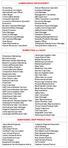 AGRIBUSINESS MANAGEMENT Accounting Accounting Consultant Agricultural Loan Officer Cattle Buyer Commodities Broker Computer Specialist Consumer Information Specialist Economist Elevator Operator/Manager
Composting: Biology Curriculum
 Cornell Waste Management Institute cwmi.css.cornell.edu Composting: Biology Curriculum Understanding what composting is and how it works. Table of Contents Goal, Objectives, Keywords, Scientific Concepts...
Business Plan. Every Business Has Essentially Three Tasks. Production Marketing Financing
 Business Plan Every Business Has Essentially Three Tasks Production Marketing Financing Business Plan Describes How These Function And Convinces Bank to Give You a Loan Components of a Business Plan Description
Science of Life Explorations
 Science of Life Explorations Celebrate the Growing Year: The Farmer s Year A Farmer s Year While you are in school or on a vacation, farmers are working hard to provide us with the foods we eat and the
AGRICULTURAL ALTERNATIVES
 AGRICULTURAL ALTERNATIVES Fruit and Vegetable Marketing for Small-scale and Part-time Growers Marketing is important to all farm enterprises, regardless of size. Some farmers, such as cash grain farmers
Tree Integrated Pest Management. Dan Nortman Virginia Cooperative Extension, York County
 Tree Integrated Pest Management Dan Nortman Virginia Cooperative Extension, York County IPM Refresher Definition: The use of a combination of appropriate pest control tactics to reduce pest population
Composting is one of the healthiest means of Organic Gardening.
 Master Gardeners Nearly 30 years ago Washington State University began a program of training volunteers to help instruct members of their communities about proper gardening practices. That program has
Potting Mix Choices and Recommendations
 Potting Mix Choices and Recommendations Ted Bilderback Nursery Crops Specialist North Carolina State University There are no "one size fits all" recipes for growing containerized ornamental plants. However,
4. Causes and prevention of food losses and waste
 10 4. Causes and prevention of food losses and waste Food is wasted throughout the FSC, from initial agricultural production down to final household consumption. In medium- and high-income countries food
Biomass Supply Chains in South Hampshire
 Biomass Supply Chains in South Hampshire 1 Executive Summary This report provides an analysis of how biomass supply chains could be developed within the area covered by the Partnership for Urban South
Request for Proposal (RFP) for Online Ordering System. CDFA grant: A growing Movement to Seed Change
 Request for Proposal (RFP) for Online Ordering System CDFA grant: A growing Movement to Seed Change County Public Health Services recently received a Specialty Crop Block grant from the California Department
College of Agricultural Sciences Agricultural Research and Cooperative Extension
 Start Farming Introduction to Soils Fact 4 Determining Nutrient Applications for Small Farms Basic Calculations Conventional Generally production systems in Pennsylvania use a mixture of nutrient sources.
Living & Working Managing Natural Resources and Waste
 Living & Working Managing Natural Resources and Waste 5.13 Managing Natural Resources and Waste Background 5.13.1 This chapter focuses on how we manage resources within the AONB. It includes renewable
Harvesting energy with fertilizers
 Harvesting energy with fertilizers Sustainable agriculture in Europe 1 Harvesting energy with fertilizers The reason for agriculture s existence is to supply energy to mankind. Agriculture converts solar
Use this diagram of a food web to answer questions 1 through 5.
 North arolina Testing Program EO iology Sample Items Goal 4 Use this diagram of a food web to answer questions 1 through 5. coyotes 3. If these organisms were arranged in a food pyramid, which organism
Population Ecology. Life History Traits as Evolutionary Adaptations
 Population Ecology An Overview of Population Ecology Population ecology is the study of factors that affect population: Density Growth A population is a group of individuals of a single species that occupy
Remake farming for modern cities
 Lawrence Berkeley National Laboratory Scalable Sustainable affordable Breakthrough technologies to Remake farming for modern cities LBNL in partnership with ITT Institute for Globally Transformative Technologies
LOAN ANALYSIS. 1 This is drawn from the FAO-GTZ Aglend Toolkits 1 5 for the training purpose.
 LOAN ANALYSIS AGLEND1 is a financial institution that was founded in the early nineties as a microcredit NGO. In the beginning, its target clientele were micro- and small entrepreneurs in the urban area.
Starting a Small Food Business in Wisconsin
 Starting a Small Food Business in Wisconsin How do you go about getting permission to market your famous barbeque sauce? Or what if you wish to sell pickles or homemade jam at the local farmers market?
PesticiDe use trends. by JiM Wells. in california Agriculture. environmental solutions GrouP
 PesticiDe use trends in california Agriculture by JiM Wells environmental solutions GrouP summary Farmers are successfully transitioning to safer, more environmentally friendly compounds to combat pests
How to make a Solitary Bee Box
 How to make a Solitary Bee Box **Note: The following instructions include the use of tools that may be dangerous. Ensure there is adult supervision with children. Time: 1 hour People: 1-2+ Materials: Wood
Taking the Classroom Outside By Ashley Schopieray
 Taking the Classroom Outside By Ashley Schopieray Background Introduction If you had the choice to spend the day outside or go to school and sit inside all day, which would you choose? Spending time outdoors
Units of Measure and Conversion Factors for Forest Products
 Units of Measure and Conversion Factors for Forest Products Bulletin #7103 Knowledge of the common units of wood measurement is important to people who are involved in marketing forest products. These
Guidelines for cultivating cannabis for medicinal purposes
 Guidelines for cultivating cannabis for medicinal purposes Annex to the Regulation of the Minister of Health, Welfare and Sport of December 2002, GMT/BMC 2340685, containing policy guidelines for the decision
Moringa Oleifera a Multipurpose Tree:
 Moringa Oleifera a Multipurpose Tree: 1.0 Introduction: Amandla Resources 1.1 Moringa Oleifera belongs to the onogeneric family of shrubs and trees and originated south of the Himalayas in Northern India.
OSU Extension Service Master Gardener Program. Organic Pest Control. Weston Miller OSU Extension Service Community and Urban Horticulture faculty
 Organic Pest Control Weston Miller OSU Extension Service Community and Urban Horticulture faculty Audience Question What does the term organic pest control mean to you? Preview of Presentation Organic
A Primer on Hydroponic Cut Tulips
 This article was originally published in Greenhouse Product News 12(8):8-12., 2002. A Primer on Hydroponic Cut Tulips William B. Miller Department of Horticulture Cornell University Ithaca NY 14853 [email protected]
Recommended Resources: The following resources may be useful in teaching
 Unit D: Controlling Pests and Diseases in the Orchard Lesson 1: Managing and Controlling Pests of Fruit and Nut Crops Student Learning Objectives: Instruction in this lesson should result in students achieving
Four easy ways to recycle your food scraps
 Four easy ways to recycle your food scraps 1. Wrap your scraps 2. Kitchen caddy with compostable bags 3. Worm farms 4. Compost at home Food scrap composting VOUCHER and CASH-BACK details inside. Offer
Rainforest Concern Module 2 Why do we need rainforests?
 Rainforest Concern Module 2 Why do we need rainforests? Rainforest Concern Module 2: Why do we need Rainforest? Before we go any further, there are some words you may not understand, and these words and
UTAH CERTIFIED NURSEY PROFESSIONAL UCNP TEST SYLLABUS
 UTAH CERTIFIED NURSEY PROFESSIONAL UCNP TEST SYLLABUS Contact Information: Utah Green-UNLA 1174 E 2760 S #16 Salt Lake City UT 84152 801-484-4426 or [email protected] UCNP Program Description: The
Introduction to Integrated Pest Management. John C. Wise, Ph.D. Michigan State University MSU Trevor Nichols Research Complex
 Introduction to Integrated Pest Management John C. Wise, Ph.D. Michigan State University MSU Trevor Nichols Research Complex What is Integrated Pest Management? Integrated Pest Management (IPM) New concept;
Integrated Pest Management: Principles & Practice. Dr. Ana Legrand Connecticut IPM Program University of Connecticut
 Integrated Pest Management: Principles & Practice Dr. Ana Legrand Connecticut IPM Program University of Connecticut Integrated Pest Management IPM is the selection, integration and implementation of pest
Technologies for Mushroom Production
 Technologies for Mushroom Production Manjit Singh Director Directorate of Mushroom Research Chambaghat, Solan (HP) [email protected] World Mushroom Production (FAO Stat) (in lakh tons) >200 thousand
Crop Insurance: Background Statistics on Participation and Results
 September 2010 Crop Insurance: Background Statistics on Participation and Results FAPRI MU Report #10 10 Providing objective analysis for more than 25 years www.fapri.missouri.edu This report was prepared
Farm Credit s Mission to serve Young, Beginning, and Small Farmers. New loans made in 2010 to: Young: $7.3 billion Beginning: $10.
 Farming s Future: The Next Generation Gary Matteson, Farm Credit Council VP Young, Beginning, Small Farmer Programs and Outreach Looking to the Future must know where beginning farmers are what beginning
Methods to Price Your Product
 Agriculture Business Strategies February 1999 Agdex 845-2 Methods to Price Your Product The purpose of this factsheet series is to help producers and processors understand the key elements needed to manage
FARMING FOR THE FUTURE How mineral fertilizers can feed the world and maintain its resources in an Integrated Farming System
 How mineral fertilizers can feed the world and maintain its resources in an Integrated Farming System european fertilizer manufacturers association Global trends in population growth (Population 1000 million),
S.W.O.T. Analysis Identifying Your Strengths, Weaknesses, Opportunities, and Threats
 S.W.O.T. Analysis Identifying Your Strengths, Weaknesses, Opportunities, and Threats A SWOT analysis is a term used to describe a tool that is effective in identifying your Strengths and Weaknesses, and