
MACBETH. by William Shakespeare
|
|
|
- Garey Cameron
- 9 years ago
- Views:
Transcription
1 MACBETH by William Shakespeare THE AUTHOR William Shakespeare ( ) was born into the family of a prosperous tradesman in Stratford-upon-Avon, England. While in his mid-teens, he was forced to leave school because his family fell into a period of poverty, so that he had only a rudimentary education. In 1582, he married Anne Hathaway, eight years his senior and already three months pregnant. The marriage produced three children in three years, but in 1585, Shakespeare left Stratford to go to London to seek his fortune in the big city. In London, he embarked upon a career on the stage, becoming a popular actor by the early fifteen nineties. In 1591, he penned his first play, Love s Labour s Lost. His early plays were comedies, and show nothing of the depth that characterized his later works. His plots were borrowed from a variety of sources, both ancient and contemporary. During his career, he wrote 37 plays, three narrative poems, and 154 sonnets. His writing brought him fame and popularity, but he continued to act as well as write (critics love to speculate about which of the characters in his plays would have been played by the author). He eventually became a shareholder in the Lord Chamberlain s Men (later the King s Men when James I ascended the throne). Most of his plays were performed at local theaters like the Rose, the Globe, and the indoor Blackfriars. When the Globe burned to the ground in 1613 (a cannon misfired during a performance of Henry VIII), Shakespeare retired, and died in Stratford three years later on his fifty-second birthday. Macbeth, written in 1606, was the last of Shakespeare s great tragedies. The basic plot is taken from Raphael Holinshed s The Chronicles of England, Scotland, and Ireland. The play itself is a study in the effects of evil on those who choose to follow its path, and it has since its introduction been one of the most popular of Shakespeare s plays. Most scholars believe it was intended for performance by the King s Men in the court of James I. The king had written a book on demonology a decade earlier, and the witches undoubtedly would have appealed to his interest in the occult. More importantly, since the Stuart monarchs were descendants of Banquo, the vision of the endless line of kings was clearly intended to flatter James (note also that, in Holinshed, Banquo was Macbeth s accomplice in Duncan s murder; Shakespeare altered the story for obvious reasons).

2 MAJOR CHARACTERS Macbeth - The protagonist, he is Thane of Glamis and a war hero when the play begins. When three witches predict that he will become Thane of Cawdor and King of Scotland and he is named Thane of Cawdor shortly thereafter, he decides to take matters into his own hands and murder the king in order to seize the throne. The murder of Duncan initiates a trail of blood that includes two attendants, Banquo, and Macduff s wife and children. He is killed by Macduff at the end of the play. Lady Macbeth - Macbeth s wife. She drives him to commit the murder of Duncan, but eventually he is initiating the violence while her conscience is slowly driving her mad. She commits suicide before the final battle is joined. Duncan - King of Scotland, he is a noble ruler who is murdered by Macbeth while asleep in Macbeth s castle at Inverness. Malcolm - Son and heir of Duncan, he flees to England after the murder of his father, after which Macbeth blames him for the foul deed, then leads an army back to overthrow Macbeth. He is named king at the end of the play. Donalbain - Duncan s younger son, he flees to Ireland when the violence begins. Banquo - A Scottish general and Macbeth s best friend, he is told by the witches that his descendants will rule Scotland. Because Macbeth wants his own sons to rule, he hires two thugs to murder Banquo and his son Fleance, though Fleance escapes. Banquo s ghost appears at a banquet the night of the murder and terrifies Macbeth. Fleance - Banquo s son, he escapes the murder plot and flees the country. Macduff - Thane of Fife, he suspects Macbeth of treachery soon after Duncan s murder, and refuses to celebrate his coronation as king. Macbeth later has his family murdered. Macduff flees to England to join the army coming to fight Macbeth, and kills his enemy in the battle outside Dunsinane Castle. Lady Macduff - Macduff s wife, she and her children are slaughtered by murderers hired by Macbeth. Siward - Earl of Northumberland, he leads the English army against Macbeth. His son, Young Siward, is killed by Macbeth during the battle. Lennox, Ross, Menteith, Angus, Caithness - Scottish thanes who rebel against Macbeth. Porter - Macbeth s porter who gives a drunken exposition before the murder of Duncan is discovered.

3 Three Witches - Their prophecies to Macbeth and Banquo lead to the destruction of both. NOTABLE QUOTATIONS Fair is foul and foul is fair. (Witches, Ii, 12) So well thy words become thee as thy wounds; They smack of honor both. (Duncan, Iii, 47-48) So foul and fair a day I have not seen. (Macbeth, Iiii, 39) What, can the devil speak true? (Banquo, Iiii, 115) Why do you dress me in borrowed robes? (Macbeth, Iiii, ) And oftentimes, to win us to our harm, The instruments of darkness tell us truths, Win us with honest trifles, to betray s In deepest consequence. (Banquo, Iiii, ) If chance will have me King, why, chance may crown me, Without my stir. (Macbeth, Iiii, ) Nothing in his life became him like the leaving it. (Malcolm, Iiv, 8-9) Glamis thou art, and Cawdor, and shalt be What thou art promised. Yet do I fear thy nature. It is too full o the milk of human kindness To catch the nearest way. Thou wouldst be great; Art not without ambition, but without The illness should attend it. What thou wouldst highly, That wouldst thou holily; wouldst not play false, And yet wouldst wrongly win. (Lady Macbeth, Iv, 14-21) The raven himself is hoarse That croaks the fatal entrance of Duncan Under my battlements. Come, you spirits That tend on mortal thoughts, unsex me here, And fill me, from the crown to the toe, top-full Of direst cruelty! (Lady Macbeth, Iv, 42-47) To beguile the time, Look like the time; bear welcome in your eye, Your hand, your tongue; look like the innocent flower, But be the serpent under t. (Lady Macbeth, Iv, 71-74)

4 If it were done when tis done, then twere well It were done quickly. If the assassination Could trammel up the consequence, and catch, With his surcease, success, that but this blow Might be the be-all and the end-all here, But here, upon this bank and shoal of time, We ld jump the life to come. But in these cases We still have judgment here, that we but teach Bloody instructions, which, being taught, return To plague the inventor. This even-handed justice Commends the ingredience of our poisoned chalice To our own lips. (Macbeth, Ivii, 1-12) I have no spur To prick the sides of my intent, but only Vaulting ambition, which o erleaps itself And falls on the other. (Macbeth, Ivii, 25-28) I dare do all that may become a man. Who dares do more is none. (Macbeth, Ivii, 51-52) I have given suck, and know How tender tis to love the babe that milks me. I would, while it was smiling in my face, Have plucked my nipple from his boneless gums And dashed the brains out, had I so sworn as you Have done to this. (Lady Macbeth, Ivii, 60-65) But screw your courage to the sticking place, And we ll not fail. (Lady Macbeth, Ivii, 68-69) Is this a dagger which I see before me, The handle toward my hand? Come, let me clutch thee! I have thee not, and yet I see thee still. Art thou not, fatal vision, sensible To feeling as to sight? or art thou but A dagger of the mind, a false creation, Proceeding from the heat-oppressed brain? (Macbeth, IIi, 42-48) I could not say Amen! When they did say God bless us! (Macbeth, IIii, 41-42) Methought I heard a voice cry Sleep no more! Macbeth does murder sleep - the innocent sleep, Sleep that knits up the raveled sleave of care,

5 The death of each day s life, sore labor s bath, Balm of hurt minds, great nature s second course, Chief nourisher in life s feast. (Macbeth, IIii, 49-54) Will all great Neptune s ocean wash this blood Clean from my hand? No. This my hand will rather The multitudinous seas incarnadine, Making the green one red. (Macbeth, IIii, 78-81) Confusion now hath made his masterpiece! Most sacrilegious murder hath broke ope The Lord s anointed temple and stole thence The life o the building! (Macduff, IIiii, 70-73) Had I but died an hour before this chance, I had lived a blessed time; for from this instant There s nothing serious in mortality; All is but toys; renown and grace is dead; The wine of life is drawn, and the mere lees Is left this vault to brag of. (Macbeth, IIiii, ) Where we are, There s daggers in men s smiles; the near in blood, The nearer bloody. (Donalbain, IIiii, ) To be thus is nothing, but to be safely thus. (Macbeth, IIIi, 52-53) Naught s had, all s spent, Where our desire is got without content. Tis safer to be that which we destroy Than by destruction dwell in doubtful joy. (Lady Macbeth, IIIii, 6-9) Things without remedy should be without regard. (Lady Macbeth, IIIii, 13-14) Be innocent of the knowledge, dearest chuck, Till thou applaud the deed. (Macbeth, IIIii, 50-51) Things bad begun make strong themselves by ill. (Macbeth, IIIii, 60) It will have blood, they say: blood will have blood. (Macbeth, IIIiv, ) I am in blood Stepped in so fat that, should I wade no more, Returning were as tedious as go o er. (Macbeth, IIIiv, )

6 By the pricking of my thumbs, Something wicked this way comes. (Second Witch, IVi, 45-46) Macbeth! Macbeth! Macbeth! Beware Macduff; Beware the Thane of Fife. Dismiss me. Enough. (Armed Head, IVi, 80-82) Be bloody, bold, and resolute; laugh to scorn The pow r of man, for none of woman born Shall harm Macbeth. (Bloody Child, IVi, 89-91) Macbeth shall never vanquished be until Great Birnam Wood to high Dunsinane Hill Shall come against him. (Child Crowned, IVi, ) From this moment The very firstlings of my heart shall be The firstlings of my hand. (Macbeth, IVi, ) He loves us not, he wants the natural touch. (Lady Macduff, IVii, 10-11) The king-becoming graces, As justice, verity, temp rance, stableness, Bounty, perseverance, mercy, lowliness, Devotion, patience, courage, fortitude, I have no relish of them, but abound In the division of each several crime, Acting it many ways. (Malcolm, IViii, ) That of an hour s age doth hiss the speaker. (Ross, IViii, 198) Out, damned spot! out, I say! One; two. Why then tis time to do t. Hell is murky. Fie, my lord, fie! a soldier, and afeard? What need we fear who knows it, when none can call our pow r to accompt? Yet who would have thought the old man had so much blood in him? (Lady Macbeth, Vi, 31-36) Now does he feel his title Hang loose about him, like a giant s robe Upon a dwarfish thief. (Angus, Vii, 23-25) I have lived long enough. My way of life is fallen into the sere, the yellow leaf; And that which should accompany old age, As honor, love, obedience, troops of friends, I must not look to have; but, in their stead, Curses not loud but deep, mouth-honor, breath, Which the poor heart would fain deny, and dare not. (Macbeth, Viii, 25-31)

7 NOTES Canst thou not minister to a mind diseased, Pluck from the memory a rooted sorrow, Raze out the written troubles of the brain, And with some sweet oblivious antidote Cleanse the stuffed bosom of that perilous stuff Which weighs upon the heart? (Macbeth, Viii, 47-52) Throw physic to the dogs, I ll none of it! (Macbeth, Viii, 55) Tomorrow, and tomorrow, and tomorrow Creeps in this petty pace from day to day To the last syllable of recorded time; And all our yesterdays have lighted fools The way to dusty death. Out, out, brief candle! Life s but a walking shadow, a poor player, That struts and frets his hour upon the stage And then is heard no more. It is a tale Told by an idiot, full of sound and fury, Signifying nothing. (Macbeth, Vv, 21-30) Despair thy charm! And let the angel whom thou still hast served Tell thee, Macduff was from his mother s womb Untimely ripped. (Macduff, Vviii, 17-20) Lay on, Macduff, And damned be him that first cries Hold, enough! (Macbeth, Vviii, 38-39) Act I, scene 1 - The three witches speak of meeting together again in order to encounter Macbeth. Act I, scene 2 - Duncan, king of Scotland, receives word of the victory of his forces in battle against the King of Norway, who was assisted by Scottish rebels. Macbeth is the hero of the battle. Duncan orders the execution of the traitorous Thane of Cawdor and bestows his title on Macbeth. Act I, scene 3 - The three witches meet Macbeth and Banquo as they return from battle. They greet Macbeth as Thane of Glamis, Thane of Cawdor, and a future king, and predict that Banquo will beget kings. The two try to question the witches, but they vanish. Ross and Angus then enter and announce that the king has conferred the title Thane of Cawdor on Macbeth. He is clearly agitated by this immediate, though partial, fulfillment of the witches prophecy, but determines not to take any steps to bring the final part of the prophecy to pass. Act I, scene 4 - Duncan receives word of the death of Cawdor, who died nobly, confessing his treason. Macbeth and Banquo arrives, and the king expresses his gratitude. He then announces that

8 his son Malcolm will succeed him on the throne, and tells Macbeth that he will soon visit him at his castle in Inverness. Macbeth hastens home to prepare for the king s visit, but is already harboring thoughts of murder. Act I, scene 5 - Back home at Inverness, Lady Macbeth reads a letter from her husband telling her of the witches prophecy and its partial fulfillment. She is determined that her husband will gain the throne, but fears that he is too weak to seize the opportunity. A messenger comes with news that Duncan will visit Inverness that night, and Lady Macbeth is fixed on murder. When her husband arrives, she tells him to put on a good front, and says that she will arrange everything. Act I, scene 6 - Duncan and Banquo arrive at Inverness, and are greeted with false warmth and courtesy by Lady Macbeth. Act I, scene 7 - Macbeth struggles with his conscience, but Lady Macbeth challenges his manhood to motivate him to do the foul deed. The plan she has devised involves getting the king s attendants drunk so they are unable to interfere with the murder, then framing them for the crime. Macbeth agrees to go through with it. Act II, scene 1 - Banquo has been thinking about the witches prophecy, and initiates a conversation about it with Macbeth. The latter acts as if it is not a matter of importance, but sounds out Banquo to see if he will support him; Banquo insists he will participate in nothing that is dishonorable. Macbeth then sees a vision of a dagger, after which he leaves to murder the king. Act II, scene 2 - Lady Macbeth has drugged the king s attendants and has left their daggers out for Macbeth to use; only Duncan s resemblance to her father has kept her from doing the bloody deed herself. Macbeth enters, almost in a state of shock, and still holding the bloody daggers. He refuses to reenter the bed chamber, so Lady Macbeth takes the daggers in and places them near the body. When a knock is heard at the gate, they hurry off to bed so no one will know they were up and around at the time of the murder. Act II, scene 3 - The porter, aroused from a drunken sleep, goes to answer the door while pretending to be the porter at the gate of Hell. He admits Macduff and Lennox, who are greeted by Macbeth, who supposedly just climbed out of bed. Macduff enters the king s chamber and discovers the murder, whereupon Macbeth rushes in and, in a rage spurred by righteous indignation, kills the king s two attendants. Duncan s sons, Malcolm and Donalbain, fearing for their lives, flee to England and Ireland, respectively. Act II, scene 4 - Ross and an old man discuss the evil omens connected with the evil events that have occurred. Macduff reports the rumor implicating Malcolm and Donalbain in their father s death, supposedly confirmed by their sudden flight. Macbeth has been named king, and is to be crowned at Scone, but Macduff declares that he will not attend the coronation; he is obviously suspicious about the cause of Duncan s death. Act III, scene 1 - Banquo suspects that Macbeth is responsible for Duncan s death, and wonders whether, as the witches predicted, his own descendants will sit on the throne. Macbeth enters and

9 invites Banquo to a banquet that evening. Banquo accepts, but says that he and his son Fleance must take a ride that afternoon. Macbeth, jealous of Banquo because of the prophecy that his sons would rule while Macbeth s would not, convinces a pair of ruffians that Banquo is their enemy, and hires them to kill him and his son on the highway. Act III, scene 2 - Lady Macbeth is now the queen, but finds she is not happy. Macbeth, too, is plagued by insomnia and fearful dreams. They speak of the importance of putting on a good front for their guests at the banquet. Macbeth tells his wife to pay special attention to Banquo, not bothering to tell her that he has already arranged to have Banquo and Fleance murdered. Act III, scene 3 - The two murderers, joined by a third man (Macbeth himself in most productions), assail Banquo and Fleance on the road. Banquo is killed, but Fleance escapes. Act III, scene 4 - While Macbeth is hosting the banquet, one of the murderers reports what happened on the road. He is upset that Fleance survived, but is pleased to receive assurances of Banquo s demise. Lady Macbeth notices that her husband is troubled and reminds him to put on a cheerful front for the guests. At this point, Banquo s ghost appears, visible only to Macbeth, who panics. Lady Macbeth calms the guests by telling them that Macbeth has suffered from hallucinations since childhood, then takes him aside to try to get him to pull himself together. When the ghost enters a second time and he again seeks to address it, Lady Macbeth dismisses the guests. After they leave, Macbeth voices his suspicions about Macduff s absence from the feast. He tells his wife that he plans to consult the witches again the next day, and hints that further bloodshed is yet to come. Act III, scene 5 - This scene, generally considered by scholars to be a later interpolation, involves Hecate coming to the witches and telling them that Macbeth will come the next day to hear his fortune. It adds nothing whatsoever to the plot and interrupts the action. Act III, scene 6 - Lennox and another lord are discussing the current political situation. At this point, no one doubts Macbeth s guilt, and Scotland is suffering under his tyranny. Macduff has gone to England to raise an army and put Malcolm on the throne. Macbeth, meanwhile, is preparing for war. Act IV, scene 1 - Macbeth visits the witches and is shown three apparitions - an armed head, a bloody child, and a child crowned. He is warned against Macduff, but assured that none of woman born can harm him, and that he need not fear till Birnam Wood advance against Dunsinane Castle. The vision of an endless line of kings looking like Banquo disconcerts him, however. When he hears that Macduff has gone to England to raise troops against him, he determines to murder Macduff s family. Act IV, scene 2 - Lady Macduff mourns her husband s departure, which leaves her and the children unprotected. Ross tries to comfort her, but soon the murderers arrive and carry out their grim charge. Act IV, scene 3 - Macduff, in England, tries to convince Malcolm to overthrow Macbeth and seize the throne. Malcolm does not trust him at first, and paints a bleak picture of his own character to discern Macduff s true feelings. When he becomes convinced that Macduff is sincere, he tells him

10 that Siward has gathered ten thousand men to invade Scotland. Macduff then hears that his family has been slaughtered, and vows revenge against Macbeth. Act V, scene 1 - A doctor has been summoned because of Lady Macbeth s strange behavior. The doctor observes her as she walks in her sleep and reenacts Duncan s murder. He doesn t understand all he sees, but knows that she is being tormented by her conscience. He demands that the servants watch her because he fears suicide. Act V, scene 2 - Scottish lords move toward Birnam Wood to meet Malcolm and the English army. Macbeth has fortified Dunsinane, but the loyalty of his own men is questionable at best. Act V, scene 3 - Macbeth awaits the attack with confidence because of the witches prophecy, while Lady Macbeth, whose mind is daily more troubled, is under the doctor s care. Act V, scene 4 - The Scottish lords and Malcolm s English forces meet and adopt a strategy of camouflaging themselves behind tree branches. Act V, scene 5 - A messenger tells Macbeth of his wife s suicide, but he cares little for it, and bemoans the meaninglessness of life. When told that Birnam Wood is advancing toward the castle, he begins to entertain doubts about the witches prophecies, but vows to die fighting. Act V, scene 6 - Malcolm s forces reach the castle and throw down their camouflage, preparing to attack. Act V, scene 7 - Macbeth leaves Dunsinane Castle to meet his foes, and kills young Siward in combat; Macduff searches the battlefield for Macbeth. Meanwhile, most of Macbeth s troops have deserted to the enemy. Act V, scene 8 - Macduff and Macbeth fight, and Macbeth is killed and beheaded. Scotland is thus freed from tyranny as Malcolm prepares to assume the throne. ESSAY QUESTIONS Discuss the following in a five-paragraph essay: 1. In William Shakespeare s Macbeth, is the protagonist a tragic hero? Is he a noble man who is brought down to destruction because of a flaw in his character? Why or why not? Support your conclusion with specifics from the play. 2. Discuss the playwright s portrayal of the progression of evil in the life of the protagonist in William Shakespeare s Macbeth. How do the consequences of Macbeth s initial choice to pursue evil ultimately overwhelm him? Assess from Scripture the picture of evil found in this great tragedy.

11 3. To what extent does William Shakespeare s Macbeth support the adage that sin begets sin and violence begets violence? Evaluate the truth of this statement from Scripture, and use specific incidents and quotes from the play to support your arguments. 4. In William Shakespeare s Macbeth, who is the greater villain, Macbeth or his wife? Why do you think so? Support your conclusion with details from the play. 5. In William Shakespeare s Macbeth, who is the stronger character, Macbeth or his wife? Why do you think so? Support your conclusion with details from the play. 6. In William Shakespeare s Macbeth, who is the more ambitious character, Macbeth or his wife? Why do you think so? Support your conclusion with details from the play. 7. At the end of the first scene of William Shakespeare s Macbeth, the witches cry, Fair is foul and foul is fair. Trace the theme of the inversion of good and evil through the play. How does the inability to distinguish one from the other bring about the downfall of Macbeth and his wife? Be specific. 8. Discuss the imagery of clothing in William Shakespeare s Macbeth. How does the playwright utilize this image to depict the deterioration of the protagonist s character as the play progresses? Be specific. 9. After his first encounter with the witches in William Shakespeare s Macbeth, Banquo says, And oftentimes, to win us to our harm, / The instruments of darkness tell us truths, / Win us with honest trifles, to betray s / In deepest consequence. Compare and contrast the halftruths told by the witches with those told by Satan when he tempted Jesus in the wilderness. Why are half-truths more seductive than outright lies? Use specific examples from the play to support your arguments. 10. Discuss the use of the image of sleep in William Shakespeare s Macbeth. What characters can or cannot sleep, and why? What is the significance of their somnolence or insomnia? How do these incidents convey the major themes of the play? Use specific examples. 11. Compare and contrast the changes undergone by Macbeth and Lady Macbeth in the course of William Shakespeare s Macbeth. To what extent does each character cause changes in the other? What do both transitions say about the consequences of lives dominated by evil? 12. Discuss the images used in the speech of the drunken porter at the beginning of Act II, scene 3 of William Shakespeare s Macbeth. How do these images fit Macbeth? Support your arguments with specifics from the play. 13. Compare and contrast the views of kingship presented in William Shakespeare s Macbeth and Henry IV, part 1. Though the plays are very different in tone and content, do they present the same picture of the nature of kingship, and of what makes a good king? Use specifics from the two plays to support your conclusions.

12 14. In 1605, Guy Fawkes tried to blow up the houses of Parliament with the king and his cabinet in the building in the infamous Gunpowder Plot. One year later, William Shakespeare wrote Macbeth. How does the content of the play reflect the fears of the people of Shakespeare s day concerning the consequences of the assassination of the king? What characteristics of the play support the need for a stable monarchy? Be specific. 15. When James I took the English throne in 1603 after the death of Elizabeth I, there were many who questioned his right to succeed his distant cousin. The Stuart family of which James I was a part traced its descent from hundreds of years of Scottish monarchs - all the way back to the Banquo who is a significant character in William Shakespeare s Macbeth. In what ways could Shakespeare s play be viewed as an apologetic for the legitimacy of the Stuart monarchy? Use specific quotations from the play to support your arguments. 16. The Stuart kings who ruled England in the seventeenth century were strong believers in Divine Right monarchy. Shakespeare s King s Men were employed by James I, and one would naturally expect that the playwright would want to please the man who signed his paychecks. To what extent does William Shakespeare s Macbeth support the concept of Divine Right? Use specifics from the play to support your arguments. 17. In Act IV, scene 3 of William Shakespeare s Macbeth, Malcolm paints a bleak picture of his own character in order to test Macduff s loyalty. The words that he uses in doing so convey much about Shakespeare s idea of a good king. Use this scene to discuss Shakespeare s view of the ideal monarch. Be specific. 18. A foil is a character who brings out certain characteristics of a main character by contrast. In William Shakespeare s Macbeth, who do you think is more of a foil for Macbeth, Duncan or Banquo? Why? Support your conclusion with specifics from the play. 19. In William Shakespeare s Macbeth, the protagonist s Tomorrow, and tomorrow, and tomorrow speech in Act V, scene 5 is an expression of despair and a cry against the meaningless of life. In what sense is such nihilism the natural consequence of the choices Macbeth makes throughout the play? 20. Many commentators have noticed the similarity between the witches in William Shakespeare s Macbeth and the Fates of Greek mythology. The Fates were said to control human destiny, but do the witches? To what extent is Macbeth the master of his fate and the captain of his soul? To what extent is he the victim of powers beyond his control? Discuss the view of free will versus determinism expressed in Shakespeare s great tragedy. 21. Discuss the role of gender in William Shakespeare s Macbeth. What pictures of masculinity and femininity does Shakespeare paint? To what extent do those pictures reflect the common beliefs of his day, and to what extent are they universally valid? Use specific examples to support your arguments.

13 22. Discuss the role of visions in William Shakespeare s Macbeth. How do they influence the lives and choices of the characters who see them? Do you believe these to be supernatural or psychological occurrences? Why do you think so? 23. Compare and contrast the views of violence expressed in William Shakespeare s Macbeth and T.H. White s The Once and Future King. Do the two stories demonstrate agreement or disagreement about the concept that Might makes Right? Support your arguments with specifics from the two books, and evaluate the answers they give on the basis of Scripture. 24. Compare and contrast the views concerning the consequences of evil expressed in William Shakespeare s Macbeth and T.H. White s The Once and Future King. Do the two stories demonstrate agreement or disagreement about the wages of sin? Support your arguments with specifics from the two books, and evaluate the answers they give on the basis of Scripture. 25. Compare and contrast the views of women expressed in William Shakespeare s Macbeth and T.H. White s The Once and Future King. Do the two stories demonstrate agreement or disagreement about the issue of gender? Support your arguments with specifics from the two books, and evaluate the answers they give on the basis of Scripture. 26. Compare and contrast the views of the medieval Scottish nobility in William Shakespeare s Macbeth and T.H. White s The Once and Future King. To what extent do the two authors share the same view of the lawlessness of the Scottish highlands? Do the two writers agree or disagree about the solution for such lawlessness? Evaluate their solutions on the basis of Scripture. 27. In William Shakespeare s Macbeth, almost all of the violent acts occur offstage. The choice to handle things in this manner resulted from not only a lack of special effects in the seventeenth century, but also Shakespeare s desire to create psychological impact. In short, what we imagine is usually much more powerful than what we actually see. This is not just true of the audience, however. How is the truth of this statement also borne out in the lives of the play s protagonists? 28. Discuss the role of the weather in William Shakespeare s Macbeth. What do storms and darkness tell us about the relationship between the natural order and the political order of the state? Relate this to the concept of natural law that gained popularity in the seventeenth and eighteenth centuries. 29. In William Shakespeare s Macbeth, when Macbeth, speaking of the impending murder of Duncan, says, If it were done when tis done, then twere well / It were done quickly, was he being realistic? Is a murder, or any other sin, really done when tis done? Support your arguments with specifics from the play. 30. Some critics have argued that Macbeth is the most Christian of William Shakespeare s great tragedies. Do you agree? Why or why not? Support your conclusion with specifics from the play.

14 31. Sigmund Freud theorized that the foundational motive behind the actions of the protagonist and his wife in William Shakespeare s Macbeth was not ambition, but childlessness - that their own inability to have a family drove them to destroy the families of others, and ultimately brought them to the point of madness and death. Do you think this to be a credible theory? Why or why not? Support your conclusion with specifics from the play. 32. William Shakespeare wrote Antony and Cleopatra and Macbeth at about the same time. The leading male figures in the plays have in common the fact that our ability to picture them as noble and worthy is largely dependent on the words others speak about them. Compare and contrast the ways in which Shakespeare establishes the nobility of Antony and Macbeth through the eyes of their friends and the foes who respect them. Are these testimonials sufficient to establish the quality of the characters in the eyes of the audience? Why or why not? 33. The theme of ambition is at the core of the tragedy in William Shakespeare s Macbeth and the comedy in Anthony Trollope s Barchester Towers. Both stories, however, have serious things to say about the subject. Compare and contrast their portrayals of the dangers of o erweening ambition, using specific incidents and quotations from both works. 34. Compare and contrast the consequences of sin portrayed in Fyodor Dostoevsky s Crime and Punishment and William Shakespeare s Macbeth. Which portrayal is more realistic? Which is more Christian? Why do you think so? 35. The protagonists in Christopher Marlowe s Doctor Faustus and William Shakespeare s Macbeth are both men consumed by ambition. Compare and contrast the two, being sure to consider the nature of their ambitions, the ways in which they pursue them, and the outcomes of their respective failures. 36. In William Shakespeare s Henry VI, part 2, Eleanor of Gloucester is willing to do almost anything to secure the throne for her husband though he shares no such ambition. Compare her character with that of the protagonist s wife in Macbeth. What do Eleanor and Lady Macbeth have in common? In what significant ways are they different? Be sure to consider the roles they play in the plots of the dramas as well as their personalities and their relationships to their husbands. 37. Compare the prophecies of the spirit in William Shakespeare s Henry VI, part 2 to those of the witches in Macbeth. In your analysis, be sure to consider the language, content, and consequences of the prophecies as they are worked out in the two plays. 38. Compare and contrast the prophecies pronounced by Fedallah in chapter 117 of Herman Melville s Moby Dick with those of the witches in Act IV, scene 1 of William Shakespeare s Macbeth. Give attention to language, content, and the roles played by the prophecies in the respective stories.

15 39. Would you describe the protagonist in William Shakespeare s Macbeth as a Machiavellian? Would the author of The Prince have approved of the way Macbeth gained and sought to hold power? Why or why not? 40. Compare the prophecies of Queen Margaret in William Shakespeare s Richard III to those of the witches in Macbeth. Consider the tone, atmosphere, and content of the respective prophecies as well as their impact on those to whom they are spoken. Do the prophecies drive the plots or simply serve as foreshadowing devices? 41. Compare and contrast the protagonists in William Shakespeare s Richard III and Macbeth. In what ways are their actions, motivations, and final destinies similar? In what ways are they different? To what extent do the differences show the maturing of Shakespeare s art over a period of more than a decade between the writing of the two plays? 42. Compare and contrast the overall themes of William Shakespeare s Richard III and Macbeth. Consider that the former was written a decade before Elizabeth s death, while the latter was written shortly after the uncovering of the Gunpowder Plot during the reign of James I. How do the political situations in England during the two eras affect the plots of the plays? Give special attention to the reasons why Richard and Macbeth are portrayed as villains, relating those reasons to the dangers faced by the kingdom under Elizabeth and James, respectively. 43. Compare and contrast the character of Mamillius in William Shakespeare s The Winter s Tale with that of the son of Macduff in Macbeth. Consider the impact of the few lines given to the two boys as well as the significance of their deaths to the themes of the two plays. 44. Compare and contrast the flattery of the ruling monarch found in Moliere s Tartuffe and William Shakespeare s Macbeth. Is what these playwrights do justifiable, or is it a prostitution of their art? Use examples from both plays to justify your conclusion. 45. Compare the qualities of a good king presented in Moliere s Tartuffe with those pictured in William Shakespeare s Macbeth. To what extent do the two share the same view of monarchy? Use specifics from the plays to support your arguments. 46. The Stuart monarchs of England and the French Bourbon kings of the seventeenth century both strongly believed in the concept of Divine Right. How are these beliefs treated in Moliere s Tartuffe and William Shakespeare s Macbeth? Do the two playwrights support the justification of monarchy that was popular in the age in which they lived, or do they simply give lip-service to what will please their patrons? Support your arguments with specifics from the two plays. 47. Compare and contrast the role played by Egdon Heath in Thomas Hardy s The Return of the Native to the way similar terrain functions in William Shakespeare s Macbeth. Be sure to consider matters of setting, plot, and character and incorporate specific references from both works of literature.

16 48. In both John Webster s The Duchess of Malfi and William Shakespeare s Macbeth, one of the villains goes mad with guilt. Compare and contrast the madness of Ferdinand and Lady Macbeth, being sure to consider its causes, the form it takes, and the consequences of their madness. 49. Compare and contrast the death speeches of Antonio in John Webster s The Duchess of Malfi and Macbeth in William Shakespeare s Macbeth. Consider especially what they have to say about the meaninglessness of life. How does the fact that one is a good man and the other a villain affect your analysis of their speeches?

Macbeth Act Summaries
 Macbeth Act Summaries Act 1: The play takes place in Scotland. Duncan, the king of Scotland, is at war with the king of Norway, and as the play opens, he learns of Macbeth's bravery in battle against a
Macbeth. William Shakespeare
 Macbeth William Shakespeare Macbeth - Composed in late 1606 early 1607 - Last of Shakespeare s s 4 tragedies - Considered his darkest work - Macbeth s s rise to power Research Assignment Group 1 Research
Macbeth. Sample Analytical Paper Topics
 Macbeth Sample Analytical Paper Topics These analytical papers are designed to review your knowledge of the drama and apply that knowledge to a critical paper. The topics may request that you examine the
Macbeth: Timeline. 3 witches plan to meet Macbeth: he is doomed from the start. Purpose: to show evil will influence events from the start.
 Macbeth: Timeline (Macbeth s journey from good to evil) Act I, Scene i 3 witches plan to meet Macbeth: he is doomed from the start. Purpose: to show evil will influence events from the start. Act I, Scene
Macbeth. by William Shakespeare -1-
 Macbeth by William Shakespeare witches also told Banquo that he would be the father of kings. Macbeth, who was already Thane of Glamis, asked the witches why they called him Thane of Cawdor and king; but
Macbeth. by William Shakespeare -1-
 Macbeth by William Shakespeare witches also told Banquo that he would be the father of kings. Macbeth, who was already Thane of Glamis, asked the witches why they called him Thane of Cawdor and king; but
Macbeth Act IV. FIRST WITCH Round about the cauldron go; In the poisoned entrails throw.
 Macbeth Act IV ACT IV SCENE I. A cavern. In the middle, a boiling cauldron.[thunder. Enter the witches, putting horrible things in their soup cauldron] FIRST WITCH Round about the cauldron go; In the poisoned
Macbeth By William Shakespeare A collaborative activity for KS4 Teachers notes
 Macbeth By William Shakespeare A collaborative activity for KS4 Teachers notes William Shakespeare s Macbeth: Judith Longstreth Bristol & South Gloucestershire Consortium EMAS: June 2010 Website editors:
Macbeth Study Guide Questions: Act 3
 Macbeth Study Guide Questions: Act 3 3.1 1. What are Banquo s specific suspicions and fears? 2. What does Macbeth call Banquo? 3. What series of questions does Macbeth ask Banquo? Significance? 4. What
Macbeth Basics Lesson Plan
 Lesson Plan Video: 15 minutes Lesson: 35 minutes Pre-viewing :00 Warm-up: Have the students think of any scary stories or ghost stories they know. What are their main story elements? Prompt them with categories
Macbeth Study Questions
 Act I Macbeth Study Questions In the first three scenes of Act One, rather than meeting Macbeth immediately, we are presented with others' reactions to him. Scene one begins with the witches, accepted
Macbeth Study Guide Questions Act I and II
 Macbeth Study Guide Questions Act I and II Act I Scene i 1. When the witches planned on meeting next, they planned to meet with whom? 2. Looking at the last two lines of scene 1, what is the theme expressed
Macbeth Study Guide Questions
 Macbeth Study Guide Questions Act I 1. The first scene in the play is brief, but rich in its hints about the kind of world we shall encounter as the play unfolds. What effect would the initial setting
Macbeth Study Guide Questions
 Macbeth Study Guide Questions Act I 1. The first scene in the play is brief, but rich in its hints about the kind of world we shall encounter as the play unfolds. What effect would the initial setting
6. After Banquo s murder, who shows up at Macbeth s palace and ruins the banquet? a. Fleance b. Macduff c. Banquo s ghost d.
 Macbeth Final Test Fill in the best answer on your scantron sheet. 1. Why does Macbeth become Thane of Cawdor? a. He is the son of the last Thane of Cawdor. b. He kills the last Thane of Cawdor. c. Duncan
The sleep-walking scene Act 5 scene 1
 The sleep-walking scene Act 5 scene 1 Macbeth Whilst she is asleep, Lady Macbeth speaks aloud, and the audience (along with the doctor and gentlewoman) get a glimpse of her real fears and feelings. Find
Shakespeare paper: Macbeth
 En KEY STAGE 3 LEVELS 4 7 2006 English test Shakespeare paper: Macbeth Please read this page, but do not open the booklet until your teacher tells you to start. Write your name, the name of your school
Macbeth s early state of mind
 Objectives S&L13 Develop and compare different interpretations of scenes or plays by Shakespeare or other dramatists S&L14 Convey action, character, atmosphere and tension when scripting and performing
Macbeth act V practice test
 Macbeth act V practice test Multiple Choice Identify the letter of the choice that best completes the statement or answers the question. Recalling and Interpreting (The Tragedy of Macbeth, Act 5 ) 1. During
Macbeth. William Shakespeare. Act 1, Scene 7
 Macbeth By William Shakespeare Act 1, Scene 7 SCENE. Macbeth's castle. (Hautboys and torches. Enter a Sewer, and divers Servants with dishes and service, and pass over the stage. Then enter ) If it were
Macbeth Act Two, Scene One
 Macbeth Act Two, Scene One As scene one begins, we are given images of light and dark. Banquo and Fleance, his son, are wandering late at night because he cannot sleep. Fleance says the moon is down and
Macbeth Rap - Lyrics
 Name: Date: Macbeth Rap - Lyrics Summary of the Play Intro Allow myself to introduce myself: The name's Macbeth, during labor I induced myself. Macbeth, I'll rap death until my last breath, "Scotland!"
Shakespeare paper: Macbeth
 English test En KEY STAGE 3 LEVELS 4 7 2003 Shakespeare paper: Macbeth Please read this page, but do not open the booklet until your teacher tells you to start. Write your name, the name of your school
GCSE (9-1) English Literature EXEMPLARS
 GCSE (9-1) English Literature EXEMPLARS Paper 1 Shakespeare SECTiOn a Shakespeare answer the question on OnE text from this section. You should spend about 55 minutes on this section. You should divide
Read, discuss, write. Read, discuss, write. Read, discuss, write. Read, discuss, write. Read, discuss, write. Read, discuss, write
 Themes Week Text Task 1 Act I scene i Introduction Writing Prompt/Activity What do you expect to gain from this experience? Literary Term 2 Act I Fate 3 Act II 4 Act II Would you want to know your future?
The Tudor Myth. and the Place of the Stage
 The Tudor Myth and the Place of the Stage Shakespeare s History Plays Two tetralogies (series of four plays): First Tetralogy (1590-93): Henry VI, parts 1,2 and 3 Richard III Second Tetralogy (1595-1599):
WILL WE BE MARRIED IN THE LIFE AFTER DEATH?
 Explanatory Notes: WILL WE BE MARRIED IN THE LIFE AFTER DEATH? Series title: Topic: Marriage in heaven / heaven as a marriage Table of Contents: Message 1: What is the Life after Death Like? p. 1 Message
Romeo & Juliet : Plot Breakdown. Exposition. Act I:I
 Romeo & Juliet : Plot Breakdown Exposition Act I:I Introduction to two crude capulets who are making crude jokes Fighting in the streets started by Tybalt Prince stops the fight > 3 times these families
WILLIAM SHAKESPEARE- Biography
 Name WILLIAM SHAKESPEARE- Biography William Shakespeare is often called the world s greatest playwright. He wrote comedies, tragedies, and historical plays in England in the last part of the 16 th and
Act 5: scene 1:32-34 (34-36) scene 4: 25-29 (25-29) scene 5: 26-30 (26-30) scene 7: 15-18 (15-17) scene 8: 17-20 (17-20)
 Macbeth Unit Test Study Guide January 17 Exam will be between thirty and forty scan-tron multiple choice (40 points) Characters Be able to identify characters by either quotes or descriptions. To review
Comprehension The questions below refer to the selection "The Tragedy of Macbeth, Act II."
 Instructions: Create a blank email with a vertical column labeled 1-50. Open the test document and answer all questions on the email. Double-check your answers when you have finished. Email me your answers
Theme, Plot, and Conflict
 Theme, Plot, and Conflict Purpose: Use this resource to learn about how theme, plot, and conflict are different from one another but yet work together in literature. When reading literature, the reader
LORD S PRAYER WRITERS: REBA RAMBO-MCGUIRE, DONY MCGUIRE
 LORD S PRAYER OUR FATHER WHICH ART IN HEAVEN THY KINGDOM COME THY WILL BE DONE ON EARTH AS IT IS IN HEAVEN AND FORGIVE US OUR DEBTS AS WE FORGIVE OUR DEBTORS BUT DELIVER US FROM EVIL FOR THINE IS THE KINGDOM
Leaving Certificate. English. Ordinary Level
 Leaving Certificate English Ordinary Level Leaving Certificate English is made up of two examination papers. Paper One is a language paper and Paper Two is a literature paper. General Tips: Always make
Live by Faith. A Disciple s Response to God s Word
 Live by Faith A Disciple s Response to God s Word Most of us get along pretty well in this world. Our physical senses serve us well in exploring our world and exposing any dangers that dwell there. We
Devotion NT347 CHILDREN S DEVOTIONS FOR THE WEEK OF: LESSON TITLE: The Hall of Faith. THEME: God wants us to trust Him. SCRIPTURE: Hebrews 11:1-40
 Devotion NT347 CHILDREN S DEVOTIONS FOR THE WEEK OF: LESSON TITLE: The Hall of Faith THEME: God wants us to trust Him. SCRIPTURE: Hebrews 11:1-40 Dear Parents Welcome to Bible Time for Kids! This is a
LESSON TITLE: Jesus Heals Blind Bartimaeus
 Devotion NT257 CHILDREN S DEVOTIONS FOR THE WEEK OF: LESSON TITLE: Jesus Heals Blind Bartimaeus THEME: Jesus always has time for us! SCRIPTURE: Mark 10:46-52 Dear Parents Welcome to Bible Time for Kids!
Self-imposed Curses Psalm 34:13 - Keep your tongue from evil, and your lips from speaking deceit.
 Power of Your Spoken Words - Sins of the Tongue Introduction: the tongue is powerful and we can use it for good or for evil. (God s word tells us that the power of life and death is in the tongue) We know
Macbeth. Rafael Alcolea www.myplaceforenglish.blogspot.com. Plot Overview WILLIAM SHAKESPEARE
 Macbeth WILLIAM SHAKESPEARE Plot Overview THE PLAY BEGINS with the brief appearance of a trio of witches and then moves to a military camp, where the Scottish King Duncan hears the news that his generals,
LESSON TITLE: Jesus is the Way, the Truth, and the Life
 Devotion NT271 CHILDREN S DEVOTIONS FOR THE WEEK OF: LESSON TITLE: Jesus is the Way, the Truth, and the Life THEME: We can always trust Jesus. SCRIPTURE: John 14:1-6 Dear Parents Welcome to Bible Time
MARY PONDERS, DO WE?
 MARY PONDERS, DO WE? The Word of God on this Christmas Day is Luke 2:19 which reads: And Mary treasured up all these things and pondered them in her heart. So far the text. The glory of God has been revealed,
Macbeth
 Macbeth Background Info Author Bio Full Name: William Shakespeare Date of Birth: 1564 Place of Birth: Stratford-upon-Avon, England Date of Death: 1616 Brief Life Story: Shakespeare s father was a glove-maker,
Act 1 Scene 7. (Enter Macbeth)
 (Enter Macbeth) Act 1 Scene 7 If it were done when tis done, then twere well It were done quickly: if th assassination Could trammel up the consequence and catch With his surcease success: that but this
How To Kill An Englishman
 ACT V SCENE I. Dunsinane. Room in the castle. Enter a and a Waiting- I have two nights watched with you, but can perceive no truth in your report. When was it she last walked? Since his majesty went into
Devotion NT267 CHILDREN S DEVOTIONS FOR THE WEEK OF: LESSON TITLE: The Second Coming. THEME: Jesus is coming again. SCRIPTURE: Matthew 24:27-31
 Devotion NT267 CHILDREN S DEVOTIONS FOR THE WEEK OF: LESSON TITLE: The Second Coming THEME: Jesus is coming again. SCRIPTURE: Matthew 24:27-31 Dear Parents Welcome to Bible Time for Kids. Bible Time for
WELCOME TO GOD S FAMILY
 WELCOME TO GOD S FAMILY To all who received him, to those who believed in his name, he gave the right to become children of God children born not of natural descent, nor of human decision or a husband
Oedipus and Troy Maxson: The Classic and Modern Tragic Heroes of Literature
 Carlson 1 Oedipus and Troy Maxson: The Classic and Modern Tragic Heroes of Literature What makes a hero? Many would think of modern day superheroes such as Super Man, Spider Man, and Wonder Woman. Fighting
Note: These activities are suitable for students who don t know a lot (possibly nothing at all) about Shakespeare s writing.
 Shakespeare Teacher s notes Level: Topic: Subject(s): Time (approx): Preparation: Lower Intermediate (and above) Shakespeare Literature and History Activity 1: 15-20 minutes Activity 2: 10 minutes Activity
ROMEO AND JULIET: Act I Reading and Study Guide
 Name Period ROMEO AND JULIET: Act I Reading and Study Guide I. VOCABULARY: Be able to define the following words and understand them when they appear in the play. adversary boisterous nuptial II. LITERARY
Depiction of Personal Power through Language in William Shakespeare s Macbeth
 EUROPEAN ACADEMIC RESEARCH Vol. III, Issue 12/ March 2016 ISSN 2286-4822 www.euacademic.org Impact Factor: 3.4546 (UIF) DRJI Value: 5.9 (B+) Depiction of Personal Power through Language in MAC STEFFI Department
acbeth MWilliam Shakespeare KEY TO THE EXERCISES,TAPESCRIPT SHAKESPEARE S ENGLISH LANGUAGE PLAY
 MWilliam Shakespeare acbeth M KEY TO THE EXERCISES,TAPESCRIPT AND EXIT TEST SHAKESPEARE S ENGLISH THE THREE WITCHES Page 14, 2 a. whisper b. shout c. laugh d. cackle LANGUAGE PLAY LETTER TO LADY MACBETH
BASIC CATHOLIC PRAYERS
 BASIC CATHOLIC PRAYERS Sign of the Cross In the name of the Father, and of the Son, and of the Holy Spirit. Amen. The Apostles Creed I believe in God, the Father almighty, creator of heaven and earth.
ROMEO AND JULIET: Act I Reading and Study Guide
 Name Date Period ROMEO AND JULIET: Act I Reading and Study Guide I. VOCABULARY: Define the following words. adversary boisterous nuptial aside blank verse characterization conflict External: 1. vs. 2.
Hamlet in Depth. ASSIGNMENT : find the differences between the characters of Horatio and Hamlet
 Act III, scene ii (Analysis) I Horatio Hamlet in Depth Horatio emerges as much as an important ally to Hamlet as Polonius is to Claudius (subplots mirror each other : Fortinbras to Norway, Hamlet to Claudius)
Section # 5: THERE IS STILL HOPE
 14 Section # 5: THERE IS STILL HOPE Discussion Guide Read to the Group: Adam and Eve made themselves a covering of fig leaves in order to make themselves presentable to, but refused to accept that clothing.
CONTENTS. Chapter 9 Closing the Door When the Serpent Knocks...65. Chapter 12 The Serpent in Eternal Humiliation...85
 CONTENTS session 1: Chapter 1 Putting the Devil in His Place...5 session 2: Chapter 2 The Star that Bit the Dust...13 session 3: Chapter 3 There Is a Serpent in Our Garden...21 session 4: Chapter 4 The
DRAMA CLUB SCRIPT. Term: Summer 2014 Day: Tuesday Age group: 8-10. Title: Macbeth
 DRAMA CLUB SCRIPT Term: Summer 2014 Day: Tuesday Age group: 8-10 Title: Macbeth All: When shall we three meet again, in thunder lightning or in rain All: When the Hurley burley s don, when the battles
The Qualities of a Godly Father. Mark 5: 21-24; 35-43
 The Qualities of a Godly Father Mark 5: 21-24; 35-43 Today is a special day for many of the men here. Today has been set aside to honor fathers. Being a father is one of the great joys in life. I am blessed
A PRAYER IN THE GARDEN
 BOOK 3, PART I, LESSON 4 A PRAYER IN THE GARDEN THE BIBLE: Luke 22:39-53, Mark 14:32-50 THEME: We remember that Jesus taught about love and showed love in everything he did. During Lent and Easter we remember
HarperOne Reading and Discussion Guide for The Weight of Glory. Reading and Discussion Guide for. The Weight of Glory. C. S. Lewis.
 Reading and Discussion Guide for The Weight of Glory by C. S. Lewis The Weight of Glory is a series of essays and talks that Lewis wrote over a long period (roughly between 1939 and 1956). We have organized
Romeo & Juliet. Student Worksheet 1 Reading task 1. shakespeare for life. www.macmillanreaders.com/shakespeare. ROMEO & JULIET: Student worksheet
 Student Worksheet 1 Reading task 1 Before reading the synopsis, read the quiz questions and try to predict the correct answers. Once you ve completed your answers read the play synopsis to check your answers
Jason Bronkar. English 2B. Mr. Bronkar. 3 April 2003. Title. Start typing here. Tragic Hero
 Bronkar 1 Jason Bronkar English 2B Mr. Bronkar 3 April 2003 Title Start typing here. Tragic Hero Scholars argue over whether Brutus or Caesar is the tragic hero of the play because both characters are
First Holy Communion Prep Game
 ST. JOAN OF ARC ACADEMY S First Holy Communion Prep Game Learning the CatechismThrough Play directions Game pieces needed to play: 1 game board 1 set of questions 1 dice (1-4) game pieces (button, dime,
SHAKESPEARE MADE EASY
 SHAKESPEARE MADE EASY Macbeth Introduction to the Play Background to Macbeth Macbeth is based on the career of Scottish King Macbeth. The actual Macbeth lived from 1005 to 1057 and reigned from approximately
Home Is Where The Heart Is
 Home Is Where The Heart Is Where is your heart? Is it where you are, or is it out searching for a relationship to fulfill you? Is your heart into making a home for yourself and your children, or is it
Hamlet Basics Lesson Plan
 Lesson Plan Video: 15 minutes Lesson: 35 minutes Pre-viewing :00 Warm-up: Ask students to discuss the phrase I don t get mad I get even. Ask students to name some possible consequences of someone plotting
IN A SMALL PART OF THE CITY WEST OF
 p T h e L a s t L e a f IN A SMALL PART OF THE CITY WEST OF Washington Square, the streets have gone wild. They turn in different directions. They are broken into small pieces called places. One street
The Second Coming of Jesus Christ
 The Second Coming of Jesus Christ Chapter 44 Looking forward to the Savior s Second Coming Forty days after His Resurrection, Jesus and His Apostles were gathered together on the Mount of Olives. The time
ROMEO AND JULIET STUDY QUESTIONS
 PROLOGUE ROMEO AND JULIET STUDY QUESTIONS 1. A prologue gives the reader information. Explain what it says about the plot and length of the play. ACT I, SCENE 1 1. Why do Tybalt and Benvolio fight? 2.
Active Reading Hamlet Act 1
 Active Reading Hamlet Act 1 All the major characters of Hamlet emerge in the first act. As you read act 1, focus on Hamlet s developing relationships with the characters listed below. In each box state
Romeo and Juliet Act 3 Scene 5
 What do we learn about Juliet s relationship with her father from? Why does Lord Capulet arrange his daughter s wedding to Paris? He wants to see his daughter settled and married to a man he approves of
THEME: We should take every opportunity to tell others about Jesus.
 Devotion NT307 CHILDREN S DEVOTIONS FOR THE WEEK OF: LESSON TITLE: Paul Goes Before Agrippa THEME: We should take every opportunity to tell others about Jesus. SCRIPTURE: Acts 25:13 26:32 Dear Parents
THE REQUIREMENTS OF COMMITTED MEMBERS Part 2
 THE REQUIREMENTS OF COMMITTED MEMBERS Part 2 We need to give strong support. We cannot give strong support unless we become mighty men. None of us should fail because this is God s plan. God wants us to
Macbeth. Cast. Macbeth Lady Macbeth Queen Duncan Malcolm Donalbain Lennox Ross Banquo Fleance Macduff. A Doctor A Lady A Captain A Messenger Soldiers
 By William Shakespeare Edited to bits by Farrar Williams Macbeth Cast Macbeth Lady Macbeth Queen Duncan Malcolm Donalbain Lennox Ross Banquo Fleance Macduff A Doctor A Lady A Captain A Messenger Soldiers
Romeo and Juliet Questions
 Romeo and Juliet Questions Prologue 1. What is the purpose of the Prologue? 2. What events does the Prologue foreshadow? 3. What is the name of the poetic form which Shakespeare uses for the Prologue?
TWO KINGDOMS IN CONFLICT
 UNIT 1: SPIRITUAL FOUNDATIONS FOR SEPARATION Lesson 1 TWO KINGDOMS IN CONFLICT RELATED SCRIPTURES Genesis 3 Daniel 10:11-14 Romans 6:5-23 Leviticus 11:44, 45 Zechariah 3:1, 2 1 Peter 1:12-16 Job 1:6-12;
world will be driven out. 32And I, when I am lifted up from the The Character Satan in John s Gospel John 8.44
 The Character Satan in John s Gospel John 8.44 They answered him, Abraham is our father. Jesus said to them, If you were Abraham s children, you would be doing what Abraham did, 40but now you are trying
Francisco: Barnardo: Francisco: Barnardo: Marcellus: Horatio: Barnardo: Marcellus: Horatio: Barnardo: Horatio: Marcellus: Barnardo: Horatio:
 Act 1, Scene 1 [The battlements 9 of the King s castle, Elsinore, Denmark. It is night. A soldier, Francisco, is on guard duty 10. Enter another soldier, Barnardo] Francisco: Stop! Who s there? Stop and
Introduction. Slowly, this strange fear grew into horror. Yes, horror. If I tell you why, you will not believe me. You will think I am mad.
 Introduction Slowly, this strange fear grew into horror. Yes, horror. If I tell you why, you will not believe me. You will think I am mad. The Black Cat is one of Edgar Allan Poe s most famous horror stories.
What are you. worried about? Looking Deeper
 What are you worried about? Looking Deeper Looking Deeper What are you worried about? Some of us lie awake at night worrying about family members, health, finances or a thousand other things. Worry can
Three Great Plays of Shakespeare
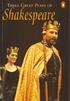 Three Great Plays of Shakespeare Level 4 Retold by Karen Holmes Series Editors: Andy Hopkins and Jocelyn Potter Contents Introduction page Romeo and Juliet l Macbeth 24 King Lear 37 Activities 63 V Introduction
FINDING GOD S WILL. (Bro. Bakht Singh, Balance of Truth December 1957)
 FINDING GOD S WILL (Bro. Bakht Singh, Balance of Truth December 1957) Epaphras, who is one of you, a servant of Christ, saluteth you, always labouring fervently for you in prayers, that ye may stand perfect
Everything Is For God s Glory
 Everything Is For God s Glory God chose his people for his glory: Ephesians 1:4--6 [4] even as he chose us in him before the foundation of the world, that we should be holy and blameless before him. In
The importance of Prayer life
 The importance of Prayer life Prayer means communication with God. Prayer will lead us into dependence upon God. A person completely declared before God I am nothing and God is supreme. And declare without
(Leader and Reader Text) Vigil Service for a Deceased Serran with Lay Leader
 (Leader and Reader Text) Vigil Service for a Deceased Serran with Lay Leader Prayers, readings and the quotes below are taken from Order of Christian Funerals, approved for use in the Dioceses of the United
spirit wisdom grace stature favor grew and became strong in spirit
 GROWING IN THE ANOINTING: PT. 1 I. Luke 2:40 And the Child (Jesus) grew and became strong in spirit, filled with wisdom; and the grace of God was upon Him. Luke 2:52 And Jesus increased in wisdom and stature,
Our Lady Invites Us To Wake Up From Our Spiritual Coma - Medjugorje.com
 Medjugorje visionary, Ivan, speaking to several thousand pilgrims today, August 18, 2010. Ivan was given special instructions from Our Lady concerning the youth and family. Being married to an American
9 Days of Revolutionary Prayer for Your Girl
 9 Days of Revolutionary Prayer for Your Girl Day 1: He Wants Her Welcome to 9 Days of Revolutionary Prayer for Your Girl your daughter, or the girl you are seeking to mentor. Each day of prayer coincides
Jesus and the Counsellor in John s Gospel
 Jesus and the Counsellor in John s Gospel In Jesus farewell speech, recorded in John s Gospel (chapters 13-17) Jesus introduces the disciples to one he calls the Counsellor. This Counsellor (the name itself
PRAYING FOR OTHER PEOPLE
 PRAYING FOR OTHER PEOPLE SESSION ONE HOW TO PRAY FOR OTHER PEOPLE When friends get together, they talk about their problems. Sometimes your friends will share with you about their own personal difficulties
Family Responsibilities
 Family Responsibilities Chapter 37 Responsibilities of the Parents What responsibilities do husbands and wives share in raising their children? Each person has an important place in his or her family.
Tri-State Senior Camp Bible Quiz 2015 The Book of John
 Tri-State Senior Camp Bible Quiz 2015 The Book of John Who is the author of John John the Apostle Quote John 1:1 In the beginning was the Word, and the Word was with God and the Word was God Who was sent
_ Amen. Our help comes from the Lord, the Maker of heaven and
 Funeral Service I *The ceremonies or tributes of social or fraternal societies have no place within the service. Baptized Christians should be buried from the Church. We begin in the name of the Father
JESUS STOOD STILL MARK 10:46-52
 Text: Mark 10:49 JESUS STOOD STILL MARK 10:46-52 Mark 10:49 49 And Jesus stood still, and commanded him to be called. And they call the blind man, saying unto him, Be of good comfort, rise; he calleth
Bible for Children. presents WISE KING SOLOMON
 Bible for Children presents WISE KING SOLOMON Written by: Edward Hughes Illustrated by: Lazarus Adapted by: Ruth Klassen Produced by: Bible for Children www.m1914.org 2007 Bible for Children, Inc. License:
Romeo and Juliet Act 2 Summary Notes
 See Act 2 PowerPoint to accompany notes. Play Quia review games and take my Quia practice quizzes to prepare yourself for quizzes and the final exam. Act 2 Prologue Summarizes Act 1 Addresses the speed
CORRESPONDING LEVEL WEB #s Defenders: 041001 Detectives: 041001 Developers: 041001
 CORRESPONDING LEVEL WEB #s Defenders: 041001 Detectives: 041001 Developers: 041001 GOD S PURPOSE FOR HIS CHILDREN MATERIALS NEEDED Bible; Teacher Preparation Guide (optional supplements: K4T songbook and
Theme: The deliverance of the Israelites from Egypt demonstrates God s power
 Title: THE LIBERATING POWER AND LOVE OF GOD Theme: The deliverance of the Israelites from Egypt demonstrates God s power Bible Basis: Genesis 15:13-15 CEV; Exodus 1-12* Introduction: We have been learning
YEAR 3: WARS OF THE ROSES (5 lessons)
 YEAR 3: WARS OF THE ROSES (5 lessons) Contents Include: Henry VI Edward IV The Princes in the Tower Richard III The Battle of Bosworth Field Suggested Teacher Resources: The Young Oxford History of Britain
International Sunday School Lesson Study Notes January 11, 2015. Lesson Text: John 17:6-21 Lesson Title: Jesus Prayer for His Disciples.
 International Sunday School Lesson Study Notes January 11, 2015 Lesson Text: John 17:6-21 Lesson Title: Jesus Prayer for His Disciples Introduction John 17 is without question one of the greatest chapters