
T4RSP and T4RIF Guide
|
|
|
- Zoe Edwards
- 9 years ago
- Views:
Transcription
1 T4RSP and T4RIF Guide T4079(E) Rev. 15

2 Is this guide for you? T his guide has information on how to fill out the T4RSP and T4RIF information returns. You can find samples of these forms in Appendix A and Appendix B. This guide does not deal with every tax situation. However, you can find a listing of other publications that deal with registered retirement savings plans (RRSPs) and registered retirement income funds (RRIFs) on page 36. We use plain language to explain the most common tax situations. If you need more information after reading this guide, go to or call Throughout the guide, we refer to other forms and publications. If you need any of these go to /forms or call Confidentiality of information Under the Privacy Act, the information you give on the T4RSP and T4RIF information returns and any related forms can be used only for the purposes authorized by law. If you are blind or partially sighted, you can get our publications in braille, large print, etext, or MP3 by going to /alternate. You can also get our publications and your personalized correspondence in these formats by calling La version française de ce guide est intitulée Guide T4RSP et T4RIF. Unless otherwise noted, all legislative references are to the Income Tax Act and the Income Tax Regulations.

3 What s new? Minimum amount from a RRIF The term minimum amount is used several times in this guide. In general, the minimum amount is a calculated amount that an annuitant must withdraw from his or her RRIF every year. Effective for the 2015 and subsequent tax years, the minimum amount has been lowered that individuals between 71 to 94 years of age must withdraw each year from their: RRIFs; money purchase provisions of a registered pension plan (RPP) that pays variable benefits; and PRPPs. References to this lowered minimum amount will be referred to as the 2015 reduced minimum amount, where applicable. For more information, see Appendix D Minimum amount from a RRIF on page 28. Online services for businesses You can now: authorize the CRA to withdraw an amount from your bank account on date(s) that you choose; and enrol for direct deposit, or update banking information. To access our online services, go to: /mybusinessaccount, if you are a business owner; or /representatives, if you are an authorized representative or employee. Online services for representatives Representatives can now register for online mail on behalf of their business clients by going to /representatives. Customized slips and summary forms You no longer need to get CRA approval for most customized information slips and summaries. For more information, go to /customized or see Information Circular IC97-2, Customized Forms. Limit on paper form orders Since August 2015, we apply an order limit of 50 copies for many printed information returns. You can use the CRA s Web Forms service online at /webforms to save, print and send your T4A slips and summaries electronically for free! Mandatory electronic filing As of January 1, 2016, if you file more than 50 information returns for a calendar year, you have to file over the Internet. If you do not file your returns using Internet File Transfer or Web Forms, you may have to pay a penalty. Use our free online filing application at /webforms or go to /iref to learn more about our electronic filing options. For more information, see Mandatory electronic filing on page 8.

4 Table of contents Page Definitions... 5 Chapter 1 General information... 6 T4RSP and T4RIF information returns... 6 Payers (issuers or carriers) who have to file an information return... 6 Electronic filing methods... 6 Due date... 7 Distribution of slips to recipients... 7 Chapter 2 Penalties and interest... 7 Late-filing and failure to file an information return... 7 Failure to provide information on a return... 7 Mandatory electronic filing... 8 Interest... 8 Cancel or waive penalties or interest... 8 Notice of assessment... 8 Maturity of an RRSP... 8 Chapter 3 How to fill out the T4RSP and T4RIF slips... 8 T4RSP slip... 8 T4RIF slip Chapter 4 T4RSP and T4RIF Summary Filling out the T4RSP and T4RIF Summary Chapter 5 After you file Amending, cancelling, adding, or replacing slips Chapter 6 Death of an annuitant under an RRSP or a RRIF Deceased annuitant Unmatured RRSPs Deceased annuitant Matured RRSPs Deceased RRIF annuitant Page Chapter 7 Payments to non-residents of Canada Appendix A Samples of T4RSP forms T4RSP Summary T4RSP slip Appendix B Samples of T4RIF forms T4RIF slip T4RIF Summary Appendix C Calculating the eligible amount of a designated benefit Appendix D Minimum amount from a RRIF RRIF that holds annuity contracts Appendix E Information for transfers of funds Appendix F Addresses of tax centres Online services Handling business taxes online Electronic payments Related forms and publications For more information What if you need help? Forms and publications Electronic mailing lists Teletypewriter (TTY) users Service complaints Reprisal complaint Tax information videos

5 Definitions Common-law partner a person who is not your spouse, with whom you are living in a conjugal relationship, and to whom at least one of the following situations applies. He or she: a) has been living with you in a conjugal relationship, and this current relationship has lasted for at least 12 continuous months; In this definition, 12 continuous months includes any period that you were separated for less than 90 days because of a breakdown in the relationship. b) is the parent of your child by birth or adoption; or c) has custody and control of your child (or had custody and control immediately before the child turned 19 years of age) and your child is wholly dependent on that person for support. Fair market value (FMV) usually the highest dollar value you can get for your property in an open and unrestricted market, between a willing buyer and a willing seller who are acting independently of each other. Non-qualified investment any property that is not a qualified investment for the RRSP or RRIF trust. Pooled registered pension plan (PRPP) a retirement savings plan to which you and/or your participating employer can contribute. Any income earned in the PRPP is usually exempt from tax as long as it remains in the plan. Qualified beneficiary the annuitant s spouse or commonlaw partner or the annuitant s financially dependent child or grandchild. Qualified investment an investment in properties, including money, guaranteed investment certificates, government and corporate bonds, mutual funds, and securities listed on a designated stock exchange. Specified pension plan (SPP) a pension plan or similar arrangement that has been prescribed under the Income Tax Regulations as a specified pension plan for purposes of the Income Tax Act (currently the Saskatchewan Pension Plan is the only arrangement prescribed to be a specified pension plan). Many of the rules related to RRSPs also apply to SPPs. Spouse a person to whom you are legally married. 5

6 Chapter 1 General information T4RSP and T4RIF information returns Use the T4RSP and T4RIF information returns to report amounts from an RRSP or a RRIF that residents of Canada have to include in or can deduct from their income. Use the T4RSP information return to report amounts residents must include on Schedule 7, RRSP and PRPP Unused Contributions, Transfers, and HBP or LLP Activities. For information about payments to non-residents of Canada, see Chapter 7 Payments to non-residents of Canada on page 23. To prepare a T4RSP or a T4RIF information return, you must fill out the T4RSP or T4RIF slips and the related summary. A summary alone is not an information return. Slip Use the slip to report amounts that an individual has to report on his or her income tax and benefit return or on Schedule 7, RRSP and PRPP Unused Contributions, Transfers, and HBP or LLP Activities. For information on how to fill out the T4RSP and the T4RIF slips, see Chapter 3 How to fill out the T4RSP and T4RIF slips on page 8. You can find a sample of the T4RSP and T4RIF slips on page 25. Summary Use the summary to record the total amount you reported on all related slips. For information on how to fill out the summary, see Filling out the T4RSP and T4RIF Summary on page 14. You can find a sample of the T4RSP Summary on page 24 and the T4RIF Summary on page 26. Payers (issuers or carriers) who have to file an information return You have to file an information return to report the following amounts you paid or are considered to have paid to residents of Canada: taxable benefits paid in the year to the annuitant; taxable benefits paid in the year to the beneficiaries when the annuitant dies; taxable benefits that the annuitant is considered to have received in the year; other taxable income amounts or allowable deductions in the year; the fair market value (FMV) of all property of an RRSP just before it became an amended plan under subsection 146(12); the FMV of all property of a RRIF just before it became an amended fund under subsection 146.3(11); withdrawals under the Lifelong Learning Plan (LLP); withdrawals under the Home Buyers Plan (HBP); and amounts directly transferred on breakdown of a marriage or common-law partnership. Electronic filing methods Internet filing will be available starting January 4, You must file information returns by Internet if you file more than 50 information returns (slips) for a calendar year. If you use commercial or in-house developed software to manage your business, you can file up to 150 MB by Internet file transfer. For example, a service bureau can file multiple returns in one submission provided that the total submission does not exceed the 150 MB restriction. If your return is more than 150 MB, you can either compress your return or divide it so that each submission is no more than 150 MB. Filing by Web Forms Our Web Forms application is free and secure. To use it, all you need is access to the Internet. With Web Forms you can fill out an information return easily, following the step-bystep instructions. Web Forms lets you: file up to 100 slips (original, amended, or cancelled) from our website; calculate all of the totals for the summary; create an electronic information return containing slips and a summary, which can be saved and imported at a later date; print all your slips and your summary; and validate data in real time. After you submit your information return, you will receive a confirmation number that will be your proof that we received it. To use the Web Forms application, you must have a web access code. If you do not have a web access code, you can easily get one online or by calling us. For more information, see Web access code below. To start using this application or to get more information about Web Forms, go to /webforms. Filing by Internet file transfer (XML) Internet file transfer allows you to transmit an original or amended information return with a maximum file size of 150 MB. All you need is a Web browser to connect to the Internet, and your software will create, print, and save your electronic information return in XML format. For more information about this filing method, contact your software publisher or go to /iref. Web access code To file your return over the Internet using either the Internet file transfer or Web Forms services, you will need a web access code (WAC), unless you are filing through My Business Account or Represent a Client. For information about My Business Account or Represent a Client, see Online services on page 35. The Canada Revenue Agency (CRA) is no longer mailing web access 6

7 code letters; as a result, you can use the WAC that was issued for the 2012 tax year to file future information returns. If you have misplaced or do not have a WAC, you can obtain one at /iref by selecting Need a Web access code. If you cannot obtain your WAC online or would like to change it, you can call the e-services Helpdesk at Filing without a Web access code You can also file your information returns without a Web access code using the File a return service and selecting either the Web Forms (up to 100 slips) or Internet file transfer (XML) (up to 150 MB) option at: /mybusinessaccount, if you are a business owner; or /representatives, if you are an authorized representative or employee. Log in to My Business Account using your CRA user ID and password, or the Sign-in Partner option. To register, you will need to provide: your social insurance number (SIN); your date of birth; your postal code or ZIP code; an amount you entered on your income tax and benefit return (the line request will vary). It could be from either the current or previous tax year; and your business number (BN). You should receive your CRA security code within 5 to 10 days. We will mail it to the address we have on file for you. The separate mailing of the security code is a measure used to protect you from identity theft and to ensure the security of your personal information. Filing on paper If you file 1 to 50 slips, we strongly encourage you to file over the Internet using Internet file transfer or Web Forms. However, you can still file up to 50 slips on paper. If you need more paper copies, you can order a maximum of 50 single-page slips that have three slips per page intended for printers, for typing, or to be filled out by hand, at /forms or by calling If you choose to file your return on paper, mail it to: Ottawa Technology Centre 875 Heron Road Ottawa ON K1A 1G9 Fill out one copy of the T4RSP or T4RIF slip for each recipient and send them with your T4RSP or T4RIF Summary. Enter the information for three different recipients on one sheet. You must keep a copy of the T4RSP or T4RIF slips and the T4RSP or T4RIF Summary for your files. Filing using computer-printed (customized) forms For those who fill out a large numbers of slips, we accept certain slips other than our own. To ensure accuracy, follow the guidelines for the production of customized forms at /customized or see Information Circular IC97-2, Customized Forms. You no longer need to get CRA approval for most customized information slips and summaries. Due date You have to file an information return by the last day of February following the calendar year to which the information return applies. If the last day of February is a Saturday or Sunday, your return is due on the next business day. If you discontinue your business or activity, you have to file a return for the year or part-year no later than 30 days after the date the business or activity ended. Distribution of slips to recipients Send the recipients copies of the T4RSP or T4RIF slip to their last known address or deliver them in person. You can also send a copy of one of these slips in electronic format to the recipient if you received their consent either in writing or in electronic format. You have to do this on or before the day you have to file the information return. Chapter 2 Penalties and interest Late filing and failure to file an information return The minimum penalty for late filing the T4RSP or T4RIF information return is $100 and the maximum penalty is $7,500. For the complete penalty structure, go to /penaltyinformationreturns. Failure to provide information on a return Anyone who prepares an information return has to make a reasonable effort to get the necessary information, including the social insurance number, from the individuals that will receive the slips. If you do not do this, you may be liable to a $100 penalty for each failure to comply with this requirement. If you have to prepare an information return, or if you are an officer, employee, or agent of someone who does, you cannot knowingly use or communicate an individual s SIN, or allow it to be communicated, other than as required or authorized by law or for the purpose for which it was provided for. If you use an individual s SIN for unauthorized purposes, you may be guilty of an offence and liable, if convicted, 7

8 to a maximum fine of $5,000 or imprisonment of up to 12 months, or both. Mandatory electronic filing Failure to file information returns over the internet As of January 1, 2016, if you file more than 50 information returns for a calendar year and you do not file the returns by Internet File Transfer or Web Forms, you may have to pay a penalty determined as follows: Number of information returns (slips) by type Penalty 51 to 250 $ to 500 $ to 2,500 $1,500 2,501 or more $2,500 Interest If you fail to pay an amount, we may apply interest from the day your payment was due. The interest rate we use is determined every three months, based on prescribed interest rates. Interest is compounded daily. We also apply interest to unpaid penalties. For the prescribed interest rates, go to /interestrates. Cancel or waive penalties or interest The CRA administers legislation, commonly called the taxpayer relief provisions, that gives the CRA discretion to cancel or waive penalties or interest when taxpayers are unable to meet their tax obligations due to circumstances beyond their control. The CRA s discretion to grant relief is limited to any period that ended within 10 years before the calendar year in which a request is submitted or an income tax return is filed. For penalties, the CRA will consider your request only if it relates to a tax year or fiscal period ending in any of the 10 calendar years before the year in which you make your request. For example, your request made in 2016 must relate to a penalty for a tax year or fiscal period ending in 2006 or later. For interest on a balance owing for any tax year, the CRA will consider only the amounts that accrued during the 10 calendar years before the year in which you make your request. For example, your request made in 2016 must relate to interest that accrued in 2006 or later. For more information about the circumstances that may warrant relief from penalties or interest, go to /taxpayerrelief. To submit your request for relief, we recommend you use Form RC4288, Request for Taxpayer Relief Cancel or Waive Penalties or Interest. Notice of assessment We will issue a notice of assessment for the T4RSP or T4RIF information return only if we apply a penalty. Maturity of an RRSP A registered retirement savings plan (RRSP) must mature by the end of the year in which the annuitant turns 71 years of age. Chapter 3 How to fill out the T4RSP and T4RIF slips T4RSP slip If you are filing your information return electronically, do not send us the paper copy of the slips. For more information about filing methods, see Electronic filing methods on page 6 or go to /iref. Report amounts in Canadian dollars and cents, even if they were paid in another currency. To get the average exchange rates, go to /exchangerates. For each T4RSP slip you prepare, provide the following information. Recipient s name and address Enter the last name, in capital letters, followed by the first name and initials, and then the complete address. Enter the name of only one recipient on each T4RSP slip. Box 12 Social insurance number Enter the recipient s social insurance number (SIN). You have to make a reasonable effort to get the recipient s SIN. However, when the recipient indicates that he or she does not have a SIN and either has to apply for one or has already applied for one, do not delay filling out the information return beyond the required filing date. If the recipient has not provided his or her SIN by the time you have to file the information slip, enter nine zeros. For more information, see Failure to provide information on a return on page 7. Box 14 Contract number Enter the contract number of the RRSP. Box 60 Name of payer (issuer) of plan Enter the full name of the RRSP payer (issuer) who remits the withholding tax to us and whose account number is shown in box 61. Box 61 Account number Enter the account number of the RRSP payer (issuer). The 15-character account number that you use to send us your clients deductions (which appears at the top of your PD7A statement of account) consists of three parts: the nine-digit business number (BN); a two-letter program identifier; and a four-digit reference number. 8

9 When we require the whole 15-character number, we now refer to the account number instead of the business number. Do not provide your account number (box 61) on the copies you give to the recipient. Year Enter the year on each T4RSP slip. Make sure the year you enter is the same as the year on the summary. Fill out boxes 16 to 40 as they apply. The amount you enter in each of boxes 16 to 34 is the gross amount of the payment before you deducted tax or made any other deductions. The costs associated with redeeming units of a mutual fund are RRSP expenses. If the proceeds of the RRSP are reduced by such withdrawal fees, the amount to be reported on the T4RSP slip is the net amount paid out of the RRSP. Box 16 Annuity payments Enter the amount of annuity payments you made in the year on or after maturity of the plan, or after the plan became an amended plan if this occurred before May 26, For the meaning of the term amended plan, see Box 26 Amounts deemed received on deregistration on page 10. Also see Maturity of an RRSP in the previous chapter. Box 18 Refund of premiums This is an amount you paid from an unmatured RRSP to the spouse or common-law partner of the RRSP annuitant because the annuitant died. This amount does not include income that can be considered a refund of premiums if paid to other qualified beneficiaries because of the annuitant s death. Report this income in box 28. For a death in 1993 and later years, the refund of premiums from a depositary and trusteed RRSP can include income earned in the RRSP after the annuitant s date of death, up to December 31 of the year after the year of death. Before you enter an amount in box 18, see Deceased annuitant Unmatured RRSPs on page 16 for more information on situations that arise when an annuitant under an unmatured RRSP dies. Beginning in the 2013 tax year (2014 filing season), enter the amount from a deceased annuitant s RRSP that was rolled over to a registered disability savings plan in box 28 of a T4RSP slip rather than in box 18. For more information, see Information Sheet RC4177, Death of an RRSP Annuitant or a PRPP Member. Box 20 Refund of excess contributions Enter the gross amount of excess contributions made in 1991, or a later year, that you refunded to the annuitant. If an annuitant asks for a refund of the excess contributions he or she made after 1990 and gives you a filled out Form T3012A, Tax Deduction Waiver on the Refund of your Unused RRSP Contributions, that we have approved (Part 3), do not withhold tax from the withdrawal. If the annuitant asks for a refund of excess contributions and does not give you a filled out Form T3012A that was approved in Part 3 by us, you have to withhold tax on the withdrawal. Enter the amount withdrawn in box 22. Box 22 Withdrawal and commutation payments Enter the following amounts: any amount the annuitant withdrew in the year before the plan matured; and any amount you paid to the annuitant in the year to commute full or partial annuity payments under the plan. A commutation payment is a fixed or lump-sum payment from an RRSP annuity that equals the current value of all or part of the future annuity payments. Enter the amount of withdrawal or commutation net of fees such as redemption charges. Withhold tax on that net amount. Do not report the following amounts in box 22: any amount withdrawn under the LLP and reported in box 25; any amount withdrawn under the HBP and reported in box 27; withdrawals for which you received an approved Form T3012A; or amounts directly transferred on breakdown of a marriage or common-law partnership and reported in box 35. Box 25 LLP withdrawal Enter the amount withdrawn from an RRSP by an eligible individual participating in the Lifelong Learning Plan (LLP). To make an eligible withdrawal, an individual has to use Form RC96, Lifelong Learning Plan (LLP) Request to Withdraw Funds from an RRSP. The individual can withdraw up to $10,000 a year, but cannot withdraw more than $20,000 in total over a four-year period. Any amount withdrawn that is more than the annual limit must be reported in box 22. For more information on the LLP, see Guide RC4112, Lifelong Learning Plan (LLP) Includes Form RC96. Boxes 24 and 36 A spousal or common-law partner RRSP is any RRSP to which the annuitant s spouse or common-law partner contributed, any RRSP that received payments or transfers of property from RRSPs to which the annuitant s spouse or common-law partner contributed, or any RRSP that received payments or transfers of property from RRIFs to which the annuitant transferred amounts from other spousal or common-law partner RRSPs. 9

10 For a spousal or common-law partner RRSP, tick yes in box 24. Enter the contributor spouse or common-law partner s SIN in box 36 if: there is an amount in box 20, 22, 26, or 35; and the annuitant is less than 74 years of age at the end of When you transfer property from or between spousal or common-law partner RRSPs and spousal or common-law partner RRIFs, you have to keep track of the property no matter how often it is transferred. For all other situations, tick no in box 24, and leave box 36 blank, unless there is a direct transfer on breakdown of a marriage or common-law partnership, in which case you would indicate the SIN of the annuitant of the transferee plan in box 36. This includes the following situations: at the time of the payment, the spouses or common-law partners were separated and living apart because of a breakdown of their relationship; the contributor spouse or common-law partner died during the year the payer made or is considered to have made the payment; or at the time of the payment, either the annuitant or the contributor spouse or common-law partner was a non-resident. If you ticked yes in box 24, for a situation other than a direct transfer on breakdown of a marriage or common-law partnership, the annuitant should fill out Form T2205, Amounts from a Spousal or Common-law Partner RRSP, RRIF or SPP to Include in Income. This will help determine the amount that the annuitant and the contributor have to include in income. Box 26 Amounts deemed received on deregistration The terms of an RRSP can change after registration, or a new plan can be substituted for an old plan. If an RRSP changes and no longer satisfies the rules it was registered under, the plan is no longer an RRSP. It becomes an amended plan under subsection 146(12), and the fair market value (FMV) of all property held by the plan just before the revision or substitution becomes taxable. In this situation, enter in box 26 the FMV of all the property of the plan just before it was revised or substituted. This is the only type of income you report in box 26. Box 27 HBP withdrawal Enter the amount withdrawn from an RRSP by an eligible individual participating in the Home Buyers Plan (HBP). To make an eligible withdrawal, an individual has to use Form T1036, Home Buyers Plan (HBP) Request to Withdraw Funds from an RRSP. The individual can withdraw up to $25,000. Any amount withdrawn that is more than the withdrawal limit must be reported in box 22. For more information on the HBP, go to /hbp. Box 28 Other income or deductions Although an annuitant has to include certain amounts in income, he or she can deduct other amounts. Calculate the income and deductions indicated in this section and enter the difference in box 28. If the deductions are greater than the income, enter the difference in brackets. Include the following amounts in the income of an annuitant of a trusteed RRSP: the FMV of the property when it began to be used as security for a loan, if the trustee used any of the trust s property as security for a loan or allowed any of its property to be used as security for a loan during the year; the difference between the FMV of a property and its proceeds of disposition, if the trustee disposed of the property during the year and its proceeds of disposition were nil or less than its FMV when the trustee disposed of it; and the difference between the acquisition cost of the property and its FMV, if the trustee acquired the property during the year and its acquisition cost was greater than its FMV when it was acquired. The annuitant of a trusteed RRSP can deduct the following two amounts in calculating income: If the trustee disposed of a property during the year and it was a non-qualified investment when it was acquired, the annuitant of a trusteed RRSP can deduct the lesser of the following two amounts in calculating income: the FMV of the non-qualified property when it was acquired, if an issuer reported that amount as income of the annuitant; and the proceeds of disposition of the non-qualified property. The deduction applies if the non-qualified investment being disposed of was acquired before March 23, If the trustee used any of the property as security for a loan or allowed any of the property to be used as security for a loan and the loan is extinguished during the year, the difference between: the amount an issuer previously reported as the annuitant s income because the property was used as security for the loan; and any loss incurred as a result of the property being used as security for the loan. When you calculate such a loss, do not use the interest part of any loan payments the RRSP trust made or any decrease in value of the property used as security for the loan. If the annuitant of a matured RRSP dies, you have to include in box 28 the part of an amount paid from the RRSP to a beneficiary, other than the deceased annuitant s spouse or common-law partner that is more than the total of the following amounts: 10

11 the part of the RRSP property that becomes receivable by the surviving spouse or common-law partner as a result of the annuitant s death; and the benefit the deceased annuitant is considered to have received just before death (amount reported in box 34). If the annuitant of an unmatured RRSP dies, you may have to include in box 28 a part or the entire amount of income earned in the RRSP after the annuitant s date of death that was paid to another beneficiary. For more information on situations that arise when an annuitant under an unmatured RRSP dies, go to Deceased annuitant Unmatured RRSPs on page 16. Box 30 Income tax deducted Enter the amount of income tax you deducted. Leave the box blank if you did not deduct income tax. For more information on withholding rates, see Chapter 2 Deducting income tax in Guide RC4157, Deducting Income Tax on Pension and Other Income, and Filing the T4A Slip and Summary. You have to withhold tax from all payments (including withdrawals and commutation payments) made during the lifetime of the original annuitant, other than: periodic annuity payments; a refund of excess RRSP contributions for which the annuitant has given you an approved Form T3012A, Tax Deduction Waiver on the Refund of your Unused RRSP Contributions; amounts directly transferred on breakdown of a marriage or common-law partnership as reported in box 35; a withdrawal for which the annuitant has given you a filled out Form T1036, Home Buyers Plan (HBP) Request to Withdraw Funds from an RRSP; and a withdrawal for which the annuitant has given you a filled out Form RC96, Lifelong Learning Plan (LLP) Request to Withdraw Funds from an RRSP. Total withdrawals under the LLP are limited to $10,000 in a given year. Total withdrawals under the HBP are limited to $25,000. You may want to check with the annuitant that the maximum has not been exceeded before paying out the amount. You will have to withhold tax on the amount that is more than the withdrawal limits. In addition, if a payment is made in the year as a result of deregistration, you have to withhold tax from the FMV of property of the plan just before the RRSP became an amended plan under subsection 146(12). If the payment is made after the year of deregistration, do not withhold tax. Box 34 Amounts deemed received on death Matured RRSPs We consider the annuitant under a matured RRSP to have received, immediately before the time of death an amount equal to the FMV of all the property held by the RRSP at the time of death, minus the part of that amount that the surviving spouse or common-law partner can receive because of the annuitant s death. Unmatured RRSPs We consider the annuitant under an unmatured RRSP to have received, immediately before the time of death, an amount equal to the FMV of all the RRSP property held by the RRSP at the time of death. In certain situations, you may not have to issue a T4RSP slip in the deceased annuitant s name. Before you enter an amount in box 34, see Deceased annuitant Unmatured RRSPs on page 16. Box 35 Transfers on breakdown of marriage or common-law partnership Enter the amount directly transferred under a decree, order, or judgment of a court, or under a written agreement relating to a division of property between the individual s current or former spouse or common-law partner in settlement of rights arising from the breakdown of their relationship. Prepare the slip in the name of the individual whose funds are being transferred (the transferor). Enter the social insurance number of the annuitant of the plan receiving the funds (the transferee plan) in box 36. Tick no in box 24, unless the transferring plan is a spousal or common-law partner plan. Use Form T2220, Transfer from an RRSP, RRIF, PRPP or SPP to Another RRSP, RRIF, or SPP on Breakdown of Marriage or Common-law Partnership, to document the details of the transfer. You must review and keep on file the court order or separation agreement if you are unable to get the signature of both individuals. Keep Form T2220 for your records only. Do not send us a copy. Box 40 Tax-paid amount Report in box 40 the tax-paid amount that you paid to certain beneficiaries from a trusteed RRSP. The legal representative needs this amount to determine the amount to report on the deceased annuitant s final tax return. The tax-paid amount also applies to depositary RRSPs, but do not report it in box 40, since it has to be reported on a T5 slip. For more information on tax-paid amounts, see Tax-paid amount and after-tax amount on page 17. T4RIF slip If you are filing your information return electronically, do not send us the paper copy of the slips. For more information about filing methods, see Electronic filing methods on page 6 or go to /iref. Report amounts in Canadian dollars and cents, even if they were paid in another currency. To get the average exchange rates, go to /exchangerates. 11

12 For each T4RIF slip you prepare, provide the following information. Effective for the 2015 and subsequent tax years, the minimum amount has been lowered that individuals between 71 to 94 years of age must withdraw each year from their: RRIFs; money purchase provisions of a registered pension plan (RPP) that pays variable benefits; and PRPPs. For more information, see Appendix D Minimum amount from a RRIF on page 28. Recipient s name and address Enter the last name, in capital letters, followed by the first name and initials, and then the complete address. Enter the name of only one recipient on each T4RIF slip. Box 12 Social insurance number Enter the recipient s social insurance number (SIN). You have to make a reasonable effort to get the recipient s SIN. However, when the recipient indicates that he or she does not have a SIN and either has to apply for one or has already applied for one, do not delay filling out the information return beyond the required filing date. If the recipient has not provided his or her SIN by the time you have to file an information slip, enter nine zeros. For more information, see Failure to provide information on a return on page 7. Box 14 Contract number Enter the contract number of the RRIF. Box 60 Name of payer (carrier) of fund Enter the full name of the RRIF payer (carrier) who remits the withholding tax to us and whose account number is shown in box 61. Box 61 Account number Enter the account number of the RRIF payer (carrier). The 15-character account number that you use to send us your clients deductions (which appears at the top of your PD7A statement of account) consists of three parts: the nine-digit business number (BN); a two-letter program identifier; and a four-digit reference number. When we require the whole 15-character number, we now refer to the account number instead of the business number. Do not provide your account number (box 61) on the copies you give to the recipient. Year Enter the year on each T4RIF slip. Make sure the year you enter is the same as the year on the summary. Fill out boxes 16 to 36, as they apply. The amount you enter in each of boxes 16 to 24 is the gross amount of the payment, before you deducted tax or made any other deductions. The costs associated with the redemption of units of a mutual fund are RRIF expenses. If the proceeds of the RRIF are reduced by such redemption fees, the amount to be reported on the T4RIF slip is the net amount paid out of the RRIF. Box 16 Taxable amounts Enter the taxable amounts from the RRIF that you paid to an annuitant or to another beneficiary in the year. These amounts include the following: the minimum amount payment you have to make out of the RRIF in the year and any excess amount you paid to the annuitant in the year. For more information on minimum amount, see Appendix D Minimum amount from a RRIF on page 28. For more information on excess amounts, see Box 24 Excess amount on the next page; the payments that the spouse or common-law partner continues to receive as the successor annuitant after the previous annuitant dies. For more information, see Spouse or common-law partner as successor annuitant on page 19; the RRSP property that was transferred to a RRIF, then identified as excess contributions and refunded from the RRIF; and the amounts you paid to the deceased annuitant s spouse or common-law partner as a designated benefit from a RRIF. For more information on designated benefits, see Qualified beneficiary and designated benefit on page 20. The taxable amounts shown in box 16 do not include: the amounts directly transferred on breakdown of a marriage or common-law partnership as reported in box 35; the amounts considered to have been received by the deceased annuitant just before death; the amounts that the deceased annuitant s child or grandchild has received or is considered to have received as a designated benefit from a RRIF; and the income earned on RRIF property after the year that follows the year of the annuitant s death. For more information about tax situations that can arise when an annuitant dies, see Deceased RRIF annuitant on page 19. Box 18 Amounts deemed received by the annuitant Deceased The deceased annuitant of a RRIF is considered to have received, just before death, an amount equal to the FMV of the RRIF property at the time of death. 12

13 In certain situations, you may not have to issue a T4RIF slip in the deceased annuitant s name. Before you enter an amount in box 18, see Beneficiary of the RRIF property on page 20. Box 20 Amounts deemed received by the annuitant Deregistration The terms of a RRIF contract can change after registration, or a new fund can be substituted. If a RRIF changes and no longer satisfies the requirements under which it was registered, the fund is no longer a RRIF. It becomes an amended fund under subsection 146.3(11), and the FMV of all property held in the fund just before the revision or substitution is to be included as income of the annuitant. In this situation, enter in box 20 the FMV of all property of the fund just before it was revised or substituted. This is the only type of income you should report in box 20. Box 22 Other income or deductions Although an annuitant has to include certain amounts in income, he or she can deduct other amounts. Calculate the income and deductions identified below and enter the difference in box 22. If the deductions are greater than the income, enter the difference in brackets. Include the following amounts in the income of an annuitant of a trusteed RRIF: the FMV of the property when it began to be used as security for a loan, if the trustee used any of the trust s property as security for a loan or allowed any of its property to be used as security for a loan during the year; twice the difference between the FMV of a property and its proceeds of disposition, if the trustee disposed of the property during the year and the proceeds of disposition were nil or less than the FMV of the property when the trustee disposed of it; and twice the difference between the acquisition cost of the property and its FMV, if the trustee acquired the property during the year and its acquisition cost is greater than the FMV of the property when it was acquired. The annuitant of a trusteed RRIF can deduct the following two amounts in calculating income: If the trustee disposed of a property during the year, and it was a non-qualified investment when it was acquired, the annuitant of a trusteed RRIF can deduct the lesser of the following two amounts in calculating income: the FMV of the non-qualified property when it was acquired, if a carrier reported that amount as income of the annuitant; and the proceeds of disposition of the non-qualified property. The deduction applies if the non-qualified investment being disposed of was acquired before March 23, If the trustee used any of the property as security for a loan, or allowed any of the property to be used as security for a loan, and the loan is extinguished during the year, the difference between: the amount a carrier previously reported as the annuitant s income because the property was used as security for the loan; and any loss incurred as a result of the property being used as security for the loan. When you calculate such a loss, do not use the interest part of any loan payments the RRIF trust made or any decrease in value of the property used as security for the loan. If the annuitant under a RRIF dies, you may have to include in box 22 part or all of the income earned in the RRIF after the annuitant s date of death that was paid to another beneficiary. For more information on situations that arise when an annuitant under a RRIF dies, see Beneficiary of the RRIF property on page 20. Enter the amount rolled over from a deceased annuitant s RRIF that was rolled over to a registered disability savings plan. For more information, see Information Sheet RC4178, Death of a RRIF Annuitant. Box 24 Excess amount The terms of a RRIF contract can allow a payment that is over the minimum amount (for more information on the minimum amount, see Appendix D Minimum amount from a RRIF on page 28). Report the excess amount in box 24. You must also report this excess amount in box 16 plus the minimum amount. If an annuitant chooses to have payments from the RRIF continue to the spouse or common-law partner after the annuitant s death, the surviving spouse or common-law partner becomes the successor annuitant. For more information on how to report the minimum and excess amounts when the annuitant dies, see Spouse or common-law partner as successor annuitant on page 19. Boxes 26 and 32 A spousal or common-law partner RRIF is a RRIF that received payments or transfers of property from a spousal or common-law partner RRSP. A spousal or common-law partner RRIF also includes a RRIF that received a payment or transfer of property from any of the annuitant s other spousal or common-law partner RRIFs. When you transfer property from or between spousal or common-law partner RRSPs and spousal or common-law partner RRIFs, you have to keep track of the property no matter how often it is transferred. For a spousal or common-law partner RRIF, print or type yes Y in box 26. In addition, enter the contributor spouse or common-law partner s SIN in box 32 if the annuitant is less than 74 years old at the end of 2015 and: the amount in box 20 is more than the minimum amount or the 2015 reduced minimum amount. For more information, see Appendix D Minimum amount from a RRIF on page 28; there is an amount in box 24; or there is an amount in box

14 For all other situations, print or type no N in box 26 and leave box 32 blank, unless there is a direct transfer on breakdown of a marriage or common-law partnership, in which case you would enter the SIN of the annuitant of the transferee plan in box 32. This includes the following situations: at the time of the payment, the spouses or common-law partners were separated and living apart because of a breakdown of their relationship; the contributor spouse or common-law partner died during the year the payer made or is considered to have made the payment; or at the time of the payment, either the annuitant or the contributor spouse or common-law partner was a non-resident. If you entered yes in box 26 for a situation other than a direct transfer on breakdown of a marriage or common-law partnership, the annuitant should fill out Form T2205, Amounts from a Spousal or Common-law Partner RRSP, RRIF or SPP to Include in Income. This will help determine the amount that the annuitant and the contributor have to include in income. However, if the annuitant receives only the minimum amount during the year, the payment is the annuitant s income and not the contributor s income. Box 28 Income tax deducted Enter the amount of income tax you deducted. Leave the box blank if you did not deduct income tax. For more information on withholding rates, see Chapter 2 Deducting income tax in Guide RC4157, Deducting Income Tax on Pension and Other Income, and Filing the T4A Slip and Summary. You have to withhold tax from the excess amount (amount reported in box 24) if you paid the amount during the lifetime of the annuitant. Do not withhold income tax from the minimum amount. Box 30 Year, Month, Day Enter the date of death as follows: YY MM DD. Example If the date of death was June 19, 2015, you would enter: Year Month Day Box 35 Transfers on breakdown of marriage or common-law partnership Enter the amount directly transferred under a decree, order, or judgment of a court, or under a written agreement relating to a division of property between the individual s current or former spouse or common-law partner in settlement of rights arising from the breakdown of their relationship. Prepare the slip in the name of the individual whose funds are being transferred (the transferor). Enter the social insurance number of the annuitant of the plan receiving the funds (the transferee plan) in box 32. Enter no in box 26, unless the transferring plan is a spousal or common-law partner plan. Use Form T2220, Transfer from an RRSP, RRIF, PRPP or SPP to Another RRSP, RRIF, or SPP on Breakdown of Marriage or Common-law Partnership, to document the details of the transfer. You must review and keep on file the court order or separation agreement if you are unable to get the signature of both individuals. Keep Form T2220 for your records only. Do not send us a copy. Box 36 Tax-paid amount For deaths occurring in 1993 and later years, you have to report in box 36 the tax-paid amount that you paid to certain beneficiaries from trusteed RRIFs. The legal representative needs this amount to determine the amount to report on the deceased annuitant s final tax return. The tax-paid amount also applies to depositary RRIFs, but do not report it in box 36, since it has to be reported on a T5 slip. For more information on tax-paid amounts see Tax-paid amount and after-tax amount on page 20. Chapter 4 T4RSP and T4RIF Summary I f you are filing electronically, do not send us the paper copy of the summary. For more information about filing methods, see Electronic filing methods on page 6 or go to /iref. If you are filing on paper, use the T4RSP or T4RIF Summary to report the totals of the amounts that you reported on the related T4RSP or T4RIF slips. Send the original T4RSP or T4RIF Summary and the related slips to the Ottawa Technology Centre. You can find the address on page 7. To get a T4RSP or T4RIF Summary, go to /forms or call If the total number of T4RSP or T4RIF slips you file is more than 50 for the same calendar year, you have to file them over the Internet. Report amounts in Canadian dollars and cents, even if they were paid in another currency. To get the average exchange rates, go to /exchangerates. Filling out the T4RSP and T4RIF Summary Fill out a separate summary for each payer account number. The totals you report on your T4RSP or T4RIF Summary have to agree with the totals you report on your T4RSP or T4RIF slips. Errors or omissions can cause unnecessary processing delays. 14

15 For the year ending December 31, 20 Make sure that the year you enter is the same as the year on the slips. Account number Enter the account number from your PD7A remittance form. The 15-character account number that you use to send us your clients deductions (which appears at the top of your PD7A statement of account for current source deductions) has three parts: the nine-digit business number (BN); a two-letter program identifier; and a four-digit reference number. Name and address of payer (issuer or carrier) of plan or fund Enter your full name and address, including your postal code, as shown on your PD7A remittance form. Total number of T4RSP or T4RIF slips filed (line 88) Enter the total number of T4RSP or T4RIF slips included with the summary. Total amounts (lines 16 to 35) The amounts to report on the summary are the totals of the amounts in the corresponding boxes on the slips. Remittances (line 82) Enter the amount of income tax you remitted during the year. Difference Subtract the amount of the remittances from the income tax deducted. If there is no difference, enter 0. We do not charge or refund a difference of $2 or less. Overpayment (line 84) If you overpaid taxes and you will not be filing any other return under this account number, enter the amount of the overpayment. You may want an overpayment transferred or refunded. Include a written request that explains the reason for the overpayment and what you would like us to do. Balance due (line 86) Enter the amount of the balance due. An unpaid balance may result in a penalty. In addition, we will charge interest, compounded daily at the prescribed rate, on the outstanding amount. Person to contact about this information return (lines 76 and 78) Enter the name and telephone number of a person familiar with the records and operations of the financial institution. We may contact that person if we need more information. Certification An authorized officer of the financial institution has to fill out and sign this area. Chapter 5 After you file W hen we receive your information return, we check it to see if you have prepared it correctly. After an initial review, we enter your return into our processing system, which captures the information and performs various validity and balancing checks. If there are any problems, we may contact you. Amending, cancelling, adding, or replacing slips After filing your T4RSP or T4RIF information return, you may notice an error on a T4RSP or T4RIF slip. If so, you will have to prepare an amended slip to correct the information. Provide copies to the recipient. Do not include slips that have no changes. Amending or cancelling slips over the Internet To amend a slip over the Internet, change only the information that is incorrect and retain all of the remaining information that was originally submitted. Use summary report type code A and slip report type code A. To cancel a slip, do not change any information that was contained on the original slip. Use summary report type code A and slip report type code C. For more information on amending or cancelling slips over the Internet, go to /iref. Amending or cancelling slips on paper If you choose to file your amended return on paper, clearly identify the slips as amended or cancelled by writing AMENDED or CANCELLED at the top of each slip. Make sure you fill in all the necessary boxes, including the information that was correct on the original slip. Send two copies of the slips to the recipient. Send one copy of the amended/cancelled slips to Employer Service Section in any tax centre with a letter explaining the reason for the amendment/cancellation. See Appendix F on page 34 for a list of tax centres. Do not file an amended or cancelled T4RSP or T4RIF Summary. If you notice errors on the T4RSP or T4RIF slips before you file them with us, you can correct them by preparing new information slips and removing any incorrect copies from the return. If you do not prepare a new slip, initial any changes you make on the slip. Be sure to also correct the T4RSP or T4RIF Summary. Adding slips After you file your T4RSP or T4RIF information return, you may discover that you need to send us additional T4RSP or T4RIF slips. If you have original slips that were not filed with your information return, file them separately either electronically or on paper. To file additional slips electronically, see Electronic filing methods on page 6. If you file additional slips on paper, clearly identify the new slips by writing ADDITIONAL at the top of each slip. Send one copy of the additional slips to any tax centre with a letter explaining the reason for the addition. See Appendix F on page 34 for a list of tax centres. File an additional T4RSP or T4RIF Summary. 15

16 s If the total number of T4RSP or T4RIF slips (including any additional slips) you file is more than 50 for the same calendar year, you have to file the additional slips over the Internet. Any additional T4RSP or T4RIF slips that are filed after the due date may result in a penalty. For the penalty structure, go to /penaltyinformationreturns. Replacing slips If you issue T4RSP or T4RIF slips to replace copies that are lost or destroyed, do not send us a copy of these slips. Clearly identify them as DUPLICATE copies, and keep a copy for your records. Chapter 6 Death of an annuitant under an RRSP or a RRIF I n this chapter, we explain how to report amounts that you paid or that are considered to have been paid from an RRSP or a RRIF because the annuitant died. The method of reporting RRSP or RRIF amounts depends on the type. There are three types of RRSPs and RRIFs. A depositary RRSP or RRIF is generally issued by a person who is, or is eligible to become, a member of the Canadian Payments Association. A depositary RRSP or RRIF can also be a credit union that is a shareholder or member of a body corporate referred to as a central for purposes of the Canadian Payments Act, which can accept an individual s deposit in its branch or office in Canada. A trusteed RRSP or RRIF is generally issued by a corporation licensed or otherwise authorized under the laws of Canada or a province or territory to carry on in Canada the business of offering to the public its services as a trustee. Since most trust companies are also members of the Canadian Payments Association, they may offer RRSPs that satisfy the meaning of a depositary RRSP or RRIF. The terms and conditions of the legal document establishing the plan will determine whether it is a depositary or a trusteed RRSP or RRIF. The trust is a separate person for income tax purposes. An insured RRSP or RRIF is generally issued by a person licensed or otherwise authorized under the laws of Canada or a province or territory to carry on an annuities business in Canada. Deceased annuitant Unmatured RRSPs As a general rule, when an RRSP did not mature before the annuitant s death, the deceased annuitant is considered to have received, just before death, an amount equal to the fair market value (FMV) of all property of the RRSP. This amount has to be included in the deceased annuitant s income. However, this amount may be reduced if it is paid to a qualified beneficiary as a refund of premiums. It can also be reduced if it is paid to the deceased annuitant s estate and the deceased annuitant s legal representative and a qualified beneficiary elect to treat some or all of it as being paid to the qualified beneficiary. Only the spouse, common-law partner, or a financially dependent child or grandchild can be a qualified beneficiary. In some circumstances, the amount received as a refund of premiums by a qualified beneficiary can be transferred and the beneficiary can claim a deduction for the amount transferred. Who is the beneficiary and how is the beneficiary designated? As an RRSP issuer, you have to determine who is designated as the beneficiary before you pay out any amounts. The beneficiary may be designated in the RRSP contract or in the deceased annuitant s will. Designation in RRSP contract If the beneficiary is designated in the RRSP contract, the amounts are to be paid to that person. If no beneficiary is named in the RRSP contract, but the estate is named, the amounts are to be paid to the estate. Designation in will If the designation is made in the will, you make the payout to the estate. The legal representative of the estate (executor or liquidator) is responsible for determining the amount each beneficiary will receive according to the will. The legal representative will also determine if the amount can be treated as a refund of premiums. If the spouse or common-law partner or a financially dependent child or grandchild is designated as a beneficiary, that beneficiary and the legal representative of the estate can jointly elect to treat part or all the amounts paid to the estate as received by them as a refund of premiums. This allows the transfer of these funds to a permitted investment. To do so, the beneficiary and the legal representative of the estate must fill out Form T2019, Death of an RRSP Annuitant Refund of Premiums or Joint Designation on the Death of a PRPP Member. In Quebec, a beneficiary cannot be designated in certain RRSP contracts. The designation has to be made in the will for these types of contracts. If you are satisfied with the designation of the beneficiary as provided in the will and the other conditions are met, you can issue the slip as if the designation were made in the RRSP contract. Qualified beneficiary and refund of premiums Generally, a refund of premiums is some or all of an amount paid out of an RRSP to a qualified beneficiary as a result of the annuitant s death. A refund of premiums includes an amount paid as an RRSP benefit, but it does not include a tax-paid amount. RRSP benefit and exempt period Amounts included in an RRSP payout after the date of death that represent income realized from the date of death up to December 31 of the year after the year of death will always be an RRSP benefit to the recipient of the payment, 16

17 regardless of when the amount is paid. This is the case whether the plan is a depositary, trusteed, or insured RRSP. If it is paid or considered to have been paid to a qualified beneficiary, it will always be a refund of premiums. Exempt period We refer to the period from the date of death to December 31 of the year after the year of death as the exempt period. For example, if an annuitant dies on January 8, 2014, the exempt period will end on December 31, The income earned or realized in the exempt period that is an RRSP benefit includes interest, dividends, and capital gains and losses. Capital gains and losses include the non-taxable part of the capital gain and the non-deductible part of the capital losses realized or incurred after the end of the exempt period. The amount earned after the exempt period includes the same elements mentioned in the paragraph before. It may be an RRSP benefit or an after-tax amount if the payout is delayed. The RRSP benefit will be a refund of premiums if it is paid out of an insured RRSP to a qualified beneficiary. Otherwise, the amount will be a tax-paid amount and may also be an after-tax amount, as discussed in the following section. Tax-paid amount and after-tax amount The tax-paid amount applies only to depositary and trusteed RRSPs. For the purposes of this guide, a tax-paid amount is generally the income earned in an RRSP after the end of the exempt period. It does not qualify as a refund of premiums. Depositary RRSP For a depositary RRSP, interest or income that accrued after the exempt period will always be a tax-paid amount. It is not an RRSP benefit or a refund of premiums. Trusteed RRSP For a trusteed RRSP, the income earned or realized after the exempt period that is paid to the beneficiary in the year that it is trust income is an amount for which the trust can claim a deduction. If the deduction is claimed, this amount is a tax-paid amount and an RRSP benefit, but not a refund of premiums. Income earned or realized after the exempt period that is not paid to the beneficiary in the year that it is trust income is not an RRSP benefit. The trustee has to file a T3RET, T3 Trust Income Tax and Information Return, for the trust and pay tax on that income. In such cases, do not report the after-tax amount as income. However, do report it as a tax-paid amount on the T4RSP slip in the year an amount is paid to the beneficiary. This after-tax amount is not an RRSP benefit or a refund of premiums. For more information, see Guide T4013, T3 Trust Guide. Insured RRSP The tax-paid amount does not apply to an insured RRSP. Therefore, any payment to a qualified beneficiary from an insured RRSP is considered a refund of premiums, regardless of when it is earned or paid. How to issue slips In this section, we explain how to issue slips in various situations. We start with the most common situation, where the spouse or common-law partner is the designated beneficiary in the RRSP contract. Situation 1: The spouse or common-law partner is the beneficiary, and there is a full transfer of property. Most commonly, a spouse or common-law partner is named as beneficiary and all the following conditions apply: the spouse or common-law partner is named as beneficiary of all the RRSP property in the RRSP contract; you are making a direct transfer of the entire refund of premiums under paragraph 60(l) to the spouse or common-law partner s RRSP or RRIF, or to an issuer to buy an eligible annuity for the spouse or common-law partner; and all the RRSP property is distributed before the end of the exempt period. In this case, issue a T4RSP slip in the name of the spouse or common-law partner for the year you complete the transfer. Enter the amount of the payout as a refund of premiums in box 18. This amount can include income earned in the RRSP after the date of death to the date of the transfer, since the amount is paid before the end of the exempt period. Do not issue any slip in the name of the deceased. In Quebec, a beneficiary cannot be designated in certain RRSP contracts. The designation has to be made in the will for these types of contracts. If you are satisfied with the designation of the beneficiary as provided in the will and the other conditions are met, you can issue the slip as if the designation were made in the RRSP contract. However, if Situation 1 on this page does not apply, report the FMV of the RRSP at the time of death in box 34 of a T4RSP slip issued in the name of the deceased annuitant for the year of death. Circumstances will sometimes arise where that FMV will be greater than the totals of all the payments made from the RRSP after the annuitant s death. If this occurs, and you make the final payment after 2008, you have to fill out Form RC249, Post-Death Decline in the Value of a RRIF, an Unmatured RRSP and Post-Death Increase or Decline in the Value of a PRPP. You fill out Form RC249 for the year in which you make the final payment from the RRSP, and you must complete it no later than the last day of February following the calendar year in which you make that final payment. You must send one copy of the filled out form to the deceased annuitant s legal representative and one copy to the deceased annuitant s tax centre. Refer to the chart in Appendix F on page 34 to determine to which tax centre the filled out form should be sent. For more information on post-death decline in the value of an unmatured RRSP, see Information Sheet RC4177, Death of an RRSP Annuitantor a PRPP Member. The chart on the following page indicates how to issue T4RSP slips in other situations, according to the type of RRSP. 17

18 FMV at date of death (see note 1) Income earned from the date of death to the end of the exempt period Income earned after the end of the exempt period Situation 2: The spouse or common-law partner is named as beneficiary in the RRSP contract, but the conditions stated in Situation 1 do not apply. In all cases, report the FMV in box 34 of a T4RSP slip issued in the name of the deceased annuitant for the year of death. In all cases, report income in box 18 of a T4RSP slip issued in the name of the spouse or common-law partner for the year in which the benefit is paid. Depositary RRSP Report income on a T5 slip issued in the name of the spouse or common-law partner for the year in which the income is credited or added to the deposit (see note 2). The shaded areas represent the income that can be considered as a refund of premiums. Trusteed RRSP (see note 3) Report the RRSP benefit in boxes 28 and 40 (since it is a tax-paid amount) of a T4RSP slip issued in the name of the spouse or common-law partner. This is the income earned or realized by the trust in a year that is paid to the spouse or common-law partner in that year. If the income is not an RRSP benefit, see Tax-paid amount and after-tax amount on page 17. This is the income earned or realized by the trust in a year that is not paid to the spouse or common-law partner in that year. The trust is liable for the tax on this income. Insured RRSP Report income in box 18 of a T4RSP slip issued in the name of the spouse or common-law partner for the year in which the benefit is paid. Situation 3: All other situations In all other situations, the treatment is similar. If there is a beneficiary designated in the RRSP contract, make the payout to the designated beneficiary. If not, make the payout to the estate. In all cases, report the FMV in box 34 of a T4RSP slip issued in the name of the deceased annuitant for the year of death. In all cases, report income in box 28 of a T4RSP slip issued in the name of the beneficiary for the year in which the benefit is paid. The shaded areas represent the income that can be considered as a refund of premiums if paid to a qualified beneficiary (see note 4). Depositary RRSP Report income on a T5 slip issued in the name of the beneficiary for the year in which the income is credited or added to the deposit (see note 2). Trusteed RRSP (see note 3) Report the RRSP benefit in boxes 28 and 40 (since it is a tax-paid amount) of a T4RSP slip issued in the name of the beneficiary. This is the income earned or realized by the trust in a year that is paid to the beneficiary in the year. If the income is not an RRSP benefit, see Tax-paid amount and after-tax amount on page 17. This is the income earned or realized by the trust in a year that is not paid to the beneficiary in that year. The trust is liable for the tax on this income. Insured RRSP Report income in box 28 of a T4RSP slip issued in the name of the beneficiary for the year in which the benefit is paid. 1: After filling out a T4RSP slip, you may find that part or all of an amount reported in box 34 may be a refund of premiums to a surviving spouse, common-law partner, or financially dependent child or grandchild. If this happens, do not issue an amended T4RSP slip. We routinely assess or reassess returns based on a filled out Form T2019, Death of an RRSP Annuitant Refund of Premiums or Joint Designation on the Death of a PRPP Member. 2: For more information on how and when to issue T5 slips, see T4015, T5 Guide Return of Investment Income. 3: For more information on the tax-paid amount, see Tax-paid amount and after-tax amount on page 17. 4: When amounts from a deceased annuitant s RRSP are paid to the annuitant s estate and a qualified beneficiary is a beneficiary of the estate, the deceased annuitant s legal representative and the qualified beneficiary can jointly file Form T2019, Death of an RRSP Annuitant Refund of Premiums or Joint Designation on the Death of a PRPP Member, to designate all or part of the amounts the annuitant s estate received from the RRSP as having been received by the qualified beneficiary as a refund of premiums. 18

19 Deceased annuitant Matured RRSPs Spouse or common-law partner as beneficiary of the RRSP property If the spouse or common-law partner of a deceased annuitant is the beneficiary or the successor annuitant under the terms of a matured RRSP, he or she becomes the annuitant of the RRSP. The RRSP continues and you make the annuity payments to the spouse or common-law partner as the successor annuitant. Report the amount of the annuity payments that you made to the successor annuitant in box 16 (not box 34) of the T4RSP slip that you issue to the spouse or common-law partner. Spouse or common-law partner as beneficiary of the estate The deceased annuitant s legal representative may be entitled to receive amounts from the RRSP for the benefit of the spouse or common-law partner. If this is the case, the legal representative and the spouse or common-law partner can file a joint written election with us to treat amounts paid to the legal representative as being paid to the spouse or common-law partner. If the legal representative and the spouse or common-law partner makes this election, we consider the spouse or common-law partner: to be the annuitant under the plan; and to have received all amounts from the plan as RRSP benefits. For more information on the meaning of the expression for the benefit of the spouse or common-law partner see paragraph 8 of Interpretation Bulletin IT-500, Registered Retirement Savings Plans Death of an Annuitant. If you know that the deceased annuitant s legal representative and the surviving spouse or common-law partner have jointly filed an election with us, you should: issue the T4RSP slip to the surviving spouse or common-law partner, even if you make the payments to the deceased annuitant s legal representative; and report the annuity payments in box 16, not box 34. Other situations In any other situation, including when you make payments to a child or grandchild beneficiary, you have to issue a T4RSP slip in the name of the deceased annuitant for the year of death. In box 34, enter the FMV of all the property held by the plan at the time of the annuitant s death. Amounts you paid from the plan may be more than the amount receivable by the spouse or common-law partner and the amount reported in box 34 of the T4RSP slip you issued to the deceased annuitant. In this case, all or part of the excess amount is a benefit from the RRSP. Issue a T4RSP slip in the name of the beneficiary for the year of payment and enter the benefit in box 28. For more information on how to calculate the amount to report in box 28, see Box 28 Other income or deductions on page 10. The information in the section RRSP benefit and exempt period and Tax-paid amount and after-tax amount on page 17 also applies to matured plans. Deceased RRIF annuitant Spouse or common-law partner as successor annuitant An annuitant can choose to have the RRIF payments continue to his or her spouse or common-law partner after death. If the terms of the RRIF contract or the deceased annuitant s will name the spouse or common-law partner as the successor annuitant, the spouse or common-law partner becomes the annuitant of the RRIF. If the deceased annuitant does not name the spouse or common-law partner as the successor annuitant in either the RRIF contract or in a will, the surviving spouse or common-law partner can still become the successor annuitant. If the deceased s legal representative consents and the RRIF carrier agrees, the RRIF carrier can continue to make payments under the RRIF to the surviving spouse or common-law partner as the successor annuitant. If you learn that the deceased annuitant s will names the surviving spouse or common-law partner as the successor annuitant, ask for a copy of the will or that part of the will that names the surviving spouse or common-law partner as the successor annuitant. Income paid to the original annuitant If you paid part of the minimum amount for the year to the original annuitant, enter that amount in box 16 of the T4RIF slip you issued to the deceased annuitant. If you also paid an excess amount to the original annuitant, enter that amount in boxes 16 and 24 of the same slip. Income paid to the successor If you paid part of the minimum amount for the year to the spouse or common-law partner as the successor annuitant, enter that amount in box 16 of the T4RIF slip that you issue to the successor annuitant. If you also paid an excess amount to the successor annuitant, enter that amount in boxes 16 and 24 of the same slip. Example At the time of death, only $4,000 of the minimum payment required for the year was paid to the original annuitant. The successor annuitant (surviving spouse or common-law partner) received the rest of the minimum payment ($3,000) and an excess amount of $1,500. T4RIF slip for original annuitant: Box 16 $4,000 Box 24 blank T4RIF slip for surviving spouse or common-law partner: Box 16 $4,500 Box 24 $1,500 Box 28 $150 19

20 If there is no successor annuitant and you did not pay all or part of the minimum amount (for more information on the minimum amount, see Appendix D Minimum amount from a RRIF on page 28) before the death of the annuitant, you do not have to issue a T4RIF slip for the minimum amount. The minimum amount will be either: included in the FMV amount to be reported by the deceased annuitant; or where the spouse or common-law partner is named as beneficiary of the RRIF, included in the amount to be reported to the spouse or common-law partner. Beneficiary of the RRIF property Instead of choosing to have the RRIF payments continue to his or her surviving spouse or common-law partner after death, the RRIF annuitant can name an individual in the RRIF contract as the beneficiary of any part of the RRIF property. Generally, the deceased annuitant is considered to have received, just before death, an amount equal to the FMV of all property of the RRIF at the time of death. This amount has to be included in the deceased annuitant s income. However, this amount may be reduced if it is paid to a qualified beneficiary as a designated benefit. It can also be reduced if it is paid to the deceased annuitant s estate, and the deceased annuitant s legal representative and a qualified beneficiary elect to treat some or all of it as being paid to the qualified beneficiary. Only the spouse or common-law partner or a financially dependent child or grandchild can be a qualified beneficiary. In some circumstances, the amount received as a designated benefit by a qualified beneficiary may be transferred and the beneficiary can claim a deduction for the amount transferred. Who is the beneficiary and how is the beneficiary designated? As a RRIF issuer, you have to determine who is designated as the beneficiary before you pay out any amounts. The beneficiary may be designated in the RRIF contract or in the deceased annuitant s will. Designation in RRIF contract If the beneficiary is designated in the RRIF contract, the amounts are to be paid out to that person. If no beneficiary is named in the RRIF contract, but the estate is named, the amounts are to be paid to the estate. Designation in will If the designation is made in the will, you make the payout to the estate. The legal representative of the estate (executor or liquidator) is responsible for determining the amount each beneficiary will receive according to the will. The legal representative will also determine if the amount can be considered a designated benefit. If the spouse or common-law partner or a financially dependent child or grandchild is designated as a beneficiary, that beneficiary and the legal representative of the estate can then jointly elect to treat part or all of the amounts paid to the estate as received by them as a designated benefit. This allows the transfer of these funds to a permitted investment. To do so, the beneficiary and the legal representative of the estate must fill out Form T1090, Death of a RRIF Annuitant Designated Benefit. In Quebec, a beneficiary cannot be designated in certain RRIF contracts. The designation has to be made in the will for these types of contracts. If you are satisfied with the designation of the beneficiary as provided in the will and the other conditions are met, you can issue the slip as if the designation was made in the RRIF contract. Qualified beneficiary and designated benefit A qualified beneficiary is the annuitant s spouse or common-law partner or the annuitant s financially dependent child or grandchild. Generally, a designated benefit is some or all of an amount paid out of a RRIF to a qualified beneficiary as a result of the annuitant s death. A designated benefit includes an amount paid as a RRIF benefit, but it does not include a tax-paid amount. A designated benefit is similar to a refund of premiums paid from an unmatured RRSP. RRIF benefit and exempt period Amounts included in a RRIF payout after the date of death that represent income realized from the date of death up to December 31 of the year after the year of death will always be a RRIF benefit to the recipient of the payment, regardless of when the amount is paid. This is the case whether the plan is a depositary, trusteed, or insured RRIF. If it is paid or considered to have been paid to a qualified beneficiary, it will always be a designated benefit. Exempt period We refer to the period from the date of death to December 31 of the year after the year of death as the exempt period. For example, if an annuitant dies on January 8, 2014, the exempt period will end on December 31, The income earned or realized in the exempt period that is a RRIF benefit includes: interest, dividends, and capital gains and losses. Capital gains and losses include the non-taxable part of the capital gain and the non-deductible part of the capital losses realized or incurred after the end of the exempt period. The amount earned after the exempt period includes the same elements mentioned in the paragraph above. It may be considered a RRIF benefit or an after-tax amount if the payout is delayed. The RRIF benefit will be a designated benefit if it is paid out of an insured RRIF. Otherwise, the amount will be a tax-paid amount and may also be an after-tax amount, as discussed in the following section. Tax-paid amount and after-tax amount The tax-paid amount applies only to depositary and trusteed RRIFs. For the purposes of this guide, a tax-paid 20

21 amount is generally the income earned in a RRIF after the end of the exempt period. It does not qualify as a designated benefit. Depositary RRIF For a depositary RRIF, interest or income that accrued after the exempt period will always be a tax-paid amount. It is not a RRIF benefit or a designated benefit. Trusteed RRIF For a trusteed RRIF, the income earned or realized after the exempt period that is paid to the beneficiary in the year that it is trust income is an amount for which the trust can claim a deduction. If the deduction is claimed, this amount is a tax-paid amount and a RRIF benefit, but not a designated benefit. Income earned or realized after the exempt period that is not paid to the beneficiary in the year that it is trust income is not a RRIF benefit. The trustee has to file a T3RET, T3 Trust Income Tax and Information Return, for the trust and pay tax on that income. In such cases, do not report the after-tax amount as income. However, do report it as a tax-paid amount on the T4RIF slip in the year an amount is paid to the beneficiary. This after-tax amount is not a RRIF benefit or a designated benefit. For more information, see Guide T4013, T3 Trust Guide. Insured RRIF The tax-paid amount does not apply to an insured RRIF. Therefore, any payment to a qualified beneficiary from an insured RRIF is considered a designated benefit, regardless of when it is earned or paid. How to issue slips In this section, we explain how to issue slips in various situations. We start with the most common situation, where the spouse or common-law partner is the designated beneficiary in the RRIF contract. Situation 1: The spouse or common-law partner is the beneficiary and there is a full transfer of the eligible amount of the designated benefit. Most commonly, a spouse or common-law partner is named as the beneficiary and all the following conditions apply: the spouse or common-law partner is named as beneficiary of all the RRIF property in the RRIF contract; you are making a direct transfer of the entire eligible amount of the designated benefit under paragraph 60(l) to the spouse or common-law partner s RRSP or RRIF, or to an issuer to buy an eligible annuity for the spouse or common-law partner; and all the RRIF property is distributed before the end of the exempt period. In this case, issue a T4RIF slip in the name of the spouse or common-law partner for the year you complete the transfer. Enter the total amount of the designated benefit in box 16. Calculate the amount of the designated benefit that is eligible for transfer using Appendix C on page 27 and enter it in box 24. This amount can include income earned in the RRIF after the date of death to the date of transfer, since the amount is paid before the end of the exempt period. Do not issue any slip in the name of the deceased. In Quebec, a beneficiary cannot be designated in certain RRIF contracts. The designation has to be made in the will for these types of contracts. If you are satisfied with the designation of the beneficiary as provided in the will and the other conditions are met, you can issue the slip as if the designation were made in the RRIF contract. However, if Situation 1 above does not apply, report the FMV of the RRIF at the time of death in box 18 of a T4RIF slip issued in the name of the deceased annuitant for the year of death. Circumstances will sometimes arise where that FMV will be greater than the totals of all the payments made from the RRIF after the annuitant s death. If this occurs, and you make the final payment after 2008, you have to fill out Form RC249, Post-Death Decline in the Value of a RRIF, an Unmatured RRSP and Post-Death Increase or Decline in the Value of a PRPP. You fill out Form RC249 for the year in which you make the final payment from the RRIF, and you must complete it no later than the last day of February following the calendar year in which you make that final payment. You must send one copy of the filled out form to the deceased annuitant s legal representative and one copy to the deceased annuitant s tax centre. To identify the tax centre, see the chart in Appendix F on page 34. For more information on post-death decline in the value of a RRIF, see Information Sheet RC4178, Death of a RRIF Annuitant. The chart on the next page shows how to issue T4RIF slips in other situations, according to the type of RRIF. 21
22 FMV at date of death (see note 1) Income earned from the date of death to the end of the exempt period Income earned after the end of the exempt period Situation 2: The spouse or common-law partner is named as beneficiary in the RRIF contract, but the conditions stated in Situation 1 do not apply. In all cases, report the FMV in box 18 of a T4RIF slip issued in the name of the deceased annuitant for the year of death. In all cases, report income in box 16 of a T4RIF slip issued in the name of the spouse or common-law partner for the year in which the benefit is paid. Depositary RRIF Report income on a T5 slip issued in the name of the spouse or common-law partner for the year in which the income is credited or added to the deposit (see note 2). The shaded areas represent the income that can be considered as a designated benefit. Trusteed RRIF (see note 3) Report the RRIF benefit in boxes 22 and 36 (since it is a tax-paid amount) of a T4RIF slip issued in the name of the spouse or common-law partner. This is the income earned or realized by the trust in a year that is paid to the spouse or common-law partner in that year. If the income is not a RRIF benefit, see Tax-paid amount and after-tax amount on page 20. This is the income earned or realized by the trust in a year that is not paid to the spouse or common-law partner in that year. The trust is liable for the tax on this income. Insured RRIF Report income in box 16 of a T4RIF slip issued in the name of the spouse or common-law partner for the year in which the benefit is paid. Situation 3: All other situations In all other situations, the treatment is similar. If there is a beneficiary designated in the RRIF contract, make the payout to the designated beneficiary. If not, make the payout to the estate. In all cases, report the FMV in box 18 of a T4RIF slip issued in the name of the deceased annuitant for the year of death. In all cases, report income in box 22 of a T4RIF slip issued in the name of the beneficiary for the year in which the benefit is paid. Depositary RRIF Report income on a T5 slip issued in the name of the beneficiary for the year in which the income is credited or added to the deposit (see note 2). The shaded areas represent the income that can be considered as a designated benefit if paid to a qualified beneficiary (see note 4). Trusteed RRIF (see note 3) Report the RRIF benefit in boxes 22 and 36 (since it is a tax-paid amount) of a T4RIF slip issued in the name of the beneficiary. This is the income earned or realized by the trust in a year that is paid to the beneficiary in the year. If the income is not a RRIF benefit, see Tax-paid amount and after-tax amount on page 20. This is the income earned or realized by the trust in a year that is not paid to the beneficiary in that year. The trust is liable for the tax on this income. Insured RRIF Report income in box 22 of a T4RIF slip issued in the name of the beneficiary for the year in which the benefit is paid. 1: After filling out a T4RIF slip, you may find that part or all of an amount reported in box 18 is a designated benefit to a surviving spouse or common-law partner, or financially dependent child or grandchild. If this happens, do not issue an amended T4RIF slip. We routinely assess or reassess returns based on a filled out Form T1090, Death of a RRIF Annuitant Designated Benefit. 2: For more information on how and when to issue T5 slips, see Guide T4015, T5 Guide Return of Investment Income. 3: For more information on the tax-paid amount, see Tax-paid amount and after-tax amount on page 20. 4: When amounts from a deceased annuitant s RRIF are paid to the annuitant s estate and a qualified beneficiary is a beneficiary of the estate, the deceased annuitant s legal representative and the qualified beneficiary can jointly file Form T1090, Death of a RRIF Annuitant Designated Benefit, to designate all or part of the amounts the annuitant s estate received from the RRIF as having been received by the qualified beneficiary as a designated benefit. 22
23 Chapter 7 Payments to non-residents of Canada Y ou have to file an NR4 information return to report amounts paid or credited, or that are considered to be paid or credited, by residents of Canada to non-residents from: an RRSP or an amended plan; or a RRIF or an amended fund. If you have a balance owing, you can make your payment in many different ways. You may be able to pay electronically through your financial institution's online or telephone banking services. My Payment is a payment option that allows individuals and businesses to make payments online, using the CRA's website, from an account at a participating Canadian financial institution. For more information, go to /mypayment. Payments can also be made using CRA s wire transfer option. For more information on how to make your payment, go to /payments. If you remit your payment late, any balance due may be subject to penalties and interest at the prescribed rate. Make sure we receive your payment by the 15th day of the month following the month you withheld the tax. For information on how to fill out an NR4 information return, see Guide T4061, NR4 Non-Resident Tax Withholding, Remitting, and Reporting. For more information or to get a copy of the NR75 and NR76 forms, consult Payment forms and remittance vouchers available only in paper format at /forms. For more information on non-resident tax or to use the non-resident tax calculator, go to /international. Non-residents cannot make withdrawals under the Home Buyers Plan or the Lifelong Learning Plan. If, as a resident of Canada, you pay or credit amounts to or for a non-resident of Canada, you must withhold or remit the correct amount of non-resident tax. If you do not pay the tax on time, you may have to pay a penalty of 10% of that tax. If you fail to withhold or remit the tax, either knowingly or under circumstances amounting to gross negligence, we may apply a penalty of 20%. We will charge interest, compounded daily at the prescribed rate, on the outstanding tax, penalties, and interest. Penalties and interest charges are payable to the Receiver General. You do not have to withhold non-resident income tax for anyone whom we have confirmed as a resident of Canada. On request, we will give you, the resident payer, written authorization not to withhold non-resident tax from the payments where applicable, such as when you are not sure if the payee is a resident of Canada. For more information, see Income Tax Folio S5-F1-C1, Determining an Individual s Residence Status. If you are transferring funds to or from a registered plan for a non-resident annuitant, see Chart 3 Payments that you transfer for non-residents of Canada on page
24 Appendix A Samples of T4RSP forms T4RSP Summary 24
25 T4RSP slip Appendix B Samples of T4RIF forms T4RIF slip 25
26 T4RIF Summary 26
27 Appendix C Calculating the eligible amount of a designated benefit Step 1 Calculating the qualifying part of all designated benefits 1. Enter the 2015 reduced minimum amount for the year under the RRIF... $ 1 2. Total of amounts that the deceased annuitant received during the year from the RRIF and included as income under subsection 146.3(5)... $ 2 3. Total of amounts that beneficiaries included in income as designated benefits for the year from the RRIF under subsection 146.3(5)... $ 3 4. Enter the amount from line 1... $ 4 5. Enter the amount from line 1 or 2, whichever is less Line 4 minus line 5... =$ 6 ( Amount 7. Qualifying part of all designated benefits: 1 from line 6 $ Amount from line 3 $ ) = 7 Step 2 Calculating the eligible amount 8. Part of the designated benefit of the RRIF included in the individual s income for the year under subsection 146.3(5)... $ 8 9. Enter the amount from line Multiply the amount from line 8 by the amount on line 9. This amount represents the eligible amount of the designated benefit. Report it in box 24 of the surviving spouse or common-law partner s T4RIF slip... = $ 10 Example The annuitant under a RRIF dies on August 18, The surviving spouse is named as beneficiary of all the RRIF property in the RRIF contract. The FMV of the RRIF property on August 18, 2015, is $100,000. The minimum amount required to be paid from the RRIF in 2015 is $8,000 (hypothetical 2015 reduced minimum amount). However, only half ($4,000) was paid to the annuitant before death. On November 21, 2015, $104,000 was paid to the surviving spouse as a designated benefit from the RRIF. The surviving spouse would like to know how much of the $104,000 can be transferred under paragraph 60(l) to a RRIF. Step 1 Calculating the qualifying part of all designated benefits 1. Enter the2015 reduced minimum amount for the year under the RRIF... $ 8, Total of amounts that the deceased annuitant received during the year from the RRIF and included as income under subsection 146.3(5)... $ 4, Total of amounts that beneficiaries included in income as designated benefits for the year from the RRIF under subsection 146.3(5)... $ 104, Enter the amount from line 1... $ 8, Enter the amount from line 1 or 2, whichever is less... 4, Line 4 minus line 5... = $ 4, Qualifying part of all designated benefits: 1 ( Amount from line 6 $ 4,000 Amount from line 3 $ 104,000 ) = Step 2 Calculating the eligible amount 8. Part of the designated benefit of the RRIF included in the individual s income for the year under subsection 146.3(5)... $ 104, Enter the amount from line Multiply the amount from line 8 by the amount on line 9. This amount represents the eligible amount of the designated benefit. Report it in box 24 of the surviving spouse or common-law partner s T4RIF slip... = $ 100,
28 Appendix D Minimum amount from a RRIF A s the carrier of a RRIF, you have to pay a minimum amount to the annuitant every year after the year in which the RRIF is set up. You calculate this amount by multiplying the fair market value (FMV) of the property held in the RRIF at the start of the year by a prescribed factor. The costs associated with the redemption of units of a mutual fund are expenses of the RRIF. Therefore, such redemption fees are not part of the minimum amount. The prescribed factor you use depends on the age of the RRIF annuitant, or the spouse or common-law partner s age if at the time the RRIF was being set up the annuitant elected to use the spouse or common-law partner s age because he or she was younger. It also depends on when the RRIF was set up. The prescribed factor is determined by regulations or calculated by dividing 1 by the result of 90 minus the age (in whole years) of the annuitant or the spouse or common-law partner at the beginning of the year. Effective for the 2015 and subsequent tax years, the minimum amount has been lowered that individuals between 71 to 94 years of age must withdraw each year from their; RRIFs; money purchase provisions of a registered pension plan (RPP) that pays variable benefits; and PRPPs. RRIF annuitants who withdraw more than the minimum amount or the 2015 reduced minimum amount at any time in 2015 will be permitted to re-contribute the excess (up to the amount of the reduction in the minimum withdrawal amount provided by this measure) to their RRIFs. Re-contributions will be permitted until February 29, 2016 and will be deductible for the 2015 taxation year. The new rules also reduce the minimum amount that must be withdrawn each year from a money purchase provision of a RPP that pays variable benefits, and a PRPP. Taxpayers who have withdrawn more than the 2015 reduced minimum amount at any time in 2015 from their RPP or PRPP will be permitted to re-contribute this excess (up to the amount of the reduction in the minimum withdrawal amount provided by this measure) to their RRIFs as well. These re-contributions will also be permitted until February 29, 2016 and deductible for the 2015 taxation year. A separate re-contribution receipt should be issued by the administrator or carrier of the qualifying registered plan, or qualifying annuity provider that receives the re-contribution. The receipt should show that the amount received was a contribution to the qualifying registered plan. In addition, the receipt should include: the name of the administrator or carrier of the registered plan, or qualifying annuity provider, as the case may be; the signature of an authorized official; the contract number; the RRIF annuitant's name and social insurance number; the total amount received; and the date the amount was received. Receipts that bear a facsimile signature of an authorized official, without countersigning or initialling, are acceptable if the receipts are serial-numbered and the issuer retains a copy of each receipt issued. Where the re-contribution is made to a RRIF or to acquire a qualifying annuity, the RRIF carrier or annuity provider, as the case may be, is not required to provide copies of the contribution receipts to the CRA. Where the re-contribution is made to a PRPP, the contribution must be included on the 2015 PRPP Annual Information Return. The following chart shows the prescribed factor you should use (shaded areas indicate that the prescribed factor has been calculated). Age of the RRIF annuitant or the spouse or common-law partner Prescribed factors Pre-March Qualifying RRIFs 2 All other RRIFs or older If the age is 70 years or younger, the prescribed factor is calculated as follows: 1 divided by (90 minus the age). 28
29 The following chart shows the reduced prescribed factor you should use (shaded areas indicate that the reduced prescribed factor has been calculated). Age of the RRIF annuitant or the spouse or common-law partner Prescribed factors Pre-March Qualifying RRIFs 2 All other RRIFs or older If the age is 70 years or younger, the prescribed factor is calculated as follows: 1 divided by (90 minus the age). 1 You can continue to use the Pre-March 1986 factor for a RRIF that was set up before 1986, unless it was revised or amended at any time or holds an annuity contract after July 1997 for all years that start after the earliest of the following days: the day is after July 1997; or the day on which the trust holds such a contract. 2 A qualifying RRIF is one that has never received any property as consideration, other than property transferred from another qualifying RRIF, and was set up during one of the following periods: before 1986 and has since been revised or amended; after 1986 and before 1993; or after 1992 with funds or property transferred directly from another qualifying RRIF. 3 In all other cases, use All other RRIFs factor. RRIF that holds annuity contracts A trusteed RRIF is permitted to hold the following two types of annuity contracts as qualified investments. Locked-in annuity contracts In this guide, an annuity contract is one that a licensed annuities provider issues (this is a person licensed or otherwise authorized under the laws of Canada or a province or territory to carry on an annuities business in Canada) and that meets all the following conditions: The contract states that periodic payments be made annually or more frequently. The RRIF trust is the only person entitled to receive the annuity payments under the contract (unless the trust disposes of the annuity). Usually, the time and the amount of any payment under the contract cannot vary and must be based on the life of the RRIF annuitant. However, if the annuitant has elected to have the minimum amount paid to the annuitant s spouse or common-law partner after the annuitant s death, the payments can be based on the joint lives of the annuitant and the spouse or common-law partner. The periodic payments can start no later than the end of the year that follows the year in which the trust acquired the contract. The annuity contract must be one of the following: a life annuity for the life of the RRIF annuitant that does not have a guaranteed period that runs past the end of the year in which the annuitant reaches 90 years of age. If the RRIF annuitant had a younger spouse or common-law partner when the contract was acquired, the annuity can be for the joint lives of the annuitant and the spouse or common-law partner with a guaranteed period that does not run past the end of the year in which the spouse or common-law partner reaches 90 years of age; or a term annuity with a term equal to either 90 years minus the age of the RRIF annuitant at the time the periodic payments start, or 90 years minus the age of the annuitant s spouse or common-law partner on that date if the spouse or common-law partner is younger than the annuitant. The periodic payments must be equal, unless they have been adjusted for one of the following reasons: in accordance with indexing; to reflect an increase or reduction in the value of a specified group of assets constituting the assets of a separate and distinct account or fund maintained for a variable annuities business by a licensed annuity provider; in accordance with a change in the interest rate on which the annuity is based, only if the new rate equals or approximates a generally available Canadian market interest rate; 29
30 to reflect increases in the consumer price index, in whole or in part, as published by Statistics Canada under the authority of the Statistics Act; to reflect an increase in the rate specified in the annuity contract of not more than 4% per year; in accordance with an annual increase as long as the amount or rate of return that would have been earned on a pool of investment assets (available for purchase by the public and specified in the contract) is more than an amount or rate specified in the plan and provides that no other increase may be made in the amount payable; or as a result of a partial surrender of the right to receive periodic payments under the contract. Other annuity contracts These are contracts issued by a licensed annuities provider that meet both the following conditions: The RRIF trust is the only person entitled to receive the annuity payments under the contract. This does not apply after the RRIF trust disposes of the annuity. The annuity contract must give the annuitant an ongoing right to surrender the contract for an amount that, ignoring reasonable sales and administrative charges, approximates the amount that could be required to fund future periodic payments under the contract. Calculating the minimum amount Calculate the minimum amount for trusteed RRIFs that hold locked-in annuity contracts as follows: FMV of all the property held by the RRIF at the beginning of the year (excluding any locked-in annuity contracts) $ 1 Enter the applicable prescribed factor* 2 Line 1 multiplied by line 2 = $ 3 Periodic payments to be paid from all locked-in annuity contracts held at the start of the year** + $ 4 Minimum amount for the year*** Line 3 plus line 4 = $ 5 * For the applicable prescribed factor, see page 28. The existing rules for calculating the minimum amount as described at the start of this appendix will continue to apply to a trusteed RRIF as long as it does not acquire a locked-in annuity contract. The calculation for a trusteed RRIF that holds a locked-in annuity contract applies to any year that starts after 1997 and after the trust first holds a locked-in annuity contract. If a trusteed RRIF does not hold a locked-in annuity contract at the start of the year, the minimum amount is determined by multiplying the FMV of all the property held by the RRIF at the start of the year by the appropriate prescribed factor. Example In 2012, Alex owned an RRSP that contained a locked-in annuity as well as other property. In December 2011, before his RRSP matured, he set up a trusteed RRIF and transferred all the property from his RRSP. The FMV of the other property at the start of January 2015 is $75,000 and the locked-in annuity pays $5,000 annually. Alex had no spouse or common-law partner when the RRIF was being set up and is 73 years old at the start of The carrier calculates the minimum amount for 2015 as follows: FMV of all the property held by the RRIF at the beginning of the year (excluding any locked-in annuity contracts) $ 75,000 1 Enter the applicable prescribed factor* Line 1 multiplied by line 2 = $ 4, Periodic payments to be paid from all locked-in annuity contracts held at the start of the year + $ 5,000 4 Minimum amount for the year** Line 3 plus line 4 = $ 9, * For the applicable prescribed factor, see page 28. ** For more information on minimum amount, see Appendix D Minimum amount from a RRIF on page 28 and page 30. ** Include amounts that would have been received under a locked-in annuity contract held at the start of the year, but were disposed of during the year. Do not include payments from a locked-in annuity contract acquired during the year. *** For more information on minimum amount, see Appendix D Minimum amount from a RRIF on page 28 and page
31 Appendix E Information for transfers of funds T he following charts show the forms to use for the most common direct transfers. For information about other transfers not covered in these charts, see Interpretation Bulletin IT-528, Transfers of Funds Between Registered Plans. For more information on pooled registered pension plan (PRPP) transfers, see Guide RC4157, Deducting Income Tax on Pension and Other Income, and Filing the T4A Slip and Summary. It is no longer mandatory that you use Form T2033, Direct Transfer Under Subsection 146.3(14.1), 147.5(21) or 146(21), or Paragraph 146(16)(a) or 146.3(2)(e), to transfer property from a RRIF. The form is available on our website only. You can choose one of the following methods of transferring funds between registered plans: modify the CRA form to add all the additional information you or your client needs to report; develop your own form or facsimile for the type of transaction; or do the transfer over the Internet or by other means to eliminate the need for a paper copy. Make sure you provide all the relevant information about the transfer; the funds are properly transferred to the new plan; and the client s needs are respected. Chart 1 Payments that you have to transfer directly Type of property Can be transferred to a(n): RPP RRSP RRIF Annuity SPP Instructions Form* Full or partial commutation payment from an RRSP No Yes Yes Yes Yes** Issue a T4RSP slip or a receipt. Do not withhold tax if Form T2030 is filled out. T2030 Issue a T4RIF slip or a receipt, except when the transfer is to another RRIF for the same annuitant. T2030 Excess amount from a RRIF No Yes Yes Yes Yes Do not withhold tax if the transfer is to another RRIF. Use Form T2033. For other transfers, do not withhold tax if Form T2030 is filled out. T2033 (Internet only) Property, including money, from an unmatured RRSP Yes Yes Yes No Yes Do not issue a T4RSP slip or a receipt. Do not withhold tax. T2033 (Internet only) Property, including money, from a RRIF Yes No Yes No No Do not issue a T4RIF slip or a receipt. Do not withhold tax. T2033 (Internet only) Lump-sum payment from an RPP Yes Yes Yes No Yes Do not issue a T4A slip or a receipt. Do not withhold tax. T2151 Do not issue a T4A slip or a receipt. Lump-sum payment from a DPSP Yes Yes Yes No Yes Do not withhold tax. In some situations, payment(s) may also be transferred to a DPSP. T2151 Property from an SPP No Yes Yes Yes Yes Do not issue a T4A slip or a receipt. Do not withhold tax. T2033 (Internet only) * These forms can be used but they are not mandatory. For the titles of these forms, see page 36. ** Contact your plan administrator for details about transfer limits before proceeding. Use Form T2030 to transfer the funds. 31
32 Chart 2 Transfer of payments received from a transferor plan directly to a transferee plan because of a marriage or common-law partnership breakdown In all cases, the recipient must be entitled to the payment under a decree, order, judgment of a court, or under a written agreement relating to a division of property between the individual s current or former spouse or common-law partner in settlement of rights arising from the breakdown of their relationship. The parties must be living separate and apart at the time of the transfer due to a breakdown of their relationship. For all SPP transfers, contact your plan administrator for details about transfer limits before proceeding. Type of property Lump-sum payment from an RPP Property, including money, from an unmatured RRSP Lump-sum payment from a DPSP Can be transferred to a(n): RPP RRSP RRIF Annuity SPP Yes Yes Yes No Yes No Yes* Yes No Yes Yes Yes Yes No Yes Instructions Do not issue a T4A slip or a receipt. Do not withhold tax. Issue a T4RSP slip to the transferor. Do not issue a receipt. Do not withhold tax. Do not issue a T4A slip or a receipt. Do not withhold tax. Form** T2151 T2220 T2151 Property, including money, from a RRIF No Yes* Yes No Yes Issue a T4RIF slip to the transferor. Do not issue a receipt. Do not withhold tax. T2220 Property from an SPP No Yes Yes Yes Yes Issue a T4A slip to the transferor. Do not issue a receipt. Do not withhold tax. * Form T2220 has to be fill out for this type of transfer. Do not send us a copy of the form. ** For the titles of these forms, see page 36. T
33 Chart 3 Payments that you transfer for non-residents of Canada Type of property Can be transferred to a(n): RPP RRSP RRIF Annuity SPP PRPP Instructions Form** Lump-sum payment from an RPP Yes Yes Yes No Yes Yes Do not issue an NR4 slip or a receipt. Do not withhold tax. NRTA1* Eligible part of a retiring allowance Yes Yes No No Yes Yes Issue an NR4 slip and a receipt. Do not withhold tax. NRTA1* Excess amount from a RRIF No Yes Yes Yes Yes Yes Do not issue an NR4 slip or a receipt. Do not withhold tax. NRTA1* Lump-sum payment from a DPSP Yes Yes Yes No Yes Yes Do not issue an NR4 slip or a receipt. Do not withhold tax. NRTA1* Full or partial commutation of an RRSP annuity, or refund of premiums paid to the beneficiary if the annuitant died No Yes Yes Yes Yes Yes Do not issue an NR4 slip or a receipt. Do not withhold tax. NRTA1* Property, including money, from an unmatured RRSP Yes Yes Yes No Yes Yes Do not issue an NR4 slip or a receipt. Do not withhold tax. NRTA1* Property from an SPP No Yes Yes Yes Yes Yes Do not issue an NR4 slip or a receipt. Do not withhold tax. NRTA1* Property from a PRPP Yes Yes Yes Yes Yes Yes Do not issue an NR4 slip or a receipt. Do not withhold tax. NRTA1* * This form must be filled out to waive the requirement to withhold non-resident tax. ** For the title of this form, see page
34 Appendix F Addresses of tax centres F ilers served by a tax services office on the left side of the following list should deal with the corresponding tax centre or office on the right. Bathurst, Kingston, Moncton, Newfoundland and Labrador, Nova Scotia, Peterborough, Saint John, St. Catharines, and Sydney Chicoutimi, Montérégie-Rive-Sud, Outaouais, Québec, Rimouski, and Trois-Rivières Laval, Montréal, Ottawa, Rouyn-Noranda, Sherbrooke, and Sudbury (Northeastern Ontario* only) Belleville, Charlottetown, Hamilton, and Kitchener/Waterloo Sudbury (Sudbury/Nickel Belt** only), Toronto Centre, Toronto East, Toronto North, and Toronto West Calgary, Edmonton, Lethbridge, London, Red Deer, Saskatoon, Thunder Bay, Windsor, and Winnipeg Burnaby-Fraser, Northern B.C. and Yukon, Regina, Southern Interior B.C., Vancouver, and Vancouver Island St. John s Tax Centre 290 Empire Avenue St. John s NL A1B 3Z1 Jonquière Tax Centre 2251 René-Lévesque Boulevard Jonquière QC G7S 5J1 Shawinigan-Sud Tax Centre e Avenue Shawinigan-Sud QC G9P 5H9 Summerside Tax Centre 275 Pope Road Summerside PE C1N 6A2 Sudbury Tax Services Office 1050 Notre Dame Avenue Sudbury ON P3A 5C1 Winnipeg Tax Centre 66 Stapon Road Winnipeg MB R3C 3M2 Surrey Tax Centre 9755 King George Boulevard Surrey BC V3T 5E1 * Northeastern Ontario includes all areas outside Sudbury/Nickel Belt (see below) that are served by the Sudbury Tax Services Office. ** The Sudbury/Nickel Belt area includes all postal codes beginning with P3A, P3B, P3C, P3E, P3G, P3L, P3N, P3P, and P3Y, as well as postal codes beginning with P0M and ending with 1A0, 1B0, 1C0, 1E0, 1H0, 1J0, 1K0, 1L0, 1M0, 1N0, 1P0, 1R0, 1S0, 1T0, 1V0, 1W0, 1Y0, 2C0, 2E0, 2M0, 2R0, 2S0, 2X0, 2Y0, 3A0, 3B0, 3C0, 3E0, and 3H0. 34
35 Online services Handling business taxes online Save time using the CRA s online services for businesses. You can: authorize a representative, an employee, or a group of employees, who has registered with Represent a Client, for online access to your business accounts; request or delete authorization online through Represent a Client, if you are a representative; change addresses; file or amend information returns without a web access code; register for online mail, get notifications, and view your mail online; authorize the withdrawal of a pre-determined amount from your bank account; enrol for direct deposit, update banking information, and view direct deposit transactions; view the status of filed returns; and do much more. To register or log in to our online services, go to: /mybusinessaccount, if you are a business owner; or /representatives, if you are an authorized representative or employee. For more information, go to /businessonline. Receiving your CRA mail online You, or your representative (authorized at a level 2), can choose to receive most of your CRA mail for your business online. When you or your representative registers for online mail, we will no longer mail most correspondence items. Instead, an notification will be sent to the address(es) provided when there is new mail available to view online. To register, select the Manage online mail service and follow the easy steps. Using our online mail service is faster and easier than managing paper correspondence. Authorizing the withdrawal of a pre-determined amount from your bank account Pre-authorized debit (PAD) is an online, self-service, payment option. Through this option, you agree to authorize the CRA to withdraw a pre-determined payment from your bank account to pay tax on a specific date or dates. You can set up a PAD agreement using the CRA's secure My Business Account service at /mybusinessaccount. PADs are flexible and managed by you. You can view historical records, modify, cancel, or skip a payment. For more information, go to and select Pre-authorized debit. Electronic payments Make your payment using: your financial institution s online or telephone banking services; the CRA s My Payment service at /mypayment; or pre-authorized debit at /mybusinessaccount. For more information on all payment options, go to 35
36 Related forms and publications Forms NRTA1 RC96 RC249 T1036 T1090 T2019 T2030 Authorization for Non-Resident Tax Exemption Lifelong Learning Plan (LLP) Request to Withdraw Funds from an RRSP Post-Death Decline in the Value of a RRIF, an Unmatured RRSP and Post-Death Increase or Decline in the Value of a PRPP Home Buyers Plan (HBP) Request to Withdraw Funds from an RRSP Death of a RRIF Annuitant Designated Benefit Death of an RRSP Annuitant Refund of Premiums or Joint Designation on the Death of a PRPP Member Direct Transfer Under Subparagraph 60(l)(v) T2033 Direct Transfer Under Subsection 146.3(14.1), 147.5(21) or 146(21), or Paragraph 146(16)(a) or 146.3(2)(e) T2151 T2205 T2220 T3RET T3012A T4RIF T4RSP Guides RC4112 RC4157 T4013 Direct Transfer of a Single Amount Under Subsection 147(19) or Section Amounts from a Spousal or Common-law Partner RRSP, RRIF, or SPP to Include in Income Transfer from an RRSP, RRIF, PRPP or SPP to Another RRSP, RRIF, or SPP on Breakdown of Marriage or Common-law Partnership T3 Trust Income Tax and Information Return Tax Deduction Waiver on the Refund of your Unused RRSP Contributions Statement of Income from a Registered Retirement Income Fund Statement of RRSP Income Lifelong Learning Plan (LLP) Includes Form RC96 Deducting Income Tax on Pension and Other Income, and Filing the T4A Slip and Summary T3 Trust Guide T4015 T4040 T4061 T5 Guide Return of Investment IncomeT4040 RRSPs and Other Registered Plans for Retirement RRSPs and Other Registered Plans for Retirement NR4 Non-Resident Tax Withholding, Remitting, and Reporting Information sheets RC4177 RC4178 RC4460 Death of an RRSP Annuitant or a PRPP Member Death of a RRIF Annuitant Registered Disability Savings Plan Interpretation bulletins and income tax folios IT-320 IT-500 IT-528 S5-F1-C1 Qualified Investments Trusts Governed by Registered Retirement Savings Plans, Registered Education Savings Plans and Registered Retirement Income Funds Registered Retirement Savings Plans Death of an Annuitant Transfers of Funds Between Registered Plans Determining an Individual s Residence Status Information circulars IC07-1 IC72-22 IC76-12 IC77-16 IC78-10 IC78-18 IC82-2 IC97-2 Taxpayer Relief Provisions Registered Retirement Savings Plans Applicable rate of part XIII tax on amounts paid or credited to persons in countries with which Canada has a tax convention Non-Resident Income Tax Books and Records Retention/Destruction Registered Retirement Income Funds Social Insurance Number Legislation that Relates to the Preparation of Information Slips Customized Forms 36
37 For more information What if you need help? If you need more information after reading this guide, visit or call Forms and publications To get our forms and publications, go to /forms or call Electronic mailing lists We can notify you by when new information on a subject of interest to you is available on our website. To subscribe to our electronic mailing lists, go to /lists. Teletypewriter (TTY) users TTY users can call for bilingual assistance during regular business hours. Service complaints You can expect to be treated fairly under clear and established rules, and get a high level of service each time you deal with the Canada Revenue Agency (CRA); see the Taxpayer Bill of Rights. If you are not satisfied with the service you received, try to resolve the matter with the CRA employee you have been dealing with or call the telephone number provided in the CRA s correspondence. If you do not have contact information, go to /contact. If you still disagree with the way your concerns were addressed, you can ask to discuss the matter with the employee s supervisor. If you are still not satisfied, you can file a service complaint by filling out Form RC193, Service-Related Complaint. If the CRA has not resolved your service-related complaint, you can submit a complaint with the Office of the Taxpayers Ombudsman. For more information, go to /complaints or see Booklet RC4420, Information on CRA Service Complaints. Reprisal complaint If you believe that you have experienced reprisal, fill out Form RC459, Reprisal Complaint. For more information about reprisal complaints, go to /reprisalcomplaints. Tax information videos We have a number of tax information videos for small businesses on topics such as business income and expenses, GST/HST, and payroll. To watch our videos, go to /videogallery. 37
T5 Guide Return of Investment Income
 T5 Guide Return of Investment Income 2014 Available electronically only T4015(E) Rev. 14 I Is this guide for you? f you make certain payments to a resident of Canada, or if you receive certain payments
Direct Transfer Under Subparagraph 60(I)(v)
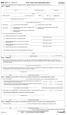 of RRSP issuer RRIF carrier Name of RRSP issuer, RRIF carrier, SPP PRPP administrat annuity issuer 8. Is the transfer from a "Qualifying RRIF", as defined under "Definitions" on the last page of this fm?
Home Buyers Plan (HBP)
 Home Buyers Plan (HBP) Includes Form T1036 RC4135(E) Rev. 09 Before you start Is this guide for you? Use this guide if you want information about the rules that apply to the Home Buyers Plan (HBP). Chapter
Home Buyers Plan (HBP) Includes Form T1036
 Home Buyers Plan (HBP) Includes Form T1036 RC4135(E) Rev.13 Is this guide for you? U se this guide if you want information about the rules that apply to the Home Buyers Plan (HBP). Definitions We have
Registered Education Savings Plans
 Registered Education Savings Plans What is a Registered Education Savings Plan? A registered education savings plan (RESP) is a contract between an individual (the subscriber) and a person or organization
Home Buyers Plan (HBP)
 Home Buyers Plan (HBP) Includes Form T1036 RC4135(E) Rev. 05 Before you start Is this guide for you? Use this guide if you want information about the rules that apply to the Home Buyers Plan (HBP). Chapter
Tax-Free Savings Account (TFSA) Guide for Issuers
 Tax-Free Savings Account (TFSA) Guide for Issuers RC4477(E) Rev. 12 Is this guide for you? T his guide is for use by tax-free savings account (TFSA) issuers and is divided into two parts. Part I contains
Table of Contents. Page 2 of 10
 Page 1 of 10 Table of Contents What is an RRSP?... 3 Why should you put money into an RRSP?... 3 When should you start an RRSP?... 3 The convenience of regular RRSP deposits... 3 How much can you contribute?...
Deducting Income Tax on Pension and Other Income, and Filing the T4A Slip and Summary
 Deducting Income Tax on Pension and Other Income, and Filing the T4A Slip and Summary RC4157(E) Rev. 15 Is this guide for you? U se this guide if you are a payer, such as an employer, a trustee, an estate
Group Retirement Savings Plan for Ryerson University CUPE 3904 PT&S
 Group Retirement Savings Plan for Ryerson University CUPE 3904 PT&S Prepared June 2009 Policy/Plan Number 42745 Ryerson Group Retirement Pension Plan Table of Contents An Introduction to your Group Plan,
Tax-Free Savings Account (TFSA), Guide for Individuals
 Tax-Free Savings Account (TFSA), Guide for Individuals RC4466(E) Rev. 13/11 Is this guide for you? T his guide is for individuals who have opened or who are considering opening a tax-free savings account
Local 804 Pension Plan
 Local 804 Pension Plan A guide to your pension plan benefits Union Benefit Plans Services Contact Contact us If you have any questions about the plan, please contact the plan administrator: Union Benefit
NR4 Non-Resident Tax Withholding, Remitting, and Reporting
 NR4 Non-Resident Tax Withholding, Remitting, and Reporting 2014 T4061 (E) Rev. 14 Is this guide for you? T his guide gives information for payers and agents who make payments to non-residents of Canada
Tax-Free Savings Account (TFSA), Guide for Individuals
 Tax-Free Savings Account (TFSA), Guide for Individuals RC4466(E) Rev. 12 Before you start Is this guide for you? This guide is intended for individuals who have opened or who are considering opening a
(CLICK ON JURISDICTION FOR ADDENDUM) FEDERAL LIRA ALBERTA LIRA BRITISH COLUMBIA LRRSP MANITOBA LIRA NEWFOUNDLAND AND LABRADOR LIRA NOVA SCOTIA LIRA
 Addendum To CANADIAN SHAREOWNER INVESTMENTS INC. Retirement Savings Plan Declaration of Trust for Locked-In Pension Transfers to a Locked-In Registered Retirement Savings Plan or a Locked-In Registered
Tax-Free Savings Account (TFSA), Guide for Individuals
 Tax-Free Savings Account (TFSA), Guide for Individuals RC4466(E) Rev. 11 Before you start Is this guide for you? This guide is intended for individuals who have opened or who are considering opening a
Tax Shelter Training Program. Part 2 Non-Refundable Credits
 Tax Shelter Training Program Part 2 Non-Refundable Credits The Tax Shelter Training 1 Part 2 NON REFUNDABLE TAX CREDITS Every taxpayer may be able to make certain personal claims for his or her self or
Instructions for Form 5 Application to Withdraw or Transfer Money from an Ontario Locked-in Account
 Financial Services Commission of Ontario Instructions for Form 5 Application to Withdraw or Transfer Money from an Ontario Locked-in Account General Information You must complete the attached application
Income Tax Guide to the Non-Profit Organization (NPO) Information Return
 Income Tax Guide to the Non-Profit Organization (NPO) Information Return Includes Form T1044 T4117 (E) Rev. 10 Is this guide for you? This guide is for you if you represent an organization that is: a non-profit
Private Capital Solutions. Tax-Free Savings Accounts (TFSA) Registered Retirement Savings Plans (RRSP)
 Private Capital Solutions Tax-Free Savings Accounts (TFSA) Registered Retirement Savings Plans (RRSP) Computershare Forms Guide On the following pages you will find these applications forms. Tax-Free Savings
The Proposed Tax-Free Savings Account
 The Proposed Tax-Free Savings Account The Conservatives 2006 election promises included a proposal to eliminate capital gains taxes where the proceeds were reinvested within six months. Taxpayers and financial
TOWBOAT SEAMEN PENSION BOOKLET. - Questions and Answers - Illustrations
 TOWBOAT SEAMEN R E T I R E M E N T P L A N PENSION BOOKLET - Questions and Answers - Illustrations April 2013 MISSION STATEMENT The Trustees of the Towboat Seamen Retirement Plan shall use all their individual
T5007 Guide Return of Benefits
 T5007 Guide Return of Benefits 2014 Available electronically only T4115(E) Rev. 14 Is this guide for you? S ections 232 and 233 of the Income Tax Regulations require every person who pays an amount for
ASC IRA Distribution Form
 ASC IRA Distribution Form 120 Father Dueñas Ave. Ste.110 Hagåtña, Guam 96910 Phone: (671) 477-2724 Fax: (671) 477-2729 Email: [email protected] Website: www.asctrust.com You are about to make a decision
my plan Simplified Pension Plan for Employees of Bishop s University Member Booklet
 my plan Simplified Pension Plan for Employees of Bishop s University Member Booklet Client ID 2RT-01 May 2015 Table of Contents Introduction... 1 What type of plan do I have?... 1 What are my responsibilities?...
LONDON LIFE S VOLUNTARY RETIREMENT SAVINGS PLAN POLICY. Plan administrator: London Life Insurance Company
 LONDON LIFE S VOLUNTARY RETIREMENT SAVINGS PLAN POLICY Plan administrator: London Life Insurance Company Autorité des marchées financiers authorization number: LRVER000004 Régie des rentes du Québec plan
Brock University Pension Plan
 Brock University Pension Plan Contents Part 1: Your future is worth the investment 3 For more information 3 Part 2: Welcome to the pension plan 4 A hybrid plan 4 More than a retirement benefit 4 Who pays
Overview of Canadian taxation of life insurance policies. New tax legislation for life insurance policies. January 2015
 January 2015 Overview of Canadian taxation of life insurance policies Life insurance plays an increasingly important role in financial planning due to the growing wealth of Canadians. Besides the traditional
Unlocking Pension Money
 An information bulletin regarding the unlocking of pensions pursuant to The Pension Benefits Act, 1992. fcaa.gov.sk.ca Page 2 [This page was left blank intentionally] Introduction Section 29 of The Pension
PEPP Talk... on Variable Pension Benefit
 PEPP Talk... on Variable Pension Benefit This PEPP Talk provides members with information about PEPP s Variable Pension Benefit (VPB). When you are retired and ready to begin receiving income, you must
ANSWERING YOUR RRSP QUESTIONS
 November 2014 CONTENTS What is an RRSP? Contributing to your RRSP Investing and managing your RRSP Making withdrawals from your RRSP Summary ANSWERING YOUR RRSP QUESTIONS RRSPs are an important component
Voya GoldenSelect Guarantee Annuity
 Voya Insurance and Annuity Company Deferred Modified Guaranteed Annuity Prospectus Voya GoldenSelect Guarantee Annuity May 1, 2015 This prospectus describes Voya GoldenSelect Guarantee Annuity, a group
Retirement Income Options
 Retirement Income Options How will you spend your retirement? Table of Contents Introduction...4 Retirement Considerations...5 Other Considerations...8 Entering Retirement...9 Retirement Income Options...10
Personal income tax organizer
 2015 Personal income tax organizer Your Personal tax organizer includes a personal income tax checklist and tracking schedules. It is designed to make it easier to compile information for your tax preparer.
The Tax-Free Savings Account (TFSA) Frequently Asked Questions
 TAX MANAGEMENT The Tax-Free Savings Account (TFSA) Frequently Asked Questions The Tax-Free Savings Account (TFSA) is a savings vehicle that started in 2009 and allows Canadian residents to earn investment
3 Elections Canada (see the Elections Canada page in the tax guide for details or visit www.elections.ca)
 {} Canada Revenue Agency Income Tax and Benefit Return T1 ENERAL 2011 Identification NL 7 First name and initial FRE Last name JANES Mailing address: Apt No - Street No Street name PO Box City RR Prov./Terr.
Sun Life Assurance Company of Canada
 Sun Life Assurance Company of Canada Sun Lifetime Advantage Guaranteed Investment Fund Information folder and individual variable annuity contract issued by Sun Life Assurance Company of Canada May 2016
TAX, RETIREMENT & ESTATE PLANNING SERVICES. Registered Retirement Savings Plan (RRSP) THE FACTS
 TAX, RETIREMENT & ESTATE PLANNING SERVICES Registered Retirement Savings Plan (RRSP) THE FACTS Table of contents What is an RRSP?... 3 Why should I contribute to an RRSP?... 4 When can I contribute?...
Common-law (including same-sex) partners taxation information
 Tax & Estate Common-law (including same-sex) partners taxation information Under the Income Tax Act (Canada), all common-law relationships, either opposite- or same-sex, are treated equally. For tax purposes,
Arizona Form 2014 Individual Amended Income Tax Return 140X
 Arizona Form 2014 Individual Amended Income Tax Return 140X Phone Numbers For information or help, call one of the numbers listed: Phoenix (602) 255-3381 From area codes 520 and 928, toll-free (800) 352-4090
SELF-DIRECTED RETIREMENT SAVINGS PLAN APPLICATION
 SELF-DIRECTED RETIREMENT SAVINGS PLAN APPLICATION CALEDON TRUST COMPANY LIRA Locked in Retirement Account* LRSP Locked in Retirement Savings Plan* RSP - Retirement Savings Plan - Member Plan RSP - Retirement
Landscape, Irrigation & Lawn Sprinkler Industry Trusts Defined Contribution Pension Plan Death Benefit Application
 Landscape, Irrigation & Lawn Sprinkler Industry Trusts Defined Contribution Pension Plan Death Benefit Application Complete all applicable sections and return pages 1-3 to: Southern California Pipe Trades
Sample Exam Questions for Taxation of Trusts and Estates
 Sample Exam Questions for Taxation of Trusts and Estates STEP Canada The following questions are offered to provide a sense of the type of questions you might expect on the exam. They do not reflect an
TFSA Tax Free Savings Account
 TFSA Tax Free Savings Account Banking Insurance Planning Table of Contents WHAT is A TFsA? 1 Who can open a TFSA? Who Could Benefit from a TFSA? Non-resident holders Qualified investment in a TFSA contributions
GROUP RETIREMENT SAVINGS PLAN
 GROUP RETIREMENT SAVINGS PLAN (the "Group Plan") The individual Retirement Savings Plans (the "Plans") established under the Group Plan will be issued by Sun Life Assurance Company of Canada ("Sun Life")
TAX SHELTERED ANNUITY ROLLOVER / PARTIAL WITHDRAWAL / FULL SURRENDER REQUEST
 General American Retirement & Investment Services PO Box 19098 Greenville, SC 29602 Customer Service: 800-449-6447 Fax: 866-214-0926 TAX SHELTERED ANNUITY ROLLOVER / PARTIAL WITHDRAWAL / FULL SURRENDER
THE TAX-FREE SAVINGS ACCOUNT
 THE TAX-FREE SAVINGS ACCOUNT The 2008 federal budget introduced the Tax-Free Savings Account (TFSA) for individuals beginning in 2009. The TFSA allows you to set money aside without paying tax on the income
Group Retirement Savings Plan for the Province of New Brunswick
 All Members Group Retirement Savings Plan for the Province of New Brunswick Dear plan member, To help you* achieve financial security during your retirement years, the Province of New Brunswick has established
Dear Plan Participant:
 Dear Plan Participant: Enclosed are materials to help you understand your Marsh & McLennan Companies 401(k) Savings & Investment Plan (Plan) distribution options as a terminated employee. The kit contains
THE TATITLEK CORPORATION 401(K) PLAN FINAL DISTRIBUTION FORM (888) 477-3135
 Return Form To: Northwest Plan Services, Inc. 5446 California Ave SW Suite 200 Seattle, WA 98136 Fax (206) 938-5987 THE TATITLEK CORPORATION 401(K) PLAN FINAL DISTRIBUTION FORM (888) 477-3135 Participant
EMPLOYEES RETIREMENT SYSTEM OF THE CITY OF NORFOLK SPECIAL TAX NOTICE Revised March 2016
 EMPLOYEES RETIREMENT SYSTEM OF THE CITY OF NORFOLK SPECIAL TAX NOTICE Revised March 2016 YOUR ROLLOVER OPTIONS You are receiving this notice because all or a portion of a payment you are receiving from
Tax implications when transferring ownership of a life insurance policy
 Tax implications when transferring ownership of a life insurance policy May 2015 Jean Turcotte, B.A.A., LL.B., CLU Director, Tax, Wealth & Insurance Planning Group Sun Life Financial FOR ADVISOR USE ONLY
How To Pay Out Of Plan Money
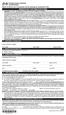 Marsh & McLennan Companies 401(k) Savings & Investment Plan BENEFICIARY DISTRIBUTION FORM Use this form to request a distribution as a beneficiary following the death of a participant. IMPORTANT If you
625 St-Amable Street Québec (Québec) G1R 2G5 ALBERTA LIFE INCOME FUND (LIF-RIDER)
 625 St-Amable Street Québec (Québec) G1R 2G5 ALBERTA LIFE INCOME FUND (LIF-RIDER) Nature of the rider This rider (hereinafter also referred to as the addendum ) applies only to the Contractholder whose
Withdrawing Your TSP Account After Leaving Federal Service. Thrift Savings Plan. July 2004. Federal Retirement Thrift Investment Board
 Withdrawing Your TSP Account After Leaving Federal Service Thrift Savings Plan July 2004 Federal Retirement Thrift Investment Board Table of Contents Introduction.................................................
Doing It Right the First Time! Avoiding the Most Common Tax Return Errors by Jamie Golombek
 March 19, 2014 Doing It Right the First Time! Avoiding the Most Common Tax Return Errors by Jamie Golombek Preparing your tax return can be a daunting task. While nearly 70% 1 of individuals engage tax
CANADIAN MERCHANT SERVICE GUILD WESTERN BRANCH PENSION PLAN (Towboats)
 CANADIAN MERCHANT SERVICE GUILD WESTERN BRANCH PENSION PLAN (Towboats) 2004 Printed April 2005 Table of contents ABOUT THE PENSION PLAN... 5 PERSONAL INFORMATION... 7 FUNDING... 9 Required member contributions...
Information Folder and Annuity Policy Client Document Package M.V.P. - RIF. insured by Sun Life Assurance Company of Canada
 Information Folder and Annuity Policy Client Document Package Sun Life Assurance Company of Canada M.V.P. - RIF managed by CI Investments Inc. insured by Sun Life Assurance Company of Canada Important
CRA requires that all offshore assets in excess of $100,000 CDN be declared by the taxpayer. Please inform us if this situation applies to you.
 T1 Personal Income Tax Checklist THE MINIMUM FEE FOR A BASIC PERSONAL TAX RETURN FOR A FAMILY WILL BE $325. THE MINIMUM FEE FOR A PERSONAL TAX RETURN FOR A FAMILY, INCLUDING SELF-EMPLOYMENT INCOME, RENTAL
ADDENDUM TO THE RETIREMENT SAVINGS PLAN DECLARATION OF TRUST ESTABLISHING A LOCKED-IN RETIREMENT ACCOUNT. Saskatchewan (LIRA)
 ADDENDUM TO THE RETIREMENT SAVINGS PLAN DECLARATION OF TRUST ESTABLISHING A LOCKED-IN RETIREMENT ACCOUNT Saskatchewan (LIRA) 1. What the Words Mean: Please remember that in this Addendum, I, me and my
IRS Special Tax Notice
 IRS Special Tax Notice YOUR ROLLOVER OPTIONS You are receiving this notice because all or a portion of a payment you are receiving from your Baylor University Retirement Income Plan (the Plan ) serviced
Life Income Fund (LIF) Addendum To RRIF Contract
 Life Income Fund (LIF) Addendum To RRIF Contract THIS IS AN ADDENDUM TO A RRIF CONTRACT BETWEEN: AND (the "Owner") BMO Life Assurance Company (the "Issuer") IMPORTANT NOTES: A life income fund (LIF) is
my plan Husky Oil Operations Limited Retirement Program Defined Contribution Pension Plan Group Registered Retirement Savings Plan Member Booklet
 my plan Husky Oil Operations Limited Retirement Program Defined Contribution Pension Plan Group Registered Retirement Savings Plan Member Booklet For Manitoba permanent employees Client ID 16R-01 Prepared
Financial Services Commission of Ontario Commission des services financiers de l Ontario. Life Income Fund/Locked-In Retirement Account
 Financial Services Commission of Ontario Commission des services financiers de l Ontario SECTION: Life Income Fund/Locked-In Retirement Account INDEX NO.: L050-100 TITLE: APPROVED BY: Requirements of the
I request a refund in accordance with paragraph 7(b); or
 CIBC RETIREMENT SAVINGS PLAN AGREEMENT 1. ESTABLISHMENT OF PLAN: Canadian Imperial Bank of Commerce ( CIBC ) agrees to hold on deposit in a CIBC Retirement Savings Plan (the Plan ) contributions received
Last Name First Name Middle Initial. I elect payment of all funds directly to me. (Mandatory 20% Federal tax withholding applies)
 Application for Refund of Contributions This application should be completed if you are no longer employed in a position covered by the Teachers Retirement System of Georgia (TRS) and would like to receive
THE EMPIRE LIFE INSURANCE COMPANY LIFE INCOME FUND ENDORSEMENT QUÉBEC SUPPLEMENTAL PENSION PLANS ACT AND REGULATIONS
 Policy Number: THE EMPIRE LIFE INSURANCE COMPANY LIFE INCOME FUND ENDORSEMENT QUÉBEC SUPPLEMENTAL PENSION PLANS ACT AND REGULATIONS Owner/Annuitant: The Policy Number indicated above is amended as described
Pioneer Uni-K Plan Withdrawal Kit
 Pioneer Uni-K Plan Withdrawal Kit l Withdrawal Request Form l Special Tax Notices Regarding Retirement Plan Payments l Domestic Relations Order Procedures 1 Uni-K Withdrawal Information Uni-K Withdrawal
MEMBER RETIREMENT SERVICES Understanding All The Basics RRSP RRIF ANNUITY LIF LRIF
 MEMBER RETIREMENT SERVICES Understanding All The Basics RRSP RRIF ANNUITY LIF LRIF This Understanding All The Basics booklet (this publication ) is provided to you courtesy of a credit union. It is written
Reuter Benefits Group Plan Member Newsletter September 2009
 Reuter Benefits Group Plan Member Newsletter September 2009 Accessing Your Retirement Savings As you approach retirement, you will need to turn your Pension and RRSP, as well as any nonregistered savings,
SUPPLEMENTARY TERMS FOR LOCKED-IN RETIREMENT ACCOUNT (LIRA) BMO INVESTORLINE RETIREMENT SAVINGS PLAN
 SUPPLEMENTARY TERMS FOR LOCKED-IN RETIREMENT ACCOUNT (LIRA) Pursuant to the Pension Benefits Standards Act (British Columbia) BMO INVESTORLINE RETIREMENT SAVINGS PLAN Plan Issuer BMO Trust Company 100
New Hanover Regional Medical Center 403(b) and 457(b) Retirement Savings Plans
 New Hanover Regional Medical Center 403(b) and 457(b) Retirement Savings Plans Mutual Fund Safe Harbor Request For Hardship Withdrawal Group ID# 45944003 Group ID# 45944002 1. CLIENT INFORMATION Name:
Required Distribution Election Form For IRA and 403(b) Contracts
 Required Distribution Election Form For IRA and 403(b) Contracts Participant Name Contract Number Daytime Phone Number Date of Birth Plan Type Protective Life Insurance Company (PLICO/"the Company") Protective
Segregated funds or mutual funds
 Segregated funds or mutual funds Do you know the differences? Although there are many similarities between these two investment products, there are also some important ways in which they differ. One important
Annuitant Mailing Address Street Address City State ZIP Code. Annuitant Social Security Number/Tax I.D. Number Annuitant Date of Birth (mm/dd/yyyy)
 Annuitization Questions? Call our National Service Center at 1-800-888-2461. Instructions Please type or print. Use this form to begin annuity payments. Complete each section of the form. If you select
Roth Individual Retirement Account Disclosure Statement (Pursuant to Treasury Regulation 1.408-6)
 2721 North Central Avenue Phoenix, Arizona 85004-1172 [email protected] Roth Individual Retirement Account Disclosure Statement (Pursuant to Treasury Regulation 1.408-6) Right to Revoke Your
REQUEST FOR DISBURSEMENT Form - Tax-Sheltered Annuities 403(b)
 Policy Number Owner / Annuitant Phone Number Owner s Legal Address--Street City State Zip CONDITIONS FOR WITHDRAWAL One of the conditions below must be met for a withdrawal to be processed. Please review
Tax and Estate Planning Issues for Canadian Citizens and Residents residing in the U.S. and Dual U.S.- Canadian Citizens
 September 23, 2008 Tax and Estate Planning Issues for Canadian Citizens and Residents residing in the U.S. and Dual U.S.- Canadian Citizens Natalia Yegorova is an associate at Black Helterline LLP. Her
CHECK LIST FOR REFUND REQUESTS FROM PUBLIC SAFETY
 CHECK LIST FOR REFUND REQUESTS FROM PUBLIC SAFETY (1) Please Complete and Submit a Form P6 Application For A Separation Refund Or Deferred Retirement: Complete the top portion of the P6 form Initial under
Important Tax Information About Payments From Your TSP Account
 Important Tax Information About Payments From Your TSP Account Before you decide how to receive the money in your Thrift Savings Plan (TSP) account, you should review the important information in this
Registered Retirement Income Funds
 Registered Retirement Income Funds The Income Tax Act states that a Registered Retirement Savings Plan (RRSP) matures by December 31 of the year in which the planholder (annuitant) reaches age 69. At the
The Tax-Free Savings Account An Analysis of the Legislation
 The Tax-Free Savings Account An Analysis of the Legislation The Department of Finance predicts that Tax Free Savings Accounts (TFSAs) are set to become a major component of Canadians financial plans so
Outgoing Annuity Tax-Qualified Transfer Exchange, Conversion or Direct Rollover from RiverSource Life Insurance Co. of New York i
 DOC0107138065 Service address: RiverSource Life Insurance Co. of New York 70500 Ameriprise Financial Center Minneapolis, MN 55474 Outgoing Annuity Tax-Qualified Transfer Exchange, Conversion or Direct
Tax Issues on Separation and Divorce
 Tax Issues on Separation and Divorce TAX ISSUES ON SEPARATION AND DIVORCE When a marriage ends, the number and variety of decisions to be made in what is already a time of emotional turmoil seem endless.
Consider the AVC Option. An exclusive retirement savings opportunity for OMERS members
 Consider the AVC Option An exclusive retirement savings opportunity for OMERS members Important! This guide provides important information for OMERS members about contributing to the Additional Voluntary
Pioneer 403(b) Withdrawal Request
 Pioneer 403(b) Withdrawal Request 2 Pioneer Investments Retirement Plans 403(b) Withdrawal Request Use this form to request a withdrawal from your Pioneer 403(b) account. Mail to Pioneer Funds, P.O. Box
PARTICIPANT DISTRIBUTION FORM Please read the Frequently Asked Questions (FAQ) attached to this form. Submit the completed form to the Plan Sponsor.
 PARTICIPANT DISTRIBUTION FORM Please read the Frequently Asked Questions (FAQ) attached to this form. Submit the completed form to the Plan Sponsor. Send a copy of your completed distribution form to the
TAX ADMINISTRATION LAWS AMENDMENT ACT
 REPUBLIC OF SOUTH AFRICA TAX ADMINISTRATION LAWS AMENDMENT ACT REPUBLIEK VAN SUID-AFRIKA WYSIGINGSWET OP BELASTING- ADMINISTRASIEWETTE No 21, 12 GENERAL EXPLANATORY NOTE: [ ] Words in bold type in square
Explanatory Notes Relating to the Income Tax Act and Related Legislation
 Explanatory Notes Relating to the Income Tax Act and Related Legislation Published by The Honourable Joe Oliver, P.C., M.P. Minister of Finance April 2015 Preface These explanatory notes describe proposed
Financial Services Commission of Ontario Commission des services financiers de l Ontario
 Financial Services Commission of Ontario Commission des services financiers de l Ontario SECTION: Life Income Fund/Locked-In Retirement Account INDEX NO.: L050-500 TITLE: LIF Explanation and Tables for
SCHEDULE 2 (section 116) PENSION BENEFITS STANDARDS REGULATION LIFE INCOME FUND ADDENDUM
 SCHEDULE 2 (section 116) PENSION BENEFITS STANDARDS REGULATION LIFE INCOME FUND ADDENDUM PART 1 - DEFINITIONS AND INTERPRETATION Definitions and interpretation 1 (1) Subject to subsection (3), the following