
Bartering. From Wikipedia, the free encyclopedia
|
|
|
- Emily Chandler
- 9 years ago
- Views:
Transcription
1 Bartering Barter is a type of trade where goods or services are exchanged for a certain amount of other goods or services; no money is involved in the transaction. It can be bilateral or multilateral as trade. It is a word frequently used as a synonym for 'negotiate/negotiation', but this usage is incorrect. A common form of barter during colonial times was tobacco. Also bushels of grain and wampum were popular forms. Barter trade is common among people with no access to a cash economy, in societies where no monetary system exists, or in economies suffering from a very unstable currency (as when hyperinflation hits) or a lack of currency. A disadvantage of using bilateral barter is that it can depend upon a mutual coincidence of wants. Before any transaction can be undertaken, each party must be able to supply something the other party demands. To overcome this mutual coincidence problem, some communities have developed a system of intermediaries who can store, trade, and warehouse commodities. However, the intermediaries often suffer from financial risk. To organize production and to distribute goods and services among their populations, many pre-capitalist or pre-market economies relied on tradition, top-down command, or community democracy instead of market exchange organized using barter. Relations of reciprocity and/or redistribution substituted for market exchange. Trade and barter were primarily reserved for trade between communities or countries. Barter becomes more and more difficult as people become dispossesed of the means of production of widely-needed goods. For example, if money were to be severely devalued in the United States, most people would have little of value to trade for food (since the farmer can only use so many cars, etc.) In finance, the word "barter" is used when two corporations trade with each other using non-money financial assets (such as U.S. Treasury bills). Alternatively, the standard definitions of money could be seen as being too narrow and needing to be expanded to increase near-money assets. From Wikipedia, the free encyclopedia

2 $*$*$*$*$*$*$*$*$ Historical Development (of Money) Before the invention of money, trade and commerce were accomplished through the barter system, the trading of one type of goods for another. Three major problems are associated with the barter system. First, trade can occur only if each of the trading parties has something the other wants. Second, the purchase and sale transactions cannot be separated, but must be simultaneous. The sale or purchase of goods cannot be deferred. The third major problem relates to perishable goods. If the owner of perishable goods cannot trade those goods immediately, they soon lose their value. Mediums of Exchange Something that would be considered valuable at any time was needed to solve these problems; that is, a universal medium of exchange or a commodity to make it possible to express the value of all other items. Over the centuries many items have served as mediums of exchange. The American Indians used beads made from shells, called wampum. Early colonists of North America at one time used tobacco. Cigarettes and liquor were used in Germany immediately after World War II because of the extremely low value of the offical currency. Fur pelts, whale teeth, grain, salt and livestock are but a few of the other commodities that, at one time or other, have been used as mediums of exchange. Metals eventually became the prevailing medium of exchange because of their intrinsic and relatively stable value. When a purchase was made, an appropriate amount of metal, was shaved off an ingot as payment. It was from this use of metal as a medium of exchange that coins evolved. Coins Paper Money Money, The Volume Library, A Modern, Authoritative Reference for Home and School Use, 1994, p , The Southwestern Company, Nashville, Tenn.

3 African Sculpture Unit 7 th Grade Creative Arts Reading Assignment Pre-reading for BARTERing Article Name Date Class Notice the underlined sections of the reading. These terms will need to be defined for better understanding while reading. Look up the 6 words and write down the definition, and be ready to discuss the two underlined paragraphs. List any other words you don t know the definition of During Reading Read whole paragraph for better understanding. Re-read if needed.

4 After reading Answer the following prompts in complete sentences. When bartering a transaction is made with no money exchanged, how is this fair/possible? In paragraph 3, a disadvantage is mentioned. Why is this important? How can this be solved? What is the risk? In paragraph 5, the sentence ends with since the farmer can only use so many cars, etc, what does this mean? What does that have to do with bartering?

5 Historical Development of Money Reading Assignment Name Date Class What is the Barter system? List the 3 major problems with the barter system. What does medium mean in this reading? List examples of medium that have been used in history. Why was metal used as a medium of exchange?

Currency and Exchange Rates
 Grade Five Currency and Exchange Rates Overview Students share the book The Story of Money, by Betsy Maestro, to learn about exchange and barter, the functions of money, currency, and spending money. Students
chapter: Solution Money, Banking, and the Federal Reserve System
 Money, Banking, and the Federal Reserve System 1. For each of the following transactions, what is the initial effect (increase or decrease) on M1? or M2? a. You sell a few shares of stock and put the proceeds
Solution. Solution. Money, Banking, and the Federal Reserve System. macroeconomics. economics
 KrugmanMacro_SM_Ch13.qxp 10/27/05 3:20 PM Page 155 Money, Banking, and the Federal Reserve System 1. For each of the following transactions, what is the effect (increase or decrease) on M1? on M2? a. You
Money, Banking, and the Federal Reserve Bank (Monetary Policy) Chapter 10, Page 256
 Money, Banking, and the Federal Reserve Bank (Monetary Policy) Chapter 10, Page 256 Money Part I Money Objectives: In this lesson, students will be able to identify characteristic of money and the advantages
Functions and Characteristics of Money
 Functions and Characteristics of Money CHAPTER 3 SEGMENT 301 Lesson Description In this lesson, students view a film segment on the characteristics and functions of money from The Federal Reserve and You.
Chapter 7 The Asset Market, Money, and Prices
 Chapter 7 The Asset Market, Money, and Prices Multiple Choice Questions 1. A disadvantage of the barter system is that (a) no trade occurs. (b) people must produce all their own food, clothing, and shelter.
Chapter 13 Money and Banking
 Chapter 13 Money and Banking Multiple Choice Questions Choose the one alternative that best completes the statement or answers the question. 1. The most important function of money is (a) as a store of
chapter: Solution Money, Banking, and the Federal Reserve System
 Money, Banking, and the Federal Reserve System 1. For each of the following transactions, what is the initial effect (increase or decrease) on M1? On M2? a. You sell a few shares of stock and put the proceeds
A Lesson to Accompany Benjamin Franklin and the Birth of a Paper Money Economy
 A Lesson to Accompany Benjamin Franklin and the Birth of a Paper Money Economy Lesson by Andrew T. Hill, Ph.D., Federal Reserve Bank of Philadelphia Lesson Description In this lesson students learn about
Macroeconomics, 8e (Parkin) Testbank 1
 Macroeconomics, 8e (Parkin) Testbank 1 Chapter 9 Money, the Price Level, and Inflation 9.1 What is Money? 1) The functions of money are A) medium of exchange and the ability to buy goods and services.
Money and Inflation: A Functional Relationship. March 2013. Classroom Edition
 PAGE ONE Economics the back story on front page economics NEWSLETTER Money and Inflation: A Functional Relationship March 2013 Classroom Edition An informative and accessible economic essay with a classroom
Money Basics. { http://youth.macu.com }
 Money Basics { http://youth.macu.com } Mountain America Credit Union knows that it s never too early to start learning critical money management skills. That s why we ve put this information together for
4. The minimum amount of owners' equity in a bank mandated by regulators is called a requirement. A) reserve B) margin C) liquidity D) capital
 Chapter 4 - Sample Questions 1. Quantitative easing is most closely akin to: A) discount lending. B) open-market operations. C) fractional-reserve banking. D) capital requirements. 2. Money market mutual
Macroeconomics, 10e, Global Edition (Parkin) Chapter 25 Money, the Price Level, and Inflation. 1 What is Money?
 Macroeconomics, 10e, Global Edition (Parkin) Chapter 25 Money, the Price Level, and Inflation 1 What is Money? 1) The functions of money are A) medium of exchange and the ability to buy goods and services.
Chapter 13 Money and Banking
 Chapter 13 Money and Banking After reading Chapter 13, MONEY AND BANKING, you should be able to: Explain the three functions of money: Medium of Exchange, Unit of Account, Store of Value. Understand the
Grade 4: Module 2A: Unit 1: Lesson 5 Mid-Unit 1 Assessment: Inferring with Pictures and Text
 Grade 4: Module 2A: Unit 1: Lesson 5 Mid-Unit 1 Assessment: Inferring with Pictures and Text This work is licensed under a Creative Commons Attribution-NonCommercial-ShareAlike 3.0 Unported License. Exempt
The Kingdom of Mali. Read through the worksheet and allow for explanations and clarifications Discuss new terminology Learners complete the worksheet
 Grade 7, Term 1 Social Science: History Lesson Topic: The Kingdom of Mali Lesson 2 of 6 CAPS reference: page 33 Total time: 1 hour Aims Engage higher order thinking through questions Expand knowledge base
2 0 0 0 E D I T I O N CLEP O F F I C I A L S T U D Y G U I D E. The College Board. College Level Examination Program
 2 0 0 0 E D I T I O N CLEP O F F I C I A L S T U D Y G U I D E College Level Examination Program The College Board Principles of Macroeconomics Description of the Examination The Subject Examination in
MULTIPLE CHOICE. Choose the one alternative that best completes the statement or answers the question.
 Study Questions 5 (Money) MULTIPLE CHOICE. Choose the one alternative that best completes the statement or answers the question. 1) The functions of money are 1) A) medium of exchange, unit of account,
3. Any medium of exchange (including commodity money) must: a. be easily standardized. b. be widely accepted. c. be divisible. d. be easy to carry.
 What is Money? This lecture examines the functions of money, the evolution of the payments system, and how money is measured. Functions of Money A. Medium of Exchange 1. Money is any item that is generally
THE MEANING OF MONEY. The Functions of Money. Money has three functions in the economy: The Functions of Money. The Functions of Money
 In this chapter, look for the answers to these questions: What assets are considered money? What are the functions of money? The types of money? 11 What is the Federal Reserve? What role do banks play
The evolution of money and the development of the smart card.
 Winter 2000 The evolution of money and the development of the smart card. Author: Peter Platan (I.D. 4362969) Supervisor: Dr. D.Otchere Table of Contents 1.0 INTRODUCTION...1 2.0 CONCEPTS...1 2.1 CONCEPTUAL
Chapter 11 Money and Monetary Policy Macroeconomics In Context (Goodwin, et al.)
 Chapter 11 Money and Monetary Policy Macroeconomics In Context (Goodwin, et al.) Chapter Overview In this chapter, you will be introduced to a standard treatment of the banking system and monetary policy.
MULTIPLE CHOICE. Choose the one alternative that best completes the statement or answers the question.
 ECON 4110: Sample Exam Name MULTIPLE CHOICE. Choose the one alternative that best completes the statement or answers the question. 1) Economists define risk as A) the difference between the return on common
Homework (Chapter 11)
 EC 2113 Principles of Macroeconomics Instructor: Erdenechimeg Eldev-Ochir Name:_ ID: Homework (Chapter 11) Multiple Choice Identify the letter of the choice that best completes the statement or answers
Describe the functions of the Federal Reserve System (the Fed).
 The Monetary System Chapter CHAPTER CHECKLIST Define money and describe its functions. Money is any commodity or token that is generally accepted as a means of payment. Money serves as a medium of exchange,
ASSIGNMENT 1 ST SEMESTER : MACROECONOMICS (MAC) ECONOMICS 1 (ECO101) STUDY UNITS COVERED : STUDY UNITS 1 AND 2. DUE DATE : 3:00 p.m.
 Page 1 of 13 ASSIGNMENT 1 ST SEMESTER : MACROECONOMICS (MAC) ECONOMICS 1 (ECO101) STUDY UNITS COVERED : STUDY UNITS 1 AND 2 DUE DATE : 3:00 p.m. 19 MARCH 2013 TOTAL MARKS : 100 INSTRUCTIONS TO CANDIDATES
Understanding the Effects Of Currency Exchange Rates
 Understanding the Effects Of Currency Exchange Rates Lesson 5 OVERVIEW: The value of money is determined when people are willing to accept it in exchange for goods and services. Previous to using money,
Fidelity Emerging Markets Fund 14 Fidelity Europe Fund 12 Fidelity Far East Fund 3,10 Fidelity Global Fund 1,14 Fidelity Global Disciplined
 Simplified Prospectus dated October 29, 2015 Fidelity Funds Series A, Series B, Series F and Series O units (unless otherwise indicated) Equity Funds Canadian Equity Funds Fidelity Canadian Disciplined
2010 Risk and Profit Conference Breakout Session Presenters. 9. Marketing Grain Using a Storage Hedge
 Orlen Grunewald 2010 Risk and Profit Conference Breakout Session Presenters 9. Marketing Grain Using a Storage Hedge Orlen Grunewald is a professor in the Department of Agricultural
TEaching UniT. Grade Level: Grade 4 Recommended Curriculum Area: Mathematics Other Relevant Curriculum Area(s): Language Arts
 BUILDING FUTURES IN ONTARIO TEaching UniT General Topic: Money and Decision-making Unit Title: Early Experiences with Money Grade Level: Grade 4 Recommended Curriculum Area: Mathematics Other Relevant
Lecture Notes on MONEY, BANKING, AND FINANCIAL MARKETS. Peter N. Ireland Department of Economics Boston College. [email protected]
 Lecture Notes on MONEY, BANKING, AND FINANCIAL MARKETS Peter N. Ireland Department of Economics Boston College [email protected] http://www2.bc.edu/~irelandp/ec261.html Chapter 15a: Introduction to the Money
Jamestown Settlement Family Gallery Guide From Africa to Virginia
 Jamestown Settlement Family Gallery Guide From Africa to Virginia Not long after the English settled Jamestown in 1607, the first Africans were brought to Virginia. They arrived in 1619 from the Kongo/Angola
Ghana: A West African Trading Empire
 Ghana: A West African Trading Empire The kingdom of Ghana lasted from 500 C.E. to the 11 th century C.E. The kingdom arose from the Sahel of Africa and spread to the valley between the Senegal and Niger
PABLO PICASSO PRE-READING QUESTIONS. 1. What kind of art do you like? 2. Do you have a favorite artist?
 Pablo Picasso PABLO PICASSO PRE-READING QUESTIONS 1. What kind of art do you like? 2. Do you have a favorite artist? 3. Have you seen a painting by Picasso? 4. Have you heard of a style of painting called
Inquiry into Access of Small Business to Finance
 Inquiry into Access of Small Business to Finance Reference http://www.aph.gov.au/senate/committee/economics_ctte/small_business_10/ index.htm The current structure of the financial system means that large
International Monetary Policy
 International Monetary Policy 2 Preliminary concepts 1 Michele Piffer London School of Economics 1 Course prepared for the Shanghai Normal University, College of Finance, April 2011 Michele Piffer (London
Options on Beans For People Who Don t Know Beans About Options
 Options on Beans For People Who Don t Know Beans About Options Remember when things were simple? When a call was something you got when you were in the bathtub? When premium was what you put in your car?
Chapter 29: The Monetary System Principles of Economics, 7 th Edition N. Gregory Mankiw Page 1
 Page 1 1. Introduction a. This is a fairly descriptive chapter, but it contains some important material for understanding the world that we live in. b. Money is important for facilitating trade. c. Paper
Definitions of Marketing Terms
 E-472 RM2-32.0 11-08 Risk Management Definitions of Marketing Terms Dean McCorkle and Kevin Dhuyvetter* Cash Market Cash marketing basis the difference between a cash price and a futures price of a particular
University of Lethbridge Department of Economics ECON 1012 Introduction to Macroeconomics Instructor: Michael G. Lanyi
 University of Lethbridge Department of Economics ECON 1012 Introduction to Macroeconomics Instructor: Michael G. Lanyi CH 24 Money Price Inflation 1) Money is A) currency plus coins. B) the same as gold.
I see old paper s and assignments most of. mcq s are given us from this book I want to. share all data to my all fellow s.
 Page 1 Money, Banking and Financial Markets, 2/e Stephen G Cecchetti, Brandeis University I see old paper s and assignments most of mcq s are given us from this book I want to share all data to my all
Chapter 1 THE MONEY MARKET
 Page 1 The information in this chapter was last updated in 1993. Since the money market evolves very rapidly, recent developments may have superseded some of the content of this chapter. Chapter 1 THE
Agriculture & Business Management Notes...
 Agriculture & Business Management Notes... Preparing an Income Statement Quick Notes... The income statement measures the profitability of a business over a specific period of time. Cash reporting of income
Why a Floating Exchange Rate Regime Makes Sense for Canada
 Remarks by Gordon Thiessen Governor of the Bank of Canada to the Chambre de commerce du Montréal métropolitain Montreal, Quebec 4 December 2000 Why a Floating Exchange Rate Regime Makes Sense for Canada
Gifted Middle School Summer Reading Animal Farm
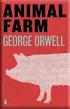 Name Gifted Middle School Summer Reading Animal Farm This summer you will read the novel, Animal Farm, which is about farm animals that rebel against the farmer in order to create a better life. But what
UNdErSTANdINg INVESTMENTS THE NEXT STEP. A guide to understanding the issues you should consider. Make time for your future now. nfumutual.co.
 INVESTMENTS THE NEXT STEP UNdErSTANdINg INVESTMENT risk Make time for your future now. A guide to understanding the issues you should consider Simply get in touch with your local NFU Mutual office, or call
PRODUCTION. 1The Surplus
 1The Surplus 2 The US economy produces an amazing number of different products: thousands of different foods, countless movies, dozens of different type cars, hundreds of entertainment products, dozens
Economics Chapter 7 Review
 Name: Class: Date: ID: A Economics Chapter 7 Review Matching a. perfect competition e. imperfect competition b. efficiency f. price and output c. start-up costs g. technological barrier d. commodity h.
DACHSER TURKEY HAVA VE DENIZ TASIMACILIGI A.S. RULES FOR FREIGHT FORWARDING SERVICES
 DACHSER TURKEY HAVA VE DENIZ TASIMACILIGI A.S. RULES FOR FREIGHT FORWARDING SERVICES PART I GENERAL PROVISIONS CONDITIONS OF APPLICATION 1.1. These rules shall be binding upon any reference, whether verbal
USAA NEW YORK MONEY MARKET FUND SUPPLEMENT DATED APRIL 1, 2016 TO THE FUND'S PROSPECTUS DATED AUGUST 1, 2015
 USAA NEW YORK MONEY MARKET FUND SUPPLEMENT DATED APRIL 1, 2016 TO THE FUND'S PROSPECTUS DATED AUGUST 1, 2015 This Supplement updates certain information contained in the above-dated prospectus for the
The European PCB Industry in 2015 What is the future of our industry? Where are we going? Is the Future already written or can we change it?
 Bernard Bismuth General Manager of CCI Eurolam The European PCB Industry in 2015 What is the future of our industry? Where are we going? Is the Future already written or can we change it? As a supplier
Cost-Benefit Analysis. 131 Undergraduate Public Economics Emmanuel Saez UC Berkeley
 Cost-Benefit Analysis 131 Undergraduate Public Economics Emmanuel Saez UC Berkeley 1 OUTLINE Chapter 8 8.1 Measuring the Costs of Public Projects 8.2 Measuring the Benefits of Public Projects 8.3 Putting
Part 1. E. Speculative Theory 1. Leverage 2. Risk 3. Market liquidity 4. Price volatility
 EXAMINATION SUBJECT AREAS National Commodity Futures Examination SERIES 3 The following is a general listing of the major subject areas covered by the examination and does not represent an exhaustive list
WHAT ARE OPTIONS OPTIONS TRADING
 OPTIONS TRADING WHAT ARE OPTIONS Options are openly traded contracts that give the buyer a right to a futures position at a specific price within a specified time period Designed as more of a protective
Chapter 2. Practice Problems. MULTIPLE CHOICE. Choose the one alternative that best completes the statement or answers the question.
 Chapter 2 Practice Problems MULTIPLE CHOICE. Choose the one alternative that best completes the statement or answers the question. 1) Assume that you borrow $2000 at 10% annual interest to finance a new
Academic Achievement Programs Tutoring and SI Program
 Reading at the College Level Academic Achievement Programs Tutoring and SI Program Reading at the College Level Active Reading Benefits Activates schema (background knowledge) Enhances comprehension Fosters
Benchmark C Describe the characteristics of feudal societies and the transition to the Renaissance and Reformation in Europe.
 Feudalism in Japan and Europe Connection: History Benchmark C Describe the characteristics of feudal societies and the transition to the Renaissance and Reformation in Europe. Indicator 3 Describe the
DERIVATIVE INSTRUMENTS RISK STATEMENT FORM (applicable to transactions at Turkish Derivatives Exchange)
 DERIVATIVE INSTRUMENTS RISK STATEMENT FORM (applicable to transactions at Turkish Derivatives Exchange) Important Explanation: While you may generate revenues as a result of the purchase-sale transactions
Debt Management. Handle with Care CONTENT NOTE. Definitions
 Debt Management Handle with Care CONTENT NOTE When you borrow money, you enter the world of debt. It has rules, players and strategies. One of the best things you can do for yourself is to learn how to
The Difference Between Market and Barter: Money and the Making of Markets
 The Difference Between Market and Barter: 2 Money and the Making of Markets Market is in many respects distinct from barter. This distinction needs to be emphasized, because the conventional theory treats
Money, Money, Money!
 Soldier Pay in the American Civil War Activity Union privates were paid $13 per month until after the final raise on June 20, 1864, when they got $16. In the infantry and artillery, officers were as follows
Bank of Finland and Finland s economic internationalization. Turku 16.08.2011
 Bank of Finland and Finland s economic internationalization Antti Kuusterä Juha Tarkka Turku 16.08.2011 Early history - towards independent exchange rate policy Monetary reform 1840 - silver standard stabilized
Contingent Claims: A stock option that is a derivative security whose value is contingent on the price of the stock.
 Futures and Options Note 1 Basic Definitions: Derivative Security: A security whose value depends on the worth of other basic underlying variables. E.G. Futures, Options, Forward Contracts, Swaps. A derivative
9.1 PERSONAL FINANCIAL LITERACY
 STRAND A: 9.1.4.A.1 9.1.4.A.2 9.1.4.A.3 9.1.8.A.1 9.1.8.A.2 9.1.8.A.3 9.1.8.A.4 9.1.8.A.5 9.1.8.A.6 9.1.8.A.7 9.1.12.A.1 9.1.12.A.2 9.1.12.A.3 9.1.12.A.4 9.1.12.A.5 9.1.12.A.6 9.1.12.A.7 9.1.12.A.8 9.1.12.A.9
Understanding and Using Basis - Grains
 Understanding and Using Basis - Grains By: E. Dean Baldwin Reviewers: John Ferris and David Holder Edited by Duane Griffith and Stephen Koontz 1 Basis is defined as the amount in cents per bushel a specified
Monetary Policy Bank of Canada
 Bank of Canada The objective of monetary policy may be gleaned from to preamble to the Bank of Canada Act of 1935 which says, regulate credit and currency in the best interests of the economic life of
How do Central Banks Determine Interest Rates?
 TELLUS Something New How do Central Banks Determine Interest Rates? A Macro Update by Torgeir Høien, Portfolio Manager of SKAGEN Tellus January 3, 2011 Overview Central banks try to control inflation by
The Northern Economy and Industrialization Changes in the North
 Chapter 17: The North After the Civil War The Northern Economy and Industrialization Changes in the North Population Two ways the U.S. changed between 1800 and 1860 = size & population Beginning of industrialization
1. WHY WE NEED FOREIGN EXCHANGE 2. WHAT FOREIGN EXCHANGE MEANS 3. ROLE OF THE EXCHANGE RATE. 9 The Foreign Exchange Market in the United States
 CHAPTER 2 1. WHY WE NEED FOREIGN EXCHANGE Almost every nation has its own national currency or monetary unit its dollar, its peso, its rupee used for making and receiving payments within its own borders.
Sample Set Boston Tea Party Grade 4
 Sample Set Boston Tea Party Grade 4 Standard 7 Government and Political Systems Students explain the structure and purposes of government and the foundations of the United States democratic system using
PAYMENT TRANSACTIONS ACT (PTA)
 PAYMENT TRANSACTIONS ACT (PTA) Published in the Official Gazette of the Republic of Slovenia No. 30 on 5 April 2002 All effort has been made to ensure the accuracy of this translation, which is based on
Overview. Mission Gate, ca. late 1700s Courtesy Texas Archeological Research Labs. Photo by Hunt Wellborn
 H C H A P T E R t h r e e H immigration Overview Chapter 3: Immigration covers many groups involved in the early colonization of Texas: farmers, ranchers, soldiers, missionaries, and slaves. Exhibits in
UBS RMA Money Market Portfolio U.S. Government Portfolio Tax-Free Fund California Municipal Money Fund New York Municipal Money Fund
 Money Market Funds Prospectus and SAI Supplement UBS RMA Money Market Portfolio U.S. Government Portfolio Tax-Free Fund California Municipal Money Fund New York Municipal Money Fund Supplement to the Prospectus
TEN ITEMS YOU MUST HAVE IN TIMES OF FINANCIAL COLLAPSE
 TEN ITEMS YOU MUST HAVE IN TIMES OF FINANCIAL COLLAPSE Kevin Douglas Goldco Precious Metals Phone: 855-465-3472 www.goldcopreciousmetals.com Consider the following scenarios: A financial meltdown where
Chapter 15 OPTIONS ON MONEY MARKET FUTURES
 Page 218 The information in this chapter was last updated in 1993. Since the money market evolves very rapidly, recent developments may have superseded some of the content of this chapter. Chapter 15 OPTIONS
HISTORY AT YOUR FINGERTIPS & SPIRIT OF THE NATION FEDERAL RESERVE BANK OF BOSTON
 HISTORY AT YOUR FINGERTIPS & SPIRIT OF THE NATION FEDERAL RESERVE BANK OF BOSTON "HISTORY AT YOUR FINGERTIPS" AND "SPIRIT OF THE NATION" Four panels displayed at the Federal Reserve Bank of Boston exhibit
MULTIPLE CHOICE. Choose the one alternative that best completes the statement or answers the question.
 Exam Name MULTIPLE CHOICE. Choose the one alternative that best completes the statement or answers the question. 1) The government agency that oversees the banking system and is responsible for the conduct
STATUTORY BOARD SB-FRS 32 FINANCIAL REPORTING STANDARD. Financial Instruments: Presentation Illustrative Examples
 STATUTORY BOARD SB-FRS 32 FINANCIAL REPORTING STANDARD Financial Instruments: Presentation Illustrative Examples CONTENTS Paragraphs ACCOUNTING FOR CONTRACTS ON EQUITY INSTRUMENTS OF AN ENTITY Example
STATUTORY BOARD FINANCIAL REPORTING STANDARD SB-FRS 32. Financial Instruments: Presentation Illustrative Examples
 STATUTORY BOARD FINANCIAL REPORTING STANDARD SB-FRS 32 Financial Instruments: Presentation Illustrative Examples CONTENTS Paragraphs ACCOUNTING FOR CONTRACTS ON EQUITY INSTRUMENTS OF AN ENTITY Example
Mutual Fund Investing Exam Study Guide
 Mutual Fund Investing Exam Study Guide This document contains the questions that will be included in the final exam, in the order that they will be asked. When you have studied the course materials, reviewed
Midterm Exam 1. 1. (20 points) Determine whether each of the statements below is True or False:
 Econ 353 Money, Banking, and Financial Institutions Spring 2006 Midterm Exam 1 Name The duration of the exam is 1 hour 20 minutes. The exam consists of 11 problems and it is worth 100 points. Please write
How To Trade Between Two Countries
 N. Gregory Mankiw Principles of Economics Chapter 3. INTERDEPENDENCE AND THE GAINS FROM TRADE Solutions to Problems and Applications 1. In the text example of the farmer and the rancher, the farmer's opportunity
CHAPTER 16 EXCHANGE-RATE SYSTEMS
 CHAPTER 16 EXCHANGE-RATE SYSTEMS MULTIPLE-CHOICE QUESTIONS 1. The exchange-rate system that best characterizes the present international monetary arrangement used by industrialized countries is: a. Freely
Currency: The paper money and coins owned by people and business firms
 WHAT IS MONEY? Things acceptable as a means of payment 2 TYPES OF MONEY 1. COMMODITY MONIES: 2. FIAT MONIES (TOKEN MONIES): DECREED BY THE GOV T AS LEGAL TENDER. The gov t promises the public that will
Note: Each multiple choice question is worth four (4) points. Problems 18-20 carry twelve (12) points each.
 Money, Banking, and Financial Markets (Econ 353) Midterm Examination I February 7, 2002 Name SSN Note: Each multiple choice question is worth four (4) points. Problems 18-20 carry twelve (12) points each.
How Does Money Grow Over Time?
 How Does Money Grow Over Time? Suggested Grade & Mastery Level High School all levels Suggested Time 45-50 minutes Teacher Background Interest refers to the amount you earn on the money you put to work
The theory of storage and the convenience yield. 2008 Summer School - UBC 1
 The theory of storage and the convenience yield 2008 Summer School - UBC 1 The theory of storage and the normal backwardation theory explain the relationship between the spot and futures prices in commodity