
OVERVIEW OF ASP. What is ASP. Why ASP
|
|
|
- Paul Palmer
- 9 years ago
- Views:
Transcription
1 OVERVIEW OF ASP What is ASP Active Server Pages (ASP), Microsoft respond to the Internet/E-Commerce fever, was designed specifically to simplify the process of developing dynamic Web applications. Built into Internet Information Server (IIS)Version 3.0 and later, ASP provides an easy-to-learn scripting interface along with a number of predefined objects that simplify many development tasks such as maintaining user state and defining global variables within an application. You can also use ActiveX components to perform additional functions, among them accessing ODBC databases and outputting data to text files. ASP is similar in concept to Allaire's Cold Fusion and Netscape's server-side JavaScript, and it is designed as a convenient alternative to conventional CGI scripting using Perl or C scripts. It's a great fit for a wide array of workgroup applications, including online human resources and accounting applications. Active Server Pages is an open, compile-free application environment in which you can combine HTML, scripts, and reusable ActiveX server components to create dynamic and powerful Webbased business solutions. Active Server Pages enables server side scripting for IIS with native support for both VBScript and Jscript. Microsoft Corp. ASP is a server-side scripting technology that can be used to create dynamic and interactive Web applications. An ASP page is an HTML page that contains server-side scripts that are processed by the Web server before being sent to the user s browser. You can combine ASP with Extensible Markup Language (XML), Component Object Model (COM), and Hypertext Markup Language (HTML) to create powerful interactive Web sites [1]. Why ASP One of the well-known problems of traditional Web applications development is that the Web's underlying protocol, HTTP, and its markup language, HTML, weren't designed to handle complex application logic. Traditional HTML authoring tools, such as NetObjects Fusion and Macromedia Dreamweaver, are great for document publishing and simple Web sites, but they don't address the issue of server-side Web applications development. Table 1 summarizes the available scripting techniques and their features.

2 Table 1: Summary of Scripting Techniques Technology Simple Scripting Traditional CGI scripts lack built-in transaction and object orientation. Template-based Scripting HTML template files combined with application code written in a scripting language. This method provides transaction capabilities and simple object orientation. Application Servers Dedicated servers that handle application logic, usually written in C++ or Java. They provide sophisticated transaction capabilities and complex object models. Sample Products Fault Tolerance and Scalability Best fit CGI None Simple Web sites Allaire's Cold Fusion Microsoft s Active Server Pages (ASP) Netscape's serverside JavaScript NetDynamics Netscape s Application Server (Kiva) None Built-in fault tolerance and loadbalancing capabilities Workgroup applications High performance applications with complex business logic Unique Features of ASP ASP is a browser-independent technology. No matter which browser -- Internet Explorer, NCSA Mosaic, or Netscape Navigator -- visitors to your site are using, your ASP code generates HTML. ASP is designed to be language-independent; therefore, you can choose the language you want to use to write your server-side scripts. ASP is implemented as an ISAPI application integrated into IIS. As a result, ASP doesn't incur the performance overhead common to CGI applications, which spawn individual processes for every new request that goes through the Web server. With IIS 4.0, a single ISAPI process handles all ASP requests. Also, ASP can be run out-ofprocess from IIS, meaning that an ASP crash won't take the Web server down as well. With ASP, one can separate the design of your Web page from the nitty-gritty details of programming access to databases and applications. ASP runs as a service of the Web server and is optimized for multiple threads and multiple users.

3 What Can ASP Do ASP can be used to perform the following tasks: Store application variables. Retrieve browser request information. Handle dynamic and live data. E.g., Changes in pricing data were automatically reflected in the catalog's HTML pages. Uses ActiveX Data Objects (ADOs) to access data in ODBC-compliant databases such as Microsoft Access or SQL Server. Retrieve and modify data in text files on the server's file system (TextStream). Create instances of ActiveX objects. Examples of ASP Applications ASP can be used to design web page for many usages. Here are just a few selected examples of ASP applications. Put your employee handbook online, rather than printing copies that are soon obsolete. Employees can access and update their own records, such as address and health-plan benefits. Customers could update and manipulate selected data (e.g., shipping address and contact information). Tie online store to existing inventory database and order-processing system. Give every visitor to your site a personalized view of just the information he or she seeks, and automatically flag what is new since the last visit. How ASP Work When you create an ASP application, you create ASP script files: plain text files comprising a combination of standard HTML code and script commands. While Web servers normally send HTML files directly to the client's Web browser in response to HTTP requests, IIS first processes the content of ASP scripts before sending output to clients. Within an ASP script, standard HTML code is sent directly to the browser, while script commands are executed locally on the Web server. The diagram below shows the life cycle of an ASP page. We can break this life cycle into three distinct phases: the request, the processing, and the response. If you've used Common Gateway Interface (CGI), you'll find this very familiar. The request phase represents the initial point of contact between the user's Web browser and your ASP file. The user activates the ASP code by browsing into the file that contains your code (usually identifiable by its.asp filename extension). The first time a user visits your ASP application, IIS creates a Session object you can use to manage that user's context within your ASP application. If the user has already visited another ASP file in your ASP application (we'll see below what constitutes an ASP application), IIS will

4 update the state of the user's existing Session object. Once the Session object has been initialized, IIS begins executing the code in your ASP file. A user's Web browser can pass parameters to your ASP code through the file request command line. The arguments are processed by IIS and stored in a Request object that can be accessed by the code in the ASP page. For example, the HTTP GET request tells IIS there is a named argument called StoryID and its value is 5. The processing phase begins once IIS has initialized the Session and Request objects. IIS executes the ASP code and interacts with various databases or other ActiveX components according to your instructions. As IIS extracts and processes data from your ActiveX components, it can also generate the HTML page that will be sent back to the user's Web browser. After your ASP script finishes executing, the response phase begins. At this point, IIS again steps in to package the HTML page to ship back to the user's Web browser. Your page can contain anything that can be included in an HTML page. The one thing that it cannot contain, however, is live data. We will see later how Remote Data Service lets us solve this problem. Built-in Objects ASP includes five standard objects for global use: Request to get information from the user Response to send information to the user Server to control the Internet Information Server Session to store information about and change settings for the user's current Web-server session Application to share application-level information and control settings for the lifetime of the application

5 The Request and Response objects contain collections (bits of information that are accessed in the same way). Objects use methods to do some type of procedure and properties to store any of the object's attributes (such as color, font, or size). The Request object The Request object is used to get information from the user that is passed along in an HTTP request. It supports the following collections: ClientCertificate to get the certification fields from the request issued by the Web browser. The fields that you can request are specified in the X.509 standard. QueryString to get text such as a name, and favorite TV, et. Form to get data from an HTML form. Cookies to get the value of application-defined cookie. ServerVariables to get HTTP information such as the server name. The Response object The Response object is used to send information to the user. The Response object supports only Cookies as a collection (to set cookie values). The properties currently supported by Response object are: Buffer set to buffer page output at the server. When this is set to true, the server will not send a response until all of the server scripts on the current page have been processed, or until the Flush or End method has been called. ContentType to set the type of content (i.e: text/html, Excel, etc.). Expires sets the expiration (when the data in the user's cache for this Web page is considered invalid) based on minutes (i.e.: expires in 10 minutes). ExpiresAbsolute allows you to set the expiration date to an absolute date and time. Status returns the status line (defined in the HTTP specification for the server). The following methods are supported by the Response object: AddHeader Adds an HTML header with a specified value. AppendToLog Appends a string to the end of the Web server log file. BinaryWrite writes binary data (i.e, Excel spreadsheet data). Clear clears any buffered HTML output. End stops processing of the script. Flush sends all of the information in the buffer. Redirect to redirect the user to a different URL. Write to write into the HTML stream. This can be done by using the construct - Response.write("hello") or the shortcut command <%="hello"%> The Server object

6 The Server object supports one property, ScriptTimeout, which allows you to set the value for when the script processing will time out. It supports the following methods: CreateObject to create an instance of a server component. This component can be any component that you have installed on your server (such as an ActiveX ). HTMLEncode to encode the specified string in HTML. MapPath to map the current virtual path to a physical directory structure. You can then pass that path to a component that creates the specified directory or file on the server. URLEncode applies URL encoding to a specified string. The Session object The Session object is used to store information about the current user's Web-server session. Variables stored with this object exist as long as the user's session is active, even if more than one application is used. This object supports one method, Abandon, which (believe it or not!) abandons the current Web-server session, destroying any objects, and supports two properties, SessionID, containing the identifier for the current session, and Timeout, specifying a time-out value for the session. One thing to bear in mind about the session identifier: It's not a GUID. It's only good as long as the current Web-server session is running. If you shut down the Web-server service, the identifiers will start all over again. So don't use it to create logon IDs, or you'll have a bunch of duplicates and one heck of a headache. The Application object The Application object can store information that persists for the entire lifetime of an application (a group of pages with a common root). Generally, this is the whole time that the IIS server is running. This makes it a great place to store information that has to exist for more than one user (such as a page counter). The downside of this is that since this object isn't created anew for each user, errors that may not show up when the code is called once may show up when it is called 10,000 times in a row. In addition, because the Application object is shared by all the users, threading can be a nightmare to implement. References 1. Active Server Pages Tutorial, Microsoft Corporation. URL: 2. John Garris, Scripting with ASP. URL: 3. John Lam, Database Connectivity and the Internet: Active Server Pages and Remote Data Service. URL: 4. ASP Today. URL: 5. Source Codes, WROX Publisher. URL: 6. Cluts, Nancy Winnick An ASP You Can Grasp: The ABCs of Active Server Pages. URL:

7 7. Wodaski, Ron, ASP Technology Feature Overview. URL 8. Cluts, Nancy Winnick, 25+ ASP Tips to Improve Performance and Style. URL: 9. Cluts, Nancy Winnick, ASP from A to Z. URL: Moran, Tom, Ask Tom: Server Q & A. URL:

Web Pages. Static Web Pages SHTML
 1 Web Pages Htm and Html pages are static Static Web Pages 2 Pages tagged with "shtml" reveal that "Server Side Includes" are being used on the server With SSI a page can contain tags that indicate that
Introduction to ASP. Are you sick of static HTML pages? Do you want to create dynamic web pages? Do you
 Introduction to ASP Introduction Are you sick of static HTML pages? Do you want to create dynamic web pages? Do you want to enable your web pages with database access? If your answer is Yes, ASP might
Web Hosting Features. Small Office Premium. Small Office. Basic Premium. Enterprise. Basic. General
 General Basic Basic Small Office Small Office Enterprise Enterprise RAID Web Storage 200 MB 1.5 MB 3 GB 6 GB 12 GB 42 GB Web Transfer Limit 36 GB 192 GB 288 GB 480 GB 960 GB 1200 GB Mail boxes 0 23 30
Last update: February 23, 2004
 Last update: February 23, 2004 Web Security Glossary The Web Security Glossary is an alphabetical index of terms and terminology relating to web application security. The purpose of the Glossary is to
Lecture 2. Internet: who talks with whom?
 Lecture 2. Internet: who talks with whom? An application layer view, with particular attention to the World Wide Web Basic scenario Internet Client (local PC) Server (remote host) Client wants to retrieve
Portals and Hosted Files
 12 Portals and Hosted Files This chapter introduces Progress Rollbase Portals, portal pages, portal visitors setup and management, portal access control and login/authentication and recommended guidelines
Windows Hosting Documentation
 Windows Hosting Documentation Web Hosting Basics Control Panel Access your Control Panel at http://your-domain-name.com/stats/ to change your password, setup your e-mail accounts, administer your account,
WEB DATABASE PUBLISHING
 WEB DATABASE PUBLISHING 1. Basic concepts of WEB database publishing (WEBDBP) 2. WEBDBP structures 3. CGI concepts 4. Cold Fusion 5. API - concepts 6. Structure of Oracle Application Server 7. Listeners
Chapter 1 Programming Languages for Web Applications
 Chapter 1 Programming Languages for Web Applications Introduction Web-related programming tasks include HTML page authoring, CGI programming, generating and parsing HTML/XHTML and XML (extensible Markup
BarTender Integration Methods. Integrating BarTender s Printing and Design Functionality with Your Custom Application WHITE PAPER
 BarTender Integration Methods Integrating BarTender s Printing and Design Functionality with Your Custom Application WHITE PAPER Contents Introduction 3 Integrating with External Data 4 Importing Data
http://alice.teaparty.wonderland.com:23054/dormouse/bio.htm
 Client/Server paradigm As we know, the World Wide Web is accessed thru the use of a Web Browser, more technically known as a Web Client. 1 A Web Client makes requests of a Web Server 2, which is software
reference: HTTP: The Definitive Guide by David Gourley and Brian Totty (O Reilly, 2002)
 1 cse879-03 2010-03-29 17:23 Kyung-Goo Doh Chapter 3. Web Application Technologies reference: HTTP: The Definitive Guide by David Gourley and Brian Totty (O Reilly, 2002) 1. The HTTP Protocol. HTTP = HyperText
4D as a Web Application Platform
 4D as a Web Application Platform 4D is a powerful, flexible, and very scalable Web application platform. This white paper examines the common requirements for Web application servers, and discusses the
How To Understand The History Of The Web (Web)
 (World Wide) Web WWW A way to connect computers that provide information (servers) with computers that ask for it (clients like you and me) uses the Internet, but it's not the same as the Internet URL
Search help. More on Office.com: images templates
 Page 1 of 14 Access 2010 Home > Access 2010 Help and How-to > Getting started Search help More on Office.com: images templates Access 2010: database tasks Here are some basic database tasks that you can
How To Test Your Web Site On Wapt On A Pc Or Mac Or Mac (Or Mac) On A Mac Or Ipad Or Ipa (Or Ipa) On Pc Or Ipam (Or Pc Or Pc) On An Ip
 Load testing with WAPT: Quick Start Guide This document describes step by step how to create a simple typical test for a web application, execute it and interpret the results. A brief insight is provided
1. When will an IP process drop a datagram? 2. When will an IP process fragment a datagram? 3. When will a TCP process drop a segment?
 Questions 1. When will an IP process drop a datagram? 2. When will an IP process fragment a datagram? 3. When will a TCP process drop a segment? 4. When will a TCP process resend a segment? CP476 Internet
Xtreeme Search Engine Studio Help. 2007 Xtreeme
 Xtreeme Search Engine Studio Help 2007 Xtreeme I Search Engine Studio Help Table of Contents Part I Introduction 2 Part II Requirements 4 Part III Features 7 Part IV Quick Start Tutorials 9 1 Steps to
LabVIEW Internet Toolkit User Guide
 LabVIEW Internet Toolkit User Guide Version 6.0 Contents The LabVIEW Internet Toolkit provides you with the ability to incorporate Internet capabilities into VIs. You can use LabVIEW to work with XML documents,
SaskTel Web Hosting Feature Overview
 SaskTel Web Hosting Feature Overview Table of Contents Website OS4 and Desktop... 3 Ad Manager... 6 EasyLiveChat... 7 EasyStoreMaker & EasyStoreMaker Pro... 7 Appointment Scheduler... 9 EasyBlog Builder...10
Web. Services. Web Technologies. Today. Web. Technologies. Internet WWW. Protocols TCP/IP HTTP. Apache. Next Time. Lecture #3 2008 3 Apache.
 JSP, and JSP, and JSP, and 1 2 Lecture #3 2008 3 JSP, and JSP, and Markup & presentation (HTML, XHTML, CSS etc) Data storage & access (JDBC, XML etc) Network & application protocols (, etc) Programming
Equipment Room Database and Web-Based Inventory Management
 Equipment Room Database and Web-Based Inventory Management System Block Diagram Sean M. DonCarlos Ryan Learned Advisors: Dr. James H. Irwin Dr. Aleksander Malinowski November 4, 2002 System Overview The
Secure Web Application Coding Team Introductory Meeting December 1, 2005 1:00 2:00PM Bits & Pieces Room, Sansom West Room 306 Agenda
 Secure Web Application Coding Team Introductory Meeting December 1, 2005 1:00 2:00PM Bits & Pieces Room, Sansom West Room 306 Agenda 1. Introductions for new members (5 minutes) 2. Name of group 3. Current
DEPLOYMENT GUIDE Version 2.1. Deploying F5 with Microsoft SharePoint 2010
 DEPLOYMENT GUIDE Version 2.1 Deploying F5 with Microsoft SharePoint 2010 Table of Contents Table of Contents Introducing the F5 Deployment Guide for Microsoft SharePoint 2010 Prerequisites and configuration
Software Requirement Specification For Flea Market System
 Software Requirement Specification For Flea Market System By Ilya Verlinsky, Alexander Sarkisyan, Ambartsum Keshishyan, Igor Gleyser, Andrey Ishuninov 1 INTRODUCTION 1.1 Purpose 1.1.1 Purpose of SRS document
Internet Information TE Services 5.0. Training Division, NIC New Delhi
 Internet Information TE Services 5.0 Training Division, NIC New Delhi Understanding the Web Technology IIS 5.0 Architecture IIS 5.0 Installation IIS 5.0 Administration IIS 5.0 Security Understanding The
WWW. World Wide Web Aka The Internet. dr. C. P. J. Koymans. Informatics Institute Universiteit van Amsterdam. November 30, 2007
 WWW World Wide Web Aka The Internet dr. C. P. J. Koymans Informatics Institute Universiteit van Amsterdam November 30, 2007 dr. C. P. J. Koymans (UvA) WWW November 30, 2007 1 / 36 WWW history (1) 1968
Agenda. Summary of Previous Session. Application Servers G22.3033-011. Session 3 - Main Theme Page-Based Application Servers (Part II)
 Application Servers G22.3033-011 Session 3 - Main Theme Page-Based Application Servers (Part II) Dr. Jean-Claude Franchitti New York University Computer Science Department Courant Institute of Mathematical
1 How to Monitor Performance
 1 How to Monitor Performance Contents 1.1. Introduction... 1 1.1.1. Purpose of this How To... 1 1.1.2. Target Audience... 1 1.2. Performance - some theory... 1 1.3. Performance - basic rules... 3 1.4.
10. Java Servelet. Introduction
 Chapter 10 Java Servlets 227 10. Java Servelet Introduction Java TM Servlet provides Web developers with a simple, consistent mechanism for extending the functionality of a Web server and for accessing
Gateway Apps - Security Summary SECURITY SUMMARY
 Gateway Apps - Security Summary SECURITY SUMMARY 27/02/2015 Document Status Title Harmony Security summary Author(s) Yabing Li Version V1.0 Status draft Change Record Date Author Version Change reference
VB.NET - WEB PROGRAMMING
 VB.NET - WEB PROGRAMMING http://www.tutorialspoint.com/vb.net/vb.net_web_programming.htm Copyright tutorialspoint.com A dynamic web application consists of either or both of the following two types of
Internet Technologies_1. Doc. Ing. František Huňka, CSc.
 1 Internet Technologies_1 Doc. Ing. František Huňka, CSc. Outline of the Course 2 Internet and www history. Markup languages. Software tools. HTTP protocol. Basic architecture of the web systems. XHTML
Web Development. Owen Sacco. ICS2205/ICS2230 Web Intelligence
 Web Development Owen Sacco ICS2205/ICS2230 Web Intelligence Brief Course Overview An introduction to Web development Server-side Scripting Web Servers PHP Client-side Scripting HTML & CSS JavaScript &
Oracle Forms Services Secure Web.Show_Document() calls to Oracle Reports Server 6i
 Oracle Forms Services Secure Web.Show_Document() calls to Oracle Reports Server 6i $Q2UDFOH7HFKQLFDO:KLWHSDSHU 0DUFK Secure Web.Show_Document() calls to Oracle Reports Server 6i Introduction...3 solution
Lecture 11 Web Application Security (part 1)
 Lecture 11 Web Application Security (part 1) Computer and Network Security 4th of January 2016 Computer Science and Engineering Department CSE Dep, ACS, UPB Lecture 11, Web Application Security (part 1)
Dreamweaver CS3 THE MISSING MANUAL. David Sawyer McFarland. POGUE PRESS" O'REILLY 8 Beijing Cambridge Farnham Koln Paris Sebastopol Taipei Tokyo
 Dreamweaver CS3 THE MISSING MANUAL David Sawyer McFarland POGUE PRESS" O'REILLY 8 Beijing Cambridge Farnham Koln Paris Sebastopol Taipei Tokyo Table of Contents The Missing Credits Introduction 1 Part
DEPLOYMENT GUIDE. Deploying F5 for High Availability and Scalability of Microsoft Dynamics 4.0
 DEPLOYMENT GUIDE Deploying F5 for High Availability and Scalability of Microsoft Dynamics 4.0 Introducing the F5 and Microsoft Dynamics CRM configuration Microsoft Dynamics CRM is a full customer relationship
ACM Crossroads Student Magazine The ACM's First Electronic Publication
 Page 1 of 8 ACM Crossroads Student Magazine The ACM's First Electronic Publication Crossroads Home Join the ACM! Search Crossroads [email protected] ACM / Crossroads / Columns / Connector / An Introduction
understand how image maps can enhance a design and make a site more interactive know how to create an image map easily with Dreamweaver
 LESSON 3: ADDING IMAGE MAPS, ANIMATION, AND FORMS CREATING AN IMAGE MAP OBJECTIVES By the end of this part of the lesson you will: understand how image maps can enhance a design and make a site more interactive
How To Create A Database Driven Website On A Computer Or Server Without A Database (Iis) Or A Password (Ict) On A Server (Iip) Or Password (Web) On An Anonymous Guestbook (Iit) On Your
 Information and Communication Technologies Division Security Notes on Active Server Pages (ASP) and MS-SQL Server Integration Prepared by: Contributor: Reviewed: Richard Grime Chris Roberts Tom Weil Version:
4 Understanding. Web Applications IN THIS CHAPTER. 4.1 Understand Web page development. 4.2 Understand Microsoft ASP.NET Web application development
 4 Understanding Web Applications IN THIS CHAPTER 4.1 Understand Web page development 4.2 Understand Microsoft ASP.NET Web application development 4.3 Understand Web hosting 4.4 Understand Web services
MXSAVE XMLRPC Web Service Guide. Last Revision: 6/14/2012
 MXSAVE XMLRPC Web Service Guide Last Revision: 6/14/2012 Table of Contents Introduction! 4 Web Service Minimum Requirements! 4 Developer Support! 5 Submitting Transactions! 6 Clients! 7 Adding Clients!
Chapter 27 Hypertext Transfer Protocol
 Chapter 27 Hypertext Transfer Protocol Columbus, OH 43210 [email protected] http://www.cis.ohio-state.edu/~jain/ 27-1 Overview Hypertext language and protocol HTTP messages Browser architecture CGI
Oracle Forms Services Secure Web.Show_Document() calls to Oracle Reports
 Oracle Forms Services Secure Web.Show_Document() calls to Oracle Reports $Q2UDFOH7HFKQLFDO:KLWHSDSHU )HEUXDU\ Secure Web.Show_Document() calls to Oracle Reports Introduction...3 Using Web.Show_Document
A send-a-friend application with ASP Smart Mailer
 A send-a-friend application with ASP Smart Mailer Every site likes more visitors. One of the ways that big sites do this is using a simple form that allows people to send their friends a quick email about
Introduction to the. Barracuda Embedded Web-Server
 Introduction to the Barracuda Embedded Web-Server This paper covers fundamental concepts of HTTP and how the Barracuda Embedded Web Server can be used in an embedded device. Introduction to HTTP Using
A Java proxy for MS SQL Server Reporting Services
 1 of 5 1/10/2005 9:37 PM Advertisement: Support JavaWorld, click here! January 2005 HOME FEATURED TUTORIALS COLUMNS NEWS & REVIEWS FORUM JW RESOURCES ABOUT JW A Java proxy for MS SQL Server Reporting Services
4.2 Understand Microsoft ASP.NET Web Application Development
 L E S S O N 4 4.1 Understand Web Page Development 4.2 Understand Microsoft ASP.NET Web Application Development 4.3 Understand Web Hosting 4.4 Understand Web Services MTA Software Fundamentals 4 Test L
DEPLOYMENT GUIDE Version 1.2. Deploying the BIG-IP System v10 with Microsoft IIS 7.0 and 7.5
 DEPLOYMENT GUIDE Version 1.2 Deploying the BIG-IP System v10 with Microsoft IIS 7.0 and 7.5 Table of Contents Table of Contents Deploying the BIG-IP system v10 with Microsoft IIS Prerequisites and configuration
DEPLOYMENT GUIDE Version 1.2. Deploying F5 with Oracle E-Business Suite 12
 DEPLOYMENT GUIDE Version 1.2 Deploying F5 with Oracle E-Business Suite 12 Table of Contents Table of Contents Introducing the BIG-IP LTM Oracle E-Business Suite 12 configuration Prerequisites and configuration
1. Introduction. 2. Web Application. 3. Components. 4. Common Vulnerabilities. 5. Improving security in Web applications
 1. Introduction 2. Web Application 3. Components 4. Common Vulnerabilities 5. Improving security in Web applications 2 What does World Wide Web security mean? Webmasters=> confidence that their site won
PDG Software. Site Design Guide
 PDG Software Site Design Guide PDG Software, Inc. 1751 Montreal Circle, Suite B Tucker, Georgia 30084-6802 Copyright 1998-2007 PDG Software, Inc.; All rights reserved. PDG Software, Inc. ("PDG Software")
StreamServe Persuasion SP4 StreamServe Connect for SAP - Business Processes
 StreamServe Persuasion SP4 StreamServe Connect for SAP - Business Processes User Guide Rev A StreamServe Persuasion SP4StreamServe Connect for SAP - Business Processes User Guide Rev A SAP, mysap.com,
Chapter 10: Multimedia and the Web
 Understanding Computers Today and Tomorrow 12 th Edition Chapter 10: Multimedia and the Web Learning Objectives Define Web-based multimedia and list some advantages and disadvantages of using multimedia.
XML Processing and Web Services. Chapter 17
 XML Processing and Web Services Chapter 17 Textbook to be published by Pearson Ed 2015 in early Pearson 2014 Fundamentals of http://www.funwebdev.com Web Development Objectives 1 XML Overview 2 XML Processing
Tenrox. Single Sign-On (SSO) Setup Guide. January, 2012. 2012 Tenrox. All rights reserved.
 Tenrox Single Sign-On (SSO) Setup Guide January, 2012 2012 Tenrox. All rights reserved. About this Guide This guide provides a high-level technical overview of the Tenrox Single Sign-On (SSO) architecture,
Designing and Implementing Forms 34
 C H A P T E R 34 Designing and Implementing Forms 34 You can add forms to your site to collect information from site visitors; for example, to survey potential customers, conduct credit-card transactions,
Understanding Application Servers
 Understanding Application Servers Author: Ajay Srivastava & Anant Bhargava TCS, Jan 03 Background Application servers, whatever their function, occupies a large chunk of computing territory between database
Load testing with. WAPT Cloud. Quick Start Guide
 Load testing with WAPT Cloud Quick Start Guide This document describes step by step how to create a simple typical test for a web application, execute it and interpret the results. 2007-2015 SoftLogica
Testing Web Applications for SQL Injection Sam Shober [email protected]
 Testing Web Applications for SQL Injection Sam Shober [email protected] Abstract: This paper discusses the SQL injection vulnerability, its impact on web applications, methods for pre-deployment and
Building a Multi-Threaded Web Server
 Building a Multi-Threaded Web Server In this lab we will develop a Web server in two steps. In the end, you will have built a multi-threaded Web server that is capable of processing multiple simultaneous
Cache Configuration Reference
 Sitecore CMS 6.2 Cache Configuration Reference Rev: 2009-11-20 Sitecore CMS 6.2 Cache Configuration Reference Tips and Techniques for Administrators and Developers Table of Contents Chapter 1 Introduction...
Building a Database-Driven Web Application With FileMaker
 Building a Database-Driven Web Application With FileMaker Edward L. Ford November 26, 2006 Summary: This document discusses techniques for incorporation into the design of a FileMaker database that will
Basic Website Creation. General Information about Websites
 Basic Website Creation General Information about Websites Before you start creating your website you should get a general understanding of how the Internet works. This will help you understand what goes
Figure 9-1: General Application Security Issues. Application Security: Electronic Commerce and E-Mail. Chapter 9
 Figure 9-1: General Application Application Security: Electronic Commerce and E-Mail Chapter 9 Panko, Corporate Computer and Network Security Copyright 2004 Prentice-Hall Executing Commands with the Privileges
MCTS Self-Paced Training Kit (Exam 70-643): Configuring Windows Server 2008 Application Platform
 MCTS Self-Paced Training Kit (Exam 70-643): Configuring Windows Server 2008 Application Platform J.C. Mackin and Anil Desai PREVIEW CONTENT This excerpt contains uncorrected manuscript from an upcoming
Advanced Web Application Development using Microsoft ASP.NET
 Course Outline Other Information MS2311 Days 3 Starting Time 9:00 Finish Time 4:30 Lunch & refreshments are included with this course. Advanced Web Application Development using Microsoft ASP.NET Course
End User Guide The guide for email/ftp account owner
 End User Guide The guide for email/ftp account owner ServerDirector Version 3.7 Table Of Contents Introduction...1 Logging In...1 Logging Out...3 Installing SSL License...3 System Requirements...4 Navigating...4
APACHE WEB SERVER. Andri Mirzal, PhD N28-439-03
 APACHE WEB SERVER Andri Mirzal, PhD N28-439-03 Introduction The Apache is an open source web server software program notable for playing a key role in the initial growth of the World Wide Web Typically
Perl/CGI. CS 299 Web Programming and Design
 Perl/CGI CGI Common: Gateway: Programming in Perl Interface: interacts with many different OSs CGI: server programsprovides uses a well-defined users with a method way to to gain interact access with to
JAVASCRIPT AND COOKIES
 JAVASCRIPT AND COOKIES http://www.tutorialspoint.com/javascript/javascript_cookies.htm Copyright tutorialspoint.com What are Cookies? Web Browsers and Servers use HTTP protocol to communicate and HTTP
DEPLOYMENT GUIDE Version 1.2. Deploying the BIG-IP System v9.x with Microsoft IIS 7.0 and 7.5
 DEPLOYMENT GUIDE Version 1.2 Deploying the BIG-IP System v9.x with Microsoft IIS 7.0 and 7.5 Deploying F5 with Microsoft IIS 7.0 and 7.5 F5's BIG-IP system can increase the existing benefits of deploying
Developing and Implementing Web Applications with Microsoft Visual C#.NET and Microsoft Visual Studio.NET
 Unit 39: Developing and Implementing Web Applications with Microsoft Visual C#.NET and Microsoft Visual Studio.NET Learning Outcomes A candidate following a programme of learning leading to this unit will
2311A: Advanced Web Application Development using Microsoft ASP.NET Course 2311A Three days Instructor-led
 2311A: Advanced Web Application Development using Microsoft ASP.NET Course 2311A Three days Instructor-led Introduction This three-day, instructor-led course provides students with the knowledge and skills
Internet Technologies. World Wide Web (WWW) Proxy Server Network Address Translator (NAT)
 Internet Technologies World Wide Web (WWW) Proxy Server Network Address Translator (NAT) What is WWW? System of interlinked Hypertext documents Text, Images, Videos, and other multimedia documents navigate
Microsoft Visual Basic Scripting Edition and Microsoft Windows Script Host Essentials
 Microsoft Visual Basic Scripting Edition and Microsoft Windows Script Host Essentials 2433: Microsoft Visual Basic Scripting Edition and Microsoft Windows Script Host Essentials (3 Days) About this Course
1 How to Monitor Performance
 1 How to Monitor Performance Contents 1.1. Introduction... 1 1.2. Performance - some theory... 1 1.3. Performance - basic rules... 3 1.4. Recognizing some common performance problems... 3 1.5. Monitoring,
How-to: Single Sign-On
 How-to: Single Sign-On Document version: 1.02 nirva systems [email protected] nirva-systems.com How-to: Single Sign-On - page 2 This document describes how to use the Single Sign-On (SSO) features
MCTS Self-Paced Training Kit (Exam 70-643): Configuring Windows Server 2008 Application Platform
 MCTS Self-Paced Training Kit (Exam 70-643): Configuring Windows Server 2008 Application Platform J.C. Mackin and Anil Desai PREVIEW CONTENT This excerpt contains uncorrected manuscript from an upcoming
CGI An Example. CGI Model (Pieces)
 CGI An Example go to http://127.0.0.1/cgi-bin/hello.pl This causes the execution of the perl script hello.pl Note: Although our examples use Perl, CGI scripts can be written in any language Perl, C, C++,
Guide to Analyzing Feedback from Web Trends
 Guide to Analyzing Feedback from Web Trends Where to find the figures to include in the report How many times was the site visited? (General Statistics) What dates and times had peak amounts of traffic?
Configuring Microsoft IIS 5.0 With Pramati Server
 Configuring Microsoft IIS 5.0 With Pramati Server 46 Microsoft Internet Information Services 5.0 is a built-in web server that comes with Windows 2000 operating system. An earlier version, IIS 4.0, is
Fig (1) (a) Server-side scripting with PHP. (b) Client-side scripting with JavaScript.
 Client-Side Dynamic Web Page Generation CGI, PHP, JSP, and ASP scripts solve the problem of handling forms and interactions with databases on the server. They can all accept incoming information from forms,
multiple placeholders bound to one definition, 158 page approval not match author/editor rights, 157 problems with, 156 troubleshooting, 156 158
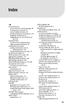 Index A Active Directory Active Directory nested groups, 96 creating user accounts, 67 custom authentication, 66 group members cannot log on, 153 mapping certificates, 65 mapping user to Active Directory
User Guide to the Content Analysis Tool
 User Guide to the Content Analysis Tool User Guide To The Content Analysis Tool 1 Contents Introduction... 3 Setting Up a New Job... 3 The Dashboard... 7 Job Queue... 8 Completed Jobs List... 8 Job Details
PHP COOKIES, SESSIONS,
 PHP COOKIES, SESSIONS, AND SESSION VARIABLES Fall 2009 CSCI 2910 Server Side Web Programming Objectives Understand and use Cookies in PHP scripts. Understand and use Sessions and Session variables in PHP
COMP 112 Assignment 1: HTTP Servers
 COMP 112 Assignment 1: HTTP Servers Lead TA: Jim Mao Based on an assignment from Alva Couch Tufts University Due 11:59 PM September 24, 2015 Introduction In this assignment, you will write a web server
What is Web Security? Motivation
 [email protected] http://www.brucker.ch/ Information Security ETH Zürich Zürich, Switzerland Information Security Fundamentals March 23, 2004 The End Users View The Server Providers View What is Web
Rational Software White Paper
 Modeling Web Application Architectures with UML By: Jim Conallen, Rational Software June 1999 A version of this material appears in the October 1999 (volume 42, number 10) issue of Communications of the
J j enterpririse. Oracle Application Express 3. Develop Native Oracle database-centric web applications quickly and easily with Oracle APEX
 Oracle Application Express 3 The Essentials and More Develop Native Oracle database-centric web applications quickly and easily with Oracle APEX Arie Geller Matthew Lyon J j enterpririse PUBLISHING BIRMINGHAM
Bring the power and speed of RAD to your Web application development with WebSnap
 Bring the power and speed of RAD to your Web application development with WebSnap by Nick Hodges, HardThink, Incorporated Introduction Taking the best of today s web technologies, Delphi 6 introduces a
ERIE COMMUNITY COLLEGE COURSE OUTLINE A. COURSE TITLE: CS 103 - WEB DEVELOPMENT AND PROGRAMMING FUNDAMENTALS
 ERIE COMMUNITY COLLEGE COURSE OUTLINE A. COURSE TITLE: CS 103 - WEB DEVELOPMENT AND PROGRAMMING FUNDAMENTALS B. CURRICULUM: Mathematics / Computer Science Unit Offering C. CATALOG DESCRIPTION: (N,C,S)