
U.S. SPACE LAUNCH SYSTEMS
|
|
|
- Jeffery Stokes
- 9 years ago
- Views:
Transcription
1 Chapter 9 U.S. SPACE LAUNCH SYSTEMS Space systems can be divided into two categories: the launch vehicle and the payload. The launch vehicle, commonly called the booster, propels the spacecraft and its associated payload into space. Typically for military missions, a specific payload is always flown on a specific booster. For example, the Global Positioning System (GPS) satellites are always launched on a Delta II launch vehicle. The same is true for most of our military payloads. US SPACE LAUNCH SYSTEM DEVELOPMENT Legacy Boosters Delta Delta rockets are a family of medium lift class vehicles by which a variety of satellites have been launched as part of U.S. and international space programs. It was originally designed as an interim launch vehicle consisting of a Thor Intermediate Range Ballistic Missile (IRBM) first stage and Vanguard second and third stages. Continued improvements allow the Delta to inject over 4,000 pounds into a geosynchronous transfer orbit (GTO). The National Aeronautics and Space Administration (NASA) placed the original contract with the Douglas Aircraft Company in April The early three-stage vehicle had a length of 85.4 feet, a first stage diameter of eight feet and a lift-off weight of 113,500 pounds. The modified Thor first stage had a thrust of about 170,000 pounds. On 13 May 1960, the first Delta failed to achieve orbit, but subsequent vehicles proved to be highly reliable. Built by McDonnell Douglas (which merged with Boeing in August 1997), The Delta II entered the Air Force inventory in February The vehicle was developed after the Air Force decided to return to a mixed fleet of expendable launch vehicles following the Challenger disaster and other launch failures. The first Delta II was successfully launched on 14 February The Delta II 6925 carried nine GPS satellites into orbit. The Delta II model 7925, the current version of this venerable launch vehicle, boosted the remainder of the original GPS constellation and is currently used to launch the new Block 2R version of GPS. The Delta II's first stage is 12 feet longer than previous Deltas, bringing the total vehicle height to feet. The payload fairing (shroud covering the third stage and the satellite) was widened from eight to 9.5 feet to hold the GPS satellite. The nine solid-rocket motors (SRM) that ring the first stage contain a more powerful propellant mixture than previously used. Delta 7925 began boosting GPS satellites in November The Delta 7925 added new solid rocket motors with cases made of a composite material called graphite-epoxy. The motor cases built by Hercules Aerospace are lighter, but as strong as the steel cases they replaced. The new motors are six feet longer and provide much greater thrust. The main-engine nozzle on the first stage was also enlarged to give a greater expansion ratio for improved performance. The Delta program has had a history of successful domestic/foreign military and commercial launches. The Delta has accomplished many firsts over its lifetime: it was the first vehicle to launch an international satellite (Telstar I in 1962); the first geosynchronous orbiting 9-1

2 satellite (Syncom II in 1963) and the first commercial communication satellite (COMSAT I in 1965). Atlas The Atlas (Fig. 9-1) was produced in the 1950s as the first U.S. intercontinental ballistic missile to counter the threat posed by the Soviet development of large ballistic missiles. An Atlas booster carried U.S. astronaut John Glenn into orbit under the first U.S. manned program, Project Mercury. Its design profited from the thermonuclear breakthrough of 1954, which led to warheads of lighter weight. Atlas rockets also played a prominent role in the U.S. space program. The Atlas ICBM stood 82.5 feet high and had a diameter of 10 feet. The lift-off weight was about 266,000 pounds, with a range exceeding 9,000 miles. Attached to the base of the Atlas structure was a Fig ATLAS I gimbal-mounted Rocketdyne LR-105 engine of 57,000 lb thrust, which operated together with two 1,000 lb thrust swiveling motors used for roll control. Two Rocketdyne LR-89 boost engines burned at takeoff with the central sustainer. Each of these 165,000 lb-thrust engines operated for about 145 seconds before separating (half-stage). The central Atlas engine continued to burn for a total of about 270 seconds. All the engines drew their liquid oxygenkerosene (RP-1) propellants from common tanks in the sustainer. Guidance depended on an inertial system that deflected the main engines in conjunction with the two roll jets. The first Atlas launches were at Cape Canaveral in 1957, but only the third launch on 2 August 1958 was a complete success, traveling about 2,500 miles downrange. The operational Atlas D was flight-tested from the Pacific Test Range in California, between April and August of Improved versions, Atlas E and F, were test launched in 1960 and 1961, respectively. Some operational missiles were contained in coffin-like shelters (Atlas E) from which they were raised to a vertical position for launch. The increasing vulnerability of launch sites to Soviet ICBMs led to the construction of an underground silo in which the Atlas F was fueled, serviced and elevated to the surface for launching. In its role as a space launch vehicle, systems are modified for specific space missions. Current Atlas II boosters, provide a medium lift capability for the Fleet Satellite Communications Systems (FLTSATCOM) and the Defense Satellite Communications System (DSCS). The booster generates approximately 340,000 pounds of thrust at liftoff and can place payloads of up to 1,750 pounds into polar orbit. Atlas space launch vehicles were used in all three unmanned lunar exploration programs. Atlas Centaur vehicles also launched Mariner and Pioneer planetary probes. The Atlas booster has been in use for more than 30 years and remains a key part of the U.S. space program. The first space launch on an Atlas E was in 1974 and the last launch of the E series was in March The E series had been used to launch the military s Defense Meteorological Satellite Program (DMSP) satellites. In May 1988, the Air Force chose General Dynamics to develop the Atlas II vehicle, primarily to launch DSCS payloads. This series uses an improved Centaur upper stage, the world's first high-energy propellant stage, to increase its payload capability. Atlas II also has lower-cost electronics, an improved flight computer and longer propellant tanks than Atlas I, which was developed for 9-2

3 commercial payloads due to the lull of launch activity caused by several launch failures in the late 1980s. It was used throughout the 1990's primarily for commercial comsats. Atlas II provides higher performance than the earlier Atlas I by using engines with greater thrust and longer fuel tanks for both stages. The total thrust capability of the Atlas II of approximately 490,000 pounds enables the booster to lift payloads of about 6,100 pounds into geo-synchronous orbit. On 15 December 1993, the first Atlas IIAS was launched. The rocket can carry 8,000 pounds to a geo-synchronous transfer orbit and up to 18,000 pounds to a low earth orbit. The vehicle uses four Castor 4A solid strap-ons, is 156 feet tall and weighs 524,789 pounds at lift off. Only two of the strap-ons are used at launch. The other two are air-starts about one minute after launch. The launch of the Atlas IIAS completes the development of the original Atlas family. The division of General Dynamics that builds the Atlas was acquired by Martin Marietta in They, in turn, merged with Lockheed in 1996 to form the Lockheed-Martin conglomerate. As of mid-1999, the radically new Atlas III was about to make its inaugural flight. Due to numerous delays stemming from a problem with the upper stage motor, The Atlas III was finally launched on 24 May 1999, flawlessly boosting an Eutelsat communications satellite to geosynchronous orbit. The new model use a Russian designed RD-180 engine with two thrust chambers rather than the traditional one sustainer/two booster configuration of the original Atlases. Engines made by Pratt & Whitney under license will be used for US government launches (by US law) but Russian manufactured engines can be used for commercial payloads. A versatile and upgraded version of the Atlas III dubbed the Atlas V is Lockheed Martin s entry into the US Air Force Evolved Expendable Launch Vehicle (EELV) program (described later). Titan II Deployed as an ICBM from 1963 until 1987, the Titan II (Fig. 9-2) is not new to the space launch role. In 1965, modified Titan IIs began supporting NASA's manned Gemini and other unmanned space flights. Fifteen of the 50 existing Titan II ICBMs were refurbished and modified to support future launches. The two-stage Titan II ICBM stood 103 feet tall with a diameter of 10 feet, and a lift-off weight of about 330,000 pounds. Operationally, the single reentry vehicle usually carried a thermonuclear warhead of five to 10 megatons with a top range of 9,300 miles. The Titan II was in service between 1963 and 1987, with 54 operational missiles. The force comprised three wings of 18 missiles each stored in underground silos at Davis- Mothan AFB, Arizona, McConnell AFB, Kansas and Little Rock AFB, Arkansas. Each of the two first-stage Titan II engines develops a thrust of 215,000 pounds. The single second-stage engine develops 100,000 pounds of thrust. Both stages use storable nitrogen tetroxide and aerozine-50 propellants. An inertial system provides guidance commands to the engines. The engines are gimbalmounted for thrust vector control. Fig Titan II Modified Titan IIs launched Gemini Program astronauts into orbit in 1965 and Other modified Titans were used to launch Earth satellites and space probes. Heavy payloads were launched by the Titan IIID, which consisted of the two Titan core stages and two strap-on solid propellant boosters. The Titan IIIC consisted of the Titan II central core, a restartable trans-stage with a thrust exceeding 16,000 pounds and two strap-on boosters. The Titan IIIE, which launched two Viking spacecraft to Mars and two 9-3

4 Voyager probes to Jupiter, Saturn, Uranus and Neptune, combined the technology of Titan IIIC with the highperformance Centaur stage. The process of adding larger solid rocket motors (SRMs) to the Titan eventually led to the development of the Titan IV. Titan IV Previously known as the Titan 34D-7, Titan IV is the newest and largest expendable booster. The first and second stages of the Titan 34D were stretched and one and one-half segments added to the SRMs. The 16.7-footwide payload fairing encloses both the satellite Fig Titan IVB and upper stage. These improvements allow the Titan IV to carry payloads of up to 49,000 lbs to LEO, almost equivalent to the space shuttle s capacity. As the military s heavy lift class booster, it normally launches large payloads weighing up to 12,700 lbs into geo-stationary orbits or up to 38,000 lbs into low earth polar orbits. The flexible vehicle can be launched with one or two optional upper stages for greater and varied carrying capability. In addition, a solid rocket motor upgrade (SRMU) completed testing in 1994 giving the Titan IVB model 25 percent greater lift capability. The first launch using the SRMU occurred successfully in February The IVB (Fig. 9-3) model will the standard U.S. heavy lift vehicle into the next century. 5 April 1990 from a B-52 aircraft over the Pacific Ocean. The triangular-winged rocket is set free at an altitude of 40,000 feet and falls for five seconds. The first stage engine then ignites and flies like a plane during the first-stage burn. It then ascends like a missile in second and third-stage burns. Pegasus is designed to carry light payloads weighing between 450 and 600 pounds into polar orbit or up to 900 pounds into equatorial orbit. A nominal altitude would be around 280 miles. The vehicle has three graphite epoxy composite case Hercules motors, a fixed delta platform composite wing and an aft skirt assembly that includes three control fins, an avionics section and a payload faring. A fourth stage can be added to increase payload weight. Fig Pegasus Pegasus weighs about 41,000 pounds at launch. It is 50 feet long and 50 inches in diameter. The XL model uses stretched first and second stages, making it about five feet longer than the standard Pegasus. The first XL launch in July 1994 ended in failure. However, it since has flown successfully over 30 times. Newer Boosters Pegasus Pegasus (Fig. 9-4) was developed privately by Orbital Sciences Corporation (OSC). It was first launched into orbit on Fig OSC s L-1011 Pegasus Launcher 9-4

5 A new launch platform for the Pegasus was also developed. A modified L-1011 (Fig. 9-5), purchased from Air Canada, debuted in mid Taurus Taurus is being developed by OSC as a four-stage, inertial-guided, solid- propellant launch vehicle. Its configuration is derived from the Pegasus and adds a Peacekeeper (now Castor 120) first stage. The Defense Advanced Research Projects Agency (DARPA) signed a contract with OSC in July 1989 for the initial development of the Taurus. The overall length of Taurus is 90 feet and weighs 150,000 pounds at launch. Its maximum diameter (first stage) is 92 inches. The vehicle, shown in Figure 9-6, is designed to carry 3,000 pounds into a low polar Fig Taurus orbit, up to 3,700 pounds for a due East launch, and up to 950 lbs to geosynchronous transfer orbit. The first Taurus launch occurred at Vandenberg AFB, California on 13 March Taurus can be launched from both the Eastern and Western Ranges and has a mobile capability. It is designed to respond rapidly to launch needs and can be ready for launch within eight days. The launch site is a concrete pad with a slim gantry based on its design to be a simple mobile launch platform. Athena I and II Lockheed announced its new series of expendable launch vehicles in May First known as the Lockheed Launch Vehicle (LLV) then called the Lockheed- Martin Launch Vehicle (LMLV), this family of rockets are designed to carry light to medium sized payloads to low Earth orbit. The LMLV has three primary configurations based on the integration of two types of solid rocket motors, Thiokol Corporation's Castor 120 and United Technologies' Orbus 21D. The smallest of the three rocket versions, Athena 1 (Fig. 9-7) can carry a payload of up to 1,750 pounds to LEO. The first launch of this version was from Vandenberg in August 1995 and ended in failure. A Fig launch of NASA s Lewis ATHENA scientific satellite in 1997 was successful. Launches are also possible from Cape Canaveral. The Athena II uses Castor 120 booster for both first and second stages and stands 100 feet tall. When additional performance is needed, the rocket can be configured inot the third version by fitting it with Thiokol's Castor-4 solid rocket strap-on boosters Originally, Lockheed-Martin planned on up to 10 launches/year, but the actual launch rate has been much lower, presumably due to a lower than expected demand for LEO satellite launch services. The advertised launch cost is $14 million, making this booster something of a bargain. The last Athena launch was in 2001 from the Kodiak launch site in Alaska. 9-5

6 Delta III A new intermediate-class launcher, the Delta III was developed without government support by Boeing Corporation for a commercial Heavymedium lift payloads. Hughes Aircraft Company (now part of Boeing), a commercial satellite builder, bought ten Delta III launches in 1995 to give Boeing a customer base for the rocket and bring down the cost of launch. Delta III will boost 8,400 pounds to GTO, more than twice what the Fig Delta III Launch Delta II can lift. The rocket (Fig. 9-8) will have a new cryogenic upper stage and larger fairing. The first two launches ended in failure. The first was auto-destructed when the vehicle lost control and the second was due to a failure in the second stage. A third attempt, this time a demonstration launch with a dummy payload aboard was successfully launched on 23 August The Delta III is being phased out in favor of the Delta IV, the Boeing entry into the USAF s EELV competition. Delta MED-LITE Services Program Boeing-Orbital Sciences Corporation (OSC) teaming arrangement is providing with NASA for the Medium Light Expendable Launch Vehicle Services program to fill the gap between the small launch vehicle market and the mediumclass market. Med-Lite s objective is to support the Mars Surveyor and Discovery programs. Under this program, NASA picked various versions of Boeing s Delta II for 5 to 14 launches of small scientific payloads beginning in OSC s Taurus is also included in the MED-LITE program and is launching smaller payloads. A modified Delta II with only three or four strap-ons will handle the heavier payloads in this class. Evolved Expendable Launch Vehicles Typical launch costs hover around $10,000 per pound of payload placed in orbit. Recognizing the need for a new, less expensive generation of expendable launchers, the Air Force began its Evolved Expendable Launch Vehicle program in The goal of the program was to provide more affordable and reliable access to space, saving at least 25 percent and as much as 50 percent over the cost of the "heritage" systems of Delta, Atlas and Titan rockets. In essence, the Air Force is buying launch services, not launch vehicles. Two competing booster designs emerged from the program, but both will be used rather than allowing a potential single point of failure. Boeing s design is called the Delta IV, and Lockheed Martin s is the Atlas V. With the new standardized launch vehicle families, a single launch pad design, design reliability of 98 percent and completely standardized set up and launch procedures and equipment, the Air Force hopes to realize significant savings over heritage systems. The projected savings through the expected end of the program in 2020 could amount to $5 to 10 billion. The launch services contracted so far cover the period from 2002 to 2006 and a total of 28 launches, with Boeing receiving a contract for 22 launches for $1.7 billion, while Lockheed Martin's contract is for six launches for $500 million. A recent dip in demand for satellite launches, however, is keeping the unit prices on the EELVs higher than originally projected since fewer are being produced. Delta IV Boeing s version of the EELV is the Delta IV. Its first launch was on November 20, 2002, when it lofted a European EUTELSAT commercial 9-6

7 communications satellite into a geosynchronous transfer orbit. The Delta IV design is based on a modular common booster core (Fig. 9-9)-using the liquid hydrogen-liquid oxygen RS-68 engine, which produces 650,000 pounds of thrust. A single common booster core is used for medium lift applications, but can be configured with up to four strap-on solid rocket booster to lift from 9,200 to 14,500 lbs to a geosynchronous transfer orbit (GTO). The Delta IV launches from pad 37 at Cape Canaveral Air Force Station. The booster with its payload fairing stands from feet tall. For heavy lift applications, two fullsized common booster cores can be strapped onto a center common booster core to allow up to 29,000 lbs to GTO or 45,200 lbs to LEO. retain two EELV lines resulted in some launches for the Atlas V but not as many as the Delta IV model. The first Atlas V launch was on August 21, 2002 when it successfully boosted a new European commercial communications satellite into GTO. It will launch medium/heavy to heavy payloads into earth orbit from pad 41 at Cape Canaveral Air Force Station. A planned pad on the west coast is on currently on hold as it may not be immediately needed. Like the Atlas III, the Atlas V core uses the Russian RD-180 engine and will be augmented for heavy Figure 9-10 Atlas V payloads with two strap-on boosters. The RD-180 engine is rated at 861,000 lbs of thrust at liftoff. The Atlas V can lift 20,000 lb to LEO or 10,900 lb to GTO..The booster stands 191 feet tall and is 12.5 feet in diameter. Manned Boosters Space Transportation System Fig Space Transportation System (STS Figure (9-xx) Fiure Atlas V Figure 9-9 Delta IV Configurations Lockheed Martin s entry into the Air Force s EELV competition is the Atlas V (Fig. 9-10). The decision by the USAF to The Space Transportation System (STS), also known as the Space Shuttle (Fig. 9-11) is a reusable spacecraft designed to be launched into orbit by rockets and then to return to the Earth's surface by gliding down and landing on a runway. The Shuttle was selected in the early 1970s as the principal space launcher and carrier vehicle to be developed by NASA. It was planned as a replacement for the more expensive, expendable booster rockets used since the 9-7

8 late 1950s for launching major commercial and governmental satellites. Together with launch facilities, mission control and supporting centers, and a tracking and data relay satellite system, it would complete NASA's new Space Transportation System. Although the shuttle launched a few military payloads in its early days, such as the Defense Support Program satellite, the USAF abandoned it as a launch vehicle after the Challenger disaster. However, it could conceivably be used for military missions again if the decision were made to do so. After various delays, the program commenced in the early 1980s. Despite several problems, the craft demonstrated its versatility in a series of missions until the fatal disaster during the launch of the Challenger on January 28, 1986 forced a long delay. The program resumed in late 1988 and the modifications to the shuttle affected neither the basic design of the craft nor its overall dimensions. The three main components of the Space Shuttle are the orbiter, the external tank and the solid rocket boosters. The Shuttle weighs 4.5 million pounds at launch and stands feet tall and can carry up to 55,000 pounds of cargo to LEO on one mission. The orbiter, 78 feet across the wing tips and feet long, is the portion resembling a delta-winged jet fighter. It is a rocket stage during launch, a spaceship in orbit and a hypersonic glider on reentry and landing. A three-deck crew compartment and an attitude thruster module are in the nose, the midbody is the cargo hold or payload bay (15 ft wide and 60 ft long) and the tail holds the three main engines plus maneuvering engine pods. Each engine, burning hydrogen and oxygen, produces up to 394,000 pounds of thrust. The external tank, actually an oxygen tank and a hydrogen tank joined by a load-bearing intertank, is the structural backbone of the Shuttle. Measuring feet wide and feet tall, it carries 1,520,000 pounds of liquefied propellants for the main engines. The shuttle s main engines produce over 27 million horsepower and empties the external tank in about eight and one-half minutes. Two solid rocket boosters, each slightly over 12 feet wide and 149 feet tall, provide the Shuttle with a lift to the upper atmosphere so the main engines can work more efficiently. Each produces an average thrust of 3.3 million pounds. The propellant in the solid rocket motors consists of ammonium perchlorate, aluminum powder, iron oxide and a binding agent. Total thrust of the vehicle at liftoff (two solid motors and three liquid engines) is 7.78 million pounds. The Shuttle's main engines are ignited, the booster rockets are ignited about six seconds before lift-off at T-6 seconds and the hold-down bolts are released at T-0. The Shuttle lifts off vertically about 2.5 seconds later with all five engines operating. As soon as it clears the gantry, it rolls and pitches to fly with the orbiter upside down, as the craft's design puts the thrust vector off-center. At T+2 minutes 12 seconds, the boosters burn out and are jettisoned from the external tank at an altitude of approximately statute miles. The boosters then parachute into the sea for recovery, refurbishing and reuse. Meanwhile, the Shuttle continues on under the power of the main engines. Just short of orbital velocity, the engines are shut down (T+8 min 32 sec) and the tank is jettisoned (T+8 min 50 sec). The tank burns up as it reenters the atmosphere. Once the vehicle is in space, it maneuvers using two different systems, the Orbital Maneuvering System (OMS) and the Reaction Control System (RSC). The orbiter's own OMS engines act as the third stage that puts the craft into orbit. The OMS uses two bipropellant, 6,000 pound thrust rocket engines mounted in pods on the aft end of the orbiter fuselage. The hypergolic propellants consist of monomethylhydrazine and nitrogen tetroxide, with about 21,600 pounds of propellant stored within the orbiter in 9-8

9 titanium tanks. The OMS is used for orbit insertion or transfer, orbit circulation, rendezvous and deorbit. Fig Space Transportation System (STS) The RCS uses 38 bi-propellant liquid rocket engines and six bipropellant liquid rocket vernier thrusters. Fourteen of the engines are on the orbiter's nose, together with two verniers. The remaining engines and verniers are split equally between the two OMS pods of the aft end of the orbiter fuselage. The RCS used the same type propellants as the OMS, but carries 2,413 pounds of fuel in separate tanks. There is a system to transfer fuel to and from the RCS to the OMS. The RCS is used to maneuver in space during rendezvous and deorbit maneuvers. The vehicle is normally manned by a crew of four (minimum two, maximum eight except as noted): the commander, pilot, mission specialist and payload specialist. In an emergency ten people can fit in the orbiter. The interior of the orbiter is pressurized, allowing the astronauts to operate in a short-sleeve environment without spacesuits. Passengers can fly on the shuttle without extensive astronaut training because of the relatively light 3G acceleration during launch and the pressurized cabin. The self-contained crew module is supported within the fuselage by four attachment points, the entire module being welded to create the pressure tight vessel. The module has a fuselage side hatch for access, a hatch into the airlock from the mid-section and a hatch from the airlock into the payload bay. As previously mentioned, the crew module is divided into three levels. The upper flight deck has seats for the mission and payload specialists, the commander, and the pilot. There are dual flight controls and the controls for the Remote Manipulator System (RMS) which extracts payloads from the Shuttle's cargo bay. The midlevel deck has additional seating, a galley, electronics bays and crew sleeping and comfort facilities. The lowest level houses environmental equipment and storage. At the end of the orbital mission, the orbiter is protected from the heat of reentry by heat-resistant ceramic tiles. As dynamic pressure from the air increases, control of the vehicle switches from the RCS to aerodynamic surfaces and the orbiter glides to a landing. Proposed Boosters Operationally Responsive Spacelift Initiative The Air Force began the Operationally Responsive Spacelift initiative in The goal of the program is to pave the way for reusable rockets that could be launched at a low cost on short notice. As part of a one year analysis of alternatives study which began March 1, 2003, teams are investigating a variety of space planes, air-launched boosters, and fully reusable as well as expendable or 9-9

10 partly-reusable spacelifters. The study is closely linked to NASA's Next Generation Launch Technology program, the follow-on to their recently scaledback Space Launch Initiative. A multistaged system could be in place by 2014, depending on funding. Also, a low-cost expendable upper stage booster and an orbital transfer vehicle capable of handling spacecraft servicing would be developed. The goal is to have a system that can launch within hours to days as opposed the weeks to months of preparation required by current boosters. Payloads could include the Common Aero Vehicle (CAV, an reentry vehicle which can deliver a variety of munitions to a ground target) or microsatellites. Scorpius-Sprite One possible contender for an Operationally Responsive Spacelift job is Micorcosm s Sprite Mini-Lift Launch vehicle (Fig 9-12). Research for the ongoing Scorpius-Sprite program is funded by the Air Force and the Missile Defense Agency, and NASA as well as Microcosm s own research and development funds. Scorpius, the sub-orbital research vehicle, has already flown and will be Figure 9-12 Sprite scaled up to become the fully orbital Sprite. The Sprite will be 53 feet tall and consist of six 42-inch diameter pods around a central core giving it an an overall diameter of 11.2 feet. It will be a three stage launcher with six 20,000 lb thrust engines followed by a second stage single 20,000 lb engine. The third stage will produce 2,500 lbs of thrust and place a 700 lb payload in a 100 NM low Earth orbit for $1.8 million. A primary goal is to simplify launch operations so that liftoff occurs only 8 hours after the vehicle is brought to the pad. RASCAL The Responsive Access, Small Cargo, Affordable Launch (RASCAL) program will design and develop a low cost orbital insertion capability for dedicated microsize satellite payloads. The concept is to develop a responsive, routine, small payload delivery system capable of providing flexible access to space using a combination of reusable and low cost expendable vehicle elements. Specifically, the RASCAL system will be comprised of a reusable airplanelike first stage vehicle called the reusable launch vehicle and a second stage expendable rocket vehicle. The RASCAL demonstration objectives are to place satellites and commodity payloads, between 110 and 280 lbs (50 and 130 kilograms) in weight, into low earth orbit at any time, any inclination with launch efficiency of $9,100 per pound ($20,000 per kilogram) or less. While the cost goal is commensurate with current large payload launch systems, the operational system, through production economies of scale, will be more than a factor of three less than current capabilities for the dedicated micro payload size. This capability will enable cost effective use of on-orbit replacement and re-supply and provide a means for rapid launch of orbital assets for changing national security needs. With recent advances in design tools and simulations, this program will 9-10

11 prudently reduce design margins and trade-off system reliability to maximize cost effectiveness. This program will also leverage advancements in autonomous range safety, first-stage guidance and predictive vehicle health diagnosis, management and reporting to lower the recurring costs of space launch. FALCON The FALCON program objectives are to develop and demonstrate technologies that will enable both near-term and farterm capability to execute time-critical, global reach missions. Near-term capability will be accomplished via development of a rocket boosted, expendable munitions delivery system that delivers its payload to the target by executing unpowered boost-glide maneuvers at hypersonic speed. This concept called the Common Aero Vehicle (CAV) would be capable of delivering up to 1,000 pounds of munitions to a target 3,000 nautical miles downrange. An Operational Responsive Spacelift (ORS) booster vehicle will place CAV at the required altitude and velocity. The FALCON program will develop a low cost rocket booster to meet these requirements and demonstrate this capability in a series of flight tests culminating with the launch of an operable CAV-like payload. Far-term capability is envisioned to entail a reusable, hypersonic aircraft capable of delivering 12,000 pounds of payload to a target 9,000 nautical miles from CONUS in less than two hours. Many of the technologies required by CAV are also applicable to this vision vehicle concept such as high lift-to-drag technologies, high temperature materials, thermal protection systems, and periodic guidance, navigation, and control. Initiated under the Space Vehicle Technologies program, and leveraging technology developed under the Hypersonics program, FALCON will build on these technologies to address the implications of powered hypersonic flight and reusability required to enable this far-term capability. The FALCON program addresses many high priority mission areas and applications such as global presence, space control, and space lift. 9-11

12 CURRENT LAUNCH SYSTEM CHARACTERISTICS Table 9-1. Delta II Delta II The Delta II is a two- or three-stage booster. Stages one and two use liquid propellant while stage three uses solid propellant. The booster is configured with nine solid rocket strap-ons surrounding the first stage. The current 7925 model uses lighter and longer strap-ons for increased impulse and greater payload capacity. Delta II 7925 Stage Thrust (lbs) Length (ft) I 236, II (7925) 9, III (7925) 5, Total Length: 121 feet Diameter: 8 ft Fairing Diameters: 8, 9.5 or 10 ft Payload: 4,120 lbs to GTO 6,985 lbs to polar 11,330 lbs to LEO AU Space Primer 7/24/

13 Atlas II, IIAS Table 9-2. Atlas II, IIAS, III The Atlas is a stage and one-half liquid propellant booster. It has continually been upgraded since its original late-1950 s design as the nation s first ICBM. The Atlas is a medium/heavy lift booster used extensively by the commercial market and for USAF payloads such as the DSCS III satellites. Atlas II Engine: Thrust (lbs) Booster: 206,950 each (2) Sustainer: 60,474 Length: Diameter: Payload: ft 10 ft 14,916 to LEO 6,094 to GTO Atlas IIAS Engine: Thrust (lbs) Booster: 207,110 each (2) Sustainer: 60,525 Strap-ons: 97,500 each (4) Length: Diameter: Payload: Atlas III Engine: Length: Diameter: Payload: 156 ft 10 ft 18,000 to LEO 8,000 to GTO 861,075 lbs thrust ft 10 ft 19,050 lb to LEO 8,940 lb to GTO AU Space Primer 7/24/

14 Table 9-3. Titan II SLV Titan II SLV The Titan II SLV is a former ICBM modified to launch space payloads. Changes to the ICBM include payload interface modifications and the addition of an attitude control system. It is very capable of putting medium/heavy payloads into low earth orbit. It is primarily used by the USAF for launching DMSP satellites into low earth, sun synchronous orbits. Stage Thrust (lbs) Length(ft) I 430, II 100, Payload fairing: N/A Diameter: Payload: 10 ft 6985 to LEO 2300 to GTO AU Space Primer 7/24/

15 Table 9-4. Titan IVB Titan IVB The Titan IV is designed to place heavy payloads into orbit using the Centaur-G or Inertial Upper Stage (IUS) upper stage. Stage Thrust (lbs) Length (ft) I 551, II 106, SRM 1,600,000 ea. (2) SRMU 1,700,000 ea. (2) Payload fairing: N/A up to 84.0 Diameter: 10 ft (payload ft) Payload to GEO: Payload to Polar: Payload to LEO: 12,700 lbs 38,000 lbs 49,000 lbs AU Space Primer 7/24/

16 Table 9-5. STS Space Shuttle The Space Shuttle is the only US manned space vehicle. SRB's (ea) Orbiter (3ea) Thrust (lbs) 3,300,000 lbs. 393,800 lbs. Orbiter Dimensions: Length: 122ft Wingspan: 78ft. Payload to GEO (lbs.): 46-55,000 lbs. (28 o incl) 32,500-40,900 lbs. (57 o incl) AU Space Primer 7/24/

17 Table 9-6. Pegasus Pegasus The only air-launched space vehicle in the world. Primarily launches small experimental/scientific payload to LEO from 1B L-1011 carrier aircraft. Pegasus XL: Length: ft. Payload: 440 lbs. To GTO (w/fourth stage) 600 lbs. To 287 mi. polar 900 lbs. To 287 mi equatorial AU Space Primer 7/24/

18 Table 9-7. Delta IV Background Information First Launch: October 9, 2002 Launch Site: CCAFS, Space Launch Complex-37 Capability: Up to 45,200 lb to LEO; 29,100 lb to GTO History: Delta IV developed as part of the USAF Evolved Expendable Launch Vehicle (EELV) program Description Five variants built around the Common Booster Core (CBC) Stage 1: The CBC sub-assembly includes and interstage, liquid oxygen tank, liquid hydrogen tank, engine section, and nose cones for the Delta IV-H. The three Delta IV-M+ configurations use either two or four Alliant graphite-epoxy motors attached to the CBC. Delta IV-H uses two additional CBCs as strap-on liquid rocket boosters. The CBC is powered by a newly developed Rocketdyne RS-68 engine which has a 21.5:1 expansion ratio and produces 650,000 lbs of thrust at sea level. Stage 2: There are two second-stage configurations. A 4-m version used on Delta IV-M and Delta IV-M+(4,2) and a 5-m version used on other Delta IV configurations. The second stage is powered by a Pratt & Whitney RL10B-2 cryogenic engine. The 4-m version produces thrust of 24,750 lbs, the 5- m produces thrust of 60,000 lbs. Payload fairings: 4-m and 5-m composite bisector fairings based on the Delta III fairings. 5-m trisector fairing which is a modified version of the Titan IV isogrid fairing.

19 Table 9-8. Atlas V Atlas V Background Information First Launch: 20 Aug 02 Launch Site: LC-41, CCAFS Capability: 20,000 lb to LEO; 10,900 lb to GTO Description Two stage booster. Stage 1 utilizes one Russian designed RD-180 booster engine with two chambers burning LOX/RP-1 fed from stage 1 tanks, generating a total of 861,075 lb of thrust at sea level, 933,034 lbs of thrust in vacuum. RD-180 engine provides throttling capability (75% - 85% max) and gimbaled chambers for 3-axis control. Stage 2 (Centaur) has a one or dual engine version using Pratt & Whitney RL10A-4-2 turbopump-fed engines that burn LH2/LOX and produce 24,750 lb of thrust each. Profile: Length: ft Launch Weight: 733,304 lb Diameter: 12.5 ft Liftoff Thrust: 860,200 lb Payload Fairing: 40 ft x 13.8 ft (Large); 43 x 13.8 ft (Extended) AU Space Primer 7/24/

20 REFERENCES 30 th Space Wing Fact Sheet. Air Force Space Command Public Affairs Office. 45 th Space Wing Fact Sheet. Air Force Space Command Public Affairs Office. Air Force Magazine. Aug Daily news update from MSNBC and Florida Today, Inter-service Space Fundamentals Student Textbook. Jane's Space Directory, Joint Space Fundamentals Course, Student Reference Text. Aug Lockheed Still Seeks First Customer for LLV's Debut. Space News. Sep 13-19, London, Lt Col John R., III. LEO on the Cheap, Air University Press, Reborn rocket lifts satellite into space. Astro News. Apr 18, Space and Missile Applications Basic Course (SMABC) Handbook. Titan IVB Puts Reputation for Reliability to a Test. Space News. Feb 17-23, HQ USAF/XOO, 30-Day Launch Forecast, 11 May Information on the latest rocket launches conducted by Air Force Space Command. Recent news from the Space Daily newspaper. Upcoming and past launches and related information for the Eastern Launch Site. Orbital s Pegasus Rocket Successfully Launches NASA s GALEX Satellite, Press Release, Orbital Sciences Corporation, 28 Apr 2003 Jeremy Singer, U.S. Air Force Sees Quick and Frequent Launches in its Future Space News Staff Writer, Space News, 14 July 2003 (Operationally Responsive Launch) Taurus Launch System Fact Sheet, Air Force Space and Missile Systems Center, LAAFB, CA Athena Facts, Lockheed Martin AU Space Primer 7/24/

21 Discovery Launch Services Information Summary, NASA, ca Capt Carie A. Seydel, The Next Generation, Airman Magazine Online, March 2003 (EELV Article) Senior Master Sgt. Andrew Stanley, EELV targets 2001 Launch, Air Force Print News, 24 Jun DARPA s Responsive Access, Small Cargo, Affordable Launch (RASCAL) summary, updated July 1, DARPA s Force Application and Launch from CONUS summary, updated July 9, David Leonard, Air Force to Focus on Quick Reaction Spacelift Vehicles, Senior Space Writer, Space.Com, 28 March Microcosm s Scorpius-Sprite Summary, ca AU Space Primer 7/24/
Space Shuttle Mission SPACE SHUTTLE SYSTEM. Operation. Luca d Agostino, Dipartimento di Ingegneria Aerospaziale, Università di Pisa, 2010/11.
 Space Shuttle Mission SPACE SHUTTLE SYSTEM Operation SPACE SHUTTLE SYSTEM Operation The flight plan and operation of the Space Shuttle differs markedly from that of the now-familiar launch procedures and
SpaceX Overview Tom Markusic Director, McGregor Rocket Development Facility 27 July, 2010. SpaceX
 SpaceX Overview Tom Markusic Director, McGregor Rocket Development Facility 27 July, 2010 SpaceX Vehicles Falcon 1 Falcon 9 Dragon Spacecraft 2 SpaceX Overview Founded in mid-2002 with the singular goal
History of the Titan Centaur Launch Vehicle
 History of the Titan Centaur Launch Vehicle The Centaur program began in 1958 with its first successful flight on 27 November 1963. The unique Centaur design is the first liquid oxygen and liquid hydrogen
Navy Communications Satellite Program Office (PMW 146)
 Navy Communications Satellite Program Office (PMW 146) Mobile User Objective System () Statement A: Approved for public release; distribution is unlimited (8 February 2012) CAPT Paul Ghyzel Program Manager
Shuttle Variations And Derivatives That Never Happened - An Historical Review
 Shuttle Variations And Derivatives That Never Happened - An Historical Review Carl F. Ehrlich, Jr. * Consultant, Calabasas, CA 91302 James A. Martin The Boeing Company, Huntington Beach, CA 92647 While
Overview of the Orbiting Carbon Observatory (OCO) Mishap Investigation Results For Public Release
 Overview of the Orbiting Carbon Observatory (OCO) Mishap Investigation Results For Public Release SUMMARY The Orbiting Carbon Observatory was a National Aeronautics and Space Administration satellite mission
ROYAL CANADIAN AIR CADETS PROFICIENCY LEVEL TWO INSTRUCTIONAL GUIDE SECTION 6 EO C240.03 IDENTIFY PARTS OF A ROCKET PREPARATION
 ROYAL CANADIAN AIR CADETS PROFICIENCY LEVEL TWO INSTRUCTIONAL GUIDE SECTION 6 EO C240.03 IDENTIFY PARTS OF A ROCKET Total Time: 30 min PREPARATION PRE-LESSON INSTRUCTIONS Resources needed for the delivery
Fleet Ballistic Missile Eastern Range Operations Supporting Navy Testing and Deployment
 Fleet Ballistic Missile Eastern Range Operations Supporting Navy Testing and Deployment Lockheed Martin Space Systems Company Test & Support Systems Engineering Pier Road, Hanger Y Mail Drop: MRL 156 Cape
Can Hubble be Moved to the International Space Station? 1
 Can Hubble be Moved to the International Space Station? 1 On January 16, NASA Administrator Sean O Keefe informed scientists and engineers at the Goddard Space Flight Center (GSFC) that plans to service
SpaceLoft XL Sub-Orbital Launch Vehicle
 SpaceLoft XL Sub-Orbital Launch Vehicle The SpaceLoft XL is UP Aerospace s workhorse space launch vehicle -- ideal for significant-size payloads and multiple, simultaneous-customer operations. SpaceLoft
tal OFFICE OF THE SECRETARY OF DEFENSE Col. Paul E. Worthrnan, SAF-SS, 4C1000 SUBJECT: Public Affairs Guidance for MOL
 RELEASE 1 JULY 2015 rgrrrmr tal WHEN WITH ATTACHMENTS OFFICE OF THE SECRETARY OF DEFENSE 21 October 1965 MEMO FOR Col. Paul E. Worthrnan, SAF-SS, 4C1000 SUBJECT: Public Affairs Guidance for MOL Request
The Space Shuttle: Teacher s Guide
 The Space Shuttle: Teacher s Guide Grade Level: 6-8 Curriculum Focus: Astronomy/Space Lesson Duration: Two class periods Program Description This video, divided into four segments, explores scientists'
Space Exploration. A Visual History. Philip Stooke
 Space Exploration A Visual History Philip Stooke It all began with Sputnik 4 th October 1957 It all began with Sputnik 4 th October 1957 It all began with Sputnik 4 th October 1957 and Laika Laika on the
June VV 05. Sentinel-2A LOGOTYPE COMPLET (SYMBOLE ET TYPOGRAPHIE) 294C
 LOGOTYPE TONS MONOCHROME 294C June 2015 VV 05 LOGOTYPE COMPLET (SYMBOLE ET TYPOGRAPHIE) FIFTH VEGA LAUNCH FROM THE GUIANA SPACE CENTER, AT THE SERVICE OF EUROPE'S COPERNICUS PROGRAM On the fifth Vega mission
Delimitation and Commercial Use of Outer Space. Sang-Myon Rhee Seoul National University March 28, 2011
 Delimitation and Commercial Use of Outer Space Sang-Myon Rhee Seoul National University March 28, 2011 Where to Delimit? Problems & Issues Problems in Traditional Delimitation Air Space Outer Space Necessity
IAC-04-V.4.03 DELTA IV LAUNCH VEHICLE GROWTH OPTIONS TO SUPPORT NASA S SPACE EXPLORATION VISION
 IAC-04-V.4.03 DELTA IV LAUNCH VEHICLE GROWTH OPTIONS TO SUPPORT NASA S SPACE EXPLORATION VISION Frank A. Slazer Director, NASA/Civil Space Business Development [email protected] Robert J. Sirko
Modular Approach to Launch Vehicle Design Based on a Common Core Element
 AIAA SPACE 21 Conference & Exposition 3 August - 2 September 21, Anaheim, California AIAA 21-864 Modular Approach to Launch Vehicle Design Based on a Common Core Element Dennis M. Creech 1 Jacobs Engineering
Elements of Physics Motion, Force, and Gravity Teacher s Guide
 Teacher s Guide Grade Level: 9 12 Curriculum Focus: Physical Science Lesson Duration: Three class periods Program Description Examine Isaac Newton's laws of motion, the four fundamental forces of the universe,
NASA ISS Research Academy and Pre-Application Meeting. Erin Beck Mission Integrator [email protected] August 4, 2010
 NASA ISS Research Academy and Pre-Application Meeting Erin Beck Mission Integrator [email protected] SpaceX Overview Founded in mid-2002 with the singular goal of providing highly reliable, low cost
IAC-15-D2.1 NASA S SPACE LAUNCH SYSTEM PROGRAM UPDATE. Todd May NASA Marshall Space Flight Center, USA, [email protected]
 IAC-15-D2.1 NASA S SPACE LAUNCH SYSTEM PROGRAM UPDATE Todd May NASA Marshall Space Flight Center, USA, [email protected] Garry Lyles NASA Space Launch System, USA, [email protected] Hardware and software
THE CAPE. Military Space Operations 1971-1992. Table of Contents. by Mark C. Cleary. 45th Space Wing History Office. Preface
 THE CAPE Table of Contents Preface Military Space Operations 1971-1992 by Mark C. Cleary 45th Space Wing History Office Chapter I -USAF Space Organizations and Programs Table of Contents Section 1 - Air
System Engineering: A Traditional Discipline in a Non-traditional Organization
 System Engineering: A Traditional Discipline in a Non-traditional Organization Corporate Overview Founded with the singular goal of providing highly reliable space transportation Tech-style Organization
AEROSPACE ENGINEERING SERIES, GS-0861
 TS-124 May 1993 General Schedule Position Classification Flysheet AEROSPACE ENGINEERING SERIES, GS-0861 Theodore Roosevelt Building 1900 E Street, NW Washington, DC 20415-8330 Classification Programs Division
Backgrounder. Boeing Commercial Airplanes
 Backgrounder Boeing Commercial Airplanes P.O. Box 3707 MC 21-70 Seattle, Washington 98124-2207 www.boeing.com Boeing Commercial Airplanes Boeing Commercial Airplanes, a business unit of The Boeing Company,
parts of an airplane Getting on an Airplane BOX Museum Aeronautics Research Mission Directorate in a Series
 National Aeronautics and Space Administration GRADES K-2 Aeronautics Research Mission Directorate Museum in a BOX Series www.nasa.gov parts of an airplane Getting on an Airplane MUSEUM IN A BOX Getting
The µtorque Momentum-Exchange Tether Experiment
 The µtorque Momentum-Exchange Tether Experiment Robert P. Hoyt Tethers Unlimited, Inc., 19011 36 h Ave. W., Suite F, Lynnwood, WA 98036-5752 (425) 744-0400 [email protected] Abstract. Long, high-strength
How Long Do You Need To Achieve Your Scientific Objectives?
 How Long Do You Need To Achieve Your Scientific Objectives? Time seconds minutes days/weeks months Drop Towers/Drop Tubes KC-135 Parabolic Flights Balloons* Sounding Rockets Alternate Carriers* Shuttle
Presented by Gary Davis, Director, Office of Systems Development NOAA/NESDIS/OSD. Fifty Years of Achievement
 NOAA s Environmental Satellite Program: Past, Present, and Future Presented by Gary Davis, Director, Office of Systems Development NOAA/NESDIS/OSD 1 Space-Based Remote Sensors Changed Way We See Our World
Space Launch System Status Briefing to NAC Space Operations Committee
 National Aeronautics and Space Administration Space Launch System Status Briefing to NAC Space Operations Committee 8 February 2011 Background In response to direction in Section 309 of the NASA Authorization
How Rockets Work Newton s Laws of Motion
 How Rockets Work Whether flying a small model rocket or launching a giant cargo rocket to Mars, the principles of how rockets work are exactly the same. Understanding and applying these principles means
Case Study 1 The Challenger Space Shuttle disaster and the Solid-Fuel Rocket Booster (SRB) project
 Case Study 1 The Challenger Space Shuttle disaster and the Solid-Fuel Rocket Booster (SRB) project Overview On 28 January,1986 the Challenger space shuttle blew up 73 seconds after launch. Seven lives
ME 239: Rocket Propulsion. Over- and Under-expanded Nozzles and Nozzle Configurations. J. M. Meyers, PhD
 ME 239: Rocket Propulsion Over- and Under-expanded Nozzles and Nozzle Configurations J. M. Meyers, PhD 1 Over- and Underexpanded Nozzles Underexpanded Nozzle Discharges fluid at an exit pressure greater
A VALUE PROPOSITION FOR LUNAR ARCHITECTURES UTILIZING ON-ORBIT PROPELLANT REFUELING
 A VALUE PROPOSITION FOR LUNAR ARCHITECTURES UTILIZING ON-ORBIT PROPELLANT REFUELING By James Jay Young In Partial Fulfillment of the Requirements for the Degree of Doctor of Philosophy in the School of
Genetic Algorithm Optimization of a Cost Competitive Hybrid Rocket Booster
 Genetic Algorithm Optimization of a Cost Competitive Rocket Booster George Story NASA MSFC Huntsville, Al www.nasa.gov Overview attributes are typically touted as to why hybrids should be pursued. Handling,
A Comparison of Methods for the Mars Sample Return Mission
 AIAA-2941 A Comparison of Methods for the Mars Sample Return Mission Robert Zubrin* Pioneer Astronautics 445 Union Blvd., Suite 125 Lakewood, CO 80228 (303) 980-0890 Abstract This paper analyzes the three
The Challenger Disaster
 The Challenger Disaster Themes 1. The Proximate Cause of the Challenger Disaster 2. Poor Communication and Poor Ethics 3. The Technical Design & the Path to a Segmented Solid Rocket 4. Risk and Cost Estimates
TOPO Trajectory Operations Officer
 ISS Live! was developed at NASA s Johnson Space Center (JSC) under NASA Contracts NNJ14RA02C and NNJ11HA14C wherein the U.S. Government retains certain rights. Console Handbook TOPO Trajectory Operations
Chapter 2. Basic Airplane Anatomy. 2008 Delmar, Cengage Learning
 Chapter 2 Basic Airplane Anatomy Objectives Identify components of basic aircraft anatomy Understand aircraft size and weight categories List different types and examples of General aviation aircraft Military
SpaceÊ ShuttleÊ Program Artifacts
 SpaceÊ ShuttleÊ Program Artifacts Information Pamphlet As we celebrate the 40th anniversary of the first human presence on the Moon, NASA continues to move forward with a new focus for the human space
Section 4: The Basics of Satellite Orbits
 Section 4: The Basics of Satellite Orbits MOTION IN SPACE VS. MOTION IN THE ATMOSPHERE The motion of objects in the atmosphere differs in three important ways from the motion of objects in space. First,
FAQ. Q: What do you do on the International Space Station (ISS)? Q: How fast and how high do you go? Q: How long are the missions?
 Q: What do you do on the International Space Station (ISS)? A: Astronauts and cosmonauts on the space station stay busy. There s lots of work to operate the many science experiments on board. The crew
The Apollo Program. PTYS 395 October 9, 2008 Sarah Mattson
 The Apollo Program PTYS 395 October 9, 2008 Sarah Mattson May 25, 1961 President Kennedy announces the Apollo Program. The goal was to put a man on the Moon, and return him safely to Earth, by the end
THE SOLAR SYSTEM - EXERCISES 1
 THE SOLAR SYSTEM - EXERCISES 1 THE SUN AND THE SOLAR SYSTEM Name the planets in their order from the sun. 1 2 3 4 5 6 7 8 The asteroid belt is between and Which planet has the most moons? About how many?
IV. Rocket Propulsion Systems. A. Overview
 IV. Rocket Propulsion Systems A. Overview by J. M. Seitzman for AE 4451 Jet and Rocket Propulsion Seitzman Rocket Overview-1 Rocket Definition Rocket Device that provides thrust to a vehicle by accelerating
Does currently available technology have the capacity to facilitate a manned mission to Mars?
 Furze Platt Senior School Does currently available technology have the capacity to facilitate a manned mission to Mars? Daniel Messias Date: 8/03/2015 Candidate Number: 7158 Centre Number: 51519 Contents
AeroVironment, Inc. Unmanned Aircraft Systems Overview Background
 AeroVironment, Inc. Unmanned Aircraft Systems Overview Background AeroVironment is a technology solutions provider with a more than 40-year history of practical innovation in the fields of unmanned aircraft
Launch Vehicle Recovery and Reuse
 Launch Vehicle Recovery and Reuse Mohamed M. Ragab 1 United Launch Alliance, Centennial, CO 80111 F. McNeil Cheatwood 2 and Stephen J. Hughes 3 NASA Langley Research Center, Hampton, VA 23681 and Allen
RD-180 Availability Risk Mitigation Study Summary
 RD-180 Availability Risk Mitigation Study Summary 1 Outline Charter Team Members Background Current Status Key Findings and Recommendations Supporting Area Assessments Summary 2 Charter A quick reaction
USE OF SCILAB FOR SPACE MISSION ANALYSIS AND FLIGHT DYNAMICS ACTIVITIES
 USE OF SCILAB FOR SPACE MISSION ANALYSIS AND FLIGHT DYNAMICS ACTIVITIES Thierry Martin CNES Scilabtec 09 Use of Scilab for space mission analysis Page 1 Use of Scilab in CNES Scilab is now widely used
Regolith-Derived Heat Shield for Planetary Body Entry and Descent System with In-Situ Fabrication
 Regolith-Derived Heat Shield for Planetary Body Entry and Descent System with In-Situ Fabrication Michael D. Hogue, NASA Kennedy Space Center Robert P. Mueller, NASA Kennedy Space Center Laurent Sibille,
Mars Sample Return Campaign: An Overview. Dr. Firouz Naderi Associate Director NASA s JPL
 Mars Sample Return Campaign: An Overview Dr. Firouz Naderi Associate Director NASA s JPL 1 Why Sample Return? Why Now? Compelling Science Informed Landing Site Selection International Interest Good Engineering
Launch Services Program Earth s Bridge to Space
 National Aeronautics and Space Administration Launch Services Program Earth s Bridge to Space 2012 Rev: Basic Earth s Bridge to Space Over the past several decades, NASA s policy has been to have contractors
Technologies for Re-entry Vehicles. SHEFEX and REX FreeFlyer, DLR s Re-Entry Program. Hendrik Weihs. Folie 1. Vortrag > Autor > Dokumentname > Datum
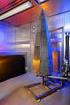 Technologies for Re-entry Vehicles SHEFEX and REX FreeFlyer, DLR s Re-Entry Program Hendrik Weihs Folie 1 DLR`s Re-Entry Program, Why? Re-entry or return technology respectively, is a strategic key competence
Aerospace Engineering: Space Stream Overview
 Aerospace Engineering: Space Stream Overview Dept. of Aerospace Engineering Ryerson University Winter 2011 Department of Aerospace Engineering 1 The Space-stream at a Glance Builds on strong aerospace
Mission To Mars! A dialogue activity for upper KS2
 Mission To Mars! A dialogue activity for upper KS2 Teacher s Sheet Mission to Mars: Dialogue activity for upper KS2 Part One: As a class or in groups. pupils read the Fact or Fiction cards. On each card
Spacecraft Power for Cassini
 NASA Fact Sheet Spacecraft Power for Cassini Cassini s electrical power source Radioisotope Thermoelectric Generators (RTGs) have provided electrical power for some of the U.S. space program s greatest
CAT VIII WORKING DRAFT
 Category VIII Military Aircraft and Associated Equipment A. End Items, Systems, Accessories, Attachments, Equipment, Parts and Components 1. Fighter, bomber, attack, or specialized fixed or rotary wing
Preliminary Analysis of an Aircraft Capable of Deploying and Retracting a
 Preliminary Analysis of an Aircraft Capable of Deploying and Retracting a Helium Balloon for Long Term Hover Introduction J2 Aircraft Dynamics were approached by a company who were interested in the development
2. Orbits. FER-Zagreb, Satellite communication systems 2011/12
 2. Orbits Topics Orbit types Kepler and Newton laws Coverage area Influence of Earth 1 Orbit types According to inclination angle Equatorial Polar Inclinational orbit According to shape Circular orbit
AIRCRAFT GENERAL www.theaviatornetwork.com GTM 1.1 2005 1-30-05 CONTENTS
 www.theaviatornetwork.com GTM 1.1 CONTENTS INTRODUCTION... 1.2 GENERAL AIRPLANE... 1.2 Fuselage... 1.2 Wing... 1.2 Tail... 1.2 PROPELLER TIP CLEARANCE... 1.2 LANDING GEAR STRUT EXTENSION (NORMAL)... 1.2
operating services group a Bombardier Preferred Provider
 operating services group a Bombardier Preferred Provider revolutionizing the Economics of private jet ownership Congratulations on choosing the smartest large-cabin jet. The converted CRJ delivers 30%
Developments and Challenges for Aluminum A Boeing Perspective
 MATERIALS FORUM VOLUME 28 - Published 2004 Edited by J.F. Nie, A.J. Morton and B.C. Muddle Institute of Materials Engineering Australasia Ltd 24 Developments and Challenges for Aluminum A Boeing Perspective
WikiLeaks Document Release
 WikiLeaks Document Release February 2, 2009 Congressional Research Service Report RS21606 NASAs Space Shuttle Columbia: Synopsis of the Report of the Columbia Accident Investigation Board Marcia S. Smith,
Technical Note T -5 Elementary Mathematics of Model Rocket Flight
 Technical Note T -5 Elementary Mathematics of Model Rocket Flight By Robert L. Cannon Updated and edited by Ann Grimm EstesEducator.com [email protected] 800.80.00 01 Estes-Cox Corp. This publication
Astrodynamics (AERO0024)
 Astrodynamics (AERO0024) 6. Interplanetary Trajectories Gaëtan Kerschen Space Structures & Systems Lab (S3L) Course Outline THEMATIC UNIT 1: ORBITAL DYNAMICS Lecture 02: The Two-Body Problem Lecture 03:
TEAM AMERICA ROCKETRY CHALLENGE 2016 RULES
 COPYRIGHT 20. ALL RIGHTS RESERVED FED. SUPPLY CLASS NONE TEAM AMERICA ROCKETRY CHALLENGE 2016 RULES DATE. www.aia-nas.org ISSUE DATE: SEPTEMBER 2002 DATE: MAY 9, 20 THIRD ANGLE PROJECTION CUSTODIAN NATIONAL
SPACE OPERATIONS, INC. Executive Summary October 2013
 SPACE OPERATIONS, INC. Executive Summary October 2013 Point of Contact Craig Russell Chief Executive Officer Space Operations, Inc. 2903 Wall Triana Highway, Suite 5 Huntsville, AL 35824-1529 Office: (256)
Using Tactical Unmanned Aerial Systems to Monitor and Map Wildfires
 Using Tactical Unmanned Aerial Systems to Monitor and Map Wildfires Michael Tranchitella, Stephen Fujikawa, Tzer Leei Ng, David Yoel, Don Tatum IntelliTech Microsystems, Inc. Bowie, Maryland Philippe Roy,
Running Head: An Analysis of Shuttle Crew Scheduling Violations 1. An Analysis of Shuttle Crew. Scheduling Violations.
 Running Head: An Analysis of Shuttle Crew Scheduling Violations 1 An Analysis of Shuttle Crew Scheduling Violations Douglas Bristol Embry-Riddle Aeronautical University ASCI 691 Graduate Capstone Project
Lecture L17 - Orbit Transfers and Interplanetary Trajectories
 S. Widnall, J. Peraire 16.07 Dynamics Fall 008 Version.0 Lecture L17 - Orbit Transfers and Interplanetary Trajectories In this lecture, we will consider how to transfer from one orbit, to another or to
AIRCRAFT PERFORMANCE Pressure Altitude And Density Altitude
 Performance- Page 67 AIRCRAFT PERFORMANCE Pressure Altitude And Density Altitude Pressure altitude is indicated altitude corrected for nonstandard pressure. It is determined by setting 29.92 in the altimeter
Japanese Space Industry s Efforts regarding Long-term Sustainability of Space Activities. 14 Feb 2013. The Society of Japanese Aerospace Companies
 Japanese Space Industry s Efforts regarding Long-term Sustainability of Space Activities 14 Feb 2013 The Society of Japanese Aerospace Companies (SJAC) 1 SJAC(The Society of Japanese Aerospace Companies)
SPACE EXPLORATION BYU Merit Badge PowWow Official Merit Badge Worksheet
 SPACE EXPLORATION BYU Merit Badge PowWow Official Merit Badge Worksheet Scout's Name Instructor's Name Scout's Address City State Zip Instructions 1) The Scout is to review the merit badge book before
This file contains the full script of the corresponding video, published on YouTube. November 2014: http://youtu.be/wbu6x0hsnby
 This file contains the full script of the corresponding video, published on YouTube. November 2014: http://youtu.be/wbu6x0hsnby Background papers and links to formal FAA and EASA Aviation Regulations and
ETHICS LECTURES. The Space Shuttle Challenger Tragedy An Overview
 ETHICS LECTURES The Space Shuttle Challenger Tragedy An Overview MAE 175a 1 st ethics lecture Sources: http://www.tsgc.utexas.edu/archive/general/ethics/shuttle.html http://www.engineering.com Presidential
General aviation & Business System Level Applications and Requirements Electrical Technologies for the Aviation of the Future Europe-Japan Symposium
 General aviation & Business System Level Applications and Requirements Electrical Technologies for the Aviation of the Future Europe-Japan Symposium 26 March 2015 2015 MITSUBISHI HEAVY INDUSTRIES, LTD.
MP2128 3X MicroPilot's. Triple Redundant UAV Autopilot
 MP2128 3X MicroPilot's Triple Redundant UAV Autopilot Triple redundancy (3X) gives autopilot technology the reliability necessary to safely carry out sensitive flight missions and transport valuable payloads.
The 2013 MAVEN Mission To Mars. Bruce Jakosky MAVEN Principal Investigator University of Colorado
 The 2013 MAVEN Mission To Mars Bruce Jakosky MAVEN Principal Investigator University of Colorado Summary of MAVEN Status We ve been developing MAVEN since 2003; now under 3 months to launch! All science
SpaceX SES-8 Mission Press Kit
 SpaceX SES-8 Mission Press Kit CONTENTS 3 Mission Overview 5 Mission Timeline 6 Falcon 9 Overview 10 SpaceX Facilities 12 SpaceX Overview 14 SpaceX Leadership 16 SES Overview 18 Fact Sheet SPACEX MEDIA
The Threat of Orbital Debris and Protecting NASA Space Assets from Satellite Collisions 28 April 2009
 The Threat of Orbital Debris and Protecting NASA Space Assets from Satellite Collisions 28 April 2009 Executive Summary Collision avoidance processes are in place for all NASA human space flight missions
NASA and Flowserve Collaboration Launches New Valve Technology
 NASA and Flowserve Collaboration Launches New Valve Technology At the Stennis Space Center near Bay Saint Louis, Mississippi, NASA engineers had a problem. At the Stennis Space Center near Bay Saint Louis,
EUCASS 2009-299 3 EUROPEAN CONFERENCE FOR AEROSPACE SCIENCES (EUCASS) Study Trade-Offs on Future European Expendable Launchers
 RD EUCASS 29-299 3 EUROPEAN CONFERENCE FOR AEROSPACE SCIENCES (EUCASS) Study Trade-Offs on Future European Expendable Launchers Martin Sippel, Arnold van Foreest Space Launcher Systems Analysis (SART),
FLYBLOCKTIME PA-28-140/160 Aircraft Type Checkout and Currency Quiz. NOTE: There may be one or more correct answers to each question.
 FLYBLOCKTIME PA-28-140/160 Aircraft Type Checkout and Currency Quiz Pilot s Name Date NOTE: There may be one or more correct answers to each question. 1 ) The engine in a PA-28-140/160 is a A. Continental
Revision history. Version Date Action. 1.0 Oct 1, 2015 Initial release. Moonspike - Feasibility Study - October 2015 - Page 1 of 35
 Revision history Version Date Action 1.0 Oct 1, 2015 Initial release Moonspike - Feasibility Study - October 2015 - Page 1 of 35 1 Table of Contents 1 Table of Contents... 2 2 Acronyms & Terms... 3 3 Document
Penn State University Physics 211 ORBITAL MECHANICS 1
 ORBITAL MECHANICS 1 PURPOSE The purpose of this laboratory project is to calculate, verify and then simulate various satellite orbit scenarios for an artificial satellite orbiting the earth. First, there
Forces on the Rocket. Rocket Dynamics. Equation of Motion: F = Ma
 Rocket Dynamics orces on the Rockets - Drag Rocket Stability Rocket Equation Specific Impulse Rocket otors Thrust orces on the Rocket Equation of otion: = a orces at through the Center of ass Center of
Venator -110 General Purpose Light Frigate Technical Brief
 Technical Brief VENATOR-110 GENERAL PURPOSE LIGHT FRIGATE A TECHNICAL BRIEF 1. INTRODUCTION Flexible and affordable Globally deployable Fulfils comprehensive range of roles Designed for optimum balance
Launch Vehicle Mission Capability Enhancement through Global Positioning System Metric Tracking
 Launch Vehicle Mission Capability Enhancement through Global Positioning System Metric Tracking Theodore C. Moore United Launch Alliance 12257 S. Wadsworth Blvd1 MS T5009 Littleton, CO 80125 303-977-6973
NASTAR CENTER SPACE TRAINING PROGRAMS
 NASTAR CENTER SPACE TRAINING PROGRAMS Public o Intro to Space Passengers o Basic Suborbital Space Training o Advanced Space Training o Space Payload Specialist Training o Space Suits and Systems Training
APP Aircraft Performance Program Demo Notes Using Cessna 172 as an Example
 APP Aircraft Performance Program Demo Notes Using Cessna 172 as an Example Prepared by DARcorporation 1. Program Layout & Organization APP Consists of 8 Modules, 5 Input Modules and 2 Calculation Modules.
Holloman Air Force Base Mission and Flying Operations
 Holloman Air Force Base Mission and Flying Operations Holloman Air Force Base Mission and Flying Operations Col. Andrew Croft, 49th Wing Commander, will discuss Holloman Air Force Base's mission and aircraft,