
Student-Created Board Games
|
|
|
- Marion Clark
- 9 years ago
- Views:
Transcription
1 Student-Created Board Games Presenters: Carol Short Stacie Tomes-Lopez
2 Our Agenda Why games? Why games for gifted students? When do you use games? What s the process? What s the task? What are the details? Q&A Let s see some games!
3 The Value of Board Games According to the Institute of Play: GAMES. Ø create a complex world, which players come to understand through selfdirected exploration. Ø deliver just-in-time learning and data to help players understand how they are doing, what they need to work on and where to go next. Ø create a compelling need to know, a need to ask, examine, assimilate and master certain skills and content areas. Ø are learning systems, which accounts for the sense of engagement and entertainment players experience.
4 Games are fun! The truth is that when the joy and comfort are scrubbed from the classroom and replaced with homogeneity, and when spontaneity is replaced with conformity, students brains are distanced from effec<ve informa<on processing and long- term memory storage. The highest- level execu<ve thinking, making of connec<ons, and aha moments are more likely to occur in an atmosphere of exuberant discovery, where students of all ages retain that kindergarten enthusiasm of embracing each day with the joy of learning. (Judy Willis Research- Based Strategies to Ignite Student Learning: Insights from a Neurologist and Classroom Teacher )
5 CreaAng a board game is a rich task! Here are some of the standards addressed: CCSS.ELA- LITERACY.RL.8.1 Cite the textual evidence that most strongly supports an analysis of what the text says explicitly as well as inferences drawn from the text. CCSS.ELA- LITERACY.RL.8.4 Determine the meaning of words and phrases as they are used in a text, including figuraave and connotaave meanings; analyze the impact of specific word choices on meaning and tone, including analogies or allusions to other texts. CCSS.ELA- LITERACY.RL.8.3 Analyze how paracular lines of dialogue or incidents in a story or drama propel the acaon, reveal aspects of a character, or provoke a decision. CCSS.ELA- LITERACY.W.8.2.D Use precise language and domain- specific vocabulary to inform about or explain the topic. CCSS.ELA- LITERACY.W.8.2.A Introduce a topic clearly, previewing what is to follow; organize ideas, concepts, and informaaon into broader categories; include formazng (e.g., headings), graphics (e.g., charts, tables), and mulamedia when useful to aiding comprehension.
6 What is Accomplished? Ø Engaging atmosphere Ø Positive environment Ø Inherently differentiated Ø Mistakes!
7 Games and Gifted The task of creating a board game from scratch requires A creative approach Higher order thinking A desire to be challenged Synthesis and analysis of information Clarity of expression Team work! Students
8 When do you use Board Games?
9 Or A Separate Peace House on Mango Street Bud Not Buddy The Great Gatsby Romeo and Juliet The Giver The Watsons Go to Birmingham A Wrinkle in Time
10 The Prompt THE LANDLADY BOARD GAME You and your group are to create a board game using the story of The Landlady as the basis of the game. 1. Your group of four needs to consist of (i) Board Pieces supplier (ii) Board Designer (iii) Rules and Directions Manager (iv) Questions Creator 1. You can model your game after Monopoly, Chutes and Ladders, Candy Land, Trivial Pursuit, or any board game that you are familiar with. 2. You must create the rules and directions for your game. Make sure that your rules and directions are well expressed and easy to follow. 3. You need to incorporate 25 question cards into your game. These questions must be related to the Depth and Complexity icons. The icon will be on one side of the question card and the question on the other. 4. The board game should consist of pitfalls or setbacks that are the same pitfalls that Billy faced in Roald Dahl s story. 5. The game must be colorful with bright clearly defined illustrations. When you have completed the game, your group will play it and make sure that it works as intended.
11 The Process Groups of four: 1. Board pieces and box supplier 2. Board designer 3. Rules and Directions manager 4. Questions creator
12 Supplies needed 1. Game board (supplied by teacher) 2. Spinner or dice 3. Game cards (use color index cards) 4. Game pieces 5. Container to hold game (unused pizza boxes work wonderfully)
13 The Tasks Create a game board Construct rules and directions for the game 25 question cards Design game pieces and a box
14 Student Directions JOB CATEGORIES FOR CREATING A BOARD GAME: Board Pieces supplier: Creates the game pieces and designs the cover of the game box Rules and DirecGons Manager: writes direcgons, creates rules, proofreads, etc. Board Designer: designs and creates the layout of the game board QuesGons Creator: creates 25 quesgon cards that need to fall into Depth and Complexity icon categories TYPES of QUESTION CARDS: (25 in total) You are to use the depth and complexity icons to create your 25 quesgons. You are not to use more than five (5) of one icon, so your quesgons will be varied. The quesgons must be based on the text. Do not ask quesgons that are not part of the story. SUGGESTIONS WHEN CREATING YOUR GAME: Give detailed direcgons. Color- code the game cards. They may be hand- wriyen or typed. Make the game board visually appealing. It must relate to the story. NEATNESS COUNTS!!! The container should visually represent the book.
15 Example of question cards
16 Ex. of Rules and Directions
17 Example of game boards
18 Board Game Rubric 10 points 8 points 6 points 4 points 2 points Design & CreaGvity Everything is neatly created and direcaons were followed completely. Game board is excellent but some parts are a li_le sloppy. Game board is complete but 1 or 2 elements are missing and it could be neater. Most of the direcaons were ignored and the board is sloppy. There is a game board but it is una_racave and no extra efforts were made at creaavity QuesGons There are 25 quesaons and answers, and they are well incorporated into the game. A couple of quesaons or answers are missing or incorrect. Some quesaons are missing OR one could play the game with answering most quesaons. Half of the quesaons are missing OR quesaons are hardly used in the game. Many quesaons are incorrect or missing and very few are required to play the game Format & Purpose The purpose of the game relates directly to the novel and the game board represents the theme. The purpose closely relates to the novel and the game board somewhat represents the theme. The purpose paraally relates to the novel and the game board doesn t clearly represent a theme. The purpose slightly relates to the novel but does not represent a theme. It is unclear what the purpose and theme of the game are from the appearance. DirecGons DirecAons make it perfectly clear how to play the game. They are neatly typed with minimal grammaacal errors. DirecAons are typed but have 2-3 minor grammaacal errors. They are somewhat unclear or 1 step is missing. There are more than 3 errors. DirecAons are unclear and 2-3 steps could be added to clarify. Errors in grammar interfere with understanding of the direcaons. Much revision is needed. Complete revision needed. Many steps are missing or incomplete and it is very difficult to understand how to play the game. Content & Difficulty QuesAons and rules of play are of an appropriate level- - not too difficult and not too easy. Rules of play are age appropriate but some quesaons are too easy or too difficult. Game is a bit too simple for the grade level and some quesaons are too easy. Game is very simple and most quesaons are too easily answered. Game is not appropriate for the grade level and quesaons are too easy or too difficult.
19 Peer evaluaaon rubric
20 So what piece of literature could you use that would provide a good foundaaon for a game? Discuss with a neighbor!
21 Some links. Syracuse University School of InformaAon Studies: h_p://infospace.ischool.syr.edu/2013/06/27/games- as- educaaonal- tools- teaching- skills- transforming- thoughts/ Learning with Board Games: h_p://thelearningkey.com/pdf/ Board_Games_TLKWhitePaper_May16_2011.pdf Univ. of Oregon College of Ed: Using Games in EducaAon h_p://thelearningkey.com/pdf/ Board_Games_TLKWhitePaper_May16_2011.pdf The InsAtute of Play h_p://
Short Stories Grade 9
 Short Stories Grade 9 Content Area: English Language Arts Course(s): Language Arts Literacy I Time Period: 6 weeks Length: Weeks Status: Published Unit Overview Students will read and analyze literary
Lesson Title: Argumentative Writing (Writing a Critical Review)
 Lesson Title: Argumentative Writing (Writing a Critical Review) Author: Carl Myers, DeeAnne Simonson Subject Area(s): Type an X in the box to the left of the subject area(s) addressed in this lesson: Subject
American Literature, Quarter 1, Unit 2 of 3 The Puritan Tradition and The Crucible. Overview. (1 day = 50-55 minutes)
 American Literature, Quarter 1, Unit 2 of 3 The Puritan Tradition and The Crucible Overall days: 16 (1 day = 50-55 minutes) Overview Purpose This unit will focus on the beliefs of early American Puritans
Grade 8 English Language Arts Performance Level Descriptors
 Limited Grade 8 English Language Arts Performance Level Descriptors A student performing at the Limited Level demonstrates a minimal command of Ohio s Learning Standards for Grade 8 English Language Arts.
Grade 6 English Language Arts Performance Level Descriptors
 Limited Grade 6 English Language Arts Performance Level Descriptors A student performing at the Limited Level demonstrates a minimal command of Ohio s Learning Standards for Grade 6 English Language Arts.
5th Grade MELD Lessons Aligned to CCSS 10 Days Start Smart
 5th Grade MELD Lessons Aligned to CCSS 10 Days Start Smart Overview Overview Collaboration across the curriculum is a required skill! On their way to becoming college prepared and career ready, students
3rd Grade Reading Standard Exceeds (4) Secure (3) Developing (2) Beginning (1)
 3rd Grade Reading Standard Exceeds (4) Secure (3) Developing (2) Beginning (1) based on the Refer to details and examples in a text when explaining what the text says explicitly and when drawing inferences
The Giver by Lois Lowry Learning Activity Packet
 Name: The Giver by Lois Lowry Learning Activity Packet The Giver by Lois Lowry Learning Activity Packet During the next couple weeks, you will be reading Lois Lowry s Newbery Award Winning Novel, The Giver.
SIXTH GRADE UNIT 1. Reading: Literature
 Reading: Literature Writing: Narrative RL.6.1 RL.6.2 RL.6.3 RL.6.4 RL.6.5 RL.6.6 RL.6.7 W.6.3 SIXTH GRADE UNIT 1 Key Ideas and Details Cite textual evidence to support analysis of what the text says explicitly
British Literature, Quarter 2, Unit 1 of 3. Macbeth. Overview
 British Literature, Quarter 2, Unit 1 of 3 Macbeth Overview Overall days: 20 (1 day = 50-55 minutes) Purpose The purpose of this unit is to read, analyze, and perform scenes from Shakespeare s Macbeth.
Reading ELA/Literacy Claim 1
 Literary Texts 1 Key Details: Given an inference or conclusion, use explicit details and implicit information from the text to support the inference or conclusion provided. DOK 2 Standard: Cite the textual
Grade 5. Ontario Provincial Curriculum-based Expectations Guideline Walking with Miskwaadesi and Walking with A`nó:wara By Subject/Strand
 Ontario Provincial Curriculum-based Expectations Guideline Walking with Miskwaadesi and Walking with A`nó:wara By Subject/Strand Turtle Island Conservation Ontario Teachers Resource Bundle 1 The Arts 1.1
Benchmark C Describe the characteristics of feudal societies and the transition to the Renaissance and Reformation in Europe.
 Feudalism in Japan and Europe Connection: History Benchmark C Describe the characteristics of feudal societies and the transition to the Renaissance and Reformation in Europe. Indicator 3 Describe the
Lesson Plan. Approximate Time: If taught the way the lesson is written, it should take approximately 3 days.
 Lesson Plan Course Title: Principles of Business, Marketing and Finance Session Title: Advertising to Targeted Audiences Performance Objective: Upon completion of this lesson, the student will be able
Common Core Writing Rubrics, Grade 3
 Common Core Writing Rubrics, Grade 3 The following writing rubrics for the Common Core were developed by the Elk Grove Unified School District in Elk Grove, California. There are rubrics for each major
by Nicole Page, Holly Scott, and Charlotte Davis
 Overview Overview The Doppler Effect The Doppler Effect by Nicole, Holly Scott, and Charlotte Davis Students will describe the Doppler Effect and use it to explain an everyday occurrence involving sound
parent ROADMAP SUPPORTING YOUR CHILD IN GRADE FIVE ENGLISH LANGUAGE ARTS
 TM parent ROADMAP SUPPORTING YOUR CHILD IN GRADE FIVE ENGLISH LANGUAGE ARTS 5 America s schools are working to provide higher quality instruction than ever before. The way we taught students in the past
Grade Level: 2 nd Grade
 1. Read closely to determine what the text says explicitly and to make logical inferences from it; cite specific textual evidence when writing or speaking to support conclusions drawn from the text. RL.2.1.
MStM Reading/Language Arts Curriculum Lesson Plan Template
 Grade Level: 6 th grade Standard 1: Students will use multiple strategies to read a variety of texts. Grade Level Objective: 1. A.6.1: compare/contrast the differences in fiction and non-fiction text.
Sample Project: How to Write an Informational/ Explanatory Text An Informational Wiki
 Sample Project: How to Write an Informational/ Explanatory Text An Informational Wiki Contents Selecting a Topic Aligning with Common Core State Standards Establishing Learning Objectives Teacher Preparation
Rubrics for Assessing Student Writing, Listening, and Speaking High School
 Rubrics for Assessing Student Writing, Listening, and Speaking High School Copyright by the McGraw-Hill Companies, Inc. All rights reserved. Permission is granted to reproduce the material contained herein
Correlation Map of LEARNING-FOCUSED to Marzano s Evaluation Model
 Correlation Map of LEARNING-FOCUSED to Marzano s Evaluation Model Correlation Map of LEARNING-FOCUSED to Marzano s Evaluation Model LEARNING-FOCUSED provides schools and districts with the best solutions
Differentiated Instruction & Understanding By Design Lesson Plan Format
 Differentiated Instruction & Understanding By Design Lesson Plan Format Title: The Pearl novel study Subject Matter Emphasis and Level: Reading/Lit. class Middle School 8 Author: Wanda Swenson School District:
Storytelling Tips for RPCVs
 Storytelling Tips for RPCVs Contents Introduction: The Argument for Stories... 1 Finding Your Story... 2 Crafting Your Story... 3 Sharing Your Story... 5 Appendix 1: Peer Coaching Guide for Storytelling
Gifted Middle School Summer Reading Animal Farm
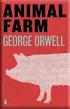 Name Gifted Middle School Summer Reading Animal Farm This summer you will read the novel, Animal Farm, which is about farm animals that rebel against the farmer in order to create a better life. But what
Language Arts Literacy Areas of Focus: Grade 6
 Language Arts Literacy : Grade 6 Mission: Learning to read, write, speak, listen, and view critically, strategically and creatively enables students to discover personal and shared meaning throughout their
Contents. A Word About This Guide... 3. Why Is It Important for My Child to Read?... 4. How Will My Child Learn to Read?... 4
 Contents A Word About This Guide............................... 3 Why Is It Important for My Child to Read?................ 4 How Will My Child Learn to Read?....................... 4 How Can I Help My
Ways character is revealed Examples What you learned about the character from this example Character s speech
 Name: Of Mice and Men Character/Theme Analysis Project This chart reflects five ways in which we learn about. Next to each of the five ways in which character is revealed, give a specific example to illustrate.
English Language Arts Grade 8 PA Alternate Eligible Content
 English Language Arts Grade 8 PA Content Grade 8 ELA Content Approved November 19, 2015 1 PA Reporting Category: E08.A Literature Text CC.1.3.8.A Determine a theme or central idea of a text and analyze
Economic Cycles EPISODE # 208
 Economic Cycles EPISODE # 208 LESSON LEVEL Grades 6-9 KEY TOPICS Entrepreneurship Economic cycles Bull and bear markets LEARNING OBJECTIVES 1. Identify economic cycles. 2. Recognize how businesses are
Lesson Plan for Media Literacy
 Constructions Beliefs & Values Audience Intent Form Lesson Plan for Media Literacy Text Production Audience Lesson Focus: What is the focus of the lesson? How will I teach it? The lesson will focus on
The Alignment of Common Core and ACT s College and Career Readiness System. June 2010
 The Alignment of Common Core and ACT s College and Career Readiness System June 2010 ACT is an independent, not-for-profit organization that provides assessment, research, information, and program management
Student Perceptions On Computer Coding Ashfield Public School Term 3, 2015. The Initiative. The survey
 Student Perceptions On Computer Coding Ashfield Public School Term 3, 2015 The Initiative 21 st Century education is about innovation. It is about a being open to new ideas and new educational trends that
READY NCEXTEND2 End-of-Grade English Language Arts (ELA)/Reading Grades 3-8 Assessments
 READY NCEXTEND2 End-of-Grade English Language Arts (ELA)/Reading Grades 3-8 Assessments NCEXTEND2 ELA/Reading Grades 3-8 Achievement Level Ranges (Cut Scores) Subject Grade Level 1 Level 2 Level 3 Level
Students will know Vocabulary: purpose details reasons phrases conclusion point of view persuasive evaluate
 Fourth Grade Writing : Text Types and Purposes Essential Questions: 1. How do writers select the genre of writing for a specific purpose and audience? 2. How do essential components of the writing process
Explain Yourself: An Expository Writing Unit for High School
 Trinity University Digital Commons @ Trinity Understanding by Design: Complete Collection Understanding by Design 2013 Explain Yourself: An Expository Writing Unit for High School Adele Barnett Trinity
Grade 1. Ontario Provincial Curriculum-based Expectations Guideline Walking with Miskwaadesi and Walking with A`nó:wara By Subject/Strand
 Grade 1 Ontario Provincial Curriculum-based Expectations Guideline Walking with Miskwaadesi and Walking with A`nó:wara By Subject/Strand Turtle Island Conservation Ontario Teacher Resource Bundle 1 The
Ancient Egypt Tic-Tac-Toe Menu
 Ancient Egypt Tic-Tac-Toe Menu 1. Write an original story or create a photostory from a pharaoh or god s perspective 4. Invent an Ancient Egyptian board game 2. Create a Hieroglyphic Wall Painting 5. Construct
Demonstrating Understanding Rubrics and Scoring Guides
 Demonstrating Understanding Rubrics and Scoring Guides Project-based learning demands a more progressive means of assessment where students can view learning as a process and use problem-solving strategies
The National Arts Education Standards: Curriculum Standards <http://artsedge.kennedy-center.org/teach/standards/standards.cfm>
 Discipline-Based Art Education: Theoretical Curriculum Model Discipline-Based Art Education (DBAE) is an approach to arts education developed and formalized in the early 1980s by the Getty Center for Arts
Designing and Using Weighted Rubrics
 Designing and Using Weighted Rubrics The following pages demonstrate one effective way for history teachers to integrate the new assessment model required by the Ontario Ministry of Education into their
Allison Gallahan s Early Childhood Lesson Plan
 Allison Gallahan s Early Childhood Lesson Plan Lesson: Big Book: Reading Maps Length: 20-30 minutes Age or Grade Level Intended: 2 nd Grade Academic Standard(s): Social Studies 2.3.2: The World in Spatial
Turtle Island Conservation: Grade 4 Miskwaadesi/A`nó:wara Ontario Curriculum Based Expectations Guide. Grade 4
 Ontario Provincial Curriculum-based Expectations Guideline Walking with Miskwaadesi and Walking with A`nó:wara By Subject/Strand Turtle Island Conservation Ontario Teachers Resource Bundle 1 The Arts 1.1
Cartooning and Animation MS. Middle School
 Cartooning and Animation Middle School Course Title Cartooning and Animation MS Course Abbreviation CART/ANIM MS Course Code Number 200603 Special Notes General Art is a prerequisite, or department permission
AK + ASD Writing Grade Level Expectations For Grades 3-6
 Revised ASD June 2004 AK + ASD Writing For Grades 3-6 The first row of each table includes a heading that summarizes the performance standards, and the second row includes the complete performance standards.
Academic Standards for Reading, Writing, Speaking, and Listening June 1, 2009 FINAL Elementary Standards Grades 3-8
 Academic Standards for Reading, Writing, Speaking, and Listening June 1, 2009 FINAL Elementary Standards Grades 3-8 Pennsylvania Department of Education These standards are offered as a voluntary resource
COMPETENCY ACC LEVEL PCC LEVEL MCC LEVEL 1. Ethics and Standards
 ICF CORE COMPETENCIES RATING LEVELS Adapted from the Minimum Skills Requirements documents for each credential level (Includes will-not-receive-passing-score criteria- gray background) COMPETENCY ACC LEVEL
A Guide for Using Big Books in the Classroom
 Why Big Books? A Guide for Using Big Books in the Classroom There s something spectacular about Big Book versions of good children s books. Neither adults nor children can resist the urge to touch and
OF USING GRAPHIC RECORDING/ GRAPHIC FACILITATION
 The Benefits OF USING GRAPHIC RECORDING/ GRAPHIC FACILITATION by Susan Kelly 1 of 9 Setting the Context The work of a Graphic Recorder/Graphic Facilitator usually, but not always, revolves around a meeting
Plot Connections Grade Five
 Ohio Standards Connection Reading Applications: Literary Text Benchmark C Identify the elements of plot and establish a connection between an element and a future event. Indicator 3 Identify the main incidents
Extra Credit: Draw a cover for the book
 Romeo & Juliet By Willi am Shak espear e Extra Credit: Draw a cover for the book Romeo & Juliet Reading and Writing Schedule Day Number Reading Writing One 1-5 Two 6-7 Three 8-11 Four 12 Five Act One 13-14
Language Arts Literacy Areas of Focus: Grade 5
 Language Arts Literacy : Grade 5 Mission: Learning to read, write, speak, listen, and view critically, strategically and creatively enables students to discover personal and shared meaning throughout their
New Jersey Core Curriculum Content Standards: For Language Arts Literacy
 For STANDARD 3.1 (READING) ALL STUDENTS WILL UNDERSTAND AND APPLY THE KNOWLEDGE OF SOUNDS, LETTERS, AND WORDS IN WRITTEN ENGLISH TO BECOME INDEPENDENT AND FLUENT READERS AND WILL READ A VARIETY OF MATERIALS
By Jeanne DuPrau. Teacher s Guide By Daphne Greene
 SCHOOL VIOLENCE PREVENTION DEMONSTRATION PROGRAM Lesson and Book Overview DIGGING INTO SOCIAL, ECONOMIC, AND POLITICAL ISSUES WITH T HE CITY OF EMBER By Jeanne DuPrau Teacher s Guide By Daphne Greene The
What is your name? Do you think it reveals something about your identity and where you come from? If so, what does it reveal?
 Red Dog Identity Regardless of who we are, or where we come from, we all have our own identity. Your name, the school you go to, the suburb you live in, the country in which you were raised in are just
CORRELATION FLORIDA DEPARTMENT OF EDUCATION INSTRUCTIONAL MATERIALS CORRELATION COURSE STANDARDS/BENCHMARKS
 SUBJECT: French GRADE LEVEL: 6-8 COURSE TITLE: M/J French, Beginning COURSE CODE: 701000 SUBMISSION TITLE: Bien Dit 2013, Level 1A BID ID: 2776 PUBLISHER: Houghton Mifflin Harcourt PUBLISHER ID: 04-1456030-01
LITERACY: READING LANGUAGE ARTS
 IMPORTANT NOTICE TO CANDIDATES: The assessment information in this document is aligned with NBPTS Literacy: Reading Language Arts Standards, Second Edition (for teachers of students ages 3 12). If you
Language, Learning, and Content Instruction
 CHAPTER 2 Language, Learning, and Content Instruction WHAT DO YOU KNOW WHEN YOU KNOW A LANGUAGE? Have you ever thought about what you know when you know a language? Most people s first reaction is to say,
Unit Plan. Grade level: 10 Subject: Media Arts ASM2O Teacher: Mr. J. Wilde
 Unit Plan Grade level: 10 Subject: Media Arts ASM2O Teacher: Mr. J. Wilde Purpose: Web Page Design Overall Expectations: By the end of this unit, students will: Apply traditional emerging technologies,
Dr. Seuss and Read Across America
 Published on AASL Learning4Life Lesson Plan Database Dr. Seuss and Read Across America Created by: Honor Zalewski Title/Role: Teacher-Librarian Organization/School Name: Cumberland County Public Schools
E/I. EQuIP Review Feedback. Lesson/Unit Name: Louisiana Believes- Romeo and Juliet Content Area: English language arts Grade Level: 9.
 EQuIP Review Feedback Lesson/Unit Name: Louisiana Believes- Romeo and Juliet Content Area: English language arts Grade Level: 9 Dimension I Alignment to the Depth of the CCSS Overall Rating: E/I Exemplar
Flowers for Algernon by Daniel Keyes Harcourt: New York 2004
 Flowers for Algernon by Daniel Keyes Harcourt: New York 2004 Questioning Strategy: Socratic Seminar Purpose of the Strategy This book is dense and complicated, and the end of the novel is extremely ambiguous.
Montgomery County Public Schools English 9B Exam Review
 Montgomery County Public Schools English 9B Exam Review June 2013 FORMAT Five Readings an excerpt from a Shakespeare play (not Romeo and Juliet) two poems a narrative a nonfiction article related to the
Literacy Guide for Secondary Schools: 2012-2013. Literacy Guide for Secondary Schools 2012-2013. National Literacy Trust, August 2012 1
 Literacy Guide for Secondary Schools 2012-2013 National Literacy Trust, August 2012 1 Contents Contents Reading for enjoyment and wider reading Page 3 Developing teachers approach to reading Page 5 Supporting
1. Adult behavior can be changed to some extent. 2. Adult education should be designed to help people mature and grow.
 Handout 1: A Philosophy for Adult Education * Adapted from Bergevin, P. (1967). A Philosophy for Adult Education. New York: The Seabury Press, pp. 3-5.* It is important to preserve the uniqueness of individuals
Common Core State Standards Speaking and Listening
 Comprehension and Collaboration. Prepare for and participate effectively in a range of conversations and collaborations with diverse partners, building on others ideas and expressing their own clearly
This curriculum is part of the Educational Program of Studies of the Rahway Public Schools. ACKNOWLEDGMENTS
 CURRICULUM FOR INTRODUCTION TO JOURNALISM GRADES 9 & 10 This curriculum is part of the Educational Program of Studies of the Rahway Public Schools. ACKNOWLEDGMENTS Christine H. Salcito, Director of Curriculum
Unit 1: Lesson 1 Understanding Invention vs. Discovery
 Unit 1: Lesson 1 Understanding Invention vs. Discovery Objectives In this lesson students will be able to differentiate between a discovery and an invention by explaining that a discovery is something
Published on www.standards.dcsf.gov.uk/nationalstrategies
 Published on www.standards.dcsf.gov.uk/nationalstrategies 16-Dec-2010 Year 3 Narrative Unit 3 Adventure and mystery Adventure and mystery (4 weeks) This is the third in a block of four narrative units
Write the key elements of the plot in a story you have read.
 F OR USE WITH F OCUS L ESSON 1: PLOT, SETTING, AND T HEME 1a Plot is the series of events in a story. Exposition is the author s introduction to the characters and setting. The conflict, or problem, sets
Students will know Vocabulary: claims evidence reasons relevant accurate phrases/clauses credible source (inc. oral) formal style clarify
 Sixth Grade Writing : Text Types and Purposes Essential Questions: 1. How do writers select the genre of writing for a specific purpose and audience? 2. How do essential components of the writing process
Creative Ideas: Enhanced to Meet Special Needs of Students
 Creative Ideas: Enhanced to Meet Special Needs of Students INTRODUCTION The Curriculum Center for Family and Consumer Sciences has produced instructional guides for all Family and Consumer Sciences courses.
READING. Common Core Standards-Based. Graphic Organizers for GRADES 9-10. In-Depth Analysis. Created by Tracee Orman
 Graphic Organizers for Common Core Standards-Based READING In-Depth Analysis GRADES 9-10 Created by Tracee Orman www.traceeorman.com www.teacherspayteachers.com/store/tracee-orman CCS RL Graphic Organizers
Literacy. Work Stations. Source: Diller, D.(2003) Literacy Work Stations, Making Centers Work
 Literacy Work Stations Source: Diller, D.(2003) Literacy Work Stations, Making Centers Work Kyrene Reading Instruction Focus: Improve student achievement through implementation of curriculum and adopted
Academic Standards for Reading, Writing, Speaking, and Listening
 Academic Standards for Reading, Writing, Speaking, and Listening Pre-K - 3 REVISED May 18, 2010 Pennsylvania Department of Education These standards are offered as a voluntary resource for Pennsylvania
Short Story. Writing Workshop 2. Activity 1: Exploring the Elements of a Short Story. 14 SpringBoard English Textual Power Level 6
 Short Story SUGGESTED Learning Strategies: Think-Pair-Share, Brainstorming, Marking the Text, Graphic Organizer, Webbing, Drafting, Role Playing, Self-Editing/Peer Editing, Sharing and Responding, Marking
The Planets? Suite! The Cleveland Institute of Music Class Materials. Table of Contents
 1 Dear Educator, Thank you for choosing the Cleveland Institute of Music. Inside this packet, you will find all of the materials your class will need for your upcoming The Planets? Suite! videoconference.
Ms Juliani -Syllabus Special Education-Language/ Writing
 Ms Juliani -Syllabus Special Education-Language/ Writing * As a teacher, I have high expectations for my students and believe that they need to be encouraged, nurtured, and rewarded for their efforts.
Grade 7: Module 2A: Unit 2: Lesson 7 Synthesizing Chávez s Central Claim
 Grade 7: Module 2A: Unit 2: Lesson 7 This work is licensed under a Creative Commons Attribution-NonCommercial-ShareAlike 3.0 Unported License. Exempt third-party content is indicated by the footer: (name
The plot is the sequence of events in a story. Each event causes or leads to the next. Events of the plot reveal a problem called the conflict.
 FOR USE WITH FOCUS LESSON 1: NARRATIVE STRATEGIES I 1a The plot is the sequence of events in a story. Each event causes or leads to the next. Events of the plot reveal a problem called the conflict. The
Units of Study 9th Grade
 Units of Study 9th Grade First Semester Theme: The Journey Second Semester Theme: Choices The Big Ideas in English Language Arts that drive instruction: Independent thinkers construct meaning through language.
A. Wessels, J. D. & Birkholz, C. Rubrics and Other Tools for Teaching Quality. Montana: Ten Sigma, 1996.
 USING RUBRICS AS A TOOL TO ASSESS STUDENT ACHIEVEMENT IN THE CORE KNOWLEDGE CLASSROOM Special Area: Administration (K-5) Written by: Reuben O. Doss, Jr., Gretna Elementary School, Gretna, Virginia I. ABSTRACT
Assembling Directions
 Assembling Directions Materials Needed: o Rough Draft o Pen or Pencil o Final Draft Templates o Color Pencils/Markers o Evaluation Rubric o Scissors, Glue, and Tape o 15 Trivia Cards & Rubber Band o 4
Understanding Income and Expenses EPISODE # 123
 Understanding Income and Expenses EPISODE # 123 LESSON LEVEL Grades 4-6 KEY TOPICS Entrepreneurship Income and expenses Cash flow LEARNING OBJECTIVES 1. Understand what your income and expenses are. 2.
Information for teachers about online TOEIC Listening and Reading practice tests from
 oxford english testing.com Information for teachers about online TOEIC Listening and Reading practice tests from www.oxford english testing.com oxford english testing.com What do the online TOEIC Listening
Lesson Plan. Preparation
 Portfolio Information Practicum in Interior Design Lesson Plan Performance Objective Upon completion of this assignment, the student will be able to create a portfolio to document personal knowledge and
Biography-Driven Culturally Responsive Teaching
 Selected Instructional Aids from Biography-Driven Culturally Responsive Teaching SOCORRO HERRERA Teachers College, Columbia University New York and London This material appears in Biography-Driven Culturally
240Tutoring Reading Comprehension Study Material
 240Tutoring Reading Comprehension Study Material This information is a sample of the instructional content and practice questions found on the 240Tutoring PRAXIS II Middle School English Language Arts
TEACHER S GUIDE TO RUSH HOUR
 Using Puzzles to Teach Problem Solving TEACHER S GUIDE TO RUSH HOUR Includes Rush Hour 2, 3, 4, Rush Hour Jr., Railroad Rush Hour and Safari Rush Hour BENEFITS Rush Hour is a sliding piece puzzle that
Decomposing Numbers (Operations and Algebraic Thinking)
 Decomposing Numbers (Operations and Algebraic Thinking) Kindergarten Formative Assessment Lesson Designed and revised by Kentucky Department of Education Mathematics Specialists Field-tested by Kentucky
ONE HEN ACADEMY EDUCATOR GUIDE
 ONE HEN ACADEMY EDUCATOR GUIDE 2013 One Hen, Inc. 3 OHA Module 3: Loans, Interest, & Borrowing Money This OHA Module introduces students to the common financial concepts of loans, loan interest, and the
FACULTY PEER ONLINE CLASSROOM OBSERVATIONS AA
 Philosophy Online class observations are meant to facilitate an instructor s professional growth. They will be used to create an opportunity for reflection and stimulate ideas for improvement in the online
Grading Benchmarks FIRST GRADE. Trimester 4 3 2 1 1 st Student has achieved reading success at. Trimester 4 3 2 1 1st In above grade-level books, the
 READING 1.) Reads at grade level. 1 st Student has achieved reading success at Level 14-H or above. Student has achieved reading success at Level 10-F or 12-G. Student has achieved reading success at Level
Campus Instructional Consulting Franklin Hall 004, 855-9023, www.indiana.edu/~teaching. Page 1
 Laboratory Notebook Grading Rubric (http://www.rickhershberger.com/bioactivesite/lab/notebook_rubric.htm) For a grade of "C", your notebook should enable you to repeat and interpret your experiment. o
Ancient Greece Lesson Plan By: Cery Kheav I. Purpose: II. Objectives: III. Procedure:
 Ancient Greece Lesson Plan By: Cery Kheav I. Purpose: The purpose of this lesson plan is to help students understand the significant contributions Ancient Greece has on society in terms of the architecture,
McDougal Littell Bridges to Literature Level III. Alaska Reading and Writing Performance Standards Grade 8
 McDougal Littell Bridges to Literature Level III correlated to the Alaska Reading and Writing Performance Standards Grade 8 Reading Performance Standards (Grade Level Expectations) Grade 8 R3.1 Apply knowledge
POWAY UNIFIED SCHOOL DISTRICT CONTINUUM OF TEACHING STANDARDS
 POWAY UNIFIED SCHOOL DISTRICT CONTINUUM OF TEACHING STANDARDS Poway Unified School District Teaching Standards Domain I Domain II Domain III Domain IV Domain V Planning and Designing Instruction Element
Writing Emphasis by Grade Level Based on State Standards. K 5.1 Draw pictures and write words for specific reasons.
 Writing Emphasis by Grade Level Based on State Standards Grade K K 5.1 Draw pictures and write words for specific reasons. Grade 1 1.5.1 Write brief narratives describing an experience. Grade 2 2.5.2 Write
What s the Big Idea?
 What s the Big Idea? Understanding Media Messages An Arts-Integrated Performance Task using Understanding by Design by Kim Chronister 2011 What s the Big Idea? Seminars are supported through grants from