
March 2007 Report No FDIC s Contract Planning and Management for Business Continuity AUDIT REPORT
|
|
|
- Kerry McDowell
- 9 years ago
- Views:
Transcription
1 March 2007 Report No FDIC s Contract Planning and Management for Business Continuity AUDIT REPORT

2 Report No March 2007 FDIC s Contract Planning and Management for Business Continuity Results of Audit Background and Objective of the Audit The Federal Emergency Management Agency issued Federal Preparedness Circular 65 (FPC 65), providing guidance for agencies to use in developing continuity of operations plans. The FDIC s Emergency Preparedness Program establishes the FDIC s business continuity policy and requires Business Continuity Plans (BCP) to be established in the FDIC s Washington Area Headquarters Offices and in each of the regional offices. The BCPs include procedures for relocating essential personnel; resuming and restoring FDIC critical business processes; and recovering and reconstituting supporting information technology systems. Identifying essential contracts and ensuring that contracts provide for services in the event of a BCP scenario are critical to FDIC operations. The objective of this audit was to determine whether the FDIC has planned for essential contract services to be provided in the event of an emergency that requires implementation of the FDIC s BCP. The FDIC has planned to ensure contract services are provided in the event of an emergency and is continuing to improve contract management for business continuity. The FDIC has identified most essential contracts for business continuity purposes and modified many of those contracts to include emergency preparedness clauses. Also, the FDIC has a process to update its list of essential contracts in the BCP annually. The FDIC could further improve its contract planning and management for business continuity by: enhancing BCP procedures and the Business Impact Analysis questionnaire to require documentation of all essential contracts, including detailed information about each contract; requiring program offices to include emergency preparedness clauses in the Statement of Work for essential contracts and subcontracts to ensure that business continuity is considered in the procurement process; and amending acquisition policy and procedures and BCP policy to require that essential contractors (a) have emergency plans for providing services to the FDIC in the event of a disruption of normal operations and (b) participate in the FDIC s business continuity testing, training, and exercise activities. Additional guidance in the FDIC s Acquisition Policy Manual and BCP policy and procedures would help to ensure that contractor activities are fully integrated into FDIC business continuity planning to enhance the FDIC s readiness to continue essential operations in emergency situations. Recommendations and Management Response We made three recommendations to strengthen the FDIC s contract planning and management for business continuity. DOA concurred with our recommendations and has completed corrective actions. To view the full report, go to

3 TABLE OF CONTENTS BACKGROUND 1 FDIC Emergency Preparedness 2 Business Impact Analysis 2 Business Continuity Planning 3 BCP Testing, Training, and Exercise 4 RESULTS OF AUDIT 5 BUSINESS IMPACT ANALYSIS 6 Use of Emergency Preparedness Clauses 6 Recommendation 7 BUSINESS CONTINUITY PLANNING 7 Contracting Procedures for Essential Services 7 Contracting Procedures for Subcontractors 9 Recommendation 9 BCP PROCEDURES FOR CONTRACTOR TESTING, TRAINING, AND EXERCISES 10 Testing, Training, and Exercises 10 Recommendation 11 CORPORATION COMMENTS AND OIG EVALUATION 11 APPENDIX I: OBJECTIVE, SCOPE, AND METHODOLOGY 13 APPENDIX II: CORPORATION COMMENTS 15 APPENDIX III: MANAGEMENT RESPONSE TO RECOMMENDATIONS 18 TABLE Summary of Results of Audit 5

4 ACRONYMS APM ASB BCP BIA COOP DOA DIT EPP ERP FEMA FFIEC FPC GSA GPRA ISC IT ITAS NIST OIG SEPS SRA Acquisition Policy Manual Acquisition Services Branch Business Continuity Plan Business Impact Analysis Continuity of Operations Plan Division of Administration Division of Information Technology Emergency Preparedness Program Emergency Response Plan Federal Emergency Management Agency Federal Financial Institutions Examination Council Federal Preparedness Circular General Services Administration Government Performance and Results Act Infrastructure Services Contract Information Technology Information Technology Applications Systems National Institute of Standards and Technology Office of Inspector General Security and Emergency Preparedness Section SRA International, Inc.

5 Federal Deposit Insurance Corporation 3501 Fairfax Drive, Arlington, VA Office of Audits Office of Inspector General DATE: March 30, 2007 MEMORANDUM TO: Arleas Upton Kea, Director Division of Administration FROM: SUBJECT: /Signed/ Russell A. Rau Assistant Inspector General for Audits FDIC s Contract Planning and Management for Business Continuity (Report No ) This report presents the results of our audit of the FDIC s Contract Planning and Management for Business Continuity. As of December 31, 2006, the FDIC had eight contracts valued at more than $800 million that were deemed essential to its critical business processes. The objective of this audit was to determine whether the FDIC has planned for essential contract services to be provided in the event of an emergency that requires the implementation of the FDIC s Business Continuity Plan (BCP). 1 Additional details on our objective, scope, and methodology are provided in Appendix I. BACKGROUND In June 2004, the Federal Emergency Management Agency (FEMA) revised Federal Preparedness Circular (FPC) 65, Federal Executive Branch Continuity of Operations, 2 to assist Federal Executive Branch departments, agencies and independent organizations in developing contingency plans and programs for the continuity of operations (COOP) 3 and to identify elements of a viable COOP capability. FPC 65 states that COOP planning includes the activities of individual departments and agencies and their subcomponents to ensure that their essential functions are performed during any emergency or Elements of a Viable COOP Capability Essential Functions Plans and Procedures Orders of Succession Delegations of Authority Alternate Facilities Redundant Emergency Communications Vital Records Testing, Training, and Exercises Source: FPC The FDIC s contract planning and management for business continuity was also addressed in a previous FDIC Office of Inspector General (OIG) report, FDIC s Business Continuity Plan (Report No , dated August 9, 2004), which discusses the OIG s assessment of the FDIC s BCP against 14 key elements of business continuity planning. 2 The FDIC has determined that FPC 65 contains guidance, not legally binding requirements, for the FDIC. 3 The terms COOP and BCP are generally considered synonymous.

6 situation that may disrupt normal operations. FPC 65 further states that COOP planning (1) is part of the fundamental mission of federal agencies as responsible and reliable public institutions and (2) requires a comprehensive program to ensure the continuity of essential federal functions. FDIC Emergency Preparedness FDIC Circular , FDIC Emergency Preparedness Program, dated January 30, 2007, serves as the official policy for FDIC Headquarters and regional offices in developing, implementing, and maintaining an FDIC Emergency Preparedness Program (EPP) to safeguard personnel and continue critical business processes during emergencies. The circular was updated during our audit, and the OIG provided comments during the revision process. FDIC Circular states that the EPP supports emergency preparedness planning guidance as outlined in FPC 65, as well as industry-recognized emergency preparedness best practices. Three components comprise the EPP: the Emergency Response Plan (ERP), a BCP, and any other plans necessary to prepare for an emergency. The ERP documents the procedures and structure for a coordinated response to an emergency and focuses on mitigating injuries and loss of life to FDIC personnel, contractors, and visitors at FDIC locations. The BCP documents the procedures for relocating essential personnel; resuming and restoring FDIC critical business processes; and recovering and reconstituting supporting information technology (IT) systems. The BCP is composed of individual division and office continuity plans, which identify critical business functions; how soon those functions must be operational in emergency situations; and the personnel, equipment, and systems resources needed to operate those functions during an emergency. The FDIC updates its BCP annually, as discussed below. Business Impact Analysis FPC 65 provides that planning requirements for a viable COOP capability must include the development, maintenance, and annual review of agency COOP capabilities using a multi-year strategy and program management plan. The FDIC addresses this requirement in the EPP by requiring an annual Business Impact Analysis (BIA). The BIA is a tool that enables full characterization of system requirements, processes, and interdependencies to determine contingency requirements and priorities. The BIA s purpose is to correlate specific system components with the critical services they provide, and based on that information, to characterize the consequences of a disruption to the system components. Business Impact Analysis Objectives Identifying and prioritizing essential functions, business processes, and mission-critical applications Defining the criticality criteria Determining the disaster cost impact on business processes Identifying critical application interdependencies Defining recovery windows for critical applications Source: FDIC Circular During the BIA, critical business function requirements and critical IT applications are reviewed, validated, added, or removed. The Division of Administration (DOA) is responsible for conducting an annual BIA with the FDIC s divisions and offices. The BIA serves as the basis for updating the corporate BCP and, as required, BCPs for the FDIC s divisions, offices, and regions. 2

7 Each year, the Directors of DOA and the Division of Information Technology (DIT) issue a BIA letter and BIA questionnaire to each FDIC division and office, informing them that BCPs will be updated based on completion of the annual BIA. The BIA letter notifies the divisions that DOA s Security and Emergency Preparedness Section (SEPS) and DIT security personnel will be meeting with them to obtain updated information on their critical business functions and resources requirements to accomplish these critical functions. The BIA questionnaire obtains information on the: resources, assets, and applications that are critical to the divisions and offices and to the mission of the FDIC. During BIA meetings, SEPS and DIT personnel obtain additional detailed information on the functions the divisions and offices would require in an emergency, such as personnel, equipment, facilities, records, systems, interdependencies, and essential contracts and points of contact. The divisions and offices return the completed questionnaires to SEPS and DIT which, together with the results of the BIA meetings, are used in updating BCPs. Business Continuity Planning According to FDIC Circular , the BCPs are the components of the EPP that document the procedures for relocating essential personnel, resuming and restoring FDIC critical business processes, and recovering and reconstituting supporting IT systems. The FDIC s division and office Directors, Regional Directors, and Managers are required to develop BCPs that can facilitate the resumption of critical business processes within 12 hours of plan activation and are capable of sustaining operations for up to 30 days. These BCPs are included in the corporate BCP. Each BCP must be reviewed by the Assistant Director, SEPS, for final approval by the FDIC Chairman or designee. The current corporate BCP was revised during 2006 and was issued on February 12, Key Elements of the FDIC s Business Continuity Plan Continuity Roles and Responsibilities Orders of Succession Plan Activation Criteria Alert and Notification Procedures Alternate Operating Facility Designation Prioritized list of Essential Functions Identification of Key Contractors Interoperable Emergency Communications Training and Exercise Events Source: FDIC Circular The Headquarters BCP has identified a primary and secondary alternate facility for critical personnel if the FDIC Headquarters in Washington, D.C., is inaccessible or uninhabitable. Also, each regional office has a designated alternate worksite for relocating critical personnel if the vicinity surrounding a regional office becomes inaccessible or uninhabitable. Identification of Essential Contracts. FDIC Circular states that BCPs should identify key contractors needed to operate during an emergency. Such contractors provide essential services in support of the FDIC s business processes. For example, the FDIC relies on contractors to support its designated alternate locations in the event of an emergency. The FDIC conducted a review of contracts during 2005 to identify those considered essential for business continuity. Specifically, contracts for IT support and maintenance, security services, call center 3

8 operations, fuel and facilities, shuttle services, cafeteria operations, and others were identified as essential. Once essential contracts had been identified, the FDIC s Legal Division worked with DOA s Acquisition Services Branch (ASB) 4 to draft emergency preparedness clauses to be added as modifications to the FDIC s essential contracts in accordance with the acquisition process outlined in the FDIC s Acquisition Policy Manual (APM), 5 which governs contracting activities. The list of essential contracts and emergency points of contact were then added to the FDIC s Headquarters BCP. The FDIC plans to use the annual BIA process to update the list of essential contracts used in BCPs. The Assistant Director, SEPS, stated that although SEPS is responsible for preparing the corporate BCP, the divisions are responsible for determining those contracts they consider essential and for ensuring that ASB adds contract clauses addressing business continuity to the essential contracts. BIA Source: OIG Analysis. BCP TESTING, TRAINING, & EXERCISE BCP Testing, Training, and Exercise FPC 65 states that testing, training, and exercise are essential to demonstrating, assessing, and improving the ability of agencies to execute their COOP plans. FDIC Circular identifies the linkage of the processes for BIAs; BCPs; and testing, training, and exercise designed to maintain a viable emergency response capability. The BCPs at FDIC Headquarters and the regional offices are tested annually through table-top 6 and situation room 7 exercises to validate information in the BCP. Lessons learned from these exercises are then incorporated into the plans accordingly. In addition, Headquarters and the regional office staff plan to participate in local exercises sponsored by various agencies, including the FEMA and the Federal Executive Councils located in major U.S. cities. SEPS advised us that it does not perform testing of essential contractor emergency response activities, and such testing is not currently required by the FDIC s Circular However, SEPS is responsible for the Security Guard contract, which supports all corporate components and has verified that the contractor has a plan that will provide guards in an emergency situation. 4 ASB is responsible for fulfilling the FDIC s procurement responsibilities, including issuing policies and procedures governing contracts for goods and services. 5 The APM establishes an updated set of policies and procedures for: (a) procuring goods and services on behalf of the Corporation in its corporate, receivership, and conservatorship capacities; and (b) identifying roles and responsibilities for all FDIC employees involved in the pre-solicitation, solicitation, proposal evaluation, award, and contract administration phases of the procurement process. 6 Table-top exercises involve a test moderator setting forth a disaster scenario and the various recovery teams walking through their documented tasks in responding to the particular situation with an eye toward correcting any shortcomings in either the strategy or planned response. 7 Situation room exercises include table-top exercises and engage some or all of the recovery strategy such as routing actual telecommunications traffic to the alternate facility. 4

9 RESULTS OF AUDIT The FDIC has planned for essential contract services to be provided in the event of an emergency that requires implementation of the FDIC s corporate BCP. The FDIC established a process for performing BIAs; business continuity planning; and testing, training, and exercise activities that considers essential contract services. Also, the FDIC has identified most of its essential contracts for business continuity purposes and modified many of those contracts to include emergency preparedness clauses and plans to update FDIC essential contracts during the Corporation s 2007 BIA process. However, as summarized in the table below, the FDIC could further improve its contract planning and management for business continuity by including additional controls in the FDIC s EPP and APM related to essential contractors and subcontractors. These improvements will help to ensure that essential contractors are more fully integrated into the FDIC s business continuity activities to provide services in emergency situations. Summary of Results of Audit FDIC Process FDIC Procedures for Essential Contractors Improvement Needed Business Impact Analysis Essential functions are reviewed and updated during the annual BIA process. The BIA questionnaire does not solicit key information on essential contractors and Business Continuity Planning Testing, Training, and Exercise Emergency preparedness clauses are included in essential contracts. The EPP requires regularly-scheduled training and exercise events such as table-top and functional exercises and personnel recall roster tests. * subcontractors. The APM does not include a requirement for contracts to be evaluated to determine whether emergency preparedness clauses should be included for prime contractors and subcontractors during preparation of the contract Statements of Work. Essential contractors are not required to submit their emergency plans for FDIC functions for review and incorporation, as appropriate, into the FDIC s BCPs. Essential contractors do not participate in FDIC BCP testing, training, and exercises. * Recall rosters list essential FDIC senior management and personnel who are notified by electronic means to report to a designated location in the event of an emergency or implementation of the FDIC s BCP. 5

10 BUSINESS IMPACT ANALYSIS Although SEPS and DIT have identified most of the FDIC s essential contracts, the current BIA questionnaire does not solicit key information on these contracts. The FDIC s EPP was revised in January 2007 to include procedures for identifying essential contractors. However, the procedures for conducting the BIA, dated November 19, 2003, do not contain provisions dealing with essential contractors support such as contractor emergency plans; essential subcontracts; and testing, training, and exercise requirements. As a result, the FDIC s BIA process may not fully document or consider information that can be useful in planning for essential contract services in an emergency. Use of Emergency Preparedness Clauses FDIC Circular focuses attention on business continuity planning as the means for resuming and restoring critical business processes during an emergency. The FDIC uses the BIA to make annual updates to the BCPs. The FDIC relies extensively on contractors; therefore, contractor support is a key component of the BIA and business continuity planning. We also reviewed the best practices for financial institutions as described in the Federal Financial Institutions Examination Council (FFIEC) Business Continuity Planning IT Examination Handbook, issued in March The FFIEC provides guidance to financial institutions and examiners on evaluating financial institution and service provider risk management processes, including guidance on conducting the BIA. The focus is on business continuity planning, whereby financial institutions ensure the maintenance or recovery of operations when confronted with adverse events, such as natural disasters, technological failures, human error, or terrorism. The FFIEC recommends that financial institutions ensure that key contractors/service providers are identified and backup arrangements are stipulated in contracts for services. The FFIEC also recommends that the BIA should solicit the critical outsourced relationships and dependencies and that each department should document the mission-critical functions performed by these outsourced relationships. Further, the FFIEC recommends that personnel responsible for the BIA consider developing uniform interview and inventory questions that can be used on an enterprise-wide basis. Uniformity can improve the consistency of responses and help personnel involved in the BIA phase to compare and evaluate business process requirements. The FFIEC handbook indicates that the BIA should solicit the critical outsourced relationships and dependencies. The SEPS and DIT personnel who conducted the BIA provided us with a detailed description of the process and told us that although the BIA procedures and questionnaire do not include questions on essential contracts, SEPS and DIT plan to discuss essential contracts during their BIA meetings with the divisions and offices. SEPS stated that the name of the contract and the contractor key points of contact are included in the BCP. To help ensure that critical information on essential contractors is obtained during the BIA and a standard procedure is used for updating essential contractor information in the BCP, the FDIC s 6

11 policy and procedures for conducting the BIA and the BIA questionnaire could be amended to solicit additional information about essential contracts such as: the purpose of the contract; how the contractor may need to alter operations for the FDIC in an emergency; the critical services required from contractor personnel and potential disaster cost impact; the timeframes during which the services would be required and system recovery windows; whether the contractor is required to have an emergency plan that addresses FDIC activities and to submit the plan to the FDIC for review; whether the contract includes an emergency preparedness clause; essential subcontracts; and testing, training, and exercise requirements for the contractors support provided to the FDIC. Obtaining responses to these questions and others determined to be important in the BIA questionnaire would result in more complete information for the FDIC s business planning activities, consistency and uniformity in information obtained, and assistance to program managers in identifying essential contracts and subcontracts. This information would also facilitate the consideration of contractor support in testing, training, and exercise activities. Recommendation (1) We recommend that the Director, DOA, amend, as appropriate, the BIA procedures and questionnaire for obtaining additional information on essential contracts and for using the contractor-related responses in the BCP. BUSINESS CONTINUITY PLANNING The FDIC could improve its contract planning for business continuity to ensure all essential contractors and subcontractors are required to provide services for the FDIC in an emergency. The EPP includes requirements for the identification of essential contractors needed to operate during an emergency. However, APM contracting procedures do not require that program officials determine whether a contract is essential for business continuity when preparing a Statement of Work for the contract. In 2005, DOA completed a review of essential contracts and modified them to include an emergency preparedness clause. However, contracts awarded since the DOA contract review that may be essential to the FDIC s mission had been awarded without an emergency preparedness clause. Also, the FDIC has not established procedures to ensure that key subcontractors on the FDIC s essential contracts are prepared to provide essential services in an emergency. As a result, essential contractors and subcontractors may not be routinely identified as part of the procurement process for purposes of business continuity planning activities, and the scope of their emergency responsibilities may not be well defined. Contracting Procedures for Essential Services During 2005, SEPS and DIT determined that eight contracts were essential for business continuity. Because DOA had not established a procedure for evaluating whether contracts were essential for business continuity when originally awarded, these contracts did not include an 7

12 emergency preparedness clause. Instead, partly in response to an FDIC OIG report, FDIC s Business Continuity Plan (Report No , dated August 9, 2004), SEPS and DIT determined which contracts were essential and then modified those contracts to include an emergency preparedness clause as follows. If, at any time during the performance of this contract, the FDIC requires services essential or critical to its mission due to an actual or threatened emergency situation as declared by the federal, state, or local authority, the contractor shall provide all resources necessary to support these services. If an actual or threatened emergency exists, the contractor shall take immediate and effective measures to ensure the availability or use of back-up or redundant services to support the emergency situation without any disruption. Any needed back-up or redundant services shall be provided for as long as the actual or threatened emergency situation exists. Any costs associated with providing back-up or redundant services shall be reimbursed at the previously negotiated labor rates. After receipt of the FDIC s notification requiring services essential or critical to its mission, the contractor shall submit an equitable adjustment proposal for the back-up or redundant services. The equitable adjustment proposal shall include, as a minimum, a breakdown of the labor categories involved, the total estimated hours for each labor category, the negotiated labor rate, and the total cost/price. The APM does not require the routine identification of essential contracts. Therefore, new contracts may not include emergency preparedness requirements. For example, DIT s Information Technology Applications Systems (ITAS) contract, which totals $554.8 million for IT systems development and maintenance, was not awarded until after the 2005 identification process had been completed and was not modified to include the emergency preparedness clause. While SEPS and DIT personnel plan to include questions about essential contracts in their future BIA interviews, the BIA was not conducted during 2006 because of the FDIC s move to Virginia Square. As of February 1, 2007, the ITAS contract had been in effect for 19 months without an emergency preparedness clause. The ITAS contract is a multi-vendor contract with 4 contractors and 18 current task orders. According to DIT, some of the task orders provide essential support to DIT and should include the emergency preparedness clauses. If FDIC contracting procedures had required that program officials include emergency preparedness clauses in contracts and task orders that provide essential support, program officials would be on notice of such a requirement and could have taken the steps necessary to ensure that the contractors were prepared to provide such critical services for FDIC s IT systems. The FDIC s ability to maintain critical operations during an emergency could be improved by ensuring that all essential contracts include the appropriate emergency preparedness/business continuity clauses. This can be accomplished by including emergency preparedness provisions in the Statement of Work for essential contracts as part of the solicitation process for contractor proposals. 8

13 Contracting Procedures for Subcontractors The FDIC has not established procedures or taken action to ensure that key subcontracts for the FDIC s essential contracts include emergency preparedness clauses. As discussed earlier, the FDIC has identified eight contracts that are considered essential to maintain the FDIC s critical functions in the event of an emergency or business continuity scenario. Two of these eight contracts are critical to the FDIC s IT systems and have multiple subcontractors. The FDIC has not required the prime contractors to ensure that subcontracts for work on essential FDIC contracts have emergency preparedness requirements. Therefore, the FDIC does not have full assurance that the prime contractor will be able to perform in cases where subcontractors provide critical support to essential prime contractors. The following examples illustrate the need for consideration of subcontractor emergency preparedness requirements. DIT has an Interagency Agreement with the General Services Administration (GSA), through which a task order, the Infrastructure Services Contract (ISC) was awarded to SRA International, Inc. (SRA). This contract was awarded in September 2004 and was modified in May 2006 to include the emergency preparedness clause that had been added to the FDIC contracts that had previously been identified as being essential for business continuity. The SRA contract has an expenditure ceiling totaling $341 million and includes services provided by three SRA subcontractors. Subcontracted services included work for helpdesk and client support, mainframe operations, and telecommunications support services that may be essential for business continuity. In addition, SRA used some short-term labor contracts related to IT security and mainframe support. However, according to the DIT s Oversight Manager for the contract, none of the SRA s subcontracts had been amended to include the emergency preparedness clause when the overall contract was modified in Also, as previously discussed, DIT s ITAS contract does not contain the emergency preparedness clause, and it is a multi-vendor contract with 4 contractors and 18 current task orders. As a result of our audit work, the DIT Oversight Manager advised us that he was going to request that ASB modify the ITAS contract to include the emergency preparedness clause. However, the FDIC does not have a policy or procedures for ensuring that the prime contractors include the clause in their subcontracts or to provide for other arrangements to ensure that subcontractors fulfill their responsibilities in providing services. Because the SRA and the ITAS contractors have not included the emergency preparedness clause in their essential subcontracts, the FDIC s ability to fully provide services in an emergency may be compromised. Recommendation (2) We recommend that the Director, DOA, amend the procedures in the Acquisition Policy Manual, or other procedures as appropriate, to require that Statements of Work for contracts and task orders under contracts contain: business continuity requirements if contracted services are deemed essential in the event of an emergency or business continuity event, 9

14 requirements that essential contractors include emergency preparedness and business continuity provisions in essential subcontracts. BCP PROCEDURES FOR CONTRACTOR TESTING, TRAINING, AND EXERCISES The FDIC has not established procedures requiring essential contractors to provide the FDIC with evidence of their emergency plans for FDIC critical business functions or for participation in the FDIC s BCP testing, training, and exercises. According to SEPS, ASB, and Legal Division personnel, the FDIC s practices for ensuring that essential contractors provide services in an emergency are limited to the inclusion of an emergency preparedness clause in the contract. This clause is intended to put contractors on notice that the services they provide are critical to the FDIC s mission and that the FDIC would require the continuation or expansion of these services in an emergency. However, without verifying contractors emergency plans for FDIC critical functions and including contractors in FDIC BCP testing, training and exercises, the FDIC does not have adequate assurance that essential contractors will be able to provide the FDIC the service coverage that may be required during a business continuity scenario. Testing, Training, and Exercises FDIC Circular requires that the Assistant Director, SEPS, coordinate and facilitate emergency preparedness training and exercise events. Specifically, the circular requires that the Assistant Director develop strategies for maintaining a viable emergency response capability that includes training and exercise activities and milestones, coordinating with senior FDIC management on these activities, and identifying and resolving resulting issues and concerns. The circular also refers to testing with respect to the use of recall rosters. Since the FDIC relies extensively on essential contractors, contractor support is a key component of the FDIC s emergency response capability. In addition to reviewing the requirements of FDIC Circular , we reviewed the best practices for financial institutions described in the FFIEC Business Continuity Planning, IT Handbook. The FFIEC recommends that financial institutions obtain a copy of vendors BCPs and incorporate them into their business continuity plans. The FFIEC also recommends that contracts address the service providers responsibilities for maintenance and testing of disaster recovery and contingency plans and that, if possible, respective institutions should consider participating in their service providers testing process. While the FDIC is not required to follow the FFIEC guidance, industry best practices recommend that essential contracts be identified and their business continuity plans be tested to ensure the continuity of operations. Although the FDIC has conducted business continuity exercises to test the FDIC s BCPs, the FDIC has not included contractors business continuity activities in any of these events. Further, the FDIC does not have policies and procedures in its APM to address contractors emergency planning and the verification of the contractors operational capacities through testing, training, and exercises to determine whether the contractors have the ability to provide services expected by the FDIC in the event of an emergency. 10

15 For most of the contracts identified as essential, DOA has submitted an emergency preparedness clause to the contractor for concurrence and inclusion in a contract modification. Nevertheless, with the exception of one essential contract related to the FDIC s Call Center, 8 the FDIC has not requested that the other essential contractors provide their emergency plans for FDIC review or required that essential contractors affirm that their organization has a business continuity or emergency preparedness plan. The one contract that does require the contractor to provide its emergency plan resulted from the initiative of the individual contract manager and not in response to FDIC s policies or procedures. According to SEPS and Legal Division personnel, including contractors in emergency preparedness testing, training, and exercises has not been discussed or recommended to FDIC senior management. Also, Circular does not specifically refer to including contractors in these activities. However, as part of fulfilling its overall responsibilities for testing, training, and exercises of business continuity planning, the FDIC could more fully consider its reliance on essential contractors and the need to assess their capabilities, including those of their essential subcontractors, to respond in the event of an emergency. Doing so will help ensure available emergency response capability. Recommendation (3) We recommend that the Director, DOA, amend: procedures in the Acquisition Policy Manual, or other procedures as appropriate, to provide that Statements of Work for essential contracts and task orders ensure that contractors have emergency plans for providing services to the FDIC in the event of a disruption of normal operations and participate in the FDIC s business continuity testing, training, and exercises. Circular , FDIC s Emergency Preparedness Program, to include essential contractors in FDIC s BCP planning and testing, training, and exercises. CORPORATION COMMENTS AND OIG EVALUATION The Director, DOA, provided a written response, dated March 30, 2007, to a draft of this report. DOA s response is presented in its entirety in Appendix II. DOA concurred with each of the three recommendations and has taken the following corrective actions: revised the BIA questionnaire for immediate use. The questionnaire includes the identification of critical contractor/subcontractor staff and whether they have an Emergency Plan which can be incorporated into the FDIC Business Continuity Plan. updated the Requirements Package Checklist in the APM to include the requirement that any Statement of Work for essential services contain business continuity requirements as well as emergency preparedness and business continuity provisions in essential 8 The FDIC Call Center is the primary telephone point of contact for the banking industry and the general public. It is critical to the FDIC s mission because it assists in maintaining public confidence in the nation s financial system. 11

16 subcontracts. Additionally, the checklist was updated to require that essential contractors participate in the FDIC s business continuity planning, testing, training, and exercises. revised Circular , entitled FDIC s Emergency Preparedness Program to include essential contractors in FDIC s BCP planning, testing, training, and exercises. DOA s actions effectively address the recommendations, and we consider all the recommendations closed. Appendix III presents a summary of DOA s responses to our recommendations and the corrective actions taken. 12

17 APPENDIX I OBJECTIVE, SCOPE, AND METHODOLOGY Our objective was to determine whether the FDIC has planned for essential contract services to be provided in the event of an emergency that requires the implementation of the BCP. Our scope was limited to the contracts identified by SEPS and the DIT Security Section as essential for business continuity and that are included in the FDIC s Headquarters BCP as of December 1, We conducted the audit from November 2006 through January 2007 in accordance with generally accepted government auditing standards. To accomplish our objective, our methodology included reviewing the following documents: FDIC Circular , FDIC Emergency Preparedness Program, dated December 28, 2004, and the revised Circular , dated January 30, (The provisions outlined in this circular serve as the official policy for FDIC Headquarters and regional offices in developing, implementing, and maintaining a BCP.) FEMA FPC 65 Federal Executive Branch Continuity of Operations. GSA s Occupant Emergency Program Guide. National Institute of Standards and Technology (NIST), U.S. Department of Commerce, Contingency Planning Guide for Information Technology Systems. FFIEC s Business Continuity Planning IT Examination Handbook, issued March Certified Information Systems Auditor Review Manual 2006, Business Continuity and Disaster Recovery. Appendix III to the U.S. Office of Management and Budget Circular No. A-130, Security of Federal Automated Information Resources. FDIC s Procedure for Conducting a Business Impact Analysis, dated November 19, FDIC OIG s Evaluation Report, Number entitled, FDIC s Business Continuity Plan, dated August 9, 2004; and FDIC OIG s Evaluation Report, Number entitled, Business Continuity Planning at FDIC-Supervised Institutions, dated September 25, To identify FDIC procedures and practices for contract planning and management for business continuity, we obtained information from the following FDIC officials: Assistant Director, Security and Emergency Preparedness Section, DOA Chief, Transportation and Emergency Response Unit, DOA Assistant Director, IT Contracting Section, DOA Assistant Director, ASB, DOA Procurement Analyst, ASB, DOA Contract Oversight Manager, DIT Chief Oversight Support Section, DIT Supervisory IT Specialist, Security Section, DIT Senior IT Specialist, Security Section, DIT Senior Counsel, Legal Division Our methodology did not include a review of the FDIC s BCP, which was being revised during our audit. 13

18 APPENDIX I Internal Management Controls We evaluated the effectiveness of controls in place for identifying essential contracts for business continuity and ensuring emergency preparedness clauses had been included in contracts deemed essential for business continuity. These controls included the policies and procedures for conducting a BIA and BCP. In the absence of written policies, we relied on interviews and information obtained from the Assistant Director, SEPS, who is responsible for the FDIC s BCP, and other DOA and DIT officials. Compliance With Laws and Regulations We coordinated reviews of laws, directives, and plans with the OIG s Office of Counsel to determine applicability to the FDIC and to gain an understanding of applicable laws and regulations. We found no instances where the FDIC was not in compliance with applicable laws and regulations. Government Performance and Results Act, Computer-Processed Data, and Fraud or Illegal Acts We reviewed DOA s performance measures under the Government Performance and Results Act, Public Law (GPRA). We reviewed the FDIC s 2006 Annual Performance Plan and the FDIC s Strategic Plan for to determine whether the FDIC has established goals related to contract planning and management for business continuity. Neither plan includes goals, objectives, or indicators specifically related to the subject of our audit. We did not rely on computer-processed data to support our significant conclusions, findings, and recommendations, and, as a result, did not perform work to determine the reliability of such data. Our audit program included steps for providing reasonable assurance of detecting fraud or illegal acts, and none came to our attention. 14

19

20 16 APPENDIX II

21 17 APPENDIX II
22 APPENDIX III MANAGEMENT RESPONSE TO RECOMMENDATIONS This table presents the management response on the recommendations in our report and the status of the recommendations as of the date of report issuance. Rec. No. Corrective Action Taken 1 Revised the BIA questionnaire to include identification of critical contractor/subcontractor staff and whether they have an Emergency Plan which can be incorporated into the FDIC BCP. 2 Updated the Requirements Package Checklist in the APM to require that any Statement of Work for essential services contain business continuity provisions as well as emergency and business continuity provisions in essential subcontracts. 3 Updated the Requirements Package Checklist in the APM to require that any Statement of Work for essential services contain requirements for the contractor to have emergency plans for providing services to the FDIC in the event of a disruption of normal operations and to participate in the FDIC s business continuity planning, testing, training, and exercises. Completion Date Monetary Benefits Resolved: a Yes or No Open or Closed March 13, 2007 N/A Yes Closed March 21, 2007 N/A Yes Closed March 21, 2007 N/A Yes Closed Revised Circular to include essential contractors in FDIC s BCP planning, testing, training, and exercises. March 13, 2007 N/A Yes Closed a Resolved-(1) Management concurs with the recommendation, and the planned corrective action is consistent with the recommendation. (2) Management does not concur with the recommendation, but planned alternative action is acceptable to the OIG. (3) Management agrees to the OIG monetary benefits, or a different amount, or no ($0) amount. Monetary benefits are considered resolved as long as management provides an amount. b Once the OIG determines that the agreed-upon corrective actions have been completed and are effective, the recommendation can be closed. 18
Hanh Do, Director, Information System Audit Division, GAA. SUBJECT: Review of HUD s Information Technology Contingency Planning and Preparedness
 Issue Date: August 31, 2006 Audit Report Number 2006-DP-0005 TO: Lisa Schlosser, Chief Information Officer, A FROM: Hanh Do, Director, Information System Audit Division, GAA SUBJECT: Review of HUD s Information
SAMPLE IT CONTINGENCY PLAN FORMAT
 SAMPLE IT CONTINGENCY PLAN FORMAT This sample format provides a template for preparing an information technology (IT) contingency plan. The template is intended to be used as a guide, and the Contingency
Federal Financial Institutions Examination Council FFIEC. Business Continuity Planning BCP MARCH 2003 MARCH 2008 IT EXAMINATION
 Federal Financial Institutions Examination Council FFIEC Business Continuity Planning MARCH 2003 MARCH 2008 BCP IT EXAMINATION H ANDBOOK TABLE OF CONTENTS INTRODUCTION... 1 BOARD AND SENIOR MANAGEMENT
Office of Inspector General
 DEPARTMENT OF HOMELAND SECURITY Office of Inspector General Security Weaknesses Increase Risks to Critical United States Secret Service Database (Redacted) Notice: The Department of Homeland Security,
Controls Over EPA s Compass Financial System Need to Be Improved
 U.S. ENVIRONMENTAL PROTECTION AGENCY OFFICE OF INSPECTOR GENERAL Controls Over EPA s Compass Financial System Need to Be Improved Report No. 13-P-0359 August 23, 2013 Scan this mobile code to learn more
UNITED STATES DEPARTMENT OF EDUCATION OFFICE OF INSPECTOR GENERAL
 UNITED STATES DEPARTMENT OF EDUCATION OFFICE OF INSPECTOR GENERAL AUDIT SERVICES August 24, 2015 Control Number ED-OIG/A04N0004 James W. Runcie Chief Operating Officer U.S. Department of Education Federal
Vendor Management. Outsourcing Technology Services
 Vendor Management Outsourcing Technology Services Objectives Board and Senior Management Responsibilities Risk Management Program Risk Assessment Service Provider Selection Contracts Ongoing Monitoring
Subject: Internal Audit of Information Technology Disaster Recovery Plan
 RIVERSIDE: AUDIT & ADVISORY SERVICES June 30, 2009 To: Charles Rowley, Associate Vice Chancellor Computing & Communications Subject: Internal Audit of Information Technology Disaster Recovery Plan Ref:
State and District Monitoring of School Improvement Grant Contractors in California FINAL AUDIT REPORT
 State and District Monitoring of School Improvement Grant Contractors in California FINAL AUDIT REPORT ED-OIG/A09O0009 March 2016 Our mission is to promote the efficiency, effectiveness, and integrity
Federal Financial Institutions Examination Council FFIEC BCP. Business Continuity Planning FEBRUARY 2015 IT EXAMINATION H ANDBOOK
 Federal Financial Institutions Examination Council FFIEC Business Continuity Planning BCP FEBRUARY 2015 IT EXAMINATION H ANDBOOK Table of Contents Introduction 1 Board and Senior Management Responsibilities
Audit of Case Activity Tracking System Security Report No. OIG-AMR-33-01-02
 Audit of Case Activity Tracking System Security Report No. OIG-AMR-33-01-02 BACKGROUND OBJECTIVES, SCOPE, AND METHODOLOGY FINDINGS INFORMATION SECURITY PROGRAM AUDIT FOLLOW-UP CATS SECURITY PROGRAM PLANNING
MEMORANDUM OF UNDERSTANDING Between Defense Contract Audit Agency and Department of Homeland Security
 MEMORANDUM OF UNDERSTANDING Between Defense Contract Audit Agency and Department of Homeland Security 1. PURPOSE This memorandum sets forth an understanding of contract audit coverage and related audit
The PNC Financial Services Group, Inc. Business Continuity Program
 The PNC Financial Services Group, Inc. Business Continuity Program 1 Content Overview A. Introduction Page 3 B. Governance Model Page 4 C. Program Components Page 4 Business Impact Analysis (BIA) Page
FINAL AUDIT REPORT WITH RECOMENDATIONS Information Technology No. 11-001
 FINAL AUDIT REPORT WITH RECOMENDATIONS Information Technology No. 11-001 SUBJECT: Review of Emergency Plans DATE: September 24, 2010 for Critical Information Technology Operations and Financial Systems
AUDIT REPORT 12-1 8. Audit of Controls over GPO s Fleet Credit Card Program. September 28, 2012
 AUDIT REPORT 12-1 8 Audit of Controls over GPO s Fleet Credit Card Program September 28, 2012 Date September 28, 2012 To Director, Acquisition Services From Inspector General Subject Audit Report Audit
Department of Public Utilities Customer Information System (BANNER)
 REPORT # 2010-06 AUDIT of the Customer Information System (BANNER) January 2010 TABLE OF CONTENTS Executive Summary..... i Comprehensive List of Recommendations. iii Introduction, Objective, Methodology
Federal Financial Institutions Examination Council FFIEC BCP. Business Continuity Planning MARCH 2003 IT EXAMINATION H ANDBOOK
 Federal Financial Institutions Examination Council FFIEC Business Continuity Planning MARCH 2003 BCP IT EXAMINATION H ANDBOOK TABLE OF CONTENTS INTRODUCTION... 1 BOARD AND SENIOR MANAGEMENT RESPONSIBILITIES...
FEDERAL PREPAREDNESS CIRCULAR Federal Emergency Management Agency Washington, D.C. 20472 FPC 67
 FEDERAL PREPAREDNESS CIRCULAR Federal Emergency Management Agency Washington, D.C. 20472 FPC 67 April 30, 2001 TO: SUBJECT: HEADS OF FEDERAL DEPARTMENTS AND AGENCIES ACQUISITION OF ALTERNATE FACILITIES
Evaluation of Defense Contract Management Agency Actions on Reported DoD Contractor Business System Deficiencies
 Inspector General U.S. Department of Defense Report No. DODIG-2016-001 OCTOBER 1, 2015 Evaluation of Defense Contract Management Agency Actions on Reported DoD Contractor Business System Deficiencies INTEGRITY
Business Continuity Planning 101. +1 610 768-4120 (800) 634-2016 www.strohlsystems.com [email protected]
 Business Continuity Planning 101 Presentation Overview What is business continuity planning Plan Development Plan Testing Plan Maintenance Future advancements in BCP Question & Answer What is a Disaster?
DISASTER RECOVERY PLANNING FOR CITY COMPUTER FACILITIES
 APPENDIX 1 DISASTER RECOVERY PLANNING FOR CITY COMPUTER FACILITIES March 2008 Auditor General s Office Jeffrey Griffiths, C.A., C.F.E. Auditor General City of Toronto TABLE OF CONTENTS EXECUTIVE SUMMARY...1
MEMORANDUM OF UNDERSTANDING Between Defense Contract Audit Agency and Department of Homeland Security
 MEMORANDUM OF UNDERSTANDING Between Defense Contract Audit Agency and Department of Homeland Security 1. PURPOSE This memorandum sets forth an understanding of contract audit coverage and related audit
Building and Maintaining a Business Continuity Program
 Building and Maintaining a Business Continuity Program Successful strategies for financial institutions for effective preparation and recovery Table of Contents Introduction...3 This white paper was written
Continuity of Operations (COOP) Plan Template Instructions. Federal Emergency Management Agency 500 C ST, SW Washington, D.C.
 Continuity of Operations (COOP) Plan Template Instructions Federal Emergency Management Agency 500 C ST, SW Washington, D.C. 20472 FEMA GUIDE INSTRUCTIONS This guide provides instructions for developing
UNITED STATES DEPARTMENT OF EDUCATION OFFICE OF INSPECTOR GENERAL 400 MARYLAND AVENUE, S.W. WASHINGTON, DC 20202-1500.
 UNITED STATES DEPARTMENT OF EDUCATION OFFICE OF INSPECTOR GENERAL 400 MARYLAND AVENUE, S.W. WASHINGTON, DC 20202-1500 February 1, 2006 Michell Clark, Designee Assistant Secretary for Management and Acting
TREASURY INSPECTOR GENERAL FOR TAX ADMINISTRATION
 TREASURY INSPECTOR GENERAL FOR TAX ADMINISTRATION Disaster Recovery Testing Is Being Adequately Performed, but Problem Reporting and Tracking Can Be Improved May 3, 2012 Reference Number: 2012-20-041 This
CONTINUITY OF OPERATIONS
 Court Services and Offender Supervision Agency for the District of Columbia POLICY STATEMENT CONTINUITY OF OPERATIONS I. COVERAGE This Policy Statement applies to all Court Services and Offender Supervision
Instructions for Completing the Information Technology Officer s Questionnaire
 Instructions for Completing the The (Questionnaire) contains questions covering significant areas of a bank s information technology (IT) function. Your responses to these questions will help determine
OCC 98-3 OCC BULLETIN
 To: Chief Executive Officers and Chief Information Officers of all National Banks, General Managers of Federal Branches and Agencies, Deputy Comptrollers, Department and Division Heads, and Examining Personnel
NATIONAL OCEANIC AND ATMOSPHERIC ADMINISTRATION. Opportunities to Strengthen Internal Controls Over Improper Payments PUBLIC RELEASE
 U.S. DEPARTMENT OF COMMERCE Office of Inspector General NATIONAL OCEANIC AND ATMOSPHERIC ADMINISTRATION Opportunities to Strengthen Internal Controls Over Improper Payments Final Report No.BSD-16186-0001/July
Office of Audits and Evaluations Report No. AUD-13-007. The FDIC s Controls over Business Unit- Led Application Development Activities
 Office of Audits and Evaluations Report No. AUD-13-007 The FDIC s Controls over Business Unit- Led Application Development Activities September 2013 Executive Summary The FDIC s Controls over Business
EMERGENCY PREPAREDNESS PLAN Business Continuity Plan
 EMERGENCY PREPAREDNESS PLAN Business Continuity Plan GIS Bankers Insurance Group Powered by DISASTER PREPAREDNESS Implementation Small Business Guide to Business Continuity Planning Surviving a Catastrophic
,"ENT 0..- ~ -1-0. Q c. ;:* *1 ~ J U.S. DEPARTMENTOF HOUSINGAND URBAN DEVELOPMENT THEDEPUTYSECRETARY WASHINGTON, DC 20410-0050.
 ,"ENT 0..- ~ -1-0 Q c. ;:* *1 ~ J c.~.
FFIEC Cybersecurity Assessment Tool
 Overview In light of the increasing volume and sophistication of cyber threats, the Federal Financial Institutions Examination Council 1 (FFIEC) developed the Cybersecurity Tool (), on behalf of its members,
DRAFT BUSINESS CONTINUITY MANAGEMENT POLICY
 DRAFT BUSINESS CONTINUITY MANAGEMENT POLICY This document outlines a set of policies and procedures for formalising a Business Continuity programme, and provides guidelines for developing, maintaining
CENTRAL BANK OF KENYA (CBK) PRUDENTIAL GUIDELINE ON BUSINESS CONTINUITY MANAGEMENT (BCM) FOR INSTITUTIONS LICENSED UNDER THE BANKING ACT
 CENTRAL BANK OF KENYA (CBK) PRUDENTIAL GUIDELINE ON BUSINESS CONTINUITY MANAGEMENT (BCM) FOR INSTITUTIONS LICENSED UNDER THE BANKING ACT JANUARY 2008 GUIDELINE ON BUSINESS CONTINUITY GUIDELINE CBK/PG/14
2014 Audit of the Board s Information Security Program
 O FFICE OF I NSPECTOR GENERAL Audit Report 2014-IT-B-019 2014 Audit of the Board s Information Security Program November 14, 2014 B OARD OF G OVERNORS OF THE F EDERAL R ESERVE S YSTEM C ONSUMER FINANCIAL
Identify and Protect Your Vital Records
 Identify and Protect Your Vital Records INTRODUCTION The Federal Emergency Management Agency s Federal Preparedness Circular 65 states The protection and ready availability of electronic and hardcopy documents,
TO: Chief Executive Officers of National Banks, Federal Branches and Data-Processing Centers, Department and Division Heads, and Examining Personnel
 AL 2000 12 O OCC ADVISORY LETTER Comptroller of the Currency Administrator of National Banks Subject: Risk Management of Outsourcing Technology Services TO: Chief Executive Officers of National Banks,
August 23, 2010. Dr. Eugene Trinh Director, NASA Management Office, Jet Propulsion Laboratory
 National Aeronautics and Space Administration Office of Inspector General Washington, DC 20546-0001 August 23, 2010 TO: Dr. Eugene Trinh Director, NASA Management Office, Jet Propulsion Laboratory FROM:
INFORMATION TECHNOLOGY OFFICER S QUESTIONNAIRE. Instructions for Completing the Information Technology Examination Officer s Questionnaire
 Institution Charter Date of Exam Prepared By INFORMATION TECHLOGY OFFICER S QUESTIONNAIRE Instructions for Completing the Information Technology Examination Officer s Questionnaire The Information Technology
OFFICE OF THE INSPECTOR GENERAL SOCIAL SECURITY ADMINISTRATION
 OFFICE OF THE INSPECTOR GENERAL SOCIAL SECURITY ADMINISTRATION CONTRACTOR SECURITY OF THE SOCIAL SECURITY ADMINISTRATION S HOMELAND SECURITY PRESIDENTIAL DIRECTIVE 12 CREDENTIALS June 2012 A-14-11-11106
Independent Evaluation of NRC s Implementation of the Federal Information Security Modernization Act of 2014 for Fiscal Year 2015
 Independent Evaluation of NRC s Implementation of the Federal Information Security Modernization Act of 2014 for Fiscal Year 2015 OIG-16-A-03 November 12, 2015 All publicly available OIG reports (including
Department of Homeland Security Office of Inspector General. Review of U.S. Coast Guard Enterprise Architecture Implementation Process
 Department of Homeland Security Office of Inspector General Review of U.S. Coast Guard Enterprise Architecture Implementation Process OIG-09-93 July 2009 Contents/Abbreviations Executive Summary...1 Background...2
Ohio Supercomputer Center
 Ohio Supercomputer Center IT Business Continuity Planning No: Effective: OSC-13 06/02/2009 Issued By: Kevin Wohlever Director of Supercomputer Operations Published By: Ohio Supercomputer Center Original
With the large number of. How to Avoid Disaster: RIM s Crucial Role in Business Continuity Planning. Virginia A. Jones, CRM, FAI RIM FUNDAMENTALS
 How to Avoid Disaster: RIM s Crucial Role in Business Continuity Planning The world has experienced a great deal of natural and man-made upheaval and destruction in the past few years, including tornadoes,
U.S. ELECTION ASSISTANCE COMMISSION OFFICE OF INSPECTOR GENERAL
 U.S. ELECTION ASSISTANCE COMMISSION OFFICE OF INSPECTOR GENERAL FINAL REPORT: U.S. Election Assistance Commission Compliance with the Requirements of the Federal Information Security Management Act Fiscal
Business Continuity Planning Toolkit. (For Deployment of BCP to Campus Departments in Phase 2)
 Business Continuity Planning Toolkit (For Deployment of BCP to Campus Departments in Phase 2) August 2010 CONTENTS: Background Assumptions Business Impact Analysis Risk (Vulnerabilities) Assessment Backup
Department of Homeland Security Office of Inspector General. Improvements Needed in Federal Emergency Management Agency Monitoring of Grantees
 Department of Homeland Security Office of Inspector General Improvements Needed in Federal Emergency Management Agency Monitoring of Grantees OIG-09-38 March 2009 Office of Inspector General U.S. Department
REQUEST FOR PROPOSALS. Business Continuity Planning Consultant Services APPENDIX C RFP STATEMENT OF WORK EXHIBITS 1-3
 REQUEST FOR PROPOSALS Business Continuity Planning Consultant Services APPENDIX C RFP STATEMENT OF WORK EXHIBITS 1-3 EXHIBITS EXHIBIT 1 EXHIBIT 2 EXHIBIT 3 Glossary of Terms and Acronyms Contract Discrepancy
U.S. Department of Energy Office of Inspector General Office of Audits & Inspections. Evaluation Report
 U.S. Department of Energy Office of Inspector General Office of Audits & Inspections Evaluation Report The Department's Unclassified Cyber Security Program - 2012 DOE/IG-0877 November 2012 MEMORANDUM FOR
Domain 3 Business Continuity and Disaster Recovery Planning
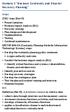 Domain 3 Business Continuity and Disaster Recovery Planning Steps (ISC) 2 steps [Har10] Project initiation Business Impact Analysis (BIA) Recovery strategy Plan design and development Implementation Testing
PROCUREMENT. Actions Needed to Enhance Training and Certification Requirements for Contracting Officer Representatives OIG-12-3
 PROCUREMENT Actions Needed to Enhance Training and Certification Requirements for Contracting Officer Representatives OIG-12-3 Office of Inspector General U.S. Government Accountability Office Report Highlights
Audit Report. Natural Resources Conservation Service Water and Climate Information System Review of Application Controls Portland, Oregon
 U.S. Department of Agriculture Office of Inspector General Western Region Audit Report Natural Resources Conservation Service Water and Climate Information System Review of Application Controls Portland,
STATEMENT OF JOHN E. MCCOY II DEPUTY ASSISTANT INSPECTOR GENERAL FOR AUDITS U.S. DEPARTMENT OF HOMELAND SECURITY BEFORE THE
 STATEMENT OF JOHN E. MCCOY II DEPUTY ASSISTANT INSPECTOR GENERAL FOR AUDITS U.S. DEPARTMENT OF HOMELAND SECURITY BEFORE THE COMMITTEE ON OVERSIGHT AND GOVERNMENT REFORM SUBCOMMITTEE ON GOVERNMENT ORGANIZATION,
National Check Payments Certification. Fraud, Risk, and Risk Mitigation Part II. Copyright 2015 by the Electronic Check Clearing House Organization
 NCP 2016 Exam Cycle Core Training Series Session 11 National Check Payments Certification Fraud, Risk, and Risk Mitigation Part II Copyright 2015 by the Electronic Check Clearing House Organization NOTICES
Risk Management of Outsourced Technology Services. November 28, 2000
 Risk Management of Outsourced Technology Services November 28, 2000 Purpose and Background This statement focuses on the risk management process of identifying, measuring, monitoring, and controlling the
Technology Infrastructure Services
 LOB #303: DISASTER RECOVERY Technology Infrastructure Services Purpose Disaster Recovery (DR) for IT is a capability to restore enterprise-wide technology infrastructure, applications and data that are
Memorandum. ACTION: Report on Computer Security Controls of Financial Management System, FTA FE-2000-098. May 23, 2000.
 U.S. Department of Transportation Office of the Secretary of Transportation Office of Inspector General Memorandum ACTION: Report on Computer Security Controls of Financial Management System, FTA FE-2000-098
U.S. Department of Energy Office of Inspector General Office of Audits and Inspections
 U.S. Department of Energy Office of Inspector General Office of Audits and Inspections Audit Report The Department of Energy's Weatherization Assistance Program Funded under the American Recovery and Reinvestment
Audit of the Disaster Recovery Plan
 Audit of the Disaster Recovery Plan Report # 11-05 Prepared by Office of Inspector General J. Timothy Beirnes, CPA, Inspector General Kit Robbins, CISA, CISM, CRISC, Lead Information Systems Auditor TABLE
Management of Cloud Computing Contracts and Environment
 Management of Cloud Computing Contracts and Environment Audit Report Report Number IT-AR-14-009 September 4, 2014 Cloud computing contracts did not comply with Postal Service standards. Background The
Security Architecture. Title Disaster Planning Procedures for Information Technology
 Category Applicability Title Disaster Planning Procedures for Information Technology All Public Entities (See the Applicability section below.) Standard - A degree or level of requirement that all jurisdictions