
Gregory E. Hicks, PhD, PT, Julie M. Fritz, PhD, PT, ATC, Anthony Delitto, PhD, PT, Stuart M. McGill, PhD
|
|
|
- Diana Alannah Benson
- 9 years ago
- Views:
Transcription
1 ORIGINAL ARTICLE Preliminary Development of a Clinical Prediction Rule for Determining Which Patients With Low Back Pain Will Respond to a Stabilization Exercise Program Gregory E. Hicks, PhD, PT, Julie M. Fritz, PhD, PT, ATC, Anthony Delitto, PhD, PT, Stuart M. McGill, PhD ABSTRACT. Hicks GE, Fritz JM, Delitto A, McGill SM. APATHOLOGY-BASED DIAGNOSTIC approach to low Preliminary development of a clinical prediction rule for determining which patients with low back pain will respond to a a deviation of the lumbopelvic complex from its normative back pain (LBP) sets forth the idea that LBP is defined by stabilization exercise program. Arch Phys Med Rehabil 2005; physiologic and anatomic state. 1 On application of the pathology-based model to LBP, one must first identify a structural 86: fault and then treatment can be directed at correction of the Objective: To develop a clinical prediction rule to predict fault. As a result of this treatment and subsequent correction, treatment response to a stabilization exercise program for patients with low back pain (LBP). 2 A pathology-based the signs and symptoms should dissipate. approach to diagnosis for LBP has proven difficult because of Design: A prospective, cohort study of patients with nonradicular LBP referred to physical therapy (PT). the inability to identify a structural pathology in the vast majority of patients with LBP. Setting: Outpatient PT clinics. 3 Despite the difficulties in identifying structural pathology for Participants: Fifty-four patients with nonradicular LBP. most patients, many authors continue to suggest that patients Intervention: A standardized stabilization exercise program. with LBP are not a homogenous group, but rather should be Main Outcome Measure: Treatment response (success or classified into subgroups that share similar clinical characteristics (eg, age, symptom duration, distribution). failure) was categorized based on changes in the Oswestry Disability Questionnaire scores after 8 weeks. 4-6 This type of classification system could guide diagnosis and treatment and Results: Eighteen subjects were categorized as treatment improve overall decision making in the management of LBP successes, 15 as treatment failures, and 21 as somewhat improved. After using regression analyses to determine the asso- 7 It may also improve research by denoting homoge- patients. nous subgroups for treatment outcome studies. ciation between standardized examination variables and treatment response status, preliminary clinical prediction rules were 8 Patients with lumbar segmental instability (LSI) have been proposed as a unique subgroup of patients with LBP. developed for predicting success (positive likelihood ratio 7,9-11 LSI has been defined as a condition in which there is a loss of [LR], 4.0) and failure (negative LR,.18). The most important stiffness between spinal motion segments, such that normally variables were age, straight-leg raise, prone instability test, tolerated external loads result in pain or deformity or place aberrant motions, lumbar hypermobility, and fear-avoidance neurologic structures at risk. beliefs. 10 The diagnosis of LSI has traditionally relied on the use of lateral flexion and extension Conclusions: It appears that the response to a stabilization radiographs. exercise program in patients with LBP can be predicted from Thresholds for defining LSI have been developed from studies that have examined the magnitude of rotational and translational movement normally available at each variables collected from the clinical examination. The prediction rules could be used to determine whether patients with spinal motion segment during flexion and extension of the LBP are likely to benefit from stabilization exercises. lumbar spine. Key Words: Classification; Exercise; Low back pain; Rehabilitation. 14,15 However, the use of these criteria for defining LSI has proven unsatisfactory because of high false-positive rates by the American Congress of Rehabilitation Medicine and the American Academy of Physical Medicine and 16,17 For example, Hayes et al 17 found that 42% of asymptomatic subjects had at least 1 segment exceeding the instability thresholds. The inadequacies associated with the use Rehabilitation of imaging to diagnosis LSI have led to a greater emphasis on clinical characteristics that may be indicative of the condition. Historical variables, presence of an instability catch, or excessive intervertebral mobility have been suggested as diagnostic ; however, the validity of these findings is mostly From the Departments of Physical Therapy and Rehabilitation Science and Epidemiology and Preventive Medicine, University of Maryland School of Medicine, Baltimore, MD (Hicks); Division of Physical Therapy, University of Utah, Salt Lake unknown. Because of the current lack of a true reference City, UT (Fritz); Department of Physical Therapy, University of Pittsburgh, Pittsburgh, PA (Delitto); and Department of Kinesiology, University of Waterloo, Wa- diagnose LSI clinically; therefore, another approach should be standard for confirmation of LSI, it is not possible to accurately terloo, ON, Canada (McGill). considered. Supported by the Foundation for Physical Therapy Clinical Research Center. The opinions and assertions contained herein are the private views of the author and If LSI could be accurately diagnosed, the conservative treatment of choice would be a lumbar stabilization program to are not to be construed as official or as reflecting the views of the U.S. Department of the Army or the Department of Defense. address the tissue damage and resultant loss of spinal stiffness No commercial party having a direct financial interest in the results of the research caused by mechanical overload to the spinal stabilizing system. supporting this article has or will confer a benefit upon the authors(s) or upon any organization with which the author(s) is/are associated. The goals of stabilization exercise are to train muscular motor Correspondence to Gregory E. Hicks, PhD, PT, Dept of Physical Therapy and patterns to increase spinal stability, restrain aberrant micromotion, and reduce associated pain. Although several studies that Rehabilitation Science, University of Maryland School of Medicine, 100 Penn St, Baltimore, MD 21201, [email protected]. Reprints are not available from the author. observed muscle onset and electromyographic patterns have /05/ $30.00/0 suggested that certain muscles are important stabilizers, 21 measurement of stability was not performed. In contrast, doi: /j.apmr those 1753

2 1754 SUCCESS WITH STABILIZATION, Hicks studies that have quantified stability 22,23 unanimously agree that all muscles play a role in ensuring spine stability and that the motor patterns of cocontraction between the full complement of muscles are of utmost importance to ensure stability and minimize pain. Although the exercises used in this study are often described in the literature as targeting a specific muscle group, electromyography studies show that the exercises will challenge groups of muscles in a way that enhances overall spinal stability. Recent research has shown that exercise programs can be designed to challenge the stabilizing muscles of the spine in a way that appears to be effective for at least certain subgroups of patients with LBP. The development of a valid method for identifying this subgroup of patients would help clinicians in determining which patients with LBP are most likely to benefit from this exercise program. The purpose of this study was to explore the value of various demographic, historic, and clinical examination variables for predicting outcome after participation in a program of spinal stabilization exercises. The reference standard used to determine success was change in disability. METHODS We conducted a prospective cohort study involving patients referred to physical therapy (PT) with LBP. Subjects were recruited from new patients referred for treatment of LBP to 1 of 3 outpatient PT clinics located in the Pittsburgh, PA, area or the outpatient PT clinic at Keesler Air Force Base Medical Center (Biloxi, MS). All new patients with complaints of LBP, with or without leg pain, over the age of 18 were eligible for participation. Exclusion criteria were as follows: previous spinal fusion surgery; LBP attributable to current pregnancy; acute fracture, tumor, or infection; and presence of 2 or more of the following signs of nerve root compression: diminished lower-extremity strength, sensation, or reflexes. All subjects reviewed and signed a consent form approved by the University of Pittsburgh Health Sciences Institutional Review Board. Therapists Four licensed physical therapists participated in the examination and treatment of subjects in this study. All therapists received written instructions and specific training regarding all study procedures. Each therapist had to pass a written test to show an acceptable level of knowledge regarding subject recruitment, clinical examination, and exercise progression. Examination Procedures At baseline, subjects were evaluated by the treating physical therapist. The evaluation consisted of the collection of basic demographic information, subject self-report measures, questions of history, and physical examination measures. Each subject completed a numeric pain rating to assess severity of pain by using an 11-point (0 10) scale. 27 The Fear Avoidance Beliefs Questionnaire (FABQ) 28 was used to measure the level of fear-avoidance beliefs. The FABQ has 2 subscales that measure fear-avoidance beliefs about work (7- item scale) and physical activity (4-item scale). The Modified Oswestry Low Back Pain Disability Questionnaire (ODQ) 29 is a disease-specific measure of disability among patients with LBP. This questionnaire has been used extensively in randomized trials and has shown excellent reliability and good construct validity in comparison with other pain and disability measures The ODQ was assessed at baseline and after 8 weeks of treatment and served as the reference standard for determining the success of the treatment program. All subjects underwent a standardized history and physical examination. History taking included questions proposed to indicate the presence of LSI, 7,18,19 including mode of onset, duration of symptoms, number of previous episodes of LBP, and response to various interventions for previous episodes. Subjects were also asked about the distribution of symptoms for the current episode and were asked to rank sitting versus standing and walking and morning versus evening with respect to their symptoms. Operational definitions for components of the physical examination are included in appendix 1. The physical examination included lumbar spine range of motion (ROM) measured with a single inclinometer. Waddell et al 32 found these measurements to be highly reliable (intraclass correlation coefficient [ICC] range,.86.95). Any aberrant motions believed to be associated with LSI occurring during the performance of lumbar ROM were noted, including an instability catch, 33,34 painful arc of motion, 35 thigh climbing (Gower s sign), or a reversal of lumbopelvic rhythm. 7 Subjects were categorized as either having or not having aberrant motions present, a determination found to be reliable in a previous study. 36 Posterioranterior lumbar mobility testing 37 was performed at each spinal level. Although the reliability coefficients for these judgments generally have been shown to be only fair, 38,39 percentage agreement among examiners is high 36 and mobility judgments have been shown to be useful for determining which patients with LBP may respond to a manipulation intervention. 40 Generalized ligamentous laxity was assessed on a 9-point scale described by Beighton and Horan. 41 Higher numbers indicate greater laxity. We previously found the reliability of this scale to be excellent (ICC.79). 36 Two special tests proposed to indicate LSI, the prone instability 42 and posterior shear 7 tests, were performed. We found the prone instability test (.87) to be more reliable than the posterior shear test (.35), 36 but the validity of these tests has not been studied previously. Muscle endurance of the spinal extensors and lateral flexors was assessed by using the modified Biering-Sorenson extensor endurance test and the side support test, respectively, which have been found to be highly reliable (ICC range,.93.99). 43 Two strength tests, the active sit-up and active straight-leg raising (SLR) tests, were also used. These tests have been found to be both reliable ( range,.48.77) and valid in a previous study. 32 Treatment All study participants underwent PT treatment consisting of the same stabilization program. Subjects were scheduled to attend supervised therapy sessions twice weekly for an 8-week period and were asked to perform exercises at home daily. Subjects were asked to complete a compliance log for home exercises to verify performance. The treatment program used was a specific stabilization program based on current evidence from the biomechanical and electromyography studies. 25,44-46 The exercise program was designed to challenge and encourage stabilizing motor patterns for the primary stabilizing muscles of the spine including the rectus abdominus, transversus abdominus, 44,45 internal oblique abdominals, 47 erector spinae and multifidus, 25,44,48,49 and quadratus lumborum. 50 The stabilization exercise program focused on encouraging repeated submaximal efforts to mimic the function of these muscles in spine stabilization. 44,46 The exercises for each muscle group and criteria for progression are listed in table 1. Progression of the exercise program was directed by the physical therapist based on the criteria given.

3 SUCCESS WITH STABILIZATION, Hicks 1755 Table 1: Stabilization Exercises With Criteria for Progression of Each Exercise Primary Muscle Group* Exercises Criteria for Progression Transversus abdominus Abdominal bracing 30 repetitions with 8-s hold Bracing with heel slides 20 repetitions per leg with 4-s hold Bracing with leg lifts 20 repetitions per leg with 4-s hold Bracing with bridging 30 repetitions with 8-s hold, then progress to 1 leg Bracing in standing 30 repetitions with 8-s hold Bracing with standing row exercise 20 repetitions per side with 6-s hold Bracing with walking Erector spinae/multifidus Quadruped arm lifts with bracing 30 repetitions with 8-s hold on each side Quadruped leg lifts with bracing 30 repetitions with 8-s hold on each side Quadruped alternate arm and leg lifts with bracing 30 repetitions with 8-s hold on each side Quadratus lumborum Side support with knees flexed 30 repetitions with 8-s hold on each side Side support with knees extended 30 repetitions with 8-s hold on each side Oblique abdominals Side support with knees flexed 30 repetitions with 8-s hold on each side Side support with knees extended 30 repetitions with 8-s hold on each side *Although certain muscle groups are preferentially activated with each exercise sequence, each exercise progression will promote stability by producing motor patterns of cocontraction among all spinal stabilizing muscles. Data Analysis The outcome of treatment was determined based on the changes in the ODQ between the baseline and 8-week assessments. For each subject, the points of change in the ODQ score over 8 weeks (initial ODQ score 8-wk ODQ score), and the percentage change in the ODQ score ([initial ODQ score 8-wk ODQ score]/initial ODQ score 100%) were calculated. Any subject with a percentage change of 50% or greater was classified as a stabilization treatment success. For subjects with less than a 50% improvement, the points of change in the ODQ score were examined. Subjects experiencing less than 6 points of improvement on the ODQ were classified as stabilization treatment failures. All other subjects with at least 6 points of improvement but less than 50% improvement were classified as improved with stabilization treatment. The rationale for the criteria for defining stabilization success and failure comes from the literature and previous experience with the ODQ. In previous studies, patients with LBP believed to be appropriately matched to their treatment program experienced an improvement in ODQ scores from 57% to 83%, whereas patients receiving unmatched treatments experienced improvements ranging from 20% to 38% over a 1- to 4-week treatment period. 7,51-54 In addition, O Sullivan et al 26 used a similar exercise program for patients with spondylolisthesis or spondylolysis and reported a 48% improvement after 10 weeks in the intervention group. Based on these findings, we believe that subjects experiencing at least a 50% improvement in ODQ score over 8 weeks responded successfully to the stabilization intervention, and clinical decision making would be enhanced if clinicians had a mechanism for identifying these individuals. The minimum clinically important difference (MCID) in ODQ score has been calculated as 5 to 6 points. 7,29,54,55 Given the generally favorable natural history of LBP, we believe that subjects who did not even achieve the MCID in ODQ score over 8 weeks of treatment were appropriately considered to have failed the intervention. The ability to identify such patients a priori would allow clinicians to consider alternative interventions. Individual variables from subjects demographic, self-report, history, and physical examination were tested for a significant univariate association with stabilization success by using independent sample t tests for continuous variables and chi-square tests for categoric variables. Univariate significance of individual variables with stabilization failure was also assessed. Variables with a significant univariate association with either success or failure (P.10) were retained as potential predictor variables for that outcome. A more liberal significance level was used because this step was intended to filter variables with no association with outcome, and we did not wish to exclude History/Demographic Variables Table 2: History and Demographic Variables Assessed at Baseline All Subjects (N 54) Succeeded With Treatment (n 18) Improved With Treatment (n 21) Failed With Treatment (n 15) Age (y) Sex (% women) Mode of onset (% sudden) Duration of current symptoms (d) Distribution of symptoms Back/buttock only (%) Distal symptoms (%) Prior history of LBP (%) More than 3 prior episodes Episodes of LBP becoming more frequent (%) Improved with prior bracing treatment (%) Improved with prior manipulation treatment (%) NOTE. Values are mean standard deviation (SD) unless otherwise indicated.

4 1756 SUCCESS WITH STABILIZATION, Hicks Self-Report Variable Table 3: Self-Report Variables All Subjects (N 54) Succeeded With Treatment (n 18) Improved With Treatment (n 21) Failed With Treatment (n 15) Pain rating FABQ work subscale FABQ physical activity subscale Baseline ODQ score Change in ODQ score with treatment (points) Change in ODQ score with treatment (%) NOTE. Values are mean SD. any potentially useful predictor variables. Any continuous variable found to have a significant univariate association with outcome was further explored by constructing a receiver operator characteristic (ROC) curve. The ROC curve was used to determine a cutoff point defining a positive test. 7,54,56 The point nearest the upper left hand corner of an ROC curve represents the cutoff score with the best diagnostic accuracy. 57 This point 7,54 was therefore selected as the cutoff score defining a positive test. Accuracy statistics (sensitivity, specificity, positive and negative likelihood ratio [LR] values) with the corresponding 95% confidence interval (CI) were calculated based on this cutoff score. For categoric variables with significant univariate relationships, accuracy statistics with 95% CI were calculated. 58 For the prediction of success, the target condition used to calculate accuracy statistics was success with stabilization. The focus for the prediction of success was on maximizing the positive LR because this value represents the change in odds favoring success given a positive diagnostic test result. For the prediction of failure, the target condition was not failing with stabilization (ie, experiencing either improvement or success). The focus for the prediction of failure was therefore on minimizing the negative LR value. A test with a small negative LR would serve as a useful screening tool because this indicates that a negative result would substantially decrease the odds of a favorable result (improvement or success) with stabilization treatment. All variables with a significant univariate relation to treatment outcome were then used to develop multivariate clinical prediction rules. If more than 5 variables were found to have a significant relation to an outcome, then the variables were entered into a forward stepwise logistic regression equation to reduce the number of predictors. A significance of.15 was required to enter, and a significance of.20 was used to remove a variable from the equation. More liberal significance levels were used because this is the first approximation of a clinical prediction rule. Once the number of predictor variables was determined, the clinical prediction rule was developed by examining the accuracy statistics for various combinations of the retained variables. RESULTS A total of 57 subjects gave informed consent for participation between September 2001 and May Three subjects initially agreed to participate but withdrew after several days because they did not want to commit to the time required. Because no data were obtained from these subjects, they were not included in the analysis. One subject began the stabilization program but dropped out after 2 weeks for an unknown reason. This subject was included in the analysis and considered a stabilization failure. A total of 54 subjects were therefore included in the analysis. Table 2 provides descriptive information. The mean age standard deviation (SD) was years; 57.4% were women and 85.2% were white. Thirty-eight (70.4%) subjects reported a history of LBP that required activity modification. The mean ODQ score at baseline was (table 3). Eighteen (33.3%) subjects experienced a 50% or greater improvement in ODQ score over 8 weeks and were categorized as stabilization successes. Of the remaining 36 subjects, 15 (27.8%) experienced less than a 6-point improvement on the ODQ and were categorized as stabilization failures. The remaining 21 (38.9%) subjects were categorized as improved with stabilization treatment. Initial and follow-up ODQ scores for the 3 outcome groups are shown in figure 1. The mean number of PT visits attended during the 8-week treatment period was , and there was no association between the number of visits and change in ODQ score over the 8-week period (P.05). Tables 3 and 4 show the results of the history and demographic and physical examination findings. Four variables were significantly related to success and were retained as potential predictors: age (cutoff value defining a positive test 40y), average SLR (cutoff value defining a positive test 91 ), the presence of aberrant movement during lumbar ROM, and a positive prone instability test (table 5). Nine variables were retained as potential predictors of failure (table 6), including the FABQ physical activity subscale (cutoff value defining a positive test 8 points), pain rating (cutoff value defining a positive test 2), lumbar flexion ROM (cutoff value defining a positive test 33 ), discrepancy in SLR (cutoff value defining a positive test 10 ), 3 or more previous episodes of LBP, increasing frequency of episodes of LBP, aberrant movement during lumbar ROM, the presence of hypermobility during lumbar spring testing, and a positive prone instability test. Among the individual predictor variables for success, age less than 40 years had the greatest positive LR (3.7; 95% CI, Fig 1. Initial and final ODQ scores for the 3 outcome groups.

5 SUCCESS WITH STABILIZATION, Hicks 1757 Physical Examination Variables Table 4: Physical Examination Variables Assessed at Baseline All Subjects (N 54) Succeeded With Treatment (n 18) Improved With Treatment (n 21) Failed With Treatment (n 15) Total flexion (deg) Pelvic flexion (deg) Lumbar flexion (deg) Percentage of total flexion from lumbar spine (deg) Total extension (deg) Left side bending (deg) Right side bending (deg) Average side-bending (deg) Side-bending discrepancy* (deg) Left SLR (deg) Right SLR (deg) Average SLR (deg) SLR discrepancy* (deg) Aberrant motion during lumbar ROM (% yes) Beighton scale score Posterior shear test (% positive) Prone instability test (% positive) Active sit-up test (% positive) Active SLR test (% positive) Any hypermobility present during spring testing (% yes) Side support left (s) Side support right (s) Average side support (s) Side support discrepancy* (s) Extensor endurance (s) Ratio average side support/ extensor endurance (%) NOTE. Values are mean SD unless otherwise indicated. *Discrepancy values calculated as the absolute value of the right side minus the left side ). This finding indicates that a subject under the age of 40 had a 3.7 higher odds of succeeding with stabilization treatment. For the prediction of failure, the best individual screening test was a FABQ physical activity subscale score of greater than 8 (negative LR,.26; 95% CI,.08.78), indicating that a negative result (ie, a score of 8) would decrease the odds of experiencing some improvement with stabilization treatment by.26. The 4 predictors of success with stabilization were considered for the multivariate clinical prediction rule. The best rule for predicting success was the presence of 3 or more of the 4 variables (positive LR, 4.0; 95% CI, ) (table 7). The 9 potential predictor variables for failure were entered into a stepwise logistic regression equation. Four variables were retained in the final model (table 8) (FABQ physical activity subscale score 8, aberrant movement, prone instability test, hypermobility during lumbar spring testing). The best rule for predicting failure occurred when a positive test was defined as the presence of 2 or more of the 4 variables (negative LR,.18; 95% CI,.08.38; positive LR, 6.3; 95% CI, ) (see table 8). This means that when only 1 or none of these 4 variables was present, the odds of experiencing some improvement with stabilization treatment decreased by a factor of.18. If 2 or more of the 4 variables were present, the odds of some improvement with stabilization increased by 6.3. DISCUSSION Exercises designed to improve spinal stabilization have gained popularity in the conservative treatment of patients with LBP; however, the evidence for the effectiveness of this approach is sparse and equivocal. 59 A recent systematic review 60 of exercise therapy for LBP concluded that exercise therapy Table 5: Significant Univariate Predictors of Stabilization Success Variable Associated With Success Signif Sensitivity Specificity Positive LR Negative LR Age ( 40y) (.39.80).83 (.68.92) 3.7 ( ).47 (.26.85) Average SLR ( 91 ) (.13.51).92 (.78.97) 3.3 ( ).79 ( ) Aberrant movement present (.55.91).50 (.35.66) 1.6 ( ).44 ( ) Positive prone instability test (.49.88).58 (.42.73) 1.7 ( ).48 ( ) NOTE. Values are accuracy statistics (95% CIs). Abbreviation: Signif, significance.

6 1758 SUCCESS WITH STABILIZATION, Hicks Table 6: Significant Univariate Predictors of Stabilization Failure Variable Associated With Failure Signif Sensitivity Specificity Positive LR Negative LR FABQ physical activity subscale ( 9) (.76.96).40 (.20.64) 1.4 ( ).26 (.08.78) Initial pain rating ( 3) (.62.87).40 (.20.64) 1.3 ( ).58 ( ) Discrepancy in SLR ( 10 ) (.76.96).40 (.20.64) 1.4 ( ).32 (.11.90) Percentage of total flexion from the (.65.89).40 (.20.64) 1.3 ( ).51 ( ) lumbar spine ( 37%) Fewer than 3 prior LBP episodes (.51.79).60 (.36.80) 2.0 ( ).76 ( ) No increasing frequency of LBP (.34.64).80 (.55.93) 2.4 ( ).64 (.43.95) episodes Aberrant movement absent (.56.84).73 (.48.89) 2.7 ( ).39 (.21.69) No lumbar hypermobility with (.17.44) 1.0 ( ) 9.2* ( ).74* (.59.96) spring testing Negative prone instability test (.51.79).87 (.62.96) 5.0 ( ).39 (.24.63) NOTE. Values are accuracy statistics (95% CIs). *LR values estimated by adding 0.5 to each cell to avoid division by zero error. overall was not effective for patients with acute LBP but may be helpful for those with chronic LBP. The review also noted that the evidence could not be used to examine the effectiveness of specific types of exercise (eg, flexion, extension, strengthening, stabilization) because of heterogeneity in study populations and interventions. 60 The few studies that have examined specific stabilization exercise programs such as that used in this study in more homogenous populations have shown promising results. O Sullivan et al 26 randomized patients with chronic, recurrent LBP who had a radiologic diagnosis of spondylolysis or spondylolisthesis to receive either stabilization exercises or usual care directed by a general practitioner and found statistically significant reductions in pain and disability at a 30-month follow-up. Hides et al 24,25 studied patients with acute, first-time episode of unilateral LBP, comparing stabilization exercises particularly targeting the multifidus muscle with usual medical management. No significant differences in disability or pain were found after 4 weeks, 25 but the stabilization group experienced significantly fewer recurrences at 2- to 3-year follow-up. 24 These studies indicate that a specific stabilization exercise approach may be effective for certain subgroups of patients. This study is an initial step in identifying the subgroup of patients for whom this approach may be particularly effective. The preliminary prediction rule for success with stabilization treatment contains 4 variables: positive prone instability test, aberrant movements present, average SLR greater than 91 o, and age greater than 40 years old. These variables seem reasonable based on the available theoretical literature regarding LSI and stabilization. The prone instability test works on the premise that if pain is present on passive provocation testing of the vertebral levels but disappears when the spinal extensors are active, then the muscle activity may be able to stabilize the segment and reduce pain, and the individual may benefit from stabilization exercises. Several authors 7,20,61 have suggested that the observation of aberrant movement patterns during active trunk motion is valuable in the diagnosis of LSI. The presence of aberrant movements may represent an inability to adequately control lumbar motion and indicate a need for stabilization exercises. Decreased SLR ROM is related to the presence of radiculopathy and a generally worse prognosis In our study, greater SLR mobility was associated with stabilization success. The final predictor of success was younger age ( 40y). Increased age is associated with decreased lumbar extensor muscle mass. 65,66 Despite the evidence suggesting detrimental effects to muscle with aging, there is encouraging evidence that older men and women can still increase muscle strength even up to age 90 with appropriate training. 67 Adults over the age of 39 may require more than 8 weeks of training to gain the same benefits as their younger peers with LBP. Additionally, because of the decreased flexibility and ROM associated with aging, it is also possible that older adults may require a combination of mobility-related interventions followed by stabilization exercise to achieve the same gains as their younger counterparts. We also sought to develop a preliminary clinical prediction rule for patients likely to fail with stabilization treatment. The prediction rule contained 4 variables: negative prone instability test, aberrant movements absent, FABQ physical activity subscale score greater than 9, and no hypermobility with lumbar spring testing. A negative prone instability test may indicate that muscular stabilization is not needed, and the absence of an aberrant movement pattern during active trunk motion may indicate an ability to control movement in a pain-free fashion. The FABQ measures fear-avoidance beliefs in patients with LBP. 28 In this study, lower levels of fear-avoidance beliefs about physical activity were associated with stabilization failure. This is counter to other findings in the literature that suggest higher levels of fear-avoidance beliefs are associated with poorer outcomes. 68,69 Our findings may suggest that this stabilization program preferentially helps patients with moderate to high levels of fear-avoidance beliefs to overcome their Table 7: Clinical Prediction Rule for Predicting Success With Stabilization Treatment No. of Variables Present Sensitivity Specificity Positive LR Negative LR One or more.94 (.74.99).28 (.16.44) 1.3 ( ).20 ( ) Two or more.83 (.61.94).56 (.40.71) 1.9 ( ).30 (.10.88) Three or more.56 (.34.75).86 (.71.94) 4.0 ( ).52 (.30.88) NOTE. Values are accuracy statistics (95% CIs). The best prediction rule based on the positive LR value is the presence of at least 3 of the predictor variables (positive prone instability test, aberrant movement present, average SLR 91, age 40y).

7 SUCCESS WITH STABILIZATION, Hicks 1759 Table 8: Clinical Prediction Rule for Predicting Failure With Stabilization Treatment No. of Variables Present Sensitivity Specificity Positive LR Negative LR One or more positive tests.97 ( ).13 (.04.38) 1.1 ( ).20 ( ) Two or more positive tests.85 (.70.93).87 (.62.96) 6.3 ( ).18 (.08.38) Three or more positive tests.59 (.43.73) 1.0 ( ) 18.8* ( ).43* (.29.65) Four or more positive tests.18 (.09.33) 1.0 ( ) 6.0* ( ).84* ( ) NOTE. Values are accuracy statistics (95% CIs). The best prediction rule based on the negative LR value is the presence of at least 2 positive predictor variables (prone instability test, aberrant movement, hypermobility, FABQ physical activity subscale 8). *LR values estimated by adding 0.5 to each cell to avoid division by zero error. fear, thus improving their disability level. Further work will be needed to clarify this issue. Finally, clinicians have suggested that hypermobility in the spine can be detected through mobility testing 70,71 and is an indicator for stabilization exercises. 72 The presence of hypomobility in the lumbar spine during mobility testing has been associated with the need for manipulation. 40 Mobility testing of the lumbar spine may be a useful clinical tool for determining the type of treatment most likely to benefit a particular patient. LRs allow clinicians to determine the magnitude of the probability shift expected based on the result of an individual diagnostic test or a clinical prediction rule. The positive LR represents the change in odds favoring the condition of interest (stabilization success) when the criteria for the clinical prediction rule are met. 58 Therefore, a large positive LR is indicative of a larger shift in probability toward a positive response to stabilization. In this study, the prevalence, or pretest probability, of stabilization success was 33%. The posttest probability of stabilization success for a patient with at least 3 of the 4 predictor variables in the clinical prediction rule for success (positive LR, 4.0) would be 67%, suggesting that the patient may likely benefit from this stabilization program. When examining the prediction rule for failure with the stabilization program, we chose to examine the negative LR because this statistic represents the change in odds favoring the condition of interest (some improvement with stabilization) when the criteria of the prediction rule are not met. In our study, the prevalence of some success with stabilization was 72%. The posttest probability of some success with stabilization for a patient with fewer than 2 of the 4 predictor variables in the clinical prediction rule (negative LR,.18) would be reduced to 32%, indicating that this person may be more likely to benefit from an alternative treatment approach. Conversely, the positive LR for this criterion is 6.3 and increases the likelihood of experiencing at least some improvement from 72% to 94%. When a cutoff score of 3 or more positive findings is used, the positive LR increases to 18.8, thereby increasing the probability of experiencing some improvement from 72% to 97% when 3 or more variables are present. The stabilization program used in our study was standardized and each physical therapist involved followed the same protocol, but we acknowledge that clinician-based modifications to this program may produce superior results in certain situations. Although numerous types of stabilization exercises have been proposed, we believe the exercises used in this program are fairly representative and supported by the literature. We also attempted to control for any other types of biases that could temper the results of our study. First, the reference standard was applied to all subjects equally, and the examiner who judged the reference standard (patient response to stabilization) was blinded to the results of all diagnostic tests as well as to the clinical presentation of the subjects to avoid review bias. Additionally, the study design made it impossible for the clinician who judged the diagnostic test to be influenced by the result of the reference standard because it was not known until the 8-week time point. Finally, the inclusion of consecutive subjects with LBP from clinical practice should decrease the impact of spectrum bias and make the results generalizable to patients with LBP seeking outpatient PT treatment. CONCLUSIONS These results represent a preliminary step in the development of a clinical prediction rule for the use of stabilization exercises. We were able to identify several variables that appear to be important in determining which patients are likely or unlikely to benefit from a stabilization treatment approach. From the history and patient self-report, the variables of age, fear of physical activity, pain intensity, and frequency of previous episodes had some relation to treatment outcome. From the physical examination, the key variables appear to be SLR motion, lumbar mobility testing, aberrant motions during lumbar ROM, and the prone instability test. From these variables, we developed preliminary multivariate prediction rules. The results of this study need to be replicated in a separate sample for confirmation and ultimately examined in a randomized controlled trial before they can be recommended for widespread use. APPENDIX 1: OPERATIONAL DEFINITIONS FOR PHYSICAL MEASURES Physical Measures Range of motion Flexion ROM 32 Extension ROM 32 Right and left side-bending ROM 32 Procedure The patient stands and the inclinometer is held at T12-L1. The patient is asked to reach down as far as possible toward the toes while keeping the knees straight. The patient stands and the inclinometer is held at T12-L1. The patient is asked to arch backward as far as possible. The patient stands with the inclinometer aligned vertically in line with the spinous processes of T9 and T12. The patient is asked to lean over to 1 side as far as possible with the fingertips reaching down the side of the thigh.

8 1760 SUCCESS WITH STABILIZATION, Hicks Physical Measures Right and left SLR ROM 32 Muscle performance tests Side support test 44 Extensor endurance test 44 Active sit-up test 32 Active bilateral SLR test 32 Special tests Posterior shear test 7 Prone instability test 43 Lumbar segmental testing for mobility 37 Procedure The patient is supine. The inclinometer is positioned on the tibial crest just below the tibial tubercle. The leg is raised passively by the examiner, whose other hand maintains the knee in extension. The leg is raised slowly to the maximum tolerated straight leg raise (not the onset of pain). The patient is side lying with legs extended and the top foot in front of the lower foot. While resting on the lower elbow for support, the patient lifts the hips off the table with only the elbow and feet remaining in contact with the table. The patient is instructed to hold this position as long as possible. The test is done for both sides, and the performance time is recorded in seconds. The patient is asked to lie prone while holding the sternum off the floor for as long as possible. A small pillow is placed under the lower abdomen to decrease the lumbar lordosis. The patient also needs to maintain maximum flexion of cervical spine and pelvic stabilization through gluteal contraction. The patient is asked to hold this position as long as possible not to exceed 5 minutes. The performance time is recorded in seconds. The patient is supine and is asked to flex the knees to 90 and place the soles of the feet flat on the surface. The examiner holds both feet down with 1 hand. The patient is instructed to reach up with the fingertips of both hands to touch (not hold) both knees and hold the position for 5 seconds. If the patient cannot maintain this position for 5 seconds, the test is positive. The patient is supine and is asked to lift both legs together 6 inches (15.24 cm) off the examining surface and hold that position for 5 seconds. Both heels and calves should be cleared from the examining surface. If the patient cannot maintain this position for 5 seconds, the test is positive. The patient is standing with arms across the lower abdomen. The examiner stands at 1 side of the patient and places 1 arm around the patient s abdomen, over the patient s crossed hands. The heel of the opposite hand is placed on the patient s pelvis for stabilization. The examiner produces a posterior force through the patient s abdomen and an anteriorly directed stabilizing force with the opposite hand. The test is repeated at all lumbar levels. A positive test is determined by the provocation of symptoms. The patient lies prone with the body on the examining table and legs over the edge and feet resting on the floor. While the patient rests in this position, the examiner applies posterior to anterior pressure to the lumbar spine. Any provocation of pain is reported. Then the patient lifts the legs off the floor (the patient may hold table to maintain position) and posterior compression is applied again to the lumbar spine. If pain is present in the resting position but subsides in the second position, the test is positive. The patient is prone. The L1 spinous process is contacted with the examiner s thenar eminence, and an anteriorly directed force is applied. The procedure is repeated at each lumbar level. Mobility is judged as hypermobile or not hypermobile. References 1. Waddell G. A new clinical model for the treatment of low-back pain. Spine 1987;12: Engel GL. The need for a new medical model: a challenge for biomedicine. Science 1977;196: Abenhaim L, Rossignol M, Gobeille D, Bonvalot Y, Fines P, Scott S. The prognostic consequences in the making of the initial medical diagnosis of work-related back injuries. Spine 1995;20: McKenzie RA. The lumbar spine: mechanical diagnosis and therapy. Waikanae (N Z): Spinal Publications Ltd; Spitzer WO. Approach to the problem. Spine 1987;12(Suppl): Von Korff M. Studying the natural history of back pain. Spine 1994;19(Suppl):S Delitto A, Erhard RE, Bowling RW. A treatment based classification approach to low back syndrome: identifying and staging patients for conservative treatment. Phys Ther 1995;75: Bouter LM, van Tulder MW, Koes BW. Methodologic issues in low back pain research in primary care. Spine 1998;23: Farfan HF, Gracovetsky S. The nature of instability. Spine 1984; 9: Frymoyer JW, Selby DK. Segmental instability. Rationale for treatment. Spine 1985;10: Panjabi MM, Lydon C, Vasavada A, Grob D, Crisco JJ, Dvorak J. On the understanding of clinical instability. Spine 1994;19: Knutsson F. The instability associated with disk degeneration in the lumbar spine. Acta Radiol 1944;25: Posner I, White AA 3rd, Edwards WT, Hayes WC. A biomechanical analysis of the clinical stability of the lumbar and lumbosacral spine. Spine 1982;7: White AA, Panjabi MM. Clinical biomechanics of the spine. 2nd ed. Philadelphia: JB Lippincott; p Dupuis PR, Yong-Hing K, Kassidy JD, Kirkaldy-Willis WH. Radiographic diagnosis of degenerative lumbar spinal instability. Spine 1985;10: Boden SD, Wiesel SW. Lumbosacral segmental motion in normal individuals. Have we been measuring instability properly? Spine 1991;15:571-5.

9 SUCCESS WITH STABILIZATION, Hicks Hayes MA, Howard TC, Gruel CR, Kopta JA. Roentgenographic evaluation of the lumbar spine flexion-extension in asymptomatic individuals. Spine 1989;14: Fritz JM, Erhard RE, Hagen BF. Segmental instability of the lumbar spine. Phys Ther 1998;78: Kirkaldy-Willis WH, Farfan HF. Instability of the lumbar spine. Clin Orthop 1982;May(165): Paris SV. Physical signs of instability. Spine 1985;10: Richardson C, Jull G, Hodges P, Hides J. Therapeutic exercise for spinal segmental stabilization in low back pain. Edinburgh: Churchill Livingstone; Cholewicki J, McGill SM. Mechanical stability of the in vivo lumbar spine: implications for injury and chronic low back pain. Clin Biomech (Bristol, Avon) 1996;11: Gardner-Morse MG, Stokes IA, Laible JP. Role of muscles in lumbar spine stability in maximum extensor efforts. J Orthop Res 1995;13: Hides JA, Jull GA, Richardson CA. Long-term effects of specific stabilizing exercises for first-episode low back pain. Spine 2001; 26:E Hides JA, Richardson CA, Jull GA. Multifidus muscle recovery is not automatic after resolution of acute, first-episode low back pain. Spine 1996;21: O Sullivan PB, Phyty GD, Twomey LT, Allison GT. Evaluation of specific stabilizing exercises in the treatment of chronic low back pain with radiologic diagnosis of spondylosis or spondylolisthesis. Spine 1997;22: Jensen MP, Turner JA, Romano JM. What is the maximum number of levels needed in pain intensity measurement? Pain 1994;58: Waddell G, Newton M, Henderson I, Somerville D, Main CJ. A Fear-Avoidance Beliefs Questionnaire (FABQ) and the role of fear-avoidance beliefs in chronic low back pain and disability. Pain 1993;52: Fritz JM, Irrgang JJ. A comparison of a modified Oswestry Low Back Pain Disability Questionnaire and the Quebec Back Pain Disability Scale. Phys Ther 2001;81: Davidson M, Keating JL. A comparison of five low back disability questionnaires: reliability and responsiveness. Phys Ther 2002;82: Suarez-Almazor ME, Kendall C, Johnson JA, Skeith K, Vincent D. Use of health status measures in patients with low back pain in clinical settings. Comparison of specific, generic and preferencebased instruments. Rheumatology 2000;39: Waddell G, Somerville D, Henderson I, Newton M. Objective clinical evaluation of physical impairment in chronic low back pain. Spine 1992;17: Nachemson A. Lumbar spine instability: a critical update and symposium summary. Spine 1985;10: Ogon M, Bender BR, Hooper DM, et al. A dynamic approach to spinal instability. Part I. Sensitization of intersegmental motion profiles to motion direction and load condition by instability. Spine 1997;22: Cyriax J. Textbook of orthopaedic medicine. 6th ed. Baltimore: Williams & Wilkins; p Hicks GE, Fritz JM, Delitto A, Mishock J. Interrater reliability of clinical examination measures for identification of lumbar segmental instability. Arch Phys Med Rehabil 2003;84: Maher CG, Simmonds M, Adams R. Therapists conceptualization and characterization of the clinical concept of spinal stiffness. Phys Ther 1998;78: Binkley J, Stratford P, Gill C. Interrater reliability of lumbar accessory motion mobility testing. Phys Ther 1995;75: Maher C, Adams R. Reliability of pain and stiffness assessments in clinical manual lumbar spine examination. Phys Ther 1994;74: Flynn T, Fritz J, Whitman J, et al. A clinical prediction rule for classifying patients with low back pain who demonstrate short term improvement with spinal manipulation. Spine 2002;27: Beighton P, Horan F. Orthopedic aspects of Ehlers-Danlos syndrome. J Bone Joint Surg Am 1969;51: Magee DJ. Orthopaedic physical assessment. 3rd ed. Philadelphia: WB Saunders; p McGill S, Childs A, Liebenson C. Endurance times for low back stabilization exercises: clinical targets for testing and training from a normal database. Arch Phys Med Rehabil 1999;80: McGill SM. Low back exercises: evidence for improving exercise regimens. Phys Ther 1998;78: McGill SM. Low back stability: from formal description to issues for performance and rehabilitation. Exerc Sports Sci Rev 2001; 29: Richardson CA, Jull GA. Muscle control-pain control: what exercises would you prescribe? Man Ther 1995;1: Hodges PW, Richardson CA. Contraction of the abdominal muscles associated with movement of the lower limb. Phys Ther 1997;77: Lee JH, Hoshino Y, Nakamura K, Kariya Y, Saita K, Ito K. Trunk muscle weakness as a risk factor for low back pain a 5-year prospective study. Spine 1999;24: McGill SM. Estimation of force and extensor moment contributions of the disc and ligaments at L4-L5. Spine 1988;13: McGill S, Juker D, Kropf P. Quantitative intramuscular myoelectric activity of quadratus lumborum during a wide variety of lift tasks. Clin Biomech (Bristol, Avon) 1996;11: Delitto A, Cibulka MT, Erhard RE, Bowling RW, Tenhula JA. Evidence for use of an extension-mobilization category in acute low back syndrome: a prescriptive validation pilot study. Phys Ther 1993;73: Erhard RE, Delitto A, Cibulka MT. Relative effectiveness of an extension program and a combined program of manipulation and flexion and extension exercises in patients with acute low back syndrome. Phys Ther 1994;74: Fritz JM, George S. The use of a classification approach to identify subgroups of patients with acute low back pain: inter-rater reliability and short-term treatment outcomes. Spine 2000;25: Nachemson AL. Advances in low-back pain. Clin Orthop 1985; Nov(200): Beurskens AJ, de Vet HC, Koke AJ. Responsiveness of functional status in low back pain: a comparison of different instruments. Pain 1996;65: Hagen MD. Test characteristics: how good is that test? Med Decis Making 1995;22: Deyo RA, Centor RM. Assessing the responsiveness of functional scales to clinical change: an analogy to diagnostic test performance. J Chronic Dis 1986;11: Sackett DL. A primer on the precision and accuracy of the clinical examination. JAMA 1992;267: Bendebba M, Torgerson WS, Long DM. A validated, practical classification procedure for many persistent low back pain patients. Pain 2000;87: Colle F, Rannou F, Revel M, Fermanian J, Poiraudeau S. Impact of quality scales on levels of evidence inferred from a systematic review of exercise therapy and low back pain. Arch Phys Med Rehabil 2002;83: Ogon M, Bender BR, Hooper DM, et al. A dynamic approach to spinal instability. Part II. Hesitation and giving-way during interspinal motion. Spine 1997;22: van den Hoogen HM, Koes BW, van Eijk JT, Bouter LM. On the accuracy of history, physical examination, and erythrocyte sedimentation rate in diagnosing low back pain in general practice. Spine 1995;20:

10 1762 SUCCESS WITH STABILIZATION, Hicks 63. Vroomen PC, de Krom M, Knottnerus JA. Predicting the outcome of sciatica at short-term follow-up. Br J Gen Pract 2002;52: Vucetic N, Astrand P, Guntner P, Svensson O. Diagnosis and prognosis in lumbar disc herniation. Clin Orthop 1998;Apr(361): Mannion AF, Kaser L, Weber E, Ryner A, Dvorak J, Muntener M. Influence of age and duration of symptoms on fibre type distribution and size of the back muscles in chronic low back pain patients. Eur Spine J 2000;9: Savage RA, Millership R, Whitehouse CH, Edwards RH. Lumbar muscularity and its relationship with age, occupation and low back pain. Eur J Appl Physiol 1991;63: Thompson LV. Effects of age and training on skeletal muscle physiology and performance. Phys Ther 1994;74: Fritz JM, George SZ, Delitto A. The role of fear avoidance beliefs in acute low back pain: relationships with current and future disability and work status. Pain 2001;94: Klenerman L, Slade PD, Stanley IM, et al. The prediction of chronicity in patients with an acute attack of low back pain in a general practice setting. Spine 1995;20: Gronbald M, Hurri H, Kouri JP. Relationships between spinal mobility, physical performance tests, pain intensity and disability assessments in chronic low back pain patients. Scand J Rehabil Med 1997;29: Maher CG, Latimer J, Adams R. An investigation of the reliability and validity of posteroanterior spinal stiffness judgments made using a reference-based protocol. Phys Ther 1998; 78: Maitland GD. Vertebral manipulation. 5th ed. Oxford: Butterworth Heinemann; p 74-6.

Current Concepts of Low Back Pain. Terry L. Grindstaff, PhD, PT, ATC, SCS, CSCS
 Current Concepts of Low Back Pain Terry L. Grindstaff, PhD, PT, ATC, SCS, CSCS 28% population reports LBP in past 3 months (CDC 2010) 60% recurrence rate (Turner et al, 1992) Low Back Pain Low Back Pain
 Low Back Pain Mansour Dib MD Physical Medicine and Rehabilitation Pain generators Disc Posterior elements Sacro-iliac joint Education - Spine Positioning Neutral Extension Flexion Disc disease Discogenic
PHYSICAL EXAMINATION
 The Evidence Based Clinical Examination of the Lumbar Spine, Pelvis, & Hip POSITION Standing PHYSICAL EXAMINATION Neurologic -Motor: Heel Walk (L4-5) Toe Raise (L5-S1) Squat or Step-up (L3-4) Observation/Palpation
Clinical Reasoning The patient presents with no red flags and no indications of maladaptive behaviour in regard to fear avoidance.
 The McKenzie Institute International 2014 Vol. 3, No. 3 CASE REVIEW: A CLINICIAN S PERSPECTIVE Case Review: 35-Year-Old Male with History of Low Back Pain Brian Østergaard Sørensen, PT, Dip.MDT Introduction
Updates into Therapeutic Exercise Programs for Patients with LBP. Maximizing Patient Motivation and Outcomes Alice M.
 Updates into Therapeutic Exercise Programs for Patients with LBP Maximizing Patient Motivation and Outcomes Alice M. Davis, PT, DPT Objectives Review Statistics on LBP Discuss current research findings
Ron Schenk PT, PhD 1
 Ron Schenk PT, PhD 1 Objectives Describe the anatomy of the neck (cervical spine) and low back (lumbar spine) Describe the risk factors associated with neck and low back injury Describe physical therapy
.org. Herniated Disk in the Lower Back. Anatomy. Description
 Herniated Disk in the Lower Back Page ( 1 ) Sometimes called a slipped or ruptured disk, a herniated disk most often occurs in your lower back. It is one of the most common causes of low back pain, as
Lumbar Disc Herniation/Bulge Protocol
 Lumbar Disc Herniation/Bulge Protocol Anatomy and Biomechanics The lumbar spine is made up of 5 load transferring bones called vertebrae. They are stacked in a column with an intervertebral disc sandwiched
Biomechanics of Lifting and Lower Back Pain S.N. Robinovitch
 Biomechanics of Lifting and Lower Back Pain S.N. Robinovitch Outline Epidemiology of lower back pain Strength of spinal segments Lifting models: muscle and intervertebral joint forces (compression and
Neck Pain & Cervicogenic Headache Integrating Research into Practice: San Luis Sports Therapy s Approach to Evidence-Based Practice
 Neck Pain & Cervicogenic Headache Integrating Research into Practice: San Luis Sports Therapy s Approach to Evidence-Based Practice PROBLEM: Neck Pain and Cervicogenic Headache 66% Proportion of individuals
Movement in the human body occurs at joint
 Biomechanics of The Spine Richard A. Banton, DPT, OCS, CMPT, ATC Movement in the human body occurs at joint surfaces; movement occurs with bones; movement of muscles moves the bones; coordinated movements
Low Back Injury in the Industrial Athlete: An Anatomic Approach
 Low Back Injury in the Industrial Athlete: An Anatomic Approach Earl J. Craig, M.D. Assistant Professor Indiana University School of Medicine Department of Physical Medicine and Rehabilitation Epidemiology
Spinal Exercise Program/Core Stabilization Program Adapted from The Spine in Sports: Robert G. Watkins
 Spinal Exercise Program/Core Stabilization Program Adapted from The Spine in Sports: Robert G. Watkins Below is a description of a Core Stability Program, designed to improve the strength and coordination
Spine Conditioning Program Purpose of Program
 Prepared for: Prepared by: OrthoInfo Purpose of Program After an injury or surgery, an exercise conditioning program will help you return to daily activities and enjoy a more active, healthy lifestyle.
Knee Pain/OA Physical Therapy Approaches
 Knee Pain/OA Physical Therapy Approaches G. Kelley Fitzgerald, PT, PhD, FAPTA Professor, Department of Physical Therapy, School of Health and Rehabilitation Sciences Director, Physical Therapy Clinical
The Effects of Cox Decompression Technic in the Treatment of Low Back Pain and Sciatica in a Golf Professional
 Cox Technic Email Case Report 72, June 2009, James Schantz DC 1 The Effects of Cox Decompression Technic in the Treatment of Low Back Pain and Sciatica in a Golf Professional James E. Schantz, D.C. Leading
PT and Physician Perspectives
 PT and Physician Perspectives Specialists in evaluating and treating movement disorders Restore, maintain, and promote optimal physical function, as well as, optimal wellness and fitness and optimal quality
Selkäkipu ajoissa hallintaan kliiniset testit terapian perustana
 Selkäkipu ajoissa hallintaan kliiniset testit terapian perustana Markku Paatelma Auron OMT Keskus Helsinki, Finland What is a clinical reasoning? With the expanding roles of physiotherapists and greater
OPTIMAL CORE TRAINING FOR FUNCTIONAL GAINS AND PEAK PERFORMANCE: CXWORX
 OPTIMAL CORE TRAINING FOR FUNCTIONAL GAINS AND PEAK PERFORMANCE: CXWORX Jinger S. Gottschall 1, Jackie Mills 2, and Bryce Hastings 2 1 The Pennsylvania State University, University Park, USA 2 Les Mills
THE BENJAMIN INSTITUTE PRESENTS. Excerpt from Listen To Your Pain. Assessment & Treatment of. Low Back Pain. Ben E. Benjamin, Ph.D.
 THE BENJAMIN INSTITUTE PRESENTS Excerpt from Listen To Your Pain Assessment & Treatment of Low Back Pain A B E N J A M I N I N S T I T U T E E B O O K Ben E. Benjamin, Ph.D. 2 THERAPIST/CLIENT MANUAL The
PHYSIOLOGY AND MAINTENANCE Vol. IV - Lumbar Muscle Function and Dysfunction in Low Back Pain - Markku Kankaanpää
 LUMBAR MUSCLE FUNCTION AND DYSFUNCTION IN LOW BACK PAIN Markku Department of Physical Medicine and Rehabilitation, Kuopio University Hospital, and Department of Physiology, University of Kuopio, Finland
Case Series on Chronic Whiplash Related Neck Pain Treated with Intraarticular Zygapophysial Joint Regeneration Injection Therapy
 Pain Physician 2007; 10:313-318 ISSN 1533-3159 Case Series Case Series on Chronic Whiplash Related Neck Pain Treated with Intraarticular Zygapophysial Joint Regeneration Injection Therapy R. Allen Hooper
ABDOMINAL MUSCLE ACTIVATION IN LOW BACK PAIN PATIENTS: A SURFACE EMG STUDY.
 ABDOMINAL MUSCLE ACTIVATION IN LOW BACK PAIN PATIENTS: A SURFACE EMG STUDY. Swati Limaye* Deepak Anap**. ABSTRACT: Introduction : Activation of abdominal muscles is essential for ensuring good sacroiliac
Enhancing Low Back Health through stabilization exercise Stuart M. McGill, Professor (Spine Biomechanics), University of Waterloo
 Enhancing Low Back Health through stabilization exercise Stuart M. McGill, Professor (Spine Biomechanics), University of Waterloo Note: Dr McGill has recently authored the text book Low Back Disorders:
The One-Leg Standing Test and the Active Straight Leg Raise Test: A Clinical Interpretation of Two Tests of Load Transfer through the Pelvic Girdle
 Diane Lee BSR, FCAMT, CGIMS Published in the Orthopaedic Division Review 2005 I read with interest and some concern the discussion in the last issue of the Orthopaedic Division Review on evidence based
W SITTING, KNEELING, LONG LEG & SIDE SITTING Perils, Problems, & Prevention
 W SITTING, KNEELING, LONG LEG & SIDE SITTING Perils, Problems, & Prevention Tema Stein B.P.T., D.O (mp) Paediatric Physical Therapist Osteopathic Manual Practitioner Toddlers, preschoolers and children
Lumbar Spondylolisthesis or Anterolisthesis Patient Educational Information
 Lumbar Spondylolisthesis or Anterolisthesis Patient Educational Information What is a Spondylolisthesis or Anterolisthesis? Spondylolisthesis is a condition of the spine when one of the vertebra slips
Instability concept. Symposium- Cervical Spine. Barcelona, February 2014
 Instability concept Guillem Saló Bru, MD, Phd AOSpine Principles Symposium- Cervical Spine Orthopaedic Depatment. Spine Unit. Hospital del Mar. Barcelona. Associated Professor UAB Barcelona, February 2014
Biomechanical Analysis of the Deadlift (aka Spinal Mechanics for Lifters) Tony Leyland
 Biomechanical Analysis of the Deadlift (aka Spinal Mechanics for Lifters) Tony Leyland Mechanical terminology The three directions in which forces are applied to human tissues are compression, tension,
Injury Prevention for the Back and Neck
 Injury Prevention for the Back and Neck www.csmr.org We have created this brochure to provide you with information regarding: Common Causes of Back and Neck Injuries and Pain Tips for Avoiding Neck and
HYPERLORDOSIS & PILATES TREATMENT
 HYPERLORDOSIS & PILATES TREATMENT Grace Tiangco 3/18/15 2012-2013 Abstract Sacramento/Mountain View Lordosis or Hyperlordosis is defined as a postural type in which the natural curves of the spine are
Cervical Fusion Protocol
 REHABILITATION DEPARTMENT Cervical Fusion Protocol The following protocol for physical therapy rehabilitation was designed based on the typical patient seen at the Texas Back Institute for the procedure
A Syndrome (Pattern) Approach to Low Back Pain. History
 A Syndrome (Pattern) Approach to Low Back Pain Hamilton Hall MD FRCSC Professor, Department of Surgery, University of Toronto Medical Director, CBI Health Group Executive Director, Canadian Spine Society
Large L5 S1 Disc Protrusion Treated Successfully With Cox Technic
 Cox Technic Email Case #77 October 2009 by Dr. Greenwood 1 Large L5 S1 Disc Protrusion Treated Successfully With Cox Technic A case study presented to the Part III Hospital Based Training Course for Cox
Psoas Syndrome. The pain is worse from continued standing and from twisting at the waist without moving the feet.
 Psoas Syndrome The iliopsoas muscle is a major body mover but seldom considered as a source of pain. Chronic lower back pain involving the hips, legs, or thoracic regions can often be traced to an iliopsoas
LOW BACK PAIN; MECHANICAL
 1 ORTHO 16 LOW BACK PAIN; MECHANICAL Background This case definition was developed by the Armed Forces Health Surveillance Center (AFHSC) for the purpose of epidemiological surveillance of a condition
Mechanics of the Human Spine Lifting and Spinal Compression
 Mechanics of the Human Spine Lifting and Spinal Compression Hamill and Knutzen: Chapter 7 Nordin and Frankel: Ch. 10 by Margareta Lindh Hall: Ch. 9 (more muscle anatomy detail than required) Low Back Pain
Rehabilitation after ACL Reconstruction: From the OR to the Playing Field. Mark V. Paterno PT, PhD, MBA, SCS, ATC
 Objectives Rehabilitation after ACL Reconstruction: From the OR to the Playing Field Mark V. Paterno PT, PhD, MBA, SCS, ATC Coordinator of Orthopaedic and Sports Physical Therapy Cincinnati Children s
D: Date Sunday Monday Tuesday Wednesday Thursday Friday Saturday Week 1 D: D: D: D: D: D: D:
 Physical Therapy and Home Exercise Program for Patients in the Exercise Group (Treatment Sessions 1-8) and the Manipulation + Exercise Group (Treatment Sessions 3-8) This exercise handout contains descriptions
are you reaching your full potential...
 T h e r e s n o s u c h t h i n g a s b a d e x e r c i s e - j u s t e x e r c i s e d o n e b a d l y FIT for sport are you reaching your full potential... These tests are a series of exercises designed
Case Studies Updated 10.24.11
 S O L U T I O N S Case Studies Updated 10.24.11 Hill DT Solutions Cervical Decompression Case Study An 18-year-old male involved in a motor vehicle accident in which his SUV was totaled suffering from
Standard of Care: Cervical Radiculopathy
 Department of Rehabilitation Services Physical Therapy Diagnosis: Cervical radiculopathy, injury to one or more nerve roots, has multiple presentations. Symptoms may include pain in the cervical spine
Soft-tissue injuries of the neck in automobile accidents: Factors influencing prognosis
 Soft-tissue injuries of the neck in automobile accidents: Factors influencing prognosis 1 Mason Hohl, MD FROM ABSTRACT: Journal of Bone and Joint Surgery (American) December 1974;56(8):1675-1682 Five years
Pilates Based Treatment For Low Back Pain with Contradicting Precautions : A Case Study
 Pilates Based Treatment For Low Back Pain with Contradicting Precautions : A Case Study Kerry Susser, DPT January 27, 2013 Body Arts and Science International Comprehensive Teacher Training Program 2013
How to Get and Keep a Healthy Back. Amy Eisenson, B.S. Exercise Physiologist
 How to Get and Keep a Healthy Back Amy Eisenson, B.S. Exercise Physiologist Lesson Objectives Statistics of Back Pain Anatomy of the Spine Causes of Back Pain Four Work Factors Core Muscles Connection
Herniated Disk in the Lower Back
 Nader M. Hebela, MD Fellow of the American Academy of Orthopaedic Surgeons http://orthodoc.aaos.org/hebela Cleveland Clinic Abu Dhabi Cleveland Clinic Abu Dhabi Neurological Institute Al Maryah Island
he American Physical Therapy Association would like to share a secret with you. It can help you do more with less effort breathe easier feel great.
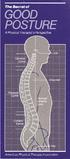 The Secret... T he American Physical Therapy Association would like to share a secret with you. It can help you do more with less effort breathe easier feel great. The secret is about good posture, which
Lumbar/Core Strength and Stability Exercises
 Athletic Medicine Lumbar/Core Strength and Stability Exercises Introduction Low back pain can be the result of many different things. Pain can be triggered by some combination of overuse, muscle strain,
Range of Motion. A guide for you after spinal cord injury. Spinal Cord Injury Rehabilitation Program
 Range of Motion A guide for you after spinal cord injury Spinal Cord Injury Rehabilitation Program This booklet has been written by the health care providers who provide care to people who have a spinal
THE LUMBAR SPINE (BACK)
 THE LUMBAR SPINE (BACK) At a glance Chronic back pain, especially in the area of the lumbar spine (lower back), is a widespread condition. It can be assumed that 75 % of all people have it sometimes or
Segmental Instability of the Lumbar Spine
 Page 1 of 13 Update Segmental Instability of the Lumbar Spine Key Words: Back, Pain, Spine, Trunk. Author Information Julie M Fritz, PT, ATC, is Assistant Professor, Department of Physical Therapy, School
HELPFUL HINTS FOR A HEALTHY BACK
 HELPFUL HINTS FOR A HEALTHY BACK 1. Standing and Walking For correct posture, balance your head above your shoulders, eyes straight ahead, everything else falls into place. Try to point toes straight ahead
Passive Range of Motion Exercises
 Exercise and ALS The physical or occupational therapist will make recommendations for exercise based upon each patient s specific needs and abilities. Strengthening exercises are not generally recommended
Physical & Occupational Therapy
 In this section you will find our recommendations for exercises and everyday activities around your home. We hope that by following our guidelines your healing process will go faster and there will be
Low Back Pain Exercises Interactive Video Series Transcript July 2013
 Introduction Low Back Pain Exercises Interactive Video Series Transcript July 2013 ** Note: If an exercise causes an increase in your pain, stop the exercise.** [Music introduction; Dr. John Sheehan onscreen]
Long-Term Effects of Specific Stabilizing Exercises for First-Episode Low Back Pain
 Long-Term Effects of Specific Stabilizing Exercises for First-Episode Low Back Pain SPINE Volume 26, Number 11, pp E243 E248 2001, Lippincott Williams & Wilkins, Inc. Julie A. Hides, PhD, MPhtySt, BPhty,*
Clinical Instability of the Lumbar Spine: Diagnosis and Intervention
 Clinical Instability of the Lumbar Spine: Diagnosis and Intervention Scott Biely, PT, DPT, OCS, MTC Susan S. Smith, PT, PhD Sheri P. Silfies, PT, PhD Orthopaedic Practice Vol. 18;3:06 Lumbar stabilization
New York State Workers' Comp Board. Mid and Lower Back Treatment Guidelines. Summary From 1st Edition, June 30, 2010. Effective December 1, 2010
 New York State Workers' Comp Board Mid and Lower Back Treatment Guidelines Summary From 1st Edition, June 30, 2010 Effective December 1, 2010 General Principles Treatment should be focused on restoring
Exercises for Low Back Injury Prevention
 DIVISION OF AGRICULTURE RESEARCH & EXTENSION University of Arkansas System Family and Consumer Sciences Increasing Physical Activity as We Age Exercises for Low Back Injury Prevention FSFCS38 Lisa Washburn,
Stretching the Low Back THERAPIST ASSISTED AND CLIENT SELF-CARE STRETCHES FOR THE LUMBOSACRAL SPINE
 EXPERT CONTENT by Joseph E. Muscolino photos by Yanik Chauvin body mechanics THE ESSENCE OF MOST MANUAL THERAPIES, and certainly clinical orthopedic massage therapy, is to loosen taut soft tissues, thereby
Low back pain in athletes requires unique rehab approach
 UBM logo BioMechanics November 2004 spacer Printable Version spacer Low back pain in athletes requires unique rehab approach By: Michael Higgins, PhD, ATC, PT Many athletes sustain low back injuries that
McKenzie Method. Physical Therapy Treatment for lower back pain by Amy Romano
 McKenzie Method Physical Therapy Treatment for lower back pain by Amy Romano What is the McKenzie Method? The McKenzie method (also known as MDT = Mechanical Diagnosis and Therapy) is a comprehensive method
Patellofemoral/Chondromalacia Protocol
 Patellofemoral/Chondromalacia Protocol Anatomy and Biomechanics The knee is composed of two joints, the tibiofemoral and the patellofemoral. The patellofemoral joint is made up of the patella (knee cap)
IMPAIRMENT RATING 5 TH EDITION MODULE II
 IMPAIRMENT RATING 5 TH EDITION MODULE II THE SPINE AND ALTERATION OF MOTION SEGMENT INTEGRITY (AOMSI) PRESENTED BY: RONALD J. WELLIKOFF, D.C., FACC, FICC In conjuction with: The chapter on the spine includes
visualized. The correct level is then identified again. With the use of a microscope and
 SURGERY FOR SPINAL STENOSIS Laminectomy A one inch (or longer for extensive stenosis) incision is made in the middle of the back over the effected region of the spine. The muscles over the bone are moved
Stabilizing the Pelvis With Exercise
 Stabilizing the Pelvis With Exercise (Relatively) Simple Rehab Strategies I thought I was finished with this rehab series. After months of intensive rehab study, I had reached the burnout stage: Rehab
Information on the Chiropractic Care of Lower Back Pain
 Chiropractic Care of Lower Back Pain Lower back pain is probably the most common condition seen the the Chiropractic office. Each month it is estimated that up to one third of persons experience some type
Low Back Pain (LBP) Prevalence. Low Back Pain (LBP) Prevalence. Lumbar Fusion: Where is the Evidence?
 15 th Annual Cleveland Clinic Pain Management Symposium Sarasota, Florida Lumbar Fusion: Where is the Evidence? Gordon R. Bell, M.D. Director, Cleveland Clinic Low Back Pain (LBP) Prevalence Lifetime prevalence:
SPINE. Postural Malalignments 4/9/2015. Cervical Spine Evaluation. Thoracic Spine Evaluation. Observations. Assess position of head and neck
 SPINE Observations Body type Postural alignments and asymmetries should be observed from all views Assess height differences between anatomical landmarks Figure 25-9 Figure 25-10 Figure 25-11 & 12 Postural
This document fully describes the 30 Day Flexibility Challenge and allows you to keep a record of your improvements in flexibility.
 Welcome to the StretchTowel 30 Day Flexibility Challenge! You can Be More Flexible in 30 days by following our stretching program for 10 minutes a day. The best part is that you can stretch using the StretchTowel
MET: Posterior (backward) Rotation of the Innominate Bone.
 MET: Posterior (backward) Rotation of the Innominate Bone. Purpose: To reduce an anterior rotation of the innominate bone at the SI joint. To increase posterior (backward) rotation of the SI joint. Precautions:
INTER-RATER AND INTRA-RATER RELIABILITY OF ACTIVE HIP ABDUCTION TEST FOR STANDING INDUCED LOW BACK PAIN
 Original Article INTER-RATER AND INTRA-RATER RELIABILITY OF ACTIVE HIP ABDUCTION TEST FOR STANDING INDUCED LOW BACK PAIN Mansi Shah * 1, Pravin Aaron 2, Subin Solomen 3. *1 Lecturer, Musculoskeletal Physiotherapy,
Return to same game if sx s resolve within 15 minutes. Return to next game if sx s resolve within one week Return to Competition
 Assessment Skills of the Spine on the Field and in the Clinic Ron Burke, MD Cervical Spine Injuries Sprains and strains Stingers Transient quadriparesis Cervical Spine Injuries Result in critical loss
Handicap after acute whiplash injury A 1-year prospective study of risk factors
 1 Handicap after acute whiplash injury A 1-year prospective study of risk factors Neurology 2001;56:1637-1643 (June 26, 2001) Helge Kasch, MD, PhD; Flemming W Bach, MD, PhD; Troels S Jensen, MD, PhD From
Effects of Vertebral Axial Decompression (VAX-D) On Intradiscal Pressure
 Effects of Vertebral Axial Decompression (VAX-D) On Intradiscal Pressure Gustavo Ramos, M.D., William Marin, M.D. Journal of Neursurgery 81:35-353 1994 Departments of Neurosurgery and Radiology, Rio Grande
Hip Conditioning Program. Purpose of Program
 Prepared for: Prepared by: OrthoInfo Purpose of Program After an injury or surgery, an exercise conditioning program will help you return to daily activities and enjoy a more active, healthy lifestyle.
Pain-Relief Exercise: The Lower Back
 Pain-Relief Exercise: The Lower Back by Marc Heller, DC Specific exercises are a powerful tool for acute pain relief. These exercises are specific for sciatica or discogenic low back pain, and can help
ILIOTIBIAL BAND SYNDROME
 ILIOTIBIAL BAND SYNDROME Description The iliotibial band is the tendon attachment of hip muscles into the upper leg (tibia) just below the knee to the outer side of the front of the leg. Where the tendon
Nonoperative Management of Herniated Cervical Intervertebral Disc With Radiculopathy. Spine Volume 21(16) August 15, 1996, pp 1877-1883
 Nonoperative Management of Herniated Cervical Intervertebral Disc With Radiculopathy 1 Spine Volume 21(16) August 15, 1996, pp 1877-1883 Saal, Joel S. MD; Saal, Jeffrey A. MD; Yurth, Elizabeth F. MD FROM
Treating Bulging Discs & Sciatica. Alexander Ching, MD
 Treating Bulging Discs & Sciatica Alexander Ching, MD Disclosures Depuy Spine Teaching and courses K2 Spine Complex Spine Study Group Disclosures Take 2 I am a spine surgeon I like spine surgery I believe
Lower Back Pain An Educational Guide
 Lower Back Pain An Educational Guide A publication from the Center of Pain Medicine and Physiatric Rehabilitation 2002 Medical Parkway Ste 150 1630 Main St Ste 215 Annapolis, MD 21401 Chester, MD 21619
What are Core Muscles?... 2. A Healthy Lumbar Spine...3. What is Low Back Pain?...4. Rehabilitation...6. Stages of Rehabilitation...
 Table of Contents What are Core Muscles?... 2 A Healthy Lumbar Spine...3 What is Low Back Pain?...4 Rehabilitation...6 Stages of Rehabilitation...7 Pain Management....................... 8 Heat/Ice What
1 REVISOR 5223.0070. (4) Pain associated with rigidity (loss of motion or postural abnormality) or
 1 REVISOR 5223.0070 5223.0070 MUSCULOSKELETAL SCHEDULE; BACK. Subpart 1. Lumbar spine. The spine rating is inclusive of leg symptoms except for gross motor weakness, bladder or bowel dysfunction, or sexual
Range of Motion Exercises
 Range of Motion Exercises Range of motion (ROM) exercises are done to preserve flexibility and mobility of the joints on which they are performed. These exercises reduce stiffness and will prevent or at
Structure and Function of the Hip
 Structure and Function of the Hip Objectives Identify the bones and bony landmarks of the hip and pelvis Identify and describe the supporting structures of the hip joint Describe the kinematics of the
Sample Treatment Protocol
 Sample Treatment Protocol 1 Adults with acute episode of LBP Definition: Acute episode Back pain lasting
Spine Trauma: When to Transfer. Alexander Ching, MD Director, Orthopaedic Spine Trauma OHSU
 Spine Trauma: When to Transfer Alexander Ching, MD Director, Orthopaedic Spine Trauma OHSU Disclosures Depuy Spine Consultant (teaching and courses) Department education and research funds Atlas Spine
Knee Conditioning Program. Purpose of Program
 Prepared for: Prepared by: OrthoInfo Purpose of Program After an injury or surgery, an exercise conditioning program will help you return to daily activities and enjoy a more active, healthy lifestyle.
Rehabilitation. Rehabilitation. Walking after Total Knee Replacement. Continuous Passive Motion Device
 Walking after Total Knee Replacement After your TKR, continue using your walker or crutches until your surgeons tells you it is okay to stop using them. When turning with a walker or crutches DO NOT PIVOT
Plyometric Training. Plyometric Training. chapter
 chapter 16 Plyometric Training Plyometric Training David H. Potach, PT; MS; CSCS,*D; NSCA-CPT,*D Donald A. Chu, PhD; PT; ATC; CSCS,*D; NSCA-CPT,*D; FNSCA Chapter Objectives Explain the physiology of plyometric
PLANTAR FASCITIS (Heel Spur Syndrome)
 PLANTAR FASCITIS (Heel Spur Syndrome) R. Amadeus Mason MD Description Plantar fascitis is characterized by stiffness and inflammation of the main fascia (fibrous connective [ligament-like] tissue) on the
OUTPATIENT PHYSICAL AND OCCUPATIONAL THERAPY PROTOCOL GUIDELINES
 OUTPATIENT PHYSICAL AND OCCUPATIONAL THERAPY PROTOCOL GUIDELINES General Therapy Guidelines 1. Therapy evaluations must be provided by licensed physical and/or occupational therapists. Therapy evaluations
Cervical Spondylotic Myelopathy Associated with Kyphosis or Sagittal Sigmoid Alignment: Outcome after Anterior or Posterior Decompression
 Cervical Spondylotic Myelopathy Associated with Kyphosis or Sagittal Sigmoid Alignment: Outcome after Anterior or Posterior Decompression 1 Journal of Neurosurgery: Spine November 2009, Volume 11, pp.
Spinal Decompression
 Spinal Decompression Spinal decompression is just one more tool we have to treat radiculopathy. With appropriate education and exercises, this modality has been proven to assist in the resolution of symptoms
We ve got your back. Physical Therapy After Lumbar Fusion Surgery
 We ve got your back Physical Therapy After Lumbar Fusion Surgery Physical therapy is an extremely important part of you recovery after spinal surgery. This booklet, prepared by the therapists who specialize
Low Back Pain: Exercises
 Low Back Pain: Exercises Your Kaiser Permanente Care Instructions Here are some examples of typical rehabilitation exercises for your condition. Start each exercise slowly. Ease off the exercise if you