
Unlock Your Global Business Potential UK Stratified Medicine
|
|
|
- Hannah Doyle
- 9 years ago
- Views:
Transcription
1 Unlock Your Global Business Potential UK Stratified Medicine
2 Contents The UK s Commitment to 02 Stratified Medicine UK Market Opportunities 04 Ease of Doing Business 07 Rich and Diverse Ecosystem 09 Research Excellence and Value Chain 09 UK Ecosystem in Action 14 Data and Bioresources 18 Clinical Research and Bringing 21 Products and Services to Patients UK Stratified Medicine in Action 24 How UKTI Can Help Your Business 28
3 02 UK Stratified Medicine UK Stratified Medicine 03 The UK s Commitment to Stratified Medicine The UK is committed to being a global leader in stratified medicine putting the patient first and at the same time opening up the rich data and research capabilities of the National Health Service (NHS) to partner with industry and advance transformative health products and services. This makes it an ideal location for investment. UK Biobank begins recruiting participants aged The UK Life Sciences Strategy includes an investment of 130 million to support the discovery, development and commercialisation of Stratified Medicine. The Technology Strategy Board begins funding industry-led consortia to support commercialisation of stratified medicine products and services. UK Biobank opens for research in the interest of public health, offering access to a unique dataset and samples from 500,000 adults across the UK MRC and Wellcome Trust will fund detailed imaging assessments of up to 100,000 UK Biobank participants Stratified medicine aims to optimise the diagnosis and treatment of individual patients rather than broad, often heterogeneous, disease groups. Stratified medicine is a step towards this smarter model of medicine, in which tools are used to stratify cohorts of patients by subclass of disease or the likelihood of responding to a particular therapy, intervention, or disease management strategy. A more stratified approach to medicine has the potential to increase patient benefit and at the same time unlock business and economic benefits. Effective development and delivery of stratified medicine will require collaboration across sectors. There is scope for innovators in drug discovery, research tools, diagnostics, devices, informatics, clinical decision making and health systems to pull together in this refocused approach to medicine. Why do we need stratified medicine? Patient response to a particular drug treatment, therapeutic intervention, or standard of care varies widely across the population as a result of differing underlying mechanisms of disease, as well as other individual factors that influence treatment safety and tolerability. For some diseases, as few as per cent of patients respond to the standard of care. Moving away from a one size fits all or blockbuster model, stratification allows better targeting of treatment to specific disease pathways, better matching of available treatments to particular groups of patients, and co-development of diagnostics to ensure the right patient gets the right treatment at the right time. This approach can help clinicians make smarter decisions about courses of treatment and disease management, while at the same time improving patient outcomes and safety. Launch of a national Stratified Medicine Innovation Platform to accelerate the rate of development and uptake of stratified medicine in the UK for the benefit of patients, healthcare providers and business First patients enrolled in the Cancer Research UK Stratified Medicine Programme, a partnership with UK Government and industry to develop a tumour profiling database and explore how multi-gene panel tests could be used routinely within the NHS. MRC funds new diseasefocused stratified medicine collaborations in partnership with industry, in rheumatoid arthritis and diabetes. MRC-NIHR Phenome Centre funded, the first national-level phenome centre in the world Announcement of a new vision for the UK to be a global leader in genomic medicine, with plans to invest 100 million to pump-prime whole genome sequencing of up to 100,000 patients, starting in cancer and rare diseases.
4 04 UK Stratified Medicine UK Stratified Medicine 05 UK Market Opportunities The UK can help your business prepare for and access this growing global market. The UK offers a unique combination of capabilities at a scale that enables ambitious research to link genes, phenotypes and disease, the selection of patient cohorts to deliver stratified clinical trials and commercial products, and a wide range of opportunities in the fast-growing stratified medicine market. Disease population One size fits all treatment Mixed responders, mixed outcomes Disease population Stratification tools Disease cohorts Matched treatments More responders, better outcomes Globally, there is a growing market for stratified medicine and companion diagnostics. Stratified medicine has the potential to replace trial and error prescribing with a smarter, more targeted approach to treatment, disease management, and a better risk/benefit ratio. This can improve patient response and outcomes, reduce adverse events, and also reduce the waste of giving a particular drug or treatment to patients that won t respond. In oncology, where in some cases as few as per cent of patients respond to the standard of care, the market value of targeted cancer therapeutics with a companion diagnostic was US$40 billion in 2010, growing at a Compounded Annual Growth Rate of 15 per cent (Source: BCC Research 2010). Landmark companion diagnostic products such as the HER2 test for breast cancer patient stratification are in extensive use in both Europe and the USA and generate significant annual revenues (US$100 million Source: BCC Research 2010). There is also a growing market for the technologies that underpin stratified medicine. The overall market for biomarkers for cancer drug discovery and clinical trials was US$1 billion in 2010 (Source: BCC Research 2010). The pharmaceutical industry spends approximately US$6 billion a year, around 7 per cent of total R&D investment, on genomic research (Source PricewaterhouseCoopers report The new science of personalized medicine: Translating the promise into practice ). However, by 2020, it is predicted that the pharmaceutical industry will invest as much as 20 per cent of its R&D budget in genetics and genomics to help discover and commercialise new drugs. What can the UK offer your business? First-class research and expertise: Working with UK researchers can help your business better understand the underlying mechanisms of disease, and develop or implement stratification tools to improve clinical translation and delivery. The UK has an excellent track record of discovering and developing new therapies and the technologies that underpin stratified medicine from genomics to imaging and advanced diagnostics. World-leading data and translational infrastructure: The UK has a National Health Service (NHS) with more than 60 million patients along with industry access points to dedicated networks for research, development, and clinical delivery. Combined with increasing electronic health records, large-scale clinical datasets, well-characterised patient cohorts, stratification tools, and biobanks, the UK offers unrivalled data and infrastructure to help your business develop and deliver more stratified medicine. Government investment through the National Institute for Health Research ensures a uniquely integrated health research system. This supports collaboration with industry across the innovation pathway, from early-stage translational research through to later-stage clinical trials. An established value chain: The UK also has a thriving industry base and value chain to enable stratified medicine, including deep expertise in drug discovery and development, biomarkers, informatics, imaging, and diagnostic and genomic technologies, as well as product design and manufacturing. These UK partners can help your business as an expert supplier, service provider, or via more collaborative risk-sharing models. The UK life science sector comprises over 4,500 companies employing over 167,000 people and generating a turnover of over 50bn
5 06 UK Stratified Medicine UK Stratified Medicine 07 Ease of Doing Business Commercial and export opportunities: Consumption of research tools, platform technologies and informatics solutions With ambitious research programmes in translational science, genomics and stratified medicine, and an increasing focus on patient-centred care, the UK is a significant consumer of life science research tools and platform technologies and has a growing need for informatics solutions. If your business has a relevant product or service in this field, the UK is an attractive market. Partnership with industry The UK has many active partnerships with industry that combine research objectives and clinical delivery. Examples include the Cancer Research UK Stratified Medicine Programme, as well as a new commitment, announced by the Prime Minister in December 2012, to pump-prime the wholegenome sequencing of up to 100,000 NHS patients over the next three to five years. The Medical Research Council is also investing in diseasefocused consortia with numerous industry participants. Test-bed for products and services Thanks to the scale and reach of the NHS covering 60 million patients, the UK offers a sizeable, national-level opportunity. The UK can help your business demonstrate clinical and commercial proof of concept, supported by simplified industry access points, dedicated research and delivery networks, as well as biobanks, patient cohorts, increasingly electronic health records and clinical practice data, and realworld data capabilities. New business and regulatory models The UK actively encourages new business models and risk-sharing paradigms. As an example, the Technology Strategy Board has funded projects to develop new business models for stratified medicine. As part of the Strategy for UK Life Sciences, the UK has also established an expert working group to consider the cutting edge of biomedical regulation. Delivering better value for patients The UK is putting the patient first and looking for ways to generate more value for patients, and better value for the NHS. If your product or service has the potential to deliver better patient outcomes or reduced costs, the NHS is a significant market and business opportunity. Global excellence in health technology assessment and health economics The UK can help your business generate an evidence base and demonstrate the value of stratified medicine products and services, with well-respected institutions like the National Institute for Health and Care Excellence (NICE) and significant expertise in health technology assessment and health economics. NICE recently established a dedicated Diagnostics track, and can also evaluate drug/ diagnostic combinations. Export potential Looking beyond the UK home market for stratified medicine, the UK also offers an ideal gateway to other markets in Europe and beyond. More overseas companies set up their European Headquarters (EHQs) in the UK than any other country (the UK is home to half of all EHQs). The UK has strong trade links with Europe, Japan and the USA, and is establishing strategic relationships with high-growth markets like China, India, and the Middle East. The UK and the NHS brands are well regarded around the world. The UK stratified medicine sector benefits from the country s business-friendly environment, supportive Government policy and incentives for research and investment, and a talented workforce. Funding for biomedical translation and business growth is available across England, Scotland, Northern Ireland, and Wales. No. 1 According to the World Bank, the UK is the easiest country in Europe to do business and the fourth easiest in the world. It also has the lowest barriers to entrepreneurship, the third lowest to trade and investment, and one of Europe s most flexible labour markets. This pro-business environment, combined with the support available from UK Trade & Investment (UKTI), ensures that a company planning to enter the UK market can get their business up and running quickly and easily. Tax Breaks The UK encourages business investment and innovation through its generous tax system. Low corporation tax rate: Currently standing at 23 per cent, this will decrease further to 20 per cent by April R&D Tax Credits: Up to 27p back per 1 of qualifying R&D expenditure, via R&D tax credits. This system, available for companies investing in R&D, is easy to navigate and involves a simpler application process than elsewhere in Europe. Patent Box: As of April 2013, companies will be able to apply a lower rate of corporation tax (10 per cent) to profits earned from their UK-registered patented inventions and certain other innovations. The Patent Box provides one of the strongest offers of its kind in Europe. Enterprise Zones: Areas that will benefit from over 150 million in tax breaks, as well as simplified planning rules and superfast broadband, for new businesses that locate within them over the next four years. A Talented Workforce The UK has a talented health and life science workforce, invests heavily in life science skills training to prepare the next generation, and is home to deep expertise in biopharmaceutical drug discovery and development. The NHS is the largest employer in the UK, while more than 167,000 people are employed across the life science sector. COGENT, the sector skills organisation, works with industry and other partners to ensure that the UK produces the right types of skills for today and tomorrow. This is vital to help your business translate great science into products and services, and launch these products and services in the UK and beyond. Tax credits offer up to 27p back per 1 of qualifying R&D expenditure, via R&D tax credits.
6 08 UK Stratified Medicine UK Stratified Medicine 09 Rich and Diverse Ecosystem Funding for Business Growth in the UK There are numerous funding opportunities available to UK-based companies and businesses investing in the UK. Examples include: Invest Northern Ireland offers some of the most attractive incentive packages in Europe as well as financial support to help set up in Northern Ireland, along with comprehensive advice to facilitate the investment process. Wales recently created a 100 million Life Sciences Investment Fund. The new fund will contribute to an already well-established Welsh life science sector that employs over 15,000 people in more than 300 businesses, contributing around 1.3 billion to the economy annually. Scottish Enterprise provides grants for investment projects via Regional Selective Assistance (RSA). In addition, Scotland offers grants to support commercially viable translational research projects up to and including early phase clinical trials. A 2.4 billion Regional Growth Fund (RGF) will be operating across England from 2011 to 2015 supporting projects and programmes that lever private sector investment to create economic growth and sustainable employment. Funding for Research and Development The UK Government spends almost 500 million annually on National Institute for Health Research (NIHR) infrastructure to support experimental medicine research and clinical trials in the NHS in England. 300 million in the Research Partnerships Investment Fund, to support industry partnerships with UK higher education research facilities. Life sciences projects have secured million from the fund to date. 180 million Biomedical Catalyst to support translational life sciences projects led by small to medium-sized enterprises (applying via the Technology Strategy Board) and universities (applying via the Medical Research Council). 60 million funding from the Technology Strategy Board to support industry-led projects in stratified medicine, as part of the 200 million Stratified Medicine Innovation Platform. 60 million from the Medical Research Council over four years to fund non-oncology applications of stratified medicine. 50 million joint initiative between Cancer Research Technology (CRT) and the European Investment Fund, the CRT Pioneer Fund, to bridge the gap between cancer drug discovery and early development (end of Phase I). The UK is home to the complete spectrum of expert partners, networks, and resources to help your business advance innovative stratified medicine products and services. Research Excellence and Value Chain Whether you are looking for expertise in disease biology, novel targets for drug discovery, biomarkers, sensing and diagnostic technologies, imaging, engineering or informatics, or need help with product and application development, the UK has the visionary science, centres of academic and clinical excellence, key opinion leaders, experience partners, and the tools to help your business. Research and innovation funders, knowledge transfer networks, and research charities support translation and product development. As examples, the Medical Research Council funds disease-focused consortia of academic and industry partners to enable stratified medicine, while the Wellcome Trust funds both basic biomedical research and translational projects. The Technology Strategy Board runs an Innovation Platform in Stratified Medicine and collaborative funding calls for business-led activities, while their partner the HealthTech & Medicines Knowledge Transfer Network helps connect organisations to catalyse innovation through events and workshops in stratified medicine. Cancer Research UK and Cancer Research Technology also provide core oncology research funding, and offer translational funding and expert capabilities, and support patient engagement. The UK has a thriving industry base and value chain to enable stratified medicine, including deep expertise in drug discovery and development, biomarkers, informatics, imaging, diagnostic and genomic technologies, as well as product design and manufacturing. These UK partners can help your business as an expert supplier, service provider, or via more collaborative risk-sharing models. As an example, UK companies such as Oxford Gene Technology, Almac Diagnostics, Oxford Cancer Biomarkers, and Lab21 are helping researchers and industry better understand disease through the provision of biomarker discovery solutions and companion diagnostic development.
7 10 UK Stratified Medicine UK Stratified Medicine 11 The Power of Genomics The UK has a rich history in genomics, from the discovery of the structure of DNA in 1953, through to the pioneering Solexa Sequencing technology, and contributions to the Human Genome Project. UK researchers are also using genomics to power the selection of patients for clinical trials, predict patient response (safety and efficacy) and inform treatment decisions. Genomics powerhouses like the Wellcome Trust Sanger Institute continue to undertake world-leading research programmes contributing to our understanding of health and disease. The Wellcome Trust Sanger Institute is one of the world s leading genome centres. With support from the Wellcome Trust and the ability to conduct research at scale, it engages in bold and long-term exploratory projects that are designed to influence and empower medical science globally. The Institute s global leadership roles include the Human Genome Project, 1000 Genomes Project and the International Cancer Genome Consortium Institute. Research findings from the Institute s own research programmes and participation in national and international consortia are helping develop new diagnostics and treatments for human disease. Also on site at the Wellcome Trust Genome Campus is the European Molecular Biology Laboratory European Bioinformatics Institute (EMBL-EBI) and ELIXIR. ELIXIR provides data resources, infrastructure for the integration of biological data, software tools and services, and bioinformatics training for scientists. Moving beyond traditional single gene tests, the Cancer Research UK Stratified Medicine Programme is currently conducting detailed molecular profiling of tumour samples from NHS patients while at the same time investigating the potential of introducing multi-gene panels into regular clinical practice in the NHS. In addition, The Institute for Cancer Research (ICR) is establishing a Tumour Profiling Unit to exploit the potential of molecular pathological analysis. Under the direction of Professor Alan Ashworth, chief executive of the ICR, and led by Dr. Amanda Swain, a team of scientists who specialise in genomics and bioinformatics will analyse numerous tumour types. The team will use the first Ion Proton TM sequencing machine in the UK to analyse cancer genes and better understand the mechanism of action of drugs that work against them. Many industry players already have active research partnerships and commercial operations in genomics in the UK, from Life Technologies to Illumina, to newer entrants like the Beijing Genomics Institute (BGI), which recently signed a memorandum of understanding with the University of Edinburgh to enable personalised medicine. Building on this genomic heritage, in December 2012 the UK announced plans to pump-prime the sequencing of whole genomes of up to 100,000 NHS patients, starting with cancer and rare diseases. This commitment involves the creation of a new framework to support the development of genomics and bioinformatics technologies that have the potential to improve patient care and generate significant economic value in the UK. This presents a major opportunity for industry to partner with the UK to unlock the potential of clinical genomics. To fully realise this potential, the Government has three key objectives: To harness the potential of genomic technology by the NHS to improve patient outcomes and healthcare. To maximise the opportunities for research and translation of research findings into health and economic benefits for the UK. To support the growth of UK genomics and bioinformatics companies, including small to medium-sized enterprises, by enabling the creation of genomic platforms for innovation. Potential of Genomics Screening Offer increased health surveillance to groups at higher risk of disease Reducing Side Effects Patients liable to adverse drug effects can be identified Education Indentify groups at high risk of disease and provide information on risk reduction Health Economics Improving health economic models based on genomic data Basic Research Identifying new disease pathways to target Drug Targeting Reduce late-stage failures in drug development by targeting metabolic pathways more efficiently Better Trials Identifying patients most likely to benefit brings drugs to the market more quickly Revisiting Failed Drugs New indications can be found for safe but currently unused drugs Genealogy Providing family tree services based on genetic information Software Creating apps to help doctors and patients We believe that the UK is well placed to lead the global adoption of genomic technologies within mainstream clinical practice and to support public health. The foundations lie in our world-class research, our existing use of genetics and the increasing partnerships between the NHS, academia and industry, making it possible, with the right motivation, to embrace innovation at every level. Human Genomics Strategy Group report, January 2012
8 12 UK Stratified Medicine UK Stratified Medicine 13 Beyond the Genome: Epigenetics and the Phenome The Babraham Institute in Cambridge is a leader in epigenetics, recognised for its pioneering investigations of the principles of epigenetic gene regulation in early development and in the fundamental regulation of the genome. The Universities of Cambridge, Edinburgh and Birmingham have also been recognised in the global Top 20 epigenetics research institutions (source: ScienceWatch.com). The MRC is funding further epigenetic research through a number of initiatives. For example, the MRC has committed 2 million to the EU Joint Programme Neurodegenerative Disease Research (JPND) aimed at identifying genetic, epigenetic and environmental risk and protective factors for age-related neurodegenerative diseases. The MRC also funds The Clinical Sciences Centre (CSC) based at the Hammersmith campus of Imperial College London. It has a dedicated epigenetics research unit recognised through both national and international awards. UK companies such as CellCentric are also investigating epigenetic targets for drug discovery. CellCentric has identified and investigated nearly 50 unexploited enzymes associated with epigenetic regulation. The Company licensed a novel epigenetic discovery to Takeda Pharmaceuticals, and recently joined a group of leading academic researchers around the world to investigate epigenetic mechanisms underlying diabetes. Population and Patient-level Phenomics The new MRC-NIHR Phenome Centre, based at Imperial College London, will analyse hundreds of thousands of samples of body fluids to discover how our genes interact with our environment to create metabolic phenotypes that relate to population disease risks. The Centre is a partnership between the Medical Research Council, the National Institute for Health Research, analytical technology companies Bruker BioSpin and The Waters Corporation, and academic institutions King s College London and Imperial. In association with the centre, a major training facility in metabolic phenotyping techniques and associated bioinformatics and chemometrics has been established. The Centre will carry out populationlevel human phenotyping in partnership with multiple UK epidemiological research groups serving the NIHR Biomedical Research Centres, such as Oxford, Cambridge, University College London, Imperial and King s, as well as providing services to other academic institutions and pharma/ biotech companies. The centre will also undertake metabolic phenotyping and link it with genomic studies to investigate geneenvironment interactions. Imperial researchers are pioneering the concept of the Metabolome- Wide Association Study (MWAS), an approach that will be undertaken by the MRC-NIHR Phenome Centre. The MWAS approach is designed to recover statistical linkages between the metabolic phenotypes and metabolite composition in relation to disease risk factors such as high blood pressure, high Body Mass Index (BMI) and environmental chemical exposures that change cancer risks. In parallel, the new Imperial Clinical Phenotyping Centre, (under the umbrella of the MRC-NIHR Phenome Centre), based at St Mary s Hospital in London and part-funded by the Imperial NIHR Biomedical Research Centre, brings together a unique collection of state-ofthe-art technologies for rapid molecular analysis, aiming to put them at the heart of clinical decision-making in the hospital setting. The Centre will undertake patient journey phenotyping to understand differential responses to therapy and aid patient stratification. Projects at the centre will focus on the development of diagnostic methods based on tissue samples and fluids such as blood and urine. The profile of chemicals present in a sample provides a read-out of the patient s disease classification and severity, information on disease progression, and can be used to predict patient response to therapy. Development of real-time diagnostic tools such as surgical mass spectrometry eg the intelligent knife, and spectroscopic imaging are also being deployed in the clinic as part of the major programme in stratified medicine. intelligent knife in action Image courtesy of Imperial College London Many of these analytical technologies are now mature and are immensely powerful for telling us about someone s physical condition and disease state. Bringing them fully into the clinical setting will help doctors make a more informed diagnosis, choose the best treatment based on the individual characteristics of the patient, and monitor their progress more precisely. It is the dawn of a new age of precision medicine. Professor Jeremy Nicholson, Head of the Department of Surgery and Cancer, Imperial College London, and Director of the MRC-NIHR Phenome Centre
9 14 UK Stratified Medicine UK Stratified Medicine 15 UK Ecosystem in Action Early and Exploratory Development of New Therapeutics Biomarker Discovery New models have been established to support industry-academic collaboration in the early development of new therapeutics. NIHR Translational Research Partnerships bring together some of the UK s leading NHS and university research centres to work with industry through a single point of contact. NIHR Translational Research Partnerships focus on two therapeutic areas Inflammatory Respiratory Disease and Joint and Related Inflammatory Disease. They offer cutting-edge expertise in exploratory development protocols, biomarkers, pathophysiology, disease mechanisms, and patient selection. They have enabling technologies and infrastructure including advanced imaging, biobanks and dedicated research facilities. The Partnerships also have access to cohorts of well-characterised patients available for stratified medicine studies. The partnerships build on the recent investment of 800 million in NIHR Biomedical Research Centres and Units across the country. These internationally recognised facilities provide a strong foundation of translational research expertise in a wide range of disease and therapeutic areas. UK companies such as Oxford Gene Technology, Almac Diagnostics, Oxford Cancer Biomarkers, and Lab21 are helping researchers and industry better understand disease through the provision of biomarker discovery solutions and companion diagnostic development. UK researchers also are conducting new large-scale research studies, as well as mining or linking existing datasets to identify novel biomarkers associated with disease and patient outcomes. Almac, headquartered in Northern Ireland, partners with the biopharmaceutical industry to provide solutions ranging from pre-clinical biomarker discovery through to full companion diagnostic development, biomarker clinical trial management, and clinical test delivery. COPDMAP, as part of the MRC/ABPI Inflammation and Immunology Initiative, is bringing together academics and industry at the early R&D stages to develop a stratified approach to disease, enabling effective clinical trials as well as identifying novel biomarkers, mechanisms and targets. Fourteen UK academic and clinical research partners are involved, as are industry partners AstraZeneca, GlaxoSmithKline, Pfizer and Novartis. All of this expertise is accessible via the NIHR Office for Clinical Research Infrastructure (NOCRI) and underpinned by streamlined processes and agreements, which ensure that companies can rapidly engage with multiple research centres and that studies are set up and delivered efficiently.
10 16 UK Stratified Medicine UK Stratified Medicine 17 UK Ecosystem in Action Novel Detection and Earlier Diagnosis UK researchers are developing sensing technologies and identifying novel biomarkers to help diagnose disease earlier, making it easier to stratify patients for clinical trials and treatment, and informing the discovery of therapeutics, diagnostics, and prognostics. Imaging Imaging is fast becoming one of the most effective means of detecting disease and tracking progression, even in the earlier stages. The UK offers imaging expertise, facilities, and clinically-annotated datasets to enable patient selection, clinical trials, and diagnostic development. Research groups like the laboratory of Professor Molly Stevens at Imperial College London are inventing novel sensors to diagnose disease earlier, including a new technology to detect biomarkers for early-stage diseases with the naked eye. The technology is ten times more sensitive than the current gold standard, and has been used in a research setting to detect the onset of prostate cancer and viral infection. The sensor can also be reconfigured for other diseases with a known biomarker. UK companies like DestiNA Genomics are also developing novel molecular detection technologies. DestiNA, a spinout of the University of Edinburgh, is commercialising a revolutionary chemical-based system to detect nucleic acids and single nucleotide polymorphisms. The technology is unique and distinguishable from all existing enzymatic methods. Imanova is a unique partnership between the Medical Research Council, Imperial College, University College London and King s College London. Building on current strengths in neuroscience and cancer imaging and developing novel applications, Imanova is a national hub with world-class imaging facilities and a focus for academic and commercial collaborations. Our Company is developing novel imaging probes to investigate key disease pathways in dementia and oncology, such as neurodegeneration and apoptosis, which will provide invaluable information for the development of new drugs and patient stratification. New imaging tools could transform the drug development process in these debilitating diseases. Kevin Cox, Imanova CEO
11 18 UK Stratified Medicine UK Stratified Medicine 19 Data and Bioresources USA Large population, more fragmented healthcare system The UK offers data to power everything from discovery to clinical trials to clinical decision-making. The UK can help your business speed up route to market, demonstrate the value of products and services, and enable real-world studies and iterative improvement of market access, delivery, and research hypotheses. The UK offers a national healthcare system serving an ethnically diverse population of more than 60 million people as well as the capability and commitment to open up data to inform research and improve patient outcomes. Scandinavia Small populations, national healthcare systems UK Medium-sized population, national healthcare system Compared to markets like the USA (with a large population but many local healthcare providers rather than a national health system) and countries in Scandinavia (with small populations but national health systems), the UK is uniquely positioned to offer the best of both worlds with wellcharacterised patient cohorts, increasingly electronic health records, and a sizeable patient population. What can UK data do for your business? Data for Discovery: Make links between genetics, the environment, and disease, and validate new targets and molecular markers to predict efficacy and define patient populations. A more informed discovery process could lead to reduced failures of drugs and diagnostics in development, and in the clinic. Data for Development: Facilitate clinical trials and clinical decision making with rapid identification of patient cohorts for stratified trials and treatment, combined with a national infrastructure for pathology services. Data is also a critical component of adaptive trial design. Data for Delivery: Speed up route to market and inform value determinations with improved efficacy signals, more informed risk/benefit analysis for product registration, and the development of an evidence base for value-based pricing and improved market access. Linking clinical and outcomes data back to genetic and risk profiles, phenotypes, and intervention history could help improve postmarket surveillance studies and inform iterative, real-world expansion of indications, usage, and research hypotheses. The UK offers access to unique and large-scale biosample and genomic data repositories to inform the discovery process, many with clinical annotation. UK Biobank is a rich resource of data and samples linked to medical histories and health records from half a million participants. This powerful dataset can be used by researchers in academia and industry from anywhere in the world to serve health-related research in the public interest. The UK also has world-leading cohorts that provide a vital resource for understanding genetic, environmental and social influences on health and disease (eg Avon Longitudinal Study of Parents and Children, Generation Scotland, Abcodia, TwinsUK, and Deciphering Development Disorders). The UK recently committed to sequence the whole genomes of up to 100,000 NHS patients over the next three to five years, starting in cancer and rare diseases, which will open up new research and commercial opportunities. The UK also offers the service providers and partners with expertise in bioinformatics and big data to help your business link to and interpret these data resources. UK Biobank is a unique resource of data and samples linked to medical histories and health records from half a million participants. This powerful dataset can be used by researchers in academia and industry from anywhere in the world to serve health-related research in the public interest. Recently, the Medical Research Council (MRC) committed to fund magnetic resonance imaging of the brain, heart and abdomen, low-power X-ray imaging of bones and joints, and ultrasound of neck arteries of UK Biobank participants. The feasibility phase is scheduled to start in 2013 in a dedicated UK Biobank imaging centre and could scale to include detailed imaging assessments of 100,000 UK Biobank participants. Eagle Genomics offers outsourced bioinformatics solutions, combining cloud computing and Next Generation Sequencing expertise to build scalable genomic analysis workflows. The company is already working with academic and industry partners such as the Pistoia Alliance and Unilever. IDBS, a global provider of data management, analytics and modelling solutions, is working with King s Health Partners to deploy IDBS Oncology Research Information System (ORIS) and enable new avenues of research into cancer causes and personalised treatments. The ORIS platform consolidates translational medicine data from multiple sites into one Affymetrix recently signed a contract with the UK Biobank to genotype DNA samples from all 500,000 UK Biobank participants. This phase of the UK Biobank will be the largest ever prospective study of genetic and environmental factors in disease and personalised medicine. The outputs of this genotyping effort will provide the research community with an invaluable dataset to mine for insights into the genetic factors underlying complex human diseases such as heart disease, cancer, diabetes, and dementia. Affymetrix will begin to deliver genotype data for the study towards the end of system, combining clinical, genetic, and tissue sample data across more than 26,000 historic breast cancer patients with new data from consented patients. By making better use of patient data across our partnership, ORIS will actively and positively impact patient care in the development of innovative cancer treatments and prognostics. Professor Peter Parker, PhD, FRS Head of the Division of Cancer Studies and R&D Lead for the Integrated Cancer Centre at King s Health Partners
12 20 UK Stratified Medicine UK Stratified Medicine 21 Selecting the right patient cohorts is critical to clinical trial success. The UK has the resources to help industry stratify and select patients for trials. Clinical Practice Research Datalink (CPRD) is the English NHS observational data and interventional research service, maximising the way anonymised NHS clinical data can be linked to support research, clinical trial feasibility and protocol optimisation. Already, CPRD is helping companies perform feasibility studies to inform new clinical trials, and international groups look to the CPRD as a source of critical data to enable post-market surveillance. The NIHR BioResource is being scaled into a national cohort of healthy volunteers, patients and their relatives who wish to participate in clinical research, and are willing to provide clinical information and samples that enable recall to studies by genotype and phenotype and can help study sponsors stratify and select patients for trials. Data is critical to deliver products and services to patients, and to monitor real world outcomes. With increasingly electronic health records, access to clinical practice and NHS data via secure data linkage services, and recent investments in e-health, the UK can help you demonstrate the value of your products and services. We have had a very productive relationship with the Cambridge Bioresource (CBR) over the last two to three years where collaboration has resulted in provision of genetic resource, conduct of clinical and translational trials, and publication of both clinical and immuno-inflammatory mechanistic study results related to pharmacogenetic interactions. The initial interactions between us (industry) and CBR have been very successful and this is a collaboration we are keen to maintain and develop. Simon McHugh, Director of Scientific Operations at GlaxoSmithKline In Scotland: The Scottish Health Informatics Programme (SHIP) is a partnership of medical universities, health boards and the NHS Information Services Division to develop health informatics tools and systems for research. This builds upon Scotland s ability to use electronic healthcare records from general practice, hospitals, and other health contacts to track continuously well-phenotyped patients with disease. As an example, the national diabetes register, SCI-DC, tracks real time clinical information on all 239,000 people with diabetes in Scotland. It is updated daily from all hospital clinics and GP practices. This unique record can be exploited to examine the natural history of the disease, trends in treatment, and clinical outcomes, and has been successfully employed to recruit patients to clinical trials. Scotland s electronic records enable studies of drug safety and efficacy, as well as clinical trials. Scotland offers access to electronic records that cover the entire population of Scotland as they interact with the NHS over their lifetime, linking general practice data with hospital records, drug prescriptions, morbidity and mortality into medical life histories (cradle-to-grave). As a research tool, this resource has been employed in 20-year follow-up studies documenting drug safety and efficacy, and can help identify patient cohorts for biomarker studies and early phase clinical trials. Clinical Research and Bringing Products and Services to Patients For experimental medicine and clinical trials, the UK offers global excellence and dedicated research networks, model collaborative and clinical trial agreements, and costing templates to help your business quickly access opportunities to demonstrate the potential of a technology, product, or service. Simplified industry portals to the NHS can help your business introduce new health products and services in the UK. The UK has globally-renowned expertise in translational medicine and the capabilities to undertake complex studies, new and adaptive designs, and to better stratify patients. The UK can help your business focus efforts on the assets most likely to succeed, reducing late and costly attrition, thereby improving your success rate. The UK is committed to making every willing patient a research patient embedding this commitment in the NHS constitution and is also committed to making clinical study start-up more efficient, with a streamlined approvals process, templates for contracting and costing, and new benchmarks for trial initiation and delivery in the NHS. This includes a new benchmark in England of 70 days or less from receipt of a valid research application to recruit the first patient cohort. Smarter Better Faster The UK Government spends almost 500 million annually on National Institute for Health Research (NIHR) infrastructure to support experimental medicine research and clinical trials in the NHS in England. The NIHR Office for Clinical Research Infrastructure (NOCRI) facilitates and simplifies industry access to this NIHR-funded infrastructure, from early-stage collaborative research through to contract clinical trials. NOCRI can help your business access world-leading science and clinical expertise, worldclass facilities and well-characterised and diverse patient cohorts drawn from the 60+ million people who use the NHS in the UK, tracked throughout the whole care pathway. NOCRI also provides a managed process for collaborative research, and has developed model partnerships and contracting agreements for industry. Expert partners to help undertake new and complex studies, or resources to pick the right patients. Quality outcomes across the development pathway, with dedicated research and clinical trials infrastructure. Resources for patient recruitment, commitment to patient involvement in research, and Benchmarks. Costing and contracting templates to get studies up and running more quickly, helping your business recruit on time and to target. NOCRI can help your business access: NIHR Biomedical Research Centres and Units based within the most outstanding NHS and university partnerships in the country. These research facilities are early adopters of new insights in technologies, techniques and treatments for improving health. The NIHR Clinical Research Network, which helps the life science industry deliver leadingedge research within the NHS and provides tools and services to improve the performance of research and help deliver studies on time and to target.
13 22 UK Stratified Medicine UK Stratified Medicine 23 The creation of Academic Health Science Networks (AHSNs) from April 2013 will enable a unique knowledge exchange network that encourages the more rapid diffusion of innovation to benefit patients in the NHS. The ambition is that AHSNs will cover the breadth of England in a network that will work collaboratively with industry to facilitate the adoption and dissemination of innovative products and services. AHSNs will aim to improve patient and population health outcomes by aligning education, clinical research, informatics, training and healthcare delivery to translate research into practice. The Devolved Administrations of Scotland, Wales and Northern Ireland all provide central access points for industry to their respective populations. This ensures faster access to the right contacts, key opinion leaders and patient cohorts to accelerate the development of your technology, or to introduce and deliver new health products and services. With well-characterised populations and tightly integrated research and development, Scotland, Wales and Northern Ireland are ideal locations to initiate experimental research studies. Population of the United Kingdom With a regional breakdown of Key Stats: Oncology The UK has a single National Cancer Registry, a powerful tool for research and clinical trials For every 100 patients diagnosed with cancer in the UK, 21 enter clinical studies including 7 in randomised controlled trials 85,000 patients per year recruited to cancer research studies more than in the USA Cancer Research UK (CRUK) is the world s largest independent cancer research charity, supporting research directed by CRUK employees and grant-funded researchers, or in partnership with industry, and promoting cancer awareness. Along with its development and commercialisation company, Cancer Research Technology (CRT), CRUK also: Runs a Drug Development Office (DDO) with a track record of taking more than 100 novel agents into first-in-man studies, five of which have since been launched on the market. Offers scale-up production and manufacture of agents for clinical trials and non-clinical safety studies. Sponsors Phase I and II clinical trials for new oncology medicines. Runs the Clinical Development Partnership (CDP) initiative targeting leading biotechnology and pharmaceutical companies with large pipelines to bring life to de-prioritised cancer agents. CDP offers early clinical development with no upfront cost to the company and projects are undertaken on a shared-risk basis. Across the UK, 18 Experimental Cancer Medicine Centres (ECMCs), jointly supported by CRUK and the health departments for England, Scotland, Wales and Northern Ireland, drive the development of new therapies and bring benefits to patients faster. Each ECMC brings together experts in cancer biology with clinical researchers to speed up the flow of ideas from the lab bench to the patient s bedside and enable Phase I and II trials. The ECMCs are also supporting the Cancer Research UK Stratified Medicine Programme. The NIHR Cancer Research Network (NCRN), funded by NIHR, has a strong track record of clinical trial delivery. NCRN also has an Industry Alliance programme, working with companies to optimise early Phase Ib-III testing of new anticancer therapies. NCRN comprises 32 local research networks covering the whole of the NHS in England to co-ordinate and facilitate cancer clinical research and support study set-up and delivery, including more than 600 open studies. In the 12 years since it was established, NCRN has increased patient participation in cancer research studies by more than five-fold and had a direct impact on the number and scale of studies in the UK. As an example, since 2006 the number of networks actively supporting Head and Neck Cancer research studies and the number of patients recruited to these studies have increased rapidly, with recruitment at around 25 per cent of new incident cancer cases for this disease. Similar networks cover Scotland (Scottish Cancer Research Network), Wales (Wales Cancer Trials Network), and Northern Ireland (Northern Ireland Cancer Trials Network).
14 24 UK Stratified Medicine UK Stratified Medicine 25 UK Stratified Medicine in Action Illumina builds on Solexa heritage in the UK In 1998, UK company Solexa was spun out of technology developed at the University of Cambridge, on the basis of a breakthrough in sequencing DNA. In 2006, Illumina acquired Solexa for US$600 million. Now scientists worldwide read billions of bases and decode human genomes every few days, and Solexa Sequencing has decreased the time it takes to read a genome by up to 10,000 times compared to previous technologies. In 2010, Illumina launched the company s European Headquarters on the old Solexa site at Chesterford Research Park near Cambridge. The site is now home to Illumina s sequencing research, powered by a pioneering team of over 150 staff. The research group focuses on sequencing chemistry, enzymology, recombinant DNA technology, computational data analysis, and genomic applications. The manufacturing group makes Illumina s reversible terminators, while the commercial team supports a workforce across Europe, the Middle East, and Africa. Novel targets and drugging the undruggable: The SyntheTx technology partnership with Horizon Discovery and H3 Biomedicine UK-based Horizon Discovery and USA-based H3 Biomedicine (a subsidiary of Eisai), recently launched SyntheTx, a technology partnership to screen up to 50 currently undruggable but key cancer-driving genotypes to identify a range of novel targets. The programme capitalises on Horizon s precise genome editing technology (GENESIS) to validate targets. By revealing the genetic dependencies of cancer cells in vitro, SyntheTx aims to uncover points of vulnerability in the genomes of the cancer cell lines screened, and then confirm these vulnerabilities in wider cell panels. SyntheTx is looking for additional industry partners. Predicting patient response and stratifying treatment Abiraterone is a prostate cancer drug designed and developed at the Institute for Cancer Research (ICR) and The Royal Marsden, a specialist cancer treatment hospital in London. The ICR collaborated with specialist healthcare company BTG on abiraterone s discovery through a programme of research into drugs blocking the synthesis of sex hormones. BTG then licensed abiraterone to Janssen Pharmaceutical. Phase I and II trials revealed that the majority of patients whose tumours shrank significantly had an abnormality of the ERG gene likely to be driving the cancer. ICR scientists have developed a test for the ERG gene and are now conducting additional studies to determine which men are most likely to benefit from treatment with abiraterone. GlaxoSmithKline is testing the effectiveness of a pre-licence medicine GlaxoSmithKline is testing the effectiveness of a prelicense medicine using real world data in Manchester. The study is a collaboration between GlaxoSmithKline, North West e-health (NWeH), the University of Manchester, Salford Royal NHS Foundation Trust, NHS Salford s local general practitioners, and local community pharmacists. Collectively these organisations involvement in the project has been unique and is a recognised world first for the use of such data. The purpose of the Salford Lung Study is to test the safety and effectiveness of a new treatment for asthma and COPD, compared with standard medications used for these conditions. The study is sponsored by GlaxoSmithKline (GSK). The initiative draws on Salford s e-health records infrastructure, a clinical information system that provides a single, integrated electronic patient record across primary and secondary care. This will ensure patients are closely monitored over the course of the study, yet with minimal intrusion into their everyday lives. Medical Research Council funds three new stratified medicine disease consortia in rheumatoid arthritis, hepatitis C, and Gaucher disease with multiple UK and international industry partners In December 2012, MRC announced that it would fund three disease consortia in rheumatoid arthritis, hepatitis C, and Gaucher disease. The three consortia combine 34 academic groups and 20 industry partners with charities and patients to; 1) determine why many patients don t respond to hepatitis C treatment; 2) look for biological and genetic markers in rheumatoid arthritis; and 3) stratify Gaucher patients by the nature of their disease to better target therapeutic intervention. Biomedical Catalyst awards 1.4 million to QuantumDx and partners to develop the first sub-20 minute tumour profiler In 2012, a collaborative project led by QuantumDx was awarded 1.4 million by the Biomedical Catalyst to develop the first sub-20 minute tumour profiler. When commercialised in the next three years, the device will enable rapid and accurate diagnosis and staging of cancer as well as help oncologists choose the right treatment regime for the patient. The low-cost, benchtop device will perform multiplex genotypic and tumour staging and profiling within minutes. This study is a first in the world, testing a pre-license medicine in a real world setting and is a tribute to the partnerships we ve created together, our collaborators and the health care professionals and people of Salford. Dr. David Leather, Medical Director, GlaxoSmithKline Respiratory Centre of Excellence There are a large number of international industry partners for these three consortia, including: Amgen, United Therapeutics, Janssen Diagnostics, Gilead, Complete Genomics, Genentech, Pfizer, Qiagen, UCB Pharma, Actelion, and Shire. MRC previously funded pilot disease consortia in rheumatoid arthritis, chronic obstructive pulmonary disease, and diabetes.
15 26 UK Stratified Medicine UK Stratified Medicine 27 UK Stratified Medicine in Action Cancer Research UK, AstraZeneca, Pfizer, and other partners build a national database of tumour genetic information and demonstrate a hub-and-spoke model for clinical tumour profiling The Cancer Research UK (CRUK) Stratified Medicine Programme is a partnership between government, charity and commercial organisations to help the NHS adopt new targeted therapies, as well as making the UK a better place for research into more personalised cancer treatment. Core funding for the programme is provided by CRUK, AstraZeneca and Pfizer with investment from the Technology Strategy Board and co-ordinated with other organisations including the NHS. The programme operates through a hub and spoke model across the UK, with three main Technology Hubs, eight Clinical Hubs and 24 feeder hospitals. The first phase has two main objectives: 1) to improve molecular profiling and 2) to capture clinical and genetic research data, forming cohort datasets of mutations, treatments and outcomes. The programme is a significant step in making targeted therapies available for people with cancer in the UK. As and when targeted treatments become available, patients will be able to choose to have genetic tests that can help doctors decide the most suitable treatment for them. At the same time, by demonstrating it is possible to routinely collect samples from consenting patients, CRUK will build a national database of tumour genetic information, treatments and outcomes that will help researchers design more effective cancer treatments in future. Phase I is now complete, and the eight clinical hubs have consented analysis of 7,229, patients across six major solid tumour types and a range of biomarkers. Phase II started in Q with a focus on integrating Phase I learning into broader practice in the NHS. The data repository generated from this analysis is hosted by the Eastern Cancer Registry and Information Centre and CRUK are working with Oracle to set up an analytics portal for the data. As a direct result of this programme, two pharmaceutical companies are looking to open new trials in the UK, drawing on data from the Programme. Roche will be testing their targeted cancer drug vemurafenib, while Bristol-Myers Squibb is seeking regulatory approval for another trial. Bristol-Myers Squibb and Cancer Research UK expand drug indications In December 2012, Bristol-Myers Squibb s Yervoy (ipilimumab) was recommended by NICE as an option for treating advanced (unresectable or metastatic) melanoma that has progressed in people who have received prior therapy. Cancer Research UK is currently funding and delivering several clinical trials of ipilimumab to investigate possible expansion of its original indication, to treat both small cell lung cancer and prostate cancer. Optimal Medicine develops personalised clinical decision support and chronic disease management Optimal Medicine is a UK-based personalised medicine company dedicated to improving healthcare through state of the art software, initially focused on mental health. The company has developed a personalised clinical decision support system, mehealth, integrated with remote selfmonitoring applications. These apps can be configured to offer tailored support to patients between appointments and a visual journal of the patient s status. Mehealth provides point-of-care decision support for a wide spectrum of clinical decisions from diagnosis to chronic disease management. Proteus Digital Health and Lloydspharmacy monitor medication usage and patient wellness US-based Proteus Digital Health and UK-based retail pharmacy chain Lloydspharmacy have teamed up to launch Proteus first commercial pilot, Lifenote from Lloydspharmacy. Lifenote includes sensor-enabled marker pills that are taken with a patient s existing medication, an adhesive sensor patch worn on the body, and a mobile health app. Lifenote gives individuals with complex medication regimens and long term health conditions the opportunity to record and track their daily health habits from rest and activity patterns, to the time they take their medication. These metrics can be combined to provide useful information for patients and carers to manage wellness. Lloydspharmacy will offer Lifenote as part of a service that includes personalised medication adherence packs assembled by pharmacists for each individual customer. Lifenote leverages Proteus digital health feedback system, which has been CE marked for use in Europe, and has also achieved FDA clearance in the USA. The system underpins a suite of products in development for both the US and UK markets. Proteus and Lloydspharmacy share a common vision of how advancements in technology can be captured to improve the wellbeing of patients struggling with complex medication regimes and health issues. The intimate knowledge that Lloydspharmacy s healthcare teams have of their communities, patients and families makes the company a perfect partner with which to introduce a patient-focused service like Lifenote Andrew Thompson, Chief Executive Officer, Proteus Digital Health
16 28 UK Stratified Medicine How UK Trade & Investment Can Help Your Business UK Trade & Investment (UKTI) can advise you on how to set up a new business in the UK, expand an existing business, and choose the best route to market success. UKTI can also provide further information in a range of areas such as market opportunities, local skills and expertise, industry clusters, universities, incentives and funding support. Our Network UKTI combines the expertise of professional trade and industry advisers in the UK alongside a global network of experts based in British diplomatic offices overseas, giving your business access to a wellconnected presence on the ground at home and in the UK. Your business journey is important to us, from when your business is first considering making an investment in the UK to when it is well established we are here to support your business ongoing and future activities. UKTI Life Science Investment Organisation UKTI has established a dedicated unit focused on UK life science. The UKTI Life Science Investment Organisation (LSIO) is your partner acting as a simple interface to the UK life science sector. The LSIO is your guide to identifying research, development and delivery partners and will support you through every step of investing in and working in the UK. Dr. Mark Treherne, Chief Executive of the UKTI LSIO and his team work closely with you to understand your needs and requirements, partnering you with the right people in the UK, to further develop your business. Our Services Our practical help and advice for inward investment is free and confidential. We work closely with other government departments and the wider UK Life Science community to provide excellent service and present the best UK offer. Once your business has a presence in the UK, we consider it a UK company and open up UKTI s global trade services to help your business to launch in other international markets. For further information please contact UK Trade & Investment at T +44 (0) [email protected] Having worked in a multi-national pharmaceutical company and SMEs around the world, I have found the UK to be a prime location to commercialise Life Sciences. The UK s supportive business environment thrives on the appetite for researchers and charities to partner with industry and the National Health Service (NHS). One of the most exciting developments is the access the NHS provides to anonymised patient data. Dr. Mark Treherne, Chief Executive, Life Science Investment Organisation, UKTI
17 UKTI LOGO ukti.gov.uk UKTI UK Trade & Investment is the Government Department that helps UK-based companies succeed in the global economy. We also help overseas companies bring their high-quality investment to the UK s dynamic economy acknowledged as Europe s best place from which to succeed in global business. Disclaimer Whereas every effort has been made to ensure that the information in this document is accurate, neither UK Trade & Investment nor its parent departments (the department for Business, Innovation and Skills, and the Foreign and Commonwealth Office) accept liability for any errors, omissions or misleading statements, and no warranty is given or responsibility accepted as to the standing of any individual, firm, company or other organisation mentioned. To find out more, scan this code with your smartphone Crown copyright 2013 You may re-use this information free of charge in any format or medium, strictly in accordance with the terms of the Open Government Licence. To view this licence, visit: or [email protected]. Where we have identified any third party copyright information in the material that you wish to use, you will need to obtain permission from the copyright holder(s) concerned. Any enquiries regarding this material should be sent to us at [email protected] or telephone +44 (0) This document is also available on our website at Production The paper in this document is made from 50 per cent recycled waste pulp with 50 per cent pulp from well-managed forests. This is a combination of Totally Chlorine Free and Elemental Chlorine Free. The inks are vegetable oil-based and contain resins from plants/trees and the laminate on the cover is sustainable, compostable and can be recycled. Published April 2013 by UK Trade & Investment URN 13/776
Navigating England s clinical research infrastructure. How NOCRI helps simplify access to accelerate discoveries
 Navigating England s clinical research infrastructure How NOCRI helps simplify access to accelerate discoveries 2» The National Institute for Health Research (NIHR) Clinical Research Network recruited
The 100,000 genomes project
 The 100,000 genomes project Tim Hubbard @timjph Genomics England King s College London, King s Health Partners Wellcome Trust Sanger Institute ClinGen / Decipher Washington DC, 26 th May 2015 The 100,000
Digital Health: Catapulting Personalised Medicine Forward STRATIFIED MEDICINE
 Digital Health: Catapulting Personalised Medicine Forward STRATIFIED MEDICINE CRUK Stratified Medicine Initiative Somatic mutation testing for prediction of treatment response in patients with solid tumours:
Big Data for Population Health
 Big Data for Population Health Prof Martin Landray Nuffield Department of Population Health Deputy Director, Big Data Institute, Li Ka Shing Centre for Health Information and Discovery University of Oxford
Revision of the Directive 98/79/EC on In Vitro Diagnostic Medical Devices. Response from Cancer Research UK to the Commission August 2010
 Revision of the Directive 98/79/EC on In Vitro Diagnostic Medical Devices Response from Cancer Research UK to the Commission August 2010 1. Cancer Research UK (CR-UK) 1 is leading the world in finding
Clinical Research Infrastructure
 Clinical Research Infrastructure Enhancing UK s Clinical Research Capabilities & Technologies At least 150m to establish /develop cutting-edge technological infrastructure, UK wide. to bring into practice
PARTICIPANT INFORMATION
 PARTICIPANT INFORMATION IMPERIAL POPULATION BIORESOURCE TISSUE BANK (PART OF NIHR BIORESOURCE) In the UK around 20 million people are said to be living with a long-term condition such as diabetes or heart
Pharmacology skills for drug discovery. Why is pharmacology important?
 skills for drug discovery Why is pharmacology important?, the science underlying the interaction between chemicals and living systems, emerged as a distinct discipline allied to medicine in the mid-19th
Dr Alexander Henzing
 Horizon 2020 Health, Demographic Change & Wellbeing EU funding, research and collaboration opportunities for 2016/17 Innovate UK funding opportunities in omics, bridging health and life sciences Dr Alexander
Discover more, discover faster. High performance, flexible NLP-based text mining for life sciences
 Discover more, discover faster. High performance, flexible NLP-based text mining for life sciences It s not information overload, it s filter failure. Clay Shirky Life Sciences organizations face the challenge
CANCER RESEARCH UK STRATIFIED MEDICINE PROGRAMME IAN WALKER PHD, MBA HEAD OF STRATIFIED MEDICINE
 CANCER RESEARCH UK STRATIFIED MEDICINE PROGRAMME IAN WALKER PHD, MBA HEAD OF STRATIFIED MEDICINE Agenda Introduction to Cancer Research UK CRUK Stratified Medicine Programme Key Challenges and Lessons
Summary of the role and operation of NHS Research Management Offices in England
 Summary of the role and operation of NHS Research Management Offices in England The purpose of this document is to clearly explain, at the operational level, the activities undertaken by NHS R&D Offices
Big Data Trends A Basis for Personalized Medicine
 Big Data Trends A Basis for Personalized Medicine Dr. Hellmuth Broda, Principal Technology Architect emedikation: Verordnung, Support Prozesse & Logistik 5. Juni, 2013, Inselspital Bern Over 150,000 Employees
The Cell Therapy Catapult
 The Cell Therapy Catapult Keith Thompson CEO January 29 2013 [email protected] Catapult is a Technology Strategy Board programme The Launch of Catapults Hauser 2 Hauser Report Creating new manufacturing
Leading Genomics. Diagnostic. Discove. Collab. harma. Shanghai Cambridge, MA Reykjavik
 Leading Genomics Diagnostic harma Discove Collab Shanghai Cambridge, MA Reykjavik Global leadership for using the genome to create better medicine WuXi NextCODE provides a uniquely proven and integrated
CLINICAL RESEARCH NETWORK
 CLINICAL RESEARCH NETWORK Introduction The vision of the National Institute for Health Research (NIHR) is to improve the health and wealth of the nation through research. This document sets out how the
Information for patients and the public and patient information about DNA / Biobanking across Europe
 Information for patients and the public and patient information about DNA / Biobanking across Europe BIOBANKING / DNA BANKING SUMMARY: A biobank is a store of human biological material, used for the purposes
Research and Innovation Strategy: delivering a flexible workforce receptive to research and innovation
 Research and Innovation Strategy: delivering a flexible workforce receptive to research and innovation Contents List of Abbreviations 3 Executive Summary 4 Introduction 5 Aims of the Strategy 8 Objectives
BIOSCIENCES COURSE TITLE AWARD
 COURSE TITLE AWARD BIOSCIENCES As a Biosciences undergraduate student at the University of Westminster, you will benefit from some of the best teaching and facilities available. Our courses combine lecture,
1. What are the key strengths and weaknesses of the UK s innovation system in relation to business-university collaboration?
 ABPI S RESPONSE TO THE BUSINESS, INNOVATION AND SKILLS SELECT COMMITTEE INQUIRY INTO THE STRENGTHS AND WEAKNESSES OF BUSINESS-UNIVERSITY COLLABORATION IN THE UK AND THE UK S PERFORMANCE AGAINST INTERNATIONAL
A leader in the development and application of information technology to prevent and treat disease.
 A leader in the development and application of information technology to prevent and treat disease. About MOLECULAR HEALTH Molecular Health was founded in 2004 with the vision of changing healthcare. Today
Department for Business, Innovation and Skills: Science and Innovation Strategy 2014 Response from Alzheimer s Research UK
 Department for Business, Innovation and Skills: Science and Innovation Strategy 2014 Response from Alzheimer s Research UK 1. Introduction 1.1. Alzheimer s Research UK is the UK s leading dementia research
Groundbreaking Collaborative Clinical Trial Launched
 Groundbreaking Collaborative Clinical Trial Launched For immediate release Media Contacts: June 16, 2014 Richard Folkers Alison Hendrie 9:00 a.m., EDT Foundation for the NIH Rubenstein Communications (301)
Informatics: Opportunities & Applications. Professor Colin McCowan Robertson Centre for Biostatistics and Glasgow Clinical Trials Unit
 Informatics: Opportunities & Applications Professor Colin McCowan Robertson Centre for Biostatistics and Glasgow Clinical Trials Unit Routine Data "routine data" is data collected as byproducts of clinical
Join our scientific talent community
 Join our scientific talent community There has never been a better time to be a part of Janssen Research & Development. We are at the forefront of healthcare leading, evolving and transforming it into
The stratification of disease for personalised medicines
 The stratification of disease for personalised medicines Research driven recommendations to strengthen a unified UK strategy through a stakeholder alliance Vision paper, September 2014 Update to White
CPRD Clinical Practice Research Datalink [email protected] Scotland Meeting May 2012
 CPRD Clinical Practice Research Datalink [email protected] Scotland Meeting May 2012 Computational Biochemist PhD Liverpool Pharma Healthcare Food Advertising JWT Healthcare Medical Education UoD
Consultation Response Medical profiling and online medicine: the ethics of 'personalised' healthcare in a consumer age Nuffield Council on Bioethics
 Consultation Response Medical profiling and online medicine: the ethics of 'personalised' healthcare in a consumer age Nuffield Council on Bioethics Response by the Genetic Interest Group Question 1: Health
THE LINCOLN INSTITUTE OF HEALTH
 THE LINCOLN INSTITUTE OF HEALTH Background The Chair in the Care of the Older Person will be part of the new Lincoln Institute of Health, a cross disciplinary research collaboration linking schools, colleges
Orphan Pharma: pathfinders for an increasingly specialised industry
 Orphan Pharma: pathfinders for an increasingly specialised industry Foreword We are continuing our series by profiling the R&D and Clinical Development leadership of European and North American specialty
Russell Group response to the Government Review of the Balance of Competences between the UK and EU: Research and Development
 Russell Group response to the Government Review of the Balance of Competences between the UK and EU: Research and Development 1. Summary EU funding streams are key to the continued growth of research excellence
Business Support for SMEs Maximising the Value of Intellectual Property
 Business Support for SMEs Maximising the Value of Intellectual Property Intellectual Property Office is an operating name of the Patent Office Contents Introduction 1 Business Support Programmes 2 Design
If you were diagnosed with cancer today, what would your chances of survival be?
 Q.1 If you were diagnosed with cancer today, what would your chances of survival be? Ongoing medical research from the last two decades has seen the cancer survival rate increase by more than 40%. However
What does the AHSC mean for you?
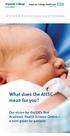 > > > > > > > > > > > > > > > > > > > > What does the AHSC mean for you? Our vision for the UK s first Academic Health Science Centre a mini-guide for patients Quicker access to new medicines and new treatments
EDITORIAL MINING FOR GOLD : CAPITALISING ON DATA TO TRANSFORM DRUG DEVELOPMENT. A Changing Industry. What Is Big Data?
 EDITORIAL : VOL 14 ISSUE 1 BSLR 3 Much has been written about the potential of data mining big data to transform drug development, reduce uncertainty, facilitate more targeted drug discovery and make more
MediSapiens Ltd. Bio-IT solutions for improving cancer patient care. Because data is not knowledge. 19th of March 2015
 19th of March 2015 MediSapiens Ltd Because data is not knowledge Bio-IT solutions for improving cancer patient care Sami Kilpinen, Ph.D Co-founder, CEO MediSapiens Ltd Copyright 2015 MediSapiens Ltd. All
Taking Part in Research at University Hospitals Birmingham
 University Hospitals Birmingham NHS Foundation Trust The Trust provides free monthly health talks on a variety of medical conditions and treatments. For more information visit www.uhb.nhs.uk or call 0121
Bayer Invests Heavily in R&D and is committed to innovation Sustained Innovation Output from all Subgroups
 Open Innovation@BayerHealthCare Dr. Daniel Forler External Innovation Therapeutics Global Drug Discovery, Bayer HealthCare ASTP-Proton Conference Page 1 Bayer Invests Heavily in R&D and is committed to
EBiSC the first European bank for induced pluripotent stem cells
 Press Release EBiSC the first European bank for induced pluripotent stem cells Pharmaceutical companies who are members of the European Federation of Pharmaceutical Industries and Associations (EFPIA)
Government support for charity funded research in universities A joint statement from universities and charities in the UK i
 Government support for charity funded research in universities A joint statement from universities and charities in the UK i We call on the Government to reaffirm its commitment to ongoing partnership
Foreword. Stephen Whitehead, Chief Executive, ABPI. Rt Hon Earl Howe, Parliamentary Under Secretary for Quality, Department of Health
 Big data road map Foreword Rt Hon Earl Howe, Parliamentary Under Secretary for Quality, Department of Health Rt Hon David Willetts MP, Minister for Universities and Science, Department for Business, Innovation
Personalized medicine in China s healthcare system
 Personalized medicine in China s healthcare system Jingmin Kan, Sam Linsen Netherlands office for Science and Technology, Guangzhou and Shanghai, China Content PERSONALIZED MEDICINE 2 FOCUS AT THE INDIVIDUAL
IBM in Singapore An Overview. IBM in Singapore An Overview
 IBM in Singapore An Overview IBM in Singapore An Overview IBM in Singapore An Overview 2 60 years of making Singapore work better IBM has always had a strong heritage of making substantive contributions
How To Change Medicine
 P4 Medicine: Personalized, Predictive, Preventive, Participatory A Change of View that Changes Everything Leroy E. Hood Institute for Systems Biology David J. Galas Battelle Memorial Institute Version
New York Bio Conference 2016. Mark J. Alles Chief Executive Officer
 New York Bio Conference 2016 Mark J. Alles Chief Executive Officer Great Progress AGE 72 World Life Expectancy 2005-2014* 17 new drugs for rare diseases 71.5 71 Two new MS drugs First drug to target root
ITT Advanced Medical Technologies - A Programmer's Overview
 ITT Advanced Medical Technologies (Ileri Tip Teknolojileri) ITT Advanced Medical Technologies (Ileri Tip Teknolojileri) is a biotechnology company (SME) established in Turkey. Its activity area is research,
Inviting Possibilities. Healthcare. Cover Page- Healthcare Sector Report.indd 1
 Inviting Possibilities Healthcare Cover Page- Healthcare Sector Report.indd 1 7/30/13 1:4 PM TABLE OF CONTENTS Overview of Dubai's Healthcare Industry Investment opportunities Medical research and development
This is GE Healthcare
 This is GE Healthcare An Overview Imagination at work Last updated July 2014 General Electric: A heritage of innovation Founded by Thomas Edison in 1878 Only company from the original 1896 Dow Jones index
A Health and Social Care Research and Development Strategic Framework for Wales
 IMPROVING HEALTH IN WALES A Health and Social Care Research and Development Strategic Framework for Wales a consultation document February 2002 Please send your comments by 17 May 2002 to: Gerry Evans
Clinical Trials: The Crux of Cancer Innovation
 Clinical Trials: The Crux of Cancer Innovation Even as medical science is transforming cancer care, major deficiencies in the way cancer clinical trials are designed, carried out, regulated and funded
Find the signal in the noise
 Find the signal in the noise Electronic Health Records: The challenge The adoption of Electronic Health Records (EHRs) in the USA is rapidly increasing, due to the Health Information Technology and Clinical
How Can Institutions Foster OMICS Research While Protecting Patients?
 IOM Workshop on the Review of Omics-Based Tests for Predicting Patient Outcomes in Clinical Trials How Can Institutions Foster OMICS Research While Protecting Patients? E. Albert Reece, MD, PhD, MBA Vice
Regulatory Issues in Genetic Testing and Targeted Drug Development
 Regulatory Issues in Genetic Testing and Targeted Drug Development Janet Woodcock, M.D. Deputy Commissioner for Operations Food and Drug Administration October 12, 2006 Genetic and Genomic Tests are Types
CENTRAL MANCHESTER UNIVERSITY HOSPITALS NHS FOUNDATION TRUST
 CENTRAL MANCHESTER UNIVERSITY HOSPITALS NHS FOUNDATION TRUST Agenda Item 9.3 Report of: Paper prepared by: Robert Pearson Medical Director, CMFT Lisa Miles Senior Project Manager, Research & Innovation
PharmD Postdoctoral Fellowship Program
 Novartis Institutes for Biomedical Research and Massachusetts College of Pharmacy and Health Sciences, Worcester/Manchester PharmD Postdoctoral Fellowship Program Introduction Fellowship training in the
2019 Healthcare That Works for All
 2019 Healthcare That Works for All This paper is one of a series describing what a decade of successful change in healthcare could look like in 2019. Each paper focuses on one aspect of healthcare. To
Big Data An Opportunity or a Distraction? Signal or Noise?
 Big Data An Opportunity or a Distraction? Signal or Noise? Maya R. Said, Sc.D. SVP & Global Head, Oncology Policy & Market Access, Novartis 3rd International Systems Biomedicine Symposium Luxembourg, 28
TIBCO Spotfire Helps Organon Bridge the Data Gap Between Basic Research and Clinical Trials
 TIBCO Spotfire Helps Organon Bridge the Data Gap Between Basic Research and Clinical Trials Pharmaceutical leader deploys TIBCO Spotfire enterprise analytics platform across its drug discovery organization
Enabling Discovery, Development, and translation of treatments for Cognitive Dysfunctions in Depression: A Workshop Session IV
 Enabling Discovery, Development, and translation of treatments for Cognitive Dysfunctions in Depression: A Workshop Session IV Maria Isaac, MASc, MD, PhD, MFPM, Psychiatrist Senior Scientific Officer Institute
Making the most of academic drug target discoveries
 Making the most of academic drug target discoveries Richard Reschen, Isis Innovation, University of Oxford The explosion of new technologies and research techniques, and encouragement from funding agencies
Big Data for Population Health and Personalised Medicine through EMR Linkages
 Big Data for Population Health and Personalised Medicine through EMR Linkages Zheng-Ming CHEN Professor of Epidemiology Nuffield Dept. of Population Health, University of Oxford Big Data for Health Policy
Technology and Expertise Add Operational Value to Medical Device Trials
 Technology and Expertise Add Operational Value to Medical Device Trials Copyright 2015 Medidata Solutions. Medidata Solutions and other trademarks reserved in the US and globally. Medidata and other marks
Arthritis Research UK Epidemiology Unit
 Arthritis Research UK Epidemiology Unit Qualitative research proposal to explore factors influencing acceptable risk thresholds used to recommend particular treatment options for rheumatoid arthritis.
What do Birmingham postgraduates do?
 1 Essential information What do Birmingham postgraduates do? School of First destinations of postgraduates Analysis of first employment destinations of postgraduates from the College of Medical and Dental
Healthcare Challenges and Trends The Patient at the Heart of Care
 WHITE PAPER Healthcare Challenges and Trends The Patient at the Heart of Care Quality healthcare is one of the most important factors in how individuals perceive their quality of life. In most countries,
THE SIDNEY KIMMEL COMPREHENSIVE CANCER CENTER AT JOHNS HOPKINS
 Ushering in a new era of cancer medicine Center is ushering in a new era of cancer medicine. Progress that could not even be imagined a decade ago is now being realized in our laboratories and our clinics.
Human Health Sciences
 Human Health Sciences WITH PLYMOUTH UNIVERSITY DISCOVER MORE If you would like to visit Plymouth and meet our staff, then why not come along to one of our open days. Human Health Sciences WITH PLYMOUTH
Molecular Biotechnology Master s Degree Program
 > APPLIED LIFE SCIENCES Master s Degree Program: > FULL TIME Molecular Biotechnology Master s Degree Program www.fh-campuswien.ac.at My Occupational Future. Your Career Opportunities Biotechnology is one
2015 2018 Business Plan. Building Scotland s International Competitiveness
 2015 2018 Business Plan Building Scotland s International Competitiveness CONTENTS 1 2 3 4 5 INTRODUCTION 1 A COMPETITIVE ECONOMY 2 DRIVERS OF GROWTH 3 TRACKING OUR PROGRESS 14 BUDGET 2015-18 18 Scottish