
THE INTERNATIONAL JOURNAL OF BUSINESS & MANAGEMENT
|
|
|
- Tyler Wood
- 9 years ago
- Views:
Transcription
1 THE INTERNATIONAL JOURNAL OF BUSINESS & MANAGEMENT A Review on Supply Chain Disruption: Managing Risk Dhirendra Singh Parihar Ansal University, Gurgaon, India Manmohan Rahul Ansal University, Gurgaon, India Abstract: Design of a flexible supply chain is a complex and challenging task. This complexity arises due to sudden and unexpected changes (natural disaster, terrorist attack, labor strike, political instability etc.) in the market structure. Therefore, supply chains designed during more stable time need to be reshaped to deal with market volatility. However, modern supply chains are longer and very complex, and recent lean practices have resulted in supply chains becoming more vulnerable. Many researchers focus on the creation of an efficient supply chain to reduce cost and provide high incentive for all supply chain members but leveraging supply chain disruption risk management as a competitive advantage is ignored. This paper presents a literature review to highlight the importance of supply chain disruptions and its consequences. The objective of this paper is to discuss various strategies proposed by various researchers to manage supply chain disruptions. This paper also suggests a general framework, based on the literature survey, to help managers to manage supply chain disruptions and create a safer supply chain. Keywords: Supply Chain Management, Supply Chain Disruption, Supply Chain Uncertainty 1. Introduction The need for managing dependency among supply chain members has become very important with the changing trends towards globalization, outsourcing, contract manufacturing and information technology. Though these options bring some benefits but also increase complexity, risk and vulnerability for supply chain members. Due to globalization, supply chain became longer and now requires more time to ship the products to the consumers. Contract manufacturing and outsourcing creates dependency on external suppliers. With these changing trends, cost of supply chain is increased but predictability and reliability of supply chain is decreased (Oke & Gopalakrishnan 2009). In supply chain, product passes through numerous supply chain members with some value addition and reaches to the end consumer. Supply chain tends to become inefficient because of the lack of coordination among various supply chain members (suppliers, service providers, consumers etc.). The continuous growing dynamic structure of the supply chain creates many challenges for an effective supply chain system. To achieve an effective and efficient supply chain, supply chain members have to perform as a part of unified system and coordinate with each other. This paper presents a systematic literature review to throw light on the importance of supply chain disruptions. The objective of this paper is to report possible solutions to manage supply chain disruptions proposed by various researchers and also define a general framework to help managers to think about and manage supply chain disruptions. 2. Literature Review Though, there are efforts in the literature regarding the management of supply chain disruptions, it appears that the study of supply chain disruption is still in its infancy. It is evident from the literature survey that the need for managing disruption is realized but little effort has been reported in the literature to develop a holistic view of supply chain disruption. It is interesting to note the following perspectives on supply chain disruption as reported in the literature: In general, there is lack of managerial ability to integrate and coordinate the business relationships among supply chain members (Lambert & Cooper 2000). Stank, Crum, and Arango (1999) highlighted inter-firm coordination processes characterized by effective communication and information exchange. Lee (2000) proposed supply chain coordination as a mechanism to redesign rights to take decision, workflow, and resources between chain members to improve the performance in terms of high profits, improved customer service performance, and faster response time. In case of a global supply chain, disruption may come in many forms varying from natural disasters, terrorist attacks, accidents in a manufacturing plant and operational challenges such as strikes, faults, frauds, equipment failures etc. As firms adopt just-in-time inventory, leaner operating models and leverage global sourcing models, supply chain complexity is increasing along with 236 Vol 2 Issue 7 July, 2014

2 uncertainty in both supply and demand. Exposure of supply chain disruptions has also increased because of these modern models. These supply chain disruptions creates greater pressure on companies to keep supply chains flexible and integrate disruption risk management in supply chain operations. Companies are trying to get their piece of the global advantage, as the operational risks and possibilities of disruption are very high. But continuous evolution in the global supply chain is one of the major challenges in managing these disruption risks. Like Murphy s Law, supply chains disruptions seem expected and should get the attention of senior management and shareholders. With longer supply chain and shorter clock speeds, there are more possibilities for disruptions. These disruptions may have an adverse effect on the financial position of the company. Hendricks and Singhal (2003) reported that on the occurrence of a disruption, firms on an average experience 107% decrease in operating income, 7% lower sales growth, and 11% higher costs. The firms also suffered 33-40% lower stock returns over a three year period after the disruption. Hendricks and Singhal (2005a, 2009) also highlighted the impact of supply chain disruptions on market performance of companies. Hendricks and Singhal (2005b) reported on another evidences of financial performance of different companies on the occurrence of supply chain disruptions. Many other researchers (Murphy 1999; Latour 2001; Christopher, Juttner & Peck 2002; Ross 2003; THE AGE 2003; Chopra & Sodhi 2004; Cavinato 2004; Skidmore 2002; Sullivan 2006) have also reported costly consequences of disruptions. Many firms lack contingency plans and well-defined roles concerning disruptions (Rebmann, Strawn, Swick & Reddick 2013; Hillman & Keltz 2007). Mitroff and Alpaslan (2003) analyzed crisis readiness of Fortune 500 companies over the past two decades. They found 95% of them not prepared for an unfamiliar disruptive event. In order to achieve competitive advantage, companies need to identify, understand and manage supply chain risks. MIT research group on Supply Chain Response to Global Terrorism (2003) highlighted that firms usually focus on the type of disruption and ignore its source in order to know how to prepare against risks. For instance, a disruption can be caused by a strike, an earthquake or a terrorism action and each will have the same impact. But this is not the case always. Therefore, it is important to identify various types of failure modes of supply chain. The team identified various failure modes as listed in Table 1. Failure Mode Description Impact Disruption Delay or unavailability of supply Shortage of inputs in supply Disruption in Transportation Delay or unavailability of the transportation infrastructure Delay of inbound and outbound movement of goods Disruption at Facilities Freight breaches Disruption in communications Delay or unavailability of plants/warehouses Violation of the integrity of cargoes and products Delay or unavailability of the information and communication infrastructure Bottleneck in operations Loss or adulteration of goods due to theft Inability to coordinate operations and execute transactions. Disruption in Demand Delay or disruption downstream Loss of demand, temporarily or permanently Table 1: Different types of failures modes Source: MIT research group on Supply Chain Response to Global Terrorism, Sheffi, Rice, Fleck and Caniato (2003) 3. Supply Chain Disruption Management : Literature Solutions Several disruption management strategies have been developed to align supply chain operations and activities to ensure better supply chain performance. Some researchers focus precisely on disruptions and discuss the solutions that companies should adopt to have safer supply-chains. Some of these strategies are given as follows: 3.1. Building the Triple-A Supply Chain Lee (2004) suggests that the key to survive in such context is through building The Triple-A Supply Chain - agile, adaptable and aligned supply chain. Great companies create supply chains that respond to sudden and unexpected changes by fostering agility, adaptability and alignment in the supply chain Agility Agile supply chain handles external disruptions smoothly and responds fast to the sudden and unexpected fluctuations in supply or demand. Most supply chains respond quickly to these sudden changes at the high cost. But agile supply chains respond both 237 Vol 2 Issue 7 July, 2014

3 quickly and cost-efficiently. In the 1990 s, Compaq took more time than Intel to launch its new microprocessor because of its long design cycle. Since Compaq s products stayed in the pipeline for a long time, it could not cut the price of its product when component s prices fell as Intel was able to. And when there was a change in engineering specifications, Compaq incurred more reworking costs than other manufacturers because of its long design cycle. Therefore, Compaq did not reap much benefit because of the lack of an agile supply chain (Lee 2004). It is very critical to achieve agile supply chain due to sudden changes in the supply chain. For instance, terrorist attack in New York in 2001 and SARS epidemic in Asia in 2003 and 9/11 attacks in U.S disrupted many companies supply chains. Many firms have seen their supply-chain weakened after these disruptions. For instance, Ford had to shut down its few plants, as it couldn t get enough parts from its suppliers in Canada due to the reinforced security at the borders in the few days that followed 9/11 (Pochard 2003). But now supply chains traverse globe, natural disasters, epidemics and terrorism has intensified the supply chain partly. Agile supply chain requires: Constant monitoring of data on changes in supply and demand and sharing the same continuously with supply chain members in order to respond quickly. Collaboration with suppliers and customers to redesign processes/products and develop backup plans. Maintaining small inventory of inexpensive and key components to prevent manufacturing delays. Developing contingency plan and crisis management team. having a dependable logistics partner to respond to unexpected needs. In 1999, an earthquake in Taiwan delayed shipments of computer components to the United States. Most PC vendors such as Compaq, Apple and Gateway couldn t deliver the products on time but Dell adopted agility and collected the data on the earthquake damage early, understood the vendors problem quickly and changed the prices of PC configurations overnight and gained market share in such crisis (Pochard 2003) Adaptability Adaptable supply chain adjusts supply networks to meet changes in the market structure and modify supply network to organization s strategies, products and technologies. These structural changes can be economic, political, social, demographic or technological. Best supply chains identify these changes by collecting latest data, removing noise and following key patterns. For instance, in 1980s, Hewlett-Packard set up its R&D and manufacturing division both for Ink-jet printers in United States. HP wanted its production and product development team to work together because of new technology and demand of Ink-jet printers in United States. When demand grew in other parts, HP set up its manufacturing division in Europe and Asia also. But by the mid- 1990s, HP realized that printer-manufacturing technologies had matured and adopted outsourcing production. This adaptation of supply networks resulted HP as the market leader (Lee 2004). Building an adaptable supply chain requires: Monitoring of economic changes Evaluating the needs of end consumers Creating flexible product designs and evaluation of supply chain implications of product designs Identification of suppliers that compliments existing ones Identification of intermediaries to find reliable vendors in unfamiliar parts of the world Creation of different supply chains for different product lines, to optimize capabilities for each Alignment Supply chains are one of the major risks facing many companies today because all supply chain partners are striving to maximize their own interest by overlooking the interest of the chain. Best companies take care to align the interest of all supply chain partners with their own interest. If any supply chain member s interests differ from others interests, its actions will not maximize the supply chain s performance. It is very critical to achieve the alignment because every member tries to maximize only its own interests. For instance, all through 1990 s, Cisco s supply chain was graded as reliable supply chain. Cisco outsourced the production of most of its products and worked closely with its contract manufacturers to cater the needs of consumers of different parts of the world. Contractors maintained a large inventory for month without evaluating the demand for Cisco s products. That was the misalignment of interests of Cisco and its contractors. When U.S economy slowed down, contractors continued to produce and store stock at the same price. Company had to sell $2.25 billion of inventory as scrap. This misalignment caused Cisco to suffer huge loss (Lee 2004). The process of alignment requires: Redefining the terms of relationship among supply chain members so that members share risks, costs, rewards fairly Providing all members with equal access to forecasts, sales data and plans. Defining members roles and responsibilities to avoid conflict Alignment of incentives to maximize overall chain performance by maximizing each members returns from the partnership. 238 Vol 2 Issue 7 July, 2014

4 3.2. Dual Sourcing Pochard (2003) focused on how companies can use real options to value dual sourcing strategies- single sourcing and multiple sourcing. Both can be performed in many different ways and it seems that there is no single best solution Single Sourcing Single sourcing is cost effective and improves relationships with suppliers. But it introduces risk if supplier goes out of business, acquired by another company, or provides lower quality services. This will lead to shortage for key components that could be dangerous for the firm that may have to close some plants and loose business. Therefore, managers must consider the possibility of relying on multiple suppliers to cope with disruptions in supply Multiple Sourcing Managers can consider more flexible strategies and contract with back-up suppliers. This can be done in various ways: Can establish different contracts (long-term contracts, option contract and supply contract) with various suppliers. Can create a local supply source with the appropriate manufacturing capacities Can develop multiple supply sources with the appropriate manufacturing facilities. In order to make a choice between those two approaches, it may be useful to quantify their values. In that respect, real options are very useful. Pochard (2003) developed an analytic model to analyze and value the benefits of relying on dual sourcing. This model takes into account various parameters such as the frequency of disruption and the loss of market share. Using MATLAB, it defined the particular circumstances that justify a second supplier. Sensitivity analysis is used to determine the impact of each parameter. The model also demonstrated the value of the option of delaying decision and showed that a time-varying dynamic strategy works the best. This tool allows to evaluate the decisions that are made in an uncertain environment, and to take into account flexibility. 4. Suggested Framework This paper attempts to identify certain key points, based on the literature survey, which need to be taken care of to understand the economic implications of supply chain disruption risks. In order to understand and manage supply chain disruptions, companies must identify supply chain disruptions risk, evaluate the consequence of supply chain disruption risks and create a flexible supply chain to sustain and absorb disruption without negative impact. Proposed framework is presented in Figure1. Figure 1: Suggested Framework 4.1. Identification of Supply Chain Disruption Risk As risks of supply chain disruptions are not equal, similarly its consequences are not equal. Therefore it is necessary to identify the various sources of supply chain disruption risk. These sources are as follows: Operational Challenges: There may be discontinuity in the supply chain because of various operational problems such as supplier discontinuity, equipment breakdown, and accidents in manufacturing plant (fire, explosions, hazardous spills, structural failures etc.), financial crisis, bankruptcy, strikes, high cost labor etc. Natural disasters: earthquakes, hurricanes, tornados, epidemics, extreme weather conditions Terrorist attack or war or Political instability Top management generally does not consider unforeseen challenges such as political instability, terrorism or natural disaster. When it comes to developing a strategy to reduce the risks of future terrorist activities, we cannot predict the nature of attacks and terrorist s motive. Hence it is extraordinarily difficult to plan protective actions. Similarly, Individuals and companies are not very concerned about the natural disasters prior to their occurrence. Only after the event, they plan protective action. Uttarakhand (India) flood and landslides in June 2013 is the evidence of lack of disaster planning. After this disaster, Indian Govt. established a state rehabilitation and reconstruction authority to redevelop the areas destroyed by the flash floods. But, in general, with the passage of time, this concern also dissipates. People tend to cancel their flood or earthquake insurance policies if they have not experienced losses from one of these events in several years. 239 Vol 2 Issue 7 July, 2014

5 4.2. Evaluate the Impact of Supply Chain Disruption Risks Supply chain experts suggest that the best way to manage disruption risks is to understand a company s vulnerabilities towards disruption risks. These vulnerabilities need to be analyzed in every aspect of supply operations such as manufacturing processes, equipments, technology, transportation and distribution. Typically, a supply chain participant with special vulnerabilities may hide these from other supply chain participants. But current cross-functional communication system such as ERP (Enterprise Resource Planning) systems improved information dissemination among all supply chain members and provided supply chain visibility (Kaur, Kanda and Deshmukh, 2011) Following steps will help companies to evaluate the impact of supply chain disruption risks: Define roles and responsibilities design disruption risk management process. Identify all processes such as manufacturing, new product development and supply chain operations that are likely to be affected by disruptions. Also identify what will be the effect of disruptions on assets, inventory, brand image and goodwill of the company. Formulate risk management policies for each key process to identify vulnerabilities, cause for these vulnerabilities, probability of occurrence, and mitigation of risk transfer activities. Provide feedback to management and supply chain participants on the performance of their plans and their compliance with agreed, supply chain wide standards by auditing and review of implementation plans Create Flexible Supply Chain Many companies have centralized manufacturing and distribution facilities to achieve economy of scale but these companies are not able to cope with demand fluctuations. In order to meet increase in demand, manufacturer delivers additional merchandise but distributors may not need excess inventory to meet this demand fluctuation. This will result in excess inventory and as a result, to get rid of this excess stock, companies mark down these products and earn less profit than they had planned to. Therefore, it is very important for companies to have flexible supply chain to adapt the supply-chain according to the availability of resources. It will help to quickly take corrective actions to minimize the impact of sudden and unexpected disruptions. In this case, firms can add redundancies or redesign its products or manufacturing processes to facilitate a rapid changeover when needed. Lucent s Electronic Switching Systems Division which set up a fast and cost effective supply chain in the United States. The supply chain worked efficiently as long as the demand was from the United States itself. But when Asia became the fastest growing market, Lucent s supply chain could not work brilliantly as it was doing earlier. Its response time increased because of the manufacturing plant in the United States. It affected both the amount of time and the money; company takes the supply chain to deliver the product across continents. Lucent s problems became more severe when its vendors shifted their manufacturing plants in Asia to take the advantage of lower labor costs (Lee 2004). Thus efficient supply chain will not ensure the company to win its rivals. In order to get ahead of competition, companies need to create flexible supply chain to accommodate structural shifts in the market. 5. Conclusion Though global sourcing brings many benefits, there are indeed potentially negative consequences such a longer supply chain, dependency on external suppliers etc. These negative consequences will become more severe due supply-chain disruptions. Therefore, it has become important how to avoid and manage supply-chain disruptions in its infancy. The intent of this paper was not only to highlight the supply chain disruptions areas that need more attention, but to provide a list of certain measures to assist with the complexities and vulnerabilities of global supply chains. 6. References 1. Arshinder K., Kanda, A. & Deshmukh, S. G. 2011, A Review on Supply Chain Coordination: Coordination Mechanisms, Managing Uncertainty and Research Directions, Supply Chain Coordination under Uncertainty, International Handbooks on Information Systems, doi: / _3. 2. Cavinato, J. L. 2004, Supply chain logistics risks: From the back room to the board room, International Journal of Physical Distribution & Logistics Management, vol.34,no.5, pp Chapman, P, Christopher, M, Juttner, U & Peck, H.2002, Identifying and managing supply chain vulnerability, Logistics and Transport Focus, vol.4, no.4, pp Chopra, S & Sodhi, M. S. 2004, Managing risk to avoid supply chain breakdown, Sloan Management Review, vol.46,no.1, pp Hendricks, K. B & Singhal, V. R. 2003, The effect of supply chain glitches on shareholder value, Journal of Operations Management, vol. 21, no.5, pp Hendricks, K. B. & Singhal, V. R. 2005b, Association between supply chain glitches and operating performance, Management Science, vol. 51, no. 5, pp Hendricks, K. B. & Singhal, V. R. 2005a. An empirical analysis of the effect of supply chain disruptions on long-run stock price performance and equity risk of the firm, Production and Operations Management, vol. 14, no. 1, pp Hendricks, K. B. & Singhal, V. R Demand-supply mismatches and stock market reaction: evidence from excess inventory announcements, Manufacturing and Service Operations Management, vol. 11, no. 3, pp Hillman, M. & Keltz, H. 2007, Managing Risk in the Supply Chain A Quantitative Study, viewed June , Vol 2 Issue 7 July, 2014

6 10. Lambert, D. M. & Cooper, M. C. 2000, Issues in supply chain management, Industrial Marketing Management, vol. 29, no. 1, pp Latour, A. 2001, Trial by fire: A blaze in Albuquerque sets off major crisis for cell-phone giants Nokia handles supply chain shock with aplomb as Ericsson of Sweden gets burned was Sisu the difference?, Wall Street Journal, pp. A Lee H. L. 2000, Creating value through supply chain integration, Supply Chain Management Review, vol. 4, no. 4, pp Lee, H. L. 2004, THE TRIPLE-A Supply Chain, Harvard Business Review, vol. 82, no. 10, pp Mitroff, I. I. & Alpaslan, M. C. 2003,0 Preparing for evil, Harvard Business Review, vol. 81, no. 4, pp Murphy, T. 1999, JIT when ASAP isn t good enough, Wards Auto World, vol. 35, no. 5, pp National Climate Data Center, Billion dollar U.S. weather disasters , viewed 2 May 2013, < 17. THE AGE 2003, SARS could cost economy $1bn, viewed 12 May 2013, < 18. Oke, A. & Gopalakrishnan, M. 2009, Managing disruptions in supply chains: a case study of a retail supply chain, International Journal of Production Economies, vol. 118, no. 10, pp Pochard S. 2003, Managing Risks of Supply-Chain Disruptions: Dual Sourcing as a Real Option, Ph.d thesis, Massachusetts Institute of Technology, Massachusetts. 20. Rebmann, T., Strawn, A. M., Swick, Z. & Reddick, D 2013, Personal Disaster and Pandemic Preparedness of U.S. Human Resource Professionals, Journal of Biosafety Health Education, vol 1, no. 1, doi: /jbhe Sheffi, Y., Rice, J. B., Fleck, J. M.& Caniato F. 2003, Supply chain response to global terrorism: A situation scan In Center for Transportation and Logistics, MIT, Department of Management, Economics and Industrial Engineering, Politecnico di Milano, EurOMA POMS Joint International Conference. 22. Skidmore, M. &Toya, H. 2002, DO NATURAL DISASTERS PROMOTE LONG-RUN GROWTH?, Economic Inquiry,vol. 40, pp , doi: /ei/ Stank, T. P., Crum, M. R. & Arango, M. 1999, Benefits of inter-firm coordination in food industry in supply chains, Journal of Business Logistics, vol. 20, no. 2, pp Sullivan, L. 2006, Most companies fail to plan for supply-chain disruption: Study, AMR Research, viewed 10 June 2013, < companies-fail-to-plan-for-supply-c/ >. 241 Vol 2 Issue 7 July, 2014

Operations Management Coursework ECCO Shoes Global Value Chain
 Operations Management Coursework ECCO Shoes Global Value Chain By Arif Harbott EMBA September 2010 Lecturer: Dr. Canan Kocaba Deadline: 8 th August 2011 Word Count: 2,497 (excluding contents, footnotes,
Lecture 3: Supply Chain Risk Management
 Lecture 3: Supply Chain Risk Management John F. Smith Memorial Professor Director Virtual Center for Supernetworks Isenberg School of Management University of Massachusetts Amherst, Massachusetts 01003
A MODEL FOR PROACTIVE SUPPLY CHAIN RISK MANAGEMENT
 A MODEL FOR PROACTIVE SUPPLY CHAIN RISK MANAGEMENT I Nyoman Pujawan and Laudine H. Geraldin Logistics and Supply Chain Management Laboratory Department of Industrial Engineering Sepuluh Nopember Institute
SUPPLY CHAIN MANAGEMENT REVIEW ON RISK MANAGEMENT FROM SUPPLIER S PERSPECTIVE
 DAAAM INTERNATIONAL SCIENTIFIC BOOK 2014 pp. 557-566 Chapter 44 SUPPLY CHAIN MANAGEMENT REVIEW ON RISK MANAGEMENT FROM SUPPLIER S PERSPECTIVE MAHESHWARI, S. & JAIN, P. K. Abstract: Supply Chain Management
Mitigating Supply Chain Risks. J. Michael Kilgore President Chainalytics LLC (770) 433-1566; [email protected]
 Mitigating Supply Chain Risks J. Michael Kilgore President Chainalytics LLC (770) 433-1566; [email protected] 89 th Annual International Supply Management Conference, April 2004 Abstract. Is your
DEFENSE SUPPLY CHAIN SECURITY & RISK MANAGEMENT: PRINCIPLES & PRACTICE
 DEFENSE SUPPLY CHAIN SECURITY & RISK MANAGEMENT: PRINCIPLES & PRACTICE Lisa Harrington President, lharrington group llc Associate Director Supply Chain Management Center Robert H. Smith School of Business
Supply Chain Management: from a necessary evil to a core organisational competency
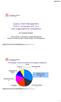 Supply Chain : from a necessary evil to a core organisational competency Dr Sinéad Roden Senior Lecturer in Operations & Supply Director of Studies for MSc in Global Supply Chain Percentage of world revenues
APICS INSIGHTS AND INNOVATIONS SUPPLY CHAIN RISK CHALLENGES AND PRACTICES
 APICS INSIGHTS AND INNOVATIONS SUPPLY CHAIN RISK CHALLENGES AND PRACTICES APICS INSIGHTS AND INNOVATIONS ABOUT THIS REPORT This report examines the role that supply chain risk management plays in organizations
Next-Generation Supply Management
 Cisco Internet Business Solutions Group (IBSG) Cisco IBSG 2012 Cisco and/or its affiliates. All rights reserved. Next-Generation Supply Management Authors Ram Muthukrishnan Kevin Sullivan May 2012 Cisco
A To Do List to Improve Supply Chain Risk Management Capabilities
 A To Do List to Improve Supply Chain Risk Management Capabilities Investigators: Debra Elkins General Motors R&D Center Mailcode 480-106-359 30500 Mound Road Warren, MI 48090 Phone: 586-986-2750 FAX: 586-986-0574
HISTORY AND INTRODUCTION
 HISTORY AND INTRODUCTION I 1 Introduction The APICS dictionary defines the term supply chain as either the processes from the initial raw materials to the ultimate consumption of the finished product linking
Supply Chain Management Think Global, Go Global. Hau L. Lee Stanford University
 Supply Chain Management Think Global, Go Global Hau L. Lee Stanford University Global Supply Chain Management Diverse needs of customers Greater complexities & uncertainties Large geographical spread of
The fact is that 90% of business strategies are not implemented through operations as intended. Overview
 Overview It is important to recognize that a company s network determines its supply chain efficiency and customer satisfaction. Designing an optimal supply chain network means the network must be able
ERP Implementation failure at HP. Presented by: DINESH SHRISHRIMAL
 ERP Implementation failure at HP Presented by: DINESH SHRISHRIMAL BACKGROUND OF HP Started in 1938 by 2 Stanford Engineers BILL HEWLETT and DAVID PACKARD as an electronic instrument company. Its first
An Agile Supply Chain to deal with Global Challenges. November 22 nd, 2012
 An Agile Supply Chain to deal with Global Challenges November 22 nd, 2012 Antonio Galvao Vice President Global Supply Chain at Diversey, now part of Sealed Air Author of the "Working Green" department
Table of contents. Providing continuity for your key business processes. A white paper on HP s Business Continuity and Availability Solutions
 Providing continuity for your key business processes A white paper on HP s Business Continuity and Availability Solutions Table of contents Executive summary...2 Reducing business risks...3 Availability
Supply Chain Vulnerability in Times of Disaster
 WIPRO CONSULTING SERVICES Supply Chain Vulnerability in Times of Disaster www.wipro.com/consulting As covered by Supply Chain Vulnerability in Times of Disaster By Gerhard Plenert, Mohanish Makharia &
Supply Chain Risk: Understanding Emerging Threats to Global Supply Chains
 Supply Chain Risk: Understanding Emerging Threats to Global Supply Chains Prof John Manners-Bell, Logistics and Supply Chain Council, WEF CEO, Transport Intelligence Sao Paulo, March 2015 Changes in SCM
SUPPLY CHAIN FLEXIBILITY
 66 Romanian Economic and Business Review Vol. 2, No. 1 SUPPLY CHAIN FLEXIBILITY Simona Daniela Grigore Abstract To be flexible means to have the ability to vary as you like, according to the needs. Flexibility
10.1 Introduction. Chapter 10. International Supply Chains. Global Market Forces. Forces toward Globalization. Global Logistics and Risk Management
 10.1 Introduction Chapter 10 Global Logistics and Risk Management About one-fifth of the output of U.S. firms is produced overseas. One-quarter of U.S. imports are between foreign affiliates and U.S. parent
Four distribution strategies for extending ERP to boost business performance
 Infor ERP Four distribution strategies for extending ERP to boost business performance How to evaluate your best options to fit today s market pressures Table of contents Executive summary... 3 Distribution
Visibility in the Import Supply Chain Getting a Clear View into Competitive Advantage
 Visibility in the Import Supply Chain Getting a Clear View into Competitive Advantage A GT Nexus White Paper Executive Summary Leading importers are reaping the benefits of end-to-end global supply chain
New Challenges to Emergency Management of Pharmaceutical/Healthcare Supply Chain Disruptions
 (Position Paper for the 2009 DHS Workshop on Incident Management, Resource Management, and Supply Chain Management) New Challenges to Emergency Management of Pharmaceutical/Healthcare Supply Chain Disruptions
The Network Approach to Inventory Management
 The Network Approach to Inventory Management Getting Accurate Inventory Information Across the Entire Supply Chain Stream Creates Healthy Companies A GT Nexus White Paper The Inventory Challenge The problem
EVERYTHING YOU NEED TO KNOW ABOUT INVENTORY
 EVERYTHING YOU NEED TO KNOW ABOUT INVENTORY Introduction Inventory is considered the necessary evil of the supply chain. In fact, there has been a whole movement; lean manufacturing that has tried to reduce
Improve the Agility of Demand-Driven Supply Networks
 GE Intelligent Platforms Improve the Agility of Demand-Driven Supply Networks Leverage real-time production data to optimize the supply chain for a sustainable competitive advantage Improve the Agility
The top 5 mistakes companies make in managing supply chain risk effectively
 White Paper by Bindiya Vakil, President, Resilinc Corporation and Hannah Kain, President & CEO, ALOM The top 5 mistakes companies make in managing supply chain risk effectively Supply chains today are
SUPPLY CHAIN VULNERABILITY
 SUPPLY CHAIN VULNERABILITY Executive Report On Behalf of: Department for Transport, Local Government and the Regions Home Office Department of Trade and Industry January 2002 SUPPLY CHAIN VULNERABILITY
Supply Chain Solutions
 Supply Chain Solutions Grant Thornton Consumer and Industrial Products practice Part 2 of 3 Creating a reliable, profitable supply chain: navigating exchange rate, working capital and business uncertainties
Manufacturing Flow Management
 Manufacturing Flow Management Distribution D Distribution Authorized to Department of Defense and U.S. DoD Contractors Only Aim High Fly - Fight - Win Supply Chain Management Processes Information Flow
FORMULATING YOUR BUSINESS CONTINUITY PLAN
 WHITE PAPER Page 0 Planning for the Worst Case Scenario: FORMULATING YOUR BUSINESS CONTINUITY PLAN 9 Wing Drive Cedar Knolls, NJ 07927 www.nac.net Page 1 Table of Contents Overview... 2 What is Disaster
Dynamic Simulation and Supply Chain Management
 Dynamic Simulation and Supply Chain Management White Paper Abstract This paper briefly discusses how dynamic computer simulation can be applied within the field of supply chain management to diagnose problems
Business, Resiliency and Effective Disaster Recovery. Anne Kleffner, PhD Haskayne School of Business, University of Calgary
 Business, Resiliency and Effective Disaster Recovery Anne Kleffner, PhD Haskayne School of Business, University of Calgary CRHNet October 2012 Agenda Business resilience and community resilience in disaster
4 Key Tools for Managing Shortened Customer Lead Times & Demand Volatility
 ebook 4 Key Tools for Managing Shortened Customer Lead Times & Demand Volatility 4 Key Tools for Managing Shortened Customer Lead Times & Demand Volatility S U P P L Y C H A I N Content Introduction Tool
LEAD LOGISTICS PARTNER
 Lead Logistics Partner LEAD LOGISTICS PARTNER visit www.dhl.com/supplychain Delivering supply chain transformation that drives a competitive advantage. 2 Understanding supply chain dynamics Understanding
Why Should Companies Take a Closer Look at Business Continuity Planning?
 whitepaper Why Should Companies Take a Closer Look at Business Continuity Planning? How Datalink s business continuity and disaster recovery solutions can help organizations lessen the impact of disasters
Introduction to. David Simchi-Levi. Professor of Engineering Systems Massachusetts Institute of Technology. Regional warehouses: Stocking points
 Introduction to Supply Chain Management David Simchi-Levi Professor of Engineering Systems Massachusetts Institute of Technology Sources: Plants vendors ports Regional warehouses: Stocking points Field
Increasing Competitiveness / Lowering Costs with Supply Chain Management and Security Standards
 Increasing Competitiveness / Lowering Costs with Supply Chain Management and Security Standards September 2010 SURGE logistics- GSProgress Inc. 1000 Potomac Street NW The Flour Mill Building Washington,
diversified industrials Supply and Demand Risk Management in Turbulent Times
 diversified industrials Supply and Demand Risk Management in Turbulent Times KPMG LLP With consumer confidence shaken and spending curtailed, businesses are facing some of the most challenging operating
From Big Data to Rich Data How Data Analytics Add Value to Security Risk Management. Patrick Hennies, Rainer Rex 15th European ASIS, 04/08/2016
 How Data Analytics Add Value to Security Risk Management Patrick Hennies, Rainer Rex 15th European ASIS, 04/08/2016 Who we are Global leading positions in consumer and industrial businesses Consumer Businesses
Critical Success Factors for Consumer Electronics & Appliances Companies to Meet Today s Top 3 Issues
 Critical Success Factors for Consumer Electronics & Appliances Companies to Meet Today s Top 3 Issues Prepared exclusively for Sage Software by Industry Directions, Inc. www.industrydirections.com Table
BUSINESS RESILIENCE READY OR NOT
 BUSINESS RESILIENCE READY OR NOT EDC Whitepaper 2014 Table of Contents Executive Summary 2 Need for Effective BCM 2 Government requirements for BCM 4 The Challenge - Disasters and Threats 4 Pandemic and
Delivering a Competitive Edge Across the Supply Chain
 Delivering a Competitive Edge Across the Supply Chain An Industry White Paper By Laura Rokohl, Supply Chain Manager, AspenTech Supply chain leaders face significant challenges today amidst market volatility
Intel Reports Fourth-Quarter and Annual Results
 Intel Corporation 2200 Mission College Blvd. P.O. Box 58119 Santa Clara, CA 95052-8119 CONTACTS: Reuben Gallegos Amy Kircos Investor Relations Media Relations 408-765-5374 480-552-8803 [email protected]
Infusing Technology to Mitigate Risk in the Supply Chain
 W H I T E P A P E R Infusing Technology to Mitigate Risk in the Supply Chain Lean, efficient, and secure supply chains are the lifeblood of most retail organizations. Supply chain management key tasks
A comparison of supply chain risk perceptions in Original Equipment Manufacturers and Tier One suppliers: A case-study in the aerospace industry.
 011-0290 A comparison of supply chain risk perceptions in Original Equipment Manufacturers and Tier One suppliers: A case-study in the aerospace industry. Naomi Brookes Amrik Singh Aston Business School
MS/Supply Chain Management Courses
 September 2014 MS/Supply Chain Management Courses Summer Foundations Courses ACCT 560 Introduction to Financial Accounting In this course, we will study the three fundamental financial accounting issues,
8 Crucial Requirements for Supply Chain Optimization
 8 Crucial Requirements for Supply Chain Optimization Introduction In today s world, businesses expect their trading partners to have full insight and control of their from end to end. For manufacturers
Creating Supply Chain Resilience Through Agile Six Sigma By Professor Martin Christopher & Christine Rutherford
 June - August 2004 Creating Supply Chain Resilience Through Agile Six Sigma By Professor Martin Christopher & Christine Rutherford Today s global supply chains are, in effect, highly complex networks.
COORDINATION IN THE SUPPLY CHAIN: VENDOR MANAGED INVENTORY IS THE WAY TO GO
 www.sjm.tf.bor.ac.yu Serbian Journal of Management 1 (1) (2006) 41-47 Serbian Journal of Management COORDINATION IN THE SUPPLY CHAIN: VENDOR MANAGED INVENTORY IS THE WAY TO GO R. Piplani * Center for Supply
The Future of Consumer Health Care
 The Future of Consumer Health Care Coming Together To Lead The Consumer Health Care Industry 2 Creating a New Business Model in Consumer Health Care 3 Serve More Consumers In More Parts of the World, More
Creating and Embedding a Customer Driven Supply Chain
 To get there. Together. Creating and Embedding a Customer Driven Supply Chain Point of view Contents Creating and Embedding a Customer Driven Supply Chain 3 How to Embed a Customer Driven Supply Chain
Sales & Operations Planning in Manufacturing
 Sales & Operations Planning in Manufacturing Manage Collaboration Across the Entire Organization Ralph Cox Principal, Tompkins International Thomas Wiedmann Managing Director, Tompkins International www.tompkinsinc.com
Operational Risk Management Policy
 Operational Risk Management Policy Operational Risk Definition A bank, including a development bank, is influenced by the developments of the external environment in which it is called to operate, as well
Scope of Supply Chain Management (SCM)
 Scope of Supply Chain Management (SCM) Session Speaker Prof. P.S.satish 1 Session Objectives To understand the scope of Supply Chain Management To compare different activities of Supply Chain Management
Strategic Framework to Analyze Supply Chains
 Strategic Framework to Analyze Supply Chains 1 Andy Guo A Strategic Framework for Supply Chain Design, Planning, and Operation Part I: Understand the supply chain Part II: Supply chain performance Part
Evaluating the Value of Disruption Information for Mitigating Supply Chain Risks
 Evaluating the Value of Disruption Information for Mitigating Supply Chain Risks Yuhong Li ([email protected]) Dept. of Business Information Technology, Pamplin College of Business, 1007 Pamplin Hall, Blacksburg,
Creating a supply chain control tower in the high-tech industry
 Creating a supply chain control tower in the high-tech industry Creating a supply chain control tower in the high-tech industry A supply chain control tower gives high-tech leaders the ability to create
Management of Uncertainty In Supply Chain
 Management of Uncertainty In Supply Chain Prof.D.P.Patil 1, Prof.A.P.Shrotri 2, Prof.A.R.Dandekar 3 1,2,3 Associate Professor, PVPIT (BUDHGAON), Dist. Sangli(M.S.) [email protected] [email protected]
Making Strategic Decisions with Oracle Advanced Planning. An Oracle White Paper September 2006
 Making Strategic Decisions with Oracle Advanced Planning An Oracle White Paper September 2006 Making Strategic Decisions with Oracle Advanced Planning SUMMARY Strategic decision making is more important
Value Creation Through Supply Chain Network Optimization To Address Dynamic Supply Chain
 Value Creation Through Supply Chain Network Optimization To Address Dynamic Supply Chain A Thought Paper on Supply Chain Network Design & Optimization Services from the Business Consulting Group Introduction
Supply chain risk management
 The current issue and full text archive of this journal is available at www.emeraldinsight.com/1463-7154.htm House of risk: a model for proactive supply chain I. Nyoman Pujawan and Laudine H. Geraldin
12090c 12090c. Is Cloud the way forward for Manufacturing Industries?
 12090c 12090c Is Cloud the way forward for Manufacturing Industries? Table of Contents Introduction Challenges in the Manufacturing Industry So how can these Critical Business Imperatives be addressed
Supply Chain Risk Management and the Role of Resilinc
 BEST PRACTICES IN CYBER SUPPLY CHAIN RISK MANAGEMENT Resilinc Leveraging Supply Chain Risk Intelligence for Strategic Advantage INTERVIEW Bindiya Vakil CEO and Founder The Next New Things in Risk Management
Business Continuity Plan
 Business Continuity Plan October 2007 Agenda Business continuity plan definition Evolution of the business continuity plan Business continuity plan life cycle FFIEC & Business continuity plan Questions
Disaster Recovery Plan (DRP) / Business Continuity Plan (BCP)
 Preface Computer systems are the core tool of today s business and are vital to every business from the smallest to giant organizations. Money transactions, customer service are just simple examples. Despite
SUPPLY CHAIN RISK MANAGEMENT IN FUNCTION OF INCREASING ITS RESISTANCE. Aleksandra Andjelkovic
 SUPPLY CHAIN RISK MANAGEMENT IN FUNCTION OF INCREASING ITS RESISTANCE Aleksandra Andjelkovic WHY SUPPLY CHAIN RISK MANAGEMENT? Previous research Results of research Business Continuity Institute from 2011
S 2 ERC Project: A Review of Return on Investment for Cybersecurity. Author: Joe Stuntz, MBA EP 14, McDonough School of Business.
 S 2 ERC Project: A Review of Return on Investment for Cybersecurity Author: Joe Stuntz, MBA EP 14, McDonough School of Business Date: 06 May 2014 Abstract Many organizations are looking at investing in
Six Key Trends Changing Supply Chain Management Today. Choosing the optimal strategy for your business
 A Knowledge-Driven Consulting White Paper 2009 Corporation Six Key Trends Changing Supply Chain Management Today Choosing the optimal strategy for your business Contents Demand Planning.........................................
Maintenance, Repair, and Operations (MRO) in Asset Intensive Industries. February 2013 Nuris Ismail, Reid Paquin
 Maintenance, Repair, and Operations (MRO) in Asset Intensive Industries February 2013 Nuris Ismail, Reid Paquin Maintenance, Repair, and Operations (MRO) in Asset Intensive Industries The impact Maintenance,
THE USE OF TRIZ IN BUSINESS CONTINUITY PLANNING
 THE USE OF TRIZ IN BUSINESS CONTINUITY PLANNING Jack Hipple Innovation-TRIZ Tampa, FL Steve Elliott Elliot Consulting Tampa, FL Abstract The principles of TRIZ continue to find applications in fields outside
SCADA Business Continuity and Disaster Recovery. Presented By: William Biehl, P.E. 913-601-0104 (mobile) [email protected]
 SCADA Business Continuity and Disaster Recovery Presented By: William Biehl, P.E. 913-601-0104 (mobile) [email protected] Business Continuity Planning, a Sound Process A Business Continuity Plan: "A
Managing the links between manufacturing and logistics service
 Abstract no. 020-0980 Managing the links between manufacturing and logistics service Yong Lin 1, Jing Luo 2, Shihua Ma 3, Li Zhou 4 1,2,4 School of Business, University of Greenwich, 30 Park Row, Greenwich,
SALES AND OPERATIONS PLANNING BLUEPRINT BUSINESS VALUE GUIDE
 Business Value Guide SALES AND OPERATIONS PLANNING BLUEPRINT BUSINESS VALUE GUIDE INTRODUCTION What if it were possible to tightly link sales, marketing, supply chain, manufacturing and finance, so that
De-Risking the Supply Chain: Cisco s Risk Intelligence and Analytic Tools
 CASE STUDY Cisco Systems Based on an interview with James Steele, Program Director, Supply Chain Risk Management, Cisco, August 8 2011 De-Risking the Supply Chain: Cisco s Risk Intelligence and Analytic
Today, the Cisco Enterprise B2B team has created automated and standardized processes in the following areas:
 How Cisco Enables Electronic Interactions with Sales, Manufacturing, and Service Partners Business-to-business drives productivity, growth, and an improved customer experience. Cisco IT Case Study/Business
Supply chain intelligence: benefits, techniques and future trends
 MEB 2010 8 th International Conference on Management, Enterprise and Benchmarking June 4 5, 2010 Budapest, Hungary Supply chain intelligence: benefits, techniques and future trends Zoltán Bátori Óbuda
Brunswick Earnings Conference Call Q3, 2015
 Brunswick Earnings Conference Call Q3, 2015 Helping Active People Live Active Lives Forward-Looking Statements Certain statements in this presentation are forward-looking as defined in the Private Securities
This paper describes a framework for designing the distribution network in a supply chain. Various
 Designing the Distribution Network in a Supply Chain Sunil Chopra Kellogg School of Management, Northwestern University 2001 Sheridan Road, Evanston, IL 60208, U.S.A Tel: 1-847-491-8169; Fax: 1-847-467-1220;
How To Outsource Mro Supply
 mro : indirect supply driving new efficiencies in the indirect supply chain Procurement & logistics strategies for maintenance, repair and operations (MRO) supplies A White Paper from the Americas Leader
Integrated Sales and Operations Business Planning for Chemicals
 Solution in Detail Chemicals Executive Summary Contact Us Integrated Sales and Operations Business Planning for Chemicals Navigating Business Volatility Navigating Volatility Anticipating Change Optimizing
Exceptional Customer Experience: The New Supply Chain Management Focus
 White Paper Exceptional Customer Experience: The New Supply Chain Management Focus Jonathan Gross Contents A Fresh Look at Supply Chain Management....2 Factors Driving the Integration of Supply Chain Management
Global Supply Chain Control Towers
 Cove r-re rre fere nce Nu um b er e - r Global Supply Chain Control Towers Achieving end-to-end Supply Chain Visibility LOBAL L CONTROL TOWER Prepared and edited by: Gaurav Bhosle Capgemini Consulting