
Asset allocation with conditional value-at-risk budgets
|
|
|
- Myrtle Webster
- 9 years ago
- Views:
Transcription
1 Journal of Risk Volume 15/Number 3, Spring 213 (39 68) Asset allocation with conditional value-at-risk budgets Kris Boudt Faculty of Business, Vrije Universiteit Brussel, Pleinlaan 2, 15 Brussels, Belgium; and Faculty of Economics and Business, VU University Amsterdam, de Boelelaan 115, 181 HV Amsterdam, The Netherlands Peter Carl William Blair & Company, 222 West Adams Street, Chicago, IL 666, USA; Brian G. Peterson DV Trading, 216 W Jackson Boulevard, Chicago, IL 666, USA; [email protected] (Received October 19, 211; revised May 24, 212; accepted June 11, 212) Risk budgets are frequently used to allocate the risk of a portfolio by decomposing the total portfolio risk into the risk contribution of each component position. Many approaches to portfolio allocation use ex post methods for constructing risk budgets and take the variance as a risk measure. In this paper, however, we use ex ante methods to evaluate the component contribution to conditional value-at-risk (CVaR) and allocate risk. The proposed minimum CVaR concentration portfolio draws a balance between the investor s return objectives and the diversification of risk across the portfolio. For a portfolio invested in bonds, commodities, equities and real estate, we find that over the period from uary to June 21, the minimum CVaR concentration portfolio offers an attractive compromise between the good risk-adjusted return properties of the minimum CVaR portfolio and the positive return potential and low portfolio turnover of an equally weighted portfolio. The authors thank David Ardia, Bernhard Pfaff, Dale Rosenthal and two reviewers for helpful comments. Financial support from the National Bank of Belgium is gratefully acknowledged. The code to replicate the analysis is available in the R packages PerformanceAnalytics (Carl and Peterson 21) and PortfolioAnalytics (Boudt et al 211). More information on the utilization of these packages for the estimation and optimization of portfolio risk budgets can be found at kris.boudt/public/riskbudgets.htm. 39

2 4 K. Boudt et al 1 INTRODUCTION Risk budgets are frequently used to allocate the risk of a portfolio by decomposing the total portfolio risk into the risk contribution of each component position. While volatility-weighted portfolio allocation methods have existed for many years, the ex ante use of risk budgets in portfolio allocation is more recent. The risk parity portfolio of Qian (25) allocates the portfolio variance equally across the portfolio components. Maillard et al (21) show that the volatility of this portfolio is located between the volatilities of the minimum variance and the equally weighted portfolio. Zhu et al (21) study optimal mean variance portfolio selection under a direct constraint on the contributions to portfolio variance. Compared with the equally weighted portfolio, the most diversified portfolio of Choueifaty and Coignard (28) and the global minimum variance portfolio, Lee (211) finds that the riskcontribution approach is potentially more applicable because of its heuristic nature, economic intuition, and the financial interpretation that ties its concept to economic losses. However, to our knowledge, the literature on risk contribution portfolios lacks a detailed study on the use of downside risk budgets rather than portfolio variance budgets as an ex ante portfolio allocation tool. Given the nonnormality of many financial return series, the practice of assigning equal weights to positive and negative returns when computing risk contributions is likely to be suboptimal with respect to the allocation of risk through ex ante downside risk budgets. We fill this gap by explaining in detail the implementation of portfolio strategies that use downside risk contributions rather than variance contributions as an objective or constraint. Our focus is on portfolio conditional value-at-risk (CVaR), since unlike value-atrisk (VaR), CVaR has all the properties a risk measure requires to be coherent and is a convex function of the portfolio weights (Artzner et al 1999; Pflug 2). Moreover, CVaR provides less incentive to load on to tail risk above the VaR level. By integrating the CVaR budget into their optimal portfolio policy, investors can directly optimize downside risk diversification. For many practical applications, the risk parity constraint that requires all assets to contribute equally to portfolio risk is too restrictive. As an alternative, we propose to minimize the largest CVaR risk contribution in the portfolio. Unconstrained, this portfolio criterion still generates portfolios that are similar to the risk parity portfolio, but it has the advantage that it can be more easily combined with many other investor objectives and constraints (such as return targets or drawdown and cardinality constraints). The outline of the paper is as follows. First, we review the definition and estimation of CVaR portfolio budgets in Section 2. In Section 3 we describe several portfolio Journal of Risk Volume 15/Number 3, Spring 213

3 Asset allocation with conditional value-at-risk budgets 41 allocation strategies that use the portfolio component CVaR risk budget as an objective or constraint in the portfolio optimization problem. We conclude with a thorough performance study of the use of CVaR allocation methodology to find the optimal mix of bonds, commodities, equities and real estate. Portfolios are rebalanced quarterly, taking into account the salient features of financial return data, such as time-varying volatility and correlation, skewness and heavy tails. We find that over the period 21, the minimum CVaR concentration (MCC) portfolio offers an attractive compromise between the good risk-adjusted return properties of the minimum CVaR portfolio and the positive return potential and low portfolio turnover of an equally weighted portfolio. 2 PORTFOLIO CONDITIONAL VALUE-AT-RISK BUDGETS 2.1 Definition The first step in the construction of a risk budget is to define how portfolio risk and its risk contributions should be measured. A naive approach is to set the risk contribution equal to the stand-alone risk of each portfolio component. This approach is overly simplistic and neglects important diversification or multiplication effects of the component units being exposed differently to the underlying risk factors. Using game theory, Denault (21) has shown that the only satisfactory risk allocation principle is to measure the risk contribution as the weight of the position in the portfolio times the partial derivative of the portfolio risk R w with respect to that w C.i/ R w D w.i/ : The standard deviation, VaR and CVaR of a portfolio are all linear in position size. By Euler s theorem, we have that for such risk measures the total portfolio risk equals the sum of the risk contributions in (2.1). Chow and Kritzman (21), Litterman (), Maillard et al (21), Peterson and Boudt (28) and Scherer (27) study the use of portfolio standard deviation and VaR budgets. In his book Risk Budgeting, Pearson (22, p. 7) notes that value-at-risk has some well known limitations, and it may be that some other risk measure eventually supplants value-at-risk in the risk budgeting process. We develop a risk budgeting framework for portfolio CVaR. Portfolio CVaR can be expressed in monetary value or percentage returns. Our goal is to apply the CVaR budget in an investment strategy based on quantitative analysis of the asset returns. We therefore choose to define CVaR in percentage returns. Denote by r wt the return at time t on the portfolio with weight vector w. To simplify notation, we omit the time index t whenever no confusion is possible and assume that Research Paper

4 42 K. Boudt et al the density function of r w is continuous. At a preset probability level denoted by, which is typically set between 1% and 5%, the portfolio VaR is the negative value of the quantile of the portfolio returns. The portfolio CVaR is the negative value of the expected portfolio return when that return is less than its quantile: CVaR w. / D EŒr w j r w 6 VaR w. / ; (2.2) with E the expectation operator. The CVaR contribution is the weight of the position in the portfolio times the partial derivative of the portfolio CVaR with respect to that w. / C.i/ CVaR w. / D w.i/ ; where w.i/ is the portfolio weight of position i and there are N assets in the investment universe.i D 1;:::;N/. For ease of interpretation, the CVaR contributions are standardized by the total CVaR. This yields the percentage CVaR contributions: %C.i/ CVaR w. / D C.i/CVaR w. / : (2.4) CVaR w. / The CVaR contributions are directly linked to the downside risk concentration of the portfolio. Scaillet (22) shows that the contributions to CVaR correspond to the conditional expectation of the return of the portfolio component when the portfolio loss is larger than its VaR loss: C.i/ CVaR w. / D EŒw.i/ r.i/ j r w 6 VaR w. / : (2.5) An interesting summary statistic of the portfolio s CVaR allocation is what we call the portfolio CVaR concentration, defined as the largest component CVaR of all positions: C w. / D max C.i/ CVaR w. /: (2.6) i As we will show later, minimizing the portfolio CVaR concentration leads to portfolios with a relatively low CVaR and a balanced CVaR allocation. 2.2 Estimation The actual risk contributions can be estimated in two ways. One approach is to estimate the risk contributions by replacing the expectation in (2.5) with the sample counterpart evaluated using historical or simulated data. In a portfolio optimization setting, the risk contributions need to be evaluated for a large number of possible weights, and therefore fast and explicit estimators are needed. A more elegant approach for Journal of Risk Volume 15/Number 3, Spring 213

5 Asset allocation with conditional value-at-risk budgets 43 optimization problems is therefore to derive the analytical formulas of the risk contributions. If the returns at time t are conditionally normally distributed with mean t and covariance matrix t, then CVaR at time t is given by CVaR w. / D w t C p.z / w tw ; with z the quantile of the standard normal distribution and the standard normal density function. The contribution to CVaR is then C.i/ CVaR w. / D w.i/.i/t C. tw/.i/ p w tw.z / : (2.7) Financial returns are usually nonnormally distributed. In the empirical application, we use the modified CVaR (contribution) estimator proposed by Boudt et al (28). Based on Cornish Fisher expansions, the modified CVaR estimate is an explicit function of the components of the underlying asset returns. It has been shown to deliver accurate estimates of CVaR (contributions) for portfolios with nonnormal returns. For the exact definition of this estimator, refer to Appendix A. The Cornish Fisher-based estimates of CVaR work well for tail probabilities that are not too small, as shown by Boudt et al (28). Throughout the paper, we set the loss probability to 5%. This is a common choice in practical portfolio optimizations, as mentioned, for example, by Keel and Ardia (211) and Topaloglou et al (22). For smaller values of, the Cornish Fisher CVaR estimator becomes less reliable and eventually breaks down. A detailed study of the sensitivity of the portfolio performance to the choice of is left for further research. 3 CONDITIONAL VALUE-AT-RISK BUDGETS IN PORTFOLIO OPTIMIZATION Previously, risk budgets based on portfolio standard deviation and VaR have been used as either an ex post or an ex ante tool for tuning the portfolio allocation. In the ex post approach, the portfolio is first optimized without taking into account the risk allocation. The risk budget of the optimal portfolio is then estimated and risk budget violations are adjusted on a marginal basis. The rationale for this is that the risk contributions in (2.1) can be interpreted as the marginal risk impact of the corresponding position. Because of transaction costs, traders and portfolio managers often update their portfolios incrementally, which makes the marginal interpretation of risk contribution useful in practice (Litterman ; Stoyanov et al 29). When the risk contribution of a position is zero, Litterman () calls this the best hedge position for that portfolio component. The positions with the largest risk contributions are called hot spots. If a risk contribution is negative, a small increase in the Research Paper

6 44 K. Boudt et al corresponding portfolio weight leads to a decrease in the portfolio risk. Keel and Ardia (211), however, show that reallocation of the portfolio based on these risk contributions is limited in two ways. First of all, as a sensitivity measure, the risk contributions are precise for infinitesimal changes, but these approximations can be poor for realistic reallocations. Second, they assume changes in a single position while keeping all other positions fixed. In the presence of a full investment constraint, this is unrealistic. While various volatility-weighted portfolio allocation methods have existed for many years, the ex ante use of risk budgets in portfolio allocation is more recent. Qian s (25) risk parity portfolio allocates portfolio variance equally across the portfolio components. Maillard et al (21) call this the equally-weighted risk contribution portfolio or, simply, the equal-risk contribution (ERC) portfolio. They derive the theoretical properties of the ERC portfolio and show that its volatility is located between those of the minimum variance and equal-weight portfolios. Zhu et al (21) study optimal mean variance portfolio selection under a direct constraint on the contributions to portfolio variance. Our first contribution to the recent literature is to use (percentage) CVaR contributions rather than variance contributions as an objective or constraint in portfolio optimization. By integrating the CVaR budget into their optimal portfolio policy, investors can directly optimize downside risk diversification. The rationale for this is the result in (2.5) that the CVaR contributions correspond to the conditional expectation of the return of the portfolio component when the portfolio loss is larger than its VaR loss. From (2.3) and (2.5), it also follows that the percentage CVaR contribution can be rewritten as the ratio of the expected return on the position at the time the portfolio experiences a beyond-var loss to the expected value of the beyond-var portfolio losses: %C.i/ CVaR w. / D EŒw.i/r.i/ j r w 6 VaR w. / : (3.1) EŒr w j r w 6 VaR w. / In almost all practical cases, the denominator in (3.1) is negative, so that a high positive percentage CVaR contribution indicates that the position has a large loss when the portfolio also has a large loss. The higher the percentage CVaR, the more the portfolio downside risk is concentrated on that asset and vice versa. Our second contribution is the proposal of two strategies for the use of CVaR budgets in portfolio optimization in order to balance the maximum return, minimum downside risk and maximum downside risk diversification objectives of an investor. The first strategy is the MCC portfolio, which uses the downside risk diversification criterion as an objective rather than a constraint. More formally, the MCC portfolio allocation is given by w MCC D argmin C w. /; (3.2) w2w Journal of Risk Volume 15/Number 3, Spring 213

7 Asset allocation with conditional value-at-risk budgets 45 with the portfolio s CVaR concentration C w. / as defined in (2.6). W is the set of feasible portfolio weights. Unless otherwise mentioned, W is only restricted by a full investment constraint. The second strategy consists of imposing bound constraints on the percentage CVaR contributions. This may be viewed as a direct substitute for a risk diversification approach based on position limits. It has the ERC constraint as a special case: %C.1/ CVaR w. / DD%C.N / CVaR w. / D 1=N: (3.3) Note that that for a portfolio that has the ERC property, the relative weights are inversely proportional to the marginal impact of the position on the portfolio CVaR: w.i/ w.j / w. /[email protected] w. /[email protected]/ : (3.4) It follows that the ERC allocation strategy yields portfolios that give higher weights to assets with a small marginal risk impact and downweights the investments with a high marginal risk (the so-called hot spots in Litterman ()). In the following subsections, we study the properties of these two approaches in more detail. In the empirical section, we will compare these CVaR budget-based portfolio allocation rules with the more standard minimum CVaR (MC) and equalweight (EW) portfolios: w min CVaR D argmin w2w CVaR w. / and w EW D.1=N;:::;1=N/ : (3.5) 3.1 Properties of the MCC portfolio For the derivation of the properties of the MCC portfolio, it is useful to rewrite the portfolio CVaR concentration as the portfolio CVaR multiplied by the largest percentage CVaR contribution: C w. / D CVaR w. / maxf%c.1/ CVaR w. /;:::;%C.N / CVaR w. /g: (3.6) The first factor in (3.6) is minimized by the minimum CVaR portfolio. The second factor attains its lowest value when the portfolio has the ERC property, since maxf%c.1/ CVaR w. /;:::;%C.N / CVaR w. /g > 1=N: By minimizing the product of these two factors, the MCC portfolio strikes a balance between the objectives of portfolio risk diversification and total risk minimization. Compared with the unconstrained minimum CVaR portfolio, we obtain that the CVaR of the MCC portfolio is higher, but the risk is less concentrated. In fact, we show in Research Paper

8 46 K. Boudt et al Appendix A that the percentage CVaR of the fully invested minimum CVaR portfolio coincides with the component s portfolio weight: min CVaR %C.i/ CVaR w min CVaR. / D w.i/ : (3.7) It is well-known that the minimum CVaR portfolio generally suffers from the drawback of portfolio concentration. By (3.7), this carries directly over to the CVaR allocation. In many cases, the CVaR concentration is not a convex function of the portfolio weights, and C w. / may also not be differentiable. For this reason, we recommend the use of a derivative-free global optimizer to find the MCC portfolio. We used the differential evolution algorithm developed by Price et al (25). Ardia et al (211) provide an example of how to implement the MCC portfolio. The MCC objective can easily be combined with a return target. This serves the general purpose of maximizing return subject to some level of risk, while also minimizing the risk concentration at that risk level. We define the mean CVaR concentration efficient frontier as the collection of all portfolios that achieve the lowest degree of CVaR concentration for a return objective. For a given return target Nr, the mean CVaR concentration efficient portfolio solves min C w. / such that w > Nr: (3.8) w2w The minimum CVaR portfolio under the ERC constraint in (3.4) is an alternative to the MCC portfolio for attaining a balance between the objectives of portfolio risk diversification and total risk minimization. In our data examples, the two portfolios were always very similar. The advantage of the MCC portfolio over the ERC constrained minimum CVaR portfolio is that it is computationally simpler and also will yield a solution if the ERC constraint is not feasible or conflicts with other constraints. Since most real-world portfolios are constructed with an explicit or implicit return objective and other constraints, the ability to combine with other objectives and constraints is an important consideration for asset managers that is often incompatible with the published literature on utilizing risk metrics in portfolio construction. Note also that the properties of the MCC portfolio generalize to any minimum risk concentration portfolio, as long as the portfolio risk measure is a homogeneous function of order one of the portfolio weights. 3.2 Portfolio allocation under CVaR allocation constraints The risk allocation can also be controlled by imposing explicit constraints on the percentage CVaR allocations. This process operates in much the same way that portfolio managers impose weight constraints on portfolios. Journal of Risk Volume 15/Number 3, Spring 213

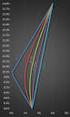
9 Asset allocation with conditional value-at-risk budgets 47 FIGURE 1 Percentage CVaR contribution of asset 1 as a function of its portfolio weight for a two-asset portfolio with asset returns that have a bivariate normal distribution with means 1 and 2, correlation and standard deviations 1 and 2, respectively. 1. (a) 1. (b) % CVaR asset Weight asset 1 % CVaR asset Weight asset 1 1. (c) 1. (d) % CVaR asset % CVaR asset Weight asset 1 Weight asset 1 (a) 1 D 2 D, 1 D 2 D 1and D.5. (b) 1 D 2 D, 1 D 1, 2 D 2 and D.5. (c) 1 D 1, 2 D, 1 D 2 D 1 and D.5. (d) 1 D 2 D, 1 D 2 D 1 and D. Such percentage CVaR contribution constraints reduce the feasible space in a way that depends on the return characteristics. Stoyanov et al (29) study in detail the effect of the component return characteristics on the total portfolio CVaR. To build further intuition via a stylized example, we plot in Figure 1 the percentage CVaR contributions for a two-asset portfolio with asset returns that have a bivariate normal distribution with means 1 and 2, standard deviations 1 and 2 and a correlation. Of course, the percentage CVaR contribution is and 1, respectively, if the weight is and 1. In between these values, the percentage CVaR displays an S-shape. The dotted lines in Figure 1 illustrate the effect on the feasible space for portfolio weight 1 of imposing an upper 6% bound on the percentage CVaR contributions of the two assets. This implies that the percentage CVaR contribution of asset 1 has to be between 4% and 6%. In parts (a) and (d), the two assets are identical. In this case, Research Paper

10 48 K. Boudt et al the feasible space is centered around the equal-weight portfolio. For D (part (d)), the percentage CVaR contribution of asset 1 as a function of its weight is more curved than that for D :5 (part (a)). In the other figures, asset 1 is more attractive than asset 2 since it has either a lower volatility or a higher expected return. We see that this leads to a shift of the feasible space to the right, with allows portfolio weights around 6%. The set of possible weights satisfying the box constraints on the percentage CVaR contributions changes in an intuitively appealing way when differences in return and volatility are allowed. For general portfolios with nonnormal returns, there is no explicit representation of the percentage CVaR constraint as a weight constraint available for investment. A general purpose portfolio solver that can handle such percentage CVaR contribution constraints is available in the R package PortfolioAnalytics of Boudt et al (211). 4 EMPIRICAL RESULTS In this section, we apply the CVaR decomposition methodology to optimize portfolios that allocate across asset classes. The analysis is based on the uary 1976 June 21 monthly total USD returns of broad bond, commodity, equity and real estate asset class indexes, namely the Merrill Lynch Domestic Master index, the S&P Goldman Sachs commodity index, the S&P 5 index and the National Association of Real Estate Investment Trusts (NAREIT) index. The data is obtained from Datastream. We will start with a static two asset bond equity portfolio, and expand to a larger portfolio to study the effects of rebalancing under various constraints and objectives. We impose in all portfolio allocations the full investment constraint and exclude short sales. Because of the nonnormality in the data, we use the modified CVaR estimator of Boudt et al (28). Its implementation requires an estimate of the first four moments of the portfolio returns. For the in-sample analysis in Section 2, all moments are estimated by their historical sample counterpart on the Winsorized data using the method of Boudt et al (28). Over the uary 1976 June 21 period, the annualized average monthly returns (standard deviations) of the bond and US equity markets are 7.56% (5.36%) and 1.69% (14.51%), respectively. The 95% CVaRs of the bond and US equity index are 2.31% and 9.34%, respectively. The GSCI has a relatively low annualized monthly return (6.22%) and high risk (annualized standard deviation of 11.84% and monthly 95% CVaR of 11.84%). With an annualized return of 11.28%, an annualized standard deviation of 14.57% and a monthly CVaR of 1.61%, the NAREIT index offers a higher return than, and a similar standard deviation to, the S&P 5 index, but its downside risk is slightly higher. Journal of Risk Volume 15/Number 3, Spring 213

11 Research Paper TABLE 1 Weight and CVaR allocation of bond equity portfolios, together with the in-sample annualized mean and monthly 95% CVaR over the period uary 1976 June 21. Weight allocation (%) CVaR allocation (%) ƒ ƒ Annual Annual 95% Bond Equity Bond Equity mean (%) SD (%) CVaR (%) Equal weight /4 weight Min CVaR concentration 6/4 CVaR allocation Min CVaR Asset allocation with conditional value-at-risk budgets 49

12 5 K. Boudt et al 4.1 Static bond equity portfolio The simple bond equity portfolio application in Table 1 on the preceding page illustrates the impact of the portfolio policy on the risk allocation. Portfolio managers frequently rely on the heuristic approach of applying position limits to ensure diversification. Such a simple approach may ignore the individual risks of the portfolio assets and their risk dependence. A first example is the equal-weight portfolio, which is popular in practice because it does not require any information on the risk and return and supposedly provides a diversified portfolio. A second popular positionconstrained bond equity portfolio is the 6/4 portfolio, investing 6% in bonds and 4% in equity. The first two lines in Table 1 show the estimated risk allocation of these portfolios. We see that position limits clearly fail to produce portfolios with an ex ante risk diversification: 97% and 86%, respectively, of the portfolio CVaR is caused by the equity investment in the equal-weight and 6/4 portfolios. Note also in Table 1 that the equal-weight and 6/4 portfolios have a relatively high level of total portfolio CVaR. Rockafellar and Uryasev (2), among others, recommend the minimum CVaR portfolio to investors wanting to avoid extreme losses. For our sample, the minimum CVaR portfolio has a monthly 95% CVaR of 2.28%, which is less than half the CVaR of the equal-weight portfolio. However, the portfolio risk is still heavily concentrated in one asset: the bond allocation is responsible for 96% of portfolio CVaR in the minimum CVaR portfolio. This paper proposes the MCC portfolio for investors interested in having both a high ex ante downside risk diversification and a low total portfolio CVaR. We see in Figure 2 on the facing page that for this sample the MCC portfolio has the highest CVaR diversification possible: it is an equal risk contribution portfolio with a 22% share in equity. It has only a slightly higher CVaR than the minimum CVaR portfolio, but it also has a higher average return. Finally, we also consider substituting the 6/4 weight allocation with a 6/4 risk allocation: 82% of this percentage risk constrained portfolio is invested in bonds. As for the MCC portfolio, the price for risk diversification is a slight increase in the portfolio CVaR compared with the minimum CVaR portfolio, but this is also compensated by a higher average return. 4.2 Mean CVaR concentration efficient frontier In comparison with the ERC portfolio of Qian (25), the MCC portfolio has the advantage that it may be easily combined with many other investor objectives and constraints. Adding a return target to the MCC objective, we plot in Figure 2 on the facing page and Figure 3 on page 53 the mean CVaR concentration efficient portfolios for the investment universe consisting of the US bond, S&P 5, NAREIT and GSCI asset class indexes. These portfolios are compared with the mean standard Journal of Risk Volume 15/Number 3, Spring 213

13 Asset allocation with conditional value-at-risk budgets 51 FIGURE 2 Weight and CVaR allocation of mean standard deviation, mean CVaR and mean CVaR concentration efficient portfolios for various levels of annualized portfolio returns. (a) (b) Weight allocation CVaR allocation (c) (d) Weight allocation CVaR allocation (e) (f) Weight allocation CVaR allocation US bond S&P 5 NAREIT GSCI (a), (b) Mean standard deviation. (c), (d) Mean CVaR. (e), (f) Mean CVaR concentration. deviation and mean CVaR efficient portfolios. Part (a) of Figure 3 plots the mean-risk frontiers, while part (c) shows the annualized mean return of the portfolios against the largest percentage CVaR contribution. A joint reading of these plots is needed to understand the trade-off between the maximum return, minimum risk and minimum risk concentration objectives. The optimal weights for the mean CVaR concentration portfolios as a function of the return target are reported in part (e) of Figure 2.Without return constraint, the MCC portfolio invests 47.34% in the bond index, 2.7% in the S&P 5 index, 18.44% in the NAREIT index and 13.52% in the GSCI. Part (f) of Figure 2 shows that the CVaR Research Paper

14 52 K. Boudt et al allocation of the unconstrained MCC portfolio is very close to that of an equal risk contribution portfolio. Parts (a) and (b) of Figure 2 show the weight and CVaR allocation of the classical mean standard deviation and mean CVaR efficient portfolios. There are several striking differences. First, the mean standard deviation portfolio is slightly more diversified than the mean CVaR portfolio: 97% of the unconstrained min CVaR portfolio is invested in the bond index, against 84% for the minimum standard deviation portfolio. Second, since the CVaR of the GSCI is significantly higher than the CVaR of the other asset class indexes, its percentage risk contribution is triple its portfolio weight. Third, the annualized returns of the minimum standard deviation and CVaR portfolios are 7.7% and 7.5%, respectively, while for the MCC portfolio it is 8.7%. The risk return trade-off is visualized in Figure 3 on the facing page. We see that the equal-weight portfolio has the highest average return and risk of all unconstrained portfolios, followed by the MCC portfolio. The risk return characteristics of the min standard deviation and min CVaR portfolios are similar. Figure 2 on the preceding page shows that imposing a return constraint on the minimum standard deviation and CVaR portfolios leads to a higher allocation to the S&P 5 and the NAREIT index, and a reduction in the bond and GSCI investment. Of course this leads to portfolios with a higher return and risk, but, interestingly, as long as the return target is below 9%, it reduces the risk concentration of the portfolio, as can be seen from part (c) of Figure 3 on the facing page. From that point onward, the NAREIT index becomes the largest risk contributor, and higher returns are traded off with both a higher total portfolio risk and risk concentration. The mean CVaR concentration efficient portfolio is very different from the mean CVaR and mean standard deviation efficient portfolios. On this data set, the mean CVaR concentration efficient frontier has three distinct segments. Unconstrained, the mean CVaR concentration efficient frontier is an equal risk contribution portfolio with an annualized return of 8.7%. For a target return between 8.7% and 9.1%, the portfolio CVaR concentration increases from.96% to 1.19%, but the portfolio CVaR decreases from 3.87% to 3.59%. This is due to a reallocation of the more risky commodity investment into bonds, equity and real estate, as can be seen in Figure 2 on the preceding page. At the end of this segment, only 1% of the portfolio is invested in commodities. Bonds dominate the portfolio budget allocation, with a 58% share. On the second segment, the bond allocation shrinks to zero, while the shares of the S&P 5 and the NAREIT index rise from 22% to 52% and from 2% to 48%, respectively. On this angle portfolio, the S&P 5 and NAREIT index each contribute 5% to the portfolio CVaR, which is now 7.% compensated by a target return of 11%. The portfolios on the final segment of the frontier gradually replace the S&P 5 investment with the NAREIT. Since this asset offers the highest return, it is also the endpoint of the long-only constrained mean CVaR concentration efficient frontier. Journal of Risk Volume 15/Number 3, Spring 213

15 Asset allocation with conditional value-at-risk budgets 53 FIGURE 3 Annualized mean return versus the annualized portfolio standard deviation, the monthly portfolio 95% CVaR and the largest percentage CVaR contribution for the mean standard deviation, mean CVaR and mean CVaR concentration efficient portfolios. Mean CVaR concentration Mean CVaR Mean standard devation (a) Annualized mean return Annualized mean return NAREIT S&P 5 EW Min StdDev MCC=ERC US bond Min CVaR GCSI Annualized portfolio standard deviation (b) NAREIT S&P 5 EW MCC=ERC US bond Min StdDev Min CVaR GCSI Monthly 95% portfolio CVaR (c) Annualized mean return MCC =ERC Min StdDev EW Min CVaR Largest contribution to monthly 95% CVaR Research Paper

16 54 K. Boudt et al 4.3 Dynamic investment strategies Under a static risk budget allocation approach, the portfolio manager has determined a desired asset allocation and does not intend to stray far from it. However, it is wellknown that the risk and dependence of most financial assets are time-varying, which means that the optimal risk budget allocation portfolios also change over time. Let us therefore consider a dynamic portfolio invested in bonds, equity, real estate and commodities. The portfolio is rebalanced quarterly to satisfy an equalweight, minimum CVaR or MCC objective. The CVaR budgets are computed by the Cornish Fisher method in Boudt et al (28), requiring an estimate of the first four (co)moments of the multivariate return distribution. Estimation of these moments is conditional on the information available at the time of rebalancing, as detailed in Appendix A. Since we required a minimum sample size of eight years and the data span is uary 1976 June 21, the optimized weights are available for the quarters 21 Q3. First, we discuss the results for the equal-weight, minimum CVaR and MCC portfolios. Second, we analyze the sensitivity of the minimum CVaR and MCC portfolios to the inclusion of a weight or risk allocation constraint and the choice of risk measure Results for unconstrained portfolios Figure 4 on the facing page plots the weight and CVaR allocations of the equal-weight, minimum CVaR, and MCC portfolios. We find that, for almost all periods, the minimum CVaR portfolio is highly invested in the bond index, while the MCC portfolio is more balanced across all asset classes. As predicted by the theory, the risk allocation of the minimum CVaR portfolio coincides with its weight allocation. The risk allocation of the MCC portfolio is almost identical to the equal risk contribution state. The CVaR of the equal-weight portfolio is dominated by the S&P 5, GSCI and NAREIT indexes, while the risk contribution of the bond is almost zero for many quarters. The reason for the bad performance of weight constraints in ensuring ex ante risk diversification is the nonlinear dependence of portfolio CVaR contributions on the weights. Reaching the portfolio manager s goal of ensuring risk diversification is therefore more efficiently achieved via direct constraints on the risk budget contributions rather than the weights. 1 As noted by a referee, even though we evaluate the portfolios based on their performance, none of the objectives considered include performance (absolute or risk-adjusted). This is because of the difficulty in forecasting properly expected return, compared with forecasting risk, as already mentioned by Merton (198). Journal of Risk Volume 15/Number 3, Spring 213

17 Asset allocation with conditional value-at-risk budgets 55 FIGURE 4 Stacked bar weight and CVaR contribution plots for the quarterly rebalanced equal-weight, minimum CVaR and minimum CVaR concentration portfolios. (a) Weight allocation CVaR allocation (b) Weight allocation Weight allocation CVaR allocation CVaR allocation (c) US bond S&P 5 NAREIT GSCI (a) Equal weight. (b) Minimum CVaR. (c) Minimum CVaR concentration. Part (a) in Figure 5 on the next page plots the ex ante portfolio risk estimates. As expected, the CVaR of the MCC portfolio is for all quarters in between the CVaR of the minimum CVaR portfolio and the CVaR of the equal-weight portfolio. The solid gray and black lines in part (b) of Figure 5 on the next page plot the ratio of the monthly cumulative out-of-sample returns of the minimum CVaR and MCC portfolios versus the cumulative returns of the equal-weight portfolio over the period uary June 21. The value of the chart is less important than the slope of the Research Paper

18 56 K. Boudt et al FIGURE 5 Monthly CVaR of (a) the quarterly rebalanced equal-weight, minimum CVaR and minimum CVaR concentration portfolios and (b) the relative performance of the quarterly rebalanced minimum CVaR and minimum CVaR concentration portfolios versus the equal-weight portfolio..15 Equal weight Min CVaR concentration Min CVaR (a) Portfolio CVaR Jun 21 (b) Relative performance vs. equal weight Min CVaR concentration Min CVaR Jun 21 The shaded regions indicate a bear market regime. line. If the slope is positive, the strategy in the numerator is outperforming the equalweight strategy, and vice versa. The vertical gray bars denote bear markets, defined by Ellis (25) as periods with a decline in the S&P 5 index of 12% or more. The left-hand side of the bar corresponds to the market peaks and the right-hand side to the stock market trough. We see in Figure 5 that the minimum CVaR portfolio, having a large allocation to bonds, outperforms the equal-weight and MCC portfolios at times of serious stock market downturn. The performance of the MCC portfolio seems to be a middle ground between the performance of the equal-weight and minimum CVaR portfolios. It offers an attractive compromise between the good performance of the Journal of Risk Volume 15/Number 3, Spring 213

19 Asset allocation with conditional value-at-risk budgets 57 minimum CVaR portfolio in adverse markets and the upward potential of the equalweight portfolio. A final observation is that periods where one strategy outperforms the other are relatively long and indicate the possibility of applying market timing strategies on top of these allocations. Table 2 on the next page reports the annualized out-of-sample average return on the portfolios. When computed over the whole period, the minimum CVaR and MCC portfolios performed within 15 bps of one another. This is a small margin, given the long period of time presented. The risk statistics computed from the out-of-sample returns confirm the ex ante risk estimates from Figure 5 on the facing page. The value of the annualized standard deviation and monthly historical CVaR of the MCC portfolio is in between those of the minimum CVaR portfolio and the equal-weight portfolio. In the credit crisis the equal-weight portfolio suffered a drawdown of 52%, which is significantly higher than the 34% drawdown of the MCC portfolio. Splitting the sample into bull/bear periods, we see a much bigger variation in relative performance. The (annualized) return for the minimum CVaR portfolio trailed the MCC portfolio by more than 3 bps during equity bull markets, yet outperformed during bear markets by more than 18 bps. The minimum CVaR and MCC portfolio therefore both have their appeal, depending on the market environment. This might lead to risk timing the portfolio allocation, whereby the investor selects their risk appetite based on broad market conditions. In a secular bull market, the investor might choose the MCC portfolio because of its relative outperformance in exchange for the risk of slightly larger losses. In a secular bear market, the minimum CVaR portfolio might be more appealing because of its conservatism. Recall from (3.6) that the MCC portfolio is designed to have both a low downside risk and high downside risk diversification. To verify that the MCC effectively retains this property out-of-sample, we report in Table 2 on the next page the average Gini coefficient of the portfolio weights and the historical CVaR percentage concentration. The Gini coefficient takes values between (equal-weight portfolio) and 1 (portfolio concentrated on one asset). 2 We see that the minimum CVaR portfolio is heavily concentrated on a few assets compared with the MCC portfolio. The MCC portfolio thus strikes an attractive balance between a high risk adjusted return performance and a well-diversified portfolio. The historical CVaR percentage concentration is computed as the average proportion between the largest component loss contribution and the total loss for all losses that exceed the 5% quantile loss, computed using the returns from inception. We see that the equal-weight portfolio has the lowest CVaR percentage concentration, but the highest CVaR. In contrast, the minimum CVaR portfolio has 2 The Gini index is a measure of dispersion using the Lorenz curve. Let z be a random variable on Œ; 1 with distribution function F. The Gini index is calculated as 1 2 R 1 L.z/ dz, where L.z/ D R z u df.u/= R 1 u df.u/. Research Paper

20 Journal of Risk Volume 15/Number 3, Spring 213 TABLE 2 Summary statistics of monthly out-of-sample returns on equal-weight, minimum portfolio CVaR (concentration) investment strategies over the period uary June 21. [Table continues on next page.] Objective ƒ Min CVaR ƒ Min CVaR 4% 4% CVaR conc. Equal Min Min CVaR position allocation 4% position Constraint weight CVaR conc. limit limit ERC limit (a) Full period (%) Annual mean Annual SD Skewness Excess kurtosis Monthly historical CVaR Gini portfolio weights Monthly historical CVaR % concentration Portfolio turnover (b) Normal/bull stock market (%) Annual mean Annual SD Skewness Excess kurtosis Monthly historical CVaR K. Boudt et al

21 Research Paper TABLE 2 Continued. Objective ƒ Min CVaR ƒ Min CVaR 4% 4% CVaR conc. Equal Min Min CVaR position allocation 4% position Constraint weight CVaR conc. limit limit ERC limit (c) Bear stock market (%) Annual mean Annual SD Skewness Excess kurtosis Monthly historical CVaR (d) Drawdowns higher than 1% Credit crisis Asian Russian crisis 2 Black Monday May 28 February 28 for the min CVaR portfolio, November 27 February 29 for the min CVaR portfolio with position or risk allocation limit, otherwise June 28 February October 1997 August 1998 for the equal-weight portfolio, otherwise April August August November 1987 for the equal-weight portfolio, otherwise August October Asset allocation with conditional value-at-risk budgets 59
22 6 K. Boudt et al the lowest CVaR, but the highest CVaR percentage concentration. The MCC portfolio combines both a low CVaR concentration and low total portfolio CVaR. Finally, we consider the portfolio turnover of the strategies, defined by DeMiguel et al (29) as the average sum of the absolute value of the trades across the N available assets: turnover D 1 TX 1 NX jw.i/tc1 w.i/tc j; (4.1) T 1 td1 where w.i/tc1 is the weight of asset i at the start of rebalancing period t C1, w.i/tc is the weight of that asset before rebalancing at t C1 and T is the total number of rebalancing periods. This turnover quantity can be interpreted as the average percentage of wealth traded in each period. The portfolio turnover is the lowest for the equal-weight portfolio (5.1%). The MCC portfolio has a significantly lower turnover (9.4%) than the minimum CVaR portfolio (1.31%). In conclusion, over the period uary June 21, the minimum CVaR portfolio has the lowest out-of-sample risk but a high risk concentration and turnover. The equal-weight strategy has the lowest turnover and risk concentration, but highest total risk. The proposed MCC portfolio is the second best in all these aspects. It achieves an attractive compromise between low overall risk, good upside return, high diversification and low turnover. When we condition on the market regime, we find that in bear markets, as expected, the minimum CVaR portfolio outperforms all strategies, but has a lower return in normal/bull markets than the equal-weight and MCC portfolios. Compared with the equal-weight diversification strategy, the MCC portfolio has a comparable return but lower risk in a normal/bull stock market, and its performance is less affected when the market regime switches to a more negative outlook. For this reason, we recommend a minimum CVaR allocation strategy in a bear market regime and the MCC strategy in a normal/bull market regime Sensitivity to weight and CVaR allocation constraints The MCC portfolio directly optimizes the risk diversification of the portfolio. Previous research by Maillard et al (21), Qian (25) and Zhu et al (21), however, has focused on using risk budgets as a constraint in the portfolio allocation, or imposing diversification through weight constraints. In Table 3 on the facing page, Figure 6 on page 62 and Figure 7 on page 63, we investigate the sensitivity of the portfolios to an equal risk contribution constraint, an upper 4% position limit or an upper 4% CVaR allocation limit. The choice of 4% is arbitrary, but it is consistent with the 4% allocation to equity in the stylized 6/4 bond equity portfolio. Part (a) of Figure 6 on page 62 presents the weight allocations of the constrained minimum CVaR portfolios. We see that the 4% upper bound on the portfolio weights id1 Journal of Risk Volume 15/Number 3, Spring 213
23 Asset allocation with conditional value-at-risk budgets 61 TABLE 3 Summary statistics of monthly out-of-sample returns on minimum portfolio standard deviation (concentration) investment strategies over the period uary June 21. Objective ƒ Min SD Min SD Min SD ƒ conc. Min conc. 4% SD allocation 4% pos Constraint SD 4% pos limit limit ERC limit (a) Full period (%) Annual mean Annual SD Skewness Excess kurtosis Monthly historical CVaR Gini portfolio weights Monthly historical CVaR % conc Portfolio turnover (b) Normal/bull stock market (%) Annual mean Annual SD Skewness Excess kurtosis Monthly historical CVaR (c) Bear stock market (%) Annual mean Annual SD Skewness Excess kurtosis Monthly historical CVaR (d) Drawdowns higher than 1% Credit crisis Asian Russian crisis 2 1 June 28 February November 1997 August 1998 for the minimum standard deviation concentration and ERC constrained portfolios. Otherwise November 1997 February Research Paper
24 62 K. Boudt et al FIGURE 6 Stacked bar weight and CVaR contribution plots for the constrained minimum CVaR and minimum CVaR concentration portfolios invested in the Merrill Lynch US bond, S&P 5, NAREIT and S&P GSCI indexes. (a) Weight allocation CVaR allocation (b) Weight allocation CVaR allocation (c) Weight allocation CVaR allocation US bond S&P 5 NAREIT GSCI The portfolios are rebalanced quarterly. (a) Min CVaR + 4% position limit. (b) Min CVaR + 4% CVaR allocation limit. (c) Min CVaR concentration + 4% position limit. and risk allocations is stringent for almost all periods. Under these constraints, the component CVaR contribution of the minimum CVaR portfolio no longer coincides with the weight allocation. The investment in the bond typically contributes less to CVaR risk than its portfolio weight. Its contribution is for some months even negative under the position limit. Part (c) of Figure 6 shows the weight and risk allocation of the MCC portfolio under a 4% upper bound on the portfolio weights. We see that, in spite of the weight constraint, the risk of the MCC portfolio is still more equally spread out than for the minimum CVaR portfolio, where for some periods the S&P 5 investment causes more than half of portfolio risk. Journal of Risk Volume 15/Number 3, Spring 213
25 Asset allocation with conditional value-at-risk budgets 63 FIGURE 7 Monthly CVaR of (a) the quarterly rebalanced constrained minimum CVaR and minimum CVaR concentration portfolios and (b) the relative performance of the quarterly rebalanced constrained minimum CVaR and minimum CVaR concentration portfolios versus the equal-weight portfolio..15 (a) Portfolio CVaR Jun 21 (b) Relative performance vs equal weight Jun 21 Min CVaR + ERC constraint Min CVaR + 4% CVaR alloc limit Min CVaR + 4% position limit Min CVaR concentration +4% position limit The shaded regions indicate a bear market regime. From the weight and CVaR allocation plots, it is clear that adding position or risk allocation limits pushes the minimum CVaR and MCC portfolio toward an allocation that is closer to the equal-weight portfolio. Consequently, the return, risk and turnover properties of these constrained portfolios are closer to the equal-weight portfolio, as can be seen in Table 3 on page 61 and Figure 7. Compared with the 4% CVaR alloca- Research Paper
26 64 K. Boudt et al tion limit, the maximum 4% weight constraint leads to portfolios with a substantially higher predicted risk (see part (a) of Figure 6 on page 62) and realized risk (see the standard deviation and historical CVaR values in Table 3 on page 61). In all aspects, the unconstrained MCC portfolio and ERC constrained minimum CVaR portfolios are very similar Sensitivity to the choice of risk measure In Maillard et al (21), Qian (25) and Zhu et al (21), the portfolio standard deviation is used as the risk measure in the risk allocation portfolio. We analyze the sensitivity of our results to the use of downside risk measures in Table 3 on page 61, where we report the performance statistics for the same investment styles, but using the portfolio standard deviation as the risk measure. Overall, it seems that, for this investment universe, changing the risk measure only has a marginal impact on the out-of-sample performance, compared with the choice of investment style. In fact, when testing for the equality of the Sharpe ratios between the minimum CVaR (concentration) and minimum standard deviation (concentration) portfolios using the test of Jobson and Korkie (1981) and Memmel (23), we do not find a significant difference in performance at a 9% confidence level. Similarly to the CVaR risk measure, we find that the minimum standard deviation concentration portfolio constitutes an attractive middle ground between the upward potential of the equalweight portfolio in normal/bull markets and the low risk of the minimum standard deviation portfolio. 5 CONCLUSION An extensive empirical application of ex ante downside risk budget methods to dynamic allocation across bonds, commodities, domestic and international equity illustrated the out-of-sample effectiveness of downside risk budgets in generating portfolios that have low portfolio risk and risk concentration, high diversification and low portfolio turnover. A first strategy is to impose bound constraints on the percentage CVaR contributions. This provides a direct substitute and improvement to the commonly practiced risk diversification approach based on position limits. A second strategy consists of minimizing the largest component CVaR contribution, which directly addresses risk diversification, even in portfolios with nonnormally distributed assets. The properties of these approaches as described in this paper compare favorably to the equal-weight portfolio. Unconstrained, the minimum CVaR concentration portfolio is typically similar to the equal risk contribution portfolio of Qian (25). Furthermore, it may be easily combined with many other investor objectives and constraints (such as return targets or drawdown and cardinality constraints). Investors can thus optimally balance their maximum return, minimum downside risk and maximum Journal of Risk Volume 15/Number 3, Spring 213
27 Asset allocation with conditional value-at-risk budgets 65 downside risk diversification objectives through an ex ante use of CVaR budgets in portfolio optimization. Based on our empirical study, we recommend the optimization of the asset allocation according to a minimum CVaR objective in a bear market regime and the minimization of the portfolio s CVaR concentration in a normal/bull market regime. There are several interesting directions for further research. First of all, the risk allocation methodology could be applied to a large-scale equity portfolio, in which case we recommend the formulation of the risk budget constraints and objectives at a more aggregate level, such as at the level of the country and industry rather than the individual stock. A second topic for further research is the choice of downside risk estimator and the loss probability at which the downside risk is computed. Finally, a switching allocation rule between a low-risk strategy and a strategy that combines risk objectives with views on the returns also merits further research. APPENDIX A A.1 CVaR budget of the fully invested minimum CVaR portfolio The Langrangian associated with the fully invested minimum CVaR portfolio is CVaR w. / C.w 1/; (A.1) with the N 1 vector with each element equal to 1. From the first order conditions, it follows w. / ˇ D : ˇwDw min CVaR Hence, the partial derivatives should all be equal, and w. / C.i/ CVaR w. / D w.i/ there exists a unique constant k such that min CVaR w.i/ D kc.i/ CVaR w min CVaR. /; (A.3) for all i D 1;:::;N. Because of the full investment constraint, the weights need to sum up to unity, which is satisfied for k D 1=CVaR w min CVaR. /. Replacing k with 1=CVaR w min CVaR. / in (A.3) yields that the weight and percentage CVaR allocation coincide for the minimum CVaR portfolio. A.2 Implementation of the CVaR estimator The CVaR estimator requires an estimate of the N 1 conditional mean t, the N N conditional covariance matrix t, the N N 2 conditional coskewness t, and the Research Paper
28 66 K. Boudt et al N N 3 cokurtosis matrix t. We obtain estimates of these conditional (co)moments through the following stepwise estimation procedure. (1) Estimate the conditional mean monthly return t as the sample average of the returns from inception up to month t 1. (2) Center the monthly returns in the sample around t : Nr s D r s t for all s D 1;:::;t 1. (3) Estimate the conditional covariance matrix for each return in the sample, as well as the conditional covariance matrix for next month s return ( t), using the DCC GARCH(1,1) model of Engle (22). Under this approach, the parameters of the individual GARCH(1,1) volatilities and conditional correlations are estimated separately, using a two-stage quasi-maximum likelihood estimation procedure with variance and correlation targeting. The conditional covariances are then computed as products of individual volatilities and conditional correlations. (4) For the returns in the sample, compute the devolatilized centered return series: u s D P 1=2 s Nr s for all s D 1;:::;t 1. (5) Use the Winsorization procedure of Boudt et al (28) to reduce the magnitude of the most extreme devolatilized return vectors in the sample. (6) Compute the equicorrelation estimator of t and t on the sample of Winsorized devolatilized returns, as proposed by Martellini and Ziemann (21). Given a portfolio weight vector w, the second, third and fourth portfolio moments can then be computed as m 2t D w tw; m 3t D w t.w w/; m 4t D w t.w w w/; respectively, where denotes the Kronecker product. The portfolio skewness s t D m 3t =m 3=2 2t and the excess kurtosis k t D m 4t =m 2 2t 3. The Cornish Fisher-based CVaR estimator proposed by Boudt et al (28) is derived from the Cornish Fisher expansion. For a zero mean, unit variance random variable with skewness s t and excess kurtosis k t, the second order Cornish Fisher expansion of the quantile function around the Gaussian quantile function 1./ equals g t D z C 1 6.z2 1/s t C 1 24.z3 3z /k t z3 5z /s t 2 ; (A.4) with z D 1. /. The Cornish Fisher CVaR for the portfolio return in month t is then given by CVaR t. / D w t C p m 2t d t. /; (A.5) Journal of Risk Volume 15/Number 3, Spring 213
29 Asset allocation with conditional value-at-risk budgets 67 with d t. / D 1 f.g t/ C 1 24 ŒI 4 6I 2 C 3.g t / k t C 1 6 ŒI 3 3I 1 s t and where 8 Xq=2 ˆ< I q id1 D Xq Q q j D.2j C 1/ ˆ: Q i j D.2j C 1/ id Q q=2 j D1 Q 2j Yq=2 i j D1 2j g t 2i.g t/ C g t 2iC1 C 1 72 ŒI 6 15I 4 C 45I 2 15.g t / s 2 p g j D1.g t / 2j.g t / q Y j D for q even;.2j C 1/.g t / for q odd; q D.q 1/=2 and./ and./ are the standard normal density and cumulative distribution functions, respectively. Although the CVaR estimation formulas seem rather complex, they lend themselves to efficient translation into a simple algorithm that computes both CVaR and component CVaR in less than a second, even for portfolios with a large number of assets. 3 REFERENCES Ardia, D., Boudt, K., Carl, P., Mullen, K., and Peterson, B. (211). Differential evolution (DEoptim) for non-convex portfolio optimization. R Journal 3(1), Artzner, P., Delbaen, F., Eber, J. M., and Heath, D. (1999). Coherent measures of risk. Mathematical Finance 9(3), Boudt, K., Peterson, B. G., and Croux, C.(28). Estimation and decomposition of downside risk for portfolios with non-normal returns. The Journal of Risk 11(2), Boudt, K., Carl, P., and Peterson, B. G. (211). PortfolioAnalytics: portfolio analysis, including numeric methods for optimization of portfolios. R Package, Version.6.1. Carl, P., and Peterson, B. G. (21). PerformanceAnalytics: econometric tools for performance and risk analysis. R Package, Version Choueifaty, Y., and Coignard, Y. (28).Toward maximum diversification. Journal of Portfolio Management 35(1), Chow, G., and Kritzman, M. (21). Risk budgets. Journal of Portfolio Management 27(2), DeMiguel, V., Garlappi, L., and Uppal, R. (29). Optimal versus naïve diversification: how inefficient is the 1=N portfolio strategy? Review of Financial Studies 22(5), Denault, M. (21). Coherent allocation of risk capital. The Journal of Risk 4(1), Ellis, J. (25). Ahead of the Curve: A Commonsense Guide to Forecasting Business and Market Cycles. Harvard Business Press, Cambridge, MA. 3 The estimator is available in Carl and Peterson s (21) R package PerformanceAnalytics. Research Paper
30 68 K. Boudt et al Engle, R. (22). Dynamic conditional correlation: a simple class of multivariate generalised autoregressive conditional heteroskedasticity models. Journal of Business and Economic Statistics 2(3), Jobson, J., and Korkie, B. (1981). Performance hypothesis testing with the Sharpe and Treynor measures. Journal of Finance 36(4), Keel, S., and Ardia, D. (211). Generalized marginal risk. Journal of Asset Management 12(2), Lee, W. (211). Risk-based asset allocation: a new answer to an old question? Journal of Portfolio Management 37(4), Litterman, R. B. (). Hot spots TM and hedges. Journal of Portfolio Management 22(5), Maillard, S., Roncalli, T., and Teiletche, J. (21). On the properties of equally-weighted risk contributions portfolios. Journal of Portfolio Management 36(4), 6 7. Martellini, L., and Ziemann, V. (21). Improved forecasts of higher-order comoments and implications for portfolio selection. Review of Financial Studies 23(4), Memmel, C. (23). Performance hypothesis testing with the Sharpe ratio. Finance Letters 1(1), Merton, R. (198). On estimating the expected return on the market. Journal of Financial Economics 8(4), Pearson, N. D. (22). Risk Budgeting: Portfolio Problem Solving with Value-at-Risk, 1st edn. Wiley. Peterson, B. G., and Boudt, K.(28). Component VAR for a non-normal world. Risk 21(11), Pflug, G. C. (2). Some remarks on the value-at-risk and the conditional value-at-risk. In Probabilistic Constrained Optimization: Methodology and Applications, Uryasev, S. (ed), pp Kluwer, Dordrecht. Price, K., Storn, R., and Lampinen, J. (25). Differential Evolution: A Practical Approach to Global Optimization. Springer. Qian, E. (25). Risk parity portfolios: efficient portfolios through true diversification of risk. Report, Panagora Asset Management (September). Rockafellar, R. T., and Uryasev, S. (2). Optimization of conditional value-at-risk. The Journal of Risk 2(3), Scaillet, O. (22). Nonparametric estimation and sensitivity analysis of expected shortfall. Mathematical Finance 14(1), Scherer, B. (27). Portfolio Construction and Risk Budgeting, 3rd edn. Risk Books, London. Stoyanov, S., Rachev, S. T., and Fabozzi, F. J. (29). Sensitivity of portfolio VaR and CVaR to portfolio return characteristics. Working Paper, Universität Karlsruhe. Topaloglou, N., Vladimirou, H., and Zenios, S. A. (22). CVaR models with selective hedging for international asset allocation. Journal of Banking and Finance 26(7), Zhu, S., Li, D., and Sun, X. (21). Portfolio selection with marginal risk control. The Journal of Computational Finance 14(1), Journal of Risk Volume 15/Number 3, Spring 213
Portfolio optimization with CVaR budgets
 Portfolio optimization with CVaR budgets Kris Boudt - Peter Carl - Brian G. Peterson R/Finance 2010 April 16th, 2010 K.U.Leuven and Lessius 1 / 42 History portfolio Risk budgets: Standard tool to quantify
Understanding the Impact of Weights Constraints in Portfolio Theory
 Understanding the Impact of Weights Constraints in Portfolio Theory Thierry Roncalli Research & Development Lyxor Asset Management, Paris [email protected] January 2010 Abstract In this article,
Business Objectives and Complex Portfolio Optimization. Peter Carl Brian Peterson Kris Boudt
 Business Objectives and Complex Portfolio Optimization Peter Carl Brian Peterson Kris Boudt Overview Touch on challenges in portfolio optimization Introduce the PortfolioAnalytics package Demonstrate main
Active Versus Passive Low-Volatility Investing
 Active Versus Passive Low-Volatility Investing Introduction ISSUE 3 October 013 Danny Meidan, Ph.D. (561) 775.1100 Low-volatility equity investing has gained quite a lot of interest and assets over the
Contents. List of Figures. List of Tables. List of Examples. Preface to Volume IV
 Contents List of Figures List of Tables List of Examples Foreword Preface to Volume IV xiii xvi xxi xxv xxix IV.1 Value at Risk and Other Risk Metrics 1 IV.1.1 Introduction 1 IV.1.2 An Overview of Market
Chapter 2 Portfolio Management and the Capital Asset Pricing Model
 Chapter 2 Portfolio Management and the Capital Asset Pricing Model In this chapter, we explore the issue of risk management in a portfolio of assets. The main issue is how to balance a portfolio, that
Measuring downside risk of stock returns with time-dependent volatility (Downside-Risikomessung für Aktien mit zeitabhängigen Volatilitäten)
 Topic 1: Measuring downside risk of stock returns with time-dependent volatility (Downside-Risikomessung für Aktien mit zeitabhängigen Volatilitäten) One of the principal objectives of financial risk management
1 Portfolio mean and variance
 Copyright c 2005 by Karl Sigman Portfolio mean and variance Here we study the performance of a one-period investment X 0 > 0 (dollars) shared among several different assets. Our criterion for measuring
Using Microsoft Excel to build Efficient Frontiers via the Mean Variance Optimization Method
 Using Microsoft Excel to build Efficient Frontiers via the Mean Variance Optimization Method Submitted by John Alexander McNair ID #: 0061216 Date: April 14, 2003 The Optimal Portfolio Problem Consider
Index Volatility Futures in Asset Allocation: A Hedging Framework
 Investment Research Index Volatility Futures in Asset Allocation: A Hedging Framework Jai Jacob, Portfolio Manager/Analyst, Lazard Asset Management Emma Rasiel, PhD, Assistant Professor of the Practice
Asymmetric Correlations and Tail Dependence in Financial Asset Returns (Asymmetrische Korrelationen und Tail-Dependence in Finanzmarktrenditen)
 Topic 1: Asymmetric Correlations and Tail Dependence in Financial Asset Returns (Asymmetrische Korrelationen und Tail-Dependence in Finanzmarktrenditen) Besides fat tails and time-dependent volatility,
Porter, White & Company
 Porter, White & Company Optimizing the Fixed Income Component of a Portfolio White Paper, September 2009, Number IM 17.2 In the White Paper, Comparison of Fixed Income Fund Performance, we show that a
Black Box Trend Following Lifting the Veil
 AlphaQuest CTA Research Series #1 The goal of this research series is to demystify specific black box CTA trend following strategies and to analyze their characteristics both as a stand-alone product as
Optimization under uncertainty: modeling and solution methods
 Optimization under uncertainty: modeling and solution methods Paolo Brandimarte Dipartimento di Scienze Matematiche Politecnico di Torino e-mail: [email protected] URL: http://staff.polito.it/paolo.brandimarte
Financial Assets Behaving Badly The Case of High Yield Bonds. Chris Kantos Newport Seminar June 2013
 Financial Assets Behaving Badly The Case of High Yield Bonds Chris Kantos Newport Seminar June 2013 Main Concepts for Today The most common metric of financial asset risk is the volatility or standard
Benchmarking Low-Volatility Strategies
 Benchmarking Low-Volatility Strategies David Blitz* Head Quantitative Equity Research Robeco Asset Management Pim van Vliet, PhD** Portfolio Manager Quantitative Equity Robeco Asset Management forthcoming
Investment Statistics: Definitions & Formulas
 Investment Statistics: Definitions & Formulas The following are brief descriptions and formulas for the various statistics and calculations available within the ease Analytics system. Unless stated otherwise,
VANDERBILT AVENUE ASSET MANAGEMENT
 SUMMARY CURRENCY-HEDGED INTERNATIONAL FIXED INCOME INVESTMENT In recent years, the management of risk in internationally diversified bond portfolios held by U.S. investors has been guided by the following
Risk Decomposition of Investment Portfolios. Dan dibartolomeo Northfield Webinar January 2014
 Risk Decomposition of Investment Portfolios Dan dibartolomeo Northfield Webinar January 2014 Main Concepts for Today Investment practitioners rely on a decomposition of portfolio risk into factors to guide
Online Supplementary Material
 Online Supplementary Material The Supplementary Material includes 1. An alternative investment goal for fiscal capacity. 2. The relaxation of the monopoly assumption in favor of an oligopoly market. 3.
Portfolio insurance a comparison of naive versus popular strategies
 Jorge Costa (Portugal), Raquel M. Gaspar (Portugal) Insurance Markets and Companies: Analyses and Actuarial Computations, Volume 5, Issue 1, 2014 Portfolio insurance a comparison of naive versus popular
THE LOW-VOLATILITY ANOMALY: Does It Work In Practice?
 THE LOW-VOLATILITY ANOMALY: Does It Work In Practice? Glenn Tanner McCoy College of Business, Texas State University, San Marcos TX 78666 E-mail: [email protected] ABSTRACT This paper serves as both an
15.401 Finance Theory
 Finance Theory MIT Sloan MBA Program Andrew W. Lo Harris & Harris Group Professor, MIT Sloan School Lecture 13 14 14: : Risk Analytics and Critical Concepts Motivation Measuring Risk and Reward Mean-Variance
CASH FLOW MATCHING PROBLEM WITH CVaR CONSTRAINTS: A CASE STUDY WITH PORTFOLIO SAFEGUARD. Danjue Shang and Stan Uryasev
 CASH FLOW MATCHING PROBLEM WITH CVaR CONSTRAINTS: A CASE STUDY WITH PORTFOLIO SAFEGUARD Danjue Shang and Stan Uryasev PROJECT REPORT #2011-1 Risk Management and Financial Engineering Lab Department of
EVALUATING THE PERFORMANCE CHARACTERISTICS OF THE CBOE S&P 500 PUTWRITE INDEX
 DECEMBER 2008 Independent advice for the institutional investor EVALUATING THE PERFORMANCE CHARACTERISTICS OF THE CBOE S&P 500 PUTWRITE INDEX EXECUTIVE SUMMARY The CBOE S&P 500 PutWrite Index (ticker symbol
Chicago Booth BUSINESS STATISTICS 41000 Final Exam Fall 2011
 Chicago Booth BUSINESS STATISTICS 41000 Final Exam Fall 2011 Name: Section: I pledge my honor that I have not violated the Honor Code Signature: This exam has 34 pages. You have 3 hours to complete this
I.e., the return per dollar from investing in the shares from time 0 to time 1,
 XVII. SECURITY PRICING AND SECURITY ANALYSIS IN AN EFFICIENT MARKET Consider the following somewhat simplified description of a typical analyst-investor's actions in making an investment decision. First,
Index tracking UNDER TRANSACTION COSTS:
 MARKE REVIEWS Index tracking UNDER RANSACION COSS: rebalancing passive portfolios by Reinhold Hafner, Ansgar Puetz and Ralf Werner, RiskLab GmbH Portfolio managers must be able to estimate transaction
CHAPTER 7: OPTIMAL RISKY PORTFOLIOS
 CHAPTER 7: OPTIMAL RIKY PORTFOLIO PROLEM ET 1. (a) and (e).. (a) and (c). After real estate is added to the portfolio, there are four asset classes in the portfolio: stocks, bonds, cash and real estate.
Interest Rates and Inflation: How They Might Affect Managed Futures
 Faced with the prospect of potential declines in both bonds and equities, an allocation to managed futures may serve as an appealing diversifier to traditional strategies. HIGHLIGHTS Managed Futures have
Answers to Concepts in Review
 Answers to Concepts in Review 1. A portfolio is simply a collection of investments assembled to meet a common investment goal. An efficient portfolio is a portfolio offering the highest expected return
Investing In Volatility
 Investing In Volatility By: Anish Parvataneni, CFA Portfolio Manager LJM Partners Ltd. LJM Partners, Ltd. is issuing a series a white papers on the subject of investing in volatility as an asset class.
Lecture 1: Asset Allocation
 Lecture 1: Asset Allocation Investments FIN460-Papanikolaou Asset Allocation I 1/ 62 Overview 1. Introduction 2. Investor s Risk Tolerance 3. Allocating Capital Between a Risky and riskless asset 4. Allocating
Target Strategy: a practical application to ETFs and ETCs
 Target Strategy: a practical application to ETFs and ETCs Abstract During the last 20 years, many asset/fund managers proposed different absolute return strategies to gain a positive return in any financial
How To Check For Differences In The One Way Anova
 MINITAB ASSISTANT WHITE PAPER This paper explains the research conducted by Minitab statisticians to develop the methods and data checks used in the Assistant in Minitab 17 Statistical Software. One-Way
An introduction to Value-at-Risk Learning Curve September 2003
 An introduction to Value-at-Risk Learning Curve September 2003 Value-at-Risk The introduction of Value-at-Risk (VaR) as an accepted methodology for quantifying market risk is part of the evolution of risk
Effective downside risk management
 Effective downside risk management Aymeric Forest, Fund Manager, Multi-Asset Investments November 2012 Since 2008, the desire to avoid significant portfolio losses has, more than ever, been at the front
Algorithmic Trading Session 1 Introduction. Oliver Steinki, CFA, FRM
 Algorithmic Trading Session 1 Introduction Oliver Steinki, CFA, FRM Outline An Introduction to Algorithmic Trading Definition, Research Areas, Relevance and Applications General Trading Overview Goals
Multi Asset Portfolio: Back-testing Report
 Multi Asset Portfolio: Back-testing Report Report Prepared for the Hamilton Investment Fund This analysis has been undertaken by Dr Paul Docherty to verify the performance and risk of the Multi Asset Portfolio
Black-Scholes-Merton approach merits and shortcomings
 Black-Scholes-Merton approach merits and shortcomings Emilia Matei 1005056 EC372 Term Paper. Topic 3 1. Introduction The Black-Scholes and Merton method of modelling derivatives prices was first introduced
Chapter 1 INTRODUCTION. 1.1 Background
 Chapter 1 INTRODUCTION 1.1 Background This thesis attempts to enhance the body of knowledge regarding quantitative equity (stocks) portfolio selection. A major step in quantitative management of investment
Investors and Central Bank s Uncertainty Embedded in Index Options On-Line Appendix
 Investors and Central Bank s Uncertainty Embedded in Index Options On-Line Appendix Alexander David Haskayne School of Business, University of Calgary Pietro Veronesi University of Chicago Booth School
Navigating through flexible bond funds
 WHITE PAPER February 2015 For professional investors Navigating through flexible bond funds Risk management as a key focus point Kommer van Trigt Winfried G. Hallerbach Navigating through flexible bond
Research & Analytics. Low and Minimum Volatility Indices
 Research & Analytics Low and Minimum Volatility Indices Contents 1. Introduction 2. Alternative Approaches 3. Risk Weighted Indices 4. Low Volatility Indices 5. FTSE s Approach to Minimum Variance 6. Methodology
Citi Volatility Balanced Beta (VIBE) Equity Eurozone Net Total Return Index Index Methodology. Citi Investment Strategies
 Citi Volatility Balanced Beta (VIBE) Equity Eurozone Net Total Return Index Citi Investment Strategies 21 November 2011 Table of Contents Citi Investment Strategies Part A: Introduction 1 Part B: Key Information
Principles and Trade-Offs when Making Issuance Choices in the UK
 Please cite this paper as: OECD (2011), Principles and Trade-Offs when Making Issuance Choices in the UK, OECD Working Papers on Sovereign Borrowing and Public Debt Management, No. 2, OECD Publishing.
www.optionseducation.org OIC Options on ETFs
 www.optionseducation.org Options on ETFs 1 The Options Industry Council For the sake of simplicity, the examples that follow do not take into consideration commissions and other transaction fees, tax considerations,
Review of Basic Options Concepts and Terminology
 Review of Basic Options Concepts and Terminology March 24, 2005 1 Introduction The purchase of an options contract gives the buyer the right to buy call options contract or sell put options contract some
Equity derivative strategy 2012 Q1 update and Trading Volatility
 Equity derivative strategy 212 Q1 update and Trading Volatility Colin Bennett (+34) 91 28 9356 [email protected] 1 Contents VOLATILITY TRADING FOR DIRECTIONAL INVESTORS Call overwriting Protection
Options: Valuation and (No) Arbitrage
 Prof. Alex Shapiro Lecture Notes 15 Options: Valuation and (No) Arbitrage I. Readings and Suggested Practice Problems II. Introduction: Objectives and Notation III. No Arbitrage Pricing Bound IV. The Binomial
Hedging Illiquid FX Options: An Empirical Analysis of Alternative Hedging Strategies
 Hedging Illiquid FX Options: An Empirical Analysis of Alternative Hedging Strategies Drazen Pesjak Supervised by A.A. Tsvetkov 1, D. Posthuma 2 and S.A. Borovkova 3 MSc. Thesis Finance HONOURS TRACK Quantitative
Asymmetry and the Cost of Capital
 Asymmetry and the Cost of Capital Javier García Sánchez, IAE Business School Lorenzo Preve, IAE Business School Virginia Sarria Allende, IAE Business School Abstract The expected cost of capital is a crucial
Invest in Direct Energy
 Invest in Direct Energy (Forthcoming Journal of Investing) Peng Chen Joseph Pinsky February 2002 225 North Michigan Avenue, Suite 700, Chicago, IL 6060-7676! (32) 66-620 Peng Chen is Vice President, Direct
The Best of Both Worlds:
 The Best of Both Worlds: A Hybrid Approach to Calculating Value at Risk Jacob Boudoukh 1, Matthew Richardson and Robert F. Whitelaw Stern School of Business, NYU The hybrid approach combines the two most
Constructing Portfolios of Constant-Maturity Fixed- Income ETFs
 Constructing Portfolios of Constant-Maturity Fixed- Income ETFs Newfound Research LLC December 2013 For more information about Newfound Research call us at +1-617-531-9773, visit us at www.thinknewfound.com
Evolution of GTAA Investment Styles. In This Issue: June 2012
 June 2012 ALPHA GROUP TOPIC The Alpha Group researches investment managers. In This Issue: n Evolution of GTAA Investment Styles n Risk-Parity vs. GTAA Managers n Implementation n Investing in a GTAA Strategy
How to Win the Stock Market Game
 How to Win the Stock Market Game 1 Developing Short-Term Stock Trading Strategies by Vladimir Daragan PART 1 Table of Contents 1. Introduction 2. Comparison of trading strategies 3. Return per trade 4.
SAMPLE MID-TERM QUESTIONS
 SAMPLE MID-TERM QUESTIONS William L. Silber HOW TO PREPARE FOR THE MID- TERM: 1. Study in a group 2. Review the concept questions in the Before and After book 3. When you review the questions listed below,
Experience with external active fixed income managers - NBIM
 Page 1 of 5 Experience with external active fixed income managers This article summarises nearly five years experience with external fixed income managers. During this period, net excess return in relation
Risk Measures, Risk Management, and Optimization
 Risk Measures, Risk Management, and Optimization Prof. Dr. Svetlozar (Zari) Rachev Frey Family Foundation Chair-Professor, Applied Mathematics and Statistics, Stony Brook University Chief Scientist, FinAnalytica
Sensex Realized Volatility Index
 Sensex Realized Volatility Index Introduction: Volatility modelling has traditionally relied on complex econometric procedures in order to accommodate the inherent latent character of volatility. Realized
Non Linear Dependence Structures: a Copula Opinion Approach in Portfolio Optimization
 Non Linear Dependence Structures: a Copula Opinion Approach in Portfolio Optimization Jean- Damien Villiers ESSEC Business School Master of Sciences in Management Grande Ecole September 2013 1 Non Linear
Forecast Confidence Level and Portfolio Optimization
 and Portfolio Optimization by Richard O. Michaud and Robert O. Michaud New Frontier Advisors Newsletter July 2004 Abstract This report focuses on the role and importance of the uncertainty in forecast
A Review of Indexed Universal Life Considerations
 Life insurance due care requires an understanding of the factors that impact policy performance and drive product selection. D U E C A R E B U L L E T I N A Review of Indexed Universal Life Considerations
When rates rise, do stocks fall?
 PRACTICE NOTE When rates rise, do stocks fall? The performance of equities and other return-seeking assets in rising and falling interest rate scenarios, January 1970 through September 2013 William Madden,
Non-traditional Assets Working Party The use of growth assets. A presentation to the Life Convention, Dublin - November 2015
 Non-traditional Assets Working Party The use of growth assets A presentation to the Life Convention, Dublin - November 2015 Introduction Growth assets case for the defence 10-year UK real total returns
Diversifying with Negatively Correlated Investments. Monterosso Investment Management Company, LLC Q1 2011
 Diversifying with Negatively Correlated Investments Monterosso Investment Management Company, LLC Q1 2011 Presentation Outline I. Five Things You Should Know About Managed Futures II. Diversification and
RISK MANAGEMENT TOOLS
 RISK MANAGEMENT TOOLS Pavilion Advisory Group TM Pavilion Advisory Group is a trademark of Pavilion Financial Corporation used under license by Pavilion Advisory Group Ltd. in Canada and Pavilion Advisory
ishares MINIMUM VOLATILITY SUITE SEEKING TO WEATHER THE MARKET S UP AND DOWNS
 ishares MINIMUM VOLATILITY SUITE SEEKING TO WEATHER THE MARKET S UP AND DOWNS Table of Contents 1 Introducing the ishares Minimum Volatility Suite... 02 2 Why Consider the ishares Minimum Volatility Suite?...
A Pared-Down Approach to Stock Picking. That is Market-Neutral and Results-Driven
 A Pared-Down Approach to Stock Picking That is Market-Neutral and Results-Driven Q1 2011 A white paper discussing how this strategy of market-neutral approaches delivers on its promise 1 A Pared-Down Approach
Risk Control and Equity Upside: The Merits of Convertible Bonds for an Insurance Portfolio
 Risk Control and Equity Upside: The Merits of Convertible Bonds for an Insurance Portfolio In a survey of insurance company Chief Investment Officers conducted by Eager, Davis & Holmes 1 in May 2009, 43%
Black-Litterman Return Forecasts in. Tom Idzorek and Jill Adrogue Zephyr Associates, Inc. September 9, 2003
 Black-Litterman Return Forecasts in Tom Idzorek and Jill Adrogue Zephyr Associates, Inc. September 9, 2003 Using Black-Litterman Return Forecasts for Asset Allocation Results in Diversified Portfolios
Dollar-cost averaging just means taking risk later
 Dollar-cost averaging just means taking risk later Vanguard research July 2012 Executive summary. If a foundation receives a $20 million cash gift, what are the tradeoffs to consider between investing
Reducing Active Return Variance by Increasing Betting Frequency
 Reducing Active Return Variance by Increasing Betting Frequency Newfound Research LLC February 2014 For more information about Newfound Research call us at +1-617-531-9773, visit us at www.thinknewfound.com
A Log-Robust Optimization Approach to Portfolio Management
 A Log-Robust Optimization Approach to Portfolio Management Dr. Aurélie Thiele Lehigh University Joint work with Ban Kawas Research partially supported by the National Science Foundation Grant CMMI-0757983
Computer Handholders Investment Software Research Paper Series TAILORING ASSET ALLOCATION TO THE INDIVIDUAL INVESTOR
 Computer Handholders Investment Software Research Paper Series TAILORING ASSET ALLOCATION TO THE INDIVIDUAL INVESTOR David N. Nawrocki -- Villanova University ABSTRACT Asset allocation has typically used
Chapter 1. Introduction to Portfolio Theory. 1.1 Portfolios of Two Risky Assets
 Chapter 1 Introduction to Portfolio Theory Updated: August 9, 2013. This chapter introduces modern portfolio theory in a simplified setting where there are only two risky assets and a single risk-free
Copula Simulation in Portfolio Allocation Decisions
 Copula Simulation in Portfolio Allocation Decisions Gyöngyi Bugár Gyöngyi Bugár and Máté Uzsoki University of Pécs Faculty of Business and Economics This presentation has been prepared for the Actuaries
Volatility modeling in financial markets
 Volatility modeling in financial markets Master Thesis Sergiy Ladokhin Supervisors: Dr. Sandjai Bhulai, VU University Amsterdam Brian Doelkahar, Fortis Bank Nederland VU University Amsterdam Faculty of
INTERNATIONAL COMPARISON OF INTEREST RATE GUARANTEES IN LIFE INSURANCE
 INTERNATIONAL COMPARISON OF INTEREST RATE GUARANTEES IN LIFE INSURANCE J. DAVID CUMMINS, KRISTIAN R. MILTERSEN, AND SVEIN-ARNE PERSSON Abstract. Interest rate guarantees seem to be included in life insurance
A Review of Cross Sectional Regression for Financial Data You should already know this material from previous study
 A Review of Cross Sectional Regression for Financial Data You should already know this material from previous study But I will offer a review, with a focus on issues which arise in finance 1 TYPES OF FINANCIAL
CFA Examination PORTFOLIO MANAGEMENT Page 1 of 6
 PORTFOLIO MANAGEMENT A. INTRODUCTION RETURN AS A RANDOM VARIABLE E(R) = the return around which the probability distribution is centered: the expected value or mean of the probability distribution of possible
Commingled Four Quadrant Property Funds: Creating an Investment Framework
 Commingled Four Quadrant Property Funds: Creating an Investment Framework By Dr. David M. Higgins University of Technology, Sydney Po Box 123, Broadway NSW 2007, Australia Contact details Phone: (61) 2
Capturing Equity Risk Premium Revisiting the Investment Strategy
 Capturing Equity Risk Premium Revisiting the Investment Strategy Introduction: Equity Risk without Reward? Institutions with return-oriented investment portfolios have traditionally relied upon significant
Risk Budgeting: Concept, Interpretation and Applications
 Risk Budgeting: Concept, Interpretation and Applications Northfield Research Conference 005 Eddie Qian, PhD, CFA Senior Portfolio Manager 60 Franklin Street Boston, MA 00 (67) 439-637 7538 8//005 The Concept
Lecture 11: The Greeks and Risk Management
 Lecture 11: The Greeks and Risk Management This lecture studies market risk management from the perspective of an options trader. First, we show how to describe the risk characteristics of derivatives.
CAPM, Arbitrage, and Linear Factor Models
 CAPM, Arbitrage, and Linear Factor Models CAPM, Arbitrage, Linear Factor Models 1/ 41 Introduction We now assume all investors actually choose mean-variance e cient portfolios. By equating these investors
Whitepaper for institutional investors. How Smart is Smart Beta Investing?
 Whitepaper for institutional investors How Smart is Smart Beta Investing? December 2012 2 David Blitz, PhD, Head of Robeco Quantitative Equity Research How Smart is Smart Beta Investing? Recently introduced
Minimizing Downside Risk in Axioma Portfolio with Options
 United States and Canada: 212-991-4500 Europe: +44 (0)20 7856 2424 Asia: +852-8203-2790 Minimizing Downside Risk in Axioma Portfolio with Options 1 Introduction The market downturn in 2008 is considered