
PREPARING REGULATED MEDICAL WASTE FOR SHIPMENT
|
|
|
- Emerald Horn
- 9 years ago
- Views:
Transcription
1 PREPARING REGULATED MEDICAL WASTE FOR SHIPMENT DOT HAZMAT EMPLOYEE TRAINING Environmental Health and Safety Hazardous Material Services 2007

2 Components: General Awareness/Familiarization Safety Security Awareness Function Specific - Regulated Medical Waste Contents: Page 1.0 INTRODUCTION (GENERAL AWARENESS/FAMILIARIZATION) Training Hazardous Materials SECURITY AWARENESS REGULATED MEDICAL WASTE (FUNCTION SPECIFIC) Definition Packaging Shipping papers (Documentation) SAFETY 5

3 General Awareness/Familiarization 1.0 INTRODUCTION (GENERAL AWARENESS/FAMILIARIZATION) 1.1 Training The U.S. Department of Transportation (DOT) regulates the transport of hazardous materials in commerce. The Hazardous Materials Regulations (HMR, Title 49 Code of Federal Regulations, Parts ) set forth standards for classification, packaging, hazard communication, emergency response information, training of hazmat employees, transportation, incident reporting, and security. Current DOT regulations require training (and retraining) of all employees who perform work functions covered by the HMR. Any employee who works in a shipping, receiving or material handling area may be involved in preparing or transporting hazardous materials, and if so would be considered a hazmat employee by the HMR. Common hazmat employee functions covered by this training requirement include, but are not limited to the following: Filling a hazardous materials packaging Closing a filled hazardous materials package or container Marking or labeling a package to indicate it contains a hazardous material Preparing a shipping paper Certifying on the shipping paper that a hazardous material is in proper condition for transportation Loading a hazardous material package onto a transport vehicle The training must include information on general awareness and familiarization of the HMR, security awareness, safety, and information specific to the functions carried out by the hazmat employee. Certificates of training and testing, along with the training materials, must be kept on file by the hazmat employer. There can be significant penalties imposed by the DOT for not complying with the HMR and these training requirements. 1.2 Hazardous Materials A hazardous material is a substance or material which has been determined by the Secretary of Transportation to be capable of posing an unreasonable risk to health, safety, and property when transported in commerce, and which has been so designated in the HMR. The HMR divides hazardous materials into 9 hazard classes, numbered 1 though 9: 1 Explosives 2 Compressed gases 3 Flammable liquids 4 Flammable solids 5 Oxidizers and organic peroxides 6 Toxic and infectious substances EHS HMS 2007 Page 1 of 5

4 General Awareness/Familiarization 7 Radioactive materials 8 Corrosives 9 Miscellaneous hazardous materials Some of the 9 hazard classes are further divided into subclasses called Divisions. For example, Class 2 includes Division 2.1 (Flammable gases), Division 2.2 (Nonflammable gases), and Division 2.3 (Toxic gases). The Hazardous Materials Table (49 CFR ) is the backbone of the Hazardous Materials Regulations. Understanding and knowing how to use this table is the first step toward compliance. For each material listed, the Hazardous Materials Table identifies each hazard class or specifies that the material is forbidden in transportation. It provides the proper shipping name of the material or directs the user to the preferred proper shipping name. In addition, the table specifies or references requirements pertaining to labeling, packaging, quantity limits aboard aircraft, and stowage of hazardous materials aboard vessels. 2.0 SECURITY AWARENESS As a result of the terrorist attacks of September 11, 2001, and subsequent threats related to biological and chemical materials, the DOT has issued security requirements for persons who ship hazardous materials. An integral part of the DOT security requirements are transportation security plans. While many hazardous material shipments are not normally subject to these requirements, the DOT has specified that all hazmat employees receive security awareness training. The following paragraphs are based on security awareness training materials developed by the DOT and address potential targets, potential threats, and prevention. Hazardous materials are essential for the economy of the United States and the wellbeing of its citizens. Millions of tons of hazardous materials are transported every day. They are moved by plane, train, truck, and vessel. The quantities in these shipments range from a few ounces to many thousands of gallons. In the wrong hands hazardous materials can pose a significant threat. Some of them are easily transformed into terrorist weapons. Addressing this threat is vital to protecting our citizens and our economy. What if a cargo of chlorine gas is hijacked and released at a large public event such as an MU football game? This unthinkable act is possible, thus the security of hazardous materials in transportation is of critical importance. While many of the materials classified by the DOT as hazardous materials are essential products for industry, they also represent potential deadly weapons in the hands of a terrorist. Some relatively simple chemical mixtures can cause a powerful explosion if detonated or ignited. The task of securing hazardous materials against unauthorized access is daunting. For example, the transportation of gasoline and propane requires a nation-wide fleet of 85,000 trucks. Law enforcement agencies alone cannot guarantee the safety of these trucks or the security of our transportation system. The help of everyone involved in the transportation of hazardous materials, including shippers both large and small, is needed to secure the transportation system. EHS HMS 2007 Page 2 of 5

5 General Awareness/Familiarization A suicide bomber drives a truck loaded with ammonium nitrate, urea, and nitric acid into the garage of a high-rise office building. A terrorist cell ignites a stolen truck of gasoline in New York s Hudson River Tunnel. An anti-government militia ignites 24 million gallons of liquid propane in a storage facility. All of these scenarios are credible because they either actually happened or were planned and successfully prevented. These are just three examples of acts of violence that illustrate the vulnerability of hazardous materials in our transportation system. A terrorist or saboteur may target railroad tracks, highways, bridges, tunnels, chemical plants, population centers, or historic monuments. The fraudulent shipment of a small quantity of material by a group or individual intent on destruction is all that may be required to implement a terrorist attack. We must be aware that, regardless of how unlikely we feel that these types of events might happen, the potential threat exists. What type of people might pose the most significant threat to transportation security? While the most likely terrorist threats are external, the unsuspected attacker could be a disgruntled employee, angry with his or her supervisor, job, or the government. He or she may often feel persecuted and sometimes make overt threats of violence. Any threat should be taken seriously. While external threats are most significant, we have learned that terrorists can be patient and may infiltrate legitimate businesses. Often they have worked for months or years in a job in order to obtain a position of trust that they can use to their advantage. Part-time and temporary employees who have access to hazardous materials may use their position to carry out acts of sabotage or theft. What can you do to prevent or deter unauthorized access to potentially lethal hazardous materials? Start with a serious evaluation of your specific operation to identify its vulnerabilities. In matters of personnel, MU Human Resource Services routinely screens finalists applying for positions at MU to confirm the data provided by the applicants. Concerning hazardous materials security, you should consider keeping storage areas locked, restricting access by non-employees, and keeping updated and accurate inventories. Also consider conducting regular inspections of storage areas and conducting spot checks of personnel and vehicles. 3.0 REGULATED MEDICAL WASTE (FUNCTION SPECIFIC) 3.1 Definition Regulated medical waste, also known as infectious waste, biohazardous waste, or path waste, is defined in the HMR as: waste or reusable material derived from the medical treatment of an animal or human, which includes diagnosis and immunization, or from biomedical research, which includes the production and testing of biological products. In Missouri, infectious waste is defined as: waste capable of producing an infectious disease because it contains pathogens of sufficient virulence and quantity so that exposure to the waste by a susceptible human host could result in an infectious disease. EHS HMS 2007 Page 3 of 5

6 Function Specific - Regulated Medical Waste These wastes include isolation wastes, cultures and stocks of etiologic agents, blood and blood products, pathological wastes, other contaminated wastes from surgery and autopsy, contaminated laboratory wastes, sharps, dialysis unit wastes, and discarded biological materials known or suspected to be infectious. 3.2 Packaging Regulated medical waste has particular packaging requirements which must be followed in order to comply with DOT regulations.. Laboratory workers are responsible for using the proper biohazard bags and boxes or plastic tubs, and closing them correctly. Laboratory workers should refer to the guidelines provided by the regulated medical waste disposal vendor for proper packaging instructions. These instructions are provided at all the path waste pickup locations on campus. Key points to remember are outlined below. Only use the boxes, tubs and bags provided by the medical waste disposal vendor The weight limit on boxes or tubs is 40 lbs (regardless of medical waste disposal vendor instructions) Sharp materials must be placed into puncture-resistant containers prior to placing in a box or tub Boxes and tubs must be lined with the provided plastic bag Bags must be sealed Boxes and tubs must be securely closed (box flaps inserted, tub lids locked) Boxes or tubs must not be leaking All required markings, including the universal biohazard symbol, are present on the provided boxes and tubs. 3.3 Shipping papers (Documentation) Regulated medical waste must be accompanied by a shipping paper when transported. The shipping paper is known as the Regulated Medical Waste Manifest, which is provided by the disposal vendor, and acts as a tracking document for the transporter and disposal facility. The manifest provides information to emergency responders, identifying the hazardous material from the Hazardous Materials Table, by proper shipping name, hazard class, ID number, and packing group as shown below: Regulated medical waste, 6.2, UN3291, PG II The quantity of waste must also appear on the manifest, and is documented by the transporter at the time of pickup. The manifest should only be signed by a worker that has completed this training. By signing the manifest at the time of pickup, the laboratory worker is certifying that the regulated medical waste is packaged properly and is ready for transport. This is ensured when laboratory workers follow the packaging guidelines provided by the disposal vendor. EHS HMS 2007 Page 4 of 5

7 Function Specific - Regulated Medical Waste 4.0 SAFETY Emergency response information is required to be included with the shipping paper for a hazardous material. This information is provided on the Regulated Medical Waste Manifest, and includes contact numbers in case of an emergency involving the hazardous material. The regulated medical waste transporter will have additional emergency response information available at all times the material is in transport, and will also have the necessary spill and contamination control materials available. MU has a complete Biological Safety Program in place to protect laboratory workers from biohazards. This is a complete program of recognition, evaluation, and control to minimize the health risk to students, faculty, staff, and the public from potential exposure to biohazardous materials that are used in the research and teaching activities at MU. To be effective, this program needs the active participation of faculty, staff and students. The Biosafety Program is designed to: Enhance biosafety knowledge for MU Faculty, Staff, and Students. Assist researchers in protecting personnel, the environment and property from exposure. Provide the process and tools to assess safety needs and precautions for emergency response, planning, initiation, and termination of activity involving biohazardous materials. The goals of the Biosafety Program are: Protect personnel from exposure to infectious agents. Prevent environmental contamination. Provide an environment for high quality research while maintaining a safe workplace. Comply with applicable federal, state, and local requirements. When handling containers of potentially biohazardous material, the laboratory worker should always take the necessary measures to avoid exposure. Laboratory coats or aprons, eye protection, face shields, gloves, respiratory protection, or other personal protective equipment should be used when necessary. Laboratory workers should be aware of the potential for sharps injuries, as well as leaking containers. If a container is found to be leaking, use caution and the appropriate personal protective equipment to transfer the material to a non-leaking container. EHS HMS 2007 Page 5 of 5

8 DOT Training Test Components: General Awareness/Familiarization; Safety; Security Awareness; Function Specific Regulated Medical Waste Name: Instructor: Date: Jon D. White MU Employee ID No: Circle the letter next to the most appropriate answer. 1. The current DOT regulations require training for whom? a) All employees who work in labs b) All employees who perform work functions covered by the Hazardous Materials Regulations c) All employees who work at MU d) All EHS staff members 2. The Hazardous Materials Regulations divide hazardous materials into how many classes? a) 6 b) 7 c) 8 d) 9 3. Which of the following would not be a hazmat employee function? a) Washing glassware in a lab b) Signing a shipping paper c) Filling a hazardous material package d) Closing a hazardous material package 4. The backbone of the Hazardous Materials Regulations is a) The Table of Contents b) The US Coast Guard c) The Hazardous Materials Table d) The US Postal Service 5. The Security Awareness training materials address which of the following? a) Potential Targets b) Potential Threats c) Prevention d) All of the above 6. True or False: Some relatively simple chemical mixtures can cause a powerful explosion if detonated or ignited. a) True b) False EHS HMS DOT Regulated Medical Waste Test 2007 Page 1 of 2

9 7. Which of the following can you reasonably do to help deter unauthorized access to hazardous materials? a) Install a 20-foot high storm fence around your building b) Keep areas where hazardous materials are stored locked c) Never let anyone enter the hazardous materials area without a retinal scan d) None of the above 8. Path waste is identified in the Hazardous Materials Regulations as a) Regulated biowaste b) Pathological waste c) Regulated medical waste d) Regulated pathological material 9. True or False: Sharp materials must be placed into puncture-resistant containers prior to placing in the boxes or tubs provided by the regulated medical waste disposal vendor. a) True b) False 10. The MU weight limit on boxes or tubs of path waste is a) 60 lbs b) 50 lbs c) 40 lbs d) 30 lbs 11. Boxes or tubs used to package path waste for transport must be a) At least 3 feet tall b) Taped closed with duct tape c) Lined with the plastic bag provided by the regulated medical waste disposal vendor d) All of the above 12. The shipping paper for regulated medical waste is known as the a) Receipt b) Straight Bill of Lading c) Air Waybill d) Regulated Medical Waste Manifest 13. True or False: MU has a complete Biological Safety Program in place to protect laboratory workers from biohazards. a) True b) False 14. Emergency response information is required to be included with a) The shipping paper for a hazardous material b) All correspondence to the disposal vendor c) Containers of regulated medical waste d) All correspondence with EHS EHS HMS DOT Regulated Medical Waste Test 2007 Page 2 of 2

Shipping Hazardous Materials
 Shipping Hazardous Materials Department of Environmental Health and Safety 800 West Campbell Rd., SG10 Richardson, TX 75080-3021 Phone 972-883-2381/4111 Fax 972-883-6115 http://www.utdallas.edu/ehs Modified:
"DOT IN-DEPTH HAZMAT SECURITY TRAINING"
 PRESENTER'S GUIDE "DOT IN-DEPTH HAZMAT SECURITY TRAINING" For the Department of Transportation's 49 CFR 172.700 Subpart H Training Requirements Quality Safety and Health Products, for Today...and Tomorrow
TARLETON STATE UNIVERSITY HAZARDOUS MATERIALS TRANSPORTATION PROGRAM
 TARLETON STATE UNIVERSITY HAZARDOUS MATERIALS TRANSPORTATION PROGRAM Program Name: Hazardous Waste Transportation Office Name: TSU Risk Management & Compliance Rev. No.: 1 Concurrence and Approval This
Transportation of Dangerous Goods. Transportation of Dangerous Goods Training for Queen s University Shippers and Receivers.
 Transportation of Dangerous Goods Training for Queen s University Shippers and Receivers. Welcome to the Transportation of Dangerous Goods (TDG) online refresher/training course specifically designed for
Department of Transportation Hazardous Material Regulations General Awareness, Safety & Security Training. For: University of Dayton Hazmat Employees
 Department of Transportation Hazardous Material Regulations General Awareness, Safety & Security Training For: University of Dayton Hazmat Employees February, 2014 Overview Hazardous materials are substances
UCCS Biosafety Management Policy
 UCCS Biosafety Management Policy SAFE STORAGE AND HANDLING OF BIOLOGICAL LABORATORY WASTE (For assistance, please contact Environmental Health & Safety) It is the intention of the University of Colorado
University of Colorado at Boulder
 University of Colorado at Boulder Department of Public Safety Division of Environmental Health and Safety Environmental Health and Safety Center 1000 Regent Drive, 413 UCB Boulder, Colorado 80309-0413
DOT 126F Hazardous Material Awareness. Oregon State University Environmental Health and Safety
 DOT 126F Hazardous Material Awareness Oregon State University Environmental Health and Safety Why is Training Required Hazardous Materials Employee training requirements of CFR49 Parts 171-177 As stated
THE UNIVERSITY OF MAINE BIOMEDICAL WASTE MANAGEMENT PLAN
 THE UNIVERSITY OF MAINE BIOMEDICAL WASTE MANAGEMENT PLAN Department: The University of Maine Safety and Environmental Management Department Page i TABLE OF CONTENTS Section Title Page 1. Purpose... 1 2.
Transporting Hazardous Material Safely
 1 Transporting Hazardous Material Safely Guidance from the EHS Department Be careful when transporting hazardous material. Your safety is at stake not only when you receive or send a package, but when
Hazardous Materials Security Awareness
 Hazardous Materials Security Awareness Security Awareness Objectives Provide employees with skills to: Identify hazardous materials (hazmat) security risks Improve transportation security Recognize and
DOT HAZMAT SECURITY AWARENESS TRAINING
 ERI Safety Videos DVDs, Digital Media & Custom Production 1319 DOT HAZMAT SECURITY AWARENESS TRAINING Leader s Guide Safety Source Productions DOT HAZMAT SECURITY AWARENESS TRAINING This easy-to-use Leader
Biohazardous Waste and Sharps Disposal
 Biohazardous Waste and Sharps Disposal Federal OSHA Occupational Exposure to Bloodborne Pathogens Standard 29 CFR 1910.1030 State California Code of Regulations (CCR), Medical Waste Management Act, Chapter
Biomedical Waste Management Plan
 Biomedical Waste Management Plan USF Biomedical Waste Management Plan for: Facility Address: Facility Phone Number: Facility Contact: Division of Environmental Health and Safety 4202 E. Fowler Ave, CRS
Appendix H IBC Managing Biohazardous Waste SOP
 Biohazardous waste is managed under the State of Rhode Island s Regulated Medical Waste Regulations (Regulation DEM-OWM-MW-1-2009, amended July, 2010). http://www.dem.ri.gov/pubs/regs/regs/waste/medwaste10.pdf
Hazardous materials can be silent killers. Almost every household and workplace has varying amounts of chemicals that, if spilled or combined, will
 HAZARDOUS MATERIALS Hazardous materials can be silent killers. Almost every household and workplace has varying amounts of chemicals that, if spilled or combined, will cause great harm and even death.
Hazardous materials can be silent killers. Almost every household and workplace has varying amounts of chemicals that, if spilled or combined, will
 HAZARDOUS MATERIALS Hazardous materials can be silent killers. Almost every household and workplace has varying amounts of chemicals that, if spilled or combined, will cause great harm and even death.
HAZARDOUS MATERIALS TRANSPORT AWARENESS TRAINING. for UW Green Bay Airline Passengers
 HAZARDOUS MATERIALS TRANSPORT AWARENESS TRAINING for UW Green Bay Airline Passengers HAZARDOUS MATERIALS TRANSPORT AWARENESS TRAINING Purpose of training: To provide UW Green Bay airline passengers with
Hazardous Waste Procedures. Faculty of Science University of Ottawa
 Hazardous Waste Procedures University of Ottawa Contents Hazardous Materials Waste Overview:... 3 Regulations:... 3 General requirements related to packaging waste:... 4 Table 1: List of Appropriate Waste
M3463. Leader s Guide
 M3463 DOT HAZMAT GENERAL AWARENESS TRAINING Leader s Guide 1998, MARCOM GROUP LTD. DOT HAZMAT GENERAL AWARENESS TRAINING This easy-to-use Leader s Guide is provided to assist in conducting a successful
DRY ICE SHIPPING REQUIREMENTS
 2011 Page 1 RY IE SHIPPING REQUIREMENTS 2011 EPRTMENT OF ENVIRONMENTL HELTH N SFETY UNIVERSITY OF MISSOURI OLUMI Revised January 2011 Page 2 2011 INTROUTION The U.S. epartment of Transportation (OT) regulates
Appendix H Managing Biohazardous Waste SOP
 Biohazardous waste is managed under the State of Rhode Island s Regulated Medical Waste Regulations (Regulation DEM-OWM-MW-1-2009, amended July, 2010). http://www.dem.ri.gov/pubs/regs/regs/waste/medwaste10.pdf
Policy for the Disposal of Biological Waste
 Policy for the Disposal of Biological Waste I. Biological Waste II. Regulated Medical Waste Prepared by: Rutgers Environmental Health and Safety 24 Street 1603 Building 4127, Livingston Campus Piscataway,
Laboratory Biosafty In Molecular Biology and its levels
 Laboratory Biosafty In Molecular Biology and its levels Workshop 16-17 Oct..2012 Guidelines Does not mean optional Laboratory Biosafety The Laboratory Biosafety Manual is an important WHO publication
The potential to adversely affect human
 Purpose and Applicability of Regulations The potential to adversely affect human health and the environment is always present when using, storing, and transporting regulated materials. Consequently, numerous
Hazardous Waste Management Plan Page 1
 Procedure Subject: Hazardous Waste Management Plan Areas Affected: Departments the generate hazardous waste. Effective: 1/1/09 Reviewed/Revised: 11/24/09 1.0 Purpose, Applicability, and Scope 1.1 Purpose
INFECTIOUS/BIOLOGICAL WASTE MANAGEMENT PROTOCOL
 INFECTIOUS/BIOLOGICAL WASTE MANAGEMENT PROTOCOL UNIVERSITY RISK MANAGEMENT Occupational Safety and Health Programs 19 Hagood Avenue, Suite 908 Charleston, SC 29425 843-792-3604 Revised: March 2015 TABLE
BOSTON COLLEGE ENVIRONMENTAL HEALTH AND SAFETY LABORATORY GUIDE FOR RENOVATIONS, REMODELS, MOVES AND TERMINATIONS
 BOSTON COLLEGE ENVIRONMENTAL HEALTH AND SAFETY LABORATORY GUIDE FOR RENOVATIONS, REMODELS, MOVES AND TERMINATIONS I. Policy for Termination of Laboratory Use of Hazardous Materials The Principal Investigator
Guide for Preparing SHIPPING PAPERS
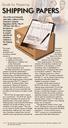 Guide for Preparing SHIPPING PAPERS One of the most frequently cited safety violations of the Hazardous Materials Regulations (HMR), Title 49 CFR Parts 100-185, is the failure of the shipper to properly
Packaging & Shipping Laboratory Specimens Guide Volume XI
 Packaging & Shipping Laboratory Specimens Guide Volume XI PAML is not certified to provide regulatory training. This guide is to be used in addition to training and certification by a regulated agency.
UCLA Henry Samueli School of Engineering and Applied Science STANDARD OPERATING PROCEDURE MEDICAL WASTE (BIOHAZARD WASTE) MANAGEMENT
 UCLA Henry Samueli School of Engineering and Applied Science STANDARD OPERATING PROCEDURE MEDICAL WASTE (BIOHAZARD WASTE) MANAGEMENT PURPOSE The purpose of this document is to specify the procedures used
Waste Management Program
 SUNY Cortland Environmental Health and Safety Office Waste Management Program Inception Date: January 30, 2007 Latest Revision/Review Date October 8, 2015 Previous Revision/Review Date: April 30, 2014
BSL 1 Laboratory Biosafety Manual
 BSL 1 Laboratory Biosafety Manual Version 1.0 Idaho State University, Office for Research Institutional Biosafety Committee (IBC) 1651 Alvin Ricken Drive, Pocatello, ID 83201-8046 Phone: 208-282-2179 Fax:
Packing for Transportation
 Within UCR Chemical Hazard Classes & Packing for Transportation Russell Vernon, Ph.D. Research Safety Manager 951-827-5119 direct 951-827-5528 admin [email protected] edu www.ehs.ucr.edu Introduction
ENVIRONMENTAL HEALTH AND SAFETY HAZARDOUS MATERIALS MANAGEMENT PLAN
 ENVIRONMENTAL HEALTH AND SAFETY HAZARDOUS MATERIALS MANAGEMENT PLAN November 2011 University of Northern Colorado Hazardous Materials Management Plan I. General II. III. IV. Responsibilities Definition
Each has the following responsibilities under this SOP:
 Page.: 1 1. Purpose The Standard Operating Procedure (SOP) for sharps disposal was developed by the Department of Environmental Health & Safety in accordance with the University s Policy Statement on Health
Biosafety Level 2 (BSL-2) Safety Guidelines
 BLS-4 Biosafety Level 2 (BSL-2) Safety Guidelines BSL-3 BSL-2 BSL-1 BSL-2 builds upon BSL-1. If you work in a lab that is designated a BSL-2, the microbes used pose moderate hazards to laboratory staff
HAZARD COMMUNICATION & THE GLOBAL HARMONIZING SYSTEM EMPLOYEE TRAINING
 HAZARD COMMUNICATION & THE GLOBAL HARMONIZING SYSTEM EMPLOYEE TRAINING This easy-to-use Leader s Guide is provided to assist in conducting a successful presentation. Featured are: INTRODUCTION: A brief
MARSHALL UNIVERSITY HAZARDOUS WASTE DISPOSAL SECTION
 MARSHALL UNIVERSITY HAZARDOUS WASTE DISPOSAL SECTION TABLE OF CONTENTS POLICY STATEMENT.2 REFERENCE PROCEDURE 3 l.0 Purpose.3 2.0 Scope 3 3.0 Definitions 4 4.0 Responsibilities 5 5.0 Procedure.7 11/16/2005
TEXAS TECH UNIVERSITY HAZARDOUS WASTE PROGRAM DEPARTMENT OF ENVIRONMENTAL HEALTH AND SAFETY
 TEXAS TECH UNIVERSITY HAZARDOUS WASTE PROGRAM DEPARTMENT OF ENVIRONMENTAL HEALTH AND SAFETY 1 TABLE OF CONTENTS I II III IV V VI VII INTRODUCTION CHEMICAL HAZARDOUS WASTE 1. Definition 2. Characteristics
Biohazardous Waste Management Plan
 Central Michigan University Biohazardous Waste Management Plan This document has been prepared to provide guidance to Central Michigan University (CMU) employees in the use and disposal of biohazardous
Medical or Biological Waste: Storage, Treatment, Disposal and Transportation Plan
 Medical or Biological Waste: Storage, Treatment, Disposal and Transportation Plan 1. Scope This program covers all departments at Wellesley College who generate medical or biological waste to include Health
"DOT HAZMAT GENERAL AWARENESS"
 PRESENTER'S GUIDE "DOT HAZMAT GENERAL AWARENESS" For the Department of Transportation's 49 CFR 172.700 Subpart H Training Requirements Quality Safety and Health Products, for Today...and Tomorrow OUTLINE
Waste Management Log Book
 Waste Management Log Book Web address: www.ehs.psu.edu Designated Accumulation Area: Building & Room Number Location in Room Supervisor: E-mail Individual designated to ensure procedures are followed:
Waste Management Program
 EOSMS 210 Date: 04/01/2014 Page 1 of 7 1. Purpose Non-hazardous and hazardous chemical wastes, biohazardous wastes, regulated medical wastes and universal wastes generated by KSU will be handled according
Tufts Environmental Health and Safety April 2010
 7. HAZARDOUS WASTE 7.1 Hazardous Chemical Waste The Resource Conservation and Recovery Act (RCRA) of 1976 gave the Environmental Protection Agency the authority to regulate the generation, transportation,
SPILL PREVENTION, CONTROL, AND COUNTER MEASURES PLAN (SPCC)
 SPILL PREVENTION, CONTROL, AND COUNTER MEASURES PLAN (SPCC) UNIVERSITY RISK MANAGEMENT Occupational and Health Programs 19 Hagood Avenue, Suite 908 Charleston SC 29425 843-792-3604 Revised: June 2015 Spill
Utah Division of Solid and Hazardous Waste Solid Waste Management Program
 Utah Division of Solid and Hazardous Waste Solid Waste Management Program Mailing Address Office Location Phone (801) 536-0200 P.O. Box 144880 195 North 1950 West Fax (801) 536-0222 Salt Lake City, Utah
VILLANOVA UNIVERSITY ENVIRONMENTAL HEALTH AND SAFETY DEPARTMENT OF TRANSPORTATION HAZARDOUS MATERIALS SECURITY PLAN
 VILLANOVA UNIVERSITY ENVIRONMENTAL HEALTH AND SAFETY DEPARTMENT OF TRANSPORTATION HAZARDOUS MATERIALS SECURITY PLAN Prepared by: Alice L. Lenthe, PE 24 April 2014 1 INTRODUCTION: The U.S. Transportation
North Carolina State University Emergency Facilities Closure Checklist- Part I
 North Carolina State University Emergency Facilities Closure Checklist- Part I Unplanned or spontaneous events often disrupt daily operations on campus. In the event that an incident may interrupt your
Hazardous and Regulated Waste Management Plan Purpose
 Hazardous and Regulated Waste Management Plan Purpose Purpose This Hazardous and Regulated Waste Management Plan describes the chemical and biological waste management practices at Normandale Community
ALVERNIA UNIVERSITY OSHA REGULATION: 29 CFR 1910.1200 HAZARD COMMUNICATION SECTION: 1700 REVISION DATE: 2/3/2012 REVISION: 4 NUMBER:
 OSHA REGULATION: 29 CFR 90.200 HAZARD COMMUNICATION 700 : DATE: /3/200 DATE: 2/3/202 A. POLICY. This procedure follows requirements set forth in 29 CFR 90.200. 2. It is the policy of Alvernia University
"ADOPTED STANDARDS FOR THE REGULATION OF MEDICAL WASTE" IN HEALTH CARE FACILITIES LICENSED BY THE MISSISSIPPI STATE DEPARTMENT OF HEALTH
 "ADOPTED STANDARDS FOR THE REGULATION OF MEDICAL WASTE" IN HEALTH CARE FACILITIES LICENSED BY THE MISSISSIPPI STATE DEPARTMENT OF HEALTH REGULATED MEDICAL WASTE "Infectious medical wastes" includes solid
The University of Texas at San Antonio Office of Environmental Health, Safety and Risk Management. Part A. Biological Waste Management Safety Plan
 The University of Texas at San Antonio Office of Environmental Health, Safety and Risk Management Part A Biological Waste Management Safety Plan i. SIGNATURE PAGE This Biological Waste Management Safety
Policies. Prep Room Policies
 Introduction INTRODUCTION The Microbiology Prep Room is located in 531A Life Sciences Building. The telephone number is 372-8609. It is open from 7:30 a.m. to 4:30 p.m. during the fall and spring semesters.
Administrative Procedure
 Administrative Procedure Number: 410 Effective 1/30/98 Supercedes: 1 of Subject: MEDICAL WASTE MANAGEMENT PLAN 1.0. PURPOSE: The purpose of the California State University Los Angeles Medical Waste Management
2010 SECURITY AWARENESS TRAINING
 2010 SECURITY AWARENESS TRAINING Hazardous materials are essential to the economy of the United States and the well being of its people. They fuel our cars and trucks and locomotives, heat and cool our
2002 E D I T I O N INSTRUCTOR
 2002 EDITION INSTRUCTOR Script Visual Narrative 1 This module presents general placarding requirements, placarding exceptions, and placard placement and design. Placards are placed on bulk packagings,
APPENDIX D INFECTIOUS WASTE MANAGEMENT GUIDE
 APPENDIX D INFECTIOUS WASTE MANAGEMENT GUIDE TABLE OF CONTENTS INTRODUCTION... PAGE 1 SUMMARY OF REGULATIONS... PAGE 1 WRIGHT STATE UNIVERSITY INFECTIOUS WASTE STRATEGY... PAGE 5 PROCEDURES FOR WSU INFECTIOUS
Berea College Chemical waste/product Management Guide. October 2014
 Berea College Chemical waste/product Management Guide October 2014 Chemical Waste Chemical waste is generated in many locations across campus. Chemical waste is generated in laboratories, from painting
Training on Standard Operating Procedures for Health Care Waste Management Swaziland 12 May, 2011
 Training on Standard Operating Procedures for Health Care Waste Management Swaziland 12 May, 2011 Safe Infectious Waste Handling and Transport Objective Waste Overview Roles and Responsibilities of Waste
INSTITUTIONAL POLICY AND PROCEDURE (IPP)
 HOSPITAL NAME INSTITUTIONAL POLICY AND PROCEDURE (IPP) Department: Manual: Section: TITLE/DESCRIPTION POLICY NUMBER HAZARDOUS WASTE: HANDLING AND DISPOSAL EFFECTIVE DATE REVIEW DUE REPLACES NUMBER NO.
Biological Safety Program
 Risk Management & Safety Main Office, Wyoming Hall Phone: (307) 766-3277 Fax: (307)766-6116 Regulated Materials Management Center Phone: (307)766-3696 Fax: (307)766-3699 Web: www.uwyo.edu/ehs Email: [email protected]
Medical Waste Management Plan
 Medical Waste Management Plan The Kern County Environmental Health Division is the local agency designated by the California Department of Public Health to implement the Medical Waste Management Act. This
Potentially Infectious Medical Waste
 Potentially Infectious Medical Waste A Summary of Regulatory Requirements General Requirements Title XV of the Illinois Environmental Protection Act (Act) establishes statutory requirements to ensure that
RADIOACTIVE WASTE MANAGEMENT PLAN
 RADIOACTIVE WASTE MANAGEMENT PLAN Copies of this plan will be made available to all members of the campus community with the potential to generate radioactive waste. Contents I. Purpose II. Regulatory
ST. CLOUD TECHNICAL AND COMMUNITY COLLEGE HAZARDOUS WASTE PROCEDURE
 APPLICABILITY This procedure is applicable to all St. Cloud Technical & Community College faculty, staff and students. GENERAL Federal, state and local governments impose strict regulations concerning
Hazardous Material Waller County ARES training material used with permission from Christine Smith, N5CAS.
 Hazardous Material Waller County ARES training material used with permission from Christine Smith, N5CAS. This discussion is really just meant to be an introduction to Hazardous Materials (HazMat). I would
Guidelines for the Safe Transport of Infectious Substances and Diagnostic Specimens
 Distr.: General Orig.: English Guidelines for the Safe Transport of Infectious Substances and Diagnostic Specimens WORLD HEALTH ORGANIZATION Division of Emerging and Other Communicable Diseases Surveillance
North Shore LIJ Health System, Inc. ADMINISTRATIVE POLICY AND PROCEDURE MANUAL
 POLICY TITLE: Training for Shipping Infectious Substances, Diagnostic Specimens, Radioactive and Other Hazardous Materials POLICY #: GR055 Approval Date: 12/16/10 Effective Date: 10/22/09 Prepared by:
Mechanical Systems Competency 1.20
 Competency 1.20 Mechanical systems personnel shall demonstrate a working level knowledge of the safety and health fundamentals of mechanical systems and/or components. 1. Supporting Knowledge and Skills
E3211. DOT Hazmat Security Awareness. Leader s Guide
 E3211 DOT Hazmat Security Awareness Leader s Guide This easy-to-use Leader s Guide is provided to assist in conducting a successful presentation. Featured are: INTRODUCTION: A brief description of the
LABORATORY SAFETY INSPECTION CHECKLIST
 LABORATORY SAFETY INSPECTION CHECKLIST As part of EH&S's laboratory safety survey program, we have compiled a list of the most common safety problems. This is not a list of every possible hazard, but can
Policies and Procedures Manual Waste Management Plan Policy No. 06:04:00 Page 1 of 12
 Page 1 of 12 Revision Responsibility: Director of Facility Services and Safety Responsible Executive Officer: Vice President for Financial & Administrative Services Source / Reference: Tennessee Division
Annual Biomedical Waste Code Training
 Annual Biomedical Waste Code Training Provided by: Barbara D. Will, MPH Biomedical Waste Program Supervisor To protect, promote and improve the health of all people in Florida through integrated state,
Connecticut Biomedical Waste (BMW) Requirements (22a-209-15) and Common Industry Practices
 Connecticut Biomedical Waste (BMW) Requirements (22a-209-15) and Common Industry Practices Mark Latham CT DEP, Waste Engineering and Enforcement Division Common Synonyms for BMW Regulated Medical Waste
CHAPTER V: DISPOSAL OF WASTES CONTAMINATED WITH INFECTIOUS AGENTS
 CHAPTER V: DISPOSAL OF WASTES CONTAMINATED WITH INFECTIOUS AGENTS These biohazard waste disposal guidelines are designed to not only protect the public and the environment, but also laboratory and custodial
Autoclave Safety. Autoclaves are sterilizers using high pressure and high temperature steam. The potential safety risks for the operators are:
 Autoclave Safety Purpose: Sterilization refers to the complete killing of all living organisms, including spores. Common sterilization techniques include the application of wet heat, dry heat, chemicals,
THE UNIVERSITY OF NEWCASTLE- SCHOOL of BIOMEDICAL SCIENCES
 Page: 1 of 7 1. Purpose: 1.1. To describe the procedures to be used when dealing with chemical or microbiological spills. 2. Equipment: 2.1. Spill Kit 2.2. Miscellaneous items as listed 3. Materials: 3.1.
Biosafety Level 2 Criteria
 Biosafety Level 2 Criteria Biosafety in Microbiological and Biomedical Laboratories (BMBL) 5th Edition Biosafety Level 2 (BSL-2): Biosafety Level 2 builds upon BSL-1. BSL-2 is suitable for work involving
Spill Clean-up. Flammable Liquids Liquids with flash points below 100 degrees Fahrenheit.
 SUNY Cortland-Environmental Health and Safety Office Spill Clean-up Inception Date : June 16, 2010 Latest Revision/Review Date: July 15, 2015 Last Review/Revision Date: April 30, 2014 Contents I. Introduction
Managing Regulated Medical Waste in New Mexico
 Managing Regulated Medical Waste in New Mexico Prepared by: Dr. Joe King Camino Real Environmental Research Center Sunland Park, New Mexico History of Medical Waste Regulations 1988 Legislation in response
This plan, its contents, and emergency notification procedures shall be made available to all appropriate University employees.
 FACILITIES MANAGEMENT OFFICE OF ENVIRONMENTAL HEALTH AND SAFETY EMERGENCY RESPONSE PLAN FOR HAZARDOUS SUBSTANCE RELEASES ON UA s UPTOWN & DOWNTOWN CAMPUSES January 12, 2015 Last Revision This plan is designed
MOUNT SINAI SCHOOL OF MEDICINE. Chemical Storage Practices
 MOUNT SINAI SCHOOL OF MEDICINE Chemical Storage Practices First Edition: 8/2002 Philip G. Hauck, Ms, MSHS, CIH, SM(NRM) MOUNT SINAI SCHOOL OF MEDICINE Chemical Storage Practices This booklet contains information
RMM 501 Hazardous Materials Management Systems Including WHMIS Program Page 2 November 2014
 RMM 501 Hazardous Materials Management Systems Including WHMIS Program Page 2 3.4 McMaster University RMM #300 Safety Orientation and Training Program 3.5 McMaster University RMM #301 Standard Operating
SPECIAL MEDICAL WASTE PROGRAM
 SPECIAL MEDICAL WASTE PROGRAM Department of Environmental Health & Safety Phone: (410) 704-2949 Fax: (410) 704-2993 Emergency: (410) 704-4444 Email: [email protected] Website: www.towson.edu/ehs/index.html
Hazardous Waste Management Procedures
 Hazardous Waste Management Procedures For information and guidance on handling and removal of hazardous waste contact the CSUCI office of Environment, Safety and Risk Management (X 8847). Campus Hazardous
UNIVERSITY OF NORTH FLORIDA BIOMEDICAL WASTE MANAGEMENT PLAN DEVELOPED BY: ENVIRONMENTAL HEALTH, SAFETY, INSURANCE & RISK MANAGEMENT
 UNIVERSITY OF NORTH FLORIDA BIOMEDICAL WASTE MANAGEMENT PLAN DEVELOPED BY: ENVIRONMENTAL HEALTH, SAFETY, INSURANCE & RISK MANAGEMENT June 2008 Table of Contents Section Page Background 1 Definitions 1-2
ENVIRONMENTAL HEALTH, SAFETY & RISK MANAGEMENT. Hazardous Materials &Waste Management Plan at
 ا السلامة و معالجة المخاطر لصحة البيي ية ENVIRONMENTAL HEALTH, SAFETY & RISK MANAGEMENT Hazardous Materials &Waste Management Plan at AUB-MC 1 Outline 1. Objectives 2. Definitions of Hazardous Waste 3.
OCCUPATIONAL SAFETY AND ENVIRONMENTAL HEALTH GUIDELINE
 OSEH Occupational Safety & Environmental Health OCCUPATIONAL SAFETY AND ENVIRONMENTAL HEALTH GUIDELINE Subject: Biohazardous (Medical) Waste Disposal Date: 08/19/09 Revision: 03 Page: 1 of 7 TABLE OF Section
Section III Hazardous Materials Management
 Section III Hazardous Materials Management This section of the Everyday Hazmat User s Training Guide covers various types of hazardous materials commonly found in the USDA Forest Service. Federal regulations
Revision 5. Calvin College Medical Waste Management Plan. Date: Health and Safety
 Calvin College Medical Waste Management Plan Prepared by: Date: Environmental 6/10/1 Health and Safety Approved By: Date: Revision 1.0 Policy The following medical waste management plan has been established
HAZARDOUS WASTE MANAGEMENT PROGRAM. For OTTERBEIN UNIVERSITY. Prepared by: 140 North Otterbein Avenue Westerville, Ohio 43081
 HAZARDOUS WASTE MANAGEMENT PROGRAM For OTTERBEIN UNIVERSITY Prepared by: 140 North Otterbein Avenue Westerville, Ohio 43081 Otterbein University 0 TABLE OF CONTENTS 1.0 PURPOSE AND SCOPE... 1 2.0 ROLES
COLUMBUS STATE COMMUNITY COLLEGE EMPLOYEE SAFETY MANUAL
 COLUMBUS STATE COMMUNITY COLLEGE EMPLOYEE SAFETY MANUAL HAZARDOUS MATERIAL MANAGEMENT Effective October 15, 1995 Page 1 of 4 Updated August, 2008 Revised August, 2009 A. Columbus State Community College
Hazardous Materials Disposal Handbook Biohazardous Waste
 Created by: Stuart Elle Date: September 10, 2009 Revised by: Hazardous Materials Disposal Handbook Biohazardous Waste n/a Date: n/a 1. Introduction... 2 1.1. Purpose... 2 1.2. The Role of Hazardous Materials