
IMPACT OF INFORMATION TECHNOLOGY ON THE PERFORMANCE OF TUNISIAN BANKS: A STOCHASTIC FRONTIER ANALYSIS WITH PANEL DATA
|
|
|
- Augustus Russell
- 9 years ago
- Views:
Transcription
1 ASIAN ACADEMY of MANAGEMENT JOURNAL of ACCOUNTING and FINANCE AAMJAF, Vo. 9, No. 2, , 2013 IMPACT OF INFORMATION TECHNOLOGY ON THE PERFORMANCE OF TUNISIAN BANKS: A STOCHASTIC FRONTIER ANALYSIS WITH PANEL DATA Syrine Ben Romdhane Faculty of Economics and Management Sciences, University Tunis El Manar, Tunisia Department of Finance, High Institute of Management, University of Tunis, Tunisia Department of Finance and Accounting, Economics and Financial Engineering Laboratory (LIFE), Tunisia * [email protected] ABSTRACT This paper investigates the performance of information technology (IT) investments in a sample of 15 Tunisian banks over the period We employ the standard Stochastic Frontier Approach on panel data to generate estimates of cost efficiencies. The study is enhanced by a comparison beteen the results found using the Data Envelopment Analysis (DEA) method and the Stochastic Frontier Analysis (SFA) method to test the soundness of these approaches to efficiency measurement. The empirical findings suggest that the impact of IT investments on Tunisian banks performance is positive. The analysis of the internal determinants of banks efficiency levels shos that size and managerial capacity positively and significantly affect the Tunisian banks cost efficiency, hile the share of non-performing loans represents a source of inefficiency. Measuring the impact of various categories of IT investments (hardare, softare and IT services) on banks cost efficiencies suggests that the Productivity Paradox does not affect all IT investments. Keyords: Information Technology, X-efficiency, internal determinants, Stochastic Frontier Approach, translog form, data envelopment analysis INTRODUCTION During the past decade, information technology (IT) has been at the heart of international competition. It has had a deep impact in all economic fields, and it is no integrated into most production activities. Hoever, it has been difficult to determine the relationship beteen IT investment and the financial performance or productivity gains of businesses. Therefore, some authors questioned the impact of information technology on productivity in the banking industry. This question began as a major literary trend in 1987 hen Robert Solo, inner of the Nobel Prize in Economics, proposed his famous "productivity paradox" during his Nobel speech. You can see the computer age everyhere but in the Asian Academy of Management and Penerbit Universiti Sains Malaysia, 2013
2 Syrine Ben Romdhane productivity statistics!. This statement led to countless studies in the United States and Europe and gave birth to varied explanations. Research assessing the impact of IT investment had begun. The issue of measuring the contribution of IT investments to the performance of an organisation has been addressed quite frequently, and specialists agree about the difficulties that arise. Several studies ere conducted regarding the link beteen productivity and IT investments to attempt to understand the explanations behind the "productivity paradox". Some of these studies ere formulated to explain the ineffectiveness of information technology in improving the performance of banks. These mainly include the orks of Loverman (1994), Morrisson and Brendt (1990), Licht and Moch (1999), and Oluagbemi, Abah and Achimugu (2011). In addition, some studies have found a positive relationship beteen IT investment and the productivity of a banking firm (including the orks of Lichtenberg (1995), Brynjolfsson and Hitt (1996), and Prasad and Harker (1997)). While several authors studied the effects of investments in information technology on the productivity of banks, very fe economists shoed interest in studying the effects of these investments on profitability. Most of these studies, including those of Licht and Moch (1999), and Prasad and Harker (1997), concluded that there as no link beteen IT investments and bank profitability. Hoever, Brynjolfsson and Hitt (1996), Siegel and Griliches (1992), and Greenan, L'Horty and Mairesse (2002) reached the opposite conclusion. As for the impact of IT investment on the performance of banks, fe studies ere actually interested in evaluating performance folloing the adoption of information technology. Nevertheless, the need for the IT remains undeniable for any strategic or technological change. The first study conducted in this context as in 2000 by Sullivan, ho as the first economist to measure the effects of the risks related to Internet activity on the banking industry. Simpson's ork in 2002 and the study by De Young and Hunter (2002) further complemented that of Sullivan (2000). A study conducted by Chen and Zhu in 2004 focused on the indirect effects of information technology on the performance of banks. That study highlighted the fact that IT can make a substantial contribution to performance. By interpreting the previous findings on "the productivity paradox", our research attempts to empirically validate the relationship beteen IT investment and performance in the context of the emerging country of Tunisia. Our study is therefore devoted to examining the folloing key question: What is the impact of information technology on the performance of Tunisian banks? To empirically validate the relationship beteen IT investment and the 96
3 Impact of IT on the Performance of Tunisian Banks performance of Tunisian banks, e use the most commonly used parametric method in the literature, the Stochastic Frontier Approach. Thus, the objective of this ork is to evaluate the X-efficiency in banks during the period hile identifying, on the one hand, the impact of information technologies introduced by banks on their X-efficiency, and on the other hand, the internal determinants of inefficiency levels in these banks. In addition, this study is enhanced by a comparison beteen the results found using the DEA method (Data Envelopment Analysis) and the SFA method (Stochastic Frontier Approach) 1 to test the soundness of these approaches to efficiency measurement. Finally, e analyse not only the relationship beteen IT investment and the performance of banks but also the impact of different IT components on banks performance. LITERATURE REVIEW As outlined above, the results of previous studies on the impact of IT investment on firm performance are contradictory, hich arouses the interest of researchers ho ish to clarify the nature of this relationship and its main determinants. Several methods have been used for this purpose, but very fe studies evaluated the impact of IT investment on the performance of banks using the Stochastic Frontier Approach. One objective of banks is to minimise the cost of their payment systems, hich involves searching for economies of scale based on technical changes. Despite the difficulties of representing and incorporating technical changes in productivity analyses, an econometric approach can be used to measure the impact of technological changes on banking efficiency. In his book devoted to the productivity of banking branch netorks, Roe (1994) identified three empirical studies on the relationship beteen bank efficiency and effective technical changes measured by computerisation. These three studies are all based on data from U.S. banks since Daniel, Longbrake and Murphy (1973) attempted to explain the influence of the diffusion of computers on the operating costs of U.S. banks. The authors represented these costs ith a Cobb-Douglas function under the assumption of constant returns to scale, here production as measured by the number of deposit accounts. The study shoed that banks that had a computer for less than one year had higher costs compared ith more experienced banks that had been equipped ith a computer for more than to years. This result as a consequence of technology learning, but the study did not provide a direct anser to the question of the influence of IT on operating costs and did not explain the 97
4 Syrine Ben Romdhane choice of hypothesis concerning supposed constant returns to scale. Kolari and Zardkoohi (1987) used a model that tested the relationship beteen the cost of deposits and a ratio that related IT costs to personnel costs allocated to deposits to sho that computerisation reduced the cost of deposits, but the resulting gains had not been exhausted. The authors attributed this result to indivisibilities associated ith centralised computer systems in the United States that constituted a limit to computerisation. Larence and Shay (1986) measured the efficiency of banks ith a multi-product translog function in hich they incorporated the cost of computer rental. They shoed that the decline in the price of personal computers led to a significant decline in banking employment. The authors concluded that the development of personal computers at the expense of central computers resulted in a significant reduction of the orkforce. The model produced estimates for four groups of banks classified by size to sho that computerisation alloed significant economies of scale and scope. The obvious limitation of this model as the lo importance given to the costs arising from the rental of computers as opposed to the costs of computerisation. Thus, the studies exploring the impact of technological changes on the U.S. banking sector concluded that there as a reduction in the processing costs of banking transactions along ith a decrease in banking employment. In a more recent study, Beccalli (2007) found a positive relationship beteen total IT investment and performance in a study of the European banking sector (a sample of 737 banks) during the period The author used the SFA to estimate the efficiencies of costs and benefits for European banks. His main objective as to determine hether IT investments improved the profitability of banks, and hether banks could gain a competitive advantage by investing in IT and therefore obtain higher short- and long-term profits. The empirical results of the study shoed that the impact of IT investment on banks as negative on short-term profitability as measured by ROA and ROE ratios. Hoever, IT had a positive contribution to the long-term costs (technological changes) for all European banks, thus reducing the actual annual costs of production by approximately 3.1%. In addition, the impact of technological changes on cost reductions consistently increased over the studied period. A final result of the study shoed that the impact of different types of IT (hardare, softare and services) on the performance of European banks as heterogeneous. While investment in services as positively related to bank profitability, acquisitions of hardare and softare had a negative impact on performance. In the Tunisian context, the use of parametric methods in studies of the efficiency of banks as often used in the context of the restructuring of the banking system or of transformations due to structural changes (Kablan, 2009). 98
5 Impact of IT on the Performance of Tunisian Banks According Zaghla and Boujelbene (2008), out of the 130 studies on banking efficiency surveyed by Berger and Humphrey (1997), only seven ere based on developing countries. The authors noted that none of the selected orks covered Tunisia. Chaffai (1997) as the first researcher to analyse the efficiency of Tunisian commercial banks. This author, evaluating the experience of the deregulation of the Tunisian banking system, found that the total efficiency of banks increased folloing the liberalisation process initiated in Another study conducted by Chaffai and Dietsch (1998) undertook an analysis of the evolution of efficiency over time in Tunisia and Morocco. Joumady (2000), furthering the ork of Chaffai and Dietsch (1998), adopted a broader approach that considered the pace of technological development. The author shoed that the commercial banks ere more efficient than the development banks in Tunisia. Hoever, he concluded that in the absence of a competitive environment, there as no clear trend in the evolution of efficiency over the period Dahmane (2002) folloed the approach of Rouabah (2002) to measure the impact of financial liberalisation on the efficiency of Tunisian commercial banks. This author used an SFA to compare the efficiency of banks in the sample over the period The theoretical and empirical developments shoed that the choice of banking output played a particularly important role in the degree of efficiency of 10 Tunisian commercial banks. Thus, activities relating to "collecting deposits" and loans ere positively correlated to the efficiency of commercial banks. As for the evolution of efficiency scores, the results of panel data suggested that banks, hether small, medium or large, shoed degrees of (in)efficiency, the extent of hich varied based on a certain number of determinants. Zaghla and Boujelbene (2008) resorted to an extension of the SFA called "Improved SFA 2 ", hich assumes a truncation parameter that as specific to each bank. The SFA as used ith a deterministic model of inefficiency to assess the X-efficiency of Tunisian commercial banks during the period hile identifying the factors that explained the level of efficiency. The results of this study revealed pronounced differences in efficiency depending on the size and structure of bank onership. The average efficiency of small and medium sized banks as significantly greater than large banks. In addition, public banks ere relatively more efficient than private banks. Bannour (2008) attempted to assess the productive efficiency scores of 20 Tunisian commercial banks throughout the period, hich as marked by major changes folloing the adoption of various financial liberalisation measures by the Tunisian government. To study the cost efficiency levels achieved by these banks, the author used the SFA and tried to identify variables that explained the level of inefficiency (efficiency) of the banks in the sample. The results suggested that Tunisian banks, hether small or large, featured quite different degrees of efficiency. Banks that achieved the best 99
6 Syrine Ben Romdhane efficiency scores ere STB (93.3%), BNA (92%) and UIB (89.5%), folloed by BIAT (86.4%) and ATB (83.5%). Hoever, despite the scientific contribution of this ork, the authors did not integrate IT into their studies, although it certainly contributed to the development of the Tunisian banking sector. To fill this gap, Omri and Hachana (2008) folloed the approach of Beccalli (2007) and attempted to assess the impact of IT investment on productivity in six Tunisian commercial banks over a five-year period ( ). The authors first attempted to identify the nature of the relationship beteen IT investment and productivity, and then they explained this relationship using the stochastic frontier method to estimate a cost and banking profit function. The obtained results demonstrated the important role played by IT in financial institutions. In fact, the results shoed that IT investments improved banking productivity. Moreover, the authors indicated that taking into consideration the delay beteen IT investment and performance measures slightly improved the relationship beteen the to variables. In addition, the authors also shoed that measures of X-efficiency better explained the relationship beteen IT investment and performance than traditional ratios. STOCHASTIC FRONTIER: THE MODEL OF AIGNER, LOVELL AND SCHMIDT (1977) The stochastic method, also called the composed error model, as simultaneously introduced by Aigner, Lovell and Schmidt (1977) and Meeusen and Van Den Broeck (1977), ho specified the production function fitted on individual data ith an error term composed of to independent parts, namely, a purely random component (v) distributed on each side of the production frontier and a component representing technical inefficiency (u) distributed on only one side of the frontier. The random component follos a normal symmetric distribution, hile the inefficiency component follos a positively skeed distribution for the cost function and a negatively skeed distribution for the production function. Stochastic Frontier Cost Function Schmidt and Lovell (1979) shoed that under the hypothesis of cost minimisation, the stochastic production frontier of a firm can be ritten in the form of a cost function. To specify a stochastic frontier cost function, the sign of the inefficiency term must be changed 3. Thus, the cost frontier described by Schmidt and Lovell (1979) is given by: Y i = X i β + (V i + U i ) i = 1,, N (1) 100
7 Impact of IT on the Performance of Tunisian Banks here: Y i is the log of production cost of the i th firm; X i the vector (K 1) of input and output prices; β is a vector of parameters to be estimated; V i are the measurement errors and are iid according to symmetric normal distribution N (0, σ v 2 ). They are independent of the U i terms, hich are positive and represent the inefficiency cost in production. They are often assumed iid according to skeed normal distribution N(0,σ u 2 ). Time-Varying Efficiency Effect: Battese and Coelli Model Specification (1995) To avoid the pitfalls of the to-step approach proposed by Battese and Coelli (1992), e implement the one-step approach recommended by the authors in 1995, here a deterministic component is dissociated at the level of inefficiency, represented by a set of variables assumed to influence the efficiency of the bank, from a random part associated ith unobservable factors. Thus, the distribution of the random term µ it related to the measurement of inefficiency is a normal distribution truncated at zero variance σ u 2, and the mean m it is defined as m it = Z it δ, here δ is a vector of p parameters to be estimated and vector of p variables that can affect the efficiency of the i bank at a t time. IMPACT OF IT ON THE PERFORMANCE OF TUNISIAN BANKS: ESTIMATION OF A STOCHASTIC FRONTIER TRANSLOG COST FUNCTION In this section, e attempt to conduct an econometric analysis of IT s impact on the performance of Tunisian banks. The technique used is a stochastic frontier function applied to a multi-product translog cost. The methodology e use is based on the estimation of a model that meets the objectives of the issues raised. In this section, e specify the empirical approach, the model that is the subject of subsequent estimates, our research hypotheses, the definition of our sample and a detailed description of the variables. We then present the results of the estimation of the stochastic frontier translog cost function. Empirical Approach The question to be ansered concerns the best combination of inputs that can produce an optimal combination of outputs hile minimising production costs. Given the multiplicity of functions of a bank, e consider the translog function to be the most appropriate compared ith other functional forms because it takes 101
8 Syrine Ben Romdhane into account multiple complementary links beteen the explanatory factors and does not impose any restriction on the form of the cost function. We specify this function in its standard form for m outputs and k inputs, here the values of TC (total cost of the bank), q (outputs) and (input price) are taken in natural logs as follos: Ln TC it = α 0 + k ln q it + j ln jt + ij ln q it ln q jt + ij ln q it ln jt + ij ln it ln jt + µ it + ν it (2) Hoever, to satisfy the symmetry condition of the cost function, the folloing restrictions must be imposed: δ hj = δ jh and σ jk = σ kj. This function is assumed to be positive (because prices and outputs are positive), homogeneous at degree 1, monotonic and concave in prices (because prices cannot increase infinitely). Some restrictions must also be imposed on the parameter so that the cost function is homogeneous, i.e., j = 1, ij = 0 and ij = 0. We also believe that σ ij = 0 because of collinearity. The estimation of the model using the method of maximum likelihood provides the cost efficiency measures of the studied banks. In the case of three inputs and to outputs, Specification (2) includes 25 parameters of interest to be estimated. The constraints of symmetry and homogeneity significantly reduce the number of parameters (15 parameters of interest instead of 25). These homogeneity restrictions materialise in the cost function by normalising the inputs of total cost and prices by one of the prices (e choose the price of the input L, L ). The stochastic frontier translog cost function is thus given for to outputs (q 1 ) and (q 2 ) and three input prices ( L ), ( D ) and ( k ), as follos: Log (TC it / L )= α 0 + α 1 log (q 1 ) + α 2 log (q 2 ) + β 1 log ( K / L ) + β 2 log ( D / L ) +1/2 σ 1 log (q 1 ) log (q 1 ) + 1/2 σ 2 log (q 2 ) log (q 2 ) + 1/2 σ 3 log (q 1 ) log (q 2 ) +ρ 1 log ( K / L ) log (q 1 ) + ρ 2 log ( K / L ) log (q 2 ) + ρ 3 log ( D / L ) log(q 1 ) + ρ 4 log ( D / L ) log (q 2 ) + 1/2 δ 1 log ( K / L ) log ( K / L ) +1/2 δ 2 log( D / L ) log ( D / L )+ 1/2 δ 3 log ( K / L ) log ( D / L ) + µ + ν (3) i (1 15): refers to the number of banks; t (1 12): refers to the years of study ( ). 102
9 Hypotheses and Research Methodology The research hypotheses Hypothesis 1: Impact of information technology Impact of IT on the Performance of Tunisian Banks Studies conducted on the impact of IT on the productivity of firms are often contradictory. While the orks of Brynjolfsson and Hitt (1996), Siegel and Griliches (1992) and Lichtenberg (1995) asserted that there is a positive impact of IT on productivity, the results of Dos Santos, Peffers and Mauer (1993), Prasad and Harker (1997) and Licht and Moch (1999) argued the opposite. Therefore, e expect a positive sign for this variable because IT has the potential to reduce operating costs. Our first hypothesis is therefore as follos: H1: Investment in information technology has a positive impact on bank performance. Hypothesis 2: Impact of the intermediation variable To examine the relationship beteen intermediation activity and bank efficiency, e use the ratio "intermediation margin/gnp". A lo ratio may result in improved efficiency of banks because they benefit from economies of scale. Our second hypothesis is therefore as follos: H2: The intermediation variable has a positive impact on performance. Hypothesis 3: Impact of size It is clear that the size variable is largely associated ith economies or diseconomies of scale. According to Berger, Hancock and Humphrey (1993), large firms tend to be closer to the efficient frontier than smaller firms. Hoever, in analysing the effects of financial liberalisation on the efficiency of Tunisian banks, Cook, Hababou and Roberts (2000) reached a contradictory result. The authors emphasised the fact that the big banks, hich are generally publicly oned, operate at a suboptimal scale and tend to extend credit to promote essentially political priorities regardless of profitability. The big banks therefore have a large amount of credit losses. Hence, e expect a negative effect of size on bank performance. H3: The size variable has a negative impact on performance. Hypothesis 4: Impact of credit risk According to the Basel Committee (2007), the largest bank risk is credit risk. Increased risks can be explained through provisions enacted by banks. This 103
10 Syrine Ben Romdhane increase in provisions affects banks results. We conclude that the higher the risk, the greater probability of having bad debts, hich therefore results in loer bank performance. H4: The risk variable has a negative impact on performance. Hypothesis 5: Impact of management/staff ratio According to Chaffai (1997) and Berger et al. (1993), The productivity gains from improved managerial efficiency are much more important than those hich might be achieved by the size effect (quoted in Zaghla and Boujelbene, 2008, p.2). The management/staff ratio therefore influences the performance of banks positively because it causes an improvement in agents productivity. H5: The management/staff variable has a positive impact on performance. Research design Presentation of the sample To determine the impact of IT investment on banking performance, e selected a sample of 15 Tunisian banks (10 commercial banks: STB, BNA, BIAT, BH, Attijari Bank, Amen Bank, UIB, BT, ATB and BTS and five universal banks: BTK, TQB, BTL, STUSID and BTE). The analysed sample consists of all the commercial banks ith the exception of the Arab Banking Corporation (ABC), hich had no regular activity during our study period (the ABC Tunisia Bank as created in 2000). In addition, for reasons of statistical homogeneity, e excluded to small banks from our survey: Citibank (CB) and the Banque Franco-Tunisienne (BFT). Definition of variables In the model e adopt, performance is regressed on the use of information technology (the variable of interest) and on other relevant variables (control variables). We consider the X-efficiency a measure of performance (or productivity, as e are analysing the banking sector), and e attempt to investigate the effect of IT investment on this measure. Performance (efficiency-x) = f (IT) 104
11 Impact of IT on the Performance of Tunisian Banks In this study, e adopt the intermediation approach originally developed by Sealey and Lindley in The range of variables is composed of a vector of input prices ( it ) and a vector of outputs (q it ). Input prices are related to three categories of production factors: labour (L), measured by the number of employees, the financial capital (D), measured by the sum of sight deposits to customers, savings deposits, bonds, term deposits and other financial products, and other amounts due to customers. The different forms of deposits that constitute the financial capital are considered inputs, as stipulated by the supporters of the intermediation approach. The physical capital (K) is appreciated by net fixed assets. The total cost (TC) includes all operating and financial costs: the "financial costs" are principally interest expenses. The "operating costs" are the expenses for labour and capital, that is, personnel expenses and depreciation and amortisation of fixed assets. The cost calculation is based on bank accounts and bank balance sheet results. The composition of these costs is summarised as follos: 1. The price of labour ( L ) is measured as the ratio of personnel expenses resulting from the sum of annual salaries for the bank s staff and expenses relating those salaries to the annual number of employees. We therefore have: L = Personnel expenses / Number of employees. 2. The price of financial capital ( D ) is measured by the average cost of borroed resources as the ratio of paid interest to deposits. It therefore consists of comparing accrued interest and similar expenses on deposits and customer assets ith total deposits. We therefore have: D = Interest Expense / Total borroings. 3. The price of physical capital ( k ) is approximated as the ratio of the amortisation and impairment of assets to fixed assets. We therefore have: k = amortisation and impairment of assets / Fixed assets. Concerning banking products, e consider the folloing to outputs: 1. Output 1 (q 1 ): Total credits, hich includes credits to customers (portfolio discount accounts receivable of clients + Credits on special resources + Other customer loans) and interbank loans (loans to banks and specialised agencies + cash, BCT, certificates of deposit and commercial paper). 2. Output 2 (q 2 ): The securities portfolio, hich represents the commercial securities portfolio and the investment portfolio. The variable of interest 105
12 Syrine Ben Romdhane Technology investments (IT): the purpose of this study is to measure the impact of the introduction of information technology on the performance of banks. Therefore, a measure of IT is necessary. To this end, e opted for technology investments. Because technology investments are not clearly identified in accounting records, they ere identified in this study by matching investments in tangible assets (hardare), investments in intangible assets (softare) and investments in training and maintenance. To collect this information from Tunisian banks, e opted for the use of a questionnaire applied to the banks Management Controllers or Information System Directors. This questionnaire aimed to identify the amounts invested in IT during the period Control variables In this study, e identified five variables that seem to best explain the activity of Tunisian banks. These variables are: 1. INT: intermediation variable measured by the ratio of net interest income to GDP. 2. TA: size variable measured by the logarithm of total assets. 3. RISQ: variable measuring the cost of credit risk, hich is the rate of disputed loans calculated by the ratio of outstanding debts to total loans. 4. RCS: the share of executives in relation to the total orkforce. 5. A dummy variable D: variable used to determine the difference in generated efficiency scores depending on each bank s type of activity. D it = 1 if the bank i at a period t is public; D it = 0 if the bank i at a period t is private. The sign and significance of this interaction term determines hether the impact of IT investment on performance is different depending on hether the bank is either public or private. Results and Interpretations Results of parameter estimates of the translog cost function The estimation of Model (3) using the method of maximum likelihood yields the results shon in Table 1. Coefficients and degrees of efficiency for each bank are estimated using the softare FRONTIER 4.1 (Coelli, Rao, & Battese, 1998). It uses alternative parameterisation of the likelihood function that replaces σ u 2 and σ v 2 by σ 2 = σ u 2 + σ v 2 and γ = σ u 2 [ ]. σ u 2 +σ v
13 Impact of IT on the Performance of Tunisian Banks 107 Table 1 Results of parameter estimates of the Translog cost function under the hypothesis of time variable effect Variables Coefficient Standard deviation t-ratio L K Ln L D Ln Lnq ** 2 Lnq *** L K Ln L D Ln L D L K Ln Ln ** ( ) Lnq ** ( ) Lnq ( ) 1Lnq 2 Lnq ** Lnq 1 Ln L K *** Lnq 2 Ln L K *** Lnq 1 Ln L D Lnq 2 Ln L D ***, **,* t of student acceptable to the threshold of 1%, 5% and 10%.
14 Syrine Ben Romdhane Determinants of cost inefficiency Table 2 Explanation of cost-inefficiency level Variables Coefficient Standard deviation t-ratio IT ** INT ** TA *** RCS ** RISQ ** D ** σ 2 = σ u 2 + σ v 2 σ u *** γ = σ 2 u +σ [ 0.1] 2 v *** Likelihood Log LR Test Number of 180 observations ***, **,* t of student acceptable to the threshold of 1%, 5% and 10%. In vie of the statistical significance of the different variables, the coefficients of "credits" (q 1 ) and "securities portfolio" (q 2 ) outputs are positive and significant at thresholds of 5% and 1%, respectively. Thus, investment assets act positively on the cost frontier, hich reveals the eight of securities in raising the costs of financial intermediation in Tunisian banks. This result is due to the fact that banks incur financial and operational expenses hen investing in non-traditional activities. Credits also act positively on the cost frontier. The positive sign means that lending activity increases banking costs; in other ords, a bank is not able to reduce its costs by increasing its volume of granted loans. This result is of course attributed to credit risk, hich is closely related to this type of activity. Hoever, the results also exhibit a negative and significant interaction on the cost frontier beteen these to outputs at the 5% threshold. The interactions beteen the prices of inputs and outputs are not significant except for the interaction beteen the price of physical capital and the price of labour input ith loans and securities, hich is significant at the 1% threshold. It seems that the to variables credit and price of physical capital to the price of labour input act in the opposite direction on the cost function, hich means that the higher the loans and the cost of capital to the price of labour input, the loer the total costs. Hoever, the effect of this input and of the securities variable operate in the same direction on the cost function; in other ords, the higher the 108
15 Impact of IT on the Performance of Tunisian Banks securities and the cost of capital to the price of labour input, the higher the total costs. The main results that emerge from Table 2 are: a. The parameter estimation of variance γ = is close to unity and significant to 1%, indicating that the determinants of inefficiency seem to act significantly on the cost efficiency of Tunisian banks. As a result, the distance of a bank from the "best practices" frontier is largely explained by the inefficiency cost (83.84%), and measurement errors contribute only 16.16%. b. With the test of the maximum likelihood ratio, e can check if a model is generally explanatory. The null hypothesis that indicates hether the determinants of inefficiency are absent from the model is strongly rejected. Indeed, hen the empirical LR 4 ratio is greater than the theoretical value of the chi-square la at the 1% threshold, e can conclude that the model is generally explanatory. In our case, the empirical value of ratio LR = is much higher than the theoretical value of chi-square at the 1% threshold and at 6 degrees of freedom 5 χ 1% (6) = c. Table 2 shos that the (IT) variable, as measured by the IT investment / equity proxy, acts positively and significantly on the cost efficiency of Tunisian banks (negative and significant at the 5% threshold). This expected result contradicts the "productivity paradox", hereby IT is in no ay associated ith better performance. It is in the interest of Tunisian banks, hich are interested in improving their productivity and efficiency, to invest more in IT because it plays an important role in improving their cost efficiency. Therefore, e accept the H1 hypothesis, and e confirm that Tunisian banks have an incentive to invest more in IT. d. The results sho that the intermediation ratio (INT), as measured by the eight of the intermediation margin in the GDP, acts negatively (positive and significant) on the cost efficiency of banks, in the sense that a bank ith a certain level of intermediation certainly has the opportunity to benefit from economies of scale and consequently reduce its costs. Hoever, a volume of credit that is too large may increase the use of more expensive financial resources. We therefore reject the H2 hypothesis. e. The TA variable acts positively and significantly at the 1% threshold (negative sign) on the cost efficiency of banks. The greater the size, the higher the efficiency level (rejection of the H3 hypothesis). f. The RISQ variable is an indicator of the quality of assets generating interest. Hoever, the higher the risk, the higher the likelihood of bad 109
16 Syrine Ben Romdhane debts. This variable acts positively and significantly on the cost inefficiency of Tunisian banks (at the 5% threshold) and thus negatively on cost efficiency (validation of the H4 hypothesis). Thus, the costs for banks increase ith non-performing loans. The Tunisian banking sector does not seem to adopt a risk-averse strategy. g. We used the managerial capacity of staff as an environmental variable. This variable acts negatively and significantly at the 5% threshold on the cost inefficiency of the banks in the sample. This factor therefore positively affects the efficiency of these banks, given the added value of executives. We therefore accept the H5 hypothesis. h. The Dummy variable is negative and significant at 5%. We conclude that public banks have an average level of cost efficiency that is higher than that of private banks. Estimation of cost efficiency scores Table 3 shos the average annual cost effectiveness of Tunisian banks in our sample over the period Table 3 Scores of X-efficiency during the period Banks Cost efficiency scores Banks Cost efficiency scores BNA Amen Bank STB ATB BIAT BTE UIB BTK BH BTL Attij..Bank TQB BT STUSID BTS Average: What do these efficiency scores reveal? The results obtained from the panel data suggest that the banks in the sample sho a relatively high degree of efficiency. The average efficiency of the sector as a hole during the period ( ) is estimated at 95.42%. This result means that the banking costs are above the efficiency frontier of 4.688% 6 ; in other ords, the inefficiency term reflects a aste of resources in the Tunisian banking sector of approximately 4.688%. 110
17 Impact of IT on the Performance of Tunisian Banks Over the studied period, the banks that obtained the highest efficiency scores are STUSID (95.59%) and TQB (95.58%), folloed by BNA (95.57%). These results imply that ith the same resources, these banks are able to increase efficiency by 4.41%, 4.42% and 4.43%, respectively, hile maintaining the same level of activity. STUSID and TQB are universal banks, and BNA is one of the largest commercial banks in Tunisia (ith STB). STUSID and TQB are medium sized and are not comparable to the largest public bank in the industry, hich demonstrates the absence of a linear relationship beteen size and efficiency. In addition, universal activities must be taken into account in explaining the efficiency of banks. STB, hich is tied for the largest public bank ith BNA, and BIAT, the largest private bank in Tunisia, have the loest scores and are the most inefficient. STB particularly suffered from a significant amount of receivables from Tunisian companies; the bank s dependence on the Central Bank s refinancing strategy may have decreased, but it still remains. Despite being a private bank that is knon for its strict and prudent behaviour regarding its credit policy, BIAT is the most inefficient private bank. Competition appears to play a role. Indeed, most Tunisian private banks, including Attijari Bank and UIB, have strengthened their performance through the acquisition of radically ne information technology to address the challenges of "DELTA Global-Banking". Figure 1 shos that the groth in the average efficiency of the banks in the sample shoed mixed progress beteen 1998 and The efficiency of Tunisian banks therefore fluctuates. This result confirms the findings of Chaffai and Dietsch (1998), Cook et al. (2000) and Zaghla and Boujelbene (2008). Hoever, those studies noted fluctuations in efficiency scores despite a general trend upard that as not observed in our study. We observe that starting in 2004, the Tunisian banking sector shoed a steady decline in efficiency, ith decreasing X-efficiency scores that reached their loest level in 2009, at approximately 95.32%. This result may be due to acquisitions of extremely expensive ne softare that led to an increase in general operating expenses and a decrease in efficiency, especially for the private Tunisian banks. 111
18 Syrine Ben Romdhane Figure 1. Evolution of X-efficiency in time Can the banking sector be described as efficient? We anser this question by conducting an analysis on another aspect of the sector. We split the sample into to groups of banks according to onership structure and examine their efficiency scores. The mean values for X-efficiency by type of bank (public banks and private banks) are shon in Table 4. Table 4 Annual evolution of X-efficiency scores of public and private banks in Tunisia, during the period Average scores per year Public banks Cost-efficiency Private banks Average
19 Impact of IT on the Performance of Tunisian Banks The data sho that public banks are slightly more efficient than private banks, confirming the results of our model s estimations. This result can be explained by the fact that the Tunisian government recognised the problems caused by non-performing loans, particularly for public banks, and decided to back the debts of public enterprises. Given the large amount of bad loans in their portfolios, this decision primarily benefited the public banks. The government s action likely improved the public banks performance as assessed by the efficiency scores. Impact of IT Components on Cost Efficiency in Tunisian Banks Our aim is to study the impact of different components of information technology (hardare, softare and services) on the cost efficiency of Tunisian banks. We use 10 7 banks for this analysis because e do not have complete data for all the banks. The study period remains We use the folloing regression model: P it = β 0 + β it HA it + β it SO it + β it SE it + ε it (4) here P it = the performance of bank i at time t measured by cost efficiency; HA it = investment in hardare (equipment) of bank i at time t; SO it = investment in softare (programs) of bank i at time t; SE it = investment in services of bank i at time t; and ε it = error term. The estimation results by Ordinary Least Squares provided by STATA version 10.1 are presented in Table 5. The impact of IT on each component of X- efficiency is heterogeneous: if the coefficient for hardare and services is positive, the coefficient for softare is negative. On the one hand, investment in softare (programs, processes, and softare) negatively affects the cost efficiency of banks, and on the other hand, the acquisition of hardare (equipment) and investments in services (consulting, implementation services, operation services, education, training and maintenance) have a positive and significant effect on the performance of the banks in the sample. This result may suggest that the opportunities associated ith the acquisition of softare are only beneficial in combination ith hardare acquisitions and investments in services. These findings demonstrate an important implication: the "productivity paradox" does not affect all IT investments. Therefore, e can conclude that Tunisian banks should devote the largest share of their resources to investing in hardare and services because by combining such investments ith investments in softare, banks can improve their X-efficiency scores. 113
20 Syrine Ben Romdhane Table 5 Results of estimations Variables HA/TC SO/TC SE/TC HA/CP SO/CP SE/CP Cost-efficiency ** ** * ** Note: **,* t of student acceptable at threshold In addition, the negative impact of investments in softare on the cost efficiency of Tunisian banks may be explained by the huge budgets allocated by the banks to the acquisition of extremely expensive softare, especially in recent years. The allocation of resources to the acquisition of these programs affects the banks cost efficiency because the softare is very expensive and has a negative impact on other operating expenses. As part of the modernisation and renovation of their information systems, Tunisian banks ill certainly require ne solutions or ne softare (namely, Global Banking solutions) to cope ith increased competition on the domestic market and to strengthen their positions in the international market. The banks ill then develop the requisite knoledge and experience to cope ith the increase in costs caused by the adoption of ne electronic procedures and computerised systems. IT AND PERFORMANCE OF TUNISIAN BANKS: APPLICATION OF THE DEA METHOD The use of Data Envelopment Analysis leads to interesting findings. DEA makes it possible to assess the X-efficiency of Tunisian banks over the period hile also identifying the factors that explain the level of inefficiency by using the Tobit model recommended in the literature (Kobou, Ngoa Tabi, & Moungou, 2009; Weill, 2006; Ajmi & Taktak, 2006; Bourdon, 2009). Thus, e use a to-step approach: first, e estimate the technical efficiency of Tunisian banks using the DEA method through the softare program DEAP 2.1 (Coelli, 1996). Second, the efficiency scores are used in a TOBIT regression model to analyse predictors of the inefficiency gaps beteen banks. The results of the regression models are provided by the softare program STATA
21 Impact of IT on the Performance of Tunisian Banks Analysis of Efficiency Scores of Tunisian Banks It should be noted that the measure of efficiency by the DEA method is conducted on all 180 observations assuming that over the period there ere no technology changes that ere likely to affect the production process 8. The implementation of the DEA method ith the selected inputs and outputs allos us to identify the banks efficiency scores (Table 6). For an easier interpretation of the results, the efficiency scores are presented in terms of distance of Farrell (if θ i is strictly less than 1, then the DMU Decision Making Unit is technically inefficient). The models are estimated under variable returns to scale because this option simultaneously provides results in the variable returns to scale and constant returns to scale formats. Table 6 provides the results of the efficiency measures estimated by the DEA method. The technical efficiency scores presented in the table are inputoriented measures of efficiency, and the complementary measure related to each unit of the efficiency score measures the proportional reduction of inputs ithout reducing the level of outputs. The empirical results sho that the average X- efficiency level of Tunisian banks varies from 51.4% in 1998 to 87.5% in 2009, ith an average of 76.3% over the entire period. Thus, if banks use the available inputs in an efficient manner, they can reduce their production costs by 23.7% hile maintaining the same level of production. This result shos that banks did not succeed in maximising outputs given the available inputs (technical efficiency). A more detailed analysis of the degree of efficiency by bank and year reveals a degree of heterogeneity in the efficiency levels by bank. Indeed, UIB has the loest degree of average efficiency over the entire period, folloed by TQB, and STUSID has the highest average efficiency over the period, folloed by BTE. 115
22 Syrine Ben Romdhane Table 6 Annual efficiency scores θ i of Tunisian banks ( ) Note: The scores are calculated under the hypothesis of constant returns to scale. Estimate by TOBIT Model (Tobin, 1958) Considering that technical efficiency scores range beteen zero and one, the use of censored models such as the Tobit censored Model is recommended over Ordinary Least Squares regression (Kablan, 2009; Wélé, 2008; Weill, 2006). This model is used hen to conditions are met, namely, the dependent variable is continuous in an interval, and the probability that the dependent variable takes a zero value is positive. For the determinants of bank efficiency, the dependent variable "level of efficiency" is continuous in the interval [0,1]. The censored Tobit Model is not appropriate because the dependent variable does not accept null values (Maddala, 1983; Greene, 1995). To overcome this difficulty, e instead explain the inefficiency of the banks using the Tobit censored Model because the level of inefficiency takes null and positive values and is continuous in the interval [0,1]. The dependent variable is censored to keep observations in the sample for hich the value of the dependent variable is zero. Therefore, a censored Tobit Model can be used to explain the inefficiency of banks. Results Analysis of Model Estimates At this stage, e are prompted to explain the inefficiency factors measured at the initial stage through the DEA model. The dependent variable inefficiency is 116
23 Impact of IT on the Performance of Tunisian Banks continuous and limited to zero. To better examine the relationship beteen banking performance and information technology, investments in IT are regressed, as indicated by the folloing tested model (Model 5): TI it = β 0 + β 1it IT it + β 2it TA it + β 3it INT it + β 4it RCS it + β 5it RISQ it + β 6it D it + ε it (5) here TI it represents the technical inefficiency of the bank i at period t, measured by the DEA approach. The IT it : information technology variable is measured by the eight of IT investments in the total costs of banks 9. TA it is a size variable that is measured by the logarithm of total assets, INT it is an intermediation variable that is measured by the ratio of interest margin over GNP, RISQ it is a risk variable that is calculated by the ratio of non-performing loans compared ith total loans, RCS it is the staff ratio variable and is measured by the share of senior managers compared ith the total orkforce, D it is a dummy variable that = 1 if bank i at period t is public and = 0 if bank i at period t is private and ε it is an error term. Table 7 presents the estimates of Model (5) performed according to a Tobit model ith random effects. Table 7 Result of TOBIT Regression Model Inefficiency Coefficient S. D. z P > z [95% Conf. Interval] IT TA INT RCS RISQ D constant * 0.000*** *** 0.013** 0.030** 0.000*** ***Significance at the threshold of 1%; **Significance at the threshold of 5%; *Significance at the threshold of 10%. Our research demonstrates the important role played by IT in financial institutions and particularly in Tunisian banks because IT investments clearly improve banking productivity. This result confirms the results found through the SFA method. The factors that positively affect the level of efficiency in Tunisian banks include the variables "size", "managerial capacity of staff" and "intermediation". These results suggest that large banks are more efficient because they must demonstrate their managerial capacity ith a large amount of total assets. Concerning the analysis of the impact of labour, the results sho that managerial capacity over personnel positively and significantly affects the efficiency of banks given the high value added from executives. It also appears that the role played by Tunisian banks in the financing of the economy, combined 117
24 Syrine Ben Romdhane ith the use of IT, positively affects the performance of the banks. Among the factors that adversely affect levels of efficiency, e can cite credit risk, hich is measured by comparing non-performing loans ith total loans. The negative relationship is obvious, and it corroborates the results found in previous studies finding that Tunisian banks are excessively involved in risky activities, and the deterioration of asset quality is the main source of their failure. Thus, Tunisian banks can be expected to improve their efforts to establish adequate reserves to hedge against potential risks. DEA AND SFA APPROACHES: COMPARISON OF EFFICIENCY LEVELS In the literature on banking efficiency, only a fe studies have used to or more techniques to estimate efficiency scores on a single sample. We briefly summarise these orks to extract the most relevant findings and compare them to the results of our study. The first study as performed by Ferrier and Lovell (1990), ho applied the parametric SFA and the non-parametric DEA on a sample of 575 American banks to estimate cost efficiencies. Their findings suggested similarities and differences beteen the to approaches. The to techniques largely concurred on the average value of cost efficiency: 74% ith the SFA and 79% ith the DEA. Hoever, the to techniques revealed clear differences in the breakdon of technical and allocative inefficiencies. Technical inefficiencies dominated ith the DEA, hile the best allocative inefficiencies ere provided by the SFA. Resti (1997) measured the cost efficiency of a sample of 270 Italian banks using both DEA and SFA approaches. He noted similarities beteen the techniques. On the one hand, the average efficiency values ere comparable (68.1% ith the DEA and 69.5% ith the SFA), but on the other hand, there as a strong positive correlation beteen the scores (86.7%). The author concluded that both efficiency approaches provided sound efficiency measures for the Italian banking sector. Drake and Weyman-Jones (1996) also applied the same to approaches to estimate the cost efficiency of a sample of 46 British real estate companies. They observed differences in average efficiency scores (98% ith the SFA and 87.6% ith the DEA), although the correlation ratio as very high (97.15%). Sheldon s (1994) study of a sample of 477 Siss banks yielded more impressive results: the average efficiency score as approximately 3.9% ith the SFA and approximately 56% ith the DEA. Furthermore, the author observed an absence of a correlation beteen the to approaches because the correlation coefficient as 1% and non-significant. Several general conclusions emerge from this literature revie. First, there is a consensus on the soundness of the scores provided by the parametric 118
25 Impact of IT on the Performance of Tunisian Banks approaches. Second, the studies do not agree on the differences beteen the average efficiency scores provided by the parametric and non-parametric approaches. Third, hile the studies on American banks suggested a lack of correlation beteen the scores given by the DEA and SFA approaches, the studies on European banks attempted to demonstrate the existence of a strong correlation beteen the scores. Nonetheless, these studies are scarce and limited. Therefore, e try to provide further evidence on the subject first by comparing the efficiency scores provided by the DEA and the SFA, and second by measuring the correlation beteen the scores. This comparison allos us to test the soundness of the different approaches of measuring efficiency. Table 8 reports the main characteristics of the different efficiency scores obtained through each of the to approaches (average, standard deviation, minimum and maximum). On the one hand, e observe that there are differences in the average X-efficiency scores provided by each approach (75.50% ith the DEA and 95.42% ith the SFA), and, on the other hand, e see that the SFA approach provides the highest scores. Table 8 Descriptive statistics of average efficiency scores Average S. D. Minimum Maximum DEA SFA We then proceed to measure the correlations beteen the efficiency scores calculated through each approach. The results of the correlation tests are shon in Table 9. Table 9 Correlation beteen scores DEA SFA DEA SFA These results sho a negative and non-significant correlation beteen the efficiency scores calculated through the to approaches. Therefore, our results are consistent ith those of Lozano (1997) on Spanish banks and Sheldon (1994) on Siss banks, ho both shoed no significant positive relationship beteen the X-efficiency scores calculated through DEA and SFA. Hoever, our findings do not concur ith those of Resti (1997) on Italian banks or Drake and Weyman-Jones (1996) on British companies, ho both highlighted the existence 119
26 Syrine Ben Romdhane of a strong correlation beteen the average efficiency scores calculated by the parametric and non-parametric methods. CONCLUSION In the context of this research, e examine the relationship beteen IT investment and the performance of Tunisian banks using the Stochastic Frontier Approach of a translog cost function. Our study includes 15 Tunisian banks over a 12-year period ( ). The study is enhanced by a comparison beteen the results found according to the DEA method and the SFA method to test the soundness of both approaches to efficiency measurement. The results obtained sho that information technology positively and significantly affects the cost efficiency of Tunisian banks (results from both the DEA and SFA approaches). This result contradicts the "productivity paradox", hereby IT is in no ay associated ith better performance. It is in the interest of Tunisian banks, hich ish to improve their productivity and efficiency, to invest more in IT because it plays a major role in improving their cost efficiency. As for the evolution of the efficiency scores, the results obtained from the panel data suggest that the banks in our sample sho degrees of (in)efficiency, but the extent of the (in)efficiency varies according to a number of determinants, especially the determinants that indicate a negative impact. The observation of the dispersion of the degree of effectiveness by bank is highly instructive on the competitiveness of banks in terms of costs. As for the relationship beteen size and efficiency, large institutions do not sho the highest efficiency scores over the period. In addition, the results sho that public banks are slightly more efficient than private banks. Finally, our examination of the impact of different IT components (hardare, softare and services) on the cost efficiency of Tunisian banks provides an important conclusion: the "productivity paradox" does not affect the entire IT investment: opportunities associated ith the acquisition of softare are only effective in combination ith hardare acquisitions and investments in services. Finally, given the scarcity of studies on the impact of IT on the performance of banks, ne lines of research are open to researchers. Though this research does not pretend to be exhaustive, e recommend furthering this study by adopting other approaches to measure efficiency or by adding other variables (macro-economic, market structure etc.) to the inefficiency term, considering the importance of these variables in explaining banks levels of efficiency. We also recommend studying the impact of IT on the performance of Tunisian banks before and after the 2008 financial crisis, hich naturally raises the folloing questions: If the financial crisis affected the IT sector, as the performance of Tunisian banks affected? In other ords, does IT alays have a positive impact 120
27 Impact of IT on the Performance of Tunisian Banks on the technical efficiency and cost efficiency of Tunisian banks, even after the global financial crisis of 2008? To conclude this study, e are able to highlight the role of information technology in improving the performance of Tunisian banks. These banks must demonstrate expertise and a sufficient learning capacity to cope ith the current global financial crisis and to overcome the problems associated ith this phenomenon. Finally, despite the contributions of this research, many research opportunities are open, and much ork remains to be done to move toard a better understanding of the effects of information technology, an extremely exciting variable. NOTES 1. The essential characteristic of the DEA approach is that it does not require a particular specification of the production function. This important element has to major advantages. First, e kno that in a heterogeneous sample, a specification that ould suit the majority of production units is not necessarily relevant to one of their subsets. Second, this approach allos us to simultaneously consider multiple inputs and multiple outputs. Although this approach has been idely used in studies of efficiency, it has a major draback: it does not take into account errors that can affect the data. Indeed, the DEA method does not address statistical noise and does not envelop the data as in an econometric model. The SFA method, in turn, consists of an econometric frontier estimation of best practices. It has to main advantages over the non-parametric approach. On the one hand, it helps to distinguish the effects of noise (measurement errors) from the effects of inefficiency and thus takes into account the presence of exogenous shocks. Therefore, errors are broken don into to components: an inefficiency component and a random component that combines the measurement errors and exogenous shocks. On the other hand, the SFA method is less sensitive to outliers. 2. This method, also referred to as the "Improved Stochastic Frontier Approach, or ISFA", assumes a different truncation parameter for each bank. The method as first introduced by Battese and Coelli (1995) and as an extension of the ork of Huang and Liu (1994), Reifschneider and Stevenson (1991) and Kumbhakar, Ghosh and Mc Guekin (1991). 3. In a cost function, inefficiency is a positive sign because a lack of performance generates a cost to a firm. 4. The likelihood ratio test is given by the folloing statistic: LR = [Ln(H 0 ) Ln(H 1 )], here Ln(H 0 ) and Ln(H 1 ) represent the logarithms of likelihood in the estimated models under the null hypothesis and the alternative hypothesis, respectively. This statistic asymptotically follos a chi-square, having the number of restrictions under the null hypothesis as degrees of freedom, ith H 0 :γ = δ 1 =... = δ 7 =
28 Syrine Ben Romdhane 5. The degrees of freedom correspond to the number of exogenous variables in the model of inefficiency. 6. Since the cost-efficiency score it = exp (-U it ), then the inefficiency term U it = log (1/ efficiency score). 7. The banks included the sample are five commercial banks (BNA, BH, BT, ATB and BIAT) and five universal banks (BTK, DTE, BTL, STUSID and TQB). 8. This assumption implies that the production function retains the same type of relationship beteen inputs and outputs, and any technological change is attributable to efficiency. 9. The total costs include personnel costs, interest expenses and depreciation and amortisation of fixed assets. REFERENCES Aigner, D. J., Lovell, C. A. K. & Shmidt, P. (1977). Formulation and estimation of stochastic frontier production function models. Journal of Econometrics, 6, Ajmi, D., & Taktak, N. (2006). Inefficience des banques dans un pays en mutation: cas de la Tunisie. Revue Libanaise de Gestion et d Economie, Revue No. 2. Retrieved from. religec.org/lodel/docannexe/file/159 Bannour, M. (2008). Efficience des Banques Commerciales Tunisiennes: Etude par l Approche de Frontière Stochastique. Applied Economics and Simulation, Faculty of Economic Sciences and Management of Mehdia, Tunis. Battese, G. E. & Coelli, T. J. (1992). Frontier production functions, Technical efficiency and panel data: With application to paddy farmers in India. Journal of Productivity Analysis, 3, Battese, G. E. & Coelli, T. J. (1995). A model for technical inefficiency effects in a stochastic frontier production function and panel data. Empirical Economics, 20, Beccalli, E. (2007). Does IT investments improve bank performance? Evidence from Europe. Journal of Banking and Finance, 31, Berger, A. N., & Humphrey, D. B. (1997). Efficiency of Financial Institutions: International survey and directions for future research. European Journal of Operational Research, 98, Berger, A. N., Hancock, D. & Humphrey, D. B. (1993, April). Bank efficiency derived from the profit function. Journal of Banking and Finance, 17, Bourdon, J. (2009). La mesure de l efficacité scolaire par la méthode de l enveloppe: test des filières alternatives de recrutement des enseignants dans le cadre du processus Education pour tous. Paper presented at 26th Applied Microeconomics Days, Dijon, France. Brynjolfsson, E., & Hitt, L. (1996). Paradox lost? Firm-level evidence of high returns to information systems spending. Management Science, 42(4), Chaffai, M. E. (1997). Estimation des frontières d efficience : un survol des développements récents de la littérature. Revue d Economie du Développement, 3,
29 Impact of IT on the Performance of Tunisian Banks Chaffai, M. E. & Dietsch, M. (1998). Comment accroître les performances des banques commerciales tunisiennes : une question d organisation ou de taille? Finance et Développement au Maghreb, 24, Chen, Y. & Zhu, J. (2004). Measuring Information Technology s indirect impact on firm performance. Information Technology and Management, 5, Coelli, T. (1996). A guide to Frontier Version 4.1: A computer program for stochastic frontier production and cost function estimation (Working paper 96/08). Center for Efficiency and Productivity Analysis(CEPA), University of Ne England, Armidale, Australia. Coelli, T., Rao, D. S. P. & Battese, G. E. (1998). An introduction to efficiency and productivity analysis. Boston: Kluer Academic Publishers. Cook, W. D., Hababou, M., & Roberts, G. S. (2000). The effects of financial liberalization on the Tunisian banking industry: A non-parametric approach. Revue d Economie Industrielle, 29, Dahmane, D. (2002). Réformes du Secteur Bancaire et Efficience: Cas des Banques Commerciales Tunisiennes. Research Institute for Development (IRD), 30 pp. Daniel, D. L., Longbrake, W. A., & Murphy, N. B. (1973). The effect of technology on bank economies of scale for demand deposits. Journal of Finance, 28(1), De Young, R., & Hunter, W. (2002). Deregulation, the internet and the competitive viability of large banks and community banks (Working paper No ). Federal Reserve Bank of Chicago. Dos Santos, B., Peffers, G., & Mauer, D. (1993). The impact of information technology investment announcements on the market value of the firm. Information Systems Research, 4, Drake, L., & Weyman-Jones, T. (1996). Productive and allocative inefficiencies in U.K. building societies: A comparison of non-parametric and stochastic frontier techniques. The Manchester School, 64, Ferrier, G. D., & Lovell, C. A. K. (1990). Measuring cost fficiency in banking: Econometric and linear programming evidence. Journal of Econometrics, 46, Greenan, N., L Horty, Y., & Mairesse, J. (2002). La responsabilité des TIC surestimée. The 4 pages of Center for Employment Studies, July, 52. Greene, W. (1995). Sample selection in the Poisson regression model (Working paper EC-95-06). Department of Economics, Stern School of Business, Ne York University. Joumady, O. (2000). Efficacité et productivité des banques au Maroc durant la période de libéralisation financière: Paper presented at 17 th Banking and Monetary Economies International Days, Lisbon, Portugal, 7 9 June, pp Kablan, S. (2009). Mesure de la performance des banques dans les pays en voie de développement : le cas de l Union Economique et Monétaire Ouest Africaine. African Development Revie, 21(2), Kobou, G., Ngoa Tabi, H., & Moungou, S. (2009). L efficacité du financement des micro et petites entreprises dans la lutte contre la pauvreté au Cameroun. Paper presented at 11th Scientific Day of the Netork Entrepreneurship, INRPME- AUF-AIREPME, Canada, May. 123
30 Syrine Ben Romdhane Kolari, A., & Zardkoohi, J. (1987). Branch office economies of scale and scope: Evidence from savings banks in Finland. Journal of Banking and Finance, 18(3), Larence, C., & Shay, R. (1986). Technology and financial intermediation in a multiproduct banking firm: An econometric study of I.S.S. banks, In C. Larence & R. Shay (eds.), Technological Innovation, Regulation and the Monetary Economy. Cambridge: Ballinger Publishing co. Licht, G., & Moch, D. (1999). Innovation and information technology in services. Canadian Journal of Economics, 32(2), Lichtenberg, F. (1995). The output contributions of computer equipment and personal: level analysis. Economics of innovation and ne technology, 4, Loverman, G. (1994). An assessment of the productivity impact of information technologies. In T. J. Allen, & M. S. Morton (eds.), Information Technology and corporation of the 1990 s: Research studies. Cambridge: MIT Press. Lozano-Vivas, A. (1997). Profit efficiency of Spanish savings banks. European Journal of Operational Research, 98(2), Maddala, G. (1983). Limited-dependent and qualitative variables in econometrics (Econometric Society Monographs No. 3). Cambridge: Cambridge University Press. Meeusen, W., & Van Den Broeck, J. (1977). Efficiency estimation from Cobb-Douglas Production functions ith composed error. International Economic Revie, 18, Morrisson, C. & Brendt, R. (1990). Assessing the productivity of information technology equipments in the US manufacturing industries (Working paper no. 3582). National Bureau of Economic Research. Oluagbemi, O., Abah, J., & Achimugu, P. (2011). The impact of Information Technology in Nigeria s banking industry. Journal of Computer Science and Engineering, 7(2), Omri, A., & Hachana, R. (2008, May). L investissement en technologies de l information et la productivité bancaire: Cas des banques tunisiennes. Paper presented at 17th Association of Information and Management Conference, Nice, France. Prasad, B. & Harker, P. T. (1997). Examining the contribution of information technology toard productivity in US retail banking. (Working paper), Wharton School, University of Pennsylvania. Resti, A. (1997). Evaluating the Cost-Efficiency of the Italian Banking System: What Can Be Learned from the Joint Application of Parametric and Non-Parametric Techniques. Journal of Banking and Finance, 21, Rouabah, A. (2002). Economies d échelle, Economies de diversification et Efficacité productive des banques luxembourgeoises. Cahier d Etudes (Working Paper), Central Bank of Luxembourg, 3, Roe, F. (1994). Des banques et des réseaux: Productivité et avantages concurrentiels. Economica ENSPTT, Paris. Schmidt, P., & Lovell, C. A. K. (1979). Estimating technical and allocative inefficiency relative to stochastic production and cost frontiers. Journal of Econometrics, 9, Sealey, C., & Lindley, J. T. (1977). Inputs, outputs and a theory of production and cost at depositary financial institutions. Journal of Finance, 32,
31 Impact of IT on the Performance of Tunisian Banks Sheldon, G. (1994). Economies, inefficiencies and technical progress in Siss banking. In D. Fair, & R. Raymond (Series eds.), The competitiveness of financial institutions and centers in Europe: Financial and Monetary Policy Studies, Vol. 28 (pp ). The Netherland: Kluer Academic Publishers. Siegel, D., & Griliches, Z. (1992). Purchased services, outsourcing, computers, and productivity in manufacturing. In Griliches Z. (ed.), Output measurement in the service sectors (pp ). Chicago, IL: University of Chicago Press. Simpson, J. (2002). The impact of the Internet in banking: Observations and evidence from developed and emerging markets. Telematics and Informatics, 19, Solo, R. (1987). We d better atch out. Ne York Times Book Revie, p. 36. Sullivan, R. J. (2000). Ho has the adoption of Internet banking affected performance and risk at banks? A look at Internet banking in the Tenth Federal Reserve District. Federal Reserve Bank of Kansas, Financial Industry Perspectives, Tobin, J. (1958). Estimation of relationships for limited dependent variables. Econometrica, 26(1), Weill, L. (2006). Propriété étrangère et efficience technique des banques dans les pays en transition : Une analyse par la méthode DEA. Revue Economique, 57(5), Wele, I. P. (2008). La pérennité des institutions de microfinance dans les pays de l UEMOA: le cas du Bénin. Unpublished doctoral dissertation, HEC-Université de Liège, Belgium. Zaghla, A. & Boujelbene, Y. (2008). Explanatory factors of X-efficiency in the Tunisian Banks: A stochastic frontier approach. MPRA Munich Personal RePEc Archive, February,
Technical Efficiency Accounting for Environmental Influence in the Japanese Gas Market
 Technical Efficiency Accounting for Environmental Influence in the Japanese Gas Market Sumiko Asai Otsuma Women s University 2-7-1, Karakida, Tama City, Tokyo, 26-854, Japan [email protected] Abstract:
COST EFFICIENCY OF UKRAINIAN BANKS. DOES IT MAKE DIFFERENCE?
 Zeszyty Naukowe Wydziału Informatycznych Technik Zarządzania Wyższej Szkoły Informatyki Stosowanej i Zarządzania Współczesne Problemy Zarządzania Nr 1/2012 COST EFFICIENCY OF UKRAINIAN BANKS. DOES IT MAKE
Efficiency Analysis of Life Insurance Companies in Thailand
 Efficiency Analysis of Life Insurance Companies in Thailand Li Li School of Business, University of the Thai Chamber of Commerce 126/1 Vibhavadee_Rangsit Rd., Dindaeng, Bangkok 10400, Thailand Tel: (662)
Simple Linear Regression Inference
 Simple Linear Regression Inference 1 Inference requirements The Normality assumption of the stochastic term e is needed for inference even if it is not a OLS requirement. Therefore we have: Interpretation
II- Review of the Literature
 A Model for Estimating the Value Added of the Life Insurance Market in Egypt: An Empirical Study Dr. N. M. Habib Associate Professor University of Maryland Eastern Shore Abstract The paper is an attempt
The relationship between banking market competition and risk-taking: Do size and capitalization matter?
 The relationship between banking market competition and risk-taking: Do size and capitalization matter? Benjamin M. Tabak (Banco Central do Brasil) Dimas M. Fazio (Universidade de São Paulo) Daniel O.
Part 2: Analysis of Relationship Between Two Variables
 Part 2: Analysis of Relationship Between Two Variables Linear Regression Linear correlation Significance Tests Multiple regression Linear Regression Y = a X + b Dependent Variable Independent Variable
A Stochastic Frontier Model on Investigating Efficiency of Life Insurance Companies in India
 A Stochastic Frontier Model on Investigating Efficiency of Life Insurance Companies in India R. Chandrasekaran 1a, R. Madhanagopal 2b and K. Karthick 3c 1 Associate Professor and Head (Retired), Department
CRITERIUM FOR FUNCTION DEFININING OF FINAL TIME SHARING OF THE BASIC CLARK S FLOW PRECEDENCE DIAGRAMMING (PDM) STRUCTURE
 st Logistics International Conference Belgrade, Serbia 8-30 November 03 CRITERIUM FOR FUNCTION DEFININING OF FINAL TIME SHARING OF THE BASIC CLARK S FLOW PRECEDENCE DIAGRAMMING (PDM STRUCTURE Branko Davidović
Leveraging Multipath Routing and Traffic Grooming for an Efficient Load Balancing in Optical Networks
 Leveraging ultipath Routing and Traffic Grooming for an Efficient Load Balancing in Optical Netorks Juliana de Santi, André C. Drummond* and Nelson L. S. da Fonseca University of Campinas, Brazil Email:
Additional sources Compilation of sources: http://lrs.ed.uiuc.edu/tseportal/datacollectionmethodologies/jin-tselink/tselink.htm
 Mgt 540 Research Methods Data Analysis 1 Additional sources Compilation of sources: http://lrs.ed.uiuc.edu/tseportal/datacollectionmethodologies/jin-tselink/tselink.htm http://web.utk.edu/~dap/random/order/start.htm
A Panel Data Analysis of Corporate Attributes and Stock Prices for Indian Manufacturing Sector
 Journal of Modern Accounting and Auditing, ISSN 1548-6583 November 2013, Vol. 9, No. 11, 1519-1525 D DAVID PUBLISHING A Panel Data Analysis of Corporate Attributes and Stock Prices for Indian Manufacturing
Life Cycle Asset Allocation A Suitable Approach for Defined Contribution Pension Plans
 Life Cycle Asset Allocation A Suitable Approach for Defined Contribution Pension Plans Challenges for defined contribution plans While Eastern Europe is a prominent example of the importance of defined
The Determinants and the Value of Cash Holdings: Evidence. from French firms
 The Determinants and the Value of Cash Holdings: Evidence from French firms Khaoula SADDOUR Cahier de recherche n 2006-6 Abstract: This paper investigates the determinants of the cash holdings of French
On Marginal Effects in Semiparametric Censored Regression Models
 On Marginal Effects in Semiparametric Censored Regression Models Bo E. Honoré September 3, 2008 Introduction It is often argued that estimation of semiparametric censored regression models such as the
Econometrics Simple Linear Regression
 Econometrics Simple Linear Regression Burcu Eke UC3M Linear equations with one variable Recall what a linear equation is: y = b 0 + b 1 x is a linear equation with one variable, or equivalently, a straight
An Empirical Analysis of Insider Rates vs. Outsider Rates in Bank Lending
 An Empirical Analysis of Insider Rates vs. Outsider Rates in Bank Lending Lamont Black* Indiana University Federal Reserve Board of Governors November 2006 ABSTRACT: This paper analyzes empirically the
Introduction to General and Generalized Linear Models
 Introduction to General and Generalized Linear Models General Linear Models - part I Henrik Madsen Poul Thyregod Informatics and Mathematical Modelling Technical University of Denmark DK-2800 Kgs. Lyngby
VI. Real Business Cycles Models
 VI. Real Business Cycles Models Introduction Business cycle research studies the causes and consequences of the recurrent expansions and contractions in aggregate economic activity that occur in most industrialized
Testing for Granger causality between stock prices and economic growth
 MPRA Munich Personal RePEc Archive Testing for Granger causality between stock prices and economic growth Pasquale Foresti 2006 Online at http://mpra.ub.uni-muenchen.de/2962/ MPRA Paper No. 2962, posted
Does the interest rate for business loans respond asymmetrically to changes in the cash rate?
 University of Wollongong Research Online Faculty of Commerce - Papers (Archive) Faculty of Business 2013 Does the interest rate for business loans respond asymmetrically to changes in the cash rate? Abbas
EFFICIENCY OF THE BANKING SECTOR IN SOUTH AFRICA
 EFFICIENCY OF THE BANKING SECTOR IN SOUTH AFRICA Mthuli Ncube University of the Witwatersrand* September 009 ABSTRACT This paper analyses the cost and profit efficiency of banks in South Africa. The cost-to-income
Chicago Booth BUSINESS STATISTICS 41000 Final Exam Fall 2011
 Chicago Booth BUSINESS STATISTICS 41000 Final Exam Fall 2011 Name: Section: I pledge my honor that I have not violated the Honor Code Signature: This exam has 34 pages. You have 3 hours to complete this
problem arises when only a non-random sample is available differs from censored regression model in that x i is also unobserved
 4 Data Issues 4.1 Truncated Regression population model y i = x i β + ε i, ε i N(0, σ 2 ) given a random sample, {y i, x i } N i=1, then OLS is consistent and efficient problem arises when only a non-random
Asymmetry and the Cost of Capital
 Asymmetry and the Cost of Capital Javier García Sánchez, IAE Business School Lorenzo Preve, IAE Business School Virginia Sarria Allende, IAE Business School Abstract The expected cost of capital is a crucial
The Life-Cycle Motive and Money Demand: Further Evidence. Abstract
 The Life-Cycle Motive and Money Demand: Further Evidence Jan Tin Commerce Department Abstract This study takes a closer look at the relationship between money demand and the life-cycle motive using panel
REDUCING RISK OF HAND-ARM VIBRATION INJURY FROM HAND-HELD POWER TOOLS INTRODUCTION
 Health and Safety Executive Information Document HSE 246/31 REDUCING RISK OF HAND-ARM VIBRATION INJURY FROM HAND-HELD POWER TOOLS INTRODUCTION 1 This document contains internal guidance hich has been made
11. Analysis of Case-control Studies Logistic Regression
 Research methods II 113 11. Analysis of Case-control Studies Logistic Regression This chapter builds upon and further develops the concepts and strategies described in Ch.6 of Mother and Child Health:
LCs for Binary Classification
 Linear Classifiers A linear classifier is a classifier such that classification is performed by a dot product beteen the to vectors representing the document and the category, respectively. Therefore it
HAS FINANCE BECOME TOO EXPENSIVE? AN ESTIMATION OF THE UNIT COST OF FINANCIAL INTERMEDIATION IN EUROPE 1951-2007
 HAS FINANCE BECOME TOO EXPENSIVE? AN ESTIMATION OF THE UNIT COST OF FINANCIAL INTERMEDIATION IN EUROPE 1951-2007 IPP Policy Briefs n 10 June 2014 Guillaume Bazot www.ipp.eu Summary Finance played an increasing
Measuring Technical Efficiency in Research of State Colleges and Universities in Region XI Using Data Envelopment Analysis by Ed D.
 9 th National Convention on Statistics (NCS) EDSA Shangri-La Hotel October 4-5, 2004 Measuring Technical Efficiency in Research of State Colleges and Universities in Region XI Using Data Envelopment Analysis
Capital Structure and Ownership Structure: A Review of Literature
 [The Journal of Online Education, New York, January 2009] Capital Structure and Ownership Structure: A Review of Literature by BOODHOO Roshan ASc Finance, BBA (Hons) Finance, BSc (Hons) Banking & International
The Effect of Capital Structure on the Financial Performance of Small and Medium Enterprises in Thika Sub-County, Kenya
 International Journal of Humanities and Social Science Vol. 5, No. 1; January 2015 The Effect of Capital Structure on the Financial Performance of Small and Medium Enterprises in Thika Sub-County, Kenya
Statistics 104 Final Project A Culture of Debt: A Study of Credit Card Spending in America TF: Kevin Rader Anonymous Students: LD, MH, IW, MY
 Statistics 104 Final Project A Culture of Debt: A Study of Credit Card Spending in America TF: Kevin Rader Anonymous Students: LD, MH, IW, MY ABSTRACT: This project attempted to determine the relationship
Early Warning Indicators of Strategic Risk in Togolese Commercial Banks: An AHP Model Approach
 IOSR Journal of Business and Management (IOSR-JBM) e-issn: 2278-487X, p-issn: 2319-7668. Volume 16, Issue 3. Ver. IV (Feb. 2014), PP 45-61 Early Warning Indicators of Strategic Risk in Togolese Commercial
Designing a learning system
 Lecture Designing a learning system Milos Hauskrecht [email protected] 539 Sennott Square, x4-8845 http://.cs.pitt.edu/~milos/courses/cs750/ Design of a learning system (first vie) Application or Testing
Calculating P-Values. Parkland College. Isela Guerra Parkland College. Recommended Citation
 Parkland College A with Honors Projects Honors Program 2014 Calculating P-Values Isela Guerra Parkland College Recommended Citation Guerra, Isela, "Calculating P-Values" (2014). A with Honors Projects.
Online Appendices to the Corporate Propensity to Save
 Online Appendices to the Corporate Propensity to Save Appendix A: Monte Carlo Experiments In order to allay skepticism of empirical results that have been produced by unusual estimators on fairly small
Lih-Ru Chen National Chengchi University. Gene C. Lai Washington State University. Jennifer L. Wang National Chengchi University
 Nonspecialized Strategy versus Specialized Strategy:Evidence from the Property-Liability Insurance Industry Lih-Ru Chen National Chengchi University Gene C. Lai Washington State University Jennifer L.
The Impact of Interest Rate Shocks on the Performance of the Banking Sector
 The Impact of Interest Rate Shocks on the Performance of the Banking Sector by Wensheng Peng, Kitty Lai, Frank Leung and Chang Shu of the Research Department A rise in the Hong Kong dollar risk premium,
Scheduling agents using forecast call arrivals at Hydro-Québec s call centers
 Scheduling agents using forecast call arrivals at Hydro-Québec s call centers Marie Pelleau 1, Louis-Martin Rousseau 2, Pierre L Ecuyer 1, Walid Zegal 3, Louis Delorme 3 1 Université de Montréal, Montreal,
FDI as a source of finance in imperfect capital markets Firm-Level Evidence from Argentina
 FDI as a source of finance in imperfect capital markets Firm-Level Evidence from Argentina Paula Bustos CREI and Universitat Pompeu Fabra September 2007 Abstract In this paper I analyze the financing and
DETERMINANTS OF CAPITAL ADEQUACY RATIO IN SELECTED BOSNIAN BANKS
 DETERMINANTS OF CAPITAL ADEQUACY RATIO IN SELECTED BOSNIAN BANKS Nađa DRECA International University of Sarajevo [email protected] Abstract The analysis of a data set of observation for 10
THE IMPACT OF MACROECONOMIC FACTORS ON NON-PERFORMING LOANS IN THE REPUBLIC OF MOLDOVA
 Abstract THE IMPACT OF MACROECONOMIC FACTORS ON NON-PERFORMING LOANS IN THE REPUBLIC OF MOLDOVA Dorina CLICHICI 44 Tatiana COLESNICOVA 45 The purpose of this research is to estimate the impact of several
A PRIMAL-DUAL APPROACH TO NONPARAMETRIC PRODUCTIVITY ANALYSIS: THE CASE OF U.S. AGRICULTURE. Jean-Paul Chavas and Thomas L. Cox *
 Copyright 1994 by Jean-Paul Chavas and homas L. Cox. All rights reserved. Readers may make verbatim copies of this document for noncommercial purposes by any means, provided that this copyright notice
Auxiliary Variables in Mixture Modeling: 3-Step Approaches Using Mplus
 Auxiliary Variables in Mixture Modeling: 3-Step Approaches Using Mplus Tihomir Asparouhov and Bengt Muthén Mplus Web Notes: No. 15 Version 8, August 5, 2014 1 Abstract This paper discusses alternatives
Least Squares Estimation
 Least Squares Estimation SARA A VAN DE GEER Volume 2, pp 1041 1045 in Encyclopedia of Statistics in Behavioral Science ISBN-13: 978-0-470-86080-9 ISBN-10: 0-470-86080-4 Editors Brian S Everitt & David
IT Productivity and Aggregation using Income Accounting
 IT Productivity and Aggregation using Income Accounting Dennis Kundisch, Neeraj Mittal and Barrie R. Nault 1 WISE 2009 Research-in-Progress Submission: September 15, 2009 Introduction We examine the relationship
3. Regression & Exponential Smoothing
 3. Regression & Exponential Smoothing 3.1 Forecasting a Single Time Series Two main approaches are traditionally used to model a single time series z 1, z 2,..., z n 1. Models the observation z t as a
The financial progress of pure-play internet banks
 The financial progress of pure-play internet banks Robert DeYoung 1 1. Introduction The internet has become a major distribution channel for US banks. Most internet banks use a clicks and mortar banking
1. The parameters to be estimated in the simple linear regression model Y=α+βx+ε ε~n(0,σ) are: a) α, β, σ b) α, β, ε c) a, b, s d) ε, 0, σ
 STA 3024 Practice Problems Exam 2 NOTE: These are just Practice Problems. This is NOT meant to look just like the test, and it is NOT the only thing that you should study. Make sure you know all the material
Choosing the Optimal Object-Oriented Implementation using Analytic Hierarchy Process
 hoosing the Optimal Object-Oriented Implementation using Analytic Hierarchy Process Naunong Sunanta honlameth Arpnikanondt King Mongkut s University of Technology Thonburi, [email protected] King
Sovereign Defaults. Iskander Karibzhanov. October 14, 2014
 Sovereign Defaults Iskander Karibzhanov October 14, 214 1 Motivation Two recent papers advance frontiers of sovereign default modeling. First, Aguiar and Gopinath (26) highlight the importance of fluctuations
XXX. Problem Management Process Guide. Process Re-engineering Problem Management Process
 XXX Management Process Guide Process Re-engineering Management Process Version Control Document Version Status Date Author Name Signature Date Table of Contents 1. INTRODUCTION...1 2. PURPOSE OF THE DOCUMENT...
Statistics in Retail Finance. Chapter 2: Statistical models of default
 Statistics in Retail Finance 1 Overview > We consider how to build statistical models of default, or delinquency, and how such models are traditionally used for credit application scoring and decision
12. Inner Product Spaces
 1. Inner roduct Spaces 1.1. Vector spaces A real vector space is a set of objects that you can do to things ith: you can add to of them together to get another such object, and you can multiply one of
USE OF INFORMATION TECHNOLOGY FOR FINANCIAL MANAGEMENT IN CZECH ENTERPRISES
 problems 38 USE OF INFORMATION TECHNOLOGY FOR FINANCIAL MANAGEMENT IN CZECH ENTERPRISES Kateřina Čebišová University of Hradec Králové, Hradec Králové, Czech Republic E-mail: [email protected]
Tests of Hypotheses Using Statistics
 Tests of Hypotheses Using Statistics Adam Massey and Steven J. Miller Mathematics Department Brown University Providence, RI 0292 Abstract We present the various methods of hypothesis testing that one
Small Business Borrowing and the Owner Manager Agency Costs: Evidence on Finnish Data. Jyrki Niskanen Mervi Niskanen 10.11.2005
 Small Business Borrowing and the Owner Manager Agency Costs: Evidence on Finnish Data Jyrki Niskanen Mervi Niskanen 10.11.2005 Abstract. This study investigates the impact that managerial ownership has
Do R&D or Capital Expenditures Impact Wage Inequality? Evidence from the IT Industry in Taiwan ROC
 Lai, Journal of International and Global Economic Studies, 6(1), June 2013, 48-53 48 Do R&D or Capital Expenditures Impact Wage Inequality? Evidence from the IT Industry in Taiwan ROC Yu-Cheng Lai * Shih
1 Portfolio mean and variance
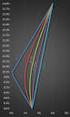 Copyright c 2005 by Karl Sigman Portfolio mean and variance Here we study the performance of a one-period investment X 0 > 0 (dollars) shared among several different assets. Our criterion for measuring
Social Security Eligibility and the Labor Supply of Elderly Immigrants. George J. Borjas Harvard University and National Bureau of Economic Research
 Social Security Eligibility and the Labor Supply of Elderly Immigrants George J. Borjas Harvard University and National Bureau of Economic Research Updated for the 9th Annual Joint Conference of the Retirement
Markups and Firm-Level Export Status: Appendix
 Markups and Firm-Level Export Status: Appendix De Loecker Jan - Warzynski Frederic Princeton University, NBER and CEPR - Aarhus School of Business Forthcoming American Economic Review Abstract This is
How Much Equity Does the Government Hold?
 How Much Equity Does the Government Hold? Alan J. Auerbach University of California, Berkeley and NBER January 2004 This paper was presented at the 2004 Meetings of the American Economic Association. I
Cash in advance model
 Chapter 4 Cash in advance model 4.1 Motivation In this lecture we will look at ways of introducing money into a neoclassical model and how these methods can be developed in an effort to try and explain
THE EFFECT OF LONG TERM LOAN ON FIRM PERFORMANCE IN KENYA: A SURVEY OF SELECTED SUGAR MANUFACTURING FIRMS
 THE EFFECT OF LONG TERM LOAN ON FIRM PERFORMANCE IN KENYA: A SURVEY OF SELECTED SUGAR MANUFACTURING FIRMS Isabwa Kajirwa Harwood Department of Business Management, School of Business and Management sciences,
Predicting the Performance of a First Year Graduate Student
 Predicting the Performance of a First Year Graduate Student Luís Francisco Aguiar Universidade do Minho - NIPE Abstract In this paper, I analyse, statistically, if GRE scores are a good predictor of the
CHAPTER 11. AN OVEVIEW OF THE BANK OF ENGLAND QUARTERLY MODEL OF THE (BEQM)
 1 CHAPTER 11. AN OVEVIEW OF THE BANK OF ENGLAND QUARTERLY MODEL OF THE (BEQM) This model is the main tool in the suite of models employed by the staff and the Monetary Policy Committee (MPC) in the construction
The Macrotheme Review A multidisciplinary journal of global macro trends
 The Macrotheme Review A multidisciplinary journal of global macro trends IMPACT OF GOVERNMENT EXPENDITURE ON NIGERIA S ECONOMIC GROWTH (1992 2011) Nwaeze Chinweoke* Njoku Ray** and Nwaeze Okeoma Paschal***
WORKING CAPITAL MANAGEMENT
 CHAPTER 9 WORKING CAPITAL MANAGEMENT Working capital is the long term fund required to run the day to day operations of the business. The company starts with cash. It buys raw materials, employs staff
The Business Credit Index
 The Business Credit Index April 8 Published by the Credit Management Research Centre, Leeds University Business School April 8 1 April 8 THE BUSINESS CREDIT INDEX During the last ten years the Credit Management
INFLATION, INTEREST RATE, AND EXCHANGE RATE: WHAT IS THE RELATIONSHIP?
 107 INFLATION, INTEREST RATE, AND EXCHANGE RATE: WHAT IS THE RELATIONSHIP? Maurice K. Shalishali, Columbus State University Johnny C. Ho, Columbus State University ABSTRACT A test of IFE (International
Inflation. Chapter 8. 8.1 Money Supply and Demand
 Chapter 8 Inflation This chapter examines the causes and consequences of inflation. Sections 8.1 and 8.2 relate inflation to money supply and demand. Although the presentation differs somewhat from that
Examples of adverse selection: Moral Hazard A simple job search model Unemployment Insurance. Risks of Selling a Life Annuity.
 Moral Hazard, Adverse Selection and Unemployment Insurance Plan Examples of adverse selection: Risk of Selling a Life Annuity Lemons Market Moral Hazard A simple job search model Unemployment Insurance
A Review of Cross Sectional Regression for Financial Data You should already know this material from previous study
 A Review of Cross Sectional Regression for Financial Data You should already know this material from previous study But I will offer a review, with a focus on issues which arise in finance 1 TYPES OF FINANCIAL
Efficiency of the Banking Sector in the Russian Federation with International Comparison 1)
 ÝÊÎÍÎÌÈ ÅÑÊÈÉ ÆÓÐÍÀË ÂØÝ ¹ 3 2004 357 ÏÐÀÊÒÈ ÅÑÊÈÉ ÀÍÀËÈÇ Efficiency of the Banking Sector in the Russian Federation with International Comparison 1) Caner S., Kontorovich V. Banks, in most countries,