
ROTARY FOUNDATION CODE OF POLICIES
|
|
|
- Milo Moody
- 9 years ago
- Views:
Transcription
1 ROTARY FOUNDATION CODE OF POLICIES (Containing Trustee Decisions Through January 2014)

2

3 Preface Rotary Foundation Code of Policies PREFACE The Rotary Foundation Code of Policies The purpose of the Code is to place all general and permanent policies of the Trustees of The Rotary Foundation that are currently in effect into an integrated and comprehensive volume with the topics arranged in logical order and with consistent language. The existence of such a code will make it easier for members of the Board of Trustees, and those charged with the responsibility to administer the policies, to be familiar with all general and permanent policies currently in force, regardless of the dates of their adoption. ARRANGEMENT Each chapter in the Code is intended to represent a separate subject, and each article is intended to represent a separate topic, as indicated by the titles. The chapters are numbered consecutively and are arranged in logical order for easy reference. A listing of the articles within the chapters is shown at the beginning of each chapter, and a listing of the sections within the articles is shown at the beginning of each article. If new articles become necessary between the issuance of revised editions of the Code, then such articles may be inserted in the appropriate location with an "A" following the number of the new article. For example, "Article 2A" may be added between Article 2 and Article 3. NUMBERING The Code utilizes the numbering system used in the Rotary Code of Policies and RI Bylaws, and the sections are numbered progressively with Arabic numerals. A progressive rather than consecutive system is used in order to provide space for the insertion of additional sections within the articles to accommodate new policies in the future. Generally, the sections are numbered progressively by tens. For example, in Article 5 the first three sections are numbered 5.010, 5.020, and New sections, as necessary, may be inserted between existing sections without changing any of the current numbers. For example, a new section between and could be or any other number between and 5.020, which illustrates the flexibility in the general numbering system. Each section number also carries the number of the article in which it is found. The article number and the section number are separated by a decimal point. When it is recognized that the number to the left of the decimal point is the article number, and the number to the right of the decimal point is the section number within that article, the system is easily comprehended and utilized. For example, Section means Section 50 in Article 7.

4 Preface Rotary Foundation Code of Policies ANNOTATIONS Annotations for development of the various sections of the Code are shown at the end of the sections. Initially, all of the sections showed an adoption date of April 126, 2000, which is noted as April 2000 Trustees Mtg.,. Dec As the policies are amended, the sections will show the dates and decision numbers of the applicable amendments. For example, if a section is amended by Trustee Decision 50 in October 2000, the following notation will appear at the end of the amended section: April 2000 Trustees Mtg., Dec. 126; Oct Trustees Mtg., Dec. 50. The Source notes at the end of the sections also show the historical development of the policies prior to adoption of the Code. INDEX An index for the Code follows the last chapter. Index entries are arranged in alphabetical sequence and have been made as concise as possible to enable rapid scanning of the index. AMENDMENTS AND NEW POLICIES The Trustees will adopt new policies and amend existing policies in its regular course of business. In the case of amendments, the sections of the Code being amended will be referenced in the actions of the Trustees. In the case of new policies, the placement of the new policies in the Code will be referenced in the actions of the Trustees. TERMINOLOGY When used in this document, RI refers to Rotary International, TRF refers to The Rotary Foundation of Rotary International, the Board refers to the RI Board of Directors and the Trustees refers to The Rotary Foundation Board of Trustees.

5 Codification Outline Rotary Foundation Code of Policies Page CO-1 THE ROTARY FOUNDATION CODE OF POLICIES TABLE OF CONTENTS CHAPTER I ORGANIZATION AND PURPOSE Article 1. Organization and Objectives Incorporation of The Rotary Foundation Authorization Foundation Mission Statement Definition of The Rotary Foundation Involvement of Spouses and Other Family Members of Rotarians in Foundation Programs Public Relations and Information Affirmation of Continuity and Commitment to the Mission of The Rotary Foundation Article 2. Trustees Meetings of Trustees, Decisions, and Meeting Minutes Delegation of Authority Committees of Trustees Conflict of Interest Policy for Trustees Code of Ethics Election of Officers Specific Duties of Officers Liaison Trustees to Foundation Committees Travel Policy Responsibilities of Spouses of Trustees at Rotary and Foundation Meetings Aide to the Chairman and Chairman-Elect Definition of Past Trustee Article 3. Associate Foundations Preamble to the Guidelines for Associate Foundations Meeting Expenses of Associate Foundations Existing Associate Foundations Article 4. Partnerships General Guidelines Strategic Partners Funding Partners Service Partners Project Partners Corporate Project Representatives to Other Organizations Invitations to Attend Meetings of Other Organizations RI and TRF Guidelines for Use of the Rotary Marks by Sponsors and Cooperating Organizations Public Relations Guidelines for a Pro Bono Relationship with Corporate Entities Strategic Partnerships Model Article 5. Regional Rotary Foundation Resources Regional Rotary Foundation Coordinator Purpose Functions RRFC Responsibilities - General Responsibility for Zone-Level Fundraising

6 Codification Outline Rotary Foundation Code of Policies Page CO RRFC Selection and Appointment Process Training Institute Funding Regional Rotary Foundation Seminars RRFC Organization Evaluation of Regional Rotary Foundation Coordinators Assistant Regional Rotary Foundation Coordinators Endowment/Major Gift Advisers Article 6. Foundation Involvement in RI Meetings Foundation Representative and Representative's Spouse to Attend General RI Meetings Rotary Foundation Presentation at Rotary Institutes Director and Trustee Liaisons to Committees Attendance of Trustees at Councils on Legislation Rotary Foundation Alumni Involvement in Trustee Activities Article 7. District Structure District Rotary Foundation Committee District Rotary Foundation Subcommittees Article 8 Staff Secretariat Organization and Operation Foundation Staff Participation in Presidents-elect Training Seminars Foundation Staff Development Efforts Travel and Reimbursement CHAPTER II PROGRAMS Article 10 General Program Policies Stewardship of Foundation Funds by Clubs and Districts Program Review Conflict of Interest Policy for Program Participants Grants to Other Organizations Sexual Abuse and Harassment Prevention Guidelines Future Vision Plan Fund for Special Initiatives Policy on Grants for Vaccine Related-Projects Article 11. Rotary Foundation Grants Grant Structure for the Future Distributable Funds Model Rotary Foundation Grants Global Grants Packaged Grants District Grants Areas of Focus The Rotary Foundation and Sustainability Qualification Evaluation Plan for Foundation Grants Program Article 12. PolioPlus General Policies PolioPlus Eradication Activities and Grants Statement on Commitment to Global Polio Eradication PolioPlus Relations with Other Organizations

7 Codification Outline Rotary Foundation Code of Policies Page CO International PolioPlus Committee Regional PolioPlus Committees National PolioPlus Committees District PolioPlus Subcommittees Club PolioPlus Committees Advocacy Program Strategy Until the Certification of the Eradication of Polio Article 13. Rotary Peace Centers General Policies Funding Recognition Award Amount Fellow Eligibility and Selection Process Ambassadorial Activities of Rotary Peace Fellows Responsibilities of Districts Article 14. Grant Oversight Annual Stewardship Plan The Rotary Foundation Cadre of Technical Advisers Grant Auditing and Monitoring Activities Grant Reporting Article 15. New Programs and Pilot Programs New Programs Pilot Programs Article 16. Foundation Alumni Definition of Rotary Foundation Alumni Rotary Foundation Alumni Relations Activities Rotary Foundation Alumni Coordinators (RFAC) Rotary Foundation Alumni Network (RFAN) Alumni Awards CHAPTER III FISCAL MATTERS, FOUNDATION SUPPORT AND DONOR RECOGNITION Article 20. Contributions Encouraging Rotarians to Give Annually to the Foundation New Gift Proposals Exchange Rates for Contributions Terminology for the Funds of the Foundation Gift Options Gift Acceptance Manual Endowment Fund Annual Fund Donor Advised Funds Program Article 21. Recognition Statement of Principles for Contribution Recognition Guidelines for Major Gift Recognition Paul Harris Fellow Recognition Other Recognition Awards Foundation Awards Review Committee

8 Codification Outline Rotary Foundation Code of Policies Page CO-4 Article 22. SHARE System Allocations Program Options Catalog Terminology Using SHARE District Designated Funds for PolioPlus District Designated Funds Utilization by Collaborating Districts Article 23. Investments Protection of Funds Held Outside the USA Investment Policy for Annual Fund Investment Policy for Endowment Fund Investment Policy for Pooled Income Fund Statement of Investment Policy for The Rotary Foundation Charitable Remainder Trusts Investment Policy for Charitable Gift Annuity Fund Investment Policy for Life Income Agreements Investment Policy Statement for the PolioPlus Fund Investment Policy Statement for Associate Foundations International Currency Management Policy Policy for Investment Consultant Evaluation Investment Policy Statement for the Donor Advised Fund Investment Policy Statement For Planned Giving Assets Article 24. Operating Reserve Fund Policy Purpose Definitions Goals Accounting for and Investment of Reserve Funding of Reserve Use of Reserve Reporting and Monitoring Review of Policy Article 25. Trustee Expenses and Reimbursements Promotional Travel Expense Guidelines Attendance at Rotary Institutes Corporate Credit Card Article 26 Miscellaneous Joint Committee to Review Allocation of Costs Between RI and TRF Independent Audits Internal Audits Resolutions on Financial Accounts and Services Reporting Foundation Financial Information Terminology for Foundation Assets Purchase of Equipment Substantiation of Reimbursement of Reimbursable Expenses

9 Rotary Foundation Code of Policies 1 CHAPTER I ORGANIZATION AND PURPOSE Articles 1. Organization and Objectives 2. Trustees 3. Associate Foundations 4. Partnerships 5. Regional Rotary Foundation Resources 6. Foundation Involvement in RI Meetings 7. District Structure 8. Staff Article 1. Organization and Objectives Incorporation of The Rotary Foundation Authorization Foundation Mission Statement Definition of The Rotary Foundation Involvement of Spouses and Other Family Members of Rotarians in Foundation Programs Public Relations and Information Affirmation of Continuity and Commitment to the Mission of The Rotary Foundation Incorporation of The Rotary Foundation The articles of incorporation and bylaws for the corporation have been approved by the Trustees and are consistent with the governing documents of Rotary International and The Rotary Foundation, including the constitution and bylaws of Rotary International, the 12 November 1931 declaration of trust between Rotary International and the Trustees of The Rotary Foundation, and the rules and regulations for the administration of The Rotary Foundation. (January 2009 Trustees Mtg., Dec. 66) Source: May-June 1983 Trustees Mtg., Dec 13 Amended by January 2009 Trustees Mtg., Dec Authorization The chairman and general secretary of the Foundation are authorized to execute and deliver all certificates, articles, applications, designations, appointments, assignments, bills of sale, agreements, documents and instruments. (April 2000 Trustees Mtg., Dec. 126) Source: May-June 1983 Trustees Mtg., Dec. 13

10 Rotary Foundation Code of Policies The Rotary Foundation Mission Statement The Mission of The Rotary Foundation of Rotary International is to enable Rotarians to advance world understanding, goodwill, and peace through the improvement of health, the support of education, and the alleviation of poverty. (June 2007 Trustees Mtg., Dec. 159) Source: April 2006 Trustees Mtg., Dec. 125; COL Definition of The Rotary Foundation The Rotary Foundation is a not-for-profit corporation that receives contributions and distributes funds in support of approved humanitarian and educational activities that are implemented through Rotary clubs and districts. (September 2011 Trustees Mtg., Dec. 8) Source: September 2011 Trustees Mtg., Dec Involvement of Spouses and Other Family Members of Rotarians in Foundation Programs The Trustees have observed that 1. broad participation of the spouses and other family members of Rotarians in service projects and Foundation programs undertaken by clubs and districts significantly expands and enhances Rotary s program of service 2. similarly broad attendance and participation of spouses and other family members of Rotarians in Foundation training seminars, recognition ceremonies, and other events at the club, district, and international levels increases knowledge of Foundation activities and accomplishments and helps to achieve Rotary s objective of promoting world understanding and peace 3. spouses and other family members of Rotarians strengthen the Rotary movement by taking the spirit and ethics of Rotary to their own professional, civic, charitable, and other activities 4. spouses and other family members of Rotarians provide a vital framework of support for many Foundation programs 5. spouses and other family members of Rotarians serve as advocates for Rotary service and Foundation programs to others both within and without the organization 6. many spouses and other family members of Rotarians are potential contributors to the Foundation Accordingly, to utilize more fully this potential for the enhancement of Foundation programs and Rotary service, the Trustees establish the following goals for participation in Foundation activities by the spouses and other family members of Rotarians:

11 Rotary Foundation Code of Policies 3 1. Clubs and districts are encouraged to plan and implement service projects and Foundation programs in such a manner that the spouses and other family members of Rotarians can easily participate 2. Clubs and districts are encouraged to organize Foundation training seminars, recognition ceremonies, and other events in such a manner that the spouses and other family members of Rotarians can attend and participate 3. The Trustee chairman, general secretary, and relevant Foundation committees are requested to organize Foundation events at the Convention, the International Assembly, and other international meetings in such a manner as to encourage the participation of the spouses and other family members of Rotarians in such events 4. To further the goals of the Foundation and to serve as a model for the broad participation of the spouses and other family members of Rotarians in such Rotary and Foundation projects, programs, and events a. the spouses of Trustees are encouraged to participate in club and district service projects and Foundation programs, to attend and participate in Foundation training seminars, recognition ceremonies, and other events, and to serve as advocates for Foundation programs and Rotary service b. the spouses of Trustees are requested to attend and participate in Foundation events at the Convention, International Assembly, Rotary Institutes, and other international meetings, as appropriate. (October 2005 Trustees Mtg., Dec. 14) Source: October 2005 Trustees Mtg., Dec Public Relations and Information Public Information The central message of public information about The Rotary Foundation shall be related to Rotary s commitment to polio eradication and identifying The Rotary Foundation of Rotary International and its Web site address with the primary purposes of informing the general public of what The Rotary Foundation does, creating pride in Rotarians for the Foundation s humanitarian work, and encouraging further financial contributions to The Rotary Foundation. (June 2010 Trustees Mtg., Dec. 139) Source: April 1999 Trustees Mtg., Dec Rotary Foundation Marks The Trustees request the general secretary to ensure that The Rotary Foundation logo is used whenever and wherever possible on all TRF materials and activities. (June 2010 Trustees Mtg., Dec. 139) Source: April 2010 Trustees Mtg., Dec. 94

12 Rotary Foundation Code of Policies Recognition Plaque for TRF Funded Projects The Trustees have approved a plaque design as a recommended model for signage to be placed on or in conjunction with Rotary projects that are funded by The Rotary Foundation. Rotarians should include signage on or in conjunction with their projects so as to identify the role of the grant sponsors and The Rotary Foundation in the grant projects. The general secretary is authorized to revise the recommended design as required. The general secretary is requested to include the design in The Rotary Foundation grants publications and correspondence. (September 2011 Trustees Mtg., Dec. 7) Source: April 2011 Trustees Mtg., Dec Affirmation of Continuity and Commitment to the Mission of The Rotary Foundation In 1997, the Trustees concurred with the Board in the adoption of the Affirmation of Continuity and Commitment to the goals and objectives of The Rotary Foundation. The following statement is their updated expression of the combined spirit of cooperation, continuity and commitment to the new Mission of The Rotary Foundation upon the global launch of the Future Vision Plan. The Board and the Trustees reaffirm the significant relationship of Rotary International and The Rotary Foundation, an independent not-for-profit foundation, which operates as the Foundation of Rotary International. It is the desire of all directors and trustees working together under the leadership of the RI president, to achieve the Mission of The Rotary Foundation and to be responsive to Rotarians, Rotary clubs and districts in implementing their projects through The Rotary Foundation. Specifically, the Board and the Trustees are committed to the eradication of polio; to fulfilling the humanitarian and educational needs within areas of focus in all areas of the world; and to expanding activities intended to strengthen peaceful relations among people. To these ends, the Board and Trustees will continue positive efforts to encourage additional financial support through gifts to The Rotary Foundation to assure the current level of programs and to build the Foundation for the future. Furthermore, the Board and Trustees, while acknowledging the value of projects throughout the world, appeal to the Rotary world to acknowledge the universality of The Rotary Foundation as our primary means to implement the international service objective of Rotary clubs and to promote the unity of Rotary International. The Board and the Trustees join in this statement of common purpose to reaffirm the continuity of The Rotary Foundation of Rotary International. As we prepare for the

13 Rotary Foundation Code of Policies 5 future, we are totally convinced that Rotary International will move ahead with confidence. It is our belief that the achievements of the past are but a prologue for the future of Rotary International and its Foundation. (October 2012 Trustees Mtg., Dec. 16) Source: March 1997 Trustees Mtg., Dec. 151; March 1997 Board Mtg., Bd. Dec. 177 Amended by October 2012 Trustees Mtg., Dec. 16

14 Rotary Foundation Code of Policies 6 Article 2. Trustees Meetings of Trustees, Decisions, and Meeting Minutes Delegation of Authority Committees of Trustees Conflict of Interest Policy for Trustees Code of Ethics Election of Officers Specific Duties of Officers Liaison Trustees to Foundation Committees Travel Policy Responsibilities of Spouses of Trustees at Rotary and Foundation Meetings Aide to the Chairman and Chairman-Elect Definition of Past Trustee Meetings of Trustees, Decisions, and Meeting Minutes Annual Meeting The annual meeting of the Trustees, as referenced in TRF bylaws Section 4.1, will be held in October. (February 2006 Trustees Mtg., Dec. 89) Source: October 2005 Trustees Mtg., Dec Financial Impact of Decisions No action will be taken on recommendations to the Trustees which do not include, when appropriate, detailed, timely information on the cost and financial impact of such recommendations including whether the proposed program, services, or actions can be accomplished by the current staff or will require additional staff, either temporary or permanent. (January 2002 Trustees Mtg., Dec. 78) Source: March 1990 Trustees Mtg., Dec Effective Date of Trustees Decisions Once a decision is passed by the Trustees at any meeting of the Trustees, such decision is immediately in force, unless it requires the concurrence of some other body in Rotary or the approval of legal counsel. (April 2000 Trustees Mtg., Dec. 126) Source: November 1981 Trustees Mtg., Dec Informal Consent of Trustees When Trustee policy requires the informal consent of the Trustees, such consent shall be obtained by telephone, , fax, or other means of communication under the direction of the general secretary. Such informal polling by the general secretary shall continue only until the consent of a majority of Trustees, including the Trustee Chairman, is obtained. Any action for which informal consent is sought and obtained, including the

15 Rotary Foundation Code of Policies 7 names of all Trustees consenting to such action, shall be reported by the general secretary to all Trustees within 10 business days. (April 2005 Trustees Mtg., Dec. 97) Source: April 2005 Trustees Mtg., Dec Distribution of the Minutes Upon request, copies of the minutes of all Trustees meetings shall be distributed to a) current trustees b) past trustees c) incoming trustees d) RI Board of Directors e) general secretary and appropriate members of staff f) regional Rotary Foundation coordinators g) past regional Rotary Foundation coordinators h) contact people for Associate Foundations i) trustee committee consultants j) past RI directors In addition, the general secretary shall post the minutes and appendices of all Trustees meetings to the RI Web site within 90 days of the meeting, except for those appendices that are specifically designated by the Trustees to be filed only with the official copy of the minutes. Minutes posted prior to their approval by the Trustees shall contain notice that the minutes are in draft form only, subject to approval by the Trustees. (October 2006 Trustees Mtg., Dec. 11) Source: May-June 1984 Trustees Mtg., Dec. 2; October 2006 Trustees Mtg., Dec. 11 Amended by April 2003 Trustees Mtg., Dec Codification of Policies The Rotary Foundation Code of Policies is a reference manual, in subject order, of all policy decisions still in force that were made by the Trustees and to a limited extent, the RI Board of Directors. All general and permanent policies of the Trustees shall be incorporated into the Code. The Code will be maintained and kept up to date by the general secretary. The general secretary, at the conclusion of each Trustees meeting, shall review the decisions passed at that meeting and prepare a report listing those decisions taken by the Trustees that should be added to the Code. This report shall be submitted to the Executive Committee of the Trustees at its next meeting. The Executive Committee shall review this report and make recommendations to the full board of Trustees for consideration and decision. The general secretary shall update The Rotary Foundation Code of Policies after each Trustees meeting for distribution in loose-leaf form to the Trustees and appropriate TRF and RI staff, and for publication on the RI website.

16 Rotary Foundation Code of Policies 8 The general secretary is requested to ensure that all suggested Trustee decisions make reference to any provisions of The Rotary Foundation Code of Policies that are affected by the suggested Trustees decision, such suggested decisions to be drafted so they may be added to the Code without modification. The general secretary shall have the authority to revise the numbering, arrangement, headings, and cross-references contained in The Rotary Foundation Code of Policies as may be required from time to time. The general secretary is requested to place a statement in future editions of the Manual of Procedure that the white pages are for purposes of explanation and serve as guidelines in interpreting TRF policy as found in the constitutional documents of TRF, which are contained in the yellow pages of the Manual of Procedure, and The Rotary Foundation Code of Policies. The Rotary Foundation Code of Policies shall be issued only in English at this time. (October 2013 Trustees Mtg., Dec. 8) Source: June 2001 Trustees Mtg., Dec. 207 Amended by April 2003 Trustees Mtg., Dec. 129; October 2013 Trustees Mtg., Dec Delegation of Authority I. The trustee chairman is authorized to 1. fill vacancies among RRFCs, Assistant RRFCs, End Polio Now Coordinators (EPNs), endowment/major gift advisers and other advisers, consultants, and similar positions that occur during his term as Chairman 2. approve Special Initiative grants of up to US$20,000 per grant from the Special Initiative Fund, up to US$100,000 annually, for service projects undertaken by Rotary clubs and/or districts that do not fit within the established criteria of existing Foundation programs. A report on all Special Initiative grants approved by the Chairman shall be provided to the Trustees at their next meeting 3. approve expenditure of up to US$50,000 each year for unanticipated expenses for program and administrative activities in keeping with the Mission of The Rotary Foundation. Any such expenditure shall be reported to the Trustees at their next meeting. However, this authority shall not be effective during the period commencing seven days prior to a regularly scheduled meeting of the Trustees until the conclusion of such meeting 4. with the recommendation of the stewardship committee impose the penalties set forth in the Rotary Foundation Code of Policies for Failure to Comply with Foundation Reporting Guidelines or Misuse or Mismanagement of Foundation Grant Funds 5. suspend a district and any or all of its member clubs from participating in the programs of the Foundation whenever a district or its member clubs is not in compliance with the policies and guidelines of The Rotary Foundation. Unless previously authorized by the Trustees, the

17 Rotary Foundation Code of Policies 9 Chairman will obtain the informal consent of a majority of Trustees before suspending a district. However, this authority shall not be effective during the period commencing seven days prior to a regularly scheduled meeting of the Trustees until the conclusion of such meeting 6. release funds from its PolioPlus fund when he determines that the goal of polio eradication would be adversely affected by a delay of approval until the next Trustees meeting, provided the release: a) has been recommended by the International PolioPlus Committee or its chairman; b) does not exceed US$500, approve the removal of a district Rotary Foundation committee chair from the position for cause 8. transfer the funds from the World Fund reserve to the PolioPlus fund, if market conditions warrant such action (April 2013 Trustees Mtg., Dec. 113) Source: March 1997 Trustees Mtg., Dec. 153; April 1998 Trustees Mtg., Dec. 131; October 2000 Trustees Mtg., Dec. 50; April 2003 Trustees Mtg., Dec. 116; April 2004 Trustees Mtg., Dec. 99; May 2004 Trustees Mtg., Dec. 130, April 2005 Trustees Mtg., Dec. 97; October 2006 Trustees Mtg., Dec. 10 October 2006 Trustees Mtg., Dec. 39 April 2007 Trustees Mtg., Dec. 104 April 2011 Trustees Mtg., Dec. 94; October 2012 Trustees Mtg., Dec. 16; April 2013 Trustees Mtg., Dec. 96; April 2013 Trustees Mtg., Dec. 113 II. The Chairman-elect is authorized to 1. appoint the regional Rotary Foundation coordinators, Assistant Regional Rotary Foundation coordinators, and similar positions, who will serve during his term as chairman, in consultation with the chairman, vice-chairman, president, president-elect and the incoming chairman-elect, if known. Appoint as used in this paragraph shall include renewing the appointment of those serving in multiple year terms 2. appoint consultants to Trustee standing committees to serve during his term as Chairman, subject to the approval of the Trustees (October 2012 Trustees Mtg., Dec. 16) Source: April 2005 Trustees Mtg., Dec. 97; January 2009 Trustees Mtg.,Dec. 66; April 2009 Trustees Mtg., Dec. 99 III. The general secretary is authorized to A. Rotary Foundation Grants (District Grants, Global Grants and Packaged Grants) 1. Disapprove requests in any amount for grants that do not meet program eligibility requirements or criteria, 2. Relinquish/cancel a grant if an approved project no longer meets the terms and conditions of a grant award or The Rotary Foundation Code of Policies, and release unexpended awards 3. Waive payment, reporting, and closure requirements and contingencies on an exception basis 4. Waive reporting responsibilities for a host or international sponsor when the sponsor has proven due diligence in trying to ascertain a report

18 Rotary Foundation Code of Policies Extend the processing of a pending/unapproved, approved/unpaid, or paid/nonimplemented grant, beyond established time limits, on an exception basis 6. Enforce timeline requirements for submissions of proposals and applications prior to grant award 7. Release grant funds when all prepayment requirements have been met 8. Approve additional funding above the original award amount if extenuating circumstances warrant and if host and international sponsors approve the additional funding 9. Authorize changes to the scope of an approved grant, provided that the grant still adheres to The Rotary Foundation Code of Policies and the terms and conditions of the grant award 10. Waive program or eligibility criteria, on an exception basis, when, in the opinion of the general secretary, circumstances warrant. 11. Allow variations from the requirements of qualification as set forth in Rotary Foundation Code of Policies section for good cause. B. Rotary Foundation Global Grants 1. Global Grants a) approve all grant awards up to US$100, Global Grants for Humanitarian Projects a) act on recommendations from The Rotary Foundation Cadre of Technical Advisers for advance and interim site visitors and auditors b) modify audit and monitor requirements for humanitarian grants as circumstances warrant c) request The Rotary Foundation Cadre of Technical Advisers to appoint an auditor or site visitor to review and report on any project as deemed necessary d) approve changes within the budget of an approved grant, provided that these changes do not affect the purpose or dollar limit of the grant e) approve requests for project sponsors to use interest earned and currency gains for additional items that will enhance the project 3. Global Grants for Vocational Training Teams a) authorize team travel if all award conditions have been met b) authorize additional travel associated with training activities c) postpone by one year the originally scheduled vocational training award d) authorize brief visits outside of the host sponsor district in adjacent districts as part of the vocational training team itinerary when such visits pertain to training or associated area of focus activity e) grant transportation payment for a vocational training team member in the event of the death of the team member s mother, father, sibling, spouse, or child f) waive an established predeparture requirement for a vocational training team member or team leader g) waive citizenship and residency criteria when extenuating circumstances warrant h) enforce submission of all post-training reporting 4. Global Grants for Scholarships a) make final decisions on all matters raised by scholarship candidates, scholars, and their supporters concerning the administration of the scholarship

19 Rotary Foundation Code of Policies 11 b) approve district-endorsed candidates if eligible under existing Code of Policies and determine whether the scholar s study plan is within an area of focus c) waive a published pre-departure requirement for any scholar d) postpone scholar s use of a scholarship by 12 months when warranted by extenuating circumstances (such as host and international sponsor issues and district approval delays) e) approve late scholarship candidates (those who were not originally awarded a scholarship for reasons of incomplete applications or unsubmitted applications) f) grant roundtrip transportation payment or single-trip transportation for a scholar in the event of the death of the scholar s mother, father, sibling, spouse, or child g) grant a delay of up to one year in a scholar s return home h) enforce submission of all post-training reporting C. Packaged Grants a) develop the terms and conditions of the packaged grant, following Trustee review and negotiation with the proposed strategic partner of the objectives and general scope of the opportunity b) approve all grant awards to those clubs and districts that demonstrate the capacity to implement the grant as outlined in the terms and conditions D. Rotary Foundation District Grants a) approve all grant awards E. PolioPlus a) approve grants to National PolioPlus committees for administrative expenses upon the recommendation of the International PolioPlus Committee or its chair on the committee's behalf, up to a maximum of US$25,000 per grant b) approve matching fund grants of up to US$25,000 for PolioPlus Partners Grants F. Strategic Partnerships Initiate solicitation of potential Strategic Partners for Packaged Grants G. Awards Approve all nominations for Citations for Meritorious Service H. Fund Development Approve or disapprove donor requested distributions from donor advised funds I. Conflicts of Interest Fashion and implement remedies with respect to the TRF conflict of interest policy as set forth in Rotary Foundation Code of Policies section

20 Rotary Foundation Code of Policies 12 J. Investments Amend the performance measurement standards section of the investment policy statement for associate foundations to add additional performance benchmark indices as new associate foundations are approved by the Trustees K. Exceptions The general secretary may waive program and/or eligibility criteria, on an exception basis, when, in the opinion of the general secretary, circumstances warrant. The general secretary shall make an immediate report to the Chairman on any exceptions granted that are not stated above in sections III.A., III.B., III.C., III.D., and III.G. The general secretary shall make a quarterly report to all Trustees on any and all exceptions granted, including those specifically authorized by sections III.A., III.B., III.C., III.D., and III.G. L. Appeals Any appeals of the general secretary s actions pursuant to this delegation of authority policy, including any exceptions to program and/or eligibility criteria, will be reviewed and acted upon by the Executive Committee of the Trustees. The Executive Committee shall report any actions taken with regard to such appeals to the first available Trustees meeting. With respect to the grant programs, should the Executive Committee believe a change in policy is needed as a result of an appeal, it shall refer the matter to the Programs Committee, which will work with the general secretary to include the issue in the regular evaluation of the grant programs. Should the Programs Committee believe a policy change is needed as a result of this evaluation, it shall refer the matter to the full board of Trustees. (April 2013 Trustees Mtg., Dec. 113) Source: October 2000 Trustees Mtg., Dec. 49; April 2005 Trustees Mtg., Dec. 97; October 2006 Trustees Mtg., Dec. 55; April 2007 Trustees Mtg., Dec. 104; April 2008 Trustees Mtg., Dec. 115 October 2008 Trustees Mtg., Dec. 24; October 2009 Trustees Mtg., Dec. 16; October 2009 Trustees Mtg., Dec. 44; October 2010 Trustees Mtg., Dec. 15; October 2012 Trustees Mtg., Dec. 16; April 2013 Trustees Mtg., Dec. 113 IV. The Stewardship Committee is authorized to 1. take any of the actions outlined in the Stewardship Committee Terms of Reference 2. act on behalf of the Trustees on all matters relating to qualification (October 2012 Trustees Mtg., Dec. 16) Source: October 2006 Trustees Mtg., Dec. 49; April 2009 Trustees Mtg., Dec Committees of Trustees Terms of Reference for Committees The terms of reference for the Trustee Executive, Programs, Finance, Fund Development, and Stewardship Committees are as follows:

21 Rotary Foundation Code of Policies 13 The Executive Committee shall 1. consist of the Chairman, Chairman-elect, and Vice-Chairman of the Trustees, and the chairs of the other standing committees of the Trustees 2. make decisions on behalf of the Trustees when they are not in session on matters of an executive or administrative character where the policy of the Trustees has been established or where an emergency exists 3. make recommendations to the Trustees on initiation and development of new activities 4. receive and review proposals or initiate proposals for new programs and make recommendations regarding them to the Trustees 5. review reports of committees and, when necessary, take action on matters contained therein where the policy of the Trustees has been established or where an emergency exists 6. make decisions, when necessary, relative to expenditures for which appropriations have been made by the Trustees and make appropriations for administrative purposes not to exceed US$25, explore matters requiring the attention of the Trustees and offer recommendations thereon to the Trustees 8. consider all proposed associate foundations and, if they meet the Trustees criteria, approve or not approve all such proposals, as well as monitor the activities of all approved associate foundations 9. periodically review and recommend revisions to the long-range plans for The Rotary Foundation 10. be the representatives of the Trustees on the Joint Committee of the Board of Directors of RI and the Trustees of The Rotary Foundation of RI 11. review and act upon any appeals of the general secretary s actions pursuant to the Trustee s delegation of authority policy, including any exceptions to program and/or eligibility criteria. The Executive Committee shall report any actions taken with regard to such appeals to the first available Trustees meeting 12. review, in order to assure compliance with United States income tax statutes, in a manner consistent with United States Treasury Regulation Section , or any successor regulations that may be in effect from time to time, the amounts to be paid to Rotary International for the services of the general secretary and general
22 Rotary Foundation Code of Policies 14 manager of The Rotary Foundation during the next year, so as to assure that such payments are "reasonable," as that term is defined in the regulation. This matter shall be reviewed annually at the Trustees meeting held in conjunction with the Rotary International Convention (June 2005 Trustees Mtg., Dec. 165) Source: May 1965 Trustees Mtg., Dec. 6 Amended by June 1970 Trustees Mtg., Dec. 14; May 1980 Trustees Mtg., Dec. 10; June 1982 Trustees Mtg., Dec. 10; October 1990 Trustees Mtg., Dec. 3; April 2002 Trustees Mtg., Dec. 125 ; April 2005 Trustees Mtg., Dec. 97; April 2005 Trustees Mtg., Dec. 125; June 2005 Trustees Mtg., Dec. 165 The Programs Committee shall 1. consist of at least four Trustees, preferably with at least one member from each class of Trustees for continuity purposes 2. monitor and evaluate all current programs and grants 3. make decisions on behalf of the trustees, should they not be in session, on all matters relating to program awards or grants and to the operation of all foundation programs or delegate any part of this authority to the committee chair and/or to the general secretary 4. make recommendations to the Trustees on policy matters related to programs of the Foundation and recommend development of new Foundation programs 5. provide projections of the financial requirements for current and proposed programs of the Foundation (April 2013 Trustees Mtg., Dec. 115) Source: May 1980 Trustees Mtg., Dec. 10 Amended by June 1982 Trustees Mtg., Dec. 10; May 1986 Trustees Mtg., Dec. 6; October 1990 Trustees Mtg., Dec. 3; October 2004 Trustees Mtg., Dec. 7; October 2012 Trustees Mtg., Dec. 16; April 2013 Trustees Mtg., Dec. 115 The Finance Committee shall 1. consist of at least four Trustees 2. make recommendations to the Trustees on all matters related to finance, including the annual budget of The Rotary Foundation and the funds necessary to support the Foundation programs 3. recommend depositories for the funds of The Rotary Foundation 4. review at each meeting the financial performance of the Foundation compared to budget and report to the Trustees as necessary (June 2010 Trustees Mtg., Dec. 158) Source: May 1965 Trustees Mtg., Dec. 6 Amended by May 1980 Trustees Mtg., Dec. 10; June 1982 Trustees Mtg., Dec. 10; October 1990 Trustees Mtg., Dec. 3; October 2004 Trustees Mtg., Dec. 7; January 2008 Trustees Mtg., Dec. 77; June 2010 Trustees Mtg., Dec. 158
23 Rotary Foundation Code of Policies 15 The Fund Development Committee shall 1. consist of three trustees serving multi-year staggered terms, and six non-trustee Rotarians with significant fund development experience or who are fundraising professionals, with terms up to three years (renewable) on a staggered basis 2. evaluate existing fund-raising mechanisms and develop new ones as required to meet the program requirements of The Rotary Foundation 3. develop public relations, contribution recognition, and research related to the development of funding activities, including projects of contribution sources and levels 4. make decisions on matters of development where the policy of the Trustees has been established or where an emergency exists 5. make decisions, when necessary, relative to development expenditures for which appropriations have been made by the Trustees 6. monitor and evaluate existing Rotary Foundation programs for their effectiveness in developing funding for The Rotary Foundation 7. meet twice a year at RI headquarters prior to Trustees meetings and separate from any other Trustee committee meeting times ( January 2013 Trustees Mtg., Dec. 60) Source: June 1982 Trustees Mtg., Dec. 10 Amended by October 1990 Trustees Mtg., Dec. 3; October 2004 Trustees Mtg., Dec. 7; October 2012 Trustees Mtg., Dec. 22 The Stewardship Committee shall 1. consist of at least four Trustees a. each of whom shall be appointed for a term of four years (except for the initial members who shall be appointed for such terms as shall be necessary to permit at least one new member to be appointed each year); and b. at least one of whom shall be appointed from each class of Trustees 2. make recommendations to the Trustees on all matters related to stewardship, compliance, oversight, and fiduciary responsibility and the scheduling of regional/zonal stewardship seminars 3. within the policies of the Trustees, counsel the general secretary with respect to stewardship and oversight matters, including advising the general secretary with respect to investigations, audits and legal actions
24 Rotary Foundation Code of Policies receive and review the general secretary s annual plan for stewardship and oversight activities prior to its consideration by the Trustees 5. receive and review the general secretary s reports on findings and resolutions of alleged misuse of Foundation funds and report to the Trustees as necessary 6. between Trustees meetings, make decisions on matters of stewardship and oversight where the policy of the Trustees has been established or where an emergency exists 7. between Trustees meetings, impose sanctions to clubs and districts for failure to comply with the Trustees stewardship policies as authorized by the Trustees 8. make decisions, when necessary, relative to stewardship and oversight expenditures for which appropriations have been made by the Trustees; and monitor and evaluate existing Foundation stewardship and oversight activities 9. provide a report to the Trustees at their next meeting on any actions taken on their behalf between meetings 10. act on behalf of the Trustees on all matters related to qualification (October 2012 Trustees Mtg., Dec. 16) Source: April 2005 Trustees Mtg., Dec. 109 Amended by October 2006 Trustees Mtg., Dec. 49; October 2012 Trustees Mtg., Dec. 16 Cross-Reference Cadre Chair as Consultant to Stewardship Committee of the Trustees Trustee Chairman s Role Regarding Committees The Chairman of the Trustees shall appoint the members of all committees and their chairmen and meeting times and places, and shall be an ex officio voting (in the event of a tie vote) member of all Trustee committees. (April 2000 Trustees Mtg., Dec. 126) Source: June 1982 Trustees Mtg., Dec. 10. See also TRF Bylaws Art. VI, Section Recommendations for Appointments It is appropriate for the Chairman and Chairman-elect to solicit and consider suitable appointees recommended by current, past, and incoming Trustees, as well as by others. Other than the appointment of Regional Rotary Foundation Coordinators and assistant regional Rotary Foundation coordinators, for which separate appointment procedures have been established, the following procedures and timetable should be followed for all appointments made by the Chairman commencing during the Chairman s year of service, including all committee members (other than members of Trustee standing committees) and consultants, and other similar positions:
25 Rotary Foundation Code of Policies 17 a. the chairman-elect should solicit recommendations at the earliest possible time for individuals to be considered for appointments to serve during the year he/she is chairman b. the deadline for submission of such recommendations should be 60 days in advance of the October Trustees meeting in the year prior to when the appointments are effective c. the chairman-elect is requested to prepare a list of all names suggested for appointment and send said list to all trustees for review at least 30 days in advance of the October Trustees meeting d. each trustee will respond within fourteen days of receipt of the list, providing to the chairman-elect, on a confidential basis, his/her advice concerning those individuals who in his/her opinion are inappropriate to receive an appointment for the following year and information, when known, on the skills and experiences of the individuals listed e. in order to comply with TRF Bylaws section 6.1, the chairman-elect is requested to submit the proposed committee structure for the following year to the Trustees for review at their October meeting. (January 2009 Trustees Mtg., Dec. 66) Source: April 2005 Trustees Mtg., Dec. 97 Amended by October 2008 Trustees Mtg., Dec. 21; January 2009 Trustees Mtg., Dec Appointments of Rotarians with Financial Obligations to RI Any Rotarian who has been notified by the general secretary that he or she has a financial obligation to RI or TRF in excess of US$100 that has been outstanding for more than 90 days a) shall be ineligible for any Rotary appointments or assignments that require the approval of the Board until these obligations have been met to the satisfaction of the Audit Committee of the Board b) shall be ineligible to have any payments made on their behalf by RI or TRF or to receive reimbursement for expenses incurred on RI or TRF business until such financial obligation has been repaid It is recommended that those Rotarians who have an outstanding financial obligation to RI in excess of US$100 for more than 90 days, not receive any RI presidential appointments or assignments, or any Rotary Foundation appointments or assignments, until all outstanding financial obligations have been resolved to the satisfaction of the Board. It is also recommended that a Rotarian who has outstanding
26 Rotary Foundation Code of Policies 18 financial obligations in excess of US$100 for more than 180 days be removed from any current appointment or assignment by the responsible appointer. (October 2005 Trustees Mtg., Dec. 7) Source: June 2002 Board Mtg., Bd. Dec. 296; February 2004 Board Mtg., Bd. Dec. 218; April 2004 Trustees Mtg., Dec. 85 Amended by November 2002 Board Mtg., Bd. Dec. 168; May 2003 Board Mtg., Bd. Dec. 422; June 2005 Board Mtg., Bd. Dec. 336; June 2005 Trustees Mtg., Dec Appointments of Governor with Outstanding Financial Reports Upon receiving notice that a governor has failed to submit the annual statement and report required by RI bylaws , the general secretary shall notify the governor that unless the statement and report are received by the general secretary within 90 days, the governor shall be ineligible for future RI and TRF appointments and assignments until the statement and report are submitted. The general secretary shall notify the RI president and Trustee chairman of those governors who are not in compliance with the above requirement. (October 2006 Trustees Mtg., Dec. 7) Source: May 2003 Board Mtg., Bd. Dec. 336; June 2003 Trustees Mtg., Dec. 173 Amended by October 2006 Trustees Mtg., Dec Consultants Appointment of Committee Consultants The Trustees Programs Committee, Fund Development Committee, Finance Committee, and Stewardship Committee may each have qualified non-voting consultants to assist their work. The work of such consultants shall focus on specific tasks or technical needs identified by the committee chairmen. The annual administration budget shall include an amount to cover the cost of any such consultants. Each of these committees may have up to two consultants, on the recommendation of a committee chair, for one year. The Chairman-elect shall appoint consultants to serve during his term as chairman, subject to the approval of the Trustees. A committee, if it so wishes, may have fewer than two consultants or none. The chairman of the Trustees may, at the request of a chair of one of these committees and if he deems it necessary and cost-effective, appoint additional consultant(s) for a committee, who shall have one-year terms. Consultants may be reappointed but may not serve more than four consecutive years. (January 2013 Trustees Mtg., Dec. 60) Source: April 1989 Trustees Mtg., Dec. 97 Amended by October 1991 Trustees Mtg., Dec. 7; April 1993 Trustees Mtg., Dec. 99; October 2005 Trustees Mtg., Dec. 7; October 2005 Trustees Mtg., Dec. 65; January 2013 Trustees Mtg., Dec. 60
27 Rotary Foundation Code of Policies Guidelines for Consultants The role of consultants shall be to advise, when requested, the committee of the Board of Trustees to which they are assigned on specific matters wherein they have special knowledge or technical skill. The work of consultants may occur at scheduled committee meetings or outside such meetings through analysis of reports and proposals, project site visits, and similar activities. Consultants may not initiate or vote on committee decisions, or advocate any position or action beyond their advisory role, and should concentrate their efforts in their areas of expertise. (April 2000 Trustees Mtg., Dec. 126) Source: June 1991 Trustees Mtg., Dec Consultant Attendance at Meetings Consultants to the Trustee committees may occasionally attend committee meetings, when invited by the committee chair with the approval of the Chairman of the Trustees. Consultants will ordinarily be invited to attend the committee meetings held in conjunction with the October/November and April meetings of the Trustees each year except if the trustee chairman indicates that their presence is not needed at any particular meeting. (February 2006 Trustees Mtg., Dec. 89) Source: May 1997 Trustees Mtg., Dec. 175 Amended by February 2006 Trustees Mtg., Dec Investment Committee Investment Committee Charter The Trustees have adopted the Investment Committee charter which can be found in the Supporting Documents for this Code. (September 2011 Trustees Mtg., Dec. 63) Source: January 2010 Trustees Mtg., Dec. 78 Amended by September 2011 Trustees Mtg., Dec Conflict of Interest Policy for Members of the Investment Committee I. Policy 1. The Investment Committee ( Committee ) is responsible for the selection, management and oversight of vendors of investment services. Each Committee member has a duty to place the interests of The Rotary Foundation and Rotary International foremost in any dealings with such organizations. 2. No Committee member shall use his or her position or the knowledge gained there from, in such a manner that a conflict between the interests of The Rotary Foundation or Rotary International and his or her personal interests arises.
28 Rotary Foundation Code of Policies No Committee member or any immediate family member of any Committee member shall accept any financial or other benefit resulting from an action of The Rotary Foundation taken based on a recommendation of the Committee. 4. No Committee member shall provide a recommendation regarding business transactions between The Rotary Foundation and a vendor of financial services that the Committee member or any immediate family member is employed by, serves as an agent for or holds or owns a substantial interest in. Ownership of publicly traded corporate stock in which the Committee member owns less than ten percent of the corporate stock and is not involved with the corporation in any other manner will not be considered as a substantial interest. 5. If a Committee member has a conflict of interest in a proposed transaction with The Rotary Foundation or Rotary International in the form of any personal financial interest in the transaction or in any organization involved in the transaction, or he or she or an immediate family member is employed by, serves as an agent for or holds or owns a substantial interest in any such organization, he or she must make full disclosure to the members of the Committee before any discussion of the transaction. If a Trustee or member of the Committee is aware that a Committee member has an undisclosed potential conflict of interest in a proposed transaction with The Rotary Foundation or Rotary International, he or she must inform the other members of the Committee as soon as possible. The Committee shall attempt to resolve any potential conflicts and, in the absence of a resolution, shall refer the matter to the Trustee Chair. 6. The existence and nature of a Committee member s potential conflict of interest shall be noted in the recommendations provided to the Trustees by the Committee. II. Disclosure To implement this policy, the Committee members will submit annual reports on the form entitled Potential Conflict of Interest Statement and, if not previously disclosed, will make disclosure to the entire Committee of all potential conflicts of interest prior to any relevant committee action. These disclosures will be reviewed by the entire Committee, which will attempt to resolve any actual or potential conflicts and, in the absence of resolution, refer the matter to the Trustee Chair. (September 2011 Trustees Mtg., Dec. 63) Source: October 2005 Trustees Mtg., Dec. 74 Amended by June 2007Trustees Mtg., Dec. 181; September 2011 Trustees Mtg., Dec. 63
29 Rotary Foundation Code of Policies Audit Committee The Audit Committee shall act as the Audit Committee of Rotary International and The Rotary Foundation, with Trustee representation on the committee and terms of reference as indicated in Section of the RI Bylaws and Section of the Rotary Code of Policies. (June 2010 Trustees Mtg., Dec. 158) Source: June 2010 Trustees Mtg., Dec Conflict of Interest Policy for Trustees The Trustees shall review the Conflicts of Interest policy annually at their first meeting of the year. I. Statement of Policy A. No member of the Board of Trustees of The Rotary Foundation shall use his or her position, or the knowledge gained therefrom, in such a manner that a conflict between the interest of The Rotary Foundation and his or her personal interest arises. B. Each Trustee has a duty to place the interest of The Rotary Foundation foremost in any dealings with the organization and has a continuing responsibility to comply with the requirements of this policy. C. The conduct of personal business between a member of the Trustees or of a committee and The Rotary Foundation is prohibited. D. Loans or indirect extensions of credit by The Rotary Foundation to a member of the Trustees or of a committee are prohibited. E. If a Trustee has an interest in a proposed transaction with The Rotary Foundation in the form of any personal financial interest in the transaction or in any organization involved in the transaction, or holds a position of trustee, director, or officer in any such organization, he or she must make full disclosure of such interest to the Trustee Chairman (or in the case of the Trustee Chairman, to the Vice Chairman) before any discussion or negotiation of such transaction. If a Trustee is aware that another Trustee has an undisclosed potential conflict of interest in a proposed transaction with The Rotary Foundation he or she must inform the Chairman (or if the other Trustee is the Chairman, to the Vice Chairman) as soon as possible. F. Any member of the Trustees or of a committee who is aware that he or she has a potential conflict of interest with respect to any matter coming before the Trustees or a committee shall not be present for any discussion of or vote in connection with the matter. The existence and nature of the potential conflict of interest shall be recorded in the minutes of the meeting.
30 Rotary Foundation Code of Policies 22 G. A proposed transaction covered by this conflicts of interest policy shall include any proposed decision of the Trustees, including the proposed adoption or amendment of a policy, which, if adopted, would affect a financial interest of or would result in a financial gain or benefit for a Trustee, a member of the Trustee s family, or an organization in which the Trustee is a trustee, director, or officer. Nevertheless, all Trustees may be present for any discussion of and may vote in connection with any such matter if the proposed decision would affect a majority of the Trustees, such as a proposed decision to amend the policy for reimbursement of expenses. H. Each member of the Trustees must disclose any family or business relationship that he or she has with another Trustee, Member of the Board of Directors of Rotary International, key employees or highest compensated independent contractors of The Rotary Foundation as those individuals or firms are identified annually by the general secretary. II. Disclosure To implement this policy, Trustees will submit annual reports on the attached form entitled Potential Conflict of Interest Statement and, if not previously disclosed, will make disclosure of all potential conflicts of interest prior to any relevant Trustee or committee action. These reports will be reviewed by the Executive Committee, which will attempt to resolve any actual or potential conflicts and, in the absence of resolution, refer the matter to the Board of Trustees. A potential conflict of interest will be deemed to exist upon an affirmative vote of a majority of the Trustees voting in the decision. The Trustee with the potential conflict of interest shall not be present for the vote. (January 2010 Trustees Mtg., Dec. 58) Source: October 1997 Trustees Mtg., Dec. 9 Amended by April 2004 Trustees Mtg., Dec. 89; February 2006 Trustees Mtg., Dec. 92; October 2007 Trustees Mtg., Dec. 26; January 2010 Trustees Mtg., Dec Code of Ethics 1. Trustees will adhere to applicable laws and regulations in the conduct of Rotary business as well as in their personal lives. As a corporate business entity, The Rotary Foundation is subject to the laws of the various jurisdictions in which it conducts business. The Trustees should adhere to applicable law in order to protect the assets and mission of the Foundation. In addition, in conducting their private lives, Trustees should adhere to applicable law in order to preserve and protect the positive image of Rotary and The Rotary Foundation. 2. Trustees will adhere to the provisions of TRF s articles of incorporation and bylaws. Trustees have a legal obligation to follow the provisions of TRF s articles of incorporation and bylaws. Moreover, these documents embody the will and wisdom of past members of the Board of Trustees as well as that of the members of the Rotary International Board of Directors, who serve as the democratically elected representatives of RI s membership. Adherence to the terms of these documents garners the trust of the membership and assures that actions are taken consistent with Rotarians expectations.
31 Rotary Foundation Code of Policies Trustees will adhere to the provisions of the policies established by the Trustees as documented in the Rotary Foundation Code of Policies. Over the years, the Trustees have established policies and procedures, documented in the Rotary Foundation Code of Policies, to further the aims of the Foundation as well as to protect its mission. Many of these provisions are designed to assure good governance and promote an ethical image. Adhering to these policies demonstrates a commitment to these ideals while protecting the Foundation. 4. Trustees will serve for the benefit of The Rotary Foundation and to serve its charitable and educational purposes, as well as its mission of supporting the efforts of RI in the fulfillment of the Object of Rotary, Rotary s mission and the achievement of world understanding and peace. Trustees will follow the requirements of the Trustee s Policy on Conflicts of Interest. Trustees have a duty of loyalty to The Rotary Foundation. They should put the interests of the Foundation first. The Trustees have adopted a Conflicts of Interest Policy that is designed to preclude even the appearance of any impropriety as to Trustee action. This assures continued confidence by Rotarians in their Foundation. 5. Trustees will not utilize their office for personal prestige and/or benefit. With the authority inherent in an office of importance comes access to special privileges not available to other Rotarians. Taking advantage of such privilege distracts from critical responsibilities and calls into question the commitment to the Objects of Rotary. 6. Trustees will exercise due care in the diligent performance of their obligations to the Foundation. By law, the Trustees have a duty of care to the Foundation. The Trustees should perform their responsibilities with such care, including reasonable inquiry, as ordinarily prudent persons in like positions would use under similar circumstances. Trustees should inform themselves, prior to making a business decision, of all material information reasonably available to them. 7. Trustees will take actions based on an essential fairness to all concerned. Trustees are often faced with decisions that will significantly impact various Rotarian groups and individuals. So as to maintain the confidence of Rotarians that the Trustees act fairly and in the best interests of the Foundation, Trustees, in a manner consistent with the 4-Way Test, should weigh the potential impact of their decisions and treat equally all persons who will be affected. 8. Trustees will promote transparency of important financial information. Trustees are the stewards of the Foundation acting on behalf of Rotary International, Rotary clubs and Rotarians. Rotarians have a right to access accurate information regarding the financial condition of the Foundation. Transparency in financial operations encourages ethical behavior. 9. Trustees will prohibit and restrict the disclosure, communication, and utilization of confidential and proprietary information. In fulfilling their responsibilities as members of the Board of Trustees, Trustees necessarily have access to confidential and proprietary information. As part of their duty of loyalty, Trustees should utilize this information only for
32 Rotary Foundation Code of Policies 24 intended purposes, never for personal ones, and take precautions against accidental disclosure. 10. Trustees will comply with expense reimbursement policies. The Board of Trustees has adopted a policy on the procedures for reimbursement of Foundation related expenditures. Following these procedures ensures compliance with applicable laws and precludes the appearance of impropriety. 11. Trustees will interact with RI and TRF staff in a professional and respectful manner and shall understand and abide by Rotary International s non-harassment policy. Trustees come into regular contact with RI and TRF staff. Maintaining a professional and harassment free work environment is essential for staff to successfully perform their responsibilities in providing service to the Foundation and to Rotarians. Moreover, harassment in the workplace can put the assets of the organization at risk. The General Secretary has developed a policy for prevention of harassment in the workplace. What constitutes acceptable interaction may vary among the different cultures represented on the Board of Trustees and in the Secretariat. The harassment policy provides guidance on what is proper interaction with staff. Trustees should be familiar with and adhere to the policy so as to avoid even unintentional improper interaction. 12. Trustees will adhere to this Code of Ethics, encourage other Trustees to do so as well and report any suspected or potential violations to the General Secretary or the Chairman. The efficacy of this Code of Ethics is dependent on compliance of the Trustees. By selfmonitoring and encouraging other Trustees to comply with the Policy, the Trustees can assure that the goals of the Policy will be accomplished. Implementation The Code of Ethics shall be distributed to and reviewed with incoming trustees as part of their orientation session. It will also be provided to Trustees at least annually. Each Trustee will annually acknowledge that he or she has read the Code and understands and will comply with his or her responsibilities hereunder. The Code of Ethics will be made available to all Rotarians upon request and will be published on RI s Web site. Additionally, the Code will be published in TRF s annual report, or alternatively, the annual report may refer readers to the version published on RI s Web site. Interpretation and Enforcement When made aware of a potential or alleged violation of the Code of Ethics, the General Secretary and the Chairman will provide available details to the Executive Committee. The Executive Committee will then obtain all relevant information and take such action as it deems appropriate, including providing counsel to the alleged violator and providing recommendations to the Board of Trustees for corrective action. Only the Trustees may take disciplinary action against a trustee, consistent with TRF bylaws and The Rotary Foundation Code of Policies. (April 2006 Trustees Mtg., Dec. 122) Source: February 2006 Trustees Mtg., Dec. 93
33 Rotary Foundation Code of Policies Election of Officers The annual election of officers for the following year shall be conducted at the annual meeting of the Trustees in October. The election of officers shall be conducted by written ballots. The election of the chairman-elect shall precede the election of the vice-chairman. Following the election of the chairman-elect, the current chairman-elect may nominate a Trustee to serve as vice-chairman. The election of each officer shall require a majority of votes cast. (June 2009 Trustees Mtg., Dec. 148) Source: October 2004 Trustees Mtg., Dec. 18; June 2009 Trustees Mtg., Dec. 148 Amended by April 2005 Trustees Mtg., Dec. 97; June 2005 Trustees Mtg., Dec. 140; February 2006 Trustees Mtg., Dec Specific Duties of Officers Chairman The chairman shall 1. Cooperate and act in concert with the RI President and the President's program and theme for the year and consult with the President regularly 2. Coordinate the program for TRF segments of the convention in consultation with the President and the Trustees and present the plan for such segments for approval of the Trustees at the second (January/February) meeting of the year 3. Report to the Trustees within ten (10) days any emergency actions taken on behalf of the Trustees pursuant to the authority granted in the Bylaws 4. Promote the work of TRF and the need for Rotarians to maintain their financial support. (April 2005 Trustees Mtg., Dec. 97) Source: April 2005 Trustees Mtg., Dec Chairman-elect The chairman-elect shall 1. Cooperate and act in concert with the RI President-elect and the President-elect's proposed program and theme for the year and consult with the President-elect regularly 2. Coordinate the program for TRF segments of the International Assembly in consultation with the President-Elect and the Trustees and present the plan for such segments for approval of the Trustees at their last (June) meeting of the year 3. Make appointments of Trustee representatives to the following year s Rotary Institutes. Before making any such appointments, the Trustees shall be provided a list of all of the Rotary Institutes occurring in the following year at the second (January/February) meeting of the year. Each Trustee shall be afforded the opportunity to indicate his or her preference to the Chairman-Elect by 1 March, following which the Chairman-Elect shall then make the appointments of Trustee representatives. (June 2005 Trustees Mtg., Dec. 139) Source: April 2005 Trustees Mtg., Dec. 97 Amended by June 2005 Trustees Mtg., Dec. 139
34 Rotary Foundation Code of Policies Liaison Trustees to Foundation Committees The trustee chairman should consider appointing a liaison trustee to any Foundation committee when there is not a Trustee serving as a member of the committee. (October 2003 Trustees Mtg., Dec. 11) Source: October 2003 Trustees Mtg., Dec Involvement in Meetings The liaison Trustee shall attend the meeting of the committee strictly in the capacity of a liaison and, generally, as an observer. While the Trustee may respond to requests for information, the Trustee should not participate in any vote. (October 2003 Trustees Mtg., Dec. 11) Source: October 2003 Trustees Mtg., Dec Committee Reports The liaison Trustee shall present the committee s report to the Trustees. The liaison Trustee is expected to communicate the committee s thinking and deliberations as contained in the formal written report or as otherwise known in the capacity as liaison Trustee. (October 2003 Trustees Mtg., Dec. 11) Source: October 2003 Trustees Mtg., Dec Travel Policy RI Travel Policy The Rotary International Travel Policy has been adopted for use for all travel paid for by TRF. (See Rotary Code of Policies ) (January 2012 Trustees Mtg., Dec. 77) Source: April 1996 Trustees Mtg., Dec See also November 1995 Mtg., Bd. Dec. 154 Amended by January 2012 Trustees Mtg., Dec Reimbursement of Spouse Travel Expenses TRF will reimburse Rotary spouse travel only if the function of the travel serves a bona fide business purpose for TRF and the amounts requested for reimbursement are substantiated by utilizing a RI Document of Reimbursable Activities of Spouse. Rotarians and spouses who fail to fulfill these requirements shall not be reimbursed by TRF for any expenses associated with the travel and shall return to TRF all amounts paid to them or on their behalf by TRF in connection with the travel. Persons who travel at TRF expense may be subject to income taxes on the value of the travel if the travel is not for a bona fide business purpose for TRF. (April 2010 Trustees Mtg., Dec. 131) Source: April 2010 Trustees Mtg., Dec. 131
35 Rotary Foundation Code of Policies Duties and Obligations Any person whose attendance at a meeting, event or other activity is fully or partially funded by TRF, including Rotarians, their spouses and others, shall fulfill their duties and obligations for the meeting, event or activity as set forth in the TRF constitutional documents, the Rotary Foundation Code of Policies or official program for the meeting, event or activity. Funded travelers who fail to fulfill their duties and responsibilities shall not be reimbursed by TRF for any expenses associated with the travel and shall return to TRF all amounts paid to them or on their behalf by TRF in connection with the travel. The general secretary shall report any failure to comply with the requirements of this policy to the RI Audit Committee. (April 2010 Trustees Mtg., Dec. 131) Source: April 2010 Trustees Mtg., Dec Acknowledgment of Obligation Each Trustee will annually acknowledge that he or she is familiar with and will abide by the requirements of the above section. (April 2010 Trustees Mtg., Dec. 131) Source: April 2010 Trustees Mtg., Dec Restriction on Trustees Traveling in the Same Aircraft Whenever the Trustees or incoming Trustees travel by air as a group, they shall travel in more than one aircraft. (April 2000 Trustees Mtg., Dec. 126) Source: October 1993 Trustees Mtg., Dec. 4. Affirmed March 1998 Trustees Mtg., Dec Travel Insurance for Trustees The Rotary Foundation purchases travel insurance for all Trustees and incoming Trustees, and their spouses, who are traveling on Rotary-related business, whether or not such travel is paid for by RI or its Foundation. (February 2004 Trustees Mtg., Dec. 64) Source: June 1991 Trustees Mtg., Dec. 172; October 2003 Trustees Mtg., Dec Responsibilities of Spouses of Trustees of The Rotary Foundation at Rotary and Foundation Meetings Spouses of Foundation Trustees must be informed of current developments in the Foundation, including the operations of the Secretariat. Therefore, the program for Trustees spouses who attend Foundation Board of Trustees meetings in Evanston, Illinois, shall include, but not be limited to, instructional sessions, seminars, public service programs, and presentations by managers and other relevant staff as determined by the general secretary regarding developments in Foundation programs, events, meetings, and Secretariat operations. Such programs should constitute a substantial portion of the spouses activities at Trustees meetings. Where Trustee spouses do not attend such sessions, the general secretary shall treat the expenses of such spouses as personal expenses. (April 2000 Trustees Mtg., Dec. 126) Source: October 1999 Trustees Mtg., Dec. 14
36 Rotary Foundation Code of Policies Responsibilities of Spouses of Trustees of The Rotary Foundation at the International Assembly The role of spouses of the Trustees in preparing for and attending the International Assembly shall be to a. Become familiar with historical and cultural traditions of other nationalities in preparation for formal and informal exchanges with spouses of governors-elect b. Become familiar with background information on RI and its Foundation c. Serve as hosts of spouses of governors-elect as requested d. Participate in spouse plenary sessions, possibly as a speaker, moderator, panelist or presenter, as recommended by the spouse of the president-elect, with the approval of the president elect e. Participate in small group/roundtable discussions as facilitators, as recommended by the spouse of the president-elect, with the approval of the president-elect f. Encourage multi-cultural understanding activities among participants. (October 2005 Trustees Mtg., Dec. 7) Source: June 2005 Trustees Mtg., Dec Responsibilities of Spouses of RI Directors and Incoming Directors, and Trustees and Incoming Trustees of The Rotary Foundation at Rotary Institutes The roles of spouses of directors and incoming directors, and trustees and incoming trustees of The Rotary Foundation at Rotary institutes shall be to: a. represent RI or its Foundation in their official capacity at assigned events b. attend and participate in plenary sessions, workshops, forums, and meetings c. attend and participate in all spouse program events such as plenary sessions or discussions, possibly as speakers, moderators, panelists, presenters or facilitators, at the discretion of the convener d. serve as hosts to other spouses of official participants e. attend and participate in official luncheons and dinners f. attend official social events as representatives of RI or its Foundation (January 2010 Trustees Mtg., Dec. 55) Source: January 2010 Trustees Mtg., Dec Aide to the Chairman and Chairman-Elect The Trustees authorize their chairman and chairman-elect to annually appoint aides to provide personal assistance in connection with the chairman s duties. (October 2008 Trustees Mtg., Dec. 8) Source: June 2008 Trustees Mtg., Dec. 177
37 Rotary Foundation Code of Policies Definition of Past Trustee The term Past Trustee shall identify those who have served in that office for the full term for which they were appointed except where the Board of Trustees has, on the merits of individual cases, decided that something less than a full term may be deemed to have been a full term for the purpose of this definition. (June 2001 Trustees Mtg., Dec. 207) Source: April 2000 Trustees Mtg., Dec. 129
38 Rotary Foundation Code of Policies 30 Article 3. Associate Foundations Preamble to the Guidelines for Associate Foundations Meeting Expenses of Associate Foundations Existing Associate Foundations Preamble to the Guidelines for Associate Foundations The Rotary Foundation believes that there should be one Rotary Foundation that serves Rotarians and clubs throughout the world, but understands that substantial benefits have been provided by those associate foundations recognized by the Trustees of TRF. This includes not only raising funds for the use of TRF programs, but also the provision of services in support of The Rotary Foundation s global programs. The Trustees acknowledge that it is to the clear advantage of Rotary International that it have only one Foundation to develop and maintain the best global programs and international investments, but that associate foundations significantly enhance the service by TRF to Rotarians and Rotary clubs. Preferred Arrangement The Trustees may seek to establish in various countries legal tax deductions for contributions to TRF, with no separate legal entity being set up in those countries; and no impediment, other than normal exchange regulations, to the transfer of funds from those countries to the World Headquarters of the Secretariat; and no restrictions imposed on the Trustees authority or discretion in the expenditure of contributions from those countries. The Trustees recognize that it is not always possible to have this Preferred Arrangement," since tax and monetary consideration in some countries limit the ability of Rotarians to participate fully in TRF. In such cases, where actual or potential contributions are significantly large, the Trustees will consider the establishment of associate foundations or other legal entities. The goals and purposes of Associate Foundations, whether already recognized or proposed are to: 1. increase donations to The Rotary Foundation 2. provide tax benefits to Rotarians and other donors 3. enhance services and support to TRF programs. (June 2008 Trustees Mtg., Dec. 178) Source: June 1991 Trustees Mtg., Dec Affirmed October 1991 Trustees Mtg., Dec. 14 Amended by June 2008 Trustees Mtg., Dec Guidelines for Establishing Associate Foundations The Criteria For Establishing Associate Foundations shall be as follows: 1. The general secretary shall review all such proposals to determine the extent to which they comply with Trustee policy. The Trustees will then review all proposals
39 Rotary Foundation Code of Policies 31 consistent with , including the analysis and recommendations of the general secretary. If local legal requirements prevent compliance with all criteria, the Trustees may consider proposals which comply in large part. Trustee approval is necessary prior to adopting or submitting any documents for government approval. Any amendments or changes to corporate documents also need prior Trustee approval. a. More than half the members of the controlling body of the associate foundation must be appointed by the Trustees of The Rotary Foundation of RI as allowed by governing law b. It must be possible for all of the associate foundation funds to be used in support of Rotary Foundation programs c. Total contributions to The Rotary Foundation from the country must be at least US$3,000,000 in each of the three preceding years prior to the establishment of the associate foundation d. There must be a tax benefit for donors e. It must be demonstrated that the proposed associate foundation shall result in an increase in contributions to The Rotary Foundation from such country f. The investment of assets must be in compliance with TRF investment policies g. The acceptance of a gift or bequest of any kind must comply with the policies and procedures established by the Trustees, including but not limited to those outlined in the Trustees Gift Acceptance Manual as amended periodically h. Membership or voting rights in the associate foundation by non-rotarian individuals or corporations is prohibited i. The name of the associate foundation must clearly indicate its relationship to The Rotary Foundation of RI j. Associate foundations shall indemnify The Rotary Foundation of RI and/or its Trustees, jointly and severally, from any and all liability which might arise from their participation in the associate foundation as permissible under governing law 2. The Trustees have approved the use of the Sample Articles of Association or Incorporation and Sample Bylaws. 3. The Trustees shall consider all proposals which comply with these guidelines and may consider on a selective basis proposals which, because of local legal
40 Rotary Foundation Code of Policies 32 requirements, cannot meet all these criteria or cannot conform with the sample articles and/or bylaws. (April 2009 Trustees Mtg., Dec. 107) Source: October 1994 Trustees Mtg., Dec. 15 Amended by June 2008 Trustees Mtg., Dec. 178; April 2009 Trustees Mtg., Dec Guidelines for Recognized Associate Foundations 1. District Rotary Foundation committees and subcommittees are the principal vehicles for promoting The Rotary Foundation and its programs and activities. 2. The Guidelines for the Administration of Associate Foundations shall be as follows: a. Each associate foundation shall receive contributions to The Rotary Foundation, provide the donors with receipts acceptable to the local tax authorities, and maintain full and accurate records of all contributions b. The associate foundation will forward weekly contribution reports to the World Headquarters of the Secretariat. These reports must include all weekly activity, unless an alternate reporting scheduled is agreed to by the general secretary c. Each associate foundation shall, in cooperation with the district governor, use the Rotary club, district and Foundation structures to carry out promotional activities d. Where practical, the general secretary shall determine the necessary resources to handle the administrative tasks related to the associate foundations e. At the Trustees' April meeting, the general secretary shall submit a budget for each associate foundation's administrative expenses for the next fiscal year calculated to be not more than 5% of annual giving contributions received by that associate foundation in the most recently completed fiscal year. f. Processing of all contribution recognition, including Paul Harris Fellow Recognition, will be handled by the Secretariat staff or under its supervision or by the RIBI Office g. Where possible, funds collected by the associate foundation shall be forwarded to an account of The Rotary Foundation as quickly as possible under the law of each country h. The acceptance of a gift or bequest of any kind must comply with the policies and procedures established by the Trustees, including but not limited to those outlined in the Trustees Gift Acceptance Manual as amended periodically i. A quarterly report must be submitted to The Rotary Foundation, providing information on all activities undertaken by the associate foundation, if directly related to The Rotary Foundation, as well as a statement of revenue and expenses
41 Rotary Foundation Code of Policies 33 for the period and an explanation of any variance from the approved budget. If the associate foundation is directly responsible for the expenditure of program funds, a quarterly report of all such expenditures must also be submitted. For activities that involve international or local projects that do not include TRF programs and funds, the associate foundation shall report annually regarding such programs or expenditures j. Copies of all government filings or reports must be sent to The Rotary Foundation within five working days of submission to the government. (June 2010 Trustees Mtg., Dec. 139) Source: October 1994 Trustees Mtg., Dec. 13 Amended by June 2008 Trustees Mtg., Dec. 178; June 2010 Trustees Mtg., Dec Annual Update on Associate Foundations The general secretary shall provide an annual update on the activities and financial status of each associate foundation, such update to be provided to the Trustees at their April meeting each year. The general secretary shall include separate reporting regarding new contributions/donations collected by each associate foundation in the most recently-completed fiscal year. (June 2010 Trustees Mtg., Dec. 139) Source: October 2005 Trustees Mtg., Dec. 19; April 2008 Trustees Mtg., Dec. 128 Amended by June 2010 Trustees Mtg., Dec Meeting Expenses of Associate Foundations All persons appointed by the Trustees to serve in key positions with recognized associate foundations shall have their meeting expenses paid by the Foundation. (April 2000 Trustees Mtg., Dec. 126) Source: June 1991 Trustees Mtg., Dec See also February 1988 Trustees Mtg., Dec Existing Associate Foundations Editor s Note: As of 2003, there were associate foundations in Canada (est. 1967), Germany (est. 1951, approved by Trustees 1987), India (est. 1988), United Kingdom (est. 1991, approved by Trustees 1990), Australia (est. 1994), Brazil (est. 2003) and Japan (est. 2003) The Rotary Foundation (Canada) The Trustees have approved the formation of a not-for-profit foundation in Canada to be known as The Rotary Foundation (Canada) which is authorized to receive Foundation funds and disburse the same only on Foundation authorized programs in accordance with the agency agreement dated 31 March (June 2001 Trustees Mtg., Dec. 207) Source: May 1968 Trustees Mtg., Dec. E-2
42 Rotary Foundation Code of Policies Rotary Deutschland Gemeindienst e.v. The Trustees have approved the bylaws of the registered association of Rotary Public Service in Germany known as Rotary Deutschland Gemeindienst e.v. (April 2000 Trustees Mtg., Dec. 126) Source: June 1987 Trustees Mtg., Dec The Rotary Foundation (India) The Rotary Foundation (India) is approved, provided that its operations remain as stated in the Memorandum of Association and Rules and Regulations for that foundation, which among other matters specify that two Trustees of The Rotary Foundation of RI will be added to that foundation s executive committee. The Trustees request that their chairman be appointed ex officio to serve on The Rotary Foundation (India) executive committee. (April 2000 Trustees Mtg., Dec. 126) Source: February 1988 Trustees Mtg., Dec. 90; October 1997 Trustees Mtg., Dec Rotary Foundation of the United Kingdom The Trustees have approved the formation of The Rotary Foundation of the United Kingdom. (April 2000 Trustees Mtg., Dec. 126) Source: March 1990 Trustees Mtg., Dec The Australian Rotary Foundation The Trustees recognize The Australian Rotary Foundation (TARF) as an associate foundation of The Rotary Foundation. (January 2007 Trustees Mtg., Dec. 76) Source: October 1994 Trustees Mtg., Dec. 16 Amended by October 2006 Trustees Mtg., Dec Associaçao Brasileira da The Rotary Foundation The Trustees have approved the formation of the Associaçao Brasileira da The Rotary Foundation as a tax-exempt organization. (February 2005 Trustees Mtg., Dec. 68) Source: January 2003 Trustees Mtg., Dec Public Interest Incorporated Foundation, Rotary Foundation Japan (PIIF-RFJ) The Trustees have approved the Public Interest Incorporated Foundation Rotary Foundation Japan (PIIF-RFJ) constitution. The Japanese government has approved the General Incorporated Foundation Rotary Foundation Japan (GIF-RFJ) to operate as the Public Interest Incorporated Foundation-Rotary Foundation Japan (PIIF-RFJ). (April 2011 Trustees Mtg., Dec. 93) Source: October 2003 Trustees Mtg., Dec. 16 Amended by October 2009 Trustees Mtg., Dec. 15; October 2010 Trustees Mtg., Dec. 13; January 2011 Trustees Mtg., Dec. 60
43 Rotary Foundation Code of Policies Deutsche Rotarische Stiftung (DRS) The Trustees have authorized the establishment of Deutsche Rotarische Stiftung (DRS) as an associate foundation of The Rotary Foundation of Rotary International. (September 2011 Trustees Mtg., Dec. 7) Source: October 2008 Trustees Mtg., Dec. 17
44 Rotary Foundation Code of Policies 36 Article 4. Partnerships General Guidelines Strategic Partners Funding Partners Service Partners Project Partners Corporate Project Representatives to Other Organizations Invitations to Attend Meetings of Other Organizations RI and TRF Guidelines for Use of the Rotary Marks by Sponsors and Cooperating Organizations Public Relations Guidelines for a Pro Bono Relationship with Corporate Entities Strategic Partnerships Model General Guidelines Rotary International and The Rotary Foundation develop partnerships with other organizations that will increase our capacity to provide service. There are four types of partnerships: Strategic, Funding, Service, and Project. All potential partnerships must at a minimum do one or more of the following: a) align with the strategic plan b) address one or more areas of focus c) provide opportunities for positive public image d) attract new members, contributions, or project volunteers Given the extreme variety among potential partners, these guidelines are not exhaustive. All potential partners shall enter into an agreement with RI/TRF, and the nature of each agreement may be different. The general secretary shall provide an annual report on all partnerships to the Board and the Trustees at their second meetings each year. (September 2011 Trustees Mtg., Dec. 53) Source: September 2011 Trustees Mtg., Dec Criteria for Evaluation Reviews of partnership proposals should consider the following: a) Mission, scope, geographic presence and status of potential partner, including compatibility with RI s culturally and geographically diverse membership structure b) The number of countries or regions the potential partner serves c) Reputation of the potential partner in the Rotarian community and community at large d) Success and financial health of the potential partner
45 Rotary Foundation Code of Policies 37 e) Willingness of potential partner to make full and continuing financial and operational disclosures f) The financial impact of the relationship on RI and TRF, including administrative costs g) Attractiveness to potential members and assistance in membership development and retention h) The potential of relationship to enhance RI s public image and recognition i) The effect of the relationship on club or district projects j) The effect of the relationship on RI/TRF programs k) Level of participation offered by the potential partner to clubs and districts and the number of Rotarians likely to participate l) Conflicts of interest m) Risks associated with the partnership n) Planned recognition for RI/TRF from the potential partner RI/TRF shall not enter into partnerships with other organizations that: a) Conflict with Rotary s values b) Undermine internationally recognized standards for human rights c) Support the use of addictive or harmful products d) Promote a particular political or religious viewpoint e) Discriminate based on race, ethnicity, gender, language, religion, political opinion, sexual orientation, national or social origin, property, or birth or other status f) Directly benefit individual Rotarians or staff (September 2011 Trustees Mtg., Dec. 53) Source: January 2008 Trustees Mtg., Dec. 75 Amended by September 2011 Trustees Mtg., Dec Benefits Provided to Other Organizations All partners are eligible for one or more of the following services on a graduated basis, with specific benefits defined in each agreement: a) Promotion on the RI website and in the Rotary World Magazine Press b) Information about the organization shared with Rotarians c) Invitation to apply for booth space at the RI convention d) Invitation to attend or participate in the RI convention, based on established registration fees and guidelines e) A license to use one or more of the Rotary Marks, consistent with section of the Rotary Code of Policies and/or the terms of partner s license agreement with RI/TRF RI/TRF will not provide partners with any of the following: a) Membership or donor data b) Support for fundraising initiatives of other organizations
46 Rotary Foundation Code of Policies 38 c) An endorsement of the other organization or its programs d) Guarantees or commitments on behalf of Rotary clubs or districts to participate or support the other organization or its programs (September 2011 Trustees Mtg., Dec. 53) Source: April 2007 Trustees Mtg., Dec. 116 Amended by September 2011 Trustees Mtg., Dec Contact with Other Organizations No officer of Rotary International or The Rotary Foundation shall enter into any agreement on behalf of the organization unless approved by the appropriate authority and any non-approved agreement shall be null and void. The general secretary may assign responsibility for officers, staff, and other individuals to open discussions with other organizations. The general secretary maintains a no contact list of individuals, foundations, corporations, governments and other entities with which Rotary International or its Foundation is working to develop relationships and obtain funding at an international level. No representative of any Rotary Entity other than Rotary International or its Foundation shall contact or solicit any organizations on the no contact list for the purpose of obtaining funds or cooperation for their projects. Written requests for exceptions to this policy must be submitted to the general secretary, who will consult with the RI president and Trustee chair as appropriate, before responding to the requestor. This should not be construed as prohibiting clubs, districts and multidistrict groups from developing partnerships with local organizations. (September 2011 Trustees Mtg., Dec. 53) Source: April 2007 Trustees Mtg., Dec. 116 Amended by September 2011 Trustees Mtg., Dec Use of RI Officers Titles No current or past officer of RI shall use or permit the publication of his or her title as such officer in connection with an official position or membership in any other organization, except with the consent of the RI Board. No current or past officer of TRF shall use or permit the publication of his or her title as such officer in connection with an official position or membership in any other organization, except with the consent of the Trustees. (April 2007 Trustees Mtg., Dec. 116) Source: COL ; February 2007 Board Mtg., Bd. Dec. 158 Amended by May 2003 Board Mtg., Bd. Dec Amendment of Guidelines To ensure a unified approach by RI and TRF to contacts and partnerships with other organizations, this amendment and subsequent amendments to the guidelines for partnerships with other organizations as set forth in sections through of
47 Rotary Foundation Code of Policies 39 the Rotary Code of Policies and sections through of The Rotary Foundation Code of Policies shall be effective only upon approval by both the Board of Directors of Rotary International and the Trustees of The Rotary Foundation. Such guidelines shall be included in both the Rotary Code of Policies and The Rotary Foundation Code of Policies. (September 2011 Trustees Mtg., Dec. 53) Source: April 2007 Trustees Mtg., Dec. 116 Amended by September 2011 Trustees Mtg., Dec Strategic Partners A strategic partnership is a formal relationship between Rotary International and/or The Rotary Foundation and another organization, such as a nongovernmental organization, government agency, corporation, or university, to facilitate Rotary club or district projects. Strategic partnerships are large scale, multiyear relationships, and provide financial resources, technical expertise/resources, advocacy, or a combination thereof. (September 2011 Trustees Mtg., Dec. 53) Source: September 2011 Trustees Mtg., Dec Strategic Partner Proposals The general secretary is authorized to solicit potential strategic partners. Proposals must relate specifically to either the areas of focus or the RI Strategic Plan. (September 2011 Trustees Mtg., Dec. 53) Source: September 2011 Trustees Mtg., Dec Review and Approval of New Strategic Partners Proposals for new strategic partners must be approved by both the RI Board of Directors and The Rotary Foundation Trustees, or by the executive committees of both Boards acting on their behalf. (September 2011 Trustees Mtg., Dec. 53) Source: September 2011 Trustees Mtg., Dec Funding Partners A funding partnership is available as recognition to organizations (nongovernmental organization, government agency, corporation, or university) that provide funding to support Rotary club or district projects or events through either Rotary International or The Rotary Foundation. Funding partners may be recognized for donations in kind, sponsorships, or direct contributions with a minimum threshold of US$250,000. Organizations may make contributions without seeking status as funding partners. (September 2011 Trustees Mtg., Dec. 53) Source: September 2011 Trustees Mtg., Dec. 53
48 Rotary Foundation Code of Policies Funding Partner Proposals The general secretary is authorized to solicit other organizations that would have the capacity and interest to be funding partners for either Rotary International or The Rotary Foundation. The general secretary will provide regular updates to the Board and Trustees on these efforts. (September 2011 Trustees Mtg., Dec. 53) Source: September 2011 Trustees Mtg., Dec Review and Approval of Funding Partners Proposals for funding partners must be approved by the executive committees of both the RI Board of Directors and The Rotary Foundation Trustees. (September 2011 Trustees Mtg., Dec. 53) Source: September 2011 Trustees Mtg., Dec Service Partners A service partnership is a formal relationship between Rotary International and/or The Rotary Foundation and another organization, such as a nongovernmental organization, government agency, corporation, or university, to provide opportunities or expertise to enhance Rotary club or district projects. Service partnerships are flexible, scalable, and may range from small to large in scope, and from short to long term in duration. Service partner activities will be promoted to clubs and districts, with a focus on local implementation. (September 2011 Trustees Mtg., Dec. 53) Source: September 2011 Trustees Mtg., Dec Service Partner Proposals The general secretary is authorized to solicit new service partners to support Rotary club or district projects in one or more of the avenues of service or the areas of focus. The general secretary is authorized to contact other organizations who have the potential to be service partners. (September 2011 Trustees Mtg., Dec. 53) Source: September 2011 Trustees Mtg., Dec Review and Approval of Service Partners The general secretary is authorized to review and approve service partners on behalf of the RI Board and The Rotary Foundation Trustees for terms of one year or less. Service partnerships that will extend beyond one year are renewable, with the approval of both the RI Board of Directors and The Rotary Foundation Trustees, or by the executive committees of both Boards acting on their behalf. (September 2011 Trustees Mtg., Dec. 53) Source: September 2011 Trustees Mtg., Dec. 53
49 Rotary Foundation Code of Policies Project Partners A project partnership is special status available to organizations affiliated with a Rotary entity, usually an independent nongovernmental organization started or managed by Rotary clubs, districts, or Rotarians. Project partner activities will be promoted to clubs and districts through a dedicated page on the RI website. (September 2011 Trustees Mtg., Dec. 53) Source: September 2011 Trustees Mtg., Dec Project Partner Proposals The general secretary is authorized to solicit other organizations that would have the capacity and interest to be project partners for either Rotary International or The Rotary Foundation. Project partner proposals that seek financial contributions from Rotarians must include a significant service component. (September 2011 Trustees Mtg., Dec. 53) Source: September 2011 Trustees Mtg., Dec Review and Approval of Project Partners The general secretary may grant project partner status to other organizations. Project partners that will seek financial contributions from Rotarians must be approved by both the RI Board of Directors and The Rotary Foundation Trustees. Any solicitation by clubs or districts on behalf of project partners shall comply with Rotary s circularization policy. (September 2011 Trustees Mtg., Dec. 53) Source: September 2011 Trustees Mtg., Dec Use of the Project Partner Logo An official project partner logo has been developed by the general secretary for use by project partners under license from RI. (September 2011 Trustees Mtg., Dec. 53) Source: September 2011 Trustees Mtg., Dec Corporate Project A corporate project is defined as a project undertaken by Rotary International and its Foundation, and approved by the Council on Legislation, in which all clubs worldwide are encouraged to participate. As outlined in section of the Rotary Code of Policies and section of The Rotary Foundation Code of Policies, no new corporate projects will be considered until the PolioPlus program is completed. (September 2011 Trustees Mtg., Dec. 53) Source: April 2007 Trustees Mtg., Dec. 116 Amended by September 2011 Trustees Mtg., Dec Representatives to Other Organizations The president, in consultation with the Trustee chairman as appropriate, may appoint an experienced Rotarian to act as a representative to organizations with which RI or TRF have cooperative relationships. Representatives shall serve for the term of the relationship or a maximum of three years, renewable for a further three years. Representatives will act as liaison
50 Rotary Foundation Code of Policies 42 between the cooperative organization, the president, the Trustee chairman and the general secretary, attending meetings as requested, monitoring progress on the relationship and communicating with the cooperating organization on policy, programs and activities of RI and TRF relevant to the cooperative relationship. Representatives shall receive initial orientation and ongoing briefings as necessary to fulfill their responsibilities. Expenses shall be reimbursed to the extent of approved budgeted amounts and in accordance with RI policy. The president, in consultation with the Trustee chairman as appropriate, may remove a representative at any time. (April 2007 Trustees Mtg., Dec. 116) Source: February 2007 Board Mtg., Bd. Dec Invitations to Attend Meetings of Other Organizations The general secretary shall respond to invitations for RI or TRF to attend meetings of other organization in the following manner: 1) Evaluate the meetings in terms of both potential program information and Rotary visibility 2) Identify Rotarians such as general officers, members of RI committees, as well as other Rotary leaders who both live in or near the meeting city and who are knowledgeable about Rotary activities relating to the subject of the meeting and to include this information in the database being developed for the president, president-elect, president nominee, TRF chairman, and TRF chairman-elect 3) Following consultation with the president and/or TRF chairman (as appropriate), invite the selected Rotarians to attend the meeting and to: a. act as observers, collecting and recording information pertinent to Rotary, unless invited in a specific capacity as a speaker, panelist or to collect an award on behalf of RI or TRF as otherwise instructed b. make written reports, after the meeting, to the president or TRF chairman, who through the general secretary will relay them to relevant committee chairs c. be reimbursed for expenses, if any, in connection with their attendance at meetings as outlined in the invitation letter. (April 2007 Trustees Mtg., Dec. 116) Source: April 2007 Trustees Mtg., Dec RI and TRF Guidelines for Use of the Rotary Marks by Sponsors and Cooperating Organizations 1. For the limited use granted herein, Rotary International (hereinafter "RI") (or The Rotary Foundation (hereinafter "TRF")) [strike out whichever does not apply] recognizes that [name of sponsor or cooperating organization] (hereinafter "Sponsor") may use the Rotary Marks, as defined below, in the following manner(s) and subject to the following provisions. 2. Sponsor recognizes that RI is the owner of numerous trademarks and service marks throughout the world, including, but not limited to, "Rotary," the Rotary emblem, "Rotary International," "RI," Rotary Club, "The Rotarian," "The Rotary Foundation," the Rotary
51 Rotary Foundation Code of Policies 43 Foundation logo, "Rotarian," "Rotaract," "Rotaract Club, the Rotaract emblem, "Interact," "Interact Club," the Interact emblem, "Interactive," "Paul Harris Fellow," the image of Paul Harris, "PolioPlus," the PolioPlus logo, the convention logo, the Presidential Theme logos, Service Above Self, One Profits Most Who Serves Best, the Rotary Centers for Peace and Conflict Resolution logo (the "Rotary Marks"). 3. Nothing in the limited use granted herein will constitute an assignment or license of any of the Rotary Marks by RI to Sponsor. 4. Sponsor recognizes that RI (or TRF) retains control over where recognition materials are allowed to be displayed in the various venues of RI authorized meetings, RI or TRF events or publicly displayed otherwise in connection with the sponsorship, partnership or alliance. 5. Sponsor recognizes that RI (or TRF) reserves the right to pre-approve publications and other media in which Sponsor wishes to advertise using the Rotary Marks, and to approve all uses of the Rotary Marks in any materials connected with the sponsorship or partnership in any and all media, including, but not limited to, for publicity and promotional purposes. Sponsor further recognizes that each use contemplated herein will be subject to a pre-publication review and approval process by Rotary or Rotary s legal counsel. RI retains the sole right to specific denial or authorization of such use or, in the case of alteration (of copy or layout), to be mutually agreed upon by the parties. 6. Sponsor agrees that any use of its logo in any advertisement or promotional materials directly related to a sponsored Rotary event or project (including, but not limited to, recognition materials such as banners or signs) must be of equal or lesser unit size to the Rotary emblem (or other Rotary Marks, at the sole discretion of RI (or TRF), unless the Rotary emblem or other Rotary Mark is part of a repetitive background screen. RI allows for overwriting of the Rotary emblem or other Rotary Mark (watermarked, printed, screened or embossed), provided the Rotary emblem or other Rotary Mark is not otherwise partially covered and/or obstructed. RI agrees that in cases where the sponsor might wish to highlight its role in sponsoring a Rotary event or project in conjunction with its regular advertising, the Rotary emblem may be smaller than the sponsor s logo. 7. Sponsor recognizes that, without altering the provisions set out in paragraph 6, above, the Rotary Marks may not be altered, modified or obstructed but must be reproduced in their entirety. To accommodate digital media and enhance an accurate reproduction of the Rotary emblem, a specially modified emblem may be used for replications smaller than 0.5 inches (1.27 cm), such modified emblem to be used only together with Rotary as part of the digital and small space signature lock-up. There should be no overlap between Sponsor's logo and the Rotary emblem or other Rotary Mark; the two images should be clearly spaced so as to be two separate and distinct images. 8. The Rotary Marks may be reproduced in any one color, but if they are to be reproduced in more than one color, they must be reproduced in their official colors royal blue and gold (PMS 286 Blue; PMS 871 Metallic Gold or PMS 129U 130C Yellow) for the Rotary emblem and the TRF logo; information available on other Marks, as necessary.
52 Rotary Foundation Code of Policies Sponsor recognizes that the Rotary Marks may only be reproduced by a vendor authorized by RI to do so. Whenever, possible, reproductions of the Rotary Marks should be done by an RI officially licensed vendor. If the desired goods are not reasonably available from an RI licensee, a release must be obtained from the RI Licensing Section. 10. If goods are being produced in connection with an alcohol industry sponsor, the Rotary emblem should not be included on the labels of the alcohol products. (January 2014 Trustees Mtg., Dec. 57) Source: October 1998 Board Mtg., Bd. Dec. 86 Amended by August 2000 Board Mtg., Bd. Dec. 64; November 2000 Board Mtg., Bd. Dec. 133; November 2001 Board Mtg., Bd. Dec. 71; January 2012 Trustees Mtg., Dec. 73; January 2014 Trustees Mtg., Dec Public Relations Guidelines for a Pro Bono Relationship with Corporate Entities The Board has set forth the following public relations guidelines to effectively manage a pro bono relationship with a corporate entity to safeguard the integrity and reputation of RI/TRF, while allowing public relations opportunities for all parties to the agreement. Definition Of Pro Bono Public Relations Relationship Pro bono relationships do not involve compensation. Predetermined out-of-pocket costs are agreed to in advance of securing pro bono assistance. A pro bono public relations relationship involves a private communications agency supplying promotional work without compensation. In turn, RI/TRF agrees to publicize the pro bono relationship as appropriate in RI/TRF s sole discretion. Establishment of Relationship When an appropriate corporate entity that may provide pro bono public relations services to RI has been identified, such entity shall be referred to the general secretary for immediate review to ensure that RI/TRF s credibility remain intact, and that current Rotary publicity initiatives will be enhanced. The review will include, but not be limited to, the following elements: Shared mission/interest: A review of the corporation s policies and positions on issues relevant to RI/TRF will be assessed to ensure that no conflict of interest exists with the Object of Rotary. Background search: An extensive news search of the corporation and back review of annual reports will be researched to study current and past media placements. Upon completion of the satisfactory review, the general secretary will negotiate a pro bono agreement with the corporate entity. Terms of the agreement will include, but not be limited to, the following: Message development: Standing key messages exist within RI/TRF. Altering or adapting these messages must gain approval by the general secretary to deter the release of misinformation to the general public and RI membership.
53 Rotary Foundation Code of Policies 45 RI Spokespeople: The general secretary in consultation with the RI president and/or Trustee chair, will designate appropriate RI/TRF spokespeople for all events and interviews, a RI/TRF spokesperson must be incorporated into all media interviews, either live or by telephone. RI will approve all media interviews related to the pro bono relationship. Editorial Review: RI/TRF staff retains full editorial review of all material released by the corporate entity. This activity will ensure the release of factual information to the media, general public and membership audiences of the corporate entity and RI/TRF. These Guidelines do not authorize corporate entity to reproduce any of the ROTARY Marks for any purpose without the prior written, express consent of RI/TRF except as expressly set forth herein. Media placement: All press releases, media advisories and media placements must be reviewed by RI to ensure accuracy and proper RI/TRF mention and copies of the media placements provided to RI. Placement in RI/TRF publications: Efforts will be made to ensure proper recognition of the pro bono services donated by the corporate entity in Rotary publications including but not limited to: The Rotarian, Rotary Leader, and the RI website. Photo credit/video credit: All material provided by RI/TRF must be credited to Rotary International and include appropriate copyright information, if owned by RI. Appropriate copyright notice would be : " 2000 Rotary International. RI/TRF name and logo requirements: "ROTARY," "ROTARY INTERNATIONAL," "ROTARY INTERNATIONAL and Design" (the Rotary emblem), "THE ROTARY FOUNDATION," "THE ROTARY FOUNDATION OF ROTARY INTERNATIONAL and Design" (the Rotary Foundation Logo), "TRF," among numerous other marks (collectively referred to as the "ROTARY Marks"), are the intellectual property of RI and/or TRF. Usage of the RI/TRF name and logos will adhere to guidelines concerning reproduction of the ROTARY Marks or guidelines concerning use of the ROTARY Marks by other organizations as amended from time to time and/or any other relevant policies, guidelines, and/or decisions governing use of the ROTARY Marks, circularization, solicitation, and/or sponsorship, as promulgated by the RI Board of Directors. Once final, the agreement will be submitted for appropriate review consistent with the RI contract review policy. Maintenance The general secretary, through the Public Relations Division, will provide continued monitoring of the pro bono public relations services to ensure that all elements of the approved contract are maintained to RI s satisfaction. Adjustments to or additions to key messages and media placement activities will need prior approval from the general secretary. The general secretary will update the Board of Directors on a quarterly basis on the results of the agreement.
54 Rotary Foundation Code of Policies 46 RI/TRF retains the right to terminate the agreement at any time. (January 2012 Trustees Mtg., Dec. 73) Source: October 2000 Trustees Mtg., Dec. 19 Amended by January 2012 Trustees Mtg., Dec Strategic Partnerships Model A strategic partnership is a formal relationship between TRF and another organization, such as a nongovernmental organization, corporation, or university, to facilitate Rotarian service projects through packaged grants. This section provides specific concepts and characteristics about the strategic partnership model. The Strategic Partnerships Model is focused on the strategies and vision of The Rotary Foundation, to be fully implemented in The Strategic Partnerships Model has the following characteristics: a. relates specifically with TRF s areas of focus b. applies to Rotary Foundation Packaged Global Grants c. developed with or solicited from non-governmental organizations and other experts for each area of focus d. provides financial resources, technical expertise/resources, advocacy, or a combination thereof e. funding alternatives for Strategic Partnerships include: i. Strategic Partner provides funding directly to The Rotary Foundation ii. both The Rotary Foundation and the strategic partner provide funding through a parallel funding model whereby both entities participate in the project iii. The Rotary Foundation directly funds the strategic partner that aligns with TRF s areas of focus The Strategic Partnerships Model should conform with the partnerships policy jointly adopted by RI and TRF. (October 2012 Trustees Mtg., Dec. 16) Source: October 2007 Trustees Mtg., Dec. 29 Amended by April 2008 Trustees Mtg., Dec. 114; April 2008 Trustees Mtg., Dec. 115; October 2008 Trustees Mtg., Dec. 8; October 2010 Trustees Mtg., Dec. 16; January 2011 Trustees Mtg., Dec. 62; September 2011 Trustees Mtg., Dec. 53; October 2012 Trustees Mtg., Dec. 16
55 Rotary Foundation Code of Policies 47 Article 5. Regional Rotary Foundation Resources Regional Rotary Foundation Coordinator Purpose Functions RRFC Responsibilities - General Responsibility for Zone-Level Fundraising RRFC Selection and Appointment Process Training Institute Funding Regional Rotary Foundation Seminars RRFC Organization Evaluation of Regional Rotary Foundation Coordinators Assistant Regional Rotary Foundation Coordinators Endowment/Major Gift Advisers Regional Rotary Foundation Coordinator Purpose The regional Rotary Foundation coordinator (RRFC) reports to the chair of The Rotary Foundation trustees, and is responsible for disseminating information to district governors, district governors-elect and district Rotary Foundation chairs. District leadership shall disseminate this information to the club members. (January 2013 Trustees Mtg., Dec. 66) Source: October 1999 Trustees Mtg., Dec. 24 Amended by January 2013 Trustees Mtg., Dec Functions Regional Rotary Foundation Coordinators serve as a key volunteer resource on all general Foundation matters, program and financial, and serve as a vital link between Rotarians and the Secretariat. Regional Rotary Foundation coordinators shall be concerned with the promotion of The Rotary Foundation and its various programs and fundraising initiatives, shall actively work in support of Rotary goals, and shall be responsive to requests by the Trustees and the general secretary. The Trustees recognize the importance of coordinated and consistent efforts in providing the most effective training possible to all Rotarians. The regional Rotary Foundation coordinator will confer and cooperate with trustees in their geographic area of the world. The regional Rotary Foundation coordinator will also confer and cooperate with the RI director, Rotary coordinator (RC), the Rotary public image coordinator (RPIC) and the endowment/major gift adviser for their assigned regions with the goal of supporting and strengthening clubs and districts. (April 2013 Trustees Mtg., Dec. 101) Source: November 1996 Trustees Mtg., Dec. 12; May 1997 Trustees Mtg., Dec. 181 Amended by January 2013 Trustees Mtg., Dec. 66; April 2013 Trustees Mtg., Dec. 101
56 Rotary Foundation Code of Policies RRFC Responsibilities - General a) Help districts and clubs focus and increase humanitarian service. b) Assist the Trustees and the general secretary in explaining Foundation grants and the need for funding to district and club leaders. c) Support district leadership in establishing their district Foundation goals for grant participation and Foundation giving. d) Monitor the progress of their districts Foundation goals throughout the Rotary year. e) Keep Rotary alumni involved in Rotary through membership, contributions and service opportunities. f) Assist with the development and promotion of alumni associations. g) Be responsible for nomination process for the Global Alumni Service to Humanity Award and the Alumni Association of the Year Award, in which each RRFC may nominate one candidate for both awards annually. h) Complete reports as necessary and forward them to the general secretary in a timely manner. Training a) Attend annually appropriate orientation and instruction at the regional Rotary Foundation coordinator training institute. b) Plan and conduct an annual zone team training for zone-level Foundation volunteers following the regional Rotary Foundation coordinator training institute and prior to 1 July. c) Plan, promote and conduct a Regional Rotary Foundation seminar annually. d) Conduct zone-level training for governors-elect and other district leaders on the Trusteerecommended Foundation subjects at sessions held in conjunction with Rotary Institutes. e) Assist district governors and their Foundation committees to plan district or multidistrict Rotary Foundation seminars. f) Train existing district leadership to inform club membership on the Foundation s grants, programs and fundraising. g) Conduct special sessions on the Foundation at Rotary Institutes. Grants and Programs a) Provide continued support of Rotary s top priority a polio free world.
57 Rotary Foundation Code of Policies 49 b) Promote the Rotary Peace Centers program and assist districts in attracting qualified candidates. c) Actively support district leaders to achieve their service goals by conducting information training sessions on Foundation grants and activities, and monitoring progress toward goals throughout the year. d) Promote the importance of stewardship, oversight and reporting in the use of TRF funds to governors, district Rotary Foundation committee chairs, and district subcommittee chairs. e) Encourage clubs and districts to remain involved with alumni. Fundraising a) Lead by example and make a personal contribution each year to the Annual Fund b) Educate Rotarians, alumni, and friends of Rotary on all giving opportunities including but not limited to the Annual Fund, PolioPlus, term gifts, Rotary s endowment and the Rotary Peace Centers c) Lead by example through a major gift, Bequest Society commitment, and/or Benefactor commitment according to his or her own financial capacity d) Encourage continued personal contributions through the Every Rotarian, Every Year initiative and 100 percent club participation in Foundation giving each year e) Promote Rotary s recurring giving program, Rotary Direct, and the Paul Harris Society f) In collaboration with fund development staff, including Gift Officers where applicable, endowment/major gift advisers and district leadership, personally assist in identification, cultivation and solicitation of major gifts, with an emphasis on gifts of US$25,000 or more g) Host or support cultivation events for important Foundation donors at Rotary Institutes or at other Rotary events (April 2013 Trustees Mtg., Dec. 101) Source: November 1996 Trustees Mtg., Dec. 12; October 2008 Trustees Mtg., Dec. 45; Amended by October 1999 Trustees Mtg., Dec.26; April 2005 Trustees Mtg., Dec. 109; January 2013 Trustees Mtg., Dec. 66; April 2013 Trustees Mtg., Dec Quarterly Reporting Provided to Coordinators To facilitate the support that regional Rotary Foundation coordinators provide to districts and their member clubs participating in grants, the general secretary will provide quarterly reporting statistics to each coordinator as well as copy the coordinators on all report warning letters for the districts she/he supports. (October 2012 Trustees Mtg., Dec. 16) Source: April 2005 Trustees Mtg., Dec. 109 Amended by October 2009 Trustees Mtg., Dec. 38; April 2011 Trustees Mtg., Dec. 127; October 2012 Trustees Mtg., Dec. 16
58 Rotary Foundation Code of Policies Responsibility for Zone-Level Fundraising The regional Rotary Foundation coordinators have responsibility for overall coordination of all volunteer fundraising efforts benefiting The Rotary Foundation at the zone level. This includes but is not limited to promotion of the Annual Fund and the Endowment Fund. (October 2001 Trustees Mtg., Dec. 21) Source: April 2001 Trustees Mtg., Dec. 149; October 2001 Trustees Mtg., Dec RRFC Selection and Appointment Process Previous Experience Regional Rotary Foundation Coordinators must have the following qualifications and experiences before appointment as a Coordinator: a) past district governor b) working knowledge and experience of The Rotary Foundation at the district level and of the program and fund-raising aspects of the Foundation. In addition, preference should be given to Rotarians who have demonstrated leadership through a) having served as a RRFC team member (Annual Fund strategic adviser, endowment/major gift adviser, assistant RRFC, Rotary Foundation alumni coordinator or zone challenge coordinator) and/or b) having served as RI International Assembly training leader. In addition, RRFCs shall not hold other significant RI or TRF appointments, including the district Rotary Foundation committee chair for their home district. (October 2013 Trustees Mtg., Dec. 9) Source: October 1999 Trustees Mtg., Dec. 28; October 2008 Trustees Mtg., Dec. 21 Amended by June 2005 Trustees Mtg., Dec. 148; October 2013 Trustees Mtg., Dec RRFC Selection 1. Requests for recommendations are sent to the RI president, RI president-elect, trustee chairman, trustee chairman-elect, trustee vice-chairman, trustees, relevant directors and directors-elect, and current RRFCs not later than 15 July each year. 2. Names of the recommended Rotarians with respective backgrounds are presented to the trustee chairman-elect, who may confer with other trustees on the recommendations. 3. The trustee chairman-elect is requested to prepare a list of all tentative appointments and send said list to all trustees for review. 4. Each trustee will respond within fourteen days of receipt of the list, providing to the chairman-elect, on a confidential basis, his/her advice concerning those individuals who
59 Rotary Foundation Code of Policies 51 in his/her opinion are inappropriate to receive an appointment for the following year and information, when known, on the skills and experiences of the individuals listed. 5. The trustee chairman-elect reviews the information and makes the selections. 6. The trustee chairman-elect shares the selected names with the RI president-elect for consultation. 7. Announcement of the appointments is made after all acceptances are received. (October 2013 Trustees Mtg., Dec. 9) Source: November 1996 Trustees Mtg., Dec. 12; May 1997 Trustees Mtg., Dec. 181 Amended by October 1999 Trustees Mtg., Decs. 24 and 26; June 2000 Trustees Mtg., Dec. 203; April 2005 Trustees Mtg., Dec. 97; October 2013 Trustees Mtg., Dec Number and Term of Appointment There shall be 41 regional Rotary Foundation coordinators. The term of appointment for each regional Rotary Foundation coordinator shall be three years, subject to an annual performance review. (October 2004 Trustees Mtg., Dec. 7) Source: November 1996 Trustees Mtg., Dec. 12; May 1997 Trustees Mtg., Dec. 181; May 2004 Trustees Mtg., Dec. 133 Amended by April 2004 Trustees Mtg., Dec Creation of New Regional Rotary Foundation Coordinator Appointments The Trustees have adopted the following criteria to be used for creating new regional Rotary Foundation coordinator (RRFC) appointments in the future: a) geographic distribution and number of districts, clubs and Rotarians the RRFC would cover; b) cultural and linguistic considerations; c) the area s capacity for giving to TRF, the area s program participation or the area s need to educate Rotarians about The Rotary Foundation. (January 2009 Trustees Mtg., Dec. 66) Source: October 2008 Trustees Mtg., Dec Training Institute All regional Rotary Foundation coordinators will receive annually appropriate orientation and instruction at a training institute dedicated to regional Rotary Foundation coordinators following the International Assembly and prior to 1 July. All official participants invited to attend the regional Rotary Foundation coordinator Training Institute must attend for the full duration of the Institute in order to receive full reimbursement for expenses unless excused by the Chairman for health or family emergencies. Training for Rotary coordinators, Rotary public image coordinators, and regional Rotary Foundation coordinators will consist of three days training for Rotary coordinators and Rotary public image coordinators, a day of joint training for all three groups, and three days of training for the regional Rotary Foundation coordinators. (January 2012 Trustees Mtg., Dec. 73) Source: November 1996 Trustees Mtg., Dec. 12; May 1997 Trustees Mtg., Dec. 181; January 2002 Trustees Mtg., Dec. 81; September 2011 Board Mtg., Bd. Dec. 111; January 2012 Trustees Mtg., Dec. 73
60 Rotary Foundation Code of Policies Training Session Moderator Selection A moderator will be selected for the regional Rotary Foundation coordinator training session at the April meeting of the Trustees each year following consultation with the past RI president who is in his or her first year of service as a trustee. The person chosen shall serve as assistant moderator at the training session in the following year and as moderator at the training session in the year following his or her service as assistant moderator. (January 2012 Trustees Mtg., Dec. 76) Source: April 2000 Trustees Mtg., Dec. 132 Amended by January 2012 Trustees Mtg., Dec Funding Funds shall be provided annually to cover necessary expenses incurred by regional Rotary Foundation coordinators associated with their participation in the regional Rotary Foundation coordinators training session, the conducting of Regional Rotary Foundation Seminars, and for the provision of training materials of a professional quality appropriate to the language and cultural needs of each coordinator. (April 2000 Trustees Mtg., Dec. 126) Source: November 1996 Trustees Mtg., Dec. 12; May 1997 Trustees Mtg., Dec Regional Rotary Foundation Seminars All regional Rotary Foundation coordinators are encouraged to refer to the guidelines established by the Trustees when developing the agenda for a seminar. These guidelines are as follows: Regional Rotary Foundation Seminars are an opportunity to provide relevant information to current and incoming district leadership and the Foundation team through training and interactive discussion. The purpose of the Regional Rotary Foundation Seminar is to provide participants with the tools necessary to reach every Rotarian with the message of the Foundation by providing relevant information on the programs of The Rotary Foundation and ways to financially support the Foundation. While it is recognized that the specific content and training methodologies used in Regional Rotary Foundation Seminars will vary from area to area, all regional seminars should be 1. Motivational: motivate Rotarian leaders to support and participate in Foundation programs and the financial support of the Foundation 2. Educational: outline basic Foundation programs and policies and offer updates on Foundation program/policy changes 3. Relevant: for all participants Recognizing that the purpose of Regional Rotary Foundation Seminars is best served when attended by current and incoming district governors as well as current and incoming district
61 Rotary Foundation Code of Policies 53 Foundation chairs, officers and appointees, it is suggested that all regional Foundation seminars include group discussion sessions focusing on the roles and responsibilities of each district officer. Regional Rotary Foundation Seminars could be held in conjunction with Rotary Institutes or separately from them depending upon the geographic distances, logistics and convenience of target attendees. Such seminars should be attended by current governors and current and incoming district Foundation chairs/officers/appointees. When the Regional Rotary Foundation Seminar is held in conjunction with a Rotary Institute, the seminar must be a distinct event before or after the Institute planned in cooperation with the Institute convener and must be focused on attendance and participation of current and incoming district governors and current and incoming district Foundation chairs/officers/appointees. (April 2000 Trustees Mtg., Dec. 126) Source: March 1997 Trustees Mtg., Dec. 156; April 1998 Trustees Mtg., Dec RRFC Organization Coordinators should be organized by zones. There should be no more than parts of two zones per coordinator. However, where necessary, especially where there are extreme travel problems, flexibility should be allowed. (April 2000 Trustees Mtg., Dec. 126) Source: October 1999 Trustees Mtg., Dec Evaluation of Regional Rotary Foundation Coordinators The Trustees have approved the use of the Regional Rotary Foundation Coordinator evaluation criteria found in the Supporting Documents for this Code. (February 2005 Trustees Mtg., Dec. 68) Source: October 2004 Trustees Mtg. Dec Assistant Regional Rotary Foundation Coordinators Purpose The assistant regional Rotary Foundation coordinator reports to the Regional Rotary Foundation Coordinator and assists the RRFC in promoting and supporting all aspects of The Rotary Foundation. Assistant RRFCs are given specific district responsibilities by the RRFC. (April 2013 Trustees Mtg., Dec. 101) Source: October 2008 Trustees Mtg., Dec. 21 Amended by January 2013 Trustees Mtg., Dec. 66; April 2013 Trustees Mtg., Dec. 101
62 Rotary Foundation Code of Policies Responsibilities General 1. Be assigned a maximum of four districts within the RRFC s region of responsibility. 2. Work closely with district leadership on an ongoing basis to support district Foundation service and giving goals, and provide strategies for goal achievement. 3. Promote the importance of Rotary alumni as potential Rotary club members and as potential contributors to The Rotary Foundation. 4. In collaboration with the RRFC and Rotary s alumni group, assist with the development and promotion of Rotary Foundation alumni associations. 5. Monitor monthly fundraising progress in assigned territories and provide support, encouragement and strategies to clubs and districts in meeting or exceeding established goals. 6. Provide regular progress reports to RRFCs and Foundation staff as requested. Training 1. Attend the annual zone team training for zone-level Foundation volunteers, conducted by the regional Rotary Foundation coordinator. 2. Assist the RRFC in educating, motivating and training Rotarians about The Rotary Foundation grants, programs and giving opportunities at Rotary Institutes, regional seminars, presidents-elect training seminars, Foundation seminars, and other Rotary events as requested. 3. Assist the RRFC with regional seminars 5. Assist district leadership with Foundation seminars in assigned districts 6. Help organize district and multidistrict orientation seminars for Rotary scholars or vocational training teams, involving program alumni as appropriate. Grants and Programs 1. Provide continued support of Rotary s top priority a polio free world. 2. Work regionalally as a Foundation resource to assigned districts concerning all grants and activities of The Rotary Foundation. 3. Monitor grant activity and promote stewardship in assigned districts and provide support to district leaders. 4. Encourage clubs and districts to remain involved with alumni.
63 Rotary Foundation Code of Policies 55 Fundraising 1. Lead by example and make a personal contribution each year to the Annual Fund. 2. Educate Rotarians, alumni, and friends of Rotary on all giving opportunities including but not limited to the Annual Fund, PolioPlus, term gifts, Rotary s endowment and the Rotary Peace Centers. 3. Lead by example through a major gift, Bequest Society commitment, and/or Benefactor commitment according to his or her own financial capacity. 4. Encourage districts to develop and maintain strong fundraising committees to establish and exceed goals. 5. Assist the district leadership in promoting Every Rotarian Every Year and Rotary s recurring giving program, Rotary Direct. 6. Encourage continued personal contributions through the Every Rotarian, Every Year initiative and work with district leadership to achieve 100 percent club participation in Foundation giving each year. 7. Work with district leaders to appoint and train a Paul Harris Society coordinator to assist in the administration and promotion of those contributing US$1,000 or more annually to The Rotary Foundation. 8. In collaboration with fund development staff, including Gift Officers where applicable, RRFCs, endowment/major gift advisers and district leadership, personally assist in identification, cultivation and solicitation of major gifts, with an emphasis on gifts of US$25,000 or more. 9. Assist with the stewardship of major donors as requested. (April 2013 Trustees Mtg., Dec. 101) Source: October 2008 Trustees Mtg., Dec. 21 Amended by January 2013 Trustees Mtg., Dec. 66; April 2013 Trustees Mtg., Dec Assistant Regional Rotary Foundation Coordinators Selection Previous Experience Assistant RRFCs should have shown success as 1. district governor, or 2. district Rotary Foundation committee chair, or 3. district Rotary Foundation subcommittee chair (PolioPlus, annual giving, major gifts, scholarships, GSE, grants, Rotary Peace Centers, alumni).
64 Rotary Foundation Code of Policies 56 In addition, assistant RRFCs shall not hold other significant RI or TRF appointments including the district Rotary Foundation committee chair for their home district. (October 2013 Trustees Mtg., Dec. 9) Source: October 2008 Trustees Mtg., Dec. 21 Amended by October 2013 Trustees Mtg., Dec Selection 1. RRFCs may recommend Rotarians with respective backgrounds to the trustee chairman-elect. 2. The trustee chairman-elect reviews the information and makes the selections. 3. The list of recommended Assistant RRFCs may be shared for final comment with the RRFC before the appointments are made. (October 2008 Trustees Mtg., Dec. 21) Source: October 2008 Trustees Mtg., Dec Term of Appointment Assistant RRFCs are appointed by the chair of The Rotary Foundation trustees in consultation with the RRFC, for a one-year term, renewable up to a maximum of three years. (April 2013 Trustees Mtg., Dec. 101) Source: October 2008 Trustees Mtg., Dec Endowment/Major Gift Advisers Effective 1 July 2013, 41 endowment/major gift advisers shall be appointed for a three-year pilot period. (January 2013 Trustees Mtg., Dec. 60) Source: October 2012 Trustees Mtg., Dec Purpose The endowment/major gift adviser reports directly to the chair of The Rotary Foundation trustees, and assists with the identification, cultivation and solicitation of major gifts, including gifts to Rotary s endowment. (April 2013 Trustees Mtg., Dec. 101) Source: January 2013 Trustees Mtg., Dec. 66 Amended by April 2013 Trustees Mtg., Dec Functions Endowment/major gift advisers serve as a key volunteer resource for all major gift and endowment matters in his or her region of responsibility. In general, endowment/major gift advisers assist districts in developing fundraising committees and identifying strategies for encouraging major and planned gifts. (January 2013 Trustees Mtg., Dec. 66) Source: January 2013 Trustees Mtg., Dec. 66
65 Rotary Foundation Code of Policies Responsibilities General 1. Lead by example and make a personal contribution each year to the Annual Fund. 2. Lead by example through a major gift or Bequest Society commitment to the Foundation according to his or her own financial capacity. 3. Reinforce to districts the importance of Rotary s endowment. 4. Educate Rotarians, alumni and friends of Rotary on major giving opportunities to The Rotary Foundation, with emphases on Rotary s endowment, PolioPlus, the Rotary Peace Centers and the areas of focus. 5. Complete regular progress reports as requested and forward them to the general secretary in a timely manner. Training 1. Attend annually appropriate orientation and instruction for endowment/major gift advisers as scheduled. 2. Work with the chair of The Rotary Foundation trustees and the chair of the Fund Development Committee in training district leaders on major gifts, Rotary s endowment and Bequest Society commitments at Rotary Institutes, regional seminars, presidents-elect training seminars, Foundation seminars, and other Rotary events as requested. 3. Assist districts in establishing a structure for the identification and cultivation of potential endowment and major gift donors. 4. Where applicable, identify members of the Gift and Estate Planning Professionals group (CPAs, estate planning attorneys, financial advisers, etc.) within his or her assigned region, and provide opportunities for enhanced involvement in the districts fundraising activities. Fundraising 1. In collaboration with fund development staff, including gift officers where applicable, RRFCs and district leadership, develop personalized cultivation and solicitation plans for at least fifteen (15) prospective major gift donors each year. 2. Personally participate in or be productively involved with the solicitation of at least ten (10) major gifts each year, with an emphasis on gifts of US$25,000 or more.
66 Rotary Foundation Code of Policies Work closely with the chair of The Rotary Foundation trustees, the chair of the Fund Development Committee, RRFCs and district leadership to plan cultivation events for Foundation supporters and prospective supporters, including the identification of potential guests who may be interested in making a major or planned gift. (April 2013 Trustees Mtg., Dec. 101) Source: January 2013 Trustees Mtg., Dec. 66 Amended by April 2013 Trustees Mtg., Dec Number and Term of Appointment There shall be 41 endowment/major gift advisers, appointed by the chair of The Rotary Foundation trustees in consultation with the chair of the Fund Development Committee and Fund Development staff. The term of appointment for each endowment/major gift adviser shall be for one-year, renewable up to a maximum of three years. (April 2013 Trustees Mtg., Dec. 101) Source: January 2013 Trustees Mtg., Dec. 66 Amended by April 2013 Trustees Mtg., Dec. 101
67 Rotary Foundation Code of Policies 59 Article 6. Foundation Involvement in RI Meetings Foundation Representative and Representative's Spouse to Attend General RI Meetings Rotary Foundation Presentation at Rotary Institutes Director and Trustee Liaisons to Committees Attendance of Trustees at Councils on Legislation Rotary Foundation Alumni Involvement in Trustee Activities Foundation Representative and Representative's Spouse to Attend General RI Meetings The Chairman of The Rotary Foundation Trustees shall appoint a Trustee or a past Trustee of The Rotary Foundation or the General Secretary or the General Manager of The Rotary Foundation to attend Rotary Institutes, Rotary conferences, and other major multidistrict Rotary conferences, including multidistrict PETS, when such a representative will be given an opportunity on the program for the promotion of The Rotary Foundation, reimbursing the representative for actual expenses incurred in accordance with the existing policy of the Foundation. Before appointing Trustee representatives to zone and multidistrict meetings, including Rotary institutes and multidistrict PETS, the trustee chairman or chairman-elect shall a) coordinate the attendance of Trustees at these meetings by collecting the needed information from the other trustees about their preferences and availability to attend, and b) consult with the other officers prior to making these appointments. As noted in The Rotary Foundation Code of Policies section , the function of spousal participation in the activities of The Rotary Foundation is substantially related to the cultivation of funds and promotion of the humanitarian and educational programs of The Rotary Foundation. Therefore, the payment of actual expenses incurred by spouses of Trustees to attend Rotary Institutes is also authorized, provided it is undertaken and substantiated in accordance with applicable Trustee travel and expense reimbursement policies. (February 2006 Trustees Mtg., Dec. 90) Source: November 1980 Trustees Mtg., Dec. 28; April 1998 Trustees Mtg., Dec See also February 1998 Mtg., Bd. Dec. 313 Amended by October 2005 Trustees Mtg., Dec. 15; February 2006 Trustees Mtg., Dec Rotary Foundation Presentation at Rotary Institutes Conveners of Rotary Institutes shall provide, in addition to the Regional Foundation Seminar, sufficient time in the Institute program to allow for a presentation on The Rotary Foundation as well as the opportunity for attendees to ask questions of the Trustee representative. (April 2000 Trustees Mtg., Dec. 126) Source: April 1998 Trustees Mtg., Dec. 135
68 Rotary Foundation Code of Policies Governors-elect Training Seminar (GETS) Editor s Note: In decision 311, June 1999, the RI Board adopted a training program for governors-elect at the zone level to be held in conjunction with Rotary Institutes, integrating topics approved by the Board and the Trustees. The Board asked the Trustees to identify topics to be addressed at such integrated training. The three topics to be presented during the session allotted to the Foundation at the training program for governors-elect at the zone-level will be a. The Rotary Foundation The Basics (to include the SHARE system) b. The Rotary Foundation Programs c. Fund Development The Rotary Foundation will participate in the integrated training subjects identified by the RI Board. (October 2013 Trustees Mtg., Dec. 8) Source: June 1999 Trustees Mtg., Dec. 204 Amended by October 2013 Trustees Mtg., Dec. 8 Cross-Reference Trustees Attendance at Rotary Institutes Director and Trustee Liaisons to Committees Liaison Director and Trustee to Committees The RI president and the trustee chairman should consider appointing both a liaison director and a liaison trustee to all committees of mutual interest to Rotary International and The Rotary Foundation. The general secretary shall ensure that the liaison director and trustee receive all meeting materials and committee reports and be given an opportunity to submit comments whether or not they attend the meeting. The trustee chairman shall consider on a case-by-case basis the benefit and expense of having the liaison trustee actually attend the meeting of the various committees. (June 2003 Trustees Mtg., Dec. 175) Source: April 2003 Trustees Mtg., Dec Liaison Director and Trustee to Trustee and Board Meetings The trustee chairman is requested to appoint a liaison trustee to attend RI Board meetings. The Trustees shall invite a liaison Director appointed by the RI president to attend all Trustees meetings. (April 2006 Trustees Mtg., Dec. Dec. 122) Source: May 2004 Trustees Mtg., Dec. 143 Amended by April 2006 Trustees Mtg., Dec. 122
69 Rotary Foundation Code of Policies Attendance of Trustees at Councils on Legislation Trustees and incoming trustees who are not members or officers of a Council on Legislation or who are not otherwise serving at such Council on Legislation in an official capacity shall be invited to attend such Council on Legislation as observers with their expenses to be reimbursed by The Rotary Foundation. (April 2006 Trustees Mtg., Dec. 134) Source: April 2006 Trustees Mtg., Dec Rotary Foundation Alumni Involvement in Trustee Activities Conveners of Rotary club, district, and zone events are encouraged to include Foundation alumni in the event when a Rotary Foundation Trustee has been invited to attend. (October 2007 Trustees Mtg., Dec. 54) Source: October 2007 Trustees Mtg., Dec. 54
70 Rotary Foundation Code of Policies 62 Article 7 District Structure District Rotary Foundation Committee District Rotary Foundation Subcommittees District Rotary Foundation Committee The district Rotary Foundation committee (DRFC) assists in educating, motivating, and inspiring Rotarians to participate in Foundation grant and fundraising activities in the district. The committee serves as the liaison between The Rotary Foundation and Rotarians. The subcommittee chairs are members of this committee. The governor-elect is responsible for appointing committee members to fill vacancies, appointing committee chairs, and conducting planning meetings before the start of the year in office. The district governor is an ex-officio member of the committee and provides one of two authorizing signatures for the use of the District Designated Fund to reflect the decisions of the district Rotary Foundation committee. The current district governor cannot serve as the DRFC chair. (April 2009 Trustees Mtg., Dec. 102) Source: April 2009 Trustees Mtg., Dec Committee Qualifications In addition to the minimum recommended qualifications established in the District Leadership Plan, it is recommended that Rotary Foundation committee members be past district governors, past assistant governors, effective past district subcommittee members, or experienced Rotarians. Committee members should be appointed based on their commitment to The Rotary Foundation as demonstrated through program participation and financial contributions. (April 2009 Trustees Mtg., Dec. 102) Source: April 2009 Trustees Mtg., Dec Training Requirements All members of the district Rotary Foundation committee are expected to attend a regional Rotary Foundation seminar conducted by a regional Rotary Foundation coordinator (RRFC). In addition, all committee members are expected to attend and participate in the district team training seminar and other district training meetings. Committee members should participate in district training meetings as outlined in Article 23 of the Rotary Code of Policies. (April 2009 Trustees Mtg., Dec. 102) Source: April 2009 Trustees Mtg., Dec Appointment and Term of District Rotary Foundation Committee Chair (DRFC chair) To be effective, the district Rotary Foundation committee must have continuity of leadership; therefore, the district Rotary Foundation committee chair shall be appointed for a three-year term, subject to removal for cause. Any removal for cause must have the Trustee chair s prior approval.
71 Rotary Foundation Code of Policies 63 The district governor (if selected) scheduled for each of the years of the three-year term for the DRFC chair will participate in the selection of the DRFC chair. This selection should take place and be reported to TRF no later than 1 March before taking office on 1 July of the same calendar year. The district Rotary Foundation committee chair must have significant knowledge of, commitment to, and experience with Rotary Foundation activities. Districts will not have access to the District Designated Fund until the DRFC chair is appointed. If a district splits into two or more districts, the DRFC chair of the old district will continue as the DRFC chair for the district where his or her club is located. The other new district will appoint a new DRFC chair in accordance with the appointment procedures explained in this Code of Policies. If a district combines with other districts, a new DRFC chair will be appointed for each of the newly combined districts for a three-year term, commencing with the effective date of the combination. (March 2012 Trustees Mtg., Dec. 120) Source: April 2009 Trustees Mtg., Dec. 102 Amended by March 2012 Trustees Mtg., Dec Duties and Responsibilities of the District Rotary Foundation Committee Chair The District Rotary Foundation Committee shall: a) Report to the district governor on all district Foundation activities monthly, including qualification status of clubs and district. b) Oversee and serve as an ex-officio member of all subcommittees. c) Together with the district governor, provide one of the two authorizing signatures for the use of the District Designated Fund to reflect the decisions of the district Rotary Foundation committee. d) Confirm that global grant applications are completed and confirm that the sponsor clubs are qualified. e) Serve as the primary contact for district grants. f) Oversee the district qualification process and compliance with the requirements of qualifying, including ensuring that the annual financial assessment of the financial management plan and its implementation is properly distributed to the clubs in the district.
72 Rotary Foundation Code of Policies 64 g) Work with the governor and other district committee chairs to ensure Rotary Foundation activities are properly included in such committees. h) Work with the district governor, district trainer, and the district training committee to plan, organize, and promote district seminars, the district Rotary Foundation seminar, the district training assembly, presidents-elect training seminar, and grant management seminars, focusing on agenda and content. i) Provide support to club Foundation committees. j) Assist the governor-elect in obtaining input from Rotarians before establishing district Foundation goals for implementation during his/her term as governor. k) Assist the governor in nominating qualified recipients for district Rotary Foundation awards. l) Ensure Rotary Foundation grant activities are reported on at a district meeting to which all clubs are invited or eligible to attend, as required by the terms and conditions of Foundation grants. (October 2013 Trustees Mtg., Dec. 8) Source: April 2009 Trustees Mtg., Dec. 102 Amended by March 2012 Trustees Mtg., Dec. 120; October 2012 Trustees Mtg., Dec. 16; October 2013 Trustees Mtg., Dec District Rotary Foundation Subcommittees Editor s Note: The Trustees approved the following district leadership structure for implementation effective 1 July Subcommittees shall be appointed to manage the following Rotary Foundation operations: Grants Fundraising PolioPlus Stewardship Optional reported subcommittees The governor-elect shall appoint members for the open positions of the district Rotary Foundation subcommittees for his/her year in office. It is recommended that subcommittee chairs serve three-year terms to help ensure continuity. (January 2012 Trustees Mtg., Dec. 79) Source: April 2009 Trustees Mtg., Dec. 102 Amended by January 2012 Trustees Mtg., Dec. 79
73 Rotary Foundation Code of Policies PolioPlus Subcommittee Purpose The district PolioPlus subcommittee is responsible for supporting Rotary s commitment to polio eradication and for encouraging participation in PolioPlus activities by all Rotarians. The focus of this subcommittee will vary from district to district because of the presence or absence of polio in the district and the district s and nation s stage in the polio eradication process. Additional Qualifications of Members In appointing members of the district PolioPlus subcommittee, preference should be given to Rotarians with club-level experience with the PolioPlus program. At least one member of the committee should be a professional in a relevant field, such as public health, marketing, or transportation. Duties and Responsibilities The PolioPlus Subcommittee shall: a) Encourage donations from Rotarians, clubs, the district, and donations of DDF for PolioPlus. b) Organize at least one PolioPlus district activity during the year. c) Work with the Foundation chair, district public relations committee, and the governor to ensure appropriate recognition of exemplary polio eradication club and district activities. d) Assist the governor and the district trainer on the presentation of PolioPlus as part of Rotary Foundation training at district meetings. e) Coordinate with national and/or regional PolioPlus committees and governmental and other agencies in the implementation of polio eradication activities. (April 2009 Trustees Mtg., Dec. 102) Source: April 2009 Trustees Mtg., Dec Grants Subcommittee Purpose The grants subcommittee is responsible for promoting and encouraging implementation of district grants, global grants, and participation in the Rotary Peace Centers program. To ensure transparency in all grant transactions, the general secretary will copy both the DRFC chair and the grants subcommittee chair on all standard communication with Rotary clubs in their district that are participating in grants. The governor will be copied on key communication with Rotary clubs in his/her district, including communication regarding approvals and disapprovals.
74 Rotary Foundation Code of Policies 66 Additional Qualification of Members In appointing members of the district grants subcommittee, preference should be given to Rotarians who have experience with a Rotary Foundation grant, speak a second language, and have professional expertise in either one of the areas of focus, grant preparation, project management, or stewardship. Duties and Responsibilities The Grants Subcommittee shall: a) Serve as a district expert and resource on all Rotary Foundation grants. b) Create and enforce a district policy that outlines the distribution of grant funds for clubs and the district. c) Provide input on DDF distribution. d) Abide by, follow, enforce, disseminate and educate clubs on the terms and conditions of grant awards for district and global grants. e) Work with the district Rotary Foundation committee chair to disburse grant funds and to ensure that proper records of grant activity are maintained for reporting purposes. f) Establish and maintain appropriate grant management recordkeeping systems. g) Conduct orientation (at the multidistrict level, when possible) for all Rotary Peace fellowship, scholar, and vocational training team recipients before their departure or upon their arrival. h) Distribute applications to potential Rotary Peace Fellows and select qualified applicants. i) Coordinate district wide Rotary Foundation alumni activities. (October 2013 Trustees Mtg., Dec. 32) Source: April 2005 Trustees Mtg., Dec. 109; April 2009 Trustees Mtg., Dec. 102 Amended by March 2012 Trustees Mtg., Dec. 120; October 2013 Trustees Mtg., Dec Fundraising Subcommittee Purpose The fundraising subcommittee is responsible for overseeing the district s fundraising strategy and helping clubs set and achieve their contribution goals for the Annual Fund and the Endowment Fund. Additional Qualification of Members In appointing members of the district fundraising subcommittee, preference should be given to Rotarians with professional expertise in fundraising, sales, marketing, public relations, or a financial field. Duties and Responsibilities The Fundraising Subcommittee shall: a) Assist and advise clubs on setting fundraising goals and strategies for achieving them. b) Organize club and district fundraising activities.
75 Rotary Foundation Code of Policies 67 c) Motivate, promote, and advise clubs on all Rotary Foundation fundraising initiatives. d) Coordinate donor appreciation events within the district to ensure that donors are given appropriate recognition. e) Provide input on DDF distribution. (April 2009 Trustees Mtg., Dec. 102) Source: April 2009 Trustees Mtg., Dec Stewardship Subcommittee Purpose The district stewardship subcommittee is responsible for ensuring the careful and responsible management of Rotary Foundation grant funds and educating Rotarians on proper and effective grant management. Additional Qualifications of Members In appointing members of the district stewardship subcommittee, preference should be given to Rotarians with professional experience in auditing or accounting and those with experience with a Rotary Foundation grant. Duties and Responsibilities The Stewardship Subcommittee shall: a) Assist in the implementation of the district memorandum of understanding, including the development of the financial management plan. b) Ensure that the annual financial assessment of the financial management plan and its implementation are conducted in accordance with the district qualification memorandum of understanding. c) Oversee the qualification of clubs, including assisting with grant management seminars. d) Monitor and evaluate the implementation of proper stewardship and grant management practices for all club- and district-sponsored grants, including reporting to The Rotary Foundation on all grants. e) Ensure that all individuals involved in a grant conduct their activities in a way that avoids any actual or perceived conflict of interest. f) Create system to facilitate and resolve any potential misuse or irregularities in grantrelated activity, report any potential misuse or irregularities to The Rotary Foundation and conduct initial local investigations into any reports of misuse. (October 2012 Trustees Mtg., Dec. 16) Source: March 2012 Trustees Mtg., Dec. 120 Amended by October 2012 Trustees Mtg., Dec. 16
76 Rotary Foundation Code of Policies Other Optional Subcommittees Districts are able to appoint additional subcommittee chairs. The responsibilities of these subcommittees would be determined by the district by reallocating some of the responsibilities from the other subcommittees. (March 2012 Trustees Mtg., Dec. 120) Source: March 2012 Trustees Mtg., Dec. 120
77 Rotary Foundation Code of Policies 69 Article 8 Staff Secretariat Organization and Operation Foundation Staff Participation in Presidents-elect Training Seminars Foundation Staff Development Efforts Travel and Reimbursement Secretariat Organization and Operation 1. The general secretary, as the chief operating officer of The Rotary Foundation, shall oversee the performance of the manager of the Foundation, advise the Trustees concerning longrange plans for the Foundation, give leadership to the development of new programs and planned giving contributions to the Foundation s Endowment Fund, and supervise planning and research leading to Trustee policy formulations. 2. The Trustees, through the general secretary, will exercise authority over personnel working full-time for The Rotary Foundation. 3. The general secretary s appointment of a manager requires the concurrence of the RI Board and the Trustees before it becomes effective. (October 2008 Trustees Mtg., Dec. 8) Source: May-June 1984 Trustees Mtg., Dec. 7 Amended by October 1984 Trustees Mtg., Dec. 10; April 2008 Trustees Mtg., Dec. 110; June 2008 Board Mtg., Bd. Dec Foundation Staff Participation in Presidents-elect Training Seminars The general secretary may authorize Foundation staff attendance at presidents-elect training seminars only if such participation will promote the aims and programs of The Rotary Foundation and if such attendance will not result in substantial lost time or expense for the Foundation. (April 2000 Trustees Mtg., Dec. 126) Source: October 1997 Trustees Mtg., Dec Foundation Staff Development Efforts The following are commendable development efforts for the staff: promotional travel to assist district Rotary Foundation committees, concentration on potential Major Donors without neglecting other contributors, participation in Foundation development seminars throughout the Rotary world to train Rotary s valuable volunteers, and increased computerization of the Foundation s recognition system. (April 2000 Trustees Mtg., Dec. 126) Source: May-June 1984 Trustees Mtg., Dec Travel and Reimbursement The RI Board has adopted a RI Staff Travel Policy that applies to all Rotary Foundation employees who are authorized to travel on behalf of the organization. (April 2000 Trustees Mtg., Dec. 126) Source: May 2000 Bd. Mtg., Bd. Dec See also October 2000 Trustees Mtg., Dec. 113
78 Rotary Foundation Code of Policies 70 Articles 10. General Program Policies 11. Rotary Foundation Grants 12. PolioPlus 13 Rotary Peace Centers 14. Grant Oversight 15. New Programs and Pilot Programs 16. Foundation Alumni CHAPTER II PROGRAMS Article 10 General Program Policies Stewardship of Foundation Funds by Clubs and Districts Program Review Conflict of Interest Policy for Program Participants Grants to Other Organizations Sexual Abuse and Harassment Prevention Guidelines Future Vision Plan Fund for Special Initiatives Policy on Grants for Vaccine Related-Projects Stewardship of Foundation Funds by Clubs and Districts The Trustees have adopted the following policy regarding stewardship of Rotary Foundation Funds by clubs and districts: The Trustees of The Rotary Foundation of Rotary International recognize that the funds received from Rotarians around the world are voluntary contributions reflecting their hard work and dedicated support. These Rotarians have entrusted The Rotary Foundation with their contributions with the faith and understanding that they will be used effectively and for the purposes for which they were given. Therefore, the Trustees of The Rotary Foundation acting in their capacity as stewards of these funds, stress the importance of proper fiscal management in any activities associated with the programs of The Rotary Foundation. The Trustees rely on the integrity of the clubs and the Rotarians engaged in project implementation to ensure that funds are used effectively for the purposes for which they were given. The Trustees will promptly investigate any irregularities coming to their attention and take whatever action may be appropriate.
79 Rotary Foundation Code of Policies 71 The recipient of a grant or award, the grant's sponsor in application, the project committee, the selection committee, and all others associated with the grant or award are expected to 1. Treat Rotary Foundation grant funds as a sacred trust to be constantly safeguarded from loss, misuse, or diversion and to be used only for the stated purpose that shall be strictly interpreted 2. Exercise the highest attention to the prevention of even the appearance that Rotary Foundation funds are being used in an improper manner, whether such appearance may be in the eyes of Rotarians or the general public. Such attention is expected to go beyond that afforded to the use of private or corporate funds 3. Assure competent and thorough oversight of the project with clear delineation of responsibility 4. Conduct all financial transactions and project activity relating to the grant at least at the level of standard business practice and always in consonance with the "Declaration of Rotarians in Business and Professions" and in the full spirit of the Four Way Test 5. Report immediately any irregularity in grant-related activity to The Rotary Foundation 6. Implement projects as approved by the Trustees in their grant award. Any deviation from the agreed terms or changes in the implementation of the project must receive prior written authorization from The Rotary Foundation 7. Arrange for performance reviews and/or independent financial assessments in accordance with current Trustee policy and guidelines 8. Report on both program and financial activities on a timely and detailed basis 9. Be held accountable for appropriately addressing all concerns regarding project implementation for which notification has been sent 10. Demonstrate transparency in business transactions related to TRF program grants and awards by operating in a manner that avoids any actual or perceived conflict of interest. (April 2011 Trustees Mtg., Dec. 123) Source: June 1994 Trustees Mtg., Dec. 177 Amended by April 2003 Trustees Mtg., Dec. 136; October 2006 Trustees Mtg., Dec. 55; April 2011 Trustees Mtg., Dec. 123 Affirmed by October 2000 Trustees Mtg., Dec. 37. See also October 2002 Trustees Mtg., Dec Program Review Prior to any program review, the general secretary shall consult with the Trustees regarding the content and structure of the review, including consultation on survey forms prior to their distribution. Whenever a pilot program of The Rotary Foundation is reviewed, the decision should clearly indicate whether the program is to be a) terminated b) continued as a pilot program with or without any changes for an established period of time, or
80 Rotary Foundation Code of Policies 72 c) adopted as a program. Whenever a program of The Rotary Foundation is reviewed, the decision should clearly indicate whether the program is to be continued or terminated. Trustee representatives to Rotary Institutes and Foundation seminars will be provided with relevant survey results, with the objective of effectively informing Rotarians about recent program changes. (June 2002 Trustees Mtg., Dec. 170) Source: April 2002 Trustees Mtg., Dec Conflict of Interest Policy for Program Participants All individuals involved in a program grant and/or award shall conduct their activities in a way that avoids any actual or perceived conflict of interest. A conflict of interest is a relationship among individuals through which an individual involved in a program grant or award causes benefit, or could be perceived to cause benefit, for such individual or such individual s family, personal acquaintances, business colleagues, business interests, or an organization in which such individual is a trustee, director, or officer. This conflict of interest policy shall be applied in the following circumstances as specifically set forth below. The application of this conflict of interest policy shall not be limited to these circumstances. 1. Award Recipient Eligibility Pursuant to section 9.3 of the TRF bylaws, those individuals defined below shall not be candidates or final award recipients or beneficiaries of any TRF program. Such individuals shall include current Rotarians and honorary Rotarians; employees of clubs, districts, and other Rotary Entities (as defined in the Rotary Code of Policies) or of Rotary International; spouses, lineal descendants (children or grandchildren by blood, legal adoption, or marriage without adoption), spouses of lineal descendants or ancestors (parents or grandparents by blood) of persons in the foregoing categories; and employees of agencies, organizations, or institutions partnering with TRF or RI. Former Rotarians and honorary Rotarians shall continue to be ineligible for a period of 36 months after termination of their membership. Persons who were ineligible based on their familial relationship to a former Rotarian or honorary Rotarian shall continue to be ineligible for a period of 36 months after termination of their family member s membership. Notwithstanding the foregoing, such individuals shall be eligible to participate on vocational training teams and in individual travel for humanitarian projects (when such individuals are determined to be qualified) funded by district grants, global grants, and packaged grants. 2. Impartiality of Selection Committees Rotarians who serve on a club or district-level selection committee for a TRF program are expected to exercise complete transparency in their familiar, personal, or business relationship with an applicant and must notify the committee chair in advance of the selection process of any actual or perceived conflict of interest due to the committee member s association with a TRF program award candidate, e.g. employees of the same firm or organization, members of the same
81 Rotary Foundation Code of Policies 73 Rotary club or member of the same club sponsoring an application, familial relationship, etc. The selection committee chair will decide how and if that committee member should participate in the selection process for that one or all candidates with whom there is an actual or perceived conflict of interest. If the selection committee chair is the individual with an actual or perceived conflict of interest, the club board or the DRFC chair, as appropriate, will decide how and if such chair should participate in the selection process for that one or all candidates with whom there is an actual or perceived conflict of interest. 3. Business Transactions with Vendors Before TRF, a Rotary district, a Rotary club, or a Rotarian conducts business transactions related to a TRF program award in which the vendor receives payment from a Rotary Entity, a fair, open and thorough request for proposals or bidding process must be conducted to ensure that the best services are secured at a reasonable cost, despite any connection between a vendor and a Rotary Entity. Possible conflicts of interest may arise when a Rotary Entity is considering business in which funds will be paid to a Rotarian; a goods and/or services provider owned or managed by a Rotarian, Honorary Rotarian, employee of a club, district, or other Rotary Entity or of Rotary International, Rotarian s spouse, lineal descendants (child or grandchild by blood, legal adoption, or marriage without adoption), spouses of lineal descendants, and ancestors (parent or grandparent by blood), or employees of agencies, organizations, or institutions partnering with TRF. Examples of business relationships that may require further review to confirm that a Rotarian conflict of interest does not exist include business transactions with a partner nongovernmental organization, goods or services provider, insurance company, travel agency, shipping agency. study institution, language skills testing firm, etc. Business transactions with individuals or entities with whom there is an actual or perceived conflict of interest can be completed upon approval of the general secretary if such transaction provides the best product or service at fair market value, as evidenced by a sales quote or offer obtained through a fair, open and thorough request for proposals or bidding process. The general secretary shall provide advise on how to interpret and implement this conflict of interest policy. Any unresolved conflict of interest involving a program grant or award must be reported by a Rotarian or Rotary entity involved to the general secretary at least 30 days in advance of the selection process or proposed business transaction. The general secretary will decide if a conflict of interest may exist for a particular case. If, upon review of the situation, the general secretary concludes that there is or has been a conflict of interest in the execution of a TRF program grant or award, the general secretary shall fashion an appropriate remedy. Such remedy may include the cancellation of current or suspension of future TRF program grants or awards involving a particular Rotary, Rotary club or Rotary district. (April 2013 Trustees Mtg., Dec. 104) Source: November 1983 Board Mtg., Bd. Dec. 166; May 1988 Trustees Mtg., Dec. 127; March 1992 Trustees Mtg., Dec. 114; June 1994 Trustees Mtg., Dec. 165; October 2006 Trustees Mtg., Dec. 55 Amended by June 2010 Trustees Mtg., Dec. 139; April 2011 Trustees Mtg., Dec. 93; April 2013 Trustees Mtg., Dec. 104
82 Rotary Foundation Code of Policies Grants to Other Organizations Making grants-in-aid to support the normal operating or program expenses of other organizations is against Foundation policy. (April 2000 Trustees Mtg., Dec. 126) Source: October 1985 Trustees Mtg., Dec Sexual Abuse and Harassment Prevention Guidelines All Rotarians, clubs, and districts are required to follow the statement of conduct for working with youth guidelines established by Rotary International, and the following guidelines adopted by The Rotary Foundation Trustees: 1. TRF has a zero-tolerance policy against sexual abuse and harassment. 2. An independent and thorough investigation must be made into any claims of sexual abuse or harassment. 3. Any person involved in a TRF program against whom an allegation of sexual abuse or harassment is made must be removed from all contact with TRF program participants until the matter is resolved. 4. Any allegation of abuse must be immediately reported to the appropriate law enforcement agency, in accordance with TRF s zero-tolerance policy. 5. The Rotary Code of Policies provides guidelines pertaining to Rotary clubs and their members who are found to be involved with sexual harassment. A non-rotarian who admits to, is convicted of, or is otherwise found to have engaged in sexual abuse or harassment must be prohibited from working with TRF program participants in a Rotary context. 6. If an investigation into a claim of sexual abuse or harassment is inconclusive, then, for the safety of TRF program participants and the protection of the accused, additional safeguards must be put in place to assure the protection of any TRF program participants with whom the individual may have future contact. If there are subsequent claims of sexual abuse or harassment, the person shall be permanently prohibited from working with TRF program participants in a Rotary context. Regardless of criminal or civil guilt, the continued presence of the person could be detrimental to the reputation of the organization and could be harmful to TRF program participants. It can also benefit the person in preventing additional accusations from other TRF program participants. A person who is accused but later cleared of charges may apply to be reinstated to participate in TRF programs. Reinstatement is not a right, and no guarantee is made that he or she will be reinstated to his or her former position. 7. The general secretary shall take steps to ensure a Rotary district s compliance with these guidelines should it be determined that a district is not adhering to them. (April 2005 Trustees Mtg., Dec. 118) Source: April 2005 Trustees Mtg., Dec. 118
83 Rotary Foundation Code of Policies Future Vision Plan There shall be a TRF Future Vision Committee which shall comprise six members appointed by the Chair of the Trustees, at least one of whom must be a current trustee. In addition, one trustee liaison (generally TRF chair-elect) and one director liaison (if deemed appropriate by Rotary International) shall be appointed. The appointments for the six members shall be three-year staggered terms, not to extend beyond the end of the first year of full implementation of the Future Vision Plan (30 June 2014) without Trustee approval. Each of the six members should have extensive knowledge of The Rotary Foundation and significant interest and knowledge in the details of the Future Vision Plan. (April 2010 Trustees Mtg., Dec. 89) Source: April 2005 Trustees Mtg., Dec. 98 Amended by April 2010 Trustees Mtg., Dec Primary Components of the Future Vision Plan The 2007 Council on Legislation endorsed the primary components of the Future Vision Plan for The Rotary Foundation of Rotary International, which are the following items: Mission Statement: The Mission of The Rotary Foundation of Rotary International is to enable Rotarians to advance world understanding, goodwill, and peace through the improvement of health, the support of education, and the alleviation of poverty. Motto: Doing good in the world Priorities: Simplify all programs and operations Align program outcomes/descriptions with the Future Vision Plan Increase participation and sense of ownership at district and club levels Provide sufficient resources to achieve the program goals Develop a business model that supports the Future Vision Plan (October 2008 Trustees Mtg., Dec. 8) Source: April 2006 Trustees Mtg., Dec. 125; COL Fund for Special Initiatives The Trustees have established a Fund for Special Initiatives of US$100,000 authorizing the Chairman to release Special Initiative grants of up to US$20,000 per grant for international service projects undertaken by Rotary clubs and/or districts which do not fit within the established criteria of existing Foundation grants and programs. (October 2012 Trustees Mtg., Dec. 16) Source: November 1996 Trustees Mtg., Dec. 37 Amended by October 2012 Trustees Mtg., Dec. 16
84 Rotary Foundation Code of Policies Guidelines and Criteria 1. All projects must support the mission of The Rotary Foundation. 2. Project proposals must be submitted by Rotarians, Rotary clubs or districts and should include their active participation. 3. Projects may be local, national or international in scope, but must address a humanitarian condition of the economically disadvantaged; 4. Special Initiative fund awards are made at the discretion of the trustee chairman and are limited to US$20,000 per grant, and should be no smaller than US$1,000 per grant. 5. All recipients must agree to use the funds in accordance with the Foundation s policies regarding the stewardship of grant funds and must provide annual reports on the progress of their projects and provide final reports within two months of the project s completion. 6. Report on activities related to the use of Special Initiative funds will be provided at each Trustees meeting as a part of information provided with Decisions Taken on Behalf of the Trustees. (January 2002 Trustees Mtg., Dec. 78) Source: November 1996 Trustees Mtg., Dec. 37; October 2001 Trustees Mtg., Dec Policy on Grants for Vaccine Related-Projects All program grants from The Rotary Foundation that provide funding for the purchase of any vaccines or for support of immunization projects must be consistent with the criteria, procedures, and policies of the PolioPlus program. (April 2000 Trustees Mtg., Dec. 126) Source: April 1993 Trustees Mtg., Dec Evaluation of Pilot Programs Article 11 Rotary Foundation Grants Cross-Reference
85 Rotary Foundation Code of Policies 77 Article 11. Rotary Foundation Grants Grant Structure for the Future Distributable Funds Model Rotary Foundation Grants Global Grants Packaged Grants District Grants Areas of Focus The Rotary Foundation and Sustainability Qualification Evaluation Plan for Foundation Grants Program Grant Structure for the Future Sections through provide specific concepts and characteristics about the new grant structure accepted during the planning phase of the Future Vision Plan. They are included to provide a historical perspective on the development of Future Vision. Rotary Foundation District Grants --To fund projects initiated from the grassroots up to TRF --Grants for club and district initiated projects within established guidelines Rotary Foundation Global Grants --To fund projects initiated by or in collaboration with clubs and districts based on a strategy to be determined by the Trustees --Grants focused on a limited number of priority world needs, generated by Rotarian interest and supported by staff and volunteer expertise and possibly strategic partnerships with strategic partners PolioPlus or any future corporate program will be clearly separate and independent of the new grant structure, including any Global Grants or areas of focus. (October 2012 Trustees Mtg., Dec. 16) Source: June 2007 Trustees Mtg., Dec. 165 Amended by October 2007 Trustees Mtg., Dec. 28; April 2008 Trustees Mtg., Dec. 114; April 2008 Trustees Mtg., Dec. 115; October 2010 Trustees Mtg., Dec. 16; October 2012 Trustees Mtg., Dec Rotary Foundation District Grants Rotary Foundation District Grants have the following characteristics: a. relate and conform to the mission of The Rotary Foundation b. consist of block grants that will be managed and administered by qualified districts according to established guidelines and best practices for the distribution of grants c. activities/projects preferably completed in less than 18 months d. sustainability preferred, but not required e. funds used for a variety of eligible activities that are broad in scope
86 Rotary Foundation Code of Policies 78 f. provide flexibility for clubs and districts in completing local and international projects g. funds utilized for international projects in other countries, including non-rotary countries and areas h. encourage international partnerships between clubs and districts (October 2012 Trustees Mtg., Dec. 16) Source: October 2007 Trustees Mtg., Dec. 28 Amended by April 2008 Trustees Mtg., Dec. 114; October 2010 Trustees Mtg., Dec Rotary Foundation Global Grants Global grants have the following characteristics: a. activities/projects take place in Rotary countries and areas; b. clubs and districts may participate with cooperative relationship organizations at the local and international levels; c. greater role for and participation of Rotarian Action Groups; d. international partnerships between clubs and districts and/or organizations with which TRF has a strategic partnership; e. projects designed to support the areas of focus that are based on Rotarians interests and specific selection criteria; f. focus on long-term projects/activities (e.g., typically completed in 3-4 years except for Rotary scholarships); g. include larger grant awards; h. emphasize competitive process for grant awards; i. consider Group Study Exchange and TRF scholarships in more strategic manner; j. encourage or require sustainability; k. include club and district developed grants and TRF packaged grants; l. encourage international partnerships between clubs and districts (October 2012 Trustees Mtg., Dec. 16) Source: October 2007 Trustees Mtg., Dec. 28 Amended by April 2008 Trustees Mtg., Dec. 113; April 2008 Trustees Mtg., Dec. 114; April 2008 Trustees Mtg., Dec. 115; October 2010 Trustees Mtg., Dec. 16
87 Rotary Foundation Code of Policies Grant Criteria A district may award funds from a Rotary Foundation District Grant to other organizations that provide a specific report on the use of grant funds for services or products requested by the clubs or district, comply with applicable guidelines, and are not used as a general donation Funds from Global Grants may be used for construction projects in conjunction with strategic partners, under policies approved by the Trustees Funds from District and Global Grants may be used for renovation projects that comply with Foundation policies Global Grants will be available to both clubs and districts in accordance with the following requirements: a. districts must be appropriately qualified by the Foundation for stewardship practices; b. clubs must be appropriately qualified by their respective districts for stewardship practices; c. international partnerships will be required for club- and district-developed grants; d. active participation will be required for both international and host partners; e. club- and district-developed grants shall take place in Rotary countries and areas Grants are a privileged opportunity only to be awarded to clubs and districts. Rotarian Action Groups may act as consultants, advisers, and strategic partners for clubs and districts. Non-Rotary organizations and academic institutions may cooperate with clubs and districts in the planning and implementation of projects. Clubs and districts may use District Grants to support projects in and citizens from non- Rotary countries where permitted by applicable governing laws and in accordance with Foundation policies. (October 2012 Trustees Mtg., Dec. 16) Source: April 2008 Trustees Meeting, Dec. 113 Amended by April 2008 Trustees Mtg., Dec. 114; April 2008 Trustees Mtg., Dec Distributable Funds Model Distributable Funds Model Characteristics The Distributable Funds Model for the future has the following characteristics: a. Strategic Partnerships result in temporary restricted income each year for use with Packaged Grants b. non-annual funds are designated to the World Fund to support Global Grants
88 Rotary Foundation Code of Policies 80 c. endowed gifts will support District Grants only through the allocation of spendable earnings through the SHARE system and will also support Global Grants d. named gifts will support Global Grants only e. only named gifts that meet the minimum grant size can be restricted to the areas of focus f. District Grants are funded mainly by a percentage of District Designated Funds (DDF) g. Global Grants are funded with DDF and World Fund h. Global Grants developed by clubs and districts are supported by a World Fund match A district may use up to 50% of its available DDF plus Endowment Fund- SHARE earnings to fund District Grants. (October 2012 Trustees Mtg., Dec. 16) Source: October 2007 Trustees Mtg., Dec. 30 Amended by April 2008 Trustees Mtg., Dec. 114; April 2008 Trustees Mtg., Dec. 115; April 2008 Trustees Mtg., Dec. 116; October 2012 Trustees Mtg., Dec Disposition of Returned Grant Funds All Global Grants that are partially funded by the World Fund should be returned to the World Fund. (October 2008 Trustees Mtg., Dec. 8) Source: April 2008 Trustees Mtg., Dec. 124 Amended by April 2008 Trustees Mtg., Dec Rotary Foundation Grants Rotary Foundation grants include global grants, district grants and packaged grants. (October 2012 Trustees Mtg., Dec. 16) Source: October 2008 Trustees Mtg., Dec. 24 Amended by March 2012 Trustees Mtg., Dec. 124; October 2012 Trustees Mtg., Dec Standard Grant Policies Requirements All Rotary Foundation grants must a) adhere to the terms and conditions that govern their grant type b) exclude any liability to The Rotary Foundation or Rotary International except for the amount of the grant c) adhere to the governing laws of the United States and the country where the activity is taking place and not harm individuals or entities
89 Rotary Foundation Code of Policies 81 d) only fund activities that have been reviewed and approved prior to their initiation. Grants will not be approved to reimburse clubs or districts for projects already completed or in progress e) comply with the Conflict of Interest Policy for Grant Participants as outlined in f) comply with the Rotary Code of Policies regarding the proper use of Rotary Marks (October 2008 Trustees Mtg., Dec. 24) Source: October 2008 Trustees Mtg., Dec Limitations Rotary Foundation grants cannot be used a) to unfairly discriminate based on race, ethnicity, gender, age, language, religion, political or other opinion, national or social origin, property, birth, or other status b) to promote a particular political or religious viewpoint c) to support purely religious functions at churches and other places of worship d) to support activities that involve abortion or that are undertaken solely for sex determination e) as funding for the following programs of Rotary International: Interact, Rotaract, Rotary Friendship Exchange, RYLA, and Rotary Youth Exchange f) to fund the purchase of arms or ammunition (October 2008 Trustees Mtg., Dec. 24) Source: October 2008 Trustees Mtg., Dec Source of Contributions TRF will accept contributions for global grants submitted by Rotary clubs and districts that are contributed by Rotarians, clubs and districts, and non-rotarians and non-rotary entities as long as there is no conflict of interest as defined in Rotary Foundation Code of Policies section , that project funds do not come from a beneficiary or cooperating organization involved in the project, and provided that this funding is used for projects that are designed and implemented by Rotary clubs and districts, subject to Foundation stewardship and reporting requirements. (October 2012 Trustees Mtg., Dec. 16) Source: October 2008 Trustees Mtg., Dec. 35 Amended by April 2009 Trustees Mtg., Dec. 96; March 2012 Trustees Mtg., Dec. 124; June 2012 Trustees Mtg., Dec. 182; October 2012 Trustees Mtg., Dec General Criteria a) To receive a Rotary Foundation grant, primary sponsor clubs and districts must be appropriately qualified. Districts must be qualified by The Rotary Foundation, and clubs must be qualified by their respective qualified districts. b) When acting as a primary sponsor, each Rotary club or district is limited to 10 open Rotary Foundation grants at any given time. Sponsors that have already reached this limit must close open grants before any new grants will be approved.
90 Rotary Foundation Code of Policies 82 c) The primary sponsors must each establish a project or activity committee, composed of at least three Rotarians, who are members of that club or district (if district sponsored). d) Rotary clubs, districts, and all project committee members must be in good standing with Rotary International and The Rotary Foundation in order to receive a grant. e) Individuals prohibited from serving on a project committee for any Rotary Foundation grant include RI fiscal agents, national treasurers, and officers and paid staff of a cooperating or beneficiary organization associated with the grant project. f) Funds received from Rotary Foundation grants cannot be used as a new contribution to The Rotary Foundation or as a contribution to another Rotary Foundation grant. (October 2008 Trustees Mtg., Dec. 24) Source: October 2008 Trustees Mtg., Dec Reporting a) All primary Rotary clubs and/or districts will be held accountable for submitting complete and accurate reporting within two months of the activity s completion. b) Failure to provide accurate and timely reports to The Rotary Foundation will prevent both the primary host and international sponsors from receiving future global grants until an acceptable report is submitted. An overdue global grant will not affect the processing of a district grant unless the global grant is significantly overdue. (October 2013 Trustees Mtg., Dec. 42) Source: October 2008 Trustees Mtg., Dec. 24 Amended by October 2013 Trustees Mtg., Dec Definitions a) host sponsor: the club or district in the location where the project or activity takes place (does not apply to district grants) b) international sponsor: (previously known as sending club/district or sponsoring club/district) the club or district outside of the country/geographical area where the project or activity takes place (does not apply to district grants) c) primary sponsor: the clubs and districts submitting applications and taking responsibility for implementation and reporting. For district grants, the district is always considered the primary sponsor. (October 2008 Trustees Mtg., Dec. 24) Source: October 2008 Trustees Mtg., Dec Cooperating Organizations A Cooperating Organization shall be defined as an entity directly involved in the implementation of a grant project, offering technical expertise and/or project coordination. A Cooperating Organization is considered to be a Rotarian Cooperating Organization when one-third or more of its Board of Directors and/or governing body is comprised of Rotarians and/or senior management who are also Rotarian(s) directly involved with a grant project. (April 2010 Trustees Mtg., Dec. 120) Source: April 2010 Trustees Mtg., Dec. 120
91 Rotary Foundation Code of Policies Grants involving Cooperating Organizations A grant involving a Cooperating Organization must meet the following conditions: a) The Rotary sponsor(s) must clearly demonstrate that the project is initiated, controlled and conducted by the Rotary clubs or districts involved; Rotarians must participate in giving their time, resources, and personal involvement to the project b) The host Rotary club or district must provide a letter of endorsement for the Cooperating Organization indicating the organization is reputable, and is registered and acts within the laws of the project country c) The Cooperating Organization involved in such projects must disclose the names of Rotarians on its Board of Directors and/or organizational governing body in addition to any senior management who are also Rotarians(s) and are directly involved with the grant project. The Cooperating Organization must also agree to participate and cooperate in any financial review of activities connected with the project d) An annual limit of eight grants can be made in cooperation with another organization e) Grants funds will not be provided to an existing project of, or for activities primarily sponsored by, a non-rotary organization (April 2010 Trustees Mtg., Dec. 120) Source: April 2002 Trustees Mtg., Dec. 126 Amended by October 2004 Trustees Mtg., Dec Grant Terms and Conditions The general secretary shall establish terms and conditions for Foundation grants that are consistent with Trustee policy. The general secretary shall also prepare memoranda of understanding for district qualification and club qualification, incorporating appropriate provisions of grant policy and the terms and conditions. Such terms and conditions and memoranda of understanding may be modified by the general secretary from time to time. The Trustees shall review these grant terms and conditions and memoranda of understanding every two years. (October 2012 Trustees Mtg., Dec. 16) Source: October 2012 Trustees Mtg., Dec Travel Insurance Coverage for Grants-Funded Travelers To help create operational efficiencies for travelers and staff, and to ensure that uniform insurance is provided with centralized emergency and insurance claims assistance, the Rotary Foundation shall provide blanket travel insurance for individuals traveling on
92 Rotary Foundation Code of Policies 84 Rotary Foundation grants and Rotary peace fellowships. (April 2013 Trustees Mtg., Dec. 95) Source: January 2013 Trustees Mtg., Dec. 80; April 2013 Trustees Mtg., Dec Global Grants Global grants fund three main international activities: humanitarian projects, vocational training teams, and scholarships. (October 2012 Trustees Mtg., Dec. 16) Source: October 2008 Trustees Mtg., Dec. 24 Amended by October 2012 Trustees Mtg., Dec Requirements All global grants must a) assist in the development of stronger Rotary networks as clubs and districts from different communities or countries/geographical areas work together b) support activities sponsored by two Rotary clubs or districts; one located in the country where the activity will take place (host) and one outside of that country (international) c) take place in Rotary countries and geographical areas d) provide sustainable outcomes (i.e., fulfill a need on a long-term basis after grant funds have been expended) e) include active participation by Rotarians from all primary clubs and districts f) include one primary host and one primary international club or district sponsor. Nonprimary clubs and districts can contribute funds to support the grant. g) conform to one or more of the selected areas of focus h) produce measurable outcomes and be able to account for success in a quantifiable or observable manner (October 2012 Trustees Mtg., Dec. 16) Source: October 2008 Trustees Mtg., Dec. 24 Amended by March 2012 Trustees Mtg., Dec. 124; October 2012 Trustees Mtg., Dec General Criteria Global grants are only to be awarded to clubs and/or districts. a) The minimum grant award by The Rotary Foundation s World Fund is US$15,000 and the maximum award is US$200,000. b) Cash contributions are matched by The Rotary Foundation at 50 percent and DDF contributions are matched at 100 percent. c) When an eligibility/activity requirement is inconsistent with local law, the sponsors may request the general secretary to waive the requirement to comply with local law. d) For projects in which both sponsors are in different countries but are members of the same multicountry district, the district itself cannot be a primary sponsor of the grant. e) At least 30% of contributions to global grants funding humanitarian projects exclusively must come from outside of the project country.
93 Rotary Foundation Code of Policies 85 f) The board of Trustees must approve all global grant awards from US$100,001 to $200,000. (October 2012 Trustees Mtg., Dec. 16) Source: October 2008 Trustees Mtg., Dec. 24 Amended by October 2009 Trustees Mtg., Dec. 16; September 2011 Trustees Mtg., Dec. 24; March 2012 Trustees Mtg., Dec. 124; October 2012 Trustees Mtg., Dec Humanitarian Projects Global grants support Rotary clubs and districts in their efforts to address humanitarian issues within the areas of focus and benefit communities in need. A. General Criteria 1. Humanitarian projects must meet the basic human needs of an underserved population while improving overall well-being in one or more of the areas of focus. 2. All global grants that support humanitarian activities must fund projects that have been initiated by a Rotary club or district in the project location. B. Cooperating Organizations 1. A grant conducted in cooperation with a non-rotary organization requires a memorandum of understanding between the organization and the grant sponsors. 2. No more than five grants may be approved in a year for projects involving a single cooperating organization. C. Eligibility 1. Global grants for humanitarian projects can fund a) construction of infrastructure including but not limited to: i. toilet blocks and sanitation systems ii. access roads iii. dams iv. bridges v. storage units vi. fences and security systems vii. water/irrigation systems viii. greenhouses b) renovation, repair, and refurbishment of structures that are currently occupied or operational in which individuals live, work, or spend a significant amount of time. This may include the provision of new services or upgrade of utilities (i.e., electrical, plumbing, and heating), repair of roofs, elevators, renovation of bathrooms, etc. c) international travel for up to two people to implement a service project or to provide training, provided the host sponsors have confirmed that the skill set is not readily accessible locally and warrants funding international travel. Staff, officers or members of a cooperating organization involved in the project are not eligible to
94 Rotary Foundation Code of Policies 86 receive grant funding for travel expenses. In special circumstances where these individuals have specific skills or qualifications necessary to implement the project, consideration will be given to permit funding their travel. A humanitarian project budget may not be used to solely fund international travel; it must be a component of a larger humanitarian project budget and the travel portion must be reasonable in proportion to the project budget. d) domestic travel for beneficiaries and both Rotarian and non-rotarian professionals needed to provide direct project implementation. e) direct program costs, salaries, stipends, or honorariums related to project implementation. f) immunization activities, including the purchase of polio vaccines, as long as polio vaccine is not the only vaccine that is being purchased 2. Global grants for humanitarian projects cannot fund a) continuous or excessive support of any one beneficiary, entity, or community. b) the establishment of a trust, a permanent foundation, or permanent interest-bearing account. Grant funds can be used to establish a revolving loan fund if the sponsors comply with the microcredit requirements found in the Terms and Conditions for Rotary Foundation district grants and global grants. c) activities that consist primarily of research-oriented projects or data collection. d) the purchase of land or buildings. e) new construction (without a strategic partner) of any permanent structure in which individuals live, work, or spend a significant amount of time, such as buildings (e.g., schools, homes/low cost shelters, and hospitals), containers, and mobile homes or structures in which individuals carry out any type of activity including manufacturing and processing. If the grant depends on the construction of a building, the construction must be funded by additional club/district funds (nonmatched cash contributions not processed by The Rotary Foundation) or funded by another entity. f) renovations to complete buildings that are partially constructed (including buildings with only the exterior completed) but have never been occupied or operational. g) cash donations or stipends to beneficiaries outside of a revolving loan fund. The Rotary Foundation will support beneficiaries through the use of goods, education, services, and care. h) operating, administrative, or indirect program expenses of another organization. i) projects primarily initiated and controlled by a non-rotary organization. j) unrestricted cash donations to a beneficiary or cooperating organization. 3. Levels of Grant Application Assessment a) Level 1* i. Award amount: US$15,000-US$50,000 ii. Assessment requirements: Application review by general secretary; area of focus expert analysis, if needed. b) Level 2* i. Award amount: US$50,001-US$100,000
95 Rotary Foundation Code of Policies 87 ii. Assessment requirements: Application review by general secretary; area of focus expert analysis, if needed; technical review and interim site visit by The Rotary Foundation Cadre of Technical Advisers. c) Level 3* i. Award amount: US$100,001-US$200,000 ii. Assessment requirements: Application review by general secretary, area of focus expert analysis, technical review, advance site visit, audit and interim site visit by The Rotary Foundation Cadre of Technical Advisers. *An area of focus expert, in consultation with the Cadre chair, may determine that the appropriate level of assessment is not commensurate with the award amount and either waive or add additional requirements to the level of assessment. (April 2013 Trustees Mtg., Dec. 114) Source: October 2008 Trustees Mtg., Dec. 24 Amended by October 2010 Trustees Mtg., Dec. 16; October 2010 Trustees Mtg., Dec. 43; January 2011 Trustees Mtg., Dec. 63; September 2011 Trustees Mtg., Dec. 24; March 2012 Trustees Mtg., Dec. 124; October 2012 Trustees Mtg., Dec. 16; April 2013 Trustees Mtg., Dec Vocational Training Teams A. General Criteria 1) Each team will be given the opportunity to either enhance its own vocational skills or provide professional training to others within the areas of focus in response to a humanitarian need. 2) Teams must demonstrate capacity building by learning or teaching information related to one of the areas of focus and may partner with an institution, organization, corporation, or other entity approved by The Rotary Foundation. 3) Vocational teams must have a clear purpose, proposal of intent, defined sustainable outcomes, and preparation plan. 4) Any expenses incurred as a result of personal travel must be paid by the individual team member outside of grant funds. 5) A single grant can be used to support one or more training teams. 6) A committee must be appointed by the international sponsor to select team members. The committee must be led by the club president for club-sponsored grants or the district governor for district-sponsored grants. 7) All grants must be carried out within the proposed timeline. B. Team Composition and Criteria 1) Each team shall consist of highly qualified professionals and a team leader. It is preferred that the team leader be a Rotarian. However, a non-rotarian may serve as team leader if the advantage of such person serving as team leader is established in the grant application. 2) A vocational training team must be composed of an experienced team leader and a minimum of two members. There is no limit to the total number of team members. 3) Applicants must demonstrate expertise/experience in a specific area of focus and preferably be currently employed in a recognized business or profession related to the area of focus.
96 Rotary Foundation Code of Policies 88 4) All applicants must meet medical requirements ensuring that they can fully participate in international travel and activities during their vocational training grant. 5) Relatives of a team member may also be members on the same team if they meet all eligibility and area of focus requirements. 6) Team members are strongly encouraged to travel to and from their training as a group, but staggered travel is permissible if it best serves the humanitarian goals of the grant. C. Participation 1) All team members must attend a club, district, or multidistrict organized outbound orientation session before departing their international sponsor district. 2) All vocational training teams must make a Rotary-related presentation and participate in service or community projects. D. Levels of Grant Application Assessment 1) Vocational training team applications will be reviewed by an area of focus expert as needed. (October 2012 Trustees Mtg., Dec. 16) Source: April 2009 Trustees Mtg., Dec. 103 Amended by October 2012 Trustees Mtg., Dec Global Grants for Scholarships The term Rotary Scholar shall be used when referring to any global grant scholar recipient. A. General Criteria 1) Scholarship activities can be awarded to scholars of all ages, provided scholars meet the minimum educational-level requirements. 2) The scholarship term is one to four academic year(s) of coursework or research at a graduate level or its equivalent. 3) The study institution and specific academic program must be approved by The Rotary Foundation. 4) Eligible fields of study shall be limited to The Rotary Foundation areas of focus. 5) Individuals awarded district grants or global grants may not enroll at a Rotary Peace Center partner university in the same or similar academic program as those pursued by Rotary Peace Fellows. 6) Grant funding covers tuition, travel, living, insurance, and other education-related expenses as approved by The Rotary Foundation. 7) The host sponsor club or district must designate a host counselor for an inbound scholar. 8) If the scholar leaves or terminates the grant without the prior written approval of The Rotary Foundation, or if the grant is canceled by The Rotary Foundation, the international sponsor club or district is expected to help recover the funds for return to The Rotary Foundation by the scholar.
97 Rotary Foundation Code of Policies 89 B. Scholar Requirements 1) Scholar candidates should have a good knowledge of Rotary and a solid commitment to activities and service within both sponsoring clubs and districts. 2) All scholars are required to attend a club, district, or multidistrict organized outbound orientation session prior to departing their international (home) sponsor district, and shall forfeit their award if unable to attend without a valid reason. 3) Scholars must provide proof to The Rotary Foundation of unconditional [or conditional] university admission to a graduate-level program or letter of invitation to conduct postgraduate-level research when applying for their grant. 4) Scholars must apply for their grant via an international sponsor club or district in association with a host sponsor club or district. C. Participation 1) Scholars are expected to participate in club or district activities before, during, and after the grant in accordance with the terms and conditions. 2) Both host and international sponsor clubs should issue invitations to enable scholars to participate in club/district activities such as speaking and presenting at club or district meetings and participating in service projects. D. Levels of Grant Application Assessment Scholarship applications will be reviewed by an area of focus expert as needed. (April 2013 Trustees Mtg., Dec. 108) Source: October 2008 Trustees Mtg., Dec. 24 Amended by April 2011 Trustees Mtg., Dec. 100; January 2012 Trustees Mtg., Dec. 96; January 2012 Trustees Mtg., Dec. 80; March 2012 Trustees Mtg., Dec. 112; April 2013 Trustees Mtg., Dec Global Grant Term Gift Naming Opportunities Donors in pilot and nonpilot districts may contribute term gifts of US$15,000 or more to a specific area of focus, which would be used instead of the first portion of World Fund match for a global grant. Donors in pilot and nonpilot districts may contribute term gifts of US$30,000 or more and may specify an area of focus and a district to participate. Clubs and districts may add additional district designated funds or flow-through contributions if the grant is larger than US$30,000. Term gifts are not eligible for World Fund match. Term gifts will be recorded as temporarily restricted contributions on the Foundation s audited financial statements per applicable accounting rules and standards. Such contributions will be available in the Rotary year immediately following the year in which they were received, unless otherwise specified in the gift agreement.
98 Rotary Foundation Code of Policies 90 All global grant term gifts must be awarded for activities that comply with The Rotary Foundation Code of Policies and the term gift naming opportunities as approved by the Foundation s Trustees. The terms and conditions of these awards will be used as documented in the gift agreement. Term gift contributions will qualify only for major donor recognition at the appropriate level. (October 2012 Trustees Mtg., Dec. 16) Source: January 2011 Trustees Mtg., Dec. 64 Amended by October 2012 Trustees Mtg., Dec Endowed Global Grant Funding Model 1) There is no spendable earnings threshold for endowed global grants. 2) Spendable earnings from global grant endowed funds are eligible to be used as a funding source to support global grants to meet the minimum US$30,000 project budget. 3) The program award portion of the spendable earnings for any global grants not used in the Rotary year for which they are budgeted will be rolled over for use in a subsequent year. 4) Any global grant funded in part by spendable earnings from an endowed fund for global grants will carry the name of that fund if so desired by the donor. 5) A global grant shall use funding from only one named endowed fund. 6) If spendable earnings are less than $30,000, the spendable earnings may not be split to fund multiple global grants. (October 2013 Trustees Mtg., Dec. 8) Source: April 2013 Trustees Mtg., Dec Packaged Grants Packaged grants must a) conform to one or more of the areas of focus b) have measurable outcomes and be able to account for success in a quantifiable or observable manner (October 2012 Trustees Mtg., Dec. 16) Source: October 2008 Trustees Mtg., Dec. 24 Amended by March 2012 Trustees Mtg., Dec. 124; October 2012 Trustees mtg., Dec. 16
99 Rotary Foundation Code of Policies Requirements All packaged grants will a) Provide scholarships, vocational trainings, or projects to address humanitarian needs in the areas of focus b) Provide clubs and districts with opportunities to contribute their talents and energies to pre-designed projects and activities c) Provide sustainable outcomes and address community needs. Sustainability refers to an activity s ability to continue to fulfill an individual or community need on a longterm basis after grant funds have been expended. d) Produce measurable outcomes and be able to account for success in a quantifiable and/or observable manner. (October 2012 Trustees Mtg., Dec. 16) Source: October 2009 Trustees Mtg., Dec. 16 Amended by March 2012 Trustees Mtg., Dec. 124; October 2012 Trustees mtg., Dec General Criteria Packaged grants are only to be awarded to clubs and/or districts. a) Packaged grants with strategic partners will be in accordance with the Joint RI and TRF Partnership Model with Other Organizations b) The trustees must approve and, through the Trustee chair, negotiate with the proposed strategic partner the objectives and general scope of each packaged grant before such grant is developed by the general secretary and made available to Rotary clubs and districts c) The award amount will be determined by the terms and conditions of the packaged grant with the minimum grant award being no less than US$20,000 d) Each packaged grant will be fully funded by either The Rotary Foundation s World Fund or DDF e) If a requirement outlined in a packaged grant s terms and conditions conflicts with local law, the sponsors may request the general secretary to waive the requirement f) Packaged grants will comply with the Foundation s minimum reporting requirements. Any additional reporting requirements will be defined in the grant s terms and conditions. (October 2012 Trustees Mtg., Dec. 16) Source: October 2009 Trustees Mtg., Dec. 16 Amended by January 2011 Trustees Mtg., Dec. 62; October 2010 Trustees Mtg., Dec. 15; September 2011 Trustees Mtg., Dec. 53; March 2012 Trustees Mtg., Dec. 124; October 2012 Trustees mtg., Dec Packaged Grants for Humanitarian Projects A. General Criteria 1) Packaged grants support clubs and districts in their efforts to address humanitarian issues within the areas of focus and to benefit communities in need. 2) Humanitarian projects must meet the basic human needs of an underserved population while improving overall well-being in one or more of the areas of focus.
100 Rotary Foundation Code of Policies 92 3) Packaged grants may include an element of construction as long as construction is conducted by an appropriate strategic partner and is not the primary component of the grant funding. 4) Eligible activities will be defined in the terms and conditions of the packaged grant. B. Packaged grants will not fund 1) Continuous and/or excessive support of any one beneficiary or community 2) The establishment of a trust, a permanent foundation, or permanent interestbearing account. Grant funds can be used to establish a revolving loan fund if the sponsors comply with all TRF revolving loan requirements. 3) Activities that consist primarily of research-oriented projects or data collection 4) The purchase of land or buildings 5) Cash donations or stipends to beneficiaries outside of a revolving loan fund 6) Unrestricted cash donations to a beneficiary or cooperating organization (October 2012 Trustees Mtg., Dec. 16) Source: October 2009 Trustees Mtg., Dec. 16 Amended by March 2012 Trustees Mtg., Dec. 124; October 2012 Trustees mtg., Dec Packaged Grants for Vocational Training Teams A. General Criteria 1) Packaged grants support the capacity-building of professionals, either by enhancing their own vocational skills or by providing professional training to others through vocational training teams within the areas of focus 2) Each team shall consist of qualified professionals, and, except for specific packaged grants otherwise approved by the Trustees, an experienced Rotarian team leader 3) Detailed composition of teams and requirements of participants, including predeparture orientation, will be defined in the terms and conditions of the packaged grant 4) Relatives of a team member may also be participants on the same team if they meet all requirements set forth in the terms and conditions 5) Any expenses incurred as a result of personal travel must be paid by the individual team member outside of grant funds 6) All vocational training teams must make Rotary-related presentations and participate in service projects 7) All applicants must meet medical requirements ensuring that they can fully participate in international travel and activities during their vocational training (October 2012 Trustees Mtg., Dec. 16) Source: October 2009 Trustees Mtg., Dec. 16 Amended by April 2010 Trustees Mtg., Dec. 88; March 2012 Trustees Mtg., Dec. 124; October 2012 Trustees mtg., Dec. 16
101 Rotary Foundation Code of Policies Packaged Grants for Scholarships A. General Criteria 1) Packaged grants support scholarship activities within the areas of focus 2) Scholar eligibility, study institution, and term requirements will be defined in the terms and conditions of the grant 3) Scholarships can be awarded to scholars of all ages for a minimum term of one year 4) The scholarship s term may be no longer than four years 5) Scholars are expected to participate in club or district activities in accordance with the terms and conditions of the grant 6) Grant funding may cover tuition, travel, living, insurance, and other education-related expenses as outlined in the terms and conditions of the grant 7) If the scholar leaves or terminates the grant without the prior written approval of The Rotary Foundation, or if the scholar s grant is canceled by The Rotary Foundation, the primary sponsor club or district is expected to help recover the funds from the scholar for return to The Rotary Foundation (October 2012 Trustees Mtg., Dec. 16) Source: October 2009 Trustees Mtg., Dec. 16 Amended by January 2012 Trustees Mtg., Dec. 96; March 2012 Trustees Mtg., Dec. 112; October 2012 Trustees mtg., Dec District Grants District grants support the services and activities of humanitarian and educational endeavors in which districts wish to engage. (October 2008 Trustees Mtg., Dec. 24) Source: October 2008 Trustees Mtg., Dec General Criteria All district grants must: a) Adhere to the mission statement of The Rotary Foundation b) Include the active participation of Rotarians (October 2008 Trustees Mtg., Dec. 24) Source: October 2008 Trustees Mtg., Dec Eligibility I. District grants can fund a) Humanitarian projects b) International travel and service projects approved by the district c) Vocational trainings, exchanges, and teams d) Scholarships (individuals awarded district grants for scholarships are not permitted to enroll at a Rotary Peace Center partner university in the same or similar academic program as those pursued by Rotary Peace Fellows) e) Cultural and language trainings f) Awards for educators to teach at institutions other than their own g) Local and international projects and activities
102 Rotary Foundation Code of Policies 94 h) Activities to support projects in and citizens from non-rotary countries where permitted by applicable governing laws and in accordance with Foundation policies. i) Construction of infrastructure including but not limited to i. Toilet blocks and sanitation systems ii. Access roads iii. Dams iv. Bridges v. Storage units vi. Fences and security systems vii. Water/irrigation systems viii. Greenhouses j) Renovation, repair, and refurbishment of structures that are currently occupied or operational in which individuals live, work, or spend a significant amount of time. This may include the provision of new services or upgrade of utilities (i.e., electrical, plumbing, and heating), repairing of roofs, elevators, renovation of bathrooms k) immunization activities, including the purchase of polio vaccines, as long as polio vaccine is not the only vaccine that is being purchased II. District grant funds cannot fund: a) continuous or excessive support of any one beneficiary, entity, or community. b) the establishment of a foundation, permanent trust, or long-term interest-bearing account. c) purchase of land and buildings. d) new construction of any structure in which individuals live, work, or engage in any gainful activity, such as buildings (schools, homes/low cost shelters, and hospitals), containers, and mobile homes, or structures in which individuals carry out any type of activity including manufacturing or processing. e) fundraising activities f) expenses related to Rotary events such as district conferences, hosting of scholars or vocational training teams, anniversary celebrations, or entertainment activities g) operating, administrative, or indirect program expenses of another organization h) unrestricted cash donations to a beneficiary or cooperating organization i) projects already in progress or completed j) activities primarily sponsored by a non-rotary organization k) transportation of vaccines or immunizations by hand over national borders (April 2013 Trustees Mtg., Dec. 114) Source: October 2008 Trustees Mtg., Dec. 24 Amended by January 2011 Trustees Mtg., Dec. 63; January 2012 Trustees Mtg., Dec. 96; March 2012 Trustees Mtg., Dec. 112; October 2012 Trustees Mtg., Dec. 16; April 2013 Trustees Mtg., Dec Funding a) District grants are funded by The Rotary Foundation solely with allocations from the District Designated Fund (DDF).
103 Rotary Foundation Code of Policies 95 b) A district may apply for a single grant per program year for one or more projects that utilize a maximum of 50 percent of its SHARE allocation, which represents 50 percent of annual giving plus Endowment Fund earnings calculated from the prior year. (October 2012 Trustees Mtg., Dec. 16) Source: October 2008 Trustees Mtg., Dec. 24 Amended by October 2012 Trustees Mtg., Dec Requests a) The Rotary Foundation will not process or approve district grant requests after the end of the program year for which the funds were requested. b) Districts are strongly encouraged to submit district grant requests and receive grant approvals in the year prior to the year in which funds are made available. (October 2008 Trustees Mtg., Dec. 24) Source: October 2008 Trustees Mtg., Dec Participation in District Grants Rotarians, such as district governors and district Rotary Foundation chairs, are requested to provide information to The Rotary Foundation regarding individuals who receive funding through a district grant so that they may be defined as Rotary Foundation alumni. (April 2010 Trustees Mtg., Dec. 109) Source: April 2010 Trustees Mtg., Dec Areas of Focus Current Areas of Focus The Foundation supports six areas of focus for Rotary Foundation Global Grants a) Peace and conflict prevention/resolution b) Disease prevention and treatment c) Water and sanitation d) Maternal and child health e) Basic education and literacy f) Economic and community development (October 2008 Trustees Mtg., Dec. 24) Source: October 2008 Trustees Mtg., Dec Areas of Focus Statements of Purpose and Goals With respect to the areas of focus policy statements, TRF notes that 1. The goals of Future Vision are to increase efficiency in grant processing and ensure quality of funded projects.
104 Rotary Foundation Code of Policies The content of each policy statement is intended to represent eligible and ineligible activities. 3. Eligible activities reflect those that Rotary clubs and districts have most often implemented. 4. Project planning is a bottom-up and host club/district-driven process. 5. All grant requests must comply with the policy statements related to each area of focus. (June 2012 Trustees Mtg., Dec. 167) Source: March 2012 Trustees Mtg., Dec. 121; June 2012 Trustees Mtg., Dec Peace and Conflict Prevention/Resolution Rotary supports the training, education, and practice of peace and conflict prevention and resolution. I. Area of Focus Statement of Purpose and Goals TRF enables Rotarians to promote the practice of peace and conflict prevention/resolution by 1. Training leaders, including potential youth leaders, to prevent and mediate conflict 2. Supporting peace-building in communities and regions affected by conflict 3. Supporting studies for career-minded professionals related to peace and conflict prevention/resolution II. Parameters for Eligibility TRF considers activities targeting the following to be within the scope of the peace and conflict prevention/resolution area of focus: 1. Community activities targeting non-rotarian participants, including conferences, trainings, and camps, in support of nonviolence, peace-building, and human rights 2. Facilitated conflict resolution workshops related to topics addressing community needs such as policy development, business activities across conflict lines, educational reform, and peace journalism 3. Supporting initiatives addressing psychological effects of conflict 4. Educating youth on preventive measures to avoid conflict 5. Training programs or campaigns to address negative social dynamics in a community, including but not limited to anti-gang efforts and those to overcome radical differences 6. Communication and arbitration among parties previously engaged in direct conflict 7. Vocational training teams supporting the above activities 8. Scholarships for graduate-level study in programs related to peace and conflict prevention/resolution
105 Rotary Foundation Code of Policies 97 TRF considers activities targeting the following to be outside the scope of the peace and conflict prevention/resolution area of focus and as such are not eligible for global grant funding: 1. Peace conferences targeting Rotarian participants 2. Enrollment at a Rotary Peace Center partner university in the same, or similar, academic program as those pursued by Rotary Peace Fellows (June 2012 Trustees Mtg., Dec. 167) Source: March 2012 Trustees Mtg., Dec. 121; June 2012 Trustees Mtg., Dec Disease Prevention and Treatment Rotary supports activities and training that reduce the cause and effect of disease. I. Area of Focus Statement of Purpose and Goals TRF enables Rotarians to prevent disease and promote health by 1. Improving the capacity of local health care professionals 2. Promoting disease prevention programs, with the goal of limiting the spread of communicable diseases and reducing the incidences of and complications from non-communicable diseases 3. Enhancing the health infrastructure of local communities 4. Educating and mobilizing communities to help prevent the spread of major diseases 5. Preventing physical disability resulting from disease or injury 6. Supporting studies for career-minded professionals related to disease prevention and treatment II. Parameters for Eligibility TRF considers activities targeting the following to be within the scope of the disease prevention and treatment area of focus: A. Prevention and Control of Communicable Diseases 1. Testing with counseling and referrals/admission to treatment 2. Education on preventing transmission of disease and supplies that may assist with these prevention efforts 3. Providing mobile technology equipment and vehicles to monitor and treat patients 4. Equipment supported by the local health infrastructure that includes appropriate operational and maintenance plans 5. Provision of prevention programs, such as vaccinations, male circumcision or preexposure prophylaxis 6. Providing technical platform and training in its operation for the tracking and monitoring of disease diagnosis and treatment
106 Rotary Foundation Code of Policies Treatment of communicable diseases that includes a component to prevent disease, improve training of health service professionals, or provide public health education to improve the long-term health of a community B. Mosquito-Borne Illnesses and Illnesses Transmitted by Other Vectors (Organisms That Transmit Pathogens) 1. Providing bednets and preventative medications 2. Providing supplies that help with safe storage of standing water and training on interrupting the lifecycle of mosquitoes 3. Developing drainage systems to prevent and control diseases 4. Providing for removal of vectors other than mosquitoes C. Prevention and Control of Noncommunicable Diseases 1. Providing materials and training to prevent physical disability due to disease or injury 2. Community education, intervention programs, and early screening programs with the goal of reducing the incidence and prevalence of chronic diseases 3. Providing mobile technology equipment and vehicles to monitor and treat patients 4. Equipment supported by the local health infrastructure that includes appropriate operational and maintenance plans 5. Lifesaving surgeries and surgeries to address congenital problems provided they are supported by the local health infrastructure and include appropriate follow-up care 6. Treatment of noncommunicable diseases that includes a component to prevent disease, improve training of health service professionals, or provide public health education to improve the long-term health of a community D. Other Activities 1. Scholarships for graduate-level study in programs related to disease prevention and treatment 2. Vocational training teams that focus on educational components related to activities outlined above TRF considers activities targeting the following to be outside the scope of the disease prevention and treatment area of focus and as such are not eligible for global grant funding: 1. Projects that consist exclusively of an equipment purchase, unless supported by the local health infrastructure that includes appropriate operational and maintenance plans 2. Medical missions/surgical team trips that do not provide educational outreach programs or significant capacity building in the project country (June 2012 Trustees Mtg., Dec. 167) Source: March 2012 Trustees Mtg., Dec. 121; June 2012 Trustees Mtg., Dec. 167
107 Rotary Foundation Code of Policies Water and Sanitation Rotary supports activities and training to provide access to safe drinking water and basic sanitation. I. Area of Focus Statement of Purpose and Goals TRF enables Rotarians to ensure that people have sustainable access to water and sanitation by 1. Providing equitable community access to safe water, improved sanitation and hygiene 2. Strengthening the ability of communities to develop, fund and maintain sustainable water and sanitation systems 3. Supporting programs that enhance communities awareness of the benefits of safe water, sanitation and hygiene 4. Supporting studies for career-minded professionals related to water and sanitation II. Parameters for Eligibility TRF considers activities targeting the following to be within the scope of the water and sanitation area of focus: 1. Access to safe drinking water (i.e. supply and quality) 2. Access to improved sanitation 3. Improved hygiene 4. Community development and management of systems for sustainability 5. Watershed management and food security plans that depend on adequate water supply 6. Water for production (i.e. crops, livestock, etc.) 7. Vocational training teams supporting the above activities 8. Scholarships for graduate-level study in programs related to water and sanitation (June 2012 Trustees Mtg., Dec. 167) Source: March 2012 Trustees Mtg., Dec. 121; June 2012 Trustees Mtg., Dec Maternal and Child Health Rotary supports activities and training to improve maternal health and reduce child mortality for children under five. I. Area of Focus Statement of Purpose and Goals TRF enables Rotarians to improve the health of mothers and their children by 1. Reducing the mortality and morbidity rate for children under the age of five 2. Reducing the maternal mortality and morbidity rate
108 Rotary Foundation Code of Policies Improving access to essential medical services, trained community health leaders and health care providers for mothers and their children 4. Supporting studies for career-minded professionals related to maternal and child health II. Parameters for Eligibility TRF considers activities targeting the following to be within the scope of the maternal and child health area of focus: 1. Prenatal care for pregnant women 2. Labor and delivery services for pregnant women 3. Providing medical equipment to underserved clinics and hospital maternity wards, when provided in conjunction with prenatal care educational activities 4. Training and/or train the trainer initiatives for maternal and child health professionals and leaders (i.e. doctors, nurses, community health workers, and midwives) 5. Training and/or train the trainer initiatives for skilled birth attendants 6. Prenatal and child care educational activities for parents and families 7. Initiatives that build upon and/or improve capacity of existing community initiatives and/or local women s groups pertaining to maternal and child health 8. Education about and access to birth control, family planning and/or disease prevention and reduction initiatives, inclusive of HIV/AIDS and human papillomavirus (HPV) 9. Education and training on sexual health, particularly for adolescent girls 10. Vocational training teams that focus on educational components related to activities outlined above, whether intended for the public, traditional health leaders or health professionals in the recipient community 11. Scholarships for graduate-level study in programs related to maternal and child health 12. Relevant immunization for children under five 13. Relevant immunizations for women and adolescent girls 14. Interventions to combat pneumonia, diarrhea, malaria, and/or measles for mothers and children under five 15. Interventions to reduce the impact of sexually transmitted disease in women, e.g., HIV/AIDS, cancer of the cervix, gonorrhea and syphilis, etc. 16. Preventing mother-to-child transmission of HIV 17. Promotion of breastfeeding and other interventions to fight malnutrition 18. Surgical repair of fistula 19. Surgeries/procedures to correct cleft palates 20. Lifesaving surgeries and surgeries to address congenital problems provided they are supported by the local health infrastructure and include appropriate followup care
109 Rotary Foundation Code of Policies 101 TRF considers activities targeting the following to be outside the scope of the maternal and child health area of focus and as such are not eligible for global grant funding: Medical missions/surgical team trips that do not provide significant capacity building in the project country (June 2012 Trustees Mtg., Dec. 167) Source: March 2012 Trustees Mtg., Dec. 121 Amended by June 2012 Trustees Mtg., Dec Basic Education and Literacy Rotary supports activities and training to improve education for all children and literacy for children and adults. I. Area of Focus Statement of Purpose and Goals TRF enables Rotarians to ensure that all people have sustainable access to basic education and literacy by 1. Involving the community to support programs that strengthen the capacity of communities to provide basic education and literacy to all 2. Increasing adult literacy in communities 3. Working to reduce gender disparity in education 4. Supporting studies for career-minded professionals related to basic education and literacy II. Parameters for Eligibility TRF considers activities targeting the following to be within the scope of the basic education and literacy area of focus: 1. Access to quality basic primary and secondary education 2. Educating adults in literacy 3. Providing training in teaching literacy, curriculum development and school administration 4. Strengthening educational experience through improved materials and facilities 5. Community management of education systems 6. School desk purchases, when accompanied by a detailed and verifiable plan to improve basic education and literacy 7. Vocational training teams supporting the above activities 8. Scholarships for graduate-level study in programs related to basic education and literacy TRF considers activities targeting the following to be outside the scope of the basic education and literacy area of focus and as such are not eligible for global grant funding:
110 Rotary Foundation Code of Policies Projects that consist exclusively of equipment purchases 2. Projects that provide tuition or school supplies without the means for the community to provide these in the future (April 2013 Trustees Mtg., Dec. 106) Source: March 2012 Trustees Mtg., Dec. 121; June 2012 Trustees Mtg., Dec. 167 Amended by April 2013 Trustees Mtg., Dec Economic and Community Development Rotary supports investments in people to create measurable and enduring economic improvement in their lives and communities. I. Area of Focus Statement of Purpose and Goals TRF enables Rotarians to invest in people by creating sustainable, measurable and long term economic improvements in their communities and livelihoods by 1. Building the capacity of entrepreneurs, community leaders, local organizations, and community networks to support economic development in impoverished communities 2. Developing opportunities for productive work 3. Reducing poverty in underserved communities 4. Supporting studies for career-minded professionals related to economic and community development. II. Parameters for Eligibility TRF considers activities targeting the following to be within the scope of the economic and community development area of focus: 1. Access to financial services for the poor, which may include but are not limited to microcredit, savings, or insurance 2. Training related to economic and community development including but not limited to entrepreneurship, community leadership, vocational, and financial literacy 3. Small business/cooperative/social enterprise development and income-generating activities for the poor, including but not limited to the organization of villagewide businesses that provide employment 4. Agricultural development for subsistence and small farmers, including but not limited to the facilitation of access to markets 5. Community-led and coordinated adopt-a-village or comprehensive community development activities 6. Vocational training teams supporting the above activities 7. Scholarships for graduate-level study in programs related to grass-roots economic development and programs specifically designated in community development.
111 Rotary Foundation Code of Policies 103 TRF considers activities targeting the following to be outside the scope of the economic and community development area of focus and as such are not eligible for global grant funding: 1. Community infrastructure projects, if they are not part of a larger income generating activity 2. Community beautification projects 3. Construction or rehabilitation of community centers (June 2012 Trustees Mtg., Dec. 167) Source: March 2012 Trustees Mtg., Dec. 121; June 2012 Trustees Mtg., Dec Review and Evaluation of Areas of Focus 1. Triennial Evaluation of Areas of Focus Each existing area of focus shall be evaluated by the general secretary every three years for report to the Trustees. This review shall assess: a) Overall global success of the area of focus initiative b) Regional success of projects c) Success of strategic partnerships d) Community involvement e) Sustainability f) Good stewardship g) Level of Rotarian participation h) Ease of administration i) Ease of involvement for Rotary clubs and districts j) Fundraising success k) Enhanced public awareness of Rotary l) Ease of, and success in, spending accumulated funds 2. Should the Trustees find, based upon this evaluation, that Rotary cannot reasonably support the administrative, financial, or technical needs of an area of focus, the area of focus may be terminated, but no new area of focus may be proposed until the time of the nine-year evaluation. 3. Evaluation of Secretariat Support Requirements for Areas of Focus Every nine years, the Trustees shall evaluate the areas of focus. One year before this evaluation, the general secretary will perform an internal efficiency evaluation to assess the areas of focus that the Secretariat currently supports and determine whether each area of focus can reasonably support the administrative, financial, and technical needs of different areas of focus.
112 Rotary Foundation Code of Policies Termination of an Area of Focus Upon completion of the above evaluation, the Trustees, in consultation with the general secretary, may decide to terminate an area of focus when at least one of the following has been shown: a) The objectives of an area of focus have been successfully achieved and Rotary s commitment to an area of focus has been fulfilled. b) Rotary has not been successful in addressing the area of focus over at least two review periods and is unlikely to become successful within the next review period. c) Rotary cannot reasonably support the administrative, financial, or technical needs of an area of focus. (October 2008 Trustees Mtg., Dec. 24) Source: October 2008 Trustees Mtg., Dec Creating New Areas of Focus At the time of the nine-year evaluation, the Trustees may consider a new area of focus after an existing one has been terminated or an assessment by the general secretary demonstrates that sufficient administrative, financial, and technical resources are available to successfully support a new area of focus without negatively affecting existing areas of focus. A review of proposed areas of focus shall be conducted by the general secretary, in consultation with the Foundation s Programs Committee, before they are considered by the Trustees. The RI Board must approve any proposed changes to the areas of focus. 1. Selection Criteria for Areas of Focus The proposed area of focus shall: a) be anchored in the themes outlined in the Foundation mission: peace, health, education, and the alleviation of poverty b) have global appeal and application. Rotarians in all parts of the world should be able to participate in a meaningful way c) have significant Rotarian interest before its outset d) reflect the organizational strengths and the capabilities of Rotary s clubs and Rotarians e) lend itself to both the creation of packaged grants with the Foundation s strategic partners and independent projects between Rotary clubs or districts f) be consistent with generally accepted international development practices and world health standards at the time of submission g) have a high probability of positive project outcomes within a 7- to 10-year time frame The proposed area of focus shall not: a) conflict with Rotary s ethical and humanitarian values b) undermine internationally recognized standards for human rights c) promote a particular political or religious viewpoint
113 Rotary Foundation Code of Policies 105 d) unfairly discriminate based on race, ethnicity, gender, language, religion, political or other opinion, national or social origin, property, or birth or other status e) weaken the autonomy, independence, reputation, or financial integrity of Rotary International or The Rotary Foundation f) reduce the effectiveness of Rotary s structured programs or humanitarian service efforts (October 2008 Trustees Mtg., Dec. 24) Source: October 2008 Trustees Mtg., Dec The Rotary Foundation and Sustainability The Rotary Foundation defines sustainability as the capacity for maintaining long-term outcomes that continue to serve the ongoing needs of a community after grant funds have been expended. To meet this requirement, global grants projects should address: Community Needs The host community and host club or district should develop projects based on the host community s assessment of community needs and strengths. Materials and Technology All project materials should be appropriate for the community and, ideally, purchased locally to the extent feasible. Funding Communities should be able to sustain the project without ongoing financial support from The Rotary Foundation or other Rotary sources. Knowledge Projects should include instructional efforts that teach beneficiaries how to address their ongoing needs after the completion of the project. Motivation Communities should assume project ownership upon project completion. Monitoring and Evaluation Projects should include a measurement plan that confirms significant improvement, ideally for three or more years. (October 2012 Trustees Mtg., Dec. 16) Source: October 2012 Trustees Mtg., Dec Qualification Objective In furtherance of the stewardship policies adopted by the Trustees, qualification is the process of ensuring that districts and their member clubs have the appropriate legal, financial, and stewardship controls in place to effectively participate in district grants and global grants and packaged grants. The qualification process prepares districts and their member clubs to administer a program that includes effective and careful oversight of grant funds and helps to ensure the quality and consistency of compliance with stewardship requirements. Districts must agree to implement the financial and stewardship requirements in the district qualification memorandum of understanding (MOU) to be qualified. Clubs must agree to implement the financial and stewardship
114 Rotary Foundation Code of Policies 106 requirements in the club qualification MOU and must have at least one club member participate in their district s grant management seminar each year to be qualified. Districts participating in Rotary Foundation grants must be qualified to receive grant funds. Clubs participating in global grants and packaged grants must be qualified to receive grant funds. (October 2012 Trustees Mtg., Dec. 16) Source: April 2009 Trustees Mtg., Dec. 102 Amended by October 2012 Trustees Mtg., Dec. 16 Cross-Reference Stewardship of Foundation Funds by Clubs and Districts Evaluation Plan for Foundation Grants Program Evaluation and measurement are critical elements of the Foundation grants program. The Trustees have requested the general secretary to include Foundation grants program monitoring in each October and April Trustees meeting agenda through review and evaluation of performance measures. The general secretary is responsible for creating and implementing the evaluation plan for the Foundation grants program. Evaluation will serve three main purposes: determining how well the Foundation grants program priorities and goals are achieved; determining a business model that will drive technology acquisition; and determining how TRF is performing over time to identify and implement improvements. (October 2012 Trustees Mtg., Dec. 16) Source: June 2007 Trustees Mtg., Dec. 165; October 2010 Trustees Mtg., Dec. 17 Amended by October 2012 Trustees Mtg., Dec. 16
115 Rotary Foundation Code of Policies 107 Article 12. PolioPlus General Policies PolioPlus Eradication Activities and Grants Statement on Commitment to Global Polio Eradication PolioPlus Relations with Other Organizations International PolioPlus Committee Regional PolioPlus Committees National PolioPlus Committees District PolioPlus Subcommittees Club PolioPlus Committees Advocacy Program Strategy Until the Certification of the Eradication of Polio General Policies The eradication of polio is a goal to which Rotary subscribes and has made a commitment to reach in partnership with other world organizations. Therefore, all grants from PolioPlus funds must meet the primary test of making a significant and widely recognized contribution to the certified eradication of polio in the most direct and efficient manner possible. Expenditures for the immunization of children in polio endemic countries have the primary focus for PolioPlus funding, and to achieve this purpose, the procurement and delivery of polio vaccines ordinarily will have the highest priority, except when it is abundantly clear that the goal of eradication is better served by a different course of action. The PolioPlus program is an example of a program of personal services and financial support which in the eyes of Rotarians and others, strengthens and enhances the status and reputation of The Rotary Foundation as the arm of Rotary International. It is designed to achieve world understanding through international humanitarian and educational programs. Efforts to eradicate polio can have favorable effects on reducing the incidence of other vaccinepreventable diseases and The Rotary Foundation supports the inclusion of other immunizations in the polio eradication program. While recognizing the plus in PolioPlus, the Trustees have agreed that no funding for non-polio virus vaccines or any supporting immunization efforts solely or mainly for prevention of other diseases is permissible for funds donated for polio control and eradication. The Rotary Foundation should take all steps, both directly and through those agencies with which it is cooperating to assure that the status and reputation of Rotary is fully recognized as a world leader in the eradication of polio, and that appropriate recognition is given for Rotarians personal involvement and financial support, as a means to motivate and encourage additional humanitarian service by Rotarians and Rotary clubs.
116 Rotary Foundation Code of Policies 108 The eradication of polio requires actions beyond the actual administration of polio vaccine and the expenditures of PolioPlus funds for supporting activities may also be appropriate. These supporting activities, which are of varying priorities, include: - Surveillance - Advocacy - Social mobilization - Management/technical support - Cold chain - Research - Operational support The essential PolioPlus expenditures in the conduct of general administration, program operations, and global consultation and cooperation with partners in Rotary s eradication efforts, may also be paid from PolioPlus funds. PolioPlus funds will not be spent for non-polio vaccines nor for polio rehabilitation. However, such activities may be considered for funding or implementation under other humanitarian programs of The Rotary Foundation or Rotary International. The International PolioPlus Committee and the general secretary shall ensure that the Trustees are kept informed, at least annually, of the progress in the eradication of polio, and the status of the remaining PolioPlus funds. The PolioPlus Partners program permits all Rotarians to share in reaching the goal of eradication of polio by contribution to social mobilization and surveillance activities, and creating advocates throughout the Rotary world. As such, it will also serve to supplement the available funds needed to complete the eradication of polio. (April 2000 Trustees Mtg., Dec. 126) Source: June 1995 Trustees Mtg., Dec. 224 Amended by June 1997 Mtg., Dec. 285; April 1998 Trustees Mtg., Dec PolioPlus Eradication Activities and Grants General Priorities 1. PolioPlus funds are to be used to help eradicate polio in the most efficient and direct manner. 2. Demonstrated governmental commitment to polio eradication and consistency with the WHO global and regional plans of action shall be a condition to receiving a PolioPlus grant. 3. Rotary actions should always be in cooperation and consonance with partners in the program of eradication of polio, preferably through interagency coordinating committees.
117 Rotary Foundation Code of Policies Except for polio vaccine grants, funding for appropriate polio eradication activities is encouraged, such activities to be funded wherever possible through Rotary Foundation grants other than PolioPlus. (January 2012 Trustees Mtg., Dec. 73) Source: June 1995 Trustees Mtg., Dec. 224 Amended by June 1997 Mtg., Dec. 285; January 2012 Trustees Mtg., Dec Polio Vaccine 1. Provide, primarily, vaccine needed for activities beyond routine immunization programs, i.e., for national immunization days, outbreak response, and mopping up as defined in the WHO global plan of action for the eradication of poliomyelitis. 2. Contribute to promoting long-term vaccine self-sufficiency in the polio-endemic countries, in accordance with strategies such as the Children's Vaccine Initiative, the Vaccine Independence Initiative and investment in bulk filling and packaging plants. 3. Focus on expansion of polio-free areas, and on other geographical areas which serve either as major reservoirs or major exporters of the wild polio virus. 4. Limited funding for purchase of vaccine for routine immunization will be considered only under very special circumstances, which must include strong partner coalitions, demonstrated national commitment to polio eradication and, where possible, active Rotarian involvement. (April 2000 Trustees Mtg., Dec. 126) Source: June 1995 Trustees Mtg., Dec. 224 Amended by June 1997 Mtg., Dec Surveillance (defined as "a sequence of actions covering the location and reporting of suspected polio cases, analyzing the evidence, and timely processing of the results to program decision makers.") 1. Strengthen and expand comprehensive regional and national polio eradication surveillance systems. 2. Train laboratory technicians and public health workers in the surveillance system and help strengthen surveillance management and operation. 3. Support, where essential, the employment of indigenous epidemiologists. 4. Promote Rotarian and public participation in reporting suspected cases and outbreak response. 5. Educate parents in recognizing polio symptoms. 6. Involve private practitioners and traditional healers, where appropriate, in the surveillance system. (April 2000 Trustees Mtg., Dec. 126) Source: June 1995 Trustees Mtg., Dec. 224 Amended by June 1997 Mtg., Dec Social Mobilization (defined as "organized community activities designed to help make effective the immunization and eradication goals for targeted diseases.") 1. Publicity campaigns concerning immunization days.
118 Rotary Foundation Code of Policies Inducements to children, parents and others to obtain immunization, report polio cases, and otherwise contribute to goals. 3. Logistical support at immunization centers, such as record keeping, care and service for those awaiting immunization and to those conducting immunizations. 4. Transportation of personnel or materials to immunization centers. 5. Education of medical and health care personnel, community leaders, parents and the general public in the importance of polio immunization and eradication and ways in which they can help achieve goals. (April 2000 Trustees Mtg., Dec. 126) Source: June 1995 Trustees Mtg., Dec. 224 Amended by June 1997 Mtg., Dec Management/Technical Support (defined as "service by volunteers or paid professionals whose management or technical expertise is essential, in certain areas, to achieve eradication goals.") Only where eradication programs and activities (such a vaccine manufacturing and distribution facilities, immunization plants, and laboratories associated with surveillance programs) are unable to achieve success due to the lack of indigenous personnel or other means of support, will PolioPlus funds be used to provide management/technical support, and then only where the need is critical. (October 2003 Trustees Mtg., Dec. 7) Source: June 1995 Trustees Mtg., Dec. 224 Amended by June 1997 Mtg., Dec. 285; October 2003 Trustees Mtg., Dec Cold Chain (defined as "provision of refrigerated containers required to keep oral polio vaccine at required levels to achieve viability from factory to field, or to maintain the quality of stool samples of suspected polio victims from field to laboratory.") 1. Any research grants must meet the test of showing great promise within time to affect significantly the goal of polio eradication. 2. Research with the objectives of finding a more effective polio vaccine, a less costly polio vaccine, or a better surveillance system, are among but not limited to the kinds of research envisioned. (April 2000 Trustees Mtg., Dec. 126) Source: June 1995 Trustees Mtg., Dec. 224 Amended by June 1997 Mtg., Dec Operational Support (defined here as costs incurred in the support of personnel, training, equipment and supplies necessary to implement polio eradication activities. (April 2000 Trustees Mtg., Dec. 126) Source: June 1995 Trustees Mtg., Dec. 224 Amended by June 1997 Mtg., Dec. 285
119 Rotary Foundation Code of Policies Policy on Termination of PolioPlus Grants PolioPlus Grants will expire one year from the date of Trustee approval of the grant, except those grants which have a specified termination date and those made to other organizations such as UNICEF or the World Health Organization. Any remaining unused undisbursed funds from a previous PolioPlus Grant cannot be allocated in a new grant request. All PolioPlus grants will be monitored and managed based on Trustee decisions which include specified limits on time and funds. Upon expiration of a PolioPlus grant, all unused grant funds must be returned to The Rotary Foundation. National PolioPlus committees intending to use any unexpended funds for new or expanded projects must submit a new proposal to the International PolioPlus Committee. (April 2000 Trustees Mtg., Dec. 126) Source: October 1997 Trustees Mtg., Dec PolioPlus Policy for Grants for Polio Rehabilitation PolioPlus funds shall not be used for rehabilitation of polio and post-polio syndrome victims. (April 2000 Trustees Mtg., Dec. 126) Source: April 1995 Trustees Mtg., Dec Statement on Commitment to Global Polio Eradication The Trustees of The Rotary Foundation, in accordance with the decision adopted by the 1995 Council on Legislation, affirm that the global eradication of Polio is, and must remain, the premier goal of Rotary International and its Foundation until the day that the world is certified as being rid of the polio virus. The Trustees believe that it is premature, and to the detriment of polio eradication, to adopt any future global goal before the PolioPlus program is concluded. The potential distraction of Rotarians, the undercutting of international advocacy efforts among governments, and the diminishment of Rotary s eradication efforts could be the consequence of any such adoption. (April 2000 Trustees Mtg., Dec. 126) Source: April 1998 Trustees Mtg., Dec. 185 Amended by June 1998 Trustees Mtg., Dec. 21
120 Rotary Foundation Code of Policies PolioPlus Relations with Other Organizations General Policies The eradication of the poliomyelitis virus will be accomplished only by the concerted, coordinated and cooperative efforts of all international health agencies and all other governmental and non-governmental concerned parties. As a major non-governmental organization, Rotary intends to be a dedicated partner in the coalition to eradicate polio throughout the world. The Foundation will encourage, promote and support cooperation among all parties at community, national, regional and international levels in the goal of polio eradication. The Rotary Foundation should be represented at all major international meetings which are held to discuss, plan or develop policy relating to polio eradication, including those meetings related to the immunization of children and vaccine problems, when deemed appropriate by the chairman of the Trustees in consultation with the International PolioPlus Committee. The Rotary Foundation representatives attending such international meetings shall: 1) help assure that a focus on the eradication of poliomyelitis is retained; 2) oppose any actions which would retard the goal of eradicating polio and certification of eradication by 2005; 3) obtain information on technical, operational, and other developments which would impact the polio eradication goal, positively or negatively; 4) support efforts to immunize children from all vaccine-preventable diseases subject to the overriding goal of the eradication of polio; 5) maintain Rotary s significant role in the coalition of parties to eradicate polio; 6) remind other participants of the assets that Rotary has contributed in the past and will contribute in the future; 7) help assure that Rotary receives appropriate recognition and visibility for its role in polio eradication efforts; 8) demonstrate Rotary s spirit of cooperation while avoiding any controversial political entanglements among other parties; 9) learn of new potential donors or new donations or contributions from past donors.
121 Rotary Foundation Code of Policies 113 Rotarians, clubs, districts and national and regional PolioPlus organizations are encouraged to attend community, national and regional meetings on children s immunization and polio eradication. Rotary representatives at such international meetings are to be designated by the trustee chairman in consultation with the IPPC committee chair. At the discretion of the chair of the IPPC, representatives may be designated for certain important national and regional meetings. Any grant request for polio research must meet the test of a priority for eradication of polio and must compete with other non-research requests for grants. (April 2000 Trustees Mtg., Dec. 126) Source: October 1994 Trustees Mtg., Dec. 68; October 1994 Trustees Mtg., Dec Statements on Terms Relative to Polio Eradication Partners When used as generic terms to refer to organizations who are also sharing in work and funds to eradicate polio, either partners or partnerships is preferred. Generally, coalition should be used to describe a specific group. Donor is a term to describe an entity which is providing funds to eradicate polio and should be limited to those whose primary or exclusive role is in providing funds. Donor should be avoided in describing Rotary International or its Foundation. Where partners is used to delineate specific organizations engaged in global eradication of polio, it is recommended that RI/TRF use major partners and describe them as the World Health Organization (WHO), Rotary International (RI), the Centers for Disease Control and Prevention (CDC), and the United Nations Children s Fund (UNICEF). Rotary is engaged in one specific coalition; that is the coalition to advocate increased contributions by the U.S. Government to global polio eradication. The coalition includes The Rotary Foundation of RI, the Task Force for Child Survival and Development, the U.S. Committee for UNICEF, the American Academy of Pediatrics and the March of Dimes. Rotary is the leader. (April 2000 Trustees Mtg., Dec. 126) Source: November 1996 Trustees Mtg., Dec PolioPlus Partners PolioPlus Partners is a system for itemizing projects, activities, and special needs of polio endemic countries, which enables clubs and districts to select specific activities or projects through which they can be matched with PolioPlus needs in polio endemic areas. (June 2001 Trustees Mtg., Dec. 207) Source: April 1995 Trustees Mtg., Dec Eligibility Criteria 1. The project must support the Rotary Mission through: a. adherence to the principles of Internationality - the participation of Rotary clubs or districts in two or more countries;
122 Rotary Foundation Code of Policies 114 b. the significant participation of Rotarians; and c. good stewardship 2. PolioPlus Partners Projects may be submitted by the following authorized sources: a. National PolioPlus committees; b. Officials of Rotary International's Partner Organizations such as the World Health Organization, The Centers for Disease Control and Prevention, and The Task Force for Child Survival and Development. 3. The purpose of PolioPlus Partners is to help Rotarians in polio-endemic regions obtain the tools and supplies necessary for polio eradication by targeting three critical needs: Social mobilization for National Immunization Days, Assistance to Polio laboratories and Assistance to Polio medical officers and epidemiologists. PolioPlus Partners Projects should meet the following general priorities: a. help eradicate polio in the most efficient and direct manner; b. be in cooperation and consonance with partners in the program of eradication of polio, especially by eliciting or encouraging other grants or other supporting eradication activities; c. have visible Rotary identification; and d. exclude any liability to The Rotary Foundation or to Rotary International. 4. PolioPlus Partners Projects should support elements of one or more of the three categories of needs by supporting the activities listed below: Social Mobilization a. Publicity campaigns for immunization days. b. Inducements to children and parents to obtain immunization, report and mopup suspected cases or contribute to goals. c. Logistical support at immunization centers, e.g., record keeping, care/service of those awaiting and conducting immunizations. d. Transportation of personnel or materials to immunization centers. e. Education of health care personnel, community leaders, parents and the public-at-large of the importance of immunization. Assistance to polio laboratories Assistance to laboratories would be comprised of support for surveillance activities and cold chain equipment which would include, but not be limited to, the following: a. Strengthen and expand comprehensive regional and national polio eradication surveillance systems. b. Train laboratory technicians and public health workers in the surveillance system, and help strengthen surveillance management and operation. c. Support, where essential, the employment of indigenous epidemiologists. d. Promote Rotarian and public participation in reporting suspected cases and outbreak response.
123 Rotary Foundation Code of Policies 115 e. Educate parents in recognizing polio symptoms. f. Involve private practitioners and traditional healers, where appropriate, in the surveillance system. Cold Chain and Reverse Cold Chain supplies a. Refrigerated containers to maintain live oral vaccine temperature b. Any additional supplies needed to get vaccine to the field c. Specimen kits d. Technical equipment used in regional and national reference laboratories. Assistance to polio medical officers/epidemiologists Equipment needed by medical field officers to perform their duties including, but not limited to, computers, printers, modems, fax machines, photocopiers, paper and other miscellaneous office supplies. 5. All applicants must agree to comply with the Policies Regarding Stewardship of Rotary Foundation Funds by Clubs and Districts. Any applications which do not include a signed acknowledgment of these policies will be rejected. 6. If a PolioPlus Partners Project will be conducted in cooperation with another non- Rotary organization, the following conditions must be met: a. There must be significant Rotarian involvement. b. The project must have visible Rotary identification for the Rotary sponsored portion. c. The National PolioPlus committee must have knowledge of and endorse the cooperating organization as being reputable and responsible and have determined that the organization is registered and acts within the laws of the project country. PolioPlus Partners Projects should primarily target social mobilization needs and those surveillance activities to which national committees can best relate. Any PolioPlus Partners Projects sought by RI s partner organizations must be submitted by a PolioPlus committee unless no committee or little or no Rotary presence exists in the country or region to which the project applies. The PolioPlus Partners project data form may serve as the application to receive matching funds outside of the Matching Grants program, from The Rotary Foundation in accordance with eligibility criteria for PolioPlus Partners projects. The necessary hold harmless documentation required for payment of grant funds by The Rotary Foundation may be included in the PolioPlus Partners remittance form. Funds previously allocated for Matching Grants specifically restricted for PolioPlus projects may be used for PolioPlus Partners projects which would match DDF and/or cash submitted in the manner outlined above.
124 Rotary Foundation Code of Policies 116 The general secretary has authority to approve these matching funds of up to an amount of US$10,000 per match. (June 2001 Trustees Mtg., Dec. 207) Source: June 1996 Trustees Mtg., Dec. 235; March 1998 Trustees Mtg., Dec. 124; June 2000 Trustees Mtg., Dec Funding PolioPlus Partners projects shall be SHARE menu options. When using District Designated SHARE funds for a PolioPlus Partners project, the funds will not be matched by The Rotary Foundation. Individual Rotarians, clubs and districts may make contributions to The Rotary Foundation for PolioPlus Partners projects and receive tax and reporting considerations as applicable to all restricted contributions to The Rotary Foundation. Only the highest priority countries and projects, as determined by the International PolioPlus Committee, will be funded through PolioPlus Partners. (January 2013 Trustees Mtg., Dec. 60) Source: April 1996 Trustees Mtg., Dec. 188; June 1996 Trustees Mtg., Dec. 235; June 1998 Trustees Mtg., Dec. 234; June 2000 Trustees Mtg., Dec. 213; January 2013 Trustees Mtg., Dec Monitoring and Evaluation PolioPlus Partners projects should be subject to evaluation and, where appropriate, site visits. The trustee chairman is authorized to arrange site visits as part of an evaluation program. All PolioPlus Partners projects shall conform to the eligibility criteria through the use of the project forms and the review of final project reports. (January 2013 Trustees Mtg., Dec. 60) Source: June 1996 Trustees Mtg., Dec. 235; June 1998 Trustees Mtg., Dec. 234; January 2013 Trustees Mtg., Dec PolioPlus Partners Committee The PolioPlus Partners program is designed by the Trustees of The Rotary Foundation to involve clubs and districts in the eradication of polio by providing a means for Rotarians in polio-free countries to share with Rotarians in polio endemic countries the campaign to eradicate polio. Expenses to carry out the committee s program are reimbursable by The Rotary Foundation subject to a budget approved by the Trustees. Travel at Rotary expense shall be minimal and within the Foundation-approved budget, all RI travel policies and with prior approval of the Chairman of the Trustees. The committee will function under the general direction of the International PolioPlus Committee.
125 Rotary Foundation Code of Policies 117 Committee members shall: seek partners for the successful completion of eradication projects in polio endemic countries; promote the PolioPlus Partners program at all opportunities, including the member s district conference and Rotary Institute; communicate about the PolioPlus Partners program with clubs, districts and others; respond, at their discretion and at no expense to Rotary International or its Foundation, to requests from clubs and districts for programs on the PolioPlus Partners program. The chairman provides information, direction and guidance to committee members; provides guidance to Secretariat staff supporting the PolioPlus Partners program and receives frequent information and reports on program support; may organize its membership into such geographical groups as considered most effective, and designates coordinators as necessary; as appropriate, allocates funds from the approved budget for administrative and operational expenses subject to the above provision on travel; keeps the International PolioPlus Committee and its chair informed of progress, problems and recommendations and attends IPPC meetings when requested to do so. (April 2000 Trustees Mtg., Dec. 126) Source: May 1997 Trustees Mtg., Dec International PolioPlus Committee The International PolioPlus Committee shall consist of one director, appointed by the president, four trustees, and no more than five other members, all appointed by the trustee chair. Terms of each member shall be set by the trustee chair but shall not extend beyond the members qualifying terms of office as trustee or director. The trustee chair shall designate the committee chair annually. The International PolioPlus Committee shall meet at such frequency and times as the trustee chair may approve.
126 Rotary Foundation Code of Policies 118 The International PolioPlus Committee should develop and keep under continuous review financial plans that will assure adequate staff support, meet administrative needs, and support the global strategic planning for polio eradication and certification in a significant way consistent with available financial resources. (June 2006 Trustees Mtg., Dec. 199) Source: October 2004 Trustees Mtg., Dec. 40 Amended by June 2006 Trustees Mtg., Dec Terms of Reference The Terms of Reference of the International PolioPlus Committee are to: 1. Recommend policies, strategies, budgets, grant requests to the Trustees and report on polio eradication grant progress. 2. Keep under review the overall operations of the PolioPlus program and provide recommendations to the Trustees on any matter associated with its goal. 3. Provide direction and coordination to all elements of the PolioPlus program to include regional and National PolioPlus Committees, Polio Eradication Advocacy Task Force, PolioPlus Partners and such other elements which are involved in polio eradication (unless assigned otherwise by the Trustees) and provide such controls as the IPPC and/or the Trustees consider necessary over the expenditure of Foundation funds by such elements. 4. Ensure that the IPPC members and, as appropriate, other key Rotarian leaders are continuously kept abreast of global progress and challenges to the goal of the certification of the eradication of polio; recommend to the Trustee Chairman knowledgeable Rotarians to disseminate global polio eradication information at appropriate meetings such as Rotary Institutes; issue and revise periodically a statement on current facts and figures relative to polio eradication and the role of Rotary International in the global effort for the sake of clarity and consistency in publications and public statements. 5. Conduct such long range planning as may be appropriate, including financial forecasts and fiscal controls as will ensure that Rotary International and its Foundation continue as a spearheading partner in the global polio eradication initiative until the certification of eradication is achieved. 6. Monitor, review, provide guidance and counsel in all aspects of Rotary activities designed to (a) inform and communicate to Rotarians, clubs and districts the status of the global polio eradication initiative (GPEI) and Rotary s role; and to (b) coordinate public releases with partners to assure that the media has full and correct information on Rotary s role in the GPEI. 7. Review the PolioPlus operations budget annually and provide recommendations to the Finance Committee of the Trustees. Approve annual budget for international advocacy.
127 Rotary Foundation Code of Policies Provide primary point of focus and liaison with all partners on any and all aspects of the global polio eradication initiative. 9. Review and submit recommendations to the Trustee Chairman and Executive Committee of the Trustees as appropriate for the Service Award for a Polio Free World. 10. Represent the PolioPlus program at critical high level meetings, and hold and host periodic top level strategic planning meetings, with the spearheading partners subject to approval by the Trustee Chairman. 11. Identify countries most needing support for National Immunization Days and recommend to the Trustee Chairman Rotary Senior Leaders to be present. Concur with international assignments of PolioPlus volunteers. 12. With the approval of the Trustee Chairman, invite such expert advisers to the IPPC meeting that the committee chair considers are needed for the proper conduct of the business of the committee. Subject to approval of the Trustee Chairman, select representatives of PolioPlus organizational elements and other persons to make presentations and attend appropriate parts of IPPC meetings. 13. Recommend to the Trustee Chairman appointments and terminations of chairs of national and Regional PolioPlus Committees, other PolioPlus committees, task forces, national advocacy advisers and other associated elements where appropriate, members of such committees, task forces, elements. 14. Endorse proposals for the Polio Eradication Champion Award. 15. Perform such others tasks as may be assigned from time to time by the Trustees or the Trustee Chairman, or which arise naturally from the relationship of the issues to the PolioPlus program and its goals. (February 2005 Trustees Mtg., Dec. 68) Source: October 2004 Trustees Mtg., Dec PolioPlus Speakers Bureau The PolioPlus Speakers Bureau shall function under the general direction of the International PolioPlus Committee. Each member of the group will promote the goals of Rotary s PolioPlus program through individual presentations to Rotary meetings upon request. Invitations to make such presentations may be extended by Rotary clubs, districts, or multidistrict groups. Members will also identify other Rotarians qualified to speak on PolioPlus in their geographic areas and refer inquiries appropriately if they are not able to accept an invitation to speak.
128 Rotary Foundation Code of Policies 120 The group issuing the invitation will be responsible for the speaker s expenses. Such expenses will not be funded by The Rotary Foundation or Rotary International. The cost of stationery, postage, telephone and fax incurred by the Bureau member will be reimbursed by The Rotary Foundation within the budget approved by the Trustees. Speakers shall be familiar with the current policies and strategies of the PolioPlus program. The Secretariat staff will provide basic background information to facilitate this. Members of the International PolioPlus Committee, TRF Trustees and the PolioPlus staff are available as additional resources. Each member shall report periodically to the chair of the Speaker s Bureau on activities during that period. The chair of the Speaker s Bureau will report as appropriate to the International PolioPlus Committee and to the chairman of The Rotary Foundation. (April 2000 Trustees Mtg., Dec. 126) Source: May 1997 Trustees Mtg., Dec Regional PolioPlus Committees Regional PolioPlus committees are desirable under certain circumstances and may be established either when necessary to represent Rotary on regional immunization/eradication coordinating committees, to coordinate assigned aspects of National PolioPlus Committees, to recommend priorities for PolioPlus grants in the region, or to serve as a multi-national PolioPlus Committee whenever separate national committees are not feasible. The committee shall consist of at least five and not more than nine members, including the chair. All members shall be appointed by the RI President upon recommendation of the trustee chairman and the instrument of appointment signed by both of them. The membership of the committee shall be recommended to the trustee chairman by the International PolioPlus Committee. The terms of committee members will be determined by the RI president and trustee chairman, but normally shall be three years. Current directors and trustees from the region shall be kept fully informed of committee activities and may serve as consultants to the committees. Additional Regional PolioPlus Committees may be established by the Trustees upon the recommendation of the International PolioPlus Committee. (April 2000 Trustees Mtg., Dec. 126) Source: October 1994 Trustees Mtg., Dec. 67 Amended by April 1996 Trustees Mtg., Dec. 192
129 Rotary Foundation Code of Policies European Regional PolioPlus Committee The terms of reference for the European Regional PolioPlus committee are as follows: 1) Initiate or endorse grant proposals for polio eradication activities in the committee s area. 2) Co-ordinate, assist and participate in polio eradication activities and grant execution as requested or assigned by TRF. 3) Respond promptly to an IPPC request for information, reports or advice and to IPPC direction. 4) Oversee activities of National PolioPlus Committees in the region. 5) Represent the interests of Rotary with respect to promoting polio immunization and eradication and related matters affecting the European region of WHO. 6) Promote coordinated activity and help resolve problems among all parties involved in Rotary-connected projects. 7) Cooperate, exchange information, represent Rotary, and participate in meetings within the committee s area of responsibility in concert with WHO, UNICEF, and other governmental and non-governmental organizations. 8) Represent Rotary on interagency coordinating committees. 9) Serve as regional spokesperson for the PolioPlus program in the committee s area. 10) Identify needs in the area which will promote the goal of eradication of polio and which might be appropriate to be met by PolioPlus Partners projects, WCS, matching grants or other Rotary programs. 11) Coordinate with the Sub-Saharan Africa Regional PolioPlus Committee and with national committees of Africa in seeking the support of European countries to eradicate polio in Africa. 12) Engage in advocacy of polio eradication at institutional, corporate and political levels within the committee s area of responsibility; the concurrence of the chair of the Task Force for International Advocacy shall be obtained before undertaking any advocacy activities in any developed, polio-free country or in an area outside the committee s immediate area of responsibility. 13) Keep fully informed the IPPC, all directors and trustees who are members of clubs in the committee s area, and district governors in the committee s area.
130 Rotary Foundation Code of Policies ) With respect to any Rotary Foundation funds entrusted to the committee: a. Assure that all funds shall be safeguarded and disbursed in strict accordance with the grant proposal, the grant conditions, and specified purposes. b. Assure that the stewardship of all grant funds conforms to the Trustee Policies Regarding Stewardship of Rotary Foundation Funds, June 1994 or as may be later revised. c. Maintain a separate bank account under the control of a designated committee member and with provisions for any disbursement to require the signature of two designated Rotarians. Funds may be disbursed only for purposes stated in an TRF approved budget. The status of funds shall be reported at each meeting of the committee, or when requested by the committee chair or by TRF but in any event, annually. d. Provide for an annual independent review and report on all social mobilization funds received and disbursed by the committee. The review shall be conducted by a qualified Rotarian or any other individual who is not involved in the administration of the funds and at no expense to TRF. The report must reach TRF in a timely manner. 15) All grant proposals in the European WHO region are required to have the endorsement of the European Regional PolioPlus Committee. (April 2000 Trustees Mtg., Dec. 126) Source: April 1996 Trustees Mtg., Dec Southeast Asian Regional PolioPlus Committee A Southeast Asia Regional PolioPlus Committee has been created. Reference are as follows: Its terms of The committee will: Represent Rotary International with regard to the development of plans and programs, and participate as a full member of the Southeast Asia Inter-Agency Coordination Committee (ICC). Advise The Rotary Foundation (TRF) Trustees through the International PolioPlus Committee (IPPC) and TRF staff on projects activities and priorities for PolioPlus grants and for general participation in the polio eradication forces in the Southeast Asia region of WHO. Serve as Rotary International spokespersons for the PolioPlus program in the Southeast Asia region.
131 Rotary Foundation Code of Policies 123 Promote coordination of activities and assist in the resolution of problems among all parties involved in Rotary-coordinated projects. Identify funding support from governmental, corporate and other public and private sources and encourage their support to eradicate polio in the committee's area. Respond promptly to an IPPC request for information, reports or advice. Keep fully informed on a timely basis: the IPPC all Rotary International directors and Rotary Foundation trustees in the committee's area district governors Identify area needs that require responses in order to assure global eradication of polio and that might be addressed through Matching Grants or other Rotary programs, and so inform Foundation staff. Assure that all Rotary Foundation funds entrusted to the committee will: be safeguarded and disbursed in strict accordance with the grant proposal, the grant conditions and specified purposes; conform strictly to the Trustee "Policies regarding Stewardship of Rotary Foundation Funds," June 1994, or later approved revision; be maintained through a separate bank account under the control of a designated committee member, with provisions that will require the signatures of two designated Rotarians for any disbursements. Funds may be disbursed only for purposes stated in a Rotary Foundation approved budget. The status of such funds shall be reported at each meeting of the committee, when requested by the committee or by The Rotary Foundation, but in any event no less often than annually. be examined through an annual independent review, which will include a report on all social mobilization funds received and disbursed by the committee. The review shall be conducted by a qualified Rotarian or any other individual who is not involved in the administration of funds, at no expense to TRF. The report must be provided to and reach TRF in a timely manner. (January 2012 Trustees Mtg., Dec. 73) Source: April 1995 Trustees Mtg., Dec. 176 Amended by October 2003 Trustees Mtg., Dec. 7; January 2012 Trustees Mtg., Dec Eastern-Mediterranean Regional PolioPlus Committee An Eastern Mediterranean Regional PolioPlus Committee has been established. (April 2000 Trustees Mtg., Dec. 126) Source: June 1995 Trustees Mtg., Dec. 223
132 Rotary Foundation Code of Policies Ineligibility of Trustees and IPPC Members to Serve on Regional PolioPlus Committees Before their appointment, IPPC members should agree to relinquish any existing appointment on a Regional PolioPlus Committee. Incoming trustees and directors-elect should be asked to relinquish any existing position on a Regional PolioPlus Committee before taking office as a trustee or director. (April 2000 Trustees Mtg., Dec. 126) Source: June 1996 Trustees Mtg., Dec National PolioPlus Committees National PolioPlus committees may be established by the Trustees whenever appropriate in Polio endemic countries and those areas regarded as high risk of polio transmission, and, in all cases, when a grant is made by The Rotary Foundation to carry out PolioPlus objectives in an area, so that the grant may be properly supervised. The chair of each National PolioPlus Committee will be appointed by the RI President upon recommendation of the trustee chairman and the instrument of appointment will be signed by both of them; the chair shall be recommended to the trustee chairman by the International PolioPlus Committee; the term of office will ordinarily be three years but the term shall be determined by the RI president and trustee chairman.. A vice-chair shall also be appointed for each National PolioPlus committee, who will assume the responsibilities of the chair in the event that the chair is unable to carry out responsibilities, until a new chair is appointed. The National PolioPlus Committee chair shall initially nominate at least four and not more than eleven additional members of the committee whose appointments shall be confirmed by the chairman of the Trustees or a designee; all members shall be Rotarians in good standing in clubs in the area. Terms of office shall be for not more than three years and shall be renewable; they may also be staggered to assure continuity; under some circumstances the additional members may be appointed by the RI President. Funds from Trustee-approved social mobilization grants are released to national committees in reasonable increments by the general secretary or a designate only after receipt of: an acceptable plan and budget, satisfactory reports, accounts for previous social mobilization expenditures, if any, evidence of establishment of a separate bank account subject to signature of two persons before disbursement. Where there is a need for a PolioPlus grant and a national committee does not exist, the initial grant request is prepared by a Rotarian who shall be known as the project contact person. At
133 Rotary Foundation Code of Policies 125 such time as a national committee is established and a chair appointed, the position of project contact person will terminate. (June 2002 Trustees Mtg., Dec. 170) Source: October 1994 Trustees Mtg., Dec. 67 Amended by April 1996 Trustees Mtg., Dec. 192; April 2002 Trustees Mtg., Dec Terms of Reference for National PolioPlus Committee The Terms of Reference for National PolioPlus committees are as follows: National PolioPlus committees (NPPC) assist The Rotary Foundation in achieving its objectives in polio eradication in the committee s country in accordance with the established policies and goals of the Trustees. The committee: a) as requested, obtains and submits to TRF an adequate and enforceable vaccine holdharmless document from the Ministry(ies) of Health. b) Maintains contact with key governmental business and community leaders to advocate the eradication of polio and achievement of the objectives of EPI and to inform them of Rotary s PolioPlus activities and goals. c) Prepares a strategic plan for mobilization by the grants, coordinating such plans with other partners. d) Responds promptly to all International PolioPlus Committee (IPPC) requests for information, reports or advice. e) Serves as spokesperson in the country for the Rotary PolioPlus Programs. f) Reports to TRF and the IPPC on the status of any PolioPlus project under a TRF grant and such other committee activities as may be appropriate. The reports should include any available photographs and media accounts of Rotary PolioPlus activities. g) Participates in regular meetings of national EPI groups and Interagency Coordinating Committees such as those comprised of Ministry of Health officials, UNICEF and WHO representatives and other supportive, related or interested organizations. h) Plans activities to educate and motivate Rotarians to help mobilize communities for immunization and encourage Rotary clubs to involve other voluntary groups in support of immunization objectives. i) Keeps the nation s governors, governors-elect and all RI directors and trustees in the country fully informed of project activities, seeks their and past RI officers counsel concerning immunization activities and special PolioPlus events and coordinates PolioPlus events with other district events. Provides regular feedback to clubs (through their PolioPlus committees or other structures or channels as appropriate) on
134 Rotary Foundation Code of Policies 126 project development, immunization programs and local club activities carried on by other clubs. j) Provides to TRF progress and financial reports other than the annual report as may be required or requested by the terms of the grant, the general secretary, or the IPPC. k) Cooperates with and assists other committees, reviewers, staff members, Trustees, auditors and volunteers who may be sent by TRF to the committee s area in connection with the PolioPlus program or as otherwise requested by the Trustees. l) With regard to social mobilization grant funds: 1) Assures that any grant project is conducted in strict accordance with the proposal and as approved and funded by the Trustees of TRF and in full cooperation with the government and Rotary s partners. 2) Assures that the stewardship of all grant funds conforms to the Trustees policies regarding stewardship of Rotary Foundation funds. 3) Provides for an annual independent review and report on all social mobilization funds received or disbursed by the committee. The review shall be conducted by a qualified Rotarian or other individual who is not involved in the administration of the project and at no expense to TRF. The report must reach TRF in a timely manner. The chair: a) Conducts regular committee meetings and assures that records are maintained and appropriate action taken on decisions. b) Assures that all committee positions are filled with qualified persons, that committee members are appropriately assigned responsibilities and duties, and that governors are consulted on appointments of Rotarians to the committee. c) Appoints a secretary who shall be charged with preparing the minutes of all meetings, issuing calls for meetings, maintaining such records as are required by the chair and/or executive committee group, and performing such other duties as are customary for the office. d) Appoints a treasurer who shall be responsible for the maintenance of a separate bank account for all PolioPlus funds under conditions that require the signature of two members of the committee. The committee shall formally designate the two or more authorized signatories. The treasurer shall disburse no funds not authorized by an approved TRF budget. An assistant treasurer may also be appointed. The treasurer shall report on the status of all PolioPlus funds:
135 Rotary Foundation Code of Policies 127 1) At each meeting of the committee 2) When requested by the chair or TRF 3) Annually e) Appoints a vice-chair who shall assume the responsibilities of the chair in the event that the chair is unable to carry out the responsibilities as outlined above until a new chair is appointed. (April 2000 Trustees Mtg., Dec. 126) Source: October 1994 Trustees Mtg., Dec. 67 Amended by April 1996 Trustees Mtg., Dec Ineligibility of Trustees and IPPC Members to Serve on National PolioPlus Committee Before their appointment, IPPC appointees should agree to relinquish any existing appointment on a National PolioPlus Committee. Incoming trustees and directors-elect should be asked to relinquish any existing position on a National PolioPlus Committee before taking office as a trustee or director. (April 2000 Trustees Mtg., Dec. 126) Source: June 1996 Trustees Mtg., Dec Consolidated National PolioPlus Committees Consolidated National PolioPlus Committees consisting of more than one country shall be established when and where appropriate. (April 2000 Trustees Mtg., Dec. 126) Source: October 1994 Trustees Mtg., Dec. 67; April 1995 Trustees Mtg., Dec Roster of National PolioPlus Committees The general secretary shall maintain a roster of National PolioPlus Committees which may be used as a reference to identify leadership in future Rotary health-related projects. (June 2002 Trustees Mtg., Dec. 170) Source: April 2002 Trustees Mtg., Dec District PolioPlus Subcommittees Purpose: The district PolioPlus subcommittee is responsible for supporting Rotary s commitment to polio eradication and is responsible for encouraging participation in PolioPlus activities by all Rotarians. The focus of each district PolioPlus subcommittee will vary because of the presence or absence of polio in the district and the district and nation s stage in the polio eradication process.
136 Rotary Foundation Code of Policies 128 Qualifications of Members: a) In addition to the minimum recommended qualifications established in the District Leadership Plan, preference should be given to those with club-level experience with the PolioPlus program. b) It is recommended that at least one member of the committee be a professional in a relevant field (e.g. public health, marketing, transportation). Chair Duties and Responsibilities: a) Encourage all clubs in the district to participate in at least one PolioPlus activity that supports the promotion of polio eradication either in the district or in another district. b) Work with the members of the district Rotary Foundation committee in determining the distribution of district designated funds. c) Encourage continued club and district support for polio eradication, especially for addressing current polio eradication needs as listed on the PolioPlus Partners Open Projects List on the RI Web site ( d) Encourage the donation of DDF for PolioPlus Partners. e) Encourage clubs and districts to donate to the PolioPlus Fund. f) Organize at least one PolioPlus district activity during the year. g) Work with the Foundation chair, district Public Relations subcommittee, and the governor to assure appropriate recognition of exemplary polio eradication club and district activities. h) Request the governor to place PolioPlus on the agenda of the district conference. i) Assist the governor-elect and the district trainer on the presentation of PolioPlus as part of The Rotary Foundation training at the district training assembly and presidents-elect training seminar. j) Coordinate with National and/or Regional PolioPlus committees, and governmental and other agencies in the implementation of polio eradication activities. k) Encourage clubs to access up-to-date information on the RI Web site ( l) Utilize the regional Rotary Foundation coordinator for support in carrying out committee responsibilities. m) Work with club and district officers to ensure the full utilization of all DDF. Subcommittee Duties and Responsibilities: a) Assist the chair in encouraging all clubs in the district to participate in at least one PolioPlus activity that supports the promotion of polio eradication either in the district or in another district. b) Work with the chair to assist clubs in the district, through their club PolioPlus committees, in the promotion of polio eradication by informing clubs how to promote immunization of children in their community, by disseminating polio eradication information and materials and by obtaining speakers for club programs. c) Assist the chair by encouraging club and district support for addressing current polio eradication needs as listed on the PolioPlus Partners Open Projects List on the RI Web site ( d) Encourage clubs to access up-to-date information on the RI website (
137 Rotary Foundation Code of Policies 129 e) Participate in meetings called by the subcommittee chair. (October 2013 Trustees Mtg., Dec. 8) Source: April 1995 Trustees Mtg., Dec. 175 Amended by October 2001 Trustees Mtg.; Dec. 18; January 2002 Trustees Mtg., Dec. 88; October 2005 Trustees Mtg., Dec. 25; October 2013 Trustees Mtg., Dec Club PolioPlus Committees Terms of Reference Club presidents are encouraged by the RI Board and the Foundation Trustees to appoint a club PolioPlus committee. The objective of the club PolioPlus committee is to promote and support polio eradication activities. It is recommended that at least three Rotarians serve on this subcommittee. Appointments should be based on multi-year, staggered terms to ensure continuity. The focus of each club committee will vary because of the presence or absence of polio in the club area as well as the district s and nation s stage in the polio eradication process. Clubs should consult the PolioPlus subcommittee of the district Rotary Foundation committee. The committee may function within the club International Service committee (or its Rotary Foundation committee) or as a Community Service committee. The International Service committee is the preferred choice for clubs in polio-free countries especially those which are in developed, industrialized nations. Any club, however, may place the PolioPlus committee where it believes it functions best, but always with due regard for the global eradication goal of Rotary International and its Foundation. (April 2000 Trustees Mtg., Dec. 126) Source: April 1996 Trustees Mtg., Dec. 191 Amended by November 1996, Dec Responsibilities The responsibilities of the club PolioPlus committee are as follows: 1) Organize and conduct polio eradication activities such as: a) In polio endemic countries, participate in all PolioPlus activities to promote polio eradication. b) Sponsor an international service project designed to assist in polio eradication and social mobilization activities such as supplying posters and materials for National Immunization Days, cold chain resources, transportation and laboratory support through the PolioPlus Partners program. c) Those requested by the National PolioPlus committee in accomplishing planned polio eradication goals. d) Organize a polio surveillance network in the community (contact the PolioPlus National committee chair for more details).
138 Rotary Foundation Code of Policies 130 e) Consider involving other partners in service in these activities. 2) Organize and conduct club PolioPlus information activities such as: a) Conduct a club program on Rotary s PolioPlus program, including its status to date, the challenge ahead and the relevance to the community. b) Provide PolioPlus updates on a monthly basis in the club bulletin based on items appearing in the Rotary World Magazine Press, Rotary Leader or other sources. c) Request the club president to place PolioPlus on the agenda of the club assemblies and plan to have PolioPlus information featured in weekly meetings. 3) Organize and carry out activities, meetings and publicity campaigns to educate the community about polio, the need for eradication, and Rotary s role locally and internationally. 4) Work with the Community Service, the International Service, and The Rotary Foundation committee chairs and the club president to ensure appropriate recognition of exemplary polio eradication club activities. 5) Coordinate with PolioPlus subcommittee of the district Rotary Foundation committee, (and in the case of multi-national districts, with the National PolioPlus Committee) and local governmental and other local agencies in the implementation of polio eradication activities. (April 2013 Trustees Mtg., Dec. 95) Source: April 1996 Trustees Mtg., Dec. 191 Amended by April 2013 Trustees Mtg., Dec Advocacy The Trustees have adopted the following definition of advocacy for PolioPlus: Advocacy for PolioPlus describes those activities by Rotarians which communicate to leaders at global, national and local levels the benefits of the eradication of polio, so that the financial, technical and other resources required to reach this goal will be committed on a timely basis. Through advocacy, Rotarians seek to Inform funding sources in potential donor nations of the urgent necessity to make special contributions to the unmet needs of polio eradication programs in polio endemic countries and encourage their involvement; Urge leaders in polio endemic countries to continue polio eradication as the highest priority in accordance with World Health Organization (WHO) strategies;
139 Rotary Foundation Code of Policies 131 Urge leaders in all countries to maintain the highest possible level of routine immunization in accordance with World Health Organization (WHO) guidelines; Inform the general public about the benefits of polio eradication so as to obtain their support for this goal and for all programs which combat vaccine-preventable diseases. (June 2002 Trustees Mtg., Dec. 185) Source: October 1995 Trustees Mtg., Dec. 80; June 2002 Trustees Mtg., Dec Program Strategy Until the Certification of the Eradication of Polio The planning and decision-making for the PolioPlus program must be carried out in the context of cooperative planning with other major partners in the polio eradication coalition. To maintain Rotary s significant role in this coalition: a) there must be sustained and active participation by Rotarians in every part of the world where polio exists; b) every effort must be made to strengthen the interagency cooperation at the global, regional and national levels; c) Rotary s commitment, including the Foundation s financial commitment, should be maintained until the certification of the eradication of poliomyelitis; d) the PolioPlus fund should be used to achieve this goal in the most efficient and direct means possible, in harmony with general donor expectations; e) monitoring and evaluation should be strengthened in order to support decision making and assess the progress of the PolioPlus program towards its goals of eradicating polio and strengthening Rotary. Involvement by individual Rotarians, clubs and districts in immunization in developed countries should be intensified as part of a natural extension of the PolioPlus program. Such involvement will help to sustain global Rotary attention and commitment to polio eradication. (October 2012 Trustees Mtg., Dec. 16) Source: October 1991 Trustees Mtg., Dec. 72 Amended by October 1994 Trustees Mtg., Dec. 68; June 1995 Trustees Mtg., Dec. 224; October 2012 Trustees Mtg., Dec. 16
140 Rotary Foundation Code of Policies 132 Article 13. Rotary Peace Centers General Policies Funding Recognition Award Amount Fellow Eligibility and Selection Process Ambassadorial Activities of Rotary Peace Fellows Responsibilities of Districts General Policies The Trustees have approved the Rotary Peace Centers as a program of The Rotary Foundation. The Rotary Peace Centers should be marketed as a major educational priority of RI in achieving The Foundation s mission for world understanding and peace. The Rotary Foundation will make an in-depth review of the program on three year intervals and make evaluations of the program at each university every two years, or at any time there may be concerns with the performance of a specific Rotary Peace Center partner university, and submit a report to the Trustees at their next meeting following such evaluation. The Rotary Peace Centers shall be governed by the policies set forth in this article; the criteria relating to district grants, global grants, and packaged grants shall not apply. (October 2013 Trustees Mtg., Dec. 32) Source: April 1999 Trustees Mtg., Dec. 152; October 1999 Trustees Mtg., Dec. 3 Amended by April 2007 Trustees Mtg., Dec. 133; October 2012 Trustees Mtg., Dec. 16; October 2013 Trustees Mtg., Dec Core Concept a) Six Rotary Peace Centers will exist at seven recognized universities, in diverse geographical locations, with superior curricula and faculty in world affairs, conflict resolution and international studies. b) The individuals selected to study at Rotary Peace Centers will be known as Rotary Peace Fellows. c) Up to 110 Rotary Peace Fellows will be endorsed by clubs and districts, selected by The Rotary Foundation of Rotary International, and proposed to study at one of the six Rotary Peace Centers. Up to 60 Fellows will be chosen for the master s degree program and up to 50 Fellows will be chosen for two three-month certificate sessions each year. The number of fellowships awarded each year shall be subject to annual review by the Trustees at their October/ November meeting. d) Candidates for the Rotary Peace Fellowships must have the requisite training, academic background and significant work experience in relevant fields as required by the university partners for a masters level program or for the certificate program, so that the candidates selected will have the ability to make the greatest impact on world peace and conflict resolution during their future careers.
141 Rotary Foundation Code of Policies 133 e) Rotary Peace Fellows will study for up to two academic years in masters degree programs related to peace and conflict resolution at six Rotary Peace Centers, and for three months in a short-term peace studies option at the Rotary Peace Center at Chulalongkorn University. f) Included in the study period, Rotary Peace Fellows will participate in an annual seminar to review papers and discuss issues related to peace, goodwill and world understanding for report to the Rotary world and the international media. (October 2013 Trustees Mtg., Dec. 32) Source: April 1999 Trustees Mtg., Dec. 152 Amended by October 1999 Trustees Mtg., Dec. 74; April 2000 Trustees Mtg., Dec. 142; October 2003 Trustees Mtg., Dec. 44; February 2005 Trustees Mtg., Dec. 86; April 2005 Trustees Mtg., Dec. 120; April 2008 Trustees Mtg., Dec. 143; October 2008 Trustees Mtg., Dec. 8; June 2010 Trustees Mtg., Dec. 139; January 2012 Trustees Mtg., Dec. 73; October 2012 Trustees Mtg., Dec. 16; October 2013 Trustees Mtg., Dec Funding Funding for the up to 110 fellowships each year will be sought from districts through district designated funds. This DDF allocation is not associated specifically with fellows selected by their districts. Districts will support the Rotary Peace Centers program by providing district designated funds to fund the up to 110 fellows selected on a world-wide competitive basis. Additional funding will come from designated gifts and the World Fund. (October 2013 Trustees Mtg., Dec. 32) Source: April 1999 Trustees Mtg., Dec. 152 Amended by October 1999 Trustees Mtg., Dec. 74; April 2005 Trustees Mtg., Dec. 120; April 2008 Trustees Mtg., Dec. 143; October 2008 Trustees Mtg., Dec. 8; October 2013 Trustees Mtg., Dec Restricted Gifts The Trustees have established a pooled fund within the Endowment Fund for gifts of less than US$25,000 to be restricted to the Rotary Peace Centers. The Rotary Foundation may accept outright major gift contributions of US$10,000 or more from individuals, clubs, or districts to provide funding to support Rotary Peace Fellowships. Such contributions will be held in reserve until the next annual Rotary Peace Fellowship selection process. These restricted contributions will not be subject to the three-year SHARE cycle. (October 2013 Trustees Mtg., Dec. 32) Source: October 2000 Trustees Mtg., Dec. 94; April 2004 Trustees Mtg., Dec. 113 Amended by October 2012 Trustees Mtg., Dec. 16; October 2013 Trustees Mtg., Dec Fund Development Plan for Endowed Support The Trustees have adopted the fund development plan found in the Supporting Documents for this Code to raise a cumulative amount of US$125 million in term and endowed support to cover Rotary Peace Fellowship program expenses by 30 June The Trustees shall consider providing World Fund support in future budgets to help cover any short-term funding gaps for the Rotary Peace Centers.
142 Rotary Foundation Code of Policies 134 Donations of District Designated Funds, either from a single district or multiple districts, may be accepted to establish endowments within the Endowment Fund with the annual spendable earnings to be applied to Rotary Peace Fellowships. Districts may request to transfer District Designated Funds into pooled endowed funds for the support of Rotary Peace Centers. The program award portion of the spendable earnings for the Rotary Peace Centers endowed fund not used in the Rotary year for which they are budgeted will be rolled over for use in a subsequent year. (October 2013 Trustees Mtg., Dec. 8) Source: October 2005 Trustees Mtg., Dec. 36; October 2006 Trustees Mtg., Dec. 44; April 2007 Trustees Mtg., Dec. 150 Amended by October 2012 Trustees Mtg., Dec. 16; April 2013 Trustees Mtg., Dec. 118; April 2013 Trustees Mtg., Dec Rotary Peace Centers Naming Opportunities There is no spendable earnings threshold for endowed Rotary Peace Fellowships. Peace fellowships will be awareded based on a funding schedule determined by the gift value and naming opportunities of endowed funds as follows: Contribution (US$) Naming Opportunity Description $1,500,000 Rotary Peace Fellows (every year) Endows one Rotary Peace Fellow at a two-year Rotary Peace Center every year $1,000,000 Rotary Peace Fellows (every two years) $750,000 Rotary Peace Fellow (every 3 years) $500,000 Rotary Peace Fellow (every 4 years) $250,000 Certificate Program Center Fellow $25,000 and up Rotary Peace Center General Support Endows one Rotary Peace Fellow at a two-year Rotary Peace Center every two years Endows one two-year Rotary Peace Fellow at a Rotary Peace Center every three years Endows one two-year Rotary Peace Fellow at a Rotary Peace Center every four years Endows a certificate program Fellow every year Endows a fund bearing the donor s name and provides general support to the program (January 2014 Trustees Mtg., Dec. 57) Source: October 2013 Trustees Mtg., Dec. 20
143 Rotary Foundation Code of Policies Pioneer Districts Districts that committed funding from their district designated funds equal to US$50,000 for the or years are known as Pioneer Districts. (April 2002 Trustees Mtg., Dec. 107) Source: April 1999 Trustees Mtg., Dec. 152 Amended by October 1999 Trustees Mtg., Dec. 74; April 2000 Trustees Mtg., Dec. 142; January 2002 Trustees Mtg., Dec Peacebuilder District Districts that support the third and future classes of Rotary Peace Fellowships with an annual district designated funds allocation at one of the following two levels are recognized with a special Peacebuilder designation: 1. US$25,000 every year to support a new Rotary Peace Fellow every two years; 2. US$50,000 every year to support a new Rotary Peace Fellow every year. (April 2002 Trustees Mtg., Dec. 107) Source: January 2002 Trustees Mtg., Dec Pioneer Peacebuilder District Pioneer Districts that support the third and future classes of Rotary Peace Fellows at one of the levels stated in Rotary Foundation Code of Policies section will be recognized as Pioneer Peacebuilders. (April 2002 Trustees Mtg., Dec. 107) Source: January 2002 Trustees Mtg., Dec Discretionary Funding Discretionary funding is provided to each Rotary Peace Center partner university to assist Rotary Peace Fellows in meeting various expenses, at an amount and under terms established by the general secretary. (April 2005 Trustees Mtg., Dec. 95) Source: February 2005 Trustees Mtg., Dec Recognition Recognition for Pioneer, Pioneer Peacebuilder, and Peacebuilder Districts can include a) visual recognition through signage at the International Assembly, International Convention, and Rotary Institutes b) publications/web site 1) permanent listing on the RI Web site 2) The Rotarian and Rotary Leader listings and features. (April 2013 Trustees Mtg., Dec. 95) Source: January 2002 Trustees Mtg., Dec. 93 Amended by April 2013 Trustees Mtg., Dec. 95
144 Rotary Foundation Code of Policies Award Amount The District Designated Fund option cost is based on the projected average cost of all awards at all universities. No financial ceiling or limit will be placed on the award, however, universities will be asked to provide tuition reductions to reduce the overall costs. Funding provided to Rotary Peace Fellows will be for a maximum of two years and limited to the following categories: Transportation: Fellows will receive transportation between their home and study cities at the start and end of the fellowship. Because round-trip tickets are only valid for twelve months, Rotary Peace Fellows will probably receive two one-way tickets. Room and Board: Fellows will receive a monthly stipend for 21 months of room and board based on the reasonable cost of student living in the study area. The committee recommends that additional funding in hardship cases be considered. Summer Session: Fellows will be asked to submit proposals for use of summer funds. For example, fellows could propose travel to a research site, applied field experience, language study in another country or summer coursework at their assigned university. All proposals must have the support of their academic adviser. The Rotary Foundation may not be able to fund the full proposal, but could provide support in appropriate areas. Educational Expenses (Tuition and fees): Fellows will receive funding for registration, tuition for a normal course load as defined by the institution and other necessary educational expenses for up to two years. Courses with unusual costs, such as field trips, conferences, etc. will be considered on an individual basis. Two years would be the absolute limit for funding. Fellows will be encouraged to return home after their second year of study. Students in one year courses may need options for a second year since involvement by second year students serving as mentors to first year students and participating in seminars is an important part of the program. While funding for upgrades to Ph.D. programs will not be approved, a double masters completed within two years would be acceptable. Miscellaneous: Fellows would receive the same contingency fund as Academic-Year Scholars (currently US$1,700 per year) to cover books and supplies, other contingencies, ambassadorial costs and unexpected expenses. No allowance would be given for dependents. In addition, thesis expenses are factored into the final cost assumptions. (May 2004 Trustees Mtg., Dec. 130) Source: April 1999 Trustees Mtg., Dec. 152 Amended by April 2004 Trustees Mtg., Dec Fellow Eligibility and Selection Process Candidates for the Rotary Peace Fellowship should be experienced professionals and have completed at the time of Rotary club level application a minimum of three years for the masters program and five years for the certificate program combined paid or unpaid full-time work experience in a relevant field as referred to in the program s Statement of Purpose. Candidates for the Rotary Peace Fellowships must have the requisite training, academic background and
145 Rotary Foundation Code of Policies 137 significant work experience in relevant fields as required by the university partners for a masters level or certificate program so that the candidates selected will have the ability to make the greatest impact on world peace and conflict resolution during their future careers. Candidates should be proficient in more than one language and must demonstrate proficiency in the language of the host country. Applicants are required to submit all language and academic exam scores required by the preferenced partner universities in order to be considered as part of the world-competitive selection process. Candidates must be prepared to enroll at a Rotary Peace Center host university located in a country other than their citizenship or permanent residence, with the exception of Japanese citizens interested in enrolling at a Rotary Peace Center in Japan. All candidates should have a demonstrated interest in peace and international understanding through their personal and community service activities and/or academic and professional achievements. TRF will select Rotary Peace Fellows from various countries and different cultures, in order to advance knowledge and world understanding among potential future leaders of government, business, education, media and other professions. Potential candidates might include individuals currently employed in the media (for example journalists), or public service capacities (for example foreign ministry, public policy), business, and other professions. (October 2008 Trustees Mtg., Dec. 8) Source: April 1999 Trustees Mtg., Dec. 152; February 2005 Trustees Mtg., Dec. 86 Amended by April 2000 Trustees Mtg., Dec. 142; April 2004 Trustees Mtg., Dec. 113; October 2008 Trustees Mtg., Dec. 8 Cross-Reference Conflict of Interest Policy for Program Participants: Award Recipient Eligibility District Selection Committee It is recommended that the committee considering Rotary Peace Fellowship applications include the current district governor, the governor-elect, immediate past governor, Rotary Foundation committee chair, the district peace fellowships subcommittee chair, and three Rotarians or non-rotarians with expertise in the field(s) of peace and conflict resolution and/or education and/or civic or business leadership. Clubs may endorse as many candidates for consideration by the district committee as they deem qualified. The district selection committee should consider the club-endorsed applications for Rotary Peace Fellows separately from the club-endorsed applications for Ambassadorial Scholars. Each Rotary district or non-districted club is permitted to submit to The Rotary Foundation a particular candidate s endorsed application for either an Ambassadorial
146 Rotary Foundation Code of Policies 138 Scholarship or a Rotary Peace Fellowship annually, but not for both scholarship types in the same program year. There shall be no limit to the number of Rotary Peace Fellow applications a district may endorse for the annual World Competitive selection process. A minimum of three years must pass between the completion date of a Rotary Peace Fellowship (certificate program) or Ambassadorial Scholarship, and the date of application for a Rotary Peace Fellowship (master s degree), with the understanding that former Peace Fellows (certificate program) and Ambassadorial Scholars are eligible to apply for the Peace Fellowship (master s program). A three-year waiting period is required for scholarship recipients under both global grants and district grants prior to applying for the Rotary Peace Fellowship. The district selection committee is responsible for informing clubs of the availability of the Rotary Peace Fellowship and referring candidates to potential sponsor clubs, as appropriate. Districts will seek out and must interview all qualified candidates. (January 2013 Trustees Mtg., Dec. 60) Source: October 2000 Trustees Mtg., Dec. 96; February 2005 Trustees Mtg., Dec. 86; February 2006 Trustees Mtg., Dec. 110; October 2012 Trustees Mtg., Dec. 38 Amended by April 2004 Trustees Mtg., Dec. 113; June 2008 Trustees Mtg., Dec. 186; October 2008 Trustees Mtg., Dec. 8; October 2009 Trustees Mtg., Dec. 31; January 2010 Trustees Mtg., Dec World-Competitive Selection Committee Candidates nominated by a Rotary club and endorsed by the district selection committee after a mandatory district interview will be forwarded to Rotary International World Headquarters for consideration by a selection committee. This selection committee could be comprised of Rotarians, specialists in the field, representatives from the selected universities, or a mixture thereof. Rotary Peace Fellowships will be awarded on a world-competitive basis to up to 110 top candidates for study at one of the seven Rotary Peace Centers. Candidates will be chosen to represent a variety of regions of the world, countries, and cultures when it is feasible and consistent with the objectives of selecting the most qualified candidates for each Center s program. (October 2008 Trustee Mtg., Dec. 8) Source: April 1999 Trustees Mtg., Dec. 152 Amended by April 2004 Trustees Mtg., Dec. 113; April 2005 Trustees Mtg., Dec. 120; April 2008 Trustees Mtg., Dec World-Competitive Selection Process Guidelines a. Each application will be read by a minimum of four selection committee members: one reader from each of the two universities preferenced by each applicant and two Rotarian committee members. b. These applications will be provided to the readers prior to the selection committee meeting.
147 Rotary Foundation Code of Policies 139 c. The university readers will evaluate the application using their own academic criteria and will compile a list of their top 10 candidates (top 50 candidates for the short-term program). Through a top pick procedure the universities will take turns choosing their top candidates until each Center has 10 Fellows and the Chulalongkorn Center will then choose its remaining 40 candidates. d. The Rotarian reader(s) will evaluate the application using The Rotary Foundation criteria of academic achievement, commitment to peace, leadership qualities, compatibility of applicant s objectives with The Rotary Foundation s objectives, and language ability. After the universities have done their draft selection, Rotarian readers will evaluate the picks and make sure that they agree with the top 110 chosen. Discussion will result in consensus on the final list of 110 candidates. e. The candidates identified in the prior two steps will result in the selection of at least seven candidates for each Center except for the Chulalongkorn Center where 50 candidates will be selected for the annual two sessions. f. The committee will finalize the identification of the 110 Rotary Peace Fellows and alternates for each Center. g. The 110 Rotary Peace Fellows and alternate candidates will be submitted to the trustee chairman for final approval. (October 2008 Trustees Mtg., Dec. 8) Source: June 2001 Trustees Mtg., Dec. 232 Amended by April 2005 Trustees Mtg., Dec. 120; April 2008 Trustees Mtg., Dec. 143; October 2008 Trustees Mtg., Dec Applications from Non-Districted Clubs Non-districted clubs are eligible to submit one application for consideration by the worldcompetitive selection committee. Candidates should be nominated by a club committee consisting of the current club president, president-elect, immediate past president, club Foundation committee chair if appointed, and three Rotarians or non-rotarians with expertise in the field(s) of peace and conflict resolution and/or education and/or civic or business leadership. (June 2001 Trustees Mtg., Dec. 207) Source: October 2000 Trustees Mtg., Dec Ambassadorial Activities of Rotary Peace Fellows The recommended ambassadorial activities for Rotary Peace Fellows are as follows: Activities During the Fellowship As part of their regular ambassadorial responsibilities, Rotary Peace Fellows will be required to speak to Rotary clubs and other organizations before, during and after their fellowship in their home and study countries. The ambassadorial obligations of the Rotary Peace Fellows will be broader than responsibilities of other Rotary Foundation Ambassadorial Scholars. In addition to club talks about their host/sponsor countries, Rotary Peace Fellows will be expected to be available to participate in district, zone and international events.
148 Rotary Foundation Code of Policies 140 In addition, they will be asked to submit three reports the first report due approximately four months after the start of their studies, the second report at the end of year one (to include appropriate report on progress and renewable documents for insurance, visa, etc.), and a final report within four months after the completion of their degree or certificate. Rotary Peace Fellows at each institution will participate in annual seminars to share ideas and information. Rotary Peace Fellows may be invited to deliver a paper reporting on the status of their personal research and enter into small group and large group discussions. Rotary Peace Fellows may be asked to collaborate and participate in the preparation of a document containing their findings as part of the seminar or degree requirements. Rotary Peace Fellows in their second year will be asked to serve as a mentor to a first year Rotary Peace Fellow. Applied field experience of Rotary Peace Fellows shall be conducted in a country other than the Fellow s country of citizenship, with requests for exceptions to be considered by the Trustee Chairman. (May 2004 Trustees Mtg., Dec. 130) Source: April 1999 Trustees Mtg., Dec. 152; April 2004 Trustees Mtg., Dec Activities After the Fellowship Following the completion of the program, Rotary Peace Fellows may be invited to participate in subsequent seminars. Rotary Peace Fellow alumni will also be encouraged to participate in district, zone and international Rotary meetings, represent The Rotary Foundation of Rotary International at professional or academic conferences, and, when appropriate, advise on projects at the club and district level. It is preferred that fellows return home at the completion of their studies; however, it is recognized that because of the international scope of their study fields, their careers may require them to reside outside of their sponsor district or country. Fellows who do not return home after completion of their studies will be expected to fulfill post-program ambassadorial duties in their country of residence. Rotary Peace Fellows will be admitted to and work toward an advanced or secondary degree in two years (e.g. masters). It is recognized that some candidates may be offered an opportunity to continue their studies for a Ph.D. (at their own expense), but Rotary Peace Fellows will be required to obtain a masters degree first. (June 2001 Trustees Mtg., Dec. 207) Source: April 1999 Trustees Mtg., Dec. 152
149 Rotary Foundation Code of Policies Responsibilities of Districts Sponsor Districts Sponsor districts shall: a) Commit district designated funds to sponsor at least one Rotary Peace Fellow annually (which requires a two year commitment per fellow). b) Commit district designated funds to a pool to support Rotary Peace Fellows from other districts or to donate funding for a Rotary Peace Fellow to a low-income country. c) Promote the program locally to attract superior candidates. d) Nominate one candidate for each award for which funds are allocated and submit his or her application to The Rotary Foundation by the established deadline. e) Appoint and train a Rotarian sponsor counselor for each fellow to carry out counselor responsibilities in accordance with existing policies. f) Provide appropriate orientation to ensure that fellows understand the mission of The Rotary Foundation, their sense of belonging to Rotary, and their responsibilities as alumni. g) Maintain close contact with the fellow during his or her fellowship period. Publicize the fellow s activities to the district. h) Consider developing club and/or district international service projects or Foundation programs around the fellow s experience or research projects. i) Upon his or her return home, invite the fellow to speak at the district conference and to as many local clubs as possible. Arrange for the fellow to speak to non-rotary organizations. j) Maintain contact with each Rotary Peace Fellow after his or her fellowship period, inform The Rotary Foundation of address changes, stay abreast of his or her career progress, and involve him or her in district activities. k) Assist in evaluating the program on a regular basis by completing surveys and offering feedback. (January 2012 Trustees Mtg., Dec. 73) Source: April 1999 Trustees Mtg., Dec. 152; June 2001 Trustees Mtg., Dec. 232 Amended by January 2012 Trustees Mtg., Dec. 73
150 Rotary Foundation Code of Policies Host Areas Host areas are designated, in consultation with the specific Rotary districts in which the Rotary Peace Centers are located, for each center in order to share the hosting responsibilities of the Rotary Peace Fellows. (June 2001 Trustees Mtg., Dec. 207) Source: October 2000 Trustees Mtg., Dec Responsibilities of Host Areas a) Should be available to assist in evaluating the Rotary Peace Center in his or her host area. b) Should appoint a host counselor for each of the Rotary Peace Fellows assigned to the host area to carry out counselor responsibilities in accordance with existing policies. c) Shall provide appropriate orientation to ensure that fellows understand the mission of The Rotary Foundation, their sense of belonging to Rotary, and their responsibilities as alumni. d) Are encouraged to provide homestay arrangements for Rotary Peace Fellows attending a Rotary Peace Fellows seminar, when conducted within the host area. e) Should arrange for speaking engagements of Rotary Peace Fellows at district conferences and Rotary club meetings. f) Should assist in evaluating the program on a regular basis by completing surveys and offering feedback. (October 2001 Trustees Mtg., Dec. 7) Source: April 1999 Trustees Mtg., Dec. 152; June 2001 Trustees Mtg., Dec. 232 Amended by October 2000 Trustees Mtg., Dec Host Area Coordinators The chairman of the Trustees, in consultation with the local regional Rotary Foundation coordinator(s) and host district leadership, will appoint one host area coordinator for each Rotary Peace Center on an annual, renewable basis, with a three-year term limit. The host area coordinator shall fulfill the following responsibilities: 1. Promote the program to Host Area clubs and districts, providing opportunities for involvement as appropriate. 2. Appoint a primary and if appropriate, secondary Rotarian Host Counselor for each inbound Rotary Peace Fellow, in consultation with the Host Area District Governor and District Rotary Peace Fellowship chair. In addition, the Rotary club of the Host Counselor is encouraged to be involved with hosting the inbound fellow. 3. Coordinate requests from area Rotarians to visit the university and to meet with the Rotary Peace Center director or faculty. 4. Coordinate requests from area Rotarians to invite Rotary Peace Fellows to attend or speak at Rotary events in the host area (e.g. District Conferences, Rotary Institutes, Foundation Seminars), and coordinate invitations for Rotary Peace Fellows to visit Rotarian homes for school breaks, holidays, etc.
151 Rotary Foundation Code of Policies Encourage and coordinate requests from area Rotarians to invite Rotary Peace Center faculty to attend or speak at Rotary events in the host area as a way to increase knowledge among Rotarians of faculty expertise and experience, and to increase awareness among university faculty of Rotary programs and projects, particularly those that could benefit from mutual cooperation. 6. Review requests for Fellow or faculty participation in local Rotary events with the Rotary Peace Center director or coordinator, providing as much advance notice as possible and attempting to match fellow and faculty expertise with district interests, while recognizing the importance of managing a balance between academic and ambassadorial responsibilities. 7. Support center director, as appropriate, in meeting program needs that can be enhanced by local Rotary participation (e.g. internships, service projects). 8. Maintain open and direct communication between the university and the Host Area Rotarians, communicating important Rotary Peace Center university news and updates to Host Area clubs and districts, and sharing Rotary news and updates with the Rotary Peace Center director. 9. Maintain regular communication with the regional Rotary Foundation coordinator and The Rotary Foundation to receive and provide program updates. Assist in program evaluation, as directed by the Rotary Peace Centers committee, if necessary. 10. Facilitate all Rotary Peace Fellows attendance, individually or in groups, at significant Rotary events, particularly within the first three months of the beginning of classes in the host area. 11. Provide an orientation for Rotary Peace Fellows Host Counselors. 12. Organize and chair an informational and motivational Orientation Session to be attended by the Rotary Peace Fellowships subcommittee chair, to include the inbound Rotary Peace Fellows, and their Host Counselors participation. 13. Participate in the partner university s orientation for Rotary Peace Fellows, as appropriate, in coordination with the Rotary Peace Center director. 14. Promote Rotarian participation at the Rotary Peace Center Annual Seminar, in coordination with the University Peace Center director or coordinator. 15. Appoint and oversee, in conjunction with the regional Rotary Foundation coordinator and Host District Governor, a Host Area committee, to assist in these tasks, as needed. (January 2009 Trustees Mtg., Dec. 66) Source: October 2003 Trustees Mtg., Dec. 44 Amended by February 2006 Trustees Mtg., Dec. 110; October 2008 Trustees Mtg., Dec. 42; January 2009 Trustees Mtg., Dec. 66
152 Rotary Foundation Code of Policies 144 Article 14. Grant Oversight Annual Stewardship Plan The Rotary Foundation Cadre of Technical Advisers Grant Auditing and Monitoring Activities Grant Reporting Annual Stewardship Plan An Annual Stewardship Plan will be prepared by the general secretary for approval by the Trustees at the April meeting. The plan shall set stewardship priorities for the Rotary year by setting goals and targets for auditing and monitoring activities, reviewing appropriate penalties, and developing training and recruitment priorities for The Rotary Foundation Cadre of Technical Advisers among other activities. (October 2012 Trustees Mtg., Dec. 16) Source: October 2005 Trustees Mtg., Dec. 63 Amended by February 2006 Trustees Mtg., Dec. 89; October 2012 Trustees Mtg., Dec The Rotary Foundation Cadre of Technical Advisers The Rotary Foundation Cadre of Technical Advisers is a team of Rotarians who volunteer to review, monitor, and evaluate Rotary Foundation grant projects. The cadre is composed of technical advisers, technical coordinators, and the cadre chair. To be a registered member of the cadre, a Rotarian must meet the following qualifications: a. be a current, active member of a functioning Rotary club b. be in good standing with The Rotary Foundation and Rotary International c. register with the cadre every three years d. be endorsed by the district governor upon registering e. have professional experience in at least one of the Trustee-approved areas of focus and/or financial auditing. The cadre shall support the Foundation s programs as follows: a. provide technical review and feedback per the guidelines outlined in Rotary Foundation Code of Policies section C.3. for Rotary Foundation grant applications, and assess Rotary Foundation grant project implementation, prior to and after making any site visit as may be requested, and in accordance with the Trustee-approved levels of grant application assessment. b. support qualified districts by performing operational audits to ensure compliance with qualification requirements c. assist in the investigation and resolution of allegations (October 2012 Trustees Mtg., Dec. 16) Source: October 1995 Trustees Mtg., Dec. 75 Amended by October 2001 Trustees Mtg., Dec. 34; October 2010 Trustees Mtg., Dec. 43; October 2012 Trustees Mtg., Dec. 16
153 Rotary Foundation Code of Policies 145 Cross-Reference C.3. Humanitarian Projects: Levels of Grant Application Assessment Report The general secretary will provide an annual report of The Rotary Foundation Cadre of Technical Advisers activities to the Trustees. (October 2012 Trustees Mtg., Dec. 16) Source: October 2012 Trustees Mtg., Dec Appointment The trustee chairman will appoint for three-year terms, on a staggered basis, the chair and technical coordinators of The Rotary Foundation Cadre of Technical Advisers. (October 2012 Trustees Mtg., Dec. 16) Source: October 2001 Trustees Mtg., Dec. 34 Amended by October 2010 Trustees Mtg., Dec The Rotary Foundation Cadre Chair Responsibilities The cadre chair responsibilities shall be to: 1) Orient and support Technical Coordinators 2) Approve all assignments for technical advisers to travel to project sites and report back to the Foundation 3) Ensure quality and consistency of all technical adviser reports 4) Maintain integrity and confidentiality of all technical adviser reports. (October 2012 Trustees Mtg., Dec. 16) Source: October 2001 Trustees Mtg., Dec. 34 Amended by October 2010 Trustees Mtg., Dec Cadre Chair as Consultant to Stewardship Committee of the Trustees It is recommended that the Chairman-elect annually appoint The Rotary Foundation cadre chair as a consultant to the Stewardship Committee and appoint the chair of the Stewardship Committee as a liaison to The Rotary Foundation Cadre of Technical Advisers. (October 2012 Trustees Mtg., Dec. 16) Source: October 2005 Trustees Mtg., Dec Technical Coordinators There shall be three technical coordinators in each of the Trustee-approved areas of focus and also in the area of financial auditing. Technical coordinators have extensive professional experience in the area to which they are appointed, as well as familiarity with the cadre and the Foundation s programs. they serve as leaders and mentors to the technical advisers within their areas. (October 2012 Trustees Mtg., Dec. 16) Source: October 2012 Trustees Mtg., Dec. 16
154 Rotary Foundation Code of Policies Technical Coordinator Responsibilities The technical coordinator responsibilities shall be to: 1. provide technical expertise to enhance project quality 2. perform complicated or sensitive assignments 3. serve as a resource for Rotarians, technical advisers, and the general secretary 4. recruit Rotarians, particularly individuals from underrepresented groups, to register as technical advisers 5. identify project trends and concerns, program recommendations, and best practices to share with the general secretary (October 2012 Trustees Mtg., Dec. 16) Source: October 2012 Trustees Mtg., Dec Grant Auditing and Monitoring Activities Definitions Auditing - Activities related to review of financial records and controls (and when necessary, forensic accounting) that can be completed by volunteers or outside contractors. An operational audit refers to a review of the books and records and the documentation of the system of controls for district qualification. Auditors perform these activities. Monitoring Activities related to review of project sponsors implementation of the project as approved with the grant, and compliance with appropriate guidelines. Monitors perform these activities. Annual Financial Assessment An annual assessment of a district s financial management plan and its implementation, which is required to maintain qualified status and is conducted by an independent firm or the district Rotary Foundation audit committee. (October 2012 Trustees Mtg., Dec. 16) Source: April 2003 Trustees Mtg., Dec. 136 Amended by October 2005 Trustees Mtg., Dec. 63; October 2010 Trustees Mtg., Dec. 43; October 2012 Trustees Mtg., Dec Audit and Monitoring Guidelines Large grants require ongoing auditing and monitoring to ensure that any issues concerning mismanagement and misuse of funds are identified and addressed in a timely manner, thereby enhancing the likelihood of project success in reaching the intended beneficiaries. The guidelines that follow explain how these important stewardship tools for auditing and monitoring are employed in TRF s large grants. Include with the award of any global Grant greater than US$100,000 four percent of the grant award to support required audit and monitor activities. This amount is to be charged against the grant award.
155 Rotary Foundation Code of Policies 147 Perform random and targeted audits each Rotary year. Schedule and conduct an audit of all global grants greater than a level three assessment after one year of the release of 30% funds to review accounts and address any preliminary issues. Volunteers as identified by The Rotary Foundation Cadre shall conduct TRF audits. The general secretary shall have the authority to identify projects that require an audit by an external contracted firm. (April 2011 Trustees Mtg., Dec. 123) Source: April 2003 Trustees Mtg., Dec. 136; October 2005 Trustees Mtg., Dec. 63; October 2010 Trustees Mtg., Dec District Leadership s Role General Guidelines In every district in which The Rotary Foundation supports a club-sponsored grant project activity the district is ultimately responsible for such activities if the sponsoring club has been terminated or is otherwise unable to take responsibility for the grant. District leaders play an important role in contributing to effective stewardship of TRF program resources. The district governor, district governor-elect, and district Rotary Foundation committee (DRFC) chair serves with the members of the stewardship subcommittee in a district stewardship and oversight capacity to promote compliance with Rotary Foundation grants requirements and to ensure that any concerns are immediately reported to The Rotary Foundation. The district officers encourage the highest levels of stewardship and transparency for the accounting of all Foundation funds. When allegations of malfeasance are reported to the general secretary, or when there are other queries related to possible or imminent audit activities, the general secretary will ask the district governor to provide more information about those allegations. If the district governor is implicated, the general secretary may ask other district leaders to respond to the allegations. Based on the district leader response(s), the general secretary will determine whether the allegations have merit, and take appropriate action. (October 2012 Trustees Mtg., Dec. 16) Source: October 1992 Trustees Mtg., Dec. 44 Amended by October 2005 Trustees Mtg., Dec. 63; October 2012 Trustees Mtg., Dec Alleged Misuse of Foundation Grant Funds Policy For Responding To Allegations Of Misuse Of Foundation Grant Funds The Rotary Foundation is committed to reviewing, investigating and resolving all substantive issues related to the alleged misuse and mismanagement of funds it provides to support the activities of Rotary International, Rotary clubs, districts,
156 Rotary Foundation Code of Policies 148 Rotarians and other program participants. The Foundation s commitment to address these matters includes confidential submissions regarding potential accounting, control, legal, compliance, or other alleged abuses of TRF program funds, including failures to report as required. Upon receipt of findings, the general secretary shall take all appropriate action to resolve cases of misuse or mismanagement of funds in a manner that supports the stewardship, compliance, oversight and fiduciary needs of TRF and RI. Two times per year, at the first and third meetings of the trustees, the general secretary shall report his findings and resolutions of alleged misuse of Foundation funds. The general secretary shall also report any alleged improper conduct of current or past RI officers with respect to the program and activities of The Rotary Foundation. The general secretary shall forward all such semiannual reports to the RI president. In addition and as needed, the general secretary shall report to the trustee stewardship committee actions taken with respect to cases of special interest. (October 2012 Trustees Mtg., Dec. 16) Source: April 2005 Trustees Mtg., Dec. 109 Amended by April 2007 Trustees Mtg., Dec. 141; October 2012 Trustees Mtg., Dec Sanctions for Failure to Comply with Foundation Reporting Requirements or Stewardship Guidelines or Misuse or Mismanagement of Foundation Grant Funds The General Secretary may issue a letter of warning to any individual, club or district that has failed to comply with Foundation reporting requirements or stewardship guidelines or has misused or mismanaged Foundation grant funds stating that failure to comply may result in sanctions, including suspension of eligibility to be considered for future grants. Upon recommendation of the General Secretary the following additional sanctions may be imposed upon any such individual, club or district. The trustee chairman and the stewardship committee shall be notified of all actions taken. Any of the following sanctions may be imposed as follows: 1. The stewardship committee acting on behalf of the Trustees may deem any Rotarian ineligible to receive any Foundation awards or participate in any Foundation program for a period of up to five years, or until certain conditions are satisfied. 2. The stewardship committee acting on behalf of the Trustees may recommend to the RI president that a Rotarian be ineligible for any appointment or assignment for a period of up to five years, or until certain conditions are satisfied. 3. The stewardship committee acting on behalf of the Trustees may request that the general secretary take legal action against any individual(s), club(s) or other entity(ies) involved in the mismanagement/misuse of grant funds.
157 Rotary Foundation Code of Policies The stewardship committee acting on behalf of the Trustees may suspend grant processing for a club or a district for a period of 120 days in order to allow time to fully investigate allegations or to put stewardship practices into place. 5. The trustee chairman, with the informal consent of a majority of trustees, may suspend the club(s) or district(s) involved from participation in any Foundation program for a period of up to five years, or until certain conditions are satisfied. 6. The trustee chairman, with the informal consent of a majority of trustees, may place the club(s) or district(s) on probation such that any further wrongful actions would automatically result in suspension from participation in Foundation programs for a period of up to five years, or until certain conditions are satisfied. 7. The Trustees may make a recommendation to the RI Board of Directors that the club be asked to terminate the membership of any Rotarian. 8. The trustees may make a recommendation to the RI Board of Directors that the club(s) involved be suspended from Rotary for a period of up to five years, or until certain conditions are satisfied. 9. The trustees may make a recommendation to the RI Board of Directors that the club(s) involved be terminated. 10. The stewardship committee acting on behalf of the Trustees may deem any organization ineligible to participate as a beneficiary or cooperating organization for a period of up to five years or until certain conditions are satisfied. 11. The stewardship committee, acting on behalf of the Trustees, may revise the conditions of a suspension of a club(s) or district(s) from participation in any Foundation program. (October 2012 Trustees Mtg., Dec. 16) Source: April 1995 Trustees Mtg., Dec. 143; April 2008 Trustees Mtg., Dec. 154 Amended by October 2005 Trustees Mtg., Dec. 63; October 2006 Trustees Mtg., Dec. 49; October 2012 Trustees Mtg., Dec Grant Reporting Complete reports must be submitted to TRF every 12 months for the life of the grant with a final report due within two months of completion of the project. Incomplete reports may be returned to the project sponsor with a brief explanation of missing items. Complete reports must at minimum include the following: a) Narrative statement with project outcomes clearly defined b) Full description of Rotarian oversight, management and involvement with the project c) Statement of income and expense
158 Rotary Foundation Code of Policies 150 d) Bank statement that supports the statement of income and expense e) Where there has been no independent financial assessment, copies of or original receipts, where expressly requested. Copies of receipts (or originals where requested) should be appropriately cross-referenced with the statement of income and expense to verify substantial expenses and fulfill legal requirements f) Information regarding the impact of the project to the beneficiary Failure to provide acceptable reports on previous grants in a timely manner will result in the sponsors (both international and local where appropriate) not being able to initiate new projects. Sponsors must demonstrate significant progress within 12 months of the release of the first payment or the grant will be terminated. (April 2011 Trustees Mtg., Dec. 123) Source: April 2006 Trustees Mtg., Dec. 163 Amended by April 2011 Trustees Mtg., Dec Failure to Report If Rotary club(s) and/or district(s) that have sponsored a grant do not fulfill grant reporting requirements, the following steps will be taken in an effort to obtain the report or the return of grant funds: a) Grant sponsors will receive a reminder notice if 18 months or more have elapsed since grant funds were released or an acceptable progress report was submitted b) If 24 months or more have elapsed since funds were released or an acceptable progress report was submitted a second reminder notice will be sent c) If 30 months or more have elapsed since funds were released or an acceptable progress report was submitted, a third reminder notice will be sent. If the above noted warnings have been given and a subsequent acceptable report has not been submitted, the general secretary will recommend to the RI Board of Directors that the sponsoring Rotary clubs be terminated. (April 2011 Trustees Mtg., Dec. 127) Source: April 2006 Trustees Mtg., Dec. 163 Amended by April 2011 Trustees Mtg., Dec Expectations for Being Current and Compliant with Reporting Requirements An important component of effective stewardship is the preparation and submission of timely and accurate grant reports. Districts and their member Rotary clubs are expected to be consistently 100% current and compliant with reporting requirements. The general secretary will notify districts of their reporting percentages on a quarterly basis and provide reports on world reporting compliance percentages to the Trustees at their April meeting. If a district is less than 70% compliant and has more than one grant
159 Rotary Foundation Code of Policies 151 overdue for each quarterly analysis of the same Rotary year, the general secretary will suspend the district and its member clubs from participating in Rotary Foundation grants and will send notice of such to the district leaders who will inform Rotary clubs of the suspension. Such suspension will remain in effect until the district and its member clubs are at least 90% compliant with reporting requirements and all district sponsored grants are compliant with reporting requirements. Foundation-approved global grant scholarships shall be exempt from payment restrictions that are a result of such suspension unless the Stewardship Committee, acting on behalf of the Trustees, makes an exception to this policy. (October 2013 Trustees Mtg., Dec. 42) Source: April 2006 Trustees Mtg., Dec. 163 Amended by April 2008 Trustees Mtg., Dec. 149; April 2011 Trustees Mtg., Dec. 127; March 2012 Trustees Mtg., Dec. 139; October 2013 Trustees Mtg., Dec. 42
160 Rotary Foundation Code of Policies 152 Article 15. New Programs and Pilot Programs New Programs Pilot Programs New Programs Procedures for New Program Development The Procedures for New Program Development in The Rotary Foundation shall be as follows: Source: March 1994 Trustees Mtg., Dec Sources of New Program Ideas a) Unsolicited correspondence from individual Rotarians or non-rotarians to The Rotary Foundation containing suggestions for new programs; b) Suggestions from the general secretary based on the objectives included in the Foundation grants program; c) Resolutions and other correspondence from Rotary Institutes; d) Suggestions from the RI Board; e) Suggestions from individual Trustees; f) Recommendations from Trustee committees; g) Proposals from Major Donors of US$1 million, or at whatever level is current Trustee policy for the establishment of new programs. Occasionally, the Trustees may wish to solicit suggestions in a specific area of need and may decide to do so by consulting with various experts in the field. (October 2012 Trustees Mtg., Dec. 16) Source: March 1994 Trustees Mtg., Dec. 109 Amended by October 2012 Trustees Mtg., Dec Timeframe Suggestions originating through methods a) and b) above will be treated every year at the October/November meeting of the Trustees. Consideration at the first meeting will enable more detailed budgetary provisions to be developed and approved at the second meeting as part of the program awards and program operations budget for the
161 Rotary Foundation Code of Policies 153 following year. Suggestions originating through methods c) through g) above will be treated, as they arise, at the next Trustees meeting. (April 2000 Trustees Mtg., Dec. 126) Source: March 1994 Trustees Mtg., Dec Method of Evaluation The general secretary has developed an evaluation method based on the criteria listed in the Foundation grants program. This evaluation will also contain comments regarding relationship to other TRF or RI programs and possible sources of funding. It will also contain an estimate of the program operations costs. (October 2012 Trustees Mtg., Dec. 16) Source: March 1994 Trustees Mtg., Dec. 109; October 2012 Trustees Mtg., Dec Role of the Executive Committee The Executive Committee will review all new program suggestions and make recommendations to the Trustees. If there are more than ten new program ideas received through individual correspondence or through the suggestion of the general secretary, the Executive Committee of the Trustees may perform a screening function to review all new program suggestions. The committee will also evaluate pilot programs during their third year of operation. (June 2002 Trustees Mtg., Dec. 170) Source: March 1994 Trustees Mtg., Dec. 109 Amended by April 2002 Trustees Mtg., Dec Disposition of Suggestions New program ideas may be treated in the following manner: referred to the Executive Committee or a special committee for further study retained on a list of high potential program ideas to be considered when resources permit implemented as a pilot program for three years (or possibly a shorter period if to be implemented only within a narrow geographic area) and presented for approval by the RI Board; if implemented as a pilot program, the program implementation plan developed by the general secretary will include an evaluation plan, so that the data needed for evaluation at the end of the pilot period will be collected as part of the on-going pilot referred to the general secretary for further study
162 Rotary Foundation Code of Policies 154 not considered further at this time other In all cases the originator will be informed of the Trustees decision. (June 2002 Trustees Mtg., Dec. 170) Source: March 1994 Trustees Mtg., Dec. 109 Amended by April 2002 Trustees Mtg., Dec Pilot Programs Evaluation of Pilot Programs The general secretary has developed an evaluation method based on the criteria listed in the Foundation grants program. This evaluation will also contain comments regarding impact on other TRF or RI programs, suggestions for modifications and a cost benefit analysis, and an estimate of the on-going program operations costs. (April 2000 Trustees Mtg., Dec. 126) Source: March 1994 Trustees Mtg., Dec Program Review Cross-Reference Funding of Pilot Projects 1. A pilot project is defined as any program being funded out of new programs budget. 2. The normal duration of such pilot projects is three years, unless the Trustees designate a different duration for a particular pilot project. 3. Staff shall provide reports on the progress of each pilot project at the end of its first and second years. 4. During the final year of a pilot project, the Trustees will decide whether it is to be adopted as a regular program of The Rotary Foundation and, if adopted, determine the method of its permanent funding at that time. (April 2000 Trustees Mtg., Dec. 126) Source: May-June 1985 Trustees Mtg., Dec. 26
163 Rotary Foundation Code of Policies 155 Article 16. Foundation Alumni Definition of Alumni Rotary Foundation Alumni Relations Activities Rotary Foundation Alumni Coordinators (RFAC) Rotary Foundation Alumni Network (RFAN) Alumni Awards Definition of Alumni Rotary Foundation Alumni are defined as all former Ambassadorial Scholars, Group Study Exchange team members and leaders, Rotary Peace Fellows, and former Volunteer Service Grant, Grants for University Teachers, and Rotary Volunteer Grant recipients, as well as individuals who have traveled as part of a Discovery Grant and all individuals receiving direct funding from district grants, global grants and packaged grants, including participants in scholarships, vocational trainings and travelers for humanitarian projects. (January 2013 Trustees Mtg., Dec. 60) Source: October 2000 Trustees Mtg., Dec. 100 Amended by October 2005 Trustees Mtg., Dec. 58; April 2006 Trustees Mtg., Dec. 157; April 2010 Trustees Mtg., Dec. 109; October 2012 Trustees Mtg., Dec. 16; October 2012 Trustees Mtg., Dec Alumni of Educational Programs Funded by Rotary Clubs and Districts Alumni of educational programs funded by Rotary clubs and districts (such as the Georgia Rotary Student Program, the Yoneyama Memorial Scholarship program, and similar programs for international scholarships funded by Rotarians for study at colleges and universities, as well as any vocational exchange program similar to Group Study Exchange funded by Rotarians) share similarities with Rotary Foundation Alumni in terms of their interactions with Rotarians during their program participation and interest in furthering world understanding and peace through international study and exchange. Although alumni of these programs are not Rotary Foundation Alumni, activities that welcome their participation may prove beneficial to both groups of alumni and result in strengthening Rotary. As applicable, those organizing Rotary Foundation Alumni relations activities are encouraged to consider inclusion of alumni of educational programs funded by Rotary clubs and districts as appropriate to local circumstance. (April 2010 Trustees Mtg., Dec. 109) Source : April 2010 Trustees Mtg., Dec Rotary Foundation Alumni Relations Activities Sponsoring District Alumni Relations Activities Sponsoring districts are encouraged to consider the following actions to enhance relationships with Rotary Foundation Alumni in their districts and to help achieve the intended objectives of the programs in which they participated:
164 Rotary Foundation Code of Policies 156 a) formally greet all Rotary Foundation Alumni upon their return home; b) ensure that Rotary Foundation Alumni complete required presentations primarily in the sponsoring district, as required by their program s guidelines; c) encourage Rotary Foundation Alumni to join a Rotary Foundation Alumni Association, or establish one if one does not already exist in their geographic area; d) encourage Rotary Foundation Alumni to participate in Rotary projects; e) arrange for articles on Rotary Foundation Alumni activities in appropriate publications; f) invite Rotary Foundation Alumni to the district conference; g) invite Rotary Foundation Alumni to annual Foundation dinners or other functions; h) organize regular reunions of Rotary Foundation Alumni; i) keep Rotary Foundation Alumni records current; j) consider Rotary Foundation Alumni as potential Rotary members; k) invite Rotary Foundation Alumni to contribute to the Foundation as appropriate; l) invite Rotary Foundation Alumni to participate in the recruitment and selection processes for outbound program participants; m) ask Rotary Foundation Alumni to participate in orientation programs for outbound program participants in the district; n) encourage invitations to Rotary Foundation Alumni to attend or participate as speakers at special district and club functions. (April 2010 Trustees Mtg., Dec. 109) Source: October 1993 Trustees Mtg., Dec. 33 Amended by April 2010 Trustees Mtg., Dec Report on Rotary Foundation Alumni Relations Activities The general secretary is requested to provide a report on TRF s alumni relations activities at the Trustees April meeting each year. (June 2007 Trustees Mtg., Dec. 159) Source: April 2007 Trustees Mtg., Dec. 134
165 Rotary Foundation Code of Policies Foundation Alumni Involvement in the Family of Rotary International Foundation alumni should be included in the definition of the Family of Rotary at all levels, in order to keep them connected to the organization. (October 2008 Trustees Mtg., Dec. 45) Source: October 2008 Trustees Mtg., Dec Rotary Foundation Alumni Coordinators (RFAC) Terms of Reference The overall goal for the Rotary Foundation alumni coordinators is to ensure that Rotary clubs and districts make Rotary Foundation Alumni integral to Rotary; to urge clubs to consider Rotary Foundation Alumni as potential Rotary club members and as potential contributors to The Rotary Foundation; and to use Rotary Foundation Alumni as effective advocates for the programs of The Rotary Foundation. RFACs are expected to: 1) Support and encourage district alumni subcommittees to develop a strategic plan for improving Rotary Foundation Alumni activities in the district and work with the subcommittees to ensure the plan is being implemented; 2) Support and encourage district alumni subcommittees to work in cooperation with the general secretary to maintain an accurate and complete current list of all Rotary Foundation Alumni within the district and to use it locally in appropriate ways; 3) Create and distribute a monthly newsletter to the district alumni subcommittees; 4) Help organize district and multidistrict orientation seminars for Ambassadorial Scholars (including host or sponsor counselors), or Group Study Exchange teams and encourage the use of Rotary Foundation Alumni as mentors for new Foundation program participants; 5) Encourage the district alumni subcommittee to work closely with the district Scholarships, GSE, Rotary Peace Fellowships, Grants, and Rotaract subcommittees as appropriate; 6) Work with the regional Rotary Foundation coordinator and the zone leadership team on Rotary Foundation Alumni and Rotary Foundation matters; 7) Help districts organize specific Rotary Foundation Alumni events such as, but not limited to, community, vocational and international service projects or social events to bring district Rotary Foundation Alumni together;
166 Rotary Foundation Code of Policies 158 8) Assist in the creation of district or regional Rotary Foundation Alumni Associations, and - encourage an annual meeting of a district Rotary Foundation Alumni Association, preferably during the district conference; - integrate Rotary Foundation Alumni Association activities with local Rotary activity; - encourage the use of the Internet and/or other electronic communications to facilitate Rotary Foundation Alumni activities; 9) Promote and encourage appropriate Rotary Foundation Alumni for Rotaract or Rotary club membership by working with district alumni subcommittees, Rotaract subcommittees and the Rotary coordinator; 10) Encourage Rotary Foundation Alumni to contribute financially to The Rotary Foundation by working with district alumni subcommittees and assistant regional Rotary Foundation coordinators; 11) Encourage Rotary Foundation Alumni to participate in club and district community, vocational or international service projects; 12) Promote and encourage districts to maintain a speakers bureau and to identify distinguished Rotary Foundation Alumni to enable districts to invite Rotary Foundation Alumni as speakers for district/club events, especially in the month of November, Foundation month; 13) Help coordinate Rotary Foundation Alumni activities at regional and international meetings; 14) Encourage Rotary Foundation Alumni and district alumni subcommittee chairs to submit articles for publication in newspapers and/or other media outlets both for the general public and within Rotary; 15) Give presentations on Rotary Foundation Alumni to zone Foundation seminars, district or club Foundation seminars, fundraising or other TRF events. The Rotary Foundation alumni coordinators are organized geographically to ensure representation of each Rotary zone. Appointments shall be for three years, with staggered terms so that approximately one-third of the members are new each year. Appointments are made by the Foundation Trustees Chairman-elect in consultation with the Trustees and the appropriate RRFC. The Rotary Foundation will provide each member with a limited budget to offer assistance for travel, stationery, phone and fax expenses related to the execution of their responsibilities.
167 Rotary Foundation Code of Policies 159 RFAC members will submit quarterly reports to their respective RRFC, with copies to the General Coordinator, Assistant General Coordinator, and the general secretary. (April 2010 Trustees Mtg., Dec. 109) Source: April 1999 Trustees Mtg., Dec. 144 Amended by October 2005 Trustees Mtg., Dec. 58; October 2008 Trustees Mtg., Dec. 21; January 2009 Trustees Mtg.,Dec. 66; April 2010 Trustees Mtg., Dec Rotary Foundation Alumni Network (RFAN) Mission: To engage and energize involvement in Rotary programs and activities by Rotary Foundation program participants, Rotary Foundation Alumni, and volunteers, ensuring a mutually beneficial and enduring relationship with The Rotary Foundation. Goals: 1) To assist the Foundation by encouraging support for its programs and by promoting interest and involvement in Rotary activities by Rotary Foundation Alumni, volunteers, and friends. 2) To promote opportunities for program participants, Rotary Foundation Alumni, and volunteers to participate in Rotary activities and to offer opportunities for them to be involved in the Family of Rotary and to connect with each other through this participation. 3) To help the Foundation to stay connected with Rotary Foundation Alumni and volunteers and to reconnect with any Rotary Foundation Alumni or volunteers who are not currently active in the Family of Rotary. 4) To provide leadership for annual meetings of program participants, Rotary Foundation Alumni, volunteers, and friends in conjunction with the international conventions for several purposes: a. To meet Rotary leaders; b. To keep up to date about Rotary; c. To facilitate networking; d. To engage and energize program participants, Rotary Foundation Alumni and volunteers, particularly those who live in the vicinity of the conventions; e. To encourage Rotary Foundation Alumni to revisit their host areas in the vicinity of the conventions; f. To promote the formation of district and other Rotary Foundation Alumni associations; and g. To celebrate the success of Rotary Foundation programs. 5) To assist in the assembling and streamlining of directory information for Rotary Foundation Alumni and volunteers at both the international and district levels.
168 Rotary Foundation Code of Policies 160 6) To assist the Foundation in gathering quantitative and qualitative outcomes from Rotary Foundation Alumni that can be used to promote Rotary programs both internally and externally. (April 2010 Trustees Mtg., Dec. 109) Source: October 2007 Trustees Mtg., Dec. 54 Amended by April 2010 Trustees Mtg., Dec Rotary Foundation Alumni Associations A Rotary Foundation Alumni Association is a group united to pursue service and fellowship. The primary purpose of an alumni association shall be to further friendship, fellowship, and service for those who share a common tie to The Rotary Foundation. Rotary Foundation Alumni associations must be self-sustaining financially, administratively, and otherwise. The following are endorsed purposes to be served by Rotary Foundation Alumni associations: a) be a potential source of members for Rotary clubs; b) provide support for Rotary International and Rotary Foundation programs, such as to orient and counsel outbound or returning program participants, to help with community service projects or initiate such projects as appropriate; c) provide presentations and programs for Rotary clubs and districts, as well as relevant non-rotary groups within their communities; d) assist in creating and sustaining international good will; e) be a potential source of financial support for Rotary Foundation programs; f) engender a sense of pride in and identification with an outstanding group of men and women. (April 2010 Trustees Mtg., Dec. 109) Source: November 1980 Trustees Mtg., Dec. 13 Amended by April 2010 Trustees Mtg., Dec Criteria for Charter of a Rotary Foundation Alumni Association and Terms of Rotary Foundation Alumni Associations The general secretary has authority to recognize Rotary Foundation Alumni associations on behalf of The Rotary Foundation Board of Trustees. Rotary Foundation Alumni association activities must be conducted independently of RI/TRF, but must be in harmony with RI/TRF policy, including those concerning the use of the Rotary Marks as set forth in the Rotary Code of Policies, article 33. Rotary Foundation Alumni Associations may not be formed or used to promote or participate in religious or political beliefs or activities, subjects that negatively affect health or safety, or subjects that are not in accord with the Object of Rotary or the overall policy and program of RI/TRF. Applications for new Rotary Foundation Alumni associations shall be reviewed by the general secretary. To be recognized as a chartered Rotary Foundation Alumni association under the Rotary Foundation Alumni network, an alumni association must:
169 Rotary Foundation Code of Policies 161 1) be a group of TRF program participants, Rotary Foundation Alumni, and volunteers 2) be organized in accordance with RI/TRF policy 3) complete a Rotary Foundation Alumni association charter application form, with appropriate signatures as found on the application form, for review by the general secretary 4) comply with RI policies concerning use of the Rotary Marks by Rotary Foundation Alumni associations in Rotary Foundation Code of Policies section After review and approval of the charter application form by the general secretary, TRF will issue a charter certificate to the Rotary Foundation Alumni association certifying the alumni association has been recognized under the Rotary Foundation Alumni network. Recognition of a Rotary Foundation Alumni association by RI/TRF in no way implies legal, financial or other obligation or responsibility on the part of RI/TRF, or any district or club. A Rotary Foundation Alumni association may not act on behalf of RI/TRF, or represent or imply that it has authority to act on behalf of RI/TRF. A Rotary Foundation Alumni association is not an agency of RI/TRF. Rotary Foundation Alumni associations must be self sustaining financially, administratively, and otherwise. Rotary Foundation Alumni associations may not exist or function in any country in violation of the laws of such country. Individual Rotary Foundation Alumni associations are not covered by RI insurance and are encouraged to assess their own risk and secure coverage as appropriate. (April 2010 Trustees Mtg., Dec. 109) Source: April 2010 Trustees Mtg., Dec Rotary Foundation Alumni Association Organization and Membership A Rotary Foundation Alumni association shall have a governing document (charter, constitution, bylaws, or similar document) which must be consistent with RI/TRF policy. All governing documents, and amendments thereto, must be reviewed and approved by the general secretary. A Rotary Foundation Alumni association shall be organized with at least two officers, one of whom shall be the chair (president or other administrative head). A Rotary Foundation Alumni association s membership shall be open to all who meet the membership criteria set out in the association s governing documents. TRF will not prohibit Rotary Foundation Alumni associations from charging membership dues. (April 2010 Trustees Mtg., Dec. 109) Source: April 2010 Trustees Mtg., Dec Use of the Rotary Marks by Rotary Foundation Alumni Associations When used by itself, the word Rotary refers to the entire organization, Rotary International. It also means the ideals and principles of the organization. Rotary Foundation Alumni associations that are chartered by the general secretary are permitted to use the name Rotary Foundation in their organizational name but only together with identifiers of the Rotary district or Rotary zone. Such identifier must immediately precede Rotary Foundation. An official logo for Rotary Foundation Alumni associations has been adopted by the general secretary. The Rotary Foundation Alumni association s name must be used in close proximity to and in equal prominence with the
170 Rotary Foundation Code of Policies 162 Rotary Foundation Alumni association logo. The Rotary Foundation Alumni association logo must always be reproduced in its entirety. No alterations, obstructions, or modifications of the Rotary Foundation Alumni association logo are permitted. The Rotary Foundation Alumni association logo may be reproduced in any one color, but if it is to be reproduced in more than one color, it must be reproduced in its official colors. (April 2010 Trustees Mtg., Dec. 109) Source: April 2010 Trustees Mtg., Dec Rotary Foundation Alumni Association Information in the Official Directory The name and address of each chartered Rotary Foundation Alumni association, and the name and contact information of the chair (president or other administrative head) of each alumni association, shall be listed in the Official Directory each year, provided that such information is submitted by the date set by the general secretary. No further descriptive information shall be included. (April 2010 Trustees Mtg., Dec. 109) Source: April 2010 Trustees Mtg., Dec Promotion of Rotary Foundation Alumni Associations Districts are encouraged to promote chartered Rotary Foundation Alumni associations. Governors are encouraged to promote Rotary Foundation Alumni association activities in monthly letters and to report at the district training assembly or district conference on progress in alumni association activities for the year. Rotary Foundation Alumni associations are encouraged to establish communications vehicles that garner the Rotary Foundation Alumni association s recognition in order to increase interest in their activities and in Rotary in general, and to maintain websites that promote their activities and inform their members. (October 2013 Trustees Mtg., Dec. 8) Source: April 2010 Trustees Mtg., Dec. 109 Amended by October 2013 Trustees Mtg., Dec Rotary Foundation Alumni Association Statement in Publications Rotary Foundation Alumni association newsletters, publications, brochures, and websites must prominently display the statement ROTARY and THE ROTARY FOUNDATION are the intellectual property of Rotary International and are used herein by this Rotary Foundation Alumni association with permission in accordance with certain guidelines. This Rotary Foundation Alumni association operates in accordance with the policies of Rotary International and The Rotary Foundation, but is not an agency of or endorsed by, Rotary International or The Rotary Foundation. Neither Rotary International nor The Rotary Foundation of Rotary International endorse the content hereof or the activities of this Rotary Foundation Alumni Association and accept no liability therefore. Following is an example of how such language may be incorporated into a statement describing the Rotary Foundation Alumni association. District XXXX Rotary Foundation Alumni Association is a group of Rotary Foundation program participants, Rotary Foundation Alumni, and volunteers who are affiliated with Rotary District XXXX. ROTARY and THE ROTARY FOUNDATION are the
171 Rotary Foundation Code of Policies 163 intellectual property of Rotary International and are used herein by this Rotary Foundation Alumni association with permission in accordance with certain guidelines. This Rotary Foundation Alumni association operates in accordance with the policies of Rotary International and The Rotary Foundation, but is not an agency of or endorsed by, Rotary International or The Rotary Foundation. Neither Rotary International nor The Rotary Foundation of Rotary International endorse the content hereof or the activities of this Rotary Foundation Alumni association and accept no liability therefore. (April 2010 Trustees Mtg., Dec. 109) Source: April 2010 Trustees Mtg., Dec Rotary Foundation Alumni Association Services and Suspension The general secretary may suspend services provided to a Rotary Foundation Alumni association, with or without the consent of the Rotary Foundation Alumni association s officers or members, for failure to function in accordance with RI/TRF policies. These services include staff support and listing in the Official Directory, in other RI/TRF publications, and on the RI website. (April 2010 Trustees Mtg., Dec. 109) Source: April 2010 Trustees Mtg., Dec Rotary Foundation Alumni Association Termination of Recognition The general secretary may withdraw a Rotary Foundation Alumni association s recognition by TRF, with or without the consent of the Rotary Foundation Alumni association s officers or members, for failure to function in accordance with RI/TRF policy. Failure to respond to communications from the general secretary for a two-year period may result in withdrawal of recognition of the Rotary Foundation Alumni association. Any Rotary Foundation Alumni association that is terminated by RI or TRF shall cease to receive services including staff support and listing in the Official Directory, in other RI or TRF publications, and on the RI website. Any rights to use the Rotary Marks shall terminate upon termination of the alumni association including any right to use the ROTARY name in the name of the association. To maintain its status as an alumni association, a Rotary Foundation Alumni association must: 1) Function in accordance with its recognized purpose and in accordance with RI/TRF policy 2) Respond to inquiries from members, potential members, and the general secretary 3) Submit annually a list of members and a report of activities to its members with a copy to the general secretary by 1 May of each year 4) Comply with policies for Use of the Rotary Marks by Rotary Foundation Alumni Associations in Rotary Foundation Code of Policies section (April 2010 Trustees Mtg., Dec. 109) Source: April 2010 Trustees Mtg., Dec. 109
172 Rotary Foundation Code of Policies Rotary Foundation Alumni Associations and Other Organizations In order to ensure coordination and cooperation with Rotary Entities and other Rotary related groups that may be involved in similar activities and avoid conflicts of interest, Rotary Foundation Alumni associations approaching other organizations for funds in excess of US$25,000 or other cooperative relationships shall notify the general secretary in advance of any applications. This provision also applies to funds that will be disbursed to a third party organization working with the Rotary Foundation Alumni association. (April 2010 Trustees Mtg., Dec. 109) Source: April 2010 Trustees Mtg., Dec Rotary Foundation Alumni Association Circularization Policy In concert with general RI/TRF policy prohibiting circularization, a Rotary Foundation Alumni association desiring to request the cooperation of districts, clubs or Rotarians in connection with any matter whatsoever, by any means, shall first submit its purpose and plans to the district governor or governors of the involved area and secure his, her, or their approval. No Rotary Foundation Alumni association shall solicit financial assistance or participation in commercial ventures from any Rotary district or club or from individual Rotarians other than its own members. (April 2010 Trustees Mtg., Dec. 109) Source: April 2010 Trustees Mtg., Dec Alumni Awards Rotary Foundation Global Alumni Service to Humanity Award The purpose of The Rotary Foundation Global Alumni Service to Humanity Award is to honor an outstanding Rotary Foundation Alumnus whose career and activities illustrate the impact of the Foundation s programs on their service to humanity. For the award, Rotarians should consider individuals whose service activities and professional achievements are of an extraordinary nature. The ideal candidate s service and professional career would go beyond the local community to touch the lives of people at the international level. The Rotary Foundation Global Alumni Service to Humanity Award is given to a single individual. All Rotary Foundation alumni are eligible for the Award. (June 2010 Trustees Mtg., Dec. 139) Source: October 2000 Trustees Mtg., Dec. 100 Amended by October 2003 Mtg., Dec. 46; January 2008 Trustees Mtg., Dec. 81; January 2010 Trustees Mtg., Dec. 61; April 2010 Trustees Mtg., Dec. 109; June 2010 Trustees Mtg., Dec. 139
173 Rotary Foundation Code of Policies Selection Criteria 1. Candidates must have demonstrated the social benefits of the Foundation s programs through extraordinary service activities and professional achievements. 2. Candidates must have achieved distinction in their profession or vocation. 3. Candidates must have performed sustainable service impacting the international community. (April 2013 Trustees Mtg., Dec. 124) Source: April 1996 Trustees Mtg., Dec. 127 Amended by October 2000 Trustees Mtg., Dec. 100; January 2010 Trustees Mtg., Dec. 61; January 2011 Trustees Mtg., Dec. 59; April 2013 Trustees Mtg., Dec Eligibility Criteria 1. Candidates must accept the award in person at the Rotary International Convention, with exception being granted in special circumstances. 2. An individual may receive an award only once. 3. Individuals may not be nominated for, or receive an award, posthumously. (April 2013 Trustees Mtg., Dec. 124) Source: April 1996 Trustees Mtg., Dec. 127 Amended by October 2000 Trustees Mtg., Dec. 100; October 2010 Trustees Mtg., Dec. 39; April 2013 Trustees Mtg., Dec Nomination of Candidates 1. All district governors are eligible to nominate one candidate annually. 2. Nominations must be made on the prescribed form with a clear description of the candidate's achievements that would qualify him/her for this award; supplementary documentation or material is highly desirable. 3. An invitation for nominations will be distributed to all district governors and regional Rotary Foundation coordinators. 4. The RRFC shall be responsible for the nomination process for his or her zone/region and should notify district governors of the zone level deadline and procedures. 5. Each RRFC may nominate one candidate annually from the zone/region for which he or she is responsible.
174 Rotary Foundation Code of Policies Nominations must be received at RI World Headquarters by 30 June for the following year s award. (January 2014 Trustees Mtg., Dec. 57) Source: April 1996 Trustees Mtg., Dec. 127 Amended by October 2000 Trustees Mtg., Dec. 100; September 2011 Trustees Mtg., Dec. 48; April 2013 Trustees Mtg., Dec. 124; January 2014 Trustees Mtg., Dec. 57 Editor s Note: A deadline of 1 October for receipt of nominations shall be in effect until the Rotary year Selection Process 1. The Foundation Awards Review committee will review and recommend one winner and one alternate winner of the Rotary Foundation Global Alumni Service to Humanity Award, to be presented to the full board of Trustees at its October meeting. 2. The general secretary will review all nominations to assure candidates meet the eligibility criteria and forward to the Foundation Awards Review committee appropriate materials on the candidates; 3. The recipient of the award and the nominating district governor and RRFC will be notified about winning the award immediately after the October Trustees meeting. Upon written acceptance of the award (including a commitment to receive the award in person at the Rotary International Convention), the winner will be announced to the other nominating district governors and RRFCs, and to the general public, as appropriate; 4. Presentation of the award will be made by the trustee chairman during a plenary session at the Rotary International Convention. (April 2013 Trustees Mtg., Dec. 124) Source: April 1996 Trustees Mtg., Dec. 127 Amended by October 2000 Trustees Mtg., Dec. 100; October 2004 Trustees Mtg., Dec. 29; April 2010 Trustees Mtg., Dec. 109; April 2013 Trustees Mtg., Involvement of Global Alumni Service to Humanity Award Recipients in Rotary Activities Rotary Institute conveners and regional Rotary Foundation coordinators in charge of Foundation seminars are encouraged to invite Award recipients to speak at the Rotary Institute or Foundation seminar as appropriate and if practicable. Governors and Governors-elect of those districts where Award recipients reside are encouraged to invite the recipients to the district conference or district Foundation seminar as appropriate and if practicable.
175 Rotary Foundation Code of Policies 167 Presidents of Rotary clubs where Award recipients reside are encouraged to grant honorary membership to Global Alumni Award recipients who are not Rotarians and to invite them to club events whenever possible. Past Award recipients may be invited to participate in Foundation events at RI Conventions whenever appropriate and practical. (April 2010 Trustees Mtg., Dec. 109) Source: April 2001 Trustees Mtg., Dec. 189 Amended by October 2003 Mtg., Dec. 46; January 2010 Trustees Mtg., Dec. 61; April 2010 Trustees Mtg., Dec Alumni Association of the Year Award The purpose of The Rotary Foundation Alumni Association of the Year Award is to recognize an alumni association that has increased awareness of the significant role Foundation alumni play in Rotary and demonstrated a lasting impact on Rotary Foundation programs. Winning associations receive a plaque or banner, recognition in Rotary media, and the opportunity to present their association s work at the annual Rotary Alumni Celebration. (January 2011 Trustees Mtg., Dec. 71) Source: January 2011 Trustees Mtg., Dec Award Eligibility The alumni association must: a) Be formally chartered by The Rotary Foundation b) Be up-to-date in responding to all requests for information from The Rotary Foundation, such as surveys and current officers c) Enhance the awareness of the value of Foundation alumni within Rotary d) Involve a majority of association members e) Complete a project or activity over the past twelve months that has impact on either a local or international community f) Have an online presence through social media, such as Facebook, LinkedIn, or other site g) Demonstrate collaboration between Rotarians and Foundation alumni h) Support the Object of Rotary and the mission of The Rotary Foundation (January 2011 Trustees Mtg., Dec. 71) Source: January 2011 Trustees Mtg., Dec Nomination Procedure At the beginning of the Rotary year, the regional Rotary Foundation coordinator (RRFC) chooses and announces a zone/regional selection committee to receive and evaluate all entries. The RRFC should be an ex officio member of this committee.
176 Rotary Foundation Code of Policies 168 The zone/regional selection committee should choose the association in the zone/region to receive the award before 15 June. The selected association should be recognized as their zone/regional winner. The RRFC must fill out and submit the official nomination form to RI World Headquarters by 30 June for the following year s award. Each RRFC may submit one association from their zone/region. The Foundation Awards Review committee will review and recommend the winners of the Alumni Association of the Year Award, to be presented to the full board of Trustees at its October meeting. (January 2014 Trustees Mtg., Dec. 57) Source: January 2011 Trustees Mtg., Dec. 71 Amended by April 2013 Trustees Mtg., Dec. 124; January 2014 Trustees Mtg., Dec Foundation Awards Review Committee Cross-Reference
177 Rotary Foundation Code of Policies 169 CHAPTER III FISCAL MATTERS, FOUNDATION SUPPORT AND DONOR RECOGNITION Articles 20. Contributions 21. Recognition 22. SHARE System 23. Investments 24. Operating and Programs Reserves 25. Trustee Expenses and Reimbursements 26. Miscellaneous Article 20. Contributions Encouraging Rotarians to Give Annually to the Foundation New Gift Proposals Exchange Rates for Contributions Terminology for the Funds of the Foundation Gift Options Gift Acceptance Manual Endowment Fund Annual Fund Donor Advised Funds Program Encouraging Rotarians to Give Annually to the Foundation Clubs and districts are encouraged to develop initiatives or adopt programs to promote continuing annual contributions to The Rotary Foundation. Where appropriate, clubs and districts are encouraged to utilize per capita giving as a measure of success in supporting the Rotary Foundation. (April 2000 Trustees Mtg., Dec. 126) Source: April 1998 Trustees Mtg., Dec. 148 Reaffirmed October 1999 Trustees Mtg., Dec New Gift Proposals New gift proposals should be used to support current programs rather than to create new programs; however, any exceptional gift proposal, as determined by the trustee chairman, may be presented to the Trustees for their consideration. (June 2002 Trustees Mtg., Dec. 170) Source: April 2002 Trustees Mtg., Dec. 125
178 Rotary Foundation Code of Policies Exchange Rates for Contributions Contributions to the Rotary Foundation in currencies other than US dollars shall be converted to US dollars at a rate established in advance for that purpose. The general secretary shall act on behalf of the Trustees in establishing the rates to be effective on 1 July and 1 January and for determining modifications to be effective 1 October and 1 April. When the value of a currency fluctuates 3 percent or more in relation to the US dollar from the prior month the general secretary, acting for the Trustees, may adjust the exchange rates as he deems appropriate. On 1 January and 1 July in each year, all clubs affected will be notified of the rates of exchange in effect with respect to contributions to The Rotary Foundation for the ensuing six-month period, and on 1 October and 1 April, of any modifications made. Such notification shall include a statement to the effect that, for the period involved, or until otherwise determined and announced, contributions to the Foundation will be received and credited at a specified amount in local currency in relation to the US dollar. There also will be reference to the specific amount of contributions in local currency required for the various forms of recognition awarded by the Foundation. (October 2003 Trustees Mtg., Dec. 5) Source: May 1978 Trustees Mtg., Dec. 22 Amended by October 2003 Trustees Mtg., Dec Terminology for the Funds of the Foundation The following terms have been adopted with respect to the funds of the Foundation: Annual Fund Donor Advised Fund Endowment Fund PolioPlus Fund Other funds (January 2013 Trustees Mtg., Dec. 68) Source: October 1994 Trustees Mtg., Dec. 26 Amended by January 2013 Trustees Mtg., Dec Gift Options General Policy Outright major gifts and bequests shall actively be promoted as the primary giving vehicles to the Endowment Fund worldwide. Where feasible, the primary giving vehicles for the Endowment Fund will be outright major gifts, bequests, charitable trusts, life income plans, and insurance. (April 2000 Trustees Mtg., Dec. 126) Source: October 1993 Trustees Mtg., Dec. 27
179 Rotary Foundation Code of Policies Unrestricted Major Gifts When received without donor instructions, outright gifts of US$10,000 or more from individuals (not clubs or districts), will be placed in the Endowment Fund with future annual earnings directed to the World Fund. The general secretary shall inform the Trustees of all unrestricted gifts of US$250,000 or more at the next meeting of the Trustees occurring after the receipt of such a gift, so that the Trustees can determine the most appropriate use of the gift. (January 2010 Trustees Mtg., Dec. 58) Source: April 1993 Trustees Mtg., Dec. 115; October 2004 Trustees Mtg., Dec Life Income General The donation of life income gifts to the Foundation is encouraged. The use of banks as a corporate trustee of such gifts is looked upon with favor. (April 2000 Trustees Mtg., Dec. 126) Source: October 1985 Trustees Mtg., Dec Minimum Amount The minimum amount required to establish a non-pooled annuity trust, unitrust, or charitable lead trust is US$100,000, with exceptions to be permitted at the discretion of the general secretary. (April 2000 Trustees Mtg., Dec. 126) Source: April 1991 Trustees Mtg., Dec Insurance Gifts Minimum Amounts The following minimum insurance and real property gift amounts have been established: The Rotary Foundation will accept beneficial interest in an insurance policy without minimum, but reserves the right to decline to pursue receipt of funds offered under such interest if it proves administratively burdensome. The Rotary Foundation will accept ownership of, as well as beneficial interest in, a fully paid-up life insurance policy requiring no further administrative intervention, with the commitment implied that it will generally be held to maturity, at a minimum face value of US$1,000. The Rotary Foundation will accept ownership of, as well as beneficial interest in, a life insurance policy with a minimum face value of US$5,000 upon which
180 Rotary Foundation Code of Policies 172 premium remains to be paid, provided also that the amount of any periodic premium payment to be made directly or of any receipt to be issued by the Foundation is not less than US$200. (April 2000 Trustees Mtg., Dec. 126) Source: October 1992 Trustees Mtg., Dec Individual Gifts Only individual gifts of insurance shall be accepted. (April 2000 Trustees Mtg., Dec. 126) Source: April 1995 Trustees Mtg., Dec Gift Acceptance Policies The current Rotary Foundation Gift Acceptance Policies For Ownership Of Insurance Policies is as follows: The Rotary Foundation will accept ownership of, as well as beneficial interest in, a fully paid-up life insurance policy which requires no further administrative intervention, with the commitment implied that it will generally be held to maturity, at a minimum face value of US$1,000, provided that the life expectancy of the insured, on an actuarially determined basis, is not more than 15 years. The Foundation will accept ownership of fully paid-up policies exceeding the 15 year expectancy threshold with the understanding of the donor that the Foundation s policy is that it may liquidate such policies for cash value, net of any policy loans or other charges. The Foundation will also accept life insurance policies upon which premium installments remain to be paid. However, these may also be liquidated and valued at the cash value for purposes of recognition. This change in policy shall not affect gifts of insurance previously made. (April 2000 Trustees Mtg., Dec. 126) Source: October 1993 Trustees Mtg., Dec Use of Standard American Council on Gift Annuity Rates The standard rates published by the American Council on Gift Annuities for United States charitable gift annuities (or similar rates applicable in the country of the donor s residence) have been adopted in order to encourage gifts from Rotarians and to be comparable with other charitable and humanitarian organizations which accept gift annuities. (April 2000 Trustees Mtg., Dec. 126) Source: April 1998 Trustees Mtg., Dec Real Property The Rotary Foundation will accept ownership of real property at a minimum appraised value of US$25,000 when undeveloped and US$100,000 when developed if given outright, and US$25,000 when undeveloped and US$50,000 when developed if
181 Rotary Foundation Code of Policies 173 transferred into a life income arrangement, assuming all other terms and conditions are acceptable. (April 2000 Trustees Mtg., Dec. 126) Source: October 1992 Trustees Mtg., Dec Policy on Accepting Restricted Contributions The following policy regarding restricted or designated contributions to The Rotary Foundation has been adopted: To The Corpus Fund Unrestricted gifts are encouraged over restricted gifts and shall establish eligibility for such forms of recognition as may be determined by the Trustees, including but not limited to Paul Harris Fellows and Rotary Foundation Sustaining Members. All gifts restricted to a program or project, which at the time of receipt by the Trustees is no longer in existence or is fully funded, shall not lapse but may be utilized by the Trustees for another Foundation program or project. (January 2013 Trustees Mtg., Dec. 60) Source: October 1982 Trustees Mtg., Dec. 44; October 1985 Trustees Mtg., Dec. 54; May 1986 Trustees Mtg., Dec. 86 Amended by April 1998 Trustees Mtg., Dec. 175; October 1989 Trustees Mtg., Dec. 17; February 1999 Trustees Mtg., Dec. 116; October 2012 Trustees Mtg., Dec Policy for Acceptance of Grants From Non-Rotary Sources The Rotary Foundation seeks grants and gifts from non-rotary sources, such as foundations, governments, corporations, private individuals, and other entities as a source of funds to help the Foundation carry out its programs. Grants that carry restrictions may be accepted by the Trustees, provided that such restrictions do not contravene policies or fundamental principles of Rotary International. The general secretary is empowered to implement this policy and shall confer with the president of RI and the chairman of the Trustees as necessary and shall inform them promptly of all such gifts. (April 2000 Trustees Mtg., Dec. 126) Source: May-June 1985 Trustees Mtg., Dec. 9 Amended by October 1985 Trustees Mtg., Dec Guidelines for PolioPlus Contributions All funds contributed to PolioPlus must be able to be a) transmitted to The Rotary Foundation, or b) spent within the donor country on an immunization effort, or c) spent on vaccines purchased in other countries, or d) spent on vaccines within the donor country for distribution to other countries. To the extent that the funds can be effectively utilized in a timely manner, a (multi-) national committee may promote contributions with the understanding that most of those funds will be directed primarily to the benefit of a particular region or country, subject to
182 Rotary Foundation Code of Policies 174 the specific approval of the general secretary in each instance. (April 2000 Trustees Mtg., Dec. 126) Source: May 1986 Trustees Mtg., Dec. 23 Amended by June 1991 Trustees Mtg., Dec. 176 Reaffirmed October 1986 Trustees Mtg., Dec Gift Acceptance Manual A Gift Acceptance Manual has been approved. The general secretary may incorporate operational changes in the manual on a continuing basis. Modifications to the established policy as reflected in the manual may be made only by the Trustees. (April 2000 Trustees Mtg., Dec. 126) Source: April 1993 Trustees Mtg., Dec Endowment Fund Definition The term The Rotary Foundation Endowment Fund shall be used to identify the Foundation s permanent funds, from which only the earnings are used to support programs. (April 2000 Trustees Mtg., Dec. 126) Source: October 1994 Trustees Mtg., Dec Goal of the Endowment Fund The goal of the Endowment Fund is to Assist Rotarians in fulfilling their local and global philanthropic goals Support the programs of The Rotary Foundation Ensure a strong future for The Rotary Foundation by providing a continuing stream of income to meet the increasing demand for Foundation programs (October 2009 Trustees Mtg., Dec. Dec. 20) Source: October 2009 Trustees Mtg., Dec Philosophy and Purpose The philosophy and purpose of the Endowment Fund Spending Policy is to ensure that the Endowment Fund is a perpetual fund with the sole purpose of earning income to fulfill the mission of The Rotary Foundation and that its earnings shall support the programs of the Rotary Foundation and accompanying operational expenses provide sufficient funds to support programs, Endowment Fund development, investment management, and program operating expenses
183 Rotary Foundation Code of Policies 175 preserve purchasing power of the corpus through asset growth at a rate minimally equal to the inflation rate so that inflation adjusted spending is perpetuated minimize the impact of market volatility on year to year spending by basing the spending on a certain percentage of the fund s average market value over the previous 12-quarter period. (June 2001 Trustees Mtg., Dec. 207) Source: October 1995 Trustees Mtg., Dec Objective An Endowment Fund endowment of at least US$1 billion is a reasonable target for building the Endowment Fund by the year (October 2013 Trustees Mtg., Dec. 21) Source: February 1999 Trustees Mtg., Dec See also October 1995 Trustees Mtg., Dec. 33 Amended by October 2009 Trustees Mtg., Dec. 20; October 2013 Trustees Mtg., Dec Policy The following policy for the Foundation s Endowment Fund has been adopted: The Trustees may accept or reject any contribution to the Foundation Unless the donor specifically names another fund, the Trustees may place any contribution to the Foundation in The Rotary Foundation Endowment Fund The Endowment Fund shall include donor-restricted endowment contributions Any contribution of a donor-restricted endowment fund in the Endowment Fund that is not classified as permanently restricted shall be classified as temporarily restricted until appropriated for expenditures Contributions may be received only for programs or projects approved by the Trustees The net income from donor-restricted endowment funds in the Endowment Fund that is classified as temporarily restricted net assets shall be expended by the Trustees for a Foundation program or project, including reasonable administrative costs, according to terms agreed on at the time of acceptance (October 2009 Trustees Mtg., Dec. 49) Source: February-March 1985 Trustees Mtg., Dec. 56 Amended by October 1989 Trustees Mtg., Dec. 17; April 1991 Trustees Mtg., Dec. 111; October 2009 Trustees Mtg., Dec Endowment Fund and Pooled Gifts in Support of Special Uses A district or club, in addition to an individual donor, may make a direct contribution to the Endowment Fund in any amount, but Benefactor recognition is available to individual donors only.
184 Rotary Foundation Code of Policies 176 A gift to the Endowment Fund of US$150,000 or more from a single donor (individual, couple, family, trust, foundation, or corporation) can be accepted in support of a particular project or activity within any approved program of the Foundation, subject also to reasonable restrictions as to geographical or subject-area focus as requested by the donor and approved by the general manager of The Rotary Foundation in consultation with the program department concerned. A named or memorial pooled Endowment Fund gift can be established by a district as a restricted-purpose fund, by agreement with the Foundation in advance of receipt of any gift directed to such a pool, provided that, if its income is to be further designated as to purpose, the pooled fund meets the usual requirements of the program or activity to which its income is designated. Once the required amount of the contribution is met, earnings from the corpus of the endowed fund will be distributed in accordance with the Trustee-approved Endowment Fund spending policy. Earnings will be directed to the specific Foundation program designated by the donor and will not be subject to the 50/50 SHARE designation. Pooled restricted-purpose Endowment Fund gifts shall not be promoted, but donors who request such arrangements can be accommodated. (April 2000 Trustees Mtg., Dec. 126) Source: October 1991 Trustees Mtg., Dec. 26 Reaffirmed May 1997 Trustees Mtg., Dec. 199 Amended by June 1999 Trustees Mtg., Dec Endowment Fund in Unrestricted Support of Programs The income from an Endowment Fund contribution accepted as designated for a Trusteeapproved program may be applied to other trustee-approved programs with similar objectives if the program originally designated is no longer in existence, or if the program is judged no longer feasible. (April 2000 Trustees Mtg., Dec. 126) Source: April 1991 Trustees Mtg., Dec Endowment Fund in Support of Special Uses A gift of at least US$1 million is necessary to establish a dedicated new program or activity within the Foundation. (April 2000 Trustees Mtg., Dec. 126) Source: April 1991 Trustees Mtg., Dec. 112 Reaffirmed May 1997 Trustees Mtg., Dec. 199 Cross-Reference Fund Development Plan for Endowed Support to Rotary Peace Centers
185 Rotary Foundation Code of Policies Annual Fund Worldwide Marketing Plan for Annual Giving The Trustees have adopted the Every Rotarian, Every Year Annual Fund Marketing Plan. (May 2004 Trustees Mtg., Dec. 130) Source: April 2003 Trustees Mtg., Dec Annual Fund Goal The Trustees have adopted the following procedures for establishing Annual Fund goals: a. the general secretary, prior to the opening of the annual convention, shall submit to the Trustees a report on fund development club goals received by that date; b. the chairman-elect, after consultation with the Trustees and in cooperation with the RI president and president-elect, will recommend a worldwide Annual Fund goal for announcement at the convention; c. the Trustees shall formally endorse an Annual Fund goal at their June meeting each year. (February 2006 Trustees Mtg., Dec. 89) Source: October 2005 Trustees Mtg., Dec Annual Fund Areas of Focus Giving Opportunities Donors may designate Annual Fund contributions to any of the six areas of focus for Rotary Foundation Global Grants. Temporarily restricted Annual Fund contributions will qualify for the same donor recognition as Annual Fund - SHARE gifts (e.g., Every Rotarian, Every Year; Rotary Foundation Sustaining Member; Paul Harris Fellow; Major Donor and Arch C. Klumph Society), and be included in club and district goal and per capita calculations. (January 2012 Trustees Mtg., Dec. 73) Source: September 2011 Trustees Mtg., Dec Donor Advised Funds Program The following policy regarding Donor Advised Funds has been adopted: Contributions Specific Policy Recommendation: Minimum initial contribution Minimum additional contribution Minimum dollar amount of grant recommendations Maximum number of grant recommendations per year Minimum percentage on a Rotaryaffiliated group DAF that will be distributed annually to the Annual Fund Amount: US$10,000 US$1,000 US$250 (to any approved charity) Unlimited 1% of the market value on 1 July of each year
186 Rotary Foundation Code of Policies 178 Minimum number of grant recommendations from an individual DAF that will be distributed annually to The Rotary Foundation Minimum percentage of account that must be allocated to the Endowment Fund when an individual DAF dies or the fund is terminated Minimum dollar amount required to extend an individual DAF to child(ren) of the first generation. A minimum of 50% of the fair market value of the DAF on the date of death of the last individual from the first generation will be distributed to the Endowment Fund. (April 2010 Trustees Mtg., Dec.105) US$250 will be allocated from the individual DAF to the Annual Fund of The Rotary Foundation on 1 July of each year. Additional grant recommendations to The Rotary Foundation throughout the year are encouraged. 50% US$150,000 on the date of the death of the last individual from the first generation Source: October 2001 Trustees Mtg., Dec. 25 Amended by April 2010 Trustees Mtg., Dec Distributions a. all matters relating to distributions from any Rotary DAF shall be made on advice of the donor with the agreement of The Rotary Foundation; b. The Rotary Foundation has established a target that at least five percent of the aggregate fair market value of the assets of Rotary DAFs will be distributed annually; c. distributions from any Rotary DAF shall be made only to organizations described in section 501(c)(3) of the U.S. Internal Revenue Code or to a program of The Rotary Foundation; d. no distributions will be made to provide a personal benefit for any donor, adviser, or member of the donor or adviser's family. (January 2002 Trustees Mtg., Dec. 78) Source: October 2001 Trustees Mtg., Dec Modifications to Plan The general secretary shall modify the plan adopted by the Trustees as needed to conform with any amendments to the U.S. Internal Revenue Code and the rulings and regulations thereunder or any other applicable laws relating to DAFs. (January 2002 Trustees Mtg., Dec. 78) Source: October 2001 Trustees Mtg., Dec. 25
187 Rotary Foundation Code of Policies Guidelines for Recognition Donor recognition extended for outright grant distributions to The Rotary Foundation and future commitments from Rotary Donor Advised Funds shall be in accordance with current Foundation guidelines on donor recognition as follows: Establishment of DAF for at least US$20,000 Grant distributions to the Annual Fund Individual DAF Recognition: Benefactor and/or Bequest Society recognition to those donors who make a commitment that there will be a final distribution to the Endowment Fund from their DAF for at least US$1,000 (Benefactor) or at least US$10,000 (Benefactor and Bequest Society). Reason: In many cases the donor will request a final charitable distribution from the DAF when he or she dies. Recognition: Paul Harris Fellow Recognition credit for the donor. Rotary Foundation Sustaining Member recognition when appropriate. Counts towards Major Donor recognition. Group DAF Recognition: None. Reason: Group DAFs are intended to continue in perpetuity. Benefactor and Bequest Society is not extended to a Rotary club or district. Recognition: Paul Harris Fellow Recognition credit for the designated Rotary club. Major Donor recognition is not extended to a Rotary club or district. Grant distributions to restricted giving at TRF (e.g. Matching Grants) Grant distributions to the Endowment Fund (January 2002 Trustees Mtg., Dec. 78) Recognition: Paul Harris Fellow Recognition credit for the donor. Counts towards Major Donor recognition. Recognition: Counts toward Benefactor and Major Donor recognition. Recognition: Paul Harris Fellow Recognition credit for the designated Rotary club. Major Donor recognition is not extended to a Rotary club or district. Recognition: None. Reason: Major Donor and Benefactor recognition is not extended to a Rotary club or district. Source: October 2001 Trustees Mtg., Dec. 25
188 Rotary Foundation Code of Policies Donor Advised Fund Legacy Accounts The following policy regarding Donor Advised Fund (DAF) Legacy accounts as a subset of DAF group accounts has been adopted: Minimum Initial Contribution US$75,000 Minimum Subsequent Contribution US$1,000 Grant Recipients TRF + up to 5 other 501(c)(3) organizations Grant Frequency Annual Minimum Grant to TRF 1% of Fair Market Value (FMV) of Account, or US$1,000, whichever is greater Fees Administrative Service fees and Investment Management fees will be the same as the fees for other TRF DAF accounts, currently 1.3% combined Minimum Annual Grant Distributions At least 4.25% of the average fair market value of the account for the previous three years Duration Perpetual, as long as funds remain in the account, at the sole discretion of The Rotary Foundation TRF Recognition Bequest Society recognition for 50% of the amount contributed; grants from the account to TRF credited to appropriate Paul Harris Fellow, Major Donor, and Arch C. Klumph Society recognition Legacy Grant Allocation options 1. Fixed Amount 2. Fixed percentage of total value 3. Fixed percentage of earnings above administrative and investment fees and the minimum TRF grant Minimum Account Balance US$25,000, accounts with an average fair market value of less than US$25,000 for four consecutive quarters will be transferred to the Endowment Fund (September 2011 Trustees Mtg., Dec. 31) Source: September 2011 Trustees Mtg., Dec. 31
189 Rotary Foundation Code of Policies 181 Article 21. Recognition Statement of Principles for Contribution Recognition Guidelines for Major Gift Recognition Paul Harris Fellow Recognition Other Recognition Awards Foundation Awards Review Committee Statement of Principles for Contribution Recognition Contribution recognition of donors investment in the Foundation s mission and programs should: 1) be simple for donors to understand; 2) be as simple as possible for The Rotary Foundation to administer; 3) recognize donors by cumulative, yearly, major, and will or estate plan provision giving; 4) bestow increasing recognition for yearly and extraordinary gifts; 5) provide type(s) of individual recognition per gift; 6) provide for wearable recognition (e.g., lapel pins) which publicly acknowledges donors investment in The Rotary Foundation; 7) facilitate the expression of more personal peer recognition at higher levels; 8) encourage repeat gifts; 9) promote generous personal giving by all Rotarians; 10) encourage large and lasting gift commitments; 11) contribute to ongoing donor relationship building and encourage constantly increasing levels of program and financial participation. (April 2000 Trustees Mtg., Dec. 126) Source: March 1994 Trustees Mtg., Dec. 97 Amended by October 1995 Trustees Mtg., Dec Guidelines for Major Gift Recognition The Guidelines for Major Donor and Major Gift Recognition are as follows: 1) Because contributions accumulate, donors may be recognized as they reach each successive level.
190 Rotary Foundation Code of Policies 182 2) All outright personal contributions including Annual Fund, Endowment Fund, and other restricted gifts to The Rotary Foundation qualify for Major Donor recognition. 3) Major Donor recognition is reserved for individuals, couples, non-rotary affiliated Foundations, and corporations. Contributions from donor spouses are typically combined for Major Donor recognition purposes. A club or district is not eligible for this recognition. 4) Recognition for all irrevocable life income gifts, such as charitable gift annuities and charitable remainder trusts, in which the Rotary Foundation is named as a charitable remainder beneficiary will be based on the Foundation s portion of the asset value at time of transfer. 5) Recognition for fully paid irrevocable life insurance policies received (owned by and payable to The Rotary Foundation), which are written on the life of an adult donor (over 21 years old), shall be based on the greatest determinable value of such policies (usually the face value ) as long as the minimum cash value is US$1,000. 6) Major Donor and major gift recognition cannot be extended to someone other than the donor of the contribution. The levels established for Major Donor and major gift recognition: Level 1: US $10,000 - $24, Level 2: US $25,000 - $49, Level 3: US $50,000 - $99, Level 4: US $100,000 - $249, Arch C. Klumph Society Trustees Circle: US$250,000 - $499, Arch C. Klumph Society Chair s Circle: US$500,000 - $999, Arch C. Klumph Society Foundation Circle: US$1 million and above 7) A letter of appreciation signed by the president will be included as part of the recognition presentation for new donors. Additional gifts over US$10,000 from Major Donors will be acknowledged by a letter from the trustee chairman. A TRF acknowledgement certificate and folder shall be provided on request to major donors who make outright gifts of $10,000 or more but do not qualify them for higher levels of major donor recognition. This recognition will be sent to the district governor for presentation at an appropriate event. 8) Major Donors are entitled to pins and pendants with a number of diamond stones corresponding to the level of contribution (i.e., level 2 Major Donor = two-stone diamond pin and/or pendant). Diamond pins and pendants cease at Major Donor level 6. 9) Major Donors are listed in a publication distributed at the International Convention.
191 Rotary Foundation Code of Policies ) Donors in levels 2 through 6 will be listed in the Hall of Honor on the 17th floor at the Rotary International Headquarters in Evanston, Illinois. These names will also be displayed at Rotary International Conventions. 11) Donors whose cumulative contributions exceed US$250,000 may have their photograph permanently displayed in the Hall of Honor. (June 2010 Trustees Mtg., Dec. 139) Source: April 1998 Trustees Mtg., Dec. 150 Amended by October 1999 Trustees Mtg., Dec. 32; October 2002 Trustees Mtg., Dec. 32; April 2006 Trustees Mtg., Dec. 136; October 2006 Trustees Mtg., Dec. 7; October 2009 Trustees Mtg., Dec. 18; April 2010 Trustees Mtg., Dec Charitable Trust Arrangements Major Donor recognition will be given to Major Donors who name The Rotary Foundation of Rotary International as an eventual recipient of irrevocable charitable gifts (such as, but not limited to, charitable remainder trusts) even though the Foundation is not irrevocably named as a beneficiary. (April 2000 Trustees Mtg., Dec. 126) Source: March 1997 Trustees Mtg., Dec Paul Harris Fellow Recognition Paul Harris Fellow Recognition The designation Paul Harris Fellow shall apply to those contributors to The Rotary Foundation whose contributions total $1,000 or more and to those individuals on whose behalf contributions of $1,000 or more have been contributed. The term Paul Harris Fellow Recognition is the proper form to describe the recognition given by the Rotary Foundation for contributions of US$1,000 to The Rotary Foundation through the Annual Fund, PolioPlus, the World Fund and as a sponsor portion to a Foundation grant. Paul Harris Fellow recognition is provided only to individuals. Paul Harris Fellow recognition credit remains in the donor s account and cannot be extended to others like Foundation recognition points. (April 2010 Trustees Mtg., Dec. 103) Source: January 1957 Board Mtg., Bd. Dec. 178; October 1987 Trustees Mtg., Dec. 14; November 1996 Trustees Mtg., Dec. 18; June 2007 Trustees Mtg., Dec. 159 Amended by January 1964 Board Mtg., Bd. Dec. 161; April 2010 Trustees Mtg., Dec. 103 Cross-Reference Businesses Assisting the Foundation
192 Rotary Foundation Code of Policies Rotary Foundation Sustaining Members A Rotary Foundation Sustaining Member is a person who contributes US$100 or more per year to the Annual Fund. When a total of US$1,000 is contributed, Paul Harris recognition will be achieved. Additional recognition will be given as further US$1,000 levels are achieved. (October 2002 Trustees Mtg., Dec. 34) Source: May 1968 Trustees Mtg., Dec. 65; February 1999 Trustees Mtg., Dec. 116 Amended by June 1999 Trustees Mtg., Dec. 211; October 2002 Trustees Mtg., Dec Timeframe for Paul Harris Fellow Recognition There is no specific timeframe for contributions to qualify for Rotary Foundation Sustaining Member, Paul Harris Fellow, and multiple Paul Harris Fellow Recognitions. However, all unused available credits for designating Paul Harris Fellows created on or prior to 30 June 1996 have expired and are not eligible for Paul Harris Fellow Recognition. (April 2000 Trustees Mtg., Dec. 126) Source: May 1988 Trustees Mtg., Dec. 131 Amended by February 1999 Trustees Mtg., Dec Use of Paul Harris Pins Only Paul Harris Fellows are authorized to wear the lapel pins. (April 2000 Trustees Mtg., Dec. 126) Source: June 1975 Trustees Mtg., Dec Global Grant Contributions Funds sent to the Foundation as the sponsors portion of an approved global grant project are eligible for Paul Harris Fellow Recognition. The general secretary is authorized to establish procedures for recognizing and tracking contributions sent to the Foundation as the sponsors portion of a potential global grant project when unusual circumstances warrant providing Paul Harris Fellow Recognition for such contributions in advance of grant approval. (October 2012 Trustees Mtg., Dec. 16) Source: April 1998 Trustees Mtg., Dec. 175 Amended by October 2012 Trustees Mtg., Dec Multiple Paul Harris Fellow Recognition Policies Each Paul Harris Fellow Recognition awarded must represent US$1,000 in contributions to The Rotary Foundation. A current Paul Harris Fellow who makes an additional US$1,000 contribution may choose to receive multiple Paul Harris Fellow Recognition for him/herself and to name another person as a Paul Harris Fellow or to name several persons as Rotary Foundation Sustaining Members, at the time of the contribution or at a future time. (April 2000 Trustees Mtg., Dec. 126) Source: April 1995 Trustees Mtg., Dec. 99 Amended by February 1999 Trustees Mtg., Dec. 116
193 Rotary Foundation Code of Policies Use of Foundation Recognition Points Foundation recognition points are awarded to donors who contribute to The Rotary Foundation through the Annual Fund, PolioPlus, the World Fund and as a sponsor portion to a Foundation grant. Donors receive one Foundation recognition point for every US dollar contributed to these funds. Foundation recognition points can be extended by the donor to others to help them become or name them as a Paul Harris Fellow or multiple Paul Harris Fellow. Foundation recognition points belong to the original donor until his or her death, or until he or she uses the points (the surviving spouse of a major donor may also use the points). Use of Foundation recognition points requires the approval of the donor. Unauthorized use of Foundation recognition points by any other individual, regardless of the intent or purpose, is prohibited and may be subject to sanctions imposed by The Rotary Foundation. (April 2010 Trustees Mtg., Dec. 103) Source: October 2009 Trustees Mtg., Dec. 21 Amended by April 2010 Trustees Mtg., Dec Transferring Rotary Foundation Sustaining Member Funds From One Individual To Another The transfer of contributions made by one Rotary Foundation Sustaining Member to a new or existing Rotary Foundation Sustaining Member or Paul Harris Fellow is allowed. (April 2000 Trustees Mtg., Dec. 126) Source: May 1980 Trustees Mtg., Dec. 77 Amended by February 1999 Trustees Mtg., Dec Recognition for 100% Paul Harris Fellow Clubs A special club recognition award shall be created with the following specifications: Name: Criteria: Award: Color: Size: Timing: 100% Paul Harris Fellow Club 100% of all dues paying members are Paul Harris Fellows Banner (to include The Rotary Foundation across the top and the year in which it was awarded), letter of presentation and congratulations from the trustee chairman, placement of club name and year of award on recognition plaque displayed in the Hall of Honor White 18 inches wide and 28 inches long. When certified by district governor and confirmed by The Rotary Foundation staff
194 Rotary Foundation Code of Policies 186 This recognition shall be granted one time only upon initial certification. (April 2000 Trustees Mtg., Dec. 126) Source: October 1997 Trustees Mtg., Dec Wearable Recognition for Major Donors The following is a summary of wearable contribution recognition: US Dollar Amount Recognition Available 1,000 to 1, to Annual Fund Paul Harris Fellow pin 2,000 to 2, to Annual Fund Paul Harris Fellow pin (+ one blue stone) 3,000 to 3, to Annual Fund Paul Harris Fellow pin (+ two blue stones) 4,000 to 4, to Annual Fund Paul Harris Fellow pin (+ three blue stones) 5,000 to 5, to Annual Fund Paul Harris Fellow pin (+ four blue stones) 6,000 to 6, to Annual Fund Paul Harris Fellow pin (+ five blue stones) 7,000 to 7, to Annual Fund Paul Harris Fellow pin (+ one red stone) 8,000 to 8, to Annual Fund Paul Harris Fellow pin (+ two red stones) 9,000 to 9, to Annual Fund Paul Harris Fellow pin (+ three red stones) 10,000 to 24, to Annual Fund or to Endowment Fund 25,000 to 49, to Annual Fund or to Endowment Fund 50,000 to 99, to Annual Fund or to Endowment Fund Paul Harris Fellow pin (+ one diamond stone) Paul Harris Fellow pin (+ two diamond stones) Paul Harris Fellow pin (+ three diamond stones)
195 Rotary Foundation Code of Policies ,000 to 499,999 to Annual Fund or to Endowment Fund 500,000 to 999,999 to Annual Fund or to Endowment Fund 1,000,000 and above to Annual Fund or to Endowment Fund (April 2000 Trustees Mtg., Dec. 126) Paul Harris Fellow pin (+ four diamond stones) Paul Harris Fellow pin (+ five diamond stones) Paul Harris Fellow pin (+ six diamond stones) Source: May 1997 Trustees Mtg., Dec. 192 Amended by October 1999 Trustees Mtg., Dec Paul Harris Fellow Recognition The general principle governing eligibility of Paul Harris Fellow Recognition credit should be based upon non-endowment Fund and non-term gift contributions to support the programs of The Rotary Foundation. Contributions to the following qualify for Paul Harris Fellow Recognition credit: a) Annual Fund b) Approved global grants--sponsor portion c) PolioPlus d) PolioPlus Partners e) World Fund In view of its separate recognition program, contributions to the Endowment Fund of The Rotary Foundation shall not qualify for Paul Harris Fellow Recognition credit. (October 2012 Trustees Mtg., Dec. 16) Source: November 1996 Trustees Mtg., Dec. 16 Amended by April 2000 Trustees Mtg., Dec. 150; October 2003 Trustees Mtg., Dec. 7; October 2012 Trustees Mtg., Dec Other Recognition Gifts of Insurance Cash Value Gifts of life insurance that have a cash value are eligible for Benefactor recognition, while those that have no cash value and are part of a group term policy are not eligible for this recognition. (April 2000 Trustees Mtg., Dec. 126) Source: October 1994 Trustees Mtg., Dec Paul Harris Recognition If The Rotary Foundation is made the owner and beneficiary of a life insurance policy with an absolute right to borrow against such policy, the cash value of that policy will
196 Rotary Foundation Code of Policies 188 not be reckoned for Paul Harris recognition. All proceeds received from the death benefits of such life insurance policies will be placed in the Endowment Fund, unless the donor has specifically given instructions to the contrary. (April 2000 Trustees Mtg., Dec. 126) Source: June 1990 Trustees Mtg., Dec Benefactor Recognition a) Recognition for fully paid irrevocable life insurance policies received, owned by and payable to The Rotary Foundation that are written on the life of an adult donor, shall be based on the greatest determinable value of such policies as long as the minimum cash value thereof is US$1,000. b) Fully paid irrevocable life insurance policies received, which are written on the life of an individual under age 21 and which have a minimum cash value of US$1,000, shall be eligible for Benefactor recognition. c) Benefactor recognition will be given only to the insured. d) Recognition for all irrevocable life income gifts, such as charitable gift annuities and charitable remainder trusts, shall be based on the greatest determinable value of such gifts. (April 2000 Trustees Mtg., Dec. 126) Source: February 1996 Trustees Mtg., Dec Major Gift Pledges For Major Gift recognition the Foundation recognizes pledges for the entire pledge amount, after receipt of the initial payment and a signed pledge agreement. A pledge term of more than three years or gift amount of less than US$10,000 must be discussed with the appropriate member of the fund development staff prior to acceptance. (June 2001 Trustees Mtg., Dec. 207) Source: April 2000 Trustees Mtg., Dec Husband and Wife Benefactors In the case of Benefactor recognition, if the contribution is at least US$2,000 (the minimum outright contribution for two Benefactors), recognition is given to both husband and wife at the request of the donor. (April 2000 Trustees Mtg., Dec. 126) Source: October 1995 Trustees Mtg., Dec Club Annual Giving There shall be two club banners recognizing annual giving at the club level: the first, for the three highest clubs in annual giving per capita in each district each year
197 Rotary Foundation Code of Policies 189 the second, for the three highest clubs in total annual giving in each district each year. (April 2000 Trustees Mtg., Dec. 126) Source: October 1995 Trustees Mtg., Dec Businesses Assisting the Foundation The Trustees have approved a certificate for contributions from corporations or companies who make a contribution to The Rotary Foundation of US$1,000 or more. (April 2000 Trustees Mtg., Dec. 126) Source: May-June 1985 Trustees Mtg., Dec. 89 Reaffirmed October 1987 Trustees Mtg., Dec Endowment Fund Gift Principal and/or Income Individuals Unrestricted and restricted gifts to the Endowment Fund create eligibility for recognition available to individuals as follows: a) The donor is recognized as a Benefactor if the gift is in the form of a bequest, life insurance policy, life income gift, or other estate plan, and is not directed to any other fund; or if the gift is outright to the Endowment Fund and valued at US$1,000 or more. b) The principal (as valued at the time of the Endowment Fund gift) of any size is included in lifetime giving when determining a donor s eligibility for major gift recognition. c) Earnings from Endowment Fund gifts are not eligible for use in extending Paul Harris Fellow or Rotary Foundation Sustaining Member recognition. d) Earnings are tracked and credited individually in the case of Endowment Fund accounts established at a value of US$25,000 or more. e) Earnings of unrestricted Endowment Fund units of less than US$25,000 are credited to pooled district Endowment Fund accounts and not apportioned further among individual donors or their clubs. f) Earnings of Endowment Fund units of less than US$25,000 restricted to specific programs are credited to pooled accounts restricted to those programs and not apportioned further among individual donors, clubs, or districts. The computed charitable deductions for irrevocable life income transfers are the gift values to be used in any calculation of an individual s total all-time gifts to the Foundation.
198 Rotary Foundation Code of Policies 190 The value at the time of the gift, rather than the face value, of a life insurance policy should be used in recognizing an individual s eligibility for major gift recognition, as well as in totaling a club s historical giving and in computing a club s total giving and per-capita giving for the current year. (April 2000 Trustees Mtg., Dec. 126) Source: April 1991 Trustees Mtg., Dec. 106 Amended by February 1999 Trustees Mtg., Dec Clubs Unrestricted and restricted Endowment Fund gifts create eligibility for recognition available to clubs as follows: a) The principal of each Endowment Fund gift, as valued at the time of the gift, is included in the computation of a club s total gifts to the Foundation, both for the year and historically over time. b) The earnings on an Endowment Fund gift named for or by a donor no longer living (which by definition is also a fund of US$25,000 or more), either restricted or unrestricted as to purpose, are reported annually to the appropriate club president. (April 2000 Trustees Mtg., Dec. 126) Source: April 1991 Trustees Mtg., Dec Districts Unrestricted and restricted Endowment Fund gifts create eligibility for recognition and related credit available to districts as follows: a) The district may receive a special certificate, signed by the chairman and presented to the governor, expressing the Trustees appreciation of that district s exemplary support for the Endowment Fund, if the district qualifies by reporting that a specified number of Benefactors have been identified or by other noteworthy accomplishments as determined by the chairman of the Trustees. b) In the event that districts are accorded recognition for total contributions raised in a given year or over a period of time, the principal of Endowment Fund gifts used in determining total gifts from each club will be included in the district totals. c) The earnings from all Endowment Fund units of less than US$25,000 each, if not further designated as to purpose, will pool at the district level. d) The earnings from all Endowment Fund accounts established as the result of Endowment Fund gifts not restricted to support of a particular program or project are treated in the same manner as current general giving for purposes of the SHARE system. (April 2000 Trustees Mtg., Dec. 126) Source: April 1991 Trustees Mtg., Dec. 107
199 Rotary Foundation Code of Policies The Arch C. Klumph Society The Trustees have established The Arch C. Klumph Society in accordance with the membership and administrative guidelines found in the Supporting Documents for this Code. The general secretary shall offer special recognition for each level of the Arch C. Klumph Society, including distinctive pins. (June 2010 Trustees Mtg., Dec. 139) Source: October 2004 Trustees Mtg. Dec. 26; April 2010 Trustees Mtg., Dec The Paul Harris Society The Trustees have adopted the Paul Harris Society (PHS) as an official Rotary Foundation donor recognition for those individuals who elect to personally contribute US$1,000 or more each year to the Annual Fund, Polio or an approved Rotary Foundation grant. Paul Harris Society contributions are eligible toward Rotary Foundation Sustaining Member (Annual Fund contributions only), Paul Harris Fellow, multiple Paul Harris Fellow, Major Donor and Arch C. Klumph Society donor recognition. (January 2013 Trustees Mtg., Dec. 60) Source: October 2005 Trustees Mtg., Dec. 35; October 2012 Trustees Mtg., Dec Official Paul Harris Society Wearable Recognition The Trustees have adopted a chevron-style Paul Harris Society stand-alone pin as the official Paul Harris Society wearable recognition item. The Paul Harris Society wearable recognition will be provided to all districts for presentation to individuals giving at the Paul Harris Society level or above. (January 2013 Trustees Mtg., Dec. 60) Source: April 2010 Trustees Mtg., Dec. 102; October 2012 Trustees Mtg., Dec Bequest Society Levels Level 1: US$10,000 - $24, Level 2: US $25,000 - $49, Level 3: US$50,000 - $99, Level 4: US$100,000 - $249, Level 5: US$250,000 - $499, Level 6: US$500,000 - $999, Level 7: US$1 million and above (June 2010 Trustees Mtg., Dec. 139) Source: April 2010 Trustees Mtg., Dec. 101
200 Rotary Foundation Code of Policies Awards Polio Eradication Champion Award Criteria and Guidelines The criteria and guidelines for the Polio Eradication Champion Award are as follows: a) The primary objective of the Polio Eradication Champion Award is to recognize public officials who have distinguished themselves by making significant contributions toward the goal of eradication of polio. b) The award is particularly designed to be received by chiefs of state, heads of governments, parliamentary leaders, ministers of health, and senior officials of health and development aid agencies. c) Other individuals whose service in the eradication of polio has been significant and exceptional may also be eligible. Such individuals service may be from health science achievements, corporate or foundation support, leadership in coalitions, and partnerships in the polio eradication effort. d) Rotarians are not eligible for the award for service performed as Rotarians. Public officials and others who incidentally are Rotarians but who are being recognized for other than Rotary service in the eradication of polio may receive the award. (April 2000 Trustees Mtg., Dec. 126) Source: June 1996 Trustees Mtg., Dec Endorsement and Approval Proposals for the award are to be endorsed by the chair of the International PolioPlus Committee, after consultation with the chair of the ad hoc task force for International Advocacy, and forwarded to the chairman of the Trustees and the president of Rotary International for approval. (April 2000 Trustees Mtg., Dec. 126) Source: June 1996 Trustees Mtg., Dec Service Award for a Polio-Free World The criteria and guidelines for The Service Award For A Polio-Free World are as follows: Purpose This award is intended to recognize Rotarians outstanding contributions to the effort and thereby encourage final efforts. (April 2000 Trustees Mtg., Dec. 126) Source: June 1996 Trustees Mtg., Dec. 238 Amended by April 1998 Trustees Mtg., Dec. 186
201 Rotary Foundation Code of Policies Service to be Recognized Active personal service is required by the prospective recipient of the award. Personal financial contributions, however noteworthy, are not a basis for the award. Outstanding service in the field of advocacy, however, is not precluded as a consideration for the award. Fundraising efforts that support Rotary s PolioPlus program may be considered in the evaluation of nominees for the award. (May 2011 Trustees Mtg., Dec. 157) Source: June 1996 Trustees Mtg., Dec. 238 Amended by April 1998 Trustees Mtg., Dec. 186; May 2011 Trustees Mtg., Dec Period of Service Since the service to be recognized relates to the eradication target phase of Rotary efforts, only service which has occurred since 1 November 1992 is recognizable. (April 2000 Trustees Mtg., Dec. 126) Source: June 1996 Trustees Mtg., Dec. 238 Amended by April 1998 Trustees Mtg., Dec Number and Distribution of Awards Regional awards, with regions coinciding with WHO regions, for outstanding service in polio eradication, solely or primarily with the region, will be made annually, not to exceed ten per region. International Awards, for broad service to the cause of polio eradication, will also be made annually, not to exceed ten individuals. A Rotarian may receive only one of each award. Prior receipt of a regional award is not a condition, nor does it preclude, consideration for the international award. (April 2000 Trustees Mtg., Dec. 126) Source: June 1996 Trustees Mtg., Dec. 238 Amended by April 1998 Trustees Mtg., Dec Eligible Recipients Any Rotarian is eligible except: Current and incoming Trustees of The Rotary Foundation, current and incoming directors of Rotary International, and current and incoming district governors are not eligible to receive either of these awards. Members of a Regional PolioPlus Committee and any Rotarians who have previously received either the regional or international award are ineligible for the regional award. Members of the International PolioPlus Committee are ineligible for either award. (April 2000 Trustees Mtg., Dec. 126) Source: June 1996 Trustees Mtg., Dec. 238 Amended by April 1998 Trustees Mtg., Dec. 186
202 Rotary Foundation Code of Policies Award Approval Regional awards will be made by the trustee chairman upon recommendations by the International PolioPlus Committee, which may consider the views of appropriate regional committees. If there is no regional committee, the trustee chairman will appoint a Rotarian in the WHO Region to execute the regional committee responsibilities in this regard. International awards will be made by the Executive Committee of the Trustees upon recommendation by the IPPC. Any Rotarian may initiate a recommendation for a Rotarian to receive either award. (April 2000 Trustees Mtg., Dec. 126) Source: June 1996 Trustees Mtg., Dec. 238 Amended by April 1998 Trustees Mtg., Dec Awards for Special Contributions to Polio Eradication An award system to recognize significant service in Rotary s efforts toward polio eradication has been established. (April 2000 Trustees Mtg., Dec. 126) Source: April 1996 Trustees Mtg., Dec Number Up to ten awards will be given in each of the six Rotary recognized WHO regions and up to ten at the international level, for a maximum of 70 per year. (April 2000 Trustees Mtg., Dec. 126) Source: April 1996 Trustees Mtg., Dec Eligibility Requirements Only service which occurred after 1 November 1992 be considered. Active service is required and, therefore, eligibility cannot be established on the basis of financial contributions made by the proposed recipient, regardless of how noteworthy. (April 2000 Trustees Mtg., Dec. 126) Source: April 1996 Trustees Mtg., Dec Forms of Recognition A certificate at both the WHO regional and international level, to be presented at an appropriate Rotary event. International awards shall be published in The Rotarian and other regional magazines, and names of recipients shall be displayed for one year in the Hall of Honor in the Rotary world headquarters. (April 2000 Trustees Mtg., Dec. 126) Source: April 1996 Trustees Mtg., Dec. 132
203 Rotary Foundation Code of Policies Citation for Meritorious Service Criteria and Eligibility The Citation for Meritorious Service recognizes individual Rotarians who have demonstrated outstanding active service to The Rotary Foundation for more than one year. Examples of eligible service include, but are not limited to Service on Foundation committees at the club, district, or international level Participation in Foundation grants or programs Support of Ambassadorial or Rotary Scholars, Rotary Peace Fellows, Group Study Exchange teams, or vocational training teams Financial contributions to the Foundation, however notable, are not relevant considerations for this award. Only current district governors may submit nominations. Each district may have only one recipient of a Citation for Meritorious Service per Rotary year, with the exception of newly formed consolidated districts, which may nominate and have selected an additional candidate each year for a period of five years after consolidating. Any active Rotarian in good standing may be nominated, except the following: District Governor District Governor-elect RI Director RI Director-elect Foundation Trustee It is not possible to nominate one s self for the award. An individual may only receive the award once. In addition, the Citation for Meritorious Service shall be given to all incoming Trustees who have not previously received it. (October 2012 Trustees Mtg., Dec. 16) Source: April 1991 Trustees Mtg., Dec. 104 Amended by October 1995, Dec. 14; February 2000 Trustees Mtg., Dec. 103; June 2001 Trustees Mtg., Dec. 211; April 2002 Trustees Mtg., Dec. 114; October 2002 Trustees Mtg., Dec. 13; September 2011 Trustees Mtg., Dec. 56; October 2012 Trustees Mtg., Dec Nominations, Evaluation, Recommendations The chairman shall have the authority to grant this recognition when all the stated criteria are met with the understanding that, in unusual circumstances, the chairman may grant an exception to these criteria. The staff shall annually request all district governors to submit nominations to the Foundation for this recognition, evaluate all
204 Rotary Foundation Code of Policies 196 nominations received, and present recommendations to the chairman for decision. (September 2011 Trustees Mtg., Dec. 56) Source: April 1991 Trustees Mtg., Dec. 104 Amended by October 1995, Dec. 14; February 2000 Trustees Mtg., Dec. 103; September 2011 Trustees Mtg., Dec General Secretary Authority to Rescind an Award The general secretary is authorized to deem ineligible any nomination of a Rotarian who is prohibited from participating in the programmatic activities of Rotary International or The Rotary Foundation at the time of selection. (September 2011 Trustees Mtg., Dec. 56) Source: September 2011 Trustees Mtg., Dec Distinguished Service Awards Number of Awards The Trustees each year recognize up to fifty Rotarians worldwide for their outstanding efforts on behalf of The Rotary Foundation with the Distinguished Service Award. In addition to the fifty competitive awards available each Rotary year, Rotarians who have served as Trustees of The Rotary Foundation will receive the award upon completion of a full term of service as a Trustee, provided that this award has not been received previously. (February 2006 Trustees Mtg., Dec. 95) Source: October 1995 Trustees Mtg., Dec. 14 Amended by April 1996 Trustees Mtg., Dec. 121; April 2002 Trustees Mtg., Bd. Dec. 114; February 2006 Trustees Mtg., Dec Criteria and Eligibility The Distinguished Service Award shall be given only for exceptional active service to The Rotary Foundation. Financial contributions to the Foundation, however notable, are not relevant considerations for this award. Eligible nominees for the Distinguished Service Award shall have received the Citation for Meritorious Service at least four complete Rotary years (1 July through 30 June) prior to being nominated. For the purposes of counting years, a Citation received at any time during the year shall be assumed to have been awarded on 30 June of the Rotary year, and the nominee would be eligible to be nominated by 30 June after four additional years have been completed. Any active Rotarian in good standing who meets the above requirement may be nominated, except the following: District Governor District Governor-elect Immediate Past District Governor
205 Rotary Foundation Code of Policies 197 RI Director RI Director-elect Immediate Past RI Director Foundation Trustee Incoming Foundation Trustee It is not possible to nominate one s self for the award. An individual may only receive the award once. Nominations must include detailed information concerning the specific Foundation activities and responsibilities of the nominee since he or she received the Citation for Meritorious Service. Nominations must be endorsed by the nominator, the current governor of the nominee s district, and at least one other Rotarian. Either the nomination or one of the endorsements must be from outside the nominee s district. District governors may only endorse one nomination for their district. Current and incoming Trustees are not eligible to nominate or endorse candidates for this award. To receive a Distinguished Service Award, the recipient s service must be on a broad basis, over an extended period of time, including at least three of the following activities, with a substantial level of activity in the past two years: - Serving on a district Rotary Foundation committee for a total of at least five years - Providing significant leadership at district or multidistrict Foundation training events - Presenting on The Rotary Foundation at district or regional events - Presenting on The Rotary Foundation at more than twenty club meetings within a two year period - Serving as a Scholar counselor and/or host at least three times - Organizing and carrying out successful fundraising efforts at the district or multidistrict level - Providing significant leadership in district or multidistrict scholar and GSE team (Vocational Training Team) orientation - Serving as the designated project contact person for a successful grant project for which a final report has been received
206 Rotary Foundation Code of Policies Providing substantial leadership in PolioPlus projects and activities - Maintaining contact with Foundation alumni and involving them in district activities - Other special projects or activities in support of The Rotary Foundation (must be clearly defined and described in detail by the nominator). (October 2013 Trustees Mtg., Dec. 18) Source: October 1995 Trustees Mtg., Dec. 14 Amended by April 1996 Trustees Mtg., Dec. 121; April 1998 Trustees Mtg., Dec. 130; February 2000 Trustees Mtg., Dec. 103; February 2001 Trustees Mtg., Dec. 124; April 2002 Trustees Mtg., Bd. Dec. 114; September 2011 Trustees Mtg., Dec. 56; January 2012 Trustees Mtg., Dec. 74; October 2013 Trustees Mtg., Dec Selection Nominations for the Distinguished Service Award must be received at RI World Headquarters by 30 June for the following year s award. The Foundation Awards Review committee will review and recommend the winners to be presented to the full board of Trustees at its October meeting. (January 2014 Trustees Mtg., Dec. 57) Source: April 2013 Trustees Mtg., Dec. 124 Amended by January 2014 Trustees Mtg., Dec General Secretary Authority to Rescind an Award The general secretary is authorized to deem ineligible any nomination of a Rotarian who is prohibited from participating in the programmatic activities of Rotary International or The Rotary Foundation at the time of selection. The general secretary is further authorized to rescind an individual s Distinguished Service Award if requested by the nominator and in consultation with the Trustee chair, provided the award has not been presented or announced publicly and there are extraordinary circumstances that warrant such action. (September 2011 Trustees Mtg., Dec. 56) Source: September 2011 Trustees Mtg., Dec District Foundation Service Award At its annual conference, each district is strongly encouraged to present The District Rotary Foundation Service Award to one or more Rotarians nominated by their respective clubs in that district who have demonstrated laudable service in promoting The Rotary Foundation and its goal of world understanding and peace. The selection shall be made by the district governor with the advice of the district Rotary Foundation committee. The requisite service does not depend on, but does not preclude, any financial support for the Foundation. Each district shall notify the Trustees of the names and clubs of these honored Rotarians.
207 Rotary Foundation Code of Policies 199 The nature of this award shall be entirely at the discretion and cost of the district. However, there is a suggested standard recognition certificate for this purpose. (April 2000 Trustees Mtg., Dec. 126) Source: May-June 1983 Trustees Mtg., Dec Foundation Awards Review Committee Cross-Reference Foundation Awards Review Committee The Foundation Awards Review Committee will be appointed by the trustee chairman to review nominations and recommend winners of the Distinguished Service Award, the Rotary Foundation Global Alumni Service to Humanity Award, and the Alumni Association of the Year Award. The selection committee will consist of five current trustees (a chair and four members), and will meet prior to the October Trustees meeting. Its recommendations will be presented to the full board of Trustees. (April 2013 Trustees Mtg., Dec. 124) Source: April 2005 Trustees Mtg., Dec. 99 Amended by September 2011 Trustees Mtg., Dec. 56; January 2013 Trustees Mtg., Dec. 63; April 2013 Trustees Mtg., Dec. 95; April 2013 Trustees Mtg., Dec. 124
208 Rotary Foundation Code of Policies 200 Article 22. SHARE System Allocations Program Options Catalog Terminology Using SHARE District Designated Funds for PolioPlus District Designated Funds Utilization by Collaborating Districts Allocations The SHARE system has been adopted for the allocation of funds. The current proportion of shared funding will be 50/50 (50 per cent for the District Designated Fund and 50 percent for the World Fund). This proportion may be reviewed and adjusted periodically depending on the future needs of Rotary s Foundation. (January 2002 Trustees Mtg., Dec. 78) Source: October 1990 Trustees Mtg., Dec. 29 Amended by October 2001 Trustees Mtg., Dec Program Options Catalog The SHARE costs for participation in programs to be funded from district designated funds shall be as outlined in the program options catalog. (April 2000 Trustees Mtg., Dec. 126) Source: October 1990 Trustees Mtg., Dec. 29 Amended by October 1994 Trustees Mtg., Dec Terminology The terms general giving and restricted giving, World Fund, District Designated Fund, Special Use Fund and Annual Fund of the Rotary Foundation shall be used as follows: Types of Giving There will be two types of giving: General Giving and Restricted Giving. (April 2000 Trustees Mtg., Dec. 126) Source: October 1990 Trustees Mtg., Dec Annual Fund A donor who makes a general gift does not specify a use for the funds a. At the close of each fiscal year, general giving will be totaled by district b. The general giving totals for each district will be divided into two categories, indicating the actual fund into which they will be placed: the District Designated Fund (50%) and the World Fund (50%)
209 Rotary Foundation Code of Policies 201 c. Each district will have a District Designated Fund account consisting of the balance of funds available for their designation. Each time a program option is selected by the district, the corresponding required funds will be earmarked for that use and later debited from the account d. Gifts to the World Fund also may be made directly. A gift by a donor in any amount may be designated 100% for the World Fund Each fund will generate investment earnings (interest, dividends, and realized/unrealized capital gains/losses). These investment earnings will be recorded in a separate account called the Earned Income Fund Together, the District Designated Fund, the World Fund, and the Earned Income Fund will constitute the General Funds of TRF. (January 2002 Trustees Mtg., Dec. 78) Source: October 1990 Trustees Mtg., Dec. 29 Amended by October 1994 Trustees Mtg., Dec. 26; October 2001 Trustees Mtg., Dec Restricted Giving Restricted Giving will be all those gifts for which special uses have been identified by the donor. Gifts to the Endowment Fund will be credited to that fund Receipts to Polio Plus will be credited to that fund Gifts for approved special grants will be temporarily credited to the Special Use Fund until disbursed Gifts for named, but not endowed, scholarships will be credited to the Special Use Fund A gift over US$25,000 from a single donor who has specified a special use will be credited to the Special Use Fund and earmarked for that use Gifts under US$25,000 or pooled gifts with a special use identified will be credited to the World Fund A gift by a donor in any amount may be designated 100% for the World Fund. (April 2000 Trustees Mtg., Dec. 126) Source: October 1990 Trustees Mtg., Dec. 29 Amended by October 1994 Trustees Mtg., Dec Using SHARE District Designated Funds for PolioPlus PolioPlus Fund The PolioPlus Fund is eligible to receive district designated funds. (October 2003 Trustees Mtg., Dec. 7) Source: October 2000 Trustees Mtg., Bd. Dec. 54
210 Rotary Foundation Code of Policies PolioPlus Partner Projects The PolioPlus Partner Projects option is part of the SHARE menu of available options. (April 2000 Trustees Mtg., Dec. 126) Source: April 1996 Trustees Mtg., Dec Polio Eradication Campaign District Designated Funds contributed to the Polio Eradication Campaign may be counted toward the district contribution goals. (June 2002 Trustees Mtg., Dec. 170) Source: April 2002 Trustees Mtg., Dec Recognition Plan for DDF Contributions to PolioPlus Certificates of appreciation will be provided to districts that annually give 20 percent or more of their available DDF to PolioPlus. Districts annually giving 20 percent or more of their DDF from until polio eradication is certified will be recognized on a plaque in a prominent location at RI World Headquarters. (October 2013 Trustees Mtg., Dec. 8) Source: April 2013 Trustees Mtg., Dec District Designated Funds Utilization by Collaborating Districts Districts with local projects which seek to trade or swap district designated funds which are then utilized in a global grant are not meeting the Trustee standard which states: Projects funded by The Rotary Foundation must involve the active and personal participation of Rotarians. Rotarians from both countries must actively participate in the project. It is inappropriate and unacceptable for districts to trade or swap DDF as sponsor contributions for global grants with the purpose of simply securing funding for local projects. (October 2012 Trustees Mtg., Dec. 16) Source: April 2003 Trustees Mtg., Dec. 137 Amended by October 2012 Trustees Mtg., Dec. 16 Cross-Reference Duties and Responsibilities of the District Rotary Foundation Committee Chair
211 Rotary Foundation Code of Policies 203 Article 23. Investments Protection of Funds Held Outside the USA Investment Policy for Annual Fund Investment Policy for Endowment Fund Investment Policy for Pooled Income Fund Statement of Investment Policy for The Rotary Foundation Charitable Remainder Trusts Investment Policy for Charitable Gift Annuity Fund Investment Policy for Life Income Agreements Investment Policy Statement for the PolioPlus Fund Investment Policy Statement for Associate Foundations International Currency Management Policy Policy for Investment Consultant Evaluation Investment Policy Statement for the Donor Advised Fund Investment Policy Statement For Planned Giving Assets Protection of Funds Held Outside the USA Where practical and cost-effective, all Foundation monies should be brought to the United States of America. (April 2000 Trustees Mtg., Dec. 126) Source: June 1990 Trustees Mtg., Dec Investment Policy for Annual Fund The Trustees have adopted a Statement of Investment Policy for the Annual Fund which can be found in the Supporting Documents for this Code. (April 2013 Trustees Mtg., Dec. 141) Source: November 1996 Trustees Mtg., Dec. 141 Amended by May 1997 Trustees Mtg., Dec. 261; October 2000 Trustees Mtg., Dec. 108; April 2001 Trustees Mtg., Dec. 196; October 2002 Trustees Mtg., Dec. 79; April 2005 Trustees Mtg., Dec. 127; October 2005 Trustees Mtg., Dec. 73; October 2006 Trustees Mtg., Dec. 60; April 2008 Trustees Mtg., Dec. 162; October 2009 Trustees Mtg., Dec. 44; June 2010 Trustees Mtg., Dec. 156; March 2012 Trustees Mtg., Dec. 144; April 2013 Trustees Mtg., Dec Investment Policy for Endowment Fund The Trustees have adopted a Statement of Investment Policy for the Endowment Fund which can be found in the Supporting Documents for this Code. (April 2013 Trustees Mtg., Dec. 141) Source: November 1996 Trustees Mtg., Dec. 142 Amended by May 1997 Trustees Mtg., Dec. 261; April 1999 Trustees Mtg., Dec. 187; October 2000 Trustees Mtg., Dec. 108; April 2001 Trustees Mtg., Dec. 196; October 2001 Trustees Mtg., Dec. 67; October 2002 Trustees Mtg., Dec. 79; October 2003 Trustees Mtg., Dec. 52; April 2005 Trustees Mtg., Dec. 127; October 2005 Trustees Mtg., Dec. 73; April 2006 Trustees Mtg., Dec. 174; October 2006 Trustees Mtg., Dec. 60; April 2008 Trustees Mtg., Dec. 162; October 2009 Trustees Mtg., Dec. 44; June 2010 Trustees Mtg., Dec. 156; September 2011 Trustees Mtg., Dec. 63; April 2013 Trustees Mtg., Dec. 141
212 Rotary Foundation Code of Policies Investment Policy for Pooled Income Fund The Trustees have adopted a Statement of Investment Policy for the Rotary Foundation s Pooled Income Fund which can be found in the Supporting Documents for this Code. (March 2012 Trustees Mtg., Dec. 144) Source: October 2008 Trustees Mtg., Dec. 56 Amended by March 2012 Trustees Mtg., Dec Statement of Investment Policy for The Rotary Foundation Charitable Remainder Trusts The Trustees have adopted a Statement of Investment Policy for The Rotary Foundation Charitable Remainder Trusts which can be found in the Supporting Documents for this Code. (March 2012 Trustees Mtg., Dec. 144) Source: October 2008 Trustees Mtg., Dec. 56 Amended by March 2012 Trustees Mtg., Dec Investment Policy for Charitable Gift Annuity Fund The Trustees have adopted a Statement of Investment Policy for the Charitable Gift Annuity Fund which can be found in the Supporting Documents for this Code. (March 2012 Trustees Mtg., Dec. 144) Source: October 2008 Trustees Mtg., Dec. 56 Amended by March 2012 Trustees Mtg., Dec Investment Policy for Life Income Agreements The Trustees have adopted a Statement of Investment Policy for Life Income Agreements which can be found in the Supporting Documents for this Code. (April 2000 Trustees Mtg., Dec. 126) Source: November 1996 Trustees Mtg., Dec. 143 Amended by May 1997 Trustees Mtg., Dec Investment Policy Statement for the PolioPlus Fund The Trustees have adopted a Statement of Investment Policy for the PolioPlus Fund which can be found in the Supporting Documents for this Code. (September 2011 Trustees Mtg., Dec. 63) Source: April 2001 Trustees Mtg., Dec. 196 Amended by October 2006 Trustees Mtg., Dec. 62; April 2011 Trustees Mtg., Dec. 135; September 2011 Trustees Mtg., Dec Investment Policy Statement for Associate Foundations The Trustees have adopted an investment policy statement for associate foundations which can be found in the Supporting Documents for this Code. (January 2010 Trustees Mtg., Dec. 58) Source: October 2009 Trustees Mtg., Dec. 44
213 Rotary Foundation Code of Policies International Currency Management Policy The Trustees have adopted an International Currency Management Policy which can be found in the Supporting Documents for this Code. (June 2009 Trustees Mtg., Dec. 145) Source: June 1998 Trustees Mtg., Dec. 221 Amended by June 2009 Trustees Mtg., Dec Policy for Investment Consultant Evaluation The Trustees have adopted a Policy for Investment Consultant Evaluation which can be found in the Supporting Documents for this Code. (February 2006 Trustees Mtg., Dec. 89) Source: October 2005 Trustees Mtg., Dec Investment Policy Statement for the Donor Advised Fund The Trustees have adopted the investment policy statement for the Rotary Foundation s Donor Advised Fund which can be found in the Supporting Documents for this Code. (April 2013 Trustees Mtg., Dec. 141) Source: October 2009 Trustees Mtg., Dec. 44 Amended by April 2013 Trustees Mtg., Dec Investment Policy Statement For Planned Giving Assets The Trustees have adopted the Investment Policy Statement for Planned Giving Assets which can be found in the Supporting Documents for this Code. (April 2013 Trustees Mtg., Dec. 141) Source: January 2013 Trustees Mtg., Dec. 83; April 2013 Trustees Mtg., Dec. 95; April 2013 Trustees Mtg., Dec. 141
214 Rotary Foundation Code of Policies 206 Article 24. Operating Reserve Fund Policy Purpose Definitions Goals Accounting for and Investment of Reserve Funding of Reserve Use of Reserve Reporting and Monitoring Review of Policy Purpose The purpose of the Operating Reserve Fund policy is to ensure the stability of the mission, programs, and ongoing operations of The Rotary Foundation by providing a source of funds to pay for the Foundation s Operating Expenses in the event current year earnings from Funding Model sources is inadequate. (October 2013 Trustees Mtg., Dec. 49) Source: October 2013 Trustees Mtg., Dec Definitions The Operating Reserve Fund ( Reserve ) is defined as the designated fund set aside by action of the Board of Trustees. Operating Expenses are the Foundation s fund development and general administration expenses, excluding all PolioPlus activity. Funding Model Earnings include Annual Fund investment earnings, Endowment Fund Spendable Earnings allocated to Operating Expenses, up to ten percent of contributions received from corporations, and other Earned Income transfers. The definition of Funding Model earnings will be updated to include any future sources of earnings approved by the Trustees as of the effective date of their inclusion. The Earned Income balance is the accumulation of Funding Model Earnings less Operating Expenses. World Fund Surplus is the amount, at the end of each fiscal year, above the sum of the current and prior two years worth of contributions to the Annual Fund that were designated to the World Fund. (October 2013 Trustees Mtg., Dec. 49) Source: October 2013 Trustees Mtg., Dec. 49
215 Rotary Foundation Code of Policies Goals The minimum Reserve balance at the beginning of each fiscal year must be the budgeted Operating Expenses for that fiscal year. The target Reserve balance at the beginning of each fiscal year is 2.5 times the current year budget for Operating Expenses. The maximum Reserve balance at the beginning of each fiscal year is 3.0 times the current year budget for Operating Expenses. (October 2013 Trustees Mtg., Dec. 49) Source: October 2013 Trustees Mtg., Dec Accounting for and Investment of Reserve The Reserve will be recorded in the financial records as a Trustee-designated Operating Reserve Fund. The Reserve will be maintained in a separately managed investment account and invested in accordance with the investment policy statement for the Annual Fund. (October 2013 Trustees Mtg., Dec. 49) Source: October 2013 Trustees Mtg., Dec Funding of Reserve Annual Fund investments will be sold and reinvested in the Reserve investment portfolio when the Annual Fund s Earned Income balance is positive at 30 June of any fiscal year, provided that the World Fund balance equals the sum of the current year and prior two years of contributions to the Annual Fund that were designated to the World Fund. An amount of funds equal to the Earned Income balance will be transferred from the Annual Fund s investment portfolio to the Reserve s investment portfolio. In the event the Reserve s balance is below the minimum balance at the end of the fiscal year, an amount from the World Fund will be transferred to the Reserve sufficient to bring the Reserve balance to minimum. World Fund Surpluses, net of the Earned Income balance, in excess of $5 million at the end of each fiscal year will be transferred to the Reserve investment portfolio until the Reserve reaches is target. Once the target Reserve level is reached, World Fund Surpluses in excess of $5 million will be transferred to the Endowment Fund. (October 2013 Trustees Mtg., Dec. 49) Source: October 2013 Trustees Mtg., Dec Use of Reserve When current year Funding Model Earnings are insufficient to pay for Operating Expenses, an amount equal to the difference between Operating Expenses charged to Earned Income and current year Funding Model Earnings will be transferred from the Reserve investment portfolio
216 Rotary Foundation Code of Policies 208 to the Annual Fund investment portfolio. This transfer will occur after any required World Fund transfers have been made in accordance with this policy. If the Reserve is above its maximum balance at the end of a fiscal year, the funds in excess of the maximum balance will be transferred to the World Fund in an amount sufficient to bring the World Fund balance, net of any negative Earned Income balance, to $5 million plus the sum of current year contributions and contributions from the prior two years to the Annual Fund that were designated to the World Fund. If there are additional funds in excess of the maximum following the transfer to the World Fund, the remaining excess funds will be transferred to the Endowment Fund. Any other use of Reserve assets is not permitted. (October 2013 Trustees Mtg., Dec. 49) Source: October 2013 Trustees Mtg., Dec Reporting and Monitoring The Chief Financial Officer is responsible for assuring that the Reserve funds are maintained and used only as described in this Policy. The CFO will provide regular reports to the Finance Committee on the status of the Reserve, and will advise the Finance Committee of any use or funding of the Reserve. (October 2013 Trustees Mtg., Dec. 49) Source: October 2013 Trustees Mtg., Dec Review of Policy The Policy will be reviewed once every three years, at minimum, by the Finance Committee, or sooner if warranted by internal or external events or changes. Changes to the Policy will be recommended by the Finance Committee to the Board of Trustees. (October 2013 Trustees Mtg., Dec. 49) Source: October 2013 Trustees Mtg., Dec. 49
217 Rotary Foundation Code of Policies 209 Article 25. Trustee Expenses and Reimbursements Promotional Travel Expense Guidelines Attendance at Rotary Institutes Corporate Credit Card Promotional Travel Expense Guidelines The guidelines for the promotional activities of the Trustees are as follows: To warrant the Trustees participation, activities should clearly promote Rotary s Foundation and, if possible, result in significant contributions. Clubs, districts and other groups requesting Trustees to participate in their activities should pay the Trustees travel, lodging and other expenses. In promoting the Foundation, Trustees incurring annual expenses not exceeding US$5,000 shall be reimbursed upon request. Each such request shall be accompanied by receipts and a brief report to the trustee chairman on the event. (January 2008 Trustees Mtg., Dec. 77) Source: June 1996 Trustees Mtg., Dec. 217 Amended by January 2008 Trustees Mtg., Dec Attendance at Rotary Institutes The trustee chairman-elect shall select for the next Rotary year a suitable representative of The Rotary Foundation to attend (with spouse when possible) each Rotary Institute when the chairman-elect expects the probable benefit to outweigh the estimated cost. Conveners should consider providing lodging, meals and other local expenses for these Foundation representatives from Institute or other funds. The Rotary Foundation will pay those expenses should the Institute not pay them, if the convener informs the representative before the latter s departure for the Institute that the Institute will not bear such expenses. The Foundation also will pay all transportation costs. (April 2000 Trustees Mtg., Dec. 126) Source: April 1998 Trustees Mtg., Dec. 134 Cross-Reference Responsibilities of Spouses of Trustees at Rotary Institutes Rotary Foundation Presentation at Rotary Institutes
218 Rotary Foundation Code of Policies Corporate Credit Card The trustee chairman shall be the only volunteer who shall be authorized to use a TRF corporate credit card in paying for business expenses during their year as chairman. All credit card charges shall be placed on the chairman s personal account for collection. However, any charge that is substantiated by properly completing a RI expense statement form (and attaching necessary documentary evidence, including all hotel bills and credit card receipts, and a statement of the business purpose of all expenses) within 60 days of the charge will be removed from the chairman s personal account. Any charge that is not substantiated within 60 days and that is not paid back to TRF within 120 days of the charge should be reported as income to the chairman on the appropriate tax reporting forms. Notification that a payment is income to the chairman shall not discharge the amount owed to TRF by the chairman. The Finance Committee of the Trustees shall review any expenditures made with TRF corporate credit cards that are not properly substantiated or that cannot, in the opinion of the general secretary, be considered reimbursable business expenses under US tax law. Corporate cards used for personal items or in conflict with the above procedures may be cancelled. (January 2003 Trustees Mtg., Dec. 89) Source: October 2002 Trustees Mtg., Dec. 10
219 Rotary Foundation Code of Policies 211 Article 26 Miscellaneous Joint Committee to Review Allocation of Costs Between RI and TRF Independent Audits Internal Audits Resolutions on Financial Accounts and Services Reporting Foundation Financial Information Terminology for Foundation Assets Purchase of Equipment Substantiation of Reimbursement of Reimbursable Expenses Joint Committee to Review Allocation of Costs Between RI and TRF The trustee chairman and the RI president shall each appoint two members of their respective bodies each year to a joint committee of Directors and Trustees to review and recommend to the Board and Trustees any changes required to RI s methodology and allocation of costs to the Foundation. (May 2004 Trustees Mtg., Dec. 143) Source: April 1998 Trustees Mtg., Dec. 129 Amended by May 2004 Trustees Mtg., Dec Independent Audits The trustee chairman should be consulted regarding decisions of the RI Board relating to an independent auditor for the Foundation. (June 2010 Trustees Mtg., Dec. 158) Source: April 1998 Trustees Mtg., Dec. 129; See also February 1998 Mtg., Dec. 98 Amended by April 2007 Mtg., Dec. 102; June 2010 Trustees Mtg., Dec Internal Audits The RI Board of Directors has adopted a comprehensive program of internal auditing as an overall control measure and as a service to the association. Audit reports related to The Rotary Foundation will be provided to the trustee chairman and the Audit Committee to review management s responses and action plans for reasonableness. Any decisions of the Trustees in response to an audit report shall be reported to the RI Board of Directors by the Trustees. The Auditing Services Division Charter along with complete distribution guidelines can be found in the Rotary Code of Policies. (June 2010 Trustees Mtg., Dec. 158) Source: June 1997 Board Mtg., Bd. Dec. 399; July 1997 Board Mtg., Bd. Dec. 87 Amended by April 2005 Trustees Mtg., Dec. 126; June 2010 Trustees Mtg., Dec. 158
220 Rotary Foundation Code of Policies Resolutions on Financial Accounts and Services The Trustees have adopted Resolutions on Financial Accounts and Services for The Rotary Foundation which can be found in the Supporting Documents for this Code. (January 2013 Trustees Mtg., Dec. 84) Source: May 1997 Trustees Mtg., Dec. 259 Amended by November 1998 Trustees Mtg., Dec. 97; October 1999 Trustees Mtg., Dec. 91; June 2007 Trustees Mtg., Dec. 182; January 2011 Trustees Mtg., Dec. 83; January 2012 Trustees Mtg., Dec. 100; January 2013 Trustees Mtg., Dec Reporting Foundation Financial Information The general secretary shall provide a footnote to the audited Financial Statements which explains the encumbered nature of Annual Program Fund assets, and provides easily understood financial information explaining the nature of the internally classified encumbered funds and other complex financial matters. (April 2000 Trustees Mtg., Dec. 126) Source: April 1998 Trustees Mtg., Dec Terminology for Foundation Assets The following terminology has been adopted by the Trustees: Unrestricted Assets Unrestricted Assets are amounts which are free of donor restrictions. This category includes: Trustee Designated Assets which represent the accumulated earnings on PolioPlus and the Endowment Fund which are designated by Trustee policy for these programs; Undesignated Assets which represent all other unrestricted assets, including assets available for the SHARE program, general program designation and operating reserves. (April 2000 Trustees Mtg., Dec. 126) Source: November 1996 Trustees Mtg., Dec Temporarily Restricted Assets Temporarily Restricted Assets are amounts which are limited by donor-imposed restrictions, including PolioPlus contributions which may be removed by either the passage of time or fulfillment of the stipulated purpose. (April 2000 Trustees Mtg., Dec. 126) Source: November 1996 Trustees Mtg., Dec Permanently Restricted Assets Permanently Restricted Assets: amounts which are subject to donor-imposed restrictions representing the Endowment Fund contributions which require funds to remain invested to provide a permanent income source. (April 2000 Trustees Mtg., Dec. 126) Source: November 1996 Trustees Mtg., Dec. 129
221 Rotary Foundation Code of Policies Purchase of Equipment The general secretary is authorized to purchase from time to time such furniture and equipment as may be necessary for the administration of the Foundation, provided, however, that the total inventory (net book value) of the furniture and equipment shall not at any time exceed US$500,000. (April 2000 Trustees Mtg., Dec. 126) Source: October 1984 Trustees Mtg., Dec. 19 Amended by April 1998 Mtg., Dec. 210 Affirmed April 1999 Mtg., Dec. 186 and April 2001 Trustees Mtg., Dec Substantiation of Reimbursement of Reimbursable Expenses All requests for reimbursement of business expenses shall be submitted on a RI expense statement within 60 days of when the expenses were incurred. All business expenses submitted to the Foundation for reimbursement in excess of US$75 must be substantiated with a receipt. Expense statements received after 60 days will not be reimbursed unless authorized by the general secretary in exceptional cases where circumstances warrant such action. (February 2005 Trustees Mtg., Dec. 66) Source: October 2003 Trustees Mtg., Dec. 55; February 2005 Trustees Mtg., Dec. 66 End of TRF Code of Policies
222 Rotary Foundation Code of Policies Index-1 A Affirmation of Continuity and Commitment 4 5 allocation of costs between RI and TRF joint committee to review 211 allocation of funds, SHARE system 200 alumni alumni relations association of the year award 167 associations awards global alumni service to humanity award involvement in RI events 61 network 159 Rotary Foundation alumni coordinators (RFAC) 157 Annual Fund 200 investment policy 203 annual giving 169 club recognition 188 annual meeting, Trustees 6 annual stewardship plan 144 Arch C. Klumph Society 191 areas of focus assets terminology for 212 assistant regional Rotary Foundation coordinators associate foundations annual update 33 establishing, guidelines for 30 existing 33 guidelines 30, 32 investment policy 204 meeting expenses 33 audit committee 21 auditing and monitoring, grants audits independent 211 internal 211 awards Citation for Meritorious Service 195 distinguished service award 196 district Foundation service 198 eligibility for 72 Polio Eradication Champion Award 192 review committee 199 Service Award for a Polio-Free World 192 B Board of Directors, RI trustee liaison at meetings of 60 C cadre of technical advisers chairman aide to 28 delegation of authority 8 9 specific duties of 25 chairman-elect aide to 28 delegation of authority 9 specific duties of 25 charitable gift annuity fund investment policy 204 charitable remainder trusts investment policy 204 Citation for Meritorious Service Award 195 club PolioPlus committee code of ethics codification of policies 7 committees audit 21 club PolioPlus committees district PolioPlus subcommittee international PolioPlus committee investment national PolioPlus committees regional PolioPlus committees Trustees conflict of interest policy general secretary authority 11 program participants 72 consultants investment, evaluation for 205 contributions Annual Fund 200 district designated fund (DDF) 200 donor advised funds program endowment fund exchange rates 170 funds, types of 170 gift options 170 non-rotary sources, from 173 PolioPlus 173
223 Rotary Foundation Code of Policies proposals, new gift 169 restricted giving 173, 201 SHARE system World Fund 200 cooperating organizations use of Rotary marks by 42 corporate credit card 210 corporate entities pro bono relationship with 44 corporate project 41 Council on Legislation attendance of Trustees at 61 D decisions, Trustees 6 7 definition, The Rotary Foundation 2 delegation of authority 8 12 distinguished service award 196 distributable funds model 79 district designated fund (DDF) PolioPlus 201 Rotary Peace Centers, for 133 SHARE system trading 202 district Foundation service award 198 district grants district PolioPlus subcommittee district Rotary Foundation committee district Rotary Foundation subcommittees district structure donor advised funds program investment policy 205 E earned income fund 201 election of officers 25 eligibility for program awards 72 endowment fund endowments for Rotary Peace Centers 133 investment policy 203 endowment/major gift advisers 56 equipment purchase of for Foundation 213 executive committee terms of reference 13 expenses reimbursable, substantiation of 213 spouses 59 F Index-2 finance committee terms of reference 14 finances audits, independent 211 audits, internal 211 contributions investments operating reserve fund policy reporting financial information 212 resolutions on financial accounts and services 212 Foundation alumni coordinator, Rotary 157 Foundation awards review committee 199 Fund Development Committee terms of reference 15 fund development committee of the Trustees meetings 15 fund for special initiatives 75 funding partners funds returned, disposition of 80 stewardship of 70 types of 170, 200, See also specific name of fund Future Vision Plan 75 G general funds of TRF defined 201 general secretary chief operating officer of TRF 69 delegation of authority 9 12 gift acceptance manual 174 gift options 170 giving, types of 200 restricted 173 global alumni service to humanity award global grants governors-elect training seminars(gets) topics 60 grants areas of focus auditing and monitoring district evaluation plan 106 global other organizations, to 74 packaged grants reporting
224 Rotary Foundation Code of Policies Index-3 standard policies stewardship of foundation funds 70, guidelines for use of Rotary marks by sponsors and cooperating organizations 42 I incorporation TRF 1 institutes, Rotary See Rotary institutes insurance gifts of , trustees 27 international currency management policy 205 international PolioPlus committee investment committee investments consultant evaluation, policy for 205 J joint committee to review allocation of costs between RI and TRF 211 joint committee of the board and trustees membership on 13 joint RI and TRF partnership model with other organizations L liaisons to committees, Trustees 26 life income agreements investment policy 204 logo project partners 41 Rotary Foundation, The (TRF) 3 M major gift advisers See endowment/major gift advisers meetings of other organizations 42 of the Trustees, annual 6 spouse responsibilities at 27 minutes Trustees meetings 7 mission statement 2 multidistrict PETS Foundation representative at 59 N name and emblem sponsorship use 42 national PolioPlus committees O officers duties of 25 operating reserve fund policy other organizations grants to 74 joint RI and TRF partnership model with other organizations meetings of 42 PolioPlus relations with 112 public relations guidelines for a pro bono relationship 44 representatives to 41 use of Rotary marks by 42 P packaged grants partnerships strategic partnerships model 46 past trustee, definition 29 Paul Harris Fellow recognition Paul Harris Society 191 Peace Fellowships See Rotary Peace Centers peacebuilder district 135 permanent fund See endowment fund pilot programs, TRF 154 evaluation 154 funding 154 pioneer district 135 pioneer peacebuilder district 135 PolioPlus advocacy 130 awards 192, 194 committees contributions 173 general policies 107 international committee major partners 113 national committees
225 Rotary Foundation Code of Policies other organizations 112 regional committees statement on commitment 111 PolioPlus Fund 170 district designated funds for 201 investment policy statement 204 PolioPlus Partners pooled income fund investment policy 204 program options catalog SHARE system 200 programs committee terms of reference 14 programs, TRF general policies grants new pilot 154 review 71 project partners 41 promotional travel guidelines, Trustees 209 public relations 3 4 guidelines for a pro bono relationship recognition plaque 4 R recognition plaque for TRF funded projects 4 recognition policies Arch C. Klumph Society 191 major gift matching grants 184 official Paul Harris Society recognition 191 other types Paul Harris Fellow Paul Harris Society 191 principles 181 sale of items by vendors 191 service awards 195, 196 regional PolioPlus committees regional Rotary Foundation resources regional Rotary Foundation seminars 52 restricted giving 173, 201 Rotary Foundation alumni coordinators 157 Rotary Foundation grants Rotary Foundation, The (TRF) alumni definition of 2 eligibility for awards 72 funds, stewardship of 70 incorporation 1 involvement in meetings of RI 59, 69 Index-4 logo 3 marks 3 mission 4 mission statement 2 staff 69 Rotary institutes attendance of Trustees 209 Foundation presentation 59 Foundation representative at 59 governors-elect training at 60 Rotary International secretariat organization and operation 69 TRF involvement in meetings of 59, 69 Rotary marks corporate entities, use by 45 other organizations, use by 37, 44 Rotary Foundation, The (TRF) 3 sponsors and cooperating organizations, use by use of by alumni associations 160, 161 Rotary Peace Centers ambassadorial activities 139 award amount 136 district designated fund donations 133 endowment 133 funding 133 host areas naming opportunities 134 recognition 135 Rotary Peace Centers Rotary Peace Fellowships See Rotary Peace Centers S secretariat organization and operation 69 purchase of equipment for Foundation 213 seminars, regional Rotary Foundation 52 service partners 40 sexual abuse and harrassment prevention guidelines 74 SHARE system allocation of funds 200 programs options catalog 200 special initiatives, fund for 75 sponsors use of Rotary marks by 42 spouse(s) attendance at meetings 59 expenses 26, 59 involvement in programs 2 responsibilities at international assembly 28
226 Rotary Foundation Code of Policies Index-5 responsibilities at meetings 27 responsibilities at Rotary institutes 28 staff, TRF 69 development 69 participation in PETS 69 secretariat organization and operation 69 travel 69 stewardship 70 71, stewardship committee delegation of authority 12 terms of reference 15 strategic partners 39 strategic partnerships model 46 subordinate foundations See associate foundations committees conflict of interest policy 21 corporate credit card 210 decisions 6 7 election of officers 25 expenses and reimbursements insurance 27 liaisons to committees 26, 60 minutes 7 past trustee, definition 29 promotional travel guidelines 209 spouses of 27, 28, 59 travel policy travel restrictions 27 T terminology assets 212 funds 170, 200 types of giving 200 travel policy insurance 27 promotional travel guidelines 209 restrictions 27 spouse travel expenses 26 Trustees 6 29 annual meeting 6 attendance at COL 61 attendance at institutes 209 attendance at meetings 59 code of ethics 22 codification of policies 7 V vaccine 76, 109 W World Fund gifts designated to 201 Rotary Peace Centers, use for 133 SHARE funds allocation 200 Z zone institutes See Rotary institutes
BYLAWS OF ROTARY INTERNATIONAL DISTRICT 5630, INC. PREAMBLE
 BYLAWS OF ROTARY INTERNATIONAL DISTRICT 5630, INC. PREAMBLE The Rotary clubs of District 5630 of Rotary International have adopted these Bylaws. District 5630 of Rotary International, Inc., was formed
ROTARY CODE OF POLICIES
 ROTARY CODE OF POLICIES (Containing Board Decisions Through January 2016) Table of Contents Rotary Code of Policies Page i ROTARY CODE OF POLICIES Table of Contents Preface ii Outline of Code CO-1 Code
Club President s Monthly Checklist
 Club President s Monthly Checklist This checklist is designed to help Rotary club presidents-elect and presidents plan and monitor club activities on a monthly basis. It also serves as a monthly reminder
BYLAWS OF ROTARY INTERNATIONAL
 MANUAL OF PROCEDURE 2013 BYLAWS OF ROTARY INTERNATIONAL Article Subject Page 1 Definitions... 131 2 Membership in Rotary International... 131 3 Resignation, Suspension or Termination of Membership in RI...
B Y L A W S ROTARY INTERNATIONAL DISTRICT 5690, INC. ARTICLE ONE Membership and Purpose. ARTICLE TWO Officers
 Rotary International District 5690, Inc. Bylaws Adopted in Manhattan, Kansas At President Elect Training Seminar District Business Meeting, March 6, 2015 B Y L A W S ROTARY INTERNATIONAL DISTRICT 5690,
BYLAWS OF ALABAMA ORGANIZATION OF NURSE EXECUTIVES (AlaONE) (Revised November 15, 2009) ARTICLE I NAME
 BYLAWS OF ALABAMA ORGANIZATION OF NURSE EXECUTIVES (AlaONE) (Revised November 15, 2009) ARTICLE I NAME This organization shall be known as the Alabama Organization of Nurse Executives of the Alabama Hospital
Articles of Incorporation of the Rocky Mountain Association for College Admission Counseling As amended May, 2014; effective May, 2014.
 Articles of Incorporation of the Rocky Mountain Association for College Admission Counseling As amended May, 2014; effective May, 2014. I. The name of the organization is The Rocky Mountain Association
Appendix 2: Planning Guide for Effective Rotary Clubs
 Appendix 2: Planning Guide for Effective Rotary Clubs PLANNING GUIDE FOR EFFECTIVE ROTARY CLUBS April 2012 The Planning Guide for Effective Rotary Clubs is a tool to help clubs assess their current state
Bylaws of the Rotary Club of Tempe South, Inc. Article 1. Definitions
 Bylaws of the Rotary Club of Tempe South, Inc. Article 1 Definitions 1. Board: The Board of Directors of this club. 2. Director: A member of this club s Board of Directors. 3. Member: A member, other than
BYLAWS OF UNIVERSITY OF WEST FLORIDA FOUNDATION, INC. ARTICLE I MISSION
 BYLAWS OF UNIVERSITY OF WEST FLORIDA FOUNDATION, INC. ARTICLE I MISSION The mission of the University of West Florida Foundation, Inc. (the Foundation ) is to exclusively support and enhance the University
PLANNING GUIDE FOR EFFECTIVE ROTARY CLUBS
 PLANNING GUIDE FOR EFFECTIVE ROTARY CLUBS August 2009 The Planning Guide for Effective Rotary Clubs is a tool to help clubs assess their current state and establish goals for the coming year. It is based
ADVANCED DRAINAGE SYSTEMS, INC. CORPORATE GOVERNANCE GUIDELINES
 ADVANCED DRAINAGE SYSTEMS, INC. CORPORATE GOVERNANCE GUIDELINES These Corporate Governance Guidelines have been adopted by the Board of Directors (the Board ) of Advanced Drainage Systems, Inc. (the Company
AMENDED BYLAWS OF CAPITAL OF TEXAS PUBLIC TELECOMMUNICATIONS COUNCIL. A NON-PROFIT CORPORATION
 AMENDED BYLAWS OF CAPITAL OF TEXAS PUBLIC TELECOMMUNICATIONS COUNCIL. A NON-PROFIT CORPORATION These Bylaws (referred to as the Bylaws ) govern the affairs of the Capital of Texas Public Telecommunications
BYLAWS OF THE WESTERN ASSOCIATION FOR COLLEGE ADMISSION COUNSELING
 BYLAWS OF THE WESTERN ASSOCIATION FOR COLLEGE ADMISSION COUNSELING ARTICLE I NAME AND OFFICES 1. The name of this organization is the Western Association for College Admission Counseling. (hereinafter
BY-LAWS Alumnae Association of Wilson College Chambersburg, PA
 BY-LAWS Alumnae Association of Wilson College Chambersburg, PA ARTICLE I. INTRODUCTION Section 1.1. Name The name of this organization shall be the Alumnae Association of Wilson College (hereinafter referred
MEMORIAL HOSPITAL BOARD OF TRUSTEES DUTIES AND RESPOSIBILITIES
 MEMORIAL HOSPITAL BOARD OF TRUSTEES DUTIES AND RESPOSIBILITIES Detailed descriptions of the duties of Board and Committee members are shown on the attached documents: 1. Memorial Hospital Board of Trustees
BYLAWS SOCIETY OF COUNSELING PSYCHOLOGY DIVISION 17 OF THE AMERICAN PSYCHOLOGICAL ASSOCIATION ARTICLE I - NAME
 BYLAWS SOCIETY OF COUNSELING PSYCHOLOGY DIVISION 17 OF THE AMERICAN PSYCHOLOGICAL ASSOCIATION ARTICLE I - NAME The name of this organization shall be the Society of Counseling Psychology, Division 17 of
JASON INDUSTRIES, INC. CORPORATE GOVERNANCE GUIDELINES
 JASON INDUSTRIES, INC. CORPORATE GOVERNANCE GUIDELINES Jason Industries, Inc. (the Company ) is committed to developing effective, transparent and accountable corporate governance practices. These Corporate
BYLAWS STATE BAR OF TEXAS FAMILY LAW SECTION. ARTICLE I Name and Purpose
 BYLAWS STATE BAR OF TEXAS FAMILY LAW SECTION ARTICLE I Name and Purpose This Section shall be known as the Family Law Section of the State Bar of Texas. The purpose of the Family Law Section shall be to
By-Laws. of the. Friends of Libraries and Archives of Texas. ARTICLE I. Purpose
 By-Laws of the Friends of Libraries and Archives of Texas ARTICLE I. Purpose The Friends of Libraries and Archives of Texas, Inc. (hereinafter the Friends) is organized: To promote the interests and welfare
AVON PRODUCTS, INC. CORPORATE GOVERNANCE GUIDELINES. As amended by the Board of Directors as of December 9, 2013
 I. Purpose of Guidelines AVON PRODUCTS, INC. CORPORATE GOVERNANCE GUIDELINES As amended by the Board of Directors as of December 9, 2013 These corporate governance guidelines are intended to set a proper
Bylaws of Citizens for Global Solutions, Inc. dba Citizens for Global Solutions Action Network
 Bylaws of Citizens for Global Solutions, Inc. dba Citizens for Global Solutions Action Network Adopted November 8, 2003; Amended November 19, 2008; Amended March 17, 2012; Amended Oct 12, 2015 Article
Corporate Governance Guidelines
 Corporate Governance Guidelines The following corporate governance guidelines have been approved and adopted by the Board of Directors (the Board ) of Visa Inc. (the Company ), and along with the charters
CORPORATE GOVERNANCE GUIDELINES
 CORPORATE GOVERNANCE GUIDELINES (As amended and restated by the Board of Directors through October 2014) COMPOSITION OF THE BOARD OF DIRECTORS The Certificate of Incorporation of The Walt Disney Company
EDISON INTERNATIONAL CORPORATE GOVERNANCE GUIDELINES. Adopted by the Board of Directors. February 26, 2015
 EDISON INTERNATIONAL CORPORATE GOVERNANCE GUIDELINES Adopted by the Board of Directors February 26, 2015 These Corporate Governance Guidelines reflect current policies of the Board of Directors for the
Corporate Governance Guidelines
 Corporate Governance Guidelines A. Introduction The Board of Directors (the Board ) of (the Company ) has adopted these corporate governance guidelines to provide a framework within which the Board may
1.001 University Board of Trustees Powers and Duties
 1.001 University Board of Trustees Powers and Duties (1) Pursuant to Article IX, section 7(c), Florida Constitution, the Board of Governors shall establish the powers and duties of the board of trustees
NC General Statutes - Chapter 143 Article 59 1
 Article 59. Vocational Rehabilitation Services. 143-545: Repealed by Session Laws 1995, c. 403, s. 1. 143-545.1. Purpose, establishment and administration of program; services. (a) Policy. Recognizing
THE WHARTON BUSINESS SCHOOL CLUB OF NEW JERSEY, INC.
 1 1 1 1 1 1 1 1 0 1 BY-LAWS OF THE WHARTON BUSINESS SCHOOL CLUB OF NEW JERSEY, INC. Article One. Purpose and Mission. 1.1. The Wharton Business School Club of New Jersey, Inc. (the Club ) is a 01(c)()
LEAD. YOUR CLUB Treasurer. 2016-19 Edition 220-EN (315)
 LEAD YOUR CLUB Treasurer 2016-19 Edition 220-EN (315) This is the 2015 edition of Lead Your Club: Treasurer for treasurers holding office in 2016-17, 2017-18, and 2018-19. The information in this manual
MICHIGAN COUNCIL OF NURSE PRACTITIONERS STATE OF MICHIGAN. CONSTITUTION and BYLAWS
 1 MICHIGAN COUNCIL OF NURSE PRACTITIONERS STATE OF MICHIGAN CONSTITUTION and BYLAWS The mission of Michigan Council of Nurse Practitioners, as member-driven organization, is to promote a healthy Michigan
ANNUAL COUNCIL MEETING
 ANNUAL COUNCIL MEETING Philadelphia, PA October 30, 2011 REPORT OF THE BYLAWS AND PROCEDURES COMMITTEE 1 REPORT OF THE BYLAWS AND PROCEDURES COMMITTEE The Bylaws and Procedures Committee has drafted this
GUIDELINES FOR CORPORATE GOVERNANCE
 JANUARY 15, 2015 GUIDELINES FOR CORPORATE GOVERNANCE These, as amended, have been adopted by the Board of Directors (the Board ) of Marsh & McLennan Companies, Inc. (the Company ). They summarize certain
The Rhode Island Dietetic Association
 Reviewed and Revised 2/12 The Rhode Island Dietetic Association BYLAWS Article I Name The name of this organization will be the Rhode Island Dietetic Association, also known as RIDA, hereafter referred
Boca Raton West. 7. Year: The twelve-month period which begins on 1 July.
 * Constitution of the Rotary Club of Boca Raton West Article 1 Definitions As used in this constitution, unless the context otherwise clearly requires, the words in this article shall have the following
STT ENVIRO CORP. (the Company ) CHARTER OF THE CORPORATE GOVERNANCE AND NOMINATING COMMITTEE. As amended by the Board of Directors on May 10, 2012
 STT ENVIRO CORP. (the Company ) CHARTER OF THE CORPORATE GOVERNANCE AND NOMINATING COMMITTEE PURPOSE AND SCOPE As amended by the Board of Directors on May 10, 2012 The primary function of the Committee
The Rubicon Project, Inc. Corporate Governance Guidelines
 The Rubicon Project, Inc. Corporate Governance Guidelines These Corporate Governance Guidelines reflect the corporate governance practices established by the Board of Directors (the Board ) of The Rubicon
JACOBS ENGINEERING GROUP INC. CORPORATE GOVERNANCE GUIDELINES
 JACOBS ENGINEERING GROUP INC. CORPORATE GOVERNANCE GUIDELINES Role of the Board of Directors The primary responsibilities of the Board of Directors of the Company (the Board ) are oversight, counseling
BY-LAWS OF VT TECHNOLOGY SERVICES & OPERATIONS CORPORATION
 BY-LAWS OF VT TECHNOLOGY SERVICES & OPERATIONS CORPORATION VT Technology Services and Operations Corporation ("the Corporation"), a nonstock corporation duly formed under the provisions of the Virginia
Constitution of the Democratic Party of Wisconsin
 Constitution of the Democratic Party of Wisconsin This constitution supersedes all previously published constitutions of the Democratic Party of Wisconsin. PREAMBLE Freedom, equity, security, peace and
COTT CORPORATION CORPORATE GOVERNANCE GUIDELINES INTRODUCTION
 COTT CORPORATION CORPORATE GOVERNANCE GUIDELINES INTRODUCTION The Board of Directors of Cott Corporation (the Corporation ) is committed to fulfilling its statutory mandate to supervise the management
CITIZENS' BOND OVERSIGHT COMMITTEE AMENDED AND RESTATED BYLAWS
 CITIZENS' BOND OVERSIGHT COMMITTEE AMENDED AND RESTATED BYLAWS Section 1. Committee Established. The Ohlone Community College District (the District ) was successful at the election conducted on March
AMENDED AND RESTATED CORPORATE BYLAWS MISSISSIPPI HEALTH INFORMATION MANAGEMENT ASSOCIATION
 AMENDED AND RESTATED CORPORATE BYLAWS OF MISSISSIPPI HEALTH INFORMATION MANAGEMENT ASSOCIATION AMENDED AND RESTATED, 2008 AMENDED AND RESTATED CORPORATE BYLAWS OF MISSISSIPPI HEALTH INFORMATION MANAGEMENT
REGULATIONS REGARDING THE ORGANIZATION OF THE FOUNDATION
 Based on Art. 11 of the Statutes, the Foundation Board herewith enacts the following REGULATIONS REGARDING THE ORGANIZATION OF THE FOUNDATION Article 1: Scope The Regulations aim at defining the organizational
Constitution of the Portage County Democratic Party
 Constitution of the Portage County Democratic Party The members of the Central Committee of the Portage County Democratic Party hereby adopt this constitution and make provisions for bylaws for the organization
SOCIETY FOR FOODSERVICE MANAGEMENT FOUNDATION. (a Delaware nonprofit, non-stock corporation) Bylaws ARTICLE I NAME AND PURPOSE
 SOCIETY FOR FOODSERVICE MANAGEMENT FOUNDATION (a Delaware nonprofit, non-stock corporation) Bylaws ARTICLE I NAME AND PURPOSE Section 1.1. Name. The name of the Corporation is Society for Foodservice Management
STANDARD ROTARY CLUB CONSTITUTION
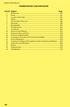 STANDARD ROTARY CLUB CONSTITUTION Article Subject Page 1 Definitions... 197 2 Name... 197 3 Locality of the Club... 197 4 Object... 198 5 Five Avenues of Service... 198 6 Meetings... 198 7 Membership...
AMENDED BYLAWS SAN MARCOS UNIVERSITY CORPORATION. A California Nonprofit Public Benefit Corporation. ARTICLE I Objectives
 Adopted by the Board of Directors 08/09/01 Revised 12/7/04; 10/10/07; 06/30/11 AMENDED BYLAWS OF SAN MARCOS UNIVERSITY CORPORATION A California Nonprofit Public Benefit Corporation ARTICLE I Objectives
HEWLETT-PACKARD COMPANY CORPORATE GOVERNANCE GUIDELINES
 HEWLETT-PACKARD COMPANY CORPORATE GOVERNANCE GUIDELINES These Corporate Governance Guidelines have been adopted by the Board of Directors (the Board ) of Hewlett-Packard Company ( HP ). These guidelines,
Corporate Governance Guidelines
 Corporate Governance Guidelines The Board of Directors (the Board ) of Och-Ziff Capital Management Group LLC (the Company ) has adopted the following Corporate Governance Guidelines as a framework for
Immune Therapeutics. Corporate Governance Guidelines.
 Immune Therapeutics Corporate Governance Guidelines The Board of Directors has adopted these Guidelines in order to reflect the Company s commitment to good corporate governance. The Board believes that
University of Illinois Bands Alumni BYLAWS
 University of Illinois Bands Alumni BYLAWS Draft: 4/28/2014 BYLAWS OF THE UNIVERSITY OF ILLINOIS BANDS ALUMNI ARTICLE I Name, Mission and Objects, Relationship and Location Section 1. Name. The name of
INTREPID POTASH, INC. CORPORATE GOVERNANCE GUIDELINES
 INTREPID POTASH, INC. CORPORATE GOVERNANCE GUIDELINES The Board of Directors (the Board ) of Intrepid Potash, Inc. (the Corporation ) has adopted these Corporate Governance Guidelines as a framework to
Charities and Institutions of a Public Character
 Code of Governance for Charities and Institutions of a Public Character Issued by: THE CHARITY COUNCIL 19 January 2011 CONTENT INTRODUCTION WHY A CODE OF GOVERNANCE? 05 PREAMBLE 05 TIERED GUIDELINES 06
BY-LAWS OF GEORGIA PKU CONNECT, INC. EIN # 26-3602983 ARTICLE ONE. General
 BY-LAWS OF GEORGIA PKU CONNECT, INC. EIN # 26-3602983 ARTICLE ONE General Section 1. Introduction. These By-Laws constitute the code of rules adopted by the Board of Directors of Georgia PKU Connect, Inc.
OKLAHOMA FIRE CHIEFS ASSOCIATION CONSTITUTION AND BY-LAWS
 OKLAHOMA FIRE CHIEFS ASSOCIATION CONSTITUTION AND BY-LAWS (as amended in 2015) ARTICLE I NAME This organization shall be known as the Oklahoma Fire Chiefs Association (OFCA), hereafter referred to as the
HEICO CORPORATION CORPORATE GOVERNANCE GUIDELINES
 HEICO CORPORATION CORPORATE GOVERNANCE GUIDELINES ROLE AND FUNCTIONS OF THE BOARD OF DIRECTORS The role of the Board of Directors (the "Board") with respect to corporate governance is to oversee and monitor
BYLAWS OF. Racing Jets Incorporated
 BYLAWS OF Racing Jets Incorporated ARTICLE I OFFICE AND REGISTERED AGENT Section 1. Principal Office. The principal office of Racing Jets Incorporated (RJI) shall be in the State of Nevada. Section 2.
CORPORATE GOVERNANCE GUIDELINES. (Adopted as of June 2, 2014)
 CORPORATE GOVERNANCE GUIDELINES (Adopted as of June 2, 2014) The following corporate governance guidelines have been approved and adopted by the Board of Directors (the Board ) of Arista Networks, Inc.
Principles of Corporate Governance
 Principles of Corporate Governance Johnson & Johnson is governed by the values set forth in Our Credo, created by General Robert Wood Johnson in 1943. These values have guided us for many years and will
American Association Of Chairs of Departments Of Psychiatry (AACDP) Constitution
 American Association Of Chairs of Departments Of Psychiatry (AACDP) Bylaws Revised May 16, 2015 Constitution Preamble MISSION STATEMENT The American Association of Chairs of Departments of Psychiatry will
The size and composition of the Board is to be determined from time to time by the Board itself in an effort to balance the following goals:
 AMERICAN INTERNATIONAL GROUP, INC. CORPORATE GOVERNANCE GUIDELINES (Effective March 11, 2015) I. INTRODUCTION The Board of Directors (the Board ) of American International Group, Inc. ( AIG ), acting on
Gleeson Library Associates Constitution and Bylaws
 Gleeson Library Associates Constitution and Bylaws ARTICLE I Name This organization shall be known as GLEESON LIBRARY ASSOCIATES, University of San Francisco. ARTICLE II Nature and Objects This organization
Bylaws. University of Arkansas Fort Smith Student Nurses Association
 Bylaws of the University of Arkansas Fort Smith Student Nurses Association Modified from National Student Nurses Association Bylaws A constituent of the Arkansas Nursing Students Association, Inc. And
BYLAWS OF SECTION ON HEALTH POLICY AND ADMINISTRATION American Physical Therapy Association
 BYLAWS OF SECTION ON HEALTH POLICY AND ADMINISTRATION American Physical Therapy Association ARTICLE I. NAME The Section on Health Policy and Administration, hereinafter referred to at the Section, shall
AMENDED BYLAWS OF THE BANKRUPTCY LAW SECTION OF THE STATE BAR OF TEXAS ARTICLE I NAME AND PURPOSE
 AMENDED BYLAWS OF THE BANKRUPTCY LAW SECTION OF THE STATE BAR OF TEXAS ARTICLE I NAME AND PURPOSE Section 1. State Bar of Texas. Name. This Section shall be known as the Bankruptcy Law Section of the Section
Club Service Projects Committee Manual
 Club Service Projects Committee Manual A part of the Club Officers Kit 226D-EN (709) This is the 2009 edition of the Club Service Projects Committee Manual. It is intended for use by 2010-11, 2011-12,
MICHIGAN COUNCIL OF NURSE PRACTITIONERS STATE OF MICHIGAN. CONSTITUTION and BYLAWS
 1 MICHIGAN COUNCIL OF NURSE PRACTITIONERS STATE OF MICHIGAN CONSTITUTION and BYLAWS The mission of Michigan Council of Nurse Practitioners, as member-driven organization, is to promote a healthy Michigan
BY-LAWS OF THE NEW YORK CHAPTER OF THE NATIONAL BLACK MBA ASSOCIATION, INC. Article I
 Article I Section 1. Definitions: As used in these By-Laws, unless the context otherwise requires, the term: Requires, the term: 1.1 Association refers to the National Office of the National Black MBA
12 LC 33 4535 A BILL TO BE ENTITLED AN ACT
 Senate Bill 418 By: Senators Orrock of the 36th, Henson of the 41st, Tate of the 38th, Fort of the 39th, Davis of the 22nd and others A BILL TO BE ENTITLED AN ACT 1 2 3 4 5 6 7 8 9 To amend Title 33 of
Vermont School Counselor Association By-Laws
 Vermont School Counselor Association By-Laws ARTICLE I: NAME AND PURPOSE Section 1. Name: The name of the association shall be The Vermont School Counselor Association (VTSCA). VTSCA is a chartered state
AMERICAN EXPRESS COMPANY CORPORATE GOVERNANCE PRINCIPLES (as amended and restated as of February 23, 2015)
 AMERICAN EXPRESS COMPANY CORPORATE GOVERNANCE PRINCIPLES (as amended and restated as of February 23, 2015) 1) Director Qualifications A significant majority of the Board of Directors shall consist of independent,
BYLAWS OF THE WORKERS' COMPENSATION SECTION OF THE STATE BAR OF TEXAS AS AMENDED THROUGH JANUARY 2010 ARTICLE I NAME AND PURPOSE
 BYLAWS OF THE WORKERS' COMPENSATION SECTION OF THE STATE BAR OF TEXAS AS AMENDED THROUGH JANUARY 2010 ARTICLE I NAME AND PURPOSE Section 1. Name. This Section shall be known as the Workers' Compensation
CLUB PUBLIC RELATIONS COMMITTEE MANUAL
 CLUB PUBLIC RELATIONS COMMITTEE MANUAL 226-EN (706) C This is the 2006 edition of the. It is intended for use by 2007-08, 2008-09, and 2009-10 club committees. The information in this publication is based
SALESFORCE.COM, INC. CHARTER OF THE AUDIT AND FINANCE COMMITTEE OF THE BOARD OF DIRECTORS. (Revised September 11, 2012)
 I. STATEMENT OF POLICY SALESFORCE.COM, INC. CHARTER OF THE AUDIT AND FINANCE COMMITTEE OF THE BOARD OF DIRECTORS (Revised September 11, 2012) This Charter specifies the scope of the responsibilities of
MORUMBI RESOURCES LTD. CORPORATE GOVERNANCE GUIDELINES
 1 INTRODUCTION MORUMBI RESOURCES LTD. CORPORATE GOVERNANCE GUIDELINES 1.1 The Board of Directors (the Board ) of Morumbi Resources Ltd. ( Morumbi ) is committed to adhering to the highest possible standards
PLANNING GUIDE FOR EFFECTIVE ROTARY CLUBS
 PLANNING GUIDE FOR EFFECTIVE ROTARY CLUBS Rotary International The Planning Guide for Effective Rotary Clubs is a tool to help clubs assess their current state and establish goals for the coming year.
ABBVIE INC. GOVERNANCE GUIDELINES. I. Director Independence and Qualifications... 1. II. Director Responsibilities... 2
 ABBVIE INC. GOVERNANCE GUIDELINES I. Director Independence and Qualifications... 1 II. Director Responsibilities... 2 III. Board and Committee Meetings... 3 IV. Board Committees... 3 V. Director Access
Bylaws of the Section of the Psychology of Black Women of the Division of Psychology of women of the American Psychological Association.
 Section One, 1 of the Section of the Psychology of Black Women of the Division of Psychology of women of the American Psychological Association Article I Aim and Purpose 1. The name of this organization
ARTICLES OF INCORPORATION FOR THE TEXAS TECH PHARMACY ALUMNI SCHOOL OF PHARMACY, TEXAS TECH UNIVERSITY HEALTH SCIENCES CENTER
 ARTICLES OF INCORPORATION FOR THE TEXAS TECH PHARMACY ALUMNI SCHOOL OF PHARMACY, TEXAS TECH UNIVERSITY HEALTH SCIENCES CENTER ARTICLE I MISSION Our mission is to promote the continuous development and
FINANCIAL MANAGEMENT POLICIES AND PROCEDURES
 FINANCIAL MANAGEMENT POLICIES AND PROCEDURES 1. GENERAL PURPOSE The purpose of these policies is to establish guidelines for developing financial goals and objectives, making financial decisions, reporting
BP 3600 RULES FOR AUXILIARY ORGANIZATIONS
 BP 3600 RULES FOR AUXILIARY ORGANIZATIONS References: Education Code Sections 72670 et seq.; 76060, 76063, 76064, 72241, 72303 Title 5 Sections 59250 et seq. The Napa Valley Community College District
Revision Approved: April 11, 2015. Bylaws of the American Board of Forensic Psychology
 Revision Approved: April 11, 2015 Bylaws of the American Board of Forensic Psychology Table of Contents Article I Mission Section 1.1 Statement of Mission Section 1.2 Review of Mission Article II Relationship
Executive Summary Planned Giving and Endowment Policies (For Donors and Donors Advisors)
 Appendix B Authority for Gift Acceptance Policies Executive Summary Planned Giving and Endowment Policies (For Donors and Donors Advisors) Independence Institute encourages and solicits outright and deferred
BYLAWS HFMA: GEORGIA CHAPTER
 BYLAWS OF THE HFMA: GEORGIA CHAPTER ARTICLE 1 Name, Objectives, Powers, and Office and Agent Section 1.1 Name. The name of this corporation shall be the HFMA: Georgia Chapter. For purposes of identification
CITRIX SYSTEMS, INC. CORPORATE GOVERNANCE GUIDELINES
 CITRIX SYSTEMS, INC. CORPORATE GOVERNANCE GUIDELINES Set forth below are Citrix Systems, Inc. s corporate governance policies. These guidelines are subject to change from time to time at the direction
BYLAWS OF NAMI Greater Houston A NON-PROFIT CORPORATION ORGANIZED UNDER THE LAWS OF TEXAS. ARTICLE I Organization
 BYLAWS OF NAMI Greater Houston A NON-PROFIT CORPORATION ORGANIZED UNDER THE LAWS OF TEXAS ARTICLE I Organization Section 1. Name The name of the organization is NAMI Greater Houston, which is a nonprofit
Model Charter School By-Laws
 Model Charter School By-Laws Developed by Toby Simon New Jersey Charter School Resource Center MODEL CHARTER SCHOOL BY-LAWS ARTICLE I Name and Incorporation Section 1. Name. The name of the corporation
AMENDED AND RESTATED OPERATING AGREEMENT OF RED TRAIL ENERGY, LLC
 AMENDED AND RESTATED OPERATING AGREEMENT OF RED TRAIL ENERGY, LLC MEMBERS 1.1 Place of Meetings. Each meeting of the members shall be held at the principal executive office of the Company or at such other
The Missouri Chapter of Association of Air Medical Services Bylaws Approved June 23, 2008
 Name The Missouri Chapter of Association of Air Medical Services Bylaws Approved June 23, 2008 ARTICLE I Name The name of this association shall be: The Missouri Chapter of the Association of Air Medical