
Cambria Emergency Water Supply
|
|
|
- Lester Payne
- 9 years ago
- Views:
Transcription
1 Cambria Community Services District Cambria Emergency Water Supply Title 22 Engineering Report July 2014

2

3 This document titled "Cambria Emergency Water Supply Title 22 Engineering Report", dated June 2014, has been prepared under the supervision of the Registered Professional Engineers and Professional Geologist whose seals and signatures appear below. In preparing this report, the Cambria Community Services District has employed the expertise of engineers and scientists to ensure that this document accurately reflects the data available and that it is complete and appropriately interpreted. The data and information in this report and the professional opinions expressed are presented in accordance with generally accepted professional engineering and geologic principles and practice. Prepared by: Reviewed and Approved by: Greg Wetterau, P.E. Lead Author Sava Nedic, P.E., PMP, BCEE Project Manager Reviewed and Approved by: Bruce Chalmers, P.E., BCEE Project Director Contributing Authors Hoon Hyung Evelyn You Sava Nedic Mike Hoffman Technical Advisors QA/QC Review Bruce Chalmers Ken Klinko Mike J. Smith

4 This page intentionally left bank

5 Table of Contents Section 1 Introduction Background CCSD Management Project Location Project History Project Purpose Project Description Purpose of this Report Section 2 Source Water and Summary of Flows Overview Wastewater Treatment Facilities Source Control Program Water Quantity Water Quality Water Supply Reliability Section 3 Advanced Treatment Facilities Description of System Facilities AWTP Site Membrane Filtration System Reverse Osmosis System UV/Advanced Oxidation System Post Treatment Systems Waste Discharge Evaporation Pond Pond Site Description Mechanical Spray Evaporators Power Supply and Consumption Time and Hours of Operation Section 4 Chemical Systems Sodium Hypochlorite Aqueous Ammonia Sulfuric Acid Antiscalant Hydrogen Peroxide Sodium Hydroxide Calcium Chloride Section 5 Pathogen Control and Response Retention Time Pathogenic Microorganism Reduction Requirements Pathogenic Microorgansim Reduction Credit Approach Disinfection Prior to AWTP Removal/Inactivation at AWTP Response Retention Time Alternative Source Water Draft i

6 Table of Contents (continued) Section 6 Groundwater System Description of Existing Groundwater Basin Hydrogeology of Project Area Existing Water Quality Injection Facilities Injection Well Monitoring Well Extraction Wells Groundwater Model Groundwater Modeling Codes Groundwater Model Construction Model Grid Hydraulic Parameters Boundary Conditions Transport Packages Calibration Predicted Recycle Water Retention Time Other Impacted Wells Section 7 Product Water Quality RO Product Water AWTP Product Water Section 8 Proposed Monitoring and Reporting Program General Monitoring Provisions Influent Monitoring AWTP Product Water Monitoring Groundwater Monitoring Evaluation of Pathogenic Microorganism Removal Additional RO Monitoring Reporting List of Figures Figure 1 1 Geographical Location Figure 1 2 Project Overview Figure 3 1 AWTP Process Flow Diagram Figure 3 2 AWTP Site Figure 3 3 MF System Layout Figure 3 4 RO Train #1 System Layout Figure 3 5 RO Train #2 System Layout Figure 3 6 Third Stage RO System Layout Figure 3 7 Removal of 1,4 Dioxane with Trojan UVPhOx 72AL75 (City of San Diego, 2013) Figure 3 8 UV System Layout Figure 3 8 Brine Pond Plan Figure 3 9 Brine Pond Section (Elevation in Feet) ii Draft

7 Table of Contents (continued) List of Tables Table 2 1 Source Water Quality for AWTP Table 3 1 AWTP Process Design Capacities Table 3 2 Membrane Filtration Water Quality Goals Table 3 3 Design Criteria MF System Table 3 4 RO System Design Criteria Table 3 5 UV System Design Criteria Table 3 6 Purified Water Post Treatment/Stabilization Goals Table 3 7 Post Treatment and Conveyance Design Criteria Table 3 8 Mechanical Spray Evaporator Design Criteria Table 3 9 AWTP Electric Load Table 3 10 Brine Evaporator System Electric Load Table 4 1 Summary of Sodium Hypochlorite Equipment Table 4 2 Summary of Aqueous Ammonia Equipment Table 4 3 Summary of Sulfuric Acid Equipment Table 4 4 Summary of Antiscalant Equipment Table 4 5 Summary of Hydrogen Peroxide Equipment Table 4 6 Summary of Sodium Hydroxide Equipment Table 4 7 Summary of Calcium Chloride Equipment Table 5 1 Pathogen Log Removal/Inactivation Requirements Table 5 2 Comparison of Facility C and Facility D (Rose et al. (2004) to the CCSD WWTP Table 5 3 Critical Control Points and Estimated Response Time for Pathogen Risks Table 5 4 Regulated Non Pathogenic Contaminants with Acute Health Risks Table 6 1 San Simeon Basin Groundwater Quality Table 7 1 Projected Water Quality of RO Permeate and Concentrate Table 7 2 Projected Source Water and Product Quality for Key Constituents Table 8 1 Influent Monitoring Table 8 2 AWTP Product Water Monitoring Table 8 3 Inorganics with Primary MCLs Table 8 4 Constituents/parameters with Secondary MCL Table 8 5 Radioactivity Table 8 6 Regulated Organics Table 8 7 Disinfection Byproducts Table 8 8 General Physical and General Minerals Table 8 9 Constituents with Notification Levels Table 8 10 Remaining Priority Pollutants Table 8 11 Groundwater Monitoring Draft iii

8 Table of Contents (continued) Appendices Appendix A Appendix B Appendix C Appendix C1 Appendix C2 Appendix C3 Appendix C4 Appendix D Appendix D1 Appendix D2 Appendix E Design Drawings Equipment Information Design Calculations Chemical Systems Hydraulic Calculations RO Projections Product Water Stabilization Water Quality Information Effluent 9P7 Well Water Groundwater Modeling Report iv Draft

9 Section 1 Introduction The Cambria Community Services District (CCSD) provides water supply, wastewater collection and treatment, fire protection, garbage collection, and a limited amount of street lighting and recreation to residents in and around the unincorporated area of Cambria, California. CCSD currently serves a year round population of about 6,032 as well as a large number of tourists and visitors to the community. CCSD service area covers approximately four (4) square miles. There are eight pressure zones within the CCSD s water distribution system, which consists of four groundwater wells, three distribution system pumping stations, pressure reducing stations, and four water storage reservoirs. The CCSD service area is within the Coastal Zone and therefore within the jurisdiction of the California Coastal Commission (CCC), a state agency with the primary purpose of protecting coastal resources. The CCSD s potable water is supplied solely from groundwater wells in the San Simeon Creek and Santa Rosa Creek aquifers. The San Simeon Creek and Santa Rosa Creek aquifers are relatively shallow and highly porous, with the groundwater typically depleted during dry season and recharged during the rainy season. For water year 2013/2014, the total rainfall in Cambria community was approximately 80 percent of the minimum rainfall needed to fully recharge the two coastal stream aquifers that are the sole water supply for Cambria community. This severe drought condition has placed the water supply for Cambria community in immediate jeopardy. Consequently, on January 30, 2014, the CCSD Board of Directors declared a Stage 3 Water Shortage Emergency, the most stringent of three water shortage levels. Reflecting the severity of the severe drought conditions experienced in Cambria community as well as the rest of the state of California, on January 17, 2014, Governor Jerry Brown declared a drought emergency for the State of California, and on March 11, 2014, the San Luis Obispo (SLO) County Board of Supervisors proclaimed a local emergency due to the County s drought conditions. The Governor issued a subsequent drought declaration on April 24, In response to the ongoing severe drought emergency, and in combination with very stringent water conservation measures, CCSD is proposing the Cambria Emergency Water Supply Project to construct and operate emergency water supply facilities at the District s existing San Simeon Well Field and Effluent Percolation Ponds property. The emergency water supply system would be utilized to treat potentially impaired groundwater to fully recharge the San Simeon well field aquifer with advance treated water. The groundwater will include a blend of creek underflow, percolated wastewater treatment plant effluent, and a mix of the lower saltwater wedge water where it blends with fresh water. The goals of the project are to avoid projected water supply shortages by the end of summer/early fall 2014; prevent seawater intrusion into the San Simeon well field aquifer, avoid possible ground subsidence; and protect well pumps from losing suction. This Title 22 Engineering Report for the Cambria Emergency Water Supply project presents the overview and technical details involved in implementing the design of these new facilities. Draft 1 1

10 Section 1 Introduction 1.1 Background CCSD Management The CCSD management includes its General Manager, Jerome Gruber; District Engineer, Robert Gresens, Lead wastewater operator, Ben Eastin, and Lead Water Operator, Justin Smith. Jerome Gruber has a Bachelor s degree in Resource Management from Troy University and a Master Degree, MPA in Public Administration from Troy University. Mr. Gruber has 34 years of experience in the operation, management, and construction of water and wastewater facilities, and has previously been certified as a Class A wastewater operator and Class B water operator in the State of Florida. Robert Gresens is a licensed professional engineer (Civil) in the State of California with 38 years of experience in the planning, design, construction, and operation of water and wastewater facilities. Mr. Gresens has a Bachelor of Science Degree in Civil Engineering from the University of Illinois and a Master of Science Degree in Environmental Engineering from the University of California at Berkeley. Mr. Gresens has previously been licensed as a Class I wastewater treatment plant operator in Illinois, and as a Class IV WWTP operator in California. Ben Eastin is a Class II WWTP operator and Justin Smith is a T3 licensed water operator. The CCSD will be contracting the operation of the new facility to firms with appropriately licensed operators for purposes of assisting with facility commissioning and testing, initial operations (during at least the initial first 6 months of operation) and training of the CCSD operators Project Location The unincorporated town of Cambria is located in the State of California, midway between San Francisco and Los Angeles on the Pacific Coast Highway (PCH) in the County of San Luis Obispo and about 35 miles northwest of the City of San Luis Obispo. Cambria is bound by the Santa Lucia Mountain Range to the east, the Pacific Ocean to the west, and the Big Sur to the north. The only major north south transportation is PCH that bisects the community. Highway 46 connects PCH approximate four miles south of Cambria to provide an eastward transportation to inland. The area of Cambria is about three (3) square miles with elevations ranging from sea level to about 200 feet NGVD. Figure 1 1 shows the location of Cambria. 1 2 Draft

11 Section 1 Introduction Figure 1 1 Geographical Location The population of Cambria was 6,032 according to the 2010 census. This census reported that there were 2,762 households in Cambria, with 35 percent of the population between the ages of 45 and 64, and 32 percent of the population 65 years or older. There were 4,062 housing units in Cambria, of which 72 percent were owner occupied, and 28 percent were occupied by renters. The home vacancy rate was 32 percent, which indicates that a high percentage of the homes may be second homes or vacation homes. The primary economic activity of Cambria is tourism. Located on the Pacific Ocean, Cambria has rocky cliffs and beaches. Cambria is home to the Cambria Historical Museum in the historic East Village and California State Historical Landmark. Hearst Castle is located approximately six miles north of Cambria. Besides tourism, agriculture and light industry are also important parts of Cambria s economy Project History Under a partnership agreement between CCSD and United States Army Corps of Engineers, a study for Cambria community water supply was conducted in The principal objective of this study was to identify, evaluate and recommend the best water supply alternative that will provide the Draft 1 3

12 Section 1 Introduction Cambria community with supplemental water supply during six dry months of the year, from May 1 through October 31. The findings and results of the study were presented in Cambria Water Supply Alternatives Engineering Technical Memorandum (Engineering TM), CDM Smith, November 27, In cooperation with residents of the Cambria community, twenty eight water supply alternative concepts and options were identified. Through a tiered evaluation, eight alternative water supply concepts were selected and recommended for further development and evaluation, while the other twenty were rejected based on fatal flow analysis. Technical details and cost estimates were prepared, and the selected alternatives were ranked applying multiple attribute ranking technique using Criterion Decision Plus software. The studied alternatives were ranked from 1 through 8, with 1 as the best and 8 as the worst: 1. San Simeon Creek Road Brackish Water 2. Shamel Park Seawater 3. Whale Rock Reservoir 4. Morro Bay Shared SWRO 5. Estero Bay Marine Terminal 6. Simeon CSD Recycled Water 7. San Simeon Creek Off stream Storage 8. Hard Rock Aquifer storage and Recovery The 2013/2014 year drought prompted CCSD s decision to provide new water supply for the Cambria community that will be quickly implemented. Technical concepts of the highest ranked San Simeon Creek Road Brackish Water alternative are used as a basis for development of the emergency water supply project. An advanced groundwater model of the San Simeon Basin has been completed to provide hydrogeological inputs for the proposed emergency water supply project that will provide new water to the community and will maintain and improve fresh water conditions in the San Simeon Creek fresh water lagoons over the currently projected six month dry period Project Purpose As stated above, the Cambria Emergency Water Supply Project is being developed in response to a Stage 3 Water Shortage Emergency to avoid potentially disastrous consequences to the Cambria Community. The project, which needs to be operational in 2014, is being designed and constructed to treat potentially impaired groundwater using proven advanced treatment technologies and recharge the CCSD s San Simeon well field aquifer with advance treated water. The project will provide 250 acre foot of water supply to the community over six dry months, or shorter if the basin is replenished naturally during the pending winter season, through groundwater augmentation. 1 4 Draft

13 Section 1 Introduction In addition to water supply augmentation, the project has goals of preventing seawater intrusion into the groundwater aquifer and protecting well pumps from losing suction. Furthermore, to avoid potential impacts from additional pumping project s extraction well, the Project is being designed to provide up to 100 gallons per minute (gpm) of freshwater for purposes of protecting the San Simeon Creek and downstream San Simeon Creek lagoon areas when the emergency water supply project is operational Project Description The Cambria Emergency Water Supply Project will provide up to 250 acre feet of water over a six month dry season, which will serve to improve the community s reliability during droughts, such as the epic drought that has struck the area during this current rainfall season. While in operation, the project will manage the water level in the basin by controlling both the extraction from and recharge into the groundwater basin. Key project components are source of the project water, source water extraction, Advanced Water Treatment Plant (AWTP), recycled water aquifer recharge, fresh water lagoon protection, and AWTP generated brine disposal. The project concept is graphically shown in Figure 1 2. Figure 1 2 Project Overview More detailed description of the project and the project associated facilities are included in the subsequent sections of this Report. Project Source Water The extracted groundwater that will feed the AWTP will be a blend of the percolated secondary effluent from the CCSD s WWTP, fresh native basin groundwater, and deep aquifer brackish water. The degree to which this groundwater source is impaired will depend on the ultimate contribution of secondary effluent in the extracted water and the level of treatment achieved for this water through soil aquifer treatment and aquifer travel time. The potentially impaired groundwater will be extracted from the San Simeon Creek Basin, treated, and then injected back into Draft 1 5

14 Section 1 Introduction the basin downstream of the existing CCSD potable well field, providing additional potable water supply to the Cambria community. The water elevation of the secondary effluent mound is higher than that of seawater, preventing it from moving inland when the inland basin water level is lower. Source Water Extraction Existing Well 9P7 will provide groundwater to the advanced water treatment plant. AWTP A new AWTP will be constructed to treat the potentially impaired groundwater to advance treated water quality suitable for injection further upstream in the groundwater basin, where it will directly impact potable water supplies. The main treatment process of the AWTP will include membrane filtration (MF), reverse osmosis (RO), and advanced oxidation utilizing ultraviolet (UV) light and hydrogen peroxide. The new AWTP will be located just north of the existing secondary effluent percolation ponds. The product water capacity of the AWTP will be 484 gpm, producing water during six dry season months. Assuming all process associated losses, and a 100 gpm flow of membrane filtrate water directed to the creek, the AWTP feed water flow rate will be 691 gpm during the six months. Recycled Water Recharge A new recharge injection well (RIW) will be constructed to inject advance treated water to the groundwater basin at the San Simeon Well Field. Potable Water Extraction Wells There are three existing water supply wells SS1, SS2 and SS3 that are extracting ground water from the San Simeon Creek potable water aquifer, each having capacity of 400 gpm. Since the Cambria Emergency Water Supply project is designed to secure the permeated extraction from the San Simeon Basin of up to 370 AF (456 gpm) over six dry month. Only two existing wells, including Well SS1 and Well SS2, will be operational while the third well, Well SS3, will not be used during emergency water supply conditions, unless results of a tracer study have confirmed that sufficient travel time exists between the new injection well and SS3. Water for Lagoon Protection MF filtrate from the AWTP will be discharged to San Simeon Creek fresh water lagoons to maintain and improve fresh water conditions. For this purpose, a new conveyance piping may be routed to three lagoon injection wells (LIWs). Alternatively, and subject to further discussions with RWQCB and other resource agencies, existing discharge piping from Well 9P7 may be utilized to discharge to either the Van Gordon Creek or San Simeon Creek adjacent to the AWTP. AWTP Generated Concentrate Concentrate from the RO process will be directed to the existing Van Gordon Reservoir which will be used as a Brine Evaporation Pond. The existing reservoir will be rehabilitated with a new liner to prevent impact to groundwater. Five (four duty and one standby) mechanical spray evaporators will be used to enhance the evaporation rate within the pond. Monitoring Wells A new monitoring well will be constructed at the San Simeon Well Field in the vicinity of the RIW, and three monitoring wells will be constructed near the Van Gordon Evaporation Pond. 1 6 Draft

15 Section 1 Introduction 1.2 Purpose of this Report The purpose of this Title 22 Engineering Report is to provide information on the treatment facilities for the Cambria Emergency Water Supply project, and to describe the broader framework of CCSD s plan for compliance with the 2014 GWR Regulations. This Title 22 Engineering Report is in compliance with the State of California Water Recycling Criteria that requires the submission of a report to the CCRWQCB and CDPH prior to completion of a new water supply project. This report will focus on the groundwater extraction, treatment facilities, reinjection of advanced treated water, and modeled groundwater transmission to existing potable supply wells. Draft 1 7

16 Section 1 Introduction This page intentionally left blank 1 8 Draft

17 Section 2 Source Water and Summary of Flows This section describes the proposed source water quality and flows to be used for the Emergency Water Supply Project. 2.1 Overview The source water for the Emergency Water Supply Project is the brackish groundwater from the San Simeon Creek Basin, two miles north of the Cambria Township. The water will be extracted from the aquifer at CCSD Well 9P7, located between the existing Effluent Percolation Ponds. The location of this well was shown on Figure 1 2. Groundwater models indicate that the water in the basin near the extraction well is a blend of infiltrated secondary effluent from the Cambria Wastewater Treatment Plant (WWTP), natural underflow from inland groundwater, and deep basin brackish water with limited recharge. As the well is pumped for extended periods of use, it is anticipated that the contribution from secondary effluent will increase substantially. Due to the possibility that the well water will become primarily influenced by infiltrated secondary effluent, the post extraction treatment facility has been designed to comply with 2014 CDPH regulations for groundwater replenishment of recycled water. The extracted groundwater will be conveyed to the new AWTP using an existing 8 inch PVC pipeline originally construct to discharge pumped groundwater from Well 9P7 to Van Gordon Creek. The existing Well 9P7 includes a manually controlled 20 hp pump. 2.2 Wastewater Treatment Facilities The Cambria WWTP is located at 5500 Heath Lane in Cambria, and is an extended aeration, activated sludge wastewater treatment facility. The plant includes influent pumping, flow equalization, biological treatment within rectangular, concrete aeration basins, and secondary clarification of the biologically treated mixed liquor. The mean cell residence time of the activated sludge plant is typically held in the 9 to 10 day range, with mixed liquor concentrations historically ranging from 2,500 to 3,000 mg/l. Sludge volume indices range from 60 to 80 ml/g. An engineering report and ten percent design level effort is currently underway on the CCSD WWTP, which will include means to denitrify the secondary effluent. After secondary clarification, the water is pumped two miles offsite to four percolation ponds near San Simeon Creek. The plant has a rated capacity of 1.0 mgd, with average daily influent flow of approximately 0.5 mgd. The percolation ponds include four separate pond cells with an average area of approximately 3 acres each. The ponds are used to produce a freshwater mound, impeding seawater intrusion from the nearby Pacific Ocean and protecting inland aquifers from salinity gradients. In addition to the treated flow from the WWTP, a return flow of up to 90,000 gpd will be directed to the percolation ponds from the ultrafiltration backwash waste of the Emergency Water Supply AWTP. This return water will not be treated or further disinfected before being blended with the incoming secondary effluent. Draft 2 1

18 Section 2 Source Water and Summary of Flows Source Control Program Chapter 5.04 of the CCSD Municipal Code provides the enforcement mechanism for the prohibition of wastes into the collection system, which is enforced by the CCSD s wastewater department with further oversight by the General Manager. The CCSD Board also adopted a Sanitary Sewer Management Plan (SSMP) on May 24, During 2013, the SSMP was further updated to amend its earlier FOG program, and on site kitchen inspections were completed. The main industry within the Cambria service area is the local restaurants, serving tourists who visit the region year round. 2.3 Water Quantity Production from CCSD Well 9P7 will be approximately 1.0 mgd during periods when the AWTP is operating at capacity. Secondary effluent flow to the percolation ponds ranged from 250,000 to 833,000 gallons per day during the summer months of 2012 and 2013, averaging 513,000 gallons per day. As the production from Well 9P7 will be greater than the average flow to the percolation ponds during the 6 months that the AWTP is in operation, the remaining flow will be provided by in basin storage, underflow, and deep basin brackish water with limited recharge. The 1.0 mgd of well production will result in the following flows: 700,000 gpd of advanced treated product water, 65,000 gpd of RO concentrate and cleaning solutions sent to evaporation pond, 90,000 gpd of MF backwash returned to the percolation ponds, and 144,000 gpd of MF product discharged to San Simeon Creek to prevent dewatering of the fresh water lagoon. 2.4 Water Quality Table 2 1 presents a summary of historical water quality data. Projections of water quality have been based on both historic effluent quality from the Cambria WWTP and limited data from production of CCSD Well 9P7. It should be noted that the sucralose levels measured in the well after 2.5 hours of continuous pumping were approximately one percent of the levels in the secondary effluent (see Table 2 1). Since sucralose is an artificial organic compound known to degrade slowly in natural systems, the low concentration in the well water suggests that the contribution of young wastewater in 9P7 was quite low, and the well may ultimately prove to not be under the direct influence of wastewater. In spite of these findings, the facility design has been based on a conservative assumption that the primary contributor to water in the extraction well will be percolated secondary effluent. 2.5 Water Supply Reliability The AWTP has been designed with limited equipment redundancy, as continuous operation is not required. The facility may be offline for extended periods if delays in repair or replacement of critical components occur. Because the AWTP product water is recharged into the groundwater basin, short periods when the plant is not operating due to power outage and regular maintenance will not impact the aquifer ground water levels. 2 2 Draft

19 Section 2 Source Water and Summary of Flows A redundant third stage RO system has been provided, due to the high scaling potential of the concentrated (92 percent overall RO recovery) brine in the final RO stage. This redundant third stage system will allow cleaning of one set of pressure vessels, while the others remain in operation. Because the source water for this alternative concept is a blend of fresh basin groundwater, percolated secondary effluent, and deep aquifer brackish water, it is assumed that the source water will be available during the dry months of the year greater than 90 percent of the time. With the implementation of these facilities, the reliability of the San Simeon basin for the Cambria water supply will be increased. Table 2 1 Parameter Source Water Quality for AWTP Units WWTP Effluent Well 9P7 Assumed Avg Max Avg Max Condition TDS mg/l 929 (1) 1270 (1) 425 (1) 510 (1) 1110 ph 7.1 (1) 7.4 (1) 7.5 (1) 7.7 (1) 7.6 Alkalinity mg/l 210 (2) 240 (2) 210 Aluminum mg/l <0.01 (2) <0.01 (2) <0.01 Ammonia N mg/l 1.4 (1) 6.1 (1) <0.2 (2) 0.3 Arsenic mg/l <0.002 (2) <0.002 (2) <0.002 Boron mg/l 0.32 (2) 0.17 (2) 0.32 Calcium mg/l 72 (2) 66 (2) 72 Chloride mg/l 347 (2) 42 (1) 73 (1) 347 Cyanide mg/l <0.004 (2) <0.004 (2) <0.004 Fluoride mg/l 0.1 (2) <0.1 (2) 0.1 Iron mg/l 0.15 (2) 0.12 (2) 0.15 Lead mg/l (2) < (2) Magnesium mg/l 58 (2) 44 (2) 58 Manganese mg/l (2) (2) Nitrate (NO3) mg/l 27 (1) 44 (1) 2 (1) 4 (1) 27 Phosphate mg/l 18 (2) 0.4 (2) 18 Silica mg/l 20 (2) 21 (2) 20 Sodium mg/l 168 (1) 199 (1) 36 (2) 247 Sulfate mg/l 107 (2) 49 (1) 55 (1) 107 TOC mg/l 3.9 (2) 0.7 (2) 3.9 Caffeine µg/l 0.67 (3) <0.001 (3) 0.67 Sucralose µg/l 45 (3) (3) 45 NDMA µg/l <0.002 (3) <0.002 (3) < Based on Annual Report Summary from Cambria WWTP for 2012 through Based on April 7, 2014 sampling event. No maximums are included as only single data point is available 3. Based on April 21, 2014 sampling event. No maximums are included as only single data point is available Draft 2 3

20 Section 2 Source Water and Summary of Flows This page intentionally left blank 2 4 Draft

21 Section 3 Advanced Treatment Facilities This section includes a description and design criteria for the advanced treatment facilities to be used for treatment of the extracted groundwater. Preliminary layout drawings for these facilities are included in Appendix A. Additional equipment information is included in Appendix B. 3.1 Description of System Facilities The emergency water supply advanced treatment facilities include multiple unit processes, providing redundant levels of treatment, including MF, RO, advanced oxidation with UV and hydrogen peroxide, chlorination, and product water stabilization. Equipment will be pre packaged and mounted in shipping containers for each of the primary unit processes. The overall process flow diagram is shown in Figure 3 1. This section includes a description of the various systems that are part of the AWTP. Table 3 1 summarizes recoveries, waste flows, and treatment process capacities for MF and RO systems required to meet the target potable water augmentation of 390 acre feet per year (AFY) (700,000 gallons per day over 6 months) and San Simeon Creek fresh water lagoon recharge of 80 AFY (140,000 gallons per day over 6 months). Table 3 1 AWTP Process Design Capacities Parameter Unit Criteria MF recovery % 92 RO recovery % 92 Influent to AWTP gpm 691 MF filtrate water capacity gpm 629 MF filtrate water capacity for San Simeon Creek Lagoon gpm 100 AWTP Product water capacity for RIW gpm 484 MF backwash waste gpm 55 RO brine gpm AWTP Site The AWTP site is located in a flat, vacant lot north of the Effluent Percolation Ponds (see Figures 3 2). The flat area of the site is approximately 60,000 square feet (sf) bordered by chain link fence to the north and access road for the Percolation Ponds to the south. Approximately 17,000 sf (100 by 170 ft) will be utilized for the AWTP. Draft 3 1
22 Section 3 Advanced Treatment Facilities This page intentionally left blank 3 2 Draft
23 FLOW BALANCE AUTOMATIC STRAINER RECOVERY 99% MF RECOVERY 92% OVERALL RO RECOVERY 92% CIP WASTE 0.5% FLOW STREAM AWTP FEED MF FEED AUTOMATIC STRAINER WASTE MF FILTRATE MF BACKWASH WASTE (NOTE 1) MF AND AUTOMATIC STRAINER COMBINED WASTE MF BACKWASH FEED (NOTE 1) COMBINED RO FEED PRIMARY RO 1 FEED PRIMARY RO 1 PERMEATE PRIMARY RO 1 CONCENTRATE PRIMARY RO 2 FEED PRIMARY RO 2 PERMEATE PRIMARY RO 2 CONCENTRATE THIRD STAGE RO FEED THIRD STAGE RO PERMEATE COMBINED RO PERMEATE FLOW STREAM ID CHEMICAL STREAM ID A B C D E F G H Average Flow (GPM) Bulk Chemical Concentration 19.00% 12.50% 93.00% % 27.00% 12.50% 34.70% 25.00% Pressure (psi) Chemical Dose, Max 1.5 mg/l 6.0 mg/l 45 mg/l 3.0 mg/l 5.0 mg/l 19 mg/l 40 mg/l 50 mg/l TDS (mg/l) Dosing Rate, Max 8.5 gpd 39 gpd 21 gpd 0.9 gpd 12 gpd 87 gpd 60 gpd 112 gpd NOTES 1. INTERMITTENT FLOW. 2. ALL THE CHEMICAL DOSING SKIDS EXEPT THRESHOLD INHIBITOR WILL BE INSTALLED IN CONTAINER 5 (NOT SHOWN). THRESHOLD INHIBITOR DOSING SKIDS WILL BE INSTALLED IN CONTAINER 2 AND CONTAINER MAIN CONTROL ROOM AND OFFICE SPACE WILL BE SUPPLIED IN CONTINER 6 (NOT SHOWN). 4. RO FLOW CONDITIONS ARE BASED ON AN AVERAGE MEMBRANE AGE OF 3 YEARS. THIRD STAGE RO CONCENTRATE PRODUCT WATER TO RECHARGE INJECTION WELL (RIW) MF FILTRATE TO SAN SIMEON CREEK LAGOON MF CIP FEED (NOTE 1) RO CIP FEED (NOTE 1) MF CIP WASTE (NOTE 1) RO CIP WASTE (NOTE 1) CHEMICAL AQUEOUS AMMONIA SODIUM HYPOCHLORITE SULFURIC ACID THRESHOLD INHIBITOR HYDROGEN PEROXIDE SODIUM HYPOCHLORITE CALCIUM CHLORIDE SODIUM HYDROXIDE
24
25 Section 3 Advanced Treatment Facilities Figure 3 2 AWTP Site Membrane Filtration System The MF system provides pretreatment for the RO system to reduce the particulate and biological fouling of the RO membranes. The MF system will effectively remove inert particulates, organic particulates, colloidal particulates, pathogenic organisms, bacteria and other particles by the size exclusion sieve action of the membranes. Table 3 2 presents the MF water quality goals. Table 3 3 presents design criteria for the MF system, which system components described briefly below. Table 3 2 Constituent Membrane Filtration Water Quality Goals Design Criteria Suspended Solids Undetectable 1 Filtrate Turbidity Filtrate Silt Density Index (SDI) <3 <0.2 NTU (95 th percentile) 0.5 NTU (all times) Notes: 1 EPA Method Method detection limit is 1.0 mg/l, so the goal is to be <1.0 mg/l. Pre Treatment Chemical Addition Ammonium hydroxide and sodium hypochlorite will be added downstream of the membrane feed pumps and upstream of the strainers for chloramination to control the biological fouling of the MF membranes. The target combined chlorine concentration (chloramines) is 3 to 5 mg/l. The chemicals will be flow paced based on the MF feed flow rate and trimmed based on the combined chlorine concentration. Draft 3 5
26 Section 3 Advanced Treatment Facilities Strainers Strainers will be provided immediately upstream of the membrane system to protect the membranes from damage and/or fouling due to larger particles. The strainers are typically provided by the membrane manufacturers as part of a complete MF system package and are required by the membrane system warranty. MF Systems The MF system will be a containerized system utilizing an open configuration that can be installed with membranes from multiple different suppliers. Figure 3 3 shows the MF system layout. The layout is based on the 33 gfd instantaneous flux rate using Toray UF membranes. Membrane integrity will be confirmed using an online turbidimeter and by daily pressure decay tests. The system will be fully automated for flow control, backwashing, daily maintenance cleans, and periodic chemical cleans in place. Figure 3 3 MF System Layout Break Tank The MF break tank will serve as a flow equalization reservoir for the MF product prior to being supplied to the RO system. The MF filtrate will be conveyed to the MF break tank with residual pressure from the MF system. The MF break tank will mitigate the impact of the variations in the MF filtrate flow (resulting from backwashes, cleanings, and integrity tests), by providing equalization volume between the MF and RO processes equivalent to approximately 15 minutes of the maximum RO feed flow. To prevent the excessive accumulation of the particles on the membrane surface, membrane backwashes will be performed every 25 to 30 minutes. Overflow from the break tank will be directed back to the secondary effluent percolation ponds. 3 6 Draft
27 Section 3 Advanced Treatment Facilities Table 3 3 Design Criteria MF System Facility Unit Criteria AWTP Influent Facilities MF Feed Pump Number of pumps 1 Flow per pump 691 Head psi 45 Horsepower hp 40 Drive MF Pretreatment particulate removal Type VFD 0.3 mm Automatic Backwashing Strainer Number of strainers # 1 Capacity per strainer gpm 691 Strainer Recovery 99% MF Pretreatment chemical addition Chloramine Residual Chloramine Residual MF System NaOCl Ammonia MF System Capacity gpm 629 Number of MF Skids # 1 Capacity per skid/feed flow rate gpm 629 Feed Pressure psi 10 to 30 Membrane elements # 38 Recovery % 92 Flux gfd 33 MF Membranes Nominal pore size Micron 0.01 Material Fiber flow path ManMFacturer Model PVDF Outside In Toray HFU 2020N Area per module Sf 775 Operating Conditions Backwash interval min Backwash duration min 2 Maintenance wash interval days 1 Clean in place frequency days 30 MF Break/Backwash tank Number of tanks # 1 Storage Minutes 15 Draft 3 7
28 Section 3 Advanced Treatment Facilities Table 3 3 Design Criteria MF System (continued) Facility Unit Criteria AWTP Influent Facilities Volume (total) gal 10,000 Type LIW Injection Pump No. of pumps 1 Flow per pump gpm 100 Head psi 20 Motor HP hp 5 Drive Reverse Osmosis System HDPE Constant Speed While RO is used for purification and desalination in water treatment, it also has an extensive history of being effectively utilized in wastewater treatment processes for removal of a wide array of dissolved constituents, including trace organic compounds that are not removed through a tertiary filtration process. RO has proven to be effective at removing the refractory organics and volatile organic fractions of dissolved organic constituents. It can also remove complex organic constituents such as taste and odor causing compounds. RO is generally recognized as the best available treatment for reducing TDS and many constituents of emerging concern in wastewater effluent intended for indirect potable reuse through groundwater replenishment extraction and disinfection of the extracted water. The RO facility includes the following processes: RO feed supply pump, RO pre treatment chemical addition (antiscalant and sulfuric acid for scale control), Cartridge filters, Primary RO feed pumps, and RO systems with interstage booster pumps. The RO feed supply pumps will pump MF filtrate from the MF break tank through the RO cartridge filters to the RO feed pumps. A three stage RO configuration will be provided to increase recovery and reduce brine flow. The RO system is designed with target recovery of 92 percent. Eight inch elements, which are the most common size in the IPR industry to date, will be used. A total of three separate containers will be utilized, one for each of the primary RO systems and a separate container for the third stage system. Two identical primary RO trains, equipped in separate containers and each treating half the flow, will be provided. The primary RO has a two stage design operating at approximately 85 percent recovery. The third stage RO container will be equipped with one duty and one redundant third stage RO train. The third stage RO system targets approximately 50 percent recovery. The three RO containers will share a common chemical cleaning system. 3 8 Draft
29 Section 3 Advanced Treatment Facilities The cartridge filters, located upstream of the RO, help protect the RO membranes from particulates that may be introduced to the MF filtrate in the MF break tank or through chemical addition. Antiscalant will be added to control scaling of the RO membranes. Antiscalant will be fed upstream of the RO cartridge filters. Sulfuric acid will be added to lower the ph of the RO feed water to prevent calcium carbonate and calcium phosphate from limiting the RO recovery. Each primary RO train will be paired with a dedicated feed pump. The RO feed supply pump will supply the feed water through the cartridge filter vessels with a sufficient suction pressure to the primary RO feed pump. The RO feed pump dynamic head is a function of the incoming pressure from the RO feed supply pumps, the headloss in the cartridge filters upstream and the associated piping, and the required feed pressure to the RO system. The dynamic head for the primary RO feed pumps will be varied by changes in water quality and RO membrane aging. The primary RO feed pumps will be installed with Variable Frequency Drive (VFD) to accommodate varying dynamic head requirements. The rated design points for the primary RO feed pumps will be selected near the best efficiency point, under the most common RO operating conditions. The concentrate from the two primary RO trains will be combined and delivered to a third stage RO system, located in a separate container. The third stage RO booster pump will provide the additional pressure required by the third stage RO to the primary RO concentrate stream. A redundant RO membrane train will be supplied for the third stage RO system to allow continued operation during a membrane cleaning. Membrane integrity will be monitored continuously through conductivity, measured in the feed and permeate of each of the primary RO systems (Stages 1 and 2) and the third stage RO system (Stage 3). The RO skid design is based on a flux rate of 14 gfd. Figure 3 4 through Figure 3 6 show the RO system layout. Design criteria for the RO system are summarized in Table 3 4. Draft 3 9
30 Section 3 Advanced Treatment Facilities Figure 3 4 RO Train #1 System Layout Figure 3 5 RO Train #2 System Layout 3 10 Draft
31 Section 3 Advanced Treatment Facilities Figure 3 6 Third Stage RO System Layout Table 3 4 RO System Design Criteria Facility Unit Criteria AWTP Influent Facilities RO Booster Pumps Type Centrifugal Number of pumps # 1 Pump capacity gpm 529 TDH psi 30 Drive Type Constant speed Pump horsepower HP 15 RO Pretreatment chemical addition PH adjustment sulfuric acid Antiscalant threshold inhibitor RO Pretreatment Cartridge Filters Type 5 micron string wound Number of cartage filters 2 Redundancy 0 Capacity per cartridge filter gpm 265 RO System RO System Capacity (total) gpm 529 Draft 3 11
32 Section 3 Advanced Treatment Facilities Table 3 4 RO System Design Criteria (continued) Facility Unit Criteria AWTP Influent Facilities RO Skid Configuration Three Stage Number of Primary RO Trains (Stages 1 & 2) # 2 Redundant Primary Trains # 0 Number of Secondary RO Trains (Stage 3) # 2 Redundant Secondary Trains # 1 Average Flux gfd 14 Primary RO Trains Number of Trains 2 Stage 1 Vessels per train 5 Stage 2 Vessels per train 3 Elements per vessel 6 Total Number of Elements per Train 48 Secondary RO Trains Number of Trains 2 Stage 3 Vessels per train 3 Elements per vessel 6 Total Number of Elements per train 18 RO Membranes Material Composite Polyamide Configuration Spiral Wound ManMFacturer Hydranautics Nominal Diameter in 8 Model ESPA4 Max Standard Salt Rejection percent 99.2 (99.0 minimum) Area per element sf 440 RO Primary Feed pumps Type Centrifugal Number of Pumps # 2 Redundancy # 0 Pump capacity gpm 265 TDH psi 160 Drive Type VFD Horse power HP 50 RO Interstage Booster pumps Type Centrifugal Number of Pumps # 2 Redundancy # 0 Pump capacity gpm 130 TDH psi 50 Drive Type VFD 3 12 Draft
33 Section 3 Advanced Treatment Facilities Table 3 4 RO System Design Criteria (continued) Facility Unit Criteria AWTP Influent Facilities Horse power HP 7.5 Secondary RO Booster pump Type Centrifugal Number of Pumps # 1 Redundancy # 0 Pump capacity gpm 110 TDH psi 120 Drive Type VFD Horse power HP UV/Advanced Oxidation System The final advanced water purification process is disinfection and advanced oxidation, which is required for projects to comply with the 2014 groundwater recharge regulations. A disinfection process is needed to meet the pathogenic microorganism reduction requirements included in the regulations. Advanced oxidation is required to complete the full advanced treatment, achieving a minimum 0.5 log reduction of 1,4 dioxane. The UV reactors serve dual purpose: disinfection and advanced oxidation with addition of hydrogen peroxide upstream. The UV disinfection process will provide 6 log enteric virus reduction (towards the overall requirement of 12 log removal), 6 log Giardia cyst reduction (towards the overall requirement of 10 log removal), and 6 log Cryptosporidium oocyst reduction (towards the overall requirement of 10 log removal). Advanced oxidation is considered the best available technology to address the destruction of trace organic compounds that are not fully removed by the RO membranes, notably NDMA, flame retardants, and 1,4 dioxane. UV/peroxide destroys trace organic compounds through two simultaneous mechanisms: The first mechanism is through UV photolysis (exposure to UV light) where UV photons are able to break the bonds of certain chemicals if the bond s energy is less than the photon energy. The second mechanism is through UV light reacting with hydrogen peroxide to generate hydroxyl radicals. The peroxide is added to the RO permeate upstream of the UV process at a dose of approximately 3.0 mg/l. As noted above, the UV/peroxide system is the most common advanced oxidation technology for IPR, and it has been used extensively for the removal of trace organic compounds found in treated water. The UV/peroxide system has been designed to meet the groundwater recharge regulations, providing a minimum 0.5 log reduction of 1,4 dioxane, which serves as a an indicator compound for other trace organic compounds. The UV system to be used at Cambria is a Trojan UVPhOx 72AL75, identical to a unit being used for advanced oxidation at the San Diego IPR Demonstration Facility. This unit was successfully tested in San Diego to demonstrate 0.5 log destruction of 1,4 dioxane at a 1.0 mgd flow rate. This flow rate is 30 percent higher than the maximum UV flow in Cambria. Draft 3 13
34 Section 3 Advanced Treatment Facilities Figure 3 7 Removal of 1,4 Dioxane with Trojan UVPhOx 72AL75 (City of San Diego, 20131) The layout for the UV system is shown on Figure 3 8. The UV system design criteria are listed in Table City of San Diego, Advanced Water Purification Facility Project Report, January Draft
35 Section 3 Advanced Treatment Facilities Figure 3 8 UV System Layout Table 3 5 UV System Design Criteria Facility Unit Criteria UV System Capacity gpm 484 Type Manufacturer Model Low Pressure High Output Trojan UVPhOx 72AL75 Number of UV Skids 1 Lamps per Reactor 72 Oxidation chemical Hydrogen Peroxide Design Dose mg/l Post Treatment Systems The product water will be pumped to the reinjection well, approximately 3,400 feet northeast of the AWTP. Product water quality must minimize corrosion of the conveyance pipeline and the pumping equipment, requiring product water stabilization using caustic soda and calcium chloride. Table 3 6 summarizes the stabilization goals for the purified water. Draft 3 15
36 Section 3 Advanced Treatment Facilities Table 3 6 Constituent Purified Water Post Treatment/Stabilization Goals Design Criteria ph Langelier Saturation Index (LSI) 1.0 to 1.0 The post treatment strategy includes the addition of calcium chloride to increase hardness and the addition of caustic soda to increase ph. This strategy allows operators to control hardness and ph independently, producing stable product water that can be matched to any desired combination of ph, hardness, and alkalinity. Table 3 7 presents the design criteria for the post treatment and product water conveyance facilities. Table 3 7 Post Treatment and Conveyance Design Criteria Facility Unit Criteria Product water post treatment/stabilization ph and Alkalinity adjustment Sodium Hydroxide Max dose mg/l 50 Hardness adjustment Calcium Chloride Max dose mg/l 35 Product Water Tank No. of Tanks 1 Capacity per Tank gal 5,000 Minimum Residence Time min 10 Material Product Water Pump No. of Pumps 1 Flow per pump gpm 484 Head psi 30 Horsepower hp 15 Drive Waste Discharge Major waste streams for the AWTP include MF backwash, RO concentrate, and miscellaneous cleaning and analytical wastes. MF backwash waste and strainer backwash will be returned to the secondary effluent percolation ponds by gravity flow, without additional treatment or flow equalization. All chemical cleaning waste, RO concentrate, and analytical waste flows will be disposed of in the Van Gordon Evaporation Pond. Details and design criteria for this evaporation pond are included below Evaporation Pond The RO concentrate, chemical cleaning waste, and analytical instrument waste will be sent to the Van Gordon Evaporation Pond for disposal via evaporation. The existing Van Gordon Reservoir, originally constructed for percolation of secondary effluent from the CCSD s wastewater treatment plant, will be lined with an impermeable liner to meet Title 27 Class II waste discharge standards. In addition, to accelerate evaporation of the disposed RO brine, five (four duty and one standby) mechanical spray evaporators will be installed. The mechanical spray evaporators will be located HDPE VFD 3 16 Draft
37 Section 3 Advanced Treatment Facilities along the west berm in order to provide the greatest setback from the Van Gordon Creek corridor, and will be enclosed with noise barriers to reduce the noise Pond Site Description The evaporation pond site is located directly south of San Simeon Monterey Creek Road and directly east of Van Gordon Creek Road. It is approximately 1,000 ft away from the new AWTP site. The pond is trapezoidal with a length and width of approximately 300ft and surface area of approximately 105,000 sf to 137,000 sf, or 2.4 acre to 3.1 acre, depending on water level in the pond. The berm elevation is approximately 47 ft with an interior slope of 4:1, an exterior slope of 3:1 and an overall depth varying from 8 to10 feet 2. The RO brine will be delivered via a pipe on the northeast side of the pond. Figure 3 8 includes a plan of the brine evaporation pond. Figure 3 8 Brine Pond Plan An existing spillway along the pond s southern berm will be demolished and regraded to provide a uniform top of slope elevation around the pond. The pond will operate with a minimum freeboard of 2ft plus 13.4 inches free space to contain 24 hour sustained 1000 yr rainfall, per the Title 27 requirements. The pond will be designed to provide for a 5 ft minimum separation between the 2 Based on field survey collected by North Coast Engineering, Inc. in May Draft 3 17
38 Section 3 Advanced Treatment Facilities groundwater elevation and bottom of the pond, also per Title 27 requirements 3. Figure 3 9 includes a section of the modified pond, showing the existing brine pond and groundwater elevation. Figure 3 9 Brine Pond Section (Elevation in Feet) Title 27 requires installation of an impermeable liner, a leachate collection and removal system (LCRS), and a vadose zone monitoring system. The primary liner and the textured drain liner materials will be impermeable. The LCRS will include a perforated conductor pipe and trench along the pond bottom terminating into a collection sump. The LCRS will be designed to maintain less than one foot of head on the secondary liner. The LCRS sump will have a surface entry pipe for the monitoring and removal of any accumulated leachate. Vadose zone monitoring will be provided via an impermeable HDPE liner sloped down the entire length of the surface impoundment s centerline to a collection point below the LCRS sump. Similar to the LCRS system, the vadose zone monitoring system would have a surface entry pipe for the monitoring and sampling of any liquids. Mild earthwork will be performed to grade the bottom of the pond and install the LCRS, vadoze zone monitoring system. The pond will be designed to withstand the maximum credible earthquake and the 100 year flood. Based on a recent geotechnical investigation, the existing embankments appear to be able to withstand the maximum credible earthquake. Based on the FEMA map of the 100 year flood plain, the water surface elevation would rise to approximately the bottom of the exterior berm around elevation. The brine waste will be evaporated via natural evaporation as well as mechanical spray evaporators. Over time, the dissolved salt concentration in the pond will increase until it begins to precipitate from solution. The super concentrated waste, whether liquid or solid, will eventually be removed from the site for disposal. In concentrated slurry form, the waste will be pumped to trucks and shipped away. In dried solids form, the solids accumulated on pond bottoms will be removed manually using shovels and barrels and disposed offsite. 3 Initial geotechnical field observations conducted in May 2014 observed a groundwater elevation that is approximately 20 ft below the bottom of the existing pond Draft
39 Section 3 Advanced Treatment Facilities Mechanical Spray Evaporators Based on the estimated annual evaporation rate in the region and 42 gpm of average RO brine generation, estimated surface area or 2.8 acres in the Van Gordon Pond is not sufficient to naturally evaporate the full RO brine flow. Therefore, enhanced evaporation utilizing mechanical spray evaporators will be used at the evaporation pond. Using enhanced spray evaporation equipment, the required surface area could be conservatively reduced by 10 to 20 times, requiring approximately 2.4 acres, which is within the area available at the Van Gordon Pond. The design criteria of the mechanical spray evaporator are summarized in Table 3 8. Table 3 8 Parameter Mechanical Spray Evaporator Design Criteria Number of mechanical spray evaporators Brine flow pumping rate Criteria Evaporation efficiency 30 % Evaporator operation time Power 5 units (4 duty, 1 standby) 65 gpm/unit 50% of 365 d/yr 32.5 hp/unit total; 7.5 hp for a submersible pump and 25 hp for a spray fan Noise and drift are some of the concerns with the use of mechanical spray evaporators when considering the proximity of the evaporation pond to San Simeon campgrounds and in design of the operations and control features for the evaporators. Sound enclosures will be installed around three sides of the mechanical evaporators to reduce noise to a level in compliance with Coastal Zone noise ordinances. Drift will be controlled by pond dimensions, evaporator location, and with weather stations, which will turn the evaporators on or off depending on wind speed and direction. The weather stations, installed onsite, will measure site weather conditions, including wind velocity, wind direction, humidity and temperature. The evaporators will be operated only when wind direction, wind velocity, temperature and humidity are within the preset ranges to keep the particles within the pond limits. For the evaporator sizing it is assumed that the evaporator will be in operation approximately 50 percent of time on average Power Supply and Consumption Power demand for the AWTP is estimated to be 650 KVA. Power for the AWTP will be obtained from a PG&E supplied pad mount transformer. The estimated capacity of the transformer will be 750 KVA at 480/277 volts. PG&E is responsible for getting primary power to the transformer and supplying and setting the transformer. The contractor will provide and install the transformer pad. PG&E will provide and install the secondary conductors from the transformer to the service entrance, and provide and install the current transformers and meter. The contractor will provide and install the meter socket and service entrance main circuit breaker. It is estimated the service will be 1200 amp. Table 3 9 summarizes an estimated electrical load from the major process equipment in the AWTP. Draft 3 19
40 Section 3 Advanced Treatment Facilities Table 3 9 Description/Location WELL EXTRACTION AWTP Electric Load No. of Duty No. of Installed Standby Power/Unit Max Operating Average Operating Installed Load HP kw (KW) (KW) (kw) Well 9P UF SYSTEM UF Feed Pump VFD UF Air Compressor UF Backwash Pump VFD UF CIP Pump RO SYSTEM RO Feed Supply Pump Primary RO Feed Pump VFD Primary RO Booster Pump VFD Brine Concentrator RO Booster Pump RO CIP/FLUSH SYSTEM VFD RO CIP Pump AOP UV WELL INJECTION Product Water Pump (for RIW Injection) Filtrate Transfer Pump (LIW Injection) CHEMICAL DOSING Aqueous Ammonia Dosing Pump Sodium Hypochlorite Dosing Pump Sodium Hypochlorite Dosing Pump (MF Cleaning) Citric Acid Dosing Pump (MF Cleaning) Sulfuric Acid Dosing Pump Antiscalant Dosing Pump Hydrogen Peroxide Dosing Pump Sodium Hydroxide Dosing Pump Total Power (kw) Note: AWTP will be operated continuously for six months of year. Power demand for the Evaporation Ponds is estimated to be 250 KVA. Power for the Evaporation Ponds will be obtained from a PG&E supplied pad mount transformer. The estimated capacity of the transformer will be 300 KVA at 480/277 volts. PG&E is responsible for getting primary power to the transformer and supplying and setting the transformer. The contractor will provide and install the transformer pad. PG&E will provide and install the secondary conductors from the transformer to the VFD 3 20 Draft
41 Section 3 Advanced Treatment Facilities service entrance, and provide and install the current transformers and meter. The contractor will provide and install the meter socket and service entrance main circuit breaker. It is estimated the service will be 500 amp. Table 3 10 summarizes an estimated electrical load from the spray evaporators at the Brine Evaporation Pond. Table 3 10 Description/Location BRINE EVAPORATION Brine Evaporator System Electric Load No. of Duty No. of Installed Standby Power/Unit Max Operating Average Operating Installed Load HP kw (KW) (KW) (kw) Submersible Pumps Spray Fans Total Power (kw) VFD Note: Evaporators will be operators approximately 12 hrs per day, during day time, and year round Time and Hours of Operation The AWTP is assumed to operate continuously for six months of the year when the drought conditions are most severe. The spray evaporator operation will be controlled by the weather stations and will operate only when wind direction, wind velocity, temperature and humidity are within the preset ranges. Considering the foggy weather in the area and the nearby Hearst San Simeon State Park campgrounds it is assumed that the spray evaporators will be operated approximately 12 hours per day, during day time, and year round (i.e., approximately 50 percent of time on annual average). Draft 3 21
42 Section 3 Advanced Treatment Facilities This page intentionally left blank 3 22 Draft
43 Section 4 Chemical Systems Chemical systems used at the AWTP include sodium hypochlorite and ammonia used with the MF system, sulfuric acid and antiscalant used with the RO system, hydrogen peroxide used with the UV, and caustic soda and calcium chloride used for product water stabilization. In addition, citric acid, sodium hypochlorite, and caustic soda will be used intermittently for chemical cleaning of the membranes. Each of the chemical systems is described briefly below. 4.1 Sodium Hypochlorite Sodium hypochlorite will be added before the MF system to prevent biogrowth on the membranes, reducing the risk of fouling. In addition, it will be dosed after the UV/AOP to provide a free chlorine residual for inactivation of viruses. The sodium hypochlorite storage and feed system includes a 1500 gallon tank and a skid mounted sodium hypochlorite feed system with variable speed diaphragm metering pumps and associated appurtenances. The equipment is sized based on an average pre MF dose of 4.0 mg/l and average post UV dose of 15 mg/l to achieve a chlorine residual in the membrane systems between 3 and 5 mg/l and after the UV of 1.0 mg/l. Table 4 1 provides a summary of the sodium hypochlorite equipment. Table 4 1 Summary of Sodium Hypochlorite Equipment Chemical Concentration 12.5% Pre MF Dose MF Feed Flow Number of Metering Pumps Max Feed Rate Post UV Dose Post UV Flow Number of Metering Pumps Max Feed Rate Storage Days of Storage (average) 4.2 Aqueous Ammonia 2 mg/l 6 mg/l 691 gpm 1 duty/1 standby 1.8 gph 13 mg/l to 20 mg/l 487 gpm 1 duty/1 standby 4.2 gph Single 1500 gallon tank 16 days Aqueous ammonia will be added before the MF system to combine with the sodium hypochlorite to create a chloramine residual, which will not damage the RO membranes. Without ammonia, free chlorine could cause severe damage to the oxidant sensitive membranes. A target chlorine to ammonia ratio of 4:1 will be used to provide excess ammonia and prevent the formation of dichloramine. The aqueous ammonia storage and feed system includes a 405 gallon tank and a skid mounted feed system with variable speed diaphragm metering pump and associated appurtenances. The equipment is sized based on an average dose of 1.0 mg/l and can accommodate a dose rate up to 1.5 mg/l to achieve a chloramine residual in the membrane systems between 3 and 5 mg/l. Draft 4 1
44 Section 4 Chemical Systems Table 4 2 provides a summary of the aqueous ammonia equipment. Table 4 2 Summary of Aqueous Ammonia Equipment Chemical Concentration 19% Dose MF Feed Flow No. of Metering Pumps Max Feed rate Storage Days of Storage 4.3 Sulfuric Acid 0.5 mg/l 1.5 mg/l 691 gpm 1 duty/1standby 0.4 gph Single 405 gallon tank 71 days Sulfuric acid will be added before the RO system to prevent scaling in the RO membranes. The sulfuric acid storage and feed system includes a 405 gallon tank and a skid mounted feed system with variable speed diaphragm metering pump and associated appurtenances. The equipment is sized based on an average dose of 30 mg/l and can accommodate a dose rate up to 45 mg/l to achieve a target feed water ph of 6.5. Table 4 3 provides a summary of the sulfuric acid equipment. Table 4 3 Summary of Sulfuric Acid Equipment Chemical Concentration 93% Dose RO Feed Flow No. of Metering Pumps Feed rate Storage Days of Storage 4.4 Antiscalant 30 mg/l 45 mg/l 529 gpm 1 duty/1 standby 0.96 gph Single 405 gallon tank 29 days Antiscalant will be added before the RO system to prevent scaling in the RO membranes. The antiscalant storage and feed system includes a 50 gallon drum and a skid mounted feed system with variable speed diaphragm metering pump and associated appurtenances. The equipment is sized based on an average dose of 2 mg/l and can accommodate a dose rate up to 3 mg/l. Table 4 4 provides a summary of the antiscalant equipment. Table 4 4 Summary of Antiscalant Equipment Chemical Concentration 100% Dose RO Feed Flow No. of Metering Pumps Feed rate Storage Days of Storage 2 mg/l 3 mg/l 529 gpm 1 duty/1 standby 0.08 gph 50 gallon drum 41 days 4 2 Draft
45 Section 4 Chemical Systems 4.5 Hydrogen Peroxide Hydrogen peroxide will be added before the UV system to promote advanced oxidation and removal of any trace organic compounds present in the RO permeate. The hydrogen peroxide storage and feed system includes a 405 gallon tank and a skid mounted feed system with variable speed diaphragm metering pump and associated appurtenances. The equipment is sized based on an average dose of 3.0 mg/l and can accommodate a dose rate up to 5.0 mg/l. Table 4 5 provides a summary of the ammonium hydroxide equipment. Table 4 5 Summary of Hydrogen Peroxide Equipment Chemical Concentration 27% Dose UV Feed Flow No. of Metering Pumps Feed rate Storage Days of Storage 4.6 Sodium Hydroxide 2.0 mg/l 5.0 mg/l 487 gpm 1 duty/1 standby 0.5 gph Single 405 gallon tank 58 days Sodium hydroxide will be added to the UV product water to increase alkalinity and ph and improve the stability of the product water. The caustic soda storage and feed system includes a 750 gallon tank and a skid mounted caustic feed system with variable speed diaphragm metering pump and associated appurtenances. The equipment is sized based on dose range of 20 mg/l and to 50 mg/l. Table 4 6 provides a summary of the sodium hydroxide equipment. Table 4 6 Summary of Sodium Hydroxide Equipment Chemical Concentration 50% Dose UV Product Flow No. of Metering Pumps Feed rate Storage Days of Storage 4.7 Calcium Chloride 20 mg/l 50 mg/l 487 gpm 1 duty/1 standby 2.1 gph Single 750 gal tank 25 days Calcium chloride will be added to the UV product water to increase hardness and improve the stability of the product water, targeting an LSI between 1.0 and The calcium chloride storage and feed system includes a 750 gallon tank and a skid mounted caustic feed system with variable speed diaphragm metering pump and associated appurtenances. The equipment is sized based on dose range of 20 mg/l and to 40 mg/l. Draft 4 3
46 Section 4 Chemical Systems Table 4 7 provides a summary of the caustic soda equipment. Table 4 7 Summary of Calcium Chloride Equipment Chemical Concentration 34.7% Dose 20 mg/l 40 mg/l UV Product Flow 487 gpm No. of Metering Pumps 1 duty/1 standby Feed rate 2.7 gph Storage Single 750 gal tank Days of Storage 17 days 4 4 Draft
47 Section 5 Pathogen Control and Response Retention Time 5.1 Pathogenic Microorganism Reduction Requirements Disinfection requirements for drinking water supplies have been established by CDPH based upon guidelines established originally in the USEPA Surface Water Treatment Rule (SWTR) and continuing through to the recently promulgated Long Term 2 Enhanced Surface Water Treatment Rule (LT2). These rules include compliance requirements for viruses, Giardia cysts, and Cryptosporidium, as identified in Table 5 1. In addition, CDPH has indicated that higher removal requirements for Giardia and viruses (up to two additional log credits) may be required for source waters with unusually high coliform bacteria (greater than 10,000 MPN/100 ml). Log removal requirements established by the LT2 for Cryptosporidium vary depending on the level of Cryptosporidium found in the source water during two years of initial monitoring. For source waters falling in the lowest bin classification (Bin 1), having less than oocysts/l, the minimum log removal of 2 is required. For source waters falling in the highest bin classification (Bin 4), having greater than or equal to 3 oocysts/l, the maximum log removal of 5.5 is required. In contrast to raw drinking water supplies, CDPH requires more stringent pathogen removal for indirect potable reuse through the 2014 GWR Regulations. These regulations require that for a subsurface application project, the project sponsor must provide treatment of raw sewage to the final product recycled water that achieves a total 12 log virus reduction and 10 log reduction in Giardia and Cryptosporidium to address the higher risk of pathogens in the recycled source water. The treatment system must consist of at least three separate treatment processes (as defined by the project sponsor). Each process can be credited with no more than a 6 log removal and must achieve at least a 1 log removal. For each month the recycled water is retained underground, the project can be credited with 1 log virus removal (up to 6 log removal). Process credit can be based on information in the literature, previously conducted studies, and other information considered relevant by CDPH. Table 5 1 presents the proposed pathogen reduction credits for the Cambria Emergency Water Supply facilities. Total pathogen removal credits are expected to exceed 10 logs for Giardia and Cryptosporidium and 12 logs for viruses, complying with all requirements of the 2014 GWR Regulations. 5.2 Pathogenic Microorgansim Reduction Credit Approach Pathogenic microorganism reduction will be achieved at the Cambria WWTP, percolation ponds, Emergency Water Supply Facilities, and within the aquifer after injection to meet the highest level of treatment required by CDPH for groundwater recharge. The method of reduction utilized at each of these locations is described below. Draft 5 1
48 Section 5 Pathogen Control Table 5 1 Pathogen Pathogen Log Removal/Inactivation Requirements 2014 GWR Regulations Proposed Pathogen Cambria Treatment Credits Min WWTP a MF RO UV/AOP Cl2 Travel time Total Credits Giardia 10 2 b 4 c 0 c 6 e Cryptosporidium 10 1 b 4 c 0 c 6 e Viruses 12 2 b 0 0 c 6 e 2 e 2 f 12 Notes: a. Treatment is comprised of primary through secondary, disinfection, and soil aquifer treatment. b. To be conservative, pathogen removal credits for WWTP were based on those previously credited at the Leo Vander Lans Water Treatment Facility, without accounting for additional treatment achieved through soil aquifer treatment. Credits for soil aquifer treatment should be reassessed as more data is obtained during plant operation. c. Based on credit granted to MF system for drinking water treatment and on membrane integrity testing. While RO membrane have demonstrated > 2 log reduction in pathogens, no credit has been assumed here for RO. d. Based credit granted for similar UV equipment at Leo Vander Lans Water Treatment Facility. Assumes UV dose used in UV/AOP is significantly higher than the doses required for 4 log reduction of these pathogens. e. Based on maintaining minimum CT of 2 mg/l min with free chlorine f. Based on minimum 2 month travel time, although initial operation of wellfield will be based on model projected 4 month travel time Disinfection Prior to AWTP The first level of disinfection is achieved at the WWTP. To maintain a conservative design approach, given limited data on the effectiveness of soil aquifer treatment at the percolation ponds, it was assumed that all disinfection would be similar to what was assumed for 2013 approval of the Leo Vander Lans Water Treatment Facility. This credit was based on pathogen reduction information presented in Olivieri et al. (2007) that were used as the inputs for the microbial risk assessment conducted for that study. 4,5 Olivieri et al. (2007) relied on pathogen data from a study conducted by Rose et al. (2004). 6 Rose et al. (2004) compared the effectiveness of full scale biological treatment, filtration, and disinfection for removal and/or inactivation of bacterial and viral indicators, enteric viruses, and protozoan pathogens at six wastewater treatment facilities. Thus, the data generated in that study were particularly relevant for this investigation. For use in Olivieri et al. (2007), the raw data from the Rose et al. (2004) study were reanalyzed by Soller et al. (2008) and the estimated reductions across unit processes were then confirmed via literature review and modified as necessary and appropriate. To rigorously account for the variability observed in pathogen concentrations in raw wastewater and secondary effluent, Soller et al. (2008) 7 fit the pathogen concentration data to log normal distributions using maximum likelihood estimates (Ott, 1995). 8 The log normal distribution approach is commonly used for concentrations of microorganisms in water (U.S. EPA, 1991) because the values are non negative and right skewed. 9 For the purpose of WWTP pathogen removal listed in Table 5 1, Rose et al (2004) facilities C and D were considered the most similar to the CCSD WWTP. As shown in Table 5 2, Facilities C and D 4 Olivieri, A.W., Seto, E., Soller, J.A., and Crook, J. Application of Microbial Risk Assessment Techniques to Estimate Risk Due to Exposure to Reclaimed Waters. Water Reuse Research Foundation Report , 2007, Alexandria, VA. 5 from CDPH dated February 19, Rose, J.B., Nowlin, H., Farrah, S.R., Harwood, V., Levine, A., Lukasik, J. Menendez, P. & Scott, T.M., Reduction of Pathogens, Indicator Bacteria, and Alternative Indicators by Wastewater Treatment and Reclamation Processes. Water Environment Research Foundation Report 00 PUM 2T, 2004, Alexandria, VA. 7 Soller, J.A., Seto, E. & Olivieri, A.W. Microbial Risk Assessment Interface Tool. Water Environment Research Foundation Report 04 HHW 3, 2008, Alexandria, VA. 8 Ott, W.R. Environmental Statistics and Data Analysis. Lewis Publishers, Boca Raton, FL, U.S. EPA. Technical Support Document: Water Quality Based Toxics Control. Office of Water, EPA/505/ , Draft
49 Section 5 Pathogen Control provide somewhat less effective treatment than the CCSD WWTP, however, because this represents a worst case scenario, the results from Facilities C and D can be conservatively considered as representative of the WWTP pathogen reduction credits. Table 5 2 Comparison of Facility C and Facility D (Rose et al. (2004) to the CCSD WWTP Treatment Facility C Facility D CCSD WWTP Primary Grit removal and primary clarifier Grit removal Grit removal Secondary Activated sludge Activated sludge Activated sludge Mean cell residence time, days > 9 The previously mentioned studies demonstrated that 90 th percentile virus and Giardia reduction at facilities C and D exceeded 99 percent, and 90 th percentile Cryptosporidium reduction exceeded 96 percent. Based on this information, the following values will be used for the WWTP for influent through secondary treatment: 2 log removal for virus; 1 log removal for Cryptosporidium; and 2 log removal for Giardia, as reflected in Table 5 1. These removals will be assumed to be met if the secondary/filtration systems at the WWTP are properly functioning; namely, if the turbidity does not exceed an average of 2 NTU within a 24 hour period, 5 NTU more than 5 percent of the time within a 24 hour period, and 10 NTU at any time Removal/Inactivation at AWTP The second level of removal will be at the AWTP within the ultrafiltration membrane filtration (MF). These membranes have been validated by CDPH and granted 4 log removal credits for Giardia and Cryptosporidium, provided continuous indirect integrity monitoring is maintained through online turbidimeters, and daily direct integrity monitoring through pressure hold tests. No log reduction in viruses was assumed for the MF system. While virus removal credits may be granted for the MF membranes, the facility can meet the CDPH requirements without any MF credits. The third reduction is achieved by the UV/peroxide advanced oxidation process, where a projected UV dose exceeding 300 mj/cm 2 is expected to achieve greater than 6 log reduction in Giardia, Cryptosporidium, and viruses. Only 22 mj/cm 2 is required to achieve 4 log reduction of Giardia and Cryptosporidium, while the minimum dose required to achieve 4 log reduction of viruses is 186 mj/cm Both requirements are achieved with the UV dose used to promote advanced oxidation, providing excess reduction to meet all CDPH pathogen removal requirements. Since validation test results on designs similar or equivalent to the new UV train proposed for the AWTP are available, and since 6 log credits have been granted to the Vander Lans Facility pending testing during start up, a 6 log reduction has been assumed. These removals will be assumed to be met if the reported daily UV system dose exceeds 300 mj/ cm 2 and if the daily UV transmittance and individual UV reactor intensity are reported, as detailed in section 8.5. The fourth reduction is achieved using free chlorine contact after the advanced oxidation. Sodium hypochlorite will be added at a dose sufficient to remove residual chloramine and ammonia concentrations (breakpoint chlorination) and residual hydrogen peroxide, providing a free chlorine residual greater than 1.0 mg/l. This residual will be maintained for a minimum two minutes as the water is conveyed to the injection well, achieving a minimum CT of 2.0 and a minimum 2 log virus 11 UV Disinfection Guidance Manual, US EPA. Draft 5 3
50 Section 5 Pathogen Control inactivation. As an alternative to post UV disinfection, sequential chlorination may be used at a later date to achieve a minimum 2 log reduction with free chlorine prior to ammonia addition in the RO feed. This approach would result in a lower overall chemical use, but would increase the risk of damaging RO membranes. The final reduction is achieved within the aquifer, after injection, based on travel time credits of 1 log per 1 month travel time for virus, at least 2 log can be credited based on the closest production well. CCSD is awaiting results of an intrinsic tracer test to validate the travel time to the closest production well. In summary, total pathogen removal credits are expected to exceed 10 logs for Giardia and Cryptosporidium and 12 logs for viruses, complying with all requirements of the 2014 GWR Regulations. 5.3 Response Retention Time The 2014 GWR Regulations include provisions for Response Retention Time (RRT) regarding the time recycled water must be retained underground between recharge and extraction to allow a project sponsor ample time to identify treatment failures and implement appropriate actions to protect public health from inadequately treated water. The minimum RRT allowed is two months, when the travel time has been validated using an added tracer. Because most constituents of concern to public health are measure quarterly in the AWTP product water, the treatment process includes more frequent monitoring of various surrogates and indicators to ensure that public safety is not compromised at any time during the operation of this facility. CDPH has indicated that the primary health concerns relevant to identifying the RRT are those with acute (short term) health risks, such as copper, nitrate, nitrite, and perchlorate, along with the various pathogens previously discussed. Pathogen reduction requires multiple treatment barriers achieving a high level of redundancy, with each treatment step monitored through continuous and intermittent water quality surrogates. In the event that any of these treatment barriers fails to meet the minimum criteria for established critical control points, the treatment facility will be taken offline and injection into the aquifer will be stopped. Figure 5 3 presents the various critical control points for pathogen monitoring, the surrogate monitored at each critical control point, and the criteria that will be used for shut down of the AWTP. The table also lists an estimate of the maximum response time anticipated before a shut down would occur. Table 5 3 Critical Control Points and Estimated Response Time for Pathogen Risks Treatment Process Surrogate Monitored Criteria for Shut Down Maximum Response Time WWTP Turbidity > 5 NTU 2 hours MF Turbidity > 0.2 NTU 15 minutes MF Pressure Decay Test < 4.0 log 24 hours AOP UV Transmittance < 95% 15 minutes AOP UV Intensity To be confirmed 15 minutes Chlorine Free Chlorine < 1.0 mg/l 15 minutes 5 4 Draft
51 Section 5 Pathogen Control Based on the estimated maximum response time for each potential process failure listed in Table 5 2, the maximum response time for a breach in pathogen removal would be 24 hours, assuming a failure of the MF membranes that could not be identified by the continuous turbidity monitoring. Table 5 4 presents the primary treatment in place addressing the potential non pathogenic, acute health risks, along with the surrogate used to monitoring the integrity of this treatment process. It should be noted that each of these constituents is removed primarily by the RO treatment step. Table 5 4 Constituent Regulated Non Pathogenic Contaminants with Acute Health Risks Potential Health Effect Treatment Method Surrogate Monitored Maximum Response Time Copper Gastrointestinal distress RO Conductivity 15 minutes Nitrate Nitrite Shortness of breath and blue baby syndrome Shortness of breath and blue baby syndrome RO Conductivity 15 minutes RO Conductivity 15 minutes Perchlorate Thyroid function RO Conductivity 15 minutes Continuous monitoring of conductivity will be used to confirm the integrity of the RO process. Conductivity will be monitored separately for each of the primary RO systems (stages 1 and 2) and the third stage RO system (stage 3). Alarms will be triggered and the plant shut down anytime the conductivity reduction across either the primary RO or the third stage RO falls below 90 percent. The maximum estimated response time before plant shut down is 15 minutes for a failure to meet conductivity reduction criteria. As an additional measure of system integrity, weekly grab samples from the AWTP product water will be analyzed for total coliforms, TOC, and total nitrogen. In the event that any of these values exceeds the limit for the parameter (1 count per 100 ml for total coliforms, 0.5 mg/l for TOC, and 10 mg/l for total nitrogen), the AWTP will be shut down until it can be confirmed that that the water is safe to inject and that water quality in the aquifer does not exceed these limits. Estimated response time for this type of system failure is 14 days, assuming weekly sampling and an additional 7 days for sample hold time, laboratory analysis, reporting, and staff response. The overall maximum response time for any type of facility failure, as identified above, is estimated at 14 days. The minimum RRT for the project is therefore assumed to be two months, based on the minimum allowable in the 2014 GWR Regulations Alternative Source Water The Santa Rosa Creek aquifer is an alternate supply of water to the San Simeon Creek production wells. The CCSD currently has three production wells along the lower Santa Rosa Creek aquifer. Well SR 4 is its primary Santa Rosa well, which has a dedicated iron and manganese removal facility (a Pureflow facility) rated at 600 gpm, which is located behind the Coast Union High School. In response to this year s drought, the CCSD installed a new well pump in its lower Santa Rosa Creek well SR 1, which is being used for non potable irrigation water, and does not undergo iron and manganese removal. The SR 1 well pumps into two 6,000 gallon polyethylene storage tanks, which have fill stations for hauling water to irrigation sites using portable tanks and trailers. Well SR 3 is currently being upgraded to allow its use for potable water through the replacement of its pump and the modification of an older iron and manganese removal plant located off of Rodeo Ground Road (an old Draft 5 5
52 Section 5 Pathogen Control Filtronics plant). Well SR 3 is located up gradient from well SR 1 and is behind commercial property, commonly referred to as the Tin City area of Cambria. Because of its higher iron and manganese concentrations, the Santa Rosa aquifer was relegated to a backup role following the completion of the CCSD s San Simeon well field in Prior to that time, the maximum production from CCSD s Santa Rosa wells was 518 acre feet per year and 260 acre feet during a six month dry season. Wells SR 1 and SR 3 were shut down following the discovery of MtBE in a nearby gas station during A remedial pump and treat process at the gas station followed this discovery, which has since been monitored and tracked by the Central Coast RWQCB. In response to this year s drought, the CCSD commissioned two hydro geologists to assist them in assessing the use of the lower wells SR 1 and SR 3. This resulted in an estimate of approximately 114 acre feet of lower aquifer storage water being available through the use of wells SR 1 and SR 3 that would not otherwise be available from the sole operation of well SR 4 (located further up gradient from wells SR 1 and SR 3 within the Santa Rosa aquifer). An operation based on sentry well monitoring and the pulsing of use between wells SR 4 and SR 3 was also identified. The pulsed use of well SR 3 will take advantage of the axial permeability of the Santa Rosa Creek alluvium being approximately three times greater than its lateral/perpendicular permeability. Thus SR 3 will be operated approximately two to three days per week, and then rested while SR 4 operates. This approach will slow any potential movement of remaining groundwater contamination, which is on the opposite side of the creek from wells SR 1 and SR 3. The capacity of the new replacement pump at well SR 3 is approximately 500 gpm, while the older iron and manganese plant associated with this well has a capacity of 600 gpm. 5 6 Draft
53 Section 6 Groundwater System 6.1 Description of Existing Groundwater Basin The San Simeon Creek basin is underlain by a significant alluvial aquifer, including the Van Gordon Creek tributary. Near the headwaters, the creek valley forms a steep, narrow canyon. Along the final three to five miles before reaching the ocean, the valley widens to a floodplain that is up to 1,000 feet wide. The floodplain is underlain by the groundwater basin and is flanked by steep hillsides that rise 200 to 800 feet above the valley floor. A fresh water lagoon is present in the lower portion of the valley that serves as an important ecological resource. This lagoon forms behind an ocean beach berm and is supported by groundwater discharge and surface water inflows. Native vegetation consists of trees, grass, and shrubs that grow along the creeks and field borders. Grassy hillsides along the sides of the valleys are used for grazing. San Simeon State Park occupies the western extent of the basin and includes a large campground, which is a contracted customer of CCSD for its water supply Hydrogeology of Project Area CCSD and agricultural water users along San Simeon Creek use wells in a thin, narrow groundwater basin within the alluvium. Groundwater occurs in the alluvial deposits beneath the creek, which drains the western flanks of the Santa Lucia Range in San Luis Obispo County and discharges into the Pacific Ocean. The alluvial deposits form flat valley floors, which are used for irrigated agriculture. The alluvial aquifer is recharged primarily by seepage from San Simeon Creek, which typically flows during the winter and spring rainy season. CCSD s San Simeon well field consists of three potable water supply wells located approximately one mile inland from the ocean. They also utilize a series of percolation ponds between the well field and the ocean where secondary treated waste water is recharged back to the aquifer. Pumping during the dry season results in seasonal declines in groundwater levels since production is supported by removal of water from storage in the aquifer when the stream is not flowing. Numerous private wells are present that irrigate farmlands on flat areas adjacent to the creek bottoms Existing Water Quality Groundwater sampling analytical results from CCSD production wells SS 1, SS 2 and SS 3 from years 2011 through 2013 are summarized in Table 6 1 and the analytical results are provided in Appendix D. There are no constituents of concern in the analytical results. Table 6 1 San Simeon Basin Groundwater Quality Analyte Date Sampled Units SS 1 SS 2 SS 3 MCL PHG Sodium 8/2/2011 ppm NA NA Hardness 8/2/2011 ppm NA NA Arsenic 8/2/2011 ppb Barium 8/2/2011 ppm Nitrate (NO3) 9/17/2013 ppm Nitrate + Nitrite as N 8/2/2011 ppm Draft 6 1
54 Section 6 Groundwater System Table 6 1 San Simeon Basin Groundwater Quality (continued) Analyte Date Sampled Units SS 1 SS 2 SS 3 MCL PHG Gross Alpha 11/10/2005 pci/l NA Chloride 8/2/2011 ppm NA Color (unfiltered) 8/2/2011 Color Units NA Iron 8/2/2011 ppb NA Manganese 8/16/2011 ppb 0.00 NA NA 50 NA Specific Conductance 8/2/2011 µmhos/cm NA Sulfate 8/2/2014 ppm NA Total Dissolved Solids 8/2/2011 ppm NA Zinc 8/2/2011 ppm NA Boron 8/2/2011 ppm NA NA Vanadium 8/2/2011 ppm NA NA Perchlorate 6/4/2013 ppb ND<2 ND<2 ND<2 6 NA VOCs & SVOCS 6/4/2013 ppm ND ND ND 6.2 Injection Facilities Injection well RIW 1 is located on the east side of the CCSD property approximately 300 feet north of San Simeon Creek and 500 feet south of San Simeon Creek Road (Figure 6 1). Well RIW 1 is approximately 1,300 feet west of wells SS 1 and SS 2, and approximately 1,700 feet northeast of the proposed water treatment facility and existing effluent ponds. The property is a 92 acre, unimproved, open field vegetated with grass, shrubs and some trees varying in elevation from approximately 20 to 25 feet above mean sea level. The CCSD production wells, SS 1, SS 2 and SS 3 are located on the eastern end of the property, and a gravel road connects the wells and transverses this portion of the property. The locations of these wells were shown previously on Figure Injection Well Well RIW 1 is 100 feet deep and constructed of 10 inch diameter mild steel well casing with 45 feet of type 304L stainless steel, wire wrap screen with 0.08 inch wide slot openings. There is mechanical coupler for dissimilar metals separating the mild steel casing and stainless steel screen. It is screened from 50 to 95 feet bgs, and has a 5 foot, stainless steel sediment trap below the well screen. CDM Smith anticipates injecting 454 gpm into the well. The wellhead facilities will be completed above grade. Wellhead facilities will include steel pipe, control valve to control the flow into the injection well, a flow meter to measure the flow, and isolation valves to be able to remove above ground equipment. There will be no pumps or noise generating equipment installed at the injection well site. A small panel will be provided above grade adjacent to the well for the controls of the foot valves, which will be located below ground in the well to maintain a backpressure on the well piping Monitoring Well Well MIW 1 is 95 feet deep and constructed of 4 inch diameter, schedule 40 PVC well casing with 45 feet of Schedule 40 PVC, mill slot screen with 0.04 inch wide slot openings. It is screened from 45 to 95 feet bgs. The well is complete 2.5 feet above ground in a lockable, 8 inch diameter steel stand pipe. There is a 4 inch thick, 3 foot by 3 foot concrete pad around the stand pipe. 6 2 Draft
55 Section 6 Groundwater System Well SS 3 will be used as the second monitoring well during operation of the AWTP. The well is screened between 20 and 105 feet bgs Extraction Wells CCSD has three production wells in the basin, SS 1, SS 2, and SS 3. They are screened between 30 to 75 feet bgs (SS 2) and 30 to 105 feet bgs (SS 1 and SS 3). The wells pump at 400 gpm. Well SS 3 is seldom used. The 2013 annual volume of water extracted from the CCSD wells was 354 acre ft (A.F.), 196 A.F. and 48 A.F., respectively. Well SS 3 will not be operated for drinking water production during the emergency water supply operations. Well 9P7 is a gradient control well adjacent to the effluent ponds. It will be used to supply the future advanced water plant. The estimated pumping rate is 691 gpm, with 484 gpm pumped into RIW 1 and 100 gpm pumped into three lagoon injection wells. 6.3 Groundwater Model This section presents a brief summary of the groundwater modeling activities. For a detailed description of the model construction, calibration and simulations, refer to the Cambria Emergency Water Supply Groundwater Modeling Technical Memorandum (Appendix E) Groundwater Modeling Codes This modeling evaluation has been conducted using industry standard, open source, government developed computer programs that are able to mathematically represent the processes of interest. Detailed descriptions of these modeling programs are provided in the cited references and will not be repeated. The specific elements that are used in this application are described in the model development section. In addition, preparation of model data sets and post processing of model output was facilitated through use of a commercial graphical user interface. The selected programs are listed below. MODFLOW 2000 (Harbaugh, 2000) This finite difference model is the most widely used program for modeling of groundwater flow and serves as the basis for flow calculations in the additional programs that are used in the analysis. This program was developed by the US Geological Survey and includes capabilities for simulation of all of the components of interest in this investigation, except for density driven flow, which is handled in the companion program SEAWAT. MODFLOW 2000 is well documented by the USGS. MT3DMS. (Zheng, 1999) 12 This code was developed under contract from the US Environmental Protection Agency and the US Army Corps of Engineers. This model is an industry standard model used for simulation of transport of dissolved constituents in groundwater. This code is incorporated into the SEAWAT model. 12 Langevin, C.D., Shoemaker, W.B., and Guo, Weixing, 2003, MODFLOW 2000, the U.S. Geological Survey Modular Ground Water Model Documentation of the SEAWAT 2000 Version with the Variable Density Flow Process (VDF) and the Integrated MT3DMS Transport Process (IMT): U.S. Geological Survey Open File Report , 43 p. Draft 6 3
56 Section 6 Groundwater System Groundwater Model Construction Model Grid A very fine computational grid was defined to represent the aquifer system at the site, since a major concern is the simulation of transport and consideration of vertical movement of recharge or injected water. The alluvial aquifer is represented by 18 vertical layers at the western limit of the site, decreasing to 8 active layers in the eastern portion of the site where the aquifer is thinner and more distant from the area of interest. The horizontal spacing for grid cells was maintained at a uniform size of 40 by 40 feet, resulting in a grid with 120 rows and 460 columns. The grid was rotated to approximately parallel the trend of the San Simeon basin. Cells outside of the aquifer footprint and in deeper portions of the grid in the eastern part of the model were inactivated Hydraulic Parameters A groundwater model must define hydraulic characteristics for each active cell in the grid in order to evaluate flow and transport. These hydraulic characteristics include horizontal and vertical hydraulic conductivity and storage characteristics of the aquifer material. A detailed calibration of hydraulic characteristics was done for a model of the basin in 2007 (Yates, 2007) 13 that was used as the basis for initial configuration of hydraulic characteristics for the alluvial aquifer. This model was configured in a similar manner to leverage the calibration that was done at that time. Minor refinements were incorporated in some areas; however, variation in hydraulic conductivity during the evaluation of calibration did not result in significant improvements, so the hydraulic conductivity distribution remained very similar to the 2007 configuration. A detailed calibration was performed for the development of specific yield (the volume of water in storage) for assessment of groundwater velocities and estimation of residence time of injected fluids. The hydraulic properties were grouped vertically for definition of hydraulic properties, with an upper zone incorporating layers 1 8, and intermediate zone represented by layers 9 12, and a deep zone for layers Properties within each of the layer groupings were uniform. The base of the upper zone was set at elevation of 20 feet above mean seal level, or the bedrock elevation for cases where bedrock was above this elevation. The intermediate zone extended from elevation 20 to elevation 60 feet, again truncating at the bedrock contact if it was shallower. The deep zone extended from 60 to the bedrock contact. In cases where the bedrock contact was above the noted elevations, then underlying layers were inactivated in the model. The active extent of the model grid, therefore, extended from the water table to the bedrock contact. The distribution of hydraulic conductivity incorporates the conceptual model characteristic of a lower permeability zone in shallow materials in the western extent of the model downgradient of the confluence of Van Gordon Creek. A constant ratio of horizontal to vertical hydraulic conductivity of 10:1 was used throughout the model domain. The initial specific yield was set to 0.12, with changes that were incorporated during calibration described in subsequent sections. 13 Yates, Eugene B., 2007, Water Master Plan EIR: Draft Description of Groundwater Model and Simulation Results, unpublished technical memorandum from Gus Yates to Bob Gresens, May 26, Draft
57 Section 6 Groundwater System Boundary Conditions Boundary conditions describe characteristics that control inflow and outflows of water to and from the aquifer system. As described in the conceptual model, the primary sources of water entering the system are recharge from stream seepage, infiltration of precipitation and irrigation return flows, waste water percolation and lateral boundary inflow. The primary discharge from the aquifer includes stream seepage in the western portion of San Simeon Creek, municipal and agricultural pumping and subsurface discharge to the ocean. These boundary conditions are configured in standard packages within MODFLOW 2000, as described below. Boundary conditions are specified for individual stress periods, which are a duration over which a given stress is assumed to be constant. For this model, the stress periods for both calibration and assessment of alternatives was specified as a calendar month. These stress periods are subdivided during computations into smaller time increments to facilitate the calculations. The recharge package in MODFLOW 2000 allows specification of a time variant rate of flow, expressed as a depth of water per unit of time that is applied to the model at the highest active layer. This model package was used to represent the following sources of recharge: Recharge from native precipitation Recharge from irrigation return flows Recharge from lateral boundary inflows The stream flow routing package in MODFLOW 2000 is used to simulate the surface water component in the model. This package maintains a mass balance between the stream flow and gains and losses to groundwater. When the groundwater level is below the stream stage, as occurs during the beginning of the runoff season, water will infiltrate from the stream into groundwater. Conversely, during times when the groundwater level is above the stream stage, groundwater will discharge to the stream. This occurs in the lower reaches of San Simeon Creek as a result of operations at the percolation pond. Water level observations show that groundwater is rapidly replenished when runoff begins in San Simeon Creek. The stream flow routing package is configured to provide little resistance to flow between groundwater and surface water. Channel and water surface elevations were surveyed to obtain accurate information for the model. The fresh water lagoon is highly connected with the groundwater and surface water systems at the site. Flow in San Simeon Creek discharges to the upper extent of the lagoon. When groundwater is higher than the lagoon stage, discharge will occur from the aquifer to the lagoon. Since the lagoon flow is periodically reversed during higher flow periods or storms, low permeability sediment is likely eroded from the base of the lagoon, resulting in probable high connectivity between the lagoon and groundwater. The lake package was configured to reflect a high degree of connection between the lake and groundwater. An outlet stream was used to simulate conditions when the lagoon discharges to the ocean. The water surface and lagoon bottom was surveyed to obtain accurate location and elevation information. The hydraulic connection with the ocean is simulated using constant head boundary conditions in the off shore area. The uppermost layer is specified at mean sea level, while deeper layers are simulated using the equivalent fresh water head to account for the density difference with sea water. Draft 6 5
58 Section 6 Groundwater System Pumping of groundwater for irrigation and municipal use is simulated using the MODFLOW 2000 well package. This package removes a specified quantity of water that is distributed across model layers corresponding to well screen intervals. The flow is distributed proportional to the hydraulic conductivity and thickness of individual layers. Estimates of agricultural pumping were developed in the 2007 study based on land use and water user interviews (Yates, 2007). Production records from CCSD were used for the municipal pumping rates. Total agricultural pumping occurs during the growing season from June through October, with an average of 180 acre feet per year of groundwater produced. The CCSD production from the San Simeon basin is limited to 454 gpm (0.635 MGD) during the dry season. Well 9P7, located in the percolation pond area is periodically pumped to maintain a seaward gradient from the well field Transport Packages Analysis of transport of dissolved constituents was conducted using MT3DMS, which uses information from MODFLOW to define flow terms and physical characteristics. The primary additional parameters necessary for transport analysis include effective porosity, which is important in determine groundwater velocity, and dispersivity. Dispersivity is a parameter used to describe the spread of a solute in three dimensions due to small scale variations in groundwater velocity and localized flow directions. Literature data were used to estimate the dispersivity parameter as a function of transport distance for analysis of alternatives. The selected value was 67 feet. Effective porosity, which is a measure of the open pore space through which water actively flows, was estimated during model calibration, based on specific yield. In addition, the density driven flow modules utilize relationships that are specified between TDS and density Calibration The available information at the site was assessed to identify field measurements that can be used to assess model calibration. The principal data available for comparisons between field measurements and model calculated results are water levels at wells. The CCSD has a comprehensive water level monitoring program in place that records water levels twice per month at available wells. Climatic information was examined to select a period that encompassed a range in rainfall quantity during a period where information on pumping and wastewater discharge was available, along with water level measurements. The period was selected for this analysis. The water level records were screened to remove wells that had been recently pumped to obtain a data set representative of aquifer conditions for use in the calibration process. This resulted in a total of 411 water level measurements at 13 wells distributed in the San Simeon basin. Several statistical measures of residuals were computed to summarize the ability of the model to represent field conditions. The mean residual value (Σ(modeled observed)/n) was 0.48 feet, with a standard deviation of 1.72 feet. The median residual value was 0.2 feet. The range in water levels observed in the data set was from 5.4 to 57.8 feet. A standard measure of calibration is given by the RMS error/ data range, which should be less than ten percent. The RMS error in the calibration data set is 1.78, yielding a value for RMS error / data range of 3.4 percent, which meets the acceptance criteria. Another comparison measure for the calibration is comparisons of observed water levels and modeled water levels plotted as hydrographs at individual wells. These hydrographs are available in the Groundwater Modeling Technical Memorandum. The irrigation wells in the eastern portion of the basin typically show the greatest residuals, particularly during the later portion of This may be due to overestimation of the quantity of lateral boundary inflow or underestimation of the quantity of 6 6 Draft
59 Section 6 Groundwater System pumping in the upper basin. These wells are upgradient of the area of primary concern where water supply alternatives will be implemented. The area from immediately upgradient of the CCSD well field to the fresh water lagoon show very good agreement between the model and observed water levels. Limited data were available in the upper reaches of Van Gordon Creek, however, inconsistencies between estimated pumping and responses at the single well with periodic measurements indicate that a reliable calibration of this drainage is not possible. This area also has minimal interaction with the area of interest due to the lower permeability and limited groundwater flow Predicted Recycle Water Retention Time Based on Alternative 4 in the Groundwater Model Technical Memorandum (see Appendix E), the predicted recycled water retention time is no less than 180 days before it enters wells SS 1 and SS 2. Wells SS 3 and SS 4 will not be used during the emergency supply system operation. A tracer test will be conducted to verify retention time. The tracer test involves injecting water from well SS 2 into the newly constructed RIW 1 approximately 1,800 feet to the southwest. The tracer solution is composed of enriched boric acid containing 96 percent 10 B isotope. The intermediate injection well, MIW 1 and well SS 2 are then sampled and analyzed for boron isotope signature to establish retention time Other Impacted Wells No other active production wells are projected to be impacted by the operation of RIW 1. California State Parks maintains a decommissioned water supply well at the adjacent San Simeon State Park, however, use of the well was abandoned due to salt water intrusion and the State Park now receives water from CCSD. Draft 6 7
60 Section 6 Groundwater System This page intentionally left blank 6 8 Draft
61 Section 7 Product Water Quality 7.1 RO Product Water RO permeate quality projections were developed using the source water assumption listed in Section 2 with 10% safety margin and RO vendor design software. For constituents not modeled in the vendor software, removal efficiencies from similar advanced water treatment facilities were utilized. Table 7 1 presents the projected RO product water quality. The table also lists concentrate water quality, which will be sent to the evaporation basin. These projections are based on a three year membrane life, representing average conditions over the anticipated 5 year life of the membranes. Please refer to Appendix C3 for the detailed RO projections. Since MF does not remove any ionic species, it is expected that the MF filtrate and backwash waste would retain ionic water qualities similar to the source water. Table 7 1 Projected Water Quality of RO Permeate and Concentrate Ion Unit RO Permeate RO Concentrate Ca mg/l Mg mg/l Na mg/l ,687 K mg/l NH4 mg/l Ba mg/l Sr mg/l CO3 mg/l HCO3 mg/l ,619 SO4 mg/l ,772 Cl mg/l ,015 F mg/l NO3 mg/l B mg/l SiO2 mg/l CO2 mg/l TDS mg/l ,291 ph mg/l AWTP Product Water The AWTP product water that would be mixed with the natural groundwater after injection into the basin is soft and low in TDS concentration. The new AWTP would produce water that is similar or higher quality than the current aquifer. Ultimately, the recharged AWTP product water would be extracted by the existing potable water wells. Changes to the existing basin water quality would need to be quantified through future hydro geochemical modeling. It is expected that the new potable water from the basin would improve quality due to the influence of the injected water with lower hardness, lower salinity, and lower dissolved metals. Draft 7 1
62 Section 7 Product Water Quality The water quality measured in source well 9P7, supplying the AWTP, is high quality before treatment, already complying with every drinking water MCL and secondary MCL. A complete analysis from this well, showing regulated parameters is included in Appendix D. Table 7 2 is a summary table including parameters that were measured in the source water at levels above the detection limit or were assumed to be higher in the AWTP source water after prolonged operation of the Well. Without comprehensive data for the AWTP influent, the process design was performed after adding 10% additional ionic constituents to assumed Source Water conditions in Table 7.2. RO projections are performed with TDS of 1370 ppm to meet ionic charge balance. Please refer to Appendix C3 for RO projection. The AWTP product water is expected to meet all drinking water and recycled water quality limits and guidelines, and will be monitored periodically to confirm the quality of this product water. The proposed monitoring program is included in Section 8. Table 7 2 Parameter Projected Source Water and Product Quality for Key Constituents Units Source Water (see Section 2) Treated Water TDS mg/l ph Boron mg/l Chloride mg/l Fluoride mg/l 0.1 <0.1 2 Iron mg/l 0.15 < Lead mg/l < Manganese mg/l < Nitrate (NO3) mg/l TOC mg/l Turbidity NTU NDMA ug/l <0.002 ND 0.01 Regulatory Limit or Criterion 7 2 Draft
63 Section 8 Proposed Monitoring and Reporting Program 8.1 General Monitoring Provisions CCSD proposes to monitor the flow and quality at the following locations: Influent to the AWTP. AWTP product water. Receiving groundwater (monitoring wells identified in Section 6). For production wells nearest to the injection well, as identified in Section 6. Compliance with the requirements of the WDR/WRR will be evaluated based on the analytical monitoring data. Monitoring reports will include, but not limited to, the following: Analytical results. Location of each sampling station where representative samples can be obtained, including a map, at a scale of 1 inch equals 1,200 feet or less, that clearly identifies the locations of all injection well, monitoring wells, and production wells. Analytical test methods used and the corresponding method reporting limits (MRLs). Name(s) of the laboratory, which conducted the analyses. Copy of laboratory certifications by the CDPH s Environmental Laboratory Accreditation Program (ELAP). Quality assurance and control information, including documentation of chain of custody. The samples will be analyzed using analytical methods described in 40 CFR Part 141; or where no methods are specified for a given pollutant, by methods approved by the CDPH, RWQCB and/or State Water Resource Control Board (SWRCB). The CCSD will select the analytical methods that provide MRLs lower than the limits prescribed in this Order or as low as possible that will provide reliable data. The CCSD will instruct its laboratories to establish calibration standards so that the MRLs (or its equivalent if there is a different treatment of samples relative to calibration standards) are the lowest calibration standard. Upon request by the CCSD, the RWQCB, in consultation with the CDPH and the SWRCB Quality Assurance Program, may establish MRLs, in any of the following situations: When the pollutant has no established method under 40 CFR 141, When the method under 40 CFR 141 for the pollutant has a MRL higher than the limit specified in the amended WDR/WRR, or Draft 8 1
64 Section 8 Proposed Monitoring and Reporting Program When the CCSD agree to use a test method that is more sensitive than those specified in 40 CFR Part 141. For regulated constituents, the laboratory conducting the analyses will be certified by ELAP or approved by the CDPH, RWQCB, or SWRCB, for a particular pollutant or parameter. Samples will be analyzed within allowable holding time limits as specified in 40 CFR Part 141. All QA/QC analyses will be run on the same dates that samples are actually analyzed. The CCSD will retain the QA/QC documentation in its files and make available for inspection and/or submit them when requested by the RWQCB or the CDPH. Proper chain of custody procedures will be followed and a copy of this documentation will be submitted with the quarterly report. For all bacterial analyses, sample dilutions will be performed so the range of values extends from 1 to 800. The detection methods used for each analysis will be reported with the results of the analyses. Quarterly monitoring for effluent and groundwater will be performed during the months of February, May, August, and November, provided the Emergency Water Supply is in operation or has been operated within the previous two months. Semiannual monitoring for effluent will be performed during the months of February and August. Semiannual monitoring for groundwater will be performed during the months of May and November. Should there be instances when monitoring could not be done during these specified months, the CCSD will conduct the monitoring as soon as it can and state the reason in the monitoring report the reason that the monitoring could not be conducted during the specified month. Results of quarterly analyses will be reported in the quarterly monitoring report following the analysis. For unregulated chemical analyses, the CCSD will select methods according to the following approach: Use drinking water methods, if available, Use CDPH recommended methods for unregulated chemicals, if available, If there is no CDPH recommended drinking water method for a chemical, and more than a single USEPA approved method is available, use the most sensitive of the USEPA approved methods, or If there is no USEPA approved method for a chemical, and more than one method is available from the scientific literature and commercial laboratory, after consultation with CDPH, use the most sensitive method. 8.2 Influent Monitoring Influent monitoring will be conducted to determine compliance with water quality conditions and standards and to assess AWTP performance. The date and time of sampling will be reported with the analytical values determined. Sampling of plant influent will only be conducted during weeks, months, or quarters when the facility is operational. Table 8 1 constitutes the influent monitoring program. 8 2 Draft
65 Section 8 Proposed Monitoring and Reporting Program Table 8 1 Influent Monitoring Constituents Units Type of Sample Minimum Frequency of Analysis Total flow mgd Recorder Continuous ph ph Recorder Continuous Turbidity NTU Recorder Continuous TOC mg/l Grab Weekly NDMA ng/l Grab Monthly (first 2 years) Sucralose µg/l Grab Monthly (first 2 years) 8.3 AWTP Product Water Monitoring AWTP product water monitoring will be implemented to: Determine compliance with WDR/WRR conditions, Identify operational problems and aid in improving plant performance, and Provide information on water characteristics and flows for use in interpreting water quality and biological data. Table 8 2 through Table 8 10 constitutes the proposed AWTP product water monitoring program, consistent with the 2014 GWR Regulations and the SWRCB s Recycled Water Policy amended on January 22, Sampling of plant product water will only be conducted during weeks, months, or quarters when the facility is operational. Some parameters include increased monitoring frequency during the first one or two years of operation. Table 8 2 AWTP Product Water Monitoring Constituent/Parameters Units Type of Sample Minimum Frequency of Analysis Total product water flow mgd Recorder Continuous ph ph units Recorder Continuous Turbidity NTU Recorder Continuous Free residual chlorine mg/l Recorder Continuous Total coliform MPN/100 ml Grab Weekly TOC mg/l Grab Weekly Temperature F Grab Weekly Total nitrogen mg/l Grab Weekly (2/wk first year) Inorganics with primary MCLs mg/l Grab Quarterly (monthly first year) Constituents/parameters with secondary MCL Grab Annually Radioactivity pci/l Grab Quarterly Regulated organic chemicals g/l Grab Quarterly Disinfection byproducts g/l Grab Quarterly General physical Grab Quarterly Remaining priority pollutants g/l Grab Annually (Quarterly two years) Constituents with NLs µg/l Grab Annually (Quarterly two years) Draft 8 3
66 Section 8 Proposed Monitoring and Reporting Program Table 8 3 Inorganics with Primary MCLs Constituents Aluminum Beryllium Nickel Antimony Cadmium Nitrite (as nitrogen) Arsenic Chromium Selenium Asbestos Cyanide Thallium Barium Mercury Fluoride Table 8 4 Constituents/parameters with Secondary MCL Constituents Aluminum Iron Silver Copper Manganese Thiobencarb Corrosivity Methyl tert butyl ether (MTBE) Turbidity Foam Agents (MBAS) Odor Threshold Zinc Table 8 5 Radioactivity Constituent Combined Radium 226 and Radium 228 Tritium Gross Beta Particle Activity Gross Alpha Particle Activity (Including Radium 226 but Excluding Radon and Uranium) Table 8 6 Regulated Organics Strontium 90 Constituents Uranium (a) Volatile Organic Chemicals 1,1,1 Trichloroethane Diquat Benzene 1,1,2 Trichloroethane Endothall Carbon Tetrachloride (CTC) Trichloroethylene (TCE) Endrin 1,2 Dichlorobenzene Trichlorofluoromethane Ethylene Dibromide (EDB) 1,4 Dichlorobenzene 1,1,2 Trichloro 1,2,2 Trifluoroethane Glyphosate 1,1 Dichloroethane Vinyl Chloride Heptachlor 1,2 Dichloroethane (1,2 DCA) Xylenes (m,p) Heptachlor Epoxide 1,1 Dichloroethene (1,1 DCE) Cis 1,2 Dichloroethylene (b) Non Volatile synthetic Organic Constituents Trans 1,2 Dichloroethylene Alachlor Lindane Hexachlorobenzene Hexachlorocyclopentadiene Dichloromethane Atrazine Methoxychlor 1,2 Dichloropropane Bentazon Molinate 1,3 Dichloropropene Benzo(a)pyrene Oxamyl Ethylbenzene Carbofuran Pentachlorophenol Methyl tert butyl ether (MTBE) Chlordane Picloram Monochlorobenzene 2,4 D Polychlorinated Biphenyls Styrene Dalapon Simazine 1,1,2,2 Tetrachloroethane 1,2 Dibromo 3 chloropropane (DBCP) Thiobencarb Tetrachloroethylene (PCE) Di(2 ethylhexyl)adipate Toxaphene Toluene Di(2 ethylhexyl)phthalate 2,3,7,8 TCDD (Dioxin) 1,2,4 Trichlorobenzene Dinoseb 2,4,5 TP (Silvex) 8 4 Draft
67 Section 8 Proposed Monitoring and Reporting Program Table 8 7 Disinfection Byproducts Constituent Total Trihalomethanes (TTHM) Haloacetic acid (five) (HAA5) Bromate Bromodichloromethane Monochloroacetic acid Chlorite Bromoform Dichloroacetic acid Chloroform Trichloroacetic acid Dibromochloromethane Monobromoacetic acid Dibromoacetic acid Table 8 8 General Physical and General Minerals Constituents Asbestos Potassium Foaming Agents Calcium Sodium Odor Chloride Sulfate Specific Conductance Copper Zinc Total Dissolved Solids Iron Color Total Hardness Manganese Corrosivity Table 8 9 Constituents with Notification Levels Constituents Boron Manganese n Butylbenzene Methyl isobutyl ketone (MIBK) sec Butylbenzene Naphthalene tert Butylbenzene n Nitrosodiethyamine (NDEA) Carbon disulfide n Nitrosodimethylamine (NDMA) Chlorate n Nitrosodi n propylamine (NDPA) 2 Chlorotoluene Propachlor 4 Chlorotoluene n Propylbenzene Diazinon RDX Dichlorodifluoromethane (Freon 12) Tertiary butyl alcohol (TBA) 1,4 Dioxane 1,2,3 Trichloropropane (1,2,3 TCP) Ethylene glycol 1,2,4 Trimethylbenzene Formaldehyde 1,3,5 Trimethylbenzene HMX 2,4,6 Trinitrotoluene (TNT) Isopropylbenzene Vanadium Draft 8 5
68 Section 8 Proposed Monitoring and Reporting Program Table 8 10 Remaining Priority Pollutants Constituents Pesticides Metals Di n butyl phthalate Aldrin Chromium III Di n octyl phthalate Dieldrin Chromium VI Diethyl phthalate 4,4 DDT Base/Neutral Extractibles Dimethyl phthalate 4,4 DDE Acenaphthene Benzo(a)anthracene 4,4 DDD Benzidine Benzo(a)fluoranthene Alpha endosulfan Hexachloroethane Benzo(k)fluoranthene Beta endosulfan Bis(2 chloroethyl)ether Chrysene Endosulfan sulfate 2 chloronaphthalene Acenaphthylene Endrin aldehyde 1,3 dichlorobenzene Anthracene Alpha BHC 3,3 dichlorobenzidine 1,12 benzoperylene Beta BHC 2,4 dinitrotoluene Fluorene Delta BHC 2,6 dinitrotoluene Phenanthrene Acid Extractibles 1,2 diphenylhydrazine 1,2,5,6 dibenzanthracene 2,4,6 trichlorophenol Fluoranthene Indeno(1,2,3 cd)pyrene P chloro m cresol 4 chlorophenyl phenyl ether Pyrene 2 chlorophenol 4 bromophenyl phenyl ether Volatile Organics 2,4 dichlorophenol Bis(2 chloroisopropyl)ether Acrolein 2,4 dimethylphenol Bis(2 chloroethoxyl)methane Acrylonitrile 2 nitrophenol Hexachlorobutadiene Chlorobenzene 4 nitrophenol Isophorone Chloroethane 2,4 dinitrophenol Nitrobenzene 1,1 dichloroethylene 4,6 dinitro o cresol N nitrosodiphenylamine Methyl chloride Phenol Bis(2 ethylhexyl)phthalate Methyl bromide Butyl benzyl phthalate 8.4 Groundwater Monitoring 2 chloroethyl vinyl ether Groundwater monitoring will be done to assess any impacts from the recharge of AWTP product water. The proposed groundwater monitoring program will be developed at a later date through discussions between CCSD, CDPH,, and the RWQCB. Table 8 11 includes a preliminary framework for groundwater monitoring. If any of the monitoring results indicates that an MCL has been exceeded or that coliforms are present as a result of the AWTP water injected into the aquifer, the CCSD will notify the CDPH within 72 hours of receiving the results and make note of any positive finding in the next monitoring report submitted to the RWQCB. Sampling of monitoring wells MIW 1 and SS 3 will only be conducted during weeks, months, or quarters when the facility is operational or within two months of when the facility was last operational. 8 6 Draft
69 Section 8 Proposed Monitoring and Reporting Program Table 8 11 Groundwater Monitoring Constituents/Parameters Units Type of Sample Minimum Frequency of Analysis Water level elevation feet Quarterly Chlorine residual mg/l Grab Quarterly TOC mg/l Grab Quarterly Total coliform MPN/100ml Grab Quarterly Total nitrogen mg/l Grab Quarterly Boron mg/l Grab Quarterly Inorganics with primary MCLs g/l Grab Quarterly Constituents/parameters with secondary MCLs Grab Annually Radioactivity pci/l Grab Semiannually Regulated organics mg/l Grab Semiannually Disinfection byproducts (DBPs) mg/l Grab Semiannually General physical Grab Quarterly Remaining priority pollutants µg/l Grab Annually (Quarterly two years) 8.5 Evaluation of Pathogenic Microorganism Removal For the purpose of evaluating the performance of the following treatment facilities/units with regards to pathogenic microorganism removal, CCSD will include the results of the monitoring specified below in its quarterly compliance monitoring reports: WWTP: For the purpose of demonstrating that the log reductions assumed in Section 5 are achieved at the WWTP, CCSD will report the daily average and maximum turbidity, percent of time more than 5 NTU, and daily coliform results associated with the WWTP. MF: For each day of operation, MIT will be performed, and the daily Pass or Fail results will be reported. Daily average and maximum turbidity will be reported, along with the percent of time more than 0.2 NTU. In addition, CCSD will report the daily average and maximum turbidity of the MF permeate, along with the percent of time more than 0.2 NTU. UV/peroxide: For each day of operation, CCSD will report the calculated daily peroxide dose (based on the peroxide pump speed and bulk feed concentration) and the applied UV power. For UV, CCSD will report the UV system dose (expressed as greater than a certain threshold such as 300 milli joules/cm 2 ), UV transmittance (daily minimum, maximum, and average), and UV intensity (daily minimum, maximum, and average). Draft 8 7
70 Section 8 Proposed Monitoring and Reporting Program Free Chlorine: For each day of operation, CCSD will report average and minimum free chlorine residual leaving the AWTP, the average and maximum ph, the average and minimum temperature, the minimum travel time to the injection well, the minimum CT achieved, and the maximum CT required for 2 log inactivation of viruses. Based on the calculation of log reduction achieved each day by the entire treatment system, CCSD will report Yes or No for each day as to whether the necessary log reductions (i.e. 10 logs for Giardia, 10 logs for Cryptosporidium, and 12 logs for virus) have been attained. An overall log reduction calculation will be provided only for those days when a portion of the treatment system does not achieve the credits proposed in Table Additional RO Monitoring During initial plant start up, CCSD will sample for TDS and conductivity in the feed water, second stage concentrate, primary system permeate (combined first and second stage), and third stage permeate. These samples will be used to develop a correlation between TDS and conductivity for each sample location. During normal plant operation, CCSD will report the calculated daily average and minimum TDS reduction across each of the primary RO systems and the third stage RO system. TDS reduction will be calculated using measured conductivity values (continuously monitored) and the previously identified correlation factor for each sample location. During the first twenty weeks of operation, TOC will be measured by grab sample weekly in the combined RO permeate and sent to an outside laboratory for analysis. CCSD will report the percent of time permeate TOC exceeds the laboratory practical quantitation limit of 0.3 mg/l. 8.7 Reporting The reporting schedule and approach will be finalized at a later date through discussions with CCSD, CDPH, and the RWQCB. 8 8 Draft
DOW Ultrafiltration. Case History. High Turbidity and Temperature Fluctuation No Obstacle for DOW Ultrafiltration
 Case History High Turbidity and Temperature Fluctuation No Obstacle for Site Information Location: HeBei, China Capacity: 12 m 3 /h (5283 gpm) Purpose: Pretreat sea water prior to RO system Time in Operation:
Water Treatment and Reverse Osmosis Systems
 Water 2012 Treatment Pure Aqua, and Inc. Reverse All Rights Osmosis Reserved. ystems Worldwide Experience uperior Technology About the Company Pure Aqua is a company with a strong philosophy and drive
Highly Colored Water Removal Using Nanofiltration Membranes at the Colored Water Treatment Facility. Adam Zacheis, Project Manager Carollo Engineers
 Highly Colored Water Removal Using Nanofiltration Membranes at the Colored Water Treatment Facility Adam Zacheis, Project Manager Carollo Engineers Topics 1. Background - Mesa Water District (Mesa) Water
MEMBRANE TECHNOLOGY TREATING OILY WASTEWATER FOR REUSE
 MEMBRANE TECHNOLOGY TREATING OILY WASTEWATER FOR REUSE Jeff Peeters, P.Eng. ZENON Environmental Inc. SAWEA 2005 Workshop Al-Khobar Holiday Inn Hotel, Saudi Arabia November 29, 2005 Presentation outline
How To Water System
 Mid-Monroe Water System: Soluble Iron and Manganese Removal via Oxidation & Filtration Daniel Rickard, P.E. Engineering Project Manager Pennsylvania-American Water Company Who Is American Water We are
MEMCOR membranes for drinking water applications. Water Technologies
 MEMCOR membranes for drinking water applications Water Technologies Memcor membranes Why choose membrane filtration? As ever-tightening water regulations continue to challenge the limits of conventional
TREATMENT OF PHOSPHATE FERTILIZER PLANT WASTE WATER IN FLORIDA FOR DISCHARGE AND RE USE PURPOSES
 TREATMENT OF PHOSPHATE FERTILIZER PLANT WASTE WATER IN FLORIDA FOR DISCHARGE AND RE USE PURPOSES JOHN F. BOSSLER, SIEMENS Water Technologies Corp., Hoffman Estates, IL RONALD TRAVIS, SIEMENS Water Technologies
Membrane Filtration Technology: Meeting Today s Water Treatment Challenges
 Membrane Filtration Technology: Meeting Today s Water Treatment Challenges Growing global demand for clean water and increasing environmental concerns make membrane filtration the technology of choice
Reverse Osmosis Membranes for Wastewater Reclamation By Craig R. Bartels, PhD Hydranautics, 401 Jones Road, Oceanside California, USA 92054
 Reverse Osmosis Membranes for Wastewater Reclamation By Craig R. Bartels, PhD Hydranautics, 401 Jones Road, Oceanside California, USA 92054 Abstract Wastewater reclamation has become a viable alternative
INTERSTAGE ENERGY RECOVERY TURBINE APPLICATION MARCO ISLAND, FLORIDA
 IWC-00-15 INTERSTAGE ENERGY RECOVERY TURBINE APPLICATION MARCO ISLAND, FLORIDA JULIA NEMETH, PE Harn R/O Systems, Incorporated Venice, Florida STEVEN DURANCEAU, PHD, PE Boyle Engineering Corporation Orlando,
 IMPACT OF CHEMICALS ADDITION IN WATER/WASTEWATER TREATMENT ON TDS CONCENTRATION AND SLUDGE GENERATION Jurek Patoczka, PhD, PE Hatch Mott MacDonald 27 Bleeker Str., Millburn, NJ 07041 (973) 912 2541 [email protected]
CENTRAL ARIZONA SALINITY STUDY ---- Phase I. Technical Appendix O. Municipal TDS Research
 CENTRAL ARIZONA SALINITY STUDY ---- Phase I Technical Appendix O Municipal TDS Research Introduction Water availability and quality are among the world s most important environmental issues. Demand for
Indiana s Newest Filtration Facility; East Chicago
 Indiana s Newest Filtration Facility; East Chicago Innovation and Value-Added Benefits Behind East Chicago s Membrane Treatment Facility Eric Horvath, PE and Kara M. Boyles, PhD, PE August 1, 2012 Presentation
GUIDELINES FOR LEACHATE CONTROL
 GUIDELINES FOR LEACHATE CONTROL The term leachate refers to liquids that migrate from the waste carrying dissolved or suspended contaminants. Leachate results from precipitation entering the landfill and
ECOAZUR BLUEWATER WATER PURIFICATION PLANTS
 ECOAZUR BLUEWATER WATER PURIFICATION PLANTS CONTACT EcoAzur Calle 11a #492 x 60 y 62 Tel: +52-999-920-1972 Col. Residencial Pensiones Email: [email protected] C.P. 97217 Merida, Yucatan, Mexico Website:
Treatment options for hydrogen sulfide. Testing for hydrogen sulfide
 Sometimes hot water will have a sour smell, similar to that of an old damp rag. This smell often develops when the thermostat has been lowered to save energy or reduce the potential for scalding. Odor-causing
4 th & Carey Groundwater. Remediation Project and Reverse Osmosis Water Treatment System
 4 th & Carey Groundwater Remediation Project and Reverse Osmosis Water Treatment System Contaminated City Well Well #8 4 th and Carey Groundwater contamination from industry was discovered in the Southeast
Removing Heavy Metals from Wastewater
 Removing Heavy Metals from Wastewater Engineering Research Center Report David M. Ayres Allen P. Davis Paul M. Gietka August 1994 1 2 Removing Heavy Metals From Wastewater Introduction This manual provides
Wastewater Nutrient Removal
 Wastewater Nutrient Removal An overview of phosphorus and nitrogen removal strategies Presented by: William E. Brown, P.E. Peter C. Atherton, P.E. Why are nutrients an issue in the environment? Stimulates
Well Water Iron Removal Using Quantum DMI-65 Granular Filter Media
 Well Water Iron Removal Using Quantum DMI-65 Granular Filter Media ASME Research Committee Power Plant and Environmental Chemistry Overland Park, Kansas April 2-4, 2007 Prepared by: W. H. Stroman Primary
WASTEWATER TREATMENT OBJECTIVES
 WASTEWATER TREATMENT OBJECTIVES The student will do the following: 1. Define wastewater and list components of wastewater. 2. Describe the function of a wastewater treatment plant. 3. Create a wastewater
Troubleshooting Your RO
 Troubleshooting Your RO Summary: There can be many reasons why a RO system suffers a loss in performance, and is unable to produce the proper quantity and/or quality of permeate water. Similar to a doctor
AQUIFER STORAGE RECOVERY
 AQUIFER STORAGE RECOVERY This continuing education unit has been created to acquaint the reader with the topic of Aquifer Storage Recovery. The International School of Well Drilling gratefully acknowledges
Reuse of Alternative Water Sources for Cooling Tower Systems Two Case Studies Using Non-Traditional Water Sources
 Reuse of Alternative Water Sources for Cooling Tower Systems Two Case Studies Using Non-Traditional Water Sources Matthew L. Haikalis Veolia Water Solutions & Technologies April 24, 2013 Operational Priorities
SMALL COMMUNITY TREATMENT PLANT EXPANSION WHILE IN OPERATION USING ADVANCED TECHNOLOGY
 SMALL COMMUNITY TREATMENT PLANT EXPANSION WHILE IN OPERATION USING ADVANCED TECHNOLOGY Adel Bassyouni, HDR Engineering, Guillermo Garcia, HDR Engineering, Don Mc Dermott, Viejas Public Works Department
Pall Aria AP Series Packaged Water Treatment Systems
 Pall Aria AP Series Packaged Water Treatment Systems Pall Aria AP Series Packaged Water Treatment Systems Installations Point Hope, AK Wainwright, AK Nuiqsut, AK Point Lay, AK Atqasuk, AK Anchorage, AK
Description of the Water Conserv II Facility
 Description of the Water Conserv II Facility Introduction The Water Conserv II (WCII) Water Reclamation Facility provides service to a majority of the southwest section of Orlando. The WCII facility has
CERTIFICATION TO OPERATE WATER AND WASTEWATER TREATMENT SYSTEMS APPLICATION INSTRUCTIONS
 COMMONWEALTH OF PENNSYLVANIA DEPARTMENT OF ENVIRONMENTAL PROTECTION STATE BOARD FOR CERTIFICATION OF WATER AND WASTEWATER SYSTEMS OPERATORS CERTIFICATION TO OPERATE WATER AND WASTEWATER TREATMENT SYSTEMS
Basics of Reverse Osmosis
 What is Reverse Osmosis? Reverse Osmosis is a technology that is used to remove a large majority of contaminants from water by pushing the water under pressure through a semi- permeable membrane. This
Nine Industrial Scale V SEPs. Feed Tank V SEP. Feed Pumps (Three) Concentrate. Tank. V SEP Treatment System
 River Treatment for Ultrapure Production A cost-effective and environmentally-sound solution Abstract New Logic International installed its Vibratory Shear Enhanced Processing (VSEP) Phase I system in
DIRECT POTABLE REUSE: A PATH FORWARD:
 DIRECT POTABLE REUSE: A PATH FORWARD: 2012 WATER REUSE CONFERENCE Boise, ID April 17, 2012 George Tchobanoglous Professor Emeritus of Civil and Environmental Engineering Department of Civil and Environmental
Use of Color Removal Membranes on Waste Water Treatment in the Pulp and Paper Industry
 Use of Color Removal Membranes on Waste Water Treatment in the Pulp and Paper Industry R.BODA*, W.T.BATES**, C.R.BARTELS, PhD*** * HYDRANAUTICS A NITTO DENKO COMPANY, 11 Laurel Court, Glasgow G72 7BD,
Iron and Manganese BACTERIA AND IRON AND MANGANESE
 Iron and Manganese Iron and manganese control is the most common type of municipal water treatment in Minnesota. Iron and manganese occur naturally in groundwater. Neither element causes adverse heath
San Luis Obispo County Los Osos Wastewater Project Development TECHNICAL MEMORANDUM SEPTAGE RECEIVING STATION OPTION TABLE OF CONTENTS
 San Luis Obispo County Los Osos Wastewater Project Development TECHNICAL MEMORANDUM SEPTAGE RECEIVING STATION OPTION TABLE OF CONTENTS Page No. 1.0 BACKGROUND...1 2.0 INTRODUCTION - SEPTAGE RECEIVING STATION...1
Complete. Water Solutions. for Rural India
 Complete Water Solutions for Rural India More precious than gold. That s what safe drinking water is to India s rural population. Arsenic, iron, fluoride, nitrate, brackishness and pathogens in ground
FILMTEC Membranes Strategies for Using FILMTEC Elements to Lower Your Total Cost of Seawater Desalination
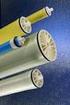 Tech Fact FILMTEC Membranes Strategies for Using FILMTEC Elements to Lower Your Total Cost of Seawater Desalination As demand for drinking water continues to increase particularly in regions of the world
Tampa Bay Seawater Desalination Plant
 Tampa Bay Seawater Desalination Plant Project History How The Plant Works Desal Fun Facts 2575 Enterprise Road, Clearwater, FL 33763-1102 Phone: 727.796.2355 / Fax: 727.791.2388 www.tampabaywater.org Tampa
WISCONSIN WASTEWATER OPERATORS ASSOCIATION
 Integrity. People. Knowledge. WISCONSIN WASTEWATER OPERATORS ASSOCIATION ANNUAL CONFERENCE GREEN BAY Resources. MEETING LOW LEVEL PHOSPHORUS LIMITS BY CHEMICAL ADDITION WHAT IS PHOSPHORUS Atomic # 15 Electron
PREPARING INDUSTRIAL ENGINEERING REPORTS
 PREPARING INDUSTRIAL ENGINEERING REPORTS EARLE HARTLING, LOS ANGELES COUNTY SANITATION DISTRICT JOHN ROBINSON, JOHN ROBINSON CONSULTING, INC WateReuse LA Chapter December 2, 2014 Presentation Overview
Water Water Treatment Plant Tour
 Water Water Treatment Plant Tour Don Rankin, Superintendent Topeka, KS 66606 785-368-3111 Tel 785-368-3825 FAX For a complete list of contacts with phone numbers, FAX numbers and email addresses, click
Christopher Harto Argonne National Laboratory
 Managing Water from CCS Programs Christopher Harto Argonne National Laboratory John A. Veil - Argonne National Laboratory Andrea McNemar - DOE/NETL GWPC Energy and Water Sustainability Symposium Pittsburgh,
Integrated Urban Water Management in Dunedin, Florida, USA: Sustainable Practices from a Small Coastal City in the Gulf of Mexico
 Integrated Urban Water Management in Dunedin, Florida, USA: Sustainable Practices from a Small Coastal City in the Gulf of Mexico Daniel Yeh 1, Pacia Hernandez 1, Thomas Burke 2, Paul Stanek 2, Ken Stidham
Wastewater Reuse. Typical treated wastewater is:
 Wastewater Reuse Most metal finishing industries have in-house wastewater treatment to economically dispose of the acids, alkali, oils, and dissolved metals in the rinse water and occasional tank solution
CWD BALDWIN PLANT NEW RESIDUALS HANDLING SYSTEM
 CWD BALDWIN PLANT NEW RESIDUALS HANDLING SYSTEM OTCO Water Workshop March, 2011 Frank Woyma Plant Manager Nick Pizzi Vice-President EE&T ENVIRONMENTAL ENGINEERING & TECHNOLOGY, INC. Objectives Review the
ITT Water Equipment Technologies. ITT Flowtronex. Water Equipment Technologies & Flowtronex
 ITT Water Equipment Technologies ITT Flowtronex Water Equipment Technologies & Flowtronex 1975 Water Equipment Technologies (WET) is created to provide advanced filtration technologies. 1988 WET, in conjunction
EASTERN IRRIGATION SCHEME, VICTORIA: OPERATION OF AN ULTRA-FILTRATION PLANT FOR A CLASS A RECYCLED WATER SCHEME. David Aitken. Earth Tech Engineering
 EASTERN IRRIGATION SCHEME, VICTORIA: OPERATION OF AN ULTRA-FILTRATION PLANT FOR A CLASS A RECYCLED WATER SCHEME Paper Presented by : David Aitken Authors: David Aitken, Plant Operator, Liz Roder, Operations
Genesee Advanced Water Treatment Facility
 Genesee Advanced Water Treatment Facility Preliminary Engineering Report November 3, 2014 Hatch Mott MacDonald 143 Union Blvd., Suite 1000 Lakewood, Colorado 80228 303.831.4700 www.hatchmott.com Advanced
Clearwater s Groundwater Replenishment Program
 Clearwater s Groundwater Replenishment Program. Potable Reuse for Florida: A Full Day Workshop for Elected Officials Orlando, FL March 22, 2013 Nan Benne(, P.E. Public U2li2es Assistant Director City of
AP ENVIRONMENTAL SCIENCE 2007 SCORING GUIDELINES
 AP ENVIRONMENTAL SCIENCE 2007 SCORING GUIDELINES Question 1 Read the Fremont Examiner article below and answer the questions that follow. (a) Identify ONE component of the sewage that is targeted for removal
FACT SHEET STATEMENT OF BASIS HARLEY DOME 1 PRODUCED WATER TREATMENT FACILITY UPDES PERMIT NUMBER: UT0025917 NEW PERMIT MINOR INDUSTRIAL
 FACT SHEET STATEMENT OF BASIS HARLEY DOME 1 PRODUCED WATER TREATMENT FACILITY UPDES PERMIT NUMBER: NEW PERMIT MINOR INDUSTRIAL FACILITY CONTACTS Mitch Burroughs, Operator Mailing Address 1716 E. Lincoln
James City Service Authority Five Forks Water Treatment Facility
 W e w o r k i n p a r t n e r s h i p w i t h a l l c i t i z e n s t o a c h i e v e a q u a l i t y a n d r e l i a b l e w a t e r s o u r c e. Design Team n Jcsa Owner/Operator n Buchart Horn Prime
Update on Aquifer Storage and Recovery
 Update on Aquifer Storage and Recovery Dean Powell Bureau Chief Water Supply Bureau Governing Board Workshop September 2013 Objectives Discuss the basics of aquifer storage and recovery (ASR) technology
HUBER Vacuum Rotation Membrane VRM Bioreactor
 HUBER Vacuum Rotation Membrane VRM Bioreactor VRM The rotating plate membrane for clean water applications. The future-oriented solution designed for the ever increasing requirements in wastewater treatment
I N C O R P O R A T E D
 BIOSOLUTIONS I N C O R P O R A T E D WATER SOFTENERS & WASTEWATER FOR MORE INFORMATION CALL (818) 991-9997 http://www.biosolutions.org Water Softeners and Wastewater Treatment Systems Across North America,
Case Study: Optimizing Scale Inhibition Costs in Reverse Osmosis Desalination Plants
 Case Study: Optimizing Scale Inhibition Costs in Reverse Osmosis Desalination Plants Mohannad Malki, American Water Chemicals, Inc. Abstract Over the last few decades, advancements in technology and engineering
Introduction. Creating Water Quality Confidence. Sample Communication and Guidance - Natural Treatment. Terminology Guidelines
 Introduction This document is intended to provide guidance for water utility managers related to creating water quality confidence, specifically related to implementing Supply Replenishment projects. The
INFORMATION SHEET ORDER NO. R5-2011-XXXX TRIANGLE ROCK PRODUCTS, INC. FLORIN ROAD AGGREGATE PLANT SACRAMENTO COUNTY
 ORDER NO. R5-2011-XXXX INFORMATION SHEET Background Triangle Rock, Inc. (Discharger) submitted a Report of Waste Discharge (RWD) on 23 August 2010. The Discharger is expanding the mining operations at
Water Recycling in action in South Australia: a review of agricultural and municipal reuse schemes and innovation.
 Water Recycling in action in South Australia: a review of agricultural and municipal reuse schemes and innovation. S. Rinck-Pfeiffer * Veolia Water/United Water, Parkside, GPO Box 1875, Adelaide, South
Town of New Castle Utility Department Introduction
 Town of New Castle Utility Department Introduction Town of New Castle Utility Department Mission Statement Our commitment is to ensure that our customers receive high quality water and wastewater treatment
Life Cycle Assessment of Three Water Scenarios: Importation, Reclamation, and Desalination
 Life Cycle Assessment of Three Water Scenarios: Importation, Reclamation, and Desalination Erin Lyons, Peng Zhang, Troy Benn, Miles Costanza, Ke Li, John Crittenden Department of Civil and Environmental
STATE OF VERMONT AGENCY OF NATURAL RESOURCES DEPARTMENT OF ENVIRONMENTAL CONSERVATION WASTE MANAGEMENT DIVISION SOLID WASTE MANAGEMENT PROGRAM
 STATE OF VERMONT AGENCY OF NATURAL RESOURCES DEPARTMENT OF ENVIRONMENTAL CONSERVATION WASTE MANAGEMENT DIVISION SOLID WASTE MANAGEMENT PROGRAM Solid Waste Management Program Waste Management Division 103
Pall Aria Integrated MF/RO Systems for Cost-Effective Treatment of Sea and Brackish Waters
 Pall Aria Integrated MF/RO Systems for Cost-Effective Treatment of Sea and Brackish Waters Pall Aria Integrated MF/RO Systems for Cost-Effective Treatment of Sea and Brackish Waters Water scarcity resulting
William E. Dunn Water Reclamation Facility. Facility Overview & Information
 William E. Dunn Water Reclamation Facility Facility Overview & Information General Area Served: Plant History Facility Highlights Northern Pinellas County St. Joseph Sound to East Lake Road (E/W) Tampa
Technical Paper Presented at Southwest Chemistry Workshop, Farmington, NM, June 23-24, 2009
 Technical Paper Presented at Southwest Chemistry Workshop, Farmington, NM, June 23-24, 2009 Pall Integrated Membrane System Enhances Boiler Feed Water Make-Up Quality and Lowers Operating Costs Ram Karlapudi,
ASSESSMENT OF WASTEWATER TREATMENT AND WATER REUSE PRACTICES IN THE GULF COUNTRIES
 ASSESSMENT OF WASTEWATER TREATMENT AND WATER REUSE PRACTICES IN THE GULF COUNTRIES Mohamed F. Hamoda Professor of Water Resources and Environmental Engineering Department of Civil Engineering, Kuwait University
Steps in the design process. The draft Ultraviolet Disinfection Guidance Manual (USEPA, 2003) recommends the following steps in the design:
 DESIGN OF UV DISINFECTION SYSTEMS FOR DRINKING WATER In EPA s economic analyses for the proposed LT2ESWTR, EPA estimated that 500 to 1000 filtration plants will choose UV disinfection as part of their
DESCRIPTION OF STORMWATER STRUCTURAL CONTROLS IN MS4 PERMITS
 DESCRIPTION OF STORMWATER STRUCTURAL CONTROLS IN MS4 PERMITS Phase I MS4 permits require continuous updating of the stormwater system inventory owned and operated by the MS4. They also include inspection
Case Study: Research Leads To Large-Scale Microfiltration Plants 10/01/1999
 Case Study: Research Leads To Large-Scale Microfiltration Plants 10/01/1999 What are the advantages of low-pressure membrane treatment processes for surface water supplies? How are the requirements of
Portable Swimming Pool Reverse Osmosis Systems
 Portable Swimming Pool Reverse Osmosis Systems C. Brent Cluff, Ph.D. Clean Water Products A standard practice for pool owners is to periodically drain the swimming pool to reduce calcium and magnesium
Source Water Protection Practices Bulletin Managing Sanitary Sewer Overflows and Combined Sewer Overflows to Prevent Contamination of Drinking Water
 United States Office of Water EPA 916-F-01-032 Environmental Protection (4606) July 2001 Agency Source Water Protection Practices Bulletin Managing Sanitary Sewer Overflows and Combined Sewer Overflows
The Grand Miramare Hotel Santa Margherita (Portofino) Italy March 19 22, 2013. Inspiring Innovation and Excellence
 The Grand Miramare Hotel Santa Margherita (Portofino) Italy March 19 22, 2013 Inspiring Innovation and Excellence About the IDA Desalination Academy The IDA Desalination Academy aspires to increase knowledge
THE MARSHALL STREET ADVANCED POLLUTION CONTROL FACILITY (CLEARWATER, FLORIDA) CONVERSION TO 4-STAGE BARDENPHO TO IMPROVE BIOLOGICAL NITROGEN REMOVAL
 THE MARSHALL STREET ADVANCED POLLUTION CONTROL FACILITY (CLEARWATER, FLORIDA) CONVERSION TO 4-STAGE BARDENPHO TO IMPROVE BIOLOGICAL NITROGEN REMOVAL ABSTRACT Timur Deniz, Ph.D., Thomas W. Friedrich, P.E.
SOURCE WATER PROTECTION DRINKING WATER SYSTEMS ISSUES EVALUATION
 SOURCE WATER PROTECTION DRINKING WATER SYSTEMS ISSUES EVALUATION OXFORD COUNTY PUBLIC WORKS DEPARTMENT OCTOBER 2009 TABLE OF CONTENTS 1. INTRODUCTION...1 1.1. CLEAN WATER ACT AND THE ISSUES IDENTIFICATION/EVALUATION
Ion Exchange Softening
 Ion Exchange Softening Ion-exchange is used extensively in small water systems and individual homes. Ion-exchange resin, (zeolite) exchanges one ion from the water being treated for another ion that is
RULE 8-8 - ORGANIC COMPOUNDS - WASTEWATER COLLECTION AND SEPARATION SYSTEMS
 BAY AREA AIR QUALITY MANAGEMENT DISTRICT RULE 8-8 - ORGANIC COMPOUNDS - WASTEWATER COLLECTION AND SEPARATION SYSTEMS (ADOPTED: January 17, 1979) (AMENDED: November 1, 1989; October 6, 1993; June 15, 1994;
Drinking Water Treatment Systems
 Drinking Water Treatment Systems By Barbara Daniels and Nancy Mesner June, 2005 NR/WQ/2005-24 If your home water comes from a public water supply, it has been tested and meets EPA standards for drinking
1. Inspection and monitoring... 3
 1 Index 1. Inspection and monitoring... 3 1.1 Handling of new elements... 3 1.1.1 Storage of original packaged RO elements... 3 1.1.2 Packing... 3 1.2 Initial start- up checks of a plant... 3 1.2.1 Preparation
Total Water & Wastewater Management for Shale Gas Production. Treatment and Operation Solutions
 Total Water & Wastewater Management for Shale Gas Production Treatment and Operation Solutions Impact of Water and Wastewater from Shale Gas Fracturing Operations As the number of shale gas fracturing
Remediation of Water-Based Drilling Fluids and Cleaning of Cuttings
 OVERVIEW Water-Based Drilling Fluids are environmentally friendly compared with oil-based drilling fluids; however their safe disposal can still be a challenge. There are normally no hydrocarbons present,
Provided below is a description of the processes generating wastewater in a poultry plant and a typical pretreatment and full treatment system.
 II. PROCESS OVERVIEW Provided below is a description of the processes generating wastewater in a poultry plant and a typical pretreatment and full treatment system. II.1. Wastewater Generation A typical
A HOMEOWNERS GUIDE ON-SITE SEWAGE MANAGEMENT SYSTEMS
 GEORGIA DEPARTMENT OF HUMAN RESOURCES ENVIRONMENTAL HEALTH SECTION A HOMEOWNERS GUIDE TO ON-SITE SEWAGE MANAGEMENT SYSTEMS March 12, 2002 WHAT IS AN ON-SITE SEWAGE MANAGEMENT SYSTEM An on-site sewage management
Innovation and Progress in Water Treatment Technology
 Innovation and Progress in Water Treatment Technology Degree of separation of ultrafiltration Summary of the various processes The water will be pressed through the between the raw water side and the filtrate
CHAPTER 8 UPGRADING EXISTING TREATMENT FACILITIES
 CHAPTER 8 UPGRADING EXISTING TREATMENT FACILITIES 8-1. General. Upgrading of wastewater treatment plants may be required to handle increased hydraulic and organic loadings to meet existing effluent quality
Natural and Advanced Treatment Systems for Wastewater Management at Municipal Solid Waste Disposal Site in Developing Countries
 Natural and Advanced Treatment Systems for Wastewater Management at Municipal Solid Waste Disposal Site in Developing Countries C. Chiemchaisri Department of Environmental Engineering, Kasetsart University
Differentiation Summary. Revolutionizing Water Clean-Up Opportunities
 Differentiation Summary Revolutionizing Water Clean-Up Opportunities NanoClear is a water clean-up process that affordably and efficiently converts salt, brackish or waste water into pure, usable water.
Nutrient Reduction by Use of Industrial Deep Injection Wells, Miami-Dade County, Florida
 GWPC September 27, 2015 Nutrient Reduction by Use of Industrial Deep Injection Wells, Miami-Dade County, Florida Virginia Walsh, PhD, P.G. Miami-Dade Water and Sewer Department Ed Rectenwald, P.G. MWH
Monterey Regional Water Pollution Control Agency. Sewer System Management Plan
 Monterey Regional Water Pollution Control Agency Sewer System Management Plan March 31, 2013 Sewer System Management Plan Introduction I. Goals II. Organization III. Legal Authority IV. Operation and Maintenance
Swamp Area Passive Treatment System Kettle Creek Watershed, Clinton County, PA
 Swamp AMD Chemistry Swamp Area Passive Treatment System Kettle Creek Watershed, Clinton County, PA A Technical Report for Trout Unlimited and the Kettle Creek Watershed Association Prepared by Hedin Environmental
More inside :: Tackle even the toughest water treatment piping challenges with
 More inside :: Tackle even the toughest water treatment piping challenges with Corzan Industrial Systems Corrosion to pipes, valves and fittings caused by chemicals and microbes can greatly impact the
Municipal Standard Solutions. Water Treatment WATER TECHNOLOGIES
 Municipal Standard Solutions Water Treatment WATER TECHNOLOGIES Standard Units and Tailor-made Systems Veolia provides the complete range of services required to design, build, maintain and upgrade water
SYNERGISTIC APPLICATION OF ADVANCED PRIMARY AND SECONDARY WASTEWATER TREATMENT SYSTEMS
 SYNERGISTIC APPLICATION OF ADVANCED PRIMARY AND SECONDARY WASTEWATER TREATMENT SYSTEMS Published in Water and Waste Digest membrane issue, November 2008 Miroslav Colic; Chief Scientist, Clean Water Technology
Removing Thallium from Industrial FGD Scrubber Water with Sorbster Adsorbent Media
 Case History MAR Systems Inc. Removing Thallium from Industrial FGD Scrubber Water with Sorbster Adsorbent Media Trace thallium levels in process and wastewater streams pose a human toxicity threat. Tidwell
Cambridge Wastewater Treatment Facility
 Cambridge Wastewater Treatment Facility Emergency Situations If you have a water or sewer emergency that relates to the City s utility system call the Public Works office at 763-689-1800 on normal working
Iron and manganese are two similar elements
 L-5451 2-04 Drinking Water Problems: Iron and Manganese Mark L. McFarland, Associate Professor and Extension Soil Fertility Specialist Monty C. Dozier, Assistant Professor and Extension Water Resources
Development of Advanced Wastewater Treatment and Reclamation System
 14 Development of Advanced Wastewater Treatment and Reclamation System TAKESHI TERAZAKI *1 HOZUMI OTOZAI *2 KOSUKE SHIGIISHI *2 HIDEO SUZUKI *3 HIROSHI NAKASHOJI *4 HIROYUKI KAWAMOTO *5 Recycling and the
Cooling Tower Sidestream Filtration A Green, Proven Cost Reduction Technology
 Cooling Tower Sidestream Filtration A Green, Proven Cost Reduction Technology TAB0411 Typical crossflow cooling tower installation Due to the large air-water interface needed to obtain good evaporative