
Overview of Bariatric Surgery
|
|
|
- Paula Mitchell
- 9 years ago
- Views:
Transcription
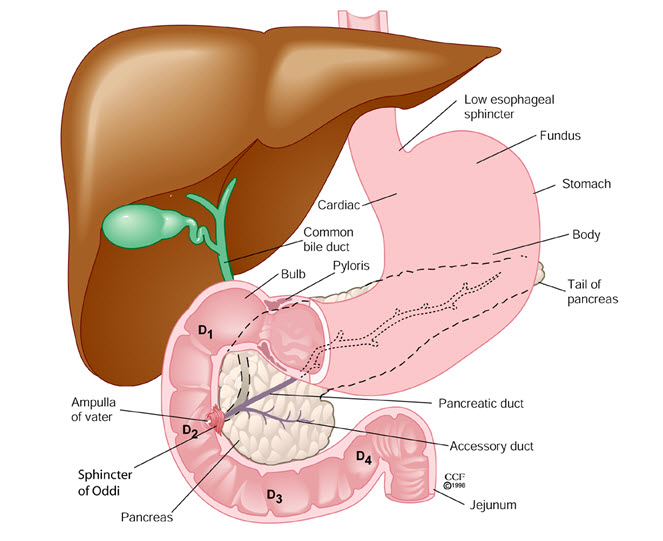
1 Overview of Bariatric Surgery To better understand how weight loss surgery works, it is helpful to know how the normal digestive process works. As food moves along the digestive tract, special digestive juices and enzymes arrive at the right place at the right time to digest food and absorb calories and nutrients. After we chew and swallow our food, it moves down the esophagus to the stomach, where a strong acid and powerful enzymes continue the digestive process. The stomach can hold about three pints of food at one time. Food is slowly released into the small intestine where absorption of the nutrients, vitamins and minerals takes place. The rate at which foods and fluids are released into the small intestines is controlled by a sphincter on the outlet of the stomach. Empty time can be over several hours. Normal Stomach

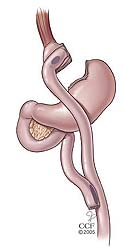
2 Gastric Bypass Operations Gastric bypass surgery is an operation that creates a small pouch to restrict food intake and bypasses a segment of the small intestine. In the gastric bypass procedure, a surgeon makes a direct connection from the stomach pouch to a lower segment of the small intestine, bypassing the duodenum (the first part of the small intestine) and some of the jejunum (the second part of the small intestine), delaying the mixing of ingested food and the digestive enzymes. Roux-en-Y Gastric Bypass Surgery (RYGB) RYGB is the most common type of bariatric surgery. The surgeon begins by creating a small pouch by dividing the upper end of the stomach. This restricts the food intake. Next, a section of the small intestine is attached to the pouch to allow food to bypass the duodenum, as well as the first portion of the jejunum. The small intestine is re-connected 150 centimeters from the pouch to allow ingested food and digestive enzymes to mix. The advantages of Roux-en-Y gastric bypass include superior weight loss when compared to vertical banded gastroplasty, with excellent long-term weight reduction and resolution or elimination of comorbidities (80 percent resolution of Type II diabetes after surgery). Early and late complication rates are reasonably low, and operative mortality ranges from 0.2 percent to 1 percent. Disadvantages of Roux-en-Y gastric bypass include the potential for anastomotic leaks and strictures, severe dumping syndrome symptoms and procedure-specific complications, including distension of the excluded stomach and internal hernias. Roux-en-Y gastric bypass is technically more challenging to perform than the restrictive procedures, particularly when using the laparoscopic approach. In experienced hands, the conversion rate of laparoscopic Roux-en-Y gastric bypass to open is 5 percent.
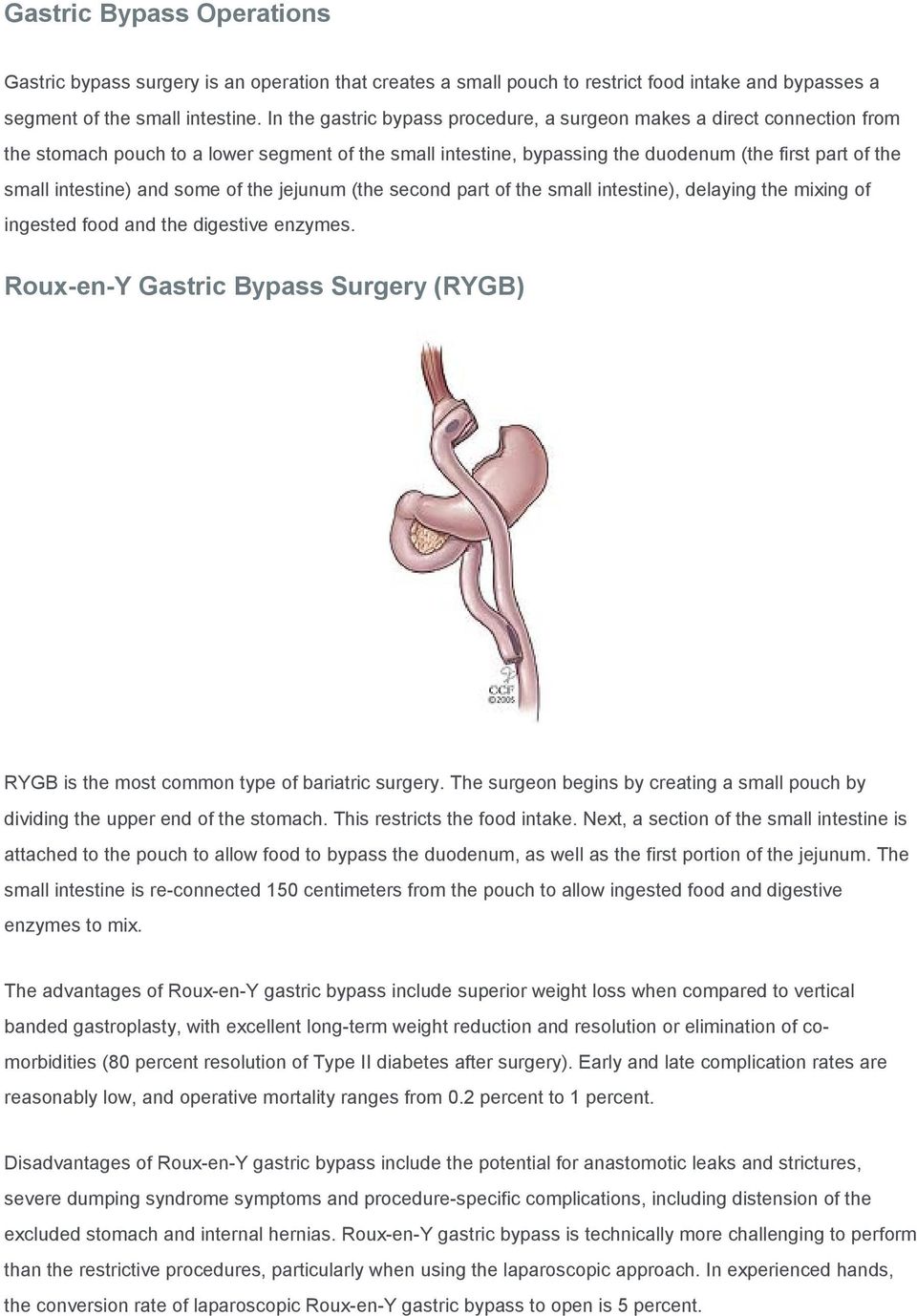
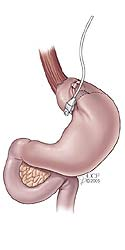
3 Restrictive Operations Alternatives to gastric bypass procedures are restrictive operations such as vertical-banded gastroplasty (not offered at the Cleveland Clinic) or adjustable gastric banding. Restrictive surgery results in weight loss when the surgeon creates a small pouch at the top of the stomach where the food enters from the esophagus. The pouch's lower outlet usually has a diameter of about 1/4-inch. The small outlet delays the emptying of food from the pouch creating a feeling of fullness. Following surgery, patients can usually eat only one-half to 1 cup of food without discomfort or nausea. Most people who have a restrictive operation lose the ability to eat a large amount of food at one time. Some patients do return to eating modest amounts of food, without feeling overly hungry. Both operations serve only to restrict food intake and do not alter the normal digestive and absorptive process. Vertical Banded Gastroplasty The surgeon uses staples and a plastic band to create a smaller stomach pouch. Patients are unable to eat large quantities of food and do notice a feeling of fullness. Long-term complications such as weight regain and severe acid reflux or difficulty swallowing solids occur in up to one-half of patients who underwent VBG. This procedure is not offered at the Clinic. We do manage patients with complications of VBG and these often require conversion to a gastric bypass. Laparoscopic Adjustable Gastric Banding (LAGB) During the procedure, surgeons typically use laparoscopic techniques and instruments to implant an inflatable silicone band around the upper portion of the stomach. The band creates a new, tiny pouch that limits and controls the amount of food consumed. The band also creates a small outlet that slows the emptying process into the stomach and the intestines allowing the patient to experience an earlier sensation of fullness and increased satisfaction with smaller amounts of food. This ultimately results in weight loss.
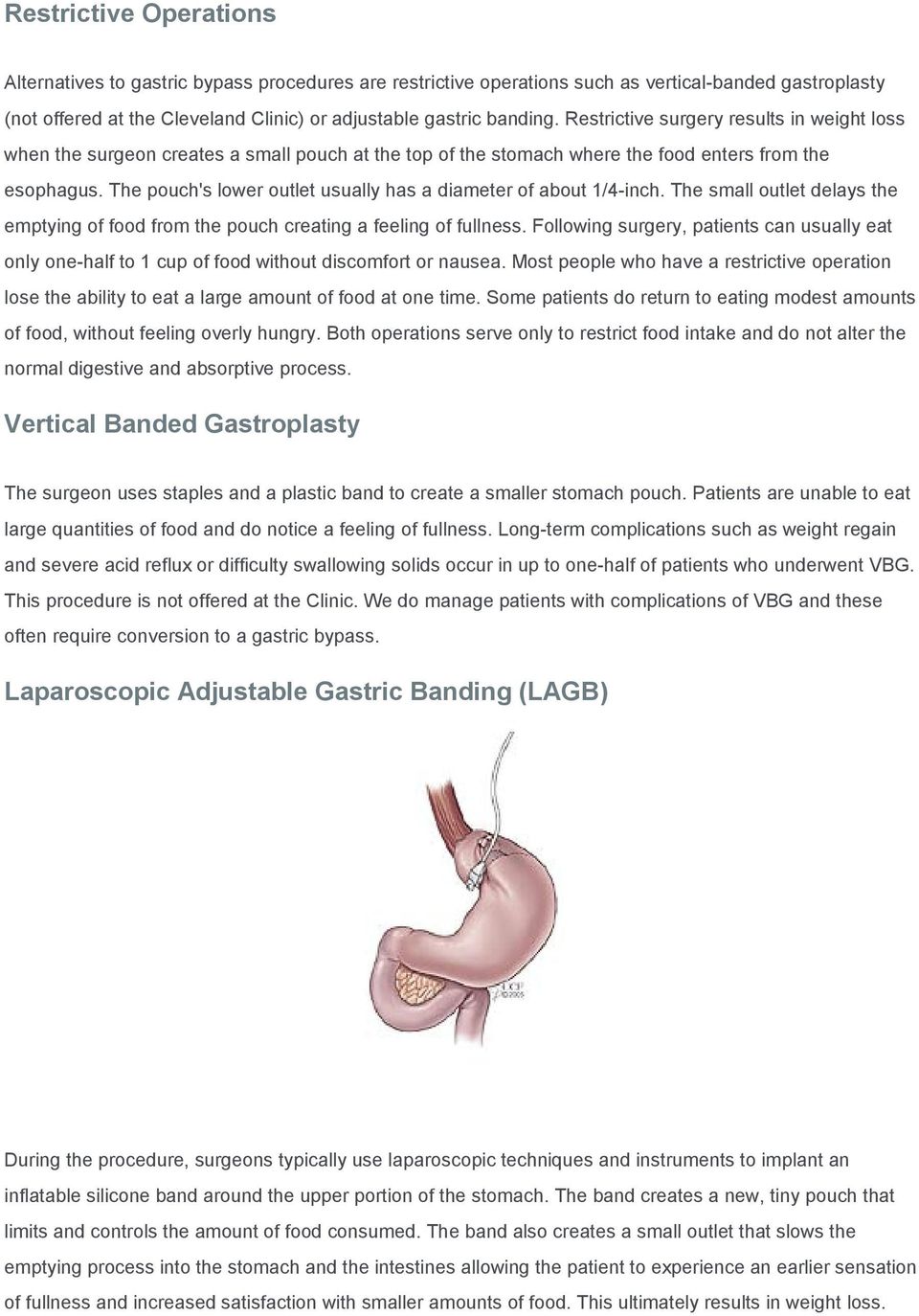
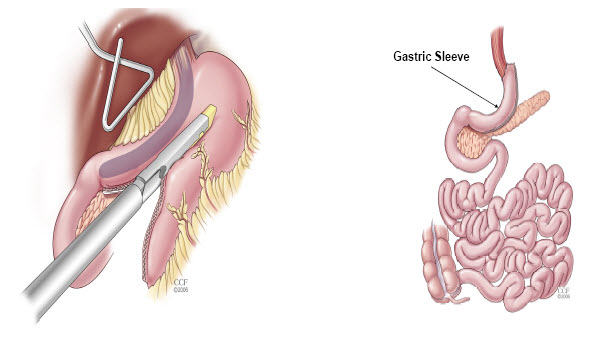
4 The LAGB patient can expect a reduced hospital stay of one to two days; in some instances there may be an increased stay if the surgery required an abdominal incision or complications occurred. Patients may resume normal activities in one to two weeks; again, expect a delay if there is an abdominal incision or complications occur. The LAGB procedure requires no cutting or stapling of the stomach and bowel and is considered the least invasive weight loss surgery available. The band is also adjustable and can be modified by inflating or deflating the inner surface with saline solution. The surgeon can control the amount of saline in the band using a fine needle through the skin. The adherence to monthly appointments for band adjustments the first 6-12 months after surgery is very important to achieve optimal results. Once the band is adjusted properly, the duration between visits can be lengthened. The adjustments are made in the surgeon's exam room and patients have minimal discomfort. Finally, should the band need to be removed, the stomach will return to its original form and function. Laparoscopic Sleeve Gastrectomy We perform the Sleeve Gastrectomy as a laparoscopic procedure. This involves making five or six small incisions in the abdomen and performing the procedure using a video camera (laparoscope) and long instruments that are placed through these small incisions. During the Laparoscopic Sleeve Gastrectomy, about 75% of the stomach is removed leaving a narrow gastric tube or sleeve. No intestines are removed or bypassed during the sleeve gastrectomy. The LSG takes one to two hours to complete. Sleeve Gastrectomy is a restrictive procedure. It greatly reduces the size of your stomach and limits the amount of food that can be eaten at one time. It does not cause decreased absorption of nutrients or bypass
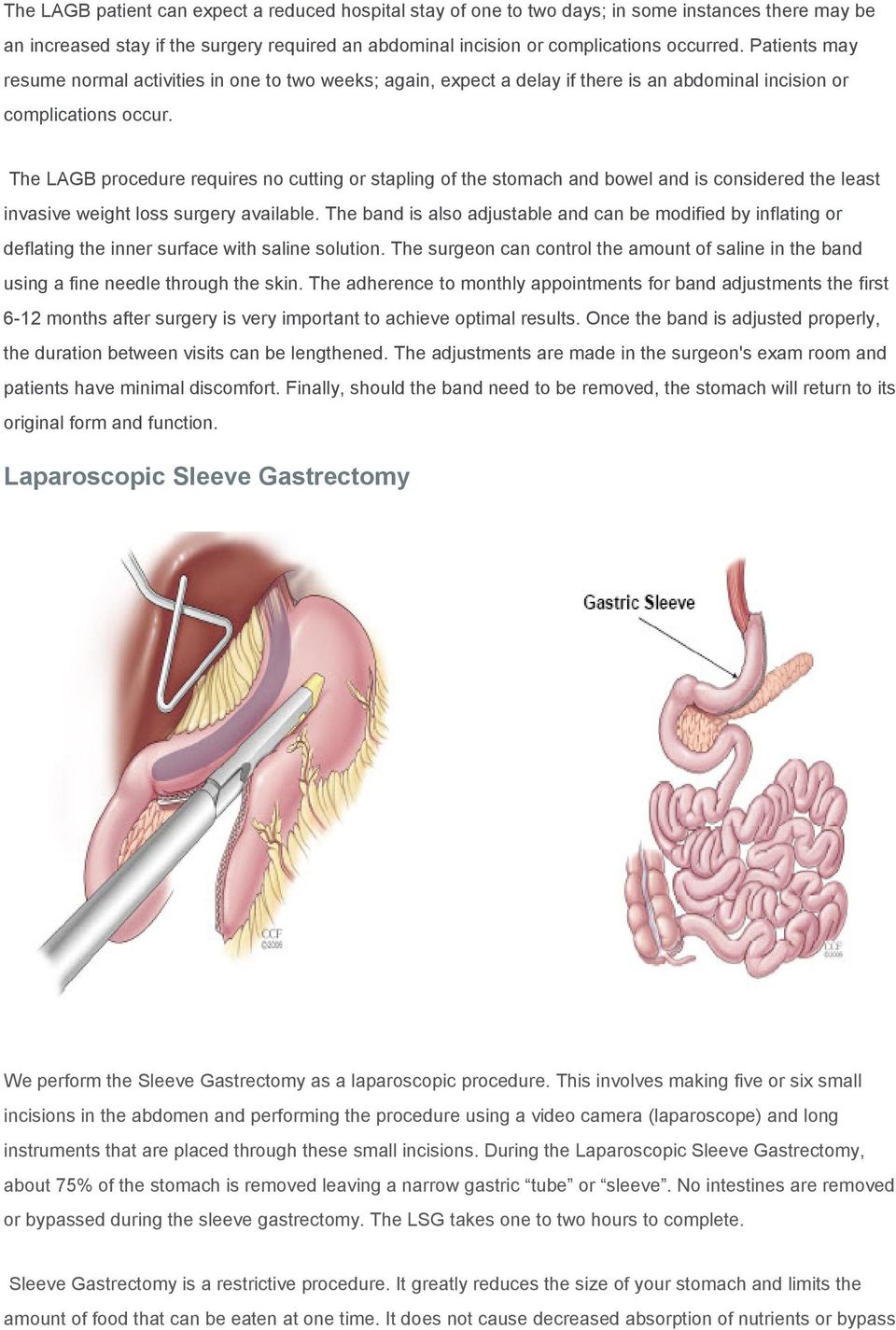
5 your intestines. After eating a small amount of food, you will feel full very quickly and continue to feel full for several hours. Sleeve Gastrectomy may also cause a decrease in appetite. In addition to reducing the size of the stomach, Sleeve Gastrectomy may reduce the amount of hunger hormone produced by the stomach which may contribute to weight loss after this procedure. This procedure is primarily used as part of a staged approach to surgical weight loss. Patients who have a very high body mass index (BMI) or who are at risk for undergoing anesthesia or a longer procedure due to heart or lung problems may benefit from this staged approach. Sometimes the decision to proceed with a two-stage approach is made before surgery due to these known risk factors. In other patients, the decision to perform sleeve gastrectomy (instead of gastric bypass) is made during the operation. Reasons for making this decision intraoperatively include an excessively large liver or extensive scar tissue that would make the gastric bypass procedure too long or unsafe. In patients who undergo LSG as a first stage procedure, the second stage (gastric bypass) is performed 12 to 18 months later after significant weight loss has occurred and the risk of anesthesia is much lower (and the liver has decreased in size). Though this approach involves two procedures, we believe it is safe and effective for selected patients. Laparoscopic Sleeve Gastrectomy can also be used as a primary procedure. There is relatively little data regarding the use of LSG as a stand-alone procedure in patients with lower BMI s and it should be considered an investigational procedure in this patient group. We are offering this procedure to diabetic patients with a BMI between 30 and 40 as a part of a clinical trial that will better define the short and longterm benefits of LSG in this group of patients. There are risks that are common to any laparoscopic procedure such as bleeding, infection, injury to other organs, or the need to convert to an open procedure. There is also a small risk of a leak from the staple line used to divide the stomach. These problems are rare and major complications occur less than 1% of the time. Overall, the operative risks associated with LSG are slightly higher than those seen with the laparoscopic adjustable band but lower than the risks associated with gastric bypass. Depending on their pre-operative weight, patients can expect to lose between 40% to 70% of their excess body weight in the first year after surgery. Many obesity-related co morbidities improve or resolve after bariatric surgery. Diabetes, hypertension, obstructive sleep apnea and abnormal cholesterol levels are improved or cured in more than 75% of patients undergoing LSG. Though long-term studies are not yet available, the weight loss that occurs after LSG results in dramatic improvement in these medical conditions in the first year after surgery. Your surgeon may talk to you about LSG as an option if you have a BMI over 60 or significant medical problems that increase your risk for undergoing anesthesia or gastric bypass. Laparoscopic Sleeve Gastrectomy may also be offered as part of a clinical investigation if you have a lower BMI and diabetes. You should discuss all of the available surgical procedures with your surgeon and determine which procedure is best for you.
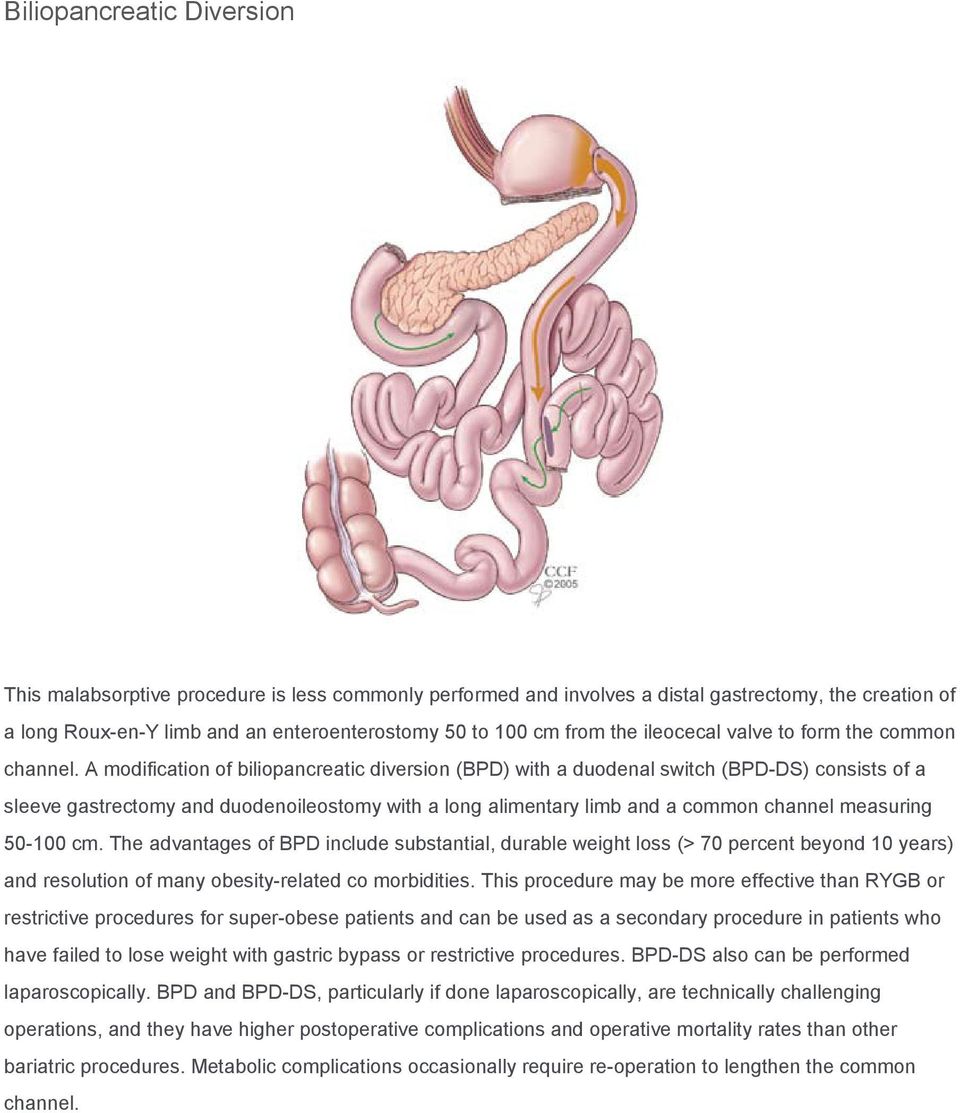
6 Biliopancreatic Diversion This malabsorptive procedure is less commonly performed and involves a distal gastrectomy, the creation of a long Roux-en-Y limb and an enteroenterostomy 50 to 100 cm from the ileocecal valve to form the common channel. A modification of biliopancreatic diversion (BPD) with a duodenal switch (BPD-DS) consists of a sleeve gastrectomy and duodenoileostomy with a long alimentary limb and a common channel measuring cm. The advantages of BPD include substantial, durable weight loss (> 70 percent beyond 10 years) and resolution of many obesity-related co morbidities. This procedure may be more effective than RYGB or restrictive procedures for super-obese patients and can be used as a secondary procedure in patients who have failed to lose weight with gastric bypass or restrictive procedures. BPD-DS also can be performed laparoscopically. BPD and BPD-DS, particularly if done laparoscopically, are technically challenging operations, and they have higher postoperative complications and operative mortality rates than other bariatric procedures. Metabolic complications occasionally require re-operation to lengthen the common channel.
UW MEDICINE PATIENT EDUCATION. Weight Loss Surgery. What is bariatric surgery?
 UW MEDICINE PATIENT EDUCATION Weight Loss Surgery Divided proximal roux-y-gastric bypass, laparoscopic adjustable gastric banding, and laparoscopic sleeve gastrectomy. This section of the Guide to Your
Some of the diseases and conditions associated with obesity include:
 WEIGHT-LOSS SURGERY facts about obesity Obesity is rapidly becoming the nation s number-one health problem. Of the 97 million Americans who are overweight, 10 million are considered morbidly obese. Obesity
BARIATRIC SURGERY MAY CURE TYPE 2 DIABETES IN SOME PATIENTS
 BARIATRIC SURGERY MAY CURE TYPE 2 DIABETES IN SOME PATIENTS Thomas Rogula MD, Stacy Brethauer MD, Bipand Chand MD, and Philip Schauer, MD. "Gastric bypass surgery has become a popular option for obese
Types of Bariatric Procedures. Tejal Brahmbhatt, MD General Surgery Teaching Conference April 18, 2012
 Types of Bariatric Procedures Tejal Brahmbhatt, MD General Surgery Teaching Conference April 18, 2012 A Brief History of Bariatric Surgery First seen in pts with short bowel syndrome weight loss First
Surgical Weight Loss. Mission Bariatrics
 Surgical Weight Loss Mission Bariatrics Obesity is a major health problem in the United States, with more than one in every three people suffering from this chronic condition. Obese adults are at an increased
Transmittal 54 Date: APRIL 28, 2006. SUBJECT: Bariatric Surgery for Treatment of Morbid Obesity
 CMS Manual System Pub 100-03 Medicare National Coverage Determinations Department of Health & Human Services (DHHS) Centers for Medicare & Medicaid Services (CMS) Transmittal 54 Date: APRIL 28, 2006 Change
What is the Sleeve Gastrectomy?
 What is the Sleeve Gastrectomy? The Sleeve Gastrectomy (also referred to as the Gastric Sleeve, Vertical Sleeve Gastrectomy, Partial Gastrectomy, or Tube Gastrectomy) is a relatively new procedure for
Bariatric Weight Loss Surgery
 BARIATRIC SURGERY Bariatric Weight Loss Surgery The heart and science of medicine. Weight loss surgery, also known as bariatric surgery, was developed as a tool to help people with morbid obesity reduce
Bariatric Surgery. Overview of Procedural Options
 Bariatric Surgery Overview of Procedural Options The Obesity Epidemic In 1991, NO state had an obesity rate above 20% 1 As of 2010, more than two-thirds of states (38) now have adult obesity rates above
NHRMC General Surgery Specialists. Minimally Invasive Gastrointestinal Surgery Phone: 910-662-9300 Fax: 910-662-9303
 Minimally Invasive Gastrointestinal Surgery Phone: 910-662-9300 Fax: 910-662-9303 W. Borden Hooks III, MD 1725 New Hanover Medical Park Drive Wilmington, NC 28403 Thank you for choosing NHRMC General Surgery
BARIATRIC SURGERY. Prerequisites. Authorization, Notification and Referral
 BARIATRIC SURGERY Policy NHP reimburses participating providers for specific types of medically necessary bariatric surgery when needed to either alleviate or correct medical problems caused by severe
PATIENT CONSENT TO PROCEDURE - ROUX-EN-Y GASTRIC BYPASS
 As a patient you must be adequately informed about your condition and the recommended surgical procedure. Please read this document carefully and ask about anything you do not understand. Please initial
Obesity When to Recommend Surgery. Lily Chang, MD September 27, 2013
 Obesity When to Recommend Surgery Lily Chang, MD September 27, 2013 Obesity BMI >30 Trends Among U.S. Adults Source: Behavioral Risk Factor Surveillance System, CDC, 2012 Obesity Related Co-Morbidities
If you are morbidly obese, you should remember these important points:
 What is Morbid Obesity? Morbid obesity is a serious medical condition. If you are morbidly obese, it means that you are severely overweight, usually by at least 100 pounds. It also means that you have
Bariatric Surgery Guide Dr. Stewart s Weight Loss Specialists of North Texas
 Welcome. This resource is created for you by Dr. Stewart and our bariatric surgery team with input from people who have found success through weight loss surgery. It is not intended to replace consultation
Weight-Loss Surgery for Adults With Diabetes or Prediabetes Who Are at the Lower Levels of Obesity
 Weight-Loss Surgery for Adults With Diabetes or Prediabetes Who Are at the Lower Levels of Obesity A Review of the Research for Adults With a BMI Between 30 and 35 Is This Information Right for Me? If
GASTRIC SLEEVE SURGERY FOR WEIGHT LOSS. www.carepointhealth.org GASTRIC SLEEVE SURGERY FOR WEIGHT LOSS. 201-795-8175 CarePointHealth.
 www.carepointhealth.org GASTRIC SLEEVE SURGERY FOR WEIGHT LOSS 201-795-8175 CarePointHealth.org 1 CONTENTS What is sleeve gastrectomy? Why choose sleeve gastrectomy? Health risks associated with excess
Surgical Treatment of Obesity: A Surgeon s View
 Surgical Treatment of Obesity: A Surgeon s View Jenny J. Choi, MD Director of Bariatrics Associate Director of Clinical Affairs Assistant Professor of Surgery Albert Einstein School of Medicine Montefiore
Vertical Sleeve Gastrectomy (VSG) - Also known as Sleeve Gastrectomy, Vertical Gastrectomy
 Vertical Sleeve Gastrectomy (VSG) - Also known as Sleeve Gastrectomy, Vertical Gastrectomy The Vertical Sleeve Gastrectomy procedure (also called Sleeve Gastrectomy, Vertical Gastrectomy, Greater Curvature
Consumer summary Laparoscopic adjustable gastric banding for the treatment of obesity (Update and re-appraisal)
 ASERNIP S Australian Safety and Efficacy Register of New Interventional Procedures Surgical Consumer summary Laparoscopic adjustable gastric banding for the treatment of obesity (Update and re-appraisal)
Weight Loss Surgery Info for Physicians
 Weight Loss Surgery Info for Physicians As physicians, we see it every day when we see our patients more and more people are obese, and it s affecting their health. It s estimated that at least 2/3 of
GASTRIC SLEEVE SURGERY FOR WEIGHT LOSS. www.malleysurgical.com GASTRIC SLEEVE SURGERY FOR WEIGHT LOSS
 GASTRIC SLEEVE SURGERY FOR WEIGHT LOSS www.malleysurgical.com GASTRIC SLEEVE SURGERY FOR WEIGHT LOSS 1 CONTENTS What is sleeve gastrectomy? Why choose sleeve gastrectomy? Health risks associated with excess
Sleeve Gastrectomy Surgery & Follow Up Care
 Sleeve Gastrectomy Surgery & Follow Up Care Sleeve Gastrectomy Restrictive surgical weight loss procedure Able to eat a smaller amount of food to feel satiety, less than 6 ounces at a meal Surgery The
Weight Loss before Hernia Repair Surgery
 Weight Loss before Hernia Repair Surgery What is an abdominal wall hernia? The abdomen (commonly called the belly) holds many of your internal organs. In the front, the abdomen is protected by a tough
Technical Aspects of Bariatric Surgical Procedures. Robert O. Carpenter, MD, MPH, FACS Department of Surgery Scott & White Memorial Hospital
 Technical Aspects of Bariatric Surgical Procedures Robert O. Carpenter, MD, MPH, FACS Department of Surgery Scott & White Memorial Hospital Disclosures Allergan, Inc. (Past) Faculty Member Educational
Roux-en-Y Gastric Bypass
 Roux-en-Y Gastric Bypass Restrictive and malabsorptive procedure Most frequently performed bariatric procedure in the US First done in 1967 Laparoscopic since 1993 75% EWL in 18-24 months 50% EWL is still
Considering Bariatric Surgery? Learn about minimally invasive da Vinci Surgery
 Considering Bariatric Surgery? Learn about minimally invasive da Vinci Surgery The Condition: Obesity Obesity is defined as having a body mass index (BMI) of 30 or greater. Obesity is a serious medical
Medical Coverage Policy Bariatric Surgery
 Medical Coverage Policy Bariatric Surgery Device/Equipment Drug Medical Surgery Test Other Effective Date: 9/1/2011 Policy Last Updated: 11/01/2011 Prospective review is recommended/required. Please check
Position Statement Weight Loss Surgery (Bariatric Surgery) and its Use in Treating Obesity or Treating and Preventing Diabetes
 Position Statement Weight Loss Surgery (Bariatric Surgery) and its Use in Treating Obesity or Treating and Preventing Diabetes People with diabetes Losing excess weight will assist in the management of
Diabetes and Weight-Loss Surgery
 WHITE PAPER Diabetes and Weight-Loss Surgery Treat the cause. Cure the symptom. Center of Excellence BARIATRIC SURGERY Written July 2011 Bariatric Surgery: The Cure for Type II Diabetes? For most individuals
Weight Loss Surgery. Malabsorptive: Your intestines are rearranged to reduce the amount of food absorbed into the system
 The Region s Leader Weight Loss Surgery Table of Contents About Weight Loss Surgery 1 Laparoscopic Procedures 2 Adjustable Gastric Band 2 Biliopancreatic Diversion With Duodenal Switch 3 Rou-en-Y (RNY)
Informed Consent for Laparoscopic Vertical Sleeve Gastrectomy. Patient Name
 Informed Consent for Laparoscopic Vertical Sleeve Gastrectomy Patient Name Please read this form carefully and ask about anything you may not understand. I consent to have a laparoscopic Vertical Sleeve
Understanding Obesity
 Your Guide to Understanding Obesity As your partner in health for your life s journey, we want you to be as informed and confident as possible regarding the disease or medical issue you may be facing.
BARIATRIC SURGERY. Personalized Weight Loss Program
 BARIATRIC SURGERY Personalized Weight Loss Program Lafayette General Medical Center performs three major operations for weight loss surgery: Adjustable Gastric Band, Laparoscopic Sleeve Gastrectomy and
HOUSTON METHODIST SURGICAL WEIGHT LOSS
 HOUSTON METHODIST SURGICAL WEIGHT LOSS Why choose surgical weight loss at Houston Methodist? Obesity causes many dangerous diseases and health conditions such as diabetes, high blood pressure, heart disease,
Obesity Affects Quality of Life
 Obesity Obesity is a serious health epidemic. Obesity is a condition characterized by excessive body fat, genetic and environmental factors. Obesity increases the likelihood of certain diseases and other
Weight Loss Surgery Educational Seminar
 Weight Loss Surgery Educational Seminar Attendee Handout Obesity Overview Obesity is on the rise in the US Body Mass Index (BMI) (see chart in this handout, page 9) o 18.5-24.9: Ideal Less than 1/3 of
Cleveland Clinic Bariatric and Metabolic Institute. Weight Loss Surgery for Severely Obese Patients
 Cleveland Clinic Bariatric and Metabolic Institute Weight Loss Surgery for Severely Obese Patients life-altering therapy requires close communication Careful patient selection for bariatric surgery is
5. Conversion Procedures that change from an index procedure to a different type of procedure.
 Benefit Coverage Covered Benefit for lines of business including Health Benefits Exchange (HBE), Rite Care (MED), Children with Special Needs (CSN), Substitute Care (SUB), Rhody Health Partners (RHP),
WEIGHT LOSS SURGERY. Pre-Clinic Conference Jennifer Kinley, MD 12/15/2010
 WEIGHT LOSS SURGERY Pre-Clinic Conference Jennifer Kinley, MD 12/15/2010 EDUCATIONAL OBJECTIVES: Discuss the available pharmaceutical options for weight loss and risks of these medications Explain the
Consent for Treatment/Procedure Laparoscopic Sleeve Gastrectomy
 Patient's Name: Today's Date: / / The purpose of this document is to confirm, in the presence of witnesses, your informed request to have Surgery for obesity. You are asked to read the following document
Weight Loss Surgery Information Session. WFBH Bariatric Surgery Program
 Weight Loss Surgery Information Session WFBH Bariatric Surgery Program What makes us different? Center of Excellence (COE) High volume center > 1000 procedures since 2003 Less complications than non-coe
Gastric Sleeve Surgery
 Gastric Sleeve Surgery Introduction Obesity is associated with many diseases such as diabetes, high blood pressure, heart problems, and degeneration of the joints. These diseases and the obesity itself
Gastric Surgery for Clinically Severe (Morbid) Obesity
 Origination: 03/28/01 Revised: 01/16/15 Annual Review: 11/12/15 Purpose: The Medical Technology Assessment Committee will review published scientific literature and information from appropriate government
Bariatric Surgery Guide
 One Bariatric Surgery Guide Get back to enjoying the everyday moments. Obesity is one of the nation s leading health issues. More than half of Americans are overweight and roughly 12 million Americans
Surgical Weight Loss Program for Teens
 Surgical Weight Loss Program for Teens Surgical Weight Loss Program for Teens The Surgical Weight Loss Program team understands the impact that being severely overweight can have on your life. Our guiding
INFORMATION SHEET FOR A LAPAROSCOPIC SLEEVE GASTRECTOMY
 INFORMATION SHEET FOR A LAPAROSCOPIC SLEEVE GASTRECTOMY You are considering undergoing a laparoscopic sleeve gastrectomy for weight loss. The purpose of this information sheet is to provide you with the
Bariatric Surgery. Beth A. Ryder, MD FACS. Assistant Professor of Surgery The Miriam Hospital Warren Alpert Medical School of Brown University
 Bariatric Surgery Beth A. Ryder, MD FACS Assistant Professor of Surgery The Miriam Hospital Warren Alpert Medical School of Brown University April 30, 2013 Why surgery? Eligibility criteria Most commonly
Bariatric and Metabolic Surgery
 Bariatric and Metabolic Surgery It may reduce more than just your weight. It may reduce certain risk factors. The information in this brochure is intended as Before Cholesterol 250 Blood pressure 149/95
Section 2. Overview of Obesity, Weight Loss, and Bariatric Surgery
 Section 2 Overview of Obesity, Weight Loss, and Bariatric Surgery What is Weight Loss? How does surgery help with weight loss? Short term versus long term weight loss? Conditions Improved with Weight Loss
The University of Hong Kong Department of Surgery Division of Esophageal and Upper Gastrointestinal Surgery
 Program Overview The University of Hong Kong Department of Surgery Division of Esophageal and Upper Gastrointestinal Surgery Weight Control and Metabolic Surgery Program The Weight Control and Metabolic
Introduction to obesity surgery
 Introduction to obesity surgery Auckland weight loss Surgery Surgery ADDRESS Mercy Specialist Centre PHONE FAX EMAIL WEB 100 Mountain Road, Epsom, Auckland 09 623 2409 09 630 8589 [email protected] www.aucklandweightlosssurgery.co.nz
Bariatric i Surgery: Optimalizing Outcome Results. Dr. B. Dillemans AZ Sint-Jan AV Brugge-Oostende BARIATRIC SURGERY
 Bariatric i Surgery: Optimalizing i Outcome Results Dr. B. Dillemans AZ Sint-Jan AV Brugge-Oostende THE OBESE PATIENT : A CHALLENGE FOR ANAESTHESIA, Ostend,14/11/09 BARIATRIC SURGERY 50 s : First Reported
Acute Abdominal Pain following Bariatric Surgery. Disclosure. Objectives 8/17/2015. I have nothing to disclose
 Acute Abdominal Pain following Bariatric Surgery Kathy J. Morris, DNP, APRN, FNP C, FAANP University of Nebraska Medical Center College of Nursing Disclosure I have nothing to disclose Objectives Pathophysiology
BARIATRIC SURGERY PATIENT GUIDE
 You the patient play a critical role in the long term success of surgery. You will need to: Commit to improving your health. Discuss your health history with your surgeon. Discuss any questions or concerns
Assessment Day Bariatric Surgery. 12266 DePaul Drive, Suite 310 Bridgeton, MO 63044 (P) 1-877-477-6954 ssmweightloss.com
 Assessment Day Bariatric Surgery 12266 DePaul Drive, Suite 310 Bridgeton, MO 63044 (P) 1-877-477-6954 ssmweightloss.com Assessment Day Agenda Types of Surgery Complications Expectations Next Steps Questions
THE BARIATRIC PROGRAM ALBANY MEDICAL CENTER JEAN TALBOT, PA PRESENTED BY:
 THE BARIATRIC PROGRAM AT ALBANY MEDICAL CENTER PRESENTED BY: JEAN TALBOT, PA THE BARIATRIC PROGRAM AT ALBANY MEDICAL CENTER THANK YOU! For more information please call us by phone: 518-262-0942 Or visit
The Evolution of Bariatric Surgery. History of the Development of a Successful Bariatric Program at the University of Iowa Hospitals & Clinics
 The Evolution of Bariatric Surgery History of the Development of a Successful Bariatric Program at the University of Iowa Hospitals & Clinics It s a BIG Problem & it s Getting Worse Obesity is now a disease
GASTRIC BYPASS SURGERY CONSENT FORM
 Page 1 of 6 I, have been asked to read carefully all of the (name of patient or substitute decision-maker) information contained in this consent form and to consent to the procedure described below on
5/9/2012. What is Morbid Obesity? Obesity Trends* Among U.S. Adults BRFSS, 1990, 1998, 2007 (*BMI 30, or about 30 lbs. overweight for 5 4 person)
 Obesity Trends* Among U.S. Adults BRFSS, 1990, 1998, 2007 (*BMI 30, or about 30 lbs. overweight for 5 4 person) 1990 1998 The Bariatric and Metabolic Center of Colorado Bariatric Surgery: Options, Care
~ An Introduction to Weight Loss Surgery and the Southern DHB Bariatric Program
 ~ An Introduction to Weight Loss Surgery and the Southern DHB Bariatric Program Mark Smith MBChB MMedSci FRACS Renee Ladbrook PGDipDiet BSc Table of Contents Morbid Obesity... 1 What are we talking about?...
helping you lose weight { TO REGAIN YOUR LIFE }
 helping you lose weight { TO REGAIN YOUR LIFE } Melinda LOST 117 LBS. and truly enjoys exercise now I cannot put into words how this surgery has changed my life. Just being able to do things walk, run,
Weight Loss Surgery. Our Surgeons. A Patient s Guide
 Our Surgeons Our bariatric surgeons and support staff provide the information and support necessary to achieve substantial and sustainable weight loss. Our surgeons: Weight Loss Surgery A Patient s Guide
Sudbury Bariatric Regional Assessment & Treatment Centre
 Sudbury Bariatric Regional Assessment & Treatment Centre Outline Obesity as a Chronic Disease 5 A s of Obesity Management OBN & BRATC Referral Process Obesity Definition BMI Normal Weight 18.5-24.9 Overweight
Dealing with weight regain after Rouxen-Y gastric bypass: surgical approach
 Dealing with weight regain after Rouxen-Y gastric bypass: surgical approach Robin Blackstone, MD, FACS Masters of Minimally Invasive Bariatric Surgery April 5, 2013 Orlando, Florida Disclosures PI Enteromedics
CURRENT STATE. of the Treatment of Obesity
 CURRENT STATE of the Treatment of Obesity by Stephen Boyce, MD Obesity continues to be a serious health concern claiming hundreds of thousands of lives worldwide annually. So much of our thinking around
Southcoast Center for Weight Loss
 Introduction Introducing the Southcoast Center for Weight Loss Left: Tobey Hospital, Wareham Right: Southcoast Health System at Rosebrook Business Park, Wareham The Southcoast Center for Weight Loss is
Morbid obesity is defined as a body mass index (BMI) >40 kg/m2 (normal BMI range: 19-25 kg/m2)
 Medical Policy Manual Topic: Bariatric Surgery Date of Origin: January 1996 Section: Surgery Last Reviewed Date: August 2015 Policy No: 58 Effective Date: September 1, 2015 IMPORTANT REMINDER Medical Policies
Bariatric Surgery 101
 Bariatric Surgery 101 Dr. Brent Bell, MD Bariatric / General Surgeon Medical Conditions Caused By Morbid Obesity Type 2 DM Hypertension Cholesterol Sleep Apnea Fatty Liver Asthma Osteoarthritis Reduced
Weight Loss Surgery A Patient s Guide
 Our Surgeons Ibrahim M. Ibrahim, MD, FACS, BSCOE Medical Director of Bariatric Surgery at Englewood Hospital Weight Loss Surgery A Patient s Guide Jeffrey W. Strain, MD, FACS, BSCOE Celinés Morales-Ribeiro,
MEDICAL COVERAGE POLICY. SERVICE: Bariatric (Weight Loss) Surgery Policy Number: 053 Effective Date: 5/27/2014 Last Review: 4/24/2014
 Page 1 of 6 MEDICAL COVERAGE POLICY Important note Even though this policy may indicate that a particular service or supply is considered covered, this conclusion is not necessarily based upon the terms
Gastric Bypass Surgery
 Gastric Bypass Surgery Introduction Obesity is associated with many diseases such as diabetes, high blood pressure, heart problems, and degeneration of the joints. These diseases and the obesity itself
Weight Loss Surgery Advisory
 PATIENT NAME: D.O.B.: / / INSTRUCTIONS: As you consider surgical treatment for morbid obesity, it is very important that you fully understand (1) the nature of your condition, (2) the types of surgical
Weight Loss Surgery for Severely Obese Patients. Information for Physicians from the Cleveland Clinic Bariatric and Metabolic Institute
 Weight Loss Surgery for Severely Obese Patients Information for Physicians from the Cleveland Clinic Bariatric and Metabolic Institute Cleveland Clinic Bariatric and Metabolic Institute excellent long-term
Endoscopic gastric pouch plication - a novel endoluminal incision free approach to revisional bariatric surgery
 Endoscopic gastric pouch plication - a novel endoluminal incision free approach to revisional bariatric surgery Authors: Chiranjiv S Virk, I Michael Leitman and Elliot R Goodman. Location: Beth Israel
Dr Candice Silverman
 Dr Candice Silverman Suite 3 / 3 McLean Street Coolangatta, QLD 4225 Tel: 07 5536 8855 Write questions or notes here: Document Title: Laparoscopic Gastric Bypass Further Information and Feedback: Tell
ORMISTON HOSPITAL WEIGHT LOSS SERVICE
 ORMISTON HOSPITAL WEIGHT LOSS SERVICE Most patients achieve good to excellent weight loss results following gastric sleeve surgery, typically this is 50-60% of excess weight. A new beginning Welcome to