
AIG Israel Insurance Company Ltd
|
|
|
- Crystal Fleming
- 9 years ago
- Views:
Transcription
1 AIG Israel Insurance Company Ltd Financial Report for Year Ended 2014 Contents Description of corporate business Directors' Report of Company's Business Declarations relating to the Financial Statements Financial Statements Additional Information

2 AIG Israel Insurance Company Ltd Private Company No ("The Company) Chapter A: Description of corporate business For the year ended December 31, 2014 March 18, 2015

3 Description of corporate business for the year ended December 31, 2014 This report constitutes a description of the Company's business as of December 31, 2014, and reviews the Company and the development of its business as occurred in 2014 ("the reported period"). The information in this report as updated as of December 31, 2014 ("the report date"), unless otherwise is explicitly indicated. Under Regulation 8C of the Israel Securities Regulations (Periodic and Immediate Reports), 1970 ("the Securities Regulations"), the guidance in regulations 8(b), 8A and 8B of the Securities Regulations do not apply to the information in the periodic report of an insurer. The Company is an insurer as this term is defined in the Supervision of Financial Services Law (Insurance), 1981 ("the Insurance Supervision Law" or the "Supervision Law"). Therefore, this report is prepared based on the Insurance Business Supervision Regulations (Report Information), 1998 ("the Reporting Regulations") and according to the guidance issued by the Supervisor of Capital Markets, Insurance and Savings in the Israel Ministry of Finance ("the Supervisor of Insurance" or "the Supervisor"), including Insurance Circular dated January 20, 2014, and Insurance Circular dated January 26, 2015 as well as the letter of the Supervisor of Insurance dated February 18, 2013 "Shortening of Financial Statements". Forward looking information This chapter in the periodic report, describing the Company, the development of its business and its fields of operations may contain forward-looking information, as this term is defined in the Israel Securities Law, 1968 ("the Securities Law"). Forward looking information is uncertain information about the future, based on the information available to the Company on report date and includes the subjective assessment of management based on assumptions and estimates of the Company and/or its intentions as of the date of this report. Providing such information is not a commitment for accuracy or completeness, and actual activity and/or results of the Company may be different than those presented in the forward looking information presented in this report. It is possible in certain cases to detect passages that contain forward looking information by the use of words such as: "the Company assesses", "the Company believes", "it is the intention of the Company", etc., but it is possible to see such information presented using other language or it may be specifically indicated that as a forward-looking information. The financial information included in this report is reported amounts. All information in this report are in thousands NIS unless otherwise is indicated. The business of the Company is in fields that require considerable professional knowhow that involves many professional terms that are essential for understanding the business of the Company. To present a description of the corporation that is as clear as possible, those professional terms are used along with an explanation, to the extent possible. The description in this report on insurance products and coverage types is for the purpose of this report only, and may not serve for the interpretation of the products and coverage, and the full and binding terms in the insurance programs. Please read the all parts of this periodic report as one unit.

4 Table of Contents: 1. Part A: Company activity and development of its business 1.1 Company activity and development of its business 1.2Lines of business 1.3 Investment in Company equity and transaction in its own shares 1.4 Dividend distribution 2. Part B Description and information about Company business areas 2.1 Line of business 1 property vehicle insurance 2.1.1Products and services Competition Customers 2.2 Line of Business 2 Compulsory Vehicle Insurance 2.2.1Products and services Competition Customers 2.3 Line of Business 3 - Home insurance 2.3.1Products and services Competition Customers 2.4 Activity segment e - commercial insurance 2.4.1Products and services Competition Customers 2.5 Line of business 4 Health Insurance 2.5.1Products and services Competition Customers 2.6 Line of business 4 Life Insurance 2.6.1Products and services Competition Customers

5 3. Part C Additional Information about general segments that are not included in lines of business 4. Part D Additional Cross-Company Information 4.1 Restriction and supervision applicable to the activity of the Company 4.2 entry and exit barriers 4.3 Key success criteria 4.4 Investments 4.5 Reinsurance 4.6 Human capital 4.7 Marketing and distribution 4.8 Suppliers and service providers 4.9 Fixed assets 4.10 Seasonal 4.11 Intangible asset 4.12 Risk factors 4.13 Material agreements and cooperation agreements 4.14 Other forecast and assessments on the business of the Company 5. Part E Corporate governance information 5.1 Information about independent directors 5.2 Internal auditor 5.3 Independent auditors 5.4 Effectiveness of internal controls and the procedures over financial reporting and disclosure of the Company 5.5 Preparation to implement Solvency II

6 1. Part A: the activity of the Company and the development of its business 1.1 The activity of the Company and the development of its business AIG Israel Insurance Company Ltd ("the Company") was incorporated in Israel on March 27, 1996, as a private limited liability company. The company does not hold any subsidiaries or related companies. The Company has no activity outside of Israel through branches and associates. The ultimate parent of the Company is American International Group Inc. (hereinafter: "the global AIG corporation" or "AIG"). The global AIG corporation is a leading global insurance and financial services corporation, rated A- as of report date by leading rating agencies Moody's, Fitch and Standard & Poor's ("the rating agencies"). The shareholder of the Company is AIG Europe Holdings Limited ("AEHL"), which holds directly the entire issued share capital of the Company, and is part of the global AIG corporation. The following is the holding structure of the Company: American International Group, Inc. (USA) 100% AIUH, LLC (USA) 100% AIG Property Casualty, Inc. (USA) 100% AIG Property Casualty International, LLC (USA) 100% (USA) 100% הצבעה 10% הון AIG Europe Holdings Limited (UK) AIG Property Casualty Europe Financing Ltd 90% הון 100% AIG Israel Insurance Company Ltd Private Company The Company was granted licenses by the Supervisor of Insurance to practice as an insurer in general insurance and life insurance as follows: motor vehicle insurance, compulsory motor vehicle insurance, health insurance (disease, hospitalization and personal injury coverage), commercial insurance (property loss, business comprehensive insurance, engineering insurance, employers' liability insurance, third-party liability insurance and product liability insurance), cargo in transit insurance, other risk insurance (limited to crime and fraud damages), comprehensive life insurance, and foreign business insurance for different insurance types.

7 The Company is operating in two business divisions (individual insurance and commercial insurance), headquarters, sales and customer service. The Company is marketing and selling retail insurance policies directly to customers (without insurance agents) through call centers and online. Customers and being serviced mainly through a central service call center. Most business of the Company in commercial insurance, and some of the retail insurance business, is done through mediation of insurance agents. As a result of the above marketing methods, the organizational structure of the Company is based on activity through a head office in Petach Tikva. 1.2 Areas of activity Most activity of the Company is to retail customers. The main activities of the Company are as follows: General insurance - property vehicle General The Company began its activity in this segment in Property vehicle insurance is also known as comprehensive vehicle insurance or "third-party insurance" and is voluntary. Property vehicle insurance is included in the general insurance business, and is focused on property damage to vehicles of the customer and those caused to a third party. The language of a property vehicle insurance policy is subject to the standard policy terms in the Insurance Business Supervision Regulations (Terms of Private Vehicle Insurance Contract), 1986 ("the standard policy"). The standard policy include coverage against loss or damage caused to the insured vehicle as a result of the following risks: fire, thunderbolt, explosion, accidental collision, capsizing, accident of any type, theft and any damage caused by theft, while theft or attempted theft was occurring; flood; storm; snow; volcano eruption; deliberate damage; and liability coverage to third party due to property damages. The language of the standard policy is mandatory, and it is only possible to extend its coverage in terms of scope, risks, and covered property and persons. Property vehicle insurance is divided into two main categories: a. Insurance to private vehicles of up to 3.5 ton Vehicles in this category are insured under the standard policy. b. Insurance to vehicles of more than 3.5 tons the policy for vehicles in this category is not subject to the terms in the standard policy. Differential rates Insurance rates are actuarially calculated and differential (variable and risk-adjusted), subject to approval by the Supervisor of Insurance. The rate is determined based on a number of factors, including: vehicle model, engine size, production year, number of drivers, age and gender, years of driving experience, claim history, etc. As of the date of this report, the Company price its insurance coverage based on the following criteria: vehicle characteristics, ownership and use, number of drivers, demographic information of drivers, years of experience of drivers, claim history and source of engagement General insurance - compulsory vehicle General The Company began its activity in this segment in Compulsory vehicle insurance, also known in Israel as compulsory insurance is mandatory. The Motor Vehicle Insurance Ordinance (New Version), 1970 ("the Motor Vehicle Ordinance") obligate a vehicle user or anyone who permits another person to use a vehicle to purchase compulsory insurance for bodily injuries only that may be inflicted to the driver and/or passengers and/or

8 pedestrians hit by the insured vehicle. The Motor Vehicle Ordinance states, among other things, that no person can use, or cause or allow another person to use a motor vehicle unless an insurance policy in effect exists in the name of his name or the other person's name. The language of a compulsory vehicle policy is subject to the terms of the standard policy that are present in the Financial Services Supervision Regulations (Insurance) (Terms of Motor Vehicle Compulsory Insurance Contract), 2010 ("compulsory vehicle standard policy"). The compulsory vehicle standard policy covers, under the Motor Vehicle Ordinance, the owner of the vehicle and driver for liabilities they may face under the Compensation to Victims of Road Accidents Law, 1975 (CVRAL). CVRAL states that the user/driver of a motor vehicle must compensate a victim for a bodily harm caused to him/her in an accident in which the vehicle is involved and also sets a liability that is absolute and complete, independent of guilt. In December 2014, CVRAL was amended (Amendment 24), which formalizes the issue of benefits and expense reimbursement of administration member of the Road Accident Victims Compensation Fund (Karnit). Reserves The computation of general insurance reserves is done based on Supervision on Financial Services Regulations (Insurance) (Computation of General Insurance Reserves), 2013 ("the Computation of General Insurance Reserves regulations") and Insurance Circular "Computation of General Insurance Reserves". In January 2015, an amendment to the Computation of General Insurance Reserves circular was published, stating among other things no reserve for excess of income over expenses ("accrual") will be computed in compulsory vehicle insurance as of December 31, In addition, new circular were published: Insurance Circular "Actuarial Assessment in General Insurance", which is designed to set scale of actuarial assessment in general insurance, the actuary report and a signed declaration that has to be added to the financial statements; Supervisor Position "Best Practice for Calculation of General Insurance Reserves for Financial Reporting", which establishes a formal best practice for actuaries to follow in calculation of general insurance reserves for the financial statements to adequately reflect insurance liabilities (the amendment, circular and the supervisor position will be referred to in this section as "the new regulatory guidance"). The new regulatory guidance states that insurance companies can elect to implement its guidance beginning on the financial statements as of December 2104, as long as all its provision are fully implemented in the financial statements as above. The amount of accrual in retention at 2014 year-end in compulsory and liabilities was NIS 93.0 million. Differential rates information and supervision A database of compulsory vehicle insurance rates is maintained for information and supervision purposes, and is authorized by law to collect information about compulsory vehicle insurance. Under the Motor Vehicle Insurance Regulations (Creation and Management of Databases), 2004, insurance companies are legally obligated to transfer to the database and regulators information about premium rates, payments and pending claims in scale and dates specified in those regulations. The Supervisor of Insurance gave a franchise to a service provider to manage that database, to issue reports that will be used, among other things, to assess the risks in the compulsory vehicle insurance sector, and determine the pure cost of risk that underlies the rate, known as the base rate, the serves as basis to derive compulsory insurance rates. The Supervisor of Insurance sets the principles for determining compulsory vehicle insurance rates and regulates them through circulars that he issues from time to time. Those circulars specify the factors that an insurance company can use for determining premiums, the procedures that insurers need to comply with to approve premiums, maximum rates per customer and the process for approval by the Supervisor of Insurance. The factors for differential rate determination include, among other things engine size; sex and/or the age of the youngest regular driver; years of driving experience of the youngest regular driver; number of past claims and/or number of license suspensions in the previous three years of all regular drivers; airbags installed.

9 Insurance companies may determine the premium using the risk premium and risk classification criteria set by the information and regulation rate database to align premiums to the covered risk. As of the date of this report, the Company determined insurance rates using the following criteria: age of the youngest regular driver, type of vehicle, engine size, year of experience of youngest regular driver, number of past claims and/or license suspensions in the previous three years of all regular drivers and whether airbags are installed in the vehicle. Residual insurance ("the Pool") The Israeli Vehicle Insurance Pool is an entity that insures the risks of vehicles that are rejected by compulsory vehicle insurers (residual insurance). This arrangement is provided by Motor Vehicle Insurance Regulations (Residual Insurance Arrangements and Mechanism for Setting Rate), 2001 ("the Pool Regulations"). The Pool operates as a normal insurance company and its rates are higher than that of other insurers in the market. All insurance companies active in compulsory vehicle insurance are partners in the Pool, and each bears losses and gains from its income proportionally to its share in the compulsory vehicle insurance market. The share of the Company in residual insurance in 2012, 2013 and 2014 was 2.4%, 2.5% and 3%, respectively. The Road Accident Victims Compensation Fund ("Karnit") Karnit is a corporation created under the CVRAL and is tasked with compensating victims who are eligible to compensation under that law and may not claim compensation from an insurer due to the following cases: the hitting driver is unknown, the hitting driver has no vehicle insurance or the insurance does not cover the liability, the insurer of the vehicle is in liquidation or the insurer was appointed a special manager. Under the provisions of Compensation of Road Accident Victims Order (Financing of the Fund)(Amendment), 2003, insurance companies are required to transfer to Karnit 1% of net compulsory vehicle insurance premiums from policies they underwrite since that date. In addition, according to the Road Accident Victim Compensation Order (Funding the Cost of Rendering Services), 2009, an insurer needs to give Karnit 9.4% of premium for each of the policies issued against the transfer of liability to any medical expenses included in the government healthcare funding to health funds. Arrangements for distributing the compensation burden among insurance companies According to CVRAL, in a multiple-vehicle accident in which a person located outside the vehicles is hit, the rivers are liable to the passenger of the respective vehicle. Arrangement for a victim outside a vehicle in case of a victim is located outside a vehicle in a multiple-vehicle accident, the drivers are liable to that person together and separately, and are required to divide that burden in equal parts among them. Car-Motorcycle arrangement In a road accident that involves one or more motorcycles and one or more nonmotorcycle vehicles, the non-motorcycle insurers to the insurers of the motorcycle 75% of bodily injury compensation that the insurers of the motorcycle are liable to pay due to the accident, except for compensation to victims outside the vehicle. The insurers of the non-motorcycle vehicle are liable together and separately towards the insurer of the motorcycle, and are required to divide the liability burden among them in equal parts. Light-heavy vehicle arrangement According to the Road Accident Victims Compensation Order (Arrangements for Dividing the Compensation Burden Among Insurers), 2001, in the event of a road accident involving one or more heavy trucks (over 4 tons) and one or light vehicles, the insurers of the heavy must pay the insurers of the light vehicle 50% of bodily injury compensation as those defined in the CVRAL, while the insurers of the light vehicle are required to pay their liability for the accident, except a payment under the carmotorcycle arrangement or compensation payment to victims outside a vehicle. The insurers of the heavy vehicle are liable together and separately towards the insurers of the light vehicle and among themselves, and are required to bear this liability in equal parts General insurance home insurance

10 General The Company began its activity in this sector in Comprehensive home insurance, also known as home insurance, is a key insurance product of the individual insurance business, and is part of the general insurance. The language of the home insurance policy is subject to the standard policy in Insurance Business Supervision Regulations (Terms of Insurance Contract for Homes and Their Contents), 1986 ("the home insurance standard policy"). The home insurance standard policy includes coverage against loss or other damages that may result from factors such as fire, lightning, smoke, explosion, storm including rain, snow and hail; aircraft crash, object falling from an aircraft and supersonic boom from an aircraft, contact or crash of a vehicle with the apartment, certain malicious actions, theft, robbery and break-in, illegal gathering and rioting, earthquake and flooding. The standard policy is a minimum policy. Its language is binding, and it is only possible to add more coverage in terms of coverage amount, risks and the assets and liabilities covered. Rates of the standard home insurance policy are regulated and approved by the Supervisor. On January 27, 2015, Insurance Business Supervision Regulations (Terms of Home Insurance Contracts) (Amendment), 2015 was published. The amendment includes, among other things, provisions on premium details for recovery of the insured asset[ip1], water and other liquid damages, method for calculation of indemnification, additional-amount insurance in an apartment building and third-party liability insurance. The amendment will come into force six months from its publication and apply to insurance contracts coming into effect on or after July 27, As of the of this report, the Company has yet to assess the impact of that amendment General insurance commercial insurance General The Company commenced its operations in this sector in The commercial insurance segment of the Company includes the following segments: employers' liability insurance, third-party liability insurance, product liability insurance, property loss insurance, engineering insurance and business comprehensive insurance. The Company manages this insurance business in two main categories: Liabilities insurance Liabilities insurance covers the legal liability of the customer for damage that may be caused to any third party. The main liability types marketed by the Company are: third-party liability insurance, professional liability insurance, employers' liability insurance, officers and directors liability insurance and product liability insurance. For the most part, the period of the insurance is one year, but the time for processing the claim is on average longer than property insurance. The main determining factors are: the complexity of factual and legal procedures, the timeframe for the liability and damage and filing the claim, longer statute of limitations relative to property insurance. Therefore, liability insurance is considered to have a longer claim trail. This has two main consequences: Impact of capital market and presence of capital gain from investing reserves and of pending claims on the capital of the Company. Impact of legal presence and case law on the exposure of the Company in every individual claim. In some liability insurance products, such as third-party and employers' liability, coverage is event-based. That is, coverage is given to events that occurred during the insurance period and the claim can be filed after the end of the insurance period, subject to the statute of limitations in the law. In professional and directors and officers liability insurance products, coverage is based on the date of filing the claim. That is, coverage is given to claims that are filed during the insurance term, even if the reason to the coverage was created before the beginning of the insurance period.

11 According to the Insurance Contract Law, the statute of limitations on insurance compensation is three years after the occurrence of the insured event. However, in liability insurance, claiming for compensation is not subject to statute of limitations as long as a third-party claim against the insurer is not subject to statute of limitations. It is a strategic objective of the Company to increase its share in all those commercial insurance segments. To achieve this objective, the Company utilizes the expertise and financial robustness of the AIG corporation, which is a global leader in this industry. Additionally, the Company is constantly seeking to provide appropriate coverage to its customers and to develop new customized products. Property loss and engineering insurance Property loss insurance and engineering insurance is intended to provide customers coverage against physical damage to property. The main insurance products marketed by the Company are: contractors' insurance, mechanical failure insurance and electronic equipment insurance. The main risks covered in those policies are fire, explosion, break-in, earthquake and other natural calamities. The policy covers damages directly caused to property as well as indirect damages (loss of income, etc.) For the most part, the term of those policies is one year, and claims are processed close to the time of the insurance event, and for that, such policies are considered to have a short claim tail Health insurance General The Company began its activity in this segment in Healthcare insurance in the Company includes the following sub-segments: personal injury insurance and disease and hospitalization insurance. Health insurance policies are subject, among other things, to the provisions of the Insurance Contract Law, 1981, the Supervision Law and the regulations thereunder, including the Supervision of Insurance Businesses Regulations (Terms in Insurance Contract) (Provisions About Preexisting Medical Conditions), 2004, and the Financial Services Supervision Regulations (Insurance) (Group Health Insurance), 2009, as well as the directives and guidance issued by the Supervisor from time to time. On August 18, 2014, a draft amendment of "Supervision Regulation on Financial Services (Insurance) (Collective Health Insurance) was published. Among other things, the draft amends definitions in the present version of the regulation, limits premium increases and imposes a duty on the insurer to notify collective insurance customers on automatic renewals. The Company manages segment in three main categories: Personal injury insurance A personal injury insurance policy provides a predetermined monetary compensation in case of hospitalization, disability and death resulting from an accident. Contrary to policies in disease and hospitalization policies, which provide coverage for illness, personal injury insurance covers only the results of an accident. Usually, the insurance term in those policies is not limited in time. Disease and hospitalization insurance A policy that covers the diagnosis of serious illness as defined by the policy. Insurance benefits are paid as a lump sum in case of diagnosing a serious illness or a medical event, without the customer having to prove any expense. Travel insurance A product providing insurance coverage to different expenses to people traveling overseas for a number of risk types: cancellation or curtailment of a trip due to reasons listed in the policy, hospitalization and nonhospitalization medical expenses, medical flights, loss and/or stolen property, third-party liability and compensation in cases of disability or accidental death. It is also possible to buy additional coverage such as:

12 extreme and winter sports, laptop coverage, etc. It is also possible to buy coverage for special situations such as: aggravation of preexisting medical condition and coverage for pregnant women. The product is sold in different packages to cater for different types of customers: long-term travelers, families, etc. The policy is sold online and by sales reps Life insurance risk only General The Company began its activity in this segment in The Company provides policies to individual customers who are interested in life insurance, including to private customers who are interested in such product, including private lenders who take housing mortgages and to collective customers. Life insurance Life insurance promises a lump sum policy to beneficiaries in case of death of the customer. Usually in such policies, the policy expires when the customer dies or when he/she reach a certain age. Extensions offered to such policies are total permanent disability, accident disability, accident death, heart disease and cancer. Mortgage life insurance A life insurance policy provides the mortgage bank a reimbursement of outstanding loan in the event of death of the customer (the mortgage customer). Those policies can be extended to include permanent total disability, heart disease and cancer. Complementary health insurance Policies that complement or extend the coverage and services provided under complementary health coverage of health funds, to complete the coverage that is missing due to legislation, regulations, plan terms and health fund instructions. The policies include, among other things, insurance coverage for medical expenses that are caused to the customer as a result of requiring surgery, non-government sponsored medicine, transplants and ambulatory services. In this context, note that following recommendation of the Committee for the Strengthening of the Public Health System (the German committee), a draft of Financial Services Regulations (Insurance) (Terms in Insurance Contract for Surgery, Surgery-Alternative Procedures, and Consultation in Israel) were published on November 25, The draft regulation requires insurance companies to provide uniform insurance coverage for private surgery. In addition, on November 29, 2014, a draft circular was published titled "Provisions for Implementation of Financial Services Supervision Regulation (Insurance) (Terms in Insurance Contract for Surgery, Surgery- Alternative Procedures, and Consultation in Israel). The draft circular introduces provisions requiring insurers to contact those who were covered by surgery policy prior to the implementation of the new regulation to allow those customers to move to policies that comply with the regulations and specifies information that must be provided to the Supervisor of Insurance regarding those policies. In addition, on December 4, 2014, draft circular titled "Underwriting Individual Health Insurance Plans". The draft as above, introduces provisions for developing individual health insurance plans, including provision on extension of insurance period and the method for insurance renewal, insurer notification to customers, cancellation of coverage, and updates of terms and rates in health insurance plans and option to transition to health insurance policies that comply with the provisions of the circular. 1.3 Investments in capital and share transactions On May 13, 2013, Aurec Zahav Investment Ltd a former shareholder that held 49% of issued capital of the Company transferred its entire interest in the Company to American International Overseas Ltd ("AIOL") according to a share acquisition agreement signed between the parties in January In early December 2013, as part of restructuring in the AIG corporation, AIOL transferred all its shares it held to AIG Property Casualty International LLC, which in turn transferred the shares to AEHL. In 2014, no investments have been made in the capital of the Company and no transactions in its shares were made.

13 1.4 Dividend distribution The limit on the ability of the Company to pay out dividends is derived from Supervision of Insurance Business Regulations (Minimum Equity Required of an Insurer), 1998 ("minimum capital regulations") and Supervisor regulations associated with this matter. Those regulations determine the minimum capital level required from an insurer, which is derived from the scale of operation, reinsurance arrangements and outstanding claim amounts. According to the minimum capital regulations, the Company is prohibited from distributing dividend if their capital is lower than the capital established in those regulations. In addition, there is an additional restriction on dividend distribution in the Companies Law, 1999 ("the Companies Law") and in letters of the Supervisor to insurance companies dated March 3, 2010 and December 29, 2011 that list the criteria for, and limits on dividend distributions by an insurer and the terms required by the Supervisor for approving a dividend distribution. For more information about regulatory guidance on dividend distribution, see note 12 to the financial statements. In October 20, 2014, the Company approved its capital management policy, which also includes its dividend payout policy. According to the policy approved, the Company has to hold capital that is 120% more than the minimum regulatory capital. Subject to certain conditions, the Company will pay dividend above that threshold. On October 28, 2014, the Company announced a NIS 35 million dividend to AEHL. The dividend was paid on December 30, In , the Company did not distribute dividend to its shareholders. As of December 31, 2014, the Company has surplus equity over the level of equity required by the minimum capital regulation 1998, by a total of NIS million. 2. Part B Description and information on activity segments of the Company 2.1 Activity segment 1 Property vehicle insurance Products and services The Company sells a whole range of standard insurance products, including: comprehensive insurance (including against theft or accident), comprehensive insurance without theft coverage, comprehensive insurance without accident coverage, third-party insurance and two-wheel vehicle insurance (third party). On top of those standard policies, customers can buy more coverage and/or related services such as towing services, replacement care, window breakage, radio and tape/cd player and VIP services. In 2014, the Company did not develop material new products and services in this segment. For more information about the general characteristics of this segment, see above Competition According to data made public by insurance regulators, 13 companies are active in this segment, and the market is highly competitive. According to the financial statements for the first nine months of 2014, the main competition in this segment, by premium turnover are Harel Insurance Company Ltd ("Harel") (14.9%), Menorah Insurance Company Ltd ("Menorah") (12.6%), the Phoenix Insurance Company Ltd ("the Phoenix") (12.1%), Clal Insurance Enterprises Holdings Ltd ("Clal") (11.1%), IDI Insurance Company Ltd ("Direct Insurance") (10.3%). The market share of the Company in this segment in total premiums during that period is 3.7%. The approach taken by the Company to address this fierce competition in this segment is using advanced pricing and actuary methods, marketing campaigns, operating restructuring and ongoing improvement of customer service Customers

14 a. The Company sells the product mainly to individual private customers though direct marketing. The Company has a number of collective customers, but the premium they pay is an immaterial part of premium turnover in this segment. b. The following is the distribution of premiums in this segment: Private customers , , ,205 Through agent mediation 53,620 50,351 42,272 Total 256, , ,477 c. The Company is not dependent on any single customer. d. No customer contribute 10% or more of total revenue of the Company e. Renewals rate in 2014 in terms of premiums for policies that were in effect in the previous year is 81.8%. f. The rate of customers who are also insured in compulsory vehicle insurance in 2014 is 81.4%. g. The following information shows customers in property vehicle insurance in terms of premium in 2014 in percents by years of first engagement: First year of the first policy with the Company % % % Through % Total 100% 2.2 Activity segment 2 Vehicle compulsory insurance Products and services This segment has only one product standard compulsory insurance policy. The insurance coverage under the policy includes any liability that might arise under CVRAL, other liability (non-cvral) that the customer may be liable for bodily damage to another person by or due to using the insured vehicle and bodily damage caused to the insured in a road accident. As indicated above, under CVRAL, this is "total liability" coverage. Accordingly, road accident victims are entitled to compensation from the insurer of the vehicle, without a requirement to prove guilt of any of the persons involved. However, the CVRAL presents a number of limits and exceptions that revoke the right for compensation (e.g. a person who caused an accident intentionally), and limits the amounts of compensation, such that non-monetary damage compensation is limited to a fixed amount specified in CVRAL and compensation for lost income and disability income that are limited at three times the average salary in the Israeli economy. Those claims are characterized by a long claims tail. As indicated above, the vehicle compulsory insurance segment has only one product. For more information about the general characteristics of this segment, see above. %

15 2.2.2 Competition Most insurance companies in Israel are active in the compulsory vehicle insurance market, which results in fierce competition. More competition comes from Direct Insurance and the direct marketing arms of other insurance companies. The competition is mainly reflected in cutting insurance rates and providing long-term credit to customers. The largest insurance companies in the segment, by premium base are: Migdal Insurance Company Ltd ("Migdal"), Clal, Ayalon Insurance Company Ltd ("Ayalon"), Harel and Menorah. According to the information for the first nine months of 2014, the total share of those companies in gross insurance premiums in this segment is 54.0%. The share of the Company of the gross total insurance premiums in the reported period is 3.0%. Since the insurance coverage offered by all insurance companies is identical, and since it is possible to compare the insurance rates charged by insurance companies on the website of the Supervisor of Insurance, customers are very sensitive to change in insurance premiums. The approach taken by the Company to address this fierce competition in this segment is using advanced pricing and actuary methods, marketing campaigns, operating restructuring and ongoing improvement of customer service. For more information about the general characteristics of this segment, see above Customers a. The Company sells the product mainly to individual private customers through direct marketing. The Company has a number of collective customers, but the premium charged from them is not a material part of the premium turnover in this segment. b. The distribution of premium in this segment is as follows: Direct marketing , , ,615 Through insurance agents 24,773 23,452 14,632 Total 146, , ,247 c. The Company is not dependent on any single customer. d. No single customer represents 10% or more from company revenue. e. Renewals rate in 2014 in terms of premiums for policies that were in effect in the previous year is 72.5%. f. The rate of customers who are also insured in property vehicle insurance in 2014 is 81.4%. g. The following information shows customers in compulsory vehicle insurance in terms of premium in 2014 in percent by years of first engagement: First year of the first policy with the Company % % % Through % Total 100% % 2.3 Activity segment 3 - Home insurance

16 2.3.1 Products and services Home insurance is designed to give customers coverage for damage or loss caused to the home and/or its contents. This type of insurance includes extensions such as third-party liability and liability to home workers. As part of a home insurance it is possible to buy additional coverage and/or services such as piping and water damages, appliance repair, emergency services and physician home visits. Home insurance policies are sold to asset owners who are interested to insure their home and/or contents. When the insurance is bought for mortgage purposes, the insurance mostly covers the structure only and the mortgage bank is registered as a nonrecourse beneficiary. In 2014, the Company did not develop any material new products in this insurance segment. For more information about the general characteristics of this segment, see above Competition According to information released by insurance regulators, 13 insurance companies are active in this segment, resulting in fierce competition. According to data in the financial statements for the first nine months of 2014, the main competitors in this segment, by premium turnover are Clal (17.2%), the Phoenix (14.3%), Harel (13.7%), Menorah (12.4%) and Migdal (11%). The share of the Company in the total premium turnover in the reported period is 6.6%. The approach taken by the Company to address this fierce competition in this segment is using advanced pricing and actuary methods, marketing campaigns, operating restructuring and ongoing improvement of customer service Customers a. The Company sells its products in this segment mainly to private customers through direct marketing. b. The Company is not dependent on any single customer. c. Renewals rate in 2014 in terms of premiums for policies that were in effect in the previous year is 91.9%. d. The following information shows customers in home insurance in terms of premium in 2014 in percent by years of first engagement: First year of the first policy with the Company % % % Through % Total % Activity segment e - Commercial insurance Products and services a. Liability insurance Those types of insurance contracts cover the liability of the insurance customer to damages caused to a third party. Those insurance contracts are divided into a number of segments, and the main ones are: %

17 Directors and officers insurance Coverage for directors and officers for an action, a failure or illegal action they performed while in office. Generally, the policy covers the liability of an officer under the Companies Law and other legislation (in Israel and overseas), which impose a duty of care and fiduciary duty and other duties that apply to directors and/or officers that impose personal responsibility. This segment is high on reinsurance, among other factors, because of the large scale of claims. Professional liability insurance Coverage to professionals to protect them against claims filed against them for damages caused to third parties as a result of mistakes and professional negligence. Employers' liability insurance Covers employees from bodily injury claims (accident or illness) caused to an employee during work due to negligence of the employer. Usually, the policy covers the liability of the employee under the Torts Ordinance [New Version], 1968 ("the Torts Ordinance") in any amount not covered by the Israel National Insurance Institute. Third-party liability insurance Coverage against bodily injury or property damage caused to a third party, excluding vehicle coverage and employers' insurance. The liability covered by this insurance is for the most part pursuant to the Torts Ordinance. Defective products liability insurance Insurance coverage against injury or damage resulting from a defect in a product that was manufactured, marketed, assembled or maintained by the customer. Such policy is pursuant to two main pieces of legislation: (1) Warranty for Defected Products Law, 1980 which imposes liability on the manufacturer (as defined by the law) and apples to bodily injury only; (2) the Torts Ordinance, which makes a manufacturer liable to bodily injuries and property damages. b. Property insurance, contractors, mechanical failure and electronic equipment Property insurance coverage to customers in case of damage to property as a result of fire or lightning. Customers can buy additional coverage such as break-in, natural disasters, earthquake, explosion and insurance for loss income as a result of the insurance event. Contractors insurance Coverage against unexpected damage to the insured assets during the construction of projects and buildings. The customer buys under the policy coverage for liability to third parties and employees as part of performing the construction works. Mechanical breakage Coverage of damages caused by breakage in machines and other engineering equipment. Electronic equipment Coverage against loss of or damage to electronic equipment, including external information storage equipment. In 2014, the Company did not develop new material products in this insurance segment. For more information about the general characteristics of this segment, see above Competition This segment is characterized by intense competition from leading companies in this market. According to information in the financial statements for the first nine months of 2014, the main competitors in this segment by premium turnover are Harel (22.5%), the Phoenix (13.1%), Clal (13.0%), Migdal (11.4%) and Menorah (10.3%). The share of the company in the professional liability and other liability from total premium turnover in the reported period is 3.8%, and the share of the Company in the property and engineering insurance by premium turnover in that period is 1.3%. The Company addresses this competition by utilizing the expertise and financial robustness of the global AIG corporation, which is a global leader in this segment. In addition, the Company is constantly aspiring to align coverage to customers' needs and develop customized new products Customers

18 a. In the reported year, the Company decided to focus marketing in this segment on medium to large companies only. b. The company is not dependent on any single customer.

19 2.5 Activity segment 5 Health insurance Products and services Health insurance is designed to compensate or indemnify customers for medical expenses in case of injury and/or medical conditions and to provide various healthcare services through contracted providers. The Company sells a variety of personal injury products, both to individual and collective customers. Health insurance products include personal accident policy, personal accident insurance to people over 50, serious illness policy, women cancers insurance, overseas travel and group accident insurance Competition This segment is characterized by intense competition from the leading insurance companies in the segment. According to the financial statements for the first nine months of 2014, the leading insurers in this segment by premium turnover are Harel (26.8%), Clal (18.8%) and the Phoenix (18.1%). The share of the Company of total segment premium turnover in the reported period is 2.4%. The share of the Company in personal accident segment of the total premium turnover in the segment in the reported period is 17.7% and the share of the Company in the serious illness and overseas travel of total premium turnover in this segment is negligible. The Company faces the competition in this segment by constantly considering developing new products and new, innovative tools. In 2014, the Company did not develop material new products in this segment. For more information about the general characteristics of this segment, see above Customers a. The following is the distribution of premiums by customer type in this segment: Private customer personal accidents insurance , , ,574 Private customers serious illness insurance 19,506 18,810 17,962 Overseas travel insurance 15,119 14,356 15,107 Group policies 3,273 5, Total 207, , ,205 b. The Company mainly sells its products to privates customers through direct marketing. The sale of personal accident insurance policies is mainly done through insurance agents. c. The Company is not dependent on any single customer. d. The sale of overseas travel policies is done through a special call center at the Company's offices and serves mainly Leumi Card credit card customers. Maintaining the present level of this activity in the segment is dependent on this contract, which was renewed in 2013 for a 5-year period. e. The rate of cancelations in 2014 in health policies that were in effect during the year in terms of premium was 17.0% of gross premiums. 2.6 Activity segment 6 Life insurance Products and services The Company sells risk only life insurance policies to private customers (including life insurance for mortgage purposes) and collective customers. The policies cover death and include extensions for permanent disability and total permanent disability, accidental disability, accidental death, heart disease and cancer, and

20 complementary health insurance. The Company offers an extension for premium in case of unemployment as part of coverage in mortgage risk policies. In risk policies, the beneficiaries are those designated by the insurance customer. In risk policies for protecting mortgages and other loans, the lending bank is registered as a nonrecourse beneficiary up to the outstanding amount of the loan on the date of an insurance event plus inflation linkage and interest, early repayment fee and arrears interest for up to 12 months of repaying the loan. In 2014, the Company did not develop any new material product in this insurance segment. For more information about the general characteristics of this segment, see above Competition The life insurance segment is characterized by fierce competition. Most insurance companies are active in this insurance segment and 93.4% of the life insurance market is dominated by the five large insurance companies: Migdal, Clal, Harel, the Phoenix and Menorah. The share of the Company in the life insurance segment out of total premium turnover in the reported period is 0.5%. The Company faces this competition by ongoing improvement of customer service, branding and highlighting unique features of the Company, and increasing operating efficiency Customers a. The Company is not dependent on any single customer or a limited number of customers. The Company sells the product mainly to private customers through direct marketing. The Company does not have collective customers. 3. Part C Additional information about general insurance segments not included among activity segments. All insurance segments of the Company are included in Part B of this report. 4. Part D Additional enterprise-level information 4.1 Restrictions and regulation application to the activity of the Company The activity of the Company is subject to the provisions of different laws that are designed to ensure that insurance companies are run adequately. The following is a summary of main legal provisions: a. Insurance Contract Law This law governs mainly the relationship between parties to the insurance contract. In April 2014, Amendment no. 6 to Insurance Contract Law was published. This amendment adds a new provision for counting the statute of limitations, stating that in case the reason from the claim arises from disability caused to the insured by illness or accident, than the statute of limitation must be counted from the date when the customer earned the right to claim insurance benefits under the insurance contract. b. The Supervision Law Defines the function of the Supervisor of Insurance and the Supervisor's powers of regulating insurance companies. On December 16, 2014, an amendment was published for Section 40 of the Supervision Law. The amendment provides guidance on the introduction or change of an insurance plan, and requires the insurer to provide the Supervisor an advance notice 30 business days before the insurer plans to implement the new or changed insurance plan. The amendment also states that the Supervisor will be entitled to oppose the introduction or change of insurance plan, and also to impose different provisions on certain insurance segments, insurance plans or changes. In addition, the Supervisor will be authorized to direct an insurer to stop an insurance plan or change of plan after considering potential risk to the insurer. In addition, the amendment states that the supervisor is entitled (for special purposes that will be provided in writing, and after considering the potential risk to the insurer) to order an insurance to stop an insurance plan or plan change even for policies that were issued under an insurance plan before the amendment came into force (January 1, 2015), after finding that the insurance plan or some of its terms and conditions are depriving or cause serious or real damage to the interest of insurance customers.

21 c. Regulations enacted under the Supervision Law The following is a summary of key regulations enacted under the Supervision Law: Minimum Capital Regulations Indicate the minimum capital required by an insurer and the mechanism for computation. The Supervision of Financial Services (Provident Funds) (Investment Rules Applicable to Financial Institutions), 2012 and the Supervision of Insurance Business Regulations (Mode of Investment of the Capital and Reserves of an Insurer and the Management of its Obligations), The regulations set investment rules for institutional investors and corporate governance for investment activity, respectively. For more information on this see paragraph 4.4 of this report. The computation of General insurance reserves regulations, govern, among other things, the method and frequency for computing general insurance reserves. Details of Report Regulations Those regulations govern all provisions concerning the contents, information and accounting principles for preparing financial statements of insurance companies. The Supervision of Financial Services Regulations (Insurance) (Financial Statements), 2007, require insurance companies, among other things, to prepare annual and quarterly financial statements. The Supervision of Financial Services Regulations (Insurance) (The Board of Directors and its Committees), 2007 ("the board regulations"), which discuss the Board of Directors and its authorities and set rules for the proper function of the board and its committees, its composition, issues that must be discussed and be decided, attendance and legal quorum, board committees, delegation of powers, etc. For more information about corporate governance applicable to those companies, see Part E. of this report. d. Circulars, clarifications, decisions and opinions of the Supervisor: Circulars and letter The following is summary of the key matters concerning the activity of the Company that were addressed by the Supervisor of Insurance in circulars, clarifications, decisions and opinions of the Supervisor in the reported period and until shortly before the date of issuing this report, and which were not included in the review of lines of business: On January 14, 2014, the Supervisor of Insurance issued Financial Institutions Circular , titled "Provisions of Chapter 10, Part 1, Heading 5 of the Consolidated Circular", which contains provisions on risk management in a financial institution. The purpose of the consolidated circular is to create a comprehensive codex to help navigation in the regulations and make easier the compliance of regulated entities. On January 21, 2014, the Supervisor of Insurance issued Insurance Circular , titled "Revision of Provisions in the Periodic Report of Insurance Companies". The purpose of the circular is to update the report of corporate business and directors' report included in periodic reports of insurance companies, to make them more focused, up-to-date and uniform, and includes, among other provision, guidance on the scale of reports, reporting principles, report period, and the approval and signing of the report. Circular dated January 26, 2015 updated the circular, allowing, under certain circumstances, to continue presenting certain tables in the description of corporate business in the financial statements instead of in the notes to the financial statements. On April 1, 2014, the Supervisor published a document no titled "Guidance to Institutional Investors Ahead of Coming into Force of the Consolidated Circular". The guidance presents a list of chapters in the code that have already entered into force, including the provisions of Title 5 (Part 1 - Chapters 7, 8) and provisions of Title 6 (Parts 2, 6, 7). The circular also presents a list of circulars that were integrated into the consolidated circular and those that will be cancelled. On April 10, 2014, the Supervisor published Insurance Circular , titled "Compensation Policies in Financial Institutions". The purpose of this circular is to set guidance on the adoption of compensation policy for officers and other employees in financial institutions, and preventing incentives that may
22 encourage undertaking risks that are misaligned with the long-term objectives of a financial institution and its risk management policy. On July 27, 2014, the Supervisor published Financial Institutions Circular , titled "Annual and Quarterly Statement to Customers of Financial Institution". The purpose of this circular is to introduce a new format for annual and quarterly statements on retirement savings plans and life insurance and expand disclosure duties on financial institutions, and simplify information, to make statements an effective tool for customers to monitor and control those products. On September 30, 2014, the Supervisor published Insurance Circular , titled "Insurance Contract Renewal". The purpose of this circular is to set rules for renewals of insurance policies that do not provide for automatic renewal of the policy, and to set rules on sending notification to policy holders on the end of insurance period. On November 13, 2014, the Supervisor issued Agent and Advisors Circular , titled "Involvement of Entity without Marketing License and Sale of Insurance Product that is not Collective Insurance." The circular establishes principles for engagement between a regulated entity to an unlicensed person or entity in connected with involvement of the external entity in marketing or sale of individual insurance products. On December 3, 2014, the Supervisor issued Insurance Circular , titled "Annual Statement to Health Insurance Customers (Amendment)". The purpose of this circular is to revise the annual statement to healthcare insurance customers to enable them receive the annual statement by . On January 26, 2015, the Supervisor issued Insurance Circular , titled "Revision of Guidance on Required Disclosure Format in Financial Statements of Insurance Companies under International Financial Reporting Standards (IFRS)". The purpose of the circular is to revise the required disclosure format in annual financial statements of insurance companies and to require immediate reporting to the Supervisor in case a material misstatement is discovered in the financial statements. On February 3, 2015, the Supervisor issued Financial Institution Circular , titled "Introduction of Insurance Plan and Provident Fund Bylaws". The purpose of this circular is to define procedures for filing a notice on a new insurance plan or bylaws or change thereof. The circular includes provisions about the information that needs to appear in a notice on a new insurance plan, a new collective insurance plan, reporting to the Supervisor on discontinued marketing, the way to file an insurance plan for personal injury insurance of not more than one year, and the basis for pricing the insurance plan. On February 26, 2015, the Supervisor issued Financial Institution Circular , titled "Monthly Report of Provident Funds, Pension Funds and Insurance Companies". The circular is intended to update and consolidated the guidance on monthly reporting of financial institutions and improve the quality of reports filed to the Supervisor. Clarifications On November 23, 2014, the Supervisor issued Clarification , titled "Failure to Implement Measured for Risk Mitigation", which interprets sections 18 and 21 to the Insurance Contract Law, which enact different provisions on risk mitigation measures and outcomes of increasing risk. The clarification highlights guidance on claim settlement, the prohibition on insurance company to include a requirement or exception, stating that putting in place functioning mitigation measures of any kind is prerequisite for insurance company liability, and reviewing insurance rates in light of Section 18(c) to the Insurance Contract Law. Rulings On November 19, 2014, Ombudsman Unit ruled that from negotiation to entering into a contract, the insurance agent is deemed a branch of the insurance company. As such, from the date of signing a life insurance proposal, the customer has valid insurance coverage, even if the policy is not yet issued. On February 12, 2015, the Supervisor issued an in-principle ruling for the purpose of the People with Disabilities Law. This decision prescribes that an insurance company that gives a customer with disabilities a "different treatment", as defined by the Law, or rejected a person with disability, must provide explanations in a letter. The notice needs to indicate that the decision by the insurance company is due to
23 the higher insurance risk of that person relative to a person without a disability. In addition, the notice needs to include a summary of actuarial, statistical, medical or other information that served as basis for the decision by the insurance company, and a summary of the information relevant to that person. On March 4, 2015, the Supervisor issued Financial Institution Circular , titled "Information Required on the Website of a Financial Institution". The purpose of the circular is to determine the minimum information that an institutional investors to provide the public through its website. Supervisor position On February 12, 2014, the Supervisor of Insurance issued document titled "Control Policy in Financial Institution". The purpose of the document is to describe the policy of the Supervisor in assessing requests for control permit. The document includes provision relating to the control of a financial institution, including joint control, control structure and holding controlling instruments, minimum holding rate, corporate financing used for holding the financial institution, charges on controlling instruments and financial robustness of the party requesting the permit to control the financial institute. On August 12, 2014, the Supervisor issued Supervisor Position , titled "Business Day". The purpose of this opinion is to clarify the definition of the term "business day", and determines that such a day is any day except for Saturday, Friday, public holidays, certain other holidays, and that the beginning of the business day occurs when the previous business day ends and ends on 18:30 of the same business day, similarly to the provisions that apply to banks. On September 14, 2014, the Supervisor issued Supervisor Position , titled "Audit Findings on Business Continuity October 2013 and June 2014 Exercises". The purpose of this position is to describe the findings of the business continuity exercise that simulated a total war scenario. Drafts The following is a summary review of drafts released by the Supervisor of Insurance in the reported period and through shortly before the date of issuing this report and that may have material impact on the Company: On January 1, 2014, the Supervisor issued Draft Insurance Circular , titled "Transfer of Funds to Reinsurer Outside of Israel". The circular states that the terms for transferring funds and the means of receiving collaterals from a foreign reinsurer due to its share in the insurance liability. On April 10, 2014, the Supervisor issued Draft Financial Institution Circular , titled "Annual Reporting of Premiums, Policies and Fees of Financial Institutions". That draft prescribes, among other things, the reports that institutional entities need to file to the Supervisor on the scale of activity in the distribution market, including information on the amount of premiums transferred to them and fees they pay to insurance agents. On July 15, 2014, the Supervisor issued Draft Financial Institutions Circular , titled "List of Financial Institutions Assets at the Individual Asset Level". The purpose of the draft circular is to revise and consolidated provisions on reporting quarterly list of assets of financial institutions at the individual asset level, to improve the quality and availability of reporting. On September 16, 2014, Draft Financial Services Supervision Regulations (Insurance) (Commissions), 2014 was issued. The draft mainly deals with prohibition on compensating insurance agents through prizes or gifts, which may incentivize an agent to market a product that is unsuitable for a customer. The draft states, among other things, that a substantial amount of the compensation to an agent will be for the service that it will provide the customer over the life of the products and prohibits the insurance company to pay commissions to two agents at the same time. On November 9, 2014, a Draft Amendment of the Insurance Business Supervision Regulations (Levies), 1984 was issued. The draft includes an example of calculating levies in different insurance sectors. On December 1, 2014, the Supervisor issued a draft titled "Amendments and Clarifications on General Insurance Reporting". The purpose of the draft is to add information to the mandatory reporting format set in "Required Disclosure Format in Accompanying Reports of Insurance Companies". In addition, the
24 provisions of the circular deal with providing instructions providing appraiser report according to the regulatory code. On December 14, 2014, the Supervisor issued a draft titled "Principle Circular for Health Insurance Underwriting." The purpose of the draft is to provide guidelines for health insurance underwriting. An appendix to the draft circular presents a list of inappropriate practices that do not meet the principles in the draft. On December 28, 2014, the Supervisor issued a second draft for principle decision , titled "Joining Collective Life Insurance". The draft formalizes, among other things, the issue of receiving consent of customer under the collective life insurance. On December 31, 2014, the Supervisor issued Draft Insurance Circular , titled "Joining an Insurance Plan". The purpose of the draft is to set principles for formalizing the practices by insurance companies and insurance agents when adding candidates to an insurance plan. On January 4, 2015, the Supervisor issued Draft Financial Institutions Circular , titled "Annual and Quarterly Statement to Customers of Financial Institution (Amendment)". The draft includes a number of amendments revisions and clarifications to Financial Institutions Circular On January 4, 2015, the Supervisor issued Draft Insurance Circular , titled "Provisions for Drafting Insurance Plan". The draft circular lists provisions that must be included in the an insurance plan and provisions that are prohibited from inclusion in an insurance plan, such that no depriving conditions are included, in order to simplify and clarify the insurance plan for the customer. On January 4, 2015, the Supervisor issued Draft Financial Institutions Circular , titled "Provision of Customized Loans". The draft circular deals with implementing the recommendations of the Committee for Reviewing the Investment of Financial Institutions in Customized Loans" (the Goldschmidt Report), and a draft circular on holding more than 20% of controlling instruments of a corporation. The drafts deal, among other things, with the following issues: appointment of internal credit committee composition and functions; expansion of duties of the investment control unit, including retrospective sampling; rules applicable to financial institutes participating in consortium and syndication transactions, including the information that the financial institution needs to obtain from loan organizer, functions of loan organizer and conflict of interest of the organizer; provisions requiring disclosure of past practices of controlling shareholder of a distressed company and providing preapproval of the investment committee to loans in a situation where the controlling shareholder or a company they control were previously distressed; and providing temporary option to hold over 20% of controlling instruments in a corporation when shares of the corporation are received following debt restructuring. On January 4, 2015, the Supervisor issued a second draft of parts in the regulatory code relating to investment governance. The draft includes provisions on roles of directors relating to investments of the financial institution, and relating to investment committees and credit committee. The draft includes amendments to Circular on credit risk management that implement recommendations of the Goldschmidt Committee for functions of the board of directors and investment committee in relation to customized loans and for the purpose of appointing a credit sub-committee. On January 21, 2015, the Supervisor issued Financial Institutions Circular , titled "Rules for Providing Credit by Financial Institutions". The draft circular regulates credit provided by non-bank financial institution, due to the strong growth of this market and to mitigate the risk in the time of providing the credit and throughout the life of debt. The purpose of the provisions in the draft are to allow more efficient extension of credit by non-bank financial institution, adding another tier of underwriting procedures for customized loans and defining cases when a financial institution is permitted to rely on a guarantee provided. In addition, the draft defines general provisions on the process that should be followed when breaching a debt acceleration clause, and disclosure of borrowings taken to finance controlling interest in a corporation. On January 26, 2015, the Supervisor issued Financial Institutions Circular , titled "Required Information on the Website of a Financial Institution". The purpose of the draft is to set the minimum threshold for a financial institution to disclose to the public through its website.
25 4.2 Entry and exit barriers Key entry barriers Key barriers on entering the different activity areas of the Company are as follows: a. Licenses and permits: According to the Supervision Law, practicing in each insurance sector required obtaining an insurer license from the Supervisor of Insurance. In addition, holding more than five percent of a specific type of controlling instrument in an insurance company is conditioned on obtaining a permit to hold controlling instruments from the Supervisor of Insurance, and controlling an insurance company also requires a controlling permit from the Supervisor. b. Capital: An insurer has to comply with capital requirements in the Minimum Capital Regulations. c. Infrastructure: Given the complexity of the insurance products and their daily management, an insurance company needs to create an organizational, IT and operating infrastructure and continuously maintain it. d. Expertise, experience and reputation: Being an insurer requires a focused professional knowledge and understanding of different insurance aspects, mainly involving actuary, underwriting, investment, reinsurance, marketing and risk management. In addition, to set rates and underwriting terms for new policies, it is important to have experience and a broad actuarial database. e. Minimum revenue: An insurance Company must generate minimum revenue to cover the high operating costs involved in investment in buying, maintaining and upgrading systems and infrastructure, including the need to comply with regulatory change that take place from time to time. f. Reinsurance: the ability and knowhow to buy adequate protection from reinsurers and to engage in reinsurance contracts with them Key exit barriers The key barriers on exiting the different activity areas of the Company are as follow: a. Liquidation or dissolution of insurance business: A liquidation or dissolution of an insurer are subject to oversight by the Supervisor of Insurance, who may order the insurer to act in a certain way upon dissolution of its business or to ask a court to order the dissolution to be controlled or overseen by the court. b. Run-off: The around policies with long claims tail may continue for many years until all claims for policies sold prior to the termination of the activity are settled and until all rights of existing insurance customers are satisfied or until the sale of the insurance activity Limitations in control permit The main limits in a permit to control a company are as follows: a. Maintaining control over the Company: AIG committed to hold all controlling instruments in the Company and intermediate companies in the Company's chain of control at all times, and that its holding rates in the Company may not change in any way unless the Supervisor has gave an advanced, written agreement and subject to the terms and conditions he set. In addition, the control permit requires an advanced approval by the Supervisor for control over AIG. b. Prohibition on transferring rights to controlling instruments to a third party: AIG committed to maintain all controlling instruments of the Company free and clear at all times. c. Capital replenishment: AIG irrevocably committed to replenish the capital of the Company, if required, up to the amount required by the Minimum Capital Regulation while controlling the Company.
26 d. Interested party transactions: AIG, the entities it controls and companies in the control chain of the Company are entitled to management fee from the Company only under a written management agreement that is submitted to the Supervisor of Insurance at least sixty days prior to its effective date, provided that the Supervisor of Insurance has not opposed that agreement prior to its effective date. The above limitation does not apply to providing services in the ordinary course of business and at arm's length by such companies. e. Change to articles of association: Any change in the articles of association of the Company that may impact the control over the Company or any term of the controlling permit is subject to an advance, written approval by the Supervisor of Insurance. 4.3 Key success criteria a. Changes in the macroeconomic situation in Israel and globally, including changes in the security situation, inflation, interest rates, unemployment, the average salary, etc, may have material impact on the Company's business results. Changes in the regulatory policy for capital markets and volatility in the capital markets, in general, and bond yields, in particular, may have material impact on the business results of the Company. b. The political and security situation in Israel affects the fiscal and monetary situation of the Israeli economy and the position of the capital market. In addition, different security arrangement may have impact on the prevalence of car theft in Israel and thus, have material impact on the results in the property vehicle insurance business. c. The Israeli insurance market is competitive, especially so in retail insurance, which is the main activity of the Company. Raising rates given the competition in this market may impact profitability of the Company. For more information about the competition in the Company's different areas of activity and measures that the Company is taking to deal with this competition, see paragraphs 2.1., 2.2.2, 2.3.2, 2.42, and in this report. d. Frequent changes in regulatory require3ments and case law may have material impact on the business results of the Company. e. In addition, the Company believes that the key factors for success in its activity include: frequent revision of actuary assumptions that underlies rates; improvement of quality, professionalism and underwriting data reliability; the quality of reinsurance and stability of reinsurers; customer mix and loyalty; customer retention levels; cutting operating costs; marketing and distribution; owning IT and supporting systems; quality of investment portfolio management and investment income; streamlining claims management and settlement costs; achieving a high rate of subrogation; improving the quality of customer service to customers; low frequency of natural disasters; reducing the scale of insurance fraud; recruiting and retaining quality human capital; the ability of the Company to improve agreements with suppliers; quality of collection and creating new distribution channels. Those success factors have not materially changed in 2014 except for the financial situation that changes frequently and impacts the Company in much the same way as it impacts the entire insurance market. 4.4 Investments The investment policy of an insurer is determined by the Company's board based on recommendations of the proprietary investment committee according to the law. The Company mainly implements a prudent and conservative investment policy including: Investment in listed government bonds Investment in high-rated corporate bonds Investment in bonds with short to long average term to maturity Investment in listed shares on leading indices Credit risks involved with those investments are managed according to the law and the policy of the board through the investments committee and the debt forum of the Company. The Company is not required to
27 appoint a specialized credit committee. The risk management policy includes exposure limits, including, limits on exposure to one debtor, a group of creditors, linkage basis, industry, liquidity and credit rate. For more information about the investment management policy of the Company, please go to: pdf?status=master.כללים/מדיניות-תגמול-נושאי-משרה/ For more information on the composition of Company investments, see notes 10 and 27 to the financial statements. For information about the contribution of investment components on the proprietary portfolio, go תיק-הנוסטרו/ aig -אודות/ to: For more information about the composition of net investment income and net financing income, see note 21 to the financial statements. For information about the distribution of assets that are aligned with the liabilities of the Company, see note 4 to the financial statements. 4.5 Reinsurance a. General Reinsurance engagements of the Company are made on an annual basis according to the activity area. All engagement agreement with reinsurers are discussed annually by the board and reported annually to the Supervisor of Insurance according to the Supervisor's guidance. In each insurance segment, the reinsurance coverage is adjusted to the nature of risk and its level. The types of coverage that the Company commonly uses: Proportional reinsurance: Those reinsurance arrangements include quota share and surplus insurance. In quota share insurance, the relative division between the reinsurer and the insurance company is identical for all policies in a given insurance area. That proportion is used for dividing both premiums and claims. In a surplus insurance, the insurance company predefines the risk level it assumes, and the remaining risk in each policy is transferred to the reinsurer, meaning that the share of the reinsurance in the risk can vary from one policy to the other. Non-proportional reinsurance: Excess of loss insurance ("XOL") this type of reinsurance covers claims or events over a certain amount, i.e., the insurance cover exceptionally high multiple-risk individual claims. Any amount below the predetermined amount is covered by the insurance company only and not by the reinsurance. Facultative reinsurance: Those reinsurance arrangements cover special risks embedded in specific policies. For the most part, such business is reinsured in this way when the insurance amount exceeds the capacity of reinsurance contracts mentioned above. The reinsurance exposure policy is established by the risk management committee of the Company in coordination with the reinsurance practice of AIG in general insurance and product managers in AIG headquarters in New York. This policy is based on internal actuarial assessments, various models and claim history. As part of this policy, the sectors in which it is more efficient to transfer the risk to reinsurers based on risk management factors and the size of capital held by the Company. According to the provisions of the Supervision Regulations, the board approves once annually the retention that the Company holds by activity segments and the exposures to reinsurers. b. AIG International Overseas Association companies: A major share of reinsurance is made with the following insurance companies (referred to together as: "AIOA companies"): Company name Participation (%) New Hampshire Insurance Company 12% National Union Fire Insurance Company of Pittsburgh, PA ("NUFIC") 78%
28 American Home Assurance Company 10% Those three companies are members of the global AIG corporation, and are related parties of the Company As of the date of this report, those three reinsurers are rated A+ by S&P. For more information about total premiums transferred in 2014 to reinsurers, see note 27 and 5 to the financial statements. For more information about balances and transactions with interested and related parties, see note 28 to the financial statements. c. Property vehicle insurance The Company engaged in the reported period in this sector in an XOL reinsurance contract with AIOA. The premiums recorded in favor of AIOA in the reported period were NIS 108 thousand. No fees are paid under this contract. d. Compulsory vehicle insurance The Company engaged in the reported year in this insurance segment in an XOL reinsurance contract with AIOA. The premiums recorded in favor of that company in the reported year was NIS 2,040 thousand. No fees are paid under this contract. e. Home insurance The Company entered in the reported year into a surplus reinsurance contract with AIOA. Fee is fixed as a share of premium (approximately 25%). For catastrophe events (e.g. earthquakes and other natural disasters), the Company purchases in addition to a proportional reinsurance coverage also XOL reinsurance for home insurance. The assessment of the risk for a catastrophe event, and the expected damage was made by a professional team. According to updated calculation using special statistical models, the maximum probable loss (MPL) after self retention is 1.15%. The Company protects itself against earthquake events, including one in 250 year magnitude events. The MPL for calculating catastrophe risks in general insurance in calculating minimum required capital is 1.75%. As of December 31, 2014, the insurance amount covered by proportional reinsurance in relation to earthquakes is $2,169 million, while amounts covered in non-proportional reinsurance amount to $9,854 million. As of the date of this report, the Company acquired a coverage of $130 million over the Company's retention, which is $10 million for catastrophe. The reinsurers are AIG Europe Limited ("AEL"), which is a company in the global AIG corporation and a related party of the Company, rated A+ by rating agencies as of the date of issuing this report, and a number of reinsurers that are not companies in the AIG corporation are rated by S&P as of the date of this report from A- to AA. The following is a list of premiums in home reinsurance: Home reinsurance premium Proportional 7,686 6,282 4,929 Proportional - earthquake 7,645 6,120 4,363 Non-proportional - earthquake 8,639 9,033 6,391 Total 23,970 21,435 15,683 Note that this table does not refer to underwriting years but to the general calendar results at the segment level as presented in note 4 to the financial statements and may not indicate the underwriting results of reinsurers by underwriting years.
29 The premium recorded in favor of the AIOA companies in the reported year is NIS 14,824 thousand, and fees amount to NIS 5,084 thousand. The premiums recorded in favor of AIG Europe in the reported year was NIS 5,836 thousand. f. Health insurance The Company entered in the reported year into the following reinsurance contracts in this segment: A surplus reinsurance contract, with fee as a fixed percent of premium (35%). Reinsurers in this contract are AIOA. XOL reinsurance contracts from the amount of Company retention up to $70,000,000. Reinsurers in those contracts are not members of the AIG corporation, and are rated A to AA by S&P. According to that contract, there are no fees. In early 2015, the Company entered into an XOL contract with AIOA companies, which covers from the amount of retention of the Company and up to $70,000,000. The premiums recorded in favor of AIOA companies in the reported year are NIS 3,440 thousand. Commissions from reinsurance amounted to NIS 1,277 thousand. g. Commercial insurance The Company engaged in the reported year in quota share and surplus reinsurance contracts in liabilities, property, contractors, mechanical breakage and electronic insurance contract with AIOA. The premiums recorded in the reported year to the related companies amounted to NIS 96,302 thousand. The Company received fees on those contracts at a fixed rate of 25% to 35% from premium. The Company does not purchase XOL catastrophe coverage in property insurance and commercial insurance due to the lower retentions. h. Life insurance Through 2011, the Company engaged in surplus reinsurance contracts with Swiss Re, which is rated AA- by S&P and Gen Re, which is rated AA+ by S&P. In early 2011, the Company engaged in a reinsurance contract with Partner Re, which is rated A+ by S&P, instead, the above engagement with Gen Re. Fees on those contracts are at a fixed rate of premium in the first underwriting years. The Company engaged with Partner Re in non-proportional catastrophe coverage. No fees are charged under that contract. In early 2015, the Company engaged in an XOL insurance contract to cover catastrophe events with AIG Reinsurance Company Ltd, which is a company in the AIG global corporation, a related party of the Company and rated +A by S&P. The following is information about premiums transferred to those companies: Reinsurer name Total reinsurance premiums (NIS in thousands) % of total reinsurance premiums Swiss Re 17,646 76% Partner Re 3,802 16% Gen Re 1,883 8% Total 23, % j. Summary of reinsurance results in general and health insurance
30 Reinsurance premiums Income / (loss) Reinsurance premiums Income / (loss) Property vehicle Compulsory vehicle Home insurance ,040 1,895 1,616 23,970 21,435 15, ( 11,420) ( 15,445) ( 18,147) 13,649 12,066 11,385 Health Commercial (*) Total ,606 14,234 21, , , , , , ,671 ( 460) ( 1,032) 7,940 ( 48,405) ( 40,442) ( 20,111) ( 46,528) ( 44,745) ( 18,818) (*) Reinsurance premiums in commercial insurance are proportional contracts only, and include NIS 6,084 thousand earthquake premium in 2014 and NIS 8,449 thousand in For more information on reinsurance results, see note 27 f to the financial statements. 4.6 Human capital a. General The following is an organizational structure of the Company as of the date of this report: CEO Finance Department Head Actuary IT Commercial Insurance Retail Insurance Sales Risk manager Legal Advisor Internal Control Marketing Human Resources Customer Care All Company units are located in Company offices in Petach Tikva, and in two smaller offices in the Haifa region and Ashdod. As of December 31, 2014, the Company had 888 employees, from 923 employees at the end of Some 72% of employees work in sales and services, compared to 74% at the end of The Company has no dependence on any single employee. All Company employees, including executive, are employed on the basis of personal employment agreements, which set terms and conditions and related benefits. The compensation of sales personnel is affected by their performance.
31 The Company believes in the importance of improving its human capital, and is conducting from time to time professional seminars to managers and other employees about different areas of activity. The Company is investing special efforts to train new employees in sales and customer service centers. In addition, trainings are also provided by AIG outside of Israel on professional matters with the attendance of managers and other employees of the Company. The Company is constantly reviewing its workforce and an option for improving efficiency in connection with its employees. The weighted number of employees in the Company based on full-employment equivalent as of December 31, 2014 and 2013, based on the organizational structure if as follows: b. Executives: Activity area Sales and services centres Claims Headquarters - business divisions IT Administrative and general HR Finance Marketing Total Senior management, including the CEO, comprised on the date of issuing this report 15 executives compared to 13 at the end of In 2014, VP Marketing of the Company stepped down and a new VP Marketing was appointed. For more information about management see Regulation 26A in Chapter D to the report "Additional Information on the Corporation". The board of the Company includes 9 directors, 4 of them are independent directors. For more information see Regulation 26 in Chapter D of the "Additional Information on the Corporation" chapter. c. Compensation policy of the Company The officer compensation policy of the Company is comprised of two main elements: 1. An annual bonus Granted to all employees, including officers, subject to achieving their annual personal goals, which include a personal review, initiative, management skills, personal development and work relations, and subject to the business results of the Company. 2. Long-term compensation the following are the key terms of the plan: The Company includes officer compensation based on a number of criteria that relate to the performance of the Company and is a long-term compensation plan for three-year bonus periods. In each three-year bonus periods, a number of different targets are computed for each of the three calendar years in that bonus period. Each annual target for a calendar year is set and approved by the Board of Directors of the Company.
32 At the end of each calendar year, Company officers are presented with their performance relative to the targets set for that year. Additionally, at the end of each three-year bonus period, performance is compared to targets for the bonus period, i.e. for three years. The annual compensation for each bonus period is computed as the percentage of meeting the targets for the bonus period multiplied by the amount in the personal target for each officer, which is composed of his/her average salary during the bonus year, times the "salary component" that was set by the Board of Directors of the Company according to his/her role in the Company. Officers in the Company are entitled to compensation for the bonus period only if they actively worked for the Company for at least one calendar year during the three-year bonus period. For more information about the compensation policy of the Company, go to: Marketing and distribution The Company sells coverage directly to customers without involvement of insurance agents. This methodology is characterized by a direct relationship between the Company and its existing and prospect customers. This relationship is maintained by the main centers of the Company (sales, customer relations and service) through technology, including computer software that allow Company employees using computer system to access detailed information for making decisions on the activity areas. The call center and website are major marketing and sales resources of the Company. A disruption of those communications resources over time may materially impact the activity of the Company. The Company also sells retail policies (vehicle, home insurance and personal injury) and commercial insurance through insurance agents. Agents receive commissions at a percentage of premiums according to the rate of collection of those premiums. As part of promoting its marketing efforts, the Company uses, among other things, advanced methods for storing databases allowing automated connectivity as well as decision-supporting systems and auxiliary systems like: a telephone system, recording applications, , telemarketing, document scanning, fax, sending automated and more. The Company has a computer system that monitors work flow. The main marketing channels of the Company are as follows: Media advertising (TV, radio and print) main channel Advertising and selling online Insurance agents Cooperation with companies Use of databases of the company for cross-sales and up-sales. a. Property vehicle insurance Policies in this segment are marketed mainly through direct marketing. The average commission paid to agents (before VAT) is 15.8% of gross premium. b. Compulsory vehicle insurance Policies in this segment are marketed mainly through direct marketing. The average commission paid to agents (before VAT) is 5.3% of gross premium. c. Home insurance Policies in this segment are marketed mainly through direct marketing. Additionally, the Company sells policies in the segment through customers who are interested to buy life insurance for mortgage lending purposes and contacted the Company thanks to marketing efforts in life insurance. d. Health insurance
33 Policies in this segment are marketed mainly through direct marketing. In addition, the Company sells its products in this segment through telemarketing (cross sale), a limited number of insurance agencies and the Company's website (mainly overseas travel). Part of shares of group personal injury policies is done through insurance agents. The average commission paid to agents (before VAT) is 18.8% of gross premium. e. Commercial insurance Policies in this segment are marketed exclusively through insurance agents. As of the date of this report, the average commission paid to agents (before VAT) in the liability business is 14% of gross premium, in professional liability 17% and in property and engineering 10%. f. Life insurance The Company sells most policies to customers directly without involvement of insurance agents. For information about material changes in the reported period that relate to commissions or payments to marketing channels, se section 4.1(d) to the report. 4.8 Suppliers and services providers a. General The Company buys products and services from numerous suppliers including advertising and marketing providers, equipment and maintenance providers, legal services providers, appraisers, investigators, healthcare institutions, software and hardware providers, auto repair and parts services, towing services, auto glass repair, damage repair, car leasing, etc. The cost of some of those purchases is recognized within cost of claims in the different insurance segments, and mainly in compulsory and property insurance. The Company selects its suppliers according to cost, quality, quality, availability and expertise. Usually, engagement with providers is for a predefined period (automatic annual renewal) and do not involve exclusive arrangements. b. Compulsory vehicle insurance The Company purchases products and services from different providers, including advertising and marketing providers; legal services providers; appraisers; investigators; vehicle repair and parts services; used car dealers for damaged or retrieved after theft; towing; auto glass repair, etc. A significant part of the cost of those purchases is carried to the cost of claims. The Company is not materially dependent on any supplier or services providers. c. Compulsory vehicle insurance The Company purchases products and services in this segment from different providers, including: advertising and marketing providers; legal services providers; hospitalization and other healthcare services; investigators; etc. A significant part of the cost of those purchases is carried to the cost of claims. The Company is not materially dependent on any supplier or services providers. d. Home insurance The Company engaged in agreements with different service providers, rendering maintenance and repair services to home appliances and buildings as well as providing healthcare services. A customer holding an extended policy with additional types of coverage is serviced by the relevant provider according to the relevant service contract. A significant part of the cost of those purchases is carried to the cost of claims. The Company is not materially dependent on any supplier or services providers. e. Health insurance
34 The Company purchases in this segment products and services from various providers, including healthcare service providers, advertising and marketing services, legal services providers, investigators, overseas traveler assistance services, etc. A significant part of the cost of those purchases is carried to the cost of claims. The Company is not materially dependent on any supplier or services providers. f. Commercial insurance The Company purchases in this segment legal, appraisal and investigation services. A significant part of the cost of those purchases is carried to the cost of claims. The Company is not materially dependent on any supplier or services providers. g. Life insurance The Company purchases in this segment products and services from various providers, including healthcare and legal service providers, investigators, advertising and marketing providers, etc. The cost of those purchases is carried to the cost of claims. The Company is not materially dependent on any supplier or services providers. h. Non-segment specific service providers Computer and software suppliers The Company is engaged with a number of software and hardware providers for both purchasing new products and for regular maintenance of its systems. The two main suppliers for maintaining the insurance system are Comtech Ltd and Dortel Software Systems Ltd. The Company is dependent on those suppliers to a certain degree. The total payment to those suppliers in NIS millions are as follows: Provider Dortel Comtech Marketing and advertising service providers The Company sells most of its products through direct marketing to customers and therefore its marketing and advertising purchases are material relative to other insurance companies. The primary advertising service provider of the Company in this area in 2014 was McCann Erikson Ltd. For more information about the scope of expenses in this area, see note 25 to the financial statements. 4.9 Property, plant and equipment a. Property, plant and equipment (PPE) of the Company is located at the Company's headquarters at 25 Hasivim St., Petach Tikva, in the emergency site of the Company in the Haifa area and in two smaller offices in Haifa and Ashdod. For more information, see notes 5 and 7 to the financial statements. b. Computer systems The Company has an internal information technology (IT) unit, providing automation services to Company units, and is uses the services of suppliers and software companies, as necessary, for ensuring the required computing services. The main development and production site is located at Company headquarters in Petach Tikva, and there is also a backup site for emergencies in the Haifa area. The main core systems of the Company include the insurance systems and financial systems that are installed on an IBM AS-400 computer. In 2014, the Company invested NIS 13.5 million in hardware and software. The balance of depreciated cost of computer systems (including computer software) in the Company as of December 31, 2014 was NIS 25.6 million. Additionally, in 2014, the Company continued to invest in comprehensive information security activity to upgrade its abilities in this important aspect and to comply with the requirements of the Inspector of Insurance.
35 4.10 Seasonality a. The following table presents gross premiums (general insurance and life insurance) by quarters: 2014 Quarter Total Property vehicle insurance 70,362 60,514 67,497 58, ,572 Compulsory vehicle insurance 40,619 34,385 37,798 33, ,272 Home insurance 28,841 22,897 28,840 23, ,123 Commercial insurance 36,359 26,354 31,267 28, ,395 Health insurance 50,275 51,334 54,460 51, ,778 Life insurance 28,001 28,677 29,324 29, ,884 Total 254, , , , , Quarter Total Property vehicle insurance 61,706 54,914 58,203 52, ,638 Compulsory vehicle insurance 36,832 31,664 34,553 31, ,015 Home insurance 27,551 22,841 28,312 23, ,852 Commercial insurance 39,269 25,712 28,200 25, ,258 Health insurance 49,135 49,319 53,843 51, ,622 Life insurance 24,403 25,039 26,113 26, ,494 Total 238, , , , ,879 b. The mechanism for computing reserves for unexpired risk in general insurance is mitigating the impact of seasonality on income turnover Intangible assets a. is the registered trademark of the global AIG corporation. b. The Company has permission to use the eight registered trademarks of the AIG trademarks number , , , , , , , אופק " Hebrew c. The Company is the owner of the trademark relating to the work combination in life). (literally: a horizon for "לחיים d. The telephone number AIG ISRAEL for communication with the sales centre of the Company is a major brand of the Company and an intangible asset. This telephone number is protected, among other things, through trademark no e. The Company owns six databases claims information, suppliers and agents, employees, job candidates, customers and prospect customers. Those databases store, among other things, information given by customers when buying policies and more information provided in relation to services it provides (such as processing claims). The databases use the Company in the ongoing operation of its business and for marketing insurance policies. f. For more information on intangible assets - see note 5 to the financial statements.
36 4.12 Risk factors There are a number of risk factors affecting the profitability and stability of the Company. The following table presents risk factors and their impact on the Company: Risk factors Significant impact Moderate impact Macro risks Economic slowdown in Israel Interest Inflation Share and bond prices Credit spreads Exchange rates International market risks Credit risk Asset/liability alignment risk Industry risks Portfolio retention Competition Earthquake Terrorism Epidemic Regulation and compliance Theft, accidents and fire Reinsurance stability Companyspecific risks Legal risks Model, parameters, underwriting risks Operating risks IT risk Liquidity risk Reputation risk Stability of global AIG Small impact The impact of the above risk factors is based on the discretion of management based on the judgment of management based on the existing assessment as of the date of this report. This assessment is general and it is possible that different factors may have indirect impact if occurring concurrently. For more information on the overall risk exposure of the Company see note 27 to the financial statements Material agreements and cooperation agreement No agreements were signed not in the ordinary course of business in the reported year Other forecasts and assessments on the business of the Company This section, by nature, includes forward-looking information, as defined by the Israel Securities Law, which is uncertain and based on assessments and intentions of the Company as of the date of the report. Company assessments may not materialize or partially materialize or in a different way than assessed by the Company. The business strategy of the Company and its main targets for each line of business are as follows: Maximizing profit from all sources of income of the Company, while focusing on maximizing underwriting profit in each line of business separately.
37 Exercising business discipline in underwriting and investment operation Maintaining the strength of Company brand Focusing on customer retention Increasing sales in each insurance line of business, both in the direct channel and through agents Balancing between the insurance lines of business without relying on any given line of business Constantly exploring new means of distribution Constant awareness to customer needs, and accordingly, developing new stand-alone and bundled products Providing high-quality customer service Control over the extent of Company expenses Improving operating efficiency of anything related to decision-support systems Nurturing excellence in all Company units Careful compliance with regulation. 5. Part E Corporate governance information 5.1 Information about independent directors As of the date of the report, the Company's Board of Directors has 9 directors, of which four are independent directors. In the reported period, the Board held 12 meetings. No changes have occurred in the service of independent directors in For more information about external directors of the Company, see Regulation 26 of the Additional Information Report of the Company. 5.2 Internal auditor a. Information about the internal auditor and beginning of service: The internal auditor of the Company is Mr. Thomas Lowe. Mr. Lowe is an accountant (holds a South African license) and has ten years experience in the AIG corporation, including seven years of different rolls in the internal audit system of AIG and three years in financial positions in Europe. He began his services in this roll on September 1, b. Securities holding and conflict of interest: The internal auditor has no business relations with the Company or a related entity. The internal auditor holds two ordinary shares in a related AIG company. This share holding may not affect his work in any way. c. Work relations and additional roles The internal auditor is a Company employee who has no other rolls outside the Company. The internal auditor is assisted by 2 internal audit employees of the Company, and when necessary, uses the external service providers. d. Scale of employment The internal auditor scale of employment is derived from the work plan approved by the Audit Committee and needs evolving during business activity. The internal auditor was approved was 4,390 hours in 2014, and he spent this number of hours in practice. In 2015, the number of hours was 4,500 hours. In addition to the internal audit perform by the internal auditor, the internal auditor performs periodic audits by the internal audit function of AIG. Those audits mainly focus on the financial, risk management and IT aspects. e. Compensation The internal auditor is compensated by a monthly salary under a personal work contract, at amounts that reflect his position and responsibility. IN 2014, the compensation of the internal auditor and his
38 team was NIS 1.7 million. Total compensation to the internal auditor in 2013 (including VAT) was NIS 1.6 million. The board believes that the compensation of the internal auditor may not affect his professional judgment. 5.3 Independent auditors The independent auditors of the Company are Kesselman & Kesselman Certified Public Accountant. The partner responsible for the internal audit services is Noam Hadar CPA. The date of being appointed as independent auditor is March The following is the independent auditors' fee in NIS (excluding VAT) for services provided in 2014 and 2013 and the number of hours invested: 2014 Fee for audit and tax services Audit related services Special tax services Other services 1 Total NIS thousand ,113 Hours 4, , Fee for audit and tax services Audit related services Special tax services Other services Total NIS thousand ,093 Hours 4, , Effectiveness of internal controls and the procedures over financial reporting and disclosure of the Company Controls and procedures related to disclosure: A financial institution management, in cooperation with CEO and CFO of that financial institution assessed as of the end of the reported period the effectiveness of the controls and procedures in relation to the disclosure of the financial institution. Based on this assessment, CEO and CFO of the financial institution concluded that as of the end of that period, the controls and procedures related to disclosure of the financial institution are effective in order to record, process, summarize and report the information that the financial institution is require to disclose in the annual financial statements according to the provisions of the law and the reporting requirements set by the Supervisor of Capital Markets, Insurance and Savings and on the times indicated in such regulations. Internal control over financial reporting: During the covered period ended December 31, 2014, no change has occurred in the internal control of the financial institutions over financial reporting that has had a material impact, or is likely to have a material impact on the internal control of the financial institutions over financial reporting. 5.5 Preparation to implement Solvency II The following is a disclosure on the preparations made by the Company to implement the Solvency II directive ("the directive"). On December 1, 2013, the Supervisor of Insurance issued Insurance Circular , titled "Directive for Performance of IQIS in 2012 (IQIS 2)". The circular directs insurance companies to conduct a second IQIS based on their 2012 balance sheet. 1 Other services include translation and consulting services.
39 In February 2014, the Company filed to the Supervisor its IQIS 2 report, and the findings were discussed in a board meeting in January In addition, in November 2014, the Supervisor of Insurance addressed insurance companies and notified them that the implementation of the directive in Europe was scheduled for The notification revised the timeline for implementation of the new solvency regimen, including for the purpose of computing a new solvency ratio, capital management plan, conducting gap analysis survey, and Own Risk and Solvency Assessment (ORSA), and presented the timeline for publishing guidelines for directive implementation in the EU, which will serve as basis for implementing the directive in Israel. In addition, in February 2015, the Supervisor issued Insurance Circular on the requirement to perform IQIS in The circular provides guidance on performance of IQIS4, including a number of changes and updates compared to IQIS2. The main changes in the draft relate to cancelations, longevity, interest rate, shares, spreads, risk margin and liquidity premium. The Company is examining a new guidance and draft circular and is preparing for implementation of the indicated timeline. AIG Israel Insurance Company Ltd Shay Feldman CEO Ralph Mucerino Chairman of the Board March 18, 2015
40 Chapter B: Directors Report of Company's Business for the Year Ended December 31, 2014 Table of Contents Chapter 1 Condensed description of the insurer p.2 Chapter 2 Description of business environment p. 3-4 Chapter 3 Financial information p. 5-6 Chapter 4 Results of operations p.6-10 Chapter 5 Statement of cash flow and liquidity p. 11 Chapter 6 Sources of funding p.11 Chapter 7 The effect of external factors p. 11 Chapter 8 Material events subsequent to balance sheet date p. 11 1
41 Chapter B: Directors Report 1. Condensed description of the company: Organizational structure The company is a private insurance company and does not hold any subsidiaries or related companies. The company has no activities abroad which are conducted through branches and investees For further details as to the organizational structure of the company, including its holdings structure, its operations and the description of the development of its business see Section 1.1 in Chapter A (description of company's business) in the company's periodic report. Lines of business For details regarding the company's lines of business and changes therein in the course of the reported period, see Section 1.2 and in Chapter A (description of company's business) in the company's periodic report. For details regarding the composition of premiums in the lines of business, see Section 4 below. Dependence on clients or marketing entities For details regarding dependence on clients or marketing entities, see Sections 2.1.3, 2.2.3, , 2.4.3, 2.5.3, 2.6.3, and 4.7 in Chapter A (description of company's business) in the company's periodic report. Developments or material changes in agreements with reinsurers For details regarding developments or material changes in agreements with reinsurers see Section4.5 in Chapter A (description of company's business) in the company's periodic report. Event or matter outside the ordinary course of company's business In January 2014, after being addressed about that matter, the Company announced that it intends to recognize the New Histadrut as the formal employee representative, and to comply with relevant laws. Since that date, the Company negotiates a collective agreement with employees. 2. Description of business environment: Trends in the insurance sector, their effect on company's business in the reported period and on its financial statements data 2
42 Chapter B: Directors Report General In accordance with data published by the division of Capital Market, Insurance and Savings at the Israel Ministry of Finance, there are more than 20 Israeli insurance companies currently active in Israel; most of these companies are engaged in general insurance. In accordance with these data, as of September 30, 2014, insurance fees arising from the general insurance business amounted to NIS 15,341 million (excluding Karnit); the share of the 5 largest insurance companies Harel, Clal, Phoenix, Migdal and Menorah amounted to NIS 9,530 million, which constituted 62% of the total premiums in the Israeli general insurance sectors. For further details regarding the competition in the different lines of business of the company and regarding the measures taken by the company to face competition in this competitive market, see Sections , 2.3.2, 2.4.2, and in Chapter A (description of company's business) in the company's periodic report. Developments in the company's macro-economic environment The company invests a considerable part of its investment portfolio in the capital market; therefore, the yields arising from different routes of investments in the capital market have a significant effect on company's profits. The following are data on the changes in the marketable securities indexes in the stock exchange: Government bonds indexes General government bonds 6.6% 3.5% 7.9% Linked government bonds 5.8% 3.0% 9.4% NIS government bonds 7.2% 4.0% 7.0% Corporate bonds indexes Tel Bond % 6.4% 8.5% Tel Bond NIS 4.0% 5.9% 7.4% Shares indexes Tel-Aviv % 15.1% 7.2% For details regarding the composition of the company's investments see notes 10 and 27 to the financial statements. For details regarding general trends in the insurance sector and their effect on company's business, see Section 4.3 in Chapter A (description of company's business) in the company's periodic report. 3
43 Chapter B: Directors Report Characteristics and developments in principal insurance lines of the company For details about characteristics and developments in principal insurance lines of the company, see Sections 2.1.2, 2,2,2, 2,3,2, 2.4.2, 2.5.2, 2.6.2, 4.1, 4.5 and 4.7 in Chapter A (description of company's business) in the company's periodic report. The effect of new laws, regulations and provisions on company's business in the reported period and on financial statements data For details about the effect of the provisions of the law on company's business, Section 4.1 in Chapter A (description of company's business) in the company's periodic report. Penetration into new fields of operation and marketing thereof In the course of the reported period, the company did not penetrate into new fields of operations. 4
44 Chapter B: Directors Report 3. Financial information regarding the company's lines of business The following are principal comprehensive income data (in thousands of NIS): Gross premiums earned 923, , ,158 Premiums earned by reinsurers ( 149,576) ( 173,387) (185,701) Premiums earned retained amount 773, , ,457 Investment income, net and financial income 49,127 75,241 97,239 Income from commissions 38,427 42,617 47,628 Total income 861, , ,324 Payments and changes in liabilities in respect of insurance contracts gross (577,858) ( 587,544) (403,690) Share of reinsurers in increase in insurance liabilities and payments with respect to insurance contracts 148, , ,790 Payments and changes in liabilities in respect of insurance contracts retained amount (428,884) ( 417,491) (250,900) Total other expenses ( 301,548) ( 302,392) (291,656) Income before taxes on income 130, , ,768 Taxes on income ( 47,894) ( 41,003) (86,431) Income for the year and total comprehensive income for the year 82,903 65, ,337 The following are principal balance sheet data (in thousands of NIS): December 31, 2014 December 31, 2013 Other assets 349, ,383 Deferred acquisition expenses 148, ,520 Financial investments and cash 1,576,565 1,472,481 Reinsurance assets 718, ,666 Total assets 2,793,006 2,587,050 Shareholders' equity 690, ,004 Liabilities in respect of insurance contracts 1,715,261 1,569,722 Other liabilities 386, ,324 Total equity and assets 2,793,006 2,587,050 5
45 Chapter B: Directors Report Shareholders' equity and capital requirements As of December 31, 2014, company's shareholders' equity exceeds the shareholders' equity required as of that date under the Minimum Equity Regulations NIS million. To the best of the company's knowledge, as of balance sheet date no events have taken place that might indicate of financial difficulties or a deficiency in minimal required s equity. Also, in the opinion of the company, it will not be required to raise funds in the forthcoming year for the purpose of meeting the minimal equity requirement. For details on the amounts of capital adequacy required from the company, existing amounts under minimum capital regulations and payment of dividend in the reported period, see note 12 to the financial statements. 4. Results of operations In 2014 the company continued to increase its gross premiums (an increase of 7.2% compared with gross premiums in Total gross premiums in the reported period amounted to NIS million and compared to NIS million, in
46 Chapter B: Directors Report The following are principal data regarding premiums by principal operating segments (in thousands of NIS) Auto Property insurance Compulsory motor vehicle insurance Personal property insurance Health insurance Commercial insurance Life insurance 2014 Gross premiums 256, , , , , , ,024 Premiums retained amount 256, ,232 80, ,172 15,818 92, ,392 Total gross as % of total Total net as % of total Total Auto Property insurance Compulsory motor vehicle insurance Personal property insurance Health insurance Commercial insurance Life insurance 2013 Gross premiums 227, , , , , , ,879 Premiums retained amount 227, ,120 80, ,388 14,443 80, ,496 Total gross as % of total Total net as % of total Auto Property insurance Compulsory motor vehicle insurance Personal property insurance Health insurance Commercial insurance Life insurance 2012 Gross premiums 200, ,247 96, , ,669 89, ,455 Premiums retained amount 200, ,631 80, ,510 17,107 68, ,784 Total gross as % of total Total net as % of total Total Total 7
47 Chapter B: Directors Report The following are principal comprehensive income data by principal operating segments (in thousands of NIS): Income from the Auto Property insurance line 26,643 15,911 24,146 Income from the compulsory motor vehicle line 17,750 18, ,185 Income from the personal property insurance line 14,479 12,416 25,697 Loss from the commercial insurance line 2,159 (10,657) (5,290) Income from the health insurance line 38,783 40,284 40,027 Income (loss) from the life insurance line 4,951 (3,849) 3,924 Other income (loss) not charged to insurance lines 26,032 34,457 34,079 Income before taxes 130, , ,768 Taxes on income ( 47,894) ( 41,003) (86,431) Income for the year and total comprehensive income for the year 82,903 65, ,337 The following are explanations of the development of some of the above presented data: a. Income before tax in the reported period was NIS million compared to NIS million in The increase in income resulted from a marked improvement in underwriting results of the Company. b. Income from net investment in the reported period was NIS 49.1 million compared to a NIS 75.2 million in The decrease in income from investments is attributed to lower yields on Israeli capital market investments in 2014 compared with 2013 (mainly in the last quarter of 2014) (see section 2 above). c. Income from property motor vehicle insurance was NIS 26.6 million compared to a NIS 15.9 million in income in The increase in income is mainly attributed to an increase in the claims ratio. d. Income from compulsory vehicle insurance was NIS 17.8 million in the reported period compared to a NIS 18.3 million in e. Income from home insurance in the reported period was NIS 14.5 million from NIS 12.4 million in The increase in income was mainly due to an increase in claims ratio. f. Income from professional liability insurance in the reported period was NIS 1.2 million from NIS 9.3 million in The increase in income was mainly due to an improvement in claim rations and expenses. g. Income from other property lines was NIS 0.2 million during the reported period, compared with a profit of NIS 1.5 million in The decrease in income is mainly attributed to an increase in the claims ratio. 8
48 Chapter B: Directors Report h. Income from other liabilities business was NIS 0.7 thousand in the reported period compared with a loss of NIS 2.8 million in The increase in income was mainly due to a decrease in claim ratio. i. Income from health insurance was NIS 38.8 million in the reported period compared to a NIS 40.3 million in The decrease in income mainly due to a decrease in investment income. j. Loss from life insurance was NIS 5.0 million in the reported period compared to a NIS 3.8 million loss in the The increase in income was mainly due to a decrease in the claims ratio and expense ratio. 9
49 Chapter B: Directors Report The following are the results of operations in the property insurance lines: a. Underwriting profits (in thousands of NIS) Auto Property 22,527 10,795 16,855 Personal property 11,626 8,921 20,917 Other Property lines ( 208) 805 (953) b. Principal data regarding the loss ratio ("LR") 1 and the combined ratio ("CR") LR% CR% LR% CR% LR% CR% Property motor vehicles Gross 69% 91% 71% 95% 66% 91% Retained amount 69% 91% 71% 95% 66% 91% Personal Property Gross 36% 75% 41% 79% 27% 66% Retained amount 40% 85% 45% 89% 30% 73% Other insurance lines Gross 208% 236% 123% 151% 77% 108% Retained amount 212% 118% 84% 59% 123% 167% c. Compulsory vehicle insurance The "pool" losses in open years are offset against the "accumulation' amount and had no effect on income in the reported period. "The Pool" losses in closed years reduced the reported income for 2014 by NIS 7.0 million compared with a decrease of NIS 7.3 million in As to gross data, the loss ratio and expenses ratio are computed on the basis of gross premium earned. With regard to retained amounts data, loss ratio and expenses ratio is computed on the basis of premium earned retained amount. 10
50 Chapter B: Directors Report 5. Cash flows and liquidity Net cash provided by operating activities in 2014 amounted to NIS 65,565 thousand, compared with net cash arising used in operating activities of NIS 16,825 thousand in Net cash used in investing activities in 2014 was NIS 13,987 thousand, compared with NIS 9,387 thousand in Net cash used for financing activity in the Company in 2014 was NIS 35,000 thousand. As a result of the above, the balance of cash and cash equivalents in the reported period decreased by NIS 15,471 thousand and amounted to NIS 83,087 thousand as of December 31, 2014 (after neutralization of the effect of exchange rate fluctuations on the balance of cash and cash equivalents). 6. Sources of funding All of the company's operations are funded using self-resources and equity. The company does not use any external funding sources. 7. The effect of external factors For details see section 2 above. 8. Material events subsequent to balance sheet date No material events occurred subsequent to balances sheet rate. AIG Israel Insurance Company Ltd Date: March 18, 2015 Shay Feldman CEO Ralph Mucerino Chairman of the Board March 18,
51 AIG Israel Insurance Company Ltd Declarations relating to the Financial Statements
52 I, Shay Feldman hereby declare that: Declaration 1. I reviewed the interim report of AIG Israel Insurance Company Ltd. (hereafter "the insurance company") for the year ended December 31, 2014 (hereafter "the report"). 2. Based on my knowledge, the report does not include any misstatement of a material fact or omit to disclose a material fact the presentation of which in the report is necessary for the purpose of ensuring that under the circumstances in which those presentations are included, they will not be misleading regarding the period covered by the report. 3. Based on my knowledge, the quarterly financial statements and other financial information included in the report reflect fairly, in all material respects, the financial position, results of operations, changes in shareholders' equity and cash flows of the insurance company for the date and periods covered by the report. 4. The Company's other certifying officers and I are responsible for establishing and maintaining controls and procedures relating to disclosure 1 and internal controls over financial reporting of the insurance company; and - (a) Accordingly, we have designed such disclosure controls and procedures, or have had such disclosure controls and procedures established under our charge, designed to ensure that material information relating to the insurance company is made known to us by others in the insurance company particularly during the period in which the reports were prepared; (b) We designed internal controls over financial reporting, or supervised the design of such internal controls designed to provide a reasonable assurance regarding the reliability of the financial reporting and assurance to the effect that the financial statements are drawn up in accordance with International Financial Reporting Standards (IFRS) and in accordance with the directives of the Supervisor of Insurance. (c) We assessed the effectiveness of controls and procedures regarding the disclosure of the insurance company and presented our conclusions regarding the effectiveness of disclosure controls and procedures as of the end of the period covered in the report, based on our estimate; and (d) We disclosed in the report any change in the insurance company's internal controls over financial reporting which took place in this quarter and had a material effect or is expected to have a material effect on the insurance company's internal controls over financial reporting; and 1 As defined in the provisions of the Institutional Bodies Circular regarding internal controls over financial reporting declarations, reports and disclosures.
53 5. The insurance company's other certifying officers and I have disclosed to the insurance company's auditors, the insurance company's board of directors and its audit committee, based on our most recent evaluation of internal controls over financial reporting, the following: a. All significant deficiencies and material weaknesses in the design or operation of internal control over financial reporting which are reasonably likely to adversely affect the insurance company's ability to record, process, summarize and report financial information; and b. Any fraud, whether material or not, that involves management or other employees who have a significant role in the insurance company's internal controls over financial reporting. There is nothing in the aforesaid to derogate from my responsibility or the responsibility of any other person, pursuant to any law. Shay Feldman - CEO March 18, 2015
54 I, David Rothstein hereby declare that: Declaration 1. I reviewed the interim report of AIG Israel Insurance Company Ltd. (hereafter "the insurance company") for the year ended December 31, 2014 (hereafter "the report"). 2. Based on my knowledge, the report does not include any misstatement of a material fact or omit to disclose a material fact the presentation of which in the report is necessary for the purpose of ensuring that under the circumstances in which those presentations are included, they will not be misleading regarding the period covered by the report. 3. Based on my knowledge, the quarterly financial statements and other financial information included in the report reflect fairly, in all material respects, the financial position, results of operations, changes in shareholders' equity and cash flows of the insurance company for the date and periods covered by the report. 4. The Company's other certifying officers and I are responsible for establishing and maintaining controls and procedures relating to disclosure 1 and internal controls over financial reporting of the insurance company; and - (a) Accordingly, we have designed such disclosure controls and procedures, or have had such disclosure controls and procedures established under our charge, designed to ensure that material information relating to the insurance company is made known to us by others in the insurance company particularly during the period in which the reports were prepared; (b) We designed internal controls over financial reporting, or supervised the design of such internal controls designed to provide a reasonable assurance regarding the reliability of the financial reporting and assurance to the effect that the financial statements are drawn up in accordance with International Financial Reporting Standards (IFRS) and in accordance with the directives of the Supervisor of Insurance. (c) We assessed the effectiveness of controls and procedures regarding the disclosure of the insurance company and presented our conclusions regarding the effectiveness of disclosure controls and procedures as of the end of the period covered in the report, based on our estimate; and (d) We disclosed in the report any change in the insurance company's internal controls over financial reporting which took place in this quarter and had a material effect or is expected to have a material effect on the insurance company's internal controls over financial reporting; and 1 As defined in the provisions of the Institutional Bodies Circular regarding internal controls over financial reporting declarations, reports and disclosures.
55 5. The insurance company's other certifying officers and I have disclosed to the insurance company's auditors, the insurance company's board of directors and its audit committee, based on our most recent evaluation of internal controls over financial reporting, the following: a. All significant deficiencies and material weaknesses in the design or operation of internal control over financial reporting which are reasonably likely to adversely affect the insurance company's ability to record, process, summarize and report financial information; and b. Any fraud, whether material or not, that involves management or other employees who have a significant role in the insurance company's internal controls over financial reporting. There is nothing in the aforesaid to derogate from my responsibility or the responsibility of any other person, pursuant to any law. David Rothstein - CFO March 18, 2015
56 Directors and Management's Report Regarding Internal Controls over Financial Reporting Management, with the supervision of the Board of Directors of AIG Insurance Company Ltd. (hereafter the "the Insurance Company") are responsible for setting and maintaining effective internal control over financial reporting. The internal controls system of the insurance company was planned in order to provide reasonable assurance to management and Board of Directors to the effect that the financial statements are prepared and presented fairly in accordance with International Financial Reporting Standards and in accordance with the directives of the Supervisor of Insurance. All internal controls have inherent limitations regardless of the quality of planning. Therefore, even if it is determined that these controls are effective they can only provide a reasonable measure of assurance regarding the preparation and presentation of financial statements. Management, supervised by the Board of Directors, maintains a comprehensive control system designed to ensure that transactions are carried out in accordance with management s authorization, assets are protected, and accounting records are reliable. In addition, management with the Board of Directors' supervision takes measures in order to ensure that the information and communications channels are effective and monitor implementation, including implementation of the internal control procedures. The Insurance Company s management with the supervision of its Board of Directors evaluates the effectiveness of the internal control of the Insurance Company over financial reporting as at December 31, 2014, based on criteria set in the internal control model of the Committee of Sponsoring Organizations of the Treadway Commission (COSO). Based on this evaluation management believes that as at December 31, 2014 the internal control of the Insurance Company over financial reporting is effective. Chairman of the Board: Mr. Ralph Mucerino CEO: Mr. Shay Feldman CFO: Mr. David Rothstein Date of approval of financial statements: March 18, 2015
57 The Hebrew version of the financial statements issued by the company on December 31, 2014 is the most up-to-date for all intents and purposes. This translation is for convenience purposes only. AIG ISRAEL INSURANCE CO. LTD ANNUAL REPORT
58 2014 ANNUAL REPORT TABLE OF CONTENTS Page AUDITORS' REPORT ON INTERNAL CONTROL OVER FINANCIAL REPORTING 2 AUDITORS REPORT 3 FINANCIAL STATEMENTS DENOMINATED IN NEW ISRAEL SHEKELS (ILS): Statements of financial position 4-5 Statements of comprehensive income 6 Statements of changes in shareholders equity 7 Statements of cash flows 8-9 Notes to financial statements 10-98
59 AUDITORS' REPORT To the shareholders of AIG ISRAEL INSURANCE COMPANY LTD ON INTERNAL CONTROL OVER FINANCIAL REPORTING We have audited the internal control over financial reporting of AIG Israel Insurance Company Ltd (hereinafter - the Company) as of December 31, 2014 based on criteria established in Internal Control Integrated Framework issued by the Committee of Sponsoring Organizations of the Treadway Commission (COSO). The Company's board of directors and management are responsible for maintaining effective internal control over financial reporting and for its assessment of the effectiveness of internal control over financial reporting included in the accompanying directors' report on internal control over financial reporting. Our responsibility is to express opinions on the internal control over financial reporting based on our audit. We conducted our audit in accordance with the standards of the Public Company Accounting Oversight Board (United States). Those standards require that we plan and perform the audit to obtain reasonable assurance about whether effective internal control over financial reporting was maintained in all material respects. Our audit included obtaining an understanding of internal control over financial reporting, evaluating the risk of material weakness, and testing and evaluating the design and operating effectiveness of internal control. Our audit also included performing such other procedures as we consider necessary in the circumstances. We believe that our audit provides a reasonable basis for our opinions. The Company's internal control over financial reporting is a process designed to provide reasonable assurance regarding the reliability of financial reporting and the preparation of financial statements for external purposes in accordance with International Financial Reporting Standards (IFRS) and the disclosure requirements in the Supervision of Financial Services Law (Insurance), 1981 and the regulations thereunder. Internal control over financial reporting includes those policies and procedures that (i) pertain to the maintenance of records that, in reasonable detail, accurately and fairly reflect the transactions and dispositions of the assets of the company; (ii) provide reasonable assurance that transactions are recorded as necessary to permit preparation of financial statements in accordance with International Financial Reporting Standards (IFRS) and the disclosure requirements in the Supervision of Financial Services Law (Insurance), 1981 and the regulations thereunder, and that receipts and expenditures of the company are being made only in accordance with authorizations of management and directors of the company; and (iii) provide reasonable assurance regarding prevention or timely detection of unauthorized acquisition, use, or disposition of the company s assets that could have a material effect on the financial statements. Because of its inherent limitations, internal control over financial reporting may not prevent or detect misstatements. Also, projections of any evaluation of effectiveness to future periods are subject to the risk that controls may become inadequate because of changes in conditions, or that the degree of compliance with the policies or procedures may deteriorate. In our opinion, the Company maintained, in all material respects, effective internal control over financial reporting as of December 31, 2014, based on criteria established in Internal Control Integrated Framework issued by the COSO. We have also audited, in accordance with generally accepted financial principles, the financial statements of the Company as of December 31, 2013 and 2014, and for each of the three year in the period ended December 31, 2014, and our report, dated March 18, 2015, included an unqualified opinion on those financial statements. Tel Aviv, Israel March 18, 2015 Kesselman & Kesselman Certified Public Accountants Member of PricewaterhouseCoopers International Limited Kesselman & Kesselman, Trade Tower, 25 Hamered Street, Tel-Aviv , Israel, P.O Box Tel-Aviv Telephone: , Fax: ,

60 AUDITORS REPORT To the shareholders of AIG ISRAEL INSURANCE CO. LTD. We have audited the attached statements of financial position of AIG Israel Insurance Co. Ltd. ( the Company ) as of December 31, 2014 and 2013 and the statements of comprehensive income, changes in equity and cash flows for each of the three-year period ended December 31, These financial statements are the responsibility of the Board of Directors and management of the Company. Our responsibility is to express an opinion on these financial statements based on our audit. We conducted our audits in accordance with auditing standards generally accepted in Israel, including those prescribed by the Auditors (Mode of Performance) Regulations, Those standards require that we plan and perform the audit to obtain reasonable assurance about whether the financial statements are free of material misstatement. An audit includes examining, on a test basis, evidence supporting the amounts and disclosures in the financial statements. An audit also includes assessing the accounting principles used and significant estimates made by the Company s Board of Directors and management, as well as evaluating the overall financial statement presentation. We believe that our audits provide a reasonable basis for our opinion. In our opinion, formulated on the basis of our audits, the financial statements referred to above present fairly, in all material respects and in accordance with the provisions of international financial reporting standards and the disclosure requirements of the Supervision of Financial Services (Insurance) Law, 1981 and the regulations promulgated thereunder, the financial position of the Company as of December 31, 2014 and 2013 and the results of its operations, the changes in its equity and its cash flows for each of the three years in the three-year period ended December 31, We have also audited in accordance with the standards of the Public Company Accounting Oversight Board (PCAOB) of the United States on auditing internal control over financial reporting as adopted by the Institute of Certified Public Accountants in Israel, the internal control over financial reporting of the company as of December 31, 2014, based on criteria established in Internal Control - Integrated Framework issued by the Committee of Sponsoring Organizations of the Treadway Commission (COSO). And our report dated March 18, 2015 expressed an unqualified opinion on the Company's effectiveness of internal control over financial reporting. Tel-Aviv, Israel March Kesselman & Kesselman Certified Public Accountants (Isr.) A member firm of PricewaterhouseCoopers International Limited Kesselman & Kesselman, Trade Tower, 25 Hamered Street, Tel-Aviv , Israel, P.O Box Tel-Aviv Telephone: , Fax: ,
61 STATEMENTS OF FINANCIAL POSITION A s s e t s December 31 Note ILS in thousands Intangible assets 5 20,410 14,799 Deferred acquisition expenses 6 148, ,520 Property and equipment 7 10,663 15,248 Reinsurance assets 13, , ,666 Premiums collectible 9 193, ,414 Current tax assets 18 84,697 70,879 Other receivables 8 40,149 39,043 1,216,441 1,114,569 Financial investments: 10 Marketable debt instruments 1,183,798 1,174,216 Non-marketable debt instruments 164, ,704 Marketable shares 87,300 77,352 Other 57,919 24,593 TOTAL FINANCIAL INVESTMENTS 1,493,478 1,404,865 Cash and cash equivalents 11 83,087 67,616 TOTAL ASSETS 2,793,006 2,587,050 Ralph Mucerino Shay Feldman David Rothstein Chairman of the Board C.E.O C.F.O Date of approval of financial statements by Board of Directors March 18, The accompanying notes are an integral part of the financial statements. 4
62 STATEMENTS OF FINANCIAL POSITION Equity and liabilities December 31 Note ILS in thousands EQUITY: 12 Share capital 6 6 Share premium 250, ,601 Other capital reserve 11,084 11,084 Retained earnings 429, ,313 TOTAL EQUITY ATTRIBUTABLE TO COMPANY SHAREHOLDERS 690, ,004 LIABILITIES: Liabilities with respect to insurance contracts and non-profit participating investment contracts 13 1,715,261 1,569,722 Liabilities with respect to deferred taxes, net 18 10,267 26,889 Liabilities with respect to employee rights upon retirement, net 3,069 2,445 Liabilities towards reinsurers , ,185 Payables 19 92,904 88,805 TOTAL LIABILITIES 2,102,099 1,944,046 TOTAL EQUITY AND LIABILITIES 2,793,006 2,587,050 The accompanying notes are an integral part of the financial statements. 5
63 STATEMENTS OF COMPREHENSIVE INCOME Year ended December 31 Note ILS in thousands Gross premiums earned 923, , ,158 Premiums earned by reinsurers ( 149,576) (173,387) (185,701) Premiums earned - retained amount , , ,457 Investment income, net and financing income 21 49,127 75,241 97,239 Commission income 22 38,427 42,617 47,628 TOTAL INCOME 861, , ,324 Payments and changes in liabilities with respect to insurance contracts, gross ( 577,858) (587,544) (403,690) Share of reinsurers in increase in insurance liabilities and payments with respect to insurance contracts 148, , ,790 Payments and changes in liabilities with respect to insurance contracts, retained amount 23 ( 428,884) (417,491) *(250,900) Commission, marketing expenses and other acquisition expenses 24 ( 166,902) (167,520) (163,551) General and administrative expenses 25 ( 140,159) (133,847) (125,899) Financing (income) expenses 26 5,513 (1,025) (2,206) TOTAL EXPENSES ( 730,432) (719,883) (542,556) INCOME BEFORE TAXES ON INCOME 130, , ,768 Taxes on income 18 ( 47,894) (41,003) (86,431) INCOME FOR YEAR AND TOTAL COMPREHENSIVE INCOME FOR THE YEAR 82, ,337 BASIC EARNINGS PER SHARE: Basic earnings per share Number of shares used in computation of basic earnings per share 5,630 5,630 5,630 * As for reducing the period of "surplus reserve" in compulsory vehicle sector, see note 2.r.1.d4. The accompanying notes are an integral part of the financial statements. 6
64 STATEMENTS OF CHANGES IN EQUITY Share Share Other Retained capital premium surplus earnings Total ILS in thousands BALANCE AS OF JANUARY 1, ,601 11, , ,004 CHANGES DURING THE YEAR ENDED DECEMBER 31, 2014: Total comprehensive income for the period 82,903 82,903 Dividend, (see note 12c3)) ( 35,000) ( 35,000) BALANCE AS OF DECEMBER 31, ,601 11, , ,907 BALANCE AS OF JANUARY 1, ,601 11, , ,104 CHANGES DURING THE YEAR ENDED DECEMBER 31, TOTAL COMPREHENSIVE INCOME FOR THE PERIOD 65,900 65,900 BALANCE AS OF DECEMBER 31, ,601 11, , ,004 BALANCE AS OF JANUARY 1, ,601 11, , ,767 CHANGES DURING THE YEAR ENDED DECEMBER 31, TOTAL COMPREHENSIVE INCOME FOR THE PERIOD 157, ,337 BALANCE AS OF DECEMBER 31, ,601 11, , ,104 The accompanying notes are an integral part of the financial statements. 7
65 (Continued) - 1 STATEMENTS OF CASH FLOWS Year ended December ILS in thousands CASH FLOWS FROM OPERATING ACTIVITIES: Net cash (used in) provided by operating activities (Appendix A) 96,078 84,298 (15,557) Interest received 45,484 39,693 40,660 Dividend received 2,337 2,234 3,680 Income taxes paid ( 78,334) (143,050) (25,021) Net cash (used in) provided by operating activities 65,565 (16,825) 3,762 CASH FLOWS FROM INVESTING ACTIVITIES: Changes in asset cover for equity and noninsurance liabilities: Acquisition of property and equipment ( 1,769) (4,516) (2,916) Acquisition of intangible assets ( 12,218) (4,871) (11,202) Net cash used in investing activities ( 13,987) (9,387) (14,118) CASH FLOWS FROM FINANCING ACTIVITIES - dividend paid by Company shareholders ( 35,000) - - Net cash used in financing activities ( 35,000) - - INCREASE (DECREASE) IN CASH AND CASH EQUIVALENTS 16,578 (26,212) (10,356) CASH AND CASH EQUIVALENTS AT BEGINNING OF PERIOD 67,616 93, ,562 EFFECT OF CHANGES IN EXCHANGE RATE ON CASH AND CASH EQUIVALENTS ( 1,107) CASH AND CASH EQUIVALENTS AT END OF PERIOD 83,087 67,616 93,540 The accompanying notes are an integral part of the financial statements. 8
66 (Concluded) - 2 STATEMENTS OF CASH FLOWS Year ended December ILS in thousands APPENDIX A - CASH FLOWS FROM OPERATING ACTIVITIES: Income before taxes on income 130, , ,768 Adjustments with respect to: Income and expenses not involving cash flows: Increase (decrease) in liability with respect to nonprofit participating insurance contracts 74,234 98,248 (35,688) Increase in deferred acquisition expenses ( 7,694) (10,329) (11,533) Increase in liability for employee rights upon retirement, net Depreciation of property and equipment 6,354 6,153 4,775 Depreciation of intangible assets 6,607 5,804 5,453 Losses (gains), net on realization of financial investments: Marketable debt instruments 4,057 (14,121) (40,324) Nonmarketable debt instruments ( 3,525) (939) (1,072) Marketable shares ( 3,313) (10,062) (2,823) Marketable basket certificates ( 675) (9,511) (9,341) Influence of fluctuation in exchange rate on cash and cash equivalents 1,107 (288) (334) 208, , ,160 Changes in operating assets and liabilities: Liabilities towards reinsurers 24,413 1,701 43,074 Investments in financial assets net ( 85,158) (30,891) (160,121) Premiums collectible ( 6,923) (12,259) (17,942) Receivables ( 1,106) (5,375) (2,813) Payables 4, ,425 Current tax liabilities ( 64,674) (45,752) (124,377) Adjustments with respect to interest and dividend received: Interest received ( 45,484) (39,693) (40,660) Dividend received ( 2,337 ) (2,234) (3,680) Net cash (used in) provided by operating activities 96,078 84,298 (15,557) Cash flows from operating activities include those stemming from financial investment purchases and sales net which relate to operations involving insurance contracts. The accompanying notes are an integral part of the financial statements. 9
67 NOTES TO FINANCIAL STATEMENTS NOTE 1 - GENERAL AIG Israel Insurance Company Ltd (hereinafter "the company") was incorporated in Israel on March 27, 1996 as a private, limited liability company. The company commenced its insurance activity in May The company does not hold any subsidiaries or related companies. The company has no foreign operations through branches and investees. The ultimate parent company is American International Group Inc. (hereafter AIG global Corporation" or "AIG"), which is a leading international insurance and financial concern. The Company's shareholder is AIG Europe Holdings Limited which holds all the issued share capital of the company. AIG Europe Holdings Limited is a member of the global AIG group. The registered office of the company is 25 Hasivim St., Petach Tikva, Israel. Definitions: 1) The Company AIG Israel Insurance Co Ltd. 2) The parent company AIG Europe Holdings Limited 3) Supervisor - Supervisor of Insurance (Commissioner of the Capital Market, Insurance and Savings at the Israel Ministry of Finance). 4) The Supervision Law The Supervision of Financial Services (Insurance) Law, ) Investment contracts policies which do not constitute insurance contracts. 6) Reinsurance assets the reinsurer's share in the reserves for insurance contracts and in the contingent claims. 7) CPI - The consumer price index published by the Israeli Central Bureau of Statistics. 8) Known CPI - The CPI known at the end of the month. 9) Related parties - as defined in IAS 24 "Related Party Disclosures". 10) Interested party - as defined in the Israeli Securities (Financial Statements) Regulations, ) Life insurance fund - Actuarial fund calculated in accordance with the principles generally accepted for this purpose in Israel. 12) Unexpired risks fund - Funds calculated in accordance with the Regulations for Calculation of General Insurance Funds. 13) Outstanding claims - Known outstanding claims, with the addition of the expected growth of claims that have been incurred but not enough reported (I.B.N.E.R.) plus claims that have been Incurred but not reported (I.B.N.R). 14) Details of account regulations - Supervision of Insurance Businesses (Details of account) Regulations, ) The Investment Regulations Control of Financial Services (Provident Funds) (Investment Rules Applicable to Financial Institutions) Regulations,
68 NOTE 1 - GENERAL (continued): 16) Shareholders' Capital Regulations - The Supervision of Insurance Business Regulations (minimum shareholders' equity required from an insurer), 1998 and amendments as amended. 17) Account Segregation Regulations in Life Insurance - The Supervision of Insurance Regulations (Method of Segregation of Accounts and Assets of Insurer in Life Insurance), ) Regulations for Calculation of General Insurance Funds - The Supervision of Insurance Businesses Regulations (Method of Calculation of Provisions for Future Claims in General Insurance), 1984 as amended. 19) Exposure to reinsurers - Debit balances with the company s reinsurers, including the reinsurer s share in the company s outstanding claims and unexpired risks fund, all being net of the reinsurer s deposits with the company and the amount of documentary credits granted against the debt of the reinsurer. 20) Insurance contract - A contract under which one party (the insurer) takes a significant insurance risk from another party (policy holder), by agreement to indemnify the policy holder if an uncertain a defined future event (insurance event) negatively affects the policy holder. 21) Liability for insurance contracts - Insurance reserves and outstanding claims in general insurance. 22) Premium - Premium including fees and proceeds for auxiliary services. 23) Premiums earned - Refers to premiums that relate to the period under review. NOTE 2 - SIGNIFICANT ACCOUNTING POLICIES: a. Basis of presentation of financial statements The Company's financial statements as of December 31, 2014 and 2013 and for each of the three years in the period ended December 31, 2014, are in compliance with International Financial Reporting Standards, which are standards and interpretations issued by the International Financial Reporting Interpretations Committee (IASB) (hereafter IFRS) and include the disclosure requirements set in accordance with the Supervision Law and regulations promulgated thereunder. In connection with the presentation of these financial statements, the following should be indicated: 1) Unless otherwise stated, the significant accounting policies described below have been applied on a consistent basis in relation to all the years presented. 2) The financial statements have been prepared under the historical cost convention according to International Accounting Standard No. 29, Financial Reporting in Hyperinflationary Economies ( IAS 29, subject to such adjustments as were required with respect to the revaluation of severance pay plan assets and financial assets and liabilities at fair value through profit or loss for the purpose of presenting those assets and liabilities at fair value, and subject also to the comments set out below with respect to the period during which the Israel economy was affected by hyperinflation. 11
69 NOTE 2 - SIGNIFICANT ACCOUNTING POLICIES (continued): a. Basis of presentation of financial statements (continued): 3) The preparation of financial statements under IFRS, and especially the financial statements of an insurance company, requires management to make certain significant accounting estimates. It is also required that management exercise discretion in the process of applying the accounting policies of the Company. The principal assumptions used in the preparation of the Company s financial statements are based on actuarial estimates. Actual results could differ significantly from those derived from the use of estimates and assumptions by management. For information relating to those areas where management is required to make significant accounting estimates or exercise a significant degree of discretion in relation to accounting matters, see Note 3. b. Segment reporting Operating segments are reported in a manner consistent with the internal reporting provided to the chief operating decision maker in the Group who is responsible for allocating resources and assessing performance of the operating segments. c. Translation of balances and transactions denominated in foreign currency: 1) Functional currency and presentation currency Items reflected in the financial statements of the Company are measured in New Israel Shekels, which is the currency of the principal economic environment in which the Company operates ( the functional currency ). The financial statements of the Company are also presented in New Israel Shekels, since this is also the presentation currency of the Company. The table below sets out the changes in the exchange rate of the U.S. dollar ("dollar") and the Consumer Price Index during the course of the periods under review: Consumer Consumer price index price index Exchange (last (index for rate of known particular dollar index) month % Year ended December 31, ( 0.1) ( 0.2) Year ended December 31, 2013 (7.0) As of December 31, 2014, the exchange rate of the U.S. dollar was $1 ILS
70 NOTE 2 - SIGNIFICANT ACCOUNTING POLICIES (continued): c. Translation of balances and transactions denominated in foreign currency (continued): 2) Transactions and balances Transactions denominated in currencies other than the functional currency ( foreign currency ) are translated into the functional currency by means of the exchange rate prevailing on the date of the transaction. The statement of income is charged or credited with exchange rate differentials stemming from the settlement of accounts relating to the above transactions and from the translation of monetary assets and liabilities denominated in a foreign currency at the rates of exchange prevailing at the end of the period. Translation differences with respect to financial assets which are not monetary items, such as equity securities (examples of which are shares and options), and which are classified as financial instruments at fair value through profit or loss, are recognized in the statement of comprehensive income as part of the gain or loss arising on changes in their fair value under "net investment income and financing income". Income or loss arising from change in exchange rate and related to deposits and nonmarketable securities are also recognized in comprehensive income under "net investment income and financing income". Income or loss arising from other changes in exchange rates is presented in comprehensive income under "financing expenses". d. Property and equipment Property and equipment is initially reflected in the accounting records at the cost of acquisition. Subsequent costs incurred are either added to the carrying value of the asset in question or recognized as a separate asset, as appropriate, only if it may be expected that the future economic benefits attributable to the item will flow to the Company and that the cost of the asset may be reliably measured. If part of the item of property and equipment is replaced, the carrying value of that part is eliminated from the accounting records. All other repair costs, as well as maintenance expenses, are charged against income as incurred. Property and equipment are presented at cost after deduction of accumulated depreciation and impairment losses. The historic cost includes costs directly attributable to the purchase of the asset. Write-downs and impairments of value relating to property and equipment presented at cost are charged to the statement of comprehensive income. Depreciation is computed by means of the straight-line method in order to arrive at a residual value after depreciation of the cost or revalued amount of the asset over its estimated useful life, as follows: Annual depreciation rate % Computers and communications equipment Furniture and office equipment
71 NOTE 2 - SIGNIFICANT ACCOUNTING POLICIES (continued): d. Property and equipment (continued): Improvements to leasehold premises are amortized by means of the equal depreciation method over the shorter of the contractual period of the lease and the estimated life of the improvements. The residual values and useful lives of assets are subject to review, and if necessary, adjustments as of each balance sheet date. Should the carrying value of an asset be greater than its estimated recoverable value, the resultant impairment of value stemming from the reduction of the carrying value to the level of the recoverable value is recognized immediately (see paragraph (f) below). Gains or losses on the realization of assets are determined by comparing the carrying amount of the asset and the consideration received for the asset; these gains and losses are recognized in other income or loss. e. Intangible assets (software) Software licenses acquired are capitalized on the basis of the actual costs incurred in the acquisition of the specific software and in the preparation of that software for use. These costs are amortized under the straight-line method on the basis of the estimated useful life of the asset (from three to five years). Costs relating to the development or maintenance of software are recognized as expenses as incurred. Development costs that are directly attributable to the design and testing of identifiable and unique software products controlled by the company which meet the conditions for recognizing intangible assets as specified below are recognized as intangible assets. Those costs include the software development employee costs and an appropriate portion of the relevant overheads. Expenditure on software development (see below) shall be capitalized as intangible assets when the following conditions are met: The technical feasibility of completing the intangible asset so that it will be available for use exists; Management intends to complete the intangible asset and use or sell it; It would be possible to use or sell the intangible asset; The way the intangible asset will generate probable future economic benefits is demonstrable; The availability of adequate technical, financial and other resources to complete the development and to use or sell the intangible asset; and The ability of management to measure reliably the expenditure attributable to the intangible asset during its development. Other software development costs that do not meet the above criteria are recognized as cost as incurred. Software development costs previously recognized as an expense are not recognized as an asset on a subsequent period. Capitalized development costs are presented as intangible assets and amortized as from the time the asset is available for use, i.e., when it is in the location and condition necessary for it to be capable of operating in the manner intended by management in accordance with the straight-line method and over its useful live (which does not exceed 5 years). 14
72 NOTE 2 - SIGNIFICANT ACCOUNTING POLICIES (continued): f. Impairment in value of nonmonetary assets If an event or change in circumstances occurs that indicates that the carrying value of a depreciable asset exceeds the recoverable value of that asset, the Company undertakes a review of the decline in value of the asset in question. The amount of the recognized impairment loss is equivalent to the amount by which the carrying value of the asset exceeds the recoverable value thereof. The recoverable amount of an asset is the higher of the fair value of that asset, after deduction of selling costs, and the usage value of the asset. For the purpose of impairment reviews, assets are grouped by reference to the lowest possible level at which separate cash flows can be identified (cash generating units). At each balance sheet date, nonmonetary assets which have suffered impairments in value are reviewed for the purpose of determining whether or not any previously recognized impairments of value can be reversed. g. Financial assets: 1) Classification The Company classifies its financial assets as either financial assets at fair value through profit or loss or as loans and receivables. The classification is determined by reference to the purpose for which the assets were acquired. Management determines the classification of financial assets on the date of their initial recognition. a) Financial assets at fair value through profit or loss This category is comprised of two subcategories - financial assets held for trading purposes and financial assets designated to be measured at fair value through profit or loss. A financial asset is placed in this category if it has been acquired principally for the purpose of sale in the short term or if management has specifically placed the asset in the category, otherwise they are classified as noncurrent assets. Derivative financial instruments are also categorized as assets held for trading purposes, unless they are designed for hedging purposes. Assets are classified to current assets in cases where they are held for trading or expected to be disposed of within one year from the date of statement of financial position. b) Loans and receivables Loans and receivables are non-derivative financial assets, marked by payments that are either fixed or capable of being fixed and which are not quoted in an active market. The loans and receivables of the Company are reflected in the balance sheet items, other receivables, premiums collectible, nonmarketable debt instruments and cash and cash equivalents. 15
73 NOTE 2 - SIGNIFICANT ACCOUNTING POLICIES (continued): g. Financial assets (continued): 2) Recognition and measurement Ordinary purchases and sales of financial assets are recorded on the date of completion of the transaction, this being the date on which the asset is transferred either to or by the branch. The investment in all financial assets that are not presented at fair value through profit or loss is initially recognized in an amount equivalent to the sum of the fair value of the assets and the related transaction costs. Financial assets that are presented at fair value through profit or loss are initially recognized at fair value, with transaction costs being charged against profit or loss. Financial assets are eliminated from the balance sheet when the rights to the related cash flows have either expired or been transferred, and the Company has, in addition, transferred all the risks and rewards stemming from the ownership of those assets. Financial assets at fair value through profit or loss are presented in subsequent periods at fair value. Loans and receivables are presented at amortized cost as computed by means of the effective interest method. Gains or losses stemming from changes in the fair value of financial assets at fair value through profit or loss are presented under investment income (loss), net in the statement of comprehensive income for the period in which the gains or losses accrued. Dividend income from financial assets at fair value through profit or loss is recognized in the statement of comprehensive income under investment income, net and financing income insofar as the Company is entitled to this income. The fair value of financial instruments quoted in an active market is based on the current selling price of those instruments. If the financial asset is traded in a market that is not active, or if the instrument is not listed for trading, the Company uses a variety of valuation methods for determining the fair value. These methods include a reliance on recent transactions carried out under market conditions, a reliance on other instruments the principal characteristics of which are similar to those of the instrument being valued, an analysis of capitalized cash flows, and the use of option pricing models that are based primarily on market data and as little as possible on data specific to the Company itself. As to the fair value of financial assets measured at fair value, see note 10. 3) Offsetting financial instruments Financial assets and liabilities are offset and the net amount reported in the statement of financial position when there is a legally enforceable right to offset the recognized amounts and there is an intention to settle on a net basis, or realize the asset and settle the liability simultaneously. 4) Impairment of assets presented at amortized cost The Company assesses at the each statement of financial position date whether there is objective evidence that a financial asset or group of financial assets is impaired. A financial asset or a group of financial assets is impaired and impairment losses are incurred only if there is objective evidence of impairment as a result of one or more events that occurred after the initial recognition of the asset (a loss event ) and that loss event (or events) has an impact on the estimated future cash flows of the financial asset or group of financial assets that can be reliably estimated. 16
74 NOTE 2 - SIGNIFICANT ACCOUNTING POLICIES (continued): g. Financial assets (continued): Objective evidence of impairment or a financial asset or a group of financial assets may include observable data that were brought to the attention of the group regarding loss events such as indications that the debtors or a group of debtors is experiencing significant financial difficulty, default or delinquency in interest or principal payments, the probability that they will enter bankruptcy or other financial reorganization, and where observable data indicate that there is a measurable decrease in the estimated future cash flows and other indications. The amount of the loss is measured as the difference between the asset s carrying amount and the present value of estimated future cash flows (excluding future credit losses that have not been incurred) discounted at the financial asset s original effective interest rate. The asset s carrying amount of the asset is reduced and the amount of the loss is recognized in the consolidated income statement. If a loan or held to maturity investment has a variable interest rate, the discount rate for measuring any impairment loss is the current effective interest rate determined under the contract. As a practical expedient, the group may measure impairment on the basis of an instrument s fair value using an observable market price. If, in a subsequent period, the amount of the impairment loss decreases and the decrease can be related objectively to an event occurring after the impairment was recognized (such as an improvement in the debtor s credit rating), the reversal of the previously recognized impairment loss is recognized in the statement of comprehensive income. h. Premiums collectible The balance of collectible premiums relates to amounts receivable from the company's insureds for insurance policies granted in the ordinary course of business. Premiums collectible are initially recognized at fair value and subsequently measured at amortized cost as computed by means of the effective interest method after deduction of the provision for doubtful debts. A provision for doubtful debts is created when objective evidence exists to the effect that the Company is unable to collect all the outstanding debts receivable under the original terms. Significant financial difficulties of the debtor, a likelihood that the debtor will declare bankruptcy or undertake a restructuring exercise, and insolvency or arrears in payments are all regarded as indicators of an impairment of value of a debt. The carrying value of the debt is reduced by means of a provision account, with the amount of the loss being recognized in the statement of income. When the debt of a customer is not collectible, that debt is written off against the provision for doubtful debts. The payment in a subsequent period of a debt that was previously written off is credited to the statement of income. 17
75 NOTE 2 - SIGNIFICANT ACCOUNTING POLICIES (continued): i. Cash and cash equivalents Cash and cash equivalents include cash in hand, short term bank deposits, and other short term highly liquid investments with maturity dates not exceeding three months from the date of the investment. j. Share capital Ordinary shares and preferred shares of the company are classified as share capital. k. Trade payables Trade payables are obligations to pay for goods or services that have been acquired in the ordinary course of business from suppliers. Accounts payable are classified as current liabilities if payment is due within one year or less. Outstanding trade payables are initially recognized at fair value and subsequently measured at amortized cost as computed by means of the effective interest method. l. Liabilities towards reinsurers and payables Outstanding liabilities towards reinsurers and outstanding payables are initially recognized at fair value and subsequently measured at amortized cost as computed by means of the effective interest method. m. Current and deferred taxes The tax expense for the period is comprised of current taxes, deferred taxes and taxes relating to prior years. Taxes are recognized in the statement of comprehensive income, except for taxes related to items charged to other comprehensive income or directly to equity, which are also recognized in the statement of comprehensive income, respectively together with the item in respect of which they were created. The current income tax charge is calculated on the basis of the tax laws enacted or substantially enacted at the statement of financial position date in the counties where the company's subsidiaries and associates operate and generate taxable income. Management periodically evaluates the tax aspects applicable to its taxable income, in accordance with the relevant tax laws and establishes provisions where appropriate. The Company recognizes deferred taxes by means of the liability method for all timing differences as between the amounts of assets and liabilities as presented in the financial statements and the equivalent amounts as computed for tax purposes. The above notwithstanding, deferred taxes are not recognized if the timing differences are created upon initial recognition of an asset or liability, if, upon the date of the transaction, the asset or liability did not affect the profit or loss, either for accounting purposes or for tax purposes. The deferred tax provision is computed by reference to the rates of tax expected to be in force at the time of realization of the deferred tax asset or at the time of settlement of the deferred tax liability, insofar as the legislation with respect to these tax rates and other taxing legislation has, as at the date of the balance sheet, already passed into law. 18
76 NOTE 2 - SIGNIFICANT ACCOUNTING POLICIES (continued): m. Current and deferred taxes (continued) The above notwithstanding, the deferred tax provision will be similarly computed if the legislative procedures in relation to proposed legislation have, as at the date of the balance sheet, been substantially completed. Deferred tax assets are recognized for timing differences that may serve to reduce the tax expense, provided that the deferred tax assets may be expected to be capable of being utilized against future chargeable income. Deferred income tax assets and liabilities are offset only if: - There is a legally enforceable right to offset current tax assets against current tax liabilities; and - When the deferred income taxes assets and liabilities relate to income taxes levied by the same taxation authority on either the taxable entity or different taxable entities where there is an intention to settle the balances on a net basis. n. Employee benefits: 1) Liability for severance and pension payments Pension plans A defined contribution plan is a pension plan under which the company pays fixed contributions into a separate entity. The company has no legal or constructive obligations to pay further contributions if the fund does not hold sufficient assets to pay all employees the benefits relating to employee service in the current and prior periods. A defined benefit plan is a pension plan that is not a defined contribution plan. The company operates various pension schemes. The schemes are generally funded through payments to insurance companies or trustee-administered pension funds. In accordance with their terms, the said pension schemes qualify as defined contribution plans. In accordance with the provisions of Israel labor laws and agreements, and in accordance with the Company s prevailing practice, the Company is required to make severance payments to employees who are dismissed or who retire from their employment in certain circumstances. The Company s obligation to make severance payments is covered, for some employees, by a defined benefit plan and, for other employees, by a defined contribution plan. In relation to the Company s obligation to those employees covered by a defined benefit plan, the benefits receivable by an employee entitled to severance pay upon retirement are based upon the number of years of service and the final salary. The Company s obligation with respect to the remainder of its employees who are covered by a defined contribution plan is met by regular deposits with a separate and independent entity. If the assets of a fund do not cover the payments due to all employees in respect of accrued benefits for the present and earlier periods. The contributions are recognized as employee benefit expense commensurate with receipt from employees of the service in respect of which they are entitled for the contributions. Prepaid contributions are recognized as an asset to the extent that a refund of the excess amounts or a reduction in the future payments is available. 19
77 NOTE 2 - SIGNIFICANT ACCOUNTING POLICIES (continued): n. Employee benefits (continued): 1) Liability for severance and pension payments The severance pay liability presented in the balance sheet is the present value of the defined benefit liability as of the date of the balance sheet, after deducting the fair value of the plan assets. The defined benefit liability is measured on an annual basis by independent actuaries by means of the projected unit credit method. The present value of the defined benefit liability is computed by discounting expected future cash flows, after taking into consideration the expected rate of salary increases. The computation is based on the prevailing interest rates for government debentures denominated in the currency in which the benefits are to be paid, insofar as the period prior to the date of repayment of those debentures resembles the period remaining before actual payment of the severance pay liability is due. Under the provisions of International Accounting Standard No. 19, Employee Benefits ( IAS 19 ), the discount rate used in the computation of the actuarial liability is determined by reference to the market returns as of the balance sheet date of high quality corporate debentures. The above notwithstanding, IAS 19 notes that, in those countries where there is no deep market in debentures of this kind, use should be made of the market returns on government debentures as of the date of the balance sheet. As stated above, the interest rate used by the Company for the purpose of discounting projected future cash flows in order to compute the actuarial liability is based on the prevailing interest rates of high quality government bonds, because, in the opinion of management, there is no deep market for corporate bonds in Israel. Under IAS 19 Remeasurements of the net defined benefit liability (asset) are charged by the company to other comprehensive income in the period in which they arise. These remeasurements arise as a result of changes in actuarial assumptions, changes in past assumptions and actual results and differences between the return on plan assets and amounts included in net interest on net defined benefit liability (asset). Costs relating to past services are recognized in the statement of income on a regular basis. Severance pay funding is measured by reference to fair value. The funding referred to above constitutes plan assets as that term is defined by IAS 19, and is accordingly offset against the liability for employee rights upon retirement for balance sheet presentation purposes. 2) Vacation and rest and recreation pay Every employee is entitled by law to paid days of vacation and rest and recreation pay, both calculated on an annual basis. The degree of entitlement is based on the length of service. The Company makes provision for vacation and rest and recreation pay on the basis of the accumulated entitlement of each employee. The company expects that the vacation benefit shall be fully settled in the course of the 12 months period after the end of the reporting period in which the employees provide the relating services. Accordingly, the liability in respect of this benefit is measured in accordance with the additional amount the company expects to be required to pay for the unutilized entitlement accrued as of the end of the reporting period. 20
78 NOTE 2 - SIGNIFICANT ACCOUNTING POLICIES (continued): n. Employee benefits (continued): 3) Bonus schemes The Company recognizes bonuses as a liability and an expense if required to do so by virtue of a contractual obligation or where previous practice with respect to the payment of bonuses has created an implied obligation to make such payments and at least one of the following conditions is met: (a) (b) (c) The formal terms and conditions of the plan include a formula for determining the benefit; The company sets the amounts to be paid prior to approving the financial statements for publication; A pattern of past activity provides clear evidence for the amount of implied obligation of the company. o. Provisions Provisions are made for legal claims that are not recognized insurance claims when the Company has an existing legal or constructive obligation arising out of past events, when it is expected that Company resources will be required in order to settle the obligation, and when the amount of the obligation can be reliably estimated. The Company does not recognize provisions for future operational losses. Should a number of similar obligations exist, the likelihood that Company resources will be required in order to settle the obligations is assessed by means of a consideration of the group of obligations as a whole. A provision is recognized even if the likelihood of Company resources being required to settle each of the individual obligations in the group is low. Provisions are measured by reference to the present value of the projected cash flows required to settle the obligation. The present value is computed through the use of such pretax discount rate as reflects current market evaluations of both the time value of the money involved and the specific risks associated with the obligation. An increase in the provision that is caused by the passage of time is treated as an interest expense. As to insurance claims, see r below. p. Revenue recognition: 1) Premiums Premiums stemming from general insurance business are recorded as income as and when they appear on monthly yield reports. Premiums stemming from life assurance business are recorded as income as and when they fall due under the terms of the relevant policy. Revenues from gross premiums together with related changes in unearned premiums are recorded under premiums earned, gross. Premiums stemming from policies that commence after the date of the balance sheet are recorded as prepaid income. 21
79 NOTE 2 - SIGNIFICANT ACCOUNTING POLICIES (continued): p. Revenue recognition (continued): The income reflected in the financial statements takes account, subject to the provisions of any law, of policies that have been cancelled by policyholders and of cancellations and provisions stemming from the nonpayment of premiums, and include payments for related services (towing, repairs etc.). Premiums, commission and claims arising from underwriting pools and joint insurance are recorded on a proportionate basis in accordance with the rate of the Company s participation in the relevant contracts. Compulsory vehicle insurance premiums are recognized upon paying the premium since coverage is conditioned on paying the premium. 2) Income from commissions Income from commissions received from reinsurers are charged on the basis of the dates of entitlement to receive the commissions under the agreements, net of change in deferred purchase expenses in respect of reinsurers. 3) Income from investments, net and financing income: Gains and losses from net investments and finance income include interest income in respect of amounts invested, dividend income, changes in the fair value of financial assets at fair value through profit or loss and gains and losses from exchange differences on assets. Interest income is recognized when they arise using the effective interest method. Dividend income is recognized when the right to receive payment is established. If dividend is received in respect of marketable shares, the company recognizes this income on the Ex dividend day. q. General and administrative expenses General and administrative expenses are classified into overheads to settle claims (which are included in the "payments and movement in liabilities with respect to insurance contracts, gross"), into acquisition related expenses (included under "commission, marketing expenses and other acquisition costs") and into a balance of other general and administrative costs included in this item. The classification is carried out in accordance with internal models of the Company which are based on direct expenses charged and overheads loaded. r. Insurance contracts International Financial Reporting Standard No.4, Insurance Contracts ( IFRS 4 ), exempts an insurer from the requirement to apply the provisions of International Accounting Standard No. 8, Accounting Policies, Changes in Accounting Estimates and Errors ( IAS 8 ), with five exceptions, when formulating its accounting policy with respect to insurance contracts. IAS 8 determines, inter alia, the manner in which accounting policy shall be formulated in relation to transactions or events not covered by specific provisions of international financial reporting standards. 22
80 NOTE 2 - SIGNIFICANT ACCOUNTING POLICIES (continued): r. Insurance contracts (continued): The significant accounting policies and methods of computation relating to general insurance business and life assurance business used in the preparation of these financial statements were as follows: 1) General insurance: a) As to revenue recognition, see p above. b) The payments and changes in liabilities with respect to insurance contracts gross and retained amount item include, among other things, settlement and direct handling costs of claims paid and indirect expenses to settle outstanding claims, as well as an adjustment of the provision for pending claims (including a provision for direct costs and overheads to settle claims) recorded in previous years. c) Liabilities for insurance contracts and deferred acquisition expenses Insurance reserves and pending claims included in liabilities in respect of insurance contracts, and the reinsurers share in the reserve and in the pending claims under reinsurance assets, are computed in accordance with the Control of Financial Services Regulations (Insurance) (Calculation of General Insurance Reserves), 2013 ("the Calculation of Reserves Regulations), the Supervisor's directives, and standard actuarial methods for computing pending claims, which are applied according to the actuary s discretion. d) Liabilities for insurance contracts composed of insurance reserves and pending claims, as follows: 1) The unearned premium reserve reflects the insurance premium for the insurance period subsequent to the balance sheet date. 2) Provision for premium deficiency is recognized if the unearned premium (less deferred acquisition costs) does not cover the expected cost for insurance contracts on the basis of actuarial valuations. 3) Insurance reserves and pending claims: a. In accordance with the instructions of the Supervisor of Insurance, the pending claims reflected in the financial statements in relation to the general insurance sector are valued by an actuary, Ms. Avital Kohler, who has reported that she has valued the pending claims in accordance with the provisions of the supervision law, the instructions of the Supervisor of Insurance, and generally accepted actuarial principles as of the date of the financial statements, and that, to the best of her knowledge and in accord with her best assessment, the provision for pending claims constitutes a provision that is sufficiently adequate for the purpose of covering the Company s liabilities with respect to the claims pending in the abovementioned sectors, both in total and in relation to each sector considered separately. The actuarial valuations relate to claims in gross terms and to claims as they relate to the retained portion of the insurer s operations. 23
81 NOTE 2 - SIGNIFICANT ACCOUNTING POLICIES (continued): r. Insurance contracts (continued): b. In relation to sectors discussed in subparagraph a above, except for sectors with no statistical significance, IBNR and IBNER provisions have been computed on an actuarial basis. In relation to other sectors, IBNR and IBNER provisions have been computed by reference to past experience and in accordance with statistical computations prescribed by the Supervisor of Insurance. c. Provision for overheads to settle pending claims - in accordance with the provisions of IFRS 4, the provisions for pending claims also incorporate a provision for overheads to settle claims. 4) Excess of income over expenses Compulsory motor vehicle and other liability sectors the excess of income over expenses net of provision for pending claims (hereafter "the accumulation") is not recognized as income before the end of the third year commencing with the year in which the policies were issued; the accumulation is computed in the manner prescribed by the regulations and circulars of the Supervisor of Insurance. The accumulation is calculated in accordance with the Calculation of Reserves Regulations and in accordance with the directives of the Supervisor of Insurance, on the basis of revenue from premiums net of acquisition costs and claims plus investment income at a fixed annual real rate of 3%, without reference to the actual returns obtained, net of reinsurers' share in accordance with the insurance sectors and the relating underwriting year. The accumulation accrued until its release from the year insurance started, as calculated above, is included in liabilities in respect of insurance contracts and the deficit is recognized as an expense. According to an approval by the Supervisor, prior to 2012, the Company has maintained in the compulsory vehicle business n surplus reserve of five years compared to three years, as mentioned above. Beginning in 2012, in accordance with an agreement with the Supervisor of Insurance and in view of the company's experience with actuary computations in this sector, the company maintains a three-year surplus reserve, according to practice in the industry. This change has reduced the payment and change in liabilities for gross insurance contracts in 2012, and increased the pre-tax income by ILS 79.3 million, and increased profit for the period and comprehensive income for the period by ILS 51.3 million. In accordance with instructions received from the Supervisor of Insurance, if, in any particular sector, the balance of the accumulation before the share thereof attributable to reinsurers is lower than the above accumulation balance after adjustment with respect to the share thereof attributable to reinsurers, then the share of the above accumulation attributable to reinsurers shall be reflected in the balance sheet under liabilities with respect to insurance contracts and nonprofit participating investment contracts instead of under reinsurance assets. 5) The Company believes that the pending claims are sufficient, given that the pending claims are calculated mainly on an actuarial basis and their balance includes appropriate provisions required for IBNR. 24
82 NOTE 2 - SIGNIFICANT ACCOUNTING POLICIES (continued): r. Insurance contracts (continued): 6) As to new directives which were issued by the supervisor but are not yet mandatory as of December 31, 2104, those directives may be early adopted but the Company elected to apply the new directives commencing in the financial statements as of December 31, 2015 (see note 2x). e) That part of the commission and other acquisition expenses which relates to unearned premiums stemming from the retained portion of the Company s business is transferred to succeeding reporting periods as deferred acquisition expenses. These expenses are computed, for each individual sector, by reference to the lower of, on the one hand, the actual expenses incurred and, on the other hand, the percentage of the unearned premium, the percentage in question being determined by the standard rates specified by the supervision regulations. f) The acquisition costs of policies, the underwriting periods for which have not yet commenced, are recognized in the statement of income for the year in which their underwriting period commences and not in the statement of income for the year under review. g) The unexpired risk reserve, presented under liabilities with respect to insurance contracts and nonprofit participating investment contracts, is comprised of unearned premiums which are not actuarially computed and which are not subject to any assumptions whatsoever. This reserve reflects insurance premiums relating to the period of insurance commencing after the date of the balance sheet. h) The total amount of the subrogated claims appearing in the balance sheet does not exceed the amount which, in the opinion of management, is collectible. 2) Life assurance: a) In accordance with the provisions of the life assurance segregation of accounts regulations, the Company manages its life assurance business as a separate operation and segregates the assets relating thereto. b) As to revenue recognition, see p above. c) Life assurance reserves, the portion of those reserves attributable to reinsurers, and deferred acquisition costs have been computed by the Company s actuary, Ms. Michal Burger, who has reported that the amounts in question ( the amounts ) were based on Company data, the accuracy and completeness of which she has reviewed. Ms. Burger has also reported that the amounts were computed in accordance with accepted actuarial methods and the data utilized by the Company in connection with its insurance plans. The computational principles involved were consistent with those of the previous year. As to actuarial methods used to calculate the insurance liabilities, see section e1) to note
83 NOTE 2 - SIGNIFICANT ACCOUNTING POLICIES (continued): d) Deferred acquisition costs: 1) In accordance with the provisions of the details of report regulations, the deferred acquisition costs of new life assurance policies (hereafter- "DAC") include those general and administrative expenses that relate to the acquisition of new policies. Under these provisions, the deferred acquisition costs are amortized in equal annual installments over the shorter of fifteen years and the period of the policy. In addition, a special amortization expense is recorded in order to ensure that the deferred acquisition costs do not exceed the amount that may be covered by future income. In accordance with the Company s actuarial declaration, the deferred acquisition costs for policies issued since May 1999, treated as an asset in the Company s accounting records, are expected to be covered by future income. 2) The Company's actuary assesses the recoverability of the DAC every year in order to verify that the liabilities for insurance policies, net of the DAC for policies sold since 1999 is sufficient, and that the policies are expected to generate future income to cover the DAC deduction and the insurance liabilities, operating expenses and commissions in respect of those policies. The assumptions used in this assessment include assumptions regarding cancellations, operating expenses, yield on assets, mortality and morbidity rates, which are determined by the Company s actuary on an annual basis based on past experience and the relevant latest surveys known to the Company as of the date of calculation. e) Liability adequacy testing for life insurance contracts The Company tests the adequacy of the liabilities arising from life insurance contracts. If the test indicates that the premiums received are not sufficient to cover the expected claims, a special reserve is recorded for the deficiency. The test is made at the level of each product. The assumptions used in the above mentioned tests include assumptions regarding cancellations, operating expenses, yield on assets, mortality rates and morbidity rates; the assumptions are set by the actuary every year based on past experience and other relevant studies. 3) Health insurance a) As to revenue recognition, see p. above. b) Liabilities in respect of health insurance contracts As prescribed by the directives of the Supervisor, pending claims included in the financial statements in respect of health insurance are evaluated by the actuary Ms. Avital Koler who declared that she evaluated the pending claims in accordance with Supervision Law, the instructions and directives issued by the Supervisor and acceptable actuarial principles. Ms. Koler declared that to the best of her knowledge and assessment, the reserve for pending claims forms an adequate reserve for covering the insurer's commitments in respect of its liability arising from the said sectors of insurance, both aggregately and separately at their value as of the date of the financial statements. The actuary's valuations apply to gross and retention amounts. The provisions for pending claims, the direct expenses and overheads arising there from as well as provisions for IBNR were included in the "liabilities in respect of insurance contracts" item. 26
84 NOTE 2 - SIGNIFICANT ACCOUNTING POLICIES (continued): s. Earnings per share As a general rule, the computation of basic earnings per share is based on the profit distributable to Ordinary shareholders. The profit is divided by the weighted average number of Ordinary shares in issue during the course of the period. t. Dividend distribution The distribution of dividends to the Company's shareholders is recognized as a liability in the statement of financial position in the period during which the Company's board of directors approved the distribution of thereof. u. Reclassifications Certain comparative figures which are presented only in the statement of financial position were reclassified. These reclassified amounts are not material to the company's financial statements. v. Details of the provisions of new standards and of amendments to existing standards, which came into effect and are mandatory for reporting periods starting January 1, 2014 IAS 32 - The amendment to IAS 32 "Offsetting Financial Assets and Financial Liabilities" (hereinafter the amendment to IAS 32) The amendment to IAS 32 does not change the current model in IAS 32 "Financial Instruments: Presentation" for offsetting financial assets and financial liabilities (hereinafter - offsetting), but clarifies that an entity can offset a financial asset and financial liability in the statement of financial position only when the entity currently has a legally enforceable right of set-off (i.e., not conditioned on any future event). In addition, the right to set-off must be legally enforceable for all counterparties in the normal course of business, default, insolvency or bankruptcy. The amendment to IAS 32 also clarifies the criteria for gross settlement mechanisms. The amendment to IAS 32 was implemented for the first time retrospectively. The first-time adoption of this amendment did not have a material effect on the Company's financial statements. w. Details of the provisions of new standards and of amendments and interpretations to existing standards that are not yet effective and have not been early adopted by the Company 1) Amendment to IFRS 9 " Financial Instruments" (hereafter "IFRS 9" or "the standard") IFRS 9, Financial instruments, addresses the classification, measurement and recognition of financial assets and financial liabilities. The complete version of IFRS 9 was issued in July It replaces the guidance in IAS 39 that relates to the classification and measurement of financial instruments. IFRS 9 retains but simplifies the mixed measurement model and establishes three primary measurement categories for financial assets: amortized cost, fair value through OCI and fair value through P&L. The basis of classification depends on the entity s business model and the contractual cash flow characteristics of the financial asset. Investments in equity instruments are required to be measured at fair value through profit or loss with the irrevocable option at inception to present changes in fair value in OCI not recycling. 27
85 NOTE 2 - SIGNIFICANT ACCOUNTING POLICIES (continued): There is now a new expected credit losses model that replaces the incurred loss impairment model used in IAS 39. For financial liabilities there were no changes to classification and measurement except for the recognition of changes in own credit risk in other comprehensive income, for liabilities designated at fair value through profit or loss. IFRS 9 was applied retrospectively for annual reporting periods beginning on or after January 1, Early adoption is permitted. The Company is yet to assess IFRS 9's full impact. 2) Amendment to IAS 1 "Presentation of Financial Statements" (hereafter "amendment to IAS 1") The amendment to IAS one deals with the following issues: materiality and the impact thereof on the disclosures provided in the financial statements, presentation of subtotals, order of presentation of the notes to the financial statements and disclosure of accounting policies. The said amendment shall be effective for annual reporting periods beginning on January 1, 2016 or thereafter. Early adoption is permitted. 3) Amendment to IFRS 8 "Operating Segments" ("IFRS 8") IFRS 8 was amended to require disclosure of the judgments made by management in aggregating operating segments. It is also amended to require a reconciliation of total reportable segment assets to the entity s assets only when segment assets are reported. The said amendment shall be applied on a prospective basis for annual reporting periods beginning on July 1, 2014 or thereafter. x. New directives which were issued by the Supervisor that are not yet effective and have not been early adopted by the Company 1) In January 2015 a new Insurance Circular was published - "Actuarial Assessment in General Insurance" - which is designed to enhance the quality of assessment of the reserves for an insurer's liability due to general insurance contracts (hereafter "insurance reserves), which are an important element in the assessment of an insurer's liability, and to regulate the attachment of the professional opinion of an appointed actuary (hereafter "the actuary") on these provisions to the financial statements. The circular establishes the scope of the actuarial assessment which the actuary is required to perform, the actuarial report he/she is required to prepare and the statement he/she is required to sign, which must be attached to the financial statements. This circular is to be applied as from the financial statements as of December 31, ) In January 2015 the Supervisor published a position paper on "Best Practice for Calculation of Insurance Reserves in General Insurance for Financial Reporting" (hereafter "the position paper"). The Supervisor's position paper includes, inter alia, explanations of the principles of professionalism, consistency and caution which have not been previously defined in circular on Actuarial Valuation in General Insurance. The principle of caution will require the actuary to verify that the valuations made in the liability sectors aim for a probability estimate of 75% at the very least. The Supervisor's position paper also refers to the issue of the discount rate applied to liabilities for best estimate purposes. This position paper is to be applied as from the financial statements as of December 31,
86 NOTE 2 - SIGNIFICANT ACCOUNTING POLICIES (continued): 3) In January 2015 a circular was published "Calculation of Reserves in General Insurance Update"; in accordance with the this circular, commencing in the financial statements as of December 31, 2015, the reserve in respect of the excess of income over expenses shall not be calculated for the liability insurance sectors and the compulsory vehicle insurance sector. It should be indicted that as of December 31, 2014, the balance of the said provision (retained amount) is NIS 93.0 million (December 31, 2013 NIS 87.6 million); see also note 14a2). Regardless of the above provisions regarding the dates on which the new provisions of the Supervisor should be applied, insurance companies may adopt the above circulars as from the 2014 financial statements, provided that those companies shall apply the actuarial assessment circular, the position paper and the calculation of reserves circular on the same date. The Company shall apply the new provisions of the supervisor commencing the financial statements as of December 31, The Company is yet to assess the effect of the application of the Supervisor's provisions on its financial statements. NOTE 3 - SIGNIFICANT ACCOUNTING ESTIMATES AND AREAS OF DISCRETION Estimates and areas of discretion are subject to constant reassessment on the basis of past experience and a consideration of the manner in which they are affected by the influence of other factors, these factors including expectations with regard to future events that are deemed to be reasonable in the light of existing circumstances. Significant accounting estimates and assumptions The Company formulates estimates and assumptions with respect to the future. By their very nature, it is rare for accounting estimates to be identical to actual results. Significant risk attaches to the implementation of material adjustments to the carrying value of assets and liabilities during the course of the coming financial year through the use of estimates and assumptions, as follows: 1) Actuarial estimates with respect to insurance liabilities An actuarial evaluation is based on statistical estimates that contain an element of uncertainty. The statistical estimates are based on various assumptions that may not necessarily be realized. The assumptions employed for the purposes of the actuarial forecasts affect the final level of the provision for insurance liabilities. Accordingly, the actual cost of claims may be higher or lower than the statistical estimate. Previous assumptions may change in the light of new information that may be received. In cases like this, the provision will change in accordance with the change in assumptions and in the light of actual results, with the differences arising during the year under review being reflected in the statements of insurance business. Had the actuarial results been different by 10% compared with the estimates of the Company's actuary, the amount of the gross insurance liabilities would have been higher or lower by app. 119 million ILS. 2) Provisions for lawsuits Several legal claims and applications to approve claims as class actions are pending against the company. In evaluating the chances of legal claims that were filed against the company, it relied on opinions prepared by its legal counsels. These legal opinion are based on the legal counsels' best professional judgment, considering the stage at which the proceedings are at, and the accumulated legal experience with the various issues, this given that the outcomes of the claims as decided by the courts may differ from the estimates. See note 29 for additional information 29
87 NOTE 3 - SIGNIFICANT ACCOUNTING ESTIMATES AND AREAS OF DISCRETION (continued): 3) Testing for impairment of deferred purchase expenses in life insurance As discussed in note 2s, the company is testing whether the amount of DAC is more than the amount that can be covered by estimated future income from existing insurance contracts, and amortize DAC accordingly. This test requires the use of estimates on the amounts of expected revenue from existing insurance contracts, including an estimation of the useful life of the existing insurance policy portfolio. 4) Deferred taxes The Company recognizes deferred tax assets and liabilities based on the differences between the financial statement carrying amounts and the tax bases of assets and liabilities. The company regularly reviews its deferred tax assets for recoverability, based on historical taxable income, projected future taxable income, the expected timing of the reversals of existing temporary differences and the implementation of tax planning strategies. If the company is unable to generate sufficient future taxable income, or if there is a material change in the actual effective tax rates or time period within which the underlying temporary differences become taxable or deductible, the company could be required to eliminate a portion of the deferred tax asset or increase the deferred tax liabilities resulting in an increase in its effective tax rate and an adverse impact on operating results. NOTE 4 - OPERATING SEGMENTS The Company operates in a number of sectors, as follows: general insurance, health insurance and life assurance, as described below. The activity which is not allocated to segments includes equity, liabilities which are not related to the insurance businesses and the assets held against these liabilities. a. Life assurance sector The life assurance sector provides cover for life assurance risk only. The life insurance sector includes only life risk insurance, as well as coverage of other risks such as disability, occupational disability and other health related services. b. Health insurance sector All the Group s health insurance operations are concentrated within this sector. The sector provides personal accident cover, severe illness cover and foreign travel cover. c. General insurance sector The general insurance sector encompasses the property and liability branches. In accordance with the directives of the Supervisor, the sector is divided into the following branches, viz. the compulsory car insurance branch, the car damages insurance branch, the apartment insurance branch, other property branches, other liability branches and the professional liability branch. Compulsory car insurance branch The compulsory car insurance branch focuses on the provision of cover, the purchase of which, by the owner or driver of a vehicle, is compulsory by law. This insurance provides cover for bodily injury occasioned to the driver of the vehicle, any passengers therein or pedestrians as a consequence of the use of a motor vehicle. Car damages insurance branch The car damages insurance branch focuses on the provision of cover for property damage occasioned to the motor vehicle of the insured and for property damage that the motor vehicle of the insured causes to a third party. 30
88 NOTE 4 - OPERATING SEGMENTS Flats insurance sector The flats insurance sector focuses in providing coverage for damages caused to flats and includes coverage in respect of damages caused by earth quake. Professional liability branch The professional liability branch provides cover to practitioners of the various liberal professions for any claims that may be made against them in relation to injury occasioned to a third party as a result of a mistake or professional negligence, as well as cover to company directors and officers in relation to any unlawful act or omission committed or occurring whilst they were carrying out their duties, and embezzlement loss coverage. Property branches and miscellaneous Other property branches operate in sectors not connected with the motor vehicle or liability branches. Cover is principally provided with respect to property insurance, subcontractors and mechanical breakdown insurance. Other liability branches Liability branches provide cover for the liability of the insured with respect to injury that the insured causes to a third party. Amongst the liabilities covered by these branches are third party liability, employer s liability and product warranty. 31
89 NOTE 4 - OPERATING SEGMENTS (continued): For year ended December 31, 2014 Not allocated to Life Health General operating assurance insurance insurance segments Total ILS in thousands Gross earned premiums 115, , , ,251 Premiums earned by reinsurers ( 23,354) ( 5,607) ( 120,615) ( 149,576) Premiums earned retained amount 92, , , ,675 Investment income, net and financing income 51 4,193 24,957 19,926 49,127 Commission income 3,457 1,278 33,692 38,427 Total income 95, , ,023 19, ,229 Change in insurance liabilities and payments with respect to insurance contracts, gross ( 42,011) ( 91,717) ( 444,130) ( 577,858) Share of reinsurers in increase in insurance liabilities and payments with respect to insurance contracts 10,601 4, , ,974 Change in insurance liabilities and payments with respect to insurance contracts relating to nonceded business ( 31,410) ( 86,918) ( 310,556) ( 428,884) Commissions and other acquisition expenses ( 28,595) ( 39,731) ( 98,576) ( 166,902) General and administrative expenses ( 30,698) ( 43,184) ( 66,277) ( 140,159) Financing income (expenses) - ( 10) ( 583) 6,106 5,513 Total comprehensive income (loss) before tax 4,951 38,783 61,031 26, ,797 32
90 NOTE 4 - OPERATING SEGMENTS (continued): For year ended December 31, 2013 Not allocated to Life Health General operating assurance insurance insurance segments Total ILS in thousands Gross earned premiums 102, , , ,315 Premiums earned by reinsurers (22,094) (14,234) (137,059) (173,387) Premiums earned retained amount 80, , , ,928 Investment income, net and financing income 104 6,619 35,212 33,306 75,241 Commission income 3,335 4,417 34,865 42,617 Total income 84, , ,391 33, ,786 Change in insurance liabilities and payments with respect to insurance contracts, gross (42,978) (91,795) (452,771) (587,544) Share of reinsurers in increase in insurance liabilities and payments with respect to insurance contracts 11,121 10, , ,053 Change in insurance liabilities and payments with respect to insurance contracts relating to nonceded business (31,857) (80,860) (304,774) (417,491) Commissions and other acquisition expenses (26,110) (43,001) (98,409) (167,520) General and administrative expenses (29,965) (36,776) (67,106) (133,847) Financing income (expenses) - (85) (2,091) 1,151 (1,025) Total income (loss) before tax (3,849) 40,284 36,011 34, ,903 33
91 NOTE 4 - OPERATING SEGMENTS (continued): For year ended December 31, 2012 Not allocated to Life Health General operating assurance insurance insurance segments Total ILS in thousands Gross earned premiums 89, , , ,158 Premiums earned by reinsurers (20,017) (21,696) (142,988) (185,701) Premiums earned retained amount 68, , , ,457 Investment income, net and financing income 165 9,806 54,425 32,843 97,239 Commission income 3,366 6,996 37,266 47,628 Total income 71, , ,163 32, ,324 Change in insurance liabilities and payments with respect to insurance contracts, gross (30,624) (79,215) (293,851) (403,690) Share of reinsurers in increase in insurance liabilities and payments with respect to insurance contracts 10,107 6, , ,790 Change in insurance liabilities and payments with respect to insurance contracts relating to nonceded business (20,517) (72,269) * (158,114) (250,900) Commissions and other acquisition expenses (21,933) (50,339) (91,279) (163,551) General and administrative expenses (25,607) (30,515) (69,777) (125,899) Financing income (expenses) - (187) (3,255) 1,236 (2,206) Total comprehensive income before tax 3,924 40, ,738 34, ,768 * As for reducing the period of "surplus reserve" compulsory vehicle sector, see note 2.r1d4. 34
92 NOTE 4 - OPERATING SEGMENTS (continued): Assets December 31, 2014 Equity and Life Health General other assurance insurance insurance liabilities Total ILS in thousands Intangible assets ,410 20,410 Deferred acquisition expenses ,747 85, ,214 Financial investments: Marketable debt instruments - 119, , ,039 1,183,798 Nonmarketable debt instruments ,623 55, ,461 Shares ,300 87,300 Other ,919 57,919 Total financial investments - 119, , ,096 1,493,478 Cash and cash equivalents 14,949 13,286 22,852 32,000 83,087 Reinsurance assets 13,055 5, , ,971 Premiums collectible , , ,337 Other assets 1, ,367 10, ,509 TOTAL ASSETS 29, ,446 1,902, ,674 2,793,006 Liabilities 51,791 12,056 Liabilities with respect to insurance contracts and nonprofit 63,847 participating investment contracts 137,135 1,526,335-1,715,261 Other liabilities 8, ,213 10, ,838 TOTAL LIABILITIES 145,437 1,882,548 10,267 2,102,099 35
93 NOTE 4 - OPERATING SEGMENTS (continued): Assets December 31, 2013 Equity and Life Health General other assurance insurance insurance liabilities Total ILS in thousands Intangible assets ,799 14,799 Deferred acquisition expenses - 1,306 57,396 81, ,520 Financial investments: Marketable debt instruments - 121, , ,632 1,174,216 Nonmarketable debt instruments ,253 54, ,704 Shares ,352 77,352 Other ,593 24,593 Total financial investments - 121, , ,028 1,404,865 Cash and cash equivalents 9,288 11,699 14,629 32,000 67,616 Reinsurance assets 10,325 9, , ,666 Premiums collectible , , ,414 Other assets 1, ,794 15, ,170 TOTAL ASSETS 20, ,589 1,738, ,893 2,587,050 Liabilities Liabilities with respect to insurance contracts and nonprofit participating investment contracts 37, ,796 1,396,360-1,569,722 Other liabilities 12,588 10, ,892 26, ,324 TOTAL LIABILITIES 50, ,751 1,720,252 26,889 1,944,046 36
94 NOTE 4 - OPERATING SEGMENTS (continued): Additional information relating to general insurance segment: For year ended December 31, 2014 Compulsory Car Property Other car damages Professional branches and liability insurance insurance Apartments liability Miscellaneous (*) branches (*) Total ILS in thousands Gross premiums 146, , ,123 56,414 32,036 33, ,362 Reinsurance premiums ( 2,040) ( 108) ( 23,970) ( 47,675) ( 30,777) ( 28,125) ( 132,695) Premiums relating to nonceded business 144, ,464 80,153 8,739 1,259 5, ,667 Change in balance of unearned premiums relating to nonceded business ( 4,733) ( 11,461) ( 82) ( 1,364) ( 136) ( 517) ( 18,293) Premiums earned on nonceded business 139, ,003 80,071 7,375 1,123 5, ,374 Investment income, net and financing income 10,951 4,116 2,873 3, ,338 24,957 Commission income - - 4,870 13,233 8,212 7,377 33,692 Total income 150, ,119 87,814 23,808 9,814 16, ,023 Change in insurance liabilities and payments with respect to insurance contracts ( 109,602) ( 168,861) ( 36,945) ( 30,731) ( 52,706) ( 45,285) ( 444,130) Share of reinsurers of increase in insurance l liabilities and payments with respect to insurance contracts 13,460-4,592 25,395 50,327 39, ,574 Change in insurance liabilities and payments with respect to insurance contracts relating to nonceded business ( 96,142) ( 168,861) ( 32,353) ( 5,336) ( 2,379) ( 5,485) ( 310,556) Commission, marketing expenses and other acquisition expenses ( 18,219) ( 36,043) ( 20,299) ( 11,734) ( 5,190) ( 7,091) ( 98,576) General and administrative expenses ( 18,339) ( 17,572) ( 20,663) ( 5,305) ( 1,974) ( 2,424) ( 66,277) Financing expenses - - ( 20) ( 253) ( 37) ( 273) ( 583) Total expenses ( 132,700) ( 222,476) ( 73,335) ( 22,628) ( 9,580) ( 15,273) ( 475,992) Total comprehensive income before taxes on income 17,750 26,643 14,479 1, ,031 Gross liability with respect to insurance contracts as of December 31, , ,599 64, ,359 96, ,803 1,526,335 Net Liability with respect to insurance contracts as of December 31, , ,599 56,140 49,839 3,591 40, ,660 (*) Property lines and other include mainly results from the property insurance sector, the operations of which constitute 83% of total premiums in these sectors. Other liability sectors include mainly results from the product liability insurance sector, the operations of which constitute 44% of total premiums in these sectors. 37
95 NOTE 4 - OPERATING SEGMENTS (continued): Additional information relating to general insurance segment For year ended December 31, 2013 Compulsory Car Property Other car damages Professional branches and liability insurance insurance Apartments liability Miscellaneous (*) branches (*) Total ILS in thousands Gross premiums 135, , ,007 39,552 35, ,763 Reinsurance premiums (1,895) (108) (21,435) (35,842) (37,650) (30,323) (127,253) Premiums relating to nonceded business 133, ,530 80,417 7,165 1,902 5, ,510 Change in balance of unearned premiums relating to nonceded business (7,609) (10,582) (546) ,313 (17,196) Premiums earned on nonceded business 125, ,948 79,871 7,320 1,975 6, ,314 Investment income, net and financing income 16,359 5,116 3,555 4, ,153 35,212 Commission income - - 3,180 10,838 10,881 9,966 34,865 Total income 141, ,064 86,606 22,356 13,687 21, ,391 Increase in insurance liabilities and payments with respect to insurance contracts (107,786) (155,018) (40,439) (64,945) (46,115) (38,468) (452,771) Share of reinsurers of increase in insurance l liabilities and payments with respect to insurance contracts 17,340-4,559 52,925 44,453 28, ,997 Increase in insurance liabilities and payments with (90,446) (155,018) (35,880) (12,020) (1,662) (9,748) (304,774) respect to insurance contracts relating to non ceded business Commission, marketing expenses and other acquisition expenses (18,317) (32,476) (18,651) (11,653) (7,687) (9,625) (98,409) General and administrative expenses (14,766) (18,659) (19,599) (7,162) (2,702) (4,218) (67,106) Financing expenses - - (60) (827) (169) (1,035) (2,091) Total expenses (123,529) (206,153) (74,190) (31,662) (12,220) (24,626) (472,380) Total comprehensive income (loss) before taxes on income 18,341 15,911 12,416 (9,306) 1,467 (2,818) 36,011 Gross liabilities with respect to insurance contracts as of December 31, , ,404 62, ,943 65, ,486 1,396,360 Net Liability with respect to insurance contracts as of December 31, , ,404 55,283 45,546 2,946 40, ,110 (*) Property lines and other include mainly results from the property insurance sector, the operations of which constitute 84% of total premiums in these sectors. Other liability sectors include mainly results from the product liability insurance sector, the operations of which constitute 40% of total premiums in these sectors. 38
96 NOTE 4 - OPERATING SEGMENTS (continued): Additional information relating to general insurance segment: For year ended December 31, 2012 Compulsory Car Property Other car damages Professional branches and liability insurance insurance Apartments liability Miscellaneous (*) branches (*) Total ILS in thousands Gross premiums 115, ,477 96,381 45,864 44,443 51, ,774 Reinsurance premiums (1,616) (115) (15,683) (38,227) (42,987) (43,348) (141,976) Premiums relating to nonceded business 113, ,362 80,698 7,637 1,456 8, ,798 Change in balance of unearned premiums relating to nonceded business (5,992) (6,736) (3,273) 1,093 (24) (394) (15,326) Premiums earned on nonceded business 107, ,626 77,425 8,730 1,432 7, ,472 Investment income, net and financing income 28,410 7,291 4,864 5,812 1,277 6,771 54,425 Commission income - - 2,623 11,369 10,662 12,612 37,266 Total income 136, ,917 84,912 25,911 13,371 27, ,163 Increase in insurance liabilities and payments with respect to insurance contracts (1,966) (127,957) (25,399) (22,602) (28,183) (87,744) (293,851) Share of reinsurers of increase in insurance l liabilities and payments with respect to insurance contracts 19,763-2,052 13,526 26,424 73, ,737 Increase in insurance liabilities and payments with **17,797 (127,957) (23,347) (9,076) (1,759) (13,772) (158,114) respect to insurance contracts relating to nonceded business Commission, marketing expenses and other acquisition expenses*** (15,625) (29,478) (14,817) (13,026) (8,307) (10,026) (91,729) General and administrative expenses*** (17,036) (19,336) (20,967) (6,354) (2,981) (3,103) (69,777) Financing expenses - - (84) (1,169) (288) (1,714) (3,255) Total expenses (14,864) (176,771) (59,215) (29,625) (13,335) (28,615) (322,425) Total comprehensive income (loss) before taxes on income 121,185 24,146 25,697 (3,714) 36 (1,612) 165,738 Gross liabilities with respect to insurance contracts as of December 31, , ,232 53, ,635 57, ,284 1,257,382 Net Liability with respect to insurance contracts as of December 31, , ,232 49,095 35,976 3,066 36, ,260 (*) Property lines and other include mainly results from the property insurance sector, the operations of which constitute 86% of total premiums in these sectors. Other liability sectors include mainly results from the product liability insurance sector, the operations of which constitute 54% of total premiums in these sectors. (**)As for reducing the period of "surplus reserve" compulsory vehicle sector, see note 2.r.1.d.4. 39
97 NOTE 5 - INTANGIBLE ASSETS (SOFTWARE): Software ILS in thousands Cost: Balance as of January 1, ,574 Additions in 2013(*) 4,871 Retirements in Balance as of December 31, ,445 Additions in 2014(*) 12,218 Retirements in Balance as of December 31, ,663 Accumulated amortization: Balance as of January 1, ,842 Additions in ,804 Retirements in Balance as of December 31, ,646 Additions in ,607 Retirements in Balance as of December 31, ,253 Depreciated balance: At December 31, ,410 At December 31, ,799 Additions in respect of computer software include mainly additions in respect of selfdevelopment: in 2014 ILS 9,629 thousands and 2013 ILS 2,244 thousands. 40
98 NOTE 6 - DEFERRED ACQUISITION EXPENSES: a. Composition December ILS in thousands Life assurance (see section b.) 85,505 81,818 Health insurance (see section b.) 962 1,306 General insurance 61,747 57,396 Total 148, ,520 b. Changes in deferred acquisition expenses (life assurance and health insurance): Life Health assurance insurance ILS in thousands Balance as of January 1, ,464 1,510 Additions (acquisition expenses) 31,125 1,306 Current amortization ( 6,209) ( 1,510) Amortization relating to cancellations ( 16,562) - Balance as of December 31, ,818 1,306 Additions (acquisition expenses) 28, Current amortization ( 6,716) ( 1,306) Amortization relating to cancellations ( 18,371) - Balance as of December 31, ,
99 NOTE 7 - PROPERTY AND EQUIPMENT: a. Composition of assets and accumulated depreciation thereon, grouped by major classifications, and changes therein in 2014, are as follows: Computers and communications equipment Office furniture and Leasehold equipment improvements ILS in thousands Total Cost: Balance at beginning of year 22,521 6,292 15,721 44,534 Additions during year 1, ,769 Retirements during year ( 555) ( 63) ( 2,944) ( 3,562) Balance at end of year 23,285 6,569 12,887 42,741 Accumulated depreciation: Balance at beginning of year 15,068 3,261 10,957 29,286 Additions during year 3, ,272 6,354 Retirements during year ( 555) ( 63) ( 2,944) ( 3,562) Balance at end of year 18,127 3,666 10,285 32,078 Depreciated balance at end of year 5,158 2,903 2,602 10,663 b. Composition of assets and accumulated depreciation thereon, grouped by major classifications, and changes therein in 2013, are as follows: Computers and communications equipment Office furniture and Leasehold equipment improvements ILS thousands Total Cost: Balance at beginning of year 19,258 5,976 15,739 40,973 Additions during year 4, ,516 Retirements during year (897) - (58) (955) Balance at end of year 22,251 6,292 15,721 44,534 Accumulated depreciation: Balance at beginning of year 12,757 2,815 8,516 24,088 Additions during year 3, ,499 6,153 Retirements during year (897) - (58) (955) Balance at end of year 15,068 3,261 10,957 29,286 Depreciated balance at end of year 7,453 3,031 4,764 15,248 42
100 NOTE 8 - OTHER RECEIVABLES: December ILS in thousands Prepayment of expenses: Expenses accompanying insurance Transactions 18,462 20,020 Sundry expenses 858 1,780 TOTAL PREPAID EXPENSES 19,320 21,800 Employees Postdated checks Insurance companies re subrogation claims ,348 Miscellaneous 3, Other TOTAL OTHER RECEIVABLES 40,149 39,043 * Reclassified (see note 2u). NOTE 9 - PREMIUMS COLLECTIBLE: a. Composition: December ILS in thousands Linked to Consumer Price Index 37,596 35,121 Linked to dollar 17,519 12,754 Unlinked 146, , , ,311 Less: Provision for doubtful debts ( 7,956) (6,897) TOTAL (*) 193, ,414 (*) Includes transfers, payments by standing order and payments though credit card companies 177, ,940 43
101 NOTE 9 - PREMIUMS COLLECTIBLE (continued): b. Aging: December ILS in thousands Unimpaired premiums collectible: Not in arrears 191, ,481 In arrears: Less than ninety days Between 90 and 180 days 1,477 2,211 TOTAL UNIMPAIRED PREMIUMS COLLECTIBLE 193, ,414 Impaired premiums collectible 7,956 6, , ,311 Deduct - provision for doubtful debts 7,956 (6,897) TOTAL PREMIUMS COLLECTIBLE 193, ,414 c. The change in the provision for doubtful debts is set out below: Year ended December ILS in thousands Balance as of beginning of year ( 6,897) (6,058) Change in provision during year through profit and loss ( 1,059) (839) Balance as of end of year ( 7,956) (6,897) NOTE 10 - FINANCIAL INVESTMENTS: As of December 31, 2014 At fair value through profit or loss Loans and receivables Total ILS in thousands Marketable debt assets(a) 1,183,798-1,183,798 Nonmarketable debt assets(b) - 164, ,461 Listed shares (d) 87,300-87,300 Other(e) 57,919-57,919 TOTAL 1,329, ,461 1,493,478 As of December 31, 2013 At fair value through profit or loss Loans and receivables Total ILS in thousands Marketable debt assets(a) 1,174,216-1,174,216 Nonmarketable debt assets(b) - 128, ,704 Listed shares (d) 77,352-77,352 Other(e) 24,593-24,593 TOTAL 1,276, ,704 1,404,865 44
102 NOTE 10 - FINANCIAL INVESTMENTS (continued): a. Composition of marketable debt instruments (earmarked upon initial recognition for category of financial assets at fair value through profit or loss) December ILS in thousands Government debentures 629, Other convertible marketable debt instruments Other non-convertible marketable debt assets 553, ,754 TOTAL MARKETABLE DEBT INSTRUMENTS 1,183,798 1,174,216 b. Composition of nonmarketable debt instruments (presented as loans and receivables): Carrying amount Fair value ILS in thousands Nonmarketable debentures 60,808 15,256 60,893 15,886 Bank deposits 103, , , ,511 TOTAL NON-CONVERTIBLE DEBT ASSETS 164, , , ,397 c. Details regarding interest and linkage in respect of debt instruments: *Effective interest Percentages Marketable debt instruments: Linkage basis: Linked to the CPI 3.58% 3.35% ILS 3.80% 3.44% Linked to the dollar % Nonmarketable debt instruments: Linkage basis: Linked to the CPI 1.47% 1.38% Linked to the dollar 5.19% 2.28% * Weighted average 45
103 NOTE 10 - FINANCIAL INVESTMENTS (continued): d. Shares: December ILS in thousands Marketable shares - designated upon initial recognition at fair value through profit or loss 87,300 77,352 e. Other financial investments: December ILS in thousands Marketable shares(*) - designated upon initial recognition at fair value through profit or loss 57,919 24,593 * Other financial investments mainly include investments in exchange traded funds. f. Interest rates used in determining fair value The fair value of financial nonmarketable debt instruments, the data regarding the fair value of which is presented in the financial statements for disclosure purposes only, is determined by discounting the estimated future cash flows in respect of these assets. The discount rates are based on government debentures yields and margins of corporate bonds as measured in the Tel Aviv Stock Exchange with the addition of premium in respect of non-marketability, As measured in the Tel Aviv Stock Exchange Ltd, with the addition of a premium in respect of non-marketability. The interest rates used in capitalization are set by "Fair Spread Ltd.", which provides quoted interest rates in proportion to various risk ratings. December Percentages AA rating or more 1.79% 0.52% A rating 6.46% 1.45% BBB rating - - Lower than BBB rating 13.5% 11.03% g. Hierarchy of fair value of financial assets Fair value hierarchy is determined as follows: Level 1 Quoted prices (unadjusted) in active markets for identical assets or liabilities. Level 2 Inputs other than quoted prices included within level 1 that are observable for the asset or liability, either directly (that is, as prices) or indirectly (that is, derived from prices). Level 3 Inputs for the asset or liability that are not based on observable market data (that is, unobservable inputs). All of the Company's marketable financial investments (excluding nonmarketable debt instruments) that are measured at fair value through profit or loss constitute level 1 assets. 46
104 NOTE 10 - FINANCIAL INVESTMENTS (continued): h. Rate of troubled debt in marketable and non-marketable debt assets: December ILS in thousands Debt under special supervision 1.77% 0.39% Overdue debt % 1.77% 0.42% NOTE 11 - CASH AND CASH EQUIVALENTS: December ILS in thousands Cash and deposits available for withdrawal on demand: Denominated in New Israel Shekels 74,897 60,230 Denominated in dollars 7,821 5,141 Denominated in other currencies 369 2,245 Cash and cash equivalents 83,087 67,616 As of the date of the balance sheet, cash and cash equivalents deposited with banks were credited with interest at rates based upon the daily bank deposit rate (0.67% %). NOTE 12 - SHAREHOLDERS EQUITY AND EQUITY REQUIREMENTS: a. Composition of share capital: Number of shares Issued and fully Authorized paid December Ordinary ILS 1 shares 45,000,100 45,000,000 5,730 5,630 Preferred ILS 1 shares b. Rights attached to shares The rights attached to ordinary shares are comprised of the right to receive dividends, rights attendant upon the liquidation or winding up of the Company, and the right to appoint the directors of the Company. The rights attached to preferred shares are comprised of voting rights at general meetings of the Company. 47
105 NOTE 12 - SHAREHOLDERS EQUITY AND EQUITY REQUIREMENTS (continued): c. Capital management and requirements: 1) Management s policy is to maintain a strong capital base in order to preserve the ability of the Company to continue operating to generate profits for its shareholders and to support future business activity. The Company is subject to the capital requirements set by the Supervisor of Insurance. 2) The following is information about the required and existing capital of the Company under the Supervision of Financial Services Regulations (Insurance) (Minimum Capital Required of an Insurer), 1998 (hereinafter - the capital regulations) and the directives of the Supervisor. The amounts of capital held by the Company according to the capital regulations: December ILS in thousands The amount required by the Supervisor's regulations and the directives of the Supervisor (a) 546, ,896 The existing amount computed under the capital regulations: Initial basic capital 690, ,004 TOTAL EXISTING CAPITAL, COMPUTED ACCORDING THE CAPITAL REGULATIONS 690, ,004 Surplus as of the date of this report(*) 144, ,108 Aside from the general requirements of the Companies Law, the payment of a dividend out of the equity surpluses of insurance companies is also subject to compliance with liquidity requirements and the provisions of the investment regulations. For this purpose, the investments for which it is obligatory to set against equity surplus in accordance with the Supervisor's instructions constitute surplus that is not distributable. (a) The required equity includes, inter alia, capital requirements with respect to the following: December ILS in thousands Operations related to general insurance 123, ,183 Exceptional life assurance risks 31,756 26,880 Deferred acquisition expenses in relation to life assurance 85,505 81,818 Investment assets and other assets 73,831 58,823 Catastrophe risk related to general insurance 200, ,881 Operating risks 30,956 28,311 TOTAL 546, ,896 * Except for the general requirements set out in the Companies Law, the distribution of dividend out of equity surplus of insurance companies is also subject to liquidity requirements and the Investment Regulations. 3) On October 28, 2014, the Company's Board of Directors resolved to distribute a dividend in the total amount of ILS 35 million (ILS 6.21 per share). The dividend was paid on December 30,
106 NOTE 13 - LIABILITIES WITH RESPECT TO NONPROFIT PARTICIPATING INSURANCE CONTRACTS AND INVESTMENT CONTRACTS: As of December 31 Gross Reinsurance Retained amount ILS in thousands Insurance contracts in life assurance sector 51,791 37,566 13,055 10,325 38,736 27,241 Insurance contracts in health insurance sector 137, ,796 5,241 9, , ,705 Insurance contracts in general insurance sector 1,526,335 1,396, , , , ,110 TOTAL LIABILITIES WITH RESPECT NON-PROFIT PARTICIPATING INSURANCE CONTRACTS AND INVESTMENT CONTRACTS 1,715,261 1,569,722 (*) 718, , , ,056 * As to reinsurance with related parties, see note 28a. NOTE 14 - LIABILITIES WITH RESPECT TO INSURANCE CONTRACTS IN GENERAL INSURANCE SECTOR: a.1. Liabilities with respect to insurance contracts in general insurance sector by category: As of December 31 Gross Reinsurance Retained amount ILS in thousands Compulsory car insurance and liability branches: Provision for unearned premiums 112,895 95,887 39,747 29,354 73,148 66,533 Excess of income over expenses (accumulation) 105, ,025 12,181 13,371 93,005 87,654 Pending claims 978, , , , , ,290 TOTAL LIABILITIES IN COMPULSORY CAR INSURANCE AND LIABILITY SECTORS 1,196,662 1,121, , , , ,477 Property and miscellaneous sectors: Provision for unearned premiums 174, ,050 22,122 20, , Pending claims 155, ,414 79,224 49,398 76,034 64,016 TOTAL LIABILITIES IN PROPERTY AND MISCELLANEOUS SECTORS 329, , ,346 69, , ,633 TOTAL LIABILITIES WITH RESPECT TO INSURANCE CONTRACTS IN GENERAL INSURANCE SECTOR 1,526,335 1,396, , , , ,110 49
107 NOTE 14 - LIABILITIES WITH RESPECT TO INSURANCE CONTRACTS IN GENERAL INSURANCE SECTOR: a.1. Liabilities with respect to insurance contracts in general insurance sector by category: Deferred acquisition costs: As of December 31 Gross Reinsurance Retained amount ILS in thousands Compulsory car insurance and liability branches 18,787 15,739 7,446 5,484 11,341 10,255 Property and miscellaneous branches 42,960 41,657 4,763 4,491 38,197 37,166 TOTAL 61,747 57,396 12,209 9,975 49,538 47,421 Liabilities with respect to general insurance contracts, after deduction of deferred acquisition expenses: Compulsory car insurance and liability sectors (see paragraph b(1) below) 1,177,875 1,106, , , , ,222 Property and miscellaneous sectors (see paragraph b(2) below) 286, ,807 96,583 65, , ,467 TOTAL LIABILITIES WITH RESPECT TO GENERAL INSURANCE CONTRACTS, AFTER DEDUCTION OF DEFERRED ACQUISITION EXPENSES 1,464,588 1,338, , , , ,689 50
108 NOTE 14 - LIABILITIES WITH RESPECT TO INSURANCE CONTRACTS IN GENERAL INSURANCE SECTOR (continued): a.2. Insurance liabilities with respect to insurance contracts in general insurance sector by method of computation As of December 31 Gross Reinsurance Retained earnings ILS in thousands Actuarial valuations: Ms. Avital Koler 1,122,786 1,029, , , , ,204 TOTAL ACTUARIAL VALUATIONS 1,122,786 1,029, , , , ,204 Additional liability with respect to difference between actuarial valuation and amount reflected in financial statements 11,053 9,103 ( 83) - 11,136 9,103 Provision for unearned premiums 287, ,938 61,869 49, , ,149 Excess of income over expenses (accumulation) 105, ,025 12,180 13,371 93,006 87,654 TOTAL INSURANCE LIABILITIES WITH RESPECT TO INSURANCE CONTRACTS IN GENERAL INSURANCE SECTOR 1,526,335 1,396, , , , ,110 51
109 NOTE 14 - LIABILITIES WITH RESPECT TO INSURANCE CONTRACTS IN GENERAL INSURANCE SECTOR (continued): b. Changes in liabilities with respect to insurance contracts in general insurance sector, after deduction of deferred acquisition expenses: b1. Compulsory car insurance and liability sectors: As of December 31 Gross Reinsurance Retained amounts ILS in thousands Balance as of beginning of year 1,106,157 1,003, , , , ,459 Ultimate cost of claims with respect to current underwriting year 195, ,059 72,298 65, , ,010 Change in balances as of beginning of year as result of linkage to Consumer Price Index and investment income in accordance with capitalization discount reflected in liabilities 14,807 24, ,746 14,315 22,364 Change in estimate of ultimate cost of claims with respect to previous underwriting years ( 15,364) 9,965 15,484 28,986 ( 30,848) (19,021) TOTAL CHANGE IN ULTIMATE COST OF CLAIMS 195, ,134 88,274 95, , ,353 Payments in settlement of claims during course of year: With respect to current underwriting year ( 2,316) (2,424) ( 177) (350) ( 2,139) (2,074) With respect to previous underwriting years ( 125,542) (105,026) ( 47,957) (44,355) ( 77,585) (60,671) TOTAL PAYMENTS FOR PERIOD ( 127,858) (107,450) ( 48,134) (44,705) ( 79,724) (62,745) Accumulation with respect to current underwriting year 24,671 18, ,393 18,758 Accumulation added to profits on closing of underwriting year ( 11,048) (15,011) ( 5,796) (10,210) ( 5,252) (4,801) Remaining change in accumulation ( 9,462) (8,695) 4,326 7,107 ( 13,788) (15,802) TOTAL CHANGE IN ACCUMULATION FOR PERIOD 4,161 (4,793) ( 1,192) (2,948) 5,353 (1,845) Balance as of end of year 1,177,875 1,106, , , , , The opening and closing balances include pending claims, accumulation and unearned premium, net of deferred acquisition costs. 2. The ultimate cost of claims includes the balance of outstanding pending claims (without accumulation), provision for premium shortfall, unearned premium net of deferred acquisition costs together with the total of payments made in respect of claims including direct and indirect expenses incurred in the settlement of claims. 3. Payment for settlement of claims during the year includes direct and indirect general and administrative costs incurred in, and attributable to, the settlement of claims; the costs are allocated between the various underwriting years. 52
110 NOTE 14 - LIABILITIES WITH RESPECT TO INSURANCE CONTRACTS IN GENERAL INSURANCE SECTOR (continued): b. Changes in liabilities with respect to insurance contracts in general insurance sector, after deduction of deferred acquisition expenses b2. Property and miscellaneous sectors: As of December 31 Gross Reinsurance Retained amount ILS in thousands Balance as of beginning of year 232, ,899 65,340 54, , ,022 Ultimate cost of claims with respect to events occurring in year under review 233, ,476 31,986 58, , ,335 Change in ultimate cost of claims with respect to events in prior years 24,514 (6,905) 22,934 (9,130) 1,580 2,225 Payments made in course of year in settlement of claims: With respect to events occurring in year under review ( 152,956) (171,565) ( 6,074) (27,213) ( 146,882) (144,352) With respect to events occurring in prior years ( 63,710) (42,169) ( 19,017) (9,148) ( 44,693) (33,021) Total payments ( 216,666) (213,734) ( 25,091) (36,361) ( 191,575) (177,373) Change in provision for unearned premiums, after deduction of deferred acquisition expenses 12,062 6,071 1,414 (2,187) 10,648 8,258 Balance as of end of year 286, ,807 96,583 65, , , The opening and closing balances include outstanding pending claims, a provision for premium shortfall and unearned premiums, net of deferred acquisition expenses. 2. The cumulative cost of claims in respect of event in the reported year includes the balance of outstanding pending claims at the end of the reported year with the addition of total payments for claims in the reported period, including direct and indirect expenses incurred in the settlement of claims. 3. Payments for settlement of claims during the year include payments in respect of events that proceeded the reported year with the addition of the change in the balance of outstanding pending claims in respect of events that proceeded the reported year. 4. Payment to settlement of claims during the year includes direct and indirect general and administrative costs incurred in, and attributable to, the settlement of claims; the costs are allocated between the various underwriting years. 53
111 NOTE 14 - LIABILITIES WITH RESPECT TO INSURANCE CONTRACTS IN GENERAL INSURANCE SECTOR (continued): c1. Review of development of gross liabilities with respect to insurance contracts, after deduction of deferred acquisition expenses, in compulsory motor insurance and liability sectors as of December 31, 2014: Paid claims (accumulation) at end of year After one year 3,053 2,919 2,511 3,439 3,550 2,698 2,083 2,927 2,421 2,317 After two years 15,983 17,891 17,305 14,196 16,415 12,924 20,228 11,101 14,705 After three years 29,153 30,266 33,068 30,038 35,227 23,676 42,912 28,380 After four years 40,466 40,968 45,157 43,205 73,245 36,476 73,275 After five years 46,722 49,988 57,085 58,616 91,407 52,424 After six years 53,361 56,856 63,700 78, ,709 After seven years 58,409 62,690 74,400 87,486 After eight years 67,003 68,904 86,153 After nine years 70,110 73,901 After ten years 72,175 Total Assessment of accumulated claims (including payments) at end After one year After two years After three years After four years After five years After six years After seven years After eight years After nine years After ten years , , , , , , , ,348 94,741 96, , , , , , , , , , , , , , , , , , , , , , , , , , , , , , , , , , , , , , , , , , , , , ,329 Total Excess (deficit) after release of accumulation(**) Rate of deviation after release of accumulation Cost of accumulated claims as of December 31, 2014 Accumulated payments through December 31, 2014 Balance of pending claims Pending claims through underwriting year 2004 Total liabilities in respect of insurance contracts (compulsory vehicle sector), net of deferred acquisition costs As of December 31, , % - 96,506-72,175-24, , % - 128,416-73,901-54,515-9, % - 148,474-86,153-62, % - 140,146-87,486-52,660-3, % - 185, ,709-81, ,181-52, , ,848-73, , ,332-28, , ,512-14, , ,329-2, ,012-4, % - 1,751, ,524-1,155,948-40,713-18,788-1,177,873 * The above amounts are adjusted to inflation to make it possible to review the development of the liabilities on the basis of real values ** Surplus between the accumulated claims assessment in the fourth year (the first after the release of the accumulation) and the assessment of accumulated claims as at the balance sheet date 54
112 NOTE 14 - LIABILITIES WITH RESPECT TO INSURANCE CONTRACTS IN GENERAL INSURANCE SECTOR (continued): c2. Review of development of retained amounts of liabilities with respect to insurance contracts, after deduction of deferred acquisition expenses, in compulsory motor insurance and liability sectors as of December 31, 2014: Underwriting Year As of December 31, 2014 Paid claims (accumulation) at end of year Total After one year 2,872 2,799 2,343 3,412 2,557 2,180 1,557 2,106 2,072 2,139 After two years 15,413 15,826 14,324 12,580 13,611 9,161 9,136 8,073 10,344 After three years 28,025 26,794 27,762 25,851 24,894 18,652 19,960 22,755 After four years 38,976 35,641 39,237 37,618 38,111 28,812 32,763 After five years 44,861 42,426 47,692 45,573 47,935 37,315 After six years 51,180 48,612 53,727 52,826 57,057 After seven years 55,838 54,171 59,081 59,122 After eight years 62,596 59,686 65,935 After nine years 64,907 62,647 After ten years 66,968 Assessment of accumulated claims (including payments) at end of year Total After one year 113, , , , , , , , , ,387 After two years 116, , , , , , , , ,607 After three years 118, , , , , , , ,768 After four years 116, , , ,175 86,704 84,106 88,817 After five years 118, , ,325 79,170 87,573 82,135 After six years 83,387 78,060 85,714 80,942 89,858 After seven years 77,621 76,662 86,876 80,003 After eight years 76,127 75,546 82,148 After nine years 74,404 75,420 After ten years 74,266 Excess (deficit) after release of accumulation(**) 3,355 1,242 4, ,285 7,980 Rate of deviation after release of accumulation 4% 2% 5% 1% -3% 1.95% Cost of accumulated claims as of December 31, ,266 75,420 82,148 80,003 89,858 82,135 88, , , , ,408 Accumulated payments through December 31, ,968 62,647 65,935 59,122 57,057 37,315 32,763 22,755 10,344 2, ,046 Balance of pending claims 7,298 12,773 16,213 20,880 32,801 44,819 56, , , , ,362 Pending claims through underwriting year ,970 Total liabilities in respect of insurance contracts (compulsory 11,341 As of December 31, ,991 * The above amounts are adjusted to inflation to make it possible to review the development of the liabilities on the basis of real values ** Surplus between the accumulated claims assessment in the fourth year (the first after the release of the accumulation) and the assessment of accumulated claims as at the balance sheet date 55
113 NOTE 14 - LIABILITIES WITH RESPECT TO INSURANCE CONTRACTS IN GENERAL INSURANCE SECTOR (continued): c3. Review of development of gross liabilities with respect to insurance contracts, after deduction of deferred acquisition expenses, in compulsory motor insurance sector as of December 31, 2014: Underwriting Year As of December 31, 2014 Paid claims (accumulation) at end of year Total After one year 2,832 2,780 2,297 3,410 2,467 1,890 1,317 1,787 1,874 1,948 After two years 15,303 15,439 13,992 12,316 12,970 8,324 5,857 7,083 9,525 After three years 27,875 26,906 27,152 25,845 23,544 17,467 13,900 20,787 After four years 38,789 35,475 38,724 37,390 34,935 27,178 23,155 After five years 44,663 43,516 46,729 49,650 49,115 38,382 After six years 50,928 49,621 52,661 55,280 58,016 After seven years 55,497 55,162 57,745 61,753 After eight years 64,143 61,103 63,974 After nine years 66,347 66,004 After ten years 68,406 Assessment of accumulated claims (including payments) at end of year Total After one year 114, , , , , , , , , ,737 After two years 119, , , , , , , , ,520 After three years 121, , , , , , , ,814 After four years 123, , , ,575 96,428 89,261 85,633 After five years 123, , ,261 89,211 96,449 86,778 After six years 92,769 89,506 95,352 88,034 94,191 After seven years 88,997 89,085 92,757 87,578 After eight years 89,572 86,346 88,650 After nine years 87,657 86,316 After ten years 89,641 Excess (deficit) after release of accumulation(**) ,770 4, ,258 8,946 Rate of deviation after release of accumulation -1% 3% 4% 1% 2% 1.96% Cost of accumulated claims as of December 31, ,641 86,316 88,650 87,578 94,191 86,778 85, , , ,737 1,040,859 Accumulated payments through December 31, ,406 66,004 63,974 61,753 58,016 38,382 23,155 20,787 9,525 1, ,950 Balance of pending claims 21,236 20,311 24,676 25,826 36,176 48,396 62, , , , ,909 Pending claims through underwriting year ,590 Total liabilities in respect of insurance contracts (compulsory vehicle sector), net of deferred acquisition costs 18,788 As of December 31, ,711 * The above amounts are adjusted to inflation to make it possible to review the development of the liabilities on the basis of real values **Surplus between the accumulated claims assessment in the fourth year (the first after the release of the accumulation) and the assessment of accumulated claims as at the balance sheet date 56
114 NOTE 14 - LIABILITIES WITH RESPECT TO INSURANCE CONTRACTS IN GENERAL INSURANCE SECTOR (continued): c4. Review of development of retained amounts of liabilities with respect to insurance contracts, after deduction of deferred acquisition expenses, in compulsory vehicle insurance sector as of December 31, 2014: Paid claims (accumulation) at end of year Total After one year 2,832 2,780 2,300 3,410 2,467 1,890 1,317 1,787 1,874 1,948 After two years 15,303 15,439 13,994 12,316 12,970 8,324 5,857 7,083 9,525 After three years 27,875 26,307 27,154 25,112 23,544 17,467 13,900 20,787 After four years 38,789 34,876 38,579 36,461 34,935 27,178 22,964 After five years 44,663 41,551 46,559 43,939 44,006 35,171 After six years 50,928 47,656 52,491 49,517 52,239 After seven years 55,497 53,197 57,574 55,435 After eight years 62,244 58,681 63,804 After nine years 64,448 61,626 After ten years 66,506 Assessment of accumulated claims (including payments) at end of year After one year After two years After three years After four years After five years After six years After seven years After eight years After nine years After ten years , , , , ,001 81,899 76,261 74,824 73,653 73, , , , , ,189 74,535 73,276 69,786 69, , , , , ,470 80,802 80,071 76, , , , ,045 70,634 73,260 72, , , ,015 75,843 76,685 78, , , ,043 71,792 70, ,309 97, ,251 69, , , , , , ,587 Total Excess (deficit) after release of accumulation(**) 2,765 3,356 3, ,852 8,484 Rate of deviation after release of accumulation 3.6% 4.6% 4.8% 0.5% -2.4% 2.2% Cost of accumulated claims as of December 31, ,496 69,921 76,250 72,866 78,537 70,390 69, , , , ,219 Accumulated payments through December 31, ,506 61,626 63,804 55,435 52,239 35,171 22,964 20,787 9,525 1, ,007 Balance of pending claims 6,990 8,294 12,446 17,431 26,298 35,219 46,300 87, , , ,212 Pending claims through underwriting year ,518 Total liabilities in respect of insurance contracts (compulsory vehicle sector), net of deferred acquisition costs 11,341 As of December 31, ,388 * The above amounts are adjusted to inflation to make it possible to review the development of the liabilities on the basis of real values ** Surplus between the accumulated claims assessment in the fourth year (the first after the release of the accumulation) and the assessment of accumulated claims as at the balance sheet date 57
115 NOTE 14 - LIABILITIES WITH RESPECT TO INSURANCE CONTRACTS IN GENERAL INSURANCE SECTOR (continued): c.5. Information about underwriting years in compulsory vehicle and liability insurance: Underwriting year ILS in thousands Gross premium 208, , , , , , ,555 Gain (loss) in retention for underwriting year - accumulated ( 2,838) ( 1,226) ( 2,201) 31,150 38,448 45,070 46,123 Excess income over expenses in retention 24,393 31,475 37, Effect of investment revenue on retained income/surplus in retention for the underwriting year 2,015 6,704 11,215 15,334 18,647 22,539 24,975 c.6. Information on underwriting years in compulsory vehicle insurance: Underwriting year ILS in thousands Gross premium 147, , , , , , ,000 Gain in retention for underwriting year - accumulated ,370 38,089 45,067 44,767 Excess income over expenses in retention 19,373 26,229 27, Effect of investment revenue on retained income/surplus in retention for the underwriting year 1,784 5,959 9,512 12,883 16,252 20,366 22,930 c.7. Composition of income (loss) in retention in compulsory vehicle and liability insurance: Loss in respect of open years Income in respect of underwriting year which was released in the reported year Adjustments in respect of underwriting years which were released in previous years Activity not included in calculation of reserves Income ILS in thousands Year Ended: 2014 ( 1,467) 38,696 12,369 ( 29,923) 19, (3,517) 38,124 4,050 (32,440) 6, (5,984) 130,064 9,472 (17,693) 115,859 58
116 NOTE 14 - LIABILITIES WITH RESPECT TO INSURANCE CONTRACTS IN GENERAL INSURANCE SECTOR (continued): Year Ended c.8. Composition of income (loss) in retention in compulsory vehicle insurance Loss in respect of open years Income in respect of underwriting year which was released in the reported year Adjustments in respect of underwriting years which were released in previous years ILS in thousands Activity not included in calculation of reserves Income ,370 8,481 ( 24,101) 17, ,546 5,659 (22,864) 18, ,951 6,265 (14,031) 121,185 NOTE 15 - ADDITIONAL DATA CONCERNING LIFE ASSURANCE SECTOR: a. Details of liabilities with respect to insurance contracts and investment contracts by reference to financial and insurance exposure Data pertaining to year ended December 31, 2014 (ILS in thousands): Policies not containing savings element Risk sold as individual policy Private Group Total Insurance reserves Pending claims 50,936-50,936 TOTAL 51,791-51,791 Data pertaining to year ended December 31, 2013: Policies not containing savings element Risk sold as individual policy Private Group Total Insurance reserves Pending claims 37, ,095 TOTAL 37, ,566 59
117 NOTE 15 - ADDITIONAL DATA CONCERNING LIFE ASSURANCE SECTOR (continued): b. Details of results by type of policy Data pertaining to year ended December 31, 2014 (ILS in thousands): Policies not containing savings element Risk sold as single policy Private Group Total Gross risk premiums 115, ,884 Profit (loss) from life assurance business 4, ,951 Graduated premiums with respect to insurance contracts 41,585-41,585 Data pertaining to year ended December 31, 2013 (ILS in thousands): Policies not containing savings element Risk sold as single policy Private Group Total Gross risk premiums 102, ,494 Profit (loss) from life assurance business (4,038) 189 (3,849) Graduated premiums with respect to insurance contracts 35,640-35,640 Data pertaining to year ended December 31, 2012 (ILS in thousands): Policies not containing savings element Risk sold as single policy Private Group Total Gross risk premiums 89, ,476 Profits (loss) from life assurance business 3, ,924 Graduated premiums with respect to insurance contracts 28,504-28,504 60
118 NOTE 16 - BREAKDOWN OF LIABILITIES IN RESPECT OF INSURANCE CONTRACTS IN HEALTH INSURANCE: a. Breakdown of liabilities in respect of insurance contracts by insurance and financial exposure Data pertaining to year ended December 31, 2014 (ILS in thousands): Total By insurance exposure insurance reserves - 2,748 2,748 Pending claims 96,384 38, ,387 TOTAL 96,384 40, ,135 Personal injuries is the most significant item in long-term healthcare coverage, and travel insurance in the short-term Data pertaining to year ended December 31, 2013 (ILS in thousands): Total By insurance exposure insurance reserves - 3,732 3,732 Pending claims 95,415 36, ,064 TOTAL 95,415 40, ,796 Personal injuries is the most significant item in long-term healthcare coverage, and travel insurance in the short-term b. Breakdown of results by type of policy in the healthcare sector Data pertaining to year ended December 31, 2014 (ILS in thousands): Longterm Shortterm Longterm Shortterm Longterm Shortterm Total Gross premiums 169,880 37,898 * 207,778 Income from healthcare insurance business 33,758 5,025 38,783 Annualized premium - new 33,431 4,769 38,200 * Of which individual premiums at ILS 203,496 thousand and group premiums at ILS 4,282 thousand. Personal injuries insurance is the most significant item in longterm healthcare coverage; the most significant items in short term healthcare coverage are travel insurance and collective personal injuries. 61
119 NOTE 16 BREAKDOWN OF LIABILITIES IN RESPECT OF INSURANCE CONTRACTS IN HEALTH INSURANCE (continued): Data pertaining to year ended December 31, 2013 (ILS in thousands): Total Gross premiums 164,980 38,642 *203,622 Income from healthcare insurance business 33,115 7,169 40,284 Annualized premium - new 35,198 1,164 36,362 * Of which individual premiums at ILS 196,968 thousand and group premiums at ILS 6,654 thousand. Personal injuries insurance is the most significant item in long term healthcare coverage; the most significant items in short term healthcare coverage are travel insurance and collective personal injuries. Data pertaining to year ended December 31, 2012 (ILS in thousands): Longterm Shortterm Longterm Shortterm Total Gross premiums 154,574 42,631 *197,205 Income from healthcare insurance business 32,954 7,073 40,027 Annualized premium - new 39,255 2,881 42,137 * Of which individual premiums at ILS 186,155 thousand and group premiums at ILS 11,050 thousand. Personal injuries insurance is the most significant item in longterm healthcare coverage; the most significant items in short term healthcare coverage are travel insurance and collective personal injuries. NOTE 17 - CHANGES IN LIABILITIES WITH RESPECT TO LIFE ASSURANCE CONTRACTS AND HEALTH INSURANCE CONTRACTS: Life Health assurance insurance ILS in thousands Balance as of January 1, , ,525 Increase in premiums charged to liabilities treated as liabilities ( 245) ( 881) Changes in pending and IBNR claims 12,378 10,152 Balance as of December 31, , ,796 Decrease (increase) in premiums treated as liabilities 383 ( 272) Changes in pending and IBNR claims 13,842 1,611 Balance as of December 31, , ,135 62
120 NOTE 18 - TAXES ON INCOME: a. Taxing statutes applicable to Company: 1) General AIG Israel Insurance Co. Ltd. is a financial institution, as that term is defined in the Value Added Tax Law, The tax chargeable on the income of financial institutions is comprised of company tax and profits tax. 2) Special tax arrangements for insurance industry - Arrangement with tax authorities The Association of Insurance Companies and the tax authorities have entered into a special arrangement ( the tax arrangement ). The arrangement, which is subject to renewal and revision each year, deals with particular tax issues that are unique and which relate to tax years up to and including the 2012 tax year. The arrangement deals, inter alia, with the following issues: Direct expenses of insurance companies for the purpose of acquiring life insurance contracts - (DAC) - deferred policy acquisition costs shall be deductible for tax purposes in equal portions spread over 4 years. Deferred policy acquisition costs related to acquisition of illness and hospitalization insurance contracts are deductible for tax purposes over a sixyear period which is similar to the rate of amortization in the books of accounts. Allocation of expenses to preferred income allocation of expenses shall be applied to income which is subject to reduced tax rates and to tax exempt income received by the insurance companies ("preferred income"). The allocation of expenses means that some of the preferred income is turned into income taxable at the normal tax rate, in accordance with the rate of allocation. The rate of allocation set in the agreement is dependent on the source of the funds from which the preferred income is derived. Taxation of marketable securities it was agreed that the income and/or expenses from securities shall be reported for tax purposes on realization basis. The said income/expenses do not include linkage differences, interest and amortization of discount in respect of marketable securities that will be reported on accrual basis. Also, the said income/expenses do not include material impairment which is carried directly to income. Such impairment will only be considered as loss for tax purposes on realization basis. The effect of transition to IFRS reporting it was agreed that the one-off effect on the date of transition to IFRS reporting shall be deducted for tax purposes over three years (from 2008 through 2010). Nevertheless, it was agreed that if the tax authority's position shall not be in agreement with the principles of the agreement, the parties shall discuss the related tax implications; (as to the tax implications of the first time application of IFRS, see also section 3 below). The tax agreement for tax years 2012, 2013 and 2014 has not yet been signed. The financial statements were drawn up in accordance with the principles of the said agreement. 63
121 NOTE 18 - TAXES ON INCOME (continued): a. Taxing statutes applicable to Company (continued): 3) Effect of adoption of IFRS in Israel on tax liability Commencing January 1, 2008, the Company prepares its financial statements in accordance with IFRS. IFRS vary from Accounting Principles Generally Accepted in Israel and accordingly, preparation of financial statements in accordance with IFRS may reflect a financial position, results of operations and cash flows that are materially different from the ones presented in financial statements presented in accordance with accounting principles generally accepted in Israel. In accordance with the provisions of amendments to the Income Tax Ordinance published in 2010, 2012 and 2014 (hereafter the temporary orders), Accounting Standard No. 29 issued by the Israel Accounting Standard Board would not apply upon determining the taxable income for tax purposes in respect of tax years ; this would be the case even if the said accounting standard was applied for the said tax years in the financial statements. The meaning of the temporary orders is that IFRS shall not apply in actual fact at the time of calculation of the taxable income for tax purposes of the said tax years. On October 30, 2011 the Government of Israel published a law memorandum in connection with the amendment to the Income Tax Ordinance (hereafter the law memorandum) resulting from application of IFRS in the financial statements. Generally, the law memorandum adopts IFRS. Nevertheless, the law memorandum suggests making several amendments to the Income Tax Ordinance, which will serve to clarify and determine the manner of computation of taxable income for tax purposes in cases where the manner of computation is not clear and IFRS do not comply with the principles of the tax method applied in Israel. The legislation procedures relating to the law memorandum have not yet been completed and it is doubtful whether they shall be completed in the near future. Since the legislation procedures relating to the law memorandum have not yet been completed the Company estimates that the term of the temporary order which applies to the years 2007 to 2013 shall be extended to 2014 as well. Therefore Company's management expects that at this stage the new legislation shall not apply to tax years preceding Taking into consideration the temporary order which applies to tax years 2007 to 2013 and the Company's estimate regarding the potential extension of the term of the temporary order to 2014 as above, the Company computed its taxable income for tax years 2007 to 2014 based on Israeli accounting standards applicable prior to adoption of IFRS in Israel, subject to certain adjustments. b. Tax rates applicable to the company The statutory tax applicable to financial institutions, including the company, is comprised of corporate tax and profit tax. Under the "Tax Burden Distribution Law" Legislation Amendments (2011) which was published in the official gazette on December 6, 2011, the corporate tax rate will be 25% as from On August 5, 2013, the Law for Change of National Priorities (Legislative Amendments for the Achievement of Budgetary Objectives for 2013 and 2014), 2013 was published in the official gazette, stating among other things, that the above change in corporate tax rate will be 26.5% (instead of 25%) in 2014 and thereafter. 64
122 NOTE 18 - TAXES ON INCOME (continued): In addition to corporate tax, as a financial institution, the Company is required to pay profit tax, which through August 31, 2012 was 16% of annual income. According to Value Added Tax Order (Tax Rate of Non-Profits and Financial Institutions) (Amendment), 2012, beginning on September 1, 2012 profit tax rate on annual income was raised to 17%. The change in profit tax rate will apply in 2012 on a linear basis, such that annual income will be subject to 16.67% profit tax. According to Value Added Tax Order (Tax Rate of Non-Profits and Financial Institutions) (Amendment), 2013, profit tax rate was raised on June 2, 2013 to 18% of annual income. The change in profit tax will apply in 2013 on a linear basis, such that the annual income will be taxed at 17.58% profit tax. Note that under Amendment No. 35 to the Value Added Tax Law, 1975, beginning in 2008, the entire profit tax paid by a financial institution is deductible from the income used for profit tax purposes. In light of the changes in corporate tax rates as above, set forth below are the applicable tax rate; (as to the difference between the theoretical tax and taxes on income as per statement of income - see f. below): Rate of corporate tax Rate of profit tax Overall tax rate for financial institutions % Year: and hereafter The effect of the above mentioned amendment on the 2013 financial statements of the company, computed on the basis of the deferred tax balances as of December 31, 2013, was a NIS 1,310 thousands net increase in deferred tax liabilities; this amount was expensed in the statement of comprehensive income in The effect of the above mentioned amendment on the 2012 financial statements of the company, computed on the basis of the deferred tax balances as of December 31, 2012, was a NIS 128 thousands net increase in deferred tax liabilities; this amount was expensed in the statement of comprehensive income in c. Final Tax assessments The Company has been issued final tax assessments through tax year The Company has been issued best of judgment tax assessment of tax year The Company has filed an objection which disputes this tax assessment. Under the assessment issued to the Company, the assessment officer increased its taxable income by NIS 17 million. The Company included in its account a provision for the said tax assessment, based on the best estimate of the amount which will be required to settle the tax assessment. 65
123 NOTE 18 - TAXES ON INCOME (continued): d. Taxes on income included in the income statements: For the year ended December ILS in thousands For the reported year: Current ( 59,552) (38,397) (85,941) Creation and reversal of temporary differences, see also e. below 16,622 (1,951) (1,501) In respect of previous years ( 4,964) (655) 1,011 ( 47,894) (41,003) (86,431) e. Deferred taxes Deferred assets and liabilities are offset when there is an enforceable legal right to offset current tax assets against current tax liabilities and when the deferred taxes are in respect of taxes on income levied by the same tax authority. The offset amounts are as follows: Composition: Provision Deferred Vacation Profit for Property acquisition recreation From doubtful and costs pay securities accounts equipment Other Total ILS in thousands Balance of tax asset (liability) as of January 1, 2013 (14,071) 1,320-2,174 (215) 1,915 (8,877) Other changes* - - (16,061) (16,061) Changes charged to income (2,394) 155 1, (783) (641) Effect of changes in tax rate (848) 74 (729) (1,310) Balance of tax asset (liability) as of December 31, 2013 (17,313) 1,549 (15,149) 2, ,189 (26,889) Changes charged to income ( 1,950) , ,116 16,622 Balance of tax asset (liability) as of December 31, 2014 ( 19,263) 1,929 ( 2495) 3, ,305 ( 10,267) * Balance sheet classification as of beginning of the year between tax liabilities and deferred tax liability. Due to company's resolution to change the way it recognizes income from securities in its tax returns commencing in the tax returns for tax year 2012 and thereafter. 66
124 NOTE 18 - TAXES ON INCOME (continued): The deferred taxes are presented in the balance sheet among deferred tax liabilities. December ILS in thousands Deferred tax assets: Deferred tax assets to be recovered after more than 12 months from date of statement of financial position ,156 Deferred tax assets to be recovered within 12 months from date of statement of financial position 10,076 4,417 11,491 5,573 Deferred tax liabilities: Deferred tax liabilities to be recovered after more than 12 months from date of statement of financial position ( 19,263) ( 17,313) Deferred tax liabilities to be recovered within 12 months from date of statement of financial position ( 2495) ( 15,149) ( 21,758) ( 32,462) Deferred tax liabilities/ assets (Net) ( 10,267) ( 26,889) f. Theoretical tax Following is a reconciliation of the theoretical tax expense, assuming all income and expenses, profits and losses in the statement of income are taxed at the statutory tax rates, and the tax expense charged in the taxes of income (loss): Year ended December ILS in thousands Income before taxes on income 130, , ,768 Overall statutory tax rate applicable to financial institutions (see b. above) 37.71% 36.22% 35.53% Taxes computed based on the statutory tax rate 49,324 38,715 86,611 Increase (decrease) in taxes arising from: Expenses (income) which is not deductible for tax purposes ( 651) 326 (215) Updating of deferred tax balances in respect of change in tax rates - 1, Taxes in respect of previous years ( 767) 655 (77) Other ( 12) (3) (16) Taxes on income 47,894 41,003 86,431 Average effective tax rate 36.62% 38.36% 35.46% 67
125 NOTE 19 - OTHER PAYABLES AND SURPLUS RESERVES: December ILS in thousands Employees and other payroll related liabilities 21,698 16,889 Suppliers and service providers 35,072 36,789 Premiums paid in advance (compulsory vehicle insurance) 15,975 16,944 Commissions payable 8,169 8,410 Related parties (see note 28a) 5,747 3,830 Other 6,243 5,943 92,904 88,805 * Reclassified (see note 2u) NOTE 20 - PREMIUMS - RETAINED: Year ended December 31, 2014 Retained Gross Reinsurance amount ILS in thousands Life insurance premiums 115,884 23,331 92,553 Health insurance premiums 207,778 5, ,172 General insurance premiums 629, , ,667 TOTAL PREMIUMS GROSS 953, , ,392 Less - change in balance of unearned premium ( 29,773) ( 12,056) ( 17,717) TOTAL EARNED PREMIUMS 923,251 * 149, ,675 Year ended December 31, 2013 Retained Gross Reinsurance amount ILS in thousands Life insurance premiums 102,494 21,896 80,598 Health insurance premiums 203,622 14, ,388 General insurance premiums 582, , ,510 TOTAL PREMIUMS GROSS 888, , ,496 Less - change in balance of unearned premium (6,564) 10,004 (16,568) TOTAL EARNED PREMIUMS 882,315 * 173, ,928 Year ended December 31, 2012 Retained Gross Reinsurance amount ILS in thousands Life insurance premiums 89,476 21,000 68,476 Health insurance premiums 197,205 21, ,510 General insurance premiums 553, , ,798 TOTAL PREMIUMS GROSS 840, , ,784 Less - change in balance of unearned Premium (13,297) 1,030 (14,327) TOTAL EARNED PREMIUMS 827,158 * 185, ,457 * In respect of reinsurance premiums with related parties, see note 28b. 68
126 NOTE 21 - NET REVNEUES FROM INVESTMENTS AND FINANCING INCOME: Year ended December ILS in thousands Income from assets held against non profit participating liabilities, shareholders' equity and others: Income from financial investments excluding interest, linkage differences, exchange differences and dividends on assets at fair value through profit or loss 84 30,210 50,394 Income from interest, linkage differences and exchange differences, exchange differences, on financial assets through profit or loss 43,251 37,910 40,302 Income from interest on deposits and cash and nonmarketable securities 3,453 4,898 3,372 Income from dividends 2,339 2,223 3,171 TOTAL REVENUES FROM NET INVESTMENTS AND FINANCING INCOME 49,127 75,241 97,239 NOTE 22 - REVNEUES FROM COMMISSIONS: Year ended December ILS in thousands Reinsurance commissions, net of change in deferred acquisition costs relating to reinsurance 38,427 42,617 47,628 As to revenues arising from commissions from related parties, see note 28b. NOTE 23 - PAYMENTS AND CHANGES IN LIABILITIES IN RESPECT OF RETAINED INSURANCE CONTRACTS: Year ended December ILS in thousands TOTAL PAYMENTS AND CHANGES IN LIABILITIES IN RESPECT OF LIFE INSURANCE CONTRACTS: Gross 42,011 42,978 30,624 Reinsurance ( 10,601) (11,121) (10,107) Life insurance contracts - retained 31,410 31,857 20,517 TOTAL PAYMENTS AND CHANGES IN LIABILITIES IN RESPECT OF GENERAL INSURANCE CONTRACTS: Gross 444, , ,851 Reinsurance (*) ( 133,574) (147,997) (135,737) General insurance contracts retained 310, , ,114 69
127 NOTE 23 - PAYMENTS AND CHANGES IN LIABILITIES IN RESPECT OF RETAINED INSURANCE CONTRACTS: Year ended December ILS in thousands TOTAL PAYMENTS AND CHANGES IN LIABILITIES IN RESPECT OF HEALTH INSURANCE CONTRACTS: Gross 91,717 91,795 79,215 Reinsurance (*) ( 4,799) (10,935) (6,946) Health insurance contracts retained 86,918 80,860 72,269 TOTAL PAYMENTS AND CHANGES IN LIABILITIES IN RESPECT OF RETAINED INSURANCE CONTRACTS 428, , ,900 Total payments and changes in liabilities in respect of insurance contracts of reinsurers who are related parties see note 28b. NOTE 24 - COMMISSIONS, MARKETING EXPENSES AND OTHER ACQUISITION COSTS: Year ended December ILS in thousands Acquisition costs: Acquisition commissions 38,935 39,381 40,587 Marketing and other expenses (reclassified from general and administrative expenses) 135, , ,497 Change in Acquisition costs ( 7,694) (10,329) (11,533) TOTAL COMMISSIONS AND OTHER MARKETING AND ACQUISITIONS EXPENSES 166, , ,551 NOTE 25 - GENERAL AND ADMINISTRATIVE EXPENSES: Year ended December ILS in thousands Payroll and related expenses 183, , ,271 Depreciation and amortization 12,966 11,948 10,228 Maintenance of offices and communication 24,781 24,402 23,642 Marketing and advertisement 45,928 54,070 49,239 Professional and legal consultation 7,478 7,354 7,122 Other 27,452 23,632 22,910 TOTAL (*) 302, , ,412 Less: Amounts classified to changes in liabilities and payments in respect of insurance contracts ( 26,775) (16,934) (16,016) Amounts classified to commissions, marketing expenses and other acquisition expenses ( 135,661) (138,468) (134,497) General and administrative expenses 140, , ,899 (*) Management and general expenses include expenses relating to mechanization in the total amount of 46,022 41,296 37,535 70
128 NOTE 26 - FINANCING EXPENSES: Year ended December ILS in thousands Interest and exchange differences income (expenses) 6,106 1,152 1,237 Interest expense to reinsurers ( 593) (2,177) (3,443) Total financing income (expenses) 5,513 (1,025) (2,206) NOTE 27 - RISK MANAGEMENT: General The Company operates in the following operative segments: general insurance, health insurance and life insurance (only risk component). The Company's operations expose it to the following risks: Insurance risks Market risks Liquidity risks Credit risks Operative risks a. Description of risk management procedures and methods: 1) The Company manages risk based on the risk management policy approved by the board, which is aligned with rules and guidance of local regulations and the enterprise risk management policies of the AIG global corporation. 2) The risk management policy is designed to support achieving business objectives of the Company and ensure controlled exposure to risks, in tune with changes in the business environment. Monitoring and reporting on the implementation of the policy, including compliance with limits and restrictions are performed according to regulatory requirements and a reporting escalation procedure established by the board and its committees. 3) The risk management process includes an ongoing process of identifying and mapping exposures in different processes, assessment and measurement of exposures and controls, reporting and assessing the alignment to the Company's risk appetite. 4) Risk management in the Company is based on three protection levels: First line of defense business units responsible for the risks in the scope of their activity. Second line of defense support functions risk management, actuary, control units, accounting, etc. The role of those functions is, among other things, to ensure that consistent processes are in place to detect, control, track and report risks. Third line of defense internal audit which is in charge of conducting independent audits of the first and second line of defense. 71
129 NOTE 27 - RISK MANAGEMENT (continued): AIG ISRAEL INSURANCE CO. LTD. 5) The Company has committees and forums that deal with professional and insurance matters, led by the CEO and senior managers in different Company departments, discussing various business matters, and that leads to making management decisions. Those include the risk and capital management committee; operating risk management committee; insurance risk management committee and new product development committee. 6) The Company is active in applying the principles of Solvency II in Israel, serving as a basis for assessing the economic capital required for the activity of the Company. b. Legal requirements On January 15, 2014, the Supervisor of Insurance issued a consolidated circular on risk management (Title 5, Part 1, Chapter 10) which replaces the sections in Insurance Circular No on the duties of the risk manager and the relationships he/she has with other officers in the Company. Under the consolidated circular, the main duties of the risk manager are: 1) To ensure that high-quality processes are in place for detection of insurance risks, market risks, cash flow risks and counterparty risks that are material and embedded in assets and liabilities and may have impact on the financial stability of the entity. 2) To quantify and assess the potential impact of material risks identified on the financial stability of the entity and on its liability towards insurance clients. 3) To assess risks that are embedded in new activities or product. 4) To present to the board and investment committee existing and potential risks in investment assets for establishing an investment policy and updating it. 5) To periodically report to the board, investment committee and CEO on exposures to risks and their potential impact on the financial stability of the entity. There are other circulars that enact guidance on managing specific exposures on: readiness for disaster recovery, management of exposure to reinsurers, fraud prevention, management of IT security risks, financial reporting control (SOX) and credit risk management. In addition, circulars have been distributed on Solvency II readiness. 72
130 NOTE 27 - RISK MANAGEMENT (continued): c. Market risks The Company's market risks relate to financial assets and liabilities or insurance liabilities. The Company's assets' portfolio arises mainly from its insurance activity. Management of nostro investments is carried out in compliance with the provisions of the law, Company's investment policy, its credit policy and its risk management policy set out by the Board of Directors and the Investment Committee. Most of the Company's funds are invested in Israel. Market risk is the risk that the fair value or future cash flows of financial assets, financial liabilities, or insurance liabilities will change as a result of unexpected changes in market prices. Market risk includes, inter alia, risks arising from changes in interest rates, share prices, the CPI, and foreign currencies. 1) Market Risk Sensitivity Tests The following is a sensitivity analysis in relation to the impact of change in those factors on profit (loss) for the year and overall income (equity). The sensitivity analysis refers to financial assets and liabilities. The sensitivity analysis reflects direct impacts only, without indirect impacts. Note that sensitivity is not necessarily linear. Data as of December 31, 2014: Rate of change in the consumer The rate of change in the exchange rate of the foreign currency Investments in Rate of interest (1) capital instruments (2) price index +1% -1% +10% -10% +1% -1% +10% -10% ILS in thousands Profit (loss)(3) ( 33,454) 33,337 9,045 ( 9,045) 2,514 ( 2,514) 3,002 (3,002) Comprehensive income (shareholders' equity)(4) 33,454) ( 33,337 9,045 ( 9,045) 2514 ( 2,514) 3,002 (3,002) Data as of December 31, 2013: Rate of change in the consumer The rate of change in the exchange rate of the foreign currency Investments in Rate of interest (1) capital instruments (2) price index +1% -1% +10% -10% +1% -1% +10% -10% ILS in thousands Profit (loss)(3) ( 33,523) 33,442 6,501 ( 6,501) 2,118 ( 2,118) 1,903 (1,903) Comprehensive income (shareholders' equity)(4) 33,523) ( 33,442 6,501 ( 6,501) 2,118 ( 2,118) 1,903 (1,903) 1) The sensitivity test of the change in interest was made both in respect of fixed interest rates and in respect of variable interest instruments. As to fixed interest instruments - the exposure is in respect of the book value of the instrument; as to variable interest instruments, the exposure is in respect of the cash flow arising from the financial instrument. 73
131 NOTE 27 - RISK MANAGEMENT (continued): AIG ISRAEL INSURANCE CO. LTD. 2) Investments in instruments that do not have a fixed cash flow or alternatively, the Company does not have data regarding this cash flow. 3) The sensitivity tests are presented net of taxes in accordance with the tax rate applicable in the reported year. 4) The sensitivity tests regarding the comprehensive income also reflect the effect on the income (loss) for the reported period. 2) Direct interest risk The direct interest risk is the risk that a change in the market interest rate will cause a change in the value of the financial assets or liability. This risk relates to assets that are paid off in cash. The addition of the word direct underscores the fact that change of interest can also affect other types of assets but not directly, such as the impact of a change in the interest rate on share prices. Set forth below is a breakdown of the assets and liabilities by exposure to interest risks: Nonprofit participating assets and liabilities as of December ILS in thousands Assets with direct interest risk: Marketable debt instruments 1,183,798 1,174,216 Cash and cash equivalents 83,087 67,616 TOTAL ASSETS WITH DIRECT INTEREST RISK 1,266,885 1,241,832 TOTAL ASSETS WITHOUT DIRECT INTEREST RISK 1,526,121 1,345,218 TOTAL ASSETS 2,793,006 2,587,050 Liabilities with direct interest risk: Liabilities in respect of insurance contracts non depending yield 5,739 3,803 Liabilities for employee rights upon retirements 3,069 2,445 Liabilities in respect of reinsurers 263, ,018 TOTAL LIABILITIES WITH DIRECT INTEREST RISK 272, ,266 TOTAL LIABILITIES WITHOUT DIRECT INTEREST RISK 1,829,856 1,700,780 SHAREHOLDERS' EQUITY 690, ,004 TOTAL EQUITY AND LIABILITIES 2,793,006 2,587,050 TOTAL ASSETS, NET OF LIABILITIES 690, ,004 Assets without direct interest risk include nonmarketable assets, shares, property and equipment, deferred acquisition costs and other assets as well as groups of balance sheet financial assets. Therefore, the interest risk in respect of those assets is relatively low; (collectible premiums, current balances of insurance companies and accounts receivables). Liabilities without a direct interest risk include liabilities in respect of nonprofit participating insurance contracts and investment contracts, liabilities in respect of deferred taxes, net, liabilities in respect of current taxes and other accounts payable. 74
132 NOTE 27 - RISK MANAGEMENT (continued): 3) Breakdown of assets and liabilities of the Company by linkage bases In ILS unlinked In ILS linked to the CPI As of December 31, 2014 In foreign currency (Dollar, Euro and other) or linked thereto Nonmonetary items and others Total ILS in thousands Intangible assets 20,410 20,410 Deferred acquisition costs 148, ,214 Property and equipment 10,663 10,663 Reinsurance assets 18, ,077 43, ,971 Premiums to be collected 139,411 37,596 16, ,337 Other accounts receivables 12,518 84,839 8,169 19, ,846 Other financial investments: Marketable debt instruments 309, ,092 1,183,798 Nonmarketable debt instruments 134,074 30, ,461 Shares 87,300 87,300 Other 6,431 51,488 57,919 TOTAL OTHER FINANCIAL INVESTMENTS 309,706 1,008,166 36, ,788 1,493,478 Other cash and cash equivalents 74,897 8,190 83,087 TOTAL ASSETS 554,811 1,787, , ,395 2,793,006 TOTAL SHAREHOLDERS' EQUITY 690, ,907 Liabilities: Liabilities in respect of insurance contracts and investment contracts that are nonprofit participating contracts 271,277 1,383,938 60,046 1,715,261 Liabilities in respect of deferred taxes - net 10,267 10,267 Liabilities for employee rights upon retirement 3,069 3,069 Other accounts payable and surplus reserves 356,421-4,869 12, ,502 TOTAL LIABILITIES 630,767 1,383,938 64,915 22,479 2,102,099 TOTAL LIABILITIES AND SHAREHOLDERS' EQUITY 630,767 1,383,938 64, ,386 2,793,006 TOTAL BALANCE SHEET EXPOSURE ( 75,956) 403,740 48,207 ( 375,991) 75
133 NOTE 27 - RISK MANAGEMENT (continued): c. Market risks (continued): 3. Breakdown of assets and liabilities of the Company by linkage bases (continued): In ILS unlinked In ILS linked to the CPI As of December 31, 2013 In foreign currency (Dollar, Euro and other) or linked thereto Nonmonetary items and others Total ILS in thousands Intangible assets 14,799 14,799 Deferred acquisition costs 140, ,520 Property and equipment 15,248 15,248 Reinsurance assets 19, ,826 30, ,666 Premiums to be collected 139,80 35,121 11, ,414 Other accounts receivables 13,319 70,968 3,835 21, ,922 Other financial investments: Marketable debt instruments 375, ,427 15,889 1,174,216 Nonmarketable debt instruments 126,248 2, ,704 Shares 77,352 77,352 Other 9,448 15,145 24,593 TOTAL OTHER FINANCIAL INVESTMENTS 375, ,675 27,793 92,497 1,404,865 Other cash and cash equivalents 60,230 7,386 67,616 TOTAL ASSETS 608,272 1,612,590 81, ,864 2,587,050 TOTAL SHAREHOLDERS' EQUITY 643, ,004 Liabilities: Liabilities in respect of insurance contracts and investment contracts that are nonprofit participating contracts 246,241 1,280,531 42,950 1,569,722 Liabilities in respect of deferred taxes - net 26,889 26,889 Liabilities for employee rights upon retirement 2,445 2,445 Other accounts payable and surplus reserves 326,477 8,535 9, ,990 TOTAL LIABILITIES 575,163 1,280,531 51,485 36,867 1,944,046 TOTAL LIABILITIES AND SHAREHOLDERS' EQUITY 575,163 1,280,531 51, ,871 2,587,050 TOTAL BALANCE SHEET EXPOSURE 33, ,059 29,839 (395,007) 76
134 NOTE 27 RISK MANAGEMENT (continued): c. Market risks (continued): 4. Breakdown of exposure of economic sectors to investments in equity instruments: Listed on TA100 index As of December 31, 2014 (ILS in thousands) Listed on TA MidCap index Abroad Total % of total Economic sector: Industry 27, , High-Tech 20, , Banks 16, , Construction and real estate 7, , Investment and holdings 5, , Oil exploration 5, , Insurance 2, , Commerce 1, , TOTAL 86, , As of December 31, 2013 (ILS in thousands) Listed on TA100 index Listed on TA MidCap index Abroad Total % of total Economic sector: Industry 22, , High-Tech 16, , Banks 15, , Construction and real estate 6, , Investment and holdings 5, , Oil exploration 4, , Insurance 3, , Commerce 1, , , TOTAL 76, ,
135 NOTE 27 - RISK MANAGEMENT (continued): d. Liquidity risk The Company is exposed to risks stemming from the uncertainty as to the dates in which it would be required to pay insured entities or individual the amounts their claims in proportion to the scope of funds that will be available for that purpose on that date. A potential need to recruit funds unexpectedly and during a short term period may require significant disposal of assets over a short term period and the sale thereof at prices that would not necessarily reflect their market prices. The scale of liquid assets is according to a rate established in the relevant Company policy. Management of assets and liabilities The Company manages its assets and liabilities in accordance with the requirements of the Supervision Law and regulatory provisions. The tables presented below include the estimated repayment dates of the amounts of the undiscounted insurance liabilities of the Company. The estimated repayment dates of the liabilities in respect of general insurance contracts were included in the table as follows: Insurance liabilities estimated by an actuary - on the basis of an actuarial estimate. Insurance liabilities in sectors, which are not assessed by an actuary, as well as excess of income over expenses (accumulation), are reported in the column "without definite fixed repayment date". The estimated repayment dates of the liabilities in respect of life and health insurance contracts were included in the tables on the basis of an actuarial estimate. Liabilities in respect of life insurance contracts and health insurance contracts (*): Less than one year Between 1 and 5 years Between 5 and 10 years Between 10 and 15 years ILS in thousands More than 15 years Without fixed repayment date Total As of December 31, ,280 93,488 9, , ,926 As of December 31, ,278 86,657 10, , ,363 Liabilities in respect of general insurance contracts: Less than one year Between 1 and 3 years Between 3 and 5 years More than 5 years ILS in thousands Without fixed repayment date Total As of December 31, , , , , ,239 1,526,335 As of December 31, , , , , ,132 1,396,360 * Liabilities for reinsurers would be repaid within 18 months from the end of the current year. Financial liabilities in respect of accounts payable are expected to be repaid during the year. 78
136 NOTE 27 - RISK MANAGEMENT (continued): e. Insurance risks The insurance risks include, inter alia, the following: Underwriting risks: Reserve risks: The risk that erroneous pricing would be used as a result of deficiencies in the underwriting process and from the differences between the risk upon pricing and determining the premium and actual events so that the premiums that are collected are not sufficient to cover future claims and expenses. The differences may arise from incidental changes in the business results and from changes in the cost of the average claim and/or the frequency of the claims due to various factors. The risk for an erroneous estimation of the insurance liabilities that may bring about a situation where the actuarial reserves are insufficient to cover all the liabilities and claims. The actuarial models in accordance with which the Company assesses its insurance liabilities are based on the assumption that the pattern of behavior and claims in the past represents future events. The Company's exposure is composed of the following risks: 1. Model Risk the risk of electing an erroneous model of pricing and/or for assessment of the insurance liabilities. 2. Parameter risk the risk for usage of erroneous parameters, including the risk that the amount to be paid for settlement of the insurance liabilities of the Company or that the date of the settlement of the insurance liabilities would be different from the expected amount or date. Catastrophe risk: Exposure to the risk that a single event of extensive effect (a catastrophe) such as natural catastrophe, war, terrorism, would cause an accumulation of damages of extensive scope. The material catastrophic event to which the Company is exposed to in Israel is and earthquake The amount of the loss expected in the general insurance business as a result from the exposure to a single large damage or accumulation of damages due to a very big event at a maximal possible loss (MPL) probability of 1.15%is ILS million (gross) and ILS 50 million (retained). This rate is computed in accordance with Company's internal models The expected damage for catastrophe risk in general insurance as part of the required minimum capital computation is 1.75%. The expected loss in the general insurance business from exposure to a large single damage or accumulation of damages for an especially large event at the maximum possible loss (MPL) of 1.75% is NIS million in gross terms and NIS million in self-retention. As to the data regarding the various insurance products in respect of which the insurer is exposed to an insurance risk, see the breakdown of the insurance liabilities by insurance risk in note 4 - additional data as to the general insurance segment and breakdown of assets and liabilities in respect of life insurance contracts by insurance exposure and in note 16 - the breakdown of insurance liabilities arising from health insurance. 79
137 NOTE 27 - RISK MANAGEMENT (continued): AIG ISRAEL INSURANCE CO. LTD. e1. Insurance risk embedded in life insurance contracts General Set forth below is the description of the various insurance contracts and the assumptions used for computation of the liabilities related to those products, based on the type of the product. In general, based on the supervisor's instructions, the insurance liabilities are computed by an actuary, based on accepted actuarial methods and consistently with previous year. The liabilities are computed in accordance with the relevant coverage data, such as age and sex of the insured person, the period of insurance, the date of commencement of the insurance, the type of the insurance, periodic premium and the amount of insurance. Actuarial methods used for computation of the insurance liabilities: 1) The "individual personal accidents" plans include pure risk products (death as a result of an accident, disability as a result of accident) that are sold as independent policies. For those plans the liability is computed on an actuarial basis. The computation is made using the "Gross Premium Reserve" method that includes in the expected proceeds all the premium components and reduces the expected expenses and commissions. 2) The liability in respect of pending claims related to health and personal accidents include mainly provisions for pending claims for risks of death and disability from accident, and a provision for IBNR. 3) The liability in respect of life insurance contracts for groups is composed of the liability in respect of unearned premium and provision to IBNR 4) The computation is made on a gross basis. Some of reinsurance is computed based on the agreements. The main assumptions used for computation of insurance liabilities: 1) Rate of discount In the life insurance sector that includes pure risk products with fixed premium the discount rate used is of 1.4%. 2) The rates of mortality and illness: a) The mortality rates used to compute the insurance liabilities under life insurance policies in respect of mortality of insured individuals are identical to the rates used to determine the tariff. b) The rates of illness refer to the frequency of claims in respect of serious illnesses. These rates were determined based on researches made by reinsurers. The higher the assumption regarding rate of illness will be, the higher the insurance liability as a result of serious illnesses. 80
138 NOTE 27 - RISK MANAGEMENT (continued): AIG ISRAEL INSURANCE CO. LTD. Sensitivity analyses in life insurance: As of December 31, 2014 (in thousands of ILS): Rate of illness and mortality +10% -10% Profit (loss) ( 2,372) 2,372 Changes in key assumptions used in computing the insurance liability for life insurance and health insurance contracts: In respect of pending claims, in 2013 the Company changed the computation method to computation on the basis of the development of the known and paid claims. This change was required in light of the period of existing disability claims included in the insurance portfolio. In addition in 2013 the method for calculating the reserve for fixed premium was changed. We discontinued the use of the Net Premium Reserve method to the Gross Premium Reserve method. This change applies both to gross amount and to retained amount. Had the said changes also been applied to the comparative figures of the calculation of the insurance liability in respect life insurance contracts (f0r 2012), these changes would not have caused material changes in the results reported in these financial statements. e2. Insurance risk embedded in health insurance contracts and personal insurance contracts General Set forth below is the description of the various insurance contracts and the assumptions used for computation of the liabilities related to those products, based on the type of the product. In general, based on the supervisor's instructions, the insurance liabilities are computed by an actuary, based on accepted actuarial methods and consistently with previous year. The liabilities are computed in accordance with the relevant coverage data, such as age and sex of the insured person, the period of insurance, the date of commencement of the insurance, the type of the insurance, periodic premium and the amount of insurance. Actuarial methods used for computation of the insurance liabilities: 1) The "individual personal accidents" plans include pure risk products (death as a result of an accident, disability as a result of accident) that are sold as independent policies. For those plans the liability is computed on an actuarial basis. The computation is made using the "Gross Premium Reserve" method that includes in the expected proceeds all the premium components and reduces the expected expenses and commissions. 2) The liability in respect of pending claims related to health and personal accidents include mainly provisions for pending claims for risks of death from accident, serious illnesses and disability from an accidents and a provision for IBNR - Incurred by not Reported Losses. For the personal accidents sectors - both individual and group - the Link Ration models were set up on the basis of accumulated cost of the claims (payments of the claims with the addition of individual assessments and - Average Cost per Claim. The models are settled at the level of quarterly damage. 3) The computation is made on a gross basis. Some of the reinsurance is computed based on the agreements. 81
139 NOTE 27 - RISK MANAGEMENT (continued): The main assumptions used for computation of the insurance liabilities: 1) Rate of discount In the Personal accidents individual sector the gross premium reserve is computed on the basis of a risk free interest. 2) The rates of mortality and illness The rates of illness refer to the frequency of claims in respect of serious illnesses, disability as a result of accidents and death as a result of an accident. These rates were determined based on the Company's past experience. The higher the assumption regarding rate of illness will be, the higher the insurance liability as a result of serious illnesses and disability as a result of an accident. Sensitivity analysis in health insurance and personal accidents insurance As of December 31, 2014 (ILS in thousands): Rate of the cancellation Rate of illness +10% -10% -10% -10% Profit (loss) 279 ( 284) ( 14,364) 13,386 3) Rates of cancellations The rates of cancellations affect the insurance liabilities in respect of part of some of the health insurances. Insurance contracts can be cancelled by the Company due to unpaid premiums or at the request of the owner of the policy. The assumptions as to the rates of cancellations are based on the company's past experience based on the type of the products, the estimated useful life of the product and sales trends. A 10% increase or decrease in the cancellations assumption is immaterial for the profit item since the gross premium reserve is relatively small. e3. Insurance risk in general insurance contracts A summary of the main insurance sectors in which the Company operates The Company writes insurance contracts in the field of general insurance, mainly in the compulsory car insurance sector, liabilities, car damages insurance and property insurance Compulsory car insurance covers the owner of the policy and the driver for any liability they may incur as a result of the provisions of the Road Accidents Victims Compensation Law, 1975, for bodily damage caused as a result of usage of motor vehicle to the driver, the passengers or pedestrians hit by the car. Compulsory car insurance claims are characterized by a long tail, i.e., sometimes a long period of time elapses from the date the event takes place to the final settlement of the claim. 82
140 NOTE 27 - RISK MANAGEMENT (continued): AIG ISRAEL INSURANCE CO. LTD. e3. Insurance risk in general insurance contracts (continued): The liability insurances are designed to cover the liability of an insured person for any damage he may cause to a third party. The two main types of insurance are: liability to a third party, liability of employers, other liability insurances such as professional responsibility, liability arising due to products and directors and office holders' responsibility. The timing of the filing of the claims and the settlement thereof is influenced from several factors, such as the type of coverage, the terms of the policy and legislation and legal precedents. Normally, the claims in the liability insurance are characterized by a long tail. i.e., sometimes a long period of time elapses from the date the event takes place to the final settlement of the claim. Policy for insurance of car damages and third party car damages entitle the insured person with property damage coverage. The coverage is usually limited to the value of the damaged car. The tariff for vehicle damage insurance requires the approval of the supervisor and the same applies for the approval of the policy as a whole; the said tariff is an actuarial tariff and partially differential (varies in accordance with the risk). The said tariff is based on several parameters, both parameters that are related to the vehicle insured under the policy (such as the type of the vehicle, year of manufacture etc.) and parameters related to characters of the person insured (age of the drivers, claims history etc.). The underwriting procedure is partially performed through the tariff itself and partly based on a system of procedures that are designed to examine the claims history of the person insured that include presentation a no claim certificate from a previous insurer (for the last three years), presentation of up to date certificate of defense, etc. The implementation of the procedures is mechanically combined into procedure of issuance of the policies. In most of the cases the car damages insurance policies are issued for a one year period. Also, in most cases, claims in respect of these policies are settled close to the time in which the insurance event happened. Property insurance policies are intended to provide the insured person coverage against physical damage to his property and loss of profits due to the damage caused to his property. The main risks covered by property insurance policies are fire risks, explosion, burglary, earthquake and natural catastrophe. The property insurance policies sometimes include coverage for loss of profits originating in physical damage to property. Property insurance constitutes an important part of apartments insurance, business insurance, engineering insurances, freight (sea freight, land freight, air freight) etc.). In most cases, claims regarding those policies are settled close to the time in which the insurance event happened. Principles of computation the actuarial assessment in general insurance: General: a) The liabilities in respect of general insurance contracts include the following components: Reserve for premium that has not yet been earned. Deficient premium. Pending claims The provision for premium that has not yet been earned and the deferred acquisition costs are computed independently of any assumption and are therefore they are not exposed to the reserve risk. As to the manner in which these provisions are computed see the note referring to accounting policy. 83
141 NOTE 27 - RISK MANAGEMENT (continued): AIG ISRAEL INSURANCE CO. LTD. e3. Insurance risk in general insurance contracts (continued): b) In accordance with the instructions of the supervisor, the pending claims are computed by an actuary based on accepted actuarial methods consistently with previous year. The election of the actuarial method appropriate for each insurance sector and for each year of event/underwriting is being made using discretion in accordance with the extent to which the method is suitable for the sector and sometimes the various methods are combined. The assessments are based mainly on past experience of the development of payments regarding claims and/or developments in the amount of payments and specific assessments. The assessments include assumptions regarding the cost of an average claims, costs of handling of claims and the frequency of the claims. Further assumptions may be in respect of changes in rates of interest, exchange rates and the timing of payments. The payments of the claims include direct and indirect claims for settlement of claims, net of subrogation and excess insurance. c) The usage in actuarial methods that are based on developments of claims is mainly appropriate when there is stable and satisfactory information regarding payments of claims and/or specific assessments used in order to assess the total expected cost of claim. Where the information available regarding the actual experience regarding the claims is insufficient the actuary sometime uses a computation weighting a known estimate (made by the Company and/or the sector) such as loss ratio and the development of actual claims. A greater importance is given to the assessment that is based on experience as time elapses and further data is accumulated regarding the claims. d) Also included are quantitative assessments and discretion is used as to the extent that past trends would not continue in the future. For example, due to one-off event, internal changes, such as a change in the mix of the portfolio, the underwriting policy and procedures and due to the effects of external factors such as legal rulings, legislation, etc. When changes as above are not fully reflected in the past experience the actuary updates the models and/or makes specific provisions based on statistical and/or legal assessments as appropriate. e) In cases of large claims of non-statistical characters, the provision is determined (gross and retained) based on an opinion issued by Company's experts and in accordance with the recommendations of its legal advisors. f) The share of the reinsurers in the pending claims is estimated taking into account the type of the agreement (proportionate/disproportionate), actual experience in the claims and the premium transferred to reinsurer. g) The assessment of the pending claims in respect of the Company's share in the pool was based on a computation performed by the pool. h) In 2013 the Company transferred the models for calculation of the general insurance liabilities to designated software designed to calculate the reserves in general insurance. Some of models were modified in order to make them compatible with this software. Had the said models also been modified in connection with the calculation of the insurance liabilities in 2012, these changes would not have caused material changes in the results reported in these financial statements. 84
142 NOTE 27 - RISK MANAGEMENT (continued): e3. Insurance risk in general insurance contracts (continued): Breakdown of actuarial methods in the principal insurance sectors: a) The vehicle damage insurance In the vehicle damage sector, the liabilities are computed based on the development of the claims payments and the development of the payments amounts and the specific assessment, while referring to the types of coverage such as comprehensive/third party coverage and the types of damages such as self-damage/third party/theft/total loss. For the last months of damage in respect of which there are not enough data the average method is also used when determining the cost of claim. b) Compulsory vehicle insurance In the compulsory vehicle insurance the liabilities are computed based on the development of payments and pending amounts in respect of claims of smaller amounts (not exceeding ILS 1 million). The liabilities in respect in amounts exceeding ILS 1 million are computed in accordance with the development of frequency multiplied by the severity. The share of the reinsurers in the claims in respect of excess contracts is computed in accordance with the model for larger claims (more than ILS 1 million) and in accordance with the actual claims of amounts in excess of ILS 1 million. In respect of the claims up to ILS 1 million starting in 2010, the model is based on an estimate of the frequency multiplied by the severity. There is also an additional provision of ILS 17.3 million in respect of changes in legislation and rulings. c) Liabilities insurance In the liabilities insurance the liabilities are computed based on the development of identified claims. For periods in respect of which there are not enough data, the cost of claims is computed using the loss ratio method. In large claims the specific assessments of the claims department are also taken into account. d) Property insurance and other In property insurance and other insurance, the liabilities are computed based on the development of the claims payments and/or development of the payments and pending claims. The principal assumptions that were taken into account for purpose of actuarial assessment: f. Credit risk data Pending claims in compulsory vehicle and Liabilities insurance were not capitalized. Credit risk arises from exposure to decrease in the quality of credit or default of borrowers from deterioration of their financial situation. Investments in bonds, capital notes and deposits of companies are mainly rated A or above, which represents a lower credit risk. Investment in acquisition of debentures is done after a deep analysis of the Company and the investment based on credit criteria and policy as approved by the investments committee. Those debts are monitored continuously, with special attention given to problematic debt. 85
143 NOTE 27 - RISK MANAGEMENT (continued): AIG ISRAEL INSURANCE CO. LTD. 1) Distribution of debt instruments by location* December 31, 2014 Marketable Nonmarketable Total ILS in thousands Domestic 1,183, ,591 1,336,389 Abroad - 11,870 11,870 TOTAL DEBT INSTRUMENTS 1,183, ,461 1,348,259 December 31, 2013 Marketable Nonmarketable Total ILS in thousands Domestic 1,167, ,248 1,294,246 Abroad 6,218 2,456 8,674 TOTAL DEBT INSTRUMENTS 1,174, ,704 1,302,920 *The classification between domestic debt instruments and debt instruments abroad was made in accordance with the country in which the instrument in traded. 2) Breakdown of assets by ratings: a1. Debt assets (excluding cash and cash equivalents and other receivables): Domestic rating As of December 31, 2014 BBB -AA and above through A+ Lower than BBB Total ILS in thousands Debt assets in Israel: Marketable debt assets: Government bonds 629, ,992 Corporate bonds 334, , ,806 TOTAL MARKETABLE DEBT ASSETS IN ISRAEL 964, ,629-1,183,798 Nonmarketable debt assets: Corporate bonds 39,242 9,695 48,937 Deposits with banks and financial institutions 103, ,654 TOTAL NONMARKETABLE DEBT ASSETS IN ISRAEL 142,896 9, ,591 TOTAL DOMESTIC DEBT INSTRUMENTS 1,107, ,324-1,336,38 86
144 NOTE 27 - RISK MANAGEMENT (continued): Debt assets abroad A and above International rating As of December 31, 2014 Lower BBB than BBB ILS in thousands Total Nonmarketable debt assets - Corporate bonds 9,119-2,751 11,870 TOTAL NONMARKETABLE DEBT ASSETS ABROAD 9,119-2,751 11,870 TOTAL DEBT ASSETS ABROAD 9,119-2,751 11,870 Domestic rating As of December 31, 2013 BBB -AA and above through A+ Lower than BBB Total ILS in thousands Debt assets in Israel: Marketable debt assets: Government bonds 762, ,118 Corporate bonds 219, , ,880 TOTAL MARKETABLE DEBT ASSETS IN ISRAEL - 981, , ,167,998 Nonmarketable debt assets: Government bonds Corporate bonds 11,751 1,049-12,800 Deposits with banks and financial institutions 113, ,448 TOTAL NONMARKETABLE DEBT ASSETS IN ISRAEL 125,199 1, ,248 TOTAL DOMESTIC DEBT INSTRUMENTS 1,106, , ,294,246 87
145 NOTE 27 RISK MANAGEMENT (continued): AIG ISRAEL INSURANCE CO. LTD. A and above International rating As of December 31, 2013 Lower BBB than BBB ILS in thousands Total Debt assets abroad - marketable debt assets - government bonds 6, ,218 TOTAL MARKETABLE DEBT ASSETS ABROAD - 6, ,218 nonmarketable debt assets - corporate bonds - - 2,456 2,456 TOTAL NONMARKETABLE DEBT ASSETS ABROAD - - 2,456 2,456 TOTAL DEBT ASSETS ABROAD 6,218-2,456 8,674 a2. Credit risk in respect of other financial assets (in Israel) Domestic rating As of December 31, 2014 A and above BBB Lower than BBB Not rated Total ILS in thousands Accounts receivable - excluding balances of reinsurers , ,739 Cash and cash equivalents 83, ,087 83, , ,826 Domestic rating As of December 31, 2013 A and above BBB Lower than BBB Not rated Total ILS in thousands Accounts receivable - excluding balances of reinsurers , ,114 Cash and cash equivalents , , Additional data regarding credit risks: a. The systems of ratings of domestic debt instruments and debt instruments abroad vary from one another. It should be indicated that in accordance with the Capital Market circular , regarding the publication of data for conversion of the Israeli rating system and the international rating system, the supervisor instructed that through January 1, 2009 the rating companies that received the approval of the Commissioner of Capital Market, Insurance and Savings to operate as a rating company in accordance with the Capital Market circular 2004/1 are to publish a system for the conversion of the Israeli rating into the international rating. b. As to balances with reinsurers amounting to ILS 718,971, see note 13. Also see note 27f(5)(3). 88
146 NOTE 27 RISK MANAGEMENT (continued): 4. Breakdown of exposure of economic sectors to investments in marketable and marketable financial debt instruments: As of December 31, 2014 Balance sheet credit risk Amount % of total ILS in thousands Economic sector: Banks 256, Construction and real estate 214, Investment and holdings 57, Other business services 42, High-Tech 53, Oil and gas 32, Commerce 16, Industry 29, Insurance 15, , Government bonds 629, TOTAL 1,348, As of December 31, 2013 Balance sheet credit risk Amount % of total ILS in thousands Economic sector: Banks 229, Construction and real estate 154, Investment and holdings 48, Other business services 41, High-Tech 25, Commerce 12, Industry 11, Insurance 10, , Government bonds 768, TOTAL 1,302,
147 NOTE 27 RISK MANAGEMENT (continued): 5. Reinsurance The Group's insurance companies insure some of their businesses by means of reinsurance (mostly with global AIG Corporation companies, which are related parties of the Company). However, the reinsurance does not relieve the direct insurers of their obligations towards their policyholders under the insurance policies The Company is exposed to risks arising from uncertainty as to the ability of the reinsurers to pay their share in the liability in respect of insurance contract (the reinsurance assets) and their obligations in respect of claims that were paid. This exposure is managed by holding a follow-up on a current basis with regard to the reinsurer's situation in the world market and a follow-up with respect of the fulfillment of the reinsurer's financial liabilities. Under the guidelines set by the Supervisor, the Board of Directors set one a year, maximal exposure levels to the reinsurer with which the Company entered (or will enter) into reinsurance agreement; such levels are based on the reinsurers' international rating. Also, the Company's exposures are divided between various reinsurers; the most significant of these exposures are to reinsurers of high international ratings. a. In 2013, most of the Company's general insurance contracts (include earthquake exposure) were with insurance companies, as follows: ("NHIC") New Hampshire Insurance Company ("NUFIC") National Union Fire Insurance Company of Pittsburgh, PA ("AHAC") American Home Assurance Company The above-mentioned companies are global AIG Corporation companies and they are related parties of the Company. For further details on balances and transactions with related parties see note 28. The said companies have been granted an A+ rating by S&P. b. In 2014, the Company entered into most of the life insurance contracts with the following insurance companies: Swiss Re Partner Re 90
148 NOTE 27 RISK MANAGEMENT (continued): c. Data regarding the exposure to credit risks as of December 31, 2014: Reinsurance assets Debts in arrears amount of letters of Rating group Total premiums to reinsurers for 2014 Credit balances (B) Life insurance Property insurance Liabilities insurance Deposits of reinsurers credit received from reinsurers Total exposur e (a) -AA or above ILS in thousands GEN RE 1,883 ( 103) 2,632 - ( 753) 1,776 SWISS RE 17,788 ( 1,858) 9,881 - ( 7,115) 908 Other 1,350 ( 264) ( 264) 21,021 ( 2,225) 12,513 ( 7,868) 2,420 A Partner Reinsurance Co Ltd. 4,346 ( 515) ( 1,291) ( 1,264) AHAC* 11, ,342 57,339 ( 25,428) 41,445 NUFIC* 92,660 1,496 72, ,242 ( 198,335) 323,277 NHIC* 14, ,210 68,807 ( 30,513) 49,734 Other companies in the AIG international corporation 13,085 ( 940) 35,834 2,825-37,719 Other 2, , , ,213 ( 255,567) 451,670 BBB+ 1,451 ( 57) ( 57) Other 1,451 ( 57) ( 57) TOTAL 161,632 ( 1,504) 13, , ,213 ( 263,435) 454, year In excess of 1 year * Global AIG Corporation companies which are related parties of the Company. 91
149 NOTE 27 RISK MANAGEMENT (continued): c. Data regarding the exposure to credit risks as of December 31, 2013 Total premiums to reinsurers for 2013 Reinsurance assets Debts in arrears amount of letters of credit received Total In Property from exposure excess of insurance reinsurers (a) year 1 year Credit Deposits balances Life Liabilities of Rating group (B) insurance insurance reinsurers -AA or above ILS in thousands GEN RE 2,365 (532) 1,063 - (946) (415) SWISS RE 16,828 (2,565) 7,705 - (6,734) (1,594) Other 1, ,595 (2,876) 8,768 (7,680) (1,788) A Partner Reinsurance Co Ltd. 3,704 (217) 1, (1,077) 265 AHAC* 12,088 (613) - 6,789 53,191 (22,826) 36,541 NUFIC* 94,287 (4,782) - 52, ,888 (178,044) 285,016 NHIC* 14,506 (736) - 8,147 62,829 (27,391) 43,849 Other companies in the AIG international corporation 15,514 1,361-32,842 4,515-38,718 Other 2,456 (65) ,555 (5,052) 1, ' ,423 (229,338) 404,508 BBB+ Other 233 (55) (55) 233 (55) (55) TOTAL 163,383 (7,983) 10, , ,423 (237,018 ) 402,665 * Global AIG Corporation companies which are related parties of the Company 92
150 NOTE 27 - RISK MANAGEMENT (continued): g. Operating risks Operating risk may lead to financial loss, reputational damage, regulatory non-compliance, inefficiency, lost targets, etc. The exposures may result from failure or inappropriateness of internal processes, human error, information technology failure, regulatory non-compliance or exogenous events. To reduce the operating risk, the Company works to reduce the material risks in accordance with the organizational risk chart and to perform risk control self-assessments by the business unit. The risk management function in the Company includes "risk-management champions" in business units who report risk events and collect various key risk indicators for risk analysis and assessment. The risk events and key risk indicators are reported in accordance with the reporting hierarchy. The Company also has an operating risk management committee whose members include the managers of the departments, the compliance officer and a representative of the legal department. The internal auditor is invited to take part in the committee's meetings. The committee convenes every two months and discusses risk management in various processes, risk events, etc. In 2014, risk management procedures were integrated to have ongoing detection, treatment, monitoring and regular reporting of exposures in the organizational operating processes. As part of the operating risk management, the Company designed a disaster recovery plan (DRP) and a business continuity plan (BCP) to recover in an instance of damage to operating infrastructure. In addition, the Company performs once a period a risk survey to detect fraud. Further, the Company is operating an internal audit function that performs periodic audits according to an annual and multi-annual plan. This plan reflects the findings of a legally mandatory risk survey and different guidance. Additional aspects of operating loss are treated under the guidance in SOX 404. NOTE 28 BALANCES AND TRANSACTIONS WITH INTERESTED PARTIES AND RELATED PARTIES Interested parties as defined in the Israeli Securities Regulations (Preparation of Annual Financial Statements), 2010 Related parties - as defined in IAS 24 - "Related Party Disclosures". Company's key management personnel (which are included together with others in the definition of "related parties" under IAS 24) include members of the Board of Directors and member of senior management (hereafter "key management personnel"). a. Balances with interested parties and related parties: December Global AIG Corporation companies Key management personnel Global AIG Corporation companies Key management personnel Note ILS in thousands Reinsurance assets 27, 13 ו , ,155 - Accounts receivable 8 3,422-3,264 - Accounts payable 19-5,747-3,830 Liabilities of reinsurers , ,618-93
151 94
152 NOTE 28 - BALANCES AND TRANSACTIONS WITH INTERESTED PARTIES AND RELATED PARTIES (continued): b. Transactions with interested parties and related parties Office holders in the Company may purchase' from time to time' insurance contracts issued by the Company under market conditions and in the ordinary course of business. December Note ILS in thousands Premiums - gross* Reinsurance premiums** 20 ( 131,882) ( 136,395) ( 158,211) Income from commissions** 22 36,754 37,788 43,932 Payments and change in insurance liabilities in respect of insurance contracts** 23 ( 138,373) Administrative and general expenses* 25 ( 14,829) ( 158,931) *** ( 10,864) ( 142,684) *** ( 10,835) Administrative and general expenses** 25 ( 1,132) *** ( 62) - Financial income (expenses)** 26 ( 593) ( 2,177) ( 3,443) * Transactions with key management personnel. ** Transactions with Global AIG Corporation companies. *** Reclassified, see note 2u. c. Benefits to key management personnel For the year ended December No. of people Amount No. of people Amount No. of people Amount ILS in thousands Short-term benefits 14 13, , ,385 Other long-term benefits 14 1, , ,450 d. Benefits to key management personnel directors For the year ended December No. of people Amount No. of people Amount No. of people Amount ILS in thousands Fees to directors e. Income and expenses from related parties and interested parties: 1) Employment terms with related parties Most of the Company s transactions with reinsurers are carried out with global AIG Corporation companies which are related parties of the Company. As to the amounts of the said transactions, see a. and b. above. See also note 27f(3) and (5) 95
153 NOTE 28 - BALANCES AND TRANSACTIONS WITH INTERESTED PARTIES AND RELATED PARTIES (continued): e. Income and expenses from related parties and interested parties (continued): 2) Bonuses to key management personnel Short-term and long-term benefits include bonuses and other benefits to key management personnel, amounting to ILS 3,108 thousands (2013 ILS 2,448; ILS 1,901 thousands). NOTE 29 LIABILITIES TO REINSURANCE: December ILS in thousands Deposits of reinsurers ( 2),(1) 263, ,018 Deferred acquisition costs in respect of reinsurance 12,212 9,978 Related parties ( 2) 1,765 4,770 Other 3,186 4, , ,185 As to deposits of reinsurers see note 27 and 3.5. As to reinsurers' liabilities with related parties, see note 28a. NOTE 30 - CONTINGENT LIABILITES AND COMMITMENTS: Contingent liabilities class actions: a. In December 2012, a lawsuit and a motion for class action certification was filed against 8 insurance companies, including the Company; the plaintiffs also filed an application to approve the claim as a class action. According to the plaintiffs, in 2007 the Transportation Ordinance was changed to the effect that the classification of the plaintiffs' vehicle was changed from a commercial vehicle to a private vehicle. Despite the change in classification as above, the insurance companies allegedly continued to classify the plaintiffs' vehicles as commercial vehicles for purposes of collection of comprehensive insurance/third party insurance and compulsory vehicle insurance, thereby collecting a higher premium. The premium was only collected in respect of vehicles through 2008, whereas for vehicles from 2008 and thereafter a lower premium was collected. According to the legal claim, the insurance companies are required to price the premium in accordance with the classification set in the Transportation Ordinance and since they have not done so they should refund the insured persons and entities with the amounts collected in excess of the lawful premiums. The group in the name of whom the legal claim was lodged is the group of insured persons and entities the classification of the vehicles of which was changed in the last seven years. Total damages claimed from the company in respect of property insurance amount to ILS 22,296,660. The legal claim does not provide an estimate of the amount collected in excess of the amount legally due for compulsory vehicle insurance. 96
154 NOTE 30 - CONTINGENT LIABILITES AND COMMITMENTS (continued): Contingent liabilities class actions: On July 10, 2013, a pretrial was held, resulting in a court decision that the Company and all other defendants may file complementary responses to the motion for class action certification through October 6, The court also ruled that to the extent the plaintiffs are interested to file a specific discovery, they will have to do so within 30 days, with a response to the motion filed within 14 days and the counter-response within 7 days (court holiday are counted). In addition, a cross-examination of declarants was scheduled for February 24, 2014 and March 6, The plaintiffs filed a motion for discovery and a motion to respond to a questionnaire. The Company filed its objection to the motion and the court has not given a decision. Cross examinations of the parties' witnesses took place on February 24, 2014, March 6, 2014 and March 25, At the end of this hearing the court recommended that the claimant considers whether to continue pursuing the case. On June 8, 2014 the plaintiffs filed a notice to the effect that they maintain their position that the application to approve the claim as a class action shall be heard by the court. In accordance with the plaintiffs' notice, the court set a date for a summary hearing. The claimants have recently filed their summaries; after the date for filing the Company's summaries was postponed, the Company is to file its summaries by May 8, The legal counsels believe that it is more likely than not that the claim will be rejected. b. A legal claim and an application to approve the claim as a class action were filed on June 23, 2014 against the Company and 6 other insurance companies (hereafter "the respondents") to the Jerusalem District Court (hereafter "the court") by eight persons insured by the respondents (hereafter "the applicants"). In the application to approve the claim as a class action it was claimed that the amount from which the mortgage life insurance premium has been derived by the respondents exceeded the actual balance of the loan with the lending bank and as a result the premiums paid the applicants were higher than the premiums they should have paid. According to the applicants, the group of claimants in the class action includes all persons insured by the respondents under a life insurance policy for the purpose of securing a mortgage loan in the course of the seven year-period prior to filing the application and who paid to any of the respondents premiums which were higher than the premiums they should have paid since the amount from which the mortgage life insurance premium has been derived by the respondents exceeded the actual balance of the loan with the lending bank. The causes of the claim according to the applicants are contravention of Sections 55 and 58 to the Supervision of Financial Services (Insurance) Law, breach of statutory duty, and breach of duty of good faith, negligence and unjust enrichment. 97
155 NOTE 30 - CONTINGENT LIABILITES AND COMMITMENTS (continued): The applicants seek to repay the persons included in the group the amount of difference between the insurance premiums which they were supposed to pay and the insurance premium they paid in practice with the addition of compensation for mental anguish. The applicants request that the court orders the respondents to update the amount of the insurance premium on a monthly or semi-annual basis based on exact mortgage loan data; they also request that the court orders the respondents to provide persons they insure an explanation regarding the option to provide the respondents with an updated balance of the loans with the lending banks (where no exact mortgage loan data is available). The amount of the individual claim filed by the applicants against the Company is NIS 272 thousands and the amount claimed by the group of persons insured by the Company amounts to NIS 5,784,187. On January 5, 2015 the respondents filed their reply to the application to approve the claim as a class action. In their reply the respondents claimed, among other things, that neither the law nor the insurance policy requires them to reduce the insured amount on their own accord and to adjust it to the updated balance of the loan. On the contrary, the insurance policy informs the insured individuals of the potential difference between the balance of the loan and the insured amount and in any case the updated insured amount is presented in the annual statements posted to all insured individuals; the respondents claim that without a specific request of the insured individual (to which an approval of the lending bank should be attached) they cannot reduce the insured amount since this will be considered breach of the provisions of the insurance policy; the respondents claim that they are unable to reduce the insured amount so that it corresponds to the balance of the loan since this information is subject to the bank secrecy duty; the respondents claim that the insured amount is covers not only the repayment of the principal of the loan but also the repayment of other related amounts, the existence and scope of which are not known to the insurance company in the course of the insurance period (such as payment arrears). Also, the balance of the loan is subject to changes taking place in the course of the loan period as a result of changes or revaluations carried out the borrower or the lending bank; the respondents claim that upon the occurrence of an insurance event, the respondents repay the mortgage loan and the related amounts to the lending bank and the remainder of the insured amount is paid to the other beneficiaries whose identity is determined by the insured individual; thus, according to the respondents the premiums paid the applicants are not higher than the premiums they should have paid. The respondents also claim that the underlying assumptions on which the applicants relied in their application is not shared by all applicants and that the applicants themselves acted in contradiction to those assumptions. The respondents claim that the non-disclosure claims that underlies the application to approve the claim as a class action is a specific and individual claim which should not be debated as part of a class action. Further to a joint application filed by both parties to the claim, the date for filing the applicants reply to the respondents reply to the application to approve the claim as a class action was set to April 1, 2015 and a preliminary hearing for the application was set for April 22, Based on information and data that was received, at this preliminary stage the legal advisors of the Company believe that the chances that the court will allow the application to approve the claim as a class action do not exceed 50%. Set forth below are the details of the applications for approval of legal claims as class actions: Pending applications for approval of legal claims as class actions - Number of claims The amount claimed NIS in thousands an amount relating to the Company was specified 2 28,081 98
156 NOTE 31 - CONDENSED NOMINALHISTORICAL DATA FOR TAX ADJUSTMENT RETURN ONLY Set forth below are the condensed nominal NIS historical data of the company for tax purposes, drawn up in accordance with IFRS. These condensed data does not constitute financial statements drawn up in accordance with IFRS and they are attached to provide the basis for the company s Adjustments Report for Tax Purposes, and are presented within these financial statements for that reason alone a. Balance sheets: December Nominal ILS in thousands Investments Property and equipment Amounts receivable Deferred acquisition expenses 1,576,565 1,472,481 31,073 30,047 1,037, , , ,520 2,793,006 2,587,050 Shareholders' equity 690, ,004 Liabilities for employee rights upon 3,069 2,445 retirement net 10,267 26,889 Deferred income taxes 1,715,261 1,569,722 Insurance provisions and pending claims 373, ,990 Other liabilities 2,793,006 2,587,050 99
157 NOTE 31 - CONDENSED NOMINALHISTORICAL DATA FOR TAX ADJUSTMENT RETURN ONLY (continued): b. Statement of income Nominal ILS in thousands Gross premiums earned 923, , ,158 Premiums earned by reinsurers ( 149,576) (173,387) (185,701) Premiums earned retained 773, , ,457 Investment income net and financing income 49,127 75,241 97,239 Commission income 38,427 42,617 47,628 TOTAL INCOME 861, , ,324 Increase in insurance liabilities and payments with respect to insurance contracts ( 577,858) (587,544) (403,690) Share of reinsurers of increase in insurance liabilities and payments with respect to insurance contracts 148, , ,790 Increase in insurance liabilities and payments with respect to insurance contracts (retained) ( 428,884) (417,491) (250,900) Commission and other acquisition expenses ( 166,902) (167,520)) (163,551) General and administrative expenses ( 140,159) (133,835) (125,896) Financing Income (expenses) 5,513 (1,025) (2,206) TOTAL EXPENSES ( 730,432) (719,871) (542,553) INCOME BEFORE TAXES ON INCOME 130, , ,771 Taxes on income ( 47,894) (41,003) (86,431) INCOME FOR THE YEAR AND TOTAL COMPREHENSIVE INCOME FOR THE YEAR 82,903 65, ,340 c. Statement of changes in shareholders equity: Share Share Capital Retained capital premium reserve earnings Total Nominal ILS in thousands Balance as of December 31, ,643 11, , ,092 Changes in 2013: Net income 65,912 65,912 Balance as of December 31, ,643 11, , ,004 Changes in 2014: Net income 82,903 82,903 Dividend paid ( 35,000) ( 35,000) Balance as of December 31, ,643 11, , ,
158 Additional Information Regulation 25a Name of company: AIG Insurance Co. Ltd. No, of company with companies' registrar Address: 25 Hasivim St. Kiryat Matalon, Petach Tikva Telephone no: Fax no Website: Balance sheet date: December 31, 2014 Date of financial statements: March 18,
159 Regulation 11: List of Investments in Subsidiaries and related Companies as of date of financial statements None Regulation 12: Changes in Investments in Subsidiaries and Related Companies in the reported period None Regulation 13: Income or Losses of Subsidiaries and Related Companies for the year ended December 31, 2014 None Regulation 14: List of Loan Balances Extended as of Date of Financial Statements None. Extending loans is not a principal activity of the company. Regulation 20: Trade in the Stock Exchange None. As of date of financial statements there are no securities issued by the company, which are listed in the Stock Exchange. Regulation 21: Payments to Interested Parties and Senior Office Holders Set forth below is a breakdown of the payments made by the company and amounts it undertook to pay in the reported year for each of the five office holders receiving the highest salary among office holders who served in their position, regardless of whether they were granted by the company or by others (amounts are denominated in thousands of NIS and excluding payroll tax). Salary Social benefits and Total related payments 1 1,364 1,527 2, , Salary paid to outside directors thousands NIS, including VAT. Regulation 21a: Company's controlling shareholders As of the date of publication of these financial statements, the controlling shareholder in the company is AIG Europe Holdings Ltd. ("AEHL") which holds 100% of the ordinary shares of the company. AEHL is a member of American International Group Inc. ("AIG"). AIG is the ultimate parent company or the company. 2
160 Regulation 22: Transactions with a controlling shareholder or transactions in the approval of which the controlling shareholder has personal interest, into which the company has entered in the reported year or subsequent to the end of the reported year through the date of publication of this report or which is valid at the time of publication of the report Transactions which are not listed in Section 270(4) For details about transactions with a controlling shareholder or transactions in the approval of which the controlling shareholder has personal interest, which are not listed in Section 270(4), see section 4.5 (Reinsurance) in Chapter A Description of the Company's Business and note 28 to the financial statements Balances and Transactions with Interested Parties and Related Parties. Exceptional transactions There were no exceptional transactions with the controlling shareholder or transactions in the approval of which the controlling shareholder had personal interest. Insignificant transactions There were no insignificant transactions with the controlling shareholder or transactions in the approval of which the controlling shareholder had personal interest. Regulation 24: Shares and Convertible Securities Held by an Interested Party in the Company as of date of financial statements Name of interested party No. of company with registrar of companies Name of security Par value as of In equity Holding rate In voting rights In authority to appoint directors AIG Europe Holdings Ltd. Foreign Ordinary shares 5, % 100% 100% Regulation 24a: Registered shares capital, issued share capital and convertible securities The company's registered share capital is NIS 45,000,100, divided into 45,000,000 ordinary shares of NIS 1 par value each and 100 preferred shares of NIS 1 par value each. The issued and paid share capital of the company is NIS 5,730 which is distributed into 5,630 ordinary shares of NIS 1 par value each and 100 preferred shares of NIS 1 par value each. 3
161 Regulation 26: Company's Directors 1. Name Ralph Mucerino (Chairman of the Board) Passport No Year of birth 1946 Address New York, State of New York USA Nationality American Member of Directors Committee No Independent director/outside director No Employee of the company, subsidiary related company or an interested party? Date of commencement of service as director Education and main occupation during the Academic, COO of AIU past 5 years as well as other companies in which he serves as a director Relative of another interested party in the company? Yes, President, U.S Consumer Insurance, AIG 2. Name Daniel Dhoerty Passport No Year of birth 1961 Address London UK Nationality American Member of Directors Committee No Independent director/outside director No Employee of the company, subsidiary related company or an interested party? Yes, Chief Distribution Officer, Global Distribution, AIG Date of commencement of service as director Education and main occupation during the past 5 years as well as other companies in which he serves as a director Academic, senior positions in the field of personal insurance in AIG Europe Relative of another interested party in the company? No 3. Name Robert Quane Passport No Year of birth 1968 Address New York, State of New York, USA Nationality American Member of Directors Committee No Independent director/outside director No Employee of the company, subsidiary related company or an interested party? Date of commencement of service as director Education and main occupation during the past 5 years as well as other companies in which he serves as a director Relative of another interested party in the No Yes, Head of Global Accident & Health AIG Academic, Regional Risk Manager, COO AIG Int. Personal Lines 4
162 company? No 4. Name James Lenton Passport No Year of birth 1975 Address London, UK Nationality British Member of Directors Committee No Independent director/outside director No Employee of the company, subsidiary related company or an interested party? Yes, Chief Financial Officer, AIG PC Europe Date of commencement of service as director Education and main occupation during the past 5 years as well as other companies in Academic, CPA, Partner in Ernst & Young LLP which he serves as a director Relative of another interested party in the company? No 5. Name Marilyn Hirsch ID No Year of birth 1968 Address New York, USA Nationality American, Israeli Member of Directors Committee No Independent director/outside director No Employee of the company, subsidiary related Yes, Senior Managing Director, AIG company or an interested party? Date of commencement of service as director Education and main occupation during the past 5 years as well as other companies in which he serves as a director Relative of another interested party in the company? Academic, Managing Director of AIG Strategic Planning, Independent Director of American Safety Insurance, founder of Blue start Capital Group 6. Name David Klein ID No Year of birth 1935 Address 30 Jabotinsky St. Kfar Saba Nationality Israeli Member of Directors Committee Yes. Member of Investments Committee, Compensation Committee and Audit Committee Independent director/outside director Yes, financial,accounting and insurance expertise Employee of the company, subsidiary related No 5
163 company or an interested party? No Date of commencement of service as director Education and main occupation during the past 5 years as well as other companies in which he serves as a director Relative of another interested party in the company? Academic, PhD in Economics, owners of David Klein Financial Consulting Ltd. 7. Name Jules Polak ID No Year of birth 1946 Address 4 Kiryati St. Ramat Gan Nationality Dutch Member of Directors Committee Chairman of the Audit Committee and Compensation Committee Independent director/outside director Yes, financial,accounting and insurance expertise Employee of the company, subsidiary related No company or an interested party? Date of commencement of service as director Education and main occupation during the Academic, CPA, MBA, CEO of Jules Polak past 5 years as well as other companies in Business Management Ltd. which he serves as a director Relative of another interested party in the company? No On February 27, 2015 Mr. Jules Polak completed his third tenure as an outside director in the Company. The Company wishes to thank Mr. Polak for his contribution for the Company's success. 8. Name Aliza Rotbard ID No Year of birth 1946 Address 6 Herzl Rosenblum St. Tel Aviv Nationality Israeli Member of Directors Committee Yes. Audit Committee, Investment Committee, Compensation Committee Independent director/outside director Yes, accounting and financial expertise Employee of the company, subsidiary related company or an interested party? No Date of commencement of service as director Education and main occupation during the past 5 years as well as other companies in which he serves as a director Relative of another interested party in the company? No Academic, BA in Physics and Mathematics, Director in Kamada, Pointer Shagrir, Red-Hill Bio. and other companies No 6
164 9. Name Eti Livni ID No Year of birth 1948 Address 122 Wingate St. Herzliya Nationality Israeli Member of Directors Committee Yes, Audit Committee, Compensation Committee Independent director/outside director Yes, insurance expertise Employee of the company, subsidiary related No company or an interested party? Date of commencement of service as director Education and main occupation during the past 5 years as well as other companies in which he serves as a director Relative of another interested party in the company? Academic, director in Makeft Gemel, Cimatron Ltd. Yozma Ltd. and The Company for Location and Restitution of Holocaust Victims Assets Ltd. No Regulation 26a: Senior Office Holders of the Company 1. Name Shay Feldman ID No Year of birth 1974 Position in the company CEO Relative of another office holder or interested party in the company? No Education and main occupation during the BA in Economics and Management (Tel past 5 years Aviv-Yaffo Academic College), MA in Marketing from Derby University, Regional Manager AIG Marketing Europe, Head of Direct Activity for Asia-Pacific in Zurich Financial Service, Senior Vice President Marketing and Personal Insurance EMEA in London Year of commencement of service
165 2. Name David Rothstein ID No Year of birth 1958 Position in the company CFO Relative of another office holder or interested party in the company? No Education and main occupation during the past 5 years Academic, CPA Year of commencement of service Name Iris Nachshoni ID No Year of birth 1963 Position in the company Chief Information Systems Officer Relative of another office holder or interested party in the company? No Education and main occupation during the past 5 years VP Information Systems Schestowitz Ltd Year of commencement of service Name Sharon Shaham ID No Year of birth 1973 Position in the company Deputy Director Commercial Insurance Relative of another office holder or interested party in the company? No Education and main occupation during the Academic, BA in Communications and past 5 years Business Management, MA in Law, MA Business Management, Director of Property and Liabilities, Director of Business Development, Director of Hi- Tech and Special Risks in Migdal Insurance Company Ltd. Year of commencement of service Name Pazit Kalir ID No Year of birth 1970 Position in the company VP Human Resources Relative of another office holder or interested party in the company? No Education and main occupation during the past 5 years Academic, BA in Criminology, MA in Organizational Sociology Year of commencement of service
166 6. Name Lior Scheinin ID No Year of birth 1970 Position in the company VP Marketing and Consumer Distribution Relative of another office holder or interested party in the company? No Education and main occupation during the past 5 years Academic, VP Personal Insurance Year of commencement of service Name Nurit Kantor ID No Year of birth 1974 Position in the company VP Customers Relative of another office holder or interested party in the company? No Education and main occupation during the past 5 years Academic BA and MA in Business Management, VP Customer Service and Sales Bezeq International Year of commencement of service Name Ilanit Levi ID No Year of birth 1971 Position in the company VP Sales Relative of another office holder or interested party in the company? No Education and main occupation during the Academic, Director profit center Life past 5 years Insurance, Distribution Director Individual Insurance Division, Sales Directors in Insurance Agency of Bank Leumi Year of commencement of service Name Gil Sagiv ID No Year of birth 1973 Position in the company VP Marketing Relative of another office holder or interested party in the company? No Education and main occupation during the Academic, B. Sc Engineering, MBA 9
167 past 5 years Business Administration. For the last five years served as the Chief Marketing Officer and member of management of Kardan Vehicle Ltd. holder of Avis' franchise in Israel. Year of commencement of service Name Aviram Gavish ID No Year of birth 1972 Position in the company VP, Chief Legal Officer and Chief Compliance and Enforcement Officer Relative of another office holder or interested party in the company? No Education and main occupation during the Lawyer, MA in Commercial Law from the past 5 years Tel-Aviv University, BA in Law from the Hebrew University of Jerusalem, Director Reinsurance, Ombudsman and Company Secretary in Shlomo Insurance Company Ltd; Medical Negligence Division.Madanes Insurance Agency; Legal Advisor and Company Secretary in Davidoff and Davidoff Howden Insurance Agency Year of commencement of service Name Olivia Zohar ID No Year of birth 1970 Position in the company Risks Officer Relative of another office holder or interested party in the company? No Education and main occupation during the past 5 years Academic, CPA, MBA, Chief Risks Officer of the Senior Pension Funds Year of commencement of service Name Avital Koler ID No Year of birth 1968 Position in the company Relative of another office holder or interested party in the company? General and Health Insurance Actuary Director No 10
168 Education and main occupation during the past 5 years Year of commencement of service Name Thomas Lowe ID No Year of birth 1976 Position in the company Internal Auditor Relative of another office holder or interested party in the company? No Education and main occupation during the past 5 years Year of commencement of service 2013 Full member in Israel Association of Actuaries and has a BA and an MA in Applied Mathematics from Technion - Israel Institute of Technology CPA, Academic, Senior Manager Internal Audit, Controller, Financial Project Manager 14. Name Orna Karni ID No Year of birth 1973 Position in the company Manager of life and health insurance lines. Relative of another office holder or interested party in the company? No Education and main occupation during the B.A Management, MBA Business past 5 years Administration, LL.B, Manager of integrated ventures in Clal Insurance Company Ltd. Manager of international business development in Clal Health Ltd. Year of commencement of service Name Yifat Reiter ID No Year of birth 1972 Position in the company Head of personal insurance Relative of another office holder or interested party in the company? No Education and main occupation during the past 5 years B.A Economics and Financing, MBA Business Administration, head of vehicle and flats insurance lines Year of commencement of service
169 Regulation 26b: Number of Independent Signatories as determined by the Company None Regulation 27: Auditors of the Company Kesselman & Kesselman CPAs, 25 Hamered St. Tel-Aviv To the best of the company s knowledge the auditors, including Mr. Noam Hadar, CPA, who is the engagement partner in the said firm, are not interested parties and/or related to any senior officeholder or interested parties in the company. Regulation 28: Changes in the Memorandum or Articles of Association of the Company in 2014 On March 14, 2014 the Company's General Meeting issued a written resolution regarding changes to the Company's Memorandum of Association and Articles of association. The principal changes made to the Company's Articles of Association are as follows: consolidation of share capital the Company's authorized share capital, which comprised of two types of shares (voting shares and ordinary shares), was consolidated into one type of ordinary shares; the right of first refusal was cancelled and so was the requirement to obtain advance approval of the Company's Board of Directors for every transfer of Company shares; the General Meeting cancelled the mandatory requirement to hold an annual general meeting (except for an annual meeting which is held in order to appoint an auditor or at the request of a shareholder or a director); the General Meeting set out an alternative mechanism for the approval of transactions which do not constitute exceptional transactions; the provision relating to the composition of the Board of Directors was changed to comply with the requirements of the laws applicable to insurers; the option to appoint alternative directors was cancelled; the indemnification and insurance clause was changed such that the Company will be able to indemnify its office holders for payments which were levied on them as part of payment to a victim of breach; the Company will also indemnify its office holders for expenses they accrued as part of a procedure for levying financial sanctions on those office holders, including reasonable legal expenses; the Company's objective clause was transferred from the Company's Memorandum of Association to the Company's Articles of Association and was modified such that the Company's objective shall be to engage in any legal activity; also, the Company was given the option to donate reasonable amounts to charity even if such donation is not in agreement with the Company's business considerations; the clause regarding the limitation of liability of the Company's shareholders was also transferred from the Company's Memorandum of Association to the Articles of Association. Accordingly, the provisions of the Company's Memorandum of Association were updated so that they will be identical to the corresponding provisions in the Company's Articles of Association. 12
170 Regulation 29: Resolutions and Recommendations of the Board of Directors a. Set forth below are the recommendations of the Board of Directors and the resolutions of the Board of Directors which do not require the approval of a General Meeting: 1. Payment of dividend (or distribution) as defined in the Companies Law, in any other way, or distribution of bonus shares: For details see note 12 to the financial statements. 2. Changes to authorized or issued equity of the Company: For details see Regulation 28 above. 3. Changes to the Memorandum or Articles of Association of the Company: None. 4. Redemption of shares: For details see Regulation 28 above. 5. Early redemption of debentures: None. 6. Non arm's-length transaction between the company and an interested party thereof, except for a transaction between the Company and a subsidiary thereof. For details see Regulation 22 above. b. General Meeting resolutions that were taken without being recommended by the Board of Directors. None c. Resolutions of Special General Meeting. 1. On February 14, 2014, the Company's General Meeting made the following resolutions: renewal of the liability insurance policy covering Company's office holders and directors; appointment of Kesselman & Kesselman CPAs as the Company's auditors and extension of the tenure of Ms. Aliza Rotbard as an outside director in the Company through February 24, On March 20, 2014 the Company's General Meeting made the following resolutions: extension of the tenure of Ms. Eti Livni and Mr. David Klein as outside directors in the Company through April 1, 2017; consolidation of the Company's authorized share capital and making changes to the Company's Articles of Association and Memorandum of Association. For further details regarding the consolidation of share capital and principal changes made to the provisions of the Articles of Association and Memorandum of Association, see Regulation 28 below. 3. On May 25, 2014, the Company's General Meeting approved the renewal for 2014 of the reinsurance agreement regarding catastrophic events. 4. On October 7, 2014, the Company's General Meeting resolved to change the wording of the indemnification and exemption letter of the Company such that the Company will indemnify its office holders for payments which were levied on 13
171 them as part of payment to a victim of breach; the Company will also indemnify its office holders for expenses they accrued as part of a procedure for levying financial sanctions on those office holders, including reasonable legal expenses. Regulation 29a: Resolutions of the Company a. Approval of acts under Section 255 to the Companies Law. None b. An act in accordance with Section 254(a) to the Companies Law, which has not yet been approved. None c. Transactions that require special approval in accordance with Section 270(1) to the Companies Law and provided that the transaction is an exceptional transaction as defined in the Companies Law; for details see Regulation 22 above. d. Exemption, insurance or liability to indemnify a office holder as defined in the Companies Law and which is in effect as of the date of publication of the report: Insurance The Company entered into an officers' liability insurance policy covering office holders and directors for the period from February 1, 2014 through January 31, The liability limit is $ 25 million per claim and for the whole insurance period including legal expenses; (but in respect of claims filed in Israel the policy covers legal expenses in excess of the above liability limit to an amount equal to 20% of the said liability limit. Indemnification The Company has undertaken in advance to indemnify its office holders in accordance with the wording of the indemnity letters it provided to the office holders. According to the indemnity letters, the Company has undertaken, to the extent allowed by law, to indemnify its office holders for any liability or expense with which he was charged or which he expended in consequence of an act which he/she performed by virtue of holding office in the Company. The accumulated amount of indemnity for all office holders in respect of one or more than one of the event set by the Board of Directors shall not exceed 25% of the Company's equity. The Company has also undertaken to indemnify its office holders for payment which was levied on them as part of payment to a victim of breach; the Company has also undertaken to indemnify its office holders for expenses they accrued as part of a procedure for levying financial sanctions on those office holders, including reasonable legal expenses. Exemption As part of an exemption letter issued to its office holders, subject to the provisions of Sections to the Companies Law, 1999 and any law that is to replace them, the Company has undertaken to exempt its officers, from all of his/her responsibility for 14
172 damage caused to the Company, whether directly or indirectly, due to his/her violation of the obligation of caution towards the Company as a result of actions taken in good faith and as part of his/her capacity as office holder in the Company and/or employee of the Company; the exemption will not apply in cases where the obligation of caution was violated intentionally or rashly; nor will the exemption apply if the obligation of caution was violated due to any matter relating to distribution. AIG Insurance Co. Ltd. Date: March 18, 2015 Shay Feldman Ralph Mucerino 15
AIG Israel Insurance Company Ltd
 AIG Israel Insurance Company Ltd Interim Financial Report (Unaudited) As of March 31, 2013 Contents Directors' Report of Company's Business Declarations relating to Financial Statements Financial Statements
NON-LIFE INSURANCE NON-LIFE INSURANCE
 NON-LIFE INSURANCE 1 Table of contents 1. Introduction... 4 2. Analysis of business results in the non-life insurance lines... 7 A. Profitability... 7 B. Concentration in the line... 8 C. Seasonality...
Contents. List of Tables. List of Charts. Non-Life Insurance
 Contents 1. Introduction... 3 2. Analysis of Business Outcomes in the Non-Life Insurance Lines... 4 A. General... 4 B. Profitability... 5 C. Concentration... 9 D. Outcomes in the Property Vehicle Insurance
Capital Markets, Savings Division Annual Report 2011. Insurance
 Capital Markets, Insurance and Savings Division Annual Report 2011 Insurance Table of Contents 4.1 Non-life Insurance 76 4.1.1 Introduction 76 4.1.2 Insurance Premiums 77 4.1.3 Concentration Indices and
Non-Life Insurance 1645645 2400.000 13500000 3435800 78789.77 7897.078 234.234 6867 56764 5666 4554.784 455.345 90787865 896545
 1645645 2400.000 13500000 3435800 78789.77 7897.078 234.234 6867 56764 5666 4554.784 455.345 90787865 896545 456664 6262.65 336 679976 56437 13412.44 Ministry of Finance The Capital Market, Insurance &
The accompanying notes constitute an integral part of the Financial Statements.
 Consolidated Statement of Financial Position Assets Note As at December 31 1022 1020 Intangible assets 4 797,997 785,585 Deferred tax assets 78 9,357 5,565 Deferred acquisition costs 5 8,535,538 949,585
: As defined in the Traffic Act in force. Accident
 Regulation No. (32) of 2001 Civil Liability Compulsory Motor Insurance Regulation * Issued pursuant to Articles (99) and (108) ** of the Insurance Regulatory Act No. (33) of 1999 *** Article (1): This
BUSINESS INSURANCE FAQ
 BUSINESS INSURANCE FAQ Q: What is Business Insurance? A: We strive to understand your risk tolerance and financial ability to withstand the spectrum of potential losses and develop insurance programs to
Stability of Insurance Companies
 Stability of Insurance Companies The Capital Market, Insurance and Saving Division Contents 1. Introduction...4 2. The Structure of the Insurance Sector...5 3. Characteristics of the Activity...10 4. Risks
Capital Market, Insurance and Savings Division. Annual Report
 Capital Market, Insurance and Savings Division Annual Report 2002 Preface Preface Preface Like its predecessors, the 7th Annual Report of the Capital Market, Insurance and Savings Division reviews the
Non-life and Health Insurance
 Non-life and Health Insurance The Capital Market, Insurance and Saving Division Contents 1. Introduction... 5 2. General Review of the Industry... 6 A. General 6 B. Market concentration... 13 3. Characteristics
304.9-020 Definitions for subtitle. As used in this subtitle: (1) "Agent" means a person who sells, solicits, or negotiates insurance or annuity
 304.9-020 Definitions for subtitle. As used in this subtitle: (1) "Agent" means a person who sells, solicits, or negotiates insurance or annuity contracts; (2) "Appointment" means a notification filed
INSURANCE LAW OF THE KINGDOM OF CAMBODIA
 INSURANCE LAW OF THE KINGDOM OF CAMBODIA (Adopted by the National Assembly of The Kingdom of Cambodia on 20th June,2000 at the 4 th Session, 2 nd Legislation) UNOFFICIAL TRANSLATION Prepared by RE. Dept
Table of Contents. 1. Company description 1-1 1.1 Organization structure 1-1
 Clal Insurance Enterprises Holdings Ltd Financial Statements As At September 30,, 2014 Board of Directors' Report..11 Condensed consolidated interim financial statements....21 Financial data from the consolidated
LAW ON COMPULSORY TRAFFIC INSURANCE
 LAW ON COMPULSORY TRAFFIC INSURANCE CONSOLIDATED TEXT 1Law on Compulsory Traffic Insurance ( Official Gazette of the Republic of Macedonia nos. 88/2005, 70/2006, 81/2008, 47/2011, 135/2011 and 112/2014).
Chapter 10. Chapter 10 Learning Objectives. Insurance and Risk Management: An Introduction. Property and Motor Vehicle Insurance
 Chapter 10 Property and Motor Vehicle Insurance McGraw-Hill/Irwin Copyright 2012 by The McGraw-Hill Companies, Inc. All rights reserved. 10-1 Chapter 10 Learning Objectives 1. Develop a risk management
Table C-6 Insurance company market share insurance reserves in the
 Life Insurance The Capital Market, Insurance and Saving Division Contents Introduction... 4 1. Structure of the life insurance sector... 6 2. Operational characteristics... 8 Profit from life insurance
ACT ON GUARANTEE OF COMPENSATION FOR LOSS CAUSED BY AUTOMOBILE. [Enforcement Date: Feb. 7, 2010] [Act No. 9450, Feb. 6, 2009, Partial Amendment]
![ACT ON GUARANTEE OF COMPENSATION FOR LOSS CAUSED BY AUTOMOBILE. [Enforcement Date: Feb. 7, 2010] [Act No. 9450, Feb. 6, 2009, Partial Amendment]](/thumbs/27/11835914.jpg "ACT ON GUARANTEE OF COMPENSATION FOR LOSS CAUSED BY AUTOMOBILE. [Enforcement Date: Feb. 7, 2010] [Act No. 9450, Feb. 6, 2009, Partial Amendment]") The English version is translated and uploaded only for the purpose of no other than PR, and thereby, Act on Guarantee of Compensation for Loss Caused by Automobile in the Korean language will prevail
The English version is translated and uploaded only for the purpose of no other than PR, and thereby, Act on Guarantee of Compensation for Loss Caused by Automobile in the Korean language will prevail
INSURANCE REQUIREMENTS FOR FEDERAL CONTRACTORS
 INSURANCE REQUIREMENTS FOR FEDERAL CONTRACTORS This document is provided to supply you with information regarding insurance requirements on Government contracts. Please be advised that the samples are
EXHIBIT 17 INSURANCE COVERAGE REQUIREMENTS
 EXHIBIT 17 INSURANCE COVERAGE REQUIREMENTS 1. Builder s Risk Insurance During Construction At all times during the period from the Operating Commencement Date until the last Service Commencement Date and
16 LC 37 2118ER A BILL TO BE ENTITLED AN ACT BE IT ENACTED BY THE GENERAL ASSEMBLY OF GEORGIA:
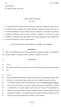 Senate Bill 347 By: Senator Bethel of the 54th A BILL TO BE ENTITLED AN ACT 1 2 3 4 5 6 To amend Title 33 of the Official Code of Georgia Annotated, relating to insurance, so as to provide for extensive
/ Insurance. Regional Highlights * Bosnia and Herzegovina. karanovic/nikolic. /March 2015/
 / Insurance Regional Highlights * /March 2015/ The insurance sector in South Eastern Europe has undergone considerable change in recent years, marked by Croatia s accession to the EU, amendments to legislation
Chapter Objectives. Chapter 13. Property and Liability Insurance. What is risk? How to manage pure risks? What are the fundamental insurance concepts?
 Chapter 13. Property and Liability Insurance Chapter Objectives To understand the foundations of insurance To learn the primary components of the homeowners and auto insurance packages To learn how to
DRAFT MOTOR TRAFFIC (THIRD- PARTY INSURANCE) (COST RECOVERY) (JERSEY) REGULATIONS
 STATES OF JERSEY r DRAFT MOTOR TRAFFIC (THIRD- PARTY INSURANCE) (COST RECOVERY) (JERSEY) REGULATIONS 201- Lodged au Greffe on 13th December 2012 by the Minister for Health and Social Services STATES GREFFE
Short Term Disability Income Protection Plan
 Short Term Disability Income Protection Plan Effective Date: January, 1, 2015 Contact Information Plan Administrator: Address and Telephone #: Prime Therapeutics, LLC 1305 Corporate Center Drive Eagan,
TEXAS NON-SUBSCRIBER OCCUPATIONAL ACCIDENT INSURANCE POLICY APPLICATION
 TEXAS NON-SUBSCRIBER OCCUPATIONAL ACCIDENT INSURANCE POLICY APPLICATION Application is hereby made for coverage (s), as specified per the signed attached quotation, to become effective on, at 12:01 AM
How To Get A Home Insurance Policy In Australia
 HOME CAR WITH OUR INSURANCE YOU CAN BE READY FOR JUST ABOUT ANYTHING. Accidents, break-ins and extreme weather can happen at any time. But with the right insurance, you can be ready for just about anything.
INSURANCE DICTIONARY
 INSURANCE DICTIONARY Actuary An actuary is a professional who uses statistical data to assess risk and calculate dividends, financial reserves, and insurance premiums for a business or insurer. Agent An
The Friendly Guide to Insurance in Israel
 The Friendly Guide to Insurance in Israel For Immigrants, Students, Tourists, Kollel Families and Vatikim! Egert & Cohen. Always by your side. Shalom and Welcome to Israel Egert & Cohen is a family insurance
Short Term Disability Income Protection Plan
 Short Term Disability Income Protection Plan Effective Date: January 1, 2011 Contact Information Plan Administrator: TIB - The Independent Bankers Bank Address and Telephone #: 350 Phelps Drive Irving,
MOTORCYCLE INSURANCE POLICY (SAMPLE)
 MOTORCYCLE INSURANCE POLICY (SAMPLE) SAMPLE COLONIAL MOTORCYCLE POLICY 1 COLONIAL MOTOR CYCLE COVER The Colonial Insurance Company Ltd. (hereinafter referred to as Colonial ) agrees to provide insurance
State of Rhode Island and Providence Plantations DEPARTMENT OF BUSINESS REGULATION Division of Insurance 1511 Pontiac Avenue Cranston, RI 02920
 Table of Contents State of Rhode Island and Providence Plantations DEPARTMENT OF BUSINESS REGULATION Division of Insurance 1511 Pontiac Avenue Cranston, RI 02920 INSURANCE REGULATION 21 MEDICAL MALPRACTICE
NEBRASKA PROPERTY AND LIABILITY INSURANCE GUARANTY ASSOCIATION ACT
 NEBRASKA PROPERTY AND LIABILITY INSURANCE GUARANTY ASSOCIATION ACT Section. 44-2401. Purpose of sections. 44-2402. Kinds of insurance covered. 44-2403. Terms, defined. 44-2404. Nebraska Property and Liability
Home Employment. Insurance. Keyfacts Document SPECIALIST INSURER. Ver003_002 06/14
 Home Employment Insurance Keyfacts Document SPECIALIST INSURER Ver003_002 06/14 Standard Plus Deluxe Section 1 Employers Liability Employers liabilty Section 2 Public Liability Public liability Medical
Refers to a decrease in value of an item over time.
 MOTORCYCLES 1. HELPFUL DEFINITIONS You/your/yourself/yours: Vehicle: Vehicle Accessories: Standard Vehicle Accessories: Non-Standard Vehicle Accessories: Depreciation: Betterment: Total Loss: Means you
Rule 3 on Amending Rule on Compulsory Third Party Liability Motor Vehicle Insurance
 Pursuant to the authority given under Section 17.b of Law on Central Bank of the Republic of Kosovo and Section 3.3 of the UNMIK Regulation No. 2001/25 dated 5 October 2001 on Licensing, Supervision and
MARYLAND CLAIM SETTLEMENT LAWS AND REGULATIONS
 MARYLAND CLAIM SETTLEMENT LAWS AND REGULATIONS LAWS: SUBTITLE 3. UNFAIR CLAIM SETTLEMENT PRACTICES 27-301. Intent and effect of subtitle. (a) Intent of subtitle.- The intent of this subtitle is to provide
BT Lifetime Super Employer Plan
 BT Lifetime Super Employer Plan Additional Information Booklet Part 3 Insurance Dated: 1 July 2015 Last updated: 1 July 2015 About this Additional Information Booklet This document is Part 3 of the Additional
Insurance Terms. COMMON TERMS... 3 About Best s Credit Ratings... 3 Agent... 3
 Insurance Terms To look up the definitions of commonly used insurance terms click on the term below to move to that section of the document. We hope that you find this information helpful. Our comprehensive
Residential Landlords Insurance. Policy Summary
 Residential Landlords Insurance Policy Summary Amlin Residential Landlords Insurance policy summary This insurance is designed to provide you with a wide range of standard cover in connection with the
CONSUMER S GUIDE TO AUTO INSURANCE
 CONSUMER S GUIDE TO AUTO INSURANCE The Colorado Division of Insurance prepares this booklet to assist you in shopping for auto insurance and to help you understand your Personal Auto Policy. When shopping
Staker Parson. Short Term Disability Income Protection Plan
 Staker Parson Short Term Disability Income Protection Plan Effective Date: 01/01/2006 Contact Information Plan Administrator: Address and Telephone #: Claims Administrator: Address and Telephone #: Staker
Business Package - Engineering & Contractors Insurance
 Business Package - Engineering & Contractors Insurance www.tawuniya.com.sa 03 04 04 05 05 05 10 10 10 Why Tawuniya? Business Package Engineering & Contractors Insurance Package Benefits & Advantages Beneficiaries
Glossary of Insurance Terms: (obtained from website: http://www.iii.org/individuals/glossary/alfa.l/)
 Glossary of Insurance Terms: (obtained from website: http://www.iii.org/individuals/glossary/alfa.l/) ACTUAL CASH VALUE A form of insurance that pays damages equal to the replacement value of damaged property
THE IMPORTANCE OF INSURING YOUR ASSETS
 THE IMPORTANCE OF INSURING YOUR ASSETS Presented By: Karen B. Buchanan Prepared by: Karen B. Buchanan What is an Asset: Valuable thing or person An Advantage or resource Valuable Item The Importance of
Busniess Package - Retail & Trading Insurance
 Busniess Package - Retail & Trading Insurance www.tawuniya.com.sa 03 04 04 05 05 05 10 10 10 Why Tawuniya? Business Package Retail & Trading Insurance Package Benefits & Advantages Beneficiaries Products
GROUP INCOME PROTECTION PROACTIVE PROTECTION PROVIDED BY METLIFE POLICY TERMS & CONDITIONS
 GROUP INCOME PROTECTION PROACTIVE PROTECTION PROVIDED BY METLIFE POLICY TERMS & CONDITIONS 1 CONTENTS 1. The policy 2 2. Definitions 3 3. Minimum requirements for the policy 7 4. Eligible employees and
Motor Accidents Compensation Amendment Act 2006 No 17
 New South Wales Motor Accidents Compensation Amendment Act 2006 No 17 Contents Page 1 Name of Act 2 2 Commencement 2 3 Amendment of Motor Accidents Compensation Act 1999 No 41 2 4 Consequential amendments
Guide to Commercial Insurance
 Guide to Commercial Insurance Introduction Operating a successful business today requires knowledge in many different areas, and one of the most important things to consider are the types and amounts of
plan, hereinafter referred to as the Plan, means the statutory, COMMISSIONER OF INSURANCE 82-33
 COMMISSIONER OF INSURANCE 82-33 Ins 3.35 Wisconsin health care liability insurance plan. (1) FINDINGS. (a) Legislation has been enacted authorizing the commissioner of insurance to promulgate a plan to
Certificate of Insurance Creditor Insurance for CIBC Mortgages Note
 Certificate of Insurance Creditor Insurance for CIBC Mortgages Page 1 of 14 Table of Contents Note: This is an important document. Please keep it in a safe place. Introduction...2 Your rights and responsibilities...
Rating Methodology by Sector. Life Insurance
 Last Updated: March 26, 2012 Rating Methodology by Sector Life Insurance *This rating methodology is a modification of the rating methodology made public on July 13, 2011, and modifications are made to
TITLE 18 INSURANCE DELAWARE ADMINISTRATIVE CODE 1. 900 Consumer Rights. 906 Use of Credit Information [Formerly Regulation 87]
![TITLE 18 INSURANCE DELAWARE ADMINISTRATIVE CODE 1. 900 Consumer Rights. 906 Use of Credit Information [Formerly Regulation 87]](/thumbs/29/13629214.jpg "TITLE 18 INSURANCE DELAWARE ADMINISTRATIVE CODE 1. 900 Consumer Rights. 906 Use of Credit Information [Formerly Regulation 87]") TITLE 18 INSURANCE DELAWARE ADMINISTRATIVE CODE 1 900 Consumer Rights 906 Use of Credit Information [Formerly Regulation 87] 1.0 Authority This regulation is adopted by the Commissioner pursuant to the
TITLE 18 INSURANCE DELAWARE ADMINISTRATIVE CODE 1 900 Consumer Rights 906 Use of Credit Information [Formerly Regulation 87] 1.0 Authority This regulation is adopted by the Commissioner pursuant to the
BT Business Super. Additional Information Booklet Part 3 Insurance. Dated: 1 July 2015 Last updated: 1 July 2015
 BT Business Super Additional Information Booklet Part 3 Insurance Dated: 1 July 2015 Last updated: 1 July 2015 About this Additional Information Booklet This document is Part 3 of the Additional Information
REGULATION ON MEASUREMENT AND ASSESSMENT OF CAPITAL REQUIREMENTS OF INSURANCE AND REINSURANCE COMPANIES AND PENSION COMPANIES
 REGULATION ON MEASUREMENT AND ASSESSMENT OF CAPITAL REQUIREMENTS OF INSURANCE AND REINSURANCE COMPANIES AND PENSION COMPANIES Official Gazette of Publication: 19.01.2008 26761 Issued By: Prime Ministry
Act on Insurance. The National Council of the Slovak Republic has adopted the following Act: SECTION I PART ONE GENERAL PROVISIONS
 Act on Insurance Full wording of Act No 8/2008 Coll. of 28 November 2007 on Insurance and on amendments and supplements to certain laws, as amended by Act No 270/2008 Coll., Act No 552/2008 Coll., Act
Guaranteed Whole of Life Cover. Peace of mind for the whole of your life
 Guaranteed Whole of Life Cover Peace of mind for the whole of your life Contents Protection Cover from Aviva Page 1 Guaranteed Whole of Life Cover Page 2 Your plan benefits Page 3 The premiums Page 6 Guaranteed
Automobile Insurance Guide
 Automobile Insurance Guide Page 1 Simply stated, automobile insurance is a contract between you and your insurance company that protects you against financial loss if you are in an accident. Auto policies
FULL ANALYSIS I. SUBSTANTIVE ANALYSIS
 HOUSE OF REPRESENTATIVES STAFF ANALYSIS BILL #: CS/CS/HB 659 Automobile Insurance SPONSOR(S): Regulatory Affairs Committee; Insurance & Banking Subcommittee; Santiago TIED BILLS: IDEN./SIM. BILLS: CS/CS/SB
Information. Canada s Life and Health Insurers. Canada s Financial Services Sector. Overview
 Information Canada s Life and Health Insurers Canada s Financial Services Sector September 2002 Overview Canada s life and health insurance industry comprises 120 firms, down from 163 companies in 1990,
General Insurance Definitions:
 General Insurance Definitions: Accidental Death Coverage Accidental death coverage is sometimes a part of your auto insurance policy's Personal Injury Protection (PIP) or may be offered as a separate Accidental
Ohio Legislative Service Commission
 Ohio Legislative Service Commission Bill Analysis Kelly Bomba H.B. 205 131st General Assembly () Reps. Henne and Retherford, Becker, Butler, Hambley, Hood, Terhar, Maag, Brenner, Romanchuk, Amstutz, Reineke
MODEL ACT REGARDING USE OF CREDIT INFORMATION IN PERSONAL INSURANCE
 MODEL ACT REGARDING USE OF CREDIT INFORMATION IN PERSONAL INSURANCE Adopted by the Property-Casualty Insurance and Executive Committees on November 22, 2002. Readopted by the Property-Casualty Insurance
AGREEMENT BETWEEN THE DELAWARE RIVER BASIN COMMISSION AND FOR
 AGREEMENT BETWEEN THE DELAWARE RIVER BASIN COMMISSION AND FOR AGREEMENT made this day of, 201_, pursuant to the provisions of the Delaware River Basin Compact, by and between the DELAWARE RIVER BASIN COMMISSION
MAIN CIVIL WORKS CONTRACT SCHEDULE 13 INSURANCE TABLE OF CONTENTS
 MAIN CIVIL WORKS CONTRACT SCHEDULE 13 INSURANCE TABLE OF CONTENTS 1 INTERPRETATION... 1 1.1 Definitions... 1 2 CONTRACTOR PROVIDED INSURANCE COVERAGE... 1 3 BC HYDRO PROVIDED INSURANCE COVERAGE... 2 4
Auto Insurance for New Mexico s Young Drivers
 Auto Insurance for New Mexico s Young Drivers Prepared for New Mexico s Young Drivers and Their Parents by: One of the major events in many people s lives is earning the privilege of driving a motor vehicle.
Rating Methodology by Sector. Non-life Insurance
 Last updated: March 26, 2012 Rating Methodology by Sector Non-life Insurance *This rating methodology is a modification of the rating methodology made public on July 13, 2011, and modifications are made
Chapter 1. Coverage available
 Part 2. Voluntary Automobile Insurance Standard policy conditions made by GIROJ are composed of five types of coverage, namely, third party liability, self-incurred personal accident, protection against
insurance Insurance Protecting what s important to you Inside... What insurance do you need? Types of insurance Buying insurance
 insurance Insurance Protecting what s important to you Inside... What insurance do you need? Types of insurance Buying insurance What insurance do you need? Insurance is a way to protect you (and your
Bugaboo International BV Spare Parts Web Shop Online Terms and Conditions of Sale
 Bugaboo International BV Spare Parts Web Shop Online Terms and Conditions of Sale This page (together with the documents referred to on it) outlines the terms and conditions on which we supply any of the
LAW ON COMPULSORY TRANSPORT INSURANCE
 Pursuant to Article 88 point 2 of the Constitution of the Republic of Montenegro I hereby pass the ENACTMENT PROCLAIMING THE LAW ON COMPULSORY TRANSPORT INSURANCE (Official Gazette of the Republic of Montenegro,
CONTRACTORS ALL RISKS INSURANCE POLICY
 CONTRACTORS ALL RISKS INSURANCE POLICY WHEREAS THE INSURED named in the Schedule hereto has made to Cumberland Insurance & Reinsurance Company Limited (hereinafter called "the Insurers") a written proposal
See page 2 for. a quick summary. Motor Insurance. Cars & Motorcycles Product Disclosure Statement and Policy Booklet (PDS)
 See page 2 for a quick summary. Motor Insurance Cars & Motorcycles Product Disclosure Statement and Policy Booklet (PDS) This Product Disclosure Statement and Policy Booklet (PDS) was prepared on 16 March
Rating Methodology by Sector. Non-life Insurance
 Last updated: July 1, 2013 Rating Methodology by Sector Non-life Insurance The following mainly applies to non-life insurance companies in Japan. When determining the credit rating of a non-life insurance
Measures on Administration of Health Insurance
 Measures on Administration of Health Insurance 健 康 保 险 管 理 办 法 No.8 [2006] Reviewed and adopted at the Chairmen Meeting of the China Insurance Regulatory Commission on June 12, 2006, Measures on Administration
ONYX BUSINESS AUTO POLICY COVERAGE
 ONYX BUSINESS AUTO POLICY COVERAGE Various provisions in this policy restrict overage Read the entire policy carefully to determine rights, duties and what is and is not covered. Throughout this policy
FOR PROPERTY LOSS AND DAMAGE 1
 13-20-801. Short title Colorado Revised Statutes Title 13; Article 20; Part 8: CONSTRUCTION DEFECT ACTIONS FOR PROPERTY LOSS AND DAMAGE 1 This part 8 shall be known and may be cited as the Construction
MARYLAND LAWS AND REGULATIONS ON INSURANCE PREMIUM
 MARYLAND LAWS AND REGULATIONS ON INSURANCE PREMIUM LAWS: 27-601. (a) In this subtitle the following words have the meanings indicated. (b) (1) Commercial insurance means property insurance or casualty
EMPLOYEE BENEFITS LIABILITY COVERAGE
 POLICY NUMBER: COMMERCIAL GENERAL LIABILITY CG 04 35 12 07 THIS ENDORSEMENT CHANGES THE POLICY. PLEASE READ IT CAREFULLY. EMPLOYEE BENEFITS LIABILITY COVERAGE THIS ENDORSEMENT PROVIDES CLAIMS-MADE COVERAGE.
COMMERCIAL AUTOMOBILE EXPANSION ENDORSEMENT
 THIS ENDORSEMENT CHANGES THE POLICY. PLEASE READ IT CAREFULLY. COMMERCIAL AUTOMOBILE EXPANSION ENDORSEMENT This endorsement modifies insurance provided under the BUSINESS AUTO COVERAGE FORM The following
APPENDIX 7 INSURANCE REQUIREMENTS 1. GENERAL INSURANCE REQUIREMENTS APPLIES TO ALL POLICIES
 APPENDIX 7 INSURANCE REQUIREMENTS 1. GENERAL INSURANCE REQUIREMENTS APPLIES TO ALL POLICIES The mortgage shall contain a covenant binding the mortgagor to maintain adequate liability, fire, and extended
Please review the policy conditions, its amounts and limits.
 Policy of Insurance for Private and Commercial Vehicles (Up to 3.5 tons) Richbit TRANSLATION In the case of any discrepancy between the text of this document and the original in Hebrew, the latter will
VAT Guidelines - Insurance Services in The Bahamas
 VAT Guidelines - Insurance Services in The Bahamas Document History: Version 3 Person Position Date Publication reference Prepared: Various Approved: John Rolle FS; Acting Comptroller 18 April 2015 Published:
Solvency Standard for Non-life Insurance Business in Run-off
 Solvency Standard for Non-life Insurance Business in Run-off Insurance Policy Prudential Supervision Department April 2012 (incorporates amendments to May 2012) 1. Introduction 1.1. Authority 1. This solvency
United Arab Emirates
 The United Arab Emirates is a federal state composed of seven emirates including Abu Dhabi and Dubai. The federation came into effect in 1971, but each emirate maintains a varying degree of control over
What is an insurance policy? Financial Risk: Insurance Questions and Answers. What is insurable interest? What is insurable interest?
 Financial Risk: Insurance Questions and Answers What is an insurance policy? A legally binding contract Insurance company and the policyholder (person insured) In exchange for payment (premium) The insurance