
ESCB definitions of major business continuity terms in relation to payment and securities settlement systems 1
|
|
|
- Cornelius Clarke
- 9 years ago
- Views:
Transcription
1 ESCB definitions of major business continuity terms in relation to payment and securities settlement systems 1 June 2007 The ESCB has developed a glossary of major business continuity terms for market infrastructures, providing consistent and commonly agreed definitions for some of the most frequently used terms in national and EU-wide standards. The aim of having such a glossary is twofold: (i) to allow the ESCB to use consistent definitions of terms in its own business continuity planning and procedures; and (ii) to enable market infrastructures and other interested parties, especially those with a cross-border presence, to take account of the generally accepted terms used by the central banking community in their own business continuity plans and procedures. Unless otherwise indicated on their individual websites, all 27 national central banks of the ESCB apply the definitions contained in this glossary. 2 However, this is not the case for other central banks or entities other than central banks. The definitions below have been agreed at the level of the ESCB and are based on the following sources: 1) Business continuity oversight expectations for systemically important payment systems (SIPS), ECB, June 2006; 2) ECB glossary of terms (developed and used for the ECB s business continuity management); 3) Glossary of General Business Continuity Management Terms, Business Continuity Institute (BCI), December 2002; 4) Business Continuity Glossary, Disaster Recovery Journal (DRJ) and Disaster Recovery Institute International (DRII); and 5) High-level principles for business continuity, Joint Forum, Basel Committee on Banking Supervision, August DISCLAIMER: These terms have been developed in relation to ESCB business continuity information-sharing for market infrastructures. 2 National definitions posted on the business continuity sections of the websites of individual nationalentral banksgreed ESCB definitions.uch cases, the individual national central banks should explain the rationale for such differences on their own websites

2 General terms business contingency business continuity business continuity management (BCM) business continuity management team business continuity plan business continuity strategy crisis management Testing simulation exercise test walkthrough Technical and organisational backup procedures, as part of a business continuity process, aimed at providing limited services (e.g. for particularly critical payment transactions such as CLS payments) during the outage period (usually by means of alternative or additional measures or procedures). A state of uninterrupted business operations. This term also refers to all of the organisational, technical and staffing measures employed in order to: (i) ensure the continuation of core business activities in the immediate aftermath of a crisis; and (ii) gradually ensure the continued operation of all business activities in the event of sustained and severe disruption. A holistic management process that identifies potential risks to an organisation and provides a framework for establishing resilience in order to ensure that the organisation is able to respond effectively in the event of a crisis and safeguard its reputation, brand and value-creating activities and the interests of key stakeholders. A group of people with defined roles and responsibilities as regards the implementation of the business continuity plan. A clearly defined and documented plan for use in the event of a business continuity emergency, disaster or crisis. Also referred to as a disaster recovery plan (DRP). A strategy adopted by an organisation in order to ensure its recovery and continuity in the event of a disaster or other major outage. Plans and methodologies are determined by this strategy. There may be more than one means of carrying out an organisation s strategy (e.g. an internal or external hot or cold site, an alternative work area, a reciprocal agreement, mobile recovery, quick/drop shipping or consortium-based solutions). The process by which an organisation manages the wider impact of a business continuity emergency, disaster or crisis by seeking to control or contain the situation without affecting the organisation or, where this proves not to be possible, implementing its business continuity plan. The execution of a business continuity plan in a specific simulated scenario with the intention of testing the effectiveness of the plan and the preparedness of the organisation and/or highlighting areas where the plan requires further development. This activity is performed with the aim of training team members, improving their performance and evaluating the business continuity plan.types of exercise include: tabletop exercises, simulation exercises, operational exercises, mock disasters, desktop exercises and full rehearsals. The carrying out of one or more parts of a business continuity plan in order to ensure that the plan contains the appropriate information and produces the desired result. A test differs from an exercise in that a test occurs at a real site, whereas an exercise is generally a simulation. A walkthrough is a thought experiment that seeks to discover the likely outcome(s) of an event on the basis of starting conditions, surrounding conditions and the effects of decisions. In the context of business continuity, a walkthrough seeks: (i) to ensure that business continuity plans are fit for purpose; (ii) to assess a team s - 2 -

3 Recovery and resumption recovery recovery point objective recovery time objective (RTO) resumption Sites load-sharing data centres secondary site information exchange and decision-making; and (iii) to identify any gaps. The restarting of specific business operations following a disruption, with such operations reaching a level sufficient to meet outstanding business obligations. The point in time to which work should be restored (e.g. the start of the day) following a business continuity emergency, disaster or crisis that interrupts or disrupts business operations. The period of time within which systems, applications or functions should be restarted following an outage (e.g. one business day). RTOs are often used as a basis for the development of recovery strategies and a means of determining whether or not to implement specific recovery strategies in a disaster situation. The process of planning for and/or implementing the restarting of defined business functions and operations following a disaster. Two (or more) data centres running IT tasks on an equal basis. Both are productive in normal situations and they carry out the same amount of work. Both data centres are designed with sufficient capacity margins to be able to take on the complete workload of the other data centre should it fail. A location other than the primary site which can be used for the resumption of business operations and other functions in the event of a disaster, a major system or infrastructure malfunction or an inability to access the primary site. A secondary site can be used: in the narrower sense for the replication of programs and data in order to safeguard data integrity, with the replicated data being stored externally to ensure the resumption of business operations following the destruction or loss of data; or in the broader sense for the maintenance of a comprehensive alternative system (i.e. a fallback system comprising hardware, software and data) to cater for the possibility of the production system not being available. In the event that the fallback system is located in the vicinity of the production system and a third system in another location is reserved for emergencies and disasters, the latter is referred to as the disaster system. A secondary site can be cold or hot. Cold site: An alternative facility that already has in place the basic infrastructure required to recover critical business functions or information systems, but does not have any preinstalled computer hardware, telecommunications equipment, communication lines, etc. These must therefore be installed at the time of the disaster. Hot site: An alternative facility that is already equipped with the computer, telecommunications and environmental infrastructure required to allow critical business functions to continue with minimal delay in the event of a disaster. Also referred to as an alternative site, a backup site or a load-sharing data centre

4 Events crisis disaster disruption emergency fallback outage Critical functions business impact analysis (BIA) core business activities critical functions single point of failure An event that threatens the operations, staff, shareholder value, stakeholders, brand, reputation, trust and/or strategic/business goals of an organisation. Any unplanned interruption to one or more mission-critical business functions for an unacceptable period of time. A disaster can be large-scale/major, regional or local. Large-scale/major disaster: An event affecting a large metropolitan or geographical area that causes wide-scale disruption to the normal business operations of financial industry participants and other commercial entities. This may lead to areas within a given radius of the location of the event being evacuated or becoming inaccessible. Regional disaster: A disaster affecting a whole region with the same risk profile. Local disaster: A disaster the direct adverse effects of which are limited to a geographical area with a maximum radius of a few kilometres. A breakdown in the continuity or functions of a system or organisation which prevents it from completing its tasks. Large-scale/major operational disruption (MOD): High-impact disruption to normal business operations affecting a large metropolitan or geographical area and the adjacent communities economically linked with it. In addition to impeding the normal operations of financial industry participants and other commercial organisations, major operational disruptions typically affect physical infrastructure. This kind of incident requires the implementation of the business continuity plans of more than one organisation. An actual or impending situation that may cause injury, the loss of life or the destruction of property or may interfere with or disrupt an organisation s normal business operations to such an extent that it poses a threat. Workaround procedures to be used in the event that normal business procedures cannot be conducted because supporting systems are not available. Period of time after disruption that a service, system, process or business function is expected to be unusable or inaccessible. A structured procedure measuring the financial and operational consequences of disruption over time. Business processes on which an organisation depends for the achievement of its goals. The unavailability of such processes, even in the short term, would seriously threaten the existence of the organisation or (in the case of public authorities) fundamentally jeopardise the execution of sovereign functions and endanger the stability of the financial system. Business activities or information that could not be interrupted or remain unavailable for several business days without incurring significant financial losses, damaging the reputation of the organisation or significantly jeopardising its operations. A situation in which a service, activity or process is provided by one single source, the failure of which would lead to the total failure of a critical function

5 Critical entities critical (infrastructure) participant critical (market) infrastructure critical provider of services and utilities An entity identified by the system or infrastructure as posing a threat in that there would be a significant risk of major disruption to the system or financial infrastructure were that entity unable to perform its normal operations. Also known as a major participant, relevant participant, core participant, systemically important participant or major player. Any of the entities listed below: systemically important payment systems; securities settlement systems; central counterparties; and other critical infrastructure related to payment and settlement systems in accordance with national definitions. A provider of services, goods and solutions that is critical in that there would be a significant risk of major disruption to systems or infrastructure were that provider unable to perform its normal activities

CENTRAL BANK OF KENYA (CBK) PRUDENTIAL GUIDELINE ON BUSINESS CONTINUITY MANAGEMENT (BCM) FOR INSTITUTIONS LICENSED UNDER THE BANKING ACT
 CENTRAL BANK OF KENYA (CBK) PRUDENTIAL GUIDELINE ON BUSINESS CONTINUITY MANAGEMENT (BCM) FOR INSTITUTIONS LICENSED UNDER THE BANKING ACT JANUARY 2008 GUIDELINE ON BUSINESS CONTINUITY GUIDELINE CBK/PG/14
BCP and DR. P K Patel AGM, MoF
 BCP and DR P K Patel AGM, MoF Key difference between BS 25999 and ISO 22301 ISO 22301 puts a much greater emphasis on setting the objectives, monitoring performance and metrics aligning BC to top management
BUSINESS CONTINUITY MANAGEMENT GUIDELINES FOR BANKS AND FINANCIAL INSTITUTIONS
 BUSINESS CONTINUITY MANAGEMENT GUIDELINES FOR BANKS AND FINANCIAL INSTITUTIONS DIRECTORATE OF BANKING SUPERVISION AUGUST 2009 TABLE OF CONTENTS PAGE 1.0 INTRODUCTION..3 1.1 Background...3 1.2 Citation...3
Business Continuity Glossary
 Developed In Conjuction with Business Continuity Glossary ACTIVATION: The implementation of business continuity capabilities, procedures, activities, and plans in response to an emergency or disaster declaration;
BUSINESS CONTINUITY OVERSIGHT EXPECTATIONS FOR SYSTEMICALLY IMPORTANT PAYMENT SYSTEMS (SIPS)
 BUSINESS CONTINUITY OVERSIGHT EXPECTATIONS FOR SYSTEMICALLY IMPORTANT PAYMENT SYSTEMS (SIPS) TABLE OF CONTENTS EXECUTIVE SUMMARY 1 INTRODUCTION 2 EVOLUTION OF CORE PRINCIPLE VII 2 IMPLEMENTATION 4 1 FORMULATION
NHS 24 - Business Continuity Strategy
 NHS 24 - Strategy Version: 0.3 Issue Date: 20/09/2005 Status: Issued for Board Approval Status: draft Page 1 of 13 Table of Contents 1 INTRODUCTION...3 2 PURPOSE...3 3 SCOPE...3 4 ASSUMPTIONS...4 5 BUSINESS
PAPER-6 PART-1 OF 5 CA A.RAFEQ, FCA
 1 Chapter-4: Business Continuity Planning and Disaster Recovery Planning PAPER-6 PART-1 OF 5 CA A.RAFEQ, FCA Learning Objectives 2 To understand the concept of Business Continuity Management To understand
Disaster Recovery Planning Process
 Disaster Recovery Planning Process By Geoffrey H. Wold Part I of III This is the first of a three-part series that describes the planning process related to disaster recovery. Based on the various considerations
What is Business Continuity Planning (BCP) / Disaster Recovery Plan(DRP)?
 Workshop on System Audit of Banks BCP Workshop on System Audit of Banks What is Business Continuity Planning (BCP) / Disaster Recovery Plan(DRP)? - Preparedness of an organisation to ensure continuity,
Disaster Management and Business Continuity Plan for Bankers
 Introduction Business interruptions can occur anywhere, anytime. Massive hurricanes, tsunamis, power outages, terrorist bombings and more have made recent headlines. It is impossible to predict what may
Temple university. Auditing a business continuity management BCM. November, 2015
 Temple university Auditing a business continuity management BCM November, 2015 Auditing BCM Agenda 1. Introduction 2. Definitions 3. Standards 4. BCM key elements IT Governance class - IT audit program
Shankar Gawade VP IT INFRASTRUCTURE ENAM SECURITIES PVT. LTD.
 Business Continuity Management & Disaster Recovery Planning Presented by: Shankar Gawade VP IT INFRASTRUCTURE ENAM SECURITIES PVT. LTD. 1 What is Business Continuity Management? Is a holistic management
Statement of Guidance
 Statement of Guidance Business Continuity Management All Licensees 1. Statement of Objectives 1.1. To enhance the resilience of the financial sector and to minimise the potential impact of a major operational
MHA Consulting. Business Continuity Management 101
 0 MHA Consulting Business Continuity Management 101 Presented by: Michael Herrera Brandon Magestro MHA Consulting Agenda MHA Consulting Introduction Business Continuity Management (BCM) Defined 2013 Trends
Application / Hardware - Business Impact Analysis Template. MARC Configuration Requirements. Business Impact Analysis
 Application / Hardware - Business Impact Analysis Template The single most important thing we can do is help you understand the criticality of each application, supporting hardware/server/pc and the required
Success or Failure? Your Keys to Business Continuity Planning. An Ingenuity Whitepaper
 Success or Failure? Your Keys to Business Continuity Planning An Ingenuity Whitepaper May 2006 Overview With the level of uncertainty in our world regarding events that can disrupt the operation of an
Company Management System. Business Continuity in SIA
 Company Management System Business Continuity in SIA Document code: Classification: Company Project/Service Year Document No. Version Public INDEX 1. INTRODUCTION... 3 2. SIA S BUSINESS CONTINUITY MANAGEMENT
Guideline on Business Continuity Management
 Circular No. 033/B/2009-DSB/AMCM (Date: 14/8/2009) Guideline on Business Continuity Management The Monetary Authority of Macao (AMCM), under the powers conferred by Article 9 of the Charter approved by
Leveraging the IT Service Continuity Management framework Gord Novoselnik Business Continuity Office Enterprise Solutions Division
 Leveraging the IT Service Continuity Management framework Gord Novoselnik Business Continuity Office Enterprise Solutions Division 1 MTS Allstream Inc. proprietary. Use pursuant to company instructions./
Monetary Authority of Singapore BUSINESS CONTINUITY MANAGEMENT GUIDELINES
 Monetary Authority of Singapore BUSINESS CONTINUITY MANAGEMENT GUIDELINES June 2003 TABLE OF CONTENTS 1.0 INTRODUCTION... 1 1.1 READINESS IS YOUR ONLY PROTECTION... 1 1.2 APPLICATION OF THE GUIDELINES...
How To Manage A Disruption Event
 BUSINESS CONTINUITY FRAMEWORK DOCUMENT INFORMATION DOCUMENT TYPE: DOCUMENT STATUS: POLICY OWNER POSITION: INTERNAL COMMITTEE ENDORSEMENT: APPROVED BY: Strategic document Approved Manager Organisational
HB 292 2006 A Practitioners Guide to Business Continuity Management
 HB 292 2006 A Practitioners Guide to Business Continuity Management HB HB 292 2006 Handbook A practitioners guide to business continuity management First published as HB 292 2006. COPYRIGHT Standards Australia
Proposal for Business Continuity Plan and Management Review 6 August 2008
 Proposal for Business Continuity Plan and Management Review 6 August 2008 2008/8/6 Contents About Newton IT / Quality of our services. BCM & BS25999 Overview 2. BCM Development in line with BS25999 3.
Business Continuity Planning and Disaster Recovery Planning
 4 Business Continuity Planning and Disaster Recovery Planning Basic Concepts 1. Business Continuity Management: Business Continuity means maintaining the uninterrupted availability of all key business
Supervisory Policy Manual
 This module should be read in conjunction with the Introduction and with the Glossary, which contains an explanation of abbreviations and other terms used in this Manual. If reading on-line, click on blue
Federal Financial Institutions Examination Council FFIEC BCP. Business Continuity Planning FEBRUARY 2015 IT EXAMINATION H ANDBOOK
 Federal Financial Institutions Examination Council FFIEC Business Continuity Planning BCP FEBRUARY 2015 IT EXAMINATION H ANDBOOK Table of Contents Introduction 1 Board and Senior Management Responsibilities
Federal Financial Institutions Examination Council FFIEC. Business Continuity Planning BCP MARCH 2003 MARCH 2008 IT EXAMINATION
 Federal Financial Institutions Examination Council FFIEC Business Continuity Planning MARCH 2003 MARCH 2008 BCP IT EXAMINATION H ANDBOOK TABLE OF CONTENTS INTRODUCTION... 1 BOARD AND SENIOR MANAGEMENT
IT Disaster Recovery Plan Template
 HOPONE INTERNET CORP IT Disaster Recovery Plan Template Compliments of: Tim Sexton 1/1/2015 An information technology (IT) disaster recovery (DR) plan provides a structured approach for responding to unplanned
DISASTER RECOVERY PLANNING FOR CITY COMPUTER FACILITIES
 APPENDIX 1 DISASTER RECOVERY PLANNING FOR CITY COMPUTER FACILITIES March 2008 Auditor General s Office Jeffrey Griffiths, C.A., C.F.E. Auditor General City of Toronto TABLE OF CONTENTS EXECUTIVE SUMMARY...1
Introduction UNDERSTANDING BUSINESS CONTINUITY MANAGEMENT
 INFORMATION SECURITY: UNDERSTANDING BUSINESS CONTINUITY MANAGEMENT FACTSHEET This factsheet will introduce you to Business Continuity Management (BCM), which is a process developed to counteract systems
(Mr. Krirk Vanikkul) Assistant Governor, Financial Institutions Policy Group Governor For
 Unofficial Translation by the courtesy of The Foreign Banks' Association This translation is for the convenience of those unfamiliar with the Thai language. Please refer to the Thai text for the official
By. Mr. Chomnaphas Tangsook Business Director BSI Group ( Thailand) Co., Ltd
 BS 25999 Business Continuity Management By. Mr. Chomnaphas Tangsook Business Director BSI Group ( Thailand) Co., Ltd 1 Contents slide BSI British Standards 2006 BS 25999(Business Continuity) 2002 BS 15000
Emergency Response and Business Continuity Management Policy
 Emergency Response and Business Continuity Management Policy Owner: John Duffy, Registrar & Secretary Last updated: September 2012 Version: 04 Document control Date Version Author Changes To be populated
Consultative report. Committee on Payment and Settlement Systems. Board of the International Organization of Securities Commissions
 Committee on Payment and Settlement Systems Board of the International Organization of Securities Commissions Consultative report Principles for financial market infrastructures: Assessment methodology
Disaster Recovery. Hendry Taylor Tayori Limited
 Disaster Recovery Hendry Taylor Tayori Limited Agenda What is Business Continuity planning (BCP) What is Disaster Recovery (DR) and Disaster Recovery Planning (DRP) Overview Lifecycle Analysis Plan design
Tips and techniques a typical audit programme
 Auditing Business Continuity Planning Tips and techniques a typical audit programme Karen Wills, Senior Internal Auditor St James s Place Wealth Management February 2014 Contents Background Roles and Responsibilities
How To Assess A Critical Service Provider
 Committee on Payments and Market Infrastructures Board of the International Organization of Securities Commissions Principles for financial market infrastructures: Assessment methodology for the oversight
BSO Board Director of Human Resources & Corporate Services Business Continuity Policy. 28 February 2012
 To: From: Subject: Status: Date of Meeting: BSO Board Director of Human Resources & Corporate Services Business Continuity Policy For Approval 28 February 2012 The Board is asked to agree the attached
BUSINESS CONTINUITY MANAGEMENT FRAMEWORK
 BUSINESS CONTINUITY MANAGEMENT FRAMEWORK Document Author: Civil Contingencies Service - Authorised by the CCS Joint Management Board - Version 1.0. Issued December 2012 Page 1 FRAMEWORK STATEMENT Business
Prudential Practice Guide
 Prudential Practice Guide LPG 232 Business Continuity Management March 2007 www.apra.gov.au Australian Prudential Regulation Authority Disclaimer and copyright This prudential practice guide is not legal
Business Continuity and Risk Management. Ken Kaberia Principal BCM Officer, Enterprise Risk Safaricom Limited
 Business Continuity and Risk Management Ken Kaberia Principal BCM Officer, Enterprise Risk Safaricom Limited What does Business Continuity mean? Business Continuity Management- Definition Business Continuity
Q uick Guide to Disaster Recovery Planning An ITtoolkit.com White Paper
 This quick reference guide provides an introductory overview of the key principles and issues involved in IT related disaster recovery planning, including needs evaluation, goals, objectives and related
Finding the areas for improvement in plans, processes and procedures to protect shareholder value Performance driven. Quality assured.
 End-to-End Business Continuity Testing Finding the areas for improvement in plans, processes and procedures to protect shareholder value Performance driven. Quality assured. End-to-End Business Continuity
Disaster Recovery Plan Documentation for Agencies Instructions
 California Office of Information Security Disaster Recovery Plan Documentation for Agencies Instructions () November 2009 SCOPE AND PURPOSE The requirements included in this document are applicable to
SUPERVISORY AND REGULATORY GUIDELINES: PU19-0406 BUSINESS CONTINUITY GUIDELINES
 SUPERVISORY AND REGULATORY GUIDELINES: PU19-0406 Business Continuity Issued: 1 st May, 2007 Revised: 14 th October 2008 BUSINESS CONTINUITY GUIDELINES I. INTRODUCTION The Central Bank of The Bahamas (
Business Continuity Management. Christoph Stute Guatemala 28 29 March 2012
 Financial Risk Management and Business Continuity Management Christoph Stute Guatemala 28 29 March 2012 Financial Risk Management Christoph Stute Guatemala 28 29 March 2012 Risk Management in Banks Regulatory
Interactive-Network Disaster Recovery
 Interactive-Network Disaster Recovery BACKGROUND IT systems are vulnerable to a variety of disruptions, ranging from mild (e.g., short-term power outage, disk drive failure) to severe (e.g., terrorism,
November 2007 Recommendations for Business Continuity Management (BCM)
 November 2007 Recommendations for Business Continuity Management (BCM) Recommendations for Business Continuity Management (BCM) Contents 1. Background and objectives...2 2. Link with the BCP Swiss Financial
Chapter I: Fundamentals of Business Continuity Management
 Chapter I: Fundamentals of Business Continuity Management Objectives Define Business Continuity Management (BCM) Define the relationship between BCM and risk management Review BCM responsibilities Identify
Business Continuity Planning. A guide to loss prevention
 Business Continuity Planning A guide to loss prevention There are many statistics quoted about the effect that a lack of planning for a disaster has on a business. What s certain is that any unplanned
Principles for BCM requirements for the Dutch financial sector and its providers.
 Principles for BCM requirements for the Dutch financial sector and its providers. Platform Business Continuity Vitale Infrastructuur Financiële sector (BC VIF) Werkgroep BCM requirements 21 September 2011
Technology Recovery Plan Instructions
 State of California California Information Security Office Technology Recovery Plan Instructions SIMM 5325-A (Formerly SIMM 65A) September 2013 REVISION HISTORY REVISION DATE OF RELEASE OWNER SUMMARY OF
External Supplier Control Requirements BCM
 External Supplier Control Requirements BCM BCM Requirement Description BCM Tiers Recovery Time Objective Why this is important 1. Business Continuity Policy Supplier will have a documented Business Continuity
CITY UNIVERSITY OF HONG KONG Business Continuity Management Standard
 PUBLIC Version: 1.0 CITY UNIVERSITY OF HONG KONG Business Continuity Management Standard (Approved by the Information Strategy and Governance Committee in December 2013; revision 1.1 approved by Chief
DRAFT BUSINESS CONTINUITY MANAGEMENT POLICY
 DRAFT BUSINESS CONTINUITY MANAGEMENT POLICY This document outlines a set of policies and procedures for formalising a Business Continuity programme, and provides guidelines for developing, maintaining
ASX SETTLEMENT OPERATING RULES Guidance Note 10
 BUSINESS CONTINUITY AND DISASTER RECOVERY The purpose of this Guidance Note The main points it covers To assist participants to understand the disaster recovery and business continuity arrangements they
<Client Name> IT Disaster Recovery Plan Template. By Paul Kirvan, CISA, CISSP, FBCI, CBCP
 IT Disaster Recovery Plan Template By Paul Kirvan, CISA, CISSP, FBCI, CBCP Revision History REVISION DATE NAME DESCRIPTION Original 1.0 2 Table of Contents Information Technology Statement
Advisory Guidelines of the Financial Supervision Authority. Requirements for Organising the Business Continuity Process of Supervised Entities
 Advisory Guidelines of the Financial Supervision Authority Requirements for Organising the Business Continuity Process of Supervised Entities These advisory guidelines were established by Resolution No
SAMPLE IT CONTINGENCY PLAN FORMAT
 SAMPLE IT CONTINGENCY PLAN FORMAT This sample format provides a template for preparing an information technology (IT) contingency plan. The template is intended to be used as a guide, and the Contingency
CISM Certified Information Security Manager
 CISM Certified Information Security Manager Firebrand Custom Designed Courseware Chapter 4 Information Security Incident Management Exam Relevance Ensure that the CISM candidate Establish an effective
Prudential Practice Guide
 Prudential Practice Guide SPG 232 Business Continuity Management July 2013 www.apra.gov.au Australian Prudential Regulation Authority Disclaimer and copyright This prudential practice guide is not legal
Business Continuity Management
 Business Continuity Management Version 1 approved by SMG December 2013 Business Continuity Policy Version 1 1 of 9 Business Continuity Management Summary description: This document provides the rationale
PPSADOPTED: OCT. 2012 BACKGROUND POLICY STATEMENT PHYSICAL FACILITIES. PROFESSIONAL PRACTICE STATEMENT Developing a Business Continuity Plan
 PROFESSIONAL PRACTICE STATEMENT Developing a Business Continuity Plan OCT. 2012 PPSADOPTED: What is a professional practice statement? Professional Practice developed by the Association Forum of Chicagoland
Business Continuity and Disaster Recovery Planning
 Business Continuity and Disaster Recovery Planning Jennifer Brandt, CISA A p r i l 16, 2015 HISTORY OF STINNETT & ASSOCIATES Stinnett & Associates (Stinnett) is a professional advisory firm offering services
www.td.com.au Business Continuity - IT Disaster Recovery Discussion Paper - - Commercial in Confidence Version V2.0R Wednesday, 5 September 2012
 Business Continuity - IT Disaster Recovery Discussion Paper - - Version V2.0R Wednesday, 5 September 2012 Commercial in Confidence Melbourne Sydney 79-81 Coppin St Level 2 Richmond VIC 3121 414 Kent St
Business Continuity Plan
 Business Continuity Plan October 2007 Agenda Business continuity plan definition Evolution of the business continuity plan Business continuity plan life cycle FFIEC & Business continuity plan Questions
State of South Carolina Policy Guidance and Training
 State of South Carolina Policy Guidance and Training Policy Workshop All Agencies Business Continuity Management Policy June 2014 Agenda Questions & Follow-Up Policy Workshop Overview & Timeline Policy
Business Continuity Glossary by DRJ
 Business Continuity Glossary by DRJ Published on Written by DRJ Updated: Term Definition ABCP Alert Alternate Site Alternate Work Area Annual Loss Exposure/Expectancy (ALE) Associate Business Continuity
High-level principles for business continuity
 THE JOINT FORUM BASEL COMMITTEE ON BANKING SUPERVISION INTERNATIONAL ORGANIZATION OF SECURITIES COMMISSIONS INTERNATIONAL ASSOCIATION OF INSURANCE SUPERVISORS High-level principles for business continuity
Information Security Management: Business Continuity Planning. Presentation by Stanislav Nurilov March 9th, 2005 CS 996: Info. Sec. Mgmt.
 Information Security Management: Business Continuity Planning Presentation by Stanislav Nurilov March 9th, 2005 CS 996: Info. Sec. Mgmt. Overview BCP: Definition BCP: Need for (Why?) BCP: When BCP: Who
Flinders University IT Disaster Recovery Framework
 Flinders University IT Disaster Recovery Framework Establishment: Flinders University, 1 August 2013 Last Amended: Manager, ITS Security Services, 4 October 2013 Nature of Amendment: Initial release Date
The PNC Financial Services Group, Inc. Business Continuity Program
 The PNC Financial Services Group, Inc. Business Continuity Program subsidiaries) 1 Content Overview A. Introduction Page 3 B. Governance Model Page 4 C. Program Components Page 4 Business Impact Analysis
Ohio Conference for Payroll Professionals Disaster Recovery
 Ohio Conference for Payroll Professionals Disaster Recovery Speaker Bruce E. Phipps CPP 2011 APA Payroll Man of the Year Principal Product Manager US Legislative Analyst ORACLE Corporation [email protected]
Information Services IT Security Policies B. Business continuity management and planning
 Information Services IT Security Policies B. Business continuity management and planning Version 1 Date created: 28th May 2009 Approved by Directorate: 2nd July 2009 Review date: 1st July 2010 Primary
Coping with a major business disruption. Some practical advice
 Coping with a major business disruption Some practical advice Coping with a major business disruption What is business continuity? Business continuity planning (BCP) is a management process that helps
Business Continuity Management Governance. Frank Higgins Abu Dhabi March 2015
 Business Continuity Management Governance Frank Higgins Abu Dhabi March 2015 Different Names Same Concept BCM (Business Continuity Management) BSI 25999 IPOCM (Incident Preparedness & Operational Continuity
ASX CLEAR (FUTURES) OPERATING RULES Guidance Note 10
 BUSINESS CONTINUITY AND DISASTER RECOVERY The purpose of this Guidance Note The main points it covers To assist participants to understand the disaster recovery and business continuity arrangements they
GUIDELINES FOR BUSINESS CONTINUITY IN WHOLESALE MARKETS AND SUPPORT SYSTEMS MARKET SUPERVISION OFFICE. October 2004
 GUIDELINES FOR BUSINESS CONTINUITY IN WHOLESALE MARKETS AND SUPPORT SYSTEMS MARKET SUPERVISION OFFICE October 2004 1 1. Introduction Guaranteeing the efficiency and correct operation of money and financial
Federal Financial Institutions Examination Council FFIEC BCP. Business Continuity Planning MARCH 2003 IT EXAMINATION H ANDBOOK
 Federal Financial Institutions Examination Council FFIEC Business Continuity Planning MARCH 2003 BCP IT EXAMINATION H ANDBOOK TABLE OF CONTENTS INTRODUCTION... 1 BOARD AND SENIOR MANAGEMENT RESPONSIBILITIES...
Ohio Supercomputer Center
 Ohio Supercomputer Center IT Business Continuity Planning No: Effective: OSC-13 06/02/2009 Issued By: Kevin Wohlever Director of Supercomputer Operations Published By: Ohio Supercomputer Center Original
www.pwc.com Business Resiliency Business Continuity Management - January 14, 2014
 www.pwc.com Business Resiliency Business Continuity Management - January 14, 2014 Agenda Key Definitions Risks Business Continuity Management Program BCM Capability Assessment Process BCM Value Proposition
Post-Class Quiz: Business Continuity & Disaster Recovery Planning Domain
 1. What is the most common planned performance duration for a continuity of operations plan (COOP)? A. 30 days B. 60 days C. 90 days D. It depends on the severity of a disaster. 2. What is the business
BUSINESS CONTINUITY PLAN
 How to Develop a BUSINESS CONTINUITY PLAN To print to A4, print at 75%. TABLE OF CONTENTS SUMMARY SUMMARY WHAT IS A BUSINESS CONTINUITY PLAN? CHAPTER PREPARING TO WRITE YOUR BUSINESS CONTINUITY PLAN CHAPTER
Business Continuity Management
 Business Continuity Management Policy Statement & Strategy July 2009 Basildon District Council Business Continuity Management Policy Statement The Council is committed to ensuring robust and effective
How to Design and Implement a Successful Disaster Recovery Plan
 How to Design and Implement a Successful Disaster Recovery Plan Feb. 21 ASA Office-Administrative Section is Sponsored by Today s ASAPro Webinar is Brought to You by the How to Ask a Question Questions
The Weill Cornell Medical College and Graduate School of Medical Sciences. Responsible Department: Information Technologies and Services (ITS)
 Information Technology Disaster Recovery Policy Policy Statement This policy defines acceptable methods for disaster recovery planning, preparedness, management and mitigation of IT systems and services
NORTH HAMPSHIRE CLINICAL COMMISSIONING GROUP BUSINESS CONTINUITY MANAGEMENT POLICY AND PLAN (COR/017/V1.00)
 NORTH HAMPSHIRE CLINICAL COMMISSIONING GROUP BUSINESS CONTINUITY MANAGEMENT POLICY AND PLAN (COR/017/V1.00) Subject and version number of document: Serial Number: Business Continuity Management Policy
Business Continuity Business Continuity Management Policy
 Business Continuity Business Continuity Management Policy : Date of Issue: 28 January 2009 Version no: 1.1 Review Date: January 2010 Document Owner: Patricia Hughes Document Authoriser: Tony Curtis 1 Version
NEEDS BASED PLANNING FOR IT DISASTER RECOVERY
 The Define/Align/Approve Reference Series NEEDS BASED PLANNING FOR IT DISASTER RECOVERY Disaster recovery planning is essential it s also expensive. That s why every step taken and dollar spent must be
Why Should Companies Take a Closer Look at Business Continuity Planning?
 whitepaper Why Should Companies Take a Closer Look at Business Continuity Planning? How Datalink s business continuity and disaster recovery solutions can help organizations lessen the impact of disasters
Business continuity management (BCM) for insurance companies in Switzerland minimum standards and recommendations
 Business continuity management (BCM) for insurance companies in Switzerland minimum standards and recommendations June 2015 2 Publication details Recipients: All insurance companies supervised by Finma
Guidance Note XGN XXX.1
 Guidance Note XGN XXX.1 Risk Assessment and Business Continuity Planning 1. This Guidance Note provides further detail on matters institutions should consider in assessing disruption scenarios and certain
Basel Committee on Banking Supervision. The Joint Forum. High-level principles for business continuity. Consultative document
 Basel Committee on Banking Supervision The Joint Forum High-level principles for business continuity Consultative document December 2005 Requests for copies of publications, or for additions/changes to
I.T. Disaster Recovery Plan
 I.T. Disaster Recovery Plan Ref 000xxxxQ January, 2015 5, 443 Albany Hwy Victoria Park, WA, 6100 p. 1300 664 136 [email protected] www.focusnetworks.com.au I.T. Disaster Recovery Plan - January
Domain 3 Business Continuity and Disaster Recovery Planning
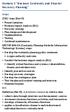 Domain 3 Business Continuity and Disaster Recovery Planning Steps (ISC) 2 steps [Har10] Project initiation Business Impact Analysis (BIA) Recovery strategy Plan design and development Implementation Testing