
Acne Treatment With a 1,450 nm Wavelength Laser and Cryogen Spray Cooling
|
|
|
- Gabriel Nicholson
- 10 years ago
- Views:
Transcription
1 Lasers in Surgery and Medicine 31: (2002) Acne Treatment With a 1,450 nm Wavelength Laser and Cryogen Spray Cooling Dilip Y. Paithankar, PhD, 1 * E. Victor Ross, MD, 2 Bilal A. Saleh, MEng, 1 Mark A. Blair, MD, 2 and Bradley S. Graham, MD 2 1 Candela Corporation, 530 Boston Post Road, Wayland, Massachusetts 2 Naval Medical Center, San Diego, Bob Wilson Drive, San Diego, California Background and Objectives: A laser with a wavelength in the mid-ir range targeting the depth in skin where sebaceous glands are located in combination with cryogen spray cooling was evaluated for treatment of acne. In this non-ablative treatment, the laser energy heats the dermal volume encompassing sebaceous glands whereas the cold cryogen spray preserves the epidermis from thermal damage. Study Design/Materials and Methods: Monte Carlo simulations and heat transfer calculations were performed to optimize the heating and cooling parameters. A variety of heating and cooling parameters were tested in an in vivo rabbit ear study to evaluate the histological effect of the device on sebaceous glands and skin. Similar experiments were performed on ex vivo human skin. A clinical study for the treatment of acne on backs of human males was also conducted. Results: Monte Carlo simulations and heat transfer calculations resulted in a thermal damage profile that showed epidermal preservation and peak damage in the upper dermis where sebaceous glands are located. Ex vivo human skin histology confirmed the damage profile qualitatively. In vivo rabbit ear histology studies indicated short-term thermal alteration of sebaceous glands with epidermal preservation. In the human clinical study on the back, a statistically significant reduction in lesion count on the treated side compared to the control side was seen ( p < 0.001). Side effects were transient and few. Conclusions: The studies reported here demonstrate the feasibility of treating acne using a photothermal approach with a mid-ir laser and cryogen cooling. Lasers Surg. Med. 31: , ß 2002 Wiley-Liss, Inc. Key words: cryogen cooling; laser treatment of acne; Monte Carlo light transport modeling; non-ablative; sebaceous glands INTRODUCTION Acne vulgaris is the most common skin disease in the United States, and accounts for 25% of all visits to dermatologists [1]. While the highest incidence of acne occurs between the ages of 15 and 18 years in both males and females, acne can begin at virtually any age and occasionally persist into adulthood. Because it most commonly affects the face and can lead to permanent scarring, acne can have profound and long-lasting psychological effects. Pustules and scarring occur at an age when the potential impact on the patient is greatest. Acne appears to have the potential to damage, perhaps even in the long term, the emotional well-being of patients [2]. Acne is a disease of the pilosebaceous unit of the skin wherein there is an inflammatory reaction in the oilproducing follicle [3]. The basic lesion of acne is the comedo, an enlargement of the sebaceous follicle. The formation of the comedo begins with defective keratinization of the follicular duct, resulting in abnormally adherent epithelial cells and plugging of the duct with sebum and keratinous debris. When the lipid egress is blocked and the plug pushes up to the surface, it causes a blackhead (or open comedo). When the opening is very tightly closed, the material behind it causes a whitehead (or closed comedo). Some comedones evolve into inflammatory papules, pustules, nodules, or chronic granulomatous lesions. Proliferation of Propionibacterium acnes (P. acnes) results in the production of inflammatory compounds resulting in neutrophil chemotaxis [2]. Acne patients routinely receive years of topical or systemic therapies. Current treatment options include topical anti-inflammatory, topical peeling agents, topical and oral antibiotics, topical and oral retinoids, and hormonal agonists and antagonists. These treatments must be used over long periods of time and are associated with several potential side effects. Pervasive use of antibiotics can lead to the emergence of resistance in P. acnes [4]. Systemic isotretinoin has been successfully used to treat acne. However, it has extraordinary teratogenicity and is linked with side effects that include dry mouth and skin, itching, dermatitis, eye irritation, and hepatotoxicity [5]. Most of these therapies are expensive and associated with at least mild systemic or localized side effects [1]. With the exception of systemic isotretinoin, traditional acne remedies do not alter the sebaceous glands from which acne lesions originate Grant sponsor: National Institutes of Health; Grant number: 1R43AR *Correspondence to: Dilip Y. Paithankar, Candela Corporation, 530 Boston Post Road, Wayland, MA [email protected] Accepted 13 May 2002 Published online in Wiley InterScience ( DOI /lsm ß 2002 Wiley-Liss, Inc.
2 ACNE TREATMENT WITH A 1,450 NM WAVELENGTH LASER 107 and the remedies remain non-curative. For many patients, however, acne tends to spontaneously involute after adolescence. This phenomenon is not well understood [6]. A successful treatment, systemic isotretinoin is associated with shrinking of sebaceous glands and a remarkable reduction in sebum output during treatment [6]. However, 1 year after cessation of treatment, sebum output is restored to a level seen before treatment. Despite this return to the pre-treatment sebum level, many patients remain clear of acne. Thus, a temporary effect on sebaceous glands may be sufficient to cause a long-term or even permanent acne clearance. Whether such an effect can be brought about by a photothermal laser treatment targeting the sebaceous glands in the upper dermis is examined in this work. Here, a laser treatment is presented which is shown to thermally alter the sebaceous glands while preserving the epidermis. Results of modeling calculations, histology studies, and human clinical studies are presented. MATERIALS AND METHODS Choice of Wavelength Skin can be divided into three layers: epidermis (up to a depth of mm), the dermis (up to a depth of about 2 5 mm), and subcutaneous fat, just below the dermis. Within skin, sebaceous glands are located at depths from about 200 1,000 mm [7] below the stratum corneum. Since the goal of the sub-surface treatment is to spare the epidermis and thermally injure the dermis where the sebaceous gland structure including the infundibulum resides, the desired penetration depth of light in skin is about 400 mm. From Monte Carlo simulations discussed later, at the wavelength of 1,450 nm, the penetration depth is 435 mm with water being the principal absorber in skin. Thus, this wavelength of 1,450 nm was chosen to produce an injury zone in the dermal region where sebaceous glands are located. Choice of Cooling Cutaneous laser treatments have been combined with various cooling methods that can be classified broadly into cryogen spray cooling, cold air-cooling, and contact cooling. Cryogen spray cooling, with its precise control of spray durations, can selectively cool the epidermis while leaving the temperature of the dermis unchanged [8]. Hence, cryogen spray cooling was used in this application. In this method, cryogen spurts were applied to the skin surface for a period on the order of 10 milliseconds. The cryogen used was tetrafluoroethane, an EPA approved refrigerant and FDA approved propellant with a boiling point of 268C at atmospheric pressure. Treatment Device The laser device (Candela Corporation, Wayland, MA) employed a combination of diode laser light at 1,450 nm and an integrated dynamic cooling device (DCD TM ) that provides cryogen spray cooling. The cryogen cooling allowed preservation of the epidermis, thus minimizing side effects. The radiant exposure range was from 14 to 22 J/cm 2 with total laser duration in the range of milliseconds that was divided into four pulses of equal durations, interspersed with three cryogen sprays. The scheme of interspersing four laser sub-pulses with cryogen pulses was implemented so as to avoid thermal damage to the epidermis. The irradiance ranged from 87 to 110 W/cm 2.In addition, there was a pre-laser spray and a post-laser spray. All sprays were adjustable for precise durations. The timing diagram is shown in Figure 1 which shows a pre-spray duration of 15 milliseconds, three intermediate sprays of 15 milliseconds duration each, and a post-laser spray of 20 milliseconds duration. The laser light from the device was coupled into an optical fiber. Optics at the end of the fiber produced a homogeneous collimated 4-mm diameter circular beam on skin. Monte Carlo Simulations of Light Transport and Heat Transfer Calculations Light transport and heat transfer calculations were performed to serve as a guide in optimizing the treatment parameters. The results that were obtained were not expected to be exact but were useful in understanding the temperature distribution and thermal injury for various treatment parameters and for optimization of the same. In skin, the primary absorber at this wavelength is water and it is assumed that the water content does not vary as a function of depth. A single layer model with constant absorption and scattering properties is used in skin. The absorption coefficient of water is dependent on temperature. In an extreme case, the temperature of the skin upon treatment can increase from 308C to a maximum of 908C. The change in m a of water with 18C temperature increase has been reported to be cm 1 /8C [9]. A temperature change of 608C corresponds to a change in absorption coefficient of cm 1. If skin is 70% water, the change in absorption coefficient of skin would be cm 1.A change of cm 1 in the skin absorption coefficient of 20 cm 1 is small and hence the dependence of absorption coefficient on temperature is neglected. The absorption properties [9] and scattering properties [10] at 1,450 nm wavelength as given in Table 1 were used as input for the simulations. A circular homogeneous collimated 4-mm diameter beam was incident on the tissue surface. The tissue volume was discretized into a three-dimensional grid with 41, 41, and 1,001 grid points in the x, y, and z directions, respectively, where z-direction is perpendicular to skin surface. The separation between grid points was 0.025, 0.025, and cm in x, y, and z directions, Fig. 1. A timing diagram showing alternate cryogen spray and laser pulses used per treatment shot.
3 108 PAITHANKAR ET AL. TABLE 1. Optical Properties Used in the Monte Carlo Model for Calculation of Light Fluence Rate Distribution Component Refractive Index, n Absorption coefficient, m a Scattering coefficient, m s Anisotropy factor, g Air Skin cm cm respectively. Monte Carlo simulations were performed to calculate light fluence rate at all grid points within the tissue using the MCML software, given the optical absorption and scattering properties of skin [11,12]. In a second step, heat transfer calculations were performed by solving the heat conduction equation, as given in Eq. (1), numerically by a finite-difference method. qtðx; y; z; tþ qt ¼ k r 2 Tðx; y; z; tþþ m afðx; y; z; tþ ; ð1þ rc p rc p T(x, y, z, t) is the temperature at location (x, y, z) and time t; k, r, and C p are the thermal conductivity, density, and specific heat of skin, respectively. The last term on the right represents heat generation within tissue due to absorption of light in which f(x, y, z, t) is the fluence rate. The boundary condition at the top surface (perpendicular to the z-axis) is described by the convective boundary condition as described by Eq. (2). k qt qz ¼ h coolantðt tissue surface T coolant Þ: ð2þ In the above equation, h is the convective heat transfer coefficient for either air-skin or cryogen-skin interface. T coolant is the temperature of either cryogen or air that is in contact with the tissue. The air-skin heat transfer coefficient and air temperature are used for the top surface except on the treatment spot where the respective values for cryogen-skin are used during the time period when cryogen spray is incident on skin. The value of the cryogenskin heat transfer coefficient has been reported as high as 40,000 W/m 2 K [13] and as low as 2,400 W/m 2 K [14]. An intermediate value of 4,000 W/m 2 K has been reported by Pikkula and we used this value [15]. Torres et al. [14] reported the cryogen temperature to be 448C and we used this value. The values of air-skin heat transfer coefficient and air temperature chosen were 50 W/m 2 K and 308C, respectively. The parameters used in the heat transfer calculations are provided in Table 2. For the finite difference heat transfer calculations, the tissue volume was discretized into a three-dimensional grid with 21, 21, and 101 grid points in the x, y, and z directions, respectively. The separation between grid points was 0.05, 0.05, and cm in x, y, and z directions, respectively. The time increment was chosen as 3 milliseconds. The kinetic thermal damage model relates the temperature-time history of tissue to the thermal damage. The thermal damage measure, O, is traditionally defined as the logarithm of the ratio of the original concentration of native tissue, C(0), to the remaining native state tissue, C(t), and by using an Arrhenius-type kinetic model, it is given at a time t by Eq. (3). OðtÞ ¼ lnfcð0þ=cðtþg ¼ ð t 0 fa expð E a =RTðtÞÞgdt where A is a pre-exponential factor, E a is the activation energy, R is the universal gas constant, and T(t) is the thermal history as a function of time t [16]. The parameters A and E a are typically determined by fitting experimental measurements of damaged and undamaged tissue concentrations as a function of time and temperature. This behavior is to be expected from the exponential nature of the function. A set of parameters, E a ¼ J/mole and A ¼ sec 1 has been reported [16]. The damage was calculated as a function of depth in skin through the center of the treated spot by numerically evaluating the integral given in Eq. (3) with the above parameters and the calculated temperature evolution with time. Ex Vivo Human Skin Histology A human skin sample was obtained from an elective breast reduction at the University of Massachusetts Memorial Hospital, Worcester, MA. The sample was transported at 48C and used in the experiments within 8 hours. During the experiment, the sample was placed on a warm metal plate, the temperature of which was maintained at 328C by immersing part of it in a temperature-controlled water bath. Treatments were performed on different spots with a 4-mm diameter spot with various combinations of spray and radiant exposures. Biopsies with a 3-mm punch were taken and fixed in a 10% buffered formalin solution within 20 minutes after the treatment. The samples were processed and stained by hematoxylin and eosin (H&E) stain and examined microscopically. ð3þ TABLE 2. Values of Parameters Used in the Heat Transfer Calculations Laser radiant exposure Spot size Laser pulse duration Cryogen temperature Pre-laser spray duration Intermediate spray duration (split in 3) Post-laser spray duration Thermal diffusivity of tissue, k/rc p Cryogen-skin heat transfer coefficient 16 J/cm 2 4 mm 210 ms 448C 15ms 45ms 20ms cm 2 /sec 4,000 W/m 2 K
4 ACNE TREATMENT WITH A 1,450 NM WAVELENGTH LASER 109 Rabbit Ear Histology Study The rabbit ear model has been developed by Kligman and Mills [17]. The rabbit ear histological study was intended to test the following hypothesis: Thermal injury to sebaceous glands residing within the dermis is caused by the laser whereas the thermal injury to the epidermis is prevented by the DCD cryogen spray. The thermal injury to the epidermis, the dermis, sebaceous glands and associated structures in the dermal region was evaluated after treatment with the test laser device in a rabbit ear model with a wide range of treatment parameters. The study was conducted at Primedica Corporation, Worcester, MA. Institutional Animal Care and Use Committees (IACUC) approval was obtained prior to the animal study. The procedures and animal husbandry was performed as described in the Guide for the Care and Use of Laboratory Animals, National Research Council, revised 1996 and/or in accordance with the standard operating procedures of Primedica. The 19 New Zealand white rabbits in this study, aged 6 9 months, underwent procedures as indicated in Table 3. Six treatment sites per ear were marked by tattoo ink on the ventral aspects of each ear. Hair was clipped from the ears prior to tattooing and treatment. Rabbits were tranquilized with a subcutaneous injection of medetomidine prior to tattooing, laser treatment, punch biopsy collection and as necessary to facilitate handling. A single treatment parameter set was used on each ear on six treatment spots. On day 1, laser treatment was applied within the boundaries of each treatment site with a 4-mm diameter spot. Within an hour after treatment, tissue samples from two adjacent sites per ear for one treatment parameter set and a single untreated control site were obtained by a 3-mm punch biopsy. Two more punch biopsies of treated sites of each ear were also collected on day 3. The final treatment sites and control tissue were collected at necropsy on day 7. Prior to necropsy, euthanasia was performed by deep anesthesia with IV sodium pentobarbital, followed by exsanguination. Tissue samples from the treated and control sites were evaluated histopathologically. Several radiant exposures and DCD settings were evaluated. Human Clinical Study The objective of this study was to evaluate the effectiveness of the 1,450 nm laser for the treatment of acne. Twenty seven subjects were enrolled in the study conducted at the Naval Medical Center in San Diego, CA. Volunteers with acne on bilateral areas of the upper back were enrolled. At baseline, the acne severity was similar on both sides of the back. Institutional Review Board approval was obtained prior to initiation of the study and informed consent was obtained from each of the patients prior to enrollment. Bilateral areas of the treated and control sites were mapped on a transparent paper to track the location of lesions and ensure the accuracy of site selection and lesion counts at all time points. The selection of treated and control sides was randomized. The treatment area received laser and cryogen, while the control area received only cryogen spray. The areas of treated and control sites on the back were up to approximately 36 cm 2 each. Four treatments separated by a period of 3 weeks were administered to the same treated area. The treatment was performed on the entire selected area and not necessarily on lesions only. After the first treatment, patients were seen for a 1-day and a 1-week follow-up. For subsequent treatments, they were seen every 3 weeks for follow-ups and treatments until each completed a total of four treatments. After the fourth treatment, patients were seen for follow-up visits at 6, 12, and 24 weeks. Photographs of the treated and control sides were taken before the initial treatment at every treatment or follow-up visit. The radiant exposure was chosen by the clinical investigator so as to be lower than the radiant exposure that caused epidermal whitening. Radiant exposure values ranged between 14 and 22 J/cm 2 ; the cooling parameters for each subject were kept the same or varied slightly. The average radiant exposure was 18 J/cm 2. During all treatments and follow-up visits, the physicians and staff recorded and maintained records of all patients describing clinical observations associated with the treatments, including lesion counts, acne severity, as well as before and after photographs. Lesion counts included all non-inflammatory and inflammatory lesions. Biopsies of treatment sites were obtained immediately after treatment in four subjects. Additional biopsies were obtained at 6, 12, or 24-week follow-ups. The biopsy samples taken immediately after treatment were fixed in formalin and examined microscopically after H&E staining. Histological analyses of the treatment effects on both the skin and the sebaceous glands were performed. Clinical observations of the treated and control sides were graded and recorded. These observations included new or recurrent lesion counts, acne severity, erythema, edema, blistering, abnormal pigmentation (hyper- or hypo-), and scarring. The assessment of the above observations was performed at all time points on a scale of 0 3 (0, absent; 1, mild; 2, moderate; and 3, severe). TABLE 3. Rabbit Ear Histology Study Design Table Number of animals Right ear Left ear Laser treatment Punch biopsy Necropsy 19 6 treatment sites/animal 6 treatment sites/animal Day 1, each treatment site Day 1 punch biopsy ¼ just after treatment (within 1 hour). Day 1 and 3 Day 7
5 110 PAITHANKAR ET AL. In the data analysis, the mean lesion count and the standard deviation at baseline and at different followup time points were calculated. Student t-test (paired samples) was performed comparing the lesion counts at the baseline with that at different follow-up time points for both the treated and control sides. RESULTS Monte Carlo Simulations of Light Transport and Heat Transfer Calculations The results of the Monte Carlo simulations yielded the penetration depth, defined as the depth at which the fluence rate reaches (1/e), i.e., 36.8% of the fluence rate at the surface, as 439 mm. If scattering effects were absent, the penetration depth, according to Beer law, is 1/m a or 1/20 cm 1 or 500 mm. Thus, scattering effects reduce the penetration depth to 439 mm. The results of one representative calculation are discussed. Laser energy of 2.01 J with a 4-mm circular spot that corresponds to a radiant exposure of 16 J/cm 2 was used. A cooling scheme that provides a pre-laser spray of 15 milliseconds, three intermediate sprays of 15 milliseconds each, and a final postlaser spray of 20 milliseconds was employed. This scheme was expected to lead to epidermal preservation. The total laser time of 210 milliseconds was divided into four pulses of equal durations and equal energies. The evolution of spatial temperature profiles with time was calculated. Figure 2 shows a color plot of calculated temperature versus time and depth. Different colors represent different levels of temperature. The repeated cryogen sprays cooled the epidermis whereas laser caused heating of the upper dermis. The peak temperature was calculated to be 88.88C at the end of the last laser sub-pulse at a depth of 150 mm. Figure 3 shows the damage profile predicted by the kinetic thermal damage model on a log scale as a function of depth along the center of the treatment spot. The magnitude of Fig. 3. A plot of thermal damage versus depth in skin. the damage can be increased or decreased by adjusting the laser radiant exposure. Ex Vivo Human Skin Histology Figure 4 shows a histological section of skin after treatment with radiant exposure of 20.6 J/cm 2, pre-laser spray of 10 milliseconds, intermediate spray consisting of three sprays of 10 milliseconds each, and a post-laser spray of 20 milliseconds. It shows that the epidermis is preserved whereas the upper dermis is darker and coagulated indicating thermal damage. The typical laser radiant exposure values used in non-ablative treatment of subjects as discussed later are lower than the value used in demonstrating the histology and hence the treatments created a milder thermal injury. Fig. 2. A color plot of calculated temperature versus time and depth. Five cryogen pulses result in epidermal cooling. Thermal heating of the upper dermis is achieved. Fig. 4. Histological section through the treatment spot of ex vivo human skin immediately after treatment processed with H&E staining. The arrow indicates the zone of thermal damage. Note epidermal preservation and thermal damage within the upper dermis.
6 ACNE TREATMENT WITH A 1,450 NM WAVELENGTH LASER 111 Rabbit Ear Histology Sebaceous necrosis with minimal epidermal damage was seen for several parameter sets on the treated side. No changes were seen on the control side. Figure 5 shows a photograph of the biopsy section at day 1, after a radiant exposure of 15 J/cm 2 and no DCD. Full thickness necrosis is seen. The dermis and the associated sebaceous glands are completely destroyed. Also, the epidermis is also destroyed since no cooling was used. Figure 6 shows a photograph of the slide at day 1 after treatment with 24 J/cm 2 and a DCD consisting of a pre-spray of 10 milliseconds, three intermediate sprays of 13.3 milliseconds each, and a post-spray of 20 milliseconds; see Figure 1 for the timing diagram of sprays. The epidermis was mostly preserved whereas the dermis was damaged; some epidermal separation was noted however. Three lobes of sebaceous glands were thermally damaged. Both tinctorial changes and pyknotic nuclei were seen in the damaged sebaceous glands. A close up of the damaged sebaceous gland is shown in Figure 7. Similar epidermal preservation and damage to the dermis and sebaceous glands was seen at day 3 for the parameter sets of 24 J/cm 2 and DCD consisting of a pre-spray of 10 milliseconds, three intermediate sprays of 10 milliseconds each, and post-spray of 20 milliseconds as shown in Figure 8. A close-up photograph of damaged sebaceous glands is shown in Figure 9. At day 7, several sebaceous glands were found to be present and undamaged under the histological examination for most of the parameter sets. Human Clinical Study Clinical efficacy: acne improvement. The mean lesion count and the standard deviation at baseline and at different follow-up time points are given in Table 4. The p-values from a Student t-test (paired samples) comparing the lesion counts at baseline with those at different followup time points for both the treated and control sides are also given. For the 6, 12, and 24-week follow-up time points, there is a mean reduction of five or more lesions on Fig. 6. Histology of rabbit ear with 24 J/cm 2 and DCD consisting of a pre-spray of 10 milliseconds, three intermediate sprays of 13.3 milliseconds each, and a post-spray of 20 milliseconds at day 1. the treated side and a small change on the control side. A statistically and clinically significant reduction ( p < 0.01) in lesion counts was seen on the treated side. While the number of subjects at different follow-up times varied, for all 15 subjects completing their 24-week follow-up, no acne lesions were seen on the treated areas of 14 subjects. Figure 10 is a photograph of the treated side on a subject s back 3 weeks after the second treatment. Four marks delineate the treatment area within which clearance of lesions is seen while lesions are seen outside the treated area. Figure 11 shows a photograph of the control side of the same subject s back at the same time point. Several lesions are seen on the control side. Safety and side effects. There were no unusual side effects or adverse reactions. In brief, the most common clinical effect seen in subjects as a response to the treatments was erythema, which was expected. Erythema and Fig. 5. Histology of rabbit ear after treatment with 15 J/cm 2 and no DCD at day 1. E, epidermis; D, dermis; and C, cartilage in this and all following figures. Fig. 7. A close-up of the damaged sebaceous glands showed in Figure 6.
7 112 PAITHANKAR ET AL. Fig. 8. Histology of rabbit ear after treatment with 24 J/cm 2 and DCD consisting of a pre-spray of 10 milliseconds, three intermediate sprays of 10 milliseconds each, and post-spray of 20 milliseconds at day 3. edema had resolved by the next follow-up observation. Three out of twenty-seven subjects showed hyperpigmentation at some time during the treatment regimen. Hyperpigmentation was graded severe for one subject at one time point; the other two were classified as mild. Hyperpigmentation uniformly resolved and was absent for all subjects at the 6, 12, and 24-week follow-ups after the fourth treatment. No signs of purpura or scarring were evident in any subject at any time point. Histological changes after treatment. The density of sebaceous glands on the back skin is not high and only one of the biopsy samples taken immediately after treatment yielded sebaceous glands. In this biopsy sample obtained after treatment with 17.2 J/cm 2 and DCD with pre-spray of 10 milliseconds, three intermediate sprays of 10 milliseconds each, and a post-spray of 20 milliseconds, a rupture of the pilosebaceous unit with thermal coagulation of the sebaceous lobule and follicle was noted as seen in Figure 12. The overlying epidermis was unaltered. Long term biopsies taken at 2 and 6 months after the treatment Fig. 9. A close-up of the damaged sebaceous glands shown in Figure 8. TABLE 4. Results of Student t-test (Paired Samples) Comparing the Lesion Count Between Follow-Up and Baseline for the Treated and Control Sides Treatment Control Mean lesion count (standard deviation) at follow-up p-value Mean lesion count (standard deviation) at baseline Mean lesion count (standard deviation) at follow-up p-value Mean lesion count (standard deviation) at baseline Follow-up time-point N 3 weeks spost Tx no (3.59) 2.67 (2.24) (2.37) 5.93 (3.05) weeks post Tx no (3.49) 1.04 (1.66) (2.40) 5.48 (2.04) weeks post Tx no (3.57) 0.68 (1.86) (2.43) 5.68 (2.23) weeks post Tx no (3.12) 0.15 (0.67) (2.43) 4.95 (1.88) weeks post Tx no (3.36) 0.12 (0.33) (2.58) 5.06 (2.16) weeks post Tx no (1.29) 0.13 (0.52) (2.14) 4.73 (1.98) 0.68 The mean difference, standard deviation, and the p-value are presented at each follow-up time point.
8 ACNE TREATMENT WITH A 1,450 NM WAVELENGTH LASER 113 Fig. 10. Photograph of the treated area at 3 weeks after the second treatment. Lesions clearance is seen. on the back and face with similar treatment parameters showed sebaceous glands and associated ductal structures that were unaltered from their pre-treatment (control) counterparts. Therefore, on routine microscopy, there appeared to be no long-term alteration in adnexal structure architecture. The epidermis and the follicular structures also appeared normal. DISCUSSION AND CONCLUSIONS Various light-based therapies are under development for treatment of acne. Reduction in acne lesion count upon exposure to blue, red, violet, and ultra-violet light have been reported [18 22]. The mechanism of treatment with blue light is believed to be absorption by endogenous porphyrins produced by P. acnes and subsequent phototoxic effect on P. acnes to cause a beneficial effect in acne symptoms [18]. These therapies do not target sebaceous glands as such and long-term remission is not proven and may not be possible since repopulation by P. acnes is likely to occur after cessation of treatment. Hongcharu et al. [23] have reported treatment of acne with aminolevulinic acid Fig. 11. Photograph of the control area at 3 weeks after the second treatment. Lesions are still present. Fig. 12. Histology of treated human back skin after treatment; a close-up of a sebaceous gland. A complete rupture of the pilosebaceous unit with thermal coagulation of the entire sebaceous lobule and follicle is seen. (ALA)-photodynamic therapy (PDT). ALA was applied topically and the skin was irradiated with light in the nm wavelength range. Clinically and statistically significant clearance of inflammatory acne for 10 weeks after a single treatment and at least 20 weeks after multiple treatments was observed. However, transient hyperpigmentation, superficial exfoliation, and crusting were observed. They concluded that topical ALA plus red light is an effective treatment for acne vulgaris, although associated with significant side effects. In another study on ALA-PDT [24], all patients had apparent improvement of facial appearance and reduction of new acne lesions at 1, 3, and 6 months following PDT treatment. The adverse effects were discomfort, burning, and stinging during irradiation, edematous erythema for 3 days after PDT, epidermal exfoliation from the 4th to the 10th day, irritation and hypersensitivity to physical stimulation for 10 days after PDT, and pigmentation or erythema after epidermal exfoliation. In summary, ALA-PDT may be an effective treatment but is associated with side effects. In this article, a device combining a diode laser at 1,450 nm wavelength and cryogen cooling has been studied for non-ablative treatment of acne vulgaris. Monte Carlo modeling and heat transfer calculations predict that the combination of DCD cooling and 1,450 nm laser can be used to achieve thermal damage that is peaked around a depth of mm while minimizing the damage in the epidermis and in the deeper dermis. Only qualitative and not quantitative comparisons can be made between the modeling calculations and the experiments due to the many approximations implicit in the model calculations. Histological examination of ex vivo human skin showed that the concept of achieving thermal injury to the upper dermis while preserving the epidermis is feasible. Rabbit ear was used as a model to study the histological effects of the irradiation with laser and cooling with DCD. Various treatment parameters were used. Histological analysis at day 1 and 3 with certain treatment parameters showed damage
9 114 PAITHANKAR ET AL. to the dermis and thermal alteration of sebaceous glands located within the dermis while the epidermis was preserved. Histological examination of biopsies taken at day 7 indicated that sebaceous glands were intact or had recovered from initial injury. Biopsies and histology of ex vivo human skin showed that it is possible to achieve heating of the dermal region containing the sebaceous glands while preserving the epidermis. Immediate as well as 3- and 7-day histological response to treatment was studied on the rabbit ears. This showed thermal alteration of the sebaceous glands immediately and at 3 days; the sebaceous glands do not show pronounced histological effect at the 7-day time point. A human clinical study for the treatment of acne vulgaris was conducted on backs of males with a 1,450 nm laser combined with cryogen spray cooling. A reduction in lesion count was seen immediately after first treatment. A statistically and clinically significant reduction in lesion counts was seen on the treated side compared to the control side at the 6, 12, and 24-week follow-ups after the fourth treatment. Longer-term follow-ups will be performed to see if these results persist. Side effects included transitory erythema and edema. Although four treatments were used in this study, reduction in acne lesions was seen after a single treatment. Thus, lower number of treatments may suffice. Determination of optimum number of treatments and interval between treatments is being done. Histological analysis of biopsies obtained immediately after treatment indicated an alteration in sebaceous glands structure. Long term biopsies after the treatment on the back showed sebaceous glands and associated ductal structures that were unaltered from their pre-treatment (control) counterparts. The reduction in acne lesion count is likely due to a slight functional impairment of the glands secondary to mild thermal damage created at the time of irradiation. Accutane, an effective treatment of acne, also has a temporary effect on sebaceous glands. Further studies on histological and clinical effects of this treatment on the facial acne in humans are in progress. This treatment may have a secondary effect on sebum production rate and P. acnes population, both of which are associated with acne. The effect of the laser treatment on these two is being evaluated in ongoing studies. ACKNOWLEDGMENTS The rabbit ear histology study was supported by the National Institutes of Health Grant Number 1R43AR The authors thank Dr. Elliot Lach for providing the skin samples used in the ex vivo human skin study. REFERENCES 1. Bergfeld WF, Odom RB. New perspectives on acne. Clinician 1994;12: Kellett SC, Gawkrodger DJ. The psychological and emotional impact of acne and the effect of treatment with isotretinoin. Br J Dermatol 1999;140: Sykes NL, Webster GJ. Acne: A review of optimum treatment. Drugs 1994;48: Eady EA. Bacterial resistance in acne. Dermatology 1998; 196: Turkington CA, Dover JS. Skin Deep: An A Z of Skin Disorders, Treatment and Health. New York: Facts on File, Inc; p Plewig G, Kligman AM. Acne and Rosacea, 2nd edn. Berlin: Springer-Verlag; p Montagna W, Kligman AM, Carlisle KS. Estimation from histology photographs in Atlas of Normal Human Skin. New York: Springer-Verlag; Anvari B, Tanenbaum BS, Milner TE, Kimel S, Svaasand LO, Nelson JS. A theoretical study of the thermal response of skin to cryogen spray cooling and pulsed laser irradiation: Implications for treatment of port wine stain birthmarks. Phys Med Biol 1995;40: [published erratum appears in Phys Med Biol 1996; 41:1245.] 9. Gardner CM. Absorption coefficient of water. Personal Communication, Brookline, MA, 5/6/ Lask GP, Lee PK, Seyfzadeh M, Nelson JS, Milner TE, Anvari B, Dave D, Geronemus RG, Bernstein LJ, Mittelman H, Ridener LA, Coulson WF, Sand B, Baumgarder J, Hennings DR, Menefee RF, Berry M. Nonablative laser treatment of facial rhytides. Proc SPIE 1997;2970: Jacques SL, Wang LH. Monte Carlo modeling of light transport in tissue. Optical thermal response of laser irradiated tissue. Chapter 4. New York: Plenum Press; Wang LH, Jacques SL, Zheng LQ. MCML Monte Carlo modeling of photon transport in multi-layered tissues. Comput Methods Programs Biomed 1995;47: Anvari B, Milner TE, Tanenbaum BS, Nelson JS. A comparative study of human skin thermal response to sapphire contact and cryogen spray cooling. IEEE Trans Biomed Eng 1998;45: Torres JH, Nelson JS, Tanenbaum BS, Milner T, Goodman DM, Anvari B. Estimation of internal skin temperatures in response to cryogen spray cooling: Implications for laser Therapy of port wine stains. IEEE J Selected Top Quantum Electron 1999;5: Pikkula B. Heat transfer coefficient at the skin-cryogen interface. Personal Communication, Houston, TX, 12/13/ Pearce J, Thomsen S. Rate process analysis of thermal damage. Chapter 17. In: Welch AJ, van Gemert MJC, editors. Optical-thermal response of laser-irradiated tissue. New York: Plenum Press; pp Kligman AM, Mills OH. Acne cosmetica. Arch Deramotol 1972;106: Shalita AA, Harth Y, Elman M, Slatkine M, Talpalariu G, Rosenberg Y, Korman A, Klein A. Acne phototherapy using u.v. free high intensity narrow band blue light 3 center clinical study. Proc SPIE 2001;4244: Cunliffe WJ, Goulden V. Phototherapy and acne vulgaris. Br J Dermatol 2000;142: Papageorgiou P, Katsambas A, Chu A. Phototherapy with blue (415 nm) and red (660 nm) light in the treatment of acne vulgaris. Br J Dermatol 2000;142: Konig K, Ruck A, Schneckenburger H. Fluorescence detection and photodynamic activity of endogeneous protoporphyrin in human skin. Opt Eng 1992;31: Meffert H, Scherf HP, Sonnichsen N. Treatment of acne vulgaris with visible light. Dermatol Monatsschr 1987;173: Hongcharu W, Taylor CR, Chang Y, Aghassi D, Suthamjariya K, Anderson RR. Topical ALA-photodynamic therapy for the treatment of acne vulgaris. J Invest Dermatol 2000;115: Itoh Y, Ninomiya Y, Tajima S, Ishibashi A. Photodynamic therapy of acne vulgaris with topical delta-aminolaevulinic acid and incoherent light in Japanese patients. Br J Dermatol 2001;144:
Smoothbeam Laser Treatment of Acne Vulgaris. Emerging Applications
 Smoothbeam Laser Treatment of Acne Vulgaris Emerging Applications About Acne Vulgaris Very common - Affects 80% of population Almost every person experiences acne Most common reason to visit dermatologist
The effective treatment of acne vulgaris by a high-intensity, narrow band 405 420 nm light source
 J Cosmetic & Laser Ther 2003; 5: 111 116 # J Cosmetic & Laser Ther. All rights reserved ISSN 1476-4172 DOI: 10.1080/14764170310001276 111 The effective treatment of acne vulgaris by a high-intensity, narrow
Name of Policy: Laser Treatment of Active Acne
 Name of Policy: Laser Treatment of Active Acne Policy #: 394 Latest Review Date: December 2009 Category: Surgery Policy Grade: B Background: As a general rule, benefits are payable under Blue Cross and
Acne (Acne Vulgaris) A common type of bacteria that lives on the skin, known as Propionibacterium acnes, sometimes
 Acne (Acne Vulgaris) Acne, clinically known as acne vulgaris, is the most common skin disease. It affects 85% of teenagers, some as young as 12, and often continues into adulthood. It is also called pimples,
Characterization of a New Light and Vacuum Device for the Treatment of Acne
 Characterization of a New Light and Vacuum Device for the Treatment of Acne Munavalli, G., Hong, C., Anderson, R., Theravant Inc., 2011 Introduction We report on the development of a new device that combines
Epidermal Protection: A Comparative Analysis of Sapphire Contact and Cryogen Spray Cooling
 Epidermal Protection: A Comparative Analysis of Sapphire Contact and Cryogen Spray Cooling KURT G. KLAVUHN, PHD Research Scientist, Lumenis Inc., Pleasanton, California BACKGROUND. Laser hair removal is
PowerLight LED Light Therapy. The FUTURE of corrective skin
 PowerLight LED Light Therapy The FUTURE of corrective skin care TODAY LED facial treatments Effective when used with correct protocols Non thermal stimulation of collagen Increases circulation and lymphatic
Acne. Sofia Chaudhry M.D. Histology of an inflamed comedo. Bolognia, 2008.
 Acne Sofia Chaudhry M.D. Histology of an inflamed comedo. Bolognia, 2008. Acne Vulgaris (Common Acne) Multifactorial disorder of pilosebaceous unit Affects 40-50 million individuals annually in U.S. alone
ACNE IS A COMMON DISORder,
 ORIGINAL ARTICLE Evaluation of Acne Scar Treatment With a 1450-nm Midinfrared Laser and 30% Trichloroacetic Acid Peels Paul J. Carniol, MD; Jyothi Vynatheya; Eric Carniol Objective: To evaluate the efficacy
12/7/2014. Dr.Mohammad Alshami associate professor of dermatology Sana a university Yemen
 Dr.Mohammad Alshami associate professor of dermatology Sana a university Yemen 1 2 Types of resurfacing lasers A. Classical ablative lasers -CO2 10600nm -Erbium-YAG 2400nm B. Non ablative lasers -Nd-YAG
NEHSNORTH EASTERN HEALTH SPECIALISTS
 COSMETIC DERMATOLOGY NEHSNORTH EASTERN HEALTH SPECIALISTS nehs.com.au CONSENT FORM ACNE Treatment I, DOB:, of authorize of North Eastern Health Specialist to perform hair removal with the BBL / Nd-Yag
New Methods for Guidance of Light-Based Treatments Using Objective Melanin Measurements
 New Methods for Guidance of Light-Based Treatments Using Objective Melanin Measurements Sean Doherty, MD, 1 Richard Cohen, PhD, 2 Felicia Whitney, RN, 2 Oksana Bradley, MD, 2 (Ukraine) Brooke Seckel, MD
Long-Pulsed 1064-nm Nd:YAG Laser-Assisted Hair Removal in All Skin Types
 Long-Pulsed 1064-nm Nd:YAG Laser-Assisted Hair Removal in All Skin Types ELIZABETH L. TANZI, MDAND TINA S. ALSTER, MD Washington Institute of Dermatologic Laser Surgery, Washington, DC BACKGROUND. Although
Patient Information and Consent for Medical/Laser/Intense Pulsed Light Treatment. VASClinic PROCEDURES
 This consent form includes general descriptions of various dermatological treatments, including possible benefits and risks that may occur as a result of these treatments. Your doctor or nurse will describe
1. ACNE 1. Lisa Schmidt, MPH, Eve A. Kerr, MD, and Kenneth Clark, MD
 1. ACNE 1 Lisa Schmidt, MPH, Eve A. Kerr, MD, and Kenneth Clark, MD The general approach to summarizing the key literature on acne was to review relevant sections of two medical text books (Vernon and
Review Article. Light-based treatments for acne. Introduction
 Hong Kong J. Dermatol. Venereol. (2009) 17, 190-198 Review Article Light-based treatments for acne CK Yeung and HHL Chan Acne is a common skin condition that can lead to significant scarring and psychological
Innovative Low Fluence-High Repetition Rate Technology for Hair Removal
 Innovative Low Fluence-High Repetition Rate Technology for Hair Removal Dr. Joseph Lepselter Alma Lasers Ltd. Caesarea, Israel Houten, Holland April 14, 2012 Terms LHR = laser hair removal SHR = super
Combination blue (415 nm) and red (633 nm) LED phototherapy in the treatment of mild to severe acne vulgaris
 Journal of Cosmetic and Laser Therapy. 2006; 8: 71 75 ORIGINAL ARTICLE Combination blue (415 nm) and red (633 nm) LED phototherapy in the treatment of mild to severe acne vulgaris DAVID J. GOLDBERG 1,2
Periorbital skin tightening with broadband infrared light device - Preliminary Results
 Periorbital skin tightening with broadband infrared light device - Preliminary Results Elman Monica, MD* Elman Aesthetics Clinic, Rishon Le Zion, Israel Abstract Background and Objectives: Periorbital
ACNE. Nisakorn Saewan, Ph.D.
 ACNE, Ph.D. Contents Definition Cause of acne Type of acne Acne grades Acne treatments Objectives To explain the definition of acne To elucidate cause of acne To identify type and grade of acne To explain
The Treatment of Acne Vulgaris using a Synchronous Intense Pulsed Blue Light and Radio Frequency Energy System
 The Aurora Acne Head The Treatment of Acne with the Aurora Acne Head The FotoFacial RF AC Unattractive skin, unwanted face or body hair and acne are the three most common undesirable skin concerns of patients
Safe and Effective Long-Term Hair Reduction in Tanned Patients Using an 800 nm Diode Laser
 Lum 1051 Campos ppr.v8 Safe and Effective Long-Term Hair Reduction in Tanned Patients Using an 800 nm Diode Laser VALERIA B. CAMPOS, MD, Jundiai, Brazil This clinical summary provided by Lumenis, Inc.
A.C.N.E. H.E.L.P. Advanced Comedolytic & Normalizing Effect by Heat, Electricity & Light for Prevention & Treatment of Acne.
 A.C.N.E. H.E.L.P. Advanced Comedolytic & Normalizing Effect by Heat, Electricity & Light for Prevention & Treatment of Acne. The acne More than 80% of the world population suffers at least once in a lifetime
Laser Treatment for Acne
 Laser Treatment for Acne Exceptional healthcare, personally delivered Welcome to the Laser Centre of the South West We are part of the Plastic Surgery Department at North Bristol NHS Trust, and were set
An open study to determine the efficacy of blue light in the treatment of mild to moderate acne
 Journal of Dermatological Treatment. 2005; 16: 219 223 An open study to determine the efficacy of blue light in the of mild to moderate acne C. A. MORTON 1, R. D. SCHOLEFIELD 2, C. WHITEHURST 3 & J. BIRCH
4/18/2014 ACNE: THEN & NOW 25 YEARS OF INNOVATION ACNE VULGARIS ETIOLOGY OF ACNE. Jenifer Lloyd, DO, FAAD Professor of Internal Medicine
 ACNE: THEN & NOW 25 YEARS OF INNOVATION Jenifer Lloyd, DO, FAAD Professor of Internal Medicine ACNE VULGARIS The most common disease of the pilosebaceous unit. Commonly affects the face, chest & back.
Comparison of the Effect of Azelaic Acid 20% And Clindamycin 1% In the Treatment of Mild And Moderate Acne. Abstract
 Original Article Comparison of the Effect of Azelaic Acid 20% And Clindamycin 1% In the Treatment of Mild And Moderate Acne Soudabeh Tirgar Tabari, MD Ali Akbar Moghadam Nia, PharmD Karimollah Hajian Amirmajid
MEDICAL POLICY POLICY TITLE POLICY NUMBER SURGICAL TREATMENT OF ACNE AND DERMABRASION MP-1.102
 Original Issue Date (Created): July 26, 2004 Most Recent Review Date (Revised): Effective Date: December 21, 2010 August 31, 2011- RETIRED I. POLICY Surgical Treatment of Acne The surgical excision or
What are spider veins? What is the best treatment for spider veins?
 Laser Spider/Leg Vein Q & A What are spider veins? Millions of women and men are bothered by unsightly spider veins on their faces and legs. Spider veins or telangiectasias are those small red, blue and
Laser Tattoo Removal
 Laser Tattoo Removal Laser Tattoo Removal Focus Medical NaturaLase QS Focus Medical, Bethel, CT, USA American Made NaturaLase QS4 2J 2J of energy, 4 wavelengths 1064, 532, 585, 650 NaturaLase QS4 1J 1J
A 3-PRODUCT SALICYLIC ACID REGIMEN EFFECTIVELY TREATS ACNE VULGARIS IN POST- ADOLESCENT WOMEN
 A 3-PRODUCT SALICYLIC ACID REGIMEN EFFECTIVELY TREATS ACNE VULGARIS IN POST- ADOLESCENT WOMEN J. R. Kaczvinsky 1, C. E. Mack 1, L. L. Griffin 1, J. Li 1, R. A. Rose-Mansfield 1, S. C. Weitz 1, M. J. Marmor
Science > MultiClear. How the MultiClear works?
 Science > MultiClear How the MultiClear works? Treatment of Psoriasis by UVB is a common, effective and respected therapy for more than 100 years.[1] Narrow band UVB light (peak 296-313 nm) has been clinically
74 Full Text Available On www.ijupls.com. Medical Sciences. Original Article!!!
 International Journal of Universal Pharmacy and Life Sciences 2(2): March-April 2012 INTERNATIONAL JOURNAL OF UNIVERSAL PHARMACY AND LIFE SCIENCES Medical Sciences Original Article!!! Received: 18-04-2012;
X-Plain Acne Reference Summary
 X-Plain Acne Reference Summary Introduction Nearly 17 million people in the United States have acne, making it one of the most common skin diseases in the USA. Although acne is not a serious health threat,
LASER HAIR REMOVAL: SCIENTIFIC PRINCIPLES AND PRACTICAL ASPECTS
 LASER HAIR REMOVAL: SCIENTIFIC PRINCIPLES AND PRACTICAL ASPECTS ABSTRACT Christine C. Dierickx, M.D. Visiting Research Scientist Wellman Laboratories of Photomedicine Harvard Medical School The use of
A Pilot Study of ICG Laser Therapy of Acne Vulgaris: Photodynamic and Photothermolysis Treatment
 Lasers in Surgery and Medicine 33:296 310 (2003) A Pilot Study of ICG Laser Therapy of Acne Vulgaris: Photodynamic and Photothermolysis Treatment Valery V. Tuchin, PhD, Sc, 1 * Elina A. Genina, PhD, 1
8502-00-0821 Revision L Candela Proprietary Sheet 1 of 5 February 2005
 Vbeam Treatment Guidelines These guidelines were developed from clinical experience and do not take the place of the Operator s Manual and clinical judgment. These guidelines are subject to change as users
MANAGING ACNE IN PHARMACY
 MANAGING ACNE IN PHARMACY ACNE PREVALENCE Acne is the most common of skin diseases, affecting 85 per cent of Australians aged 15-24 years old. Very few people manage to escape their teenage and young adult
Informed Consent For Laser Hair Removal
 Informed Consent For Laser Hair Removal INSTRUCTIONS This informed-consent document has been prepared to help inform you about laser procedures, its risks, as well as alternative treatment(s). It is important
Non-Fractional Broadband Infrared Light for: Acne Scarring - Preliminary Results
 Non-Fractional Broadband Infrared Light for: Acne Scarring - Preliminary Results Ilaria Ghersetich Jean Luc Levy M.D. M.D., Daisy Kopera and Mario A Trelles M.D. M.D.,, Presented at (ESLAS), the European
Hybrid Fractional Laser: The Future of Laser Resurfacing
 Hybrid Fractional Laser: The Future of Laser Resurfacing Jason Pozner, MD, FCS Chris W. Robb, MD, PhD OJECTIVE new category of fractional laser device has been developed and is referred to as a Hybrid
PPx System Comprehensive Treatment Options Including: Acne, Skin Rejuvenation & Permanent Hair Reduction
 The Technology The PPx System combines pneumatic energy and broadband light, hence Photopneumatic (PPx ). Photo meaning light and pneumatic meaning vacuum. Most conventional laser and light based systems
acne Dr. M. Goeteyn Dermatologie AZ Sint-Jan Brugge-Oostende AV [email protected]
 acne Dr. M. Goeteyn Dermatologie AZ Sint-Jan Brugge-Oostende AV [email protected] Why should you treat acne? -Impact on the quality of life -scarring What is acne? Acne is an inflammatory disease
Annex II. Scientific conclusions and grounds for refusal presented by the European Medicines Agency
 Annex II Scientific conclusions and grounds for refusal presented by the European Medicines Agency 5 Scientific conclusions Overall summary of the scientific evaluation of Ethinylestradiol-Drospirenone
Subject: Phototherapy and Laser Therapy for Acne Vulgaris
 Subject: Phototherapy and Laser Therapy for Acne Vulgaris Guidance Number: MCG-058 Revision Date(s): 10/26/11, 6/12/14 Medical Coverage Guidance Approval Date: 6/12/14 Original Effective Date: 11/20/08
Neutral Superoxidized solution vs. benzoyl peroxide gel 5% in the treatment of. Superoxidized solution (SOS) is an electrochemically processed aqueous
 Neutral Superoxidized solution vs. benzoyl peroxide gel 5% in the treatment of acne vulgaris: a randomized open-label clinical trial. Summary. Superoxidized solution (SOS) is an electrochemically processed
Laser Hair Removal: Comparative Study of Light Wavelength and its Effect on Laser Hair Removal
 Laser Hair Removal: Comparative Study of Light Wavelength and its Effect on Laser Hair Removal http://www.body4real.co.uk/blog/wp-content/uploads/laser-hair-types.jpg Group 6: Ling Cheung Diana Mitrea
B. Disorders of sebaceous glands
 Go Back to the Top To Order, Visit the Purchasing Page for Details B. Disorders of sebaceous glands 1. Acne vulgaris It most frequently occurs on the face of adolescent men and women. Comedones, folliculitis,
Effective, Permanent Hair Reduction Using a Pulsed, High-Power Diode Laser
 Effective, Permanent Hair Reduction Using a Pulsed, High-Power Diode Laser Christine C. Dierickx, MD*; R. Rox Anderson, MD*; Valeria B. Campos, MD*; Melanie C. Grossman, MD *Wellman Labs of Photomedicine,
FUNCTIONS OF THE SKIN
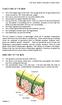 FUNCTIONS OF THE SKIN Skin is the largest organ of the body. The average adult has 18 square feet of skin which account for 16% of the total body weight. Skin acts as a physical barrier for you to the
INSTRUCTIONS FOR USE OF BioBeam TM Acne
 INSTRUCTIONS FOR USE OF BioBeam TM Acne BioBeam ACNE is a Class 2A phototherapeutic medical device and complies with Annex VI of the Medical Device Directive 93/42/EEC and is CE certified (CE 0473). BioBeam
ACNE AND ROSACEA. Disclosure. Distribution of Acne 6/12/2014. NJAFP 2014 Summer Celebration & Scientific Assembly 1
 ACNE AND ROSACEA Everett Schlam, MD Assistant Director, Mountainside Hospital Family Medicine Residency Program, Verona, NJ Disclosure Dr. Schlam has indicated that he has nothing to disclose relevant
Corporate Medical Policy Laser Treatment of Port Wine Stains
 Corporate Medical Policy Laser Treatment of Port Wine Stains File Name: Origination: Last CAP Review: Next CAP Review: Last Review: laser_treatment_of_port_wine_stains 9/2010 9/2015 9/2016 9/2015 Description
Summary Acne vulgaris is a chronic, treatable disease but response to treatment may be delayed.
 TREATMENT OF ACNE VULGARIS Summary Acne vulgaris is a chronic, treatable disease but response to treatment may be delayed. Topical agents are useful as monotherapy for mild acne and in combination with
Explaining Ellipse I 2 PL
 Explaining Ellipse I 2 PL CLINICALLY PROVEN SAFE AND EFFECTIVE Ellipse I 2 PL stands for Ellipse secondgeneration Intense Pulsed Light The Ellipse I 2 PL system is used for the treatment of a wide range
Available online www.jocpr.com. Research Article
 Available online www.jocpr.com Journal of Chemical and Pharmaceutical Research, 2014, 6(2):736-741 Research Article ISSN : 0975-7384 CODEN(USA) : JCPRC5 A comparative study of efficacy and safety of combination
Elucidating the pulsed-dye laser treatment of sebaceous hyperplasia in vivo with real-time confocal scanning laser microscopy
 Elucidating the pulsed-dye laser treatment of sebaceous hyperplasia in vivo with real-time confocal scanning laser microscopy David Aghassi, MD, Ernesto González, MD, R. Rox Anderson, MD, Milind Rajadhyaksha,
LHE TM CLINICAL CASEBOOK. Acne Clearance. Lighting the Future of Skin Care
 LHE TM CLINICAL CASEBOOK Acne Clearance Lighting the Future of Skin Care The Acne Problem Acne is a disorder of the skin's sebaceous glands that results in plugged pores and outbreaks of lesions. One of
A comparison of efficacy and safety of topical 0.1% adapalene and 4% benzoyl peroxide in the treatment of mild to moderate acne vulgaris
 Original Article A comparison of efficacy and safety of topical 0.1% adapalene and 4% benzoyl peroxide in the treatment of mild to moderate acne vulgaris Usma Iftikhar, Shahbaz Aman, Muhammad Nadeem, Atif
F r e q u e n t l y A s k e d Q u e s t i o n s
 Acne who specializes in treating skin problems) about how you can help prevent acne and if treatment would help you. Q: What is acne? A: Acne is a disorder that causes outbreaks of skin lesions commonly
A single device, a plethora of treatments.
 A single device, a plethora of treatments. A single device, a plethora of treatments. ETHEREA was developed to bring in the market the best, most efficient and top-rated technologies device for laser and
Fractional photothermolysis is a new technique
 Novel Use of Erbium:YAG (2,940-nm) Laser for Fractional Ablative Photothermolysis in the Treatment of Photodamaged Facial Skin: A Pilot Study MOSHE LAPIDOTH, MD, MPH, y MARINA EMIKO YAGIMA ODO, MD, z AND
Do home-use hair removal lasers & intense light devices deliver what they promise and are they safe?
 Do home-use hair removal lasers & intense light devices deliver what they promise and are they safe? Godfrey Town, Innovation Scholar, Global Academy, University of Wales; Swansea Metropolitan University,
Extended Theory of Selective Photothermolysis
 Lasers in Surgery and Medicine 29:416 432 (2001) Extended Theory of Selective Photothermolysis G.B. Altshuler, PhD, 1 * R.R. Anderson, MD, 2 D. Manstein, MD, 2 H.H. Zenzie, MS, 1 and M.Z. Smirnov, PhD
THE SCIENCE WHITE PAPER SERIES OF IMAGE SKINCARE: Benzoyl Peroxide for treatment of acne vulgaris
 THE SCIENCE WHITE PAPER SERIES OF IMAGE SKINCARE: Benzoyl Peroxide for treatment of acne vulgaris by Marc A. Ronert MD PhD, Clinical Director Image Skincare ABSTRACT Image Skincare offers products with
The treatment of Acne Vulgaris with Variable Pulsed Light (VPL ) using the Energist Ultra VPL
 DOCUMENT_4_GRAM_ENGLISH 6/9/06 01:15 Page 1 The treatment of Acne Vulgaris with Variable Pulsed Light (VPL ) using the Energist Ultra VPL Dr. med. Gebhard E. M. Gramlich Chefarzt Privatklinik Hagenmühle
Evaluation of Fractional CO 2 Laser Efficacy in Acne Scar
 Original Article Evaluation of Fractional CO 2 Laser Efficacy in Acne Scar Simin Saryazdi, Azadeh Mohebbi Department of Dermatology, Afzalipour Hospital, Kerman, Iran Abstract: Introduction: Acne scar
Cryogen Spray Cooling in Laser Dermatology: Effects of Ambient Humidity and Frost Formation
 Lasers in Surgery and Medicine 28:469±476 (2001) Cryogen Spray Cooling in Laser Dermatology: Effects of Ambient Humidity and Frost Formation Boris Majaron, PhD, 1,2 Sol Kimel, PhD, 1,3 Wim Verkruysse,
The Integumentary System Dr. Ali Ebneshahidi
 The Integumentary System Dr. Ali Ebneshahidi The Skin The integument system consists of the skin (cutaneous membrane) and its accessory organs. The skin is composed of three layers of tissue: the outer
There has been an explosive increase in the
 Incidence of side effects after laser hair removal Sean W. Lanigan, MD, FRCP, DCH a,b Birmingham, United Kingdom Background: Despite the widespread use of lasers for hair removal there are few data published
FDA Cleared for Onychomycosis *
 5 Months Post Treatment 5 Months Post Treatment 5 Months Post Treatment 6 Months Post Treatment 4 Months Post Treatment 5 Months Post Treatment 6 Months Post Treatment Verruca Vulgaris Fluence: 200 J/cm
Refractory Port Wine Stains (PWS): Long Pulsed Alexandrite Laser as an Option
 Original Article Refractory Port Wine Stains (PWS): Long Pulsed Alexandrite Laser as an Option Hassan Seirafi, Farshad Farnaghi, Amirhooshang Ehsani, Majid Asghari Shiekhi Fatemeh Gholamali, Pedram Noormohammadpour
EP 2 311 399 A2 (19) (11) EP 2 311 399 A2 (12) EUROPEAN PATENT APPLICATION. (43) Date of publication: 20.04.2011 Bulletin 2011/16
 (19) (12) EUROPEAN PATENT APPLICATION (11) EP 2 311 399 A2 (43) Date of publication: 20.04.2011 Bulletin 2011/16 (51) Int Cl.: A61B 18/20 (2006.01) A61N 7/02 (2006.01) (21) Application number: 10012969.1
X-Plain Psoriasis Reference Summary
 X-Plain Psoriasis Reference Summary Introduction Psoriasis is a long-lasting skin disease that causes the skin to become inflamed. Patches of thick, red skin are covered with silvery scales. It affects
GentleYAG. Superior Results Treating Multiple Indications. Science. Results.Trust.
 GentleYAG Superior Results Treating Multiple Indications Science. Results.Trust. Because of its high-peak power specifications the GentleYAG is extremely versatile for hair and leg-vein removal treatments
Potulaca (Portulaca oleracea) detergent and other formulations that disrupt the active anthraquinones by regulating the Nitric
 Natural effective support for acne, oily and inflamed skin care At the heart of Frutarom's TopicRange for oily and acne skin problems, we focus Z-Care - a botanical blend based on traditions of Chinese
F REQUENTLY A SKED Q UESTIONS
 Acne ogist (a doctor who specializes in treating skin problems) about how you can help prevent acne and if treatment would help you. page 1 Q: What is acne? Q: What are the different types of A: Acne is
 no!no! Thermicon: A Novel, Home-based Hair Removal Device Dr. Mira Barki Yavne, Israel Introduction Lasers and intense pulsed light sources have become a popular method for long-term removal of unwanted
Case reports: Nordlys short pulse SWT treatment of: Port Wine Stains & Rosacea. (Comparison with Pulsed Dye Laser)
 Case reports: Nordlys short pulse SWT treatment of: Port Wine Stains & (Comparison with Pulsed Dye Laser) Ellipse /S 2015 Page 1 of 5 1CS8605-01 ackground Vascular treatments are based on selective photothermolysis,
AcneBooklet_A02.qxp 25-04-2007 14:05 Side 1. Acne treatment CLINICALLY PROVEN SAFE AND EFFECTIVE
 AcneBooklet_A02.qxp 25-04-2007 14:05 Side 1 Acne treatment CLINICALLY PROVEN SAFE AND EFFECTIVE AcneBooklet_A02.qxp 25-04-2007 14:05 Side 2 AcneBooklet_A02.qxp 25-04-2007 14:05 Side 3 At some point in
Performance. All You Need. All In One.
 Performance. All You Need. All In One. Skin & Hair Treatments Performance. All You Need. All In One. In the world of multi-application platforms, performance is everything. From treatment time to clinical
Acne. Objectives. Conflicts of Interest. Acne 05/18/2015
 Objectives Acne Jonathan A. Dyer, MD Associate Professor of Dermatology and Child Health University of Missouri Discuss acne pathogenesis Recognize common acne subtypes Implement a treatment plan based
A Pilot Study of Q-switched 1064-nm Nd:YAG Laser Treatment in the Keratosis Pilaris
 Ann Dermatol Vol. 23, No. 3, 2011 DOI: 10.5021/ad.2011.23.3.293 ORIGINAL ARTICLE A Pilot Study of Q-switched 1064-nm Nd:YAG Laser Treatment in the Keratosis Pilaris Juhee Park, M.D., Beom Joon Kim, M.D.,
Acne can appear on the face. back, chest, neck. shoulders, and upper arms. ----.-----. WHAT CAUSES ACNE?
 Cysts Nodules Acne can appear on the face. back, chest, neck. shoulders, and upper arms. pore becomes inflamed (red and swollen). Sometimes the inflammation can damage the lining of the pore and then the
Optimizing the Efficacy and Comfort of Laser Hair Removal Treatment
 Optimizing the Efficacy and Comfort of Laser Hair Removal Treatment A Review of Laser Hair Removal Products with Mary P Lupo MD Introduction For years, hair removal has been the top cosmetic laser procedure,
LASERs for vascular lesions. Mashayekhi vahid MD Dermatology Department Emamreza Hospital Mashhad-Iran
 LASERs for vascular lesions Mashayekhi vahid MD Dermatology Department Emamreza Hospital Mashhad-Iran Introduction This technology is new and rapidly evolving, and therefore, guidelines are so far as the
Optical Nanotechnologies in Dermatology. R. Rox Anderson MD Professor, Harvard Medical School Director, Wellman Center for Photomedicine at M.G.H.
 Optical Nanotechnologies in Dermatology R. Rox Anderson MD Professor, Harvard Medical School Director, Wellman Center for Photomedicine at M.G.H. Disclosures Cytrellis consultant, equity Sebacia consultant
CLASS IV THERAPY LASERS
 CLASS IV THERAPY LASERS 80% More than 80% of your patients can benefit from K-Laser therapy. 970 - - - - - - - - - - - - - - - - - - - - - - - - - - - - - PEAK OF WATER 905 - - - - - - - - - - - - - -
Temperature Increase in the. Human Eye When Subjected to a. Laser Source
 Validation of a Model to Predict Temperature Increase in the Human Eye When Subjected to a Laser Source Corinna Sue Thompson, Antonio Campo, PhD., University of Vermont, Undergraduate Research Endeavors