
A qualitative study of sleep trackers usage: evidence of orthosomnia
|
|
|
- Rosalyn Hines
- 6 years ago
- Views:
Transcription
1 A qualitative study of sleep trackers usage: evidence of orthosomnia Samuel Aupetit 1, Gäetan Dubroca 1, Sara Escaich 1, Philippe Cabon 2 1 ERGO-CENTRE, France 2 LATI/University of Paris Descartes, France ABSTRACT This article deals with digital sleep trackers that give information about sleep duration and quality in everyday life. Despite the number of these devices, scientific and independent studies of their usage are rare. This work aims at describing the acceptance (short term) and appropriation (long term) of these devices in order to identify their benefits and limitations. Data collection combines questionnaires on sleep and user experience, a sleep diary, and interviews on human computer interface. The main results concern the evidence of orthosomnia, an anxiety phenomenon, that is affecting people who obsess over the results of their sleep trackers. KEYWORDS HCI; Technologies; Acceptance; User centred design; Sleep. Introduction Individual sleep trackers are more and more numerous in private life for monitoring the duration and the quality of sleep in light of well-being and sleep performance. These new devices correspond to changes in the field of health that move from a focus on the disease towards a personalized preventive health management (Swan, 2012). This domain called "quantified self" corresponds to considerable economic and societal stakes. In this context, sleep monitoring is a major concern in everyday life given the impact of sleep on health. Over the past century, sleep duration has been reduced by approximately 90 minutes (Heslop et al., 2002) due to artificial lighting and social activities. Recent studies point out that low sleep duration (less than 7h) is associated with increased cardiovascular risk (Wingard et al., 1982) and significantly decreased life expectancy (Heslop et al., 2002). In terms of safety, driving drowsiness is one of main cause of highway fatalities (ASFA, 2018). The selling argument of the trackers available on the market refers to a benefit in comfort, health and user performance. However, we do not have a body of data that evaluate scientifically and independently the real usage of these devices. Thus, the aim of this paper is to make a qualitative study of the use and acceptance of sleep trackers, in order to gain knowledge on their real usage and to identify their benefits and limitations. How people really use these devices? What types of problems do they face? What are the positive and negatives effects on everyday life and sleep? This study refers to French cognitive ergonomics (Leplat, 1990) that presents conceptual and methodological tools for data collection and analysis in real world environment. This approach is linked with works on the dynamics of use ranging from an a priori assessment of the imagined usage of a technology to an a posteriori assessment of the actual use (Terrade et al., 2009). As a result, it is possible to specify three moments: acceptability refers to people s representations of a future or possible technology (Bobillier-Chaumon & Dubois, 2009); acceptance refers to attitudes during the first uses of the device influenced by its utility and usability. These two moments
2 represent the short-term assessments of the technology. The last moment refers to appropriation i.e. attitudes during regular use of technology which is a long-term assessment. The study includes 2 studies. The first one is a picture of the use of these devices after a week. We have collected the first moments of experience with the selected devices in order to describe acceptability and acceptance. The second study is a longitudinal assessment of the appropriation and the effects of the devices on everyday life. Study 1. Picture of acceptability and acceptance The first step of the project was to make a benchmark of all the existing sleep trackers. This benchmark led to identifying 65 products. We decided to study the usage of 6 of them: Beddit (Sleep Tracker), Oura Ring (Oura), Emfit (QS), Hugone (Seven Hugs), Sleep Cycle (Alarm Clock), Fit Bit (Charge 2). The selection criteria were (1) the form of the device (bracelet, Smartphone, ring, watch ), (2) the type of sensors (accelerometer, light meter ), (3) data collected, (4) the sales on the French market, and (5) selling price. Our decision to study the acceptance in such a systematic and detailed manner meant we had to investigate a relatively small sample of sleep trackers and users. This study design, which focuses on the details of individual experience, can produce findings which would be difficult to obtain with more quantitative approaches. We considered 10 users for each sleep tracker according to Nielsen (1993), to collect reliable data i.e. not influenced by the intrinsic aspects of the user. This kind of population is enough to detect 90% of usability problems. 30 participants were recruited for this study (16 men, 14 women; mean age 48). All subjects received a questionnaire on their motivation to participate, their relationship to digital technology and sleep, and a questionnaire to investigate their sleep habits and problems. Each subject was studied over a period of 3 weeks. The first week was the control week without any devices. During the second week, the participant had to use a first system. They used the second device the third week. The order of presentation of the systems was counterbalanced. In total, 82 weeks of experimentation were considered. Our approach is based on the combination of data from different levels: - A daily sleep diary. It allows the evaluation of sleep duration, sleep latency, perceived quality of sleep and a sleepiness score thanks to the Karolinska Sleepiness Scale (KSS). The KSS is a subjective scale assessing alertness from 1 (very alert) to 9 (very drowsy). This scale was validated against physiological recordings and cognitive performance measures. Values higher than 7 are associated with physiological signs of drowsiness (microsleeps) and a significant impairment of performance; - Observation of the use, questionnaire on user experience (Attrakdiff, Lallemand et al., 2015) and usability (System Usability Scale, Brooke, 1986) in order to evaluate the acceptance of the devices; - Interview data were obtained to complete all the previous cited data. Study 2. Longitudinal study of appropriation 45 subjects who have used a sleep tracker for 1 month to 2 years have been recruited (27 men, 18 women; mean age 52). We conducted an interview with each participant to analyze their usage dynamics. The same questionnaires on user experience as study 1 were completed. Results
3 The results section gives a factual presentation of the main results obtained for the two studies. After presenting the principal benefits (knowledge on sleeping), several limits perceived by the users are identified: an increase in sleeping delay, a problem of usability, the lack of users help, and the evidence of orthosomnia. The main benefit: know more about my sleep! The results show that participants appreciate having information on sleep quality (percentage of each sleep steps, sleep time vs bed time), the sleep quantity (duration of sleep) and the sleep conditions (air quality, temperature, humidity). During the interview, they declared to have a very limited knowledge of what constitutes their sleep e.g. a subjective feeling of sleep, an estimation of duration, a feeling of asleep, sensation of night awakening. So, the main expectation they have concerns the capacity for the trackers to describe their sleep by objective data. "Having information about my sleep environment was very interesting" "The application was useful because I see the curves, it gives me an idea of the state of my sleep that I did not know" "I noticed that when I play sports my sleep is more restorative" "My opinion has changed, at first I was very sceptical because for me it was a gadget, it's really useful it allows to know each other better" "What happens at night we do not know; the device helps me to better understand my sleep" Sleep diary results: a limited usefulness and an increase in sleeping delay Table 1 presents the results obtained with the sleep diary for each device. It is a comparison between the experimental week (with system) and the control week (without system). A positive result means an increase of the item (sleep duration, sleep delay, perceived sleep quality, drowsiness) compared to the control week, and vice versa for the case of a negative result. Table 1. Sleep diary results Fitbit HugOne Beddit SleepCycle Emfit Oura Ring Average Sleep duration + 3.2% +5.4% -2.4% +4.6% +2.7% +3.5% +2.8% Sleep latency +9.3% +9.5% +5% +3.7% +33.3% % Perceived sleep quality Sleepiness score of Karolinska -3.2% -4.4% -4.4% -3.3% -12.3% -6.7% -5.8% -2.6% -2.8% % +6.4% -18.1% -3.3% Results present an increase in sleep delay (+10.1%), sometimes even very significantly (+33.3% for Emfit). Data also show a reduction in sleep quality compared to a week without a system (a reduced score of 12% for Emfit). Finally, for most trackers, there is a decrease in the Karolinska Sleepiness Scale score indicating that participants felt more alert during the week with device (-18% for Oura Ring). The increase in sleep time reported by participants is relative (+ 2.8% on average). In summary, the improvement of sleep conditions is not significant after a week of experimenting. We can even identify an increase in sleep delay with the trackers. Interviews conducted in the longitudinal study tend to confirm this limited usefulness but not the importance of sleeping delay. This phenomenon can be associated with the first steps of usage and the learning phases. Evidence of orthosomnia
4 Several interviews highlight a phenomenon that can be compared to anxiety and deals with finding a perfect sleep. Providing an objective measurement of sleep, that can be compared at an individual level but also at an interpersonal level, seems to create or potentiate this deviance for some users. The consequences can be the prolongation of bedtime to gain points or the removal of any activity that is not supposed to increase the score: I really want to be over 80 out of I do not know what it represents but I trust the device, it must be that I sleep better if I get closer to 100." "I eat less or eat more in the evening and I look if it has changed anything about my sleep to gain some points!" I am not insomniac, I understand that my days influence my nights. But I pay more attention to my sleep with this device and I'm not sure it's the best thing to do! During the week, I took a lot less outings with my friends because I think my score will be reduced! So I watch TV at home and see the effects on sleep and it works I win 4 points! One night I slept somewhere other than in my bed and I thought I was going to sleep badly and lost some points. The device will record me a bad night and he will make me a critic and tell me that the sleep was not restorative, it I very stressful. These results are in line with a recent American study published in the Journal of Clinical Sleep Medicine (Baron et al., 2017) dealing with activity trackers (bracelets) including day and night measurement (Call Watch and Fit Bit). It reveals that the wearing of these systems would favour what researchers have called "orthosomnia": an excessive preoccupation with one's sleep, preventing one from sleeping properly. The authors of the study adopted the word "orthosomnia" to describe what would become for some a real obsession. This quest for "ideal sleep" can, it seems, be amplified by the use of these bracelets. Orthosomnia is defined as the quest for perfect sleep, without insomnia, without nightmares, with regular cycles and ensuring its function of recovery of the body. However, this quest is so ubiquitous that it can be counterproductive: by being obsessed with sleep, one becomes less sleepy. Our work shows the similar excessive control of sleep that leads to increased anxiety and altered sleep conditions. Some subjects seem to be obsessed with the device: it's the first thing they do when they get up in the morning, they are disturbed when the system does not work, they diligently scrutinize all the graphics of the device and this several times in the day. This dependence is the case specifically for the users most concerned about their sleep and therefore the most in need of information and help: "It makes addict! I absolutely want to compare each night! " "It becomes an essential reflex to start the day. This is an important issue for me, sleep and so this device are important! " "When I have a drink I think about the app. When I play sports I think about the app! " "The first thing I do in the morning, before going to the bathroom, it's to see if I slept well or not! " " I look all day curves: those of the night but also those of the day because I wear the ring also the day like that I am always followed!" A problem of usability The results presented in Table 2 highlight the weaknesses of all the devices in terms of usability. The pragmatic quality is close to the average score (HugOne has a negative score), while the System Usability Scale establishes the average usability of the systems tested at 68 points, which is a score that is just acceptable for a usable product (the HugOne score is below the 50 points mark).
5 Table 2. Usability results obtained by questionnaires Pragmatic quality arising from AttrakDiff survey Scoring ranging from -3 at 3 Usability arising from SUS survey Scoring ranging from 0 at 100 Fitbit HugOne Beddit SleepCycle Emfit Oura Ring Average One of the main limitations consists in the complexity of the Human Computer Interface. Reading and understanding the displayed data tends to discourage users. The usability scores obtained by questionnaires and interviews show that a system can have a poor usefulness (gain knowledge and optimizing sleep) due to perceiving the usability as limited (accessibility and understanding of complex graphics). This is the case of the Emfit system, which has the highest theoretical utility, but which is not used by participants because its interface is too complex (limited accessibility, scientific vocabulary, too many graphics ). "The application is different if I use Ipad mini, iphone 6s and android Samsung. It's a little cheated, it's not the same product! I took the iphone from my husband but before it was easy» "I can see the data and the graphics, but I do not know what it is, I do not understand!" "I did not see that you had to click to see the detail" "If you do not have a minimum of computer skills, it's very difficult to use this device" "The figures are very beautiful, but it is difficult to understand It seems to be very scientific and I need a translation! Figure 1 shows the results for Beddit and HugOne obtained by the System Usability Scale questionnaire. The score obtained by Beddit is 80.6/100 and that obtained by HugOne is 49.7/100. Score Adjective Grade Less than 25 Best imaginable Excellent Good OK Poor Worst imaginable A B C D F Marginal Range Acceptable Not acceptable High Low 80.6 Beddit 49.7 HugOne Figure 1. SUS results for Beddit and HugOne These are the two extreme scores collected. Beddit is rated as having "Excellent" usability while HugOne s interface is rated as "Not Acceptable". These results perfectly reflect the data collected with the other questionnaires and interviews. A lack of effective help The results show that the most useful systems were those allowing users to gain a better understanding of their sleep. The selling point of these devices suggests also, most of the time, to improve the sleeping conditions. The existing help takes the form of generic advice; do not drink coffee before going to bed, do not eat just before going to bed, turn off the light. This advice does not match the expectations of users and thus cannot improve their sleep. "One night I did not sleep well at all, I woke up a lot of times. The system saw that I had a very bad sleep, the rating was not good at all, however it gave me as a solution to drink less alcohol... thank you but I never drink a drop of alcohol. I did not know what to do in that case!"
6 The lack of help is even more annoying when the user is really concerned about their sleep. The quantity and quality of information provided to the users (very little deep sleep, a high heart rate, frequent awakening) are not associated with concrete advice, and that causes a state of anxiety. The participants declared they considered the displayed data as medical information and trusted it. So, the devices are considered as frustrating: they show and alert users regarding their sleep problems, but only provide ineffective "tips" that cannot solve these problems. "I saw in the data a peak at over 100 heart rates one night, it really worried me! I would have liked the advice of a doctor to tell me if it was normal or not...! " "I saw on the curve that I stopped breathing during the night: it means that I breathe no more, that I made an apnoea! I needed to have a professional opinion because if I made sleep apnoea it could be dangerous! " Discussion The study tends to show the acceptance of some sleep trackers by pointing out their main benefits and risks from the users point of view. The devices allow the user to know more about their sleep to adapt their behaviour during night and day. The results show that the participants find a real usefulness in having information on the quality, the quantity and the environment of their sleep. This can help fight against sleep inertia and associated risks. However, several limitations have been identified e.g. poor accessibility, limited usability and lack of adapted and effective advice to improve sleep. The study highlights a specific limitation that can have important effects on everyday life of users: orthosomnia i.e. a new sleep disorder arisen from the pursuit of a perfect night s sleep and associated anxiety. This phenomenon is associated with the fact that number of patients who are seeking treatment for self-diagnosed sleep disturbances such as insufficient sleep duration and insomnia due to periods of light or restless sleep observed on their sleep tracker data. These trackers provide them an objective measure of their sleep, most of the time a score out of 100 points. This result is in line with a recent American paper (Baron et al., 2017). The methodology used in this study combining (1) sleep trackers usage and effects on sleep analysis, (2) qualitative and quantitative data, (3) picture and longitudinal study of usage, succeeds in providing interesting knowledge on the acceptance of these devices. The future systems should take these results into account in order to match the users needs (better accessibility, personalized displayed data, adapted advice) and to attempt to avoid orthosomnia (e.g. removing the typical indicator expressed in percentage) that is an important issue, regarding the number of human activity trackers available on the market. Acknowledgements This project was supported by the MAIF Foundation. References Baron, KG., Abbott, S., Jao, N., Manalo, N., & Mullen, R. (2017). Orthosomnia: are some patients taking the quantified self too far? Journal of Clinical Sleep Medicine, 13(2), Bobillier-Chaumon, M., & Dubois, M. (2009). L adoption des technologies en situation professionnelle : quelles articulations possibles entre acceptabilité et acceptation? Le Travail Humain, 72, DOI: /th Heslop, P., Smitha, G.D., Metcalfe, C., Macleod, J., & Hart, J. (2002). Sleep duration and mortality: The effect of short or long sleep duration on cardiovascular and all-cause mortality in working men and women. Sleep Medicine, 3,
7 Lallemand, C., Koenig, V., Gronier, G., & Mar5n, R. (2015). Création et validation d une version française du questonnaire AttrakDiff pour l évaluation de l expérience utilisateur des systèmes interactifs. Revue Européenne de Psychologie Appliquée. doi: /j.erap Leplat, J. (2000). L'analyse psychologique de l'activité en ergonomie. Toulouse: Octarès. Nielsen, J. (1993). Usability Engineering. Boston: Academic Press. Swan, M. (2012). Sensor Mania! The Internet of things, wearable computing, objective metrics, and the quantified self 2.0. J Sens Actuator Netw, 1, Terrade, F., Pasquier, H., Reerinck-Boulanger, J., Guingouain, G., & Somat, A. (2009). L'acceptabilité sociale : la prise en compte des déterminants sociaux dans l'analyse de l'acceptabilité des systèmes technologiques. Le Travail Humain, 4, Wingard, D., Berkman, L., & Brand, R. (1982). A multivariate analysis of health related pratices: nine years mortality follow-up of the Alameda County study. American Journal of Epidemiology, 116, 76,
Dr Sarah Blunden s Adolescent Sleep Facts Sheet
 Dr Sarah Blunden s Adolescent Sleep Facts Sheet I am Sleep Researcher and a Psychologist. As a Sleep Researcher, I investigate the effects of poor sleep on young children and adolescents. I also diagnose
Insomnia affects 1 in 3 adults every year in the U.S. and Canada.
 Insomnia What is insomnia? Having insomnia means you often have trouble falling or staying asleep or going back to sleep if you awaken. Insomnia can be either a short-term or a long-term problem. Insomnia
SLEEP DISTURBANCE AND PSYCHIATRIC DISORDERS
 E-Resource December, 2013 SLEEP DISTURBANCE AND PSYCHIATRIC DISORDERS Between 10-18% of adults in the general population and up to 50% of adults in the primary care setting have difficulty sleeping. Sleep
SLEEP QUESTIONNAIRE. Name: Today s Date: Age (years): Your Sex (M or F): Height: Weight: Collar/Neck Size (inches) Medications you are taking:
 SLEEP QUESTIONNAIRE Name: Today s Date: Age (years): Your Sex (M or F): Height: Weight: Collar/Neck Size (inches) Medications you are taking: Medical conditions: High blood pressure Heart Disease Diabetes
SLEEP RIGHT SLEEP TIGHT
 SLEEP RIGHT SLEEP TIGHT Natural sleep before medicines Sleep diary What is a sleep diary? A sleep diary is a daily log that can be used to record your sleep-wake pattern. It helps you monitor when you
SLEEP AND PARKINSON S DISEASE
 A Practical Guide on SLEEP AND PARKINSON S DISEASE MICHAELJFOX.ORG Introduction Many people with Parkinson s disease (PD) have trouble falling asleep or staying asleep at night. Some sleep problems are
SLEEP QUESTIONNAIRE THE EPWORTH SLEEPINESS SCALE
 SLEEP QUESTIONNAIRE Patient Name: Height: Weight: Date : My Main Sleep Complaint(s) : Trouble sleeping at night.. yes no Falling asleep.. yes no Staying asleep.. yes no Snoring. yes no Stop breathing yes
Written Example for Research Question: How is caffeine consumption associated with memory?
 Guide to Writing Your Primary Research Paper Your Research Report should be divided into sections with these headings: Abstract, Introduction, Methods, Results, Discussion, and References. Introduction:
Why are you being seen at Frontier Diagnostic Sleep Center?
 8425 South 84th Street Suite B Omaha, NE 68127 Phone: 402.339.7378 Fax: 402.339.9455 SLEEP QUESTIONNAIRE NAME: ADDRESS: Last First MI Street Address DATE City State Zip PHONE: ( ) BIRTHDATE: HEIGHT: WEIGHT:
Quick Read Series. Information for people with seizure disorders
 Quick Read Series Information for people with seizure disorders 2003 Epilepsy Foundation of America, Inc. This pamphlet is designed to provide general information about epilepsy to the public. It does
The Best-Kept Secret of Forex
 The Best-Kept Secret of Forex Many traders go through trading system after trading system, only to find that most of them don t work. The truth of the matter is that there are many effective trading systems
Related KidsHealth Links
 Grades 9 to 12 Human Body Series KidsHealth.org/classroom Teacher s Guide This guide includes: Standards Related Links Discussion Questions Activities for Students Reproducible Materials Standards This
Memorial Hospital Sleep Center. Rock Springs, Wyoming 82901. Sleep lab Phone: 307-352- 8229 (Mon - Wed 5:00 pm 7:00 am)
 Memorial Hospital Sleep Center Rock Springs, Wyoming 82901 Sleep lab Phone: 307-352- 8229 (Mon - Wed 5:00 pm 7:00 am) Office Phone: 307-352- 8390 (Mon Fri 8:00 am 4:00 pm ) Patient Name: Sex Age Date Occupation:
Sleep. Drug and Alcohol Services South Australia. Progressive stages of the sleep cycle. Understanding the normal sleep pattern
 Drug and Alcohol Services South Australia INSOMNIA MANAGEMENT KIT Sleep: Facts and hygiene The Insomnia Management Kit is intended to be used in conjunction with your GP. To access further instructions
TeachingEnglish Lesson plans
 Topic: Sleep Aims: - To help students talk about sleep and how it affects our lives - To develop students reading and listening skills - To develop students communication skills - To develop students debating
sleep handbook Keep this by your bedside to help you get straight to sleep.
 sleep handbook Keep this by your bedside to help you get straight to sleep. BEDSIDE BUDDY Chiropractic how can it help me get straight to sleep? Chiropractic is based on the scientific fact that the human
Don t just dream of higher-quality sleep. How health care should be
 Don t just dream of higher-quality sleep. How health care should be Many of our patients with sleep disorders don t realize there s another way of life, a better way, until they are treated. Robert Israel,
Sleep History Questionnaire
 Sleep History Questionnaire Name Address Daytime Phone Height Evening Phone Weight Weight 5yrs ago Describe your sleep problem: 1. What time do you go to bed? 2. What time do you wake up? 3. What time
THE CENTER FOR SLEEP DISORDERS GW- MEDICAL FACULTY ASSOCIATES SLEEP DISORDERS INVENTORY
 THE CENTER FOR SLEEP DISORDERS GW- MEDICAL FACULTY ASSOCIATES SLEEP DISORDERS INVENTORY Vivek Jain, M.D. Director, The Center for Sleep Disorders GW-Medical Faculty Associates Samuel J. Potolicchio, M.
Anxiety, Panic and Other Disorders
 Methodist Assistance Program Anxiety, Panic and Other Disorders Anxiety, panic and other disorders such as agoraphobia, social phobia, compulsive disorder and posttraumatic stress disorder are all very
What is Obstructive Sleep Apnoea?
 Patient Information Leaflet: Obstructive Sleep Apnoea Greenlane Respiratory Services, Auckland City Hospital & Greenlane Clinical Centre Auckland District Health Board What is Obstructive Sleep Apnoea?
General Information about Sleep Studies and What to Expect
 General Information about Sleep Studies and What to Expect Why do I need a sleep study? Your doctor has ordered a sleep study because your doctor is concerned you may have a sleep disorder that is impacting
MS in focus online fatigue survey combined results
 MS in focus online fatigue survey combined results 1. Introduction 10,090 people from 101 countries took part in our online fatigue survey during September and October 2011. The survey was available in
Anxiety and depression in men
 Anxiety and depression in men Summary Anxiety and depression in men are common and treatable. Anxiety and depression are illnesses, not weaknesses, and effective treatments are available. Taking action
How To Avoid Drowsy Driving
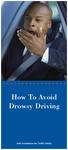 How To Avoid Drowsy Driving AAA Foundation for Traffic Safety Sleepiness and Driving Don t Mix Feeling sleepy is especially dangerous when you are driving. Sleepiness slows your reaction time, decreases
Student Samples: Grade 7
 Explanatory Performance Task Focus Standards Grade 7: W.7.5; L.7.1; L.7.2 2-Point Explanatory Performance Task Writing Rubric (Grades 6 11) SCORE 2 POINTS 1 POINTS 0 POINTS NS CONVENTIONS The response
Psychological treatments for bipolar disorder
 Psychological treatments for bipolar disorder Medication is the mainstay treatment, but psychological support is crucially important Get a counsellor Learn all you can about the illness Develop a stay-well
Time Management & Stress Reduction
 Time Management & Stress Reduction What is stress? Stress is your body s reaction to the things which you perceive as pressures. Stress occurs when you feel that you cannot cope with those pressures. Our
How to sleep better at night - sleep hygiene. Information for anyone having trouble sleeping
 How to sleep better at night - sleep hygiene Information for anyone having trouble sleeping www.leicspart.nhs.uk mail: [email protected] Aim for a good night s sleep A good night s sleep should
IMPORTANCE OF SLEEP. Essential to your physical health and emotional wellbeing. Helps improve concentration and memory formation
 IMPORTANCE OF SLEEP Essential to your physical health and emotional wellbeing Helps improve concentration and memory formation Allows your body to repair any cell damage that occurred during the day Refreshes
SUMMARY OF FINDINGS. National Sleep Foundation 2005. National Sleep Foundation
 SUMMARY OF FINDINGS National Sleep Foundation 2005 National Sleep Foundation 1522 K Street NW, Suite 500 Washington, DC 20005 Ph: (202) 347-3471 Fax: (202) 347-3472 www.sleepfoundation.org Prepared by:
user guide Help is just a click or phone call away
 Help is just a click or phone call away If you need help finding your ideal comfort or troubleshooting, please visit us at sleepnumber.com/chat to chat with a live representative 7 a.m. 11 p.m. (Central
Falling Asleep & Staying Asleep Handout
 Falling Asleep & Staying Asleep Handout This handout contains information that may help if you have difficulty falling asleep or staying asleep. In the pages that follow, you will learn about sleep disorders
INSOMNIA SELF-CARE GUIDE
 INSOMNIA SELF-CARE GUIDE University of California, Berkeley 2222 Bancroft Way Berkeley, CA 94720 Appointments 510/642-2000 Online Appointment www.uhs.berkeley.edu All of us have trouble sleeping from time
HOW TO CHANGE NEGATIVE THINKING
 HOW TO CHANGE NEGATIVE THINKING For there is nothing either good or bad, but thinking makes it so. William Shakespeare, Hamlet, Act 2, Scene 2, 239 251. Although you may not be fully aware of it, our minds
Everything you must know about sleep but are too tired to ask
 Everything you must know about sleep but are too tired to ask The Sleep Deprivation Crisis Most people are moderately to severely sleep deprived. 71% do not meet the recommended 8 hrs/nt. (7.1 or 6.1?)
Sleep Difficulties. Insomnia. By Thomas Freedom, MD and Johan Samanta, MD
 Sleep Difficulties By Thomas Freedom, MD and Johan Samanta, MD For most people, night is a time of rest and renewal; however, for many people with Parkinson s disease nighttime is a struggle to get the
The Happiness Challenge
 The Happiness Challenge January 2011 Can a few simple daily actions make us happier? Produced for use by BBC Breakfast, January 2011 Your name: Introduction Thanks for downloading the 'Happiness Challenge'
Sleep Medicine and Psychiatry. Roobal Sekhon, D.O.
 Sleep Medicine and Psychiatry Roobal Sekhon, D.O. Common Diagnoses Mood Disorders: Depression Bipolar Disorder Anxiety Disorders PTSD and other traumatic disorders Schizophrenia Depression and Sleep: Overview
MINISTERIO DE SALUD PUBLICA DIRECCION PROVINCIAL DE SALUD DEL GUAYAS HOSPITAL DE INFECTOLOGIA DR. JOSE DANIEL RODRIGUEZ MARIDUEÑA Guayaquil - Ecuador
 EVALUATION OF THE EFFECTIVENESS OF THE PRODUCT BABUNA IN THE TREATMENT OF INSOMNIA, IN PATIENTS OF THE MALE WING OF THE ECUADORIAN HEALTH MINISTRY S HOSPITAL OF INFECTIOUS DISEASE PILLASAGUA Diana, ANDINO
Stress management for presentations and interviews
 Learning Development Stress management for presentations and interviews This guide aims to help you recognise and understand anxiety and nervousness which may arise during presentations or interviews.
Overcoming sleep problems
 Overcoming sleep problems Helping you to manage your health condition Sleep problems are common when you have a health condition. People who have health problems are more likely to experience insomnia,
Sleep Disorders Center 505-820-5363 455 St. Michael s Dr. 505-989-6409 fax Santa Fe, New Mexico 87505 QUESTIONNAIRE NAME: DOB: REFERRING PHYSICIAN:
 Sleep Disorders Center 505-820-5363 455 St. Michael s Dr. 505-989-6409 fax Santa Fe, New Mexico 87505 QUESTIONNAIRE NAME: DOB: REFERRING PHYSICIAN: PRIMARY CARE PHYSICIAN: Do you now have or have you had:
http://nurse practitioners and physician assistants.advanceweb.com/features/articles/alcohol Abuse.aspx
 http://nurse practitioners and physician assistants.advanceweb.com/features/articles/alcohol Abuse.aspx Alcohol Abuse By Neva K.Gulsby, PA-C, and Bonnie A. Dadig, EdD, PA-C Posted on: April 18, 2013 Excessive
CALCULATIONS & STATISTICS
 CALCULATIONS & STATISTICS CALCULATION OF SCORES Conversion of 1-5 scale to 0-100 scores When you look at your report, you will notice that the scores are reported on a 0-100 scale, even though respondents
SLEEP DIFFICULTIES AND PARKINSON S DISEASE Julie H. Carter, R.N., M.S., A.N.P.
 SLEEP DIFFICULTIES AND PARKINSON S DISEASE Julie H. Carter, R.N., M.S., A.N.P. Problems with sleep are common in Parkinson s disease. They can sometimes interfere with quality of life. It is helpful to
Self-help guide to recovery for Chronic Fatigue Syndrome and Fibromyalgia
 Self-help guide to recovery for Chronic Fatigue Syndrome and Fibromyalgia This brief guide is written in an attempt to explain the process of recovery in chronic fatigue syndrome (CFS) and fibromyalgia.
Young Person s Guide to CFS/ME
 Young Person s Guide to CFS/ME The Royal College of Paediatrics and Child Health This leaflet has been developed as part of the Evidence based guideline for management of CFS/ME (Chronic Fatigue Syndrome
Section 15 Revision Techniques
 Section 15 Revision Techniques Introduction This section in your Study Skills manual will consolidate information relating to revision techniques. This section will consider how to prepare for examinations
INVENTORY OF DEPRESSIVE SYMPTOMATOLOGY (SELF-REPORT)
 THIS SECTION FOR USE BY STUDY PERSONNEL ONLY. Did patient (subject) perform self-evaluation? No (provide reason in comments) Evaluation performed on visit date or specify date: Comments: DD-Mon-YYYY Information
"Please answer the following questions about the past [two months] in your life?"
![Please answer the following questions about the past [two months] in your life?](/thumbs/20/408891.jpg "Please answer the following questions about the past [two months] in your life?") PROBLEM ORIENTED SCREENING INSTRUMENT FOR TEENAGERS POSIT FOLLOW-UP QUESTIONNAIRE INSTRUCTIONS TO THE RESPONDENT "Please answer the following questions about the past [two months] in your life?" GUIDELINES
PROBLEM ORIENTED SCREENING INSTRUMENT FOR TEENAGERS POSIT FOLLOW-UP QUESTIONNAIRE INSTRUCTIONS TO THE RESPONDENT "Please answer the following questions about the past [two months] in your life?" GUIDELINES
PLAY STIMULATION CASE STUDY
 PLAY STIMULATION CASE STUDY AIMS Play stimulation work contributes towards the following 2003-2006 PSA targets: Improving social and emotional development, and Improving learning. With regard to PSA targets
STEP 1: IDENTIFY A BEHAVIOR TO CHANGE
 Establishing Healthy Behaviors Worksheet The Establishing Healthy Behaviors Worksheet is designed to carry you through a series of steps that will guide and assist you in establishing healthy lifestyle
A Healthy Life RETT SYNDROME AND SLEEP. Exercise. Sleep. Diet 1. WHY SLEEP? 4. ARE SLEEP PROBLEMS A COMMON PARENT COMPLAINT?
 Diet Sleep Exercise RETT SYNDROME AND SLEEP DR. DANIEL GLAZE, MEDICAL DIRECTOR THE BLUE BIRD CIRCLE RETT CENTER A good night s sleep promotes learning, improved mood, general good health, and a better
The Well Woman Centre. Adult Urinary Incontinence
 The Well Woman Centre Adult Urinary Incontinence 1 Adult Urinary Incontinence... 3 Stress Incontinence Symptoms... 3 Urge Incontinence Symptoms... 4 Mixed Incontinence Symptoms... 5 Where to Start?...
Objective: Identify effects of stress on everyday issues and strategies to reduce or control stress.
 Lesson Plan: Dealing with Stress Objective: Identify effects of stress on everyday issues and strategies to reduce or control stress. Time: 45-60 minutes Structure: On-line homework before class (Stress
Mental Health in the Workplace. Kate Hubl- Occupational Therapist
 Mental Health in the Workplace Kate Hubl- Occupational Therapist So what does the workplace have to do with mental health and mental health issues? Its not abnormal, weird, strange or weak to experience
Getting Older ]Wiser: safer drinking. as you age. Massachusetts Department of Public Health Office of Healthy Aging
![Getting Older ]Wiser: safer drinking. as you age. Massachusetts Department of Public Health Office of Healthy Aging](/thumbs/25/6007827.jpg "Getting Older ]Wiser: safer drinking. as you age. Massachusetts Department of Public Health Office of Healthy Aging") Massachusetts Department of Public Health Office of Healthy Aging Getting Older ]Wiser: safer drinking as you age Do you drink alcohol even just one drink now and then? Are you over 50? Do you ever take
Massachusetts Department of Public Health Office of Healthy Aging Getting Older ]Wiser: safer drinking as you age Do you drink alcohol even just one drink now and then? Are you over 50? Do you ever take
Mental Health Role Plays
 Mental Health Role Plays Goals: To discuss various mental health issues and mental illnesses. To discuss stigma, support and treatment options surrounding mental health issues and mental illnesses. Requirements:
Stigmatisation of people with mental illness
 Stigmatisation of people with mental illness Report of the research carried out in July 1998 and July 2003 by the Office for National Statistics (ONS) on behalf of the Royal College of Psychiatrists Changing
SLEEP APNEA SCREENING AND SURVEILLANCE Low Cost Monitoring Device
 SLEEP APNEA SCREENING AND SURVEILLANCE Low Cost Monitoring Device Sammy Homsi and Mustafa Muhyi Team Number: 42 Teacher: Rebecca Galves Mentor: Noor Muhyi CONTENTS Figure and tables...2 Abstract 3 Introduction..
Microsoft Get It Done Survey of Office Workers
 Microsoft Get It Done Survey of Office Workers Executive Summary and Survey Results Presented by: Harris Interactive Public Relations Research November 2013 About the Survey Survey Method This survey was
Supplemental Activity
 Materials: Test-Taking Skills Assessment on page 80 in this workbook (page 19 in the student workbook) Test-Taking Tips on page 81 in this workbook (page 20 in the student workbook) Tactics for Studying
Patient Questionnaire for Men
 Patient Questionnaire for Men Please fill out the following questionnaire to the best of your ability prior to your first appointment. Your physical therapist will review your responses during your initial
As strange as it may sound, but: 50% of the interview is preparation, 50% of the interview is attitude.
 Job Interview 8. Job Interview General Information Some Guidelines As strange as it may sound, but: 50% of the interview is preparation, 50% of the interview is attitude. In general Interviewing is between
Psychological Assessment Intake Form
 Cooper Counseling, LLC 251 Woodford St Portland, ME 04103 (207) 773-2828(p) (207) 761-8150(f) Psychological Assessment Intake Form This form has been designed to ask questions about your history and current
Preparing for the GED Essay
 CHAPTER 8 Preparing for the GED Essay This section of the book presents a simple strategy for writing a passing GED essay. Gathering Ideas Organizing Writing Revising The GED Language Arts, Writing Test
Self Assessment: Substance Abuse
 Self Assessment: Substance Abuse Please respond TRUE (T) or FALSE (F) to the following items as they apply to you. Part 1 I use or have used alcohol or drugs for recreational purposes. I use alcohol despite
Building a. With Your Doctor
 Building a With Your Doctor As a mental health consumer, there are many things you can do to improve your care and get more out of life. Learning more about your illness, current treatment options and
Sleep: A global perspective
 Global sleep survey Sleep: A global perspective Introduction and methodology Sleep is a contributing factor to everyone s health, and it transcends geographic, cultural and socioeconomic boundaries. At
To answer the secondary question, if hands-on activities would increase student interest and comprehension, several hands-on activities were used:
 1 The Effect of an Overarching Topic on Student Performance in Algebra II Christine Consoletti and David Collins J.E.B. Stuart High School Fairfax County (VA) Public Schools June 2003 Question Does an
Schizophrenia National Institute of Mental Health
 Schizophrenia National Institute of Mental Health U.S. DEPARTMENT OF HEALTH AND HUMAN SERVICES National Institutes of Health Schizophrenia Do you know someone who seems like he or she has lost touch with
IAB Multi-Screen Research. IAB Multi-Screen Briefing 2013 IAB Australia Pty Ltd
 IAB Multi-Screen Research Research approach, sample, methodology IDENTIFY Stage 2 & IMMERSE EXPLORE Desk research, indepth ethnographic Ethno-depth interviews and focus groups We will explore interactive
Workbook 4 Noticing unhelpful thinking. Dr. Chris Williams. Overcoming Depression A Five Areas Approach
 Workbook 4 Noticing unhelpful thinking Dr. Chris Williams Overcoming Depression A Five Areas Approach 2 Section 1: Introduction This is the first of two workbooks that will help you find out about and
PREPARING FOR THE INTERVIEW
 U N I V E R S I T Y C A R E E R S E R V I C E S PREPARING FOR THE INTERVIEW THE INTERVIEW The interview is an opportunity to demonstrate to an employer why you are the best fit for the position. Essentially,
Stories of depression
 Stories of depression Does this sound like you? D E P A R T M E N T O F H E A L T H A N D H U M A N S E R V I C E S P U B L I C H E A L T H S E R V I C E N A T I O N A L I N S T I T U T E S O F H E A L
Preparation guidelines for your Child s Sleep Study
 Preparation guidelines for your Child s Sleep Study Patient Sticker here Maintain your child s regular night sleeping and nap schedule for several days before the study. On the day of the study, do not
Social Media Tips & Tools for Customer Engagement and Growth. Jessica Wilkins Byerly PIP Printing and Marketing Services Burlington, NC
 Social Media Tips & Tools for Customer Jessica Wilkins Byerly PIP Printing and Marketing Services Burlington, NC Who Is Growth Marketing? Why should your business use social media? Why should your business
F Be irritable F Have memory problems or be forgetful F Feel depressed F Have more falls or accidents F Feel very sleepy during the day
 National Institute on Aging A Good Night s Sleep Ever since he retired, Edward dreads going to bed at night. He s afraid that when he turns off his light, he will just lie there with his eyes open and
Quantitative and Qualitative Research to Assess the Impact of the Alcohol Self Help Leaflet
 Quantitative and Qualitative Research to Assess the Impact of the Alcohol Self Help Leaflet Liz Ambler Regional Alcohol Programme Manager East Midlands Background DHEM, building on the work of a pilot
STRESS INDICATORS QUESTIONNAIRE
 The Counseling Team International 1881 Business Center Drive, Suite 11 San Bernardino, CA 92408 (909) 884-0133 www.thecounselingteam.com STRESS INDICATORS QUESTIONNAIRE This questionnaire will show how
What you Need to Know about Sleep Apnea and Surgery
 What you Need to Know about Sleep Apnea and Surgery UHN For patients with sleep apnea who are going to have surgery Read this brochure to learn: What sleep apnea is Risks of having sleep apnea when going
Fatigue Beyond Tiredness
 Fatigue Beyond Tiredness The development and printing of this booklet was sponsored by Roche Products Ltd and Chugai Pharma UK Ltd. Editorial control remains with NRAS. Have you ever: Got all dressed up
INF159. Tiredness can kill. Advice for drivers. including drivers with Obstructive Sleep Apnoea Syndrome (OSAS) 2/16
 INF159 Tiredness can kill Advice for drivers including drivers with Obstructive Sleep Apnoea Syndrome (OSAS) 2/16 What if I have a condition causing sleepiness/tiredness during the day? You need to tell
MEDICATION GUIDE Xyrem (ZĪE-rem) (sodium oxybate) oral solution CIII
 MEDICATION GUIDE Xyrem (ZĪE-rem) (sodium oxybate) oral solution CIII Read this Medication Guide carefully before you start taking Xyrem and each time you get a refill. There may be new information. This
HELPING CHILDREN COPE WITH STRESS
 CENTER FOR EFFECTIVE PARENTING HELPING CHILDREN COPE WITH STRESS Stress is a natural and normal part of children's lives. The process of growing up carries with it quite a bit of stress. Children begin
Mobile Apps: What Consumers Really Need and Want. A Global Study of Consumers Expectations and Experiences of Mobile Applications
 Mobile Apps: What Consumers Really Need and Want A Global Study of Consumers Expectations and Experiences of Mobile Applications The Difference Between a Mobile App and a Mobile Website Before we evaluate
2016 Morning Time allowed: 1 hour 30 minutes
 SPECIMEN MATERIAL SECOND SET AS PSYCHOLOGY (7181/2) Paper 2 Psychology in Context 2016 Morning Time allowed: 1 hour 30 minutes Materials For this paper you may have: a calculator. Instructions Use black
PREPARING FOR A CIVIL SERVICE EXAM HOW TO PREPARE FOR A CIVIL SERVICE EXAM (IN GENERAL)... DOING YOUR BEST
 PREPARING FOR A CIVIL SERVICE EXAM HOW TO PREPARE FOR A CIVIL SERVICE EXAM (IN GENERAL)... DOING YOUR BEST BEFORE YOU START TO STUDY: - Read the announcement. Somewhere on it will be the topics or items
Brain Injury Association National Help Line: 1-800-444-6443 Brain Injury Association Web site: www.biausa.org Centers for Disease Control and
 Brain Injury Association National Help Line: 1-800-444-6443 Brain Injury Association Web site: www.biausa.org Centers for Disease Control and Prevention Web site: www.cdc.gov/ncipc/tbi Contents About Brain
REALISTIC THINKING. How to Do It
 REALISTIC THINKING We can all be bogged down by negative thinking from time to time, such as calling ourselves mean names (e.g., idiot, loser ), thinking no one likes us, expecting something, terrible
Avoiding Bias in the Research Interview
 Avoiding Bias in the Research Interview Sonja I. Ziniel, MA Ph.D. Clinical Research Program, Children s Hospital Boston Department of Medicine, Harvard Medical School [email protected]