
Administration of Medicines and Healthcare Needs Policy
|
|
|
- Nora Rose
- 10 years ago
- Views:
Transcription
1 Administration of Medicines and Healthcare Needs Policy TO BE REVIEWED BY GOVERNORS SUPPORT COMMITTEE Reviewed in: November 2014 Next Review Date: November 2015

2 This college policy compliments/reflects the detailed approved guidance of the Leicester City Children and Young Peoples Services, effective from September 2014 (Guidance No 36A). Children with medical needs have the same rights of admission at The City of Leicester College as other children. Most children will at sometime have short term medical needs; others may have longer term needs and may require medicines on a long term basis. Some children may need medicines in particular circumstances, such as those suffering from severe allergies or severe asthma. The City of Leicester College will prepare an Individual Health Care Plan for all students with specific medical needs to help staff identify the necessary measures to support a child. The City of Leicester College is entirely DDA compliant. Parents have the prime responsibility for their child s health and should provide the college with information about medical conditions. Parents are required to provide full information about medical needs on entry to the college via the gold contact form. The college makes effective use of links with the school health service and NHS Primary Care Trust s to make sure that children with medical needs in school are effectively supported. The City of Leicester College recognises there is no legal duty that requires the staff to administer medicines. NB it is not part of any teacher s contract of employment. Staff managing the administration of medicines to students with specific medical needs will receive appropriate training and support from health professionals. The college has a robust system in place to ensure medicines are safely managed. A risk assessment of the health and safety of staff and others is carried out and any risk appropriately managed. This policy is available on the college website for parents. The college will only manage medicines when absolutely essential, where it would be detrimental to a child s health if medicine were not administered during the school day / activity. Only medicines prescribed by a doctor, dentist and nurse prescriber or pharmacist prescriber will be administered. Medicines from any other source, e.g. over the counter medicines will not be administered. These would need to be administered by the parent/legal guardian prior to the child s attendance at the school or to arrange to be present in order to administer it on site. Medicines must always be provided in the original container as dispensed by the pharmacist and include the prescriber s instructions for administration. We will not accept medicines that have been removed from the container as originally dispensed. We will not make alterations to dosages either. Medicines will be administered only with clear written instructions obtained from parents or legal guardians and only if the college feels it is able to follow out the instructions. The medicines must be clearly labelled with the student s name, tutor group and date of birth, the mode of administration and the dosage and the frequency of

3 medication being given. Any update or any changes is the responsibility of the parent/legal guardian. A child under 16 should never be given aspirin or medicines containing ibuprofen unless prescribed by a doctor. As children grow and develop they are encouraged to participate in decisions about medicines and take greater responsibility. Older children will seek responsibility under the supervision of their parents. There may however be circumstances where it is not appropriate for a child of any age to self manage. Where it is agreed by parents and college staff some medicines or related products e.g. inhalers or Creon will be carried out by the student for self administration. All other medicines will be kept securely in the main administration office. All emergency medicines such as inhalers/adrenaline pens should be readily available to students i.e. in reception, Inclusion and Hubs and should NOT be locked away. Oral medication should be in a child safe container. If medication is to be kept refrigerated it is stored in a locked cash box within the refrigerator. Any unused or time expired medication must be handed back to the parent/guardian of the student for disposal. Where a student is prescribed controlled drugs, they will need to be kept in safe custody. Students could access their medication for self administration if it is agreed appropriate. Medicines are administered by a named individual member of staff, this member of staff will be determined according to the circumstances of each student. Where practical a witness should be present. Emergency medication and inhalers must follow the child at all times. It is the parents responsibility to ensure that medicines are in date and replaced as appropriate. Advice on the management of conditions will be sought through the school nurse and health service. Any difficulties in understanding the medication should also be referred. In the event that a student refuses to take medication, they should not be forced but this must be noted in the records and agreed procedures for the individual in this event should be followed. Parents should be informed on the day. Should the refusal to take medication result in an emergency, the emergency procedure should be followed.

4 RECORD KEEPING The college will keep a written record of all medication administered to students and parents will sign the record book regularly to acknowledge the entries. The central file is kept in the main office by the Office Manager, Rachel Daniel. Should the incorrect dosage be administered, the ICP protocol will be followed. An SO2 form will be completed. If an excess dose is given or the incorrect procedure carried out the student must be taken to hospital as a matter of urgency. All staff administering medication must follow basic hygiene procedures. HYGIENE AND INFECTION CONTROL All staff should be familiar with normal precautions for avoiding infection and follow basic hygiene procedures. Staff should have access to protective disposable gloves and take care when dealing with spillages of blood or other bodily fluids and disposing of dressings or equipment. LONG TERM MEDICATION It is important to have sufficient information about the medical condition of any child with long term medical needs. This information is required before a student is admitted or when a student first develops a medical need. Parents/Guardians must be informed that they must use the attached proforma (Appendix A) to report any changes in medication to the college. With parent/guardian permission it may be necessary to explain the use of medication to a number of pupils in the class in addition to the affected student, so that peer support can be given. INJECTIONS Injections are not usually given by the student. It is not envisaged that it will be necessary to give injections in school unless the student is on a school trip. Appendix D gives detailed guidance on the management of diabetes mellitus. EMERGENCY TREATMENT/PROCEDURES Arrangements for dealing with emergency situations are part of the general risk management processes. All staff should know who is responsible for carrying out emergency procedures. A member of staff should always accompany a child to hospital by ambulance and should stay foe as long as it is reasonably practicable. In the event of an emergency/accident which requires a child to be treated by health professionals or admitted to hospital, the latter are responsible for any decision on medical grounds when and if the parents are not available.

5 Staff should never take children to hospital in their own car. When emergency treatment is required, medical professionals or ambulance should always be called immediately. Adrenaline injections If it is known that an individual child is hypersensitive to specific allergen e.g. wasp stings, peanuts, etc. a supply of adrenaline injections (when specifically prescribed) should always be made available. Immediate treatment needs to be given before going to the nearest emergency hospital/ or calling an ambulance. Appendix B should be referred to. A supply of Factor Replacement for injection should be kept in college where it is required for students suffering from bleeding disorders. It is usual for the students to give their own injections. If this is not the case, parents should be contacted immediately. Rectal diazepam and paraldehyde A small supply of rectal diazepam may be kept in college for administration to specifically identified children suffering from repeated or prolonged fits. Rectal diazepam where prescribed, should be readily available for use by a qualified nurse or medical staff in an emergency. (See Appendix C) A small supply of buccal midazolam may be kept in college for administration to specifically identified children suffering from repeated or prolonged fits. (See Appendix C) Under extremely RARE circumstances a child may have been prescribed rectal paraldehyde by a consultant paediatrician. Glucose A supply of glucose for the treatment of hypoglycaemic attacks should be provided by parents/guardians and kept in college where a student suffers from diabetes mellitus. If a second attack occurs within 3 hours, repeat the treatment and the student must go to the nearest hospital receiving emergencies. Inhalers It is important for those with reliever inhalers are immediately accessible for use when the student experiences breathing difficulties. FROM 1 OCTOBER 2014 THE LAW WILL CHANGE to allow schools to hold stocks of asthma inhalers containing salbutamol for use in an emergency by persons trained to administer them to pupils who are known to require such medication. From this date onwards, schools can buy inhalers and spacers from a pharmaceutical supplier in small quantities provided it is done on an occasional basis and is not for profit. For full guidance see Guidance no. 36A. Diabetes There has been a change in the way that diabetes has been managed in the last 5 years. It is now accepted that life expectancy is improved and the risk of significant long term complications reduced when a strict routine of self care and treatment is followed. In addition the new regime allows greater flexibility and promotes the

6 independence of the child. The regime, incorporating increased blood glucose testing, insulin dose adjustment and increased frequency of the use of insulin injections, means children will need to do these activities whilst they are attending settings. For those who can test their blood and/or can self-inject their insulin it is still good practice for the setting to know this. (See Appendix D) For children with diabetes who cannot perform the management activities themselves there should be the drawing up of an Individual Care Plan (ICP see appendix E). An ICP clarifies for health and setting staff, parents and the child or young person the responsibilities and help that will be provided. INDIVIDUAL HEALTH CARE PLANS The main purpose of an Individual Health Care Plan for a student with medical needs is to identify the level of support that is needed. Not all students who have a medical need will require an individual plan. A short written agreement for parents may be all that is necessary. OFF SITE EDUCATION AND WORK EXPERIENCE The college is responsible for ensuring that work experience placements are suitable for students with a particular medical condition. The college is also responsible for ensuring students with medical needs are appropriately placed if educated off site. A risk assessment must be in place. Medical needs must be made known to and discussed with the providers. Parents and students must give permission before relevant medical information is shared, on a confidential basis. OFF SITE TRIPS/VISITS The college will consider what reasonable adjustments might be made in order to enable students with medical needs to participate fully and safely in visits. Staff on trips should always be aware of any medical needs and relevant emergency procedures. A copy of any healthcare plans and the relevant medicines will need to be taken. All college consent forms for parents/guardians signature should include any medical problems. The college trip leader must consider the relevant medical information being shared with the insurance company. A named member of staff must be identified and supervise the storage and administration of medicine. Wherever possible students should carry their own inhalers or emergency treatment but the named person should be made aware of this.

7 This document is a summary of key points with regard to the administration of medicines and health care needs in schools, early years and youth settings. (Guidance no.36a) The full document which the college has adopted is available on the college website. DOCUMENTATION Appendix A - Request for Administration of Medicines Record of Medicine Administered to an Individual Child Appendix B - Guideline for Non-Medical Staff to Administer Pre-Prepared Adrenaline Autoinjectors in Response to Anaphylaxis: Process, Emergency Action Plans (Antihistamine, EpiPen. Jext and old style EpiPen) and Report Form Appendix C - Administration of Rectal Diazepam/Buccal Midazolam and Rectal Paraldehyde: Advice Protocol, Individual Care Plan (Agreement) and Administration Report Form Appendix D - Guidance for the Management of Diabetes Mellitus Appendix E NHS Policy and Proformas for School Nursing Service Managing Medicines in School settings CONTAINS MORE USEFUL GUIDANCE ON THE STORAGE OF MEDICINES.

Administration of Medicines and Healthcare Needs in Schools
 Administration of Medicines and Healthcare Needs in Schools The administration of medicines by staff remains a voluntary activity. Employees who volunteer to assist with any form of medical procedure are
WIMBLEDON CHASE PRIMARY SCHOOL POLICY AND PROCEDURE FOR ADMINISTRATION OF MEDICATION AND FIRST AID AT SCHOOL
 WIMBLEDON CHASE PRIMARY SCHOOL POLICY AND PROCEDURE FOR ADMINISTRATION OF MEDICATION AND FIRST AID AT SCHOOL POLICY STATEMENT: At Wimbledon Chase Primary School we believe that everyone has the right to
MULTI AGENCY POLICY FOR THE ADMINISTRATION OF MEDICATION AND HEALTH CARE PROCEDURES:
 MULTI AGENCY POLICY FOR THE ADMINISTRATION OF MEDICATION AND HEALTH CARE PROCEDURES: Early years provision, Educational Establishments and Voluntary Services Document reference number: C O R P O L O 0
Recommended guidelines for. schools
 Recommended guidelines for medication administration in schools Objective At the end of the session the nurses will be aware of the HAAD standards and roles and responsibilities of a nurse in medication
INTO 39 GUIDANCE ON THE ADMINISTRATION OF MEDICINES IN SCHOOLS IMPLEMENTING BEST PRACTICE
 INTO 39 INTRODUCTION GUIDANCE ON THE ADMINISTRATION OF MEDICINES IN SCHOOLS IMPLEMENTING BEST PRACTICE There has been an increasing concern in recent years with regard to the extent to which teachers should
St Bernard s Catholic School. Administration of Medicine Policy
 St Bernard s Catholic School Page 1 of 10 The St Bernard s administration of medicine policy has been developed to ensure that children with medical needs have the same access to education as their peers
CSO Broken Bay 2006 Guidelines for Administering Medication in Schools
 GUIDELINES FOR ADMINISTERING MEDICATION IN SCHOOLS CSO Broken Bay 2006 Guidelines for Administering Medication in Schools page 1 CONTENTS Administering Medication...3 Privacy...3 Routines...3 Reminders...4
Department of Education and Children Rheynn Ynsee as Paitchyn. Guidance for Schools on the Administration of Medication and Medical Care
 Department of Education and Children Rheynn Ynsee as Paitchyn Guidance for Schools on the Administration of Medication and Medical Care May 2010 0 This Document updates the Department of Education and
William MacGregor Primary School. Medical Administration Policy
 William MacGregor Primary School Medical Administration Policy School Vision In accordance with our aim to be a Rights Respecting School, this policy supports the following articles of the United Nation
Policy for the Administration of Medication In Partnership with
 Policy for the Administration of Medication The Governors and staff of Southwold and Orchard Primary Schools wish to ensure that pupils with medication needs receive appropriate care and support at school.
Entitlement Expectations The school will only administer medicines in which the dosage is required 4 times a day.
 Sheriffhales Primary School Policy for Managing Medical Needs and Administering of Medicines to Children And for Supporting Pupils with Special Medical Needs. Definition Pupils medical needs may be broadly
Medication Guidance for Schools.
 Medication Guidance for Schools. Revised and updated March 2010 Page 1 of 15 FOREWORD This guidance has been developed to assist Head Teachers, School Governors, Staff and School Nurses on managing medication
Date Submitted: July 20, 2000 Date Reviewed: May 31, 2005 January 17, 2006 March 17, 2009 Subject: Administration of Medication
 POLICY SOMERSET COUNTY BOARD OF EDUCATION 1. PURPOSE Date Submitted: July 20, 2000 Date Reviewed: May 31, 2005 January 17, 2006 March 17, 2009 Subject: Administration of Medication Number: 600-32 Date
Withycombe Raleigh C of E Primary School Administering Medication in Schools 2015
 K.Lee - 2009 Revised August 2012/Sept 2013/July 2014 Latest Review July 2015 Withycombe Raleigh C of E Primary School Administering Medication in Schools 2015 At Withycombe Raleigh Church of England Primary
Liberty Union High School District Administrative Regulation
 Page 1 of 7 Definitions Authorized health care provider means an individual who is licensed by the State of California to prescribe or order medication, including, but not limited to, a physician or physician
Stowe School Medications Policy
 INTRODUCTION Most pupils will need medication at some stage of their school life. Although this will mainly be for short periods there are a few pupils with chronic conditions who may require regular medication
Administration of Medication
 Department of Corporate Services Human Resources Managers to Manage Administration of Medication Guidance on supporting children with Medical needs in schools including Special School Settings Date of
Supporting Pupils with Medication Needs
 Supporting Pupils with Medication Needs Supporting Pupils with Medication Needs Foreword An inclusive education policy means that children with special educational needs, disabilities or medical needs
MONROE SCHOOL DISTRICT NO. 103 No.: P5432 MONROE PUBLIC SCHOOLS STUDENTS BOARD POLICY PROCEDURE P5432 MEDICATION AT SCHOOL
 Page: 1 of 9 MONROE PUBLIC SCHOOLS STUDENTS BOARD POLICY PROCEDURE P5432 MEDICATION AT SCHOOL Each school principal shall authorize at least two staff members to administer prescribed or nonprescribed
Medication Administration for Non-Licensed School Staff
 Medication Administration for Non-Licensed School Staff School Health Issues A federal mandate created in the 1970s obligated schools to provide children with medical services, including medication administration.
Chicago Public Schools Policy Manual
 Chicago Public Schools Policy Manual Title: ADMINISTRATION OF MEDICATION POLICY Section: 704.2 Board Report: 12-0125-PO2 Date Adopted: January 25, 2012 THE CHIEF EXECUTIVE OFFICER RECOMMENDS: That the
ADMINISTRATION OF MEDICATION
 ADMINISTRATION OF MEDICATION IN SCHOOLS MARYLAND STATE SCHOOL HEALTH SERVICES GUIDELINE JANUARY 2006 (Reference Updated March 2015) Maryland State Department of Education Maryland Department of Health
ADMINISTRATION OF MEDICATIONS POLICY
 Policy 6.007. ADMINISTRATION OF MEDICATIONS POLICY It is the policy of Cooperative Educational Services (C.E.S.) that students who require any medications to be administered during school hours, including
RULE. The Administration of Medication in Louisiana Public Schools
 RULE The Administration of Medication in Louisiana Public Schools Developed in 1994 by The Louisiana State Board of Elementary and Secondary Education and The Louisiana State Board of Nursing Amendments
Procedure for Students Using Medication
 Procedure for Students Using Medication Issued: 07/09 Procedure Number: 6125-P PROCEDURE FOR STUDENTS USING MEDICATION PURPOSE Medication therapy may be crucial in allowing students to function and learn
MANAGING MEDICINES IN SCHOOLS AND EARLY YEARS SETTINGS
 Guidance All Local Authorities and all schools and early years settings and their employers Date of Issue: March 2005 Reference: 1448-2005DCL-EN Status: Recommended MANAGING MEDICINES IN SCHOOLS AND EARLY
ADMINISTRATIVE PROCEDURE. Request for School Assistance in Health Care (Administration of Prescribed Medication)
 ADMINISTRATIVE PROCEDURE SO102 Request for School Assistance in Health Care (Administration of Prescribed Medication) Board Received: Review Date: February 2014 Accountability: 1. Frequency of Reports
105 CMR: DEPARTMENT OF PUBLIC HEALTH 105 CMR 210.000: THE ADMINISTRATION OF PRESCRIPTION MEDICATIONS IN PUBLIC AND PRIVATE SCHOOLS
 105 CMR 210.000: THE ADMINISTRATION OF PRESCRIPTION MEDICATIONS IN PUBLIC AND PRIVATE SCHOOLS Section 210.001: Purpose 210.002: Definitions 210.003: Policies Governing the Administration of Prescription
Plum Borough School District Nursing Services Department
 Information Regarding the Student with an Allergy Student s Name Grade Homeroom Date Physician s Name Physician s Phone # Type of Allergy (Food, Bee, Wasp, Latex, Other: Specify): Type of Reaction: For
Administration of Medication in Schools
 Michigan Department of Education Michigan Department of Community Health Administration of Medication in Schools MODEL SCHOOL NURSE GUIDELINE Original Date of Issue: 2014 Michigan Department of Education,
MEDICATION ADMINISTRATION PROCEDURE
 MEDICATION ADMINISTRATION PROCEDURE Objective: To provide procedure and protocols to ensure the safe administration of medication to students at school. Always refer to FFAC Legal and FFAC Local for district-approved
This technical advisory is intended to help clarify issues related to delegation of medications during the school day.
 This technical advisory is intended to help clarify issues related to delegation of medications during the school day. Actual Text - Ed 311.02 Medication During School Day (a) For the purpose of this rule
5141.21(a) Students. Administering Medication
 5141.21(a) Administering Medication The purpose of this policy is for the Board of Education (Board) to determine who shall administer medications in a school and the circumstances under which self-administration
Lindenwold Board File Code # 5141.21 Of Education Page 1 of 7
 Of Education Page 1 of 7 The Board of Education disclaims any and all responsibility for the diagnosis and treatment of the illness be contingent upon the timely administration of medication duly prescribed
Good Practice Guidance: The administration of medicines in domiciliary care
 Good Practice Guidance: The administration of medicines in domiciliary care Medicines Management Social Care Support Team Reviewed February 2014 This guidance is based on documents that were on CQC s website
5141.21(a) Policy. Students. Draft Revised Policy. Administering Medication
 5141.21(a) Policy Draft Revised Policy Administering Medication The purpose of this policy is for the Board of Education (Board) to determine who shall administer medications in a school and the circumstances
OFFICE OF CATHOLIC SCHOOLS ARCHDIOCESE OF CHICAGO
 OFFICE OF CATHOLIC SCHOOLS ARCHDIOCESE OF CHICAGO SCHOOL MEDICATION PROCEDURES Parents/guardians have the primary respomibility for (he adminislration of medical ion to their children. The administration
ADMINISTRATION OF PRESCRIPTION MEDICATIONS IN SCHOOLS OBJECTIVES. Purpose of Regulations 105 CMR 210.000. Diane M. Gorak, RN, MEd
 ADMINISTRATION OF PRESCRIPTION MEDICATIONS IN MASSACHUSETTS SCHOOLS Diane M. Gorak, RN, MEd OBJECTIVES Review Massachusetts Regulations Recognize Challenges Ensure Safe Delivery of Prescription Medications
Please put above in a plastic Ziploc bag with your child s name on it.
 Dear Parent(s), You have noted your child has medications related to an allergic reaction. The Stamford Museum & Nature Center s requirements for noted medications are as follows: Epi-pen requirements
Ferry Beach Ecology School Medical Management Plan -- Student with Chronic Illness or Severe Allergy
 Medical Management Plan -- Student with Chronic Illness or Severe Allergy Students at Ferry Beach Ecology School (FBES) have full access to health services by a school nurse. The FBES nurse will identify
Charlton Christian College Council
 Charlton Christian College Medication Guidelines Policy and Procedures Prepared by Number of pages Susan Skuthorpe Six Date revised July 2011 Date for review November 2012 Monitored by Review by Charlton
The Medical Officers are Dr Susie Owen and Dr Ian Ibbotson, Castle Medical Practice, Railway View Road, Clitheroe, Lancashire BB7 2DG (01200 413535)
 Medical Policy Medical Care The medical care of the pupils is looked after by a team of fully qualified nurses, providing 24 hour care. During the evening a Health Care Assistant (HCA) works with the Nurse.
ADMINISTRATION OF MEDICATION
 SOUTH LYON COMMUITY SCHOOLS 5330/page 1 of 6 ADMINISTRATION OF MEDICATION Definitions Medication includes both prescription and non-prescription medications including those taken by mouth, inhaler, injection,
Ohio Department of Health Authorization for Student Possession and Use of an Epinephrine Autoinjector
 Ohio Department of Health uthorization for Student Possession and Use of an Epinephrine utoinjector In accordance with ORC 3313.718/3313.141 completed form must be provided to the school principal and/or
Section 400: Code # 453.4R
 Section 400: Code # 453.4R Administering Medication Conditions for Administering Prescription Drugs Except as otherwise specifically provided by law, a school bus driver, employee, or volunteer that has
ADMINISTERING MEDICINES TO STUDENTS
 Adopted June 1977 Revised November 1985 Revised April 2004 Revised September 2007 APS Code: JLCD Students shall not be permitted to take medication while at school unless such medication is administered
Administration of Oral Prescription Medication Directive
 Administration of Oral Prescription Medication Directive Directive for Policy 4.2 Medical/Health Supports Projected Review Date: Nov. 2018 RATIONALE: Hamilton-Wentworth District School Board is committed
Chicago Public Schools Policy Manual
 Chicago Public Schools Policy Manual Title: ADMINISTRATION OF MEDICATION DURING SCHOOL HOURS Section: 704.2 Board Report: 06-0927-PO1 Date Adopted: September 27, 2006 Policy: The Chief Executive Officer
Crosspoint Clubhouse
 Crosspoint Clubhouse To the Parents/Guardians of The health and safety of our students is a priority for our school. Because your child has a life threatening allergy that may require the use of an Epinephrine
MEDICATION ADMINISTRATION TO STUDENTS
 540 540 SECTION 540 MEDICATION AND FIRST AID SECTION 540A - MEDICATION MEDICATION ADMINISTRATION TO STUDENTS Medications are given to students in the school setting to continue or maintain a medical therapy
STATE OF CONNECTICUT REGULATION of State Department of Education Name of Agency
 Page 1 of 12 STATE OF CONNECTICUT REGULATION of State Department of Education Name of Agency Concerning Subject Matter of Regulations Administration of Medication by School Personnel and Administration
A b i l e n e I n d e p e n d e n t S c h o o l D i s t r i c t ABILENE INDEPENDENT SCHOOL DISTRICT MEDICATION ADMINISTRATION PROCEDURES
 A b i l e n e I n d e p e n d e n t S c h o o l D i s t r i c t 241 Pine Street Abilene, Texas 79601 (325) 677-1444 ABILENE INDEPENDENT SCHOOL DISTRICT MEDICATION ADMINISTRATION PROCEDURES All prescription
Medication Policy and Procedures
 Medication Policy and Procedures Policy Number: 2009/10 Approved by: Heritage Management Committee 10 November 2009 Last reviewed: October 2009 Next review due: November 2011 Policy Statement Studies of
POLICY. 2015 7513 1 of 5. Students ADMINISTRATION OF MEDICATION
 1 of 5 ADMINISTRATION OF MEDICATION The school's registered professional nurse may administer medication to a student during the school day under certain conditions. who have been determined by the school
Administration of Medication Policy
 Administration of Medication Policy Best Practice Quality Area 2 PURPOSE This policy will clearly define the: procedures to be followed when a child requires medication while attending Montessori Early
Humulin R (U500) insulin: Prescribing Guidance
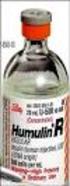 Leeds Humulin R (U500) insulin: Prescribing Guidance Amber Drug Level 2 We have started your patient on Humulin R (U500) insulin for the treatment of diabetic patients with marked insulin resistance requiring
HEALTH SERVICES PROGRAM
 HEALTH SERVICES PROGRAM The Board of Education will provide for the health and physical well being of students through the establishment of a district wide student Health Services Program in the school
Medication Administration and Delegation in Massachusetts Schools Presented by
 Medication Administration and Delegation in Massachusetts Schools Presented by Massachusetts Department of Public Health in collaboration with the Northeastern University School Health Institute Massachusetts
Good Practice Guidance: The safe management of controlled drugs in care homes
 Good Practice Guidance: The safe management of controlled drugs in care homes Medicines Management Social Care Support Team Reviewed April 2015 Good Practice Guidance: The safe management of controlled
ADMINISTRATION OF DRUG PRODUCTS/MEDICATIONS TO STUDENTS
 ADMINISTRATION OF DRUG PRODUCTS/MEDICATIONS TO STUDENTS 453.4 Drug products/medications are given to students in the school setting to continue or maintain a medical therapy which promotes health, prevents
PERRYSBURG EXEMPTED VILLAGE SCHOOL DISTRICT
 PERRYSBURG EXEMPTED VILLAGE SCHOOL DISTRICT MEDICATION IN SCHOOL 5330 F1/page 1 of 5 Before the student will be permitted to take medication during school hours or to use a self-administer medication and
HEALTH REQUIREMENTS & SERVICES: MEDICAL TREATMENT
 DESCRIPTOR TERM: Students Millard District Policy File Code: 6200 1 st Reading: 05-08-14 HEALTH REQUIREMENTS & SERVICES: MEDICAL TREATMENT Purpose The purpose of this policy is to authorize school personnel
Your Road Map to Diabetes Medication Administration Record (Part 1)
 Your Road Map to Diabetes Medication dministration Record (Part 1) Ohio Revised ode (3313.713) is the education law that addresses prescriptive medication administration in Ohio schools. This OR lists
Camp Nursing: Guidelines for Registered Nurses
 Camp Nursing: Guidelines for Registered Nurses June 2015 Approved by the College and Association of Registered Nurses of Alberta Provincial Council, June 2015. Permission to reproduce this document is
Crossroads Church. Health Information and EpiPen Administration Policies and Procedures
 Crossroads Church Health Information and EpiPen Administration Policies and Procedures Overview: Crossroads Children s Ministry is dedicated to bringing church and family together for a child s spiritual
Regulation 757-3 STUDENTS November 13, 2013 STUDENTS. Student Health Services and Requirements
 STUDENTS November 13, 2013 STUDENTS Student Health Services and Requirements Guidelines for School Staff/Child Care Contractor (CCC) to Carry Out Health Treatment Procedure and/or Emergency Treatment Procedures
Licensed Child Day Center Program Decision on the Administration of Medication
 Licensed Child Day Center Program Decision on the Administration of Medication NOTE: This sample PROGRAM S DECISION REGARDING MEDICATION plan meets and in many cases exceeds the licensing requirements
Maryland Department of Health and Mental Hygiene Center for Healthy Homes and Community Services Youth Camps
 A. Health Supervision Maryland Department of Health and Mental Hygiene Center for Healthy Homes and Community Services Youth Camps Health Supervision and Medication Administration Frequently Asked Questions
Medication Administration Training Overview. Miami-Dade County Public Schools Division of Student Services, Comprehensive Health Services
 Medication Administration Training Overview Miami-Dade County Public Schools Division of Student Services, Comprehensive Health Services Purpose of this Training To review the requirements of Florida Statues