
MOST VULNERABLE CHILDREN IN
|
|
|
- Roxanne Stone
- 10 years ago
- Views:
Transcription

1 MOST VULNERABLE CHILDREN IN Access to education and patterns of non-attendance Arushi Terway Brian Dooley Anne Smiley EDUCATION POLICY AND DATA CENTER

2 ACKNOWLEDGEMENTS This work would not have been possible without the intellectual support of our colleagues at FHI 360. In particular, we would like to thank Carina Omoeva for overall technical and methodological oversight; Benjamin Sylla and Jeje Okurut for contributing to the research design and analysis, and Mark Ginsburg, Karen Wiener, John Gillies and Kurt Moses for their careful and critical reviews and feedback.

3 MOST VULNERABLE CHILDREN IN TANZANIA Access to education and patterns of non-attendance EDUCATION POLICY AND DATA CENTER FHI 360 Arushi Terway, with Brian Dooley and Anne Smiley

4

5 CONTENTS EXECUTIVE SUMMARY iii INTRODUCTION 1 LITERATURE REVIEW: Child Vulnerability in Tanzania 1 METHODOLOGY 5 FINDINGS Access to Education: Who is out of school? Educational Access for MVC: Examining Tanzania s Indicators 5 Children living in child-headed and elderly-headed households 5 Single and double orphans 6 Single orphans living in poor housing conditions Educational Access for MVC: Examining Additional Factors of Vulnerability 9 Relationship to the head of the household 9 Early marriage 10 Pregnancy Examining the effects of multiple MVC indicators on school attendance 10 CONCLUSIONS 13 REFERENCES 14 APPENDIX A - 1

6

7 EXECUTIVE SUMMARY This paper analyzes the extent to which, in Tanzania, child vulnerability indicators identified by the government of Tanzania are associated with lower educational access, and what additional indicators predict educational vulnerability. We use the following indicators available in the Tanzania Demographic and Health Survey 2010 to examine school participation of the most vulnerable children (MVC) 1 in Tanzania as compared to other children: Child-headed household: the head of the household is 18 years or younger. Elderly-headed household with no other adult: the head of the household is 60 years or older and there is no other adult between the ages of living in the household. Orphaned: the child has one (single orphan) or both (double orphan) parents deceased. Orphans living in a rural area in a home with a roof made of grass, thatch or mud. Orphans living in an urban area in a home with one of the following conditions: 1) a roof made of grass, thatch or mud, 2) a wall made of grass or poles and mud 2 or 3) there are no toilet facilities The child s relationship to the head of the household. The child s marital history (marriage before the age of 18) The child s pregnancy whether the girl child was pregnant at the time of data collection The primary finding of this study is that after accounting for gender, household wealth, location, and child s relationship to the head of the household into consideration, orphans do not have lower levels of school participation than children whose parents are alive. Poverty remains a major barrier to school attendance for all school age children in Tanzania. A parent figure as the household head is an important factor in educational access: children living with adult household heads with whom they had a parental relationship (parents, grandparents or adopted/foster parents) were much more likely to be attending school than children not living in such households. Moreover, for children between the ages of 15 and 18, marriage, and for girls, pregnancy, were also strong predictors of lower school participation. 1 Children ages 7 to 18 2 Specification for poor quality wall material was not provided in the NCPA, grass and pole or mud was derived by the authors based on options available in DHS 2010 dataset. EDUCATION POLICY AND DATA CENTER iii

8 iv EDUCATION POLICY AND DATA CENTER

9 INTRODUCTION What does child vulnerability mean in practice? Previous research published by the FHI 360 Education Policy and Data Center (Smiley, Omoeva, Sylla, & Chaluda, 2012) demonstrated that orphanhood on its own is not necessarily a good predictor of educational disadvantage in Lesotho, Malawi, Tanzania, Uganda, and Zambia. However, poverty and lack of adult care were associated with lower levels of educational access. This paper expands on these findings by conducting an in depth analysis of a specific country context, Tanzania. It examines the extent to which child vulnerability factors identified by the government of Tanzania are associated with lower educational access, and what additional factors predict educational vulnerability. EDUCATION POLICY AND DATA CENTER 1

10 LITERATURE REVIEW Child Vulnerability in Tanzania Around 2000, in recognition of the complex ways that HIV and AIDS affects children and communities, development agencies began to shift away from the term AIDS orphans to a more inclusive category: orphans and vulnerable children, or OVC (USAID, 2000; World Bank, 2004). The term vulnerable was introduced as a category in its own right to describe children who were, for various reasons not limited to orphanhood, at risk of harm. The World Bank argued that a vulnerable child is one whose safety, well-being and development are threatened, with major dangers including lack of care and affection, adequate shelter, education, nutrition, and psychological support (2004, p. 1). In fact, there is no common definition of the term vulnerable, and the concept has proven difficult to operationalize in practice. Some development agencies focus on child well-being, the likelihood of being harmed, and survival. Others focus on more easily measurable indicators: children who have sick parents, who are infected with AIDS, or who are working for money. Table 1 in the Appendix presents a variety of definitions of vulnerability used by international development agencies over the last decade. In the case of Tanzania, poverty is widespread and is overall a major vulnerability factor in preventing many children from accessing education, though free primary education has greatly increased school participation. A comparison of school attendance data from the 1996 and 2007 Demographic and Health Surveys revealed that, in both years, the proportion of children in the poorest households who were out of school was higher than those in the richest households (Lewin & Sabates, 2011). Moreover, in 2007, children in the poorest households who did attend school were more likely to be overage than children from the middle and highest wealth quintiles. Over the past two decades, international agencies and policymakers have posited that due to the lack of parental care, orphans in sub-saharan African countries face numerous disadvantages, especially in terms of educational access (UNICEF, 2006a). However, in Tanzania, very few have found conclusive evidence that orphanhood alone is associated with lower educational access (Smiley, et al., 2012), a finding that is often explained by the existence of a strong extended family safety net as well as a plethora of services provided to orphans. A comparative study of 10 sub-saharan countries, including Tanzania, found that orphans systematically have lower school participation than non-orphans (Case, Paxson, & Ableidinger, 2004). Within the DHS 1999 Tanzania dataset, Case et al. (2004) found that after controlling for age and gender of the child between the ages of 6-14 years, orphans had 8.4 percentage points lower school enrollment than non-orphans. The study also found that all children living in households headed by non-parental relatives or non-relatives are less likely to attend school but orphans living in these households were worse off than non-orphans. Kürzinger, et al. (2008) analyzed baseline data from OVC programs in Tanzania and found that, after controlling for confounding variables such 2 EDUCATION POLICY AND DATA CENTER

11 as age, gender, religion, relationship to the head of the household, and the household child/adult ratio, no difference remained between orphans and nonorphans in terms of school enrollment. Smiley et al. (2012), analyzing 2004 and 2010 DHS datasets for Tanzania, also did not find any significant difference between the primary net attendance of orphans and non-orphans. Ainsworth, Beegle, & Koda (2005), examining household surveys from Northwestern Tanzania, a region hard-hit by the AIDS crisis, found that children spend significantly fewer hours in school during the months prior to an adult death in the household. Following the death, the school attendance of new orphans returned to normal. Beyond poverty and orphanhood, traditional cultural practices like early marriage (marriage before the age of 18) and early pregnancy can also put particularly female children at an educational disadvantage (UNICEF, 2001). Community level studies of youth have revealed that marriage is one of the major reasons for dropping out of school for both girls and boys in sub-saharan Africa (Bastien, 2008; Colclough, Rose, & Tembon, 2000). Tanzania has a high prevalence of early marriage for girls with 9 percent of females on mainland Tanzania and 6 percent of females in Zanzibar reporting being married before the age of 18. Twenty-nine percent of these females were married when they were 14 to 15 years old, and 65.3 percent were married when they were 16 to 17 years old (CDC & UNICEF, 2011). With a substantial population of children who were married before the age of 18, it is worth exploring if these children are at an educational disadvantage. It is likely that Tanzania s extended family safety net, combined with government and donor support to orphans, maybe the reason behind relatively equal levels of school enrollment and attendance among orphans and non-orphans. However, vulnerability goes beyond orphanhood, and it is important to examine other factors that may lead to educational disadvantage. In line with the international trends, Tanzania s Ministry of Health and Social Welfare (MoHSW) uses a working definition of Most Vulnerable Children (MVC) to provide social protection to orphans and other vulnerable children. MVC is defined as those children who are adversely affected by the AIDS crisis as well as all children who are at risk of not receiving basic social services including education. MVC are protected under the National Social Protection Framework (MoFEA, 2008), which outlines policies and guidelines for support from government, development agencies, civil society, and the private sector. Towards this end, the MoHSW created a general classification of MVC in the National Costed Plan of Action (NCPA) for Most Vulnerable Children that includes any child under the age of 18 living in the following conditions: those living in child-headed households THE NATIONAL ACTION PLAN ON CARE, SERVICES, TRAINING AND PROTECTION OF VULNERABLE CHILDREN In 2008/09 Tanzania provided a total of 561,823 vulnerable children with basic services including health care, food, shelter, psychological and legal services, and education (Guidelines for the Preparation of Medium Term Plan and Budget Framework for 2010/ /13). EDUCATION POLICY AND DATA CENTER 3

12 those living in elderly-headed households with no adult from years-old present those with one or both parents deceased those with disabilities those in rural areas: children with one surviving parent living in a house with poor quality roofing (grass and/or mud) and those with a disability living in similar poor conditions those in urban areas: children with one surviving parent living in a house with poor quality roofing (grass and/or mud) or with poor wall materials or without toilet facilities; and those with a disability living in similar poor conditions (MoHSW, 2008). Beyond this general guidance, the MoHSW allows flexibility at the local level to include categories of children that community stakeholders have identified as vulnerable. In 2006, the MoHSW estimated that the MVC population on Tanzania s mainland was close to 930,000, equivalent to 5 percent of the child population. Through the NCPA for Most Vulnerable Children (MoHSW, 2008), the Government of Tanzania designed a multisectoral policy to deliver support to these children, including improved access to primary and secondary education. The guidance documents argue that MVC face serious challenges in entering and remaining in the formal school system, especially those in child-headed households or in households where the head is elderly or critically ill. 4 EDUCATION POLICY AND DATA CENTER

13 METHODOLOGY This study uses Demographic and Health Survey (DHS) data for Tanzania (2010) to examine the relationship between access to schooling and indicators of child vulnerability, as defined in the Tanzanian NCPA in addition to several indicators identified by the researchers. The data captures a representative sample of all school-age children living in households, but does not include children living in institutions, informal settlements or the streets. Accordingly, the findings of this study cannot be generalized to children living outside of formal households. School-aged children were defined as those aged 7-18, with children from 7-14 being considered of primary school age and children from of secondary school age. We recognize that children of secondary school age may not necessarily be attending secondary school, as almost 20 percent of the children in this age group were attending primary; the primary-secondary nomenclature in this paper is simply meant to refer to the different age groups. The sample included a total of 15,270 children, out of which 11,218 were of primary school age and 4,052 were of secondary school age. there is no other adult between the ages of living in the household. Orphaned: the child has one (single orphan) or both (double orphan) parents deceased. Orphans living in a rural area in a home with a roof made of grass, thatch or mud. Orphans living in an urban area in a home with one of the following conditions: 1) a roof made of grass, thatch or mud, 2) a wall made of grass or poles and mud 2 or 3) there are no toilet facilities Additional variables identified by the authors The child s relationship to the head of the household. The child s marital history (marriage before the age of 18) The child s pregnancy whether the girl child was pregnant at the time of data collection School attendance within the last year was the outcome variable measuring educational access. School attendance in this study is measured by the head of the household s response to whether the child attended school at any time during the year. It does not measure the official enrollment in school or the number of days attended by the child. The following proxy vulnerability indicators were used as explanatory variables: Bivariate data analysis was conducted using oneway analysis of variance (ANOVA) to determine the variation in school attendance based on the vulnerability indicators above. For multiple regression analysis, probit models were used to determine the combined effect of multiple indicators on school attendance. The results of this analysis were generalized to the larger population at 95 percent confidence interval. Variables identified by the Tanzania NCPA 1 Child-headed household: the head of the household is 18 years or younger. Elderly-headed household with no other adult: the head of the household is 60 years or older and 1 Indicators on disability were not included in the analysis because no data on household member disabilities was available in DHS 2010 dataset. 2 Specification for poor quality wall material was not provided in the NCPA, grass and pole or mud was derived by the authors based on options available in DHS 2010 dataset. EDUCATION POLICY AND DATA CENTER 5

14 FINDINGS 1.1 Access to Education: Who is out of school? In the past decade, Tanzania has made great progress in improving primary school access, with gross enrollment rates increasing from 68 percent in 2000 to 102 percent in However, approximately 650 thousand children 16 percent of the primary school age population (ages 7-14) were still not enrolled in primary school in Secondary access was even more problematic, with 52 percent of the relevant age group (15-18) out of school in FIGURE 1. PERCENTAGE OF CHILDREN WHO DID NOT ATTEND SCHOOL AT ANY TIME DURING THE 2010 SCHOOL YEAR, BY AGE 80% 60% 40% 20% 0% The 2010 DHS data revealed that school attendance was associated with region of residence, urban/rural residence, age, and household wealth; however, girls and boys had almost equal attendance rates. The number of children out of school ranges from 39 percent in Tabora to 10 percent in Town West (Zanzibar) and Kilimanjaro. At the same time, 10 percent more children were out of school in rural areas than in urban areas. Another important factor appears to be age: younger children (7-9 years) and older children (13-18 years) are much more likely to be out of school than children within ages (see Figure 1). Finally, poverty remains a major factor; in 2010 the highest proportion of out-of-school children was from the lowest wealth quintile. This was true for both girls and boys, with 38 percent and 35 percent out of school rate respectively for the poorest wealth quintile 2 (see Figure 2). 1.2 Educational Access for MVC: Examining Tanzania s Indicators The Government of Tanzania identifies MVC as particularly disadvantaged in primary and secondary school access (MoHSW, 2008). However, ANOVA findings demonstrate that, in most cases, Tanzania s MVC indicators are strong predictors of low school attendance only for specific subpopulations. Children living in child-headed and elderly-headed households The first two indicators of vulnerability in the NCPA are defined by the age of the head of the household. Children are considered vulnerable if they are living in a household that is either headed by a child under the age of 19, or headed by an elderly adult over the age of 59 with no other adults living in the household. 1 World Development Indicators, 2 Wealth quintiles were calculated by TDHS using a principle component analysis based on household asset data on number of variables like household ownership of a number of characteristics, such as source of drinking water, type of sanitation facilities, and type of materials used in dwelling construction. 6 EDUCATION POLICY AND DATA CENTER

15 FIGURE 2. PERCENTAGE OF CHILDREN OUT OF SCHOOL BY HOUSEHOLD WEALTH 40% 30% 20% 10% 0% Male Female Male Female Male Female Male Female Male Female POOREST POORER MIDDLE RICHER RICHEST In our sample, the majority of the households had adult household heads between the ages of 19 and 59, and very few lived in child-headed households. However, a substantial number of children lived in elderly-headed households (see Table 1). the age of 19, and they were less likely to be out of school than children living in adult headed households. However, this difference in school attendance was not statistically significant and could not be generalized to all rural households. TABLE 1. CHILDREN LIVING IN HOUSEHOLDS HEADED BY CHILDREN, ADULTS AND THE ELDERLY Age of Household Head Number of Children under to 59 12,076 over 59 2,902 In urban areas, the percentage of children out of school did not differ significantly among children living in child-headed, adult-headed or elderlyheaded households. However, in rural areas, 31 percent of out-of-school children lived in elderly-headed households with no other adults present in the household, a number that was significantly higher than both children living in adult-headed and child-headed households. A very small number of children (32) in this sample lived in rural households headed by children under Single and double orphans In this sample, 12 percent of the children were single orphans, with either the mother or the father deceased, and 2 percent double orphans, with both parents deceased. In the primary school age group (7-14 years), more single and double orphans were out of school than non-orphans, but this difference was not statistically significant. However, for secondary school aged children (15-18 years), there was a significant difference in the proportion of single orphans who were out of school as compared to non-orphans. The out-of-school rate was high for secondary school age children in general, but in this age group, 55 percent of single orphans were out of school compared with a significantly lower percentage of non-orphans (45 percent). We did not find a statistically significant difference in children being out of school between double orphans and non-orphans or between double orphans and single orphans. In urban areas, within the secondary school age population, single orphans were approximately one and half times more likely to be out of school than non-orphans, and double orphans were almost twice EDUCATION POLICY AND DATA CENTER 7

16 FIGURE 3. PERCENTAGE OF CHILDREN OUT OF SCHOOL IN AGE OF HOUSEHOLD HEAD 35% 30% 25% 20% 15% 10% 5% 0% Child-Headed Adult-Heaeded Elderly-Headed Child-Headed Adult-Heaeded Elderly-Headed URBAN RURAL as likely to be out of school as non-orphans. Thus, orphanhood appears to be a determinant of lower school attendance for older children, though not for younger children. Due to the abolition of school fees at the primary level, it may be that all primary-aged children gained improved access to schooling, while older orphans have a more difficult time than nonorphans in paying fees for secondary school or have other opportunity costs like earning a living. Orphans living in poor housing conditions The Tanzanian government classifies single orphans living in poor housing conditions as vulnerable. In fact, almost 45 percent of the rural children in the dataset lived in houses with roofs made of grass, thatch, or mud, which according to the official definition would be classified as poor housing. In rural areas, children with only one living parent who reside in poor quality houses were significantly more likely to be out of FIGURE 4. PERCENTAGE OF CHILDREN OUT OF SCHOOL BY ORPHAN STATUS 60% 50% 40% 30% 20% 10% 0% Non-Orphans Single Orphans Double Orphans Non-Orphans Single Orphans Double Orphans PRIMARY SECONDARY 8 EDUCATION POLICY AND DATA CENTER

17 FIGURE 5. PERCENTAGE OF CHILDREN OUT OF SCHOOL IN RURAL AREAS WITH POOR HOUSING 50% 45% 40% 35% 30% 25% 20% 15% 10% 5% 0% Non-Orphans Single Orphans Double Orphans Non-Orphans Single Orphans Double Orphans GOOD ROOF BAD ROOF school, compared to single orphans living in better quality homes. However, as we can see in Figure 5, this difference was significant for non-orphans as well, who had 12 percentage point higher rate of non-attendance than non-orphans in better quality housing. We found a significant difference in school attendance based on quality of housing regardless of orphanhood status: 35 percent of all rural children, orphans and nonorphans combined, living in houses with poor quality roofing were out of school, compared to 23 percent of rural children with better quality roofing. Further, even when the analysis is restricted to children (orphans and non-orphans) in the poorest two wealth quintiles, the differences in school attendance based on the quality of housing remain, which indicates that the effect of the living conditions is not entirely explained by household wealth. In sum, it appears that the differences in school attendance in rural areas are explained to a greater extent by socioeconomic factors, and in particular, living conditions, rather than orphanhood. poor quality walls (made of grass, poles, or mud 3 ) and the absence of a toilet. Compared to rural areas, very few urban children lived in poor quality households: 8 percent had a poor quality roof, 12 percent had poor quality walls, and 4 percent did not have a toilet. Only 26 out of the 3,019 children living in urban areas reported having all three conditions, and four of these were orphans. Thus, the number of urban orphans with the worst housingconditions was too small to generalize any results to the larger population. However, when we examine urban households with at least one poor quality housing characteristic, 18 percent of urban children qualified, and 12 percent of these were orphans. However, we did not find any significant difference in school attendance for orphans living in poor quality housing as compared to orphans living in better quality housing. We also did not find any significant differences in school attendance between urban orphans living in poor quality housing and urban children in the poorest two wealth quintiles. In urban areas, the definition of poor quality housing used by MoHSW was expanded to three conditions: poor quality roof (made of grass, thatch, or mud), 3 Defined by the authors as no specific definition was available in the NCPA. EDUCATION POLICY AND DATA CENTER 9

18 This analysis of group means shows that Tanzania s official MVC populations are not always educationally disadvantaged. In fact, primary school age orphans show no evidence of being significantly disadvantaged than non-orphans in the same age group. However, disaggregating these populations to smaller groups does, in some instances, reveal inequities. Orphan status is a major factor for identifying MVC in Tanzania as it is included in three out of the six categories in the MVC definition. We find that the effect of orphanhood differs by the age group of the children: while orphan status did not reveal any disadvantage in school attendance for primary age children, at the secondary level, a higher proportion of both single and double orphans were out of school when compared to non-orphans. This finding is supported by previous research that suggests that orphan status on its own does not predict low levels of school attendance, though other factors may play a major role Educational Access for MVC: Examining Additional Factors of Vulnerability In exploring more groups who may be educationally disadvantaged in Tanzania, we identified three more possible indicators of child vulnerability and tested them using the DHS 2011 data: 1) relationship to the head of the household, 2) whether the child was married before the age of 18, and 3) whether the female child was pregnant at the time of the survey. Relationship to the head of the household When children are living in a household where the head is not their parent, grandparent or adopted/ foster parent, one-way ANOVA clearly shows that they are much more likely to be out of school. In the sample, all children who were living in households where the head was their parent-in-law or spouse, were out of school. In fact, we found no statistically significant difference in school attendance for children that were living in households with their grand-parent FIGURE 6. PERCENTAGE OF CHILDREN OUT OF SCHOOL IN URBAN AREAS BY QUALITY OF HOUSE 40% 35% 30% 25% 20% 15% 10% 5% 0% Non-Orphans Single Orphans Double Orphans Non-Orphans Single Orphans Double Orphans GOOD QUALITY HOUSE POOR QUALITY HOUSE 10 EDUCATION POLICY AND DATA CENTER

19 FIGURE 7. PERCENTAGE OF CHILDREN OUT OF SCHOOL BY THE RELATIONSHIP TO THE HEAD OF THE HOUSEHOLD 100% 80% 60% 40% 20% 0% Parent Grandparent Adopted/ Foster Parent Parent-in-law Sibling Spouse Co-Spouse Other Relative Non relative Head or adopted/foster parent as oppose to children living with their parent as the head of the household. However, when children were living with their parentin-laws, spouses, siblings, other relative or nonrelative, they had significantly higher out of school rates than children living with their parents. Early marriage Children who were married before the age of 18 were also significantly more likely to be out of school than unmarried children, and the difference is much larger for females than for males. Ninety-seven percent of married girls of secondary school age were out of school, compared to 50 percent of unmarried girls. For boys, the difference was smaller but also significant; 73 percent of married boys were out of school compared to 46 percent of the unmarried boys. This data indicates that early marriage, especially for girls, is a major barrier to school attendance in Tanzania. Pregnancy For girls between 15 and 18 years old, another major factor contributing to lower school attendance was pregnancy. Of the girls who knew about their pregnancy and responded to the survey question 4, 5 percent were pregnant. However, less than 1 percent of pregnant girls were attending school, as opposed to 46 percent of the girls who reported not being pregnant Examining the effects of multiple MVC indicators on school attendance Based on the indicators described above, multiple regression probit models were created to analyze the probability of school attendance for orphans in Tanzania. The dependent variable in the analyses was school attendance (yes or no) and the primary independent variable was orphan status (nonorphan, single orphan and double orphan). Depending on whether the children in the sample were of primary or secondary age, the following additional independent variables were included: 1) gender 2) location 3) wealth quintile 4) relationship to the head of household 5) marital status 6) pregnancy. The results of the probit regression analysis, along with the marginal effects of each variable on school attendance probability, are presented in Tables 3-10 in the Appendix. 4 A subset of women of age 15-49, who were residing or visiting the household were selected to respond to a separate Women s Questionnaire that included questions on fertility and woman s health. EDUCATION POLICY AND DATA CENTER 11

20 FIGURE 8. PERCENTAGE OF CHILDREN OUT OF SCHOOL BY MARITAL STATUS 100% 80% 60% 40% 20% 0% Never Married married MALE Never Married married FEMALE In the full sample of all school age children, between ages 6 to 18, (Table 3), when we control for gender, location, household wealth quintile and relationship to the head of the household, we find that single orphans have slightly lower school attendance rate than non-orphans (a 3 percent difference). This difference is statistically significant (p >.05), though the standard error (SE =.047 for ẞ = -.99) for this variable coefficient is fairly large. Both household wealth quintile and certain relationships to the head of the household have fairly large and significant effects on school attendance. Holding all other variables at their mean, children living in the richest quintile are 20 percentage point more likely to be attending school than children in the poorest quintile. As foreshadowed by the analysis of group means, we find no significant difference in school attendance between children living in households with their parents as the head versus children living with grandparents or adopted/foster parents. On the other hand, children living with a household head who is a sibling, other relative or non-relative have significantly lower levels of school attendance. Child living with a non-relative as the head of the household had 47 percentage point lower probability of attending school than a child who lives with the parent as the head of the household. Children from child-headed households also appear to have slightly higher probability of being out of school though this effect is not statistically significant. This could be due the small number of child-headed household in this sample. When we examine the data for primary school age children, between the ages of 7-14, only (as presented in Model B in Table 4), we find that orphan status does not have a significant effect in this group. However, wealth quintile and relationship to the head of the household have much larger and significant effects on school attendance than orphan status, gender and location of the child. The model for secondary school age children, between the ages of 15-18, (Table 5 in Appendix) had similar direction and significance of the effects as the primary school age model, though the effect size for some of the variables is considerably larger. For example, secondary school age children in the richest quintile are 31 percentage points more likely to attend school compared to the poorest quintile. A major difference for secondary school age children as compared to primary age children is that the effect size of gender and location were significant for this age group. Controlling for all other factors, girls were 6 percentage points less likely to attend school than boys. Similarly children residing in rural areas were 8 percentage points less likely to attend school than children in urban areas. The secondary school age population included a small sample of children as the head of the household and these children were 23 percentage points more likely to be attending school than children with parent as the head. However, this difference was not statistically significant. In all three models we found that the type of the relationship to the head of the household was a very strong predictor for school attendance, where a child living with a household head that is not in a parental role (i.e. parent, grandparent, adopted/foster parent) was much more likely to be out of school. Since orphans are much more likely to be living with non-parental heads, it is possible that the combined effect of orphanhood and non-parent household head puts them at a higher disadvantage than nonorphans. In the DHS 2010 sample 26 percent of single orphans and 56 percent of the double orphans lived in households where the head was not related to them 12 EDUCATION POLICY AND DATA CENTER

21 in a parental role. When we included the interaction variable between orphanhood and non-parental relationship to the head of the household in the full sample of children between ages 7-18 and found that orphans, whether single or double, were 5 percentage points more likely to be out of school as compared to non-orphans (Model A-1). All, orphans and nonorphans, living in households that were not headed by their parent, grandparent or adopted/foster parent, were 29 percentage points more likely to be out of school. However, we found that orphans, who were living in households where the head was not a parent or parent like figure, were 6 percentage point more likely to attend school than non-orphans. When we split the sample for primary school age children and secondary school age children, this trend of orphans in non-parental households having better school attendance than non-orphans remained (Model B-1 and C-1). For primary school age children the difference in school attendance between orphans and non-orphans, holding all other factors equal, is negligible and not significant. Within this group children staying in households with non-parental head were 19 percentage points more likely to be out of school; but orphans in these households were 5 percentage points more likely to attend school than non-orphans and this relationship was significant at 90 percent confidence interval. In the secondary school age group (Model C-1) we found similar direction and effect size for the interaction between orphanhood and non-parental household head, however this effect was not significant. Since we found that 6 percent of secondary school aged children were married in our sample and that their level of school attendance, especially girls was considerably low, we included marital status in the probit model (Table 6). When controlling for marital status along with other independent variables, the effect of orphanhood for secondary school age children was no longer significant. Marital status in this model had largest effect size; children who were married in this group were almost 20 percentage points more likely to be out of school than unmarried children. Given the already low levels of secondary school enrollment in Tanzania, this indicates that children who get married early are extremely disadvantaged in educational access. As with other models, wealth quintile and relationship to the head of the household were significant factors in predicting school attendance. Controlling for all other variables, children in the richest quintile were 30 percentage points more likely to attend school than children in the poorest quintile. FIGURE 9. PROBABILITY OF CHILDREN BEING OUT OF SCHOOL BY HEAD OF HOUSEHOLD AS COMPARED TO CHILDREN LIVING WITH PARENT HEAD OF HOUSEHOLD, WHEN CONTROLLING FOR ALL OTHER FACTORS 60% 50% 40% 30% 20% 10% 0% Grandparent Adopted/ Foster Parent Sibling*** Other Relative*** Non relative*** Head EDUCATION POLICY AND DATA CENTER 13
22 Secondary school age children who were living in households where the head was the sibling, other relative or non-relative had 16 percentage points, 20 percentage points and 45 percentage points lower probabilities of being in school, respectively. In this model as well we found that children who were the head of the household were more likely to be in school in this sample than children living with their parents, however this difference was not significant. As revealed in the previous model for secondary school aged children, girls were more likely to be out of school than boys. Another factor that reduced the chances of girls attending school is pregnancy. When controlling for all other factors (Table 7), we found that a pregnant girl is 52 percentage points less likely to attend school than a non-pregnant girl. In this sample, and probably in the larger population, pregnant girls only make up 5 percent of secondary school age children. However, with already low levels of school access for girls in this age group, pregnancy adds another barrier to accessing education. Even though bivariate analysis showed that orphans in at least some subpopulations were more likely to be out of school than non-orphans, multiple regression probit models that control for other life and household factors revealed that the statistical significance of this effect is either diminished or inconclusive. Once again, we find that poverty is a significant predictor of low educational access, to a greater extent than either orphan status or the urban/rural divide. FIGURE 10. PROBABILITY OF CHILDREN BEING OUT OF SCHOOL BY MARITAL STATUS AND PREGNANCY, WHEN CONTROLLING FOR ALL OTHER FACTORS 60% 50% 40% 30% 20% 10% 0% MARRIED CURRENTLY PREGNANT The relationship to the head of the household is the other major factor that affects school attendance for both primary and secondary school age children. Children who were living with adult household heads with whom they had a close relationship (including grandparents) were much more likely to be attending school than children not living in such households. It appears that having an adult caregiver in the household who has a close relationship with the child is more influential in school attendance than having living parents. This is probably part of the traditional extended family safety net present in Tanzania. 14 EDUCATION POLICY AND DATA CENTER
23 CONCLUSION This bivariate and multiple regression analysis of the most recent DHS household data from 2010 supports the finding that orphan status is not necessarily a strong predictor of educational disadvantage for children in Tanzania. Among secondary school age children, where orphans do have lower levels of school attendance, other factors like household wealth and marital status are contributing to lower attendance. Some of the official MVC indicators, including age of the household head or poor housing conditions do not necessarily predict lower educational access in all sub-populations. Overall, poverty still remains a strong predictor of educational disadvantage for all children. Among school aged children, the relationship to the head of the household is also a strong predictor for whether they attend school or not. Children whose parents are the head of the household are most likely to attend school, but children still have high rates of school attendance in households headed by grandparents and foster parents. School attendance declines for children who live in households headed by siblings, spouses, other relatives, and non-relatives. For secondary school aged children, marriage and pregnancy significantly lower the likelihood of school attendance. Given these results, the Government of Tanzania, beyond supporting orphans, could further target smaller groups of MVC for additional support in accessing primary and secondary education. These groups would include children living in households headed by the elderly, siblings, spouses, other relatives or non-relatives. For secondary school aged children, additional educational services should be provided to married and pregnant girls. And throughout the nation, more effort needs to go into improving access for children living in the poorest households. Given that the 2010 DHS dataset only includes data for children living in households, this analysis does not reflect the situation children living on the street, in institutions, or in informal settlements, who are likely even more marginalized than those described in this paper and may have even lower educational access. The Tanzanian government is currently in the process of collecting data on MVC with support from communities, which may allow a larger sample size and a deeper analysis revealing more specific indicators of educational disadvantage. Finally, more research should be conducted on the quality of education for MVC who are enrolled and attending school. Given the barriers that these children face in accessing education, there is every possibility that there are also disadvantages within the schools themselves. An analysis of the quality of educational services and student performance for MVC may reveal further areas of support necessary to promote true educational equity. EDUCATION POLICY AND DATA CENTER 15
24 REFERENCES Adato, M., Kadiyala, S., Roopnaraine, T., Biermayr-Jenzano, P., & Norman, A. (2005). Children in the Shadow of AIDS: Studies of Vulnerable Children and Orphans in Three Provinces in South Africa: IFPRI. Ainsworth, M., Beegle, K., & Koda, G. (2005). The impact of adult mortality and parental deaths on primary schooling in north-western Tanzania. [Article]. Journal of Development Studies, 41(3), doi: / MoFEA. (2008). National Social Protection Framework Dar es Salaam MoHSW. (2008). The National Costed Plan of Action for Most Vulnerable Children Partnership for Child Development. (2005). Ensuring Education Access for Orphans and Vulnerable Children: A Planners Handbook. London: PCD, World Bank, UNICEF. Bastien, S. (2008). Out-of-school and at risk?: Sociodemographic characteristics, AIDS knowledge and risk perception among young people in Northern Tanzania. International Journal of Educational Development, 28(4), Case, A., Paxson, C., & Ableidinger, J. (2004). Orphans in Africa: parental death, poverty, and school enrollment. Demography, 41(3), CDC, & UNICEF. (2011). Violence Against Children in Tanzania Findings from a National Survey Muhimbili University of Health and Allied Sciences. Colclough, C., Rose, P., & Tembon, M. (2000). Gender inequalities in primary schooling:: The roles of poverty and adverse cultural practice1. International Journal of Educational Development, 20(1), Firelight Foundation, American Jewish World Service, Bernard van Leer Foundation, & Pan African Children s Fund. (2005). The Promise of a Future: Strengthening Family and Community Care for Orphans and Vulnerable Children in Sub-Saharan Africa. Kürzinger, M., Pagnier, J., Kahn, J., Hampshire, R., Wakabi, T., & Dye, T. (2008). Education status among orphans and non-orphans in communities affected by AIDS in Tanzania and Burkina Faso. AIDS care, 20(6), Lewin, K. M., & Sabates, R. (2011). Changing Patterns of Access to Education in Anglophone and Francophone Countries in Sub Saharan Africa: Is Education for All Pro-Poor? CREATE Pathways to Access. Research Monograph No. 52. PEPFAR. (2006). Orphans and Other Vulnerable Children Programming Guidance for United States Government In-Country Staff and Implementing Partners. Smiley, A., Omoeva, C., Sylla, B., & Chaluda, A. (2012). Orphans and vulnerable children: trends in school access and experience in eastern and southern Africa: Education Policy Data Center, FHI 360. UNAIDS, UNICEF, & WHO. (2008). Children and AIDS: Second Stocktaking Report. UNICEF. (2001). Early marriage: child spouses: Unicef, Innocenti Research Centre. UNICEF. (2006a). Africa s Orphaned and Vulnerable Generations: Children affected by AIDS.: Unicef. UNICEF. (2006b). Africa s Orphaned Generations. USAID. (2000). Children on the Brink Washington, DC. USAID, UNAIDS, & UNICEF. (2004). Children on the Brink. Washington, D.C.: USAID, UNAIDS & UNICEF. World Bank. (2004). Reaching out to Africa s Orphans: A Framework for Public Action Africa Region (Human Development), and Human Development Network (Social Protection) 16 EDUCATION POLICY AND DATA CENTER
25 APPENDIX TABLE 2. INTERNATIONAL AGENCY DEFINITION FOR OVC Source those whose safety, well-being and development are, for various reasons, threatened. Of the many factors that accentuate children s vulnerabilities, the most important are lack of care and affection, adequate shelter, education, nutrition, and psychological support. While children exposed to many facets of deprivation and poverty are vulnerable, children who lost their parents may be particularly vulnerable because they do not have the emotional and physical maturity to adequately address and bear the psychological trauma associated with parental loss (p. 1) World Bank, 2004 those children who are most at risk of facing increased negative outcomes compared to the average child in their society. Main negative outcomes include, among other things, severe malnutrition, above average rates of morbidity and mortality and lower than average rates of school attendance and completion at primary level, and in all probability, increased work burden (both paid and unpaid child labor) (p. 2) children whose survival, well-being, or development is threatened by HIV/AIDS (p. 6) (USAID, UNAIDS, & UNICEF, 2004) children living in households with HIV positive members; children at risk of becoming orphans (i.e. children living with HIV positive primary caregivers); and children orphaned after their biological parents have passed away (p. 1) all children who community members and organizations determine to be in the greatest need of assistance (p. 7) (Adato, Kadiyala, Roopnaraine, Biermayr-Jenzano, & Norman, 2005) (Firelight Foundation, American Jewish World Service, Bernard van Leer Foundation, & Pan African Children s Fund, 2005) A child that is intrinsically vulnerable (e.g. a young child) + at risk + in need At risk means that there is an increased likelihood that the child will be damaged. In need means that some intervention is required in order to prevent the child from being damaged (p. 9). those who are living with HIV/AIDS, those whose parents are sick with HIV/AIDS, and, more generally, children who are especially vulnerable because of poverty, discrimination or exclusion, whether as a consequence of HIV/AIDS or not (p. 13) (Partnership for Child Development, 2005) (UNICEF, 2006b) those who are in poor health, out of school, burdened with excessive labor, extremely poor or stigmatized regardless of their orphan or HIV status (p. 25) (UNAIDS, UNICEF, & WHO, 2008) A child, 0-17 years old, who is either orphaned or made more vulnerable because of HIV/AIDS. Orphan: Has lost one or both parents. Vulnerable: Is more vulnerable because of any or all of the following factors that result from HIV/AIDS: Is HIV positive; Lives without adequate adult support (e.g., in a household with chronically ill parents, a household that has experienced a recent death from chronic illness, a household headed by a grandparent, and/or a household headed by a child); Lives outside of family care (e.g., in residential care or on the streets); or Is marginalized, stigmatized, or discriminated against. (p. 4) (PEPFAR, 2006) EDUCATION POLICY AND DATA CENTER 17
26 FIGURE 11. % CHILDREN WHO DID NOT ATTEND SCHOOL AT ANY TIME DURING 2010 SCHOOL YEAR, BY REGION 50% 40% 30% 20% 10% 0% Dodoma Arusha Kilimanjaro Tanga Morogoro Pwani Dar Es Salaam Lindi Mtwara Ruvuma Iringa Mbeye Singida Tabora Rukwa Kigoma Shinyanga Kagera Mwanza Mara Manyara Zanzibar North Zanzibar South Town West Pemba North Pemba South 18 EDUCATION POLICY AND DATA CENTER
27 TABLE 3. MODEL A: ALL SCHOOL AGE CHILDREN N = Standard Error Marginal Effect Orphan status Non-Orphan Single * (0.0475) -2.97% Double (0.1170) -6.05% Gender Male Female (0.0308) 0.51% Location Urban Rural (0.0742) -2.08% Wealth quintile Poorest Poorer * (0.0455) 3.29% Middle *** (0.0551) 10.27% Richer *** (0.0544) 14.92% Richest *** (0.0878) 19.90% Relationship to the Household Head Parent Grandparent (0.0506) -0.86% Adopted/Foster Parent (0.0904) -4.55% Sibling *** (0.1099) % Other relative *** (0.0669) % Non relative *** (0.1130) % Head (0.4789) -1.55% EDUCATION POLICY AND DATA CENTER 19
28 TABLE 4. MODEL B: PRIMARY SCHOOL AGE CHILDREN N = Standard Error Marginal Effect Orphan status Non-Orphan Single * (0.0628) 0.19% Double (0.1658) 2.92% Gender Male Female (0.0331) 0.88% Location Urban Rural (0.1204) -0.95% Wealth quintile Poorest Poorer ** (0.0548) 4.02% Middle *** (0.0655) 9.80% Richer *** (0.0683) 14.36% Richest *** (0.1247) 17.62% Relationship to the Household Head Parent Grandparent (0.0631) -2.08% Adopted/Foster Parent (0.1133) -2.31% Sibling *** (0.1483) % Other relative *** (0.0837) % Non relative *** (0.1352) % Head 20 EDUCATION POLICY AND DATA CENTER
29 TABLE 5. MODEL C: SECONDARY AGE CHILDREN N =3039 Standard Error Marginal Effect Orphan status Non-Orphan Single (0.0881) -3.43% Double (0.1749) -7.42% Gender Male Female * (0.0638) -5.82% Location Urban Rural * (0.0930) -7.57% Wealth quintile Poorest Poorer (0.0845) -0.76% Middle ** (0.0903) 10.50% Richer *** (0.0979) 17.73% Richest *** (0.1250) 30.81% Relationship to the Household Head Parent Grandparent (0.1094) -6.18% Adopted/Foster Parent (0.1672) -8.25% Sibling * (0.1809) % Other relative *** (0.1076) % Non relative *** (0.1774) % Head (0.4910) 22.59% EDUCATION POLICY AND DATA CENTER 21
30 TABLE 6. MODEL D: SECONDARY AGE CHILDREN, MARRIAGE N = 2964 Standard Error Marginal Effect Orphan status Non-Orphan Single (0.0916) -3.36% Double (0.1759) -7.67% Gender Male Female * (0.0649) -5.70% Location Urban Rural * (0.0908) -8.15% Wealth quintile Poorest Poorer (0.0882) -1.11% Middle * (0.0928) 9.40% Richer *** (0.1001) 17.19% Richest *** (0.1249) 29.93% Relationship to the Household Head Parent Grandparent (0.1106) -5.81% Adopted/Foster Parent (0.1687) -9.29% Sibling * (0.1868) % Other relative *** (0.1104) % Non relative *** (0.1774) % Head (0.4984) 20.98% Married Never Married * (0.2403) % 22 EDUCATION POLICY AND DATA CENTER
31 TABLE 7. MODEL E: SECONDARY AGE GIRLS, MARRIAGE AND PREGNANCY N =1395 Standard Error Marginal Effect Orphan status Non-Orphan Single (0.1359) -2.22% Double (0.2409) % Location Urban Rural (0.1325) -8.98% Wealth quintile Poorest Poorer (0.1446) 3.78% Middle * (0.1397) 13.46% Richer *** % Richest *** (0.1769) 32.83% Relationship to the Household Head Parent Grandparent (0.1714) 4.09% Adopted/Foster Parent (0.2372) -8.62% Sibling (0.2422) -8.59% Other relative ** (0.1425) % Non relative *** (0.2461) % Head (0.5520) 26.36% Married Never Married * (0.2816) % Pregnant Not Pregnant Currently Pregnant *** (0.3449) % EDUCATION POLICY AND DATA CENTER 23
32 TABLE 8. MODEL A-1: ALL SCHOOL AGE CHILDREN WITH INTERACTION EFFECTS N = Standard Error Marginal Effect Orphan status Non-Orphan Single or Double Orphan ** (0.0512) -5.29% Gender Male Female (0.0306) -0.24% Location Urban Rural (0.0742) -2.12% Wealth quintile Poorest Poorer * (0.0449) 3.34% Middle *** (0.0545) 10.43% Richer *** (0.0540) 15.15% Richest *** (0.0857) 19.64% Relationship to the Household Head Parent like relationship Non-parent relationship *** (0.0574) % Interaction Orphan * Non-parent * (0.0995) 6.39% 24 EDUCATION POLICY AND DATA CENTER
33 TABLE 9. MODEL B-1: PRIMARY SCHOOL AGE CHILDREN WITH INTERACTION EFFECTS N = Standard Error Marginal Effect Orphan status Non-Orphan Single or Double Orphan (0.0656) -1.13% Gender Male Female (0.0328) 0.88% Location Urban Rural (0.1197) -0.95% Wealth quintile Poorest Poorer ** (0.0541) 3.93% Middle *** (0.0664) 9.89% Richer *** (0.0681) 14.55% Richest *** (0.1230) 17.50% Relationship to the Household Head Parent like relationship Non-parent relationship *** (0.0757) % Interaction Orphan * Non-parent (0.1439) 5.31% EDUCATION POLICY AND DATA CENTER 25
34 TABLE 10. MODEL C-1: SECONDARY SCHOOL AGE CHILDREN WITH INTERACTION EFFECTS N = 3039 Standard Error Marginal Effect Orphan status Non-Orphan Single or Double Orphan (0.0918) -7.16% Gender Male Female ** (0.0619) -7.95% Location Urban Rural (0.0835) -7.85% Wealth quintile Poorest Poorer (0.0835) -0.28% Middle ** (0.0872) 11.47% Richer *** (0.0993) 18.55% Richest *** (0.1153) 29.42% Relationship to the Household Head Parent like relationship Non-parent relationship *** (0.1028) % Interaction Orphan * Non-parent (0.1435) 9.17% 26 EDUCATION POLICY AND DATA CENTER
35
36 EDUCATION Making sen EDUCATION POLICY AND DATA CENTER 1825 Connecticut Ave NW Washington, DC Visit us at
Over-Age, Under-Age, and On-Time Students in Primary School, Tanzania
 Primary School Net and Gross Attendance Rates, Tanzania More than three quarters of primary school age children in Tanzania attend school and gender parity in attendance has been achieved. 1 of children
MALARIA STATUS IN TANZANIA MAINLAND: AN OVERVIEW NATIONAL MALARIA FORUM- 25 TH APRIL 2014.
 MALARIA STATUS IN TANZANIA MAINLAND: AN OVERVIEW NATIONAL MALARIA FORUM- 25 TH APRIL 2014. 1 Presentation Outline: Overview Intervention scale up/achievements Current malaria epidemiologic profile and
CHAPTER 5. Tanzania Education Sector Analysis 203
 CHAPTER 5 EQUITY IN SCHOOLING In order to achieve long-term sustainability, the development of education systems must integrate the important equity dimension. Indeed, equity becomes a pillar of the analysis
Progress and prospects
 Ending CHILD MARRIAGE Progress and prospects UNICEF/BANA213-182/Kiron The current situation Worldwide, more than 7 million women alive today were married before their 18th birthday. More than one in three
CORRELATIONAL ANALYSIS BETWEEN TEENAGE PREGNANCY AND MATERNAL MORTALITY IN MALAWI
 CORRELATIONAL ANALYSIS BETWEEN TEENAGE PREGNANCY AND MATERNAL MORTALITY IN MALAWI Abiba Longwe-Ngwira and Nissily Mushani African Institute for Development Policy (AFIDEP) P.O. Box 31024, Lilongwe 3 Malawi
VI. IMPACT ON EDUCATION
 VI. IMPACT ON EDUCATION Like every other sector of the social and economic life of an AIDS-afflicted country, the education sector has felt the impact of the HIV/AIDS epidemic. An increasing number of
Teenage, Married, and Out of School
 Teenage, Married, and Out of School Effects of early marriage and childbirth on school dropout April 2014 EDUCATION POLICY AND DATA CENTER Teenage, Married, and Out of School Effects of early marriage
Over-Age, Under-Age, and On-Time Students in Primary School, Uganda
 Primary School Net and Gross Attendance Rates, Uganda More than three quarters of primary school age children in Uganda attend school and gender parity in attendance has been achieved. of children ages
Teen Pregnancy in Sub-Saharan Africa: The Application of Social Disorganisation Theory
 Teen Pregnancy in Sub-Saharan Africa: The Application of Social Disorganisation Theory Extended Abstract Population Association of America 2015 Annual Meeting-April 30-May 2, San Diego,CA Sibusiso Mkwananzi*
How to End Child Marriage. Action Strategies for Prevention and Protection
 How to End Child Marriage Action Strategies for Prevention and Protection Why Child Marriage Must End Girls who marry as children are often more susceptible to the health risks associated with early sexual
Malawi Population Data Sheet
 Malawi Population Data Sheet 2012 Malawi s Population Is Growing Rapidly Malawi Population (Millions) 26.1 19.1 13.1 9.9 8.0 4.0 5.5 1966 1977 1987 1998 2008 2020 2030 Malawi s population is growing rapidly,
Population, Health, and Human Well-Being-- Benin
 Population, Health, and Human Well-Being-- Benin Demographic and Health Indicators Benin Sub- Saharan Africa World Total Population (in thousands of people) 1950 2,046 176,775 2,519,495 2002 6,629 683,782
MALAWI YOUTH DATA SHEET 2014
 MALAWI YOUTH DATA SHEET 2014 2 of Every 3 People in Malawi Are Under Age 25 Age 80+ 75-79 70-74 65-69 60-64 55-59 50-54 45-49 40-44 35-39 30-34 25-29 Male Female 20-24 POPULATION 700,000 700,000 0 POPULATION
The South African Child Support Grant Impact Assessment. Evidence from a survey of children, adolescents and their households
 The South African Child Support Grant Impact Assessment Evidence from a survey of children, adolescents and their households Executive Summary EXECUTIVE SUMMARY UNICEF/Schermbrucker Cover photograph: UNICEF/Pirozzi
DEMOGRAPHIC AND SOCIOECONOMIC DETERMINANTS OF SCHOOL ATTENDANCE: AN ANALYSIS OF HOUSEHOLD SURVEY DATA
 BACKGROUND PAPER FOR FIXING THE BROKEN PROMISE OF EDUCATION FOR ALL DEMOGRAPHIC AND SOCIOECONOMIC DETERMINANTS OF SCHOOL ATTENDANCE: AN ANALYSIS OF HOUSEHOLD SURVEY DATA By Hiroyuki Hattori, UNICEF This
Primary School Net and Gross Attendance Rates, Kenya. Over-Age, Under-Age, and On-Time Students in Primary School, Kenya
 Primary School Net and Gross Attendance Rates, Kenya Nearly of primary school age children in Kenya attend school with slightly more females than males attending. of children ages - attend primary school.
Education is the key to lasting development
 Education is the key to lasting development As world leaders prepare to meet in New York later this month to discuss progress on the Millennium Development Goals, UNESCO s Education for All Global Monitoring
Girls education the facts
 Education for All Global Monitoring Report Fact Sheet October 2013 Girls education the facts Millions of girls around the world are still being denied an education PRIMARY SCHOOL: There are still 31 million
Christobel Deliwe Chakwana
 DOMESTIC VIOLENCE 5 5. INTRODUCTION Christobel Deliwe Chakwana The 2004 survey represents the first time the Malawi Demographic and Health Survey (MDHS) collected information on domestic. The inclusion
2014-2017. UNICEF/NYHQ2012-1868/Noorani
 UNICEF STRATEGIC PLAN 2014-2017 UNICEF/NYHQ2012-1868/Noorani UNICEF s Strategic Plan 2014-2017 is a road map for the realization of the rights of every child. The equity strategy, emphasizing the most
VII. IMPACT ON THE HEALTH SECTOR
 VII. IMPACT ON THE HEALTH SECTOR The HIV/AIDS epidemic has posed and will continue to pose tremendous challenges to the health systems of the developing countries, especially in the most severely affected
The Elderly in Africa: Issues and Policy Options. K. Subbarao
 The Elderly in Africa: Issues and Policy Options K. Subbarao The scene prior to 1990s The elderly were part of the extended family and as such enjoyed care and protection. The informal old age support
Orphans in Africa: Parental Death, Poverty and School Enrollment. Anne Case Christina Paxson Joseph Ableidinger
 Orphans in Africa: Parental Death, Poverty and School Enrollment Anne Case Christina Paxson Joseph Ableidinger Center for Health and Wellbeing Research Program in Development Studies Princeton University
FOCUSING RESOURCES ON EFFECTIVE SCHOOL HEALTH:
 FOCUSING RESOURCES ON EFFECTIVE SCHOOL HEALTH: a FRESH Start to Enhancing the Quality and Equity of Education. World Education Forum 2000, Final Report To achieve our goal of Education For All, we the
How Universal is Access to Reproductive Health?
 How Universal is Access to Reproductive Health? A review of the evidence Cover Copyright UNFPA 2010 September 2010 Publication available at: http://www.unfpa.org/public/home/publications/pid/6526 The designations
Social protection and poverty reduction
 Social protection and poverty reduction Despite the positive economic growth path projected for Africa, the possibility of further global shocks coupled with persistent risks for households make proactive
Demographic Analysis of the Salt River Pima-Maricopa Indian Community Using 2010 Census and 2010 American Community Survey Estimates
 Demographic Analysis of the Salt River Pima-Maricopa Indian Community Using 2010 Census and 2010 American Community Survey Estimates Completed for: Grants & Contract Office The Salt River Pima-Maricopa
ADAPTING SOCIAL WORK TRAINING PROGRAMS TO ESTABLISH NEW CADRES OF SOCIAL WORKERS, PARA SOCIAL WORKERS AND SOCIAL WORK ASSISTANTS
 ADAPTING SOCIAL WORK TRAINING PROGRAMS TO ESTABLISH NEW CADRES OF SOCIAL WORKERS, PARA SOCIAL WORKERS AND SOCIAL WORK ASSISTANTS SOCIAL WELFARE WORKFORCE STRENGTHENING CONFERENCE 15-18 NOVEMBER 2010 Ms.
EARLY MARRIAGE A HARMFUL TRADITIONAL PRACTICE A STATISTICAL EXPLORATION
 EARLY MARRIAGE A HARMFUL TRADITIONAL PRACTICE A STATISTICAL EXPLORATION EARLY MARRIAGE A HARMFUL TRADITIONAL PRACTICE A STATISTICAL EXPLORATION CONTENTS I. INTRODUCTION......................................................1
Key Progress Indicators, Baselines and Targets (for each Outcome)
 NAMIBIA: CPD Summary Results Matrix Summary Results Matrix: Government of Namibia UNICEF Country Programme, 2014 2018 Millennium Development Goals / Millennium Declaration Commitments / CRC Article(s):
Promoting the Sexual and Reproductive Rights and Health of Adolescents and Youth:
 August 2011 About the Youth Health and Rights Coalition The Youth Health and Rights Coalition (YHRC) is comprised of advocates and implementers who, in collaboration with young people and adult allies,
DHS EdData Education Profiles
 DHS EdData Education Profiles This series of country education profi les uses internationally comparable data from USAID s Demographic and Health Surveys (DHS) to characterize children s participation
A REPORT CARD OF ADOLESCENTS IN ZAMBIA REPORT CARD 1
 A REPORT CARD OF ADOLESCENTS IN ZAMBIA REPORT CARD 1 2 A REPORT CARD OF ADOLESCENTS IN ZAMBIA CONTENTS TABLE OF CONTENTS Table of contents 4 List of figures 6 List of abbreviations 7 Summary 9 Chapter
A review of social protection experiences in Africa Draft paper by G. Mutangadura
 A review of social protection experiences in Africa Draft paper by G. Mutangadura Introduction Social protection has been defined by the UN in 2001 to be The set of public and private policies and programmes
disabilities THE GAP REPORT 2014
 THE GAP REPORT 2014 People with disabilities There are more than one billion people living with a physical, sensory, intellectual or mental health disability in the world four out of five live in low-
Social Policy Analysis and Development
 Social Policy Analysis and Development UNICEF/Julie Pudlowski for children unite for children UNICEF/Giacomo Pirozzi Fast facts Children 0 14 years living below the basic needs poverty line Children 0
Violence against women in Egypt 1
 United Nations Statistical Commission ESA/STAT/AC.193/2 United Nations Statistics Division Instituto Nacional de Estadística y Geografía de México November 2009 Meeting of the Friends of the Chair of the
policy brief Learner preschool exposure and achievement in South Africa Introduction Sampling Background Number 4 (April 2011) www.sacmeq.
 policy brief Number 4 (April 2011) www.sacmeq.org Learner preschool exposure and achievement in South Africa Introduction Our performance in the ECD domain is one of our poor performance areas. We need
Internship at the Centers for Diseases Control
 Internship at the Centers for Diseases Control Survey method to assess reproductive health of refugees Edith Roset Bahmanyar International Emergency Refugee Health Branch (IERHB) Division of Emergency
INDICATOR REGION WORLD
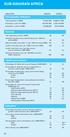 SUB-SAHARAN AFRICA INDICATOR REGION WORLD Demographic indicators Total population (2005) 713,457,000 6,449,371,000 Population under 18 (2005) 361,301,000 2,183,143,000 Population under 5 (2005) 119,555,000
Delaying First Pregnancy
 Delaying First Pregnancy Introduction The age at which a woman has her first pregnancy affects the health and life of a mother and her baby. While pregnancy can present health risks at any age, delaying
Racial and Ethnic Disparities in Maternal Mortality in the United States
 Racial and Ethnic Disparities in Maternal Mortality in the United States KYRIAKOS S. MARKIDES, PHD UNIVERSITY OF TEXAS MEDICAL BRANCH GALVESTON, TEXAS PRESENTED AT THE HOWARD TAYLOR INTERNATIONAL SYMPOSIUM
Men in Charge? Gender Equality and Children s Rights in Contemporary Families
 International Day of Families 2015 Observance Men in Charge? Gender Equality and Children s Rights in Contemporary Families Background Note Gender equality and children s rights in family laws Fair legal
Awareness of New Jersey s Family Leave Insurance Program Is Low, Even As Public Support Remains High and Need Persists
 NEW JERSEY S FAMILY LEAVE INSURANCE PROGRAM A CENTER FOR WOMEN AND WORK ISSUE BRIEF OCTOBER 2012 Awareness of New Jersey s Family Leave Insurance Program Is Low, Even As Public Support Remains High and
The National Costed Plan of Action for Most Vulnerable Children
 United Republic of Tanzania The National Costed Plan of Action for Most Vulnerable Children 2007 2010 Department of Social Welfare Ministry of Health and Social Welfare United Republic of Tanzania The
Country Strategy Paper 2011-2015 Summary
 Country Strategy Paper 2011-2015 Summary UGANDA RWANDA BURUNDI Kagera Geita Mwanza Mara Simiyu Arusha KENYA Shinyanga CRATIC LIC OF ONGO Kigoma Katavi Rukwa Tabora TANZANIA Mbeya Singida Iringa Dodoma
Establishment of REA/REF and Available Financing Opportunities for Rural Energy Projects Paper Presented on:
 RURAL ENERGY AGENCY (REA) Establishment of REA/REF and Available Financing Opportunities for Rural Energy Projects Paper Presented on: Workshop on Sustainable Access to Sustainable Energy Uhuru Hostel,
Schooling and Adolescent Reproductive Behavior in Developing Countries
 Schooling and Adolescent Reproductive Behavior in Developing Countries Cynthia B. Lloyd Background paper to the report Public Choices, Private Decisions: Sexual and Reproductive Health and the Millennium
Platform for Action Towards the Abandonment of Female Genital Mutilation/Cutting (FGM/C)
 Platform for Action Towards the Abandonment of Female Genital Mutilation/Cutting (FGM/C) A matter of gender equality The Donors Working Group on Female Genital Mutilation/Cutting We stand together in consensus
Trinidad and Tobago Strategic Actions for Children and GOTT-UNICEF Work Plan 2013-2014 1
 Trinidad and Tobago Strategic Actions for Children and GOTT-UNICEF Work Plan 2013-2014 1 The Trinidad and Tobago Strategic Actions for Children and the Government of Trinidad and Tobago-UNICEF Work Plan
INDICATOR REGION WORLD
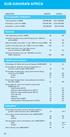 SUB-SAHARAN AFRICA INDICATOR REGION WORLD Demographic indicators Total population (2006) 748,886,000 6,577,236,000 Population under 18 (2006) 376,047,000 2,212,024,000 Population under 5 (2006) 125,254,000
Malawi. Country coverage and the methodology of the Statistical Annex of the 2015 HDR
 Human Development Report 2015 Work for human development Briefing note for countries on the 2015 Human Development Report Malawi Introduction The 2015 Human Development Report (HDR) Work for Human Development
HIV/AIDS AND OTHER SEXUALLY TRANSMITTED INFECTIONS 11
 HIV/AIDS AND OTHER SEXUALLY TRANSMITTED INFECTIONS 11 11.1 INTRODUCTION D. Zanera and I. Miteka The 2004 Malawi Demographic and Health Survey (MDHS) collected information on HIV/AIDS as well as other sexually
AFRICA S ORPHANED GENERATIONS
 AFRICA S ORPHANED GENERATIONS In the past, people used to care for the orphans and loved them, but these days they are so many, and many people have died who could have assisted them, and therefore orphanhood
Briefing note for countries on the 2015 Human Development Report. Burkina Faso
 Human Development Report 2015 Work for human development Briefing note for countries on the 2015 Human Development Report Burkina Faso Introduction The 2015 Human Development Report (HDR) Work for Human
Pioneering Social Health Insurance in Tanzania: The case of the National Health Insurance Fund. (NHIF)
 IMPROVING ACCESS THROUGH EFFECTIVE HEALTH FINANCING Pioneering Social Health Insurance in Tanzania: The case of the National Health Insurance Fund. (NHIF) Presented by the Director General of NHIF Mr.
United Nations Educational, Scienti c and Cultural Organization EDUCATION COUNTS. Towards the Millennium Development Goals
 United Nations Educational, Scienti c and Cultural Organization EDUCATION COUNTS Towards the Millennium Development Goals The original artwork presented in the brochure was designed by Zago, New York,
2.1 Net enrolment ratio in primary education
 2.1 Net enrolment ratio in primary education GOAL AND TARGET ADDRESSED Goal 2: Achieve universal primary education Target 2.A: Ensure that, by 2015, children everywhere, boys and girls alike, will be able
Health Promotion, Prevention, Medical care, Rehabilitation under the CBR Matrix heading of "Health
 Health Promotion, Prevention, Medical care, Rehabilitation under the CBR Matrix heading of "Health Dr Deepthi N Shanbhag Assistant Professor Department of Community Health St. John s Medical College Bangalore
The Limits to Growth of Non-Government Private Schooling in Sub Saharan Africa. Keith M. Lewin
 Consortium for Research on Educational Access, Transitions and Equity The Limits to Growth of Non-Government Private Schooling in Sub Saharan Africa Keith M. Lewin CREATE PATHWAYS TO ACCESS Research Monograph
HIV and AIDS in Bangladesh
 HIV and AIDS in Bangladesh BACKGROUND The first case of HIV/AIDS in Bangladesh was detected in 1989. Since then 1495 cases of HIV/AIDS have been reported (as of December 2008). However UNAIDS estimates
UNICEF in South Africa
 UNICEF in South Africa A message from the Representative 47,900,000 people live in South Africa 20,200,000 are children 294,000 children are HIV-positive 1 in 17 children die before their fifth birthday
A Vision for the Health and Well-Being of Malawi s Young People
 A Vision for the Health and Well-Being of Malawi s Young People A Vision for the Health and Well-Being of Malawi s Young People a Acknowledgements This publication was prepared by the Population Reference
Summary. Accessibility and utilisation of health services in Ghana 245
 Summary The thesis examines the factors that impact on access and utilisation of health services in Ghana. The utilisation behaviour of residents of a typical urban and a typical rural district are used
Water, Sanitation and Hygiene
 Water, Sanitation and Hygiene UNICEF/Giacomo Pirozzi for children unite for children UNICEF/Julie Pudlowski Fast facts Tanzanians that lack access to improved drinking water sources 46% Tanzanians with
Briefing note for countries on the 2015 Human Development Report. Niger
 Human Development Report 2015 Work for human development Briefing note for countries on the 2015 Human Development Report Niger Introduction The 2015 Human Development Report (HDR) Work for Human Development
Tanzania. HIV/AIDS and Malaria Indicator Survey 2011-12
 Tanzania HIV/AIDS and Malaria Indicator Survey 2011-12 Tanzania HIV/AIDS and Malaria Indicator Survey 2011-12 Tanzania Commission for AIDS (TACAIDS) Dar es Salaam, Tanzania Zanzibar AIDS Commission (ZAC)
GENERAL HOUSEHOLD SURVEY (GHS) 2013 REPORT: FOCUS ON SCHOOLING
 GENERAL HOUSEHOLD SURVEY (GHS) 2013 REPORT: FOCUS ON SCHOOLING DEPARTMENT OF BASIC EDUCATION GENERAL HOUSEHOLD SURVEY (GHS) 2013 REPORT: FOCUS ON SCHOOLING 1 Published by the Department of Basic Education
Tanzania (United Republic of)
 Human Development Report 2015 Work for human development Briefing note for countries on the 2015 Human Development Report Tanzania (United Introduction The 2015 Human Development Report (HDR) Work for
Health for learning: the Care for Child Development package
 Health for learning: the Care for Child Development package Charlotte Sigurdson Christiansen, Technical Officer, Chiara Servili, Technical Officer, Tarun Dua, Medical Officer, and Bernadette Daelmans,
Appeal to the Member States of the United Nations Early Childhood Development: The Foundation of Sustainable Human Development for 2015 and Beyond
 UNICEF/NYHQ2006-0450/Pirozzi Appeal to the Member States of the United Nations Early Childhood Development: The Foundation of Sustainable Human Development for 2015 and Beyond We, the undersigned, submit
Child Protection. UNICEF/Julie Pudlowski. for children unite for children
 Child Protection UNICEF/Julie Pudlowski for children unite for children UNICEF/Hiroki Gomi UNICEF/Hiroki Gomi Fast facts Sexual violence experienced in childhood 28% girls 13% boys Physical violence experienced
IV. GENERAL RECOMMENDATIONS ADOPTED BY THE COMMITTEE ON THE ELIMINATION OF DISCRIMINATION AGAINST WOMEN. Twentieth session (1999) *
 IV. GENERAL RECOMMENDATIONS ADOPTED BY THE COMMITTEE ON THE ELIMINATION OF DISCRIMINATION AGAINST WOMEN Twentieth session (1999) * General recommendation No. 24: Article 12 of the Convention (women and
THE RIGHTS START TO LIFE
 THE RIGHTS START TO LIFE A STATISTICAL ANALYSIS OF BIRTH REGISTRATION THE RIGHTS START TO LIFE CONTENTS I. INTRODUCTION..................................................... 1 II. GLOBAL ASSESSMENT..............................................
Long Term Socio-Economic Impact of HIV/AIDS on Children and Policy Response in Thailand
 Long Term Socio-Economic Impact of HIV/AIDS on Children and Policy Response in Thailand Wattana S. Janjaroen Faculty of Economics and College of Public Health Chulalongkorn University Suwanee Khamman and
Sierra Leone. Country coverage and the methodology of the Statistical Annex of the 2015 HDR
 Human Development Report 2015 Work for human development Briefing note for countries on the 2015 Human Development Report Sierra Leone Introduction The 2015 Human Development Report (HDR) Work for Human
Child Selection. Overview. Process steps. Objective: A tool for selection of children in World Vision child sponsorship
 Sponsorship in Programming tool Child Selection Objective: A tool for selection of children in World Vision child sponsorship We ve learned some things about selecting children. It is not a separate sponsorship
PROJECT PROPOSAL. Orphans and vulnerable children. needs support TELEPHONE: +256701501524. WEBSITE: http://www.freetocharities.org.
 PROJECT PROPOSAL PROJECT NAME: needs support Orphans and vulnerable children PROJECT IMPLEMENTER: Bethany Rehabilitation Center (BRC) REGISTRATION NUMBER: DGCS/413/2011 CONTACT PERSON: Duhimbaze Tom TELEPHONE:
Methods. Why does Early Childhood Care and Education matter? Early Childhood Care and Education in Egypt
 Early Childhood Care and Education (ECCE) kindergarten or nursery is available to only some Egyptian children. Expanding ECCE should be a government priority, as ECCE is an excellent investment. ECCE improves
Economic and Social Council
 United Nations E/ICEF/2013/P/L.16 Economic and Social Council Distr.: Limited 1 July 2013 Original: English For action United Nations Children s Fund Executive Board Second regular session 2013 3-6 September
The Situation of Children and Women in Iraq
 The Situation of Children and Women in Iraq Highlights from the Multiple Indicator Cluster Survey 4 (MICS 4) 2011 Demographics - Population of Iraq: 33.4 million - Children and Adolescents (0-18): 16.6
Global Demographic Trends and their Implications for Employment
 Global Demographic Trends and their Implications for Employment BACKGROUND RESEARCH PAPER David Lam and Murray Leibbrandt Submitted to the High Level Panel on the Post-2015 Development Agenda This paper
Child Marriage and Education: A Major Challenge Minh Cong Nguyen and Quentin Wodon i
 Child Marriage and Education: A Major Challenge Minh Cong Nguyen and Quentin Wodon i Why Does Child Marriage Matter? The issue of child marriage is getting renewed attention among policy makers. This is
MULTIVARIATE ANALYSIS OF BUYERS AND NON-BUYERS OF THE FEDERAL LONG-TERM CARE INSURANCE PROGRAM
 MULTIVARIATE ANALYSIS OF BUYERS AND NON-BUYERS OF THE FEDERAL LONG-TERM CARE INSURANCE PROGRAM This data brief is one of six commissioned by the Department of Health and Human Services, Office of the Assistant
Custodial Mothers and Fathers and Their Child Support: 2011
 Custodial Mothers and Fathers and Their Child Support: 2011 Current Population Reports By Timothy Grall Issued October 2013 P60-246 IntroductIon This report focuses on the child support income that custodial
CALL FOR PAPERS JOHANNESBURG SOUTH AFRICA, NOV. 30 DEC 4, 2015 DEMOGRAPHIC DIVIDEND IN AFRICA: PROSPECTS, OPPORTUNITIES AND CHALLENGES
 CALL FOR PAPERS 7 th African Population Conference JOHANNESBURG SOUTH AFRICA, NOV. 30 DEC 4, 2015 DEMOGRAPHIC DIVIDEND IN AFRICA: PROSPECTS, OPPORTUNITIES AND CHALLENGES Hosted by the Government of South
HIV/AIDS IN SUB-SAHARAN AFRICA: THE GROWING EPIDEMIC?
 HIV/AIDS IN SUB-SAHARAN AFRICA: THE GROWING EPIDEMIC? Paul Bennell 1 It is widely believed that the AIDS epidemic continues to spread rapidly throughout the African continent with rising levels of HIV
How to Design and Update School Feeding Programs
 CHAPTER 7 How to Design and Update School Feeding Programs Previous chapters highlight the need to improve the design of new school feeding programs and to revisit existing programs with a view toward
INTRODUCING MICROFINANCE HOUSING LOANS An initiatives Undertaken by
 INTRODUCING MICROFINANCE HOUSING LOANS An initiatives Undertaken by YOSEFO A presentation at the African Microfinance conference August 12-15, 2013 Durban, South Africa By Altemius Millinga Executive Director
E c o n o m i c. S o c i a l A f f a i r s THE IMPACT OF AIDS. United Nations
 E c o n o m i c & THE IMPACT OF AIDS S o c i a l A f f a i r s United Nations ST/ESA/SER.A/229 Department of Economic and Social Affairs Population Division THE IMPACT OF AIDS United Nations New York,
Enhancing Social Protection for HIV Prevention, Treatment, Care & Support - The State of the Evidence
 - The State of the Evidence i What is Social Protection & Why is it Important for HIV Outcomes? Over the past decade, there has been growing recognition of the importance of social protection to respond
FATHERS. Professor Lorraine Sherr Royal Free and UC Medical School London UK
 FATHERS Professor Lorraine Sherr Royal Free and UC Medical School London UK Curious question of why? Systematic Overview Desire for a child HIV testing in pregnancy Fatherhood and conception Fatherhood