
LAPAROSCOPIC INGUINAL HERNIA INVERSION AND LIGATION IN PEDIATRIC FEMALE PATIENTS, THE EGYPTIAN EXPERIENCE
|
|
|
- Scarlett Wilson
- 10 years ago
- Views:
Transcription
1 LAPAROSCOPIC INGUINAL HERNIA INVERSION AND LIGATION IN PEDIATRIC FEMALE PATIENTS, THE EGYPTIAN EXPERIENCE Rifaat Ibrahem Pediatric Surgery Unit, Faculty of Medicine- Al-Azhar University ABSTRACT PURPOSE: Laparoscopic inguinal hernia inversion and ligation is a new, simple, and easy method of pediatric female hernia repair. Simply the surgical procedure includes inversion of the hernial sac towards the peritoneal cavity followed by twisting, transfixation ligation of the neck and excision of the sac. METHODS: A prospective study of laparoscopic inguinal hernia repair in 77 pediatric female patients from March 2010 to June 2012 were done in the pediatric surgery units of Al-Azhar University Hospitals, Cairo, Egypt. RESULTS: One hundred nineteen laparoscopic inguinal hernia inversion and ligation procedures were performed on 77 pediatric female patients. Patients age ranged from 10 months to 12 years. Of the clinically right inguinal hernias 35.5% were found to have bilateral hernias intraoperatively, and of the clinically left inguinal hernias 40% were found to have bilateral hernias intraoperatively. There were no intraoperative complications, there have been postoperative wound complications in 4 hernia repairs (2.4%) and one recurrences (0.8%).CONCLUSIONS: Laparoscopic inguinal hernia inversion and ligation in female children is safe and effective. This approach is used at the pediatric surgery department of Al-Azhar University hospitals for most girls with inguinal hernias and found to be a simple procedure with minimal complications, a very low recurrence rate, and excellent cosmoses. It is still up to the parent to decide what risks are preferred: a metachronous hernia, or the 170

2 RIFAAT IBRAHEM increased rate of recurrence. Therefore, it seems wise at this time that a pediatric surgical team be well versed in all approaches in order to combine the advantages to the benefit of the patient. INTRODUCTION Inguinal hernia is a common condition in children. The treatment for this condition is high ligation of patent processus vaginalis at the level of the internal inguinal ring. This can be achieved either by conventional open method or by laparoscopic technique. [1] The advent of laparoscopy has changed many dogmas in all fields of surgery, pediatric hernia repair included. Many operations that were considered as gold standard are being challenged by the laparoscopic approach and the new technologies it has brought with it. [2] Therefore, two major applications of laparoscopy were introduced to hernia repair in children. The first, performing an intra-operative diagnostic laparoscopy for diagnosing a non-symptomatic contralateral hernia during open hernia surgery. The second, performing a laparoscopic repair. [3] There have been conflicting reports regarding the place of laparoscopy in the treatment of inguinal hernia in children. [4] At the moment, laparoscopic inguinal hernia repair is not only possible in children, but also is gaining ground as a safe, feasible, and popular method. [5] There are, however, several reports comparing the conventional open method and laparoscopic inguinal hernia repair in children, but the current trend is toward laparoscopic method. [6] With increasing interest in laparoscopic inguinal hernia repair, several treatment techniques have developed over the past two decades, aimed at improving the outcome. [7] The various techniques differ in their approach to the inguinal internal ring, suturing and knotting techniques, number of ports used in the 171

3 procedure, endoscopic instruments used, mode of dissection of the hernia sac, and gender of the patient as well. The emerging techniques show a tendency for simple extracorporeal suturing and knotting technique, and diminished use of endoscopic ports and instruments. [8] Laparoscopic inguinal hernia inversion and ligation described as a safe and effective operation in girls for the first time in the literature in 1997 by El- Gohary. [9] Zallen and Glick in 2007 reported it again in a small series. [10] Hong et al. described their initial experience with this procedure in 14 girls in [11] Aaron et al. published a retrospective review of inguinal hernia repair in 173 consecutive girls from 2003 to 2009 at a single institution. They concluded that laparoscopic inguinal hernia inversion and ligation is a safe and effective operation in girls with a low recurrence rate. Benefits of this procedure include diagnosis and repair of the contralateral side using the same incisions, diagnosis of androgen insensitivity and other dysgenic situations, excellent cosmesis and this procedure is a straightforward technique that can be performed by most pediatric surgeons with basic laparoscopic skills. [12] The aim of this article is to review the role of laparoscopy in inguinal hernia repair in female children, the emerging laparoscopic inguinal hernia inversion and ligation surgical technique, and its current trend in pediatric surgical practice. PATIENTS AND METHODS This prospective randomized clinical study was conducted on 77 female pediatric patients presented with inguinal hernia from March 2010 to June 2012 in the pediatric surgery units of Al-Azhar University Hospitals, Cairo, Egypt. The study protocol was approved by the hospital ethical committee. Criteria for enrollment included unilateral inguinal hernia, bilateral inguinal hernia, and ipsilateral hernia with a questionable hernia on the contralateral side. Exclusion 172
![[8] Laparoscopic inguinal hernia inversion and ligation described as a safe and effective operation in girls for the first time in the literature in 1997 by El- Gohary.](/docs-images/43/15263127/images/page_3.jpg "[9] Zallen and Glick in 2007 reported it again in a small series. [10] Hong et al. described their initial experience with this procedure in 14 girls in 2004. [11] Aaron et al.")
4 RIFAAT IBRAHEM criteria included recurrent hernia, hernia in morbid obese children, complicated hernia, patients who could not tolerate pneumoperitoneum (e.g., congenital heart disease). The main outcome measurements were operative time, hospital stay, complications, recurrence rate, and cosmetic results. The procedure was adopted from Aaron et al [12] Under general anesthesia the patient was placed in the supine position on the operating room table, with the abdomen and groin sterility prepped. The stomach is emptied with a suction catheter and the urinary bladder using Crede's maneuver (appling manual suprapubic gentle pressure), where older children are asked to urinate prior to entering the operating room. Five-mm, 30 laparoscope inserted through a trocar that is placed directly through the base of the umbilicus (open-hasson technique), so that incision was completely hidden. Pneumoperitoneum was established with carbon dioxide according to appropriate age (8 10mmHg). Initially the abdomen was visualized using a 5-mm, 30 scope with the operating table positioned in moderate reverse Trendelenburg's position. The pelvis was inspected for anatomical variations of the uterus, ovaries and adnexa, and the inguinal rings are evaluated (Fig. 1A). Preferably two 2.7-mm working instruments are introduced through two lower abdominal stab incisions with (or without) the use of ports following detailed anatomic investigation. By the help of two grasping dissectors, the tip of the hernia sac was grasped by the ipsilateral grasper (Fig. 1B) and gently inverted into the abdominal cavity through the inguinal canal (Fig. 1C). One must be gentle with this blunt traction maneuver since brutal disruption of the distal attachments of the round ligament to the labia may lead to edema formation or extraperitoneal hemorrhage, which may render suturing of the neck of the inverted sac. 173
![[12] Under general anesthesia the patient was placed in the supine position on the operating room table, with the abdomen and groin sterility prepped.](/docs-images/43/15263127/images/page_4.jpg "The stomach is emptied with a suction catheter and the urinary bladder using Crede's maneuver (appling manual suprapubic gentle pressure), where older children are asked to urinate prior to entering")
5 In cases in which the fallopian tube was near or in the hernia sac (sliding hernia), it can be freed up using a combination of blunt and sharp dissection. The ipsilateral ovary was exposed to confirm that both were not involved in the hernia and to rule out androgen insensitivity and other dysgenic syndromes. In the case of an incarcerated ovary, it can usually be reduced laparoscopically during the inversion by applying external pressure on the groin. The final portion of the operation was ligation and resection of the hernia sac. After confirming that the sac was free of its surrounding attachments, it was twisted on itself (Fig. 1D) and the needle and thread are passed into the abdomen through one port. By the help of a needle holder and grasping dissector, a 2/0 polypropylene transfixing suture was passed through the twisted sac just above the internal ring (Fig. 1E). The first knot locked extracorporeal and the needle pushed away to bring the locked suture (loop) downwards towards the neck of the twisted sac (Fig. 1F). The suture was then secured from the opposite side at the base of the inverted hernia sac. The twisted sac was resected about 1 cm above the knot after completion of suturing (Fig. 1G), since most published studies agree upon the fact that local peritoneal healing aids in preventing recurrences. A similar repair was applied to the contralateral side when indicated using the same incisions. Operation was terminated by removing all instruments under direct vision (Fig. 1H). The fascia and skin are closed with single Vicryl stitch. Stab incisions may be closed and dressed with Steristrips. Caudal block may additionally be used regarding parental consent. Otherwise, it was preferable to infiltrate all instrument or port sites prior to skin closure using local anesthetics. (All incisions are infiltrated with 0.25% bupivacaine solution). A prospective chart of all laparoscopic inguinal hernia repairs in pediatric girls (with this simple technique) including demographic, preoperative, 174

6 RIFAAT IBRAHEM intraoperative, and postoperative data were collected and analyzed. Statistical analysis was performed using the unpaired Student s t test. Fig. 1 Different steps of laparoscopic inguinal hernia inversion and ligation in a female pediatric patient 175

7 RESULTS Seventy seven female pediatric patients with inguinal hernia were operated upon laparoscopically. Their age ranged from 10 months to 12 years (Table 1). Clinically, 45 of the patients had right sided inguinal hernia, 10 had left sided inguinal hernia and 22 had bilateral inguinal hernia (Table 2). Table 1: Age distribution of the patients Age No. % Up to 2 years 7 9% 2-6 years % 7-12 years % Total % Table 2 : Clinical distribution of the side of the hernia Site of the hernia No. % Right sided % Left sided 10 13% Bilateral % Total % Intraoperatively, 20 of the clinical unilateral inguinal hernias were found to have a contralateral patent processus vaginalis or contralateral inguinal hernia, and all of these were repaired during the same operation using the same incisions (Tables 3 and 4). 176

8 RIFAAT IBRAHEM Table 3 : Intraoperative incidence of bilateral inguinal hernia Clinical site of the hernia Operative site of the hernia No. % Right sided (R) 16L/45R 61 hernias in 45 patients (100%+35.5%) Left sided (L) 4R/10L 14 hernias in 10 patients (100%+40%) Bilateral (R+L) 22R+22L 44 hernias in 22 patients (100%+100%) Total 71R/48L 119 hernias in 77 patients (100%+54.5%) Table 4 : Final distribution of the side of the hernia Site of the hernia No. Clinical Operative Total Right sided = =71 Left sided = =48 Bilateral = Total 77 patients 119 hernias 119 hernias The mean operative time for unilateral hernia was 35 minutes (±9 minutes). The mean difference in time between unilateral and bilateral inguinal hernia repairs was approximately 10 minutes (Table 5). The difference in time for unilateral and bilateral repairs was statistically significant (p<0.001). Table 5 : Operative time in relation to the site of the hernia Site of the hernia Single side Right sided min. Time (min.) Mean (min.) 33.5 min. Left sided min min. Total min. 35 min. Bilateral min min. Total min. 42 min. 177

9 There were no intraoperative significant complications, and there were no measurable blood loss in most cases. Ten patients had sliding hernias. Dissection of the fallopian tube was performed from the hernia sac in these patients. There were three girls with adherent ovaries to the interior of the sac. All ovaries were dissected and were freed from the sac (Table 6). Ovarian dissection resulted in significant increase in the time of the procedure (p<0.001). Table 6: Relations between side of the hernia (intraoperative) and operative difficulty Site of the hernia Sliding hernia Ovarian incarceration No. % Right sided 6 2 9/29 31% Left sided 1 1 2/6 33.3% Bilateral 3 0 3/42 7.1% Total / % Postoperatively, 65 of the girls were discharged the same day of the operation. Twelve patients were discharged on the second postoperative day (Table 7). One patient for delayed recovery, six patients for postoperative different complaints, and five patients were residing far away from the hospital. Table 7 : Postoperative discharge Site of the hernia Postoperative discharge The same day The second day Total Right sided 27 (93%) 2 (7%) 29 (100%) Left sided 6 (100%) 0 (0) 6 (100%) Bilateral 32 (76%) 10 (24%) 42 (100%) Total 65 (84.5%) 12 (15.5%) 77 (100%) 178

10 RIFAAT IBRAHEM Postoperative follow up revealed that 4 patients developed wound complications (three cases of superficial infection and one case of deep infection). There were one recurrence (in the bilateral hernia group) due to slipped ligature of the twisted sac and repaired using an open technique (Tables 8 and 9). Table 8: Post-operative complications according to number of the patients Post operative complications No. % Non complicated cases % Complicated cases Superficial infection 3 3.9% Deep infection % Recurrence 1 1.3% 6.5% Total % Table 9 Post-operative complications according to number of the hernias Post operative complications No. % Non complicated hernias % Superficial infection 3 2.6% Complicated Deep infection % 4.2% hernias Recurrence 1 0.8% Total % 179

11 DISCUSSION Inguinal hernia is a very common condition in children and adults and is the most common operation performed on children (other than ritual circumcision). Since the classic open surgery in female pediatric patient was introduced (the standard repair in females involves a small groin incision on the affected side, with or without incision of the external oblique muscle and opening of the external ring, dissection of the hernia sac, and high ligation and excision of the sac), it has become the standard operation for hernias, with very few controversies: whether the surgeon should perform only a herniotomy, whether a contralateral groin exploration be performed, and so forth. The operation is quick, safe, and can be done in an outpatient setting with anesthesia via a laryngeal mask. The recurrence rate is acceptable, 1-3%, depending on the expertise of the surgeon, the female child age and concomitant diseases. [13] The advent of laparoscopy has changed many dogmas in all fields of surgery, pediatric hernia repair included. Many operations that were considered as gold standard are being challenged by the laparoscopic approach and the new technologies it has brought with it. Therefore, two major applications of laparoscopy were introduced to hernia repair in female pediatric inguinal hernia. The first, performing an intra-operative diagnostic laparoscopy for diagnosing a non-symptomatic contralateral hernia during open hernia surgery. The second, performing a laparoscopic repair. [14] The incidence of a contralateral, asymptomatic groin hernia in children is not well defined. Reports vary from 10% to 60%, [15] depending on prematurity of the child, gender and side, which is comparable to the results of the present study [20/55 (36.4%)]. Also, there is no consensus on whether a patent processus vaginalis is considered a hernia for practical purposes, i.e. whether it should be repaired or not. It is established that the premature have a higher 180

12 RIFAAT IBRAHEM incidence of bilateral hernias, and that bilateral hernias are commoner in females with a left sided hernia, [15] which is also comparable to the results of the present study [16/45 (35.5%) on the right sided hernia, and 4/10 (40%) on the left sided hernia]. Until laparoscopy developed, there was controversy regarding whether a contralateral groin exploration should be performed and to whom. On the one hand, an exploration ensured a diagnosis during one operation and anesthesia, an option that carries many advantages to the patient and the parents. On the other hand, most of these explorations performed on children above the age of 1 year were negative, and doubling the operating and anesthetic time. Therefore, most surgeons had loosely based criteria on whom the exploration was performed. Since a hernia can be very easily and accurately diagnosed from within the peritoneum, introduction of a laparoscope during the operation seemed like a natural answer for the question. [16] Many minimally invasive procedures have been proposed for pediatric inguinal hernia repair, including high ligation with or without dissection of the internal ring (using intracorporeal/extracorporeal suturing and/or endolooping), [17] subcutaneous endoscopically assisted ligation, [18] and percutaneous internal ring suturing. [19] A minimally invasive surgical approach for the repair of pediatric inguinal hernias has yet to become the procedure of choice in most institutions. Diagnostic trans-inguinal laparoscopy provides definite advantages in the accurate diagnosis of a contralateral synchronous hernia during a single anesthesia. It is easy to learn and is very comfortable for a surgeon that is proficient in the open hernia repair technique. Usually, the pneumoperitoneum required does not preclude anesthesia via a laryngeal mask and does not require paralytic agents. [20] 181

13 Female pediatric inguinal hernias are inherently simpler to repair because there is no need to dissect and protect the structures in the spermatic cord. There are definite advantages to the laparoscopic hernia repair in female children. This approach offers excellent diagnosis of a synchronous hernia or patent processus vaginalis and the herniotomy is performed with minimal handling and potential damage to the adenexa. It is very useful for treating incarcerated or recurrent hernias, bypassing the anatomical challenges in these cases. After a necessary learning curve, most technical pitfalls can be avoided and operating times shortened to those of the open hernia repair. [21, 22] In 1997, El-Gohary described a technique of laparoscopic inguinal hernia repair in girls involving inversion of the hernia sac into the abdominal cavity and endoscopic loop tie placement at the base of the inverted sac. His original description of the procedure used three 5-mm ports. He reported no complications in 28 patients, 11% contralateral patency, and 1 recurrence. [9] Zallen and Glick in 2007 reported 37 cases of laparoscopic inguinal hernia inversion and ligation in girls using one 5-mm port and two 3-mm stab incisions. There were no complications or recurrences in this series. [10]Aaron and his colleagues in 2010 used this approach in all female pediatric hernias from 2003 to 2009 with the exception of children who have contraindications to pneumoperitoneum. They performed 241 laparoscopic inguinal hernia inversion and ligations in 173 girls. They had no intraoperative complications, with recurrence rate of (0.83%). In addition, laparoscopic inguinal hernia inversion and ligation has not added time to the operation, especially in cases of bilateral hernias. [12] In the present series, 77 female pediatric patients underwent the same procedure on 119 hernias, with good operative time, minimal complications (6.5% as regard patients number, or 4.2% as regard hernias number), and 182

14 RIFAAT IBRAHEM recurrence (1.3% as regard patients number, or 0.8% as regard hernias number), which is comparable to the complication, and recurrence rate reported in similar series [9, 10, 12], and most large series of open inguinal hernia repairs. [23] Major advantages of this procedure as compared to the open approach are, first, the ability to easily diagnose and treat contralateral patent processus vaginalis is obvious. These defects were easily repaired at the same operation without additional incisions and with minimal additional time. [24, 25] A second benefit is the ability to diagnose androgen insensitivity and other dysgenic syndromes. There is a slightly higher incidence of these conditions in girls with inguinal hernias, and Laparoscopic inguinal hernia inversion and ligation allows for careful inspection of the uterus, ovaries, and fallopian tubes. [26, 27] One of the major setbacks of laparoscopic inguinal hernia repairs in children has been the troubling rate of recurrences. [28, 29] This is unacceptable as open inguinal hernia repairs have a very low recurrence rate (<1%). [3] The present study had only one recurrence which occurred very early. It may be due to loose ligature on peritoneal sac augmented with dense extraperitoneal fat. The laparoscopic approach does require a learning curve. Most surgeons feel very comfortable with the open technique and would rather face the challenges of a difficult case such as the incarcerated, recurrent or complicated hernia than learn a completely new technique. [30] Laparoscopy in infants requires a more complex anesthetic setting with facilities and personnel that may be not available in outpatient clinics. Undoubtedly, for the time being, laparoscopic repairs carry a higher recurrence rate. Although recurrence after laparoscopy is not as challenging as after open repair, this should be weighed against the potential benefits of the approach. [31, 32] 183
![[23] Major advantages of this procedure as compared to the open approach are, first, the ability to easily diagnose and treat contralateral patent processus vaginalis is obvious.](/docs-images/43/15263127/images/page_14.jpg "These defects were easily repaired at the same operation without additional incisions and with minimal additional time.")
15 CONCLUSION The advent of laparoscopy has widely changed the scope of pediatric hernia repairs. Whether as a diagnostic or operative tool, the use of laparoscopy is widely gaining popularity as it provides an answer to many dilemmas. Since there are advantages and disadvantages to all approaches, a consensus as to the best approach has not been reached. It seems logical that there is no dogmatic best approach for all cases, each case requiring a specific tailoring of the care required. Laparoscopic inguinal hernia inversion and ligation in female children is safe and effective. This approach is used at the pediatric surgery department of Al-Azhar University hospitals for most girls with inguinal hernias and found to be a simple procedure with minimal complications, a very low recurrence rate, and excellent cosmoses. It is still up to the parent to decide what risks are preferred: a metachronous hernia, or the increased rate of recurrence. Therefore, it seems wise at this time that a pediatric surgical team be well versed in all approaches in order to combine the advantages to the benefit of the patient. 184

16 RIFAAT IBRAHEM REFERENCES 1. Rosenberg J. Pediatric inguinal hernia repair: A critical appraisal. Hernia. 2008;12: Zendejas B, Zarroug AE, Erben YM, Holley CT, Farley DR. Impact of childhood inguinal hernia repair in adulthood: 50 years of follow-up. J Am Coll Burg., 2010;211(6): Nah SA, Glacomello L, Eaton S, de Coppi P, Curry JI, Drake DP. Surgical repair of incarcerated inguinal hernia in children. Laparoscopic or open. Eur J Pediatr Surg., 2011;2: Turial S, Enders J, Krause K, Schier F. Laparoscopic inguinal herniorrhaphy in babies weighing 5Kg or less. Surg Endosc., 2011;25: Parelkar SV, Oak S, Gupta R, Sanghvi B, Shimoga PH, Kaltari D. Laparoscopic inguinal hernia repair in a pediatric age group-experience with 437 children. J pediatr Surg., 2010;45: Esposito C, Montinaro L, Alicchio F, Savanelli A, Armenise T, Settimi A. Laparoscopic treatment of inguinal hernia in the first year of life. J Laparoendosc Adv Surg Tech., 2010;20: SarangaBharathi R, Arora M, Baskaran V. Pediatric inguinal hernia: Laparoscopicversus open surgery. JSLS., 2008;12: Niyogi A, Tahim AS, Sherwood WJ, De Caluwe D, Madden NP, Abel RM. A comparative study examining open inguinal herniotomy with or without hernioscopy to laparoscopic inguinal hernia repair in a paediatric population. Pediatr Surg Int., 2010;20: El-Gohary MA. Laparoscopic ligation of inguinal of inguinal hernia in girls. Pediatr Endosurg Innov Techn., 1997; 1:

17 10. Zallen G, Glick PL. Laparosepic inversion and ligation inguinal hernia repair in girls. J Laparoendose Adv Surg Tech., 2007;l 7: Hong AR, Levitt MA, Belizon A. Laparoscopic inversion hemiotomy. International Pediatric Endosurgery Group s 13th Annual Congress for Endosurgery in Children; Maui, Hawaii. 12. Aaron M. Lipskara, Samuel Z. Soffera, Richard D. GLicka, Nelson G. Rosen a Marc A. Levittb, Andrew R. Hong A. Laparoscopic inguinat hernia inversion and ligation in female children: a review of 173 consecutive cases at a single institution. Journal of Pediatric Surgery. 2010; 45, Antonoff MB, Kreykes NS, Saltzman DA, Acton RD American academy of pediatrics section on surgery hernia survey revisited. J Pediatr Surg., 2005; 40: Fin BH, Njere I, Em A. Six thousand three hundred sixty one pediatric inguinal hernias; a 35-year review. I Pediatr Burg., 2006; 41: Endo M, Watanabe T, Nakano M, Yoshida F, Ukiyama E. Laparoscopic completely extraperitoneal repair of inguinal hernia in children; a singleinstitute experience with 1257 repairs compared with cutdown herniotomy. Surg Endosc., 2009;23: Ron O, Eaton S, Pierro A. Systematic review of the risk of developing a metachronous contralateral inguinal hernia in children. Br J Surg., 2007;94(7): Zallen G, Glick PL. Laparosepic inversion and ligation inguinal hernia repair in girls. J Laparoendose Adv Surg Tech., 2007;l 7: Harrison MR, Lee H, Albanese CT. Subcutaneous endoscopically assisted ligation (SEAL) of the internal ring for repair of inguinal hernias in children: a novel technique. J Pcdiatr Surg., 2005;40(7):

18 RIFAAT IBRAHEM 19. Patkowski D, Czernik J, Chrzan R. Percutaneous internal ring suturing: a simple minimally invasive technique for inguinal hernia repair in children. Laparoendosc Adv Surg Tech., 2006; l6(5): Lipskar AM, Boffer BZ, Glick RD, Rosen NG, Levitt MA, Hong AR. Laparoscopic inguinal hernia inversion and ligation in female children: a review of 173 consecutive cases at a single institution. J Pediatr Burg., 2010;45(6): Klin B, Efrati Y, Abu-Kishk I, Btolero B, Lotan G. The contribution of intraoperative transinguinal laparoscopic examination of the contralateral side to the repair of inguinal hernias in children. World J Pediatr., 2010 ;6(2): Parelkar BV, Oak B, Gupta R, Banghvi B, Bhimoga PH, Kaltari D, Prakash A, Bhekhar R, Gupta A, Bachani M. Laparoscopic inguinal hernia repair in the pediatric age group-experience with 437 children. J Pediatr Burg., 2010;45(4): Bharathi RS, Arora M, Baskaran V. Minimal access surgery of pediatric inguinal hernias: a review. Surg Endose., 2008;22: Wang JH, Zhang W, Tou JF, Huang SJ, Liu WG, Xiong QX, Zhao ZY. Incidence of pediatric metachronous contralateral inguinal hernia in children aged 1 year. World J Pediatr., 2012;8(3): Tam YH, Wong YS, Chan KW, Pang KK, Tsui SY, Mou JW, Sihoe JD, Lee KH. Simple maneuvers to reduce the incidence of false-negative findings for contralateral patent processus vaginalis during laparoscopic hernia repair in children: a comparative study between 2 cohorts. J Pediatr Surg., 2013;48(4):

19 26. Georgiou R, Hall NJ, Stanton M. Screening for complete androgen insensitivity syndrome in girls with inguinal hernia: parental insight. Arch Dis Child., 2013;98(4): Deeb A, Hughes A. Inguinal hernia in female infants: a cue to check the chromosomes? BJU Internat., 2005;96(3): Schier E. Laparoscopic inguinal hernia repair a prospective personal series of 542 children. J Pediatr Surg., 2006;41(6):108l Chinnaswamy P, Malladi V, Jani Ky. Laparoscopic inguinal hernia repair in children. JSLS., 2005;9(4): Bneider EB, Jones B, Danielson PD. Refinements in selection criteria for pediatric laparoscopic inguinal hernia repair. J Laparoendosc Adv Burg Tech., 2009;19(2): Bchier F. Laparoscopic inguinal hernia repair - a prospective personal series of 542 children, I Pediatr Burg., 2006;41: Choi W, Hall NJ, Garriboli M, Ron O, Curry JI, Cross K, Drake DP, Kiely EM, Eaton S, De Coppi P, Pierro A. Outcomes following laparoscopic inguinal hernia repair in infants compared with older children. Pediatr Surg Int., 2012;28(12):

INFORMATION FOR PATIENTS CONSIDERING LAPAROSCOPIC INGUINAL HERNIA REPAIR
 INFORMATION FOR PATIENTS CONSIDERING A LAPAROSCOPIC INGUINAL HERNIA REPAIR Prepared By Mr Peter Willson Consultant Surgeon Contents 1. Background... 3 2. What is an inguinal Hernia?... 3 3. What are the
FREEDOM INGUINAL Hernia Repair System TECHNIQUE GUIDE
 FREEDOM INGUINAL Hernia Repair System TECHNIQUE GUIDE The following describes the open surgical preparation and implantation technique for the Freedom Inguinal Hernia Repair System. 1) Anesthesia can be
Facing a Hysterectomy? If you ve been diagnosed with early stage gynecologic cancer, learn about minimally invasive da Vinci Surgery
 Facing a Hysterectomy? If you ve been diagnosed with early stage gynecologic cancer, learn about minimally invasive da Vinci Surgery The Condition: Early Stage Gynecologic Cancer A variety of gynecologic
M O V I N G F R E E LY. HerniaCenter. The Columbia Hernia Center at ColumbiaDoctors Midtown
 M O V I N G F R E E LY HerniaCenter The Columbia Hernia Center at ColumbiaDoctors Midtown Director, Dr. Peter L. Geller The Columbia Hernia Center brings together a group of surgeons adept in using the
Women s Health Laparoscopy Information for patients
 Women s Health Laparoscopy Information for patients This leaflet is for women who have been advised to have a laparoscopy. It outlines the common reasons doctors recommend this operation, what will happen
Bard * PerFix * Plug. Technique Guide. A Modified Technique with the. Open Inguinal Hernia Repair
 A Modified Technique with the Bard * PerFix * Plug A quick and simple preperitoneal underlay Modified Technique for the repair of groin hernias Technique Guide Open Inguinal Hernia Repair This technique,
Non-mesh repair of adult inguinal hernia: a simple solution
 Original Article Non-mesh repair of adult inguinal hernia: a simple solution ABSTRACT Objective Shaukat Ali Sheikh,* Mohammad Iqbal,** Nauman Mustafa,*** Ihtasham Muhammad Ch.,# Umer Farooq,*** Yasir Mehmood#
Laparoscopic hernia repair GEORGIOS SAMPALIS GENERAL SURGEON. Director of surgical department of Lefkos Stavros of Athens
 Laparoscopic hernia repair GEORGIOS SAMPALIS GENERAL SURGEON Director of surgical department of Lefkos Stavros of Athens About 600,000 surgical hernia repair procedures are performed every year... Many
Laparoscopic Repair of Incisional Hernia. Maria B. ALBUJA-CRUZ, MD University of Colorado Department of Surgery-Grand Rounds
 Laparoscopic Repair of Incisional Hernia Maria B. ALBUJA-CRUZ, MD University of Colorado Department of Surgery-Grand Rounds Overview Definition Advantages of Laparoscopic Repair Disadvantages of Open Repair
The TV Series. www.healthybodyhealthymind.com INFORMATION TELEVISION NETWORK
 The TV Series www.healthybodyhealthymind.com Produced By: INFORMATION TELEVISION NETWORK ONE PARK PLACE 621 NW 53RD ST BOCA RATON, FL 33428 1-800-INFO-ITV www.itvisus.com 2005 Information Television Network.
ABThera Open Abdomen Negative Pressure Therapy for Active Abdominal Therapy. Case Series
 ABThera Open Abdomen Negative Pressure Therapy for Active Abdominal Therapy Case Series Summary of Cases: USER EXPERIENCE The ABThera OA NPT system was found by surgeons to be a convenient and effective
X-Plain Inguinal Hernia Repair Reference Summary
 X-Plain Inguinal Hernia Repair Reference Summary Introduction Hernias are common conditions that affect men and women of all ages. Your doctor may recommend a hernia operation. The decision whether or
KEYHOLE HERNIA SURGERY
 Disclaimer This movie is an educational resource only and should not be used to manage a hernia or abdominal pain. All decisions about the management of a hernia must be made in conjunction with your Physician
Mesh Plug Repair of Inguinal Hernias. Presented by: V.K Ashok, M.D, F.A.C.S
 Mesh Plug Repair of Inguinal Hernias Presented by: V.K Ashok, M.D, F.A.C.S April 2, 2011 About V.K. Ashok, M.D Practicing general and vascular surgeon in private practice based in Freehold, NJ for the
SILS. Port Insertion By Homero Rivas, MD, MBA, FACS. Single incision. Single port. Simple choice.
 SILS Port Insertion By Homero Rivas, MD, MBA, FACS Single incision. Single port. Simple choice. SILS Port Insertion By Homero Rivas, MD, MBA, FACS For the last 20 years, there has given surgical procedure.
Laparoscopic Colectomy. What do I need to know about my laparoscopic colorectal surgery?
 Laparoscopic Colectomy What do I need to know about my laparoscopic colorectal surgery? Traditionally, colon & rectal surgery requires a large, abdominal and/or pelvic incision, which often requires a
Laparoscopic Repair of Hernias. A simple guide to help answer your questions
 Laparoscopic Repair of Hernias A simple guide to help answer your questions What is a hernia? A hernia is defined as a hole or defect in the abdominal (belly) wall. A hernia can either be congenital (a
INGUINAL HERNIA REPAIR BY DARNING
 INGUINAL HERNIA REPAIR BY DARNING BinBisher Saeed A. MD, FICMS Barabba Rabea MD, JBS Diffel and matrix functions INGUINAL HERNIA REPAIR BY DARNING BinBisher Saeed A. MD, FICMS Barabba Rabea MD, JBS INTRODUCTION
Facing a Hernia Repair? Learn about minimally invasive da Vinci Surgery
 Facing a Hernia Repair? Learn about minimally invasive da Vinci Surgery The Condition: Hernia A hernia happens when part of an internal organ or tissue bulges through a hole or weak area in the belly wall
Laparoscopic Assisted Vaginal Hysterectomy
 Department of Obstetrics and Gynecology, Chang Gung Memorial Hospital at ChiaYi 嘉 義 長 庚 紀 念 醫 院 婦 產 科 Clinical Guideline Laparoscopic Assisted Vaginal Hysterectomy By Dr. CJ Tseng Laparoscopic assisted
9/26/14. Joel E. Rand, MPAS, PA-C DMU Luncheon May 1, 2014
 Joel E. Rand, MPAS, PA-C DMU Luncheon May 1, 2014 No financial relationship or commercial interest in any of the technologies discussed Not supporting any non-fda off label uses of any product or service
Integumentary System Individual Exercises
 Integumentary System Individual Exercises 1. A physician performs an incision and drainage of a subcutaneous abscess in his office for a particularly uncooperative established patient. How should this
Ovarian Cystectomy / Oophorectomy
 Cystectomy and Ovarian Cysts Ovarian cysts are sacs filled with fluids or pockets located on or in an ovary. In some cases, these cysts need to be removed surgically. Types of Cysts Ovarian cysts are quite
Minimally Invasive Mitral Valve Surgery
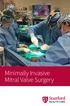 Minimally Invasive Mitral Valve Surgery Stanford Health Care offers leading, superior options in cardiac surgery, including the latest techniques and research for Minimally Invasive Cardiac surgery. Advanced
Considering Endometriosis Surgery? Learn about minimally invasive da Vinci Surgery
 Considering Endometriosis Surgery? Learn about minimally invasive da Vinci Surgery The Condition: Endometriosis Endometriosis is a condition in which the tissue that lines your uterus (the endometrium)
26. Port Site Closure Methods and Hernia Prevention
 26. Port Site Closure Methods and Hernia Prevention Chandrakanth Are, M.D. Mark A. Talamini, M.D. Laparoscopic port site hernias have been frequently reported (incidence of 0.02% 5% with an average of
Laparoscopic Repair of Parastomal Hernias with a Modified Sugarbaker Technique
 Acta chir belg, 2007, 107, 476-480 Laparoscopic Repair of Parastomal Hernias with a Modified Sugarbaker Technique F. Muysoms Department of Surgery, AZ Maria Middelares, Gent, Belgium. Key words. Laparoscopy
C A R O L I N A S. Hernia Handbook ( C H A P T E R 2 ) B. Todd Heniford, MD
 C A R O L I N A S Hernia Handbook ( C H A P T E R 2 ) B. Todd Heniford, MD C H A P T E R 2 Umbilical Hernias C A R O L I N A S H E R N I A H A N D B O O K 17 Umbilical Hernias W H AT I S A N U M B I L
Contents. 1. Milestones in Hernia Surgery 1. 2. Surgical Anatomy of Hernia Sites 5. 3. Incidence, Prevalence of Hernia 32
 1. Milestones in Hernia Surgery 1 History of the Procedure 3 2. Surgical Anatomy of Hernia Sites 5 Surgical Anatomy of Hernia Sites 5 External Anatomy of Abdominal Wall The Surface Markings 6 The Fascia
Inguinal Hernia (Female)
 Inguinal Hernia (Female) WHAT IS AN INGUINAL HERNIA? 2 WHAT CAUSES AN INGUINAL HERNIA? 2 WHAT DOES TREATMENT / MANAGEMENT INVOLVE? 3 DAY SURGERY MANAGEMENT 3 SURGICAL REPAIR 4 WHAT ARE THE RISKS/COMPLICATIONS
Name of procedure: Laparoscopic (key-hole) ovarian surgery. Left/ Right unilateral salpingo-oophorectomy* (removal of one fallopian tube and ovary)
 For staff use only: Patient Details: Surname: First names: Date of birth: Hospital no: Female: (Use hospital identification label) Gynaecology Patient agreement to treatment Name of procedure: Laparoscopic
da Vinci Prostatectomy Information Guide (Robotically-Assisted Radical Prostatectomy)
 da Vinci Prostatectomy Information Guide (Robotically-Assisted Radical Prostatectomy) Prostate Cancer Overview Prostate cancer is a disease in which malignant (cancer) cells form in the tissues of the
Considering a Hysterectomy?
 Considering a Hysterectomy? Learn more about virtually scarless surgery using da Vinci Single-Site technology { {Symptoms & Conditions: Chronic Pain, Heavy Bleeding, Fibroids, Endometriosis, Adenomyosis,
Inguinal (Groin) Hernia Repair
 Information for patients Inguinal (Groin) Hernia Repair General Surgery Tel: 01473 712233 DMI ref: 11582-09.indd(RP) Issue 1: February 2010 The Ipswich Hospital NHS Trust, 2010. All rights reserved. Not
ONSTEP Technique. Technique Guide * Anterior Approach to a Part Preperitoneal, Part Intramuscular Inguinal Hernia Repair
 ONSTEP Technique Technical Aspects of the ONSTEP Inguinal Hernia Repair Technique Using the PolySoft Hernia Patch with Interrupted Memory Recoil Ring Technique Guide * Anterior Approach to a Part Preperitoneal,
The Abdominal Wall And Hernias. Stanley Kurek, DO, FACS Associate Professor of Surgery UTMCK
 The Abdominal Wall And Hernias Stanley Kurek, DO, FACS Associate Professor of Surgery UTMCK The Abdominal Wall The structure of the abdominal wall is similar in principle to the thoracic wall. There are
False reduction of an inguinal hernia treated by Kugel patch repair via an anterior. 1) Department of Surgery, Asahi General Hospital, Chiba, Japan
 Case Report False reduction of an inguinal hernia treated by Kugel patch repair via an anterior approach Naoya Yamada 1, Atsushi Akai 1, Akihiko Seo 1, Yukihiro Nomura 1, Nobutaka Tanaka 1 1) Department
Nurse Practitioner Privileges
 Boulder Community Health Medical Staff Department Nurse Practitioner Privileges Name: Please print To be eligible to request clinical privileges, the applicant must meet the following threshold criteria:
Shoulder Arthroscopy
 Copyright 2011 American Academy of Orthopaedic Surgeons Shoulder Arthroscopy Arthroscopy is a procedure that orthopaedic surgeons use to inspect, diagnose, and repair problems inside a joint. The word
Modifier Usage Guide What Your Practice Needs to Know
 BlueCross BlueShield of Mississippi Modifier Usage Guide What Your Practice Needs to Know Modifier 22 Usage Modifier 22 - Procedural Service The purpose of this modifier is to report services (surgical
If Your Child has an Inguinal Hernia, Hydrocele or Undescended Testicles. A Guide for Parents
 Introduction Urology Clinic If Your Child has an Inguinal Hernia, Hydrocele or Undescended Testicles A Guide for Parents Three of the most common birth defects in males are an inguinal hernia, hydrocele,
PedsCases Podcast Scripts. Developed by Amarjot Padda, Chris Novak, Dr. Melanie Lewis and Dr. Bryan Dicken for
 PedsCases Podcast Scripts This is a text version of a podcast from Pedscases.com on the Pediatric Surgery. These podcasts are designed to give medical students an overview of key topics in pediatrics.
Consumer summary Minimally invasive techniques for the relief of stress urinary incontinence
 ASERNIP S Australian Safety and Efficacy Register of New Interventional Procedures Surgical Consumer summary Minimally invasive techniques for the relief of stress urinary incontinence (Adapted from the
Posttraumatic medial ankle instability
 Posttraumatic medial ankle instability Alexej Barg, Markus Knupp, Beat Hintermann Orthopaedic Department University Hospital of Basel, Switzerland Clinic of Orthopaedic Surgery, Kantonsspital Baselland
ABDOMINOPLASTY - FREQUENTLY ASKED QUESTIONS (FAQs)
 Executive Level E1, Excen Centre, 119 Willoughby Road, Crows Nest 2065 Tel: 02 9817 7585 www.mycosmeticclinic.net AFFORDABILITY WITH EXCELLENCE Liposuction Breast Augmentation Abdominoplasty Eyelids Surgery
Suture Patterns. Objectives. Role of Suture Patterns. Inverting Suture Patterns. Appositional Suture Patterns
 Suture Patterns Objectives Introduction to Surgery Classify suture patterns based on their effect on tissue apposition Describe the steps involved in the accurate placement of basic suture patterns Discuss
Goals and Objectives for the General Surgery Rotation Resident PGY1 Hamilton Health Sciences or St. Joseph Healthcare (2 four-week rotational blocks)
 Goals and Objectives for the General Surgery Rotation Resident PGY1 Hamilton Health Sciences or St. Joseph Healthcare (2 four-week rotational blocks) Overview During the first year of their residency training
Lesions, and Masses, and Tumors Oh My!!
 Lesions, and Masses, and Tumors Oh My!! Presented by: Susan Ward, CPC, CPC-H, CPC-I, CPCD, CEMC, CPRC 1 1 CPT GUIDELINES Agenda CPT DEFINITIONS OP REPORT CASES 2 Definitions Cyst - a closed sac having
Considering a Hysterectomy?
 Considering a Hysterectomy? Learn more about virtually scarless surgery using da Vinci Single-Site technology { {Symptoms & Conditions: Chronic Pain, Heavy Bleeding, Fibroids, Endometriosis, Pelvic Prolapse
How To Perform Da Vinci Surgery
 Facing a Hysterectomy? If you ve been diagnosed with early stage gynecologic cancer, learn about minimally invasive da Vinci Surgery The Condition: Early Stage Gynecologic Cancer A variety of gynecologic
OPEN TENSION FREE REPAIR OF INGUINAL HERNIAS; THE LICHTENSTEIN TECHNIQUE
 C:\251 GNA\preperitoneal hernia repair\lichtenstein-english.doc To be considered for publication in BMC-Surgery OPEN TENSION FREE REPAIR OF INGUINAL HERNIAS; THE LICHTENSTEIN TECHNIQUE George H. Sakorafas,
PERCUTANEOUS PD CATHETER IMPLANTATION SYSTEM
 Place on Patient s Cranial Border of the Pubic Symphysis IMPLANTATION STENCIL Classic Exit Cuff Site PERCUTANEOUS PD CATHETER IMPLANTATION SYSTEM INSTRUCTIONS FOR USE VP 511 and VP-511M Implantation System
Open Ventral Hernia Repair
 Ventral Hernias Open Ventral Hernia Repair UCSF Postgraduate Course in General Surgery Maui, HI March 21, 2011 Hobart W. Harris, MD, MPH Ventral Hernias: National Experience Occur following 11-23% of laparotomies,
Goals and Objectives Pediatric Surgery PGY 1 MCVH
 Goals and Objectives Pediatric Surgery PGY 1 MCVH PGY-1 Clinical Duties and Privileges Lines of Supervision During the PGY-1 each resident begins his/her clinical experience in the General Surgery Residency
Get the Facts, Be Informed, Make YOUR Best Decision. Pelvic Organ Prolapse
 Pelvic Organ Prolapse ETHICON Women s Health & Urology, a division of ETHICON, INC., a Johnson & Johnson company, is dedicated to providing innovative solutions for common women s health problems and to
Intraoperative Prevention of Stenosis for Laparoscopic Sleeve Gastrectomy
 CASE REPORT Intraoperative Prevention of Stenosis for Laparoscopic Sleeve Gastrectomy Ramon Vilallonga, MD, PhD, Jacques Himpens, MD Division of Bariatric Surgery, AZ St. Blasius, Dendermonde, Belgium
Laparoscopic Cholecystectomy
 Laparoscopic Cholecystectomy Removal of Gall Bladder Page 12 Patient Information Further Information We endeavour to provide an excellent service at all times, but should you have any concerns please,
PD Catheter Placement and Management
 PD Catheter Placement and Management Rajnish Mehrotra 1 and John Crabtree 2 1 Harbor-UCLA Medical Center, Torrance, CA and 2 Kaiser Permanente, Bellflower, CA 1 Importance of PD Access Status of PD Patients
Endovascular Repair of an Axillary Artery Aneurysm: A Novel Approach
 Endovascular Repair of an Axillary Artery Aneurysm: A Novel Approach Bao- Thuy D. Hoang, MD 1, Jonathan- Hien Vu, MD 2, Jerry Matteo, MD 3 1 Department of Surgery, University of Florida College of Medicine,
Hysterectomy. The time to take care of yourself
 Hysterectomy The time to take care of yourself The time to take care of yourself Women spend a lot of time taking care of others spouses, children, parents. We often overlook our own needs. But when our
Urinary Diversion: Ileovesicostomy/Ileal Loop/Colon Loop
 Urinary Diversion: Ileovesicostomy/Ileal Loop/Colon Loop Why do I need this surgery? A urinary diversion is a surgical procedure that is performed to allow urine to safely pass from the kidneys into a
LAPAROSCOPIC OVARIAN CYSTECTOMY
 LAPAROSCOPIC OVARIAN CYSTECTOMY Information Leaflet Your Health. Our Priority. Page 2 of 5 About this information This leaflet is for you if you have a cyst on one or both ovaries and are considering surgery.
Emerging Concepts in Bariatric Surgery
 Emerging Concepts in Bariatric Surgery C Y N T H I A L. L O N G, M D, F A C S S I N A I H O S P I T A L O F B A L T I M O R E D E P A R T M E N T O F S U R G E R Y D I V I S I O N O F M I N I M A L L Y
Inguinal hernia repair
 Inguinal hernia repair A hernia is an abnormal protrusion on an organ through a weakness in the abdominal wall. The abdominal muscles are usually strong enough to keep your internal organs in place, when
Guide to Abdominal or Gastroenterological Surgery Claims
 What are the steps towards abdominal surgery? Investigation and Diagnosis It is very important that all necessary tests are undertaken to investigate the patient s symptoms appropriately and an accurate
Lenox Hill Hospital Department of Surgery General Surgery Goals and Objectives
 Lenox Hill Hospital Department of Surgery General Surgery Goals and Objectives Medical Knowledge and Patient Care: Residents must demonstrate knowledge and application of the pathophysiology and epidemiology
Clinical Study Laparoscopic Umbilical Hernia Repair: Technique Paper
 International Scholarly Research Network ISRN Minimally Invasive Surgery Volume 2012, Article ID 906405, 4 pages doi:10.5402/2012/906405 Clinical Study Laparoscopic Umbilical Hernia Repair: Technique Paper
Clinical Practice Assessment Robotic surgery
 Clinical Practice Assessment Robotic surgery Background: Surgery is by nature invasive. Efforts have been made over time to reduce complications and the trauma inherently associated with surgery through
Medical Surgical Procedures - Laparoscopy
 P R E S E N T S Dr. Mufa T. Ghadiali is skilled in all aspects of General Surgery. His General Surgery Services include: General Surgery Advanced Laparoscopic Surgery Surgical Oncology Gastrointestinal
Laparoscopic Gallbladder Removal (Cholecystectomy) Patient Information from SAGES
 Laparoscopic Gallbladder Removal (Cholecystectomy) Patient Information from SAGES Gallbladder removal is one of the most commonly performed surgical procedures. Gallbladder removal surgery is usually performed
Minimally Invasive Spine Surgery
 Chapter 1 Minimally Invasive Spine Surgery 1 H.M. Mayer Primum non nocere First do no harm In the long history of surgery it always has been a basic principle to restrict the iatrogenic trauma done to
UNDERSTANDING & CODING WITH MODIFIERS
 UNDERSTANDING & CODING WITH MODIFIERS -21 Prolonged Evaluation and Management When the service provided is prolonged or otherwise greater than that usually required for the highest level of service in
Preparing for your laparoscopic pyeloplasty
 Preparing for your laparoscopic pyeloplasty Welcome We look forward to welcoming you to The Royal London Hospital. You have been referred to us for a laparoscopic pyeloplasty, which is an operation using
Biodesign. Ventral Hernia Repair Best Outcomes. Procedural Guide
 Biodesign Ventral Hernia Repair Best Outcomes Procedural Guide Achieve best outcomes using Biodesign for ventral hernia repair. Achieving complete and permanent closure of the abdomen following ventral
Treatment of Maxillary Sinusitis Using the SinuSys Vent-Os Sinus Dilation System
 White PAPer Treatment of Maxillary Sinusitis Using the SinuSys Vent-Os Sinus Dilation System Jerome Hester, MD Chief Medical Officer SinuSys Corporation Palo Alto, California USA introduction Establishment
Laparoscopic Bilateral Salpingo-Oophorectomy
 Laparoscopic Bilateral Salpingo-Oophorectomy What is a? This is a surgery where your doctor uses a thin, lighted camera and small surgical tool placed through a small (1/2 inch) incision usually in the
Laparoscopy and Hysteroscopy
 AMERICAN SOCIETY FOR REPRODUCTIVE MEDICINE Laparoscopy and Hysteroscopy A Guide for Patients PATIENT INFORMATION SERIES Published by the American Society for Reproductive Medicine under the direction of
Hysterectomy. What is a hysterectomy? Why is hysterectomy done? Are there alternatives to hysterectomy?
 ROBERT LEVITT, MD JESSICA BERGER-WEISS, MD ADRIENNE POTTS, MD HARTAJ POWELL, MD, MPH COURTNEY LEVENSON, MD LAUREN BURNS, MSN, RN, WHNP OBGYNCWC.COM What is a hysterectomy? Hysterectomy Hysterectomy is
Role of Robotic Surgery in Obese Women with Endometrial Cancer
 Role of Robotic Surgery in Obese Women with Endometrial Cancer Anil Tailor Consultant Gynaecological Oncologist Royal Surrey County Hospital Guildford, Surrey, UK St Peters Hospital Chertsey, Surrey, UK
Ventral Hernia Repair
 Ventral Hernia Repair Open and Laparoscopic Ventral Hernia Repair Technique Guide Ventrio ST Hernia Patch Ventrio Hernia Patch This Technique Guide contains the opinions of and personal surgical techniques
John J Christoforetti, MD Mark Langhans Jr, BS, JT Redshaw, BS, Michael Allen DPT, Ellen Wilson ATC, Elizabeth Pickle, Ben Kivlan PT
 SAFETY OF OUTPATIENT HIP ARTHROSCOPY AS COMPARED TO INPATIENT ADMISSION: A PROSPECTIVE COHORT STUDY OF THE FIRST 100 OPERATIVE ARTHROSCOPIES FOR A FELLOWSHIP TRAINED HIP ARTHROSOCOPIST John J Christoforetti,
Bankart Repair using the Smith & Nephew BIORAPTOR 2.9 Suture Anchor
 Shoulder Series Technique Guide *smith&nephew BIORAPTOR 2.9 Suture Anchor Bankart Repair using the Smith & Nephew BIORAPTOR 2.9 Suture Anchor Gary M. Gartsman, M.D. Introduction Arthroscopic studies of
PD the Good Catheter
 PD the Good Catheter Joseph J. Naoum, MD., FACS. Assistant Professor, Weill Cornell Medical College The Methodist Hospital, Division of Vascular Surgery Cardiovascular Surgery Associates 6550 Fannin St.,
Amir Kashefi 1, MD Marc A Friedman 1, MD Alan V Krauthamer 1, MD Anthony G Gilet 1, MD Bijan Bijan 2, MD, MBA
 Amir Kashefi 1, MD Marc A Friedman 1, MD Alan V Krauthamer 1, MD Anthony G Gilet 1, MD Bijan Bijan 2, MD, MBA 1. Harlem Hospital Center, Radiology Dep. 506 Lenox Ave, New York, NY 10037 2. UC Davis Medical
Sandwich technique of closure of lumbar hernia: A novel technique
 CASE SERIES 243 OPEN ACCESS Sandwich technique of closure of lumbar hernia: A novel technique Manash Ranjan Sahoo, Anil Kumar T ABSTRACT Background: Lumbar hernia is a rare hernia which accounts for less
Uterine fibroids (Leiomyoma)
 Uterine fibroids (Leiomyoma) What are uterine fibroids? Uterine fibroids are fairly common benign (not cancer) growths in the uterus. They occur in about 25 50% of all women. Many women who have fibroids
Endoscopic gastric pouch plication - a novel endoluminal incision free approach to revisional bariatric surgery
 Endoscopic gastric pouch plication - a novel endoluminal incision free approach to revisional bariatric surgery Authors: Chiranjiv S Virk, I Michael Leitman and Elliot R Goodman. Location: Beth Israel
Laparoscopic Surgery for Inguinal Hernia Repair
 Laparoscopic Surgery for Inguinal Hernia Repair What is an Inguinal Hernia Repair? 2 What is a Laparoscopic Inguinal Hernia Repair? 2 Are there any alternatives to Laparoscopic Hernia Repair? 3 Am I a
PHaSES: Practical Hands-on Surgical Education System
 U.S. Toll Free 866-GOLIMBS PHaSES Range PHaSES: Practical Hands-on Surgical Education System Limbs & Things is pleased to introduce the PHaSES Range. The range is based upon our well known basic & general
Totally Extraperitoneal Endoscopic Inguinal Hernia Repair Using Mini Instruments: Pushing the Boundaries of Minimally Invasive Hernia Surgery
 KOWSAR Journal of Minimally Invasive Surgical Sciences www.minsurgery.com Totally Extraperitoneal Endoscopic Inguinal Hernia Repair Using Mini Instruments: Pushing the Boundaries of Minimally Invasive
Laparoscopic extended right hemicolectomy for transverse colon
 Laparoscopic extended right hemicolectomy for transverse colon cancer Elsa B. Valsdottir, MD Department of General Surgery University Hospital of Iceland Hringbraut 101 Reykjavik Iceland Phone +354 543
a guide to understanding pierre robin sequence
 a guide to understanding pierre robin sequence a publication of children s craniofacial association a guide to understanding pierre robin sequence this parent s guide to Pierre Robin Sequence is designed