
The Relationship Between Corrective and Massage Therapy
|
|
|
- Jasmin West
- 5 years ago
- Views:
Transcription
1 ISSN No. (Print): ISSN No. (Online): The Efficacy of Massage therapy and corrective exercises on indicators of postural scoliosis of girls 8-14 years Hadis Soltani Nejad*, Yahya Sokhanguei** and Alireza Rahimi* *Department of Physical Education and Sport Sciences, Karaj Branch, Islamic Azad University, Alborz, IRAN **Department of Physiotherapy, University of Social Welfare and Rehabilitation Sciences, Tehran, IRAN (Corresponding author: Yahya Sokhanguei) (Received 29 March, 2015, Accepted 01 May, 2015) (Published by Research Trend, Website: ABSTRACT: This study aims to study the efficacy of corrective exercises and a combination of corrective exercises and massage therapy on measures of postural scoliosis of girls. The study population includes postural scoliosis of girls 8 to 14 years with a mean age (11/64±1/67 years) in Tehran. Of those, 45 were selected voluntary and purposeful to participate in this study. Subjects were divided in the control group (n = 15) and two experimental groups consist of a group of corrective exercises and massage therapy (15 subjects) and a group that only underwent corrective exercises (n = 15). Two experimental groups performed the selective exercises exercise (a corrective exercise with massage therapy and a group of corrective exercise only) for 6 weeks (thr ee sessions per week). Before and after training, the dependent variables, including flexibility, lateral flexion, height, shock angle along the spinal vertebrae, difference between the shoulders, the level of PSIS, angles different of the lower shoulder and the distance of little finger to the ground in the measured curve. The data were analyzed using analysis of variance (ANOVA) and Tukey test. The statistical results showed that both training methods have a significant effect on all the variables. There were significant difference between lateral flexion, difference between the shoulders, the PSIS level and the shock angle along the spinal vertebrae in the two groups that the effect of combination exercise was a more than corrective exercises. Keywords: Corrective exercises, Massage therapy, Scoliosis. INTRODUCTION Biological Forum An International Journal 7(1): (2015) Scoliosis is one of the most common forms of spinal deformations in adolescents and adults that in three dimensions continue to expand, leading to curves in the frontal plane and vertebral rotation in horizontal plane. Scoliosis is the lateral deviation of the spine in simple definition that is often associated with rotation. It is generally agreed that it refers the curves less than 25 Cobb of mild curvature, 25 to 45 degrees of mean curvature and higher than 45 Cobb of sever curvature. Scoliosis Can be functional or structural, about 70% to 80% of scoliosis is asymptomatic (Negrini et al., 2006, Soderberg, 1997, Otman and Kose 2005, Hawes, 2003, Hamm, 2006, Werner, 2002, Hertling, 2006). Scoliosis can cause problems such as disability, functional limitations, pain, progression of curvature and physical deformities, mental ill-effects; the decline in the quality of life and in severe cases the respiratory problems (Weinstein, 2003). It is believed that the strong correlation between the prevalence of scoliosis and gender. The incidence and progression of scoliosis in girls is higher than boys. For people with scoliosis, the corrective purposes are to prevent the development of curvature includes reducing the curvature, pain and functional deficits of life (Negrini, 2003). At present, several methods and techniques can be used to improve posture problems such as postural re-education techniques and exercise therapy noted (Weiss, 2006). Several treatments have been proposed, including scoliosis surgery, electrical stimulation, and exercise is under the supervision of a person. The use of exercise in the treatment of idiopathic scoliosis is controversial, so that several health centers used these techniques, but not used much in some centers (Siqueira, 2010, Vera, 2009). However, these methods of exercise therapy or the use of corrective exercises are the most common methods of correcting the scoliosis deformity. Exercise by changing the muscle structure and other related soft tissues of the spine apply its mechanical effect. Also, it is believed that exercise can influence the neurological changes that interact together, and can manipulate motor control of the spine. The overall goal of exercise for scoliosis is to slowing down the progression of scoliosis, and delays or even avoids the brace is prescribed. To exercise the stability of the spine, pelvis and chest is in all three dimensions (Kotwicki, 2007). Otman et al (2005) have studied the effects of corrective exercises on idiopathic scoliosis and came to the conclusion that corrective actions are effective in increasing muscle strength in patients. Fusco et al concluded in a review in 2011 that all studies of the effects of exercise in reducing the rate of progress (especially adolescents) or improvement of typical Cobb angles confirmed.

2 They also stated that exercise reduces the brace is prescribed (Fusco et al., 2011). In addition, another method is used in the treatment of spinal cord deformities such as scoliosis using the release of Myofascial and massage therapy. The therapist provides mobility message and relaxation of liberation for each patient using the release of Myofascial, classic massage techniques, pressure from the Ischemia (Fusco et al., 2011). Massage therapy is a form of scoliosis can help at any stage of treatment. This type of treatment is usually used when the risk of developing these disorders exist. Whether Cobb angle or if pain is present during each stage of observation, when the brace or the surgery is applied this treatment can be used (Courtois, 2009). When the body is massaged, muscles are relaxed, their tension decreases, blood flows to various sectors. In combination with physical therapy focuses on stretching, massage can provide an additional tension, the release of tissues; increase the longitudinal and transverse flexibility of muscles in particular. Morningstar et al (2004) used therapy with hands or rehabilitation to treat scoliosis and stated a combination of this treatment to decrease Cobb angel. Hamm et al (2006) also studied the effect of massage therapy in the treatment of scoliosis which considers it as a good way to treat scoliosis. According to the information provided, it seems that the sports, corrective exercises and massage therapy can be improved scoliosis deformity. Since any research about Group Corrective exercise Combined exercise Control Nejad, Sokhanguei and Rahimi 1895 the comparison of the effect of corrective exercise and combination of massage therapy and corrective exercise on the improvement of scoliosis, this study seems as a necessity. In this study, researcher seeks to find whether the combination of the two corrective exercises and massage therapy in scoliosis affects girls 8 to 14 years? METHODOLOGY Table 1 : Data of age, height and weight of subjects. Age ( year) 11/64 1/65 11/03 1/76 11/52 1/49 Due to the interventional variable (corrective exercises and massage therapy), this is a quasi-experimental study. The study population included girls 8 to 14 years with postural scoliosis in Alborz Province. Samples were selected based on research domain and input or output criteria as purposely among population, then 30 of them were selected as voluntary and purposed to incorporate in this study. Subjects were divided in the control group (n = 15) and two experimental groups consist of a group of corrective exercises and massage therapy (15 subjects) and a group that only underwent corrective exercises (n = 15). After receiving the written form of research and inform the subjects about research method and also the informed consent to participate in this study, the data collection form including information of age, gender, position, medical history and impairment were completed by the examiner and variables of height and weight were measured by tape and scale. General characteristics of subjects are presented in Table 1. Height (cm) 145/70 2/36 143/48 3/19 144/77 2/46 Weight (kg) 39/06 3/28 39/19 2/64 38/61 3/2 Next, all subjects participated in the trial, including measurements of dependent variables (flexibility, lateral flexion, height, shock angle along the spinal vertebrae, difference between the shoulders, the level of PSIS, angles different of the lower shoulder and the distance of little finger to the ground in the measured curve), respectively. Thus, at the beginning, the spinous process of the vertebra C7 and T12 was found to calculate the degree of spinal curvature. To specify the spinous process of vertebra C7, testers were behind the subject and his hand on the knob at the end of the neck when the neck is flexed so that two bumps (C6 and C7) were clear in subjects. To detect C7 vertebrae from the neck, the subjects were asked to open the neck, in which case the vertebrae C7 had disappeared and C6 remained. To determine vertebra T12, the subjects were asked to flex forward and by touching rib 12 by fingers and movement the thumb toward back, where thumbs come together, the rib is disappeared and T12 is clear. The markers were placed on the two processes. By using oscholiometer and identification of the middle of the curve, two lines of the middle of curvature drawn toward two processes of C7 and T12 and the angle of curvature is determined. Also the inclinometer was measured the difference between the scapula, PSIS and the distance between the fingers to the ground by with tape. At this stage, only a group was performed a corrective exercises with massage therapy for 6 weeks. The control group did their daily lives. The duration of each session was 40 minutes. At the beginning and end of each session, a 5 minute warm-up and cool-down of 5 minutes was performed.the exercises of corrective groups were included the return of the muscle balance and flexibility, shortened muscles and improve the balance in the concavity and convexity on the side of the elongated muscles.

3 For this purpose, stretching, strength, flexibility, balance, strength and endurance were used. The combination group of subjects also took place the massage therapy in addition to the corrective exercises. Stroking & Friction was to include techniques. The massage technique was used for lengthening the shortened muscles. That subject is lying on the abdomen then the side of the concavity was undergoing massage therapy. This was done at first when the sustainable gentle pressure was applied for at least 120 to 90 seconds. Then when they start to release their tissues, the researchers kept the same pressure. At the end of six weeks, the post test was done including the above. Nejad, Sokhanguei and Rahimi 1896 Kolmogorov-Smirnov tests for data normalization and comparison groups to study the effects of exercise and the difference between the pre-test and post-test of each variable in each group were considered. The one-way ANOVA test (ANOVA) and Tukey test were used to determine the difference. The hypothesis testing was done at significantly Data analysis was performed using SPSS version 20. FINDINGS In Table 2, using one-way analysis of variance, the comparison of difference between the average (pre- and post-test) dependent variables among three groups has been reported. Table 2: Comparison of variables in the three groups before and after 6 weeks of training. Variable Difference between pre-test and post-test Significant corrective Combined control Level Flexibility 4/78 4/62-0/21 0/019* Lateral flexion 2/29 3/75 0/02 0/021* Height 0/47 0/69-0/01 0/004* The shock angle of the spinal vertebrae -0/45-1/05 0/01 0/006* Between the shoulders -0/04-0/08 0/00 0/011* Difference of PSIS level -0/02-0/04 0/00 0/008* Different angles of the lower shoulder -0/62-0/89-0/03 0/011* Difference of little finger to ground 1/07 1/89 0/55 0/028* * The difference is significant. According to the table above, with an emphasis on the significant values obtained, it is concluded that no significant difference in the 05/0 = α between all variables are associated with particular emphasis on research groups (05 / 0P <). Thus, Tukey test used to determine the difference. Tukey test results in a significant level of 05/0 α = showed that in all variables between the combined groups with control, there is a significant difference (p< 0.05). Referring to the difference between the pre-test and post-test training variables between the two groups, it becomes clear that: Corrective exercises influence significantly on the flexibility (P = 0.002), lateral flexion ( P = 0.001), height (P = 0.041), the shock angle of the spinal vertebrae (P = 0.001), difference between the shoulders (P=0.004), the PSIS level (= P), the difference between the lower shoulder angles (P = 0.001), and from the little finger to the ground in the curve (P = 0.005) of girls with sclerosis. The results showed a significant and positive effect of corrective exercises on these variables. The combined exercises influence significantly on flexibility (P = 0.001), lateral flexion (= P), height (P= 0.021), the shock angle of the spinal vertebrae ( P = 0.001), between the shoulders (P=0.001), the PSIS level (P = 0.001), the difference between the lower shoulder angles (P = 0.001), and from the little finger to the ground in the curve (P = of girls with sclerosis.the results suggest a positive and significant influence of combined exercises on these variables. In the other study, variables were compared between the two groups of corrective and the combined exercises by Tukey test and showed that there is significant difference between the effect of corrective training alone and a combination of corrective exercises and massage therapy on flexion, difference between the shoulders, the PSIS level and the shock angle of spinal cords of girls with scoliosis at 8 to 14 years (P <0.05). The impact of compound exercises was greater than the effect of corrective exercises on these variables. While the flexibility, height, angle between the lower shoulder and the little finger to the ground in the curved position was no significant difference (p<0.05) between the two groups (corrective group and combined group). And this means that the impact of the above mentioned variables were similar in both types of exercise. DISCUSSION The health of each individual person is the most important concern. So information about individual physical condition is essential. The consequences of physical abnormalities such as muscle fatigue, joint deformation, a biomechanical imbalance, nerve and muscle pains and eventually psychosocial problems caused due to lack of fitness for people (Sokhanguei, 2009).

4 Studies shown physical activity influences on treatment and control of sclerosis in adolescence and youth. Increasing age lead to progressive Rheumatoid arthritis in accompany with decreasing the movement range of spinal code, so the corrective and treatment processes will be more difficult. Also increasing age will increases osteoporosis risk which is the cause of spinal deformities such as scoliosis (Birdwell and Lawrence 2005). The purpose of this study is to investigate the effects of massage therapy and corrective exercises on girls with scoliosis of 8 to 14 years in Tehran. Scoliosis variables in this study were: flexibility, lateral flexion, height, shock angle along the spinal vertebrae, difference between the shoulders, the PSIS level, different angles of curvature on the lower shoulder and the little finger to the ground. Since there were significant meaningful responses for all variables after imposing independent variable on the subjects of two empirical groups, so their discussion and conclusion was discussed in same pattern of general content of researchers views. In this study the impact of corrective exercises on flexibility was significant subjects and the results show the positive impact of the training on flexibility. The results of this study was in line with Araujo et al (2012) and some other researchers not adapted to which may be due to the different use of corrective exercises with this study. The possible reasons for the improved flexibility in this study are to stretch the shortened muscles and strengthen weakened muscles. In this study the effect of corrective exercises on lateral flexion was significant and the results show the positive impact of this exercise on the other side flexion. The result of the research is consistent to Hem study (Courtois, 2009). Converse research in this field was not found. Corrective exercises had a significant impact to increase height of subjects. A possible reason is the correction of the scoliosis, which has led to an increase in height. The results of the research are consistent to Golpayegani and Ahanjan 2007) and are converse to the results Tahmasebi et al Converse reason is probably because of less research period of Tahmasebi. In another part of the study, results showed that corrective exercises have significant impact on the different angles of the lower left shoulder. One of the organs in patients with scoliosis and the curvature complications is the shoulder. The position of the scapula in fitness and good posture and prevention of injuries is important. Placement of this bone in abnormal situations lead to a disorder including the winged scapula, shoulder drop and rounded shoulder. Turning down a shoulder, the shoulder has been reduce the gap of khrevmy to the arm of same shoulder and followed with uneven shoulders. Uneven shoulders are very common complication in girls. In girls due to less use of the upper extremities in physical and sports activities than boys, as well as enthusiasm for fine hand Nejad, Sokhanguei and Rahimi 1897 work (painting, sewing, etc.) that need to grow the fine muscles, they leave to grow large muscles of the upper limbs and the left upper limb deformities are more likely made (Daneshmandi et al., 2006, Parent et al., 2005, Wong and Tan 2010).. Possible reasons of scoliosis corrective exercises to improve and increase muscle strength could improve different aspects of the lower shoulder. The results are consistent to Hem and Golpayegani which is probably due to the less use of corrective exercises for shoulder and age of subjects in his study. Aging will decrease the responsiveness of muscle to exercise and the consistency and stability of the bones has lost its original. Muscle weakness in the shoulder girdle is seen more that this weakness may lead to joint damage due to the lack of sufficient support of joint. Since there are common connections between shoulder muscles and scapula, so every disorder in scapula lead to the anomalies of shoulder which can attribute most abnormal biomechanics and chronic damages of shoulder due to the function changes of related scapula (Contreras, 2012). The results of this study demonstrate a significant effect of corrective exercises on the differences of the shoulders level. Some researchers believe the relation between physical activity and preserving the balance of shoulders and consider the physical activity either exercise or job activities as effective element to balance the shoulders. Based on the relationship theory, the loss of difference the shoulder level to the physical exercises is one basic reason to the weakness and shortening of some muscles of trunk and scapula, so that the muscle weakness and shortness will increase the same difference. Because of weakness and a short series of muscles that control the muscles of the shoulder disappears and caused to rotate the shoulder and the shoulder rotating to the front and sides. Therefore, for the prevention and treatment of rotating or sagging shoulders above the muscles through exercise and reform should be strengthened. Scoliosis surgery has little effect to relapse it. Accordingly, one of the possible reasons for the reduction of scoliosis in this study is to strength the related muscles. The results of this research are consistent to Fahim (2011), Contreras (2012) and Stephen (2003). In another part of the study, results showed that corrective exercise had a significant effect on the PSIS level. Improving the scoliosis, improve flexibility and muscle strength are among possible reasons to improve PSIS. Corrective exercises are introduced as known attempt to solve those abnormal conditions such as scoliosis, through the coordinating agonist and antagonist muscles, and by strength and stretching exercises to some extent. Corrective exercises include stretching, strength exercises and also the neuromuscular facilitator exercises (Rahnama et al., 2010).

5 Subsequent changes such as increased of proteins in skeletal muscle myosin contractile fibers, particularly in the increase in the amount of connective tissue strength, tendon and ligaments, increases capillary density in the muscle fiber, increasing the number of fibers division longitudinal muscle fibers are occurred following the corrective exercises and caused to increase the muscle strength and endurance and it seems to affect the muscle tendon length. Various skeletal parts move and stabilize the ligaments. On the other hand stretching exercises act as coordinator of agonist and antagonist muscles. So these exercises increase muscle length during the shortened side which causes to decline the malformation rate. Carter (2002) studied the impact of corrective exercises on women anomalies and was obtained significant results. This study showed that doing corrective exercises will increase distance between the little finger to the ground in the curvature, and this increase was statistically significant. Converse research in this field was not found. Another possible reason could be stretch the shortened muscles and improve spinal mobility with improved muscle strength.strengthen movement in weak muscles, flexible movement of shortened muscles, dynamic movements in joints with moving limitation and also training advices about correct position of walking, using good cloths and tools and to engage in sports that have a therapeutic aspect and the aspect of vitality, can be considered to be the most important factors [27]. According to the findings of the study it can be concluded that corrective exercises could be inexpensive solution and without side effects to treat musculoskeletal disorders. The only study to compare was Hem et al (2006) study which investigated the effect of massage therapy on patients with scoliosis deformity. The researchers concluded that massage therapy is a good treatment for symptoms of scoliosis, thoracic outlet syndrome and Thoracic outlet syndrome, or TOS disorder. Finally, the researchers stated that further research should examine massage therapy. Massage improves blood circulation and lymphatic flow and also more oxygen and food will reach to these tissues and also the toxic materials out. It also causes the secretion of Andronin (or soothing pain) and increased secretion of serotonin (mood deflator), and has been proven that massage cause to release the stress hormone (cortisol) and will thus redu ce stress. When muscle cramps when the muscles are too active, caused to pain and muscle cramps. When the blood flow increases, the waste is excreted from the body and reduces pain. In general, the reasons contributing massage method can include: 1. Massage leads to better flexibility of shortened muscles. 2. Massage impose the cross stretching in addition to longitudinal stretching Nejad, Sokhanguei and Rahimi Massage has provided a background for better performance of strengthen exercises. 4. Massage improves blood circulation and waste disposal, so it reduces pain during the muscle traction. Given this it is clear that if the massage with corrective actions used, will influence beneficial than corrective exercises alone in people with sclerosis. The study hypothesis of lateral flexion, difference between the shoulders, PSIS level and the shock angle of vertebra indicated the impact of the combined practice (massage with corrective exercises) to improve these variables has been more effective than corrective exercises (alone). The results of the research is consistent to Golpaygani (2007) and not coordinate to Tahmasebi et al (2012) which is probably due to the use of basic massage techniques in his research. The degree of scoliosis of Tahmasebi research was more than the present study. REFERENCES Araújo ME. (2012). The effectiveness of the Pilates method: Reducing the degree of non-structural scoliosis, and improving flexibility and pain in female college students. Journal of Bodywork and Movement Therapies. 16(2): Birdwell K, Lawrence GL. (2005). Determine the optimal time dependent sagittal spinal balance following adult lumbar deformity instrumentation and fusion from the distal thoracic spine to L5-S1. 35(2): Contreras J. (2012). Shoulder Pain in Swimmers. Chapter. 6: Courtois I. (2009). Rééducation des scolioses: Physical therapy of scoliosis, in La scoliose idiopathique de l'enfant et de l'adulte, P. Mary, R. Vialle, and P. Guigui, Editors. 2009, Elsevier Masson: Paris Daneshmandi H, Alizade MH, Shadman B Effects of an exercise program on placement position of scapula. Journal for Research in Sport Sciences. 4(11): Fahimi F, Hrgovic I, El-Safadi S, Münstedt K. (2011). Complementary and alternative medicine in obstetrics: a survey from Iran. Archives of Gynecology and Obstetrics. 284(2): [In persian]. Fusco, C., et al., (2011). Physical exercises in the treatment of adolescent idiopathic scoliosis: an updated systematic review. Physiotherapy theory and practice. 27(1): Golpayegani M, Ahanjan S. (2007). The effect of one period correctivei therapeutic movement on the flexibility of hamstring muscles and lower back pain. Sports Science Research. 14: Hawes MC. (2003). The use of exercises in the treatment of scoliosis: an evidence-based critical review of the literature. Developmental Neurorehabilitation. 6(3-4): Hamm M. (2006). Impact of massage therapy in the treatment of linked pathologies: Scoliosis, costovertebral dysfunction, and thoracic outlet syndrome. Journal of Bodywork and Movement Therapies. 10(1):

6 Hertling D. (2006). Management of common musculoskeletal disorders: physical therapy principles and methods.: Lippincott Williams & Wilkins. Kotwicki T. (2007). Estimation of the stress related to conservative scoliosis therapy: an analysis based on BSSQ questionnaires. Scoliosis. 2(1): 1. Negrini S. (2003). Physical exercises as a treatment for adolescent idiopathic scoliosis. A systematic review. Developmental Neurorehabilitation. 6(3-4): Negrini S, Negrini A, Romano M, Verzini N, Negrini A, Parzini S. (2006). A controlled prospective study on the efficacy of SEAS.02 exercises in preventing progression and bracing in mild idiopathic scoliosis. Stud Health Technol Inform. 123: Otman S, Kose Y. (2005). The efficacy of Schroth's 3 - dimensional exercise therapy in the treatment of adolescent idiopathic scoliosis in Turkey. Saudi medical journal. 26(9): Parent S, Newton PO, Wenger DR. (2005). Adolescent idiopathic scoliosis: etiology, anatomy, natural history, and bracing. Instr Course Lect. 54: Rahnama N, Bambaeichi E, Taghian F, Nazarian AB, Abdollahi M. (2010). Effect of 8 Weeks Regular Corrective Exercise on Spinal Columns Deformities in Girl Students. Journal of Isfahan Medical School. 26(101): Siqueira RBG. (2010). Pilates method in personal autonomy, static balance and quality of life of elderly females. Journal of Bodywork and Movement Therapies. 14(2): Nejad, Sokhanguei and Rahimi 1899 Soderberg GL. (1997). Application to Pathological Motion, second ed. Williams & Wilkins, Baltimore Sokhanguei Y. (2009). Effect of corrective exercises on chest expansion in kyphotic girls, aged 11-15, Rehabilitation researching journal. 9(1): (in Persian). Stephen S, Burkhart MD, Craig D, Morgan MD, Kibler MD. (2003). The Disabled Throwing Shoulder: Spectrum of Pathology Part III: The SICK Scapula, Scapular Dyskinesis, the Kinetic Chain, and Rehabilitation. The Journal of Arthroscopic and Related Surgery. 19: Tahmasebi A. (2012). The effect of exercise in the treatment of idiopathic scoliosis: a review. Journal of Rehabilitation Research. 8(8): Vera A. (2009). Initial Results of SpineCor Treatment of Adolescent Id iopathic Scoliosis in Seville, Spain. Scoliosis. 4(2): 51. Werner RA. (2002). A massage therapist's guide to pathology: Lippincott Williams & Wilkins. Weinstein SL. (2003). Health and function of patients with untreated idiopathic scoliosis. JAMA: The Journal of the American Medical Association. 289(5): Weiss HR. (2006). Physical exercises in the treatment of idiopathic scoliosis at risk of brace treatment- SOSORT consensus paper Scoliosis. 1(6): 1-7. Wong HK, Tan KJ. (2010). The natural history of adolescent idiopathic scoliosis. Indian J Orthop. 44(1): 9-13.

Therapeutic Canine Massage
 Meet our Certified Canine Massage Therapist, Stevi Quick After years of competitive grooming and handling several breeds in conformation, I became interested in training and competing with my dogs in the
What is Pilates? Pilates for Horses?
 What is Pilates? Pilates is a conditioning system that increases core stability, strength and body awareness; redresses imbalances, and re aligns the body from the inside out. It can improve posture, achieve
THE LUMBAR SPINE (BACK)
 THE LUMBAR SPINE (BACK) At a glance Chronic back pain, especially in the area of the lumbar spine (lower back), is a widespread condition. It can be assumed that 75 % of all people have it sometimes or
What types of scoliosis are there?
 Patient and Family Education Scoliosis About idiopathic scoliosis and its treatment This handout covers the most common type of scoliosis, adolescent idiopathic scoliosis. Other types of scoliosis may
Pilates for Kyphosis A BASI Pilates program designed to help correct thoracic kyphosis
 Pilates for Kyphosis A BASI Pilates program designed to help correct thoracic kyphosis 1 Lucy Penrose 19/01/2014 Wimbledon UK, April 2013 Abstract Kyphosis refers to an exaggerated curve in the thoracic
Rehabilitation Documentation and Proper Coding Guidelines
 Rehabilitation Documentation and Proper Coding Guidelines Purpose: 1) Develop a guide for doctors in South Dakota to follow when performing reviews on rehabilitation cases. 2) Provide doctors in South
Massage Therapy & Multiple Sclerosis
 Massage Therapy & Multiple Sclerosis National Massage Therapy Awareness Week October 2008 Presented by the Massage Therapist Association of Saskatchewan, Inc. MTAS Inc., 2008 Researched & written by Cynthia
Repetitive Strain Injury (RSI)
 Carpal Tunnel Syndrome and Other Musculoskeletal Problems in the Workplace: What s the Solution? by Richard N. Hinrichs, Ph.D. Dept. of Kinesiology Arizona State University Repetitive Strain Injury (RSI)
Spine Injury and Back Pain in Sports
 Spine Injury and Back Pain in Sports DAVID W. GRAY, MD 1 Back Pain Increases with Age Girls>Boys in Teenage years Anywhere from 15 to 80% of children and adolescents have back pain depending on the studies
Pilates for the Rehabilitation of Iliopsoas Tendonitis and Low Back Pain
 Pilates for the Rehabilitation of Iliopsoas Tendonitis and Low Back Pain Bruce Manuel November 30, 2015 CAP Standard 2015 Pilates Denver Greenwood Village, CO Abstract Iliopsoas Tendonitis is irritation
A Patient s Guide to Diffuse Idiopathic Skeletal Hyperostosis (DISH)
 A Patient s Guide to Diffuse Idiopathic Skeletal Hyperostosis (DISH) Introduction Diffuse Idiopathic Skeletal Hyperostosis (DISH) is a phenomenon that more commonly affects older males. It is associated
Stretching the Low Back THERAPIST ASSISTED AND CLIENT SELF-CARE STRETCHES FOR THE LUMBOSACRAL SPINE
 EXPERT CONTENT by Joseph E. Muscolino photos by Yanik Chauvin body mechanics THE ESSENCE OF MOST MANUAL THERAPIES, and certainly clinical orthopedic massage therapy, is to loosen taut soft tissues, thereby
Lumbar Disc Herniation/Bulge Protocol
 Lumbar Disc Herniation/Bulge Protocol Anatomy and Biomechanics The lumbar spine is made up of 5 load transferring bones called vertebrae. They are stacked in a column with an intervertebral disc sandwiched
Closed Automobile Insurance Third Party Liability Bodily Injury Claim Study in Ontario
 Page 1 Closed Automobile Insurance Third Party Liability Bodily Injury Claim Study in Ontario Injury Descriptions Developed from Newfoundland claim study injury definitions No injury Death Psychological
X-Plain Neck Exercises Reference Summary
 X-Plain Neck Exercises Reference Summary Introduction Exercising your neck can make it stronger, more flexible and reduce neck pain that is caused by stress and fatigue. This reference summary describes
New York State Workers' Comp Board. Mid and Lower Back Treatment Guidelines. Summary From 1st Edition, June 30, 2010. Effective December 1, 2010
 New York State Workers' Comp Board Mid and Lower Back Treatment Guidelines Summary From 1st Edition, June 30, 2010 Effective December 1, 2010 General Principles Treatment should be focused on restoring
.org. Fractures of the Thoracic and Lumbar Spine. Cause. Description
 Fractures of the Thoracic and Lumbar Spine Page ( 1 ) Spinal fractures can vary widely in severity. While some fractures are very serious injuries that require emergency treatment, other fractures can
Cycling Injury Prevention Workshop
 Cycling Injury Prevention Workshop Focus on Thoracic-Shoulder & Associated Conditions Ian Wee Occupational Therapist / Cycle Coach Chris Thompson Physiotherapist / Cycle Coach/ Exercise Physiologist Workshop
Lower Back Pain An Educational Guide
 Lower Back Pain An Educational Guide A publication from the Center of Pain Medicine and Physiatric Rehabilitation 2002 Medical Parkway Ste 150 1630 Main St Ste 215 Annapolis, MD 21401 Chester, MD 21619
How to Get and Keep a Healthy Back. Amy Eisenson, B.S. Exercise Physiologist
 How to Get and Keep a Healthy Back Amy Eisenson, B.S. Exercise Physiologist Lesson Objectives Statistics of Back Pain Anatomy of the Spine Causes of Back Pain Four Work Factors Core Muscles Connection
Spinal Cord Injury Education. An Overview for Patients, Families, and Caregivers
 Spinal Cord Injury Education An Overview for Patients, Families, and Caregivers Spinal Cord Anatomy A major component of the Central Nervous System (CNS) It is 15 to 16 inches long, and weighs 1 to 2 ounces
Stickler Syndrome and Arthritis
 Stickler Syndrome and Arthritis Arthritis Foundation Pacific Region, Nevada Office Presented by: Crystal Schulz, MPH Community Development Manager Arthritis Foundation Improving lives through leadership
Body Mechanics for Mammography Technologists
 Body Mechanics for Mammography Technologists Diane Rinella RT(R)(M)(BD)RDMS(BR)CDT Objectives Recognize causes and risk factors for Musculoskeletal Disorders (MSDs) for mammography technologists Understand
Sit stand desks and musculo skeletal health. Katharine Metters
 Sit stand desks and musculo skeletal health Katharine Metters Topics Sitting Standing Movement and activity Work and human change Sitting uses less energy Sitting provides support for the body to reduce
Injury Prevention for the Back and Neck
 Injury Prevention for the Back and Neck www.csmr.org We have created this brochure to provide you with information regarding: Common Causes of Back and Neck Injuries and Pain Tips for Avoiding Neck and
TITLE OF THE DOCTORAL THESIS: STRATEGIES TO OPTIMIZE THE RECOVERY OF HERNIATED LUMBAR DISK BY MEANS OF PHYSICAL EDUCATION AND OF KINETOTHERAPY
 Doctoral Thesis - Abstract Calotă Nicoleta Daniela Scientific adviser: Prof. Cordun Mariana, MD TITLE OF THE DOCTORAL THESIS: STRATEGIES TO OPTIMIZE THE RECOVERY OF HERNIATED LUMBAR DISK BY MEANS OF PHYSICAL
Study on Structural Behaviour of Human Vertebral Column Using Staad.Pro
 Study on Structural Behaviour of Human Vertebral Column Using Staad.Pro Healtheephan alexis. S Post graduate student, Government College of Technology, Coimbatore 641 013 [email protected] ABSTRACT
Return to same game if sx s resolve within 15 minutes. Return to next game if sx s resolve within one week Return to Competition
 Assessment Skills of the Spine on the Field and in the Clinic Ron Burke, MD Cervical Spine Injuries Sprains and strains Stingers Transient quadriparesis Cervical Spine Injuries Result in critical loss
Spine University s Guide to Kinetic MRIs Detect Disc Herniations
 Spine University s Guide to Kinetic MRIs Detect Disc Herniations 2 Introduction Traditionally, doctors use a procedure called magnetic resonance imaging (MRI) to diagnose disc injuries. Kinetic magnetic
Basic techniques of pulmonary physical therapy (I) 100/04/24
 Basic techniques of pulmonary physical therapy (I) 100/04/24 Evaluation of breathing function Chart review History Chest X ray Blood test Observation/palpation Chest mobility Shape of chest wall Accessory
Rotator Cuff Pathophysiology. treatment program that will effectively treat it. The tricky part about the shoulder is that it is a ball and
 Rotator Cuff Pathophysiology Shoulder injuries occur to most people at least once in their life. This highly mobile and versatile joint is one of the most common reasons people visit their health care
Musculoskeletal System
 CHAPTER 3 Impact of SCI on the Musculoskeletal System Voluntary movement of the body is dependent on a number of systems. These include: The brain initiates the movement and receives feedback to assess
What Are the Health Benefits Associated with Strength Training?
 Strength Training Program Necessary Basic information to obtain results. -- Most of the information contained in this handout is based on information gathered, researched, and presented by the National
The Arizona Quarterly Spine Official Newsletter of SpineScottsdale Physical Therapy and the Center for SpineHealth
 Q2 2013 What s new in 2013? P a g e 1 SpineScottsdale Physical Therapy The Arizona Quarterly Spine Official Newsletter of SpineScottsdale Physical Therapy and the Center for SpineHealth Center for SpineHealth
he American Physical Therapy Association would like to share a secret with you. It can help you do more with less effort breathe easier feel great.
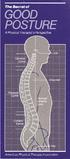 The Secret... T he American Physical Therapy Association would like to share a secret with you. It can help you do more with less effort breathe easier feel great. The secret is about good posture, which
Throughout this reference summary, you will find out what massage therapy is, its benefits, risks, and what to expect during and after a massage.
 Massage Therapy Introduction Massage therapy is the manipulation of the soft tissues of the body, including the skin, tendons, muscles and connective tissue by a professional, for relaxation or to enhance
Temple Physical Therapy
 Temple Physical Therapy A General Overview of Common Neck Injuries For current information on Temple Physical Therapy related news and for a healthy and safe return to work, sport and recreation Like Us
PTS505 Physical Therapy Private Practice Management 1 credit Course focuses on establishing a private physical therapy practice, including initial
 PTS505 Physical Therapy Private Practice Management Course focuses on establishing a private physical therapy practice, including initial development through marketing and management. Prerequisite: For
Avoid The Dreaded Back Injury by Proper Lifting Techniques
 Avoid The Dreaded Back Injury by Proper Lifting Techniques If you ve ever strained your back while lifting something, you ll know the importance of lifting safely. Agenda Introduction About the Back The
SPINAL FUSION. North American Spine Society Public Education Series
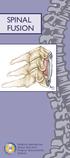 SPINAL FUSION North American Spine Society Public Education Series WHAT IS SPINAL FUSION? The spine is made up of a series of bones called vertebrae ; between each vertebra are strong connective tissues
Biomechanical Analysis of the Deadlift (aka Spinal Mechanics for Lifters) Tony Leyland
 Biomechanical Analysis of the Deadlift (aka Spinal Mechanics for Lifters) Tony Leyland Mechanical terminology The three directions in which forces are applied to human tissues are compression, tension,
Whiplash: a review of a commonly misunderstood injury
 1 Whiplash: a review of a commonly misunderstood injury The American Journal of Medicine; Volume 110; 651-656; June 1, 2001 Jason C. Eck, Scott D. Hodges, S. Craig Humphreys This review article has 64
Active Isolated Stretching: The Mattes Method
 Active Isolated Stretching: The Mattes Method Active Isolated Stretching began to develop in 1970. What began as an attempt to find specific techniques to alleviate pain and improve everyday performance
WHIPLASH! Therapeutic Massage by Lucy Lucy Dean, LMT, NMT, MMT. Helpful and effective treatment with Neuromuscular Therapy. What does Whiplash mean?
 WHIPLASH! Helpful and effective treatment with Neuromuscular Therapy Therapeutic Massage by Lucy Lucy Dean, LMT, NMT, MMT What does Whiplash mean? Whiplash is a non-medical term used to describe neck pain
The Process of Strength and Conditioning for Golfers
 The Process of Strength and Conditioning for Golfers The use of different sporting activities and resistance work to develop a strength and conditioning program specific to golf. Many club golfers are
The Rehabilitation Team
 Considerations in Designing a Rehab Program Philosophy of Sports Medicine Healing Process Pathomechanics of Injury Psychological Aspects Goals of Rehab Chapter 1 Group effort The Rehabilitation Team AEP/Athletic
STRESS. Health & Wellness The Newsletter About Achieving and Maintaining Optimal Well-being UNDERSTANDING AND YOUR BODY. www.neorthopt.
 Health & Wellness The Newsletter About Achieving and Maintaining Optimal Well-being UNDERSTANDING STRESS AND YOUR BODY Life s demands create stress and although some stress may be good, too much can cause
Reading, Writing & Posture
 Expert Content body mechanics by Joseph E. Muscolino Healthy posture of the upper body when reading and writing is dependent upon the location and angulation of the surface that we are reading and/or writing
Low Back Injury in the Industrial Athlete: An Anatomic Approach
 Low Back Injury in the Industrial Athlete: An Anatomic Approach Earl J. Craig, M.D. Assistant Professor Indiana University School of Medicine Department of Physical Medicine and Rehabilitation Epidemiology
MASTER OF PHYSIOTHERAPY (MPT) DEGREE EXAMNIATION SECOND YEAR BRANCH V- SPORTS PHYSIOTHERAPY PAPER- II PHYSIOTHERAPY INTERVENTIONS (SPECIALITY II)
 [LA135] Sub. Code : 8135 MASTER OF PHYSIOTHERAPY (MPT) DEGREE EXAMNIATION BRANCH V- SPORTS PHYSIOTHERAPY PAPER- II PHYSIOTHERAPY INTERVENTIONS (SPECIALITY II) Q.P.Code: 278135 (180 Min) Answer ALL questions
OUTPATIENT PHYSICAL AND OCCUPATIONAL THERAPY PROTOCOL GUIDELINES
 OUTPATIENT PHYSICAL AND OCCUPATIONAL THERAPY PROTOCOL GUIDELINES General Therapy Guidelines 1. Therapy evaluations must be provided by licensed physical and/or occupational therapists. Therapy evaluations
Patellofemoral/Chondromalacia Protocol
 Patellofemoral/Chondromalacia Protocol Anatomy and Biomechanics The knee is composed of two joints, the tibiofemoral and the patellofemoral. The patellofemoral joint is made up of the patella (knee cap)
McMaster Spikeyball Therapy Drills
 BODY BLOCKS In sequencing Breathing and Tempo Flexibility / Mobility and Proprioception (feel) Upper body segment Middle body segment Lower body segment Extension / Static Posture Office / Computer Travel
Nonoperative Management of Herniated Cervical Intervertebral Disc With Radiculopathy. Spine Volume 21(16) August 15, 1996, pp 1877-1883
 Nonoperative Management of Herniated Cervical Intervertebral Disc With Radiculopathy 1 Spine Volume 21(16) August 15, 1996, pp 1877-1883 Saal, Joel S. MD; Saal, Jeffrey A. MD; Yurth, Elizabeth F. MD FROM
PILATES Fatigue Posture and the Medical Technology Field
 PILATES Fatigue Posture and the Medical Technology Field Marybeth Kane May 2014 Course: 2014, Pacific Palisades, CA 1 ABSTRACT A medical laboratory scientist (MLS) (also referred to as a medical technologist
Our mission is to help you experience the greatest benefits possible. Our physicians and care staff are dedicated to your needs.
 What to Expect Our mission is to help you experience the greatest benefits possible. Our physicians and care staff are dedicated to your needs. You will most likely require 20-30 procedure sessions to
Cervical Spondylosis (Arthritis of the Neck)
 Copyright 2009 American Academy of Orthopaedic Surgeons Cervical Spondylosis (Arthritis of the Neck) Neck pain is extremely common. It can be caused by many things, and is most often related to getting
Introduction: Anatomy of the spine and lower back:
 Castleknock GAA club member and Chartered Physiotherapist, James Sherry MISCP, has prepared an informative article on the common causes of back pain and how best it can be treated. To book a physiotherapy
Sciatica Yuliya Mutsa PTA 236
 Sciatica Yuliya Mutsa PTA 236 Sciatica is a common type of pain affecting the sciatic nerve, which extends from the lower back all the way through the back of the thigh and down through the leg. Depending
Whiplash Associated Disorder
 Whiplash Associated Disorder Bourassa & Associates Rehabilitation Centre What is Whiplash? Whiplash is a non-medical term used to describe neck pain following hyperflexion or hyperextension of the tissues
THORACIC OUTLET SYNDROME
 THORACIC OUTLET SYNDROME The Problem The term thoracic outlet syndrome is used to describe a condition of compression of the nerves and/or blood vessels in the region around the neck and collarbone, called
Thoracic Spine Anatomy
 A Patient s Guide to Thoracic Spine Anatomy 228 West Main, Suite C Missoula, MT 59802 Phone: [email protected] DISCLAIMER: The information in this booklet is compiled from a variety of sources.
Cerebral Palsy. 1995-2014, The Patient Education Institute, Inc. www.x-plain.com nr200105 Last reviewed: 06/17/2014 1
 Cerebral Palsy Introduction Cerebral palsy, or CP, can cause serious neurological symptoms in children. Thousands of children are diagnosed with cerebral palsy every year. This reference summary explains
Pilates Based Treatment For Low Back Pain with Contradicting Precautions : A Case Study
 Pilates Based Treatment For Low Back Pain with Contradicting Precautions : A Case Study Kerry Susser, DPT January 27, 2013 Body Arts and Science International Comprehensive Teacher Training Program 2013
A Patient s Guide to Artificial Cervical Disc Replacement
 A Patient s Guide to Artificial Cervical Disc Replacement Each year, hundreds of thousands of adults are diagnosed with Cervical Disc Degeneration, an upper spine condition that can cause pain and numbness
visualized. The correct level is then identified again. With the use of a microscope and
 SURGERY FOR SPINAL STENOSIS Laminectomy A one inch (or longer for extensive stenosis) incision is made in the middle of the back over the effected region of the spine. The muscles over the bone are moved
Animal Systems: The Musculoskeletal System
 Animal Systems: The Musculoskeletal System Tissues, Organs, and Systems of Living Things Cells, Cell Division, and Animal Systems and Plant Systems Cell Specialization Human Systems The Digestive The Circulatory
Spinal Anatomy. * MedX research contends that the lumbar region really starts at T-11, based upon the attributes of the vertebra.
 Spinal Anatomy Overview Neck and back pain, especially pain in the lower back, is one of the most common health problems in adults. Fortunately, most back and neck pain is temporary, resulting from short-term
Neck Injuries and Disorders
 Neck Injuries and Disorders Introduction Any part of your neck can be affected by neck problems. These affect the muscles, bones, joints, tendons, ligaments or nerves in the neck. There are many common
Cerebral Palsy. In order to function, the brain needs a continuous supply of oxygen.
 Cerebral Palsy Introduction Cerebral palsy, or CP, can cause serious neurological symptoms in children. Up to 5000 children in the United States are diagnosed with cerebral palsy every year. This reference
Prepared by: Kaitlin MacDonald, MOT, OTR/L 1, Stephanie Ramey, MS, OTR/L 1, Rebecca Martin, OTR/L, OTD 1 and Glendaliz Bosques 1,2, MD
 1 The Relationship between Power and Manual Wheelchair Mobility and Upper Extremity Pain in Youths with Low Level Cervical Spinal Cord Injury Prepared by: Kaitlin MacDonald, MOT, OTR/L 1, Stephanie Ramey,
Doctor of Physical Therapy Degree Curriculum:
 Doctor of Physical Therapy Degree Curriculum: SUMMER SEMESTER 1 st YEAR (BOTH SESSIONS) DPT 744 Gross Human Anatomy I 2 credits DPT 744L Gross Human Anatomy I Lab 1 credit DPT 745 Gross Human Anatomy II
Labour Protect Your Back!
 Building Fair and Productive Workplaces Labour Protect Your Back! LT-006-07-07 Also available: Protect Your Lungs! / Protégez vos poumons! LT-168-10-05 Protect Your Skin! / Protégez votre peau! LT-158-09-05
HYPERLORDOSIS & PILATES TREATMENT
 HYPERLORDOSIS & PILATES TREATMENT Grace Tiangco 3/18/15 2012-2013 Abstract Sacramento/Mountain View Lordosis or Hyperlordosis is defined as a postural type in which the natural curves of the spine are
MUSCULAR SYSTEM REVIEW. 1. Identify the general functions of the muscular system
 MUSCULAR SYSTEM REVIEW 1. Identify the general functions of the muscular system 2. Define the four characteristics of muscular tissue a. irritability (excitability) - b. extensibility- c. contractibility
Cervical Whiplash: Considerations in the Rehabilitation of Cervical Myofascial Injury. Canadian Family Physician
 Cervical Whiplash: Considerations in the Rehabilitation of Cervical Myofascial Injury 1 Canadian Family Physician Volume 32, September 1986 Arthur Ameis, MD Dr. Ames practices physical medicine and rehabilitation,
Lumbar Spinal Stenosis
 Copyright 2009 American Academy of Orthopaedic Surgeons Lumbar Spinal Stenosis Almost everyone will experience low back pain at some point in their lives. A common cause of low back pain is lumbar spinal
Fact Sheet. Queensland Spinal Cord Injuries Service. Pain Management Following Spinal Cord Injury for Health Professionals
 Pain Management Following Injury for Health Professionals and Introduction Pain is a common problem following SCI. In the case where a person with SCI does have pain, there are treatments available that
Psoas Syndrome. The pain is worse from continued standing and from twisting at the waist without moving the feet.
 Psoas Syndrome The iliopsoas muscle is a major body mover but seldom considered as a source of pain. Chronic lower back pain involving the hips, legs, or thoracic regions can often be traced to an iliopsoas
Providing Professional Care in Rehabilitation Services
 For more information about Inspira Rehab Care or for a patient evaluation, please contact any one of our facilities: Inspira Rehab Care Bridgeton Health Center 333 Irving Avenue Bridgeton, NJ 08302 (856)
.org. Herniated Disk in the Lower Back. Anatomy. Description
 Herniated Disk in the Lower Back Page ( 1 ) Sometimes called a slipped or ruptured disk, a herniated disk most often occurs in your lower back. It is one of the most common causes of low back pain, as
SPINE. Postural Malalignments 4/9/2015. Cervical Spine Evaluation. Thoracic Spine Evaluation. Observations. Assess position of head and neck
 SPINE Observations Body type Postural alignments and asymmetries should be observed from all views Assess height differences between anatomical landmarks Figure 25-9 Figure 25-10 Figure 25-11 & 12 Postural
The Science Behind MAT
 The Science Behind MAT Muscle Activation Techniques (MAT) is a system designed to evaluate and treat muscular imbalances, I will expand on the process of evaluation in response and the use of isometrics
UNDERSTANDING STRESS AND YOUR BODY
 UNDERSTANDING STRESS AND YOUR BODY Life s demands create stress and although some stress may be good, too much can cause health problems. Most people equate stress with high blood pressure, a heart attack
Case Series on Chronic Whiplash Related Neck Pain Treated with Intraarticular Zygapophysial Joint Regeneration Injection Therapy
 Pain Physician 2007; 10:313-318 ISSN 1533-3159 Case Series Case Series on Chronic Whiplash Related Neck Pain Treated with Intraarticular Zygapophysial Joint Regeneration Injection Therapy R. Allen Hooper
Cervical Spondylotic Myelopathy Associated with Kyphosis or Sagittal Sigmoid Alignment: Outcome after Anterior or Posterior Decompression
 Cervical Spondylotic Myelopathy Associated with Kyphosis or Sagittal Sigmoid Alignment: Outcome after Anterior or Posterior Decompression 1 Journal of Neurosurgery: Spine November 2009, Volume 11, pp.
Does the pain radiating down your legs, buttocks or lower back prevent you from walking long distances?
 Does the pain radiating down your legs, buttocks or lower back prevent you from walking long distances? Do you experience weakness, tingling, numbness, stiffness, or cramping in your legs, buttocks or
COMMON OVERUSE INJURIES ATTRIBUTED TO CYCLING, AND WAYS TO MINIMIZE THESE INJURIES
 COMMON OVERUSE INJURIES ATTRIBUTED TO CYCLING, AND WAYS TO MINIMIZE THESE INJURIES Listed are a few of the most common overuse injuries associated with cycling long distances. 1. Cervical and upper back
MUSCLE PAIN RELIEF CLINIC
 MUSCLE PAIN RELIEF CLINIC LONG GRAIGUE Revolutionary Muscle Pain Relief Clinic All Injuries Treated Including Back Pain Shoulders Necks Hips Knees Ankles Complete Evaluation Postural Alignment Sports Injuries
Current Concepts of Low Back Pain. Terry L. Grindstaff, PhD, PT, ATC, SCS, CSCS
 Current Concepts of Low Back Pain Terry L. Grindstaff, PhD, PT, ATC, SCS, CSCS 28% population reports LBP in past 3 months (CDC 2010) 60% recurrence rate (Turner et al, 1992) Low Back Pain Low Back Pain
THE RELATIONSHIP BETWEEN POSTURE AND HEALTH
 THE RELATIONSHIP BETWEEN POSTURE AND HEALTH Roger Sperry, Ph.D. (Nobel Prize in Physiology or Medicine 1981) discovered that 90% of the brain's activity is used to balance your body within the gravitational
Chapter 6. Components of Elasticity. Musculotendinous Unit. Behavioral Properties of the Musculotendinous Unit. Biomechanics of Skeletal Muscle
 Chapter 6 Behavioral Properties of the Musculotendinous Unit 1) extensibility: ability to be stretched or to increase in length 2) elasticity: ability to return to normal resting length following a stretch
A Patient s Guide to Rib Joint Pain
 A Patient s Guide to Rib Joint Pain Anatomy Where are the rib joints? Your rib cage is made up of twelve pairs of ribs. The ribs attach to the spine in the back, and to the breastbone in the front. The
A Note to Physical, Occupational and Speech Therapists
 D Page 1 of 5 A Note to Physical, Occupational and Speech Therapists Treating Children with Hurler Syndrome Because Hurler syndrome is such a rare disease, we have provided some basic information to assist
THORACIC OUTLET SYNDROME & BRACHIAL PLEXUS INJURIES
 THORACIC OUTLET SYNDROME & BRACHIAL PLEXUS INJURIES I. THORACIC OUTLET SYNDROME TOS is a compression of nerves or blood vessels, or both, in the thoracic outlet region, which is the space between the collarbone
CHIROPRACTIC WELLNESS AWARENESS ONE FREE MASSAGE SESSION
 CHIROPRACTIC WELLNESS AWARENESS Do you want to have a healthy body? Do you like to maintain your high energy level? Do you want to be stress-less? Do you like to be pain free? Please call Conrad Nieh D.C.
Webinar title: Know Your Options for Treating Severe Spasticity
 Webinar title: Know Your Options for Treating Severe Spasticity Presented by: Dr. Gerald Bilsky, Physiatrist Medical Director of Outpatient Services and Associate Medical Director of Acquired Brain Injury
Biomechanics of Lifting and Lower Back Pain S.N. Robinovitch
 Biomechanics of Lifting and Lower Back Pain S.N. Robinovitch Outline Epidemiology of lower back pain Strength of spinal segments Lifting models: muscle and intervertebral joint forces (compression and