
Update and Review of Medication Assisted Treatments
|
|
|
- Linda Franklin
- 10 years ago
- Views:
Transcription
1 Update and Review of Medication Assisted Treatments for Opiate and Alcohol Use Disorders Richard N. Whitney, MD Medical Director Addiction Services Shepherd Hill Newark, Ohio Medication Assisted Treatment of Addiction Which patients? Which diagnoses? Which medication? How long? Fit in with program philosophy? Affordability? Prescribers in area? Proven efficacy? OK with 12 Step groups? How do I refer patients? Why is this Still a Controversial Subject in 2015??? This topic elicits strong negative reactions from many persons in recovery as well as treatment professionals with an anti medication bias. Many in the addiction treatment field as well as other medical fields suggest that using medications in the treatment of addictive disease is replacing one drug addiction with another. 1

2 Why is this Still a Controversial Subject in 2015??? How do we reconcile the incompatibility between the scientific literature which clearly documents the benefits of medication assisted therapies and the widespread resistance against appropriate pharmacotherapy among treatment professionals? Scientific evidence clearly demonstrates the short and, most importantly, the long term efficacy of medications used in the treatment of addictive disease, especially alcohol and opiate use disorders. Why is this Still a Controversial Subject in 2015??? Even in the face of increasingly serious national epidemics of opioid and alcohol use disorders, medication assisted therapies are underutilized. Studies have found that only about 30% of licensed addiction treatment programs offer any of the medications approved for opioid addiction, and only about 50% of potentially eligible patients within these program receive any of these medications. 18 Why is this Still a Controversial Subject in 2015??? Should we not strongly promote therapies which produce both favorable outcomes (abstinence, treatment compliance and retention, decreased medical and physical complications) as well as indirect benefits (reduced criminal behavior and legal involvement, family reunification, increased employment, improved physical health and overall quality of life)? 2
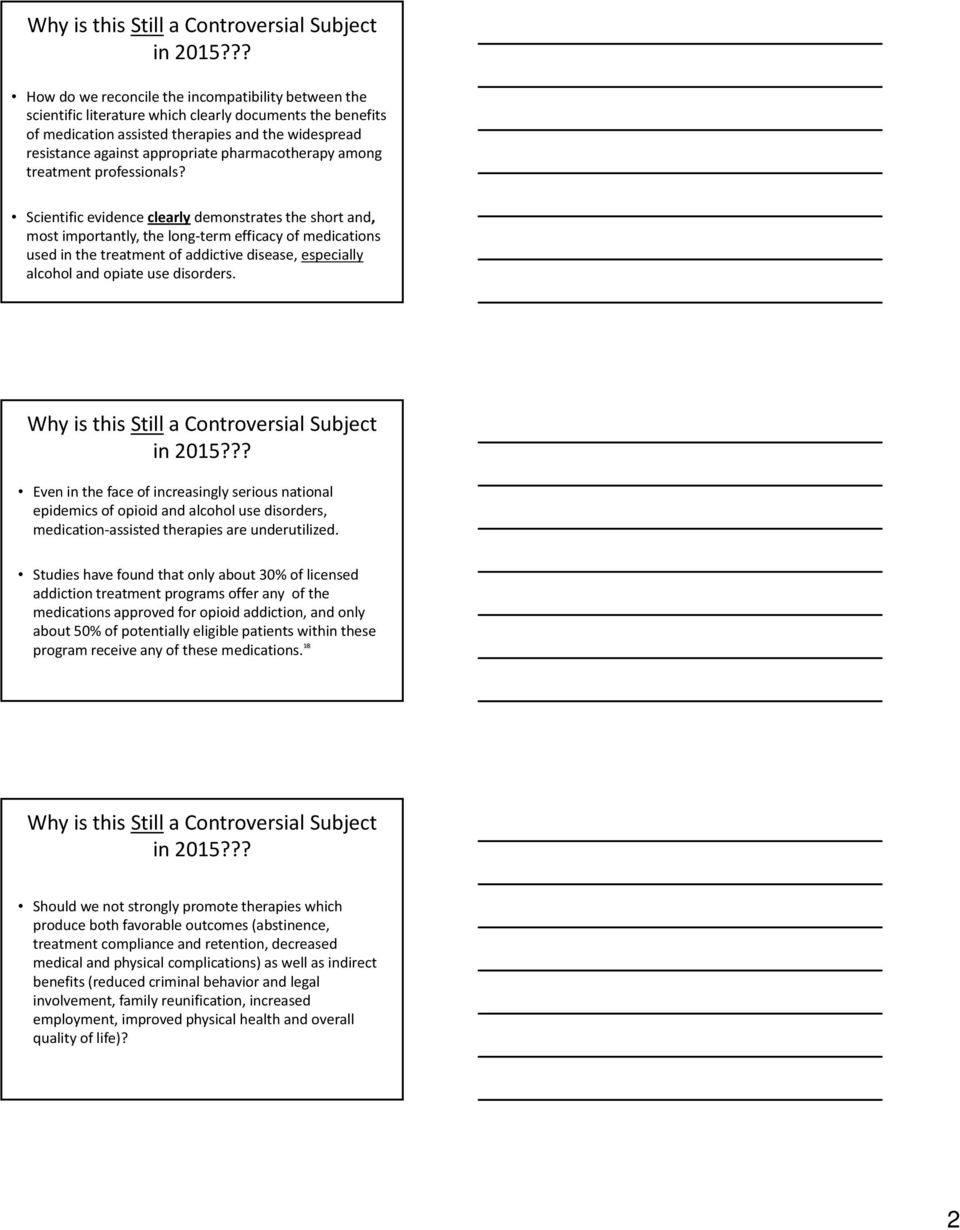
3 Addiction is a Brain Based Disease 3
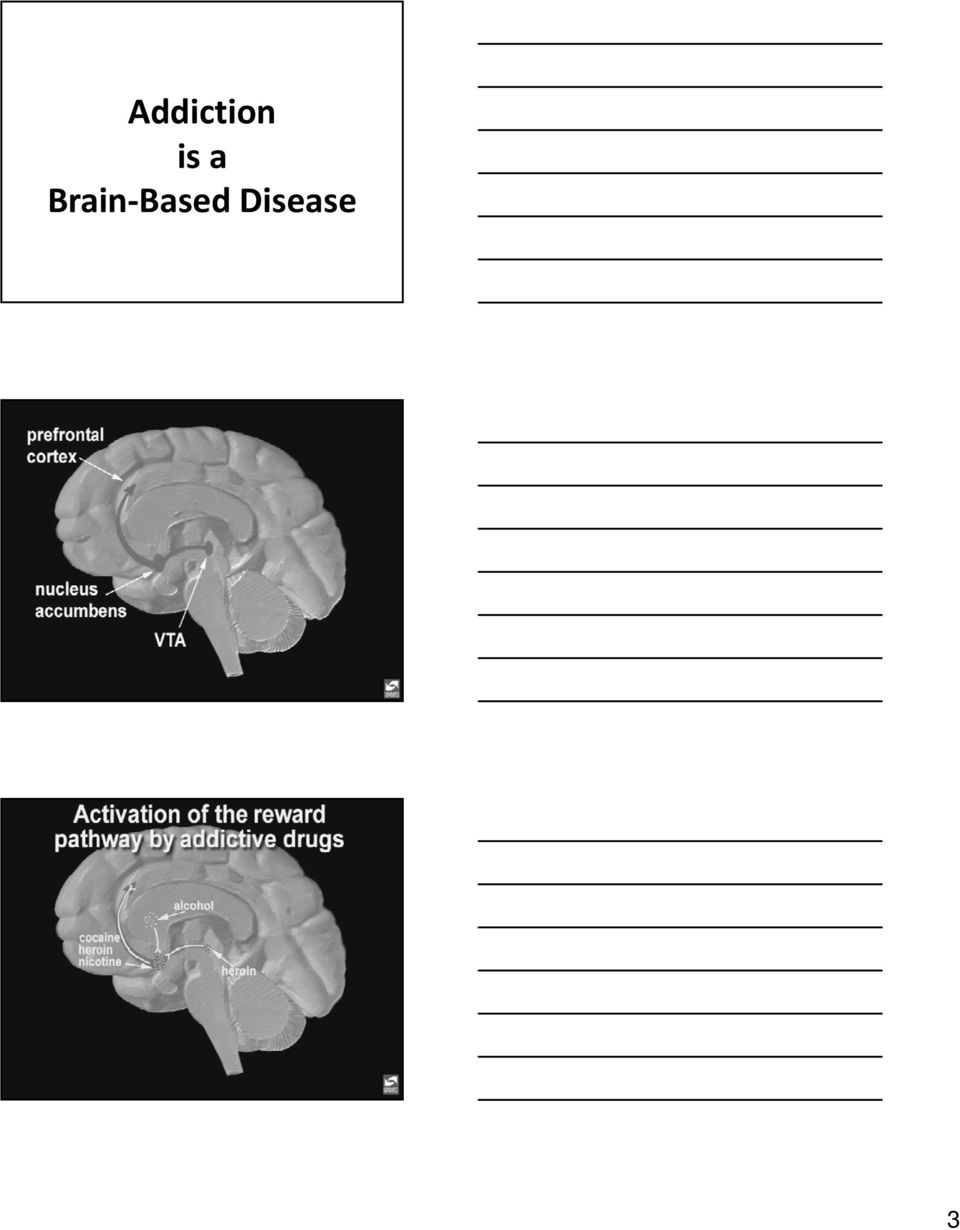
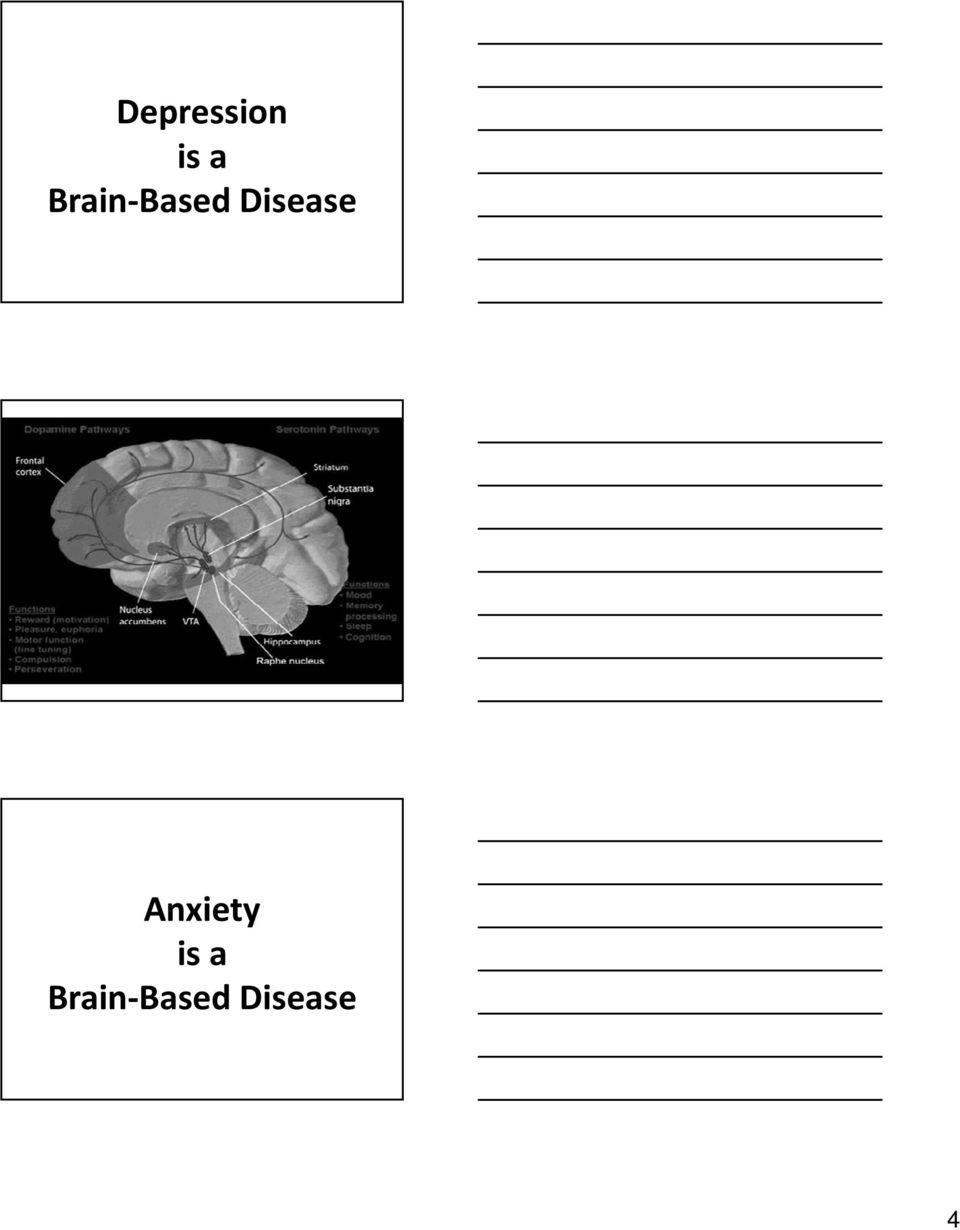
4 Depression is a Brain Based Disease Anxiety is a Brain Based Disease 4
5 Schizophrenia is a Brain Based Disease Normal Brain Schizophrenic Brain 5
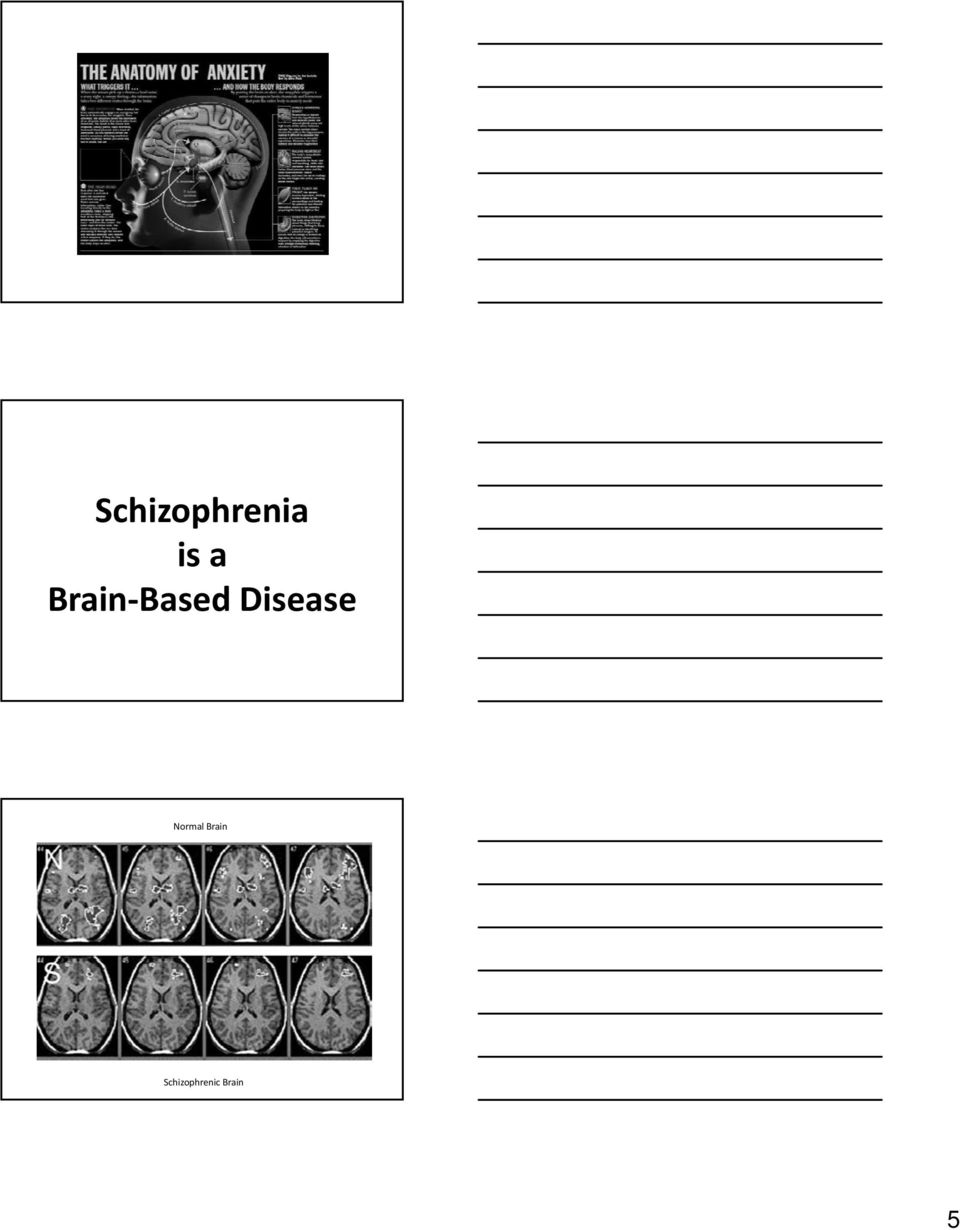
6 Abstinence Based Treatment Only? Would we recommend only non medication therapy for other serious brain based, life disruptive, potentially fatal illnesses like depression, severe anxiety and/or panic disorder, or schizophrenia? If so, would we do so in what we believe is the patient s best interests, or in our own best interest or because that is how we ourselves were treated? Would that recommendation change depending upon the longevity and severity of the patient s disease, or if our current treatment plan was not successful in alleviating the patient s symptoms? Opposition to Medication Assisted Therapy Implies rejection of disease model itself Substitution of one drug for another Drug free state is only valid treatment goal Substantial amounts of research have shown that this drug free state is neither achieved nor sustained by many heroin addicts, 4 and numerous studies support the efficacy of FDA approved medications in patients with alcohol use disorders. Substance Use Disorders Addiction to alcohol as well as to pharmaceutical opiates, heroin, and other opioid drugs, are nationally prominent problems producing significant suffering, substantial tragic and expanding levels of morbidity and mortality, as well as significant costs to society, especially in law enforcement and healthcare. 6

7 Substance Use Disorders Effective medications are available to treat alcohol and opiate addiction, but they are substantially underutilized. We in the addiction field need to evaluate the safety effectiveness of these medications, and recommend them appropriately to our patients with addictive disease. Medication Assisted Therapy for Alcohol Addiction Medications for Alcohol Addiction Antabuse (disulfiram) Naltrexone ReVia Vivitrol Campral (acamprosate) Anticonvulsants Other agents 7
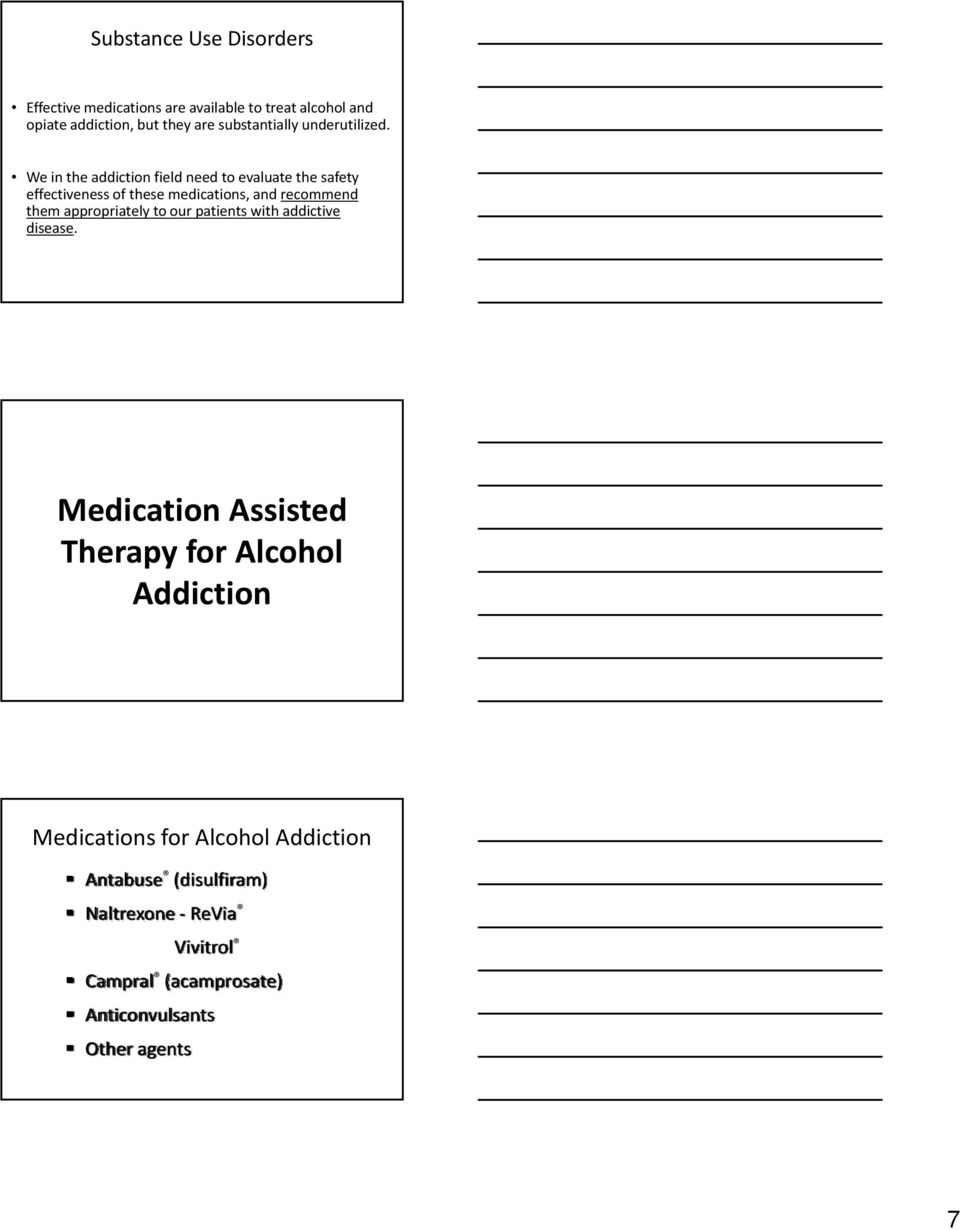
8 Antabuse (disulfiram) FDA Approved Pharmacotherapies for Alcohol Dependence: Older Options Drug Class Disulfiram (Antabuse ) Naltrexone (ReVia ) Mini Profile Inhibits aldehyde dehydrogenase When taken with alcohol, [acetaldehyde] leads to nausea, dizziness, headache, flushing Decreases desire to drink Poor tolerability profile Black box warning, safety issues Opioid antagonist Binds to opioid receptors, thus blocking alcohol reward pathways Black box warning, safety issues 8
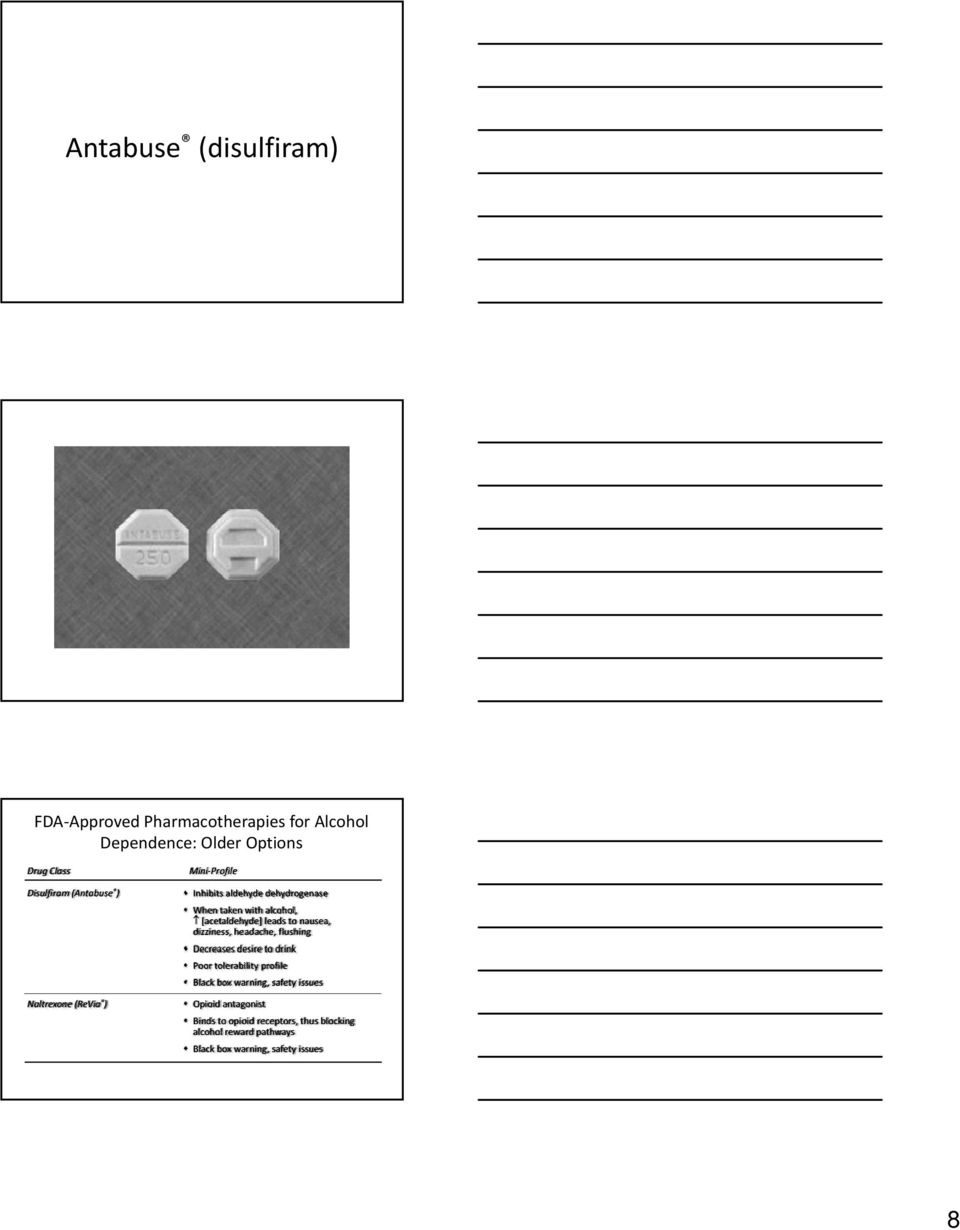
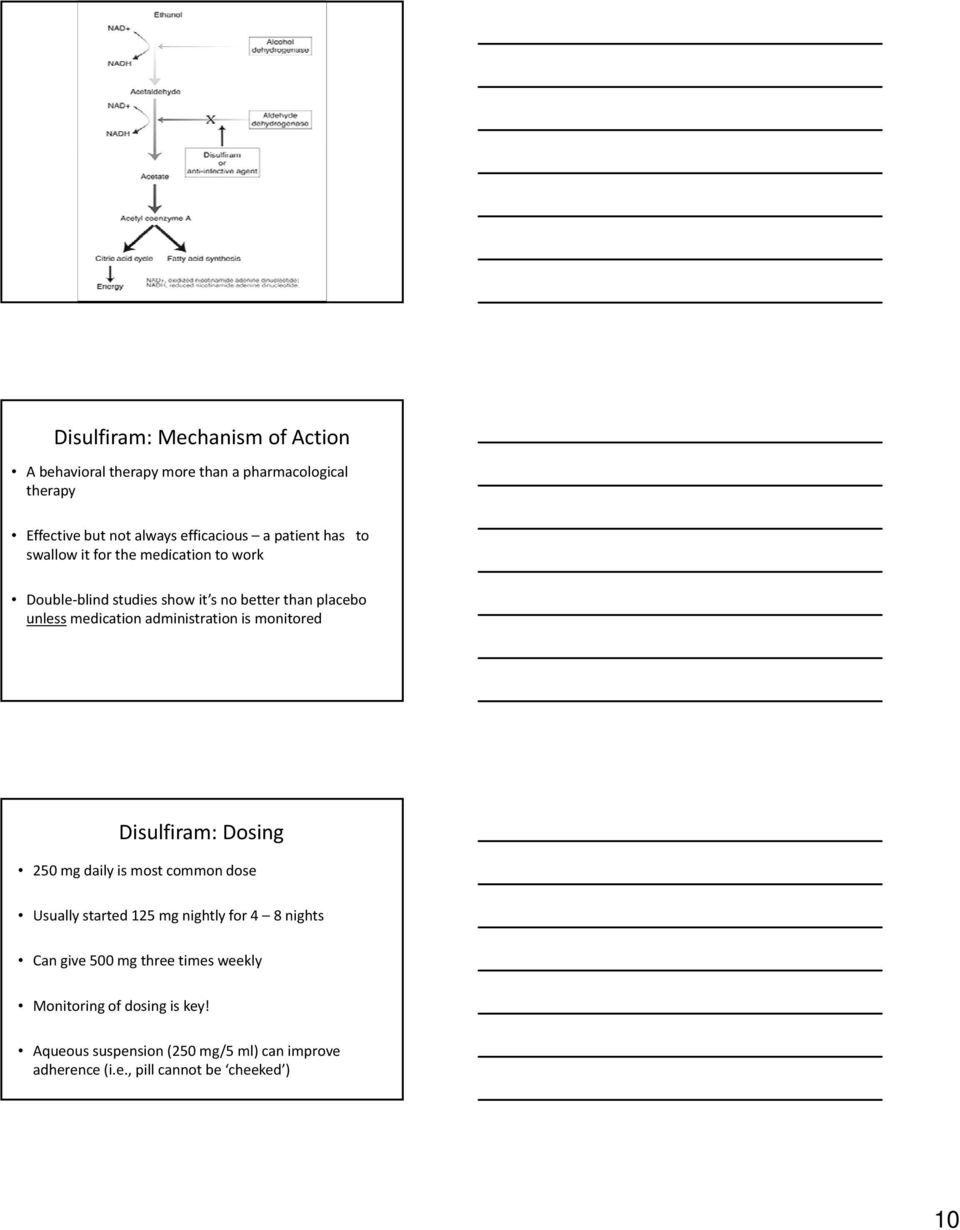
9 Disulfiram: Indications and Usage Patients with an alcohol use disorder who manifest significant problems in initiating or sustaining abstinence Those persons with addiction to alcohol who need a really good reason not to drink Persons who manifest alcohol abuse who really need to not drink (e.g.: hazardous occupations) Disulfiram: Indications and Usage Persons without alcohol use disorders but who wish to avoid high risk drinking Patientswithout a diagnosed alcohol use disorder for whom alcohol use in any amount serves as a trigger for relapse to their drug of choice Persons with co occurring cocaine dependence (??) Disulfiram: Mechanism of Action Inhibition of aldehyde dehydrogenase enzyme Alcohol then cannot proceed on its normal metabolic path to acetate Aldehyde builds up in a 1:1 response to the dose of ethanol presented Dose response phenomenon, so a trivial dose of EtOH (e.g.: inhaled fumes) results in a minor build up of acetaldehyde, and minor symptoms only 9

10 Disulfiram: Mechanism of Action A behavioral therapy more than a pharmacological therapy Effective but not always efficacious a patient has to swallow it for the medication to work Double blind studies show it s no better than placebo unless medication administration is monitored Disulfiram: Dosing 250 mg daily is most common dose Usually started 125 mg nightly for 4 8 nights Can give 500 mg three times weekly Monitoring of dosing is key! Aqueous suspension (250 mg/5 ml) can improve adherence (i.e., pill cannot be cheeked ) 10
11 Disulfiram: Adverse Effects Hepatotoxicity with long term treatment need to check liver function tests after initiating treatment May cause sedation, increase in depression or psychosis, cognitive impairment, i or worsening of dementia Metallic or garlic like taste or breath often reported Sensory neuropathy with long term therapy Disulfiram: Alcohol Reaction Hypotension, flushing, tachycardia, diaphoresis and dyspnea (shortness of breath) Severe headache, nausea, vomiting, abdominal pain, sulfur or garlic odor on breath Agitation, dysarthria (difficulty in speaking), chorea (abnormal involuntary movements) and lethargy Disulfiram: Therapeutic Approach May be used short term or long term May be used episodically, as for high risk circumstances (e.g., business trips, vacations) Optimal duration of use unclear Does not need to be tapered 11

12 Naltrexone: Oral Formulations (ReVia ) FDA Approved Pharmacotherapies for Alcohol Dependence: Other Options Drug Class Disulfiram (Antabuse ) Naltrexone (ReVia ) Mini Profile Inhibits aldehyde dehydrogenase When taken with alcohol, [acetaldehyde] leads to nausea, dizziness, headache, flushing Decreases desire to drink Poor tolerability profile Black box warning, safety issues Opioid antagonist Binds to opioid receptors, thus blocking alcohol reward pathways Black box warning, safety issues Naltrexone: Patient Selection Diagnosis of alcohol use disorder Strongly positive family history of AUD Strong subjective cravings for alcohol Strong subjective reward from alcohol An expressed desire to be in recovery and a willingness to engage in and complete treatment 12
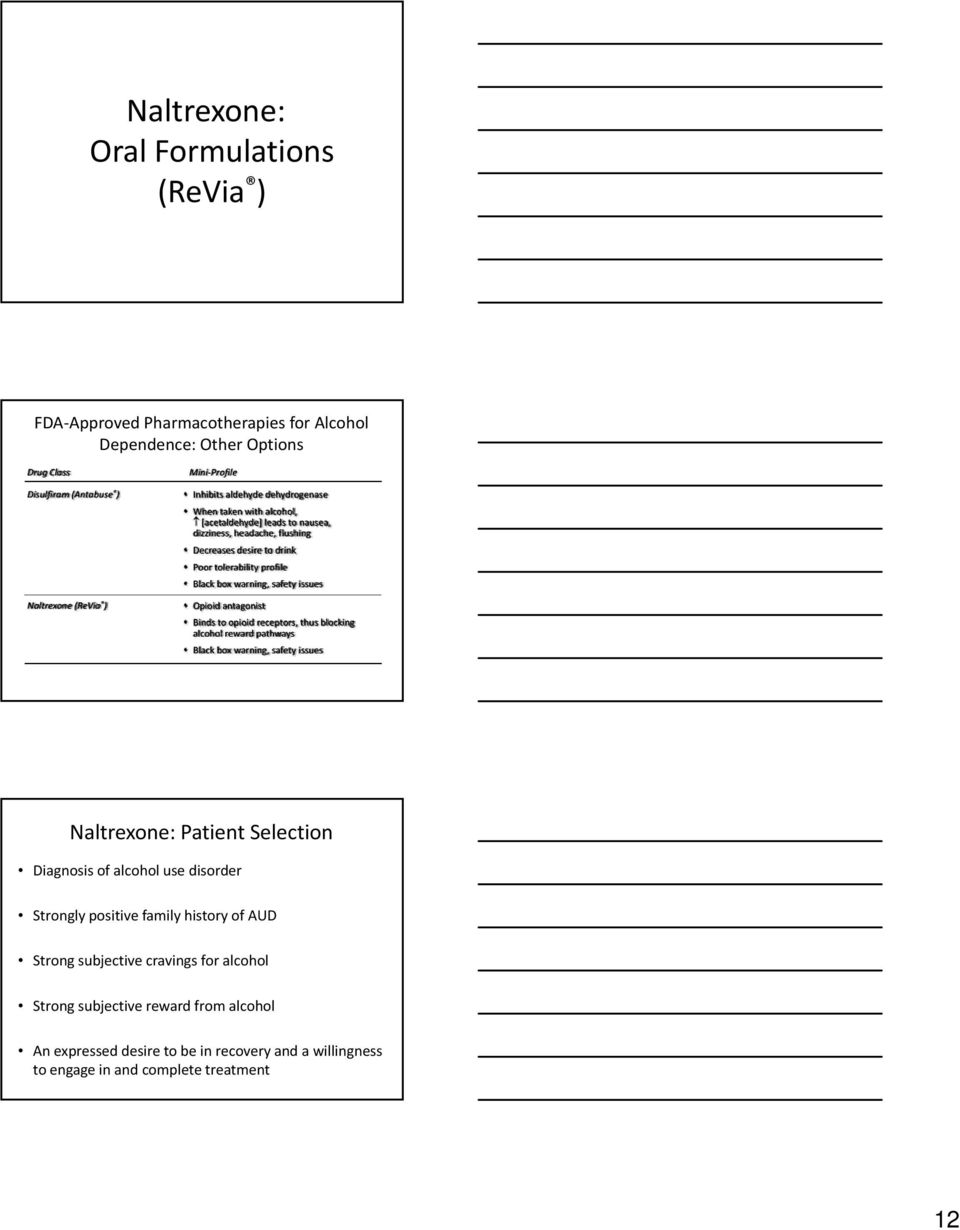
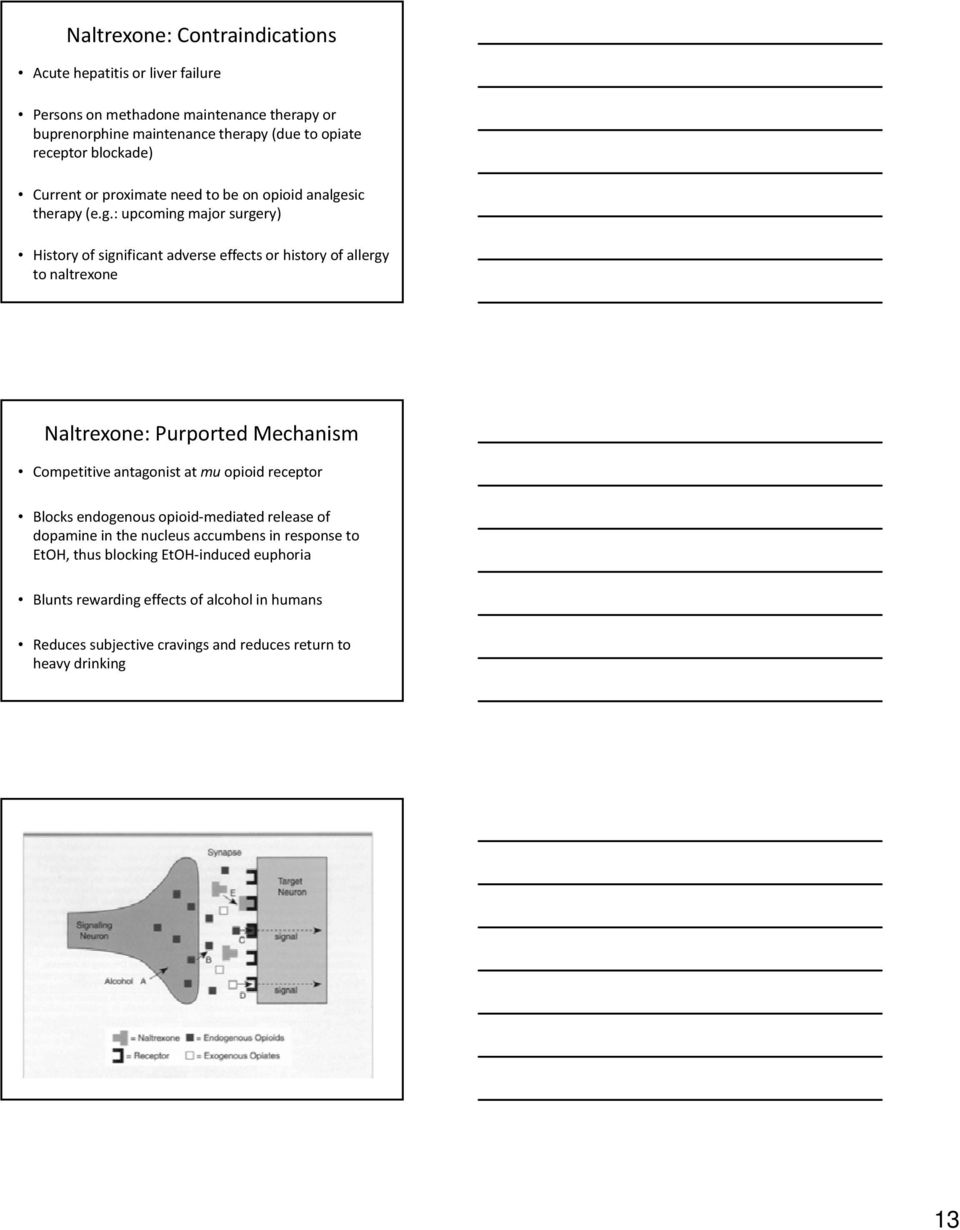
13 Naltrexone: Contraindications Acute hepatitis or liver failure Persons on methadone maintenance therapy or buprenorphine maintenance therapy (due to opiate receptor blockade) Current or proximate need to be on opioid analgesic therapy (e.g.: upcoming major surgery) History of significant adverse effects or history of allergy to naltrexone Naltrexone: Purported Mechanism Competitive antagonist at mu opioid receptor Blocks endogenous opioid mediated release of dopamine in the nucleus accumbens in response to EtOH, thus blocking EtOH induced deuphoria Blunts rewarding effects of alcohol in humans Reduces subjective cravings and reduces return to heavy drinking 13
Naltrexone and Alcoholism Treatment Test
 Naltrexone and Alcoholism Treatment Test Following your reading of the course material found in TIP No. 28. Please read the following statements and indicate the correct answer on the answer sheet. A score
Alcohol Overuse and Abuse
 Alcohol Overuse and Abuse ACLI Medical Section CME Meeting February 23, 2015 Daniel Z. Lieberman, MD Professor and Vice Chair Department of Psychiatry George Washington University Alcohol OVERVIEW Definitions
Prior Authorization Guideline
 Prior Authorization Guideline Guideline: PDP IBT Inj - Vivitrol Therapeutic Class: Central Nervous System Agents Therapeutic Sub-Class: Opiate Antagonist Client: 2007 PDP IBT Inj Approval Date: 2/20/2007
Advanced Treatment for Opioid & Alcohol Dependence. John Larson, M.D. Corporate Medical Director Gateway Foundation
 Advanced Treatment for Opioid & Alcohol Dependence John Larson, M.D. Corporate Medical Director Gateway Foundation Background 41 years practicing psychiatry Last 15 in addiction medicine I ve watched a
The Results of a Pilot of Vivitrol: A Medication Assisted Treatment for Alcohol and Opioid Addiction
 The Results of a Pilot of Vivitrol: A Medication Assisted Treatment for Alcohol and Opioid Addiction James H. Barger, MD SAPC Medical Director and Science Officer Desiree A. Crevecoeur-MacPhail, Ph.D.
DrugFacts: Treatment Approaches for Drug Addiction
 DrugFacts: Treatment Approaches for Drug Addiction NOTE: This is a fact sheet covering research findings on effective treatment approaches for drug abuse and addiction. If you are seeking treatment, please
Frequently Asked Questions (FAQ s): Medication-Assisted Treatment for Opiate Addiction
 Frequently Asked Questions (FAQ s): Medication-Assisted Treatment for Opiate Addiction March 3, 2008 By: David Rinaldo, Ph.D., Managing Partner, The Avisa Group In this FAQ What medications are currently
Beyond SBIRT: Integrating Addiction Medicine into Primary Care
 Beyond SBIRT: Integrating Addiction Medicine into Primary Care Community Clinic Association of Los Angeles County 14 th Annual Health Care Symposium March 6, 2015 Keith Heinzerling MD, Karen Lamp MD; Allison
Source: National Institute on Alcohol Abuse and Alcoholism. Bethesda, Md: NIAAA; 2004. NIH Publication No. 04-3769.
 Diagnosis and Treatment of Alcohol Dependence Lon R. Hays, MD, MBA Professor and Chairman Department of Psychiatry University of Kentucky Medical Center Defining the Standard Drink A standard drink = 14
Naltrexone for Opioid & Alcohol Use Disorders
 Naltrexone for Opioid & Alcohol Use Disorders Reid K. Hester, Ph.D. Director, Research Division Behavior Therapy Associates, LLC Senior Science Advisor Checkup and Choices, LLC 505.345.6100 [email protected]
Integrating Medication- Assisted Treatment (MAT) for Opioid Use Disorders into Behavioral and Physical Healthcare Settings
 Integrating Medication- Assisted Treatment (MAT) for Opioid Use Disorders into Behavioral and Physical Healthcare Settings All-Ohio Conference 3/27/2015 Christina M. Delos Reyes, MD Medical Consultant,
Source: National Institute on Alcohol Abuse and Alcoholism. Bethesda, Md: NIAAA; 2004. NIH Publication No. 04-3769.
 Diagnosis and Treatment of Alcohol Dependence Lon R. Hays, MD, MBA Professor and Chairman an Department of Psychiatry University of Kentucky Medical Center Defining the Standard Drink A standard drink
Co-morbid physical disorders e.g. HIV, hepatitis C, diabetes, hypertension. Medical students will gain knowledge in
 1.0 Introduction Medications are used in the treatment of drug, alcohol and nicotine dependence to manage withdrawal during detoxification, stabilisation and substitution as well as for relapse prevention,
Treatment Approaches for Drug Addiction
 Treatment Approaches for Drug Addiction NOTE: This is a fact sheet covering research findings on effective treatment approaches for drug abuse and addiction. If you are seeking treatment, please call the
1. According to recent US national estimates, which of the following substances is associated
 1 Chapter 36. Substance-Related, Self-Assessment Questions 1. According to recent US national estimates, which of the following substances is associated with the highest incidence of new drug initiates
What is Addiction and How Do We Treat It? Roger D. Weiss, M.D. Professor of Psychiatry, Harvard Medical School Clinical Director, Alcohol and Drug
 What is Addiction and How Do We Treat It? Roger D. Weiss, M.D. Professor of Psychiatry, Harvard Medical School Clinical Director, Alcohol and Drug Abuse Treatment Program, McLean Hospital, Belmont, MA
Treatment of Opioid Dependence with Buprenorphine/Naloxone (Suboxone )
 Treatment of Opioid Dependence with Buprenorphine/Naloxone (Suboxone ) Elinore F. McCance-Katz, M.D., Ph.D. Professor and Chair, Addiction Psychiatry Virginia Commonwealth University Neurobiology of Opiate
Substance Abuse Treatment. Naltrexone for Extended-Release Injectable Suspension for Treatment of Alcohol Dependence
 Spring 2007 Volume 6 Issue 1 ADVISORY News for the Treatment Field Naltrexone for Extended-Release Injectable Suspension for Treatment of Alcohol Dependence What is naltrexone for extendedrelease injectable
Medicines To Treat Alcohol Use Disorder A Review of the Research for Adults
 Medicines To Treat Alcohol Use Disorder A Review of the Research for Adults Is This Information Right for Me? Yes, this information is right for you if: Your doctor* said you have alcohol use disorder
How To Use Naltrexone Safely And Effectively
 Naltrexone And Alcoholism Treatment Treatment Improvement Protocol (TIP) Series 28 Executive Summary and Recommendations Psychosocial treatments for alcoholism have been shown to increase abstinence rates
Neurobiology and Treatment of Alcohol Dependence. Nebraska MAT Training September 29, 2011
 Neurobiology and Treatment of Alcohol Dependence Nebraska MAT Training September 29, 2011 Prior treatment episodes for persons starting treatment for alcohol dependence, 2009 Percent 50 45 40 35 30 25
Medications Used in the Treatment of Addiction Developed by Randall Webber, MPH. Alcohol Withdrawal
 Medications Used in the Treatment of Addiction Developed by Randall Webber, MPH Alcohol Withdrawal MEDICATION Long/intermediateacting benzodiazepines (e.g., chlordiazepoxide/ Librium, diazepam/valium)
EPIDEMIOLOGY OF OPIATE USE
 Opiate Dependence EPIDEMIOLOGY OF OPIATE USE Difficult to estimate true extent of opiate dependence Based on National Survey of Health and Mental Well Being: 1.2% sample used opiates in last 12 months
Systematic Review of Treatment for Alcohol Dependence
 Systematic Review of Treatment for Alcohol Dependence ALCOHOL ARCUATE NUCLEUS in Hypothalamus, pituitary Beta-endorphin Dynorphin Kappa receptor Nucleus Enkephalins accumbens Delta receptor (+) Mu receptor
EPIDEMIC 4.6 % OF INDIVIDUALS 18 25 USED PAIN RELIEVERS FOR NON-MEDICAL REASONS. 1.5 MILLION YOUNG ADULTS USED PAIN RELIEVERS IN THE PAST MONTH.
 Drug Court EPIDEMIC In the 10 years (1997 2007) the per capita retail purchases of Methadone, Hydrocodone and Oxycodone in the United States increased 13-fold, 4-fold and 9-fold, respectively. 4.6 % OF
Use of Pharmacotherapies by Substance Abuse Treatment Facilities
 Use of Pharmacotherapies by Substance Abuse Treatment Facilities Cathie E. Alderks, PhD Substance Abuse and Mental Health Services Administration Department of Health and Human Services November 2007 1
CLINICAL POLICY Department: Medical Management Document Name: Vivitrol Reference Number: NH.PHAR.96 Effective Date: 03/12
 Page: 1 of 7 IMPORTANT REMINDER This Clinical Policy has been developed by appropriately experienced and licensed health care professionals based on a thorough review and consideration of generally accepted
Alcoholism In The Office SCOTT PAIST, III, M. D.
 Alcoholism In The Office SCOTT PAIST, III, M. D. The Dopaminergic Mesolimbic System PFC= Prefrontal Cortex NA=Nucleus Accumbens VTA= Ventral Tegemntal Area A = Amygdala C = Caudate Nucleus The Limbic System
In 2010, approximately 8 million Americans 18 years and older were dependent on alcohol.
 Vivitrol Pilot Study: SEMCA/Treatment Providers Collaborative Efforts with the treatment of Opioid Dependent Clients Hakeem Lumumba, PhD, CAADC SEMCA Scott Schadel, MSW, LMSW, CAADC HEGIRA PROGRAMS, INC.
Brain Damage & Recovery: The Resilience of the Brain, Addiction Impact & Therapeutic Repair. Michael Fishman, MD Director of Young Adult Program
 Brain Damage & Recovery: The Resilience of the Brain, Addiction Impact & Therapeutic Repair Michael Fishman, MD Director of Young Adult Program How Addiction Takes Hold Large & rapid upsurges in dopamine
MEDICATIONS USED IN THE MANAGEMENT OF SUBSTANCE USE DISORDERS
 MEDIATIONS USED IN THE MANAGEMENT OF SUBSTANE USE DISORDERS Opioid Agonist Therapy (OAT) for Opioid Dependence Methadone (Dolophine, Methadose) Specialty consultation advised. Titrate carefully, consider
Use of Vivitrol for Alcohol and Opioid Addiction
 Use of Vivitrol for Alcohol and Opioid Addiction Ken Bachrach, Ph.D. Clinical Director, Tarzana Treatment Centers, Inc. [email protected] What is Vivitrol? An injectable from of naltrexone, which
DSM-IV Alcohol Dependence. Alcohol and Drug Abuse. Screening for Alcohol Risk. DSM-IV Alcohol Abuse
 DSM-IV Alcohol Dependence Alcohol and Drug Abuse David Gilder, MD Division of Mental Health Scripps Clinic Alcohol Research Center The Scripps Research Institute 1.5.11 Three or more criteria, same 12
Considerations in Medication Assisted Treatment of Opiate Dependence. Stephen A. Wyatt, D.O. Dept. of Psychiatry Middlesex Hospital Middletown, CT
 Considerations in Medication Assisted Treatment of Opiate Dependence Stephen A. Wyatt, D.O. Dept. of Psychiatry Middlesex Hospital Middletown, CT Disclosures Speaker Panels- None Grant recipient - SAMHSA
NHS FORTH VALLEY. Guidance on Alcohol Dependence: Maintenance of Abstinence. Contact: Valerie Kippen Area Drug & Therapeutics Committee
 NHS FORTH VALLEY Guidance on Alcohol Dependence: Maintenance of Abstinence Approved 06/09/2012 Version 5.0 Date of First Issue February 2008 Review Date 06/09/2014 Current Issue Date 26/11/2012 EQIA Yes
Naltrexone Shared Care Guideline for the treatment of alcohol dependence and opioid dependance
 Naltrexone Shared Care Guideline for the treatment of alcohol dependence and opioid dependance Introduction Indication/Licensing information: Naltrexone is licensed for use as an additional therapy, within
Drugs for Alcohol Dependence: Clinical Guidance and Three Way Agreement
 Drugs for Alcohol Dependence: Clinical Guidance and Three Way Agreement for County Durham In partnership with the GP, the client, and the County Durham Drug and Alcohol Service December 2015 Version 1.0
OVERVIEW OF MEDICATION ASSISTED TREATMENT
 Sarah Akerman MD Assistant Professor of Psychiatry Director of Addiction Services Geisel School of Medicine/Dartmouth-Hitchcock Medical Center OVERVIEW OF MEDICATION ASSISTED TREATMENT Conflicts of Interest
How To Treat Anorexic Addiction With Medication Assisted Treatment
 Medication Assisted Treatment for Opioid Addiction Tanya Hiser, MS, LPC Premier Care of Wisconsin, LLC October 21, 2015 How Did We Get Here? Civil War veterans and women 19th Century physicians cautious
Death in the Suburbs: How Prescription Painkillers and Heroin Have Changed Treatment and Recovery
 Death in the Suburbs: How Prescription Painkillers and Heroin Have Changed Treatment and Recovery Marvin D. Seppala, MD Chief Medical Officer Hazelden Betty Ford Foundation This product is supported by
Alcohol and Drug. A Cochrane Handbook. losief Abraha MD. Cristina Cusi MD. Regional Health Perugia
 Alcohol and Drug A Cochrane Handbook losief Abraha MD Regional Health Perugia of Cristina Cusi MD Outpatient Services - Neurology Clinical Institutes of Specialisation Milan Italy A John Sons, Ltd., THE
Tolerance and Dependence
 Tolerance and Dependence Drug Tolerance is a decrease in the effect of a drug as a consequence of repeated exposure. Change over repeated exposures. Different effects may show different tolerance. Tolerance
DEVELOPING MANUFACTURING SUPPLYING. Naltrexone Implants. Manufactured by NalPharm Ltd WWW.NALPHARM.COM
 DEVELOPING MANUFACTURING SUPPLYING Naltrexone Implants Background to Nalpharm NalPharm is a specialist pharmaceutical company supplying proprietary branded medications and generic drugs in the area of
Reintegration. Recovery. Medication-Assisted Treatment for Alcohol Dependence. Reintegration. Resilience
 Reintegration Recovery Medication-Assisted Treatment for Alcohol Dependence Reintegration Resilience 02 How do you free yourself from the stress and risks of alcohol dependence? Most people cannot do it
Buprenorphine Therapy in Addiction Treatment
 Buprenorphine Therapy in Addiction Treatment Ken Roy, MD, FASAM Addiction Recovery Resources, Inc. River Oaks Hospital Tulane Department of Psychiatry www.arrno.org Like Minded Doc What is MAT? Definition
opiates alcohol 27 opiates and alcohol 30 April 2016 drug addiction signs 42 Ranked #1 123 Drug Rehab Centers in New Jersey 100 Top 10 380
 opiates alcohol 27 opiates and alcohol 30 April 2016 drug addiction signs 42 ed #1 123 Drug Rehab Centers in New Jersey 100 Top 10 380 effects of alcohol in the brain 100 Top 30 698 heroin addiction 100
Naltrexone Pellet Treatment for Opiate, Heroin, and Alcohol Addiction. Frequently Asked Questions
 Naltrexone Pellet Treatment for Opiate, Heroin, and Alcohol Addiction Frequently Asked Questions What is Naltrexone? Naltrexone is a prescription drug that effectively blocks the effects of heroin, alcohol,
Medication Assisted Treatment of Substance Use Disorders
 Medication Assisted Treatment of Substance Use Disorders April 8, 2015 We Want To Hear From You! Type questions into the Questions Pane at any time during this presentation Patient-Centered Primary Care
Alcohol Addiction. Introduction. Overview and Facts. Symptoms
 Alcohol Addiction Alcohol Addiction Introduction Alcohol is a drug. It is classed as a depressant, meaning that it slows down vital functions -resulting in slurred speech, unsteady movement, disturbed
Alcohol Abuse and Addiction Management Protocol
 Alcohol Abuse and Addiction Management Protocol All Team Members: Patient Self-Management Education and Support Alcohol is the most commonly abused drug in the United States. About 18 million people in
Assessment and Management of Opioid, Benzodiazepine, and Sedative-Hypnotic Withdrawal
 Assessment and Management of Opioid, Benzodiazepine, and Sedative-Hypnotic Withdrawal Roger Cicala, M. D. Assistant Medical Director Tennessee Physician s Wellness Program Step 1 Don t 1 It is legal in
Frequently asked questions
 Naltrexone Pellet Treatment for Opiate, Heroin, and Alcohol Addiction Frequently asked questions What is Naltrexone? Naltrexone is a prescription drug that completely blocks the effects of all opioid drugs
Substitution Therapy for Opioid Dependence The Role of Suboxone. Mandy Manak, MD, ABAM, CCSAM Methadone 101-Hospitalist Workshop, October 3, 2015
 Substitution Therapy for Opioid Dependence The Role of Suboxone Mandy Manak, MD, ABAM, CCSAM Methadone 101-Hospitalist Workshop, October 3, 2015 Objectives Recognize the options available in treating opioid
Substance Use Learning Event Nov 3, 2015 Bill Bullock MD, CCFP
 Substance Use Learning Event Nov 3, 2015 Bill Bullock MD, CCFP Medical assessment of patient with Alcohol Use Disorder Identification patients suitable for home detox Process for referral to inpatient
MEDICAL ASSISTANCE BULLETIN
 ISSUE DATE SUBJECT EFFECTIVE DATE MEDICAL ASSISTANCE BULLETIN NUMBER *See below BY Prior Authorization of Opiate Dependence Treatments Pharmacy Service Leesa M. Allen, Deputy Secretary Office of Medical
Alcohol Screening and Brief Intervention
 Updatedì A POCKET GUIDE FOR Alcohol Screening and Brief Intervention Updated 2005 Edition This pocket guide is condensed from the 34-page NIAAA guide, Helping Patients Who Drink Too Much: A Clinician s
Opioid overdose can occur when a patient misunderstands the directions
 Facts About Opioid Overdose How Does an Overdose Occur? Opioid overdose can occur when a patient misunderstands the directions for use, accidentally takes an extra dose, or deliberately misuses a prescription
Produced and Published by The Cabin Chiang Mai, Alcohol and Drug Rehab Centre. Copyright 2013. and How is it Treated?
 and How is it Treated? 1 About this book This E-book has been produced as a guide to help explain some of the fundamental things you need to understand about addiction and its treatment, starting with
Using Drugs to Treat Drug Addiction How it works and why it makes sense
 Using Drugs to Treat Drug Addiction How it works and why it makes sense Jeff Baxter, MD University of Massachusetts Medical School May 17, 2011 Objectives Biological basis of addiction Is addiction a chronic
Treatment of opioid use disorders
 Treatment of opioid use disorders Gerardo Gonzalez, MD Associate Professor of Psychiatry Director, Division of Addiction Psychiatry Disclosures I have no financial conflicts to disclose I will review evidence
The Addicted Brain. And what you can do
 The Addicted Brain And what you can do How does addiction happen? Addiction can happen as soon as someone uses a substance The brain releases a neurotransmitter called Dopamine into the system that makes
Identification, treatment and support for individuals with Alcohol & Drug Addiction in the Community
 Identification, treatment and support for individuals with Alcohol & Drug Addiction in the Community Dr David Jackson Clinic Medical Officer The Hobart Clinic Association Drugs In tonight s context, drugs
Opioid Agonist Therapy: The Duration Dilemma Edwin A. Salsitz, MD, FASAM Mount Sinai Beth Israel, New York, NY March 10, 2015
 Q: I have read 40 mg of methadone stops withdrawal, so why don t we start at 30mg and maybe later in the day add 10mg? A: Federal Regulations stipulate that 30mg is the maximum first dose in an Opioid
The Federation of State Medical Boards 2013 Model Guidelines for Opioid Addiction Treatment in the Medical Office
 The Federation of State Medical Boards 2013 Model Guidelines for Opioid Addiction Treatment in the Medical Office Adopted April 2013 for Consideration by State Medical Boards 2002 FSMB Model Guidelines
One example: Chapman and Huygens, 1988, British Journal of Addiction
 This is a fact in the treatment of alcohol and drug abuse: Patients who do well in treatment do well in any treatment and patients who do badly in treatment do badly in any treatment. One example: Chapman
MEDICAL ASSISTANCE BULLETIN
 ISSUE DATE September 4, 2015 SUBJECT EFFECTIVE DATE September 9, 2015 MEDICAL ASSISTANCE BULLETIN NUMBER *See below BY Prior Authorization of Opiate Dependence Treatments, Oral Buprenorphine Agents - Pharmacy
THE BASICS. Community Based Medically Assisted Alcohol Withdrawal. World Health Organisation 2011. The Issues 5/18/2011. RCGP Conference May 2011
 RCGP Conference May 2011 Community Based Medically Assisted Alcohol Withdrawal THE BASICS An option for consideration World Health Organisation 2011 Alcohol is the world s third largest risk factor for
Adjunctive psychosocial intervention. Conditions requiring dose reduction. Immediate, peak plasma concentration is reached within 1 hour.
 Shared Care Guideline for Prescription and monitoring of Naltrexone Hydrochloride in alcohol dependence Author(s)/Originator(s): (please state author name and department) Dr Daly - Consultant Psychiatrist,
Abstral Prescriber and Pharmacist Guide
 Abstral Prescriber and Pharmacist Guide fentanyl citrate sublingual tablets Introduction The Abstral Prescriber and Pharmacist Guide is designed to support healthcare professionals in the diagnosis of
SEEKING DRUG ABUSE TREATMENT: KNOW WHAT TO ASK
 National Institute on Drug Abuse SEEKING DRUG ABUSE TREATMENT: KNOW WHAT TO ASK U.S. Department of Health and Human National Institutes of Health SEEKING DRUG ABUSE TREATMENT: KNOW WHAT TO ASK The goal
Heroin. How Is Heroin Abused? How Does Heroin Affect the Brain? What Other Adverse Effects Does Heroin Have on Health?
 Heroin Heroin is an opiate drug that is synthesized from morphine, a naturally occurring substance extracted from the seed pod of the Asian opium poppy plant. Heroin usually appears as a white or brown
Relapse prevention clinic
 Relapse prevention clinic Doncaster drug and alcohol services RDaSH Substance Misuse Services Relapse Prevention Clinic Sinclair House 29-31 Thorne Road Doncaster DN1 2EZ Tel: 01302 303900 Treatment, support
MEDICATIONS USED IN SUBSTANCE USE TREATMENT AND RECOVERY
 MEDICATIONS USED IN SUBSTANCE USE TREATMENT AND RECOVERY Carl M. Dawson, M.S., MAC, LPC - National Drug Court Institute ( NDCI ) Washington, D. C. - The School of Professional Psychology at Forest Institute
VIVITROL (EXTENDED-RELEASE INJECTABLE NALTREXONE) MEDICAL PROTOCOL AND PROCEDURES
 VIVITROL (EXTENDED-RELEASE INJECTABLE NALTREXONE) MEDICAL PROTOCOL AND PROCEDURES INTRODUCTION This is the protocol and procedures to administer VIVITROL (extended-release naltrexone injection, or XR-NTX)
Heroin. How Is Heroin Abused? How Does Heroin Affect the Brain? What Other Adverse Effects Does Heroin Have on Health?
 Heroin Heroin is an opiate drug that is synthesized from morphine, a naturally occurring substance extracted from the seed pod of the Asian opium poppy plant. Heroin usually appears as a white or brown
MEDICATION ASSISTED TREATMENT FOR OPIOID ADDICTION
 MEDICATION ASSISTED TREATMENT FOR OPIOID ADDICTION Mark Fisher Program Administrator State Opioid Treatment Adminstrator Kentucky Division of Behavioral Health OBJECTIVES Learn about types of opioids and
Neurobiology and Treatment of Opioid Dependence. Nebraska MAT Training September 29, 2011
 Neurobiology and Treatment of Opioid Dependence Nebraska MAT Training September 29, 2011 Top 5 primary illegal drugs for persons age 18 29 entering treatment, % 30 25 20 15 10 Heroin or Prescription Opioids
Heroin. How is Heroin Abused? What Other Adverse Effects Does Heroin Have on Health? How Does Heroin Affect the Brain?
 Heroin Heroin is a synthetic opiate drug that is highly addictive. It is made from morphine, a naturally occurring substance extracted from the seed pod of the Asian opium poppy plant. Heroin usually appears
These changes are prominent in individuals with severe disorders, but also occur at the mild or moderate level.
 Substance-Related Disorders DSM-V Many people use words like alcoholism, drug dependence and addiction as general descriptive terms without a clear understanding of their meaning. What does it really mean
Medication for the Treatment of Alcohol Use Disorder. Pocket Guide
 Medication for the Treatment of Alcohol Use Disorder Pocket Guide Medications are underused in the treatment of alcohol use disorder. According to the National Survey on Drug Use and Health, of the estimated
UCLA-SAPC Lecture Series March 13, 2015. Gary Tsai, M.D. Medical Director Substance Abuse Prevention and Control
 UCLA-SAPC Lecture Series March 13, 2015 Gary Tsai, M.D. Medical Director Substance Abuse Prevention and Control Neurobiology 101 Neuroscience of Addiction & Recovery Medication-Assisted Treatment (MAT)
Opiate Abuse and Mental Illness
 visited on Page 1 of 5 LEARN MORE (HTTP://WWW.NAMI.ORG/LEARN-MORE) FIND SUPPORT (HTTP://WWW.NAMI.ORG/FIND-SUPPORT) GET INVOLVED (HTTP://WWW.NAMI.ORG/GET-INVOLVED) DONATE (HTTPS://NAMI360.NAMI.ORG/EWEB/DYNAMICPAGE.ASPX?
Treatment Approaches for Drug Addiction
 Treatment Approaches for Drug Addiction NOTE: This is a fact sheet covering research findings on effective treatment approaches for drug abuse and addiction. If you are seeking treatment, please call 1-800-662-HELP(4357)