
MSSW HANDBOOK MSSW STUDENT HANDBOOK:
|
|
|
- Laurel Johnston
- 10 years ago
- Views:
Transcription

1 MSSW HANDBOOK MSSW STUDENT HANDBOOK:

2 THE UNIVERSITY OF TEXAS AT AUSTIN School of Social Work 1925 San Jacinto Blvd Stop D3500 Austin, TX FAX: World Wide Web: SELECTED UNIVERSITY ADMINISTRATION Gregory L. Fenves, President Judith H. Langlois, Executive Vice President and Provost, ad interim Marvin L. Hackert, Vice Provost and Dean of Graduate Studies, ad interim Gregory Vincent, Vice President for Diversity and Community Engagement Juan M. Sanchez, Vice President for Research Gage Paine, Vice President for Student Affairs SCHOOL OF SOCIAL WORK Dean s Office Luis H. Zayas, Ph.D., Dean Allan H. Cole, Ph.D., Associate Dean for Academic Affairs and Graduate Advisor Julie Cunniff, Assistant to the Dean Egidio Leitao, Assistant Dean for Finance Kelly McCoy, Administrative Associate to the Associate Dean Jennifer Luna-lduñate, LMSW-AP, Director of Career Services and Alumni Relations Liz Nowicki, LCSW, Director of Professional Development Andrea Campetella, Ph.D., Director of Communications and Planning Laura Wells, Director of Development Center for Social Work Research Noel Busch-Armendariz, Ph.D., LMSW, MPA Director, Center for Social Work Research Carol Lewis, Ph.D., Associate Director, Center for Social Work Research Academic Affairs MSSW Program Jane Kretzschmar, LCSW, Assistant Dean for Master s Programs Tanya Voss, LCSW, Assistant Dean for Field Education Marian Mahaffey, LMSW-AP, Graduate Student Academic Advisor Monica Rosario, Field Education Associate Ramon Gomez, MSSW, Director of Student and Community Affairs Andrea Montgomery, LMSW, Director of Graduate Admissions Nicole Magee, Admissions Assistant Learning Resource Center Clay Shorkey, Ph.D., Director, Learning Resources Center The MSSW Program Handbook is for informational purposes only and is not an official publication of The University of Texas at Austin. For official rules, regulations, and degree requirements, please refer to the Graduate Catalog and the General Information Bulletin of The University, which can be purchased at any University-area bookstore, or from the Main Building Information Desk. 2 THE UNIVERSITY OF TEXAS AT AUSTIN SCHOOL OF SOCIAL WORK

3 SCHOOL OF SOCIAL WORK MISSION STATEMENT Through excellence in professional education, research, and service, the University of Texas at Austin School of Social Work provides national leadership to promote social justice, alleviate critical social problems, and enhance human well-being. CORE VALUES We believe professional ethics and integrity are at the core of social work, and the values, principles, and standards that are set forth in the NASW Code of Ethics should guide, as applicable, the conduct of our faculty, staff and students; We believe we should adhere to the highest standards of excellence in all our teaching, research, scholarship, and service activities; We believe we should work to promote social justice and social change, and should strive to end discrimination, oppression, poverty, and other forms of social injustice; We believe that the attainment of our mission requires a high regard for the worth of each person and our collective potential, and that the dissemination of knowledge is enhanced by the presence of cultural and ethnic diversity in our classrooms; We believe that, in order to enhance the social work knowledge base, the attainment of our mission requires critical thinking, professional development, and meaningful scholarship. As we improve our ability to transmit this knowledge to students and others effectively, we are better able to alleviate suffering and to promote social justice in the communities we serve. MSSW STUDENT HANDBOOK:

4 Dear Student: Welcome to the School of Social Work at The University of Texas at Austin! Your admission into our graduate degree program in social work is an important accomplishment in your life, and also the beginning of a new and important phase of your development. Our faculty, staff, and administrators feel privileged that you have entrusted us with your career decision. We will do our best to ensure that you receive the best preparation in social work that we can provide you. You will learn how valuable a Master s of Science in Social Work degree is, and how many career options it will offer you. Since 1950, the school has been educating master s degree social workers to serve the people of Texas and the nation. In 1974, the first group of doctoral students was admitted and since then many of our graduates have gone on to hold academic leadership positions in many of the great universities in the United States. In 1975 we admitted our first group of BSW students, many of who have gone on to graduate studies in social work and related fields. You are now part of an intellectually challenging community. We want you to thrive in our courses, field placements, and the varied assignments that your professors will require. And you can be sure that we will work closely with you every step of the way. Among the highlights of your time as a student will be the enduring relationships you ll build with faculty and fellow students. The hours spent together in the School community will foster lifelong relationships. We take pride in this learning and teaching environment, one that is built on compassion for one another. On behalf of the faculty and staff of the School of Social Work, I wish you the very best wishes for a successful education and career. Use your time at the School wisely, take from the learning experience the most that you can. Our alumni association will be your link to the School and to the many fond memories of your educational experience. Luis H. Zayas, PhD Dean & Centennial Professor for Leadership 4 THE UNIVERSITY OF TEXAS AT AUSTIN SCHOOL OF SOCIAL WORK

5 TABLE OF CONTENTS HELPFUL PHONE NUMBERS 6 WHO'S WHO IN THE SCHOOL OF SOCIAL WORK 7 MSSW PROGRAM CURRICULUM 8 ACADEMIC POLICIES AND PROCEDURES 34 GENERAL INFORMATION 45 STANDARDS FOR SOCIAL WORK EDUCATION 51 STUDENT RIGHTS AND RESPONSIBILITIES 66 CSWE EDUCATIONAL POLICY AND ACCREDITATION STANDARDS 79 CODE OF ETHICS 92 FACULTY LIST 117 This Handbook is for informational purposes and it not an official publication of the University of Texas at Austin. For rules, regulations, and degree requirements, refer to the Graduate Catalog and the General Information Bulletin of The University. MSSW STUDENT HANDBOOK:

6 Helpful Phone Numbers SCHOOL OF SOCIAL WORK Academic Affairs Learning Resource Center DiNitto Center for Career Services Social Work Council University Operator General Information & Referral Service Counseling & Mental Health Center Services for Students with Disabilities Financial Aid Graduate and International Admissions Center International Office Parking & Traffic 471-PARK Police (UTPD) Recreational Sports Information Registrar Special Tuition Billing Student Accounting and Special Billing (Tuition & Fee Billing) Student Health Center Texas Union Information Desk TEX (Registration) TEX (Other Services) THE UNIVERSITY OF TEXAS AT AUSTIN SCHOOL OF SOCIAL WORK

7 Who's Who in the School of Social Work You Should See: Marian Mahaffey, LMSW-AP Graduate Student Academic Advisor , Jane Kretzschmar, LCSW Assistant Dean for Master s Programs , [email protected] Concentration Chairs: Beth Pomeroy, PhD, Clinical Social Work, ; [email protected] Cal Streeter, PhD, Administration and Policy Practice, , [email protected] Julie Cunniff Executive Assistant Dean s Office, ; [email protected] Tanya Voss, LCSW Assistant Dean for Field Education Field Office, ; [email protected] Monica Rosario Field Education Associate Field Office, ; [email protected] Egídio Leitão Assistant Dean for Finance Dean s Office, , [email protected] Jennifer Luna-Idunate, LMSW-AP Director, Career Services and Alumni Relations ; [email protected] For Questions About: Academic advising each semester Approval to take electives or other course work outside the School of Social Work Registration & add/drop procedures Graduation application Verification of degree Phi Alpha Development and oversight of the MSSW program, including admissions, programs of work, and degree program modifications Chairs the MSSW Committee Accepts and responds to requests, petitions and grievances related to MSSW program policies, procedures, and curriculum issues Evaluates all requests for transferring course credit from other programs Information regarding the Clinical Social Work and Administration and Policy Practice Appointments with the Dean Out-of-town field placements Field Advising General and specific field concerns or suggestions Field placement and agency database Field mailings Manages workshops, fairs, orientation and process meetings Scholarship/Fellowship Awards Teaching/Research Assistant appointments Accounting and budget matters Career counseling and resume review Career development workshops Employment and volunteer postings Alumni network/relations For concerns relating to specific courses, first consult individually with your instructor. MSSW STUDENT HANDBOOK:

8 8 THE UNIVERSITY OF TEXAS AT AUSTIN SCHOOL OF SOCIAL WORK The MSSW Program Curriculum

9 General Statement The MSSW Program embodies the purposes of social work education for professional practice and the intent stated in The University's mission by developing human resources to their highest potential, conducting research and extending knowledge to render public service, and providing continued and advanced education for professional development and intellectual enrichment. The School of Social Work and its faculty contribute as a valuable component of The University by preparing able and diverse students for professional, scholarly, intellectual, and public policy leadership for the state and nation. This is achieved by utilizing teaching, research, the libraries, and other resources of The University and its constituent communities, as well as the climate of intellectual freedom and inquiry, and finally, the administrative and financial support provided to it. The MSSW Program prepares social work students for advanced professional practice in clinical and administrative social work; develops in students a commitment to critical inquiry and knowledge development; and educates and graduate social work students who have a commitment to leadership in advanced professional practice, promotion of social and economic justice, alleviation of critical social problems, and the enhancement of human well-being. The goals of the MSSW program are: 1. Graduates will practice professional social work utilizing advanced knowledge and skills in clinical social work or Administration and Policy Practice. 2. Graduates will develop and apply a commitment to critical inquiry and knowledge acquisition and development. 3. Graduates will be able to discuss their understanding of the dynamics of populations at risk and implement social justice strategies to redress inequities and oppression within individual, family, group, community, and organizational contexts. These goals are achieved through a course of study consisting of a foundation curriculum required of all students, followed by a group of courses in one of two areas of concentration selected by the student: Clinical Social Work or Administration and Policy Practice. The Master of Science in Social Work (MSSW) Program of the University of Texas at Austin School of Social Work is fully accredited by the Council on Social Work Education (CSWE). A copy of the CSWE Educational Policy and Accreditation Standards for Master s Degree Programs in Social Work is included in this Handbook. Foundation Curriculum The foundation curriculum provides students with the basic knowledge, skills and values necessary for generalist social work practice and for progression into one of two specialized advanced practice concentrations. In order to achieve its objective, the foundation curriculum provides instruction in MSSW STUDENT HANDBOOK:

10 values and ethics; diversity; populations-at-risk and social and economic justice; human behavior and the social environment; social work practice; research; and field education. In their field placement, students are placed in social service agencies under the supervision of Masters-level social workers, where they learn generalist practice methods used with a variety of client systems. Each student carries a caseload of clients, facilitates or co-facilitates groups, and completes administration and planning projects. Approximately two full days each week (16 hours) is spent in a field placement. Classes are attended the other weekdays. Building on a liberal arts perspective, the Foundation curriculum will provide students with the knowledge and skills consistent with the values of a generalist social work perspective, and provide a foundation for advanced practice in the student s concentration area. In addition, the student's knowledge of and identification with the social work profession is developed--that is, knowing about and appreciating social work's historical development and evolution, the range of modes of professional intervention characteristic of contemporary practice, ethical issues and concerns now confronting practitioners, and the organizational contexts of practice. Throughout the program, regardless of the student's choice of concentration, emphasis is placed on social work's commitment to social and economic justice, respect for human diversity, and the special circumstances of at-risk populations. Students who complete the professional foundation curriculum will: 1. Apply social work values and ethics consistent with the NASW Code of Ethics; 2. Obtain an understanding and respect for diversity including critically analyzing the interlocking and complex nature of culture and personal identity. Students will be able to utilize knowledge pertaining to diversity that may influence assessment, planning, intervention, and research for effective social work practice with diverse individuals and systems of all sizes; 3. Be knowledgeable in strategies to alleviate human oppression, economic deprivation, and discrimination. Students will demonstrate the skills needed to promote social change, and to be competent in implementing interventions that empower at risk populations to advance individual and collective social and economic justice; 4. Use theoretical frameworks including those supported by empirical evidence to understand individual development and behavior across the life span. Students will also demonstrate an understanding of the interactions among individuals and between individuals and families, groups, organizations, and communities; 5. Understand the relationship between the history of social welfare policy and services and current social work practice and systems; and demonstrate the skills to analyze, research and advocate in policy formulation, and implementation as well as work for necessary changes in social welfare systems; 6. Engage clients in appropriate working relationships that include: problem identification; multidimensional assessment of needs, assets and resources; and the selection, 10 THE UNIVERSITY OF TEXAS AT AUSTIN SCHOOL OF SOCIAL WORK

11 implementation, and evaluation of empirically based interventions designed to achieve client system goals; Use supervision and consultation appropriate to social work practice. 7. Demonstrate generalist knowledge and skill in effective social work practice with individuals, families, groups, organizations and communities that builds on the strengths, capacities and resources of client systems in relation to their broader environment; 8. Be prepared to take a scientific, evidence-based approach to advance social work practice including critical utilization of qualitative and quantitative research studies to enhance their own professional practice; and the ethical use of single-system and other designs to evaluate practice and programs. They will also understand research issues connected with social justice, human diversity, discrimination, oppression, and at-risk populations; 9. Utilize the foundation field experience to identify with the purposes, values and ethics of the social work profession; to begin to integrate empirical and practice-based knowledge; and to develop beginning professional competence. Foundation Curriculum Courses For full-time students five of the nine foundation courses are taken in the first semester and four are taken in the second semester. Also in the second semester students begin study in their area of concentration by taking the first course in the selected concentration. Students continue in the same field placement during their first and second semesters. SW381R Theories and Critical Perspectives of Human Behavior and the Social Environment Ecological, systems and developmental frameworks are used to examine the influence that context has in shaping individual and family dynamics across the life span. Prerequisite: Graduate standing and consent of instructor or graduate advisor. SW381S Foundations of Social Justice: Values, Diversity, Power, and Oppression The history, demographics, and cultures of various disenfranchised groups served by social workers. Prerequisite: Graduate standing and consent of instructor or graduate advisor. SW381T Dynamics of Organizations and Communities The organizational and community context within which social services are delivered and the influence of funding, mandate and organizational arrangements on service delivery. Prerequisite: Graduate standing and consent of instructor or graduate advisor. SW383R Social Work Practice I Introduction to social work practice methodology and the professional use of self in a generalist practice with individuals and groups, within the context of organizations and communities. Prerequisite: Graduate standing in social work, and concurrent enrollment in Social Work 384R or consent of instructor or graduate advisor. MSSW STUDENT HANDBOOK:

12 SW384R Field Instruction I Practice course based on supervised assignments designed to develop a social work perspective and skill in working with individuals, families, groups, and human service organizations. Sixteen hours a week for one semester in a field placement, and a weekly integrative seminar. Social Work 384R and 384S must be taken in consecutive semesters. Prerequisite: Graduate standing in social work, and concurrent enrollment in Social Work 383R or consent of instructor or the graduate advisor. SW382R Social Policy Analysis and Social Problems Historical perspective on the development of social problems and the social welfare institutions, programs, and policies that are created in response to those problems including policy analysis. Prerequisite: Graduate standing in social work, or graduate standing and consent of instructor or graduate advisor. SW385R Social Work Research Methods Introductory course designed to develop the student s understanding of the process of research and of the use of scientific method in social work practice. Prerequisite: Graduate standing in social work, or graduate standing, or consent of instructor or the graduate advisor. SW383T Social Work Practice II Builds on Practice I by deepening students knowledge of generalist practice and introduces other practice approaches used with individuals, families, and groups, within the context of organizations and communities. Prerequisite: Graduate standing in Social Work, Social Work 383R and 384R and concurrent enrollment in SW 384S or consent of the instructor or the Graduate Advisor. SW384S Field Instruction II Continuation of Social Work 384R. Sixteen hours a week in a field placement and a weekly integrative seminar that emphasizes continued application of theory to practice and consideration of special issues. Social Work 384R and 384S must be taken in consecutive semesters. Prerequisite: Graduate standing in social work, Social Work 383R and 384R, and either concurrent enrollment in Social Work 383S or consent of instructor or the graduate advisor. Electives and some required courses may be taken in the Summer, enabling students to lighten their Fall and Spring course load. 12 THE UNIVERSITY OF TEXAS AT AUSTIN SCHOOL OF SOCIAL WORK

13 Concentration Curriculum Clinical Social Work Concentration The Clinical Social Work Concentration offers courses in assessment and diagnosis, advanced social work methods, 6social policy analysis, and practice evaluation research. Graduates of the concentration demonstrate the ability to: 1. Strategically apply empirically based theories and knowledge to effectively assess the developmental level of the client (based on biological, sociological, cultural, psychological, and spiritual development across the life span), the influence of the client s social systems (individual, family, group, organizational, and community), and the ways in which those systems promote or deter clients in maintaining or achieving health and well-being. 2. Deliberate about human complexity by using multiple perspectives to analyze client s strengths and problems within the larger community and policy contexts. 3. Prioritize selective target systems for intervention: (intrapersonal), family and communitybased networks (interpersonal), and broader societal systems (individual-societal conflicts). Interventions will be based on the knowledge and skills that inform the dynamics of human change from different theoretical perspectives. 4. Use multiple theoretical perspectives that are informed by best practices and empiricallybased studies to identify, critique, and apply strengths-based interventions to the problems and unique characteristics of diverse populations. 5. Develop and promote self-awareness including the professional use of self to engage and work with diverse client populations and community systems in addressing ethical dilemmas. 6. Identify and utilize culturally relevant perspectives to define, design, implement and evaluate interventions for effective practice with persons from diverse backgrounds and community contexts. 7. Advocate for practice delivery and policies that promote social and economic justice and equity at multiple levels. 8. Utilize quantitative and qualitative research findings to understand scientific, analytic, and ethical approaches to building practice knowledge; provide high quality services; initiate change; improve practice, policy, and service delivery, and evaluate the social worker s own practice. 9. Demonstrate leadership skills in public speaking, marketing, community networking, resource development, interprofessional and interagency collaboration, mediation, and conflict management to promote strengths based solutions to client system problems. 10. Seek and advance continuing education, the efficacy of innovations in practice delivery, and the effective use of clinical supervision to evaluate treatment integrity and adherence to best practices. MSSW STUDENT HANDBOOK:

14 Administration and Policy Practice Concentration The Administration and Policy Practice (APP) concentration fosters excellence, innovation, and change at the macro-systems level: in the communities we serve, in the management of organizations that deliver social services, and in the policies that affect social and economic wellbeing. APP graduates may work in community planning, development, and organizing; social service management and program coordination; policy development, analysis, and research. Six domains provide a basic framework to define the knowledge and skills in the Administration and Policy Practice (APP) concentration. Students may select courses that focus in a specific domain or create a program of work that builds knowledge and skills across multiple domains. ADVOCACY: develop and defend well-reasoned positions on critical issues in the community; champion systematic interventions that prevent problems, expand opportunities, and enhance quality of life for individuals and communities; and organize and mobilize community resources to advance the cause of social and economic justice. PROGRAM DEVELOPMENT: apply planning processes, change strategies, and models for community capacity building; critically assess the program s internal and external environment through effective assessment tools; and utilize common assessment methodologies to understand the demographics, resources, needs, and strengths of the community. EVALUATION: design and conduct community and organizational assessments, program evaluations, and productivity analysis using appropriate scientific methods; and create strategies for community and organizational change based on empirical results. INFORMATION MANAGEMENT: understand the application of information technology in management and the delivery of human service to improve overall quality of services provided by agency staff and foster ongoing innovations in service provision. LEADERSHIP AND COMMUNICATION: critically examine effective models of leadership and communication and decision making to (a) inspire, influence, and create change; (b) align individuals, groups, and communities to action; and (c) bridge differences and foster inclusivity. GOVERNANCE: work with agency staff, board of directors, other governing bodies, and key stakeholders to design, implement and monitor effective policies, procedures, and practices that enhance the effectiveness of the operations, management, and service delivery of organizations and programs. Sequence of Program The sequence of MSSW courses and prerequisites represent standard programs of study for full-time and part-time students. The curriculum is structured with the expectation that all students will follow the prescribed sequence of course work. In order to avoid deviations, which may jeopardize a 14 THE UNIVERSITY OF TEXAS AT AUSTIN SCHOOL OF SOCIAL WORK

15 student s progress towards the degree, students are required to adhere to the ordering of courses as shown on the appropriate curriculum template. Students experiencing difficulties with following the prescribed sequence of course work should see the Academic Advisor as soon as the problem becomes apparent. Students must complete all coursework with the possible exception of electives only, before starting their final field placement. Students must receive the appropriate approvals to take electives or other courses offered by a department other than the School of Social Work, and to transfer work from another program. A Program of Work Modification petition must be submitted to the Assistant Dean for Master s Programs for consideration of changes or exceptions in course sequencing. Requirements for Two-and-a-Half, Three-, and Three-and-a-Half-Year Programs All students on the two-and-a-half, three-, or three-and-a-half-year programs of study must be enrolled continuously for a minimum of six hours during long semesters. These students must also follow the prescribed course sequence outlined in the curriculum plan, and should not assume that courses will be offered in any other sequence. Some required courses are offered only during the day. The School will offer required courses during evening hours, but cannot guarantee that the program can be completed only at night or only during the day. Because the program is highly structured and must be completed in sequence, students considering enrollment in the two and a half, three, or three and a half year programs should plan carefully to ensure successful completion. By following the prescribed sequence of courses, it is possible to complete the program on a part-time or extended basis within three a one half calendar years. The program must be completed in no more than four calendar years to meet the Council on Social Work Education's standards. The final clinical field practicum may be completed on an extended-block basis, with students completing 18 hours of fieldwork each week for two semesters (Spring and Summer) rather than 36 hours weekly in one semester. All students in the two-and-a-half, three-, or three-and-a-half-year programs who are on financial aid should carefully monitor their course load requirements and consult their Academic Advisor when considering changes in course load. DISCLAIMER: Curriculum at The University of Texas at Austin is subject to change due to modification in programs of study. The following programs of work are completed by the majority of MSSW students. Specific dual degree program entry points may require a program of work that will be provided as needed to these stuents. MSSW STUDENT HANDBOOK:

16 Post-BSW Track 42-Hour Program The University of Texas at Austin School of Social Work MSSW Program The One-Year Program for those with a Bachelor in Social Work (Summer Admission) Students enroll for 6 credit hours in the summer semester, 15 credit hours in the fall and spring semesters, and 6 credit hours in the final summer semester. The 42 credit hour Post BSW Track is completed in 4 semesters. Students must choose their area of concentration right away and any changes in the program of work will be determined through the admission process and individual advising. Summer 6 Hours Semester 1 Fall 15 Hours Semester 2 Clinical Social Work (CSW) Concentration Social Work Practice II 383T Clinical Assessment & Differential Diagnosis 393R1 Theories and Methods of Group Intervention 393R26 Advanced CSW Selective Advanced CSW Selective Advanced CSW Selective Elective Administration and Policy Practice (APP) Concentration Social Work Practice II 383T Program Evaluation Social Work Leadership in Human Service Systems 393T16 Advanced Policy Practice OR Financial Management Advanced APP Selective Advanced APP Selective Elective Spring 15 Hours Semester 3 Summer 6 Hours Semester 4 Advanced Integrative Capstone in Social Work Knowledge and Practice 385T Advanced Field Instruction: CSW (6 credit hours)- 694R Advanced Field Instruction: CSW (3 credit hours)- 394S Elective Elective Advanced CSW Selective Advanced Integrative Capstone in Social Work Knowledge and Practice 385T Advanced Field Instruction: APP (6 credit hours)- 694R Advanced Field Instruction: APP (3 credit hours)- 394S Elective Elective Advanced APP Selective Final Field may be extended into the summer semester if switched with the summer elective. Please note: For the Master s Program in the School of Social Work, full time for financial aid is considered 12 hours or more. 16 THE UNIVERSITY OF TEXAS AT AUSTIN SCHOOL OF SOCIAL WORK

17 Post-BSW Track 42-Hour Program The University of Texas at Austin School of Social Work MSSW Program The One-and-a-Half-Year Program for those with a Bachelor in Social Work (Spring Admission) Students typically take 9 credit hours in the fall and spring semesters (with the exception of the final spring semester) and 6 credit hours in the summer semesters. The 42 credit hour Post BSW Track is completed in 5 semesters. Students must choose their area of concentration right away and any changes in the program of work will be determined through the admission process and individual advising. Spring 9 Hours Semester 1 Clinical Social Work (CSW) Concentration Clinical Assessment & Differential Diagnosis-393R1 Elective Elective Administration and Policy Practice (APP) Concentration Social Work Leadership in Human Service Systems 393T16 Elective Elective Summer 6 Hours Semester 2 Social Work Practice II-383T Advanced CSW Selective Social Work Practice II-383T Program Evaluation Fall 9 Hours Semester 3 Spring 12 Hours Semester 4 Summer 6 Hours Semester 5 Advanced CSW Selective Advanced CSW Selective Theories and Methods of Group Intervention-393R26 Advanced Integrative Capstone in Social Work Knowledge and Practice 385T Advanced Field Instruction: CSW (6 credit hours)-694r Advanced Field Instruction IV: CSW (3 credit hours)-394s Elective Advanced CSW Selective Advanced Policy Practice OR Financial Management Advanced APP Selective Advanced APP Selective Advanced Integrative Capstone in Social Work Knowledge and Practice 385T Advanced Field Instruction: APP (6 credit hours)-694r Advanced Field Instruction: APP (3 credit hours)-394s Elective Advanced APP Selective Final Field may be extended into the summer semester. Please note: For the Master s Program in the School of Social Work, full time for financial aid is considered 12 hours or more. MSSW STUDENT HANDBOOK:

18 Post-BSW Track 48-Hour Program The Two-Year Program (Fall Admission) The University of Texas at Austin School of Social Work MSSW Program Students typically enroll for 12 credit hours each fall and spring semester and complete the 48 credit hour Post BSW Track MSSW degree in two years. [Note: Students with a BSW admitted to the 48-hour Post BSW Track will take all Field Instruction courses.] Summers are optional but many students use them to take elective courses. Fall 12 Hours Semester 1 Clinical Social Work (CSW) Concentration Theories and Methods of Group Intervention 393R26 Field Instruction I 384R Elective Elective Administration and Policy Practice (APP) Concentration Program Evaluation Advanced APP Selective Field Instruction I 384R Elective Spring 12 Hours Semester 2 Clinical Assessment & Differential Diagnosis 393R1 Social Work Practice II 383T Field Instruction II 384S Elective Social Work Leadership in Human Service Systems 393T16 Social Work Practice II 383T Field Instruction II 384S Elective Fall 12 Hours Semester 3 Spring 12 Hours Semester 4 Advanced CSW Selective Advanced CSW Selective Advanced CSW Selective Advanced CSW Selective Advanced Integrative Capstone in Social Work Knowledge and Practice 385T Advanced Field Instruction: CSW (6 credit hours)- 694R Advanced Field Instruction: CSW (3 credit hours)- 394S Advanced Policy Practice OR Financial Management Advanced APP Selective Advanced APP Selective Elective Advanced Integrative Capstone in Social Work Knowledge and Practice 385T Advanced Field Instruction: APP (6 credit hours)-694r Advanced Field Instruction: APP (3 credit hours)- 394S Final Field may be extended into the summer semester. Please note: For the Master s Program in the School of Social Work, full time for financial aid is considered 12 hours or more. 18 THE UNIVERSITY OF TEXAS AT AUSTIN SCHOOL OF SOCIAL WORK
![] Summers are optional but many students use them to take elective courses.](/docs-images/41/14227579/images/page_18.jpg "Fall 12 Hours Semester 1 Clinical Social Work (CSW) Concentration Theories and Methods of Group Intervention 393R26 Field Instruction I 384R Elective Elective Administration and Policy Practice (APP)")
19 Post-BSW Track 48-Hour Program The University of Texas at Austin School of Social Work MSSW Program The Two-and-One-Half-Year Program (Spring Admission) Students typically take 9 credit hours in the fall and spring semesters (with the exception of the final spring semester). The 48 credit hour Post BSW Track MSSW degree is completed in two and one-half years. [Note: Students with a BSW admitted to the 48-hour modified program will take all Field Instruction courses.] Spring 9 Hours Semester 1 Fall 9 Hours Semester 3 Clinical Social Work (CSW) Concentration Clinical Assessment & Differential Diagnosis 393R1 Elective Elective Theories and Methods of Group Intervention 393R26 Advanced CSW Selective Field Instruction I 384R Administration and Policy Practice (APP) Concentration Social Work Leadership in Human Service Systems 393T16 Elective Elective Program Evaluation Advanced APP Selective Field Instruction I 384R Spring 9 Hours Semester 4 Fall 9 Hours Semester 6 Spring 12 Hours Semester 7 Social Work Practice II 383T Field Instruction II 384S Elective Advanced CSW Selective Advanced CSW Selective Advanced CSW Selective Advanced Integrative Capstone in Social Work Knowledge and Practice 385T Advanced Field Instruction: CSW (6 credit hours)-694r Advanced Field Instruction: CSW (3 credit hours)-394s Social Work Practice II 383T Field Instruction II 384S Elective Advanced Policy Practice OR Financial Management Advanced APP Selective Advanced APP Selective Advanced Integrative Capstone in Social Work Knowledge and Practice 385T Advanced Field Instruction: APP (6 credit hours)-694r Advanced Field Instruction: APP (3 credit hours)-394s Final Field may be extended into the summer semester. Please note: For the Master s Program in the School of Social Work, full time for financial aid is considered 12 hours or more. MSSW STUDENT HANDBOOK:

20 The Two-Year Program (Fall Admission) The University of Texas at Austin School of Social Work MSSW Program Students typically enroll for 15 credit hours each fall and spring semester and complete the 60 credit hour MSSW degree in two years. [Note: Students with a BSW admitted to the 48-hour Post BSW Track will take all Field Instruction courses. An individual program of work that waives select courses will be developed.] Summers are optional but many students use them to take elective courses. Fall 15 Hours Semester 1 Clinical Social Work (CSW) Concentration Theories and Critical Perspectives of Human Behavior and the Social Environment 381R Foundations of Social Justice: Values, Diversity, Power and Oppression 381S Dynamics of Organizations & Communities 381T Social Work Practice I 383R Field Instruction I 384R Administration and Policy Practice (APP) Concentration Theories and Critical Perspectives of Human Behavior and the Social Environment 381R Foundations of Social Justice: Values, Diversity, Power and Oppression 381S Dynamics of Organizations & Communities 381T Social Work Practice I 383R Field Instruction I 384R Spring 15 Hours Semester 2 Clinical Assessment & Differential Diagnosis 393R1 Social Work Research Methods 385R Social Policy Analysis & Social Problems 382R Social Work Practice II 383T Field Instruction II 384S Social Work Leadership in Human Service Systems 393T16 Social Work Research Methods 385R Social Policy Analysis & Social Problems 382R Social Work Practice II 383T Field Instruction II 384S Fall 15 Hours Semester 3 Spring 15 Hours Semester 4 Theories and Methods of Group Intervention 393R26 Advanced CSW Selective Advanced CSW Selective Advanced CSW Selective Elective Advanced Integrative Capstone in Social Work Knowledge and Practice 385T Advanced Field Instruction: CSW (6 credit hours)- 694R Advanced Field Instruction: CSW (3 credit hours)- 394S Elective Program Evaluation Advanced Policy Practice OR Financial Management Advanced APP Selective Advanced APP Selective Elective Advanced Integrative Capstone in Social Work Knowledge and Practice 385T Advanced Field Instruction: APP (6 credit hours)-694r Advanced Field Instruction: APP (3 credit hours)- 394S Elective Final Field may be extended into the summer semester. Please note: For the Master s Program in the School of Social Work, full time for financial aid is considered 12 hours or more. 20 THE UNIVERSITY OF TEXAS AT AUSTIN SCHOOL OF SOCIAL WORK
![An individual program of work that waives select courses will be developed.] Summers are optional but many students use them to take elective courses.](/docs-images/41/14227579/images/page_20.jpg "Fall 15 Hours Semester 1 Clinical Social Work (CSW) Concentration Theories and Critical Perspectives of Human Behavior and the Social Environment 381R Foundations of Social Justice: Values,")
21 The University of Texas at Austin School of Social Work MSSW Program The Two-and-One-Half-Year Program (Spring Admission) Students typically take 9 credit hours in the fall and spring semesters (with the exception of the final spring semester) and 6 credit hours in the summer semesters. The 60 credit hour MSSW degree is completed in two and one-half years. [Note: Students with a BSW admitted to the 48-hour modified program will take all Field Instruction courses. An individual program of work that waives select courses will be developed.] Spring 9 Hours Semester 1 Clinical Social Work (CSW) Concentration Theories and Critical Perspectives of Human Behavior and the Social Environment 381R Social Policy Analysis & Social Problems 382R Elective Administration and Policy Practice (APP) Concentration Theories and Critical Perspectives of Human Behavior and the Social Environment 381R Social Policy Analysis & Social Problems 382R Elective Summer 6 Hours Semester 2 Fall 9 Hours Semester 3 Spring 9 Hours Semester 4 Summer 6 Hours Semester 5 Fall 9 Hours Semester 6 Spring 12 Hours Semester 7 Foundations of Social Justice: Values, Diversity, Power and Oppression 381S Dynamics of Organizations & Communities 381T Theories and Methods of Group Intervention 393R26 Social Work Practice I 383R Field Instruction I 384R Social Work Research Methods 385R Social Work Practice II 383T Field Instruction II 384S Clinical Assessment & Differential Diagnosis 393R1 Advanced CSW Selective 393R Advanced CSW Selective Advanced CSW Selective Elective Advanced Integrative Capstone in Social Work Knowledge and Practice 385T Advanced Field Instruction: CSW (6 credit hours)-694r Advanced Field Instruction: CSW (3 credit hours)-394s Foundations of Social Justice: Values, Diversity, Power and Oppression 381S Dynamics of Organizations & Communities 381T Social Work Leadership in Human Service Systems 393T16 Social Work Practice I 383R Field Instruction I 384R Social Work Research Methods 385R Social Work Practice II 383T Field Instruction II 384S Program Evaluation Advanced APP Selective Advanced Policy Practice OR Financial Management Advanced APP Selective Elective Advanced Integrative Capstone in Social Work Knowledge and Practice 385T Advanced Field Instruction: APP (6 credit hours)-694r Advanced Field Instruction: APP (3 credit hours)-394s Final Field may be extended into the summer semester. Please note: For the Master s Program in the School of Social Work, full time for financial aid is considered 12 hours or more. MSSW STUDENT HANDBOOK:
22 The Three-Year Program (Fall Admission) The University of Texas at Austin School of Social Work MSSW Program Students typically enroll for 9 credit hours each fall and spring semester, except the final two semesters, and complete the 60 credit hour MSSW degree in three years. Summers are optional but many students use them to take elective courses. Fall 9 Hours Semester 1 Clinical Social Work (CSW) Concentration Theories and Critical Perspectives of Human Behavior and the Social Environment 381R Foundations of Social Justice: Values, Diversity, Power and Oppression 381S Dynamics of Organizations & Communities 381T Administration and Policy Practice (APP) Concentration Theories and Critical Perspectives of Human Behavior and the Social Environment 381R Foundations of Social Justice: Values, Diversity, Power and Oppression 381S Dynamics of Organizations & Communities 381T Spring 9 Hours Semester 2 Social Policy Analysis & Social Problems 382R Social Work Research Methods 385R Elective Social Policy Analysis & Social Problems 382R Social Work Research Methods 385R Elective Fall 9 Hours Semester 3 Spring 9 Hours Semester 4 Fall 12 Hours Semester 5 Spring 12 Hours Semester 6 Social Work Practice I 383R Field Instruction I 384R Elective Clinical Assessment & Differential Diagnosis 393R1 Social Work Practice II 383T Field Instruction II 384R Theories and Methods of Group Intervention 393R26 Advanced CSW Selective Advanced CSW Selective Advanced CSW Selective Advanced Integrative Capstone in Social Work Knowledge and Practice 385T Advanced Field Instruction: CSW (6 credit hours)-694r Advanced Field Instruction: CSW (3 credit hours)-394s Social Work Practice I 383R Field Instruction I 384R Elective Social Work Leadership in Human Service Systems 393T16 Social Work Practice II 383T Field Instruction II 384S Program Evaluation Advanced Policy Practice OR Financial Management Advanced APP Selective Advanced APP Selective Advanced Integrative Capstone in Social Work Knowledge and Practice 385T Advanced Field Instruction: APP (6 credit hours)-694r Advanced Field Instruction: APP (3 credit hours)-394s Final Field may be extended into the summer semester. Please note: For the Master s Program in the School of Social Work, full time for financial aid is considered 12 hours or more. 22 THE UNIVERSITY OF TEXAS AT AUSTIN SCHOOL OF SOCIAL WORK
23 The University of Texas at Austin School of Social Work MSSW Program The Three-and-One-Half-Year Program (Fall Admission) Students typically enroll for 6 credit hours each fall, spring and summer semester (except semesters 8 and 9) and complete the 60 credit hour MSSW degree in three and one-half years. Fall 6 Hours Semester 1 Clinical Social Work (CSW) Concentration Theories and Critical Perspectives of Human Behavior and the Social Environment 381R Foundations of Social Justice: Values, Diversity, Power and Oppression 381S Administration and Policy Practice (APP) Concentration Theories and Critical Perspectives of Human Behavior and the Social Environment 381R Foundations of Social Justice: Values, Diversity, Power and Oppression 381S Spring 6 Hours Semester 2 Summer 6 Hours Semester 3 Fall 6 Hours Semester 4 Spring 6 Hours Semester 5 Summer 6 Hours Semester 6 Fall 6 Hours Semester 7 Spring 9 Hours Semester 8 Social Policy Analysis & Social Problems 382R Elective Dynamics of Organizations & Communities 381T Social Work Research Methods 385R Social Work Practice I 383R Field Instruction I 384R Social Work Practice II 383T Field Instruction II 384S Clinical Assessment & Differential Diagnosis 393R1 Advanced CSW Selective Theories and Methods of Group Intervention 393R26 Advanced CSW Selective Advanced Integrative Capstone in Social Work Knowledge and Practice 385T Advanced Field Instruction: CSW (6 credit hours)- 694R Social Policy Analysis & Social Problems 382R Social Work Leadership in Human Service Systems 393T16 Dynamics of Organizations & Communities 381T Social Work Research Methods 385R Social Work Practice I 383R Field Instruction I 384R Social Work Practice II 383T Field Instruction II 384S Program Evaluation Advanced APP Selective Advanced Policy Practice OR Financial Management Advanced APP Selective Advanced Integrative Capstone in Social Work Knowledge and Practice 385T Advanced Field Instruction: APP (6 credit hours)- 694R Summer 3 Hours Semester 9 Fall 6 Hours Semester 10 Advanced Field Instruction: CSW (3 credit hours)- 394S Advanced Field Instruction: APP (3 credit hours)- 394S Advanced CSW Selective Elective Elective Elective Please note: For the Master s Program in the School of Social Work, full time for financial aid is considered 12 hours or more. MSSW STUDENT HANDBOOK:
24 The University of Texas at Austin School of Social Work MSSW/M.Div. Dual Degree Program Post-BSW Track 42-Hour Program (Summer Admission) Social Work & M.Div. graduate courses Fall 12 Hours Semester 3 January Term 3 Hours Spring 12 Hours Semester 4 Summer 3 Hours Semester 5 Fall 15 Hours Semester 6 Spring 15 Hours Semester 7 Summer 6 Hours Semester 6 Introduction to the Hebrew Scriptures Bi.102 Colloquy on Vocation and Ministry I.100 Introduction to History of Christianity: Apostolic Era-1650 TH.100 Theology: Doctrines and Themes TH.104 Various elective options Introduction to the New Testament Bi.116 Elementary Bibilcal Hebrew Bi.108 (or other biblical studies requirement) The Church as a Worshiping Community CM.122 Theology: Figures and Movements TH.106 Elementary New Testament Greek Bi.120 Introduction to Homiletics CM.236 Pastoral Counseling CM.226 Introduction to World Religions TH.204 Basic course in biblical exegesis Basic religious education course CM.220 or CM.222 Ethics TH.200 or TH.206 or TH.296 Historical and Contemporary Issues in Mission and Evangelism CM.230 Senior MDiv Capstone Seminar Advanced courses in biblical exegesis and/or studies Social Work Practice II 383T Clinical Assessment & Differential Diagnosis 393R1 OR Advanced APP Selective (Courses taken depend on student s concentration Clinical or APP) Fall 15 Hours Semester 7 Spring 15 Hours Semester 8 Summer 6 Hours Semester 9 Advanced Clinical Selective OR SW Leadership in Human Service Systems either may be waived if fulfilled at Austin Seminary and approved by the Assistant Dean for Master s Programs Theories and Methods of Group Intervention 393R26 OR Program Evaluation 3 Advanced CSW Selectives 2 may be waived if fulfilled at Austin Seminary and approved by the Assistant Dean for Master s Programs OR 3 Advanced APP Selectives (one of which is either Advanced Policy Practice or Financial Management) 2 may be waived if fulfilled at Austin Seminary and approved by the Assistant Dean for Master s Programs (Courses taken depend on student s concentration Clinical or APP) Advanced Integrative Capstone in Social Work Knowledge and Practice 385T Advanced Field Instruction (6 credit hours)- 694R Advanced Field Instruction (3 credit hours)- 394S Elective 2 Electives may be waived if fulfilled at Austin Seminary and approved by the Assistant Dean for Master s Programs Total hours completed at UT-SSW after waivers: 36 semester hours Total hours completed at Austin Seminary after waivers: 56 hours Total number of required hours: 92 semester hours Please note: For the Master s Program in the School of Social Work, full time for financial aid is considered 12 hours or more. 24 THE UNIVERSITY OF TEXAS AT AUSTIN SCHOOL OF SOCIAL WORK
25 Four-Year Full-time Program The University of Texas at Austin School of Social Work MSSW/M.Div. Dual Degree Program Social Work & M.Div. graduate courses Fall 15 Hours Semester 1 Spring 15 Hours Semester 2 Fall 12 Hours Semester 3 January Term 3 Hours Spring 12 Hours Semester 4 Summer 3 Hours Semester 5 Fall 15 Hours Semester 6 Spring 15 Hours Semester 7 Fall 15 Hours Semester 8 Theories and Critical Perspectives of Human Behavior and the Social Environment 381R Foundations of Social Justice: Values, Diversity, Power and Oppression 381S Dynamics of Organizations & Communities 381T Social Work Practice I 383R Field Instruction I 384R Clinical Assessment & Differential Diagnosis 393R1 OR 384S Social Work Leadership in Human Service Systems 393T16 - may be waived if fulfilled at Austin Seminary and approved by the Assistant Dean for Master s Programs (Courses taken depend on student s concentration Clinical or APP) Social Work Research Methods 385R Social Policy Analysis & Social Problems 382R Social Work Practice II 383T Field Instruction II 384S Introduction to the Hebrew Scriptures Bi.102 Colloquy on Vocation and Ministry I.100 Introduction to History of Christianity: Apostolic Era-1650 TH.100 Theology: Doctrines and Themes TH.104 Various elective options Introduction to the New Testament Bi.116 Elementary Bibilcal Hebrew Bi.108 (or other biblical studies requirement) The Church as a Worshiping Community CM.122 Theology: Figures and Movements TH.106 Elementary New Testament Greek Bi.120 Introduction to Homiletics CM.236 Pastoral Counseling CM.226 Introduction to World Religions TH.204 Basic course in biblical exegesis Basic religious education course CM.220 or CM.222 Ethics TH.200 or TH.206 or TH.296 Historical and Contemporary Issues in Mission and Evangelism CM.230 Senior MDiv Capstone Seminar Advanced courses in biblical exegesis and/or studies Advanced Clinical Selective may be waived if fulfilled at Austin Seminary and approved by the Assistant Dean for Master s Programs OR Program Evaluation Theories and Methods of Group Intervention 393R26 OR Advanced Policy Practice or Financial Management 2 Advanced CSW Selectives may be waived if fulfilled at Austin Seminary and approved by the Assistant Dean for Master s Programs OR 2 Advanced APP Selectives - May be waived if fulfilled at Austin Seminary and approved by the MSSW Asst. Dean (Courses taken depend on student s concentration Clinical or APP) Elective may be waived if fulfilled at Austin Seminary and approved by the Assistant Dean for Master s Programs Spring 15 Hours Semester 9 Advanced Integrative Capstone in Social Work Knowledge and Practice 385T Advanced Field Instruction (6 credit hours)- 694R Advanced Field Instruction (3 credit hours)- 394S Elective may be waived if fulfilled at Austin Seminary and approved by the Assistant Dean for Master s Programs Total hours completed at UT-SSW after waivers: 45 semester hours Total hours completed at Austin Seminary after waivers: 56 hours Total number of required hours: 101 semester hours Please note: For the Master s Program in the School of Social Work, full time for financial aid is considered 12 hours or more. MSSW STUDENT HANDBOOK:
26 Three-Year Full-time Program The University of Texas at Austin School of Social Work and LBJ School of Public Affairs MSSW/MPAff Dual Degree Program Year 1 Public Affairs Year 2, Fall 15 hours Semester 1 Year 2, Spring 15 Hours Semester 2 Year 3 Combined 9 Hours Semester 1 Year 3 Combined 12 Hours Semester 2 Social Work & Public Affairs graduate courses Public Financial Management (3 hours) Applied Microeconomics for Policy Analysis (3 hours) Introduction to Quantitative Analysis (3 hours) Advanced Empirical Methods (3 hours) Politics and Process (3 hours) Advanced Management (3 hours) Policy Research Project (6 hours) Theories and Critical Perspectives of Human Behavior and the Social Environment 381R Foundations of Social Justice: Values, Diversity, Power and Oppression 381S Dynamics of Organizations & Communities 381T Social Work Practice I 383R Field Instruction I 384R Social Work Leadership in Human Service Systems 393T16 Social Policy Analysis & Social Problems 382R Social Work Practice II 383T Field Instruction II 384S Advanced Policy Economics (3 hours in LBJ) Advanced Topics in Public Policy or Management (3 hours in LBJ) Program Evaluation Advanced Policy Practice or Financial Management Professional Report (3 hours in LBJ) Advanced Integrative Capstone (3 hours in SW spring only) Advanced Field Instruction (6 hours in SW spring only; 540 clock hours) Total hours completed at School of Social Work after waivers: 42 semester hours Total hours completed at School of Public Affairs after waivers: 33 hours Total number of required hours: 75 semester hours ***Social Work courses to be waived and taken in the School of Public Affairs 3 hours of final field, Research, 2 electives and 2 selectives (selectives are advanced courses taken in their concentration) Please note: For the Master s Program in the School of Social Work, full time for financial aid is considered 12 hours or more. 26 THE UNIVERSITY OF TEXAS AT AUSTIN SCHOOL OF SOCIAL WORK
27 The University of Texas at Austin School of Social Work MSSW/MPAff Dual Degree Program Post-BSW Track 42-Hour Program (Summer Admission) Summer 6 Hours Semester 1 Year 1 - Public Affairs Summer 6 Hours Year 2 Combined 12 Hours Semester 5 Year 2 Combined 15 Hours Semester 6 Social Work & Public Affairs graduate courses Social Work Practice II 383T Program Evaluation Public Financial Management (3 hours) Applied Microeconomics for Policy Analysis (3 hours) Introduction to Quantitative Analysis (3 hours) Advanced Empirical Methods (3 hours) Politics and Process (3 hours) Advanced Management (3 hours) Policy Research Project (6 hours) SSW Elective Advanced CAL Selective Advanced Policy Economics (3 hours in LBJ) Advanced Topics in Public Policy or Management (3 hours in LBJ) SW Leadership in Human Service Systems 393T16 Advanced Policy Practice or Financial Management Professional Report (3 hours in LBJ) Advanced Integrative Capstone (3 hours in SW spring only) Advanced Field Instruction (9 hours in SW spring only; taken upon completion of all required SW courses) Total hours completed at UT-SSW after waivers: 30 semester hours Total hours completed at School of Public Affairs after waivers: 33 hours Total number of required hours: 60 semester hours ***This is a sample program of work. All Post-BSW programs of work will be determined individually by the Assistant Dean for Master s Programs. Please note: For the Master s Program in the School of Social Work, full time for financial aid is considered 12 hours or more. MSSW STUDENT HANDBOOK:
28 The University of Texas at Austin School of Social Work MSSW/JD Dual Degree Program Four-Year Full-time Program Year 1, Fall 15 Hours Semester 1 Year 1, Spring 15 Hours Semester 2 Year 2 Law School Years 3 & 4 - Combined Social Work & JD graduate courses Theories and Critical Perspectives of Human Behavior and the Social Environment 381R Foundations of Social Justice: Values, Diversity, Power and Oppression 381S Dynamics of Organizations & Communities 381T Social Work Practice I 383R Field Instruction I 384R Clinical Assessment & Differential Diagnosis 393R1 OR Social Work Leadership in Human Service Systems 393T16 (Courses taken depend on student s concentration Clinical or APP) Social Work Research (3 hours in SW spring or summer only) Social Policy Analysis & Social Problems 382R Social Work Practice II 383T Field Instruction II 384S Civil Procedure (4 hours) Property (4 hours) Contracts (4 hours) Torts (4 hours) Constitutional Law (4 hours) Legal Research and Writing (2 hours) Criminal Law (4 hours) Writing Component (1 hour add to one of the 4 hour courses) Elective (2, 3, or 4 hours) one elective must fulfill the law skills requirement Professional Responsibility (3 hours in Law) Constitutional Law (3 hours in Law) Writing Seminar (3 hours in Law) Law Electives (35 hours in Law) - one elective must fulfill the law skills requirement Advanced Clinical Selective (summer or fall) OR Program Evaluation (summer or fall) Theories and Methods of Group Intervention 393R26 (summer or fall) OR Advanced Policy Practice or Financial Management (Courses taken depend on student s concentration Clinical or APP) Advanced Integrative Capstone (3 hours in SW spring only; taken upon completion of all required SW courses) Advanced Field Instruction (9 hours in SW spring only; taken upon completion of all required SW courses) Total hours completed at School of Social Work after waivers: 48 semester hours Total hours completed at School of Law after waivers: 74 hours Total number of required hours: 122 semester hours ***Social Work courses to be waived and taken in the School of Law 2 electives and 2 selectives (selectives are advanced courses taken in their concentration; selectives must also fulfill the law school skills requirement) Please note: For the Master s Program in the School of Social Work, full time for financial aid is considered 12 hours or more. 28 THE UNIVERSITY OF TEXAS AT AUSTIN SCHOOL OF SOCIAL WORK
29 The University of Texas at Austin School of Social Work MSSW/JD Dual Degree Program Post-BSW Track 42-Hour Program (Summer Admission) Summer 6 Hours Semester 1 Year 1 - Law School Year 2-3 Combined With summer courses, 64 hours Social Work & JD graduate courses Social Work Practice II 383T Clinical Assessment & Differential Diagnosis 393R1 OR Program Evaluation Civil Procedure (4 hours) Property (4 hours) Contracts (4 hours) Torts (4 hours) Constitutional Law (4 hours) Legal Research and Writing (2 hours) Criminal Law (4 hours) Writing Component (1 hour add to one of the 4 hour courses) Elective (2, 3, or 4 hours) one elective must fulfill the law skills requirement Professional Responsibility (3 hours in Law) Constitutional Law (3 hours in Law) Writing Seminar (3 hours in Law) Law Electives (35 hours in Law) - one elective must fulfill the law skills requirement Theories and Methods of Group Intervention 393R26 (summer or fall) OR SW Leadership in Human Service Systems 393T16 (spring or fall) SSW Elective SSW Selective summer or fall only Advanced Clinical Selective (summer or fall) OR Advanced Policy Practice or Financial Management Advanced Integrative Capstone (3 hours in SW spring only; taken upon completion of all required SW courses) Advanced Field Instruction (9 hours in SW spring only; taken upon completion of all required SW courses) Total hours completed at UT-SSW after waivers: 30 semester hours Total hours completed at School of Law after waivers: 74 hours Total number of required hours: 104 semester hours ***This is a sample program of work. All Post-BSW programs of work will be determined individually by the Assistant Dean for Master s Programs. Please note: For the Master s Program in the School of Social Work, full time for financial aid is considered 12 hours or more. MSSW STUDENT HANDBOOK:
30 The University of Texas at Austin School of Social Work MSSW/MPH Dual Degree Program Three-Year Full-time Program Fall Semester 1 Spring Semester 2 Summer Semester 3 Fall Semester 4 Spring Semester 5 Summer Semester 6 Fall Semester 7 Spring Semester 8 Social Work & MPH graduate courses Foundations of Social Justice: Values, Diversity, Power and Oppression 381S Counts as MPH Elective Social Work Practice I 383R Field Instruction I 384R Social and Behavioral Aspects of Community Health PHAM 1110 completed at UTSPH Theories and Critical Perspectives of Human Behavior and the Social Environment 381R completed at UT-SSW Social Work Leadership in Human Service Systems 393T16 OR Clinical Assessment and Differential Diagnosis 393R1 Social Work Research Methods 385R Social Policy Analysis & Social Problems 382R Counts as MPH Elective Social Work Practice II 383T Field Instruction II 384S Overview of Environmental Health PHAM 2110 or Man s Impact on the Environment PHWM 2120 completed at UTSPH Foundations of Biostatistics PHA 1690 completed at UTSPH Fundamentals of Epidemiology PHAM 2610 completed at UTSPH Introduction to Management and Policy Sciences PHAM 3715 completed at UTSPH Ethics in Public Health PHAM 5010 completed at UTSPH Dynamics of Organizations & Communities 381T Counts as MPH Elective 4 courses to be completed at UTSPH The following classes count as Electives for MSSW and fulfill the 2 electives required for MSSW: Introduction to Qualitative Research Methods PHAM 1118 Introduction to Program Evaluation PHAM 1120 Health Service Delivery and Performance PHAM 3920 Intervention Mapping PHAM 1113 **These are recommended electives for UTSPH. You may substitute UTSPH elective courses with advisor approval. Health Policy in the United States PHA 3810 OR Health Policy Analysis PHA 3815 Program Evaluation Advanced Policy Practice or Financial Management 2 APP Selectives OR Clinical Concentration Students take Theories and Methods of Group Intervention 393R26 3 Advanced Clinical Selectives Capstone Course Advanced Field Instruction (6 credit hours)- 694R MPH Practicum/Internship PHAM credit hours (counts as SSW Advanced Field Instruction 394S) MPH Culminating Experience/Thesis PHAM credit hours (Counts as SSW Elective) Total hours completed at UT-SSW after waivers: 51 semester hours Total hours completed at UT-SPH after waivers: 37 hours Total number of required hours: 88 semester hours Please note: For the Master s Program in the School of Social Work, full time for financial aid is considered 12 hours or more. 30 THE UNIVERSITY OF TEXAS AT AUSTIN SCHOOL OF SOCIAL WORK
31 The University of Texas at Austin School of Social Work MSSW/MPH Dual Degree Program Post-BSW Track 42-Hour Program (Summer Admission) Summer Semester 1 Fall Semester 2 Spring Semester 3 Summer Semester 4 Fall Semester 5 Spring Semester 6 Social Work & MPH graduate courses Social Work Practice II 383T Overview of Environmental Health PHAM 2110 or Man s Impact on the Environment PHWM 2120 completed at UTSPH Foundations of Biostatistics PHA 1690 completed at UTSPH Fundamentals of Epidemiology PHAM 2610 completed at UTSPH Introduction to Management and Policy Sciences PHAM 3715 completed at UTSPH Ethics in Public Health PHAM 5010 completed at UTSPH 4 courses to be completed at UTSPH The following classes count as Electives for MSSW and fulfill the 2 electives required for MSSW: Introduction to Qualitative Research Methods PHAM 1118 Introduction to Program Evaluation PHAM 1120 Health Service Delivery and Performance PHAM 3920 Intervention Mapping PHAM 1113 **These are recommended electives for UTSPH. You may substitute UTSPH elective courses with advisor approval. Health Policy in the United States PH 3810 OR Health Policy Analysis PH 3815 Clinical Assessment and Differential Diagnosis 393R1 Social Work Leadership in Human Service Systems 393T16 Program Evaluation Advanced Policy Practice or Financial Management 2 APP Selectives OR Clinical Concentration Students take Theories and Methods of Group Intervention 393R26 3 Advanced Clinical Selectives SW elective Capstone Course Advanced Field Instruction (6 credit hours)- 694R MPH Practicum/Internship PHAM credit hours (counts as SSW Advanced Field Instruction 394S) MPH Culminating Experience/Thesis PHAM credit hours (Counts as SSW Elective) Total hours completed at UT-SSW after waivers: 30 semester hours Total hours completed at UT-SPH after waivers: 37 hours Total number of required hours: 67 semester hours ***This is a sample program of work. All Post-BSW programs of work will be determined individually by the Assistant Dean for Master s Programs. Please note: For the Master s Program in the School of Social Work, full time for financial aid is considered 12 hours or more. MSSW STUDENT HANDBOOK:
32 3 Year Full-time Program Social Work & LAS graduate courses The University of Texas at Austin School of Social Work MSSW/LAS Dual Degree Program Fall 15 Hours Semester 1 Spring 15 Hours Semester 2 Fall 15 Hours Semester 3 Spring 9 Hours Semester 4 Summer Fall 15 Hours Semester 5 Theories and Critical Perspectives of Human Behavior and the Social Environment 381R Foundations of Social Justice: Values, Diversity, Power and Oppression 381S Dynamics of Organizations & Communities 381T Social Work Practice I 383R Field Instruction I 384R Clinical Assessment & Differential Diagnosis 393R1 OR 384S Social Work Leadership in Human Service Systems 393T16 (Courses taken depend on student s concentration Clinical or APP) Social Work Research Methods 385R Social Policy Analysis & Social Problems 382R Social Work Practice II 383T Field Instruction II 384S 9 hours of LAS (including LAS 384: Proseminar: Curr Iss in Lat Amer) 6 hours of SW selectives or required concentration courses 9 hours of LAS Field research for LAS 9 hours of LAS 6 hours of SW selectives or required concentration courses Spring 12 Hours Semester 6 Advanced Integrative Capstone in Social Work Knowledge and Practice 385T Advanced Field Instruction (6 credit hours)- 694R 3 hours of LAS Total hours completed at UT-SSW after waivers: 51 semester hours Total hours completed at LAS after waivers: 30 hours Total number of required hours: 81 semester hours ***This is a sample program of work. All Post-BSW programs of work will be determined individually by the Assistant Dean for Master s Programs. Please note: For the Master s Program in the School of Social Work, full time for financial aid is considered 12 hours or more. 32 THE UNIVERSITY OF TEXAS AT AUSTIN SCHOOL OF SOCIAL WORK
33 The University of Texas at Austin School of Social Work MSSW/LAS Dual Degree Program Post BSW Track Program Summer Admission Social Work & LAS graduate courses Summer 6 Hours Semester 1 Social Work Practice II 383T Clinical Assessment & Differential Diagnosis 393R1 OR Program Evaluation (Courses taken depend on student s concentration Clinical or APP) Fall 15 Hours Semester 2 Spring 15 Hours Semester 4 Summer Fall 15 Hours Semester 8 Spring 12 Hours Semester 9 9 hours of LAS (including LAS 384: Proseminar: Curr Iss in Lat Amer) 6 hours of SW selectives, electives or required concentration courses 9 hours of LAS 6 hours of SW selectives, electives or required concentration courses Field research for LAS 9 hours of LAS 6 hours of SW selectives, electives or required concentration courses Advanced Integrative Capstone in Social Work Knowledge and Practice 385T Advanced Field Instruction (6 credit hours)- 694R 3 hours of LAS Total hours completed at UT-SSW after waivers: 33 semester hours Total hours completed at LAS after waivers: 30 hours Total number of required hours: 63 semester hours Please note: For the Master s Program in the School of Social Work, full time for financial aid is considered 12 hours or more. MSSW STUDENT HANDBOOK:
34 34 THE UNIVERSITY OF TEXAS AT AUSTIN SCHOOL OF SOCIAL WORK Academic Policies and Procedures
35 Academic Advising The University provides information and academic advice to students in order to assist them in making proper academic decisions. The Dean of each college or school is responsible for providing an effective system of information dissemination and advising that is appropriate to the academic programs of that college or school. Each unit will seek to provide the most current and accurate information and advice possible. The student is responsible for seeking advice, for knowing and meeting the requirements of the degree program of his or her interest, for enrolling in courses appropriate to that degree program, and for taking courses in the proper sequence to ensure orderly and timely progress toward the degree. Advising and assistance are provided to students in the School of Social Work through a combination of resources including: Faculty Advisors All new MSSW students are matched with a Faculty Advisor at New Student Orientation based on areas of interest. Professional advising provides information regarding the profession of social work as a career choice. Faculty are a resource to assist students in considering the diverse fields of practice available within the profession. The Graduate Advisor The Graduate Advisor of the School of Social Work is appointed annually by the Vice President and Dean of Graduate Studies, on the recommendation of the Dean of the School of Social Work, in consultation with the Graduate Studies Committee. The Graduate Advisor ultimately is responsible to the Graduate School for each student's educational program. The Graduate Advisor meets with all incoming MSSW students at New Student Orientation. The Graduate Advisor's signature of approval is required on all academic advising and graduation materials. The Graduate Advisor's approval to continue in the MSSW program is required in circumstances where a conditional student has not met conditions or a non-conditional student has not met Graduate School standards, such as maintaining a 3.0 grade-point average. The Graduate Advisor must also approve any deviations from prescribed Programs of Work. The Graduate Advisor hears student grievances and advises students of proper procedures. The Assistant Dean for Master s Programs The Assistant Dean for Master s Programs is responsible for the development and oversight of the MSSW program, including admissions, programs of work, and degree program modifications. The Assistant Dean for Master s Programs chairs the MSSW Committee and also serves as Assistant Graduate Advisor. The Assistant Dean also accepts and responds to requests, petitions and grievances related to MSSW program policies, procedures and curriculum issues. In addition, the Assistant Dean evaluates all requests for transferring course credit from other programs. MSSW STUDENT HANDBOOK:
36 Academic Advisor for MSSW Students All students should refer to the Office of the Registrar for registration procedures, time slots, and course information. Advising is required for all MSSW students each semester prior to registration. Appointments may be scheduled at the Student Services desk. Any student who is assigned a grade of X (incomplete), a grade of C or below, or who is placed on academic warning status must contact the Academic Advisor before registering for the following semester. Registration bars are placed on all MSSW student records prior to each registration period. Bars will be lifted only if students have satisfied all requirements to date. Call or visit the student services desk to schedule MSSW advising appointments. Academic Warning Status and Dismissal If the overall grade-point average falls below 3.0, the Graduate School places a student on academic warning status. While in warning status, the student may not drop any course or withdraw from The University without the approval of the Graduate Advisor and the graduate dean. In the next semester or summer term in which the student enrolls, the overall grade-point average must be raised to 3.0 or the student is barred from further study. In the School of Social Work, certain circumstances make it possible for a student to be barred from continuation in the MSSW Program. All students receiving a grade of C or below or an X (incomplete) in any semester will have their academic progress in the program reviewed by the Assistant Dean for Master s Programs, who may request MSSW Committee review and action. Students will be notified in writing of adverse decisions regarding their continuation in the program. Students may appeal in writing to the Graduate Advisor for continuation in the program. Faculty may identify, in writing, those students who demonstrate behaviors that raise serious questions about their continuing towards the professional degree in Social Work. Such students' names will be submitted to the Graduate Advisor who will coordinate a review, including appropriate faculty members in such a process. See the section "Standards for Social Work Education" for more information. Students conditionally admitted by the Graduate School and the School of Social Work will be notified of these conditions at the time of admission. If the conditions placed on admission have not been fulfilled within the time specified, the student may be barred from subsequent registration in the Graduate School. Students may appeal in writing to the Graduate Advisor. In consultation with the Assistant Dean for Master s Programs, the Graduate Advisor recommends whether or not a student will be allowed to continue. 36 THE UNIVERSITY OF TEXAS AT AUSTIN SCHOOL OF SOCIAL WORK
37 Adding and Dropping Courses Specific deadlines for adding and dropping courses each semester are given in the academic calendar, which can be found in the Course Schedule on line through the Office of the Registrar. Adds and drops are handled via ROSE, the online registration system or through the Student Services Office and the Graduate Dean s Office, depending on the time and nature of the transaction. All academic transactions are governed by policies set forth in the Graduate Catalog and Course Schedule. Refunds and Academic Penalties A student may drop a course with the Graduate Advisor's approval through the last class day of a semester or summer term. He or she receives a refund for courses dropped by the twelfth class day of a long-session semester or by the fourth class day of a summer term. From the thirteenth through the twentieth class day of a long semester, and from the fifth through the tenth class day of a summer term, no refunds are available and the student may drop a course with no academic penalty; the symbol Q is recorded. If the student drops a course after that time, the instructor determines whether the symbol Q or a grade of F should be recorded. Dropping a Course While in Warning Status If a student is in warning status due to failure to maintain a grade point average of at least 3.0, he or she may not drop a course without the recommendation of the Graduate Advisor and the approval of the graduate dean. Students should contact the Academic Advisor at before dropping courses. Payment for Added Courses Students are required to pay for any additional credit hours added after the registration period by the twelfth class day in a long semester (Fall or Spring) or the fourth class day of a Summer session. MSSW STUDENT HANDBOOK:
38 TIME FRAME BEFORE classes begin FIRST 4 class days of a long semester OR FIRST 2 class days of a summer session 5th to 12th class days of a long semester OR 3rd and 4th class days of summer session AFTER the 12th class day of a long semester OR 4th class day of summer session TIME FRAME BEFORE classes begin FIRST 12 class days of a long semester OR FIRST 2 class days of summer session 13th to 20th class day of a long semester OR 5th to 10th class day of summer session AFTER the 20th class day of a long semester To Add a Course PROCEDURE Add via ROSE, per Course Schedule Add via ROSE, per Course Schedule Pay Add Bill by 12th Class Day To Drop a Course Meet with Academic Advisor for approval and processing Pay Add Bill by 12th Class Day Meet with Academic Advisor for approval and processing. PROCEDURE Drop via ROSE, per Course Schedule, during pre-semester add/drop sessions. Meet with Academic Advisor for approval and processing Drop via ROSE per Course Schedule Refund mailed to local address after 12th class day Meet with Academic Advisor for approval and processing No academic penalty assessed; Q recorded No refund given after 12th class day Must meet with Academic Advisor OR 5th to last class day of a summer session GRADUATE ADVISOR APPROVAL REQUIRED POSSIBLE ACADEMIC PENALTY APPLIES PLEASE ADHERE TO COURSE SEQUENCING AS OUTLINED IN THE MSSW PROGRAM OF WORK. CONSULT YOUR ACADEMIC ADVISOR WITH QUESTIONS AT or [email protected] 38 THE UNIVERSITY OF TEXAS AT AUSTIN SCHOOL OF SOCIAL WORK
39 Conference Courses (Independent Study) Conference Courses provide students with an opportunity to study special topics of interest to members of the social work profession. In all respects, Conference Courses should meet the standards of other courses offered in the program. Guidelines are provided by the Academic Affairs advisors to help students structure conference courses in a manner consistent with the educational standards of the School. Supervised practicum experience as well as research experience may be used as a component of a Conference Course, but all Conference Courses must contain substantial reading and writing components as well as regularly scheduled meetings with the instructor to assist in the integration of course material. Employment cannot be counted as conference course credit. Except under the most extenuating of circumstances, core courses cannot be taken on a conference course basis. To Register for a Conference Course (SW 395K): Each student must secure the cooperation of a faculty member of the School of Social Work or other department who is willing to be the instructor for the course. The student, in collaboration with the faculty member, must submit an outline for the Conference Course that contains specific information about course content and objectives. Students should obtain a copy of the "Guidelines for SW 395K - Conference Courses" and a Conference Course form from the MSSW Academic Advisor or online at Students may not register for Conference Courses without the completed conference course outline, including the faculty member's signature. The completed outline should be returned to the MSSW Program Academic Advisor, prior to your assigned ROSE access period during registration or adds and drops. A copy of the outline will be placed in the student s file. Please consult your Academic Advisor for additional information. Course Load Requirements Maximum Load The maximum course load for graduate students is fifteen semester hours in a long semester and twelve semester hours in a summer session. The Graduate Advisor must recommend and the Dean of Graduate Studies must approve all requests for heavier course loads. This is permitted only by petition under special circumstances. Minimum Load The Graduate School recognizes nine semester hours during a long semester and three hours during a summer session as a minimum full-time course load. Full-time students in the School of Social Work are expected to be enrolled for the prescribed fifteen semester hours during each long-session semester. Extended Study students must be enrolled for a minimum of nine semester hours each long-session semester; and part-time students must be enrolled for a minimum of six semester hours each long-session semester. The Graduate Advisor must approve any requests for enrollment under six hours in a long session by part-time students. MSSW STUDENT HANDBOOK:
40 Credit / No Credit Policy (Pass / Fail) It is the policy of The University of Texas Graduate School that no more than 20% of a Graduate Program of Work can be taken on a CREDIT/NO CREDIT basis. Registration for final semester field instruction (SW 694R and SW 394S) will be on a CREDIT/NO CREDIT basis only. The student must perform at the grade of C level or better in SW 694R and SW 394S in order to obtain CREDIT. Grade of D level work or lower in SW 694R and SW 394S will be recorded as NO CREDIT. A 3.0 GPA (Grade Point Average) is necessary in order to graduate. Since SW 694R and SW 394S are taken on a Credit/No Credit basis only, these 9 graduate credit hours do not affect or calculate into the semester or cumulative GPA. In addition, electives are the only option for additional course work taken as CREDIT/NO CREDIT. Students in the 42, 48, or 60 hour programs may take one elective CREDIT/NO CREDIT. Transferring or Waiving Courses in the MSSW Program Students may transfer graduate course work from an accredited institution with the prior approval of the Assistant Dean for Master s Programs, the Graduate Advisor and the Office of Graduate Studies. The Graduate Studies Committee of the School of Social Work provides students with an opportunity to receive a waiver for certain course work they believe they have mastered based upon courses completed at another accredited program. Up to 24 credits may be waived. Waiver credits do not appear on the student s official University record. Students requesting transfers or waivers should submit a transcript to the Assistant Dean for Master s Programs, showing the completed course work, and a syllabus with course description for each course to be considered. Students may not receive academic credit for life experience, previous volunteer or work experience in social work, or for a course work from a previously conferred degree. Electives To satisfy elective requirements, students may take elective course work within the School or with approval, in other University departments. Students are encouraged to use the summer semester and take electives within the School to enrich and extend their learning experience. Taking Electives Outside of the School of Social Work In order to take an elective course outside of the School and receive proper credit toward the MSSW degree, the student must submit to the Academic Advisor a course description of the graduate elective being considered along with the student's current career objectives. Pre-approvals for registration may be required from other departments. A Program Modification form along with a syllabus of the course taken outside of the School of Social Work must be kept in the student's academic file for graduation certification. 40 THE UNIVERSITY OF TEXAS AT AUSTIN SCHOOL OF SOCIAL WORK
41 The student must provide an appropriate rationale for taking a course outside of the department along with current career objectives. Information on electives offered by other departments is provided to students whenever possible. Because some University departments may place restrictions on enrollment, students should begin the approval process prior to the official University advising period each semester. Consult the Course Schedule and your Academic Advisor for listings of courses offered in other departments and any prerequisites they may carry. Transferring Graduate Electives Some graduate electives completed at other universities may be counted toward the MSSW degree but ONLY with prior approval from the Assistant Dean for Master s Programs. Students must submit a transcript and syllabus for evaluation of prior electives. Electives MAY NOT be transferred from another institution in the student s graduating semester. Students expecting to participate in an out-of-town final field placement should plan to finish electives prior to or upon completion of the out-of-town placement. Attempts to complete or transfer electives from another institution, in the student s graduation semester, will result in a delay of graduation. Students may transfer a maximum of 6 approved graduate hours. Electives may be waived or transferred, only upon approval by the Assistant Dean for Master s Programs. Please see the Academic Advisor for initial review of electives before submitting information to the Assistant Dean for Master s Programs. Grading Policy Grades in courses, both classroom and field, are intended to indicate the level of overall performance of the student in the course, both in terms of performance and responsibility in performance. Quality of performance is evaluated with respect to course objectives. While these objectives are collectively determined, it is the singular responsibility of the instructor to evaluate student performance in respect to these standards and thus to determine the grade. LETTER GRADES - In the Graduate School, credit is given for the grades A, A- B+, B, B-, C+, and C. Credit will not be given of C- or below. If a student earns below a C, the course will need to be retaken. Every semester hour with a grade of C, however, must be balanced by one with a grade of A, because an overall grade point average of at least 3.0 is required for the degree. Within the overall grade point average, the student must earn a GPA of at least 3.0 in all upperdivision and graduate courses in the major and supporting work. High grades in courses outside the major and the supporting work will not serve to bring up these averages. On the other hand, high grades in the major and the supporting work may raise the overall average, provided they are in upper-division or graduate courses. Grades from other institutions are not included in the grade point average. Only upper-division and graduate-level courses taken in graduate status for a letter grade at The University of Texas at Austin MSSW STUDENT HANDBOOK:
42 or reserved for graduate credit are counted in the average; thesis, report, and dissertation courses are not counted. INCOMPLETE GRADES - The symbol X may be reported in cases where the student has not completed all the assignments in a course before its conclusion. The instructor, with the approval of the Graduate Dean s office, may convert the symbol X into a grade if such conversion is made by the end of the following long session after the filing of the symbol X. Otherwise, the symbol X converts to a symbol I and remains on the record permanently. Courses for which the symbol I is recorded, may not be used to fulfill degree requirements and must be repeated for credit. Students must satisfy all prerequisite incompletes before starting final year coursework and the final field placement. Conditionally admitted students may not take a grade of X, as part of the criteria for achieving good academic standing after admission. Candidates for graduation should not take a grade of X in their final semester, or graduation will be delayed and additional course work in a future semester of graduation will be required. Improper uses of the symbol X are listed in the General Information Bulletin. PROHIBITION OF EX POST FACTO CREDIT - The Graduate School does not grant ex post facto credit. With the appropriate approval, an upper-division student, a non-degree undergraduate, or a transient summer student may take any graduate course for which he or she has fulfilled the prerequisite. However, credit will not be granted toward a graduate degree; nor may a student who is later admitted to the Graduate School petition for ex post facto credit. Graduation Filing for Graduation In order to graduate, students must: Be registered at UT-Austin in the semester in which they will graduate. Have successfully completed all required coursework toward the MSSW or dual degree. Have no incompletes (Xs). Have a 3.0 cumulative graduate GPA or better in all courses. Have submitted any transfer course transcripts to the School of Social Work prior to the graduating semester. File a Program of Work with the graduation application. A Program of Work includes all courses required for the MSSW or dual degree. Must have at least a 3.0 cumulative GPA for 42 THE UNIVERSITY OF TEXAS AT AUSTIN SCHOOL OF SOCIAL WORK
43 courses included in the Program of Work (only courses in which a student earns a grade of C or better may be included in the Program of Work for a graduate degree). Not be registered in the graduating semester for transfer course work intended to apply to their program of work. Failure to properly file may cause a delay of graduation. If a candidate's graduation is postponed for any reason, the degree candidate form must be re-filed. Graduation instructions are posted on the SSW-MSSW listserv periodically, beginning in the fall semester. Graduation forms may be downloaded and printed from the Office of Graduate Studies web site. It is the student s responsibility to maintain contact with the Academic Advisor to ensure that the appropriate progress is being made toward the degree and that all University and School policies are understood. To avoid program of work and enrollment conflicts as the graduating semester approaches, students are required to meet with the Academic Advisor for academic advising at least once a semester throughout matriculation. The University holds commencement exercises at the end of the fall and spring semesters. Those who graduate in the preceding summer session or fall semester are eligible to attend along with those who graduate in the spring semester. In addition, the School of Social Work permits students who will graduate in the following summer session to participate in the School's spring commencement exercises. Contact the Dean s Office for additional information regarding commencement exercises. Time Limits for Completion of the MSSW The Council on Social Work Education s standard for completing the MSSW degree is four years. Based on the CSWE standard, the School of Social Work requires all students to complete the degree in a timely fashion. Continuation beyond four years is approved only in rare and extenuating circumstances. In all cases, all requirements for a master's degree must be completed within one sixyear period. Work over six years old can be reinstated only with the permission of the Graduate Dean, upon recommendation of the Graduate Studies Committee. Withdrawal from The University Dropping an entire course load constitutes withdrawal from The University. To withdraw from The University, a student must fill out the appropriate forms in the Office of Graduate Studies in the Main Building, (The Tower) Room 101. This is true even if the student is taking only one class and wishes to "drop" it. Students are required to inform the Assistant Dean for Master s Programs in writing of their withdrawal from graduate school. Students are also strongly encouraged to notify their Professors and Graduate Advisor. MSSW STUDENT HANDBOOK:
44 Leave of Absence Students who anticipate being on leave in a long semester (fall or spring) must: Complete the Program Confirmation of Leave of Absence form. Obtain authorization from the School of Social Work Graduate Adviser. Failure to secure a leave of absence in advance of the semester of which a student will be on leave will result in: 1) non-guarantee of readmission, and 2) a $50 readmission application fee. Medical Withdrawal/Course Reduction/Retroactive Withdrawal Significant medical or mental health problems can affect a student s ability to attend classes or perform academically. In these cases, a student may apply for a course load reduction, a current semester withdrawal, or a retroactive withdrawal for the previous long semester. Students must meet with their Academic Advisor to discuss this course of action. Decisions will be made based on University and Graduate School Policies. More information on these processes can be found at Readmission to the School of Social Work Students must be continuously registered for all long semesters (Fall and Spring) until completion of the degree. Students are required to secure a leave of absence for semesters in which they will be on leave. If a student has not taken courses for one long semester or more, application for readmission must be completed and students must have departmental approval to return. The application form for readmission is available from the Graduate & International Admissions Center. At the same time, it is necessary to request consideration for readmission to the SSW in writing. This request should be directed to the SSW Office of Admissions. Readmission is not guaranteed and will be granted based on readiness for continued graduate level work in the SSW. 44 THE UNIVERSITY OF TEXAS AT AUSTIN SCHOOL OF SOCIAL WORK
45 General Information MSSW STUDENT HANDBOOK:
46 Building The School of Social Work Building, designated "SSW" on campus maps and information directories, is located at the south end of the UT-Austin campus at 1925 San Jacinto Blvd. The building is between the Jamail Texas Swimming Center and the Recreational Sports Center, and just down San Jacinto Blvd. from Royal-Texas Memorial Stadium. The building is generally open during the week from about 7:30 a.m. until after the last evening class dismisses. Building hours and access are restricted on weekends and between sessions. Wheelchair Access The SSW Building is wheelchair-accessible from the south front entrance (closest to the Texas Swim Center). DiNitto Center for Career Services The DiNitto Center for Career Services is located in the Academic Affairs Department and is available to assist students and alumni in pursuit of their professional career goals. The centers emphasis is career development throughout a lifetime. The focus of Career Services is on information exchange, through workshops, career development information and electronic resources to assist students, alumni and employers in achieving their mutual goals and expanding options to all social workers. Services from Career Services: * Local and statewide employment and volunteer opportunity postings * Weekly employment bulletin via electronic mail available to students and alumni * Social work licensure information from Texas and other states * Individual career advising; resume and interview critique * Career workshops on licensure, job search skills and resume writing Workshops and Special Events Each semester Career Services offers workshops on a variety of career development topics such as resume writing, interviewing, professional organizations, social work licensure and applying for graduate school. Many of these events are facilitated by professional social workers from the local community. Watch for dates and times in the weekly , employment bulletin and on the Career Services web site. Career Services also coordinates and annual Career Fair devoted to exposing students to agency employment and volunteer opportunities. Each year local and statewide agencies 46 THE UNIVERSITY OF TEXAS AT AUSTIN SCHOOL OF SOCIAL WORK
47 participate in this event. To register for the weekly employment bulletin go to the career services web site at Graduate Assistant, Teaching Assistant, and Research Assistant Positions Students must be taking at least 9 graduate hours in long semesters and 3 graduate hours in the summer semester when they work, have no incompletes (X), and have a GPA of at least 3.0. Conditionally admitted students are not eligible for GA/TA/RA positions until conditions have been satisfied and lifted. GA/TA/RA appointments are for one semester at a time and due to budget variations may not always be available. The Learning Resources Center (LRC) The Learning Resources Center, located on the first floor in SSW 1.218, supports educational programs of the School of Social Work by providing: *Reserve reading materials for students in social work classes *Three video laboratories with equipment for recording on DVD or VHS *A computer room and laptops available for check out for in-lrc use when available *A printer and copier for student use *Quiet study areas *Student assistants available to help with resources. LRC hours are posted on the front door of the LRC. In general, the LRC is open Monday through Friday from 9:00 a.m. to 9:00 p.m. The LRC is designed to accommodate persons with mobility impairments. Reserved Reading Journal articles, documents, DVDs, and books provided by faculty for use by their students are maintained in the entry area of the LRC. These materials may be used by students in the study room or students are allowed to make photocopies for their personal use. A current student ID must be left at the front desk when using the materials. A photocopy machine is located in the LRC for student use. Resource Collection An in-house collection of social work journals is available. In addition, the LRC has a collection of reference materials and a special collection of assessment tools/tests and other program evaluation resources. These materials may be used by students in the reading rooms or for photocopying purposes. This resource collection is a non-circulating collection. Audio-Visual Collection The School of Social Work owns hundreds of DVD s for individual or classroom use by faculty or students. Materials may be checked out through the LRC staff for use in the video labs, study carrels, classrooms, or for continuing education. Audio-visual materials may not be checked out for home use and are available only to social work students and faculty with a valid UT ID. MSSW STUDENT HANDBOOK:
48 Video Laboratories Faculty and students may reserve the video labs for use in class-related activities. All labs are equipped with a color camera, video recorder, and monitor. Students must provide their own blank VHS tapes or DVD s for class projects. LRC Computing and Printing Resources The LRC has a computer room with 6 Windows 7 desktops for student use and a large study area enhanced for laptops available during regular LRC operating hours. There are an additional 24 Windows 7 laptops that are used for assigned computer classes. When they are not being used by classes, they can be checked out for In-LRC use only. Student printing and copying is provided in the LRC computer room by ITS UTprint services require BevoBucks. Opportunities for Student Participation Students have multiple opportunities to provide feedback regarding policies. Each semester, students are asked to provide general feedback in a mid-semester survey and specific feedback in course instructor evaluations. Students are also invited to yearly town hall meetings and graduating students complete an extensive exit survey. Students are encouraged to participate as members on the following School committees: MSSW Program Committee, MSSW Clinical Social Work Concentration Sub-committee, MSSW Administration and Policy Practice Concentration Subcommittee, Academic Affairs Committee, Commencement Committee, International Committee, Social Justice Committee, Utopian Publication Committee. The Social Work Council Comprised of both undergraduate and graduate social work students, the Social Work Council is the active student government of the School of Social Work. The Council is part of the Cabinet of College Councils and receives some financial support from the University. Through the Council, students can plan and participate in social, educational and community activities, and serve on many School committees that shape academic policies. The Council's effectiveness and organization are dependent on the membership. In the spring, each class elects its own officers for 1 year terms and class representatives to School committees. Because many final year master's students are in block field placements during the spring semester, first year master's students carry the responsibility for student government during the last half of the year. The purposes of the SWC are to: Provide a forum for discussion among students, faculty, and staff. Act upon the needs and concerns of any student interested in social work. Increase the understanding of and promote the general interest in the profession. Organize and support projects that benefit students, The University, and community. 48 THE UNIVERSITY OF TEXAS AT AUSTIN SCHOOL OF SOCIAL WORK
49 Some Social Work Council activities from the past have included: A free monthly film festival with speakers from local human services agencies SWC working construction with the Corporation for Affordable Housing A Thanksgiving food drive benefiting a teen-homelessness outreach agency A scholarship fund in memory of School of Social Work alumna Ami Lunsford A Halloween carnival for children served by a local service agency. The Social Work Council office is located in the Student Lounge, 1.204A. Students are encouraged to participate in School and professional activities. Notices of conferences, volunteer activities, and School functions are posted on Student Lounge bulletin boards. In addition to the Student Council, the School encourages students to become involved in student organizations or to create organizations in their interest areas. SSW-MSSW Listserv Important MSSW information is posted on the SSW-MSSW listserv. Students are required to subscribe to the electronic listserv in order to receive vital information and announcements. To subscribe to the listserv: Go to Enter your address and click the submit button. Follow the directions on the screen. The Social Work Student Support Fund Professional Development Fund The School of Social Work maintains the Professional Development Assistance fund as a resource for students who are presenting at professional conferences. BSW, MSSW, and Ph.D. students currently enrolled and in good standing at the School of Social Work may apply. The amount given, up to a maximum of $300, is at the discretion of the Dean s Office. Funds do not need to be repaid. To apply for professional development assistance, please contact your Academic Advisor. The Academic Advisor will submit the application to the Dean s office for review and approval. The applicant will be notified of a decision. Student Emergency Fund The School of Social Work maintains the Student Emergency Assistance Fund as a resource for students in emergencies that result in a loss of income or in other situations that might hinder the ability to complete their academic program. The amount given in emergency cases, up to a maximum of $300, is at the discretion of the Dean s Office. Funds do not need to be repaid. To apply for emergency assistance, please contact your Academic Adviser. The Academic Advisor will submit the application to the Dean s office for review and approval. The applicant will be notified of a decision. MSSW STUDENT HANDBOOK:
50 Students are strongly encouraged to apply for emergency funding through the Dean of Students office ( prior to applying for School of Social Work emergency funds. 50 THE UNIVERSITY OF TEXAS AT AUSTIN SCHOOL OF SOCIAL WORK
51 Standards for Social Work Education MSSW STUDENT HANDBOOK:
52 Standards for Social Work Education Criteria for Evaluating Academic Performance, Policies & Procedures for Review of Academic Performance, and Academic Grievances. 1997, Revised 1998, 1999, 2005, 2011, 2012, Introduction to Standards 2.0 Criteria for Evaluating Academic Performance 2.1 Basic Abilities Communication skills Interpersonal skills Cognitive skills Physical skills 2.2 Emotional and Mental Abilities Stress management Emotional and mental capacities 2.3 Professional Performance Skills Professional commitment Professional behavior Self awareness Ethical obligations 2.4 Scholastic Performance Undergraduate students Graduate students 2.5 Sources of Information 2.6 Accommodations for Disabilities 3.0 Policies & Procedures for Review of Academic Performance 3.1 Performance That May Result In Review And/Or Dismissal 3.2 Three Levels of Review 4.0 Academic Grievances 4.1 Procedures for Handling Grievances Undergraduate students Graduate students 4.2 Non-Academic Grievances 52 THE UNIVERSITY OF TEXAS AT AUSTIN SCHOOL OF SOCIAL WORK
53 Standards for Social Work Education 1.0 Introduction This document sets out Standards for Social Work Education that apply to students enrolled at the School of Social Work at the University of Texas at Austin, beginning Summer Because of the nature of professional social work practice, the School of Social Work has different expectations of students than do non-professional programs. The standards are linked to students abilities to become effective social work professionals and are provided so that students and faculty can be clear about expectations and procedures to address academic performance concerns. The ultimate goal of the Standards is to help students have a successful experience at the School of Social Work. Since becoming a professional is a gradual process, not all criteria are expected to be met at all times. Persons who teach and supervise students, along with program Assistant Deans, will assess student academic performance and apply their professional judgment to determine if standards are being met during a student s educational career. Professional judgment is the capacity to assess a situation by applying the values and knowledge of the social work profession, combined with a professional s own experience and practice wisdom. It also represents the application of knowledge, values, and skills to making decisions in a helping process. All social work students will be provided with and expected to read the Standards for Social Work Education and the National Association of Social Workers (NASW) Code of Ethics. Students will then be asked to sign an acknowledgment that they have read, are aware of the contents of, and will abide by the documents. The form will be kept in students files. 2.0 Criteria for Evaluating Academic Performance in BSW, MSSW & PhD Programs at The School Of Social Work In order to meet its responsibilities to provide quality professional education and to ensure that its graduates are able to function in a broad variety of professional situations, the School of Social Work evaluates the academic performance of its students in four general areas: Basic Abilities to Acquire Professional Skills; Mental and Emotional Abilities; Professional Performance Skills, and Scholastic Performance. Meeting the criteria for scholastic achievement is necessary but not sufficient to ensure continued enrollment in a program. Both professional behavior and scholastic performance comprise academic standards. MSSW STUDENT HANDBOOK:
54 2.1 Basic Abilities Necessary to Acquire Professional Skills Communication Skills Demonstrates sufficient written and oral skills to comprehend information and communicate ideas and feelings. a) Written: Writes clearly, uses correct grammar and spelling, and applies appropriate writing style, including American Psychological Association (APA) referencing, appropriate source citation, and documentation. Demonstrates sufficient skills in written English to understand content presented in the program and to complete adequately all written assignments, as specified by faculty. b) Oral: Communicates effectively and sensitively with other students, faculty, staff, clients, and professionals. Expresses ideas and feelings clearly and demonstrates a willingness and an ability to listen to others. Demonstrates sufficient skills in spoken English to understand content presented in the program, to complete adequately all oral assignments, and to meet the objectives of field placement experiences, as specified by faculty Interpersonal Skills Demonstrates the interpersonal skills needed to relate effectively to other students, faculty, staff, clients, and professionals and to fulfill the ethical obligations of the profession. These include compassion, empathy, altruism, integrity, and demonstration of respect for and consideration of others. Takes appropriate responsibility for own actions and considers the impact of these actions on others Cognitive Skills Exhibits sufficient knowledge of social work and clarity of thinking to process information and apply it to appropriate situations in classroom and field. Demonstrates grounding in relevant social, behavioral and biological science knowledge and research including knowledge and skills in relationship building, data gathering, assessment, intervention, and evaluation of practice. Exhibits ability to conceptualize and integrate knowledge and apply that knowledge to professional practice Physical Skills Exhibits sufficient motor and sensory abilities to attend and participate in class and practicum placement, with or without accommodations. (See section on Accommodations for Disabilities for clarification.) 54 THE UNIVERSITY OF TEXAS AT AUSTIN SCHOOL OF SOCIAL WORK
55 2.2 Emotional and Mental Abilities Necessary for Performance in the Program and Professional Practice Stress Management Demonstrates ability to deal with current life stressors through the use of appropriate coping mechanisms. Handles stress effectively by using appropriate self-care and developing supportive relationships with colleagues, peers, and others Emotional and Mental Capacities Uses sound judgment. Seeks and effectively uses help for medical or emotional problems that interfere with scholastic and professional performance. Engages in counseling or seeks out support and help if personal problems, psychosocial distress, substance abuse, or mental health difficulties do any of the following: compromise scholastic and other performance, interfere with professional judgment and behavior, or jeopardize the best interests of those to whom the social work student has a professional responsibility (as outlined in the current Codes of Ethics by the National Association of Social Workers and the Texas State Board of Social Worker Examiners for Social Work Licensure). 2.3 Professional Performance Skills Necessary for Work with Clients and Professional Practice Professional Commitment Exhibits a strong commitment to the goals of social work and to the ethical standards of the profession, as specified in the NASW Code of Ethics and the Code of Conduct for Social Work Licensure in Texas. Demonstrates commitment to the essential values of social work that includes the respect for the dignity and worth of every individual and his/her right to a just share of society s resources (social justice) Professional Behavior Exhibits behaviors that are in compliance with program policies, institutional policies, professional ethical standards, and societal laws in classroom, field, and community. Appearance, dress, and general demeanor reflect a professional manner. Shows potential for responsible and accountable behavior by knowing and practicing within the scope of social work, respecting others, being punctual and dependable, prioritizing responsibilities, attending class regularly, observing deadlines, completing assignments on time, keeping appointments or making appropriate arrangements, and accepting supervision and criticism in a positive manner. Works effectively with others, regardless of level of authority. Advocates for him/herself in an appropriate and responsible manner and uses proper channels for conflict resolution. Shows a MSSW STUDENT HANDBOOK:
56 63 willingness to receive and accept feedback and supervision in a positive manner, as well as use such feedback to enhance professional development Self Awareness Exhibits knowledge of how one s values, attitudes, beliefs, emotions and past experiences affect thinking, behavior and relationships. Accurately assesses one s own strengths, limitations, and suitability for professional practice. Shows awareness of self and how one is perceived by others. Reflects on one s own limitations as they relate to professional capacities. Is willing to examine and change behavior when it interferes in working with clients and other professionals Ethical Obligations Current behavior and classroom performance demonstrate adherence to the ethical expectations and obligations of professional practice, noted in the NASW Code of Ethics and the Code of Conduct for Social Work Licensure in Texas. Ethical behaviors include: Adherence to the NASW Code of Ethics and the Code of Conduct for Social Work Licensure in Texas. No history of charges and/or convictions of an offense that is contrary to professional practice. Systematic evaluation of clients and their situations in an unbiased, factual way. Suspension of personal biases during interactions with others. Comprehension of another individual s way of life and values. Empathic communication and support of the client as a basis for a productive professional relationship. Appreciation of the value of diversity. Effective and nonjudgmental relation to and work with others who are different from oneself. Appropriate service to all persons in need of assistance, regardless of the person s age, class, race, religious beliefs, gender, disability, sexual orientation, and/or value system. No imposition of personal, religious, sexual, and/or cultural values on clients. Demonstration of respect for the rights of others. Commitment to clients rights to freedom of choice and self-determination. Maintenance of confidentiality as it relates to human service, classroom activities, and field placement. Demonstration of honesty and integrity by being truthful about background, experiences, and qualifications; doing one s own work; giving credit for the ideas of others; and providing proper citation of source materials. 56 THE UNIVERSITY OF TEXAS AT AUSTIN SCHOOL OF SOCIAL WORK
57 Demonstration of clear, appropriate, and culturally sensitive boundaries. Does not sexually harass others; make verbal or physical threats; become involved in sexual relationships with clients, supervisors, or faculty; abuse others in physical, emotional, verbal, or sexual ways; or participate in dual relationships where conflicts of interest may exist Undergraduate Students 2.4 Scholastic Performance Students are considered to be in academic difficulty if their GPA drops below Students will be advised to withdraw from the program if their grade point average falls below 2.0 overall or 2.5 in major. Failure to maintain a passing grade in field placement will result in dismissal. A review will be called if a student earns a D or F in any required social work courses. An overall GPA of 2.0 is required for graduation. Students must complete the prerequisites outlined in their appropriate courses of study, as outlined in the course catalog. Students may not have grades of incomplete (X) in any prerequisites if they are to continue course work Graduate Students MSSW students are considered to be in academic difficulty if their GPA drops below 3.0. Students will be advised to withdraw from the program if their grade point average falls below 2.5. Failure to maintain a passing grade in field placement will result in dismissal. A review will be called if a student earns a grade of C or X (incomplete) in any semester of field. A review may be called if a student earns a grade of C or below or X in any required social work course. An overall GPA of 3.0 is required for graduation. PhD students must maintain a GPA of 3.0 or better and successfully complete a comprehensive examination that demonstrates mastery of the theory and research for the broad subject area in which the student proposes to conduct his or her dissertation research. The comprehensive exam has both a written and an oral component. If performance on either the written or oral exam is judged to be deficient, the student has one additional opportunity to redo the paper and repeat the oral defense. If they fail either the written or oral exam twice, they lose their eligibility to remain in the program. 2.5 Sources of Information for Academic Performance Criteria Information about students meeting academic performance criteria in the School of Social Work may include but is not limited to any of the following: MSSW STUDENT HANDBOOK:
58 Feedback or reference letters from faculty, work supervisors, or supervisors of volunteer human service activity or other field experiences Feedback from agency-based field instructors Observation of classroom, volunteer, or field behaviors Performance in oral and written assignments, examinations, social work skills labs, or other appropriate coursework Student personal statements or self-assessments Interviews with faculty or other professionals Taped interview situations (audio or video) Feedback from students, staff, university (UT or other colleges and universities), helping professionals, or community Feedback from faculty in other social work programs that student may have attended Signed confidentiality statements, scholastic honesty statements, contract to adhere to NASW Code of Ethics or the Standards, other contracts between the School and the student 2.6 Accommodations for Disabilities No otherwise qualified student shall, on the basis of disability, be subjected to discrimination or excluded from participation in the School of Social Work. A student with a disability may be protected by the Americans with Disabilities Act (ADA) and be eligible for a reasonable accommodation that will provide an equal opportunity to meet the academic criteria related to professional behavior and scholastic performance. Any otherwise qualified student with a protected disability who requests a reasonable accommodation must notify the Office of Students with Disabilities and provide documentation as needed. The Office of Students with Disabilities makes recommendations for accommodations. The School of Social Work will review academic performance criteria in light of individual student circumstances to explore issues of appropriateness and accommodation. An initial assessment, subsequent plan, use of outside experts (including the Office of Students with Disabilities), and periodic checks between the School of Social Work and the student are appropriate courses of action in making accommodations. 3.0 Policies and Procedures For Review Of Academic Performance Three levels of review can occur at the School of Social Work in reviewing student s academic performance. The level of review depends upon the potential severity of the concern. Information disclosed during student meetings with faculty, Assistant Deans, or school administrators will not be kept confidential if the information raises concerns about professional performance. Faculty and/or Assistant Deans will share pertinent information with each other for the professional purpose of identifying student issues and enhancing problem solving about the concerns. They will follow university procedures related to student performance issues. 58 THE UNIVERSITY OF TEXAS AT AUSTIN SCHOOL OF SOCIAL WORK
59 3.1 Performance that May Result in a Review and/or Possible Dismissal from the School of Social Work Student reviews can occur under any of the following circumstances: Failure to meet or maintain academic requirements as stated under Scholastic Performance Scholastic dishonesty, including cheating, lying, plagiarism, collusion, falsifying academic records, or any act designed to give unfair academic advantage to the student (Faculty must adhere to university guidelines. For complete University policy and procedures, see General Information Bulletin, Appendix C, Section ) Behavior judged to be in violation of the current NASW Code of Ethics Any threat or attempt to harm oneself or someone else Commission of a criminal act that is contrary to professional practice, occurring during the course of study or occurring prior to admission to the School of Social Work and becoming known after admission Consistent pattern of unprofessional behavior Failure to meet any of the Standards for Social Work Education: School of Social Work Criteria for Evaluation of Academic Performance 3.2 The Three Levels of Review Level 1 A Level 1 review involves a faculty member and a student. When a faculty member has concerns about a student enrolled in the social work program meeting any of the academic criteria, whether related to professional behavior or scholastic performance, that faculty member will: Discuss those concerns directly with the student and seek to work with the student to resolve the difficulties. Apprise the appropriate BSW, MSSW, PhD, and/or Field Assistant Dean of the concerns in order to identify potential patterns and issues related to the student Document dates and content of meetings with students. If a problem arises in field, the agency-based field instructor will discuss concerns directly with the student and with the faculty liaison. It is the responsibility of the faculty liaison to apprise the appropriate Assistant Dean(s) of the concerns. In many instances, meetings between faculty and students resolve the concerns and do not necessarily lead to further reviews, pursuant to this section. Level 2 A Level 2 review involves the faculty member, student, and Assistant Dean(s). Faculty and Assistant Dean(s) will meet with the student when the student is not meeting or following program or university standards, policies, and procedures or when concerns have not been MSSW STUDENT HANDBOOK:
60 resolved at Level 1. If a problem arises in field, the agency-based field instructor will also be included. In this information gathering process, the Assistant Dean(s) will determine the nature of the concern and gather sufficient information to develop a plan to address that concern, if one is needed. No further action may be required, or the student may be asked, in writing, to modify his or her behavior and/or seek appropriate help. This process is designed to assist students in dealing with identified concerns that have an impact on their performance. The BSW, MSSW, PhD, and/or Field Assistant Deans will assess the nature of these concerns with appropriate faculty, consult with the Graduate Adviser (if a graduate student) and with the Dean, maintain documentation, and decide if it is necessary to conduct a more comprehensive review, pursuant to Level 3. Level 3 A Level 3 review involves the Associate Dean for Academic Affairs (Graduate Adviser), faculty member, student, Assistant Dean(s), and faculty who have had direct experience with the student in classroom or field. Generally, this level review is called when problematic patterns are identified with students or when the issues are serious enough to require formal consultation with other faculty and the student. A Level 3 review more often is conducted when concerns have not been resolved in prior reviews; when issues relate to a student not meeting the criteria for academic performance (often involving professional or ethical behaviors); or when the student is being considered for withdrawal or discontinuance in the program. In most instances, a Level 3 review is sufficient to deal with student performance and is the last decision making step in the review process at the School of Social Work. When a Level 3 review is called, the Associate Dean for Academic Affairs (Graduate Adviser) and the appropriate Assistant Dean(s) will convene a meeting with the appropriate faculty and the student to gather information, determine the nature of the problem (if one is confirmed to exist), and identify alternatives for its remediation. Appropriate faculty to be involved in a review will include but are not limited to those who have direct knowledge of and experience with the student. The student will be notified in writing of the concerns and meeting date, with sufficient time to prepare for and attend the meeting. After the review meeting has occurred, the Associate Dean for Academic Affairs (Graduate Adviser) will consult with the Dean of the School of Social Work to discuss the problem situation and make recommendations regarding the student. Based on the review, conference with the Dean, and an objective assessment of the information provided, the Associate Dean for Academic Affairs (Graduate Adviser) or designee will inform the student of the decisions, which can include one or more of the following actions: 60 THE UNIVERSITY OF TEXAS AT AUSTIN SCHOOL OF SOCIAL WORK
61 Continue the student in the program with no conditions. In these situations, the concern has been addressed and no further action by the student or program is required. Establish formal conditions for the student's continuance in the program. In these situations, specific conditions must be met in order for the student to remain in the program. Action may include establishing goals, a plan, a timeline, and appropriate monitoring; providing mentoring and support; placing the student on probation and monitoring the student during the probationary period; referring the student to counseling and/or advising services; allowing the student to follow a reduced course load or delay entry to the field practicum; or requiring the student to withdraw from the program with the option of reapplying. Consult with and/or refer to the Dean of Students. In some instances, depending on the nature of the problem, the University's Office of the Dean of Students may be consulted. If a referral is made to that Office after consultation, the student will be notified in writing about the nature of the concern and the fact that the referral is taking place. Situations which may result in referral to the Office of the Dean of Students include scholastic dishonesty, hazing, racial or sexual harassment, possession or use of firearms or other weapons on University property, damage or destruction of University property, and conduct that endangers the health or safety of any University student, employee, or campus visitor. Counsel the student to change majors/degree programs and/or discontinue the student in the program. In some situations, it will be recommended that the student no longer continue in the social work program. The student will be counseled to voluntarily change majors or degree programs. If that does not occur, the student will be discontinued from the program. In either case, the student will be provided with documentation regarding the specific reasons for their dismissal and the conditions, if any, under which they may re-apply. In any Level 3 review, there must be clear, concise documentation of the problem areas as well as verification that these concerns have been discussed with the student and attempted to be ameliorated, where appropriate. Students must be notified of the decision in writing within ten business days of the review. It is the responsibility of the Associate Dean for Academic Affairs (Graduate Adviser) or designee to communicate the decision to the student. MSSW STUDENT HANDBOOK:
62 4.0 Academic Grievances Pursuant to the student grievance procedures for undergraduate students provided in the General Information Catalog and for graduate students in the Handbook of Operating Procedures, students enrolled in the Social Work Program have the right to redress grievances related to academic matters, including decisions that are the result of reviews outlined in Section 3.0 of these Standards for Social Work Education. Students are assured freedom from reprisals for bringing a grievance. 4.1 Procedures for Handling Grievances Procedures for handling grievances at the School of Social Work are as follows: Undergraduate Student Grievances General Information Catalog Academic Related Grievances. Academic grievances involving grade disputes should be discussed with the course instructor. Grade disputes that are not resolved and all other academic grievances of undergraduate students should be submitted in writing to the department chair or other designated administrator of the academic program to which the grievance relates. Appeals may be directed to the appropriate academic dean, who will render the final decision. A grade will not be changed by the department chair (or other designated administrator) and/or the dean without first consulting with and considering fully the position of the course instructor. The course instructor will be advised by the department chair, other appropriate administrator, or dean of the resolution of the grievance. Procedures for the resolution of grievances of graduate students are specified in the revised Handbook of Operating Procedures, Policy 1.C.2. The dean of the college or school in which a student is enrolled has jurisdiction over the student s program of study, degree requirements, and all other academic matters, including grievances, except as described below. A student pursuing simultaneous majors in two colleges is considered to be enrolled in both colleges and is under the jurisdiction of both deans. Students taking a course in a college or school other than the one(s) in which they are enrolled are subject, so far as the course and academic grievances regarding the course are concerned, to the dean of the college or school in which the course is offered. Procedures for cases of alleged academic dishonesty are given in Appendix C, chapter 11, Student Discipline and Conduct, page 203. Student Program and Student Activity Related Grievances. Grievances related to 62 THE UNIVERSITY OF TEXAS AT AUSTIN SCHOOL OF SOCIAL WORK
63 nonacademic student programs and activities should be submitted in writing to the dean or director of the specific student affairs area. Appeals may be directed to the vice president for student affairs, and then to the president for final disposition. Appendix C of this catalog (pages ) describes the institutional rules on student services and activities and includes provisions for formal hearings. Additional information on these provisions is available from the Office of the Dean of Students. Disability related grievances. No qualified disabled student shall, on the basis of disability, be excluded from participation in, be denied the benefits of, or otherwise be subjected to discrimination under any academic program or activity at the University of Texas at Austin. Complaints alleging discrimination on the basis of disability should be submitted according to the procedures outlined in the Nondiscrimination Policy, Appendix I, pages The policy is in accord with Section 504 of the Rehabilitation Act of 1973 and the Americans with Disabilities Act of 1990 (ADA) Graduate Student Grievances Handbook of Operating Procedures 1. Adjudicating Grievances of Graduate Students a. A graduate student has the right to seek redress of any grievance related to his or her academic affairs. b. Every effort should be made to resolve grievances informally between the student and the faculty member most directly involved or, such efforts failing, by the graduate adviser, the chair of the graduate studies committee of the student's degree program, and/or the chair of the department (or the director of the academic program if there is no department). When serious issues cannot be resolved informally, the graduate student will have recourse to the formal grievance procedure as outlined below in Subsections 2-4. It should be noted that the precise procedure to be followed in adjudicating a given grievance will depend on the particular circumstances surrounding the case. Grade disputes are handled according to departmental review policies by the department offering the course in question. The order of review for grade disputes is the course instructor, graduate adviser, department chair (or the director of the academic program if there is no department), and dean of the college or school offering the course. The decision of the college or school dean is final. Non-academic grievances submitted to the Graduate School will be referred by the Vice Provost and Dean of Graduate Studies to the appropriate University administrative office, normally the Office of the Dean of Students, the Office of Human Resources, or the college/school dean in which the incident of grievance occurred. Only in cases of multiple points of grievance will the complaint be reviewed by more than one administrative unit MSSW STUDENT HANDBOOK:
64 of the University. Grievances related to nonacademic issues and scholastic dishonesty are handled according to the procedures outlined in the General Information Catalog. c. A graduate student may express a formal grievance through the following procedures with the assurance of timely and thorough consideration. Grievants are assured freedom from reprisals for the filing of their grievances. d. All complaints must be submitted in writing to the Office of Graduate Studies, which will notify the chair of the graduate studies committee, the department chair (or the director of the academic program if there is no department), and the dean of the college or school that a grievance has been filed and of the procedures for handling the grievance. e. A student must initiate his or her complaint within six months of the incident that is the subject of the grievance. 2. First Level of Adjudication: Graduate Studies Committee a. The first level of consideration is the appropriate graduate studies committee. If the chair of the graduate studies committee, having received formal notification of the grievance from the Office of Graduate Studies, cannot resolve the matter himself or herself, he or she will convene an ad hoc panel normally consisting of three to five members of the graduate studies committee to review the complaint and render a decision to the graduate studies committee. The student will be granted the right to exclude one person from the panel. b. After consideration of the student's grievance, including a meeting with the student if requested, the ad hoc panel will report its findings to the graduate studies committee, the student, and the faculty member in writing. A copy of the findings will be retained in the files of the chair of the graduate studies committee. The graduate studies committee will ratify, reverse, or change the decision of the ad hoc panel. 3. Second Level of Adjudication: Office of the Vice Provost and Dean of Graduate Studies a. If the issues cannot be resolved to the satisfaction of both parties concerned at the level of the graduate studies committee, the grievance and the decisions of the previous review panel and the graduate studies committee will be forwarded to the Vice Provost and Dean of Graduate Studies. The Vice Provost and Dean of Graduate Studies in consultation with the college or school dean(s) may decide the case on his or her own review and authority, or if he or she deems it appropriate, convene an ad hoc committee to review the case and provide advice. 64 THE UNIVERSITY OF TEXAS AT AUSTIN SCHOOL OF SOCIAL WORK
65 b. The Vice Provost and Dean of Graduate Studies will review the facts of the case, including any recommendations received from an ad hoc committee, and render a ruling. This ruling will be sent to the student, the ad hoc panel, the chair of the graduate studies committee, the graduate adviser, the department chair, and the college or school dean(s). 4. Third Level of Adjudication: Office of the Executive Vice President and Provost: The decision of the Vice Provost and Dean of Graduate Studies may be appealed in writing to the Executive Vice President and Provost for a final decision. 4.2 Non-Academic Grievances Student-initiated grievances that are not academic in nature are addressed further in other documents. Students should refer to the University Undergraduate Catalog, University Graduate School Catalog, and University General Information Bulletin for more detailed discussion of specific grievance procedures. MSSW STUDENT HANDBOOK:
66 66 THE UNIVERSITY OF TEXAS AT AUSTIN SCHOOL OF SOCIAL WORK Student Rights and Responsibilities
67 Student Responsibility While University faculty and staff members give students academic advice and assistance, each student is expected to take responsibility for his or her education and personal development. The student must know and abide by the academic and disciplinary policies given in The Graduate Catalog and in the General Information Bulletin, including rules governing quantity of work, the standard of work required to continue in The University, warning status and scholastic dismissal, and enforced withdrawal. The student must also know and meet the requirements of his or her degree program; must enroll in courses appropriate to the program; must meet prerequisites and take courses in the proper sequence to ensure orderly and timely progress; and must seek advice about degree requirements and other University policies when necessary. The student must give correct local and permanent address and telephone numbers to both the Office of the Registrar and the School of Social Work Academic Affairs Office. Both offices must be notified immediately of any changes in address or telephone number. Official correspondence is sent to the address last given to the registrar; if the student has moved and failed to correct this address, he or she will not be relieved of responsibility on the grounds that the correspondence was not delivered. Students may update their address and telephone numbers on line. The student must register by the deadline given in the course schedule, must verify his or her schedule of classes each semester, must see that necessary corrections are made, and must keep documentation of all schedule changes and other transactions. The Grievance Process Academic Grievances A graduate student has the right to seek redress of any grievance related to his or her academic affairs. If at all possible, students are encouraged to settle grievances at the departmental level. When serious issues cannot be resolved informally and within the department, the graduate student will have recourse to a formal grievance procedure within the Graduate School. To begin the formal academic grievance process, a graduate student may file a written grievance with the Graduate School. Academic issues that have been addressed through the formal grievance process include, but are not limited to: program termination changes in supervising committee membership adherence to program degree requirements MSSW STUDENT HANDBOOK:
68 Students filing grievances are protected from program recrimination. Due process in the conduct of a formal grievance may require an extended review period. The formal grievance process is outlined in Chapter 1, Section 2d of the Handbook of Operating Procedures. Please note: Grade disputes are to be filed with the department offering the course in question, and the dean of the college or school offering the course makes the final decision on an appeal of the departmental ruling. Grievances concerning any form of discrimination are to be filed with the Office of the Dean of Students. Nonacademic grievances should NOT be submitted to the Graduate School. Nonacademic grievances that are submitted to this office will be referred to the appropriate university administrative office, normally the Office of the Dean of Students, Office of Human Resources, or the dean's office of the college/school in which the incident of grievance occurred. Handbook of Operating Procedures Formal Grievance Process 1. Adjudicating Grievances of Graduate Students a. A graduate student has the right to seek redress of any grievance related to his or her academic affairs. b. Every effort should be made to resolve grievances informally between the student and the faculty member most directly involved or, such efforts failing, by the graduate adviser, the chair of the graduate studies committee of the student's degree program, and/or the chair of the department (or the director of the academic program if there is no department). When serious issues cannot be resolved informally, the graduate student will have recourse to the formal grievance procedure as outlined below in Subsections 2-4. It should be noted that the precise procedure to be followed in adjudicating a given grievance will depend on the particular circumstances surrounding the case. Grade disputes are handled according to departmental review policies by the department offering the course in question. The order of review for grade disputes is the course instructor, graduate adviser, department chair (or the director of the academic program if there is no department), and dean of the college or school offering the course. The decision of the college or school dean is final. Non-academic grievances submitted to the Graduate School will be referred by the Vice Provost and Dean of Graduate Studies to the appropriate University administrative office, normally the Office of the Dean of Students, the Office of Human Resources, or the college/school dean in which the incident of grievance occurred. Only in cases of multiple points of grievance will the complaint be reviewed by more than one administrative unit 68 THE UNIVERSITY OF TEXAS AT AUSTIN SCHOOL OF SOCIAL WORK
69 of the University. Grievances related to nonacademic issues and scholastic dishonesty are handled according to the procedures outlined in the General Information Catalog. c. A graduate student may express a formal grievance through the following procedures with the assurance of timely and thorough consideration. Grievants are assured freedom from reprisals for the filing of their grievances. d. All complaints must be submitted in writing to the Office of Graduate Studies, which will notify the chair of the graduate studies committee, the department chair (or the director of the academic program if there is no department), and the dean of the college or school that a grievance has been filed and of the procedures for handling the grievance. e. A student must initiate his or her complaint within six months of the incident that is the subject of the grievance. 2. First Level of Adjudication: Graduate Studies Committee a. The first level of consideration is the appropriate graduate studies committee. If the chair of the graduate studies committee, having received formal notification of the grievance from the Office of Graduate Studies, cannot resolve the matter himself or herself, he or she will convene an ad hoc panel normally consisting of three to five members of the graduate studies committee to review the complaint and render a decision to the graduate studies committee. The student will be granted the right to exclude one person from the panel. b. After consideration of the student's grievance, including a meeting with the student if requested, the ad hoc panel will report its findings to the graduate studies committee, the student, and the faculty member in writing. A copy of the findings will be retained in the files of the chair of the graduate studies committee. The graduate studies committee will ratify, reverse, or change the decision of the ad hoc panel. 3. Second Level of Adjudication: Office of the Vice Provost and Dean of Graduate Studies a. If the issues cannot be resolved to the satisfaction of both parties concerned at the level of the graduate studies committee, the grievance and the decisions of the previous review panel and the graduate studies committee will be forwarded to the Vice Provost and Dean of Graduate Studies. The Vice Provost and Dean of Graduate Studies in consultation with the college or school dean(s) may decide the case on his or her own review and authority, or if he or she deems it appropriate, convene an ad hoc committee to review the case and provide advice. MSSW STUDENT HANDBOOK:
70 b. The Vice Provost and Dean of Graduate Studies will review the facts of the case, including any recommendations received from an ad hoc committee, and render a ruling. This ruling will be sent to the student, the ad hoc panel, the chair of the graduate studies committee, the graduate adviser, the department chair, and the college or school dean(s). 4. Third Level of Adjudication: Office of the Executive Vice President and Provost: The decision of the Vice Provost and Dean of Graduate Studies may be appealed in writing to the Executive Vice President and Provost for a final decision. The University of Texas at Austin Notice of Non-discrimination on the Basis of Gender UT AUSTIN S COMMITMENT The University of Texas at Austin is committed to maintaining a working and learning environment that is free from inappropriate conduct based on gender. As required by Title IX, the University does not discriminate on the basis of sex/gender in its programs and activities, and it encourages any student or employee who thinks that he or she has been subjected to sex discrimination, sexual harassment, sexual assault, interpersonal violence, stalking or sexual misconduct by another student, member of the faculty or staff, campus visitor or contractor, to immediately report the incident to any of the individuals or offices listed below. This policy covers all people (irrespective of gender identity/expression or sexual orientation identity). DEFINITIONS Title IX incidents include many types of behaviors. Definitions for Consent, Incapacitation, Interpersonal Violence (Domestic Violence/Dating Violence), Sex Discrimination, Sexual Assault (Rape, Fondling, Incest, Statutory Rape), Sexual Harassment, Sexual Misconduct, and Stalking can be found in the General Information Catalog, Appendix D: Policy on Sex Discrimination, Sexual Harassment, Sexual Assault, Sexual Misconduct, Interpersonal Violence, and Stalking or the Handbook of Operating Procedures, Policy on Sex Discrimination, Sexual Harassment, Sexual Assault, Sexual Misconduct, Interpersonal Violence, and Stalking WHERE TO REPORT Students, employees, campus visitors and contractors may directly report incidents of sex discrimination, sexual harassment (including interpersonal violence) and sexual misconduct to any of the Title IX coordinators listed below. 70 THE UNIVERSITY OF TEXAS AT AUSTIN SCHOOL OF SOCIAL WORK
71 Institutional Title IX Coordinator University Compliance Services 1616 Guadalupe Street University Administration Building (UTA) Deputy Title IX Coordinator for Students Director of Student Emergency Services Office of the Dean of Students Student Services Building Deputy Title IX Coordinator for Employees, Visitors and Contractors Office of Institutional Equity North Office Building Anonymous Reporting You may report such incidents anonymously to University Compliance Services by calling or through the hotline web interface, available at Failure to timely report any incident involving sex discrimination, sexual harassment, sexual assault/violence, sexual misconduct, or stalking may diminish accommodations the University can provide. REFERRAL RESPONSIBILITY Pursuant to Title IX, a Responsible Employee is a University employee who has the authority to take action to redress an alleged violation of this policy, and who has been given the duty of reporting such allegations to the University Title IX Coordinator or designee. At the University of Texas at Austin, Responsible Employees include, but are not limited to: Administrators Academic advisors Coaches, and other athletic staff who interact directly with student Faculty members, including professors, adjuncts, lecturers, associate/assistant instructors (AI's) and teaching assistants (TA's) Graduate research assistants Resident life directors MSSW STUDENT HANDBOOK:
72 Resident assistants All supervisory staff These persons are responsible for promptly reporting incidents of sex discrimination and sexual harassment that come to his or her attention. You may report specific complaints, or, when someone is concerned about the conduct of a particular University employee but no specific complaint has been made. Such concerns may be forwarded to the Office of Institutional Equity, or the Office of the Dean of Student for discussion and potential investigation. Complaints or allegations of student-on-student sex discrimination, sexual harassment (including sexual violence) or sexual misconduct will be handled by the Office of the Dean of Students. For more detailed information regarding the procedures for reporting a grievance, see the following policies, as outlined in the Institutional Rules on Student Services and Activities, found in the General Information Catalog : Appendix C, Chapter 11: Student Discipline and Conduct Appendix D: Policy on Sex Discrimination, Sexual Harassment, Sexual Assault, Sexual Misconduct, Interpersonal Violence, and Stalking Appendix F: Policy on Consensual Relationships Appendix I: Nondiscrimination Policy Appendix J: Prohibition of Campus Violence 72 THE UNIVERSITY OF TEXAS AT AUSTIN SCHOOL OF SOCIAL WORK
73 Complaints or allegations of sex discrimination, sexual harassment (including sexual violence) or sexual misconduct by employees, contractors, or visitors will be handled by the Office of Institutional Equity. For more detailed information regarding the procedures for reporting a complaint, see the following policies, as outlined in the Handbook of Operating Procedures, available at Nondiscrimination Policy Policy on Sex Discrimination, Sexual Harassment, Sexual Assault, Sexual Misconduct, Interpersonal Violence, and Stalking Consensual Relationships Cases of sexual violence may also be reported to the University of Texas Police Department at (512) (non-emergency), 911 for emergencies, or or to the City of Austin Police Department at (512) (non-emergency) or 911 austintexas.gov/department/police and other local law enforcement authorities. The Title IX Coordinator or Deputy Title IX Coordinator can assist individuals with contacting these law enforcement agencies and/or can accompany individuals wishing to file a report with one of these agencies. Complaints of sex discrimination or sexual harassment, including sexual violence, may also be referred to the U.S. Department of Education, Office for Civil Rights. For more information, visit the U.S. Department of Education s website at USE OF ALCOHOL AND DRUGS The fact that the student accused of sexual assault was under the influence of drugs or alcohol at the time of the assault will not diminish the student s responsibility for a violation of the Institutional Rules on Student Services and Activities, nor shall being under the influence of alcohol or drugs be construed as an invitation to or as implied consent for unwanted sexual advances. MSSW STUDENT HANDBOOK:
74 CONFIDENTIALITY The confidentiality of a complaint of sex discrimination, sexual harassment (including sexual violence) or sexual misconduct, and all documents, correspondence, and notes of interviews and discussions related to the investigation of a complaint will be maintained, on a need-to-know basis, to the extent permitted by law. Documentation related to the resolution of complaints or incidents of sex discrimination, sexual harassment (including sexual violence) and sexual misconduct will be maintained by the Office of the Dean of Students, and the Office of Institutional Equity as appropriate. RETALIATION Students, faculty and staff members are prohibited from retaliating in any way against an individual who has brought a complaint of sex discrimination, sexual harassment (including sexual violence) or sexual misconduct; or against any individual who has participated in an investigation of such complaints. Please note, a student, faculty or staff member who retaliates in any way against an individual who has brought a complaint pursuant to University sexual discrimination, harassment, or misconduct policy or participated in an investigation of such a complaint, is subject to disciplinary action, up to and including dismissal from the University. FILING OF FALSE COMPLAINTS Any person who knowingly and intentionally files a false complaint of sex discrimination, sexual harassment (including sexual violence) or sexual misconduct is subject to disciplinary action, up to and including dismissal from the University. CAMPUS RESOURCES University Compliance Services (512) Title IX Coordinator is available to receive your report and answer questions Provides a twenty-four hour hotline for anonymous reporting: Offers an online reporting mechanism: Student Emergency Service (512) Deputy Title IX Coordinator is available to receive your report and answer questions May provide limited emergency funds Assists with academic or classroom issues Provides referrals within the University and in the Austin area when necessary Office of Institutional Equity (512) THE UNIVERSITY OF TEXAS AT AUSTIN SCHOOL OF SOCIAL WORK
75 Deputy Title IX Coordinator is available to receive your report and answer questions Investigates claims of discrimination regarding employment matters Provides resolution of discrimination problems in the workplace Provides educational training and educational initiatives for departments and units Provides referrals within the University and in the Austin area when necessary Student Judicial Services (512) Provides student conduct process for the hearing of policy violations Provides referrals within the University and in the Austin area when necessary Title IX Training and Investigations (512) Investigates claims of discrimination regarding student matters Provides referrals within the University and in the Austin area when necessary Provides training to campus community on Title IX related matters University of Texas Police Department (512) Where you file criminal reports (pseudonym is available to victims to shield your identity in the police report) Offers crime prevention presentations that include issues related to assault Publishes crime statistics information Teaches free Rape Aggression Defense (RAD) classes to any female University students, staff members, and faculty members Counseling and Mental Health Center, Voices Against Violence Program (VAV) (512) Provides advocacy services to give information about safety, legal, housing, academic, and medical options Offers individual and group counseling service for survivors of sexual assault, relationship violence, and stalking Offers twenty-four hour telephone counseling service at (512) 471-CALL ( ) Offers interactive peer theatre educational programming that addresses the complex issues surrounding sexual assault on campus Provides opportunities for student involvement in programming throughout the academic year Provides training that is customized for faculty, staff and/or students Manages VAV Survivor Emergency Fund Employee Assistance Program (EAP) (512) EAP provides confidential brief counseling sessions, crisis intervention, and assessment and referral from experienced licensed psychologists and social workers MSSW STUDENT HANDBOOK:
76 If it is after normal business hours and you are in crisis, you can reach the after-hours counseling services at to speak to a crisis counselor Human Resources (512) 471-HRSC or (800) For employee complaints, find your HR Representative University Health Services (512) Twenty-four hour Nurse Advice Line: (512) 475-NURS ( ) Health Promotion Resource Center: (512) Provides general exams to treat injuries, both internal and external Performs testing for sexually transmitted infections after an assault Distributes educational and prevention information Behavior Concerns Advice Line (512) Allows members of the University community to discuss their concerns about an individual's behavior Offers a centralized resource that is available twenty-four hours a day for anyone who is not sure how to help a person he or she is concerned about Operates as a partnership between the Office of the Dean of Students, the Counseling and Mental Health Center, the Employee Assistance Program, and The University of Texas Police Department COMMUNITY RESOURCES SafePlace (512) 267-SAFE ( ) Operates a twenty-four hour hotline Provides individuals who have experienced a sexual assault a place to receive the forensic medical exam by a Sexual Assault Nurse Examiner (SANE) Offers individual and group therapy for individuals who have experienced sexual assault and/or domestic violence Provides domestic violence shelter services Austin Police Department calls provides emergency response and takes reports of sexual assaults Offers Victim Services counselors at (512) National Sexual Assault Online Hotline 76 THE UNIVERSITY OF TEXAS AT AUSTIN SCHOOL OF SOCIAL WORK
77 Provides online crisis support the hotline provides live, secure, anonymous crisis support for victims of sexual violence, their friends, and families twenty-four hours a day For more information about sex discrimination, sexual harassment (including sexual violence), dating violence, domestic violence, stalking, or sexual misconduct, please contact: Institutional Title IX Coordinator, University Compliance Services, University Administration (UTA), 1616 Guadalupe Street, , [email protected] Sexual Harassment Policy It is the policy of The University of Texas at Austin to provide an educational and working environment for its students that is free from sex discrimination, sexual harassment, and sexual misconduct by members of the University community, visitors to campus, and by those who have business or educational relationships with the University. Sex discrimination, sexual harassment, and sexual misconduct in any form will not be tolerated and individuals who engage in such conduct will be subject to disciplinary action. The University encourages students, faculty, staff, and visitors to promptly report sex discrimination, sexual harassment, or sexual misconduct. Sexual Harassment of Students It is the policy of The University of Texas at Austin to maintain an educational environment free from sexual harassment and intimidation. Sexual harassment is expressly prohibited and offenders are subject to disciplinary action. "Sexual Harassment" is defined as either unwelcome sexual advances or requests for sexual favors, or other verbal or physical conduct of a sexual nature, by a faculty member or other employee of The University, when: (1) submission by a student to such conduct made explicitly or implicitly a condition for academic opportunity or advancement; (2) submission to or rejection of such conduct by a student is used as the basis for academic decisions affecting that student; or (3) the intended effect or reasonably foreseeable effect of such conduct is to create an intimidating, hostile, or offensive environment for the student. The Office of the Dean of Students has been given the primary responsibility for responding to questions about and receiving complaints of sexual harassment of students. Students who believe MSSW STUDENT HANDBOOK:
78 78 they have been subjected to sexual harassment may contact Legal Services for Students in SSB 3.410H. However, they also may address their questions or complaints to the department chairperson or other University administrative personnel. In such cases, the chairperson or other administrator should immediately contact the Assistant Dean of Students for consultation. Investigation of a specific complaint of sexual harassment will be initiated upon submission of a written and signed statement by the student to the Assistant Dean of Students, department chairperson, or dean. Investigation and resolution of such complaints will be through the Office of the Executive Vice President and Provost. Confidentiality will be maintained to the extent permitted under the law, and the rights of the individuals involved will be protected. Disagreement with the resolution of the complaint will be handled according to the usual procedures for grievances. In addition to complying with the above policy dealing with sexual harassment, students and faculty members should conduct themselves in an appropriate manner and should avoid compromising situations involving any romantic or sexual relationship between a faculty member and a student who is enrolled in a course taught by the faculty member or who is otherwise under the supervision of the faculty member. This policy is not intended, in any way, to discourage the interaction of faculty and students where harassment or a conflict of interest is not a factor; however, the policy is intended to clarify that it is inappropriate for a faculty member to form romantic or sexual relationships with students working under the faculty member's direct supervision. For more information about sexual harassment, sex discrimination, and sexual misconduct, please contact the Equal Opportunity Services office at , or visit the EOS Web site at Students with questions should call the Office of the Dean of Students at , or visit the Student s Guide to Sexual Discrimination, Sexual Harassment, or Sexual Misconduct on the DOS Web site Student Ombuds Services The mission of the Office of the Student Ombuds (OSO) is to provide a neutral, impartial, and confidential environment for students to voice concerns related to life at The University of Texas at Austin and to provide information and assistance to students who have University-related questions or complaints. The OSO functions in an independent and informal manner to help students discover pathways and options for effective problem solving and conflict resolution. The OSO also identifies and provides recommendations to the University regarding systemic issues. More information can be found at 78 THE UNIVERSITY OF TEXAS AT AUSTIN SCHOOL OF SOCIAL WORK
79 CSWE Educational Policy and Accreditation Standards for Master's Degree Programs in Social Work Education MSSW STUDENT HANDBOOK:
80 Purpose: Social Work Practice, Education, and Educational Policy and Accreditation Standards The purpose of the social work profession is to promote human and community well-being. Guided by a person and environment construct, a global perspective, respect for human diversity, and knowledge based on scientific inquiry, social work s purpose is actualized through its quest for social and economic justice, the prevention of conditions that limit human rights, the elimination of poverty, and the enhancement of the quality of life for all persons. Social work educators serve the profession through their teaching, scholarship, and service. Social work education at the baccalaureate, master s, and doctoral levels shapes the profession s future through the education of competent professionals, the generation of knowledge, and the exercise of leadership within the professional community. The Council on Social Work Education (CSWE) uses the Educational Policy and Accreditation Standards (EPAS) to accredit baccalaureate- and master s-level social work programs. EPAS supports academic excellence by establishing thresholds for professional competence. It permits programs to use traditional and emerging models of curriculum design by balancing requirements that promote comparability across programs with a level of flexibility that encourages programs to differentiate. EPAS describe four features of an integrated curriculum design: (1) program mission and goals; (2) explicit curriculum; (3) implicit curriculum; and (4) assessment. The Educational Policy and Accreditation Standards are conceptually linked. Educational Policy describes each curriculum feature. Accreditation Standards (in italics) are derived from the Educational Policy and specify the requirements used to develop and maintain an accredited social work program at the baccalaureate (B) or master s (M) level. 1. Program Mission and Goals Educational Policy 1.0 Program Mission and Goals The mission and goals of each social work program address the profession s purpose, are grounded in core professional values (EP 1.1), and are informed by context (EP 1.2). Educational Policy 1.1 Values Service, social justice, the dignity and worth of the person, the importance of human relationships, integrity, competence, human rights, and scientific inquiry are among the core values of social work. These values underpin the explicit and implicit curriculum and frame the profession s commitment to respect for all people and the quest for social and economic justice. (These six value elements reflect the National Association of Social Workers Code of Ethics.) Educational Policy 1.2 Program Context Context encompasses the mission of the institution in which the program is located and the needs and opportunities associated with the setting. Programs are further influenced by their historical, political, economic, social, cultural, demographic, and global contexts and by the ways they elect to 80 THE UNIVERSITY OF TEXAS AT AUSTIN SCHOOL OF SOCIAL WORK
81 engage these factors. Additional factors include new knowledge, technology, and ideas that may have a bearing on contemporary and future social work education and practice. Accreditation Standard 1.0 Mission and Goals The social work program s mission and goals reflect the profession s purpose and values and the program s context The program submits its mission statement and describes how it is consistent with the profession s purpose and values and the program s context The program identifies its goals and demonstrates how they are derived from the program s mission. 2. Explicit Curriculum Educational Policy 2.0 The Social Work Curriculum and Professional Practice The explicit curriculum constitutes the program s formal educational structure and includes the courses and the curriculum. Social work education is grounded in the liberal arts, which provide the intellectual basis for the professional curriculum and inform its design. The explicit curriculum achieves the program s competencies through an intentional design that includes the foundation offered at the baccalaureate and master s levels and the advanced curriculum offered at the master s level. The BSW curriculum prepares its graduates for generalist practice through mastery of the core competencies. The MSW curriculum prepares its graduates for advanced practice through mastery of the core competencies augmented by knowledge and practice behaviors specific to a concentration. Educational Policy 2.1 Core Competencies Competency-based education is an outcome performance approach to curriculum design. Competencies are measurable practice behaviors that are comprised of knowledge, values, and skills. The goal of the outcome approach is to demonstrate the integration and application of the competencies in practice with individuals, families, groups, organizations, and communities. The ten core competencies are listed below [EP EP (d)], followed by a description of characteristic knowledge, values, skills, and the resulting practice behaviors that may be used to operationalize the curriculum and assessment methods. Programs may add competencies consistent with their missions and goals. Educational Policy Identify as a professional social worker and conduct oneself accordingly. Social workers serve as representatives of the profession, its mission, and its core values. They know the profession s history. Social workers commit themselves to the profession s enhancement and to their own professional conduct and growth. Social workers advocate for client access to the services of social work; practice personal reflection and self-correction to assure continual professional development; attend to professional roles and boundaries; demonstrate professional demeanor in behavior, appearance, and communication; engage in career-long learning; and use supervision and consultation. MSSW STUDENT HANDBOOK:
82 Educational Policy Apply social work ethical principles to guide professional practice. Social workers have an obligation to conduct themselves ethically and to engage in ethical decisionmaking. Social workers are knowledgeable about the value base of the profession, its ethical standards, and relevant law. Social workers recognize and manage personal values in a way that allows professional values to guide practice; make ethical decisions by applying standards of the National Association of Social Workers Code of Ethics and, as applicable, of the International Federation of Social Workers/International Association of Schools of Social Work Ethics in Social Work, Statement of Principles; tolerate ambiguity in resolving ethical conflicts; and apply strategies of ethical reasoning to arrive at principled decisions. Educational Policy Apply critical thinking to inform and communicate professional judgments. Social workers are knowledgeable about the principles of logic, scientific inquiry, and reasoned discernment. They use critical thinking augmented by creativity and curiosity. Critical thinking also requires the synthesis and communication of relevant information. Social workers distinguish, appraise, and integrate multiple sources of knowledge, including research-based knowledge, and practice wisdom; analyze models of assessment, prevention, intervention, and evaluation; and demonstrate effective oral and written communication in working with individuals, families, groups, organizations, communities, and colleagues. Educational Policy Engage diversity and difference in practice. Social workers understand how diversity characterizes and shapes the human experience and is critical to the formation of identity. The dimensions of diversity are understood as the intersectionality of multiple factors including age, class, color, culture, disability, ethnicity, gender, gender identity and expression, immigration status, political ideology, race, religion, sex, and sexual orientation. Social workers appreciate that, as a consequence of difference, a person s life experiences may include oppression, poverty, marginalization, and alienation as well as privilege, power, and acclaim. Social workers recognize the extent to which a culture s structures and values may oppress, marginalize, alienate, or create or enhance privilege and power; gain sufficient self-awareness to eliminate the influence of personal biases and values in working with diverse groups; recognize and communicate their understanding of the importance of difference in shaping life experiences; and view themselves as learners and engage those with whom they work as informants. Educational Policy Advance human rights and social and economic justice. Each person, regardless of position in society, has basic human rights, such as freedom, safety, privacy, an adequate standard of living, health care, and education. Social workers recognize the 82 THE UNIVERSITY OF TEXAS AT AUSTIN SCHOOL OF SOCIAL WORK
83 global interconnections of oppression and are knowledgeable about theories of justice and strategies to promote human and civil rights. Social work incorporates social justice practices in organizations, institutions, and society to ensure that these basic human rights are distributed equitably and without prejudice. Social workers understand the forms and mechanisms of oppression and discrimination; advocate for human rights and social and economic justice; and engage in practices that advance social and economic justice. Educational Policy Engage in research-informed practice and practice-informed research. Social workers use practice experience to inform research, employ evidence-based interventions, evaluate their own practice, and use research findings to improve practice, policy, and social service delivery. Social workers comprehend quantitative and qualitative research and understand scientific and ethical approaches to building knowledge. Social workers use practice experience to inform scientific inquiry and use research evidence to inform practice. Educational Policy Apply knowledge of human behavior and the social environment. Social workers are knowledgeable about human behavior across the life course; the range of social systems in which people live; and the ways social systems promote or deter people in maintaining or achieving health and well-being. Social workers apply theories and knowledge from the liberal arts to understand biological, social, cultural, psychological, and spiritual development. Social workers utilize conceptual frameworks to guide the processes of assessment, intervention, and evaluation; and critique and apply knowledge to understand person and environment. Educational Policy Engage in policy practice to advance social and economic well-being and to deliver effective social work services. Social work practitioners understand that policy affects service delivery, and they actively engage in policy practice. Social workers know the history and current structures of social policies and services; the role of policy in service delivery; and the role of practice in policy development. Social workers analyze, formulate, and advocate for policies that advance social well-being; and collaborate with colleagues and clients for effective policy action. Educational Policy Respond to contexts that shape practice. Social workers are informed, resourceful, and proactive in responding to evolving organizational, community, and societal contexts at all levels of practice. Social workers recognize that the context of practice is dynamic, and use knowledge and skill to respond proactively. Social workers continuously discover, appraise, and attend to changing locales, populations, scientific and technological developments, and emerging societal trends to provide relevant services; and provide leadership in promoting sustainable changes in service delivery and practice to improve the quality of social services. MSSW STUDENT HANDBOOK:
84 Educational Policy (a) (d) Engage, assess, intervene, and evaluate with individuals, families, groups, organizations, and communities. Professional practice involves the dynamic and interactive processes of engagement, assessment, intervention, and evaluation at multiple levels. Social workers have the knowledge and skills to practice with individuals, families, groups, organizations, and communities. Practice knowledge includes identifying, analyzing, and implementing evidence-based interventions designed to achieve client goals; using research and technological advances; evaluating program outcomes and practice effectiveness; developing, analyzing, advocating, and providing leadership for policies and services; and promoting social and economic justice. Educational Policy (a) Engagement Social workers substantively and affectively prepare for action with individuals, families, groups, organizations, and communities; use empathy and other interpersonal skills; and develop a mutually agreed-on focus of work and desired outcomes. Educational Policy (b) Assessment Social workers collect, organize, and interpret client data; assess client strengths and limitations; develop mutually agreed-on intervention goals and objectives; and select appropriate intervention strategies. Educational Policy (c) Intervention Social workers initiate actions to achieve organizational goals; implement prevention interventions that enhance client capacities; help clients resolve problems; negotiate, mediate, and advocate for clients; and facilitate transitions and endings. Educational Policy (d) Evaluation Social workers critically analyze, monitor, and evaluate interventions. Educational Policy B2.2 Generalist Practice Generalist practice is grounded in the liberal arts and the person and environment construct. To promote human and social well-being, generalist practitioners use a range of prevention and intervention methods in their practice with individuals, families, groups, organizations, and communities. The generalist practitioner identifies with the social work profession and applies ethical principles and critical thinking in practice. Generalist practitioners incorporate diversity in their practice and advocate for human rights and social and economic justice. They recognize, support, and build on the strengths and resiliency of all human beings. They engage in research-informed practice 84 THE UNIVERSITY OF TEXAS AT AUSTIN SCHOOL OF SOCIAL WORK
85 and are proactive in responding to the impact of context on professional practice. BSW practice incorporates all of the core competencies. Educational Policy M2.2 Advanced Practice Advanced practitioners refine and advance the quality of social work practice and that of the larger social work profession. They synthesize and apply a broad range of interdisciplinary and multidisciplinary knowledge and skills. In areas of specialization, advanced practitioners assess, intervene, and evaluate to promote human and social well-being. To do so they suit each action to the circumstances at hand, using the discrimination learned through experience and self-improvement. Advanced practice incorporates all of the core competencies augmented by knowledge and practice behaviors specific to a concentration. Educational Policy 2.3 Signature Pedagogy: Field Education Signature pedagogy represents the central form of instruction and learning in which a profession socializes its students to perform the role of practitioner. Professionals have pedagogical norms with which they connect and integrate theory and practice. In social work, the signature pedagogy is field education. The intent of field education is to connect the theoretical and conceptual contribution of the classroom with the practical world of the practice setting. It is a basic precept of social work education that the two interrelated components of curriculum classroom and field are of equal importance within the curriculum, and each contributes to the development of the requisite competencies of professional practice. Field education is systematically designed, supervised, coordinated, and evaluated based on criteria by which students demonstrate the achievement of program competencies. Accreditation Standard B2.0 Curriculum The 10 core competencies are used to design the professional curriculum. The program B2.0.1 Discusses how its mission and goals are consistent with generalist practice as defined in EP B2.2. B2.0.2 Identifies its competencies consistent with EP 2.1 through (d). B2.0.3 Provides an operational definition for each of its competencies used in its curriculum design and its assessment [EP 2.1 through (d)]. B2.0.4 Provides a rationale for its formal curriculum design demonstrating how it is used to develop a coherent and integrated curriculum for both classroom and field (EP 2.0). B2.0.5 Describes and explains how its curriculum content (knowledge, values, and skills) implements the operational definition of each of its competencies. Accreditation Standard M2.0 Curriculum The 10 core competencies are used to design the foundation and advanced curriculum. The advanced curriculum builds on and applies the core competencies in an area(s) of concentration. The program M2.0.1 Identifies its concentration(s) (EP M2.2). M2.0.2 Discusses how its mission and goals are consistent with advanced practice (EP M2.2). M2.0.3 Identifies its program competencies consistent with EP 2.1 through (d) and EP M2.2. M2.0.4 Provides an operational definition for each of the competencies used in its curriculum design and its assessment [EP 2.1 through (d); EP M2.2]. M2.0.5 Provides a rationale for its formal curriculum design (foundation and advanced), demonstrating how it is used to develop a coherent and integrated curriculum for both classroom and field (EP 2.0). MSSW STUDENT HANDBOOK:
86 M2.0.6 Describes and explains how its curriculum content (relevant theories and conceptual frameworks, values, and skills) implements the operational definition of each of its competencies. Accreditation Standard 2.1 Field Education The program discusses how its field education program Connects the theoretical and conceptual contribution of the classroom with the practice setting, fostering the implementation of evidence-informed practice. B2.1.2 Provides generalist practice opportunities for students to demonstrate the core competencies. M2.1.2 Provides advanced practice opportunities for students to demonstrate the program s competencies Provides a minimum of 400 hours of field education for baccalaureate programs and 900 hours for master's programs Admits only those students who have met the program's specified criteria for field education Specifies policies, criteria, and procedures for selecting field settings; placing and monitoring students; maintaining field liaison contacts with field education settings; and evaluating student learning and field setting effectiveness congruent with the program s competencies Specifies the credentials and practice experience of its field instructors necessary to design field learning opportunities for students to demonstrate program competencies. Field instructors for baccalaureate students hold a baccalaureate or master's degree in social work from a CSWE-accredited program. Field instructors for master's students hold a master's degree in social work from a CSWE-accredited program. For cases in which a field instructor does not hold a CSWE-accredited social work degree, the program assumes responsibility for reinforcing a social work perspective and describes how this is accomplished Provides orientation, field instruction training, and continuing dialog with field education settings and field instructors Develops policies regarding field placements in an organization in which the student is also employed. To ensure the role of student as learner, student assignments and field education supervision are not the same as those of the student s employment. 3. Implicit Curriculum Educational Policy 3.0 Implicit Curriculum: The Learning Environment The implicit curriculum refers to the educational environment in which the explicit curriculum is presented. It is composed of the following elements: the program s commitment to diversity; admissions policies and procedures; advisement, retention, and termination policies; student participation in governance; faculty; administrative structure; and resources. The implicit curriculum is manifested through policies that are fair and transparent in substance and implementation, the qualifications of the faculty, and the adequacy of resources. The culture of human interchange; the spirit of inquiry; the support for difference and diversity; and the values and priorities in the educational environment, including the field setting, inform the student s learning and development. The implicit curriculum is as important as the explicit curriculum in shaping the professional character and competence of the program s graduates. Heightened awareness of the importance of the implicit curriculum promotes an educational culture that is congruent with the values of the profession.5 86 THE UNIVERSITY OF TEXAS AT AUSTIN SCHOOL OF SOCIAL WORK
87 Educational Policy 3.1 Diversity The program s commitment to diversity including age, class, color, culture, disability, ethnicity, gender, gender identity and expression, immigration status, political ideology, race, religion, sex, and sexual orientation is reflected in its learning environment (institutional setting; selection of field education settings and their clientele; composition of program advisory or field committees; educational and social resources; resource allocation; program leadership; speaker series, seminars, and special programs; support groups; research and other initiatives; and the demographic make-up of its faculty, staff, and student body). Accreditation Standard 3.1 Diversity The program describes the specific and continuous efforts it makes to provide a learning environment in which respect for all persons and understanding of diversity and difference are practiced The program describes how its learning environment models affirmation and respect for diversity and difference The program discusses specific plans to improve the learning environment to affirm and support persons with diverse identities. Educational Policy 3.2 Student Development Educational preparation and commitment to the profession are essential qualities in the admission and development of students for professional practice. To promote the social work education continuum, BSW graduates admitted to MSW programs are presented with an articulated pathway toward a concentration. Student participation in formulating and modifying policies affecting academic and student affairs are important for the student s professional development. Accreditation Standard 3.2 Student Development: Admissions; Advisement, Retention, and Termination; and Student Participation Admissions B3.2.1 The program identifies the criteria it uses for admission. M3.2.1 The program identifies the criteria it uses for admission. The criteria for admission to the master s program must include an earned bachelor s degree from a college or university accredited by a recognized regional accrediting association The program describes the process and procedures for evaluating applications and notifying applicants of the decision and any contingent conditions associated with admission. M3.2.3 BSW graduates entering MSW programs are not to repeat what has been mastered in their BSW programs. MSW programs describe the policies and procedures used for awarding advanced standing. These policies and procedures should be explicit and unambiguous. Advanced standing is awarded only to graduates holding degrees from baccalaureate social work programs accredited by CSWE, those recognized through its International Social Work Degree Recognition and Evaluation Service, or covered under a memorandum of understanding with international social work accreditors The program describes its policies and procedures concerning the transfer of credits The program submits its written policy indicating that it does not grant social work course credit for life experience or previous work experience. The program documents how it informs applicants and other constituents of this policy. MSSW STUDENT HANDBOOK:
88 Advisement, retention, and termination The program describes its academic and professional advising policies and procedures. Professional advising is provided by social work program faculty, staff, or both The program spells out how it informs students of its criteria for evaluating their academic and professional performance, including policies and procedures for grievance The program submits its policies and procedures for terminating a student's enrollment in the social work program for reasons of academic and professional performance. Student participation The program describes its policies and procedures specifying students rights and responsibilities to participate in formulating and modifying policies affecting academic and student affairs The program demonstrates how it provides opportunities and encourages students to organize in their interests. Educational Policy 3.3 Faculty Faculty qualifications, including experience related to the program s competencies, and an appropriate student-faculty ratio are essential for developing an educational environment that promotes, emulates, and teaches students the knowledge, values, and skills expected of professional social workers. Through their teaching, scholarship, and service as well as their interactions with one another, administration, students, and community the program s faculty models the behavior and values expected of professional social workers. Accreditation Standard 3.3 Faculty The program identifies each full and part-time social work faculty member and discusses her/his qualifications, competence, expertise in social work education and practice, and years of service to the program. Faculty who teach social work practice courses have a master's degree in social work from a CSWE-accredited program and at least two years of social work practice experience The program discusses how faculty size is commensurate with the number and type of curricular offerings in class and field; class size; number of students; and the faculty's teaching, scholarly, and service responsibilities. To carry out the ongoing functions of the program, the full-time equivalent faculty-to-student ratio is usually 1:25 for baccalaureate programs and 1:12 for master s programs. B3.3.3 The baccalaureate social work program identifies no fewer than two full-time faculty assigned to the program, with full-time appointment in social work, and whose principal assignment is to the baccalaureate program. The majority and no fewer than two of the full-time faculty has either a master s degree in social work from a CSWE-accredited program, with a doctoral degree preferred, or a baccalaureate degree in social work from a CSWE-accredited program and a doctoral degree preferably in social work. M3.3.3 The master's social work program identifies no fewer than six full-time faculty with master's degrees in social work from a CSWE-accredited program and whose principal assignment is to the master's program. The majority of the full-time master's social work program faculty has a master's degree in social work and a doctoral degree preferably in social work The program describes its faculty workload policy and discusses how the policy supports the achievement of institutional priorities and the program's mission and goals Faculty demonstrate ongoing professional development as teachers, scholars, and practitioners through dissemination of research and scholarship, exchanges with external constituencies such as practitioners and 88 THE UNIVERSITY OF TEXAS AT AUSTIN SCHOOL OF SOCIAL WORK
89 agencies, and through other professionally relevant creative activities that support the achievement of institutional priorities and the program s mission and goals The program describes how its faculty models the behavior and values of the profession in the program s educational environment. Educational Policy 3.4 Administrative Structure Social work faculty and administrators, based on their education, knowledge, and skills, are best suited to make decisions regarding the delivery of social work education. They exercise autonomy in designing an administrative and leadership structure, developing curriculum, and formulating and implementing policies that support the education of competent social workers. Accreditation Standard 3.4 Administrative Structure The program describes its administrative structure and shows how it provides the necessary autonomy to achieve the program s mission and goals The program describes how the social work faculty has responsibility for defining program curriculum consistent with the Educational Policy and Accreditation Standards and the institution s policies The program describes how the administration and faculty of the social work program participate in formulating and implementing policies related to the recruitment, hiring, retention, promotion, and tenure of program personnel The program identifies the social work program director. Institutions with accredited BSW and MSW programs appoint a separate director for each. B3.4.4(a) The program describes the BSW program director s leadership ability through teaching, scholarship, curriculum development, administrative experience, and other academic and professional activities in social work. The program documents that the director has a master s degree in social work from a CSWE-accredited program with a doctoral degree preferred or a baccalaureate degree in social work from a CSWEaccredited program and a doctoral degree, preferably in social work. B3.4.4(b) The program provides documentation that the director has a full-time appointment to the social work program. B3.4.4(c) The program describes the procedures for determining the program director s assigned time to provide educational and administrative leadership to the program. To carry out the administrative functions of the program, a minimum of 25% assigned time is required at the baccalaureate level. The program demonstrates this time is sufficient. M3.4.4(a) The program describes the MSW program director s leadership ability through teaching, scholarship, curriculum development, administrative experience, and other academic and professional activities in social work. The program documents that the director has a master s degree in social work from a CSWE-accredited program. In addition, it is preferred that the MSW program director have a doctoral degree, preferably in social work. M3.4.4(b) The program provides documentation that the director has a full-time appointment to the social work program. M3.4.4(c) The program describes the procedures for determining the program director s assigned time to provide educational and administrative leadership to the program. To carry out the administrative functions of the program, a minimum of 50% assigned time is required at the master s level. The program demonstrates this time is sufficient The program identifies the field education director. MSSW STUDENT HANDBOOK:
90 3.4.5(a) The program describes the field director s ability to provide leadership in the field education program through practice experience, field instruction experience, and administrative and other relevant academic and professional activities in social work (b) The program documents that the field education director has a master s degree in social work from a CSWE-accredited program and at least 2 years of postbaccalaureate or postmaster's social work degree practice experience. B3.4.5(c) The program describes the procedures for determining the field director s assigned time to provide educational and administrative leadership for field education. To carry out the administrative functions of the field at least 25% assigned time is required for baccalaureate programs. The program demonstrates this time is sufficient. M3.4.5(c) The program describes the procedures for determining the field director s assigned time to provide educational and administrative leadership for field education. To carry out the administrative functions of the field at least 50% assigned time is required for master s programs. The program demonstrates this time is sufficient (d) The program provides documentation that the field director has a fulltime appointment to the social work program. Educational Policy 3.5 Resources Adequate resources are fundamental to creating, maintaining, and improving an educational environment that supports the development of competent social work practitioners. Social work programs have the necessary resources to support learning and professionalization of students and program improvement. Accreditation Standard 3.5 Resources The program describes the procedures for budget development and administration it uses to achieve its mission and goals. The program submits the budget form to demonstrate sufficient and stable financial supports that permit program planning and faculty development The program describes how it uses resources to continuously improve the program and address challenges in the program s context The program demonstrates sufficient support staff, other personnel, and technological resources to support itself The program submits the library form to demonstrate comprehensive library holdings and/or electronic access and other informational and educational resources necessary for achieving its mission and goals The program describes and demonstrates sufficient office and classroom space and/or computer-mediated access to achieve its mission and goals The program describes its access to assistive technology, including materials in alternative formats (e.g., Braille, large print, books on tape, assistive learning systems). 4. Assessment Educational Policy 4.0 Assessment Assessment is an integral component of competency-based education. To evaluate the extent to which the competencies have been met, a system of assessment is central to this model of education. Data from assessment continuously inform and promote change in the explicit and implicit curriculum to enhance attainment of program competencies. 90 THE UNIVERSITY OF TEXAS AT AUSTIN SCHOOL OF SOCIAL WORK
91 Accreditation Standard 4.0 Assessment The program presents its plan to assess the attainment of its competencies. The plan specifies procedures, multiple measures, and benchmarks to assess the attainment of each of the program s competencies (AS B2.0.3; AS M2.0.4) The program provides evidence of ongoing data collection and analysis and discusses how it uses assessment data to affirm and/or make changes in the explicit and implicit curriculum to enhance student performance The program identifies any changes in the explicit and implicit curriculum based on the analysis of the assessment data The program describes how it makes its constituencies aware of its assessment outcomes The program appends the summary data for each measure used to assess the attainment of each competency for at least one academic year prior to the submission of the self-study. Eisner, E. W. (2002). The educational imagination: On the design and evaluation of school programs (3rd ed.). New York: Macmillan. International Federation of Social Workers and International Association of Schools of Social Work. (2004). Ethics in Social Work, Statement of Principles. Retrieved January 2, 2008 from National Association of Social Workers (approved 1996, revised 1999). Code of Ethics for Social Workers. Washington, DC: NASW. Shulman, L. S. (2005, Summer). Signature pedagogies in the professions. Daedelus, MSSW STUDENT HANDBOOK:
92 92 THE UNIVERSITY OF TEXAS AT AUSTIN SCHOOL OF SOCIAL WORK Social Work Code of Ethics
93 Code of Ethics of the National Association of Social Workers Approved by the 1996 NASW Delegate Assembly and revised by the 2008 NASW Delegate Assembly Preamble The primary mission of the social work profession is to enhance human well being and help meet the basic human needs of all people, with particular attention to the needs and empowerment of people who are vulnerable, oppressed, and living in poverty. A historic and defining feature of social work is the profession s focus on individual well being in a social context and the well being of society. Fundamental to social work is attention to the environmental forces that create, contribute to, and address problems in living. Social workers promote social justice and social change with and on behalf of clients. Clients is used inclusively to refer to individuals, families, groups, organizations, and communities. Social workers are sensitive to cultural and ethnic diversity and strive to end discrimination, oppression, poverty, and other forms of social injustice. These activities may be in the form of direct practice, community organizing, supervision, consultation administration, advocacy, social and political action, policy development and implementation, education, and research and evaluation. Social workers seek to enhance the capacity of people to address their own needs. Social workers also seek to promote the responsiveness of organizations, communities, and other social institutions to individuals needs and social problems. The mission of the social work profession is rooted in a set of core values. These core values, embraced by social workers throughout the profession s history, are the foundation of social work s unique purpose and perspective: service social justice dignity and worth of the person importance of human relationships integrity competence. This constellation of core values reflects what is unique to the social work profession. Core values, and the principles that flow from them, must be balanced within the context and complexity of the human experience. Purpose of the NASW Code of Ethics Professional ethics are at the core of social work. The profession has an obligation to articulate its basic values, ethical principles, and ethical standards. The NASW Code of Ethics sets forth these values, principles, and standards to guide social workers conduct. The Code is relevant to all social MSSW STUDENT HANDBOOK:
94 workers and social work students, regardless of their professional functions, the settings in which they work, or the populations they serve. The NASW Code of Ethics serves six purposes: 1 The Code identifies core values on which social work s mission is based. 2 The Code summarizes broad ethical principles that reflect the profession s core values and establishes a set of specific ethical standards that should be used to guide social work practice. 3 The Code is designed to help social workers identify relevant considerations when professional obligations conflict or ethical uncertainties arise. 4 The Code provides ethical standards to which the general public can hold the social work profession accountable. 5 The Code socializes practitioners new to the field to social work s mission, values, ethical principles, and ethical standards. 6 The Code articulates standards that the social work profession itself can use to assess whether social workers have engaged in unethical conduct. NASW has formal procedures to adjudicate ethics complaints filed against its members.* In subscribing to this Code, social workers are required to cooperate in its implementation, participate in NASW adjudication proceedings, and abide by any NASW disciplinary rulings or sanctions based on it. The Code offers a set of values, principles, and standards to guide decision making and conduct when ethical issues arise. It does not provide a set of rules that prescribe how social workers should act in all situations. Specific applications of the Code must take into account the context in which it is being considered and the possibility of conflicts among the Code s values, principles, and standards. Ethical responsibilities flow from all human relationships, from the personal and familial to the social and professional. Further, the NASW Code of Ethics does not specify which values, principles, and standards are most important and ought to outweigh others in instances when they conflict. Reasonable differences of opinion can and do exist among social workers with respect to the ways in which values, ethical principles, and ethical standards should be rank ordered when they conflict. Ethical decision making in a given situation must apply the informed judgment of the individual social worker and should also consider how the issues would be judged in a peer review process where the ethical standards of the profession would be applied. Ethical decision-making is a process. There are many instances in social work where simple answers are not available to resolve complex ethical issues. Social workers should take into consideration all the values, principles, and standards in this Code that are relevant to any situation in which ethical judgment is warranted. Social workers decisions and actions should be consistent with the spirit as well as the letter of this Code. In addition to this Code, there are many other sources of information about ethical thinking that may be useful. Social workers should consider ethical theory and principles generally, social work theory and research, laws, regulations, agency policies, and other relevant codes of ethics, recognizing that among codes of ethics social workers should consider the NASW Code of Ethics as their primary 94 THE UNIVERSITY OF TEXAS AT AUSTIN SCHOOL OF SOCIAL WORK
95 source. Social workers also should be aware of the impact on ethical decision making of their clients and their own personal values and cultural and religious beliefs and practices. They should be aware of any conflicts between personal and professional values and deal with them responsibly. For additional guidance social workers should consult the relevant literature on professional ethics and ethical decision-making and seek appropriate consultation when faced with ethical dilemmas. This may involve consultation with an agency based or social work organization s ethics committee, a regulatory body, knowledgeable colleagues, supervisors, or legal counsel. Instances may arise when social workers ethical obligations conflict with agency policies or relevant laws or regulations. When such con flicts occur, social workers must make a responsible effort to resolve the conflict in a manner that is consistent with the values, principles, and standards expressed in this Code. If a reasonable resolution of the conflict does not appear possible, social workers should seek proper consultation before making a decision. The NASW Code of Ethics is to be used by NASW and by individuals, agencies, organizations, and bodies (such as licensing and regulatory boards, professional liability insurance providers, courts of law, agency boards of directors, government agencies, and other professional groups) that choose to adopt it or use it as a frame of reference. Violation of standards in this Code does not automatically imply legal liability or violation of the law. Such determination can only be made in the context of legal and judicial proceedings. Alleged violations of the Code would be subject to a peer review process. Such processes are generally separate from legal or administrative procedures and insulated from legal review or proceedings to allow the profession to counsel and discipline its own members. A code of ethics cannot guarantee ethical behavior. Moreover, a code of ethics cannot resolve all ethical issues or disputes or capture the richness and complexity involved in striving to make responsible choices within a moral community. Rather, a code of ethics sets forth values, ethical principles, and ethical standards to which professionals aspire and by which their actions can be judged. Social workers ethical behavior should result from their personal commitment to engage in ethical practice. The NASW Code of Ethics reflects the commitment of all social workers to uphold the profession s values and to act ethically. Principles and standards must be applied by individuals of good character who discern moral questions and, in good faith, seek to make reliable ethical judgments. Ethical Principles The following broad ethical principles are based on social work s core values of service, social justice, dignity and worth of the person, importance of human relationships, integrity, and competence. These principles set forth ideals to which all social workers should aspire. Value: Service Ethical Principle: Social workers primary goal is to help people in need and to address social problems. Social workers elevate service to others above self interest. Social workers draw on their knowledge, values, and skills to help people in need and to address social problems. Social workers are encouraged to volunteer some portion of their professional skills with no expectation of significant MSSW STUDENT HANDBOOK:
96 financial return (pro bono service). Value: Social Justice Ethical Principle: Social workers challenge social injustice. Social workers pursue social change, particularly with and on behalf of vulnerable and oppressed individuals and groups of people. Social workers social change efforts are focused primarily on issues of poverty, unemployment, discrimination, and other forms of social injustice. These activities seek to promote sensitivity to and knowledge about oppression and cultural and ethnic diversity. Social workers strive to ensure access to needed information, services, and resources; equality of opportunity; and meaningful participation in decision making for all people. Value: Dignity and Worth of the Person Ethical Principle: Social workers respect the inherent dignity and worth of the person. Social workers treat each person in a caring and respectful fashion, mindful of individual differences and cultural and ethnic diversity. Social workers promote clients socially responsible self determination. Social workers seek to enhance clients capacity and opportunity to change and to address their own needs. Social workers are cognizant of their dual responsibility to clients and to the broader society. They seek to resolve conflicts between clients interests and the broader society s interests in a socially responsible manner consistent with the values, ethical principles, and ethical standards of the profession. Value: Importance of Human Relationships Ethical Principle: Social workers recognize the central importance of human relationships. Social workers understand that relationships between and among people are an important vehicle for change. Social workers engage people as partners in the helping process. Social workers seek to strengthen relationships among people in a purposeful effort to promote, restore, maintain, and enhance the well being of individuals, families, social groups, organizations, and communities. Value: Integrity Ethical Principle: Social workers behave in a trustworthy manner. Social workers are continually aware of the profession s mission, values, ethical principles, and ethical standards and practice in a manner consistent with them. Social workers act honestly and responsibly and promote ethical practices on the part of the organizations with which they are affiliated. Value: Competence Ethical Principle: Social workers practice within their areas of competence and develop and enhance their professional expertise. Social workers continually strive to increase their professional knowledge and skills and to apply them in practice. Social workers should aspire to contribute to the knowledge base of the profession. Ethical Standards 96 THE UNIVERSITY OF TEXAS AT AUSTIN SCHOOL OF SOCIAL WORK
97 The following ethical standards are relevant to the professional activities of all social workers. These standards concern (1) social workers ethical responsibilities to clients, (2) social workers ethical responsibilities to colleagues, (3) social workers ethical responsibilities in practice settings, (4) social workers ethical responsibilities as professionals, (5) social workers ethical responsibilities to the social work profession, and (6) social workers ethical responsibilities to the broader society. Some of the standards that follow are enforceable guidelines for professional conduct, and some are aspirational. The extent to which each standard is enforceable is a matter of professional judgment to be exercised by those responsible for reviewing alleged violations of ethical standards. 1. SOCIAL WORKERS ETHICAL RESPONSIBILITIES TO CLIENTS 1.01 Commitment to Clients Social workers primary responsibility is to promote the well being of clients. In general, clients interests are primary. However, social workers responsibility to the larger society or specific legal obligations may on limited occasions supersede the loyalty owed clients, and clients should be so advised. (Examples include when a social worker is required by law to report that a client has abused a child or has threatened to harm self or others.) 1.02 Self-determination Social workers respect and promote the right of clients to self determination and assist clients in their efforts to identify and clarify their goals. Social workers may limit clients right to self determination when, in the social workers professional judgment, clients actions or potential actions pose a serious, foreseeable, and imminent risk to themselves or others Informed Consent (a) Social workers should provide services to clients only in the context of a professional relationship based, when appropriate, on valid informed consent. Social workers should use clear and understandable language to inform clients of the purpose of the services, risks related to the services, limits to services because of the requirements of a third party payer, relevant costs, reasonable alternatives, clients right to refuse or withdraw consent, and the time frame covered by the consent. Social workers should provide clients with an opportunity to ask questions. (b) In instances when clients are not literate or have difficulty understanding the primary language used in the practice setting, social workers should take steps to ensure clients comprehension. This may include providing clients with a detailed verbal explanation or arranging for a qualified interpreter or translator whenever possible (c) In instances when clients lack the capacity to provide informed consent, social workers should protect clients interests by seeking permission from an appropriate third party, informing clients consistent with the clients level of understanding. In such instances social workers should seek to ensure that the third party acts in a manner consistent with clients wishes and interests. Social MSSW STUDENT HANDBOOK:
98 workers should take reasonable steps to enhance such clients ability to give informed consent. (d) In instances when clients are receiving services involuntarily, social workers should provide information about the nature and extent of services and about the extent of clients right to refuse service. (e) Social workers who provide services via electronic media (such as computer, telephone, radio, and television) should inform recipients of the limitations and risks associated with such services. (f) Social workers should obtain clients informed consent before audiotaping or videotaping clients or permitting observation of services to clients by a third party Competence (a) Social workers should provide services and represent themselves as competent only within the boundaries of their education, training, license, certification, consultation received, supervised experience, or other relevant professional experience. (b) Social workers should provide services in substantive areas or use intervention techniques or approaches that are new to them only after engaging in appropriate study, training, consultation, and supervision from people who are competent in those interventions or techniques. (c) When generally recognized standards do not exist with respect to an emerging area of practice, social workers should exercise careful judgment and take responsible steps (including appropriate education, research, training, consultation, and supervision) to ensure the competence of their work and to protect clients from harm Cultural Competence and Social Diversity (a) Social workers should understand culture and its function in human behavior and society, recognizing the strengths that exist in all cultures. (b) Social workers should have a knowledge base of their clients cultures and be able to demonstrate competence in the provision of services that are sensitive to clients cultures and to differences among people and cultural groups. (c) Social workers should obtain education about and seek to understand the nature of social diversity and oppression with respect to race, ethnicity, national origin, color, sex, sexual orientation, gender identity or expression, age, marital status, political belief, religion, immigration status, and mental or physical disability Conflicts of Interest (a) Social workers should be alert to and avoid conflicts of interest that interfere with the exercise of professional discretion and impartial judgment. Social workers should inform clients when a real or potential conflict of interest arises and take reasonable steps to resolve the issue in a manner that makes the clients interests primary and protects clients interests to the greatest extent possible. In some cases, protecting clients interests may require termination of the professional relationship with proper referral of the client. 98 THE UNIVERSITY OF TEXAS AT AUSTIN SCHOOL OF SOCIAL WORK
99 (b) Social workers should not take unfair advantage of any professional relationship or exploit others to further their personal, religious, political, or business interests. (c) Social workers should not engage in dual or multiple relationships with clients or former clients in which there is a risk of exploitation or potential harm to the client. In instances when dual or multiple relationships are unavoidable, social workers should take steps to protect clients and are responsible for setting clear, appropriate, and culturally sensitive boundaries. (Dual or multiple relationships occur when social workers relate to clients in more than one relationship, whether professional, social, or business. Dual or multiple relationships can occur simultaneously or consecutively.) (d) When social workers provide services to two or more people who have a relationship with each other (for example, couples, family members), social workers should clarify with all parties which individuals will be considered clients and the nature of social workers professional obligations to the various individuals who are receiving services. Social workers who anticipate a conflict of interest among the individuals receiving services or who anticipate having to perform in potentially conflicting roles (for example, when a social worker is asked to testify in a child custody dispute or divorce proceedings involving clients) should clarify their role with the parties involved and take appropriate action to minimize any conflict of interest Privacy and Confidentiality (a) Social workers should respect clients right to privacy. Social workers should not solicit private information from clients unless it is essential to providing services or conducting social work evaluation or research. Once private information is shared, standards of confidentiality apply. (b) Social workers may disclose confidential information when appropriate with valid consent from a client or a person legally authorized to consent on behalf of a client. (c) Social workers should protect the confidentiality of all information obtained in the course of professional service, except for compelling professional reasons. The general expectation that social workers will keep information confidential does not apply when disclosure is necessary to prevent serious, foreseeable, and imminent harm to a client or other identifiable person. In all instances, social workers should disclose the least amount of confidential information necessary to achieve the desired purpose; only information that is directly relevant to the purpose for which the disclosure is made should be revealed. (d) Social workers should inform clients, to the extent possible, about the disclosure of confidential information and the potential consequences, when feasible before the disclosure is made. This applies whether social workers disclose confidential information on the basis of a legal requirement or client consent. (e) Social workers should discuss with clients and other interested parties the nature of confidentiality and limitations of clients right to confidentiality. Social workers should review with clients circumstances where confidential information may be requested and where disclosure of confidential information may be legally required. This discussion should occur as soon as possible in the social worker client relationship and as needed throughout the course of the relationship. MSSW STUDENT HANDBOOK:
100 (f) When social workers provide counseling services to families, couples, or groups, social workers should seek agreement among the parties involved concerning each individual s right to confidentiality and obligation to preserve the confidentiality of information shared by others. Social workers should inform participants in family, couples, or group counseling that social workers cannot guarantee that all participants will honor such agreements. (g) Social workers should inform clients involved in family, couples, marital, or group counseling of the social worker s, employer s, and agency s policy concerning the social worker s disclosure of confidential information among the parties involved in the counseling. (h) Social workers should not disclose confidential information to third party payers unless clients have authorized such disclosure. (i) Social workers should not discuss confidential information in any setting unless privacy can be ensured. Social workers should not discuss confidential information in public or semipublic areas such as hallways, waiting rooms, elevators, and restaurants. (j) Social workers should protect the confidentiality of clients during legal proceedings to the extent permitted by law. When a court of law or other legally authorized body orders social workers to disclose confidential or privileged information without a client s consent and such disclosure could cause harm to the client, social workers should request that the court withdraw the order or limit the order as narrowly as possible or maintain the records under seal, unavailable for public inspection. (k) Social workers should protect the confidentiality of clients when responding to requests from members of the media. (l) Social workers should protect the confidentiality of clients written and electronic records and other sensitive information. Social workers should take reasonable steps to ensure that clients records are stored in a secure location and that clients records are not available to others who are not authorized to have access. (m) Social workers should take precautions to ensure and maintain the confidentiality of information transmitted to other parties through the use of computers, electronic mail, facsimile machines, telephones and telephone answering machines, and other electronic or computer technology. Disclosure of identifying information should be avoided whenever possible. (n) Social workers should transfer or dispose of clients records in a manner that protects clients confidentiality and is consistent with state statutes governing records and social work licensure. (o) Social workers should take reasonable precautions to protect client confidentiality in the event of the social worker s termination of practice, incapacitation, or death. (p) Social workers should not disclose identifying information when discussing clients for teaching or training purposes unless the client has consented to disclosure of confidential information. (q) Social workers should not disclose identifying information when discussing clients with 100 THE UNIVERSITY OF TEXAS AT AUSTIN SCHOOL OF SOCIAL WORK
101 consultants unless the client has consented to disclosure of confidential information or there is a compelling need for such disclosure. (r) Social workers should protect the confidentiality of deceased clients consistent with the preceding standards Access to Records (a) Social workers should provide clients with reasonable access to records concerning the clients. Social workers who are concerned that clients access to their records could cause serious misunderstanding or harm to the client should provide assistance in interpreting the records and consultation with the client regarding the records. Social workers should limit clients access to their records, or portions of their records, only in exceptional circumstances when there is compelling evidence that such access would cause serious harm to the client. Both clients requests and the rationale for withholding some or all of the record should be documented in clients files. (b) When providing clients with access to their records, social workers should take steps to protect the confidentiality of other individuals identified or discussed in such records Sexual Relationships (a) Social workers should under no circumstances engage in sexual activities or sexual contact with current clients, whether such contact is consensual or forced. (b) Social workers should not engage in sexual activities or sexual contact with clients relatives or other individuals with whom clients maintain a close personal relationship when there is a risk of exploitation or potential harm to the client. Sexual activity or sexual contact with clients relatives or other individuals with whom clients maintain a personal relationship has the potential to be harmful to the client and may make it difficult for the social worker and client to maintain appropriate professional boundaries. Social workers not their clients, their clients relatives, or other individuals with whom the client maintains a personal relationship assume the full burden for setting clear, appropriate, and culturally sensitive boundaries. (c) Social workers should not engage in sexual activities or sexual contact with former clients because of the potential for harm to the client. If social workers engage in conduct contrary to this prohibition or claim that an exception to this prohibition is warranted because of extraordinary circumstances, it is social workers not their clients who assume the full burden of demonstrating that the former client has not been exploited, coerced, or manipulated, intentionally or unintentionally. (d) Social workers should not provide clinical services to individuals with whom they have had a prior sexual relationship. Providing clinical services to a former sexual partner has the potential to be harmful to the individual and is likely to make it difficult for the social worker and individual to maintain appropriate professional boundaries Physical Contact Social workers should not engage in physical contact with clients when there is a possibility of psychological harm to the client as a result of the contact (such as cradling or caressing clients). Social workers who engage in appropriate physical contact with clients are responsible for setting clear, MSSW STUDENT HANDBOOK:
102 appropriate, and culturally sensitive boundaries that govern such physical contact Sexual Harassment Social workers should not sexually harass clients. Sexual harassment includes sexual advances, sexual solicitation, requests for sexual favors, and other verbal or physical conduct of a sexual nature Derogatory Language Social workers should not use derogatory language in their written or verbal communications to or about clients. Social workers should use accurate and respectful language in all communications to and about clients Payment for Services (a) When setting fees, social workers should ensure that the fees are fair, reasonable, and commensurate with the services performed. Consideration should be given to clients ability to pay. (b) Social workers should avoid accepting goods or services from clients as payment for professional services. Bartering arrangements, particularly involving services, create the potential for conflicts of interest, exploitation, and inappropriate boundaries in social workers relationships with clients. Social workers should explore and may participate in bartering only in very limited circumstances when it can be demonstrated that such arrangements are an accepted practice among professionals in the local community, considered to be essential for the provision of services, negotiated without coercion, and entered into at the client s initiative and with the client s informed consent. Social workers who accept goods or services from clients as payment for professional services assume the full burden of demonstrating that this arrangement will not be detrimental to the client or the professional relationship. (c) Social workers should not solicit a private fee or other remuneration for providing services to clients who are entitled to such available services through the social workers employer or agency Clients Who Lack Decision Making Capacity When social workers act on behalf of clients who lack the capacity to make informed decisions, social workers should take reasonable steps to safeguard the interests and rights of those clients Interruption of Services Social workers should make reasonable efforts to ensure continuity of services in the event that services are interrupted by factors such as unavailability, relocation, illness, disability, or death Termination of Services (a) Social workers should terminate services to clients and professional relationships with them when such services and relationships are no longer required or no longer serve the clients needs or interests. (b) Social workers should take reasonable steps to avoid abandoning clients who are still in need of services. Social workers should withdraw services precipitously only under unusual circumstances, giving careful consideration to all factors in the situation and taking care to minimize possible adverse effects. Social workers should assist in making appropriate arrangements for continuation of 102 THE UNIVERSITY OF TEXAS AT AUSTIN SCHOOL OF SOCIAL WORK
103 services when necessary. (c) Social workers in fee for service settings may terminate services to clients who are not paying an overdue balance if the financial contractual arrangements have been made clear to the client, if the client does not pose an imminent danger to self or others, and if the clinical and other consequences of the current nonpayment have been addressed and discussed with the client. (d) Social workers should not terminate services to pursue a social, financial, or sexual relationship with a client. (e) Social workers who anticipate the termination or interruption of services to clients should notify clients promptly and seek the transfer, referral, or continuation of services in relation to the clients needs and preferences. (f) Social workers who are leaving an employment setting should inform clients of appropriate options for the continuation of services and of the benefits and risks of the options. 2. SOCIAL WORKERS ETHICAL RESPONSIBILITIES TO COLLEAGUES 2.01 Respect (a) Social workers should treat colleagues with respect and should represent accurately and fairly the qualifications, views, and obligations of colleagues. (b) Social workers should avoid unwarranted negative criticism of colleagues in communications with clients or with other professionals. Unwarranted negative criticism may include demeaning comments that refer to colleagues level of competence or to individuals attributes such as race, ethnicity, national origin, color, sex, sexual orientation, gender identity or expression, age, marital status, political belief, religion, immigration status, and mental or physical disability. (c) Social workers should cooperate with social work colleagues and with colleagues of other professions when such cooperation serves the well being of clients Confidentiality Social workers should respect confidential information shared by colleagues in the course of their professional relationships and transactions. Social workers should ensure that such colleagues understand social workers obligation to respect confidentiality and any exceptions related to it Interdisciplinary Collaboration (a) Social workers who are members of an interdisciplinary team should participate in and contribute to decisions that affect the well being of clients by drawing on the perspectives, values, and experiences of the social work profession. Professional and ethical obligations of the interdisciplinary team as a whole and of its individual members should be clearly established. (b) Social workers for whom a team decision raises ethical concerns should attempt to resolve the disagreement through appropriate channels. If the disagreement cannot be resolved, social workers should pursue other avenues to address their concerns consistent with client well being Disputes Involving Colleagues MSSW STUDENT HANDBOOK:
104 (a) Social workers should not take advantage of a dispute between a colleague and an employer to obtain a position or otherwise advance the social workers own interests. (b) Social workers should not exploit clients in disputes with colleagues or engage clients in any inappropriate discussion of conflicts between social workers and their colleagues Consultation (a) Social workers should seek the advice and counsel of colleagues whenever such consultation is in the best interests of clients. (b) Social workers should keep themselves informed about colleagues areas of expertise and competencies. Social workers should seek consultation only from colleagues who have demonstrated knowledge, expertise, and competence related to the subject of the consultation. (c) When consulting with colleagues about clients, social workers should disclose the least amount of information necessary to achieve the purposes of the consultation Referral for Services (a) Social workers should refer clients to other professionals when the other professionals specialized knowledge or expertise is needed to serve clients fully or when social workers believe that they are not being effective or making reasonable progress with clients and that additional service is required. (b) Social workers who refer clients to other professionals should take appropriate steps to facilitate an orderly transfer of responsibility. Social workers who refer clients to other professionals should disclose, with clients consent, all pertinent information to the new service providers. (c) Social workers are prohibited from giving or receiving payment for a referral when no professional service is provided by the referring social worker Sexual Relationships (a) Social workers who function as supervisors or educators should not engage in sexual activities or contact with supervisees, students, trainees, or other colleagues over whom they exercise professional authority. (b) Social workers should avoid engaging in sexual relationships with colleagues when there is potential for a conflict of interest. Social workers who become involved in, or anticipate becoming involved in, a sexual relationship with a colleague have a duty to transfer professional responsibilities, when necessary, to avoid a conflict of interest Sexual Harassment Social workers should not sexually harass supervisees, students, trainees, or colleagues. Sexual harassment includes sexual advances, sexual solicitation, requests for sexual favors, and other verbal or physical conduct of a sexual nature Impairment of Colleagues (a) Social workers who have direct knowledge of a social work colleague s impairment that is due to 104 THE UNIVERSITY OF TEXAS AT AUSTIN SCHOOL OF SOCIAL WORK
105 personal problems, psychosocial distress, substance abuse, or mental health difficulties and that interferes with practice effectiveness should consult with that colleague when feasible and assist the colleague in taking remedial action. (b) Social workers who believe that a social work colleague s impairment interferes with practice effectiveness and that the colleague has not taken adequate steps to address the impairment should take action through appropriate channels established by employers, agencies, NASW, licensing and regulatory bodies, and other professional organizations Incompetence of Colleagues (a) Social workers who have direct knowledge of a social work colleague s incompetence should consult with that colleague when feasible and assist the colleague in taking remedial action. (b) Social workers who believe that a social work colleague is incompetent and has not taken adequate steps to address the incompetence should take action through appropriate channels established by employers, agencies, NASW, licensing and regulatory bodies, and other professional organizations Unethical Conduct of Colleagues (a) Social workers should take adequate measures to discourage, prevent, expose, and correct the unethical conduct of colleagues. (b) Social workers should be knowledgeable about established policies and procedures for handling concerns about colleagues unethical behavior. Social workers should be familiar with national, state, and local procedures for handling ethics complaints. These include policies and procedures created by NASW, licensing and regulatory bodies, employers, agencies, and other professional organizations. (c) Social workers who believe that a colleague has acted unethically should seek resolution by discussing their concerns with the colleague when feasible and when such discussion is likely to be productive. (d) When necessary, social workers who believe that a colleague has acted unethically should take action through appropriate formal channels (such as contacting a state licensing board or regulatory body, an NASW committee on inquiry, or other professional ethics committees). (e) Social workers should defend and assist colleagues who are unjustly charged with unethical conduct. 3. SOCIAL WORKERS ETHICAL RESPONSIBILITIES IN PRACTICE SETTINGS 3.01 Supervision and Consultation (a) Social workers who provide supervision or consultation should have the necessary knowledge and skill to supervise or consult appropriately and should do so only within their areas of knowledge and competence. MSSW STUDENT HANDBOOK:
106 (b) Social workers who provide supervision or consultation are responsible for setting clear, appropriate, and culturally sensitive boundaries. (c) Social workers should not engage in any dual or multiple relationships with supervisees in which there is a risk of exploitation of or potential harm to the supervisee. (d) Social workers who provide supervision should evaluate supervisees performance in a manner that is fair and respectful Education and Training (a) Social workers who function as educators, field instructors for students, or trainers should provide instruction only within their areas of knowledge and competence and should provide instruction based on the most current information and knowledge available in the profession. (b) Social workers who function as educators or field instructors for students should evaluate students performance in a manner that is fair and respectful. (c) Social workers who function as educators or field instructors for students should take reasonable steps to ensure that clients are routinely informed when services are being provided by students. (d) Social workers who function as educators or field instructors for students should not engage in any dual or multiple relationships with students in which there is a risk of exploitation or potential harm to the student. Social work educators and field instructors are responsible for setting clear, appropriate, and culturally sensitive boundaries Performance Evaluation Social workers who have responsibility for evaluating the performance of others should fulfill such responsibility in a fair and considerate manner and on the basis of clearly stated criteria Client Records (a) Social workers should take reasonable steps to ensure that documentation in records is accurate and reflects the services provided. (b) Social workers should include sufficient and timely documentation in records to facilitate the delivery of services and to ensure continuity of services provided to clients in the future. (c) Social workers documentation should protect clients privacy to the extent that is possible and appropriate and should include only information that is directly relevant to the delivery of services. (d) Social workers should store records following the termination of services to ensure reasonable future access. Records should be maintained for the number of years required by state statutes or relevant contracts Billing Social workers should establish and maintain billing practices that accurately reflect the nature and extent of services provided and that identify who provided the service in the practice setting. 106 THE UNIVERSITY OF TEXAS AT AUSTIN SCHOOL OF SOCIAL WORK
107 3.06 Client Transfer (a) When an individual who is receiving services from another agency or colleague contacts a social worker for services, the social worker should carefully consider the client s needs before agreeing to provide services. To minimize possible confusion and conflict, social workers should discuss with potential clients the nature of the clients current relationship with other service providers and the implications, including possible benefits or risks, of entering into a relationship with a new service provider. (b) If a new client has been served by another agency or colleague, social workers should discuss with the client whether consultation with the previous service provider is in the client s best interest Administration (a) Social work administrators should advocate within and outside their agencies for adequate resources to meet clients needs. (b) Social workers should advocate for resource allocation procedures that are open and fair. When not all clients needs can be met, an allocation procedure should be developed that is nondiscriminatory and based on appropriate and consistently applied principles. (c) Social workers who are administrators should take reasonable steps to ensure that adequate agency or organizational resources are available to provide appropriate staff supervision. (d) Social work administrators should take reasonable steps to ensure that the working environment for which they are responsible is consistent with and encourages compliance with the NASW Code of Ethics. Social work administrators should take reasonable steps to eliminate any conditions in their organizations that violate, interfere with, or discourage compliance with the Code Continuing Education and Staff Development Social work administrators and supervisors should take reasonable steps to provide or arrange for continuing education and staff development for all staff for whom they are responsible. Continuing education and staff development should address current knowledge and emerging developments related to social work practice and ethics Commitments to Employers (a) Social workers generally should adhere to commitments made to employers and employing organizations. (b) Social workers should work to improve employing agencies policies and procedures and the efficiency and effectiveness of their services. (c) Social workers should take reasonable steps to ensure that employers are aware of social workers ethical obligations as set forth in the NASW Code of Ethics and of the implications of those obligations for social work practice. (d) Social workers should not allow an employing organization s policies, procedures, regulations, or administrative orders to interfere with their ethical practice of social work. Social workers should MSSW STUDENT HANDBOOK:
108 take reasonable steps to ensure that their employing organizations practices are consistent with the NASW Code of Ethics. (e) Social workers should act to prevent and eliminate discrimination in the employing organization s work assignments and in its employment policies and practices. (f) Social workers should accept employment or arrange student field placements only in organizations that exercise fair personnel practices. (g) Social workers should be diligent stewards of the resources of their employing organizations, wisely conserving funds where appropriate and never misappropriating funds or using them for unintended purposes Labor Management Disputes (a) Social workers may engage in organized action, including the formation of and participation in labor unions, to improve services to clients and working conditions. (b) The actions of social workers who are involved in labor management disputes, job actions, or labor strikes should be guided by the profession s values, ethical principles, and ethical standards. Reasonable differences of opinion exist among social workers concerning their primary obligation as professionals during an actual or threatened labor strike or job action. Social workers should carefully examine relevant issues and their possible impact on clients before deciding on a course of action. 4. SOCIAL WORKERS ETHICAL RESPONSIBILITIES AS PROFESSIONALS 4.01 Competence (a) Social workers should accept responsibility or employment only on the basis of existing competence or the intention to acquire the necessary competence. (b) Social workers should strive to become and remain proficient in professional practice and the performance of professional functions. Social workers should critically examine and keep current with emerging knowledge relevant to social work. Social workers should routinely review the professional literature and participate in continuing education relevant to social work practice and social work ethics. (c) Social workers should base practice on recognized knowledge, including empirically based knowledge, relevant to social work and social work ethics Discrimination Social workers should not practice, condone, facilitate, or collaborate with any form of discrimination on the basis of race, ethnicity, national origin, color, sex, sexual orientation, gender identity or expression, age, marital status, political belief, religion, immigration status, or mental or physical disability Private Conduct Social workers should not permit their private conduct to interfere with their ability to fulfill their 108 THE UNIVERSITY OF TEXAS AT AUSTIN SCHOOL OF SOCIAL WORK
109 professional responsibilities Dishonesty, Fraud, and Deception Social workers should not participate in, condone, or be associated with dishonesty, fraud, or deception Impairment (a) Social workers should not allow their own personal problems, psychosocial distress, legal problems, substance abuse, or mental health difficulties to interfere with their professional judgment and performance or to jeopardize the best interests of people for whom they have a professional responsibility. (b) Social workers whose personal problems, psychosocial distress, legal problems, substance abuse, or mental health difficulties interfere with their professional judgment and performance should immediately seek consultation and take appropriate remedial action by seeking professional help, making adjustments in workload, terminating practice, or taking any other steps necessary to protect clients and others Misrepresentation (a) Social workers should make clear distinctions between statements made and actions engaged in as a private individual and as a representative of the social work profession, a professional social work organization, or the social worker s employing agency. (b) Social workers who speak on behalf of professional social work organizations should accurately represent the official and authorized positions of the organizations. (c) Social workers should ensure that their representations to clients, agencies, and the public of professional qualifications, credentials, education, competence, affiliations, services provided, or results to be achieved are accurate. Social workers should claim only those relevant professional credentials they actually possess and take steps to correct any inaccuracies or misrepresentations of their credentials by others Solicitations (a) Social workers should not engage in uninvited solicitation of potential clients who, because of their circumstances, are vulnerable to undue influence, manipulation, or coercion. (b) Social workers should not engage in solicitation of testimonial endorsements (including solicitation of consent to use a client s prior statement as a testimonial endorsement) from current clients or from other people who, because of their particular circumstances, are vulnerable to undue influence Acknowledging Credit (a) Social workers should take responsibility and credit, including authorship credit, only for work they have actually performed and to which they have contributed. (b) Social workers should honestly acknowledge the work of and the contributions made by others. MSSW STUDENT HANDBOOK:
110 5. SOCIAL WORKERS ETHICAL RESPONSIBILITIES TO THE SOCIAL WORK PROFESSION 5.01 Integrity of the Profession (a) Social workers should work toward the maintenance and promotion of high standards of practice. (b) Social workers should uphold and advance the values, ethics, knowledge, and mission of the profession. Social workers should protect, enhance, and improve the integrity of the profession through appropriate study and research, active discussion, and responsible criticism of the profession. (c) Social workers should contribute time and professional expertise to activities that promote respect for the value, integrity, and competence of the social work profession. These activities may include teaching, research, consultation, service, legislative testimony, presentations in the community, and participation in their professional organizations. (d) Social workers should contribute to the knowledge base of social work and share with colleagues their knowledge related to practice, research, and ethics. Social workers should seek to contribute to the profession s literature and to share their knowledge at professional meetings and conferences. (e) Social workers should act to prevent the unauthorized and unqualified practice of social work Evaluation and Research (a) Social workers should monitor and evaluate policies, the implementation of programs, and practice interventions. (b) Social workers should promote and facilitate evaluation and research to contribute to the development of knowledge. (c) Social workers should critically examine and keep current with emerging knowledge relevant to social work and fully use evaluation and research evidence in their professional practice. (d) Social workers engaged in evaluation or research should carefully consider possible consequences and should follow guidelines developed for the protection of evaluation and research participants. Appropriate institutional review boards should be consulted. (e) Social workers engaged in evaluation or research should obtain voluntary and written informed consent from participants, when appropriate, without any implied or actual deprivation or penalty for refusal to participate; without undue inducement to participate; and with due regard for participants well being, privacy, and dignity. Informed consent should include information about the nature, extent, and duration of the participation requested and disclosure of the risks and benefits of participation in the research. (f) When evaluation or research participants are incapable of giving informed consent, social workers should provide an appropriate explanation to the participants, obtain the participants assent to the extent they are able, and obtain written consent from an appropriate proxy. 110 THE UNIVERSITY OF TEXAS AT AUSTIN SCHOOL OF SOCIAL WORK
111 (g) Social workers should never design or conduct evaluation or research that does not use consent procedures, such as certain forms of naturalistic observation and archival research, unless rigorous and responsible review of the research has found it to be justified because of its prospective scientific, educational, or applied value and unless equally effective alternative procedures that do not involve waiver of consent are not feasible. (h) Social workers should inform participants of their right to withdraw from evaluation and research at any time without penalty. (i) Social workers should take appropriate steps to ensure that participants in evaluation and research have access to appropriate supportive services. (j) Social workers engaged in evaluation or research should protect participants from unwarranted physical or mental distress, harm, danger, or deprivation. (k) Social workers engaged in the evaluation of services should discuss collected information only for professional purposes and only with people professionally concerned with this information. (l) Social workers engaged in evaluation or research should ensure the anonymity or confidentiality of participants and of the data obtained from them. Social workers should inform participants of any limits of confidentiality, the measures that will be taken to ensure confidentiality, and when any records containing research data will be destroyed. (m) Social workers who report evaluation and research results should protect participants confidentiality by omitting identifying information unless proper consent has been obtained authorizing disclosure. (n) Social workers should report evaluation and research findings accurately. They should not fabricate or falsify results and should take steps to correct any errors later found in published data using standard publication methods. (o) Social workers engaged in evaluation or research should be alert to and avoid conflicts of interest and dual relationships with participants, should inform participants when a real or potential conflict of interest arises, and should take steps to resolve the issue in a manner that makes participants interests primary. (p) Social workers should educate themselves, their students, and their colleagues about responsible research practices. 6. SOCIAL WORKERS ETHICAL RESPONSIBILITIES TO THE BROADER SOCIETY 6.01 Social Welfare Social workers should promote the general welfare of society, from local to global levels, and the development of people, their communities, and their environments. Social workers should advocate for living conditions conducive to the fulfillment of basic human needs and should promote social, MSSW STUDENT HANDBOOK:
112 economic, political, and cultural values and institutions that are compatible with the realization of social justice Public Participation Social workers should facilitate informed participation by the public in shaping social policies and institutions Public Emergencies Social workers should provide appropriate professional services in public emergencies to the greatest extent possible Social and Political Action (a) Social workers should engage in social and political action that seeks to ensure that all people have equal access to the resources, employment, services, and opportunities they require to meet their basic human needs and to develop fully. Social workers should be aware of the impact of the political arena on practice and should advocate for changes in policy and legislation to improve social conditions in order to meet basic human needs and promote social justice. (b) Social workers should act to expand choice and opportunity for all people, with special regard for vulnerable, disadvantaged, oppressed, and exploited people and groups. (c) Social workers should promote conditions that encourage respect for cultural and social diversity within the United States and globally. Social workers should promote policies and practices that demonstrate respect for difference, support the expansion of cultural knowledge and resources, advocate for programs and institutions that demonstrate cultural competence, and promote policies that safeguard the rights of and confirm equity and social justice for all people. (d) Social workers should act to prevent and eliminate domination of, exploitation of, and discrimination against any person, group, or class on the basis of race, ethnicity, national origin, color, sex, sexual orientation, gender identity or expression, age, marital status, political belief, religion, immigration status, or mental or physical disability. 112 THE UNIVERSITY OF TEXAS AT AUSTIN SCHOOL OF SOCIAL WORK
113 Texas State Board of Social Worker Examiners Code of Conduct (a) A social worker must observe and comply with the code of conduct and standards of practice set forth in this subchapter. Any violation of the code of conduct or standards of practice will constitute unethical conduct or conduct that discredits or tends to discredit the profession of social work and is grounds for disciplinary action. (1) A social worker shall not refuse to perform any act or service for which the person is licensed solely on the basis of a client's age, gender, race, color, religion, national origin, disability, sexual orientation, or political affiliation. (2) A social worker shall truthfully report her or his services, professional credentials and qualifications to clients or potential clients. A social worker shall not advertise or claim a degree from a college or university which is not accredited by the Council on Higher Education Accreditation. (3) A social worker shall only offer those services that are within his or her professional competency, and shall provide services within accepted professional standards of practice, appropriate to the client's needs. (4) A social worker shall strive to maintain and improve her or his professional knowledge, skills and abilities. (5) A social worker shall base all services on an assessment, evaluation or diagnosis of the client. (6) A social worker shall provide the client with a clear description of services, schedules, fees and billing at the initiation of services. (7) A social worker shall safeguard the client's rights to confidentiality within the limits of the law. (8) A social worker shall be responsible for setting and maintaining professional boundaries. (9) A social worker shall not have sexual contact with a client or a person who has been a client. (10) A social worker shall refrain from providing services while impaired by physical health, mental health, medical condition, or by medication, drugs or alcohol. (11) A social worker shall not exploit his or her position of trust with a client or former client. (12) A social worker shall evaluate a client's progress on a continuing basis to guide service delivery and will make use of supervision and consultation as indicated by the client's needs. (13) A social worker shall refer a client for those services that the social worker is unable to meet, and shall terminate services to a client when continuing to provide services is no longer in the client's best interest. MSSW STUDENT HANDBOOK:
114 If you have a question about the professional performance of a social worker licensed by the Texas State Board of Social Worker Examiners call toll-free at In Austin, call (512) or write to: Texas State Board of Social Worker Examiners P.O. Box , Mail Code 1982 Austin, Texas (Complaint Hotline) Last updated August 24, THE UNIVERSITY OF TEXAS AT AUSTIN SCHOOL OF SOCIAL WORK
115 NASW Standards and Indicators for Cultural Competence in Social Work Practice asp?print=1&print=1& NASW Standards 2015 The Standards and Indicators for Cultural Competence in Social Work Practice (2015) is the updated revision of the NASW Standards for Cultural Competence in Social Work Practice (2001) and the Indicators for the Achievement of the NASW Standards for Cultural Competence in Social Work Practice (2007). The latest standards and indicators developed by the 2015 NASW National Committee on Racial and Ethnic Diversity, builds on the previous work to introduce new concepts and expand on others. These standards reinforce the concept of "culture" as being inclusive beyond race and ethnicity; inclusive of, but not limited to, sexual orientation, gender identity and expression, and religious identity or spirituality. Similarly, they reinforce the intended audience for these standards to be the broad spectrum of social work practice at the micro, mezzo and macro levels. The revised standards retain the concept of "competence" as an indicator of attitudes, knowledge, and skills that enable effective cross-cultural practice. As with any competency, there is the expectation of continual growth and learning. The revised standards introduce concepts of "cultural humility", as a guiding stance vis-á-vis cultural differences, and "intersectionality," as a way of understanding the complexity of the experiences of those at the margins of our society. In addition, the revision introduces "language and communication" to address a range of communication issues including limited English proficiency, literacy and disabilities. Finally, the revisions revisit the way the social work profession engages in "leadership to advance cultural competence" within the profession, human services, and society at large and challenge structural and institutional oppression. Standard 1. Ethics and Values Social workers shall function in accordance with the values, ethics, and standards of the NASW (2008) Code of Ethics. Cultural competence requires self-awareness, cultural humility, and the commitment to understanding and embracing culture as central to effective practice. Standard 2. Self-Awareness Social workers shall demonstrate an appreciation of their own cultural identities and those of others. Social workers must also be aware of their own privilege and power and must acknowledge the impact of this privilege and power in their work with and on behalf of clients. Social workers will also demonstrate cultural humility and sensitivity to the dynamics of power and privilege in all areas of social work. Standard 3. Cross-Cultural Knowledge Social workers shall possess and continue to develop specialized knowledge and understanding that is inclusive of, but not limited to, the history, traditions, values, family systems, and artistic expressions such as race and ethnicity; immigration and refugee status; tribal groups; religion and spirituality; sexual orientation; gender identity or expression; social class; and mental or physical abilities of various cultural groups. MSSW STUDENT HANDBOOK:
116 Standard 4. Cross-Cultural Skills Social workers will use a broad range of skills (micro, mezzo, and macro) and techniques that demonstrate an understanding of and respect for the importance of culture in practice, policy, and research. Standard 5. Service Delivery Social workers shall be knowledgeable about and skillful in the use of services, resources, and institutions and be available to serve multicultural communities. They shall be able to make culturally appropriate referrals within both formal and informal networks and shall be cognizant of, and work to address, service gaps affecting specific cultural groups. Standard 6. Empowerment and Advocacy Social workers shall be aware of the impact of social systems, policies, practices, and programs on multicultural client populations, advocating for, with, and on behalf of multicultural clients and client populations whenever appropriate. Social workers should also participate in the development and implementation of policies and practices that empower and advocate for marginalized and oppressed populations. Standard 7. Diverse Workforce Social workers shall support and advocate for recruitment, admissions and hiring, and retention efforts in social work programs and organizations to ensure diversity within the profession. Standard 8. Professional Education Social workers shall advocate for, develop, and participate in professional education and training programs that advance cultural competence within the profession. Social workers should embrace cultural competence as a focus of lifelong learning. Standard 9. Language and Communication Social workers shall provide and advocate for effective communication with clients of all cultural groups, including people of limited English proficiency or low literacy skills, people who are blind or have low vision, people who are deaf or hard of hearing, and people with disabilities (Goode & Jones, 2009). Standard 10. Leadership to Advance Cultural Competence Social workers shall be change agents who demonstrate the leadership skills to work effectively with multicultural groups in agencies, organizational settings, and communities. Social workers should also demonstrate responsibility for advancing cultural competence within and beyond their organizations, helping to challenge structural and institutional oppression and build and sustain diverse and inclusive institutions and communities. The complete Standards and Indicators can be found at CC-Standards.pdf 116 THE UNIVERSITY OF TEXAS AT AUSTIN SCHOOL OF SOCIAL WORK
117 School of Social Work Faculty List MSSW STUDENT HANDBOOK:
118 ALLEN, Terrence ANDERSON, Barbara ARMENTA, Kathy ARMOUR, Marilyn BUSCH- ARMENDARIZ, Noel CALZADA, Esther CASTRO, Yessenia BA, University of California at Los Angeles MSSA, Case Western Reserve University PhD, University of Alabama BA, Texas Tech University MSSW, University of Texas at Austin BS, University of Arizona MSW, Arizona State University BA, Bard College MSW, University of Minnesota PhD, University of Minnesota BA, High Point University MSW, University of South Carolina MPA, University of South Carolina PhD, University of South Carolina BA, Duke University PhD, University of Florida BA, University of Southern California MS, Florida State University PhD, Florida State University Social Work practice with African American individuals, families and communities; social work practice in the child welfare; juvenile justice systems and youth in transition Generalist practice, child welfare, medical social work and field education School social work; child and family services; group processes; field education; women s issues Clinical interventions with individuals, couples, and families; Clinical supervision; Cross Cultural supervision; Professional ethics and boundaries; Restorative justice; Research on families of homicide victims; Qualitative research methods Violence against women and children; social and public policy; social justice; international social work education, training and practice; and adoption and child welfare issues Prevention of behavior disorders especially in young children; family processes in Latino populations; acculturation in Latino populations; models of parent across cultures Interventions for health risk behaviors; effects of cultural factors, gender, and race/ethnicity on health behavior; Latino health; psychometrics 118 THE UNIVERSITY OF TEXAS AT AUSTIN SCHOOL OF SOCIAL WORK
119 CHOI, Namkee COLE, Allan CUBBIN, Catherine DE LUCA, Susan DINITTO, Diana FERGUSON, Miguel FONG, Rowena FRANKLIN, Cynthia GILBERT, Dorie GULBAS, Lauren BA, Ewha University MA, Ewha University MSW, University of Minnesota PhD, University of California at Berkeley AB, Davidson College MS-Social Work, Columbia University MDiv & PhD, Princeton Theological Seminary Honors Program, Temple University BA, University of Pennsylvania PhD, Johns Hopkins University BA, Kent State University MSW, University of Michigan PhD, Ohio State University BA, Barry College, Florida MSW, Florida State University PhD, Florida State University BS, University of Arizona MA, University of Arizona MSW, University of Washington PhD, University of Washington BA, Wellsley College MSW, University of California at Berkeley EdD, Harvard University BSW, Texas Woman's University MSSW, University of Texas at Arlington MA, Spalding University PhD, University of Texas at Arlington BA, The University of Texas at Austin MSSW, The University of Texas at Austin PhD, The University of Texas at Austin BA, University of Pennsylvania MA, University of Texas at San Antonio PhD, Southern Methodist University Gerontology, Social Security and income maintenance, mental health of older persons, evaluation of human service programs Anxiety disorders; bereavement; psychosocial development of boys and men; social work and spirituality; organizational leadership Health and Social Policy; social epidemiology; social inequalities in health; socioeconomics Mental health; adolescence; crosscultural issues; suicide Social welfare policy; chemical dependency; women's issues; sexual assault Poverty; economic security and inequality; social policy Child and family, Asian children mental health, human development School social work; family therapy; clinical practice, assessment and measurement; integration of research and practice Children & family services and advocacy; individual and group cultural development; women and AIDS Anthropology; cultural diversity; Latina adolescents and suicide; qualitative research MSSW STUDENT HANDBOOK:
120 GRANILLO, Teresa HOLLERAN-STEIKER, Lori HOUGH, Catherine BA, The University of Arizona MS and MSW, University of Michigan PhD, University of Michigan BA, Duke University MSW, University of Pennsylvania Ph.D., Arizona State University BSW, The University of TX at Austin MSSW, The University of TX at Austin Eating disorders; mental health and substance abuse among Latina populations Substance abuse prevention, culturally grounded social work practice (esp. ethnic identity of Mexican American youth), adult and adolescent substance abuse, social work with groups. Medical social work, case management, supervision JANG, Yuri BA, Duksung Women s University, South Korea MA, University of Arizona PhD, University of South Florida Gerontology; mental health; service utilization of older adults; health disparities; Korean American older adults JONES, Barbara KRETZSCHMAR, Jane LAUDERDALE, Michael LINSEISEN, Tammy McCRAY, Talia McKEE LOPEZ, Molly BA, University of Albany MSW, University of Albany Ph.D., University of Albany BA, University of Michigan MSW, University of Michigan BA, University of Oklahoma MS, University of Oklahoma PhD, University of Oklahoma BA, The University of Texas at Austin MSSW, The University of Texas at Austin BS, North Carolina A&T State University BS, Bennett College MS, Northwestern University PhD, University of Michigan BA, Southwestern University MS, Texas A&M University PhD, Texas A&M University Medical social work, pediatric palliative and end-of-life care, grief and bereavement Individual and family counseling; alcoholism; Employee Assistance Programs Administration and planning; child welfare; criminal justice; US/Mexico relations Children s issues; adoption; field education Sustainable transportation; transportation planning and management; international work Research; behavioral health services for children and adolescents; CBT; dissemination of evidence-based practices 120 THE UNIVERSITY OF TEXAS AT AUSTIN SCHOOL OF SOCIAL WORK
121 McROY, Ruth Emerita MUELLER, Elizabeth MULVANEY, Mary NONAKA, Angela PACKHEISER, Vicki PADILLA, Yolanda POMEROY, Elizabeth ROUNTREE, Michele BA, University of Kansas MSW, University of Kansas PhD, The University of Texas at Austin BSFS, Georgetown University MCP, University of California, Berkeley, PhD, University of California, Berkeley, BS, The University of Texas at Austin MSSW, The University of Texas at Austin BA, University of Kansas MA, Indiana University PhD, University of California, Los Angeles BS, Illinois State University MSW, University of Illinois BA/BSW, The University of Texas at Austin MSSW, The University of Texas at Austin MA, University of Michigan PhD, University of Michigan BA, University of North Carolina-Asheville MSW, UNC-Chapel Hill PhD, The University of Texas at Austin BA, Psychology, University of Arizona, MSW, Social Work, Boston University, PhD, Philosophy of Social Work, Arizona State University Interpersonal helping theory and practice; social work practice with Black families; adoption; adolescent pregnancy; foster care; research Community development, housing, poverty, urban politics, qualitative methods Field education; direct practice Anthropology; language; deaf studies; Asian studies Creativity in social work practice; stress reduction and burnout prevention; women's issues; clinical practice Poverty and public policy; integration of social work and social science; administration and planning AIDS; grief; gerontology, group work; women's issues Health and mental health of women, particularly women of color, as it relates to the intersection between IPA (Intimate Partner Abuse), and HIV/AIDS; disparities related to race, gender and health. MSSW STUDENT HANDBOOK:
122 SALAS-WRIGHT, Christopher SCHWAB, A. James SHORKEY, Clayton SLOAN, Sarah SMITH, Robin SPARKS, Dede SPENCE, Richard SPRINGER, David BA, Santa Clara University MA, Boston College MSW, University of Washington PhD, Boston College BA, North Texas State University MSSW, The University of Texas at Austin PhD, The University of Texas at Austin BA, University of Michigan MSW, University of Michigan PhD, University of Michigan BA, Texas A&M University MSSW, The University of Texas at Austin BFA, The University of Texas at Austin MSSW, The University of Texas at Austin BA, Southwest Texas State University MSW, Southwest Texas State University BA, Oklahoma Baptist University MSSW, University of Texas at Austin PhD, University of Texas at Austin BA, Florida State University MSW, Florida State University PhD, Florida State University Etiology and prevention of adolescent substance abuse; youth delinquency and violence prevention; adolescent/emerging adult religiosity and spirituality; high-risk and gang-involved Latino youth; truancy and school dropout prevention Administration and planning; computer technology and applications Interpersonal helping; audio visual media and methods; behavior therapy; Rational Emotive Therapy; child abuse; alcoholism and substance abuse Group psychotherapy; GLBTQ issues; grief and loss; leadership and organizational development Mental health; medical social work Medical social work; palliative care; hospice work; cultural competence Substance abuse; needs assessment for AOD services; Outcomes assessment and performance management for AOD treatment Clinical assessment and intervention with adolescents and families; juvenile delinquency; substance-abusing adolescents; applied psychometric theory and scale development; group work; and intervention research 122 THE UNIVERSITY OF TEXAS AT AUSTIN SCHOOL OF SOCIAL WORK
123 STREETER, Calvin SUDOLSKY, Mitchell SWORDS, Sarah THOMPSON, Sanna TRAVIS, Dnika VELASQUEZ, Mary VON STERNBERG, Kirk VOSS, Tanya WHITE, Barbara Emerita WHITT, Ahmed BS, Kearney State College MSW, Washington University in St. Louis PhD, Washington University in St. Louis BA, Cornell University MSSW, The University of TX at Austin BA, University of Rochester MSW, Simmons College of Social Work BS, Weber State University MSW, Washington University PhD, Washington University BA, Hampton University MSW, University of Michigan PhD, University of Southern California BS, University of Houston, Clear Lake MA, University of Houston, Clear Lake PhD, University of Texas Health Science Center BA, University of Houston MSW, University of Houston PhD, University of Texas Health Science Center BA, University of Texas at Austin MSSW, The University of Texas at Austin BS, Florida A & M University BS, Florida State University MSW, Florida State University PhD, Florida State University BA, University of Pennsylvania MSW, University of Pennsylvania PhD, University of North Carolina, Chapel Hill Organizational behavior; social administration; community organization; disaster planning preparedness Mental health, ethics, working with youth, rural community work Mental health; gerontology Clinical interventions with adolescents and families; juvenile delinquency; homelessness; adolescent substance abuse Leadership and organizational change; workplace diversity; retention and child welfare Healthcare, Substance Abuse Healthcare, Criminal Justice, Substance Abuse Children and families; juvenile criminal justice; adolescent transition to adulthood; resiliency Field education Social work curricula; women's issues; ethnic minority issues; social welfare policy Mental health; urban environments; minority adolescents and juvenile justice; geographic information systems MSSW STUDENT HANDBOOK:
124 ZAYAS, Luis BA, Manhattan College Liberal Arts MS, Columbia University Social Work MA, Columbia University M.Phil., Columbia University PhD, Columbia University Clinical practice with adolescents and families; Psychosocial intervention research; childrearing, child socialization, and parent-child interaction in Hispanic families; integrating ethnicity, race, and culture in mental health assessment and treatment 124 THE UNIVERSITY OF TEXAS AT AUSTIN SCHOOL OF SOCIAL WORK
2. Educational Policy and Accreditation Standards
 2. Educational Policy and Accreditation Standards Preamble Social work practice promotes human well-being by strengthening opportunities, resources, and capacities of people in their environments and by
Appendix A. Educational Policy and Accreditation Standards
 Appendix A Educational Policy and Accreditation Standards A new Educational Policy and Accreditation Standards has been approved by the CSWE Board of Directors in April 2008. Preamble Social work practice
Educational Policy and Accreditation Standards
 Educational Policy and Accreditation Standards Copyright 2001, Council on Social Work Education, Inc. All rights reserved. Sections renumbered December 2001, released April 2002, corrected May 2002, July
Council on Social Work Education. Curriculum Policy Statement for Baccalaureate Degree Programs in Social Work Education
 Council on Social Work Education Curriculum Policy Statement for Baccalaureate Degree Programs in Social Work Education B1.0 SCOPE AND INTENT OF THE CURRICULUM POLICY STATEMENT B1.1 This document sets
Social Work Program School of Education and Human Studies
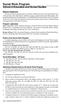 Social Work Program School of Education and Human Studies Mission Statement The Social Work Program seeks to prepare students for entry level generalist social work practice with individuals, families,
Phone: 572-5536 Program Coordinator: Dr. Robert Kersting, ACSW, Ph.D., DCSW, MSW
 MSW Program Description As of September 2010, Westfield State University is working with the Council on Social Work Education (SCWE) for accreditation of the MSW program. Further details on CSWE accreditation
Social Work (MSSW) www.utpa.edu/grad. A d m iss i o n Requirements Apply to the UTRGV Graduate College:
 The Master of Science in Social Work (MSSW) prepares graduates for advanced practice with Latino individuals and families, and groups or advanced practice with organizations and communities. Distance Education
Texas A&M University-Commerce Bachelor of Social Work (BSW) Student Handbook
 Texas A&M University-Commerce Bachelor of Social Work (BSW) Student Handbook Department of Social Work P. O. Box 3011 Commerce, TX 75429-3011 (903) 468-8100 www.tamu-commerce.edu/socialwork 1 Texas A&M
MASTER OF SOCIAL WORK
 MASTER OF SCHOOL OF Program Delivery The MSW Program accepts students as full-time or part-time students to begin in fall or spring semesters. Students entering with a degree other than the BSW must complete
Western Kentucky University Master of Social Work Program Information
 Western Kentucky University Master of Social Work Program Information Dear Prospective Student, I am so pleased that you are considering pursuing the Master of Social Work degree at Western Kentucky University!
How To Be A Social Worker
 SCHOOL OF SOCIAL WORK University of Wisconsin- Madison Advanced Generalist Concentration Handbook 2015-2016 Requirements School of Social Work Building 1350 University Avenue Madison, Wisconsin 53706 Table
NATIONAL CATHOLIC SCHOOL OF SOCIAL SERVICE Baccalaureate Study in Social Work Goals and Assessment of Student Learning Outcomes
 NATIONAL CATHOLIC SCHOOL OF SOCIAL SERVICE Baccalaureate Study in Social Work Goals and Assessment of Student Learning Outcomes In keeping with the social teachings and values of the Roman Catholic Church,
SOCIAL WORK, MASTER OF (M.S.W.) WITH A CONCENTRATION IN ADMINISTRATION, PLANNING AND POLICY PRACTICE
 VCU 1 SOCIAL WORK, MASTER OF (M.S.W.) WITH A CONCENTRATION IN ADMINISTRATION, PLANNING AND POLICY PRACTICE Program accreditation Council on Social Work Education Program goal The VCU School of Social Work
SOCIAL WORK, MASTER OF (M.S.W.) WITH A CONCENTRATION IN CLINICAL PRACTICE
 VCU 1 SOCIAL WORK, MASTER OF (M.S.W.) WITH A CONCENTRATION IN CLINICAL PRACTICE Program accreditation Council on Social Work Education Program goal The VCU School of Social Work offers a graduate professional
NORFOLK STATE UNIVERSITY THE ETHELYN R. STRONG SCHOOL OF SOCIAL WORK MASTER OF SOCIAL WORK PROGRAM FIELD PRACTICUM MANUAL 2009 2010
 NORFOLK STATE UNIVERSITY THE ETHELYN R. STRONG SCHOOL OF SOCIAL WORK MASTER OF SOCIAL WORK PROGRAM FIELD PRACTICUM MANUAL 2009 2010 OFFICE OF FIELD EDUCATION 700 PARK AVENUE NORFOLK, VA 23504 Brenda Gilmore
BACCALAUREATE SOCIAL WORK PROGRAM STUDENT HANDBOOK XAVIER UNIVERSITY
 BACCALAUREATE SOCIAL WORK PROGRAM STUDENT HANDBOOK XAVIER UNIVERSITY This handbook contains current guidelines and policies of the University and the Department. The University and the Department reserve
Program Assessment Summary Table 16: Masters in Social Work (MSW)
 Program Assessment Summary Table 16: Masters in Social Work (MSW) Term 2005-2007 Learning Outcomes Assessment Outcome/Goal Assessed Annual review of all outcomes both foundational year and concentration
How To Become A Social Worker
 THE MID-TENNESSEE COLLABORATIVE MASTER OF SOCIAL WORK (MTC-MSW) PROGRAM The Mid-Tennessee Collaborative Master of Social Work (MTC-MSW) Program brings together three institutions of higher education in
Master of Arts in Higher Education (both concentrations)
 Higher Education Dickinson Hall, Room 419 (501) 569-3267 Master of Arts and Doctor of Education The Master of Arts in Higher Education is designed for those individuals who are interested in entering or
Metropolitan State University of Denver Master of Social Work Program Field Evaluation
 Metropolitan State University of Denver Master of Social Work Program Evaluation Date: Agency/Program Task Supervisor Faculty Liaison Total Hours Completed To Date for this semester: s will not receive
Metropolitan State University of Denver Master of Social Work Program Field Evaluation
 Metropolitan State University of Denver Master of Social Work Program Evaluation Date: Agency/Program Task Supervisor Faculty Liaison Total Hours Completed To Date for this semester: s will not receive
Dr. Brian Roland, Dr. Kwiryung Yun
 MASTER of SOCIAL WORK-M.S.W Program Director: Primary Faculty, NYC: Dr. Mayra Lopez-Humphreys Dr. James Long, Dr. Mayra Lopez-Humphreys, Dr. Brian Roland, Dr. Kwiryung Yun Students who complete the MSW
Ph.D. Counselor Education and Supervision 2014 2015 Program Guidebook
 Ph.D. Counselor Education and Supervision 2014 2015 Program Guidebook NOTE: 1) This guidebook is subject to change. If it does, students will be notified via email and will be provided with the revised
MASTER OF SOCIAL WORK Director: Sherry Edwards
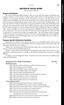 Social Work MASTER OF SOCIAL WORK Director: Sherry Edwards Program Description The mission of the Social Work Program at The University of North Carolina at Pembroke seeks to prepare students to become
Master of Divinity / Master of Social Work Dual-Degree Program
 The Mission: To prepare individuals for positions of leadership and service in the social agencies of the church and the community at large. Objectives: To equip graduates for various forms of ministry
Southern Illinois University At Carbondale
 Southern Illinois University At Carbondale School of Social Work Graduate Program Handbook of Field Instruction Dr. Mizan Miah, Director Judith McFadden Graduate Field Practicum Coordinator School of Social
FIELD EDUCATION PROGRAM OVERVIEW
 FIELD EDUCATION PROGRAM OVERVIEW TABLE OF CONTENTS Field Education Program. 2 Objectives of Field Education. 2 Junior Year Field Work. 3 Senior Year Field Work... 3 Core Year Field Work 4 Advanced Year
CSULB School of Social Work - Master of Social Work (MSW) About Our Program
 1 QUICK LINKS ABOUT OUR PROGRAM ADMISSION CONCENTRATIONS COURSE DESCRIPTIONS FIELD EDUCATION (FIELDWORK) PROGRAM PLANS REQUIRED COURSES: 2-YEAR & 3-YEAR REQUIRED COURSES: ADVANCED STANDING SEQUENCE OF
Commission on Teacher Credentialing (CTC) and Council on Social Work Education Educational Policy Standards and Accreditation Standards (CSWE-EPAS)
 (CTC) and Educational Policy Standards and Accreditation Standards (CSWE-) Standards Crosswalk June 2013 An institution that is offering a nationally accredited Pupil Personnel Services: School Social
MASTER OF SOCIAL WORK Director: Sherry Edwards
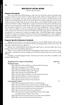 486 MASTER OF SOCIAL WORK Director: Sherry Edwards Program Description The mission of the Social Work Program at The University of North Carolina at Pembroke seeks to prepare students to become leaders
MASTER OF SOCIAL WORK
 General Information MASTER OF SOCIAL WORK The profession of Social Work is devoted to the enhancement of human well-being and to the alleviation of poverty and oppression. These goals are accomplished
Social Work Program BSW Assessment 2013-15
 Social Work Program BSW Assessment 2013-15 Social Work Program Assessment Plan The Social Work Program is accredited by the Council on Social Work Education (CSWE) and adheres to its accreditation standards
FIELD EDUCATION MANUAL
 Graduate Social Work FIELD EDUCATION MANUAL The University of Toledo College of Health and Human Services Department of Criminal Justice and Social Work Health and Human Services Bldg. MS # 119 Toledo,
DOCTOR OF MINISTRY IN EXPOSITORY PREACHING. The School of Christian Studies
 Program Outcomes DOCTOR OF MINISTRY IN EXPOSITORY PREACHING The School of Christian Studies Available at the Stephen Olford Center of the Germantown Campus. Purpose Statement The Doctor of Ministry in
2014-2015 Program and Admission Information
 Ph.D. Program in Higher Education Administration Bowling Green State University 2014-2015 Program and Admission Information Review of applications begins December 15, 2014 On-campus interviews will be
Guidelines for Massachusetts Early Educator Preparation Programs Participating in the Early Childhood Educator Scholarships Program.
 Guidelines for Massachusetts Early Educator Preparation Programs Participating in the Early Childhood Educator Scholarships Program Background The Departments of Higher Education and Early Education and
SCHOOL OF SOCIAL WORK
 2012-2013 SCHOOL OF COLLEGE OF EDUCATION AND HUMAN STUDIES Faculty Janet E. Furness (2008). Associate Dean, Professor, and Director, Master of Social Work Program Jackson. B.S., Philadelphia Biblical University;
The BYU- Idaho social Work program is Accredited by the Council on Social Work Education (CSWE).
 The BYU- Idaho social Work program is Accredited by the Council on Social Work Education (CSWE). The data presented below and the format are largely due to CSWE s requirements for accreditation. Program
Social Work Field Education Core Competencies and Practice Behaviors
 Social Work Field Education Core Competencies and Practice Behaviors The School of Social Work Field Education Program addresses each of the Council on Social Work Education (CSWE) Core Competencies and
School of Behavioral and Applied Sciences. Master of. Social Work
 School of Behavioral and Applied Sciences Master of Social Work Master of Social Work Why Social Work? Social workers help people manage and overcome some of life s most difficult challenges, such as poverty,
COLUMBIA School of SOCIAL WORK Make waves. Move mountains. Change lives. 2014-2015 STUDENT Handbook
 COLUMBIA School of SOCIAL WORK Make waves. Move mountains. Change lives. 2014-2015 STUDENT Handbook CSSW Student Handbook 2014-2015 The Columbia University School of Social Work Student Handbook 2014-2015
MASTER OF DIVINITY. Required Courses
 Required Courses BIBLICAL STUDIES Total 15 Hours BS 101 Introduction to Hebrew Scriptures (3) BS 103 Introduction to New Testament (3) BS 270 Cultural Hermeneutics (3) 2 other Biblical courses at or above
Master of Divinity (MDiv)
 Master of Divinity (MDiv) Purpose The 82 semester-hour Master of Divinity program is the basic graduate professional degree program in the seminary and is designed to provide the foundational academic
MASTER OF SCIENCE IN EDUCATION PROGRAM
 DIVISION OF GRADUATE STUDIES Jill Arnold, Director of Graduate/Online Studies The Division of Graduate Studies ensures that its graduates have specialized training that results in a firm grounding in the
M.A. Counseling Psychology 2015 2016 Program Guidebook
 M.A. Counseling Psychology 2015 2016 Program Guidebook NOTE: 1) This guidebook is subject to change. If it does, students will be notified via email and will be provided with the revised version. 2) Policies
Educational Policy and Accreditation Standards. Purpose: Social Work Practice, Education, and Educational Policy and Accreditation Standards
 Educational Policy and Accreditation Standards Purpose: Social Work Practice, Education, and Educational Policy and Accreditation Standards The purpose of the social work profession is to promote human
Educational Policy and Accreditation Standards. Purpose: Social Work Practice, Education, and Educational Policy and Accreditation Standards
 Educational Policy and Accreditation Standards Purpose: Social Work Practice, Education, and Educational Policy and Accreditation Standards The purpose of the social work profession is to promote human
National Standards. Council for Standards in Human Service Education. http://www.cshse.org 2013 (2010, 1980, 2005, 2009)
 Council for Standards in Human Service Education National Standards ASSOCIATE DEGREE IN HUMAN SERVICES http://www.cshse.org 2013 (2010, 1980, 2005, 2009) I. GENERAL PROGRAM CHARACTERISTICS A. Institutional
National Standards. Council for Standards in Human Service Education. http://www.cshse.org 2013 (2010, 1980, 2005, 2009)
 Council for Standards in Human Service Education National Standards BACCALAUREATE DEGREE IN HUMAN SERVICES http://www.cshse.org 2013 (2010, 1980, 2005, 2009) I. GENERAL PROGRAM CHARACTERISTICS A. Institutional
Social Work. Career opportunities A bachelor of social work will prepare you to work in settings such as the following:
 Bonnie Holiday, Chair and Director Emily Dixon, Director of Field Instruction Randy Baxter Nathan Foster Jaclyn Caroffino, Adjunct mission The social work program of Spring Arbor University is dedicated
Commission on Accreditation Commission on Educational Policy for Baccalaureate and Master s Social Work Programs
 XX Commission on Accreditation Commission on Educational Policy 2015 Educational Policy and Accreditation Standards for Baccalaureate and Master s Social Work Programs 1 2015 Educational Policy and Accreditation
School of Social Work
 MSW Core Curriculum for Generalist Practice St. Catherine University/University of St. Thomas Core and Advanced Competencies of the MSW Program The SCU/UST MSW curriculum prepares its graduates for advanced
Bachelor of Social Work (B.S.W.)
 Bachelor of Social Work (B.S.W.) 1 Bachelor of Social Work (B.S.W.) Cheri Carter, Ph.D, M.S.W., Assistant Professor, Undergraduate Program Director Ritter Annex 581 215-204-1228 [email protected]
How To Teach Health Care To A Health Care Worker
 BELLARMINE UNIVERSITY in veritatis amore Donna and Allan Lansing School of Nursing & Health Sciences Master of Health Science (MHS) The Master of Health Science degree is distinguished by its interdisciplinary
Ge n e r a l Ac a d e m i c. Gr a d e s Lexington Theological Seminary uses a 4.0 grading scale. Graduation requires a 2.5 GPA.
 Ge n e r a l Ac a d e m i c In f o r m at i o n Gr a d e s Lexington Theological Seminary uses a 4.0 grading scale. Graduation requires a 2.5 GPA. Tr a n s f e r a n d Sh a r e d Cr e d i t from Other
Commission on Peer Review and Accreditation
 Commission on Peer Review and Accreditation Network of Schools of Public Policy, Affairs, and Administration ACCREDITATION STANDARDS For Master s degree programs Adopted October 16, 2009 at the NASPAA
WESTERN MICHIGAN UNIVERISTY SCHOOL OF SOCIAL WORK Field Education Learning Contract and Evaluation. MSW Concentration-Interpersonal Practice (IP)
 WESTERN MICHIGAN UNIVERISTY SCHOOL OF SOCIAL WORK Field Education Learning Contract and Evaluation Revised 10/04/2014 Pg. 1 MSW Concentration-Interpersonal Practice (IP) Student s Name: Jane Smith Phone
Bachelor of Arts in Behavioral Studies Degree Program
 Bachelor of Arts in Behavioral Studies Degree Program Student Name: The Academic Teaching Philosophy of American Baptist College The goal of education at American Baptist College is to articulate intellectual
MASTER OF SOCIAL WORK PROGRAM. 2011-12 ADMISSION INFORMATION AND APPLICATION INSTRUCTIONS (To begin study in the 2012-13 Academic Year)
 MASTER OF SOCIAL WORK PROGRAM 2011-12 ADMISSION INFORMATION AND APPLICATION INSTRUCTIONS (To begin study in the 2012-13 Academic Year) Department of Social Work Minnesota State University, Mankato Mankato,
Social Work Program Outcomes
 1 Social Work Program Outcomes 2009 2010 2 The 2008 Educational Policy and Accreditation Standards (EPAS) identified by the Council on Social Work Education (CSWE) include a provision for assessment of
HAMPTON UNIVERSITY ONLINE College of Education and Continuing Studies PhD in Educational Management
 Program Overview The accelerated program provides candidates with an opportunity to develop the critical leadership skills and knowledge that are required in today s increasingly complex, diverse, and
PROVIDENCE THEOLOGICAL SEMINARY
 5. Curriculum 5.1 Master of Divinity Program Goals & Objectives The Master of Divinity is the normative degree prerequisite for ordained pastoral ministry in the church. It is also the degree that serves
Angelo State University Department of Psychology, Sociology, and Social Work SWK 4373: Social Work Practice III
 Page 1 of 10 Angelo State University Department of Psychology, Sociology, and Social Work SWK 4373: Social Work Practice III Course Dates, Time, and Location Spring Semester, 2016: January 19, 2016 to
ESSENTIAL DUTIES AND RESPONSIBILITIES. Program Duties and Responsibilities:
 An Invitation to Apply: Simmons College School of Nursing and Health Sciences: Department of Nursing Director of the Doctor of Nursing Practice (DNP) Program THE SEARCH Simmons College School of Nursing
COURSE SELECTION PLANNING GUIDE
 COURSE SELECTION PLANNING GUIDE MASTER OF DIVINITY AND MASTER OF ARTS This document is intended to guide in planning a course of study in the Master of Divinity or Master of Arts programs and can be consulted
Master's Degree, Student Affairs Concentration
 Master's Degree, Student Affairs Concentration Higher Education, Student Affairs, and International Education Policy Program Counseling, Higher Education, and Special Education Department College of Education
SCHOOL OF SOCIAL WORK MISSION SCHOOL OF SOCIAL WORK GOALS: Teaching:
 Southern University at New Orleans School of Social Work Master of Social Work Degree Program 6400 Press Drive, Room 211 New Science Building New Orleans, Louisiana 70126 (504) 286-5376 FAX (504) 286-5387
2013 Program Assessment Report
 SOCIAL WORK PROGRAM (Accredited by the Council on Social Work Education (CSWE)) 2013 Program Assessment Report Charles L. Vanderwell, MSW, LMSW, ACSW Professor Program Director 231 Valade Hall (517) 264-3962
Medical Family Therapy Program Master of Arts Goals and Outcomes
 Medical Family Therapy Program Master of Arts Goals and Outcomes Program Mission: The mission of the Medical Family Therapy Program is to train marriage and family therapists as scientist practitioners
Connecticut State Colleges and Universities. CCSU Department of Social Work
 Connecticut State Colleges and Universities CCSU Department of Social Work Baccalaureate Social Work Program CSWE Self-Study for Reaffirmation Submitted July 2014 Volume 1: EPAS Narrative & Supporting
ADVANCED SOCIAL WORK PRACTICE
 ADVANCED SOCIAL WORK PRACTICE Advanced practitioners refine and advance the quality of social work practice and that of the larger social work profession. They synthesize and apply a broad range of interdisciplinary
Master of Health Care Administration Program Strategic Plan 2008 2010
 Master of Health Care Administration Program Strategic Plan 2008 2010 The faculty and staff of the MHA program met and developed the following document. Included are foundational statements that include:
FOUNDATION YEAR Student Evaluation
 FOUNDATION YEAR Student Evaluation I. Cover Sheet Student Name Home Phone Work Phone Cell Phone Email (Please Check) Full-time Part-time Field Instructor Work Phone Email Agency Cell Phone Site Address
Public Administration (M.P.A.) Public Administration Admission. Mission. Goals
 Public Administration (M.P.A.) Public Administration Admission The M.P.A. degree is the recognized professional degree in public administration and is appropriate for students pursuing public service careers
Doctorate of Education (Ed.D.) in Counselor Education and Supervision. Admission to the Program
 Minnesota State University, Mankato Department of Counseling and Student Personnel Doctorate of Education (Ed.D.) in Counselor Education and Supervision ADMISSIONS INFORMATION AND FORMS The Doctorate of
Psychology. Forensic Psychology Master of Science (M.S.)
 University of North Dakota 1 Psychology http://www.und.edu/dept/psych/ Bradley, Derenne, De Young, Ferraro, Grabe, Holm, Kehn, Kelly, King, Legerski, Looby, McDonald, Miller, Peters, Petros, Plumm, Poltavski,
GRADUATE PROGRAMS. Programs of Study
 GRADUATE PROGRAMS Tennessee Temple University offers seven graduate degree programs. Temple Baptist Seminary offers programs for those students interested in pursuing an advanced degree in theological
Agenda Items I.1.a.(1) and I.1.a.(2)
 June, 2015 Agenda Items I.1.a.(1) and I.1.a.(2) REQUEST FOR AUTHORIZATION TO IMPLEMENT A DOCTORATE OF EDUCATION DEGREE IN STUDENT AFFAIRS ADMINISTRATION AND LEADERSHIP AT UW-LA CROSSE PREAPARED BY UW-LA
Graduate Student HANDBOOK. Rehabilitation Counseling Program
 Graduate Student HANDBOOK Rehabilitation Counseling Program 2014-2015 Dear Rehabilitation Counseling Students, On behalf of the Rehabilitation Counseling faculty, staff, and second year students, I would
MASTER OF ARTS ACADEMIC PROGRAM GUIDE 2014-2015
 MASTER OF ARTS ACADEMIC PROGRAM GUIDE 2014-2015 TABLE OF CONTENTS I. Overview of the Master of Arts (M.A.) Program...2 II. Master of Arts Degree Requirements...4 III. Advisement...5 IV. Assessment of Student
Bloomsburg University Midterm and Final Competency Field Evaluation. Task Supervisor (if appropriate) :
 Bloomsburg University and Competency Field Evaluation BSW EVALUATION OF THE COMPETENCIES AND PRACTICE BEHAVIORS Student : Field Instructor : Task Supervisor (if appropriate) : _ Agency : University Faculty
Education and Counseling (M.A.Ed.)
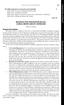 III: Influencing Literacy Instruction and Leadership RDG 5320 Diversity and Multicultural Education RDG 5330 Leadership in Reading RDG 5610 Diagnosis, Assessment, Instruction, and Practicum in Reading
ABHE Commission on Accreditation Manual
 2012 ABHE Commission on Accreditation Manual 2012, Ed.1 EXCERPT All rights reserved, no part of the Manual may be reproduced in any form or by any electronic or mechanical means, including information
GRADUATE PROGRAM IN THEOLOGY MASTER OF ARTS IN CATHOLIC THEOLOGY
 GRADUATE PROGRAM IN THEOLOGY MASTER OF ARTS IN CATHOLIC THEOLOGY The Theology Program at Our Lady of Holy Cross College offers a Master of Arts in Catholic Theology (MACT). This degree is designed to be
Graduate Program Goals Statements School of Social Work College of Education and Human Development
 Graduate Program Goals Statements School of Social Work College of Education and Human Development December 12, 2014 Program Youth Development Leadership (MEd) Master of Social Work (MSW) Doctorate in
Department of Public Administration
 The University of Texas at San Antonio 1 Department of Public Administration The Department of Public Administration offers the Master of Public Administration, as well as the Graduate Certificate in Nonprofit
MASTER OF DIVINITY. At the completion of this program, the student will be able to
 MASTER OF DIVINITY MASTER OF DIVINITY OBJECTIVES The three-year Master of Divinity (M.Div.) degree provides a strong theological and practical foundation to those preparing for the ordained priesthood
Psychology. Forensic Psychology Master of Science (M.S.)
 University of North Dakota 1 Psychology http://www.und.edu/dept/psych/ Bradley, Derenne, De Young, Ferraro, Grabe, Holm, Kehn, Kelly, King, Legerski, Looby, McDonald, Miller, Peters, Petros, Plumm, Poltavski,
Field Education in the 2008 EPAS: Implications for the Field Director s Role Dean Pierce
 Field Education in the 2008 EPAS: Implications for the Field Director s Role Dean Pierce 2008 EPAS Curriculum Features The 2008 EPAS consists of four curriculum features: 1) program mission and goals;
MARIST COLLEGE SCHOOL OF SOCIAL AND BEHAVIORAL SCIENCES
 MARIST COLLEGE SCHOOL OF SOCIAL AND BEHAVIORAL SCIENCES SOCIAL WORK PROGRAM HANDBOOK TABLE OF CONTENTS Page Welcome 2 The Social Work Profession 3 Social Work Education 3 Assessing Yourself for Social
MASTER OF ARTS LEADERSHIP STUDIES
 1 BHU Graduate School The graduate school of Beulah Heights University offers a Master of Arts program (42 hours) with concentrations in Religious Studies or Leadership Studies. The graduate school also
HAMPTON UNIVERSITY ONLINE School of Education and Human Development PhD in Educational Management
 Program Overview This accelerated program provides candidates with an opportunity to develop the critical leadership skills and knowledge that are required in today s increasingly complex, diverse, and