
Compendium of Educational Objectives. For. Addiction Medicine Residency Training
|
|
|
- Rudolf Phelps
- 10 years ago
- Views:
Transcription
1 Compendium of Educational Objectives For Addiction Medicine Residency Training March 25, 2011 The Compendium was created by Directors of The ABAM Foundation and revised by participants in The ABAM Foundation s Retreat on Addiction Medicine Residency Development of July 6 7, Copyright 2010 The ABAM Foundation 4601 North Park Avenue Chevy Chase, Maryland 20815

2 American Board of Addiction Medicine Foundation (The ABAM Foundation) Compendium of Educational Objectives For Addiction Medicine Residency Training Introduction 1 I. Patient Care 5 Longitudinal Educational Objectives 5 A. Prevention, Public Health, and Administration 5 B. Assessment, Screening and Brief Intervention 7 Specific Educational Objectives 9 C. Outpatient Addiction and Substance Use Care (Level 0.5 and Level I) 9 D. Intensive Outpatient and Partial Hospitalization Addiction Treatment (Level II) 12 E. Inpatient/Residential Addiction Treatment (Level III) 14 F. Medically-managed Withdrawal (Detoxification) 16 Specific or Longitudinal Educational Objectives 18 G. Pharmacologic Therapies 18 H. Psychosocial Therapies 19 I. Medical Co-morbidities and Complications 20 J. Psychiatric Co-morbidities and Complications 20 K. Pain Medicine 21 L. Family Aspects and Impacts of Substance Use and Addiction 22 M. Women, Pregnancy and Addiction 22 N. Pediatrics 23 O. Geriatrics 25 II. Medical Knowledge 25 A. Prevention, Public Health, and Administration 25 B. Assessment, Screening and Brief Intervention 28 C. Outpatient Addiction and Substance Use Care (Level 0.5 and Level I) 29 D. Intensive Outpatient and Partial Hospitalization Addiction Treatment (Level II) 29 E. Inpatient/Residential Addiction Treatment (Level III) 30 F. Medically-managed Withdrawal (Detoxification) 31 G. Pharmacologic Therapies 32 H. Psychosocial Therapies 33 i

3 I. Medical Co-morbidities and Complications 33 J. Psychiatric Co-morbidities and Complications 34 K. Pain Medicine 34 L. Family Aspects and Impacts of Substance Use and Addiction 35 M. Women, Pregnancy and Addiction 36 N. Pediatrics 38 O. Geriatrics 40 III. Practice-based Learning and Improvement 40 IV. Interpersonal and Communication Skills 41 V. Professionalism 41 VI. Systems-based Practice 42 A. Prevention, Public Health, and Administration 42 B. Assessment, Screening and Brief Intervention 43 C. Outpatient Addiction and Substance Use Care (Level 0.5 and Level I) 43 D. Intensive Outpatient and Partial Hospitalization Addiction Treatment (Level II) 44 E. Inpatient/Residential Addiction Treatment (Level III) 44 F. Medically-managed Withdrawal (Detoxification) 45 G. Pharmacologic Therapies 45 H. Psychosocial Therapies 46 I. Medical Co-morbidities and Complications 46 J. Psychiatric Co-morbidities and Complications 46 K. Pain Medicine 46 L. Family Aspects and Impacts of Substance Use and Addiction 47 M. Women, Pregnancy and Addiction 47 N. Pediatrics 47 O. Geriatrics 47 ii

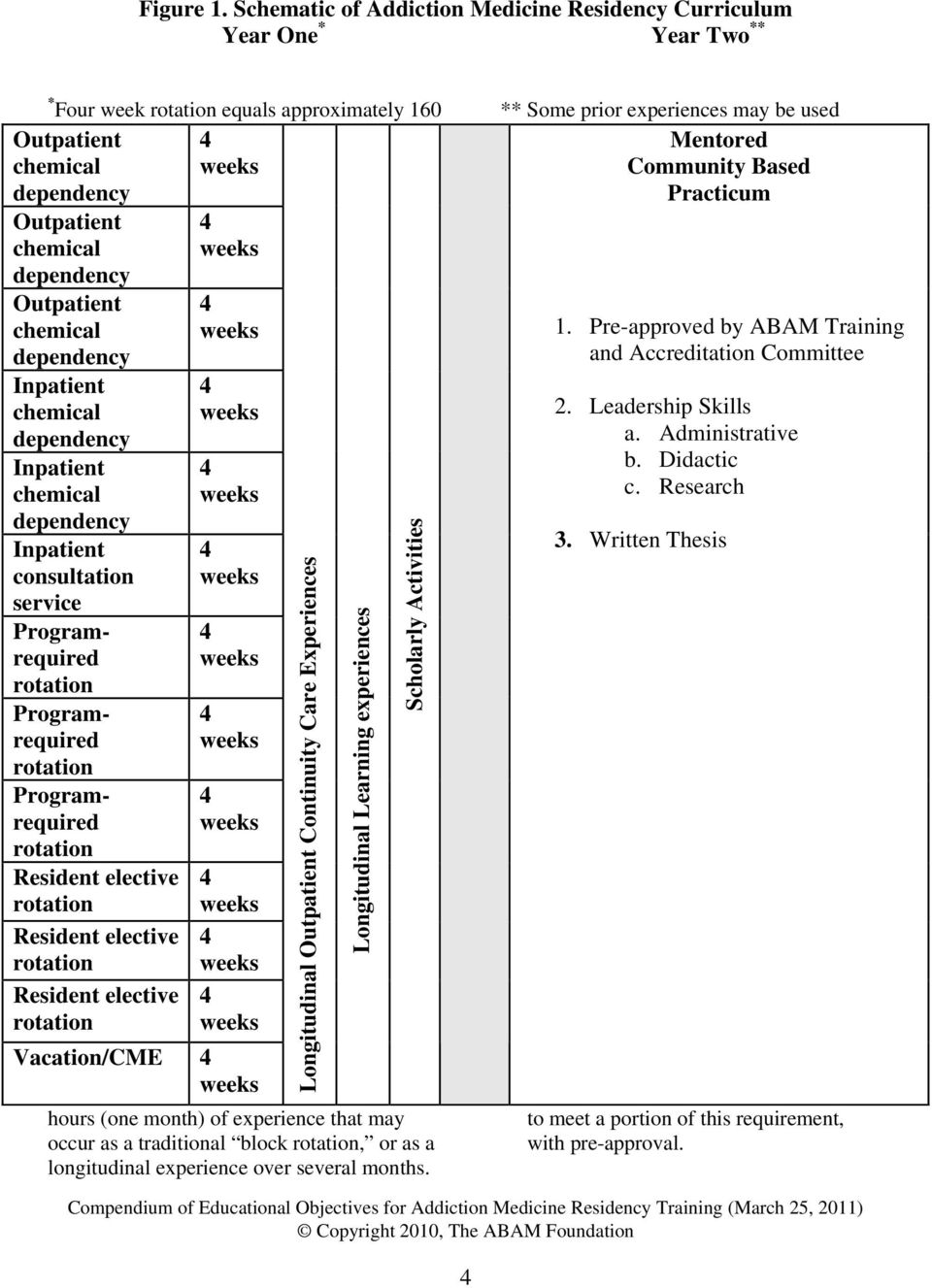
4 Introduction Addiction Medicine Residency Training Curriculum Overview I. Purpose: The purpose of graduate medical education (GME) residency training in addiction medicine (ADM) is to provide physicians with a structured educational experience that will enable them to care for patients with substance use disorders, and for family members of persons with substance use disorders, as described in the Scope of Practice of ADM. II. Prerequisites: Physicians who wish to pursue residency training in ADM must be certified by a member board of the American Board of Medical Specialties (ABMS) or have successfully completed all the training requirements and are eligible for board certification from an ABMS member board. III. Duration: Residency training in ADM is an experience of one or two years and must be sponsored by an educational institution approved by the Accreditation Council for Graduate Medical Education (ACGME) to offer residency education. The Year One requirements may be fulfilled on a 12-month full-time equivalent basis or on a half-time basis over two years. The Year Two requirements may be fulfilled on a full-time basis over one year or on a part-time basis over 2-5 years; however, the training plan for Year Two must be pre-approved by The ABAM Foundation Training and Accreditation Committee (TAC). A. Description of Year One: The four main components of the Year One structured clinical portion of ADM residency training are: 1) structured blocks of 12 clinical rotations; 2) longitudinal outpatient continuity clinical experiences; 3) longitudinal didactic sessions and other learning experiences; and 4) scholarly activities. 1. Structured block clinical rotations. These experiences provide the clinical training in the knowledge and skills that are essential for the Scope of Practice of ADM and can be scheduled either longitudinally over several months or as traditional block rotations. The block rotations (or longitudinal clinical experiences) would consist of 12 four-week blocks (each equivalent to 160 hours or one month ) and four weeks of vacation/continuity medical education (CME) activities. All residency programs must offer structured block rotations in addiction medicine services such as outpatient, inpatient, or consultation. Additionally, there are Program-required Rotations that are mandatory for residents in that particular program, but can vary from program to program; in this way, a residency program can provide emphasis in strength areas unique to that educational institution or locale. Finally, there are elective rotations that residents can select or design, which can be intramural or extramural experiences to either complement the skills and experiences they have brought upon entry into the residency, or allow them to emphasize areas in their training where they wish to attain intense expertise. All elective rotations must be approved by the Program Director. 1

5 2. Longitudinal outpatient continuity clinical experiences. At least one half-day per week must be devoted to providing continuity care to a panel of patients who have a substance use disorder such as addiction. The resident may serve as either a specialty consultative physician with care focused on the substance use disorder, or may serve as a primary care physician who provides comprehensive care for the patient panel, including care for the substance-related health conditions among patients in the panel. This clinical experience must occur over continuous months. 3. Longitudinal learning experiences. Approximately four hours per week must be devoted to longitudinal learning experiences such as didactic conferences, individual or small group tutoring sessions with program faculty, and mentored self-directed learning. These experiences must address the topics of the Core Content of ADM. 4. Scholarly activities. The program must provide a supervised, ongoing forum in which residents explore and analyze emerging scientific evidence pertinent to the practice of medicine. All residents must participate in scientific inquiry, either through direct participation in research, or by undertaking scholarly projects that make use of the scientific methods noted above. Residents must also have guided experiences in the application of emerging clinical knowledge applicable to their own patient panels. The training environment must be in compliance with accepted evidence-based practices. B. Description of Year Two: For training programs which offer a two-year residency, the three main elements of the second portion of ADM training are experiences during which the resident will acquire: 1) administrative skills related to patient care, 2) teaching skills, and 3) scholarly activities such as research during a one-year practicum relevant to the specialty of addiction medicine. Examples of this practicum include: 1) a one year clinical experience in the practice of ADM, 2) one year experience as an ADM faculty member at a medical school or at an ADM training program, 3) a one-year structured research fellowship, 4) a one year experience in administrative medicine related to ADM, or 5) a one year experience in a community mental health center, a community health center, a public health clinic, or a public health department, with activities focused on the substance-related health problems of individuals with a substance use disorders or family members of such individuals. A combination of these experiences can be used to fulfill this requirement. Studies leading to the completion of an advanced academic degree program (e.g., a Masters of Public Health) could also be used to fulfill all or a portion of the practicum requirement. The resident shall also prepare a thesis on a topic related to ADM in fulfillment of the Year Two practicum requirement. The practicum and the thesis topic must be approved by The ABAM Foundation s Training and Accreditation Committee. IV. Evaluation: Each ADM residency training program must have a formal mechanism to evaluate the progress of each resident by documenting the mastery of the attitudes, knowledge and skills appropriate for clinical practice that must be centered on the Core Competencies of ADM required by the ACGME including: 2

6 1. Patient Care 2. Knowledge 3. Practice-Based Learning and Improvement 4. Interpersonal Skills and Communication 5. Professionalism 6. Systems-Based Practice V. Accreditation. In order for Addiction Medicine Residency programs to maintain accreditation, they just demonstrate that the program meets standardized Educational Objectives. Objectives related to Medical Knowledge, Practice-Based Learning and Improvement, Interpersonal Skills and Communication, Professionalism, Systems-Based Practice, and some Objectives related to Patient Care skills and competencies, can be met longitudinally over the span of the physician s training experience. Other Patient Care Educational Objectives will be met during specific clinical rotations, such as Inpatient/Residential Addiction Treatment. Others Educational Objectives, such as those related to Pain Medicine can be met in a specific clinical rotation or longitudinally over the span of the physician s residency experience. 3

7 Figure 1. Schematic of Addiction Medicine Residency Curriculum Year One * Year Two ** * Four week rotation equals approximately 160 ** Some prior experiences may be used Outpatient chemical dependency Outpatient chemical dependency Outpatient chemical dependency Inpatient chemical dependency Inpatient chemical dependency Inpatient consultation service Programrequired rotation Programrequired rotation Programrequired rotation Resident elective rotation Resident elective rotation Resident elective rotation 4 weeks 4 weeks 4 weeks 4 weeks 4 weeks 4 weeks 4 weeks 4 weeks 4 weeks 4 weeks 4 weeks 4 weeks Vacation/CME 4 weeks Longitudinal Outpatient Continuity Care Experiences Longitudinal Learning experiences Scholarly Activities hours (one month) of experience that may occur as a traditional block rotation, or as a longitudinal experience over several months. Mentored Community Based Practicum 1. Pre-approved by ABAM Training and Accreditation Committee 2. Leadership Skills a. Administrative b. Didactic c. Research 3. Written Thesis to meet a portion of this requirement, with pre-approval. 4
8 I. Patient Care Longitudinal Objectives (To be met during multiple clinical rotations over the duration of the trainee s educational experience) A. Prevention, Public Health, and Administration The addiction medicine resident MUST be able to: 1. Perform a general, preventive and public health history and physical examination in any of multiple venues, including emergency departments, trauma units, intensive care units, general medical and specialty hospitals wards, outpatient and community clinics, occupational health programs, private offices, jails and prisons, and mental health programs. 2. Retrieve essential and accurate information encompassing the usual medical history, as well as public health data unique to the patient s bio-psycho-social and geographic background, as these relate to patient attitudes, practices and consequences of alcohol or drug use, or risk of use, as well as relevance to community planning and intervention strategies. 3. Interpret and formulate diagnoses, plan additional appropriate testing, and outline initial treatment interventions, based on the result of the history and physical, and with consideration of patient preferences and the available resources available in the family, available healthcare milieu, and the community. 4. Work in a cohesive manner with a multi-disciplinary team that includes medical specialists or sub-specialists, and other health care professionals and lay persons, including nurses, psychologists, counselors, pharmacists, educators, employers, criminal justice system staff, family members, and persons in the faith-based and mutual-support communities. The addiction medicine resident SHOULD be able to: 5. Perform a comprehensive history that is focused on the patient, and accompanying family and companions, and which includes the retrieval of specific public health environmental information and status about the patient s community which could influence the patient s substance use, and which may also be potentially impacted by the patient s substance use. 6. Perform a prevention-oriented history by utilizing basic clinical preventive services guidelines and other guidelines specific to licit and illicit substances or intoxicants. 5
9 7. Effectively request and receive from the patient, family, companions and community sources immediate collateral information, when such information will aid in the patient s assessment and treatment planning, and when such information can inform the public health and prevention efforts of the community. 8. Comprehend the role and capacities of each person within the multi-disciplinary care group, and to work with them to provide patient-focused care, and the evaluation and improvement of community-based public health and preventive strategies and services. 9. Use information gained during patient and family sessions to conceive and formulate strategies for reducing negative community influences, adverse consequences from drug or alcohol use, and primary, secondary and tertiary preventive strategies. The addiction medicine resident COULD be able to: 10. Retrieve historical information from a heterogeneous and diverse population of patients presenting for substance use evaluation, across age groups, gender and social identities, and including pediatric, adolescent, veteran, geriatric, homeless, seriously mentally ill, and other patient sub-groupings. 11. Provide chemical dependency primary preventive strategies integrated within, and at the time of, the history and physical examination to any patient and any family members present. 12. Deduce, and effectively express to the patient, and others, recommendations addressing secondary and tertiary prevention strategies once a SUD diagnosis has been made. 13. Derive prevention strategies from a knowledge base of the epidemiology and natural history of SUDs and common co-morbid disorders, and also by careful consideration of conditions that are caused by, or exacerbated by, SUDs. 14. Incorporate and coordinate available public health and community chemical dependency treatment and management resources into the patient treatment recommendations, and provide deliberate feedback through public health systems that can reduce SUD morbidity, mortality or social harm and thus improve the public s health. 15. Use information gained in the history and physical exam, from single and multiple patients and families, to conceive and formulate an understanding of the community s licit and illicit drug use patterns, and the real or expected consequences to both the individuals and the community. 6
10 B. Assessment Screening and Brief Intervention The addiction medicine resident MUST be able to: 1. Provide patient care that is compassionate, appropriate and effective. Establish a style and physician-patient relationship sufficient to obtain a history and physical exam from patients who may be unaware that they have, or have a risk for, a substance use disorder; who have or have the risk of developing consequences and complications thereof; or who may be under the influence of a chemical or in acute withdrawal at the time of the assessment. 2. Obtain a clinical history and perform a physical exam that evaluates the patient's general medical status and the patient s specific substance use problems, including addiction, if present. 3. Obtain a clinical history and perform a physical exam for patients for whom the primary concern is not their primary substance use issue, but medical, psychiatric or social consequences related to substance use. 4. Perform a physical exam that can identify the general medical consequences of substance use, and the physical findings of secondary conditions and common cooccurring or complicating medical disorders. 5. Assess the presence of non-addictive but unhealthy alcohol and other drug use in order to initiate brief intervention and motivational enhancement activities or, as indicated, refer to another member of the healthcare team to provide brief intervention, Motivational Enhancement Therapy (MET), or referral to other addiction care. 6. When indicated, provide a brief intervention for alcohol and/or other drug use that may include brief advice and/or motivational interviewing. 7. Competently initiate treatment and referral to the appropriate level of outpatient or inpatient care, as indicated. 8. Form a relationship with the patient that includes unconditional acceptance of the patient, regardless of the severity of his or her primary disease or its complications, and which may include the patient s inability to adhere to recommendations regarding abstinence from alcohol or drug use. 9. Proficiently devise a message and a manner of message delivery, which the patient and family can reasonably integrate, based on their unique socio-cultural identifiers, and the unique obstacles existent in patients and families dealing with substance use disorders. 7
11 10. Use laboratory tests, including urine drug testing, and other diagnostic procedures and consultations, to appropriately provide ongoing monitoring of the patient's addictive disease and/or general medical complications and/or general psychiatric complications of chronic drug/alcohol use/addiction. 11. Show proficiency in assessment of severity of use and complications of use, using the Assessment dimensions of the Addiction Severity Index. 12. Integrate other sources of data into one s diagnostic assessments, including (a) review of medical records of previous health care encounters, and interviews of family members and other relevant collaterals, to confirm or refute patient self-reports and come to the most accurate diagnosis, and (b) utilization of psychometric instruments that complement the clinical assessment, for example: screening instruments (Alcohol Use Disorder Identification Test [AUDIT], or CAGE Questionnaire); diagnostic instruments for addiction disorders (Addiction Severity Index [ASI]; and other instruments used for psychosocial evaluations (Beck Depression Inventory [BDI]). 13. Assess and manage withdrawal syndromes as they appear in medically/surgically/obstetrically hospitalized inpatients that require chronic alcohol and other drug exposure of addiction. 14. Use rating scales for the assessment of withdrawal syndromes (e.g., Clinical Institute Withdrawal Assessment for Alcohol-revised [CIWA-Ar]; and the Clinical Opioid Withdrawal Scale [COWS]). 15. Conduct appropriate risk assessment of the patient, including suicide and self harm risk and risk of harm to others. The addiction medicine resident SHOULD be able to: 16. Become proficient in the application of screening tools for alcohol and/or other drug problems specific to the patient population and medical setting. 17. Demonstrate proficiency in performing the history and physical exam for persons with active medical, psychiatric, neuro-cognitive, and emotional conditions related to or independent of substance use disorders. 18. Use electronic prescription drug monitoring program databases to verify the patient's substance use history during the history-taking process. 19. Complete a comprehensive addiction assessment addressing the six assessment dimensions of the ASAM Patient Placement Criteria (PPC) and to make an appropriate diagnosis of all substance use disorders present (as well as 'pertinent negatives' regarding addiction to various classes of drugs). 8

12 20. Exhibit comfort and agility in the use of electronic medical records, and the electronic retrieval of educational information that can be made available to the patient, family or others. Educational Objectives to be met during Specific Clinical Rotations C. Outpatient Addiction and Substance Use Care (Level 0.5 and Level I) The addiction medicine resident MUST be able to: 1. Complete a comprehensive addiction assessment addressing the six assessment dimensions of the ASAM Patient Placement Criteria (PPC) and to make an appropriate diagnosis of all substance use disorders present (as well as 'pertinent negatives' regarding addiction to various classes of drugs). 2. Assess the presence of non-addictive but unhealthy alcohol and other drug use in order to initiate brief intervention and motivational enhancement activities or, as indicated, refer to another member of the healthcare team to provide brief intervention, MET, or referral to other addiction care. 3. Perform a physical exam that evaluates the patient's general medical status as well as signs/symptoms of withdrawal, or to review recent H&P data submitted by the patient's primary care provider or from a recent hospitalization, emergency room encounter, urgent care center encounter, or Level IV, III or II detox encounter. 4. Perform a mental status exam and collect a psychiatric review of systems to rule out or rule in the presence of significant co-morbid psychiatric conditions that should be addressed along the individual's substance use disorder; this includes assessment of self-harm, suicide, and harm-to-other risk. 5. Use laboratory tests, including urine drug testing, and other diagnostic procedures and consultations to appropriately provide ongoing monitoring of the patient's addictive disease and/or general medical complications of chronic drug/alcohol use/addiction. 6. Use rating scales (CAGE, AUDIT, etc.) to assist in the formulation of a diagnosis. 7. Integrate other sources of data into diagnostic assessment, including review of medical records of previous health care encounters, and interviews of family members and other relevant collaterals to confirm or refute patient self-reports and come to the most accurate diagnosis. 8. Perform a history and physical exam to identify the presence/absence of intoxication/withdrawal at admission to Outpatient Care or any time subsequently during Outpatient Care, as indicated. 9

13 9. Demonstrate competence in assessing and managing withdrawal syndromes as they appear in the ambulatory setting. 10. Form a relationship with the patient that includes unconditional acceptance of the patient, regardless of the severity of his or her primary disease or its complications, and which may include the patient s inability to adhere to recommendations regarding abstinence from alcohol or drug use. 11. Engage the patient and secure their agreement to remain involved with general outpatient ADM care, as indicated. 12. Initiate, continue, and discontinue addiction pharmacotherapies, as indicated, as a component of general outpatient Addiction Medicine services. 13. Identify proper patient candidates for office-based opioid treatment, to perform outpatient inductions onto buprenorphine maintenance treatment, to utilize buprenorphine appropriately as an opioid withdrawal management medication, and to manage patients over time via buprenorphine maintenance. 14. Determine appropriateness for discontinuation of buprenorphine maintenance and to manage patients during buprenorphine discontinuation. 15. Develop and execute written treatment plans for addiction medicine outpatients and, as indicated by accreditation and licensure bodies, to participate in multidisciplinary team review of treatment plans and discharge plans. 16. Appropriately consult physicians from other specialties and other health care professionals as indicated during general outpatient Addiction Medicine care. 17. Demonstrate familiarity with the ASAM Patient Placement Criteria, offering continuing care in Level 0.5 or Level I as indicated, and either discharging patients or referring them to more intensive levels of addiction care when their severity of illness improves or worsens, accordingly. 18. Maintain appropriate medical records of physician services provided to patients and family members when offering general outpatient Addiction Medicine services. The addiction medicine resident SHOULD be able to: 19. Use electronic prescription drug monitoring program databases to verify the patient's substance use history during the history-taking process. 20. Assess patients with chronic non-cancer pain who are using opioid analgesics, and assist in their care, making an appropriate assessment for the presence/absence of 10
14 co- morbid addiction along with their underlying pain medicine condition; and demonstrate the ability to consult bi-directionally with pain medicine physicians and pain clinics. 21. Lead or facilitate group meetings and family sessions, elective and crisis interventions, motivational interviewing, cognitive behavioral therapies, and other treatment modalities used in SUDs. 22. Conduct family assessment and family therapy sessions for patients receiving general outpatient ADM services. 23. Develop and carry out a management plan, both for the immediate need or intervention, and for long term, chronic disease management, for any primary addictive illness, and its medical and psychiatric co-occurring disorders. 24. Effectively share with other health care professionals the total and continuous care of the patient, and to assume the leadership and ultimate responsibility for the care of the patient if such a team does not exist, or until such time as there is an intact multidisciplinary patient care team in place. 25. Use information technology to support individual care management, including the use of electronic screening and diagnostic tools, guided level of care protocols, and acute and chronic disease management protocols, guidelines and programs. 26. Demonstrate comfort and agility in the use of the electronic medical record, and the electronic retrieval of educational information that can be made available to the patient, family or others. The addiction medicine resident COULD be able to: 27. Provide group therapy and multiple family group therapy services, as indicated, for patients receiving general outpatient ADM services. 28. Offer support, patient education, and psychotherapy, as needed, using individual, group, or family therapy modalities, to children and other family members of persons with addiction or another substance use condition when that condition has affected the health, wellbeing and functional status of that family member. 29. Evaluate impaired health care professionals in an outpatient practice and to manage such cases, utilizing appropriate laboratory monitoring and appropriate communications with licensing boards, hospital/clinic medical staffs, and other entities regarding the professional's ongoing fitness for duty. 11

15 D. Intensive Outpatient and Partial Hospitalization Addiction Treatment (Level II) The addiction medicine resident MUST be able to: 1. Monitor and lead a multidisciplinary clinical team offering patient care that is safe, effective, compassionate, and appropriate within a structured program of psychosocial treatment, psycho-educational experiences, and pharmacotherapy services, as indicated, that involves several hours per day, several days per week of patient involvement. 2. Form a relationship with the patient that includes unconditional acceptance, regardless of the severity of his or her primary disease or its complications, and which may include the patient s inability to adhere to recommendations regarding abstinence from alcohol or drug use. 3. Perform a physical exam that evaluates the patient's general medical status at admission to the IOP/PH, or to review recent H&P data submitted by the patient's primary care provider or from a recent hospitalization, emergency room encounter, urgent care center encounter, or Level IV, III or II detox encounter. 4. Complete a comprehensive addiction assessment addressing the six assessment dimensions of the ASAM Patient Placement Criteria (PPC) and to make an appropriate diagnosis of all substance use disorders present (as well as 'pertinent negatives' regarding addiction to various classes of drugs). 5. Use rating scales (CAGE, AUDIT, etc.) to assist in the formulation of a diagnosis. 6. Integrate other sources of data into diagnostic assessment, including review of medical records of previous health care encounters, and interviews of family members and other relevant collaterals to confirm or refute patient self-reports and come to the most accurate diagnosis. 7. Conduct appropriate risk assessment of the patient, including suicide and self harm risk and risk of harm to others. 8. Perform a history and physical exam to identify the presence/absence of intoxication/withdrawal at admission to the IOP/PH, or subsequently during IOP/PH treatment, as indicated. 9. Use laboratory tests, including urine drug testing, and other diagnostic procedures and consultations to appropriately provide ongoing monitoring of the patient's addictive disease and/or general medical complications of chronic drug/alcohol use/addiction. 12
16 10. Work with non-physician personnel in the use and interpretation of standardized withdrawal rating scales, when the IOP or PH program is structured to offer detox services. In addition, in this setting the resident should demonstrate the ability to: Use appropriate clinical judgment in the requesting of consultation from dieticians, as indicated, to address nutritional deficits that may be present. Classify the Stage of Alcohol Withdrawal (Stage I, II, III, and IV) and refer the patient to higher levels of detox care, as indicated. Use appropriate pharmacotherapy to manage withdrawal syndromes. 11. Work collaboratively with the attending addiction medicine physician in chairing treatment planning meetings of the multidisciplinary clinical team, reviewing continuing care and discharge criteria per the ASAM PPC and recommending post- IOP care plans for ongoing addiction care. 12. Make appropriate recommendations for the initiation or continuation of addiction pharmacotherapies during the IOP/PH encounter. 13. Make appropriate recommendations for the initiation or continuation of methadone or buprenorphine in an Opioid Treatment Program (often referred to as a methadone maintenance clinic). 14. Maintain appropriate medical records of physician services provided to patients and family members during the IOP/PH encounter. The addiction medicine resident SHOULD be able to: 15. Make appropriate recommendations for the initiation or continuation of psychopharmacotherapeutic agents for co-occurring psychiatric conditions during the IOP encounter. 16. Demonstrate comfort and agility in the use of the electronic medical record, and the electronic retrieval of educational information that can be made available to the patient, family or others. 17. Demonstrate skill in the safe induction of patients onto methadone maintenance treatment, to assess proper dosage and treatment response, to determine appropriate duration of treatment with methadone maintenance, and to manage safe and effective discontinuation of methadone maintenance treatment when such is indicated. 18. Demonstrate competence in induction onto office based opioid treatment using buprenorphine during an IOP/PH encounter. 13

17 19. Demonstrate comfort and agility in the use of the electronic medical record, and the electronic retrieval of educational information that can be made available to the patient, family or others. The addiction medicine resident COULD be able to: 20. Use electronic prescription drug monitoring program databases to verify the patient's substance use status during the IOP/PH encounter. 21. Conduct family therapy sessions for patients receiving IOP/PH services. 22. Provide group therapy and multiple family group therapy services to patients receiving IOP/PH services. E. Inpatient/Residential Addiction Treatment (Level III or Level IV) The addiction medicine resident MUST be able to: 1. Monitor and lead a multidisciplinary clinical team offering patient care that is safe, effective, compassionate, and appropriate within a structured program of psychosocial treatment, psycho-educational experiences, and pharmacotherapy services, as indicated, that involves several hours per day, several days per week of patient involvement. 2. Form a relationship with the patient that includes unconditional acceptance, regardless of the severity of his or her primary disease or its complications, and which may include the patient s inability to adhere to recommendations regarding abstinence from alcohol or drug use. 3. Perform a physical examination to evaluate the patient s general health status with special attention to physical manifestations of substance use disorders, including intoxication and withdrawal. 4. Integrate multiple sources of data into a diagnostic assessment. 5. Interview family members and other relevant collateral sources for diagnostic assessment and treatment planning. 6. Complete a comprehensive addiction assessment, and make a complete diagnosis of all substance use disorders present, and note pertinent negatives. 7. Work collaboratively with the attending addiction medicine physician in chairing treatment planning meetings of the multidisciplinary clinical team, reviewing continuing care and discharge criteria per the ASAM PPC and recommending 14

18 post-inpatient/residential care plans for ongoing addiction care. 8. Make appropriate recommendations for the initiation or continuation of addiction pharmacotherapies during the inpatient/residential encounter. 9. Conduct an appropriate risk management assessment of each patient, including suicide and self-harm risk and risk to others, and refer to a higher level of care if indicated. 10. Assess and medically manage withdrawal from alcohol and other drugs, appropriate to the level of care provided, or refer for a higher level of care if indicated by appropriately using and interpreting standard withdrawal assessment scales. 11. Maintain appropriate medical records of physician services. The addiction medicine resident SHOULD be able to: 12. Make appropriate recommendations for the initiation or continuation of addiction pharmacotherapies during the IOP/PH encounter. 13. Make informed post-treatment referrals of patients with a variety of substance use disorders and complicated co-occurring disorders (addiction, psychiatric, and medical problems). The addiction medicine resident COULD be able to: 14. Provide various methods for inpatient detoxification and stabilization in a residential setting, including opioid agonist or antagonist induction for opioid addiction. 15. Make appropriate recommendations for the initiation or continuation of methadone or buprenorphine during an inpatient/residential addiction treatment encounter. 16. Demonstrate competence in induction onto buprenorphine during an inpatient/residential addiction treatment encounter. 17. Make appropriate recommendations for the initiation or continuation of psychopharmacotherapeutic agents for co-occurring psychiatric conditions during the IOP encounter. 18. Lead or co-facilitate psycho-educational and psychotherapy group sessions with a focus on the medical aspects of addiction treatment and provide or co-lead individual and family therapy sessions. 15

19 19. Conduct family therapy sessions for patients receiving inpatient/residential addiction treatment services. 20. Provide group therapy and multiple family group therapy services to patients receiving inpatient/residential addiction treatment services. 21. Demonstrate comfort and agility in the use of the electronic medical record, and the electronic retrieval of educational information that can be made available to the patient, family or others. F. Medically-managed Withdrawal (Detoxification) The addiction medicine resident MUST be able to: 1. Perform a physical exam that documents physiological disturbances due to acute withdrawal from alcohol, sedatives, opioids or other classes of drugs. 2. Perform a mental status exam that documents perceptual, cognitive, emotional and behavioral disturbances due to acute withdrawal from alcohol, sedatives, opioids or other classes of drugs. 3. Complete a comprehensive addiction assessment addressing the six assessment dimensions of the ASAM Patient Placement Criteria (PPC) and to make an appropriate diagnosis of all substance use disorders present (as well as 'pertinent negatives' regarding addiction to various classes of drugs). 4. Document findings from the patient examination and treatment recommendations, as well as the patient's response to those recommendations. 5. Integrate multiple sources of data into a diagnostic assessment. 6. Make a complete diagnosis of all substance use disorders present, and note pertinent negatives. 7. Use appropriate pharmacotherapy to manage withdrawal syndromes. 8. Conduct appropriate risk assessment of the patient during withdrawal, including suicide and self harm risk, aggression risk, elopement risk, and fall risk. 9. Provide patient care that is safe, effective, compassionate, and appropriate with regard to acute withdrawal syndromes that require inpatient or residential level of care, minimizing, during withdrawal through his/her own actions or the involvement of consultants) medical complications such as aspiration or other swallowing or ventilation deficits. 16

20 10. Demonstrate the ability to recommend the appropriate level of addiction services, which could be in accord with the ASAM PPC, for addiction treatment services to follow the detox encounter. The addiction medicine resident SHOULD be able to: 11. Perform a history and physical exam to identify medical/surgical co-morbidities that can complicate or intensify withdrawal syndromes, that can mimic intoxication and withdrawal syndromes and which should be included in the differential diagnosis, and that must be managed concurrently during inpatient withdrawal management. 12. Use laboratory tests and other diagnostic procedures and consultations to appropriately provide medical management of electrolyte disturbances and other general medical complications of intoxication, withdrawal, and chronic drug/alcohol use/addiction. 13. Interview family members and other relevant collateral sources for diagnostic assessment and treatment planning. 14. Appropriately classify the Stage of Alcohol Withdrawal (Stage I, II, III, and IV) and appropriately manage each stage, including the care of advanced stages such as delirium tremens. The addiction medicine resident SHOULD have competencies in the pharmacologic management of withdrawal, and be able to: 15. Interact with patients and mentor non-physician staff in the appropriate nonpharmacologic management of intoxication and withdrawal (e.g., environmental adaptations, interpersonal interactions, 'talking down', and safe/effective alternatives to seclusion and restraint) whenever possible. 16. Assess and manage withdrawal syndromes as they appear in medically/surgically/obstetrically hospitalized in-patients who require consultation services from an addiction medicine specialist to address potential withdrawal as a co-morbidity to the principal diagnosis. 17. Integrate data from multiple sources and appreciate the progression and resolution of symptoms of withdrawal over several days. For post-withdrawal care, the addiction medicine resident MUST be able to: 18. Manifest skill in conducting follow-up patient interviews for diagnostic and treatment recommendation purposes when the initial examination was conducted during a state of intoxication or withdrawal or otherwise altered mental status that could have 17

21 affected the validity of the patient's responses. 19. Appropriately assess the patient's motivational level/stage of change and treatment readiness for psychosocial or other ongoing services, using rating scales if necessary. 20. Make appropriate recommendations for the initiation or continuation of addiction pharmacotherapies during/at the end of the detox encounter. For post-withdrawal care, the addiction medicine resident SHOULD be able to: 21. Engage the patient and enhance his/her motivation, as necessary, to secure his/her acceptance of recommendations for post-detox care. 22. Make appropriate recommendations for the initiation or continuation of psychopharmacotherapeutic agents during/at the end of the detox encounter. The addiction medicine resident providing or overseeing withdrawal management care for patients SHOULD be able to demonstrate administrative and leadership skills, including the ability to: 23. Prioritize patient needs and manage multiple patients with varying disease severities and even in varying levels of detox care, simultaneously. 24. Work with nursing personnel in the use and interpretation of standardized withdrawal rating scales. 25. Use appropriate clinical judgment in the requesting of consultation from dieticians and other nutrition support staff, as indicated, to address nutritional deficits deriving from the same chronic alcohol and other drug use and addiction that has created the conditions for significant withdrawal symptoms. Objectives to be Met During Specific Clinical Rotations, or Longitudinally Through Multiple Clinical Rotations Over the Duration of the Trainee s Educational Experience G. Pharmacologic Therapies The addiction medicine resident MUST be able to comprehensively assess addiction and recommend, initiate, provide ongoing management with, and appropriately discontinue pharmacological therapies, including: 1. Completion of a comprehensive addiction assessment, with focus on opioids, alcohol and nicotine. 18
22 2. Assess and medically manage withdrawal from opioids, alcohol and nicotine, appropriate to the level of care provided, or refer for a higher level of care if indicated, using and appropriately interpreting standardized screening and assessment tools and standard withdrawal assessment scales. 3. Provide outpatient stabilization and pharmacotherapy for opioid addiction, utilizing pharmacotherapies appropriate to clinical needs of the patient, including opioid antagonist or agonist therapy such as naltrexone, buprenorphine and methadone. 4. Provide outpatient stabilization and pharmacotherapy for alcohol addiction, using pharmacotherapies appropriate to the clinical needs of the patient. 5. Provide outpatient stabilization and pharmacotherapy for nicotine addiction, using pharmacotherapies appropriate to the clinical needs of the patient. 6. Integrate the use of pharmacological treatment with psychosocial treatments in the management of individuals with addictive disorders. H. Psychosocial Therapies The addiction medicine resident MUST be able to: 1. Use patient assessment, along with consultation with members of the treatment team and other treatment professionals, to devise an individualized plan for optimal psychosocial treatment for individual patients. 2. Match the level of psychosocial treatment to the treatment needs of individual patients. 3. Integrate the use of pharmacological treatment with psychosocialal treatments in the management of individuals with addictive disorders. The addiction medicine resident SHOULD be able to: 4. Demonstrate competence in the performance of accepted psychosocial treatments for substance use disorders, for example: Motivational interviewing Motivational enhancement therapy Cognitive-behavioral therapy Family therapy (for individuals with addictions and their families) Marital therapy (for individuals with addictions and their significant others) Process group therapy for adults with addictions, serving as primary therapist or co-therapist 19
23 Process group therapy for adolescents with addictions, serving as primary therapist or co-therapist Contingency management therapy, as it is used in the management of addictive disorders Community reinforcement with contingency management, as it is used in the management of addictive disorders 5. Be familiar with and able to work with available community resources, such as 12- Step programs and other mutual help programs, and must demonstrate competence in 12-Step facilitation therapy. The addiction medicine resident COULD be able to: 6. Work as part of a team involved in intensive case management of individuals with addictive disorders, including the assessment of the need for intensive case management. I. Medical Co-morbidities and Complications The addiction medicine resident MUST be able to: 1. Recognize common medical conditions as they occur among patients with substance use conditions, and know when seek appropriate medical consultation. 2. Recognize the relationship between the medical diagnosis and the substance use condition. 3. Recognize and treat substance use conditions (e.g. intoxication, withdrawal, use disorders) in the setting of acute and chronic medical conditions. J. Psychiatric Co-morbidities and Complications The addiction medicine resident MUST be able to: 1. Recognize common psychiatric conditions as they occur among patients with substance use conditions, and know when to seek appropriate psychiatric consultation. 2. Recognize the relationship between the psychiatric diagnosis and the substance use condition. 3. Recognize and treat substance use conditions (e.g. intoxication, withdrawal, use disorders) in the setting of acute and chronic psychiatric conditions. 20
24 K. Pain Medicine The addiction medicine resident SHOULD be able to: 1. Perform an appropriate pain assessment including recognizing substance use conditions among patients with pain, and obtain pain management consultation when appropriate. 2. Recognize the relationship between the pain and the substance use condition. 3. Recognize and treat substance use conditions (e.g. intoxication, withdrawal, use disorders) in the setting of acute and chronic pain. 4. Perform a comprehensive substance use/abuse/dependent evaluation in patients with acute and chronic pain. 5. Assess the contribution of substance dependence and addiction to pain-related behavior and treatment. 6. Identify inappropriate use of or dependence on medications prescribed to treat pain. 7. Effectively use pain medication agreements in managing patients on chronic pain medications. 8. Use laboratory tests, including urine drug testing, in the assessment and management of patients with chronic pain. 9. Counsel patients on the appropriate use of chronic pain medications. 10. Assess and promote coordination of care for patients on chronic pain medication who are being cared for by multiple providers. 11. Assess pain patients for psychiatric co-morbidity. 12. Evaluate and oversee pain medication administration in patients with substance use disorders. 13. Appropriately document in the medical record a patient with chronic pain and addiction. The addiction medicine resident COULD be able to: 14. Perform a comprehensive pain assessment (history and physical) in patients with acute pain. 21
25 15. Perform a comprehensive pain assessment (history and physical) in patients with chronic pain. L. Family Aspects and Impacts of Substance Use and Addiction The addiction medicine resident SHOULD be able to: 1. Demonstrate an ability to work with the family as an important part of prevention, intervention, treatment and recovery. 2. Demonstrate the ability to communicate unique problems of children of alcohol and other drug abusing parents. 3. Demonstrate ability to assess children and other family members of persons with addiction or another substance use condition, to determine the psychosocial impact of that condition on their own health status and functioning, in order to refer that affected family member to appropriate disease prevention, health promotion, and therapeutic services. 4. Give special attention to the emotional, perceptive and cognitive dysfunction or distortions present in many persons and families with substance use issues or disorders. Convey the unique resistance, misunderstanding or lack of awareness that may be present in family members and communicate these perceptions to other family members. M. Women, Pregnancy and Addiction The addiction medicine resident MUST be able to: 1. Manage withdrawal from alcohol, sedatives, and opioids, in consultation with a maternal fetal medicine specialist. Specifically, he/she should be familiar with the indications for and the use of: Methadone Buprenorphine Benzodiazepine substitution (lorazepam, diazepam, chlordiazepoxide) Phenobarbital substitution Antihypertensives in the treatment of stimulant intoxication (including the avoidance of beta blockade) Antiepileptic drugs in the management of alcohol and sedative withdrawal, including education of women of childbearing age regarding risks of use of such agents. 22
26 2. Manage addiction to alcohol and other drugs in women, making appropriate adjustments to pharmacotherapy choice and dosing during pregnancy, and utilizing gender-specific primary treatment and continuing care as indicated. 3. Determine the indications for referral to specialized intensive outpatient or residential services that offer concurrent comprehensive services to pregnant and non-pregnant women with addiction and their children, including family therapy, parenting training, and other services. The addiction medicine resident SHOULD: 4. Be familiar with the common screening tools used in pregnancy: TACE TWEAK Universal drug screening Universal HIV testing Universal Hepatitis B surface antigen testing N. Pediatrics The addiction medicine resident MUST be able to: 1. Provide anticipatory guidance about the impact of and the effects of psychoactive drug use, abuse and addictions to children, adolescents and their families. 2. Guide the child, adolescent and family throughout the treatment process of either the pediatric patient and/or their family member. 3. Identify, for the pediatric patient in addiction treatment, developmentally appropriate treatment goals, potential factors contributing to relapse, and identify strategies to prevent or minimize relapse, and, finally, identify appropriate referrals to or provide to treatment after discharge from treatment. 4. Evaluate the newborn for the effects of substance exposure. 5. Assist the child health specialist in developing an appropriate treatment plan for the newborn exposed to any psychoactive substances (licit or illicit) during gestation. 6. Evaluate and develop a treatment plan for the newborn infant with intoxication and/or potential withdrawal from psychoactive substances (alcohol, sedative hypnotic medications, illicit and licit opioids, illicit and licit stimulants, and nicotine) in the newborn care unit. 23
27 7. Use and interpret standardized neonatal abstinence scoring scales for physician and non-physician staff in a newborn care unit. 8. Order and then interpret the results of urine and meconium testing for psychoactive substances in mother and neonate. 9. Utilize non-pharmacological and pharmacological interventions for the treatment of neonatal intoxication and withdrawal from psychoactive substances including initial stabilization and tapering regimens. 10. Assess the mother for substance use disorders when a newborn has potentially been exposed to psychoactive substances during gestation. 11. Demonstrate an understanding of resources for evaluation of the toddler, child, and adolescent exposed to substances during gestation, specifically Fetal Alcohol Spectrum Disorders. 12. Recognize the effects of parental substance abuse and addiction upon the child and adolescent and identify resources available in the community for children of parents with substance-use disorders. 13. Evaluate and manage the child or adolescent who is intoxicated or withdrawing from psychoactive substances and provide non-pharmacological and pharmacological interventions to stabilize the patient. 14. Utilize office based opioid treatment for the child and adolescent with opioid addiction. 15. Communicate with and engage the family of the child and adolescent with substance abuse and addiction during assessment and treatment. 16. Evaluate the effect of child and adolescent developmental status and problems upon the diagnosis of and management of adolescent abuse and addiction. 17. Effectively employ substance use screening tools applicable to the child and adolescent; teach physicians and non-physicians how to utilize screening tools. The addiction medicine resident SHOULD be able to: 18. Demonstrate an understanding of available treatment options including differences in treatment philosophies, modalities, and settings appropriate for children and adolescents. 24
28 19. Identify the appropriate treatment resources to meet the needs of the child, adolescent and other affected family members. O. Geriatrics. The addiction medicine resident MUST be able to: 1. Recognize the relationship between aging and substance use conditions. 2. Recognize and treat substance use conditions (e.g. intoxication, withdrawal, use disorders) in aging patients, taking account of the status of multiple chronic medical illnesses that may be present. 3. Understand all of the patient's medications, prescribed and OTC, and the drug-drug interactions possible among alcohol, prescription opioids and sedatives, and other agents. II. Medical Knowledge A. Prevention, Public Health, and Administration The addiction medicine resident SHOULD be able to demonstrate: 1. The ability to acquire and maintain knowledge in sufficient detail to apply basic public health sciences, including epidemiology, prevention and community health strategies and services. 2. Knowledge of the principles and practice of epidemiology, including study design and methodology, interpretations, associations, demographics, vital statistics, morbidity and mortality measurements, and initiation, incidence, legal and ethical aspects of substance use epidemiology, and prevalence as related to substance use disorders and substance use trends. 3. The knowledge necessary to design and conduct an epidemiological study or investigation, to design and operate a surveillance system, and to recommend specific practical interventions based on study or investigation results. 4. Knowledge of prevention, including the risk, presence, and impact of primary, secondary and tertiary substance use and related disorders. 5. Knowledge of substance use risk assessment and prevention, and substance use consequences in diverse populations, including women, neonates, children, adolescents, families, the elderly, injury and trauma, military, health care professionals, employees, and persons involved in the criminal justice system. 25
29 6. Knowledge of prevention programs, including primary, secondary and tertiary, and disease management programs; programs for high risk persons, community-based approaches, private and public policy approaches, drug supply and demand reduction programs, occupational wellness campaigns, and programs within captured populations (i.e. Criminal Justice System, HMOs, workplace, schools). 7. Knowledge of screening, brief intervention, referral and treatment programs at local, state and national levels. 8. Knowledge of biostatistics, including use of statistical methods, data description, hypothesis generation and testing, meta-analysis and an understanding of data set characteristics. 9. Knowledge of investigative and analytical methods to study the patient s clinical situation, as it pertains to his/her physical health, and also as to the character and influences of family and community modulators related to substance use. 10. The knowledge necessary to review and integrate recommendations from the available array of community and public health recovery resources and networks, and with consideration of the epidemiology and public health indices unique to the patient and his or her social identifiers and community. 11. Knowledge of how to diagnose, or indicate the absence of, a substance use disorder based on established criteria, as well as on the use of diagnostic tools, including questionnaires, lab tests, imaging studies, consultative reports and collateral information. 12. Knowledge of proper assignment of patients to a level of SUD care, from the level of brief or early intervention, to crisis intervention and hospitalization. This includes expertise in the use of established patient placement criteria tools in the addiction medicine field, and knowledge of psychiatric and medical co-morbidities. 13. The ability to accrue and continuously update knowledge of the broad range of medical, mental health and social conditions that co-occur with SUDs, or are directly caused or exacerbated by SUDs. 14. Knowledge that these primary and secondary conditions cross multiple medical specialties, and that knowledge of these diverse conditions is necessary regardless of whether the physician will be treating these conditions, or referring the patient elsewhere for treatment. 15. Knowledge of health services administration and management generally, and within the field of substance use and addiction medicine specifically. This includes knowledge of the organization of local, state and national health care information, 26
30 research and delivery systems, and the finance and economics of health care as related to alcohol and other drugs. 16. Knowledge of the management of human resources, legal and ethical public health and substance use related issues, health promotion, health screening and health policy, and the training, accreditation, and certification of health professionals and others involved with alcohol and drug problems in individuals and groups. 17. Knowledge of business, financial and human resource management skills used in the delivery of health services. 18. Knowledge of laws, regulations, ethical and professional codes relating to licit and illicit drugs and medications that can be abused or for which dependence or addiction is possible. 19. Knowledge of social and cultural issues related to public health, administrative and preventive aspects of substance use disorders and the public health and societal response and interventions to such disorders. 20. Knowledge of community health, occupational health and the broader environmental determinants of health and disease, and particularly as these relate to substance use and misuse, including homicide, suicide, motor vehicle crashes, violence (including domestic injury), and behavioral complications. 21. Knowledge of workplace issues, including the Americans with Disabilities Act, disability prevention and management, fitness for and return to work, drug testing, MRO function, interventions and workplace strategies for SUD prevention. 22. Basic knowledge in risk assessment, risk management and risk communication to individuals, groups, institutions, policy makers and the public. 23. Knowledge of decision-making, group process, organizational change and political process sufficient to allow effective participation in these processes. 24. Knowledge of the socio-cultural influences that might affect alcohol and other drug use in communities. 25. Knowledge of risk and protective factors that contribute to the initiation, maintenance and escalation of alcohol, tobacco, and other drug use in children and youth. 26. Knowledge of the characteristics of evidence-based prevention programs and the individual, family, school and community-level characteristics that these preventive interventions are based upon. 27
31 27. Knowledge of the role of the family, environment and community in prevention and treatment. 28. Knowledge of the differences between universal, selective and indicated prevention programs. B. Assessment, Screening and Brief Intervention The addiction medicine resident MUST be able to demonstrate: 1. Knowledge of the diagnostic criteria for substance use disorders and various intoxication and withdrawal states according to the current standard of care (e.g., Diagnostic and Statistical Manual of Mental Diseases or DSM, the International Classification of Diseases or ICD codes). 2. Knowledge of the broad range of medical, mental health and social conditions that can co-occur with substance use disorders, or are directly caused or exacerbated by substance use and demonstrate the ability to assess patients with addiction disorders who also have co-occurring medical, surgical, obstetrical or psychiatric conditions. 3. Knowledge of how to assess a patient s motivational level and readiness to initiate behavioral change. 4. Knowledge of how to assess the behavioral, environmental, psychological, and physical dependence aspects of a patient s nicotine addiction. The addiction medicine resident SHOULD be able to demonstrate: 5. Knowledge of how to diagnose, or indicate the absence of, a substance use disorder based on established criteria, as well as on the use of diagnostic tools, including questionnaires, lab tests, imaging studies, consultative reports and collateral information. 6. Knowledge of the levels of care for addiction treatment according to current standardof-care criteria (e.g., the ASAM Patient Placement Criteria or the InterQual criteria) 7. Knowledge of the six assessment dimensions in the ASAM Patient Placement Criteria, including withdrawal signs/symptoms or potential; general medical conditions or complications; emotional, behavioral and cognitive complications and co-morbidities. 8. Knowledge of how to distinguish the symptoms and signs of a substance use disorder from medical and psychiatric disorders that may present with similar symptoms and signs. 28
32 C. Outpatient Treatment (Level I) The addiction medicine resident MUST be able to demonstrate knowledge of: 1. The diagnostic criteria for substance use disorders and various intoxication and withdrawal states per the most recent edition of the DSM. 2. The pharmacology of pharmacotherapeutic agents for alcohol, nicotine and opioid addiction, proper dosing, and ongoing management using them. 3. The pharmacology of pharmacotherapeutic agents for alcohol and other drug withdrawal management. 4. The theory and practice of office based opioid treatment using buprenorphine and how to integrate that into outpatient treatment of addiction. The addiction medicine resident SHOULD be able to demonstrate knowledge of: 5. The levels of care for addiction treatment in the ASAM Patient Placement Criteria and which level to recommend based on patient need and motivational level. 6. The process of recovery and its progression. 7. Various pain syndromes including neuropathic pain, and how to differentiate addiction and pseudo-addiction in patients with chronic non-cancer pain. 8. What constitutes an addiction medicine emergency as it presents in the outpatient setting. The addiction medicine resident COULD be able to demonstrate knowledge of: 9. The theory and practice o family evaluations, group psychotherapy, and multiple family group psychotherapy for addiction. D. Intensive Outpatient and Partial Hospitalization Addiction Treatment (Level II) The addiction medicine resident MUST be able to demonstrate knowledge of: 1. The diagnostic criteria for substance use disorders and various intoxication and withdrawal states per the most recent edition of the DSM. 2. The pharmacology of pharmacotherapeutic agents for alcohol, nicotine and opioid addiction, proper dosing, and ongoing management using them. 29
33 3. The theory and practice of office based opioid treatment using buprenorphine and how to integrate that into IOP care. The addiction medicine resident SHOULD be able to demonstrate knowledge of: 4. Levels of care for addiction treatment, such as the ASAM Patient Placement Criteria and others, and which levels of care are appropriate based on patient need and motivational level. 5. The process of recovery and its progression. The addiction medicine resident COULD be able to demonstrate knowledge of: 6. The theory and practice of family evaluations, group psychotherapy, and multiple family group psychotherapy for addiction. 7. Yalom s description of the curative factors in group psychotherapy. E. Inpatient/Residential Addiction Treatment (Level III) The addiction medicine resident MUST be able to demonstrate knowledge of: 1. The currently accepted diagnostic criteria for substance use disorders, including abuse, dependence, and other disorders caused by substances. 2. The mechanisms of alcohol, sedatives, opioid and other drug withdrawal syndromes and the pharmacologic principles and mechanisms of medications used to treat different types of withdrawal. 3. How to classify patients according to level of motivation and stage of change. The addiction medicine resident SHOULD be able to demonstrate knowledge of: 4. How to incorporate the current edition of the ASAM Patient Placement Criteria into understanding needs for treatment and progression through treatment, and in making comprehensive plans for residential or inpatient treatment. 5. How to justify clinical decisions utilizing knowledge of current clinical and outcomes research and other evidence-based information. 6. The benefits of milieu therapy. 30
34 The addiction medicine resident COULD be able to demonstrate knowledge of: 7. How to integrate principles from practice guidelines, performance measures, recovery process research, pharmacotherapy research, and other sources of addiction treatment information as they relate to the inpatient or residential treatment of addiction. 8. Yalom s description of the curative factors in group psychotherapy. F. Medically-managed Withdrawal (Detoxification) The addiction medicine resident MUST be able to demonstrate knowledge of: 1. The signs and symptoms of alcohol, sedative, opioid, and other drug withdrawal syndromes, as well as their neurobiology and pathophysiology. 2. Spontaneous and precipitated withdrawal and the actions of pharmacological antagonists in circumstances of intoxication or withdrawal. 3. Symptom-triggered detox as a treatment approach for alcohol withdrawal management. 4. Sedative tapers, with and without augmentation with anticonvulsants, for benzodiazepine detoxification. 5. Key features of management of alcohol/sedative withdrawal delirium. 6. The use of methadone and buprenorphine in the management of opioid withdrawal-- clinical, legal and regulatory aspects. 7. The use of nicotine replacement therapies and other approaches in the management of nicotine withdrawal. 8. Definitions of a standard drink when calculating a patient's quantity/frequency of consumption and trying to determine the level of tolerance of the likelihood of developing alcohol withdrawal. 9. The diagnostic criteria for substance use disorders and various intoxication and withdrawal states per the most recent edition of the DSM. The addiction medicine resident SHOULD be able to demonstrate knowledge of: 10. The medical/psychiatric conditions that can mimic intoxication or withdrawal and must be included in an appropriate differential diagnosis. 31
35 11. The neurophysiology of withdrawal syndromes. 12. Benzodiazepine loading and other prophylactic treatment techniques and when use of sedative replacement outside of symptom-triggered detox is indicated. 13. The use of anticonvulsants and other agents for alcohol withdrawal management and the rationale/indications for use of each. 14. Sedative tolerance tests and sedative substitution approaches for benzodiazepine and other sedative withdrawal syndromes. 15. Use of parenteral benzodiazepines, including continuous infusions, their indications, and the limitations of the use of such infusions. 16. The use of, and limits of the use of, clonidine, guanfecine, lofexidine, and dexmedetomidine in the management of alcohol and opioid withdrawal. 17. The theories supporting the use of various other pharmacotherapies for other drug withdrawal syndromes, e.g. stimulant and cocaine withdrawal. 18. The detox levels of care in the ASAM Patient Placement Criteria and the admission, continuing care, and discharge criteria for such levels of care. 19. The levels of care for addiction treatment in the ASAM Patient Placement Criteria and which level to recommend based on patient need and motivational level G. Pharmacologic Therapies The addiction medicine resident MUST be able to: 1. Summarize current understanding of the pharmacology of alcohol, opioids, and nicotine. 2. Specify the currently-accepted diagnostic criteria for alcohol, opioid, and nicotine disorders, including abuse, dependence, and other disorders caused by these substances. 3. Synthesize the pharmacologic principles and mechanisms of medications used to treat withdrawal and craving for alcohol, opioids, and nicotine and prevent relapse to alcohol, opioid, and nicotine use. 4. Understand the need for psychosocial/behavioral treatment in conjunction with pharmacological treatment 32
36 The addiction medicine resident SHOULD be able to: 5. Summarize the mechanisms of alcohol, opioid and nicotine withdrawal syndromes, craving, and relapse. 6. Classify patients according to level of motivation and stage of change. 7. Justify clinical decisions using knowledge of current clinical and outcomes research and other evidence-based information. The addiction medicine resident COULD be able to demonstrate: 8. Awareness of current literature on FDA-approved and emerging pharmacotherapies as they relate to appropriate pharmacotherapy of addiction. H. Psychosocial Therapies. The addiction medicine resident MUST be able to understand: 1. The theory, principles and practice involved in psychosocial treatments for individuals with addictions and their families, including CBT, MET, family therapy, group therapy, contingency management, intensive case management, and other psychosocial addiction treatments. 2. The principles and practice of 12-Step programs and other mutual help programs. I. Medical Co-morbidities and Complications The addiction medicine resident MUST be able to: 1. Understand the epidemiology of co-occurring medical and substance use conditions. 2. Demonstrate an understanding of the differential diagnosis of medical symptoms in the setting of ongoing substance use, including the effects of substance use to mimic medical conditions. The addiction medicine resident SHOULD be able to: 3. Know the effects of the substance use on the medical condition and its treatment, as well as the impact of medical conditions on the treatment of the substance use condition. 4. Understand the pharmacology of addiction medications particularly as they relate to specific medical co-morbidities. 5. Recognize the spectrum of presentation of withdrawal syndromes in the presence of concomitant medical complications. 33
37 J. Psychiatric Co-morbidities and Complications The addiction medicine resident MUST be able to: 1. Understand the epidemiology of co-occurring psychiatric and substance use conditions. The addiction medicine resident SHOULD be able to: 2. Know the effects of the substance use on the psychiatric condition and its pharmacological or psychosocial treatment, as well as the impact of psychiatric conditions on the treatment of the substance use condition. 3. Demonstrate an understanding of the differential diagnosis of psychiatric symptoms in the setting of ongoing substance use, including the differential of substance use effects, versus substance-induced psychiatric disorders, versus independent psychiatric disorders. 4. Demonstrate knowledge on the differential diagnosis of sleep disturbances among patients substance use disorders, and on the use of medications for sleep. This includes knowledge of the addictive potential and risks of addiction of various medications, and the ability to choose a medication that minimizes risk of engendering addiction. K. Pain Medicine The addiction medicine resident MUST be able to demonstrate knowledge of: 1. The diagnostic criteria for substance use disorders and their application in patients with pain. 2. The pharmacology of medications used to treat acute and chronic pain. 3. The potential for the development of addiction when pain medications are used in various patient populations. 4. Approaches to prevention and mitigation of risk relative to diversion and unauthorized use of pain medications. 5. Knowledge of the use of methadone and buprenorphine as pain management modalities as well as addiction management modalities. 34
38 6. Knowledge of the use of urine drug testing to assist in the monitoring of the patient treated with opioids for chronic non-cancer pain, both in cases of co-occuring addiction and in cases where there is no confirmed co-occurring addiction. 7. Potential interactions between pain medication and medication used to treat addictive disorders. The addiction medicine resident SHOULD be able to demonstrate knowledge of: 8. Knowledge of the use of prescription drug monitoring program databases in the management of chronic non-cancer pain, both in cases of co-occurring addiction and in cases where there is no confirmed co-occurring addiction. L. Family Aspects and Impacts of Substance Use and Addiction The addiction medicine resident MUST be able to demonstrate knowledge of: 1. The effect of the individual s substance use disorder on the family and the importance of the family as a major part of prevention, intervention, treatment and recovery. 2. The role of the family, environment and community in prevention and treatment, and have an ability to work with the family as an important part of prevention, intervention, treatment and recovery. 3. Addiction disorders as overwhelmingly familial in origin, with salient genetic and environmental influences, and that they heavily cluster in certain families. The addiction medicine physician SHOULD be able to: 4. Describe the unique problems of children and adolescents of parents affected by substance use disorders. 5. Demonstrate knowledge of and describe how families adjust to substance use disorders and addiction and how families develop typical patterns of interrelating to one another, including stereotypical roles and how cultural factors influence these interactions. 6. Demonstrate knowledge of and discuss the important role of family members in the recognition of addiction disorders, the significant impact family on the process of enabling addiction to progress and the important role of family members in treatment and recovery. 7. Demonstrate knowledge of the role of the family, environment and community in prevention and treatment. 35
39 8. Demonstrate knowledge of and discuss the socioeconomic costs of substance use disorders. 9. Demonstrate knowledge of the empirical association between alcohol and other psychoactive drug use and accidents, suicide, and homicide and be familiar with the concepts relating alcohol and other drug use disorders with familial disharmony and domestic violence. The addiction medicine physician COULD be able to demonstrate: 10. An understanding of addiction as a prototype for chronic illnesses that affect families and be able to discuss how addiction disorders provide a model for understanding the effects of and minimizing the impact of any chronic disease on families and individual family members. 11. Knowledge of family-oriented treatment approaches for adults with substance use disorders. 12. Knowledge of family-oriented treatment approaches for families with affected children and adolescents. 13. Knowledge of family-oriented treatment approaches for parents who are affected by the substance use disorder in their adolescent child. 14. Knowledge of family-oriented treatment approaches for middle aged or senior adults who are affected by the substance use disorder in their adult child. 15. Knowledge of the empirical association between alcohol and other psychoactive drug use and accidents, suicide, and homicide and be familiar with the concepts relating alcohol and other drug use disorders and familial disharmony. 16. Knowledge of family-oriented treatment approaches for children, adolescents, and adults with substance use disorders. M. Women, Pregnancy and Addiction The addiction medicine resident MUST demonstrate: 1. Knowledge of the scope of substance use during pregnancy: tobacco, alcohol, opioids and opiates, stimulants, sedatives and hallucinogens. 2. Knowledge of the effects of drugs on the fetus: fetal alcohol syndrome intrauterine growth restriction 36
40 spontaneous abortion potential teratogenesis low birth weight intrauterine fetal death sudden infant death syndrome non-reassuring fetal status neonatal withdrawal syndrome 3. Knowledge of the deleterious effects of drugs on pregnancy: placental abruption preterm labor withdrawal syndromes (opioids, alcohol, sedatives) intoxication syndromes (stimulants, opioids, sedatives) 4. Knowledge of the special risks of intoxication and withdrawal in the pregnant patient, including seizure, placental abruption, fetal distress and fetal death, specifically: Increased risk of withdrawal from alcohol and benzodiazepines Increased risk of withdrawal from opioids Increased risk of intoxication with stimulants (cocaine, amphetamines, MDMA) 5. Knowledge of the spectrum of fetal alcohol disorders, including fetal alcohol syndrome. 6. Knowledge of models of treatment for pregnant and non-pregnant women that incorporate multiple modalities of supplemental services (including parenting classes and vocational counseling) into the treatment of the woman with addiction, and that involve the woman and her children concurrently in intensive outpatient or residential addiction treatment. The addiction medicine resident SHOULD: 7. Be familiar with special testing done during pregnancy in chemically dependent women: Ultrasound for gestational age and growth Genetic counseling Statewide prescription search Hepatitis C testing (antibody followed by HCV RNA) Liver function testing 37
41 Tests of fetal well being: i. Non stress testing (NST) ii. Biophysical profile (BPP) iii. Oxytocin Challenge Test (OCT) 8. Be familiar with the current high quality research on the treatment of pregnancy in addiction (i.e., the MOTHER study). 9. In addition, the resident SHOULD be aware of: The evidence for methadone and buprenorphine maintenance during pregnancy and be able to address this with the patient and her family. The need for close monitoring of the fetus near term (>37 weeks gestation) and the increased incidence of adverse events at term, including abruption and fetal death. The principles of labor induction, including Bishop scoring (cervical ripening), techniques for induction (oxytocin) and the basic principles of fetal monitoring during labor. The complications of delivery of the affected infant, including fetal distress and meconium aspiration. The continued benefits of breastfeeding postpartum in the recovering patient and the relatively few contraindications to breastfeeding on medication, including methadone. The special needs of women in treatment programs, including sheltering from domestic violence, childcare and prenatal care. N. Pediatrics The addiction medicine resident MUST demonstrate knowledge of and ability to identify, across differing cultural, social, and demographic groups: 1. The normal growth and development stages, including physical and psycho-social developmental stages, of the child and adolescent. 2. The effect of substance abuse and addiction upon achievement of these milestones. 3. The effects on the adult, the child and the adolescent of pre-natal and environmental exposure to alcohol, sedative hypnotics, opioids, stimulants, tobacco, marijuana and hallucinogens. 38
42 4. The rapid progression of addiction in the child and adolescent. 5. The pharmacologic agents prescribed for the treatment of all neonatal intoxication and withdrawal diagnoses, including specifically opioid and sedative hypnotic withdrawal. 6. The pharmacologic agents used in the treatment of child and adolescent addiction including the treatment of intoxication and withdrawal. 7. The pharmacology of commonly abused drugs, including stimulants, depressants, opioids, inhalants, hallucinogens, and cannabinoids, and the non-therapeutic use of non-prescribed and prescribed medications among children, and adolescents. 8. The effect of psychoactive drugs including: intoxication, acute and chronic adverse reactions and withdrawal syndromes, common behavioral and physiological effects and side effects, and the half-life and duration of action. 9. The incidence, prevalence, morbidity, and mortality associated with use, abuse and addiction to psychoactive drugs of abuse, including neonatal drug exposure related problems. 10. The predominant patterns of drug use, abuse and dependence for children and adolescents. 11. The socioeconomic costs of substance use disorders specific to children and their families. 12. The applicable state laws, including ethical and confidentiality requirements of addiction treatment and legal notification and involvement of parents, as they relate to physician-patient communications and prescribing practices for children and adolescents. 13. The diagnosis of Fetal Alcohol Syndrome, and those problems and diagnoses included in the non-diagnostic umbrella term Fetal Alcohol Spectrum Disorders. The addiction medicine resident SHOULD be able to: 14. Describe drug-drug interactions among commonly abused substances including illicit, over-the-counter, and prescription drugs for the child and adolescent. 15. Enumerate the indications for and limitations of available laboratory screening tests and their appropriate use and interpretation for the newborn, child and adolescent. 39
43 O. Geriatrics The addiction medicine resident SHOULD be able to demonstrate knowledge of: 1. How the manifestations of substance use conditions may present differently in aging people. 2. The epidemiology of alcohol and prescription drug use, misuse, and addiction in persons over age 59, including differences between early onset and later onset substance use disorders. 3. Acute (delirium) and enduring (dementia) cognitive impairments in the elderly and their relationship to substance use. III. Practice-Based Learning and Improvement The addiction medicine resident MUST be able to: 1. Appraise and assimilate scientific evidence. 2. Investigate and evaluate his or her care of patients. 3. Continuously improve patient care based on constant self-evaluation and life-long learning. 4. Identify strengths, deficiencies, and limits in one s knowledge and expertise. The addiction medicine resident SHOULD develop skills and habits to: 5. Set learning and improvement goals. 6. Identify and perform appropriate learning activities. 7. Systematically analyze practice using quality improvement methods, and implement changes with the goal of practice improvement. 8. Incorporate formative evaluation feedback into daily practice. 9. Locate, appraise, and assimilate evidence from scientific studies related to patients health problems. 10. Use information technology to optimize learning. 11. Participate in the education of patients, families, students, residents and other health professionals. 40
44 The addiction medicine resident MUST be able to: IV. Interpersonal and Communication Skills 1. Demonstrate interpersonal and communication skills that result in the effective exchange of information and collaboration with patients, their families, and health professionals. The addiction medicine resident SHOULD be able to: 2. Communicate effectively with patients, families, and the public, as appropriate, across a broad range of socioeconomic and cultural backgrounds. 3. Communicate effectively with physicians, other health professionals, and health related agencies. 4. Work effectively as a member or leader of a health care team or other professional group. 5. Act in a consultative role to other physicians and health professionals. 6. Maintain comprehensive, timely, and legible medical records, if applicable. V. Professionalism The addiction medicine resident MUST be able to: 1. Demonstrate a commitment to carrying out professional responsibilities and an adherence to ethical principles. The addiction medicine resident is SHOULD be able to demonstrate: 2. Compassion, integrity, and respect for others. 3. Responsiveness to patient needs that supersedes self-interest. 4. Respect for patient privacy and autonomy. 5. Accountability to patients, society and the profession. 6. Sensitivity and responsiveness to a diverse patient population, including but not limited to diversity in gender, age, culture, race, religion, disabilities, and sexual orientation. 41
45 7. Understanding of issues related to assessment and caring for physician colleagues with addictive disorders. VI. Systems-based Practice A. Prevention, Public Health, and Administration The addiction medicine resident SHOULD: 1. Understand how one s patient care activities and other professional practices affect other health care professionals, health care organizations, and the larger society, and how these elements of the system affect their own practice individually and within their group or agency, or in their broad professional community activities. 2. Know how medical practices and delivery systems differ from one another, including methods of controlling health care costs and allocating resources. 3. Practice and promote cost-effective health care and resource allocation that provides the optimal outcome for the patient, group or community for whom the activity is directed. 4. Advocate for quality patient care and assist patients, employers, groups, programs, agencies and governments in dealing with system complexities. 5. Be able to interpret laws, regulations, ethical and professional codes and standards to develop and manage substance use disorders and their complications in populations. 6. Be able to demonstrate the ability to understand and interact with any group, organization or other entity in a manner that allows the physician to participate effectively in the decision making process. The addiction medicine resident COULD be able to demonstrate the ability to: 7. Partner with health care managers and health care providers to assess, coordinate, and improve health care and know how these activities can affect system performance. 8. Prioritize prevention and management strategies and implementation activities for individuals, groups, agencies, programs, and populations, based on assessments, stated objectives, outcome tracking and evaluation. 9. Use information technology to manage information and activities relevant to the prevention and treatment of substance use disorders in individuals, groups and communities. 42
46 10. Lead, coordinate or otherwise manage or assist in the use of resources for an individual, group or community in need of interventions to prevent, reduce or eliminate a substance use problem. 11. Assist in, or manage, a program or project dealing with the screening, surveying, assessment, description, prevention or medical or public health management of a group or target population with a substance use issue. 12. Evaluate a project, program or activity based on standard outcome evaluation methodologies. 13. Participate in shared activities aimed at creating and implementing policies that serve to prevent, treat or manage SUDs. B. Assessment, Screening and Brief Intervention The addiction medicine resident SHOULD be able to demonstrate: 1. Knowledge of the importance and beneficial nature of team-based health care practices which involve multiple clinicians from multiple disciplines to create the best care experience and the optimum clinical outcomes for patients and family members. 2. Skill in being an active participant in clinical teams and, where appropriate, to be an effective leader of clinical teams. 3. Skills in interacting with and utilizing the knowledge and skills of consultants who are not immediate members of the patient's health care team. 4. Knowledge and skill in interacting collegially with community based physicians and other referring health care, mental health care, social service, criminal justice, and other referring professionals. C. Outpatient Addiction Treatment (Level 0.5 and Level I) The addiction medicine resident SHOULD be able to demonstrate: 1. Knowledge of the importance and beneficial nature of team-based health care practices which involve multiple clinicians from multiple disciplines to create the best care experience and the optimum clinical outcomes for patients and their family members. 2. Skill in being an active participant in clinical teams and, where appropriate, to be an effective leader of clinical teams. 43
47 3. Skills in interacting with and utilizing the knowledge and skills of consultants who are not immediate members of the patient's health care team. 4. Knowledge and skill in interacting collegially with community based physicians and other referring health care, mental health care, social service, criminal justice, and other referring professionals. D. Intensive Outpatient and Partial Hospitalization Addiction Treatment (Level II) The addiction medicine resident SHOULD be able to demonstrate: 1. Knowledge of the importance and beneficial nature of team-based health care practices which involve multiple clinicians from multiple disciplines to create the best care experience and the optimum clinical outcomes for patients and their family members. 2. Skill in being an active participant in clinical teams and, where appropriate, to be an effective leader of clinical teams. 3. Skills in interacting with and utilizing the knowledge and skills of consultants who are not immediate members of the patient's health care team. 4. Knowledge and skill in interacting collegially with community based physicians and other referring health care, mental health care, social service, criminal justice, and other referring professionals. E. Inpatient/Residential Addiction Treatment (Level III or Level IV) The addiction medicine resident SHOULD be able to: 1. Demonstrate an awareness of and responsiveness to the larger context and system of health care. 2. Recognize the multi-dimensional components of the system required to reduce substance use and related disorders. 3. Effectively access, navigate and engage the system to optimize care. 4. Work effectively as part of a treatment team. 5. Engage other members of the health care team in a respectful manner. 6. Lead a health care team providing addiction medical care. 44
48 7. Anticipate errors/lapses in care and take steps to prevent them. 8. Help patients utilize resources to overcome obstacles to care. F. Medically-managed Withdrawal (Detoxification) The addiction medicine resident SHOULD be able to demonstrate: 1. Knowledge of the importance and beneficial nature of team-based health care practices which involve multiple clinicians from multiple disciplines to create the best care experience and the optimum clinical outcomes for patients and their family members. 2. Skill in being an active participating in clinical teams and, where appropriate, to be an effective leader of clinical teams. 3. Skills in interacting with and utilizing the knowledge and skills of consultants who are not immediate members of the resident's patient's health care team. 4. Knowledge and skill in interacting collegially with members of the Emergency Department staff who are so important in receiving and conducting the initial triage and stabilization of acutely intoxicated or withdrawing patients. 5. Knowledge of and willingness to interact constructively with community-based resources which address the needs of persons experiencing withdrawal, especially community-based residential facilities, clinics and agencies. 6. Knowledge and skill in interacting collegially with community-based physicians and other referring health care, mental health care, social service, criminal justice, and other referring professionals G. Pharmacologic Therapies The addiction medicine resident SHOULD be able to: 1. Demonstrate an awareness of and responsiveness to the larger context and system of health care. 2. Recognize the multi-dimensional components of the system required to reduce substance use and related disorders. 3. Effectively access, navigate and engage the system to optimize care. 4. Work effectively as part of a treatment team. 45
49 5. Engage other members of the health care team in a respectful manner. 6. Lead a health care team providing addiction medical care. 7. Anticipate errors/lapses in care and take steps to prevent them. 8. Help patients utilize resources to overcome obstacles to care. H. Psychosocial Therapies The addiction medicine resident SHOULD be able to demonstrate: 1. Knowledge of the importance of team-based health care in the treatment of addictions. 2. Skill as a therapeutic group leader or co-leader. 3. Skill in working collaboratively with consultants and colleagues involved in individual or group psychosocial treatment delivery. I. Medical Co-morbidities and Complications J. Psychiatric Co-morbidities and Complications K. Pain Medicine The addiction medicine resident SHOULD be able to demonstrate: 1. Knowledge of the importance of team-based health care in the treatment of pain, especially when pain and addiction are co-occuring conditions in a given patient. 2. Knowledge of the utility of comprehensive multi-modality pain management including assessment and management of psychiatric conditions that can be concurrent with chronic pain or complicate a case of chronic non-cancer pain. 3. The ability to work with a range of health care providers in the health care system, including surgeons, physiatrists, neurologists, physical therapists and others, exchanging information and utilizing consultation and referral appropriately. 46
50 L. Family Aspects and Impacts of Substance Use and Addiction The addiction medicine resident SHOULD be able to: 1. Work with families as a system with the capacity to promote recovery or to enable the development or worsening of cases of addiction 2. Work with community-based organizations of families, including Alanon family groups, and advocacy organizations, such as FAVOR, CADACA and NAMI. M. Women, Pregnancy and Addiction The addiction medicine resident SHOULD: N. Pediatrics 1. Be familiar with the consequences after delivery of the chemically dependent mother (child protective services intervention, legal intervention including incarceration). 2. Be aware of the general principles of state-specific funding for pregnant addicted patients, including Medicaid and Medicare (for those with disabilities). 3. Be aware of the potential intervention from Child Protective Services and the legal system, as well as potential abuse of prenatal care and urine drug screening (i.e., Ferguson vs. Charleston). The addiction medicine resident SHOULD be able to: O. Geriatrics 1. Integrate cost-effectiveness in the decision making process of care management. 2. Identify and work with community organizations that assist in patients care including state and federally funded programs (e.g., WIC, Head Start, and Early Intervention). The addiction medicine resident SHOULD be able to: 1. Work with community-based agencies which provide support to senior citizens. 2. Demonstrate familiarity with the problem of elder abuse and protective services laws and services for senior citizens who may manifest substance use issues. 3. Demonstrate familiarity with competency assessments and how to secure legal guardianship through the civil courts on behalf of senior citizens with substance use issues who require such involuntary interventions. 47
Addiction Psychiatry Fellowship Rotation Goals & Objectives
 Addiction Psychiatry Fellowship Rotation Goals & Objectives Table of Contents University Neuropsychiatric Institute (UNI) Training Site 2 Inpatient addiction psychiatry rotation.....2 Outpatient addiction
Core Competencies for Addiction Medicine, Version 2
 Core Competencies for Addiction Medicine, Version 2 Core Competencies, Version 2, was approved by the Directors of the American Board of Addiction Medicine (ABAM) Foundation March 6, 2012 Core Competencies
Objectives: Perform thorough assessment, and design and implement care plans on 12 or more seriously mentally ill addicted persons.
 Addiction Psychiatry Program Site Specific Goals and Objectives Addiction Psychiatry (ADTU) Goal: By the end of the rotation fellow will acquire the knowledge, skills and attitudes required to recognize
American Society of Addiction Medicine
 American Society of Addiction Medicine Public Policy Statement on Treatment for Alcohol and Other Drug Addiction 1 I. General Definitions of Addiction Treatment Addiction Treatment is the use of any planned,
THE OFFICE OF SUBSTANCE ABUSE SERVICES REQUIREMENTS FOR THE PROVISION OF RESIDENTIAL DETOXIFICATION SERVICES BY PROVIDERS FUNDED WITH DBHDS RESOURCES
 THE OFFICE OF SUBSTANCE ABUSE SERVICES REQUIREMENTS FOR THE PROVISION OF RESIDENTIAL DETOXIFICATION SERVICES BY PROVIDERS FUNDED WITH DBHDS RESOURCES PURPOSE: The goal of this document is to describe the
ADVANCED BEHAVIORAL HEALTH, INC. Clinical Level of Care Guidelines - 2015
 The Clinical Level of Care Guidelines contained on the following pages have been developed as a guide to assist care managers, physicians and providers in making medical necessity decisions about the least
TREATMENT MODALITIES. May, 2013
 TREATMENT MODALITIES May, 2013 Treatment Modalities New York State Office of Alcoholism and Substance Abuse Services (NYS OASAS) regulates the addiction treatment modalities offered in New York State.
Appendix D. Behavioral Health Partnership. Adolescent/Adult Substance Abuse Guidelines
 Appendix D Behavioral Health Partnership Adolescent/Adult Substance Abuse Guidelines Handbook for Providers 92 ASAM CRITERIA The CT BHP utilizes the ASAM PPC-2R criteria for rendering decisions regarding
Opioid Treatment Services, Office-Based Opioid Treatment
 Optum 1 By United Behavioral Health U.S. Behavioral Health Plan, California Doing Business as OptumHealth Behavioral Solutions of California ( OHBS-CA ) 2015 Level of Care Guidelines Opioid Treatment Services,
How To Know If You Can Get Help For An Addiction
 2014 FLORIDA SUBSTANCE ABUSE LEVEL OF CARE CLINICAL CRITERIA SUBSTANCE ABUSE LEVEL OF CARE CLINICAL CRITERIA Overview Psychcare strives to provide quality care in the least restrictive environment. An
Medicine in Osteopathic Family Practice and Manipulative Treatment
 0BBasic Standards for Fellowship Training in Addiction Medicine in Osteopathic Family Practice and Manipulative Treatment American Osteopathic Association and the American College of Osteopathic Family
Performance Standards
 Performance Standards Co-Occurring Disorder Competency Performance Standards are intended to provide a foundation and serve as a tool to promote continuous quality improvement and progression toward best
ACUTE TREATMENT SERVICES (ATS) FOR SUBSTANCE USE DISORDERS LEVEL III.7
 ACUTE TREATMENT SERVICES (ATS) FOR SUBSTANCE USE DISORDERS LEVEL III.7 Providers contracted for this level of care or service are expected to comply with all requirements of these service-specific performance
The Federation of State Medical Boards 2013 Model Guidelines for Opioid Addiction Treatment in the Medical Office
 The Federation of State Medical Boards 2013 Model Guidelines for Opioid Addiction Treatment in the Medical Office Adopted April 2013 for Consideration by State Medical Boards 2002 FSMB Model Guidelines
Clinical Criteria 4.201 Inpatient Medical Withdrawal Management 4.201 Substance Use Inpatient Withdrawal Management (Adults and Adolescents)
 4.201 Inpatient Medical Withdrawal Management 4.201 Substance Use Inpatient Withdrawal Management (Adults and Adolescents) Description of Services: Inpatient withdrawal management is comprised of services
SPECIFICATION FOR THE LOCAL COMMISSIONED SERVICE FOR THE MANAGEMENT ALCOHOL MISUSE
 SPECIFICATION FOR THE LOCAL COMMISSIONED SERVICE FOR THE MANAGEMENT OF ALCOHOL MISUSE Date: March 2015 1 1. Introduction Alcohol misuse is a major public health problem in Camden with high rates of hospital
Health Care Service System in Thailand for Patients with Alcohol Use Disorder
 Health Care Service System in Thailand for Patients with Alcohol Use Disorder Health Care Service System In Thailand Screening for alcohol use disorder and withdrawal syndrome AUDIT MAST CAGE CIWA or AWS
Psychology Externship Program
 Psychology Externship Program The Washington VA Medical Center (VAMC) is a state-of-the-art facility located in Washington, D.C., N.W., and is accredited by the Joint Commission on the Accreditation of
MOVING TOWARD EVIDENCE-BASED PRACTICE FOR ADDICTION TREATMENT
 MOVING TOWARD EVIDENCE-BASED PRACTICE FOR ADDICTION TREATMENT June, 2014 Dean L. Babcock, LCAC, LCSW Associate Vice President Eskenazi Health Midtown Community Mental Health Centers Why is Evidence-Based
OUTPATIENT SUBSTANCE USE DISORDER SERVICES FEE-FOR-SERVICE
 OUTPATIENT SUBSTANCE USE DISORDER SERVICES FEE-FOR-SERVICE Brief Coverage Statement Outpatient Substance Use Disorder (SUD) Fee-For-Service (FFS) Treatment Services are available for the treatment of substance
CLINICAL FELLOWSHIP IN ADDICTION PSYCHIATRY
 UNIVERSITY OF ILLINOIS AT CHICAGO Department of Psychiatry CLINICAL FELLOWSHIP IN ADDICTION PSYCHIATRY Rodney Eiger, MD Program Director REVISED JANUARY, 2010 CLINICAL FELLOWSHIP IN ADDICTION PSYCHIATRY
Learning Objectives for Inpatient Psychiatry Ward Rotations
 Learning Objectives for Inpatient Psychiatry Ward Rotations Educational Purpose Inpatient training in adult psychiatry is designed to enable house officers to achieve the knowledge, skills and attitudes
Dartmouth Medical School Curricular Content in Addiction Medicine for Medical Students (DCAMMS) Keyed to LCME Core Competency Domains ***Draft***
 Dartmouth Medical School Curricular Content in Addiction Medicine for Medical Students (DCAMMS) Keyed to LCME Core Competency Domains ***Draft*** This content, sorted by LCME competencies is intended to
Procedure/ Revenue Code. Billing NPI Required. Rendering NPI Required. Service/Revenue Code Description. Yes No No
 Procedure/ Revenue Code Service/Revenue Code Description Billing NPI Rendering NPI Attending/ Admitting NPI 0100 Inpatient Services Yes No Yes 0114 Room & Board - private psychiatric Yes No Yes 0124 Room
Topics In Addictions and Mental Health: Concurrent disorders and Community resources. Laurence Bosley, MD, FRCPC
 Topics In Addictions and Mental Health: Concurrent disorders and Community resources Laurence Bosley, MD, FRCPC Overview Understanding concurrent disorders. Developing approaches to treatment Definitions
Public Act No. 15-226
 Public Act No. 15-226 AN ACT CONCERNING HEALTH INSURANCE COVERAGE FOR MENTAL OR NERVOUS CONDITIONS. Be it enacted by the Senate and House of Representatives in General Assembly convened: Section 1. Section
Patients are still addicted Buprenorphine is simply a substitute for heroin or
 BUPRENORPHINE TREATMENT: A Training For Multidisciplinary Addiction Professionals Module VI: Myths About the Use of Medication in Recovery Patients are still addicted Buprenorphine is simply a substitute
New York State Office of Alcoholism & Substance Abuse Services Addiction Services for Prevention, Treatment, Recovery
 New York State Office of Alcoholism & Substance Abuse Services Addiction Services for Prevention, Treatment, Recovery USING THE 48 HOUR OBSERVATION BED USING THE 48 HOUR OBSERVATION BED Detoxification
12 Core Functions. Contact: IBADCC PO Box 1548 Meridian, ID 83680 Ph: 208.468.8802 Fax: 208.466.7693 e-mail: [email protected] www.ibadcc.
 Contact: IBADCC PO Box 1548 Meridian, ID 83680 Ph: 208.468.8802 Fax: 208.466.7693 e-mail: [email protected] www.ibadcc.org Page 1 of 9 Twelve Core Functions The Twelve Core Functions of an alcohol/drug
OUTPATIENT SUBSTANCE USE DISORDER SERVICES FEE-FOR-SERVICE
 OUTPATIENT SUBSTANCE USE DISORDER SERVICES FEE-FOR-SERVICE BRIEF COVERAGE STATEMENT This benefit coverage standard describes outpatient Substance Use Disorder services (known as SUD Fee-For-Service (FFS)
Optum By United Behavioral Health. 2015 Florida Medicaid Managed Medical Assistance (MMA) Level of Care Guidelines
 Optum By United Behavioral Health 2015 Florida Medicaid Managed Medical Assistance (MMA) Level of Care Guidelines Statewide Inpatient Psychiatric Program Services (SIPP) Statewide Inpatient Psychiatric
Care Management Council submission date: August 2013. Contact Information
 Clinical Practice Approval Form Clinical Practice Title: Acute use of Buprenorphine for the Treatment of Opioid Dependence and Detoxification Type of Review: New Clinical Practice Revisions of Existing
EPIDEMIOLOGY OF OPIATE USE
 Opiate Dependence EPIDEMIOLOGY OF OPIATE USE Difficult to estimate true extent of opiate dependence Based on National Survey of Health and Mental Well Being: 1.2% sample used opiates in last 12 months
How To Know If You Should Be Treated
 Comprehensive ehavioral Care, Inc. delivery system that does not include sufficient alternatives to a particular LOC and a particular patient. Therefore, CompCare considers at least the following factors
Outpatient and Intensive Outpatient Narrative
 Los Angeles County Department of Public Health Substance Abuse Prevention and Control (SAPC) will implement an initial benefit package of Substance Use Disorder (SUD) services within the initial twelve
3.1 TWELVE CORE FUNCTIONS OF THE CERTIFIED COUNSELLOR
 3.1 TWELVE CORE FUNCTIONS OF THE CERTIFIED COUNSELLOR The Case Presentation Method is based on the Twelve Core Functions. Scores on the CPM are based on the for each core function. The counsellor must
Evidence Based Approaches to Addiction and Mental Illness Treatment for Adults
 Evidence Based Practice Continuum Guidelines The Division of Behavioral Health strongly encourages behavioral health providers in Alaska to implement evidence based practices and effective program models.
UTAH DIVISION OF SUBSTANCE ABUSE AND MENTAL HEALTH SUBSTANCE USE DISORDER SERVICES MONITORING CHECKLIST (FY 2014) GENERAL PROGRAM REQUIREMENTS
 UTAH DIVISION OF SUBSTANCE ABUSE AND MENTAL HEALTH SUBSTANCE USE DISORDER SERVICES MONITORING CHECKLIST (FY 2014) Program Name Reviewer Name Date(s) of Review GENERAL PROGRAM REQUIREMENTS 2014 Division
LEVEL III.5 SA: SHORT TERM RESIDENTIAL - Adult (DUAL DIAGNOSIS CAPABLE)
 LEVEL III.5 SA: SHT TERM RESIDENTIAL - Adult (DUAL DIAGNOSIS CAPABLE) Definition The following is based on the Adult Criteria of the Patient Placement Criteria for the Treatment of Substance-Related Disorders
Behavioral Health Medical Necessity Criteria
 Behavioral Health Medical Necessity Criteria Revised: 7/14/05 2 nd Revision: 9/14/06 3 rd Revision: 8/23/07 4 th Revision: 8/28/08; 11/20/08 5 th Revision: 8/27/09 Anthem Blue Cross and Blue Shield 2 Gannett
Medical Necessity Criteria
 Medical Necessity Criteria 2015 Updated 03/04/2015 Appendix B Medical Necessity Criteria Purpose: In order to promote consistent utilization management decisions, all utilization and care management staff
Minnesota Co-occurring Mental Health & Substance Disorders Competencies:
 Minnesota Co-occurring Mental Health & Substance Disorders Competencies: This document was developed by the Minnesota Department of Human Services over the course of a series of public input meetings held
Course Description. SEMESTER I Fundamental Concepts of Substance Abuse MODULE OBJECTIVES
 Course Description SEMESTER I Fundamental Concepts of Substance Abuse MODULE OBJECTIVES At the end of this course participants will be able to: Define and distinguish between substance use, abuse and dependence
DEPARTMENT OF PSYCHIATRY. 1153 Centre Street Boston, MA 02130
 DEPARTMENT OF PSYCHIATRY 1153 Centre Street Boston, MA 02130 Who We Are Brigham and Women s Faulkner Hospital (BWFH) Department of Psychiatry is the largest clinical psychiatry site in the Brigham / Faulkner
Professional Treatment Services in Facility-Based Crisis Program Children and Adolescents
 Professional Treatment Services in Facility-Based Crisis Program Children and Adolescents Medicaid and North Carolina Health Choice (NCHC) Billable Service WORKING DRAFT Revision Date: September 11, 2014
Children, youth and families with co-occurring mental health and substance abuse issues are welcomed in every contact, and in every setting.
 Practice Guidelines for the Identification and Treatment of Co-occurring Mental Health and Substance Abuse Issues In Children, Youth and Families June, 2008 This document is adapted from The Vermont Practice
Learning Objectives for Addictions Rotations
 Learning Objectives for Addictions Rotations Educational Rationale: The addictions rotations provides an opportunity for residents to evaluate and treat inpatients and outpatients with the major types
WORKERS COMPENSATION PROTOCOLS WHEN PRIMARY INJURY IS PSYCHIATRIC/PSYCHOLOGICAL
 WORKERS COMPENSATION PROTOCOLS WHEN PRIMARY INJURY IS PSYCHIATRIC/PSYCHOLOGICAL General Guidelines for Treatment of Compensable Injuries Patient must have a diagnosed mental illness as defined by DSM-5
Behavioral Health Covered Services
 Behavioral Health Covered Services Inpatient Services - 24-hour services, delivered in a licensed hospital setting, that provide clinical intervention for mental health or substance use diagnoses, or both.
Opioid Prescribing for Chronic Pain: Guidelines for Marin County Clinicians
 Opioid Prescribing for Chronic Pain: Guidelines for Marin County Clinicians Although prescription pain medications are intended to improve the lives of people with pain, their increased use and misuse
How To Treat A Mental Illness At Riveredge Hospital
 ABOUT US n Riveredge Hospital maintains the treatment philosophy of Trauma Informed Care. n Our commitment to providing the highest quality of care includes offering Animal Assisted Therapy, and Expressive
FRN Research Report January 2012: Treatment Outcomes for Opiate Addiction at La Paloma
 FRN Research Report January 2012: Treatment Outcomes for Opiate Addiction at La Paloma Background A growing opiate abuse epidemic has highlighted the need for effective treatment options. This study documents
Department of Social and Health Services Division of Alcohol and Substance Abuse. WAC 388-805 Revision Recommendations Patient Placement Criteria
 Department of Social and Health Services Division of Alcohol and Substance Abuse WAC 388-805 Revision Recommendations Patient Placement Criteria April 2003 WAC 388-805 WAC 388-805-005 What definitions
NEW HAMPSHIRE CODE OF ADMINISTRATIVE RULES. PART He-W 513 SUBSTANCE USE DISORDER (SUD) TREATMENT AND RECOVERY SUPPORT SERVICES
 CHAPTER He-W 500 MEDICAL ASSISTANCE PART He-W 513 SUBSTANCE USE DISORDER (SUD) TREATMENT AND RECOVERY SUPPORT SERVICES He-W 513.01 Purpose. The purpose of this part is to establish the procedures and requirements
COUNSELOR COMPETENCY DESCRIPTION. ACBHC (Counselor Technician, Counselor I, Counselor II, & Clinical Supervisor)
 COUNSELOR COMPETENCY DESCRIPTION ACBHC (Counselor Technician, Counselor I, Counselor II, & Clinical Supervisor) NOTE: The following material on substance abuse counselor competency has been developed from
STRUCTURED OUTPATIENT ADDICTION PROGRAM (SOAP)
 STRUCTURED OUTPATIENT ADDICTION PROGRAM (SOAP) Providers contracted for this level of care or service will be expected to comply with all requirements of these service-specific performance specifications.
Residential Sub-Acute Detoxification Guidelines
 I. Background Information A. Definition of Detoxification Residential Sub-Acute Detoxification Guidelines SAMSA s TIP #45, Detoxification and Substance Abuse Treatment: Treatment Improvement Protocols
Mental Health and Substance Abuse Reporting Requirements Section 425 of P.A. 154 of 2005
 Mental Health and Substance Abuse Reporting Requirements Section 425 of P.A. 154 of 2005 By April 1, 2006, the Department, in conjunction with the Department of Corrections, shall report the following
Title: The Certified Medication Assisted Treatment Advocate (CMA) Training Course
 The American Association for the Treatment of Opioid Dependence, provider #1044, is approved as a provider for social work continuing education by the Association of Social Work Boards (ASWB) www.aswb.org,
Optum By United Behavioral Health. 2015 Mississippi Coordinated Access Network (CAN) Medicaid Level of Care Guidelines
 Optum By United Behavioral Health 2015 Mississippi Coordinated Access Network (CAN) Medicaid Level of Care Guidelines is a behavioral intervention program, provided in the context of a therapeutic milieu,
Presentation to Senate Health and Human Services Committee: Prescription Drug Abuse in Texas
 Presentation to Senate Health and Human Services Committee: Prescription Drug Abuse in Texas David Lakey, MD Commissioner, Department of State Health Services Lauren Lacefield Lewis Assistant Commissioner,
2015 OPIOID TREATMENT PROGRAM DESCRIPTIONS
 2015 OPIOID TREATMENT PROGRAM PROGRAM DESCRIPTIONS Contents Opioid T reatment Program Core Program Standards... 2 Court Treatment (CT)... 2 Detoxification... 2 Day Treatment... 3 Health Home (HH)... 3
Addiction Counseling Competencies. Rating Forms
 Addiction Counseling Competencies Forms Addiction Counseling Competencies Supervisors and counselor educators have expressed a desire for a tool to assess counselor competence in the Addiction Counseling
Optum By United Behavioral Health. 2015 Florida Medicaid Managed Medical Assistance (MMA) Level of Care Guidelines
 Optum By United Behavioral Health 2015 Florida Medicaid Managed Medical Assistance (MMA) Level of Care Guidelines Therapeutic group care services are community-based, psychiatric residential treatment
STUDY PLAN Master Degree in Clinical Nursing/ Palliative Care (Thesis )
 STUDY PLAN Master Degree in Clinical Nursing/ Palliative Care (Thesis ) I. GENERAL RULES AND CONDITIONS: 1. This plan conforms to the valid regulations of the programs of graduate studies. 2. Areas of
AN INTRODUCTION ASAM
 AN INTRODUCTION ASAM 2013 Ray Caesar LPC, LADC-MH Director of Addiction Specialty Programs ODMHSAS (405)522-3870 [email protected] AMERICAN SOCIETY OF ADDICTON MEDICINE ASAM ASAM is a professional organization
Guidelines for the Use of Controlled Substances in the Treatment of Pain Adopted by the New Hampshire Medical Society, July 1998
 Guidelines for the Use of Controlled Substances in the Treatment of Pain Adopted by the New Hampshire Medical Society, July 1998 Section I: Preamble The New Hampshire Medical Society believes that principles
West Virginia Bureau for Behavioral Health and Health Facilities Covered Services 2012
 Assessment/Diagnostic & Treatment Services CATEGORY A & CATEGORY B Assessment/Diagnostic & Treatment Services are covered by Medicaid/Other third party payor or Charity Care - Medicaid Covered Services:
American Psychological Association D esignation Criteria for Education and
 American Psychological Association D esignation Criteria for Education and Training Programs in Preparation for Prescriptive Authority Approved by APA Council of Representatives, 2009 Criterion P: Program
Department of Mental Health and Addiction Services 17a-453a-1 2
 17a-453a-1 2 DEPARTMENT OF MENTAL HEALTH AND ADDICTION SERVICES General Assistance Behavioral Health Program The Regulations of Connecticut State Agencies are amended by adding sections 17a-453a-1 to 17a-453a-19,
TENNESSEE BOARD OF MEDICAL EXAMINERS POLICY STATEMENT OFFICE-BASED TREATMENT OF OPIOID ADDICTION
 TENNESSEE BOARD OF MEDICAL EXAMINERS POLICY STATEMENT OFFICE-BASED TREATMENT OF OPIOID ADDICTION The Tennessee Board of Medical Examiners has reviewed the Model Policy Guidelines for Opioid Addiction Treatment
Alcohol and Drug Counseling
 108 Alcohol and Drug Counseling Alcohol and Drug Counseling Degrees, Certificates and Awards Associate in Arts: Alcohol and Drug Counseling Certificate of Achievement: Alcohol and Drug Counseling Certificate
treatment effectiveness and, in most instances, to result in successful treatment outcomes.
 Key Elements of Treatment Planning for Clients with Co Occurring Substance Abuse and Mental Health Disorders (COD) [Treatment Improvement Protocol, TIP 42: SAMHSA/CSAT] For purposes of this TIP, co occurring
Common Outcomes/Competencies for the CCN Nursing Web Page
 Common Outcomes/Competencies for the CCN Nursing Web Page NURS 120: Foundations of Nursing This course introduces concepts related to the practical nurse s roles and responsibilities in today s society.
The Department of Children and Families Substance Abuse Program
 The Department of Children and Families Substance Abuse Program Florida Supplement To the American Society of Addiction Medicine Patient Placement Criteria For the Treatment of Substance-Related Disorders
Mental Health 101 for Criminal Justice Professionals David A. D Amora, M.S.
 Mental Health 101 for Criminal Justice Professionals David A. D Amora, M.S. Director, National Initiatives, Council of State Governments Justice Center Today s Presentation The Behavioral Health System
MEDICAL ASSOCIATES HEALTH PLANS HEALTH CARE SERVICES POLICY AND PROCEDURE MANUAL POLICY NUMBER: PP 27
 POLICY TITLE: RESIDENTIAL TREATMENT CRITERIA POLICY STATEMENT: Provide consistent criteria when determining coverage for Residential Mental Health and Substance Abuse Treatment. NOTE: This policy applies
Approved: New Requirements for Residential and Outpatient Eating Disorders Programs
 Approved: New Requirements for Residential and Outpatient Eating Disorders Programs Effective July 1, 2016, for Behavioral Health Care Accreditation Program The Joint Commission added several new requirements
DEPRESSION CARE PROCESS STEP EXPECTATIONS RATIONALE
 1 DEPRESSION CARE PROCESS STEP EXPECTATIONS RATIONALE ASSESSMENT/PROBLEM RECOGNITION 1. Did the staff and physician seek and document risk factors for depression and any history of depression? 2. Did staff
4.401 Substance Use Partial Hospitalization Program (Adults and Adolescents)
 4.40 STRUCTURED DAY TREATMENT SERVICES 4.401 Substance Use Partial Hospitalization Program (Adults and Adolescents) Description of Services: Substance use partial hospitalization is a nonresidential treatment
Outline. Drug and Alcohol Counseling 1 Module 1 Basics of Abuse & Addiction
 Outline Drug and Alcohol Counseling 1 Module 1 Basics of Abuse & Addiction About Substance Abuse The Cost of Chemical Abuse/Addiction Society's Response The Continuum of Chemical Use Definitions of Terms
Partial Hospitalization - MH - Adult (Managed Medicaid only Service)
 Partial Hospitalization - MH - Adult (Managed Medicaid only Service) Definition Partial hospitalization is a nonresidential treatment program that is hospital-based. The program provides diagnostic and
How To Deliver A Substance Use Treatment
 DMHAS ASAM SERVICE DESCRIPTIONS Please carefully review the Service Descriptions that are included in the DMHAS FFS Initiatives in this Annex A1 contract section. Initial the boxes below to identify the
Program Plan for the Delivery of Treatment Services
 Standardized Model for Delivery of Substance Use Services Attachment 5: Nebraska Registered Service Provider s Program Plan for the Delivery of Treatment Services Nebraska Registered Service Provider s
Department of Psychiatry & Health Behavior. Medical Student Electives in Psychiatry 2014-2015
 Department of Psychiatry & Health Behavior If you are interested in declaring psychiatry as your area of interest, please contact Dr. Adriana Foster ([email protected]). Medical Student Electives in Psychiatry
Maryland Data as of July 2003. Mental Health and Substance Abuse Services in Medicaid and SCHIP in Maryland
 Mental Health and Substance Abuse Services in Medicaid and SCHIP in Maryland As of July 2003, 638,662 people were covered under Maryland's Medicaid/SCHIP programs. There were 525,080 enrolled in the Medicaid
What is Addiction? DSM-IV-TR Substance Abuse Criteria
 Module 2: Understanding Addiction, Recovery, and Recovery Oriented Systems of Care This module reviews the processes involved in addiction and what is involved in recovering an addiction free lifestyle.
Intensive Outpatient Psychotherapy - Adult
 Intensive Outpatient Psychotherapy - Adult Definition Intensive Outpatient Psychotherapy services provide group based, non-residential, intensive, structured interventions consisting primarily of counseling
Psychiatric Residential Treatment Facility (PRTF): Aligning Care Efficiencies with Effective Treatment. BHM Healthcare Solutions 2013 1
 Psychiatric Residential Treatment Facility (PRTF): Aligning Care Efficiencies with Effective Treatment 1 Presentation Objectives Attendees will have a thorough understanding of Psychiatric Residential
Alcohol and Chemical Dependency Treatment Programs
 Alcohol and Chemical Dependency Treatment Programs Marworth Overview Recognized as a national leader in alcohol and chemical dependency treatment, Marworth has developed highly specialized treatment programs
CIGNA MEDICAL NECESSITY CRITERIA
 CIGNA MEDICAL NECESSITY CRITERIA for Treatment of Behavioral Health and Substance Use Disorders 839233 a 11/12 Offered by: Connecticut General Life Insurance Company or Cigna Health and Life Insurance
Performance Assessment Rubrics for the Addiction Counseling Competencies
 Unifying Research, Education, and Practice to Transform lives Performance Assessment Rubrics for the Addiction Counseling Competencies January 2001 Performance Assessment Rubrics for the Addiction Counseling
Preferred Practice Guidelines Bipolar Disorder in Children and Adolescents
 These Guidelines are based in part on the following: American Academy of Child and Adolescent Psychiatry s Practice Parameter for the Assessment and Treatment of Children and Adolescents With Bipolar Disorder,
Optum By United Behavioral Health. 2015 Mississippi Coordinated Access Network (CAN) Medicaid Level of Care Guidelines
 Optum By United Behavioral Health 2015 Mississippi Coordinated Access Network (CAN) Medicaid Level of Care Guidelines Assertive Community Treatment is a multi-disciplinary, selfcontained clinical team
ST. CLAIR COUNTY COMMUNITY MENTAL HEALTH Date Issued: 07/09 Date Revised: 09/11;03/13;06/14;07/15
 ST. CLAIR COUNTY COMMUNITY MENTAL HEALTH Date Issued: 07/09 Date Revised: 09/11;/13;06/14;07/15 WRITTEN BY Jim Johnson Page 1 REVISED BY AUTHORIZED BY Jessica Moeller Debra Johnson I. APPLICATION: THUMB
Corl Kerry - Referral and Assessment for Residential Treatment (Tier 4) Introduction Types of Tier 4 Services Services provided at Tier 4
 Corl Kerry - Referral and Assessment for Residential Treatment (Tier 4) This document seeks to name the criteria that can guide referrals to residential tier 4 facilities (Part A). It provides guidance