
Fenghua SoleTech AG Annual Report 2014
|
|
|
- Candice King
- 10 years ago
- Views:
Transcription
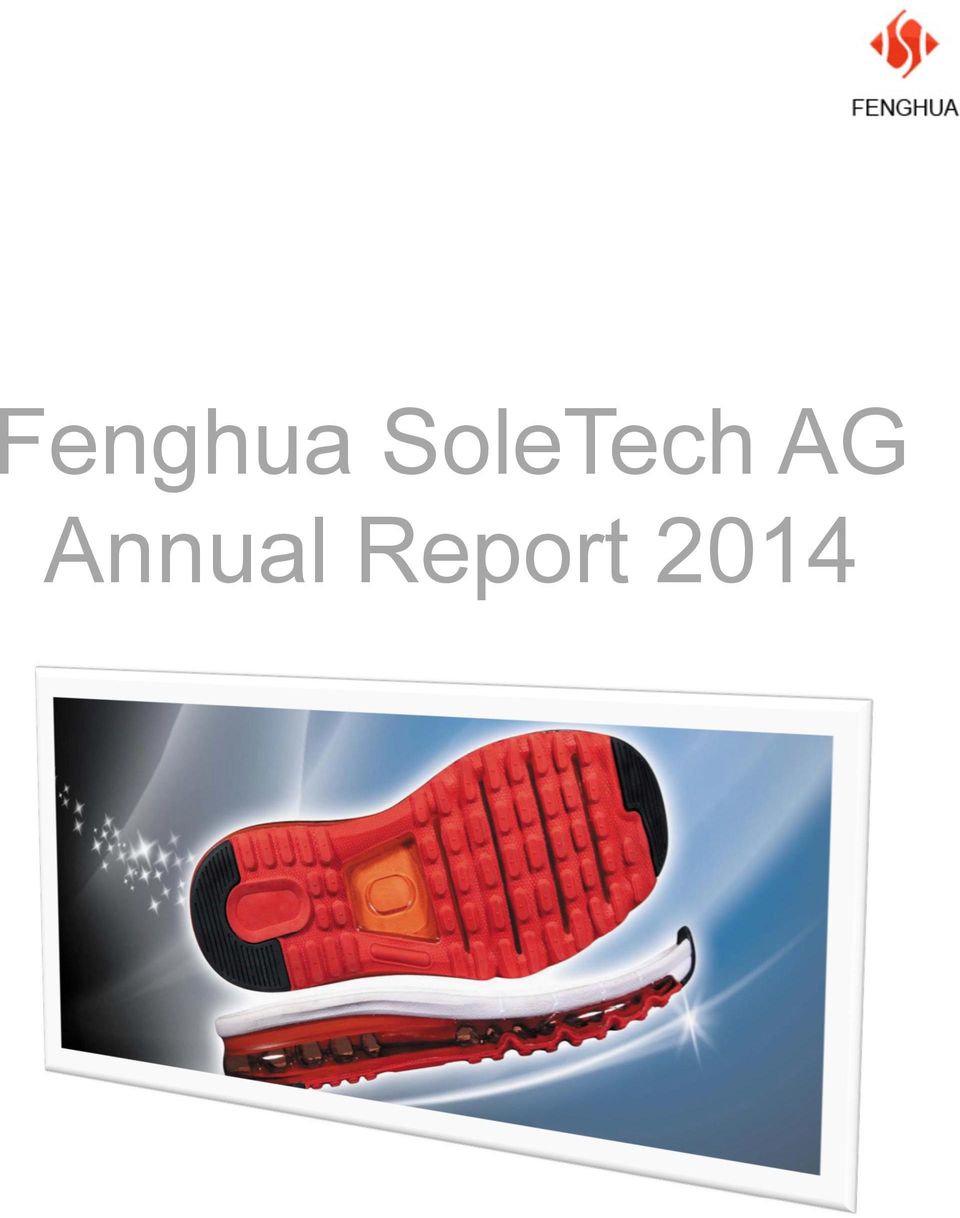
1 Fenghua SoleTech AG Annual Report 2014
2 CONTENT Report of the Supervisory Board Page 1 Combined Management Report for Fenghua SoleTech AG and the Group Consolidated Financial Statements Responsiblity Statement Auditor s Opinion Page 5 Page 38 Page 88 Page 89
3 Fenghua SoleTech AG Report of the Supervisory Board REPORT OF THE SUPERVISORY BOARD Dear Shareholders, In 2014, Fenghua SoleTech AG continued on its growth path. The focus in the year under review remained on the further improvement of the business. Regular dialogue and communication ensures advice and monitoring Within the financial year 2014, we performed the tasks incumbent on the Supervisory Board by law and by the articles of association. We regularly advised the Management Board on the management of the Company and monitored its activities. The Supervisory Board was directly involved in the decisions of strategic importance to the Fenghua Group. The Supervisory Board and the Chairman of the Supervisory Board took steps to ensure that at all times it was informed about the current business situation, significant transactions, and important decisions by the Management Board. With this aim in mind, the Supervisory Board was in close and regular contact with all members of the Management Board to exchange information and ideas. Where called for by law, the articles of association and rules of procedure, the Supervisory Board voted, following detailed consultation and scrutiny, on the reports and draft resolutions of the Management Board. All operations requiring consent were approved. In the financial year 2014,this in particular related to decisions concerning the IPO, product development, expansion and optimisation of the sales and marketing organisation, the HR development, risk management, and the expansion of the production facilities of Fenghua. Consultations in the Supervisory Board The Supervisory Board had two meetings in The members of the Supervisory Board also consulted each other in writing and by telephone, and met together at several other consultative meetings in Where applicable, the Supervisory Board also passed resolutions outside the ordinary meetings. Topics of consultations The consultations with the Management Board and the internal discussions dealt with all relevant aspects of the development of the business, including financial, investment, and HR planning, business trends, the economic situation of the Company and of the consolidated group, the risk situation, risk management, and last but not least the current cost and earnings position. In addition, numerous individual topics were on the agenda of the Supervisory Board meetings, and were discussed. These included: Equity financing business planning for fiscal year 2015 the strategy for entering new markets and for enlarging as well as expanding the production capacities the key points in product development the further development of the Fenghua Compliance Programme formulation of the medium- term strategy, including the product portfolio and sales and marketing strategy 1

4 Fenghua SoleTech AG Report of the Supervisory Board Our duties covered not only the audit plus the entire accounting process in Fenghua SoleTech AG and the consolidated group, but also the supervision of the internal control system which lack of effectiveness of the internal audit and the risk management system. Corporate Governance There were no changes to the Supervisory Board of Fenghua SoleTech AG in the 2014 fiscal year. Since the Fenghua SoleTech AG Supervisory Board consists of just three members, no committees have been formed. In fiscal year 2014, the make- up of the Supervisory Board of Fenghua SoleTech AG fully complied with the German Corporate Governance Code recommendation that the Supervisory Board should include what it considers to be an adequate number of independent members. No conflicts of interest in respect of individual Supervisory Board members occurred in the 2014 reporting year in connection with consultations, draft resolutions and the audit engagement. On 30 September 2014, a new version of the German Corporate Governance Code entered into force. The Supervisory Board has dealt in detail with the new recommendations in the Code. Together with the Management Board, account was rendered for the fiscal year 2014 in the Corporate Governance Report. Fenghua SoleTech AG largely complies with the recommendations and suggestions set out in the German Corporate Governance Code. This has resulted in the submission of the declaration of compliance in July A resolution to this effect was passed at the meeting of the Supervisory Board on 17 July 2015 pursuant to section 161 of the Aktiengesetz (AktG, German Stock Corporation Act). The declaration of compliance is published on the Fenghua website ( ag.de). Audit of the annual financial statements and consolidated financial statements TPW GmbH Wirtschaftsprüfungsgesellschaft Steuerberatungsgesellschaft, Hamburg audited the financial statements of Fenghua SoleTech AG and of the Group for fiscal year The audit engagement was awarded by the Supervisory Board. Prior to the proposal for election, the Supervisory Board obtained a declaration of independence from the auditors. No reasons were apparent to doubt the independence of the auditors. The auditors were additionally obliged to inform us immediately of any circumstances which could give rise to a lack of impartiality on their part and, where appropriate, to notify us of services which they have performed in addition to the audit. The Supervisory Board reported prior to and during the audit in discussions with the auditor on the latter s approach to the audit and the progress of the audit. The annual financial statements for the fiscal year from 1 January to 31 December 2014, prepared by the Management Board in accordance with the provisions of the Handelsgesetzbuch (HGB, German Commercial Code), and the Company s management 2

5 Fenghua SoleTech AG Report of the Supervisory Board report, which also refers to the Declaration of Corporate Governance on the Company s website, were audited by the auditors and given a qualified audit opinion. The Management Board drew up a consolidated financial statement for the consolidated group in accordance with the International Financial Reporting Standards (IFRS), supplemented by the commercial law regulations applicable under section 315a (1) of the HGB. In addition, a group management report was prepared. The auditors audited the consolidated financial statements and the group management report and issued a qualified audit opinion. The annual financial statements, the consolidated financial statements, the management reports, the auditors reports, and the Management Board s proposal on the appropriation of unappropriated profits were forwarded in good time to all Supervisory Board members for examination. They were the subject of intensive deliberations at the meeting of the Supervisory Board held on 15 December In particular, the Supervisory Board concerned itself thoroughly with the findings of the audit by the auditors. The auditors took part in the discussion of the Company s annual financial statements and the consolidated financial statements. They reported on the results of the audits, in particular on the points on which it was agreed the audit would focus, and were available to the Supervisory Board for questions and supplementary information. The Supervisory Board raises no objections further to its own final results of the deliberations and its own examination. The Supervisory Board approves the results of the audit. At its meeting held on 15 December 2015, the Supervisory Board approved the annual financial statements, prepared by the Management Board, for Fenghua SoleTech AG as of 31 December 2014, including the certified version, dated 21 December 2015, of the management report for fiscal year 2014, as well as the consolidated financial statements as of 31 December 2014 and the certified version, dated 21 December 2015, of the group management report. The 2014 annual financial statements for Fenghua SoleTech AG, including the management report, are thereby adopted in accordance with section 172 sentence 1 of the AktG. Dependent company report The dependent company report, prepared by the Management Board pursuant to section 312 of the AktG, on Fenghua SoleTech AG s relations with associated companies was examined by the auditor. The auditors report on the dependent company report was available to all members of the Supervisory Board in good time before the meeting to approve the financial statements and was examined by us and discussed in detail with the auditors present. Following its own examination, the Supervisory Board concluded that there were no objections to the report on relations with associated companies and the final statement by the Management Board contained therein. 3
6 Fenghua SoleTech AG Report of the Supervisory Board Appropriation of earnings After consideration of the operating environment, the situation on the global financial and capital markets and the financial position of the Company, we approve the appropriation of earnings proposed by the Management Board. The Supervisory Board would like to thank all managers for their close and constructive cooperation, and the trust they have placed in us. But our very special thanks go to all employees. Once again in 2014, they succeeded in convincing our customers of the high added value of Fenghua SoleTech s products and services, and thus in making outstanding use of the market opportunities open to us. Frankfurt am Main, 15 December 2015 Mircle Ching Chai Yap Chairman of the Supervisory Board 4

7 Combined Management Report for Fenghua SoleTech AG and the Group Table of Contents 01 Group Overview 01.1 Corporate Strategy 01.2 Products 02 Economic Environment 02.1 General Economic Environment 02.2 Industry Environment 03 Group Business Performance 03.1 Results of Operations 03.2 Revenues 03.3 Cost of sales 03.4 Gross profit 03.5 Other income 03.6 Selling and distribution expenses 03.7 Administrative expenses 03.8 Net Result 04 Financial Position 04.1 Non current assets 04.2 Current assets 04.3 Equity 04.4 Non- current liabilities 04.5 Current liabilities 04.6 Liquidity 05 Employees 06 Results of Assets, Financial Position and Operations of Fenghua SoleTech AG 07 Sales, Marketing and Distribution 08 Production and Quality Control 09 Sourcing 10 Research and Development 11 Remuneration Report 12 Risk and Opportunity Report 12.1 Risk Management 12.2 Description of the Key Features of the Internal Control and Risk Management System with regard to the Group Accounting Process (Sec. 315 Para. 2 No. 5 of the German Commercial Code HGB) 12.3 Operational and other risks 12.4 Financial risks 12.5 Assessment of overall risk situation 12.6 Opportunities 13 Dependency Report 14 Corporate Governance Statement 5

8 Fenghua SoleTech AG Management Report Events after the Reporting Period 16 Outlook 6

9 Fenghua SoleTech AG Management Report Group Overview Founded in 2004, Fenghua is a modern, technology- driven Chinese producer of shoe soles. The production facilities are located in Jinjiang in the province of Quanzhou, one of the leading shoe industry hubs in China. Fenghua produces more than 40 million pairs of shoe soles per year. The soles are made of ethylene vinyl acetate ( EVA ) materials and/ or artificial and natural rubber ( RB ). As one stop supplier, Fenghua s value chain also covers the processing of raw materials and the production of components that are required for the different types of shoe soles. About 70% of customer orders are produced at Fenghua's own production site and the rest of customer orders is outsourced to local contract manufacturers. Disposing of a strong research and development department, Fenghua is able to offer an own range of products to be manufactured as original design manufacturing ( ODM ), while many of Fenghua s competitors only produce soles under their customers design prerequisites as original equipment manufacturing ( OEM ). The soles manufactured by Fenghua are designed for performance sports shoes as well as for leisure and casual sports- inspired shoes targeting shoe producers mainly for mid to high- end shoes for Chinese and international brands. Customers of Fenghua usually produce shoes as OEM so that Fenghua's soles commonly become part of a sports shoe under various brands of sports equipment or fashion brands. Fenghua SoleTech AG is a German stock corporation incorporated under the laws of Germany. The Company was founded on 22 July The Company holds 100 % of the shares of Hong Kong Mou Lung Holding Company Ltd. ( Fenghua Hong Kong ), a company incorporated under Hong Kong law which acts as intermediate holding company and holds 100 % of the equity interests in Fujian Maolong Shoe Materials Co. Ltd. ( Fenghua Fujian ), a company incorporated in the PRC acting as intermediate holding company which in turn holds 100% of the shares of Jinjiang Fenghua Shoe Material Co. Ltd. ( Fenghua Jinjiang ), a company incorporated in the PRC. The operative business of Fenghua is being carried out by Fenghua Jinjiang. The business scope of Fenghua Jinjiang is producing and processing shoes (net cloth), plastic pellets, soles and the sale of shoes (not including dangerous chemicals). 7

10 Fenghua SoleTech AG Management Report 2014 Corporate structure Fenghua Group: 01.1 Corporate Strategy Fenghua is pursuing a strategy of profitable growth which includes following elements: Increase production capacity to benefit from economies of scale and satisfy strong demand Fenghua intends to expand and renovate the existing production facilities by building additional levels in order to increase the total floor space of the factory from 1,600 m 2 to 3,000 m 2. Fenghua also targets to purchase and install more productive machinery and equipment to increase production capacities from 48 to 80 million pairs. These additional production lines will firstly be used to insource the currently outsourced production capacities (19.9 million pairs in 2014) of EVA MD1 soles as a priority, as it has less added- value than MD2, in order to increase Fenghua's gross margin. Secondly the additional capacity is aimed to serve the sports shoe manufacturers that shifted their operations from Dongguan to Jinjiang recently. Fenghua expects that more manufacturers will follow in order to take advantage of lower wages for highly skilled workers in Jinjiang. Thirdly, they are intended to serve customers who need to be able to place larger orders. Fenghua intends to strengthen its sales and marketing teams to maintain close relationships 8

11 Fenghua SoleTech AG Management Report 2014 and collaborations with its customers to continuously develop technologies and design along with them. Larger orders for Fenghua will mean higher economies of scale and a better level of productivity fuelling the price competitiveness and profitability of the Group. Finally, they aim to satisfy an according to Fenghua - increasing demand because of better market conditions linked to a growing middle class in China, a higher per capita disposable income leading to changing customer patterns towards healthier behaviours which are becoming the mainstream. Besides, the support from the Chinese Government to foster sports as a healthy attitude will, according to Fenghua, also fuel the sports footwear market. Increase design and development capabilities to create added value Fenghua aims to increase its product design and development capabilities in order to enhance product quality to create more innovative soles with various functionalities and sophisticated designs and to intensify the securing of technological advantages by registering utility model which is supposed to raise the average sales price of its shoe soles. It also aims at being able to better serving domestic and international brands by investing in additional sole design software as well as by acquiring equipment dedicated to prototype development and testing. Fenghua expects that a growing ODM business is one of the core trends in the market for shoe soles for higher valued shoes, so that the intensification of its R&D capabilities is a major business strategy. Fenghua's own research and development department constantly seeks to improve the manufacturing process by not only enhancing the composition of raw materials but also by improving the production processes such as moulding. In the future Fenghua will continue to expand its R&D activities to further strengthen its product design and development capabilities. Target higher- value brands with better prospects Because of fast- rising costs in Dongguan which is another production centre for sports shoes in China, large sports shoe brands are currently shifting their production from Dongguan to Jinjiang. The Group aims to take advantage of this shift by dedicating more production resources to these Tier 2 and Tier 3 international brands. For example, it has started supplying Quanzhou Senyu Sports Goods Co., Ltd., the only OEM of Brooks in China, who also supplies brands such as Li Ning and Fila. Brooks is famous for selling sport- specific performance running shoes. Fenghua aims to capture on both domestic and export footwear markets. In the past, Chinese consumers rarely distinguished between different types of sports shoes. This is now changing fast as Chinese consumers start to acquire sport specific sports shoes as well as leisure or casual sports- inspired shoes. As a result, Fenghua believes that the current sports shoe market, suffering from high inventories, is expected to recover soon, with a higher emphasis on performance- oriented and function- specific sport shoes. Strengthen sales and marketing channels Fenghua aims to expand its sales and marketing team in order to better being able to attach to a growing number of customers. Furthermore, it plans to increase its visibility on the market for shoe soles by intensifying marketing tools. Such is mainly planned by the publishing of advertisements in magazines or other media and by increasing participation in exhibitions. 9

12 Fenghua SoleTech AG Management Report Products Fenghua produces various kinds of shoe soles made of ethylene vinyl acetate ( EVA ) and/or natural or artificial rubber ( RB ) and/or other kinds of plastic, such as thermoplastic elastomer, thermoplastic polyurethane, and polyurethane. Fenghua's final products are the entire soles, single components are only produced as parts for the production process. Fenghua produces more than 40 million pairs of shoe soles per year and currently disposes of 6 production lines for the single step produced and simple EVA model one ( EVA MD 1 ), 14 production lines for the EVA high- quality model two ( EVA MD 2 ) and 8 for rubber versions ( RB ). The soles are distributed through Fenghua's own sales network to producers of shoes for renowned domestic and international brands and to local distributors. EVA Sports shoe soles EVA soles became popular for sports shoes after 2007 thanks to their features: light- weight, soft, flexible, good breathability, resistant to wear and tear, dimensional stability, can be dyed to various colours, easily mouldable into various shapes, good tensile strength, waterproof, UV- resistant and non- toxic. EVA soles' key component provides elasticity, softness and flexibility. In most sports shoe soles, there is an EVA upper sole, which is combined with a lower sole and maybe with components. However, there are also EVA only soles. Rubber shoe soles Rubber soles are a more traditional form of sole, which is highly durable, highly resistant to wear and tear, with a good abrasion resistance. Furthermore, this type of sole provides good traction, has excellent tensile strength, and is waterproof, oil- resistant and anti- static. Fenghua manufactures rubber only soles mainly for skateboarding and leisure or casual- wear shoes. Furthermore, Fenghua produces outsoles made of rubber for EVA component soles. Components of soles Fenghua produces its own pellets for the manufacturing of EVA soles. While other sole producers need to be supplied with EVA granules, Fenghua is able to mix the respective raw materials (including colouring) on its own and hence is more flexible in its production. Regarding the RB production, Fenghua can produce RB panels out of raw materials, so that it does not depend on suppliers for raw rubber. 10

13 Fenghua SoleTech AG Management Report Economic Environment 02.1 General Economic Environment All sales revenue of Fenghua Group is generated by the sale of its products in the Chinese market and therefore, the business growth of the Fenghua Group is directly associated with the economic development of China. The economy of China has continued to expand rapidly over the last three decades and recently emerged as the world s second largest economy next to the United States. Now, by leveraging on its vast domestic demand and investment spending, the China economy managed to show signs of stabilization and steady improvement. In 2014 the Chinese economy grew at 7.4%, which is 0.3% lower than in The slowdown was mainly attributable to the slowdown in fixed asset investment and domestic consumption. Besides, the slowdown also represents the challenging economy outlook in China now whereby the sentiment is relatively weak and consumers are becoming more cautious in their spending. In addition, despite the China s economy was mainly driven by its domestic consumption, it would be affected by the headwinds from the world s economy, to a certain extent. The recent incidents, for example, political unrest in Ukraine, slowing European economy, in particular, the economic crisis in Russia and Greece, plummeting crude oil price and etc. will certainly have an impact on the China s economy. From January to April, the total retail sales of consumer goods reached RMB 9,310.2 billion, (EUR 1,332.5 billion) and thus went up by 10.4 percent year- on- year. In terms of different areas, the retail sales of consumer goods in urban areas was RMB 8,005.6 billion, (EUR 1,145.8 billion) increasing by 10.2 percent year- on- year; while that in rural areas was RMB 1,304.6 billion (EUR billion), a plus of 11.5 percent. In terms of different consumption patterns, the retail sales of goods grew by 10.3 per cent and gained RMB 8,331.7 billion, (EUR 1.192,5 billion). The online retail sales of goods was RMB billion,(eur billion) representing a year- on- year growth of 40.3 percent, accounting for 9.3 percent of the total retail sales of consumer goods. Of the online retail sales of goods, the food, clothing and other commodities went up by 48.2 percent, 32.4 percent and 43.4 percent respectively. (Source: Consumer Prices for April 2015, National Bureau of Statistics of China, 11 May 2015) 02.2 Industry Environment Trends Leading domestic sportswear brands, represented by Anta, enjoyed a recovery in performance in Suffering from high inventory levels and declining in net profit margins, which were caused by blind expansion in previous years, leading domestic sportswear brands witnessed severe declines from 2012 to However, they tried to improve the operational efficiency of their stores and to seek new growth engines, such as childrenswear business and online retailing business, 11

14 Fenghua SoleTech AG Management Report 2014 to cope with recession. Their painstaking efforts began to work in 2014, with the top five domestic sportswear brands, including Anta, Li Ning, Xtep, 361 Degree and Peak, all experiencing positive growth in Competitive Landscape Nike (China) Inc led in sportswear in China in 2014, owning retail value share of 14%. The leading position of Nike mainly benefited from its agility in catering to the emerging female consumers, as well as a series of successful marketing activities that pulled up the sales effectively. The company promoted a women- specific sports training smart phone application Nike+ TC in China in 2014, and set up the second global women s product experience centre in Shanghai in November, in order to strengthen its foothold. Prospects Sportswear is predicted to enjoy a more favourable macro- environment over the forecast period. A document of guidance that aimed to accelerate the development of the sports industry in China, issued by the State Council of China in October 2014, announced it was developing the sports industry, covering physical products such as sportswear and sport equipment, as well as virtual products like sporting events, to achieve a total value of CNY5 trillion by the end of Meanwhile, the number of frequent participants of exercise will surpass 500 million nationally. This series of supportive policies will certainly benefit the healthy forecast development of sportswear over the forecast period. (Source: Sportswear in China, Euromonitor International, May 2015) 12

15 Fenghua SoleTech AG Management Report Group Business Performances 03.1 Results of Operations The following table presents Fenghua s consolidated income statement data for the years ended 31 December 2013 and 2014: 31 December EUR thousand % of revenues EUR thousand % of revenues Revenue 101, , Cost of sales (72,624) (71.4) (64,826) (72.0) Gross Profit 29, , Other income Selling and distribution expenses (275) (0.3) (250) (0.3) Administrative expenses (1,476) (1.4) (568) (0.6) Finance costs - - (137) (0.2) Finance income Profit before tax 27, , Income tax expense (6,954) (6.9) (6,093) (6.7) Net profit 20, , Currency translation differences 7, (618) (0.7) Total comprehensive income 27, , Revenues Revenues increased from EUR 90,056 thousand in 2013 by EUR 11,706 thousand, or 13.0%, to EUR 101,762 thousand in All product segments contributed to the growth. Measured in RMB, revenues increased by 12.3% during the year. The increase in revenues is primarily due to the increase in sales volumes. Sales volumes for RB, MD1 and MD2 soles increased by 2,483 thousand pairs, 870 thousand pairs and 2,685 thousand pairs to 4,799 thousand pairs, 21,335 thousand pairs and 35,784 thousand pairs respectively in Measured in EUR, the average unit selling prices remain constant at EUR 1.12 compared to EUR 1.13 in

16 Fenghua SoleTech AG Management Report 2014 The Group s revenues in 2014 were derived wholly from the PRC. Also, there are no sales in 2014 which account for over 5% of the Groups revenues from a single customer Cost of sales Cost of sales consist of purchasing materials, purchases for outsourced products, labour costs for personnel employed in production, depreciation of non- current assets used for production purposes, R&D expenses, VAT and others (mainly utilities and maintenance costs). Costs of sales increased from EUR 64,826 thousand in 2013 by EUR 7,798 thousand, or 12.0%, to EUR 72,624 thousand in This increase was mainly due to increased costs for the sourcing from contract manufacturers due to capacity constraints. The following table presents a breakdown of cost of sales for each of the years ended 31 December 2013 and 2014: 31 December EUR thousand % of costs of sales EUR thousand % of costs of sales Materials 40, , Salaries and wages 12, , Depreciation 1, Purchases from subcontractors 12, , Research and development expense VAT Others 5, , Total 72, % 64, % 03.4 Gross profit Gross profit grew during the reporting period by 15.5% to EUR 29,138 thousand (2013: 25,230 thousand). This resulted in an increase of overall gross profit margin from 28.0% in 2013 to 28.6% in The increase of the gross profit margin 14

17 Fenghua SoleTech AG Management Report 2014 resulted from Fenghua s ability to enhance efficiency in the operation and better managing the production costs 03.5 Other income Other income principally consists of interest income from banks and exchange gains. In 2013 and 2014, other income amounted to EUR 488 thousand and EUR 15 thousand respectively. Other income as a percentage of revenues was approximately 0.5% in 2013 and less than 0.1% in 2014 and thus relatively insignificant Selling and distribution expenses Selling and distribution expenses comprise mainly depreciation expenses and staff costs. Selling and distribution expenses increased from EUR 250 thousand in 2013 by 10.0% to EUR 275 thousand in This increase was due to an increase in staff costs Administrative expenses Administrative expenses comprise mainly depreciation and salaries to management and administrative personnel. Administrative expenses increased from EUR 568 thousand in 2013 by 159,9% to EUR 1,476 thousand in This increase was mainly attributed to the increase in staff costs. Administrative expenses as a percentage of revenues amounted to 1.4% in 2014 compared to 0.6% in Net Result In line with the increase in gross profit, the net profit increased from EUR 18,750 thousand by 9.9% in 2013 to EUR 20,596 thousand in This represents a net profit margin of 20.2% (2013: 20.8%) Income tax expenses increased from EUR 6,093 thousand in 2013 to EUR 6,954 thousand in

18 Fenghua SoleTech AG Management Report Financial Position The Group s objectives when managing capital refer primarily to equity as shown in the balance sheet and are to safeguard the Group s ability to continue as a going concern and to support the Group s stability and growth so as to maximize shareholders returns and stakeholders benefits. A capital structure which does not make significant use of debt financing and seeks to establish a ratio of equity to total assets of 50% or above is considered to be advisable and achievable by the Group s management, providing the Group with a stable basis for achieving its business objectives. The total balance sheet increased from significantly from EUR 47,657 thousand to EUR 78,349 thousand as at 31 December This rise is principally attributable to an increase in the profit for the year Non current assets Property, plant and equipment Property, plant and equipment comprise building, plant and machinery, furniture, fixtures, office equipment and motor vehicles. Property, plant and equipment (net book value) increased from EUR 6,798 thousand as at 31 December 2013 by 6.8% to EUR 7,263 thousand as at 31 December This increase was primarily due to the acquisition of production equipment and the depreciation of EUR against RMB from 8.41 in 2013 to 7.47 in Land use rights Land use rights relate to long- term interest for the usage of land. Land use rights increased from EUR 390 thousand as at 31 December 2013 by 10.2% to EUR 430 thousand as at 31 December 2014 primarily resulting from the depreciation of EUR against RMB from 8.41 in 2013 to 7.47 in 2014 partially offset by amortisation of Fenghua s land use rights Current assets Inventories Inventories comprise raw materials, work- in- progress and finished goods. Inventories increased from EUR 890 thousand as at 31 December 2013 by 17.7% to EUR 1,048 thousand as at 31 December This increase resulted primarily from an increase in work- in- progress. Trade and other receivables Trade and other receivables comprise trade receivables and prepayments. 16

19 Fenghua SoleTech AG Management Report 2014 Trade and other receivables increased from EUR 13,086 thousand as at 31 December 2013 by 18.2% to EUR 15,466 thousand as at 31 December This increase resulted primarily from increased sales volume. Amount owing from a director The company has advanced EUR 90 thousand (2013: EUR nil) to a director. Cash and cash equivalents Cash and cash equivalents comprise cash at bank and cash on hand. Cash and cash equivalents increased significantly by EUR 26,493 thousand or by 102.6% to EUR 53,683 thousand as at 31 December 2014 due to increased sales volumes. For a more detailed discussion of cash at the end of each period, see the chapter Liquidity in this section Equity Equity comprises share capital, reserves and retained earnings. Equity increased from EUR 40,153 thousand as at 31 December 2013 by EUR thousand, or by 69.0%, to EUR thousand as at 31 December 2014 mainly due to an increase in retained earnings. As at 31 December 2014, the Group achieved a ratio of equity to total assets of 86,6% (2013: 84.3%). Statutory reserves relate to the statutory reserve required under PRC law. Fenghua has reached the required statutory reserve as at 31 December 2013 and Current liabilities Other provisions Other provisions comprise of tax payables related to directors remunerations Trade and other payables Trade payables and other liabilities comprise mainly trade payables, salary and social security insurance payables, VAT and other tax payables. Trade payables and other liabilities increased from EUR 5,596 thousand as at 31 December 2013 by 48,0%, to EUR 8.281thousand as at 31 December This is due to increased purchases from trade suppliers and outstanding invoices. Amount owing to a director The director has advanced EUR 97 thousand (2013: EUR 14) to the company. Income tax payable Income tax payable comprises the current payable amount of the income tax. Income tax payable amounted to EUR 1,894 thousand as at 31 December 2013 and EUR 2,122 thousand as at 31 December

20 Fenghua SoleTech AG Management Report Liquidity Net cash generated from operating activities increased from EUR 17,563 thousand in 2013 by 24.3%, to EUR 21,853 thousand in This increase was mainly attributable to an increase in profits which was offset by an increase in trade and other receivables as a result of the company s growth. Net cash used in investing activities decreased from EUR 1,200 thousand in 2013 by 34.5%, to EUR 786 thousand in The decrease was mainly attributable to the decrease in the acquisition of property, plant and equipment. Net cash used in financing activities decreased from EUR 8,735 thousand in 2013 by EUR thousand to net cash generated from financing activities of EUR 0 thousand in The decrease was mainly due to the repayment of an advance from a director and fully settlement of bank borrowings in Employees As of 31 December 2014, Fenghua had 1,830 full- time employees (31 December 2013: 1,812). The number of employees remained stable despite the growth of the revenues due to increase in demand for our products. The following table shows a breakdown of Fenghua's employees by function as of 31 December 2013 and 2014, respectively: 31 December Function Board of Directors Finance Purchase Administration and Human Resources Sales and Marketing Quality Control Product Design and Development Production... 1,678 1,695 Total... 1,812 1,830 We offer our employees competitive compensation packages and various training programs and as a result we have been able to attract and retain qualified personnel. 18

21 Fenghua SoleTech AG Management Report Results, Assets and Financial Position of Fenghua SoleTech AG The following tables and information show the results of assets, the financial position of the Fenghua SoleTech AG for the reporting year ended at December 31, Fenghua SoleTech AG is acting as the holding company of the three companies Hong Kong Mou Lung Holding Company Ltd., Fujian Maolong Shoe Materials Co. Ltd. and Jinjiang Fenghua Shoe Material Co. Ltd. Financial Position Assets 31/12/2014 EUR thousand 31/12/2013 EUR thousand 1. Fixed assets 10, Current assets Total 10,468 - The statement of financial position of Fenghua SoleTech AG shows a total of assets of EUR 10,468 thousand, which includes long- term financial assets in the amount of EUR 10,000 thousand, receivables from affiliated companies and cash equivalents were EUR 464 thousand and EUR 4 thousand respectively. The liquid assets of the company are inadequate. The financial assets fully comprise the shares of the Hong Kong Mou Lung Holding Company Ltd., which, inter alia, constitutes an intermediate holding company for the operating entity. The extent, to which the shares, in the short term, can provide liquidity by selling or mortgaging for example, depends on the respective tradability and possible legal enforceability of claims in Hong Kong and the People's Republic of China. Equity and Liabilities 31/12/2014 EUR thousand 31/12/2013 EUR thousand 1. Equity Subscribed capital 10,056 - Share premium Accumulated losses (1,122) - 9, Liabilities 1,036 - Total 10,468-19
22 Fenghua SoleTech AG Management Report 2014 As at December 31, 2014, total equity and liabilities of Fenghua SoleTech AG amount to EUR 10,468 thousand. Equity was EUR 9,432 thousand while liabilities were EUR thousand. The liquid funds amounted to EUR 4 thousand and are insufficient to cover short- term obligations. The continuation of the Company largely depends on additional financial resources. Without the possibility of obtaining dividends or the willingness of the subsidiaries to levy an intercompany administrative charge, the company is threatened by illiquidity. Until the time of reporting, no agreements or guarantee agreements were concluded in this regard, nor were other measures taken that would structurally improve the liquidity position. Income Statement For the financial year 2014 the total net loss of Fenghua SoleTech AG amounted to EUR 519 thousand EUR thousand 2013 EUR thousand Revenue - - Operating expenses (1,122) - Loss before tax (1,122) - Net loss (1,122) - The operating costs entirely result from the IPO costs and day- to- day administration of the Company. No own revenues were generated. The Supervisory Board remuneration totaling to EUR 45 thousand is included in the operating costs. Executive salaries have not been paid by Fenghua AG; they have been supported in the current financial year by a subsidiary company. The future profitability of the Company correspondingly fully depends on dividend payments or cost allocation. 07 Sales, Marketing and Distribution All of Fenghua s products are sold in China. Fenghua utilises direct channels of distribution through its own sales and marketing team in order to win new customers and strengthen the existing customer relationships. Furthermore, 20
23 Fenghua SoleTech AG Management Report 2014 Fenghua's sales team attends footwear exhibitions and trade fairs on a yearly basis to promote its products and gain market exposure. To maintain the close relationships with its customers, the sales and marketing team makes regular visits to customers premises and invites existing and potential customers to Fenghua's factory premises and product show room. Such interactions allow Fenghua to fine- tune its shoe sole designs to specific customers requirements and obtain feedback on product quality. In addition, when new ODM products are designed, the R&D team together with the sales and marketing team visit the customers to promote these new products. As of 31 December 2014 Fenghua served over 49 mid to high- end OEM sports and other shoe manufacturers in China, of which 46 are located in the Fujian Province. These OEMs supply tier 1 Chinese sports brands and tier 2 and 3 international sports brands. As of 31 December 2014 Fenghua had 125 customers, each of which has been contracted on the basis of a framework agreement on a year- by- year basis. The sales and marketing team is tasked with monitoring the market trends as well as Fenghua's competitors products and pricing range. This enables Fenghua to keep abreast of domestic and international market trends and serves as an invaluable source of market intelligence for Fenghua's management and R&D team. In 2014, Fenghua s sales and marketing expenditures amounted to RMB 2,247 thousand (Euros 275 thousand). 08 Production and Quality Control As of 31 December 2014, Fenghua produced more than 40 million pairs of shoe soles per year with currently six production lines in EVA model one ( EVA MD1 ), 14 in EVA model two ( EVA MD 2 ) and eight for RB versions. The production of soles is divided into several phases: production of moulds, granulation of raw materials, production of components, assembly or fusing of components and quality control. Production Process Fenghua's standard production process comprises: Production of moulds: The production of moulds is entirely outsourced. A mould is the form used for the components of the sole. Each Sole requires a unique mould for each size. Fenghua provides the mould production companies the design and sample of the sole. The mould production company retains the master moulds and delivers sets of moulds for different sizes, with more moulds for more common sizes. Both the master moulds and mould sets are made from aluminium. Production usually takes around 20 days, and installing moulds is instantaneous. 21
24 Fenghua SoleTech AG Management Report 2014 Granulation of raw materials for EVA pellets: EVA pellets are formed by mixing over 10 raw materials, including colouring. The formulation needs to be adjusted according to the functionality, form and colours of the sole. The materials are mixed, formed into a paste and afterwards granulated into pellets. Production of soles and components: The production of soles and components of soles differs between a sole manufactured in the EVA MD1 process and the EVA MD2 process. o EVA MD1 components are formed by using grams of EVA pellets per pair of soles, and moulding it using either stamping moulding whereby the granules are put in the necessary quantity in the mould which is then stamped under heat (lasting 5 to 6 minutes) or injection moulding whereby the granules are preheated and injected in liquid form into the mould under heat (lasting only 4 to 5 minutes) at 180 C. These are then stabilised in a thermostatic oven. Excess parts are manually trimmed. In the case of injection moulding, excess material is recycled. o EVA MD2 components are formed in a similar way to EVA MD1, but using two moulding steps. For each pair of soles, grams of EVA pellets are used to form an intermediate component using injection moulding (with a foaming machine) whereby the preheated liquid raw material is injected into the mould, which is then in a second step compressed through stamping the mould. This enables the production of soles with better properties and more complex designs. o RB components such as the base layer are mixed from 30% latex from Vietnam, 30% synthetic rubber and other components. They are mixed in powder form, heated, formed into panels and cut. The pieces cut are afterwards further cut or stamped in moulds for components or in moulds for entire RB soles. o TPU/TPR/TPE or PU components are produced by using a similar technique as for the EVA production: The preheated raw materials are injected into moulds for the respective components and afterwards trimmed. Assembly methods and Quality control: Assembly of moulds is done by overmoulding and final assembly. This is performed by washing and irradiating the components first, applying glue and combining the pieces and then compressing them together with a special press. The pieces are then inspected, trimmed and packed. Quality Control: The final step is the quality control. Fenghua s dedicated quality control team consisted of 32 members as of 31 December 2014, who are responsible for various quality inspection and testing procedures at each stage of the production process in accordance with Fenghua s quality control standards. A pilot production is carried out prior to any mass production of new products in order to retain quality. Before Fenghua s products are delivered to its distributors, a series of quality control sample testing is 22
25 Fenghua SoleTech AG Management Report 2014 undertaken to ensure product specifications are met and the product quality is consistent with applicable national standards. As of 31 December 2014 Fenghua has outsourced 32.2 % of its customer orders to two subcontractors, both of which are shoe sole manufacturers based in Jinjiang. Fenghua selects its subcontractors based on similar policies and criteria as for suppliers, namely, production capacity, reputation, service and product quality. 09 Sourcing Fenghua acquires around 30 different raw materials for the production of its shoe soles. The raw material is inspected upon delivery to ensure uniform quality. The principal raw materials used are EVA, SBR, PR, TPR pellets, polyethylene and elastomer. Supply of these raw materials is organised through a network of reliable, pre- approved suppliers based in Jinjiang or the neighbouring Quanzhou cities, each of which has been contracted on the basis of a framework agreement on a year- by- year basis. Such framework agreement enables Fenghua to order raw materials on pre- agreed terms. Prices may vary, but such variations are passed on to customers. Inventories are kept low as Fenghua has a just- in- time supply system. This allows Fenghua to reduce reliance on third- party suppliers, ensure consistent product quality, reduce lead times and reduce costs, while closely matching customers' needs. Although the same supplier can usually provide Fenghua with several raw materials such as EVA and RB, Fenghua normally orders the same raw materials from different suppliers to avoid dependency. Since 1 February 2013 Fenghua has implemented a procurement policy for the purchase of raw materials and other production- related goods (the Procurement Policy ). According to the Procurement Policy, selection of suppliers is subject to a point- based evaluation and assessment process, which mainly takes into account the suppliers' business size, strength, reputation, service and product quality. As of 31 December 2014, Fenghua has maintained a list of approximately three to four Qualified Suppliers for each principal raw materials. Each of the Qualified Suppliers is subject to an annual review based on factors such as service and product quality and costs. Fenghua regularly monitors the performance of the Qualified Suppliers by checking each batch of products delivered and working with the relevant suppliers to resolve any product quality problems on a timely basis. As at 31 December 2014, Fenghua had 62 suppliers of which 50 are regularly used. Raw materials can often be delivered within hours, allowing Fenghua to keep its raw material inventory levels low (inventory is kept around five days on average in 2014). 23
26 Fenghua SoleTech AG Management Report Research and Development Fenghua has a strong focus on in- house design creating and R&D. Fenghua s R&D team consisted of 29 people as of 31 December They develop a number of ODM designs, which add up to the vast number of OEM designs produced. Fenghua's own research and development ( R&D ) department constantly seeks to improve the manufacturing process by not only enhancing the composition of raw materials but also by improving the production processes such as moulding. By focussing on R&D, Fenghua is able to offer an own range of products to be manufactured as original design manufacturing ( ODM ) while other competitors only produce soles under their customers design prerequisites as original equipment manufacturing ( OEM ). For its ODM soles, Fenghua develops its own prototypes and has registered 8 utility models for such prototypes in order to protect its intellectual property. Customers of Fenghua usually produce shoes as OEM so that Fenghua's soles commonly become part of a sports shoe under various brands of sports equipment or fashion brands. As of the end of 2014, Fenghua developed about 132 sports shoe- soles designs, of which 69 designs were added to its product line, bringing the number of ODMs (self- produced) designs in use to 469, compared to the number of OEMs (designed by clients) of 175. The expenses for our own research and development increased from EUR 185 thousand in 2013 to EUR 208 thousand in 2014, representing 0.2% of total sales. In the future Fenghua will continue to expand its R&D activities to further strengthen its product design and development capabilities. 11 Remuneration Report The remuneration of the Management Board is determined by the Supervisory Board in accordance with the requirements set forth in sections 87 paragraph 1, section 107 paragraph 3 sentence 3 German Stock Corporation Act. When determining the remuneration of the Management Board, the Supervisory Board particularly takes into account the size of the company, the responsibilities of the management board member, the economic and financial situation of Fenghua SoleTech AG and the overall goal of a sustainable development of the Company. In 2014 exclusively a fixed compensation was paid to the members of the Management Board. There was no variable remuneration paid in
27 Fenghua SoleTech AG Management Report 2014 For the fiscal year 2014, the members of the management board received the following remuneration: a. Benefits granted Benefits granted (keur) Weijie Lin (CEO) Jia Jian Lin (COO) Yong Shiau Wuee (CFO) Fixed compensation Fringe benefits Total One- year variable compensation Multi- year variable compensation Total Service cost Total b. Allocation Allocation (keur) Weijie Lin (CEO) Jia Jian Lin (COO) Yong Shiau Wuee (CFO) Fixed compensation Fringe benefits Total One- year variable compensation Multi- year variable compensation Variable bonus for No variable bonus for Other Total Service cost Total
28 Fenghua SoleTech AG Management Report 2014 Based on their service agreements, the members of the Management Board Mr. Weijie Lin, Mr. Yong Shiau Wuee and Mr. Jia Jian Lin are entitled to an annual fixed salary of RMB 286,000, RMB 650,000 and RMB 195,000, respectively. The service agreements do not include any variable remuneration. Profit- related remuneration There are no members of management for which remuneration is dependable on profits for the financial year. It will be proposed to the shareholders meeting of the Company an annual gross compensation for each ordinary member of the Supervisory Board of EUR 20,000 per annum, of EUR 30,000 per annum for the deputy chairman and of EUR 40,000 per annum for the chairman of the supervisory board. The members of the Supervisory Board receive reimbursements for expenses with regards to their office as member of the Supervisory Board as well as VAT, if applicable. In 2014, the following fixed remuneration accumulated for the Supervisory Board members : Mr. Mircle Ching Chai Yap Mr. Jaroslaw Dariusz Dabrowski Ms. Sammi Cheng EUR 40,000 EUR 30,000 EUR 20, Risk and Opportunity Report 12.1 Risk Management Risks and opportunities are inherent to the business activities of Fenghua Group. Fenghua Group is currently implementing a comprehensive risk management system. Risks are defined as events which could lead to a negative variance from the objectives planned for the future. If these risks become reality, business performance may be permanently adversely affected, earnings may be reduced and the financial position of the Company worsened. In contrast, opportunities are defined as factors, which could have a positive effect on the future development of Fenghua. The Fenghua Group deploys accounting, control, and planning tools as an integral part of the risk management process. To closely monitor business developments and risks, management regularly conducts sales volume and structural analysis, gross margin analyses, liquidity analysis and monitors the progression of accounts receivable. Monthly and quarterly financial reporting processes are a core tool in the management of our business and are intended to ensure that information on business and market trends are regularly updated. As part of the company s 26
29 Fenghua SoleTech AG Management Report 2014 financial control procedures, significant variations between actual and budget figures are identified and analysed which is served as the basis of developing corrective measures. Opportunity and risk management are closely interlinked within the Fenghua Group. Fenghua essentially derives its opportunity management from the goals and strategies of the business segments and ensures an appropriate relationship between opportunity and risk. Direct responsibility for the early and regular identification, analysis and management of opportunities rests with the Management Board. Selected opportunity potentials for the Fenghua Group are discussed in the forecast report. The Fenghua board of directors provides guidance for overall risk management. Management analyses and formulates measures to manage the Group's exposure to financial risk in accordance with the objectives and underlying principles approved by the board of directors. Generally, the Group employs a conservative strategy regarding its risk management. As the Group's exposures to market risk and financial risk are kept at a significantly low level, the Group has not used any derivatives or other financial instruments for hedging purposes. The Group does not hold or issue derivative financial instruments for trading purposes. The Group s overall risk management strategy seeks to minimize adverse effects from the unpredictability of financial markets on the Group s financial performance Description of the Key Features of the Internal Control and Risk Management System with regard to the Group Accounting Process (Sec. 315 Para. 2 No. 5 of the German Commercial Code HGB) Fenghua has an internal control system in place. In addition, Fenghua has a risk management system under which appropriate structures and processes for (Group) accounting and financial reporting are defined and implemented throughout the organisation. This system is designed to guarantee timely, uniform and accurate accounting for all business processes and transactions. It ensures compliance with statutory regulations, accounting and financial reporting standards, which is binding upon all the companies included in the consolidated financial statements. The relevance and consequences for the consolidated financial statements of any amendments to laws, accounting or financial reporting standards or other pronouncements are continually analysed. The system is still under construction and in the implementation phase. The processes related to the IPO as well as regulatory compliance are largely perceived by the use of external service providers in Germany. An audit of the Executive Board, in this respect, is only possible to a limited extent and would entail considerable effort. The internal controls in the field of the accounting of Fenghua AG with regard to the recognition of all evidence are currently insufficient. Thus, there is a risk that not all costs are recognized in the financial statements. 27
30 Fenghua SoleTech AG Management Report 2014 Apart from defined control mechanisms such as system- based and manual reconciliation processes, the fundamental principles of the internal control system include the separation of functions and compliance with directives and operating procedures. The accounting and financial reporting process for Fenghua is managed by the Accounting Department of Fenghua with the assistance by an external German service provider supporting the IFRS- based financial reporting. The Group companies prepare their financial statements locally and transmit them with the aid of a data model that is standardised throughout the Group. The Group companies are responsible for their compliance with the directives and procedures applicable throughout the Group and for the proper and timely operation of their accounting- related processes and systems. The employees involved in the accounting and financial reporting process receive regular training, and the Group companies are supported by an external service provider. As part of the process, measures are implemented that are designed to ensure the regulatory compliance of the consolidated financial statements. These measures serve to identify and evaluate risks, and to limit and monitor any risks that may be identified. For example, material new contractual relationships for projects are systematically tracked and analysed. The consolidated financial statements are prepared in co- operation with a German external service provider on the basis of the data supplied by the included subsidiaries. The consolidation, certain reconciliation operations from local Chinese GAAP to Group policies and monitoring of the related time schedules and procedures are performed by the accounting department of Fenghua and the German external service provider. System- based controls are monitored by personnel and supplemented by manual inspection. Defined approval procedures must be observed at all stages in the accounting process to ensure segregation of duties Operational and other risks Macroeconomic risks Fluctuations in consumer spending caused by changes in macroeconomic conditions in the PRC may significantly affect the Fenghua's business and financial performance. Economic instability in China could adversely affect Fenghua's business. Market risks The market for sports shoe soles is highly fragmented and competitive. Fenghua estimates that there are 4,000 sports shoe soles manufacturers in Quanzhou. Participants in this market compete based on, among other things, product variety, product design, product quality, marketing and promotion, price and the ability to meet delivery commitments to customer. Furthermore, sports shoe brands companies are continuously demanding higher quality, shorter lead times and lower prices from their suppliers, while ordering smaller volumes to offer a greater diversity of designs. As a result, the Company s future success will depend on its ability to maintain an efficient, timely and cost- 28
31 Fenghua SoleTech AG Management Report 2014 effective production while delivering high- quality products. If it fails to do so, it may lose market share to better- managed and faster- growing competitors. Fenghua may be forced to among other actions, reduce prices and increase operating expenditures on advertising and product design and development, which may in turn materially adversely affect Fenghua's business, financial condition and results of operations. Risks on brand development and domestic distribution network Fenghua relies heavily on the Fenghua brand. Failure to successfully maintain or promote Fenghua's brand may adversely affect Fenghua's results of operations. Sales of Fenghua's products to consumers are conducted by distributors and third- party retailers over whom Fenghua has limited control. A distributor's failure to distribute Fenghua's products to the retail network under its jurisdiction could materially adversely affect the business of the retail outlets of an entire geographic area, as well as Fenghua's reputation, brand, image and results of operations. If Fenghua's distributors do not pay Fenghua for their purchases in a timely manner or at all, Fenghua's financial condition and results of operations could be materially adversely affected. Risks related to raw materials and production Any significant change in raw material costs, will have a direct effect on the results of operations. If and to the extent Fenghua is not able to pass increased raw material costs to its customers or to agree on certain price increases with its customers and distributors, its results of operations will be adversely affected. The Company is located in a region with a large number of raw material suppliers. It orders raw materials from several large suppliers in batches. To the extent Fenghua's raw material suppliers do not continue to supply Fenghua with the raw materials it requires at similar prices, volumes or at all, Fenghua's production may be seriously impacted and Fenghua's reputation, business, results of operations, financial condition and prospects may materially suffer. Oil is the main product used to produce plastic resins and synthetic rubber. As a result, the Company s production costs are highly dependent on the price of oil. If the Company faces market situations with increasing raw material prices, and is unable to pass on the costs fully onto customers, Fenghua's margins may be adversely affected. This could have a material adverse effect on Fenghua's business, financial condition and results of operations. Fenghua's operations could be materially adversely affected if Fenghua fails to manage effectively its relationships with, or lose the services of Fenghua's contract manufacturers. 29
32 Fenghua SoleTech AG Management Report 2014 Personnel risks Fenghua's operations and financial performance may be adversely affected by labour shortages, an increase in labour costs or by labour disputes. The success of Fenghua's business will depend largely on its ability to attract and retain its key personnel, in particular its Management Board members. The loss of any of its key personnel without adequate replacement could have a material adverse effect on Fenghua's business, financial condition and results of operations. Further, labour disputes, work stoppages or slowdowns at Fenghua's facility or any of Fenghua's contract manufacturers or suppliers could significantly disrupt Fenghua's operations or Fenghua's expansion plans. Delays caused by any such disruptions could materially adversely affect Fenghua's production and revenues, which could have a material adverse effect on Fenghua's business, financial condition and results of operations. Another weakness was identified in the control of the staff presence, which is especially affecting the Group. IT risks Many business processes depend on IT systems. Risks can arise, in particular, as a result of IT capacity adjustments and operating breakdowns in systems, leading to production stoppages and disruption of work processes. Risks related to product counterfeiting and imitation Fenghua believes intellectual property rights are crucial to its success in respect of the ODM business. Fenghua's principal intellectual property rights include Fenghua's utility models. Although Fenghua relies on the registration of utility models and applicable laws to protect its intellectual property rights, these measures may not be sufficient to prevent any misappropriation of Fenghua's intellectual property rights. There is no assurance that third parties will not infringe Fenghua's intellectual property rights in the future. Fenghua's efforts to enforce or defend Fenghua's intellectual property rights may not be adequate and may require significant attention from Fenghua's management and may be costly. If Fenghua is unable to adequately protect or safeguard Fenghua's intellectual property rights, Fenghua's business, financial condition and results of operations may be adversely affected. Legal risks Our company is exposed to various legal risks as for example contractual risks, liability risks related to non- contractual subject matters or the risk of claims and litigation for infringement of third- party trademarks, patents and other rights. Fenghua is exposed to potential environmental liability. Changes in existing laws and regulations or additional or stricter laws and regulations on environmental protection in China may cause Fenghua to incur additional capital expenditures. 30
33 Fenghua SoleTech AG Management Report 2014 Fenghua may be exposed to product liability, property damage or personal injury claims, which may adversely affect Fenghua's business, financial condition and results of operations. Fenghua SoleTech AG does not have its own internal control system. There are risks regarding the completeness of the financial information to be presented. Fenghua SoleTech AG's Risk Management System, to a very large extent, depends on external service providers in terms of regulatory provisions. There are risks regarding the internal communication and internal controls with respect to complete and timely financial communication. This could lead to reputational risks. Furthermore, there are general risks associated with the individual alternations in Boards, from which supervisory omissions may arise. Health and safety risks The manufacturing our products involves the storage of certain materials, which may be hazardous. Waste materials, generated at different stages of the production process, are in part recycled, but in part also need to be discarded. Some of these materials pose health risks and can cause environmental damage if they are not disposed of properly. Hazards such as fires, explosions, storage tank leaks or ruptures, mechanical failures as well as other events outside of its control, are ever- present risks and could lead to discharges of toxic or hazardous substances into the atmosphere, the ground water or the soil. Tax risks The PRC legal system and national taxation laws contain inherent uncertainties and inconsistencies. Fenghua currently enjoys tax benefits in China. Any change in PRC tax laws which may result in a removal of such benefits will have an impact on Fenghua's net profit. The Company and Fenghua Hong Kong may be treated as tax resident enterprises for PRC tax purposes under the PRC enterprise income tax laws and therefore be subject to PRC taxation Financial risks Currency risks Currency risk arises within entities in the Group when transactions are denominated in foreign currency. Fenghua has no significant concentration of transactional currency risk. The Group operates predominantly in the PRC and transacts primarily in Renminbi (RMB). Accordingly, the Company s exposure to operational risk resulting from changes in foreign currency exchange rates is minimal. However the Group prepares its financial statements in EURO and therefore its results and net asset position are exposed to retranslation risk as a result of fluctuation in the RMB/EURO exchange rate. Future dividend payments to 31
34 Fenghua SoleTech AG Management Report 2014 shareholders are conducted accordingly in EURO. They are fully subjected to risk regarding the foreign currency exchange. Restrictions on foreign exchange and payments of dividends may limit Fenghua's subsidiaries' ability to remit payments to Fenghua. Credit risk Credit risk is the risk of financial loss to the Group if counterparty fails to meet its contractual obligations. Credit risk of the Group arises primarily from the Group s trade receivables. The Group performs on- going credit evaluation of its customers financial position. As the Group does not hold any collateral, the maximum exposure to credit risk for each class of financial instruments is the carrying amount of that class of financial assets at the end of the reporting period. Liquidity risk Liquidity risk is the risk that the Group will not be able to meet its financial obligations as and when they fall due. The Group s approach to managing liquidity is to regularly monitor their current and expected liquidity requirements and ensure, as far as possible, that it will have sufficient cash reserve and available funding through credit facilities to meet its liabilities when due, without incurring unacceptable losses or risking damages to the Group s reputation. The Company is a holding company whose liquidity depends solely upon having access to the liquid funds of its operating subsidiary located in China. Fenghua's ability to obtain the required financing may be limited, which could put the continued existence of the Company at immediate risk. The Company is primarily managed and controlled by an informal, interconnected shareholder group. There are general risks that audits are ineffective. Due to the predominant auditing of the Company by a shareholder, the actual dividend policy is consequently not solely dependent on the profitability of the operating company. This gives rise to risks in the area of financial communication, which could lead to reputational risks and share price declines Assessment of overall risk situation Taking into account all the circumstances of which the Group is aware, there is no group or industry- specific risk that could individually or in conjunction with other risks have a lasting and material adverse influence on the net assets, financial position and results of operations of the Group. Future opportunities have not been considered in assessing the overall risk. In terms of organisation, all the conditions for being able to recognise possible opportunities and risks in good time have been fulfilled. 32
35 Fenghua SoleTech AG Management Report Opportunities Fenghua has an optimised production process with advanced production equipment Fenghua is equipped with significant production capacities: As one of China s largest shoe sole producers, Fenghua is able to satisfy large orders of up to several million pairs of soles (divided into several cycles) with minimal lead times, competitive prices and uniform quality. New sets of moulds can be produced within 20 days, with each set including different sizes. Where moulds are already available, Fenghua can deliver products within 7 to 10 days for most orders, or 15 to 20 days for large orders of over 100,000 pairs. Fenghua intends to enlarge its production capacities in order to be able to serve larger and more important customers and to insource the outsourced production capacities. Fenghua has been producing at maximum practical production capacity since 2012, forcing it to outsource 30% of production. In order to maintain quality, it has mainly outsourced the production of simpler designs, EVA MD1, as a priority, and supplies the semi- processed raw materials and any TPE, TPU- E, TPR, PU and/or RB components to the contract manufacturers. Furthermore and unlike most of its competitors, Fenghua produces its own key semi- processed raw materials used in the production of shoe soles: EVA pellets and RB panels. Fenghua orders raw materials in large batches from reliable, pre- approved Chinese producers. The raw material is inspected upon delivery to ensure uniform quality. It is then mixed by Fenghua s experienced technicians, who adjust the formulations to adapt the product to different designs and usages. This allows Fenghua to reduce reliance on third- party suppliers, ensure consistent product quality, reduce lead times and reduce costs, while closely matching customers' needs. Fenghua s production facilities conform to the ISO 9001:2008 and ISO 14001:2004 norms. Its production facilities allow it to produce the entire sole from the mixing of raw materials to the moulding to the assembly of components. Fenghua is located in a favourable geographic location: the Quanzhou shoe industry centre Fenghua s location in Jinjiang which is part of Quanzhou, one of the leading Chinese centres for shoes, enables it to access a large number of local raw material suppliers, allowing it to benefit from competitive prices while reducing logistics costs. As at 31 December 2014, Fenghua had 62 suppliers of which 50 are regularly used. Raw materials can often be delivered within hours, allowing Fenghua to keep its raw material inventory levels low. Furthermore, Fenghua estimates that there are roughly 7,000 shoe manufacturers in Quanzhou serving as a large potential client base. Most sports shoe brands and OEM producers of shoes do not manufacture shoe soles in- house because of substantial equipment requirements and as they, due to their size are incapable to integrate downwards. A third aspect is the following: In recent years, an increasing number of Tier 2 and Tier 3 international sports shoe brands have shifted their production from Dongguan/Shenzhen (another large production base of sports shoes in China) to Jinjiang/Quanzhou because of perceived relatively faster rising labour costs in Dongguan, access to a relatively larger number of qualified and experienced workers in Jinjiang as well as necessary infrastructure to support the production. The Company believes that it will be able 33
36 Fenghua SoleTech AG Management Report 2014 to access an increasing number of OEM clients for international sports shoe brands, which show the best prospects for Fenghua's development. Fenghua has strong design and development capabilities Fenghua has a growing ODM business: While the majority of its production is OEM, Fenghua places increased emphasis on R&D. Its R&D team of 29 people allows it to design and develop its own shoe soles. In 2014, Fenghua developed about 132 sport shoe- soles designs, of which 69 designs were added to its product line, bringing the number of ODM (self- produced) designs in use to 469, as compared to the number of OEM designs (designed by clients) of 175. In 2014, 70 % of Fenghua s revenues were derived from in- house designed soles (ODM). In 2014, Fenghua held 8 registered utility models. Fenghua is a one- stop supply centre for shoe soles Fenghua has a large product range: It is able to produce shoe soles made of EVA, RB, TPE, TPE- U and/or TPR for a large variety of sports, including indoor and outdoor running shoes, tennis shoes, skateboard shoes, hiking shoes and sports- inspired casual and leisure shoes. This allows it to satisfy an increasing demand in China for function- specific as well as fashion sports or leisure shoes. Not all other competitors are able to manufacture both the granules and the soles and not all of such have larger production capacities. Fenghua s strong R&D capabilities combined with its scale, quality and fast delivery enable Fenghua to support leading domestic and international sports shoe brands. As of 31 December 2014, Fenghua serves over 49 mid to high- end OEM sports shoe manufacturers in China, of which 46 in Fujian. These OEMs supply tier 1 Chinese brands and tier 2 and 3 international brands such as Li Ning and tier 2 and 3 international sports brands such as Fila, Power and Brooks. Fenghua does not rely on one customer as its largest client accounts for less than 3.0 % of total 2014 sales. Due to the IPO in 2014, there are fundamental opportunities to perceive positive public relations activities in one of the countries of origin of very large potential clients. 13 Dependency Report The Management Board of Fenghua SoleTech AG has prepared a report on the relations of the Company to affiliated enterprises pursuant to Section 312 Para 1 Sentence 1 of the Stock Corporations Act. The Management Board of Fenghua SoleTech AG declares as follows: We declare, that the company for the legal transactions in the financial year 2014 listed in the report on relations with affiliated companies, in accordance with the conditions known to us at the time the respective transaction was undertaken received an appropriate consideration for each legal transaction. 34
37 Fenghua SoleTech AG Management Report Corporate Governance Statement The Statement on Corporate Governance (Erklärung zur Unternehmensführung) according to Section 289a of the German Commercial Code (HGB) has been published on Fenghua s website ( ag.de/en/investor- relations/corporate- governance/corporate- governance- statement/). 15 Events after the reporting period In July 2015 The Local Court in Frankfurt am Main has appointed Mr. Su Chun Keat as new Member of the Supervisory Board of Fenghua SoleTech AG until the next Ordinary General Meeting of the company. He follows Mr. Jaroslaw Dabrowski who left the Supervisory Board in February Fenghua SoleTech AG has not been able to secure sufficient earnings or financial ground in the current 2015 fiscal year until the end of the reporting period. In accordance with its continuation, the Company remains solely dependent on the willingness of major shareholders to cover shortfalls in liquidity. Structures for the systematic elimination of the illiquidity threat have not yet been introduced. The Company's continuation is at significant risk. An objective prognosis of any further economic development of the Company is not derivable. Moreover, no transactions ocurred, which would have a material impact on the net assets, financial position or results of operations of the Fenghua SoleTech AG or the Group. 16 Outlook Industry Outlook According to the IMF the economy of China, the global number two s GDP, is expected to grow 6.8% in 2015, the IMF said and 6.3% in Whereas the State- owned lender, Bank of China Ltd., predicts the 2015 growth rate to be 7.2%, The footwear market in China is expanding due to the sizeable population and increasing consumer affluence. China has become the world s largest country for the manufacturing, consumption and export of footwear products. Apparel and footwear is expected to post a steady performance over the forecast period, although the average growth rates are likely to decelerate due to growing maturity. Consumers are projected to further improve their fashion consciousness and are likely to purchase the latest apparel and footwear products to meet the current trends and to express their personal taste. Brands will likely aim to increase their engagement with consumers to build loyalty through various marketing campaigns, such as sponsoring popular television shows and taking advantage of 35
38 Fenghua SoleTech AG Management Report 2014 social media. Company Outlook Fenghua aims to be present on both domestic and export sports footwear markets. In the past, Chinese consumers rarely distinguished between types of sport shoes. This is now changing fast as Chinese consumers start to acquire specific sport shoes with features tailored to the sports they are practicing. As a result, the Management Board of Fenghua believes that the current sports shoe market, suffering from high inventories, should recover soon, with a higher emphasis on performance- oriented and function- specific sport shoes. The company intends to expand its business in China by enlarging and renovating existing production facilities to meet strong demand, secondly by acquiring new machines and equipment to double the production capacities and thirdly by enhancing product development capabilities. In the middle term future, Fenghua aims to be more innovative in function specific sport shoe soles and benefit from bigger production capacities and economies of scale in order to become the leading sport shoe sole manufacturer in China. Based on the current planning and assumptions, Fenghua Management Board expects for the full year results 2015, to generate revenues in a range of 80 to 100 million Euros. EBIT margin is expected to come in between 25% - 30%. For 2016 a similar financial development is expected. Frankfurt am Main, 18 December 2015 The Management Board: Weijie Lin Yong Shiau Wuee Jia Jian Lin 36
39 Consolidated financial statements of Fenghua SoleTech AG, Frankfurt am Main for the financial year
40 Contents IFRS Consolidated statement of financial position as at 31 December 2014 IFRS Consolidated statement of comprehensive income for the period from 1 January to 31 December 2014 IFRS Consolidated statement of changes in equity for the period from 1 January to 31 December 2014 IFRS Consolidated statement of cash flows for the period from 1 January to 31 December 2014 IFRS Notes to the consolidated financial statements for financial year 2014 Responsibility statement 38
41 Fenghua SoleTech AG, Frankfurt am Main IFRS Consolidated statement of financial position as at 31 December Notes EUR'000 EUR'000 FINANCIAL'ASSETS Non1current5assets 5 7,263 6,798 Property,'plant'and'equipment Land'use'rights Deferred'tax'assets 8,060 7,188 Current5Assets Inventories 8 1, Trade'and'other'receivables 9 15,466 13,086 Receivables'from'related'parties Cash'and'cash'equivalents 11 53,683 26,493 70,287 40,469 Total5assets 78,347 47,657 EQUITY'AND'LIABILITIES Equity Share'capital 12 10,056 0 Capital'reserve 12 S9,980 0 Legal'reserves 13 6,010 5,403 Offset'item'for'currency'translation 13 7, Retained'income 13 54,527 34,540 Total'equity 67,849 40,153 Curren5liabilities Trade'payables'and'other'current'liabilities 14 8,280 5,596 Liabilities'from'related'parties Tax'liabilities 2,122 1,894 10,499 7,504 Total5equity5and5liabilities 78,348 47,657 39
42 Fenghua SoleTech AG, Frankfurt am Main FRS Consolidated statement of comprehensive income for the period from 1 January to 31 December /01/2014& 31/12/ /07/2013& 30/09/ /01/2013& 31/12/2013 Pro$Forma 7Notes EUR'000 EUR'000 EUR'000 Umsatzerlöse , ,056 Umsatzkosten 16 (72,624) 0 (64,826) Bruttogewinn 29, ,230 Sonstige@betriebliche@Erträge Marketing&@und@Vertriebskosten 17 (275) 0 (250) Verwaltungs&@und@sonstige@Kosten 18 (1,476) 0 (568) Finanzaufwand 0 0 (137) Ergebnis7vor7Steuern 27, ,843 Ertragsteueraufwand 19 (6,954) 0 (6,093) Ergebnis7nach7Steuern 20, ,750 Sonstiges7Ergebnis In@Folgeperioden@in@die@Gewinn&@und@Verlustrechnung@umzugliederndes@sonstiges@Ergebnis Währungsumrechnung 7,026 0 (618) Gesamtergebnis 27, ,132 Anteil7Ergebnis7nach7Steuern7entfallen7auf: Anteilseigner@des@Mutterunternehmens 20, ,750 Anteil7Gesamtergebnis7entfallen7auf: Anteilseigner@des@Mutterunternehmens 27, ,132 Ergebnis7je7Aktie @EUR @EUR 40
43 Fenghua SoleTech AG, Frankfurt am Main IFRS Consolidated statement of changes in equity for the period from 1 January to 31 December 2014 Share&capital& Number&of& shares&issued Share&capital& Face&value Capital&reserve& (Capital&reserve&1) Deficit&due&to& merger&(capital& reserve&2) Statutory& reserve& (China) Foreign& currency& translation& reserve Retained& earnings Total&equity Notes UNITS EUR'000 EUR'000 EUR'000 EUR'000 EUR'000 EUR'000 EUR'000 Balance&as&at&1&January& , ,034 22,021 Group)result)1)January)2013)3)31)December) ,506 18,750 Other)comprehensive)income 3618 Q618 Balance&as&at&31&December& , ,540 40,153 Balance&as&at&1&January& , ,540 40,153 Cash)capital)increase) 55, Cost)of)cash)capital)increase) 3478 Q478 Contributions)in)kind 10,000,000 10, ,000 0 Group)result)1)January)2014)3)31)December) ,989 20,596 Other)comprehensive)income 7,026 7,026 Balance&as&at&31&December& ,055,641 10, Q10,000 6,010 7,236 54,527 67,849 41
44 Fenghua SoleTech AG, Frankfurt am Main IFRS Consolidated statement of cash flows for the period from 1 January to 31 December 2014 Consolidated+Notes EUR'000 EUR'000 Cash+flows+from+operating+activities Profit'before'taxation''''''' 27,550 24,843 Adjustments'for:'''''' Depreciation'of'property,'plant'and'equipment 1,147 1,122 Amortisation'of'land'use'rights 8 8 Impairments 0 4 NonGcash'expenses'and'income (225) 0 Interest'income' (151) (80) Interest'expenses' Inventories'written'back 0 (1) Gain'on'disposal'of'property,'plant'and'equipment 0 (2) Waiver'of'debts 0 (485) Operating'profit'before'working'capital'changes 28,329 25,546 (Increase)/Decrease'in'inventories''' (620) 488 Increase/(Decrease)'in'provisions 0 0 Increase'in'trade'and'other'receivables (1,918) (827) Increase/(Decrease)'in'trade'and'other'liabilities 2,782 (1,998) Cash'generated'from'operations 28,573 23,209 Income'tax'paid''''''''' (6,868) (5,589) Interest'received'''''''' Interest'paid''''''' 0 (137) Net$cash$from$operating$activities 21,853 17,563 Cash%flows%for%investing%activities Acquisition'of'property,'plant'and'equipment (786) (1,246) Proceeds'from'disposal'of'property,'plant'and'equipment 0 46 Net$cash$for$investing$activities (786) (1,200) Cash%flows%for%financing%activities Proceeds'from'issuance'of'shares 1 0 Repayment'to'a'director (76) (3,448) Increase'of'capital'stock 75 0 Net'repayment'of'bank'borrowings 0 (5,287) Net$cash$from/(for)$financing$activities 0 (8,735) Net%increase%in%cash%and%cash%equivalents%%% 21,067 7,628 Foreign%exchange%translation%reserve 6,122 (345) Cash%and%cash%equivalents%at%beginning%of%the%year 26,493 19,210 Cash%and%cash%equivalents%at%end%of%the%year 11 53,683 26,493 42
45 Fenghua SoleTech AG, Frankfurt am Main IFRS Notes to the consolidated financial statements for financial year General information 2 Summary of significant accounting and measurement policies 2.1 Basis for preparation of the financial statements 2.2 Consolidation 2.3 Operating segments 2.4 Currency translation 2.5 Property, plant and equipment 2.6 Land use rights 2.7 Impairment of non- financial assets 2.8 Non- current assets and disposal groups held for sale 2.9 Financial assets Classification Recognition and measurement 2.10 Offsetting of financial instruments 2.11 Financial liabilities 2.12 Impairment of financial instruments 2.13 Statutory reserve 2.14 Inventories 2.15 Trade receivables 2.16 Cash and cash equivalents 2.17 Equity 2.18 Trade payables and other liabilities 2.19 Financial liabilities 2.20 Borrowing costs 2.21 Current and deferred taxes 2.22 Sales tax 2.23 Related persons 2.24 Employee benefits 2.25 Provisions 2.26 Revenue recognition 2.27 Interest income 43
46 2.28 Leases 2.29 Distribution of dividends 2.30 Extraordinary income and expenses 3 Financial risk management 3.1 Financial risk factors 3.2 Capital risk management 3.3 Financial instruments 4 Critical accounting estimates and assumptions 5 Property, plant and equipment 6 Land use rights 7 Deferred taxes 8 Inventories 9 Trade receivables and other receivables 10 Receivables from/liabilities towards related persons 11 Cash and cash equivalents 12 Subscribed capital and capital reserves 13 Other reserves and revenue reserves 14 Trade payables and other liabilities 15 Revenue 16 Cost of sales 17 Marketing and distribution costs 18 Administration and other costs 19 Income tax expenses 20 Earnings per share 21 Transactions with related companies and persons 22 Distributable profits and dividends 23 Possible liabilities 24 Business segments 25 Average number of staff and staff services 26 Events after the balance sheet date 27 Comparative figures 28 Group companies 29 Total fee of the Group s statutory auditor 30 Remuneration of the board of directors and supervisory board 44
47 31 Compliance statement pursuant to Section 161 AktG (German Stock Corporation Act) on the Germ an Corporate Governance Codex 32 Shares in Fenghua SoleTech AG 45
48 1 General information Fenghua Sole Tech AG, Frankfurt am Main, Mainzer Landstr. 41, Frankfurt am Main (hereinafter referred to as the "AG", or the "company"), was established on 22 July 2014 and operates in China through its subsidiaries (jointly referred to as the "Group"). The AG's registered office is in Frankfurt. The company was recorded in the Commercial Register on 8 September The company owns 100% of the equity of Hong Kong Mou Lung Holding Company Ltd., Hong Kong. The shares of Hong Kong Mou Lung Holding Company Ltd. were transferred to the company by way of a contribution in kind on 28 August The company's business purpose includes the manufacturing, sale, distribution and marketing of shoe soles (including shoe sole components) made from the most diverse materials and for the most diverse types of shoes (including the manufacturing, sale, distribution and marketing of raw materials and of materials required to produce shoe soles for various types of shoes). Research and development for these products is carried out either by the company itself or indirectly through associated companies, including any and all related businesses and the provision of services for associated companies. Production sites are located in Jinjiang, in Quanzhou Province, one of the primary centres of the shoe industry in China. The company is listed on the General Standard segment of the Frankfurt Stock Exchange and on the Warsaw Stock Exchange. The Board of Directors approved these consolidated financial statements for publication on 16 December Summary of significant accounting and measurement policies The significant accounting and measurement policies applied during the preparation of these consolidated financial statements are presented below. Unless indicated otherwise, the policies described were consistently applied to the reporting periods in question. 2.1 Basis for preparation of the financial statements The consolidated financial statements of Fenghua SoleTech AG were prepared in accordance with IFRS and interpretations of the IFRS IC, as adopted in the EU. The consolidated financial statements were prepared on the basis of historical acquisition or production costs. The consolidated financial statements were prepared under the going- concern principle, which assumes that the Group is in a position to provide sufficient liquidity to the parent company, Fenghua SoleTech AG, Frankfurt am Main, at any time, as needed, based on the general cash position of the Group. Otherwise, imminent illiquidity would jeopardise the continued existence of the parent company as a going concern. The financial year corresponds to the calendar year. In the consolidated statement of financial position, comparable figures are shown for a reporting date. In the consolidated statement of comprehensive income, the consolidated statement of changes in equity and the consolidated statement of cash flows, comparable figures for a prior year are indicated. 46
49 The comparable figures for the prior year are those for Hong Kong Mou Lung Holding Company Limited, Hong Kong, because Fenghua SoleTech AG, Frankfurt am Main was established as part of a reverse acquisition during the financial year. Please refer to our remarks under 2.2 and 0. In the balance- sheet presentation, a distinction is drawn between non- current and current assets and liabilities, which are itemised in detail in the notes and broken down by maturity. The consolidated profit and loss statement was prepared using the cost- of- sales method. The financial statements for Fenghua SoleTech AG and its subsidiaries are included in the consolidated financial statements in accordance with the recognition and measurement policies applicable throughout the Group. Preparing the financial statements in accordance with IFRS requires making estimates. Moreover, the application of Group- wide accounting and measurement policies requires the management to carry out assessments. Segments with greater discretionary power or complexity or segments in which assumptions and estimates are of crucial importance to the consolidated financial statements are listed in section 4. Changes to accounting and measurement policies and disclosures (a) New and amended standards that apply for the first time in 2014 The following new and/or amended standards and interpretations were applied to the consolidated financial statements for the first time in 2014; however, they did have any material effects on the consolidated financial statements: Amendment to IAS 32 ("Financial instruments: presentation"): The amendment makes it clear that when netting financial assets and financial liabilities, an unconditional, legal right of setoff must not be contingent on the occurrence of a future condition and must be enforceable even in the event of the insolvency of one of the participating parties. Additionally, by way of example, criteria are given under which a gross settlement of financial assets and financial liabilities would nevertheless lead to offsetting. This did not apply to Fenghua SoleTech AG as at 31 December 2014 (31 December 2013) and/or in 2014 (2013). Amendment to IAS 36 ("Impairment of assets") regarding recoverable amount disclosures for non- financial assets: The amendment rescinds some of the disclosure requirements adopted by IAS 36 as a result of the publication of IFRS 13 regarding the recoverable amount of cash- generating units to which goodwill or intangible assets with indefinite lives is/are allocated. This did not apply to Fenghua SoleTech AG as at 31 December 2014 (31 December 2013) and/or in 2014 (2013). Amendment to IAS 39 ("Financial instruments: recognition and measurement: novation of derivatives and continuation of hedge accounting"): The amendment responds to new legal and/or regulatory requirements for over- the- counter derivatives and the novation to central counterparties. Under the previous IAS 39 rules, the novation of derivatives to central counterparties would require mandatory discontinuation of hedge accounting; that is no longer the case - provided that the novation of a 47
50 hedging instrument with a central counterparty meets certain criteria. This did not apply to Fenghua SoleTech AG as at 31 December 2014 (31 December 2013) and/or in 2014 (2013). First- time application of IFRIC 21 ("Levies"): The interpretation contains rules on accounting for obligations to pay government levies that are not income taxes within the meaning of IAS 12 ("Income taxes"). It addresses the issue of what the "obligating event" is that leads to recognition of a liability to pay a levy. Because the Group currently is not obliged to pay any significant levies, the interpretation has no material impact within the Group. This did not apply to Fenghua SoleTech AG as at 31 December 2014 (31 December 2013) and/or in 2014 (2013). First- time application: IFRS 10, Consolidated financial statements, is based on existing principles. At the heart of IFRS 10 is the introduction of a uniform consolidation model for all entities that focuses on control by a parent of a subsidiary. The standard also contains additional guidance to assist in the determination of the existence of control, in particular in complex situations. The standard must be applied from 1 January This amendment did not apply to Fenghua SoleTech AG as at 31 December 2014 (31 December 2013) and/or in 2014 (2013). First- time application: IFRS 11, "Joint arrangements", focuses on partner companies' rights and obligations, rather than on legal bases. There are two types of joint arrangements: joint operations and joint ventures. A joint operation is a joint arrangement that transfers direct rights to assets and liabilities to the parties to this joint arrangement. A company that is party to a joint arrangement (joint operator) shall recognise its share of assets, liabilities, revenues and expenses. By contrast, a joint venture grants the partner companies rights to the net assets. Joint ventures are accounted for using the equity method. Companies may no longer account for a share in a joint venture under the proportionate consolidation method. The standard must be applied from 1 January This did not apply to Fenghua SoleTech AG as at 31 December 2014 (31 December 2013) and/or in 2014 (2013). First- time application: IFRS 12, "Disclosure of interests in other entities", combines the revised disclosure requirements under IAS 27 and/or IFRS 10, IAS 31 and/or IFRS 11 and IAS 28 into a single standard. The standard must be applied from 1 January This amendment did not apply to Fenghua SoleTech AG as at 31 December 2014 (31 December 2013) and/or in 2014 (2013). There are no further standards or interpretations whose first- time application was mandatory and which had significant effects on the Group. (b) Standards, interpretations and amendments to published standards whose application is not yet mandatory for 2014 and which have not been applied early by the Group There are some new standards and amendments to standards and interpretations that could be applied voluntarily for financial years beginning after 1 January 2014 but which have not yet been adopted by the Group. With the exception of disclosures in the notes, the future application of these rules is not expected to have any material impact on the Group. Topic Amendments to IAS 16 and IAS 41 on accounting for bearer plants Application date 1 January
51 Amendments to IFRS 10, IFRS 12 and IAS 27 on the consolidation of investment entities Amendment to IAS 1: Disclosure initiative Amendments to IAS 27 on the application of the equity method in separate financial statements prepared according to IFRS IFRS 7 ("Financial instruments: disclosures ) - Amendments to the mandatory effective date for first- time application of IFRS 9 Amendment to IAS 19 on accounting for employee contributions to defined- benefit pension plans 1 January January January January February 2015 Amendments to IAS 16 and IAS 38 on the 1 January 2016 admissibility of revenue- based methods of depreciation and amortisation Amendment to IFRS 11 regarding the acquisition of interests in a joint operation Amendments to IFRS 10 and IAS 28 on the recognition of gains/losses resulting from the sale/contribution of assets between an investor and its associates and/or joint ventures IFRS - Annual improvements (cycle ) IFRS - Annual improvements (cycle ) IFRS - Annual improvements (cycle ) New standard (IFRS 14) allowing first- time adopters of IFRS to continue to apply their old accounting policies to regulatory deferral account balances New standard (IFRS 15) on revenue recognition IFRS 9 ("Financial instruments") 1 January January February January January January January January Consolidation The financial statements of the company and its subsidiaries are included in the consolidated financial statements through the end of the reporting period. Subsidiaries are consolidated from the date on which the Group gains control until the date on which such control ends. Internal Group transactions, balances, revenues and expenses are eliminated. Where required, the subsidiaries' financial statements are adjusted to ensure consistency with Group accounting principles. 49
52 (a) Subsidiaries Subsidiaries are defined as all companies (including structured entities) controlled directly or indirectly by the Group. The Group controls an associated company if it has discretionary power over the company, it faces risk exposure from or entitlements to variable return flows from its financial interest in the associated company and the Group has the ability to use its discretionary power over the associated company in such a way as to influence the amount of the variable return flows of the associated company. The consolidation of an associated company begins on the day on which the Group obtains control over the company. It ends when the Group loses control over the associated company. Please refer to the remarks under section 28 regarding the Group companies included. Acquired subsidiaries are accounted for using the purchase method. The consideration transferred for the acquisition is equal to the fair value of the assets acquired, the equity instruments issued by the Group and the liabilities assumed from the former owners of the acquired subsidiary on the acquisition date. In addition, the consideration transferred includes the fair values of any reported assets or liabilities resulting from any agreed contingent consideration. Identifiable assets acquired as part of a business combination, as well as debts and contingent liabilities assumed, are measured at their fair values on the acquisition date. For every company acquisition, the Group decides on a case- by- case basis whether non- controlling interests in the acquired company should be recognised at fair value or as a proportion of the net assets of the acquired company. Costs associated with the company acquisition are recorded as expenses in the periods in which they are incurred. In a business combination achieved in stages, the proportion of the acquirer's previously held equity interest in the acquiree shall be remeasured at the fair value on the acquisition date. Any resulting gain or loss is recognised in profit or loss. Any contingent consideration to be transferred by the Group must be recognised at fair value on the acquisition date. Future changes in the fair value of contingent consideration classified as an asset or liability are measured in accordance with IAS 39 and are recognised in either profit or loss or in other comprehensive income. Contingent consideration classified as equity is not remeasured, and later payment thereof is accounted for in equity. Internal Group transactions, balances and unrealised gains and losses resulting from transactions between Group companies are eliminated. If necessary, amounts reported by subsidiaries are amended to adjust them to the Group's accounting and measurement policies. (b) Transactions with non- controlling interests without loss of control Transactions with non- controlling interests that do not result in a loss of control are accounted for as transactions with the Group's owners acting in their capacity as owners. Any difference between the fair value of the consideration paid and the acquired interest in the carrying value of the net assets of the subsidiary resulting from the acquisition of a non- controlling interest is recognised in equity. 50
53 Gains and losses arising from a disposal to non- controlling shareholders are likewise recognised in equity. This did not apply to Fenghua SoleTech AG in either 2014 or (c) Disposal of subsidiaries If the Group loses control over a company, the remaining interest in the company is remeasured at the fair value on the date of loss of control and the resulting difference is recognised as a gain or loss. This fair value is the initially measured value on which the subsequent valuation of the portion retained as an associated company, joint venture or financial asset is based. Moreover, all amounts relating to this company previously shown in other comprehensive income are accounted for as if the Group had disposed of the corresponding assets and liabilities directly. This may mean that amounts previously recognised in other comprehensive income will be reclassified and recognised as a gain or loss. This did not apply to Fenghua SoleTech AG in either 2014 or (d) Associates Associated companies are all companies on which the Group exercises decisive influence, but no control, regularly accompanied by a 20% to 50% share of the voting rights. Investments in associated companies are accounted for using the equity method and are reported at their acquisition cost upon acquisition. In subsequent periods, the carrying amount of the investment in the shares increases or decreases in accordance with the Group's proportion of the associated company's results. The Group's share in an associated company includes the goodwill resulting from the acquisition. If the equity interest in an associated company has decreased but decisive influence still exists, where relevant, only the respective share of the amounts previously recognised in other comprehensive income shall be reclassified to profit or loss. Following the acquisition date, the carrying amount of the share in an associated company shall increase or decrease according to the Group's share of the associated company's gains and losses as reported on the profit and loss statement, and due to changes in the associated company's other comprehensive income, as shown in the Group's other comprehensive income. If the Group's share of an associated company's losses is equal to or exceeds the Group's interest in that company, including other unsecured receivables, the Group shall not report any further losses, unless it has entered into de jure or de facto obligations for the associated company or has made payments for the associated company. On each balance sheet date, the Group shall perform an impairment test on the investment in an associated company. If an impairment is detected, it shall calculate the impairment loss, which is equal to the difference between the carrying amount of the investment in the associated company and the corresponding recoverable amount, and shall recognise the impairment loss separately on the profit and loss statement. Unrealised gains or losses from upstream or downstream transactions between Group companies and an associated company are recognised in the consolidated financial statements only in an amount equal to the non- controlling interests in the associated company. Unrealised losses are 51
54 eliminated unless the transaction indicates an impairment of the asset transferred. Where necessary, the accounting and measurement policies of associated companies are adjusted in order to ensure consistent accounting and measurement throughout the Group. Dilution gains and losses resulting from shares in associated companies are recognised in profit or loss. This did not apply to Fenghua SoleTech AG in either 2014 or (e) Joint arrangements The Group applies IFRS 11 to all joint arrangements. Under IFRS 11, depending on the wording of the respective investors' rights and obligations, there are two types of joint arrangements: joint operations and joint ventures. Fenghua SoleTech AG has no joint arrangements. Joint ventures are accounted for using the equity method. Under the equity method, shares in joint ventures are initially reported at acquisition cost. Subsequently, the carrying amount of the investment increases or decreases according to the Group's share of income or loss and changes in other comprehensive income of the joint venture. If the share of a joint venture's losses exceeds the carrying amount of the joint venture (including all non- current shares which are allocated to the economic substance based on the Group's net investment in the joint venture), the Group does not recognise the excess portion of the loss, unless it has entered into de jure or de facto obligations for the joint venture or has made payments for the joint venture. Unrealised gains or losses resulting from transactions between Group companies and joint ventures are eliminated by deducting an amount equal to the Group's share in the joint venture from the consolidated financial statements. Unrealised losses are not eliminated if the transaction indicates an impairment of the asset transferred. Where necessary, the joint venture's accounting and measurement policies have been adjusted to conform to those of the Group. This did not apply to Fenghua SoleTech AG in either 2014 or (f) Accounting for mergers of business combinations under joint control The mergers lead to a business combination under joint control and therefore IFRS 3 does not apply. Merger accounting applies to such business combinations under joint control. A business combination of companies under joint control is a merger in which merging companies or subsidiaries ultimately are controlled by the same party or parties both before and after the business combination and such control is not temporary. Business combinations of subsidiaries which are subject to the pooling- of- interests method are accounted for using merger accounting rules. Under this method, the results of the subsidiaries are presented as if the merger had been effective during the entire financial year. 52
55 Assets and liabilities are accounted for based on the carrying amounts on the transfer date. Goodwill is not capitalised. Under merger- accounting rules, the investment costs are reported at the nominal value of the shares issued. The difference between the carrying amount of the investment and the nominal value of the shares in the subsidiaries is treated as a merger deficit or a merger reserve. The result is included in the results for the entire financial year. In September 2014, Fenghua SoleTech AG acquired 100% of the shares in Hong Kong Mou Lung Holding Company Limited through a contribution in kind. Because the transaction did not alter the Group's shareholder structure and the shareholders held and hold the same relative ownership shares in the Group companies before and after the transaction, one can assume this is a transaction under joint control within the meaning of IFRS 3.B1, which is outside of the scope of IFRS 3. Nor can this be treated as a reverse acquisition within the meaning of IFRS 3.B19, because in order for such accounting treatment to apply, Fenghua SoleTech AG would have had to already have business operations before the transaction. However, no such business operations existed. The contribution of the shares in Hong Kong Mou Lung Holding Company Limited to Fenghua SoleTech AG was reported as analogous to a reverse acquisition, taking into account the economic substance of the transaction. Accordingly, in these consolidated financial statements, as at 31 December 2014, the assets and liabilities of Hong Kong Mou Lung Holding Company Limited were recognised and measured at their carrying amounts before the merger. The fair value of the equity instruments of the legal parent company, i.e., Fenghua SoleTech AG, Frankfurt am Main, issued before the business combination was used as the basis for determining the acquisition costs for the business combination. It amounted to EUR - 130,000. Nevertheless, the equity structure in these financial statements reflects the equity structure of the legal parent company. The carrying amounts of the assets and liabilities of Fenghua SoleTech AG, Frankfurt am Main determined immediately before the merger were equal to the amounts reported on the acquisition date, as follows: Provisions: EUR 130,000; Accumulated deficit: EUR 130,000. The business combination did not give rise to any goodwill. The establishment of Fenghua SoleTech AG, Frankfurt am Main as a new Group holding company and the subsequent reverse acquisition were done in preparation for the Group's initial public offering. 2.3 Operating segments An operating segment is a part of the company that engages in business activities that generate revenues and which may incur expenses (including revenues and expenses relating to business transactions with other parts of the same company), whose operating results are regularly reviewed by the chief operating decision maker responsible with regard to decisions about the allocation of resources to this segment and the assessment of its earning capacity; and for which separate financial information is available. 53
56 2.4 Currency translation (a) Functional and reporting currency The items included in the financial statements of any Group company are measured in the currency which represents the currency of the primary economic environment in which the company operates (functional currency). The financial statements of the operating subsidiaries are prepared in Chinese renminbi (RMB) and the financial statements of the intermediate holding company are prepared in Hong Kong dollars. Because the Group primarily operates in the People's Republic of China, the presentation currency is the RMB, while the consolidated financial statements of Fenghua SoleTech AG have been converted into euros (EUR). Figures are shown in thousands of euros (keur). The preparation of the consolidated financial statements in keur may cause rounding differences when adding individual items, since the calculation of the individual items is based on figures stated in euros. The following exchange rates were used: Rate on the balance- sheet date Average rate 31 December 2014 RMB 1.00 = HKD RMB 1.00 = HKD December 2013 RMB 1.00 = HKD RMB 1.00 = HKD Rate on the balance- sheet date Average rate 31 December 2014 EUR 1.00 = RMB EUR 1.00 = RMB December 2013 EUR 1.00 = RMB EUR 1.00 = RMB (b) Transactions and balances Foreign currency transactions are translated into the functional currency at the exchange rates at the time of the transaction. Gains and losses resulting from the settlement of such transactions and from the translation at the rate on the balance- sheet date of monetary assets and liabilities denominated in foreign currency are recognised in the profit and loss statement. Non- financial assets and liabilities that are measured at acquisition or manufacturing cost in a foreign currency are converted at their value on the date of recognition. Changes are reflected accordingly in the profit and loss statement. (c) Group companies The results and balance sheet items of all Group companies that have a functional currency that is different from the Group's presentation currency are converted as follows: For each balance sheet date, assets and liabilities are converted at the rate on the balance sheet date. For every profit and loss statement, revenues and expenses are converted at the average rate (unless use of the average rate would not lead to a reasonable approximation of the cumulative effects that would have resulted from conversion at the rates in effect on the 54
57 transaction dates; in this case, revenues and expenses are converted at their transaction rates). All currency translation differences are recognised in other comprehensive income. 2.5 Property, plant and equipment Property, plant and equipment items are measured at historical acquisition or manufacturing cost, less depreciation and, where applicable, any impairment losses. Acquisition costs include expenses directly attributable to the acquisition. With property, plant and equipment, differences between acquisition or manufacturing costs and remeasurement amounts and residual amounts are distributed on a straight- line basis over the expected useful life: Years Buildings Equipment and machinery Motor vehicles Office equipment If a fixed asset is no longer being used, scheduled depreciation shall continue until it has been fully depreciated. Residual values, depreciation methods and the useful lives of items of property, plant and equipment are reviewed and, where necessary, adjusted, on every balance sheet date. Subsequent acquisition or manufacturing costs are only recognised as part of the asset's acquisition or manufacturing costs or - where relevant - as a separate asset if it is probable that the asset will generate future economic benefits for the Group and the costs can be reliably determined. The carrying amount of parts that have been replaced is derecognised. Repair and maintenance expenses that do not constitute major capital expenditures for replacements (day- to- day servicing) are expensed in the financial year in which they are incurred. Acquisition and manufacturing costs include estimated expenses for demolishing and rebuilding the site, as may be required of the Group when acquiring or manufacturing the asset. If the carrying amount of a fixed asset exceeds its recoverable amount, it is immediately written down to the recoverable amount and recognised in profit or loss (section 2.5). If there has been a change in the estimates used to determine the recoverable amount of an asset, excluding goodwill, an increase in an asset's recoverable amount shall be treated as a reversal of the earlier impairment loss and recognised at the carrying amount that the asset would have had if no impairment loss had been recognised (less depreciation). The reversal of an impairment loss is recognised immediately in the profit and loss statement. 55
58 A fixed asset is derecognised either upon disposal or when no further economic benefits are expected from its use. Gains and losses from the derecognition of the asset are recognised in the profit and loss statement. 2.6 Land use rights In the People's Republic of China, land is owned either by the state or by collectives. Individuals and companies are allowed to acquire land use rights for general or specific purposes. In the event that land is used for industrial purposes, land use rights are granted for a period of 50 years. Under Chinese law, the rights may be renewed when they expire. Land use rights are transferrable and may be used as collateral for loans and other obligations. Expenses incurred to acquire land use rights are capitalised and amortised on a straight- line basis over the 50- year land lease period. The amortisation expense is recognised in the profit and loss statement. 2.7 Impairment of non- financial assets Assets that are subject to scheduled depreciation are tested for impairment if there is any indication that the asset's carrying amount can no longer be recovered. The amount by which the asset's carrying amount exceeds its recoverable amount is recognised as an impairment loss. The asset's recoverable amount is the higher of its fair value less costs to sell and its value in use. For the purposes of the impairment test, assets are aggregated at the lowest level at which cash flows are generated that are largely independent of the cash flows from other assets or groups of assets (cash- generating units/cgus). For non- financial assets (excluding goodwill) for which an impairment loss has been recognised in the past, an assessment must be carried out on each balance sheet date to determine whether a reversal of the impairment loss is required. 2.8 Non- current assets and disposal groups held for sale Non- current assets (or disposal groups) are classified as held for sale if their carrying amount is to be recovered mainly through a sale transaction and the sale is highly probable. They are stated at the lower of carrying amount and fair value less costs to sell. 2.9 Financial assets Classification Financial assets are broken down into the following categories: (a) Financial assets measured at fair value through profit or loss, (b) loans and receivables, (c) held to maturity and (d) financial assets available for sale. The classification depends on the respective purpose for which the financial assets were acquired. The management determines the classification of financial assets upon initial recognition. (a) Assets measured at fair value in profit or loss Assets measured at fair value in profit or loss are financial assets that are held for trading purposes. A financial asset is allocated to this category if it was acquired mainly with the intention of being sold in the short term. Derivatives also belong in this category, provided they are not designated as hedges. 56
59 Assets in this category are recognised as current assets if realisation of the asset is expected within twelve months. All other assets are classified as non- current. No financial instruments were allocated to this category at the balance sheet date. (b) Loans and receivables Loans and receivables are non- derivative financial assets with fixed or determinable payments that are not listed on an active market. They qualify as current assets as long as they are not due more than twelve months after the balance sheet date. Otherwise, they are shown as non- current assets. Loans and receivables are measured at amortised cost using the effective interest rate method, less any impairment losses. Interest income is calculated using the effective interest rate, with the exception of current receivables, for which interest is insignificant. The Group's loans and receivables are reported on the balance sheet under "Trade receivables", "Receivables due from related parties" and "Cash and cash equivalents" (sections 2.15 and 2.16). (c) Held to maturity Held- to- maturity financial instruments are non- derivative financial assets with fixed or determinable payments and fixed maturities which the management intends and has the ability to hold until maturity. Held- to- maturity financial instruments are stated at amortised cost using the effective interest rate method, less any impairment loss. Income is recognised using the effective interest rate method. There were no financial assets in this category at the end of the reporting period. (d) Financial assets available for sale Financial assets available for sale are non- derivative financial assets that were either allocated to this category or which have not been allocated to any of the other categories described. They are classified as non- current assets, provided that management does not intend to sell them within twelve months of the balance sheet date and the assets do not fall due within this period of time. There were no financial assets in this category at the end of the reporting period Recognition and measurement Regular purchases and sales of financial assets are recognised on the trading date the date on which the Group undertakes to buy or sell the asset. Financial assets that do not belong in the category "measured at fair value in profit or loss" are initially recognised at their fair value plus attributable transaction costs. Financial assets in the category "measured at fair value in profit or loss" are initially recognised at fair value; associated transaction costs are recognised in profit or loss. Financial assets are derecognised where the rights to payments from the financial assets have expired or have been transferred and the Group has essentially transferred all risks and opportunities associated with ownership. Financial assets available for sale and assets in the category "measured at fair value in profit or loss" are stated at their fair values after their initial recognition. Loans and receivables are stated at amortised cost using the effective interest rate method. 57
60 Gains or losses from financial assets in the category "measured at fair value in profit or loss" are recognised in the period in which they arise under "Other (losses)/gains" in the profit and loss statement. Dividend income from financial assets in the category "measured at fair value in profit or loss" is recognised in profit or loss under "Other comprehensive income" when the Group's legal claim arises. Changes in the fair value of the monetary and non- monetary securities that are classified as assets available for sale are recognised in other comprehensive income. If securities that are classified as assets available for sale are sold or are subject to an impairment loss, the cumulative changes in fair value previously recognised in equity are recognised in the profit and loss statement under "Other (losses)/income". Interest income resulting from the application of the effective interest rate method to securities categorised as "available for sale" is recognised under "Financial income" in the profit and loss statement. Dividends on equity instruments available for sale are recognised in the profit and loss statement under "Other comprehensive income" when the Group's legal right to payment arises Offsetting of financial instruments Financial assets and liabilities are only offset and reported as a net amount on the balance sheet if there is a legal claim to offsetting and there is an intention to settle on a net basis or to realise the asset in question and settle the associated liability simultaneously. The legal right to offset may not be contingent on a future event and must be enforceable both in the normal course of business and in the event of default, insolvency or bankruptcy Financial liabilities Financial instruments are classified as liabilities or equity in accordance with the provisions of the contractual agreement. Interest, dividends, gains and losses relating to a financial liability are recognised as expense or income. Distributions to owners of financial liabilities classified as equity are recognised directly in equity. Financial liabilities All financial liabilities are initially recognised at fair value, plus directly attributable transaction costs. During subsequent remeasurement, they are measured at amortised cost using the effective interest rate method. This does not include financial liabilities that are recognised at fair value in profit or loss. Liabilities measured at fair value and recognised in profit or loss include financial liabilities that either are held for trading purposes or are designated as such in order to reduce or avoid recognition or measurement inconsistencies that would otherwise arise. Derivatives are also classified as being held for trading purposes, provided that they do not serve as hedges. Equity instruments 58
61 Instruments that are classified as equity are measured at acquisition cost. No subsequent measurement takes place. Ordinary shares are classified as equity. Expenses resulting directly from the issuance of new ordinary shares or options are deducted directly from equity, after deducting taxes. Dividends on ordinary shares are recognised as liabilities if the appropriation has been approved Impairment of financial instruments At each balance sheet date, a review is carried out to determine whether there are any objective indications of an impairment of a financial asset and/or of a group of financial assets. A financial asset or a group of financial assets is only impaired if, as a result of one or more events occurring after the initial recognition of the asset (a "loss event"), there is an objective indication of an impairment and this loss event (or these loss events) has (have) an impact that can be reliably measured on the expected future cash flows of the financial asset or the group of financial assets. Objective indications of the occurrence of an impairment loss could include the following: Signs of financial difficulties of a customer or a group of customers, the default or delay of interest or principal payments, an increased likelihood of insolvency or observable data that point to a measurable decrease in estimated future cash flows from a group of financial assets, such as unfavourable changes in the payment status of borrowers or in macroeconomic conditions that are correlated with defaults in the group's assets. In the category "Loans and receivables" and "Held until maturity", the amount of the impairment loss is equal to the difference between the carrying amount of the asset and the present value of expected future cash flows (with the exception of future loan defaults that have not yet been incurred) - discounted at the original effective interest rate of the financial asset. The carrying amount of the asset is reduced by the amount of the loss and the amount of the loss is recognised in profit and loss. If the amount of the impairment is reduced in a subsequent period and such reduction is the result of circumstances that occurred after the initial recognition of the impairment loss (for example, a better rating), the reversal of the impairment loss is recognised in profit and loss Statutory reserve The Group is obliged to set up certain statutory reserves for the subsidiary in the People's Republic of China from after- tax income. Pursuant to the relevant laws and regulations in the People's Republic of China and the subsidiary's articles of association, these reserves must be set up before dividends have been approved or disbursed. The reserves are part of the Group's equity. In this case, 10 percent of the subsidiary's after- tax income is allocated to the statutory reserve. Pursuant to the relevant laws and regulations in the People's Republic of China, no further funds must be allocated to this reserve if the reserve is equal to 50 percent of the subsidiary's share capital. No distributions in the form of dividends may be made from the statutory reserve. However, the subsidiary may voluntarily continue to contribute to the statutory reserve, even after it equals 50 percent of the share capital. 59
62 The funds in the statutory reserve may be used to increase the share capital and to offset future losses of the subsidiary, provided that such actions have been approved by the relevant body. It may only be distributed to the shareholders in the event of the subsidiary's liquidation. If the statutory reserve has been used to increase the share capital, and therefore is available for offsetting future losses of the subsidiary, the statutory reserve's balance must be equal to at least 25% of the Group's capital Inventories Inventories are recognised at the lower of acquisition or manufacturing cost and net realisable value. Acquisition or manufacturing costs are determined on a weighted- average basis. The cost of raw materials includes the original acquisition costs plus the costs incurred to bring the inventories to their current location and condition. The manufacturing costs of finished goods and work- in- progress include the costs of product design, raw materials, consumables and supplies, direct labour, other direct costs and overhead costs attributable to production (based on normal operating capacity). The acquisition or manufacturing costs do not include any borrowing costs. The net realisable value is the estimated selling price in the normal course of business, less necessary variable selling and distribution expenses Trade receivables Trade receivables are amounts due from customers for goods sold or services rendered during the normal course of business. If the receivables are expected to be realised within twelve months of the balance- sheet date (or within the normal business cycle, if it is longer), they are classified as current receivables. Otherwise, they are classified as non- current. Trade receivables are initially recognised at fair value and subsequently at amortised cost, using the effective interest rate method, and after deducting any impairment losses Cash and cash equivalents The cash and cash equivalents item on the consolidated statement of cash flows includes cash on hand, bank deposits, demand deposits, deposits with financial institutions, current, highly liquid financial assets with short maturities and overdraft facilities Equity Ordinary shares are classified as equity. Costs attributable directly to the issuance of new shares or options are recognised on a net, after- tax basis in equity as a deduction from the issue proceeds. If a Group company buys shares in Fenghua SoleTech AG (treasury shares), the value of the consideration paid, including directly attributable additional costs (net after income taxes), is deducted from Fenghua SoleTech AG's equity. If such treasury shares are later re- issued, the consideration received (net after deduction of directly attributable additional transaction costs and associated income taxes) shall be recognised in Fenghua SoleTech AG's equity. 60
63 2.18 Trade payables and other liabilities Trade payables are payment obligations for goods and services acquired in the normal course of business. These payables are classified as current liabilities if the payment obligation falls due within a year or less (or within the normal business cycle, if it is longer). Otherwise, they are classified as non- current liabilities. Trade payables are measured at fair value when initially recognised. Subsequent measurement is at amortised cost, using the effective interest rate method. Other liabilities primarily consist of value- added taxes and wages and salaries Financial liabilities On initial recognition, financial liabilities are stated at their fair value less transaction costs. In subsequent periods, they are measured at amortised cost; any difference between the amount disbursed (after deducting transaction costs) and the repayment amount is recognised in profit or loss over the term of the financial liability, using the effective interest rate method. Fees incurred for establishing lines of credit are recognised as transaction costs to the extent it is probable that the lines of credit will be utilised. In this case, the fee is recognised as a prepaid expense until the line of credit is utilised. To the extent it is not probable that the line of credit will be utilised, the fee shall be treated as a deferred charge for future liquidity provision services and amortised over the term of the corresponding loan commitment Borrowing costs Borrowing costs than can be directly attributed to the acquisition, construction or production of a qualifying asset are capitalised as part of that asset's acquisition or manufacturing costs until the asset is ready for its intended use or sale. A qualifying asset is one which necessarily takes a substantial period of time to get ready for its intended use or sale. If development is interrupted over a longer period of time, no borrowing costs are capitalised for that period. Other borrowing costs are expensed in the period in which they are incurred Current and deferred taxes The tax expense for the period consists of current and deferred taxes. Taxes are recognised in the profit and loss statement unless they refer to items that have been recognised directly in equity or in other comprehensive income. In this case, the taxes are also recognised in equity or in other comprehensive income. The current tax expense is calculated in accordance with the tax regulations in effect on the balance sheet date for the countries in which the company and its subsidiaries operate and generate taxable income. The management regularly reviews tax returns, primarily with regard to matters that are open to interpretation, and where appropriate, sets up provisions based on the amounts that it expects to owe to the tax authorities. Deferred taxes are recognised for all temporary differences between the tax base of the assets/liabilities and their carrying amounts in the financial statements prepared in accordance with 61
64 IFRS. If, as part of a transaction which does not represent a business combination, deferred tax arises from the first- time recognition of an asset or a liability which, at the time of the transaction, has neither an effect on the balance sheet nor on tax profit or loss, then there is no deferred tax on the initial recognition date. Likewise, no deferred tax liabilities are recognised if they result from the initial recognition of goodwill. Deferred taxes are measured by applying tax rates (and tax laws) that are valid on the balance sheet date or which have been substantially enacted and are expected to apply on the date when the deferred tax asset is realised or the deferred tax liability is settled. Deferred tax assets are recognized only to the extent that it is probable that future taxable profit will be available against which the temporary differences can be utilised, and they are subjected to an annual impairment test. Deferred tax liabilities arising from temporary differences in connection with investments in subsidiaries, associated companies and joint arrangements are recognised, unless the Group is able to control the timing of the reversal of the temporary differences and it is probable that the temporary differences will not reverse in the foreseeable future due to this influence. Deferred tax assets arising from temporary differences in connection with investments in subsidiaries are recognised, unless the Group is able to control the timing of the reversal of the temporary differences and it is probable that the temporary differences will not reverse in the foreseeable future due to this influence. Deferred tax assets are recognized only to the extent that adequate future taxable profit will be available against which the temporary differences can be utilised. Deferred tax assets and liabilities are netted if a corresponding enforceable legal right to offset exists and if the deferred tax assets and liabilities refer to income taxes levied by the same tax authority for either the same taxpayer or for different taxpayers intending to effect settlement on a net basis. Deferred tax assets and liabilities are calculated at the tax rates that are expected to apply in the reporting period when the asset is realised or a liability is settled. Deferred taxes on items that are not on the profit and loss statement are recognised outside of the profit and loss statement. Deferred taxes are recognised either in other comprehensive income or directly in equity, depending on the underlying transaction. Deferred taxes relating to a business combination are included in the resulting goodwill as the excess of the acquirer's portion of the net fair value of the identifiable assets and liabilities Sales tax Domestic sales of goods in the People's Republic of China are subject to sales tax at 17%. Pre- taxes on purchases can be deducted. The net amount of sales tax that is payable to or compensated by the tax authorities is shown as part of "receivables" or "liabilities". Sales, expenses and assets are recorded after sales tax is deducted, except when: If sale tax is not refunded on the purchase of assets or services by the tax authorities, the sales tax is recorded as a part of the purchase or manufacturing costs of the asset or as a part of expenses; and 62
65 Receivables and liabilities include the amount of sales tax owed Related persons Companies and persons are deemed related if they have a relationship with the company preparing the accounts. This includes: (a) A person or close family member of this person, if this person (i) Owns the reporting company or is involved in its joint management; (ii) Has significant influence on the reporting company; or (iii) Holds a key position in the management of the reporting company or a parent company of the reporting company. (b) A company, if the one of the following conditions is met: (i) The company and the reporting company belong to the same group (meaning the parent company, subsidiaries and sister companies are all related to each other); (ii) One of the two companies is an affiliated company or a joint venture company of the other (or an affiliated company or joint venture company of a company of a group to which the other company also belongs); (iii) Both companies are joint venture companies of the same third party; (iv) One of the two companies is a joint venture company of a third- party company and the other is an affiliated company of this third- party company; (v) The company is a plan for services after termination of the employment relationship for the benefit of the employee either of the reporting company or of one of the companies related to the reporting company; should the reporting company itself be such a plan, the employer paying in to the plan shall also be considered as related to the reporting company; (vi) The company is owned by one of the persons named under the first bullet point or is under joint management in which such a person is involved; (vii) One of the persons falling under the first bullet point under (a) (i) has considerable influence on the company or holds a key position in the company management (or a parent company of the company); or (viii) The company or a member of the group to which it belongs renders services in the area of corporate management for the reporting unit or the parent company of the reporting unit. A person's close family members are relatives about whom it can be assumed that they have influence on the person or can be influenced by this person when transacting with the company. This includes: a) The children and spouse or life partner of this person 63
66 b) The children of the spouse or life partner of this person c) Dependants of this person or the spouse or life partner of this person 2.24 Employee benefits Wages, salaries, paid annual leave, sick pay, bonuses and non- monetary benefits are recorded as income in the period in which the services are rendered by group employees. Pension obligations In accordance with the provisions of the People's Republic of China, the group participates in a local city council retirement fund (the "fund") where the group undertakes to transfer a certain percentage of an employee's basic salary to the fund in order to finance a pension scheme. The local city council undertakes to assume the provision obligations of all existing and future pensioned group employees. The only obligation of the group in relation to the regulation is paying the ongoing necessary amounts as mentioned above. Contributions as part of the regulation are considered in profit and loss as they occur Provisions If a number of similar obligations exist as in the case of legal assurance the probability of a reduction in assets based on the group of these obligations is determined. A provision is also then deferred if the probability of a reduction in assets with regard to a single obligation contained in this group is low. Provisions are assessed at the cash value of the expected expenses where a pre- tax interest rate that considers current market expectations with regard to the effect of interest and risks specific to the obligation is taken as a basis. The increase in provisions resulting from the pure accumulation is recorded as interest expenses affecting net income in the profit and loss account Revenue recognition Sales revenue is measured at its fair value of the received or outstanding consideration. Sales revenue comprises the consideration from the sale of goods and is shown as net, i.e. without sales tax, returns, discounts and price deductions. The group records sales revenue when the amount of revenue can be reliably determined, when it is sufficiently probable that the company will benefit economically and when specific criteria (as described below) are met for each type of group activity. The group makes estimates regarding the return flow based on historic experience values in consideration of client- specific, transaction- specific and contract- specific features. Turnover is recorded for the delivery of goods when the considerable risks and opportunities resulting from ownership are transferred to the purchaser, receiving payment is probable and the associated costs and possible return of the goods can be reliably estimated Interest income Interest income is recorded in application of the effective interest method. 64
67 2.28 Leases Leases in which a significant portion of the opportunities and risks associated with ownership of the leased asset remaining with the lessor are classified as operating leases. In connection with an operating lease, payments (net of any incentive payments and any other benefits received by the lessee from the lessor) are recorded over the term of the lease in the profit and loss statement. Leases of assets for which the Group bears the considerable opportunities and risks associated with ownership of the leased asset are classified as finance leases. Assets held under finance leases are capitalised at the beginning of the term of the lease at the lower of the fair value of the leased property or the cash value of the minimum lease payments. In the same amount, a lease liability is recorded under long- term liabilities. Each lease payment is divided into an interest and a repayment component. The net lease obligation is recorded under non- current liabilities. The interest portion of the lease payment is recorded in costs in the profit and loss account, with the result that a constant interest rate arises over the term of the lease. The fixed assets acquired under a finance lease are written down over the shorter of the two following periods: the useful life of the asset or the term of the lease Distribution of dividends The claims of shareholders to dividend distributions are recorded in the period as liabilities in which the relevant decision is made Extraordinary income and expenses Extraordinary income and expenses are shown separately in the financial statements and explained when such presentation is relevant to understand the results of the company. This involves considerable income and expense items that are shown separately due to the significance of their nature or size. 3 Financial risk management 3.1 Financial risk factors The group is exposed to various financial risks through its business activity: (a) market risk (including the foreign currency risk, the interest- based risk from changes in fair value, the interest- based cash flow risk and the price risk), (b) credit risk and (c) liquidity risk. The comprehensive risk management of the company is focused on the unpredictability of developments in the financial markets and aims to minimise the potential negative effects on the group's financial situation. Risks are managed by the central finance department (group finance department) according to the guidelines passed by the board of directors. The group finance department identifies, assesses and secures financial risks in close collaboration with the group's operational units. The board of directors specifies, in writing, both the principles for the comprehensive risk management of the sector and directives for certain areas such as handling the foreign currency risk, the interest and credit risk, the use of derivative and non- derivative financial instruments and investment of liquidity surpluses. 65
68 (a) (i) Market risk Foreign currency risk The group is not, to a significant extent, exposed to foreign currency risks and most of its transactions and balances are processed in Chinese renminbi. The group is therefore only exposed to minimal foreign currency risks. The group has insignificant amounts in foreign currency at the end of the reporting period. (ii) Price risk The group has no listed investments and is therefore not exposed to a price risk. (iii) Cash flow and fair value interest risk The interest risk is the risk that the fair value or future cash flows of a financial instrument will fluctuate due to changes in market interest rates. The group is mainly exposed to the interest rate change risk from bank deposits at financial institutions and interest- bearing financial liabilities. Information regarding the interest rate change risk of financial debts is shown in note 3.1 (c). Sensitivity: 2014: +/- 1% = +/- 12, RMB (approx. 1,700 EUR) 2013: +/- 1% = +/- 6, RMB (approx. 900 EUR) The group aims to maintain the lowest interest rate. The group continuously supervises the interest risk, does not make any futures transactions or other agreements for commercial or speculative purposes. There were no such agreements, interest swaps or other derivative instruments at the end of the reporting period. (b) Credit risk A credit risk or a risk of payment default mainly arises for the group from trade receivables and other receivables. The group manages its credit risk through the application of credit approvals, credit limits and supervisory procedures on a continuous basis. In the case of other financial assets (including cash and bank deposits), the group minimises the credit risk by exclusively trading with business partners with high creditworthiness. Sensitivity: 2014: +/- 1% = +/- 1,147, RMB (approx. 162 keur) 2013: +/- 1% = +/- 1,101, RMB (approx. 155 keur) The group makes adjustments for reductions in value that show the estimated losses with regard to trade receivables and other receivables. The most important components of these adjustments are a specific loss component based on individual risks and a collective loss component for groups of 66
69 similar assets with regard to losses that are considered recorded but have not yet been identified. The adjustment is estimated the by management based on prior experience and the current economic environment. (i) Concentrated credit risk The group is not exposed to any concentrated credit risk with regard to an individual client or business partner. (ii) Credit risk exposure As the group does not hold any securities, the book value of the financial assets at the end of the reporting period represents the maximum credit risk to which the company is exposed. A distribution of credit risks for receivables according to geographic regions is not presented as the group is only active in the People's Republic of China. (iii) Analysis of the age structure The age structure of trade receivables and receivables from the group at the end of the reporting period is as follows: Receivables that are neither overdue nor depreciated: EUR 000 EUR 000 Not due and not written down 15,466 13,086 Due but not written down: - fewer than 60 days ,466 13,086 Receivables that are neither overdue nor depreciated are regular clients who operated with the group. The group uses the analysis of the age structure in order to supervise the credit quality of trade receivables. All receivables with considerable balances or that are more than 60 days overdue, and that therefore have an increased credit risk, are individually monitored. (c) Liquidity risk Liquidity and cash flow risks mainly arise from general financing and business activities. The group practises careful risk management through the maintenance of sufficient cash in hand and the availability of cash through certain confirmed credit lines. The following table shows the maturity profile of the financial liabilities at the end of the reporting period based on the contractual, non- discounted cash flows (including interest payments calculated according to contractual prices or, if fluctuating, based on the prices at the end of the reporting period): 67
70 Book value Contractually non- discounted cash flows Within one year or on demand EUR 000 EUR 000 EUR Trade payables and other liabilities Liabilities towards related persons 8,280 8,280 8, ,377 8,377 8,377 Book value Contractually non- discounted cash flows Within one year or on demand EUR 000 EUR 000 EUR Trade payables and other liabilities Liabilities towards related persons 5,596 5,596 5, ,610 5,610 5, Capital risk management The group manages its capital by maintaining an excellent capital structure in order to protect the company and maximise the company value. In order to achieve this objective, the group can make adjustments to the capital structure in consideration of the changes in the economic conditions, such as distributions of dividends, capital repayments to shareholders or the issue of new shares EUR EUR 000 Equity 67,849 40,153 Total assets 78,349 47, % 84.3% 68
71 3.3 Financial instruments The book value of financial instruments corresponds to the ongoing purchasing costs. Financial assets are mainly comprised of the following components: 2014 EUR EUR 000 Loans and receivables Trade receivables 15,466 13,086 Receivables from related persons 90 - Cash and cash equivalents 53,683 26,493 69,239 39,579 Financial liabilities are mainly comprised of the following components: 2014 EUR EUR 000 Other financial liabilities Trade payables and other liabilities 8,280 5,596 Liabilities to related persons ,377 5,610 The fair value of financial assets and debts that are due in the next 12 months corresponds to the book value due to their short- term nature. Important financial instruments other than those named here are not used in the group. Determination of fair value Financial instruments that are assessed at fair value are assessed according to the following levels: Level 1: The prices (unadjusted) quoted on active markets for identical assets and liabilities Level 2: Input factors, that are not quoted prices, directly (i.e. the price) or indirectly (i.e. derived from the price) observable for the asset or liability to be allocated to level 1. 69
72 Level 3: Input factors based on non- observable market data for the asset or liability (i.e. non- observable input factors). A classification of the assessment as level 3 is made when there is a non- observable input factor significantly affecting the assessment. No financial instruments were assessed at fair value on the balance sheet date. 4 Critical accounting estimates and assumptions All estimates and evaluations are continuously re- assessed and are based on historic experience and other factors, including expectations with regard to future events that seem reasonable under the given circumstances. The group makes estimations and assumptions that affect the future. The resulting derived estimates shall naturally correspond to later actual circumstances in the rarest of cases. The estimates and assumptions that entail a significant risk in the form of a considerable adjustment of the book value of assets and debts within the next business years are reasoned in the following. (a) Amortisations on fixed assets Estimations on remaining book values, useful lives and the associated amortisations on fixed assets are based on business and production factors that may change as a consequence of technical innovations and the behaviour of competitors as a reaction to changes in market conditions. Changes in expected utilisation and technical developments could affect the economic useful life and remaining value of the asset, whereby future amortisations may be necessary. (b) Impairments of receivables An impairment is recorded when there are objective indications that a financial asset is impaired. The management in particular checks loans, receivables and financial assets and analyses historic bad debts, client concentration, client creditworthiness, current economic developments and changes in the client payment goals in the assessment of the suitability of value reductions. Where there are objective indications of a value reduction, the amount and time of the future payment cash flows are estimated based on historic experience of loss for assets with comparable default risks. When the expectation differs from the estimate, this has effects on the book value of the receivables. (c) Inventory amortisations Inventories are regularly checked by the management for damage, obsolescence and units that have been in the warehouse for a long time. These checks require assessments and estimations. A change in the estimations may lead to a revision of the inventory assessment. (d) Income tax There are business transactions and calculation for which the final taxation cannot be conclusively determined and deviates from the original estimation. The group measures the amount of tax liabilities based on the legal position and estimates as to whether and to which extent additional income tax is due. If the final taxation of these business transactions deviates from the taxation 70
73 initially assumed, this will have an impact on the actual and deferred taxes in the period in which the taxation is conclusively determined. (e) Impairment of non- financial assets When the recoverable amount of an asset is based on the estimations of the utilisation value of the cash- generating unit allocated to the asset, the management must make an estimation on the future expected cash flows of the cash- generating unit and, in addition, apply an appropriate discount rate in order to determine the cash value of these cash flows. 5 Property, plant and equipment Fixed assets are mainly comprised of the following components: Acquisition or manufacturing costs Technical equipment Operating and Buildings and machinery business equipment Vehicles Total EUR'000 EUR'000 EUR'000 EUR'000 EUR'000 1 January ,545 8, Accruals - 1, ,246 Write downs (87) (87) Deductions (181) (181) Currency differences (41) (108) (1) 1 (149) 31 December 2013/ 4,504 9, ,792 1 January 2014 Accruals Write downs Currency differences 569 1, , December ,073 12, ,520 Accumulated depreciation 1 January , ,177 Amortisations ,122 Write downs (83) (83) Deductions (137) (137) Currency differences (13) (72) - - (85) 31 December 2013/ 1 January ,119 6, ,994 Amortisations ,147 Write downs Currency differences , December ,501 8, ,258 71
74 Net book values 31 December ,385 3, , December ,572 3, ,262 All fixed assets held by the Group are located in the People's Republic of China. 6 Land use rights Land use rights are mainly comprised of the following components: 31/12/ /12/2013 EUR 000 EUR 000 Purchase or manufacturing costs 1 January Accruals Currency differences 50 (3) At 31 December Accumulated depreciation 1 January 9 1 Amortisations 8 8 Currency differences 2 * 31 December 19 9 Net carrying amount * Less than EUR 1,000. All land use rights of the Group are located in the People's Republic of China. 7 Deferred taxes In 2014, deferred taxes in the amount of keur 358 on losses carried forward in the amount of KEUR 1,121 were recorded in the German parent company as it is probable that a future tax result will be available against which the unused tax losses can be used. 72
75 8 Inventories Inventories are mainly comprised of the following components: 31/12/ /12/2013 EUR 000 EUR 000 Acquisition or manufacturing costs Raw materials Unfinished goods, unfinished services Finished goods , None of the inventories are recognised at net sale value. keur 40 (2013: keur 37) was recorded as an expense in the reporting period. 9 Trade receivables and other receivables Trade receivables and other assets are mainly composed of the following components: 31/12/ /12/2013 EUR 000 EUR 000 Receivables 15,466 13,086 Other assets 90-15,556 13,086 The Group s usual payment conditions range from 30 to 60 days. All transactions and other receivables are denominated in RMB. There is a maximum default risk in the amount of the carrying values. 10 Receivables from/liabilities towards related persons Receivables from/liabilities towards related persons are receivables from/liabilities towards a managing director. They did not arise from trade, are unsecured, interest- free and repayable upon request. The amount must be paid in cash. The claim is in Hong Kong dollars. Liabilities are owed in the following currencies: 31/12/ /12/2013 EUR 000 EUR 000 Euro 97 0 Hong Kong dollar There is a maximum default risk in the amount of the carrying values. 73
76 11 Cash and cash equivalents Cash and cash equivalents are mainly comprised of the following components: 31/12/ /12/2013 EUR 000 EUR 000 Cash in hand 6 2 Bank deposits 53,677 26,491 53,683 26,493 The Chinese renminbi cannot be freely converted into foreign currencies. As part of the "People's Republic of China Foreign Exchange Regulations and Administration of Settlement, Sales and Payment of Foreign Exchange Regulations", it is permitted in subsidiaries founded in the People's Republic of China to have RMB exchanged for foreign currencies by banks entitled to do so. Cash and cash equivalents are held in the following currencies: 31/12/ /12/2013 EUR 000 EUR 000 Chinese renminbi 53,678 26,493 Hong Kong dollar 1 * Euro ,683 26,493 * Less than EUR 1,000. There is a maximum default risk in the amount of the carrying values. 12 Subscribed capital and capital reserves (i) Subscribed capital The subscribed capital of the parent company totals 10,055,641 and is divided into 10,055,641 bearer shares with no nominal value (no par- shares) with a book value of one euro. Number of shares Original shares in EUR Total in EUR As at: 1 January Issue of shares (1) 10,000,000 10,000, ,000, Issue of shares (2) 55,641 55, , As at: 31 December ,055,641 10,055, ,055, (1) On 8 September 2014, Fenghua SoleTech AG was founded with a fully paid- up share capital of 10,000,000 in the amount of EUR 10 million. As already presented in Section 2.2, the contribution in kind was processed in the style of a "reverse acquisition", and therefore the subscribed capital of the 74
77 parent company is first shown at the time of the contribution in kind. As a result, no subscribed capital was shown as at 31 December (2) In October 2014, a capital increase in the amount of 55,641 shares took place. (ii) Approved capital The board of directors is authorised by the statute of 22 July 2014 to increase the share capital one time or several times up until 21 July 2019 with the approval of the supervisory board up to EUR 5,000, against cash and/or contributions in kind where shareholders subscription right can be excluded (2014/I approved capital). The capital approved pursuant to the statute of 22 July 2014 (2014/I approved capital) amounts to EUR 4,944, after partial use. (iii) Capital reserve Adjustment items from the deficit of the capital consolidation are contained in the capital reserve in the amount of keur 10 million that is based on the analogous application of the principles of reversed company value. The deficit refers to the difference between the nominal values of the shares issued by the contribution in kind for the purchase of a subsidiary, Hong Kong Mou Lung Holding Company Limited, in the amount of EUR 10,000, and the nominal value of the shares purchased in the amount of EUR 792 (converted). In October 2014, a capital increase in the amount of 55,641 shares took place. The premium (keur 498) has been fully paid into the capital reserve. Costs in the amount of keur 48 in connection with the capital increase were also directly recorded in capital reserve Other reserves and revenue reserves Other reserves and revenue reserves are mainly comprised of the following components: 31/12/ /12/2013 EUR 000 EUR 000 Legal reserves (China) 6,010 5,403 Adjustment items for currency conversion 7, Result carried forward (including group 54,527 34,540 result) 67,773 40,153 75
78 31/12/ /12/2013 EUR 000 EUR 000 Capital reserve cash capital increase cash capital increase costs Capital reserve 2 Deficit due to the merger - 10,000 0 Capital reserves - 9,550 0 (i) Legal reserve The legal reserve exclusively comprises the amounts of the subsidiaries in the People's Republic of China. There are no legal reserves in the group parent company, Fenghua SoleTech AG, Frankfurt am Main. In accordance with the relevant laws and regulations in the People's Republic of China, subsidiaries formed in the People's Republic of China are obliged to pay 10% of after- tax profit into the legal reserve. We refer to the statements in section (ii) Adjustment items for currency conversion Adjustment items for currency conversion represent the currency conversion difference from the currency conversion of the group's consolidated financial statements from the functional currency into the reporting currency and is a component of the other result. (iii) Result carried forward The group result, less legal adjustments in the legal reserves in China, is included in the result carried forward. (iv) Conversion differences that were recorded in profit or loss Cumulative conversion differences of a total of keur 7,024 were recorded as income in the financial year (2013: keur - 618). 76
79 14 Trade payables and other liabilities Trade payables and other liabilities are mainly composed of the following components: 31/12/ /12/2013 EUR 000 EUR 000 Trade payables 5,670 3,862 Sales tax and other tax liabilities 1, Salary obligations 1, Other liabilities and deferrals ,280 5,596 Trade liabilities generally have a term of 30 to 60 days. Trade liabilities are owed in the following currencies: EUR 000 EUR 000 Chinese renminbi 7,311 5,593 Hong Kong dollar 2 3 Euro ,280 5, Revenue Revenue shows the invoiced value of goods sold after value adjustment for returns and price reductions EUR 000 EUR 000 Revenue (shoe soles and shoe sole components) 101,762 90, ,762 90, Cost of sales The cost of sales include material costs, personnel expenses for employees employed in production, amortisations on long- term production assets, maintenance costs and other production overheads. The following table shows a breakdown of the cost of sales in the reporting period for individual categories: EUR 000 EUR 000 Material costs 40,059 36,119 Staff and associated costs 12,219 10,605 77
80 Amortisations on fixed assets 1, Other 19,339 17,125 72,623 64, Marketing and distribution costs Marketing and distribution costs are mainly comprised of the following components: EUR 000 EUR 000 Staff and associated costs Amortisations on fixed assets Administration and other costs Administration and other costs are mainly comprised of the following components: EUR 000 EUR 000 Other management compensations - 35 Staff and associated costs Amortisations on fixed assets Write downs - 4 Amortisation of land use rights 8 8 Other , Income tax expenses Income tax expenses are mainly comprised of the following components: EUR 000 EUR 000 Ongoing tax expense (China) 7,096 6,093 Deferred tax income (Germany) ,954 6,093 In order to calculate deferred taxes in Germany, a tax rate of % was used. See also section 7. 78
81 A reconciliation of income tax expenses for pre- tax profit at the statutory tax rate with income tax expenses at the effective Group tax rate is as follows: EUR 000 EUR 000 Pre- tax profits 27,550 24,843 Taxes at the applicable tax rate of 25% (China) 6,887 6,210 Tax effect of: Deferred taxes on temporary differences that are 96 - not recognised Non- deductible expenses - 4 Income not subject to tax - (121) Differences from tax rate differences (29) - Income tax expenses 6,954 6,093 The provision for income tax in the People's Republic of China, in accordance with the relevant rules and guidelines for the relevant periods, is assessed based on the statutory tax rate in the amount of 25% for the financial years ended 31 December 2013 and 31 December Taxes are not connected with other income. 20 Earnings per share The earnings per share was determined based on the result after tax and distributed to the shareholders of the parent company of Fenghua SoleTech AG as at 31 December 2014 and 31 December Basic earnings per share correspond to the diluted earnings per share as there are no diluted equity instruments. The weighted average number of the ordinary shares that came into circulation during the reporting period is determined as follows: Based on the similar application of the principles of IFRS 3.B19 (see section 2.2), the average weighted number in the period in which the Group emerged is determined according to IFRS 3.B26. As a result, the denominator is determined in the calculation of the earnings per share as a sum total from: - - the number of outstanding ordinary shares from the beginning of this period until the time of purchase based on the average weighted number of outstanding ordinary shares of the formally and legally purchased company (of the financial purchaser) in this period that are multiplied with the exchange ratio specified in the contribution agreement; and the number of outstanding ordinary shares from the time of purchase until the end of this period equal to the actual number of outstanding ordinary shares of the formal purchaser (of the financially purchased company) during this period. 79
82 For the financial year ending 31 December 2014, this results in an average number of ordinary shares of 10,008,537. Under similar application of the principles of a reverse company acquisition, the special provisions of IFRSD 3.B27 must consequentially be applied to determine the earnings per share for the period of comparison. For the financial year ending 31 December 2013, an average number of ordinary shares of 10,000,000 therefore results based on the exchange ratio Profits to be allocated to parent company 20,596 18,750 shareholders (EUR'000) Weighted mean number of ordinary shares as at 31 10,008,537 10,000,000 December Earnings per share (EUR'000) Transactions with related companies and persons IAS 24 provides for the disclosure of transactions with related persons and companies. The Group is owned by Capital Mobilier Inc. (British West Indies), which holds 67.13% of Group shares. The remaining 32.87% of shares are in free float. The parent company of the entire Group is Capital Mobilier Inc. (a) Identity of related persons Related companies and persons with regard to the Group are the management, managers in key positions, companies in which there is considerable financial interest on the part of the management and the companies within the Group. We refer here to the statements under section 30. (b) In addition to the transactions and balances already detailed in other points of this report, the Group entered into the following transactions with related companies and persons as follows: 80
83 EUR 000 EUR 000 Managing director debt waiver Compensation of persons in key positions: Management remuneration: Salaries and bonuses Social insurance * * Other persons in key positions: Salaries and bonuses Social insurance * Less than EUR 1,000. In the 2013 and 2014 financial years, a managing director was provided with free accommodation. (c) Business transactions with related companies Balances and business transactions between the company and its subsidiaries that are related companies were eliminated as part of consolidation and are not explained in this point. 22 Distributable profits and dividends The financial statements, prepared according to the German Commercial Code (HGB), of Fenghua SoleTech AG are crucial for the distribution of dividends. It is not possible to distribute a dividend to shareholders as a loss was shown for the financial year. 23 Possible liabilities Before 31 December 2014, the amounts for basic taxes and the housing funds of the subsidiaries did not cover the full contribution as would have been necessary according to the law of the People's Republic of China. The managing director of the company issued a company letter of undertaking according to which the payment of basic taxes and the contributions to the housing fund and therefore the additional associated payment are assumed if subsidiaries are required to make payment. 24 Business segments Operating segments are shown in such a way that they are consistent with the internal report to the management, as the responsible decision- maker, in order to allocate resources to segments and be able to assess their performance. 81
84 The Group works in the area of the manufacture and distribution of shoe soles and shoe sole components. All assets and transactions are managed or carried out in the People's Republic of China. The Group maintains only one business segment. No information is therefore reported to the board of directors separated by production groups or different regions or shown as a business segment. 25 Average number of staff and staff services Administration department Production department 1,565 1,551 Production management Research and development department Sales department Total 1,825 1, EUR 000 EUR 000 Staff and associated costs 11,611 10,099 Social insurance 2, ,875 11, Events after the balance sheet date In July 2015, the Regional Court in Frankfurt am Main confirmed Mr Su Chun Keat as a new member of the supervisory board of Fenghua SoleTech AG until the next ordinary general meeting of the company. He is the successor of Mr Jaroslaw Dabrowski, who left the supervisory board in February Fenghua SoleTech AG was also not able to record sufficient security of its earnings and financial status in the ongoing 2015 business year by the completion of the report. Accordingly, the continued existence of the company continues to exclusively depend on the willingness of the main shareholders to cover liquidity shortfalls. Structures to systematically eliminate the threat of illiquidity have not yet been introduced. The continued existence of the company is significantly jeopardised. An objective forecast of the further economic development of the company can therefore not be inferred. In addition, no business transactions have occurred that would have a significant influence on the asset, financial or income situation of Fenghua SoleTech AG or the Group. 82
85 27 Comparative figures The comparative figures of the Group are prepared based on the consolidated financial statements of the subsidiary, Hong Kong Mou Lung Holding Company Limited, for the financial year from 1 January 2013 to 31 December The financial statements of the subsidiary are consolidated based on the merger method as the subsidiary was under joint control of the same parties both before and after the takeover by the company, and this ownership is not of a temporary nature. 28 Group companies Name Fenghua SoleTech AG Hong Kong Mou Lung Holding Company Limited Fujian Maolong Shoe Materials Co., Ltd. Jinjiang Fenghua Shoe Materials Co., Ltd. Country of formation and company headquarters Frankfurt am Main, Germany Hong Kong People's Republic of China People's Republic of China Type of business activity Portion of ordinary shares directly held by the parent company (%) Portion of original shares held by the Group (%) Equity ( 000) As at 31 December 2014 Holding company EUR 10,035 and parent company Interim holding HKD 3,715 company EUR 394 Investment holding Manufacture and sales of shoe materials RMB 73,946 EUR 9,885 RMB 507,943 EUR 67,904 Annual result after taxes ( 000) EUR HKD - 1,107 EUR RMB - 48 EUR - 6 RMB 173,926 EUR 23, Total fee of the Group s statutory auditor: Fenghua SoleTech AG is obligated under German commercial law to specify the overall fee calculated for the Group s statutory auditor for the financial year in Germany. (in keur) Fee for the audit 70 0 Fee for other confirmation services 0 0 Fee for tax consultation services 0 0 Fee for other services
86 30 Remuneration of the management board and supervisory board Remuneration of the supervisory board (in keur): Mircle Ching Chai Yap (Chairperson) Jaroslaw Dariusz Dabrowski (Deputy Chairperson) Fixed Variable Fixed Variable Total Total remuneration remuneration remuneration remuneration Shen Cheng TOTAL Remuneration of the board of directors (in keur): Performance- related remuneration Non- performance- related remuneration Total Performance- related remuneration Non- performance- related remuneration Total Wei Jie Lin (Chairperson) Shiau Wuee Yong Jiajian Lin TOTAL Compliance statement pursuant to Section 161 AktG (German Stock Corporation Act) on the German Corporate Governance Codex The compliance statement pursuant to Section 161 AktG on the Corporate Governance Codex was signed by the board of directors and supervisory board on 17 July 2015 and made accessible to shareholders on the company homepage. 32 Shares in Fenghua SoleTech AG Those who attain, exceed or fall short of 3%, 5%, 10%, 15%, 20%, 25%, 30%, 50% or 75% of the voting rights in Fenghua SoleTech AG through a purchase, sale or in any other manner, are obligated to communicate this to our company pursuant to Section 21 WpHG (German Securities Trading Act). Fenghua SoleTech AG is responsible for publishing these communications pursuant to Section 25 WpHG. 84
87 By the day of approval of the financial statements, Fenghua SoleTech AG received the following communications from company shareholders pursuant to the German Securities Trading Act (WpHG): On 11 November 2014, Fenghua SoleTech AG published the following communication pursuant to Section 26 WpHG: 1. Capital Mobilier Inc., The Valley, Anguilla, British West Indies informed us, pursuant to Section 21 Para 1a WpHG, that its share of voting rights in Fenghua SoleTech AG, Frankfurt am Main, Germany (ISIN: DE000A13SX89, WKN: A13SX89), at the time of the first registration of Fenghua SoleTech AG shares for trade on the regulated market of the Frankfurt Securities Exchange on 5 November 2014 was 67.13% (corresponding to 6,750,000 voting rights). 2. Mr Wei Jie Lin, China, informed us, pursuant to Section 21 Para 1a WpHG, that his share of voting rights in Fenghua SoleTech AG, Frankfurt am Main, Germany (ISIN: DE000A13SX89, WKN: A13SX89), at the time of the first registration of Fenghua SoleTech AG shares for trade on the regulated market of the Frankfurt Securities Exchange on 5 November 2014 was 67.13% (corresponding to 6,750,000 voting rights). Of this, 67.13% (corresponding to 6,750,000 voting rights), pursuant to Section 22 Para. 1 Sentence 1 No. 1 WpHG, is to be allocated to him and was held by the following company he controlled, whose voting right share in Fenghua SoleTech AG amounts to 3% or more: - Capital Mobilier Inc. 3. Commerce Union (Malta) Investment Ltd., Gzira, Malta, informed us, pursuant to Section 21 Para 1a WpHG, that its share of voting rights in Fenghua SoleTech AG, Frankfurt am Main, Germany (ISIN: DE000A13SX89, WKN: A13SX89), at the time of the first registration of Fenghua SoleTech AG shares for trade on the regulated market of the Frankfurt Securities Exchange on 5 November 2014 was 4.85% (corresponding to 487,500 voting rights). 4. Mr Shinze Lin, China, informed us, pursuant to Section 21 Para 1a WpHG, that his share of voting rights in Fenghua SoleTech AG, Frankfurt am Main, Germany (ISIN: DE000A13SX89, WKN: A13SX89), at the time of the first registration of Fenghua SoleTech AG shares for trade on the regulated market of the Frankfurt Securities Exchange on 5 November 2014 was 4.85% (corresponding to 487,500 voting rights). Of this, 4.85% (corresponding to 487,500 voting rights), pursuant to Section 22 Para.1 Page 1 No. 1 WpHG, is to be allocated to him and was held by the following company he controlled, whose voting right share in Fenghua SoleTech AG amounts to 3% or more: - Commerce Union (Malta) Investment Ltd. 5. Financier Inc., The Valley, Anguilla, British West Indies informed us, pursuant to Section 21 Para 1a WpHG, that its share of voting rights in Fenghua SoleTech AG, Frankfurt am Main, Germany (ISIN: DE000A13SX89, WKN: A13SX89), at the time of the first registration of Fenghua SoleTech AG shares for trade on the regulated market of the Frankfurt Securities Exchange on 5 November 2014 was 4.05% (corresponding to 407,500 voting rights). 6. Ms Nor Fazlina Binti Mohd Ghouse, Malaysia, informed us, pursuant to Section 21 Para 1a WpHG, that her share of voting rights in Fenghua SoleTech AG, Frankfurt am Main, Germany (ISIN: DE000A13SX89, WKN: A13SX89), at the time of the first registration of Fenghua SoleTech AG shares 85
88 for trade on the regulated market of the Frankfurt Securities Exchange on 5 November 2014 was 4.05% (corresponding to 407,500 voting rights). Of this, 4.05% (corresponding to 407,500 voting rights), pursuant to Section 22 Para.1 Page 1 No. 1 WpHG, is to be allocated to her and was held by the following company she controlled, whose voting right share in Fenghua SoleTech AG amounts to 3% or more: - Financier Inc. 7. LGT Capital (Malta) Ltd., Gzira, Malta, informed us, pursuant to Section 21 Para 1a WpHG, that its share of voting rights in Fenghua SoleTech AG, Frankfurt am Main, Germany (ISIN: DE000A13SX89, WKN: A13SX89), at the time of the first registration of Fenghua SoleTech AG shares for trade on the regulated market of the Frankfurt Securities Exchange on 5 November 2014 was 4.96% (corresponding to 498,750 voting rights). 8. Ms Lim Geok Tin, Singapore, informed us, pursuant to Section 21 Para 1a WpHG, that her share of voting rights in Fenghua SoleTech AG, Frankfurt am Main, Germany (ISIN: DE000A13SX89, WKN: A13SX89), at the time of the first registration of Fenghua SoleTech AG shares for trade on the regulated market of the Frankfurt Securities Exchange on 5 November 2014 was 4.96% (corresponding to 498,750 voting rights). Of this, 4.96% (corresponding to 498,750 voting rights), pursuant to Section 22 Para.1 Page 1 No. 1 WpHG, is to be allocated to her and was held by the following company she controlled, whose voting right share in Fenghua SoleTech AG amounts to 3% or more: - LGT Capital (Malta) Ltd. 9. Midasi (Malta) Investment Ltd., Gzira, Malta, informed us, pursuant to Section 21 Para 1a WpHG, that its share of voting rights in Fenghua SoleTech AG, Frankfurt am Main, Germany (ISIN: DE000A13SX89, WKN: A13SX89), at the time of the first registration of Fenghua SoleTech AG shares for trade on the regulated market of the Frankfurt Securities Exchange on 5 November 2014 was 4.72% (corresponding to 475,000 voting rights). 10. Mr Yuzhu Ye, China, informed us, pursuant to Section 21 Para 1a WpHG, that his share of voting rights in Fenghua SoleTech AG, Frankfurt am Main, Germany (ISIN: DE000A13SX89, WKN: A13SX89), at the time of the first registration of Fenghua SoleTech AG shares for trade on the regulated market of the Frankfurt Securities Exchange on 5 November 2014 was 4.72% (corresponding to 475,000 voting rights). Of those, 4.72% (corresponding to 475,000 voting rights), pursuant to Section 22 Para.1 Page 1 No. 1 WpHG, is to be allocated to him and was held by the following company he controlled, whose voting right share in Fenghua SoleTech AG amounts to 3% or more: - Midasi (Malta) Investment Ltd. 11. Rosy Frontier Investments Ltd., Tortola, British Virgin Islands, informed us, pursuant to Section 21 Para 1a WpHG, that its share of voting rights in Fenghua SoleTech AG, Frankfurt am Main, Germany (ISIN: DE000A13SX89, WKN: A13SX89), at the time of the first registration of Fenghua SoleTech AG shares for trade on the regulated market of the Frankfurt Securities Exchange on 5 November 2014 was 4.48% (corresponding to 450,000 voting rights). 12. Mr Thomas Tan Hock Nieh, Malaysia, informed us, pursuant to Section 21 Para 1a WpHG, that his share of voting rights in Fenghua SoleTech AG, Frankfurt am Main, Germany (ISIN: DE000A13SX89, WKN: A13SX89), at the time of the first registration of Fenghua SoleTech AG shares for trade on the 86
89 regulated market of the Frankfurt Securities Exchange on 5 November 2014 was 4.79% (corresponding to 481,250 voting rights). 13. Ms Yeap Soon Mooi, Malaysia, informed us, pursuant to Section 21 Para 1a WpHG, that her share of voting rights in Fenghua SoleTech AG, Frankfurt am Main, Germany (ISIN: DE000A13SX89, WKN: A13SX89), at the time of the first registration of Fenghua SoleTech AG shares for trade on the regulated market of the Frankfurt Securities Exchange on 5 November 2014 was 4.48% (corresponding to 450,000 voting rights). 14. Ms Jingrong Zhuang, China, informed us, pursuant to Section 21 Para 1a WpHG, that her share of voting rights in Fenghua SoleTech AG, Frankfurt am Main, Germany (ISIN: DE000A13SX89, WKN: A13SX89), at the time of the first registration of Fenghua SoleTech AG shares for trade on the regulated market of the Frankfurt Securities Exchange on 5 November 2014 was 4.48% (corresponding to 450,000 voting rights). On 11 November 2014, Fenghua SoleTech AG published the following correction communication regarding point 14 pursuant to Section 26 WpHG: Ms Jingrong Zhuang, China, informed us, pursuant to Section 21 Para 1a WpHG, that her share of voting rights in Fenghua SoleTech AG, Frankfurt am Main, Germany (ISIN: DE000A13SX89, WKN: A13SX89), at the time of the first registration of Fenghua SoleTech AG shares for trade on the regulated market of the Frankfurt Securities Exchange on 5 November 2014 was 4.48% (corresponding to 450,000 voting rights). Of this, 4.48% (corresponding to 450,000 voting rights), pursuant to Section 22 Para.1 Page 1 No. 1 WpHG, is to be allocated to her and was held by the following company she controlled, whose voting right share in Fenghua SoleTech AG amounts to 3% or more: - Rosy Frontier Investments Ltd. Frankfurt, 16 December 2015 Board of Directors Fenghua SoleTech AG 87
90 Fenghua SoleTech AG, Frankfurt am Main Responsibility statement To the best of our knowledge, and in accordance with the applicable accounting principles, we assure that the financial statements give a true and fair view of the assets, financial and earnings situation of the company and are presented in the management report including the business results and the position of the company in such a way that the true and fair view is conveyed and the important opportunities and risks associated with the expected development of the company are described. Frankfurt, 16 December 2015 Board of Directors Fenghua SoleTech AG 88
91 Auditor s Opinion We audited the consolidated financial statements prepared by Fenghua SoleTech AG, Frankfurt am Main - comprised of the consolidated balance sheet, consolidated profit and loss statement and other comprehensive income, the consolidated statements of changes in equity, the consolidated statements of financial position and notesto the consolidated financial statements together with the group management report for the financial year from 1 January to 31 December The companies management board is responsible for preparing the consolidated financial statements and the group management report in accordance with the International Financial Reporting Standards (IFRS) as adopted by the EU and the supplementary German commercial law provisions under section 315a HGB. Our responsibility is to express an opinion on the consolidated financial statements and on the group management report, based on our audit. We conducted our audit of the consolidated financial statements in accordance with section 317 HGB and German generally accepted standards for the audit of financial statements as promulgated by the Institute of Public Auditors in Germany [Institut der Wirtschaftsprüfer (IDW)]. Those standards require that we plan and perform the audit such that misstatements materially affecting the presentation of the net assets, financial position and results of operations in the consolidated financial statements in accordance with German principles of proper accounting and in the group management report are detected with reasonable assurance. Knowledge of the business activities and the economic and legal environment of the group and expectations as to possible misstatements are taken into account when determining audit procedures. The effectiveness of the accounting- related internal control system and the evidence supporting the disclosures in the consolidated financial statements and the group management report are primarily examined via testing within the scope of the audit. The audit covers an assessment of the financial statements of those entities included in the consolidation, the determination of the entities to be included in consolidation, the consolidationand measurement principles and the significant estimates made by management, as well as an evaluation of the overall presentation of the consolidated financial statements and the group management report. We believe that our audit provides, with the exceptions mentioned below, a sufficiently secure basis for our opinion. With the exception of the following qualifications our audit has not led to any reservations: - Due to the missing of contracts with the supervisory board and the management board we were not able to obtain sufficient evidence in regard to the remuneration of the boards. - According to the failure of implementing a fully established early detection system for risk and to document the measures taken we were not able to obtain sufficient evidence in regard to the completeness of opportunities and risks as described in the management report and to confirm that the group management report suitably presents the opportunities and risks of further development of the group. - The statement made in the management report that no subsequent events have occurred that have significant impact on the net assets, financial position and results of 89
92 the company cannot be confirmed, because no documents or evidences were provided for the period after the date of 30 June Based on the results of our audit, in our opinion, with the qualifications made above, the consolidated financial statements give a true and fair view of the net assets, financial position and results of operations of the group in accordance with International Financial Reporting Standards as adopted by the EU and supplementary German commercial law provisions under section 315a HGB. In addition, the information disclosed in the group management report is with the qualifications made above consistent with the information presented in the consolidated financial statements and as a whole with the qualifications made above provides a suitable view of the group s position. To issue an opinion if the group management report suitably presents the opportunities and risks of future developments is according to the qualifications made above not possible for us. Without further qualifying our opinion, we stress the note of the management in the notes and the group management report that the group s continuation depends on additional financial resources to the parent company. Hamburg, 21 December 2015 TPW GmbH Wirtschaftsprüfungsgesellschaft Steuerberatungsgesellschaft Roger Hönig - Wirtschaftsprüfer - (German Chartered Public Accountant) Anja Rodenberg - Wirtschaftsprüferin - (German Chartered Public Accountant) 90
93 IMPRINT Fenghua SoleTech AG Mainzer Landstrasse Frankfurt Germany Phone: Cautionary note regarding forward- looking statement This document contains forward- looking statements, which are based on the current estimates and assumptions by the corporate management of Fenghua SoleTech AG. Forward- looking statements are characterised by the use of words such as expect, intend, plan, predict, assume, believe, estimate, anticipate and similar formulations. Such statements are not to be understood as in any way guaranteeing that those expectations would turn out to be accurate. Future performance and the results actually achieved by Fenghua SoleTech AG and its affiliated companies depend on a number of risks and uncertainties and may therefore differ materially from the forward- looking statements. Many of these factors are outside Fenghua SoleTech AG s control and cannot be accurately estimated in advance, such as the future economic environment or the actions of competitors and others involved in the marketplace. Fenghua SoleTech AG neither undertakes nor plans to update any forward- looking statements.
Gross profit 12.3 10.9 13.4 EBITDA 11.3 10.4 8.7. EBITDA margin (%) 21.6 21.4 0.2pp EBIT 10.9 10.1 8.3. EBIT margin (%) 20.9 20.7 0.
 KEY FINANCIALS million EUR H1 2014 H1 2013 1 Change in % 2 Revenues 52.2 48.7 7.1 Gross profit 12.3 10.9 13.4 Gross profit margin (%) 23.6 22.3 1.3pp EBITDA 11.3 10.4 8.7 EBITDA margin (%) 21.6 21.4 0.2pp
Unaudited Financial Report
 RECRUITING SERVICES Amadeus FiRe AG Unaudited Financial Report Quarter I - 2015 Temporary Staffing. Permanent Placement Interim Management. Training www.amadeus-fire.de Unaudited Amadeus FiRe Group Financial
Kurita Water Industries Reports Earnings for the First Half Ended September, 2004
 FOR IMMEDIATE RELEASE Kurita Water Industries Reports Earnings for the First Half Ended September, Tokyo Japan November 4, Kurita Water Industries Ltd. (TSE Security Code 6370) announced revenue for the
HARMONIC DRIVE SYSTEMS INC. AND CONSOLIDATED SUBSIDIARIES CONSOLIDATED FINANCIAL STATEMENTS MARCH 31, 2013
 HARMONIC DRIVE SYSTEMS INC. AND CONSOLIDATED SUBSIDIARIES CONSOLIDATED FINANCIAL STATEMENTS MARCH 31, 2013 HARMONIC DRIVE SYSTEMS INC. AND CONSOLIDATED SUBSIDIARIES CONSOLIDATED BALANCE SHEETS ASSETS
Quarterly Financial Report Q1 2008
 This is a translation of the german Quarterly Financial Report Q1 2008 of Business Media China AG. Please be aware that only the original version is legally binding. Quarterly Financial Report Q1 2008
MAJOR AND CONTINUING CONNECTED TRANSACTIONS RENEWAL OF THE EXISTING FINANCIAL SERVICES FRAMEWORK AGREEMENT
 Hong Kong Exchanges and Clearing Limited and The Stock Exchange of Hong Kong Limited take no responsibility for the contents of this announcement, make no representation as to its accuracy or completeness
Fiscal Responsibilities of a Pharmaceutical Division
 Hong Kong Exchanges and Clearing Limited and The Stock Exchange of Hong Kong Limited take no responsibility for the contents of this announcement, make no representation as to its accuracy or completeness
Ahlers AG, Herford. ISIN DE0005009708 and DE0005009732 INTERIM REPORT
 Ahlers AG, Herford ISIN DE0005009708 and DE0005009732 on the first nine months of fiscal 2005/06 (December 1, 2005, to August 31, 2006) BUSINESS DEVELOPMENT IN THE FIRST NINE MONTHS OF FISCAL 2005/06 According
Quarter Report 2014 ESSANELLE HAIR GROUP AG
 Quarter Report 2014 ESSANELLE HAIR GROUP AG Q1 2 Q1/2014 ESSANELLE HAIR GROUP KEY FIGURES for 1 January to 31 March 2014/2013 (IFRS) million 2014 2013 Change* Consolidated sales 32.3 30.8 +4.7% essanelle
Coimisiún na Scrúduithe Stáit State Examinations Commission. Leaving Certificate 2014. Marking Scheme. Accounting. Higher Level
 Coimisiún na Scrúduithe Stáit State Examinations Commission Leaving Certificate 2014 Marking Scheme Accounting Higher Level Note to teachers and students on the use of published marking schemes Marking
Ahlers AG, Herford. ISIN DE0005009708 and DE0005009732 INTERIM REPORT
 Ahlers AG, Herford ISIN DE0005009708 and DE0005009732 I N T E R I M R E P O R T for the first six months of the 2006/07 financial year (December 1, 2006 to May 31, 2007) BUSINESS DEVELOPMENT IN THE FIRST
Consolidated Earnings Report for the Third Quarter of the Fiscal Year Ending March 31, 2008
 February 6, 2008 Kuraray Co., Ltd. Consolidated Earnings Report for the Third Quarter of the Fiscal Year Ending March 31, 2008 Name of listed company: Kuraray Co., Ltd. Stock code: 3405 Stock exchange
HALF YEAR REPORT AS OF JUNE 30
 2 0 1 4 HALF YEAR REPORT AS OF JUNE 30 T O O U R S H A R E H O L D E R S Dear shareholders, ladies and gentlemen, The Nemetschek Group continued its successful development in the second quarter of 2014
Net sales Operating income Ordinary income Net income
 MORITO CO., LTD. Financial Statement (Unaudited) For the Third Quarters of the Fiscal Year ended November 30, 2015 (Translated from the Japanese original) October 9, 2015 Corporate Information Code: 9837
2014/2015 The IndusTrIal Group
 Q2 2014/2015 Half-Year Interim Report 2014/2015 1 April to 30 September 2014 The Industrial Group The first six months of financial year 2014/2015 at a glance Incoming orders increased in the first half
Consolidated Financial Results (Japanese Accounting Standards) for the First Half of the Fiscal Year Ending February 28, 2013
 Consolidated Financial Results (Japanese Accounting Standards) for the First Half of the Fiscal Year Ending February 28, 2013 September 27, 2012 Company name Aeon Mall Co., Ltd. Listings The First Section
Half Year Financial Statement And Announcement for the Period Ended 31/12/2010
 AUSSINO GROUP LTD Company Registration No.: 199100323H Half Year Financial Statement And Announcement for the Period Ended 31/12/2010 PART I - INFORMATION REQUIRED FOR ANNOUNCEMENTS OF QUARTERLY (Q1, Q2
Travel24.com AG. Quarterly Report Q1 2015
 Travel24.com AG Quarterly Report Q1 2015 2 Selected Key Group Data January 1 - March 31 Change In thousands of euro 2015 2014 % Revenue 4,494 7,810-42 % EBIT 806 1,231-35 % Net profit 66 518-87 % Earnings
Consolidated Financial Results for the Six Months Ended September 30, 2015 [Japanese GAAP]
![Consolidated Financial Results for the Six Months Ended September 30, 2015 [Japanese GAAP]](/thumbs/26/8778862.jpg "Consolidated Financial Results for the Six Months Ended September 30, 2015 [Japanese GAAP]") Consolidated Financial Results for the Six Months Ended September 30, 2015 [Japanese GAAP] November 6, 2015 Company name: Shibaura Electronics Co., Ltd. Stock exchange listing: Tokyo Stock Exchange Code
Consolidated Financial Results for the Six Months Ended September 30, 2015 [Japanese GAAP] November 6, 2015 Company name: Shibaura Electronics Co., Ltd. Stock exchange listing: Tokyo Stock Exchange Code
Summary of Financial Statements (J-GAAP) (Consolidated)
 Summary of Financial Statements (J-GAAP) (Consolidated) February 10, 2016 Company Name: Sodick Co., Ltd. Stock Exchange: Tokyo Stock Exchange, 1st Section Code Number: 6143 URL: http://www.sodick.co.jp
Aalberts Industries Net profit and earnings per share +15%
 PRESS RELEASE 1 ST HALF YEAR 2015 Aalberts Industries Net profit and earnings per share +15% Langbroek, 13 August 2015 Highlights o Revenue EUR 1,244 million, increase +18% (organic +2%). o Operating profit
http://infopub.sgx.com/apps?a=cow_corpannouncement_content&b=announce...
 Financial Statements and Related Announcement::Third Quarter Results http://infopub.sgx.com/apps?a=cow_corpannouncement_content&b=announce... Page 1 of 1 13/11/2015 Financial Statements and Related Announcement::Third
ADVANCED SYSTEMS AUTOMATION LIMITED (Company Registration No: 198600740M) (Incorporated in the Republic of Singapore)
 Financial Statements and Related Announcement::Second Quarter and/ or Half Yearly... http://infopub.sgx.com/apps?a=cow_corpannouncement_content&b=announcem... Page 1 of 1 8/13/2015 Financial Statements
Consolidated Financial Highlights for the Third Quarter Ended December 31, 2015 [under Japanese GAAP] SMC Corporation
![Consolidated Financial Highlights for the Third Quarter Ended December 31, 2015 [under Japanese GAAP] SMC Corporation](/thumbs/31/15020134.jpg "Consolidated Financial Highlights for the Third Quarter Ended December 31, 2015 [under Japanese GAAP] SMC Corporation") February 9, 2016 Consolidated Financial Highlights for the Third Quarter Ended December 31, [under Japanese GAAP] SMC Corporation Company name : Stock exchange listing : Tokyo Stock Exchange first section
February 9, 2016 Consolidated Financial Highlights for the Third Quarter Ended December 31, [under Japanese GAAP] SMC Corporation Company name : Stock exchange listing : Tokyo Stock Exchange first section
2014/2015 The IndusTrIal Group
 Q1 2014/2015 Interim Report 1 April to 30 june 2014 The Industrial Group The essentials at a glance in the first quarter Big increase in incoming orders, sales on par with previous year, earnings considerably
Weiqiao Textile Announces its 2015 Interim Results
 Weiqiao Textile Announces its 2015 Interim Results Seize new opportunities in new normal development phase Continued leadership against the backdrop of industry changes Financial Summary Revenue was approximately
WANXIANG INTERNATIONAL LIMITED (Incorporated in Singapore) (Company Registration No. 200602962C)
 WANXIANG INTERNATIONAL LIMITED (Incorporated in Singapore) (Company Registration No. 200602962C) 4th QUARTER FINANCIAL STATEMENT AND DIVIDEND ANNOUNCEMENT FOR YEAR ENDED 31 DECEMBER 2008. PART I - INFORMATION
Overview of Business Results for the 2nd Quarter of Fiscal Year Ending March 31, 2012 (2Q FY2011)
 November 8, 2011 Overview of Business Results for the 2nd Quarter of Fiscal Year Ending March 31, 2012 () Name of the company: Iwatani Corporation Share traded: TSE, OSE, and NSE first sections Company
Overview of the key figures for the first half of the year
 Half-Year Report 2015 Q2 Revenues increase in the first half of the year by 23% EBIT increased by 1.5 million euros compared to the previous year Order book is growing Overall annual forecast remains unchanged
ARTINI CHINA CO. LTD.
 Hong Kong Exchanges and Clearing Limited and The Stock Exchange of Hong Kong Limited take no responsibility for the contents of this announcement, make no representation as to its accuracy or completeness
GR VIETNAM HOLDINGS LIMITED * (Incorporated in Bermuda with limited liability) (Stock Code: 139)
 GR VIETNAM HOLDINGS LIMITED * (Incorporated in Bermuda with limited liability) (Stock Code: 139) INTERIM RESULTS ANNOUNCEMENT FOR THE SIX MONTHS ENDED 30 SEPTEMBER 2008 The Board of Directors (the Board
O KEY GROUP ANNOUNCES AUDITED FINANCIAL RESULTS FOR 2014
 Press Release 19 March 2015 O KEY GROUP ANNOUNCES AUDITED FINANCIAL RESULTS FOR 2014 O KEY Group S.A (LSE: OKEY), a leading food retailer in Russia, today released audited consolidated financial results
SANY HEAVY EQUIPMENT INTERNATIONAL HOLDINGS COMPANY LIMITED
 Hong Kong Exchanges and Clearing Limited and The Stock Exchange of Hong Kong Limited take no responsibility for the contents of this announcement, make no representation as to its accuracy or completeness
Consolidated Financial Results for Six Months Ended September 30, 2007
 Consolidated Financial Results for Six Months Ended September 30, 2007 SOHGO SECURITY SERVICES CO., LTD (URL http://ir.alsok.co.jp/english) (Code No.:2331, TSE 1 st Sec.) Representative: Atsushi Murai,
Logwin AG. Interim Financial Report as of 31 March 2015
 Logwin AG Interim Financial Report as of 31 March 2015 Key Figures 1 January 31 March 2015 Earnings position In thousand EUR 2015 2014 Revenues Group 274,433 278,533 Change on 2014-1.5% Solutions 101,821
per share diluted 44.40 Equity ratio millions of yen 188,789 Total
 Consolidated Financial Results for the First Half of the Fiscal Year Ending March h 31, 2016 (April 1, 2015 through September 30, 2015) ( Prepared pursuant to Japanese GAAP) All financial information has
ANNOUNCEMENT OF ANNUAL RESULTS FOR THE YEAR ENDED 31 MARCH 2016
 Hong Kong Exchanges and Clearing Limited and The Stock Exchange of Hong Kong Limited take no responsibility for the contents of this announcement, make no representation as to its accuracy or completeness
Consolidated Financial Summary for the Six Months Ended September 30, 2008
 Member of Financial Accounting Standards Foundation Consolidated Financial Summary for the Six Months Ended September 30, 2008 Date: November 11, 2008 Name of Listed Company: NOK Corporation Securities
Management s Discussion and Analysis
 Management s Discussion and Analysis 6 Financial Policy Sysmex regards increasing its market capitalization to maximize corporate value an important management objective and pays careful attention to stable
(April 1, 2015 June 30, 2015)
 Financial Results Summary of Consolidated Financial Results For the Three-month Period Ended June 30, 2015 (IFRS basis) (April 1, 2015 June 30, 2015) *This document is an English translation of materials
CHARACTERISTICS OF THE GROWTH ENTERPRISE MARKET ( GEM ) OF THE STOCK EXCHANGE OF HONG KONG LIMITED (THE STOCK EXCHANGE )
 CHARACTERISTICS OF THE GROWTH ENTERPRISE MARKET ( GEM ) OF THE STOCK EXCHANGE OF HONG KONG LIMITED (THE STOCK EXCHANGE ) GEM has been positioned as a market designed to accommodate companies to which a
INDUSTRY OVERVIEW SOURCE OF INFORMATION. Report prepared by Euromonitor
 The information that appears in this Industry Overview has been prepared by Euromonitor International Limited and reflects estimates of market conditions based on publicly available sources and trade opinion
Tosoh Reports on Consolidated Results for Fiscal 2016 (from April 1, 2015, to March 31, 2016) Tokyo, Japan
 NEWS RELEASE May 10, 2016 Tosoh Reports on Consolidated Results for Fiscal 2016 (from April 1, 2015, to March 31, 2016) Tokyo, Japan Tosoh Corporation is pleased to announce its consolidated results for
CANON REPORTS RESULTS FOR FISCAL 1999
 February 14, 2000 CANON REPORTS RESULTS FOR FISCAL 1999 1. CONSOLIDATED RESULTS Millions of yen (except per share amounts) Actual Projected 1999 1998 Change(%) 2000 Change(%) Net sales 2,622,265 2,826,269-7.2
January 27, 2016 Consolidated Financial Results for the First Nine Months of the Fiscal Year Ending March 31, 2016 <under Japanese GAAP>
 Translation January 27, 2016 Consolidated Financial Results for the First Nine Months of the Fiscal Year Ending March 31, 2016 Company name: Alpine Electronics, Inc. Listing: First
Consolidated Settlement of Accounts for the First 3 Quarters Ended December 31, 2011 [Japanese Standards]
![Consolidated Settlement of Accounts for the First 3 Quarters Ended December 31, 2011 [Japanese Standards]](/thumbs/37/17704792.jpg "Consolidated Settlement of Accounts for the First 3 Quarters Ended December 31, 2011 [Japanese Standards]") The figures for these Financial Statements are prepared in accordance with the accounting principles based on Japanese law. Accordingly, they do not necessarily match the figures in the Annual Report issued
The figures for these Financial Statements are prepared in accordance with the accounting principles based on Japanese law. Accordingly, they do not necessarily match the figures in the Annual Report issued
Unaudited Half Year Financial Report January June 2013. Creating career prospects and deploying targeted professional skills.
 Creating career prospects and deploying targeted professional skills Amadeus FiRe AG Unaudited Half Year Financial Report January June 2013 Unaudited Half Year Financial Report, January June 2013 1 Unaudited
TORSTAR CORPORATION REPORTS SECOND QUARTER RESULTS
 PRESS RELEASE TORSTAR CORPORATION REPORTS SECOND QUARTER RESULTS TORONTO, ONTARIO (Marketwired July 30, 2014) Torstar Corporation (TSX:TS.B) today reported financial results for the second quarter ended
Audit Report of Independent Certified Public Accountants
 Audit Report of Independent Certified Public Accountants The Board of Directors Acer Incorporated: We have audited the non-consolidated balance sheets of Acer Incorporated (the Company ) as of June 30,
Quarterly Financial Report March 31, 2009. MBB Industries AG. Berlin
 Quarterly Financial Report March 31, 2009 MBB Industries AG. Berlin Quarterly Financial Report March 31, 2009 MBB Industries AG MBB Industries in Numbers 03 MBB Industries in Numbers Three Month (Jan.
2015/2016 INTERIM RESULTS ANNOUNCEMENT
 (Incorporated in the Cayman Islands with limited liability) (Stock code: 8051) 2015/2016 INTERIM RESULTS ANNOUNCEMENT CHARACTERISTICS OF THE GROWTH ENTERPRISE MARKET ( GEM ) OF THE STOCK EXCHANGE OF HONG
SUMMARY. Capitalised terms are defined in the section headed Definitions.
 This summary aims to give you an overview of the information contained in this prospectus. As this is a summary, it does not contain all the information that may be important to you. You should read the
Unaudited Nine Months Financial Report
 RECRUITING SERVICES Amadeus FiRe AG Unaudited Nine Months Financial Report January to September 2015 Temporary Staffing. Permanent Placement Interim Management. Training www.amadeus-fire.de Unaudited Nine
EXPLANATORY NOTES. 1. Summary of accounting policies
 1. Summary of accounting policies Reporting Entity Taranaki Regional Council is a regional local authority governed by the Local Government Act 2002. The Taranaki Regional Council group (TRC) consists
ROMA GROUP LIMITED. (Incorporated in the Cayman Islands with limited liability) (Stock code: 8072)
 Hong Kong Exchanges and Clearing Limited and The Stock Exchange of Hong Kong Limited take no responsibility for the contents of this announcement, make no representation as to its accuracy or completeness
THE ORIENTAL HOTEL (THAILAND) PUBLIC COMPANY LIMITED AND ITS SUBSIDIARY COMPANIES REPORT AND CONSOLIDATED FINANCIAL STATEMENTS FOR THE YEAR ENDED 31
 THE ORIENTAL HOTEL (THAILAND) PUBLIC COMPANY LIMITED AND ITS SUBSIDIARY COMPANIES REPORT AND CONSOLIDATED FINANCIAL STATEMENTS FOR THE YEAR ENDED 31 DECEMBER 2003 AND 2002 Report of Independent Auditor
Report on the nine-month period ended July 31, 2004 WKN: 330 410 ISIN: DE0003304101
 GERRY WEBER International AG Report on the first nine months of 2003/2004 Report on the nine-month period ended July 31, 2004 WKN: 330 410 ISIN: DE0003304101 The GERRY WEBER share: While the stock market
LAFE CORPORATION LIMITED Un-audited Q1 2014 Financial Statement and Dividend Announcement (All in US Dollars)
 LAFE CORPORATION LIMITED Un-audited Q1 2014 Financial Statement and Dividend Announcement (All in US Dollars) PART I INFORMATION REQUIRED FOR ANNOUNCEMENTS OF QUARTERLY (Q1, Q2 & Q3), HALF-YEAR AND FULL
FY2011 Third Quarter Consolidated Financial Results (Prepared in accordance with U.S. GAAP) (Period ended December 31, 2011) (Unaudited)
 FY2011 Third Quarter Consolidated Financial Results (Prepared in accordance with U.S. GAAP) (Period ended December 31, 2011) (Unaudited) Advantest Corporation (FY2011 Q3) January 27, 2012 Company name
February 2, 2016 Consolidated Financial Results for the Third Quarter of Fiscal Year 2015 (From April 1, 2015 to December 31, 2015) [Japan GAAP]
![February 2, 2016 Consolidated Financial Results for the Third Quarter of Fiscal Year 2015 (From April 1, 2015 to December 31, 2015) [Japan GAAP]](/thumbs/34/17006729.jpg "February 2, 2016 Consolidated Financial Results for the Third Quarter of Fiscal Year 2015 (From April 1, 2015 to December 31, 2015) [Japan GAAP]") February 2, 2016 Consolidated Financial Results for the Third Quarter of Fiscal Year 2015 (From April 1, 2015 to December 31, 2015) [Japan GAAP] Company Name: Idemitsu Kosan Co.,Ltd. (URL http://www.idemitsu.com)
February 2, 2016 Consolidated Financial Results for the Third Quarter of Fiscal Year 2015 (From April 1, 2015 to December 31, 2015) [Japan GAAP] Company Name: Idemitsu Kosan Co.,Ltd. (URL http://www.idemitsu.com)
TO OUR SHAREHOLDERS DYNAMIC FIRST HALF YEAR
 HALF YEAR REPORT AS OF JUNE 30, 2015 TO OUR SHAREHOLDERS Patrik Heider, Spokesman of the Executive Board and CFOO The Nemetschek Group maintained its dynamic development from the first quarter of 2015
THIRD QUARTERLY RESULTS ANNOUNCEMENT FOR THE NINE MONTHS ENDED 31 DECEMBER 2015
 THIRD QUARTERLY RESULTS ANNOUNCEMENT FOR THE NINE MONTHS ENDED 31 DECEMBER 2015 CHARACTERISTICS OF THE GROWTH ENTERPRISE MARKET ( GEM ) OF THE STOCK EXCHANGE OF HONG KONG LIMITED (THE STOCK EXCHANGE )
TO OUR SHAREHOLDERS PROFITABLE GROWTH COURSE INTERNATIONALIZATION FURTHER EXTENDED US MARKET IN FOCUS
 QUARTERLY STATEMENT AS OF MARCH 31, 2015 TO OUR SHAREHOLDERS Patrik Heider, Spokesman of the Executive Board and CFOO The Nemetschek Group has made a dynamic start in the 2015 financial year and continues
Aalberts Industries increases earnings per share +10%
 Aalberts Industries increases earnings per share +10% Langbroek, 26 February 2015 Highlights o Revenue EUR 2,201 million, increase +8% (organic +3.1%) o Operating profit (EBITA) +10% to EUR 247 million;
Sky Forever Supply Chain Management Group Limited
 Hong Kong Exchanges and Clearing Limited and The Stock Exchange of Hong Kong Limited (the Stock Exchange ) take no responsibility for the contents of this announcement, make no representation as to its
Consolidated Financial Results for the First Two Quarters of the Fiscal Year Ending March 31, 2016 (Japan GAAP)
 Consolidated Financial Results for the First Two Quarters of the Fiscal Year Ending March 31, 2016 (Japan GAAP) Name of Listed Company: Yokogawa Electric Corporation (the Company herein) Stock Exchanges
*Succulent plants ready for sale
 *Succulent plants ready for sale CWZ China Flowers AG Half-year Report 2015 1. Management Report 1.1. Business and General Economic Conditions CWZ group is a fast growing telephone and e-commerce provider
How To Calculate Earnings In Euro
 3 MONTH REPORT AS AT 31 DECEMBER 2014 KEY FIGURES IFRS in KEUR 10/2014 12/2014 10/2013 12/2013 Difference in % Earnings situation Sales revenues 61,403 56,296 5,107 9% EBITDA 7,159 5,901 1,258 21% EBITDA
Performance Food Group Company Reports First-Quarter Fiscal 2016 Earnings
 NEWS RELEASE For Immediate Release November 4, 2015 Investors: Michael D. Neese VP, Investor Relations (804) 287-8126 [email protected] Media: Joe Vagi Manager, Corporate Communications (804) 484-7737
Herzogenaurach, Germany, July 27, 2004 PUMA AG announces its consolidated nd
 P Quarter P Half-Year For immediate release MEDIA CONTACT: INVESTOR CONTACT: U.S.A.: Lisa Beachy, Tel. +1 617 488 2945 Europe: Ulf Santjer, Tel. +49 9132 81 2489 Dieter Bock, Tel. +49 9132 81 2261 Herzogenaurach,
Goldenmars Technology Holdings Limited 晶 芯 科 技 控 股 有 限 公 司
 Goldenmars Technology Holdings Limited 晶 芯 科 技 控 股 有 限 公 司 (Incorporated in the Cayman Islands with limited liability) (Stock code: 8036) THIRD QUARTERLY RESULTS ANNOUNCEMENT 2015 CHARACTERISTICS OF THE
INTERNATIONAL ACCOUNTING STANDARDS. CIE Guidance for teachers of. 7110 Principles of Accounts and. 0452 Accounting
 www.xtremepapers.com INTERNATIONAL ACCOUNTING STANDARDS CIE Guidance for teachers of 7110 Principles of Accounts and 0452 Accounting 1 CONTENTS Introduction...3 Use of this document... 3 Users of financial
Goldenmars Technology Holdings Limited 晶 芯 科 技 控 股 有 限 公 司 (Incorporated in the Cayman Islands with limited liability) (Stock code: 8036)
 Goldenmars Technology Holdings Limited 晶 芯 科 技 控 股 有 限 公 司 (Incorporated in the Cayman Islands with limited liability) (Stock code: 8036) Third Quarterly Report 2015 CHARACTERISTICS OF THE GROWTH ENTERPRISE
OUR HISTORY, RESTRUCTURING AND OPERATIONAL REFORM
 OUR HISTORY We were established in 1951 as an agricultural cooperative bank. In the 1950s, as a specialized subsidiary bank of the PBOC, we assumed the functions of organizing and promoting rural financial
JOINT INSOLVENCY EXAMINATION BOARD
 JOINT INSOLVENCY EXAMINATION BOARD Joint Insolvency Examination Monday 3 November 2008 LIQUIDATIONS (3.5 hours) ANSWER ALL FOUR QUESTIONS QUESTIONS 1 AND 2 CARRY TWENTY MARKS EACH QUESTIONS 3 AND 4 CARRY
Large Company Limited. Report and Accounts. 31 December 2009
 Registered number 123456 Large Company Limited Report and Accounts 31 December 2009 Report and accounts Contents Page Company information 1 Directors' report 2 Statement of directors' responsibilities
Hydrogenics Reports Fourth Quarter and Full Year 2015 Results
 PRESS RELEASE Hydrogenics Reports Fourth Quarter and Full Year 2015 Results Kolon, Alstom, and China Wins Highlight 2015 Achievements Mississauga, Ontario. March 9, 2016 Hydrogenics Corporation (NASDAQ:
Consolidated Financial Results for the Six Months Ended September 30, 2013 Japanese Standards
 Consolidated Financial Results for the Six Months Ended September 30, 2013 Japanese Standards October 31, 2013 Summary of Quick Financial Announcement of Consolidated Financial Information For the Second
Changhong Jiahua Holdings Limited ( ) (Incorporated in Bermuda with limited liability) (Stock Code: 8016)
 Changhong Jiahua Holdings Limited ( ) (Incorporated in Bermuda with limited liability) (Stock Code: 8016) THIRD QUARTERLY RESULTS ANNOUNCEMENT FOR THE PERIOD ENDED 30 SEPTEMBER 2015 The Growth Enterprise
WONDERFUL SKY FINANCIAL GROUP HOLDINGS LIMITED
 Hong Kong Exchanges and Clearing Limited and The Stock Exchange of Hong Kong Limited take no responsibility for the contents of this announcement, make no representation as to its accuracy or completeness
China Clean Energy Announces Third Quarter 2011 Financial Results
 China Clean Energy Inc. ccontact: China Clean Energy Inc. William Chen, CFO Email: [email protected] Website: http://www.chinacleanenergyinc.com CCG Investor Relations Inc. David Rudnick,
Financial Results for the Nine-Month Period Ended March 31, 2013
 Financial Results for the Nine-Month Period Ended March 31, 2013 May 14, 2013 Company name: ZERO CO., LTD. Code No: 9028 Tokyo Stock Exchange (Second Section) (URL http://www.zero-group.co.jp/) Representative:
N Brown Group plc Interim Report 2013
 N Brown Group plc Interim Report 2013 2013 4CUSTOMER CENTRIC SEGMENTS FINANCIAL SUMMARY Financial Highlights 2013 2012 Revenue 409.6m 379.3m Operating profit 48.4m 45.7m Adjusted profit before taxation*
Quarterly Securities Report
 Quarterly Securities Report (The third quarter of the 39th fiscal year) ACOM CO., LTD. Quarterly Securities Report 1. This document has been outputted and printed by adding a table of contents and page
KYODO PRINTING CO., LTD. and Consolidated Subsidiaries
 KYODO PRINTING CO., LTD. and Consolidated Subsidiaries Interim Consolidated Financial Statements (Unaudited) for the, Interim Consolidated Balance Sheets, as compared with March 31, (Unaudited) ASSETS,
 3 4 5 6 FINANCIAL SECTION Five-Year Summary (Consolidated) TSUKISHIMA KIKAI CO., LTD. and its consolidated subsidiaries Years ended March 31 (Note 1) 2005 2004 2003 2002 2001 2005 For the year: Net sales...
November 4, 2015 Consolidated Financial Results for the Second Quarter of Fiscal Year 2015 (From April 1, 2015 to September 30, 2015) [Japan GAAP]
![November 4, 2015 Consolidated Financial Results for the Second Quarter of Fiscal Year 2015 (From April 1, 2015 to September 30, 2015) [Japan GAAP]](/thumbs/25/6762882.jpg "November 4, 2015 Consolidated Financial Results for the Second Quarter of Fiscal Year 2015 (From April 1, 2015 to September 30, 2015) [Japan GAAP]") November 4, 2015 Consolidated Financial Results for the Second Quarter of Fiscal Year 2015 (From April 1, 2015 to September 30, 2015) [Japan GAAP] Company Name: Idemitsu Kosan Co., Ltd. (URL http://www.idemitsu.com)
November 4, 2015 Consolidated Financial Results for the Second Quarter of Fiscal Year 2015 (From April 1, 2015 to September 30, 2015) [Japan GAAP] Company Name: Idemitsu Kosan Co., Ltd. (URL http://www.idemitsu.com)
Ricoh Company, Ltd. INTERIM REPORT (Non consolidated. Half year ended September 30, 2000)
 Ricoh Company, Ltd. INTERIM REPORT (Non consolidated. Half year ended September 30, 2000) *Date of approval for the financial results for the half year ended September 30, 2000, at the Board of Directors'
Financial Analysis Project. Apple Inc.
 MBA 606, Managerial Finance Spring 2008 Pfeiffer/Triangle Financial Analysis Project Apple Inc. Prepared by: Radoslav Petrov Course Instructor: Dr. Rosemary E. Minyard Submission Date: 5 May 2008 Petrov,
of Fiscal 2006 (Consolidated)
 Outline of Financial Results for the 3rd Quarter of Fiscal 2006 (Consolidated) Feb.3, 2006 For Immediate Release Company Name (URL http://www.fhi.co./jp/fina/index.html ) : Fuji Heavy Industries Ltd. (Code
Registered No. xxxx. * Electrical Contracting Limited is a small company as defined by Section 350 of the Companies Act 2014.
 (SMALL COMPANY*) DIRECTORS REPORT & FINANCIAL STATEMENTS YEAR ENDED 31 DECEMBER 2014 Registered No. xxxx * Electrical Contracting Limited is a small company as defined by Section 350 of the Companies Act
Closing Announcement of First Quarter of the Fiscal Year Ending March 31, 2009
 Member of Financial Accounting Standards Foundation Closing Announcement of First Quarter of the Fiscal Year Ending March 31, 2009 Name of Listed Company: Arisawa Mfg. Co., Ltd. Listed on the 1st Section
Articles of Association. SQS Software Quality Systems AG
 Status: 10 November 2015 Articles of Association of SQS Software Quality Systems AG III. General Provisions 1 Name, Registered Office, Fiscal Year 1. The name of the company is SQS Software Quality Systems
Online Disclosures Relating to Notice of the 101st Annual Shareholders Meeting
 Online Disclosures Relating to Notice of the 101st Annual Shareholders Meeting Notes to Consolidated Financial Statements Notes to Non-Consolidated Financial Statements (From April 1, 2015 to March 31,
Consolidated Financial Statements
 Consolidated Financial Statements For the year ended February 20, 2016 Nitori Holdings Co., Ltd. Consolidated Balance Sheet Nitori Holdings Co., Ltd. and consolidated subsidiaries As at February 20, 2016
Summary Statement of Second Quarter Settlement of Accounts Fiscal Year Ending March 31, 2009
 JASDAQ November 7, 2008 Summary Statement of Second Quarter Settlement of Accounts Fiscal Year Ending March 31, 2009 Listed Company Name: Plaza Create Co., Ltd. Listed Market: JASDAQ Code Number: 7502
Diluted net income per share. Six months ended Sep. 30, 2012 0.40 0.39 Six months ended Sep. 30, 2011 (1.09) -
 November 9, 2012 Summary of Consolidated Financial Results for the Second Quarter of Fiscal Year Ending March 31, 2013 (Six Months Ended September 30, 2012) [Japanese GAAP] Company name: Japan System Techniques
SANY HEAVY EQUIPMENT INTERNATIONAL HOLDINGS COMPANY LIMITED
 Hong Kong Exchanges and Clearing Limited and The Stock Exchange of Hong Kong Limited take no responsibility for the contents of this announcement, make no representation as to its accuracy or completeness
Net income Per share (diluted)
 July 31, 2015 Consolidated Financial Results (Japanese Accounting Standards) for the Three Months Ended June 30, 2015 (Q1 FY2015) (English Translation) Company name: KAMEDA SEIKA CO., LTD. Stock exchange: