
RYERSON UNIVERSITY School of Nursing Post RN Program Student Handbook Bachelor of Science in Nursing
|
|
|
- Alice Powell
- 10 years ago
- Views:
Transcription
1 RYERSON UNIVERSITY School of Nursing Post RN Program Student Handbook Bachelor of Science in Nursing

2 STUDENTS ARE REQUIRED TO ACCESS THE "News And Events" SECTION ON THE SCHOOL OF NURSING WEB PAGE ON A REGULAR BASIS (E.G. WEEKLY BASIS) AND ARE RESPONSIBLE FOR BEING AWARE OF EVERYTHING THAT IS ON THAT SITE. The information in this Handbook is specific to the School of Nursing. Students are also required to adhere to the policies and procedures of the University. Information about these policies and procedures is available in the University Calendar and RYESAC Student Guide. Contributors to Handbook Carol Fine Sharon Wilson School of Nursing 350 Victoria Street Toronto, Ontario M5B 2K3 (416) (416) (fax) Summer

3 TABLE OF CONTENTS NURSING EDUCATION AT RYERSON...5 CURRICULUM OVERVIEW...8 TEACHING-LEARNING BELIEFS AND PRINCIPLES...9 NURSING PRACTICE...10 PREREQUISITES FOR PRACTICE...10 SETTINGS FOR NURSING PRACTICE COURSES...11 SELECTION OF NURSING PRACTICE SETTINGS: INFORMATION FOR STUDENTS AND EMPLOYERS...11 A) WORKSTUDY OPTION...11 B) PLACEMENT OPTION...12 PREPARATION FOR PLACEMENT...13 NURSING PRACTICE COURSE EXPECTATIONS...14 COMPONENTS OF NURSING PRACTICE: COURSE EXPECTATIONS NURSING PRACTICE CONFERENCES LEARNING PLAN REFLECTIVE PRACTICE...16 NURSING PRACTICE POLICIES...18 RESPONSIBILITY AND ACCOUNTABILITY FOR NURSING PRACTICE...18 PROFESSIONAL APPEARANCE AND DRESS CODE...18 ACCOMPANYING CLIENTS...18 VENAPUNCTURE...18 MEDICATION ADMINISTRATION...18 LATEX ALLERGIES...18 ACCOUNTABILITY...19 ACADEMIC POLICIES AND PROTOCOLS...22 GUIDELINES FOR SCHOLARLY WORK...22 Writing Style and Format...22 Academic Integrity and Plagiarism...22 Plagiarism: A violation of academic integrity...25 DUPLICATE PAPERS...26 GRADING...26 NEGOTIATING EXTENSIONS AND LATE ASSIGNMENT PENALTIES...29 MERIT OF WORK AND RECALCULATION...30 ABSENCE FOR TESTS & EXAMS...30 GRADE POSTING...30 ACADEMIC PROMOTION...30 Promotion Policy Variances...30 STUDENT CONFIDENTIAL FILES...31 ACADEMIC APPEALS...31 CODE OF NON-ACADEMIC CONDUCT...31 PROFESSIONAL CONDUCT GUIDELINES FOR POST RN PROGRAM NURSING STUDENTS...31 GENERAL POLICIES...33 TRANSFER CREDITS...33 LETTERS OF PERMISSION...33 REFERENCE REQUESTS...33 TRANSCRIPTS...34 SUGGESTIONS FOR COURSE AND PROGRAM CHANGE...34 RESEARCH...34 SCHOOL COUNCIL...35 WORKERS COMPENSATION...37 RESOURCES AT RYERSON...37 FACULTY PERSONNEL

4 INSTRUCTORS (SESSIONAL AND PART-TIME)...41 COLLABORATIVE CENTRAL PLACEMENT OFFICE...43 CONTACT PERSONNEL...43 SCHOOL OF NURSING COMMITTEES...44 STUDENT NURSING ORGANIZATIONS...44 RNAO PROVINCIAL NURSING STUDENT INTEREST GROUP (PNSIG)...44 The RYERSON NURSING COURSE UNION...45 CANADIAN NURSING STUDENTS ASSOCIATION (CNSA)...45 SCHOOL OF NURSING...46 STUDENT AWARDS, SCHOLARSHIPS and BURSARIES...46 AWARDS FOR FACULTY...49 AFFILIATED AGENCIES...51 TABLES 1. Guidelines for Grading Assignments Grading Grid. 29 APPENDICES A-1 Post RN Degree Curriculum.. 56 B Nursing Practice Performance Appraisal. 59 C Characteristics of helpful, non-threatening feedback. 63 D College of Nurses of Ontario Standards of Professional Practice. 64 4

5 NURSING EDUCATION AT RYERSON UNIVERSITY (RU) OVERVIEW In 1964, Ryerson became the first post-secondary general education institution in Canada to offer a diploma nursing program. Based on recommendations from the Rowles' (1963) study (as cited in Allen & Reidy, 1971), the program was developed to demonstrate the feasibility of offering a nursing program in a general education setting, as opposed to the typical hospital setting. The success of this program proved Ryerson's ability to provide unique and innovative nursing education. The program was also the subject of an ongoing evaluation study (Allen & Reidy, 1971) that reinforced Rowles' (1963) original recommendations, but paved the way for changes in the nursing educational system. When the provincial government transferred responsibility for nursing diploma programs to the Ministry of Colleges and Universities in 1973, the Schools of Nursing from The Wellesley Hospital, Women's College Hospital and the Hospital for Sick Children joined Ryerson's nursing school. The amalgamated school offered a diploma nursing program curriculum until In January 1980, the Bachelor of Applied Arts (Nursing) program for registered nurses was approved and implemented. This program was designed to enable diploma graduates to develop an analytical approach to nursing practice and expand their knowledge and understanding of the profession and the health care system. In 1983, the program was expanded to admit students on a part-time basis. Another milestone in the evolution of nursing education at Ryerson was the introduction of a four-year basic degree program to replace the two-year diploma program in This program is offered on a full-time basis only and responds to a number of new and broadened responsibilities that characterize nursing's strengthened role in the health care delivery system. The post RN program currently has over seven hundred students. Part-time students and non-program nurses can access most courses at over twenty regional access centres, through partnership with The Raymond Chang School of Continuing Education. We offer flexibility to nurses considering baccalaureate education through a variety of degree completion schedules such as with the 19-month and 30-month schedules offered one day a week each semester. In 1995, the Primary Care Nurse Practitioner program, a collaborative project between 10 universities in the province was launched. The nurse practitioner core courses have been integrated into the post RN program. All graduates earn the degree designation, Bachelor of Science in Nursing (BScN.). The School of Nursing is a member of the Canadian Association of Schools of Nursing (CASN), and is one of a selected group of university Schools of Nursing to receive accreditation. The School of Nursing is part of the Faculty of Community Services at Ryerson. This Faculty includes Child and Youth Care, Occupational and Public Health, Nutrition, Early Childhood Education, Social Work, Urban and Regional Planning, Midwifery, Health Services Management, and Disabilities Studies. Theory and applied learning experiences are a hallmark of nursing education at Ryerson. Classroom courses are continually reinforced through nursing practice placement, field trips, outside projects, and actual experience in the professional community. Humanities and social sciences are included in all programs to give students a better understanding of the social and cultural environment in which they will function, both as professionals and as educated citizens. The School of Nursing strives to offer our students a plethora of learning opportunities: in the classroom; in practice settings; within the school itself, and beyond. The learning-teaching environment is supported through the use of various methodologies such as traditional large group lectures, simulations, problem based learning, small group study, self-directed instruction, and computer supported learning. To recognize excellence in research, practice and scholarly activities, the School of Nursing has joined Lambda Pi At-Large Chapter of Sigma Theta Tau International. The School has approximately 700 members including faculty, alumni, students and other community leaders. Not only does the Society position the school in the international community, it gives students greater access to conferences and increased opportunities to meet the nursing leaders in the area of research, practice and academia. Undergraduate students are required to have completed 1/2 of the nursing curriculum, have approximately a 3.67 GPA and be situated in the upper 20% of their cohort.

6 Ryerson is committed to providing continuing education opportunities that reflect real needs. Each year, the University continues to develop new programs and expand its services to meet the changing requirements of the community. Today, there are over 450 subject areas offered that provide students choice in credit and professional development courses,management seminars, courses leading to professional certification, more than 45 certificate programs, and part-time degree studies. Reference Allen, M., & Reidy, M.(1971). Learning to nurse: the first five years of the Ryerson nursing program. Toronto: Registered Nurses Association of Ontario. VISION AND MISSION Vision. Leading collaborative baccalaureate nursing education in Ontario. Leading the development and advancement of knowledge and research for practice and education. Mission. We are committed to preparing nursing leaders who are highly competent, knowledgeable and who play an integral role in shaping our health care future. We are committed to building upon our reputation for excellence by creating and delivering innovative, accessible baccalaureate nursing, and advanced practice education. We support an environment that respects differences, encourages inquiry, promotes the discovery of the human lived experience, and champions social justice. We engage in the scholarship of teaching, discovery, integration, and application to further excellence in nursing practice, education and leadership. PHILOSOPHY OF THE SCHOOL OF NURSING The purpose of the program is to educate nurses to work with persons and communities of diverse backgrounds, ages, degrees of health/illness and in a variety of contexts. Therefore, it is important that it have philosophical foundation that addresses the unique way in which experiences inform our practice. Through their participation in the learning process as students, graduates will become active participants in the provision of care and achievement of health for all. The philosophical beliefs defined below will form the foundation of the nursing program. Phenomenology: A central tenet of phenomenology is understanding the meaning of lived experience. Within the curriculum, phenomenology is actualized through the nurse-client relationship with the primary focus being on the exploration of the meaning of clients experiences of health and healing. Critical Social Theory: Integral to critical social theory is a commitment to penetrate the world of objective appearances in order to expose the underlying social relationships that are often concealed. Within the curriculum, critical social theory addresses the unequal social, economic and power relations that often exist within health care and society. (adapted from the University of Victoria Collaborative Nursing Program) The beliefs that underpin the nursing program are based on Phenomenology and Critical Social Theory and together they resonate with Ryerson University s Mission to advance applied knowledge and research to addressed societal need. These beliefs provide the normative basis of the program: 1. The nurse understands health, well-being and quality of life from the client s perspective. 2. The nurse affirms that every human being deserves equal concern, respect and consideration and therefore challenges systems that oppress the health status of some people while privileging others. In order to realize these normative beliefs, nurses pursue evidence through data-gathering processes that are used to inform professional nursing practice. However, the means of actualizing these beliefs remains broad and varied, ranging from works of art to scientific trials. The aims of this philosophy are to assist 6

7 students to acquire the knowledge, skills and dispositions needed to enhance the health of the people in the global community, as well as to promote a progressive, dynamic and inclusive learning community for students, faculty and staff. With these philosophical approaches underlying the foundation of the curriculum, five Program Themes have been identified. These themes will serve to organize the content of the curriculum and will be reflected in all years of the program in varying degrees of depth. With this philosophy underlying the nursing program, the metaparadigm of the discipline can be described as follows: Nursing Nursing is a humanitarian and caring profession, guided by ethical and legal standards. It is viewed as a systematic, theory-based process, with its own body of knowledge, consisting of both independent and collaborative roles. Its members are held accountable for their professional competence and for the advocacy of clients, peers and the discipline itself. Nursing is a social force within the total context of the health care system. As a practice discipline, nursing requires its members to have a strong professional identity, be politically informed and involved, and advance public policy that improves the health of individuals and society. Nursing acknowledges that political activities, consumerism and changing health/illness patterns influence health care policy and health care delivery patterns. The professional recognizes the value of innovative multidisciplinary relationships as an effective approach to health care. Nursing is both a science and an art. The science of nursing examines the relationships among person, health and environment. The art of nursing is embedded in the caring relationship between nurse and client. Nurses work in partnership with clients, learning from them the personal meanings of their health situations. Client-specific situations and meanings direct the selection of a theoretical base to guide nursing practice with the goal being a fostering of client well being. The art and science of nursing develop through, and are informed by, the dynamic interaction of theory, practice, education and research. Health Health is a concept that has multiple meanings. It is related to quality of life, is individually defined and is in dynamic interaction with the environment. Individuals, families, groups, communities and society share responsibility for health. The major principles of primary health care: health promotion, accessibility, public participation, appropriate use of technology and multi-disciplinary collaboration, are seen as fundamental in achieving health for all. Person/Individual Person is viewed as an individual, a family, group or community. Persons have their own subjective experiences of the world, the freedom to choose values, and to develop potential and aspirations that give meaning to living and reflect well-being. Environment Environment is the context within which an individual exists. It is integral with the person, comprehensive and unique. PROGRAM THEMES Primary Health Care/Health Promotion Primary Health Care encompasses a philosophy of care as well as the services provided. Incorporation of all aspects of the care necessary to achieve health for all, with appropriate nursing implications will be a focus for each year. Reflective Practice/Critical Thinking Central to all aspects of a nurse s practice are the skills of reflection and critical thinking. These will be central elements in the student s way of learning as well as an outcome for all graduates. Meaningful Relationships/Caring/Communication The nurse-patient relationship is one of understanding of the other, communicating effectively, and emphasizing the meaning of the experience from the patient s perspective. Only through caring meaningful relationships with self and others can this be achieved. Political/Social Justice Knowledge of the political, social and economic context of health care is essential to the current study of the nursing profession. Awareness and understanding of the roles of 7

8 the nurse in social and political arenas is a requirement of the graduate. Personal/Professional Development Students are self-directed learners in the pursuit of knowledge for personal and professional purposes. Personal perceptions and meaning making as they relate to self and others are encouraged throughout the curriculum. PROGRAM OUTCOMES Program Outcomes guide the development and delivery of theory and practice courses. The development of the philosophy and program outcomes reflect the position statement of baccalaureate education of the Council of Ontario University Programs in Nursing (COUPN) and the College of Nurses of Ontario, Standards of Practice for Nursing. Student progress is monitored to reflect learning in relation to the Standards of Practice as defined by the College of Nurses of Ontario, Student performance is appraised in accordance with the practice outlined within each standard at a level appropriate to the stage of the program. Students demonstrate knowledge, skills, attitudes and judgment congruent with expectations within classroom and nursing practice. Program outcomes: 1. demonstrates caring as it relates to the self and others. 2. determines meaning and significance in client encounters. 3. establishes meaningful connections with clients to facilitate therapeutic interactions. 4. collaborates with clients and colleagues to ensure consistent, safe, effective care. 5. uses personal knowledge and theory from nursing and related disciplines to determine an appropriate course of nursing actions. 6. uses reflective, critical and analytical thinking to facilitate creative and flexible nursing practice. 7. critically appraises research studies and utilizes the findings as a basis for nursing practice. 8. identifies gaps in nursing knowledge, considers research possibilities, and participates in research activities were appropriate. 9. analyses health and practice issues within the social/economic/political environment. 10. practices nursing in a skilful, therapeutic and culturally sensitive manner. 11. provides leadership within his/her own practice to facilitate clients and colleagues desired outcomes. 12. uses population health principles to plan, market, implement and evaluate health promotion and disease prevention programs. 13. works within the context of multidisciplinary health care team to apply primary health care principles. 14. participates in developing and implementing strategies for the improvement of the health environment through the use of the political process and the principles of social justice and equity. 15. practices nursing within legal, ethical and professional guidelines. 16. is an active participant in his/her personal and professional development. CURRICULUM OVERVIEW The Post RN curriculum, 4 semesters full-time, consists of the equivalent of 19, one-semester courses. Nursing: Research Design, Measurement Applications, a year long course, will be counted as two courses when considering program balance. The following concepts are organizing themes throughout the program: diversity, health promotion and population health, developmental stages, reflective practice/critical thinking, research, meaningful or caring relationships, communication, leadership, political and social justice, ethics, and personal and professional development. The courses are sequenced so that students can apply acquired knowledge in a logical fashion. The nursing courses in semester one (Nursing: Current Issues and Future Perspectives, Nursing: The Evolution of Theoretical Knowledge, and Nursing: Health Assessment) establish the context for post diploma baccalaureate level nursing education and professional practice. Nursing: Research Design, Measurement Applications emphasizes that nursing is a research-based practice discipline and provides 8

9 students with the necessary knowledge and skills to understand and apply the research process throughout the program from the onset. During the second semester, students focus on health and health related concepts, reinforced by an epidemiology course that provides an understanding of risk factors related to the development and prevention of illness. The Nursing: The Community Nursing and the Nursing: Epidemiology, Major Health Problems courses are situated together in the second semester because of their complementarity. Theory and practice related to nursing leadership within the health care system is addressed this semester. Semester three provides the opportunity for students to apply theory as it relates to specific nursing organizations. The Nursing: Concepts in Contemporary Nursing Practice course enhances the students ability to examine major issues related to individual clients and their families within the nursing practice context. The first practice course (Nursing: Nursing Practice I) allows students to apply this knowledge within a practice setting of their choice. During semester four, the nursing elective course and a second nursing practice II course (Nursing: Nursing Practice II) allow students to focus on a selected client population and acquire in-depth knowledge of that population. Learning experiences and teaching methodology foster the growth of the student as a professional nurse. We believe the professional nurse is critically reflective and an active agent for change within nursing, health care, and society at large. Nursing practice learning opportunities are enhanced through learning/teaching relationships with expert practitioners. Teaching methodology includes: experiential, emancipatory, reflective, collaborative, situation-based inquiry, and integrative practice. Professionally Related Electives and Upper Level Liberal Studies have been incorporated in accordance with program balance guidelines suggested by Ryerson University. Nursing calendar course descriptions can be found in the Ryerson University Calendar and at TEACHING-LEARNING BELIEFS AND PRINCIPLES Learning is an interactive, lifelong process, which involves the development of the learner as a person. Nursing students are adult learners who are accountable for their own learning and learn in collaboration with faculty. Multiple teaching/learning approaches facilitate the student s progression toward becoming lifelong independent nurse practitioners. Learning comes from those interactions in personal and social situations that have continuity and connection to a person s unique experience in life. Learning also occurs in educative experiences where positive growth in personal, moral, ethical, aesthetic and professional aspects of life develop. Learning is facilitated by a caring collaborative student-teacher relationship based on mutual trust and respect. Both bring diverse capabilities and experiences to the learning environment that are valued as enhancing learning. The learning environment reflects evolving equality through the fostering of interactive relationships, established through the development of trust, self-awareness, and dialogue. Strong collaborative relationships between nursing education and nursing practice also foster a rich learning environment. The teaching/learning process is integral to providing a climate conducive to the development of intellectual pursuits. A supportive and challenging learning environment contributes to the development of a reflective nursing practitioner, who is capable of creative and critical thought, sound problem solving, and ethical decision-making. Faculty involvement in scholarly activity and professional development is viewed as an important factor in enhancing the teaching/learning environment and maintaining teaching expertise. Scholarly activity includes nursing practice, research, publication and community involvement. The educational preparation and professional expertise of faculty members enrich the learning environment. 9

10 MODES OF DELIVERY A variety of teaching methodologies are utilized within this curriculum. In addition to didactic presentations, students are taught through use of situation based learning methods, such as case studies that use small group learning formats, and distributive learning modes. Critique and inquiry are enhanced through use of debates and group/individual presentations, with strong emphasis on the students self-evaluation and reflection of their learning. Another interactive and situation-based learning method utilized is the seminar discussion format that aims to enhance the in-depth discussion of a variety of nursing issues. Nursing practice and laboratory work develop psychomotor and communication skills necessary to graduate. The nursing practice experiences are designed to reflect the philosophical beliefs of the curriculum and are leveled, based on the focus and progression of the students through the curriculum. Planned nursing practice experiences focus on applying accumulated program theory. For example, Nursing Practice I (NCL700) is a third semester course that places an emphasis on critical thinking, self-reflection, utilization of research findings and the application of concepts from leadership and change. Nursing Practice II (NCL800) is a fourth semester course that places an emphasis on the multiplicity of nursing roles in hospital and community settings. The intent of the second nursing practice course is to expand the student s perspective of nursing practice through the use of critical social theory and their lived experience as a reflective practitioner. Students have the opportunity to develop increased depth and breadth of knowledge and skill application to the care of particular populations guided by career plans and goals identified during their Leadership Course (NUR831). In addition, personal learning goals are enlightened by discussion of nursing knowledge, issues of practice, health assessment, community nursing, epidemiology, nursing research, contemporary nursing concepts in practice, and organizational contexts of practice that are introduced, and discussed during their curriculum courses. The School of Nursing is a scent free zone. Due to the number of allergies, students are asked NOT to wear any scented product to the school or in any nursing practice area. PREREQUISITES FOR PRACTICE NURSING PRACTICE HEALTH POLICY The following policy is guided by our concern about the optimal functioning of the student, the maintenance of optimal health of our clients, government regulations for health care workers and nursing practice agency policies. Students are required to: submit a completed School of Nursing Health Review package prior to the commencement of the first year of the program. This package can be accessed on the Ryerson Nursing web site at provide evidence of yearly monitoring for tuberculosis (either a tuberculin test or chest x-ray); notify the nursing practice teacher regarding any actual or potential change in health status which could jeopardize the student s academic standing, nursing practice and/or the health of colleagues and/or clients for whom the student is providing care. (for example, exposure to varicella [chickenpox] must be reported immediately); maintain their immunization status as current; be aware of the risks of communicable diseases for self and others; comply with nursing practice agency health policies; have flu vaccine each fall; 10

11 CARDIOPULMONARY RESUSCITATION CERTIFICATION All students are required to maintain basic rescuer certification throughout the program. Certificates will be assessed annually. Students will be excluded from the nursing practice setting if a current certificate is not shown. COLLEGE OF NURSING OF ONTARIO CERTIFICATE OF REGISTRATION Students who are enrolled in the Post RN program are required to provide evidence of a current Ontario Certificate of Registration. Certificates will be assessed annually. Students who fail to meet the above requirements will not be permitted to begin their nursing practice courses and will be subject to concomitant academic penalties. SETTINGS FOR NURSING PRACTICE COURSES Post RN students choose one of two options. Some wishing to investigate new nursing roles will request a placement while the majority of students prefer to remain in their work setting to satisfy the hours component of the practice course. The course requirements for the curriculum are identical regardless of where practice is conducted. SELECTION OF NURSING PRACTICE SETTINGS: INFORMATION FOR STUDENTS AND EMPLOYERS A) WORKSTUDY OPTION Purpose: Work: Strategy: To offer post-rn students a multipurpose nursing practice course opportunity for the courses NCL 700 and/or NCL 800. Means paid employment, which has been arranged by the students. Students who are currently employed or plan to have summer employment in a nursing role while in their employee role will independently complete a learning plan. Successful completion of the work-study option will meet the requirements of a Post RN nursing practice course. Role of the Employee/Student: The primary role is that of a (paid) employee with performance expectations and responsibilities. The employee/student will report to the agency supervisor on all workrelated issues. The employee/student will implement a learning plan that takes into account opportunities in the role and workplace that are mutually beneficial and do not conflict with job performance. The student will submit evidences to faculty in a timely way. It is the student's responsibility to demonstrate the ability to apply theory from the program in nursing practice. Submitted evidences will be evaluated relative to program theory. Students must meet with their faculty advisor during the semester to review their progress. Details about expectations are found in the course syllabus. Role of the Faculty Advisor: Faculty will be available to employees/students regarding the learning plan and outcomes. Consultation and evaluation of the learning outcomes or evidences will be done by faculty on an on-going basis. Students and faculty may negotiate modes of communication that are mutually acceptable, including attendance at scheduled group meetings. Note: Failure to submit course assignments on prescribed due dates as outlined in 11

12 the course syllabus or as negotiated with faculty will result in a fail grade and may result in withdrawal from the course. Role of the Workplace: Workplaces will have the opportunity, but not the obligation, to facilitate employee's ability to meet learning objectives. They will provide the faculty with a current evaluation of the employee, if possible, and submit a letter indicating that the student is an employee who met the required number of work hours. It is the student's responsibility to obtain this documentation and submit to the faculty. Student Criteria: In order to be eligible for consideration for the Work Study option, students must meet the following criteria: successful completion of all pre-requisite course work and a cumulative GPA of >2.0 (check the University calendar for pre-requisites); employment in a workplace that meets established criteria (see below); demonstrated ability to work independently; demonstrated ability to achieve course objectives. Workplace Criteria: In order to be eligible to support the Work Study option, the workplace must meet the following criteria: job description or objectives for employment work available; on-site inservices or continuing education available for the employee/student; opportunities for mentoring relationships available for the employee/student; willingness to provide a written performance appraisal or evaluation upon completion of the work term; opportunities for client contact, problem solving, and participation in a health team in a nursing capacity; practice opportunities for motor and intellectual skills, professional judgement and decision-making; time frame of employment to be at least equivalent to nursing practice course hours (208 hours). Potential Learning Activities: Within the scope nursing practice for the employee/student role, examples of potential learning activities could be: client-centered teaching plans, their implementation and evaluation; peer teaching plans, their implementation and evaluation; development of continuous quality improvement, tools/plans/programs in collaboration with others; conducting a case conference or participating in nursing or multidisciplinary rounds; participation in clinical nursing research; participation in professionally or clinically relevant organizations. precepting new staff or nursing students For more detailed information go to ; to clinical information, then Frequently Asked Questions (Work Study). B) PLACEMENT OPTION GUIDELINES FOR CONSIDERATION Students are not to contact nursing practice agencies/employees to secure a placement without formal consultations with the Placement Coordinator. An official representative of the School of Nursing will contact the agency using the mutually agreed on protocols. 12

13 Negotiations around nursing practice experiences consider the following: links to program outcomes; commitment to the ongoing educational preparation of nursing professionals; inclusion of research findings in nursing practice; availability of agencies/units; special needs/individual learning goals of the students; focus of nursing practice courses; type of experience an agency is willing/able to provide; availability of nurses/preceptors role models; geography. A copy of the 2003 Blue Book of Health Care Services can be accessed at Students are encouraged to share with their faculty advisors and the Placement Coordinator information about potential new placements. Learning opportunities occur on a variety of shifts and days of the week. Some opportunities are available only on evenings, nights and weekends. Although practice days are indicated on individual timetables, it is expected that students will be as flexible as their timetable and personal demands permit in planning their nursing practice time. It is anticipated that students and their preceptors will negotiate nursing practice time for optimal learning experiences. PREPARATION FOR PLACEMENT All current nursing practice information is posted on the bulletin board outside the Placement Office. INTERVIEWS Many placement agencies wish to interview students to ensure it will be a mutually beneficial experience. Arranging an Interview: Students are required to: contact the agency person whose name has been given; identify self as a Ryerson nursing student and provide name, phone number, program year, and the purpose of call (eg. "winter nursing practice placement"); arrange a mutually agreeable date and time; on completion of your interview, notify the Placement Coordinator with the results. Preparing for an Interview: Interviews with individuals representing your tentative placement should be managed as a professional interview and you should take with you a copy of: personal learning goals based on year curriculum theme and self-assessed areas for nursing practice development; typed, on letter quality paper, a one page resume of your nursing practice experience as well as related employment and volunteer experiences; and be prepared to: discuss your rationale for the selection of this placement; discuss the pertinent sections of the Ryerson nursing curriculum. Consult Placement Coordinator or other faculty for assistance as necessary. Placement Interviews and Placement Orientation: Students who do not attend the required placement interviews and who do not attend orientation may not be accepted by that agency and will jeopardize any other placement in that course. Orientation to an 13

14 agency will normally have precedence over class. Should there be a timetable conflict, your professor should be notified of your nursing practice priority. Student grades and evaluative feedback (including practice course mid-term and final evaluations) are part of the student s academic record and are considered Confidential under university policy. Students are not expected to provide this type of evaluation information to agency personal during an interview. However, students should be prepared to discuss their strengths and areas they wish to develop. If asked for evaluation information during the interview, the student may feel comfortable responding along these lines: While university policy maintains the confidentiality of my course evaluations, I would be pleased to identify my strength and talk about developmental areas I would like to focus on during my placement. NURSING PRACTICE COURSE EXPECTATIONS These guidelines provide an overview of expectations for students, faculty, and preceptors (if placement option selected) in relation to nursing practice. ORIENTATION Students are required to obtain the following information during orientation: the name of your faculty advisor/teacher, location of office, office hours, telephone number, address, course description, methods for performance review, and the scheduled nursing practice hours for the course, times of conferences; the full name of your preceptor, her phone number, both at work and at home (if she wishes to provide you with this), her address; interpretations of program outcomes for the course and related College of Nurses competencies; relevant Ryerson and agency policies; must have a Ryerson Matrix account for use with Blackboard discussions; emergency protocols including fire, safety, and CPR; roles and responsibilities of various health care workers; available human and physical resources; care delivery and documentation protocols; identification of relevant knowledge and skills related to the specific population. NURSING PRACTICE ROLES 1. POST RN STUDENT AS LEARNER ROLE This role includes: being professionally responsible; orienting self to the practice environment; creating and supporting a healing environment; focusing on quality of life from the client's perspective; acquiring psychomotor skills as per policy and procedure of the health care faculty; critiquing the quality and integration of health sciences in the setting/community population; negotiating with the client the role and time spent in the situation; negotiating with the preceptor the nursing practice hours; providing comprehensive, individualized care; using intuitive and critical analysis abilities to continually enhance practice. It is expected that the post RN Student as will engage in: applying knowledge/ theory to practice; building on one's own experience, personal knowledge and wisdom; contributing to and supporting the learning of others; developing critical thinking skills using the reflective process; capitalizing on learning opportunities in the settings; developing personal learning plans related to Program Outcomes and placement goals/outcomes; 14

15 developing professional relationships with the faculty advisor and the preceptor; generating questions and hunches in the search of excellence in nursing; integrating theory/ knowledge and practice during nursing practice conferences; partnering with peers to co-construct nursing expertise; working interdependently with others; submitting required evidence of nursing practice learning. 2. FACULTY ADVISOR ROLE The faculty are expected to engage in: providing sufficient information during orientation to facilitate student preparation for the nursing practice setting; assisting students to develop strategies to enter the nursing practice setting in a professional manner; discussing the preceptor role with other nursing practice setting staff; advocating for students to promote their freedom of expression and freedom from discrimination; building on one's own experience, personal knowledge and wisdom; dialoguing with students to assist them in building on their strengths and addressing their practice limitations; generating questions and hunches in search of excellence in nursing and teaching/learning; monitoring and mediating interactions and concerns between staff and students; promoting professional growth of self, students, and colleagues; providing ongoing clarification of performance expectations and competencies of students with staff, preceptors, and colleagues; supervising the provision of safe care; discussing student progress with students; consult agency staff, preceptors about the appropriateness of learning plans and student practice; integrating agency staff, preceptor, and student reviews into the mid course and final reviews; informing the preceptor of events of professional interest in the School of Nursing; being available to agency staff and preceptors for support and discussion in the fulfilment of their role e.g. incorporating new teaching methodologies, adapting methods of feedback. 3. PRECEPTOR ROLE The Preceptor role focuses on augmenting the student s understanding and learning about nursing practice in a particular setting and includes: promoting orientation to the practice setting; negotiating mutual role expectations; assisting the student to tailor the learning plan so that it is relevant and feasible within the nursing context of the setting; collaborating with the student 's faculty advisor about progress throughout the semester; assisting students to access resources and relevant experiences; mentoring students to help increase their competence and confidence; sharing verbal and written feedback with both the student and the faculty advisor; contributing (in writing where possible) information for the student's final appraisal; immediately reporting concerns about unsafe nursing practice to both the student and the faculty advisor. The role does not involve marking the evidences that the students complete as part of their learning plans or assigning of final grades. Preceptors are assigned or volunteer to work with students. A preceptor provides individualized teaching, as well as acting as role model, resource person, and facilitator. Two elements distinguish the preceptor/student relationship from the traditional faculty/student relationship. First, the preceptor/student ratio is small, usually one to one. Secondly, the student works only in the preceptor's area of nursing practice expertise. The preceptor must also integrate this additional responsibility for the student with her/his other roles/professional responsibilites. 15

16 Ultimately, the preceptor has a positive outcome on the student's adjustment to the profession. The School of Nursing at Ryerson believes that the preceptor approach is one of the most effective ways to prepare students to function and to feel more satisfied in their roles as practising professionals upon graduation. COMPONENTS OF NURSING PRACTICE: COURSE EXPECTATIONS 1. NURSING PRACTICE CONFERENCES Note: Nursing Practice Conferences are an integral part of nursing practice courses. Responsibilities and accountability for nursing practice conferences/ seminars. All students will be expected to: attend all nursing practice conferences (either face-to-face or web-based); raise thoughtful and thought-provoking questions; expand on issues raised by peers; seek clarification of ideas from others in a positive manner; support group members with a constructive approach; share new information with groups; contributes positively to the emotional climate of the group; prepare for all conferences in order to be an effective participant; show sensitivity to ideas expressed by peers; be involved in Blackboard internet group discussions (web-based). 2. LEARNING PLAN Adult learning theory states that adults learn what is relevant to them, what builds on experience and prior learning, and that teachers are coaches and facilitators. Learning plans enable students to make choices and decisions that individualize learning and promote self-direction. Learning plans are explicit, written agreements between students, faculty and preceptor/nursing practice advisor which outline the learner s objectives, resources/strategies, evidences of achievement, target date and criteria for evaluation. Learning plans allow students to integrate their learning needs with program outcomes. Plans can be modified or renegotiated as circumstances dictate. Refer to program and course outcomes as well as the draft competencies from the College of Nurses when developing your Learning Plan. See School of Nursing webpage for a sample learning plan. 3. REFLECTIVE PRACTICE In addition to the development of reflective thinking, students apply the central tenets from both phenomenology and critical social theory to develop their critical reflective practice skills. As Davies (1995) indicates: By its grounding in self-responsibility for learning, reflection on practice has the capacity to encourage inquiry and autonomy in seeking information that is necessary for practice. (pg. 168) Reflective practice incorporates the processes of critical thinking and critical reflectivity. These processes require that the practitioner consciously and deliberately recognize and vigorously critique the assumptions, values, and beliefs that guide his/her practice (Mezirow, 1990). It is through these processes of self-inquiry and discovery that the practitioner acknowledges the perceptions that filter his/her experiences; identifies intellectual and behavioral patterns; and makes explicit the biases that constrain his/her practice perspectives (Brookfield, 1998); thus creating the opportunity to transform his/her practice. Brookfield, S. (1998). Critically reflective practice. Journal of Continuing Education in the Health Professions, 18(4), Davies, E. (1995). Reflective practice: A focus for caring. Journal of Nursing Education, 34(4), Mezirow, J. (1990). How critical reflection triggers transformative learning. In J. Mezirow and Associates, Fostering critical reflection in Adulthood (pp. 1-20). San Francisco, CA: Jossey-Bass. 16

17 Reflective practice is a key component of the College of Nurses of Ontario's Quality Assurance Program. Engaging in reflective practice is the core difference between whether a person repeats the same experience several times, becoming proficient at one behavior, or learns from experience in such a way that thinking or feelings are changed (Brokenshire, 1998). The college uses the acronym LEARN to guide the process however, since this is an academic program and one of the program expectations is integration, synthesis and application of concepts and theory, we have revised the College guidelines to reflect this. Critical thinking is an integral part of the process. Each reflective practice entry must contain 5 areas Look back, Elaborate and describe, Analyze the outcomes, Revise the approach, New trial. The last 4 areas are included in your written reflective practice entries. Entries should be at least 2 pages long and written as close to the situation as possible. 1. Look back at a recent meaningful nursing practice situation. 2. Elaborate and describe: What happened during the event? (what did you see, hear?) Who was involved? Where and when did it happen? How did you feel? How do you think others felt? 3. Analyze the outcomes: Select the key issue(s)/heart of the matter of this situation Consider what you know from nursing and related courses, what you need to know and where you might find the information. Complete the literature review on the key issue (where possible research studies relevant to nursing should be included). Critique the literature. Compare and contrast the situation with what you have learned, incorporating and citing significant findings from the literature. Include a reference list and a copy of each article used with your submission. Question values, assumptions and the nature of systems impacting on individuals. 4. Revise your approach. Based on your analysis: Decide what ought to be preserved, how and why Decide what ought to be changed, how and why This might involve asking others for ideas to manage a similar situation or to identify a personal learning need. With your new learning, you may decide to try a new approach, learn more about the subject or decide that you handled the situation well. 5. New Perspective Recommendations for learning or actions in a similar situation. The activities written in italics are not meant to be handed in with your reflective analysis. Reference Brokenshire, A. (1998). Toward reflective practice: Learning from experience. Registered Nurse 10 (5), 7-8. College of Nurses of Ontario (1997). Quality assurance program. Toronto: Author. 17

18 NURSING PRACTICE POLICIES RESPONSIBILITY AND ACCOUNTABILITY FOR NURSING PRACTICE The student shall: learn or review the knowledge, skills, theory and judgement necessary for safe nursing practice practice prior to assuming that responsibility for client care. be prepared to discuss the basis of practice with the teacher or preceptor, including learning plan. know (and operate) under the policies and procedures of the agency and Ryerson. submit required evidence of nursing practice learning. document and report in accordance with professional and agency standards maintain confidentiality (e.g. discussing clients only in appropriate places and with appropriate people). PROFESSIONAL APPEARANCE AND DRESS CODE All students are expected to maintain a professional appearance when attending any nursing practice setting. Where there are specific uniform policies, you are expected to follow those; where there are not policies, then dress professionally (in most cases that does not include jeans or track pants). Unique considerations that are specific to individual nursing practice settings will be discussed in nursing practice groups. If you are not appropriately attired or unkempt, the faculty or the agency representative may refuse your admission to the unit or agency. ACCOMPANYING CLIENTS Students accompanying clients to appointments will be decided on a case-to-case basis. The School insurance does cover students when functioning in a role for their practice placement. For example, students with a group of seniors on a mall walk would not be problematic. The safety of the student and the safety of a fragile client must be considered a priority. The student's own comfort level can be a guide and if the student is at all concerned then that concern should be honoured. VENAPUNCTURE Some hospitals and agencies do have a system of 'certifying' RN students to do certain procedures. According to the College of Nurses of Ontario this is at the discretion of the hospital. MEDICATION ADMINISTRATION Any medication error, including delayed administration, must be reported to the faculty advisor and preceptor immediately. Both medication errors and safety incidents require completion of the Ryerson School of Nursing Incident Report as well as the agency incident report form. LATEX ALLERGIES Allergies to latex gloves and other latex products are a growing problem, especially in the field of health care. Latex allergy is a condition in which sensitized individuals react in various ways when exposed to latex. Reactions to latex can be as mild as contact dermatitis or as severe as anaphylaxis. Contact dermatitis is a non-allergic response involving cracking and redness of the skin. This may progress to a delayed hypersensitivity reaction that involves a rash or blistering as an immune response to the allergen (Chemicals found in latex). The severity of this reaction usually worsens with repeated exposure to the allergen. Hives and wheals may also develop, along with itching and burning. This response will also increase in severity with repeated exposure. More severe reactions include a systemic response characterized by shortness of breath, wheezing, tachycardia, urticaria, etc. This is a typical response to inhalation of powder from gloves. In this case, latex 18

19 protein molecules are carried in the glove powder. Anaphylaxis these symptoms may progress to include hypotension and shock. Latex allergies pose a serious health risk to increasing numbers of people, especially health care workers. If a student suspects that he/shemay be allergic to latex, please seek medical help right away. There is testing available for diagnostic purposes. Prevention of problems as always is the best treatment. Students will need to identify themselves as allergic in any and all school/work activities. Most agencies are prepared to take steps to help deal with the issue. Reference McCaskell, L. (1995) Update on Latex Allergy: Workplace Health. The ONA News.,22(1), ACCOUNTABILITY The Professional Standards (Revised 2002) for Registered Nurses and Registered Practical Nurses in Ontario include statements in the Accountability, Leadership and Professional Relationships standards regarding nurses accountability to share their knowledge with others. These statements are : sharing nursing knowledge and expertise with others to meet client needs ; providing direction to, collaborating with, and sharing knowledge and expertise with novices, students, and unregulated care providers ; and sharing knowledge with others to promote the best possible outcome for clients. They include nurses accountability for facilitating student learning. However, the nurses primary responsibility is always to the client. Starting an IV is a controlled act, which falls within the first controlled act authorized to nursing performing a prescribed procedure below the dermis or mucous membrane. Nursing students not yet registered with CNO, have authority under RHPA to perform controlled acts when, under the direct supervision or direction of a member of the profession, a student is learning to become a member of that profession and the performance of the procedure is within the scope of the profession s practice. In teaching situations, accountability is shared among the student, preceptor, and faculty. This means that all parties have certain responsibilities in relation to the students practice, with the goal of client safety in mind. Refer to the CNO document Accountability Standards for Nurses Working with Students which states that nurses who are working with students are not accountable for the students actions if they have fulfilled their responsibilities as outlined and if they had no way of knowing that the error was going to occur. The expectations of nurses whose clients are receiving care from a student; preceptors; administrators; educators; and students, are all outlined. The faculty member is accountable for clearly communicating the objectives of the clinical experience, as well as the scope and limitations of the students responsibilities, to the agency preceptor and administrator/manager. It would be important to discuss any policies in place, either at the University or in the hospital/organization, which affect the scope of the students clinical placement. The RN preceptor needs to be aware of any such limitations in order to make safe decisions about teaching additional competencies. The RN who then, in collaboration with the student, decides that it is appropriate for the student to learn a specific additional competency, is accountable for his/her own actions and decisions. This includes the method and content of any teaching they provide, assessment of the students competence, ensuring the student is aware of any parameters around performing the procedure, and monitoring the students performance. Nurses do have a responsibility to support student learning, however, client safety must always be the main consideration when planning learning experiences for students. The learning process must ensure the student has the necessary knowledge, skill and judgement to provide safe and competent care. It would also be important to consider whether the student is likely to have sufficient opportunity to perform a skill, to develop and maintain competency, when deciding whether or not to teach a particular skill. Clear communication, consultation and collaboration between faculty, agency, preceptor and student are the hallmarks of creating a successful experience for students, nurses and clients. 19

20 NURSING PRACTICE PROGRESS Monitoring Progress The nursing practice progress of students will be monitored to reflect learning in relation to Program Outcomes and the competencies as outlined by the College of Nursing of Ontario 1999 (see Appendix E). The approaches to monitor progress, written documentation required and the amount and type of teacher direction will vary according to the course, as well as individual learning and teaching styles. Specific nursing practice expectations will be negotiated and established during the first week of the nursing practice course. These expectations will be based on the year of the program, teaching team consensus, nursing practice teacher interpretation and student-teacher negotiation. For the most part, the monitoring of progress is a mechanism to enhance and enrich the learning experience. When a student is not practicing at a safe, competent level, she or he may be at risk of failing. In this event, the student will be given verbal and written notification whenever possible that performance is unsafe, incompetent or ineffective. This notification will be given by the teacher when problems are identified. The student is responsible for developing a plan and initiating discussion of the strategies for completion of course outcomes in consultation with the teacher. The student will be expected to incorporate current and past recommendations into a plan of action. Final Review with Faculty Advisor: The final grade in all nursing practice courses is pass or fail. To ensure consistency for summative progress reviews at the end of each nursing practice course a standard format will be used (see Appendix C). In preparation for the final performance appraisal, students will submit their portfolio that includes: self-review preceptor review peer review all evidences submitted through the term, including reflective analyses confirmation of required nursing practice hours NOTE: Nursing practice courses are graded "Pass" or "Fail". Students who excel in their nursing practice courses can be given a "Pass with Distinction" noted on their final course evaluation. Only PSD (a pass designation) will appear on the official transcript. NURSING PRACTICE MISCONDUCT Students whose behaviour places themselves, clients or the agency at risk, or students whose performance does not meet the requirements of the nursing practice course will be reported to the Director. The School of Nursing reserves the right at any point during the academic term, to remove a student from a clinical placement or laboratory, in a situation in which clients or others are placed at risk. This will result in the student receiving an F grade.(university Calendar, p.69.) Note: Nursing practice agencies reserve the right to refuse to continue to provide nursing practice placement to any student whose performance does not meet agency standards. In the case of nursing practice misconduct, related policy statements take priority over all other evaluation process statements and policies. HARASSMENT AND ABUSE The faculty of the School of Nursing are committed to ensuring the safety of students during nursing practice. The faculty recognize that students, nurses and clients may encounter situations involving abuse or harassment. Students and faculty are responsible for becoming familiar with the individual policies and procedures of nursing practice agencies on abuse and harassment. The details of the Ryerson Harassment Policy are 20

21 available in the Ryerson Student Guide. Copies of the policy are available at the office of Discrimination and Harassment Prevention Services on the second floor of Jorgenson Hall (JOR-254A). Harassment or abuse in the nursing practice setting by anyone who is in control of their actions will not be tolerated. Although it may be more difficult to prevent harassment or abuse by someone who is physically or mentally incompetent, there are measures which can be taken to minimize the risk and to assist in protecting students, nurses and other clients. For a student in a position where he/she believes abuse or harassment has occurred, whether by a client, or other person, and regardless of the "health" of the individual involved, faculty are available to give the student support and advice. The student may also choose to speak with the Coordinator of Ryerson's Discrimination and Harassment Prevention Services - on his/her own, with a faculty member or with some other support person(s). Students and nurses must be aware that they may not direct any form of harassment or abuse toward clients or others. If situations involving such improprieties occur, penalties set out by the School of Nursing and Ryerson Policy and Procedures as well as the College of Nurses may be informed about the offense. Preventing harassment and abuse requires commitment of every member of the School. Please take the time to familiarize yourself with your rights and responsibilities. If you are concerned about harassment within the University, please go to the Associate Director. INTERNATIONAL / NATIONAL LEARNING OPPORTUNITIES A few nursing students may have the opportunity to participate in international experiences as part of their program of study. Students who have completed three years of the basic program and students in the post RN program are eligible. Students who apply for an international experience must achieve a B average and have completed all prerequisite and corequisite courses for their level in the program. The experience may be an individual placement with a health related focus that is situated in an institutional or community setting outside of Canada. Experiences within remote areas of Canada may be considered. Credit for the experience is negotiated with the faculty advisor in advance of the experience and may vary. The student will consult with the faculty advisor and Placement Coordinator to determine where and how credit is granted. The experience shall be initiated by the student. He/she assumes overall responsibility for preparation, organization, and completion of the experience. Student Responsibilities: consultation with the Associate Director of the appropriate nursing program; exploration of appropriate resources i.e., nursing practice site, preceptor willing to supervise etc.; access to funds to support the experience; consider health, insurance, legal (i.e. visa) and safety requirements; preparation of a portfolio which includes: a written proposal that identifies the learning goals plan for implementation including evaluation plan to consider the cultural and language requirements of the site any courses that he/she has taken in preparation for the experience a copy of the contact person s letter of agreement to facilitate this experience; work with faculty advisor to determine how the experience may contribute to his/her learning goals, meeting program outcomes, meeting College of Nurses competencies and link with subsequent nursing practice courses. School of Nursing Responsibilities: Associate Director will determine the student s academic readiness for this experience i.e., completion of all pre-requisites, B average; a faculty advisor will be assigned to review the students proposal and advise the student before, during and at the completion of the experience; 21
22 during the experience the faculty advisor will work with the student to determine: what evidences of learning that contribute to the goals will be submitted how the experience may contribute to meeting the program outcomes, meeting College of Nurses competencies and link with subsequent nursing practice courses on completion of the experience the advisor and student will determine the forum for sharing the experience within the School of Nursing/ Faculty of Community Services. Ryerson Resources: Working with the Placement Coordinator, students may access the following sources for information and support: Office of International Affairs tel: extension 5026 Student Services tel: extension 6625 Written by Enid Collins and Judy Britnell, June 2000 ACADEMIC POLICIES AND PROTOCOLS GUIDELINES FOR SCHOLARLY WORK Professional nurses must be able to communicate clearly in writing. As part of the learning process, and ultimately as a foundational component supporting the highest quality of practice, the effort to become independent, creative, self-motivated, and critical thinkers requires significant attention to the development of scholarly writing skills. Students are expected to have the appropriate level of knowledge and skill regarding computer access and keyboarding to complete scholarly requirements. Writing Style and Format Writing style involves form and format. Form refers to syntax, grammar, spelling and punctuation. Format covers the typographic arrangement, expression of ideas, readability, citations, and reference sources. The Ryerson Post RN Degree Program follows the conventions and rules outlined in the Publication manual of the American Psychological Association, Fifth Edition (2001), known as "APA", for all assignments within the Program. In some courses, The SMART way: An Introduction to Writing for Nurses, 2002, coauthored by Zilm and Entwistle may be suggested as a supplemental reference text on writing style. Formatting requirements related to the title page, the body of the paper, and references are outlined in the APA Manual. Generally, the current guideline provided by the Ryerson Writing Centre should be followed, but the particular expectations in each course, regarding adherence to APA standards, are provided in the course syllabi. The Post RN Degree Program has determined that a student's NAME AND/OR STUDENT NUMBER may appear on the title page of scholarly papers written for classroom courses. A good resource for APA formatting can also be found on go to Information and then Preparation for School info. Academic Integrity and Plagiarism What is academic integrity? Academic integrity is defined as honesty in the acknowledgement of ideas, words, data, written work, and solutions ( It is an essential part of any true educational experience. Both Faculty and Students are responsible for promoting academic integrity within their educational community. Integrity is important in this course precisely because integrity is important in all areas of life. If we don t have integrity in the small things, if we find it possible to justify plagiarism or cheating or shoddy work in things that do not seem important, how will we resist doing the 22
23 same in areas that really do matter, in areas where client safety might be at stake, or the possibility of advancement, or our esteem in the eyes of others? Personal integrity is not a quality we re born to naturally. It s a quality of character we need to nurture, and this requires practice in both meanings of that word (as in practice the piano and practice a profession). We can only be a person of integrity if we practice it every day. What does that involve for each of us in this course? Let s find out by going through each stage in the course. As you ll see, academic integrity basically requires the same things of students as it requires of teachers. I. Preparation for Class* What Academic Integrity Requires of Faculty in This Area be familiar with relevant literature, clarify information that may be difficult, prepare the class with an eye toward what is current today, plan the session so that it fosters personal and professional growth. What Academic Integrity Requires of the Student in This Area With regard to coming prepared for class, the principles of academic integrity suggest that students have a responsibility to themselves, to faculty, and to the other students to do the things necessary to put yourself in a position to make fruitful contributions to class discussion. This will require students to: read the material before coming to class, clarify anything that seems unclear, formulate questions to ask in class, and think about the issues raised in the directed reading guide. II. In Class* What Academic Integrity Requires of Faculty in This Area With regard to class sessions, the principles of academic integrity require that students are treated seriously and with respect. This requires that faculty: show up for all class sessions, unless simply unable to do so, come to class on time, and not leave early, not waste class time, but use it well to fulfill the objectives of the course do the best to answer student questions, honestly acknowledge an answer is unknown, and then go out and get an answer by the next class, both encourage and give an equal opportunity, to participate in class discussions, contain enthusiasm for participating in the discussions which may make it difficult for others to participate, assume that students are prepared for class respect the views expressed and do not make fun of others, do not allow ideas to be ridiculed. What Academic Integrity Requires of the Student in This Area With regard to class sessions, the principles of academic integrity require students to take the teacher and fellow students seriously and to treat them with respect. This requires that students: show up for all class sessions, unless simply unable to do so, come to class on time and not leave early, make good use of class time by being engaged in what s going on, ask questions about anything not understood, participate in the class discussions so as to contribute thinking to the shared effort to develop understanding and insight (remember that even something that s clearly wrong can contribute to the discussion by stimulating an idea in another student that s/he might not otherwise have had), monitor participation so as to allow for and encourage participation of others, respect the other students by not making fun of them or their ideas, and by not holding side-conversations that distract them from the class discussion. 23
24 III. With Regard to Exams* What Academic Integrity Requires of Faculty in This Area With regard to exams, the principles of academic integrity require that faculty: do their best during class time to prepare students for the exams, be available during office hours or at arranged times to work individually with students to help them get ready for the exams, develop exam questions that will be a meaningful test not only of the course content, but also as it relates to the teacher s ability to express and defend intelligent judgments about that content, carefully monitor the exam so that honest students will not be disadvantaged by other students who might choose to cheat if given the opportunity, and give due and careful consideration to student answers when evaluating them and assigning a grade. What Academic Integrity Requires of the Student in This Area With regard to exams, the principles of academic integrity require that students: come to class having done their best to prepare for the exam, including seeking faculty help if needed, make full use of the time available to write the best answers, accept one s limitations and not try to get around them by using cheat sheets, copying, or seeking help from another student, not giving help to other students, or making it easy for them to copy. IV. With Regard to Written Assignments* What Academic Integrity Requires of the Faculty in This Area With regard to written assignments, the principles of academic integrity require that faculty: devise meaningful assignments that grow out of and further the work done in the classroom, provide a clear description of that assignment so that students know what is expected. give due and careful consideration to students papers when evaluating them and assigning a grade, and confront suspected plagiarisms. What Academic Integrity Requires of the Student in This Area With regard to written assignments, the principles of academic integrity require the student to: start research and writing early enough to ensure that there is enough time needed to do the best work, hand in a paper completed by oneself specifically for this course and not borrowed from someone else or recycled from an earlier course, not be satisfied with a paper that is less than the best work, seek only appropriate help from others (such as proof-reading, or discussing ideas with someone else to gain clarity in thinking), and give full and proper credit to sources. V. With Regard to Your Final Grade* What Academic Integrity Requires of the Faculty in This Area With regard to the final grade, the principles of academic integrity require that all grades are carefully weighed during the course, as well as the other factors that affect the final grade as spelled out in the syllabus, before assigning a final grade. What Academic Integrity Requires of the Student in This Area With regard to a student s final grade, the principles of academic integrity require that, if the student feels there is a mistake in computing that grade, notify the teacher as soon as possible. VI. Failures to Live up to Our Responsibilities* In all of the areas listed above, faculty will do their best to live up to their responsibilities. Otherwise the student has every right to call the teacher on it. Faculty have a responsibility to give students respectful consideration. If a student feels that faculty do not do these things, he/she has the right (and the responsibility) to bring this to the attention of the Director. 24
25 Plagiarism: A violation of academic integrity What is Plagiarism?: Plagiarism specifically can be understood as, the act of copying, reproducing, or paraphrasing significant portions of someone else s published or unpublished material, and representing someone else s thinking as one s own thinking by not acknowledging the appropriate source or by the failure to use appropriate quotation marks. Plagiarism may occur in areas such as, but is not limited to: literary compositions and phrasing, performance compositions, chemical compounds, art works, laboratory reports, design projects, research results, calculations, and the results of calculations, diagrams, constructions, computer reports or software, films, tapes, videos, and photographs. In addition, it is inappropriate to represent as one s individual writing an /or final product a jointly written or produced submission of any description. Any coauthored submission must be clearly identified as such. What is the penalty for plagiarism? Plagiarism is one of many forms of academic misconduct (such as cheating, misrepresentation, and submission of false information) that are described in the university Student Code of Academic Conduct. Strict penalties are enforced for students who commit academic misconduct, including plagiarism, at Ryerson ( The minimum penalty is a mark of 0 for the work. It will not be possible for a student to drop a course in which misconduct has occurred. Students may fail the course, be required to attend information sessions concerning academic integrity, or be expelled from the program or the university. In all cases of plagiarism, students will have a disciplinary notice designation DN placed on their academic record and their transcript. This notice will appear on the student s transcripts until after graduation or for eight years (whichever comes first). If students have a DN designation on their transcript and do not graduate (e.g. do not complete the program in which they are enrolled) the designation will remain on their transcripts for eight years. Students are encouraged to read the new Student Code of Conduct that became effective September 1, 2003 (go to click on What s New? and select the March 4, 2003 academic council materials). Where can the student find guidelines for different reference formats? The reference guidelines for the American Psychological Association (APA) can be found in the APA manual edition 5. A copy is available in the Ryerson University library reserve desk Reserve item # BF76.7 P This book is also available for purchase at the Ryerson bookstore and most other bookstores. As well, APA referencing information can also be obtained from Why is plagiarism a concern? Plagiarism as it relates to academic integrity is an essential part of any true educational experience. That is integrity on my part as a faculty member and integrity on your part as a student. References Taylor, B. (n.d). Integrity: Academic and Political. A letter to my students. Retrieved from the world wide web June 11, 2004 from Baker University: School of Professional and Graduate Studies: For more information re: academic integrity refer to the following web sites: * sections taken directly from Taylor s Integrity: Academic and Political. A letter to my students 25 Prepared by: Garrity, Fredericks & Gates 21/06/04
26 For information on the Policy on the Accommodation of Student Religious Observance or a reference to the policy see University Calendar, pg. 77. For information on the Exam policy, go to CRITIQUING INTERNET SOURCES There is much valuable information on the Internet. Many professional journals are available in full text format. However, as with any source of information, you need to critique material carefully. A few questions to ask: Who wrote the material? (i.e. qualifications) For whom was the article written? How current is the article? When was it composed? Can the source of the material be verified? If research is being cited, is there a description of the methodologies etc.? Is there a complete list of references? Is there any obvious bias being expressed? Are there any factual inaccuracies? Is the content Canadian? If not, do you need to consider the Canadian system before using the material? It is rarely appropriate to use lay material as references for professional nursing courses. By lay material, this means anything written for general public, regardless of who wrote it. It is usually written in lay terminology and language, rather than the professional language required in a university program. The library has excellent resources to assist you in evaluating resources from the web. Check their web page. DUPLICATE PAPERS Handing in the same paper to more than one course, or handing in a paper that you have obtained from another person or the internet is considered Academic Misconduct. The penalties vary from a 0 for the paper or for the course, up to suspension from the University. Please see the section in the Ryerson Calendar for a full discussion on academic misconduct. All students are to keep copies of their rough work. Students may be required to produce evidence of their rough draft. Failure to do so may result in a zero for that assignment. GRADING The above requirements for scholarly papers also apply to written assignments in courses where the grade is expressed as pass or fail, as in the case of clinical course submissions. 26
27 Table 1: GUIDELINE FOR GRADING WRITTEN ASSIGNMENTS PERCENTAGE CATEGORY DESCRIPTION A A to A B- to B c TO c+ EXCEPTIONAL EXCELLENT GOOD SATISFACTORY Assignment demonstrates superior performance as evidenced by: Comprehensive grasp of the subject matter Exceptional capacity for originality, creativity, and critical thinking Comprehensive review of literature and integration of relevant concepts Superior ability to organize and present ideas logically and fluently Superior ability to analyze, synthesize, and express ideas logically and fluently Exceptional ability to make critical and insightful evaluation of relevant materials Exceptional level of scholarly writing ability and correct use of APA guidelines. Assignment demonstrates excellent performance as evidenced by: Comprehensive grasp of the subject matter Excellent capacity for originality, creativity, and critical thinking Comprehensive review of literature and integration of relevant concepts Excellent ability to present ideas logically and fluently Excellent ability to analyze, synthesize, and express ideas logically and fluently Excellent ability to make critical and insightful evaluation of relevant materials Excellent level of scholarly writing style and use of APA guidelines. Form and APA format are essentially correct. Assignment demonstrates good performance as evidenced by: Good grasp of the subject matter Good capacity for originality, creativity and critical thinking Comprehensive review of literature and integration of relevant concepts. One or more key areas of research may not be addressed Good ability to organize and present ideas logically and fluently Good ability to analyze, synthesize, and express ideas logically and fluently Good ability to make critical and insightful evaluation of relevant materials Good level of ability in use of APA format and writing form. Occasional minor errors in form and format. Assignment demonstrates satisfactory performance as evidenced by: Satisfactory grasp of the subject matter Adequate review of literature and integration of relevant concepts. One or more key concepts are not addressed Satisfactory ability to analyze and synthesize concepts Satisfactory ability in expressing ideas logically and fluently Inconsistent presentation of arguments Satisfactory ability to make critical and insightful evaluation of relevant materials. Satisfactory level of scholarly writing and use of APA guidelines. Some errors in form and format throughout. 27
28 50-62 D- to C- Below 50 percent MARGINAL NOTE: A FINAL GRADE IN THIS CATEGORY FOR NURSING COURSES WILL RESULT IN A PROBATIONARY STATUS (SEE UNIVERSITY CALENDAR) THE STUDENT MUST REPEAT THE COURSE AND ACHIEVE A "C" GRADE OR BETTER FOR PROBATION TO BE CLEARED FAILURE Revised and approved by Faculty, May 2002 Assignment demonstrates minimally acceptable performance, as evidenced by: Minimal familiarity with the subject matter Minimal review of appropriate literature Minimal ability analyze and synthesize key concepts Limited ability to problem solve Poor organization or lack of focus in the presentation of ideas Poor ability to make critical and insightful evaluation of relevant materials. Minimally acceptable or inconsistent ability in demonstrating scholarly writing and use of APA guidelines. Occasional major errors in APA form and format. Assignment demonstrates unsatisfactory performance as evidenced by: Superficial treatment of the subject matter Adopts a personal rather than a professional view of the subject matter Absence of originality, creativity and critical thinking Fails to identify and review appropriate literature Lack of analysis and synthesis of key concepts One or more major sections of the assignment is missing Unacceptable writing style and/or failure to use APA guidelines appropriately. Consistent gross errors in form and APA format. PASS WITH DISTINCTION Nursing practice courses are graded on a "pass" or "fail" basis. Students who excel in their nursing practice course will be accredited with a "pass with distinction", noted on their final course evaluation. Only "PSD" (pass) designation will appear on their official university transcript. FLD is the designation which refers to Failure to meet the minimum acceptable standards for the course graded on a pass/fail basis. Failures in such courses will not be included in calculating the grade point average but will be counted as a failed course for academic standing purposes. INC incomplete coursework or a missed final examination due to documented medical or compassionate grounds**. An INC can be awarded only when some work remains to be completed and when the completion of the outstanding work or an alternate final examination may result in a passing grade. The outstanding work or alternate examination must be completed by a specified date within 4 months of the submission of the INC. The INC will be replaced by an official course grade when the work is completed. If the work is not completed by the deadline the INC will become a grade F. The designation INC is not included in calculating the grade point average nor is it counted as a course credit or failed course. An INC can be changed to an AEG (see below) by a Dean under exceptional circumstances. ** Students must petition their instructor to receive an INC grade within 3 working days of the missed final examination or final assignment deadline. Supporting documentation (e.g. Ryerson Medical Certificate) must be provided. Instructors awarding an INC grade must provide the student with a written statement of outstanding work to be completed and the date by which it must be completed (or the date of the alternate final examination). The instructor must also file a copy of this documentation with the Chair/Director of the Teaching Department/School. AEG credit granted by a Dean, in consultation with the instructor, only under exceptional circumstances when there has been acceptable performance in a course and some coursework remains to be completed. 28
29 Table 2: GRADING GRID GRADE 10% 15% 20% 25% 30% 35% 40% 45% 50% A A A B B B C C C D D D F F F F NEGOTIATING EXTENSIONS AND LATE ASSIGNMENT PENALTIES It is the student s responsibility to submit all assignments directly to the teacher of the courses on or before the specific due date and time. If a student cannot submit an assignment on the date for any reason, he/she must notify the appropriate teacher at least 24 hours in advance or as soon as possible and may request/negotiate an extension giving reasons for the delay. In deciding whether to grant an extension, the teacher may request the reason for the extension and ask individual students to show drafts of the work already done. If the extension is for health reasons, the student may be asked for a note from a health practitioner. When the extension is granted, the teacher will give a new due date for the assignment in writing. Students who receive an extension will receive a fail grade if the assignment is not in by the designated date. If you fail to negotiate and submit an assignment after the scheduled due date (or the extended due date), the following penalties will be imposed: up to one week late - one full grade (e.g. B+ to C+) up to two weeks late - two full grades (e.g. B+ to D+) over two weeks late - paper not accepted, a grade of zero assigned. 29
30 MERIT OF WORK AND RECALCULATION If a student believes that an assignment, test or exam should be remarked (Merit of Work) or that there should be a reassessment of a grade based on a calculation error (Recalculation), the first step is to make the request to the course instructor within 10 working days of the date when the graded work was returned to the class. If the student is not satisfied with the outcome of the discussion with the instructor, or if the instructor does not respond within 5 working days, the student may consult the Chair/Director. If the student wishes to have their work reassessed by someone other than the instructor, a written submission including specific and detailed reasons as to why the original grade was inappropriate, including any documentary evidence, must be submitted to the Chair/Director. Please refer to for detailed information regarding Academic Appeal Processes Reassessment of work by someone other than the instructor (Policy #135.Section5.3). ABSENCE FOR TESTS & EXAMS Attendance is compulsory for all scheduled tests and examinations. Written documentation IS REQUIRED to support claims of extenuating circumstances, i.e., illness or death of a family member. Refer to Ryerson Calendar. A student missing an evaluative method must contact the professor prior to the test/exam/assignment and clarify the reason for absence. Failure to notify teacher of absence will result in a grade of zero for that evaluative method. Alternate make-up activities could be negotiated and contracted with the teacher. NOTE: * It is the student s responsibility to follow up with the teacher regarding missed, late or absent assignments, tests or exams. ** Teachers have the right and obligation to make the final decision about course evaluation activities, noting that certain courses may have specific course policies. Please refer to the Course Outline for details. Please be advised that records of absence from tests/examinations may be kept in the student files. See GRADE POSTING Faculty may post grades for tests and exams. If grades are posted, to protect students confidentiality, only the last 6 digits from student identification numbers are posted to identify individuals. If you do NOT wish to have your grades posted, you must inform the teacher, in writing, before the first course grades are posted. Faculty are entitled to decide against posting grades. Final grades are never posted. ACADEMIC PROMOTION Promotion Policy Variances 1. Students must achieve a minimum grade of C in all professional nursing theory courses in order to be eligible to enroll in professional nursing courses in the subsequent semester. Students who pass these courses with a grade lower than C will be given a Probationary standing, regardless of their overall GPA. A second failed grade (that is C- or less) in a nursing course results in a withdrawn status. 2. Nursing practice courses are graded on a Pass-Fail basis. The first Fail (F) grade in a nursing practice course will result in a Probationary standing (As defined in Ryerson University s Academic Policies). 3. A second Fail grade (F) in a nursing practice course (either a repeated or subsequent practice course) will result in a Withdrawn standing. 4. i) At any point during the academic term/year, the Post RN Program reserves the right to terminate a student s experience in a nursing practice setting, when patterns of behaviour place self, clients or others at risk. This will result in the student receiving a fail grade (F) for the course. In this circumstance, students shall have established rights of appeal; however, they cannot remain in the course while the appeal is underway. The appeal will be conducted promptly in order to protect student rights. ii) The student may be withdrawn from the nursing program for reasons of professional unsuitability. 30
31 5. An Incomplete grade assigned to a nursing practice course must be cleared prior to the official start date of the subsequent nursing practice course. 6. All nursing theory courses must be completed within 5 years of the prerequisite professional courses. (For example, no more than 5 years can elapse between completion of Year 1 professional courses and enrolment in Year 2 professional courses). STUDENT CONFIDENTIAL FILES Student academic progress files are kept in the School of Nursing. They must be respected as a confidential file. Students may access their own file but MAY NOT remove any of the contents. ACADEMIC APPEALS The details for appeals are outlined in the Ryerson University Calendar and at The following modification apply within the School of Nursing. Specifically: Deadlines for the first level appeal of a nursing course will be within 10 working days of receipt of written nursing final grade. Students who are appealing a failed nursing course grade will not be allowed to continue in a subsequent nursing practice course until the appeal is grated (or the course is repeated). Every effort will be made to expedite the appeal process in order to protect student rights. Medical documentation will be required when illness cited as a reason for difficulties. The Director receives the appeal and the School of Nursing Appeals Committee adjudicates the appeal. CODE OF NON-ACADEMIC CONDUCT Each Nursing Student will follow and adhere to the code of non-academic conduct of Ryerson while on the Ryerson campus. PROFESSIONAL CONDUCT GUIDELINES FOR POST RN PROGRAM NURSING STUDENTS The following University policies have been added or revised and should be reviewed as stated in the University Calendar. Preamble These guidelines address issues of responsibility and accountability for all students in the POST RN Degree Program and are intended to identify expected behaviours, outline procedures to respond to inappropriate behaviour, and indicate the possible consequences of such behaviour. Guidelines are important for the public, in that they ensure that the student has criteria to follow with respect to professional conduct. Guidelines are important for the student, in that they provide direction regarding acceptable and expected professional behaviour. Nursing students are required to: adhere to Ryerson s Student Code of Academic and Non-Academic Conduct in the University calendar refer to Student Religious Observances: see University calendar refer to Exam policy: go to refer to the Professional Standards (2002) as defined by the College of Nurses of Ontario (CNO). follow the Guidelines for Specific Clinical Practice Situations (section 2 of the Guidelines for Professional Behaviour, College of Nurses of Ontario (CNO), (February 1995). be aware of the CNO document on Explanation of Professional Misconduct (1999). 31
32 The following conduct guidelines will also be enforced if a breach has occurred off-campus that affects the rights of members of the university communities to use and enjoy the university s learning and working environments. For the purpose of these guidelines, a student is a person registered in an undergraduate program proceeding towards a nursing degree, or otherwise taking credit courses offered by the university. Student Responsibilities Over the course of the program, students are expected to develop and demonstrate the attributes of a professional nurse. The following are expectations with respect to the student s professional conduct within the Post RN Degree Program and nursing practice settings: uses effective time management skills to organize workload (prioritizes, sets time frames, and evaluates own work patterns); accepts accountability for own actions and decisions; seeks assistance appropriately; provides constructive feedback to colleagues; demonstrates honesty, integrity, and respect (for self and others) in relationships with colleagues, faculty and staff; promotes team problem-solving and decision making in collaboration with colleagues and faculty; uses conflict resolution skills directly and in a timely manner to facilitate interpersonal relationships; identifies the effect of personal values and assumptions on interactions with colleagues and faculty; maintains a distinction between social interaction and professional communication; uses established communication protocols within the School of Nursing and the university; recognizes and reports situations involving colleagues and/or faculty which are potentially unsafe; assumes responsibility for knowing all student-related school policies and nursing practice site policy relevant to the student practice; maintains client confidentiality; demonstrates sensitivity to diversity; respects others by turning off cell phones and maintaining a scent free environment. Procedures Failure to demonstrate consistent achievement in the development of the above behaviour will jeopardize the successful completion of a course and/or the program. Allegations of unprofessional behaviour and/or professional misconduct may be made by any faculty member, nursing practice agency representative, or peer. Once inappropriate behaviour/conduct has been brought to the attention of the Post RN Nursing Program, the student will be notified in writing by the Chair/Director or designate, and involved parties will be invited to meet with the Chair/Director or designate. If the allegation is substantiated, the issue, student response, and recommendations/ penalties/ disciplinary action will be documented, a copy given to the student, and a copy placed in the student file. If the inappropriate behaviour contributes to interfering with the safety of others, and/or crosses the boundaries of legal* nursing practice: the student will be immediately removed from the nursing practice area and/or the school; a meeting of the student and involved persons will be convened within 5 working days to determine further penalties/disciplinary action. In matters of legal/professional misconduct, the College of Nurses of Ontario and/or legal authorities may be informed. * legal refers to protocols for nursing practice as stated in the Regulated Health Professions Act (RHPA) For unprofessional behaviour other than the above: a discussion will take place between the person identifying the behaviour and only the student exhibiting it. If this discussion fails to resolve the behaviour: the Chair/Director or designate will be notified in writing of the behaviours and discussion to date; within 5 days of receipt of the written notification, a meeting will be convened including the Chair/Director or designate, the student, and other appropriate parties to determine other recommendations, penalties/disciplinary actions. These actions may range from remedial 32
33 counselling to failure of the course or expulsion from the program. Documentation of this meeting shall be placed in the student file and remain as a permanent record in the file. if a prior record exists of professional misconduct/unprofessional conduct, a more severe penalty may be imposed. The following persons will be informed of any penalty imposed at this stage: student, faculty member, chair/director of the student s program. Follow-up will be dependent upon the recommendations and/or disciplinary action determined by the Collaborative Program. Records in the student s file will be made available to faculty only for the purpose of determining whether there is a repeated pattern of offences. No record of any penalty other than expulsion will appear on the student transcript. GENERAL POLICIES TRANSFER CREDITS Students may apply for transfer credits using the Ryerson University Policy. (Please see Calendar). Credit for professional courses completed before admission to the degree program may be granted if courses have been completed within the five years before registration. Application forms are available from the Admission Office. LETTERS OF PERMISSION It is agreed that in order for a Nursing Student at any partner institution to take a program course at one of the other partner institutions, the student must receive a letter of permission from his/her Home Institution. The student must then approach the institution offering the course in question. Permission may be given if there is space available and the hours do not conflict with the student s timetable from his/her home institution. In order to allow Nursing Students the option of taking a course off site at a non-partner institution, each partner institution will offer a Letter of Permission option to its Nursing Students. Courses at other institutions will be deemed equivalent to program courses based on the transfer credit assessment process in place at Ryerson. REFERENCE REQUESTS Students and graduates are encouraged to use specific faculty members as referees for nursing practice performance and other professional characteristics. Employing agencies may, however, phone the year lead teacher for a general professional reference. In order to protect student privacy and rights, it is our policy to furnish both general references and individual teacher references only on the student s request and with his/her permission. In order to facilitate this, remember to tell agencies this fact and either sign a waiver with them (which can be sent to us with the reference form) or write directly to the year lead teacher authorizing the reference's release. The Post RN Degree Program does not provide formal references for summer employment. If a student needs a reference for employment ask a teacher if he/she would be willing to do so. The Post RN Degree Program will send references for graduating students only. REQUEST FOR PROGRAM EXTENSION Ryerson degrees have time allotments for program completion of the program as indicated in the Ryerson calendar. Any extension for completion of nursing programs can be granted only by the Dean of Community Services. To request an extension a student must write to the Dean, providing sufficient detail about the reasons for the extension and the courses that need to be completed. The letter should be signed by the Associate Director or designate who will ensure that all the relevant details have been included. 33
34 TRANSCRIPTS Students requiring official transcripts must obtain them from Ryerson University. SUGGESTIONS FOR COURSE AND PROGRAM CHANGE The Post RN Degree Program has a commitment to respond to students suggestions, concerns, and/or complaints related to course or program changes. The following protocol has been devised for use within the Program. During Term: Discuss with faculty involved. If unresolved, make an appointment with the Course Lead Teacher. Following Course: Written course and faculty evaluations are to be completed by all students. Summaries of student responses to the course evaluations are used in planning course revisions and are made available to the Director. After students have completed the above, if they wish to propose formal changes, submit them in writing, with the rationale and an indication of the extent of class support. Submit the proposal to either the Associate Director, the Post RN Curriculum Committee or School Council. Be prepared to discuss the proposal with the Curriculum Committee or Council. If the students have followed the above protocol and they still feel their concerns have not been adequately addressed, they may contact their student association. All changes must be approved by Ryerson, School of Nursing, School Council. RESEARCH As part of a University environment, the Post RN Degree Program is committed to the development and enhancement of research and scholarly activities. Many faculty members are involved in research projects or advanced education, and have varied scholarly expertise in nursing practice and educational research. They can be excellent resources for students interested in specific nursing practice topics. Research and creative activities initiated by students are encouraged within the School and are an essential component to many nursing practice and classroom assignments. It is possible that students may be engaged in any level of the research process, from reviewing the literature, to collecting data and analyzing it for the purposes of assisting in a research study. In such instances, students are expected to conduct themselves in a professional manner, with adherence to the ethical guidelines indicated below. Guidelines for Ethical Research Involving Human Subjects (The following is a digest of the full policy adopted by Academic Council in Please consult the "Research Policy and Procedures Manual" if you are in doubt about any of the matters discussed below). The primary goal of researchers using human subjects should be the protection of those subjects. Research projects are deemed to involve human subjects when they involve: 1) personal or physical observation of, or contact with, a human subject or community; 2) the eliciting of personal information from or about a person; 3) the experimental therapeutic treatment of a person; or 4) the use in new research of stored confidential data originally collected by any of the preceding methods. All human subjects research is subject to review by the Ethics Review Board of Academic Council. The only exception to this is class projects by students, where it is the responsibility of the instructor to inform students of ethical standards and supervise the project. the following standards or principles must be met for a research project to be approved: Informed Consent Participants must be given a full and fair explanation of the purpose of the research and he procedures to be followed, together with a careful estimate of risks and benefits. It must be made clear that they can 34
35 withdraw at any time. (See guidelines, section C, p.7 of the manual for details of what a consent form should include.) Deception Deception must not be used when there is any risk of harm or debriefing is not possible. The researcher must show that any deception is essential to the methodology of the research and that nothing withheld from participants is of a nature such that it might have led them not to participate had they been informed. Risk/Benefit Greater consideration must be given to the risks to physical, psychological, humane, and cultural values than to any potential contribution to knowledge. The more incalculable the risk, the more cautious the researcher should be. Privacy Participants must be given the right to decide when, where, in what circumstances, and to what extent their personal attitudes, opinions, habits, doubts and fears are to be published. Where there is an implication or promise of protection for privacy, the actual protection should be more generous than the promise. Confidentiality and Anonymity If confidentiality cannot be guaranteed, participants should be made aware of this and of reasonably foreseeable consequences in advance. Unless researcher is explicit to the contrary, personal information given by subjects is confidential. The researcher will explain steps taken to ensure confidentiality. Captive and Dependent Populations A group is either captive or dependent when a power differential could operate to their disadvantage as subjects (eg. students, minors, prisoners, employees, minority groups). Such subjects have the right to veto participation authorized by those with more power. Research on Children Even after informed consent is obtained from parent or guardian, each child must be given the right to withdraw from a project. Expert advice should be sought regarding risks and benefits for children. Research on Other Cultures, Ethnic Groups or Countries Research must be described in a way acceptable to the people among whom the researcher is working (including risks and benefits). Care must be taken to ensure an understanding of different conceptions of privacy and confidentiality. (See section C, p.11 of the manual for a fuller discussion.) Note: Instructors in doubt about the ethical standing of a particular project should feel free to consult the Ethics Review Board. The above standards are meant as guidelines or principles, and do not exhaust a researcher's responsibility to be sensitive to the needs of subjects or to put those needs ahead of the need to acquire new knowledge. Neither do they address issues of ownership of data or responsibilities to co-researchers. Such areas are, of course, not exempt from ethical standards, but are a different topic. SCHOOL COUNCIL The function of the School Council is to develop and recommend policy relevant to the School and its programs as it relates to the general policy of Ryerson University. In accordance with the bylaws of the University, curriculum and major program policy matters are vetted through the Ryerson School of Nursing School Council. School Council Composition There shall be a School Council of the Ryerson School of Nursing which shall be composed as follows: the Director of the School all RFA faculty of the School Collaborative Program Site Director, Centennial College 35
36 Collaborative Program Site Director, George Brown College Collaborative Program Year Lead Teachers, Centennial College Collaborative Program Year Lead Teachers, George Brown College one (1) member chosen by and from sessional and part-time instructors of the School student representatives in the ratio of not less than one-third and not more than one-half (this is a requirement of Ryerson's Academic Council policy and procedure re: School Councils) of the total faculty members on the Council, elected at the end of September each year by and from the student population as follows: - one (1) student from each of years 1 through 4 of the generic program, Ryerson site - one (1) student from each of the years 1 and 2 of the generic program, Centennial site - one (1) student from each of the years 1 and 2 of the generic program, George Brown site - one (1) student from each year of the full-time post RN program - one (1) student from the part-time post RN program - one (1) student from the NP program - one (1) Canadian Nursing Student Association official representative - one (1) Ryerson Nursing Course Union official representative Vacancy In the event that an elected student representative should resign or otherwise cease to act during the term of office, the School Council shall appoint from the same program, as was represented by the member who has ceased to act, a replacement for the un-expired portion of that term. Voting Each member of Council shall represent one (1) vote on all issues related to the Collaborative Nursing Degree Program, including those related to policy/procedure. Only Ryerson representatives shall vote on issues that relate exclusively to other programs or policy within the School. Chair of the Council The Director of the School of Nursing and a Ryerson student representative of Council elected from all the student representatives of Council shall act as co-chairs of the School Council. They will prepare the agendas jointly and be responsible for conducting meetings. Notices of Council Meetings A notice in writing of a meeting of the School Council shall be given by the secretary to each member of the Council two (2) weeks before the date of the meeting. Meetings of the Council The School Council shall meet at least two (2) times per academic year at such times and places as the Council may determine. Additional meetings of the Council may be held upon resolution of the Council or at the call of the co-chairs. Quorum for Council Meetings A quorum for a meeting of the School Council shall be not less than fifty percent (50%) of the total membership of the Council. School Council Committees The Standing Committees of the School Council shall be: the Curriculum Committee. the Evaluation Committee. Special Committees may be appointed by the School Council at any time for any purpose (such purposes to include long term planning, financial matters, physical resources, etc). The convenors of such committees shall be from the members of the School Council. All Ad Hoc Committees established to determine School policy will form through the School Council. A Quorum for Committee Meetings should not be less than fifty percent (50%) of the total membership of the committee. 36
37 Committee Chairs in conjunction with committee membership are responsible for: calling meetings. establishing committee priorities (based on School need). reporting to the School Director. reporting to the School Council when appropriate. Amendments The School Council may revoke, amend or re-enact these bylaws provided that notice in writing is given to each member of the Council at least two (2) weeks before the next meeting of the Council. The revocation, amendment, or re-enactment shall not come into force until it is ratified by the Academic Council. (Approved by School Council, April 2002) (Approved by Academic Council, October 2002) WORKERS COMPENSATION The University must submit a report to the Workplace Safety and Insurance Board (WSIB, formerly WCB) if a student has an accident within an academic or nursing practice course, which results in injury that requires or results in: health care by a medical practitioner for which there is a fee for service (e.g. physician, dentist, chiropractor) and/or; lost time from university beyond the date of the accident, or; exposure to a communicable disease. [Accidents requiring only First Aid do not have to be reported to WSIB BUT must be reported to the School of Nursing.] You, the student, are responsible for the completion of the forms (available in the Placement Office). If you are in class or in NSE 022, notify your teacher, who will assist you in getting the injury attended to, and filling in the forms before submitting them to the Associate Director for completion, and forwarding to WSIB in the regulated time frame. If you are in an independent placement, notify your preceptor, have the injury attended to and complete any forms required by the setting, then contact your nursing practice teacher or the Associate Director to complete the paperwork necessary for WSIB. In the event of an accident or injury, the University has three working days to submit the paper work to the Workplace Safety and Insurance Board. Thus all completed paper work must be submitted within two working days. Please abide by this time frame as there is a financial penalty for late filing. RESOURCES AT RYERSON PRACTICE LABS Students may not have a key to labs. After hours students must contact security for access and lock-up afterwards. Students must have a written note from teacher to present to security personnel. The note must indicate day and time of access. 37
38 CONTACTING TEACHERS and STUDENTS Telephone: All telephones within the School of Nursing are equipped with voice mail for messages. Extensions can be accessed through the Ryerson central line ( ). Messages can also be left on the voice mail of the School of Nursing general office line ( ). Office Hours: Each teacher posts office hours during which he/she is available to meet with students. AND COMPUTER LABS AT RYERSON Computer labs located around campus offer , World Wide Web access, word processing, printing, and much more. Computer Labs KHW71 (basement of West Kerr Hall) is the central computing facility. An advisor is available to assist during hours of operation. There is also support from home: X6840. Computer labs in the School of Business (B405), East Kerr Hall (KHE130, E135), and on the third floor of the Library (LIB393, LIB386L) operate as remote labs. Internal phones are available in each lab to call an advisor in KHW71, X6840. Community Services Lab The Faculty of Community Services, also has a separate fully equipped computer lab (KHW71G) with 40 computers available to School of Nursing students. The hours are the same as KHW71. Accounts All students will be required to activate and maintain a Ryerson Matrix account. This shall be an official means by which students will receive university communications. (note: Department or Program e- mail accounts are not MATRIX accounts). If students currently have an account they are expected to reactivate the account each year. If students do not have an account refer to to register. CAUTION: If you choose to forward Ryerson to another account, you risk losing the information. School of Nursing Web Page The School of Nursing has a Web Page found at linked to the Ryerson Web Page. Students are expected to access News and Events on a regular basis (i.e. Weekly) for important messages, updates, etc. 38
39 FACULTY PERSONNEL FACULTY (RFA): HEATHER BEANLANDS, RN, BScN, MScN, PhD SUSANNA EDWARDS, RN, BScN, MSc Nephrology Nursing Community Health Nursing Chronic Illness HIV/AIDS: Education, Counseling & Hospice Adult Med. / Surg. Care Nursing Research Health Promotion [email protected] Nursing Research [email protected] SUSAN BISHOP, RN, BScN, MSc, CCE, PhD (cand) Childbirth Education CAROL EIFERT, RN, BScN, MA, EdD Women's Health Preceptorship Nursing Research Leadership and Change Genetics Standards of Practice Nurse-client Decision Making Professional Issues [email protected] Focus Groups Nursing Education - Nursing practice JUDY BRITNELL, RN, BScN, MS, MEd Evaluation Mental Health/Psychiatric Nursing [email protected] Interpersonal Skills Teaching Teaching / Learning Methodologies SHERRY ESPIN, RN BScN, MEd, PhD(cand) Research - Nursing Education, Nurse Abuse, Qualitative Research Simulated Clients Patient Safety Professional Organizations Perioperative Nursing Nursing Informatics Interprofessional Teamwork [email protected] Education of Healthcare Professionals [email protected] LAURIE CLUNE, RN, BA, BScN, MEd Health Professional Education SUZANNE FREDERICKS, RN, BScN, MN Non-traditional student learning Cardiovascular Surgical Patient Education. Pain Management and Regional Anaesthesia Palliative Care Oncology and Home chemotherapy [email protected] CAROL FINE, RN, BScN, MHSc Paediatric Care Leadership Community and Women s Health Counselling [email protected] Mentoring Curriculum Development & Nursing practice LINDA COOPER, RN, BScN, MS, PhD Evaluation Nursing Theory - Development and Prior Learning Assessment Application [email protected] Women's Health Issues Community Violence and Children MARY KATE GARRITY, RN, BScN, MEd Research Community Health Relaxation / Guided Imagery as Therapeutic Women's Mental Health Intervention Psychological Trauma [email protected] [email protected] FAITH DONALD, RN(EC), BSN, MS(CHN), PHCNP Advanced Practice Nursing Nurse Practitioner Primary Health Care across the life-span Health Assessment Anatomy, Physiology & Pathophysiology Therapeutics & Pharmacology Health Promotion Advanced Practice Nursing Research [email protected] KATHY GATES, RN, BScN, MHSc, EdD Family Nursing Reflective Practice Parse s Theory of Human Becoming Feminism, Social Justice Issues [email protected] SEPALI GURUGE, RN, BScN, MSc PhD(cand) [email protected] 39
40 LEE ANNE HARPER-FEMSON, RN, EdD Qualitative Research Methods Adult Learning Retreat Planning Curriculum Design DON ROSE, RN, MN, PhD (cand) Mental Health/Forensic Psychiatric Nursing Professional Issues and Trends Qualitative Research Methods Career Planning for Nurses Nursing Ethics Workshop/Program Design Health and Public Policy ELAINE SANTA MINA, RN, BA, MSc, PhD Mental Health Nursing CORINNE HART, RN, BScN, MHSc, PhD (cand) Acute Psychiatric Care Community Health Adult self harm/suicidal behaviour Health Promotion Patient and staff safety in mental health Models of work in home care settings Home care and AIDS Instrument development and the clinical Issues of diversity utility of measures NADINE JANES, RN, BScN, ACNP, PhD (cand) KAREN SPALDING, RN, BA, BScN, MSc, PhD Gerontological Nursing Paediatric Nursing Institutionalized care of persons with dementia Knowledge Utilization in Health Care Home and Community Care Health Policy, Policy Analysis Health Services Research Qualitative Research Methods MARIA KJERULF, RN, BScN, MSc, PhD (cand) End of Life Care BETH SWART, RN, BScN, MES Critical Care Communication and Teaching Skills Organ Donation Transplant Donation Learning Styles Adult Education, Facilitation and Group Skills Career Planning, MARGARET MALONE, RN, C-PHN, BA, BAAN, MA, Pathophysiology PhD Problem Based Learning Theories of Knowledge, Gender & Emotions Nursing Informatics Community Health, Health Promotion & Community Development Feminist, Social Justice & Equity Issues KILEEN TUCKER SCOTT, RN, BScN, MEd., MScN, Marital Separation & Divorce PhD Violence Professional Issues and Trends Qualitative Research Methods Communication and Teaching Nursing Theory / Process ELIZABETH MCCAY, RN, BNSc, MScN, PhD Professional Image Development and Operationalization Mental Health/Psychiatric Nursing Curriculum Design and Development Schizophrenia Spectrum Disorders [email protected] Self Concept & Illness Nursing Research JANICE WADDELL, RN, BScN, MA, PhD Group Process & Interventions Mental Health/Pediatric Mental Health [email protected] Family Violence - Children Victims/witnesses DIANE PIRNER, RN, BScN, MScm PhD (cand) Career Planning/Development for Nurses and Nursing Students Gerontology Professional Issues/Women's Issues Geriatric mental health [email protected] Teaching and learning in Laboratory and Nursing Practice NANCY WALTON, RN, BScN, PhD [email protected] Bioethics Priority-Setting DARIA ROMANIUK, BN, MN Research & Developing Countries Paediatric Nursing Ethics Education Parent-Nurse relationships re hospitalized child Nursing education (preparing nurses for paediatric nursing practice) [email protected] [email protected] 40
41 SUE WILLIAMS, RN, BNSc, MEd Nursing Theory/Process Professional Issues and Trends Multicultural Health Communication/Interpersonal Skills Chronic Illness, (Living with and Caring for) Teaching Skills Group Dynamics Leadership MARGARETH ZANCHETTA, BN, MScN, DN, PhD Curriculum Design & Development Oncology Nursing Political Action Intensive and Emergency Care Qualitative Research SHARON WILSON, RN, BScN, MEd, MN Palliative Care Qualitative Research Methods INSTRUCTORS (SESSIONAL AND PART-TIME) note: at time of printing some addresses where unknown DIANA ADAMS, RN, MHSc Gerontology Obsetrical/gynecological SHIRLEY AVERY, RN, MEd Transition Management ANNE BALON, RN, BScN, MEd Adult Medical/ Surgical Nursing Critical Care FINOLA GRANT, RN, BScN, MEd Geriatrics, Acute/ Rehab KAREN HARRIS, RN, JANE HARRISON, RN, BAA(Nursing), MS Community Health Aids and Living in the Community with Aids JUDITH BARNABY, RN, BScN, Med, FNP-ND MARG HOSANG, RN, BAA(Nursing), CCRN, MSc (Cand.) Transcultural Nursing Primary Care Critical Care Nursing Pediatrics ANNE JACKSON, RN, BScN, MN ANN BROKENSHIRE, RN, BScN Stroke & Rehab Prenatal Education Mental Health ALISON BURNETT, RN, BScN, MS(CHN) cand., CPMHN (c) CARMEN JAMES HENRY, RN, BscN, MEd WENDY JONES, RN, BNSc, MS. SHIRLEY CHRISTO, RN, BScN, MHSc, MEd Pediatrics Intergenerational programming and activities Trauma Gerontology CAROL KELLY, RN, BScN (Hon), MN HEATHER CRAWFORD, RN, BScN, MEd Perioperative Nursing VALERIE GLASGOW, RN, MScN NANCY LATIMER, RN, BA, MSc., EdD Maternal - Child Health Nursing Mental Health Antepartum/Postpartum Nursing Women's issues [email protected] [email protected] JANE GRAHAM, RN, BScN, MEd Women s Issues 41
42 CHRISTINE MELROSE, RN, BScN, MS JACQUI SCHMID, RN, BScN, MN Community Health Nursing Cardiovascular Nursing RHONDA SEIDMAN-CARLSON, RN, BAAN, MN JUDITH MURRAY, RN, BN, MN, ACNP Geriatrics Gerontology Dementia VERA NENADOVIC, RN, BScN, MN OLGA SEMPLE, RN, BScN, MScN, Dip.PHN Bereavement Counsellor Mentoring Traumatic Brain Injury CHERYL TAI, RN, HonsBSc, BScN, ENC(C), MN ROBIN NORRIS, RN, BScN, MEd. Emergency Nursing Mental Health Nursing Critical Care Adult Medical Surgical Nursing NICOLE TANSIL, RN, BScN, MEd, LCCE, FACCE PAULINE PALMER, RN, MN Maternal Newborns Adult Medical/Surgical Ethics Pain Management JUILET THOMAS, RN, BScN, MSN SHARON PATON, RN, BScN, MHS Acute Chronic Care Geriatrics Health Promotion/Education NICOLE VAN DOORNIK, RN, CCRN, BScN, MN- ACNP DAWN PETERS-BASCOMBE, RN, BScN, MSN Pediatrics Medical Surgical Nursing Family Centred Care MARY LOU WILKINS, RN, BScN, MEd(cand) Acute Medical-Surgical Nursing LIZ PHILIP, RN, BSc(Hon)N, MSc Anatomy & Physiology RUTH WOJTIUK, RN, BscN, MEd MONICA PURDY, RN, BScN, MN Acute Care and Rehabilitation DOUG WONNACOTT, RN, BSc, BScN, MEd, EMCA Aboriginal Health Care SHARON REID, RN, MScN Maternal-child Health Nursing AKUA YIRENKYI, RN, BScN, MScN (cand) Maternal, Child & Women s Health JULIETT SAUNDERS, RN, BScN, MN Women s and Infant Health [email protected] 42
43 NURSE PRACTITIONER PROGRAM Luisa Barton, Regional Coordinator Office Y1604 Telephone ext NURSING - CONTINUING EDUCATION Paula Mastrilli, Program Manager Office: POD-476A Telephone: Ext Mauro Chiera, Program Coordinator Office: POD-476B Telephone: Ext COLLABORATIVE CENTRAL PLACEMENT OFFICE Manager Catherine Walker ext [email protected] Coordinators Keri DeCiccio-Fernandes ext [email protected] Janet McCabe ext [email protected] Marsha Townsend ext [email protected] Assistant Adam Lloyd ext [email protected] CONTACT PERSONNEL The first line of contact for students is their faculty instructor. Other faculty and staff, including those listed on the previous pages, are available to provide information, advice and/or support as necessary. POST RN PROGRAM Associate Director Carol Fine ext [email protected] Program Assistant Wendy O Hara ext [email protected] Post RN Work Study Clerk Judy Lunney ext [email protected] RESEARCH & GRADUATE STUDIES PROGRAM Associate Director Karen Spalding ext [email protected] Program Assistant Gerry Warner ext [email protected] 43
44 DIRECTOR, SCHOOL OF NURSING Kileen Tucker Scott ext Administrative Coordinator Janis Higgins-Tramov ext Student Affairs Coordinator Richard Perras ext Student Affairs Assistant Litsa Kostouros ext Department Secretary Helen Woo ext SCHOOL OF NURSING COMMITTEES There are a number of School committees in addition to School Council upon which students have representation, as dictated by department bylaws. If you are interested in becoming involved in the School's committee work, please contact Janis Higgins-Tramov, Administrative Coordinator, at ext * Representatives from the student body have voting positions on these committees. ** Representatives from the student body may be requested to participate on these committees. Curriculum* Nursing Practice and Preceptor Development ** Scholarly, Research & Creative Activities** Sigma Theta Tau* Nursing Informatics* School Appeals* Ryerson Academic Council* STUDENT NURSING ORGANIZATIONS RNAO PROVINCIAL NURSING STUDENT INTEREST GROUP (PNSIG) The Provincial Nursing Student Interest Group is an interest group of the Registered Nurses' Association of Ontario (RNAO). Its aim is to address issues of particular importance to nursing students in Ontario. Focus To increase student awareness of RNAO's philosophy, mission, objectives, structure, programs and services. To encourage student participation in RNAO by focusing on involvement in local and provincial nursing student interest groups. To improve accessibility to RNAO for nursing students. To promote unity among Ontario nursing students through communication and collaboration with other nursing student organizations. To provide a forum which encourages the professional growth of nursing students. Membership is open to all nursing students in Ontario who are members of the RNAO. This includes students from both colleges and universities, basic stream and post-rn. 44
45 The RYERSON NURSING COURSE UNION The Ryerson Nursing Course Union (NCU) is the student council for Ryerson site nursing students. It is a body of nursing students, elected by the students. The NCU is an important connection to faculty, other students, and information. The NCU is a division of RyeSAC (Ryerson Student Academic Council) designed to represent the nursing student body at Ryerson University. Our mandate is to provide support, guidance, social events, educational opportunities and political involvement for our students. We liaise with other Course Unions to provide you with social events that will link you to the Ryerson Community at large. Keep your eyes open for: Scrub and Equipment Sales Lunch time talks on various nursing careers Social events Newsletters Fundraisers Elections in March for a NEW NCU Executive We are available to respond to any of your questions and suggestions. We are here to help you make the most of your time at Ryerson University s School of Nursing. To get involved us at [email protected] We look forward to making this an amazing and successful year for all!! NCU President CANADIAN NURSING STUDENTS ASSOCIATION (CNSA) The Canadian Nursing Students' Association (CNSA) is the national voice of Canadian nursing students. Our aim is to increase the legal, ethical, professional, and educational aspects of the profession, which are an integral part of nursing. CNSA is committed to the active and positive promotion of nurses and the nursing profession as a whole, and promotes concepts such as professionalism, leadership, visibility, education and advocacy. CNSA represents, is run by, and is independently controlled by the nursing students that are our members. CNSA, while being dynamic, and responsive to the current issues and events, is guided by several underlying principals and objectives. The objectives of the CNSA are: 1. to provide a communication link among nursing students across Canada, recognizing the specific language needs of our bilingual country 2. to act as the official voice of nursing students 3. to provide a medium through which members can press their opinions on nursing issues 4. to encourage participation in professional and liberal education 5. to provide a liaison with other organizations concerned with nursing 6. to increase the awareness of both the existence of and the need for nursing research (Affiliate Student Group with RyeSAC) ryerson.cnsa.ca Phone: ext Office: POD-452A Website: 45
46 SCHOOL OF NURSING STUDENT AWARDS, SCHOLARSHIPS and BURSARIES STUDENTS MUST APPLY FOR THE FOLLOWING AWARDS: (Award and application dates will be posted on student bulletin boards.) Aberdeen Hope Community Nursing Award $500 To an RN who has worked in the community and is in their second year of the Post RN program (full-time or part-time) with a cumulative grade point average of 3.00 or higher. Arnold Award for Gerontological Nursing Awarded to a graduating student from the Post RN program who has best evidence of having engaged in nursing practice activities which have made an exceptional contribution to the quality of life of elderly individuals (and families). Bloorview Children s Hospital Foundation Award 2 x $1,500 Full-time student entering the second year of the Post RN program or the fourth year of the Collaborative Degree program. Indicates an interest in working with disabled children/young people in a long-term care setting in Canada. Catherine Stanford Carter Award 2 x $3,000 For an Ontario resident student (full-time or part-time) who has completed a minimum 50% of the program in either the Collaborative Degree or Post RN program. Based on demonstrated clinical excellence and commitment in one of the focus areas: palliative care, community health or gerontology; commitment/intent to continue in the designated area of interest beyond graduation; demonstrated financial need; academic proficiency; exceptional communication skills; and commitment to the development of the profession. Dorothy Wylie Scholarship Offered to a graduating student in the Post RN program who has high academic standing, is planning to return to hospital nursing and has qualities of leadership. Irene Norton Award Offered to a graduating student in the Collaborative Degree or Post RN program who demonstrates nursing practice and academic proficiency, plans to attend a Master's program (Full-time) beginning in the academic year following graduation from Ryerson. Jillian Logel Memorial Clinical Practice Scholarship Open to a full-time student entering the third year of study, with a minimum cumulative grade point average of 2.75 based on academic performance at the completion of second year, demonstrated excellence and compassion in a clinical practice setting as confirmed by nursing faculty advisors and submission of a 500 word essay outlining the candidate's commitment to patient care and excellence in clinical practice. Paediatric Nursing Bursary Offered to a Post RN program student who has demonstrated interest and competency in paediatric nursing, a reasonable academic standing and financial need. SCHOOL OF NURSING BURSARIES Amount awarded varies annually. For a student in either the collaborative degree or post RN program, returning as a full-time student in the fall, academic proficiency and financial need must be demonstrated. Anne Whitaker Memorial Scholarship For aboriginal nursing graduates who are pursuing post-graduate studies in Nursing or for aboriginal nursing graduates enrolled in the Primary Health Care Nurse Practitioner Program. Based on a written 46
47 submission outlining their current program of study, budget submission that demonstrated financial need, confirmation of Ontario residency requirements and information about their aboriginal heritage and the type of "professional care they propose to offer to native peoples in a community of native peoples". THE FOLLOWING AWARDS ARE CHOSEN BY THE COMMITTEE MEMBERS BASED ON FACULTY RECOMMENDATIONS: Bedside Nursing Award (donated by The Wellesley Class of 58) Awarded to a full-time student in the second year of Basic Program with an overall academic proficiency and has demonstrated professional competency along with empathy and sensitivity in the provision of bedside nursing care. Kensington Foundation Award To a graduating student in the post RN and collaborative nursing degree programs who has good academic standing with broad nursing practice reflective of strong analytical and creative abilities and demonstrating a commitment to the practice of nursing in the community. J. L. Beaton Award For the highest academic standing at the end of both third and fourth year of the collaborative degree program or highest academic standing at the end of both the first and second year of the post RN program. Gail Donner Award To a graduating student in the post RN program who has a good academic standing, a strong commitment to the profession and evidence of leadership skills. Integracare Community Health Award To a graduating collaborative degree program or post RN program mature student who has returned to formal education, has demonstrated academic proficiency, a positive attitude and contribution to the program and has a career interest in geriatric or community health. Rachel Catherine Dean Scholarship Awarded to a student from the collaborative degree or post RN program for demonstrating a dedication to social advocacy, patterning qualities of integrity and courage. Gerontological Nursing Scholarship Awarded to a student from the collaborative degree program or the post RN program for demonstrating academic proficiency, interest and competency in gerontological nursing. Jasmine Williams Memorial Award Awarded to a student from the collaborative degree or post RN program, demonstrating a genuine interest in the well being of the mentally ill client, academic proficiency and nursing practice excellence. Ryerson School of Nursing Staff Award Awarded to returning students in the collaborative degree and full-time post RN programs who have achieved the highest grade point average in each year in the Nursing Program. L. & D. West Humanitarian Award Awarded to a student who is registered as full-time in the collaborative program, for maintaining a satisfactory academic standing as determined by faculty (high scholastic standing is not a high priority); and for demonstrating a high level of caring, empathy and compassion as a nursing practitioner as evidenced in nursing practice (this criteria is to be given the highest priority). The Aaron Award Awarded to a student from the collaborative degree or the post RN program for demonstrating enthusiasm and interest in the care of the diabetic and achieving a minimum cumulative grade point average of C+ (2.33). 47
48 THE FOLLOWING AWARDS ARE SELECTED BY STUDENTS: Aden Award Graduating student from the post RN nursing program that, despite heavy personal responsibilities, has shown dedication to her/his nursing studies, enthusiasm for the nursing profession and has maintained at 2.33 grade point average in the final year. Nominated by fellow students or professors. UNIVERSITY AWARDS The University offers many awards. Listed below are just a few. For further information refer to Brian Segal Award This award is open to any full-time undergraduate student registered in a Ryerson degree program who has completed at least one year of full-time study. The award is granted on the basis of sustained academic proficiency (minimum cumulative grade point average of 3.0) and outstanding contribution to the cultural and/or athletic life of Ryerson. By nomination or direct student application. Nomination/application forms are available from the Student Financial Assistance Office at the end of January with a deadline date of mid-march. Faculty of Community Services Awards for Excellence $500x2 Awarded to the top returning, full-time degree students across all academic programs that have achieved academic excellence (based on term grade point average in the preceding year) and demonstrated superior performance in field placement/practicum. Recommendations are submitted to the Dean by each Program Director. No application required. Royal Bank of Canada Community Services Award $500 each Awarded to returning Ontario-resident students registered in a Faculty of Community Services degree program who have demonstrated an interest in pursuing a career in the Not for Profit sector and have demonstrated financial need. Selection also takes into consideration academic proficiency and leadership. Application: Office of the Dean, Community Services (by mid-february). Notification: by May for distribution the following fall. Ryerson Gold Medal $1,000 The Gold Medal represents the University s highest award granted to a graduating student from each faculty on the basis of outstanding academic achievement (minimum cumulative grade point average 3.50) and significant participation in co-curricular and/or extra-curricular activities. Each medallist also receives a $1000 Howard H. Kerr Memorial Scholarship. By nomination only. Nomination forms are available from the Student Financial Assistance Office at the end of January with a deadline of mid- March. Ryerson Faculty Association Scholarship To the top degree level student in the Faculty of Arts and in the Faculty of Community Services returning to full-time studies in third year (based on CGPA). No application required. The Dennis Mock Student Leadership Awards Awarded to graduating students in recognition of their leadership and outstanding contribution to the life of Ryerson through extra-curricular activities. Terrance Grier Entrance Scholarship Full tuition for First Year scholar for academic excellence (minimum 85%) and demonstrated aptitude in chosen field. Application required. There are several other entrance scholarships available, i.e. President s National Entrance Scholarship; H. Graham Walker Awards; John Brooks Community Foundation Scholarship; International Student 48
49 Entrance Achievement Scholarships; West Indian Alumni Admission Awards; University General Entrance Scholarships. Please refer to for further information. AWARDS FOR FACULTY Ryerson University is committed to excellence in undergraduate education, in teaching and in the pursuit of scholarly, research and creative activities. A number of awards are available to recognize the efforts of faculty members in striving to demonstrate teaching and SRC excellence. Students are encouraged to initiate and/or to participate in the nomination process by putting forward the names of those faculty they deem deserving of special recognition for their efforts. SCHOOL OF NURSING FACULTY AWARDS Scholarly and Creative Activity Award Criteria: Presented to a faculty member who demonstrates exceptional skill/expertise in the areas of scholarly and creative activity as evidenced by involvement in: professional activities internal or external to the School with an emphasis on learning/teaching, clinical practice, professionals issues; community based professionally related activities with an education or practice focus; team work focusing on teaching/learning; and dissemination of this work. Nomination information is available from Richard Perras, Student Liaison Officer, School of Nursing. Donner/Bajnok Award* Criteria: Presented to a faculty member who is actively involved in SRC activities; demonstrates mentorship and leadership in relation to SRC, and whose SRC activities provide a benefit to the nursing profession as a whole. *Nomination forms for this award are submitted by faculty only. FACULTY OF COMMUNITY SERVICES AWARDS Teaching Excellence Award This annual award is given to a Faculty of Community Services faculty member who has been acknowledged by students for their excellence in teaching. UNIVERSITY AWARDS Greet Teaching Awards These awards are intended to recognize and honour faculty who have demonstrated outstanding performance in some aspect of teaching and who have had a profound impact on a student(s), their peers, and/or the university. S/he may be a teacher you will always remember or one who has influenced your own development. Criteria: Includes: Effectiveness in the classroom, studio or laboratory. Interactions with students outside the classroom. Master of subject matter. Innovation in pedagogy (teaching). Contributions to curriculum development. Capacity as a role model for personal and professional development. Nomination information/forms are available from the Teaching and Learning Centre, T433. RYERSON FACULTY ASSOCIATION AWARDS Ryersonian of the Year Award Criteria: Presented to someone who may or may not be a member of the Ryerson community for outstanding service to the university in general. Nomination information/forms are available from the RFA Office BUS
50 THE FOLLOWING AWARDS ARE EXTERNAL TO THE SCHOOL: (WATCH THE AWARDS BULLETIN BOARD AND THE NEW AND EVENTS SECTION OF THE SCHOOL OF NURSING WEB SITE AT Sopman Humanitarian Award Criteria: a) demonstration of excellence in the art and science of humanistic care; b) above average interpersonal skills shown through interaction with patients and families; c) evidence of characteristics shown through interaction with patient care; d) clinical and academic excellence. The award recipient is selected by University Health Network. Kirshenblatt Memorial Scholarship $2000 annual scholarship for study or research within programs related to gerontology. (Application is made directly to Mt. Sinai Hospital). RNFOO Foundation Award Awarded to RNs who have made unique contributions to nursing profession, RNAO or clients they serve. (Application is made directly to Registered Nurses Foundation of Ontario). Ryerson Bookstore Award Book certificates are awarded to a student of high achievement in each course in which a text (reprotext) was used. 50
51 AFFILIATED AGENCIES As of July 2005 A Circle of Support ACT Africans in Partnership against AIDS Aisiling discoveries Babies Best Start Albany Clinic Appleby College Asian AIDS community Centre Baycrest Bellwood Health Services Better Beginnings Birchmount Bluff Neighbourhood Black Cap Black Coalition for AIDS Prevention Bloorview McMillian Centre Brantford Hospital Bridgepoint CAMH Canadian Liver Foundation Canadian Tamil Community Services Canadian Tire Occupational Health Cargill Foods Casey House Charles H. Best Diabetic Clinic Christie Gardens Day Program City of Mississauga Occupational Health City of Toronto Bicycle Safety Planner CORE COTA Covenant House Credit Valley Hospital Crescent School Davenport Perth CHC Dixie Bloor Neighborhood Centre Dixon Hall Dupont Canada Company East Metro Connection East Scarborough Storefront Emily Stowe Erinoak Eva s Place Evangeline s Residence Friendship Centre George Hull Gerrard Resource Centre Good Shepherd Refuge Griffin Centre Halton Health Care Centre Halton Region Health Department Hamilton Health Sciences Hassle Free Havergal College Heart and Stroke Foundation Heart Health Resource Hinks Dellcrest Homestead Horizons for Youth Humber River Regional Hospital India Rainbow community Services Interim Place Jean Tweed Centre Joseph Brant Hospital Juilette s Place Lakeridge Lamp CHC March of Dimes Markham Stouffville Maxwell Meighen Mississauga Mississauga Occupational Health Mothercraft Mount Sinai Hosptial Native Canadian Centre of Toronto Native Child & Family Services Niagara Public Health North York CCAC North York General Hospital North York Social Services O Conner Focus Community Occupational Health Legislative Assembly Ontario Early Years Centres Ontario Self Help Network Oshawa Community Health Centre Parent Resource Centre Peel Lung Association Peel VON Pickering College Planned Parenthood Prisioner s with AIDS support and action network Providence Health Care Centre Ralph Thorton Red Door Shelter REENA Rexdale CHC Rouge Valley Health System Ryerson Health Promotion Salvation Army Lighthouse Shelter Seaton House Seiden Health Sheena s Place South Riverdale CHC Southlake Hospital Spectrum Spina Bifida and Hydrocephalus Association Sprint St. Christophers House St. Elizabeth s Health Care St. John s Rehab St. Joseph s Hospital 51
52 St. Michaels Hospital St. Stephens House Street Haven Sunnybrook and Women s College Sunnybrook Party Program The Hospital for Sick Children The Rekai The Rudd Clinic The Scarborough Hospital Toronto CCAC Toronto Council Fire Toronto District School Board Toronto East General Hospital Toronto Grace Hospital Toronto North Support Services Toronto Public Health Toronto Rehabilitation Centre Toronto Social Services Trafalgar Castle Trillium Health Centre Turtle Creek University Health Network Warden Woods Family Resource West Hill CHC West Park Hospital William Osler Hospital Women s Health in Women s hand CHC York Central Hospital York Lung Association York Public Health 52
53 APPENDIX A-1 POST RN DEGREE CURRICULUM DESIGN OVERVIEW OF THE NEW POST DIPLOMA DEGREE CURRICULUM (BEGINNING SEPTEMBER 2001) SEMESTER 1 HRS SEMESTER 2 HRS SEMESTER 3 HRS SEMESTER 4 HRS Upper Level Liberal Studies Elective Nursing: Current Issues and Future Perspectives (NUR 830) Nursing: The Evolution of Theoretical Knowledge (NUR 805) Philosophy: Ethics and Health Care (PHL302) 3 Professionally Related Elective 3 Upper Level Liberal Studies Elective 3 Nursing: Leadership 3 Nursing: Organizational Development for Practice Context of Practice (NUR 831) (NUR 833) 3 Nursing: Epidemiology, Major Health Problems (NUR 600) Nursing: Health Assessment (NUR 816) 4 Nursing: Community Nursing (NUC 832) Nursing: Research Design, 3 Nursing Research Design, Measurement, Measurement, Applications (NUR 080) Applications (NUR 080) Total Hours 16 3 Nursing: Concepts in Contemporary Nursing Practice (NUR 810) 3 Nursing: Nursing Practice I (NCL 700) 3 Professionally Related Elective 3 Upper Level Liberal Studies Elective 3 3 Professional Elective Nursing: Special Topics (NUR 820/823/824/ 825/826) 1-Lect 15-Lab Nursing: Nursing Practice II (NCL 800) Lect 15-Lab 53
54 APPENDIX B RYERSON POST RN DEGREE PROGRAM Student Midterm Practice Report Student Name: Preceptor Name: Practice Setting: Term: This midterm practice report is to be completed by the preceptor in collaboration with the nursing student. Please refer to the Preceptor Handbook for the CNO Standards of Practice and related indicators for further details re each identified standard. Accountability Students are accountable to the public and responsible for ensuring that their practice and conduct meets legislative requirements. Continued Competence Students must assume responsibility for their ongoing professional development in the practice setting (progressive improvement in knowledge, skills and judgement). Satisfactory Progress Comments: Satisfactory Progress Comments: Unsatisfactory Progress Unsatisfactory Progress Ethics Students must understand, uphold and promote the values and beliefs described in the ethical framework (1999). For example, identification of ethical issues in the practice setting and identifying strategies, in consultation with the health care team, to resolve ethical issues. Satisfactory Progress Comments: Unsatisfactory Progress 54
55 Knowledge Students possess through basic education and continuing learning knowledge relevant to their professional practice. For example, being informed about nursing and it s relationship to the health care system. Students demonstrate the ability to provide theoretical and evidence based rationale for all decisions in the practice setting. Satisfactory Progress Comments: Unsatisfactory Progress Knowledge Application Students continually improve their application of professional knowledge. Ensures practice is based in theory, evidence and meets all standards and guidelines Satisfactory Progress Comments: Unsatisfactory Progress Relationships Students establish and maintain respectful, collaborative, therapeutic and professional relationships Satisfactory Progress Comments: Unsatisfactory Progress Leadership Students demonstrate leadership by providing, facilitating and promoting the best possible care service to the public. Satisfactory Progress Comments: Unsatisfactory Progress Clinical Hours to date: Student Signature: Preceptor Signature: Date: Faculty Advisor Signature: 55
56 RYERSON POST RN DEGREE PROGRAM SCHOOL OF NURSING Final Evaluation Form For Nursing Practice Preceptors STUDENT NAME: PRECEPTOR NAME: PRACTICE SETTING: TERM: Summary Accountability Continued Competence Ethics 56
57 Knowledge Knowledge Application Relationships Leadership Suggestions for Growth/Learning Strategies Nursing practice hours to date: Student Signature: Preceptor Signature: Date: Faculty Advisor: 57
58 APPENDIX C Characteristics of helpful, non-threatening feedback are: 1. Focus feedback on behaviour rather than the person. - refer to what a person does, not what you imagine he is - i.e., you may say a person "talked considerably in this meeting" rather than that this person "is a loudmouth" 2. Focus feedback on observations rather than inferences. Observations = what you can see or hear in person behaviour Inferences = interpretations and conclusions from what you see or hear 3. Focus feedback on description rather than judgement. Description = process for reporting what occurred Judgement = evaluation in terms of good or bad, right or wrong 4. Focus feedback on description of behaviour which are in terms of "more" or "less" rather than in terms of "either-or" this stresses quantity, which is objective and measurable rather than quality which is subjective and judgemental. 5. Focus feedback on behaviour related to a specific situation, preferably to the "here and now" rather than on behaviour in the abstract, placing it in the "there and then". - give feedback as soon as it is appropriate, not later when it has less meaning 6. Focus feedback on the sharing of ideas and information rather on giving advice. 7. Focus feedback on explanation of alternatives rather than answers or solutions. 8. Focus feedback on the amount of information that the person receiving it can use, rather than on the amount that you have which like to give. 9. Focus feedback on the value it may have to the receiver, not on the value of "release" that it provides the person giving the feedback. 10. Focus feedback on time and place so that personal data can be shared at appropriate times. The giving and receiving of feedback requires courage, skill understanding, and respect for yourself and others. 11. Focus feedback on what is said rather than why it is said. Johnson, David. (199 )Reaching out - Interpersonal effectiveness and self-actualization (pp 16-17_., Englewood Cliffs, Nd: Prentice Hall 58
59 APPENDIX D College of Nurses Competencies 59
60 A Guide to Practice Decision-Making for Entry-Level Registered Nurses Purpose of this document: This document contains the competencies Entry-Level RNs in Ontario are expected to possess as an outcome of their nursing education in order to provide the public with safe, effective and ethical care. The competencies serve as a guide to curriculum development and review, and inform the public and employers of what they may expect from Entry-Level RNs. Practice decision-making is context specific and changes according to client and practice setting circumstances. Accordingly, this guide identifies expectations of Entry-Level RNs and quality practice settings, and is intended to assist Entry-Level RNs with practice decision-making. This guide also provides assistance to experienced nurses moving to new settings or roles, recognizing that although in a new setting or role, experienced nurses will bring established nursing practice competencies with them. Definition: The Entry-Level RN A Registered Nurse who has graduated from the basic nursing program and is at the point of initial registration with the College of Nurses of Ontario. CNO Assumptions about Practice and the Entry-Level RN 1. Entry-level RNs possess the knowledge required to demonstrate the wide range of competencies listed in the document; however their experience in practising the competencies during their education will vary significantly and in some cases will be limited. 2. The foundation of professional practice is autonomy in decision-making and respect for clinical judgement. 3. Practice decisions are client specific, and must take into account the environment, the client s circumstances and the Entry-Level RN s knowledge and judgement. 4. Only expert nurses practise at or near the limits of practice (as noted in CNO s Decision Guide: Determining the Appropriate Category of Care Provide); therefore it is unrealistic to expect Entry-Level RNs to assume responsibilities at the limits of practice for the Registered Nurse. 5. The Entry-Level RNs may be less efficient than experienced RNs (for example, they may require more time to provide a specific care intervention). 6. The Entry-Level RN will seek out the knowledge/information required to provide client care from the practice setting resources (e.g. Nurse Educator, colleague, etc.) or from external sources (e.g. research literature, CNO Practice Consultants, etc.). 7. The Entry-Level RN will identify learning needs and a plan to address them. 8. As regulated health professionals, RNs maintain commitments to each other including sharing their expertise and knowledge with one another, (e.g. through orientation programs and/or preceptoring) and referring to each other when they do not have the necessary competence to provide a specific part of the nursing care themselves (CNO Ethical Framework for Nurses in Ontario). 9. Employers active identify and respond to the needs of Entry-Level RNs for effective orientation to the practice setting and on-the-job resources for consultation and advice as the need arises. 60
61 A) EXPECTATIONS OF THE ENTRY-LEVEL RN The Entry-Level RN is accountable for: Knowledge and meeting the CNO standards of practice. Understanding the scope of practice/controlled acts model as documented in the Nursing Act (1991) and the Regulated Health Professions Act (1991) 1. All client care he/she provides, and for decisions about assigning care to other care providers Decisions regarding personal competency to provide care given the context and client circumstances, including decisions not to provide care when the condition of personal competency is not met. Actively identifying and asking questions of self, colleagues (including multidisciplinary) and clients. Applying a consistent framework to practice decision-making. The conscious and deliberate application of theory to practice via the use of critical thinking and problem solving skills. Critical Thinking and Decision-Making Decision-making involves asking, and considering the answers to a number of questions. The skill and willingness to question has been called an attitude of inquiry 2, and is a component of critical thinking. Critical thinking is integral to decision-making and includes the activities of organizing assessment information, recognizing patterns and compiling evidence to support the conclusions drawn. 1 The practice of nursing is the promotion of health and the assessment of, the provision of care for, and the treatment of health conditions by supportive, preventive, therapeutic, palliative and rehabilitative means in order to attain or maintain optimal function. The Nursing Act, Case, B. (1994). Walking around the elephant: A critical-thinking strategy for decision-making. The Journal of Continuing Education in Nursing. 25 (3),
62 A Practice Decision-making Framework for the Entry-Level RN The following questions provide a decision-making framework for the Entry-Level RN. The framework is applied after the client assessment is completed. 1. Do I need assistance to analyze the assessment data? 2. Based on the assessment data, what are the possible options of care, and the indications and contraindications for each? 3. Am I satisfied that the proposed care is appropriate for the client given the particular circumstances and the range of alternative options available? 4. Do I have the authority to provide the proposed care? 5. Am I competent to provide the proposed care? 6. Has the nursing care provided achieved the desired outcome(s)? (evaluation) Description of Framework 1. Do I need assistance to analyze the assessment data? Seeking assistance may contribute to the identification of gaps in knowledge and information, including whether or not the assessment is complete. For example, the entry-level RN assesses and records the amount of wound drainage from a post-operative client. Knowing the volume of drainage is an important piece of the post-op assessment, but without the knowledge of how much drainage is usual for clients having that type of surgery (as well as colour, consistency, etc.) the assessment is incomplete. Therefore the entry-level RN may ask an experienced colleague for assistance to analyze the assessment data. 2. Based on the assessment data, what are the possible options of care and the indications and contraindication for each? The assessment data may lead to the identification of numerous options of care. Each care option is considered in terms of the client s needs and status, and what outcome the care aims to achieve. Identifying the indications and contraindications for each possible care option individualizes the care and helps to identify the care option likely to be the most effective for the client. Collaboration with the client is an important component of this step in decision-making. 3. Am I satisfied that the proposed care is appropriate for the client given the particular circumstances and the range of alternative options available? Knowing the full range of care options available in a specific practice setting for a particular client situation may present a challenge to the entry-level RN. Collaborating with a colleague may be beneficial in validating and confirming that the choice of care option is appropriate. 4. Do I have the authority to provide the proposed care? (e.g. is the care a controlled act procedure authorized to nursing?) Authority to provide nursing care is derived from the scope of practice for Registered Nurses outlined in both legislation and the standards of practice published by CNO. Many of the care activities RNs provide arise from nursing s philosophy, theory and beliefs and are entirely within the decision-making realm of nursing. Such activities do not require an order from another regulated health professional. Examples of these activities are promoting clients rights and responsibilities; advocating for clients; conducting health assessments, and monitoring client status. Other care activities provided by Entry-Level RNs have been designated by the RHPA as controlled acts. Of the 13 controlled acts listed in the RHPA, RNs are authorized to perform three. The initiation regulation under the RHPA permits RNs to initiate, or order some of the controlled act procedures authorized to 62
63 nursing (i.e. perform the procedure without an order from the physician or other authorized health practitioner providing the RN doing the initiating has the competence to do so safely) 3. Otherwise, the performance of a controlled act requires an order from a physician, dentist, chiropodist or midwife. Even when care activities are not designated as controlled acts under the legislation, practice settings may have policies which require the RN to obtain an order to provide the care (e.g. discontinuing intravenous fluids). 5. Am I competent to provide the care? (That is, do I have the knowledge, skill and judgement required?) To answer this question, a self-assessment is helpful, and might include the following sub-questions: a) What is the intended outcome(s) of the care for the client? b) Do I know the anatomy and physiology relevant to the care? c) What are the benefits and known risks to the client? d) What is the predictability of the outcome(s)? e) Does my scope of practice permit me to manage the possible outcomes? f) Am I competent to manage all possible outcomes? g) What resources (personnel, materials) are available to assist me if needed? Depending on the outcome of the above self-assessment, the Entry-Level RN will now decide how to provide the care. Options include: providing the proposed care independently/autonomously consulting with a health team colleague about the proposed (or alternate) care asking a health team colleague to be present and offer advice while providing the care asking another RN to provide the care while the Entry-Level RN observes, or if no colleagues are available, informing the employer of inability to provide care* (*In this case the Entry-Level RN is then responsible for identifying a plan for attaining competence in the care). 3 For detailed information about scope of practice/controlled acts see CNO documents such as: A Guide to Decide (1995); The Regulated Health Professions Act: An Overview for Nursing (1997) or Competencies for Initiation of Controlled Act Procedures ) 63
64 As each of the three above options reflects a different level of independence, or practice autonomy, a brief discussion about practice autonomy is indicated. Professional Practice and Autonomy Autonomy has been called the hallmark of a profession 4. It has been defined as an individual s ability to independently carry out the responsibilities of the position without close supervision 5. As noted earlier in this document, RNs have the authority to provide care that falls within their scope of practice. That authority is independent of other health care professionals and therefore gives RNs the right to work autonomously. Autonomy means the freedom to act on what you know 6. Autonomy also means being free to seek whatever input into clinical decision-making the RN feels is appropriate. Autonomy is linked to competence because competence involves not only knowing, but knowing that you know. It is therefore tied to the professional responsibility to identify what one knows or doesn t know. Entry-Level RNs may frequently choose to seek consultation, or provide care under the direction of an available colleague. As the complexity of care increases there may be a need for more consultation/collaboration. Complexity is a combination of five factors (complexity of care needs; predictability of outcome; the cognitive requirements necessary to provide the care, technical requirements, and the potential for a negative outcome (See the CNO Document A Decision Guide: Determining the Appropriate Category of Care Provider). Having decided on an option for providing the care the last step in the decision-making framework is considered. 6. Has the nursing care achieved the desired outcome? (evaluation). Evaluation of client care involves a re-assessment of the client s status and a determination of whether or not the desired outcomes of the care were achieved. If the outcomes were not achieved, or only partially achieved, the steps in the decision-making framework are repeated. 4 Edwards, D. (1988). Increasing staff nurse autonomy: A key to nurse retention. Journal of Pediatric Nursing. 3(4), Blanchfield, K.C. and Biordi, Di. (1996). Power in practice: A study of nursing authority and autonomy. Nursing Administration Ouarterlv.20 (3), Kramer, M. & Schmalenberg, C. (1993). Learning from success: Autonomy and empowerment. Nursing Management. 24(5),
65 B) EXPECTATIONS OF QUALITY PRACTICE SETTINGS Employers share responsibility with the Entry-Level RN for the quality of care that clients receive. Employers have a responsibility to create practice environments with strong organizational attributes that support competent nurses to provide a quality outcome for the client 7. Specific Expectations of Quality Practice Settings Include: Provision of position-specific education and professional development through such elements as an orientation and preceptorship program. Promoting an environment which encourages Entry-Level RNs to pose questions, engage in reflective practice and ask for consultation/assistance without being criticized. Staff scheduling that accommodates the needs of the Entry-Level RN, e.g. matching a Entry- Level RN with an experienced RN. Identifying the competencies required in a particular setting for positions of added responsibility (e.g. in charge ) and providing an opportunity for the Entry-Level RN to meet them before being placed in such a position. Identifying and informing the Entry-Level RN of the resources available to provide expert advice/consultation CoIlege of Nurses of Ontario (1998). Building Quality Practice Settings, Practice Setting Consultation Program: An Information Guide. 65
66 APPLYING THE PRACTICE DECISION-MAKING FRAMEWORK The following clinical scenario may be used to illustrate the application of the decision-making framework. A diagram of the steps of the decision-making framework follows the scenario. You are working the night shift only one month after being hired as an RN on a busy medical/surgical floor. One of your clients is an 80 year old man two days post-operative from a heart valve replacement. You assess his vital signs and observe that he is short of breath, with laboured respirations, he has had no urine output since your shift began, and he appears more confused than when you cared for him previously. You have some prn orders from the physician, including applying oxygen and inserting a foley catheter if necessary. Assessment: Vital signs, chest auscultation, output, mental status, edema Analyze the Data. Assistance needed? Yes -- having difficulty making sense of the data. Change in vital signs are minimal, change in mental status subtle, chest sounds are difficult to hear, you have had minimal experience with similar client situations. Assessment not complete as don t know intake prior to your shift. You plan to seek assistance from a colleague. Identify Options of Care: You tell your colleague that options include: a) sitting client in high fowler s position (which you already did); b) re-starting oxygen; c) inserting a foley catheter, d) Notifying the physician. You jointly agree on the indications and contraindications for each option. Choose the Care Option: You decide re-starting the oxygen is a priority, and plan to review the plan with the client and seek his input. (You decide not to insert a foley catheter because there is no clinical rationale to do so at this time). Do I have the Authority to Provide the Care: Yes, have a physician s order for the oxygen. Am I competent to perform the care? (Can I manage the potential outcomes of care?) Yes, familiar with physiological considerations re. oxygen, familiar with equipment and set-up. No immediate negative systemic outcomes expected related to oxygen. Perform the Care: You start the oxygen. Evaluate the Care: You evaluate the client s response to the oxygen administration, if condition has improved (respirations less laboured, lung sounds improved, etc.) you continue the care, frequently assessing the client s status. If condition is unchanged, or has deteriorated you begin the steps of decision-making once again. Summary This section has identified CNO s expectations of Entry-Level RNs and practice settings with regard to practice decision-making. The framework and elements to support autonomous practice decision-making have been described. Practice experience will further contribute to skill and confidence in making practice decisions that promote quality client outcomes. 66
67 A Guide to Practice Decision Making for the Entry-Level Registered Nurse Assessment Gather the Data Analyze the Data Determine if help needed to analyze data: Can I make sense of the data? Is the assessment complete? No Consult/Collaborate Yes Identify Options of Care Can I identify: a range of care options the indications & contraindications for each the client s preferences No Consult/Collaborate Yes Choose the Care Option Am I satisfied that the option chosen is the best, most appropriate?* No Consult/Collaborate Yes No Do I have the Authority to Provide the Care? Can I get it? (Physician s order) Am I Competent to Perform the Care? Can I manage the potential Yes outcomes? Yes Perform Care No Seek Assistance Yes Evaluate Care Has care achieved the desired outcome? No Reassess End Yes *The nurses advocacy efforts may be required in situations where efforts to obtain a physician s order for the care option identified by the nurse as the best and most appropriate have been unsuccessful. 67
68 CNO STANDARDS OF PROFESSIONAL PRACTICE Introduction all nurses continually enhance their knowledge through education, experience and Reflective Practice. Nurses can become experts in an area of practice within their category. The Professional Standards provide an overall framework for the practice of nursing an link with other standards, guidelines and competencies developed by the College of Nurses of Ontario (CNO). The Professional Standards describe in broad terms the professional expectations for nurses 1 and apply to all nurses, in every area of practice. The Professional Standards include seven broad standard statements, a description of the statement and indicators that illustrate how the standard may be demonstrated. To help nurses apply the standards, there are indicators for all nurses and for those in administrative, educational and research positions. As well, three of the standards (Knowledge, Application of Knowledge and Leadership) have indicators for RNs. The indicators used in this document are not a complete list, nor do they apply to all nurses at all times. As well, the seven standards are interrelated and an indicator used to illustrate one standard may also demonstrate the application of other standards. How a nurse demonstrates a standard is influenced by the nurse s level of competence, role, practice setting and the situation. However, it is expected that all nurses will meet the expectations of these professional standards and will be able to articulate how they demonstrate the standards in their practice. Guiding principles The following principles were used in the development of the Professional Standards: in Ontario, nursing is one profession with two categories RN and RPN; the foundational knowledge base of RNs and RPNs is different as a result of differences in basic nursing education; all nurses are accountable for their own decisions and actions and for maintaining competence throughout their careers; clients 2 are the central focus of the professional service nurses provide, and as partners in the decision-making process, they ultimately make their own decisions; the goal of professional practice 3 is to obtain the best possible outcome for clients, with no unnecessary exposure to risk of harm; and, 68 A standard is an authoritative statement that sets out the legal and professional basis of nursing practice. Examples of CNO s standards of practice include the Therapeutic Nurse-Client Relationship, Medication, and the professional misconduct regulations. All standards of practice provide a guide to the knowledge, skills, judgement and attitudes that are needed to practise safely. They describe what each nurse is accountable and responsible for in practice. Standards represent performance criteria for nurses and can interpret nursing s scope of practice to the public and other health care professionals. Standards can be used to stimulate peer feedback, encourage research to validate practice and to generate research questions that lead to improvement of health care delivery. Finally, standards aid in developing a better understanding and respect for the various and complementary roles that nurses have.
69 GLOSSARY Client: The focus of the nurse s care; with whom the nurse is engaged in a professional therapeutic relationship. The client can be an individual, family, group, population or community. Collaborate: To work together with one or more members of the health care team who each make a unique contribution to achieving a common goal. Each individual contributes from within the limits of her or his scope of practice. Community: A group of people living in one place, neighbourhood or district, or sharing common characteristics / interests which bind them together, or having common health needs. The term community (when used to describe a client) does not mean providing care to an individual in the community. Nursing practice aimed at the community as a client involves assisting communities to identify, articulate and successfully manage their health concerns. It is concerned primarily with care that is continuing, rather than episodic. The focus is on the collective or common good, instead of an individual s health. Competence: The ability of a nurse to integrate the professional attributes required to perform in a given role, situation, or practice setting. Professional attributes include, but are not limited to, knowledge, skill, judgement, values and beliefs. Competency-Statements: Descriptions of the expected performance behaviour that reflects the professional attributes required in a given nursing role, situation or practice setting. Critical Thinking: Reasoning in which we analyze the use of language, formulate problems, clarify and explain assumptions, weigh evidence, evaluate conclusions, discriminate between good and bad arguments, and seek to justify those facts and values that result in credible beliefs and actions. 8 Family: People united by a common ancestry (biological families), acquisition (marriage or contract) or choice, and their friends. Group: A set of individuals who have come together for a shared purpose. Habilitate: To provide the means by which the client will be able to make her/himself fit or improve own health status. Individuals: Single human beings throughout the lifespan, including neonates (birth to 28 days); infants (29 days to 1 year), children (1 year to 12 years), adolescents (13 to 18 years), adults (19-65 years) and elderly adults (65 years and older). Initiate: To make the decision to carry out a procedure, or cause someone else to carry out a procedure (which is a controlled act) in the absence of a specific order or protocol written by another person. Initiate differs from perform in that perform means to carry out a procedure, while initiating refers to the ordering of a procedure. Performing occurs after the decision to carry out the procedure has been made. Nurse: The term nurse(s) refers to both a Registered Nurse (RN) and a Registered Practical Nurse (RPN). Participates: To take part in. Participation is not an independent act; the nurse works in partnership with others when she/he is a participant. When participating in an activity, the nurse contributes, but is not the sole provider of the service being delivered. Partnership: Refers to situations in which the nurse works with the client and other members of the health care team to achieve specific health outcomes for the client. Partnership implies consensus building in the determination of these outcomes. 8 Bandman, E. & Bandman, B. (1995). Critical thinking in nursing (2nd ed.). Appleton & Lange, Connecticut. 69
70 Performs: See initiate. Population: All persons sharing a common health issue, problem or characteristic (e.g. all pregnant women; all people with TB; all people with bi-polar disorders). These people may or may not come together as a group. Predictable Outcomes: Client health outcomes that can reasonably be expected to follow an anticipated path. Professional Practice: In this document professional practice is defined as the care and/or services that nurses provide to clients. Care/services is the process of working with clients to identify care needs and establish, implement and continuously evaluate plans of care. Research: Systematic inquiry that uses orderly scientific methods to answer questions or solve problems. 9 Conducting research involves formation of a researchable question, design of the research project, implementation of the project, and analysis and presentation of results. A nurse who assists in a research project by collecting information/data may be participating in research, but is not her/himself conducting research. Stable: Situations in which the client s health status can be predicted or anticipated. Interventions have predictable outcomes and/or a known level and range of negative outcomes. Scope of Practice: The Scope of practice for nursing in Ontario is set out in the Nursing Act. It is: The practice of nursing is the promotion of health and the assessment of, the provision of care for, and the treatment of health conditions by supportive, preventive, therapeutic, palliative, and rehabilitative means in order to attain or maintain optimal function. 10 Unpredictable Outcomes: Client health outcomes that cannot reasonably be expected to follow an anticipated path. Unregulated Care Provider (UCP): A family member, household member or paid individual who assists with or provides personal care, and may deliver some basic elements of nursing care such as personal hygiene, dressing, feeding and assisting with medications. UCPs are not regulated health professionals under the Regulated Health Professions Act. They are accountable to their employer for their actions. They are also known as personal support workers (PSWs), health care aids (HCAs) or personal care providers (PCPs). Unstable: Situations in which the client s health status is fluctuating, with atypical responses. The care is complex, requiring frequent assessments, interventions and modifications. Interventions may have unpredictable outcomes and/or risks. 9 Polit, D., and Hungler, B.P. (1991). Nursing research principles and methods. (4th ed.). J.B. Lippincott, Philadelphia. 10 The legislation also identifies three controlled acts for nursing which are those activities which could pose a risk of harm to individuals if done by an unqualified person
71 Standards The seven standards are presented in alphabetical order. All standards have equal importance and all are interconnected. Accountability Each nurse is accountable to the public and responsible for ensuring that her/his practice and conduct meets legislative requirements and the standards of the profession. Nurses are responsible for their actions and the consequences of those actions. Part of this accountability includes conducting themselves in ways that promote respect for the profession. Nurses are not accountable for the decisions or actions of other care providers when there was no way of knowing about those actions. Indicators A nurse demonstrates the standard by: identifying her/himself and explaining her/his role to clients; providing, facilitating, advocating and promoting the best possible care for clients; advocating for clients, the profession and the health care system; seeking assistance appropriately and in a timely manner; sharing nursing knowledge and expertise with others to meet client needs; ensuring practice is consistent with standards of practice, guidelines and legislation; taking action in situations where client safety and well-being are compromised; maintaining competence and refraining from performing activities for which she/he is not competent; taking responsibility for errors when they occur and taking appropriate action to maintain client safety; reporting to the appropriate authority any health team member or colleague whose actions or behaviours toward clients are unsafe or unprofessional, including physical, verbal, emotional, and/or financial abuse; and, reporting sexual abuse of a client by a regulated health professional to the appropriate regulatory college as legislated by the Regulated Health Professions Act. In addition, a nurse in an administrator role demonstrates the standard by: ensuring that mechanisms allow for staffing decisions that are in the best interest of clients and professional practice; ensuring appropriate use, education and supervision of staff; advocating for a quality practice setting that supports nurses ability to provide safe, effective and ethical care; and, creating an environment that encourages ongoing learning. A nurse in an educator role demonstrates the standard by: ensuring appropriate supervision of students; communicating the level of preparation of the student and the objectives of the learning experience; using standards of practice and evidence-based knowledge in the to educate students; and, ensuring that nurses receive the appropriate education, support and supervision when acquiring new knowledge and skills. A nurse in a researcher role demonstrates the standard by: ensuring the safety and well-being of the client above all other objectives, including the search for knowledge. 71
72 Continuing Competence Each nurse maintains and continually improves her/his competence by participating in the College of Nurses of Ontario s Quality Assurance (QA) Program. Competence is the nurse s ability to use her/his knowledge, skill, judgement, attitudes, values and beliefs to perform in a given role, situation and practice setting. Continuing competence ensures the nurse is able to perform in a changing health environment. Continuing competence also contributes to quality nursing practice and increases the public s confidence in the nursing profession. Participation in the College s QA Program assists nurses to engage in activities that promote or foster lifelong learning. The program helps nurses to maintain and improve their competence and is a professional requirement Indicators A nurse demonstrates the standard by: assuming responsibility for her/his own professional development and for sharing knowledge with others; investing time, effort and other resources to improve knowledge, skills and judgement; engaging in a learning process to enhance her/his practice; participating in Reflective Practice on an annual basis and/or when her/his practice area or role changes. Participation includes: o performing a self-assessment; o receiving peer feedback; o developing a learning plan; o implementing the plan; and o evaluating the outcomes of the plan; keeping records of Reflective Practice participation; providing colleagues with feedback that encourages professional growth; participating in Practice Review when selected; participating in and supporting the Practice Setting Consultation Program when it is part of a workplace initiative; advocating for quality practice improvements in the workplace; and working together to create quality practice settings that promote continuing competence. In addition, a nurse in an administrator role demonstrates the standard by: supporting nurses to become reflective practitioners; encouraging nurses to engage in ongoing learning; seeking opportunities for nurses to participate in continual learning activities; seeking opportunities to incorporate Reflective Practice into agency professional development systems; and advocating for a quality practice setting. A nurse in an educator role demonstrates the standard by: supporting students and nurses to become reflective practitioners; developing, implementing and facilitating learning activities that help nurses to enhance their practice; and supporting nurses to engage in ongoing learning. A nurse in a researcher role demonstrates the standard by: encouraging evaluation of practice through research; and communicating best-practice research findings to others. 72
73 Ethics Each nurse understands, upholds and promotes the values and beliefs described in the CNO standard entitled Ethics. Ethical nursing care means promoting the values of client well-being, respecting client choice, assuring privacy and confidentiality, respecting sanctity and quality of life, maintaining commitments, respecting truthfulness, and ensuring fairness in the use of resources. It also includes acting with integrity, honesty and professionalism in all dealings with the client and other health team members. Indicators A nurse demonstrates the standard by: identifying ethical issues and communicating these to the health team; identifying options to resolve ethical issues; evaluating the effectiveness of the actions taken to resolve ethical issues; and identifying personal values and ensuring they do not conflict with professional practice. In addition, a nurse in an administrator role demonstrates the standard by: creating environments that promote and support safe, effective and ethical practice; valuing time taken to resolve ethical issues; advocating for resources and establishing mechanisms to assist nurses in recognizing and resolving ethical issues; supporting nurses to develop skills to recognize and manage ethical issues; and facilitating/advocating for nursing input on ethics committees. A nurse in an educator role demonstrates the standard by: encouraging and supporting critical thinking and dialogue about ethical issues; and assisting nurses and students to identify resources to improve recognition and resolution of ethical issues. A nurse in a researcher role demonstrates the standard by: 4 ensuring the client has all the information necessary to make informed decisions; advocating for nursing involvement on ethical review boards; participating in the ethical review of research; and ensuring ethical guidelines are followed to protect research participants. 4 Canadian Nurses Association. (1994). Ethical Guidelines for Nurses in Research Involving Human Participants. 73
74 Knowledge Each nurse possesses, through basic education and continuing learning, knowledge relevant to her/his professional practice. RNs and RPNs study from the same body of nursing knowledge. RPNs study for a shorter period of time resulting in a more focused or basic foundation of knowledge in clinical practice, decision-making, critical thinking, research and leadership. RNs study for a longer period of time for a greater breadth and depth of knowledge in clinical practice, decision-making, critical thinking, research utilization, leadership, health care delivery systems and resource management. All nurses add to their basic education and foundational knowledge throughout their careers by pursuing ongoing learning. Indicators A nurse demonstrates the standard by: providing a theoretical and/or evidence-based rationale for all decisions; being informed and objective about the various nursing roles and their relationship to one another; being informed about nursing and its relationship to the health care delivery system; understanding the legislation and standards relevant to nursing and the practice area; understanding the knowledge required to meet the needs of complex clients; having knowledge of how bio-psychosocial needs and cultural background relate to health needs; knowing where/how to access learning resources when necessary; seeking and reviewing research in nursing, health sciences and related disciplines; using research to inform practice/professional service; and being aware of how the practice environments affect professional practice. In addition, an RN demonstrates the standard by: contributing to the generation of new professional knowledge through research; seeking and critiquing philosophical, theoretical and research-based literature in nursing, health services, etc.; and using philosophy, theory and research to inform practice. A nurse in an administrator role demonstrates the standard by: understanding how a practice environment can foster professional growth and improve professional practice; facilitating nurses to seek new knowledge continually; knowing how to access resources to enable nurses to provide the best possible care; critically evaluating research related to outcomes and advocating for its application in practice; using relevant leadership and management principles; and understanding and promoting nursing work as knowledge-based and research-informed. A nurse in an educator role demonstrates the standard by: identifying and evaluating information sources that are useful for professional practice; promoting an environment that facilitates questioning and learning; and possessing/developing knowledge of teaching-learning theories and practices. A nurse in a researcher role demonstrates the standard by: identifying research methods useful to the nursing profession; identifying resources to answer research questions; and sharing knowledge gained through research. 74
75 Knowledge Application Each nurse continually improves the application of professional knowledge. The quality of professional nursing practice reflects nurses application of knowledge. Nurses apply knowledge to practice using nursing frameworks, theories and/or processes. This includes the performance of clinical skills because the technical and cognitive aspects of care are closely related and cannot be separated. Indicators A nurse demonstrates the standard by: ensuring practice is based in theory and evidence and meets all relevant standards/ guidelines; assessing/describing the client situation using a theory, framework or evidence-based tool; identifying/recognizing abnormal or unexpected client responses and taking action appropriately; recognizing limits of practice and consulting appropriately; planning approaches to providing care/service with the client; creating plans of care that address client needs, preferences, wishes and hopes; using best-practice guidelines to address client concerns and needs; managing multiple nursing interventions simultaneously; evaluating/describing the outcome of specific interventions and modifying the plan/ approach; identifying and addressing practice-related issues; and integrating research findings into professional service and practice. In addition, an RN demonstrates the standard by: analyzing and applying a wide range of information using a variety of frameworks or theories that result in a global approach and creative solutions; anticipating and preparing for possible outcomes by analyzing all influences; identifying a full range of options based on depth and breadth of knowledge; creating comprehensive and creative plans of care that reflect the complexity of client needs; meeting client needs regardless of complexity and predictability; analyzing and interpreting unusual client responses; and evaluating theoretical and research-based approaches for application to practice. A nurse in an administrator role demonstrates the standard by: creating practice environments that support quality nursing practice; establishing and maintaining communication systems to support quality service and research; supporting and contributing to practice environments that encourage learning, application of nursing knowledge and research; and articulating an evidence base for all decisions and measuring the impact on practice. A nurse in an educator role demonstrates the standard by: planning and implementing creative learning opportunities for students/nurses; critically analyzing and evaluating nursing practice and education; and creating an environment where learning is encouraged. A nurse in a researcher role demonstrates the standard by: supporting and evaluating practice through research; facilitating the involvement of others in the research process; 75
76 ensuring high standards are used in the research process; communicating research findings to decision-makers and others; supporting and contributing to environments that encourage the application of research findings to professional practice; securing resources to explore nursing research; and fostering an atmosphere of inquiry. Leadership Each nurse demonstrates her/his leadership by providing, facilitating and promoting the best possible care/service to the public. Leadership requires self-knowledge (understanding one s beliefs and values and being aware of how one s behaviour affects others), respect, trust, integrity, shared vision, learning, participation, good communication techniques and the ability to be a change facilitator. 5 The leadership expectation is not limited to nurses in formal leadership positions. All nurses, regardless of their positions, have opportunities for leadership. Indicators A nurse demonstrates the standard by: role-modelling professional values, beliefs and attributes; collaborating with clients and the health team to provide professional practice that respects the rights of clients; advocating for clients, the workplace and the profession; providing direction to, collaborating with and sharing knowledge and expertise with novices, students and unregulated care providers; acting as a role model and mentor to less experienced nurses and students; participating in nursing associations, committees or interest groups; providing leadership through formal and informal roles (e.g., team leader, charge nurse); taking action to resolve conflict; and developing innovative solutions to practice issues. In addition, an RN demonstrates the standard by: coordinating care for complex clients and demonstrating leadership when collaborating with care providers. A nurse in an administrator role demonstrates the standard by: 6 identifying goals that reflect CNO s mission and values and facilitate the advancement of professional practice; guiding/coaching nursing projects; providing feedback and support to staff about nursing issues at an individual and organizational level; creating opportunities for nurses to assume various leadership roles; involving nursing staff in decisions that affect their practice; and coordinating and supervising the development of client programs and services. A nurse in an educator role demonstrates the standard by: role-modelling the development of expertise and leadership qualities; enabling others to develop expertise and confidence in their abilities; and providing professional and educational advice to committees and teams. 76
77 A nurse in a researcher role demonstrates the standard by: communicating research findings to nurses and other team members; promoting nursing research; educating staff about the research process; promoting nursing through research that improves or validates professional practice; and advocating for nursing representation on research review committees. 5 Murdoch-Perra, B. (2001). Leadership: The keys to quality outcomes. Journal of Nursing Care Quality, 15(2), pp Ferguson-Pare, Mary. (1998). Nursing leadership and autonomous professional practice of registered nurses. Canadian Journal of Nursing Administration, 11(2), pp Relationships Each nurse establishes and maintains respectful, collaborative, therapeutic and professional relationships. Relationships include therapeutic nurse-client relationships and professional relationships with colleagues, health team members and employers. Therapeutic Nurse-Client Relationships The clients needs are the focus of the relationship, which is based on trust, respect, intimacy and the appropriate use of power. 7 Nurses demonstrate empathy and caring in all relationships with clients, families and significant others. It is the responsibility of the nurse to establish and maintain the therapeutic relationship. Indicators A nurse demonstrates the standard by: practising according to the Therapeutic Nurse- Client Relationship practice standard; demonstrating respect, empathy and interest for clients; maintaining boundaries between professional, therapeutic relationships and non-professional, personal relationships; ensuring clients needs remain the focus of the nurse-client relationship; ensuring that her/his personal needs are met outside of the therapeutic nurse-client relationship; developing collaborative partnerships with clients and families that respect their needs, wishes, knowledge, experience, values and beliefs; recognizing that the potential for abuse of clients exists; preventing abuse where possible; and taking action to stop abuse and report it appropriately. In addition, a nurse in an administrator role demonstrates the standard by: fostering an environment in which clients and nurses are safe from abuse; supporting the therapeutic nurse-client relationship; promoting a philosophy of client-centred care and collaborative relationships; and advocating for systems of care that acknowledge and support nurses in developing and maintaining therapeutic relationships. 7 Refer to the practice standard document Therapeutic Nurse-Client Relationship. 77
78 A nurse in an educator role demonstrates the standard by: role-modelling therapeutic nurse-client relationships; and identifying and supporting education related to professional and therapeutic relationships. A nurse in a researcher role demonstrates the standard by: communicating knowledge of evidence-based, best-practice guidelines related to caring and therapeutic relationships. 78
79 Professional Relationships Professional relationships are based on trust and respect, and result in improved client care Indicators A nurse demonstrates the standard by: role-modelling positive collegial relationships; using a wide range of communication and interpersonal skills to establish and maintain collegial relationships effectively; demonstrating knowledge of, and respect for, each other s roles, knowledge, expertise and unique contribution to the team; sharing knowledge with others to promote best possible outcomes for clients; developing networks to share knowledge related to best practices; and demonstrating effective conflict-resolution skills. In addition, a nurse in an administrator role demonstrates the standard by: promoting a work environment in which trust and respect among all health care disciplines is expected; ensuring systems are in place to reduce and manage conflict between team members effectively; supporting nurses to take action when clients are at risk of harm from colleagues; and valuing and acknowledging nursing expertise and contributions to the health care of clients. A nurse in an educator role demonstrates the standard by: facilitating the development of conflict-resolution skills; and supporting nurses to develop skills to address unethical, unprofessional or unsafe behaviour of colleagues. A nurse in a researcher role demonstrates the standard by: communicating knowledge of the research process and relevant studies to other nurses and team members; and supporting nurses to participate in research studies. 79
80 References Association of Registered Nurses of Newfoundland. (1999). Guidelines regarding shared scope of practice with licensed practical nurses. October Canadian Nurses Association. (1994). Ethical guidelines for nurses in research involving human participants. Ottawa: Author. College of Nurses of Ontario. (2000). Ethics. Toronto: Author. College of Nurses of Ontario. (1999). Entry to practice competencies for Ontario registered nurses. Toronto: Author. College of Nurses of Ontario. (2002). Professional Standards. Toronto: Author. College of Nurses of Ontario. (1996). Self-assessment tool. Toronto: Author. College of Nurses of Ontario. (1999). Therapeutic Nurse-Client Relationship. Toronto: Author. Ferguson-Pare, M. (1998). Nursing Leadership and autonomous professional practice of registered nurses. Canadian Journal of Nursing Administration, 11(2), pp Lamond, D., & Thompson, C. (2000). Intuition and analysis in decision making and choice. Journal of Nursing Scholarship, 33(2), pp Murdoch-Perra, B. (2001). Leadership: the key to quality outcomes. Journal of Nursing Care Quality, 15(2), pp Royle, J., Dicenso, A., Boblin-Cummings, B., Blythe, J., & Mallette, C. (2000). RN and RPN decision making across settings. Canadian Journal of Nursing Leadership, 13(4), pp
81 INDEX A absence for tests and exams 30 abuse 20 academic policies and protocols 22 academic integrity 22 academic misconduct 20 accountability 18,19 affiliated agencies 51 APA format 25 appeals 31 appearance 18 attendance policy 30 awards 46 student 46 faculty 49 university 48 B Bursaries 46 C Canadian Nursing Students Association 45 cardiopulmonary resuscitation certification 11 certificate of registration (CNO) 11 College of Nurses Competencies 59 computer resources 38 committees 44 conferences (for nursing practice courses) 16 contact personnel 43 contacting teachers and students 38 course expectation (practice courses) 14, 16 curriculum overview 8 I Instructors (sessional & part time) 41 international learning opportunities 27 internet sources 26 interviews 13 arranging an interview 13 preparing for an interview 13 L latex allergies 18 learning plan 16 letters of permission 33 M medication administration 18 merit of work 30 misconduct 20 modes of delivery 10 N national learning opportunities 21 Nurse Practitioner Program43 Nursing Course Union 44 Nursing Practice 10 conferences 16 course descriptions 15 course expectations 14 faculty advisor role 15 misconduct 20 orientation 14 preceptor role 15 student learner role 14 D O dress code 18 orientation 19, 20 duplicate papers 26 P E pass with distinction 28 accounts 38 personal appearance 18 philosophy 6 F plagiarism 22, 25 penalty for plagiarism 25 faculty (RFA) 39 placement office personnel 43 placement option 12 G preparation for placement 13 grade posting 30 practice labs 37 grading grid 29 program extension 33 grading guidelines 27 program outcomes 8 graduate studies 43 program themes 7 professional conduct 31 H promotion 30 harassment 20 phenomenology 6 health policy 10 history (School of Nursing) 5 R reference requests 33 reflective practice 16 81
82 research 34 captive and dependent populations 35 children 35 confidentiality and anonymity 35 deception 35 ethical research human subjects 34 informed consent 34 other cultures, ethic groups or countries 35 privacy 35 risk/benefit 35 responsibility 18 RNAO provincial nursing student interest group 44 S scholarly papers 22 scholarships 46 School Council 35 amendments 37 chair 36 committees 36 composition 35 meetings 36 notice of meetings 36 quorum 36 vacancy 36 scent free zone 10 student confidential files 31 support personnel 44 T teaching-learning beliefs & principles 9 transcripts 34 transfer credits 33 W web page 2 work study option 11 student criteria 12 student role 11 faculty advisor role 17 potential learning activities 18 workplace criteria 12 workplace role 12 workers compensation 37 82
School of Nursing. Post Diploma Degree Program Student Handbook. Bachelor of Science in Nursing
 School of Nursing Post Diploma Degree Program Student Handbook Bachelor of Science in Nursing 2007-2008 STUDENTS ARE REQUIRED TO ACCESS THE "News And Events" SECTION ON THE SCHOOL OF NURSING WEB PAGE ON
Post Diploma Degree Program Student Handbook
 Post Diploma Degree Program Student Handbook Bachelor of Science in Nursing 2014-2015 STUDENTS ARE REQUIRED TO ACCESS THE "News And Events" SECTION ON THE DAPHNE COCKWELL SCHOOL OF NURSING WEB PAGE AND
DAPHNE COCKWELL SCHOOL OF NURSING POST DIPLOMA DEGREE PROGRAM. Preceptor Information: Guidelines for Preceptors, Students and Faculty Advisors
 DAPHNE COCKWELL SCHOOL OF NURSING POST DIPLOMA DEGREE PROGRAM Preceptor Information: Guidelines for Preceptors, Students and Faculty Advisors Revised June 2010 www.ryerson.ca/cpo The information in this
A PARTNERSHIP IN EXCELLENCE
 RYERSON, CENTENNIAL, GEORGE BROWN COLLABORATIVE NURSING DEGREE PROGRAM Preceptor Information: Guiding, Teaching & Supporting A PARTNERSHIP IN EXCELLENCE Revised June 2010 www.ryerson.ca/cpo 1 The information
(C)NCL 800 NURSING PRACTICE II 2013-2014 SAMPLE COURSE OUTLINE *
 (C)NCL 800 NURSING PRACTICE II 2013-2014 SAMPLE COURSE OUTLINE * *Please note this is a sample course outline, you will be provided with a confirmed course outline with scheduling details on your first
Master of Science in Nursing Program. Nurse Educator PRECEPTOR / FACULTY / STUDENT ORIENTATION HANDBOOK. Angelo State University
 Master of Science in Nursing Program Nurse Educator PRECEPTOR / FACULTY / STUDENT ORIENTATION HANDBOOK Angelo State University Revised Fall 2014 1 TABLE OF CONTENTS Master of Science in Nursing Program
DEPARTMENT OF NURSING C.W.POST CAMPUS LONG ISLAND UNIVERSITY UNDERGRADUATE STUDENT HANDBOOK
 DEPARTMENT OF NURSING C.W.POST CAMPUS LONG ISLAND UNIVERSITY UNDERGRADUATE STUDENT HANDBOOK C.W. POST CAMPUS DEPARTMENT OF NURSING UNDERGRADUATE STUDENT HANDBOOK TABLE OF CONTENTS MISSION STATEMENT FOR
Degree Level Expectations for Graduates Receiving the. Degree of Bachelor of Science in Nursing
 Degree Level Expectations for Graduates Receiving the Degree of Bachelor of Science in Nursing Second-Entry Program 1 Introduction The degree level expectations are based on the Ontario Council of Academic
Ryerson, Centennial, George Brown
 Ryerson, Centennial, George Brown Collaborative Nursing Degree Program Ryerson Site Student Handbook Bachelor of Science in Nursing 2013-2014 1 2 STUDENTS ARE REQUIRED TO ACCESS THE News and Events and
Calendar. Program Mission and Outcomes. Class Dates. Deadlines for Intent to Graduate Card Fall 2015... September 10 Spring 2016...
 43 Mercy College of Nursing and Health Sciences Master of Science in Nursing Dean: Kezia Lilly Director: Cozi Bagley Faculty: Dana Hunt Office: 4431 S. Fremont St. Springfield, MO 65804 (417) 820-2069
Guidelines for Massachusetts Early Educator Preparation Programs Participating in the Early Childhood Educator Scholarships Program.
 Guidelines for Massachusetts Early Educator Preparation Programs Participating in the Early Childhood Educator Scholarships Program Background The Departments of Higher Education and Early Education and
National Standards. Council for Standards in Human Service Education. http://www.cshse.org 2013 (2010, 1980, 2005, 2009)
 Council for Standards in Human Service Education National Standards ASSOCIATE DEGREE IN HUMAN SERVICES http://www.cshse.org 2013 (2010, 1980, 2005, 2009) I. GENERAL PROGRAM CHARACTERISTICS A. Institutional
National Standards. Council for Standards in Human Service Education. http://www.cshse.org 2013 (2010, 1980, 2005, 2009)
 Council for Standards in Human Service Education National Standards BACCALAUREATE DEGREE IN HUMAN SERVICES http://www.cshse.org 2013 (2010, 1980, 2005, 2009) I. GENERAL PROGRAM CHARACTERISTICS A. Institutional
Council on Social Work Education. Curriculum Policy Statement for Baccalaureate Degree Programs in Social Work Education
 Council on Social Work Education Curriculum Policy Statement for Baccalaureate Degree Programs in Social Work Education B1.0 SCOPE AND INTENT OF THE CURRICULUM POLICY STATEMENT B1.1 This document sets
Southern Illinois University At Carbondale
 Southern Illinois University At Carbondale School of Social Work Graduate Program Handbook of Field Instruction Dr. Mizan Miah, Director Judith McFadden Graduate Field Practicum Coordinator School of Social
FIELD EDUCATION MANUAL
 Graduate Social Work FIELD EDUCATION MANUAL The University of Toledo College of Health and Human Services Department of Criminal Justice and Social Work Health and Human Services Bldg. MS # 119 Toledo,
ASU College of Education Course Syllabus ED 4972, ED 4973, ED 4974, ED 4975 or EDG 5660 Clinical Teaching
 ASU College of Education Course Syllabus ED 4972, ED 4973, ED 4974, ED 4975 or EDG 5660 Clinical Teaching Course: ED 4972, ED 4973, ED 4974, ED 4975 or EDG 5660 Credit: 9 Semester Credit Hours (Undergraduate),
DEPARTMENT OF NURSING C.W.POST CAMPUS LONG ISLAND UNIVERSITY GRADUATE STUDENT HANDBOOK
 DEPARTMENT OF NURSING C.W.POST CAMPUS LONG ISLAND UNIVERSITY GRADUATE STUDENT HANDBOOK C.W. POST CAMPUS DEPARTMENT OF NURSING GRADUATE STUDENT HANDBOOK TABLE OF CONTENTS PAGE MISSION STATEMENT FOR C.W.
Nursing Education Program Approval Board Standards for Alberta Nursing Education Programs Leading to Re-Entry to Practice as a Registered Nurse
 NEPAB Nursing Education Program Approval Board Standards for Alberta Nursing Education Programs Leading to Re-Entry to Practice as a Registered Nurse September 2014 Ratified by the College and Association
Calendar. Program Mission and Outcomes
 Mercy College of Nursing and Health Sciences 31 Mercy College of Nursing and Health Sciences Master of Science in Nursing Dean: Kezia Lilly Faculty: Dana Hunt Office: 4431 S. Fremont St. Springfield, MO
Commission on Teacher Credentialing (CTC) and Council on Social Work Education Educational Policy Standards and Accreditation Standards (CSWE-EPAS)
 (CTC) and Educational Policy Standards and Accreditation Standards (CSWE-) Standards Crosswalk June 2013 An institution that is offering a nationally accredited Pupil Personnel Services: School Social
The University of Mississippi School of Education
 The University of Mississippi School of Education Master s Degree in Literacy Education Department of Teacher Education Educators as Reflective Professionals Graduate Handbook Revised Fall 2012 1 Table
ESSENTIAL DUTIES AND RESPONSIBILITIES. Program Duties and Responsibilities:
 An Invitation to Apply: Simmons College School of Nursing and Health Sciences: Department of Nursing Director of the Doctor of Nursing Practice (DNP) Program THE SEARCH Simmons College School of Nursing
MASTER OF EDUCATION (M.Ed.) PROGRAMS
 MASTER OF EDUCATION (M.Ed.) PROGRAMS 1. M.ED. PROGRAM GRID..................... 90 2. MASTER OF EDUCATION (GENERAL)........ 90 a. Statement of Purpose.................... 90 b. Admission Requirements.................
DEPARTMENT OF PHYSICAL THERAPY VISION International leadership in education and research in Physical Therapy and Rehabilitation Science.
 DEPARTMENT OF PHYSICAL THERAPY VISION International leadership in education and research in Physical Therapy and Rehabilitation Science. DEPARTMENT OF PHYSICAL THERAPY MISSION To educate future and current
Bradley University Department of Nursing Graduate Student Handbook
 Bradley University Department of Nursing Graduate Student Handbook Welcome Graduate Nursing Students! The Graduate Student Handbook has been developed to provide guidelines to foster your success. Throughout
Education and Counseling (M.A.Ed.)
 III: Influencing Literacy Instruction and Leadership RDG 5320 Diversity and Multicultural Education RDG 5330 Leadership in Reading RDG 5610 Diagnosis, Assessment, Instruction, and Practicum in Reading
Field Education in the 2008 EPAS: Implications for the Field Director s Role Dean Pierce
 Field Education in the 2008 EPAS: Implications for the Field Director s Role Dean Pierce 2008 EPAS Curriculum Features The 2008 EPAS consists of four curriculum features: 1) program mission and goals;
SCHOOL OF NURSING Philosophy Statement
 SCHOOL OF NURSING Philosophy Statement Nursing is a discipline, a profession, and a service. The discipline of nursing is a body of knowledge, formalized in philosophical and scientific theory/theoretical
Nursing Education Program Approval Board Standards for Alberta Nursing Education Programs Leading to Initial Entry to Practice as a Registered Nurse
 NEPAB Nursing Education Program Approval Board Standards for Alberta Nursing Education Programs Leading to Initial Entry to Practice as a Registered Nurse January 2013 Approved by the College and Association
TABLE OF CONTENTS. Accreditation and Educational Outcomes 1. Curriculum of the Post-Master s DNP Program 1-2. Program of Study 2-3
 DNP 2015 2016 TABLE OF CONTENTS Accreditation and Educational Outcomes 1 Curriculum of the Post-Master s DNP Program 1-2 Program of Study 2-3 Course Descriptions for Core Courses 4-6 The E-Portfolio 6-7
ASSOCIATE OF SCIENCE IN NURSING PROGRAM
 A LEADING AMERICAN UNIVERSITY WITH INTERNATIONAL REACH ASSOCIATE OF SCIENCE IN NURSING PROGRAM Dear Preceptor, The faculty members of the Associate of Science in Nursing Program of Western Kentucky University
Master of Arts in Higher Education (both concentrations)
 Higher Education Dickinson Hall, Room 419 (501) 569-3267 Master of Arts and Doctor of Education The Master of Arts in Higher Education is designed for those individuals who are interested in entering or
MASTER OF SCIENCE IN NURSING
 300 MASTER OF SCIENCE IN NURSING Clarke University offers a Master of Science in Nursing degree in Nurse Educator and Family Nurse Practitioner programs, a post-master s certificate program and a master
Ryerson, Centennial, George Brown
 Ryerson, Centennial, George Brown Collaborative Nursing Degree Program Student Handbook Bachelor of Science in Nursing 2014-2015 1 2 STUDENTS ARE REQUIRED TO ACCESS THE News and Events and Collaborative
FOUNDATION YEAR Student Evaluation
 FOUNDATION YEAR Student Evaluation I. Cover Sheet Student Name Home Phone Work Phone Cell Phone Email (Please Check) Full-time Part-time Field Instructor Work Phone Email Agency Cell Phone Site Address
Internship in Educational Counselling
 Université d Ottawa University of Ottawa Internship in Educational Counselling A Guide for Students and Supervisors Faculty of Education 613-562-5804 [email protected] education.uottawa.ca Faculty of
INTRODUCTION PHILOSOPHY OF THE SCHOOL OF NURSING
 1 INTRODUCTION A clinical preceptorship can be defined as a supervised clinical experience which allows students to apply knowledge gained in the didactic portion of a program to clinical practice. Because
Sec. 20-90 page 1 (11-04)
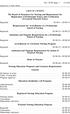 Department of Public Health Sec. 20-90 page 1 (11-04) TABLE OF CONTENTS The Board of Examiners for Nursing and Requirements for Registration of Professional Nurses and Certification of Licensed Practical
4. Appendices - supplemental information that supports the documentation related to the standards provided in the report.
 Oklahoma Board of Nursing 2915 North Classen Boulevard, Suite 524 Oklahoma City, OK 73106 (405) 962-1800 GUIDELINES FOR SURVEY VISITS OF NURSING EDUCATION PROGRAMS Preparing for the Survey Visit Each nursing
Stephen F. Austin State University
 Stephen F. Austin State University Department of Human Services School Counselor Education Program Information Packet Revised January 2016 1 THE DEPARTMENT OF HUMAN SERVICES Stephen F. Austin State University,
Nursing Education Programs and Licensure Requirements General
 Nursing Education Programs and Licensure Requirements General Nursing Education Programs and Licensure Requirements General General 20-90-45. Definition of terms As used in sections 20-90-45 to sections
Section Two: Ohio Standards for the Teaching Profession
 12 Section Two: Ohio Standards for the Teaching Profession 1 Teachers understand student learning and development and respect the diversity of the students they teach. Teachers display knowledge of how
COLLEGE OF HEALTH & HUMAN SERVICES
 COLLEGE OF HEALTH AND HUMAN SERVICES 159 COLLEGE OF HEALTH & HUMAN SERVICES Degree Program Dothan Campus Montgomery Campus The College of Health and Human Services provides quality education for professional
Doctor of Nursing Practice
 308 Doctor of Nursing Practice Clarke University offers a Doctor of Nursing degree in Family Nurse Practice to serve the needs of the working health care professionals seeking post baccalaureate study.
DOMINICAN COLLEGE DIVISION OF NURSING
 DOMINICAN COLLEGE DIVISION OF NURSING FAMILY NURSE PRACTITIONER PROGRAM PRECEPTOR HANDBOOK 2015 2016 DOMINICAN COLLEGE DIVISION OF NURSING 470 WESTERN HIGHWAY ORANGEBURG, NY 10962 (845) 848-6028 Created
Center for Medicine, Nursing and Health Sciences North Haven Campus
 School of Nursing School and Program Information..................................................168 Mission Statement.............................................................. 169 Values.........................................................................
Nursing (M.S.N.) and Certificate Programs
 Seattle Pacific University 2005 2006 Graduate Catalog 83 SCHOOL OF HEALTH SCIENCES MARSTON HALL 206.281.2233 [email protected] WWW.SPU.EDU/DEPTS/HSC Nursing (M.S.N.) and Certificate Programs At a time of
GUIDE TO EVALUATING INSTITUTIONS
 GUIDE TO EVALUATING INSTITUTIONS A Publication of the Accrediting Commission for Community and Junior Colleges Western Association of Schools and Colleges JULY 2013 Edition ACCJC/WASC 10 Commercial Blvd.
PROGRAMME SPECIFICATION
 PROGRAMME SPECIFICATION KEY FACTS Programme name Master of Public Health Award Master of Public Health (MPH) School Health Sciences Department or equivalent Health Services Research and Management Programme
Preceptor Orientation 1. Department of Nursing & Allied Health RN to BSN Program. Preceptor Orientation Program
 Preceptor Orientation 1 Department of Nursing & Allied Health RN to BSN Program Preceptor Orientation Program Revised January 2011 Preceptor Orientation 2 The faculty and staff of SUNY Delhi s RN to BSN
16.12.3.3 STATUTORY AUTHORITY: Nursing Practice Act, Section 61-3-26 NMSA 1978 Comp. [1-1-98; 16.12.3.3 NMAC - Rn, 16 NMAC 12.3.
 TITLE 16 CHAPTER 12 PART 3 OCCUPATIONAL AND PROFESSIONAL LICENSING NURSING AND HEALTH CARE RELATED PROVIDERS NURSING EDUCATIONAL PROGRAMS 16.12.3.1 ISSUING AGENCY: New Mexico Board of Nursing. [1-1-98;
Post Graduate/APRN Certificate Programs
 POST-GRADUATE CERTIFICATE Post Graduate/APRN Certificate Programs Purpose This distance education program is designed for the experienced registered nurse who has earned a master s or doctoral degree in
Standards for Accreditation of Master s Programs in Library and Information Studies. Introduction
 Standards for Accreditation of Master s Programs in Library and Information Studies Adopted by approval of the Council of the American Library Association, February 2, 2015 Purpose of Accreditation Introduction
SCHOLAR PRACTITIONER PROGRAM
 SCHOLAR PRACTITIONER PROGRAM Program Mission: To graduate the next generation of nurses; practice-ready scholar practitioners, with an active voice in health care who successfully contribute the health
UTHealth School of Nursing MSN Preceptor Handbook
 UTHealth School of Nursing MSN Preceptor Handbook Introduction A clinical preceptorship is a supervised clinical experience that allows students to apply knowledge and skills in a practice setting. Each
TOOL KIT for RESIDENT EDUCATOR and MENT OR MOVES
 Get to Know My RE Observe Collect Evidence Mentor Moments Reflect Review Respond Tailor Support Provide Provide specific feedback specific Feedback What does my RE need? Practice Habits Of Mind Share Data
COLLEGE OF HEALTH & HUMAN SERVICES
 COLLEGE OF HEALTH AND HUMAN SERVICES 195 COLLEGE OF HEALTH & HUMAN SERVICES The College of Health and Human Services provides quality education for professional practice in a variety of areas associated
2. Educational Policy and Accreditation Standards
 2. Educational Policy and Accreditation Standards Preamble Social work practice promotes human well-being by strengthening opportunities, resources, and capacities of people in their environments and by
Professional Standards, Revised 2002
 PRACTICE STANDARD Professional Standards, Revised 2002 Table of Contents Introduction 3 Standards 4 Accountability 4 Continuing competence 5 Ethics 6 Knowledge 7 Knowledge application 8 Leadership 10 Relationships
Programme Title: MSc/Diploma/Certificate in Advancing Nursing Practice
 THE UNIVERSITY OF EDINBURGH PROGRAMME SPECIFICATION FOR MSc in Advancing Nursing Practice Awarding Institution: The University of Edinburgh Teaching Institution: The University of Edinburgh Programme accredited
Master of Nursing Graduate Degree. Clinical Nurse Leader
 Master of Nursing Graduate Degree Clinical Nurse Leader Clinical Manual for Students 2014-1015 Reviewed and Approved August, 2014 Associate Dean for Research and Graduate Education Table of Contents Overview...3
NEPAB. Nursing Education Program Approval Board
 NEPAB Nursing Education Program Approval Board Standards for Alberta Nursing Education Programs Leading to Initial Entry to Practice as a Nurse Practitioner January 2011 Ratified by the College and Association
CVNU317 HEALTH AND SOCIAL POLICY FALL 2013 SAMPLE COURSE OUTLINE *
 CVNU317 HEALTH AND SOCIAL POLICY FALL 2013 SAMPLE COURSE OUTLINE * *Please note this is a sample course outline, you will be provided with a confirmed course outline with scheduling details on your first
Section 2: Program Summary Economics (CA): Secondary Major and Minor
 Section 2: Program Summary Economics (CA): Secondary Major and Minor The University Detroit Mercy (UDM), a Catholic institution whose mission flows from the educational traditions of the Sisters of Mercy
M.S.N. Graduate Program
 M.S.N. Graduate Program Graduate Program Mission The Saint Luke s College of Health Sciences is an educational leader serving exceptional students pursuing a graduate nursing degree. An institution of
Program Assessment Summary Table 16: Masters in Social Work (MSW)
 Program Assessment Summary Table 16: Masters in Social Work (MSW) Term 2005-2007 Learning Outcomes Assessment Outcome/Goal Assessed Annual review of all outcomes both foundational year and concentration
GRADUATE PROGRAMS PURPOSE STATEMENT AMERICAN COUNCIL ON EDUCATION DEGREE PROGRAMS DISTANCE LEARNING TRANSFER COURSES GRADING SYSTEM
 GRADUATE PROGRAMS PURPOSE STATEMENT Graduate education in the School of Adult and Continuing Education (ACE) is grounded in the mission of Barry University. Students educational experiences contribute
Community, Family and Child Studies Diploma Program
 School of Health and Human Services Community, Family and Child Studies Diploma Program 2011 Page 1 of 21 Program Philosophy We believe we have a collective responsibility to create a just society. We
Master of Science in Nursing
 Curry College s Master of Science in Nursing is designed for nurses who want to enhance their practice with cutting-edge knowledge and skills. Among the program features are: Convenient campus locations
Appendix A. Educational Policy and Accreditation Standards
 Appendix A Educational Policy and Accreditation Standards A new Educational Policy and Accreditation Standards has been approved by the CSWE Board of Directors in April 2008. Preamble Social work practice
MASTER OF SCIENCE IN NURSING Director: Jennifer Twaddell
 Nursing MASTER OF SCIENCE IN NURSING Director: Jennifer Twaddell Department of Nursing Mission and Purposes The Department of Nursing is dedicated to carrying out the mission of the College of Arts and
RE: Revised Standards for Accreditation of Master s Programs in Library and Information Studies
 EBD #10.9 2013-2014 TO: ALA Executive Board RE: Revised Standards for Accreditation of Master s Programs in Library and Information Studies ACTION REQUESTED/INFORMATION/REPORT: For information purposes.
APPROVAL PROCESS FOR NURSE PRACTITIONER EDUCATION PROGRAMS
 APPROVAL PROCESS FOR NURSE PRACTITIONER EDUCATION PROGRAMS 2015 This Regulatory Document was approved by ARNNL Council in 2015. Approval Process for Nurse Practitioner Education Programs Table of Contents
CNUC 832 COMMUNITY NURSING FALL 2014 SAMPLE COURSE OUTLINE *
 CNUC 832 COMMUNITY NURSING FALL 2014 SAMPLE COURSE OUTLINE * *Please note this is a sample course outline, you will be provided with a confirmed course outline with scheduling details on your first day
Bloomsburg University Midterm and Final Competency Field Evaluation. Task Supervisor (if appropriate) :
 Bloomsburg University and Competency Field Evaluation BSW EVALUATION OF THE COMPETENCIES AND PRACTICE BEHAVIORS Student : Field Instructor : Task Supervisor (if appropriate) : _ Agency : University Faculty
PHD NURSING PROGRAM INFORMATION
 PHD NURSING PROGRAM INFORMATION INTRODUCTION The PhD Program is designed for MSN or BSN graduates who are interested in earning a doctoral degree in nursing. The primary focus of the PhD Program is scientific
Social Work Program Outcomes
 1 Social Work Program Outcomes 2009 2010 2 The 2008 Educational Policy and Accreditation Standards (EPAS) identified by the Council on Social Work Education (CSWE) include a provision for assessment of
Standard 2: The program shall have an explicit philosophical statement and clearly defined knowledge base.
 Council for Standards in Human Service Education National Standards MASTER S DEGREE IN HUMAN SERVICES http://www.cshse.org 2013 (2010, 2009) I. GENERALPROGRAM CHARACTERISTICS A. Institutional Requirements
WEST CHESTER UNIVERSITY COLLEGE OF HEALTH SCIENCES DEPARTMENT OF HEALTH MPH PROGRAM GUIDELINES FOR APPLIED LEARNING EXPERIENCE I AND II
 WEST CHESTER UNIVERSITY COLLEGE OF HEALTH SCIENCES DEPARTMENT OF HEALTH MPH PROGRAM GUIDELINES FOR APPLIED LEARNING EXPERIENCE I AND II For All MPH Program Tracks Community Health Health Care Management
School of Social Work
 MSW Core Curriculum for Generalist Practice St. Catherine University/University of St. Thomas Core and Advanced Competencies of the MSW Program The SCU/UST MSW curriculum prepares its graduates for advanced
HANDBOOK FOR GRADUATE NURSING STUDENTS Supplement to the Ferris State University Code of Student Community Standards
 FERRIS STATE UNIVERSITY COLLEGE OF HEALTH PROFESSIONS SCHOOL OF NURSING HANDBOOK FOR GRADUATE NURSING STUDENTS Supplement to the Ferris State University Code of Student Community Standards JULY 2015 TABLE
Programme Specification
 Programme Specification Where appropriate outcome statements have be referenced to the appropriate Benchmarking Statement (BS) Awarding Institution Teaching Institution Professional body accreditation
University of Texas at El Paso School of Nursing Preceptor Packet Nursing 4612 Acute Care Practicum
 N4612 Acute Care Practicum 1 University of Texas at El Paso School of Nursing Preceptor Packet Nursing 4612 Acute Care Practicum PRECEPTORSHIP POLICY STATEMENT UNDERGRADUATE NURSING PROGRAM This statement
Educational Policy and Accreditation Standards
 Educational Policy and Accreditation Standards Copyright 2001, Council on Social Work Education, Inc. All rights reserved. Sections renumbered December 2001, released April 2002, corrected May 2002, July
MA/MS in Education: Educational Leadership & Policy PACE. Postsecondary, Adult & Continuing Education
 MA/MS in Education: Educational Leadership & Policy PACE Postsecondary, Adult & Continuing Education A specialty for those interested in the facilitation of adult learning in college and workplace settings.
DNP Residency Guidelines
 DNP Residency Guidelines The DNP Residency is considered a key component of the Doctor of Nursing Practice educational program that combines clinical practicum experiences with scholarly activities to
FACULTY OF SOCIAL WORK RECOGNITION OF PRIOR LEARNING (RPL) SW 348 (PRACTICUM I) INFORMATION PACKAGE FOR STUDENTS
 FACULTY OF SOCIAL WORK RECOGNITION OF PRIOR LEARNING (RPL) SW 348 (PRACTICUM I) INFORMATION PACKAGE FOR STUDENTS What is PLAR/RPL? Prior Learning Assessment and Recognition (PLAR) is a systematic process
Teaching Dossier (2007) LAURA KERR. Queen s University School of Nursing, Faculty of Health Sciences
 1 Teaching Dossier (2007) Of LAURA KERR Queen s University School of Nursing, Faculty of Health Sciences 2 CONTENTS 1. Brief Biography 2. Teaching Philosophy 3. Teaching Responsibilities 3.1 Nurs 315 3.2
School Psychology Program Goals, Objectives, & Competencies
 RUTGERS SCHOOL PSYCHOLOGY PROGRAM PRACTICUM HANDBOOK Introduction School Psychology is a general practice and health service provider specialty of professional psychology that is concerned with the science
graduate programs School of Health Sciences
 graduate programs School of Health Sciences 86 Nursing Our graduate education program in nursing allows the learner to demonstrate leadership in health care settings, practice in advanced clinical roles
Faculty of Nursing. Master s Project Manual. For Faculty Supervisors and Students
 1 Faculty of Nursing Master s Project Manual For Faculty Supervisors and Students January 2014 2 Table of Contents Overview of the Revised MN Streams in Relation to Project 3 The Importance of Projects
Master of Science in Nursing
 Master of Science in Nursing 36-41 Hour Program The School of Health Sciences offers a graduate program of study leading to the Master of Science in Nursing which produces a nursing leader in the areas
Social Work Program School of Education and Human Studies
 Social Work Program School of Education and Human Studies Mission Statement The Social Work Program seeks to prepare students for entry level generalist social work practice with individuals, families,
Programme Specification. MSc Children s Nursing (Pre-Registration) Valid from: September 2014 Faculty of Health and Life Sciences
 Programme Specification MSc Children s (Pre-Registration) Valid from: September 2014 Faculty of Health and Life Sciences SECTION 1: GENERAL INFORMATION Awarding body: Teaching institution and location: