
YES. Animal Liberation. Peter Singer
|
|
|
- John Sharp
- 10 years ago
- Views:
Transcription
1 Peter Singer Animal Liberation YES Most human beings are speciesists. The following [descriptions] show that ordinary human beings-not a few exceptionally cruel or heartless humans, but the overwhelming majority of humans-take an active part in, acquiesce in, and allow their taxes to pay for practices that require the sacrifice of the most important interests of members of other species in order to promote the most trivial interests of our own species... Many of the most painful experiments are performed in the field of psychology. To give some idea of the numbers of animals experimented on in psychology laboratories, consider that during 1986 the National Institute of Mental Health [NIMH] funded 350 experiments on animals. The NIMH is just one source of federal funding for psychological experimentation. The agency spent over $11 million on experiments that involved direct manipulation of the brain, over $5 million on experiments that studied the effects drugs have on behavior, almost $3 million on learning and memory experiments, and over $2 million on experiments involving sleep deprivation, stress, fear, and anxiety. This government agency spent more than $30 million dollars on animal experiments in one year. One of the most common ways of experimenting in the field of psychology is to apply electric shocks to animals. This may be done with the aim of finding out how animals react to various kinds of punishment or to train animals to perform different tasks. In the first edition of [my] book I described experiments conducted in the late Sixties and early Seventies in which experimenters gave electric shocks to animals. Here is just one example from that period: O. S. Ray and R. J. Barrett, working in the psychology research unit of the Veterans Administration Hospital, Pittsburgh, gave electric shocks to the feet of 1,042 mice. They then caused convulsions by giving more intense shocks through cup-shaped electrodes applied to the animals' eyes or through clips attached to their ears. They reported that unfortunately some of the mice who "successfully completed Day One training were found sick or dead prior to testing on Day Two." Now, nearly twenty years later,... experimenters are still dreaming up trifling new variations to try out on animals: W. A. Hillex and M. R. Denny of the University of California at San Diego placed rats in a maze and gave them electric shocks if, after one incorrect choice, on their next trial they failed to choose which way to go within three seconds. They concluded that the "results are clearly reminiscent of the early work on fixation and regression in the rat, in which the animals were typically shocked in the stem of the T-maze just preceding the choice point..." (In other words, giving the rats electric shocks at the point in the maze at which they had to choose, rather than before that pointthe novel feature of this particular experiment-made no significant difference.) The experimenters then go on to cite work done in 1933, 1935, and other years up to Experiments in conditioning have been going on for over eighty-five years. A report compiled in 1982 by the New York group United Action for Animals found 1,425 papers on "classical conditioning experiments" on animals. Ironically, the futility of much of this research is grimly revealed by a paper published by a group of experimenters at the University of Wisconsin.

2 Susan Mineka and her colleagues subjected 140 rats to shocks that could be escaped and also subjected them to shocks that could not be escaped in order to compare the levels of fear generated by such different kinds of shocks. Here is the stated rationale for their work: Over the past 15 years an enormous amount of research has been directed toward understanding the differential behavior and physiological effects that stem from exposure to controllable as opposed to uncontrollable aversive elements. The general conclusion has been that exposure to uncontrollable aversive events is considerably more stressful for the organism than is exposure to controllable aversive events. After subjecting their rats to various intensities of electric shock, sometimes allowing them the possibility of escape and sometimes not, the experimenters were unable to determine what mechanisms could be considered correct in accounting for their results. Nonetheless, they said that they believed their results to be important because "they raise some question about the validity of the conclusions of the hundreds of experiments conducted over the past 15 years or so." In other words, fifteen years of giving electric shocks to animals may not have produced valid results. But in the bizarre world of psychological animal experiments, this finding serves as justification for yet more experiments giving inescapable electric shock to yet more animals so that "valid" results can finally be produced-and remember, these "valid results" will still only apply to the behavior of trapped animals subjected to inescapable electric shock. An equally sad tale of futility is that of experiments designed to produce what is known as "learned helplessness"-supposedly a model of depression in human beings. In 1953 R. Solomon, L. Kamin, and L. Wynne, experimenters at Harvard University, placed forty dogs in a device called a "shuttlebox," which consists of a box divided into two compartments, separated by a barrier. Initially the barrier was set at the height of the dog's back. Hundreds of intense electric shocks were delivered to the dogs' feet through a grid floor. At first the dogs could escape the shock if they learned to jump the barrier into the other compartment. In an attempt to "discourage" one dog from jumping, the experimenters forced the dog to jump one hundred times onto a grid floor in the other compartment that also delivered a shock to the dog's feet. They said that as the dog jumped he gave a "sharp anticipatory yip which turned into a yelp when he landed on the electrified grid." They then blocked the passage between the compartments with a piece of plate glass and tested the dog again. The dog "jumped forward and smashed his head against the glass." The dogs began by showing symptoms such as "defecation, urination, yelping and shrieking, trembling, attacking the apparatus, and so on; but after ten or twelve days of trials dogs who were prevented from escaping shock ceased to resist. The experimenters reported themselves "impressed" by this, and concluded that a combination of the plate glass barrier and foot shock was "very effective" in eliminating jumping by dogs. This study showed that it was possible to induce a state of hopelessness and despair by repeated administration of severe inescapable shock. Such "learned helplessness" studies were further refined in the 1960s. One prominent experimenter was Martin Seligman of the University of Pennsylvania. He electrically shocked dogs through a steel grid floor with such intensity and persistence that the dogs stopped trying to escape and "learned" to be helpless. In one study, written with colleagues Steven Maier and James Geer, Seligman describes his work as follows: When a normal, naive dog receives escape/avoidance training in a shuttlebox, the following behavior typically occurs: at the onset of electric shock the dog runs

3 frantically about, defecating, urinating, and howling until it scrambles over the barrier and so escapes from shock. On the next trial the dog, running and howling, crosses the barrier more quickly, and so on, until efficient avoidance emerges. Seligman altered this pattern by strapping dogs in harnesses and giving them shocks from which they had no means of escape. When the dogs were then placed in the original shuttlebox situation from which escape was possible, he found that such a dog reacts initially to shock in the shuttlebox in the same manner as the naive dog. However in dramatic contrast to the naive dog it soon stops running and remains silent until shock terminates. The dog does not cross the barrier and escape from shock. Rather it seems to "give up" and passively "accept" the shock. On succeeding trials the dog continues to fail to make escape movements and thus takes 50 seconds of severe, pulsating shock on each trial... A dog previously exposed to inescapable shock... may take unlimited shock without escaping or avoiding at all. In the 1980s, psychologists have continued to carry out these "learned helplessness" experiments. At Temple University in Philadelphia, Philip Bersh and three other experimenters trained rats to recognize a warning light that alerted them to a shock that would be delivered within five seconds. Once they understood the warning, the rats could avoid the shock by moving into the safe compartment. After the rats had learned this avoidance behavior, the experimenters walled off the safe chamber and subjected them to prolonged periods of inescapable shock. Predictably, they found that even after escape was possible, the rats were unable to relearn the escape behavior quickly... How can these things happen? How can people who are not sadists spend their working days driving monkeys into lifelong depression, heating dogs to death, or turning cats into drug addicts? How can they then remove their white coats, wash their hands, and go home to dinner with their families? How can taxpayers allow their money to be used to support these experiments? How did students carry on protests against injustice, discrimination, and oppression of all kinds, no matter how far from home, while ignoring the cruelties that wereand still are-being carried out on their own campuses? The answer to these questions lies in the unquestioned acceptance of speciesism. We tolerate cruelties inflicted on members of other species that would outrage us if performed on members of our own species. Speciesism allows researchers to regard the animals they experiment on as items of equipment, laboratory tools rather than living, suffering creatures. In fact, on grant applications to government funding agencies, animals are listed as "supplies" alongside test tubes and recording instruments. In addition to the general attitude of speciesism that experimenters share with other citizens, some special factors also help to make possible the experiments I have described. Foremost among these is the immense respect that people still have for scientists. Although the advent of nuclear weapons and environmental pollution has made us realize that science and technology are not as beneficial as they might appear at first glance, most people still tend to be in awe of anyone who wears a white coat and has a Ph.D. In a well-known series of experiments Stanley Milgram, a Harvard psychologist, demonstrated that ordinary people will obey the directions of a

4 white-coated researcher to administer what appears to be (but in fact is not) electric shock to a human subject as "punishment" for failing to answer questions correctly, and they will continue to do this even when the human subject cries out and pretends to be in great pain. If this can happen when the participants believe they are inflicting pain on a human being, how much easier is it for students to push aside their initial qualms when their professors instruct them to perform experiments on animals? What Alice Heim has rightly called the "indoctrination" of the student is a gradual process, beginning with the dissection of frogs in school biology classes. When the future medical students, psychology students, or veterinarians reach the university and find that to complete the course of studies on which they have set their hearts they must experiment on living animals, it is difficult for them to refuse to do so, especially since they know that what they are being asked to do is standard practice. Those students who have refused to engage in such studies have found themselves failing their courses and are often forced to leave their chosen field of study. The pressure to conform does not let up when students receive their degrees. If they go on to graduate degrees in fields in which experiments on animals are usual, they will be encouraged to devise their own experiments and write them up for their Ph.D. dissertations. Naturally, if this is how students are educated they will tend to continue in the same manner when they become professors, and they will, in turn, train their own students in the same manner... When are experiments on animals justifiable? Upon learning of the nature of many of the experiments carried out, some people react by saying that all experiments on animals should be prohibited immediately. But if we make our demands as absolute as this, the experimenters have a ready reply: Would we be prepared to let thousands of humans die if they could be saved by a single experiment on a single animal? This question is, of course, purely hypothetical. There has never been and never could be a single experiment that saved thousands of lives. The way to reply to this hypothetical question is to pose another: Would the experimenters be prepared to carry out their experiment on a human orphan under six months old if that were the only way to save thousands of lives? If the experimenters would not be prepared to use a human infant then their readiness to use nonhuman animals reveals an unjustifiable form of discrimination on the basis of species, since adult apes, monkeys, dogs, cats, rats, and other animals are more aware of what is happening to them, more selfdirecting, and, so far as we can tell, at least as sensitive to pain as a human infant. (I have specified that the human infant be an orphan, to avoid the complications of the feelings of parents. Specifying the case in this way is, if anything, overgenerous to those defending the use of nonhuman animals in experiments, since mammals intended for experimental use are usually separated from their mothers at an early age, when the separation causes distress for both mother and young.) So far as we know, human infants possess no morally relevant characteristic to a higher degree than adult nonhuman animals, unless we are to count the infants' potential as a characteristic that makes it wrong to experiment on them. Whether this characteristic should count is controversial-if we count it, we shall have to condemn abortion along with experiments on infants, since the potential of the infant and the fetus is the same. To avoid the complexities of this issue, however, we can alter our original question a little and assume that the infant is one with irreversible brain damage so severe as to rule out any mental development beyond the level of a six-month-old infant. There are, unfortunately, many such human beings, locked away in special wards throughout the country, some of them long since abandoned by their parents and

5 other relatives, and, sadly, sometimes unloved by anyone else. Despite their mental deficiencies, the anatomy and physiology of these infants are in nearly all respects identical with those of normal humans. If, therefore, we were to force-feed them with large quantities of floor polish or drip concentrated solutions of cosmetics into their eyes, we would have a much more reliable indication of the safety of these products for humans than we now get by attempting to extrapolate the results of tests on a variety of other species. The LD50 tests, the Draize eye tests, the radiation experiments, the heatstroke experiments, and many others described [elsewhere] could have told us more about human reactions to the experimental situation if they had been carried out on severely brain-damaged humans instead of dogs or rabbits. So whenever experimenters claim that their experiments are important enough to justify the use of animals, we should ask them whether they would be prepared to use a brain-damaged human being at a similar mental level to the animals they are planning to use. I cannot imagine that anyone would seriously propose carrying out the experiments described [here] on braindamaged human beings. Occasionally it has become known that medical experiments have been performed on human beings without their consent; one case did concern institutionalized intellectually disabled children, who were given hepatitis. When such harmful experiments on human beings become known, they usually lead to an outcry against the experimenters, and rightly so. They are, very often, a further example of the arrogance of the research worker who justifies everything on the grounds of increasing knowledge. But if the experimenter claims that the experiment is important enough to justify inflicting suffering on animals, why is it not important enough to justify inflicting suffering on humans at the same mental level? What difference is there between the two? Only that one is a member of our species and the other is not? But to appeal to that difference is to reveal a bias no more defensible than racism or any other form of arbitrary discrimination... We have still not answered the question of when an experiment might be justifiable. It will not do to say "Never!" Putting morality in such black-andwhite terms is appealing, because it eliminates the need to think about particular cases; but in extreme circumstances, such absolutist answers always break down. Torturing a human being is almost always wrong, but it is not absolutely wrong. If torture were the only way in which we could discover the location of a nuclear bomb hidden in a New York City basement and timed to go off within the hour, then torture would be justifiable. Similarly, if a single experiment could cure a disease like leukemia, that experiment would be justifiable. But in actual life the benefits are always more remote, and more often than not they are nonexistent. So how do we decide when an experiment is justifiable? We have seen that experimenters reveal a bias in favor of their own species whenever they carry out experiments on nonhumans for purposes that they would not think justified them in using human beings, even brain-damaged ones. This principle gives us a guide toward an answer to our question. Since a speciesist bias, like a racist bias, is unjustifiable, an experiment cannot be justifiable unless the experiment is so important that the use of a brain-damaged human would also be justifiable. This is not an absolutist principle. I do not believe that it could never be justifiable to experiment on a brain-damaged human. If it really were possible to save several lives by an experiment that would take just one life, and there were no other way those lives could be saved, it would be right to do the experiment. But this would be an extremely rare case. Certainly none of the experiments described in this [selection] could pass this test. Admittedly, as with any dividing line, there would be a gray area

6 where it was difficult to decide if an experiment could be justified. But we need not get distracted by such considerations now. As this [selection] has shown, we are in the midst of an emergency in which appalling suffering is being inflicted on millions of animals for purposes that on any impartial view are obviously inadequate to justify the suffering. When we have ceased to carry out all those experiments, then there will be time enough to discuss what to do about the remaining ones which are claimed to be essential to save lives or prevent greater suffering. In the United States, where the present lack of control over experimentation allows the kinds of experiments described in the preceding pages, a minimal first step would be a requirement that no experiment be conducted without prior approval from an ethics committee that includes animal welfare representatives and is authorized to refuse approval to experiments when it does not consider that the potential benefits outweigh the harm to the animals... [S]ystems of this kind already exist in countries such as Australia and Sweden and are accepted as fair and reasonable by the scientific community there. [However], such a system falls far short of the ideal. The animal welfare representatives on such committees come from groups that hold a spectrum of views, but, for obvious reasons, those who receive and accept invitations to join animal experimentation ethics committees tend to come from the less radical groups within the movement. They may not themselves regard the interests of nonhuman animals as entitled to equal consideration with the interests of humans; or if they do hold such a position, they may find it impossible to put it into practice when judging applications to perform animal experiments, because they would be unable to persuade other members of the committee. Instead, they are likely to insist on proper consideration of alternatives, genuine efforts to minimize pain, and a clear demonstration of significant potential benefits, sufficiently important to outweigh any pain or suffering that cannot be eliminated from the experiment. An animal experimentation ethics committee operating today would almost inevitably apply these standards in a speciesist manner, weighing animal suffering more lightly than potential comparable human benefit; even so, an emphasis on such standards would eliminate many painful experiments now permitted and would reduce the suffering caused by others. In a society that is fundamentally speciesist, there is no quick solution to such difficulties with ethics committees. For this reason some Animal Liberationists will have nothing to do with them. Instead they demand the total and immediate elimination of all animal experimentation. Such demands have been put forward many times during the last century and a half of antivivisection activity, but they have shown no sign of winning over the majority of voters in any country. Meanwhile the number of animals suffering in laboratories continued to grow, until... recent breakthroughs... These breakthroughs resulted from the work of people who found a way around the "all or nothing" mentality that had effectively meant "nothing" as far as the animals were concerned.

Milgram Activities. Everyone was paid $4.50 and told that they would receive this even if they quit during the study.
 Milgram Activities Activity 1 Procedures Aim: To consolidate students knowledge of the procedures of Milgram s study and to encourage co-operative working amongst students. Cut up the following table of
ALLEVIATION OF LEARNED HELPLESSNESS IN THE DOG 1
 Journal of Abnormal Psychology 1968, Vol. 73, No. 3, 256-262 ALLEVIATION OF LEARNED HELPLESSNESS IN THE DOG 1 MARTIN E. P. SELIGMAN 2 Cornell University AND JAMES H. GEER State University of New York at
CHAPTER FIVE ETHICS AND MEDICAL RESEARCH
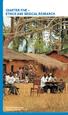 94 CHAPTER FIVE ETHICS AND MEDICAL RESEARCH Sleeping sickness is back Robert Patric/CORBIS SYGMA 95 Medical Medical Ethics Ethics Manual Manual Principal Ethics Features and Medical of Medical Research
Specific Phobias. Anxiety Disorders Association of America
 Specific Phobias Everyone thinks that once I ve driven on the highway, I ve conquered it. They just don t understand... I don t understand. It s a day-in and day-out struggle. What is a phobia? We all
Vivisection: Feeling Our Way Ahead? R. G. Frey Bowling Green State University
 Vivisection: Feeling Our Way Ahead? R. G. Frey Bowling Green State University In his paper "Lab Animals and The Art of Empathy", David Thomas presents his case against animal experimentation. That case
New Beginnings: Managing the Emotional Impact of Diabetes Module 1
 New Beginnings: Managing the Emotional Impact of Diabetes Module 1 ALEXIS (AW): Welcome to New Beginnings: Managing the Emotional Impact of Diabetes. MICHELLE (MOG): And I m Dr. Michelle Owens-Gary. AW:
Central Texas College. Psychology 2301. General Psychology
 Central Texas College Psychology 2301 General Psychology I. Introduction A. General Psychology is a survey of the major psychological topics, theories, and approaches to the scientific study of behavior
Loving Someone with BPD: A Model of Emotion Regulation Part I
 Click to Edit Master Title Style Loving Someone with BPD: A Model of Emotion Regulation Part I Healing Hearts of Families of BPD Conference November 10, 2012 Shari Manning, Ph.D. Treatment Implementation
Medical Malpractice VOIR DIRE QUESTIONS
 Medical Malpractice VOIR DIRE QUESTIONS INTRODUCTION: Tell the jurors that this is a very big and a very important case. Do a SHORT summary of the case and the damages we are seeking. This summary should
USVH Disease of the Week #1: Posttraumatic Stress Disorder (PTSD)
 USVH Disease of the Week #1: Posttraumatic Stress Disorder (PTSD) Effects of Traumatic Experiences A National Center for PTSD Fact Sheet By: Eve B. Carlson, Ph.D. and Josef Ruzek, Ph.D. When people find
St. John s Church of England Junior School. Policy for Stress Management
 St. John s Church of England Junior School Policy for Stress Management Review Date: September 2012 Policy to be reviewed next: September 2014 ST. JOHN S C OF E JUNIOR SCHOOL STRESS MANAGEMENT FRAMEWORK
Lesley Gill American University
 Vol. 4, No. 3, Spring 2007, 209-213 www.ncsu.edu/project/acontracorriente Review/Reseña Alfred W. McCoy A Question of Torture: CIA Interrogation From the Cold War to the War on Terror. NY: Metropolitan
Chapter 4 Legal Ethics
 Chapter 4 Legal Ethics Yes. You read that right legal ethics. Har de har. Go ahead. Get it out of your system. How about this one? Why do scientists prefer using lawyers over lab rats? There are some things
The Psychology Foundation of Australia (Incorporated in NSW) www.psychologyfoundation.org.au. 26 February 2007
 The Psychology Foundation of Australia (Incorporated in NSW) www.psychologyfoundation.org.au President: Prof David Badcock School of Psychology The University of Western Australia 08 6488 3243 [email protected]
Are you ever afraid to be around the person when he or she is drinking or using drugs because of the possibility of verbal or physical abuse?
 COMMON TERMS: Denial: The "hallmark" of the disease. All family members and close friends are affected by the actions of the Chemically Dependent Person. The refusal to admit the truth is a part of the
Stem Cells and Hope for Patients
 Stem Cells and Hope for Patients by Maureen Condic, Ph.D. Most Americans know someone afflicted with an incurable medical condition. The possibility of stem cell cures has given hope to many who face such
SUGGESTIONS & REQUIREMENTS For Medical Power of Attorney & Completing the Texas Will to Live Form
 SUGGESTIONS & REQUIREMENTS For Medical Power of Attorney & Completing the Texas Will to Live Form 1. This Medical Power of Attorney (also known as the Health Care Agent Designation Form) allows you to
CANCER TREATMENT: Chemotherapy
 CANCER TREATMENT: Chemotherapy Chemotherapy, often called chemo, is the use of drugs to treat a disease. The term chemotherapy is now most often used to describe a type of cancer treatment. Dr. Khuri:
Conducting Emotionally Difficult Conversations. John Banja, PhD Center For Ethics Emory University [email protected]
 Conducting Emotionally Difficult Conversations John Banja, PhD Center For Ethics Emory University [email protected] How To Break Bad News Robert Buckman (with contributions by Yvonne Kason). Baltimore:
Information for Patients. Advance Health Care Directive Kit A guide to help you express your health care wishes
 Information for Patients Advance Health Care Directive Kit A guide to help you express your health care wishes Table of contents PART I - REQUIRED Selection of a decision maker Who will make health care
For Those in Treatment
 For Those in Treatment This is NA Fellowship-approved literature. Copyright 1991 by Narcotics Anonymous World Services, Inc. All rights reserved. This pamphlet is designed to introduce you to recovery
Mark Scheme. Psychology 1181. Specification A. General Certificate of Education. Social Psychology and Individual Differences
 Version 1.0: 0609 General Certificate of Education Psychology 1181 Specification A Unit 2 (PSYA2) Biological Psychology, Social Psychology and Individual Differences Mark Scheme 2009 examination - June
What Can I Do To Help Myself Deal with Loss and Grief?
 What Can I Do To Help Myself Deal with Loss and Grief? There are certain tasks that help people adjust to a loss. Every person will complete these tasks in his or her own time and in his/her own way. The
Critical Study David Benatar. Better Never To Have Been: The Harm of Coming into Existence (Oxford: Oxford University Press, 2006)
 NOÛS 43:4 (2009) 776 785 Critical Study David Benatar. Better Never To Have Been: The Harm of Coming into Existence (Oxford: Oxford University Press, 2006) ELIZABETH HARMAN Princeton University In this
Which Design Is Best?
 Which Design Is Best? Which Design Is Best? In Investigation 2-8: Which Design Is Best? students will become more familiar with the four basic epidemiologic study designs, learn to identify several strengths
The Role of the Respiratory Therapist at End-of-Life Care
 The Role of the Respiratory Therapist at End-of-Life Care Kubler-Ross Model (Five Stages of Grief) Denial Anger Bargaining Depression Acceptance Denial But I feel fine, this can t be happening to me -Denial
INJURY LAW ALERT WINTER 2006/2007 ISSUE WHAT IS MEDICAL MALPRACTICE?
 INJURY LAW ALERT WINTER 2006/2007 ISSUE WHAT IS MEDICAL MALPRACTICE? Medical malpractice is a broad term used to describe a number of different kinds of lawsuits brought against doctors and hospitals.
Chapter 13. Prejudice: Causes and Cures
 Chapter 13 Prejudice: Causes and Cures Prejudice Prejudice is ubiquitous; it affects all of us -- majority group members as well as minority group members. Prejudice Prejudice is dangerous, fostering negative
Medical Errors: How To NOT Throw A Colleague Under The Bus Tara Mah, DVM, JD Veterinary Business Advisors, Inc. www.veterinarybusinessadvisors.
 Introduction Medical Errors: How To NOT Throw A Colleague Under The Bus Tara Mah, DVM, JD Veterinary Business Advisors, Inc. www.veterinarybusinessadvisors.com For many veterinarians, being confronted
Types of Psychology. Alex Thompson. Psychology Class. Professor Phelps
 Running Head: PSYCHOLOGY 1 Types of Psychology Alex Thompson Psychology Class Professor Phelps March 4, 2014 PSYCHOLOGY 2 Types of Psychology Developmental psychology Developmental psychology entails the
Discuss ethical guidelines for psychologists and illustrate with research examples.
 Discuss ethical guidelines for psychologists and illustrate with research examples. Ethics has been defined as a branch of philosophy that deals with thinking about morality, moral problems, and judgements
INTRODUCTION. The Seven Rules of. Highly Worried People
 INTRODUCTION The Seven Rules of Highly Worried People WORRYING IS SECOND NATURE to you, but imagine that someone who has been raised in the jungle and knows nothing about conventional modern life approached
Age 75 Annuities Consultation. Response from Dr. Ros Altmann 9 th September 2010
 Age 75 Annuities Consultation Response from Dr. Ros Altmann 9 th September 2010 The Government has issued a consultation on its proposals to reform the Age 75 rules for mandatory annuity purchase from
PART I. The Myths about Medication COPYRIGHTED MATERIAL
 PART I The Myths about Medication COPYRIGHTED MATERIAL CHAPTER 1 Psychiatric Drugs Poison or Panacea? U nhappy all her life, a thirty-one-year-old woman has felt good, alive, normal, only in the last
Planning For Your Cat's Care -- If You Are No Longer There
 Planning For Your Cat's Care -- If You Are No Longer There by John J. McGonagle, Jr. (An abbreviated version of this first appeared in CATS Magazine, September 1992. ) This article is intended to educate
Health and safety for disabled people and their employers
 Health and safety for disabled people and their employers Page 1 Contents Health and safety for disabled people 3 Guidance for employers 3 Guidance for employees 6 The law 8 Frequently asked questions
Supporting your child after a burn injury
 Royal Manchester Children s Hospital Supporting your child after a burn injury Information for Parents and Carers of Young Children 2 Contents Page Introduction 4 Trauma and children 4 Normal reactions
LESSON 5.7 WORKBOOK Is addiction a chronic disease?
 DEFINITIONS OF TERMS Addiction is a disease idea that states drug addiction is no different from other chronic diseases, like diabetes and heart disease, and thus needs to be treated as a distinct medical
Helping Families Deal with Stress Related to Disasters
 Helping Families Deal with Stress Related to Disasters Diana DelCampo, Ph.D., Child Development and Family Life Specialist [email protected] A disaster is an event that: Involves the destruction of property,
WHAT IS PTSD? A HANDOUT FROM THE NATIONAL CENTER FOR PTSD BY JESSICA HAMBLEN, PHD
 WHAT IS PTSD? A HANDOUT FROM THE NATIONAL CENTER FOR PTSD BY JESSICA HAMBLEN, PHD Posttraumatic Stress Disorder (PTSD) is an anxiety disorder that can occur following the experience or witnessing of a
PARTNERING WITH YOUR DOCTOR:
 PARTNERING WITH YOUR DOCTOR: A Guide for Persons with Memory Problems and Their Care Partners Alzheimer s Association Table of Contents PARTNERING WITH YOUR DOCTOR: When is Memory Loss a Problem? 2 What
Using the TUC Manifesto for Disability Equality. A guide for trade union activists
 Using the TUC Manifesto for Disability Equality A guide for trade union activists Section one Why a manifesto? Trade unions campaign for a better future for all. The TUC s new Manifesto for Disability
A Primer on Plaintiffs Structured Settlements
 A Primer on Plaintiffs Structured Settlements Structured settlements offer peace of mind, safety, and tax leverage. www.amicuscapitalservices.com (877) 9-AMICUS 2 All materials and techniques are protected
AN INTRODUCTION TO PSYCHOLOGY
 An Introduction to MODULE - I 1 AN INTRODUCTION TO PSYCHOLOGY As human beings our curiosity drives us to know the reasons behind various events happening around us. Whenever we meet somebody or see someone
The Teen Brain: Still Under ConStrUCtion NATIONAL INSTITUTE OF MENTAL HEALTH
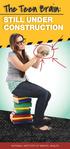 The Teen Brain: Still Under ConStrUCtion NATIONAL INSTITUTE OF MENTAL HEALTH One of the ways that scientists have searched for the causes of mental illness is by studying the development of the brain from
Making Health Care Decisions in North Dakota:
 Making Health Care Decisions in North Dakota: A Summary of North Dakota Law Regarding Health Care Directives Published by: North Dakota Department of Human Services Aging Services Division 1237 W.Divide
高 級 口 說 測 驗 考 生 作 答 謄 錄 稿
 高 級 口 說 測 驗 考 生 作 答 謄 錄 稿 Examiner:X;Candidate A;Candidate B; 代 表 停 頓 Part I X: Good morning. B: Good morning. X: My name is X, and this is my colleague, D. He is just going to listen to us. And your names
AP Psychology 2008-2009 Academic Year
 AP Psychology 2008-2009 Academic Year Course Description: The College Board Advanced Placement Program describes Advanced Placement Psychology as a course that is designed to introduce students to the
1 The Unique Character of Human Existence
 1 1 The Unique Character of Human Existence Each of us is confronted with the challenge of being human, the challenge of becoming a person. It is important to emphasize this word challenge, because it
Great Bay Mental Health Associates, Inc. Notice to Clients and Consent to Mental Health Treatment Agreement Courtney A. Atherton, MA, LCMHC, MLADC
 Great Bay Mental Health Associates, Inc. Notice to Clients and Consent to Mental Health Treatment Agreement Courtney A. Atherton, MA, LCMHC, MLADC Patient Name (please print): Welcome to the therapy services
INFORMATION LEAFLET. If anything is not clear, or if you would like more information, please
 BIO INFOBK 1492 0410:Layout 1 21/04/2010 15:24 Page 1 INFORMATION LEAFLET You are being invited to take part in a major medical research project called UK Biobank. The purpose of UK Biobank is to set up
Animal welfare and pest control: Where are we now?
 Animal welfare and pest control: Where are we now? Kate E Littin, Cheryl E O Connor Animal Welfare Directorate, MAF Biosecurity New Zealand, Ministry of Agriculture and Forestry, PO Box 2526, Wellington,
Corporate Recruiter Tells All
 Corporate Recruiter Tells All Tips, Secrets, and Strategies to Landing Your Dream Job! By Ryan Fisher INTRODUCTION It pains me to see so many people working day after day at unsatisfying jobs with limited
What are you. worried about? Looking Deeper
 What are you worried about? Looking Deeper Looking Deeper What are you worried about? Some of us lie awake at night worrying about family members, health, finances or a thousand other things. Worry can
you. However, most people who have become disabled find that it is extremely difficult to actually win Social Security disability benefits.
 INTRODUCTION L ike most Americans, you have worked hard for the majority of your life and continuously paid into the Social Security system. While you were working, you would look forward to your payday,
The Proper Treatment Of Asthma
 The Proper Treatment Of Asthma Southwest Allergy & Asthma Foundation Page 1 of 10 INTRODUCTION The purpose of this pamphlet is to supply information which will give patients suffering with asthma, an intelligent
DRAFT TJ PROGRAM OF STUDIES: AP PSYCHOLOGY
 DRAFT TJ PROGRAM OF STUDIES: AP PSYCHOLOGY COURSE DESCRIPTION AP Psychology engages students in a rigorous appraisal of many facets of our current understanding of psychology. The course is based on the
INDEPENDENT MEDICAL EXAM (IME)
 INDEPENDENT MEDICAL EXAM (IME) As you know, the purpose of the Insurance Company is not to obtain an impartial review, but to obtain a medical opinion which could justify the discontinuance and/or denial
Postnatal Depression. A guide for mothers, family and friends
 Postnatal Depression A guide for mothers, family and friends What is it? What is it? After giving birth, most mothers experience some degree of mood swings. There are three main kinds of postnatal mood
EMPLOYEE FALL PROTECTION
 EMPLOYEE FALL PROTECTION You can fall from any height and be seriously injured or killed. In the construction industry, as well as any other industry, when falls from heights happen, they are usually very
Listen, Protect, and Connect
 Page 1 Listen, Protect, and Connect PSYCHOLOGICAL FIRST AID FOR CHILDREN, PARENTS, AND OTHER CAREGIVERS AFTER NATURAL DISASTERS Helping you and your child in times of disaster. Page 2 As a parent or adult
The Parent s Guide to Forced Adoption
 The Parent s Guide to Forced Adoption Page 1 A publication of Linder Myers Contents Page Introduction: Forced Adoption 3 Why has my child been adopted? 4 How long will my child be adopted for? 5 Can I
AFTER E.R. TRIPS, CAN NURSING HOMES EVICT? Is Nursing Home Hospital Dumping Elder Abuse? The Law Office of Kevin P. Kane, ESQ.
 AFTER E.R. TRIPS, CAN NURSING HOMES EVICT? Is Nursing Home Hospital Dumping Elder Abuse? A White Paper Presented by The Law Office of Kevin P. Kane, ESQ. AFTER E.R. TRIPS, CAN NURSING HOMES EVICT? Is Nursing
Scientific Facts on. Psychoactive Drugs. Tobacco, Alcohol, and Illicit Substances
 page 1/5 Scientific Facts on Psychoactive Drugs Tobacco, Alcohol, and Illicit Substances Source document: WHO (2004) Summary & Details: GreenFacts Context - Psychoactive drugs such as tobacco, alcohol,
Creditor Lawsuits Handbook
 Creditor Lawsuits Handbook In Magisterial District Court A Handbook for people dealing with creditor lawsuits, including information on such suits and common defenses. Revised July 2009 Introduction This
Families with Children in Care
 Families with Children in Care A guide to your rights if your child is in care Partnership with Families Project Family Advocacy Service support for families with children in care Handbook This guide for
SUGGESTIONS FOR PREPARING WILL TO LIVE DURABLE POWER OF ATTORNEY
 SUGGESTIONS FOR PREPARING WILL TO LIVE DURABLE POWER OF ATTORNEY (Please read the document itself before reading this. It will help you better understand the suggestions.) YOU ARE NOT REQUIRED TO FILL
Opening Our Hearts, Transforming Our Losses
 Preface Alcoholism is a disease of many losses. For those of us who are the relatives and friends of alcoholics, these losses affect many aspects of our lives and remain with us over time, whether or not
GESTALT THERAPY. Theory of Personality. Gestalt. Gestalt Therapy. Quotation
 GESTALT THERAPY Psychology 460 Counseling and Interviewing Sheila K. Grant, Ph.D. Quotation "I am not in this world to live up to other people's expectations, nor do I feel that the world must live up
HOW DOES A CRIMINAL CASE GET DISMISSED WITHOUT A TRIAL? Many criminal cases are resolved without a trial. Some with straight forward dismissals.
 HOW DOES A CRIMINAL CASE GET DISMISSED WITHOUT A TRIAL? Many criminal cases are resolved without a trial. Some with straight forward dismissals. In some cases the prosecution can be misinformed by the
ASSISTANCE & SERVICE ANIMALS FOR TENANTS WHO ARE PERSONS WITH DISABILITIES
 ASSISTANCE & SERVICE ANIMALS FOR TENANTS WHO ARE PERSONS WITH DISABILITIES This article was developed by the Fair Housing Partners of Washington to educate tenants who are persons with disabilities about
APA National Standards for High School Psychology Curricula
 APA National Standards for High School Psychology Curricula http://www.apa.org/ed/natlstandards.html I. METHODS DOMAIN Standard Area IA: Introduction and Research Methods CONTENT STANDARD IA-1: Contemporary
Annex 1: Assesing risk: threats, vulnerabilities and capacities
 Annex 1: Assesing risk: threats, vulnerabilities and capacities There is no widely accepted definition of risk, but we can say that risk refers to possible events, however uncertain, that result in harm.
Research: Stem Cells. What are Stem Cells?
 What are Stem Cells? Have you ever thought about where you come from? How you were made? How did you grow from two tiny cells from your mother and father into a human mass of cells all performing independent
DC BOOKS. Antidepressants And Their Side Effects
 Research has shown that up to ten percent of depressed people also abuse alcohol. Many people abuse alcohol when depressed because it makes the sad feelings go away. However this is only a temporary fix.
ON APPLYING TO GRADUATE SCHOOL IN PSYCHOLOGY *
 ON APPLYING TO GRADUATE SCHOOL IN PSYCHOLOGY * Admission to a graduate program in psychology can be quite competitive. High quality programs are, of course, more competitive than lower quality programs.
State of Ohio Health Care Power of Attorney of
 State of Ohio Health Care Power of Attorney of (Print Full Name) (Birth Date) I state that this is my Health Care Power of Attorney and I revoke any prior Health Care Power of Attorney signed by me. I
CHAPTER 12 Accident compensation
 CHAPTER 12 Accident compensation Peter Jansen is a general practitioner and Senior Medical Adviser for the Accident Compensation Corporation. Cite this as Jansen P 2013. Accident compensation. Chapter
Top 7 Social Security Disability Blunders: How Honest Hardworking Texans Destroy Their Entitlement to Social Security Disability Benefits
 Top 7 Social Security Disability Blunders: How Honest Hardworking Texans Destroy Their Entitlement to Social Security Disability Benefits The social security disability assessment system was designed to
Journal of Experimental Psychology
 Journal of Experimental Psychology VOL. 74, No. 1 MAY 1967 FAILURE TO ESCAPE TRAUMATIC SHOCK 1 MARTIN E: P. SELIGMAN 2 University of Pennsylvania AND STEVEN F. MAIER«Dogs which had 1st learned to panel
When Change Goes Wrong
 When Change Goes Wrong T he financial cost of ineffectively managing change cannot be overlooked, especially in the current economic climate. Change is not the exception now days, but an ongoing inevitable
Question Specifications for the Cognitive Test Protocol
 Question Specifications for the Cognitive Test Protocol Core Questions These are the 6 disability questions to be tested in the interview. All of the other questions in the cognitive test protocol are
The difference between positive behaviour support and non aversive behaviour support
 The difference between positive behaviour support and non aversive behaviour support Presented by: Tara Kent Principal Guardian Positive Behavior Support 30 September 2010 The technology of behaviour modification
Chapter 1 Assignment Part 1
 Chapter 1 Assignment Part 1 Careers in Psychology 1. Which of the following psychological professionals must always have a medical degree? a. psychologist b. psychiatric social worker c. psychiatrist d.
Are you feeling... Tired, Sad, Angry, Irritable, Hopeless?
 Are you feeling... Tired, Sad, Angry, Irritable, Hopeless? I feel tired and achy all the time. I can t concentrate and my body just doesn t feel right. Ray B. I don t want to get out of bed in the morning
CATHOLIC BISHOPS JOINT BIOETHICS COMMITTEE
 CATHOLIC BISHOPS JOINT BIOETHICS COMMITTEE CARE OF BABIES BORN WITH DISABILITY: INTRODUCTION TO THE MORAL PRINCIPLES The courage and the serenity with which so many of our brothers and sisters suffering
DRUG AND ALCOHOL ADDICTION. BY: Kristen Mehl AGE: 17 GRADE: 12. SCHOOL NAME: St. Clair High School
 DRUG AND ALCOHOL ADDICTION BY: Kristen Mehl AGE: 17 GRADE: 12 SCHOOL NAME: St. Clair High School DRUG AND ALCOHOL ADDICTION Drug and alcohol addiction is a rising problem among all ages, including our
DUI Voir Dire Questions INTRODUCTION
 DUI Voir Dire Questions INTRODUCTION 1. Can you give me an example of a law that you disagree with (i.e., the speed limit)? 2. Someone tell me what the First Amendment protects? You see Ladies and Gentlemen,
Infants: (0-18 months)
 Handout: Developmental Milestones Infants: (0-18 months) Developmental Milestones : 0-3 months Sucking, grasping reflexes Lifts head when held at shoulder Moves arms actively Is able to follow objects
Sample Process Recording - First Year MSW Student
 Sample Process Recording - First Year MSW Student Agency: Surgical Floor, City Hospital Client System: Harold Harper, age 68, retired widower Date: November 18, 20xx Presenting Issues: Cardiologist observed
THE CAUSES OF DRUG ADDICTION
 1 Statistical facts associated with addiction and substance abuse are concerning, but many men and women choose to ignore the dangers. By understanding the main causes of addiction to drugs, it is possible
Court File No. ONTARIO SUPERIOR COURT OF JUSTICE. BETWEEN: JEAN-FRANCOIS FARJON and REBECCA SOROKA. -and-
 Court File No. ONTARIO SUPERIOR COURT OF JUSTICE BETWEEN: JEAN-FRANCOIS FARJON and REBECCA SOROKA -and- PLAINTIFFS DR. CHRISTIANE FARAZLI, and C. FARAZLI MEDICINE PROFESSIONAL CORPORATION DEFENDANTS STATEMENT
SHOULD MARIJUANA BE ALLOWED AS A MEDICAL TREATMENT?
 Join the national conversation! SHOULD MARIJUANA BE ALLOWED AS A MEDICAL TREATMENT? Focus Words distribution outweigh anecdotal front sought! WEEKLY PASSAGE Danny Miller was 14 years old when he was diagnosed
Data Mining. Craig Chomsky, Marek Dvorak
 Data Mining Craig Chomsky, Marek Dvorak Introduction to Data Mining The use of data mining has become an issue of ethics over the past decade. Technology is allowing new forms of information extraction