
2014 Rose Exhibitor Chemical Guide
|
|
|
- Thomasine Gaines
- 10 years ago
- Views:
Transcription
1 Supplement to Rose Exhibitors Forum 2014 Rose Exhibitor Chemical Guide Compiled by Robert B. Martin, Jr. Escondido, California The information set forth in this guide is summarized from information contained in the manufacturer s label. It is intended for planning purposes and to assist as a reminder of the recommended rates of application. Manufacturers often formulate products with the same chemicals at different concentrations so the rates indicated apply only to the concentration indicated. The information in the label may also change and only the label can provide current and accurate information on the product s usage. It is a violation of Federal law to use any of these products in a manner inconsistent with its labeling. You can find the labels and MSDS for information online at: Products listed in this guide are not registered for use in all states and residents of states known to restrict the use of common garden chemicals should make necessary inquiry. The chemicals selected and comments on effectiveness are based on a survey of 58 national level rose exhibitors conducted in April 2014 by the American Rose Society Quarterly Publication, Rose Exhibitors Forum. Usage of chemicals by exhibitors and evaluations of effectiveness varied by geographical region and are influenced by the specific microclimate of each exhibitor. Your results may also vary. The American Rose Society does not endorse any product mentioned in this Guide, except for those bearing the American Rose Society Endorsement Seal. A factor in evaluating the effectiveness of a pesticide is resistance. In many cases pests can build up a resistance to a pesticide over time and with repeated use. In response, experienced rose exhibitors often seek to rotate treatment among chemical classes, especially classes with different modes of action. In most cases below the chemical class of a pesticide is identified as for example by the reference to Banner Maxx as a triazole fungicide. Indicate 5: The effectiveness of many fungicides, insecticides and miticides is optimized at a ph of 4.5 to 5.5 and by using a spreader/sticker to assure good coverage. Of exhibitors surveyed, 64% use Indicate 5 for this purpose, an adjuvant manufactured by Brandt Consolidated that contains a built in ph indicator, turning the spray water pink as soon as the optimum level of is reached. Indicate 5 also acts as a wetting, spreading and penetrating agent resulting in an even film of spray over the leaf and better pesticide performance. Rose Exhibitors Forum Spring

2 READ ALL DIRECTIONS FOR USE ON THE LABEL BEFORE APPLYING Signal Words: Any product intended for preventing or destroying a pest is considered under Federal law to be a pesticide. The term pest includes insects, mites and fungus diseases that affect roses. All pesticides are considered toxic and are required to bear labels with a signal word that states their relative toxicity. These signal words are: DANGER Highly toxic (The signal word DANGER without the skull and crossbones Poison warning means that the toxicity rating is based on eye and skin irritation). Pesticides with the signal word DANGER are considered to be in Category I of the toxicity rating system. WARNING Moderately toxic Pesticides with the signal word WARNING are considered to be in Category II of the toxicity rating system. CAUTION Slightly toxic. There are two categories of pesticides with the signal word CAUTION, Category IV is less toxic than Category III and the least toxic of the four categories. Most often the label does not differentiate between Category III and IV. The word OMRI refers to the Organic Materials Review Institute, which provides an independent review of products intended for use in certified organic production. Acceptable products are OMRI Listed and appear on the OMRI Products List. CAUTION SHOULD ALWAYS BE USED WHEN HANDLING ANY PESTICIDE. Common Abbreviations: ai-active ingredient ; DF-dry flowable; E/EC-emulsifiable concentrate; F/FLflowable; G-granule ; L liquid; SC suspension concentrate; WP-wettable powder; WSP water soluble powder Fungicides: Note: Fungicides intended for the control of diseases of roses must generally be applied on a preventive basis prior to the appearance of the disease. Unless otherwise stated the fungicides listed below do not have eradicative effects on existing disease. Agri-Fos (45.8% di-potassium salts of phosphorous acid) A systemic fungicide for effective control of downy mildew, phytophthora and pythium. Works both as a curative and preventative treatment. CAUTION. Mix 2½-5 teaspoons per gallon. Aliette WDG (80% Aluminum tris) Aluminum based systemic organic phosphate fungicide for effective control of downy mildew. CAUTION. Mix 1 Tablespoon per gallon. (Do not mix with any sticker, extender or wetting agent.) Rose Exhibitors Forum Spring

3 Banner Maxx (14.3% Propiconazole) Multipurpose triazole fungicide for effective control of black spot and powdery mildew. Also effective for rust. WARNING. Mix 1/3 to 2/3 teaspoon per gallon. Bayer s Advanced Disease Control (2.9% Tebuconazole) A systemic triazole fungicide for control of black spot, powdery mildew and rust. CAUTION. Mix 1 1/2 Tablespoon per gallon. Cleary s 3336-F (46% Thiophanate-Methyl) Broad-spectrum benzimidazole fungicide exhibiting preventative, curative, and systemic properties for control of anthracnose, black spot, botrytis and powdery mildew. CAUTION. Mix 1/2 to 1 teaspoon per gallon. Compass O (50% Trifloxystrobin) Mesosystemic and contact broad spectrum strobilurin fungicide with protective and curative activity for effective control of blackspot, powdery mildew and rust. Also for control of botrytis and downy mildew. Strobilurin chemistry is derived from a fungus that has a suppressive effect on other fungus. Found to be most effective when used in rotation with other fungicide classes. CAUTION. Mix 1/4 to 1/2 teaspoon per gallon. Daconil Ultrex (82.5% Chlorothalinol) Broad spectrum benzonitrile fungicide for effective control of blackspot, anthracnose, alternaria leaf spot, and cercospora leafspot. Known to have phytotoxic effect on foliage. DANGER. CAUSES IRREVERSIBLE EYE DAMAGE. Mix 1/2 Tablespoon per gallon. Decree 50 WDG (50% Fenhexamid) A contact hydroxyanilide fungicide for the prevention and control of botrytis. Prevents botrytis spores from attaching themselves to the plant, or stops the growth of spores if the disease is already active. CAUTION. Mix 1/4 to 1/2 teaspoon per gallon. Dithane M-45 (80% Mancozeb) See Mancozeb. A broad spectrum dithiocarbamate fungicide containing manganese and zinc ions for effective control of black spot, alternaria leaf spot, and anthracnose. Also for control of downy mildew and botrytis. CAUTION. Mix 1 1/2 Tablespoon per gallon. Eagle 20 EW (19.7% Myclobutanil) A systemic triazole fungicide for effective control of powdery mildew. Also labelled for control of black spot and rust. CAUTION. Mix 1/3 to 2/3 teaspoon per gallon. E-Rase (0.5% Jojoba oil) A jojoba seed oil-based fungicide with moderate effect for the control of powdery mildew. Leaves oily residue on foliage. CAUTION. Comes in a ready to use 32 oz. spray bottle. Fore 80WP (80% Mancozeb) See Mancozeb. Powdered Mancozeb formulation designed for use on turf but also approved for ornamentals. See Dithan M-45. CAUTION. Mix 1 Tablespoon per gallon. Green Cure (86% potassium bicarbonate) A potassium bicarbonate-based fungicide effective on powdery mildew. Also claimed to be effective on blackspot, Rose Exhibitors Forum Spring

4 downy mildew and rust. CAUTION. OMRI. ARS ENDORSED. Mix 1 to 2 teaspoons per gallon Heritage (50% Azoxystrobin) A broad spectrum, preventative strobilurin fungicide with systemic and curative properties for the control of alternaria leaf spot, downy mildew, powdery mildew and rust. Found to be most effective when used in rotation with other fungicide classes. CAUTION. Mix 1/4 to 1/2 teaspoon per gallon. Honor Guard PPZ (14.3% Propiconazole) Same as Banner Maxx. Multipurpose triazole fungicide for effective control of black spot and powdery mildew. Also effective for rust. WARNING. Mix 1/3 to 2/3 teaspoon per gallon. Immunox (1.55% Myclobutanil) A systemic triazole fungicide for control of black spot, powdery mildew and rust. Much less concentrated version of Eagle 20 EW. CAUTION. SPECTRACIDE BRAND ARS ENDORSED. Mix 2 Tablespoons per gallon. Junction (15% Mancozeb; 46.1% copper hydroxide) A coordination fungicide/bactericide for control of black spot, alternaria leaf spot, and anthracnose. It is also effective against downy mildew and botrytis. Copper hydroxide is the active ingredient in Kocide and Phyton 27, which see. DANGER. CORROSIVE. CAUSES IRREVERSIBLE EYE DAMAGE. HARMFUL IF SWALLOWED OR INHALED. Mix 1 and 1/2 teaspoons per gallon. Kocide 3000 (46.1% copper hydroxide) A fungicide/bactericide not labelled for use on roses but see Junction for a coordination product and Phyton 27. If applied in a spray solution having a ph of less than 6.5, phytotoxicity may occur. Do not mix with Aliette because severe phytotoxicity may result. CAUTION. Mancozeb (ai) Mancozeb is a broad spectrum dithiocarbamate fungicide containing manganese and zinc ions for effective control of black spot, alternaria leaf spot, and anthracnose. It is also effective against downy mildew and botrytis. Mancozeb is also closely related to maneb and zineb. Mancozeb is marketed under a number of product names, including Dithane M-45, Fore TO, Manzate 200DF, Pentathlon DF and Protect T/O, which see in this guide. Manzate Pro-Stick (75% Mancozeb). See Pentathlon DF. CAUTION. Mix 1 Tablespoon per gallon. Medallion WDG (50% fludioxonil). A phenylpyrole fungicide for control of botrytis, cercospora leaf spot and alternaria leaf spot. CAUTION. Mix 1/8 to 1/4 teaspoon per gallon. Ortho s Rose Pride Funginex (6.5% Triforine) Systemic amide fungicide for control of black spot, powdery mildew and rust. DANGER. CAUSES IRREVERSIBLE EYE DAMAGE. Mix 1 Tablespoon per gallon. Rose Exhibitors Forum Spring

5 Ortho Rose & Flower Insect & Disease Control (0.78% Triticonazole) A systemic triazole fungicide for control of black spot and botrytis. Also contains 0.26% Acetamiprid, an insecticide, which see. CAUTION. ARS ENDORSED. Mix 6 Tablespoons per gallon. Pageant (12.8% Pyraclostrobin & 25.2% Boscalid) Broad spectrum strobilurin combination fungicide for the control of powdery mildew, alternaria leaf spot, cercospora leafspot, downy mildew, phytophthora, pythium and rust. CAUTION. Mix 3/4 to 1 teaspoon per gallon. Palladium (37.5% Cyprodinil & 25% Fludioxonil) A foliar pyrimidine fungicide from Syngenta with a dual mode of action that offers both contact and systemic activity against botrytis as well as anthracnose, alternaria leafspot., cercospora leafspot, and powdery mildew. CAUTION. Mix 1/8 to 1/4 teaspoon per gallon. Pentathlon DF (75% Mancozeb) See Mancozeb. A broad spectrum dithiocarbamate fungicide containing manganese and zinc ions for very effective control of black spot, alternaria leaf spot, and anthracnose. It is also effective against downy mildew and botrytis. CAUTION. Mix 1 Tablespoon per gallon. Phyton-27 (21.36% Copper Sulphate) A copper based bactericide/fungicide for control of black spot, botrytis; and powdery mildew. Has known phytotoxic effects. DANGER. CAUSES IRREVERSIBLE EYE DAMAGE AND SKIN BURNS. HARMFUL IF ABSORBED THROUGH THE SKIN OR SWALLOWED. Mix 1 and 1/2 teaspoons per gallon. Rubigan EC (12% Fenarimol) A locally systemic pyrimidine fungicide for control of powdery mildew in grapes. Leaf puckering on roses noted when sprayed under cool, foggy or overcast conditions; development of resistance has been noted. WARNING. Mix 1/2 teaspoon per gallon. Serenade (1.34% QST 713 strain of Bacillus subtilis) A broad spectrum biological fungicide for the control or suppression of anthracnose, blackspot, botrytis, downy mildew and powdery mildew. CAUTION. OMRI. Mix 2 to 4 Tablespoons per gallon. Stature SC (43.5% dimethomorph) A morpholine fungicide for preventive control of downy mildew. CAUTION. Mix 1/8 to 1/4 teaspoon per gallon. Subdue Maxx (22% Mefenoxam) - A systemic phenylamide fungicide used as a soil drench for control of downy mildew, phytophthora and pythium. Do not apply more often than every six weeks. CAUTION. Mix 1 Tablespoon per 32-gallon trash can and apply 1-2 gallons of mix per bush. Terra-Guard (42.14% Triflumizole) An imidazole fungicide for the control of botrytis, powdery mildew and rust. CAUTION. Mix 1/4 to 1 teaspoon per gallon. Rose Exhibitors Forum Spring

6 Insecticides Bayer Advanced Rose & Flower Insect Killer (0.0015% Cyfluthrin & 0.012% Imidacloprid) Low concentration combination contact and systemic insecticide for control of aphids, Japanese beetles (adult), scale and thrips. CAUTION. Comes in ready-to-use spray bottle. Bayer 2-in-1 Systemic Rose & Flower Care granules (0.22% imidacloprid) See also, Merit. A systemic neonicotinoid insecticide that is moderately effective for the control of aphids, Japanese Beetles and Thrips. Much lesser concentration than Merit. Also contains a fertilizer. CAUTION. Sprinkle granules evenly over bed at one capful per plant. Botanigard ES (11.3 %Beauveria bassiana) See also, Naturalis L. A contact biological pesticide containing a strain of a naturally occurring fungus that is reported to have limited effect on the control of thrips. not mix with fungicides. Store between 40 F and 85 F. CAUTION. Mix 2 to 4 teaspoons per gallon. Conserve SC (11.6% Spinosad) - Contact biological pesticide of mixed effectiveness for thrips, with some reporting effect on regular use and others reporting no effect at all. Derived through the fermentation of a naturally occurring soil bacterium. Contact toxicity to several species of beneficial insects is very low, when compared to broad-spectrum synthetic insecticides. CAUTION. OMRI. Mix 1 teaspoon per gallon. Lesser concentration available as Captain Jack s Deadbug Brew Concentrate (0.5% spinosad). Cyanora 9.7 (9.7% Lambda-cyhalothrin) A synthetic pyrethroid insecticide for commercial use only for effective control of aphids, budworms, Japanese beetles (adult), midge and thrips. WARNING. Mix 1/8 to 1/4 teaspoon per gallon. Dominion 2L (21.4% Imidacloprid) A contact and systemic neonicotinoid insecticide for effective control of aphids. Also effective for control of Japanese beetles (adult), scale and thrips. CAUTION. Mix 1/8 teaspoon per gallon. Flagship (25% Thiamethoxam) A systemic and contact neonicotinoid insecticide for control of aphids, and when applied to the soil, for larvae of Japanese and Oriental beetles. CAUTION. Mix 1/8 to 1/4 teaspoon per gallon. Malathion (50% ai) Multiple manufacturers. Contact organothiophosphate insecticide for control of aphids, Japanese beetles (adult), leafhoppers, scale and thrips. CAUTION. Mix 1-2 teaspoons per gallon. Merit 75WP (75% Imidacloprid) A contact and systemic neonicotinoid insecticide for very effective control of aphids. Also effective for control of Japanese beetles (adult), scale and thrips. CAUTION. Mix 1/8 teaspoon per gallon. Naturalis L (7.16% Beauveria bassiana) See also, Botanigard ES. A contact biological contact pesticide containing a strain of a naturally occurring fungus that is reported to have limited effect on the control of thrips. Do not mix with fungicides. Store between 40 F and 85 F. CAUTION. Mix 1 to 2 Tablespoons per gallon. Rose Exhibitors Forum Spring

7 Orthene WP (97.4% Acephate) Systemic organophosphate insecticide for effective control of aphids. Also for control of Japanese beetles (adult), midge and thrips. CAUTION. Mix 3/4 teaspoon per gallon. Ortho Rose & Flower Insect & Disease Control (0.26% Acetamiprid) A systemic neonicotinoid insecticide for control of aphids, Japanese beetles (adult), scale and thrips. Also contains 0.78% Triticonazole, a fungicide, which see. CAUTION. ARS ENDORSED. Mix 6 Tablespoons per gallon. Saf-T-Side Insecticidal Oil (80% petroleum oil) Oil-based contact insecticide/miticide/fungicide for control of aphids, scale and spider mites. Reported to have phytotoxic effects if sprayed in direct sunshine; will foul certain sprayers. CAUTION. OMRI. Mix 2 1/2 to 5 Tablespoons per gallon. Safari 20 SG (20% Dinotefuran) A systemic neonicotinoid insecticide for control of aphids, Japanese beetles (adult), scale and thrips. CAUTION. Mix 1/4 to 1/2 teaspoon per gallon. Safer Insect Killing Soap Concentrate (49.52% Potassium Salts of Fatty Acid) Contact insecticide for control of aphids, spider mites and thrips. CAUTION. OMRI. Mix 5 Tablespoons per gallon. Sevin Concentrate (22.5% Carbaryl) Contact carbonate insecticide for effective control of Japanese beetles (adult). Also effective on aphids, scale and thrips. CAUTION. Mix 3 Tablespoons per gallon. Sevin SL (43% Carbaryl) Higher concentration contact carbonate insecticide for effective control of Japanese beetles (adult). Also effective on aphids, scale and thrips. CAUTION. Mix 1 Tablespoon per gallon. Talstar P (7.9% bifenthrin) A contact pyrethroid insecticide for the control of aphids, Japanese beetles (adults), and thrips. CAUTION. Mix 1/2 to 1 teaspoon per gallon. Tempo SC Ultra (11.8% Cyfluthrin) A contact pyrethroid insecticide for pest management professionals and commercial use only for effective control of aphids, budworms, Japanese beetles (adult), midge and thrips. CAUTION. Mix 1/8 to 1/3 teaspoon per gallon. Ultra-Fine Oil (98.8% paraffin oil) A refined petroleum distillate used as a contact insecticide/miticide for control of aphids, scale and spider mites. Reported to have phytotoxic effects if sprayed in direct sunshine; will foul certain sprayers. CAUTION. Mix 2 1/2-5 Tablespoons per gallon. Rose Exhibitors Forum Spring

8 Miticides: Avid 0.15 EC (1.90% Absmectin) Broad-spectrum systemic avermectin miticide for very effective control of adult spider mites and moderately effective for the suppression of aphids and thrips. A bacteria-based miticide derived from a naturally occurring soil microorganism. WARNING. Causes substantial but temporary eye injury. Harmful if inhaled or absorbed through the skin. Mix 1/4 teaspoon per gallon. Floramite SC (22.6% Bifenazate) Contact carbazate miticide for effective control of spider mites with long residual. Also has ovicidal activity. Due to its carbazate chemistry, mode of action and selective nature, Floramite SC is relatively inactive against beneficial / predacious mites and insects. CAUTION. Mix 1/4 to 1/2 teaspoon per gallon. Forbid 4-F (45.2% Spiromesifen) A miticide effective against all stages of mites, but more so at juvenile stages of development. Has unique mode of action that works against mites that have developed resistance to other more common miticides. CAUTION. Mix 1/4 teaspoon per gallon. Shuttle 15 SC (15.8% Acequinocyl) A miticide effective for the control of spider mites. When applied to the foliage as directed, it provides quick knockdown and long residual control. Due to its unique mode of action, Shuttle does not show crossresistance to existing miticides and is relatively harmless to most predacious mites and beneficial insects. CAUTION. Mix 1/2 to 3/4 teaspoon per gallon. Tetra San 5 WDG (5% Etoxazole) A miticide/ovicide for the effective control of spider mites in egg and nymph stages. CAUTION. Mix 1/4 to 1/2 teaspoon per gallon.!!! Rose Exhibitors Forum Spring

A Ros-E-IQ By Robert B. Martin Jr.
 A Ros-E-IQ By Robert B. Martin Jr. The Rose is the most beautiful flower in the environment and rose bushes have diverse uses in the green landscape. But the public's interest in rose gardening is changing.
Rose Diseases and Insects in the Bradenton-Sarasota Area
 Rose Diseases and Insects in the Bradenton-Sarasota Area By: Philip Paul, CR The 10 bad actors in our area are the fungi and pests that some days slow down our enjoyment of our rose gardens. This issue
Pesticides for use on Mangoes
 Pesticides for use on Mangoes Brian Thistleton, DPIFM and Scott Spencer, Landmark Talk Outline Insecticide issues Types Registration Labels Off label use Withholding periods Problems with insecticides
Resistance to Pesticides. Rupert Knowles
 Resistance to Pesticides Rupert Knowles Farmer Choices If a farmer has a pest problem and has been advised to apply pesticides, he has many factors to think about. List 10 factors that affect the farmer
Fungicides for Control of Turfgrass Diseases
 AGRONOMY SERIES TIMELY INFORMATION Agriculture & Natural Resources Department of Agronomy and Soils, Auburn University, AL 36849-5633 May 2004 Fungicides for Control of Turfgrass Diseases David Y. Han,
Disease and Insect Management in the Home Orchard
 North Carolina Cooperative Extension Service NC STATE UNIVERSITY Buncombe County Center North Carolina Cooperative Extension 94 Coxe Avenue Asheville, NC 2 NC 8801-3620 (828) 255-5522 FAX (828) 255-5202
COMMERCIAL TURF GOLF COURSES
 The following table provides commercial turf and golf course insect control recommendations with pesticides for use by professional applicators. All chemical information provided below is given with the
OSU Extension Service Master Gardener Program. Organic Pest Control. Weston Miller OSU Extension Service Community and Urban Horticulture faculty
 Organic Pest Control Weston Miller OSU Extension Service Community and Urban Horticulture faculty Audience Question What does the term organic pest control mean to you? Preview of Presentation Organic
LIME SULPHUR INSECTICIDE MITICIDE FUNGICIDE COMMERCIAL DANGER: CORROSIVE TO EYES READ THE LABEL AND ATTACHED BOOKLET BEFORE USING
 datapak group M fungicide LIME SULPHUR INSECTICIDE MITICIDE FUNGICIDE COMMERCIAL DANGER: CORROSIVE TO EYES READ THE LABEL AND ATTACHED BOOKLET BEFORE USING REGISTRATION NO. 16465 PEST CONTROL PRODUCTS
Systemic. Granules. Insect Control. Protects against damaging insects for up to 8 weeks CAUTION. Root Weevils. Birch Leaf Miner.
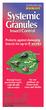 Systemic Granules Insect Control Protects against damaging insects for up to 8 weeks Root Weevils Birch Leaf Miner Beetles Internal insect protection won t wash off with rain or water For use outdoors
Insect Scouting and Diagnosis. Frank A. Hale, Ph.D. Professor Entomology & Plant Pathology
 Insect Scouting and Diagnosis Frank A. Hale, Ph.D. Professor Entomology & Plant Pathology Understanding the Pests to Manage the Pest Life cycle (what life stages are susceptible to control measures?) What
TOBACCO INSECT CONTROL Francis P. F. Reay-Jones, Extension Entomologist
 TOBACCO CONTROL Francis P. F. Reay-Jones, Extension Entomologist Integrated pest management (IPM) is the ecological approach to pest control. It uses ALL suitable techniques to reduce pests below economic
Hard Decisions Ahead With Ash Trees
 Hard Decisions Ahead With Ash Trees By: Stanton Gill, Extension Specialist in IPM and Entomology for Greenhouses and Nurseries Central Maryland Research and Education Center University of Maryland Protect
Homeowner Trees and Ornamentals
 Homeowner Trees Ornamentals Control Recommendations for 2011 Homeowner Trees Ornamentals: Control ARBORVITAE CEDAR icide INSECT Bagworms General : See ANR-191, "Controlling Bagworms on Ornamentals. Homeowners
Nativo 75WG is recommended for control of a wide range of diseases on Brussels sprouts, cabbage, broccoli/calabrese, cauliflower, carrots and leeks.
 Contains CoNTROLS A water dispersible granule formulation containing 250 g/kg (25.0% w/w) trifloxystrobin and 500 g/kg (50.0% w/w) tebuconazole. A broad spectrum systemic fungicide with protectant and
Checking the Effectiveness of Pest Control Measures
 Checking the Effectiveness of Pest Control Measures Chris Hayes, PhD (Tampa) SE Technical Sales Manager & Mexico [email protected] Cell: 585-820-6807 6/15/2015 1 Thanks Cultivate 15 Thanks to YOU,
Dormant Season. Of Dormant Oil Spray Apple scab, Pear scab, Powdery mildew. pre-pink, pink, calyx, 1st & 2nd cover spray.
 99/2004 CLEAN CROP(R) LIME SULPHUR Lime Sulphur Insecticide Miticide Fungicide COMMERCIAL CAUTION CORROSIVE READ THE LABEL BEFORE USING REGISTRATION NO. 16465 PEST CONTROL PRODUCTS ACT GUARANTEE: Sulphide
Fire Ant Products for Tennessee's Schools
 E&PP Info Note # 802 9 Nov. 2009, revised 9/25/14, 2/27/15 2015 Fire Ant Products for Tennessee's Schools Sorted By Active Ingredient Intended as a supplement to UT Extension PB1788 Managing Fire Ants
Rugose Spiraling Whitefly (previously Gumbo Limbo Spirling Whitefly) A New Whitefly in South Florida
 Adult whitefly Rugose Spiraling Whitefly (previously Gumbo Limbo Spirling Whitefly) A New Whitefly in South Florida Introduction: In March, 2009, a whitefly (Aleurodicus rugioperculatus Martin: Hemiptera:
TOBACCO INSECT CONTROL Francis P. F. Reay-Jones, Extension Entomologist
 TOBACCO CONTROL Francis P. F. Reay-Jones, Extension Entomologist Integrated pest management (IPM) is the ecological approach to pest control. It uses ALL suitable techniques to reduce pests below economic
Crop Profile for Greenhouse Crops in Oklahoma
 Crop Profile for Greenhouse Crops in Oklahoma Prepared: August, 1999 General Production Information Bedding Plants Perennials Poinsettias Easter lilies Foliage Plants Oklahoma ranked 11th in national production
Pesticides, in this case, insecticides
 Extension Education Methods Getting Mixed-Up: Are Greenhouse Producers Adopting Appropriate Pesticide Mixtures to Manage Arthropod Pests? Raymond A. Cloyd 1 ADDITIONAL INDEX WORDS. insecticides, miticides,
TREE NUT PRODUCT FIELD GUIDE. Full-season protection for almonds, pistachios, walnuts and more.
 TREE NUT PRODUCT FIELD GUIDE Full-season protection for almonds, pistachios, walnuts and more. Almonds Dormant Bloom May Mid Spray Spray Hull Hull Split Split Harvest WAlnuts Dormant Bloom Mid May Spray
Products. Products. Toxicity Ratings. earth-wise guide to
 earth-wise guide to Products Products Toxicity Ratings Why Grow Green? The Grow Green program recommends the least toxic approach to pest management and responsible fertilizer use in order to reduce the
The IR-4 Program: Helping the U.S. Blueberry Industry Control High- Priority Insect, Disease, and Weed Pests
 The IR-4 Program: Helping the U.S. Blueberry Industry Control High- Priority Insect, Disease, and Weed Pests K. Dorschner R. Isaacs and J. Wise IR-4 Project Headquarters Department of Entomology Rutgers,
Ficus Whitefly and Other Pests of Ficus
 Ficus Whitefly and Other Pests of Ficus Catharine Mannion UF/IFAS Tropical Research and Education Center [email protected] http://trec.ifas.ufl.edu/mannion Whiteflies Approximately 75 species of whiteflies
HOME & GARDEN INFORMATION CENTER
 http://www.clemson.edu/extension/hgic HGIC 2002 1-888-656-9988 HOME & GARDEN INFORMATION CENTER Crape Myrtle Diseases & Insect Pests Crape myrtles (Lagerstroemia indica) are essentially trouble-free small
earth-wise guide to Is damage patchy or not patchy? Patchy (throughout lawn) Not Patchy Are problems occurring during wet or dry conditions?
 earth-wise guide to Lawn Problems In this Fact Sheet: Chinch bugs Grubs Brown Patch Take All Patch Drought Stress Iron Chlorosis Shade Stress Quick Tips to avoid lawn problems Establish a healthy soil
Turf: Insects 6-5. Table 6.3 - Insecticides for White Grubs (larval stage)
 Turf: Insects 6-5 Insects Rod R. Youngman, Extension Entomologist, and Curt Laub, Research Associate, Virginia Tech Recommendations for management of major turfgrass pests are outlined below. The remarks
List of safe chemicals for use at community garden sites in Lee County, Florida
 Fitzroy Beckford Extension Agent http://lee.ifas.ufl.edu List of safe chemicals for use at community garden sites in Lee County, Florida Insecticides Whether the product is considered organic or non-organic,
Pest Control of Citrus in Nurseries and Resistance Management
 Pest Control of Citrus in Nurseries and Resistance Management Beth Grafton-Cardwell Dept of Entomology, UC Riverside Director of Lindcove Research and Extension Center What is resistance? Pesticide Treating
Commercial Ornamentals
 Commercial Ornamentals Insect Control Recommendations for 2011 INSECT CONTROL Greenhouses Commercial Greenhouses Insect Control* Insect Formulation** Registered Crops Comments*** Aphids acephate ORTHENE
Pesticide Resistance Reference
 reference Pesticide Resistance Reference Presented by the The philanthropic organization of Pesticide Resistance Management The first signs of pesticide resistance begin with the observation that pests
Pest and Pesticide Use Assessment and Use and Care of Personal Protective Equipment for Grape Production in New York State for 1993
 Pest and Pesticide Use Assessment and Use and Care of Personal Protective Equipment for Grape Production in New York State for 1993 Mary S. Partridge Charlotte Coffman William G. Smith Donald A. Rutz Pesticide
Insecticides for Organic Commercial & Backyard Vegetable Production Organic crop production is not pesticide free!
 Insecticides for Organic Commercial & Backyard Vegetable Production By Dr. Ayanava Majumdar (Extension Entomologist), Lloyd Chapman, James Miles, Chip East, Mike Reeves, Bethany O Rear, Gary Gray, and
INTEGRATED PEST MANAGEMENT
 C 1 H A P TE R INTEGRATED PEST MANAGEMENT LEARNING OBJECTIVES After completely studying this chapter, you should: Be able to define integrated pest management. Understand the importance of an economic
HOME & GARDEN INFORMATION CENTER
 http://www.clemson.edu/extension/hgic HGIC 2005 1-888-656-9988 HOME & GARDEN INFORMATION CENTER Maple Diseases & Insect Pests Diseases Leaf Scorch: On maple (Acer species) trees a number of problems cause
Table 3 Potato Disease Control
 Table 3 Potato Disease Control Table 3 Potato Disease Control Group Product Rate PHI* Comments Early and Late Blight Control M (chloronitrile) Bravo 500 (chlorothalonil) Echo 90DF (chlorothalonil) Early
Alternative Pesticide Management for the Lawn and Garden
 Alternative Pesticide Management for the Lawn and Garden XCM-221 A pest-free lawn and garden may sound ideal, but is it really? Maintaining the perfect urban landscape may result in a reliance on pesticides
Tree Insect Problems: Scale, Aphids & Borers
 Tree Insect Problems: Scale, Aphids & Borers Diane Alston Entomologist, Utah State University Utah Pest Control & Lawncare Association Convention February 10-11, 2014 Karen Gail Miller Conference Center,
FOR INSECT AND DISEASE CONTROL
 FOR INSECT AND DISEASE CONTROL Holly Thornton, Homeowner IPM Specialist, Extension Plant Pathology This guide was developed as a quick reference to materials which are acceptable for use in organic vegetable
Grape Diseases And Their Control: Powdery mildew and Botrytis bunch rot. Henry Ngugi, Bryan Hed, and Noemi Halbrendt Penn State University
 Grape Diseases And Their Control: Powdery mildew and Botrytis bunch rot Henry Ngugi, Bryan Hed, and Noemi Halbrendt Penn State University Powdery mildew is everywhere Infections at bloom can cause poor
Scale Insects and Mealybugs on Ornamental Plants 1
 ENY-323 Scale Insects and Mealybugs on Ornamental Plants 1 Eileen A. Buss and Jay Cee Turner 2 Scale insects are the most serious pests of many ornamental plants. There are 13 families of scales in Florida,
HOMEOWNER INSECTICIDE PRODUCT LIST
 acephate Orthene Fire Ant Killer Ortho 50% acephate Orthene Turf Tree & Ornamental WSP AMVAC 75% acephate Systemic Insect Control Bonide 9.4% acephate acetamiprid Flower, Fruit & Vegetable Insect Killer
University of Hawaii at Manoa, College of Tropical Agriculture and Human Resources
 University of Hawaii at Manoa, College of Tropical Agriculture and Human Resources J. Sugano, J. Uyeda, S. Fukuda, K. Wang, M. Kawate, C. Tamaru, B. Fox, and T. Radovich College of Tropical Agriculture
What is a pest? How Insects Become Pests. How do insects become pests? Problems with Pesticides. What is most commonly used to control insect pests?
 What is a pest? How Insects Become Pests How do insects become pests? Introduction outside of native range Becomes disease vector Plant or animal (inclu. human) disease vector Host shift in native insect
Factors Contributing to Major Problems in St. Augustinegrass Lawns 2006-2007
 Factors Contributing to Major Problems in St. Augustinegrass Lawns 2006-2007 By James A. McAfee, Ph.D. Extension Turfgrass Specialist Texas A&M Research and Extension Center at Dallas Loss of St. Augustinegrass
FOLPAN 50 WP (FOLPET) FUNGICIDE COMMERCIAL
 21-NOV-2008 2008-4133 GROUP M FUNGICIDE FOLPAN 50 WP (FOLPET) FUNGICIDE COMMERCIAL A wettable powder fungicide for the control of a number of fungus diseases on certain fruit, vegetable, ornamental and
Diagnosing Problems of Roses in the Landscape
 ARIZONA COOP E R AT I V E E TENSION AZ1528 September 2010 Diagnosing Problems of Roses in the Landscape Desert Southwest gardeners are fortunate to have fewer insect and disease problems on roses than
Disease and Insect Control in Home Fruit Plantings
 PB 1622 (Available online only.) Disease and Insect Control in Home Fruit Plantings Steve Bost, Professor; Karen Vail, Professor; Patricia Barnwell, Extension Program Assistant III; and Frank Hale, Professor
SOYBEAN INSECTICIDE PERFORMANCE RATING, 2016
 Rating Scale: 0 = no control 10 = excellent Chemistry Restricted Entry Interval (hours) Restricted Use (R) Cutworm SOYBEAN INSECTICIDE PERFORMANCE RATING, 2016 Stem Feeders Defoliators Defoliators and
BARRIERS TO WIDESPREAD CONVERSION FROM CHEMICAL PEST CONTROL TO NON-CHEMICAL METHODS IN U.S. AGRICULTURE
 BARRIERS TO WIDESPREAD CONVERSION FROM CHEMICAL PEST CONTROL TO NON-CHEMICAL METHODS IN U.S. AGRICULTURE 1 Leonard Gianessi and 2 Nathan Reigner CropLife Foundation, Crop Protection Research Institute,
Advanced Intelligence Report Tree & Shrub Insect Control: Protecting Trees from Emerald Ash Borer
 Advanced Intelligence Report Treating For Emerald Ash Borer With Bayer Advanced Tree and Shrub Insect Control Soil Drench Dr. Bruce Stewart, Bayer Advanced Consumer Products Emerald Ash Borer (EAB) is
THE PERIMETER PEST GUIDE
 BACKED BY THE BEST It s science. It s support. It s our commitment to you. It s Backed by Bayer. And it s the best you can get. For any questions about our products & services, visit www.backedbybayer.com
Imidacloprid: Best Management Practices for Long Island, New York. Greenhouses and Nurseries
 Products containing imidacloprid for use in greenhouses and nurseries have been classified Restricted Use in New York State Imidacloprid: Best Management Practices for Long Island, New York Greenhouses
Integrated Pest Management
 Integrated Pest Management Andrea Veres Junior Technical Officer FAO REU [email protected] Yerevan, Armenia 2013 Why develop IPM? Agriculture was: not sustainable optimized inputs for maximum profit
Fungal Entomopathogens: An Enigmatic Pest Control Alternative
 Fungal Entomopathogens: An Enigmatic Pest Control Alternative Nicole Rusconi $ and Cerruti R 2 Hooks! $ Student Research Assistant and 1 Associate Professor and Extension Specialist, University of Maryland
Myoporum thrips by Robert Muraoka M.S., B.S.
 Myoporum thrips by Robert Muraoka M.S., B.S. If you own a Myoporum hedge, shrub or tree, then you have seen the curling galled-up foliage shown in the photo on the left. It is caused by an invasive species
Integrated Pest Management
 Chapter 2 Integrated Pest Management In This Chapter Keywords After learning the information in this chapter, you will be able to: 1. Define Integrated Pest Management (IPM). 2. List and describe the 5
DISTANCE. Insect Growth Regulator for control of whiteflies on greenhouse ornamentals and greenhouse vegetables (tomatoes, peppers, cucumbers)
 DISTANCE Insect Growth Regulator for control of whiteflies on greenhouse ornamentals and greenhouse vegetables (tomatoes, peppers, cucumbers) COMMERCIAL GUARANTEE: Pyriproxyfen... 103 g/l REGISTRATION
1. When wall voids and dead spaces must be treated from small openings, the most effective formulation to use would be:
 CATEGORY A PESTICIDE APPLICATIONS AND SAFETY PRACTICE QUESTIONS 1. When wall voids and dead spaces must be treated from small openings, the most effective formulation to use would be: A. Liquid residual
This Issue. A look back at 2014. News Bulletin ISSUE #11. Contributors
 This Issue A Message From Our General Manager, Trial Results, Product of the Year, New Biological Product and a cause close to our hearts. ISSUE #11 A look back at 2014 Contributors COLEACP Thanasis Kourdoumpalos
Control of Insect Pests in Eucalypt Plantations
 Control of Insect Pests in Eucalypt Plantations Number 30 Revised February 2007 By Charlma Phillips, Principal Forest Health Scientist Eucalypts are native to Australia and have evolved in association
Highbush Blueberry Management Schedule
 Extension and Advisory Team Highbush Blueberry Management Schedule A guide to insect, mite and disease management in highbush blueberries in Nova Scotia 2013 HIGHBUSH BLUEBERRY INSECT & DISEASE MANAGEMENT
Pest Control in Small Vineyards
 Extension Bulletin E-2698 New, April 1999 Pest Control in Small Vineyards Thomas J. Zabadal Department of Horticulture Michigan State University Southwest Michigan Research and Extension Center MICHIGAN
INTEGRATED PEST MANAGEMENT SYSTEM FOR KENNESAW STATE UNIVERSITY
 INTEGRATED PEST MANAGEMENT SYSTEM FOR KENNESAW STATE UNIVERSITY KENNESAW, GEORGIA PREPARED JANUARY 1997 REVISED NOVEMBER 2006 TABLE OF CONTENTS Introduction and Principles of Integrated Pest Management
Pest Management Issues Affecting Cannabis in Colorado
 Pest Management Issues Affecting Cannabis in Colorado Whitney Cranshaw [email protected] Primary Pest Problems of Observed with Indoor Grown Cannabis Abiotic disorders (e.g., nutrition) Pathogens
Phone: 989.673.5300 x 304 Caro MI 48723 URL: www.tisd.k12.mi.us Email: [email protected]
 AGRI SCIENCE LANDSCAPING / TURFGRASS TECHNOLOGY SYLLABUS SCHOOL: Tuscola Technology Center Instructor: Arlon Slagh ADDRESS: 1401 Cleaver Road Phone: 989.673.5300 x 304 Caro MI 48723 URL: www.tisd.k12.mi.us
Best Lawns News. Late Spring 2014 Edition Virginia Cooperative Extension Prince William Unit. Featured in This Issue
 Best Lawns News Late Spring 2014 Edition Virginia Cooperative Extension Prince William Unit Featured in This Issue Stilt Grass 2 National Arboretum s Grass Roots Exhibit 4 Grub Control 5 All content was
B. Reduce the use of broad spectrum pesticides when feasible. C. Create awareness among City staff of less-toxic pest management techniques.
 City of Newark MAINTENANCE POLICY: INTEGRATED PEST MANAGEMENT POLICY ORIGINAL DATE: January 11, 2010; revised May 24, 2012 PURPOSE: The purpose of the City of Newark s Integrated Pest Management (IPM)
12. INSECT PEST AND DISEASE MANAGEMENT
 12. INSECT PEST AND DISEASE MANAGEMENT Conservation farming promotes a diversity of insect life, influences pest populations and also favours many beneficial insects. The beneficial insects which act as
Hop Pest Control. H. E. Morrison. jpf^vrsiolnrru; - «ibntoj."' «- '',orto JUN 6 I-JJ3
 Hop Pest Control H. E. Morrison its of jpf^vrsiolnrru; - «th ' s ibntoj."' «- '',orto JUN 6 I-JJ3 Agricultural Experiment Station Oregon State College Corvallis Circular of Information 589 May 1958 Hop
Integrated Pest Management
 Integrated Pest Management Science and Language Arts Brief Description: This lesson will focus all of the information the students have learned about pests in the other insect lessons in a decision-making
Chemical Control of Spotted Wing Drosophila in Berry Crops
 Berry Resources www.fruit.cornell.edu/berry Chemical Control of Spotted Wing Drosophila in Berry Crops Greg Loeb, Cathy Heidenreich, Laura McDermott, Peter Jentsch, Debbie Breth, and Juliet Carroll, Cornell
2014 Fungicides for home garden use in New York State. Diseases: Anthracnose. Bacterial Canker Bitter rot. Apple black spot and scab.
 APPLE Apple black spot and scab Bacterial Canker Bitter rot Black po Black rot Blossom and shoot blast Botryosphaeria (White rot) Botrytis rot Brooks fruit spot Brown rot Bullseye rot Cedar rust Fire blight
2016 Soybean Insect Control Recommendations
 2016 Soybean Insect Control Recommendations Introduction Many different insects can be found on soybeans in Tennessee. Some are detrimental, while others are beneficial. The most economical and effective
Managing Pests in Home Fruit Plantings
 PURDUE EXTENSION ID-146-W Managing Pests in Home Fruit Plantings Authors: Janna Beckerman, Botany and Plant Pathology Rick Foster, Entomology Bruce Bordelon, Horticulture Peter Hirst, Horticulture Photo
PESTICIDE SAFETY AND OTHER PESTICIDE INFORMATION
 PESTICIDE SAFETY AND OTHER PESTICIDE INFORMATION Milton Taylor, Associate Coordinator, Pesticide Safety Education Program (PSEP) PESTICIDE POISONING Symptoms of pesticide poisoning may include headache,
Area-Wide Chemical Control of Ticks
 Area-Wide Chemical Control of Ticks Insecticides, or as termed for ticks, acaricides, are the most effective way to reduce ticks, particularly when combined with the landscaping changes to decrease tick
Cloud Mountain Farm Center 6906 Goodwin Rd., Everson, WA 98247 (360)966-5859 voice, (360)966-0921 fax, www.cloudmountainfarmcenter.
 Disease and Pest Management in the Home Orchard Fruit trees have been grown in home orchards for centuries. The goal of many gardeners today is to have fresh fruit from their own trees with a minimum of
U.S. ENVIRONMENTAL PROTECTION AGENCY Office of Pesticide Programs Registration Division (7505C) 1200 Pennsylvania Ave., NW Washington, D.C.
 (under FIFRA, as amended) U.S. ENVIRONMENTAL PROTECTION AGENCY Office of Pesticide Programs Registration Division (7505C) 1200 Pennsylvania Ave., NW Washington, D.C. 20460 NOTICE OF PESTICIDE: ll Registration
ROVRAL GREEN GT FLOWABLE FUNGICIDE
 2008-2599 19-MAR-2009 ROVRAL GREEN GT FLOWABLE FUNGICIDE GROUP 2 FUNGICIDE For control of Brown patch, fusarium patch, dollar spot, leaf spot, Snow moulds and melting out in turf COMMERCIAL: READ THE LABEL
Insect Management in the Home Vegetable Garden
 Insect Management in the Home Vegetable Garden Insects are part of any garden. Beneficial insects pollinate plants, destroy pests, or improve the soil by scavenging and burrowing. Some insects cause problems
Insecticide Dilemma: May 6, 2004 No. 10
 May 6, 2004 No. 10 Insecticide Dilemma: Old timers recall the adage, You can order any color car you want, as long as its black. Given limited options, selections were easily made. Today however, people
Lawn Insects. Identification, Biology & Principles of Control. Annual White Grub Species. Major Cool-Season Lawn Turfgrass Insect Pests
 Lawn Insects Identification, Biology & Principles of Control Dr. David Shetlar The Ohio State University/OARDC OSU Extension Columbus, OH Major Cool-Season Lawn Turfgrass Insect Pests White Grubs Billbugs
FarMore Technology Seed Treatment Platform. A Novel Approach to Vegetable Crop Protection
 FarMore Technology Seed Treatment Platform A Novel Approach to Vegetable Crop Protection August 2012 FarMore Technology Commitment to the Vegetable Industry FarMore Technology is the first comprehensive
EVER RE-TREAT EVER SURRENDER
 EVER RE-TREAT EVER SURRENDER Never Re-Treat. Never Surrender. Win the insect battle with ALOFT Insecticide. Nothing controls insects better, faster or longer. Its one-of-a-kind formulation provides season-long
Principles of Pest Control
 Principles of Pest Control Q. What is the first thing you should do when you detect the presence of a pest that you think you may need to control? Identify the pest to be sure you know exactly what the
Insects That Kill Trees. Diane G. Alston Extension Entomologist Utah State University 2004 Professional Tree Care Workshops
 Insects That Kill Trees Diane G. Alston Extension Entomologist Utah State University 2004 Professional Tree Care Workshops Topics Introduction websites, IPM strategies Ips bark beetles Tree borers flatheaded,