
Introduction to Grief and Loss
|
|
|
- Marybeth Hardy
- 10 years ago
- Views:
Transcription
1 CHAPTER 1 Introduction to Grief and Loss CHAPTER OUTLINE Basic Facts About Loss Why Study Grief? Experiences That Generate Grief Reactions Grief in every practice setting Limited training in grief Benefits of training in grief Summary A journey of a thousand miles begins with the first step. Chinese Proverb BASIC FACTS ABOUT LOSS Did you know that every year 2 million people die in America? And if each of those deaths affects just five other people, at least 10 million people are affected by loss each year. This is just one of the facts that makes the study of grief and loss so important for helping professionals. Others that you may not have been aware of include: Chronic illnesses, such as cancer, heart disease, and diabetes, account for two of every three deaths. These illnesses create many losses before death is anticipated. Accidents are the leading cause of death for children under age 18. They are also the cause of many disabling injuries, creating loss of mobility, fine motor skills, and cognitive functions. In 2008 (the most recent year for which statistics have been published by the U.S. Department of Health and Human Services), 463,000 children were living 1

2 2 Chapter 1 Introduction to Grief and Loss in foster care. These children, their biological and foster families, their siblings, teachers, and social workers are all affected by loss and grief. According to predictions based on the U.S. Census, approximately 43% of marriages in the United States will end in divorce. Some parents and children who experience divorce consider adjusting to the losses associated with it to be as challenging as the losses associated with death. Each year, there are approximately 33,000 34,000 suicides in the United States, leaving over 180,000 suicide survivors. Suicide impacts families, communities, and society as a whole. The tragic events of September 11, 2001, immediately affected people all over the world, and particularly in the United States. The traumatic losses associated with these terrorist attacks, along with natural disasters such as Hurricane Katrina, earthquakes, and tsunamis, have an impact on individuals and communities far beyond what can be currently understood. How many times have you heard the phrase, Loss is a part of life? Yet, have you thought about how loss will impact the work you have chosen to do and how you will respond when someone you are working with is grieving? If you are reading this text, you are most likely a student in training or already working with people in the fields of education, law, health care, mental health, or social services. If so, you will be better prepared than many professionals to help those who are grieving. Many professionals report a lack of training in grief and loss. In 1997, the Institute of Medicine released a report ( Approaching Death: Improving Care at the End of Life ) that identified multiple causes for the deficiencies in professional preparation including legal, organizational, and economic barriers; a public uncomfortable with discussions about death; and education and training programs for health care professionals that do not teach knowledge, skills, and attitudes needed to care for dying people (Field & Cassel, 1997). WHY STUDY GRIEF AND LOSS? If you have chosen a profession in which you will be helping people-through teaching, human service administration, human resource management, coaching, rehabilitation therapy, medicine, social work, or even through law or corrections-it is inevitable that you will encounter loss and the grief reactions that loss engenders. This book is written for a broad professional audience because loss is encountered everywhere. Loss through death is encountered in hospitals, hospices and skilled nursing facilities, schools, businesses, community clinics, prisons, and every possible setting in which you will find yourself working as a professional. You may find yourself coaching a child whose parent or grandparent has died, teaching in a school where a teacher or student has died, serving as a probation officer to an adolescent whose best friend has been killed, providing legal counsel to a family that has sustained a death through natural causes or domestic violence, or coordinating home care services in a senior center for an elderly woman whose husband has died and whose children have concerns about her ability to live independently in her home of 50 years. Mildred, a substance abuse counselor, wrote the following description of her encounter with a grieving client for an assignment in our grief and loss class.

3 Chapter 1 Introduction to Grief and Loss 3 CASE EXAMPLE: DEBBIE Debbie, a thirteen year old, really impacted me, not only as a professional case worker, but also as a mother of two whom at an early age lost her mother in a tragic accident. Debbie was attending middle school and was an A student. She lived with her parents and two siblings. Both were younger than her. Her mother was an active participant in the Relapse Prevention Program where I was working. Debbie, like many adolescents, gets involved and participates in different activities while they wait for their parents. Even though she was aware of her mother s past substance abuse, she felt highly about her mother. She was very attached to her father and maintains a good relationship with her siblings. There was never a complaint about Debbie. It was not until one day Debbie s mother dropped her off at the mall. Debbie didn t know that would be the last time she would see her mother. While her mother drove away from the parking lot, she waved goodbye and smiled at her. That day, fifteen minutes after, her mother s car was impacted by another car that left the scene where the accident occurred. Later that day, Debbie arrived at the Medical Center with her maternal aunt and other relatives. She was told that her mother was in surgery and doctors were doing all they could. Debbie felt everything was ok. She has seen accidents happen every day. Two hours later doctors called the family to a private room and notified them they did everything possible to save her, but they couldn t. Debbie thought it was a nightmare and she was going to wake up any moment. She couldn t understand why that was happening to her. This was the third death in Debbie s life. When she was three, she lost her maternal grandmother. At age seven, her paternal grandfather died. None of them impacted her so hard like the tragic death of her mother. (Mildred Arroyo, 2009) The losses described earlier represent only a very few of the many common types of losses due to death that helping professionals encounter. They are actually quite typical of the kinds of deaths that occur every day in our communities. If you are wondering about what you might gain from this textbook, you might ask yourself the following questions: How comfortable and confident am I in my own ability to deal with grief and loss? How well do I understand the impact of death on people of different ages, genders, cultures, and spiritual orientations? How familiar am I with other life events and losses that cause grief reactions? Am I confident that I can identify when an individual or family is expressing normal grief or when their grief may be complicated? How prepared am I to respond effectively to those who are grieving around me? What types of grief reactions might trigger my own grief reactions and how will I handle them? Do I know how to directly acknowledge grief and make a referral to an appropriate resource when necessary?

4 4 Chapter 1 Introduction to Grief and Loss As we will discuss in Chapter 3, self-awareness regarding our own grief reactions is essential to working with others who are experiencing a loss. These losses may result from a variety of causes, just as our clients losses do. In addition to preparing you to address the grief in reaction to death that you will inevitably encounter in your practice, this text is intended to prepare you to identify and assist individuals and families who may be coping with grief that is due to causes other than death. Loss and grief are experienced in reaction to divorce, foster care placement, job loss, changes in health care status, substance dependence, domestic violence, the diagnosis of a child with a serious disability, children leaving home for independent living, and older adults leaving their lifelong homes for nursing homes or alternative care. These types of losses are termed symbolic losses and often trigger grief reactions that are similar to those that occur in reaction to death. These will be discussed in Chapter 2 and it is important to be aware of all of the losses that may cause grief reactions in order to respond effectively to those who may need your help. LOSS EXPERIENCES THAT GENERATE GRIEF REACTIONS Grief in every practice setting After many years of teaching social work and providing consultation about grief to a wide variety of programs and agencies, I have come to appreciate how much loss impacts work in every practice setting where professionals are helping others. As a hospital social worker and hospice program director, I frequently collaborated with other disciplines, so I knew that nurses, physicians, employee assistance program managers, pastoral counselors, and funeral directors are almost always closely involved in helping people who grieve when someone dies. But as I began teaching classes on loss to personnel in schools, child welfare agencies, and correctional programs, I realized how important it is for professionals in every discipline to be well prepared to deal with loss and grief-our own as well as others. Rachael Kessler, a teacher who created an institute and a Web site to support teachers in their professional development, identified several reasons teachers should learn about grief. She noted that most students experience unexpressed grief stemming from traumatic losses, family deaths, divorce, geographic relocation, and dislocation. She also discussed the losses that students experience through abuse and pregnancy as well as those routinely experienced through growing up, such as saying goodbye at the end of the school year or leaving for college (Kessler, 2004). Brandon Hunt (2007) has written about the need for rehabilitation counselors to learn about grief due to the multiple losses they encounter in their clients. He identifies loss of employment, loss of independence, and death of loved ones as just a few of the experiences that generate grief reactions to which rehabilitation specialists must be prepared to respond. LIMITED TRAINING IN GRIEF Like teachers and counselors, nurses and physicians, rehabilitation therapists, child life specialists, and legal professionals encounter loss and grief every day. When my own daughter became a children s rights lawyer and

5 Chapter 1 Introduction to Grief and Loss 5 began working with young victims of human trafficking, our conversations about her work inevitably involved grief reactions to traumatic losses-her clients as well as her own in reaction to their experiences. Unfortunately, most professional training programs do not adequately address issues of grief and loss in their programs, even though so many will be faced with grieving clients. Without the opportunity to learn how to assess and address grief, many professionals may lack confidence in acknowledging loss and providing support. This lack of confidence and understanding can make professionals uncomfortable discussing death and loss. Avoidance or reluctance can adversely affect clients who look to professionals for truth, knowledge and support (Naierman, 1997). Even in training programs whose focus includes the populations most vulnerable to loss and grief, class discussion is usually limited to grief related to death or relegated to a death and dying elective that few students have the opportunity or room in their schedules to register for. Professional organizations as well as researchers have become increasingly aware that grief and bereavement have a significant impact on the clients we work with. The National Center for the Advancement of Health published a Report on Grief and Bereavement that recognizes that there is a need for health care professionals to be prepared to respond to grief. The report notes that there are relatively few studies that address the education and training of health care professionals in this area and that those that do address it are focused primarily on physicians. The studies that have been conducted, according to the report, indicate that training is inadequate, but health care providers who do receive training are more comfortable with death (National Center for Advancement of Health, 2003). These findings are supported by a recent study by genetics professionals (Rushton et al., 2010). Genetic counselors work closely with families who have members with birth defects, genetic disorders, and a variety of life-threatening inherited conditions such as BRCA gene related breast cancer and Huntington s disease. The study was undertaken because the majority of genetic counselors have clinical interactions with patients and families who are seeking genetic counseling while experiencing grief, loss, and/or death. Almost 20% of the study participants reported discomfort with grief and loss and 29% reported that their training in grief had not been adequate. When study participants reported their training in grief and loss was adequate, they also reported higher levels of comfort with grief. This has been my experience in teaching this content to a variety of helping professionals who express relief at finally feeling equipped to address the distress they so frequently encounter in their work with grieving clients. A seasoned crisis counselor pointed out how grief training had helped her become better prepared for her role: I believe that I have a good idea of my limitations. I know that even with my absolute best efforts, I cannot cure someone of his or her grief or the emotional pain. What I can do, however, is offer my help, guidance, advocacy, and care during an incredibly difficult time and help them begin to find their own way out of the pain. If I can make the journey a bit easier, though, that would be success. Three most difficult

6 6 Chapter 1 Introduction to Grief and Loss aspects: First, letting go of (and allowing myself to grieve for) people who have come to be a part of my life. Second, dealing with a certain amount of helplessness. Third, keeping myself in the land of the living when I m not working-avoiding the tendency to dwell on death. How will I cope? I couldn t possibly do it alone. I will definitely use any support that is available to me-from coworkers or employers, friends, family, etc. I ll have to acknowledge and accept my frustration and stress and grief when they arise. And I ll have to give myself permission to do things I enjoy even when I m in the midst of death or others pain. (Townsend, 2002) BENEFITS OF TRAINING IN GRIEF Without sensitization to, and training in, grief and loss, even seasoned mental health professionals may have difficulty identifying and responding effectively to grief-related problems that clients present. Clients may have sealed over their grief from previous losses, sometimes masking it with alcohol or drugs. Children and teens may develop other maladaptive behaviors such as aggression to cope with anger due to a significant unresolved loss. Grief and loss issues can be obscured or neglected in the treatment of clients who present other primary problems when seeking treatment. Professionals who are not attuned to grief may miss the opportunity to identify and assist with loss and grief associated with these problems. When they are attuned, it is not uncommon to identify loss as well as unresolved grief embedded in the problems that clients struggle with in many settings. Haven and Pearlman (2003), trauma therapists, write about a 37-year-old professional woman who had experienced sexual abuse and a forced abortion of a pregnancy resulting from incest. In therapy she mourned this pregnancy and dealt with the painful feelings of loss that came from the experience of sexual abuse. In describing her mourning, the client stated my heart hurts, indicating the depth of pain that accompanied the grieving process. This type of grief is not always acknowledged, even in the therapy of sexual abuse survivors and yet, as in this case, addressing unresolved loss can bring relief and restoration. While research on the outcomes of grief training programs for professionals is sparse, I have found, over the past ten years of teaching courses on grief and loss, that the responses of students and seasoned professionals regarding inclusion of this content in their training have been universally positive. They identify many areas of increased competence including: The ability to ask questions that lead to identification of loss experiences The ability to identify what types of grief reactions clients are experiencing Recognition of symbolic losses in addition to losses through death Increased comfort in listening to clients speak about their losses Increased understanding and utilization of theories related to grief Improved skill in working with families in crisis whose symbolic and actual losses impact their current coping While this text addresses the literature and research on grieving in reaction to death, some of the losses our clients experience are symbolic. Symbolic losses, which will be discussed in Chapter 2, are losses that do not result from death; not all clients will

7 Chapter 1 Introduction to Grief and Loss 7 experience this kind of loss. Loss due to death, however, is inevitable in each of our clients lives. These losses vary and include sudden, unanticipated, anticipated, accidental, and illness-related deaths as well as deaths of infants, parents, children, and older adults. Even if we have not been directly exposed to these types of deaths in our personal or professional roles, we, and our clients, are exposed daily to media announcements of military deaths, deaths due to natural disasters, and deaths due to crimes. Even when these deaths are remote-like the deaths in Haiti following a massive earthquake in 2010-they have an impact on our communities and often on our clients. With some deaths-those that are anticipated or publicly acknowledged-there may be a good deal of support offered to the grieving family and friends, even to us as professional members of a caring community. But there are many deaths that are not anticipated or publicly acknowledged and there may be little or no support for the grief experienced by significant others. Stillbirth, death from HIV, and suicide are examples of deaths that are often accompanied by stigma, which can result in disenfranchised grief. These and other complicated grief reactions are addressed in depth in Chapter 7. The grief that families and workers experience when death results from violence is also important to recognize and is another type of grief situation that may be accompanied by stigma and not publicly acknowledged. Dr. Michael Durfee (1997) has written one of the few articles about this type of experience in a Web-based publication for the International Child Abuse Network. He recognizes that there is often too little recognition of the grief reactions of survivors of fatal child abuse and neglect. These survivors include the siblings and grandparents who need acknowledgment and understanding of their losses and who may need counseling, particularly in the critical first year following the death. Families who have experienced death due to intimate partner violence, which results in approximately 1,500 deaths per year in the United States, may also be deprived of support due to social stigma. Through many years of training child protective workers I have also learned that the grief-related needs of this population of professionals are too often unacknowledged or unaddressed. Although some organizations do recognize the impact that dealing with trauma and grief have on their frontline staff, too often staff do not receive support for the trauma they witness or their own grief reactions. When support is offered, there may be barriers, such as stigma, that impede worker access (Bernier, 1998). This is not dissimilar from the experiences reported by health care practitioners who also come in close contact with loss through caring for dying patients. The National Center for the Advancement of Health Report (2003), cited earlier, reviewed several studies that indicate that while health care workers experience emotional reactions to the deaths of patients and the emotional intensity of their work, support to health care providers in the workplace is lacking. The report also underscores that professionals will be better able to work effectively with individuals and families in need with knowledge of grief and how to assist someone in the process. While other texts are written for those who are training for a specialized career in bereavement counseling or grief therapy, this text is designed for those students and professionals who find themselves in the position of working in proximity to loss, trauma, and grief in a variety of capacities-educator, advocate, case manager, or

8 8 Chapter 1 Introduction to Grief and Loss counselor. You will need the basic knowledge and skills addressed here to respond effectively to those you encounter in the course of your daily work. I am confident that when you complete this text, you will feel better equipped to understand and assist your clients with their grief and to deal with your own inevitable losses as well. Summary Professionals in every service setting will inevitably encounter clients who are experiencing grief in reaction to losses. These losses will include deaths of significant others such as parents, children, grandparents, partners, classmates, coworkers, and friends as well as losses that do not result from death but are considered symbolic losses. Despite the fact that we will all encounter loss and grief in our work, relatively few helping professionals report feeling adequately prepared in their training to effectively address the complex needs of grieving clients. Without training in grief and loss, even seasoned mental health professionals may have difficulty identifying and responding effectively to grief-related problems that clients present. This text and the accompanying exercises and resources available on its companion Web site will help to prepare you to identify and address grief-related needs from a variety of perspectives, in a wide array of service settings.

The Many Facets of Social Work
 The Many Facets of Social Work The scope of social work practice is remarkably wide. Social workers practice not only in the traditional social service agency, but also in elementary schools; in the military;
Child Abuse and Neglect AAP Policy Recommendations
 Child Abuse and Neglect AAP Policy Recommendations When Inflicted Skin Injuries Constitute Child Abuse Committee on Child Abuse and Neglect PEDIATRICS Vol. 110 No. 3 September 2002, pp. 644-645 Recommendations
U.S. Bureau of Labor Statistics
 U.S. Bureau of Labor Statistics Social Workers Summary Social workers help people in every stage of life cope with challenges, such as being diagnosed with depression. 2012 Median Pay Entry-Level Education
WHAT IS PTSD? A HANDOUT FROM THE NATIONAL CENTER FOR PTSD BY JESSICA HAMBLEN, PHD
 WHAT IS PTSD? A HANDOUT FROM THE NATIONAL CENTER FOR PTSD BY JESSICA HAMBLEN, PHD Posttraumatic Stress Disorder (PTSD) is an anxiety disorder that can occur following the experience or witnessing of a
Community and Social Services
 Developing a path to employment for New Yorkers with disabilities Community and Social Services Mental Health and Substance Abuse Social Workers... 1 Health Educators... 4 Substance Abuse and Behavioral
The Field of Counseling. Veterans Administration one of the most honorable places to practice counseling is with the
 Gainful Employment Information The Field of Counseling Job Outlook Veterans Administration one of the most honorable places to practice counseling is with the VA. Over recent years, the Veteran s Administration
Handout: Risk. Predisposing factors in children include: Genetic Influences
 Handout: Risk The more risk factors to which a child is exposed the greater their vulnerability to mental health problems. Risk does not cause mental health problems but it is cumulative and does predispose
What Can I Do To Help Myself Deal with Loss and Grief?
 What Can I Do To Help Myself Deal with Loss and Grief? There are certain tasks that help people adjust to a loss. Every person will complete these tasks in his or her own time and in his/her own way. The
PALLIATIVE CARE SERVICES AND RESOURCES. A guide for patients and their loved ones. Living well with serious illness
 PALLIATIVE CARE SERVICES AND RESOURCES A guide for patients and their loved ones Living well with serious illness A patient and family centered approach to living with serious illness Palliative care addresses
The Field of Counseling
 Gainful Employment Information The Field of Counseling Job Outlook Veterans Administration one of the most honorable places to practice counseling is with the VA. Over recent years, the Veteran s Administration
Frequently Asked Questions about Pediatric Hospice and Pediatric Palliative Care
 Frequently Asked Questions about Pediatric Hospice and Pediatric Palliative Care Developed by the New Jersey Hospice and Palliative Care Organization Pediatric Council Items marked with an (H) discuss
Table of Contents. Preface...xv. Part I: Introduction to Mental Health Disorders and Depression
 Table of Contents Visit www.healthreferenceseries.com to view A Contents Guide to the Health Reference Series, a listing of more than 16,000 topics and the volumes in which they are covered. Preface...xv
Essential Trauma Informed Practices in Schools. Shannon Cronn, N.C.S.P. Barb Iversen, M.C.
 Essential Trauma Informed Practices in Schools Shannon Cronn, N.C.S.P. Barb Iversen, M.C. Objectives: Participants attending this session will be able to: Define trauma Explain how trauma may impact child/teen
Adult Information Form Page 1
 Adult Information Form Page 1 Client Name: Age: DOB: Date: Address: City: State: Zip: Home Phone: ( ) OK to leave message? Yes No Work Phone: ( ) OK to leave message? Yes No Current Employer (or school
Life with MS: Mastering Relationships with Family and Friends
 Life with MS: Mastering Relationships with Family and Friends Getting the Support You Need The bonds we have with friends and family are linked to our happiness and well-being. They bring us joy during
PhD. IN (Psychological and Educational Counseling)
 PhD. IN (Psychological and Educational Counseling) I. GENERAL RULES CONDITIONS: Plan Number 2012 1. This plan conforms to the regulations of the general frame of the programs of graduate studies. 2. Areas
California Society of Addiction Medicine (CSAM) Consumer Q&As
 C o n s u m e r Q & A 1 California Society of Addiction Medicine (CSAM) Consumer Q&As Q: Is addiction a disease? A: Addiction is a chronic disorder, like heart disease or diabetes. A chronic disorder is
Support for young carers looking after someone with a palliative care diagnosis
 Practice example Support for young carers looking after someone with a palliative care diagnosis What is the initiative? FRESH Friendship, Respect, Emotions, Support, Health Who runs it? St Michael s Hospice
Substance Abuse and Mental Health Services Administration Reauthorization
 Substance Abuse and Mental Health Services Administration Reauthorization 111 th Congress Introduction The American Psychological Association (APA) is the largest scientific and professional organization
Open Adoption: It s Your Choice
 Open Adoption: It s Your Choice If you re pregnant and thinking about placing your child for adoption (making an adoption plan for your child), you may want to consider open adoption. Ask yourself Read
Trauma and the Family: Listening and learning from families impacted by psychological trauma. Focus Group Report
 Trauma and the Family: Listening and learning from families impacted by psychological trauma Focus Group Report A summary of reflections and remarks made by Baltimore City families impacted by trauma and
Grief, Loss and Substance Abuse: References and Resources (July 27, 2010)
 Grief, Loss and Substance Abuse: References and Resources (July 27, 2010) By Dustianne North and Koren Paalman Books and Book Chapters Atwood, Joan (2001). Family Systems/Family Therapy Applications for
Guidelines for Responding to the Death of a Student or School Staff
 Guidelines for Responding to the Death of a Student or School Staff These guidelines are designed to help school administrators, teachers, and crisis team members respond to the needs of students and staff
There are several types of trauma that can occur when people experience difficult life changing
 Trauma Informed Services Part 1 The Hidden Aspect of Addiction Many individuals struggling with addiction have personal and family histories of trauma including sexual, emotional, and/or physical abuse
Helping You Choose a Counselor or Therapist
 Helping You Choose a Counselor or Therapist There are times when personal, work, or family problems make it hard to enjoy life. Maybe you're having trouble sleeping or concentrating at work. Perhaps you
Human Services. The Master's Degree. Professional Development Sequence in Gerontology (blended format)
 University of Illinois Springfield 1 Human Master of Arts Joint Graduate Degree HMS/MPH Graduate Certificate 1 www.uis.edu/humanservices/ Email: [email protected] Office Phone: (217) 206-6687 Office Location:
Residential Treatment Center
 Cincinnati s Premier Residential Treatment Center LOCATED Highly individualized drug and alcohol recovery Upscale accommodations on a private 51-acre estate northeast of Cincinnati in Batavia TOWNSHIP,
Critical Incidents. Information for schools from Derbyshire Educational Psychology Service
 Critical Incidents Information for schools from Derbyshire Educational Psychology Service Introduction to Critical Incidents A critical incident (CI) is any event that is unexpected, acute, stressful and
Psychological First Aid Red Cross Preparedness Academy 2014
 Caring for Survivors of Trauma and Disaster: An Introduction to Psychological First Aid Biographical Information Rev. William F. Engfehr III LutheranChurch MissouriSynod DisasterResponseChaplain Senior
Palliative Care for Children. Support for the Whole Family When Your Child Is Living with a Serious Illness
 Palliative Care for Children Support for the Whole Family When Your Child Is Living with a Serious Illness Palliative care provides comfort and support to your child and family. When a child is seriously
THE READING HOSPITAL SPEAKERS BUREAU. Permit No. 203. Non-Profit Org. U.S. Postage PAID. Reading, PA
 Non-Profit Org. U.S. Postage PAID Reading, PA Permit No. 203 THE READING HOSPITAL SPEAKERS BUREAU Knowledge can be a powerful tool in maintaining your health. We re committed to improving the health of
TIP Prospectus for Concept Clearance Substance Abuse Treatment and Trauma
 TIP Prospectus for Concept Clearance Substance Abuse Treatment and Trauma Introduction The events of September 11, 2001, have reminded Americans that they are vulnerable to international terrorism and
Trauma FAQs. Content. 1. What is trauma? 2. What events are traumatic?
 Trauma FAQs Content 1. What is trauma? 2. What events are traumatic? 3. Who experiences trauma? 4. What are symptoms of trauma? 5. How can I help someone who may be experiencing trauma? 6. Where can people
Depression in Older Persons
 Depression in Older Persons How common is depression in later life? Depression affects more than 6.5 million of the 35 million Americans aged 65 or older. Most people in this stage of life with depression
Caring for depression
 Caring for depression Aetna Health Connections SM Disease Management Program Get information. Get help. Get better. 21.05.300.1 B (6/08) Get back to being you How this guide can help you Having an ongoing
www.seniorclix.com www.elderweb.com National Eldercare Locator 1-800-677-1116 Administration on Aging www.aoa.gov Medicare 1-800-MEDICARE
 Introduction This Patient and Family Guide to Hospice Care is designed to be a practical source of information about hospice care. It introduces you to the history and philosophy of the hospice movement.
SUICIDAL THOUGHTS IN LATER LIFE
 SUICIDAL THOUGHTS IN LATER LIFE Last year, I felt like there was no point of living another day and there was nobody who would miss me if I wasn t here. Nobody was more surprised than me when I started
Depression Overview. Symptoms
 1 of 6 6/3/2014 10:15 AM Return to Web version Depression Overview What is depression? When doctors talk about depression, they mean the medical illness called major depression. Someone who has major depression
PARTNERS IN PEDIATRIC CARE. Intake and History for Mental Health Referral
 PARTNERS IN PEDIATRIC CARE Intake and History for Mental Health Referral This form is designed to give you an opportunity to provide us with background information that will help us help you. Please read
Ninon Yale Clinical Nurse Specialist Trauma Program McGill University Health Centre Sept. 27, 2012
 Ninon Yale Clinical Nurse Specialist Trauma Program McGill University Health Centre Sept. 27, 2012 Suicide in Québec Québec is the Canadian province with the highest suicide rate Affects all age groups
Healing the Trauma of Adoption:
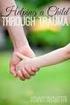 : Juli Alvarado, MA, LPC, NCC Coaching for LIFE 866-570-0604 Most adults with whom I work, as clinicians or adoptive parents, tend to see adoption as a blessing, and in most ways it is. But for the adopted
http://www.bls.gov/oco/ocos060.htm Social Workers
 http://www.bls.gov/oco/ocos060.htm Social Workers * Nature of the Work * Training, Other Qualifications, and Advancement * Employment * Job Outlook * Projections Data * Earnings * OES Data * Related Occupations
Helping you through this difficult time.
 Helping you through this difficult time. New York Life Insurance Company New York Life Insurance and Annuity Corporation (A Delaware Corporation) 51 Madison Avenue New York, NY 10010 www.newyorklife.com
Submission regarding intention self-harm and suicidal behaviour in children The Child and Youth Mental Health Team Central Australia
 May 2014 Postal Address: Central Australian Mental Health Services (CAMHS) Child and Youth Team 3/15 Leichhardt Terrace PO Box 721 Alice Springs NT 0871 Tel: 8951 5950 Fax: 8953 1858 To the National Children
PSYCHOTHERAPY: HOW TO GET STARTED
 PSYCHOTHERAPY: HOW TO GET STARTED I didn t want to talk about my problems with someone I didn t know. Then I learned how common it is to initially feel hesitant and to even try several therapists before
Adoption at School: Homework Triggers I m
 Adoption at School: Homework Triggers I m not doing my homework and you can t make me! Many parents have heard this comment and most parents have struggled from time to time a child s resistance to completing
Helping Children Cope With Loss, Death, and Grief Tips for Teachers and Parents
 Helping Children Cope With Loss, Death, and Grief Tips for Teachers and Parents Schools and communities around the country will be impacted by the loss of life associated with the war in Iraq. The effects
Sample Letters Death Announcements
 Sample Letters Death Announcements Sample Letter to Parents Dear Parents, As you may or may not be aware, our school (or district) has recently experienced (specify event, whether death, fire, etc.) which
Do you help people recover from trauma? training programs
 Do you help people recover from trauma? 2015 training programs Do you or your staff help people who have experienced trauma? Phoenix Australia s training programs teach the skills required by a range of
After Sexual Assault. A Recovery Guide for Survivors SAFE HORIZON. 24-Hour Hotline: 212 227 3000. www.safehorizon.org
 After Sexual Assault A Recovery Guide for Survivors SAFE HORIZON 24-Hour Hotline: 212 227 3000 www.safehorizon.org SAFE HORIZON hopes this guide will help the recovery of anyone whose life has been affected
Supporting children in the aftermath of a crisis
 Supporting children in the aftermath of a crisis David J. Schonfeld, MD Thelma and Jack Rubinstein Professor of Pediatrics Director, National Center for School Crisis and Bereavement Division of Developmental
Supporting Children s Mental Health Needs in the Aftermath of a Disaster: Pediatric Pearls
 Supporting Children s Mental Health Needs in the Aftermath of a Disaster: Pediatric Pearls Satellite Conference and Live Webcast Thursday, August 25, 2011 5:30 7:00 p.m. Central Time Faculty David J. Schonfeld,
Plan for Masters Degree in Social Work
 Plan for Masters Degree in Social Work 009 1- General Rules and Conditions: A- This plan conforms to the regulations of programs of graduate studies. B-. Areas of specialty accepted for admission according
Evidence to The Commission on Assisted Dying 23 rd February 2011
 Evidence to The Commission on Assisted Dying 23 rd February 2011 My name is Suzy Croft and I am Senior Social Worker at St. John s Hospice, the hospice for Central London. I am a member of the Association
Adolescent drug abuse and the impact of the family dynamic. This is Stay Happily Married: Episode #279.
 Announcer: Adolescent drug abuse and the impact of the family dynamic. This is Stay Happily Married: Episode #279. Welcome to Stay Happily Married; your source for weekly updates on the latest tips and
Workforce Development Online Workshop Descriptions
 Workforce Development Online Workshop Descriptions Behavioral Health Service Delivery Workshops: The Effects of Violence Exposure on Children (1.5 hours) Regretfully, violence against children and youth
Social Worker Overview The Field - Preparation - Day in the Life - Earnings - Employment - Career Path Forecast - Professional Organizations
 Social Worker Overview The Field - Preparation - Day in the Life - Earnings - Employment - Career Path Forecast - Professional Organizations The Field Social work is a profession for those with a strong
NOTICE OF PRIVACY PRACTICES. The University of North Carolina at Chapel Hill. UNC-CH School of Nursing Faculty Practice Carolina Nursing Associates
 NOTICE OF PRIVACY PRACTICES The University of North Carolina at Chapel Hill UNC-CH School of Nursing Faculty Practice Carolina Nursing Associates THIS NOTICE DESCRIBES HOW MEDICAL INFORMATION ABOUT YOU
My name is Ana Maria Alvarez
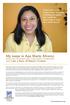 I had come to the United States dreaming of finding my mother but I ended up discovering so much more about myself. My name is Ana Maria Alvarez and I am 20 years old. I am from Guatemala I came to Mary
Young People in Recovery Recovery Messaging and Q & As
 1 Young People in Recovery Recovery Messaging and Q & As There are many ways to support young people in or seeking recovery. One very effective way is for other young people in recovery to be recovery
Opening Our Hearts, Transforming Our Losses
 Preface Alcoholism is a disease of many losses. For those of us who are the relatives and friends of alcoholics, these losses affect many aspects of our lives and remain with us over time, whether or not
FACT SHEET. What is Trauma? TRAUMA-INFORMED CARE FOR WORKING WITH HOMELESS VETERANS
 FACT SHEET TRAUMA-INFORMED CARE FOR WORKING WITH HOMELESS VETERANS According to SAMHSA 1, trauma-informed care includes having a basic understanding of how trauma affects the life of individuals seeking
Hospice Care. What is hospice care?
 What is hospice care? Hospice Care You matter because of who you are. You matter to the last moment of your life, and we will do all we can, not only to help you die peacefully, but also to live until
Please complete this form and return it ASAP by fax to (519)675-7772, attn: Rebecca Warder
 Child Welfare Assessment Screening Information Form Please complete this form and return it ASAP by fax to (519)675-7772, attn: Rebecca Warder Today s Date: Case Name: Referring Agency: Worker s Name:
Introduction. Preparation DISCUSSION GUIDE
 Introduction Dr. A. Thomas McLellan, Executive Director of the Treatment Research Institute, notes that 13 is the age when most children begin to experiment with alcohol and other drugs. Ten thousand children
How To Help Someone With A Drug And Alcohol Addiction
 Empowering people to improve their lives. Content TOPICS 2 ABOUT US What we do / Who we serve / Services 4 OUR PHILOSOPHY Environment matters / Holistic approach Gender specific 6 ADMISSION Assessment
OK to leave Messages?
 Jami Howell, Psy.D., LLC Licensed Clinical Psychologist 1215 SW 18 th Avenue, Portland OR 97205 p (503) 504-5222 f (503) 224-2134 [email protected] Client Information Name: Preferred Name: Date
DISCLOSURES OF PHI & FLORIDA STATE LAW
 DISCLOSURES OF PHI & FLORIDA STATE LAW The Privacy Rule provides an extensive list of permitted disclosures; however, if state laws provide greater privacy protections or privacy rights with respect to
Understanding PTSD treatment
 Understanding PTSD treatment Do I need professional help? Whether or not you need help can only be determined by you and a mental health professional. However, you can take the self-assessment in the PTSD
Applied Psychology. Course Descriptions
 Applied Psychology s AP 6001 PRACTICUM SEMINAR I 1 CREDIT AP 6002 PRACTICUM SEMINAR II 3 CREDITS Prerequisites: AP 6001: Successful completion of core courses. Approval of practicum site by program coordinator.
Health Education Core ESSENTIAL QUESTIONS. It is health that is real wealth, and not pieces of gold and silver. Gandhi.
 Health Education Core ESSENTIAL QUESTIONS It is health that is real wealth, and not pieces of gold and silver. Gandhi Increased Focus Classroom Real Life Connection Student Reflection Student Assessment
MINISTRY INTERNATIONAL INSTITUTE COUNSELING TRAINING
 MINISTRY INTERNATIONAL INSTITUTE COUNSELING TRAINING In addition to providing Theological Training, Ministry International Institute (MII) founded by J. Tony Slay is also committed to providing quality
BLENDING GRIEF THERAPY WITH ADDICTION RECOVERY: WHAT TO DO WHEN YOUR CLIENT SUFFERS A LOSS IN RECOVERY
 BLENDING GRIEF THERAPY WITH ADDICTION RECOVERY: WHAT TO DO WHEN YOUR CLIENT SUFFERS A LOSS IN RECOVERY By MARK SANDERS, LCSW, CADC 3170 North Sheridan Road, Suite 618 Chicago, Illinois 60657 (773) 549-7914
Research to Practice Series
 Institute of Child Protection Studies 3 Younger Mothers: Stigma and Support The Institute of Child Protection Studies links the findings of research undertaken by the Institute of Child Protection Studies,
2) Recurrent emotional abuse. 3) Contact sexual abuse. 4) An alcohol and/or drug abuser in the household. 5) An incarcerated household member
 Co Occurring Disorders and the on Children: Effectively Working with Families Affected by Substance Abuse and Mental Illness Definition (Co-Occurring also called Dual Dx) A professional diagnosis of addictive/substance
Life with MS: Mastering Early Treatment
 Life with MS: Mastering Early Treatment Essential Information About MS Multiple sclerosis (MS) is a disease that attacks the central nervous system (CNS). Approximately 2.5 million people worldwide and
Symptoms of mania can include: 3
 Bipolar Disorder This factsheet gives information on bipolar disorder. It explains the symptoms of bipolar disorder, treatments and ways to manage symptoms. It also covers what treatment the National Institute
Sarasota Personal Medicine 1250 S. Tamiami Trail, Suite 202 Sarasota, FL 34239 Phone 941.954.9990 Fax 941.954.9995
 Sarasota Personal Medicine 1250 S. Tamiami Trail, Suite 202 Sarasota, FL 34239 Phone 941.954.9990 Fax 941.954.9995 NOTICE OF PRIVACY PRACTICES THIS NOTICE DESCRIBES HOW MEDICAL INFORMATION ABOUT YOU MAY
CHILDREN, FAMILIES & ALCOHOL USE
 CHILDREN, FAMILIES & ALCOHOL USE Essential Information for Social Workers A BASW Pocket Guide Supported by: Bedford and Luton Purpose of the guide This guide aims to support Social Workers in their practice
USVH Disease of the Week #1: Posttraumatic Stress Disorder (PTSD)
 USVH Disease of the Week #1: Posttraumatic Stress Disorder (PTSD) Effects of Traumatic Experiences A National Center for PTSD Fact Sheet By: Eve B. Carlson, Ph.D. and Josef Ruzek, Ph.D. When people find
I. Policy and Governance Advocacy
 I. Policy and Governance Advocacy Description These efforts include advocating for legislative or policy changes in government and institutions, with a goal of convincing as many systems as possible that
younger-onset alzheimer s I m too young to have Alzheimer s disease
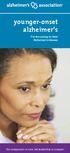 younger-onset alzheimer s I m too young to have Alzheimer s disease the compassion to care, the leadership to conquer i m too young to have alzheimer s disease Alzheimer s is not just a disease of old
Frequently Asked Questions Regarding At Home and Inpatient Hospice Care
 Frequently Asked Questions Regarding At Home and Inpatient Hospice Care Contents Page: Topic Overview Assistance in Consideration Process Locations in Which VNA Provides Hospice Care Determination of Type
Courses Description Bachelor Degree in Social Work
 Courses Description Bachelor Degree in Social Work Introduction to Social Work 2701101 Understanding the history of social work profession. Other topics include the philosophy, principles and ethics of
TRAUMA & ADDICTION. written for. American Academy of Health Care Providers in the Addictive Disorders. Sandra H. Colen, LCSW, Dip-CFC, CAS
 TRAUMA & ADDICTION written for American Academy of Health Care Providers in the Addictive Disorders by Sandra H. Colen, LCSW, Dip-CFC, CAS December 22, 2014 Purpose The purpose of this paper is to present
SYLLABUS NAVIGATING CHILDREN S GRIEF: ACADEMIC, BEHAVIORAL & EMOTIONAL CHALLENGES
 SYLLABUS NAVIGATING CHILDREN S GRIEF: ACADEMIC, BEHAVIORAL & EMOTIONAL CHALLENGES Instructor: Email: [email protected] Phone: 303.246.3826 Fax: 866.795.6631 Address: P. O. Box 21876 Denver, CO 80221
All Saints. Personal Counseling Resources Guide. Episcopal Church & Day School. Pray. Learn. Serve. Connect.
 All Saints Episcopal Church & Day School Pray. Learn. Serve. Connect. Personal Counseling Resources Guide Patrice Al-Shatti, MSW All Saints Health Ministries 6300 North Central Avenue, Phoenix AZ 85012
Circle of Life: Cancer Education and Wellness for American Indian and Alaska Native Communities. Group Discussion True False Not Sure
 Hospice Care Group Discussion True False Not Sure 1. There is no difference between palliative care and hospice care. Palliative care is different from hospice care. Both palliative and hospice care share
How To Treat A Mental Illness At Riveredge Hospital
 ABOUT US n Riveredge Hospital maintains the treatment philosophy of Trauma Informed Care. n Our commitment to providing the highest quality of care includes offering Animal Assisted Therapy, and Expressive
Legal Information for Same Sex Couples
 Community Legal Information Association of Prince Edward Island, Inc. Legal Information for Same Sex Couples People in same sex relationships often have questions about their rights and the rights of their
Healing the Invisible Wound. Recovery and Rehabilitation from a Post Traumatic. Stress Injury. By Dr. Amy Menna
 Healing the Invisible Wound Recovery and Rehabilitation from a Post Traumatic Stress Injury By Dr. Amy Menna Post Traumatic Stress Disorder can affect anyone. It is a term used to describe a reaction to
youth ALcohol& HIV/AIDS
 information for young people youth ALcohol& HIV/AIDS Introduction Alcohol abuse is a wide spread problem among young people in Botswana. Alcohol abuse increases the risk of young people contracting HIV
SUICIDAL BEHAVIOR IN CHILDREN AND ADOLESCENTS NADINE J KASLOW, PHD, ABPP [email protected] 2014 APA PRESIDENT
 SUICIDAL BEHAVIOR IN CHILDREN AND ADOLESCENTS NADINE J KASLOW, PHD, ABPP [email protected] 2014 APA PRESIDENT Setting the Stage What are the common myths about suicide in children and adolescents? If I
ARTICLE #1 PLEASE RETURN AT THE END OF THE HOUR
 ARTICLE #1 PLEASE RETURN AT THE END OF THE HOUR Alcoholism By Mayo Clinic staff Original Article: http://www.mayoclinic.com/health/alcoholism/ds00340 Definition Alcoholism is a chronic and often progressive
How to Help Others After Abortion
 How to Help Others After Abortion A Guide to Helping Those in Your Life Who May Be Hurting About this booklet If you know someone who has had or been involved in an abortion your spouse, partner, family
NOTICE OF PRIVACY PRACTICE
 Effective Date: September 23, 2013 NOTICE OF PRIVACY PRACTICE UNIVERSITY OF CALIFORNIA SAN FRANCISCO UCSF HEALTH SYSTEM THIS NOTICE DESCRIBES HOW HEALTH INFORMATION ABOUT YOU MAY BE USED AND DISCLOSED
PART I : NAVIGATING HEALTH CARE
 PART I : NAVIGATING HEALTH CARE SECTION ONE Hospitals, Clinical Trials & Ambulance Service 1. Should my dad just sign all those hospital consent forms or actually question them? 2. What is a hospital Patient