
Xarelto (rivaroxaban) Prescriber Guide November 2012
|
|
|
- Darren Allison
- 10 years ago
- Views:
Transcription
1 Xarelto (rivaroxaban) Prescriber Guide November 2012 Simple Protection for More Patients

2 2 Xarelto Prescriber Guide

3 Patient Alert Card 4 Dosing Recommendations 4 Dosing in patients with atrial fibrillation 4 Patients with renal impairment Duration of therapy Missed dose Dosing in the treatment of DVT and prevention of recurrent DVT and PE 5 Patients with renal impairment Duration of therapy Missed dose Oral Intake 6 Perioperative Management 6 Converting from VKA to Xarelto 6 Converting from Xarelto to VKA 7 Converting from Parenteral Anticoagulants to Xarelto 8 Converting from Xarelto to Parenteral Anticoagulants 8 Populations Potentially at Higher Risk of Bleeding 8 Patients with renal impairment Patients with hepatic impairment Patients concomitantly receiving other medicinal products Patients with other haemorragic risk factors such as Overdose 9 Coagulation Testing 10 3

4 Patient Alert Card A patient alert card must be provided to each patient who is prescribed Xarelto 15 or 20 mg, and the implications of anticoagulant treatment should be explained. Specifically, the need for compliance and signs of bleeding and when to seek medical attention should be discussed with the patient. The patient alert card will inform physicians and dentists about the patient s anticoagulation treatment and will contain emergency contact information. The patient should be instructed to carry the patient alert card at all times and present it to every health care provider. Dosing Recommendations Dosing in patients with atrial fibrillation The recommended dose for prevention of stroke and systemic embolism in patients with non-valvular atrial fibrillation is 20 mg once daily. DOSING SCHEME Continuous TREATMENT Xarelto 20 mg once daily* TAKE WITH FOOD *In patients with moderate or severe renal impairment the recommended dose is 15 mg once daily. Patients with renal impairment: In patients with moderate (creatinine clearance ml/min) or severe (15-29 ml/min) renal impairment the recommended dose is 15 mg once daily. Use is not recommended in patients with creatinine clearance < 15 ml/min. Duration of therapy: Xarelto should be continued long term provided the benefit of stroke prevention therapy outweighs the potential risk of bleeding. Missed dose: If a dose is missed the patient should take Xarelto immediately and continue on the following day with the once daily intake as recommended. The dose should not be doubled within the same day to make up for a missed dose. 4

5 Dosing in the treatment of deep vein thrombosis (DVT) and pulmonary embolism (PE), and prevention of recurrent DVT and PE in adults Patients are initially treated with 15 mg twice daily for the first three weeks. This initial treatment is followed by 20 mg once daily for continued treatment period. DOSING SCHEME Initial TREATMENT CONTINUOUS TREATMENT Xarelto 15 mg twice daily Xarelto 20 mg once daily* FIRST 3 WEEKS BEYOND 3 WEEKS TAKE WITH FOOD Patients with DVT/PE and renal impairment: Patients with moderate (creatinine clearance ml/min) or severe (15-29 ml/ min) renal impairment treated for acute DVT, acute PE and prevention of recurrent DVT and PE should be treated with 15 mg twice daily for the first 3 weeks. Thereafter, the recommended dose is 20 mg once daily. * A reduction of the dose from 20 mg once daily to 15 mg once daily should be considered if the patient s assessed risk for bleeding outweighs the risk for recurrent DVT and PE. The recommendation for the use of 15 mg is based on PK modelling and has not been studied in this clinical setting. The use of Xarelto is not recommended in patients with creatinine clearance < 15 ml/min. Duration of therapy: The duration of therapy should be individualized after assessment of the treatment benefit against the risk for bleeding. Missed dose: Twice daily treatment period (15 mg bid for the first three weeks): If a dose is missed, the patient should take Xarelto immediately to ensure intake of 30 mg Xarelto per day. Continue with the regular 15 mg twice daily intake on the following day. 5

6 Once daily treatment period (beyond three weeks): If a dose is missed, the patient should take Xarelto immediately and continue on the following day with the once daily intake as recommended. The dose should not be doubled within the same day to make up for a missed dose. Oral Intake Xarelto 15 mg and 20 mg must be taken with food. The intake of these doses with food at the same time supports the required absorption of the drug, thus ensuring a high oral bioavailability. Note: Xarelto is also available at a 10 mg dose for the prevention of venous thromboembolism (VTE) in adult patients undergoing elective hip or knee replacement surgery. This dose can be taken with or without food. Perioperative Management If an invasive procedure or surgical intervention is required, Xarelto 15 / 20 mg should be stopped at least 24 hours before the intervention if possible and based on the clinical judgement of the physician. If the procedure cannot be delayed the increased risk of bleeding should be assessed against the urgency of the intervention. Xarelto should be restarted after the invasive procedure or surgical intervention as soon as possible provided the clinical situation allows and adequate hemostasis has been established. Converting from VKA to Xarelto Stop VKA CONVERTING FROM VKA TO XARELTO VKA Xarelto * Prevention OF stroke AND SYSTEMIC EMBOLISM: Initiate Xarelto once INR 3.0 INR testing (duration according to individual decrease of VKA plasma levels) DVT, PE AND PREVENTIOn OF RECURRENT DVT AND PE: Initiate Xarelto once INR 2.5 DAYS *See dosing recommendations for required daily dose 6

7 For patients treated for prevention of stroke and systemic embolism, treatment with VKA should be stopped and Xarelto therapy should be initiated when the INR is 3.0. For patients treated for DVT, PE and prevention of recurrent DVT and PE, treatment with VKA should be stopped and Xarelto therapy should be initiated when the INR is 2.5. INR measurement is not appropriate to measure the anticoagulant activity of Xarelto, and therefore should not be used for this purpose. Treatment with Xarelto only does not require routine coagulation monitoring. Converting from Xarelto to VKA CONVERTING FROM XARELTO TO VKA Xarelto * Standard VKA dose INR testing before Xarelto administration INR adapted VKA dose Xarelto can be stopped once INR 2.0 DAYS *See dosing recommendations for required daily dose It is important to ensure adequate anticoagulation while minimizing the risk of bleeding during conversion of therapy. When converting to VKA, Xarelto and VKA should be given overlapping until the INR is 2.0. For the first two days of the conversion period, standard initial dosing of VKA should be used followed by VKA dosing guided by INR testing. INR measurement is not appropriate to measure the anticoagulant activity of Xarelto. While patients are on both Xarelto and VKA the INR should not be tested earlier than 24 hours after the previous dose but prior to the next dose of Xarelto. Once Xarelto is discontinued, INR values obtained at least 24 hours after the last dose reliably reflect the VKA dosing. 7

8 Converting from Parenteral Anticoagulants to Xarelto Patients with continuously administered parenteral drug such as intravenous unfractionated heparin: Xarelto should be started at the time of discontinuation. Patients with parenteral drug on a fixed dosing scheme such as LMWH: Xarelto should be started 0 to 2 hours before the time of the next scheduled administration of the parenteral drug. Converting from Xarelto to Parenteral Anticoagulants The first dose of the parenteral anticoagulant should be given instead of the next Xarelto dose at the same time. Populations Potentially at Higher Risk of Bleeding Like all anticoagulants, Xarelto may increase the risk of bleeding. Therefore Xarelto is contraindicated in patients with clinically significant active bleeding with a lesion or condition at significant risk of major bleeding such as current or recent gastrointestinal ulceration, presence of malignant neoplasms at high risk of bleeding, recent brain or spinal injury, recent brain, spinal or ophthalmic surgery, recent intracranial haemorrhage, known or suspected oesophageal varices, arteriovenous malformations, vascular aneurysms or major intraspinal or intracerebral vascular abnormalities with hepatic disease associated with coagulopathy and clinically relevant bleeding risk including Child-Pugh class B and C cirrhotic patients receiving concomitant treatment with any other anticoagulant agent e.g. unfractionated heparin (UFH), low molecular weight heparins, heparin derivatives (fondaparinux etc), oral anticoagulants (warfarin, dabigatran, apixaban etc) except under the circumstances of switching therapy to or from Xarelto or when UFH is given at doses necessary to maintain an open central venous or arterial catheter. Several sub-groups of patients are at increased risk and should be carefully monitored for signs and symptoms of bleeding complications. Treatment decision in these patients should be done after assessment of treatment benefit against the risk for bleeding. 8

9 Patients with renal impairment: See dosing recommendations for patients with moderate (creatinine clearance ml/min) or severe (15-29 ml/min) renal impairment. Use of Xarelto use is not recommended in patients with creatinine clearance < 15 ml/min Patients concomitantly receiving other medicinal products Systemic azole-antimycotics (such as ketoconazole, itraconazole, voriconazole and posaconazole) or HIV protease inhibitors (e.g. ritonavir): use of Xarelto is not recommended Drugs affecting hemostasis such as NSAIDs, acetylsalicylic acid, platelet aggregation inhibitors Patients with other haemorragic risk factors As with other antithrombotics, Xarelto is not recommended in patients with an increased bleeding risk such as congenital or acquired bleeding disorders uncontrolled severe arterial hypertension active ulcerative gastrointestinal disease vascular retinopathy bronchiectasis or history of pulmonary bleeding Xarelto is contraindicated during pregnancy and breast feeding. Women of child-bearing potential should avoid becoming pregnant during treatment with Xarelto. Overdose Due to limited absorption a ceiling effect with no further increase in average plasma exposure is expected at supratherapeutic doses of 50 mg Xarelto and above. The use of activated charcoal to reduce absorption in case of overdose may be considered. Should a bleeding complication arise in a patient receiving Xarelto, the next Xarelto administration should be delayed or treatment should be discontinued as appropriate. Individualized bleeding management may include Symptomatic treatment, such as mechanical compression, surgical intervention, fluid replacement Hemodynamic support; blood product or component transfusion 9

10 For life-threatening bleeding that cannot be controlled with the above measures, administration of a specific procoagulant reversal agent should be considered, such as prothrombin complex concentrate (PCC), activated prothrombin complex concentrate (APCC) or recombinant factor VIIa (r-fviia). However, there is currently very limited clinical experience with the use of these products in individuals receiving Xarelto. Due to the high plasma protein binding Xarelto is not expected to be dialyzable. Coagulation Testing Xarelto does not require routine coagulation monitoring. However, measuring Xarelto levels may be useful in exceptional situations where knowledge of Xarelto exposure may help to take clinical decisions, e.g., overdose and emergency surgery. Anti-FXa assays with Xarelto -(rivaroxaban) specific calibrators to measure rivaroxaban levels are now commercially available. If clinically indicated hemostatic status can also be assessed by PT using Neoplastin as described in the SmPC. The following coagulation tests are increased: Prothrombin time (PT), activated partial thromboplastin time (aptt) and calculated PT international normalized ratio (INR). Since the INR was developed to assess the effects of VKAs on the PT, it is therefore not appropriate to use the INR to measure activity of Xarelto. Dosing or treatment decisions should not be based on results of INR except when converting from Xarelto to VKA as described above. 10

11 Xarelto 15 mg / 20 mg film-coated tablets (Refer to full SmPC before prescribing.) Composition: Active ingredient: 15 mg / 20 mg rivaroxaban. Excipients 1 : Microcrystalline cellulose, croscarmellose sodium, lactose monohydrate, hypromellose, sodium laurilsulfate, magnesium stearate, macrogol 3350, titanium dioxide (E171), iron oxide red (E172). Indication: Prevention of stroke and systemic embolism in adult patients with non-valvular atrial fibrillation with one or more risk factors, such as congestive heart failure, hypertension, age 75 years, diabetes mellitus, prior stroke or transient ischaemic attack. Treatment of deep vein thrombosis (DVT) and pulmonary embolism (PE), and prevention of recurrent DVT and PE in adults. Contraindications: Hypersensitivity to the active substance or any of the excipients; clinically significant active bleeding; lesion or condition at significant risk of major bleeding; concomitant treatment with any other anticoagulant agent except under the circumstances of switching therapy to or from rivaroxaban or when unfractionated heparin is given at doses necessary to maintain a patent central venous or arterial catheter; hepatic disease associated with coagulopathy and clinically relevant bleeding risk including cirrhotic patients with Child Pugh B and C; pregnancy and breast feeding. Warnings and Precautions: Clinical surveillance in line with anticoagulation practice is recommended throughout treatment. Xarelto should be discontinued if severe haemorrhage occurs. Not recommended: in patients with severe renal impairment (creatinine clearance <15 ml/min); in patients receiving concomitant systemic treatment with strong concurrent CYP3A4- and P-gpinhibitors, i.e. azole-antimycotics or HIV protease inhibitors; in patients with increased bleeding risk; due to lack of data: in patients below 18 years of age, in patients with prosthetic heart valves, in patients with PE who are haemodynamically unstable or may receive thrombolysis or pulmonary embolectomy; in patients concomitantly treated with dronedarone. Use with caution: in conditions with increased risk of haemorrhage; in patients with severe renal impairment (creatinine clearance ml/min) or with renal impairment concomitantly receiving other medicinal products which increase rivaroxaban plasma concentrations; in patients treated concomitantly with medicinal products affecting haemostasis or with strong CYP3A4 inducers. In patients at risk of ulcerative gastrointestinal disease prophylactic treatment may be considered. Although treatment with rivaroxaban does not require routine monitoring of exposure, rivaroxaban levels measured with a calibrated quantitative anti-factor Xa assay may be useful in exceptional situations. Specific dose recommendations apply for patients with moderate to severe renal impairment. Xarelto contains lactose. Undesirable effects: Common: anaemia, dizziness, headache, eye haemorrhage, hypotension, haematoma, epistaxis, haemoptysis, gingival bleeding, gastrointestinal tract haemorrhage, gastrointestinal and abdominal pains, dyspepsia, nausea, constipation, diarrhoea, vomiting, pruritus, rash, ecchymosis, cutaneous and subcutaneous haemorrhage, pain in extremity, urogenital tract haemorrhage, renal impairment, fever, peripheral oedema, decreased general strength and energy, increase in transaminases, post-procedural haemorrhage, contusion, wound secretion. Uncommon: thrombocythemia, allergic reaction, dermatitis allergic, cerebral and intracranial haemorrhage, syncope, tachycardia, dry mouth, hepatic function abnormal, urticaria, haemarthrosis, feeling unwell, increases in: bilirubin, blood alkaline phosphatase, LDH, lipase, amylase, GGT. Rare: jaundice, muscle haemorrhage, localised oedema, bilirubin conjugated increased, vascular pseudoaneurysm (uncommon in prevention therapy in ACS following percutaneous intervention). Frequency not known: compartment syndrome or (acute) renal failure secondary to a bleeding. Classification for supply: Medicinal product subject to medical prescription. Marketing Authorisation Holder: Bayer Pharma AG, D Berlin, Germany Further information available from: [email protected] Version: EU/3 11

12 Simple Protection for More Patients G.GM.XA

Xarelto (rivaroxaban) Prescriber Guide
 Xarelto (rivaroxaban) Prescriber Guide Simple Protection For More Patients 2 Xarelto Prescriber Guide Patient Alert Card 4 Dosing Recommendations 4 Dosing in patients with atrial fibrillation 4 Patients
Xarelto (rivaroxaban) Prescriber Guide
 Xarelto (rivaroxaban) Prescriber Guide May 2013 Simple Protection for More Patients 2 Xarelto Prescriber Guide Patient Alert Card 4 Dosing Recommendations 4 Dosing in patients with atrial fibrillation
Prescriber Guide. 20mg. 15mg. Simply Protecting More Patients. Simply Protecting More Patients
 Prescriber Guide 20mg Simply Protecting More Patients 15mg Simply Protecting More Patients 1 Dear Doctor, This prescriber guide was produced by Bayer Israel in cooperation with the Ministry of Health as
XARELTO (RIVAROXABAN) EDUCATIONAL PACK FOR 15MG AND 20MG DOSING
 XARELTO (RIVAROXABAN) EDUCATIONAL PACK FOR 15MG AND 20MG DOSING NOW UPDATED A N D I N C L U D E S A NEW INDICATION Prevention of stroke and systemic embolism in eligible adult patients with non-valvular
XARELTO (RIVAROXABAN) PRESCRIBER GUIDE
 XARELTO (RIVAROXABAN) PRESCRIBER GUIDE Prescribing information found on pages 16-17 This guide is to be used to support the appropriate use of Xarelto in the following indications: Prevention of stroke
Xarelto (rivaroxaban) Prescriber Guide
 Xarelto (rivaroxaban) Prescriber Guide January 2015 Patient Alert Card 04 Dosing Recommendations 04 Dosing in patients with atrial fibrillation 04 Patients with renal impairment 04 Duration of therapy
XARELTO (RIVAROXABAN) PRESCRIBER GUIDE
 XARELTO (RIVAROXABAN) PRESCRIBER GUIDE Prescribing information found on pages 22-23 This guide is to be used to support the appropriate use of Xarelto in the following indications: Prevention of stroke
Xarelto Accurate Dosing Matters
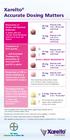 Xarelto Accurate Dosing Matters Prevention of Stroke and Systemic Embolism in adults with nonvalvular Atrial Fibrillation with one or more risk factors a 20 mg 15 mg Patients with CrCl > 49 ml/min with
Xarelto Accurate Dosing Matters
 Xarelto Accurate Dosing Matters Prevention of Stroke and Systemic Embolism in adults with nonvalvular Atrial Fibrillation with one or more risk factors a 20 mg OD 15 mg OD Patients with CrCl > 49 ml/min
NHS FORTH VALLEY RIVAROXABAN AS TREATMENT FOR DEEP VEIN THROMBOSIS AND PULMONARY EMBOLISM IN ADULTS
 NHS FORTH VALLEY RIVAROXABAN AS TREATMENT FOR DEEP VEIN THROMBOSIS AND PULMONARY EMBOLISM IN ADULTS Date of First Issue 01/12/ 2012 Approved 15/11/2012 Current Issue Date 29/10/2014 Review Date 29/10/2016
NHS FORTH VALLEY Rivaroxaban for Stroke Prevention in Atrial Fibrillation
 NHS FORTH VALLEY Rivaroxaban for Stroke Prevention in Atrial Fibrillation Date of First Issue 06/06/2012 Approved 06/06/2012 Current Issue Date 29/10/2014 Review Date 29/10/2016 Version 1.4 EQIA Yes 01/06/2012
NHS FORTH VALLEY Rivaroxaban for Stroke Prevention in Atrial Fibrillation
 NHS FORTH VALLEY Rivaroxaban for Stroke Prevention in Atrial Fibrillation Date of First Issue 06/06/2012 Approved 06/06/2012 Current Issue Date 06/06/2012 Review Date 06/06/2014 Version 1.1 EQIA Yes /
Rivaroxaban: Amber Drug Guidance for the prevention of stroke and systemic embolism in patients with non-valvular AF
 Leeds Rivaroxaban: Amber Drug Guidance for the prevention of stroke and systemic embolism in patients with non-valvular AF Amber Drug Level 3 (amber drug with monitoring requirements) We have started your
Patient Group Direction Hospital: Bristol Royal Infirmary Department: UHBristol Thrombosis Service University Hospitals Bristol NHS Foundation Trust.
 Patient Group Direction Hospital: Bristol Royal Infirmary Department: UHBristol Thrombosis Service University Hospitals Bristol NHS Foundation Trust. This Patient Group Direction (PGD) has been written
DVT/PE Management with Rivaroxaban (Xarelto)
 DVT/PE Management with Rivaroxaban (Xarelto) Rivaroxaban is FDA approved for the acute treatment of DVT and PE and reduction in risk of recurrence of DVT and PE. FDA approved indications: Non valvular
Rivaroxaban for the treatment of Deep Vein Thrombosis in patients unsuitable for vitamin K antagonists
 Rivaroxaban for the treatment of Deep Vein Thrombosis in patients unsuitable for vitamin K antagonists Traffic light classification- Amber 2 specialist initiation Information sheet for Primary Care Prescribers
Dorset Medicines Advisory Group
 Shared Care Guideline for prescribing rivaroxaban in the prevention of adverse outcomes after acute management of acute coronary syndrome in adults INDICATION In accordance with NICE TA335 rivaroxaban
The Prescribing pathway consists of a number of parts:
 NHS EAST LANCASHIRE CCG & NHS BLACKBURN WITH DARWEN CCG DVT Primary Care Prescribing Pathway www.elmmb.nhs.uk Introduction www.elmmb.nhs.uk Version 1.2/January 2013 Introduction Blackburn with Darwen and
TA 256: Rivaroxaban for the prevention of stroke and systemic embolism in people with atrial fibrillation
 Service Notification in response to DHSSPS endorsed NICE Technology Appraisals TA 256: Rivaroxaban for the prevention of stroke and systemic embolism in people with atrial fibrillation 1 Name of Commissioning
MEDICAL ASSISTANCE HANDBOOK PRIOR AUTHORIZATION OF PHARMACEUTICAL SERVICES. A. Prescriptions That Require Prior Authorization
 MEDICAL ASSISTANCE HBOOK PRI AUTHIZATION OF PHARMACEUTICAL SERVICES I. Requirements for Prior Authorization of Anticoagulants A. Prescriptions That Require Prior Authorization Prescriptions for Anticoagulants
Quick Guide Xarelto Across Indications
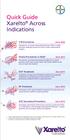 Quick Guide Xarelto Across Indications VTE Prevention Since 28 Prevention of venous thromboembolism (VTE) in adult patients undergoing elective hip or knee replacement surgery Stroke Prevention in NVAF
East Kent Prescribing Group
 East Kent Prescribing Group Rivaroxaban (Xarelto ) Safety Information Approved by the East Kent Prescribing Group. Approved by: East Kent Prescribing Group (Representing Ashford CCG, Canterbury and Coastal
HERTFORDSHIRE MEDICINES MANAGEMENT COMMITTEE (HMMC) RIVAROXABAN RECOMMENDED see specific recommendations for licensed indications below
 Name: generic (trade) Rivaroxaban (Xarelto ) HERTFORDSHIRE MEDICINES MANAGEMENT COMMITTEE (HMMC) RIVAROXABAN RECOMMENDED see specific recommendations for licensed indications below What it is Indications
New Oral Anticoagulants. How safe are they outside the trials?
 New Oral Anticoagulants How safe are they outside the trials? Objectives The need for anticoagulant therapy Indications for anticoagulation Traditional anticoagulant therapies Properties of new oral anticoagulants
Thrombosis management: A time for change practical management with NOACs Dr Wala Elizabeth Medical Director, Bayer Healthcare
 Thrombosis management: A time for change practical management with NOACs Dr Wala Elizabeth Medical Director, Bayer Healthcare Kenya Association of Physicians Conference 10 th May 2013 New anticoagulants:
Birmingham, Sandwell and Solihull Cardiac and Stroke Network. Rivaroxaban or warfarin for treatment of Atrial Fibrillation: Position statement
 Birmingham, Sandwell and Solihull Cardiac and Stroke Network Rivaroxaban or warfarin for treatment of Atrial Fibrillation: Position statement Introduction This guidance informs prescribers and commissioners
MEDICAL ASSISTANCE HANDBOOK PRIOR AUTHORIZATION OF PHARMACEUTICAL SERVICES. A. Prescriptions That Require Prior Authorization
 MEDICAL ASSISTANCE HBOOK I. Requirements for Prior Authorization of Anticoagulants A. Prescriptions That Require Prior Authorization Prescriptions for Anticoagulants which meet any of the following conditions
Dabigatran (Pradaxa) Guidelines
 Dabigatran (Pradaxa) Guidelines Dabigatran is a new anticoagulant for reducing the risk of stroke in patients with atrial fibrillation. Dabigatran is a direct thrombin inhibitor, similar to warfarin, without
Rivaroxaban for the treatment of deep vein thrombosis and prevention of recurrent deep vein thrombosis and pulmonary embolism
 Implementation of NICE TA 261 Rivaroxaban for the treatment of deep vein thrombosis and prevention of recurrent deep vein thrombosis and pulmonary embolism Contents 1. Executive summary 2. Introduction
Dabigatran: Amber Drug Guidance for the prevention of stroke and systemic embolism in patients with non-valvular AF
 Leeds Dabigatran: Amber Drug Guidance for the prevention of stroke and systemic embolism in patients with non-valvular AF Amber Drug Level 3 (amber drug with monitoring requirements) We have started your
What You Need to Know after DVT or PE
 SPIRAL BINDING MARKS What You Need to Know after DVT or PE For your patients prescribed Xarelto J1290_Nurse Patient_Flipbook_AW.indd 1 01/12/2014 15:32 A deep vein thrombosis (DVT) is a blood clot, usually
NEWER ANTICOAGULANTS: FOCUS ON STROKE PREVENTION IN ATRIAL FIBRILLATION AND DEEP VEIN THROMBOSIS/PULMONARY EMBOLISM
 NEWER ANTICOAGULANTS: FOCUS ON STROKE PREVENTION IN ATRIAL FIBRILLATION AND DEEP VEIN THROMBOSIS/PULMONARY EMBOLISM Carol Lee, Pharm.D., Jessica C. Song, M.A., Pharm.D. INTRODUCTION For many years, warfarin
News Release. Media contacts: Ernie Knewitz Tel: 908.927.2953 Mobile: 917.697.2318 [email protected]
 News Release Media contacts: Ernie Knewitz Tel: 908.927.2953 Mobile: 917.697.2318 [email protected] Shaun Mickus Phone: 908.927.2416 Mobile: 973.476.7144 [email protected] Investor contacts: Stan
How To Use Xarelto
 XARELTO (RIVAROXABAN) SUMMARY OF PRODUCT CHARACTERISTICS FOR 10MG DOSING SUMMARY OF PRODUCT CHARACTERISTICS 1. NAME OF THE MEDICINAL PRODUCT Xarelto 10 mg film-coated tablets 2. QUALITATIVE AND QUANTITATIVE
The format of this leaflet was determined by the Ministry of Health and its content was checked and approved by it in May 2013
 The format of this leaflet was determined by the Ministry of Health and its content was checked and approved by it in May 2013 1. NAME OF THE MEDICINAL PRODUCT Xarelto 20 mg Film coated tablets 2. QUALITATIVE
Anticoagulant therapy
 Anticoagulation: The risks Anticoagulant therapy 1990 2002: 600 incidents reported 120 resulted in death of patient 92 deaths related to warfarin usage 28 reports related to heparin usage Incidents in
NWMIC Medicines FAQ. New oral anticoagulants (NOACs) and management of dental patients - Dabigatran, rivaroxaban and apixaban.
 NWMIC Medicines FAQ New oral anticoagulants (NOACs) and management of dental patients - Date prepared: May 2013, updated November 2013 Summary In primary care; Consider liaising with the local hospital
Implementation of NICE TAs 261 and 287
 Corby Clinical Commissioning Group Kettering General Hospital NHS Trust Nene Clinical Commissioning Group Northampton General Hospital NHS Trust Northamptonshire Healthcare Foundation Trust Implementation
All Wales Risk/Benefit Assessment Tool for Oral Anticoagulant Treatment in People with Atrial Fibrillation
 All Wales Risk/Benefit Assessment Tool for Oral Anticoagulant Treatment in People with Atrial Fibrillation October 2013 This report has been prepared by a multiprofessional collaborative group, with support
Enoxaparin for long term anticoagulation in patients unsuitable for oral anticoagulants
 Enoxaparin for long term anticoagulation in patients unsuitable for oral anticoagulants Traffic light classification- Amber 2 Information sheet for Primary Care Prescribers Relevant Licensed Indications
Three new/novel oral anticoagulants (NOAC) have been licensed in Ireland since 2008:
 Key Points to consider when prescribing NOACs Introduction Three new/novel oral anticoagulants (NOAC) have been licensed in Ireland since 2008: Dabigatran Etexilate (Pradaxa ) 75mg, 110mg, 150mg. Rivaroxaban
FDA Approved Oral Anticoagulants
 FDA Approved Oral Anticoagulants Generic (Trade Name) Warfarin (Coumadin, Jantoven ) 1 FDA approved indication Prophylaxis and treatment of venous thromboembolism (VTE) Prophylaxis and treatment of thromboembolic
Uncontrolled when printed. Version 1.1. Acute Sector. Lead Author/Co-ordinator: Mr Simon Barker Consultant Orthopaedic Surgeon Julie Fraser
 Acute Sector NHS Grampian Staff Local Treatment Protocol For Venous Thromoboembolic Prophylaxis Using Rivaroxaban 10mg Tablets In Adult Patients Undergoing Elective Hip Or Knee Replacement Surgery. Lead
Package leaflet: Information for the user. Xarelto 15 mg film-coated tablets Xarelto 20 mg film-coated tablets rivaroxaban
 Due to regulatory changes, the content of the following Patient Information Leaflet may vary from the one found in your medicine pack. Please compare the 'Leaflet prepared/revised date' towards the end
Pathway for the management of DVT in primary Care
 Pathway for the management of DVT in primary Care Final Version: Approved by NHS DGS CCG: June 2015 This document aims to support practices in DGS CCG in the Management & Treatment of patients with suspected
UNBLOCK VENOUS THROMBOEMBOLISM IN ASSOCIATION WITH HOW TO TREAT DVT IN THE COMMUNITY
 VENOUS THROMBOEMBOLISM IN ASSOCIATION WITH AN HSJ SUPPLEMENT/5 SEPTEMBER 2014 UNBLOCK THE SYSTEM HOW TO TREAT DVT IN THE COMMUNITY Bayer HealthCare sponsored this report. The company has reviewed the data
WARNING: (A) PREMATURE DISCONTINUATION OF XARELTO INCREASES THE RISK OF THROMBOTIC EVENTS, (B) SPINAL/EPIDURAL HEMATOMA
 The format of this leaflet was determined by the Ministry of Health and its content was checked and approved by it in May 2014. WARNING: (A) PREMATURE DISCONTINUATION OF XARELTO INCREASES THE RISK OF THROMBOTIC
Guideline for managing patients on a factor Xa inhibitor Apixaban (Eliquis ) or Rivaroxaban (Xarelto )
 Guideline [Optional heading here. Change font size to suit] Document Number # QH-GDL-950:2014-2 Guideline for managing patients on a factor Xa inhibitor Apixaban (Eliquis ) or Rivaroxaban (Xarelto ) 1.
WARNING: (A) PREMATURE DISCONTINUATION OF XARELTO INCREASES THE RISK OF THROMBOTIC EVENTS, (B) SPINAL/EPIDURAL HEMATOMA
 The format of this leaflet was determined by the Ministry of Health and its content was checked and approved by it in May 2015. WARNING: (A) PREMATURE DISCONTINUATION OF XARELTO INCREASES THE RISK OF THROMBOTIC
The Role of the Newer Anticoagulants
 The Role of the Newer Anticoagulants WARFARIN = Coumadin DAGIBATRAN = Pradaxa RIVAROXABAN = Xarelto APIXABAN = Eliquis INDICATION DABIGATRAN (Pradaxa) RIVAROXABAN (Xarelto) APIXABAN (Eliquis) Stroke prevention
NORTH WEST LONDON GUIDANCE ANTITHROMBOTIC MANAGEMENT OF ATRIAL FIBRILLATION
 North West London CardioVascular & Stroke Network NORTH WEST LONDON GUIDANCE ON ANTITHROMBOTIC MANAGEMENT OF ATRIAL FIBRILLATION Key Messages 1. Efforts should be made to identify patients with Atrial
The author has no disclosures
 Mary Bradbury, PharmD, BCPS Clinical Pharmacy Specialist, Cardiac Surgery September 18, 2012 [email protected] This presentation will discuss unlabeled and investigational use of products The author
Comparison between New Oral Anticoagulants and Warfarin
 Comparison between New Oral Anticoagulants and Warfarin Warfarin was the mainstay of oral anticoagulant therapy until the recent discovery of more precise targets for therapy. In recent years, several
Package leaflet: Information for the user. Xarelto 10 mg film-coated tablets Rivaroxaban
 Due to regulatory changes, the content of the following Patient Information Leaflet may vary from the one found in your medicine pack. Please compare the 'Leaflet prepared/revised date' towards the end
3/3/2015. Patrick Cobb, MD, FACP March 2015
 Patrick Cobb, MD, FACP March 2015 I, Patrick Cobb, MD, DO NOT have a financial interest/arrangement or affiliation with one or more organizations that could be perceived as a real or apparent conflict
Oral Anticoagulants: What s New?
 Oral Anticoagulants: What s New? Sallie Young, Pharm.D., BCPS (AQ-Cardiology) Clinical Pharmacy Specialist, Cardiology Penn State Hershey Medical Center [email protected] August 2012 Oral Anticoagulant
Xarelto Summary of Product Characteristics EU
 Xarelto Summary of Product Characteristics EU January 2015 XIIa XIa X X IXa VIIIa II II II VIIa II II II II IIa IIa IIa TF IIa IIa IIa IIa Xarelto 2.5 mg This medicinal product is subject to additional
Package leaflet: Information for the user. Xarelto 2.5 mg film-coated tablets Rivaroxaban
 Due to regulatory changes, the content of the following Patient Information Leaflet may vary from the one found in your medicine pack. Please compare the 'Leaflet prepared/revised date' towards the end
STARTING, SWITCHING OR STOPPING NEW ORAL ANTICOAGULANTS: A Practical Approach
 STARTING, SWITCHING OR STOPPING NEW ORAL ANTICOAGULANTS: A Practical Approach Jeffrey I Weitz, MD, FRCP(C), FACP Professor of Medicine and Biochemistry McMaster University Canada Research Chair in Thrombosis
Low Molecular Weight Heparin. All Wales Medicines Strategy Group (AWMSG) Recommendations and advice
 Low Molecular Weight Heparin All Wales Medicines Strategy Group (AWMSG) Recommendations and advice Starting Point Low Molecular Weight Heparin (LMWH): Inhibits factor Xa and factor IIa (thrombin) Small
Rivaroxaban shared care guidelines for the prevention of stroke and embolism in adult patients with nonvalvular atrial fibrillation.
 South West Essex Rivaroxaban Shared Care Guideline (SCG) Rivaroxaban shared care guidelines for the prevention of stroke and embolism in adult patients with nonvalvular atrial fibrillation. Introduction
MEDICATION GUIDE ELIQUIS (ELL eh kwiss) (apixaban) tablets
 MEDICATION GUIDE ELIQUIS (ELL eh kwiss) (apixaban) tablets What is the most important information I should know about ELIQUIS? For people taking ELIQUIS for atrial fibrillation: People with atrial fibrillation
XARELTO (Za-REL-toe) rivaroxaban
 (Za-REL-toe) rivaroxaban Consumer Medicine Information WHAT IS IN THIS LEAFLET This leaflet answers some common questions about Xarelto. It does not contain all the available information. It does not take
Novel Anticoagulation Agents DISCLOSURES. Objectives ATRIAL FIBRILLATION TRIALS. NOAC Comparison 6/12/2015
 Novel Anticoagulation Agents DISCLOSURES James W. Haynes, MD Department of Family Medicine Univ of TN Health Science Center (Chattanooga) Objectives Understand mechanism of action behind the NOAC agents
Xarelto (rivaroxaban) is a selective, direct acting Factor Xa inhibitor.
 DATA SHEET XARELTO (rivaroxaban) NAME OF THE MEDICINE Xarelto (rivaroxaban) is a selective, direct acting Factor Xa inhibitor. Rivaroxaban is 5-Chloro-N-({(5S)-2-oxo-3-[4-(3-oxo-4-morpholinyl)phenyl]-1,3-oxazolidin-5-
Traditional anticoagulants
 TEGH Family Practice Clinic Day April 4, 03 Use of Anticoagulants in 03: What s New (and What Isn t) Bill Geerts, MD, FRCPC Director, Thromboembolism Program, Sunnybrook HSC Professor of Medicine, University
Devang M. Desai, MD, FACC, FSCAI Chief of Interventional Cardiology Director of Cardiac Catheterization Lab St. Mary s Hospital and Regional Medical
 Devang M. Desai, MD, FACC, FSCAI Chief of Interventional Cardiology Director of Cardiac Catheterization Lab St. Mary s Hospital and Regional Medical Center A.Fib affects 2.2 million Americans. The lifetime
Volume 7; Number 19 November 2013
 Greater East Midlands Commissioning Support Unit in association with Lincolnshire Clinical Commissioning Groups, Lincolnshire Community Health Services, United Lincolnshire Hospitals Trust and Lincolnshire
Guidance for prescribing of Dabigatran (Pradaxa ) Rivaroxaban (Xarelto ) and Apixaban (Eliquis ) in Patients with Non-Valvular AF
 Guidance for prescribing of Dabigatran (Pradaxa ) Rivaroxaban (Xarelto ) and Apixaban (Eliquis ) in Patients with Non-Valvular AF Lesley Davey Staffordshire and Lancashire CSU November 2013 (Review November
Inpatient Anticoagulation Safety. To provide safe and effective anticoagulation therapy through a collaborative approach.
 Inpatient Anticoagulation Safety Purpose: Policy: To provide safe and effective anticoagulation therapy through a collaborative approach. Upon the written order of a physician, Heparin, Low Molecular Weight
NnEeWw DdEeVvEeLlOoPpMmEeNnTtSs IiıNn OoRrAaLl AaNnTtIiıCcOoAaGgUuLlAaTtIiıOoNn AaNnDd RrEeVvEeRrSsAaLl
 NnEeWw DdEeVvEeLlOoPpMmEeNnTtSs IiıNn OoRrAaLl AaNnTtIiıCcOoAaGgUuLlAaTtIiıOoNn AaNnDd RrEeVvEeRrSsAaLl Mikele Wissing, RN June 2014 Introduction until recently, was the unrivaled medication for treatment
New Anticoagulants: When and Why Should I Use Them? Disclosures
 Winship Cancer Institute of Emory University New Anticoagulants: When and Why Should I Use Them? Christine L. Kempton, MD, MSc Associate Professor of Pediatrics and Hematology and Medical Oncology Hemophilia
VOLUME No: 21 04 written by Sara Wilds & Kathryn Buchanan. Date of issue: June 2012 (updated November 2012 following NICE TA 256)
 Prescribing Points A NEWSLETTER FOR ALL HEALTH CARE PROFESSIONALS IN OXFORDSHIRE, WRITTEN BY THE MEDICINES MANAGEMENT TEAM, OXFORDSHIRE PCT, JUBILEE HOUSE, OXFORD BUSINESS PARK SOUTH, OXFORD, OX4 2LH.
Prevention of stroke and systemic embolism in adult patients with non-valvular atrial fibrillation (AF) with one or more risk factors
 News Release For use outside the US and UK only Bayer Pharma AG 13342 Berlin Germany Tel. +49 30 468-1111 www.bayerpharma.com Bayer s Xarelto Approved in the EU for the Prevention of Stroke in Patients
USE AND INTERPRETATION OF LABORATORY COAGULATION TESTS IN PATIENTS WHO ARE RECEIVING A NEW ORAL ANTICOAGULANT (DABIGATRAN, RIVAROXABAN, APIXABAN)
 USE AND INTERPRETATION OF LABORATORY COAGULATION TESTS IN PATIENTS WHO ARE RECEIVING A NEW ORAL ANTICOAGULANT (DABIGATRAN, RIVAROXABAN, APIXABAN) TARGET AUDIENCE: All Canadian health care professionals:
Use of Antithrombotic Agents In The Presence Of Neuraxial Anesthesia
 Use of Antithrombotic Agents In The Presence Of Neuraxial Anesthesia Insertion, removal or presence of a catheter in selected sites can place a patient who is antithrombotic agent at risk for a local bleeding
Dabigatran etexilate for the treatment and secondary prevention of deep vein thrombosis and/or pulmonary embolism ERRATUM
 Dabigatran etexilate for the treatment and secondary prevention of deep vein thrombosis and/or pulmonary embolism ERRATUM This report was commissioned by the NIHR HTA Programme as project number 12/78
XARELTO (Za REL toe) rivaroxaban
 (Za REL toe) rivaroxaban Consumer Medicine Information WHAT IS IN THIS LEAFLET This leaflet answers some common questions about It does not contain all the available information. It does not take the place
Session 3 Topics. Argatroban. Argatroban. Drug Use and Adverse Effects. Laboratory Monitoring of Anticoagulant Therapy
 ~~Marshfield Labs Presents~~ Laboratory Monitoring of Anticoagulant Therapy Session 3 of 4 Michael J. Sanfelippo, M.S. Technical Director, Coagulation Services Session 3 Topics Direct Thrombin Inhibitors:
Rivaroxaban (Xarelto ) by
 Essentia Health Med Moment Short Video Tune-Up A brief overview of a new medication, or important new medication information Rivaroxaban (Xarelto ) by Richard Mullvain RPH BCPS (AQC) Current - August 2011
To provide an evidenced-based approach to treatment of patients presenting with deep vein thrombosis.
 DEEP VEIN THROMBOSIS: TREATMENT TARGET AUDIENCE: All Canadian health care professionals. OBJECTIVE: To provide an evidenced-based approach to treatment of patients presenting with deep vein thrombosis.
TSOAC Initiation Checklist
 Task Establish appropriate dose based on anticoagulant selected, indication and patient factors such as renal function. Evaluate for medication interactions that may necessitate TSOAC dose adjustment.