
Mouse monitoring and baiting
|
|
|
- Easter Cain
- 10 years ago
- Views:
Transcription
1 FACTSHEET Mouse monitoring and baiting Invasive Species Unit This information is intended to give you a basic understanding of the biology and control of the house mouse, a guide to monitoring techniques and some basic information on baiting. Mouse biology and behaviour incisors into which the lower teeth fit. Native species have smooth, chisel edges. Also, native species have only four teats whereas the house mouse has at least one additional pair of thoracic or chest nipples. Origin of the house mouse The house mouse (Mus domesticus) originated near the present border of Iran and the USSR. Mice quickly spread to Europe and subsequently throughout the world. They were probably introduced into Australia with the early settlers, and, like most introduced animals, took an immediate liking to the country. With an ability to live on a wide range of foodstuffs and their affinity to humans (hence the name house mouse), mice were able to accompany the setters as they explored and colonised. Distribution The house mouse is not restricted to houses or buildings. They are found in most parts of Australia, reaching plague proportion in New South Wales, Victoria, Queensland and South Australia. More importantly, it is common in all agricultural lands, particularly grain growing areas. Characteristics Mice are normally light brown to dark grey on the body, with a light cream belly. Body length is about 75 mm and adults weigh up to 30 grams. The tail is about as long as the body and is almost hairless. In relation to their body, the ears are large and the eyes and feet are small. The long whiskers or vibrissae are very sensitive and are used as sensors when moving about in the dark. Mice have prominent incisor teeth that grow continuously; gnawing controls their length. Material may be gnawed yet not tasted or swallowed, so it is difficult to devise a repellent coating against mice. The house mouse can be distinguished from Australian native mice by its teeth and the number of nipples on the female. The house mouse has a wellmarked notch or ledge behind the tip of the upper Under optimum conditions, one breeding pair of mice can produce 500 offspring in 21 weeks. (Photo: Animal Control Technologies) Food and water Mice eat a wide range of foods, consuming between 3 and 5g daily. In a field situation, mice survive on the seeds of native grasses and thrive on introduced cereal and legume grains. In food storage areas, their diet can include cereals, other grains, vegetables, meat, fish, nuts, cheese and nonrancid animal products. When selecting a bait type, it is important to know that mice will sample all foodstuffs within their range but may not return to a particular feed type for many days. Vegetable oils such as peanut or linseed act as good attractants. Mice can successfully live and breed without free water, as long as the moisture content of the food is at least 15 per cent. If mice live in sheds and areas where the food supply has low moisture content, then they need 1 to 2g of water daily to survive. In these situations, their activity can be limited by denying access to water. May 2011, for updates Primefact 1102 First Edition Biosecurity Branch / Invasive Species Unit

2 Reproduction Mice can start breeding at 6 to 10 weeks of age and produce 10 to 12 litters a year. The gestation period is 19 to 21 days, and the female re-mates almost immediately after parturition. Young mice begin eating solid food at 11 days, are weaned at 21 days of age, and have an average life span of 1 to 2 years. Females give birth to 5 or 6 young per litter generally, but there can be up to 10 per litter. The young are born hairless and blind in a nest of collected materials such as grass, paper, hair, cloth remnants or anything soft that is available. So if there is virtually no infant mortality, hypothetically one breeding pair of mice could produce 500 mice within 21 weeks. In Australia, mice living under field conditions have a seasonal pattern of breeding. This generally begins in early spring and continues until cold or wet conditions develop in late autumn. Mice living in unfavourable seasonal conditions may have a shorter breeding period, whereas those with nests in the warmth of buildings or haystacks are likely to have an extended breeding period. Also, recent research suggests that it is the quality of the food, not the quantity that extends the breeding season. Plagues Mouse plagues tend to occur when there is plenty of quality food and water available, when environmental temperatures are not extreme, when soil is moist and easy to dig, nesting conditions are favourable, and diseases, parasites and predation are at a low level. A rapid build-up to a plague also requires rapid re-breeding by females, a first mating by young females at 8 weeks of age, and minimal juvenile mortality. Mouse plague events seem to be increasing in frequency, possibly because of changes in agricultural practice. Stubble retention provides additional habitat and extra food from split or unharvested grain, as was the case in the 2010 winter crop harvest. However, plagues often occur after a period of drought and when the subsequent spring and summer are wet providing extra food and cover. Behaviour Mice are mostly active at night but can also be seen during the day, particularly around buildings or areas with adequate cover. Their home range is limited to an area of about 5 m² in closed buildings, but in a crop situation, with available food and water, the home range may be even less. Young mice are forced to seek new areas during periods of high breeding, and this is one of the factors associated with the development of plagues. When mice move, they tend to follow the same path from refuge to feeding area. Paths are often confined to walls, pipes or natural barriers, and the tell-tale smear marks can be an indication of mouse activity. In the field, distinct tracks through the vegetation become obvious. Mice have the ability to swim and remain under water for lengthy periods. They can dig, jump up at least 30 cm, jump down at least 2.5 m without injury, and squeeze through openings as small as 8 mm wide. In addition, they can climb almost any rough surface, climb upside down, and run down ropes and electric wires. Movement of mice The statement that mice are moving out into neighbouring areas and into crops does not imply that there is a mass migration of mice. At certain times of the year we simply see a settling out of mouse densities to a more even distribution throughout the landscape. Early in the autumn mice tend to aggregate more in the vicinity of overwintering refuge areas, from where they move into crop perimeters and subsequently through the crops. Because mouse densities are not as high as those experienced in full plague situations, their distribution tends to be patchy. However, as a number of generations breed, then some of the subsequent generations will also breed. This can cause mice to move out over greater areas. The net short-term result is the same number of mice but at lower densities over a larger area. If suitable conditions continue to prevail, this settling-out period allows for further breeding to occur and provides an opportunity for mice to reach the more traditional plague densities that can occur in summer crops. Mortality Contrary to popular myth, frosts and cold weather do not necessarily kill mice. Extremes of temperature can cause population fluctuations and may enhance the spread of a disease present in a population. For example, if mice are wet and cold and then exposed to a disease such as pneumonia, then this can prove fatal. However, if mice are wet and but remain warm, then frosts would not have a heavy impact on total numbers. Predators As with all pest species, predation may play a role until there is a rapid population build-up. Predators are unlikely to have any effect on numbers when there is a mouse plague. A noticeable increase of predators in an area may indicate a large increase in the mouse population. In south-eastern Australia, the main predators of mice are foxes, feral cats, snakes and birds of prey. Presence of increased numbers of itinerant bird species such as the black-shouldered kite are good indicators that mouse populations may be increasing. Domestic cats have no impact on mouse populations, contrary to popular myth. p 2 Mouse monitoring and baiting

3 Disease Although disease can cause a sudden decline in mouse numbers that marks the end of a mouse plague, this occurs mainly when food and shelter are restricted. It is more likely that overcrowding will allow for parasite infestations to develop and contribute to the spread of disease. Mice as pests Mice have adapted to living in houses and buildings in close association with humans. In the field, mice are always present, but mostly in low numbers. Refuge areas such as channel banks and the more densely vegetated pastures are ideal habitats, where detection is difficult. Poultry and pig sheds or grain storage facilities are also favoured, particularly if the soil can be excavated easily. Sown crops Mice cause damage to just about all sown crops, no matter whether they are a winter or summer crop, cereal or oilseed, maize or pasture seed. By digging into the loose soil immediately after sowing, they are able to establish nests and feed on some of the seed or newly emerging seedlings. Most crops suffer damage before seedling emergence and when the grain or seed begins to mature. However, in cereal crops such as wheat, mice can chew the growing nodes of the plant, stopping development of the head or causing the stem to collapse. In recent years, there has been major mouse damage to wheat, oats, barley, soybean, maize, sunflower, sorghum, rice, lucerne seed and other leguminous crops, as well as to horticultural crops such as melons, pumpkins and tomatoes. Stored produce, buildings and machinery Mice will be active in most farm produce storage areas. Normally, little pressure is placed on storage areas until there are mice in plague proportions. Mice can find the smallest hole and work on it until it is large enough to allow entry. During a plague, it is difficult to maintain the mouse-free status of any facility unless there has been a mouse-proof component incorporated into the initial design and construction. In machinery sheds, mice can cause major damage to vehicle wiring, upholstery and electric motors. Damage can be severe to plastic and rubber components and can cause machinery failure when it can least be tolerated. There have been a number of ultrasonic devices promoted to either repel or reduce mouse numbers in buildings. There is no scientific evidence to show that ultrasonic sound can prevent or control damage by vertebrate pests when more than a few individuals are present. The physical properties of ultrasonic sound are such that it is unreliable. First, ultrasound diffuses rapidly in open space (what begins as a scream may deteriorate into a whisper in just a few metres). Secondly, it is very much line of sight, so that pillars, building supports or stored produce will block the sound waves. Also, in many situations the cacophony of other noises will mask the distracting ultrasonic sound to be little more than a background noise. In the absence of rigorous scientific testing, it is a case of buyer beware if you are considering ultrasonic repellent devices. Human and animal health Mice can transmit a number of diseases to humans and livestock. In particular, mice can transmit: salmonella to one another, to humans and to domestic animals encephalomyocarditis (EMC) virus to pigs leptospirosis to humans and domestic pigs tapeworms, roundworms and fungal skin diseases (ringworm) to cats and humans. Mouse damage to lupins (Photo David Croft). Mouse droppings can cause bacterial poisoning of human and livestock foods by contamination. Rodenticides and their use Available rodenticides Most of the rodenticides currently available are anticoagulants, which are generally used around humans and domestic animals (except pigs, which have very low tolerance to anticoagulants). Mouse monitoring and baiting p 3

4 Some commonly used rodenticides are: bromadiolone (Bromakil ) brodifacoum (Talon ) coumatetralyl (Racumin ) flocoumafen (Storm ) warfarin (Ratsak ). These baits are not for field or in-crop use. They can only be used in and around farm buildings. Anticoagulants are marketed as grain or pellets, paraffin blocks, powder or liquid and are used as a bait, a drink or a tracking powder. All products are available in small or bulk quantities for immediate use. There are two rodenticides currently permitted or registered for field use: bromadiolone and zinc phosphide (ZnP). Bromadiolone (bromadiolone rodent bait) Bromadiolone is an anticoagulant poison prepared by a Livestock Health and Pest Authority (LHPA). It is a grain-based bait and is to be used for cropperimeter baiting only. Landholders are required to supply the grain. LHPA staff will mix the grain with Bromadiolone and may charge a recover fee for the rodenticide cost. Zinc phosphide (MouseOff zinc phosphide rodent bait) This product produces toxic phosphine gas on ingestion. It is supplied by rural resellers and is for in-crop use only. This bait can be laid only if a monitoring program indicates that mouse activity is at a sufficient level to justify baiting. Strict baiting criteria have been established to minimise risks (see label/ permit instructions). This bait may not be used in towns or residential areas. Small-scale baiting The use of poisonous bait around buildings and storage facilities may be relatively successful for controlling small populations of mice. Once mice begin to plague and the numbers of dead mice appear to be increasing, baiting may have little or no effect on the overall population. Large-scale (broadacre) baiting Damage to cereal crops can justify the effort to bait though individuals need to make the final decision based on the economic damage they are willing to bear versus the cost of baiting. Currently, bromadiolone baits are permitted in NSW for mouse baiting, but only as a crop perimeter bait, whereas zinc phosphide is available as MouseOff zinc phosphide rodent bait (a registered product) for in-crop use. Further information is available from your local LHPA or rural merchant. The use of any other rodenticides for in-crop baiting is determined by the Australian Pesticides and Veterinary Medicines Authority (APVMA) as required. Crops should be baited after crops have been assessed as at a reasonable risk from mouse damage. Strict baiting criteria have already been established to minimise non-target risks. Such baits may not be used in towns or residential areas. If commencing in-crop baiting, be mindful of reinvasion of the baited area from adjoining pastures/habitats. Perimeter baiting may be required to prevent mice re-entering treated areas. This can reduce the need to re-apply bait in-crop. Strict safety procedures have been developed to avoid any hazards during preparation and handling of bait. In general, the recommended rate for zinc phosphide is 1 kg of wheat bait per hectare or about three grains of wheat per square metre. At this rate of application, there should be sufficient bait to kill about mice/ha. Farm poisons not registered for mice must not be used, as they are ineffective and have the potential to cause serious wildlife losses. APVMA Pesticide Permits Note: These Permits must be read thoroughly by all persons using them. Persons baiting crop perimeters with bromadiolone must possess and read the current permit. The AVPMA issues Pesticide Permits that set out terms and conditions, the criteria to be used to determine whether baiting is justified, distance restrictions, public notification and notices required, storage and disposal requirements, and safety directions. Similarly, a Material Safety Data Sheet (MSDS) is prepared for all chemical compounds to supplement the information provided on the product label. An MSDS is intended for those likely to be handling and using the product. These sheets cover in detail such items as identification, health hazards, precautions for use, safe handling information, LD50s and whom to contact in case of emergencies. Public notification If baiting public land to which the public has access, notification must be made as per your Notification Plan, under the Pesticides Regulation Distance restrictions In general, distance restrictions will apply to bait placement from: a township a public place a body of water or watercourse a tree line inside the boundary of an area being baited. Roles of other Government Departments Office of Environment and Heritage This Office is responsible for administering the Pesticides Act 1999 and Pesticides Regulation p 4 Mouse monitoring and baiting

5 2009. This Act and Regulation determine the actions and responsibilities of all pesticides users. WorkCover Authority of NSW WorkCover is responsible for the administration of the Occupational Health and Safety Act 2000 (OH&S Act) and for the OHS Regulation 2001 under that Act. The Dangerous Goods Regulation 2005, which covers storage, is also administered by the WorkCover Authority. The OH&S Act is designed to secure the health, safety and welfare of all persons by providing a safe working environment for all employees and visitors. This includes the provision of safe and well-maintained equipment and safe systems of work and working conditions. Criteria for using rodenticides What constitutes a mouse plague? A mouse plague is defined as being an excessive and increasing population of mice that have a reasonable economic and/or environmental impact. CSIRO generally considers anything from 500 to 1000 mice per hectare as being a plague. Their determination of increasing populations is obtained by setting traps at set intervals through a susceptible crop and environs, then monitoring changes in mouse numbers. Monitoring Past research using in-crop trap lines to monitor mouse populations has been able to determine a level at which the impact of the mice present would cause extreme losses. As mice are found in most agricultural enterprises constantly, there is always a need to maintain some form of monitoring or observation that can relate to changing population densities. Monitoring, for example using monitoring cards and bait stations is essential. Growers need to be aware that they should notify their district agronomist or LHPA if there is any increase in mouse populations. Monitoring cards These cards are simple and can be used by the most unskilled operator. If monitoring cards have been chewed then there is a high probability that mice will take bait. For sample monitoring cards and instructions read further on below. Other monitoring strategies Apart from simple monitoring techniques as described in the next section (like a walk through the crop, or placing sheets of galvanised iron or a hessian bag at strategic locations and noting population changes), snap-back traps and bait stations are useful guides to mouse abundance. In many research trials, live capture traps are placed A monitoring card that has been chewed by mice. The amount of damage to this card is high. If the average on the other cards is similar, then the crop should be baited immediately. (Photo: David Croft) in a grid and the captures recorded. This technique is labour intensive and requires early morning starts and late evening finishes. Although the technique is probably the most reliable, it is not designed for farmers. Bait stations Apart from monitoring cards, a measured amount of grain in a set bait station can be used as a crude monitoring aid. Bait stations need to be checked frequently (i.e. once a week during quieter periods or every morning as mice become more noticeable). Bait stations rely on the placement of measured quantities of grain in a grid pattern throughout the paddock. These are left overnight, and then the loss of grain (eaten by mice) is determined by weighing the following day. Assuming that a mouse eats about 4 g each night (20% of its body weight), then the number of mice can be estimated by dividing the weight of grain lost overnight by four. In all cases where the monitoring technique uses a food base (e.g. grain plus oil) the technique is only as reliable as the acceptance of that food at that time. As crops mature and protein or sugar levels change, so does the food preference of the mice. Simple monitoring by observation One of the first places mice are observed is around buildings and sheds. The signs of an increasing presence of mice are: increased droppings gnawing burrows smudges on walls or rafters Mouse monitoring and baiting p 5

6 dark runways along skirtings or rafters tracks and worn pathways smell, sight and sounds mounds of soil and/or seed. Apart from those monitoring techniques already covered and general observations through, for example, a walk through a crop, the first signs of mice might be around the farm buildings. Placing sheets of galvanised iron or hessian bags at strategic locations and noting population changes is other simple monitoring strategy that can be employed by farmers. In protected areas, talcum powder or flour can be used to note tracks and identify mouse activity. Trapping around the farm Snap-back traps are an effective means of removing low numbers of mice in homes, buildings, or where poisons pose a risk to people or animals. All traps (whether they are break-back traps or live traps) provide a means of monitoring mouse numbers over time. Keep a record in a notebook or on a calendar of the number caught. All these methods are good indicators of abundance and provide a cheap, simple and effective means of keeping track of mouse numbers over time. Sightings in the field A number of visual sighting techniques are available to farmers. The presence of burrows or of worn paths between cracks on cracking soils or holes in sandy or loam soils are good indicators that mice are present. Crop damage - Crop damage from mice is often unnoticed until it is severe. Signs of mouse activity include chewed stems, or damage to seed heads. The presence of debris such as seed husks at the bases of plants suggests that the damage to seed heads has been caused by mice rather than by insects or birds. However, bird and insect damage should not be dismissed until the real cause has been determined. A regular walk through a maturing crop or stubble paddock can provide valuable information on mouse activity. It is important to record all your observations particularly evidence of active burrows and compare the current results with those of the past. Hole counts - The number of burrow entrances counted per unit area in crops, contour banks and along grass verges and fence lines gives an indication of mouse activity. Freshly dug soil at the entrance to a burrow indicates that the burrow is active. Another simple observation technique is to walk along a crop row or set path and collapse all mouse holes encountered over 100 m (or some other pre-determined distance). Then count all the re-openings each day for 2 or 3 days. Tracks in a canola crop where the plants have suffered major and fatal damage in a circle accessible from the two well defined holes. (Photo: David Croft) Monitoring nest sites - In addition to making holes and burrows, mice will nest under any shelter such as field bins, sheets of iron, or timber, or in pipes. Check these nesting sites regularly to see whether mouse numbers are increasing. If young mice are found in nests during summer and autumn, then there is a possibility that populations will rapidly increase, even to plague proportions. Syphons - In irrigation areas, farmers have relied on sight and smell when using syphons. Syphons that have not been used for a while will quite often have a very mousy smell if mice are active, or there may be mice running out of the ends of the syphons that can be counted and recorded. Night counts (simple) - Counting the number of mice seen on a road regularly travelled at night or the number of mice seen in a 1-minute period after switching on a light in a shed can also provide evidence of their increasing presence. If numbers are increasing in these situations, then you should become more pro-active in paddock monitoring. Increasing numbers of predators - Increased mouse numbers attract more predators. In many instances, raptors such as hawks and falcons become more obvious, or owl pellets left on posts are full of mouse hair. There may also be increased fox activity and footprints throughout a crop or hair in scats. Unfortunately, predators tend to be observed well after mouse numbers have already reached a sizeable population, and control action is often too late or ineffective. p 6 Mouse monitoring and baiting

7 Risk assessment Criteria to be observed Criteria that must be observed for all baiting Apart from seeing mice, some form of monitoring is required to gauge the population, the possible level of damage, and the impact on non-target species. In some States, there is legislation that will require a Review of the Environmental Factors to be addressed before a decision to bait can be made. Criteria to observe when other risks or hazards exist (for sensitive areas and organic crops) These criteria should covered by the Registration of the pesticide to be used. However, if there are no defined criteria, then the person in charge or the person recommending the use of a certain pesticide will need to survey the area and note sensitive areas and the presence of any organic farms. Evaluation of poisoning programs The use of monitoring cards to monitor and evaluate mouse populations after baiting is useless. After all, the desire is for the mice to eat the bait and not be nibbling on pieces of canolasoaked paper. It is difficult to determine the success of a mouse baiting without expertise in live-capture trapping and data interpretation. In most instances the success will be judged simply by the reduction of economic damage to the target crop. Monitoring non-target losses Landholders conducting baiting should ensure that: the threat to non-target species is minimal, by observing the species present the bait is applied within the correct distances (such as 30 m from a tree line, to minimise bait-take by granivorous birds) neighbours are consulted prior to baiting the baiting is done acceptably, not only environmentally, but also in terms of compliance with the pesticide label and MSDS all personnel involved in the bait application are trained or have a good working knowledge of the pesticide. Pre-baiting monitoring to ensure correct application and minimal non-target impact To minimise the impact on non-target fauna, a number of monitoring techniques could be used to either reduce the amount of toxic bait dispensed or minimise the broad distribution of bait in areas where mouse populations are low. A number of techniques are recommended that landholders can use with very little effort. All changes in mouse populations should be reported to a LHPA ranger or district agronomist, so agencies can act quickly to determine the larger area impact of increasing mouse numbers. Direct reporting - By utilising landholders reports of mouse numbers to a central point, reports can collated for the state. This system would allow for an endangered species check of the area before baiting if it were considered that there could be a risk to non-target fauna. Mapping - Reports of mice could be prepared easily and checked against endangered fauna distribution maps. Perimeter and in-crop monitoring - This type of monitoring could use monitoring cards (squares of gridded paper soaked in linseed or canola oil and placed at suitable intervals, either in-crop or around the susceptible crop). This would provide a guide to where baiting would be the most effective. The grid could give an estimate of the mouse population. Report coordination - This reporting mechanism will be implemented so that a mouse situations report is provided to a central point, with information provided by agronomists, LHPA staff, and even other similar interest groups. Post-baiting monitoring of wildlife As in-crop and perimeter baiting are now accepted methods of minimising the effect of mouse plagues on the grain harvest in Australia, post-baiting monitoring of the effect of rodenticides on nontarget species is recommended. This monitoring will provide a better understanding of the impact of both the poison and its method of application on non-target species. Recording may include the species found, the numbers of each species found, and how they were most likely to have been poisoned, as well as details of the type of crop and how long after bait application the deaths occurred. Alternative mouse-control strategies Integrated pest management Mouse control should be part of an organised and ongoing program that will lessen the damage caused during a plague. By mouse-proofing facilities, grazing or mowing channel banks, keeping rubbish around farm buildings to a minimum and using general good farm hygiene you should reduce the potential for a rapid and unexpected mouse build-up. Once mice are in plague proportions control by farmers becomes more difficult. Mouse populations literally explode when there is adequate high protein food, moderate temperatures and favourable nesting conditions. There are a number of control options that are available once it is considered that a plague is imminent. Mouse monitoring and baiting p 7

8 Barriers Unless the building has been constructed with good concrete foundations and sheet metal barriers, then the cost of erecting barriers at a later time has to be weighed up against the potential value of any loss. The costs involved at construction would need to consider foundations, walls floors, doors and windows, roof and eaves, sewerage and drains. Details of mouse-proofing facilities are available from the major pest control companies or LHPA. Traps and deterrents Trapping will have little impact on a mouse plague. The use of snap-back traps for example may be useful early in a plague to reduce invasion into a home or to monitor the rate of increase during a plague. If you use traps, the most attractive baiting materials are pumpkin seeds, bacon rind, raisins or cheese tied on to the trigger plate. A small patch of leather or felt soaked with peanut butter, linseed, or any other vegetable oil and secured to the trigger also works well. Although numerous physical and chemical deterrents have been suggested for repelling mice, none has proved successful. The coating and impregnating of wires and machines that generate sound waves have been extensively tested in Australia and overseas and have not been found to have any value in repelling mice. Further development of such repellents may result in the future production of an effective rodent repellent. Raptor perches Some predatory birds such as the raptors (for example, black-shouldered kite, Australian kestrel and brown falcon) and owls are known to be effective at hunting and catching mice. NSW DPI has studied the effect of placing perches for raptors in paddocks that are susceptible to mouse damage. Perches were 3 m high and placed at 100 m spacing s around the crop perimeter. Their results indicate that placing artificial raptor perches around a paddock significantly increased the number of diurnal raptors visiting and hunting over these crops, compared with untreated crops. This action was able to reduce the rate at which the mouse population increased and to then limit the maximum mouse population density. Thus, the use of these perches to attract birds of prey could be another valuable management tool. Best farm-management practices for mouse control Agronomic advice on mice and winter crop sowing The Department s vertebrate pest officers and agronomists have compiled these recommendations to help farmers combat the likely mouse threat to winter crops. Further agronomic advice can be obtained from local or district agronomists. Fallow options Stubble Management Crop stubble provides both shelter and food resources for mice and needs to be managed over the fallow period prior to the next crop being planted. There are several options for farmers but it all starts at harvest. Many farmers are committed to retaining stubble for the production benefits of increasing soil moisture storage, nutrient recycling and maintaining groundcover to prevent erosion. Stubble can be cut low at harvest, mulched or incorporated to give good soil contact. Burning is still an option in some years when there is large stubble loads and provides weed seed and disease control and reduces the risk of blocking machinery at sowing. This should be done as a cool burn technique just prior to sowing in autumn when the erosion risk has eased. It should be carried out in the afternoon with a good breeze to get an even burn and reduce the smoke hazard. This will ensure that the food and shelter for mice is reduced but retains soil organic matter. It should be done as part of an integrated control approach for mice around the farm as many mice survive and breed successfully. Monitoring with traps after a burn has shown that there is still plenty of mouse activity and the burning might cause mice to move to other food sources, but observations in burnt paddocks suggest that this does not happen to any significant extent. p 8 Mouse monitoring and baiting

9 Cultivation Aggressive cultivation (for example, with offset discs or one way plough) should bury about 50% to 70% of the stubble and may reduce mouse populations. Less aggressive cultivation (for example, by chisel plough) should bury about 25% of the stubble and may have only a slight effect on reducing mouse numbers, especially on cracking soils. Mice can have deep burrows and large stores of grain well below ground level. In these situations, the impact of burning and cultivation is minimal. (It is believed that this was the case in Victoria several years ago, when canola and cereal crops were re-sown up to three times.) Grazing Grazing can reduce stubble levels, depending on stocking rates. Grazing can reduce some of the available grain for mice, but depending on the settings of the harvester there may be adequate grain left to support mouse populations from one harvest to the next sowing. Retaining stubble Retain as much stubble as possible on erosionprone soils, as the consequences of severe erosion events would be much worse than mouse damage. No-till farmers may opt to fallow through to the spring and sow a summer crop (particularly in northern NSW). Farm hygiene Hygiene around farms sheds and storage areas needs attention. Check and prevent damage to sowing equipment-especially to electrical systems. The cost of these repairs is often higher than the damage caused to crops. Monitoring cards for assessing the presence of mice in the field Mice are present all the time in the field, living in holes and under cover from predators. They tend to be more active at night, and so it is not always easy to determine how many mice are present at any one time. There is no really accurate way to count mice, except for extensive trapping (which is very labour intensive) over a number of nights. However, the use of monitoring cards can provide an indication of mice and whether they are increasing or declining. How to prepare and use monitoring cards Application of bait material Cut sufficient cards to do each night s count. You need 10 cards per monitoring line (fewer cards is not a reliable indicator). Cut each 10 cm x 10 cm card from white bond (e.g. photocopy) paper. Soak cards in canola oil for at least 1 hour. When ready for dispensing, drain cards for 10 minutes. Put cards out in the afternoon (the later the better). Mark and note each monitoring line (record the type of vegetation). Place 10 cards in a row in the paddock at 10-metre (12 paces) intervals. Fix cards to the ground with wire spikes (not clods of dirt) to prevent them being carried off or blown away. Retrieve cards the following morning. Mouse presence and damage potential can be assessed by determining the percentage of each card eaten. Counting the number of squares eaten will give a percentage. Greater than 10% to 15% of the card eaten indicates that there could be a potential mouse problem. Assessment using this technique can be done any time monitoring is required. Mouse monitoring card A template with six cards is provided at the end of this factsheet Print out or photocopy this template and cut into individual cards. Mouse monitoring and baiting p 9

10 Table 1. Best farm management practices for mouse control Season Winter/spring Summer Autumn Action Control weeds and grasses along fence lines and crop margins before seed set by spraying or slashing. Remove and reduce cover around sheds, buildings and silos, fodder rolls and stored hay. Mouse-proof houses and grain and stock feed storages. Clean up around fodder rolls, particularly oaten, pea or vetch. Cut hay early to keep it free of seed. Spray-top or graze pasture hard to minimise grass and weed seed set. Bait buildings and key habitats (crop margins) in late September and October. Harvest as cleanly as practicable to minimise grain loss; monitor how much grain is lost (harvest time). Check that header settings and harvester speed are correct. Harvest at the best time to minimise spillage (especially of legumes). Put sheep on to graze hard immediately following harvest (but leave enough ground cover to minimise erosion). Harvest crop with the most mouse damage first, all else being equal. Reduce spillage of grain. Clean up any spillage of grain, particularly around silos, augers and field bins. Monitor for signs of mouse activity, especially in stubbles and crops with high susceptibility. When mouse numbers are high: Sow to an even depth and as early as possible (sowing time). Consider sowing as deeply as possible, as appropriate to each crop. Consider sowing at a higher rate. Do not plant dry. Clean up all spillages of grain. Cross harrow or roll after sowing using Flexicoils or similar. Do not direct drill into heavy stubble if there are mice present. It may be necessary to burn stubble. Modify crop types and consider changing the crops in rotation. Information in this table supplied by Peter Brown and Grant Singleton, CSIRO. p 10 Mouse monitoring and baiting

11 General baiting information for landholders There are two options for the distribution of zinc phosphide mouse bait: aerial application ground application. Landholders need to weigh up which technique is the most cost effective for their individual situations. Landholders who do not wish to apply bait themselves can arrange for a licensed aerial operator or a licensed pest control contractor to apply bait on their behalf. The best time to consider ground baiting is pre-sowing or on pasture and refuge habitat. It is not worth driving over an established crop, as the damage may exceed that of the mice. In an established crop, aerial application of bait is generally the preferred option. It limits the exposure of people to the bait, minimises damage to the crop, and reduces the amount of contaminated machinery that later needs cleaning. Landholders who wish to apply bait themselves will need to have suitable equipment that has been correctly calibrated (which can be time consuming) and that can provide an even distribution of bait at the required rate of 1 kg/ha. Bait must be applied equally over the whole paddock being baited. Calibration of ground bait spreaders Ground spreading equipment must be able to be calibrated to consistently and evenly spread bait at 1 kg/ha (equivalent to 2 or 3 grains/square metre). Only machinery that can deliver this rate is permitted. For calibration of equipment use untreated wheat of a similar size to the bait (which is relatively small). Spread on the ground a length of shadecloth or black plastic of a known area, for example, 6 m x 2 m, to give 12 m 2. Run the ground spreader parallel to the length of material and count the number of grains per square metre. On a 12-m 2 cloth there should be 24 to 36 grains. Alter the settings on the machine until the correct rate is achieved. Loading of ground bait spreaders with ZnP bait Note: To minimise the risk of fire starting in the spreader, ensure ground bait spreaders are hosed clean of any traces of chemicals, especially phosphate fertiliser, and that they are dry before loading. Thus, it could be hazardous to use air seeders or your combine s small seed box, and definitely risky to contemplate the use of a fertiliser spreader (which does not give the right application rate). Make sure all personnel involved with the loading and spreading have thoroughly read the label and understand the contents. Make sure they are wearing the correct personal protective clothing as specified in the safety directions of the label. The person removing the lid of the bait container must be standing side-on to the wind, or upwind, to avoid any escaping gas. All other personnel must stand upwind of the container. All containers of zinc phosphide bait must be opened only in the open air or where free ventilation is available. Under no circumstances should a container be opened in an enclosed or semi-enclosed space. A large tarpaulin must be placed under the spreader to catch any spillage that may occur during loading or clean-up operations. Once a container of bait has been opened, empty the entire contents directly into the ground spreader. Application of bait material There are a number of conditions on the label that must be complied with. These include distance restrictions, crop types and stages of development, withholding periods, public notification and notices of baiting. It is important that the operator is aware of each and every condition before the baiting program. Mouse monitoring and baiting p 11

12 Winter crop-sowing options Sow into a moist seedbed and have a good depth of moist soil at sowing. Do not sow dry. Sow crops at the optimum time for the particular variety to ensure quick establishment and a good yield potential. Sow at the recommended depth. Deep sowing is not recommended, as it reduces establishment, tillering, plant growth and potential yield. Best farm management practice: recommended actions Table 1, supplied by the CSIRO, outlines the actions that have been recommended by the Best Farm Management Practice Advisory Panel to reduce the impact of mice at different times of the year. Although these actions have been developed and are applicable mainly to the Mallee and Wimmera regions of Victoria, they can be adopted for most other cropping areas. Growers should consult with district agronomist and LHPA to formulate a best farm management practice for their district. Reporting mouse activity Increases in mouse activity should be reported to your local LHPA or district agronomist. Further reading NSW DPI web page, Click on the Agriculture tab and then search for vertebrate pests or mice. Brown, Peter, Davies, Micah & Croft, David, Mouse control by farm management practices. Farmers Newsletter No Large Area, Aug pp Caughley, Judy & Croft, David, A survey of the MIA mouse plague. Farmers Newsletter No. 144: Large Area. Dec pp Croft, David & Caughley, Judy, The MIA mouse plague at what cost (or loss)? Farmers Newsletter No. 145: Large Area. June 1995 pp Croft, David, Mice, Monitoring and Mouse Baiting. NSW Agriculture, Orange, May Croft, David, Mouse Monitoring, Zinc Phosphide and Bromadiolone Frequently Asked Questions about Baiting and Re-baiting. NSW Agriculture, Orange, September Davies, Micah, Brown, Peter & Croft, David, A best practice study to reduce mouse numbers on irrigated farms in southern NSW. Proceedings of AWMS Conference, Darwin, November Saunders, Glen, Early detection of mouse plagues. Agnote DAI-135, NSW Agriculture, Orange. (Also on NSW DPI website) ALWAYS READ THE LABEL Users of agricultural or veterinary chemical products must always read the label and any permit, before using the product, and strictly comply with the directions on the label and the conditions of any permit. Users are not absolved from compliance with the directions on the label or the conditions of the permit by reason of any statement made or not made in this publication. Some of the chemical use patterns quoted in this publication are approved under Permits issued by the Australian Pesticides and Veterinary Medicines Authority and in force at the time the publication was prepared. Persons wishing to use a chemical in a manner approved under Permit should obtain a copy of the relevant Permit from the APVMA and must read all the details, conditions and limitations relevant to that Permit, and must comply with the details, conditions and limitations prior to use. State of New South Wales through Department of Primary Industries You may copy, distribute and otherwise freely deal with this publication for any purpose, provided that you NSW Department of Primary Industries as the owner. ISSN Disclaimer: The information contained in this publication is based on knowledge and understanding at the time of writing (May 2011). However, because of advances in knowledge, users are reminded of the need to ensure that information upon which they rely is up to date and to check currency of the information with the appropriate officer of NSW Department of Primary Industries or the user s independent adviser. The product trade names in this publication are supplied on the understanding that no preference between equivalent products is intended and that the inclusion of a product name does not imply endorsement by NSW Department of Primary Industries over any equivalent product from another manufacturer. Recognising that some of the information in this document is provided by third parties, the State of New South Wales, the author and the publisher take no responsibility for the accuracy, currency, reliability and correctness of any information included in the document provided by third parties. PUB11/35 p 12 Mouse monitoring and baiting

13

Controlling rats and mice. A guide to preventing infestations and getting rid of them
 Controlling rats and mice A guide to preventing infestations and getting rid of them General information about rats and mice The house mouse and the brown rat are common rodent pests. We all have a responsibility
Rats: control on livestock units
 Rats and mice are particularly attracted to farms with livestock and can thrive in the environment provided by such holdings. In the absence of adequate control measures serious infestations may develop.
FINAL RODENTICIDE COMMERCIAL KILLS RATS & MICE
 FINAL RODENTICIDE COMMERCIAL KILLS RATS & MICE PELLETS Kills Warfarin Resistant Norway Rats and House Mice Norway rats and house mice may consume a lethal dose in one feeding with first dead rodents appearing
Small-scale poultry keeping housing layers
 NOVEMBER 2007 PRIMEFACT 603 (REPLACES AGFACT A5.7.9) Small-scale poultry keeping housing layers Intensive Livestock Industries Development Introduction Poultry of all types require housing that will protect
Havoc Rodenticide Bait Packs (Pellets) Kills Rats and Mice
 2014-2373 2014-08-13 HACCO, INC. 110 Hopkins Drive NET CONTENTS: 50 g Place Pack s Randolph, WI 53956 READ THE LABEL AND CARTON BEFORE USING Tel: 1-920-326-5141 REGISTRATION NO: 31137 Havoc Rodenticide
Rodents. By: Isidoro Cabrera
 Rodents By: Isidoro Cabrera The trouble with rodents Norway rats The trouble with rodents Polynesian rats The trouble with rodents Roof rats The trouble with rodents Common house mouse Norway rats and
from other laundry, with soap and water before reuse. KEEP AWAY FROM FEED AND FOODSTUFFS.
 2011-0536 20-SEP-2011 CONTRAC BLOX KILLS RATS & MICE SOLID Kills Warfarin Resistant Norway Rats Norway rats and house mice may consume a lethal dose in one feeding with first dead rodents appearing four
What to Do About Rats or Mice in Your Home or Business
 Janel Heinrich, MPH, MA, Director City-County Building, Room 507 608 266-4821 210 Martin Luther King, Jr. Boulevard 608 266-4858 fax Madison, WI 53703 www.publichealthmdc.com What to Do About Rats or Mice
A diet fit for a pig: seven basic rules
 A diet fit for a pig: seven basic rules June 2013 Primefact 1292 1 st edition Jayce Morgan, Livestock Officer Pigs, Tamworth NSW Introduction When a pig is fed a proper diet there are benefits to the pig
Follow the steps listed on the following pages to help eliminate the conditions that encourage rats.
 CONTROLLING RATS Responsibilities It takes a community-wide effort to manage the rodent population. What Does the Evanston Health and Human Services Department Do? Working with residents, the Evanston
Integrated Pest Management for Rat, Mice, and other Rodents at Thurston County s Waste and Recovery Center
 Integrated Pest Management for Rat, Mice, and other Rodents at Thurston County s Waste and Recovery Center When you think of garbage you automatically think of rats and rodents because they are very opportunistic
WHY DO WE NEED TO ELIMINATE RODENTS FROM FOOD PREMISES?
 WHY DO WE NEED TO ELIMINATE RODENTS FROM FOOD PREMISES? There is specific legislation concerning rodent pests in any premises. The Prevention of Damage by Pests Act 1949 insists that you keep your premises
Leaves rats, mice and the competition for dead.
 Technical Information Leaves rats, mice and the competition for dead. There s never been a rodenticide like Rodilon before. Rodilon represents a combination of the most recently developed anti-coagulant
ITEM 634.90030011- RODENT AND VERMIN CONTROL - INITIAL SURVEY. BAITING AND SANITATION ITEM 634
 DESCRIPTION A. Under these items the Contractor shall perform and satisfy the rodent and vermin control (extermination) and site sanitation requirements within construction areas as designated by the engineer.
Why do Pest Infestations Occur? 3. Why is Pest Management Important? 4. Who is Responsible for Pest Control? 5. Types of Common Pests 6
 PEST M ANAGEMENT This publication provides a set of guidelines on good pest management practices for food operators and food handlers. To manage and reduce the risk of food-borne illnesses, a comprehensive
Chapter D9. Irrigation scheduling
 Chapter D9. Irrigation scheduling PURPOSE OF THIS CHAPTER To explain how to plan and schedule your irrigation program CHAPTER CONTENTS factors affecting irrigation intervals influence of soil water using
Waterway Technote Drains
 Waterway Technote Drains Contents Benefits of good drain practice 1 Are your drains healthy? 2 The Sustainable Dairying Water Accord 3 Planning drain maintenance 3 Fencing and clearing 3 Bank shaping (battering)
My client has purchased a disc seeder...
 My client has purchased a disc seeder... Greg Condon and Barry Haskins GRDC Adviser Update, Narrandera 2012 My client has purchased a disc seeder what does this mean for my advice? Barry Haskins Hillston
Welcome Witamy Sveiki
 Welcome Witamy Sveiki If you would like this document in another language or format, or if you require the services of an interpreter, please contact us. Jeżeli chcieliby Państwo otrzymać ten document
Integrated Pest Management
 Chapter 2 Integrated Pest Management In This Chapter Keywords After learning the information in this chapter, you will be able to: 1. Define Integrated Pest Management (IPM). 2. List and describe the 5
Pest control procedures manual
 Pest control procedures manual Rodents May 2009 Contents Introduction... 3 1.0 Mice within dwellings... 4 1.1 Method of treatment 4 1.1.1 First visit...4 1.1.2 Infestation not present...4 1.1.3 Uncertain
We have put together the following guidance on the different kinds of pests that we treat.
 Pest Control Guidance Document: We have put together the following guidance on the different kinds of pests that we treat. If you need advice or help with pests, please contact us on 01942 404364. Contents
Integrated Pest Management
 Integrated Pest Management Many people do not mind encountering bugs outdoors. However, bugs indoors are usually considered pests. Even one insect may be considered too many. People use pesticides to control
Pest Toolkit. Pest proofing your land for a sustainable community. Help is at hand. Main topics: Pest Animal control. pest plant control
 Pest Toolkit Pg1 Main topics: RPMP Pest proofing your land for a sustainable community Pg2 Pg3 Pg4 Pest Animal control pest plant control weed control in retirement areas Pests are unwanted plants (invasive
Food delivery & storage
 screen 1 Food delivery & storage 7. Rubbish bags in the way of deliveries This screen shows a delivery scene with a number of potential hazards to food safety. As a starting point students are encouraged
o d Propagation and Moon Planting Fact Sheet
 o d Propagation and Moon Planting Fact Sheet Propagation Propagation is actually quite simple and requires very little effort on your part. Most seeds are ready to go, complete with all the nutrients and
PEST CONTROL SYSTEMS
 HYGIENE MANAGEMENT PEST CONTROL SYSTEMS rodents birds Pest includes: numerous species of flying and crawling insects: cockroaches, flies, grain beetles, moths dogs, cats Pest control systems Pest pose
Rat and Mouse Prevention and Control
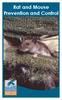 Rat and Mouse Prevention and Control General Information Rats and mice have been associated with people for hundreds of years. They live on our food and waste products and inhabit our buildings. Rodents
Preventing Rats on Your Property
 Preventing Rats on Your Property A Guide for Property Owners and Tenants A Healthy Homes Guide Contents How to Use This Guide 1 How the Health Department 1 Inspects for Rats How to Control Rats 2 Step
CITY & GUILDS NPTC LEVEL 2 AWARD IN THE SAFE USE OF PESTICIDES FOR VERTEBRATE PEST CONTROL FOR RATS AND MICE (QCF) (PA-R&M) 601/2256/0
 CITY & GUILDS NPTC LEVEL 2 AWARD IN THE SAFE USE OF PESTICIDES FOR VERTEBRATE PEST CONTROL FOR RATS AND MICE (QCF) (PA-R&M) 601/2256/0 QUALIFICATION Independently Assessed Essential Qualification Information
Fertilizer, Weed Control, Grubs, and General Application Questions
 Lawn Care FAQ s Fertilizer, Weed Control, Grubs, and General Application Questions Why do we have so many weeds? Dandelions in particular, weeds in general, do not seem concerned about how long lawn has
Rodent monitoring and control outdoors: What do you do when outdoors no longer exists!
 Rodent monitoring and control outdoors: What do you do when outdoors no longer exists! Introduction The routine use of rodent baits within food factories has declined in recent years, driven primarily
Conquer Pest Control Ltd. Mammal Control
 Mammal Control Effective Rodent Control to minimise risks and avoidable costs Rodents are the largest group of mammals with over 1500 representative species worldwide, but just 15 are known to reside in
suscon Green One application. 3 years control against grass grub. Grass grub damaged pasture
 suscon Green One application. 3 years control against grass grub. Grass grub damaged pasture suscon Green is a dust free, controlled release granule that controls Grass Grub in newly established pasture
Standard Operating Guideline Pest/Rodent Control
 Standard Operating Guideline (SOG) Title: PEST/RODENT CONTROL District Name: Date Prepared: Date Revised: OBJECTIVE: - Ensuring effective system-wide preventive and predictive maintenance actions - Ensure
INTEGRATED PEST MANAGEMENT
 INTEGRATED PEST MANAGEMENT Pests, such as insects and rodents, can be a serious problem in a restaurant. They can contaminate food supplies as well as damage facilities. More importantly, they can also
How To Inspect For Rodents on Your Property
 How To Inspect For Rodents on Your Property Building Question Yes No Necessary Correction if "Yes" 1. Does my home (or other structure) have gaps or holes bigger than 1/4 inch: a. In the foundation? Seal
Pest Control Methods and Tips
 Waterway Technote Pest animals Contents Benefits of animal pest control 1 Common pest animal species found in riparian areas and control methods 2 Protecting plants from animal pests 3 Regional pest specific
TransGrid Pesticide Use Notification Plan For Community Consultation
 TransGrid Pesticide Use Notification Plan For Community Consultation CONTENTS PAGE 1 INTRODUCTION... 3 2 PUBLIC PLACES COVERED BY THIS PLAN... 6 3 NOTIFICATION ARRANGEMENTS... 8 4 WHAT INFORMATION WILL
PAINT REMOVAL SYSTEM PAINT REMOVAL SPECIFICATION SAFE WORK METHOD STATEMENT FOR LEAD PAINT REMOVAL
 PAINT REMOVAL SYSTEM PAINT REMOVAL SPECIFICATION SAFE WORK METHOD STATEMENT FOR LEAD PAINT REMOVAL CONTENTS: 1.0 AWARENESS AND PRECAUTION 2.0 TEST SAMPLING & REMOVAL EVALUATION 3.0 SITE EVALUATION 4.0
Idaho Falls School District 91 Effective Date January 25, 2010
 PLN-4 CONTENTS 1. PURPOSE... 2 2. SCOPE AND APPLICABILITY... 2 3. SPIDERS... 2 4. COCKROACH CONTROL... 3 PLN-4 1. PURPOSE It is the policy of Idaho Falls School District #91 to provide a place of education
CORN IS GROWN ON MORE ACRES OF IOWA LAND THAN ANY OTHER CROP.
 CORN IS GROWN ON MORE ACRES OF IOWA LAND THAN ANY OTHER CROP. Planted acreage reached a high in 1981 with 14.4 million acres planted for all purposes and has hovered near 12.5 million acres since the early
I. RECOMMENDED PRACTICES BASED ON GOOD AGRICULTURAL PRACTICES (GAP) AND GOOD MANUFACTURING PRACTICES (GMP)
 CAC/RCP 51-2003 Page 1 of 8 CODE OF PRACTICE FOR THE PREVENTION AND REDUCTION OF MYCOTOXIN CONTAMINATION IN CEREALS, INCLUDING ANNEXES ON OCHRATOXIN A, ZEARALENONE, FUMONISINS AND TRICOTHECENES CAC/RCP
BANANA PRODUCTION. ARC-Institute for Tropical and Subtropical Crops. Banana Production - English
 BANANA PRODUCTION ARC-Institute for Tropical and Subtropical Crops Banana Production - English BANANA PRODUCTION Compiled by Directorate Communication National Department of Agriculture and W. Willemse,
Protection Against Hantavirus. How to safely clean-up rodent droppings, dead rodents, and nests
 Protection Against Hantavirus How to safely clean-up rodent droppings, dead rodents, and nests 1 Hantavirus Carriers Other culprits include: the white-footed mouse, the rice rat, and the cotton rat Deer
This Food Safety Plan was developed in New York as an example for growers. Each grower must develop their own plan which fits their operation.
 G1 This Food Safety Plan was developed in New York as an example for growers. Each grower must develop their own plan which fits their operation. This is a food safety and security program which incorporates
PART TWO 5. PEST CONTROL
 PRT TWO 5. PEST CONTROL Section Page 5. Contents 1 5.1 Why is pest control important? 2 5.2 What are the legal requirements for pest control? 5.2.1 Which operations does the law apply to? 3 5.2.2 What
4THE UNIVERSITY OF THE STATE OF NEW YORK
 4THE UNIVERSITY OF THE STATE OF NEW YORK GRADE 4 ELEMENTARY-LEVEL SCIENCE TEST WRITTEN TEST JUNE 6, 2011 Student Name School Name Print your name and the name of your school on the lines above. The test
Primary Industries Certificate III in Rural Operations (AHC32810)
 Primary Industries (AHC32810) based on the Agriculture, Horticulture and Conservation and Land Management Training Package () version 8 Effective from 2012 Date published October 2011 Updated February
IPM Plan for Campus Landscape
 Created June 2014 IPM Plan for Campus Landscape Statement of Purpose The purpose of this integrated pest management (IPM) plan is to guide the use of environmentally sensitive pest management strategies
SAMPLE INTEGRATED PEST MANAGEMENT (IPM) BID SPECIFICATIONS FOR COMMERCIAL PEST CONTROL SERVICES
 1. GENERAL SAMPLE INTEGRATED PEST MANAGEMENT (IPM) BID SPECIFICATIONS FOR COMMERCIAL PEST CONTROL SERVICES Ornamental & Turf & Arborist (Tree Care) Full Service Contract Includes Pesticide Applications
Virginia Gardener http://www.hort.vt.edu/envirohort
 The Virginia Gardener http://www.hort.vt.edu/envirohort Name Help Sheets: Things Plants Need There are certain things that every living thing needs in order to live and grow. Just like you, plants need
Integrated Pest Management (IPM)
 Integrated Pest Management (IPM) in crops and pastures Integrated Pest Management (IPM) means using a combination of biological, cultural and chemical control methods to manage pest problems. The term
Integrated Pest Management (IPM) Policy
 Integrated Pest Management (IPM) Policy What is Integrated Pest Management (IPM)? Integrated pest management (IPM) is an approach to pest control that utilizes regular monitoring and record keeping to
Ecologically based weed management! Chuck Mohler! Cornell University!
 Ecologically based weed management! Chuck Mohler! Cornell University! Outline! Understanding weeds! Behavior of wandering perennials! Tillage and emergence cues! Life and death of weed seeds in the soil!
Outline. What is IPM Principles of IPM Methods of Pest Management Economic Principles The Place of Pesticides in IPM
 Improving Control Systems in Thailand for Plant and Plants Products Intended for Export to the European Union co-funded by the European Union and Thai Department of Agriculture Preharvest Use of Pesticides
CORPORATE POLICY STATEMENT NO. 12 MANAGEMENT OF PEST ANIMALS
 1. OBJECTIVE CORPORATE POLICY STATEMENT NO. 12 MANAGEMENT OF PEST ANIMALS August 2015 To provide direction and guidance for the management of pest animals on lands and waters managed by the Department
Integrated Pest Management Program Contract Guide Specification - 2005 Revision -
 Public Buildings Service National Capital Region Integrated Pest Management Program Contract Guide Specification - 2005 Revision - (This Document is Intended for General Guidance Only And Does Not Pertain
Structural Integrated Pest Management Program: Contract Specifications for INSERT YOUR FACILITY NAME HERE
 Model IPM Contract Structural Integrated Pest Management Program: Contract Specifications for INSERT YOUR FACILITY NAME HERE Premises covered by this specification: 1. 2. 3. 4. 5. (Attach additional list
RECOMMENDED COFFEE WAREHOUSE STORAGE PRACTICES
 45 Broadway, New York, NY 10006 (212) 766-5854 Fax (212) 766-5815 RECOMMENDED COFFEE WAREHOUSE STORAGE PRACTICES I. LOCATION AND PHYSICAL STRUCTURE OF WAREHOUSE Any location for the storage of coffee should
Mice and Rats in and around Schools
 Mice and Rats in and around Schools University of Nebraska Lincoln Extension To Know Your Enemy is to Control Your Enemy Identification (Morphology) Know Abilities (Physiology) Know Habits (Behavior) Know
SKIN CONDITIONS IN PIGS
 DEPARTMENT: AGRICULTURE SKIN CONDITIONS IN PIGS Jenny Turton 2001 Compiled by Directorate Communication, Department of Agriculture in cooperation with the ARC-Onderstepoort Veterinary Institute Printed
Decision Document E92-02
 Agriculture Canada Food Production and Inspection Branch Direction générale, Production et inspection des aliments Pesticides Directorate Direction des pesticides Decision Document E92-02 PRODUCT MANAGEMENT
Safer Pest Control for Child Care Facilities
 Safer Pest Control for Child Care Facilities A Guide to Help You Get Started Contents About This Guide 1 Keeping Children Safe 1 Setting Up an Integrated Pest Management Plan 1 1. Look for Signs of Pests
Fayette County Appraisal District
 Fayette County Appraisal District Agricultural Guidelines July 7, 2010 A SUPPLEMENT TO THE STATE OF TEXAS PROPERTY TAX MANUAL FOR THE APPRAISAL OF AGRICULTUAL LAND AND WILDLIFE MANAGEMENT ACTIVITIES AND
PEST MANAGEMENT (CSP Enhancements) January 2006 Enhancement Activity Task Sheet
 Reduced risks to ground and surface water quality Lower costs by limiting chemical applications to only when necessary To learn more about Integrated Pest Management go to the following website: http://extension.usu.edu/files/gardpubs/ipm01.pdf
TERMIDOR DRY TERMITICIDE & INSECTICIDE
 CAUTION KEEP OUT OF REACH OF CHILDREN READ SAFETY DIRECTIONS BEFORE OPENING OR USING TERMIDOR DRY TERMITICIDE & INSECTICIDE ACTIVE CONSTITUENT: 5 g/kg FIPRONIL For the control of termites and nuisance
CODE OF PRACTICE FOR THE PREVENTION OF RODENT INFESTATIONS IN POULTRY FLOCKS
 CODE OF PRACTICE FOR THE PREVENTION OF RODENT INFESTATIONS IN POULTRY FLOCKS The Control of Salmonella CONTENTS 1. Introduction 3 2. Significance of infestation 4 3. Biology and characteristics 3.1 Basic
AP ENVIRONMENTAL SCIENCE 2012 SCORING GUIDELINES
 AP ENVIRONMENTAL SCIENCE 2012 SCORING GUIDELINES Question 3 The active ingredients in many pesticides are chemical compounds that kill organisms such as insects, molds, and weeds. Proponents claim that
Guide to machinery costs and contract rates
 SEPTEMBER 009 PRIMEFACT 93 (REPLACES AGFACT M.6) Guide to machinery costs and contract rates Salahadin Khairo Economist Trangie Agricultural Research Centre, Trangie Lloyd Davies Economist, Tocal Agricultural
How to make a Solitary Bee Box
 How to make a Solitary Bee Box **Note: The following instructions include the use of tools that may be dangerous. Ensure there is adult supervision with children. Time: 1 hour People: 1-2+ Materials: Wood
FARMING FOR THE FUTURE How mineral fertilizers can feed the world and maintain its resources in an Integrated Farming System
 How mineral fertilizers can feed the world and maintain its resources in an Integrated Farming System european fertilizer manufacturers association Global trends in population growth (Population 1000 million),
What to do if your property is flooded with sewage
 What to do if your property is flooded with sewage Is there a health risk associated with sewage flooding? If you adopt basic hygiene procedures, and follow the instructions provided, you're unlikely to
Small Scale Poultry Housing
 Small Scale Poultry Housing Phillip J. Clauer, Poultry Extension Specialist, Animal and Poultry Sciences Small scale poultry coops seem to be built in almost every possible shape and size. Those building
Integrated Pest Management Program Contract Guide Specification - 1999 Revision -
 Integrated Pest Management Program Contract Guide Specification - 1999 Revision - This Document is Intended for General Guidance Only And Does Not Pertain to Any Actual Contract 1. GENERAL A. Description
INFORMATION SHEET ON TERMITES & TERMITE MANAGEMENT PROCEDURES
 INFORMATION SHEET ON TERMITES & TERMITE MANAGEMENT PROCEDURES IMPORTANT INFORMATION: The Australian Standard AS 3660.2 Protection of buildings from subterranean termites provides details for minimising
Agricultural Production and Research in Heilongjiang Province, China. Jiang Enchen. Professor, Department of Agricultural Engineering, Northeast
 1 Agricultural Production and Research in Heilongjiang Province, China Jiang Enchen Professor, Department of Agricultural Engineering, Northeast Agricultural University, Harbin, China. Post code: 150030
Pesticide Spills. Chapter 26. In This Chapter. Keywords. Accidents. Pesticides Act and Environmental Protection Act
 Chapter 26 Pesticide Spills In This Chapter Keywords Accidents After learning the information in this chapter, you will be able to: 1. Define a spill. 2. Describe when a spill must be reported to the Spills
Guide to agrichemical use in Resource Management Plans Northland Region as at October 2011
 Guide to agrichemical use in Resource Management Plans Northland Region as at October 2011 Northland Regional Air Quality Plan Note: This guide is intended to assist users and applicators understanding
Maize is a major cereal grown and consumed in Uganda and in the countries of Kenya, Sudan, Democratic Republic of Congo and Rwanda
 Maize Production in Uganda Farmers have improved maize yields from 1,000Kg/ha to 3,000-5,000 Kg/ha using the recommended technologies Maize is a major cereal grown and consumed in Uganda and in the countries
RISK ASSESSMENT TOOL Panama disease prevention checklist Banana farm practices
 RISK ASSESSMENT TOOL Panama disease prevention checklist Banana farm practices How to use this checklist By considering the various practices associated with banana growing, this checklist will help to
ORIENTAL COCKROACH PREVENTION & CONTROL
 ORIENTAL COCKROACH PREVENTION & CONTROL DESCRIPTION Oriental cockroaches are dark brown to black in color and 1-1¼ inch in length. The females have only traces of wings, while males have short wings which
ULTIMATE TERMITE SOLUTION WATER BASED TERMITICIDE QUICK ACTION LONG LASTING CONTROL ELIMINATES TERMITES ODOURLESS PEOPLE, PET & PLANT FRIENDLY
 ULTIMATE TERMITE SOLUTION WATER BASED TERMITICIDE QUICK ACTION LONG LASTING CONTROL ELIMINATES TERMITES ODOURLESS PEOPLE, PET & PLANT FRIENDLY TERMITES CAN DEVOUR YOUR HOME! Australia s subterranean termites
BiO-STiX Drain Cleaner & Deodorizer
 BiO-STiX Drain Cleaner & Deodorizer Material Safety Data Sheet IDENTIFICATION OF THE MATERIAL AND SUPPLIER Product Name: BiO-STiX Drain Cleaner & Deodorizer Pack Size/Container Type: Blister Pack containing
The Fly. Quality Pest Management. Live Cleaner. Live Healthier. Cluster Fly. The weather is warming up and as if from no where the flies appear.
 The Fly The weather is warming up and as if from no where the flies appear. House Fly Flies will pitch and feed on just about anything including faeces to your lunch! They spread disease and are a generally
A quick guide to our floodcare scheme
 A quick guide to our floodcare scheme What to do in case of sewer flooding We re here to help We appreciate that dealing with the results of sewage flooding is always unpleasant and we know how upsetting
UNITED STATES DEPARTMENT OF THE INTERIOR BUREAU OF LAND MANAGEMENT
 Form 1221-2 (June 1969) UNITED STATES DEPARTMENT OF THE INTERIOR BUREAU OF LAND MANAGEMENT MANUAL TRANSMITTAL SHEET Subject: BLM Manual 5716 Protective Measures Release 5-161 Date 7/7/15 1. Explanation
How To Ensure Safety On A Caravan Site
 EAST CAMBRIDGESHIRE DISTRICT COUNCIL A Site Operators Guide to Health and Safety Introduction The Health and Safety at Work Etc. Act 1974 places a duty on all persons having control of a caravan site to
Predators and how they may affect aviary design
 Chapter 2 Predators and how they may affect aviary design Predators can come in many forms, but any list might include foxes, rats, weasels, stoats, martens, owls, birds of prey, mice, snakes and insects
Rodent Control in Crops. Glenn Shewmaker and Danielle Gunn
 Rodent Control in Crops Glenn Shewmaker and Danielle Gunn POPULATION CONTROL Develop an integrated approach based on knowledge of: the animal's ecology and behavior information on all available control
environment briefing02
 PRODUCED BY THE SAFETY, HEALTH & ENVIRONMENT GROUP OF THE ENERGY NETWORKS ASSOCIATION - JULY 2006 environment briefing02 transporting electricity Overhead Lines or Underground Cables? Introduction The
PRELIMINARY FOCUS GROUP STUDY: AUSTRALIAN FARMER ATTITUDE TO ON-FARM RISK MANAGEMENT AND INSURANCE
 PRELIMINARY FOCUS GROUP STUDY: AUSTRALIAN FARMER ATTITUDE TO ON-FARM RISK MANAGEMENT AND INSURANCE Prepared by: Dr Jay Cummins, Mr Ashley Lipman, Ms Heather Feetham June 2014 Authors acknowledge that this
16. Storm water drainage
 16. Storm water drainage There are three principal ways to dispose of rainwater from roofs, courtyards and paved areas: storm water sewers, soakaways and collection in storage tanks. Storm water sewers,
The Ultimate Guide to Pigeon Feed
 The Ultimate Guide to Pigeon Feed Learn the champions secret winning formula, click the link below to learn more www.pigeonracingformula.com Table of Contents Ingredients... 3 Peas... 3 Corn... 3 Pop Corn...