
A Client Care Module: UNDERSTANDING ABUSE
|
|
|
- Derrick Warner
- 10 years ago
- Views:
Transcription
1 A Client Care Module: UNDERSTANDING ABUSE May be copied for use within each physical location that purchases this inservice.

2 Developing Top-Notch CNAs, One Inservice at a Time A Client Care Module: UNDERSTANDING ABUSE We hope you enjoy this inservice, prepared by registered nurses especially for nursing assistants like you! Instructions for the Learner If you are studying the inservice on your own, please do the following: Read through all the material. You may find it useful to have a highlighting marker nearby as you read. Highlight any information that is new to you or that you feel is especially important. If you have questions about anything you read, please ask. Take the quiz. Think about each statement and pick the best answer. Check with your supervisor for the right answers. You need 8 correct to pass! Print your name, write in the date, and then sign your name. Keep the inservice information for yourself and turn in the quiz page to no later than. Show your Inservice Club Membership Card to so that it can be initialed. In the Know at [email protected] with your comments and/or suggestions for improving this inservice. THANK YOU! After finishing this inservice, you will be able to: List at least three common types of abuse seen in children and the elderly. Explain why children and the elderly are most at risk for being victims of abuse. Name at least three signs (each) that may mean a client is being physically, emotionally, sexually or financially abused. Explain how health care workers can help prevent abuse. Describe the process at your workplace for recognizing and reporting abuse.

3 Developing Top-Notch CNAs, One Inservice at a Time Inside This Inservice: An Overview of the Problem Child Abuse 3 Elder Abuse 4 Physical Abuse 5 Emotional Abuse 6 Financial Abuse 7 Sexual Abuse 8 Preventing Abuse 9 Reporting Abuse In the Know, Inc. May be copied for use within each physical location that purchases this inservice from In the Know. All other copying or distribution is strictly prohibited. 2 A Client Care Module: Understanding Abuse INNOCENT VICTIMS OF ELDER ABUSE Meet Joan. Joan really appreciated her grandson for helping her run errands. Michael had always been a sweet boy and seemed to genuinely care for his grandmother. It was the perfect arrangement. He would take her to the bank and wait while she deposited her check. Then he would drive her wherever she needed to do her shopping and other errands. When the winter weather turned cold, Michael told his grandmother that it would be easier and safer if he just did the errands for her while she stayed warm and cozy at home. Joan didn't think twice about signing her check over to her grandson, who would make her purchases and then deposit the rest into her account. It took several months to realize that while Michael was doing the shopping, he was also pocketing the rest of Joan's money. When Joan bounced a check for her mortgage, she found all her money was gone. This is Don. Don desperately wanted to remain in his home but really needed help with his activities of daily living. He called an agency and quickly decided to hire Mindy, a Certified Nursing Assistant. The agency promised Don that Mindy would be able to meet his basic needs. Mindy did the best she could, but Don's needs were a bit beyond her experience level. At first, she began to lose patience with how slowly Don moved. Later, she started to shove him and out of frustration she began to shout and call him names. One day, she shoved him off of the toilet because he needed help cleaning himself after a bowel movement. Neighbors heard him crying in pain and called the police. Don was found lying on the bathroom floor with a broken hip and bruises all over his body in various stages of healing. Keep reading to learn all about abuse and neglect. In Part 1 of this series, you will read about abuse how to recognize if someone is being abused, how to report it and even how to prevent yourself from abusing clients. In Part 2 of this series, you ll learn how to recognize, report and prevent neglect.

4 2012 In the Know, Inc. Page 2 AN OVERVIEW OF THE PROBLEM Abuse is a serious problem in our communities and in our institutions. People are most at risk for abuse when they are unable to take care of themselves. Can you name the two groups of people that are least able to care for themselves? They are children and the elderly. What Exactly is Abuse? Abuse is some action by a trusted individual that causes physical and/or emotional harm to the victim. There are a number of different kinds of abuse, including: Physical abuse Sexual abuse Where Does Abuse Happen? DOMESTIC ABUSE: Abuse can happen in every community around the United States. Every day, there are children and elderly people being abused in their own homes. The abuser is usually a family member, often someone with psychological problems. IN THE NEWS: A California man was arrested and charged with kidnapping and abusing his 82 year old grandmother after he got "angry" because she was driving too slowly. He "pounded" on the dashboard and "pushed" her right leg down to make the car go faster. Then he pulled his grandmother out from the driver's seat, "threw" her in the passenger's seat and punched her in the face several times after she tried to leave. Heroin was found in the car. Sadly, the grandmother refused medical attention and even helped her grandson get his sentence reduced. INSTITUTIONAL ABUSE: Abuse and neglect can also happen in an institutional setting, such as a day care center or a nursing home. Abuse that happens in institutions can go on for a long time without detection. In long term care, staff, visitors and even other residents can be the abusers. Emotional abuse (includes verbal abuse) IN THE NEWS: A nursing home in Ohio had its rating drop from 5 stars to 2 stars after a hidden camera caught nurse's aides repeatedly abusing a resident. The investigation led to eight employees being disciplined and two aides being convicted. Financial abuse (including identity theft) Grab your favorite highlighter! As you read this inservice, highlight five things you learn that you didn t know before. Share this new information with your co-workers! Negligence involves actions (or failure to take actions) that result in injury to a client. Malpractice is claimed when a client is injured as a result of negligence, carelessness or lack of skill. Assault is threatening to harm a person. Telling a resident he will be slapped if he soils his clothes is an example of assault. Battery is actually harming a person. Pushing, hitting or even forcing someone to eat are all forms of battery. Domestic Abuse is abuse by a spouse, intimate partner or family member. Involuntary seclusion is separating a person from other s against the person s will. Confining a client to his room is an example of this type of abuse.

5 2012 In the Know, Inc. Page 3 FOCUS ON CHILD ABUSE Child abuse can happen in any type of family small, large, rich, poor, white, black, etc. It can also happen to children of all ages. Infants and toddlers are more likely than older children to be seriously injured or killed by child abuse. Abuse to adolescents can go unrecognized, since teenagers might try to hide the problem. Most often, children are abused by their families or guardians, but there are cases of children being abused by day care workers or other caregivers. A report of child abuse is made every ten seconds. More than five children die every day as a result of child abuse. Approximately 80 percent of children that die from abuse are under the age of 4. About 30 percent of abused and neglected children will later abuse their own children, continuing the horrible cycle of abuse. GET INVOLVED! ABUSED CHILDREN MIGHT: Say they deserve to be punished. Act frightened of parents or other adults. Get scared when other kids cry. Be very quiet or very aggressive. Sit and stare into space. Be afraid to go home. Act much older than they are. Try to get attention by being naughty. Try to run away from home. Get bad grades at school. Attempt suicide. NEGLECTED CHILDREN MIGHT: Beg for or steal food. Appear in dirty or torn clothing much of the time. Miss a lot of school. Act very tired all the time. Show no emotion on their faces. Talk in a whisper or whine. Try to get attention by being naughty. Abuse alcohol or drugs. Take on adult responsibilities. Talk about being left alone or left in charge of younger siblings. If you would like to get involved in preventing child abuse in your community, go to: pinwheelsforprevention.org. This program, run by the folks at Prevent Child Abuse America hopes to engage all people in our society to act to prevent abuse and neglect from ever happening in the first place. WHO IS AT RISK? Studies have shown that certain things put children more at risk for abuse. These factors include: Living with a parent who has a drug or alcohol problem or a parent who was abused as a child. Living in a family where the parents are having marriage problems. Being a special needs child, with physical and/or mental disabilities. Living with parents who are unemployed or who have money problems.

6 2012 In the Know, Inc. Page 4 FOCUS ON ELDER ABUSE Elder abuse is defined as harm done to persons over the age of 65 by someone who is in a position of being trusted. There are two types of elder abuse. Domestic elder abuse happens in the person s home. Institutional elder abuse occurs in a nursing home or other long term care setting. Even if a caregiver is trying to help, it can be considered abusive if they use enough force to cause unnecessary pain or injury to an elderly person. We can only guess at the number of elderly who are abused every year. The best estimate is that there are about 5 million cases per year, but authorities say that only about 750,000 of them are reported. Elders don t always report the abuse because they are: Afraid that the abuser will find out and be angry. Afraid that the authorities might take their family members away. Ashamed that their family member is abusing them. The client is not allowed to speak to you unless another family member is present. The client is punished for being incontinent. You see family members abusing drugs or alcohol. WHO IS AT RISK? You hear a client being threatened. You hear two different stories about how the client got a bruise or other injury. A family member refuses to allow you to complete the client s care. Abuse can happen to anyone. However, there are certain factors that seem to increase the risk of abuse. Elderly people are more likely to be abused if: They are physically and/or mentally impaired. Their condition is getting worse. They are isolated from their family or community. They are dependent on others for all their needs. Know the signs! It should send up a red flag if: Their caregivers are stressed out. Their caregivers are not trained for the job of client care. Their caregiver is a family member with emotional problems or who is addicted to drugs or alcohol. Whistleblowers are heroes who speak out when they witness abuse in the workplace, and have the power to make it STOP! When you observe this behavior, do you tell the truth? Or, do you ignore the situation even though clients may suffer? WOULD YOU BLOW THE WHISTLE IF... One day, you witness a coworker slapping her client? Would it make a difference if you saw that coworker slapping other clients previously? You overheard your client s adult son tell his mother, You stink and I can t stand being in the same room with you.? You learned that your supervisor was withholding food and medicine from a client because the client was unable to pay for those services?

7 2012 In the Know, Inc. Page 5 A CLOSER LOOK AT PHYSICAL ABUSE Physical abuse is the use of physical force that may cause injury, pain or impairment. Physical abuse includes such things as: HELPING DON Think about Don from the beginning of this inservice and discuss your answers to these questions with your supervisor and co-workers: What do you think went wrong in this situation? How could the situation have been prevented? Have you ever accepted a client assignment that was beyond your level of experience? If yes, how did you handle any difficulties or frustrations that arose? Mindy is the type of person who loses her cool under pressure. Have you ever worked with someone like Mindy? How would you respond to someone like Mindy if you were to witness an angry outburst or physical abuse of a client? Striking, hitting, slapping or beating. Pushing or shoving. Shaking or choking. Kicking. Hair pulling. Pinching or scratching. Biting or spitting. Burning. Using physical restraints inappropriately. Know the signs! Be prepared to report any of these signs: Burns, including cigarette or hot water burns. Unexplained bruises, especially those in the shape of a belt or fingers. Multiple bruises that are at different stages of healing. (New bruises are red, then they turn blue, then blackpurple, then dark green, then yellow.) Frequent trips to the emergency room. Restraining someone by giving too much medication. Taking away all food or water or forcing food. Putting someone out, unprotected, in severe weather. Using physical punishment. Making inappropriate sexual contact. Handling someone roughly during client care. Cuts, scrapes or bite marks. Black eyes or broken eyeglasses. Signs of sexual assault such as bruises in the genital area, unexplained vaginal bleeding, and bloody or torn underwear. Unexplained venereal disease. Spots where hair seems to have been pulled out. Rope marks, especially on wrists or ankles. Sadly, physical abuse can easily go unrecognized and unreported. It may be that the victim cannot tell someone what is happening or it may be that witnesses are afraid to speak out. IN THE NEWS: A nurse in England was found guilty of abusing six residents in a nursing home. All six victims had dementia and could not tell their loved ones what was happening. The abuse had apparently gone on for years before several other staff members finally spoke out. During the trial, one staff member testified that the abusive nurse would tell them, No one will ever put in a complaint against me because my husband works in admin and he would find out and their life wouldn t be worth living. Staff members in the home testified that they witnessed the nurse making dementia patients walk like rag dolls by kicking their heels from behind. She was also seen screaming at residents and forcing medication and food in their mouths.

8 2012 In the Know, Inc. Page 6 A CLOSER LOOK AT EMOTIONAL ABUSE Emotional abuse is when someone causes anguish, pain or distress to another person by what they say or do. Emotional abuse includes: Insults. Threats. Intimidation. Harassment. Yelling or screaming. Treating an elderly person like an infant. Constant criticism. Refusing to listen to someone. Giving someone the silent treatment. Humiliation, such as laughing when an elderly client wets their bed. Keeping someone away from family, friends or the community. Know the signs! Watch for and report clients who: Seem to be afraid of certain caregivers or family members. Are yelled at by family members or caregivers. Are made fun of by family members or caregivers. Are suddenly very agitated. Are suddenly confused or are more confused than usual. Talk about being worthless. Cry all the time. Never seem to get enough sleep. Have a sudden change in appetite. Have big changes in their weight (either up or down). Seem very quiet or just stop talking suddenly. Talk about being helpless. Seem scared to talk to you about their lives or their health. Are angry all the time. While physical, emotional and sexual abuse are all horrible in different ways, people who are emotionally abused tend to go undiagnosed most often. Victims of emotional abuse (and their loved ones) may not even believe the abuse is happening if there is no physical evidence. IN THE NEWS: In her new book Breaking the Chains to Freedom, 37 year old Esther Adler describes being married to an emotionally abusive man. Emotional abuse can be difficult to recognize and prove. Adler recalls, being physically abused by her father as a child, and says, but with my husband I couldn t understand I was being abused. I didn t understand why I was hurt and in pain. I couldn t pinpoint it. She also sends the warning that, Emotional abusers are often liked by others. This is why her children sided with her husband when she finally decided to file for divorce. Working with clients in the home often requires coming up with creative solutions to uncommon problems. THE PROBLEM: You are caring for Joan, the 76 year old woman from the beginning of this inservice. After Joan discovers all her money is gone, she confronts Michael. You hear Michael tell Joan that he deserved the money and that she should have been paying him anyway. You hear Joan crying when Michael threatens to never come back if she tells anyone about the theft. WHAT YOU KNOW: You know Michael is being emotionally abusive in an attempt to cover up the theft. GET CREATIVE: What will you do? Think of three ways you may be able to help Joan with this. TALK ABOUT IT: Share your ideas with your coworkers and supervisor and find out how they would solve this problem.

9 2012 In the Know, Inc. Page 7 A CLOSER LOOK AT FINANCIAL ABUSE Financial abuse includes the theft or misuse of someone s money or property by a trusted individual. This includes the following activities: IDENTITY THIEVES, MODERN DAY PICKPOCKETS The newest form of financial abuse is identity theft. Now, all a thief has to do is gather a few key pieces of a person s identity to rake in tons of stolen money. Example: An Occupational Therapist in the Midwestern U.S. stole the identity of a patient, then took out nearly $100,000 in loans. Seniors are at greater risk for identity theft than most people because they: Often have more cash and better credit than others, Are less technologically savvy, and Do not monitor their credit or bank accounts very closely. How can you help protect your senior clients from identity theft? What does your workplace do to protect your clients personal identification? Is it enough? Committing fraud. Getting money by lying about why it is needed. Forging checks. Cashing someone else s check without permission. Using someone s ATM card without permission. Forcing someone to change his or her will. Know the signs! Keep an eye out for clients who: Can t pay their bills for housing, food, basic clothing or medications even though they seem like they should have money to do so. Get credit card bills for stores they have never been to. Suddenly have new best friends. Talk about having to give money to others. Sadly, elder financial abuse is on the rise. In the majority of cases, abusers have a close connection to the victim and take advantage of this connection. Family members, friends, neighbors and caregivers are often the ones committing these crimes. IN THE NEWS: A man who was a personal live-in caregiver in Canada was recently arrested in connection with a fraud investigation. He is accused of swindling an 84-year-old man who has Alzheimer s disease. It was reported that the caregiver lived with the man for just under a year, and while there, he is alleged to have stolen more than $100,000 by accessing the man s bank accounts. Police believe there may be more victims. Forcing someone to transfer property. Keeping someone away from his or her own home or money. Providing healthcare services to a client that are not really needed. Promising care in exchange for money and then not following through. Seem anxious about or don t know where their money is going. Have a family member who complains constantly about how much the client s care is costing. Have family members who appear suddenly and claim they have a right to the client s money.

10 2012 In the Know, Inc. Page 8 A CLOSER LOOK AT SEXUAL ABUSE Sexual abuse is any sexual contact of any kind with a person who has not given consent. Sexual abusers can be family members, medical staff and even other residents. Sexual abuse includes: Unwanted touching. Coerced nudity. Rape. Sexually explicit photographing. Sodomy. Know the signs! You should suspect sexual abuse if you see: Bruises around the breasts or genital area. Unexplained venereal disease or genital infections. Unexplained vaginal or anal bleeding. Torn, stained, or bloody underclothing. A client actually being sexually assaulted or raped. (This may seem obvious, but see the true story below.) Never be afraid to report if you suspect as sexual abuse. If your report is not taken seriously by your supervisor, go up the chain of command. Do whatever is necessary to protect your client from sexual abuse. IN THE NEWS: Mae Campbell, an 88 year old Baptist preacher's daughter who suffers from Alzheimer s Disease was sexually abused at least twice while she was a resident in a Kentucky nursing home. During one incident, Mae was sitting in the hallway, within sight of a nursing supervisor and other staff members, when a male resident walked up and ejaculated on her face. The nursing supervisor reportedly told the others not to tell anyone and that no harm had been done to Mae. A few months later, a nurse saw a second male resident with Mae in a room where he had blocked the door. He was nude from the waist down and Mae had semen on her. Again, the nurse was told by the supervisor "to go on and keep working and... not to discuss it with anyone," and that "there was no actual harm done to the patient." An investigation later uncovered that Mae had complained her throat was sore and she had soreness and bruising of her inner thighs. She also had complained of men trying to hurt her. Those complaints were never thoroughly evaluated and no action was ever taken. The only reason these events were ever uncovered was because a nursing assistant and a nurse spoke out during an interview regarding the wrongful death of another resident. Mae s family was informed of the abuse and she was taken out of the nursing home. Whether you work in home health or in a facility, think about the clients you care for right now. Ask yourself: Is it possible that any of my clients are being abused (physically, emotionally, financially, or sexually)? _ If so, what are the signs? What should I do about it? Who can I go to for support with this issue? What are the possible consequences if I don t get involved? Talk to your supervisors and co-workers. Find out what they would do.

11 YOU CAN PREVENT ABUSE 2012 In the Know, Inc. Page 9 1. Abuse is a serious problem in our communities and in our institutions. 2. The people most at risk for abuse are children and the elderly because they often cannot protect themselves from harm. 3. Abuse is some action by a trusted individual that causes physical and/or emotional harm to the victim. 4. Whistleblowers are heroes who speak out when they witness abuse in the workplace, and have the power to make it STOP! 5. Nursing Assistants are Mandated Reporters. That means you are required to report to the proper authorities if you observe or even just suspect a client is being abused. Studies have shown that 93% of nursing assistants have seen or heard of a client being mistreated by a family member or a coworker. You and your coworkers have to work together to prevent abuse. Here is what you can do: ALWAYS: Let your supervisor know if your client s family members seem stressed out. (Abuse is more likely to happen when people are stressed. Your supervisor may have some suggestions for community resources to help the family members.) Remember that clients from different cultures may communicate their needs in different ways. Listen to your clients with both your eyes and your ears. Know your own limits. If you feel overstressed, talk it over with your supervisor. Remember that ANGER is just one letter short of DANGER! Breathe deeply and count to ten if you feel yourself losing your temper during client care. Tell your supervisor if you find yourself unable to handle a specific client. It may be that more training will help. (For example, an inservice on Alzheimer s disease may help you understand and deal with Alzheimer s client s better.) Be a model of professional behavior for your coworkers. NEVER: Keep quiet if the abuser is a coworker. While it may seem like you are squealing on a coworker, if you stay quiet you could be guilty of neglect, yourself. You will be helping both the client and the coworker if you speak up. Take your personal problems out on the clients. Leave your problems at home. Let difficult clients get the better of you. Treat everyone with kindness, respect and lots of patience! Threaten or make fun of a client. Don t appear to approve by just standing quietly by while a coworker does it either. Freak out if a client or family member accuses you of abuse when you know you didn t do anything wrong. Discuss the situation with your supervisor, telling him or her all the facts.

12 2012 In the Know, Inc. Page 10 HOW DO YOU REPORT ABUSE NURSING ASSISTANTS ARE MANDATED REPORTERS! A Mandated Reporter is a professional who has regular contact with vulnerable people and is required to report to the proper authorities if abuse is observed or suspected. You can make reports anonymously, but you can also be charged with negligence for failing to make a report. When making a report, be prepared to answer the following questions: Is the client in immediate danger? Is the client in need of emergency medical treatment? Does the client have any current medical problems? What is the client s current living situation? Have you seen or heard yelling, hitting or other abusive behavior? Do you know the identity of the abuser? Now that you ve read this inservice on abuse, jot down a couple of things you learned that you didn t know before. WHAT WILL HAPPEN NEXT? If the situation is an emergency, the authorities forward the report to the police or paramedics. The case is assigned to a staff member who contacts the victim. In some states, if the victim is a competent adult, he or she has the right to refuse an investigation. If appropriate, the authorities will conduct an investigation of the situation. They may interview health care providers, police, clergy, neighbors, family and friends. Based on what the investigation shows, the victim may be moved to a safer location. If the authorities find that it is safe for the victim to remain in his or her current living situation (or an adult victim refuses to leave), they may arrange for a variety of support, including: Mental health assessments. Counseling for the victim and/or the abuser. Support groups for stressed-out caregivers. Legal services such as restraining orders that keep an abuser away from the victim or lawsuits to get back stolen funds.

13 Developing Top-Notch CNAs, One Inservice at a Time EMPLOYEE NAME (Please print): _ DATE: I understand the information presented in this inservice. I have completed this inservice and answered at least eight of the test questions correctly. EMPLOYEE SIGNATURE: _ SUPERVISOR SIGNATURE: _ Inservice Credit: A Client Care Module: Understanding Abuse Are you In the Know about abuse? Circle the best choice then check your answers with your supervisor! 1. You witness your client giving another Aide her login and password to her online bank account. You should: A. Report what you heard immediately. B. Do not report it. Your client can make her own decisions. C. Ask the client if you can have her login and password too. D. Ask your co-worker to explain why she needed the information. 2. Abused children are most often abused by: A. Nurses. C. Parents or Guardians B. Teachers. D. Older siblings. 3. An elderly person may not report being abused because they are: A. Afraid that the abuser will find out and be angry. B. Ashamed that their family member is abusing them. C. Afraid that the authorities might take their family members away. D. All of the above. 4. During a bath, you notice your client has some bruises on her arms and legs. She tells you it happened when another Aide bathed her too roughly. You should: A. Speak to the other Aide to confirm the story. B. Report your observations to your supervisor right away. C. Do nothing. This type of thing happens and cannot be avoided. D. Contact the police and the client s family members to have the client re-located. 5. True or False Giving a client the silent treatment is a form of emotional abuse. Self Study Group Study 1 hour 1 hour 6. True or False It s okay to accept a gift of money from a client, as long as it is for a job well done. 7. True or False It s not technically abuse if a client is abused by another resident in the facility. File completed test in employee s personnel file. 8. True or False You should never accuse a co-worker of abuse. This can be harmful to the reputation of your employer. 9. True or False A nursing assistant can be charged with negligence for failing to report abuse. 10. True or False Abuse is most likely to happen when people are stressed.

A Client Care Module: UNDERSTANDING ABUSE & NEGLECT
 877.809.5515 www.knowingmore.com [email protected] A Client Care Module: UNDERSTANDING ABUSE & NEGLECT 1998 2011 May be copied for use within each physical location that purchases this inservice. Inservices
Elder Abuse. Annual Compliance Education. This course contains annual compliance education necessary to meet compliance and regulatory requirements.
 Annual Compliance Education This course contains annual compliance education necessary to meet compliance and regulatory requirements. Instructions: To receive credit for completion: 1. Read the content
Nursing / Clinical Care Management Departments
 Nursing / Clinical Care Management Departments Experts suggest that 10% of all older adults are victims of abuse. Authorities believe that the reported cases are just the tip of the iceberg and that for
Elder Abuse. Together We Can Make This My World..Your World..Our World, Free of Elder Abuse!
 Elder Abuse Together We Can Make This My World..Your World..Our World, Free of Elder Abuse! What is Elder Abuse? Elder abuse is a term referring to any knowing, intentional, or negligent act by a caregiver,
SafeMinistryTraining.com.au Course Notes
 SafeMinistryTraining.com.au Course Notes 1. Introduction Welcome to the Safe Ministry Training course. We all want our churches to be safe places for everyone kids as well as adults. The purpose of this
Bruce W. Carter VAMC 1201 NW 16 Street Miami, FL 33132. Giovanna Delgado, Psy D
 Bruce W. Carter VAMC 1201 NW 16 Street Miami, FL 33132 Giovanna Delgado, Psy D What is Elder Abuse? Elder Abuse is the infliction of physical, emotional, or psychological harm on an older adult. Elder
It s hard to know what to do when you know or suspect that a friend or family member is living with violence.
 How can you help? A B It s hard to know what to do when you know or suspect that a friend or family member is living with violence. How do I know what is the right thing to do? Should I say something or
Cases and Stories of Abuse to Elderly in Nursing Homes ehow.com
 Top 5 To Try How to Place the Elderly in Nursing Homes Nursing Interventions in Elderly Drug Abuse Risk Factors for Elder Abuse Laws Preventing Elderly Abuse in Elderly Abuse in Ads by Google Cases and
Elder Abuse. What every nurse needs to know
 Elder Abuse What every nurse needs to know What is elder abuse? Maltreatment of people greater than 60 years old. The most common forms of abuse are: Neglect Financial Abandonment Physical Sexual Emotional
Government of Western Australia Department for Child Protection and Family Support. How do I recognise when a child is at risk of abuse or neglect?
 Government of Western Australia Department for Child Protection and Family Support How do I recognise when a child is at risk of abuse or neglect? Physical abuse Physical abuse is when someone is deliberately
ELDER ABUSE (Definitions) David Amesbury Workplace and HR Aged &Community Care Victoria
 ELDER ABUSE (Definitions) David Amesbury Workplace and HR Aged &Community Care Victoria What is Elder Abuse Elder abuse is the infliction of physical, emotional, and/or psychological harm on an older,
A Guide for the Non-Professional Provider of Supervised Visitation
 A Guide for the Non-Professional Provider of Supervised Visitation Superior Court of California County of Orange Answers To Your Questions A Guide for the Non-Professional Provider of Supervised Visitation
LEGAL ISSUES FOR THE CERTIFIED NURSE AIDE
 LEGAL ISSUES FOR THE CERTIFIED NURSE AIDE De Anna Looper, RN, CHPN, CHPCA Senior Vice President of Clinical Operations Carrefour Associates L.L.C. LEGAL ISSUES FOR THE CERTIFIED NURSE AIDE In today s society
Abuse and Neglect. What is our role! Objectives
 Abuse and Neglect What is our role! Objectives Be aware of what incidents are required to be reported under Texas Law Know to whom these reports should be given Know how to report abuse, neglect or exploitation
Abuse and Neglect of Vulnerable Adults
 RIGHTS & REALITY II Abuse and Neglect of Vulnerable Adults Kristin Kerschensteiner, Attorney Wisconsin Coalition for Advocacy Scope of the problem Introduction Elder abuse is a very serious problem in
ADULT ABUSE. We need your help to make it stop See it Hear it Report it!
 ADULT ABUSE We need your help to See it Hear it Report it! t it See it Hear it Report it See it Hear it Report it See it Hear it Report it See Thankfully, Cheshire East is a relatively safe place to live
Colorado Adult Protective Services *Section 18-6.5-108, C.R.S. Welcome. The goals of this training are to define:
 Mandatory Reporting of At-Risk Elder Abuse, Caretaker Neglect, and Exploitation* When and how to report abuse, caretaker neglect, and exploitation Colorado Adult Protective Services *Section 18-6.5-108,
i n s e r v i c e Resident Rights
 i n s e r v i c e Resident Rights The term resident rights refers to legislation that protects nursing home residents and provides for certain freedoms. Resident rights are extremely important and are
Self-Defense and Predominant Aggressor Training Materials
 Self-Defense and Predominant Aggressor Training Materials Self Defense and Defense of Self; There is a Difference The following materials provide an outline of topics to cover by someone in your community
IN A SMALL PART OF THE CITY WEST OF
 p T h e L a s t L e a f IN A SMALL PART OF THE CITY WEST OF Washington Square, the streets have gone wild. They turn in different directions. They are broken into small pieces called places. One street
SIGNS AND SYMPTOMS OF CHILD ABUSE AND NEGLECT
 SIGNS AND SYMPTOMS OF CHILD ABUSE AND NEGLECT The warning signs and symptoms of child abuse and neglect vary from child to child. Children have different ways of coping with abuse and the signs often depend
ELDER ABUSE. Nursing Home Abuse and Neglect
 ELDER ABUSE Nursing Home Abuse and Neglect Overview Nursing Home Regulations Prevalence of Nursing Home Abuse/ Neglect Types of Abuse/Neglect Examples of Abuse/Neglect Signs of Abuse/Neglect Reasons Abuse/Neglect
Is someone you know being abused? Do you know the warning signs?
 Is someone you know being abused? Do you know the warning signs? Help, Hope & Healing Are you concerned that someone is being abused, but don t know what to do? You may suspect abuse is happening to a
THE EFFECTS OF FAMILY VIOLENCE ON CHILDREN. Where Does It Hurt?
 THE EFFECTS OF FAMILY VIOLENCE ON CHILDREN Where Does It Hurt? Child Abuse Hurts Us All Every child has the right to be nurtured and to be safe. According to: Family Violence in Canada: A Statistical Profile
DOMESTIC VIOLENCE AND ELDER ABUSE: WHAT THEY ARE AND HOW TO RECOGNIZE THEM
 DOMESTIC VIOLENCE AND ELDER ABUSE: WHAT THEY ARE AND HOW TO RECOGNIZE THEM INTRODUCTION Domestic violence and elder abuse are frightening problems and they are very common. Unfortunately, even though domestic
4 Criminal and Family Law
 4 Criminal and Family Law ENG 004/2010 FAMILY LAW FOR WOMEN IN ONTARIO All Women. One Family Law. Know your Rights. Criminal and Family Law This booklet is meant to give you a basic understanding of legal
Related KidsHealth Links
 Grades 9 to 12 Personal Health Series KidsHealth.org/classroom Teacher s Guide This guide includes: Standards Related Links Discussion Questions Activities for Students Reproducible Materials Standards
Resident Rights. Here is a listing of those rights: A Right to Dignity the right to:
 Resident Rights If you are considering placing a loved one in a nursing home or know of someone already receiving care, it is important to know under Michigan law, residents of long term care are guaranteed
NATIONAL CENTER ON ELDER ABUSE WASHINGTON, DC
 15 Questions & Answers About Elder Abuse NATIONAL CENTER ON ELDER ABUSE WASHINGTON, DC The National Center on Elder Abuse (NCEA) serves as a national resource for elder rights advocates, adult protective
Understanding Consent to Sexual Activity. Public Legal Education and Information Service of New Brunswick
 Understanding Consent to Sexual Activity Public Legal Education and Information Service of New Brunswick NO means NO Understanding Consent to Sexual Activity This pamphlet provides information on what
HealthStream Regulatory Script
 HealthStream Regulatory Script Identifying and Assessing Victims of Elder Abuse and Neglect Release Date: June 2009 HLC Version: 602 Lesson 1: Introduction Lesson 2: Definitions and Consequences Lesson
An Overview of Elder Abuse 1
 Chapter Two: An Overview of Elder Abuse 1 What s In This Chapter: Definition of Elder Abuse and Neglect Types of Elder Abuse Who Is Being Abused? Who Are the Abusers? Ch.2: An Overview of Elder Abuse 7
What Happens Next? A PARENTS' A PARENTS GUIDE TO NEW YORK STATE CHILD PROTECTIVE SYSTEM
 What Happens Next? A PARENTS' A PARENTS GUIDE TO NEW YORK STATE CHILD PROTECTIVE SYSTEM Revised: April 2012 Adapted by Prevent Child Abuse New York, Inc. from a piece of the same name by Margo Hittleman,
Chapter 4 Legal Ethics
 Chapter 4 Legal Ethics Yes. You read that right legal ethics. Har de har. Go ahead. Get it out of your system. How about this one? Why do scientists prefer using lawyers over lab rats? There are some things
Bullying 101: Guide for Middle and High School Students
 Bullying 101: Guide for Middle and High School Students A guide to the basics of bullying, what it is and isn t, the role of students, and tips on what you can do. 952.838.9000 PACERTeensAgainstBullying.org
Sexual Assault of a Child VOIR DIRE QUESTIONS
 ATTORNEYS Sexual Assault of a Child VOIR DIRE QUESTIONS 1. What are your feelings or opinions about criminal defense attorneys? 2. Have you ever had a bad experience with a criminal defense attorney? If
What You Need to Know About Elder Abuse
 What You Need to Know About Elder Abuse What is Elder Abuse? Elder abuse, or the abuse of older adults, is often defined as any act or omission that harms a senior or jeopardizes his or her health or welfare.
Something Better Than Punishment
 Alabama Cooperative Extension System, Alabama A&M and Auburn Universities HE-687 PRINCIPL E S OF Something Better Than Punishment When we think of discipline, we may think of threats and punishment. They
Child Abuse, Child Neglect. What Parents Should Know If They Are Investigated
 Child Abuse, Child Neglect What Parents Should Know If They Are Investigated Written by South Carolina Appleseed Legal Justice Center with editing and assistance from the Children s Law Center and the
Where can I get help after a sexual assault?
 Sexual Assault What is assault? Assault is when someone uses force to hurt you. Slapping, kicking and pushing can be assault. Sometimes touching can be an assault. Threatening or trying to hurt someone
Definitions of Child Abuse in the State of Oregon
 Definitions of Child Abuse in the State of Oregon Oregon law defines physical abuse as an injury to a child that is not accidental. Most parents do not intend to hurt their children, but abuse is defined
Nursing Homes: A Guidebook To Protect Against Abuse & Preserve Your Legal Rights
 Nursing Homes: A Guidebook To Protect Against Abuse & Preserve Your Legal Rights Introduction The decision to enter a nursing facility is never easy. Ideally, nursing facilities provide a caring and safe
Too Good for Drugs Grade 5
 Dear Parent: Our class is participating in Too Good for Drugs, a prevention program designed by the Mendez Foundation to teach skills for living healthy, drug-free lives. We are excited about this opportunity
Domestic Violence & Abuse. Signs of Abuse and Abusive Relationships
 Domestic Violence & Abuse Signs of Abuse and Abusive Relationships Domestic violence and abuse can happen to anyone, yet the problem is often overlooked, excused, or denied. This is especially true when
Walking a Tightrope. Alcohol and other drug use and violence: A guide for families. Alcohol- and Other Drug-related Violence
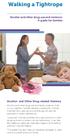 Walking a Tightrope Alcohol and other drug use and violence: A guide for families Alcohol- and Other Drug-related Violence Alcohol and other drug use and family violence often occur together. Families
It s Not Right! Neighbours, Friends and Families for Older Adults. What You Can Do to Keep Yourself Safe From Abuse
 It s Not Right! Neighbours, Friends and Families for Older Adults What You Can Do to Keep Yourself Safe From Abuse Everyone has the right to be safe and free from abuse. No one should experience abuse.
CRIMES AGAINST ELDERLY ONLINE
 CRIMES AGAINST ELDERLY ONLINE PRESENTED BY: DPS Law Enforcement Academy Santa Fe, New Mexico Date: 1 GOALS Students will learn the purpose of the Resident Abuse and Neglect Act. Students will learn how
PART I : NAVIGATING HEALTH CARE
 PART I : NAVIGATING HEALTH CARE SECTION ONE Hospitals, Clinical Trials & Ambulance Service 1. Should my dad just sign all those hospital consent forms or actually question them? 2. What is a hospital Patient
Brain Injury: Stages of Recovery
 Brain Injury: Stages of Recovery Recovery after brain injury is a process that occurs in stages. Some people move quickly through the stages, while others make slow, but steady gains. The Rancho Los Amigos'
Domestic Violence: Can the Legal System Help Protect Me?
 Domestic Violence: Can the Legal System Help Protect Me? What is domestic violence? Domestic violence is a pattern of physically and/or emotionally abusive behavior used to control another person with
Elder Abuse & Elderly Protective Services
 Elder Abuse & Elderly Protective Services Q. What is Elder Abuse? A. Louisiana law R.S. 15:1501-1511 protects people who are 60 or older from physical or emotional abuse as well as neglect by care givers.
Bullying. Take Action Against. stealing money. switching seats in the classroom. spreading rumors. pushing & tripping
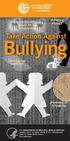 switching seats in the classroom stealing money Take Action Against Bullying spreading rumors pushing & tripping U.S. DEPARTMENT OF HEALTH & HUMAN SERVICES Substance Abuse and Mental Health Services Administration
Their stories are tragic. A new chapter starts now. now.
 ! Their stories are tragic. A new chapter starts now. now.! Bully is a movie that tells powerful stories about children and their families dealing with extreme pain and tragic consequences related to bullying.
Module 4 Chapter 3: Minnesota Criminal Code - Chapter 609
 : Minnesota Criminal Code - Chapter 609 Overview This chapter provides an overview of Minnesota s Criminal Code, Chapter 609 of Minnesota Statutes, to help you recognize the most common types of criminal
PEOPLE V. HARRY POTTER
 PEOPLE V. HARRY POTTER THE COURT: Members of the jury, the defendant, Harry Potter, is charged in a one-count information which reads as follows: On or about November 23, 2008, HARRY POTTER, did unlawfully
PROBLEM ORIENTED SCREENING INSTRUMENT FOR TEENAGERS (POSIT) Developed by the National Institute on Drug Abuse National Institutes of Health
 PROBLEM ORIENTED SCREENING INSTRUMENT FOR TEENAGERS (POSIT) Developed by the National Institute on Drug Abuse National Institutes of Health Problem Oriented Screening Instrument for Teenagers (POSIT) The
PARTNERING WITH YOUR DOCTOR:
 PARTNERING WITH YOUR DOCTOR: A Guide for Persons with Memory Problems and Their Care Partners Alzheimer s Association Table of Contents PARTNERING WITH YOUR DOCTOR: When is Memory Loss a Problem? 2 What
WEEKLY SAFETY MEETING All Euramax Subsidiaries ACCIDENT REPORTING. Safety Meeting Contents. Meeting Notice. Leaders Guide.
 Safety Meeting Contents Meeting Notice Leaders Guide Employee Handout Employee Quiz Meeting Sign-In Sheet Employee Puzzle PRIOR TO THE WEEKLY MEETING: - Post the meeting notice by the timeclock - Read
State of Nevada Aging and. Disability Services Division. Presents
 State of Nevada Aging and Disability Services Division Presents Elder Abuse Training Don t Abuse Elders! It s a Crime! Persons Convicted of Elder Abuse in Nevada Could Serve up to 20 Years in Prison! What
4th STUDY ON CHILD ABUSE
 4th STUDY ON CHILD ABUSE This type of questionnaire is good, maltreatment and abuse needs to be stopped! It let me say things I ve not said to anybody Santiago, Chile October 2012 Authors: Soledad Larraín
Vulnerable Adult & Elder Abuse
 Vulnerable Adult & Elder Abuse Kathleen Flynn Peterson Brandon E. Vaughn September 10, 2013 Introduction Vulnerable adult and elder abuse often have been overlooked because of lack of awareness Abuse,
Safeguarding adults from neglect and abuse
 Safeguarding adults from neglect and abuse This leaflet explains what adult abuse is and tells you where to go in Leeds for advice and support. Introduction The Leeds Safeguarding Adults Partnership includes
What You Need to Know About Divorce
 What You Need to Know About Divorce There are four main steps in a divorce: 1. 2. 3. 4. Your lawyer writes the divorce papers and files them with the court. The sheriff s department gives (serves) your
Seven Things You Must Know Before Hiring a DUI Lawyer
 Seven Things You Must Know Before Hiring a DUI Lawyer 1 Introduction Some people don t quite understand the severity of getting a DUI. In many cases, your license is instantly taken away and you won t
Is My Baby Safe? Straight Talk to Teen Parents On Child Abuse and Neglect
 Is My Baby Safe? Straight Talk to Teen Parents On Child Abuse and Neglect 2013 Some Shocking Facts About Child Abuse Each year in the United States, child abuse and neglect kill about 2,000 infants and
Victims of Crime the help and advice that s available
 Details about Victim Support Your local Victim Support Scheme is: Victims of Crime the help and advice that s available You can also contact the Victim Supportline on: 0845 30 30 900 Or, if you prefer,
FORENSIC EXERCISE C. JTIP Handout: Lesson 10 Challenging Probable Cause and Detention. Five Detention Problems DETENTION PROBLEM 1
 FORENSIC EXERCISE C Five Detention Problems You have been provided with what amounts to a police officer s direct testimony at a probable cause hearing. You are being provided with a summary of social
Introduction to Domestic Violence
 Introduction to Domestic Violence Contents Defining domestic violence Prevalence Examples of power and control Why victims stay How you can help WHAT IS DOMESTIC VIOLENCE? Defining Domestic Violence Domestic
Because Fear Makes No Class Distinctions Abuse Support Group Helps Affluent Women End Silent Suffering
 11:42 PM CDT on Saturday, April 9, 2005 Because Fear Makes No Class Distinctions Abuse Support Group Helps Affluent Women End Silent Suffering By Kim Horner, The Dallas Morning News Dallas lawyer Julianne
What is DOMESTIC VIOLENCE?
 What is DOMESTIC VIOLENCE? Domestic violence is a pattern of control used by one person to exert power over another. Verbal abuse, threats, physical, and sexual abuse are the methods used to maintain power
APPENDIX B. ASSESSMENT OF RISK POSED TO CHILDREN BY DOMESTIC VIOLENCE Anne L. Ganley, Ph.D.
 APPENDIX B ASSESSMENT OF RISK POSED TO CHILDREN BY DOMESTIC VIOLENCE Anne L. Ganley, Ph.D. Assessment of Domestic Violence for Child Protective Services (CPS) Decision Making Guidelines for Interviewing
Get the Facts About. Disease
 Get the Facts About TB TUBERCULOSIS Disease What s Inside: 3 PAGE Get the facts, then get the cure 4 PAGE 9 PAGE 12 PAGE Learn how TB is spread Treatment for TB disease Talking to family and friends about
* Use tag F224 for deficiencies concerning mistreatment, neglect, or misappropriation of resident property.
 F223 483.13(b) Abuse The resident has the right to be free from verbal, sexual, physical, and mental abuse, corporal punishment, and involuntary seclusion. Intent 483.13(b) Each resident has the right
What Employers Need to Know to Help
 Occupational Health & Safety Council of Ontario (OHSCO) WORKPLACE VIOLENCE PREVENTION SERIES Domestic Violence Doesn t Stop When Your Worker Arrives at Work: What Employers Need to Know to Help What is
101 Characteristics of Americans/American Culture
 101 Characteristics of Americans/American Culture To help you compare and contrast what you observe of American culture and your own, mark the similarities and differences between your culture and what
Seven Things You Must Know Before Hiring a DUI Attorney
 Seven Things You Must Know Before Hiring a DUI Attorney Seven Things to Know Before Hiring a DUI Attorney Copyright 2014 SmartWeb Online 1 Introduction Some people don t quite understand the severity of
ELDER ABUSE PREVENTION
 OFFICE OF THE BRISTOL COUNTY DISTRICT ATTORNEY C. SAMUEL SUTTER ELDER ABUSE PREVENTION Information is the best defense against elder abuse. 888 Purchase Street New Bedford, MA 02740 Tel: 508-997-0711 Fax:
Have you ever asked yourself if you have been sexually assaulted?
 Have you ever asked yourself if you have been sexually assaulted? Sexual Assault/Rape Myth: Rape is just unwanted sex, and isn t really a violent crime. Fact: Rape is more than just unwanted sex. Rape
Self Assessment: Substance Abuse
 Self Assessment: Substance Abuse Please respond TRUE (T) or FALSE (F) to the following items as they apply to you. Part 1 I use or have used alcohol or drugs for recreational purposes. I use alcohol despite
WHOLE SCHOOL ANTI-BULLYING POLICY
 130 High Road, Buckhurst Hill, Essex IG9 5SD Telephone number: 0208 504 1133 WHOLE SCHOOL ANTI-BULLYING POLICY 1 Persons responsible: The Head Teacher, in consultation with the Directors, the Governing
ELDER ABUSE: WHEN A FAMILY MEMBER CAUSES HARM
 ELDER ABUSE: WHEN A FAMILY MEMBER CAUSES HARM Every person, no matter how young or how old, deserves to be safe from harm by those who live with them, care for them, or come in day-to-day contact with
It is a court order against someone who has abused or harassed you. That person is ordered either not to abuse you or not to have contact with you.
 WHAT IS A RESTRAINING ORDER? WILL IT PROTECT ME? It is a court order against someone who has abused or harassed you. That person is ordered either not to abuse you or not to have contact with you. A restraining
HOSPITAL POLICY AND INFORMATION MANUAL Date Issued: Date Last Revised: Next Review Date: Approved By:
 Page 1 of 12 Policy Applies to: All Mercy Hospital staff. Compliance by Credentialed Specialists or Allied Health Professionals, contractors, visitors and patients will be facilitated by Mercy Hospital
Conceptual Definitions and Operational Frameworks for Five Types of Perpetrated Elder Mistreatment
 Conceptual Definitions and Operational Frameworks for Five Types of Perpetrated Elder Mistreatment Conceptual definition of Elder Physical Abuse: Physical elder abuse is the intentional action of a person
Chapter 3. The Nursing Assistant. Elsevier items and derived items 2014, 2010 by Mosby, an imprint of Elsevier Inc. All rights reserved.
 Chapter 3 The Nursing Assistant Chapter Overview To protect patients and residents from harm, you need to know: What you can and cannot do What is right conduct and wrong conduct Rules and standards of
Mandatory Reporter WWW.RN.ORG
 Mandatory Reporter WWW.RN.ORG Reviewed December, 2015, Expires December, 2017 Provider Information and Specifics available on our Website Unauthorized Distribution Prohibited 2015 RN.ORG, S.A., RN.ORG,
Filing a Form I-751 Waiver of the Joint Filing Requirement of the Petition to Remove Conditions on Residence
 Filing a Form I-751 Waiver of the Joint Filing Requirement of the Petition to Remove Conditions on Residence Prepared by: Northwest Immigrant Rights Project http://www.nwirp.org 615 Second Avenue, Suite
Resident Rights for Florida CNAs
 Resident Rights for Florida CNAs This course has been awarded one (1.0) contact hour. This course expires on November 28, 2015 Copyright 2005 by RN.com. All Rights Reserved. Reproduction and distribution
DARKNESS to LIGHT S 5 STEPS TO PROTECTING OUR CHILDREN. A guide for responsible adults
 DARKNESS to LIGHT S 5 STEPS TO PROTECTING OUR CHILDREN A guide for responsible adults DARKNESS TO LIGHT We are a national nonprofit organization that seeks to empower adults to prevent child sexual abuse.
Filing a Form I-360 Self-Petition under the Violence Against Women Act
 Filing a Form I-360 Self-Petition under the Violence Against Women Act Prepared by: Northwest Immigrant Rights Project http://www.nwirp.org 615 Second Avenue, Suite 400 Seattle, Washington 98104 (206)
Listen, Protect, and Connect
 Page 1 Listen, Protect, and Connect PSYCHOLOGICAL FIRST AID FOR CHILDREN, PARENTS, AND OTHER CAREGIVERS AFTER NATURAL DISASTERS Helping you and your child in times of disaster. Page 2 As a parent or adult
Family Law. Lesson: Family Violence. CLB 5-6 Instructional Package
 Lesson: Family Violence CLB 5-6 Instructional Package Family Law: Family Violence (CLB 5-6) CLB Outcomes CLB 5-III: Getting Things Done CLB 6-IV: Comprehending Information CLB5-II: Reproducing Information
Policy for the Protection of Elders and Dependent Adults
 Called to Right Relationship Policy for the Protection of Elders and Dependent Adults The Episcopal Diocese of California www.diocal.org/safechurch Policy for the Protection of Elders and Dependent Adults
Young people and drugs
 Young people and drugs Many parents worry about whether their son or daughter is taking illegal drugs, how they can tell, and what to do about it. While there s a lot of concern about illegal drugs in
Connectedness and the Emotional Bank Account
 Connectedness and the Emotional Bank Account Directions This is a self-guided activity that can be completed by parents, teens or both. It contains five parts and should take about 45 minutes to complete.
a threat made in school
 a threat made in school ADAM S BACKGROUND LEADING UP TO THE CRIME Adam, 15, is the youngest of four children. His parents are divorced. He lives with his mother, has regular contact with his father, and
ANSWERS TO COMMON LEGAL QUESTIONS AND RESOURCES FOR VICTIMS OF DOMESTIC VIOLENCE
 ANSWERS TO COMMON LEGAL QUESTIONS AND RESOURCES FOR VICTIMS OF DOMESTIC VIOLENCE WHAT IS DOMESTIC VIOLENCE? Domestic Violence or family violence is the abuse of power or control. It is behavior used by
When Adults Abuse Elderly & Disabled Family Members
 When Adults Abuse Elderly & Disabled Family Members Beyond the Bruises; When Caregiving Crosses the Line. Ruth A. Force MS, LSW, CMC Client Services Director of Angel Corps Auburn Office Professional Geriatric
Service User To Service User Abuse
 Service User To Service User Abuse Information for service provider managers of residential and nursing homes and support tenancy schemes Everyone has a right to live their life free from abuse and the