
According to the American Heart Association, approximately 5.7 million persons more than
|
|
|
- Thomasina Newman
- 10 years ago
- Views:
Transcription
1 Feature Destination to Nowhere: A New Look at Aggressive Treatment for Heart Failure A Case Study BRIAN J. O NEILL, DNP, APRN, ANP-BC, CCRN-CSC MEREDITH W. KAZER, PhD, CNL, APRN, A/GNP-BC Approximately 5.7 million people in the United States experience heart failure, and about new cases are diagnosed annually. Patients who are ineligible for heart transplant may benefit from a left ventricular assist device. These devices have provided patients with an increased life span, but eventually patients die of the underlying heart disease. This case study illustrates the appropriate use of palliative care teams to address preparedness planning and help decrease moral distress among nursing staff. (Critical Care Nurse. 2014; 34[2]:47-56) According to the American Heart Association, approximately 5.7 million persons more than 20 years old have heart failure. It is estimated that by 2030, an additional 3 million people will experience heart failure as a result of improved life spans. One in 5 people with heart failure dies within 1 year of diagnosis. Heart failure was a contributing cause of deaths in Annually, heart failure costs the United States $34.4 billion. 2 Left ventricular assist devices (LVADs) have become more common as elective, permanent destination therapy for persons with heart failure who are ineligible for heart transplant either because of advanced age or other comorbid conditions. 3 Destination therapy can be thought of as a definitive therapy that is potentially life-sustaining or lifeprolonging for persons with advanced heart failure; the 2-year survival of patients treated with destination therapy is between 58% and 74%. 4 CNE Continuing Nursing Education This article has been designated for CNE credit. A closed-book, multiple-choice examination follows this article, which tests your knowledge of the following objectives: 1. State the role of palliative care in an intensive care unit setting 2. Identify measures to manage moral distress 3. State the importance of preparedness planning 2014 American Association of Critical-Care Nurses doi: CriticalCareNurse Vol 34, No. 2, APRIL

2 CASE STUDY CB was a 71-year-old man with a medical history of ischemic cardiomyopathy related to heart failure. The patient had an ejection fraction of 25% diagnosed 6 years ago, coronary artery disease, atrial fibrillation, hypertension, hyperlipidemia, peripheral arterial disease, non insulindependent diabetes mellitus, and stage 3 chronic kidney disease. His surgical history included a 5-vessel coronary artery bypass graft 18 years prior. CB came to a local community hospital after having coldlike symptoms for 1 week, associated with fatigue and decreased appetite. He tried some over-the-counter cold medication and acetaminophen but did not feel better. He was then admitted for a presumed viral infection, but during his 1-week stay, CB s clinical course deteriorated. He became hypotensive and tachycardic, had signs of hypoperfusion develop, and displayed worsening renal function. Treatment with inotropic agents was started and an intra-aortic balloon pump was placed for presumed cardiogenic shock. He was then transferred to an academic medical center for further care. A transesophageal echocardiogram showed an ejection fraction of 20%, global hypokinesis, and moderate to severe tricuspid regurgitation. Cardiac catheterization showed noncritical coronary artery disease in all bypass grafts. Cardiac surgery was consulted. The surgeon s impression was that cardiogenic shock with multisystem failure had developed. He recommended implantation of an LVAD and repair of the tricuspid valve with an annuloplasty ring. Because the patient was not a transplant candidate owing to his age and other comorbid conditions, this LVAD insertion was considered destination therapy. The patient was taken to the operating room for insertion of a Heartmate II LVAD (Thoratec Corp) and repair of the tricuspid valve. The surgery was complicated by significant intraoperative bleeding that required more than 20 units of blood products to be transfused throughout the operation. Because of aortic valvular incompetence, he returned to the operating room on postoperative day 2 for a repeat sternotomy and closure of his aortic valve. The development of aortic insufficiency after insertion of the LVAD was most likely due to the recycling of regurgitant blood flow from the outflow graft in the proximal aorta back into the left ventricular inflow cannula. This phenomenon would cause an increase in afterload from acquired aortic stenosis and an increase in preload from regurgitation, thus contributing to LVADs used as destination therapy (DT-LVADs) are surgically implanted pumps that are attached from the left ventricle to the aorta and assist the heart in pumping blood throughout the body. This pump remains with patients throughout their lives or until they die. Potential benefits of DT-LVADs include a decrease in signs and symptoms of heart failure, reduction in hospital readmissions for heart Authors Brian O Neill is an adult nurse practitioner specializing in cardiothoracic surgery at Yale-New Haven Hospital and a doctoral student at Fairfield University, Fairfield, Connecticut. Meredith Kazer is an adult and geriatric nurse practitioner and a professor of nursing and associate dean at Fairfield University. Corresponding author: Brian J. O Neill, 2 Glen Street, Milford, CT ( [email protected]). To purchase electronic or print reprints, contact the American Association of Critical- Care Nurses, 101 Columbia, Aliso Viejo, CA Phone, (800) or (949) (ext 532); fax, (949) ; , [email protected]. failure, and improved quality of life when compared with medical therapy only. 5,6 However, because of the physically compromised status of patients with heart failure, not all such patients benefit from the implantation of DT-LVADs. Situations in which the device offers little or no improvement in quality of life are the reverse of destination therapy and are referred to as destination to nowhere. 7 In this article, we examine the appropriate use of palliative care teams to address preparedness planning for patients with a DT-LVAD. A case study is presented, followed by a succinct review of related literature on DT-LVADs and palliative care. Nursing implications and suggestions for decreasing moral distress among nursing staff are explored. Review of the Literature The literature review covered the primary studies that demonstrated the benefits of surgical therapy 48 CriticalCareNurse Vol 34, No. 2, APRIL

3 hemodynamic compromise. 8 The prevalence rate associated with development of aortic insufficiency after insertion of a Heartmate II is approximately 14%. 9 From postoperative days 3 to 10, the patient became unresponsive to diuretic therapy and could not tolerate weaning trials because of pulmonary edema. On postoperative day 10, the patient became anuric and treatment with continuous venovenous hemofiltration was started on postoperative day 11. During the next week, the patient s clinical situation did not improve, and it became clear that he was going to be dependent on both mechanical ventilation and dialysis and would require continuous nursing care in order to survive. When acute renal failure developed that required renal replacement therapy, the patient s family agreed to a 10-day trial of dialysis therapy. The family was hopeful that the patient s kidneys would show improvement during the treatment. The wife served as health care proxy and consulted with her 2 children about health care decisions. After approximately 10 days of dialysis therapy, the patient showed no improvement in his weaning trials from the ventilator, remained anuric, and had a score of 7 on the Glasgow Coma Scale. At this point, the nursing staff discussed goals of care with CB s wife. The nurses asked about what the patient would have wanted for himself if these situations occurred. The wife stated that he would not have wanted to live if he could not interact with his family, yet there was no advance directive. After discussion with her children, the wife chose comfort care measures only for CB. The attending surgeon would not honor this request as he thought that since the patient was able to survive the multiple operations, the patient should be given more time to see if any recovery was possible. Nursing staff contacted social workers to help assist the family in enacting comfort care measures. After reviewing the case, social work consulted the ethics committee to discuss the disagreement surrounding goals of care between attending physician and family. Although no advance directive was in place, the ethics committee supported the spouse in her decision because the wife explained to the committee what she and her children thought was the best course of action. The chief of the medical staff assumed care of the patient at this point to help facilitate the spouse s wish. A comfort care order was placed by the nurse practitioner on postoperative day 25. Treatment included no initiation of vasopressors and no further dialysis; the patient died on postoperative day 27. with a ventricular assist device compared with medical therapy alone in patients with end-stage heart failure. The implantation of a DT-LVAD was a clinically appropriate treatment choice for a patient with New York Heart Association (NYHA) class IV heart failure and is well supported in the literature. Table 1 highlights the research relative to DT-LVADs, indicating that not only does the DT-LVAD increase 1-year survival compared with medical therapy alone but the second-generation Heartmate II improved 2-year survival rates compared with the firstgeneration device (Heartmate XVE). 5,10,11 The results of these critical studies 5,10,11 enabled the use of DT-LVADs to increase dramatically in the past 6 years. According to the Interagency Registry for Mechanical Circulatory Support (INTERMACS), 12 the use of DT- LVADs has grown annually. In 2006, 15 DT-LVADs were implanted, and in 2012, more than 600 DT-LVADs were placed. Although DT-LVADs have provided some patients with better quality of life and an increase in life span, 5,11 such is not always the case. Patients like CB in the case study, in whom multisystem failure or postoperative stroke with severe cognitive impairment develops, are examples of this situation. According to the INTERMACS Quarterly Statistical Report, 12 the primary causes of reported deaths from June 2006 to March 2012 were multisystem failure (10.5%) and severe cognitive impairment (18.4%). In 2005, the American College of Cardiology and American Heart Association released guidelines for the diagnosis and management of heart failure in adults. Updated in 2009, the guidelines supported the referral of all patients with heart failure for palliative care. The guidelines also supported the consideration of a DT-LVAD for patients with refractory end-stage heart failure and estimated 1-year mortality with medical therapy to exceed 50%. 13,14 To minimize the emotional complexities inherent in destination to nowhere situations, Bramstedt 15 CriticalCareNurse Vol 34, No. 2, APRIL

4 Table 1 Overview of research relative to destination therapy with a left ventricular assist device (LVAD) Reference Sample Setting Design Purpose Findings Lietz 10 Rematch trial (2010) New York Heart Association class IV heart failure symptoms; (n = 129); mean age, 68 y; left ventricular ejection fraction, 17% 20 US hospitals from May 1998-July patients randomized to medical therapy; 68 patients randomized for LVAD implantation Determine if the LVAD population increased their 1-year survival compared with medical therapy only Percentage of 1-year survival rate of LVAD population compared with medical therapy only 52% vs 25% (relative risk, 0.52; 95% CI, ; P =.001) Patients with the Heartmate II LVAD had significantly improved 2-year survival compared with Heartmate XVE recipients (58% vs 24%; P =.008) Slaughter et al, 5 Fang 11 Heartmate II Destination Therapy Trial (2009) Patients with endstage heart failure ineligible for heart transplant; (n=200); mean age, 63 y; left ventricular ejection fraction, 17% 38 US hospitals from March 2005-May patients randomized in a 2:1 fashion; 134 patients received a continuous flow axial flow device Heartmate II LVAD; 66 patients received the Heartmate XVE LVAD Determine if the secondgeneration destination therapy LVAD had overall survival improvement compared with the firstgeneration XVE LVAD recommended that patients should be offered the opportunity to complete an advance directive before undergoing an LVAD insertion. An advance directive provides guidance to both the health care team and the patient s family in the event of devastating complications such as multisystem failure, rendering continuing care futile. Although advance directives are offered to all patients, not all patients complete them. In this case study, CB had no advance directive. Consequently, CB s family experienced emotional distress by making the decision to discontinue aggressive treatment and enact comfort care measures on his behalf. Although the family wanted their loved one to live, they knew that he would not want to live in his present condition. To facilitate advance Left ventricular assist devices are commonly directives, an used as destination therapy that is potentially interdisciplinary team life-sustaining or life-prolonging for persons with advanced heart failure. comprising patients, patients families, cardiologists, cardiac surgeons, psychiatrists, psychologists, bioethics staff, social workers, and palliative care staff should fully discuss preoperative risk and expected postoperative course before insertion of a DT-LVAD. Palliative Care and Preparedness Planning Palliative care aims to relieve suffering, improve quality of life, and provide support to patients and the family members or friends who care for them. 13 It requires a holistic approach that addresses the emotional, physical, logistical, and spiritual needs of patients and their caregivers. Members of a palliative care team may include a variety of individuals, for example, physicians, physician assistants, nurse practitioners, nurses, clergy, social workers, respiratory therapists, and nursing assistants. Each member contributes to the group, and as a whole, aims to improve outcomes, including satisfaction with care among patients and their family members, improved management of symptoms, and patients well-being and dignity. Palliative care also provides emotional and spiritual support for patients and their caregivers and access to community support services. The World Health Organization recommends that palliative care not be reserved just for end-of-life circumstances but offered at earlier stages of illness while treatment continues to promote life. 16 Palliative care may be viewed as the start of end-of-life care, whereas hospice would be reserved for patients whose prognosis would be 6 months or less. The primary premise of a palliative approach to patient care is to promote patients well-being and dignity. Additional goals include satisfaction with care among patients and their family members, symptom management, direct communication with the health care team, and creation of shared decision making among patients, their families and caretakers, and members of the medical team. Because staff in palliative care were not consulted before surgery, these palliative care goals were not met 50 CriticalCareNurse Vol 34, No. 2, APRIL

5 in the case of CB. Enhanced communication between the patient s family and health care providers should have occurred when CB initially failed to show marked signs of improvement. A family meeting should have occurred, and it should have included the attending surgeon, intensivist, cardiologist, clergy, social worker, and nurses. All parties should have been provided the opportunity to discuss their concerns for the patient, and questions should have been addressed earlier in the treatment trajectory. Once the family decided upon comfort care measures, their decision should have been honored without further decision making among providers. Several challenges exist to the use of palliative care among patients with heart failure. One challenge lies in the fact that heart failure, like many other disease processes, is difficult to prognosticate and courses of disease vary. 13 Heart failure is characterized by recurrent exacerbations, a high prevalence of sudden death, and difficulty with anticipating the terminal phase of this illness. 17 Although this is not an excuse to avoid starting palliative care procedures, hope for recovery and the ups and downs of the disease course help explain possible delays in starting palliative care referrals. In the case of CB, his family hoped that dialysis would improve his renal function. In the absence of realistic discussions with CB s health care providers about the likelihood of full recovery, this hope delayed the decision to start palliative care. Challenges in prognosticating heart failure may be aided by scoring systems designed to help grade the severity of illness. The most commonly used scoring systems for heart failure patients are the Heart Failure Survival Score (HFSS, predominately used for heart transplant) and the Seattle Heart Failure Model. 13,17 These models could have been used with CB to help clinicians prognosticate survival. The Seattle Heart Failure Model provides an accurate estimate of 1-, 2-, and 3-year survival with the use of easily obtained clinical, pharmacological, device, and laboratory characteristics. According to that system, if CB s survival was predicted at less than 2 years with LVAD implantation, then the health care team may have recommended palliative care at an earlier point in this illness. Another challenge to improve use of palliative care among patients with heart failure lies in health care providers lack of knowledge regarding the contribution of palliative care to meeting overall goals for patient and family care. Health care providers, viewing death as a failure, may not view palliative care as an appropriate treatment for patients with heart failure, even when the disease is incurable. 18 Strategies that nurses may use to facilitate palliative care consultations include staff development provided by palliative care staff on the team s role in management of patients with heart failure and discussing the availability and options for palliative care. Resources are available from the End-of-Life Nursing Education Consortium (ELNEC), a national education initiative to improve palliative care to assist in development of nursing Palliative care aims to relieve suffering, improve quality of life, and provide support to patients and the family members or friends who care for them. staff. This project provides nurses with training in palliative care so that they can teach this essential information not only to their peers but to all health professionals. 19 In addition, the Improving Palliative Care in the Intensive Care Unit (IPAL-ICU) Project, cosponsored by the National Institutes of Health and the Center to Advance Palliative Care, is an important resource in the development of nursing staff regarding palliative care. The IPAL-ICU Project is a new initiative that focuses specifically on improving palliative care in the ICU, and shares resources including expertise, evidence, and tools to help clinicians across disciplines integrate intensive care and palliative care successfully. 20 Expected goals from an initiative to improve ICU palliative care include increasing satisfaction and comprehension and decreasing levels of anxiety, depression, and posttraumatic stress disorder among patients family members. There should be less conflict in the ICU and timely implementation of care plans that are realistic, appropriate, and consistent with patients preferences. Finally, professional gratification for clinicians and a significant cost savings for the hospital are possible. 21 The IPAL-ICU portfolio contains a reference library of publications relating to diverse aspects of ICU palliative care. In the improvement tools category, nurses and others can access tools such as templates for documentation of ICU family meetings and pocket cards to assist clinicians in conducting family conferences and managing pain. Other resources include professional education materials in a variety of formats materials that clinicians can provide to patients and their families, such as a brochure guiding preparation for a family meeting CriticalCareNurse Vol 34, No. 2, APRIL

6 Table 2 Topics to discuss regarding preparedness planning for a left ventricular assist device (LVAD) among patients, their families, and the health care team What to do if the LVAD fails and the patient requires an emergent operation What to do if multiorgan failure develops and the LVAD does not seem to be helping a futile situation What to do if the LVAD device becomes infected What to do if the patient has a postoperative stroke What to do if a patient has a traumatic injury or a terminal malignant tumor and the LVAD is functioning properly Preparedness planning is an area that is gaining interest among palliative care specialists who are involved with DT-LVADs. Preparedness planning helps patients and their loved ones consider quality of life, psychosocial considerations (eg, prior adherence to treatments and adequacy of support system), ethical issues (eg, how to address management of DT-LVADs, particularly in situations of disputed effectiveness), and caregiving concerns that they may encounter that could affect clinical outcomes and alter functional status. 4 Preparedness planning begins with the introduction of advance-care directives and expands to specifics concerning LVADs. 4,17 It is hopeful that before patients undergo a DT-LVAD, issues (such as the Use of LVADs for destination therapy has ones increased dramatically in the past 6 years. described in Table 2) are discussed and decided upon among patients, patients families, and the health care team. Having an understanding of what a patient s wishes would be in a given situation may help clinicians and families to honor wishes more easily in those situations. Swetz and colleagues 22 conducted a retrospective chart review of 13 patients who received proactive palliative care consultation before DT-LVAD insertion at the Mayo Clinic, Minnesota. The researchers concluded that proactive consultation about palliative care between patients families and DT-LVAD implantation team members made postoperative care more clear and enabled adverse events to be handled more effectively. Moral Distress Epstein and Delgado 23 state that, moral distress occurs when one knows the ethically correct action to take, but feels powerless to take that action. As a result of ineffective implementation of palliative care, the nursing staff caring for CB experienced moral distress over his postoperative course. Based on their interactions with the patient s family, nurses understood that the family s wish for comfort care was the appropriate action to take, but the nurses were initially unable to act upon that understanding because of the power imbalance between surgeon and nursing staff. Staff nurses thought that the patient and family would endure excess suffering if they continued care as ordered by the attending physician. Discussions were held with the critical care team, including the intensivist, head nurse, social worker, and pastoral care staff, yet with no institutional support at first to change the clinical course, the nurses felt helpless. Eventually, the staff nurses consulted a social worker, which prompted involvement of the ethics committee. Although nurses can initiate an ethics consultation, the nurses chose to consult a social worker to offer more family support during this difficult situation. After the social worker spoke with the family and realized the difficulty that they had in making decisions surrounding goals of care, the social worker agreed with the nurses that an ethics consultation was warranted. Nursing staff were able to provide medication for pain and agitation to the patient and to provide emotional support to the family. In addition, staff nurses consulted pastoral care to help assist the family during this end-of-life process. Measures that may be undertaken to help nurses work through moral distress include using professional and institutional resources such as the American Association of Critical-Care Nurses 4 A s to Rise Above Moral Distress Handbook. 24 The 4A s include ask, affirm, assess, and act. In the case study, the nurses could have supported each other by asking about feelings of distress or acknowledging signs of individual suffering among those providing care for CB. By affirming that the nurses experienced distress, a commitment could have been made to assess the moral distress by identifying personal, clinical, or environmental sources of distress, which would have focused attention on the disempowerment felt by nurses providing care for CB and his family. During the act stage, nurses created a plan, collaborated with the social work department, and then implemented the comfort care measures desired by CB s family. 52 CriticalCareNurse Vol 34, No. 2, APRIL

7 Table 3 Steps that nurses may take to promote palliative care in intensive care units (ICUs) 20 Take a leadership role within the interdisciplinary committee and/or work group that is responsible for planning and implementation of ICU palliative care improvement efforts. Plan an active role in interdisciplinary team meetings to identify potential obstacles for ICU palliative care improvement and strategies for overcoming them. Participate fully in regular interdisciplinary staff meetings to enhance teamwork, voice concerns, and foster a culture supporting ICU palliative care improvement. Help to design and apply ICU work processes that systematically integrate palliative care, including processes for participation of nurses in interdisciplinary ICU family meetings. Promote an expanded role for palliative care specialists in ICU clinical care and staff education. Help to develop and implement a system for formal evaluation of ICU palliative care quality. Health care organizations play a substantial role in addressing moral distress. Organizations can develop a systematic process for reviewing and analyzing the system issues that often result in moral distress and can develop plans to address those issues. Organizations can also create support systems that include employee assistance programs, protocols for end-of-life care, processes for critical stress debriefings, grief counseling, and use of an ethics committee to address issues that result in moral distress. It is imperative that nurses be assigned to institutional ethics committees with full participation in decision making. Approaching senior hospital administrators and the chief of surgery was another option that could have been used in an effort to gain support in implementing guidelines, policies, and procedures in the case of CB and for universal implementation of this process in the future. Critical Care Nursing Implications Critical care nurses bear the most responsibility related to the implementation of the patient care plan and have the most extensive and intimate involvement with patients and their families. Integrating palliative care in the ICU can be a challenge at first, but Nelson and colleagues 20 outlined examples of practical steps that nurses can take to promote ICU palliative care within their units (Table 3). Conclusion Although past studies 5,10,11 have demonstrated that patients with end-stage heart failure may benefit from implantation of a DT-LVAD, this procedure is not without complications, and as a consequence, some adverse events (eg, those mentioned in the case study of CB), may lead patients to destination to nowhere situations. Critical care nurses are in a position to advocate not only for their patients but for patients family members too. Nurses should use the resources provided by the IPAL-ICU project and ELNEC to help providers integrate intensive care and palliative care together and, as a result of this initiative, hopefully decrease the occurrence of destination to nowhere situations. CCN Financial Disclosures None reported. Now that you ve read the article, create or contribute to an online discussion about this topic using eletters. Just visit and select the article you want to comment on. In the full-text or PDF view of the article, click Responses in the middle column and then Submit a response. To learn more about caring for patients with heart failure, read Caregiving for Patients With Heart Failure: Impact on Patients Families by Hwang et al in the American Journal of Critical Care, November 2011;20: Available at References 1. Heart disease and stroke statistics 2012 update: a report from the American Heart Association. /1/e2. Accessed January 7, Heart failure fact sheet Centers for Disease Control and Prevention. /fs_heart_failure.pdf. Accessed January 7, Vitale AG, Chandekar R, Rodgers EP, et al. A call for guidance in the use of left ventricular assist devices in older adults. J Am Geriatric Soc. 2012;60: Swetz MK, Ottenberg LA, Freeman RM, Mueller SP. Palliative care and end-of-life issues in patients treated with left ventricular assist devices as destination therapy. Curr Heart Fail Rep. 2011;8: Slaughter MS, Rogers JG, Milano CA, et al. Advanced heart failure treated with continuous-flow left ventricular assist device. N Engl J Med. 2009;361: Rogers JG, Aaronson KD, Boyle AJ, et al. Continuous flow left ventricular assist device improves functional capacity and quality of life of advanced heart failure patient. J Am Coll Cardiol. 2010;55: Westaby S. Ventricular assist devices as destination therapy. Surg Clin North Am. 2004;84: Cowger J, Pagani PD, Haft JW, et al. The development of aortic insufficiency in left ventricular assist device-supported patients. Circulation. 2010;3: Pak SW, Uriel N, Takayama H, et al. Prevalence of de novo aortic insufficiency during long-term support with left ventricular assist devices. J Heart Lung Transplant. 2010;29: CriticalCareNurse Vol 34, No. 2, APRIL

8 10. Lietz K. Destination therapy: patient selection and current outcomes. J Card Surg. 2010;25: Fang JC. Rise of the machines: left ventricular assist devices as permanent therapy for advanced heart failure. N Engl J Med. 2009;361(23): Quarterly statistical report rd quarter. Interagency Registry for Mechanically Assisted Circulatory Support. /intermacs/images/federal_quarterly_report/federal_partners _Report_2012_Q31.pdf. Accessed March 28, Adler DE, Goldfinger ZJ, Kalman J, et al. Palliative care in the treatment of advanced heart failure. Circulation. 2009;120: Jessup M, Abraham TW, Casey ED, et al Focused update: ACCF/ AHA guidelines for the diagnosis and management of heart failure in adults: a report of the American College of Cardiology Foundation/ American Heart Association task force on practice guidelines developed in collaboration with the International Society for Heart and Lung Transplantation. Circulation. 2009;119: Bramstedt AK. Destination nowhere: a potential dilemma with ventricular assist devices. Am Soc Artificial Internal Organs J. 2008;54: Lewis FE. End of life care in advanced heart failure. Curr Treat Options Cardiovasc Med. 2011;13: Jaarsma T, Beattie MJ, Ryder M, et al. Palliative care in heart failure: a position statement from the palliative care workshop of the Heart Failure Association of the European Society of Cardiology. Eur J Heart Failure. 2009;11: Albert MN. Referral for palliative care in advanced heart failure. Prog Palliat Care. 2008;16(5-6): American Association of Colleges of Nursing. End-of-Life Nursing Education Consortium (ELNEC). Accessed January 7, Nelson JE, Cortez, TB, Curtis JR, et al. Integrating palliative care in the ICU: the nurse in a leading role. J Hosp Palliat Nurs. 2011;13(2): Making the case for ICU palliative are integration. Center to Advance Palliative Care and National Institutes of Health. -integration.pdf. Accessed March 28, Swetz MK, Freeman RM, Abouezzeddine FO, et al. Palliative medicine consultation for preparedness planning in patients receiving left ventric - ular assist devices as destination therapy. Mayo Clin Proc. 2011;86(6): Epstein EG, Delgado S. Understanding and addressing moral distress. OJIN: Online J Issues Nurs. 2010;15(3):manuscript Distress/Understanding-Moral-Distress.html. Accessed January 7, The 4A s to rise above moral distress. American Association of Critical- Care Nurses. _Above_Moral_Distress.pdf. Accessed January 7, CriticalCareNurse Vol 34, No. 2, APRIL

9 CCN Fast Facts CriticalCareNurse The journal for high acuity, progressive, and critical care nursing Destination to Nowhere: A New Look at Aggressive Treatment for Heart Failure Facts Left ventricular assist devices (LVADs) have become more common as elective, permanent destination therapy for persons with heart failure (HF) who are ineligible for heart transplant. Destination therapy can be thought of potentially life-sustaining or lifeprolonging therapy for persons with advanced HF. LVADs used as destination therapy (DT-LVADs) are surgically implanted pumps that are attached from the left ventricle to the aorta and assist the heart in pumping blood throughout the body. This pump remains with patients throughout their lives or until they die. Potential benefits of DT-LVADs include a decrease in signs and symptoms of HF, reduction in hospital readmissions for HF, and improved quality of life when compared with medical therapy only. Not all patients benefit from the implantation of DT-LVADs. Situations in which the device offers little or no improvement in quality of life are referred to as destination to nowhere. Table Steps that nurses may take to promote palliative care in intensive care units (ICUs) Take a leadership role within the interdisciplinary committee and/or work group that is responsible for planning and implementation of ICU palliative care improvement efforts. Plan an active role in interdisciplinary team meetings to identify potential obstacles for ICU palliative care improvement and strategies for overcoming them. Participate fully in regular interdisciplinary staff meetings to enhance teamwork, voice concerns, and foster a culture supporting ICU palliative care improvement. Help to design and apply ICU work processes that systematically integrate palliative care, including processes for participation of nurses in interdisciplinary ICU family meetings. Promote an expanded role for palliative care specialists in ICU clinical care and staff education. Help to develop and implement a system for formal evaluation of ICU palliative care quality. The primary premise of a palliative approach to patient care is to promote patients well-being and dignity. Additional goals include satisfaction with care among patients and their family members, symptom management, direct communication with the health care team, and creation of shared decision making among patients, their families, and the medical team. One challenge to the use of palliative care among patients with HF lies in the fact that HF is difficult to prognosticate and courses of disease vary. HF is characterized by recurrent exacerbations, a high prevalence of sudden death, and difficulty with anticipating the terminal phase of this illness. Another challenge lies in health care providers lack of knowledge regarding the contribution of palliative care to meeting overall goals for patient and family care. Strategies that nurses may use to facilitate palliative care consultations include staff development provided by palliative care staff on the team s role in management of patients with HF and discussing the availability and options for palliative care. Resources are available from the End-of-Life Nursing Education Consortium (ELNEC), a national education initiative to improve palliative care to assist in development of nursing staff. This project provides nurses with training in palliative care. In addition, the Improving Palliative Care in the Intensive Care Unit (IPAL-ICU) Project is an important resource in the development of nursing staff regarding palliative care. This project shares resources including evidence and tools to help clinicians across disciplines integrate intensive care and palliative care successfully. Critical care nurses bear the most responsibility related to the implementation of the patient care plan and have the most extensive and intimate involvement with patients and their families. Integrating palliative care in the intensive care unit can be a challenge at first. The Table outlines practical steps that nurses can take to promote intensive care unit palliative care within their units. CCN O Neill BJ, Kazer MW. Destination to Nowhere: A New Look at Aggressive Treatment for Heart Failure A Case Study. Critical Care Nurse. 2014;34(2): CriticalCareNurse Vol 34, No. 2, APRIL

Mechanical Circulatory Support and End of Life Care. 10 th Annual Interdisciplinary Transplant Symposium 24 September 2015
 Mechanical Circulatory Support and End of Life Care 10 th Annual Interdisciplinary Transplant Symposium 24 September 2015 Nicole Huhn, APRN VAD Coordinator Center for Advanced Heart Failure & Transplant
November 15, 2013. Ann Laramee MS ANP-BC ACNS-BC CHFN FletcherAllen.org
 Advance Care Planning with Heart Failure: Results of a Primary Care Practitioners Needs Survey 5 th Annual Nursing Research and Evidence Based Practice Symposium November 15, 2013 Ann Laramee MS ANP-BC
Advanced Heart Failure & Transplantation Fellowship Program
 Advanced Heart Failure & Transplantation Fellowship Program Curriculum I. Patient Care When on the inpatient Heart Failure and Transplant Cardiology service, the cardiology fellow will hold primary responsibility
Engaging Spirituality in Social Work for Palliative Care and Hospice
 Engaging Spirituality in Social Work for Palliative Care and Hospice Conversations about Comfort, Support, and Quality of Life written by Palliative Care Consulting Team and Hwi-Ja Canda Lawrence Memorial
We have made the following changes to the Critical Illness events covered under our group critical illness policy.
 We have made the following changes to the Critical Illness events covered under our group critical illness policy. March 2015 Because everyone needs a back-up plan 7 New critical illness events added to
Frequently Asked Questions about Pediatric Hospice and Pediatric Palliative Care
 Frequently Asked Questions about Pediatric Hospice and Pediatric Palliative Care Developed by the New Jersey Hospice and Palliative Care Organization Pediatric Council Items marked with an (H) discuss
Holy Cross Palliative Care Program. Barb Supanich,RSM,MD Medical Director June 19,2007
 Holy Cross Palliative Care Program Barb Supanich,RSM,MD Medical Director June 19,2007 Goals Define Palliative Care Scope of Palliative Care Palliative Care Services at Holy Cross Hospital Definition of
Minimally Invasive Mitral Valve Surgery
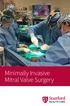 Minimally Invasive Mitral Valve Surgery Stanford Health Care offers leading, superior options in cardiac surgery, including the latest techniques and research for Minimally Invasive Cardiac surgery. Advanced
Steven J. Yakubov, MD FACC For the CoreValve US Clinical Investigators
 Long-Term Outcomes Using a Self- Expanding Bioprosthesis in Patients With Severe Aortic Stenosis Deemed Extreme Risk for Surgery: Two-Year Results From the CoreValve US Pivotal Trial Steven J. Yakubov,
EndLink: An Internet-based End of Life Care Education Program www.endlink.rhlurie.northwestern.edu ABOUT HOSPICE CARE
 EndLink: An Internet-based End of Life Care Education Program www.endlink.rhlurie.northwestern.edu ABOUT HOSPICE CARE What is hospice? Hospice care focuses on improving the quality of life for persons
RATE VERSUS RHYTHM CONTROL OF ATRIAL FIBRILLATION: SPECIAL CONSIDERATION IN ELDERLY. Charles Jazra
 RATE VERSUS RHYTHM CONTROL OF ATRIAL FIBRILLATION: SPECIAL CONSIDERATION IN ELDERLY Charles Jazra NO CONFLICT OF INTEREST TO DECLARE Relationship Between Atrial Fibrillation and Age Prevalence, percent
TALKING ABOUT YOUR HEALTH CARE CHOICES: ADVANCE DIRECTIVE INFORMATION, FORM AND GUIDELINES
 TALKING ABOUT YOUR HEALTH CARE CHOICES: ADVANCE DIRECTIVE INFORMATION, FORM AND GUIDELINES Adults have a right to accept or refuse medical care. You have the legal right to make an advance directive. In
Hospice and Palliative Care: Help Throughout Life s Journey. John P. Langlois MD CarePartners Hospice and Palliative Care
 Hospice and Palliative Care: Help Throughout Life s Journey John P. Langlois MD CarePartners Hospice and Palliative Care Goals Define Palliative Care and Hospice. Describe and clarify the differences and
Caring About Palliative Care An overview
 Caring About Palliative Care An overview Developed by the Palliative Care Consultation Team at VH and C. Talbot, Palliative Care Consultation Team at UH Presented by: Lee Ann Craig NP, Palliative Care
DEPRESSION Depression Assessment PHQ-9 Screening tool Depression treatment Treatment flow chart Medications Patient Resource
 E-Resource March, 2015 DEPRESSION Depression Assessment PHQ-9 Screening tool Depression treatment Treatment flow chart Medications Patient Resource Depression affects approximately 20% of the general population
ADVANCE DIRECTIVE. A LIVING WILL A Directive To Withhold Or To Provide Treatment. A Durable Power Of Attorney FOR HEALTH CARE
 ADVANCE DIRECTIVE A LIVING WILL A Directive To Withhold Or To Provide Treatment and A Durable Power Of Attorney FOR HEALTH CARE Name Date of Birth Form # 8-0553 (7-07) LIVING WILL AND DURABLE POWER OF
Advance Health Care Directive. A guide for outlining your health care choices
 Advance Health Care Directive A guide for outlining your health care choices Table of Contents Making Your Wishes Known 2 Part 1: Choosing a Health Care Agent 4 My Health Care Agent 5 My Health Care Agent
BASIC STANDARDS FOR RESIDENCY TRAINING IN CARDIOLOGY
 BASIC STANDARDS FOR RESIDENCY TRAINING IN CARDIOLOGY American Osteopathic Association and the American College of Osteopathic Internists Specific Requirements For Osteopathic Subspecialty Training In Cardiology
Oncology Competency- Pain, Palliative Care, and Hospice Care
 Pain, Palliative Care, and Hospice Care Palliative medicine relieves suffering and improves the quality of life for patients with advanced illness. The goal is achievement of the best quality of life for
Service delivery interventions
 Service delivery interventions S A S H A S H E P P E R D D E P A R T M E N T O F P U B L I C H E A L T H, U N I V E R S I T Y O F O X F O R D CO- C O O R D I N A T I N G E D I T O R C O C H R A N E E P
Hospice Care It s About How You Live
 Hospice Care It s About How You Live Beth Mahar, Director of Member Services Hospice & Palliative Care Association of NYS Thank you to: Elizabeth Peters RN The Community Hospice of Columbia/Greene Mission
Why and how to have end-of-life discussions with your patients:
 Why and how to have end-of-life discussions with your patients: A guide with a suggested script and some basic questions to use The medical literature consistently shows that physicians can enhance end-of-life
CARDIAC CARE. Giving you every advantage
 CARDIAC CARE Giving you every advantage Getting to the heart of the matter The Cardiovascular Program at Northwest Hospital & Medical Center is dedicated to the management of cardiovascular disease. The
UW MEDICINE PATIENT EDUCATION. Aortic Stenosis. What is heart valve disease? What is aortic stenosis?
 UW MEDICINE PATIENT EDUCATION Aortic Stenosis Causes, symptoms, diagnosis, and treatment This handout describes aortic stenosis, a narrowing of the aortic valve in your heart. It also explains how this
CARDIAC NURSING. Graduate Diploma in Nursing Science. Overview. Entry Requirements. Fees. Contact. Teaching Methods.
 Graduate Diploma in Nursing Science CARDIAC NURSING Overview The Graduate Diploma in Nursing Science (Cardiac Nursing) is designed to develop advanced theoretical knowledge and specialist skills essential
Palliative Care Nursing
 Palliative Care Nursing A ccording to the most recent National Vital Statistics Reports, 2,436,652 deaths occurred in 2009, of which 568,688 were due to cancer, second only to heart disease. 1 In 2009,
PALLIATIVE CARE AGS. THE AMERICAN GERIATRICS SOCIETY Geriatrics Health Professionals. Leading change. Improving care for older adults.
 PALLIATIVE CARE AGS THE AMERICAN GERIATRICS SOCIETY Geriatrics Health Professionals. Leading change. Improving care for older adults. Why do we need palliative care? 1900 HOW AMERICANS DIED IN THE PAST
SPECIALTY CASE MANAGEMENT
 SPECIALTY CASE MANAGEMENT Our Specialty Case Management programs boost ROI and empower members to make informed decisions and work with their physicians to better manage their health. KEPRO is Effectively
Listen to your heart: Good Cardiovascular Health for Life
 Listen to your heart: Good Cardiovascular Health for Life Luis R. Castellanos MD, MPH Assistant Clinical Professor of Medicine University of California San Diego School of Medicine Sulpizio Family Cardiovascular
Your critical illness protection plan
 Your critical illness protection plan It could happen to you It is estimated there are over 70,000 heart attacks in Canada each year. There are between 40,000-50,000 strokes in Canada each year. An estimated
Heart Failure: From Prevention to Intervention
 Sharp HealthCare Presents Heart Failure: From Prevention to Intervention Saturday, May 16, 2015 DoubleTree by Hilton Hotel San Diego - Mission Valley San Diego, Calif. As medical professionals, we know
Family Caregiver s Guide to Hospice and Palliative Care
 Family Caregiver Guide Family Caregiver s Guide to Hospice and Palliative Care Even though you have been through transitions before, this one may be harder. If you have been a family caregiver for a while,
Acute Rehabilitation Center
 Acute Rehabilitation Center Acute Rehabilitation Courtyard Our Center Community Westview Hospital's Acute Rehabilitation Center and programs are specially designed to meet the needs of our patients and
If You Choose Not to Start Dialysis Treatment
 If You Choose Not to Start Dialysis Treatment For many people with kidney failure, dialysis helps them live longer and improves their quality of life. But for some people, the improvement they feel may
An All-Star Team Approach to Cardiac Care at Vassar Brothers Medical Center
 AirStrip Case Study An All-Star Team Approach to Cardiac Care at Vassar Brothers Medical Center Through sophisticated technology, a team approach to care and a new model centered on uniform adoption of
CARDIOLOGIST What does a cardiologist do? A cardiologist is a doctor who specializes in caring for your heart and blood vessel health.
 YOUR TREATMENT TEAM CARDIOLOGIST What does a cardiologist do? A cardiologist is a doctor who specializes in caring for your heart and blood vessel health. To become a cardiologist, a doctor completes additional
2/20/2015. Cardiac Evaluation of Potential Solid Organ Transplant Recipients. Issues Specific to Transplantation. Kidney Transplantation.
 DISCLOSURES I have no relevant financial relationships to disclose. Cardiac Evaluation of Potential Solid Organ Transplant Recipients Michele Hamilton, MD Director, Heart Failure Program Cedars Sinai Heart
Depression in Older Persons
 Depression in Older Persons How common is depression in later life? Depression affects more than 6.5 million of the 35 million Americans aged 65 or older. Most people in this stage of life with depression
James F. Kravec, M.D., F.A.C.P
 James F. Kravec, M.D., F.A.C.P Chairman, Department of Internal Medicine, St. Elizabeth Health Center Chair, General Internal Medicine, Northeast Ohio Medical University Associate Medical Director, Hospice
MAKING HEALTH CARE DECISIONS. Colorado Advance Directive Guide
 MAKING HEALTH CARE DECISIONS Colorado Advance Directive Guide COLORADO ADVANCE HEALTH CARE DIRECTIVE Give your loved ones peace of mind; make your wishes known now. These forms let you communicate your
CRACKING GOOD COVER. Protection Personal Menu. royallondon.com
 CRACKING GOOD COVER Protection Personal Menu royallondon.com WHAT S INSIDE A summary of our protection covers 4 Cover for you, your partner or both of you 5 Life Cover 6 Critical Illness Cover 7 The full
My Voice. Advance Care Plan
 My Voice Advance Care Plan A message from the Prince Edward Family Health Team... Since its beginning in 2006 the Prince Edward Family Health Team (PEFHT) has been striving to provide comprehensive, accessible
Incorporating Best Practices Into Undergraduate Critical Care Nursing Education
 Academic Education Incorporating Best Practices Into Undergraduate Critical Care Nursing Education ZARA R. BRENNER, RN-BC, MS, ACNS-BC NANCY S. IAFRATI, RN, MS, FNP-BC Incorporation of best clinical practices
Frequently Asked Questions Regarding At Home and Inpatient Hospice Care
 Frequently Asked Questions Regarding At Home and Inpatient Hospice Care Contents Page: Topic Overview Assistance in Consideration Process Locations in Which VNA Provides Hospice Care Determination of Type
Cardiac Rehabilitation The Best Medicine for Your CAD Patients. James A. Stone
 James A. Stone BPHE, BA, MSc, MD, PhD, FRCPC, FAACVPR, FACC Clinical Professor of Medicine, University of Calgary Total Cardiology, Calgary Acknowledgements and Disclosures Acknowledgements Jacques Genest
Palliative Care. The Relief You Need When You re Experiencing the Symptoms of Serious Illness. Healthcare & Rehab Centre
 Palliative Care The Relief You Need When You re Experiencing the Symptoms of Serious Illness Healthcare & Rehab Centre Palliative Care Improving quality of life when you re seriously ill Dealing with the
The Initial and 24 h (After the Patient Rehabilitation) Deficit of Arterial Blood Gases as Predictors of Patients Outcome
 Biomedical & Pharmacology Journal Vol. 6(2), 259-264 (2013) The Initial and 24 h (After the Patient Rehabilitation) Deficit of Arterial Blood Gases as Predictors of Patients Outcome Vadod Norouzi 1, Ali
Asteron Life Personal Insurance
 Asteron Life Personal Insurance What lump sum covers are available with Asteron Life Personal Insurance? Life Cover Life Cover insurance pays a lump sum of money if you pass away or become terminally ill.
Palliative Care Certification Requirements
 Palliative Care Certification Requirements Provision of Care, Treatment, and Services PCPC.1 1 Patients know how to access and use the program s care, treatment, and services. 2 3 Patients and families
end-of-life decisions Honoring the wishes of a person with Alzheimer's disease
 end-of-life decisions Honoring the wishes of a person with Alzheimer's disease Preparing for the end of life When a person with late-stage Alzheimer s a degenerative brain disease nears the end of life
Life Choices. What is Palliative Care? Palliative? Palliative care emerged. A Program of Palliative Care
 Life Choices A Program of Palliative Care Relieves suffering and improves quality of life for patients with advanced illnesses What is Palliative Care? Medical treatment that aims to relieve suffering
PALLIATIVE CARE SERVICES AND RESOURCES. A guide for patients and their loved ones. Living well with serious illness
 PALLIATIVE CARE SERVICES AND RESOURCES A guide for patients and their loved ones Living well with serious illness A patient and family centered approach to living with serious illness Palliative care addresses
Welcome to the Series on Palliative Care for the Licensed Vocational Nurse.
 Welcome to the Series on Palliative Care for the Licensed Vocational Nurse. My name is Ilene Decker and I am a faculty member and Associate Dean for Academic Affairs at the University of Texas Health Science
Asteron Life Business Insurance
 Asteron Life Business Insurance What lump sum covers are available with Asteron Life Business Insurance? Life Cover Life Cover pays a lump sum of money if you pass away or become terminally ill. Total
Educational Goals & Objectives
 Educational Goals & Objectives The Cardiology rotation will provide the resident with an understanding of cardiovascular physiology and its broad systemic manifestations. The resident will have the opportunity
ECG may be indicated for patients with cardiovascular risk factors
 eappendix A. Summary for Preoperative ECG American College of Cardiology/ American Heart Association, 2007 A1 2002 A2 European Society of Cardiology and European Society of Anaesthesiology, 2009 A3 Improvement,
INTRODUCTION TO EECP THERAPY
 INTRODUCTION TO EECP THERAPY is an FDA cleared, Medicare approved, non-invasive medical therapy for the treatment of stable and unstable angina, congestive heart failure, acute myocardial infarction, and
Degree of Intervention
 Inglewood Care Centre Degree of Intervention Handbook for Residents and Families Index Introduction..................................................... 2 Beliefs, Values, and Wishes.........................................
Health Care Advance Directives
 Health Care Advance Directives The Patient s Right to Decide Every competent adult has the right to make decisions concerning his or her own health, including the right to choose or refuse medical treatment.
Palliative Care for Children. Support for the Whole Family When Your Child Is Living with a Serious Illness
 Palliative Care for Children Support for the Whole Family When Your Child Is Living with a Serious Illness Palliative care provides comfort and support to your child and family. When a child is seriously
Decision-making for the End of Life
 COLLEGE OF PHYSICIANS AND SURGEONS OF ONTARIO POLICY STATEMENT #1-06 Decision-making for the End of Life APPROVED BY COUNCIL: REVIEWED AND UPDATED: PUBLICATION DATE: TO BE REVIEWED BY: KEY WORDS: RELATED
Hospice Care. To Make a No Obligation No Cost Referral Contact our Admissions office at: Phone: 541-512-5049 Fax: 888-611-8233
 To Make a No Obligation No Cost Referral Contact our Admissions office at: Compliments of: Phone: 541-512-5049 Fax: 888-611-8233 Office Locations 29984 Ellensburg Ave. Gold Beach, OR 97444 541-247-7084
How To Cover Occupational Therapy
 Guidelines for Medical Necessity Determination for Occupational Therapy These Guidelines for Medical Necessity Determination (Guidelines) identify the clinical information MassHealth needs to determine
2014/15 National Tariff Payment System. Annex 7A: Specified services for acute services for local pricing
 2014/15 National Tariff Payment System Annex 7A: Specified services for acute services for local pricing 17 December 2013 Publications Gateway Reference 00883 Annex 7A: Specified services for acute services
The Cardiac Society of Australia and New Zealand
 The Cardiac Society of Australia and New Zealand Guidelines on Support Facilities for Coronary Angiography and Percutaneous Coronary Intervention (PCI) including Guidelines on the Performance of Procedures
How To Treat Heart Valve Disease
 The Valve Clinic at Baptist Health Madisonville The Valve Clinic at Baptist Health Madisonville Welcome to the Baptist Health Madisonville Valve Clinic at the Jack L. Hamman Heart & Vascular Center. We
Learning Objectives. Establishing Goals of Care for the Chronically Critically Ill. What is Chronic Critical Illness?
 Learning Objectives Establishing Goals of Care for the Chronically Critically Ill Cindy Drenning, CRNP Assistant Professor, Saint Francis University Define the chronically critically ill. Describe symptom
Navigation and Cancer Rehabilitation
 Navigation and Cancer Rehabilitation Messina Corder, RN, BSN, MBA Manager, MWHC Regional Cancer Center Regina Kenner, RN Cancer Navigator, MWHC Regional Cancer Center Cancer Action Coalition of Virginia
End of Life Care - It Takes a Team
 End of Life Care - It Takes a Team ROME New England August 16, 2015 Christina E. Fitch, DO, MPH, DTM&H Objectives "At the conclusion of the presentation, the learner will be able to:..." *Explain the difference
Marilyn Borkgren-Okonek, APN, CCNS, RN, MS Suburban Lung Associates, S.C. Elk Grove Village, IL
 Marilyn Borkgren-Okonek, APN, CCNS, RN, MS Suburban Lung Associates, S.C. Elk Grove Village, IL www.goldcopd.com GLOBAL INITIATIVE FOR CHRONIC OBSTRUCTIVE LUNG DISEASE GLOBAL STRATEGY FOR DIAGNOSIS, MANAGEMENT
Catheter insertion of a new aortic valve to treat aortic stenosis
 Issue date March 2012 Understanding NICE guidance Information for people who use NHS services NICE interventional procedures guidance advises the NHS on when and how new procedures can be used in clinical
LifeProtect. Serious illness cover. Protecting YOU FROM THE BIGGEST RISKS YOU LL FACE
 LifeProtect Serious illness cover Protecting YOU FROM THE BIGGEST RISKS YOU LL FACE Important Note - Please read Zurich s Serious Illness Cover is subject to terms and conditions which are contained in
Oncology Nurses: Leveraging an Underutilized Communication Resource in Cancer Treatment Planning
 Oncology Nurses: Leveraging an Underutilized Communication Resource in Cancer Treatment Planning Surgery Inpatient Care Chemotherapy Radiation Therapy Home Care MARIE BAKITAS, DNSc, APRN, FAAN ASSOCIATE
California Health and Safety Code, Section 1256.01
 California Health and Safety Code, Section 1256.01 1256.01. (a) The Elective Percutaneous Coronary Intervention (PCI) Pilot Program is hereby established in the department. The purpose of the pilot program
Progressive Care Insurance for life A NEW TYPE OF INSURANCE
 Progressive Care Insurance for life A NEW TYPE OF INSURANCE New Progressive Care from Sovereign Progressive Care is a type of insurance that is new to New Zealand. It s not a traditional all-or-nothing
MEDICAL INTENSIVE CARE UNIT - HEALTH SCIENCES CENTRE Reviewed August 2011
 MEDICAL INTENSIVE CARE UNIT - HEALTH SCIENCES CENTRE Reviewed August 2011 Goal The rotation in the Medical Intensive Care Unit at HSC is designed to allow the resident to encounter patients with tertiary
Your Guide to Express Critical Illness Insurance Definitions
 Your Guide to Express Critical Illness Insurance Definitions Your Guide to EXPRESS Critical Illness Insurance Definitions This guide to critical illness definitions will help you understand the illnesses
An Integrated, Holistic Approach to Care Management Blue Care Connection
 An Integrated, Holistic Approach to Care Management Blue Care Connection With health care costs continuing to rise, both employers and health plans need innovative solutions to help employees manage their
THERE S MORE TO LIFE. Products issued by National Life Insurance Company Life Insurance Company of the Southwest
 Living Benefits THERE S MORE TO LIFE Die Too Soon Become Ill Live Too Long Products issued by National Life Insurance Company Life Insurance Company of the Southwest National Life Group is a trade name
What services are provided by JSSA Hospice? Our personalized services for patients and family members include:
 FAQ S ABOUT HOSPICE What is Hospice? Hospice is a specialized type of healthcare for patients and families who are faced with a terminal illness. A team of physicians, nurses, social workers, bereavement
Ventricular Assist Device Program. Patient Education Brochure
 Ventricular Assist Device Program Patient Education Brochure TABLE OF CONTENTS 1. Introduction 2. How the Heart Works 3. Heart Disease and VADs 4. Alternative Treatments 5. The Implantation Procedure 6.
HYPERTROPHIC CARDIOMYOPATHY
 HYPERTROPHIC CARDIOMYOPATHY Most often diagnosed during infancy or adolescence, hypertrophic cardiomyopathy (HCM) is the second most common form of heart muscle disease, is usually genetically transmitted,
UNCG S.O.N. Nurse Practitioner Competency Metrics
 Yes Module on Clinical Prevention in Long-Term Care that students complete Assessment of Health Status: Obtains a relevant health history, which may be comprehensive or focused. Post test on Clinical prevention
Taking care of tomorrow
 Friends Life Protection Account Critical Illness Cover Guide Taking care of tomorrow Critical Illness Cover Taking care of tomorrow Friends Life Critical Illness Cover is here for you through whichever
Ann Hablitzel, RN, BSN, MBA Hospice Care of California
 Ann Hablitzel, RN, BSN, MBA Hospice Care of California Objectives Describe the creations of new community based palliative care programs Identify criteria for admission Discuss philosophy and goals Analyze
Innovations@Home. Home Health Initiatives Reduce Avoidable Readmissions by Leveraging Innovation
 How Does CMS Measure the Rate of Acute Care Hospitalization (ACH)? Until January 2013, CMS measured Acute Care Hospitalization (ACH) through the Outcomes Assessment and Information Set (OASIS) reporting
How To Pay For Critical Illness Insurance From The Ihc Group
 You ve protected your family s financial future by purchasing life and health insurance. Critical Illness Insurance It s cash when you need it. You choose how to spend it. So you can focus on getting well.
Quality End of Life Care: A Team Approach
 Quality End of Life Care: A Team Approach Presented by Dann Baker, MDiv Director Pastoral Care & Ethics, JPS Health Network; Adjunct Assistant Professor, UNTHSC-TCOM Janet Lieto, DO, FACOFP Assistant Professor
The ROI of Palliative Care. James Mittelberger, MD MPH March 22, 2104
 The ROI of Palliative Care James Mittelberger, MD MPH March 22, 2104 Provide the evidence and tools to develop the most effective palliative care program possible Purpose Palliative Care Financial Return
Renovascular Hypertension
 Renovascular Hypertension Philip Stockwell, MD Assistant Professor of Medicine (Clinical) Warren Alpert School of Medicine Cardiology for the Primary Care Provider September 28, 201 Renovascular Hypertension
Diagnostic and Therapeutic Procedures
 Diagnostic and Therapeutic Procedures Diagnostic and therapeutic cardiovascular s are central to the evaluation and management of patients with cardiovascular disease. Consistent with the other sections,
Critical Illness Supplemental Insurance
 You ve protected your family s financial future by purchasing life and health insurance. Critical Illness Supplemental Insurance It s cash when you need it. You choose how to spend it. So you can focus