
Economic and Rate Impact Analysis of Clean Energy Development in North Carolina 2015 Update
|
|
|
- Winfred Benson
- 10 years ago
- Views:
Transcription
1 February 2015 Economic and Rate Impact Analysis of Clean Energy Development in North Carolina 2015 Update Prepared for North Carolina Sustainable Energy Association 4800 Six Forks Rd Suite 300 Raleigh, NC Prepared by RTI International 3040 E. Cornwallis Road Research Triangle Park, NC RTI Project Number
2
3 Contents Section Executive Summary Page ES-1 1 Introduction and Analysis Approach Analysis Approach About RTI International Economic Impacts, Estimated Direct Impacts of Clean Energy Development Investment Value of Clean Energy Projects Energy Generated or Saved from Clean Energy Projects State Incentives for Clean Energy Investment Secondary Impacts of Clean Energy Development Changes in North Carolina Spending Patterns from Renewable Energy Generation Changes in North Carolina Spending Patterns from Energy Efficiency Initiatives North Carolina Economy-Wide Impacts Impacts Associated with Renewable Energy Projects Impacts Associated with Major Energy Efficiency Initiatives Total Impact Associated with Clean Energy Projects Prospective Rate Impacts of Clean Energy Policies Methodology Rate Impact Analysis References R-1 RTI International is registered trademark and a trade name of Research Triangle Institute. iii
4 Appendices A Technical Appendix... A-1 B Renewable Energy Projects Valued at $1 Million or Greater by County... B-1 iv
5 Figures Number... Page 2-1. Clean Energy Investment in North Carolina, Distribution of Renewable Energy Projects Valued at $1 Million or Greater across North Carolina Counties Renewable Energy Direct, Indirect, and Induced Economic Impacts Related to Clean Energy Incentives Energy Efficiency Direct, Indirect, and Induced Economic Impacts Related to Clean Energy Incentives Renewable Energy Certificates Generated from Compliance Portfolio Compliance Portfolio Renewable Energy Certificates Compared to REPS Requirement Cost of Compliance Portfolio Compared with Conventional Portfolio Rate Impact of Compliance Portfolio in Cents per kwh Compared with Conventional Portfolio Rate Impact of Compliance Portfolio as a Percentage of End-Use Electricity Price Compared with Conventional Portfolio v
6 Tables Number Page ES-1 Total Economic Impacts, ES Clean Energy Investment in North Carolina, Direct Spending in Clean Energy Development by Technology, Renewable Energy Generation, Energy Efficiency Energy Savings, State Incentives for Clean Energy Development, Renewable Energy Projects Economic Impacts, Energy Efficiency Initiatives Economic Impacts, Total Economic Impacts, North Carolina Retail Sales (MWh), North Carolina REPS REC Requirements, Compliance Portfolio Resources by Year Levelized Cost Assumptions for 2013 (Nominal Dollars) vi
7 Executive Summary This report presents an update to the retrospective economic impact analysis of renewable energy and energy efficiency investment included in the 2014 report Economic Impact Analysis of Clean Energy Development in North Carolina 2014 Update, prepared by RTI International (2014). This report also includes a rate impact analysis of clean energy development to date and expected in the future to meet the Renewable Energy and Energy Efficiency Portfolio Standard set for the State of North Carolina, prepared by ScottMadden Management Consultants. In this supplement to the 2014 report, the direct and secondary effects associated with major energy efficiency initiatives and the construction, operation, and maintenance of renewable energy projects (collectively, clean energy development ) are analyzed to measure the magnitude of clean energy development s contribution to North Carolina s economy. Changes in consumer, utility, and government spending patterns are analyzed, including investment in clean energy projects in North Carolina and their ongoing operation and maintenance, how renewable energy generation and energy savings from energy efficiency projects have changed spending on conventional energy generation, reductions in spending due to the Renewable Energy and Energy Efficiency Portfolio Standard (REPS) 1 rider requirement. government funds that would have been spent on other government services in the absence of state support for clean energy investment. 1 Under this law investor-owned utilities in North Carolina will be required to meet up to 12.5% of their energy needs through renewable energy resources or energy efficiency measures. Rural electric cooperatives and municipal electric suppliers are subject to a 10% REPS requirement. ES-1
8 Economic and Rate Impact Analysis of Clean Energy Development in North Carolina 2015 Update Our research findings are as follows: Approximately $3,472.8 million was invested in clean energy development in North Carolina between 2007 and 2014, which was supported, in part, by the state government at an estimated cost of $195.6 million. Clean energy investments were nearly 18 times larger than the state incentives for them. Renewable energy project investment in 2014 was $651.9 million, or nearly 38 times the $17.3 million investment observed in Total contribution to gross state product (GSP) was $4,197.9 million between 2007 and 2014 (see Table ES-1). Clean energy development supported 44,549 annual full-time equivalents (FTEs), equivalent to one person working full time for a year, from 2007 to Catawba, Davidson, Duplin, Person, Robeson, and Wayne Counties experienced the greatest amount of investment more than $100 million each between 2007 and Beaufort, Cabarrus, Columbus, Cleveland, Wake, Nash, Chatham, Harnett, Montgomery, Lenoir, and Davie Counties each experienced between $50 million and $100 million in investment between 2007 and The net present value of the Renewable Energy and Energy Efficiency Portfolio Standard savings compared to a conventional portfolio equals $651 million. The analysis finds the greatest annual savings occur in 2029, when the portfolio provides $287 million in savings. Over the 21-year period since the start of the clean energy policies in North Carolina, rates are expected to be lower than they would have been had the state continued to only use existing, conventional generation sources. ES-2
9 Executive Summary Table ES-1. Total Economic Impacts, Total Output a (Million, 2013$) Gross State Product b (Million, 2013$) Employment (Full-Time Equivalents) Fiscal Impacts c (Million, 2013$) Direct economic impact from clean energy development Direct economic impact from change in government spending d 3, , , , Secondary economic impact e 3, , , Total economic impact 6, , , a Total output refers to revenue received by North Carolina individuals and businesses. b GSP represents the total value added. c State support for clean energy projects is included in the analysis as an offset to output and is not reflected in the fiscal impact results. Note: Sums may not add to totals because of rounding. See Appendix A for details. d Direct economic impact from change in government spending refers to the in-state impact of $135.2 million in state clean energy incentives, less $25.7 million that, based on historical spending patterns, would have otherwise procured goods and services from out of state. e Secondary impacts represent spending changes resulting from renewable energy generation and energy savings and indirect and induced impacts associated with supply chain effects and increased labor income spending. ES-3
10
11 1 Introduction and Analysis Approach Between 2007 and 2014, annual investment in clean energy development in North Carolina increased nearly 20-fold from $47.7 million to $900.7 million, of which $651.9 million (72%) was for renewable energy projects and $248.7 million (28%) was for major energy efficiency initiatives. The total amount of energy generated or saved through renewable energy and energy efficiency programs amounted to 16.1 million MWh, which is sufficient to power nearly 1.2 million homes for 1 year. 2 Although the growth in energy generation from renewable sources has been documented in annual energy reports, 3 the economic impact of clean energy development economic activity from construction, operation, maintenance, changes in energy use, and consequent changes in spending on North Carolina s economy had not been comprehensively measured until the 2013 report The Economic, Utility Portfolio, and Rate Impact of Clean Energy Development in North Carolina, prepared by RTI International and LaCapra Associates (2013). This report updates the economic impact results to include clean energy investments made in Otherwise, the data and analysis methodology are unchanged. This report also includes a rate impact analysis. 2 The Energy Information Administration (EIA) estimates that in 2012 a North Carolina residential utility customer consumed 12,924 kwh (or MWh) per year. See EIA (2012): 3 For more information on renewable energy generation in the United States, see EIA (2014): 1-1
12 Economic and Rate Impact Analysis of Clean Energy Development in North Carolina 2015 Update This work was commissioned by the North Carolina Sustainable Energy Association, a professional and membership association, which had no role in the preparation of the analysis or report apart from posing research questions, suggesting data sources, and reviewing drafts. Similar to previous reports, this analysis answered two principal research questions: What are the comprehensive retrospective statewide economic and fiscal impacts of clean energy development? What is the expected electric utility rate impact of the renewable energy and energy efficiency portfolio standard? 1.1 ANALYSIS APPROACH The economic impact analysis contained herein uses methods that provide results about the portion of North Carolina s economic activity directly and indirectly associated with clean energy development. Clean energy development is defined to include the construction, operation, and maintenance of renewable energy facilities and energy efficiency initiatives. This retrospective analysis of clean energy development analyzed the most current data available from the North Carolina Utilities Commission (NCUC), North Carolina Renewable Energy Tracking System (NC-RETS), the North Carolina Department of Revenue, the North Carolina Department of Environment and Natural Resources, and the U.S. Energy Information Administration (EIA); measured spending for clean energy investments made in North Carolina over the 8-year period from 2007 through 2014 along multiple dimensions, including project value and megawatt capacity or equivalent; used a regional input-output (I-O) analysis to estimate the gross indirect (supply chain) and induced (consumer spending from increased labor income) impacts throughout the state economy resulting from those investments, including the impacts of reduced conventional energy generation and of government incentives over the study period; and 1-2
13 Section 1 Introduction and Analysis Approach presented the gross employment, fiscal, economic output, and valued added (gross state product [GSP]) impacts of clean energy development on North Carolina s economy. Two categories of economic effects were considered. 1. Direct effects: Information was gathered to quantify the direct investment (expenditures) related to clean energy development over the period 2007 through The following impact categories were in scope: investment in renewable energy and energy efficiency projects and reduction in government spending on other services to account for the foregone tax revenue (e.g., the costs of state policies). 2. Secondary effects: These direct economic impact estimates were combined with spending changes resulting from renewable energy generation and energy savings and modeled using a regional I-O model to measure the indirect (supply chain) and induced (consumer spending) impacts resulting from clean energy development. The total economy-wide impacts represent the combination of the two categories. Analysis results are presented as the cumulative impact from 2007 through 2014; therefore, results should not be interpreted as annual totals. Unlike other studies, the analysis accounts for selected displacement effects such as reduced spending on conventional energy production, how households and businesses would have otherwise spent the REPS rider for the renewable energy and energy efficiency performance standard, and how state government funding would have been spent in the absence of state incentives for clean energy development. However, the analysis does not consider the alternative uses for the investment dollars devoted to clean energy projects. As a result, the economic impact measures used in this report are best interpreted as gross versus net changes in state-level economic activity. 4 It is also important to note that the selected methodology does not evaluate how North Carolina s clean energy incentives and 4 See also 1-3
14 Economic and Rate Impact Analysis of Clean Energy Development in North Carolina 2015 Update policies influence investment or how state incentives and policy interact with other federal policy. Thus, for example, the methodology does not estimate the portion of investment that occurred as a result of state incentives; instead, it estimates gross changes in economic activity associated with all clean energy investment that took place over the study period. 1.2 ABOUT RTI INTERNATIONAL RTI International is one of the world s leading independent nonprofit research institutes. Based in Research Triangle Park, North Carolina, RTI has a mission to improve the human condition by turning knowledge into practice. Founded in 1958 with the guidance of government, education, and business leaders in North Carolina, RTI was the first tenant of Research Triangle Park. Today we have nine offices in the United States and nine in international locations. We employ over 2,200 staff in North Carolina, 500 across the United States, and over 900 worldwide. RTI performs independent and objective analysis for governments and businesses in more than 75 countries in the areas of energy and the environment, health and pharmaceuticals, education and training, surveys and statistics, advanced technology, international development, economic and social policy, and laboratory testing and chemical analysis. In 2013, RTI s revenue was $783 million. 1-4
15 2 Economic Impacts, From 2007 through 2014, $2,613.5 million was invested in the construction and installation of renewable energy projects in North Carolina. An additional $859.3 million was spent on implementing energy efficiency projects. 5 Total clean energy development was valued at $3,472.8 million. Although investment was distributed across the state, Catawba, Davidson, Duplin, Person, Robeson, and Wayne Counties each experienced the greatest amount, with more than $100 million in renewable energy project investment each. Clean energy development contributed $4,197.9 million in GSP and supported 44,549 annual FTEs statewide. As a result of changes in economic activity from the development of clean energy in North Carolina, state and local governments realized tax revenue of $269.1 million. 2.1 ESTIMATED DIRECT IMPACTS OF CLEAN ENERGY DEVELOPMENT As depicted in Figure 2-1 and Table 2-1, investment in clean energy development increased substantially over the 8-year analysis period. For example, renewable energy project investment in 2014 was $651.9 million, which was about 38 times the size of 2007 s $17.3 million. In 2013 and 2014 combined, clean energy investment was 49% of the total investment from 2007 to All dollar values are presented in real 2013 terms. Nominal values were adjusted using the U.S. city average annual consumer price index on all items, developed by the Bureau of Labor Statistics. 2-1
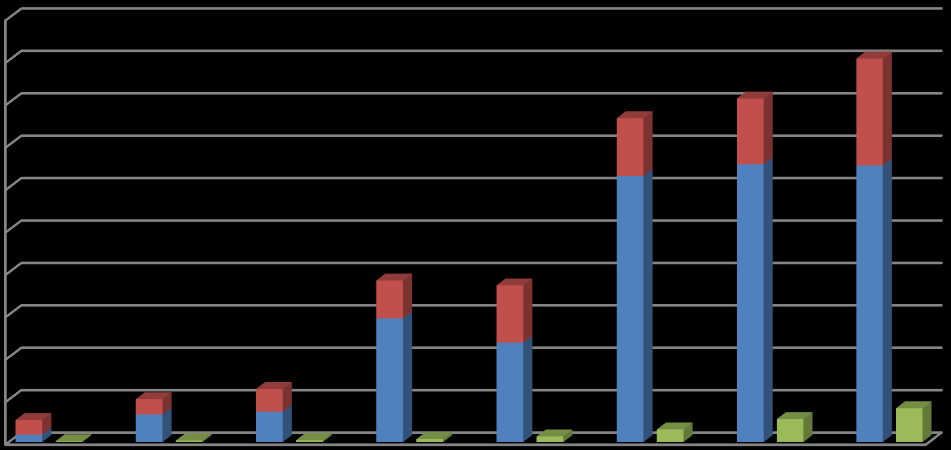
16 Investment Incentives Investment Incentives Investment Incentives Investment Incentives Investment Incentives Investment Incentives Investment Incentives Investment Incentives Million (2013$) Economic and Rate Impact Analysis of Clean Energy Development in North Carolina 2015 Update Figure 2-1. Clean Energy Investment in North Carolina, $1,000.0 $900.0 $800.0 $700.0 $600.0 $500.0 $400.0 $300.0 $200.0 $100.0 $ Renewable Energy Investment Energy Efficiency Investment State Incentives See Appendix A for data sources. Table 2-1. Clean Energy Investment in North Carolina, Renewable Energy Energy Efficiency Clean Energy Investment State Incentives Year (Million, 2013$) % of Total (Million, 2013$) % of Total (Million, 2013$) % of Total (Million, 2013$) 2007 $17.3 1% $30.4 4% $47.7 1% $ $64.8 2% $32.0 4% $96.8 3% $ $71.5 3% $49.3 6% $ % $ $ % $ % $ % $ $ % $ % $ % $ $ % $ % $ % $ $ % $ % $ % $ $ % $ % $ % $80.0 Total $2, % $ % $3, % $195.6 See Appendix A for data sources. Sums may not add to totals because of independent rounding. 2-2
17 Section 2 Economic Impacts, In addition to demonstrating growth in investment value over time, Figure 2-1 and Table 2-1 illustrate that clean energy projects were nearly 18 times as large as the state incentives for them. Although we do not attempt to statistically estimate the share of these investments that was motivated by these incentive programs, it is likely that there is a strong positive relationship. The remainder of Section 2.1 reviews in-depth investment value of clean energy projects, energy generated or saved by clean energy projects, and state incentives for clean energy development Investment Value of Clean Energy Projects Renewable energy investment was estimated primarily from facilities registered with NC-RETS, supplemented with data from EIA databases EIA-860 and EIA-923; North Carolina s Department of Environment and Natural Resources; North Carolina Utility Commission (NCUC) dockets for individual projects; North Carolina GreenPower; and personal communication with industry experts to adjust reported data or address areas where information was incomplete. Investments in energy efficiency were taken from program reports submitted by utilities to the NCUC and annual reports of the Utility Savings Initiative. See Appendix A for more information. Table 2-2 summarizes the cumulative direct spending in renewable energy by category between 2007 and Investment in renewable energy projects totaled $2,613.5 million. Investment in energy efficiency totaled $859.3 million. Thus, total clean energy investment was $3,472.8 million during the study period. Of the $2,613.5 million investment in renewable energy projects, solar photovoltaics made up $2,143.1 million (82%), landfill gas made up $234.4 million (9%), and biomass made up $136.0 million (5%). 2-3
18 Economic and Rate Impact Analysis of Clean Energy Development in North Carolina 2015 Update Table 2-2. Direct Spending in Clean Energy Development by Technology, Category Renewable energy direct investment Energy efficiency direct investment Technology Value (Million, 2013$) % Biogas fuel cell $70.5 3% Biomass $ % Geothermal $24.5 1% Hydroelectric (<10 MW capacity) a $25.0 1% Landfill gas $ % Passive solar $3.6 0% Solar photovoltaic $2, % Solar thermal $40.2 2% Wind $0.7 0% Total $2, % Utility energy efficiency and demandside management programs $ % Utility Savings Initiative $ % Total $ % Total $3,472.8 a Hydroelectric projects were found using NC-RETS. RTI worked in collaboration with ScottMadden to verify capacity added within the study period. Only projects under 10 MW are tracked in NC-RETS, so these results may be an underestimate of hydroelectric capacity and investment. See also Appendix A. Sums may not add to totals because of independent rounding. Renewable energy projects are widely distributed across North Carolina, bringing investment to both urban and rural counties. Figure 2-2 illustrates the geographic distribution of renewable energy projects individually valued at $1 million or greater. The figure including all eligible wind, landfill gas, biomass, hydroelectric, solar photovoltaics, and solar thermal projects valued over $1 million. These projects account for renewable energy investment of approximately $2,383.8 million (91% of the total $2,613.5 million in renewable investment over the period). 2-4
19 Section 2 Economic Impacts, Catawba, Davidson, Duplin, Person, Robeson, and Wayne Counties each experienced more than $100 million in renewable energy project investment, and Beaufort, Cabarrus, Cleveland, Columbus, Nash, Scotland, and Wake Counties each experienced between $50 million and $100 million in renewable project investment from 2007 through Figure 2-2. Distribution of Renewable Energy Projects Valued at $1 Million or Greater across North Carolina Counties See also Appendix B Energy Generated or Saved from Clean Energy Projects Tables 2-3 and 2-4 summarize the energy generated by renewable projects and the energy saved by energy efficiency projects between 2007 and
20 Economic and Rate Impact Analysis of Clean Energy Development in North Carolina 2015 Update Table 2-3. Renewable Energy Generation, Technology Facilities Number % Energy Equivalent Generated Thousand MWh % Biogas fuel cell a 1 0% 51 1% Biomass (including combined heat and power) 18 1% 6,291 65% Geothermal % 66 1% Hydroelectric (<10 MW capacity) 10 0% 208 2% Landfill gas 20 1% 1,569 16% Passive solar N/A N/A 3 0% Solar photovoltaic 1,108 53% 1,437 15% Solar thermal 83 4% 53 1% Wind 9 0% 2 0% Total 2, % 9, % a. Biogas Fuel Cell generation has doubled due to a doubling of capacity at this facility over the past two years. See also Appendix A. Sums may not add to totals because of independent rounding. Table 2-4. Energy Efficiency Energy Savings, Program Energy Saved a (Thousand MWh) Energy Costs Saved (Million, 2013$) Utility Programs 6,424 $385.5 Utility Savings Initiative N/A b $732.2 Total 6,424 $1,117.6 a Energy savings were estimated using an estimate of $0.06/kWh for years 2007 through b Data on the energy savings from the Utility Savings Initiative were not provided. We were unable to calculate the energy savings from standard EIA estimates because of uncertainties regarding the costs of energy for Utility Savings Initiative projects. 6 Avoided costs received by qualified facilities vary by utility and length of contract. These values represents a central value among those reported in avoided cost schedules to NCUC. 2-6
21 Section 2 Economic Impacts, Renewable energy facilities generated 9.7 million MWh of energy, of which 65% was biomass, 16% was landfill gas, and 15% was solar photovoltaics. Efficiency initiatives also produced large savings in North Carolina. Energy efficiency programs run by utility companies saved 6.4 million MWh of energy during the study period. The Utility Savings Initiative, a government-run energy efficiency program, lacked data on specific MWh saved, but the program documents note savings of $732.2 million on energy expenses. 7 Thus, the total energy generated or saved from clean energy projects is estimated to amount to at least 16.1 million MWh State Incentives for Clean Energy Investment State incentives for clean energy investment, including the renewable energy investment tax credit and state appropriations for the Utility Savings Initiative, are modeled as a reduction in spending on other government services. Investment spending was funded, in part, through state incentives. Through direct state government appropriations, renewable energy projects received $182.6 million in tax credits and energy efficiency projects received $13.0 million. Total government expenditures were $195.6 million between 2007 and 2014 (Table 2-5). For the purpose of this study, it was assumed that the money the government spent on renewable energy and energy efficiency programs was not spent on other government services. Thus, the government programs contributed to the positive investment in renewable energy and energy efficiency of $3,472.8 million. 7 The cost of energy avoided from the Utility Savings Initiative was calculated using data from the Annual Report for the Utility Savings Initiative for Fiscal Year July 1, 2012 June 30, First, sums of avoided energy costs per calendar year were calculated from the fiscal year sums, assuming that energy savings were equally split between the calendar years in each fiscal year. Without full data for 2014, RTI assumed energy costs were avoided at the same rate in the second half of 2014 as they were during the fiscal year from 2013 to To convert sums to 2013 U.S. dollars, we applied inflation multipliers calculated from the CPI-U (see Table A-3). 2-7
22 Economic and Rate Impact Analysis of Clean Energy Development in North Carolina 2015 Update However, the $195.6 million spent on renewable energy and energy efficiency programs was shifted from what the government could have otherwise spent the money on, creating a minor offset that reduces gross impacts slightly. Section 2.3 includes discussion that illustrates these offsets. Table 2-5. State Incentives for Clean Energy Development, Year Renewable Energy Investment Tax Credit a,b (Million, 2013$) Energy Efficiency c (Utility Savings Initiative, Million, 2013$) Total (Million, 2013$) 2007 $0.5 $1.6 $ $2.3 $1.6 $ $2.9 $1.6 $ $5.6 $1.6 $ $11.7 $1.6 $ $28.3 $1.6 $ $52.9 $1.6 $ $78.3 $1.6 $80.0 Total $182.6 $13.0 $195.6 Note: For the Utility Savings Initiative, an appropriation of $13.0 million was taken, which we distributed evenly across the study period for the purposes of the analysis. The tax credit for 2013 was estimated, and this estimation is detailed in Appendix A. a North Carolina Department of Revenue, Policy Analysis and Statistics Division. ( ). Unaudited NC-478G. Raleigh, NC: North Carolina Department of Revenue, Policy Analysis and Statistics Division. b North Carolina Department of Revenue, Revenue Research Division. (2012). Credit for Investing in Renewable Energy Property Processed during Calendar Year Raleigh, NC: North Carolina Department of Revenue, Revenue Research Division. c North Carolina Department of Commerce. (November 1, 2013). Annual Report for the Utility Savings Initiative for Fiscal Year July 1, 2012 June 30, Raleigh, NC: North Carolina Department of Commerce. 2.2 SECONDARY IMPACTS OF CLEAN ENERGY DEVELOPMENT To estimate the overall impact of clean energy development in North Carolina, the spending described in Section 2.1 was analyzed using an I-O model of the North Carolina economy. The I-O model was constructed using IMPLAN software, which is widely used to assess regional economic impacts at the local, state, and regional levels. I-O models provide a detailed snapshot of the purchasing relationships between sectors in the regional economy. In 2-8
23 Section 2 Economic Impacts, response to these direct inputs, the I-O model estimates the increases in in-state output, employment, and spending within the supply chain for clean energy and the decreases in in-state output, employment, and spending within the supply chain for conventional energy. Increased renewable energy production requires increased employment in that sector and in the sectors in its supply chain (indirect impacts). This increased employment, and associated increased income, will result in increased purchases of consumer goods and services within the state. The model estimates these increased household expenditures (induced impacts), including both the increased consumer spending derived from the increased direct and indirect employment associated with renewable energy production and the decreased consumer spending resulting from decreased direct and indirect employment associated with conventional energy production. The total economic impact of clean energy development for North Carolina is the sum of the direct, indirect, and induced impacts. Figures 2-3 and 2-4 describe direct, indirect, and induced impacts. Two types of secondary economic impacts were modeled in this study: those resulting from the value of investment dollars spent on a clean energy project, representing indirect and induced supply chain effects, and those resulting from the reduction in spending on the production of conventional energy and that are reallocated to energy efficiency and renewable project owners. 2-9
24 Economic and Rate Impact Analysis of Clean Energy Development in North Carolina 2015 Update Figure 2-3. Renewable Energy Direct, Indirect, and Induced Economic Impacts Related to Clean Energy Incentives Renewable Energy Investment State Incentives Renewable Energy Generation Direct Impacts More Spending on Renewable Energy Projects Less Spending on Other Government Services More Spending to Renewable Energy Project Owners Less Spending on Conventional Energy Generation Less Spending by Energy Customers Indirect Impacts More Spending on Inputs to Renewable Energy Projects Less Spending on Inputs to Other Government Services More Spending on Inputs to Renewable Energy Project Owners Less Spending on Inputs to Conventional Energy Generation Less Spending on Inputs to Energy Customer Spending Induced Impacts More Spending on Other Goods and Services Less Spending on Other Goods and Services More Spending on Other Goods and Services Less Spending on Other Goods and Services Less Spending on Other Goods and Services Direction of Impact Figure 2-4. Energy Efficiency Direct, Indirect, and Induced Economic Impacts Related to Clean Energy Incentives Energy Efficiency Investment State Incentives Energy Savings Direct Impacts More Spending on Energy Efficiency Projects Less Spending on Other Government Services More Spending to Energy Efficiency Project Owners Less Spending on Conventional Energy Generation More Spending by Energy Customers Indirect Impacts More Spending on Inputs to Energy Efficiency Projects Less Spending on Inputs to Other Government Services More Spending on Inputs to Energy Efficiency Project Owners Less Spending on Inputs to Conventional Energy Generation More Spending on Inputs to Energy Customer Spending Induced Impacts More Spending on Other Goods and Services Less Spending on Other Goods and Services More Spending on Other Goods and Services Less Spending on Other Goods and Services More Spending on Other Goods and Services Direction of Impact 2-10
25 Section 2 Economic Impacts, Changes in North Carolina Spending Patterns from Renewable Energy Generation To estimate the changes in spending resulting from renewable energy generation, renewable energy produced by facilities was estimated by applying capacity factors, either at the facility level based on 2011 generation (EIA-923) or the technology level (see Table 2-1). Electricity generated by these facilities was assumed to receive $0.06/kWh 8 in avoided costs for the years 2007 through 2014, which was modeled as a transfer to renewable generation from inputs to conventional generation. Renewable thermal energy produced by these facilities was modeled as a transfer of the retail electricity rate between utilities and utility customers ($0.0682/kWh for industrial and $0.099/kWh for commercial and residential customers [EIA, 2013]). Finally, the full Renewable Energy Portfolio Standard (REPS) rider over these years was modeled as a transfer from utility customers to renewable project owners. As Table 2-3 stated, renewable energy facilities have generated an estimated 9.7 million MWh of energy over the study period. This generation is estimated to have resulted in a total of $606.6 million 9 in avoided cost and retail energy savings no longer spent on conventional energy. The total REPS rider over the study period is estimated to be $220.8 million Changes in North Carolina Spending Patterns from Energy Efficiency Initiatives To estimate changes in spending resulting from energy savings from energy efficiency, the avoided cost of energy saved by utility energy efficiency and demand-side management programs. These avoided costs were modeled as a transfer 8 Avoided costs received by qualified facilities vary by utility and length of contract. This value represents a central value among those reported in avoided cost schedules to NCUC. 9 This $606.6 million was calculated by multiplying 6,950,034 MWh generated by nonthermal renewable projects by $60/MWh avoided cost to yield $417,002,048. The 2,607,319 industrial thermal MWh generated was multiplied by industrial retail savings of $68.20/MWh (EIA, 2012) to yield $177,819,124. Lastly, the 119,152 commercial and residential thermal MWh generated was multiplied by the average retail savings of $99/MWh (EIA, 2012) to yield $11,796,018. Summing the three totals together yields $606,617, This total was estimated using the most recent REPS cost data available at the time of the analysis. Documents issued after this analysis was performed include some minor adjustments, as well as providing costs for Dominion North Carolina Power, which did not file for REPS cost recovery prior to
26 Economic and Rate Impact Analysis of Clean Energy Development in North Carolina 2015 Update from the inputs of conventional energy generation to utility customers, in line with Duke Energy s Save-A-Watt program. 11 Energy savings from the Utility Savings Initiative were a transfer from utilities to government spending. A full description of how these assumptions were implemented is provided in Appendix A. As Table 2-4 indicated, utility programs yielded 6.4 million MWh in energy savings. The avoided cost for these programs, assuming $0.06/kWh and $0.05/kWh stated previously, was $370.1 million. 12 Combining this with the $732.2 million saved by the Utility Savings Initiative yields a total energy efficiency savings of $1,102.3 million. 2.3 NORTH CAROLINA ECONOMY-WIDE IMPACTS In summary, total output (gross revenue) in North Carolina associated with clean energy development, after accounting for secondary effects, is estimated at $6,308.3 million over the 8-year period from 2007 to Clean energy development accounted for $4,197.9 million in GSP over the study period. Total employment effects were estimated to be 44,549 FTEs over the study period Impacts Associated with Renewable Energy Projects As shown in the first data row of Table 2-6, $2,613.5 million in in-state spending on renewable energy projects has a direct impact on GSP ($1,614.6 million), employment (14,636 FTEs), and state and local tax revenue ($186.1 million). These renewable projects received an estimated $182.6 million in state tax credits between 2007 and Because in the absence of the incentive program, the state government would have spent the money on other government services, there is an offsetting direct economic impact that must be considered. 11 Duke Energy s Save-A-Watt program was chosen as a model for simulating the transfer of avoided energy costs for both its size and the simplicity of its avoided cost allocation method. The Shared Savings Mechanism replaced the Save-A-Watt program effective January 1, As such the impact of this change is was not reflected in the current study. 12 The avoided cost was calculated by multiplying 4,888,502 MWh by $60/MWh ($0.06/kWh) and 1,535,964 MWh by $50/MWh ($0.05/kWh) avoided cost to yield $370.1 million. 2-12
27 Section 2 Economic Impacts, According to IMPLAN s assumptions out of $182.6 million, the state government would have spent $154.7 million in state and spent $27.9 million out of state for goods and services Therefore, the direct economic impact from the change in government spending patterns is $154.7 million. GSP, employment, and fiscal impacts are reduced as well. Note that the second data row of Table 2-6 shows an offsetting direct economic impact using negative values. Table 2-6. Renewable Energy Projects Economic Impacts, Total Output a (Million, $2013) Gross State Product b (Million, $2013) Employment (Full-Time Employee Equivalents) Fiscal Impacts (Million, $2013) Direct economic impact from renewable energy Direct economic impact from change in government spending c 2, , , , Secondary economic impact 2, , , Total economic impact 4, , , a Total output refers to revenue received by North Carolina individuals and businesses. b Gross state product represents the total value added. c Direct economic impact from change in government spending refers to the instate impact of $182.6 million in renewable tax credits, less $27.9 million that would have otherwise procured goods and services from out of state. Note: Sums may not add to totals because of rounding. See also Appendix A. The two direct impacts the increase in renewable energy project spending and the reduction in state government spending on other things are combined and analyzed to estimate the changes in spending resulting from renewable energy generation and the indirect and induced impacts resulting from supply chain effects and changes in income. Ultimately, the total economic impact amounts to a contribution to GSP of $3,167.5 million, 26,667 FTEs, and $280.7 million in state and local tax revenue Impacts Associated with Major Energy Efficiency Initiatives Table 2-7 provides the same impact information as Table 2-6 for the energy efficiency initiatives. It was estimated that there 13 Although not broken out in Table 2-6, the substitution of renewable energy for conventional energy, including reduced household spending due to the REPS rider, resulted in a small positive impact to employment, economic output, and state and local tax revenue. 2-13
28 Economic and Rate Impact Analysis of Clean Energy Development in North Carolina 2015 Update was $859.3 million in energy efficiency investment, and the resulting energy savings and changes in spending over the study period contributed $1,030.4 million to total GSP and supported 17,881 FTEs. Table 2-7. Energy Efficiency Initiatives Economic Impacts, Total Output a (Million, 2013$) Gross State Product b (Million, 2013$) Employment (Full-Time Employee Equivalents) Fiscal Impacts (Million, 2013$) Direct economic impact from energy efficiency Direct economic impact from change in government spending c , Secondary economic impact , Total economic impact 1, , , a Total output refers to revenue received by North Carolina individuals and businesses. b Gross state product represents the total value added. c Direct economic impact from change in government spending refers to the instate impact of $13.0 million in state government procurement to the Utility Savings Initiative, less $2.0 million that would have otherwise procured goods and services from out of state. Note: Sums may not add to totals because of rounding. See also Appendix A. As with state incentives for renewable energy projects, there is an offsetting negative direct impact associated with government spending on the Utility Savings Initiative and not on other activities. If the state government were to spend $13.0 million on other government services, $2.0 million would have been spent out of state. See the second data row in Table 2-7. A net negative fiscal impact of $11.6 million was estimated for energy efficiency projects due primarily to negative fiscal impacts from their resulting energy savings. This is primarily because more state and local taxes are estimated to be recovered from a dollar of spending on utilities than on other government services now purchased from Utility Savings Initiative savings Total Impact Associated with Clean Energy Projects For 2007 through 2014, the total economic activity associated with renewable energy projects and energy efficiency initiatives was (Table 2-8): $6,308.3 million in gross output (revenue), $4,197.9 million in GSP (value-added), 2-14
29 Section 2 Economic Impacts, ,549 FTEs, and $269.1 million in state and local tax revenues. Table 2-8. Total Economic Impacts, Total Output a (Million, 2013$) Gross State Product b (Million, 2013$) Employment (Full-Time Employee Equivalents) Fiscal Impacts (Million, 2013$) Direct economic impact 3, , , Direct economic impact from change in government spending c , Secondary economic impact 3, , , Total economic impact 6, , , a Total output refers to revenue received by North Carolina individuals and businesses. b Gross state product represents the total value added. c Direct economic impact from change in government spending refers to the instate impact of $195.6 million in state clean energy incentives, less $29.9 million that would have otherwise procured goods and services from out of state. Note: Sums may not add to totals because of rounding. See also Appendix A. These results account for a comparatively small offset associated with government spending changes because the tax credit and appropriations for the Utility Savings Initiative caused an estimated loss in output of $165.7 million. It should be noted that these losses are due to a reduction in government spending and not from any assumed issues with governmental involvement in the energy sector. In Table 2-8, the fiscal impact analysis shows that state and local governments realized revenue of $269.1 million as a result of gross changes in economic activity. 2-15
30
31 Prospective Rate 3 Impacts of Clean Energy Policies In this section, we discuss the rate impacts of North Carolina s Renewable Energy and Energy Efficiency Portfolio Standard (REPS). The analysis compares the cost of two alternative energy policy scenarios one where existing clean energy policies are in place throughout the study period (Compliance Portfolio) and one where only the energy policies prior to 2007 are in place (Conventional Portfolio). The rate impacts are analyzed for years 2008 to The Compliance Portfolio assumed renewable energy certificates (RECs) from actual renewable energy and energy efficiency measures in place through In future years, the analysis used the least-cost resources to meet remaining REPS requirements. The Conventional Portfolio considers a scenario where the North Carolina REPS does not exist. In this portfolio, new conventional combined cycle natural gas capacity is used to replace incremental electricity needs met by post-reps portions of the Compliance Portfolio. The methodology is described in detail below. 3.1 METHODOLOGY The North Carolina REPS requires electric utilities to acquire RECs to meet a total requirement and within that total meet set-aside requirements for poultry litter, swine waste, and solar resources. Having satisfied the set-aside requirements, utilities are free to use any qualifying REC to meet the remaining, or general, requirement. A REC is produced when an eligible renewable energy technology generates one megawatt hour (MMh) of electricity or approved energy efficiency 3-1
32 Economic and Rate Impact Analysis of Clean Energy Development in North Carolina 2015 Update measures supplies one MWh of energy savings. RECs from poultry, swine and solar in excess of the set-aside requirement may be used to satisfy the overall general requirement. North Carolina REPS requirements are based on a set percentage of retail MWh sales from the previous year. The analysis calculated North Carolina retail sales for each utility using REPS compliance reports and REPS compliance plans filed with the North Carolina Utilities Commission. 14 Total retail sales for North Carolina are shown in Table 3-1. Table 3-1. North Carolina Retail Sales (MWh), a Year NC Retail Sales Year NC Retail Sales ,069, ,626, ,419, ,032, ,618, ,452, ,371, ,887, ,718, ,336, ,612, ,799, ,486, ,277, ,125, ,770, ,498, ,278, ,858, ,800, ,233, ,338,911 a Data from 2008 to 2013 represent historical retail sales. Data from 2014 to 2029 are forecasted retail sales. The analysis calculated general and set-aside requirements for each utility based on the required percentage of retail sales. With the exception of poultry litter, RPS requirements are calculated independently for each utility. The North Carolina REPS only mandates a statewide MWh energy requirement for poultry litter. For this analysis, the poultry requirement was allocated to each utility based on their percentage of North Carolina retail sales. Individual utility requirements were then aggregated to determine the total North Carolina requirements shown in Table Duke Energy Carolinas and Duke Energy Progress forecast 1.0% net load growth in 2014 integrated resource plans filed with the North Carolina Utilities Commission. The analysis assumes retail sales grew 1.0% when forecasts were unavailable. 3-2
33 Section 3 Prospective Rate Impacts of Clean Energy Policies Table 3-2. North Carolina REPS REC Requirements, a Year Solar Poultry Swine General Total ,290 25, ,131 27, ,967 3,849,185 3,941, ,413 3,742,164 3,831, , ,007 3,598,325 3,858, , ,010 93,450 7,028,851 8,009, , , ,184 6,829,191 8,107, , , ,106 6,907,670 8,189, , , ,011 12,417,137 13,785, , , ,476 12,466,443 13,923, , , ,261 12,600,108 14,062, , , ,074 15,364,740 16,832, , , ,914 15,527,388 17,001, , , ,785 15,691,656 17,171, , , ,683 15,857,575 17,342, , , ,609 16,025,150 17,516, , , ,563 16,194,406 17,691, , , ,549 16,365,352 17,868, , , ,564 16,538,007 18,047, , , ,610 16,712,384 18,227,612 a Following existing regulatory orders and requests, the analysis assumed delayed starts for poultry and swine requirements. See: North Carolina Utilities Commission. (2014a). Annual Report Regarding Renewable Energy and Energy Efficiency Portfolio Standard in North Carolina. The Compliance Portfolio was designed to meet the required number of RECS each year allowing for the use of extra RECS produced in early years of production in excess of RPS requirements. The Compliance Portfolio assumed RECs from actual renewable energy and energy efficiency measures in place through 2014 as the baseline. 15 Based on compliance plans, Duke Energy Carolinas and Duke Energy Progress meet 25% of their general requirement with out-of-state RECs through The analysis assumes Dominion North Carolina 15 Data for existing renewable energy generation and capacity were collected from the North Carolina Renewable Energy Tracking System (NC-RETS). Energy efficiency savings data were collected from NC-RETS and 2014 integrated resource plans. 3-3
34 Economic and Rate Impact Analysis of Clean Energy Development in North Carolina 2015 Update Power (DNCP) meets 100% of their general requirement with out-of-state RECs through Going forward, the Compliance Portfolio assumes additions of set aside capacity sufficient to meet specific requirements (net of banked RECs). Energy efficiency, as the least cost option, is used to the maximum extent possible to meet the remaining general requirement. 17 Out of state RECS are included in two instances: (1) DNCP's ability to meet 100% of general REPS requirements and (2) as the next best alternative to energy efficiency where percentage limitations do not allow individual utilities to meet the full requirement with energy efficiency. 18 The portfolio was also designed to maintain a reasonable longterm reserve of excess energy efficiency RECS in order to mitigate the risk associated with an unexpected shortfall in REC generation. The use of each resource is discussed in more detail below: Existing Renewable Energy and Energy Efficiency The analysis uses existing renewable energy capacity and energy efficiency savings to meet set-aside and general REPS requirements. 19 The analysis retired excess RECs from previous years and then retired newly generated RECs. Solar resources produce RECs in excess of the solar set-aside requirement. These RECs are used to meet the general requirement. New Set-Aside Capacity Existing poultry litter and swine waste capacity are not sufficient to meet the final set-aside requirements. The analysis added poultry litter and swine waste capacity to ensure that the combination of generation and excess RECs from the prior years meet the minimum REPS requirements in each year. New Energy Efficiency Measures Energy efficiency is added before out-of-state RECs because the resource offsets the need for alternative generation and is more 16 North Carolina general statute (1)(2)(e) authorizes DNCP to meet 100% of general requirement with out-of-state RECs. 17 The North Carolina REPS allows utilities to meet 25% of requirement with energy efficiency. In 2021, Duke Energy Carolinas and Duke Energy Progress are allowed to meet 40% of requirement with energy efficiency. 18 With the exception of DNCP, the North Carolina REPS allows utilities to meet up to 25% of annual requirements with out-of-state RECs. 19 The analysis assumes Duke Energy Progress, Duke Energy Carolinas, municipal utilities, and electric cooperatives meet 25% of the total requirements with energy efficiency RECs through 2020 and 40% of the total requirement through
35 Section 3 Prospective Rate Impacts of Clean Energy Policies cost effective than out-of-state RECs when these costs are considered. Purchase Out-of-State RECs The remaining REPS requirements are met through the purchase of-out-state RECs. The exception is DNCP is assumed to meet 100% of general requirements with out-of-state RECs. Table 3-3 shows the resources used in the Compliance Portfolio. The table distinguishes pre-reps renewable capacity as resources operational before Post-REPS renewable capacity represents resources operational in 2008 and later. The analysis assumes post-reps renewable capacity was built to support compliance with the North Carolina REPS. These resources are included in the cost analysis while pre-reps renewable capacity is excluded. Figure 3-1 shows the RECs generated from the Compliance Portfolio over the study period. The majority of compliance is met with post-reps generation and energy efficiency savings. Figure 3-2 shows the RECs generated from the Compliance Portfolio compared to the overall REPS requirement. It should be noted that the resources in the Compliance Portfolio does not reflect the resources forecasted in integrated resource plans submitted to the North Carolina Utilities Commission. The integrated resource plans forecast renewable energy and energy efficiency beyond the resources used in the Compliance Portfolio. The analysis excluded the majority of these resources as they were not needed for REPS compliance during the study period and therefore outside the scope of the analysis. The analysis used the levelized cost of energy to determine the generation costs associated with the Compliance Portfolio and Conventional Portfolios. The levelized cost of energy reflects the lifetime expenses required to construct and operate a generation facility. The analysis calculated the levelized cost of energy for each generation technology for each year of the analysis. All calculations were in nominal dollars and assumed 3-5
36 Economic and Rate Impact Analysis of Clean Energy Development in North Carolina 2015 Update 3-6 Table 3-3. Compliance Portfolio Resources by Year Resource Pre-REPS Renewable Capacity (Operational before 2008) (MWh) Dedicated biomass 367, , , , , , , , , , ,301 Hydropower 536, , , , , , , , , , ,140 Solar PV Post-REPS Renewable Capacity (Operational 2008 or Later) (MWh) Dedicated biomass 85, , ,181 1,029,763 1,327,355 1,376,525 1,387,738 1,387,738 1,387,738 1,387,738 1,387,738 Biomass co-firing , , , , , , , , ,969 Landfill gas 0 96, , , , , , , , , ,957 Hydropower 2, , , , , , , , , , ,772 Onshore wind Biomass thermal savings , ,772 1,113,438 1,113,438 1,113,438 1,113,438 1,113,438 1,113,438 Set-Aside Requirements (MWh) Poultry litter 2, ,401 14,220 24, , , , , ,675 Swine waste 68,957 2,063 2,143 1,574 2,438 1,864 1, , , , ,796 Solar PV 283 5,407 23,309 53, , , , , , , ,935 Solar thermal savings 236 1,541 2,928 5,524 9,362 8,857 8,857 8,857 8,857 8,857 8,857 Energy Efficiency (MWh) Energy savings 19,837 74, ,357 1,119,925 1,269,063 2,091,317 3,258,564 3,258,564 3,258,564 3,258,564 3,258,564 Out-of-State RECs RECs , , , , , , ,391 Results Total REC Production 1,082,331 1,569,770 2,241,044 4,129,600 6,120,806 7,914,633 9,454,737 9,878,009 9,872,742 9,875,766 10,047,659 REPS Requirement 25,290 27,131 3,941,152 3,831,575 3,858,369 8,009,200 8,107,568 8,189,892 13,785,883 REC Surplus/Deficit 1,082,331 1,569,770 2,215,754 4,102,469 2,179,654 4,083,058 5,596,368 1,868,809 1,765,174 1,685,874 3,738,224 NET Excess RECs 1,082,331 2,652,101 4,867,854 8,970,323 11,149,977 15,233,035 20,829,403 22,698,212 24,463,387 26,149,261 22,411,038 (continued)
37 Section 3 Prospective Rate Impacts of Clean Energy Policies 3-7 Table 3-3. Compliance Portfolio Resources by Year (continued) Resource Pre-REPS Renewable Capacity (Before 2008) (MWh) Dedicated biomass 367, , , , , , , , , , ,301 Hydropower 677, , , , , , , , , , ,140 Solar PV Post-REPS Renewable Capacity (2008 or Later) (MWh) Dedicated biomass 1,387,738 1,387,738 1,387,738 1,387,738 1,387,738 1,387,738 1,387,738 1,387,738 1,387,738 1,387,738 1,387,738 Biomass co-firing 312, , , , , , , , , , ,969 Landfill gas 496, , , , , , , , , , ,957 Hydropower 327, , , , , , , , , , ,772 Onshore wind Biomass thermal savings Set-Aside Requirements (MWh) 1,113,438 1,113,438 1,113,438 1,113,438 1,113,438 1,113,438 1,113,438 1,113,438 1,113,438 1,113,438 1,113,438 Poultry litter 886, , , , , , , , , , ,675 Swine waste 253, , , , , , , , , , ,796 Solar PV 568, , , , , , , , , , ,935 Solar thermal savings 8,857 8,857 8,857 8,857 8,857 8,857 8,857 8,857 8,857 8,857 8,857 Energy Efficiency (MWh) Energy savings 3,258,564 3,258,564 3,258,564 5,026,835 6,708,244 6,775,329 6,843,079 6,911,511 6,980,628 7,050,434 7,120,936 Out-of-State RECs RECs 388, ,110 1,225,203 3,976,357 4,077,730 4,180,121 4,283,534 4,387,984 4,493,478 4,600,026 4,704,971 Results Total REC Production 10,049,208 10,053,378 10,885,472 15,404,897 17,187,678 17,357,155 17,528,318 17,701,200 17,875,810 18,052,164 18,227,612 REPS Requirement 13,923,403 14,062,638 16,832,896 17,001,224 17,171,234 17,342,949 17,516,376 17,691,540 17,868,458 18,047,143 18,227,612 REC Surplus/ Deficit 3,874,195 4,009,260 5,947,424 1,596,327 16,444 14,206 11,942 9,660 7,352 5,021 0 Net Excess RECs 18,536,843 14,527,584 8,580,159 6,983,832 7,000,276 7,014,482 7,026,423 7,036,083 7,043,435 7,048,455 7,048,455
38 Renewable Energy Certificates (Millions) Renewable Energy Certificates (Millions) Economic and Rate Impact Analysis of Clean Energy Development in North Carolina 2015 Update Figure 3-1. Renewable Energy Certificates Generated from Compliance Portfolio Pre-REPS Renewable Capacity Out-Of-State RECs Post-REPS Renewable Capacity Energy Efficiency Figure 3-2. Compliance Portfolio Renewable Energy Certificates Compared to REPS Requirement New RECs Generated Excess RECs from Previous Years Annual REPS Requirement 3-8
39 Section 3 Prospective Rate Impacts of Clean Energy Policies an annual rate of inflation of 2.4%. 20 In addition, the analysis included project financing, 21 state and federal tax credits, 22 and modified depreciation. 23 Table 3-4 shows the key assumptions for each technology. The assumptions are based on a similar analysis conducted in February Updates to assumptions are noted with footnotes in the table. The technology decline rate reflects the annual decrease in installed cost of a technology. The analysis assumed historical natural gas fuel prices through Additional years used a forecast from the U.S. Energy Information Administration. 25 Other fuel prices were benchmarked to inflation. The cost of the Compliance Portfolio included the costs of post- REPS generation, energy efficiency, and out-of-state RECs. As noted earlier, pre-reps generation was not included because the capacity was constructed in the absence of REPS requirements and therefore outside the scope of the rate impact analysis. 20 Inflation assumption reflects the compound annual growth rate of the consumer price index from 2004 to The analysis assumed 50% debt financing at an 8% interest rate for 20 years. Equity investment required a 12% return on investment. 22 A 30% federal investment tax credit was assumed for solar technologies operational between 2008 and 2016; the tax credit decreased to 10% beginning in A federal production tax credit was assumed for eligible technologies operational between 2008 and 2014; the tax credit expired at the beginning of A 35% North Carolina investment tax credit was assumed for renewable facilities becoming operational between 2008 and Depreciation was assumed for all generation technologies. Renewable energy technologies were permitted accelerated depreciation. Further, the analysis assumed 50% bonus depreciation for all technologies from 2008 through The one exception was 2011, when all technologies were eligible for 100% bonus depreciation. 24 RTI International and La Capra Associates. (2013). The Economic, Utility Portfolio, and Rate Impact of Clean Energy Development in North Carolina. Prepared for the North Carolina Sustainable Energy Association. 25 U.S. Energy Information Administration. (2014a). Annual Energy Outlook
40 Economic and Rate Impact Analysis of Clean Energy Development in North Carolina 2015 Update 3-10 Table 3-4. Levelized Cost Assumptions for 2013 (Nominal Dollars) Resource Capacity Factor a Installed Cost ($/MW) Technology Decline Rate Fixed O&M ($/kwyr) Variable O&M ($/MWh) Fuel Heat Rate (Btu/kWh) b Fuel Costs ($/mmbtu) Biomass Co-firing 70% $461 0% $0.00 $ ,000 $2.38 Dedicated Biomass c 80% $3,799 0% $ $ ,500 $2.38 Hydropower c 45% $3,027 0% $14.47 $0.00 $0.00 Landfill Gas d 85% $2,053 0% $ $ ,428 e $0.00 Natural Gas (Conventional Combined Cycle) c 70% $862 0% $13.49 $3.69 7,050 $3.73 Poultry Litter 90% $3,880 0% $ $ ,000 $5.24 Solar PV (<10 kw) c 16% $6,235 f 5% $25.28 $0.00 $0.00 Solar PV ( kw) c 16% $4,705 f 5% $25.28 $0.00 $0.00 Solar PV (>100 kw) c 16% $2,941 f 5% $25.28 $0.00 $0.00 Solar Thermal c 42% $4,457 3% $68.87 $0.00 $0.00 Swine Waste 75% $5,243 0% $ $0.00 $0.00 Onshore Wind c 30% $2,152 0% $40.50 $0.00 $0.00 a Solar PV capacity factor was updated to better reflect the sola resource available in North Carolina. See: National Renewable Energy Laboratory. (2014). PVWatts. Version 1. Available at b Biomass fuel costs were updated with more recent data. See: U.S. Energy Information Administration. (2014d). State Energy Data 2012: Prices and Expenditures. c Analysis updated installed cost, fixed O&M variable O&M and fuel heat data. Installed costs reflect data for generation being installed in North Carolina. See: U.S. Energy Information Administration. (2014d). Updated Capital Cost Estimates for Utility Scale Electricity Generating Plants. d Analysis updated installed cost, fixed O&M, and variable O&M data. See: World Energy Council. (2013). World Energy Perspective: Cost of Energy Technologies. e The fuel heat rate for landfill gas represents the capacity weighted average among existing landfill gas facilities in North Carolina. Weighted average fuel heat was calculated from SNL Financial data. f The installed cost for solar PV represents North Carolina data reported by Lawrence Berkley National Laboratory. Figures have been adjusted from DC to AC using an 85% conversion factor. See: Lawrence Berkeley National Laboratory. (2014). Tracking the Sun VII: An Historical Summary of the Installed Price of Photovoltaics in the United States from 1998 to 2013.
41 Section 3 Prospective Rate Impacts of Clean Energy Policies Within each year of the study, the cost of the Compliance Portfolio was determined by: Calculating the levelized cost of energy for incremental new renewable generation Calculating the levelized cost of saved energy for incremental new energy efficiency savings 26 Summing the levelized cost of energy and saved energy from current and previous years Adding the cost to purchase out-of-state RECs 27 The cost of the Conventional Portfolio was determined in a similar manner. The analysis replaced generation from post- REPS renewable capacity and energy efficiency with generation from new conventional combined cycle natural gas facilities. The Conventional Portfolio did not include offsetting costs of RECs produced by thermal resources or out-of-state RECs because these resources did not generate electricity that needed to be replaced by the Conventional Portfolio. The levelized cost of energy was calculated for new incremental generation within each year. The cumulative cost of the Conventional Portfolio was determined by adding the annual costs of new generation from current and previous years. The analysis acknowledges several limitations of the methodology. An important consideration is the Conventional Portfolio may not reflect operational changes or capacity additions that would have occurred in the absence of the North Carolina REPS. In addition, investor-owned utilities are unable to recover costs associated with the REPS until a REC is retired for compliance. However, this analysis assumes costs are recovered from ratepayers in the year the generation becomes operational. Finally, the analysis does not consider research and development or administrative expense associated with REPS compliance. 26 The analysis used $28/MWh in 2011 as the cost of energy savings. This figure represents the average cost of energy savings for 20 jurisdictions delivering energy efficiency to electric customers from 2009 to 2013 See: American Council for an Energy-Efficient Economy, (2014). 27 The price of an out-of-state REC was assumed to be the average price of wind REC from Texas. 3-11
42 $ Million (Nominal Dollars) Economic and Rate Impact Analysis of Clean Energy Development in North Carolina 2015 Update 3.2 RATE IMPACT ANALYSIS Figure 3-3 compares the costs incurred by electric ratepayers in the Compliance Portfolio to the Conventional Portfolio. The Compliance Portfolio shows small cost savings until 2022 when the addition of new energy efficiency results increases the savings. Considering the length of the study period, it is necessary to calculate the net present value of the Compliance Portfolio. The net present value of the Compliance Portfolio savings compared to the Conventional Portfolio equals $651 million. The analysis finds the greatest annual savings occur in 2029, when the Compliance Portfolio provides $287 million in savings compared to the Conventional Portfolio. Figure 3-3. Cost of Compliance Portfolio Compared with Conventional Portfolio Compliance Portfolio Conventional Portfolio Figure 3-4 divides North Carolina retail sales by the savings of the Compliance Portfolio in order to determine the impact in cents per kilowatt-hour (kwh). The results show savings from the Compliance Portfolio grow steadily through The savings are reduced in 2015 with the addition of new poultry litter and swine waste capacity to meet set-aside requirements. The savings grow significantly in 2022 with the addition of new energy efficiency measures. Overall, the net present value of 3-12
43 Cents per kwh Section 3 Prospective Rate Impacts of Clean Energy Policies the Compliance Portfolio savings compared to the Conventional Portfolio is 0.46 cents per kwh. Figure 3-4. Rate Impact of Compliance Portfolio in Cents per kwh Compared with Conventional Portfolio Rate Impact (cents/kwh) The analysis also calculated the rate impact as a percentage of the end-use electricity price for different customer classes. The analysis divided the Compliance cost savings (in cents per kwh) by the electricity price of each customer class. Figure 3-5 shows residential customers receive the smallest savings as a percentage of end-use electricity prices. The residential customer class receives the smallest rate impact because it has the highest electricity prices among the three customer classes. Industrial customers receive the largest savings as a percentage of end-use electricity prices because of lower enduse electricity prices. The decrease in savings from 2021 to 2029 reflects an increase in end-use electricity prices while the annual rate impact remains relatively unchanged. 3-13
44 Percent of End-Use Electrciity Price Economic and Rate Impact Analysis of Clean Energy Development in North Carolina 2015 Update Figure 3-5. Rate Impact of Compliance Portfolio as a Percentage of End-Use Electricity Price Compared with Conventional Portfolio 0.5% 0.0% -0.5% -1.0% -1.5% -2.0% -2.5% Residential Commercial Industrial All Sectors Overall, the analysis shows considerable renewable energy and energy efficiency resources are available as a result of the North Carolina REPS. Despite the robust development in recent years, additional resources will be required to meet REPS compliance through The analysis finds the use of existing resources and the addition of least-cost resources in a Compliance Portfolio results in a savings over time when compared to the Conventional Portfolio. While significant in absolute dollars, the savings result in a small reduction in the electricity rates. Even though the savings are small, the North Carolina REPS has a positive impact on electric ratepayers under the assumptions outlined in this analysis. 3-14
45 References American Council for an Energy-Efficient Economy. (2014). The Best Value for America s Energy Dollar: A National Review of the Cost of Utility Energy Efficiency Programs. Available at Accessed November 18, Dominion North Carolina Power. (2010). Dominion North Carolina Power's 2010 Compliance Report. E-22 Sub 462. Available at Accessed October 15, Dominion North Carolina Power. (2011). REPS Compliance Report Public Version. E-22 Sub 475. Available at Accessed October 15, Dominion North Carolina Power. (2012) REPS Compliance Report. E-22 Sub 487. Available at Accessed October 15, Dominion North Carolina Power. (2013). Direct Testimony and Exhibits of Muchhala, Courts, Givens and Rice. E-22 Sub 503. Available at Accessed October 15, Dominion North Carolina Power. (2014). Dominion's 2014 Integrated Resource Plan. E-100 Sub 141. Available at Accessed October 15, Duke Energy Carolinas. (2010). Duke Energy's 2010 Integrated Resource Plan and 2010 Compliance Report (Public Version). E-100 Sub 128. Available at Accessed October 15, Duke Energy Carolinas. (2011). Duke's Redacted Application for Approval of REPS Cost Recovery, Testimonies and Exhibits. E-7 Sub 984. Available at Accessed October 15, R-1
46 Economic and Rate Impact Analysis of Clean Energy Development in North Carolina 2015 Update Duke Energy Carolinas. (2012). Duke's REPS Cost Recovery Rider and 2011 Compliance Report. E-7 Sub Available at Accessed October 15, Duke Energy Carolinas. (2013). Duke Energy Carolinas REPS Cost Recovery Rider and 2012 REPS Compliance Report. E-7 Sub Available at Accessed October 15, Duke Energy Carolinas. (2014). DEC's 2014 IRP and REPS Compliance Plan. E-100 Sub 141. Available at Accessed October 15, Duke Energy Progress. (2013). Jonathan Byrd Redacted Exhibits (Filed with Application). E-2 Sub Available at Accessed October 15, Duke Energy Progress. (2014a). DEP 2014 IRP (Redacted) and Testimony. E-100 Sub 141. Available at Accessed October 15, Duke Energy Progress. (2014b). Duke Energy Progress, Inc.'s Direct Testimony and Redacted Exhibits of Byrd and Williams. E-2 Sub Available at Accessed October 15, Energy United Electric Membership Cooperative. (2013). EnergyUnited EMC's 2012 Compliance Report. E-100 Sub 139. Available at Accessed October 2, Energy United Electric Membership Cooperative. (2014). EnergyUnited EMC's 2013 Compliance Report. E-100 Sub 143. Available at Accessed October 2, GreenCo Solutions. (2012). GreenCo Solutions, Inc.'s 2011 REPS Compliance Report Public Version. E-100 Sub 135. Available at Accessed October 3, R-2
47 References GreenCo Solutions. (2014). GreenCo Solution's Inc. s Redacted 2014 RESP Compliance Plan. E-100 Sub 143. Available at Accessed October 3, Halifax Electric Membership Corporation. (2013). Halifax EMC's 2012 REPS Compliance Report. E-100 Sub 139. Available at Accessed October 2, Halifax Electric Membership Corporation. (2014a). Halifax EMC's 2013 REPS Compliance Report and Compliance Plan. Available at Accessed October 2, Halifax Electric Membership Corporation. (2014b). Halifax EMC's 2014 REPS Compliance Plan and 2013 REPS Compliance Reports. E-100 Sub 143. Available at Accessed October 2, Lawrence, S., Loomis, R., Stevens R., Heller K., Pereira, A., Gilbert C., et al. (2013). The Economic, Utility Portfolio, and Rate Impact of Clean Energy Development in North Carolina Final Report. Prepared for the North Carolina Sustainable Energy Association. Research Triangle Park, NC: RTI International. RTI%20Study% pdf. Lawrence Berkeley National Laboratory. (2014). Tracking the Sun VII: An Historical Summary of the Installed Price of Photovoltaics in the United States from 1998 to Available at e_0.pdf. Accessed November 21, National Renewable Energy Laboratory. (2014). PVWatts. Version 1. Available at Accessed November 21, North Carolina Department of Commerce. (November 1, 2013). Annual Report for the Utility Savings Initiative for Fiscal Year July 1, 2012 June 30, Raleigh, NC: North Carolina Department of Commerce. North Carolina Department of Revenue, Policy Analysis and Statistics Division. ( ). Unaudited NC-478G. Raleigh, NC: North Carolina Department of Revenue, Policy Analysis and Statistics Division. R-3
48 Economic and Rate Impact Analysis of Clean Energy Development in North Carolina 2015 Update North Carolina Department of Revenue, Revenue Research Division. (2012). Credit for Investing in Renewable Energy Property Processed during Calendar Year Raleigh, NC: North Carolina Department of Revenue, Revenue Research Division. National Renewable Energy Laboratory. (2014). PVWatts. Version 1. Available at version1/. Accessed November 21, North Carolina Eastern Municipal Power Agency (NCEMPA). (2013). NCEMPA's REPS Compliance Report for E-100 Sub 139. Available at Accessed October 2, North Carolina Eastern Municipal Power Agency (NCEMPA). (2014a) NCEMPA REPS Compliance Report. E- 100 Sub 143. Available at Accessed October 2, North Carolina Eastern Municipal Power Agency (NCEMPA). (2014b). NCEMPA REPS Compliance Plan for E-100 Sub 143. Available at Accessed October 2, North Carolina Municipal Power Agency 1 (NCMPA1). (2013). NCMPA1's REPS Compliance Report for E-100 Sub 139. Available at Accessed October 2, North Carolina Municipal Power Agency 1 (NCMPA1). (2014a). NCMPA1 REPS 2013 Compliance Report. E-100 Sub 143. Available at Accessed October 2, North Carolina Municipal Power Agency 1 (NCMPA1). (2014b). NCMPA1 REPS Compliance Plan for E-100 Sub 143. Available at Accessed October 2, North Carolina Utilities Commission (2010). Order Approving 2010 REPS Compliance and Requiring Levelization of Costs. E-100 sub 131. Available at Accessed September 29, R-4
49 References North Carolina Utilities Commission. (2014a). Annual Repot Regarding Renewable Energy and Energy Efficiency Portfolio Standard in North Carolina. Available at Accessed December 23, North Carolina Utilities Commission (2014b). Order Approving 2011 REPS Compliance and Requiring Additional Measurement and Verification of Energy Efficiency Measures. E-100 sub 135. Available at Accessed September 29, Progress Energy Carolinas. (2010). Renewable Energy and REPS Compliance Report with Direct Testimony of Jennifer S. Ellis. E-2 Sub 974. Available at Accessed October 15, Progress Energy Carolinas. (2012). PEC's Direct Testimony and Exhibits of Jennifer Ellis & REPS Compliance Report. E-2 Sub Available at Accessed October 15, Public Works Commission of the City of Fayetteville. (2013). The Public Works Commission of the City of Fayetteville REPS for E-100 Sub 139. Available at Accessed October 3, Public Works Commission of the City of Fayetteville. (2014a). Public Works Commission of the City of Fayetteville's 2013 REPS Compliance Report and 2014 REPS Compliance Plans. E-100 Sub 143. Available at Accessed October 3, Public Works Commission of the City of Fayetteville. (2014b). Public Works Commission of the City of Fayetteville's Compliance Plan and Report. E-100 Sub 143. Available at Accessed October 3, RTI International. (2014). Economic Impact Analysis of Clean Energy Development in North Carolina 2014 Update. Prepared for North Carolina Sustainable Energy Association. Research Triangle Park, NC: RTI International. esmgr/resources_page/ncsea_econimpact2014.pdf R-5
50 Economic and Rate Impact Analysis of Clean Energy Development in North Carolina 2015 Update RTI International and La Capra Associates. (2013). The Economic, Utility Portfolio, and Rate Impact of Clean Energy Development in North Carolina. Prepared for the North Carolina Sustainable Energy Association. SNL Financial. (2014a). SNLxl. Accessed November 21, SNL Financial (2014b). SNL REC Index. Accessed November 7, Tennessee Valley Authority. (2014a). Tennessee Valley Authority Transmitting 2013 Compliance Plan & 2012 Compliance Report. E-100 Sub 139. Available at Accessed October 2, Tennessee Valley Authority. (2014b). TVA's Redacted 2014 Compliance Plan and 2013 Compliance Report. E-100 Sub 143. Available at Accessed October 2, Town of Fountain. (2013). Town of Fountain's 2013 REPS Compliance Plans and 2012 REPS Compliance Report. E-100 Sub 139. Available at Accessed October 2, Town of Fountain. (2014). Town of Fountain's 2014 Compliance Documents. E-100 Sub 143. Available at Accessed October 2, Town of Winterville. (2014). Town of Winterville 2012 REPS Compliance Report and REPS Compliance Plan. E-100 Sub 139. Available at Accessed October 2, U.S. Bureau of Labor Statistics. (2013). Consumer Price Index All Urban Consumers. Available at Accessed November 21, U.S. Department of Energy. (2014). Database of State Incentives for Renewable and Efficiency. Available at U.S. Energy Information Administration. (2013). Updated Capital Cost Estimates for Utility Scale Electricity Generating Plants. Available at apcost.pdf. Accessed September 10, R-6
51 References U.S. Energy Information Administration. (2014a). Annual Energy Outlook Available at Accessed October 22, U.S. Energy Information. (2014b). Average Retail Price of Electricity. Available at Accessed December 2, U.S. Energy Information Administration. (2014c). Henry Hub Natural Gas Spot Price. Available at Accessed November 21, U.S. Energy Information Administration. (2014d). State Energy Data 2012: Prices and Expenditures. NC.pdf. Accessed November 21, U.S. Energy Information Administration (EIA). (2011). How Much Electricity Does an American Home Use? Accessed January 30, U.S. Energy Information Administration (EIA). (2012). AEO2013 Early Release Overview. U.S. Energy Information Administration (EIA). (2013). Electric Power Monthly. epm_table_grapher.cfm?t=epmt_5_6_a. Accessed January 15, U.S. Energy Information Administration (EIA). (2014). Electric Power Annual Data. annual/?src=electricity-f4. World Energy Council. (2013). World Energy Perspective: Cost of Energy Technologies. Accessed at GIES_021013_WEB_Final.pdf. November 21, R-7
52
53 Appendix A: Technical Appendix
54
55 A.1 RENEWABLE TECHNOLOGY DATA SOURCES AND ASSUMPTIONS A.1.1 Solar Photovoltaic Installed solar photovoltaic capacity between 2007 and 2014 was estimated based on data from North Carolina Renewable Energy Tracking System (NC-RETS, 2014), North Carolina GreenPower (North Carolina GreenPower, personal communication, February 20, 2014), and three additional systems totaling MW not in these data sets verified via a press release (Duke Energy, 2013) and personal communication with project developers. Energy generated was estimated by applying a capacity factor of 19%, based on RTI s review of 2011 photovoltaic generation in North Carolina (U.S. Energy Information Administration [EIA], 2011) and PVWattv2 (National Renewable Energy Laboratory [NREL], 2012b). Because of the magnitude of solar photovoltaic relative to other clean energy projects and the rapid decline in the cost of photovoltaic installations over the time period (NREL, 2012a), we developed cost estimates for installations by size of system and year of installation. These estimates rely on projected photovoltaic project costs from developers through December 31, 2014, that the North Carolina Sustainable Energy Association (NCSEA) compiled from NCUC. 28 For systems in the database with capacity not specified as AC, RTI converted from DC to AC by applying a derate factor of As a data quality check, RTI independently reviewed several registrations to verify values within the database against North Carolina Utilities Commission (NCUC) dockets. RTI further cleaned the data by removing outliers (removing values 1.5x the interquartile range below the first and above the third quartile for each year). Costs for each year were then adjusted to 2013$ using the consumer price index (CPI) (Bureau of Labor Statistics [BLS], 2013). Table A-1 shows RTI s estimates of the average costs per kw (AC), which are consistent with other available photovoltaic cost data sources over the study period. Annual 28 It is worth noting that projected costs reported by developers frequently are much higher than the actual project costs incurred once installation is complete. Unfortunately, the more accurate post-installation cost data is not publicly reported. Using the projected costs rather than the actual installed costs may obscure the economies of scale for the installed cost of larger solar PV projects. A-1
56 Economic and Rate Impact Analysis of Clean Energy Development in North Carolina 2015 Update fixed operating and maintenance (O&M) costs were assumed to be $26/kW. 29 Table A-1. Average Cost for Solar Photovoltaic Installations by Year and Size (AC kw, 2013$) Expected Year Online <10 kw , kw 100 kw ,298 9, kw 1 MW ,622 10,672 12, ,942 9,407 7,017 1 MW 2 MW ,850 7,644 5,889 5,355 >2 MW ,195 6,652 5,952 5,417 3, ,841 6,320 5,126 4,676 4, ,799 4,850 3,271 3,185 3, ,260 4,798 3,137 2,433 2,956 A.1.2 Landfill Gas Capacity for landfill gas (LFG) facilities was estimated using data from NC-RETS (2014) and modified based on personal communication for one facility. We estimated generation by LFG facilities based on EIA 2011 and 2012 generation data (EIA, 2011; EIA, 2012) where available and otherwise applied a uniform capacity factor. Installation and O&M costs were also based on uniform estimates with the exception of personal communication regarding installation costs for one facility. In addition to standard LFG facilities, the NC-RETS (2014) database indicated the addition of an LFG fuel cell project in Project capacity was provided by NC-RETS but was modified based on EIA generation data (EIA, 2012). Installation costs were assumed to be $7,000 per kw of rated output, with variable O&M costs of $43 per MWh (EIA, 2013a; EIA, 2013c). A.1.3 Hydroelectric NC-RETS (2014) represents the universe from which we pulled specific hydroelectric projects. Because NC-RETS tracks only hydroelectric projects under 10 MW, our analysis may underestimate total hydroelectric investment over the study 29 Installment costs, O&M costs, capacity factor, and fuel cost assumptions for all renewable technologies included in our analysis are reported in Table 3-4 of this report. A-2
57 Appendix A Technical Appendix period. RTI estimated new or incremental capacity at hydroelectric facilities between 2007 and 2014 from NC-RETS, EIA data (EIA, 2011), and NCUC registrations (Duke Energy, 2012; Kleinschmidt, N/A; Brooks Energy, 2008; Advantage Investment Group LLC, 2004; Cliffside Mills LLC, 2008; Madison Hydro Partners, 2010). A.1.4 Biomass Capacity for biomass facilities installed between 2007 and 2014 was estimated using data from NC-RETS (2014) and adjusted to reflect data in NCUC registrations for two facilities (EPCOR USA, 2009). Capacity for co-fired facilities was adjusted to reflect the 2011 fraction of renewable fuel consumed (EIA, 2011). We estimated generation by biomass facilities based on EIA 2011 generation data (EIA, 2011) where available and otherwise applied a uniform capacity factor. Installation, O&M, and fuel costs were based on uniform estimates or reported costs in NCUC dockets or press releases where available (Capital Power, 2011; Coastal Carolina Clean Power LLC, 2008; Prestage Farms Incorporated, 2011). A.1.5 Biomass Combined Heat and Power Thermal output capacity at biomass combined heat and power (CHP) facilities was developed from NC-RETS (2014) and NCUC registrations for eight facilities (EPCOR USA, 2009). Capacity for co-fired facilities was adjusted to reflect the fraction of renewable fuel consumed (EIA, 2011). For CHP facilities in the EIA-923 database, capacity was further adjusted to reflect the fraction of heat generated used for electricity. We estimated generation by biomass facilities based on EIA generation data (EIA, 2011) where available and otherwise applied a uniform capacity factor. Costs of these facilities are incorporated in the biomass cost estimates discussed above. A.1.6 Wind Wind power installations were developed from NC-RETS (2014) and North Carolina GreenPower (personal communication, February 20, 2014). Capacity factor and installation and O&M costs were based on uniform estimates or reported costs in NCUC dockets or press releases where available (ASU News, 2009; Madison County School System, 2009). A-3
58 Economic and Rate Impact Analysis of Clean Energy Development in North Carolina 2015 Update A.1.7 Solar Thermal Heating Estimates of solar thermal heating capacity installed between 2007 and 2013 are based on data reported in NC-RETS (2014). RTI reviewed publicly available sources of project installation costs, annual energy generation, and system O&M (North Carolina Department of Commerce, 2010; NREL, 2011a) to develop the assumptions that solar thermal systems cost $3,500/kW to install and $60/kW for annual O&M. Installation costs for one project were taken from a news report (News and Observer, 2012). We assumed that solar thermal heating systems have the same capacity factor as photovoltaic systems. A.1.8 Geothermal Heat Pumps Geothermal heat pump capacity is not reported in NC-RETS. The North Carolina Department of Environment and Natural Resources (NCDENR) provided permit data for geothermal wells (NCDENR, personal communication, September 9, 2014). Although the number of wells per system varies based on system type and local conditions, given the available data, we assumed that a typical 3 ton system in North Carolina required five wells to convert wells to system size based on a project case study (Bosch Group, 2007). Based on personal communication with geothermal system contractors in North Carolina, we assumed the cost of an average 3 ton system to be $20,000. Because of a lack of suitable publicly available data in North Carolina, conversion of system tons to kw and annual energy savings per ton were estimated from available project data for a large installation in Louisiana (NREL, 2011b). O&M cost per year are assumed to be $35/kW (International Energy Agency [IEA], 2010). A.1.9 Passive Solar Passive solar tax credit spending data from the North Carolina Department of Revenue ( ) are the only available data for passive solar projects over the study period. Energy savings were estimated based on the number of passive solar projects from North Carolina Department of Revenue data, as well as information on typical kwh savings provided by the Oregon Department of Energy (2012) and a study by RETScreen International (2004). A-4
59 Appendix A Technical Appendix A.1.10 State Incentives for Renewable Energy Tax credits taken for 2007 through 2013 were developed from figures provided by the North Carolina Department of Revenue (2011b; 2012a). We estimated the 2014 tax credits by looking at the trend in increasing tax credits from the previous 7 years and forecasting that trend out to This is a change in the methodology from the previous analysis to correct for overestimation of tax credits taken. A.1.11 Spending Changes from Renewable Energy Generation We applied the following assumptions to estimate spending changes resulting from energy generated at renewable energy facilities. For electricity produced by renewable facilities, we assumed that renewable project owners receive the avoided cost of electricity net of O&M and fuel costs that would be otherwise spent on conventional energy generation. Based on a review of avoided cost schedules for qualifying facilities from Duke Energy Carolinas (2012b) and Progress (2012a), we applied the simplifying assumption that the avoided cost paid to all renewable facilities is $60/MWh. For the most recent years we assumed this avoided cost decreased to $50/MWh. This value was concluded using the same methodology that was used to assume $60/MWh. For nonelectric renewable energy, we assumed that the energy saved results in a reduction in retail energy spending. For biomass thermal generation at CHP facilities, we assumed the cost of energy saved is the industrial retail price for electricity, $68.20/MWh (EIA, 2013b). For geothermal, solar thermal, and passive solar, we assumed that the cost of energy saved is the average retail price for electricity, $99/MWh (EIA, 2013b). The total Renewable Energy Portfolio Standard (REPS) rider charged to customers over the study period was taken from NCUC dockets (Duke Energy Carolinas, 2009b, 2010, 2011, 2012a, 2013b, 2014 Progress, 2009b, 2010a, 2011b, 2012a, 2013a, 2014, GreenCo, 2010a, 2010c, 2012a, 2012b, 2013, 2014, ElectriCities, 2009, 2010, 2011a, 2012a, 2013a, 2014) and included in the analysis as a change in spending to project owners from utility customers. A.1.12 Universe of Included Projects Table A-2 summarizes the sources used to compile our list of renewable energy and energy efficiency projects. Although A-5
60 Economic and Rate Impact Analysis of Clean Energy Development in North Carolina 2015 Update additional resources were used to characterize these projects, the universe of projects in this analysis was limited to the sources below. Table A-2. Sources Used in Compiling the Universe of Included Projects NC- RETS NC Green- Power Press Releases Personal Communication NCDENR NC DOR NCUC Dockets Solar photovoltaic x x x x Landfill gas x Hydroelectric x Biomass x Wind x x Solar thermal heating x Geothermal heat pumps x Passive solar x Utility energy efficiency x A.1.13 Inflation Adjustments To accurately compare expenditures over time, it was necessary to convert all dollars to the same year. Table A-3 presents the CPI data from the BLS that we used to adjust for inflation. Table A-3. Inflation Adjustment Factors Year Consumer Price Index for All Urban Consumers Multiplier for Conversion to 2013 USD Source: BLS, A-6
61 Appendix A Technical Appendix A.2 ENERGY EFFICIENCY DATA SOURCES AND ASSUMPTIONS A.2.1 Utility Programs Energy efficiency program costs were taken from the start of the program until 2014 (Dominion North Carolina Power, 2010, 2011, 2012, 2013, 2014), Duke Energy Carolinas (2013a), NC GreenCo (2010b), NCMPA1 and NCEMPA (ElectriCities, 2011b; 2011c; 2011d; 2011e; 2011f; 2011g; 2012b; 2012c; 2013b; 2013c), and Progress (Progress, 2008, 2009a, 2010b, 2011a, 2012b, 2013b). Demand-side management program costs were only included for 2011 through 2014 because these programs could not pass along costs to consumers until 2011 (General Assembly, 2011). Energy savings associated with utility programs between 2007 and 2011 were estimated based on NC-RETS data (2014). Energy savings from utility programs in 2014 were estimated from expected 2014 savings from NCUC dockets. We assumed that the change in spending associated with these energy savings is equal to the avoided cost of electricity, $60/MWh for the previous analysis and $50/MWh for 2014 values, and is distributed evenly between the utilities and utility customers, consistent with cost savings under Duke s Save-A-Watt program (Duke Energy Carolinas, 2009a). A list of the utility programs considered in our analysis is included in Table A-4. Table A-4. Utility Energy Efficiency Programs Program Commercial Distributed Generation Program Commercial Energy Audit Commercial Duct Testing & Sealing Commercial HVAC Upgrade Program Commercial Lighting Program Low Income Program Residential Air Conditioning Cycling Residential Audit Residential Duct Testing & Sealing Residential Heat Pump Tune-up Residential Heat Pump Upgrade Dominion Dominion Dominion Dominion Dominion Dominion Dominion Dominion Dominion Dominion Dominion Utility (continued) A-7
62 Economic and Rate Impact Analysis of Clean Energy Development in North Carolina 2015 Update Table A-4. Utility Energy Efficiency Programs (continued) Program Residential Lighting Program Appliance Recycling Program Energy Efficiency in Schools Home Retrofit Low Income Weatherization Non Residential Smart Saver Lighting Non-Residential Energy Assessments Non-Residential Smart Saver Power Manager Power Share Residential Energy Assessments Residential Energy Comparison Report Residential Neighborhood Program Residential Smart Saver Smart Energy Now Agricultural Energy Efficiency Commercial Energy Efficiency Commercial New Construction Community Efficiency Campaign Energy Cost Monitor Energy Star Appliances Energy Star Lighting Low Income Efficiency Campaign Refrigerator/Freezer Turn-In Residential New Home Construction Water Heating Efficiency C&I Energy Efficiency Program Commercial Prescriptive Lighting Program High Efficiency Heat Pump Rebate Home Energy Efficiency Kit LED and ECM Pilot for Refrigeration Cases Municipal Energy Efficiency Program Commercial, Industrial, and Government Demand Response Commercial, Industrial, and Government Energy Efficiency Compact Fluorescent Light Pilot Distribution System Demand Response EnergyWise Lighting General Service Residential Energy Efficiency Benchmarking Dominion Duke Duke Duke Duke Duke Duke Duke Duke Duke Duke Duke Duke Duke Duke GreenCo GreenCo GreenCo GreenCo GreenCo GreenCo GreenCo GreenCo GreenCo GreenCo GreenCo NCMPA NCMPA NCMPA NCMPA NCMPA NCMPA Progress Progress Progress Progress Progress Progress Progress Utility (continued) A-8
63 Appendix A Technical Appendix Table A-4. Utility Energy Efficiency Programs (continued) Program Utility Residential Appliance Recycling Residential Home Advantage Residential Home Energy Improvement Residential Lighting Residential Low Income Program Residential New Construction Small Business Energy Saver Solar Hot Water Heating Pilot Progress Progress Progress Progress Progress Progress Progress Progress A.2.1 Utility Savings Initiative Data on the cost, savings, and incentives for the Utility Savings Initiative were taken from the project s 2014 annual report (North Carolina Department of Commerce, 2014). A.3 IMPLAN ANALYSIS We distributed spending for each renewable facility, efficiency program, government incentive, and change in spending resulting from renewable energy generation and energy savings across IMPLAN sectors based on distributions in other comparable reports and models where appropriate (NREL, 2012c; NREL, 2012d; Regulatory Assistance Project, 2005; Bipartisan Policy Center, 2009), 2011 IMPLAN default data for North Carolina (MIG Inc., 2012), and original assumptions where necessary (Table A-5). Three breakouts were developed using IMPLAN default data to model additional spending or savings to utility customers. First, post-tax consumer income was created using the proportion of money spent by consumers. Second, corporate net income was created using the proportion of money spent, saved, and taxed from corporations. Third, state spending was developed using the three categories that IMPLAN has for state spending: investment, education, and noneducation. Dollars not spent by the state were deducted based on the proportion of state spending in these three categories. A-9
64 Economic and Rate Impact Analysis of Clean Energy Development in North Carolina 2015 Update Table A-5. IMPLAN Breakout for Renewable Energy, Energy Efficiency, and State Spending Type Direct Spending Secondary Effects Renewable Energy Solar Photovoltaic Investment spending was allocated across IMPLAN sectors using the default breakout in the JEDI Photovoltaic model (NREL, 2012c) according to the installation size. The avoided cost of energy produced was transferred to Sector 366, Lessors of Nonfinancial Intangible Assets (Regulatory Assistance Project, 2005) from inputs to Sector 31, Electricity, Generation, Transmission, and Distribution. Hydroelectric Wood Biomass Biomass Co-fire Investment spending was allocated to IMPLAN Sector 36, Construction of Other New Nonresidential Structures. Investment spending was allocated based on the Wood Biomass IMPLAN distribution in the 2009 Bipartisan Policy Center report. Investment spending was allocated based on the Biomass Co-Fire IMPLAN distribution in the 2009 Bipartisan Policy Center report. Avoided cost net of fixed and variable O&M costs was transferred to Sector 366, Lessors of Non-financial intangible Assets (Regulatory Assistance Project, 2005) from inputs to Sector 31, Electricity, Generation, Transmission, and Distribution. Fixed and variable O&M costs were allocated to IMPLAN Sector 39, Maintenance and Repair Construction of Non-residential Structures. Avoided cost of energy produced net of fuel, fixed O&M, and variable O&M costs were transferred to Sector 366, Lessors of Non-financial Intangible Assets (Regulatory Assistance Project, 2005) from inputs to Sector 31, Electricity, Generation, Transmission, and Distribution. Fixed and variable O&M costs were allocated based on the Wood Biomass IMPLAN distribution in the 2009 Bipartisan Policy Center. Fuel costs were allocated to Sector 15, Forestry, Forest Products, and Timber Tract Production. Avoided cost net of fuel, fixed O&M, and variable O&M costs were transferred to Sector 366, Lessors of Non-financial Intangible Assets (Regulatory Assistance Project, 2005) from inputs to Sector 31, Electricity, Generation, Transmission, and Distribution. Fixed and variable O&M costs were allocated based on the Biomass Co-Fire IMPLAN distribution in the 2009 Bipartisan Policy Center report. Fuel costs were allocated to Sector 15, Forestry, Forest Products, and Timber Tract Production. (continued) A-10
65 Appendix A Technical Appendix Table A-5. IMPLAN Breakout for Renewable Energy, Energy Efficiency, and State Spending (continued) Type Direct Spending Secondary Effects Renewable Energy (cont.) Swine Biomass Investment spending was allocated based on the Swine Biomass IMPLAN distribution in the 2009 Bipartisan Policy Center report. Avoided cost net of fixed O&M and variable O&M costs were transferred to Sector 366, Lessors of Non-financial Intangible Assets (Regulatory Assistance Project, 2005) from inputs to Sector 31, Electricity, Generation, Transmission, and Distribution. Wind Landfill Gas Geothermal Heat Pumps Passive Solar Investment spending was allocated across IMPLAN sectors using the default breakout in JEDI Wind model (NREL, 2012d). Investment spending was allocated based on the Landfill Gas IMPLAN distribution in the 2009 Bipartisan Policy Center report. Investment spending was allocated 50% to Sector 216, Air Conditioning, Refrigeration, and Warm Air Heating Equipment Manufacturing, 25% to Sector 36, Construction of Other New Nonresidential Structures, and 25% to Sector 319, Wholesale Trade. Investment spending was allocated to Sector 37, Construction of New Residential Permanent Site Single and Multi-family Structures. Fixed and variable O&M costs were allocated based on the Swine Biomass IMPLAN distribution in the 2009 Bipartisan Policy Center report. The avoided cost of energy net of fixed O&M produced was transferred to Sector 366, Lessors of Non-financial Intangible Assets (Regulatory Assistance Project, 2005) from inputs to Sector 31, Electricity, Generation, Transmission, and Distribution. Fixed O&M costs were allocated across IMPLAN sectors using the default breakout in JEDI Wind model (NREL, 2012d). The avoided cost of energy produced net of fixed O&M costs was transferred to Sector 366, Lessors of Non-financial Intangible Assets (Regulatory Assistance Project, 2005) from inputs to Sector 31, Electricity, Generation, Transmission, and Distribution. Fixed O&M costs were allocated based on the Landfill Gas IMPLAN distribution in the 2009 Bipartisan Policy Center report. The retail cost of energy saved net of O&M costs was transferred 70% to corporate net income and 30% to post-tax consumer spending (assuming systems with 10 or fewer wells were for residential customers, and those with more were commercial customers) from Sector 31, Electricity, Generation, Transmission, and Distribution. Fixed O&M costs were allocated to IMPLAN Sector 39, Maintenance and Repair Construction of Non-residential Structures. The retail cost of energy saved was transferred to Post-Tax Consumer Spending from Sector 31, Electricity, Generation, Transmission, and Distribution. (continued) A-11
66 Economic and Rate Impact Analysis of Clean Energy Development in North Carolina 2015 Update Table A-5. IMPLAN Breakout for Renewable Energy, Energy Efficiency, and State Spending (continued) Type Direct Spending Secondary Effects Renewable Energy (cont.) Solar Thermal Investment spending was allocated across IMPLAN sectors using the photovoltaic breakout for 100 kw 1 MW systems from JEDI Photovoltaic model (NREL, 2012c). The retail cost of energy saved net of O&M costs was transferred to Corporate Net Income from Sector 31, Electricity, Generation, Transmission, and Distribution. Fixed O&M costs were allocated to IMPLAN Sector 39, Maintenance and repair construction of non-residential structures. REPS Rider REPS rider was transferred to Sector 366, Lessors of Non-financial Intangible Assets (Regulatory Assistance Project, 2005) from a split of 50% from corporate net income for commercial and industrial customers and 50% from post-tax consumer spending for residential customers. Efficiency Programs Utility Programs Utility Savings Initiative Government Initiatives Tax Credit Utility Savings Initiative Efficiency program investments were allocated to IMPLAN sectors according to the 2005 Regulatory Assistance Project report breakouts for the following categories: residential retrofit, residential new construction, commercial retrofit and commercial new construction. In addition, for residential appliance recycling program, we distributed investment spending 10% to Sector 390, Waste Management and Remediation Services, and 90% to Sector 319, Wholesale Trade Businesses. For school education programs, we distributed spending across 100% to Sector 380, All Other Miscellaneous Professional, Scientific and Technical Services. Utility Savings Initiative program investments were allocated to IMPLAN sectors according to the Commercial Retrofit category in the 2005 Regulatory Assistance Project report. The avoided cost of energy saved was transferred 50% to Sector 366, Lessors of Non-financial Intangible Assets for Utility Recovery of Avoided Costs, 25% to corporate net income for industrial and commercial customer savings and 25% to post-tax consumer spending for residential customer savings from inputs to Sector 31, Electricity, Generation, Transmission, and Distribution. Utility Savings Initiative savings transferred to State Spending and taken from Sector 31, Electricity, Generation, Transmission, and Distribution. Tax credit deducted from IMPLAN State Spending breakout. Utility Savings Initiative appropriations deducted from IMPLAN State Spending breakout. A-12
67 Appendix A Technical Appendix A.4 DIFFERENCES FROM LAST YEAR S REPORT The results of this analysis differ from last year s Economic Impact Analysis of Clean Energy Development in North Carolina 2014 Update (RTI, 2014). The list below outlines several changes to the underlying data, study scope, and reporting conventions that may lead to differences between the reports. The study frame was expanded to include 2014, whereas the last report s study frame was 2007 to Differences in yearly renewable energy investment can be explained by the availability of new data on the timing of photovoltaic investments from North Carolina GreenPower, the addition of new renewable energy projects in the NC-RETS database that were not present at the time of the 2014 report, updated geothermal data from NC DENR, updated data for estimating passive solar investments, and increased data on photovoltaic costs per kw. Utility Savings Initiative spending data are not available annually; lengthening the study frame requires a new allocation of total investment to prior years. Differences in yearly state incentives can be explained by several factors. For one, because Utility Savings Initiative state appropriation data are not available annually, lengthening the study frame requires a new allocation of total appropriation to prior years. Also, whereas the 2014 report estimated 2013 tax credits taken, this study used retrospective data provided by the North Carolina Department of Revenue for this year s tax credits. To account for the entire year of renewable energy investment, RTI estimated renewable energy investment for the months of November and December based on average investment trends in the final 2 months of the previous 2 years. A.5 REFERENCES Advantage Investment Group LLC. (2004). Application to Transfer Spencer Mountain Hydroelectric Station. SP- 143 Sub 0. docket.htm. Accessed January 15, ASU News. (2009). Appalachian Installs Wind Turbine on Campus. wind-turbine-on-campus/. Accessed January 15, A-13
68 Economic and Rate Impact Analysis of Clean Energy Development in North Carolina 2015 Update Bipartisan Policy Center. (2009). Projected Impacts of Proposed Federal Renewable Energy Portfolio Standards on the North Carolina Economy. Washington, DC: Bipartisan Policy Center. Bosch Group Green Home Raleigh. Accessed January 15, Brooks Energy. (2008). Registration Statement. SP-140 Sub 1. Accessed January 15, Capital Power. (2011). Capital Power Confirms Strategic Direction. MediaRoom/newsreleases/2011-news-releases/ Pages/ aspx. Accessed January 15, Cliffside Mills LLC. (2008). Registration Statement. SP-147 Sub 1. docket.htm. Accessed January 15, Coastal Carolina Clean Power LLC. (2008). Petition to Construct a Cogeneration Plant in Duplin Co. & Petition for Renewable Energy Facility. SP-161 Sub 1. /docket.htm. Accessed January 15, Dominion North Carolina Power. (2010). Application for Approval of a Cost Recovery Rider for Demand Side Mgmt./ Energy Efficiency Measures. E-22 Sub /docket.htm. Accessed November 1, Dominion North Carolina Power. (2011). Application for Approval of Cost Recovery for Demand-Side Management & Energy Efficient Program. E-22 Sub /docket.htm. Accessed November 1, Dominion North Carolina Power. (2012). Dominion s Application for Approval of Cost Recovery for Demandside Management & Energy Efficiency. E-22 Sub /docket.htm. Accessed November 1, Dominion North Carolina Power. (2013). Direct Testimony of David L. Turner Filed with Application. E-22 Sub /docket.htm. Accessed February 14, Dominion North Carolina Power. (2014) REPS Compliance Plan Filed on August 28, 2014 A-14
69 Appendix A Technical Appendix Duke Energy Carolinas, LLC. (2009a). Agreement and Joint Stipulation of Settlement. E-7 Sub /docket.htm. Accessed January 15, Duke Energy Carolinas, LLC. (2009b). Renewable Energy and Energy Efficiency Portfolio Standards. E-7 Sub /docket.htm. Accessed January 15, Duke Energy Carolinas, LLC. (2010). Application for Approval of REPS Cost Recovery. E-7 Sub /docket.htm. Accessed January 15, Duke Energy Carolinas, LLC. (2011). Duke Energy s 2010 REPS Compliance Report and Application for Approval of REPS Cost Recovery. E-7 Sub /docket.htm. Accessed January 15, Duke Energy Carolinas, LLC. (2012a). Duke s REPS Cost Recovery Rider and 2011 REPS Compliance Report. E-7 Sub /docket.htm. Accessed January 22, Duke Energy Carolinas, LLC. (2012b). Duke Energy Carolinas, LLC s 2011 REPS Compliance Report and Application for Cost Recovery. E-7 Sub /docket.htm. Accessed February 14, Duke Energy Carolinas, LLC. (2013a). Application for Approval of DSM and EE Cost Recovery Rider-Part 1. E-7 Sub /docket.htm. Accessed February 14, Duke Energy Carolinas, LLC. (2013b). Integrated Resource Plan (Annual Report). Accessed February 14, Duke Energy. (2012). Bridgewater Hydroelectric Station. Hydroelectric-Station.pdfhttp:// Accessed January 15, Duke Energy. (2013). Duke Energy Renewables Completes Solar Farm in Eastern N.C. Jan. 10, asp. Accessed February 12, A-15
70 Economic and Rate Impact Analysis of Clean Energy Development in North Carolina 2015 Update ElectriCities. (2009) REPS Compliance Plans and 2008 REPS Compliance Reports. E-100 Sub /docket.htm. Accessed November 1, ElectriCities. (2010) REPS Compliance Plans and 2009 REPS Compliance Reports. E-100 Sub /docket.htm. Accessed November 1, ElectriCities. (2011a) REPS Compliance Plans and 2010 REPS Compliance Reports. E-100 Sub /docket.htm. Accessed November 1, ElectriCities. (2011b). NCEMPA s Revised 2008 REPS Compliance Report. E-100 Sub /docket.htm. Accessed February 14, ElectriCities. (2011c). NCEMPA s Revised 2009 REPS Compliance Report. E-100 Sub /docket.htm. Accessed February 14, ElectriCities. (2011d). NCEMPA s 2010 REPS Compliance Report (Redacted). E-100 Sub /docket.htm. Accessed February 14, ElectriCities. (2011e). NCMPA1 s Revised 2008 REPS Compliance Report (Redacted). E-100 Sub /docket.htm. Accessed February 14, ElectriCities. (2011f). NCMPA1 s Revised 2009 REPS Compliance Report. E-100 Sub /docket.htm. Accessed February 14, ElectriCities. (2011g). NCMPA1 s 2010 REPS Compliance Report. E-100 Sub /docket.htm. Accessed February 14, ElectriCities. (2012a) REPS Compliance Plans and 2011 REPS Compliance Reports. E-100 Sub /docket.htm. Accessed November 1, A-16
71 Appendix A Technical Appendix ElectriCities. (2012b). NCEMPA s 2011 REPS Compliance Report Public Version. E-100 Sub /docket.htm. Accessed February 14, ElectriCities. (2012c). NCMPA1 s 2011 REPS Compliance Report Public Version. E-100 Sub /docket.htm. Accessed February 14, ElectriCities. (2013a) REPS Compliance Plans & 2012 REPS Compliance Reports. E-100 Sub Accessed February 14, ElectriCities. (2013b). NCEMPA s REPS Compliance Report for E-100 Sub /docket.htm. Accessed February 14, ElectriCities. (2013c). NCMPA1 s 2011 REPS Compliance Report for E-100 Sub /docket.htm. Accessed February 14, EPCOR USA North Carolina, LLC. (2009). Order Issuing Amended Certificates, Accepting Registration Statement, and Issuing Declaratory Ruling. Docket SP-165 Sub 3. Accessed January 20, General Assembly of North Carolina. (2011). Session Law Senate Bill 75: An Act to Promote the Use of Electricity Demand Reduction to Satisfy Renewable Energy Portfolio Standards. Sessions/2011/Bills/Senate/PDF/S75v4.pdf. Accessed on January 15, GreenCo. (2010a) REPS Compliance Reports. EC-83 Sub 1. /docket.htm. Accessed November 1, GreenCo. (2010b). Amended Energy Efficiency Approval Requests. EC-83 Sub 0. /docket.htm. Accessed February 14, GreenCo. (2010c). Investigation of Integrated Resource Planning in NC E-100 Sub /docket.htm. Accessed November 1, A-17
72 Economic and Rate Impact Analysis of Clean Energy Development in North Carolina 2015 Update GreenCo. (2012a) REPS Compliance Plans & 2011 REPS Compliance Reports. E-100 Sub /docket.htm. Accessed November 1, GreenCo. (2012b) Biennial Integrated Resource Plans and Related 2012 REPS Compliance Plans. E-100 Sub docket.htm. Accessed February 14, GreenCo. (2013) REPS Compliance Plans & 2012 REPS Compliance Reports. E-100 Sub Accessed February 14, International Energy Agency (IEA) Energy Technology Network. (2010). Technology Brief E07: Geothermal Heat and Power. Kleinschmidt. Jordan Hydroelectric Project. Accessed January 15, Lawrence, S., Loomis, R., Stevens R., Heller K., Pereira, A., Gilbert C., et al. (2013). The Economic, Utility Portfolio, and Rate Impact of Clean Energy Development in North Carolina Final Report. Prepared for the North Carolina Sustainable Energy Association. Research Triangle Park, NC: RTI International. RTI%20Study% pdf. Madison County School System. (2009). Report of Proposed Construction & Registration Statement for 2.4 kw Grid Tied Turbine. SP-432 Sub 1. /docket.htm. Accessed January 15, Madison Hydro Partners. (2010). Registration Statement for Hydroelectric Facility Named Ivy River Dam. SP-781 Sub 0. /docket.htm. Accessed January 15, MIG, Inc., (2012). IMPLAN System: Software North Carolina 2011 Data Tower Drive West, Suite 140, Stillwater, MN National Renewable Energy Laboratory (NREL). (2011a). Break-Even Cost for Residential Solar Water Heating in the United States: Key Drivers and Sensitivities. Accessed January 15, A-18
73 Appendix A Technical Appendix National Renewable Energy Laboratory (NREL). (2011b). A Broad Overview of Energy Efficiency and Renewable Energy Opportunities for Department of Defense Installations pdf. Accessed January 22, National Renewable Energy Laboratory (NREL). (2012a). Tracking the Sun V: A Historical Summary of the Installed Price of Photovoltaics in the United States from 1998 to publications/lbnl-5919e-report.pdf. Accessed December 4, National Renewable Energy Laboratory (NREL). (2012b). PVWatts Grid Data Calculator (Version 2). Accessed January 15, National Renewable Energy Laboratory (NREL). (2012c). Jobs and Economic Development Solar Photovoltaic Model. Accessed December 4, National Renewable Energy Laboratory (NREL). (2012d). Jobs and Economic Development Wind Model. Accessed December 4, News and Observer. (2012). Company Building Gigantic Solar Water Heating System at Turkey Plant. -company-building-gigantic-solar.html. Accessed January 15, North Carolina Department of Commerce. (2010). Recovery Act Funds Support Innovative N.C. Energy Projects. May 27, events/recovery-act-funds-support-innovative-ncenergy-projects. Accessed January 15, North Carolina Department of Commerce. (2013) Utility Savings Initiative (USI) Annual Report. November 1, Raleigh, NC: North Carolina Department of Commerce. North Carolina Department of Environment and Natural Resources (NCDENR). (February 14, 2014). Personal communication with Thomas Slusser. A-19
74 Economic and Rate Impact Analysis of Clean Energy Development in North Carolina 2015 Update North Carolina Department of Revenue, Policy Analysis and Statistics Division. (2007). Energy Tax Credit Generated, Process Year Unpublished. Raleigh, NC: North Carolina Department of Revenue, Policy Analysis and Statistics Division. North Carolina Department of Revenue, Policy Analysis and Statistics Division. (2008). Energy Tax Credit Generated, Process Year Unpublished. Raleigh, NC: North Carolina Department of Revenue, Policy Analysis and Statistics Division. North Carolina Department of Revenue, Policy Analysis and Statistics Division. (2009). Energy Tax Credit Generated, Process Year Unpublished. Raleigh, NC: North Carolina Department of Revenue, Policy Analysis and Statistics Division. North Carolina Department of Revenue, Policy Analysis and Statistics Division. (2010). Energy Tax Credit Generated, Process Year Unpublished. Raleigh, NC: North Carolina Department of Revenue, Policy Analysis and Statistics Division. North Carolina Department of Revenue, Policy Analysis and Statistics Division. (2011a). Energy Tax Credit Generated, Process Year Unpublished. Raleigh, NC: North Carolina Department of Revenue, Policy Analysis and Statistics Division. North Carolina Department of Revenue, Policy Analysis and Statistics Division. (2011b). Unaudited NC-478G Forms. Raleigh, NC: North Carolina Department of Revenue, Policy Analysis and Statistics Division. North Carolina Department of Revenue, Revenue Research Division. (2012a). Credit for Investing in Renewable Energy Property Processed during Calendar Year Raleigh, NC: North Carolina Department of Revenue, Revenue Research Division. North Carolina Department of Revenue, Policy Analysis and Statistics Division. (2012b). Energy Tax Credit Generated, Process Year Unpublished. Raleigh, NC: North Carolina Department of Revenue, Policy Analysis and Statistics Division. North Carolina Department of Revenue, Revenue Research Division. (2013). Credit for Investing in Renewable Energy Property Processed during Calendar Year Raleigh, NC: North Carolina Department of Revenue, Revenue Research Division. A-20
75 Appendix A Technical Appendix North Carolina Renewable Energy Tracking System (NC-RETS). Available at Accessed February 18, North Carolina GreenPower. (February 20, 2014). Personal communication with Katie Shepherd. Oregon Department of Energy. (2012). Basic Solar Information. Solar/docs/BasicSolarInformation.pdf. Accessed January 15, Prestage Farms Incorporated. (2011). Report of Proposed Construction and Registration Statement. SP-1209 Sub 0. /docket.htm. Accessed January 15, Progress Energy Carolinas, Inc. (2008). Application for Approval of DSM & Energy Efficiency Cost Recovery & Testimony & Exhibits of Evans. E-2 Sub /docket.htm. Accessed February 14, Progress Energy Carolinas, Inc. (2009a). Application for Approval of DSM & Energy Efficiency Cost Recovery Rider. E-2 Sub nc.us /docket.htm. Accessed February 14, Progress Energy Carolinas, Inc. (2009b). Renewable Energy and Energy Efficiency Portfolio Standard Compliance Report. E-2 Sub state.nc.us/docket.htm. Accessed January 15, Progress Energy Carolinas, Inc. (2010a) Annual REPS Compliance Report and Application for Approval of REPS Cost Recovery Rider. E-2 Sub /docket.htm. Accessed January 15, Progress Energy Carolinas, Inc. (2010b). Application for Approval of DSM and Energy Efficiency Cost Recovery Rider. E-2 Sub state.nc.us /docket.htm. Accessed January 15, Progress Energy Carolinas, Inc. (2011a). Application for Approval of DSM and Energy Efficiency Cost Recovery and Direct Testimony. E-2 Sub /docket.htm. Accessed February 14, A-21
76 Economic and Rate Impact Analysis of Clean Energy Development in North Carolina 2015 Update Progress Energy Carolinas, Inc. (2011b). Petition for Approval of REPS Cost Recovery Rider Per G.S & Comm. Rule R8-67. E-2 Sub /docket.htm. Accessed January 15, Progress Energy Carolinas, Inc. (2012a) Annual Renewable Energy and Energy Efficiency Portfolio Standard Compliance Report (REPS). E-2 Sub /docket.htm. Accessed January 15, Progress Energy Carolinas, Inc. (2012b). Application for Approval of DSM and Energy Efficiency Cost Recovery Rider. E-2 Sub state.nc.us /docket.htm. Accessed February 14, Progress Energy Carolinas, Inc. (2012c). Progress Energy Carolinas Integrated Resource Plan. ource%20plan2012.pdf. Accessed February 14, Progress Energy Carolinas, Inc. (2013a). Application for Approval of Renewable Energy Efficiency Portfolio Standard (REPS) Cost Recovery Rider. E-2 Sub /docket.htm. Accessed February 14, Progress Energy Carolinas, Inc. (2013b). Duke Energy Progress Exhibits and Workpapers of Robert P. Evans Filed with Application. E-2 Sub /docket.htm. Accessed February 14, Progress Energy Carolinas, Inc. (2014). Integrated Resource Plan (Annual Report) September 1, 2014 Regulatory Assistance Project. (2005). Electric Energy Efficiency and Renewable Energy in New England: An Assessment of Existing Policies and Prospects for the Future. Montpelier, VT: Regulatory Assistance Project. RETScreen International. (2004). Passive Solar Heating Project Analysis. heating_e_textbook_chapter.php. Accessed February 17, U.S. Bureau of Labor Statistics. (2013). Consumer Price Index All Urban Consumers. Accessed February 11, A-22
77 Appendix A Technical Appendix U.S. Energy Information Administration (EIA). (2011). Form EIA-923 Annual Electric Utility Database. Accessed January 15, U.S. Energy Information Administration (EIA). (2012). Form EIA-923 Annual Electric Utility Database. Accessed February 15, U.S. Energy information Administration (EIA). (2013a). Assumptions to the Annual Energy Outlook ricity.pdf. U.S. Energy Information Administration (EIA). (2013b). Electric Power Monthly. monthly/epm_table_grapher.cfm?t=epmt_5_6_a. Accessed January 15, U.S. Energy Information Administration (EIA). (2013c). Updated Capital Cost Estimates for Utility Scale Electricity Generating Plants. forecasts/capitalcost/pdf/updated_capcost.pdf. A-23
78
79 Appendix B: Renewable Energy Projects Valued at $1 Million or Greater by County
80
81 Table B-1. Major Investments in Renewable Energy Across North Carolina Counties ($) County Name Solar Landfill Gas Hydro Biomass Solar Thermal Total Alamance 3,421,086 3,421,086 Alexander 6,584,279 6,584,279 Alleghany Anson Ashe Avery 4,931,295 4,931,295 Beaufort 66,230,319 66,230,319 Bertie 1,696,437 1,696,437 Bladen 19,825,375 19,825,375 Brunswick Buncombe 18,045,187 3,590,323 21,635,510 Burke 1,232,824 4,585,831 5,818,654 Cabarrus 23,319,011 28,339,107 1,446,279 53,104,396 Caldwell Camden Carteret Caswell 39,650,750 39,650,750 Catawba 143,510,545 70,492, ,002,704 Chatham 24,031,236 14,243,051 38,274,287 Cherokee 14,793,884 14,793,884 Chowan Clay Cleveland 58,265,081 58,265,081 Columbus 69,898,323 69,898,323 Craven 21,900,098 11,010,691 32,910,788 Cumberland 6,306,114 2,589,646 8,895,759 Currituck Dare Davidson 130,792,574 4,187, ,980,450 Davie 35,053,949 35,053,949 Duplin 102,632,853 20,440, ,072,875 Durham 18,805,353 8,459,930 27,265,283 Edgecombe 12,126,574 12,126,574 Forsyth 1,785,084 6,089,594 2,182,104 10,056,783 Franklin 26,894,835 26,894,835 Gaston 30,526,654 7,180,646 37,707,300 Gates Graham Granville 12,400,088 12,400,088 Greene 9,541,091 9,541,091 (continued) B-1
82 Economic and Rate Impact Analysis of Clean Energy Development in North Carolina 2015 Update Table B-1. Major Investments in Renewable Energy Across North Carolina Counties ($) (continued) County Name Solar Landfill Gas Hydro Biomass Solar Thermal Total Guilford 14,869,301 1,178,046 16,047,348 Halifax Harnett 41,444,391 41,444,391 Haywood 5,814,317 5,814,317 Henderson 7,074,259 2,537,331 9,611,590 Hertford 19,576,648 1,339,292 20,915,940 Hoke Hyde Iredell 8,482,849 8,482,849 Jackson Johnston 17,963,763 3,920,000 21,883,763 Jones Lee Lenoir 44,421,296 44,421,296 Lincoln 19,825,375 19,825,375 Macon Madison Martin McDowell 4,585,831 4,585,831 Mecklenburg 24,366,077 4,587,514 11,530,871 40,484,462 Mitchell Montgomery 14,563,287 23,179,017 37,742,303 Moore 13,543,857 13,543,857 Nash 66,067,096 66,067,096 New Hanover 13,988,368 1,051,180 15,039,547 Northampton Onslow 4,784,850 4,784,850 Orange 21,913,289 1,424,530 23,337,819 Pamlico Pasquotank Pender Perquimans Person 54,929,281 92,945, ,874,483 Pitt Polk Randolph 18,070,343 18,070,343 Richmond 26,163,338 26,163,338 Robeson 170,585,373 2,485,887 15,534, ,605,938 Rockingham 20,867,111 1,960,000 2,306,174 25,133,285 (continued) B-2
83 Appendix B Renewable Energy Projects Valued at $1 Million or Greater by County Table B-1. Major Investments in Renewable Energy Across North Carolina Counties ($) (continued) County Name Solar Landfill Gas Hydro Biomass Solar Thermal Total Rowan 9,559,759 1,286,120 10,845,879 Rutherford 4,065,751 4,065,751 Sampson 28,762,492 15,435,000 1,724,901 45,922,392 Scotland 71,011,766 71,011,766 Stanly Stokes Surry 20,301,121 11,515,000 31,816,121 Swain Transylvania Tyrrell Union 19,825,375 19,825,375 Vance 28,563,347 28,563,347 Wake 81,563,307 15,534,678 97,097,985 Warren 40,388,854 40,388,854 Washington Watauga 9,228,048 9,228,048 Wayne 107,936,531 8,323, ,259,934 Wilkes Wilson 19,825,375 19,825,375 Yadkin Yancey Total 1,959,582, ,558,523 26,004, ,269,020 25,354,148 2,383,769,006 Note: This table only includes renewable projects with installment costs greater than $1,000,000 (in 2013 dollars). Total renewable investment was $2.61 billion across North Carolina. B-3
Economic Impact Analysis of Clean Energy Development in North Carolina 2014 Update
 April 2014 Economic Impact Analysis of Clean Energy Development in North Carolina 2014 Update Prepared for North Carolina Sustainable Energy Association P.O. Box 6465 Raleigh, NC 27628 Prepared by RTI
A CITIZEN S GUIDE. North Carolina Renewable Energy & Energy Efficiency Portfolio Standard EFFICIENCY BIOMASS GEOTHERMAL
 SOLAR HYDROELECTRIC WIND ENERGY EFFICIENCY A CITIZEN S GUIDE North Carolina Renewable Energy & Energy Efficiency Portfolio Standard Produced by the North Carolina Sustainable Energy Association BIOMASS
Renewable Energy and Energy Efficiency Portfolio Standard in North Carolina. Sam Watson, Senior Staff Attorney North Carolina Utilities Commission
 Renewable Energy and Energy Efficiency Portfolio Standard in North Carolina Sam Watson, Senior Staff Attorney North Carolina Utilities Commission October 21, 2008 Outline Senate Bill 3 (Session Law 2007-397)
62-133.8. Renewable Energy and Energy Efficiency Portfolio Standard (REPS).
 62-133.8. Renewable Energy and Energy Efficiency Portfolio Standard (REPS). (a) Definitions. As used in this section: (1) "Combined heat and power system" means a system that uses waste heat to produce
Clean Energy Trends in North Carolina. www.energync.org
 Clean Energy Trends in North Carolina www.energync.org Agenda Background North Carolina Clean Energy Resources & Technologies North Carolina Clean Energy Policies North Carolina Clean Energy Trends Generation
Comparison of Renewable Portfolio Standards (RPS) Programs in PJM States
 Regulation or Legislation Geographic Eligibility Reporting Period Banking Credit Multipliers Technology - Specific (set asides) NJ MD DC PA DE HB 1308 / SB 869 (2004) Bill 15-747 (4/12/2005) SB 1030/Act
R8-67 RENEWABLE ENERGY AND ENERGY EFFICIENCY PORTFOLIO STANDARD (REPS) (a) Definitions. (1) The following terms shall be defined as provided in G.S.
 R8-67 RENEWABLE ENERGY AND ENERGY EFFICIENCY PORTFOLIO STANDARD (REPS) (a) Definitions. (1) The following terms shall be defined as provided in G.S. 62-133.8: "Combined heat and power system"; "demand-side
Rhode Island Renewable Energy Standard (RES) Annual RES Compliance Report For Compliance Year 2012
 Rhode Island Renewable Energy Standard (RES) Annual RES Compliance Report For Compliance Year 2012 (Revised 3/25/14) February 2014 Rhode Island Public Utilities Commission 89 Jefferson Boulevard Warwick,
OP 9: Clean and Renewable Energy
 OP 9: Clean and Renewable Energy 4 points available A. Credit Rationale This credit recognizes institutions that support the development and use of energy from clean and renewable sources. B. Criteria
Utilities. Our environment helps companies to flourish. It does the same thing for our people.
 Utilities Our environment helps companies to flourish. It does the same thing for our people. Utilities North Carolina offers competitively priced utilities that enable businesses to thrive in today s
ANNUAL REPORT REGARDING RENEWABLE ENERGY AND ENERGY EFFICIENCY PORTFOLIO STANDARD IN NORTH CAROLINA. REQUIRED PURSUANT TO G.S. 62-133.
 ANNUAL REPORT REGARDING RENEWABLE ENERGY AND ENERGY EFFICIENCY PORTFOLIO STANDARD IN NORTH CAROLINA REQUIRED PURSUANT TO G.S. 62-133.8(j) DATE DUE: OCTOBER 1, 2013 SUBMITTED: OCTOBER 1, 2013 RECEIVED BY
Alternative RE Approach Technical Support Document
 Alternative RE Approach Technical Support Document 1.1. Introduction Renewable energy (RE) is a cost-effective approach for reducing carbon dioxide (CO 2) emissions from fossil fuel-fired electric generating
RENEWABLE ENERGY DEVELOPMENT STATE TAX POLICIES AND INCENTIVES IMPACTING
 RENEWABLE ENERGY DEVELOPMENT STATE TAX POLICIES AND INCENTIVES IMPACTING RENEWABLE ENERGY DEVELOPMENT PREPARED BY THE NATIONAL CONFERENCE OF STATE LEGISLATURES MARCH 2012 SOUTH DAKOTA Contents State Taxes
Examples of State Tax Credits and Incentive Programs for Renewable Energy Projects and Energy Efficiency Improvements
 TN TVA - Generation Partners Program i Performance-based incentive Tennessee Valley Authority (TVA) and participating power distributors of TVA power offer a production-based incentive program to Valley
Residential Electricity Rates and Pricing in North Carolina 2014. David Tucker Jennifer Weiss
 Residential Electricity Rates and Pricing in North Carolina 2014 David Tucker Jennifer Weiss July 2014 About the Environmental Finance Center The Environmental Finance Center at the University of North
Electric Power Monthly with Data for October 2015
 Electric Power Monthly with Data for October 2015 December 2015 This report was prepared by the U.S. Energy Information Administration (EIA), the statistical and analytical agency within the U.S. Department
Economic and Fiscal Impact Analysis Facebook s Forest City Data Center
 Prepared for August 2014 Economic and Fiscal Impact Analysis Facebook s Forest City Data Center Facebook, Inc. 1 Hacker Way Menlo Park, CA 94025 Prepared by Zachary Oliver RTI International 3040 E Cornwallis
Report on the Status of Net Energy Metering In the State of Maryland. Prepared by The Public Service Commission of Maryland
 Report on the Status of Net Energy Metering In the State of Maryland Prepared by The Public Service Commission of Maryland Prepared for the General Assembly of Maryland Under Public Utilities Article 7-306(h)
RENEWABLE ENERGY RESOURCES PROGRAM REPORT
 RENEWABLE ENERGY RESOURCES PROGRAM REPORT January through December 2008 Illinois Department of Commerce and Economic Opportunity Bureau of Energy and Recycling Renewable Energy Resources Program 620 East
RENEWABLE ENERGY DEVELOPMENT STATE TAX POLICIES AND INCENTIVES IMPACTING
 RENEWABLE ENERGY DEVELOPMENT STATE TAX POLICIES AND INCENTIVES IMPACTING RENEWABLE ENERGY DEVELOPMENT PREPARED BY THE NATIONAL CONFERENCE OF STATE LEGISLATURES MARCH 2012 OREGON Contents State Taxes that
PG&E and Renewable Energy. Chuck Hornbrook Senior Manager Solar and Customer Generation
 PG&E and Renewable Energy Chuck Hornbrook Senior Manager Solar and Customer Generation PG&E and our Business What we do: Deliver safe, reliable, and environmentally responsible gas and electricity to approximately
Green Power Accounting Workshop: Concept Note For discussion during Green Power Accounting Workshop in Mexico City, May 13th 2011
 Introduction As more companies and government organizations prepare greenhouse gas (GHG) inventories that reflect the emissions directly and indirectly associated with their operations, they increasingly
VII. DIRECT, INDIRECT, AND INDUCED ECONOMIC IMPACTS OF UC SAN DIEGO
 VII. DIRECT, INDIRECT, AND INDUCED ECONOMIC IMPACTS OF UC SAN DIEGO THE CONCEPT OF INDIRECT AND INDUCED ECONOMIC IMPACTS The impact of UC San Diego on the local, regional, and state economies is greater
Overview of the U.S. Market for Green Certificates. Presentation for the ERRA Licensing/Competition Committee June 11, 2013
 Overview of the U.S. Market for Green Certificates Presentation for the ERRA Licensing/Competition Committee June 11, 2013 1 Topics Compliance Renewable Energy Certificate Markets: Renewable Energy Portfolio
Electric Power Annual 2013
 Electric Power Annual 2013 March 2015 Independent Statistics & Analysis www.eia.gov U.S. Department of Energy Washington, DC 20585 This report was prepared by the U.S. Energy Information Administration
Transforming America s Energy Future. Kentucky. Energy Statistics. Developed by
 Transforming America s Energy Future Kentucky Energy Statistics Developed by 2 2 Summary The first edition of Kentucky Energy Statistics is offered by the National Association for State Energy Officials
THE PROJECTED ECONOMIC AND FISCAL IMPACTS OF A TENNESSEE HISTORIC REHABILITATION INVESTMENT INCENTIVE
 THE PROJECTED ECONOMIC AND FISCAL IMPACTS OF A TENNESSEE HISTORIC REHABILITATION INVESTMENT INCENTIVE February 2014 Prepared by: Economic Impact Group, LLC. Copyright 2014 Economic Impact Group, LLC. EXECUTIVE
Levelized Cost and Levelized Avoided Cost of New Generation Resources in the Annual Energy Outlook 2015
 June 2015 Levelized Cost and Levelized Avoided Cost of New Generation Resources in the Annual Energy Outlook 2015 This paper presents average values of levelized costs for generating technologies that
On June 28, 2011, the Municipal Services Committee recommended that the City Council adopt the recommendations stated in the subject agenda report.
 Agenda Report July 11, 2 0 11 TO: Honorable Mayor and City Council THROUGH: Municipal Services Committee (June 28, 2011) FROM: SUBJECT: Water and Power Department AUTHORIZE THE CITY MANAGER TO ENTER INTO
Frequently Asked Questions PG&E s Power Purchase Agreement for Small Renewable Generation Feed-in Tariffs
 Frequently Asked Questions PG&E s Power Purchase Agreement for Small Renewable Generation Feed-in Tariffs What is the small renewable generation power purchase agreement? Effective February 20, 2008, PG&E
REQUEST FOR PROPOSALS
 REQUEST FOR PROPOSALS RENEWABLE ENERGY CERTIFICATES SOURCED FROM RENEWABLE RESOURCES CERTIFIED BY THE CALIFORNIA ENERGY COMMISSION February 18, 2015 1.0 Introduction of Pittsburg Power Company dba Island
The Economic Benefits of Oil and Natural Gas Production: An Analysis of Effects on the United States and Major Energy Producing States
 August 2014 The Economic Benefits of Oil and Natural Gas Production: An Analysis of Effects on the United States and Major Energy Producing States THE PERRYMAN GROUP 510 N. Valley Mills Dr. Suite 300 Waco,
Clean State Energy Actions 2011 Update. colorado
 Energy Efficiency Building Energy Codes Utility Demand-Side-Management Energy Savings Targets/Energy Efficiency Resource Standards Residential: 2003 IECC, required in jurisdictions with a building code
Overview of State and Local Green Building Incentives Tri-state Area (New York, New Jersey and Connecticut)
 Overview of State and Local Green Building Incentives Tri-state Area (New York, New Jersey and Connecticut) States, local governments and utility companies offer various financial incentives to promote
Electric Power Annual 2014
 Electric Power Annual 2014 February 2016 Independent Statistics & Analysis www.eia.gov U.S. Department of Energy Washington, DC 20585 This report was prepared by the U.S. Energy Information Administration
Clean State Energy Actions 2011 Update. north carolina. Energy efficiency included in North Carolina s REPS
 Energy Efficiency Building Energy Codes Utility Demand-Side-Management Utility Rate Realignment Energy Savings Targets/Energy Efficiency Resource Standards 2009 North Carolina Energy Conservation Code
The Economic Impact of Texas State University
 The Economic Impact of Texas State University James P. LeSage 1 Fields Endowed Chair for Urban and Regional Economics McCoy College of Business Administration Department of Finance and Economics Texas
How Do I Claim Federal and North Carolina Tax Credits for My Renewable Energy System?
 How Do I Claim Federal and North Carolina Tax Credits for My Renewable Energy System? If you have recently purchased a renewable energy system, such as a solar photovoltaic (PV), a solar thermal heating
Request for Proposals for Solar Renewable Energy Certificates RFP #1012 March 7, 2012
 Request for Proposals for Solar RFP #1012 March 7, 2012 1.0 INTRODUCTION GreenCo Solutions, Inc. (GreenCo) is seeking proposals for (RECs) from qualified solar resources. The purpose of this Request for
States with In-State Resource RPS Requirements
 States with In-State Resource RPS Requirements Prepared by the North Carolina Clean Energy Technology Center This research is based on information from the Database of State Incentives for Renewables and
State Incentives for Waste Heat to Power
 State Incentives for Waste Heat to Power Susan Brodie For HiP Member Use Only 10/8/2013 1 Overview Many states provide incentives for electricity produced from an array of resources to help achieve economic,
State of Renewables. US and state-level renewable energy adoption rates: 2008-2013
 US and state-level renewable energy adoption rates: 2008-2013 Elena M. Krieger, PhD Physicians, Scientists & Engineers for Healthy Energy January 2014 1 Introduction While the United States power sector
Analysis of a 30 Percent by 2030 National Renewable Electricity Standard
 Analysis of a 30 Percent by 2030 National Renewable Electricity Standard Alison Bailie, Steve Clemmer, and Jeff Deyette May 12, 2015 Photo: istock 2015 Union of Concerned Scientists www.ucsusa.org/30by2030nationalres.pdf
ELECTRIC ENERGY EFFICIENCY POTENTIAL FOR PENNSYLVANIA
 GDS Associates, Inc. Engineers and Consultants ELECTRIC ENERGY EFFICIENCY POTENTIAL FOR PENNSYLVANIA Final Report Prepared for: PENNSYLVANIA PUBLIC UTILITY COMMISSION May 10, 2012 Prepared by GDS Associates
The Economic Impact of The Support Center s Small Business Revolving Loan Fund
 Creating economic opportunity for all people. The Economic Impact of The Support Center s Small Business Revolving Loan Fund January 2014 3120 Highwoods Blvd, Suite 350 Raleigh, NC 27604 919.803.1437 phone
Renewable Energy Credit (REC) Price Forecast (Preliminary Results)
 Renewable Energy Credit (REC) Price Forecast (Preliminary Results) OVERVIEW What is a REC price forecast and why is it needed? Interest in renewable energy has increased worldwide in response to concerns
CHAPTER 25. SUBSTANTIVE RULES APPLICABLE TO ELECTRIC SERVICE PROVIDERS. ENERGY EFFICIENCY AND CUSTOMER-OWNED RESOURCES.
 25.181. Energy Efficiency Goal. (a) (b) (c) Purpose. The purpose of this section is to ensure that: (1) electric utilities administer energy efficiency incentive programs in a market-neutral, nondiscriminatory
STUDY OF ELECTRICITY TAXATION WASHINGTON STATE DEPARTMENT OF REVENUE. Legislation and Policy Division 360-570-6129 360-570-6078
 STUDY OF ELECTRICITY TAXATION WASHINGTON STATE DEPARTMENT OF REVENUE Anne Solwick Ray Philen Lorrie Brown Legislation and Policy Division 360-570-6129 Research Division 360-570-6078 Research Division 360-570-60
Port Jackson Partners
 Port Jackson Partners NOT JUST A CARBON HIT ON ELECTRICITY PRICES Many factors will drive a doubling of electricity prices in many states by 15. This will have a major impact on virtually all businesses.
Green Building Incentives in New York, New Jersey and Connecticut
 Green Building Incentives in New York, New Jersey and Connecticut By Yuanshu Deng and Jared Eigerman Goulston & Storrs October 2009 The reduction of greenhouse gas emissions to mitigate climate change
Residential Solar Service Agreement (RSSA) Customer Sited Solar Photovoltaic Systems
 Residential Solar Service Agreement (RSSA) Customer Sited Solar Photovoltaic Systems This Agreement is made and entered into this day of, 20, ( Effective Date ) by and between the Orlando Utilities Commission
Policy Brief International Renewable Energy Investment Credits Under a Federal Renewable Energy Standard
 Policy Brief International Renewable Energy Investment Credits Under a Federal Renewable Energy Standard Andrew Stevenson and Nigel Purvis* July 13, 2010 Key Findings Allowing regulated entities to comply
E N G I N E E R I N G
 Purpose If the customer s proposed project proceeds to Gate 1 of the Integrated Customer Solutions (ICS) process (see the ICS Process and Proposal Submission Guide), the customer must prepare a Load Displacement
Economic Impact Analysis of School Facility Construction
 Wright State University CORE Scholar Economic Development Center for Urban and Public Affairs 2010 Economic Impact Analysis of School Facility Construction Wright State University, Center for Urban and
Michigan Nuclear Power Plants Contribution to the State Economy
 Michigan Nuclear Power Plants Contribution to the State Economy PREPARED FOR PREPARED BY Mark Berkman, Ph.D. Dean Murphy, Ph.D. September 2015 This report was prepared for Nuclear Matters. All results
Regional Economic Impact Analysis
 Section III: Applying Knowledge Regional Economic Impact Analysis Summary In this activity, teachers present a lecture related to assessing regional economic impacts and students use this knowledge to
SUMMARY OF ECONOMIC IMPACT ANALYSIS AND IMPACT REVIEW
 SUMMARY OF ECONOMIC IMPACT ANALYSIS AND IMPACT REVIEW The Governor s Office of Economic Development ( GOED ) uses IMPLAN for economic modeling of new and expanding businesses applying for incentives administered
Appendix F Alternatives for Estimating Energy Consumption
 Appendix F Alternatives Estimating Energy Consumption This appendix is reprinted from the Annual Energy Review 200. EIA continues to review alternative options accounting energy consumption and related
Massachusetts $ Savings and Job Gains from Energy Efficiency in Buildings & Transportation
 Massachusetts $ Savings and Job Gains from Energy Efficiency in Buildings & Transportation Marc Breslow, Ph.D. Director of Transportation & Buildings Policy Executive Office of Energy & Environmental Affairs
GENERAL ASSEMBLY OF NORTH CAROLINA SESSION 2007 SESSION LAW 2007-397 SENATE BILL 3
 GENERAL ASSEMBLY OF NORTH CAROLINA SESSION 2007 SESSION LAW 2007-397 SENATE BILL 3 AN ACT TO: (1) PROMOTE THE DEVELOPMENT OF RENEWABLE ENERGY AND ENERGY EFFICIENCY IN THE STATE THROUGH IMPLEMENTATION OF
Eli Lilly. and Company. in Indiana
 Economic Eli Lilly Impact of and Company in Indiana The Economic Impact of Eli Lilly and Company on the State of Indiana and the Indianapolis-Carmel Metropolitan Statistical Area June 2009 Prepared by
REC QUESTIONS & ANSWERS
 REC QUESTIONS & ANSWERS Q: What is a REC? A: A Renewable Energy Certificate (REC), also known as a Green Tag, Renewable Energy Credit, or Tradable Renewable Energy Certificate (TREC), is a tradable environmental
Fiscal Impact Analysis of the Annexation Proposed by the Town of Beaumont. Leduc County FINAL REPORT
 Fiscal Impact Analysis of the Annexation Proposed by the Town of Beaumont Leduc County FINAL REPORT Suite 2220 Sun Life Place 10123 99 Street Edmonton, Alberta T5J 3H1 T 780.425.6741 F 780.426.3737 www.think-applications.com
MEASURING ECONOMIC IMPACTS OF PROJECTS AND PROGRAMS
 Economic Development Research Group April 1997 MEASURING ECONOMIC IMPACTS OF PROJECTS AND PROGRAMS GLEN WEISBROD, ECONOMIC DEVELOPMENT RESEARCH GROUP BURTON WEISBROD, ECONOMICS DEPT., NORTHWESTERN UNIV.
Carolina Power & Light Company 60 d/b/a Progress Energy Carolinas, Inc. (North Carolina Only) COGENERATION AND SMALL POWER PRODUCER SCHEDULE CSP-27
 Carolina Power & Light Company 60 d/b/a Progress Energy Carolinas, Inc. (North Carolina Only) AVAILABILITY COGENERATION AND SMALL POWER PRODUCER SCHEDULE CSP-27 Upon Seller s completion and Company s acceptance
Overview of Rooftop Solar PV Green Bank Financing Model
 Overview of Rooftop Solar PV Green Bank Financing Model Sponsored by The Connecticut Clean Energy Finance and Investment Authority and The Coalition for Green Capital Developed by Bob Mudge & Ann Murray,