
Rodent c o n t rol in a g r i c u l t u re a guide
|
|
|
- Paul Peters
- 10 years ago
- Views:
Transcription
1 Rodent c o n t rol in a g r i c u l t u re a guide

2 A n t i - rodent measures must be maintained throughout any pro d u c t i o n c y c l e. P revention is alw ays pre fe r a ble to contro l. Section In crop store s, cleaning and control before harvest are vital. J a n Fe b M a r A p r M ay J u n e J u l y A u g S e p t O c t N ov D e c 1 The rodents C O N T RO L S U RV E Y O N - G O I N G I N T E N S E C O N T R O L O N - G O I N G C O N T RO L O N - G O I N G S U R V E Y I N G June The need for control C L E A N I N T E N S E C L E A N I N G Rats and mice threaten almost eve ry aspect of fa rming and food pro d u c t i o n,f rom spoiling quality to destroying building stru c t u res and s p reading disease. 3 Survey 4 Clean, proof and control P RO O F I N T E N S E P R O O F I N G Rodents recognise no boundari e s.that is why HGCA has taken a broad appro a ch in this p u bl i c a t i o n,funded as a tech n o l o gy tra n s fe r p ro j e c t.from gra n a ry to live s t o ck shed, a u t h o r A d rian Meyer provides re a d e rs with a wealth of info rm a t i o n. 5 Rodenticides 6 Controlling rodents 7 Record keeping Further reading Rodents can, and mu s t,be contro l l e d.with ever increasing emphasis on food quality and assura n c e, an effe c t i ve management plan to tackle rodents is vital to eve ry fa rm and food store. This guide aims to bri n g t o gether in a single s o u rce advice on how to spot the ro d e n t m e n a c e,p roof ag a i n s t access and bri n g i n festations under contro l. P rofessor Graham Jellis D i rector of Research, H G C A A d rian Meyer has spent a career in pest contro l.to d ay he wo rks within A ch e t a,an independent consultancy specialising in pest contro l. The Home-Grown Cereals Authority (HGCA) has prov i d e d funding for this booklet which is based on a variety of sources but has not conducted the re s e a rch or written this booklet.while the authors have wo r ked on the best information available to them, neither the HGCA nor the authors shall in any event be liable fo r a ny loss, damage or injury how s o ever suffe red dire c t ly or indire c t ly in relation to the booklet or the re s e a rch on which it is based. R e fe rence herein to trade names and pro p r i e t a ry products without stating that they are protected does not imply they may be re g a rded as unprotected and thus free for general use.n o endorsement of named products is intended,nor is any criticism implied of other alternative,but unnamed pro d u c t s. L i vestock farmers should maximise control opportunities when buildings and ya rds are empty. C O N T RO L S U RV E Y C L E A N P RO O F STOCK IN BUILDINGS O N - G O I N G C O N T R O L O N - G O I N G S U R V E Y I N G O N - G O I N G H Y G I E N E O N - G O I N G P R O O F I N G EMPTY LIVESTOCK BUILDINGS I N T E N S E C O N T R O L 2 3

3 1 The ro d e n t s Commensal rodents are highly successful pests. In the UK, i n festations are ve ry common on farms and holdings. Of some 2000 rodent species world-wide, just 14 live in the UK. Only three rodents associate closely with man (termed commensal); two are serious pests. House mouse and Norway rat compared Characteristic House mouse Norway rat Rodents have curved and deeply embedded incisor teeth on both jaws. The specialised characteristics of rodents jaws include: continuous growth a very sharp cutting edge tremendous biting pressure a gap in place of canine teeth to hoard and carry food. The black rat (R a t t u s ra t t u s) is also a pest, b u t n ow only occurs in a few p o rt s.it is usually smaller than the Norway ra t. It has a thinner tail, w h i ch is longe r than the head plus body, l a rge eye s, pointed snout, l a rge, thin and spars e ly - h a i red ears.i n festations in the UK are usually found off the ground in the upper p a rts of buildings. Some small rodents may enter buildings as casual i n t ru d e rs.local infe s t a t i o n s in fields and hedge rows may d a m age growing cro p s, p a rt i c u l a r ly peas and sugar b e e t. Wood mouse (Ap o d e mus sylva t i c u s) Adult weight Up to 25 g. Up to 550 g. Tail Thin, about same length as head plus body, Thick,shorter than head plus body, usually dark above and below. dark above and pale underneath. Eyes Small. Small. Snout Pointed. Blunt. Ears Large,sparsely haired. Small and furry. Colour Brown-grey above with lighter belly. Brown-grey above, grey or white below. Habitat Indoors. Mainly outdoors, except on intensive livestock units. Family units Social groups of four to nine,dominated by Eight to 15.Very territorial when food single male. and shelter in short supply. Behaviour Highly inquisitive.investigates, rather Shy and avoids new objects.prefers stable than avoids,new objects. and predicable environments. House mouse (Mus domesticus/musculus) is a common endemic commensal UK pest. Grey squirrel (Sciurus carolinensis) also attacks crops and may enter buildings.different legislation applies. Harvest mouse (M i c ro mys minu t u s) Feeding Feeds at about 20 points each night. Feeds at two or three familiar points each night. Average daily intake 2.5 g.does not require Average daily intake g.requires free water. free water, but can utilise moisture in feed. Territory size Ranges from one to hundreds of cubic Males typically travel 700 m, females 350 m. metres,depending on food availability. Can travel up to 3.5 km. Bank vole (M i c rotus agre s t i s) Activity Particularly good climber, may spend Very active in familiar areas.able to climb rough most of its life off the floor of a building. walls and pipes,but mostly lives on the ground. Able to squeeze through gaps as small as Can jump with ease vertically to 77 cm, 5 mm and jump vertically to 24 cm. horizontally to 120 cm.capable swimmer. Annual excrement 30,000 droppings. 15,000 droppings. Norway rat (Rattus norvegicus) probably only arrived in the 1720s and has largely replaced the black rat as a major commensal pest. The water vole (Arvicola terrestris),which can be confused with the Norway rat,neither causes damage nor poses a disease risk.it is increasingly threatened with extinction and protected under the Wildlife and Countryside Act litres urine. 5 litres urine. Reproduction Produces around eight young every Produces around eight young every 21 days in favourable conditions days in favourable conditions. A 1993 survey showed that farms were ten times more likely to be infested with rodents than houses and five times more likely than premises used for food preparation.house mice infested 30% and Norway rats 40% of farms. The survey probably under-estimated rural infestations. 4 5

4 2 The need for contro l Rodents consume and spoil stored produce, spread disease to humans and livestock, attack growing crops and damage buildings. To prevent storage loss and contamination To prevent disease transmission To avoid damage to growing crops To prevent structural damage A serious threat usually occurs when rodent populations build up in food and feedstuff stores. Rodents can spread diseases to humans,livestock and pets through bites, faeces and urine.indirect transmission may be through contaminated mud or dust and parasites carried on feet and fur. Norway rats may damage crops grown near livestock units, pheasant release pens or feeding points.in addition,sugar beet,beans and other crops may be damaged by either rats or mice when pest populations are high. Rodents damage buildings or plant by gnawing.wood, electric wires,computer systems, water pipes,concrete, even metals,can be damaged.effects can be catastrophic, eg drying and ventilation failures,or fires. Rodents not only eat and damage significant amounts,but their urine and faeces also contaminate stored produce. Contaminated food or feed may transmit diseases to humans or livestock. With increasing emphasis on quality assurance,buyers may reject contaminated produce. A survey by Oxford University in the early 1990s of farms in England and Wales found most farms contained populations of rats carrying a wide range of pests and diseases which threaten humans and livestock.these included: FACT: Hairs and carcasses can contaminate food products. Up to 50 rodent hairs a pound have been found in biscuit flour. Building structures can be damaged. Fleas, lice and tapeworms which can transfer to man or animals.tapeworms may cause capillariasis and toxicariosis. Protozoa causing cryptosporidiosis and toxoplasmosis. Bacteria causing leptospirosis,listeriosis,pasteurellosis and melioidosis. Leptospirosis icterohaemorrhagiae causes Weils disease in humans which produces flu-like symptoms and,in rare cases,death. Rickettsia, which causes Q fever. Viruses, which can cause Hantaan fever in humans. Leptospires in rat urine present a health risk to humans Weils disease. Even metal pipes can be gnawed. Because of the threats posed to humans from a range of rodent-borne pests and diseases, good hygiene is important. Protective clothing should always be worn.hands must be washed after work and before any food or drink is consumed. Anyone who has been exposed to rodent-borne threats should inform their doctor when seeking medical advice. Rats may spread foot and mouth disease,which is why control measures are essential on infected farms. FACT: Assurance schemes require farmers to demonstrate that they have effective rodent control programmes in place. Field or glasshouse crops can be attacked. Damaged wiring can lead to fires. To comply with legislation 1. Prevention of Damage by Pests Act 1949 gives local authorities powers to require land occupiers to keep their land free from rodents. 2. Food Safety Act 1990 requires that all food sold for humans must be fit for consumption.any food sold, contaminated with rodent urine or faeces,might be considered unfit. 3. Management of Health and Safety at Work Regulations 1992 requires that all employees are provided with safe working environments.rodent infestation within a working environment clearly places workers health at risk. 4. Food Safety (General Food Hygiene) Regulations 1995 require food businesses to practise high food safety standards and meet specific requirements on ensuring adequate pest control procedures are in place (due diligence). Rodents pose a threat to livestock and arable produce. 6 7

5 3 Survey Monitor for rodent activity all year ro u n d. Look for signs of rats and mice at least we e k ly. Good cleaning will re m ove food sourc e s. Rat burrow underneath building. Typical loop smears from rodents on beams and rafters. Unblocked gaps provide means of easy entry. Norway rat run between silage clamp and livestock unit. Norway rat holes in bank.survey and bait, or gas,as appropriate. House mouse droppings in underfloor ventilation duct. Unproofed fan inlet and spillage. Norway rat smears and damage in livestock unit. Dirty harvest equipment provides food and harbourage. Cracked glazing allows rodent entry. Norway rat droppings by open door to equipment store. Damaged doors allow entry. Norway rat climbing wall of house using rainwater downpipe. 8 9

6 4 Clean, proof and contro l Combine control operations with effe c t i ve hygiene management and p ro o f i n g. M a ke the env i ronment inhospitable to ro d e n t s. Rat bait in tamper-resistant bait box.lock and secure if COSHH assessment indicates risk of interference. Dead house mouse beside open bait tray inside locked drier unit. Dead bodies should be removed as soon as possible. Sealant prevents rodent entry. Rat bait point protected behind non-target barrier. Covered grain pit enhances rodent-proofing. Open areas reduce harbourage. Rainwater downpipe proofed against rats. Rodent-proofed door on livestock unit. Fitted doors manage access. Bait burrows if application can be undertaken safely. Secure glazing prevents rodent entry. Rainwater downpipes built in to prevent rat access. Clear, open and clean adjacent area. Approved spring trap set for Norway rats in protective box to prevent nontarget access. Contained livestock centralises feeding

7 5 Rodenticides Rodenticides are only part of a control strategy. C o rrect use is critical. Rodenticide groups Chronic (multi-dose) The most common rodenticides are all anticoagulants which cause death by haemorrhage.they can be used against both rat species and house mice.used correctly, they can achieve 100% kill.effectiveness depends on regular and continuous feeding over several days even weeks. Death occurs between two to 14 days after feeding commences.rodenticide feeding must be maintained; otherwise recovery may occur. Average treatment time may be four or five weeks before a whole population has eaten a lethal dose. The slow-acting nature of anticoagulants does not induce shyness. All anticoagulants registered for UK use have a similar mode of action. Second generation products were introduced in the early 1970s as a result of research to overcome resistance. First generation Warfarin (S) Diphacinone (S) Chlorophacinone (S) Coumatetralyl (S) Second generation Difenacoum (S) Bromadiolone (S) Brodifacoum (P) Flocoumafen (P) Saturation or surplus baits (S) have to be available to rodents throughout the campaign; pulsed baits (P) are more toxic, thus less product is needed with less frequent topping up.brodifacoum and flocoumafen are only approved for use indoors. All baits should be checked at least weekly. Sub-acute only calciferol (Vitamin D3) is registered in the UK.Death results from excess blood calcium causing kidney failure. Calciferol is very effective against house mice but not against Norway rats without pre-baiting.it takes two to three days to ingest a lethal dose.death usually follows within 48 hours. Acute (single dose) compara t i ve ly fa s t - a c t i n g,p ro d u c e d i s c o m fo rt.unless a lethal dose is consumed at the fi rs t fe e d,the rodents may shy away from further fe e d s.two acute products are used in the UK. E ven with pre - b a i t i n g m o rtality will only ave rage 70 80%: Zinc phosphide kills Norway rats by ge n e ra t i n g phosphine gas within the animals which affects the n e rvous system. A l p h a ch l o ralose a narcotic which controls house mice by causing hy p o t h e rm i a. Alphacellulose-based rodenticides are also available. These are relatively novel products to the UK market and are currently being considered by the regulatory authorities. Rodenticide formulations Ready-to-use loose baits,based on cereals,are usually the most effective and most widely used.many formulations include fungicides to prevent moulds and deterioriation. Many contain Bitrex TM, a human taste deterrent,to increase safety. Loose cereal baits can also be made by mixing rodenticide concentrates with re a d i ly ava i l able fo o d s o u rces on the fa rm. Loose baits are also available in sachet packs. Wax blocks and pellets incorporating rodenticide may offer a more weather-resistant presentation.blocks often have a hole by which they can be secured. Edible gels can be conveniently applied using a caulking gun. Contact dusts, placed in burrows and runs,adhere to fur and are ingested as the rodent grooms.they should not be used near food preparation,packaging or storage areas.they are not suited to damp conditions. Liquid rodenticides are suitable where water is scarce. Care must be taken to avoid contamination of food or packaging.evaporation can be a problem. Contact wicks are used to control mice which brush against a brodifacoum-impregnated wick within a protective tube. Anticoagulant is ingested during grooming. Rodenticide application Edible baits should be placed along runs and in areas used by rodents. House mice investigate baits fairly readily. Norway rats may avoid baits and bait containers for some time (they are neophobic,ie fear new objects).sometimes rats may not enter the bait box or take bait at all.control may best be achieved by placing baits in burrows,where rats feel safest and are most likely to feed.using baits based on familiar foods encourages feeding. All baits should be protected from non-target species. Gas-generating formulations, based on sodium cyanide and aluminium phosphide are registered for use against Norway rats.gases are generated by placing powder or tablets in burrows which are then subsequently blocked. Gassing is not permitted within 3 m of buildings. Control of Pesticides Regulations 1986 require that users are provided with sufficient instruction and guidance to use rodenticides safely. I s s u e SAFE USE OF RODENTICIDES Rodenticides are very toxic,particularly to mammals and birds including pets.misuse, even through carelessness or ignorance,may lead to prosecution. Anticoagulant residues are regularly found in predators,eg barn owls,which feed on small mammals. Rodenticides and gases are classed as vertebrate control products.therefore,they do not attract a requirement for users to hold a certificate of competence,as is required for the use of agricultural pesticides. Chronic rodenticides All anticoagulants require regular feeding over a period of time.this technique is usually called saturation or surplus baiting. Pulsed baiting may be used with the more toxic brodifacoum and flocoumafen.it is less critical if supplies of these products are not available at bait points for a day or two.whilst sometimes classed as single feed anticoagulants,most rodents must feed several times before dying. Sub-acute rodenticides Calciferol is not suitable for long-term permanent baiting against mice. A calciferol formulation is available for use against Norway rats.even with pre-baiting,it only achieves an average of 75% mortality. Acute rodenticides Zinc phosphide The rapid,adverse effects of zinc phosphide means that rats will not eat the bait a second time. Therefore,a lethal dose needs to be eaten first time. Alphachloralose Best house mouse control is achieved in unheated buildings below 10ºC. A c t i o n Conduct a COSHH assessment before using rodenticides. Use products safely in accordance with label recommendations,including safe storage,protective clothing and maximum bait placement. Observe relevant legislation. Ensure operators are correctly trained. Prevent non-target animals from access. Search for and remove bodies. Check for and remove spillage. Dispose safely of carcasses and baits. Seek medical or veterinary advice in the event of accidental poisoning. Check and replenish bait points at least every week. C h e ck and replenish bait points at least eve ry 7-10 day s. Only use these products indoors,defined as behind closed doors. Only use these rodenticides where the rodents are living and feeding predominantly indoors. Use fresh bait Apply at high density 1 bait point/m 2. Check bait at least weekly. Pre-bait for at least 7 days. Apply poison bait for 3 days. Pre-bait with unpoisoned bait for at least a week to gain acceptance of new feed. Poison the same bait base as was used for pre-baiting. Do not use above 14 C. Remove all alternative foods. Place small bait points at ve ry high density (1/m 2 ). Ensure rodenticides are used safely and correctly. Always read the label and follow instructions

8 6 Controlling ro d e n t s A strategy using ro d e n t i c i d e s, gassing and trapping can achieve e f fe c t i ve control and delay the onset of re s i s t a n c e. Rodenticide resistance E x p l o re all causes of poor control before assuming resistance is an issue. I n c o rrect or inadequate bait use or placement as well as bait palatability will most often explain the appare n t i n e ffe c t i veness of ro d e n t i c i d e s.w h e re there is ro d e n t i c i d e re s i s t a n c e,bait consumption goes on and on and may even increase over time. Resistance in Norway rats to first generation anticoagulants was first identified in the late 1950s.It is found extensively on farms,especially livestock holdings, but not in urban areas so far. This resistance transfers from one generation to the next.the media coined the term super rat for these animals. In house mice resistance to first generation anticoagulants is now so widespread that none are approved against this species. There is evidence of house mouse resistance to the second generation anticoagulants difenacoum and bromadiolone. However, its extent is not known. Physical control Most rodent control involves rodenticides in an integrated programme.however, other techniques are available which may benefit an overall control campaign. These may help prevent resistance developing and avoid the risk of contaminating food preparation areas. Live capture and spring (killing) traps Live capture trapping is usually an expensive approach to either rat or mouse control. Killing traps alone are unlikely to control heavy rodent infestations.they do help to reduce survivors of rodenticide treatment,especially if there is resistance. They also remove individual animals at sites where continued rodenticide use places non-target species at risk. Traps available for rat and mouse control include normal break-back traps and traps approved under the Spring Traps Approval Order Spring traps should be placed along rat runs or where moving rats may be intercepted,eg along walls or hedgerows,holes in walls etc. All spring traps must be placed in natural or artificial tunnels to protect non-target species. Sticky boards are not very effective and a requirement for frequent checking often makes use impractical. I s s u e Anticoagulant resistance in Norway rats Where resistance to the first generation anticoagulants is suspected... Where resistance to difenacoum is suspected... Where resistance to bromadiolone is suspected... Where resistance to difenacoum and bromadiolone is suspected... For any form of resistance or where anticoagulants cannot be used... A c t i o n Use a second generation anticoagulant. Consider using bromadiolone. Alternatively, brodifacoum or flocoumafen may be used indoors (behind closed doors and where rodents are feeding and living predominantly indoors). Consider using difenacoum.alternatively, brodifacoum or flocoumafen may be used indoors. Use bro d i facoum or fl o c o u m a fen indoors. Use an acute or sub-acute rodenticide either zinc phosphide or calciferol with a thorough pre-baiting programme. Follow up rodenticide with extensive trapping. AND/OR Use phosphine or hydrogen cyanide as a part of the resistance control strategy where gassing can be safely carried out. AND/OR Ultrasonic repellents Use other physical control techniques. Rodents communicate ultrasonically using frequencies inaudible to humans above about 20Khz.Ultrasonic devices claiming to drive rodents away are not generally considered effective. Anticoagulant resistance in house mice Resistance to first generation anticoagulants is very widespread. Never use first generation anticoagulants. Approved spring trap set for Norway rats in protective box to prevent non-target access. Where resistance to difenacoum is suspected... Where resistance to bromadiolone is suspected... Where resistance to both difenacoum and bromadiolone is suspected... Use bromadiolone,brodifacoum, flocoumafen or calciferol. Use dife n a c o u m,b ro d i fa c o u m,fl o c o u m a fen or calcife ro l. Use brodifacoum, flocoumafen or calciferol. Consider the use of physical controls. Physical control Live capture traps Use at high density for mice. Visit and humanely dispatch rodents every day. Shading does not imply that ALL rodents in these areas have resistance, nor does lack of shading imply there is no resistance as testing may not have been carried out. There is no evidence of practical resistance to brodifacoum or flocoumafen. For latest information consult Killing traps Use only break-back or approved spring traps. Place along rodent runs. Check daily to remove carcasses and reset traps. Secure traps. Protect non-target species. In case of doubt concerning rodent control contact your local authority or a professional pest control contractor

9 7 Record keeping Maintaining good re c o rds indicates that a fully I n t e g rated Rodent Management s t r a t e gy is in place and due diligence is being ap p l i e d. Comprehensive records not only help identify what has happened,but also monitor the progress of control and satisfy legislation. In addition, registration schemes of buyers and customers and their auditors impose record keeping requirements. Failure to keep adequate records could mean loss of markets or registration. All records should be maintained at a central point for ease of access. The form opposite may be photocopied to provide a detailed record that will demonstrate due diligence. Rodent survey and treatment re c o rd sheet PHOTOCOPY THIS FORM TO CREATE YOUR OWN RECORDS Business name Site address Inspection re c o rd Bait point 1. Operator s name Rodenticide/ formulation H ow to use Bait point 1/01/ 8/01/ 1. GRAIN STORE Inspection date CT PT 250g 100g I s s u e Staff training and safe working practices are required by law. A c t i o n Record Record staff training detail Rodenticide use and records must meet the needs of legislation and assurance schemes. Ensure you understand legal obligations. Check what assurance schemes and customers require. 6. Undertake COSHH and risk assessments and keep Safety Data Sheets used for the assessments. 7. All purchase and usage must be recorded, to meet legislation and to ensure others can take over control programmes with minimum risk. Record amount purchased and date delivered. Record name of operator. Record amount and date of use. 8. Record number of points baited. Map location of bait points. 9. Record of progress of campaign. Record date of revisiting bait points. 10. Bait inspections are an ideal time to observe areas requiring proofing or improved hygiene. At the end of a campaign rodenticide should be disposed of safely. Record amount of bait consumed. Record carcasses found and method of disposal. Note issues requiring attention. Record date when issues addressed. Record amount of rodenticide requiring disposal. Record method and location of disposal. Key : NT = No take PT = Partial take CT = Complete take L = Lost D = Disturbed by non-target animal/bird O b s e rvations and recommendations (Sketch area surveyed overleaf. Note signs of activity and proofing/hygiene issues.) Date treatment finished Date bait removed / / / / 16 17

10 Further re a d i n g The grain storage guide, HGCA (1999) free to HGCA levy payers,otherwise 25 Guidance on storing pesticides for farmers and other professional users, Agricultural Information Sheet No 16,HSE (1997) free Safe use of pesticides for non-agricultural purposes. Control of substances hazardous to health regulations 1994.HSE (1995) ISBN Safe use of rodenticides on farms and holdings, Agricultural Information Sheet No 31,HSE (1999) free Guidelines for the safe use of anticoagulant rodenticides, British Pest Control Association (2001) free The ADAS pest manual,adas (1999) Killgerm pest control manual,the Killgerm Group Ltd (2001) Rats and mice (by A P Meehan),Rentokil Library (1984) Sorex Fact Files on Rodent Control, Sorex Ltd free Rodents, Hygiene Pamphlet (by Adrian Meyer),World Health Organisation Rodent pests and their control (Ed:AP Buckle and RH Smith),CAB International (1994) Useful websites British Pest Control Association Chartered Institute of Environmental Health Rodenticide Resistance Action Group Health & Safety Executive Best practice for grain storage P re p a re the store Cool the grain D ry the grain Find out how to meet these three simple rules.read The grain storage guide (1999). Free to levy payers, be sure to get your copy from HGCA

11 Acknowledgments This booklet was funded by HGCA as a tech n o l o gy t ra n s fer project and was written by A d rian Meye r of A ch e t a. HGCA is grateful to the many experts who have commented on draft versions of the guide,including: Dr Dave Dillon,Biocides and Pesticides Assessment Unit, Pesticides Safety Directorate;Richard Strand,British Pest Control Association; Dr Alan McNicoll,Roger Quy and Dr Ken Wildey, Central Science Laboratory;Graham Jukes,Chartered Institute of Environmental Health; Paul Butt,DEFRA National Wildlife Team;Phillippa Wiltshire, FABBL;Dr Paul Biscoe and Professor Graham Jellis,HGCA;David Cross and Chris Watson,IGROX;Tim Miles and Dr Pinder Gill,Meat and Livestock Commission;Bryan Collen and Dr Chris Wise,National Farmers Union; David Richardson, Pesticides Safety Directorate;Geoffrey Gent, Processors and Growers Research Organisation;Dr Roger Johnson, Martina Flynn and Dr Roger Sharples,Sorex;Professor Robert Smith, University of Leicester; John Charlton,Rentokil;Jim Reed,UK Agricultural Supply Trade Association;Dr Alex McGarel,Ulster Farmers Union. Edited by Dr Clive Edwards,HGCA and Geoff Dodgson,Chamberlain. Illustrations by Jake Tebbitt. Photographs by Acheta,The Berkshire,Buckinghamshire and Oxfordshire Wildlife Trust,CSL,Rentokil and Sorex. Design by Chamberlain. HGCA acknowledges contributory funding from: For information on HGCA services, please contact the appropriate department. Research and Development Tel: [email protected] Crop Marketing Market Information (MI) Tel: [email protected] British Cereal Exports (BCE) Tel: [email protected] British Cereal Products (BCP) Tel: [email protected] Publications Tel: Fax: [email protected] Website: H G CA,Caledonia House, 223 Pe n t o nville Road, London N1 9HJ 25 (free to HGCA levy payers) HGCA 2002

Rats: control on livestock units
 Rats and mice are particularly attracted to farms with livestock and can thrive in the environment provided by such holdings. In the absence of adequate control measures serious infestations may develop.
Rodent control in agriculture an HGCA guide. Second edition
 Rodent control in agriculture an HGCA guide Second edition Introduction Two rodent species are considered serious pests in the UK: the house mouse and the Norway rat. Control is needed to: Prevent storage
Controlling rats and mice. A guide to preventing infestations and getting rid of them
 Controlling rats and mice A guide to preventing infestations and getting rid of them General information about rats and mice The house mouse and the brown rat are common rodent pests. We all have a responsibility
WHY DO WE NEED TO ELIMINATE RODENTS FROM FOOD PREMISES?
 WHY DO WE NEED TO ELIMINATE RODENTS FROM FOOD PREMISES? There is specific legislation concerning rodent pests in any premises. The Prevention of Damage by Pests Act 1949 insists that you keep your premises
FINAL RODENTICIDE COMMERCIAL KILLS RATS & MICE
 FINAL RODENTICIDE COMMERCIAL KILLS RATS & MICE PELLETS Kills Warfarin Resistant Norway Rats and House Mice Norway rats and house mice may consume a lethal dose in one feeding with first dead rodents appearing
Havoc Rodenticide Bait Packs (Pellets) Kills Rats and Mice
 2014-2373 2014-08-13 HACCO, INC. 110 Hopkins Drive NET CONTENTS: 50 g Place Pack s Randolph, WI 53956 READ THE LABEL AND CARTON BEFORE USING Tel: 1-920-326-5141 REGISTRATION NO: 31137 Havoc Rodenticide
from other laundry, with soap and water before reuse. KEEP AWAY FROM FEED AND FOODSTUFFS.
 2011-0536 20-SEP-2011 CONTRAC BLOX KILLS RATS & MICE SOLID Kills Warfarin Resistant Norway Rats Norway rats and house mice may consume a lethal dose in one feeding with first dead rodents appearing four
CODE OF PRACTICE FOR THE PREVENTION OF RODENT INFESTATIONS IN POULTRY FLOCKS
 CODE OF PRACTICE FOR THE PREVENTION OF RODENT INFESTATIONS IN POULTRY FLOCKS The Control of Salmonella CONTENTS 1. Introduction 3 2. Significance of infestation 4 3. Biology and characteristics 3.1 Basic
Leaves rats, mice and the competition for dead.
 Technical Information Leaves rats, mice and the competition for dead. There s never been a rodenticide like Rodilon before. Rodilon represents a combination of the most recently developed anti-coagulant
Rodent monitoring and control outdoors: What do you do when outdoors no longer exists!
 Rodent monitoring and control outdoors: What do you do when outdoors no longer exists! Introduction The routine use of rodent baits within food factories has declined in recent years, driven primarily
CRRU UK CODE OF BEST PRACTICE. Best Practice and Guidance for Rodent Control and the Safe Use of Rodenticides
 CRRU UK CODE OF BEST PRACTICE Best Practice and Guidance for Rodent Control and the Safe Use of Rodenticides Date Issued March 2015 This Code of Best Practice is available for download from the CRRU website:
Integrated Pest Management for Rat, Mice, and other Rodents at Thurston County s Waste and Recovery Center
 Integrated Pest Management for Rat, Mice, and other Rodents at Thurston County s Waste and Recovery Center When you think of garbage you automatically think of rats and rodents because they are very opportunistic
CITY & GUILDS NPTC LEVEL 2 AWARD IN THE SAFE USE OF PESTICIDES FOR VERTEBRATE PEST CONTROL FOR RATS AND MICE (QCF) (PA-R&M) 601/2256/0
 CITY & GUILDS NPTC LEVEL 2 AWARD IN THE SAFE USE OF PESTICIDES FOR VERTEBRATE PEST CONTROL FOR RATS AND MICE (QCF) (PA-R&M) 601/2256/0 QUALIFICATION Independently Assessed Essential Qualification Information
Rodents. By: Isidoro Cabrera
 Rodents By: Isidoro Cabrera The trouble with rodents Norway rats The trouble with rodents Polynesian rats The trouble with rodents Roof rats The trouble with rodents Common house mouse Norway rats and
Rat and Mouse Prevention and Control
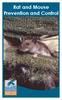 Rat and Mouse Prevention and Control General Information Rats and mice have been associated with people for hundreds of years. They live on our food and waste products and inhabit our buildings. Rodents
Conquer Pest Control Ltd. Mammal Control
 Mammal Control Effective Rodent Control to minimise risks and avoidable costs Rodents are the largest group of mammals with over 1500 representative species worldwide, but just 15 are known to reside in
Why do Pest Infestations Occur? 3. Why is Pest Management Important? 4. Who is Responsible for Pest Control? 5. Types of Common Pests 6
 PEST M ANAGEMENT This publication provides a set of guidelines on good pest management practices for food operators and food handlers. To manage and reduce the risk of food-borne illnesses, a comprehensive
www.defra.gov.uk Code of Practice for the prevention and control of rodent infestations on poultry farms
 www.defra.gov.uk Code of Practice for the prevention and control of rodent infestations on poultry farms All information contained in this brochure was correct at time of going to press (April 2009). Department
a white paper from Pete Trotman
 a white paper from Pete Trotman The effects of biocides legislation on pest management A white paper on the effects of biocides regulation (EU) 528/2012 (BPR) on controlling rodent population This paper
How To Inspect For Rodents on Your Property
 How To Inspect For Rodents on Your Property Building Question Yes No Necessary Correction if "Yes" 1. Does my home (or other structure) have gaps or holes bigger than 1/4 inch: a. In the foundation? Seal
Pest control procedures manual
 Pest control procedures manual Rodents May 2009 Contents Introduction... 3 1.0 Mice within dwellings... 4 1.1 Method of treatment 4 1.1.1 First visit...4 1.1.2 Infestation not present...4 1.1.3 Uncertain
Welcome Witamy Sveiki
 Welcome Witamy Sveiki If you would like this document in another language or format, or if you require the services of an interpreter, please contact us. Jeżeli chcieliby Państwo otrzymać ten document
Rodent Control Record Book
 Rodent Control Record Book ON FARM REPORT MANUAL Farm Name: Date: Produced in partnership with FarmTrain Enabling the most effective solutions to your pest problems. Developing an Integrated Rodent Strategy
Integrated Pest Management
 Integrated Pest Management Many people do not mind encountering bugs outdoors. However, bugs indoors are usually considered pests. Even one insect may be considered too many. People use pesticides to control
Protect your most valuable assets
 Protect your most valuable assets Premise eliminates termites right around your home Termites are a very serious pest in Australia, causing damage that costs hundreds of millions of dollars to repair each
Pesticides and Alternatives to Pest Control
 Pesticides and Alternatives to Pest Control Be familiar with different pesticides that may be found in the home and how to minimize poisonings and exposure. " Understand the role of integrated pest management
RAT CONTROL by LOCAL AUTHORITIES within the UNITED KINGDOM
 413 RAT CONTROL by LOCAL AUTHORITIES within the UNITED KINGDOM Gai Murphy 1 and David J. Oldbury 2 1 Senior Lecturer, School of Environment and Life Sciences, University of Salford Salford, England 2 Principal
TEXOMA HOUSING PARTNERS (THP) INTEGRATED PEST MANAGEMENT BID SPECIFICATIONS
 TEXOMA HOUSING PARTNERS (THP) INTEGRATED PEST MANAGEMENT BID SPECIFICATIONS CONTRACT FOR COMMERCIAL PEST CONTROL SERVICES General Pest & Rodent Control 1. GENERAL a. Description of Service This contract
What to Do About Rats or Mice in Your Home or Business
 Janel Heinrich, MPH, MA, Director City-County Building, Room 507 608 266-4821 210 Martin Luther King, Jr. Boulevard 608 266-4858 fax Madison, WI 53703 www.publichealthmdc.com What to Do About Rats or Mice
4. HOUSE RULES PEST CONTROL
 4. HOUSE RULES PEST CONTROL The House Rules Section contains 9 sub-sections each of which covers a particular subject of food safety management. Every House Rule sub-section begins with guidance and then
macenviro Pest and Vermin Control Telephone: 0116 276 9592 Leicester 0207 798 6751 London
 macenviro Pest and Vermin Control Telephone: 0116 276 9592 Leicester 0207 798 6751 London About Us With offices in Leicester and London, macenviro (maclean ENVIRONMENTAL) is a family run company supplying
Mice and Rats in and around Schools
 Mice and Rats in and around Schools University of Nebraska Lincoln Extension To Know Your Enemy is to Control Your Enemy Identification (Morphology) Know Abilities (Physiology) Know Habits (Behavior) Know
CHILTERN DISTRICT COUNCIL PEST CONTROL POLICY. April 2015
 CHILTERN DISTRICT COUNCIL PEST CONTROL POLICY April 2015 CHILTERN DISTRICT COUNCIL CUSTOMER SERVICE SPECIFICATION General Policy Chiltern District Council takes note that it has a statutory duty to ensure
Controlling Rodents on the Poultry Farm
 Controlling Rodents on the Poultry Farm Rodents, such as rats and mice, are a major concern on poultry farms due to building damage and feed loss. Unless steps are taken to prevent their presence, the
PEST CONTROL SYSTEMS
 HYGIENE MANAGEMENT PEST CONTROL SYSTEMS rodents birds Pest includes: numerous species of flying and crawling insects: cockroaches, flies, grain beetles, moths dogs, cats Pest control systems Pest pose
Sentinel Chicken Screening Here are the mosquito larvae! Ground Application Aerial Larvicide Applications
 County of San Diego Vector Control Program Mosquitoes, Rats, Ticks and More! What is a Vector? Any organism capable of carrying and transferring a disease Common vectors: Mosquitoes Ticks Rats Flies Mosquito
Integrated Pest Management Program Contract Guide Specification - 1999 Revision -
 Integrated Pest Management Program Contract Guide Specification - 1999 Revision - This Document is Intended for General Guidance Only And Does Not Pertain to Any Actual Contract 1. GENERAL A. Description
Integrated Pest Management Program Contract Guide Specification - 2005 Revision -
 Public Buildings Service National Capital Region Integrated Pest Management Program Contract Guide Specification - 2005 Revision - (This Document is Intended for General Guidance Only And Does Not Pertain
INTEGRATED PEST MANAGEMENT
 INTEGRATED PEST MANAGEMENT Pests, such as insects and rodents, can be a serious problem in a restaurant. They can contaminate food supplies as well as damage facilities. More importantly, they can also
ULTIMATE TERMITE SOLUTION WATER BASED TERMITICIDE QUICK ACTION LONG LASTING CONTROL ELIMINATES TERMITES ODOURLESS PEOPLE, PET & PLANT FRIENDLY
 ULTIMATE TERMITE SOLUTION WATER BASED TERMITICIDE QUICK ACTION LONG LASTING CONTROL ELIMINATES TERMITES ODOURLESS PEOPLE, PET & PLANT FRIENDLY TERMITES CAN DEVOUR YOUR HOME! Australia s subterranean termites
SKIN CONDITIONS IN PIGS
 DEPARTMENT: AGRICULTURE SKIN CONDITIONS IN PIGS Jenny Turton 2001 Compiled by Directorate Communication, Department of Agriculture in cooperation with the ARC-Onderstepoort Veterinary Institute Printed
SCHOOLS INTEGRATED PEST MANAGEMENT (IPM) FOR RATS AND MICE
 SCHOOLS INTEGRATED PEST MANAGEMENT (IPM) FOR RATS AND MICE *Important Note* According to the Virginia Pesticide Control Act (Section 3.1-249.53), in order to apply ANY pesticide (including Raid, Round-Up,
Release: 1. HLTPOP409C Identify pest control strategies
 Release: 1 HLTPOP409C Identify pest control strategies HLTPOP409C Identify pest control strategies Modification History Not Applicable Unit Descriptor Descriptor This unit aims to describe the competencies
Follow the steps listed on the following pages to help eliminate the conditions that encourage rats.
 CONTROLLING RATS Responsibilities It takes a community-wide effort to manage the rodent population. What Does the Evanston Health and Human Services Department Do? Working with residents, the Evanston
Home without bugs. Tips and advice on both pests and pesticides. www.kemikalieinspektionen.se
 Home without bugs Tips and advice on both pests and pesticides www.kemikalieinspektionen.se Pests and vermin are on the increase Pests and vermin are becoming an increasing problem in Sweden. This may
THE CLATTERBRIDGE CANCER CENTRE NHS FOUNDATION TRUST INFECTION CONTROL POLICY PEST CONTROL. DOCUMENT REF: PICGPESTC (Version No: 1.
 INFECTION CONTROL POLICY PEST CONTROL DOCUMENT REF: PICGPESTC (Version No: 1.1) Name and designation of policy author(s) Approved by (committee, group, manager) Date approved Deborah Kretzer Lead Nurse
Idaho Falls School District 91 Effective Date January 25, 2010
 PLN-4 CONTENTS 1. PURPOSE... 2 2. SCOPE AND APPLICABILITY... 2 3. SPIDERS... 2 4. COCKROACH CONTROL... 3 PLN-4 1. PURPOSE It is the policy of Idaho Falls School District #91 to provide a place of education
Integrated Pest Management (IPM) Policy
 Integrated Pest Management (IPM) Policy What is Integrated Pest Management (IPM)? Integrated pest management (IPM) is an approach to pest control that utilizes regular monitoring and record keeping to
This key unlocks a smarter approach to rodent control.
 This key unlocks a smarter approach to rodent control. Introducing with Sorexa Block bait An innovative and smarter approach to rodent control. Most rodent bait stations share a common, uninspired design
ITEM 634.90030011- RODENT AND VERMIN CONTROL - INITIAL SURVEY. BAITING AND SANITATION ITEM 634
 DESCRIPTION A. Under these items the Contractor shall perform and satisfy the rodent and vermin control (extermination) and site sanitation requirements within construction areas as designated by the engineer.
Palatability of rodent baits to wild house mice
 Palatability of rodent baits to wild house mice SCIENCE FOR CONSERVATION 184 C E.O Connor and L.H. Booth Published by Department of Conservation P.O. Box 10-420 Wellington, New Zealand Science for Conservation
Thank you for choosing the Royal Borough s Pest Control Services. We can confirm your payment of 120.00 and your receipt number is 001720.
 Transport and Technical Services Council Offices, 37 Pembroke Road, London W8 6PW Director for Environmental Health Nicholas Austin Re: Mrs Cecellia Hensman Flat 2 22-23 Hereford Square LONDON SW7 4TS
Structural Integrated Pest Management Program: Contract Specifications for INSERT YOUR FACILITY NAME HERE
 Model IPM Contract Structural Integrated Pest Management Program: Contract Specifications for INSERT YOUR FACILITY NAME HERE Premises covered by this specification: 1. 2. 3. 4. 5. (Attach additional list
Unit 4 Lesson 1: A Pest by Any Other Name
 Focus Areas: Pest Control: Biological; Environmental Science, Language Arts Focus Skills: critical thinking, conducting research, observing, graphing, interpreting data Objectives To explore human attitudes
PROPOSAL SPECIFICATIONS. for Integrated Pest Management (IPM) Pest Control Service Contract
 PROPOSAL SPECIFICATIONS for Integrated Pest Management (IPM) Pest Control Service Contract 1. Service to be provided. The Metropolitan Knoxville Airport Authority (MKAA) is seeking a pest control contractor
ORIENTAL COCKROACH PREVENTION & CONTROL
 ORIENTAL COCKROACH PREVENTION & CONTROL DESCRIPTION Oriental cockroaches are dark brown to black in color and 1-1¼ inch in length. The females have only traces of wings, while males have short wings which
We have put together the following guidance on the different kinds of pests that we treat.
 Pest Control Guidance Document: We have put together the following guidance on the different kinds of pests that we treat. If you need advice or help with pests, please contact us on 01942 404364. Contents
PART TWO 5. PEST CONTROL
 PRT TWO 5. PEST CONTROL Section Page 5. Contents 1 5.1 Why is pest control important? 2 5.2 What are the legal requirements for pest control? 5.2.1 Which operations does the law apply to? 3 5.2.2 What
IPM Plan for Campus Landscape
 Created June 2014 IPM Plan for Campus Landscape Statement of Purpose The purpose of this integrated pest management (IPM) plan is to guide the use of environmentally sensitive pest management strategies
British Columbia Institute of Technology. BCIT Safety Manual MOUSE DROPPING/URINE EXPOSURE CONTROL PLAN
 BCIT Safety Manual Contents 1. Purpose... 2 2. Applicable Legislation and Reference Materials... 2 3. Roles & Responsibilities... 2 3.1 BCIT Responsibilities... 2 3.2 BCIT Facilities Management... 2 3.3
healthy homes Pesticides are poisons used to kill pests (including cockroaches, mice and rats).
 WHAT YOU NEED TO KNOW ABOUT PESTS AND PESTICIDES TO PROTECT YOUR FAMILY S HEALTH Pests or chemicals? It s a hard choice. Mice and cockroaches can make your family sick, trigger asthma attacks, and damage
The Leader In Rodent Control Technology
 World Leader in Rodent Control Technology Motomco-A Division of Bell Laboratories, Inc. The Largest Manufacturer of Rodenticides in the World Motomco and Bell Have Dominate Shares in Our Respective Markets
Rat and Mouse Control 1
 ENY-224 1 P. G. Koehler and W. H. Kern, Jr. 2 Rats and mice are important rodent pests entering Florida homes and warehouses for food and harborage (Figure 1). These rodents eat any kind of food that people
F I R S T S T R I K E R E S O L V G E N E R A T I O N B L U E M A X T M M A K I A E G I S S O F T S E C U R E T E C H N O L O G Y T M
 C O M M E N S A L R O D E N T F A C T S F I R S T S T R I K E R E S O L V G E N E R A T I O N B L U E M A X T M M A K I A E G I S S O F T S E C U R E T E C H N O L O G Y T M ADVANCED RODENT CONTROL TECHNOLOGY
TERMITE CONTROL IF YOU RE NOT ASKING FOR TERMIDOR, YOU RE ASKING FOR TROUBLE.
 TERMITE CONTROL IF YOU RE NOT ASKING FOR TERMIDOR, YOU RE ASKING FOR TROUBLE. Termites can destroy your home Termites are increasingly causing major structural damage to buildings throughout Australia
General Practice Service Willows Information Sheets. Ectoparasites (fleas and other skin parasites) in dogs
 General Practice Service Willows Information Sheets Ectoparasites (fleas and other skin parasites) in dogs Flea Tick Mite Louse Ectoparasites (fleas and other skin parasites) in dogs What types of skin
1. AC Coaches Fortnightly 2. Pantry Cars Fortnightly 3. Non-AC Coaches Fortnightly in first three. 4. Non-AC Coaches
 INTRODUCTION: In the present scenario, the need of the day is to prevent and control the Pests & Rodents in coaches. Cockroaches, Bedbugs, Mosquitoes and Rodents are nuisance to traveling passengers and
The Moredun Foundation. News Sheet Vol. 4, No.10. Toxoplasmosis in Sheep
 The Moredun Foundation News Sheet Vol. 4, No.10 Toxoplasmosis in Sheep (Published February 2006) Susan Rodger BVMS (Hons), PhD, MRCVS David Buxton BVMS, PhD, FRCPath, FRCVS Moredun Research Institute Pentlands
Workplace Health, Safety & Welfare
 Relevant Legislation Workplace (Health, Safety and Welfare) Regulations 1992 Construction (Design & Management) Regulations 2015 Provision & Use of Work Equipment Regulations 1998 (PUWER) Lifting Operations
In this Outline Requirement the following words and phrases shall have the following meanings unless the context otherwise requires:
 Pest Control Output Requirement 1. DEFINITIONS Any reference to "this Output Requirement" in this Annexure shall be a reference to this Pest Control Output Requirement (including the Appendices hereto).
ADVICE FOR OWNERS OF PET PIGS AND MICRO PIGS
 ADVICE FOR OWNERS OF PET PIGS AND MICRO PIGS General guidance for keeping your pig ADVICE AND GUIDANCE Keeping pigs or micro pigs animals specially bred to be smaller in adulthood than most other pig species
Review of the use of bait boxes during operations to control Norway rats, Rattus norvegicus a report to CIEH
 Review of the use of bait boxes during operations to control Norway rats, Rattus norvegicus a report to CIEH Roger Quy Wildlife Management Programme August 2011 Author Roger Quy Wildlife Management Programme
Protection Against Hantavirus. How to safely clean-up rodent droppings, dead rodents, and nests
 Protection Against Hantavirus How to safely clean-up rodent droppings, dead rodents, and nests 1 Hantavirus Carriers Other culprits include: the white-footed mouse, the rice rat, and the cotton rat Deer
19/02/2014. Bed Bug Control in the United Kingdom. Contamination. Key UK Requirements -Why do we Need to Control Pests? Eradicate/control species that
 Bed Bug Control in the United Kingdom Richard Moseley Key UK Requirements -Why do we Need to Control Pests? Eradicate/control species that have a detrimental effect on the health of humans are the cause
A diet fit for a pig: seven basic rules
 A diet fit for a pig: seven basic rules June 2013 Primefact 1292 1 st edition Jayce Morgan, Livestock Officer Pigs, Tamworth NSW Introduction When a pig is fed a proper diet there are benefits to the pig
Preventing Rats on Your Property
 Preventing Rats on Your Property A Guide for Property Owners and Tenants A Healthy Homes Guide Contents How to Use This Guide 1 How the Health Department 1 Inspects for Rats How to Control Rats 2 Step
RODENTICIDES. Technical product catalog and usage guide
 RODENTICIDES Technical product catalog and usage guide Rats and mice destroy an estimated $30 billion in food products per year, spread bacteria and leave associated filth in food and feed supplies. Reducing
This Food Safety Plan was developed in New York as an example for growers. Each grower must develop their own plan which fits their operation.
 G1 This Food Safety Plan was developed in New York as an example for growers. Each grower must develop their own plan which fits their operation. This is a food safety and security program which incorporates
Health and Safety Performance Standard HSPS 006 Food Safety
 Health and Safety Performance Standard HSPS 006 Food Safety HSPS.006/Safety, Health and Environment Unit/SCM/27.09.04 1 Safety, Health and Environment Unit Title Reference Number Food Safety HSPS 006 DOCUMENT
Roof Rat Control around Homes and Other Structures
 Cooperative Extension Roof Rat Control around Homes and Other Structures The roof rat, or black rat (Rattus rattus) is an Old World rodent species not native to North America that was identified in a Phoenix
Standard Operating Guideline Pest/Rodent Control
 Standard Operating Guideline (SOG) Title: PEST/RODENT CONTROL District Name: Date Prepared: Date Revised: OBJECTIVE: - Ensuring effective system-wide preventive and predictive maintenance actions - Ensure
The most effective undetectable termite control product available in New York
 The most effective undetectable termite control product available in New York The most serious threat The Eastern Subterranean termite is the most common termite species and poses the most serious threat
Controlling Rats and Mice In Swine Facilities
 Controlling Rats and Mice In Swine Facilities Originally published as PIH-107. Authors: Robert M. Timm, University of California Rex E. Marsh, University of California - Davis Scott E. Hygnstrom, University
Rat Control and Prevention in Waterfront Communities
 Rat Control and Prevention in Waterfront Communities Integrated Pest Management for Preventing invasive rats from threatening human health damaging property and infrastructure destroying native wildlife
CREATING A SYMPATHETIC ENVIRONMENT FOR ARCHIVAL MATERIAL MADHU RANI ICKPAC, BANGALORE
 CREATING A SYMPATHETIC ENVIRONMENT FOR ARCHIVAL MATERIAL MADHU RANI ICKPAC, BANGALORE An Archive is defined as a collection of historical documents and records. In the modern context, it also includes
RODENT CONTROL STRATEGY POLICY
 1 RODENT CONTROL STRATEGY POLICY Item B-HSD (01-2011)) MC 19/10/2011 RONDENT CONTROL STRATEGY POLICY RESOLVED: 1. That the contents of the report of the Rodent Control Strategy Ekurhuleni Metropolitan
Integrated Pest Management Policy for Research Laboratories
 Integrated Pest Management Policy for Research Laboratories Environmental Health & Safety I. POLICY The University of South Carolina s Integrated Pest Management Policy is based on the CDC s Biosafety
Integrated Pest Management
 No Ifs, Ants, or Bugs... Guaranteed 2700 Stadium Dr Kalamazoo, MI 49008 888-547-4337 www.griffinpest.com Integrated Pest Management IPM for Excellence: A guide to Principles and IPM Service Philosophy
PRODUCT SAFETY DATA SHEET According to 91/155 EC 1. IDENTIFICATION OF THE SUBSTANCE / PREPARATION AND OF THE COMPANY / UNDERTAKING
 G.W.B.PRODUCT LTD, 276 YORK WAY, LONDON N79PH TEL:020 7619 1650 FAX:020 7609 9196 EMAIL:[email protected] www.gwbproducts.co.uk -1-1. IDENTIFICATION OF THE SUBSTANCE / PREPARATION AND OF THE COMPANY /