
Anterior Cervical Discectomy
|
|
|
- Cecilia Wilcox
- 10 years ago
- Views:
Transcription
1 Anterior Cervical Discectomy Spinal Unit Tel: or Issue 4: August 2014 Review date: July 2017

2 Following your recent MRI scan and consultation with your spinal surgeon, you have been diagnosed with having a cervical disc protrusion resulting in nerve root compression (trapped nerve) and arm pain. Occasionally, the disc protrusion can also cause spinal cord compression resulting in weakness in your legs. This is an example as shown on an MRI scan The intervertebral disc is the structure that is between vertebrae (bones of the spine). It acts as both a spacer and a shock absorber. The disc is composed of two parts: a soft gel-like middle (nucleus pulposus) surrounded by a tougher fibrous wall (annulus fibrosus). Overhead view of an intervertebral disc (simplified) Nucleus pulposus Spinal cord Cervical disc C5 / 6 protruding into the spinal canal Annulus fibrosus Nerve root pain is felt in the area of the body that the nerve, as it leaves the spine, supplies. Symptoms may include pain, numbness, increased sensitivity or weakness of muscles. Nerve pain in the arm (brachial neuralgia) is very similar to sciatica but comes from the nerves in the neck. Sometimes symptoms can come from pressure on the spinal cord itself. This can result in more widespread symptoms, which might involve your legs and balance. One possible cause of these symptoms is that of a cervical disc protrusion. As the intervertebral discs lose their flexibility, elasticity and shock absorbing characteristics, the tough fibrous wall of the disc may weaken and may no longer be able to contain the gel-like substance in the centre. This material may bulge or push out through a tear in the disc wall (herniation), causing pain when it touches a nerve. Annulus fibrosis Overhead view of an intervertebral disc Bone Nucleus pulposus Nerve root Spinal cord Disc protrusion compressing the nerve root Very few people who have a spinal problem need surgery. In general, if a patient s arm pain due to a cervical disc protrusion is going to get better then it will do so in about 6 12 weeks. However, if the symptoms have not resolved following conservative measures (manipulation, physiotherapy, medication or injections) surgery may be necessary. Page 2 Page 3

3 About the operation The surgery called cervical discectomy is performed to remove the problem disc. The exposure is usually made through the front of the neck as it gives good access to the spine through a relatively uncomplicated pathway. The operation is performed under general anaesthetic (so you are fully asleep). First, the skin incision is made, which is usually on the right hand side of the neck and then one small muscle is cut. Access can then be gained right through to the spine. After the disc space has been identified on X-ray, the disc is then removed. Cervical fusion is then commonly carried out at the same time as cervical discectomy. To achieve a spinal fusion, a bone graft is used to connect two bones together. The patient s own bone will then grow into the bone graft and join the graft bone as its own. There are several techniques to get the bone graft needed for spinal fusion: patient s own bone (autograft bone): This is usually taken through an incision over the pelvis (ileac crest); donor bone (allograft bone): This eliminates the need to use patient s own bone. The donor bone graft acts as a calcium scaffolding which the patient s own bone grows into and eventually replaces; and artificial bone (bone substitutes). In the past, the patient s own bone was commonly used. This can result in complications including chronic pain from the bone graft site, infection and pelvic fractures so, for the most part, artificial bone is now used. These techniques may be used in conjunction with a cage to contain the graft and / or a small plate that can be applied to the front of the spine to add stability and prevent graft dislodgment. X-ray showing the bone graft and plate in position Skull Risks and complications As with any form of surgery, there are risks and complications associated with this procedure. These include: damage to the nerve root and the outer lining or covering which surrounds the nerve roots (dura). This is reported in < 5% of cases (fewer than 5 out of 100 people). It may occur as a result of the bone being very stuck to the lining and tearing it as the bone is lifted off. Often the hole or tear in the dura is repaired with stitches or a patch. This could result in neck or arm pain, weakness or numbness, leaking from the wound, headaches or, very rarely, meningitis; recurrent arm pain, as a result of scarring; 7 Cervical vertebrae Plate over the front of C5 / 6 cage and bone graft problems with positioning during the operation which might include pressure problems, skin and nerve injuries and eye complications including, very rarely, blindness. A special gel mattress and protection is used to minimise this; infection. Superficial wound infections may occur in 2 4% of cases (up to 4 out of 100 people). These are often easily treated with a course of antibiotics. Deep wound infections may occur in < 1% of cases (fewer than 1 out of 100 people). These can be more difficult to treat with antibiotics alone Page 4 Page 5

4 and sometimes patients require more surgery to clean out the infected tissue. This risk may increase for people who have diabetes, reduced immune systems or are taking steroids; blood clots (thomboses) in the deep veins of the legs (DVT) or lungs (PE). This occurs when the blood in the large veins of the leg forms blood clots and may cause the leg to swell and become painful and warm to the touch. Although rare, if not treated this could be a fatal condition if the blood clot travels from the leg to the lungs, cutting off the blood supply to a portion of the lung. It is reported as happening in fewer than 1 out of 700 cases. There are many ways to reduce the risk of blood clots forming. The most effective is to get moving as soon as possible after your operation. Walk regularly as soon as you are able to, both in hospital and when you return home. Perform the leg exercises illustrated in the Preventing Blood Clots leaflet and keep well hydrated by drinking plenty of water. Ladies are also advised to stop taking any contraceptive which contains the hormone oestrogen four weeks before surgery, as taking these during spinal surgery can increase the chances of developing a blood clot; bleeding in the wound and swelling in the windpipe (laryngeal oedema), which could result in difficulty breathing or swallowing. You must inform your consultant if you are taking tablets used to thin the blood, such as warfarin, aspirin or clopidogrel. It is likely you will need to stop taking them before your operation as they increase the risk of bleeding; bone graft non-union or lack of solid fusion (pseudoarthrosis). This can occur in up to 5% of cases (5 out of 100 people). See below for factors which can affect fusion; graft / cage movement can occur in up to 2 out of 100 cases, with 1 out of 100 requiring re-operation. In extremely rare cases, cage movement can cause severe damage and paralysis; damage to the trachea (windpipe) or oesophagus (food pipe). This is reported in less than 1% of cases (fewer than 1 in 100 people); possible complications associated with taking out bone graft include graft site pain and damage to a sensory nerve that supplies sensation to the front of the thigh (the lateral femoral cutaneous nerve); also, the small nerve that supplies vocal cords sometimes does not function after surgery because of retraction during the procedure. This could cause temporary or rarely some permanent hoarseness of the voice. Retraction of the oesophagus can produce temporary difficulty with swallowing; in the long term, or in years to come, pain can develop from problems at the other disc levels in the neck; and there are also very rare but serious complications that in extreme circumstances might include damage to the spinal cord and paralysis (the loss of use of the legs, loss of sensation and loss of control of the bladder and bowel). This can occur through bleeding into the spinal canal after surgery (a haematoma). If an event of this nature was to occur, every effort would be made to reverse the situation by returning to theatre to wash out the haematoma. Sometimes, however, paralysis can occur as a result of damage or reduction of the blood supply of the nerves or spinal cord and this is unfortunately not reversible; and a stroke, heart attack or other medical or anaesthetic problems, including death, which is reported as happening in 1 out of 250,000 cases under general anaesthetic. Factors which may affect spinal fusion and your recovery There are a number of factors that can negatively impact on a solid fusion following surgery, including: smoking; diabetes or chronic illness; obesity; malnutrition; osteoporosis; Page 6 Page 7

5 post-surgery activities (see note of recreational activities); and long-term (chronic) steroid use. Of all these factors, the one that can compromise fusion rate the most is smoking. Nicotine has been shown to be a bone toxin and it inhibits the ability of the bone-growing cells in the body (osteoblasts) to grow bone. Patients should make a concerted effort to allow their body the best change for their bone to heal by not smoking. What to expect after surgery Immediately after the operation you will be taken on your bed to the recovery ward, where nurses will regularly monitor your blood pressure and pulse. Oxygen will be given to you to via a facemask for a period of time, to help you to recover from the anaesthetic. You will have an intravenous drip for about 24 hours or until you are able to drink again after the surgery. A small drain (tube) will come out of your neck wound, this prevents any excess blood or fluid from collecting there. This will be removed when the drainage has stopped, usually 24 hours later. You will have some discomfort or pain in your neck and also at the site where the bone graft was taken. The nursing and medical staff will help you to control this with appropriate medication. A sore throat is also common for a few days after surgery. On the first day after your operation, your physiotherapist will help you out of bed. They will also show you the correct way to move safely. Going home You will normally be allowed to leave hospital when you and your physiotherapist are happy with your mobility. This tends to be 1 2 days after your operation. Please arrange for a friend or relative to collect you, as driving yourself or taking public transport is not advised in the early stages of recovery. If you are likely to require patient transport please inform one of the nurses as soon as possible. Wound care Your wound will probably be closed with clips. You must not get the dressing wet so care is required when washing. Please do not remove your wound dressing, unless it accidentally gets wet, until your clips are removed. If a new dressing is required then a simple dry dressing from the chemist is sufficient. When shaving, care should be taken to avoid the area until it is fully healed. Please contact your GP if you have any of the following: redness around the wound; wound leakage; or high body temperature. The ward will inform you whether a community (district) nurse has been arranged to come to your home to remove the clips, or ask you to arrange an appointment with the GP practice nurse for the clip removal. This will usually be 7 10 days after surgery. Date of clip removal: / / Driving When to resume driving after surgery does depend on the procedure carried out. You must feel safe and confident to drive and be able to turn your head easily and have full power and sensation in your arms and legs. If in doubt please discuss driving with your surgeon before leaving hospital. Page 8 Page 9

6 Recreational activities Walking is the best activity to do following your surgery. Any other sports should be avoided until you can discuss them with your consultant in your follow-up appointment (see next page). Work You will need to be off work for at least four weeks. This may be longer depending on the type of procedure undertaken and also your type of work. Please discuss this with your surgeon before leaving hospital. The hospital can give you a certificate or you can ask your GP. Contact numbers Mr Cumming s secretary Mr Lovell s secretary Mr Powell s secretary Mr Sharp s secretary Mr Kaleel s secretary Spinal nurse specialists Lifting Please refer to your physiotherapy advice sheet and discuss with your physiotherapist. Heavy lifting and carrying should be avoided for the first few weeks. Follow-up You will be sent an appointment to return to clinic 8 12 weeks after your surgery. If you have any queries before your appointment date please contact the nurse specialist for your consultant s team. If you have any questions about your procedure, please discuss them with either the ward nurses or a member of your consultant s team. Page 10 Page 11

7 Produced by: The Ipswich Hospital NHS Trust Heath Road, Ipswich, Suffolk IP4 5PD Hospital switchboard: The Ipswich Hospital NHS Trust, All rights reserved. Not to be reproduced in whole, or in part, without the permission of the copyright owner. DPS ref: (RP)

Patient Information. Anterior Cervical Surgery. Here to help. Respond Deliver & Enable
 Here to help Our Health Information Centre (HIC) provides advice and information on a wide range of health-related topics. We also offer: Services for people with disabilities. Information in large print,
Anterior Cervical Discectomy
 Anterior Cervical Discectomy Issue 5: March 2016 Review date: February 2019 Following your recent MRI scan and consultation with your spinal surgeon, you have been diagnosed with having a cervical disc
Posterior Lumbar Decompression for Spinal Stenosis
 Posterior Lumbar Decompression for Spinal Stenosis Spinal Unit Tel: 01473 702032 or 702097 Issue 5: August 2014 Review date: July 2017 Following your recent MRI scan and consultation with your spinal surgeon
Posterior Cervical Decompression
 Posterior Cervical Decompression Spinal Unit Tel: 01473 702032 or 702097 Issue 2: January 2009 Following your recent MRI scan and consultation with your spinal surgeon, you have been diagnosed with a
Lumbar Decompression and Stabilisation for Degenerative Spondylolisthesis
 Lumbar Decompression and Stabilisation for Degenerative Spondylolisthesis Spinal Unit Tel: 01473 702032 or 702097 Issue 5: August 2014 Review date: July 2017 Following your recent investigations and consultation
Posterior Lumbar Decompression for Spinal Stenosis
 Posterior Lumbar Decompression for Spinal Stenosis Issue 6: March 2016 Review date: February 2019 Following your recent MRI scan and consultation with your spinal surgeon you have been diagnosed with
Patient Information. Posterior Cervical Surgery. Here to help. Respond Deliver & Enable
 Here to help Our Health Information Centre (HIC) provides advice and information on a wide range of health-related topics. We also offer: Services for people with disabilities. Information in large print,
Lumbar Nerve Root Block
 Lumbar Nerve Root Block Spinal Unit Tel: 01473 702032 or 702097 Issue 2: January 2009 Imaging techniques, such as an MRI scan, can reveal small disc bulges and / or wear and tear in the spine with possible
Orthopaedic Spine Center. Anterior Cervical Discectomy and Fusion (ACDF) Normal Discs
 Orthopaedic Spine Center Graham Calvert MD James Woodall MD PhD Anterior Cervical Discectomy and Fusion (ACDF) Normal Discs The cervical spine consists of the bony vertebrae, discs, nerves and other structures.
Hip Replacement. Department of Orthopaedic Surgery Tel: 01473 702107
 Information for Patients Hip Replacement Department of Orthopaedic Surgery Tel: 01473 702107 DMI ref: 0134-08.indd(RP) Issue 3: February 2008 The Ipswich Hospital NHS Trust, 2005-2008. All rights reserved.
Primary and revision lumbar discectomy. (nerve root decompression)
 Primary and revision lumbar discectomy (nerve root decompression) The aim of this leaflet is to help answer some of the questions you may have about having a lumbar discectomy. It explains the benefits,
Anterior cervical surgery
 Anterior cervical surgery The aim of this leaflet is to help answer some of the questions you may have about having anterior cervical surgery. It explains the benefits, risks and alternatives of the procedure
Options for Cervical Disc Degeneration A Guide to the Fusion Arm of the M6 -C Artificial Disc Study
 Options for Cervical Disc Degeneration A Guide to the Fusion Arm of the M6 -C Artificial Disc Study Each year, hundreds of thousands of adults are diagnosed with Cervical Disc Degeneration, an upper spine
Each year, hundreds of thousands of adults are diagnosed with Cervical Disc Degeneration, The Cervical Spine. What is the Cervical Spine?
 Each year, hundreds of thousands of adults are diagnosed with Cervical Disc Degeneration, an upper spine condition that can cause pain and numbness in the neck, shoulders, arms, and even hands. This patient
.org. Herniated Disk in the Lower Back. Anatomy. Description
 Herniated Disk in the Lower Back Page ( 1 ) Sometimes called a slipped or ruptured disk, a herniated disk most often occurs in your lower back. It is one of the most common causes of low back pain, as
Femoral artery bypass graft (Including femoral crossover graft)
 Femoral artery bypass graft (Including femoral crossover graft) Why do I need the operation? You have a blockage or narrowing of the arteries supplying blood to your leg. This reduces the blood flow to
Surgery for cervical disc prolapse or cervical osteophyte
 Mr Paul S. D Urso MBBS(Hons), PhD, FRACS Neurosurgeon Provider Nº: 081161DY Epworth Centre Suite 6.1 32 Erin Street Richmond 3121 Tel: 03 9421 5844 Fax: 03 9421 4186 AH: 03 9483 4040 email: [email protected]
Herniated Cervical Disc
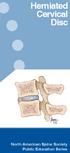 Herniated Cervical Disc North American Spine Society Public Education Series What Is a Herniated Disc? The backbone, or spine, is composed of a series of connected bones called vertebrae. The vertebrae
Anterior Cervical Discectomy and Fusion
 A Patient s Guide to Anterior Cervical Discectomy and Fusion 651 Old Country Road Plainview, NY 11803 Phone: 5166818822 Fax: 5166813332 [email protected] DISCLAIMER: The information in this booklet is
Patient Information. Lumbar Spine Segmental Decompression. Royal Devon and Exeter NHS Foundation Trust
 Lumbar Spine Segmental Decompression Royal Devon and Exeter NHS Foundation Trust Patient Information Lumbar Spine Segmental Decompression Reference Number: TO 05 004 004 (version date: June 2015) Introduction
ARTHROSCOPIC HIP SURGERY
 ARTHROSCOPIC HIP SURGERY Hip Arthroscopy is a relatively simple procedure whereby common disorders of the hip can be diagnosed and treated using keyhole surgery. Some conditions, which previously were
Lumbar Laminectomy and Interspinous Process Fusion
 Lumbar Laminectomy and Interspinous Process Fusion Introduction Low back and leg pain caused by pinched nerves in the back is a common condition that limits your ability to move, walk, and work. This condition
Patient information for cervical spinal fusion.
 Patient information for cervical spinal fusion. Introduction This booklet has been compiled to help you understand spinal cervical fusion surgery and postoperative rehabilitation. Anatomy The cervical
A Patient s Guide to Artificial Cervical Disc Replacement
 A Patient s Guide to Artificial Cervical Disc Replacement Each year, hundreds of thousands of adults are diagnosed with Cervical Disc Degeneration, an upper spine condition that can cause pain and numbness
SPINAL STENOSIS Information for Patients WHAT IS SPINAL STENOSIS?
 SPINAL STENOSIS Information for Patients WHAT IS SPINAL STENOSIS? The spinal canal is best imagined as a bony tube through which nerve fibres pass. The tube is interrupted between each pair of adjacent
Inguinal (Groin) Hernia Repair
 Information for patients Inguinal (Groin) Hernia Repair General Surgery Tel: 01473 712233 DMI ref: 11582-09.indd(RP) Issue 1: February 2010 The Ipswich Hospital NHS Trust, 2010. All rights reserved. Not
Neck Surgery (Cervical spine surgery) Remember to bring this handout to the hospital with you.
 Neck Surgery (Cervical spine surgery) Remember to bring this handout to the hospital with you. 1 Neck Surgery (cervical spine surgery) Table of contents Page Why do I need neck surgery?... 2 What kinds
Femoral Hernia Repair
 Femoral Hernia Repair WHAT IS A FEMORAL HERNIA REPAIR? 2 WHAT CAUSES A FEMORAL HERNIA? 2 WHAT DOES TREATMENT/ MANAGEMENT INVOLVE? 3 DAY SURGERY MANAGEMENT 3 SURGICAL REPAIR 4 WHAT ARE THE RISKS/COMPLICATIONS
ANTERIOR CERVICAL DECOMPRESSION AND FUSION
 ANTERIOR CERVICAL DECOMPRESSION AND FUSION NOTE: PLEASE DO NOT TAKE ANY NON-STEROIDAL ANTI-INFLAMMATORY DRUGS (NSAIDs like Advil, Celebrex, Ibuprofen, Motrin, Vioxx, etc) OR ASPIRIN PRODUCTS FOR 2 WEEKS
Patient Information for Lumbar Spinal Fusion. What is a lumbar spinal fusion? Page 1 of 5
 Patient Information for Lumbar Spinal Fusion What is a lumbar spinal fusion? You have been offered surgery to the lumbar region of your spine, your lower back. The operation is called a lumbar spinal fusion.
Inguinal Hernia (Female)
 Inguinal Hernia (Female) WHAT IS AN INGUINAL HERNIA? 2 WHAT CAUSES AN INGUINAL HERNIA? 2 WHAT DOES TREATMENT / MANAGEMENT INVOLVE? 3 DAY SURGERY MANAGEMENT 3 SURGICAL REPAIR 4 WHAT ARE THE RISKS/COMPLICATIONS
Level 1, 131-135 Summer Street ORANGE NSW 2800 Ph: 02 63631688 Fax: 02 63631865
 Write questions or notes here: Level 1, 131-135 Summer Street ORANGE NSW 2800 Ph: 02 63631688 Fax: 02 63631865 Document Title: Revision Total Hip Replacement Further Information and Feedback: Tell us how
OPERATION:... Proximal tibial osteotomy Distal femoral osteotomy
 AFFIX PATIENT DETAIL STICKER HERE Forename.. Surname NHS Organisation. Responsible surgeon. Job Title Hospital Number... D.O.B.././ No special requirements OPERATION:..... Proximal tibial osteotomy Distal
Level 1, 131-135 Summer Street ORANGE NSW 2800 Ph: 02 63631688 Fax: 02 63631865
 Write questions or notes here: Level 1, 131-135 Summer Street ORANGE NSW 2800 Ph: 02 63631688 Fax: 02 63631865 Document Title: Total Knee Replacement Further Information and Feedback: Tell us how useful
Recurrent Varicose Veins
 Information for patients Recurrent Varicose Veins Sheffield Vascular Institute Northern General Hospital You have been diagnosed as having Varicose Veins that have recurred (come back). This leaflet explains
Herniated Lumbar Disc
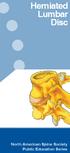 Herniated Lumbar Disc North American Spine Society Public Education Series What Is a Herniated Disc? The spine is made up of a series of connected bones called vertebrae. The disc is a combination of strong
Total knee replacement
 Patient Information to be retained by patient What is a total knee replacement? In a total knee replacement the cartilage surfaces of the thigh bone (femur) and leg bone (tibia) are replaced. The cartilage
Further information You can get more information and share your experience at www.aboutmyhealth.org
 OS01 Total Hip Replacement Further information You can get more information and share your experience at www.aboutmyhealth.org Local information You can get information locally from: Taunton and Somerset
Herniated Disk in the Lower Back
 Nader M. Hebela, MD Fellow of the American Academy of Orthopaedic Surgeons http://orthodoc.aaos.org/hebela Cleveland Clinic Abu Dhabi Cleveland Clinic Abu Dhabi Neurological Institute Al Maryah Island
Patient Guide to Neck Surgery
 The following is a sampling of products offered by Zimmer Spine for use in Anterior Cervical Fusion procedures. Patient Guide to Neck Surgery Anterior Cervical Fusion Trinica Select With the Trinica and
If you or a loved one have suffered because of a negligent error during spinal surgery, you will be going through a difficult time.
 If you or a loved one have suffered because of a negligent error during spinal surgery, you will be going through a difficult time. You may be worried about your future, both in respect of finances and
The main surgical options for treating early stage cervical cancer are:
 INFORMATION LEAFLET ON TOTAL LAPAROSCOPIC RADICAL HYSTERECTOMY (TLRH) FOR EARLY STAGE CERVICAL CANCER (TREATING EARLY STAGE CERVICAL CANCER BY RADICAL HYSTERECTOMY THROUGH KEYHOLE SURGERY) Aim of the leaflet
This is my information booklet: Introduction
 Hip arthroscopy is a relatively new procedure which allows the surgeon to diagnose and treat hip disorders by providing a clear view of the inside of the hip with very small incisions. This is a more complicated
What is the function of the spinal column?
 What is the function of the spinal column? Stability The function of the human spinal column is above all to stabilise the head, the upper body, and walking upright. Primarily responsible for this are
BRYAN. Cervical Disc System. Patient Information
 BRYAN Cervical Disc System Patient Information 3 BRYAN Cervical Disc System PATIENT INFORMATION BRYAN Cervical Disc System PATIENT INFORMATION 1 BRYAN Cervical Disc System This patient information brochure
Procedure Information Guide
 Procedure Information Guide Total hip replacement Brought to you in association with EIDO and endorsed by the The Royal College of Surgeons of England Discovery has made every effort to ensure that the
Low Back Surgery. Remember to bring this handout to the hospital with you.
 Remember to bring this handout to the hospital with you. Table of contents Page Why do I need low back surgery?... 1 What kinds of low back surgeries are there?... 2 Before your surgery... 3 After your
Options for Cervical Disc Degeneration A Guide to the M6-C. clinical study
 Options for Cervical Disc Degeneration A Guide to the M6-C clinical study Each year, hundreds of thousands of adults are diagnosed with Cervical Disc Degeneration, an upper spine condition that can cause
Parathyroidectomy An operation to remove overactive parathyroid glands Information for patients
 Oxford University Hospitals NHS Trust Parathyroidectomy An operation to remove overactive parathyroid glands Information for patients What are the parathyroid glands? There are four parathyroid glands
Umbilical or Paraumbilical Hernia Adults
 Umbilical or Paraumbilical Hernia Adults WHAT IS AN UMBILICAL OR PARAUMBILICAL HERNIA? 2 THE OPERATION? 2 ANY ALTERNATIVES 3 BEFORE THE OPERATION 3 AFTER YOUR SURGERY - IN HOSPITAL 4 POSSIBLE COMPLICATIONS?
Anterior Cervical Decompression and Fusion or Anterior Cervical Corpectomy and Fusion
 Anterior Cervical Decompression and Fusion or Anterior Cervical Corpectomy and Fusion DO NOT TAKE ANY ASPIRIN PRODUCTS OR NON-STEROIDAL ANTI- INFLAMMATORY DRUGS (ie NSAIDs, Advil, Celebrex, Ibuprofen,
Laparoscopic Nephrectomy
 Laparoscopic Nephrectomy Information for Patients This leaflet explains: What is a Nephrectomy?... 2 Why do I need a nephrectomy?... 3 What are the risks and side effects of laparoscopic nephrectomy?...
Total hip replacement
 Patient Information to be retained by patient What is a total hip replacement? In a total hip replacement both the ball (femoral or thigh bone) side of the hip joint and the socket (acetabular or pelvic
Varicose Veins Operation. Patient information Leaflet
 Varicose Veins Operation Patient information Leaflet 22 nd August 2014 WHAT IS VARICOSE VEIN SURGERY (HIGH LIGATION AND MULTIPLE AVULSIONS) The operation varies from case to case, depending on where the
Procedure Information Guide
 Procedure Information Guide Surgery to remove the pancreas (whipple's procedure) Brought to you in association with EIDO and endorsed by the The Royal College of Surgeons of England Discovery has made
Having a tension-free vaginal tape (TVT) operation for stress urinary incontinence
 Having a tension-free vaginal tape (TVT) operation for stress urinary incontinence This leaflet explains more about tension-free vaginal tape (TVT) including the benefits, risks and any alternatives, and
Consent for Anterior Cervical Discectomy With Fusion and a Metal Plate at
 STEPHEN MARANO, M.D. JAMES COOK PA-C Consent for Anterior Cervical Discectomy With Fusion and a Metal Plate at Patient Name: Patient Diagnosis: Cervical Degenerative Disc Disease (wear and tear on the
X-Plain Inguinal Hernia Repair Reference Summary
 X-Plain Inguinal Hernia Repair Reference Summary Introduction Hernias are common conditions that affect men and women of all ages. Your doctor may recommend a hernia operation. The decision whether or
V03 Varicose Veins Surgery
 V03 Varicose Veins Surgery What are varicose veins? Varicose veins are enlarged and twisted veins in the leg. They are common and affect up to 3 in 10 people. More women than men ask for treatment, with
Headache after an epidural or spinal injection What you need to know. Patient information Leaflet
 Headache after an epidural or spinal injection What you need to know Patient information Leaflet April 2015 We have produced this leaflet to give you general information about the headache that may develop
Spinal Injections. North American Spine Society Public Education Series
 Spinal Injections North American Spine Society Public Education Series What Is a Spinal Injection? Your doctor has suggested that you have a spinal injection to help reduce pain and improve function. This
Laparoscopic Hysterectomy
 Any further questions? Please contact the matron for Women s Health on 020 7288 5161 (answerphone) Monday - Thursday 9am - 5pm. For more information: Royal College of Obstetrics and Gynaecology Recovering
Epigastric Hernia Repair
 Epigastric Hernia Repair WHAT IS EPIGASTRIC HERNIA REPAIR? 2 WHAT CAUSES IT? 2 WHAT DOES TREATMENT/MANAGEMENT INVOLVE? 2 WHAT WOULD HAPPEN IF THE HERNIA WAS NOT TREATED? 3 EPIGASTRIC HERNIA REPAIR 3 WHAT
X-Plain Hip Replacement Surgery - Preventing Post Op Complications Reference Summary
 X-Plain Hip Replacement Surgery - Preventing Post Op Complications Reference Summary Introduction Severe arthritis in the hip can lead to severe pain and inability to walk. To relieve the pain and improve
Spigelian Hernia Repair
 Spigelian Hernia Repair WHAT IS A SPIGELIAN HERNIA? 2 WHAT CAUSES IT? 2 WHAT DOES TREATMENT/ MANAGEMENT INVOLVE? 2 WHAT WOULD HAPPEN IF THE HERNIA WAS NOT TREATED? 2 SPIGELIAN HERNIA REPAIR 3 WHAT ARE
Tunnelled indwelling pleural catheter (TIPC)
 Tunnelled indwelling pleural catheter (TIPC) A patient s guide 1 What is a tunnelled indwelling pleural catheter? A tunnelled indwelling pleural catheter is a specially designed small tube to drain fluid
Vaginal Repair- with Mesh A. Interpreter / cultural needs B. Condition and treatment C. Risks of a vaginal repair- with mesh
 The State of Queensland (Queensland Health), 2011 Permission to reproduce should be sought from [email protected] DO NOT WRITE IN THIS BINDING MARGIN v2.00-03/2011 SW9226 Facility: A. Interpreter
Ilioinguinal dissection (removal of lymph nodes in the groin and pelvis)
 Ilioinguinal dissection (removal of lymph nodes in the groin and pelvis) This sheet answers common questions about ilio-inguinal dissection. If you would like further information, or have any particular
Patient Guide to Lower Back Surgery
 The following is a sampling of products offered by Zimmer Spine for use in Open Lumbar Fusion procedures. Patient Guide to Lower Back Surgery Open Lumbar Fusion Dynesys The Dynesys Dynamic Stabilization
Inferior Vena Cava filter and removal
 Inferior Vena Cava filter and removal What is Inferior Vena Cava Filter Placement and Removal? An inferior vena cava filter placement procedure involves an interventional radiologist (a specialist doctor)
Epidural Continuous Infusion. Patient information Leaflet
 Epidural Continuous Infusion Patient information Leaflet April 2015 Introduction You may already know that epidural s are often used to treat pain during childbirth. This same technique can also used as
Herniated Disk. This reference summary explains herniated disks. It discusses symptoms and causes of the condition, as well as treatment options.
 Herniated Disk Introduction Your backbone, or spine, has 24 moveable vertebrae made of bone. Between the bones are soft disks filled with a jelly-like substance. These disks cushion the vertebrae and keep
Tibial Intramedullary Nailing
 Tibial Intramedullary Nailing Turnberg Building Orthopaedics 0161 206 4898 All Rights Reserved 2015. Document for issue as handout. Procedure The tibia is the long shin bone in the lower leg. It is a weight
Cervical Disk Surgery
 Cervical Disk Surgery Relieving Symptoms with Decompression and Fusion CONSIDER CERVICAL DISK SURGERY Do you suffer from nagging neck and arm pain or weakness caused by a disk problem in your upper (cervical)
Cheekbone (zygoma) and/or eye socket (orbit) fracture surgery
 Ambulatory Care & Local Networks Cheekbone (zygoma) and/or eye socket (orbit) fracture surgery Information for patients You have been treated in the Emergency Department for a broken (fractured) cheekbone
A whiplash injury, most commonly due to a car crash, causes neck pain. See separate leaflet called 'Whiplash Injury' for details.
 Neck Pain in Adults Who gets neck pain and what are the causes? Neck pain is common. More than half of people develop a bout of neck pain at some time in their life. One survey done in the UK found that,
Risks of Spinal Surgery
 Risks of Spinal Surgery Infection One of the more common potential complications of any surgery is a wound infection. In spinal surgery this can be a very severe problem. It occurs in 1.5 percent to 3
Spine Surgery - Wallis Ligament Stabilisation
 Spine Surgery - Wallis Ligament Stabilisation An Information Leaflet Physiotherapy Department 0161 419 4060 August 2011 Every Patient Matters TO47 2 Introduction This booklet has been compiled by the physiotherapy
Surgery for Disc Prolapse
 Contact Details Spinal Team Nuffield Orthopaedic Centre Windmill Road Headington Oxford OX3 7LD Surgery for Disc Prolapse Phone: 01865 738051 Fax: 01865 738027 Web Site www.noc.nhs.uk Surgery for disc
Temple Physical Therapy
 Temple Physical Therapy A General Overview of Common Neck Injuries For current information on Temple Physical Therapy related news and for a healthy and safe return to work, sport and recreation Like Us
An Operation for Stress Incontinence. Tension Free Vaginal Tape - TVT (Retropubic tape)
 An Operation for Stress Incontinence Tension Free Vaginal Tape - TVT (Retropubic tape) Patient Information Leaflet BSUG Patient Information Sheet Disclaimer This patient information sheet was put together
A Patient s Guide to Post-Operative Physiotherapy. Following Anterior Cruciate Ligament Reconstruction of the Knee
 A Patient s Guide to Post-Operative Physiotherapy Following Anterior Cruciate Ligament Reconstruction of the Knee Introduction The anterior cruciate ligament (ACL) is one of the main supporting ligaments
Contents. Overview. Removing the womb (hysterectomy) Overview
 This information is an extract from the booklet Understanding womb (endometrial) cancer. You may find the full booklet helpful. We can send you a free copy see page 9. Overview Contents Overview Removing
Vaginal prolapse repair surgery with mesh
 Vaginal prolapse repair surgery with mesh Your doctor has recommended a vaginal reconstructive procedure using mesh to treat your condition. The operation involves surgery to reattach the vagina to its
Vaginal hysterectomy and vaginal repair
 Women s Service Vaginal hysterectomy and vaginal repair Information for patients Vaginal hysterectomy and vaginal repair This leaflet is for women who have been advised to have a vaginal hysterectomy.
Open Discectomy. North American Spine Society Public Education Series
 Open Discectomy North American Spine Society Public Education Series What Is Open Discectomy? Open discectomy is the most common surgical treatment for ruptured or herniated discs of the lumbar spine.
SUPRAPUBIC CATHETER INSERTION INFORMATION FOR PATIENTS
 The British Association of Urological Surgeons 35-43 Lincoln s Inn Fields London WC2A 3PE Phone: Fax: Website: E-mail: +44 (0)20 7869 6950 +44 (0)20 7404 5048 www.baus.org.uk [email protected] INFORMATION
Hip arthroscopy Frequently Asked Questions
 Hip arthroscopy Frequently Asked Questions What is a hip arthroscopy? Hip arthroscopy is key hole surgery. Usually 2-3 small incisions (about 1 cm long) are made on the side of your hip. Through these
Patient Information. Anterior Cervical Discectomy and Fusion Surgery (ACDF).
 Patient Information. Anterior Cervical Discectomy and Fusion Surgery (ACDF). Understanding your spine Disc Between each pair of vertebrae there is a disc that acts as a cushion to protect the vertebra,
Lumbar Spinal Stenosis
 Copyright 2009 American Academy of Orthopaedic Surgeons Lumbar Spinal Stenosis Almost everyone will experience low back pain at some point in their lives. A common cause of low back pain is lumbar spinal
A review of spinal problems
 Dr Ulrich R Hähnle MD, FCS Orthopaedic Surgeon, Wits Facharzt für Orthopädie, Berlin Phone: +27 11 485 3236 Fax: +27 11 485 2446 Suite 102, Medical Centre, Linksfield Park Clinic P.O. Box 949, Johannesburg
Treating your abdominal aortic aneurysm by open repair (surgery)
 Patient information Abdominal aortic aneurysm open surgery Treating your abdominal aortic aneurysm by open repair (surgery) Introduction This leaflet tells you about open repair of abdominal aortic aneurysm,
REPAIR OF A URINARY VAGINAL FISTULA
 Procedure Specific Information What is the evidence base for this information? This publication includes advice from consensus panels, the British Association of Urological Surgeons, the Department of
Bladder reconstruction (neo-bladder)
 Bladder reconstruction (neo-bladder) We have written this leaflet to help you understand about your operation. It is designed to help you answer any questions you may have. The leaflet contains the following
Information on the Chiropractic Care of Lower Back Pain
 Chiropractic Care of Lower Back Pain Lower back pain is probably the most common condition seen the the Chiropractic office. Each month it is estimated that up to one third of persons experience some type
Having denervation of the renal arteries for treatment of high blood pressure
 Having denervation of the renal arteries for treatment of high blood pressure The aim of this information sheet is to help answer some of the questions you may have about having denervation of the renal