
Innovative Models for the Evolving Home Health and Hospice Industry
|
|
|
- Bonnie Mason
- 10 years ago
- Views:
Transcription
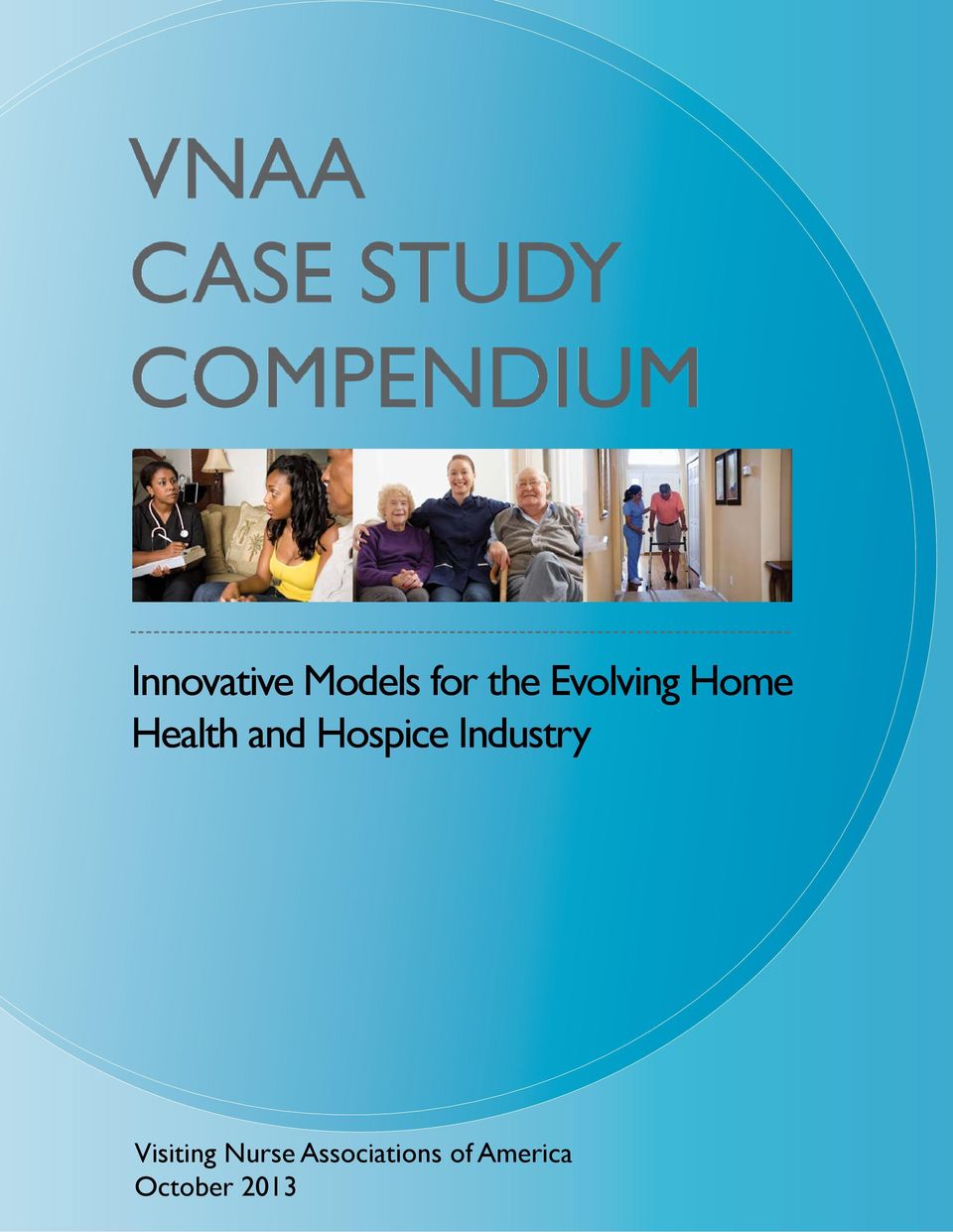
1 Innovative Models for the Evolving Home Health and Hospice Industry Visiting Nurse Associations of America October 2013
2 ACKNOWLEDGEMENTS This report was developed and written by Eileen Grande, Director of Education, Visiting Nurse Associations of America (VNAA). Information for the report was gathered from survey data, telephone interviews and written materials. VNAA is grateful to the nonprofit home health care and hospice agency leaders who responded to a call for case studies and supported the development of this report. Denise Martel, RN, MSN Concord Regional VNA New Hampshire Mary DeVeau, RN, MSM Concord Regional VNA New Hampshire Michael Hamaker, MA, ACHE WellSpan VNA Pennsylvania Marie Sperber VNA of Somerset Hills New Jersey Diane Brienza-Arcilla VNA of Somerset Hills New Jersey Ann Painter, RN, MS VNA of Somerset Hills New Jersey Sue Payne, MBA, RN, CHCE Advanced Home Care North Carolina Beth Hennessey, RN, MSN Sutter Care at Home California Dorothy Davis Visiting Nurse Health System Georgia Richard Lobb Home Nursing Agency Pennsylvania Jane Cholak Visiting Nurse Service of New York New York Kathy Witcoskie VNA Health System Pennsylvania Lynn Jones, FACHE Christiana Care VNA Delaware

3 TABLE OF CONTENTS INTRODUCTION AND OVERVIEW: Demonstrating Value in New Care Delivery and Payment Models... 1 CASE STUDY ONE: Medication Reconciliation and Care Coordination... 4 CASE STUDY TWO: WellSpan At Home... 7 CASE STUDY THREE: Telehealth Initiative A Partnership Between Two Healthcare Organizations... 9 CASE STUDY FOUR: Independence at Home CASE STUDY FIVE: Emergency Department U-Turn CASE STUDY SIX: The Integrated Care Model CASE STUDY SEVEN: Primary Care Program CASE STUDY EIGHT: Same-Day Joint Replacements CASE STUDY NINE: Post-Cardiothoracic Surgical Infection Prevention Program CASE STUDY TEN: Cardiac Care Program with Link to Care Transitions Program... 30

4 INTRODUCTION AND OVERVIEW: DEMONSTRATING VALUE IN NEW CARE DELIVERY AND PAYMENT MODELS BACKGROUND The Patient Protection and Affordable Care Act (ACA) delivery reform initiatives advanced new quality goals and payment models. Core among the ACA s goals were to incentivize primary and acute care providers to prevent primary hospitalizations as well as unnecessary repeat hospitalizations. ACA implementation efforts have launched numerous pilot and demonstration programs to coordinate care through a variety of models including patient-centered medical homes (PCMHs) and Accountable Care Organizations (ACOs). As a result, providers at all levels are gaining new understanding of collaboration for quality improvement. Most important, providers are recognizing that these laudable goals cannot be achieved without strong engagement and support from providers who are in the local community, including in a patient s home, who coordinate care among providers, who identify challenges before they become complications, and who support family members and other caregivers. Home health care services play a critical role in achieving current health care policy goals to enhance care coordination among providers to extend care beyond the four walls of the physician s office to prevent initial hospitalizations as well as beyond the hospital setting to support timely, efficient, effective and safe transitions that prevent re-hospitalization of post-acute patients. As more senior citizens enter the Medicare program and individuals with disabilities and chronic diseases live longer, home health care can play a key role in keeping beneficiaries healthy, improving health care quality and health outcomes as well as reducing unnecessary health care spending across our health care system. The Medicare Payment Advisory Commission (MedPAC) reports that 3.4 million, or 9.5 percent, of traditional fee-for-service Medicare beneficiaries used home health in CMS data show that approximately 86 percent of home health users are age 65 or older, 63 percent are 75 or older, and nearly 30 percent are 85 or older. Of the patients who received home health care in 2011, 83.2 percent have three or more chronic conditions. According to MedPAC, in 2009, 35 percent of beneficiaries who had a prior hospitalization received Medicare home health while 65 percent were VNAA CASE STUDY COMPENDIUM 1

5 community referral admissions. Of the 65 percent of community referral admissions, 19 percent were first episodes and 46 percent were re-certifications. Finally, a study conducted by the Alliance for Home Health Quality and Innovation, demonstrated that home healthcare and SNFs serve similar cohorts of patients, suggesting that patients could be appropriately placed in high quality, lower cost settings. 1 In addition, the Alliance study notes that home health care is the least costly post-acute setting, representing 38.7 percent of all Medicare episodes using post-acute care first settings, but comprising only 27.8 percent of payments. CASE STUDIES COMPENDIUM VNAA member agencies are engines of innovation, actively engaged in various programs and partnerships to resolve breakdowns in care for patients with multiple chronic conditions, complex care needs and post-acute recovery requirements. ACA implementation activities have offered VNAA members significant opportunities to integrate services into new provider models. Members have engaged in creative partnerships and demonstration projects to evolve their practice to ensure sustainability in the future and success in business operations. This emphasis on changing and adapting new programs will become more important as health care continues to change. This Case Study Compendium highlights the success of ten VNAA member agency collaborations and partnerships. The goal of this compendium, and of future additions, is to capture successful programs and share this wealth of knowledge with other agencies, policymakers and external stakeholders. VNAA seeks to identify nonprofit agencies leading the evolution of home health care and hospice services in new care delivery and payment models. It is VNAA s desire that this information demonstrates the value of nonprofit home health and hospice to others across the continuum as a proven sub-acute provider. ABOUT VNAA The Visiting Nurse Associations of America (VNAA) exclusively represents nonprofit home health and hospice agencies. VNAA member agencies care for homebound patients with serious and often chronic conditions by providing a full array of health care services along with care coordination, management and prevention. Our members provide a vital link between patients, physicians and acute care settings and serve all patients without regard to their ability to pay or the severity of their illness. VNAA CASE STUDY COMPENDIUM 2
6 VNAA members are a necessary part of the solution to improving quality and health outcomes and reducing costs in our nation s health system. The information in this Compendium supports VNAA s vision of supporting, promoting and advancing nonprofit providers of community-based healthcare including home health, hospice and palliative care and health promotion services to ensure quality care in their communities. We hope you find this useful and welcome nonprofit home health and hospice agencies to submit additional case studies for future publication. Tracey Moorhead President and CEO October The Alliance for Home Health Quality and Innovation. (2012, April). Study Highlights: Clinically Appropriate and Cost-Effective Placement Project. Dobson DaVanzo & Associates, LLC. Retrieved from VNAA CASE STUDY COMPENDIUM 3

7 CASE STUDY ONE: MEDICATION RECONCILIATION AND CARE COORDINATION AGENCY: Concord Regional Visiting Nurse Association in Concord, New Hampshire LEAD STAFF: Denise Martel, RN, MSN AGENCY CEO: Mary DeVeau, RN, MSM WEBSITE: AGENCY DESCRIPTION Concord Regional Visiting Nurse Association (VNA) is a not for profit, community-based healthcare provider that serves people of all ages in Central New Hampshire. Services provided include home care, hospice, personal home services, maternal and child health services, pediatrics and community health services. PROJECT GOAL Reduce hospitalizations for Medicare patients with multiple chronic conditions and many medications. FUNDING There was no external funding for this project. POPULATION IMPACTED The area and population impacted by this project are Medicare beneficiaries, primary people who have chronic health conditions and multiple barriers including polypharmacy and limited support systems, and multiple providers of care (primary care providers and subspecialists). STRATEGIC PARTNERS Concord Regional VNA worked with Dartmouth-Hitchcock Concord physicians and additional clinical staff. Dartmouth- Hitchcock screens patients for inclusion in the program and works with the Concord Regional VNA s Home Health Nursing Care Coordinator to reconcile medications and coordinate care through both electronic communications and face-to-face meetings. VNAA CASE STUDY COMPENDIUM 4
8 CASE STUDY ONE: MEDICATION RECONCILIATION AND CARE COORDINATION PROJECT DESCRIPTION In January 2012, Dartmouth-Hitchcock Medical Center was named a Pioneer ACO. Concord Regional VNA was exploring options to integrate the agency into a Medical Home Model to better serve Medicare beneficiaries who are at high-risk of being rehospitalized. In this program, rehospitalization is when a patient is admitted back into the hospital within thirty days of the initial hospitalization for the same illness. Concord Regional VNA s Home Health Nursing Care Coordinator consulted with three Dartmouth-Hitchcock Medical Center Primary Care Providers (PCPs) to form a pilot group. The pilot group began to study Dartmouth-Hitchcock s patient population and identified the need for medication reconciliation. Clinical support was requested and the group developed methods to capture critical data needed to best serve patients. A pilot study started and developed a scope of service. The pilot has since expanded to include all Dartmouth-Hitchcock Concord PCPs. RESULTS The results of this study found that measures of success included improved patient education and enhanced relationships with providers regarding post-acute care. Concord Regional VNA and the PCPs shared information about patients and also quality metrics utilizing information technology, which allowed access to each organization s records. This data sharing and technology allowed providers to improve care and communication. OUTCOME MEASURES During the first year of the project, Concord Regional VNA served 204 patients and made significant changes to quality reporting. The measures Concord Regional VNA reviews includes patient satisfaction survey results, re-admission rates, emergent care rates, reduction in medication errors during transitions of care, and the OBQI score for improvement in medication management. Concord Regional VNA created a note to track specific medication issues found during the Medication Reconciliation visit and interventions completed by the clinician. For this patient population, the rehospitalization rate was reduced from 27 percent to 24 percent. Other metrics addressed were: 1) Patient ability to take oral medications correctly increased from 38 to 58 percentage points and 2) Patient satisfaction on specific care issues has increasing from 81 to 87 percentage points. VNAA CASE STUDY COMPENDIUM 5
9 CASE STUDY ONE: MEDICATION RECONCILIATION AND CARE COORDINATION BARRIERS TO IMPLEMENTATION Concord Regional VNA encountered many barriers to successful implementation of the program. These include lack of communications, both among individuals: patients and providers and with electronic medical records incompatibility. Regulatory compliance issues also created barriers. Concord Regional VNA is not billing the Medication Reconciliation visit but needed to understand the scope of the visit from a nursing practice scope perspective. The nurse does not perform any hands-on care other than the medication reconciliation and assessment of the environment during the visit. If the nurse identifies a need and home care is not already ordered, then the clinician requests a homecare referral. Concord Regional VNA did not receive or secure any grants to fund this project. Lack of funds restricted some program aspects. Finally, patient refusal of care was a huge barrier to complete this project. Patients refused primarily because they did not feel they needed a visit. Concord Regional VNA experienced an increase in compliance when the physician practice called the patient and told them that their physician ordered the visit. Patients tend to not realize that they are struggling with medication management and how much it impacts their care. VNAA CASE STUDY COMPENDIUM 6

10 CASE STUDY TWO: WELLSPAN AT HOME AGENCY: WellSpan Visiting Nurse Association in York, Pennsylvania LEAD STAFF: Michael Hamaker, MA, ACHE, President CEO: Michael Hamaker WEBSITE: AGENCY DESCRIPTION: For over 100 years, WellSpan VNA has been serving the eastern Pennsylvania population. It is understood that the best place to treat the body is where the heart is-at home. Often times when patients are recovering from an illness or accident, are disabled, have a chronic illness or are terminally ill, they do not need to be hospitalized but do need health care assistance. Our specialized staff of nurses, aides, therapists and specialized caregivers work with physicians to provide the services necessary to treat patients in the comfort of their own home. WellSpan offers a wide range of home care services including, skilled nursing care; home health aides; physical, occupational and speech therapy; IV therapy; wound and ostomy care; phlebotomy services and more. Community Services program enables clients to remain at home, maintaining the quality of life in which they are accustomed to living private duty services are customized to fulfill the patients individual home care needs, including assistance with daily living, assistance with personal care, meal preparation, light housekeeping, and respite care FUNDING: There was a combination of funding for this project. Some patients were funded through the Wellspan VNA Foundation, private pay, Medicaid managed care, and some physician groups who helped support their highest risk patients. POPULATION IMPACTED: All at-risk patients. STRATEGIC PARTNERS: Critical Signal Technologies (CST). CST provides the technology and call center support. Further information on CST can be found at VNAA CASE STUDY COMPENDIUM 7

11 CASE STUDY TWO: WELLSPAN AT HOME PROJECT DESCRIPTION Starting March 1, 2013, all WellSpan VNA patients received a nurse call button that the client is asked to push for any reason. When the button is pushed, a call center interacts to the clients asking what they can do for them. Review discharge orders; Arrange for groceries to be delivered; or provide a medication reminder. The call center can also call the doctor for a new appointment on behalf of the patient: anything the patient needs. The goal is to provide discharge security in the home upon admission to home health. All patients receive the button for the first 60 days after hospital discharge with the option to extend the service. RESULTS To date, we have seen strong service improvement and rehospitalization rates. As of August 2013, 105 high-risk patients avoided the emergency department due to intervention. OUTCOME MEASURES To date, the average client pushes the button 3.4 times while on service within the first 60 days of being on service. The acute care hospitalization metric was reduced by four percentage points. However, it is unclear if this is just the clientbutton patients. It is very hard to determine if it is due to the button or nursing intervention. The organization is currently examining the results of the WellSpan At Home (WAH) patients and non-wah patients. BARRIERS TO IMPLEMENTATION There were some technical issues with devices in the home and language barrier issues. CST would not have the exact language interpreter available when needed. VNAA CASE STUDY COMPENDIUM 8
12 CASE STUDY THREE: TELEHEALTH INITIATIVE A PARTNERSHIP BETWEEN TWO HEALTHCARE ORGANIZATIONS AGENCY: Visiting Nurse Association of Somerset Hills, Basking Ridge, New Jersey LEAD STAFF: Marie Sperber, MS Director of Development and Marketing and Diane Brienza-Arcilla, RN, BSN, MSA, Director of Quality Care Management CEO: Ann Painter, RN, MSN WEBSITE: AGENCY DESCRIPTION The Visiting Nurse Association of Somerset Hills (VNA) is a non-profit organization, founded more than a century ago, providing home and community health services to the residents of Morris and Somerset counties. It is accredited by CHAP (Community Health Accreditation Program), certified by Medicare and licensed by the New Jersey Department of Health and Senior Services. The VNA of Somerset Hills mission is to provide individuals and families with comprehensive, high quality, cost effective home and community health care services, regardless of ability to pay, using partnerships where appropriate. This mission is carried out through the delivery of a variety of services, including home health care, hospice, adult day care and community health programs. FUNDING Funding was provided by Summit Medical Group (SMG). SMG pays a monthly management fee and equipment rental fee consistent with services rendered and the equipment being provided. POPULATION IMPACTED The population impacted by this project was SMG patients with Congestive Heart Failure (CHF) or Chronic Obstructive Pulmonary Disorder (COPD), identified at risk for hospitalization. These patients resided in the central New Jersey area and were able to use a telehealth monitor independently or with the assistance of a caregiver. Other criteria for inclusion in the study were: 1) CHF patients admitted to a hospital or Urgent Care Center (UCC) within the past 12 months and on a loop diuretic or 2) COPD patients admitted to a hospital or UCC within 12 months and on home oxygen or 3) SMG physician endorsed and provided patient-specific standing orders. VNAA CASE STUDY COMPENDIUM 9

13 CASE STUDY THREE: TELEHEALTH INITIATIVE A PARTNERSHIP BETWEEN TWO HEALTHCARE ORGANIZATIONS STRATEGIC PARTNERS Summit Medical Group (SMG). Summit Medical Group is the largest and oldest physician-owned multispecialty practice in New Jersey. In additional to the main campus, SMG has satellite offices in five counties, employees more than 325 clinicians and 1500 employees addressing 76 medical specialties and services. SMG first opened its doors 85 years ago to focus on a patient-centered approach to care. More information can be found at PROJECT DESCRIPTION The VNA of Somerset Hills (VNASH) partnered with SMG to reduce hospitalizations and emergency department visits, improve quality of care, improve coordination and transitions of care, increase patient self-management skills, reduce overall health care costs and provide an alternate revenue stream for the home care agency. Twenty-four heart failure and three COPD patients were admitted to the joint telehealth program. The program included 90 days of daily monitoring and education modules. Clients were instructed in the use of a zone tool to identify symptom severity and report to the same telehealth nurse. Standing orders set frequent communication between the telehealth nurse and SMG advanced practice nurses employed by the practice allowed for proactive outreach and early intervention for symptomatic patients. Twenty-two patients completed the program. Retrospective chart reviews were used to compare previous hospitalization rates at 30, 60 and 90 days. Additionally, participants completed a satisfaction survey, which included questions regarding the ability to self-manage their disease RESULTS The year-long project yielded a zero percent, 30-day readmission rate for these patients and high patient satisfaction. The program demonstrated a statistically significant decrease in the number of hospitalizations pre versus post intervention. OUTCOME MEASURES The impact of this project was that the number of hospitalizations decreased when comparing hospitalizations pre-and post-intervention. The VNASH/SMG Telehealth Program had NO hospital admissions within 30 days for the entire yearlong program. When looking at all patients who completed three months on the program, there were 20 admits pre-intervention and four post-intervention; at six months (for all patients who completed six months post intervention) there were 28 admits pre-intervention and 12 post-intervention; at 12 months (for all patients who completed 12 months post intervention) there were 20 admits pre-intervention and six post-intervention. There were zero hospital admissions within the first 30 days patients were on the program, three admissions were documented within the period of days on the program and one admission was in the period of days on the program. VNAA CASE STUDY COMPENDIUM 10

14 CASE STUDY THREE: TELEHEALTH INITIATIVE A PARTNERSHIP BETWEEN TWO HEALTHCARE ORGANIZATIONS Patient Activation Measure: 50 percent of patients in the program demonstrated improvement in their ability to manage self-care. In addition, patients were satisfied with the program: 21 patients completed the final survey about satisfaction and 91 percent of the patients strongly agreed or agreed that Overall, I was satisfied with the Telehealth program. The other two patients answered neutral on this question. Potential cost saving estimated annually, using the Center for Medicare and Medicaid Services (CMS) average costs per hospitalization of potentially avoidable hospitalizations ($7,846), for 12 months equaled $109,844. BARRIERS TO IMPLEMENTATION The barriers to successful implementation were a small study sample due to limited and inappropriate referrals, and the need for more marketing to physicians and patients to help drive enrollment in the program. Study limitations were that selection criteria excluded patients expected to have limited benefit from the program based on multiple co-morbidities. In addition, patient activation measurement/satisfaction tools did not allow patients to answer surveys anonymously. VNAA CASE STUDY COMPENDIUM 11

15 CASE STUDY FOUR: INDEPENDENCE AT HOME AGENCY: Christiana Care Visiting Nurse Association in New Castle, Delaware LEAD STAFF: Lynn Jones, FACHE PRESIDENT AND CEO: Lynn Jones, FACHE WEBSITE: AGENCY DESCRIPTION Christiana Care Visiting Nurse Association (VNA) is a full service home health agency a wholly owned subsidiary of the Christiana Care Health system in Delaware. Average daily census is approximately 1600 and approximate annual revenue is $45 million. FUNDING Funding provided by the Center for Medicare and Medicaid Services (CMS) as part of the Independence at Home Demonstration project. This project is authorized under section 3024 of the Affordable Care Act (2010). POPULATION IMPACTED Focus on frail elderly patients residing in the greater Wilmington area. STRATEGIC PARTNERS Close collaboration with the system s physician home visit program; with community hospice providers; with community PCP s and specialist practices; with community hospitals; with numerous other community based services PROJECT DESCRIPTION Christiana Care VNA has completed the first year of a three-year gain sharing model. Much of the focus has been in recruiting and enrolling the required number of patients to meet the CMS required level of 200 patients who are part of the program. Christiana Care has focused efforts on the five key quality indicators that are required as part of this project. Finally Christiana Care s focus on integrating the efforts of its home physician visit program and VNA care to optimize quality, patient experience and the impact on reducing overall costs of care by reducing avoidable readmissions and other non-value added services. VNAA CASE STUDY COMPENDIUM 12

16 CASE STUDY FOUR: INDEPENDENCE AT HOME RESULTS Results will be closely tracked over the coming two years of this project and include the numbers of patients; key quality indicators and looking at various other quality indicators and costs of care. OUTCOME MEASURES It is too early to report any particular outcomes. BARRIERS TO IMPLEMENTATION Some key barriers include: lack of interoperable IT systems; requirement that patients leave their PCP to become a part of the home visit practice, a requirement since relaxed by CMS; a need to develop a more robust palliative care home based program for patients; in ability to cover costs of home visit physicians and Nurse Practitioners (NPs) under current reimbursement levels; a need to develop stronger working relationships with community Emergency Departments; a need to develop stronger 24/7 capabilities to response to patient needs as an alternative to Emergency Departments. VNAA CASE STUDY COMPENDIUM 13
17 CASE STUDY FIVE: EMERGENCY DEPARTMENT U-TURN AGENCY: Advanced Home Care in Greensboro, North Carolina LEAD STAFF: Sue Payne, MBA, RN, CHCE, Vice President, Home Care CEO: Joel Mills WEBSITE: AGENCY DESCRIPTION Advanced Home Care has thirteen Home Health branches in three states serving average of 550 patients daily and 30,000 annually. Advanced Home care is Medicare/Medicaid certified and accredited by the Accreditation Commission for Health Care. FUNDING: There was no external funding for this project. POPULATION IMPACTED The program impacts chronic care patients who frequent the Emergency Departmnet (ED) and would benefit from admission to home health from the emergency department. STRATEGIC PARTNERS Strategic Partners in this program are hospital EDs, specifically the ED Medical Director, and ED Case Management. PROJECT DESCRIPTION Advanced Home Care met with hospital ED staff, including the ED Medical Director and the case management staff who work in the ED. The Advanced Home Care sales staff worked with the ED staff to determine types of patients who would be best fit to benefit from a home health referral. The process of how to conduct the referral was discussed, along with the best method of referral: paper or electronic. Together, both teams developed metrics to measure the number of admissions from the ED, payor source, discipline order and if the patient was admitted to the hospital. The Advanced Home Care staff also provided education on home care to all three shifts of the ED staff, including physicians and nurses. VNAA CASE STUDY COMPENDIUM 14

18 CASE STUDY FIVE: EMERGENCY DEPARTMENT U-TURN RESULTS: Each month, Advanced Home Care receives an average of six to eight referrals from the ED in specific markets where ED U Turn initiative is in place. Of the referrals Home Care receives from the ED approximately 75 percent are Medicare referrals. BARRIERS TO IMPLEMENTATION A key barrier to implementation was that new ED physicians/staff were unaware of the home health referral process and the ED was not as focused on preventing readmissions. Furthermore, the ED pace was so busy that ED staff found it difficult to consider alternative care options such as home care when discharging patients from the ED. VNAA CASE STUDY COMPENDIUM 15
19 CASE STUDY SIX: THE INTEGRATED CARE MODEL AGENCY: Sutter Care at Home s Center for Integrated Care in Fairfield, California LEAD STAFF: Beth Hennessey, RN, MSN, Executive Director of Integrated Care Management CEO: Marcia Reissig, RN, MS WEBSITE: AGENCY DESCRIPTION Sutter Care at Home (SCAH) is a Sutter Health affiliate and one of the largest, not-for-profit home health care agencies in Northern California. SCAH s mission is to enhance the health and well-being of the community through a commitment to compassion and excellence in home-based services, offering personalized care in home health, hospice, home medical equipment/respiratory care, home infusion therapy, private care, Lifeline, and community flu and wellness programs. Caring for almost 100,000 patients each year, SCAH serves 23 counties and leads the transformation of home care to achieve the highest levels of quality, access and affordability. FUNDING The Center resides under and is funded by Sutter Care at Home, an affiliate of Sutter Health. POPULATION IMPACTED The Institute of Medicine s report, Crossing the Quality Chasm: A New Health System for the 21st Century called for reforms to promote the delivery of patient-centered care. The new Sutter Center for Integrated Care answers this call by promoting care that is responsive to patient preferences, needs and values, while ensuring the patients goals drive all care decisions. One of the Center s initiatives is the dissemination of the Integrated Care Model (ICM) which is a personcentered, evidence-based, coordinated approach to care for all patients. The ICM model is designed to assist providers in achieving the Triple Aim of improving health, the experience of care and lowering healthcare costs. The Center offers an ICM course on the specific competencies needed to engage patients in their self-care, to assist with patient acquisition of self-management skills and to build patient confidence with self-care. These competencies are relevant in the care of all patients, irrespective of their particular medical condition or problem. The course is structured in a train the trainer format to enable trained individuals to disseminate information gained from the course throughout their organization. VNAA CASE STUDY COMPENDIUM 16
20 CASE STUDY SIX: THE INTEGRATED CARE MODEL STRATEGIC PARTNERS To date, ICM model training has been provided to over 4,500 health care professionals caring for patients in hospital and community settings in 47 states. The Center s professional staff not only train healthcare professionals nationwide, but partner with providers to assist with hardwiring model concepts and ensure high quality care is consistently delivered over time. Hardwiring includes implementation of the best methods to identify patient barriers to self-care; imbedding care plan interventions in daily care delivery; improving electronic medical record (EMR) documentation to capture patient barriers; establishing patientcentered goals and tracking progress toward goals; and the selection of quality metrics to drive change and promote continuous improvement throughout the organization. VNAA CASE STUDY COMPENDIUM 17

21 CASE STUDY SIX: THE INTEGRATED CARE MODEL PROJECT DESCRIPTION The Integrated Care Model was designed to improve the quality of care provided to patients with chronic conditions. At the time of model inception, the healthcare system was transitioning from volume to value-based reimbursement. The ICM model continually evolves as new evidence presents itself and as more information is gathered from patients about their care experiences. SCAH s guiding principle is that the patient must be at the center of healthcare team. One way SCAH puts this principle in practice is to include patients and caregivers in the development and evaluation of all our patient-facing materials. For example, SCAH s new personal health record (PHR) is being field tested with patients and caregivers in clinical settings. Their feedback on all aspects of the PHR informs edits and design modifications and ensures that the end product is actionable and accessible from the user s perspective not just from a clinical perspective. RESULTS Project success is evidenced by patient, provider and community endorsement. SCAH s new health literate Stoplight forms, designed to increase patient knowledge and inform actions for a condition exacerbation, were recognized by the Center for Plain Language in Washington, D.C. with a 2013 ClearMark Award of Distinction. Patients using these forms available for 13 different conditions report feeling a greater sense of control over their conditions. The ICM program was also selected as a 2013 Home Care & Hospice LINK Spirit of Innovation award winner for the model s focus on best practices and Sutter Care at Home s commitment to care excellence. SCAH staff and hospital partners acknowledge the model s value in making a difference in the care including promoting a sense of meaningful and valuable work. OUTCOME MEASURES Suggested process metrics for agency adoption are: Percent of staff attendance at weekly multidisciplinary case conferences Percent of staff using Situation, Background, Assessment, Recommendation (SBAR) communication in coordination notes Percent of patients with patient-specific goal documented in EMR Suggested outcome metrics for agency adoption are: Acute care hospitalization rates 30-day re-admission rates HHCAPS scores Employee turnover rates VNAA CASE STUDY COMPENDIUM 18
22 CASE STUDY SIX: THE INTEGRATED CARE MODEL ICM results were tracked following initial model implementation at the agency where the model was first deployed, over the course of two years. During this period, acute care hospitalization results were reduced from 29 percent to 14 percent, and RN nurse turnover was reduced from 20 percent to six percent. Agency patient satisfaction scores also increased, as did employee engagement. A second evaluation is currently underway at Sutter Care at Home, related to the transitions protocol based on ICM tenets. At present, documentation of patient personal goals has increased from 10 percent to 80 percent, and 30-day hospital readmission rates for heart failure patients decreased from 15 percent to nine percent over the course of one year. BARRIERS TO IMPLEMENTATION Prior to model deployment, work had to be completed to add a field within the EMR for the patient s personal goal and to develop a method to run reports on the metric. Another barrier is the realization for many providers that their behavior change is needed to promote a patient-centered approach. A collaborative approach where patients are presented with options and decisions are shared may run counter to current directive approaches. This approach must be supported with tools and opportunities to practice in order to facilitate this change. The institution of TIP of the Month sheets, which are short educational reviews, assist with provider behavior change. Other skills, such as motivational interviewing (a patient-centered communication style taught in the ICM class), take time to master. Key principles taught in class must be re-visited continually until they become a normal and natural part of care delivery. VNAA CASE STUDY COMPENDIUM 19
23 CASE STUDY SEVEN: PRIMARY CARE PROGRAM AGENCY: Visiting Nurse Health System in Atlanta, Georgia LEAD STAFF: Dorothy Davis, Executive Director of Long-Term Care CEO: Mark Oshnock WEBSITE: AGENCY DESCRIPTION As Georgia s leading nonprofit provider of healthcare at home, the mission of Visiting Nurse Health System (VNHS) is to improve the lives of those served. In 2012, VNHS cared for 27,000 patients and their families in 26 metro area counties. VNHS provides in-home nursing care, rehabilitation, primary care and hospice services and operates the Hospice Atlanta Center, a 36-bed inpatient facility in Brookhaven, GA. VNHS cares for all who need services, regardless of diagnoses or financial circumstances. Last year VNHS provided nearly $4.9 million in care to metro Atlanta s underinsured. FUNDING Jesse Parker Williams Foundation provided $125,000 in 2010 to launch the Primary Care program and has renewed its support each year since. Other foundations have provided smaller grants to help fund the program. POPULATION IMPACTED The population targeted in this program is mobility-challenged, chronically ill seniors in the greater Atlanta region. VNHS provides these seniors with primary care in their home. In 2012, this program was able to care for 262 patients, primarily in DeKalb and Fulton Counties. A typical patient is over the age of 80, has at least seven chronic conditions, takes on average eight medications daily and has had at least one hospitalization in the past year. PROJECT DESCRIPTION Without access to primary and preventive care, seniors can succumb to a cycle of inefficient care delivered episodically via visits to the emergency department, brief hospitalizations, and discharges home without proper follow-up care. As a result, approximately 18 percent of Medicare patients are readmitted to the hospital within 30 days of hospital discharge. Readmissions adversely affect seniors health and peace of mind, undermine their ability to live independently and result in excessive Medicare spending. The VNHS Primary Care program prevents this type of crisis-driven care through a proactive approach that facilitates ongoing, regular monitoring of seniors health. VNAA CASE STUDY COMPENDIUM 20
24 CASE STUDY SEVEN: PRIMARY CARE PROGRAM Specific benefits to this program are the following: Increased access to care Decrease Emergency Room visits and hospitalizations Disease management education Peace of mind for patients Cost savings RESULTS There are a myriad of benefits from enacting this program in Atlanta. A survey conducted of patients found that 74 percent had not seen a primary care physician (PCP) in the previous year. Once in this program, each patient receives 6 12 visits a year from either a PCP or Nurse Practitioner (NP) in their home. Another added benefit is fewer hospitalizations and a decrease in emergency room visits. Since patients receive timely medical attention in the home, approximately 80 percent avoid hospitalization or emergency room visits. Each time a patient is seen by a clinician is an opportunity for disease management education. The clinician can give the patient a quick lesson in the management of their specific disease or answer questions for the patient while in the home. OUTCOME MEASURES In the spring of 2013, 70 primary care patients were randomly selected to receive patient satisfaction surveys. Twentynine patients returned the surveys (a 41 percent response rate), which revealed the following: 69 percent of respondents stated they were always or usually able to be seen in their home within 36 hours of contacting the office for care; 36 hours is the benchmark for receiving timely care set by the American Academy of Home Care Physicians. 93 percent of respondents stated that the ability to receive medical care in their home has improved their quality of life. 86 percent of respondents reported high satisfaction with the amount of time their primary care provider spent with them. 90 percent of respondents reported consistent interaction with their family/caregiver. 79 percent of respondents stated services have reduced their trips to the emergency room. VNAA CASE STUDY COMPENDIUM 21
25 CASE STUDY SEVEN: PRIMARY CARE PROGRAM VNHS receives Medicare claims data on the portion of primary care patients who are participating in the Independence at Home (IAH) demonstration project. The most recent data received contains information on 62 IAH patients during the time period of June 1, 2012 February 28, This data shows that 69 percent of patients (43 of 62) avoided a hospitalization and 84 percent of patients (52 of 62) avoided an emergency room visit during this time period. BARRIERS TO IMPLEMENTATION Barriers to this program include issues with clinical reporting software. VNHS had issues with providing staff education on software utilization. VNHS also had difficulty enrolling eligible patients to participate in the program, and multiple staffing changes that slowed program implementation. VNAA CASE STUDY COMPENDIUM 22
26 CASE STUDY EIGHT: SAME-DAY JOINT REPLACEMENTS AGENCY: Home Nursing Agency, Altoona, Pennsylvania LEAD STAFF: Richard Lobb, MBA, Chief Strategic Business Development Officer CEO: Robert Packer WEBSITE: AGENCY DESCRIPTION Since 1968, Home Nursing Agency is the largest post acute provider of services between Pittsburgh and Harrisburg, Pennsylvania, specializing in home health, hospice, behavioral health, private duty, pediatric care and a host of additional community-based waiver services. FUNDING Highmark Blue Cross Blue Shield of Western, PA POPULATION IMPACTED The population impacted by this study is a target group of patients in West Central PA with low co-morbidities under the age of 65 requiring a hip or knee placement. STRATEGIC PARTNERS In this program, the strategic partner was University Orthopedics Group. This group provided all surgery services, including the surgeons, support staff and anesthesiology. PROJECT DESCRIPTION The avatar program is available over the web and is embedded on a tablet given to each patient enrolled in the study. The avatar provides the patient with an overview of what to expect before, during and after the surgery. Most importantly, this program teaches the patient signs and symptoms and self-care techniques to recover from surgery. The patient is provided with techniques to change dressings, handle pain management and what to expect following physical therapy appointments. The avitar complements the field nurses by reinforcing their training. It is important to note that the Avatar is not meant to replace the nurse training, but augments it 24/7/365 when the field nurse is not in the patients home. VNAA CASE STUDY COMPENDIUM 23
27 CASE STUDY EIGHT: SAME-DAY JOINT REPLACEMENTS RESULTS The results of this program have positive clinical and financial results. Clinically, patients had a quicker recovery time and quicker range of motion (ROM) response as compared to conventional in-patient surgery. This led to a savings of about half the costs (about $15,000 per patient served) as compared to an in-patient DRG payment. This is an estimate based on what the Hospital would have received as a DRG payment as compared to what the orthopedics group and Home Nursing Agency receive for the services. Highmark BCBS has not yet set a date for bundled payment compensation however Home Nursing Agency is seeing a HHRG eposodic payment outside the bundled payment model. It is expected that when Highmark BCBS begins paying under the bundled payment pilot, quality outcomes will be part of the incentive portion of the payment. OUTCOME MEASURES The number of patients readmitted to the hospital for knee relates issues were zero during this episodic coverage period. There were no emergency room visits nor were there any unscheduled visits with the orthopedic physician group. Furthermore, the number of patients in the program that had complications was zero. BARRIERS TO IMPLEMENTATION There were very few barriers to success of this project, namely because this was an independent setting with University Orthopedics Group. Digital avatars were utilized to reinforce patient education both before the joint replacement and after surgery regarding recovery expectations. The avatars were supported by mobile tablets and internet used by patients during the duration of the care episode. VNAA CASE STUDY COMPENDIUM 24
28 CASE STUDY NINE: POST-CARDIOTHORACIC SURGICAL INFECTION PREVENTION PROGRAM AGENCY: Visiting Nurse Service of New York, New York City, New York LEAD STAFF: Jane Cholak, RN, BSN, Account Manager CEO: Mary Ann Christopher, MSN, RN, FAAN WEBSITE: AGENCY DESCRIPTION For 120 years, the Visiting Nurse Service of New York (VNSNY), the largest not-for-profit home- and community-based health care organization in the country, has been committed to meeting the health care needs of New Yorkers. Today, VN- SNY provides care throughout all five boroughs of New York City, Westchester, Nassau and Suffolk Counties and parts of upstate New York. VNSNY employs 2,772 nurses, 582 rehabilitation therapists, more than 12,000 home health aides, 592 social workers, and 160 other clinical professionals. VNSNY has the capabilities and resources to deliver a full range of home- and community-based health care services, including: Skilled nursing Physical, speech, and occupational therapy Home health aide and companionship services Services for emotional conditions such as anxiety and depression Social work Nutritional guidance Infusion care Services for children and families Advanced illness and end-of-life care Community mental health services Medicaid and Medicare health plans from VNSNY CHOICE Paraprofessional and private pay services from Partners in Care FUNDING This project was not funded by any federal or state agency, or private institution. VNAA CASE STUDY COMPENDIUM 25
29 CASE STUDY NINE: POST-CARDIOTHORACIC SURGICAL INFECTION PREVENTION PROGRAM POPULATION IMPACTED VNSNY, in collaboration with The Mount Sinai Hospital (MSH), identified the need to develop a home care program to enable eligible and appropriate patients to go home in lieu of subacute rehab. It was identified that patients going to subacute rehab had an increase in hospital 30-day readmissions for sternal wound infection. STRATEGIC PARTNERS The Visiting Nurse Service of New York worked in collaboration with Mount Sinai Hospital in NYC. The collaborative workgroup consisted of: VNSNY Centers of Excellence: Nursing, Rehab facilitated program development VNSNY Certified Diabetes Educators (CDE) VNSNY Wound Ostomy Certified Nurse Specialists (WOCN) Clinical Education developed educational tools and materials for field nursing staff serviced by Clinical Operations trained field nurses in all geographical areas Rehab Department developed an Intensive Cardiothoracic Home Care Rehab program for patients to go home in lieu of subacute rehab. The Rehab Department provided training and education to all field physical therapists and occupational therapists. Intake Education developed and implemented teaching/training materials for the VNSNY Intake staff at Mount Sinai Hospital Mount Sinai Hospital Medical Director, Mount Sinai Cardiomyopathy Program VP, Nursing, Mount Sinai Heart President s Office Nurse Director, 7W, Cardiothoracic Inpatient Unit Surgical Site Infection (SSI) Workgroup Department of Rehabilitation Department of Infection Control Social Work Department Case Management Department Department of Quality Initiatives VNAA CASE STUDY COMPENDIUM 26
30 CASE STUDY NINE: POST-CARDIOTHORACIC SURGICAL INFECTION PREVENTION PROGRAM PROJECT DESCRIPTION A workgroup was created in September The VNSNY/MSH workgroup met monthly. The workgroup s first step was to match the teaching tools developed and used for patients with sternal wounds on the 7W cardiothoracic inpatient unit to the teaching tools that would be used to continue the teaching in the home (transitional care) by the home care RN. A vital component of the program plan was to have WOCNs and CDEs provide consults in the home on appropriate patients. Next steps were to develop the training materials for the VNSNY field nurses, physical and occupational therapists, and intake team. The Sternal Wound Program went live on March 4, RESULTS The project generated a renewed focus on nursing interventions and patient teaching to prevent surgical site infections for the home care patient. The focus was on the impact of blood glucose control and the impact on wound healing and basic infection control practices. Mount Sinai Hospital recommended use of the Joint Commission Speak Up Campaign: Five Things You Can Do to Prevent Infection pamphlet to teach patients and caregivers the importance of hand hygiene. Nurses were instructed to demonstrate and ask for a return demonstration on hand washing technique to highlight the importance of this basic strategy to reduce SSI. As a result of this project, VNSNY added the Joint Commission tool Five Things You Can Do to Prevent Infection into our clinical orientation program and into the VNSNY Wound Care Protocols resource tool for clinicians. In home health care, the Outcome and Assessment Information Set-C (OASIS-C) assessment tool requires the clinician to document the healing status of surgical wounds on admission to home care. In the reporting of outcomes data 33.6% of the surgical wounds were reported as not healing. This definition required clarification for our partner, Mount Sinai Hospital, regarding clarification of reports on outcomes related to wounds and OASIS. The Wound Ostomy and Continence Nurses Society Guidance on Oasis-C Integumentary Items (2009) provide the definitions for healing status choices and guides the clinicians assessment and documentation. VNAA CASE STUDY COMPENDIUM 27
31 CASE STUDY NINE: POST-CARDIOTHORACIC SURGICAL INFECTION PREVENTION PROGRAM OASIS-C differentiates between surgical wounds healing by primary intention and wounds healing by secondary intention. There are two options for a wound healing by primary intention: newly epithelialized or not healing. The clinician selects newly epitheliazed if the assessment matches the definition: wound bed completely covered with new epithelium no exudate no avascular tissue (eschar and/or slough) no signs or symptoms of infection A wound that is healing by primary intention but does not completely match that definition would be described as not healing. For surgical wounds that are healing by secondary intention the healing status includes newly epithelialized, fully granulating, early/ partial granulation and not healing. Wound Consultation - All patients were asked permission to have their surgical wounds photographed upon admission to home care as part of wound consultation. A Certified Wound and Ostomy Care Nurse (CWOCN) reviewed patient photos and assessed for evidence-based topical treatment options if needed. The photos were transmitted via secure to a Nurse Practitioner (NP) or physician at Mount Sinai Hospital. Diabetes Consultation The status of all patients in the study who had pre-existing diabetes was evaluated by the VN- SNY Certified Diabetes Educators (CDE) to determine the level of glucose control at the time of discharge. The importance of optimal glucose control to enhance the potential of wound healing was explained to the patient and caregivers and nutritional guidelines were reviewed. Changes in therapy regarding diabetes medications were recommended as needed and follow up was made with the primary VNSNY nurse. OUTCOME MEASURES From the beginning of March, 2013, to the end of May, 2013, the Sternal Wound Program used unified treatment approaches, from hospital to home, for 131 Mount Sinai Hosptial patients with sternal wounds. Ten of these patients, were able to avoid skilled nurs ing home admissions by participating in the VNSNY Intensive Rehab Program. When evaluated against the Centers for Medicare and Medicaid (CMS) Outcome-Based Quality Improvement (OBQI) outcome measures, patients surpassed six out of seven national quality benchmarks for essential quality of life functions, including the patient s pain frequency when moving, ease of breathing, and ability to walk, bathe, take medicine, and get in and out of bed. In addition, 100 percent of the VNSNY-Mount Sinai Hospital patients who took part showed wound improvement. VNAA CASE STUDY COMPENDIUM 28
32 CASE STUDY NINE: POST-CARDIOTHORACIC SURGICAL INFECTION PREVENTION PROGRAM BARRIERS TO IMPLEMENTATION A number of barriers to implementation occurred during this project. During the pilot phase of the program the social work staffing model was unable to identify all appropriate patients for the sternal wound program. Physicians and physical therapists were reluctant to send patients home with home care in lieu of subacute rehabilitation. Staff at VNSNY discovered the need for ongoing teaching, training and education for field professional staff and also for Mount Sinai Hospital staff. Furthermore, a lack of standardized outcomes measures was a challenge to the implementation of this program. VNAA CASE STUDY COMPENDIUM 29
33 CASE STUDY TEN: CARDIAC CARE PROGRAM WITH LINK TO CARE TRANSITIONS PROGRAM AGENCY: VNA Health System in Shamokin, Pennsylvania LEAD STAFF: Kathy Witcoskie, RN, Director of Quality Management CEO: Joe Scopelliti WEBSITE: AGENCY DESCRIPTION VNA Health System has multiple locations throughout central PA, including home care, hospice, private duty, adult care, etc. Over the years, the VNA Health System mission and allegiance to patients have remained constant: to provide quality, cost-effective home health and related services in our service territory, to all persons or families, regardless of their ability to pay. FUNDING There was no external funding for this project. POPULATION IMPACTED The area includes 18 counties throughout central Pennsylvania and the population targeted is 65 and over with chronic heart conditions who are recently post operational. PROJECT DESCRIPTION The Quality Management Department conducted reviews and research for over two years on chronic care conditions, reasons for re-hospitalizations, knowledge deficit for particular populations, medication management, necessary education and the use of telehealth monitoring in the home setting. This research was then combined with an already established cardiac education program, able to hit all the necessary areas for complete cardiac patient care. The next step was to determine that poor care transitions results in more frequent early rehospitalizations based on the research and cardiac patients. The Quality Management Department then investigated the proper visit frequency for patients with and without telehealth monitoring to benefit the program. This was done by reviewing the number of frontloading visits, phone calls to follow up in-between visits and also determining when to place the telehealth unit in the home. VNA Health System used statistics from the national level and individual hospital statistics and state stats to look at age, demographics, education level and income to determine the population that would benefit from a link of these patients with the care transitions program. VNAA CASE STUDY COMPENDIUM 30
34 CASE STUDY TEN: CARDIAC CARE PROGRAM WITH LINK TO CARE TRANSITIONS PROGRAM RESULTS Twenty percent of all Medicare patients are re-admitted within 30 days (as opposed to what the pre intervention rate was). Half of those patients never had a follow-up appointment with their doctor or surgeon. Congestive Heart Failure (CHF) is one of the top diagnoses in which patients are re-admitted frequently, due to a lack of follow-up care and lack of knowledge regarding proper diet for associated illnesses. Lack of knowledge in simple daily weights and how to follow-up with results was found to be missed with patient education very frequently. Medication changes are one of the top three reasons for hospitalization. Research found that the nurse discharging the patient from the hospital had an average of only 21 minutes to perform discharge education and was comprehended by patients only 25 percent of the time. Psychosocial factors increase the risk for early re-hospitalizations. Possible use of IV diuretic therapy in the home may help improve need for ER visits and hospital re-admissions. Home telehealth monitoring has shown to be able to acknowledge early signs and symptoms of heart failure, giving the home nurse ability to contact the physician for medication changes to prevent an ER visit or hospital re-admission. In certain areas researched, lack of education and depressed area with lack of funding may lead to inability to understand medication regimen and/or purchase medications. Research in certain areas finds lack of caregivers involvement leads to unwilling cooperation of the patient. Without oversight by family member or caregiver, patients do not comply with medication regimen and/or diet regimen, leading to early rehospitalizations. OUTCOME MEASURES This project has only been out for a short time and definitive percentage numbers are not able to be given at this time. However, spot review over a few months has determined this program has been able to reduce early hospital readmissions taking into consideration the CHF diagnosis and the age population. This has also cut ER visits as well. Not only has this helped with the chronic conditions, however, it has also helped with other issues found with telehealth monitoring, i.e. BP issues, Oxygenation issues, all leading to decrease in re-admissions and/or ER visits. VNAA CASE STUDY COMPENDIUM 31
35 CASE STUDY TEN: CARDIAC CARE PROGRAM WITH LINK TO CARE TRANSITIONS PROGRAM BARRIERS TO IMPLEMENTATION The main barriers at this point are issues with the telehealth system being able to be in homes without a phone line, or issues with people who bundle their phone, television and internet. Many patients have a cell phone as their main telephone line, which causes issues to installing telehealth systems. Outsourcing of telehealth monitoring has been a barrier due to companies only performing for a few months. VNA Health System has now decided, through financial studies, to add monitoring in-house for more personal control and to be able to research and compile statistics needed for how the program is a benefit to the targeted populations. Cost control is an issue since insurance companies do not reimburse for telehealth monitoring. VNA Health System has proven cost containment by decreasing nursing visits per episode of care related to daily telehealth monitoring. The exact figures have not yet been determined. Success has been seen with patient compliance and appreciation of the monitoring. VNA Health System is able to determine other areas of concern, i.e. atrial fibrillation with a patient, blood pressure problems, oxygenation issues, etc. The telehealth system for monitoring has worked without issues, however, the equipment used has shown some problem areas. VNAA CASE STUDY COMPENDIUM 32
Innovations@Home. Home Health Initiatives Reduce Avoidable Readmissions by Leveraging Innovation
 How Does CMS Measure the Rate of Acute Care Hospitalization (ACH)? Until January 2013, CMS measured Acute Care Hospitalization (ACH) through the Outcomes Assessment and Information Set (OASIS) reporting
1900 K St. NW Washington, DC 20006 c/o McKenna Long
 1900 K St. NW Washington, DC 20006 c/o McKenna Long Centers for Medicare & Medicaid Services U. S. Department of Health and Human Services Attention CMS 1345 P P.O. Box 8013, Baltimore, MD 21244 8013 Re:
Home Health Care Today: Higher Acuity Level of Patients Highly skilled Professionals Costeffective Uses of Technology Innovative Care Techniques
 Comprehensive EHR Infrastructure Across the Health Care System The goal of the Administration and the Department of Health and Human Services to achieve an infrastructure for interoperable electronic health
How Health Reform Will Affect Health Care Quality and the Delivery of Services
 Fact Sheet AARP Public Policy Institute How Health Reform Will Affect Health Care Quality and the Delivery of Services The recently enacted Affordable Care Act contains provisions to improve health care
Home Health Care: A More Cost-Effective Approach to Medicaid in Illinois Illinois HomeCare & Hospice Council December 2010
 Home Health Care: A More Cost-Effective Approach to Medicaid in Illinois Illinois HomeCare & Hospice Council December 2010 As the Illinois Legislature prepares to act on the future of Medicaid, it is important
Readmissions as an Enterprise Priority. Presenters 4/17/2014
 Readmissions as an Enterprise Priority April 24, 2014 Presenters Vincent A. Maniscalco, MPA, LNHA Administrator Middletown Park Rehabilitation and Health Care Center [email protected] Eileen
CMS Innovation Center Improving Care for Complex Patients
 CMS Innovation Center Improving Care for Complex Patients ECRI Institute Dr. Patrick Conway, M.D., MSc CMS Chief Medical Officer and Deputy Administrator for Innovation and Quality Director, Center for
May 7, 2012. Submitted Electronically
 May 7, 2012 Submitted Electronically Secretary Kathleen Sebelius Department of Health and Human Services Office of the National Coordinator for Health Information Technology Attention: 2014 edition EHR
4/27/2015. LeadingAge Michigan 2015 Annual Conference Dearborn, MI Monday May 18th, 2015. Jon Golm, President
 LeadingAge Michigan 2015 Annual Conference Dearborn, MI Monday May 18th, 2015 Jon Golm, President Aging Improving Enriched Post Discharge Services, LLC Outcomes Mike Logan, SVP/COO Wellspring Lutheran
The TeleHealth Model
 The Model CareCycle Solutions The Solution Calendar Year 2011 Company Overview CareCycle Solutions (CCS) specializes in managing the needs of chronically ill patients through the use of Interventional
Proven Innovations in Primary Care Practice
 Proven Innovations in Primary Care Practice October 14, 2014 The opinions expressed are those of the presenter and do not necessarily state or reflect the views of SHSMD or the AHA. 2014 Society for Healthcare
What is an Accountable Care Organization & Why is it Important to Your Home Infusion Company?
 What is an Accountable Care Organization & Why is it Important to Your Home Infusion Company? Lisa Harvey McPherson RN, MBA, MPPM EMHS Vice President Continuum of Care & Chief Advocacy Officer Disclosures
ESSENTIA HEALTH AS AN ACO (ACCOUNTABLE CARE ORGANIZATION)
 ESSENTIA HEALTH AS AN ACO (ACCOUNTABLE CARE ORGANIZATION) Hello and welcome. Thank you for taking part in this presentation entitled "Essentia Health as an ACO or Accountable Care Organization -- What
How To Reduce Hospital Readmission
 Reducing Hospital Readmissions & The Affordable Care Act The Game Has Changed Drastically Reducing MSPB Measures Chuck Bongiovanni, MSW, MBA, NCRP, CSA, CFE Chuck Bongiovanni, MSW, MBA, NCRP, CSA, CFE
THE EVOLUTION OF CMS PAYMENT MODELS
 THE EVOLUTION OF CMS PAYMENT MODELS December 3, 2015 Dayton Benway, Principal AGENDA Legislative Background Payment Model Categories Life Cycle The Models LEGISLATIVE BACKGROUND Medicare Modernization
Game Changer at the Primary Care Practice Embedded Care Management. Ruth Clark, RN, BSN, MPA Integrated Health Partners October 30, 2012
 Game Changer at the Primary Care Practice Embedded Care Management Ruth Clark, RN, BSN, MPA Integrated Health Partners October 30, 2012 Objectives To describe the recent evolution of care management at
GRACE Team Care Integration of Primary Care with Geriatrics and Community-Based Social Services
 GRACE Team Care Integration of Primary Care with Geriatrics and Community-Based Social Services Aged, Blind and Disabled Stakeholder Presentation Indiana Family and Social Services Administration August
Person-Centered Nurse Care Management in Home Based Care: Impact on Well-Being and Cost Containment
 Person-Centered Nurse Care Management in Home Based Care: Impact on Well-Being and Cost Containment Donna Zazworsky, RN, MS, CCM, FAAN Vice President: Community Health and Continuum Care Carondelet Health
Reducing Readmissions with Predictive Analytics
 Reducing Readmissions with Predictive Analytics Conway Regional Health System uses analytics and the LACE Index from Medisolv s RAPID business intelligence software to identify patients poised for early
The Future of Home Health Care Project MAY 2014
 The Alliance for Home Health Quality & Innovation The Future of Home Health Care Project MAY 2014 About the Alliance The Alliance for Home Health Quality & Innovation is a 501(c)(3) foundation with a mission
Dual RFI Response Summary
 Dual RFI Response Summary Improving Care through Integrated Medicare and Medi- Cal Delivery Models Stuart Levine, MD., MHA. Keith Wilson, MD Robert Margolis, MD. Stakeholder Meeting August 30, 2011 1 Organization
CHAPTER 535 HEALTH HOMES. Background... 2. Policy... 2. 535.1 Member Eligibility and Enrollment... 2. 535.2 Health Home Required Functions...
 TABLE OF CONTENTS SECTION PAGE NUMBER Background... 2 Policy... 2 535.1 Member Eligibility and Enrollment... 2 535.2 Health Home Required Functions... 3 535.3 Health Home Coordination Role... 4 535.4 Health
Effective Partners: Home Health s Role in Chronic Care Management
 Effective Partners: Home Health s Role in Chronic Care Management Abstract Today, seven out of 10 Americans die each year from chronic disease and, in Pennsylvania, more than 60 percent of the population
WHITE PAPER. How a multi-tiered strategy can reduce readmission rates and significantly enhance patient experience
 WHITE PAPER How a multi-tiered strategy can reduce readmission rates and significantly enhance patient experience Vocera Communications, Inc. June, 2014 SUMMARY Hospitals that reduce readmission rates
The Role of Telemedicine in Home Monitoring and Long Term Care June 7, 2012. Penny S. Milanovich President UPMC Visiting Nurses Association
 The Role of Telemedicine in Home Monitoring and Long Term Care June 7, 2012 Penny S. Milanovich President UPMC Visiting Nurses Association Cost of Chronic Conditions An average of 40-50% of healthcare
Presented by Kathleen S. Wyka, AAS, CRT, THE AFFORDABLE CA ACT AND ITS IMPACT ON THE RESPIRATORY C PROFESSION
 Presented by Kathleen S. Wyka, AAS, CRT, THE AFFORDABLE CA ACT AND ITS IMPACT ON THE RESPIRATORY C PROFESSION At the end of this session, you will be able to: Identify ways RT skills can be utilized for
Johns Hopkins HealthCare LLC: Care Management and Care Coordination for Chronic Diseases
 Johns Hopkins HealthCare LLC: Care Management and Care Coordination for Chronic Diseases Epidemiology Over 145 million people ( nearly half the population) - suffer from asthma, depression and other chronic
Care Coordination. The Embedded Care Manager. Presented by Thomas Decker, MD Mary Finnegan, BSN, M.Ed
 Care Coordination The Embedded Care Manager Presented by Thomas Decker, MD Mary Finnegan, BSN, M.Ed Goals of Care Management The goals of care Management are consistent with the Triple Aim: Improve population
The Cost-Effectiveness of Homecare
 The Cost-Effectiveness of Homecare Homecare Reduces Costs by 37 Percent for Heart Failure Patients The May 2004 Journal of the American Geriatrics Society reports a study conducted at six Philadelphia
Community Paramedicine
 Community Paramedicine A New Approach to Integrated Healthcare Prepared by a committee of: 600 Wilson Lane Suite 101 Mechanicsburg, PA 17055 (717) 795-0740 800-243-2EMS (in PA) www.pehsc.org 1 P age Community
caresy caresync Chronic Care Management
 caresy Chronic Care Management THE PROBLEM Chronic diseases and conditions, including heart disease, diabetes, COPD and obesity, are among the most common, expensive, and preventable health problems in
Visiting Nurse Service of New York. New York State Department of Health Medicaid Incentive Payment System (MIPS) External Stakeholder Feedback
 New York State Department of Health Medicaid Incentive Payment System (MIPS) External Stakeholder Feedback Visiting Nurse Service of New York February 19, 2010 11:30 a.m. 12:30 p.m. New York State Department
FY 2016 Hospice Wage Index and Payment Rate Update and Hospice Quality Reporting Requirements Proposed Rule
 June 24, 2015 Andrew Slavitt Centers for Medicare & Medicaid Services U.S. Department of Health and Human Services Attention: CMS- 1629-P, Mail Stop C4-26-05 7500 Security Boulevard Baltimore, MD 21244-1850
Blueprint for Post-Acute
 Blueprint for Post-Acute Care Reform Post-acute care is a critical component within our nation s healthcare system and an essential aspect of care for many patients making a full recovery possible after
ST JOHN S LUTHERAN MINISTRIES. Kent Burgess President & CEO
 ST JOHN S LUTHERAN MINISTRIES Kent Burgess President & CEO WHAT S CHANGING MAYBE? -The way we get paid (Reduce Cost) -The way we get measured (Better Care) -What will be required of us (More) -Partnerships/Affiliations
Nancy L. Wilson Department of Medicine-Geriatrics Houston Center for Quality of Care& Utilization Studies Texas Consortium of Geriatric Education
 1 Nancy L. Wilson Department of Medicine-Geriatrics Houston Center for Quality of Care& Utilization Studies Texas Consortium of Geriatric Education Centers Care for Elders Governing Council Acknowledge
ACCOUNTABLE CARE ANALYTICS: DEVELOPING A TRUSTED 360 DEGREE VIEW OF THE PATIENT
 ACCOUNTABLE CARE ANALYTICS: DEVELOPING A TRUSTED 360 DEGREE VIEW OF THE PATIENT Accountable Care Analytics: Developing a Trusted 360 Degree View of the Patient Introduction Recent federal regulations have
Connect4 Patients CCCM Primary Care Community. Presented By: Veronica Mansfield, DNP, APRN, AE-C, CCM Kit McKinnon, MBA, BSN, RN, CDE, CCM
 Connect4 Patients CCCM Primary Care Community Presented By: Veronica Mansfield, DNP, APRN, AE-C, CCM Kit McKinnon, MBA, BSN, RN, CDE, CCM September 17, 2015 Objectives: Describe innovative care management
Transitions of Care Management Coding (TCM Code) Tutorial. 1. Introduction Meaning of moderately and high complexity 2
 Transitions of Care Management Coding (TCM Code) Tutorial Index 1. Introduction Meaning of moderately and high complexity 2 2. SETMA s Tools for using TCM Code 3 Alert that patient is eligible for TCM
Proposed Rule: Medicare Program; Medicare Shared Savings Program; Accountable Care Organizations (CMS-1461-P)
 Via online submission to http://www.regulations.gov February 6, 2015 Sylvia M. Burwell Administrator Centers for Medicare & Medicaid Services Department of Health and Human Services Attention: CMS 1461
Opportunities for Home Care Providers in Working with Medical Homes October 2014. EMHS Vice President Continuum of Care Chief Advocacy Officer
 How to Establish Partnerships and Opportunities for Home Care Providers in Working with Medical Homes October 2014 Lisa Harvey-McPherson, RN, MBA, MPPM EMHS Vice President Continuum of Care Chief Advocacy
Managing and Coordinating Non-Acute Care in an ACO Environment
 Managing and Coordinating Non-Acute Care in an ACO Environment By Glen Roebuck, Vice President of Business Development, Health Dimensions Group Hospital and health care systems across the country are engaging
Transitions of Care: The need for collaboration across entire care continuum
 H O T T O P I C S I N H E A L T H C A R E, I S S U E # 2 Transitions of Care: The need for collaboration across entire care continuum Safe, quality Transitions Effective C o l l a b o r a t i v e S u c
Compassionate Care Right at Home.
 Words cannot express how thankful we are for all that your nurses did for our dad during those last few weeks more than anything they treated him with respect and love and gave him the peace and comfort
Kaiser Permanente Southern California Depression Care Program
 Kaiser Permanente Southern California Depression Care Program Abstract In 2001, Kaiser Permanente of Southern California (KPSC) adopted the IMPACT model of collaborative care for depression, developed
Elim Park Health Care Center. Clinical Excellence and Quality Report
 2014 Elim Park Health Care Center Clinical Excellence and Quality Report Welcome to Elim Park Health Care Center s 2014 Clinical Excellence and Quality Report. We have been providing patient focused quality
A white paper. Collaborative Accountable Care. CIGNA s Approach to Accountable Care Organizations. 841282 a 11/11
 A white paper Collaborative Accountable Care CIGNA s Approach to Accountable Care Organizations 841282 a 11/11 Transforming the Health Care System Successfully transforming the U.S. health care system
Leadership Summit for Hospital and Post-Acute Long Term Care Providers May 12, 2015
 Leveraging the Continuum to Avoid Unnecessary Utilization While Improving Quality Leadership Summit for Hospital and Post-Acute Long Term Care Providers May 12, 2015 Karim A. Habibi, FHFMA, MPH, MS Senior
MODULE 11: Developing Care Management Support
 MODULE 11: Developing Care Management Support In this module, we will describe the essential role local care managers play in health care delivery improvement programs and review some of the tools and
THE ACCOUNTABLE CARE ORGANIZATION (ACO) TRAIN IS LEAVING THE STATION: ARE YOU ON BOARD?
 UNDER THE MICROSCOPE NOVEMBER 5, 2013 THE ACCOUNTABLE CARE ORGANIZATION (ACO) TRAIN IS LEAVING THE STATION: ARE YOU ON BOARD? ISSUE. A 2006 Institute of Medicine report ( Performance measurement: Accelerating
INTRO TO THE MICHIGAN PIONEER ACO 101: THE BASICS. Karen Unholz, RN, BSN
 INTRO TO THE MICHIGAN PIONEER ACO 101: THE BASICS Karen Unholz, RN, BSN Origins of the Accountable Care Organization ACOs originated from the Patient Protection and Affordable Care Act (Healthcare Reform)
1. Executive Summary Problem/Opportunity: Evidence: Baseline Data: Intervention: Results:
 A Clinical Nurse Leader led multidisciplinary Heart Failure Program: Integrating best practice across the care continuum to reduce avoidable 30 day readmissions. 1. Executive Summary Problem/Opportunity:
2012 COMMUNITY SERVED OBSERVATIONS FROM THE 2012 CHNA:
 BACHARACH INSTITUTE FOR REHABILITATION COMMUNITY HEALTH NEEDS IMPLEMENTATION STRATEGY Adopted by the Board of Governors on December 10, 2013 INTRODUCTION conducted a Community Health Needs Assessment in
RT AS PROJECT MANAGER:
 RT AS PROJECT MANAGER: IMPROVING CARE TRANSITIONS DECREASES UNPLANNED READMISSIONS TAMMY JARNAGIN, BHS, RRT DIRECTOR CARDIOPULMONARY SERVICES, NEURODIAGNOSTICS, HOME MEDICAL EQUIPMENT Objectives Recognize
Caregiver Support Programs
 Caregiver Support Programs ONE CALL. HOME CARE FOR LIFE. An Array of Caregiver Support Options Even the most loving and devoted caregiver needs respite time. A friendly, knowledgeable VNA professional
DRIVING VALUE IN HEALTHCARE: PERSPECTIVES FROM TWO ACO EXECUTIVES, PART I
 DRIVING VALUE IN HEALTHCARE: PERSPECTIVES FROM TWO ACO EXECUTIVES, PART I A firm understanding of the key components and drivers of healthcare reform is increasingly important within the pharmaceutical,
Disease Management Identifications and Stratification Health Risk Assessment Level 1: Level 2: Level 3: Stratification
 Disease Management UnitedHealthcare Disease Management (DM) programs are part of our innovative Care Management Program. Our Disease Management (DM) program is guided by the principles of the UnitedHealthcare
Pushing the Envelope of Population Health
 Pushing the Envelope of Population Health Timothy Ferris, MD, MPH Senior Vice President, Population Health Management, Partners HealthCare May 15, 2014 DISCLAIMER: The views and opinions expressed in this
Adventist Health Home Care Services. at Glendale Adventist Medical Center. Healthcare at a Higher Level. AdventistHealth.org/Glendale (818) 409-8379
 Adventist Health at Healthcare at a Higher Level AdventistHealth.org/Glendale (818) 409-8379 ADVENTIST HEALTH HOME CARE SERVICES Adventist Health has provided safe and effective, in-home medical and personal
kaiser medicaid commission on and the uninsured May 2009 Community Care of North Carolina: Putting Health Reform Ideas into Practice in Medicaid
 P O L I C Y B R I E F kaiser commission on medicaid SUMMARY and the uninsured Community Care of North Carolina: Putting Health Reform Ideas into Practice in Medicaid May 2009 Why is Community Care of North
What Providers Need To Know Before Adopting Bundling Payments
 What Providers Need To Know Before Adopting Bundling Payments Dan Mirakhor Master of Health Administration University of Southern California Dan Mirakhor is a Master of Health Administration student at
Coordinating Transitions of Care: It Takes a Village
 Coordinating Transitions of Care: It Takes a Village Ken Laube RN, BSN, MBA: Vice President Clinical Excellence Situation/Background Patients face significant challenges when moving from one health care
7/31/2014. Medicare Advantage: Time to Re-examine Your Engagement Strategy. Avalere Health. Eric Hammelman, CFA. Overview
 Medicare Advantage: Time to Re-examine Your Engagement Strategy July 2014 avalerehealth.net Avalere Health Avalere Health delivers research, analysis, insight & strategy to leaders in healthcare policy
Sharp HealthCare ACO. Pioneer Introduction to the FSSB November 8, 2012
 Sharp HealthCare ACO Pioneer Introduction to the FSSB November 8, 2012 Sharp HealthCare Not-for-profit serving 3.1 million residents of San Diego County Grew from one hospital in 1955 to an integrated
Empowering Value-Based Healthcare
 Empowering Value-Based Healthcare Episode Connect, Remedy s proprietary suite of software applications, is a powerful platform for managing value based payment programs. Delivered via the web or mobile
 1115 Medicaid Waiver Programs Section1115 of the Social Security Act allows CMS the authority to approve state demonstration projects that improve care, increase efficiency, and reduce costs related to
Sutter Health, based in Sacramento, California and
 FACES of HOME HEALTH Caring for Frail Elderly Patients in the Home Sutter Health, based in Sacramento, California and serving Northern California, partners with its home care affiliate Sutter Care at Home,
Henry Ford Health System Care Coordination and Readmissions Update
 Henry Ford Health System Care Coordination and Readmissions Update September 2013 BACKGROUND Most hospital readmissions are viewed as avoidable, costly, and in some cases as a potential marker of poor
From Hospital to Home:
 From Hospital to Home: For patients and providers, recovery at home means improved outcomes and reduced costs HOSPITAL TO HOME BY THE NUMBERS From July to December 2014, VNA Healthtrends enrolled 51 patients
A Comprehensive Case Management Program to Improve Access to Palliative Care. Aetna s Compassionate Care SM
 A Comprehensive Case Management Program to Improve Access to Palliative Care Aetna s Compassionate Care SM Our chief want in life is somebody who shall make us do what we can. Ralph Waldo Emerson Marcia
Population Health Management Program
 Population Health Management Program Program (formerly Disease Management) is dedicated to improving our members health and quality of life. Our Population Health Management Programs aim to improve care
Value Based Care and Healthcare Reform
 Value Based Care and Healthcare Reform Dimensions in Cardiac Care November, 2014 Jacqueline Matthews, RN, MS Senior Director, Quality Reporting & Reform Quality and Patient Safety Institute Cleveland Clinic
High Desert Medical Group Connections for Life Program Description
 High Desert Medical Group Connections for Life Program Description POLICY: High Desert Medical Group ("HDMG") promotes patient health and wellbeing by actively coordinating services for members with multiple
Empowering Value-Based Healthcare
 Empowering Value-Based Healthcare Episode Connect, Remedy s proprietary suite of software applications, is a powerful platform for managing value-based payment programs. Delivered via the web or mobile
Re: Medicare Program; Medicare Shared Savings Program: Accountable Care Organizations
 February 6, 2015 Marilyn Tavenner, Administrator Centers for Medicare and Medicaid Services Department of Health and Human Services Attention: CMS-1461-P P.O. Box 8013 Baltimore, Md. 21244-8013 Re: Medicare
How are Health Home Services Provided to the Medically Needy?
 Id: NEW YORK State: New York Health Home Services Effective Date- January 1, 2012 SPA includes both Categorically Needy and Medically Needy Beneficiaries- check box 3.1 - A: Categorically Needy View Attachment
MULTI-FACTORIAL FALL RISK ASSESSMENT AND INTERVENTION FOR COMMUNITY DWELLING SENIORS: THE ROLE OF HOME HEALTH AGENCIES. Caring Choices.
 MULTI-FACTORIAL FALL RISK ASSESSMENT AND INTERVENTION FOR COMMUNITY DWELLING SENIORS: THE ROLE OF HOME HEALTH AGENCIES Caring Choices April 2006 Caring Choices Page 1 Multi-Factorial Fall Risk Assessment
Home Care Association of Washington Conference. MaryAnne Lindeblad, State Medicaid Director Washington Health Care Authority
 Home Care Association of Washington Conference MaryAnne Lindeblad, State Medicaid Director Washington Health Care Authority April 25, 2013 Overview Overview of Health Care Authority Public Employees Benefits
Ann Hablitzel, RN, BSN, MBA Hospice Care of California
 Ann Hablitzel, RN, BSN, MBA Hospice Care of California Objectives Describe the creations of new community based palliative care programs Identify criteria for admission Discuss philosophy and goals Analyze