
A HOMEOWNER S GUIDE. to SEPTIC SYSTEMS
|
|
|
- Primrose Merritt
- 10 years ago
- Views:
Transcription
1

2 What s Inside Ô Your Septic System is Your Responsibility Septic System Dos and Don ts Rules and Regulations How Does It Work? Why Should I Maintain My Septic System? How Do I Maintain My Septic System? What Can Make My System Fail? For More Information This document is a modification of the US EPA s Homeowner s Guide Septic Systems (EPA document # EPA-832-B December 2002). Any mention of profit-making organizations, tradenames, or commercial products does not constitute endorsement or recommendation for use. Comments or questions should be directed the Bureau of Nonpoint Pollution Control at P.O. Box 029, Trenn, NJ (609)

3 Your Septic System Is Your Responsibility Did you know that as a homeowner you are responsible for maintaining your septic system? Maintaining your septic system protects your investment in your home. You should periodically inspect your system and pump out your septic tank. Unlike those who live in areas served by regional sewerage systems, septic system owners are unique because they are solely responsible for the daily operation and maintenance of their wastewater treatment and disposal system. By adhering simple and straightforward guidelines, septic system owners can ensure years of trouble-free operation with minimal maintenance. If properly designed, constructed and maintained, your septic system can provide long-term effective treatment of your household wastewater. If your septic system isn t properly maintained, you might need replace it, costing you thousands of dollars. A malfunctioning system can contaminate groundwater which might be a source of drinking water. It also is important keep your system properly maintained because it must be in good working order if you are planning sell your home. Top Four Things You Can Do To Protect Your Septic System 1 Inspect and pump your system every three years. 2 Use water efficiently. 3 Don t dispose of nonbiodegradable items or household hazardous wastes in sinks or ilets. 4 Care for your drainfield. 1

4 Septic System Dos and Don ts 2 Do: Do: Do: Do: Do: Do: Do: Do: Don t: Check with the local regulary agency or inspecr/pumper before installing a garbage disposal unit make sure your septic system can handle additional waste. Check with your local health department before using additives. Additives do not eliminate the need for periodic pumping and can be harmful the system. Use water efficiently avoid overloading the septic system. Be sure repair leaky faucets or ilets. Use high-efficiency fixtures. Plant only grass over and near your septic system. Roots from nearby trees or shrubs might clog and damage the drainfield. Use commercial bathroom cleaner and laundry detergents in moderation. Many people prefer clean their ilets, sinks, showers and tubs with a mild detergent or baking soda. Keep records of repairs, pumpings, inspections, permits issued and other system maintenance activities, so there is a record help troubleshooting problems as well as for having a record for a future home sale. Learn the location of your septic system. Keep a sketch of it with your maintenance record for service visits. Have your septic system inspected at least every three years and pumped periodically (generally every three five years) by a licensed inspecr/contracr. Put dental floss, feminine hygiene products, condoms, diapers, cotn swabs, cigarette butts, coffee grounds, cat litter, paper wels, latex paint, pesticides or other hazardous chemicals in your system.

5 Don t: Don t: Use caustic drain openers for a clogged drain. Instead, use boiling water or a drain snake open clogs. Drive or park vehicles on any part of your septic system. Doing so can compact the soil in your drainfield or damage the pipes, tank or other septic system components. Rules and Regulations The design, construction and operation of septic systems in New Jersey is governed by the Standards for Individual Subsurface Sewage Disposal Systems, N.J.A.C. 7:9A, also known as Chapter 199. Health departments are responsible for enforcement of Chapter 199 throughout the state. You should always first consult your health department when: You are experiencing any problems with your septic system. You are planning any work on your septic system such as a repair or expansion. You are planning any additions or expansions your home or building. How Does It Work? 3 This guide will help you understand how your septic system works and what steps you must take as a homeowner ensure your system works properly. To learn more, consult the resources listed at the back of this booklet.

6 Components A typical septic system has four main components: a pipe from the home, a septic tank, a drainfield and the soil. 4

7 Pipe From The Home All of your household wastewater exits your home through a pipe, called a building sewer, which leads the septic tank. Septic Tank The septic tank is a buried, watertight container typically made of concrete, fiberglass or polyethylene. It holds the wastewater long enough allow solids settle out, forming sludge, and oil and grease float the surface as scum. It also allows partial decomposition of the solid materials. Compartments and a T-shaped outlet in the septic tank prevent sludge and scum from leaving the tank and traveling in the drainfield area. Effluent filters are also recommended keep solids from entering the drainfield. Newer septic tanks have access ports connecting in the tank, called risers, that are covered by lids at the ground surface. These risers allow easy location, inspection and pumping of the tank. To facilitate the maintenance and inspection of a septic tank, the DEP recommends retrofitting existing septic tanks with risers. Drainfield The wastewater exits the septic tank and is discharged in the drainfield for further treatment by the soil. The partially treated wastewater is pushed in the drainfield for further treatment every time new wastewater enters the tank. If the drainfield is overloaded with o much liquid it will flood, causing sewage flow the ground surface creating backups in plumbing fixtures and preventing treatment of all wastewater. A reserve drainfield is an area on your property suitable for a new drainfield system if your current drainfield fails. Treat this area with the same care as your septic system. 5 Soil Septic tank wastewater flows the drainfield, where it percolates in the soil. Microbes in the soil provide final treatment by digesting or removing harmful bacteria, viruses and nutrients before they reach the groundwater. Suitable soil is necessary for successful wastewater treatment.

8 Alternative Systems Because many areas don t have soils suitable for typical septic systems, you might have or need an alternative system. You might also have or need an alternative system if there are o many typical septic systems in one area or the systems are o close groundwater or surface waters. Alternative septic systems use new technology improve treatment processes and might need special care and maintenance. Alternative systems use sand, peat or plastic media instead of soil promote wastewater treatment. Other systems might use wetlands, lagoons, aerars or disinfection devices. Float switches, pumps and other electrical or mechanical components often are used in alternative systems. Alternative systems should be inspected annually. Check with your local health department or installer for more information on operation and maintenance needs if you have or need an alternative system. 6 Finding Your System Your septic tank, drainfield and reserve drainfield should be clearly designated on the as-built drawing for your home. (An as-built drawing is a line drawing that accurately portrays the buildings on your property and usually is filed at your local health department.) You might also see lids or manhole covers for your septic tank. Older tanks are often hard find because there are no visible parts. An inspecr/pumper can help you locate your septic system if your septic tank has no risers.

9 Why Should I Maintain My Septic System? When septic systems are properly designed, constructed and maintained, they effectively reduce or eliminate most human health or environmental threats posed by pollutants in household wastewater. However, they require regular maintenance or they can fail. Septic systems need be monired ensure they work properly throughout their service lives. Saving Money A key reason maintain your septic system is save money. Failing septic systems are expensive repair or replace, and poor maintenance is often the culprit. Your septic system will need pumping every three five years, depending on how many people live in the house and the size of the system. An unusable septic system of one in disrepair will lower your property value and could pose a legal liability. If your septic system does fail, a reputable professional should be contracted perform the repair. After all, it is more cost-effective have your failing septic system repaired correctly than have it become a recurring problem. Protecting Human Health and the Environment Safe treatment of sewage is important because it prevents the spread of infection and disease, protecting water resources. Typical pollutants in household wastewater are nitrogen, phosphorus and disease-causing bacteria and viruses. If a septic system is working properly, it will effectively remove most of these pollutants. 7 Since one-fourth of U.S. homes have septic systems, more than 4 billion gallons of wastewater per day is dispersed below the ground s surface. Inadequately treated wastewater from septic systems can be a cause of groundwater contamination, which poses a significant threat drinking water and human health. It can contaminate drinking water wells and cause diseases and infections in people and

10 animals. Improperly treated wastewater that contaminates nearby surface waters also increases the chance of swimmers contracting a variety of infectious diseases. These range from eye and ear infections acute gastrointestinal illness and diseases such as hepatitis. How Do I Maintain My Septic System? Inspect and Pump Frequently The DEP recommends the average septic system be inspected and pumped every three five years by an industry professional. The exact frequency of pumping and inspection is influenced by four facrs: the number of people in your household, the amount of wastewater generated (based on the number of people in the household and the amount of water used), the volume of solids in the wastewater (whether there are water-saving fixtures or a garbage disposal in the home), and the septic tank size. 8 Inspections can be conducted for a variety of reasons. They may be required as part of a real estate transaction, septic management programs or the standard operating procedures of your local health department. Systems with switches, pumps or mechanical components need be inspected more often. The typical tank will be pumped during the inspection look for leaks and check the tank botm. Your service provider should measure the scum and sludge layers in your septic tank prior pumping. If the botm of the scum layer is within 6 inches of the botm of the outlet tee or the p of the sludge layer is within 12 inches of the outlet tee, your tank is at its maximum safety capacity. Remember note the sludge and scum levels determined by your service provider in your operation and maintenance records. This information will help you decide how often pumping is necessary.

11 In the service report, the pumper should note any repairs completed and whether the tank is in good condition. If the pumper recommends additional repairs he or she can t perform, hire someone make the repairs as soon as possible. You should contact your local health department before hiring a professional because they have specific permitting processes for the work be conducted and might have a program that requires you use a septic professional that has been licensed by them. Maintain Effluent Filter Regularly The use of an effluent filter is one of the cheapest, easiest ways prevent your drainfield from clogging. The DEP strongly recommends the use of an effluent filter prevent sludge and scum from leaving your septic tank and flowing in your drainfield. As your effluent filter begins clog, slower draining and flushing of home fixtures may alert you the need for maintenance before a complete blockage occurs. The DEP recommends that your effluent filter be rinsed or replaced annually by you or a septic system professional. Use Water Efficiently Average indoor water use in the typical single-family home is almost 70 gallons per person per day. Leaky ilets can waste as much as 200 gallons each day. The more water a household conserves, the less water enters the septic system. Efficient water use can improve the operation of the septic system and reduce the risk of failure. High-Efficiency Toilets Toilet use accounts for percent of household water use. Do you know how many gallons of water your ilet uses empty the bowl? Most older homes have ilets with gallon reservoirs, while newer, high-efficiency ilets use 1.6 gallons of water or less per flush. If you have problems with your septic system being flooded with household water, consider reducing the volume of water in the ilet tank if you don t have a high-efficiency model. Plastic containers such as half gallon plastic milk jugs can be filled with small rocks and placed in the ilet tank reduce the amount of water used per flush. (Be sure the plastic containers do not interfere with the flushing mechanisms or the flow of water.) You ll save about half 9

12 a gallon of water per flush! You might also consider replacing your existing ilet with a high-efficiency model achieve even more water savings. Faucet Aerars and High-Efficiency Showerheads Faucet aerars help reduce water use and the volume of water entering your septic system. High-efficiency showerheads or shower flow restricrs also reduce water use. Water Fixtures To make sure your ilet s reservoir isn t leaking in the bowl, add five drops of liquid food coloring the reservoir before bed. If the dye is in the bowl the next morning, the reservoir is leaking and repairs are needed. A small drip from a faucet adds many gallons of water your system every day. To see how much a leak adds your water usage, place a cup under the drip for 10 minutes. Multiply the amount of water in the cup by 144 (the number of minutes in 24 hours, divided by 10). This is the tal amount of clean water traveling your septic system each day from that little leak. 0 Washing Machines By selecting the proper load size, you ll reduce water waste. Washing small loads of laundry on the large-load cycle wastes precious water and energy. If you can t select load size, run only full loads of laundry. Doing all the household laundry in one day might seem like a time-saver, but it could be harmful your septic system. Doing load after load does not allow your septic tank time adequately treat wastes. Also, you could be flooding your drainfield without allowing sufficient recovery time. Avoid showering and bathing at times when dishwashers and laundry are in use. Try spread water usage throughout the week. Consider purchasing new Energy Star clothes washers, which use 35 percent less energy and 50 percent less water than standard models. Watch Your Drains What goes down the drain can have a major impact on how well your septic system works. Don t flush dental floss, feminine hygiene products, condoms, diapers, cotn swabs, cigarette butts, coffee grounds, cat litter, paper wels or

13 other kitchen and bathroom items that can clog and damage septic system components. Flushing household chemicals, gasoline, oil, pesticides, antifreeze and paint can stress or destroy the biological treatment taking place in the system and might contaminate surface water and groundwater. Care For Your Drainfield Your drainfield is an important part of your septic system. Here are a few things you should do maintain it: Plant only grass over and near your septic system. Roots from nearby trees or shrubs might clog or damage the drainfield. Don t drive or park vehicles on any part of your septic system. Doing so can compact the soil in your drainfield or damage the pipes, tank or other septic system components. Keep roof drains, basement sump pump drains, and other rainwater or surface water drainage systems away from the drainfield. Flooding the drainfield with excessive water slows down or sps treatment processes and can cause plumbing fixtures back up. Be Aware of Contents In Cleaners Avoid using septic system cleaners that contain banned substances. Under the New Jersey Water Pollution Control Act, the sale or use of septic system cleaners containing restricted chemical materials is illegal. A restricted chemical material is any chemical containing more than 1 percent by weight of any of the following: HALOGENATED HYDROCARBONS (ALIPHATIC OR AROMATIC) including by not limited trichloroethane, trichloroethylene, tetrachloroethylene, methylene chloride, halogenated benzenes and carbon tetrachloride. ANY AROMATIC HYDROCARBON including but not limited benzene, luene and napthalene.

14 ANY PHENOL DERIVATIVE (IN WHICH A HYDROXYL GROUP AND TWO OR MORE HALOGEN ATOMS ARE BONDED DIRECTLY TO A 6 CARBON AROMATIC RING) including but not limited trichlorophenol or pentrachlorophenol. ANY SUBSTANCE CONTAINING ACROLEIN, ACRYLONITRILE OR BENZEDINE. What Can Make My Septic System Fail? If the amount of wastewater entering the system is more than the system can handle, called hydraulic overload, the wastewater backs up in the house or yard and creates a health hazard. Many things can cause system failure, such as clogging, physical stress or chemical stress. You can suspect a system failure not only when a foul odor is emitted, but also when partially treated wastewater flows up the ground surface. By the time you can smell or see a problem, however, the damage might already be done. Ô By limiting your water use, you can reduce the amount of wastewater your system must treat. When you have your system inspected and pumped as needed, you reduce the chance of system failure. Failure Sympms The most obvious septic system failure sympms such as pooling water or muddy soil around your system or in your basement are easy spot. Take care notice if your ilet or sink backs up when you flush or do laundry of if there are strips of bright green grass over the drainfield. Septic systems also fail when partially treated wastewater comes in contact with groundwater. This type of

15 failure is not easy detect, and it can result in the pollution of wells and nearby streams or other bodies of water. Check with a septic system professional and the local health department if you suspect such a failure. Failure Causes Household Toxics Does someone in your home use the sink clean paint rollers or flush xic cleaners? Oil-based paints, solvents and large volumes of xic cleaners should not enter your septic system. Even latex paint cleanup should be minimized. Squeeze all excess paint and stain from brushes and rollers on several layers of newspaper before rinsing. Lefver paints and wood stains should be taken your local household hazardous waste collection center. Remember that your septic system contains a living collection of organisms that digest and treat waste. Household xics can kill these organisms. Household Cleaners Your septic system s bacteria should recover quickly after small amounts of household cleaning products have entered the system. However, some cleaning products are less xic your system than others. Labels can help you identify the potential xicity of various products. Use products only in the amounts shown on the label instructions and minimize the amount of discharge your septic system. Garbage Disposals Using a garbage disposal frequently can significantly increase the accumulation of sludge and scum in your septic tank, resulting in the need for more frequent pumping. Eliminating the use of a garbage disposal can reduce the amount of grease and solids entering the septic tank and possible clogging the drainfield. Improper Design or Installation The design of the drainfield of a septic system is based on the results of soil analysis, because some soils provide better wastewater treatment than others.

16 Many failures can be attributed having poor soil, in addition an undersized drainfield or high seasonal groundwater table. Undersized septic tanks allow solids clog the drainfield. If a septic tank isn t watertight, water can leak in the system causing hydraulic overloading, which taxes the system leading inadequate treatment and sewage sometimes flow up the ground surface. Even when systems are properly designed, failures due poor installation practices can occur. If the drainfield is not properly leveled, wastewater can overload the system. Heavy equipment can damage the drainfield during installation, which can compact the soil and reduce the wastewater infiltration rate. Hot Tubs and Jacuzzis Septic systems are not designed handle large quantities of water or bath oils from hot tubs or jacuzzis. Emptying hot tub or jacuzzi water in your septic system stirs the solids in the tank and pushes them and bath oils in the drainfield, causing it clog and fail. Draining your hot tub or jacuzzi in a septic system or over the drainfield can overload the system. Instead, drain cooled hot tub water on turf or landscaped areas well away from the septic tank and drainfield, and in accordance with local regulations. Use the same caution when draining your swimming pool. Water Purification System Some freshwater purification systems, including water softeners, unnecessarily pump water in the septic system. This can contribute hundreds of gallons of water the septic tank, causing agitation of solids and excess flow the drainfield. Check with your licensed plumbing professional and local health department about alternative routing for such freshwater treatment systems. Additives There are many commercial products marketed that claim increase the capacity and performance of septic tanks and disposal fields. These products are usually either unnecessary or potentially detrimental the performance of your system.

17 Avoid adding commercial septic tank additives. Human wastes or wastes of household origin which flow in a septic tank contain an adequate variety and quantity of microorganisms, such as bacteria, maintain proper operating conditions within a septic tank. Do not add products containing sodium hydroxide, potassium hydroxide, or hydrogen peroxide in the septic tank or directly in the disposal field. These chemicals will not enhance the long-term performance. Remember: Use Water Efficiently! Install high-efficiency showerheads Fill the bathtub with only as much water as you need Turn off faucets while shaving or brushing your teeth Run the dishwasher and clothes washer only when full Use ilets flush sanitary waste only Make sure all faucets are completely turned off when not in use Maintain your plumbing eliminate leaks Install aerars in the faucets in your kitchen and bathroom Replace old dishwashers, ilets and clothes dryers with Energy Star appliances For more information on water conservation please visit ˆ

18 For More Information Local Health Department New Jersey Department of Environmental Protection Onsite Wastewater Management Program EPA Onsite/Decentralized Management Homepage National Small Flows Clearinghouse Rural Community Assistance Program National Onsite Wastewater Recycling Association, Inc. Septic Yellow Pages National Association of Wastewater Transporters Clean Water New Jersey

19 Homeowner Septic System Checklist Septic System Description Contact your local authority if you don t have this information. Date system installed: Installer: Phone: Tank size: Capacity: Type: Things To Keep In Mind: Inspect your system (every 1 3 years) and pump your tank (as necessary, generally every 3 5 years). Use water efficiently. Don t drive or park vehicles on any part of your septic system. Plant only grass over and near your system. Roots from nearby trees or shrubs may clog your system. Septic System Maintenance Record Date Company Work Done Comments

20 New Jersey Department of Environmental Protection 401 East State Street Trenn, NJ p printed on recycled paper

Septic System. Responsibility! Is Your. You should know that:
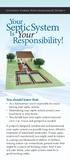 Southwest Florida Water Management District Septic System Your Is Your Responsibility! PIPE SEPTIC TANK DRAIN FIELD SOIL You should know that: As a homeowner you re responsible for maintaining your septic
Do your Part Be SepticSmart!
 Do your Part Be SepticSmart! A Homeowners Guide to Septic Systems TM U.S. Environmental Protection Agency A Homeowners Guide to Septic Systems www.epa.gov/septicsmart 2 Maintaining Your Septic System:
A Homeowner s. Guide. Septic Systems
 A Homeowner s Guide to Septic Systems What s Inside Your septic system is your responsibilty..... 1 How does it work?.............. 1 Why should I maintain my septic system?.... 4 How do I maintain my
A HOMEOWNERS GUIDE ON-SITE SEWAGE MANAGEMENT SYSTEMS
 GEORGIA DEPARTMENT OF HUMAN RESOURCES ENVIRONMENTAL HEALTH SECTION A HOMEOWNERS GUIDE TO ON-SITE SEWAGE MANAGEMENT SYSTEMS March 12, 2002 WHAT IS AN ON-SITE SEWAGE MANAGEMENT SYSTEM An on-site sewage management
Septic Tank Maintenance Information
 Septic Tank Maintenance Information This section has been adapted from materials developed by the Rouge RAP Advisory Council On-site Septic Subcommittee, which included representatives from Oakland, Wayne
A Guide to Owning & Maintaining a Septic System in the St. Albans Bay Watershed
 A Cleaner Bay Starts at Home A Guide to Owning & Maintaining a Septic System in the St. Albans Bay Watershed What s Inside Purpose of this Guide... 1 For More Information... 1 How it Works... 2 Maintaining
septic systems What is a Septic System? How does a Septic System Work?
 septic systems What is a Septic System? A septic system is a private sewage treatment system. They are common in rural areas where there are no municipal sewage pipes for homes, farms, businesses or other
SEPTIC SYSTEMS. 1. Building sewer connects the building plumbing to the septic tank.
 SEPTIC SYSTEMS Who Has A Septic System? Approximately 30 percent of Connecticut s population is served by on-site subsurface sewage disposal systems (a.k.a. septic systems). This means a large percentage
Homeowner s guide to septic system maintenance
 Homeowner s guide to septic system maintenance This booklet is a product of the Lower Meramec Planning Effort Brush, Fox and LaBarque, Hamilton and Kiefer, Grand Glaize and Fishpot Watersheds in the Lower
Properly maintaining your septic system will help reduce the. It s Your Septic System. Homeowner s Guide. Here s How to Take Care of It
 Homeowner s Guide for Maintenance and Care of On-Site Sewage Systems It s Your Septic System Here s How to Take Care of It Properly maintaining your septic system will help reduce the possibility of health
What Is An On-Lot Sewage Disposal System?
 What Is An On-Lot Sewage Disposal System? Most rural homes and communities in Monroe County are not served by a public sewer system. In order to dispose of the wastewater (sewage) generated by homes and
ALL YOU NEED TO KNOW...
 ALL YOU NEED TO KNOW... What do you know about your septic tank system? For the purposes of this booklet, a septic tank system refers to any kind of on-site sewage management system including traditional
So... now you own a septic system
 So... now you own a septic system More than million homes, encompassing almost percent of the U.S. population, dispose of domestic wastewater through onsite (unsewered) systems. According to the American
On-site Sewage Disposal Systems A HOMEOWNER S GUIDE
 On-site Sewage Disposal Systems A HOMEOWNER S GUIDE May 2013 Table of Contents Introduction page 3 Private Sewage Disposal Systems.page 3 Background Check of your System..page 3 Maintaining your System.
WHAT YOU NEED TO KNOW...
 A GUIDE TO OPERATING & MAINTAINING YOUR SEPTIC SYSTEM WHAT YOU NEED TO KNOW... The way you treat your septic system will influence how long the system lasts and how well it functions. If you own or rent
MAINTAINING YOUR SEPTIC SYSTEM by Wrentham Board of Health Ravi Nadkarni, Chairman William R. Domey, Agent
 INTRODUCTION MAINTAINING YOUR SEPTIC SYSTEM by Wrentham Board of Health Ravi Nadkarni, Chairman William R. Domey, Agent To most people, a septic system (or a cesspool) is out of sight and out of mind.
Frequently Asked Questions about Septic Systems
 What is a septic tank? Where is my septic tank located? Do septic tanks last forever? What should and should not go into my septic tank? How can I tell if my septic tank is working properly? Why should
SEPTIC SYSTEM. Taking care of your. ... what you need to know
 Taking care of your SEPTIC SYSTEM... what you need to know For more information, please call: WATER & WASTE MANAGEMENT PROGRAM (909) 387-4666 Visit our web site: www.sbcounty.gov/dehs A:\Septic System
YOUR SEPTIC SYSTEM UNCOVERED
 YOUR SEPTIC SYSTEM UNCOVERED By Raymond King District Director of Environmental Health It s underground where you can t see it. You don t really understand how it works. When it doesn t work your toilets
Help protect our special places by maintaining your septic tank
 Help protect our special places by maintaining your septic tank BC3136 A septic tank guide Help protect our special places Rural Auckland is a special place, but the remoteness also means that many homes
Homeowners and Home Buyers Guide to Wells and Private Sewage Systems
 Homeowners and Home Buyers Guide to Wells and Private Sewage Systems What every homeowner should know about living with a well and a private sewage system. YOUR ENVIRONMENTAL SYSTEMS Out of sight out of
CERTIFIED SEPTIC EVALUATION PREPARED FOR MATT HASHEM 1673 MT. MAJOR HWY, ALTON, NH 03810
 DATE: May 31, 2013 N.H. LICENSED DESIGNER OF SUBSURFACE DISPOSAL SYSTEMS 216 Hill Road Phone & Fax: 934-6206 Franklin, NH 03235 Cell: 393-3085 CERTIFIED SEPTIC EVALUATION PREPARED FOR MATT HASHEM 1673
KY-A-Syst for the Home Environmental Stewardship for Homeowners. Household Wastewater: Septic Systems and Other Treatment Methods
 IP-69 KY-A-Syst for the Home Environmental Stewardship for Homeowners Household Wastewater: Septic Systems and Other Treatment Methods Why Should You Be Concerned? Household wastewater carries dirt, soap,
Assessing Your Septic System
 THE UNIVERSITY OF TENNESSEE AGRICULTURAL EXTENSION SERVICE SP508 D TENNESSEE Home A Syst Assessing Your Septic System George F. Smith, Professor, Agricultural Economics & Resource Development Martha W.
Septic Records and Maintenance Guidelines
 1 Septic Records and Maintenance Guidelines Proper design, installation, and maintenance of your septic system will maximize your system's life. It will prevent failures that can be unsightly, foul-smelling,
Homeowner s Guide to Maintaining a Sewage Treatment System
 Homeowner s Guide to Maintaining a Sewage Treatment System Warren County Combined Health District 416 South East Street Lebanon, OH 45036 513-695-1220 Sewage Treatment Systems Septic Tank and Soil Absorption
31. ECO-INFO -- SEPTIC SAFE PROTECT YOUR HEALTH AND ENVIRONMENT YOUR SEPTIC PUMP-OUT SYSTEM with SELF ASSESSMENT TROUBLE SHOOTING GUIDE
 31. ECO-INFO -- SEPTIC SAFE PROTECT YOUR HEALTH AND ENVIRONMENT YOUR SEPTIC PUMP-OUT SYSTEM with SELF ASSESSMENT TROUBLE SHOOTING GUIDE Edited 21/12/01 Wyong Shire Council has many non sewered areas that
Septic System Management Plan for Below Grade Systems
 The goal of a septic system is to protect human health and the environment by properly treating wastewater before returning it to the environment. Your septic system is designed to kill harmful organisms
You and Your Septic Tank
 You and Your Septic Tank A Guide to the Proper Operation and Maintenance of a Septic Tank System INTRODUCTION In South Florida, our sole source of drinking water is just a few feet beneath the surface
Operation and Maintenance Guide for Homeowners
 LAGOON SEWAGE TREATMENT SYSTEMS It s Your On-Site System Operation and Maintenance Guide for Homeowners OKLAHOMA DEPARTMENT OF ENVIRONMENTAL QUALITY ENVIRONMENTAL COMPLAINTS AND LOCAL SERVICES P.O. Box
ON-LOT SEWA G E S Y S T E M S
 ON-LOT SEWA G E S Y S T E M S An Owner s Manual Chester County Health Department Bureau of Environmental Health Protection TABLE OF CONTENTS Page What is an on-lot sewage system 1 Types of on-lot systems
Nature's Cleaning Process
 Nature's Cleaning Process Students learn how a septic system cleans wastewater by performing an experiment. Level(s): 6-8 Subject(s): Physical Science, Chemistry, Life Science Virginia SOLs: 6.5 f, g;
Septic Systems Maintenance:
 Septic Systems Maintenance: A typical septic system consists of two basic components: a septic tank and an underground disposal field. Wastewater flows from the house to the septic tank. Effluent, after
FREQUENTLY ASKED SEPTIC SYSTEM QUESTIONS
 FREQUENTLY ASKED SEPTIC SYSTEM QUESTIONS What is an OSSF (On-Site Sewage Facility)? This is the term used when referring to "septic systems". What is septic system? A septic system is a method of dealing
Septic Systems How They Work and How to Keep Them Working
 Septic Systems How They Work and How to Keep Them Working PO Box 9300, 49 Exeter Street, Portland, Maine 04104-9300 (207) 780-4820 www.cascobayestuary.org 201 Main Street, Suite 6, Westbrook, Maine 04092
402-475-2462. Septic Maintenance Brochure How to Care for your Septic System And Lagoon
 Septic Maintenance Brochure How to Care for your Septic System And Lagoon Check out our website at www.southwickliquidwaste.com Jason and Jaime Kubik (owners) 105 Locust Street Hickman, NE 68372 402-475-2462
Looking after your Septic Tank System
 Looking after your Septic Tank System Name: Bought to you by Address: File this in your property file. 0800 TO FLUSH Call 0800 TO FLUSH 1 What do you know about your septic tank system? Just like your
Understanding Septic Tank Systems
 Understanding Septic Tank Systems Sewage and effluent can contain a variety of human disease-causing microorganisms and parasites. Disease can be spread to humans from this material by direct contact or
An Onsite Wastewater Treatment System Owner s Manual
 Missouri Department of Health and Senior Services An Onsite Wastewater Treatment System Owner s Manual Recommended Guidelines for Operation and Maintenance Version 1.0 Effective Date: August 1, 2014 Table
SEPTIC TANK SYSTEMS. Single purpose septic tank receives toilet wastes (blackwater) or sullage (greywater) only.
 SEPTIC TANK SYSTEMS There are three common types of septic tank systems in Tasmania Single purpose septic tank receives toilet wastes (blackwater) or sullage (greywater) only. Dual purpose (or all-waste)
If you have a Septic tank with pump out, this guide is for you.
 If you have a Septic tank with pump out, this guide is for you. Acknowledgments Cartoons by Fran Lowe NSW Department of Local Government 2000 As a septic system owner you are responsible for ensuring that
Avoiding an expensive
 Avoiding an expensive Understanding and maintaining your septic system Selecting or maintaining a septic system is a consideration most people do not have to worry about when they live in town. But if
OFFALY COUNTY COUNCIL Comhairle Chontae Uibh Fhailí
 OFFALY COUNTY COUNCIL Comhairle Chontae Uibh Fhailí HOMEOWNER S GUIDE AND MAINTENANCE RECORD FILE FOR WASTEWATER TREATMENT SYSEMS Houses located in rural areas, not served by public sewers, depend on either
Onsite Wastewater Treatment & Disposal-System Maintenance
 February 2009 Onsite Wastewater Treatment & Disposal-System Maintenance At one time an onsite waste water system was little more than a concrete tank and a pump that would take all the waste created in
Septic System Care & Maintenance
 Septic System Care & Maintenance A User s Guide for Home/Cottage Owners Spring 2003 Preventing Septic Failure & Malfunction How many of us know how our septic system works, or think we know? We expect
860-7668 KNOWING AND MAINTAINING YOUR SEPTIC SYSTEM. Carleton Pumping Services We look forward to hearing from you! DON T PANIC!
 DON T PANIC! WE LL SAVE YOU FROM YOUR PROBLEMS... Drain Cleaning Pipe Locating Water Jetting Maintenance Camera Inspect ion Plumbing KNOWING AND MAINTAINING YOUR SEPTIC SYSTEM 860-7668 Carleton Pumping
Septic Systems and Their Maintenance
 Septic Systems and Their Maintenance Why Use a Septic System? Septic systems are used when sewage treatment plants are not accessible. They safely treat and dispose of wastewaters produced in the bathroom,
Homeowner s GUIDE. to living with a well and septic system. Northeast Colorado. Health. Department. Replacement System. Leach Field. Septic Tank.
 Homeowner s GUIDE to living with a well and septic system Northeast Colorado Health Department Replacement System Leach Field Septic Tank Well Congratulations on the purchase of your new home. Living in
Septic System Owner s Manual
 Septic System Owner s Manual Sponsored by: copyright 2013 No part of this publication may be reproduced without our consent. www.callbrownies.com Brownie s Septic and Plumbing has provided quality service
Understanding and Caring for Your Septic System
 Understanding and Caring for Your Septic System Summit County Public Health 1867 W. Market Street Akron, Ohio 44313 330-926-5600 www.scphoh.org The purpose of a home's subsurface septic system is to dispose
Sewer and Stormwater Back-ups Policy Adopted by Council October 4, 2010
 Sewer and Stormwater Back-ups Policy Adopted by Council October 4, 2010 A. Purpose The purpose of this policy is to explain how and why sewer or stormwater backups occur, what to do in the event a homeowner
YOUR SEWER THINGS YOU MIGHT NOT KNOW & DID NOT WANT TO ASK
 YOUR SEWER THINGS YOU MIGHT NOT KNOW & DID NOT WANT TO ASK GENERAL INFORMATION: A sewer backup creates a stressful and emotional situation for the homeowner/renter. In some cases it may cause health and
Common Causes of High Water Bills
 Common Causes of High Water Bills An unusually high water bill is most often caused by a leak or change in water use. Some common causes of high water bills include: A leaking toilet, or a toilet that
Septic System Owner s Manual
 Septic System Owner s Manual How your septic system works and how to keep it working for you and the environment CORPORATION Innovative Environmental Products and Solutions Since 1970 Table of Contents
This chapter helps you evaluate
 HOME*A*SYST Home Assessment System Chapter 11. Managing Household Wastewater: Septic Systems and Other Treatment Methods This chapter helps you evaluate your septic system and pinpoint risks before they
Village of St. Louis Sewer Back-up Policy
 Village of St. Louis Sewer Back-up Policy The Village of St. Louis is responsible for maintaining sewer mains and manholes, which are located in public rights-of-way (Village and Provincial maintained
A Montana Homeowner s Guide to Septic Systems
 A Montana Homeowner s Guide to Septic Systems March 22, 2010 Notice and Acknowledgements This document was originally reviewed and published in accordance with U.S. Environmental Protection Agency policy.
St. Joseph, Missouri Water Protection Homeowners Guide to Your Sewer
 St. Joseph, Missouri Water Protection Homeowners Guide to Your Sewer Out of Sight, Out of Mind: Don t wait until you have a problem to maintain your private lateral sewer line. Keeping Excess Water Out
Courtesy of Infiltrator Systems, Inc.
 Courtesy of Infiltrator Systems, Inc. What s Inside... The Residential Septic System: Your Onsite Wastewater Treatment Plant...Page 1 The Infiltrator Chamber System: Today s Modern Solution...Page 4 Dear
HOW A SEPTIC SYSTEM FUNCTIONS
 New Milford Septic Services Old Fashioned Service Modern Technology Since 1940 Licensed Septic Installers and Cleaners 226 Pumpkin Hill Road New Milford, CT 06776 860-354-5492 HOW A SEPTIC SYSTEM FUNCTIONS
Protect your home from basement flooding
 Protect your home from basement flooding It's important to protect your home from basement flooding because your home could be at risk of basement flooding. Why? Heavy rainstorms that fall over short periods
Comfortspec Home Inspection Services
 Cover Page SEPTIC SYSTEM INSPECTION REPORT 12345 Inspection prepared for: Satisfied Client Real Estate Agent: Happy Agent - The Best Realty Date of Inspection: 10/2/2012 Time: 10 am Age of Home: Built
CITY OF GOLDEN DEPARTMENT OF PUBLIC WORKS, ENVIRONMENTAL SERVICES DIVISION
 CITY OF GOLDEN DEPARTMENT OF PUBLIC WORKS, ENVIRONMENTAL SERVICES DIVISION Grease, So What's the Problem? Does your facility produce grease? All commercial cooking facilities generate Fats, Oil, and Grease
http://septic.umn.edu
 for Holding Tank Systems The goal of a septic system is to protect human health and the environment by properly treating wastewater before returning it to the environment. Your holding tank system is designed
HOMEOWNER S MANUAL Septic Systems 101
 HOMEOWNER S MANUAL Septic Systems 101 How Your Septic System Works, How to Care For & Maintain It, Extend Its Useful Life, And Save You Money! As a community service, your Homeowner s Manual and Education
A Guide to the Proper Care and Maintenance of Your Onsite Wastewater Treatment System COURTESY OF INFILTRATOR WATER TECHNOLOGIES
 SEPTIC SYSTEM OWNER S MANUAL A Guide to the Proper Care and Maintenance of Your Onsite Wastewater Treatment System COURTESY OF INFILTRATOR WATER TECHNOLOGIES CONGRATULATIONS... What s Inside Page 3 The
 Septic System Report On:
 Septic System Function and Maintenance
 Your Septic System Millions of suburban and rural New York residents depend on septic systems to treat and dispose of household wastewater. The purpose of a septic system is to store, distribute, and treat
Department of Public Utilities. Information for Property Owners & Residents about Sewer Backup Incidents. September 2014.
 Department of Public Utilities Information for Property Owners & Residents about Sewer Backup Incidents September 2014 Page 1 of 6 General Information The City of New Bern Utilities Department makes a
Lance DeClue, REHS Environmental Health Specialist II County of San Diego Department of Environmental Health
 Lance DeClue, REHS Environmental Health Specialist II County of San Diego Department of Environmental Health Basic OWTS system design and function OWTS maintenance OWTS failures & repairs OWTS-STS (Supplemental
A Guide to Sewer Backups
 A Guide to Sewer Backups Milton Department of Public Works General Information A sewer backup creates a stressful and emotional situation for the homeowner/renter. In some cases, it may cause health and
bout your HOUSE YOUR SEPTIC SYSTEM CE 34
 A bout your HOUSE YOUR SEPTIC SYSTEM CE 34 Where Does the Water Go? Do you know where the water goes when you empty a sink or flush a toilet? If your home is in a city, the wastewater likely goes into
Septic System Owner s Manual
 CORPORATION Innovative Environmental Products and Solutions Since 1970 Septic System Owner s Manual How your septic system works and how to keep it working for you and the environment Table of Contents
detection kit the water leak water leaks: What you should know A helpful guide for locating indoor and outdoor water leaks Getting Ready
 water leaks: What you should know the water leak detection kit Imagine that the dot inside these brackets [ ] is the only hole in your home s water system. By its size alone, that hole may not seem worth
Maintenance Guidelines For Homeowners
 ON-SITE WASTEWATER SYSTEMS Maintenance Guidelines For Homeowners PROTECTING YOUR HEALTH, YOUR ENVIRONMENT, YOUR INVESTMENT PRODUCED BY: SWANS-SIG The Small Wastewater And Natural Systems Special Interest
Homeowner s Manual MIGHTY MAC. For: 500 Gallon-Per-Day. 600 Gallon-Per-Day. 750 Gallon-Per-Day
 Homeowner s Manual For: MIGHTY MAC 500 Gallon-Per-Day 600 Gallon-Per-Day 750 Gallon-Per-Day Table of Contents I. Introduction II. About Your MIGHTY MAC System III. Homeowner (System Owner) Responsibilities
PROPERTY OWNERS ON-LOT SEWAGE MANAGEMENT PROGRAM GUIDANCE
 PROPERTY OWNERS ON-LOT SEWAGE MANAGEMENT PROGRAM GUIDANCE Berks Envirotech, Inc. 519 Reading Avenue West Reading, PA 19611 Office: 610-375-7640 Fax: 610-375-7682 Email: [email protected] Website:
BASEMENT FLOODING. Prevention Guide for. Homeowners
 BASEMENT FLOODING Prevention Guide for Homeowners 1 Did You Know? Floods are the most common hazards in Canada. Water damage is a common cause of loss for homeowner insurance. A heavy rainfall can result
THURSTON COUNTY SEPTIC TANK PUMPERS' MANUAL
 THURSTON COUNTY SEPTIC TANK PUMPERS' MANUAL PREPARED BY: Environmental Health Division, Thurston County Public Health and Social Services Department WITH FUNDING FROM: The Puget Sound Water Quality Authority
To many people, a home s plumbing system is perceived as being extremely
 Chapter 1 Understanding Plumbing In This Chapter Knowing what you re getting yourself into Touring residential plumbing systems To many people, a home s plumbing system is perceived as being extremely
City of Hillsboro Inflow and Infiltration Elimination Program
 City of Hillsboro Inflow and Infiltration Elimination Program Because of continuing problems with overloaded sanitary sewers, the City of Hillsboro is inspecting the sewer system in your neighborhood.
MODEL WEB CONTENT FOR CITY SANITARY SEWER DEPARTMENTS
 MODEL WEB CONTENT FOR CITY SANITARY SEWER DEPARTMENTS The following information is designed to be used in conjunction with the Sewer Toolkit, located in the Wastewater section of the Florida Rural Water