
GOVERNOR HENRY S WORKERS COMPENSATION TASK FORCE
|
|
|
- Baldric Berry
- 10 years ago
- Views:
Transcription
1 GOVERNOR HENRY S WORKERS COMPENSATION TASK FORCE REPORT ON FINDINGS AND RECOMMENDATIONS January 2005 Task Force Members: Scott Meacham, Director of Oklahoma Office of State Finance, Chairman Sen. Jerry Smith (R-Tulsa) Sen. Richard Lerblance (D-McAlester) Rep. Jari Askins (D-Duncan) Rep. Chris Hastings (R-Tulsa) Mike Seney Senior Vice President Operations, State Chamber of Commerce Jimmy C. Curry President of Oklahoma AFL-CIO Larry Mocha President and CEO of Air Power Systems Co., Inc. and former president of State Chamber William A. Vassar III Attorney for injured workers Brandon Burton Attorney for injured workers John S. Oldfield, Jr. Defense attorney for business Tenal S. Cooley III Defense attorney for business Richard Tippit OGE Energy Corporation and President of Oklahoma Self-Insurer s Association Dan L. Simmons President of CompCHOICE, the state s largest Certified Workplace Medical Plan Terry McCullar President and CEO of CompSource Oklahoma (formerly State Insurance Fund) Blake Virgin Owner of Coysco Marcia Davis Administrator, Oklahoma Workers Compensation Court

2 BACKGROUND In April of 2004, Governor Brad Henry named a task force to study Oklahoma s workers compensation system and make recommendations for any needed changes. Governor Henry asked the task force to compare Oklahoma to the highest and lowest cost and benefit states and determine best practices from other states that could be adopted in Oklahoma. He asked the task force to conduct a comprehensive review of all aspects of Oklahoma s workers compensation system and make suggestions for improvements. The Governor named a diverse group to serve on his task force. The task force is made up of representatives of manufacturing, service industries, labor, claimants attorneys, respondents attorneys, the Administrator of the Workers Compensation Court, CompSource Oklahoma (the State Insurance Fund), the Oklahoma Self-Insurers Association, the state s largest Certified Workplace Medical Plan and the State Finance Director. The task force was assisted with research provided by the staff of the Workers Compensation Court, the House of Representatives and the Senate. Additionally, the task force received input from many individuals and organizations including medical providers, private insurance companies and large, multi-state manufacturers. Members of the task force served on two different panels on workers compensation reform one at the Workers Compensation Court s Educational Conference and the other at the Oklahoma Self- Insurers Association s Annual Meeting. The task force was provided numerous studies, reports and data from multiple sources with respect to Oklahoma s workers compensation system. The task force reviewed all data and statistical information and met over the course of nine months. The result is the most comprehensive review to date of Oklahoma s workers compensation system. Workers compensation in Oklahoma is very important to all of the participants injured workers, employers, health care providers, insurers and attorneys. Accordingly, there have been numerous reform efforts over the past 15 years that have met with varying degrees of success. Because of the political nature of any legislative reform effort, solid facts and research have often blended with claims that are more difficult to substantiate, leaving outside observers confused. For example, some contend Oklahoma s workers compensation system has driven away potential businesses and investors; others point to the Oklahoma Department of Commerce which is unable to cite any existing or prospective employer who has left the state or declined to locate here because of the workers compensation system issue. The task force attempted to sort through this landscape and produce a report based entirely on hard facts and research. It found that while Oklahoma s workers compensation system is much more functional than some other states, it still has a number of flaws that merit close scrutiny and reform. Particularly, Oklahoma s workers compensation system seems to be very expensive for large, labor intensive manufacturers and firms in high injury frequency and severity industries relative to the systems in most states in Oklahoma s region. Governor Henry s Task Force on Workers Compensation Reform has considered the positive and negative components of the state s workers compensation system and makes the proposals set forth herein to maximize the benefits to injured workers in Oklahoma s system while minimizing the costs to employers. 2

3 OKLAHOMA WORKERS COMPENSATION SYSTEM ISSUES How do Oklahoma s workers compensation premium costs compare with those in other states? How do Oklahoma s workers compensation benefits compare to those in other states? How can medical costs and medical utilization rates in Oklahoma be better managed? What can Oklahoma do to decrease the frequency and severity of injuries and disabilities? How can multiple injury issues involving a subsequent employer be addressed? What can Oklahoma do to encourage injured workers and employers to participate in restricted work programs? What changes can be made to reduce fraud and abuse in the workers compensation system? What can be done about the perceived problem of sprains and strains? How do we change the perception of Oklahoma s workers compensation system? What other changes can be made to improve Oklahoma s workers compensation system? 3

4 FACTUAL FINDINGS Premiums are a function of several factors including payroll, classification code rate, discounts, experience modifiers, dividends earned, and expense ratios. Therefore, differences in any of these factors may cause differences in the level of premiums. The Oregon study shows the relative classification code rates between the states. According to the 2004 Oregon study, Oklahoma moved from 19th most expensive to 15th most expensive from 2002 to During the same period, Texas was 5th most expensive in 2002 and moved to 14th most expensive in Conversely, Arkansas moved from 47 th to 48 th most expensive during the same period. If the Oregon study results are converted to actual premium costs factoring in average wage rates between the states, the actual premiums paid by Oklahoma companies is lower than a rate comparison study like the Oregon study indicates because wage rates in Oklahoma are relatively lower. The Oregon study is a composite of Oregon classifications. The ranking of Oklahoma, as well as other states, varies dramatically between classifications. The Work Loss Data Institute (WLDI) is a private company that produces and sells guidelines for disability duration and medical treatment. WLDI also produces annual state report cards for workers compensation, the most recent of which was dated 2004 and was based on OSHA data from 2000 to The 2004 State Report Card was based on relative rankings between the states on injury incidence rates, percent of injuries involving missed work, median disability durations, percentage of cases involving over 30 days of missed work, median disability duration of lower back strains and median disability duration for carpal tunnel syndrome. According to the 2004 WLDI State Report Card for Workers Compensation, Oklahoma received an F. Grades were assigned based on, first, ranking each state in each of the categories listed above and, then, averaging the rankings. Finally, the composite average ranking was compared to the composite averages of a composite of the other 45 states that participate in the OSHA reporting database. The assigned grade was based on how the composite average compared to that of other states. Oklahoma had relatively higher duration, percentage of cases with over 30 days missed work, duration of lower back strains and duration of carpal tunnel syndrome. Oklahoma had slightly above average injury rates and very favorable percentage of cases missing work. When all of these factors were averaged, Oklahoma ranked around 32 nd out of the 40 states and, therefore, received an F. From this study it can be concluded that from the 2000 to 2002 time period, Oklahoma had a greater than average number of OSHA reportable injuries and had significantly higher median disability duration and disabilities lasting over 30 days. However, Oklahoma is doing a better job than a majority of the states in avoiding lost work time when an injury occurs. 4

5 Texas received a D- in 2002 and Fs in 2000 and 2001 under the 2004 WLDI State Report Card. Kansas received a B in 2002, an A- in 2001 and a B in 2000 under the 2004 WLDI State Report Card. WLDI attributes Kansas score to the utilization of a full range of managed care techniques, including limited provider choice, limited provider change, a medical fee schedule and hospital payment regulation. Arkansas received a C in 2002, down from a C+ in 2001 and an A- in According to the WLDI, there are two major drivers of workers compensation costs. The first is outcomes numbers of injuries, length of absence from work and medical costs. The second is the administrative burden inherent in a state s workers compensation system. The State Labor Department reported in December 2004 that workplace injuries in Oklahoma have declined to their lowest level in more than 20 years. With just five incidents per 100 employees, the 2003 injury and illness rate is the lowest since the department began tracking the date in In 2002, the rate was 6.1 per 100 employees. Oklahoma employers recorded 48,400 injuries and illnesses in 2003, a 20% decline from the 60,600 recorded in The rate of claims filed per 100 workers has dropped in Oklahoma from a high of 1.77 in 1988 to a low of 1.24 in 2003, well below the peak of 2.26 in (Oklahoma Workers Compensation Court) Average medical costs for lost-time claims in Oklahoma have increased from $7,800 in policy year 1995 to $16,700 in policy year Average medical costs for lost-time claims have increased 10% per year more than the growth rate of wages over the past 5 years (PY to PY-2002). Medical costs are currently growing faster than indemnity costs in Oklahoma. (National Council on Compensation Insurance, Inc., 2004 State Advisory Forum) Average indemnity costs per case in Oklahoma have dropped from approximately $19,000 in 1994 to around $16,000 in Average indemnity costs have increased 2.8% per year more than the growth rate of wages over the last 5 years. (National Council on Compensation Insurance, Inc.) According to the Workers Compensation Court s Annual Report for 2002, the total number of orders issued is close to its lowest point since However, the average overall award has increased to $13,050 per order, the highest since Medical costs in the workers compensation system are a function of price (cost per service), utilization (number of services) and mix (character of the service provided e.g. x-ray v. MRI). (National Council on Compensation Insurance) Maximum medical reimbursement rates for providers in Oklahoma are set by the Administrator of the Workers Compensation Court. In general, these rates are higher than preferred provider organization rates in private health insurance, Medicare or Medicaid. 5

6 Indemnity costs and medical costs in Oklahoma are increasing at a faster rate than the rate of increase in wages with medical costs increasing at the fastest rate. (National Council on Compensation Insurance, Inc.) Nearly one in five Oklahomans are without health insurance. Lack of health insurance leads to personal medical conditions being transferred into the workers compensation system. Loss costs have declined in Oklahoma by approximately 20% since (National Council on Compensation Insurance, Inc.) Permanency payments in Oklahoma are similar to other states in the region. However, the average cost per claim in Oklahoma is significantly higher than other states. The difference can be attributed to higher medical utilization, higher than average temporary total disability payments and higher frequency of permanent partial disability claims. Oklahoma has a higher frequency of permanent partial disability claims than anyone in its region except Missouri and its frequency is 62% higher than the national average. (National Council on Compensation Insurance, Inc.) Injured worker benefits have declined 32% in Oklahoma between 1997 and 2002 from $1.86 per $100 in covered wages to $1.26. However, Oklahoma remains second highest in the region behind Missouri in benefits per $100 in covered wages and well above the regional average of $1.05. (National Academy of Social Insurance). Oklahoma ranks 39 th of 45 OSHA database states on duration of disability and 37 th in frequency of long term injuries. (Work Loss Data Institute State Report Card 2004). Self-insured manufacturer s average loss per $100 of payroll in Oklahoma has decreased from $3.22 in 1994 to $1.75 in (Oklahoma Workers Compensation Court). Claimant attorney involvement for lost time claims dropped from 58.7% in accident year 1994 to 29.3% in accident year According to National Council on Compensation Insurance data, Oklahoma s claimant attorney involvement is about 2 times higher than all of the states surveyed. The states surveyed include those with judicial systems, such as Oklahoma, and those with varying levels of administrative systems with much less attorney involvement. Over the past eight accident years, the percentage of attorney involvement in Oklahoma has dropped 50.1%, compared to a 9.8% drop for all states surveyed. (National Council on Compensation Insurance). There is currently a split of authority in the Oklahoma Workers Compensation Court with respect to 3E claims. Some judges are only awarding material increase when the material increase resulting from combined disabilities constitutes permanent total disability while others are entering awards for any resulting material increase. Exposure to 3E claims will lead to higher loss reserves and higher premiums. The Multiple Injury Trust Fund protects employers from liability for the combination of old and new disabilities. As of December 31, 2003, the fund had a deficit of $214,673,000 which represented an $18.8 million decrease from the previous year end. (Multiple Injury Trust Fund Audited Financial Statements, 12/31/03). 6

7 WORKERS COMPENSATION REFORM PROPOSALS I. Workplace Safety: One of the keys to lower costs in a workers compensation system is lowering the number of claims. The best way to lower the number of claims is to lower the number of injuries. By adopting effective workplace safety programs, Oklahoma employers can reduce the frequency and severity of injuries thereby lowering overall costs. --Solutions: A. Increase funding for both the Oklahoma Department of Labor and Career Tech Safety and Health Training Programs. B. Make the Special Occupational Health and Safety Fund a revolving fund not subject to appropriation. C. Recommend the Governor appoint a task force comprised of representatives of insurance companies, CompSource Oklahoma and businesses to explore the further coordination of safety programs with insurance and the utilization of premium rebates to provide incentives to businesses to adopt safety programs. II. Limitation on Solicitation: Employers are required to file a Form 2 (Employer s First Report of Injury) with the Workers Compensation Court when a workplace injury occurs that causes lost time from work beyond the shift of injury or the seeking of medical treatment outside the workplace. The Form 2 s are not confidential and are available to the public. In the past, certain individuals have requested copies of these filings and then used them to solicit injured workers to employ them or their associates as legal counsel to file suit against the employer. --Solution: Form 2 should be confidential with only the injured worker, the employer or the employer s insurance carrier having access to the Form 2. Attorneys for any of these parties shall also have access with a properly executed power of attorney. III. Certified Workplace Management Plans: It appears that Oklahoma CWMPs have been fairly effective at managing care for injured workers and providing cost effective medical care. There are certain impediments in Oklahoma statutes that may decrease the number of employers willing to utilize CWMPs. Some have suggested that CWMPs should be mandated for all workers compensation cases. However, the experience in other state s that have attempted to mandate CWMPs for all cases has not been positive. --Solutions: A. Allow the employer to choose for the injured employee a treating physician from the physicians listed within the network of the CWMP. The injured worker may apply for a one time change to another physician within the network. Any subsequent change would be as provided under existing law. 7

8 B. Eliminate the annual re-enrollment process and replace with a requirement that the employer provide the employee with annual notice of their rights under the CWMP. C. Require the State Health Department to conduct annual site visits to each CWMP to ensure adequate and timely medical treatment is provided to plan participants, that the plan is operating in accordance with its latest application to the Department and that it is in compliance with all applicable laws and regulations. IV. Competition Among Insurers: Oklahoma employs a cumbersome and inefficient method for determining rates for workers compensation insurers. A very political filing is made by NCCI with the State Board for Property and Casualty Rates to determine the loss cost multiplier. Then, each individual company must file for rate approval with the State Insurance Commissioner. Studies indicate that deregulation of workers compensation rates results in a significantly more efficient delivery system and a reduction in overall comp rates. --Solution: Change to a file and use system for workers compensation rate setting in Oklahoma. V. Medical Cost Containment: The average annual increase in workers compensation medical costs nationwide from 1996 to 2002 was 8.1% compared to a 3.8% increase in the medical consumer price index during the same period. In Oklahoma, the average medical cost per claim has increased an average of 10% more than the rate of growth in wages over the past 5 years. This increase has been attributed to the rising costs of prescription drugs and a significant increase in medical care utilization. Oklahoma lacks effective medical cost management mechanisms. The state has a medical fee schedule that is not tied to any objective criteria. The only other medical cost containment mechanism the state has is treatment guidelines adopted by the Physician Advisory Committee that are neither statutorily mandatory nor binding on any of the participants in the system. Studies show that the use of managed care techniques in a workers compensation system lowers costs an average of 21.5% --Solutions: A. Utilization Standards/Treatment Guidelines. The existing membership of the Physician Advisory Committee should be reworked to include representation by an occupational physician. The guidelines should be based upon nationally accepted practice standards. Guidelines should be included on all major cost areas including treatment of back, knee, neck and shoulder injuries and utilization of x-ray and imaging technology for diagnostic purposes. Additionally, the guidelines should address when surgery is indicated as well as the appropriate surgical procedure for the underlying condition. Compliance with the guidelines should be mandatory and a precondition to reimbursement. A procedure to override the guidelines upon prior authorization by the Court also needs to be developed. B. Fee Schedule. The fee schedule for provider charges should be based on a percentage of Medicare with a higher percentage paid to surgeons similar to the approach adopted by the State of Florida to provide more objective reimbursement and 8

9 lessen the incentive for higher utilization of over reimbursed procedures. The fee schedule should specifically set limits for MRI s and physical therapy that are at Medicare rates with no premium. C. Preauthorization. Preauthorization should be required as a precondition to any obligation to pay for medical services if the proposed treatment exceeds the amount set forth in the guidelines, exceeds the amount set forth in the fee schedule or is designated as requiring prior authorization in the fee schedule or the medical treatment guidelines. The IME panel shall be responsible for making decisions on preauthorizations with the IME s to serve on a rotating basis as the preauthorization IME. All IME s shall be required to serve on preauthorization panel as requirement for being an IME. The Administrator of the Court shall establish appropriate rules regarding the rotation of IME s, the procedure for parties seeking preauthorization and the fee for such preauthorization which shall be remitted to the IME. The fee shall be assessed against the party seeking the preauthorization if it is denied and against the adverse party if it is granted. The parties may mutually agree to treatment in excess of the guidelines or fees in excess of the amount set forth in the fee schedule. D. Prescription Drugs. The price for prescription drugs shall be set at 90% of average wholesale price (AWP) plus a $5 dispensing fee. Physicians shall be required to prescribe and pharmacies dispense generic drugs when they are available. If a physician wishes to prescribe a dispense as written drug when a generic equivalent is available, the physician must get prior authorization and such prior authorization must be communicated to the dispensing pharmacy before the pharmacy may dispense such drug. The Physician Advisory Committee shall adopt stringent guidelines for the prescription and dispensing of Oxycontin which shall limit such drug s utilization and the duration of treatment. E. Case Management. Eliminate requirement that employee loose 3 consecutive days of work before a case manager may be appointed. Allow employer to appoint case manager at employer s discretion and communicate with case manager. Eliminate ability of employee to have case manager replaced at will but provide complaint process or, if none, allow employee to petition court for replacement of case manager. Case manager provisions in relation to CWMPs should not be disturbed. F. Utilization Review. Create an independent panel of providers, business representatives and labor representatives to review utilization when requested by any employer, injured employee or insurer. The panel should be authorized to issue a public or private censure, remove a provider from a case or order treatment within the treatment guidelines. An aggrieved party may appeal to the Court. VI. Return to Work: Both employers and employees should be encouraged to participate in light duty employment to allow injured employees to return to work for light duty or restricted duty work as soon as possible. Employers often are not willing or able to offer light duty return to work opportunities for injured employees. Additionally, Oklahoma law appears to provide little incentive for injured workers to accept bona fide offers of light duty work. 9

10 --Solution: The state should offer employers a tax credit of 10% of an injured worker s actual wages for up to three months if the employer puts an injured employee back to work with work that meets the work restrictions established by the treating physician. Additionally, the employer shall be entitled to a tax credit of up to $1,000 each for work place modifications necessary to allow the employee to return to work, job retraining costs and tools/equipment that may be required to enable the employee to perform the restricted duty employment. Temporary benefits shall end upon the treating physician making a determination that the employee may return to work with restrictions (total body whether all body parts are admitted or denied) and the employer making a bona fide offer of employment that accommodates such restrictions. The employee may file a motion challenging such cessation of temporary benefits which shall be subject to preliminary hearing by the Court within five business days of filing. At such temporary hearing the Court may order such temporary benefits continued pending a final hearing if it finds probable merit in the employee s motion and that substantial harm will result to the employee if such temporary benefits are not continued. Additionally, all temporary benefits shall cease automatically upon a full release of the injured employee by their treating doctor (add to existing statute as additional event of termination of payments). VII. Fraud: All participants in the workers compensation system complain of fraud by all other participants in the comp system. Workers compensation fraud costs the insurance industry $5 billion dollars each year and is partially responsible for the rising trend in workers compensation premiums. --Solutions: A. Increase funding for the Attorney General s anti-fraud unit $300,000 per year to allow the addition of 5 more staff members. B. Enhance penalties for fraud by all participants in the workers compensation system (claimants, employers, providers and attorneys). Adopt a definition of work in relation to employee s temporary total disability fraud. C. Eliminate benefits obtained by fraud in a workers compensation case. D. The Governor should create a Premium Fraud Task Force, which would be comprised of representatives from the private workers compensation insurers, CompSource Oklahoma, employers, injured workers, the Attorney General s office, health care providers and the Oklahoma Workers Compensation Court Administrator. The task force would allow for a cooperative effort between all participants in the workers compensation system impacted by fraud and enhance communications to the Attorney General for the prosecution of fraud. VIII. Multiple Injury Trust Fund/Form 3E Cases: Under current law, last employers are subject to potential liability for material increase in impairment resulting from a combination of prior injuries. This subjects the employer to excess liability when the employer hires an employee with a prior injury and, therefore, makes it difficult for 10

11 previously injured employees to obtain employment. Under prior law the Multiple Injury Trust Fund paid for such a combination. --Solution: Reinstate the Multiple Injury Trust Fund for Permanent Total Disability awards only. The statutes should be clarified to eliminate any material increase liability for employers in multiple injury situations. The fund shall be funded by the current assessment on premiums or premium-equivalents at an amount determined by the Court Administrator to fund the Multiple Injury Trust Fund but not more than 6% as currently set forth in statute. The Multiple Injury Trust Fund should be given standing in any case where the Court is considering an award against the fund. IX. Independent Contractors/Non-coverage Cards: The State Labor Commission issues noncoverage cards for independent contractors that work for a prime contractor. These have been abused in some industries, particularly the roofing industry. When individuals who hold non-coverage cards are hurt on the job and they are really employees, they file workers compensation claims under their employer s workers compensation policy. This risk for insurers causes the premiums of all contractors to be increased. --Solution: Abolish non-coverage cards. X. Injured Worker Benefits: Several areas of benefits to injured workers have not been addressed for a number of years and are very inadequate. These include burial benefits, disfigurement awards and certain permanent total disability benefits payable to a surviving spouse. --Solutions: A. Increase burial benefit from $5,000 to $8,000. B. Increase disfigurement awards from $20,000 to $30,000. C. For cases where the claimant has been adjudged permanently totally disabled and dies from causes other than the accident or occupational disease causing such permanent total disability, increase the benefit payable to a surviving spouse from $50 per week to ½ of workers permanent total disability benefit with such benefits to terminate on the remarriage or death of the surviving spouse. XI. Sprains and Strains: Much debate and effort in workers compensation has centered on attempting to define compensable soft tissue injuries commonly referred to as sprains and strains. These efforts have met with great difficulty in even defining sprains and strains much less determining criteria for compensability. --Solution: In general, only temporary benefits should be paid for a sprain and strain. However, certain soft tissue injuries may cause permanent damage. The state should adopt a requirement of objective evidence showing that a soft tissue injury result in either a permanent abnormality or be supported by evidence that the injured employee s ability to earn wages at the same level as the date of injury is permanently adversely impaired as a precondition to a permanent disability award. This requirement should not 11

12 apply to cases involving corrective surgery or closed head injuries. The definition of permanent partial disability should be amended to include the requirement. XII. Miscellaneous Provisions: Several miscellaneous issues should be addressed as part of a comprehensive workers compensation reform bill. --Solutions: A. Create a presumption of no lost income for people who are retired, not working and can not establish a loss of income with respect to temporary total disability payments during a healing period. Termination of an employee s employment for the purpose of avoiding temporary total disability payments shall constitute wrongful termination. B. Allow a Court appointed treating IME to rate permanent partial disability at the end of treatment. C. Require physicians who are on the Court IME list to provide examination only exams in a certain number of cases each year as determined by the Administrator of the Court in order to maintain their name on the Court IME list. D. Codify the requirement that it is the Claimant s burden and cost to obtain, as an element of a permanent total disability claim, a vocational rehabilitation evaluation. E. Adopt changes to 85 Okla. Stat. 43(A) to clarify statute of limitations period. F. Define length of time to get temporary benefits (not to exceed 300 weeks). G. Amend 85 O.S. 2.6 as follows: An employer with five or less total employees, all of whom are the employer s spouse, father, mother, child or step-child, grandchild or a spouse thereof will be exempt from the Workers Compensation Act. H. An employee may only change physicians as a matter of right where the employer has chosen the physician. I. Clarify law that there is no employer liability for non-work related pre-existing condition. J. Limit jurisdiction of Court to reopen case for change in condition to 208 weeks. XIII. 24 Hour Care Study: It is recommended that a study be conducted of the feasibility of allowing certain employers to opt out of the workers compensation system if they provide all of their workforce with 24 hour medical insurance that would cover both work and non-work related injuries and illnesses with low deductibles and co-pays. Such employers would also be required to provide certain death benefits and disability benefits to their employees. XIV. Mediation: Many people argue that too much money is spent on adjudicating disputes in Oklahoma s workers compensation system. Statistics show that while attorney 12

13 involvement is dropping significantly in Oklahoma, contested cases tend to cost relatively more. Since Claimant s attorneys fees are paid out of Claimant awards, they do not affect system cost. Therefore, the additional costs would have to be attributable to Respondent s attorney s fees and, more likely, other litigation costs, such as expert witness fees, etc. --Solution: The best way to avoid litigation cost is to avoid litigation. The best way to avoid litigation is to have dispute resolution systems in place to encourage more efficient resolutions of disputes. Some argue that every claim should go to mediation. However, this would increase costs beyond the benefits realized because many cases that would not benefit from mediation would be forced into mediation. The current system for mediation is too weak. It requires both parties agree to mediation before it occurs. This causes too few cases to be mediated. It is, therefore, suggested that mediation occur upon agreement of the parties or by order of the Court upon motion by either party. XV. Dueling Doctors: Dueling Doctors are perceived to be a major cost driver in Oklahoma s workers compensation system. It is commonly believed the Court typically splits the difference between a high claimant s disability rating and a low respondent s rating. IME s are independent and give the Court an independent view to disability ratings. --Solution: Adopt a statutory preference for disability ratings by IME s. Adopt an expedited hearing process for compensability. XVI. Guaranty Fund: The solvency of the Property and Casualty Insurance Guaranty Association Fund should be assured. The State Auditor should conduct an audit of the Guaranty Fund and report on its financial soundness. NOTE: The task force would like to extend a special thanks to the following people for their help with this report: Tish Sommers Oklahoma Workers Compensation Court Sara Kyte Oklahoma State Senate 13

Comparative Review of Workers Compensation Systems in Select Jurisdictions
 of Workers Compensation Systems in Select Jurisdictions JURISDICTION: TEXAS ENVIRONMENT Population Size 19.3 million in 1997. Labour Force 8 million (1997) Demographic and Economic Indicators has enjoyed
Workers' Compensation in Oklahoma Employer s Rights & Responsibilities
 Workers' Compensation in Oklahoma Employer s Rights & Responsibilities Workers Compensation Court Counselor Program 1915 N. Stiles Avenue, Oklahoma City, OK 73105 210 Kerr State Office Bldg, 440 S. Houston,
Workers' Compensation in Oklahoma Employer s Rights & Responsibilities
 Workers' Compensation in Oklahoma Employer s Rights & Responsibilities The information provided in this pamphlet is general in nature and for informational purposes only. It is not intended to be a legal
CHAPTER 1. Wyoming Workers Compensation. Workers Compensation Programs Benefit Injured Workers and Employers
 CHAPTER 1 Wyoming Workers Compensation Workers Compensation Programs Benefit Injured Workers and Employers Injured workers receive medical and lost wage benefits, regardless of fault. Employers receive
Workers' Compensation
 Workers' Compensation Workers compensation provides benefits to injured employees for accidents or occupational diseases arising out of, and in the course of, their employment. Compensation coverage is
Workers' Compensation in Oklahoma Employee s Rights & Responsibilities
 Workers' Compensation in Oklahoma Employee s Rights & Responsibilities Workers Compensation Court Counselor Program 1915 N. Stiles Avenue, Oklahoma City, OK 73105 210 Kerr State Office Bldg., 440 S. Houston,
Workers' Compensation in Oklahoma Employee s Rights & Responsibilities
 Workers' Compensation in Oklahoma Employee s Rights & Responsibilities The information provided in this pamphlet is general in nature and for informational purposes only. It is not intended to be a legal
Comparative Review of Workers' Compensation Systems in Select Jurisdictions
 of Workers' Compensation Systems in Select Jurisdictions JURISDICTION: WASHINGTON ENVIRONMENT Population Size 5.5 million in 1996. Labor Force 2.8 million in 1996. Demographic and Economic Indicators The
Guide for Injured Workers
 Guide for Injured Workers This is a guide to Oklahoma workers' compensation law and rules. It is based on laws and rules in effect in 2015. Laws and rules can change by acts of the Legislature, rulemaking
How To Get A Workers Compensation Rate Decrease In Florida
 Florida Workers Compensation Insurance Rates Decrease By 5.2% in 2015, Down by More than 57% Since the 2003 Reforms A. Introduction. Rafael Gonzalez Vice President of Strategic Solutions Helios Tampa,
Revised May 2015. What Is Workers Compensation?
 This pamphlet provides an overview of the workers compensation system in the State of New Hampshire, including what is covered by workers compensation, what benefits are available, and what you should
Legislative Update. legal challenge to new law. significant changes to oklahoma work comp
 Quality Insight for Your Industry Legislative Update significant changes to oklahoma work comp Since our last Legislative Update on the new Workers' Compensation system in Oklahoma, the NCCI filed a 12.9%
Guide. to Recovery Under The Illinois Workers Compensation Act. The Injured Employee s
 The Injured Employee s Guide to Recovery Under The Illinois Workers Compensation Act Prepared By: Romanucci & Blandin, LLC 33 North LaSalle Street, 20th Floor Chicago, Illinois 60602 Toll Free: 888.458.1145
Comparative Review of Workers Compensation Systems in Select Jurisdictions SASKATCHEWAN
 of Workers Compensation Systems in Select Jurisdictions JURISDICTION: SASKATCHEWAN ENVIRONMENT Population Size Labour Force Demographic and Economic Indicators 1,015,600 (1995, Stats Canada) 494,000 (1995,
Minnesota Workers' Compensation. System Report, 2012. minnesota department of. labor & industry. research and statistics
 Minnesota Workers' Compensation System Report, 2012 minnesota department of labor & industry research and statistics Minnesota Workers Compensation System Report, 2012 by David Berry (principal) Brian
Does Texas Need a Workers Compensation System? Bill Peacock Texas Public Policy Foundation
 Does Texas Need a Workers Compensation System? Bill Peacock Texas Public Policy Foundation Beginnings of Workers Compensation Liability and Litigation in the 19 th Century The problem of industrial accidents
Workers Compensation Claim State Environmental Guide - Tennessee
 Workers Compensation Claim State Environmental Guide - Tennessee TENNESSEE http://www.state.tn.us/labor-wfd/wcomp.html Indemnity issues Temporary Total Benefits Temporary Partial Benefits Permanent Partial
Quick Guide to Workers Compensation
 Quick Guide to Workers Compensation What Is Workers Compensation Insurance? Workers compensation insurance covers businesses for their statutory and legal obligations for employee expenses that are a direct
How To Change The Law On Workers Compensation
 Overview 2013 Changes to the Tennessee Workers Compensation Act On April 29, 2013 Tennessee Governor Bill Haslam signed into law the Tennessee Workers Compensation Reform Act of 2013 (SB200/HB194). This
Steiner, Segal, Muller & Donan
 The Law Firm of Steiner, Segal, Muller & Donan What You Need To Know About Pennsylvania Worker s Compensation Benefits Representing Injured Workers in Pennsylvania for over 25 years! 2401 Pennsylvania
Florida Workers Compensation: A Guide for the HR Professional
 Florida Workers Compensation: A Guide for the HR Professional Jennifer K. Price, FCAS, MAAA Session Objectives Workers Compensation Basics Florida Reforms, Cost Trends, and Challenges The Patient Protection
Rights & Obligations under the Nebraska Workers Compensation Law
 Nebraska Workers Compensation Court Information Sheet: Rights & Obligations under the Nebraska Workers Compensation Law NEBRASKA WORKERS COMPENSATION COURT OFFICIAL SEAL What is workers compensation? Workers
Key Provisions of Tennessee Senate Bill 200 Effective July 1, 2014, through July 1, 2016
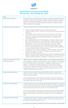 2014 Construction of Statute Definition of Injury (Causation) Revises Section 50-6-116, Construction of Chapter, to indicate that for dates of injury on or after July 1, 2014, the chapter should no longer
2013 Nuts & Bolts Seminar Coralville
 2013 Nuts & Bolts Seminar Coralville LITIGATION TRACK Work Comp 101 2:30 pm.-3:30 p.m. Presented by Tim Semelroth RSH Legal 425 Second Street SE, Suite 1140 Cedar Rapids, Iowa 52401 Phone: 319-365-9200
Quick Guide to Workers Compensation for Small Business
 Quick Guide to Workers Compensation for Small Business Do I Need Workers Compensation Coverage? Generally speaking, businesses must obtain workers compensation coverage if they have employees that are
North Carolina State Government
 North Carolina State Government W O R K E R S C O M P E N S A T I O N E M P L O Y E E H A N D B O O K PURPOSE The contents in this handbook are designed to provide employees of the State of North Carolina
EXAM SPECIFICATIONS FOR WORKERS COMPENSATION LAW
 EXAM SPECIFICATIONS FOR WORKERS COMPENSATION LAW PURPOSE OF THE EXAM. The purpose of the certification exam is to require an applicant to demonstrate substantial knowledge of significant legal concepts
Who Administers the Workers Compensation Program and Related Responsibilities?
 What is Workers Compensation? Who Administers the Workers Compensation Program and Related Responsibilities? Who is Eligible for Workers Compensation? What Coverage is Provided? What is a Compensable Injury?
Arkansas Workers Compensation Questions & Answers
 Arkansas Workers Compensation Questions & Answers What is Workers' Compensation? Arkansas' no-fault com pensation law was created by an initiated act in 1939 to guarantee prom pt, automatic benefits to
Guide to. For Connecticut Private Sector Employees
 Guide to Workers Compensation For Connecticut Private Sector Employees NEW ENGLAND HEALTH CARE EMPLOYEES UNION DISTRICT 1199, SEIU 77 Huyshope Avenue, Hartford, CT 06106 860-549-1199 September 2009 Workers
Alabama Workers Compensation Program Analysis of Selected Issues
 Alabama Workers Compensation Program Analysis of Selected Issues Prepared for: The Alabama Council of Association Workers Compensation Self Insurance Funds Prepared by: Auburn University Montgomery Center
Workers Compensation and Seniors
 Chapter 10 Workers Compensation and Seniors Gregory B. Cairns, Esq. Cairns & Associates, P.C. SYNOPSIS 10-1. Workers Compensation 10-2. Benefits Available 10-3. Filing a Workers Compensation Claim 10-4.
A GUIDE TO THE BENEFITS PROVIDED BY THE ILLINOIS WORKERS COMPENSATION ACT
 A GUIDE TO THE BENEFITS PROVIDED BY THE ILLINOIS WORKERS COMPENSATION ACT INTRODUCTION The information contained in this booklet is an overview of benefits provided by the Illinois Workers Compensation
WORKERS COMPENSATION GLOSSARY
 WORKERS COMPENSATION GLOSSARY ACCIDENT An unplanned and unexpected event which occurs suddenly and at a definite place resulting in injury and/or damage. ACCIDENT FREQUENCY The rate of the occurrence of
ANALYSIS OF PROPOSED BILLS TO REFORM THE WORKERS COMPENSATION SYSTEM
 ANALYSIS OF PROPOSED BILLS TO REFORM THE WORKERS COMPENSATION SYSTEM Part O of Senate Bill 2605 / Assembly 3005, which is part of the proposed budget bill introduced by Governor Cuomo proposes to reform
Customer Workers Compensation Benefit Overview
 Customer Workers Compensation Benefit Overview OREGON INDEMNITY ISSUES Temporary Total Benefits Temporary Partial Benefits Permanent Partial Benefits Permanent Total Benefits Workers injured on or after
NEGOTIATED WORKERS COMPENSATION PROGRAMS (NWCP) A win-win for Employers, Insurers, Union Employees, and their Joint Health Funds.
 NEGOTIATED WORKERS COMPENSATION PROGRAMS (NWCP) A win-win for Employers, Insurers, Union Employees, and their Joint Health Funds. Specific Statutory Authority Required The following states allow for this
FILING WORKERS COMPENSATION CLAIMS IN IDAHO
 Claims contact information First Report of Injury forms [email protected] General e-mail [email protected] FILING WORKERS COMPENSATION CLAIMS IN IDAHO Provider inquiries 208-332-2169 or 800-334-2370
Comparative Review of Workers Compensation Systems in Select Jurisdictions PRINCE EDWARD ISLAND
 of Workers Compensation Systems in Select Jurisdictions JURISDICTION: PRINCE EDWARD ISLAND ENVIRONMENT Population Size Labour Force Demographic and Economic Indicators 136,100 (1995, Stats Canada) 69,000
Minnesota Workers' Compensation. System Report, 2006. minnesota department of. labor & industry. Policy Development, Research and Statistics
 Minnesota Workers' Compensation System Report, 2006 minnesota department of labor & industry Policy Development, Research and Statistics Minnesota Workers Compensation System Report, 2006 by David Berry
Need to Know. New. Oklahoma Law
 Workers Compensation Deregulation Alert: What Employers Need to Know about New the Oklahoma Law sponsored by May 2013 By Peter Rousmaniere and Jack Roberts What Employers Need to Know In early May, Oklahoma
How To Get A Disability Check In The United States
 OKLAHOMA WORKERS COMPENSATION UPDATE OKLAHOMA SENATE BILL 1062 In May 2013 the Oklahoma Legislature passed Senate Bill 1062 and Governor Fallin signed a new Workers' Compensation Bill into Law. The Bill
LOUISIANA WORKERS COMPENSATION LAW CHANGES 2012
 LOUISIANA WORKERS COMPENSATION LAW CHANGES 2012 The following is a summary of the 2012 legislative amendments to the Louisiana Workers Compensation Act. The major law changes were at the urging of the
An Injured Workers Guide to the Workers Compensation Process Table of Contents
 An Injured Workers Guide to the Workers Compensation Process Table of Contents I. Claim Information A. General Information 1. What is workers compensation? 2. How do I know if I qualify for Workers Compensation?
WORKERS COMPENSATION & YOUR RIGHTS
 WORKERS COMPENSATION & YOUR RIGHTS 655 Florida Grove Road Mailing Address P.O. Box 760 Woodbridge, NJ 07095 (732) 324-7600 GILL & CHAMAS Raymond A. Gill, Jr.* Peter Chamas* James Pagliuca Michael J. Hanus
MODIFICATION, TERMINATION OR SUSPENSION OF TEMPORARY DISABILITY BENEFITS
 RULE IX MODIFICATION, TERMINATION OR SUSPENSION OF TEMPORARY DISABILITY BENEFITS A. TERMINATION OF TEMPORARY DISABILITY BENEFITS BY AN ADMISSION OF LIABILITY IN CLAIMS ARISING PRIOR TO JULY 2, 1987, AT
Your Rights Under the Missouri Workers Compensation Law
 Your Rights Under the Missouri Workers Compensation Law All states have workers compensation laws. The Missouri Workers Compensation Law is contained in Chapter 287 of the Revised Statutes of Missouri.
WORKERS COMPENSATION FUNDAMENTALS. Know How to Navigate Your Claim
 WORKERS COMPENSATION FUNDAMENTALS Know How to Navigate Your Claim Overview Workers Compensation System Rights and Responsibilities Return to Work Benefits Dispute Resolution Complaints vs Disputes 1 Workers
INDUSTRIAL COMMISSION OF ARIZONA
 INDUSTRIAL COMMISSION OF ARIZONA WORKERS COMPENSATION INFORMATION FOR THE INJURED WORKER Phoenix Office: Industrial Commission of Arizona 800 W. Washington Street Phoenix, Arizona 85007-2922 Claims Phone:
Diana Ferriter, Administrator Employment Relations Division Montana Department of Labor & Industry. A Little History
 Diana Ferriter, Administrator Employment Relations Division Montana Department of Labor & Industry 1 A Little History 2006 University of MT Economic Summit MT not competitive with neighboring states due
Collaboration and innovation are top strategies used by states seeking to improve workers compensation programs
 Lessons to learn: Collaboration and innovation are top strategies used by states seeking to improve workers compensation programs New York state efforts still mixed, but moving forward the of the industry
BUSINESS REFORM COMPENSATION A ROCHESTER BUSINESS ALLIANCE REPORT
 BUSINESS 5YRS of W O R K E R S COMPENSATION REFORM S T I L L A W O R K I N P R O G R E S S A ROCHESTER BUSINESS ALLIANCE REPORT Essential reforms are failing to achieve their promise About 100 years ago,
AN EMPLOYER S GUIDE TO WORKERS COMPENSATION IN NEW JERSEY
 AN EMPLOYER S GUIDE TO WORKERS COMPENSATION IN NEW JERSEY I. WHAT IS WORKERS COMPENSATION?... 2 II. WORKERS COMPENSATION BENEFITS... 3 III. INSURANCE REQUIREMENTS... 4 Types of Coverage Definition of Employee
DEFENSE BASE ACT PROGRAM
 DEFENSE BASE ACT PROGRAM Thank you for your recent request for information on the Defense Base Act Insurance. We hope that the following summary will aid you in understanding DBA coverage. Rutherfoord
Workers Compensation: USA and California
 International Social Security Association Conference Seminar III: Respiratory Diseases in Asia - Reporting, Recording, Prevention and Rehabilitation Shenzhen, Peoples Republic of China September 2006 Workers
ATTORNEYS FEES IN FLORIDA WORKERS COMPENSATION CASES:
 ATTORNEYS FEES IN FLORIDA WORKERS COMPENSATION CASES: A HISTORICAL ANALYSIS AND COMPREHENSIVE REVIEW OF SIGNIFICANT LEGISLATION, STATUTORY AMENDMENTS AND CASE LAW INTERPRETING SAME Rafael Gonzalez Barrs,
76th OREGON LEGISLATIVE ASSEMBLY--2011 Regular Session. Enrolled. Senate Bill 91
 76th OREGON LEGISLATIVE ASSEMBLY--2011 Regular Session Enrolled Senate Bill 91 Printed pursuant to Senate Interim Rule 213.28 by order of the President of the Senate in conformance with presession filing
The Commonwealth of Massachusetts Department of Industrial Accidents. For injured workers
 The Commonwealth of Massachusetts Department of Industrial Accidents For injured workers WHAT IS WORKERS COMPENSATION? The Massachusetts Workers Compensation system is in place to protect you if you are
INJURED ON THE JOB? A SUMMARY OF THE RIGHTS AND BENEFITS AVAILABLE TO INJURED WORKERS UNDER ILLINOIS LAW
 INJURED ON THE JOB? A SUMMARY OF THE RIGHTS AND BENEFITS AVAILABLE TO INJURED WORKERS UNDER ILLINOIS LAW Law Offices ANESI, OZMON, RODIN, NOVAK & KOHEN, LTD 161 NORTH CLARK STREET AT RANDOLPH 21ST FLOOR
History of the Workers' Compensation Court For the Senate Joint Resolution No. 23 Study
 History of the Workers' Compensation Court For the Senate Joint Resolution No. 23 Study Prepared for the Revenue and Transportation Interim Committee by Megan Moore, Legislative Research Analyst Legislative
How To Change A Doctor In Arkansas
 RULE 099.33 MANAGED CARE #099.33 TABLE OF CONTENTS I. DEFINITIONS II. INITIAL CHOICE OF PHYSICIAN III. REFERRALS IV. CHANGE OF PHYSICIAN V. MULTIPLE MCOs VI. RULES, TERMS, AND CONDITIONS OF MCO/IMCS VII.
Controlling WWWWoer Workers Compensation Claims
 Premiums paid here, stay here to keep Wisconsin strong. Controlling WWWWoer Workers Compensation Claims Presented By: Sheila K. McGraw Director of Claims To The: Wisconsin Towns Associations Annual Convention
WORKER S COMPENSATION TREATMENT AUTHORIZATION FORM
 FLORIDA TECH EMPLOYEE ACCIDENT/ INJURY REPORT Contact Financial Affairs @ 674-7297 OR 8885 IMMEDIATELY regarding an Employee's Injury. Employee AND Supervisor must complete this report. EMPLOYEE INFORMATION
The 411 on Connecticut Injuries at Work and Workers Compensation
 52 Holmes Avenue Waterbury, CT 06710 (203) 753-7300 The 411 on Connecticut Injuries at Work and Workers Compensation www.welcomelawfirm.com [email protected] Injured at Work? What now? If you
Important Information
 16 An Employee s Guide to the South Dakota Workers Compensation System Division of Labor and Management Phone: (605) 773-3681 www.sdjobs.org Department of Labor and Regulation 700 Governors Drive Pierre,
Guide to. For State of Connecticut Employees
 Guide to Workers Compensation For State of Connecticut Employees NEW ENGLAND HEALTH CARE EMPLOYEES UNION DISTRICT 1199, SEIU 77 Huyshope Avenue, Hartford, CT 06106 860-549-1199 October 2009 Workers Compensation
Senate Bill No. 2 CHAPTER 673
 Senate Bill No. 2 CHAPTER 673 An act to amend Section 6254 of the Government Code, to add Article 3.11 (commencing with Section 1357.20) to Chapter 2.2 of Division 2 of the Health and Safety Code, to add
The Employers Guide to. Pennsylvania s Workers Compensation Law
 The Employers Guide to Pennsylvania s Workers Compensation Law Table of Contents About this Guide. 3 The Pennsylvania Workers Compensation Act: An Overview for the Pennsylvania Employer....4 Your Duties
THE ILLINOIS WORKERS COMPENSATION ACT
 THE ILLINOIS WORKERS COMPENSATION ACT Frequently Asked Questions Phone: 312.977.0100 800.922.4500 Fax: 312.977.0795 www.healylawfirm.com www.illinoistruckingaccidents.com 111 WEST WASHINGTON STREET SUITE
Comparative Analysis of Workers Compensation Systems in Select Jurisdictions
 Comparative Analysis of Workers Compensation Systems in Select Jurisdictions JURISDICTION: MANITOBA ENVIRONMENT Population Size Labour Force Demographic and Economic Indicators 1,144,000 (1996 Stats Canada)
The ACCG Claims Office staff is here to help you. Please feel free to call us with your questions and concerns.
 1 WELCOME This handbook contains information prepared by the Association County Commissioners of Georgia - Group Self-Insurance Workers Compensation Fund (ACCG - GSIWCF) to assist employees and management
Workers Compensation Frequently Asked Questions
 Workers Compensation Frequently Asked Questions Injured Workers Employers Adjusters/Attorneys/Insurers Vocational Rehabilitation Injured Workers What do I do if my employer has failed to file a claim?
PERMANENT TOTAL DISABILITY
 Welcome to the West Virginia Workers Compensation Webinars! PERMANENT TOTAL DISABILITY West Virginia OFFICES OF THE INSURANCE COMMISSIONER June 20, 2008 THE PTD APPLICATION A Claimant cannot be considered
Summary of New South Carolina Workers Compensation Laws For Injuries On or After July 1, 2007
 Summary of New South Carolina Workers Compensation Laws For Injuries On or After July 1, 2007 Appeals o 1-23-600(D): Cuts out the Circuit Court chain of appeal. Appeals from the Full Commission go directly
WORKERS' COMPENSATION COMMISSION
 WORKERS' COMPENSATION COMMISSION Enabling Laws Act 236 of 214 Constitution of Arkansas Amendment 7 Constitution of Arkansas Amendment 26 History and Organization Workers' compensation insurance is directed
STATE OF TENNESSEE. Workers Compensation Advisory Council. REPORTS TO THE GENERAL ASSEMBLY and THE SPECIAL JOINT COMMITTEE ON WORKERS COMPENSATION
 STATE OF TENNESSEE Workers Compensation Advisory Council ~~~~~~~~~~~~~~~~~~~~~~~~~~~~~~~~~~~~~~~~~~~ REPORTS TO THE GENERAL ASSEMBLY and THE SPECIAL JOINT COMMITTEE ON WORKERS COMPENSATION Findings and
OKLAHOMA (CURRENT SYSTEM)
 OKLAHOMA (CURRENT SYSTEM) 1) MAKE-UP / STRUCTURE The Oklahoma Workers Compensation Court has exclusive jurisdiction (OWCC) over work related injury claims unless the employer fails to carry insurance and
Maryland Insurance Administration s 2005 Report on Workers Compensation Insurance
 Maryland Insurance Administration s 2005 Report on Workers Compensation Insurance December 2005 Table of Contents Topic Page I Preface 3 II Overview 4 III Market Concentration 6 IV NCCI s Rate Filings
SHORT TITLE: Workers' compensation; allowing court discretion for acceleration of certain disability payments under certain circumstances; effective
 SHORT TITLE: Workers' compensation; allowing court discretion for acceleration of certain disability payments under certain circumstances; effective date. STATE OF OKLAHOMA 2nd Session of the 45th Legislature
Workers Compensation Resource Guide
 Workers Compensation Resource Guide TABLE OF CONTENTS I. Definition of Workers Compensation 3 II. Reporting an Injury 3 III. Seeking Medical Treatment 4 IV. Covering the Cost of Medical Treatment 5 V.