
Social Protection in Tanzania:
|
|
|
- Jewel Floyd
- 9 years ago
- Views:
Transcription
1 United Nations TANZANIA Delivering as One Social Protection in Tanzania: International Labour Organization/Giacomo Pirozzi Establishing a national system through consolidation, coordination and reform of existing measures
2 National Context Tanzania s current rate of GDP growth is standing at approximately 7% per annum, with the country expected to maintain this course. Poverty is on the decline though still pervasive, with 28.2% of mainland Tanzanians being poor and 9.7% extreme poor. The fact that a large percentage of the population lives close to the poverty line leaves a significant share of Tanzanians very vulnerable to small variations in income and other shocks. The existing mandatory Social Security Schemes currently cover about 8.1% of the population, deemed low as compared to most low income countries where it is about 25%. Social assistance coverage is also limited. Overall, over 90% of the population, including almost all informal sector workers, the self-employed and the unemployed, do not have protection in case of vulnerability to life contingencies, livelihood shocks or severe deprivation. In this context, there is need for immediate intervention in terms of policy and legislative instruments as well as stable institutions and governance mechanisms to design and implement extensive social protection coverage for Tanzania s population. Interventions are largely fragmented and an integrated child- and HIV- sensitive system urgently needs to be established. The current planned expansion of TASAF III/Productive Social Safety Net (PSSN) to cover about 6 million extreme poor people and the ongoing work on developing a National Social Protection Framework (NSPF) are important steps towards addressing this. The country has witnessed a steady increase in its public investments in social protection which currently stands at 6.8% of the GDP, or 2.3% excluding health spending. Policy and institutional framework The Government of Tanzania (GoT) has implemented a number of measures to enhance the social protection system as part of national priorities to be implemented through the National Strategy for Growth and Reduction of Poverty (NSGRP) popularly known as MKUKUTA & MKUZA. The social protection goals of the NSGRP are concerned with the provision of adequate social protection and the rights of the vulnerable, with basic needs services and protection in mainland Tanzania, as well as to improve safety nets and social protection for poor and vulnerable groups in Zanzibar. Below are indicated some key policies and related instruments and institutions that are supporting the achievement of these goals. In 2003, the National Social Security Policy was enacted to expand the coverage of social security under the Ministry of Labour and Employment, to harmonise the existing funds and to reduce fragmentation. The policy indicated three major areas in the development of a social security system, namely mandatory schemes, social assistance to the vulnerable, and voluntary market-based schemes. The policy also established the Social Security Regulatory Authority (SSRA), which sets the agenda and implements the Social Security Reform Programme with a focus on extension of coverage, including informal workers. The Ministry of Labor and Employment oversees national employment policies and programs. The National Employment Policy (2007) aims to provide productive employment with equal access to decent employment opportunities with a focus on vulnerable groups. The Youth Employment Action Plan was developed to execute the objectives of the National Youth Development Policy. The National Food Security Policy and the National Disaster Management Policy foresee numerous interventions to enhance prevention, preparedness, recovery and rehabilitation in the event or natural or manmade disasters. Related institutional responsibility lies with the Disaster Management Department in the Office of the Prime Minister and the National Food Security Department of the Ministry of Agriculture and Food Security. The Ministry of Health and Social Welfare (MoHSW) delivers a wide range of health and social welfare services under its Health Sector Strategic Plan III putting emphasis on the extension of healthcare to the poor and vulnerable, including supporting those with HIV/AIDS. Health services are largely publicly financed (a cost-sharing model with a system of exemptions e.g. applying to children under five years and diseases such as tuberculosis, AIDS, epidemics and leprosy,) although since 1993 the Government has opened the health sector to private providers. The Department of Social Welfare (DWS) within the MoHSW provides emergency aid and social assistance with a focus on the elderly, people with disabilities and vulnerable children as stipulated in key policies such as the National Aging Policy (2003), the Child Law Act (2009), the Persons with Disability Act (2009), and the National Costed Plan of Action for the Most Vulnerable Children ( ). The National Education and Training Policy (1995) guarantees access to education and adult literacy for all citizens as a basic right. The Ministry of Education and Vocational Training assumes the responsibility of facilitating access to education for the disadvantaged, such as people with disabilities and orphans. In this light, the Government abolished fees for public primary schools, while fees for secondary schools were reduced. The Government has adopted several international conventions and the Social Policy Framework of the African Union. Further, the Government is engaged in the Social Protection Floor agenda. The National Social Protection Framework (NSPF), currently being finalized by a Task Force under the Office of the Prime Minister, aims to improve coordination and the implementation of various policies and strategies relating to social protection. The NSPF will help synthesize current social protection efforts as well as develop an optimal mechanism of social protection measures, in collaboration with key ministries and other stakeholders. The Social Protection Thematic Working Group (SPWG), chaired by the Permanent Secretary of the Ministry of Finance, meets regularly on a broad range of social protection issues and programs in Tanzania. Development partners involved in TASAF and their Government counterparts form a sub-committee of the SPWG to facilitate regular oversight of the program. UNICEF is cochair on behalf of the UN. In the case of Zanzibar, a Social Protection Policy was finalised in mid-2014 and the development of a road map is planned for 2015 to translate policy statements and strategies into concrete actions. Social protection is currently limited to the implementation of several small scale cash transfer programs, such as cash transfers to vulnerable children, means tested pension for the elderly, fee waivers for the poor and vulnerable in education and health care etc. The introduction of a universal pension for all people aged 65 and over is being discussed by the government. Currently, the social protection
3 unit of the Ministry of Empowerment, Social Welfare, Youth, Women and Children is the leading entity that coordinates and supervises all non-contributory social protection intervention in Zanzibar. Social protection schemes Contributory schemes (social insurance): Contributory schemes are based on the social insurance model and provide protection against loss of income resulting from old age, invalidity, maternity, death of a breadwinner, work injury and illness. Almost the entire informal sector accounting for over 93% (incl. peasants, agricultural employees, and persons employed in small businesses, small-scale industries, fishing, etc.) is not covered by any form of social security scheme (other than limited access to certain public health services.) No pension benefit arrangements exist in the informal sector, with some private arrangement made at best. Therefore, these workers tend to depend on the extended family and clan for support. The key contributory instruments are: National Social Security Fund (for private sector workers), Parastatal Pension Fund (for parastatal and private), Public Service Pension Fund (for central government employees), Local Authorities Pension Fund (for local government employees only), Government Employees Provident Fund (for nonpensionable government employees), and Public Service Retirement Benefit Scheme (for politicians). Coverage remains limited. Tanzania has seven social security institutions, of which six operate in Tanzania Mainland; the Zanzibar Social Security Fund (ZSSF) operates in Zanzibar. Health insurance There are two compulsory social insurance funds offering health and medical coverage: The Community Health Fund (CHF) was established as an alternative for the fee-for-service scheme and targets poor households (HHs) in rural areas. However, in 2011 about 560,000 HHs were enrolled, accounting for only 7.4% of the total population. Overall only 14% of the total population were covered by NHIF and CHF in 2011, implying that the majority of the population, who is not entitled to exemptions, must pay at the point of service. Non-contributory program (social assistance): Non-contributory programs entail transfers in cash or in kind without linking provision to any required contribution. In Tanzania the following are the key social safety net programs: Most Vulnerable Children (MVC) Program: managed by the DSW, this instrument provides social assistance to vulnerable children including orphans. The MVC Program ensures community-based care, support and protection for about 570,000 orphans and MVCs. DSW also implements small scale support programs for other vulnerable groups such as the elderly, persons with disability and drug users. Subsidized Food Distribution: the National Food Reserve Agency is used by the GoT to distribute free food or at a highly subsidized price in food insecure districts. It reaches about 1.2 million annually. School feeding: covers about 600,000 primary school students (8% of the total.) The program is largely funded by WFP and targets food insecure districts. Community-based cash transfers (TASAF): see separate box Public Works Program: TASAF (see separate box) and WFP Programme Food for Assets, which pays in food. In terms of economic empowerment, Savings and Credit Cooperative Societies (SACCOS) constitute the most common micro-finance institutions, especially in rural areas. TASAF (see box) is developing a strategy and roll-out plan for livelihood enhancement, which will entail advice and support concerning savings and investments through community driven interventions. Tanzania Social Action Fund (TASAF) In the early 2000s, realizing that rapid economic growth may not be sufficient to substantially and sustainably reduce extreme poverty and inequality, the Government of Tanzania (GoT) established the Tanzania Social Action Fund (TASAF) as one of the National Strategy for Growth and Reduction of Poverty (NSGRP) implementation initiatives to ensure more inclusive growth. The implementation of the first two phases of TASAF achieved impressive results in facilitating community access to social services through infrastructure projects such as schools, health facilities and water points reaching 7.3 million people in TASAF I and 16.1 million in TASAF II. Based on this success, in 2013 GoT decided to design and implement the Tanzania Productive Social Safety Net program (TASAF III PSSN.) The objective of TASAF III is to increase household (HH) consumption while improving human development indicators and helping beneficiaries save and invest for income generation, HH asset accumulation, and therefore be on the path out of extreme poverty. The objectives of the scaling-up of the PSSN are to be achieved through the following components: i. Establishment of a National Safety Net incorporating transfers linked to participation in public works and adherence to co-responsibilities; ii. Support to community driven interventions which enhance livelihoods and increase incomes (through community savings and investments as well as specific livelihood enhancing grants); iii. Targeted infrastructure development (education, health and water) to enable poor communities to realize the objectives of the safety net; iv. Capacity building to ensure adequate program implementation by communities, Project Area Authorities/Districts and at the national level. The program has recently been scaled up, with plans to reach about HHs living below the food poverty line by the end of The PSSN has already targeted about 275,000 beneficiary HHs (and more than $12 mil have been delivered to beneficiary HHs.) Payment transfers have been made to about 138,000 beneficiary HHs. Targeting: TASAF III uses a combination of four elements to successfully identify program beneficiaries, i.e. a geographical mechanism to identify and select districts, wards and villages and allocate an appropriate level of resource; community targeting to identify extremely poor and vulnerable households in selected villages; a Proxy Means Test to verify and minimize inclusion errors; and a Community Validation test to confirm the results of the community targeting and Proxy Means Test. Targeting for all sub components of the PSSN uses a common
4 targeting system. The resulting list of beneficiaries will become available on a database as a Unified Registry of Beneficiaries. Conditionality: cash transfers are conditioned on family s participation in education and health related services, as well as community sessions on health, nutrition & sanitation every two months. A Supply side capacity assessment in the target area is carried out to determine the actual coverage and quality of available services. On the basis of the assessment, the program determines which of the co-responsibilities outlined above apply. Size of benefit (per month): Tranfer type Transfer name Amount (US$) Conditionalities Caps (US$) Fixed Basic transfer 6.1 Extreme poverty 6.1 Fixed Household child benefit 2.4 Children in HH less than Fixed Infants benefit 2.4 Infants 0-5 health compliance 2.4 Variable Individual primary benefit 1.2 Child in primary education compliance 4.8 Variable Variable Individual lower secondary benefit Individual upper secondary benefit Child in lower secondary education compliance Child in upper secondary education compliance 7.3 Max total benefit 23.0 Tanzania Mainland: key indicators and spending trends Demographic indicators Population (2012): 44.9 million Population under 18 (2012): 22.5 million Annual population growth rate (2012): 2.7% Average Household Size (Number) (2012): 4.7 Life expectancy at birth (2012): 61 years Female Headed Households (2012): 33.4% Average Household Size (Number) (2012): 4.7 Literacy rate (population above 5 years) (2012): 72% Education indicators Pre-Primary School enrolment (2013): NER: 35.5% and GER: 37.3% Primary School enrolment (2013): NER 89.7% and GER 96.2% Transition rate (primary to secondary) (2013): 59.5% Mortality and health indicators Infant mortality rate (per 1,000 live births) (2012): 45 Under-5 mortality rate (per 1,000 live births) (2010): 81 Maternal mortality rate (per 100,000 live births) (2012): 432 Children under five moderately malnourished - stunting (height for age) (2010): 42% HIV infection prevalence (15 49 yrs) (2012): 5.1% More social indicators: Population with Birth Certificate (2012): 15.0% Use of safe drinking water (2012): 54.8% Use of improved sanitation facilities (2012): 24.5% HDI: currently ranked 152 out of 182 countries Economic indicators Growth Rates for the Second Quarter 2014 GDP: 6.9% Poverty Headcount (2012): 28.2% (basic needs), 9.7% (food - extreme poverty) Annual Inflation (July 2014): 6.9 % Gini coefficient (of consumption per capita): 0.34 (2012) Total public social protection expenditure and health expenditure (% of GDP): 6.8% (2.3% excl. health care)

5 Increase in public social protection expenditure, selected low-income countries, 2000 to latest year (percentage of GDP) Source: ILO, World Social Protection Report Public social protection expenditure on child and family benefits (excluding health), 2010/11 (percentage of GDP) Source: Ibid
6 Percentage of GDP for key sectors, 2007/ /14 Mainland Tanzania Source: World Bank, Rapid Budget Analysis 2013 The agenda ahead: Tanzania is developing a framework for national coordination and investments in social protection. Examining and drawing up a plan for reforming the existing social protection/safety net measures including various subsidies is one of the top priorities before the NSPF taskforce. Addressing health, age, adolescence/youth, disability and migration related vulnerabilities is central to this reform and consolidation vision, supported by a series of ongoing analyses. Finally, it is increasingly clear that achieving the social protection objectives as espoused in the NSGPR would require the integration of social protection within the national and sectoral planning and budgeting exercises. i. ii. Household Budget Survey 2011/2012. iii. i.e. living below the basic needs poverty line (36,482 Tanzanian Shillings - US$21 - per adult equivalent per month. iv. i.e. living below the food poverty line (26,085 Tanzanian Shillings US$15.7 per adult equivalent per month). v Source: ILO, World Social Protection Report vi. Poverty Reduction Strategies for Tanzania mainland and Zanzibar respectively. vii. The Reform Program has four key results area: sustainability of the social security schemes, harmonization, coverage, and programme governance and management. viii. ILO (2008), Tanzania Mainland: Social Protection Expenditure and Performance Review and Social Budget. ix. Health Sector Public Expenditure Review x. Ibid xi. The urban equivalent is known as TIKA. xii. Health Sector Public Expenditure Review xii. It is estimated that less than 3% of the population is covered by private health insurance (ibid) xiv. Out-of-pocket payments constitute a considerable share of total health care spending in Tanzania. According to the National Health Accounts 2010, the share of HH contribution to total health spending increased from 25% in to 32% in , thus raising serious equity concerns. Recent studies show that the exemption and waiver system is widely ineffective in ensuring access to health care for the poor. xv. World Bank (2011), Tanzania: Poverty, Growth and Public Transfers Options for a National Productive Safety Net Program. xvi. Ibid xvii. Ibid xviii. Aide Memoire, Tanzania Productive Social Safety Net Project (PSSN), Mid-Term Review and Implementation Support Mission September 8-19, xix. Key analytical pieces like Analysis of Fiscal Space for Social Protection (commissioned by MoF and conducted by EPRI with support of UNICEF and ILO), Disability and Social Protection (just concluded by REPOA and London School of Hygiene and Tropical Medicine) the most recently concluded GIZ supported study on health social sector financing are important injects in this analysis and thinking.
Social Policy Analysis and Development
 Social Policy Analysis and Development UNICEF/Julie Pudlowski for children unite for children UNICEF/Giacomo Pirozzi Fast facts Children 0 14 years living below the basic needs poverty line Children 0
SOCIAL PROTECTION LANDSCAPE IN GHANA. Lawrence Ofori-Addo Deputy Director, Department of Social Welfare LEAP Coordinator Ghana
 SOCIAL PROTECTION LANDSCAPE IN GHANA Lawrence Ofori-Addo Deputy Director, Department of Social Welfare LEAP Coordinator Ghana OUTLINE OF PRESENTATION BACKGROUND Poverty Trends in Ghana SOCIAL PROTECTION
A review of social protection experiences in Africa Draft paper by G. Mutangadura
 A review of social protection experiences in Africa Draft paper by G. Mutangadura Introduction Social protection has been defined by the UN in 2001 to be The set of public and private policies and programmes
SECTOR ASSESMENT (SUMMARY): EDUCATION 1
 Country Partnership Strategy: Viet Nam, 2012 2015 SECTOR ASSESMENT (SUMMARY): EDUCATION 1 Sector Road Map 1. Sector Performance, Problems, and Opportunities 1. Country context. In Viet Nam, education is
Trinidad and Tobago Strategic Actions for Children and GOTT-UNICEF Work Plan 2013-2014 1
 Trinidad and Tobago Strategic Actions for Children and GOTT-UNICEF Work Plan 2013-2014 1 The Trinidad and Tobago Strategic Actions for Children and the Government of Trinidad and Tobago-UNICEF Work Plan
Questions and Answers on Universal Health Coverage and the post-2015 Framework
 Questions and Answers on Universal Health Coverage and the post-2015 Framework How does universal health coverage contribute to sustainable development? Universal health coverage (UHC) has a direct impact
Islamic Republic of Afghanistan Ministry of Public Health. Contents. Health Financing Policy 2012 2020
 Islamic Republic of Afghanistan Ministry of Public Health Contents Health Financing Policy 2012 2020 Table of Content 1. Introduction 1 1.1 Brief County Profile 1 1.2 Health Status Data 1 1.3 Sources
ZAMBIA SOCIAL PROTECTION CASE STUDY. Bestone Mboozi SENIOR SOCIAL WELFARE OFFICER MINISTRY OF COMMUNITY DEVELOPMENT AND SOCIAL SERVICES ZAMBIA
 ZAMBIA SOCIAL PROTECTION CASE STUDY Bestone Mboozi SENIOR SOCIAL WELFARE OFFICER MINISTRY OF COMMUNITY DEVELOPMENT AND SOCIAL SERVICES ZAMBIA PRESENTATION OUTLINE Background History of Social Protection
NATIONAL HEALTH INSURANCE FUND NBAA SEMINAR ON RETIREMENT AND SOCIAL SECURITY Roles of Pension and Medical Insurance Schemes in Tanzania: Challenges
 NATIONAL HEALTH INSURANCE FUND NBAA SEMINAR ON RETIREMENT AND SOCIAL SECURITY Roles of Pension and Medical Insurance Schemes in Tanzania: Challenges and Prospects. Presented by Raphael T. Mwamoto Director
INDICATOR REGION WORLD
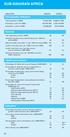 SUB-SAHARAN AFRICA INDICATOR REGION WORLD Demographic indicators Total population (2005) 713,457,000 6,449,371,000 Population under 18 (2005) 361,301,000 2,183,143,000 Population under 5 (2005) 119,555,000
UNICEF in South Africa
 UNICEF in South Africa A message from the Representative 47,900,000 people live in South Africa 20,200,000 are children 294,000 children are HIV-positive 1 in 17 children die before their fifth birthday
Tanzania (United Republic of)
 Human Development Report 2015 Work for human development Briefing note for countries on the 2015 Human Development Report Tanzania (United Introduction The 2015 Human Development Report (HDR) Work for
Briefing note for countries on the 2015 Human Development Report. Burkina Faso
 Human Development Report 2015 Work for human development Briefing note for countries on the 2015 Human Development Report Burkina Faso Introduction The 2015 Human Development Report (HDR) Work for Human
Pioneering Social Health Insurance in Tanzania: The case of the National Health Insurance Fund. (NHIF)
 IMPROVING ACCESS THROUGH EFFECTIVE HEALTH FINANCING Pioneering Social Health Insurance in Tanzania: The case of the National Health Insurance Fund. (NHIF) Presented by the Director General of NHIF Mr.
Malawi. Country coverage and the methodology of the Statistical Annex of the 2015 HDR
 Human Development Report 2015 Work for human development Briefing note for countries on the 2015 Human Development Report Malawi Introduction The 2015 Human Development Report (HDR) Work for Human Development
Sierra Leone. Country coverage and the methodology of the Statistical Annex of the 2015 HDR
 Human Development Report 2015 Work for human development Briefing note for countries on the 2015 Human Development Report Sierra Leone Introduction The 2015 Human Development Report (HDR) Work for Human
Briefing note for countries on the 2015 Human Development Report. Niger
 Human Development Report 2015 Work for human development Briefing note for countries on the 2015 Human Development Report Niger Introduction The 2015 Human Development Report (HDR) Work for Human Development
SIERRA LEONE UPDATES FROM THE INSTANBUL PRIORITY AREAS OF ACTION
 SIERRA LEONE UPDATES FROM THE INSTANBUL PRIORITY AREAS OF ACTION 1 OUTLINE OF PRESENTATION Recent Developments Istanbul Priority Areas of Action Poverty Levels Agenda for Prosperity Challenges Conclusion
Water, Sanitation and Hygiene
 Water, Sanitation and Hygiene UNICEF/Giacomo Pirozzi for children unite for children UNICEF/Julie Pudlowski Fast facts Tanzanians that lack access to improved drinking water sources 46% Tanzanians with
Congo (Democratic Republic of the)
 Human Development Report 2015 Work for human development Briefing note for countries on the 2015 Human Development Report Congo (Democratic Republic of the) Introduction The 2015 Human Development Report
TOWARDS UNIVERSAL HEALTH COVERAGE IN RWANDA
 TOWARDS UNIVERSAL HEALTH COVERAGE IN RWANDA Summary Notes from Briefing by Caroline Kayonga * Permanent Secretary, Ministry of Health, Rwanda 10/22/2007 10/23/2007 OUTLINE 1. A brief history of health
Nepal. Country coverage and the methodology of the Statistical Annex of the 2015 HDR
 Human Development Report 2015 Work for human development Briefing note for countries on the 2015 Human Development Report Nepal Introduction The 2015 Human Development Report (HDR) Work for Human Development
Briefing note for countries on the 2015 Human Development Report. Mozambique
 Human Development Report 2015 Work for human development Briefing note for countries on the 2015 Human Development Report Mozambique Introduction The 2015 Human Development Report (HDR) Work for Human
Briefing note for countries on the 2015 Human Development Report. Philippines
 Human Development Report 2015 Work for human development Briefing note for countries on the 2015 Human Development Report Philippines Introduction The 2015 Human Development Report (HDR) Work for Human
THE NATIONAL SOCIAL SECURITY POLICY
 THE UNITED REPUBLIC OF TANZANIA THE NATIONAL SOCIAL SECURITY POLICY MINISTRY OF LABOUR, YOUTH DEVELOPMENT AND SPORTS JANUARY 2003 TABLE CONTENTS Social Security Policy Glossary Foreword CHAPTER I PAGE
Key Progress Indicators, Baselines and Targets (for each Outcome)
 NAMIBIA: CPD Summary Results Matrix Summary Results Matrix: Government of Namibia UNICEF Country Programme, 2014 2018 Millennium Development Goals / Millennium Declaration Commitments / CRC Article(s):
INDICATOR REGION WORLD
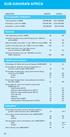 SUB-SAHARAN AFRICA INDICATOR REGION WORLD Demographic indicators Total population (2006) 748,886,000 6,577,236,000 Population under 18 (2006) 376,047,000 2,212,024,000 Population under 5 (2006) 125,254,000
Facts on People with Disabilities in China
 Facts on People with Disabilities in China Background In China, a disabled person is defined as one who suffers from abnormalities of loss of a certain organ or function, psychologically or physiologically,
A Social Protection Floor for all: The UN initiative, the ILO and the South-South dialogue
 A Social Protection Floor for all: The UN initiative, the ILO and the South-South dialogue Michael Cichon Social Security Department, ILO 16 June 2010 1 Structure of the presentation One: Two: Three: Four:
SECTOR ASSESSMENT (SUMMARY): EDUCATION. 1. Sector Performance, Problems, and Opportunities
 Higher Education Reform Project (RRP PRC 43007) SECTOR ASSESSMENT (SUMMARY): EDUCATION Sector Road Map 1. Sector Performance, Problems, and Opportunities a. Vision and Strategy 1. The Government of Mongolia
Thailand. Country coverage and the methodology of the Statistical Annex of the 2015 HDR
 Human Development Report 2015 Work for human development Briefing note for countries on the 2015 Human Development Report Thailand Introduction The 2015 Human Development Report (HDR) Work for Human Development
Brief PROSPECTS FOR SUSTAINABLE HEALTH FINANCING IN TANZANIA. Overview. Levels and Sources of Financing for Health
 PROSPECTS FOR SUSTAINABLE HEALTH FINANCING IN TANZANIA Brief Katie West-Slevin and Arin Dutta Health Policy Project, Futures Group Overview While Tanzania has made significant progress on priority health
UNITED NATIONS INDEPENDENT EXPERT ON THE QUESTION OF HUMAN RIGHTS AND EXTREME POVERTY
 UNITED NATIONS INDEPENDENT EXPERT ON THE QUESTION OF HUMAN RIGHTS AND EXTREME POVERTY Questionnaire JAN/2011 Post-crisis adjustment and fiscal consolidation processes (2010 onwards) 1. Has your country
Fact Sheet: Girls and Young Women
 Fact Sheet: Girls and Young Women There are 1.8 billion young people in the world. Approximately half of them 900 million are adolescent girls and young women. Girls primary school completion rates are
Madagascar. Country coverage and the methodology of the Statistical Annex of the 2015 HDR
 Human Development Report 2015 Work for human development Briefing note for countries on the 2015 Human Development Report Madagascar Introduction The 2015 Human Development Report (HDR) Work for Human
Ireland and the EU 1973-2003 Economic and Social Change
 Ireland and the EU 1973-2003 Economic and Social Change Table 1 Population, 1971-2002 viii Table 2 Population of the provinces ix Table 3 Births, deaths and life expectancy ix Table 4 Numbers in education
Russian Federation. Country coverage and the methodology of the Statistical Annex of the 2015 HDR
 Human Development Report 2015 Work for human development Briefing note for countries on the 2015 Human Development Report Russian Federation Introduction The 2015 Human Development Report (HDR) Work for
MYANMAR HEALTH CARE SYSTEM
 MYANMAR HEALTH CARE SYSTEM M yanmar health care system evolves with changing political and administrative system and relative roles played by the key providers are also changing although the Ministry of
United Kingdom. Country coverage and the methodology of the Statistical Annex of the 2015 HDR
 Human Development Report 2015 Work for human development Briefing note for countries on the 2015 Human Development Report United Kingdom Introduction The 2015 Human Development Report (HDR) Work for Human
Goal 1: Eradicate extreme poverty and hunger. 1. Proportion of population below $1 (PPP) per day a
 Annex II Revised Millennium Development Goal monitoring framework, including new targets and indicators, as recommended by the Inter-Agency and Expert Group on Millennium Development Goal Indicators At
Briefing note for countries on the 2015 Human Development Report. Palestine, State of
 Human Development Report 2015 Work for human development Briefing note for countries on the 2015 Human Development Report Palestine, State of Introduction The 2015 Human Development Report (HDR) Work for
BACHELOR OF SCIENCE (COMMUNITY RESOURCE MANAGEMENT)
 BACHELOR OF SCIENCE (COMMUNITY RESOURCE MANAGEMENT) COURSE DESCRIPTIONS: 100 LEVEL HCR 100 Community Resource Management Basic concepts and principles of community resource management. Overview of various
NCDs POLICY BRIEF - INDIA
 Age group Age group NCDs POLICY BRIEF - INDIA February 2011 The World Bank, South Asia Human Development, Health Nutrition, and Population NON-COMMUNICABLE DISEASES (NCDS) 1 INDIA S NEXT MAJOR HEALTH CHALLENGE
Development of Social Statistics in Indonesia: a brief note
 Development of Social Statistics in Indonesia: a brief note Wynandin Imawan [email protected] BPS Statistics Indonesia 29 September 2011 1 Legal Setting Institutional: Statistics Law No 16 1997; BPS Statistics
Economic and Social Council
 United Nations E/ICEF/2013/P/L.16 Economic and Social Council Distr.: Limited 1 July 2013 Original: English For action United Nations Children s Fund Executive Board Second regular session 2013 3-6 September
HOUSING AND LAND RIGHTS NETWORK H a b i t a t I n t e r n a t i o n a l C o a l i t i o n
 HOUSING AND LAND RIGHTS NETWORK H a b i t a t I n t e r n a t i o n a l C o a l i t i o n National Habitat III Parallel-reporting Tool Evaluation of Habitat II Implementation Following the commitments
El Salvador. Country coverage and the methodology of the Statistical Annex of the 2015 HDR
 Human Development Report 2015 Work for human development Briefing note for countries on the 2015 Human Development Report El Salvador Introduction The 2015 Human Development Report (HDR) Work for Human
Mental Health Declaration for Europe
 WHO European Ministerial Conference on Mental Health Facing the Challenges, Building Solutions Helsinki, Finland, 12 15 January 2005 EUR/04/5047810/6 14 January 2005 52667 ORIGINAL: ENGLISH Mental Health
Health Financing in Vietnam: Policy development and impacts
 Health Financing in Vietnam: Policy development and impacts Björn Ekman Department of Clinical Sciences Lund University, Sweden Sydney 17 September, 2008 Outline of Presentation Part A: Health financing
COUNTRY CASE STUDY HEALTH INSURANCE IN SOUTH AFRICA. Prepared by: Vimbayi Mutyambizi Health Economics Unit, University of Cape Town
 COUNTRY CASE STUDY HEALTH INSURANCE IN SOUTH AFRICA Prepared by: Vimbayi Mutyambizi Health Economics Unit, University of Cape Town Preparation of this material was funded through a grant from the Rockefeller
Population, Health, and Human Well-Being-- Benin
 Population, Health, and Human Well-Being-- Benin Demographic and Health Indicators Benin Sub- Saharan Africa World Total Population (in thousands of people) 1950 2,046 176,775 2,519,495 2002 6,629 683,782
Annex 8: SDG Indicator Mapping
 Annex 8 SDG Indicator Mapping 1. Annex 8 responds to Executive Board decision below, regarding the refinement of indicators and targets of the Strategic Plan Integrated Results and Resources Framework
INDONESIA: PROVIDING HEALTH INSURANCE FOR THE POOR
 SERIES: SOCIAL SECURITY EXTENSION INITATIVES IN SOUTH EAST ASIA INDONESIA: PROVIDING HEALTH INSURANCE FOR THE POOR ILO Subregional Office for South East Asia Decent Work for All Asian Decent Work Decade
Better Factories Cambodia
 Cambodia: Moving forward toward Better Social Security Better Factories Cambodia Social Security An Overview The 1948 United Nations Universal Declaration of Human Rights stipulates that everyone, as a
The Healthy Asia Pacific 2020 Roadmap INTRODUCTION: THE HEALTHY ASIA PACIFIC 2020 INITIATIVE
 The Healthy Asia Pacific 2020 Roadmap INTRODUCTION: THE HEALTHY ASIA PACIFIC 2020 INITIATIVE In the 2014 APEC Leader s Declaration and Joint Ministerial Statement, it is recognized that the prospect of
FINAL. World Education Forum. The Dakar Framework for Action. Education For All: Meeting our Collective Commitments. Revised Final Draft
 28/04/2000, 3 P.m. FINAL The Dakar Framework for Action Education For All: Meeting our Collective Commitments Revised Final Draft World Education Forum Dakar, Senegal, 26-28 April 2000 1 1 The Dakar Framework
Types of Good Practices Focusing on Family Poverty Reduction and Social Exclusion
 Types of Good Practices Focusing on Family Poverty Reduction and Social Exclusion Zitha Mokomane Human Sciences Research Council of South Africa Social science that makes a difference Date: 16 May 2012
HEALTH TRANSITION AND ECONOMIC GROWTH IN SRI LANKA LESSONS OF THE PAST AND EMERGING ISSUES
 HEALTH TRANSITION AND ECONOMIC GROWTH IN SRI LANKA LESSONS OF THE PAST AND EMERGING ISSUES Dr. Godfrey Gunatilleke, Sri Lanka How the Presentation is Organized An Overview of the Health Transition in Sri
Microfinance Expert, CEO of YOSEFO Finance Chairman of the Board of Directors of Mbinga Community Bank
 A CLKnet FORUM PRESENTATION BY ALTEMIUS MILLINGA Microfinance Expert, CEO of YOSEFO Finance Chairman of the Board of Directors of Mbinga Community Bank 11 th April, 2012 1 Tanzania s Financial Sector Landscape
Synopsis of Healthcare Financing Studies
 Synopsis of Healthcare Financing Studies Introduction (DHA) is a set of descriptive account that traces all the financial resources that flow through Hong Kong s health system over time. It is compiled
Free healthcare services for pregnant and lactating women and young children in Sierra Leone
 Free healthcare services for pregnant and lactating women and young children in Sierra Leone November 2009 Government of Sierra Leone Contents Foreword 3 Country situation 4 Vision 5 Approach 6 Focus 6
Kenya National Bureau of Statistics, 2010 population census 2009 report.
 Background Kenya s child population is estimated to be about 53% that is about 19 million out of the 34 million with an annual growth rate of 2.2%. 1 Currently, there are several legislative milestones
Gender inequalities in South African society
 Volume One - Number Six - August 2001 Gender inequalities in South African society South Africa's national policy framework for women's empowerment and gender equality, which was drafted by the national
2014-2017. UNICEF/NYHQ2012-1868/Noorani
 UNICEF STRATEGIC PLAN 2014-2017 UNICEF/NYHQ2012-1868/Noorani UNICEF s Strategic Plan 2014-2017 is a road map for the realization of the rights of every child. The equity strategy, emphasizing the most
Portugal Population: Fertility rate: GDP per capita: Children under 6 years: Female labour force participation: Maternity and parental leave:
 Portugal Population: 10.5 m. Fertility rate: 1.44. GDP per capita: USD 18 400. Children under 6years: 666 762. Female labour force participation: 67% of women (15-64) participated, with 14% in parttime
G20 LABOUR AND EMPLOYMENT MINISTERIAL DECLARATION MELBOURNE, 10-11 SEPTEMBER 2014
 Introduction G20 LABOUR AND EMPLOYMENT MINISTERIAL DECLARATION MELBOURNE, 10-11 SEPTEMBER 2014 Preventing structural unemployment, creating better jobs and boosting participation 1. We, the Ministers of
Save the Children. Protecting Children in Zambia from Violence, Abuse, Neglect and Exploitation
 Protecting Children in Zambia from Violence, Abuse, Neglect and Exploitation Baseline 2010: National Child Protection System in Zambia What is a National Child Protection System and why do we need it?
Appeal to the Member States of the United Nations Early Childhood Development: The Foundation of Sustainable Human Development for 2015 and Beyond
 UNICEF/NYHQ2006-0450/Pirozzi Appeal to the Member States of the United Nations Early Childhood Development: The Foundation of Sustainable Human Development for 2015 and Beyond We, the undersigned, submit
Summary. Accessibility and utilisation of health services in Ghana 245
 Summary The thesis examines the factors that impact on access and utilisation of health services in Ghana. The utilisation behaviour of residents of a typical urban and a typical rural district are used
Translating System Thinking for Health Systems Strengthening and Development. 1. The journey from real world practice to systems thinking
 Translating System Thinking for Health Systems Strengthening and Development 1. The journey from real world practice to systems thinking Marcel Tanner & Don de Savigny Swiss Tropical & Public Health Institute
State Data Collection and Reporting Requirements in the Affordable Care Act
 State Data Collection and Reporting Requirements in the Affordable Care Act The Affordable Care Act (ACA) and its amendments, including the Health Care and Education Reconciliation Act, set up multiple
Center for Medicare and Medicaid Innovation
 Center for Medicare and Medicaid Innovation Summary: Establishes within the Centers for Medicare and Medicaid Services (CMS) a Center for Medicare & Medicaid Innovation (CMI). The purpose of the Center
Preventable mortality and morbidity of children under 5 years of age as a human rights concern
 Preventable mortality and morbidity of children under 5 years of age as a human rights concern 1. Has your government developed a national policy/strategy/action plan aimed at reducing mortality and morbidity
UGANDA HEALTH CARE SYSTEM
 UGANDA HEALTH CARE SYSTEM Community and Home based Rehabilitation Course Julius Kamwesiga KI May 2011 Objectives 1. Define a Health System 2. Describe how Ugandan Health care System is organized 3. Outline
PROJECT PREPARATION GRANT (PPG) APPLICATION FORM-3
 PROJECT PREPARATION GRANT (PPG) APPLICATION FORM-3 1. PPG title To Harmonize the Legal, Regulatory and Institutional Framework for Sanitary and Phytosanitary (SPS) control Management System 2. Theme 1,
Economic Growth and Poverty Reduction Strategies in Korea
 Economic Growth and Poverty Reduction Strategies in Korea 2006. 9. Korea Institute for Health and Social Affairs Contents I. Introduction II. Economic Growth, Poverty and Inequality in Korea III. Changes
Tailor-made training programmes in Bulgaria
 MUTUAL LEARNING PROGRAMME: PEER COUNTRY COMMENTS PAPER - BULGARIA Tailor-made training programmes in Bulgaria Peer Review on Tailor-made training programmes Luxembourg, 23-24 April 2009 A paper submitted
POLICY ON CORPORATE SOCIAL RESPONSIBILITY (CSR)
 POLICY ON CORPORATE SOCIAL RESPONSIBILITY (CSR) 1 Contents I. Introduction 3 II. CSR Purpose Statement. 3 III. CSR Focus Areas.. 3 IV. CSR Budget.. 4 V. Validity of CSR Policy. 4 VI. Execution of CSR 4
Economic Development in Ethiopia
 Economic Development in Ethiopia Ethiopia has one of the world s fastest growing economies During the past four-year implementation period of the GTP Ethiopian economy has shown a 10.1 per cent growth
Nepal Early Childhood Care and Education (ECCE) programmes
 IBE/2006/EFA/GMR/CP/59 Country profile prepared for the Education for All Global Monitoring Report 2007 Strong Foundations: Early Childhood Care and Education Nepal Early Childhood Care and Education (ECCE)
Important Issues on Ageing in India Recommendations To Planning Commission- Will social improvements for elderly grow by 8 %?
 Important Issues on Ageing in India Recommendations To Planning Commission- Will social improvements for elderly grow by 8 %? HELPAGE INDIA Comparative Demographic Facts 25 21 21 20 % 15 10 8 12 India
Maastricht Communiqué. on the Future Priorities of Enhanced European Cooperation in Vocational Education and Training (VET)
 Maastricht Communiqué on the Future Priorities of Enhanced European Cooperation in Vocational Education and Training (VET) 14 December 2004 Maastricht Communiqué on the Future Priorities of Enhanced European
Canada Population: Fertility rate: GDP per capita: Children under 6 years: Female labour force participation:
 Canada Population: 32.2 m. Fertility rate: 1.53. GDP per capita: USD 30 700. Children under 6years: 2 074 860 (2005). Female labour force participation: 73.5% of women (15-64) participate in the formal
Decree On National Health Insurance Fund. Government issued Decree: Chapter I General Provisions
 Government Lao People s Democratic Republic Peace Independence Democracy Unity Prosperity ------------------ No.../ GO Vientiane Capital, date./ Decree On National Health Insurance Fund - Pursuant to Law
Snapshot Report on Russia s Healthcare Infrastructure Industry
 Snapshot Report on Russia s Healthcare Infrastructure Industry According to UK Trade & Investment report, Russia will spend US$ 15bn in next 2 years to modernize its healthcare system. (Source: UK Trade
FOREWORD. Member States in 2014 places patients and communities at the heart of the response. Here is an introduction to the End TB Strategy.
 FOREWORD We stand at a crossroads as the United Nations move from the 2015 Millennium Development Goals (MDGs) to the Sustainable Development Goals (SDGs) for 2030. Integral to this transition, the world
Since achieving independence from Great Britain in 1963, Kenya has worked to improve its healthcare system.
 Medical Management Plan Kenya OVERVIEW Company Mission Our mission is to encourage young people to volunteer for worthwhile work in developing countries. We expect that doing this kind of voluntary work