
How To Manage Stress
|
|
|
- Brenda Clarke
- 5 years ago
- Views:
Transcription
1 Contents Before you begin vii Topic 1 Develop strategies to manage personal stress 1 1A Recognise sources of stress in your own job role 2 1B Recognise triggers and your own response to stress 6 1C Identify strategies to effectively prevent, reduce and manage stress 10 1D Identify internal and external options and resources for additional support 14 1E Develop a personal stress management plan that responds to identified stressors and triggers 19 Summary 22 Learning checkpoint 1: Develop strategies to manage personal stress 23 Topic 2 Implement stress management strategies 25 2A Use strategies from your stress management plan that address personal triggers and stressors 26 2B Organise your own workload to minimise stress, and inform relevant personnel of any variations and difficulties 31 2C Identify and adopt strategies to balance work life priorities 35 Summary 40 Learning checkpoint 2: Implement stress management strategies 41 Topic 3 Evaluate stress reducing strategies 43 3A Monitor and review the effectiveness of stress management strategies 44 3B Adjust strategies not meeting the desired outcome and recognise when additional resources and/or support is needed 49 3C Access internal or external options and resources for additional support to meet desired outcomes of the stress management plan 51 Summary 54 Learning checkpoint 3: Evaluate stress reducing strategies 55 Final assessment 57 Assessment information and scope 58 Are you ready for assessment? 59 Final assessment overview 60 Assessment plan 61 Final assessment tasks 62 Record of outcome 81 UNIT RELEASE 1 (ASPIRE VERSION 1.1) ASPIRE TRAINING & CONSULTING v

2 Before you begin Before you begin This learner guide is based on the unit of competency HLTWHS006 Manage personal stressors in the work environment, Release 1. Your trainer or training organisation must give you information about this unit of competency as part of your training program. You can access the unit of competency and assessment requirements at: How to work through this learner guide This learner guide contains a number of features that will assist you in your learning. Your trainer will advise which parts of the learner guide you need to read, and which practice tasks and learning checkpoints you need to complete. The features of this learner guide are detailed in the following table. Feature of the learner guide Learning content Examples and case studies Practice tasks Video clips How you can use each feature Read each topic in this learner guide. If you come across content that is confusing, make a note and discuss it with your trainer. Your trainer is in the best position to offer assistance. It is very important that you take on some of the responsibility for the learning you will undertake. Examples of completed documents that may be used in a workplace are included in this learner guide. You can use these examples as models to help you complete practice tasks, learning checkpoints and the final assessment. Case studies highlight learning points and provide realistic examples of workplace situations. Practice tasks give you the opportunity to put your skills and knowledge into action. Your trainer will tell you which practice tasks to complete. Where QR codes appear, learners can use smartphones and other devices to access video clips relating to the content. For information about how to download a QR reader app or accessing video on your device, please visit our website: au/help v1234 Summary Learning checkpoints Final assessment Key learning points are provided at the end of each topic. There is a learning checkpoint at the end of each topic. Your trainer will tell you which learning checkpoints to complete. These checkpoints give you an opportunity to check your progress and apply the skills and knowledge you have learnt. The final assessment provides you with the opportunity to demonstrate all of the learning that you have undertaken for this unit of competency. Your trainer/assessor may ask you to undertake the final assessment tasks. UNIT RELEASE 1 (ASPIRE VERSION 1.1) ASPIRE TRAINING & CONSULTING vii

3 Topic 1 In this topic you will learn how to: 1A Recognise sources of stress in your own job role 1B Recognise triggers and your own response to stress 1C Identify strategies to effectively prevent, reduce and manage stress 1D Identify internal and external options and resources for additional support 1E Develop a personal stress management plan that responds to identified stressors and triggers Develop strategies to manage personal stress Working in the community services sector can expose workers to stress as a part of their job. Unless properly managed, stress can represent unnecessary risk factors to workers. Every worker needs to know how to deal with their own reactions to stressful situations, and how to use stress management strategies to assist them to respond appropriately. They also need to be aware of the type of support available and how they can cope with stress. If you feel yourself becoming stressed or fatigued you should raise this with your supervisor or health and safety representative so strategies can be developed and implemented to address this issue. It is important that you regularly review how you are dealing with stress in your workplace and seek help if you are not coping. Supervisors and coordinators also need to provide support to team members, the person requiring support and family members. UNIT RELEASE 1 (ASPIRE VERSION 1.1) ASPIRE TRAINING & CONSULTING 1

4 1A The behaviour of people requiring support (clients) and workplace situations can be major sources of stress for workers. On a daily basis, a support worker may deal with people who are emotional, aggressive or noncompliant, or the worker could be managing a heavy workload and feel like they have no support. Other circumstances may be that the worker is providing palliative care support or that they are faced with the sudden loss of a person they had been supporting. Recognise sources of stress in your own job role The way a person reacts to a situation will differ from person to person. Some people are calm, cool-headed and do not react to stressful situations in a visible way. However, they may store up their stress and display it in different ways or at a later time. Other people may have difficulty managing their reactions to a stressful situation and feel angry, upset or frustrated. They may exhibit this behaviour by becoming impatient with the people they are supporting, being abrupt or rude to the person and co-workers, or becoming upset. Recognise stress In its simplest form, stress is the pressure or tension exerted on a person. Some stress is useful and makes us feel motivated and alive. This type of stress can help us by providing a drive to succeed at the work we do and the support we provide. Other stress can worry us and undermine our ability to cope both physically and mentally. It can drain us, cause illness, absenteeism, accidents, industrial disputes and staff turnover. What may be a good stress for one person may be a threatening stimulus to another; what one person finds stressful, another may not. Whether or not you react with a stress response and whether the reaction to the stress is useful or draining will depend upon your awareness of how stress is impacting your life and your ability to identify strategies to cope with the stress. It is important to remember that all stress, even the useful type, is only meant to be a short, time-limited response. Experiencing stress for long periods of time can have serious health consequences. Sources of stress While working in the health and community sector, you may be faced with complex client behaviour. This behaviour may vary in people with different forms of dementia, mental illness or cognitive deficiency. In many of the settings where people receive support, there are a number of people with the same behavioural issues all in the one place. Their demands can be constant. It can be upsetting to see people who are distressed or angry, and it can be frightening to be with someone who is angry or aggressive, even violent. It can be frustrating 2 UNIT RELEASE 1 (ASPIRE VERSION 1.1) ASPIRE TRAINING & CONSULTING

5 Effects More susceptible to workplace or other incidents A deterioration in work and personal relationships Risk of health problems including increased risk of cardiovascular disease or mental and physical illness Difficulty managing workplace relationships Withdrawal or aggression Poor concentration, and continual errors being made Burnout and being unable to continue working General job dissatisfaction and detachment from job role Fatigue Decreased concern for colleagues and clients, diminished care, cynicism Regular tardiness or absences Inappropriate emotions such as crying, fear or anger Depression Example Recognise triggers and your own response to stress Sadiq works with people who have memory loss, and is currently caring for three people who display very challenging behaviours. Lately, he has been feeling tired all the time and feels like he does not have the headspace to deal with people, not even his close friends. Sadiq stops to reflect on how he is feeling, and his attitude to friends and family and realises he is not coping with the stress of the challenging behaviours of the people he was caring for. He makes a time to talk to his supervisor, as a first step to dealing with his work stress. 8 UNIT RELEASE 1 (ASPIRE VERSION 1.1) ASPIRE TRAINING & CONSULTING

6 1E Topic 1 Develop strategies to manage personal stress Develop a personal stress management plan that responds to identified stressors and triggers There can be many sources of stress in the workplace and everyone reacts to stress in different ways. By recognising the sources of stress and our own reactions, we can develop strategies to help us prevent, reduce and manage the effects of stress. Documenting a stress management plan is a practical tool to help manage stress. It is important, when developing a plan, that it is suitable and appropriate for our own circumstances, and that it is practical, effective and suits the person s lifestyle and financial situation. Create a stress journal A stress management plan is a document where the sources of stress and ways to manage stress are documented. It could be seen as a work in progress because strategies are added or deleted as required and when new strategies are created and others didn t work as well. By reviewing your journal you have useful information that you can refer to when developing your plan. When creating a plan, consider what you are trying to achieve. For example, if you are aiming to prevent, reduce or manage stress. You may be doing all three, in which case, there will be several sections to your plan. Before developing a stress management plan, it can be useful to start a stress journal or diary where each time you experience stress you write down the following: Items for the stress journal or diary: The date and time of the occurrence The situation (what caused or was the source of the stress) How you felt emotionally (e.g. frightened, overwhelmed, nervous, angry) How you reacted physically (e.g. you raised your voice, vomited, punched a wall) What you did to manage your reaction (e.g. kept working, smoked a cigarette) What you will do next time (e.g. go for a walk, deep breathing, have a cup of tea) UNIT RELEASE 1 (ASPIRE VERSION 1.1) ASPIRE TRAINING & CONSULTING 19

7 Personal stress management It is very important that not only do the strategies you have chosen work for you, but also that they are practical, achievable and financially affordable. Remember, everyone responds differently, so it is important that a stress management plan is individualised for your specific needs and circumstances. For example, if one of your strategies involves managing stress by attending relaxation retreats but you have a young family that you can t leave or you can t afford the cost, then it is not realistic for you. On the other hand, if it is affordable and there is nothing in your home-life to prevent you going then it may be an excellent strategy. Strategies also need to be able to be applied when they are needed. For example, you may be dealing with a person displaying complex aggressive behaviour in a residential facility. You may want to shut yourself in a quiet room to meditate for five minutes to de-stress but this isn t practical as there are other people in the immediate area who could be at risk. A better strategy may be controlled breathing and self-talk. Stress management plans There are many sample templates available to assist in documenting a stress management plan. Here is an example stress management plan template, which can be modified as required. The following are sources of my stress: (Write down as many as you like) This is how I typically feel and react to that source of stress This is what I will do to reduce stress This is what I will do to manage my stress Impatient people I get flustered and try to work more quickly Take a deep breath and remember that they are not impatient and annoyed by me but by the system Speak to my supervisor at the end of each shift to debrief and get tips on how to handle impatient people This is what I will do to prevent stress in general This is what I will do to reduce stress in general This is what I will do to manage stress in general Eat well, stop smoking, make sure I exercise at least three times a week Take regular breaks, have time out, breathing exercises Join a yoga class, meditate, take regular holidays 20 UNIT RELEASE 1 (ASPIRE VERSION 1.1) ASPIRE TRAINING & CONSULTING

8 Topic 1 Develop strategies to manage personal stress Learning checkpoint 1 Develop strategies to manage personal stress This learning checkpoint allows you to review your skills and knowledge in developing strategies to manage personal stress. Part A 1. Describe two sources of stress a community services worker may be faced with in the workplace. 2. Why is it important to recognise your own triggers and stress responses? 3. How can knowledge of legal rights assist you to work with your employer to manage personal stress? UNIT RELEASE 1 (ASPIRE VERSION 1.1) ASPIRE TRAINING & CONSULTING 23

9 2A Use strategies from your stress management plan that address personal triggers and stressors When working in a stressful environment, it is important to learn to recognise when stress management strategies and support is needed and take action to receive it so you remain an effective team member. A worker should not continue to work when under extreme stress or when their behaviour impacts negatively on others. While it can be difficult to talk about personal emotions or clearly articulate a problem, the important thing is to recognise and acknowledge your feelings and seek help. Having a personal stress management plan in place provides you with the tools to manage your stress because it outlines the strategies that have been identified as most useful to you. Use strategies Having a stress management plan is a start, but knowing how and when to use the strategies in a plan is vital for it to be useful in managing stress. We all have different triggers and stressors and the strategies that work for each individual will vary. Additionally, it can be difficult when in a stressful situation to remember what to do because stress can alter our thinking and affect how we react to situations. Having a plan on hand can assist by reinforcing the options available and helps you keep to the tasks and strategies outlined and agreed to in the plan. For example, a plan may suggest time out. You know that time out has worked effectively in the past situations and during stressful times it can be easier to refer to the plan than becoming more stressed through inaction. This is when stress levels are likely to escalate. When to use strategies As discussed previously, there are three strategic approaches to dealing with stress. These three strategies work together in a stress management plan to provide coping strategies and ideas to deal with the triggers and stressors a person may identify in their workplace. Stress prevention strategies Stress prevention strategies are those used to build your resilience and resistance to stress and decrease your stress responses. They include healthy eating, getting enough sleep and exercise. Stress reduction strategies Stress reduction strategies are used during or immediately after a stressful situation. They help to reduce your stress responses and enable you to function normally. 26 UNIT RELEASE 1 (ASPIRE VERSION 1.1) ASPIRE TRAINING & CONSULTING

10 Quiet time Quiet time may simply involve going into a quiet room, so sit for a few minutes, or picking up a book. Or, you can close your eyes and think of a happy place or a happy memory. Have a drink (not alcohol) Take a few minutes to make yourself a cup of tea (preferably herbal) and drink it slowly. Or, get a large glass of water and do not start working again until you have finished it. Apart from giving you something else to focus on, drinking plenty of herbal tea and water keeps you hydrated and functioning well. Releasing emotions Cry sometime you just need to let it out. While it may not be a good idea to cry openly in the workplace, you may be able to find a quiet room or place outside where you can let it out. Breathing exercises Focused breathing we are rarely aware of our breathing unless we are struggling to breathe or have a cold or chest infection. Some people hold their breath when they are stressed, which stops oxygen getting to their brains and increases the stress. Focused breathing is when you concentrate on each breath you take: inhale, exhale. You can count; for example, inhale one, two, three; exhale one, two, three. Focused breathing takes your mind off the stress and has the added benefit of providing more oxygen to your brain. Positive self-talk Positive self-talk means reminding yourself that you are okay, that the person is not behaving in a particular way because of you, and remembering they have a condition, and are not choosing to act in a certain way. You can use self-talk at any time, during time out, quite time, focused breathing or even while you are dealing with a stressful situation. Ways to manage stress Away from the workplace, you need to ensure you use strategies to reduce any stress you are feeling so you can, for example, get a good night s sleep and be ready for work again the next day feeling positive and productive. The community services sector provides valuable work for people in need of support and assistance, and empowers them to take control of their lives. Every worker owes it to the people they support to provide the best possible service on every occasion. Some popular stress management strategies may include those listed below. Relaxation massage When we feel stressed, our bodies tighten and our muscles become tense and stiff. A massage not only relieves the physical tension in our bodies, but also increases blood flow and has a soothing and calming effect. 28 UNIT RELEASE 1 (ASPIRE VERSION 1.1) ASPIRE TRAINING & CONSULTING

11 Practice task 6 1. List two strategies to use to prevent stress. 2. List two strategies to reduce stress while in the workplace. 3. List two strategies you could use to manage stress. 30 UNIT RELEASE 1 (ASPIRE VERSION 1.1) ASPIRE TRAINING & CONSULTING

12 2C If a person experiences stress at work, then it is likely they will experience stress in other areas of their life such as at home, in relationships or with others. The effects of stress can overflow into and affect all aspects of our lives and upset the balance between work and non-work time. An example is when a person works long or excessive hours and doesn t have time to catch up with friends or just wind down after a busy and stressful day at work. Topic 2 Implement stress management strategies Identify and adopt strategies to balance work life priorities In addition to using strategies to prevent, reduce and manage stress in the workplace, there are other strategies that can be employed to make sure we maintain a healthy work life balance. Self-care techniques Self-care strategies aim to teach you how to cope with stress, reduce the effects of stress and help you to regain control of how you respond to certain situations. As a general rule, self-care focuses on having a well-balanced lifestyle, being mindful of how you are feeling and responding to different stimuli, and being able to identify when you should seek help. There are many types of self-care strategies and no single type will meet everyone s needs. It is important to determine what works best for you. Consider the self-care strategies listed below. Get plenty of rest You cannot function properly at work, or deal with issues that are causing you stress, if you are tired. It is important to make sure you get enough sleep, and take your allocated breaks when at work. A rested mind and body will cope better with stressful situations. Ask for a mentor Having an experienced person to talk to about the way you handle your work and deal with stressful situations can be very helpful. You can talk through situations that have caused you stress and discuss ways you can better handle situations. This will help to address future stressors. For example, role-playing or practising the way you talk to people with dementia, who are causing stress through their behaviour, will help you to think of ways you can communicate with them calmly and effectively. If you feel you need this kind of support, ask your supervisor to help you connect with a mentor. UNIT RELEASE 1 (ASPIRE VERSION 1.1) ASPIRE TRAINING & CONSULTING 35

13 Seek support You may find that even though you know that certain parts of your role supporting people with dementia are causing you stress, it can be hard to look at the situation objectively and decide on strategies to manage your stress. Sometimes you may not be able to control the situations that are causing you stress. It is important to ask for help when you are unable to control stressors or manage your stress alone. You can ask your supervisor for help to manage stress and stressful situations. Your workplace may have an Employee Assistance Program where workers have access to independent and confidential counselling and support, to work through the issues causing them stress at work. The impact of diet and nutrition Regular exercise, a healthy diet and good nutrition are essential for a healthy body and mind. Without proper nutrition, through a well-balanced diet, our brains do not function as well as they could and we are more susceptible to stress, illness, mood swings and general lethargy. Eating a well-balanced diet keeps you healthy, and eating well provides you with energy. Being well and having energy will help you deal with stress. Additionally, if our bodies are not receiving enough nutrients, we may experience weight gain or loss and muscle deterioration. A well-balanced diet includes plenty of fresh fruit and vegetables, protein and fibre. It does not include highly processed food, food high in sugar or fat, and fried food. It also includes drinking lots of water and avoiding sugary drinks. There is lots of information on the internet about healthy eating and good nutrition. Visit au for information and advice on the amount and kinds of food to eat for health and wellbeing. Make sure you also take your meal and tea breaks when working, and have a healthy snack or meal at these times to maintain your energy levels. Impact of exercise We know that regular exercise can help to manage stress and also improve physical health. Regular exercise is an important way of strengthening our heart and lungs, building strong muscles, slowing down bone degeneration and reducing excess fat. It also releases endorphins the hormones that make a person feel good, and counteract the feelings of stress they may be experiencing. It is recommended that you do at least 30 minutes of exercise three times a week. The type of exercise you do should be one that you enjoy, that you have time for and that you can afford. For example, if you only have 20 minutes, you may choose to go for a jog rather than attend a one-hour cross training session. Or if you love swimming, you may do laps instead of running on a treadmill. Leaving the workplace to walk during a lunch break is recommended to have a break from the office or workplace to clear your head and re-energise and re-set before returning to work. 36 UNIT RELEASE 1 (ASPIRE VERSION 1.1) ASPIRE TRAINING & CONSULTING

14 Summary 1. Having a personal stress management plan in place provides you with the tools to manage your stress when you need to because it outlines the most useful strategies for the individual. 2. We all have different triggers and stressors and the strategies that work for each individual will vary. 3. Every worker owes it to the people they support to provide the best possible service on every occasion, so managing stress and being healthy at work is vital to perform this important job. 4. It is important to organise your workload so you can manage your time effectively and reduce stress. 5. Modifying procedures or rotating tasks may help reduce stress in the workplace. 6. It is important that any concerns or ideas are discussed with your supervisor or the person who can authorise changes and modifications. 7. A robust schedule should reflect priorities as well as support personal goals. 8. Maintaining a healthy work life balance is a very important part of stress management 9. The effects of stress can overflow into and affect all aspects of your life and upset the balance between work and non-work time. 10. Self-care strategies aim to teach you how to cope with stress, reduce the effects of stress and help you to regain control of how you respond to certain situations. 40 UNIT RELEASE 1 (ASPIRE VERSION 1.1) ASPIRE TRAINING & CONSULTING

15 3A Monitor and review the effectiveness of stress management strategies By monitoring the effectiveness of a stress management plan, a person can gather the information they require to make changes, add or delete strategies, seek additional support or keep on the same track. It is important that the results are reviewed to look for patterns in the sources of stress, the triggers, the person s response to the stress and the effectiveness of the strategies. Once a proper review has been done, any required adjustments to improve the effectiveness of the stress management plan can be implemented. Monitor stress Monitoring a stress management strategy is an ongoing process. It can be as simple as keeping a record of stressful situations or rating levels of stress from one to ten. Another alternative may be to meet with a professional to discuss triggers, particular stressors and actions to reduce stress. Often a combination of monitoring methods produces the best outcome. Keep a record Keeping a record of stress management is as simple as filling out a document that keeps a record of the details of when, where and how you reacted to an event, with a review of strategies that were tried to reduce stress and the reactions to it. There are other more-detailed ways to document stress, which involve more-detailed information including a full description of the situation and how it was managed. Here is an example of a more-detailed form of monitoring. 44 UNIT RELEASE 1 (ASPIRE VERSION 1.1) ASPIRE TRAINING & CONSULTING

16 Topic 3 Evaluate stress reducing strategies Date and time Source (what happened) Monday 6/9/ am Colleague rang in sick (again!) and I had to take on her clients as well as my own. How I reacted How I felt Strategy I used Result I said that this is ridiculous and it s not fair. I raised my voice to my supervisor (which is not good). Annoyed and frustrated she is always calling in sick on Mondays and they should have called in agency staff. Also I was overwhelmed by the amount of work I had to do. I don t feel like anyone realises what I have to do in this job. I took time out I went for a walk around the block then spoke to my supervisor to work out a schedule for the day. I apologised for being rude to her and explained what I was feeling. The walk gave my time to breathe and realise I can t do everything. I decided on my walk to ask my supervisor to help me plan my day better. I felt more in control after having a moment to clear my head and think. UNIT RELEASE 1 (ASPIRE VERSION 1.1) ASPIRE TRAINING & CONSULTING 45

17 3C Topic 3 Evaluate stress reducing strategies Access internal or external options and resources for additional support to meet desired outcomes of the stress management plan We have already discussed internal and external options and resources for additional support. The benefit of internal options include that they are usually provided by the workplace at no cost to the worker. However, not all workplaces have the resources to offer the same support, and external options may work better for some people. The following are examples of possible internal supports: counsellors or social workers; health and wellbeing programs that include benefits such as financial planning sessions, workplace massage, walking groups, exercise classes and discount gym memberships; Employee Assistance Programs; and debriefing sessions conducted by trained staff. The external options discussed included community health centres, psychologists, external counselling services and general practitioners (GPs) who may refer to other professionals. A GP may also be able to provide information on other programs in the community such as relaxation classes including yoga and guided meditation. Access support If a stress management plan isn t working and several strategies and options have been trialled, it may be time to seek additional support. Similarly, new situations may arise that are causing stress and what has worked before, is not working now. No matter what the situation, there are many options to choose from and there is always help available. Ironically, when some people are highly stressed it can be difficult for them to acknowledge that they need help and the idea of seeking help can seem overwhelming. Using, monitoring and reviewing a stress management plan will help the person to take control and access the help they require. Internal support options Some of the internal options for support are described here. Colleagues Having a chat with colleagues during work breaks, while working together and sharing feelings can be very therapeutic. Sometimes other colleagues may be experiencing or have experienced similar feelings and may have some new strategies to suggest that worked for them. Even just the act of unloading can help reduce stress. UNIT RELEASE 1 (ASPIRE VERSION 1.1) ASPIRE TRAINING & CONSULTING 51

18 Topic 3 Evaluate stress reducing strategies Psychologists and psychiatrists Psychologists and psychiatrists A GP is generally the person who refers to a medical professional such as a psychologist or psychiatrist. The main difference between these two professionals is that a psychiatrist also has a medical degree and can prescribe medication. However, psychologists usually work closely with their patient s GP or psychiatrist so medication can be prescribed, if needed. The cost of seeing a psychologist or psychiatrist can be prohibitive for many people. However, a GP can determine if a person is eligible for a Mental Health Plan where you receive up to 10 free allied health services per year. Community support organisations Community support organisations the internet provides access to many useful websites with information and strategies on how to deal with stress. Here are some such organisations: Lifeline a national charity providing all Australians experiencing a personal crisis with access to 24-hour crisis support and suicide prevention services Sane mental illness help centre providing information, guidance and referral beyondblue a support service for people with depression and anxiety Counselling online a drug and alcohol counselling online, information, support and referral service Example Access internal or external options and resources for additional support Grace has recently commenced work in a palliative care facility. At morning tea break, she tells Jen, another worker, that she is scared of experiencing and seeing her first death as she has never experienced the death of anyone before. Grace has been assigned to care for John who is in the final stages of early onset dementia at the age of 53. To prepare Grace, Jen explains what may happen and the feelings and emotions Grace may experience. Jen also explains the type of support that is available if she needs it. At first Grace is okay when John, who she has been caring for over the last three weeks, passes away, but after a couple of weeks, Grace finds that she often cries when she gets home from work and has difficulty concentrating on other tasks at home. Grace also becomes extremely fearful of other people she cares for dying, and spends a lot of time checking up on them. This causes her to run behind in her other work duties and her colleagues begin to become impatient with her, as it is a rule that all staff leave the shift together. With Grace constantly running behind, the other staff members are having to pick up the load so they can all leave on time. Grace goes to her supervisor to talk about the experiences she is having. The supervisor refers Grace to their EAP to assist Grace to talk through her emotions. Jen is appointed as a mentor until Grace feels she can manage her emotions and work responsibilities. v1829 UNIT RELEASE 1 (ASPIRE VERSION 1.1) ASPIRE TRAINING & CONSULTING 53

19 Final assessment overview To demonstrate your competency using this final assessment you must successfully complete both theory and practical assessment tasks. Complete the following tasks using this learner guide Refer to the Aspire Practical placement logbook for this unit Part A Questions You will demonstrate a sound knowledge of the unit requirements in your responses. Part B Case study questions You will demonstrate a sound knowledge of the unit requirements in your responses. Practical placement Your performance will be assessed in the workplace. 60 UNIT RELEASE 1 (ASPIRE VERSION 1.1) ASPIRE TRAINING & CONSULTING

20 Final assessment tasks Part A Questions Purpose You will demonstrate a sound knowledge of the unit requirements in your responses. Instructions to the candidate Resources required Assessment conditions Reasonable adjustment All questions must be answered satisfactorily for Part A to be completed satisfactorily. There is no restriction on the length of the question responses, or time restriction in completing the assessment. You must complete all questions unassisted by the assessor or other personnel, but may refer to reference material as needed. The question responses section is the only resource required for this questioning assessment to be completed. Skills must have been demonstrated in the workplace or in a simulated environment that reflects workplace conditions. Where simulation is used, it must reflect real working conditions by modelling industry operating conditions and contingencies, as well as, using suitable facilities, equipment and resources. Assessors must satisfy the Standards for Registered Training Organisations (RTOs) 2015/AQTF mandatory competency requirements for assessors. If you do not wish to respond to the questions in written form, an interview may be used as an alternative approach if negotiated with your assessor. 62 UNIT RELEASE 1 (ASPIRE VERSION 1.1) ASPIRE TRAINING & CONSULTING

21 Question 1 Describe one characteristic of complex emotional behaviour and how it would manifest as a source of stress in community services work. Answer Marking Satisfactory Unsatisfactory Question 2 Describe one characteristic of complex aggressive behaviour and how it would manifest as a source of stress in community services work. Answer Marking Satisfactory Unsatisfactory Question 3 Describe one characteristic of complex cognitive deficit behaviour and how it would manifest as a source of stress in community services work. Answer Marking Satisfactory Unsatisfactory 64 UNIT RELEASE 1 (ASPIRE VERSION 1.1) ASPIRE TRAINING & CONSULTING
22 HLTWHS006 Manage personal stressors in the work environment FINAL ASSESSMENT Record of outcome Training organisation name Candidate name Unit code and title HLTWHS006 Manage personal stressors in the work environment, Release 1 Assessor name Assessor Assessor phone number Assessment tasks Part A Questions Part B Case study questions Practical placement Satisfactorily completed Declaration In completing this assessment, I confirm that the candidate has demonstrated all unit outcomes through consistent and repeated application of skills and knowledge with competent performance demonstrated in multiple instances over a period of time. Evidence collected has been confirmed as Valid Current Sufficient Authentic Final result Result date Assessor signature UNIT RELEASE 1 (ASPIRE VERSION 1.1) ASPIRE TRAINING & CONSULTING 81
Epilepsy and stress / anxiety
 Epilepsy and stress / anxiety Stress is a term used to describe emotional strain and tension. When we experience stress we also can become anxious. Although stress and anxiety do not cause epilepsy, for
Look after your mental health
 Look after your mental health It s important to take care of yourself and get the most from life. This booklet suggests 10 practical ways to look after your mental health. What is mental health? Hi, how
Grade 8 Lesson Stress Management
 Grade 8 Lesson Stress Management Summary This lesson is one in a series of Grade 8 lessons. If you aren t able to teach all the lessons, try pairing this lesson with the Weighing Risks to Make Decisions,
Looking after someone with Depression or Anxiety. Providing services we would be happy for our own families to use
 Looking after someone with Depression or Anxiety Providing services we would be happy for our own families to use About this booklet: Picking up this booklet means that you are looking after someone with
Anxiety and depression in men
 Anxiety and depression in men Summary Anxiety and depression in men are common and treatable. Anxiety and depression are illnesses, not weaknesses, and effective treatments are available. Taking action
Time Management & Stress Reduction
 Time Management & Stress Reduction What is stress? Stress is your body s reaction to the things which you perceive as pressures. Stress occurs when you feel that you cannot cope with those pressures. Our
Anxiety. Providing services we would be happy for our own families to use
 Anxiety Providing services we would be happy for our own families to use An information guide for Anxiety This booklet aim to: Give you an understanding of Anxiety, it s causes and symptoms Provide information
Mental Health in the Workplace. Kate Hubl- Occupational Therapist
 Mental Health in the Workplace Kate Hubl- Occupational Therapist So what does the workplace have to do with mental health and mental health issues? Its not abnormal, weird, strange or weak to experience
Coping With Stress and Anxiety
 Coping With Stress and Anxiety Stress and anxiety are the fight-and-flight instincts that are your body s way of responding to emergencies. An intruder crawling through your bedroom window in the dark
Stress management for presentations and interviews
 Learning Development Stress management for presentations and interviews This guide aims to help you recognise and understand anxiety and nervousness which may arise during presentations or interviews.
WHY DO WE GET ANGRY? EVERYONE FEELS ANGRY SOMETIMES
 FEELING ANGRY? WHY DO WE GET ANGRY? There are lots of things that can make us angry. Here are a few examples... EVERYONE FEELS ANGRY SOMETIMES It s normal and healthy to get angry when there is a good
Young Person s Guide to CFS/ME
 Young Person s Guide to CFS/ME The Royal College of Paediatrics and Child Health This leaflet has been developed as part of the Evidence based guideline for management of CFS/ME (Chronic Fatigue Syndrome
HEALTH 4 DEPRESSION, OTHER EMOTIONS, AND HEALTH
 HEALTH 4 DEPRESSION, OTHER EMOTIONS, AND HEALTH GOALS FOR LEADERS To talk about the connection between certain emotions (anger, anxiety, fear, and sadness and health) To talk about ways to manage feelings
Your guide to. anxiety treatment. after a motor vehicle accident
 Your guide to anxiety treatment after a motor vehicle accident November 2003 ISBN 1 876958 16 2 Published by the Motor Accidents Authority of NSW Level 22, 580 George Street, Sydney 2000 Phone: 1300 137
Stress Management. comprehend stress, (2) manage it and (3) respond positively to stress management as it applies to their life and goals.
 xxx Lesson 22 Stress Management Overview: Stress Management is a lesson that helps learners to understand that stress is a part of everyone s life. This lesson focuses on how learners are feeling and what
STRESS MANAGEMENT FOR PARENTS
 CENTER FOR EFFECTIVE PARENTING STRESS MANAGEMENT FOR PARENTS Stress is something that is a part of all of our lives. It is impossible to totally avoid stress. In fact, mild to moderate amounts of stress
How to... Look after your mental health
 How to... Look after your mental health 1 What is mental health? Hi, how are you doing? I m good thanks, glad it s the weekend. You? Bit fed up actually; it just feels like everything I do goes wrong.
Asthma, anxiety & depression
 Anxiety and are common in people with asthma. The good news is that there are effective treatments both for asthma and for anxiety and. With careful management, the symptoms of anxiety and can be treated
Heads Up for Healthier Living
 Help for today. Hope for tomorrow... Heads Up for Healthier Living For people with Alzheimer s disease and their families Living with Alzheimer s disease can be challenging. Whether you have the disease
UNIVERSITY OF SUSSEX
 UNIVERSITY OF SUSSEX STRESS MANAGEMENT POLICY 1. INTRODUCTION 1.1 Introductory note 1.2 Note on terminology CONTENTS 2. STRESS MANAGEMENT POLICY 2.1 Policy statement 2.2 Stress in the workplace 2.3 The
St. John s Church of England Junior School. Policy for Stress Management
 St. John s Church of England Junior School Policy for Stress Management Review Date: September 2012 Policy to be reviewed next: September 2014 ST. JOHN S C OF E JUNIOR SCHOOL STRESS MANAGEMENT FRAMEWORK
Alzheimer s disease. Reducing caregiver stress
 Alzheimer s disease Reducing caregiver stress Supporting a person with Alzheimer s disease requires time and energy. While it can be a rewarding experience, it can also be demanding and stressful. Knowing
Treatment Bulletin. Stress & HIV: the good, the bad, & the ugly. Toronto People With AIDS Foundation
 Toronto People With AIDS Foundation Treatment Bulletin Stress & HIV: the good, the bad, & the ugly January 2010 No. 2 Disclaimer The Treatment Resources Program at the Toronto People With AIDS Foundation
100 Ways To Improve Your Sales Success. Some Great Tips To Boost Your Sales
 100 Ways To Improve Your Sales Success Some Great Tips To Boost Your Sales 100 Ways To Improve Your Sales Success By Sean Mcpheat, Managing Director Of The Sales Training Consultancy What makes a successful
Manage cancer related fatigue:
 Manage cancer related fatigue: For People Affected by Cancer In this pamphlet: What can I do to manage fatigue? What is cancer related fatigue? What causes cancer related fatigue? How can my health care
Dr.M.SHOBITHA, H.O.D PHYSIOLOGY, HIMSR, JAMIA HAMDARD
 Dr.M.SHOBITHA, H.O.D PHYSIOLOGY, HIMSR, JAMIA HAMDARD What is stress? Physiological events during stress. Symptoms during stress Self help for treating stress. Meditation- Definition Techniques of meditation
Objective: Identify effects of stress on everyday issues and strategies to reduce or control stress.
 Lesson Plan: Dealing with Stress Objective: Identify effects of stress on everyday issues and strategies to reduce or control stress. Time: 45-60 minutes Structure: On-line homework before class (Stress
Breathlessness. and anxiety. Being anxious can make breathlessness feel worse. Not being able to catch your breath can be very frightening
 Breathlessness and anxiety Being anxious can make breathlessness feel worse Not being able to catch your breath can be very frightening Learning to relax and slow down can help to build your confidence
TABLE OF CONTENT. How to Take the First Step Is Inpatient Rehab the Right Choice? Get the Help Needed Today
 TABLE OF CONTENT 3 The Need for Inpatient Rehab 3 Success with Inpatient Treatment 4 Numbers Rarely Lie 4 An Overview of Inpatient Substance Abuse Treatment 7 Participating in the Program 9 Get the Most
IMPROVE YOUR LEARNING SKILLS
 IMPROVE YOUR LEARNING SKILLS Riitta Aikkola Vaasa University of Applied Sciences 1 IMPROVE YOUR LEARNING SKILLS Learning is a skill and it can be improved. Everyone has the opportunity to develop their
Stress Management. How to Reduce, Prevent, and Cope with Stress. Recognize the causes of stress in your life
 Stress Management How to Reduce, Prevent, and Cope with Stress Managing stress is all about taking charge: taking charge of your thoughts, your emotions, your schedule, your environment, and the way you
Supporting the return to work of employees with depression or anxiety
 Supporting the return to work of employees with depression or anxiety Advice for employers Around one million Australian adults live with depression. Over two million have an anxiety disorder. On average,
Wellness Recovery Action Plan
 Wellness Recovery Action Plan Daily Maintenance Plan Crisis Plan Post Crisis Plan Personal Workbook Name:. Creating the following pages will help you stay well. Visit these every day. Page 6 Page 6 Page
HEALTH REPORT ISSUE #32
 ISSUE #32 DEPRESSION AND CHRONIC ILLNESS This edition of the Health Report looks at depression and chronic illness. Depression is a very real condition for many people living with a chronic illness, which
Life with a new baby is not always what you expect
 Life with a new baby is not always what you expect Postpartum Blues or Baby Blues are COMMON. 4 in 5 mothers will have postpartum blues. POSTPARTUM BLUES OR BABY BLUES Pregnancy, the birth of a baby, or
Helping People with Mental Illness
 Helping People with Mental Illness A Mental Health Training Programme for Community Health Workers Module E Helping Families Cope with Mental Health Problems Page 1 About this course Helping People with
PROCEDURE Supporting and Reporting Client Behaviours of Concern
 PROCEDURE Supporting and Reporting Client Behaviours of Concern 1. PURPOSE The purpose of this procedure is to: Minimise the risk of injury to Senses Australia staff and clients, from behaviours of concern
Depression and Disability
 shinecharity.org.uk [email protected] 42 Park Road Peterborough PE1 2UQ 01733 555988 Depression and Disability Feelings and Disability Many people with long-term physical difficulties don t like
Kids Have Stress Too! Especially at Back to School Time As a Parent, You Can Help!
 1 Kids Have Stress Too! Especially at Back to School Time As a Parent, You Can Help! Stress can infect and affect the physical, emotional, intellectual and academic well being of children. It can interfere
Insomnia affects 1 in 3 adults every year in the U.S. and Canada.
 Insomnia What is insomnia? Having insomnia means you often have trouble falling or staying asleep or going back to sleep if you awaken. Insomnia can be either a short-term or a long-term problem. Insomnia
How to improve and maintain your mental wellbeing. how to. mental wellbeing
 How to improve and maintain your mental wellbeing how to mental wellbeing This booklet is for anyone who wants to improve and maintain their mental wellbeing, whether they have a diagnosis of a mental
CONTENTS 1. INTRODUCTION 2. RAGE GAUGE 3. ANGER SCALE 4. RULES OF ANGER MANAGEMENT 5. KEEP CALM TIPS 6. CONFLICT CLEARING PROCESS
 CONTENTS 1. INTRODUCTION 2. RAGE GAUGE 3. ANGER SCALE 4. RULES OF ANGER MANAGEMENT 5. KEEP CALM TIPS 6. CONFLICT CLEARING PROCESS 1. INTRODUCTION National Anger Awareness Week the British Association of
Coping with trauma and loss
 Coping with trauma and loss Coping with trauma and loss Someone close to you may have died in sudden and/or traumatic circumstances. You may have witnessed the death, or the deaths and injury of others.
Stress Management Policy
 , Stress Management Policy January 2014 Also available in large print (16pt) and electronic format. Ask Student Services for details. www.perth.uhi.ac.uk Perth College is a registered Scottish charity,
Walking a Tightrope. Alcohol and other drug use and violence: A guide for families. Alcohol- and Other Drug-related Violence
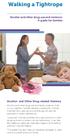 Walking a Tightrope Alcohol and other drug use and violence: A guide for families Alcohol- and Other Drug-related Violence Alcohol and other drug use and family violence often occur together. Families
Parenting. Coping with DEATH. For children aged 6 to 12
 Parenting Positively Coping with DEATH For children aged 6 to 12 This booklet will help you to understand more about death and the feelings we all have when someone we care about, like a parent, a brother
Helping Families Deal with Stress Related to Disasters
 Helping Families Deal with Stress Related to Disasters Diana DelCampo, Ph.D., Child Development and Family Life Specialist [email protected] A disaster is an event that: Involves the destruction of property,
Coping with chemotherapy
 This information is an extract from the booklet Understanding chemotherapy. You may find the full booklet helpful. We can send you a copy free see page 11. Contents Feelings and emotions How you can help
Problems with food are fairly common try not to panic.
 A Psychological Guide for Families: Feeding & Eating Child & Family Psychology Introduction This booklet is part of a series that has been written by Clinical Child Psychologists from the Child and Family
All about stroke. English fact sheet. How do I recognise the signs of stroke? What is a stroke? Call StrokeLine 1800 STROKE (1800 787 653)
 What is a? A happens when the blood supply to the brain is interrupted. Blood contains oxygen and important nutrients for your brain cells. Blood may stop moving through an artery because it is blocked
Your guide to stopping smoking for good
 Your guide to stopping smoking for good Reading this is your first step to stopping smoking for good Help2Quit gives you advice and support to help stop smoking for good. Nicotine replacement therapy and
Building Personal Resilience in the Workplace. A webinar for ACA students in partnership with ICAEW
 Building Personal Resilience in the Workplace A webinar for ACA students in partnership with ICAEW Introductions The Chartered Accountants Benevolent Association caba.org.uk Your presenter Carol McLachlan,
About the health benefits of walking, march and Nording Walking.
 About the health benefits of walking, march and Nording Walking. Project and realization: Marta Szymańska, Kl. I F Walking is the most natural and the simplest form of physical activity. It doesn t require
Part 5. Dinosaur School Notes to Teachers. 1. Introduction. 2. Iguanodon Unit: How to be Successful in School
 Part 5 Dinosaur School Notes to Teachers 1. Introduction 2. Iguanodon Unit: How to be Successful in School 3 & 4. Triceratops Unit: Detecting, Understanding and Talking About Feelings 5. Stegosaurus Unit:
We support the client to:
 1 of 7 4/6/2010 7:28 PM home > our alcohol drug rehab center > addiction rehabilitation programs We provide an education based program that teaches life and coping skills for relapse prevention. The entire
Mental Health Role Plays
 Mental Health Role Plays Goals: To discuss various mental health issues and mental illnesses. To discuss stigma, support and treatment options surrounding mental health issues and mental illnesses. Requirements:
Get help with problems before they get too big: if talking to your friends doesn t help, then please contact one of:
 Practical tips for students taking examinations Examination anxiety During the build up to exams when you are trying to revise, or during the examination period, please do not suffer in silence and let
Anger Management Course Workbook. 5. Challenging Angry Thoughts and Beliefs
 Anger Management Course Workbook 5. Challenging Angry Thoughts and Beliefs Stop-Think-Act In earlier classes, we have introduced the concept of stopping and thinking before acting when we feel angry. In
THE TOP 5 TIPS FOR CREATING LASTING CONFIDENCE. Confidence is often seen as something you are born with. Those who
 THE TOP 5 TIPS FOR CREATING LASTING CONFIDENCE Confidence is often seen as something you are born with. Those who lack confidence look on enviously at those who seem to have it and some of those who appear
The road to recovery. The support available to help you with your recovery after stroke
 The road to recovery The road to recovery The support available to help you with your recovery after stroke We re for life after stroke Introduction Need to talk? Call our confidential Stroke Helpline
Progression EARLY STAGE. What is Alzheimer s disease? The early stage - what to expect
 Progression EARLY STAGE This document is one in a five-part series on the stages of Alzheimer s disease and is written for the person with the disease, their family and caregivers. The early stage of the
Stress Management. Agenda CAUSES OF STRESS STRESS SYMPTOMS THE ART OF RESILIENCY MINDSET AND ATTITUDES HABITS AND ACTIONS
 Stress Management 1 Stress Management Agenda CAUSES OF STRESS STRESS SYMPTOMS THE ART OF RESILIENCY MINDSET AND ATTITUDES HABITS AND ACTIONS CONNECTIONS AND RELATIONSHIPS Stress Management 2 How Would
Social and Emotional Wellbeing
 Social and Emotional Wellbeing A Guide for Children s Services Educators Social and emotional wellbeing may also be called mental health, which is different from mental illness. Mental health is our capacity
Work Related Stress - Information for Managers / Supervisors
 Work Related Stress - Information for Managers / Supervisors What is Stress? The Health and Safety Executive have defined stress as:- 'The adverse reaction people have to excessive pressure or other types
A Carer s Guide to Depression in People with a Learning Disability
 A Carer s Guide to Depression in People with a Learning Disability Fife Clinical Psychology Department Lynebank Hospital Halbeath Road Dunfermline Fife KY11 4UW Tel: 01383 565 210 December 2009 This booklet
Faculty of Science and Engineering Placements. Stand out from the competition! Be prepared for your Interviews
 Faculty of Science and Engineering Placements Stand out from the competition! Be prepared for your Interviews Interviews Getting an invitation to attend for an interview means you has passed the first
My Doctor Says Stress is Bad for My Diabetes... What Can I Do About It? BD Getting Started. Stress and Diabetes
 My Doctor Says Stress is Bad for My Diabetes... What Can I Do About It? BD Getting Started Stress and Diabetes Doesn t Everyone Have Stress? It s true that stress is part of everyday life for everyone.
New Beginnings: Managing the Emotional Impact of Diabetes Module 1
 New Beginnings: Managing the Emotional Impact of Diabetes Module 1 ALEXIS (AW): Welcome to New Beginnings: Managing the Emotional Impact of Diabetes. MICHELLE (MOG): And I m Dr. Michelle Owens-Gary. AW:
The Doctor-Patient Relationship
 The Doctor-Patient Relationship It s important to feel at ease with your doctor. How well you are able to talk with your doctor is a key part of getting the care that s best for you. It s also important
Caregivers and Stroke
 Caregivers and Stroke Taking care of your loved one and yourself The Caregiver s Role As the primary caregiver for a stroke survivor, you are a very important part of the recovery process. While this role
www.education.alberta.ca/mentalhealthmatters Activity
 www.education.alberta.ca/mentalhealthmatters Activity Poster: Manage Level: Junior High Grades 7 9 Taken from the Mental Health Kit: Be Kind to Yourself and Others, developed in partnership with Community
Opening Our Hearts, Transforming Our Losses
 Preface Alcoholism is a disease of many losses. For those of us who are the relatives and friends of alcoholics, these losses affect many aspects of our lives and remain with us over time, whether or not
Assessments and the Care Act
 factsheet Assessments and the Care Act Getting help in England from April 2015 carersuk.org factsheet This factsheet contains information about the new system of care and support that came into place in
Schizophrenia. This factsheet provides a basic description of schizophrenia, its symptoms and the treatments and support options available.
 This factsheet provides a basic description of schizophrenia, its symptoms and the treatments and support options available. What is schizophrenia? Schizophrenia is a commonly misunderstood condition,
Your Go-to COPD Guide
 Your Go-to COPD Guide Learning how to live with chronic obstructive pulmonary disease (COPD) Inside, you ll learn: COPD facts COPD symptoms and triggers How to talk with your doctor Different treatment
YOU CAN QUIT WE CAN HELP
 YOU CAN QUIT WE CAN HELP SO, you re thinking of quitting tobacco. Let s figure out where you are right now, and see how this book can guide you through the quit process. Which of these sounds most like
MANAGEMENT OF STRESS AT WORK POLICY
 MANAGEMENT OF STRESS AT WORK POLICY Co-ordinator: Director of HR Reviewer: Grampian Area Partnership Forum Approver: Grampian Area Partnership Forum Signature Signature Signature Identifier: NHS/OH&S/Pol
Pamper yourself. Plan ahead. Remember it s important to eat and sleep well. Don t. Don t revise all the time
 Plan ahead Do Have your own revision timetable start planning well before exams begin. Your teacher should be able to help. Make your books, notes and essays user-friendly. Use headings, highlighting and
dealing with a depression diagnosis
 tips for dealing with a depression diagnosis 2011 www.heretohelp.bc.ca No one wants to feel unwell. Talking to your doctor or other health professional about problems with your mood is an important first
Workbook 4 Noticing unhelpful thinking. Dr. Chris Williams. Overcoming Depression A Five Areas Approach
 Workbook 4 Noticing unhelpful thinking Dr. Chris Williams Overcoming Depression A Five Areas Approach 2 Section 1: Introduction This is the first of two workbooks that will help you find out about and
Cancer-Related Brain Fog
 Cancer-Related Brain Fog Information for Cancer Patients and Caregivers about Cancer-Related Brain Fog Princess Margaret Also called Chemo-Fog, Chemo-Brain, or Cancer-Related Cognitive Dysfunction Please
Work-related stress risk assessment guidance
 Safety and Health Services Work-related stress risk assessment guidance Document control information Published document name: stress-ra-gn Date issued: Version: 5.0 Previous review dates: Next review date:
ANXIETY DISORDERS. TASK: Recognize warning signs and symptoms of Anxiety Disorders.
 TASK: Recognize warning signs and symptoms of Anxiety Disorders. STANDARDS: Soldiers will understand how recognize signs of anxiety and better assist others when one may be having symptoms or showing signs
Dr Sarah Blunden s Adolescent Sleep Facts Sheet
 Dr Sarah Blunden s Adolescent Sleep Facts Sheet I am Sleep Researcher and a Psychologist. As a Sleep Researcher, I investigate the effects of poor sleep on young children and adolescents. I also diagnose
Mindfulness-based stress reduction (MBSR)
 Mindfulness-based stress reduction (MBSR) You are being given this information sheet because your treating team has suggested that mindfulness-based stress reduction (MBSR) may be helpful in your treatment.
Understanding anxiety and depression
 Understanding anxiety and depression www.beyondblue.org.au 1300 22 4636 Anxiety Over two million people in Australia experience anxiety each year. On average, one in three women and one in fve men will
North Pacific Epilepsy Research 2311 NW Northrup Street Suite #202 Portland, Oregon 97210 Tel: 503-291-5300 Fax: 503-291-5303
 North Pacific Epilepsy Research 2311 NW Northrup Street Suite #202 Portland, Oregon 97210 Tel: 503-291-5300 Fax: 503-291-5303 Post-Traumatic Stress Disorder (PTSD) Post-traumatic stress disorder (PTSD)
PROGRAMMING PERSONAL TRAINING WITH CLIENTS
 UNIT 5 PROGRAMMING PERSONAL TRAINING WITH CLIENTS This is a mandatory unit that is locally assessed and internally verified and subject to external verification by an OCR external verifier. The following
The policy also aims to make clear the actions required when faced with evidence of work related stress.
 STRESS MANAGEMENT POLICY 1.0 Introduction Stress related illness accounts for a significant proportion of sickness absence in workplaces in the UK. Stress can also be a contributing factor to a variety
TAKING CONTROL OF WORKPLACE VIOLENCE
 TAKING CONTROL OF WORKPLACE VIOLENCE Second Edition A Training Program for Supervisors and Managers Participant Manual TAKING CONTROL OF WORKPLACE VIOLENCE A Training Program for Supervisors and Managers
Managing Psychosocial and Family Distress after Cancer Treatment
 Managing Psychosocial and Family Distress after Cancer Treatment Information for cancer survivors UHN Read this pamphlet to learn: What psychosocial distress is What causes distress What you can do Where
TIPS FOR SUPERVISORS
 TIPS FOR SUPERVISORS IDENTIFYING AND ASSISTING TROUBLED EMPLOYEES The HRS WorkLife Programs, Employee Assistance Program (EAP) is designed to aid staff members in seeking professional assistance to resolve
Approaching the End of Life. A Guide for Family & Friends
 Approaching the End of Life A Guide for Family & Friends Approaching the End of Life A Guide for Family & Friends Patrice Villars, MS, GNP and Eric Widera, MD Introduction In this booklet you will find
Everyone feels angry sometimes
 Feeling angry? Everyone feels angry sometimes It s normal and healthy to get angry when there is a good reason, and sometimes we just feel angry but we don t really know why. It is important to do something
Anxiety and breathing difficulties
 Patient information factsheet Anxiety and breathing difficulties Breathing is something that we all automatically do and we often take this for granted. Some chronic health conditions, for example asthma
Psychological First Aid Red Cross Preparedness Academy 2014
 Caring for Survivors of Trauma and Disaster: An Introduction to Psychological First Aid Biographical Information Rev. William F. Engfehr III LutheranChurch MissouriSynod DisasterResponseChaplain Senior
STRESS MANAGEMENT INTERVENTION TRAINING SECTION 7
 STRESS MANAGEMENT INTERVENTION TRAINING SECTION 7 Stress Management Toolkit Section 7 Stress Intervention Training 06.03.12 Page 1 of 15 7.0 STRESS MANAGEMENT INTERVENTION TRAINING 7.1 INTRODUCTION This
A Presentation by the American Chronic Pain Association
 Fibromyalgia 101 A Presentation by the American Chronic Pain Association 1 What is fibromyalgia? Before we can understand fibromyalgia we need to understand chronic pain. Chronic pain is pain that lasts
Low Blood Pressure. This reference summary explains low blood pressure and how it can be prevented and controlled.
 Low Blood Pressure Introduction Low blood pressure, or hypotension, is when your blood pressure reading is 90/60 or lower. Some people have low blood pressure all of the time. In other people, blood pressure