
Spasticity and spasms
|
|
|
- Daniel Dorsey
- 9 years ago
- Views:
Transcription
1 Spasticity and spasms Spirella Building, Letchworth, SG6 4ET reg charity no
2 Spasticity and spasms Date of issue: June 2010 Review date: July 2011 Contents Section Page 1. Introduction 1 2. What are spasticity and spasms? 2 3. Managing spasticity and spasms 4 4. Getting the most from taking drugs 6 5. Measuring the impact of treatments References Introduction Spasticity and spasms are symptoms often associated with multiple sclerosis. However, to ensure people with MS and health professionals communicate effectively, it is vital to appreciate what the terms spasticity and spasms describe as misunderstandings can occur. For instance, someone might describe their symptom as a 'spasm', using the term to mean a sudden wave of pain, where a health professional would understand the word to mean a sharp contraction of a muscle. Unless the meaning of this word is properly explored and any confusion resolved between the popular use of a word and its medical definition, it could lead to a doctor prescribing medication that will have little or no effect on the individual's symptom. 1

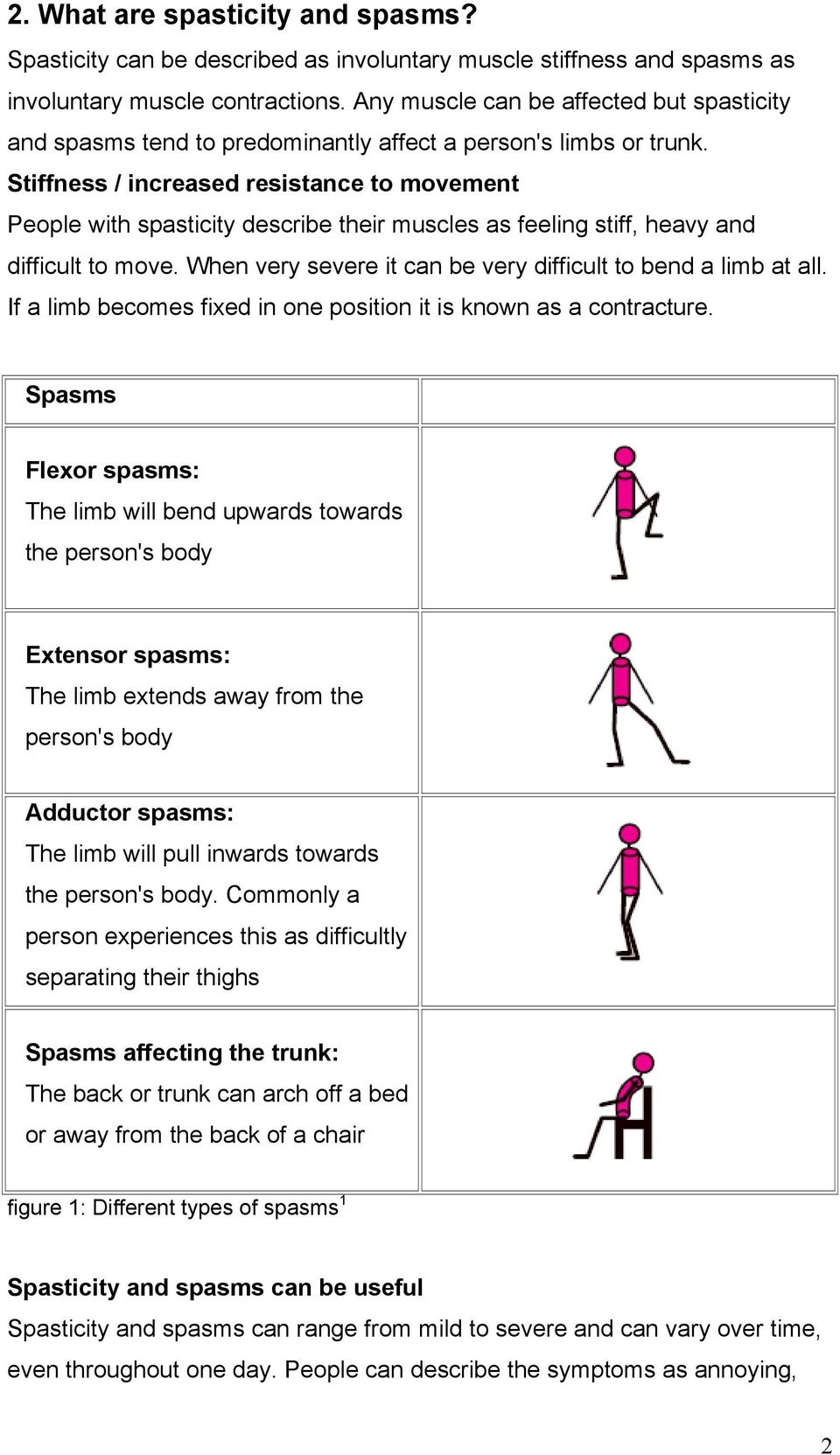
3 2. What are spasticity and spasms? Spasticity can be described as involuntary muscle stiffness and spasms as involuntary muscle contractions. Any muscle can be affected but spasticity and spasms tend to predominantly affect a person's limbs or trunk. Stiffness / increased resistance to movement People with spasticity describe their muscles as feeling stiff, heavy and difficult to move. When very severe it can be very difficult to bend a limb at all. If a limb becomes fixed in one position it is known as a contracture. Spasms Flexor spasms: The limb will bend upwards towards the person's body Extensor spasms: The limb extends away from the person's body Adductor spasms: The limb will pull inwards towards the person's body. Commonly a person experiences this as difficultly separating their thighs Spasms affecting the trunk: The back or trunk can arch off a bed or away from the back of a chair figure 1: Different types of spasms 1 Spasticity and spasms can be useful Spasticity and spasms can range from mild to severe and can vary over time, even throughout one day. People can describe the symptoms as annoying, 2
4 uncomfortable and unpredictable, although they can also be helpful. Some people use the stiffness of their spasticity or extensor spasms to assist them when walking or in transferring from bed to chair. Why these symptoms occur Nerve pathways connecting the brain, spinal cord and muscles, work together to coordinate movements of the body. These pathways can be disrupted in multiple sclerosis and can lead to loss of coordination, over-activity and / or weakness of muscles. Other associated symptoms Other features that may be associated with spasticity and spasms can include pain, weakness and clonus. Pain Spasticity and spasms are not always painful. If pain is present it can be described as a 'tugging' of the muscles and can be as a direct result of the sudden spasm movement or the constant feeling of stiffness. Sometimes spasticity and spasms can lead to altered sitting and lying positions which can also lead to pain and discomfort. Weakness Although a limb with spasticity is stiff and can resist movement, some of the muscles may also be weak. It can seem paradoxical to have some muscles that are stiff and others that are weak, but this results from different nerve pathways being disrupted. The co-existence of spasticity and weakness can be challenging to manage as drugs can minimise spasticity but not weakness. Sometimes when a person's stiffness is reduced they feel their existing weakness is more prominent. The feeling of weakness is often described by people with the term 'heavy'. Confusingly this word can also be used to describe stiff limbs. To assess whether the heaviness is from weakness or spasticity, it may be necessary for the health professional to bend and straighten the limb. This is often described as moving the limb through its full range of motion. A limb will resist being moved if spasticity is present but if weakness is present it will move more easily, although a weak limb can still feel cumbersome and weighty. 3

5 Clonus This is a repetitive, up and down movement, often of the feet; it is often observed as a constant tapping of a foot on wheelchair footplates. Individuals often find their own ways to minimise this symptom such as lifting the limb, or leaning forward in the chair to pass weight through the leg. Fatigue and loss of dexterity can also be associated with spasticity. What is tone? Muscle tone is described as the resistance felt when an arm or leg is moved or stretched. Normal tone occurs when an individual is relaxed and the health professional can bend and straighten the limb without difficulty. An increase in tone (an increase in resistance to movement) can be due to spasticity, spasms and or changes in muscles, tendons and ligaments as a result of disuse, or altered lying and sitting postures. 3. Managing spasticity and spasms Managing spasticity and spasms is a balance between maintaining their usefulness and minimising the negative aspects within the context of a person's lifestyle. Key to any long-term management plan is the need for movement or stretching and the ongoing management of trigger factors. Movement and / or stretching It is important to keep muscles, ligaments and joints as flexible as possible. This can be done through stretching, active movement (where the individual moves their own limbs) or passive movement (where limbs are moved by a physiotherapist or automated exercise machine). A physiotherapist can advise on how to maintain flexibility, teach specific stretches and ways of moving and positioning the body to prevent contractures. Similarly it is important to maintain good sitting and lying postures (figure 2). This can be assisted by adapting equipment such as wheelchairs and using aids to promote sleep positions. Experts who can advise include specialist seating services, physiotherapists and occupational therapists. 4
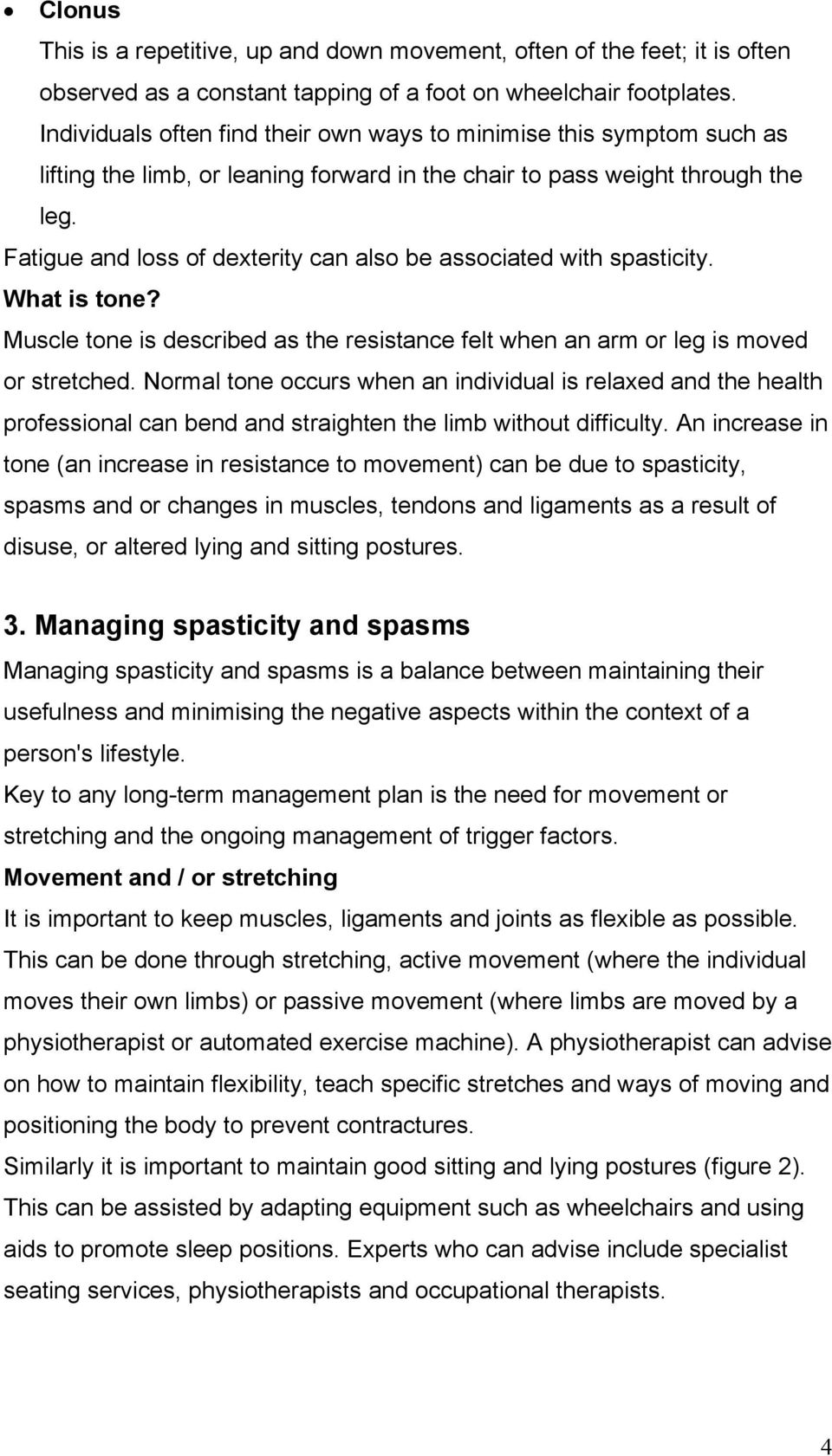
6 Optimising sitting postures Poor positioning in sitting: Good positioning in sitting: For example when in any chair if possible sit with your hips and bottom at the back of the seat, with your knees and feet at right angles figure 2: Optimising sitting postures 1 See also Are You Sitting Comfortably..?, the MS Trust's book on posture when sitting. What can be done and who can help Increasing knowledge about spasticity and what triggers it can help people manage it more effectively and prevent symptoms. Whether symptoms are mild or severe, medical, physiotherapy, nursing and occupational therapy treatment, advice and education can help increase understanding of spasticity. Certain factors are known to exacerbate spasticity and spasms; minimising them can reduce these symptoms. Trigger factors Urinary infection or retention Bowel impaction, constipation, infection Who can give management advice Sometimes spasticity and spasms become harder to manage; a review of bladder, bowel and skin care management techniques may improve the situation. Red or broken skin/pressure areas, ingrown toenails A GP, nurse specialist, continence advisor and / or district nurse can give advice and assistance to effectively 5

7 Trigger factors Who can give management advice manage bladder, bowel and skin. Pain Infections Tight fitting clothes or splints Pain and infection will aggravate spasticity. Locating and treating the source of the pain or infection eg skin infection or an ingrown toenail, may reduce the spasticity. Advice can be sought from a GP or district nurse. Simply loosening tight garments may help to relieve spasticity. If splints are causing discomfort or skin irritation then they will need reviewing by an orthotic or therapy service. figure 3: Trigger factors 1 In summary, the ongoing need to incorporate movement, stretching and good sitting and lying postures together with managing trigger factors cannot be over emphasised in the management of spasticity and spasms. However, sometimes it is necessary to complement these strategies with the use of drugs. 4. Getting the most from taking drugs The effective use of drugs can be an invaluable part of how a person manages their spasticity. When commencing any drug to manage spasticity it is best to start with a low dose and gradually increase it, until a dose is reached that helps the symptom but has minimal side-effects. The oral drugs available (listed below) can be used in combination, but usually a doctor will maximise the effect of one drug before prescribing it with others. The doses indicated are only a guide. A doctor will recommend the dose of specific drugs and, where necessary, suggest how to increase the dosage. Anti-spasticity drugs are most effective when they help a person to function more easily. It is important to consider the best time to take these drugs during the day. For instance, if getting out of bed is difficult, it could be 6
8 beneficial for someone to have their drugs next to the bed, take them when they wake up and wait minutes before getting up. Available oral drugs The NICE Guideline 2 states that the first line of treatment should be baclofen or gabapentin. The other drugs in the list should only be given if treatment with baclofen or gabapentin is unsuccessful or side effects are unmanageable. Baclofen Site of action - Directly on nerve cells, mainly in the spinal cord, to decrease the excitability of the nerves and therefore reduce excessive muscle activity including spasms Initial and maximum doses - Initial dose 5-10mg once or twice a day. Maximum dose 120mg Side effects - Baclofen works for between four and six hours so needs to be taken regularly through the day. It should not be stopped abruptly as this can induce seizures. Side effects can include weakness, drowsiness and dizziness Gabapentin Site of action - Central nervous system Initial and maximum doses mg daily up to a maximum of 2400mg Side effects - Drowsiness, dizziness Tizanidine Site of action - Central nervous system Initial and maximum doses - 2mg daily up to a maximum of 36mg Side effects - A doctor will initially recommend regular blood tests to ensure tizanidine does not have any adverse effects on liver function. It can also cause drowsiness and a dry mouth Diazepam Site of action - Central nervous system Initial and maximum doses - 2mg daily up to a maximum of 40-60mg Side effects - As a prominent side effect is drowsiness, this drug is best taken at bedtime. Side effects include reduced attention and memory 7
9 impairment. Should not be abruptly stopped as this can cause withdrawal effects Clonazepam Site of action - Central nervous system Initial and maximum doses mg daily up to a maximum of 3mg Side effects - As a prominent side effect is drowsiness this drug is best taken at bedtime. Side effects include reduced attention and memory impairment. Should not be abruptly stopped as this can cause withdrawal effects Dantrolene Site of action - The only anti-spasticity drug that works directly on muscles Initial and maximum doses - 25mg daily up to a maximum of 400mg Side effects - Side effects are unfortunately quite common and include nausea, vomiting, diarrhoea and weakness. A doctor will take regular blood tests to ensure that the function of the liver is not affected What if the oral drugs don t help? If the oral anti-spasticity medications prove ineffective or their side effects unbearable, Sativex may be prescribed as an add-on treatment. Sativex In June 2010, Sativex, a cannabis-based mouth spray received a UK licence for use as an add-on treatment to MS-related spasticity when people have shown inadequate response to other symptomatic treatments or found their side effects intolerable. In 2009, a phase III trial investigating the effects of Sativex on MS spasticity was conducted in two stages. In the first stage, 573 people received Sativex for four weeks. The 241 people who responded to the drug went into the second stage where they received either Sativex or a placebo for 12 weeks. About three quarters of those receiving Sativex reported an improvement of greater than 30% in their spasticity score at least once during the first four weeks of treatment 3. Sativex can only be prescribed by a specialist doctor with experience of treating MS spasticity, for example: consultant neurologists, consultant 8
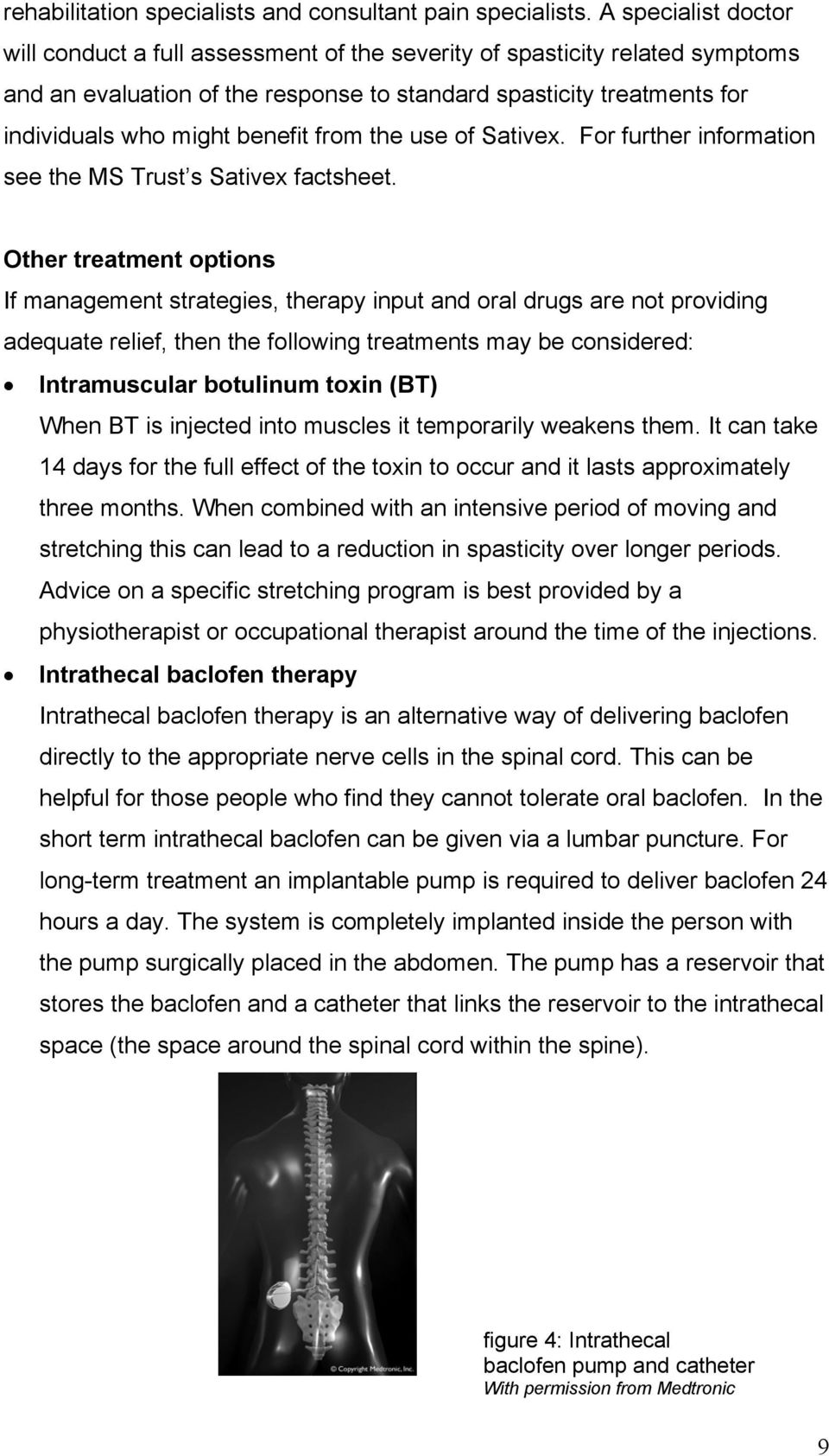
10 rehabilitation specialists and consultant pain specialists. A specialist doctor will conduct a full assessment of the severity of spasticity related symptoms and an evaluation of the response to standard spasticity treatments for individuals who might benefit from the use of Sativex. For further information see the MS Trust s Sativex factsheet. Other treatment options If management strategies, therapy input and oral drugs are not providing adequate relief, then the following treatments may be considered: Intramuscular botulinum toxin (BT) When BT is injected into muscles it temporarily weakens them. It can take 14 days for the full effect of the toxin to occur and it lasts approximately three months. When combined with an intensive period of moving and stretching this can lead to a reduction in spasticity over longer periods. Advice on a specific stretching program is best provided by a physiotherapist or occupational therapist around the time of the injections. Intrathecal baclofen therapy Intrathecal baclofen therapy is an alternative way of delivering baclofen directly to the appropriate nerve cells in the spinal cord. This can be helpful for those people who find they cannot tolerate oral baclofen. In the short term intrathecal baclofen can be given via a lumbar puncture. For long-term treatment an implantable pump is required to deliver baclofen 24 hours a day. The system is completely implanted inside the person with the pump surgically placed in the abdomen. The pump has a reservoir that stores the baclofen and a catheter that links the reservoir to the intrathecal space (the space around the spinal cord within the spine). figure 4: Intrathecal baclofen pump and catheter With permission from Medtronic 9
11 Different types of pump are available but in essence the baclofen is pumped into the spine either electronically or via a gas-compression system. The pumps enable much smaller amounts of baclofen to be used, reducing any side effects that a person may have experienced when taking baclofen orally. Embarking on intrathecal baclofen therapy is not a simple decision to make. Not only does it involve surgery but also regular reservoir refills and, if using the electronic model, further surgery after approximately five to seven years when the battery depletes. Before implantation, a trial of the drug can be given via a lumbar puncture. This gives the person, their family and the treating team the opportunity to experience and assess the potential outcome of having intrathecal baclofen before committing to the surgical pump implant. Intrathecal phenol This treatment tends to be reserved for severe spasticity that is not responding to other forms of treatment. Intrathecal phenol is given via a lumbar puncture and requires a specialist doctor to inject it. Intrathecal phenol is a destructive treatment that, when injected into the intrathecal space, stops nerve conduction. This can significantly reduce lower limb spasticity but negative effects can occur such as a reduction of leg sensation, reduced sexual function, and altered bladder and bowel function. People suitable for intrathecal phenol will already be experiencing a change in these specific areas and will have effective management strategies in place, for instance a suprapubic catheter or regularly use of suppositories, so that the use of intrathecal phenol will not cause any negative impact on management regimes. Surgery Occasionally a neurologist may recommend orthopaedic or neurosurgical procedures, although these are becoming more rare. 10
12 5. Measuring the impact of treatments To help understand if a particular drug or stretching regime is helping a person s spasticity and spasms, health professionals may ask to measure a person s symptoms. Measures are tools that use numbers or words to classify or quantify symptoms. The purpose of using measures is to compare the person s degree of spasticity, spasms and pain over time or before and after treatments. In the case of intrathecal drug trials the measures can guide the person, their family and the team to appreciate the potential impact of proceeding with an intrathecal treatment. Spasticity measures There is no one measurement tool or scale that adequately measures spasticity. In practice, a series of measures is often required to reflect different aspects of spasticity. These approaches will look at different aspects of the symptoms: Moving limbs to physically measure the distance that they can be moved Asking the individual to report on how they are affected by their symptom - eg the Penn Spasm Frequency Scale involves the individual reporting the type and frequency of spasms Assessment of symptoms by a health professional - eg the Ashworth Scale involves the measurer moving a limb through its available range and assessing the level of stiffness How can it feel to be measured? When measuring spasticity, the health professional concentrates on the degree they can move a limb and how it feels when they do so. They may ask the person to focus on their main problem and, in relation to their spasticity, what would improve their current lifestyle. They may discuss the measures with others, using numbers that may have little or no meaning to the person being measured. Evaluating and measuring spasticity in partnership For some people, being measured can make them feel as if they are enduring a test or being judged. The process encourages them to focus on their level of disability, which they may not normally do; this can be emotional, challenging and at times distressing. For other s, the measuring process helps them to be 11

13 more specific about changes they feel in their bodies or the impact on their lifestyle. Health professionals are advised to be alert to how a person may be feeling and provide support through education, engagement and involvement to enhance the measuring process 4. Education involves explaining why measurement is required, how it will help the team assessment and the role of the person with MS. Being involved in the process allows the person to share how they are experiencing the changes in their spasticity and spasms and how this may affect their function at home. It s important to remember being measured is not a test and there is no right or wrong. It is just a baseline for comparison. In summary, effective spasticity management requires ongoing management of posture through movement and stretches, the management of trigger factors and the careful evaluation and use of drug treatments. 6. References 1. Stevenson VL, Jarrett L. Spasticity management: a practical multidisciplinary guide. Oxford: Informa Health Care; The National Institute for Clinical Excellence (NICE). Management of multiple sclerosis in primary and secondary care. London: NICE; Collin C, Davies P, Mutiboko IK, et al. Randomised controlled trial of cannabis-based medicine in spasticity caused by multiple sclerosis. 4. European Journal of Neurology 2007; 14: Jarrett L. The challenge of managing spasticity: the role of the nurse in the process of assessment and measurement? Nursing Times 2006;102(15): Acknowledgements This factsheet is based on articles written for the MS Trust's Open Door newsletter by Louise Jarrett, then spasticity specialist nurse at the National Hospital for Neurology & Neurosurgery, London 12

National Hospital for Neurology and Neurosurgery. Managing Spasticity. Spasticity Service
 National Hospital for Neurology and Neurosurgery Managing Spasticity Spasticity Service If you would like this document in another language or format, or require the services of an interpreter please contact
What is the Spasticity Clinic?
 The Spasticity Clinic This booklet can help you learn about: the Spasticity Clinic at McMaster Children s Hospital spasticity and how it may be treated Your therapist will give you more information and
Sativex. Spirella Building, Letchworth, SG6 4ET 01462 476700 www.mstrust.org.uk reg charity no. 1088353
 Sativex Spirella Building, Letchworth, SG6 4ET 01462 476700 www.mstrust.org.uk reg charity no. 1088353 Sativex Date of issue: July 2010 Review date: July 2011 Contents 1. Introduction 1 2. What is Sativex?
ALL ABOUT SPASTICITY. www.almirall.com. Solutions with you in mind
 ALL ABOUT SPASTICITY www.almirall.com Solutions with you in mind WHAT IS SPASTICITY? The muscles of the body maintain what is called normal muscle tone, a level of muscle tension that allows us to hold
Musculoskeletal System
 CHAPTER 3 Impact of SCI on the Musculoskeletal System Voluntary movement of the body is dependent on a number of systems. These include: The brain initiates the movement and receives feedback to assess
Sativex (nabiximols)
 Sativex (nabiximols) We hope you find the information in this factsheet helpful. If you would like to speak with someone about any aspect of MS, contact the MS Trust information team and they will help
Non-Surgical Treatments for Spasticity in Cerebral Palsy and Similar Conditions by Susan Agrawal
 www.complexchild.com Non-Surgical Treatments for Spasticity in Cerebral Palsy and Similar Conditions by Susan Agrawal Children with cerebral palsy and other conditions that affect muscle tone often present
Webinar title: Know Your Options for Treating Severe Spasticity
 Webinar title: Know Your Options for Treating Severe Spasticity Presented by: Dr. Gerald Bilsky, Physiatrist Medical Director of Outpatient Services and Associate Medical Director of Acquired Brain Injury
Michelle H. Cameron, M.D., P.T., M.C.R. Portland VA MS Center of Excellence- West, and Oregon Health & Science University
 Michelle H. Cameron, M.D., P.T., M.C.R. Portland VA MS Center of Excellence- West, and Oregon Health & Science University Ileana Howard, M.D. VA Puget Sound, Seattle, WA and University of Washington PVA
Spasticity, Mobility Problems and Multiple Sclerosis
 Spasticity, Mobility Problems and Multiple Sclerosis The Multiple Sclerosis Society of Canada is proud to be a source of information about multiple sclerosis. Our comments are based on professional advice,
Epidural Continuous Infusion. Patient information Leaflet
 Epidural Continuous Infusion Patient information Leaflet April 2015 Introduction You may already know that epidural s are often used to treat pain during childbirth. This same technique can also used as
Tone Management in Cerebral Palsy. Jenny Wilson, MD [email protected] OHSU and Shriners Hospital for Children October, 2015
 Tone Management in Cerebral Palsy Jenny Wilson, MD [email protected] OHSU and Shriners Hospital for Children October, 2015 Disclosures I am involved in a Dysport sponsored research study Goals Describe
Spine Care Centre (SCC) protocols for Multiple Sclerosis Update 1 August 2015
 Spine Care Centre (SCC) protocols for Multiple Sclerosis Update 1 August 2015 Introduction Multiple sclerosis (MS) affects nerves in the brain and spinal cord, causing a wide range of symptoms including
Passive Range of Motion Exercises
 Exercise and ALS The physical or occupational therapist will make recommendations for exercise based upon each patient s specific needs and abilities. Strengthening exercises are not generally recommended
Drugs for MS.Drug fact box cannabis extract (Sativex) Version 1.0 Author
 Version History Policy Title Drugs for MS.Drug fact box cannabis extract (Sativex) Version 1.0 Author West Midlands Commissioning Support Unit Publication Date Jan 2013 Review Date Supersedes/New (Further
PLANTAR FASCITIS (Heel Spur Syndrome)
 PLANTAR FASCITIS (Heel Spur Syndrome) R. Amadeus Mason MD Description Plantar fascitis is characterized by stiffness and inflammation of the main fascia (fibrous connective [ligament-like] tissue) on the
Epidurals for pain relief after surgery
 Epidurals for pain relief after surgery This information leaflet is for anyone who may benefit from an epidural for pain relief after surgery. We hope it will help you to ask questions and direct you to
Cerebral Palsy. In order to function, the brain needs a continuous supply of oxygen.
 Cerebral Palsy Introduction Cerebral palsy, or CP, can cause serious neurological symptoms in children. Up to 5000 children in the United States are diagnosed with cerebral palsy every year. This reference
Staying Mobile & Active Post Stroke. Kevin Lockette PT Ohana Pacific Rehab Services, LLC Honoulu- Kailua www.ohanapacificrehab.
 Staying Mobile & Active Post Stroke Kevin Lockette PT Ohana Pacific Rehab Services, LLC Honoulu- Kailua www.ohanapacificrehab.com 808 262 1118 Aging Process Changes in body composition Loss of muscle tissue/increase
Cerebral Palsy. 1995-2014, The Patient Education Institute, Inc. www.x-plain.com nr200105 Last reviewed: 06/17/2014 1
 Cerebral Palsy Introduction Cerebral palsy, or CP, can cause serious neurological symptoms in children. Thousands of children are diagnosed with cerebral palsy every year. This reference summary explains
TREATMENT SECTION. Word Count: 2,538 Date: 1/15/03. KEY TO HEADINGS A-level: PHYSICAL THERAPY B-level: Physical therapy C-level: Physical therapy
 TREATMENT SECTION Word Count: 2,538 Date: 1/15/03 KEY TO HEADINGS A-level: PHYSICAL THERAPY B-level: Physical therapy C-level: Physical therapy Text: Treatment is available for some of the symptoms experienced
Multiple sclerosis and pain
 9 Multiple sclerosis and pain 2ND EDITION Multiple Sclerosis Society of New Zealand CONTENTS Introduction-------------------------------------------------------------------------------------------3 How
Treatment of Spastic Foot Deformities
 Penn Comprehensive Neuroscience Center Treatment of Spastic Foot Deformities Penn Neuro-Orthopaedics Service 1 Table of Contents Overview Overview 1 Treatment 2 Procedures 4 Achilles Tendon Lengthening
Range of Motion Exercises
 Range of Motion Exercises Range of motion (ROM) exercises are done to preserve flexibility and mobility of the joints on which they are performed. These exercises reduce stiffness and will prevent or at
Herniated Lumbar Disc
 Herniated Lumbar Disc North American Spine Society Public Education Series What Is a Herniated Disc? The spine is made up of a series of connected bones called vertebrae. The disc is a combination of strong
.org. Herniated Disk in the Lower Back. Anatomy. Description
 Herniated Disk in the Lower Back Page ( 1 ) Sometimes called a slipped or ruptured disk, a herniated disk most often occurs in your lower back. It is one of the most common causes of low back pain, as
Baclofen Pump Therapy for the Treatment of Spasticity
 Baclofen Pump Therapy for the Treatment of Spasticity A Guide for Patients and Families Physical Medicine & Rehabilitation Dear Patient and Family, In the United States, an estimated 500,000 people have
Information and exercises following dynamic hip screw
 Physiotherapy Department Information and exercises following dynamic hip screw Introduction A dynamic hip screw is performed where the neck of femur has been fractured and where there is a good chance
Coccydynia. (Coccyx Pain) Information for patients. Outpatients Physiotherapy Tel: 01473 703312
 Information for patients Coccydynia (Coccyx Pain) Outpatients Physiotherapy Tel: 01473 703312 DPS ref: 4508-12(RP) Issue 1: February 2013 Review date: January 2016 The Ipswich Hospital NHS Trust, 2013.
Lumbar Disc Herniation/Bulge Protocol
 Lumbar Disc Herniation/Bulge Protocol Anatomy and Biomechanics The lumbar spine is made up of 5 load transferring bones called vertebrae. They are stacked in a column with an intervertebral disc sandwiched
Intravenous Methyl Prednisolone in Multiple Sclerosis
 Intravenous Methyl Prednisolone in Multiple Sclerosis Exceptional healthcare, personally delivered Relapse management in multiple sclerosis Relapses in multiple sclerosis (MS) are common and caused by
Surgery for Disc Prolapse
 Contact Details Spinal Team Nuffield Orthopaedic Centre Windmill Road Headington Oxford OX3 7LD Surgery for Disc Prolapse Phone: 01865 738051 Fax: 01865 738027 Web Site www.noc.nhs.uk Surgery for disc
Knowing about your Low Back Pain
 Knowing about your Low Back Pain Knowing about low back pain Low back pain is very common with around 80-90% of adults having some sort of back pain in their lifetime. detail vertebra disc Although a specific
Teriflunomide (Aubagio) 14mg once daily tablet
 Teriflunomide (Aubagio) 14mg once daily tablet Exceptional healthcare, personally delivered Your Consultant Neurologist has suggested that you may benefit from treatment with Teriflunomide. The decision
Mobility After Stroke
 Mobility After Stroke Issues facing stroke survivors and their families Regaining Mobility Moving around safely and easily is not something you may think about, until you have had a stroke. Each year more
We ve got your back. Physical Therapy After Lumbar Fusion Surgery
 We ve got your back Physical Therapy After Lumbar Fusion Surgery Physical therapy is an extremely important part of you recovery after spinal surgery. This booklet, prepared by the therapists who specialize
HOPE EXERCISE RECOVERY RESOURCES RELATIONSHIPS INFORMATION REHABILITATION PREVENTION SELF ADVOCACY RELATIONSHIPS MOVEMENT. A Stroke Recovery Guide
 INFORMATION REHABILITATION PREVENTION SELF ADVOCACY RECOVERY HOPE A Stroke Recovery Guide RELATIONSHIPS MOVEMENT RESOURCES RELATIONSHIPS EXERCISE www.stroke.org CHAPTER FOUR Movement and Exercise Moving
Cast removal what to expect #3 Patient Information Leaflet
 Cast removal what to expect #3 Patient Information Leaflet SM466 Now your cast is off, self help is the key! Follow the advice given to you by your doctor and the staff in the clinic. Your skin will be
Sciatica Yuliya Mutsa PTA 236
 Sciatica Yuliya Mutsa PTA 236 Sciatica is a common type of pain affecting the sciatic nerve, which extends from the lower back all the way through the back of the thigh and down through the leg. Depending
Cannabis. Spirella Building, Letchworth, SG6 4ET 01462 476700 www.mstrust.org.uk reg charity no. 1088353
 Cannabis Spirella Building, Letchworth, SG6 4ET 01462 476700 www.mstrust.org.uk reg charity no. 1088353 Cannabis Date of issue: June 2010 Review date: June 2011 Contents 1. Introduction 1 2. Background
Total knee replacement: The enhanced recovery programme
 INFORMATION FOR PATIENTS Total knee replacement: The enhanced recovery programme Aim This leaflet aims to explain the enhanced recovery programme after total knee replacement surgery, and outline what
Cerebral palsy can be classified according to the type of abnormal muscle tone or movement, and the distribution of these motor impairments.
 The Face of Cerebral Palsy Segment I Discovering Patterns What is Cerebral Palsy? Cerebral palsy (CP) is an umbrella term for a group of non-progressive but often changing motor impairment syndromes, which
It is much more than just feeling tired. It is described by people in many ways such as exhausting, overwhelming sleepiness and weakness.
 Choices Fatigue Fatigue is one of the most common invisible symptoms of MS and one which can have a major impact on all aspects of life. For some people it is the symptom that affects them the most. It
Range of Motion. A guide for you after spinal cord injury. Spinal Cord Injury Rehabilitation Program
 Range of Motion A guide for you after spinal cord injury Spinal Cord Injury Rehabilitation Program This booklet has been written by the health care providers who provide care to people who have a spinal
Treating symptoms. An introduction to. Everyone diagnosed with MS can get treatment for their symptoms. The symptoms of MS. Who can get treatment?
 Everyone diagnosed with MS can get treatment for their symptoms This resource is an introduction to the treatments that are available. The symbol will point you to further resources. An introduction to
.org. Plantar Fasciitis and Bone Spurs. Anatomy. Cause
 Plantar Fasciitis and Bone Spurs Page ( 1 ) Plantar fasciitis (fashee-eye-tiss) is the most common cause of pain on the bottom of the heel. Approximately 2 million patients are treated for this condition
Hand & Plastics Physiotherapy Department Cubital Tunnel Syndrome Information for patients
 Oxford University Hospitals NHS Trust Hand & Plastics Physiotherapy Department Cubital Tunnel Syndrome Information for patients This leaflet has been developed to answer any questions you may have regarding
.org. Achilles Tendinitis. Description. Cause. Achilles tendinitis is a common condition that causes pain along the back of the leg near the heel.
 Achilles Tendinitis Page ( 1 ) Achilles tendinitis is a common condition that causes pain along the back of the leg near the heel. The Achilles tendon is the largest tendon in the body. It connects your
Shoulder Tendonitis. Brett Sanders, MD Center For Sports Medicine and Orthopaedic 2415 McCallie Ave. Chattanooga, TN (423) 624-2696
 Shoulder Tendonitis Brett Sanders, MD Center For Sports Medicine and Orthopaedic 2415 McCallie Ave. Chattanooga, TN (423) 624-2696 Shoulder tendinitis is a common overuse injury in sports (such as swimming,
Pain Management after Surgery Patient Information Booklet
 Pain Management after Surgery Patient Information Booklet PATS 509-15-05 Your Health Care Be Involved Be involved in your healthcare. Speak up if you have questions or concerns about your care. Tell a
Stretching in the Office
 Stretching in the Office Legs: Quads, Hamstrings, IT band, Hip flexors, Gluts, Calves Quads: Standing @ desk maintaining upright posture, grab one leg @ a time by foot or ankle and bring it towards backside
Premier Orthopaedic Pathway. Physiotherapy after dynamic hip screw (DHS)
 Premier Orthopaedic Pathway Physiotherapy after dynamic hip screw (DHS) The surgery After a fractured hip a dynamic hip screw (DHS) is used to hold the bones in place while the fracture heals. It allows
This booklet can also be provided in large print on request. Please call 01865 738126. Spinal Stenosis. The Oxford Spine Unit
 This booklet can also be provided in large print on request. Please call 01865 738126 Nuffield Orthopaedic Centre NHS Trust NHS Spinal Team Nuffield Orthopaedic Centre Windmill Road Headington Oxford OX3
Heel pain and Plantar fasciitis
 A patient s guide Heel pain and Plantar fasciitis Fred Robinson BSc FRCS FRCS(orth) Consultant Trauma & Orthopaedic Surgeon Alex Wee BSc FRCS(orth) Consultant Trauma & Orthopaedic Surgeon. What causes
Department of Neurosciences Dorsal Root Ganglion (DRG) Stimulation Information for patients
 Oxford University Hospitals NHS Trust Department of Neurosciences Dorsal Root Ganglion (DRG) Stimulation Information for patients We have recently seen you in clinic as you have had pain for a long period
Lumbar Spinal Stenosis
 Lumbar Spinal Stenosis North American Spine Society Public Education Series What Is Lumbar Spinal Stenosis? The vertebrae are the bones that make up the lumbar spine (low back). The spinal canal runs through
Mindfulness-based stress reduction (MBSR)
 Mindfulness-based stress reduction (MBSR) You are being given this information sheet because your treating team has suggested that mindfulness-based stress reduction (MBSR) may be helpful in your treatment.
Clinically isolated syndrome (CIS)
 Clinically isolated syndrome (CIS) Spirella Building, Letchworth, SG6 4ET 01462 476700 www.mstrust.org.uk reg charity no. 1088353 We hope you find the information in this factsheet helpful. If you would
Plantar Fasciitis. Plantar Fascia
 Plantar Fasciitis Introduction Plantar fasciitis is an inflammation of the thick band of tissue that connects your heel bone to your toes. This thick band of tissue is called the plantar fascia. Plantar
Teriflunomide (Aubagio)
 Teriflunomide (Aubagio) Spirella Building, Letchworth, SG6 4ET 01462 476700 www.mstrust.org.uk reg charity no. 1088353 We hope you find the information in this factsheet helpful. If you would like to speak
ALL ABOUT SEXUAL PROBLEMS. www.almirall.com. Solutions with you in mind
 ALL ABOUT SEXUAL PROBLEMS www.almirall.com Solutions with you in mind WHAT ARE THEY? Sexual problems in patients with multiple sclerosis (MS) are defined as those emotional/ psychological and physiological
Rheumatoid Arthritis www.arthritis.org.nz
 Rheumatoid Arthritis www.arthritis.org.nz Did you know? RA is the second most common form of arthritis Approximately 40,000 New Zealanders have RA RA can occur at any age, but most often appears between
Cerebral Palsy. Causes
 Cerebral Palsy Cerebral Palsy (sera brul PAUL zee) (CP) is an injury or abnormality of the developing brain that affects movement. This means that something happened to the brain or the brain did not develop
Rehabilitation after shoulder dislocation
 Physiotherapy Department Rehabilitation after shoulder dislocation Information for patients This information leaflet gives you advice on rehabilitation after your shoulder dislocation. It is not a substitute
m y f o u n d a t i o n i n f o s h e e t
 Pain and Myeloma m y f o u n d a t i o n i n f o s h e e t Pain is the most common symptom of myeloma and can greatly affect all areas of your life, especially if it is untreated or poorly managed. This
Working together to prevent pressure ulcers (prevention and pressure-relieving devices)
 Working together to prevent pressure ulcers (prevention and pressure-relieving devices) Understanding NICE guidance information for people at risk of pressure ulcers, their carers, and the public Draft
Info. from the nurses of the Medical Service. LOWER BACK PAIN Exercise guide
 Info. from the nurses of the Medical Service LOWER BACK PAIN Exercise guide GS/ME 03/2009 EXERCISE GUIDE One of the core messages for people suffering with lower back pain is to REMAIN ACTIVE. This leaflet
National Hospital for Neurology and Neurosurgery
 National Hospital for Neurology and Neurosurgery Botulinum toxin injections for the bladder Department of Uro-Neurology If you would like this document in another language or format, or require the services
Physiotherapy for Video Assisted Thoracic Surgery Patients
 Physio for VATS patients Royal Devon and Exeter NHS Foundation Trust Physiotherapy for Video Assisted Thoracic Surgery Patients July 2008 (Review date: July 2011) Physiotherapy Department...01392 402438
Stem cell transplant, you and your rehabilitation Information for patients and their carers
 Oxford University Hospitals NHS Trust Physiotherapy department Stem cell transplant, you and your rehabilitation Information for patients and their carers Stem cell transplant exercise handout Thank you
LUMBAR. Hips R L B R L B LUMBAR. Hips R L B R L B LUMBAR. Hips R L B R L B
 1 Patient Name In order to properly assess your condition, we must understand how much your BACK/LEG (SCIATIC) PAIN has affected your ability to manage everyday activities. For each item below, please
URINARY INCONTINENCE Information for Patients and Families Author: Chantale Dumoulin, PhD PT
 URINARY INCONTINENCE Information for Patients and Families Author: Chantale Dumoulin, PhD PT What is urinary incontinence? Urinary incontinence (UI) is the loss of the ability to hold in urine. This can
Preventing & Treating Low Back Pain
 Preventing & Treating Low Back Pain An Introduction to Low Back Pain Low back pain is the number two reason that Americans see a health care practitioner second only to colds and flu. While most people
Knee Arthroscopy Post-operative Instructions
 Amon T. Ferry, MD Orthopedic Surgery Sports Medicine Knee Arthroscopy Post-operative Instructions PLEASE READ ALL OF THESE INSTRUCTIONS CAREFULLY. THEY WILL ANSWER MOST OF YOUR QUESTIONS. 1. You may walk
Stretching for People with MS
 Staying Well Stretching for People with MS An Illustrated Manual For Information: 1-800-FIGHT-MS nationalmssociety.org Beth E. Gibson, PT, has a certificate in physical therapy from the Mayo School of
Multiple sclerosis (MS)
 Multiple sclerosis (MS) Summary Multiple sclerosis (MS) is an incurable disease of the central nervous system that can affect the brain, spinal cord and optic nerves. The effects of MS are varied and unpredictable,
MULTIPLE SCLEROSIS AUSTRALIA MULTIPLE SCLEROSIS RESEARCH AUSTRALIA
 MULTIPLE SCLEROSIS AUSTRALIA MULTIPLE SCLEROSIS RESEARCH AUSTRALIA Submission to the ACT Legislative Assembly Health, Ageing, Community and Social Services Inquiry into the exposure draft of the Drugs
Returning to fitness after heart surgery
 Returning to fitness after heart surgery A patient s guide 1 Increasing activity After your operation, your heart function should be improved and so your ability to exercise will also be improved. However,
A Patient s Guide to Post-Operative Physiotherapy. Following Anterior Cruciate Ligament Reconstruction of the Knee
 A Patient s Guide to Post-Operative Physiotherapy Following Anterior Cruciate Ligament Reconstruction of the Knee Introduction The anterior cruciate ligament (ACL) is one of the main supporting ligaments
ILIOTIBIAL BAND SYNDROME
 ILIOTIBIAL BAND SYNDROME Description The iliotibial band is the tendon attachment of hip muscles into the upper leg (tibia) just below the knee to the outer side of the front of the leg. Where the tendon
FROZEN SHOULDER OXFORD SHOULDER & ELBOW CLINIC INFORMATION FOR YOU. Frozen Shoulder FROZEN SHOULDER
 OXFORD SHOULDER & ELBOW CLINIC INFORMATION FOR YOU Frozen Shoulder The aim of this information sheet is to give you some understanding of the problem you may have with your shoulder. It has been divided
Hand & Plastics Physiotherapy Department Carpal Tunnel Syndrome Information for patients
 Oxford University Hospitals NHS Trust Hand & Plastics Physiotherapy Department Carpal Tunnel Syndrome Information for patients page 2 What is the Carpal Tunnel? The carpal tunnel is made up of the bones
The Well Woman Centre. Adult Urinary Incontinence
 The Well Woman Centre Adult Urinary Incontinence 1 Adult Urinary Incontinence... 3 Stress Incontinence Symptoms... 3 Urge Incontinence Symptoms... 4 Mixed Incontinence Symptoms... 5 Where to Start?...
Electroconvulsive Therapy - ECT
 Electroconvulsive Therapy - ECT Introduction Electroconvulsive therapy, or ECT, is a safe and effective treatment that may reduce symptoms related to depression or mental illness. During ECT, certain parts
About MS. An introduction to. An introduction to multiple sclerosis for people who have recently been diagnosed. What is MS? Is it common?
 An introduction to multiple sclerosis for people who have recently been diagnosed When you have just been diagnosed with multiple sclerosis, you will probably have many questions about the condition and
Incontinence. What is incontinence?
 Incontinence What is incontinence? Broadly speaking, the medical term incontinence refers to any involuntary release of bodily fluids, but many people associate it strongly with the inability to control
Physiotherapy Database Exercises for people with Spinal Cord Injury
 Physiotherapy Database Exercises for people with Spinal Cord Injury Compiled by the physiotherapists associated with the following Sydney (Australian) spinal units : Last Generated on Mon Mar 29 16:57:20
Lumbar Laminectomy and Interspinous Process Fusion
 Lumbar Laminectomy and Interspinous Process Fusion Introduction Low back and leg pain caused by pinched nerves in the back is a common condition that limits your ability to move, walk, and work. This condition
CP Factsheet An introduction to ageing and cerebral palsy
 An introduction to ageing and cerebral palsy The concept of ageing and cerebral palsy is now becoming more recognised and more research is being undertaken. However many people, including some professionals,