
WSN ERGONOMIC SAFETY TALK #3
|
|
|
- Eileen Willis
- 9 years ago
- Views:
Transcription
1 What is a safety talk? This safety talk is one of a series of brief meetings held on regular basis with workers and their supervisors to discuss problems and concerns about health and safety. All safety talks involve an informal presentation on a specific subject to the group by a person chosen to lead the session, followed by a discussion of the topic, how it fits into your workplace and what it means to the people who work there. This document consists of the information with which the person who s delivering the safety talk needs to be familiar, followed by a Presentation Guide which can be used during the actual safety talk. Background information Why worry about hands? There are 27 bones in each hand and wrist. Most of the muscles that operate the hand are in the forearm. Blood vessels and nerves pass though a small tunnel at the base of your hand that s known as the carpel tunnel. When injuries happen to the hand, the thumb and pointer finger are the most commonly injured fingers. That s why wearing the proper type and size of glove is important. Many workers still don t wear gloves. This may be because they don t fully understand the importance of hand and arm protection, or because the gloves are uncomfortable when working. This is where ergonomics comes in. must fit well and allow for comfortable finger and wrist movement. If gloves are uncomfortable to wear, it is usually because they don t fit properly. Comfortable gloves will help ensure that the worker makes a conscious effort to wear them. Properly fitting gloves are important not only for comfort but for safety. Poorly fitting gloves increase the amount of force required by the muscles because they have to work harder to compensate for the loose or tight glove. Tight gloves can cause pressure on the hands, limit your dexterity and increase perspiration, leading to fatigue and related injuries. Loose gloves reduce your grip strength, impair your dexterity and productivity and can create other safety hazards, such as if they slip off your hands while you re working. The one-size-fits all approach to gloves doesn t work when you re dealing with a physically diverse work force. are just as important as any other piece of personal protective equipment. with grips can help prevent repetitive-type injuries such as tendonitis by requiring less force from the fingers to do the task. Arm-hand vibration is another factor that needs to be considered when selecting the proper style of glove. Some gloves are made specifically for reducing the effects of vibration on the hands and arms. The most common gloves worn in forestry work are the heavy, thick work-type gloves. Commonly used for piling lumber on the boardway. Veneer mills have had thinner leather gloves used by operators splicing and handling veneer. These protect the worker from slivers during the handling of veneer while allowing for good grip. Various 1 1

2 types of gloves for different tasks are an important consideration. With a high percentage of women in the veneer/plywood workforce, it has been important to ensure the appropriate size and type of glove for their unique needs. Wearing the right type of glove everyday will protect you. Companies sometimes choose lower-quality gloves to cut costs. But in the end this may cost them more money, as the lower-quality gloves often don t offer the same level of protection and are made of less durable materials. Companies can ensure that everyone has the appropriate glove for the work they do by making a list of departments in operation, then breaking down the tasks done by these departments and determining the correct type of glove to be worn for each task. For example, in a veneer operation the worker who is handling the veneer may need fingerless-type gloves, while a maintenance worker in the same department needs an entirely different type of glove. Even within the maintenance department there will be variations depending on the task. For example, handling saws would require a different type of glove than welding. How to select a glove: When selecting a type of glove, here are some key questions to ask: How often will the task or tasks be done, and for how long? What degree of dexterity will be required? What hazards will the worker be exposed to while doing the work? (For example, factors such as temperature, chemicals being handled, overall resistance, and whether a cuff is needed.) If the worker is using a tool, what type of surface does it have? (For example, a slippery surface requires a textured glove so that you can maintain a good grip.) To make sure the glove you choose is a proper fit: Extend your hand out flat. Measure your hand with a tailor s tape. Measure around the hand just below the knuckles and fingers, but above the thumb. Measure your dominant hand, as it is generally a bit larger. Other ergonomic safety talks and associated resources OFSWA posts monthly ergonomic safety meeting talks on its website, Further ergonomic resources such as one-page tip sheets on specific ergonomic hazards in forestry, ergonomic best practices from industry and physical demands analysis (PDA) forms for numerous pieces of forestry equipment are available by clicking Information and selecting Ergonomics. OFSWA also provides a half-day training program, Ergonomic Injury Prevention, which includes a detailed ergonomic review of a number of common forest industry occupations. For more information on these products and services, contact OFSWA s Consultant Trainer/Ergonomist at or [email protected]. 2 2

3 Presentation guide General Information provide arm and hand protection. Many workers don t wear gloves because they re uncomfortable to wear or use when working. Poorly fitting gloves increase the amount of force required from the forearms and hands. Tight fitting gloves can cause pressure on the hands, limit dexterity and increase perspiration, leading to fatigue and related injuries. Loose-fitting gloves reduce grip strength, impair dexterity and productivity and can cause other safety hazards (they can slip off your hands while you re working). Wearing proper fitting gloves everyday will protect you. If the gloves fit properly, wearing them will become second nature. The work force is becoming more diverse, with more women working in the forestry sector. Companies need to ensure that the proper size of glove is selected for these workers. One size does not fit all workers. can prevent repetitive-type injuries such as tendonitis by requiring less force from the fingers to do the task. If the task involves arm-hand vibration, this must also be considered when purchasing the glove. Some gloves are designed to reduce the effects of armhand vibration. Common The most commonly-worn gloves in forestry are the heavy, thick work-types gloves. These are most commonly seen for piling lumber on the boardway. Veneer mills have thinner leather gloves used by operators for splicing and handling veneer. These types of gloves protect the worker from slivers during the handling of veneer while allowing for good grip. There are various types of gloves on the market and it s important that the proper glove is chosen for the type of work. Quality and Type Companies sometimes choose lower-quality gloves to cut costs. But this may cost them more money in the end, as the lower-quality gloves often don t offer the same level of protection and are made of less durable materials. To determine the type of glove needed in a department, a simple job task analysis can be performed. By determining the type of jobs and tasks performed, the proper glove can be chosen. o Veneer workers may need fingerless-type gloves. o Maintenance workers may need two or three different types depending on the job being done (i.e. handling saws versus welding). 3 3

4 How to select a glove: When selecting a type of glove, here are some key questions to ask: How often will the task or tasks be done, and for how long? What degree of dexterity will be required? What hazards will the worker be exposed to while doing the work? (For example, factors such as temperature, chemicals being handled, overall resistance, and whether a cuff is needed.) If the worker is using a tool, what type of surface does it have? (For example, a slippery surface requires a textured glove so that you can maintain a good grip.) To make sure the glove you choose is a proper fit: Extend your hand out flat. Measure your hand with a tailor s tape. Measure around the hand just below the knuckles and fingers, but above the thumb. Measure your dominant hand, as it is generally a bit larger. Each glove manufacturer s sizes may be slightly different, but here is a general outline for the sizing of gloves: Women s sizes Men s Sizes inches cm inches cm X-small 6 15 Small 6½ Medium ½ Large 7½ 19 9½ X-large ½

5 WSN ERGONOMIC SAFETY TALK #1 ERGONOMIC SAFETY TALK #2: Back Care and Lifting Presentation guide Why back care matters Back pain accounts for nearly a quarter of lost-time injuries and half of all compensation costs (both long-term and short-term). Your back is not like other tools that you can replace when they re damaged. Once you have injured your back, it will affect both you work life and your home life. Prevention of back pain costs much less than the treatment of back pain, and can have a major impact on the general quality of life of many workers. Unless you are standing in a natural position, with your ears, shoulders and hips all aligned, your spine is under some type of stress. Almost everyone has suffered back pain at some time. Common causes include but are not limited to sitting improperly, heavy lifting, falls, motor vehicle incidents and whole body vibration. To understand how often the back is used, just think that every time you bend, your back lifts approximately 70% of your body weight even when you aren t lifting anything. If you don t set up and maintain a regular exercise program, with some emphasis on back and abdominal strengthening and stabilization, the wear and tear can worsen and cause back problems even earlier. Workers are much less likely to suffer an injury if they have been trained to recognize high-risk tasks and have the knowledge necessary to modify the task or ask for the task to be modified. This is why a Musculoskeletal Disorder Prevention Program (Ergonomic Program) is so important. Lifting safely Important tips about lifting: 1. Start by assessing the shape and size of the load. If you think you will be unable to lift it on your own, ask for help. 2. Make sure the load is free or loose and able to be moved. 3. Check the travel route to make sure it s free of obstacles, debris and any slip or trip hazards. 4. Keep the load close to your body. 5. Do not twist while handling the load, as this will place extreme strain on your back. 6. Make sure you have firm footing, a wide stance, good grip and keep your arms straight. 7. Bend your knees as much as possible. If the load is large, you may have to stand slightly over it to start the lift. 8. Tighten your abdominal muscles and try to tuck your chin into your chest. 9. Initiate the lift with your body weight and lift with your legs, as they are a larger and stronger muscle group. 10. If you are unable to use a smooth and slow lifting approach, use momentum to help bring the load closer to your body. 5 5

6 WSN ERGONOMIC SAFETY TALK #1 ERGONOMIC SAFETY TALK #2: Back Care and Lifting General advice about lifting: If you need tools to help with the lift, make sure they are in good working order before you use them. Use proper-fitting and appropriate hand protection whenever possible. Do not use a tight grip when handling, as this causes more stress and fatigue in your wrist and forearm muscles and tendons. Specific lifting advice: For small compact loads: Bend with your knees, keep your back straight and lift with your legs. For large loads: Maintain the natural curve in your spine as much as possible, stick your behind out and tighten your abdominal muscles. This will enhance the natural curve in your lower back and keep your back muscles strong. For a two-person lift: Make sure there is clear communication and coordination between you and the other lifter. It s a good idea to simulate the lift before attempting the task. Hazards when lifting General hazards: Type of material being lifted Environmental conditions Posture and technique Individual characteristics Material hazards: Weight Shape Size Surface irregularities Absent or inappropriate handles Postural hazards: Imbalance Repetition Duration Poor posture Poor movement Distance Individual hazards: General health, including age Height Size Flexibility Strength Weight 6 6

7 WSN ERGONOMIC SAFETY TALK #1 ERGONOMIC SAFETY TALK #2: Back Care and Lifting Pre-existing musculoskeletal problems or injuries Motivation Stress It s important to remember that it isn t necessarily the weight of the load that causes the injuries, but rather the frequency and duration of handling. Pre-shift stretching Workers with existing muscle or tendon injuries should not perform the stretches without first discussing them with their health care provider. Remember to breathe when you re stretching. More frequent short stretching breaks (2-3 minutes in length) are better than one long one (10-15 minutes). Upper back & side stretch (also helps stretch your arms, hands, fingers and shoulders) Sit or stand tall with your back straight (do not arch your back). Make sure your abdominal muscles are tight and tucked in. Interlace your fingers and your arms over your head, keeping the elbows straight. Extend your arms as far back as you can. To stretch your sides, slowly lean to the left and then to the right. Middle & upper back stretch Extend your left arm in front of your body. Place your right hand underneath your left elbow and pull toward your body. Keep the left arm extended. Standing back bends Place your hands in the small of your back and slowly bend backwards until you feel a gentle stretch in your trunk. Remember that stretching should not cause any pain. Middle back stretch Stand with your hands on your hips, keeping a slight bend in your knees. Gently twist your torso at the waist until the stretch is felt. Hamstrings stretch Stand behind a chair, hold the back of it with both hands, or place both hands on the front of wall. Bend forward from the hips, keeping the back straight at all times do not make a hump with any part of your back or shoulders at any time. When the upper body is parallel to floor, hold this position. 7 7

Preventing Overuse Injuries at Work
 Preventing Overuse Injuries at Work The Optimal Office Work Station Use an adjustable chair with good lumbar support. Keep your feet flat on a supportive surface (floor or foot rest). Your knees should
LIFTING AND BACK SAFETY TRAINING LESSON PLAN
 LIFTING AND BACK SAFETY TRAINING LESSON PLAN Topic: Back Safety and Proper Lifting Techniques This presentation is designed to assist trainers conducting Lifting and Back Safety training for workers. Back
Stretching in the Office
 Stretching in the Office Legs: Quads, Hamstrings, IT band, Hip flexors, Gluts, Calves Quads: Standing @ desk maintaining upright posture, grab one leg @ a time by foot or ankle and bring it towards backside
A Stretch-Break Program for Your Workplace! www.healthyworkplaceweek.ca
 www.healthyworkplaceweek.ca A Stretch-Break Program for Your Workplace! Why is stretching at work important? Sitting at a desk or computer; or standing at your work station for extended periods of time
General Guidelines. Neck Stretch: Side. Neck Stretch: Forward. Shoulder Rolls. Side Stretch
 Stretching Exercises General Guidelines Perform stretching exercises at least 2 3 days per week and preferably more Hold each stretch for 15 20 seconds Relax and breathe normally Stretching is most effective
ERGONOMICS. Improve your ergonomic intelligence by avoiding these issues: Awkward postures Repetitive tasks Forceful exertions Lifting heavy objects
 ERGONOMICS The goal of ergonomics is to reduce your exposure to work hazards. A hazard is defined as a physical factor within your work environment that can harm your body. Ergonomic hazards include working
Fact sheet Exercises for older adults undergoing rehabilitation
 Fact sheet Exercises for older adults undergoing rehabilitation Flexibility refers to the amount of movement possible around a joint and is necessary for normal activities of daily living such as stretching,
STANDARD OPERATING PROCEDURES (SOP) FOR COMPUTER WORK, DESK TOP
 STANDARD OPERATING PROCEDURES (SOP) FOR COMPUTER WORK, DESK TOP General Guidelines-Best Practices: The following guidelines are applicable to office workers who sit at a desk and/or work on computers.
How To Stretch Your Body
 Exercise Module A New Leaf Choices for Healthy Living University of North Carolina at Chapel Hill 2007 Center for Health Promotion and Disease Prevention Physical Activity Exercises for Keeping Active
Don t. Hamstrings. Calf Muscles. both legs 2-3 times. stretch is felt in the back of the calf. Repeat with both legs 2-3 times.
 Remember to: Warm-up your muscles first before stretching (e.g. stretch after walking). Stretch until you feel mild discomfort, not pain. Never bounce or force a stretch. Hold the stretch for 10-30 seconds
WEEKLY SAFETY MEETING All Euramax Subsidiaries BACK SAFETY / PROPER LIFTING. Safety Meeting Contents. Meeting Notice. Leaders Guide.
 Safety Meeting Contents Meeting Notice Employee Handout Employee Quiz Meeting Sign-In Sheet Employee Puzzle PRIOR TO THE WEEKLY MEETING: - Post the meeting notice by the timeclock - Read through the and
[Project name] Standard Operating Procedures. Body Mechanics
![[Project name] Standard Operating Procedures. Body Mechanics](/thumbs/27/11986346.jpg "[Project name] Standard Operating Procedures. Body Mechanics") [Project name] Standard Operating Procedures Body Mechanics PURPOSE. The purpose of this SOP is to provide information to minimize staff injuries with the focus on back injuries resulting from improper
[Project name] Standard Operating Procedures Body Mechanics PURPOSE. The purpose of this SOP is to provide information to minimize staff injuries with the focus on back injuries resulting from improper
Back Safety and Lifting
 Back Safety and Lifting Structure of the Back: Spine The spine is the part of the back that supports the trunk and head. It protects the spinal cord as well as giving flexibility to the body. Vertebrae
Range of Motion. A guide for you after spinal cord injury. Spinal Cord Injury Rehabilitation Program
 Range of Motion A guide for you after spinal cord injury Spinal Cord Injury Rehabilitation Program This booklet has been written by the health care providers who provide care to people who have a spinal
Exercises for Low Back Injury Prevention
 DIVISION OF AGRICULTURE RESEARCH & EXTENSION University of Arkansas System Family and Consumer Sciences Increasing Physical Activity as We Age Exercises for Low Back Injury Prevention FSFCS38 Lisa Washburn,
Management Tools to Prevent Material Handling Low Back Injuries
 L O S S C O N T R O L A L E R T Management Tools to Prevent Material Handling Low Back Injuries This Alert provides management tools and injury prevention strategies for manual material handling tasks.
Manual Handling- The Whole Story!
 Manual Handling- The Whole Story! For Responsible Managers and Assessors Course Notes Mark Mallen Group Health and Safety Manager July 2005 Course Content 1 What is Manual Handling? 2 What s the Problem?
Exercises for older people
 Exercise for older people Exercises for older people Sitting Getting started If you ve not done much physical activity for a while, you may want to get the all-clear from a GP before starting. For the
Health and Safety Initial Induction Training. Manual Handling
 Health and Safety Initial Induction Training Manual Handling This training has been designed to provide information to help you understand the problems associated with the manual handling of loads and
Exercise 1: Knee to Chest. Exercise 2: Pelvic Tilt. Exercise 3: Hip Rolling. Starting Position: Lie on your back on a table or firm surface.
 Exercise 1: Knee to Chest Starting Position: Lie on your back on a table or firm surface. Action: Clasp your hands behind the thigh and pull it towards your chest. Keep the opposite leg flat on the surface
Range of Motion Exercises
 Range of Motion Exercises Range of motion (ROM) exercises are done to preserve flexibility and mobility of the joints on which they are performed. These exercises reduce stiffness and will prevent or at
Material 1. Dolly, hand cart, wheel cart, large box, back belt
 29CFR 1926.20(b)-Accident Reduction, 29CFR 1926.21- Safety Training & Education Back and Lifting Safety Preparation 1. Read Applicable Background information and related Company Policy Chapter. 2. Make
COMMON OVERUSE INJURIES ATTRIBUTED TO CYCLING, AND WAYS TO MINIMIZE THESE INJURIES
 COMMON OVERUSE INJURIES ATTRIBUTED TO CYCLING, AND WAYS TO MINIMIZE THESE INJURIES Listed are a few of the most common overuse injuries associated with cycling long distances. 1. Cervical and upper back
Why Back Safety is Important
 Back Safety Why Back Safety is Important Back injuries are considered by OSHA (the Occupational Safety and Health Administration) as the nation's #1 workplace safety problem. Back Injuries are often: Very
CHAPTER 3: BACK & ABDOMINAL STRETCHES. Standing Quad Stretch Athletic Edge - www.athleticedge.biz - (650) 815-6552
 CHAPTER : BACK & ABDOMINAL STRETCHES Standing Quad Stretch ) Stand and grasp right ankle with same hand, use a wall or chair to Lower maintain Back balance with left hand. Maintain an upright Stretches
Basic Stretch Programme 3. Exercise Circuit 4
 Basic Stretch Programme 3 Exercise Circuit 4 2 1 Calves Stand approximately 1 metre away from wall with legs straight and heels on floor. Step and lean forward and slowly push hips towards wall. Should
HELPFUL HINTS FOR A HEALTHY BACK
 HELPFUL HINTS FOR A HEALTHY BACK 1. Standing and Walking For correct posture, balance your head above your shoulders, eyes straight ahead, everything else falls into place. Try to point toes straight ahead
Chair Exercises and Lifting Weights
 Chair Exercises and Lifting Weights Why are chair exercises and lifting weights important? Physical activity is one of the most important things you can do to maintain your diabetes control as well as
Back Safety Program POLICY AND PROCEDURE
 Back Safety Program POLICY AND PROCEDURE This is (Enter Company Name Here) Back Safety Program. It meets all OSHA requirements and applies to all our work operations. (Enter Name Here) will be responsible
Patient handling techniques to prevent MSDs in health care
 28 Introduction Patient handling techniques Work-related musculoskeletal disorders (MSDs) are a serious problem among hospital personnel, and in particular the nursing staff. Of primary concern are back
Preventing Falls. Strength and balance exercises for healthy ageing
 Preventing Falls Strength and balance exercises for healthy ageing Exercise should be comfortable and fun. To get the most out of your home exercise book, join a class for older people to check your exercises
LOSS CONTROL ALERT Preventing low back pain injuries from material handling tasks
 LOSS CONTROL ALERT Preventing low back pain injuries from material handling tasks Low back injuries are common and costly for many companies. These injuries have many causes including sprains and strains
Avoid The Dreaded Back Injury by Proper Lifting Techniques
 Avoid The Dreaded Back Injury by Proper Lifting Techniques If you ve ever strained your back while lifting something, you ll know the importance of lifting safely. Agenda Introduction About the Back The
try Elise s toning exercise plan
 try Elise s toning exercise plan Whether you want to start things off slow and gradually build up your fi tness, or begin with a challenge, Elise s toning exercise programme is designed for all levels.
MINDING OUR BODIES. Healthy Eating and Physical Activity for Mental Health
 MINDING OUR BODIES Healthy Eating and Physical Activity for Mental Health Facilitators Guide: Background Information (note: tell participants to consult with their doctor before starting to exercise) What
Do you sit at a desk all day? Does your 9 to 5 leave no time for structured exercise..?
 Do you sit at a desk all day? Does your 9 to 5 leave no time for structured exercise..? Staying healthy at work is easier than you might think: Try building the following desk based exercises into your
UPPER QUADRANT PAC. Do only those exercises that I have checked off for you to do independently. THINGS TO AVOID
 UPPER QUADRANT PAC Most common pain / disfunction syndromes occur as a result of a combination of poor posture habit and imbalanced muscle groups. The following exercise protocols will address the most
Qigong. Ba Duan Jin. The Eight Pieces of Brocade
 Qigong Ba Duan Jin The Eight Pieces of Brocade by Col and g Hamilton Yiheyuan Martial Arts Contents Page Introduction 2 Preparation 2 1. Hold up the Sky 3 2. The Archer 4 3. Join Heaven and Earth 5 4a.
Lumbar/Core Strength and Stability Exercises
 Athletic Medicine Lumbar/Core Strength and Stability Exercises Introduction Low back pain can be the result of many different things. Pain can be triggered by some combination of overuse, muscle strain,
Safe Lifting/Back Safety Training. Presented by Rita Gagnon Occupational Health Outreach Coordinator Benefis Health Systems 406-731-8328
 Safe Lifting/Back Safety Training Presented by Rita Gagnon Occupational Health Outreach Coordinator Benefis Health Systems 406-731-8328 Risk Factors Involved with Manual Handling Tasks: Bending at Trunk
Take a few minutes for yourself and incorporate some Office Yoga into your daily routine.
 OFFICE YOGA Working in an office or at a computer for prolonged periods of time can put strain on the neck, shoulder and back muscles which in turn can lead to tension and stiffness. This tension can cause
APPENDIX A. Sets = the completion of one consecutive grouping of repetitions of an exercise.
 Exercise Instruction Sheet Instructions: APPENDIX A Exercises are to be performed 3 times per week. Allow one rest day between each exercise day. You may divide the exercises into groups and perform them
Routine For: OT - General Guidelines/Energy Conservation (Caregiver)
 GENERAL GUIDELINES - 9 Tips for Exercise: Body Mechanics for Helper - To protect back, stay as upright as possible and keep head in line with trunk. - Always position yourself as close as possible to the
Low Back Pain: Exercises
 Low Back Pain: Exercises Your Kaiser Permanente Care Instructions Here are some examples of typical rehabilitation exercises for your condition. Start each exercise slowly. Ease off the exercise if you
EGOSCUE CLINIC PAIN/POSTURE STRETCHES 1. Standing Arm Circles: Helps Restore Upper Body Strength
 EGOSCUE CLINIC PAIN/POSTURE STRETCHES 1. Standing Arm Circles: Helps Restore Upper Body Strength Two sets of 40 repetitions each. Stand with your feet pointed straight and hip-width apart. Place your fingertips
Australian Centre for Agricultural Health and Safety. Farming with Back Pain
 Australian Centre for Agricultural Health and Safety Farming with Back Pain 2008 Australian Centre for Agricultural Health and Safety All rights reserved Title: Farming with Back Pain Authors: Boughton
Physical Capability Strength Test: One Component of the Selection Process
 Physical Capability Strength Test: One Component of the Selection Process One aspect of the Power Systems Institute selection process is to successfully complete and achieve a passing score on a physical
Workplace Job Accommodations Solutions for Effective Return to Work
 Workplace Job Accommodations Solutions for Effective Return to Work Workplace Job Accommodations Solutions for Effective Return to Work Published by 102 275 Broadway Winnipeg, MB R3C 4M6 www.mflohc.mb.ca
Standard Operating Procedure for Handling an Inanimate Load
 Standard Operating Procedure for Handling an Inanimate Load Moving and handling an inanimate load/s is a key part of the working day for most employees. Moving inanimate loads can take place in many different
A proper warm-up is important before any athletic performance with the goal of preparing the athlete both mentally and physically for exercise and
 A proper warm-up is important before any athletic performance with the goal of preparing the athlete both mentally and physically for exercise and competition. A warm-up is designed to prepare an athlete
REFRIGERATION & AIR CONDITIONING
 Musculoskeletal hazards and controls REFRIGERATION & AIR CONDITIONING Photocopy this profile and distribute it as widely as possible! Musculoskeletal disorders (MSDs), such as chronic back pain or shoulder
Cardiac Rehab Program: Stretching Exercises
 Cardiac Rehab Program: Stretching Exercises Walk around the room, step side to side, ride a bike or walk on a treadmill for at least 5 minutes to warm up before doing these stretches. Stretch warm muscles
Low Back Pain Exercises Interactive Video Series Transcript July 2013
 Introduction Low Back Pain Exercises Interactive Video Series Transcript July 2013 ** Note: If an exercise causes an increase in your pain, stop the exercise.** [Music introduction; Dr. John Sheehan onscreen]
Physical Agility Test Preparation and Safety
 Physical Agility Test Preparation and Safety TT DD CC JJ J How to Prepare for the PAT Prior to taking the Physical Agility Test, applicants should seek medical advice from their physician. The day of the
Shoulders (free weights)
 Dumbbell Shoulder Raise Dumbbell Shoulder Raise 1) Lie back onto an incline bench (45 or less) with a DB in each hand. (You may rest each DB on the corresponding thigh.) 2) Start position: Bring the DB
EXERCISE DESCRIPTIONS PHASE I Routine #1
 EXERCISE DESCRIPTIONS PHASE I Routine #1 Hip Mobility Exercise: Forward Out-In Movement: Raise leg out to the side, and rotate around to the front. Keep shin/thigh angle at 90 degrees. Exercise: Backward
he American Physical Therapy Association would like to share a secret with you. It can help you do more with less effort breathe easier feel great.
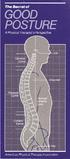 The Secret... T he American Physical Therapy Association would like to share a secret with you. It can help you do more with less effort breathe easier feel great. The secret is about good posture, which
Passive Range of Motion Exercises
 Exercise and ALS The physical or occupational therapist will make recommendations for exercise based upon each patient s specific needs and abilities. Strengthening exercises are not generally recommended
HealthandSafetyOntario.ca. Hazards. Introduction. Legislation
 Manual Materials handling Introduction Manual materials handling operations are carried out in most workplaces. Each handling task poses unique demands on the worker. However, workplaces can help workers
Knee Conditioning Program. Purpose of Program
 Prepared for: Prepared by: OrthoInfo Purpose of Program After an injury or surgery, an exercise conditioning program will help you return to daily activities and enjoy a more active, healthy lifestyle.
stretches and exercises
 stretches and exercises The enclosed sheets contain stretches and exercises which can be used to delay and minimise the development of contractures and deformities occurring in children with Duchenne muscular
Back Injury Prevention. For the Landscaping and Horticultural Services Industry
 Back Injury Prevention For the Landscaping and Horticultural Services Industry Back Injury Prevention Contents Introduction What s Inside?... 3 Lesson 1 Understand Your Back and Back Pain... 4 Lesson 2
X-Plain Neck Exercises Reference Summary
 X-Plain Neck Exercises Reference Summary Introduction Exercising your neck can make it stronger, more flexible and reduce neck pain that is caused by stress and fatigue. This reference summary describes
SHOULDER PULL DOWNS. To learn efficient use of the shoulder blades and arms while maintaining a neutral spine position.
 SHOULDER INTRODUCT ION Welcome to your shoulder exercise program The exercises in the program are designed to improve your shoulder mobility, posture and the control of the muscles in your neck and shoulder
CONSTRUCTION WORK and CUMULATIVE TRAUMA DISORDERS
 Connecticut Department of Public Health Environmental and Occupational Health Assessment Program 410 Capitol Avenue MS # 11OSP, PO Box 340308 Hartford, CT 06134-0308 (860) 509-7740 http://www.ct.gov/dph
Texas Department of Insurance. Office Ergonomics. Provided by. Division of Workers Compensation HS03-003C (03-09)
 Texas Department of Insurance Office Ergonomics Provided by Division of Workers Compensation HS03-003C (03-09) Contents Introduction 1 The Ergonomic Checklist 1 Sharp Edge Hazards 1 Equipment Adjustability
Chronos - Circuit Training Bodyweight
 Outline Chronos - Circuit Training Bodyweight 1. Mountain climbers doubles x 10 2. Mountain climbers singles x 10 each leg 3. Mountain climbers singles out x 10 each leg 4. Mountain Climbers Doubles out
Injuries from lifting, loading, pulling or pushing can happen to anyone in any industry. It is important to be aware of the risks in your workplace.
 Workplace safety: lifting One of the biggest concerns in the workplace is lifting and loading. When you lift something, the load on your spine increases and your spine can only bear so much before it is
Safe Lifting/ Back Safety Training. Environmental Health and Safety
 Safe Lifting/ Back Safety Training Environmental Health and Safety Why Back Safety is Important Back injuries are considered by OSHA the nation s #1 workplace safety problem Back injuries are often: Very
Strength Training for the Runner
 Strength Training for the Runner Strength Training for the Runner What? The goal of resistance training for runners is not necessarily adding muscle mass but 1. improving muscular strength, 2. improving
Do s and Don ts with Low Back Pain
 Do s and Don ts with Low Back Pain Sitting Sit as little as possible and then only for short periods. Place a supportive towel roll at the belt line of the back especially when sitting in a car. When getting
MELT Mini Map For Motorcyclists
 MELT Mini Map For Motorcyclists The MELT Self-Treatment Tools needed for this monthʼs Mini Map can be found online at store.meltmethod.com. Depending on which tools you have on hand, you can start with
THE BIG SIX. Six Best Volleyball Strength Training Exercises. By Dennis Jackson, CSCS www.strength-and
 THE BIG SIX Six Best Volleyball Strength Training Exercises By Dennis Jackson, CSCS www.strength-and and-power power-for for-volleyball.com THE SQUAT What it is The two most common squatting exercises
Work Health & Safety Computer User Guide & Self Assessment Checklist
 Work Health & Safety Computer User Guide & Self Assessment Checklist TABLE OF CONTENTS Introduction Causes of computer related injuries Ergonomics Preventing workplace injuries Computer self assessment
Sheet 1A. Treating short/tight muscles using MET. Pectorals. Upper trapezius. Levator scapula
 Sheet 1A Treating short/tight muscles using MET Pectorals Once daily lie at edge of bed holding a half-kilo can, arm out sideways. Raise arm and hold for 10 seconds, then allow arm to hang down, stretching
Rehabilitation Exercises for Shoulder Injuries Pendulum Exercise: Wal Walk: Back Scratcher:
 Rehabilitation Exercises for Shoulder Injuries Begin these exercises when your pain has decreased about 25% from the time when your injury was most painful. Pendulum Exercise: Lean over with your uninjured
Body Positioning & Lifting Techniques
 Body Positioning & Lifting Techniques Body Positioning But no matter what task we are undertaking we MUST Think through the task and we MUST Prepare ourselves before we attempt to complete them. If we
Moving and Handling Techniques
 Moving and Handling Techniques Introduction Manual handling involves any activity that requires the use of force exerted by a person to lift, lower, push, pull, carry or otherwise move or hold an object.
Info. from the nurses of the Medical Service. LOWER BACK PAIN Exercise guide
 Info. from the nurses of the Medical Service LOWER BACK PAIN Exercise guide GS/ME 03/2009 EXERCISE GUIDE One of the core messages for people suffering with lower back pain is to REMAIN ACTIVE. This leaflet
Rehabilitation after shoulder dislocation
 Physiotherapy Department Rehabilitation after shoulder dislocation Information for patients This information leaflet gives you advice on rehabilitation after your shoulder dislocation. It is not a substitute
<< INSERT COMPANY NAME
 > SLIIP-TRIIP-FALL & STRAIIN IINJURY TRAIINIING > Fall Prevention Slips, trips, and falls constitute the majority of general industry accidents. They cause 15% of
Spine Conditioning Program Purpose of Program
 Prepared for: Prepared by: OrthoInfo Purpose of Program After an injury or surgery, an exercise conditioning program will help you return to daily activities and enjoy a more active, healthy lifestyle.
ERGONOMICS AND MUSCULOSKELETAL INJURY (MSI) Preventing Injuries by Design
 ERGONOMICS AND MUSCULOSKELETAL INJURY (MSI) Preventing Injuries by Design ERGONOMICS and Musculoskeletal injury (MSI) Some of the tasks we perform at work, such as lifting, reaching and repeating the same
Strength Training HEALTHY BONES, HEALTHY HEART
 Strength Training HEALTHY BONES, HEALTHY HEART No matter what your age, strength training can improve your bone health and your balance. As we age, our bones lose both tissue and strength. This condition
Fact Sheet: Occupational Overuse Syndrome (OOS)
 Fact Sheet: Occupational Overuse Syndrome (OOS) What is OOS? Occupational Overuse Syndrome (OOS) is the term given to a range of conditions characterised by discomfort or persistent pain in muscles, tendons
Flexibility Assessment and Improvement Compiled and Adapted by Josh Thompson
 Flexibility Assessment and Improvement Compiled and Adapted by Josh Thompson Muscles must have a full and normal range of motion in order for joints and skeletal structure to function properly. Flexibility
A guide for employees
 A guide for employees This booklet has been developed as a guide to assist in the prevention of muscular discomfort and strain that can sometimes be associated with computer use. The information provided
8 Power Moves for Perfect Posture By Dr. Kareem Samhouri
 8 Power Moves for Perfect Posture By Dr. Kareem Samhouri 2008 www.backinjuryguide.com All rights reserved. No portion of this manual may be used, reproduced or transmitted in any form or by any means,
Strengthening Exercises - Below Knee Amputation
 Strengthening Exercises - Below Knee Amputation These exercises will help you strengthen your muscles to best use your prosthetic leg. Do these exercises as directed by your therapist or doctor. Do the
SAMPLE WORKOUT Full Body
 SAMPLE WORKOUT Full Body Perform each exercise: 30 secs each x 2 rounds or 2-3 sets of 8-12 reps Monday & Wednesday or Tuesday & Thursday Standing Squat Muscles: glutes (butt), quadriceps (thigh) Stand
Spinal Exercise Program/Core Stabilization Program Adapted from The Spine in Sports: Robert G. Watkins
 Spinal Exercise Program/Core Stabilization Program Adapted from The Spine in Sports: Robert G. Watkins Below is a description of a Core Stability Program, designed to improve the strength and coordination
ISOMETRIC EXERCISE HELPS REVERSE JOINT STIFFNESS, BUILDS MUSCLE, AND BOOSTS OVERALL FITNESS.
 ISOMETRIC EXERCISE HELPS REVERSE JOINT STIFFNESS, BUILDS MUSCLE, AND BOOSTS OVERALL FITNESS. By Askari A. Kazmi KazmisBioscienceLabs exercise helps reverse joint stiffness, builds muscle, and boosts overall
INSTRUCTIONAL MATERIALS: REFERENCES: a. PAEC School Safety Manual b. Any locally produced Back Injury pamphlet TRAINING AIDS:
 LESSON TOPIC: AVERAGE TIME: BACK INJURY PREVENTION 30 Minutes INSTRUCTIONAL MATERIALS: REFERENCES: a. PAEC School Safety Manual b. Any locally produced Back Injury pamphlet TRAINING AIDS: a. Handout #1
Functional rehab after breast reconstruction surgery
 Functional rehab after breast reconstruction surgery UHN A guide for women who had DIEP, latissimus dorsi with a tissue expander or implant, or two-stage implant based breast reconstruction surgery Read
ERGONOMICS. University at Albany Office of Environmental Health and Safety 2010
 ERGONOMICS University at Albany Office of Environmental Health and Safety 2010 WHAT IS ERGONOMICS? From the Greek: ergon work and nomoi natural laws Defined by Webster as: Biotechnology WHAT IS ERGONOMICS?
Exercises for the Hip
 Exercises for the Hip Gluteal Sets: Lie on your back, tighten buttocks and hold for 3-5 seconds. Repeat 20 times. Supine Hip ER/IR: Lie on your back with legs straight. Gently rotate knees out and in limited
MANUAL HANDLING POLICY
 Northumberland Street Alnwick Northumberland NE 66 1 LT Tel: 01665 510 241 MANUAL HANDLING POLICY Designated Health and Safety Officer for the above address: Sally Lane (Deputy Manager) It is the responsibility
Ensure that the chair you use is sturdy and stable. Wear comfortable clothes and supportive footwear.
 Page 1 Safety Ensure that the chair you use is sturdy and stable. Wear comfortable clothes and supportive footwear. Prepare a space and have your exercise band and a glass of water (for afterwards) ready
Otago Exercise Program
 Otago Exercise Program Edited Version Exercise Booklet Created by: Genesee County Coalition Supported by a grant from the Health Foundation for Western and Central New York Otago Exercise Program to Prevent